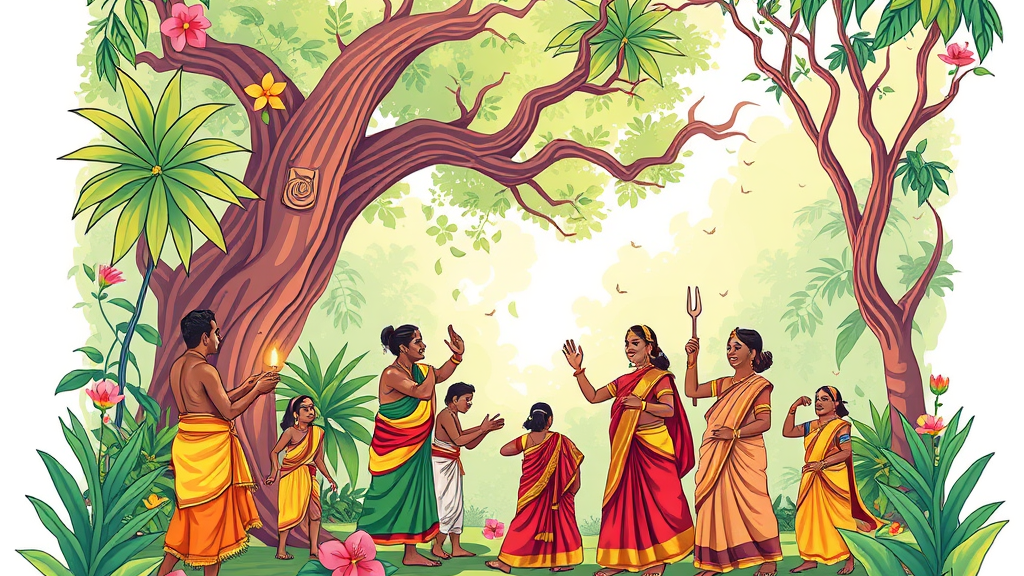
The Kodavas and the other native tribes inhabiting the Kodagu region are primarily nature worshippers. There is no idol worship, and the five elements of nature and the guiding spirits of their ancestors are central to their worship. However, there are several other deities that are associated with the Kodava folklore and the regional culture in general. As per some historians, the worship of Shiva and Parvathi, which is also integral in Kodava folklore, can be attributed to the influences of the Haleri kingdom’s rule.
“A Mahadeva (Shiva) for each province, Povvadi / Bhadrakali / Bagavathi (Parvathi) for each hometown, Aiyappa for each village, Natha (snake god) for each lane and Puda (indigenous soil lord) for each family,” goes a Kodava saying. In Kodagu, Mahadeva and Bhadrakali are worshipped in temples that are built and managed by the respective villagers. On the other hand, Choundi and Ayyappa are forest dwellers. They mostly live in ‘Devara Kaadu’, the sacred groves.
Although the chief deities are the same in every province or hometown or village, the way they are worshipped is unique to every temple. The rituals and ceremonies vary depending on the folklore in which its roots are embedded. These stories are compelling and narrate the importance of connections with the motherland and nature worship. Bright colours, earthy music and traditional dances mark these festivals.
While the main festivals of the community like ‘Kailpodh’, ‘Edamyar’, ‘Puthari’ and Kaveri Sankramana and the older tradition of Nari-Mangala have been well documented through several mediums, it is these indigenous and lesser-known local festivals of Kodagu that I would like to experience and document, one festival at a time.
I would like to hence, start this series- “Festivals of Kodagu”. The purpose of this series is only for documentation of lesser-known festivals. All the information shared through my series’ posts are based purely on what I could gather by discussing with people who are closely associated with the temple or are natives of each village. My apologies for any wrong representations. Readers are welcome to contribute any information that is deemed important and useful to be shared here.
- The abandoned tribes and the abuses- Kunde Habba
- The Boad Namme of Chembebellur
- The Povvadi Namme of Ibbanivalavadi
More to come….

 The Lost Lander