Category Archives: Art & Craft

A Grand Celebration of Masks- Padayani Festival at Othera

Continued from ‘Celebrating the chariot of light- Purapaadu Festival at Cheriyanaad

In my previous post, I had told you that I returned to Pattanamthitta more often than I expected. I was in Chengannur again to experience yet another festival. In this post, I am going to talk about my experience of the Padayani festival at Othera.

Padayani loosely translates to ‘Row of warriors’ in Malayalam. It is a ritualistic art form involving folk music, dance, theatre and hand-painted masks, observed in several Bhagavati temples across central Kerala, particularly in and around Pattanamthitta. ‘Kolam thullal’ is an important part of the festival to appease Goddess Bhagwati through the performance of rhythmic dance steps to the music played by traditional instruments like the thappu, chenda, para and kumba while wearing leafy costumes and masks made from arecanut and coconut sheaths, which are painted into various forms with the use of natural pigments. The impersonators performing Kolam thullal (Mask dance) represent both the divine and the evil forms through various depictions.

Although the festival’s origins are rooted in history, contemporary practices involve different duties and responsibilities assigned to members of various communities in Kerala. The duration of the festival ranges from 7 to 28 days, depending on the temple’s tradition, with the final day typically being the most elaborate and grand and therefore called the ‘Valiya Kolam’.

Various areca sheath painted Masks used for Kolam thullal

The Padayani festival at Puthukkulangara Devi temple in Othera village, Pattanamthitta district, is one of Kerala’s renowned Padayani celebrations. This ten-day annual event takes place from the 03rd to the 12th day of the Meenam month of the Malayalam calendar, featuring various Kolam dances performed nightly in the temple courtyard as acts of devotion. All the masks used in the Padayani festival are hand-painted by skilled men on each day of the festival and discarded after each use. The highlight of the festival, however, is the ‘MahaBhairavi Kolam’ a grand mask crafted from 1001 areca sheaths that draws large crowds from across the region on the last night of the festival.

A brief itinerary of the 10-day-long Padayani festival at Othera Puthukkulangara Devi temple is listed below. It is also noteworthy that each ritualistic performance begins with Chootuvaippu and ends with a Chootuvalathu and Kotti Vilikkal. ‘Chootuvaippu’ is the burning of torches made with dried coconut fronds behind whom each performer walks to the Padayani arena. ‘Chootuvalathu’ is a circumambulation of the temple by the performer, including the ‘Kotti Vilikkal’, meaning to inform the goddess after the performance is done.

Day 1 (Chathayam Nakshatra): The festival officially starts with the hoisting of the Adavi Kollika, the traditional flag and the lighting of the ‘Bhadra Deepam’, a traditional brass lamp with 21 wicks. It is followed by the arrival of the Vetapoola offerings to the idols. After this, the performance of thappu kottu (traditional frame drums played by hand), Ettu Kappoli (a rhythmic performance of multiple traditional music instruments), and Pulavrittam (a ritualistic dance performed by men in a circular formation) set the stage for all other performances on each day of the festival, starting this day.

Day 2 (Pooruruttathi Nakshatra): The performance of Thavadi (a ritualistic dance performed by rows of men by clapping hands to the tunes of drums and cymbals) gets added to Thappu Kottu, Ettu Kappoli and Pulavrittam from this day. This day also marks the beginning of the Kolam thullal and Panchakolam, which is performed for the next three days.

Day 3 (Uthrattathi Nakshatra): The evening begins with a Thiruvattira dance performance followed by Thappu kottu, Ettu Kappoli, Pulavrittam, Thavadi, Kolam thullal and Panchakolam. The Panchakolam is accompanied by the Sundarayakshi Kolam on this day.

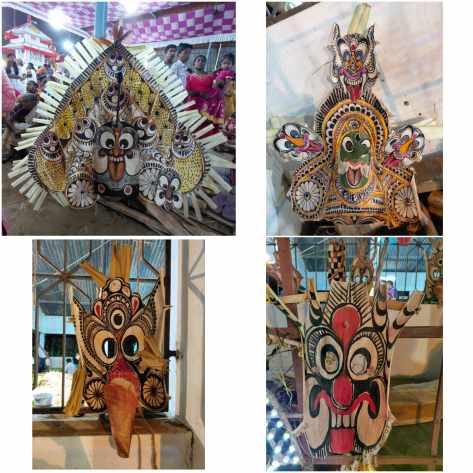
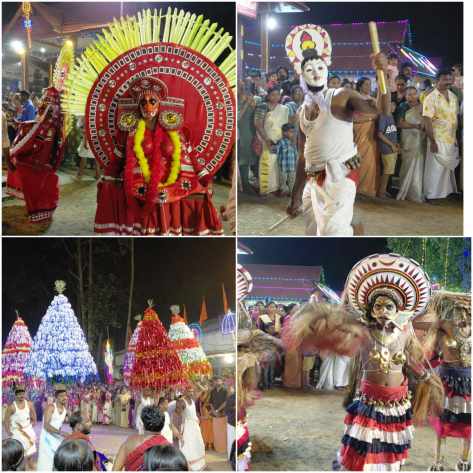
Kolams at Puthukulangara Devi padayani festival
Kolams at Puthukulangara Devi padayani festival. Clockwise from Top left: Yakshi; Top right: Pakshi; Bottom right: Kudiran; Bottom left: Bhairavi

Day 4 (Revathi Nakshatra): The Panchakolam is accompanied by the Kalayakshi and Bhairavi Kolam.

Day 5 (Ashwathi Nakshatra): This day includes Ettu Kappoli, Pulavrittam, Thavadi and the Kalankekalam Kolam.

Days 6 to 9: These days have performances of Ettu Kappoli, Pulavrittam, Thavadi and the Kalan Kolam.

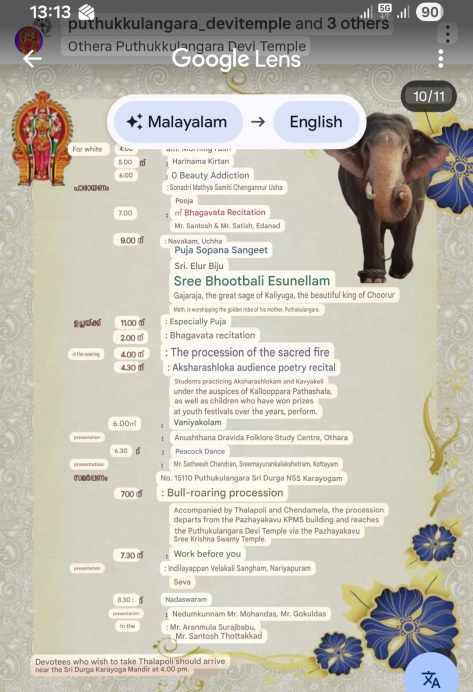
Day 10 (Thiruvathira Nakshatra): All the rituals conducted over the last 9 days are repeated on this day. All the kolams come to the festival arena in a procession, which is traditionally called the ‘Nirathi Thullal’. Various Kolams alongside the Kakarisshi natakam and Paradeshi performances continue throughout the night, with the Mangalabhairavi Kolam and Poopada (A ritualistic dance performance to the music of percussion instruments and comic interludes) marking the end of the festival. A brief itinerary of the last evening of the Othera Padayani festival is indicated in the image below.

Day10 padayani festival itinerary- Othera

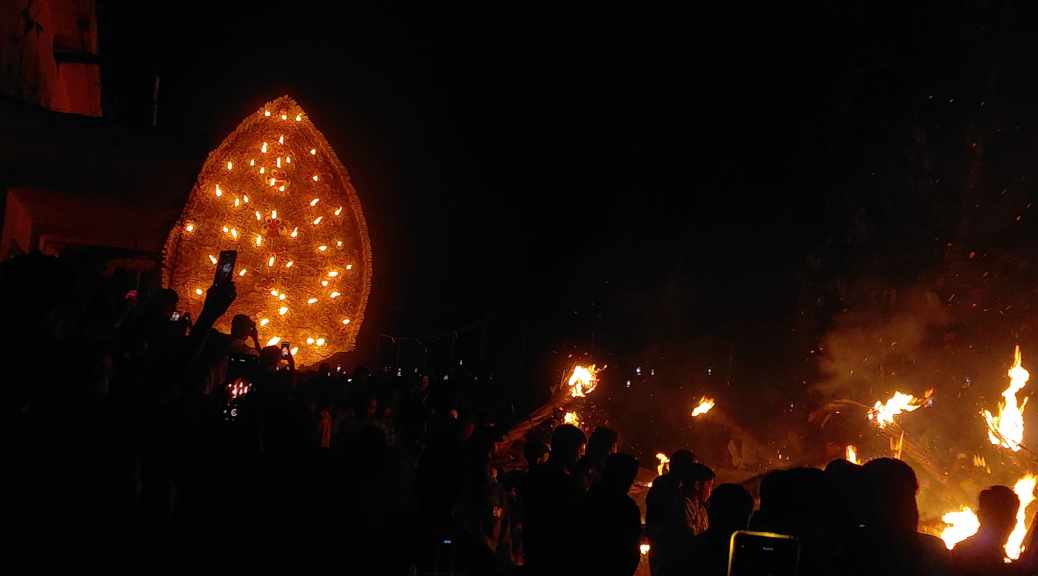
While all Kolams in the Padayani festival feature a human impersonator wearing a mask made from hand-painted areca sheaths, the MahaBhairavi Kolam stands out primarily because of its enormous size. A Bhairavi kolam is the largest wearable mask during Padayani, with the load resting on the wearer’s neck and shoulders, supported by their hands. In contrast, the MahaBhairavi is crafted from 1001 sheaths, all held in place by arranging them on a sturdy wooden frame from behind. It is nearly impossible for a single person to carry this. Therefore, after arranging the sheaths, the large mask/Kolam is lifted from the ground and mounted on a wooden cart using a crane. Community members then hand-draw the Kolam from the setup area to the Padayani arena. The cart is moved forward and backward three times to appease Goddess Bhadrakali, and the Kolam remains in the arena for several days, marking the festival’s conclusion.

Ladies are prohibited from entering the areas where the masks are painted and assembled. After the kolam is over, the masks are left for nature to take over them in its own way.

The MahaBhairavi Kolam at Puthukulangara Devi Padayani festival, Othera, Kerala

To summarise the entire experience in simple words, it was a festival so unique and unlike anything else I have experienced before. Based on the above itinerary shared by the temple authorities, my friend and I reached Othera by 05.30.p.m. At the same time, the procession of the sacred fire was in progress. Since the fire was accompanied by an elephant and devotees carrying thalapoli (a metal plate with rice, flowers, coconut and an earthen lamp), the narrow lane leading to the temple was blocked for vehicular movement, and we had to walk past to the temple. All the houses along the way had ‘Nela vilakku’ (the traditional brass lamp) with small pookalam (floral decorations) placed in front of their gates, as a greeting to the sacred fire at their homes.

After the procession reached the temple premises, it went towards the banks of the river Varattar for offerings and returned with tree branches. It was followed by cultural performances like Chendamelam, Vaniyakolam, Peacock dance, Kettukazhcha ceremony (procession of the bull-effigy), a parade of various folk-art forms like Malavazhiyattam, Amman Kudam (Karaga), etc. and the Nadaswaram Seva before the Kolam Thullal began extending right until dawn’s break. Simultaneously, the artists painted the masks, whilst another group of people readied the wooden frame on which the painted sheaths were later arranged. And finally, the fireworks went up while the horizontal wooden frame went up vertically, along with all the sheaths in place. We knew that the big wait was inching closer when we saw a crane carrying a man with a torch, lighting up the cotton burners attached to the MahaBhairavi Kolam. I believe it was a culturally immersive experience that one must experience at least once in their lifetime.

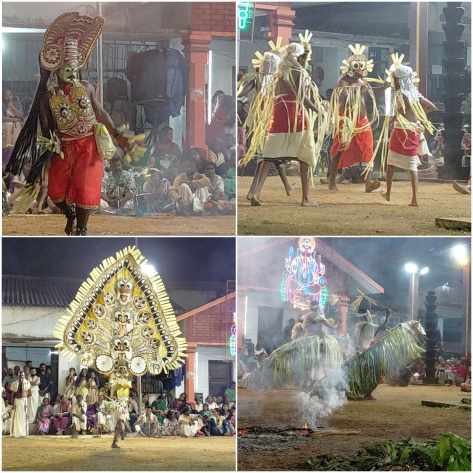
Various Folk artists at Puthukulangara Devi Padayani festival, Othera

Othera is located about 4 km away from Chengannur, the nearest major town that is well connected with major cities like Bangalore and Chennai with direct trains and buses. One can conveniently hire an autorickshaw from Chengannur town to reach Othera.

To be continued as “An Onam Celebration I will never forget at Aranmula Parthasarthy Temple

10 offbeat things to do in Hampi

From a tourist’s perspective, Hampi can be broadly divided into two parts, separated by the Tungabhadra River. The heritage site of historical ruins is in the Vijayanagar district, whilst places of mythological importance and most homestays offering local experiences are concentrated in the Koppal district side (This is popular as the Hippie island). So, if one is planning a trip to Hampi for the first time, this geographical classification should provide you with a brief idea before you arrive there.

Everybody knows Hampi and there is enough content widely available on places to explore in this historical town. But here are some lesser-known experiences that I loved during my repeated visit to this UNESCO heritage site.

1. Sunrise at Matanga hills: How much amazement can your voracious vision hold? “Boundless” defines the view from the top of the Matanga hills. It was a dreamy view of the entire historical town in its ruined form scattered across the river flowing from one end to the other. And adding to the already picture-perfect frame was a bloody red rising sun in the backdrop. This is by far the BEST sunrise of my life. The early morning climb up the hill and the wait in the cold winds was so worth it that I had goosebumps watching the magic unfold.

Sunrise at Matanga hills

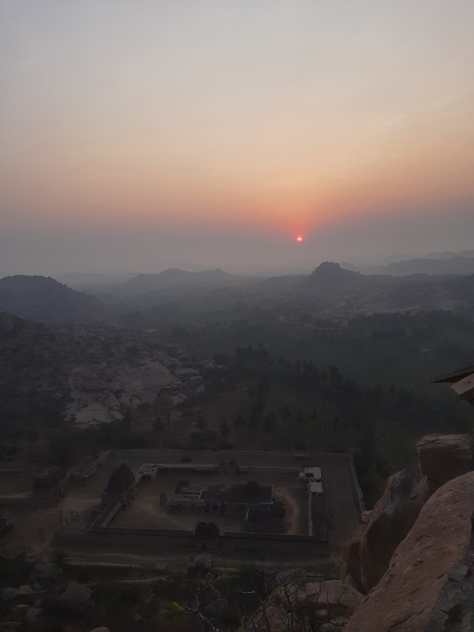
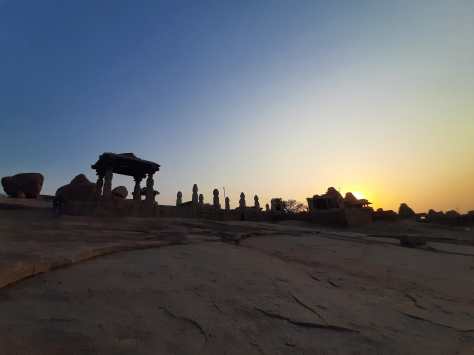
2. Sunset at Hemkuta hills: A short ascent to the rocky hill by the side of the Virupaksa temple leads you to this best spot to catch the sunset at Hampi. Comfortable benches or the grainy-pebbly ground, you can choose the surface to just lose yourself in experiencing the glorious horizons of Hampi turn from Indigo to blue to misty to bright to rosy to a star-studded sky.

Sunset at Hemkuta hills

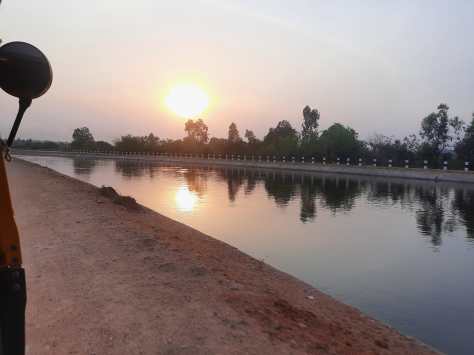
3. Bathing in the canal water: This is a closely guarded secret. There are irrigation canals passing through the villages in which you want to enjoy a quick dip, only if you befriend a local. If you do not get to enter the water, no worries, simply sitting by its side and seeing the time go by itself would be so comforting.

Water canals of Hampi

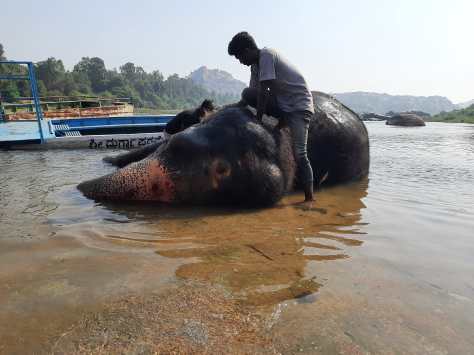
4. Coracle riding & elephant bathing: The river flows right behind the Virupaksa temple, and the temple elephant has a daily schedule of taking a shower in the river. Time your visit right and you can lend your helping hand too. A small ticket can help you cross the river on a coracle-a traditional round flat-bottomed boat built by knitting seasoned bamboo or cane. You can also see locals transporting their bicycles and motorcycles across the river through these boats.

Elephant bathing in Tunga river at Hampi

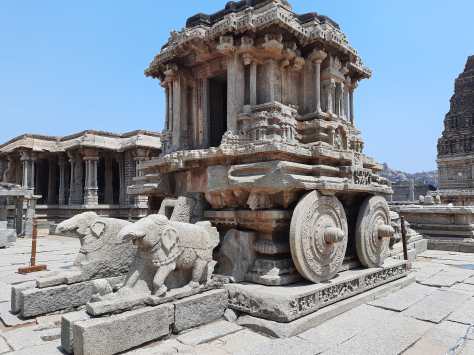
5. Cycle tour around the historical monuments: Several shops rent out bicycles to tourists. If you have a tourist map in hand and the luxury of time, trust me, it is one of the highly recommended ways to explore Hampi. For a little more comfort on a sunny day, you can opt for an autorickshaw with a good driver dueling as your tour guide.

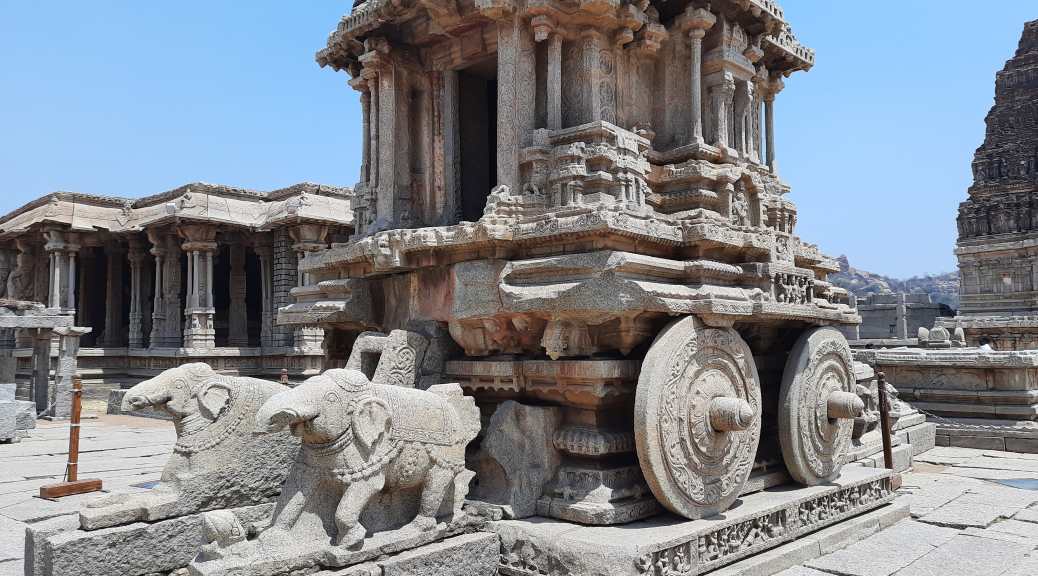
Stone Chariot- Hampi

6. Sunrise at Anjanadri Betta: Believed to be the birthplace of Lord Hanuman, it is frequented by pilgrims which tends to receive higher footfalls as the day progresses. So, if you make it to the peak of this hill as early for sunrise, you can enjoy the view of the surroundings in peace and calm.

7. Sunset at Bala Anjaneya Betta: Another popular spot in the hippie island, it is best when visited during sunset.

8. Bouldering: This area is part of the larger Deccan plateau, and the rocky boulder terrain forms its core geographical feature. Short workshops in free hand bouldering is a great way to either learn a new skill or simply let the inner monkey in you to hang around in the land of the monkey kingdom (it is the birthplace of Lord Hanuman after all).

9. Bike riding in the paddy fields of Gangavathi: Gangavathi is called the rice bowl of Karnataka, and this is where you can see infinite stretches of green paddy fields. Now imagine large boulders and bare old trees standing scattered across these green fields as if they had witnessed all the stories of the past. And then you cut across on a moped or a motorbike casually soaking up this view. Trust me the views will linger in your mind long after you leave Hampi.

10. Cliff jumping & Coracle riding at Sanapur lake: This is not really a lake but the backwaters of a reservoir. It offers amazing activities to get your adrenaline rushing while you jump off a cliff to the depths and a crazy coracle ride along the rapid of the waterbody. A must do while you are on a trip to Hampi.

Sanapur lake
Sanapur lake

Are you going to try these experiences on your next trip to Hampi? Or what else have I missed out in this list? Tell me in the comments below.

A compilation of art and science from the by-lanes of India

I am an art enthusiast by passion and an engineer by qualification. I seek to be an art aficionado and a curious kid within me is always on the lookout to learn how things are made and work. In fact, I believe the best art is created by the culmination of science and creativity. As a traveler, I do not miss a chance to visit and interact with artisans and understand how they make things what they are good at.

When I travel to a new place, I try to accommodate time to explore the lesser touristy streets of any place because according to me, the real soul of any place lives in its by-lanes. I try to meet enthusiasts (across genres) and visit their creative abodes or workshops to see things take form.

Here is a compilation of such posts describing the souvenirs that combine two worlds of art and science which one can buy when visiting these destinations.

  1. Bangalore : HMT Watches
  2. Rajahmundry: Ratnam fountain pens
  3. Aranmula: Metallic mirrors
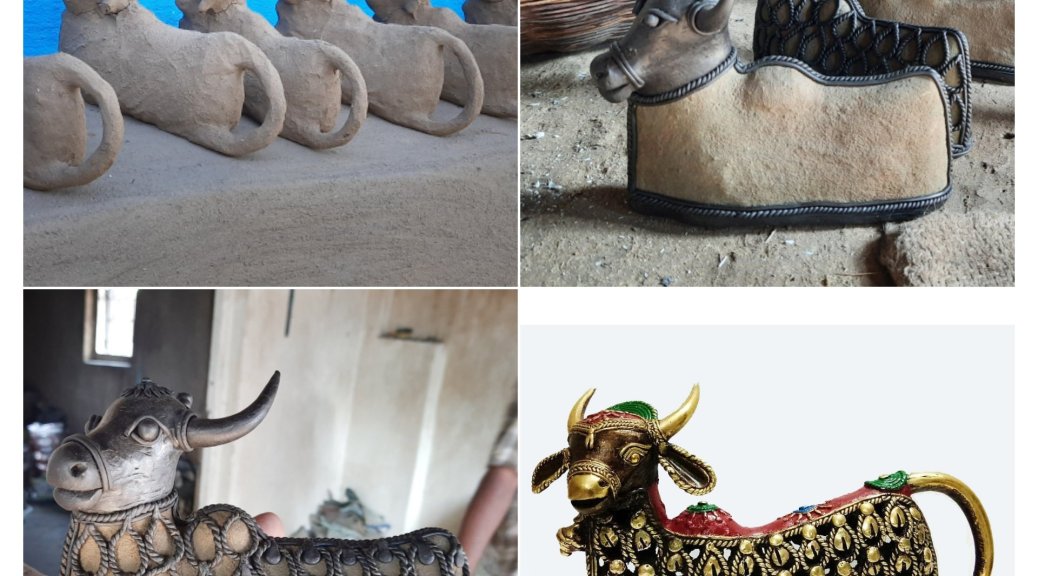
  4. Bastar: Metal crafts (wrought iron and bell-metal crafts)
  5. South India: Bronze icons

How many of these souvenirs have you collected, yet?

A Rare Connection of Hockey Between Karnataka and Tamil Nadu

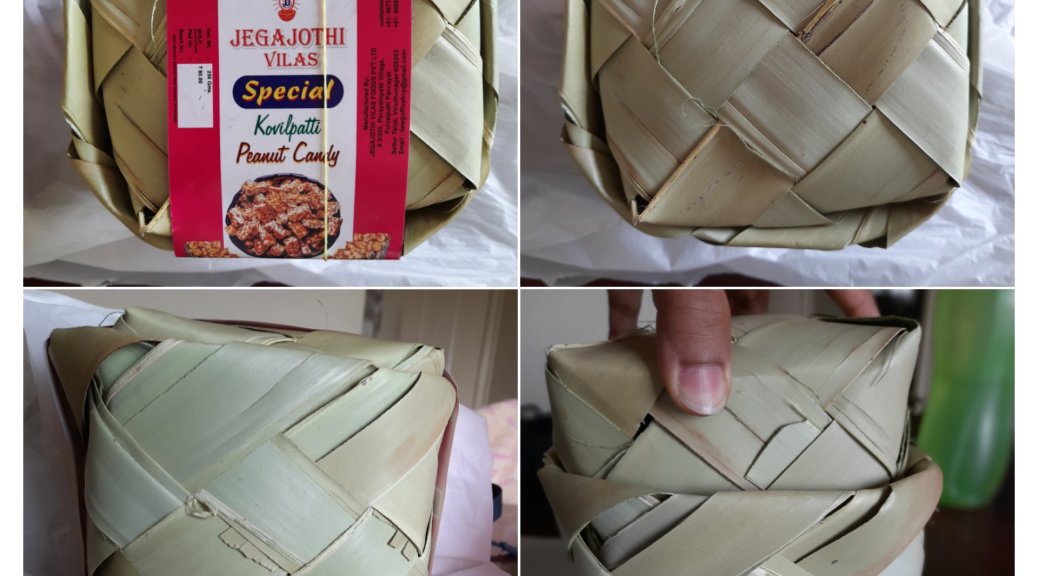
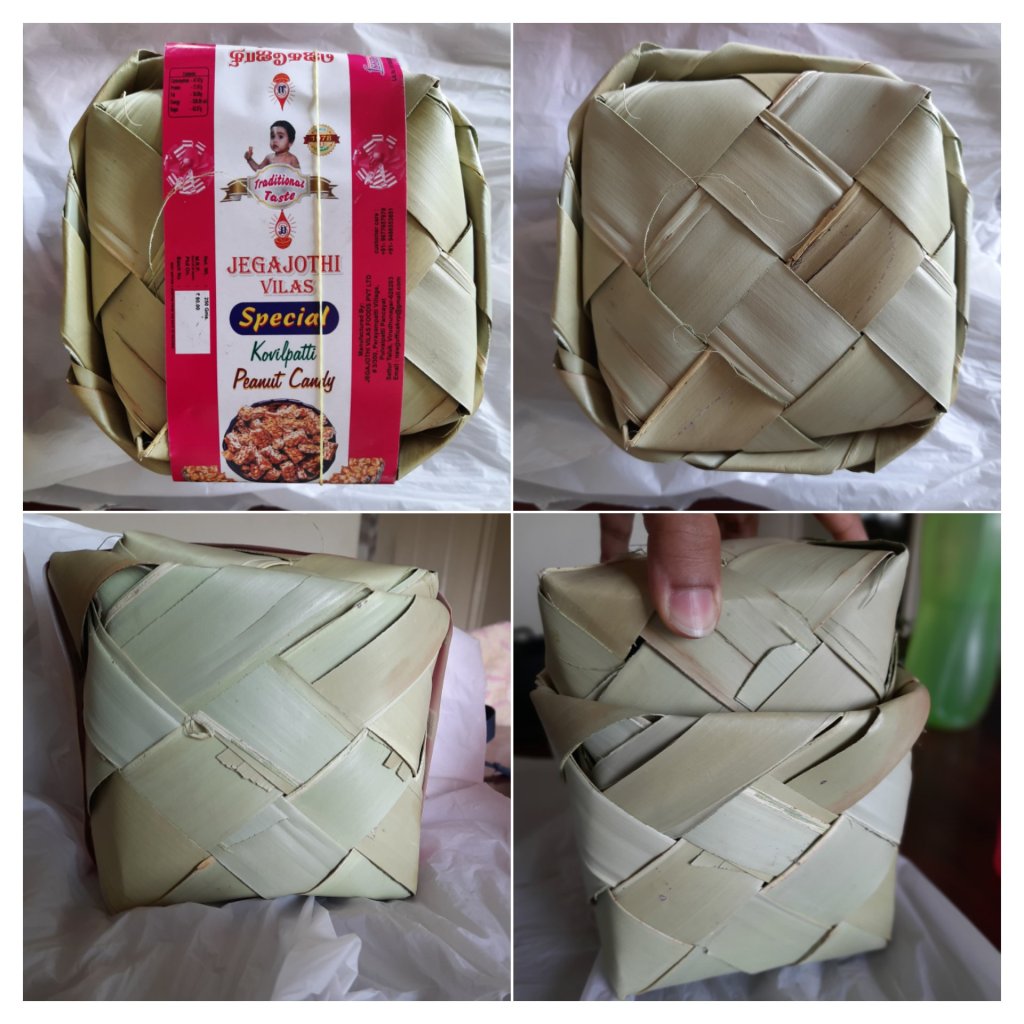
I have been fortunate to meet many like-minded people online, through travel blogging. Recently, I happened to meet one of such friends offline, during his visit to Bangalore. He greeted me with a souvenir, a nice palm leaf box containing chikkis. He explained that it was the ‘panai olai petti’ containing the famous candies from his hometown. After I returned home, a little bit of online browsing about this souvenir unfolded some interesting facts for me.

The palm leaf box containing the Kovilpatti chikki

Talking about the southern states of India, two neighbours have a lot in common. What triggered this thought were the names of places starting with the letter ‘K’, one from each state. Kodagu and Kovilpatti from Karnataka and Tamil Nadu respectively. Meanwhile, the ‘C’ is what makes these two ‘K’ places famous. ‘Cauvery’, the holy river originates in Kodagu and ‘Chikkis’, the peanut candies of Kovilpatti has earned a GI tag for itself. Enough is written and done on the internet about either of the places.

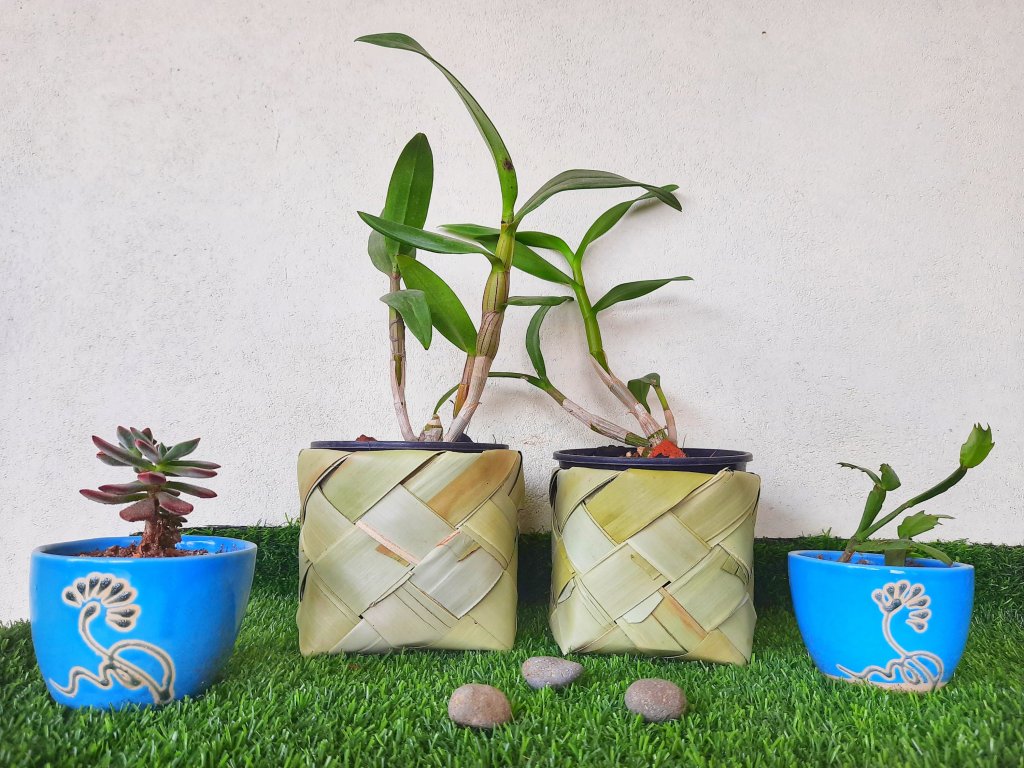
Palm leaf boxes of Kovilpatti mithai being Repurposed as planters

But what turned out to be more surprising and a rather rare connection between the two ‘K’ places of these states is their common love for the National sport of India- Hockey. In my earlier post, I have mentioned how the largest festival in the world dedicated for any sport (hockey) is celebrated in Kodagu. But what I learn now is that Kovilpatti too, shares its history with Indian military and the influences of the British to have a strong hockey culture. With at least a dozen hockey clubs and several players making it to the Indian national team over time, the people of Kovilpatti have an unabated enthusiasm for the national sport.

What I do know is, that there are several other lesser-known places in India where people celebrate sports other than cricket. Only initiatives by governments, support from sponsors and adequate media publicity can encourage and motivate more people to nurture a sporting culture in our country, anything other than cricket.

A souvenir from Rajahmundry- Ratnam pen

This was a part of our family’s five state road trip covering Chhattisgarh – Odisha – Andhra – Telangana – Karnataka in Dec’20.

They say a pen is mightier than a sword. A good writer can win a great battle. I guess it has been all the more true in the Gen-Z era. Although the pen has been replaced with keypads, the social media warriors have continuously upped the war of words 😛 But for a few old-school goers like me, nothing can replace the joy of holding a pen between the fingers and scribbling on paper. The thought instantly takes me back to the earliest days of life when I graduated from a chalk and slate to a pencil and paper. When we reached middle-school, I was a proud owner of my first pen. Writing with a pen was a symbol of growing up; we flaunted it around with those younger than us in school. “Don’t use a ball-point pen, it will spoil your handwriting“, was an instruction given by a teacher to all of us. Filling ink into the fountain pens was a mandatory part of our daily chores. On days that we either wrote more or forgot to fill inks, we would barter drops of ink with our classmates. Although ball-point pens made their way and stayed in the comp-boxes of my pals by the time we reached high-school, I somehow carried the instructions of my teacher with myself for a little longer. I switched over to a ball-point pen only after I graduated from college. But my love for fountain pens and writing on paper still lives on. This is the long story in short, about my connection with fountain pens.

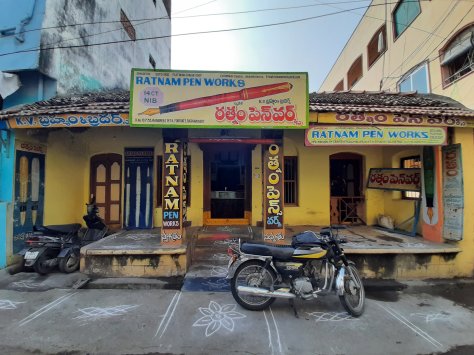
Rajahmundry is a big city in Andhra Pradesh. It is one of the largest exporters of textiles, rice and horticultural products in India. But ignoring all that, my need for exploring the congested bustling streets of the city was to find a fountain pen. With the help of Google maps, I walked through the narrow lanes of the busy shopping area to locate an old graceful house dating back to pre-independence era and surrounded by tall modern buildings. The house was an elegant traditional structure built and maintained in its original form with clay tiled roof and a large open central courtyard. That morning, I had come there to buy an art piece – ‘The Ratnam Pen’.

Ratnam Pens- Manufacturing and Sales Outlet

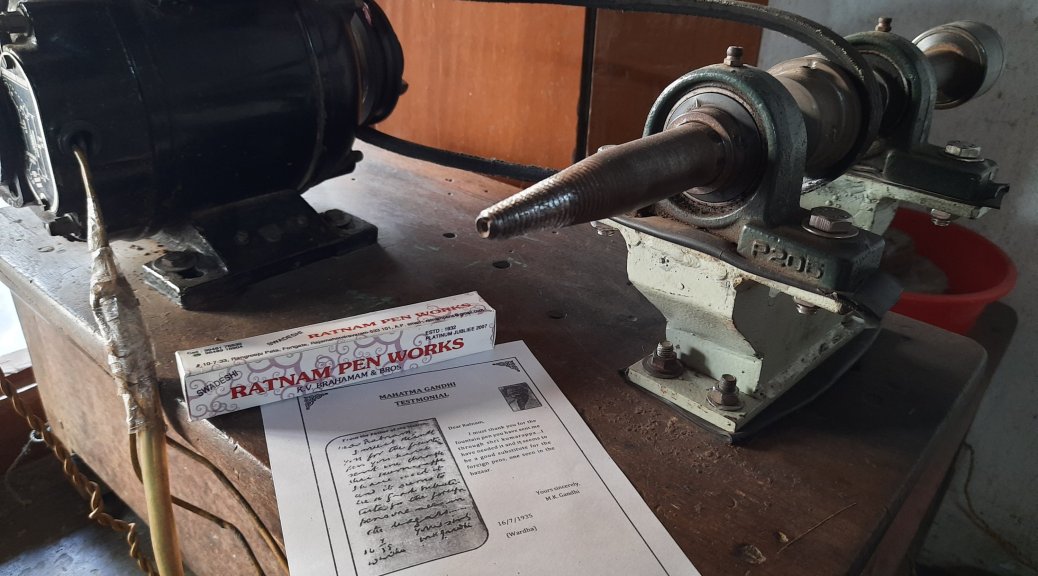
‘Ratnam pen works’ is a heritage fountain pen maker who has been one of the earliest in this business when Mahatma Gandhi largely promoted ‘Make in India’ concept through his ‘Swadeshi’ movement. These pens have been used by some of the famous personalities from across the country and the world. Ratnam pens are a delight for every pen collector. A framed paper on the wall is a prized possession of this craftsman. It is the original copy of a handwritten letter by Gandhiji to the owner of this place in appreciation of his contribution towards the swadeshi movement.

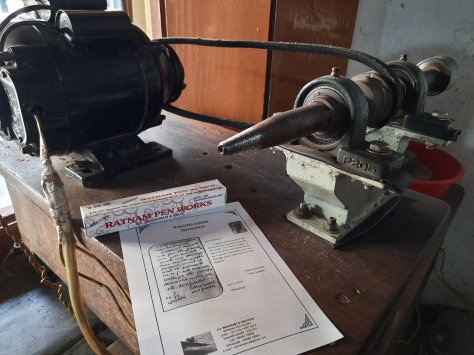
A copy of Gandhiji’s letter, a fountain pen case and the lathe machine at Ratnam pens workshop

Apart from being the shelter to the owner’s family, this house of ‘Ratnam pens’ is a workshop where the mightier pens take form. These famous fountain pens are made and sold only here to which people come down from across the globe. Although these pens are unavailable for online purchases, “Anyone interested to buy them or want spares and service for existing products can do so by calling me directly on my phone”, the owner says. I was more than excited to lay my hands on this new addition to my collection of pens. A happy me was then set on continuing my travel towards another noteworthy village nearby- Details on my next post 

This is my humble attempt at promoting domestic tourism and local artisans. I urge my readers to support small businesses by buying locally produced substitutes for imported goods.

What is that one favourite souvenir you have bought from your travels? What are your memories from school? Please do share your thoughts on this post with me. I would love to hear them.

A Tour of Indian Foundries- Investment Casting

In this post today, I like to discuss a technical subject by standing in the shoes of a traveler. During my student life, I have never been in a race to become a top-scorer. However, it was Professor Mukunda’s enthusiastic teaching method, that ‘Material science and Metallurgy’ has been one subject that I topped the department (I like to show-off a bit, with those dark glasses emoticon). With an in-hand admission letter to one of the top universities to pursue a post-graduation in the subject, the lostlander deviated along the way, only to become a professional ‘Metallurgical Failure Mode Analyst’ much later in her career. If not for Prof.Mukunda, a seed of interest in the subject would have never been sown and I wouldn’t be writing about such an unconventional travel post, it seems.

Metallurgy is a science in which India has mastered from even before the world could imagine. The Vedas have a devoted section to teach these techniques. Prof.Mukunda’s favorite topic was ‘Metal casting with the lost wax technique’. His face beamed in joy every time he mentioned the intricacies that were achieved in the metal art thus created. “No two pieces that are exact replicas of each other can ever be created”, he stressed. We had foundry visits as part of our curriculum but that’s where we could only see sand, centrifugal and other forms of metal casting. Without having easy access, investment casting, also called as the ‘lost wax technique’ of metal casting was only left to our imagination. Many years after my graduation, I have been fortunate that I have been able to visit some of the amazing and traditional foundries in my country that practice the lost wax technique. These places have got them their individual ‘GI’ tags. Here is a walk through my foundry visits which I believe I should share with my fellow readers.

Idols of Swamimalai:

Swamimalai translates to the ‘Hill of the Lord’ that is named after an important temple in Tamil culture dedicated to Lord Murugan. This little town is famous beyond just this holy abode. One doesn’t need explanation at the mention of the bronze idols of the Cholas era. Apart from several of these antiques being prized possessions at museums across the globe, these treasures are among the highly traded commodities in the black market. These are ALL brought to form in Swamimalai. It is believed that the artisans of Swamimalai are a group of skilled men called as the Stapathis who have passed on their heritage of metal idol making, since the 12th century. The precision of composition and the measurements of these metal idols, mostly bronze are followed as per the ‘Agama Shastras’. This holy land of the alchemists was a part of my weeklong backpacking with my brother, back in Year-2015.

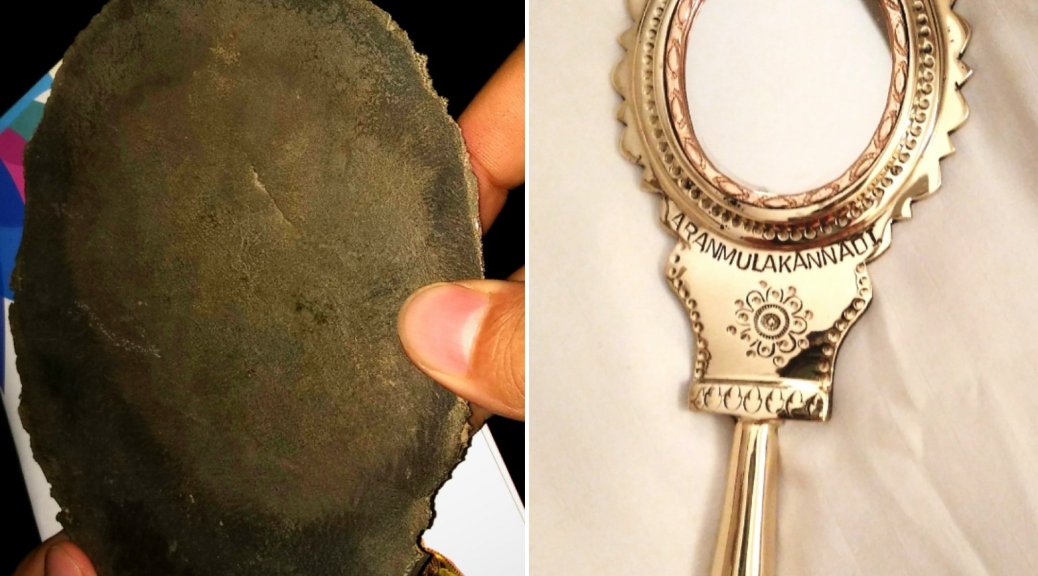
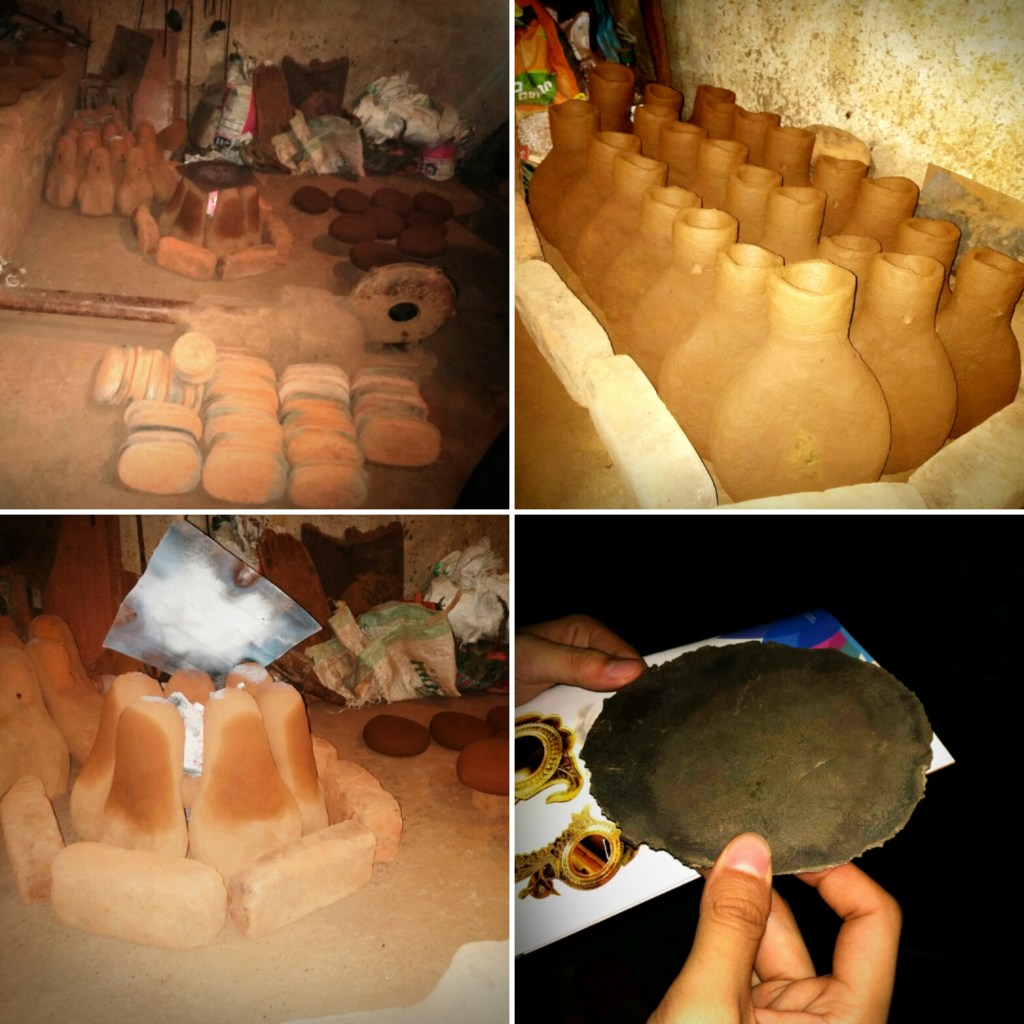
Work-in-progress at a foundry that makes Aranmula Kannadi
Clockwise from top left: 1. Raw material for mould making with the furnace and blower 2. The mould 3. Furnace 4. Metal sheet after moulding ready to be polished

Aranmula Kannadi:

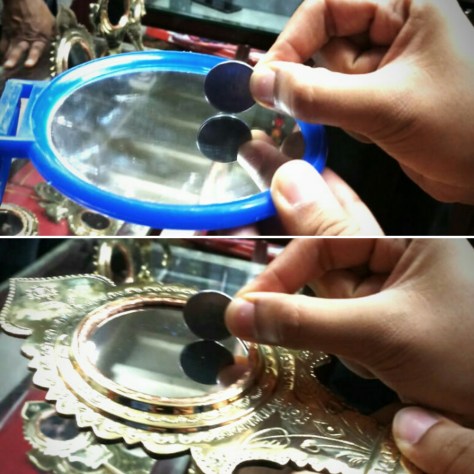
An extremely important part of malayalee culture, this handcrafted mirror is a quintessential part of Kerala. I was told that on the day of ‘Vishu’ festival, after waking up in the morning- he/she should first see themselves in an Aranmula Kannadi placed alongside the ‘Canacona flowers and a lit oil lamp’ before anything else. ‘What is it about a mirror?’ a person unknown to the traditions of this land might ask. ‘These mirrors are not glass!’ These mirrors are super-polished metal surfaces that are capable of reflecting real images. A glass always reflects a secondary image (you can notice that there is a distance from the reflecting surface to the image formed) whereas, the metal surface reflects primary images (There is no additional distance between the object and the image).

Two images that give the comparison of reflection in a glass and a metal mirror (Aranmula kannadi)
Top: The secondary reflection in a glass mirror; Below: The primary reflection in a metal ‘Aranmula Kannadi’ mirror

These manually polished mirrors are created through investment casting whose composition remains to be a secret that is passed down through generations of just 1 family. The small group of these master craftsmen who are protecting their secret recipe of the Malayalee culture all reside around the Aranmula Parthasarthy temple in the state of Pathanamthitta. I had the esteemed opportunity of visiting one of these foundries when I sneaked out after working hours on one of my business trips in Year-2019.

Video of my visit to the mirror making foundry at Aranmula

Dokra art of Bastar:

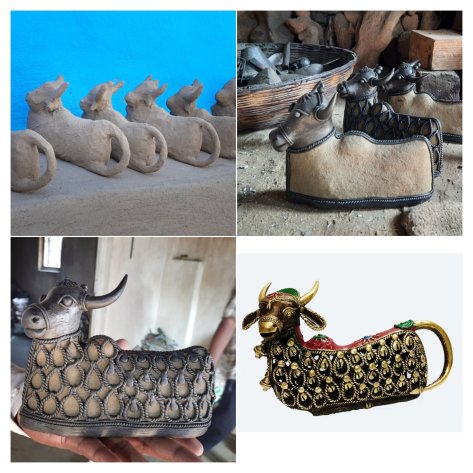
This non-ferrous metal art is created by the forest dwelling tribes of Chhattisgarh. Historians believe that this art has evolved from what was used by the primitive tribes to create figurines of their local deities for worship and for jewellery purposes. The metals used were earlier collected directly from earth in the mineral rich area of Bastar, then smelted to separate the desired elements and mixed in intended proportions to form the final material for casting. This is an undocumented tribal technique that has been passed down through several centuries. Today, it is widely used for commercial purposes of decoration and gifting. It is now revered as a part of the tribal culture that represents the state of Chhattisgarh. I had an opportunity to visit one of these foundries and observed keenly the lifeless metal take form into art during my family’s five states’ road trip in Year-2020.

Work-in-progress at a foundry that makes Dokra art in Bastar
Dokra art at various stages of metal casting

Kola masks of Karkala:

Talking about all these foundries, I cannot be leaving my homestate behind. Although the folk art of metal mask making is slowly dying, these masks are an extremely important part of the culture of the Tulunad region. These bell metal masks are used in the spiritual performance of the ‘Bhoota Kola‘. Today, the art is used beyond mask making and can be seen in idols, lamps, bowls, utensils among other things used and sold extensively in Udupi district of Karnataka.

The lamps and idols of Nagamangala:

The contribution of the Hoysalas to the art and heritage of Karnataka cannot be justified with any number of words. Their intricacies and detailing in their work can be seen not only in the stone sculptures of their temples but also in their metal crafts. A few of the practitioners of the Hoysala style of metal casting have saved and passed on their knowledge to a few artisans who have made the town of Nagamangala their home. This thriving art can be seen in the traditional bronze lamps widely used across Karnataka and in the idols of various deities in this region. Although bronze is believed to be a godly material, other metals like tin, copper etc. too are cast into various articles using this technique.

This post is my small attempt towards promoting local art. I look forward to influence at least a few of my readers to learn more about the rich heritage of India and encourage local artisans in various ways possible. Do share your thoughts with me through the comments below.

Art and Crafts of Bastar

Bastar is an area soaked in rich culture. And art is an integral and unique part of this indigenous culture. It is safe to say that Kondagaon district is the art hub where there are entire villages dedicated to each of these handicrafts, with households registered with the ministry of culture & art. Several of these artisans are National award winners and visiting faculty at universities across the world. During my week long stay at Bastar, I managed to find time to visit some of these villages and interact with the artisans.

Blame it on me being an experienced professional in materials, manufacturing and heat-treatment processes, I have this weird fancy for everything that involves these aspects. One would not want to seize a travel opportunity from me when there is an element of art and engineering in it…. On similar lines, is the first part of this post.

The major and famous handicrafts of Bastar can be listed as below:

Wrought iron artefacts:

Chhattisgarh is a state blessed with a mineral rich geography. Until a few decades ago, the tribes inhabiting the region used to collect raw iron ore from the naturally available soil or portions of earth, heat it in a furnace and separate the molten iron to make wrought iron. Today, wrought iron is directly purchased from the market. This is then melted and beaten into sheets. The sheets are then formed into various patterns and welded into beautiful artefacts. Although the traditional designs are based on the local tribal culture and represent aspects of daily life in Bastar like animals, hunting, the tribal folk, tribal deities, etc., modern adaptations have been inspired by the Indian epics among many other things. But still, each piece is handmade and unique with no two pieces being exactly the same.

Demonstration of making wrought iron craft by an artisan

Dokra art:

Bell-metal is an alloy prepared locally and cast into various patterns through a technique called as ‘lost-wax technique’ of metal casting. Although this technique was primarily used by the indigenous tribes to mold their traditional jewelry back in the time, it has slowly evolved into making idols and other home décor items. These indigenous metal cast items are collectively called as Dokra art.

Dhokra art at various stages of metal casting

Terracotta pottery:

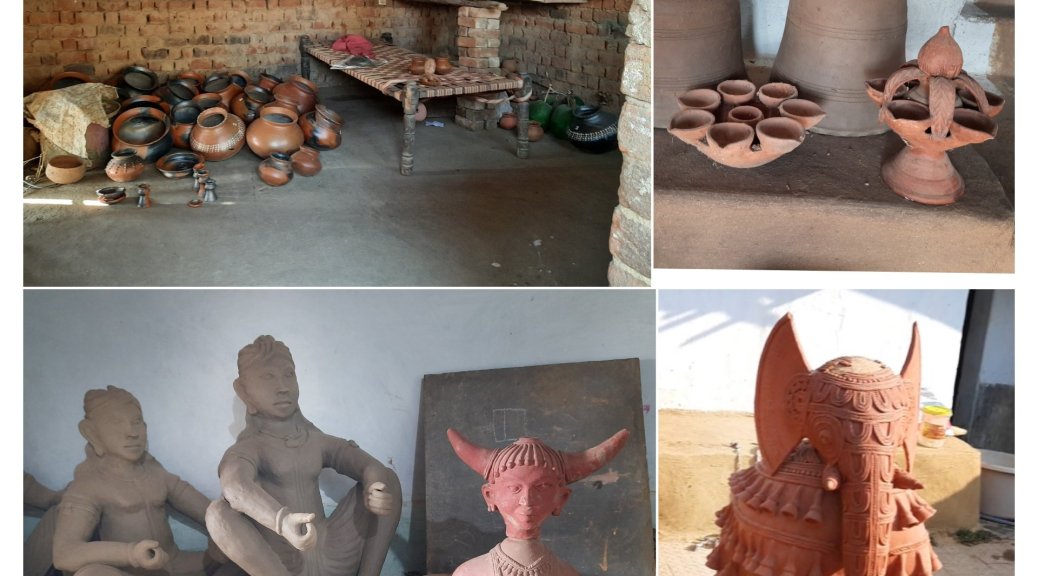
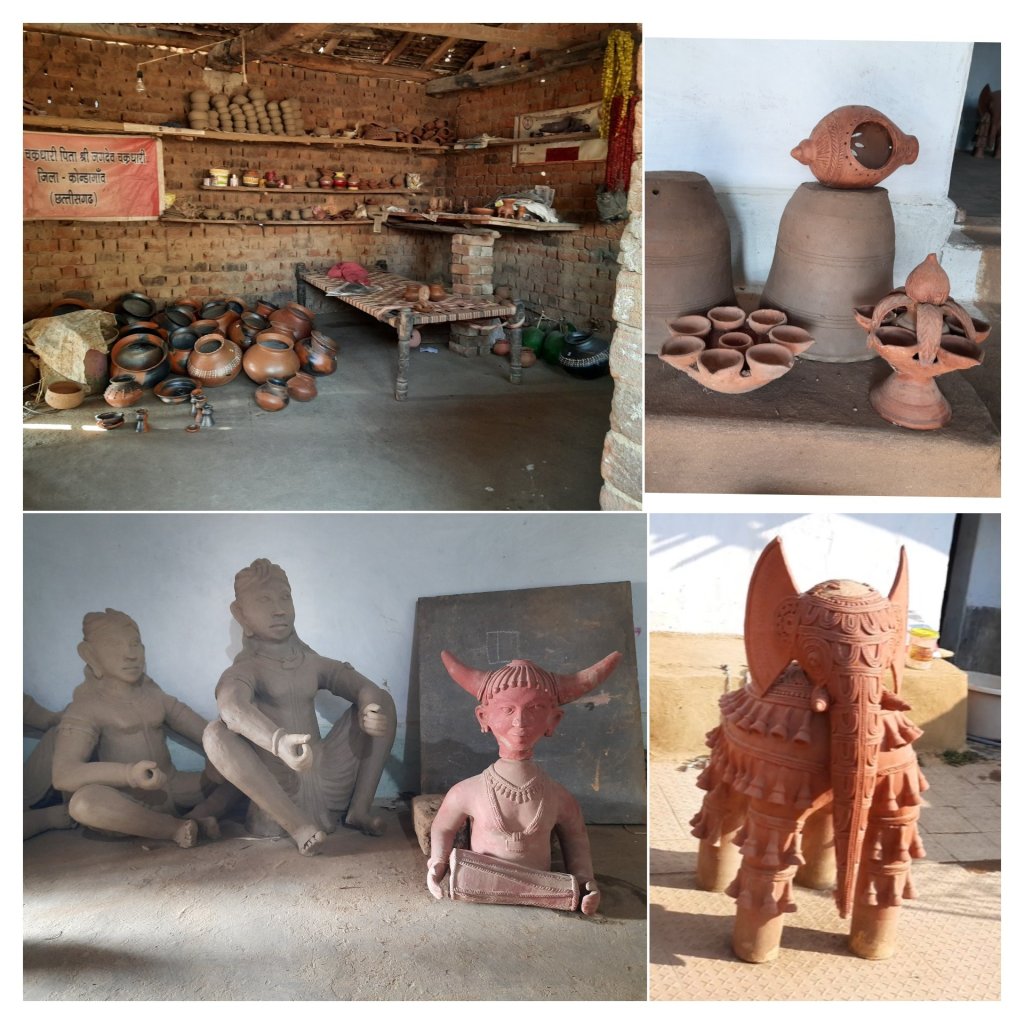
A special type of clay is dug from the vast paddy farms and is then crafted into various artefacts. The specialty of the art here in Bastar is that very large and real-life sized objects are crafted completely with clay. After the potter assembles the product piece by piece, he then burns it as a whole unit to give it the required strength and rigidity. Well, there’s an entire village of potters / Terracotta artisans in Kondagaon.

Terracotta art at Bastar’s pottery village

Wooden carvings & Carpentry:

With the abundance of forest cover and timber availability, wood craft is a major part of the handicraft culture here. Large tree trunks and roots are given the form of beautiful figurines, animals, etc. by very skilled artisans. This can also be seen in the rich carvings on doors and friezes of various old and traditional structures across the region.

Stone sculpture:

With the mineral rich earth of the region, various types of soil and stone are available. Several of these earthy materials are used to make beautiful sculptures.

Mural Paintings:

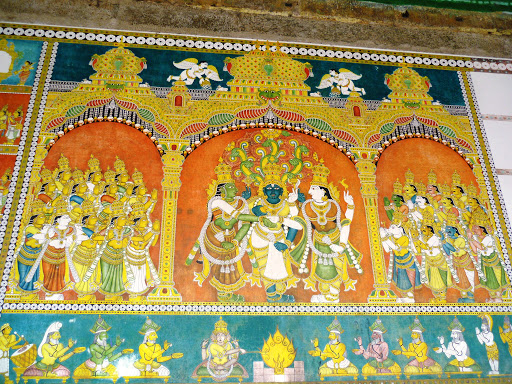
With a somewhat influence of the Patachitra art from the neighboring state of Odisha, the local Gondi artform and several other influences, the indigenous wall and fabric painting has evolved. Beautiful pictures of tribal deities, everyday life etc. can be seen being depicted through these paintings.

Handloom:

A small portion of the local tribes are involved in collection of the naturally available cotton and Kosa silk from the forests and weaving them into traditional textiles.

Jewelry:

Each of the tribes who inhabit the remote jungles of Chhattisgarh have their own unique pieces of jewelry. Anything that ranges from silver, fabric, plant fiber, shells or animal bones, the locally available materials from the wild are adapted into their culture in the form of traditional jewelry.

The heritage of paintings- a list from all Indian states

Art is an integral part of human life. Paintings are yet another form of expressing imaginations. The history of paintings in India dates to pre-historic times where there are several rock and cave paintings scattered across the sub-continent. Painted pottery on terracotta and ceramic too have been excavated at several sites. Eventually, it became an attempt to bring the storytelling of the Indian epics to a visual form, each one using the material available locally for colour and canvas. Some forms were patronized by the kingdoms that ruled India and yet a few, used by the local tribes to decorate their dwellings. The use of natural colours on naturally available surfaces has evolved with the generations, picking up influences from various events, people along the way.

This is the land of great artists like Nainsukh, Raja Ravi Varma. Bright and rich colours are now an inseparable part of vibrant culture and lifestyle of being Indian. Here is my attempt to enlist the traditional and folk paintings from all the states of India that can help you as a ready reckoner while you are out travelling in this beautiful land. A few, I would like to crowdsource the details wherever I failed.

These paintings can be strategically used in our daily life that will help revive, sustain and promote these ancient art and rural economy.

Andhra Pradesh:

  1. Deccani paintings– are miniatures which predominantly feature palm trees, men & women. The art has a significant influence by the Deccan sultanates who ruled around this area.
  2. Nirmal art– is where the artisans have developed their own canvas using cardboard and luppam. The striking designs in the form of creepers, flowers etc. have evolved on furniture today.
  3. Savara paintings– This wall art is practiced by the Savaras tribe around Vishakhapatnam. The wall is readied with a mixture of red soil and paper. The painting is done with brush prepared by chewing tender bamboo into various thickness. White colour is derived from rice powder and black colour is derived with a mixture of coconut ash & castor oil.
  4. Kalamkari– This is a fabric painting form popular in the rural parts around Machilipatnam. Primarily human faces are block printed using vegetable colours.
  5. Tholu Bommalaata– This is an art of making leather puppets that are hand painted using vegetable colours, mainly found in the region around Adilabad.

Arunachal Pradesh:

  1. Kuthang strolls– These are intricate religious paintings of the Buddhists. These are derived from the Tangkha paintings that are auspicious symbols hung in every monastery and houses.

Assam:

  1. Khanikar art– These are religious paintings that adorn the monasteries & Satras around the state.
  2. Assamese silk scrolls– Traditional colours of Hangool & Haital are used to draw representations from Ramayana and Mahabharata on silk strolls. This is practiced in the upper Assam region.

Bihar:

  1. Mithila or Madhubani– These are originally intricate wall paintings that depict Ramayana & Mahabharata adorning walls across the rural parts of Mithila region and have now become synonymous with the state.
  2. Patna Kalam– this is also another art form largely patronised during the Gupta era. Several paintings have been found in the Nalanda excavations.

Chhattisgarh:

  1. Godna– This is a primitive art form that has been largely in practice as body tattoos by the women folk in the Jamgula and Bastar region. It has found acceptance in the form of motifs on textile with natural colours mixed with acrylic paints.

Goa:

  1. Kaavi mural paintings– is largely popular in the Konkan region. As the colour says, Kaavi is a single colour- red pigment derived from laterite soil. Several structures, churches and temples are coloured with red paint on a white background.

Gujarat:

This state is sort of a mélange with vibrant colours used across a range of art forms.

  1. Pithora– These are wall paintings practiced by the Rathwa & Bhilala tribes
  2. Miniature paintings– This art has been used to depict epics and large stories under the Jain patronage in 11th century.
  3. Glass painting– It is believed that the earliest form of painting on glass (Belgium glass) originated in Gujarat.
  4. Kalampari art– This is a fabric painting technique practiced by the Chitara community.
  5. With many tribal communities living around the Kutch area, each tribe have their own unique art, patterns and colourations used in their daily life like walls, huts, attire, jewellery, pottery etc. It is an endless list but here are some of them from the Rann of Kutch.
  6. Rogan painting
  7. Terracotta paintings like Kavda pottery is believed to have techniques dating back to the Indus Valley civilization.

Haryana:

This is probably the only Indian state that doesn’t have a native art form. With several dynasties and rulers who came and went in this region, there has never been any specific art style that found patrons among who were always busy in fighting battles.

Himachal Pradesh:

  1. Kangra & Chamba miniature painting– Although largely spread across all the Himalayan states and largely coming under the Pahari paintings umbrella, the region of Kangra gave its name to the paintings that was largely promoted and patronised by the Rajputs. However, each ruler gave the art form its own twist and called it a different name.

Jammu & Kashmir:

  1. Basohli miniatures– Again a part of the Pahari painting, the famous artist Nainsukh is believed to have moved from Chamba and have settled in this region during his last days. Thus, giving its name to the bold and intense form of painting the Ramayana and Mahabharata. Hence, Basohli is the first school of Pahari paintings.

Jharkhand:

  1. Paitkar scrolls– Ramayana & Mahabharata stories are depicted on paper with colour made from vermillion. Fine brush is made using goat hair.
  2. Jadopatia scrolls– This form of paintings is used for story telling which are believed to have healing effects on people.
  3. Sohrai, Kohver, Ganju, Rana, Teli, Prajapati, Kurmi, Mundas, Turi, Birhor & Bhuiya, Ghatwal- these are mural paintings used to decorate the walls of the tribal houses. Each, representing a tribe and have their own style. The common factor between all these styles are that the designs comprise of animals & plants depictions thus indicating the connection of nature and the tribe.

Karnataka:

  1. Mysore Royal painting– influenced by the Vijayanagar school of painting, this art flourished under the Mysore Wodeyars. Bright natural colours obtained from vegetables, organic, minerals were painted using natural brushes. Squirrel hair was used for finer strokes and brushes made with a specific grass was used for various thickness and strokes.

Kerala:

  1. Kalam– This is a short name for Kalamezhuthu, a rural art of painting.
  2. Face painting– with various traditional dance forms and ritualistic prayers, face painting is an essential part of art in Kerala. Largely seen in its vibrant designs and patterns during Theyyams, Kathakali etc.
  3. Oil paintings– These murals are very elaborate piece of portraits largely practiced in the Northern part of Kerala.

Madhya Pradesh:

  1. Gond art– A painting style that is used by the Gond tribes. This largely comprises of finely drawn lines in a picture that encompasses animals and plants.
  2. Pithora wall paintings– this form of art is inspired by various myths and is used by the Bhilala tribe to keep away evils. You can often see walls and both sides of the doors painted with patterns that are believed to protect them.
  3. Malwa painting– This folk art can be found on floors and walls and practiced by the Chitera community. Chalk powder blended with turmeric & saffron for suitable shades of the colour is used in doing these paintings.
  4. Mandana paintings– This art is used to depict special occasions and festivals and used only during specific events.

Maharashtra:

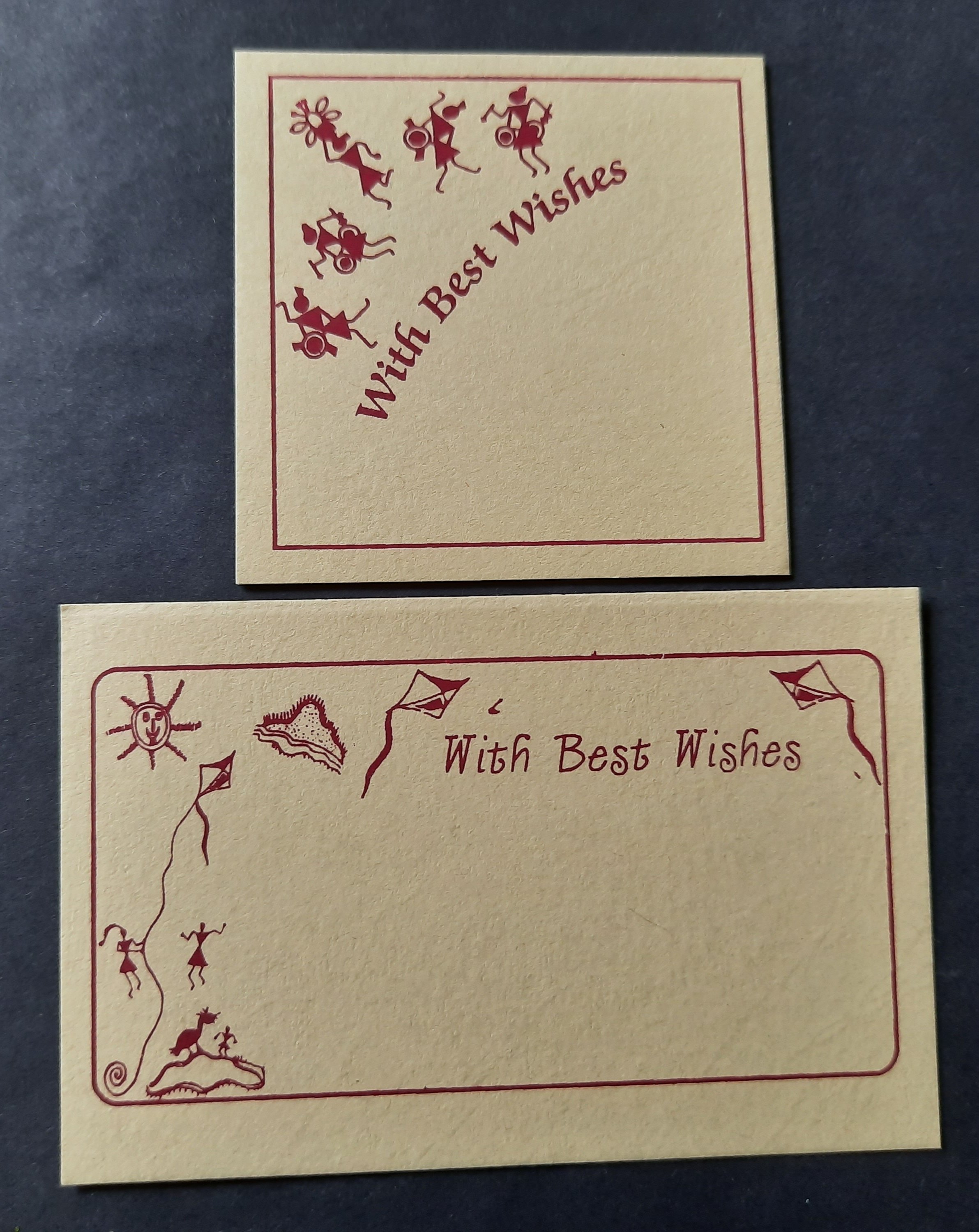
  1. Warli– Used to adorn walls by the tribe, this painting uses patterns like triangles and circles to represent community living, human being, trees, animals and everything in general.
  2. Chitrakathi paper paintings– as the name suggests, Chitra (picture) + Katha (story)- These are single sheet paintings used by a specific migrating community of Thakkar tribe for storytelling. Local version of Ramayana & Mahabharata and other myths are painted using colours made from stones. These are also called as Paithani paintings.
Warli paintings used in modern gifts
Compliments cards for gifts with Warli art

Manipur:

**Need help**

Meghalaya:

**Need help**

Mizoram:

**Need help**

Nagaland:

  1. Naga cloth painting– Several Naga tribes reside in Nagaland and each have their own designs in their houses, dresses and morungs. However, the Lotha, Ao and Rengma tribes have their traditional designs painted on fabric. Fine bamboo brushes are used to transfer colours that are made by mixing tree sap, leaf ash and local beer.

Odisha:

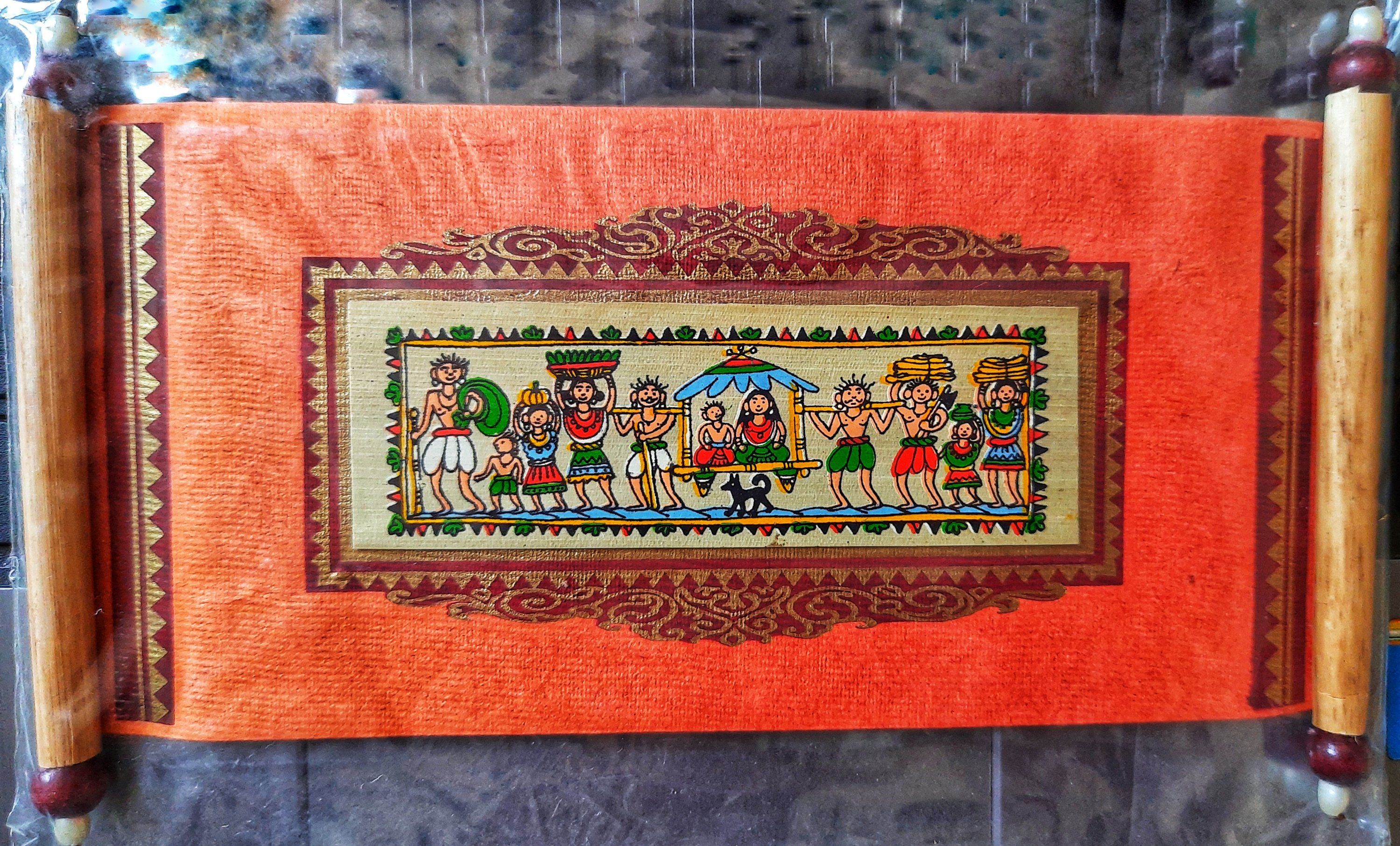
  1. Patachitra– These are traditional cloth-based scroll painting from rural parts of eastern Odisha. It is inspired by Mythic elements like Lord Jagannath and is derived from ancient Bengali art which is used for narration in the visual form when a song is performed.
Pattachitra paintings in modern gifts
A Patachitra scroll based envelope- for giving wedding compliments

Punjab:

  1. Sikh miniature painting– This an influence of the Kangra paintings and is used as a narrative of various stories from the life of Guru Nanak. Hence, has a vital role in Sikhism.

Rajasthan:

The list of painting related art forms from this state is endless. Here is a small compilation of the same.

  1. Phad cloth scrolls– These paintings are based on stories from Ramayana & Mahabharata. They have influences of both religious and folk performances by the local priests.
  2. Rajasthani miniature paintings– When the Mughal artisans dispersed from the Northern India, they were sheltered and patronised by various Rajput kings. Individual ruler had his influence on the style, and it evolved into individual styles, largely coming under a common umbrella called as Rajasthani school of paintings.
  3. Wall & ground paintings– Various styles like Devra, Pathwari, Sanjhi, Mandav etc. can be seen based on the individual communities.
  4. Cloth paintings– like Pat, Picchwai, Phad scrolls etc.
  5. Paane paper paintings.
  6. Kavad wooden paintings.
  7. Body paintings– various designs are drawn on human skin using natural colours like Mehendi & Godana
  8. Thape paintings– This is a wall & door painting style that is used to invoke deities. Natural colours like turmeric, henna, vermillion is used.
  9. Badaley paintings– These are either cloth or leather paintings that are used to cover metal utensils. It is prominent around Jodhpur.
  10. Thewa art– This is a form of painting small pieces of glass with gold. It is a famous art around Pratapgarh in Bhilwara region.

Sikkim:

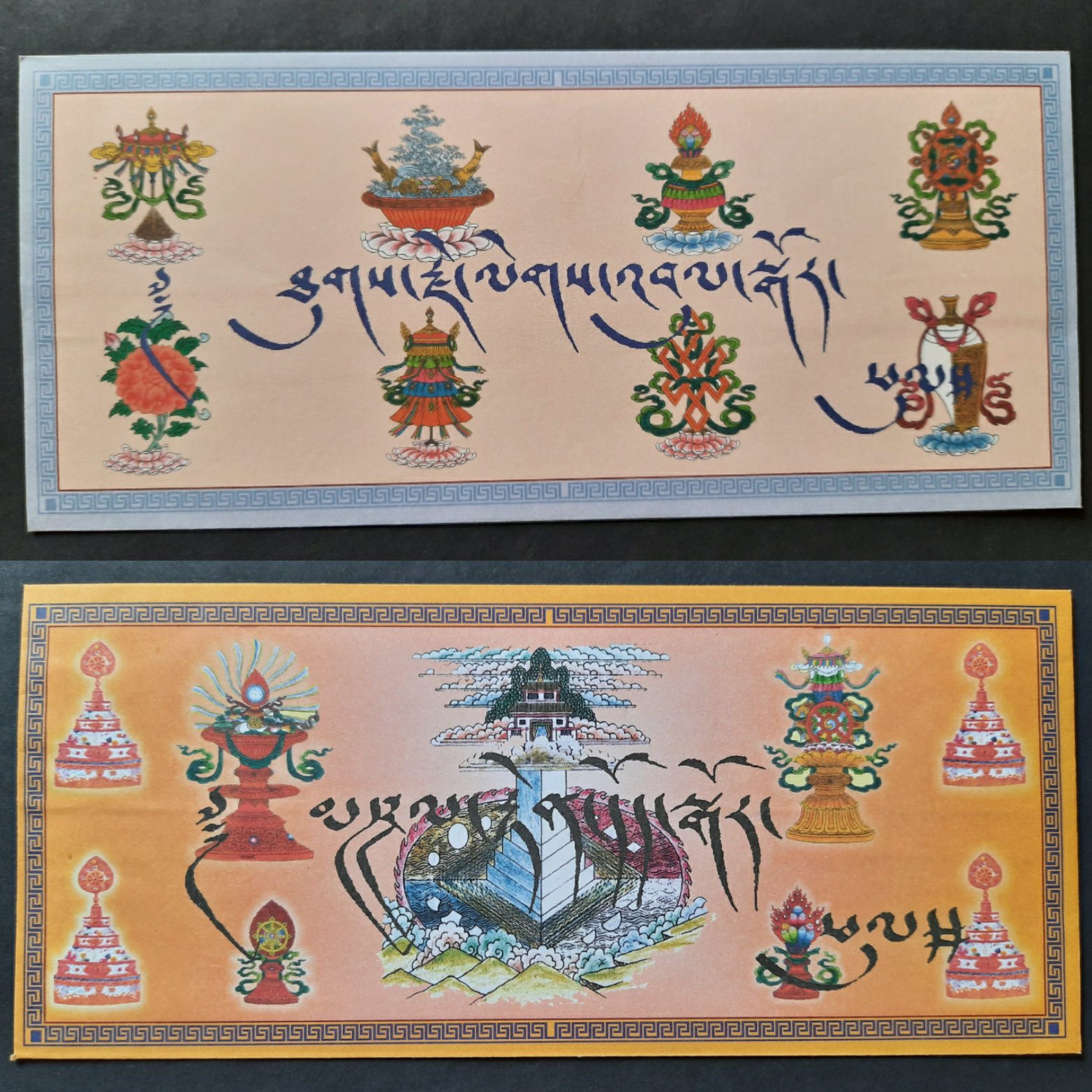
  1. Thangka painting– These are religious strolls that depict important lessons from Buddhism. This uses organic colours and even gold dust and adorns walls, roof and mural in Buddhist houses and monasteries.
Tibetan art in modern gifts
Envelopes with compliments & paintings from Buddhism

Tamil Nadu:

  1. Tanjavur paintings– This is a classical art form that has a 3-D effect with embellished with precious stones, glass pieces & pearls. It has been largely patronized by the Cholas and then have influences from the Marathas and others who ruled the region.

Telangana:

  1. Cherial scroll painting– This is a folk art on very long cloths used for story telling that can sometimes run into several meters. It is painted specifically by the Kako Padagollu community.

Tripura:

**Need help**

Uttar Pradesh:

  1. Mughal/ Persian painting style– The Mughals got artisans from Persia and used their designs and patterns in all their structures across. Art flourished especially during the reign of Jehangir.

Uttarakhand:

  1. Garhwal painting– Again, something that has been a part of the Pahari school, this form largely uses characters that depict romance.

West Bengal:

  1. Patua art– This is a traditional narrative cloth scroll painting style done by a community called the Patuas. An entire story is depicted on a single scroll with several panels for each chapter. The speciality of the art is its people who are mainly Muslim and paint Hindu religious figures in their artwork. These are same as Odisha Pata paintings in theme selection but entirely different in their style and composition.
  2. Kalighat painting– This started as paintings in items that were taken as offerings to Kali temple at Kalighat and has now become a specific form of painting. This is also a form of scroll painting but main difference is that this is done on paper.
  3. Tribal paintings– This is primarily popular among the ‘Santhal tribes’ around the areas of Purulia, Birbung and Barbura.
Continue reading The heritage of paintings- a list from all Indian states

The traditional fire making of the Nagas

One of the earliest science lessons we learnt in school is that friction causes fire. We all have grown past reading how the early cavemen generated fire by rubbing two stones together and eventually how this accidental discovery lead to a massive turnaround in the evolution of mankind.

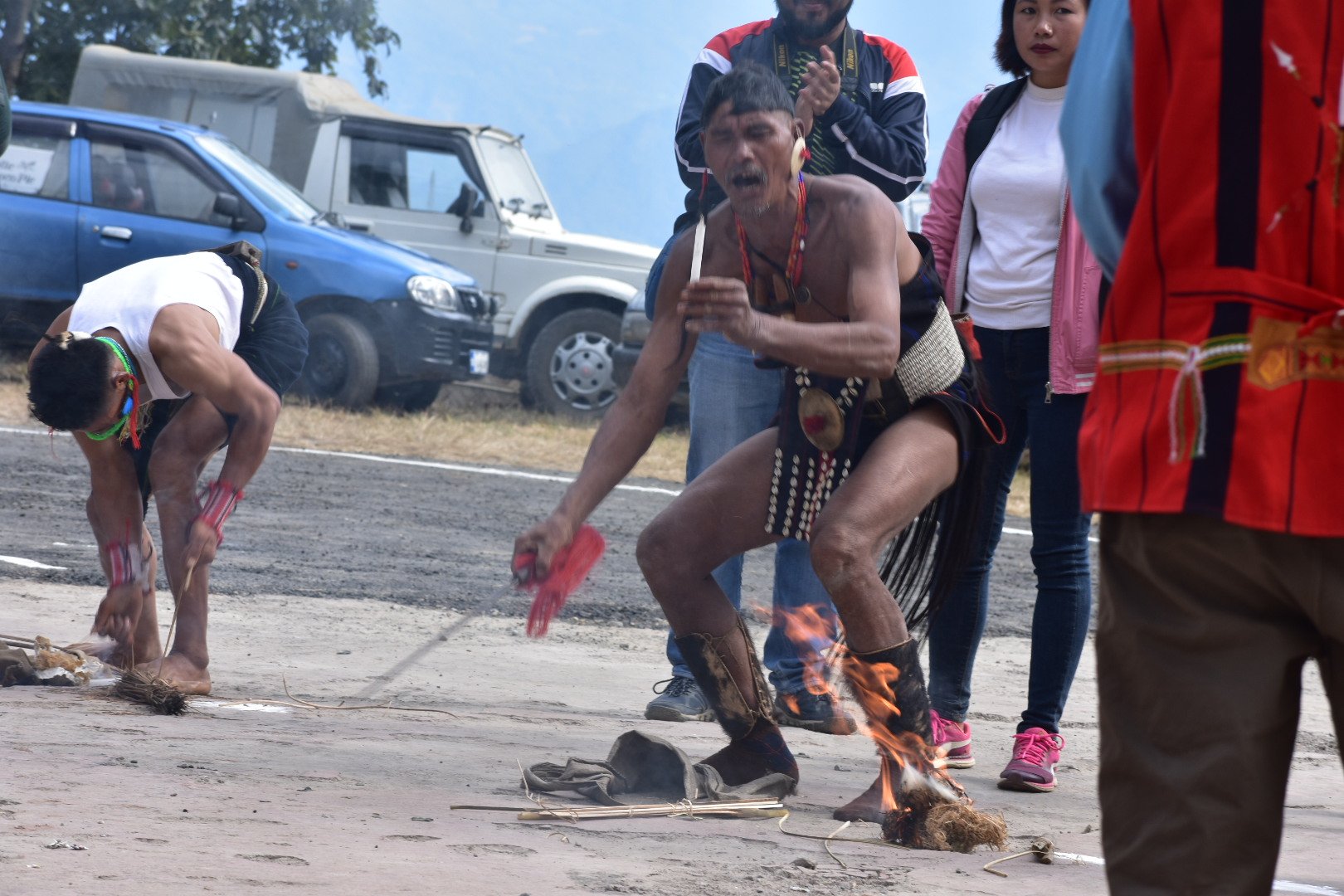
Leaving the past behind, the modern man uses a matchstick or a lighter to create fire, all based on the same science of friction. But, there in Nagaland, the culture still exits where albeit the formal education and access to matchboxes and lighters, the tribes continue to use their indigenous methods of lighting a fire. In order to keep this tradition alive, there are competitions conducted among the various tribes of the state to see who ignites the fire faster. I witnessed one such event during the hornbill festival-2019 in Nagaland.

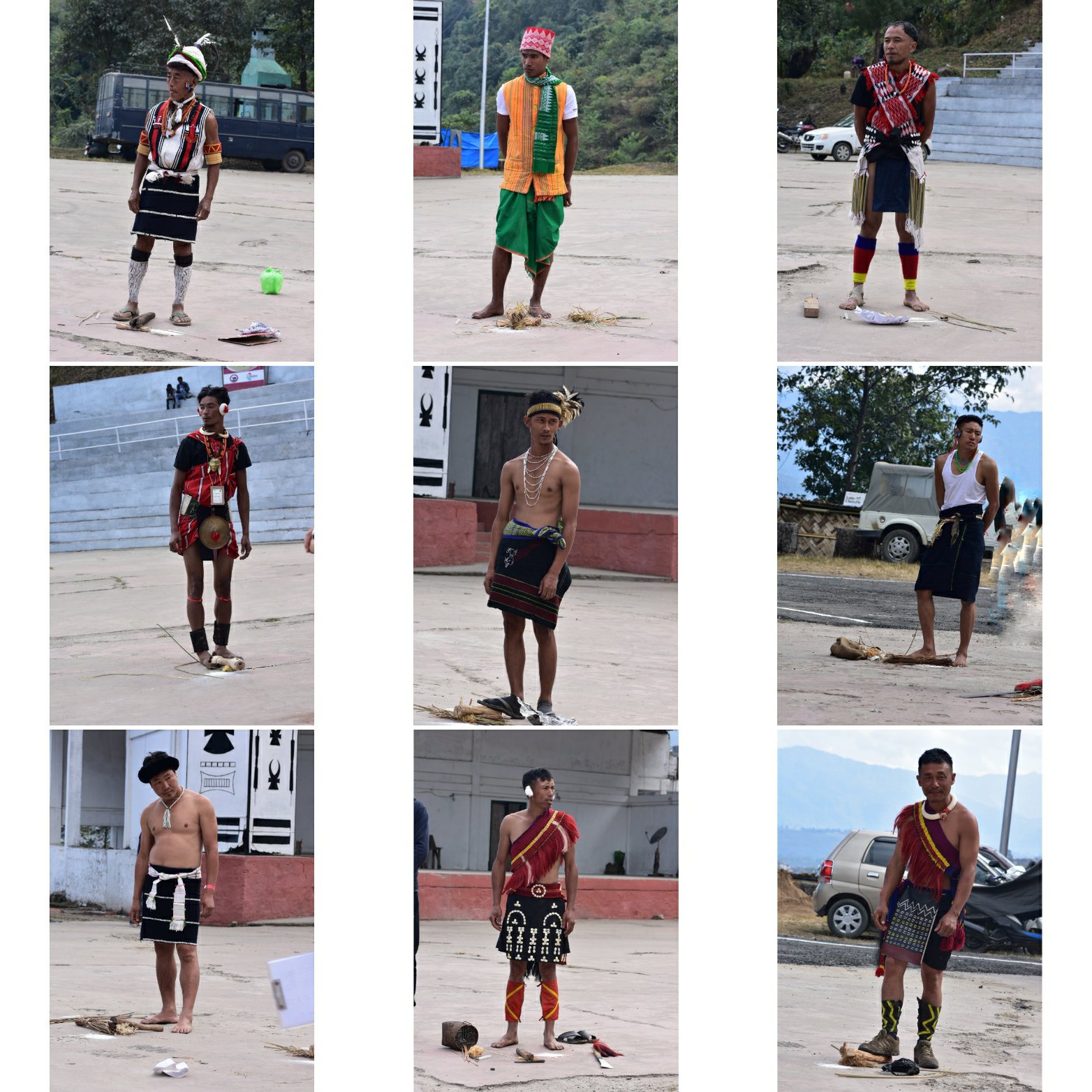
img_20200216_1315148673833036174924531.jpg
The nine other participating Naga tribes at the fire making competition

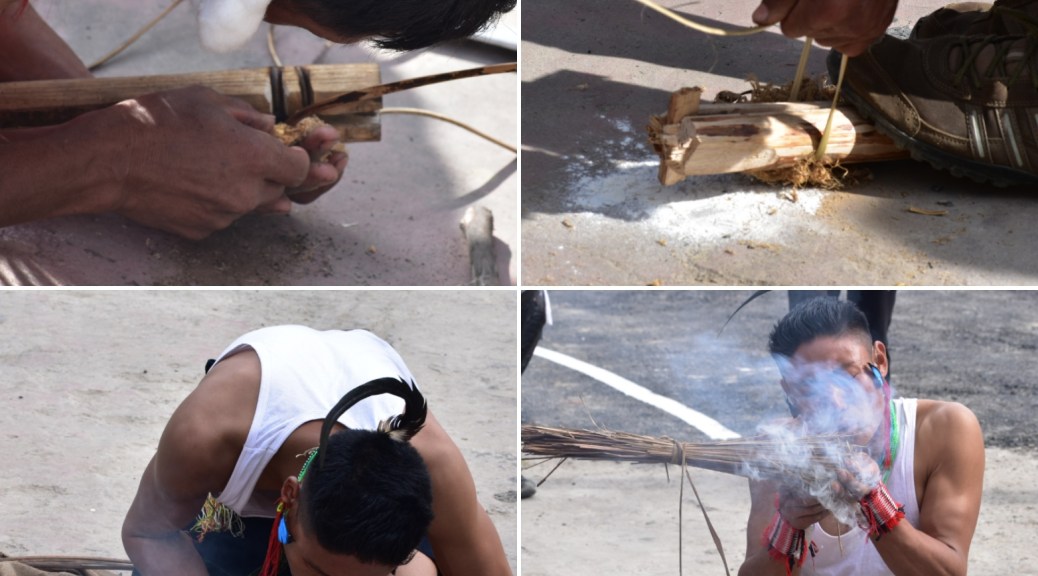
The traditional method of fire making is done by using wooden log and fiber. Wooden saw dust is placed between small crevices made in the log around which the long fiber is then rapidly pulled along, to create friction. The log and the fiber are the two surfaces creating friction and the saw dust is the fuel/ catalyst. It was a very distinct way of lighting fire to watch. The person who first lights a candle using the fire ignited by him in this traditional method gets to take home the trophy.

dsc_08571738360150418706737.jpg
The winner of the contest (Naga fire making)

Here is a video to see how this fire is made in the indigenous Naga way.

The Folk Musical Instruments of Nagaland

It is that traveling exposes one to a multitude of cultures and people. The diverse geography of India is home to some of the most unheard traditions and untold folklores. During my 10 day stint of backpacking in Nagaland, I was introduced to so many of it all, as this little Indian state, tucked in the far North-east is home to more than 17 tribal sects and sub-tribes; each having their own culture, language, traditions and cuisine. Here, is a small list of indigenous musical instruments used in the folk culture of the Nagas.

Mrabung:

Mrabung is an indigenous musical instrument of the Zeliang Nagas. It is a single stringed instrument that is crafted with a hollow/ cured bottle gourd and a fretless wooden neck of about 12 inches long. It is played with hair string bow (Usually a cluster of horse tail tightly tied together to two ends of a thin wooden stick). This bow is used to strike the chords (like a violin) with one hand and the string along the neck is pressed down with the other hand at appropriate places to get the required tune and legato of the song. It is played during merry making in social gatherings and festivals where men and women congregate. I was narrated with a popular folklore of the Nagas wherein, a singer called Arum played the Mrabung. His music captivated the farmers so much that everyone working on the field left their work undone and sat around Arum listening to his songs. Arum had to be barred from playing any songs further just so the people went back to work on their farms. Click below to see an artisan playing the Mrabung.

Atutu:

The Atutu is a handcrafted bamboo trumpet used by the Pochury tribes of Meluri. A particular variety of bamboo is used in making the varied components that are fitted together to make this crafted trumpet. It is played to mark special occasions. For example, blowing of this trumpet towards the end of February means to herald and announce the advent of the Nazhu festival. Also, the male members of the tribe play it in their morungs in the evenings throughout the festival. Apart from this, the trumpet sound is used to ward off birds and animals from the rice fields and prevent from crop damage. In earlier days, trumpeting was a way to alert the collective habitat or a village of a possible enemy attack or as a signal of declaration of a war.

20191204_1102368093835930586387810.jpg
The Atutu: The bamboo trumpet

Dholak:

This common musical instrument has its own version and avatar in every region of India. Be it weddings or festivals, it is the most common and almost an essential part of any merry making in Indian celebrations. Similarly, each tribe in Nagaland has its own version of the dholaks or the Indian hand drums. Made with an outer casing of wood, laced tightly with cotton strings and the drumming surfaces made with the locally available materials, more often animal hide. Here are samples of the dholaks used by the Garos (Long slender shaped, narrowing at the ends), the Mech Kacharis (fatter and shorter than the Garos) and the Aao tribes (Shorter and fatter than the previous two types and Uniform sized throughout its length) of Nagaland. (Click the below link to watch the ceremonial dances of the Naga tribes with their dholaks)

This is my humble attempt at documenting some unique musical instruments that are lesser known to the world outside North-east India. These have been listed based on my actual experiences and interactions with the Nagas during the hornbill festival-2020. If you know any such unique musical instruments, please do share in the comments section below. I would be happy to learn it from you 🙂