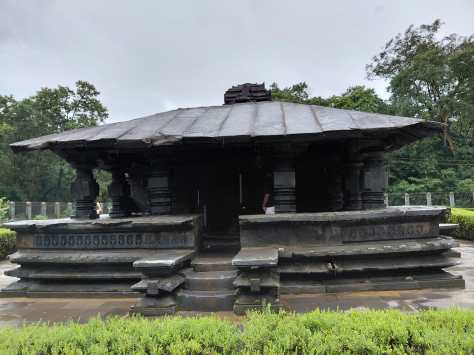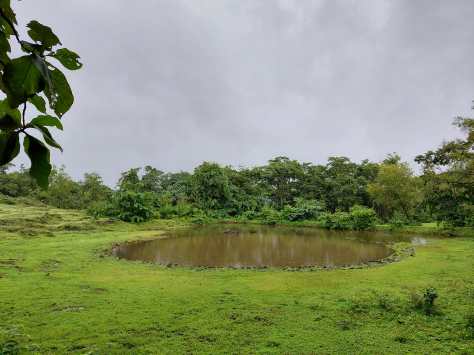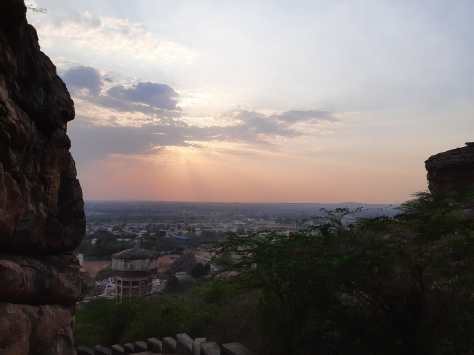
Category Archives: Nature & Wildlife

Annapurna Base Camp & Circuit Trek – The Ultimate Himalayan Adventure

Imagine waking up to the sun rising over 8,000m Himalayan giants, the crisp mountain air filling your lungs, and trails that wind through vibrant rhododendron forests, terraced villages, and sparkling rivers. This is not just a trek—it’s a life-changing journey.

Welcome to Annapurna Base Camp (ABC) and the legendary Annapurna Circuit, where every step promises adventure, romance, culture, and breathtaking natural beauty.

The Annapurna region is magical for everyone, but especially:

1. Couples Seeking Romance:

  • Walk hand-in-hand along trails with panoramic views of Machapuchare (“Fishtail Mountain”)
  • Cozy teahouses in Ghorepani or Chhomrong make for perfect quiet nights
  • Sunrise at Poon Hill – a memory that lasts a lifetime

2. Adventure Seekers:

  • Cross the legendary Thorong La Pass at 5,416m
  • Trek through glacial rivers, high-altitude deserts, and lush subtropical valleys
  • Multiple trail options like Tilicho Lake or Nar Phu Valley for hardcore explorers

3. Cultural Enthusiasts & Food Lovers:

  • Experience Gurung and Thakali villages, interact with locals, and understand their traditions
  • Sample authentic local dishes like dal bhat, momo, and sel roti in mountain teahouses
  • Witness traditional festivals, rituals, and the energy of Himalayan communities

4. Nature Lovers & Photographers:

  • Panoramic Himalayan views, frozen waterfalls, alpine meadows, and serene lakes
  • Flora and fauna diversity, from rhododendron blooms in spring to snowy alpine landscapes in winter
  • Every trail offers Instagram-perfect viewpoints

Difficulty & Fitness Levels

| Trek | Duration | Difficulty | Fitness Level Needed | Best For |

|——|———-|————|——————-|———-|

| Annapurna Base Camp (ABC) | 7–12 days | Moderate | Average fitness; can handle 4–6 hrs/day | Couples, beginners, first-time trekkers |

| Annapurna Circuit | 12–20 days | Moderate to Challenging | Good fitness; must handle 6–8 hrs/day & high altitudes | Adventure seekers, experienced trekkers, culture lovers |

| Mardi Himal Trek | 5–7 days | Moderate | Average fitness; shorter days | Photographers, couples, offbeat trek lovers |

| Tilicho Lake Trek | 10–14 days | Challenging | High fitness; high-altitude trekking (4,919m) | Experienced trekkers, adventure enthusiasts |

| Ghorepani Poon Hill Trek | 4–6 days | Easy | Light fitness; beginner-friendly | Couples, beginners, short-trek lovers |

| Nar Phu Valley Trek | 12–15 days | Challenging | High fitness; remote trekking | Adventure seekers, offbeat cultural experience lovers |

Fitness Tips:

  • Start walking or light cardio before your trek
  • Do uphill training if possible
  • Hydrate and eat well during the trek
  • Take rest days for acclimatization

Why Annapurna is So Popular?

  • From subtropical forests to alpine meadows and snow-capped peaks
  • Glacial rivers, terraced farms, and waterfalls all along the way
  • Annapurna South, Machapuchare, Dhaulagiri, and Gangapurna—every step is a photo opportunity
  • Walk through Gurung, Thakali, and Tibetan-influenced villages
  • Explore ancient temples, monasteries, and local festivals
  •  Comfortable lodges, hearty food, and supportive local communities make it easier than remote treks
  • Couples, solo travelers, adventure junkies, culture lovers, foodies—all find something here
  • Start from Pokhara, just a few hours from Kathmandu
  • Trekking routes are well-mapped and can be customized
  • Sunrise hikes, remote passes, and cozy nights in teahouses
  • Authentic local food and energy-filled villages
  • A trek that is emotionally fulfilling as much as physically rewarding

Top Treks and Trails Around Annapurna

1. Annapurna Base Camp (ABC) Trek – Classic & Scenic

  • Duration: 7–12 days
  • Difficulty: Moderate
  • Highlights: Sunrise at Poon Hill, Machapuchare views, base camp 4,130m
  • Vibes: Peaceful, romantic, photogenic, and cozy

2. Annapurna Circuit – Epic Himalayan Adventure

  • Duration: 12–20 days
  • Difficulty: Moderate to Challenging
  • Highlights: Thorong La Pass, Muktinath Temple, Mustang landscapes
  • Vibes: Thrilling, spiritual, culturally immersive

3. Mardi Himal Trek – Hidden Gem

  • Duration: 5–7 days
  • Difficulty: Moderate
  • Highlights: Close-up views of Machapuchare
  • Vibes: Offbeat adventure, intimate experience, perfect for photographers

4. Tilicho Lake Trek – Ultimate Challenge

  • Duration: 10–14 days
  • Difficulty: Challenging
  • Highlights: One of the world’s highest lakes (4,919m)
  • Vibes: Remote, pristine, for hardcore trekkers

5. Ghorepani Poon Hill Trek – Quick & Rewarding

  • Duration: 4–6 days
  • Difficulty: Easy
  • Highlights: Sunrise views, short trek
  • Vibes: Romantic, accessible, colorful trails

6. Nar Phu Valley Trek – Offbeat Adventure

  • Duration: 12–15 days
  • Difficulty: Challenging
  • Highlights: Tibetan-style villages, untouched culture
  • Vibes: Remote, adventurous, culturally enriching

Best Seasons to Trek

  • Spring (March–May): Rhododendron blooms, clear skies, perfect views
  • Autumn (September–November): Best visibility, pleasant weather, and festive vibes
  • Winter (December–February): Snowy trails, peaceful and less crowded
  • Monsoon (June–August): Lush greenery, waterfalls, and serene forests

Insider Tips

  • Acclimatize properly for high passes like Thorong La
  • Pack layers: weather changes fast in the Himalayas
  • Carry trekking poles for comfort
  • Try local foods and interact with villagers—they make the trek magical
  • Start from Pokhara for convenient access and pre-trek relaxation

The Annapurna region is more than a trek—it’s a complete Himalayan experience. 

  • For couples, it’s romance amid majestic peaks 
  • For adventure seekers, it’s thrill and challenge 
  • For culture lovers, it’s immersion into Himalayan life 
  • For foodies, it’s a journey of flavors and mountain hospitality 

Every trail, every meal, every sunset here becomes a story you’ll carry forever. Annapurna isn’t just a trek—it’s a journey of the heart, mind, and soul.

Goa backpacking: Netravali Wildlife Sanctuary

Continued from Goa backpacking: Makarotsav Celebration and Temple Hopping.

Based out of Colva, my friend and I had hired a motorbike to explore Goa. Our plan for today was to see some prehistoric sites, take a dip at one of the nearby waterfalls and return to Colva by late evening. With a set of clothes for changing and a towel for each of us, we had woken up to start our day quite early. But the rain gods had brutally taken over the skies, and hence, our day started late.

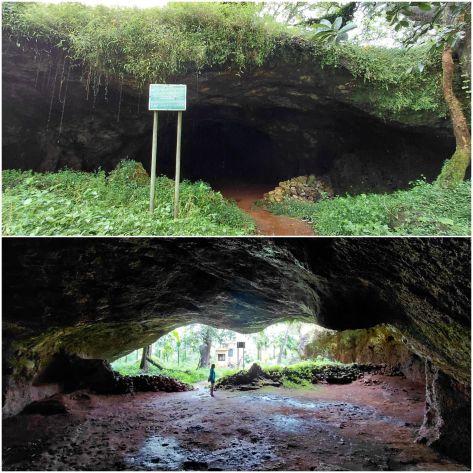
I was about 10 a.m. when the rain slowed to drizzle, and we left our cottage. We stopped for a quick breakfast in Madgaon before continuing. Using Google Maps, we headed to our first destination: the ancient Buddhist meditation cave at Rivona. Although we struggled slightly with the directions initially, we managed to find the site through local inquiries, without too much trouble. The asphalt road first passes through a residential area before reaching a large natural pond. At this point, the road splits, and we took a muddy route to the right, stopping at a small grassland at the end. From there, a small staircase carved into the laterite ground leads down. We were unexpectedly greeted by a security guard from the ASI (Archaeological Survey of India), who checked our attendance before we entered the cave. We were told a guide is usually available, but none was present at the time. We took a few photos before leaving. If you’re not interested in history and are just a tourist, I recommend skipping this site.

Buddhist cave at Rivona, Goa

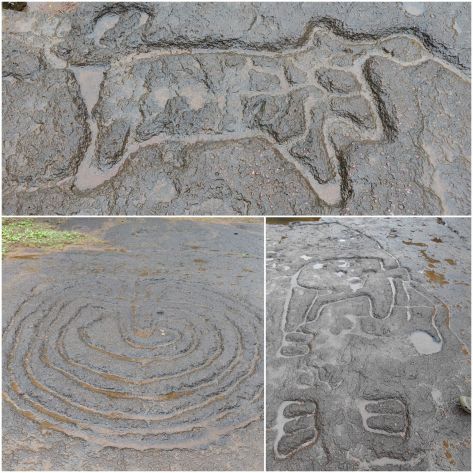
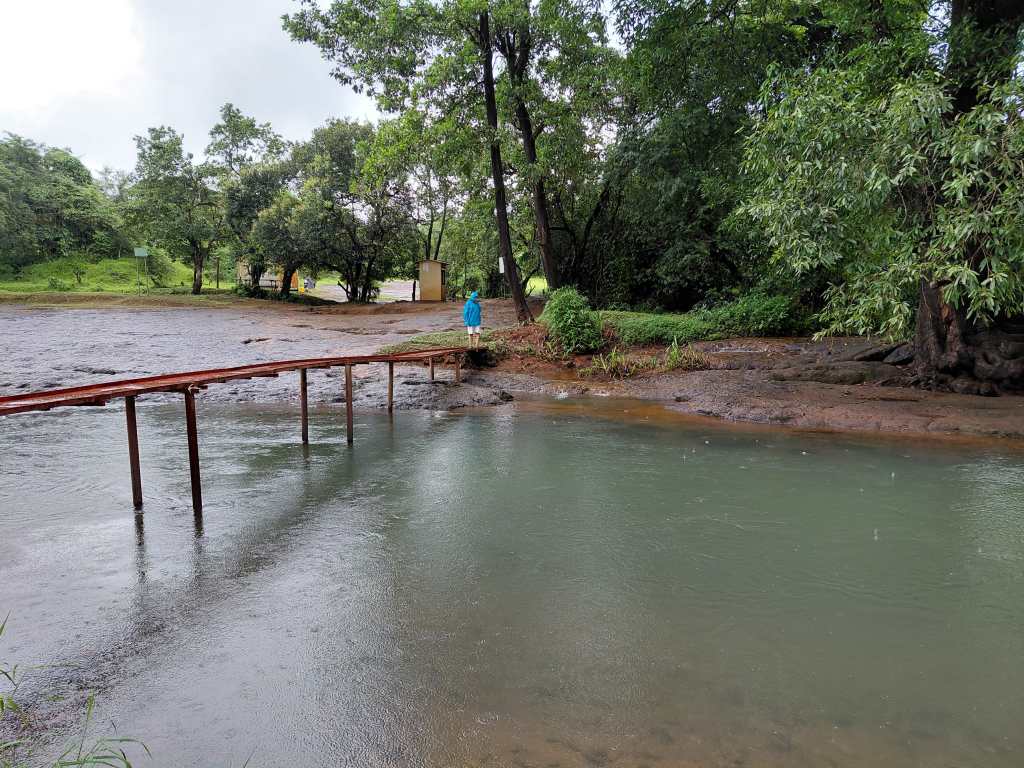
From there, we continued to follow the maps to our next destination- Usgalimal village, one that I was most excited about. For the first time, I was going to see petroglyphs, that too in Goa! The muddy trail that splits across the main road passes through thick forest right up to where the Google Map Pin takes you. After passing through a stretch of confusing deviations, patches of open grasslands and a laterite pond, the location pin finally took us to the banks of the river Kushavati, We parked our bike at the security post and wrote our names in the logbook. The security guard then walked along with us, guiding us through the riverbank. He showed us around various depictions/ Petroglyphs carved on the laterite stone bed of the river. He helped us identify several of the 100+ carvings discovered there, among which were various hunting scenes, several domesticated and wild animals, a trident, a labyrinth, etc., some of the notable ones. Seeing something like this for the first time piqued a new interest within me to learn more about Petroglyphs and ancient rock art, which I would want to travel to in future to explore.

Petroglyphs at Usgalimal, Goa

After spending enough time trying to observe and decipher the art there, we casually asked the guard accompanying us if there was a spot somewhere nearby where we could take a dip in the river. He thought for a moment and nodded while looking at the riverbank on the other side. There’s a spice & areca farm across, where you can approach the caretakers to permit you into the safer section of the river that passes through the property. We thanked him for the recommendation, picked up our luggage from the bike, and crossed a little brook across the river, where we were able to secure our permission. There are NO words to describe the joy our two little hearts had found inside the safe, sweet and soulful waterbody. With just the two of us swimming and enjoying ourselves in the water all the while, we did not realise that we had spent over 2 hours already without being bothered by the rain that bashed down or by any deadlines to get back to waiting families back home. But soon it struck us that we had to make the most of the time when the rain had taken a break. Since we had already spent a lot of time at Usgalimal waters, we skipped our original plan to swim in the waterfalls later. We quickly changed into fresh clothes and got the bike running again.

Not too long after we hit the road, the rain gods took over again, and the terrain changed to an even denser canopied area. A little board read that we had officially entered the Netravali Wildlife Sanctuary. The natural light had become less, and riding harder due to the constant bashing of the heavy rain and wind. We had no option to stop in between since the houses were scarce along the forest, and we had to reach the destination before it got too late so that we could return to Colva safely before it was too late.

River Kushavati, Usgalimal, Goa

Upon our arrival at the forest gate, we were told that the entry to the waterfalls was closed at 05:00 p.m. We had arrived at 05:05 p.m. The forest personnel did not oblige us, even after several requests and explanations of our long ride back and forth. Now we had two options- One, skip exploring the sanctuary altogether, and return to Colva. Two, find accommodation nearby and explore Netravali (also called Netraulim) at leisure on the following day. We took a moment to think over, looked up at the constantly pounding rain and decided to stay back in Netravali. Even if we wanted to skip visiting places, riding back in the rain and darkness would only be next to madness.

Since the eco-stay run by the Goa forest department was all booked, the guards helped us to find a local homestay nearby. Shortly, our stay was arranged with a local family, and it got dark after that. We took a shower and changed back to the same clothes (there was no other option), devoured a comforting hot meal before retiring for the night.

After waking up in the morning, we watched our host light up a lamp at the Tulsi katte in their courtyard and milk their cows in the shed attached to the family home. We had our breakfast and left towards the forest gates soon after. In fact, we wanted to be the first visitors for the day so that we could avoid the crowd and start our return ride as early as we could. So, there are two waterfalls as one enters the gated area, which require separate permits. We were briefed about the condition of the roads leading to both and asked to register ourselves accordingly at the entry. We decided to visit the Mainapi waterfall by hiring a forest Jeep and riding our bike to the Neturlem (Saoli) waterfall later.

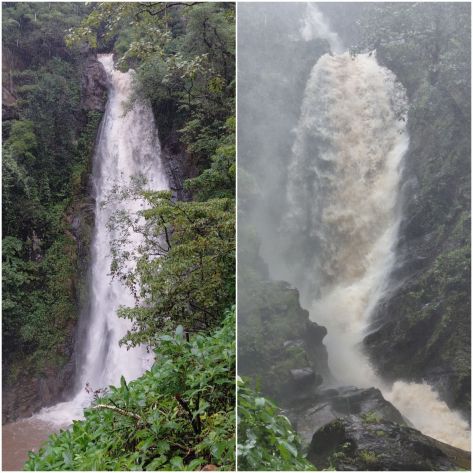
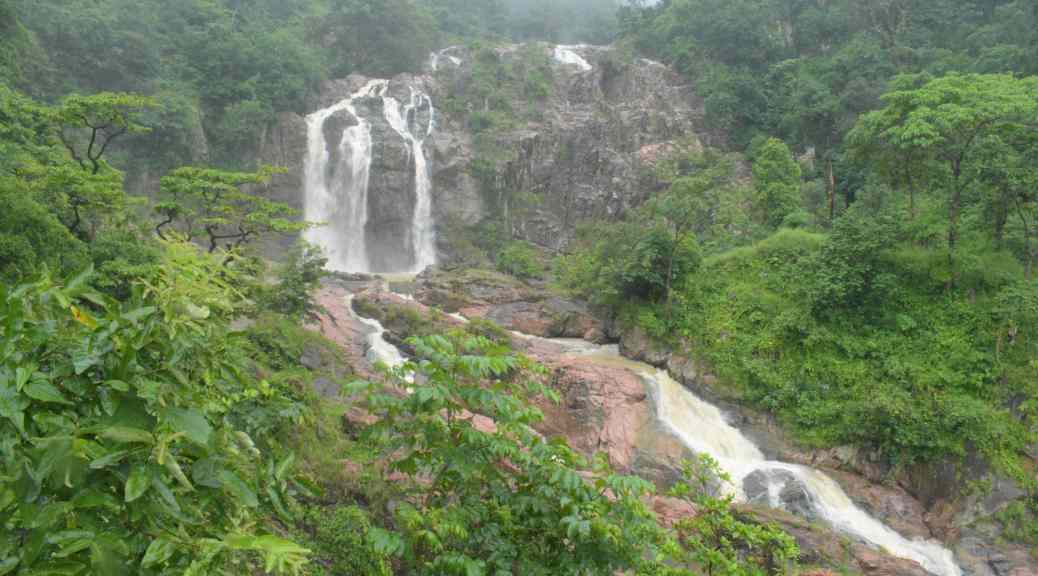
Waterfalls in Netravali Wildlife sanctuary, Goa
Left: Mainapi waterfall. Right: Saoli Waterfall. Netravali Wildlife sanctuary, Goa

The adventurous 5km drive to Mainapi waterfall constituted a crazy, bumpy drive on the rocky-hilly road cutting through thick canopied forest and river crossings. Further, a short hike down to the waterfall was accompanied by leeches, brightly coloured miniature crabs, frogs and other insects found commonly during monsoons. The first glimpse of the waterfalls had our breath pause for a moment. We hadn’t expected anything so beautiful in Goa, which is otherwise popular for its beaches. Thanks to the monsoons, the path further down to the waterfall was blocked for safety reasons. We sat down on the stairs, watching the water roaring down in all its might until we realised that a couple of leeches had entered my raincoat. I had to quickly get them out and also head back to keep the day’s schedule under control. After a good, bumpy drive back to the forest office, we returned to the forest on our bike. The road was good right up to the start point of the Saoli waterfall. After parking the bike, a short descent down the stairs leads us to the banks of the Saoli waterfall. We could get into the water, but the currents were still strong, and the water looked muddy from the heavy rain. We spent some time there, too, before exiting the forest gates.

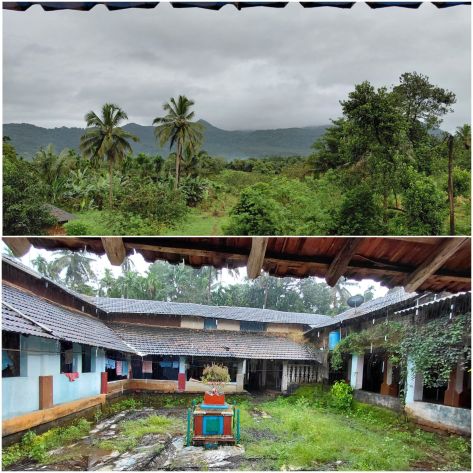
We returned to the homestay where our host had promised to take us around their ancestral village. After a short drive in their car, we arrived in front of an old mansion, which was the ancestral home of our host, the Desai family. It was very interesting for me to walk into a traditional Hindu home because its history dated back to even before the Catholic-Portuguese mansions which I had seen thus far elsewhere in Goa. As we entered through the towering arch-like entrance to this house, we were greeted by a large open courtyard, which was divided into dwelling spaces for each member of the family. To the left of the entrance was a space dedicated to the sacred arms once used by the ancestors of the family. We were told that some even had the original blood stains with a history of valour and martyrdom dating centuries. Laterite walls, red-oxide floor and clay tiles set on wooden beams- it invoked nostalgia instantly. While the kids surrounded us in excitement to tell us about their stories from the rooms, the senior women wove garlands with colourful flowers picked from their backyard while being entertained by the chatter of their husbands. They were all happy to have us amongst them.

Goan Homestay
Top: View from our homestay; Bottom: Courtyard of the ancestral home

We then walked through the exit door on the back side, passing by a series of bathrooms where we could hear the water in the firewood-lit boilers. As rain-fed streams came to life while walking through their rubber plantation, we crossed a little river to arrive at Datta-Gufa, a family-maintained temple. This is an important temple in the village accessible from the main road as well, but we were more privileged to get private access from the other side. After spending time on their property, we returned to the homestay from where we took our bike and commenced our return ride towards Colva.

En route, our first stop was at the Gopinath temple in Netravali. The temple is rather popular for its sacred tank. Fondly called Bud-bud Lake, the pond water is believed to bubble up when one claps while standing in front of it. We too did witness the interesting phenomena, but felt it did so as a response to some other air pressure occurring naturally in the otherwise silent environment. In any case, it was something we were experiencing for the first time.

From there, we started to ride again to make the most of the time when the rain seemed to have taken a break. A short ride ahead were directions to ASI sites like the ancient ruins of Sri Lakshmi Narayani temple and Kajur Petroglyphs. But by seeing the Google Photos uploaded by past visitors, we decided to give them a miss. Shortly, we reached Rivona. Someshwar Sansthan, Jawali Damodar Sansthan and Vimleshwar temple were landmarks and renowned local temples that we visited along our ride. This has been written about separately in my previous post: Goa backpacking: Makarotsav Celebration and Temple Hopping. We had a quick coffee break at Margaon before reaching our home during the trip at Colva.

To be continued as Goa backpacking: Day trip to Rachel and Big Foot.

Goa backpacking: Mahavir National Park

I am not a person who enjoys large social gatherings with heart thumping loud music and parties. For me relaxation comes in silence, slowness and engaging in self-paced activities. I had always thought and heard about the cultural amalgamation that Goa is and what Goa must have been before the Europeans came. I have friends from the Saraswat Brahmin communities who always mentioned that the temple of their Kula devata (patron God of their community) was in Goa despite their long history of residence in Karnataka. Infact, the name Goa itself is a corrupted version of GauMantak, a Sanskrit word meaning ‘Land of Cows’, a sacred animal as per Hindu mythology. I wanted to learn more about this cultural amalgamation brought in by the influence of the Portuguese and that is why I decided to spend my post-monsoon vacation in the southern parts of this state. Through a fortnight long on a backpacking trip, I explored Mollem- Old Goa- Rivona-Netravali-Colva- Ponda-Rachol- Louterim- Shiroda-Palolem-Panjim. In this post, I would like to share the places we explored in and around Mollem.

My family and I started our drive from Bangalore by early morning and arrived at the nature-stay / an eco-friendly luxury resort we had booked at Mollem by late afternoon. Fortunately, or unfortunately for us, it had been pouring cats and dogs since the previous day of our arrival. Unfortunate because, driving in the rain was extremely blinding; Fortunate because, heavier the rains, better would be the sight for which we had driven down all the way. So what sight am I talking about? We had specifically booked this resort to do the night walk with them in the rainforests due to its proximity to the Mahavir National park. The night walk was a unique way to explore the lesser known “Nightlife” of Goa, a night crawl that introduced us to the nocturnal flora and fauna of the region rather than the bars and pubs.

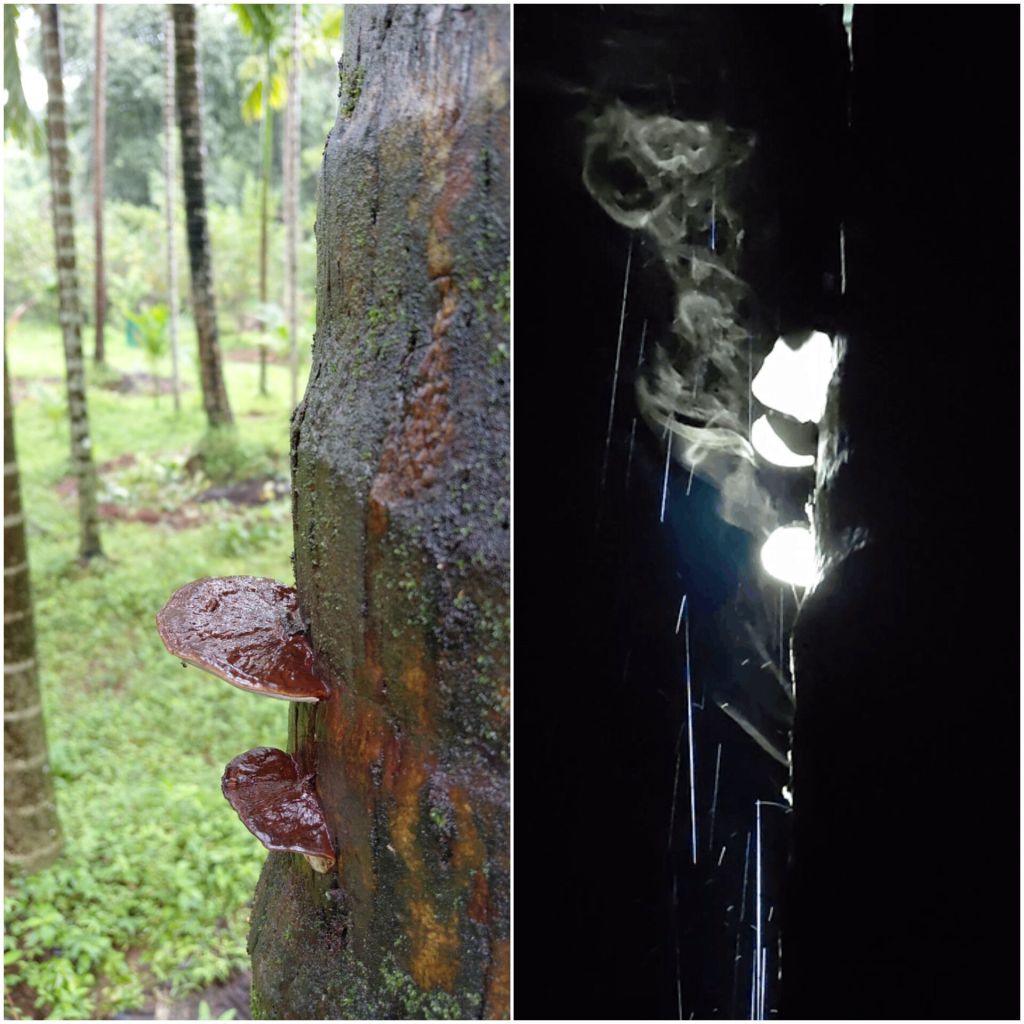
The lunch and dinner menu featured an all-local cuisine made with only locally sourced ingredients and tasted divine. Post dinner, we wore our raincoats, gumboots and headtorches and marched towards the forest after a short briefing. A guzzling water-steam flowing somewhere along in proximity stayed invisible in the darkness. Spiders, lizards, scorpions (that glowed under UV light), snakes and several types of mushrooms kept us accompanied in the constantly pouring rain during the entire walk. We then arrived at a spot in the middle of the forest, surrounded by massive trees and thick canopies. Our guide asked us to turn off all artificial lights and close our eyes for about a minute. It was for our eyes to set into the darkness of the forest after walking with flashlights until there. When we opened, we were all stunned by what our eyes beheld. The entire forest floor and the tree trunks were lit like radium. We were witnessing truly magical moments as bioluminescence was seen at its peak. The luminous fungi growing all over the ground, on tree trunks and even tiny wigs below my feet were glowing in the dark. An experience that I had wished to witness since so rftany years had finally come true.

The same Mushroom photographed during day(left) and night(right). Spores can be seen under torchlight at night.

We then returned to our cottages still holding the magic of the flowing forests still in our eyes. The other times of witnessing nature’s magic with light have been documented in separate posts.

It was still raining as we devoured our breakfast and checked out of the resort. Our first visit was to Tambdi-Surla Mahadev temple. This is the oldest surviving Hindu temple in Goa, established by the Kadamba-Yadava dynasty and dates to 12th Century CE. It was a peaceful little temple built on the bank of the river Surla, whose upstream forms a cascading waterfall called by the same name. However, due to the monsoons, entry into the river or the hiking to the waterfall was prohibited at the time of our visit.

Tambdi Mahadev Temple, Goa
Tambdi Mahadev Temple at Tambdi Surla

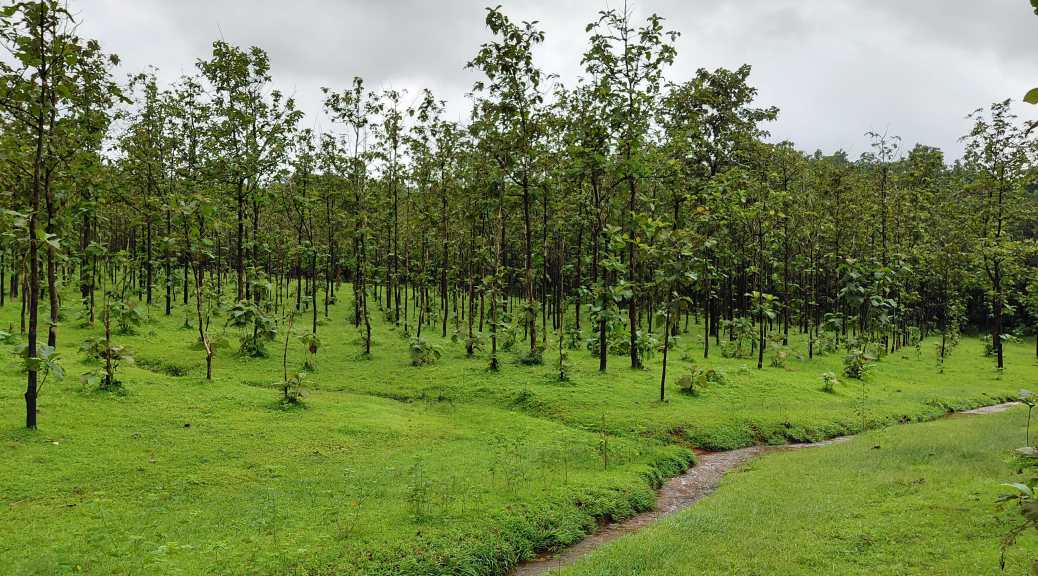
Upon our return from the Tambdi-Surla Mahadev temple, we were enchanted by the green cover all along the way. It was so tempting to the point that we parked our car by the roadside and simply walked into the neon green meadows running parallel to the road. We jumped across a tiny rainfed stream flowing across teak plantations which led us straight into a place that looked like a Windows wallpaper. We took lots of photos before coming across another random location on google maps that was named as a ‘crater lake’. Curious to find out what the lake was, we drove a little further and hiked a short distance by following google maps until we came across a small round shaped lake in the middle of a forest. I am still unsure if that was man-made or a natural pond which looked almost perfectly rounded in shape, but nevertheless it was a beautiful setting for yet another set of photography.

The Crater lake at Goa
The Crater Lake at Mollem National park, Goa

The stretch was mostly cut-off from mobile Connectivity, and we loved the peace we found amidst the chaotic monsoon drive. We occasionally stopped by at shops running in the backyards of small homes along the way to use free Wi-Fi in the name of drinking chai or coffee, local snacks sold in glass jars. It was thus far a beautiful trip exploring Mollem and Mahavir National Park.

We then proceeded towards Colva where we found our home for the next few days to explore the least explored places in Goa beyond beaches and parties. To be continued as Goa backpacking: Makarotsav Celebration and Temple Hopping.

Rock Climbing Weekend at Badami

During my tenure as a freelance outdoor leader, the organization that I was working for had arranged an adventure outing for all the leaders to catch up for one weekend. The itinerary seemed interesting but I could not join the team due to personal reasons. When the pictures from the tour were shared in the common group, I had myself filled with regret and envy for not joining them. One photo was of a participant hanging down from a massive rocky hill which triggered me to plan my own trip to finish the undone.

When I did a bit of research on other destinations to learn rock-climbing, several options appeared from locations nearby to Bangalore. But nothing could match the one at Badami in Karnataka. Apart from Badami being a UNESCO site of heritage, its rocky mountainous terrain is popular among climbing enthusiasts. Technical courses in various difficult levels of climbing, from entry to professional are offered by a couple of well-known trainers in Badami. Well, I combined my trip to Badani with a visit to Hampi, but that is for another story. I contacted one of these trainers, booked myself a weekend slot for a beginners’ course and arrived at Badami one morning.

As told, I arrived at Ranganathana Gudda, on the hillocks where my course was supposed to be conducted. Since the weather can get very hot by mid-day in this region, all climbing activities are usually conducted during early morning and late afternoon hours. The surrounding rocky hills cast a shadow at these hours, and this shade provides a cool environment for climbers in an otherwise arid climate of Badami. With safety harness around my waist, climbing shoes, helmets, and chalk powder on my hands, I felt like a warrior ready to enter a war field. I attended four sessions spanning 2 days and completely loved it. Under good guidance, I was able to quickly leam the knack of rock climbing with ease even as a beginner. The overall experience was utterly amazing and worth all the hype and urge I had created within myself to try my hands at it.

Sunset from Ranganathana Gudda- Badami

For first timers in Badami, the gap hours between climbing sessions can be utilized to explore Badami’s historical and cultural heritage. It is amazing and impressive. However, I decided to skip all of it this time because I had been to Badami before exclusively for cultural exploration. This time I decided to just relax in the comfort of our hotel (Mayura, Badami) rather than drain our in the scorching heat of the March Sun after the morning climbing session and just soak up the tranquility of the setting sun from the Ranganathana Gudda post the evening sessions.

Along with all the above wonders to be experienced again, what will bring me again to Badami is to experience the full moon night’s camping and hiking over these rocky hills. This was a discovery I made only during this visit and hence could not prepare for it. A full moon night’s view with bonfire to keep us warm with our tents pitched up above there is only a vacation I manifest to happen soon.

Kashmir Great Lakes Trek – Cost, Best Time, Route & Highlights

The Kashmir Great Lakes (KGL) trek is widely regarded as one of India’s most spectacular high-altitude circuits. Rolling alpine meadows, jagged granite ridges, and a string of emerald and turquoise lakes make this route feel like walking through a painter’s brightest palette. Great Lakes of Kashmir is a classic 7–9 day trek that usually takes trekkers from Sonamarg to the Naranag valley (or the reverse), crossing several high passes and visiting lakes such as Vishansar, Krishansar, Gadsar, Satsar and Gangabal.

This guide covers the route, daily plan, difficulty, best season, permits and safety, gear, food and packing, acclimatisation and practical tips so you can plan and enjoy the Kashmir Great Lakes trek with confidence.

  • Typical duration: 7–9 days (6–8 days of trekking).
  • Typical distance: ~65–75 km depending on start/end points and exact route.
  • Maximum altitude encountered: ~4,200–4,300 m (Gadsar / Nichnai passes). Most camps lie between 3,500–3,900 m.
  • Difficulty: Moderate to difficult (long days and 1–2 steep passes; not technical but physically demanding).
  • Best months: Late June to early September (peak July–August).

What sets KGL apart is the variety compressed into a single circuit. In a week you move from thick forest and pastoral Sonamarg meadows to barren moraines and dramatic glacial basins. Each lake has its own character — Vishansar’s wide shallow shores, Krishansar’s twin lake views, the dramatic bowl around Gadsar and the grand Gangabal beneath steep cliffs. The landscape changes day by day, making every campsite feel like a new world. Many trekkers call it a once-in-a-lifetime trek for the views alone.

This is a standard itinerary many operators and independent trekkers follow. Distances and times vary by pace and route choice.

Day 1: Srinagar to Sonamarg
Arrive in Srinagar and drive (~2–3 hours) to Sonamarg. Final gear checks, stay in a guesthouse or camp at Sonamarg (2,700–2,800 m).

Day 2: Sonamarg to Nichnai (~10–12 km, 6–8 hrs)
The trail climbs out of Sonamarg through meadows, forests and the Shekdur stretch before arriving at the high pasture of Nichnai (~3,500 m). There may be an army checkpost where ID is required.

Day 3: Nichnai to Vishansar Lake (~10–14 km, 5–7 hrs)
Cross the Nichnai pass (often ~4,100–4,150 m depending on route), then descend and reach Vishansar lake (~3,650 m). A spectacular first high-altitude lake.

Day 4: Vishansar to Gadsar (via Gadsar Pass) (~16 km, 6–8 hrs)
A long but rewarding day: ascent to Gadsar Pass (~4,200 m) and then a descent to the turquoise Gadsar Lake. Gadsar is in a sharp amphitheatre of cliffs and often has ice in early season.

Day 5: Gadsar to Satsar (~11–12 km, 4–6 hrs)
Cross rolling meadows and reach the Satsar lakes — a cluster of multiple small lakes — with scenic campsites.

Day 6 : Satsar to Gangabal (via Zaj or other pass) (~9–12 km, 5–7 hrs)
Cross the pass (sometimes called Zaj or another local saddle) into the Gangabal basin and camp by Gangabal Lake below Mount Harmukh. Gangabal is one of the most dramatic high-altitude lakes in Kashmir.

Day 7: Gangabal to Naranag / Thajiwas valley (~10–14 km)
Descend to Naranag, meet transport and drive back to Srinagar. Naranag has historical temple ruins and is a popular exit point.

Note: Many operators add a buffer day for weather, or extend to 8–9 days to allow lighter daily distances and better acclimatisation.

Kashmir Great Lakes Trek is not a technical climb since you won’t need ropes or glacier travel skills on the usual route but it is a sustained high-altitude Kashmir Trek with long ascents and descents. Expect:

  • Daily walking of 5–8 hours on varied terrain.
  • Two or three high passes around 4,000–4,250 m (steep sections, loose scree on approaches).
  • Nights at 3,500–3,900 m, so altitude symptoms are possible.

Fitness prep: a few weeks of aerobic conditioning (brisk walking, stair climbing, light trail runs) and weekend hikes will help. If you’re new to high altitude, allow an extra acclimatisation day (e.g., at Nichnai or a day in Sonamarg), many guided trek agencies like Cliffhangers India include one buffer day in their itinerary.

The trek is seasonal because snow blocks the high passes for much of the year. Late June to early September is the practical window: the snow melts, meadows bloom and passes are mostly passable. July–August are peak months. Trails are busiest then and weather is most stable; monsoon influence is limited compared with the lower Himalaya but occasional storms and afternoon rain/snow at high altitudes can occur. Early June may still have heavy snow; September can be cold with early snowfall. Plan accordingly.

  • Army or local checkposts are common near Sonamarg; keep valid photo ID (Aadhaar/passport/driving licence) handy for checks. Some itineraries require village levies or fees, your operator will handle.
  • Guided groups: using a local, licensed operator with experienced guides is strongly recommended if you’re new to Himalayan trekking. Operators provide tents, meals, porters/ponies and local knowledge of passes and weather patterns.
  • Altitude sickness: know the symptoms (headache, nausea, dizziness, reduced performance). Don’t push through progressive symptoms, descend immediately and seek medical help. Carry a basic first-aid kit and consider medications like acetazolamide only after consulting a doctor.
  • Operators provide 3 meals a day (simple, high-calorie trekking food). If self-supported, carry freeze-dried meals or easy staples (oats, pasta, nuts, energy bars).
  • Water: treat with chlorine tablets, purification drops or boil. Streams flowing from glaciers look clean but carry microscopic risks. Carry a 2–3 litre hydration setup; water points are frequent near lakes and streams.
  • Campsites are grassy meadows (pack down if wet); expect cold nights and  sleeping bags rated to at least -5°C to -10°C recommended for safety and comfort.
  • Sturdy trekking shoes/boots (broken in).
  • Waterproof shell jacket + insulated midlayer (down or synthetic).
  • Trekking pants, base layers (thermal if early/late season).
  • Hat, gloves (warm, windproof), sunhat.
  • Sleeping bag (rated to –5°C or lower).
  • SPF, sunglasses (high UV at altitude), lip balm.
  • Trekking poles (hugely helpful on steep descents).
  • Headlamp, spare batteries.
  • Water purification method and 1–2 litre bottles or bladder.
  • Light stove if self-cooking (or plan with operator food).
  • Basic medicines, blister kit, altitude info card.
  • ID and photocopies.

The region is home to mountain fauna (pheasants, marmots, ibex at very high altitudes, and sometimes brown bears in the lower forests).

Respect local wildlife, don’t feed animals, keep a safe distance, and store food properly.

The fragile alpine meadows recover slowly from damage, so follow Leave-No-Trace principles: carry out all plastics, avoid cutting vegetation, use designated campsites and follow toilet protocols (bury waste away from water sources or pack out).

Local communities and park authorities also emphasise low-impact travel.

  • Guided trek: expect a price range depending on services,  basic group treks are cheaper; private departures cost more. Pricing covers transport from Srinagar, tents, cooks, ponies/porters, permits and guide fees. Booking through reputable local agencies ensures safety infrastructure.
  • Independent: possible for experienced trekkers who can source local ponies and cooks, but permits, navigation and emergency response are more your responsibility. For first-timers, a guided trek is the safer, simpler option.
  • Gadsar Pass and Gadsar Lake — dramatic bowl views, turquoise water and cirques: one of the most photogenic spots on the trek.
  • Vishansar and Krishansar — approach views from the pass reveal twin lakes and meadows.
  • Gangabal below Harmukh — large alpine basin with sheer cliffs and reflective water — great for sunrise and sunset photos.

Bring a polarising filter if you shoot and protect gear from sudden drizzle or dust.

  • Pace yourself — better to arrive fresh at camp than collapsed; shorter, steadier steps up and down help.
  • Hydrate and snack — dehydration hides behind fatigue; sip water constantly and eat salty snacks to keep electrolytes.
  • Early starts — weather is most stable in the morning and you avoid afternoon wind or cloud.
  • Practice with poles — they save knees on long descents and steady you on screen.
  • Respect local advice — guides know micro-weather patterns and which days are risky for passes.
  • Check weather and pass conditions with your operator 48–24 hrs before start.
  • Confirm transport and meeting points in Srinagar/Sonamarg.
  • Carry sufficient cash (ATMs are not available en route).
  • Make a small emergency plan: share your itinerary with someone and ensure you know how to contact your operator or local authorities.
  • Pack exactly what you’ll need — light but complete.

The Kashmir Great Lakes trek is not the easiest Himalayan circuit, but with good preparation it is one of the most rewarding. Whether you go with a trusted local operator or plan a careful independent trip, respect the mountain, pace yourself, and soak in the views , the lakes will repay every step.

Beyond the physical challenge, KGL rewards with a sense of wonder: silent mornings by glassy lakes, wildflowers in meadows, the crunch of alpine gravel underfoot and nights under impossibly bright stars. It’s a trek that changes how many people think about scale and stillness, a lasting memory rather than just a checklist. Expect to return quieter, tired and richer in stories.

A Weekend Adventure: Hiking to Ankushagiri Fort

On yet another weekend, we were off on yet another hiking expedition. This time, we went to a lesser-known trail on Hosur-Krishnagiri road. The initial plan was to hike to ‘Aiyur Sami Lake’, a day hike organized by the Eco-tourism wing of the Tamil-Nadu tourism department. However, their site was not accepting registrations due to unknown reasons, and hence, we decided to randomly pick a hill around the region on Google Maps and hike it up. That’s when we came across the Ankushagiri fort.

Following the route indicated on Google Maps, we arrived at the base of the start point of the ascent to Ankushagiri. There is a Perumal temple and, hence, a proper space for vehicle parking. Since we arrived on a Saturday morning in the winter months, some pilgrims had already arrived to worship the chief deity here. However, we skipped the temple visit and began our hike toward the fort that was located (once upon a time) on the hilltop.

Ankushagiri Fort and Perumal Temple at Tamil Nadu
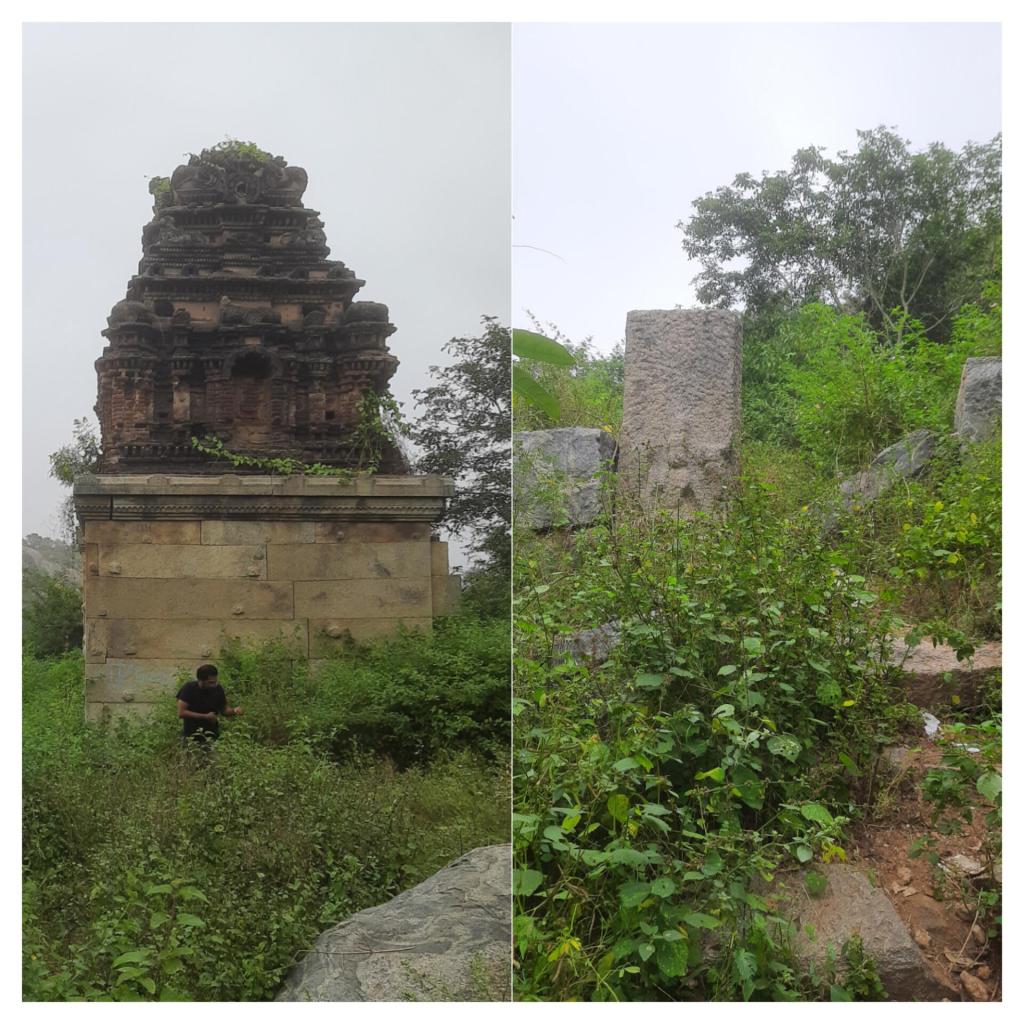
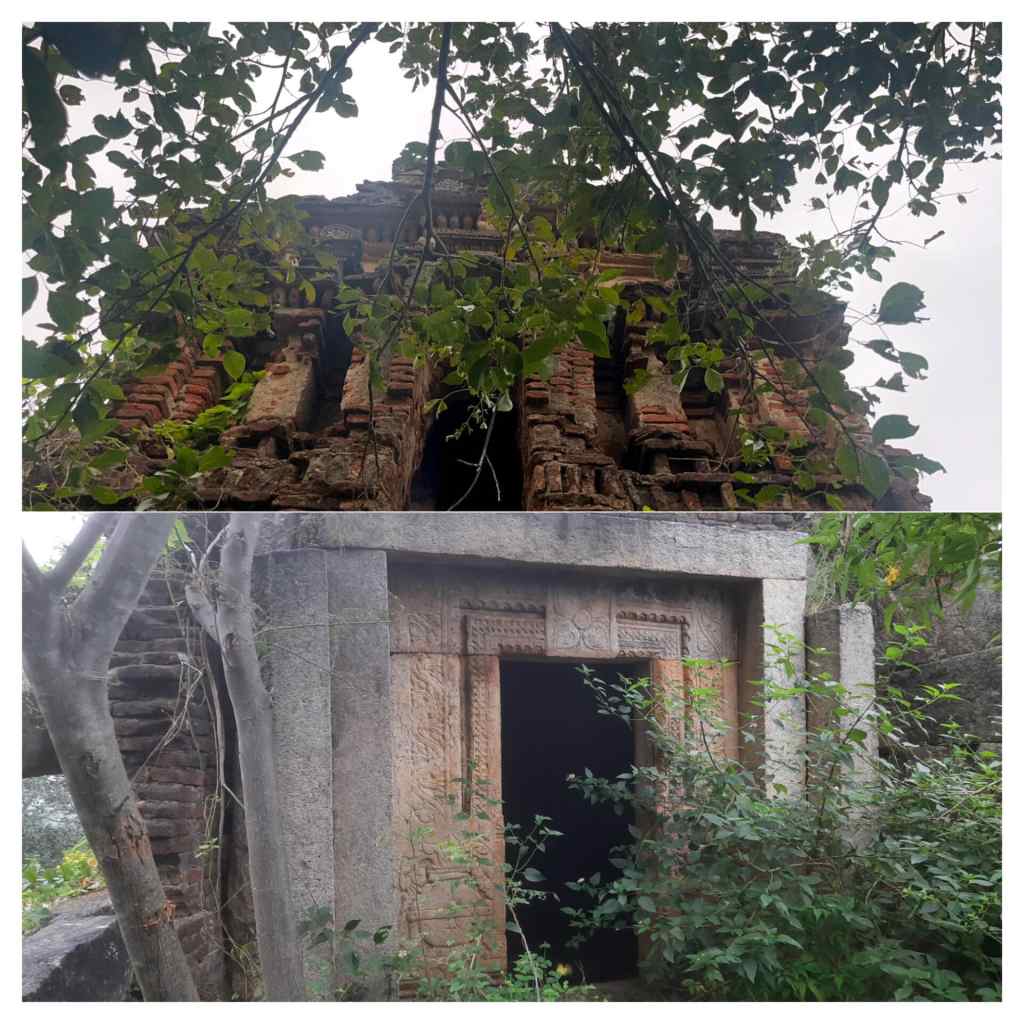
The ruins of the ancient temple at the base of Ankushagiri Hike

At the beginning of the hike route, there is an ancient structure, now in a dilapidated condition. Today, the Sanctorum lay empty with wild bushes and creepers taking over what once must have been a grand temple. The motifs on the walls of the two adjacent temple structures indicated both Perumal and Shiva.

Ankushagiri Fort and Perumal Temple at Tamil Nadu
The ruins of the ancient temple at the base of Ankushagiri Hike

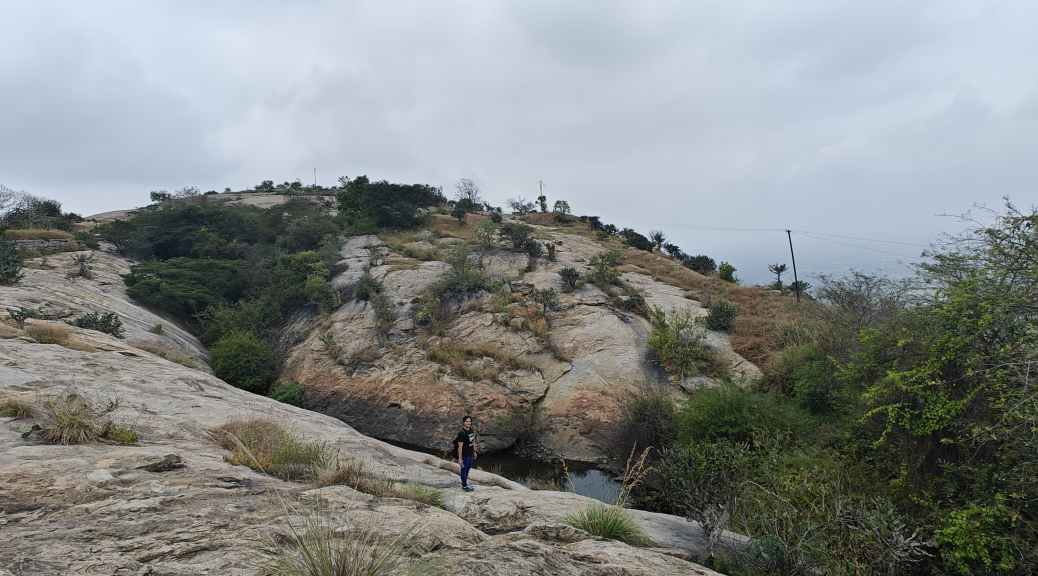
We went ahead from there and stopped after a brief walk. We were confused about the correct trail which seemed to split at a point from where either of them needed some more wear. We casually picked a path and continued to walk on the trail where the thorny bushes then opened to a rocky terrain. The rock looked interesting with varying patterns all over.

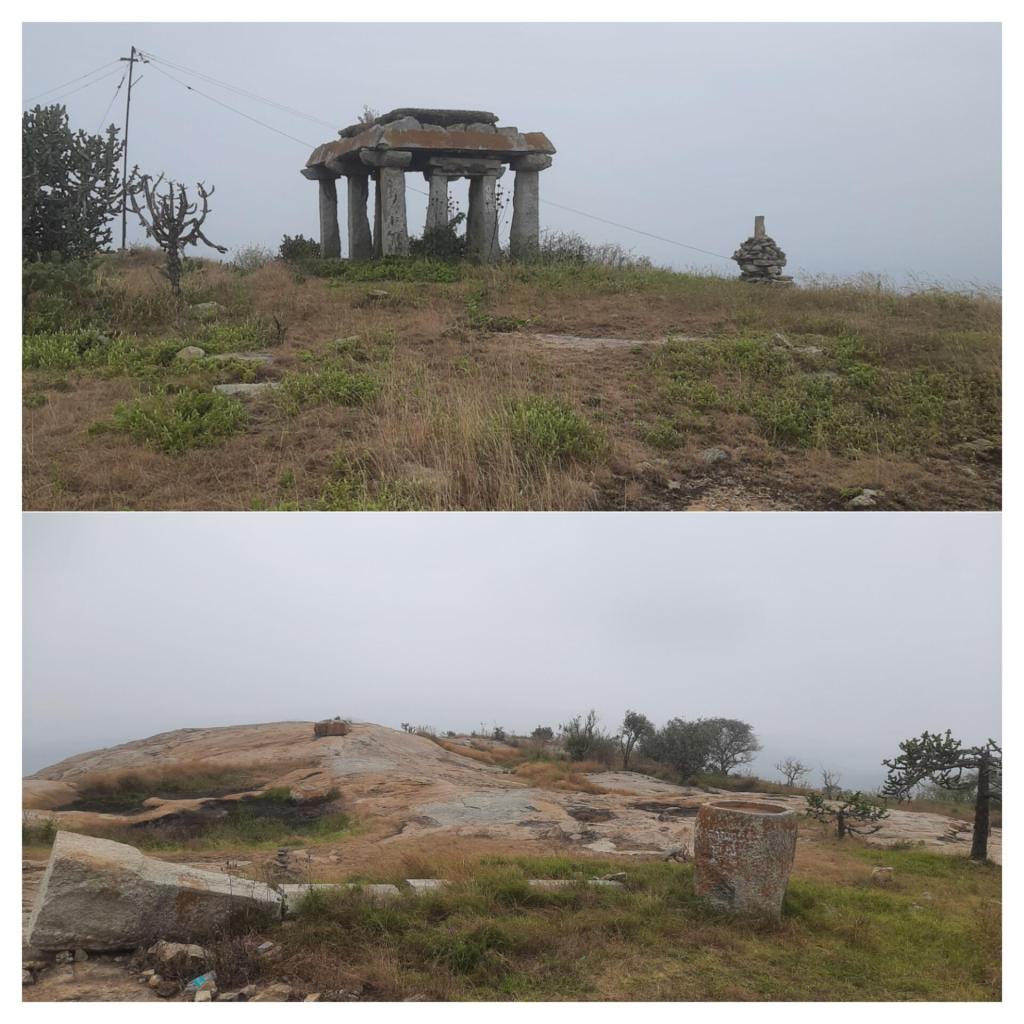
At the top, there were massive cacti plants dotting the area around an abandoned ancient temple structure. Only the pillars remained with the tall Garuda stambha lying down on the side and a stoneware that appeared to be an urn or a waterpot. Some previous visitors to this place had written ‘Someshwara Swamy Temple’ on the stoneware pot for our reference. We rested beside the temple on the large open rock bed overlooking the landscape. The gentle wind caressed our faces while we watched the hills appear one by one at a distance amid the clearing fog.

Ankushagiri Fort and Perumal Temple at Tamil Nadu
The ruins of Someshwara Swamy temple at the peak of Ankushagiri fort

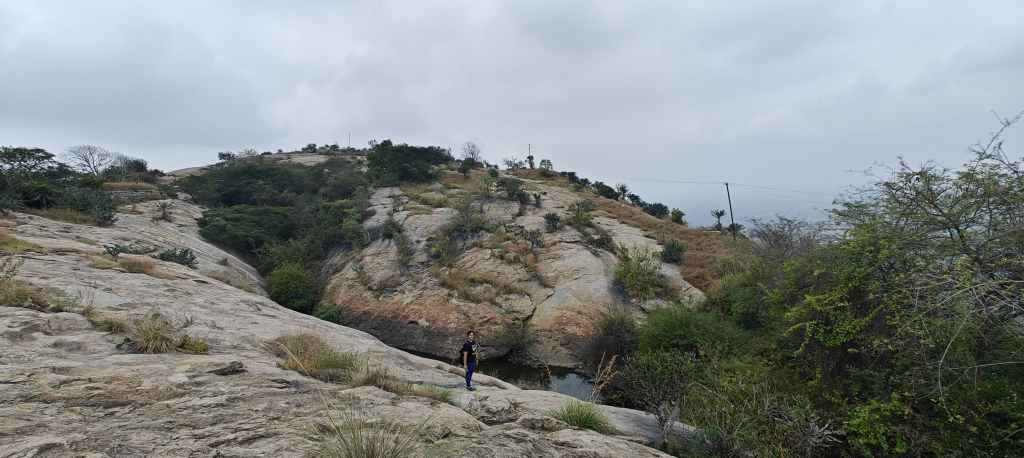
After relaxing for a while and munching on some fruits and nuts that we had carried with us, we proceeded toward the next part of the hill. The trail was beautiful with a rocky gorge on one side and huge cacti lining the path on the other. There, we arrived at a single electric pole that stood in the middle of a heap of ruins of what appeared to be an old fort. Although a circular marking can still be seen to date, only a few large pillars, a few hero-stones like inscriptions, and a couple of kolam designs engraved on the floor were all that existed for us to decipher what might have been the real grandeur, expanse and the purpose of the structure there. Almost little to no history is available to us about who or how this place had served.

Ankushagiri Fort and Perumal Temple at Tamil Nadu
Ankushagiri Hike

Anyway, it was a very interesting outing for us to explore a place so lost in an area where we were the only humans in kilometers around us. We spent ample time there before descending back to the base. We photographed several other patterns on the rocks before arriving at the same bushy junction where we had chosen to take the random path for our ascent.

Upon our return, we paid a quick visit to the Perumal temple before heading back to the city.

A daytrip from Bengaluru- Adi Chunchanagiri

Adi-Chunchanagiri mutt is the spiritual headquarters of the Natha Parampara and Jogi Cult of Hindus of Karnataka. My dad, who had earlier visited this place with his friends, happened to insist on going there again with his family. His intention was not to take us on the spiritual path but rather to introduce us to a hiking path which he found picturesque after having ascended.

One Saturday morning, our family set forth to enjoy this day trip towards Adi-Chunchanagiri. We drove towards Hassan, along an excellent highway until Bellur cross from where we had to take a deviation towards Adi-Chunchanagiri betta (hill) as indicated on google-maps. There on, we enjoyed our drive through the countryside, with traditional homes scattered between vegetable farms, coconut groves, and forest patches of brown boulders and green trees. Google is not always right and that’s why we deviated from the course a little more than necessary until we found the correct track again. But it was the deviation which we enjoyed. We realized that the region is declared as Adi-Chunchanagiri peacock sanctuary. It was no surprise that dozens of peacocks were grazing freely on every other farm, moving around at every turn of the road and everywhere else along our way right until we reached the parking lot at the base of the Adi-Chunchanagiri hill.

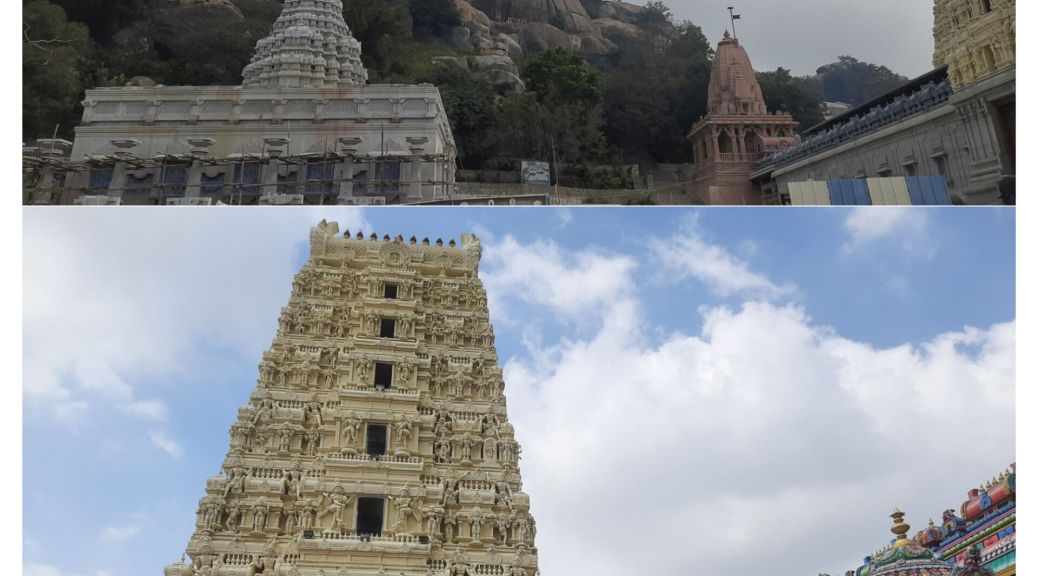
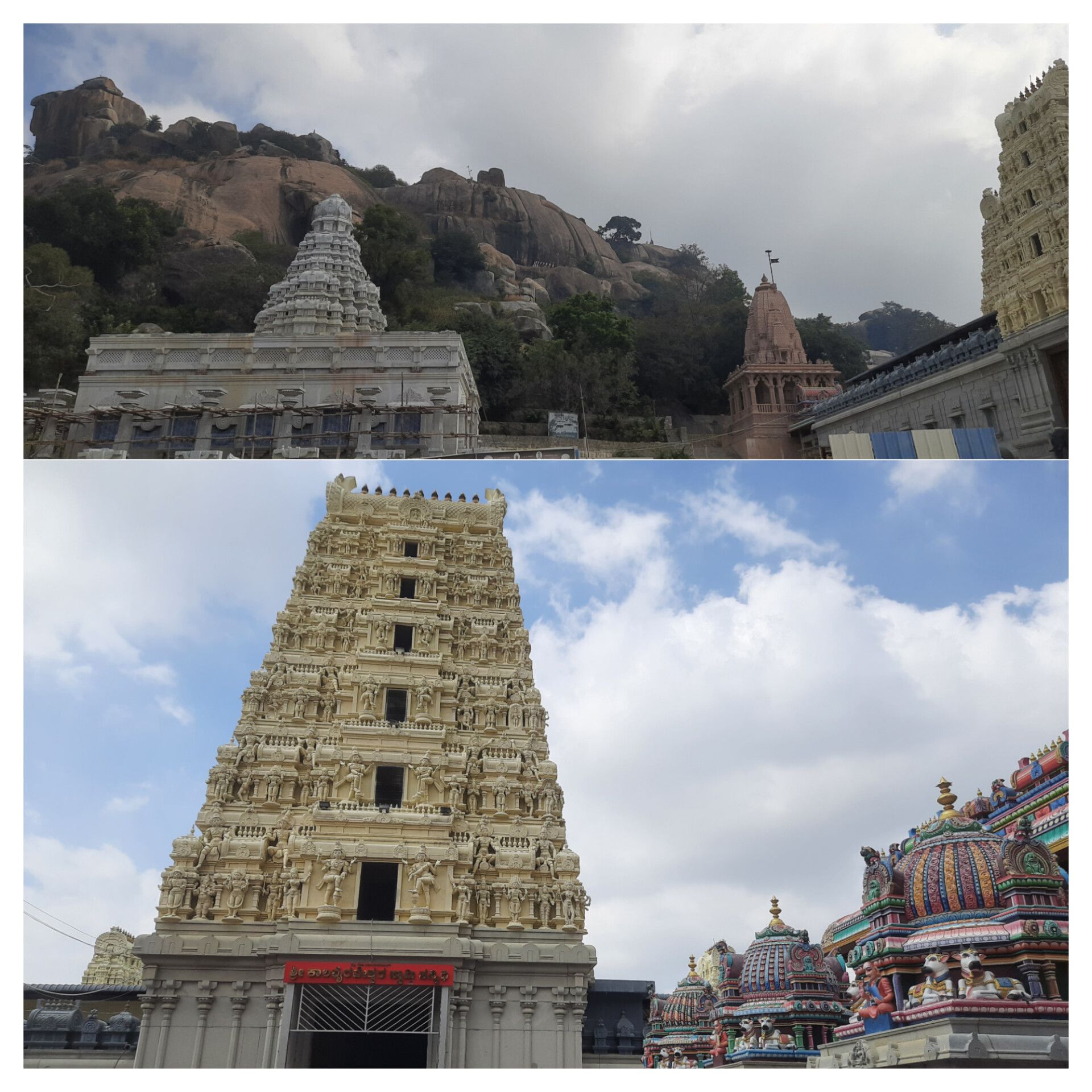
Adichunchanagiri
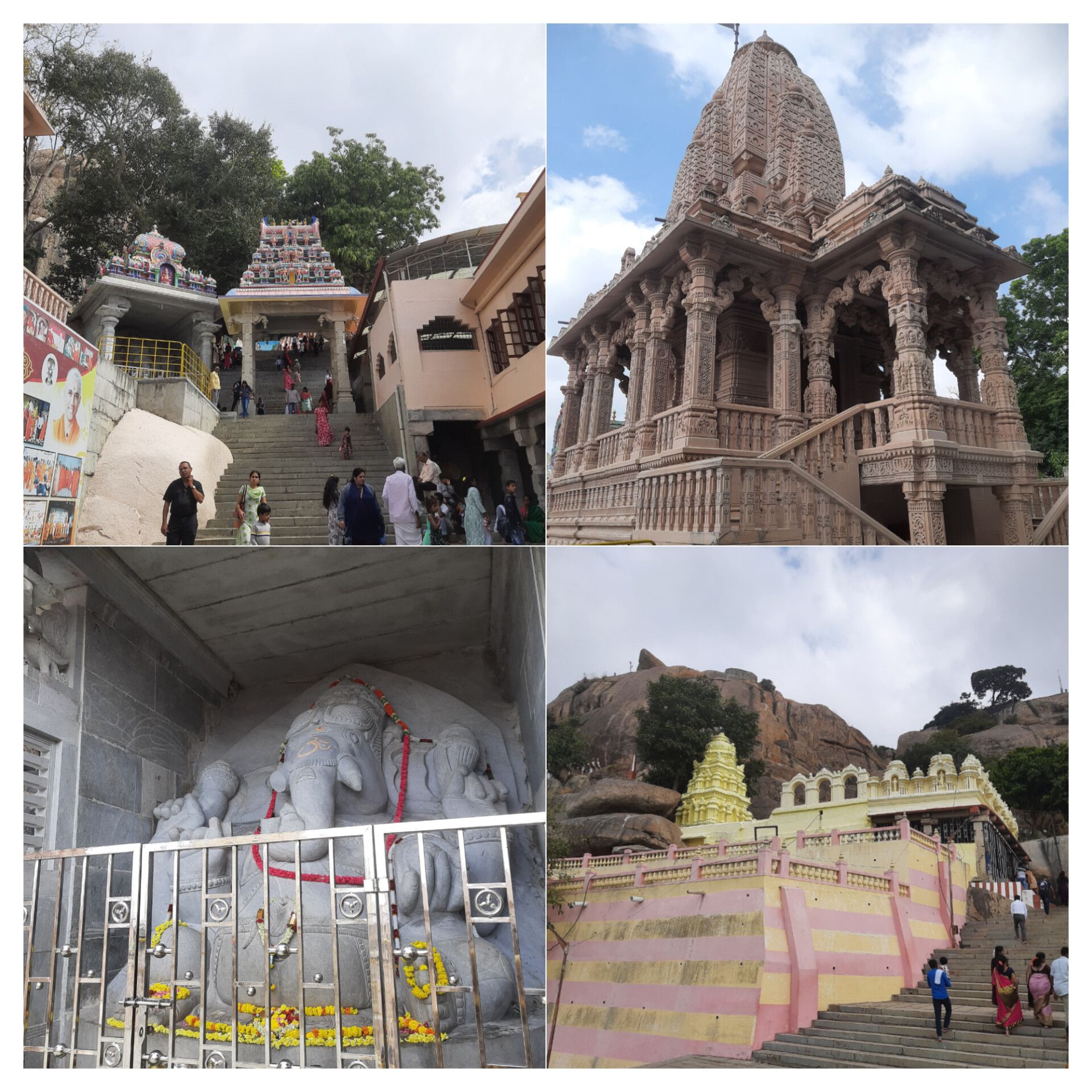
Top: The first glimpse of the Adichunchanagiri premises; Below: The entrance tower of the main temple

The initial approach towards the mutt premises starts with an ascent of about 100 steps leading to the welcome gate/ arch giving a visitor the first glimpse of the main temple. The large doors of the main temple opened into an ambience that felt divine and calm. It is entirely built with stones, and it gives a feeling of being in one of the ancient Dravidian temples though this one was built in modern times. The deities believed to be residing inside and revered highly by the pilgrims here are Sri Kalabhairaveshwara Swamy and Sri Stambhambika (Kambadamma).

After sitting there for some time, we began our ascent towards the peak of the hill. Just after coming out of the main temple, there is a large Ganesha idol sculpted out of the rocky wall of the surrounding. We continued our climb by passing by some smaller temples with a look around offering beautiful views of the green cover.

Adichunchanagiri
The temples and shrines at the Adichunchanagiri hill

Scores of people were seen climbing up and down for pilgrimage purposes. The climb to the hilltop is done to see the Panchalingas comprising Gangadhareshwara, Malleshwara, Katthale Someshwara, Gavisiddeshwara and Chandramouleshwara, whose temples or shrines are scattered along the trail leading to the summit. But we were there to hike that hill as a recreational activity for the weekend. We climbed up the steep stairs right up to the top with the trail splitting at random places. My family ended up getting lost from each other’s’ sight and then picked whatever trail lied ahead of us and met each other again at the top. Well, not the peak exactly, but just beneath it.

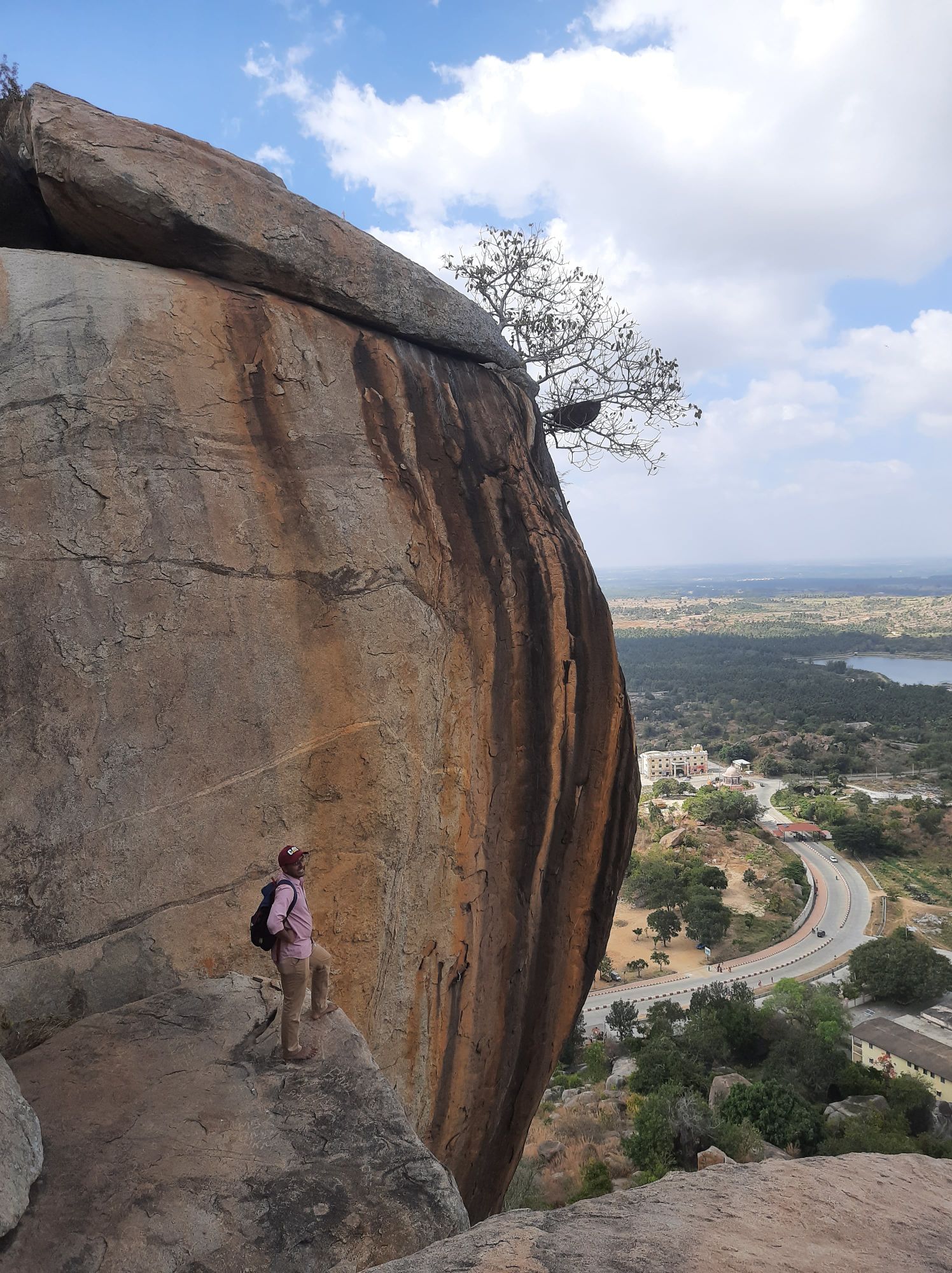
That’s where I gave up any further climb. The peak point of the hillock is known as Akasha Bhairava. It can be reached by climbing the last bit of the rocky hill which had no stairs but only with the aid of a big, suspended metal chain. It was a straight climb (almost 90 deg. gradient) which included a small jump from one rock to an another. I doubted my ability to descend safely even if I were able to reach the peak. My brother, on the other hand, climbed it up and down with so much ease (and grace) demonstrating that he still possessed his ancestors’ (apes) strongest traits.

Adichunchanagiri hill
The view from the top where I was standing beneath the last rock which leads to the peak

After he returned, we all came down towards the main temple where we were guided towards the dining hall. We devoured the delicious temple food before heading back towards Bangalore.

We started back just after lunch to avoid the weekend traffic at Bangalore. But, if you are interested to cover more places in this day, you can google for some of the Hoysala temples along your way and add it into your itinerary.

A day exploring Lake Pulicat and its heritage

This story is from quite some time ago. My friend was tracking the arrival season of the flamingoes at Pulicat lake. He had an acquaintance of a Mr. Illaiyaraja, a fisherman who lived in Pulicat village. Through him, we got regular updates on the arrival of these seasonal beauties (flamingoes) who flocked to the brackish lake during their migration period. Meanwhile, our family was planning a drive to Sriharikota, to watch the launch of Chandrayaan 2. That’s another story altogether, you can read it here.

A week prior to our road trip, Mr. Illaiyaraja telephoned my friend and told him, “Anna, flamingoes vandichi.” loosely translating to “Brother, the flamingoes have arrived”, in Tamil. So, a drive to Lake Pulicat became a part of our road trip as well. Our family took our old reliable friend (Our Tata Indica) out on the road and prepped it for the long road trip. It was as if time was bringing all things together in our favor. The flamingoes had arrived, the rocket was set for its launch and the roads were calling us.

Pulicat village gets its name from Lake Pulicat, the second largest brackish water lagoon in India on whose banks is this tiny fishing hamlet. The lake itself is so vast that it is spans across Andhra Pradesh and Tamil Nadu. We approached Pulicat from the Tamil Nadu side. After exploring all the places enroute, we parked our car at the entrance of the village and walked by following google maps to the location where we were supposed to meet Mr. Illaiyaraja. With a can of diesel in his hand, he led us to his wooden boat anchored at the jetty. We boarded the boat with him and set off on an unforgettable experience of sailing on a sea-like vast lake, to see.

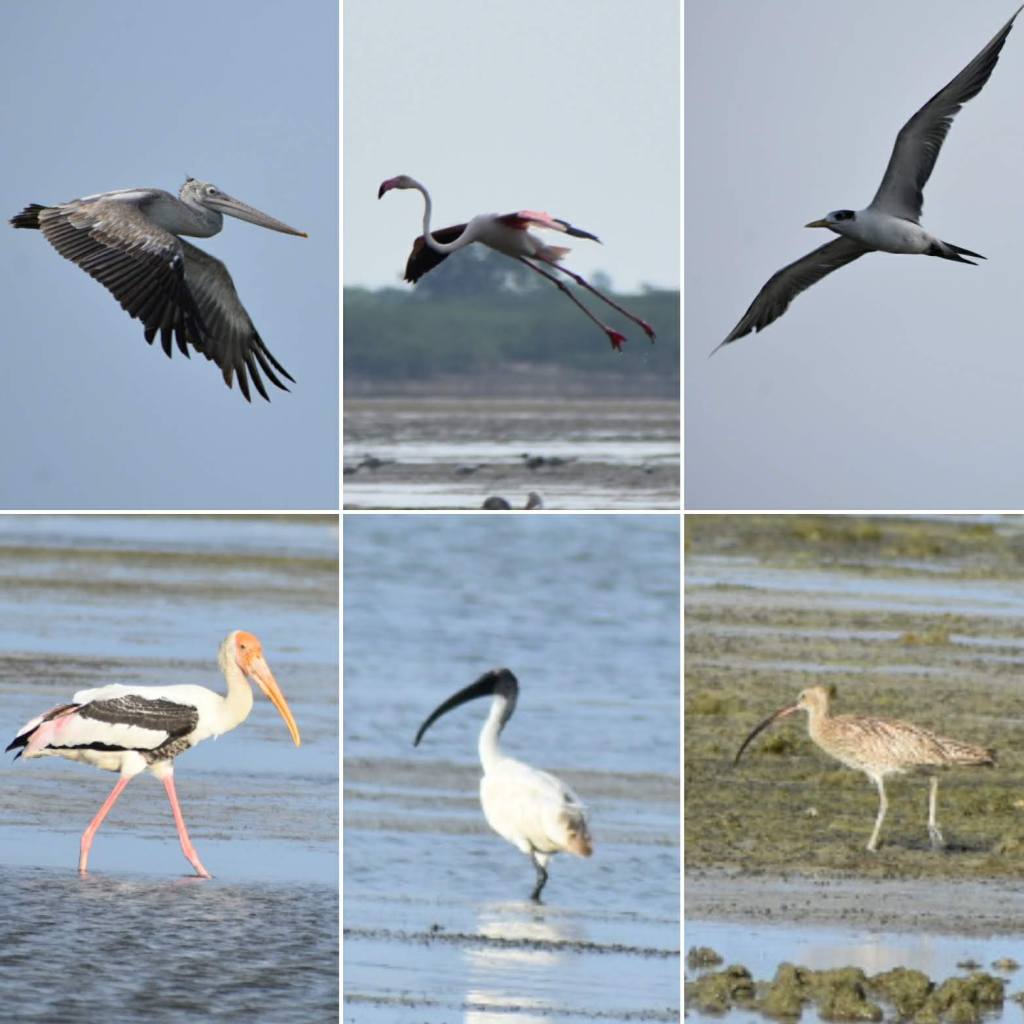
The birds at Lake Pulicat

Aquatic birds and shore birds that had migrated down from far across the globe birds to the Pulicat lake birds’ sanctuary. Pelicans, painted storks, kingfishers, herons, spoonbills, egrets, ducks, terns, gulls and several other species hovered on and off around us. But the peace within us came when the sound of the motorized boat came to a mute and there was an endless visual of the lake merging with the sky in a shade of ‘pink’. The greater flamingoes nesting peacefully in an unexplainable size of the flock. We spent quality time just watching them for a good hour or so before the sun started to turn the sky in hues of red.

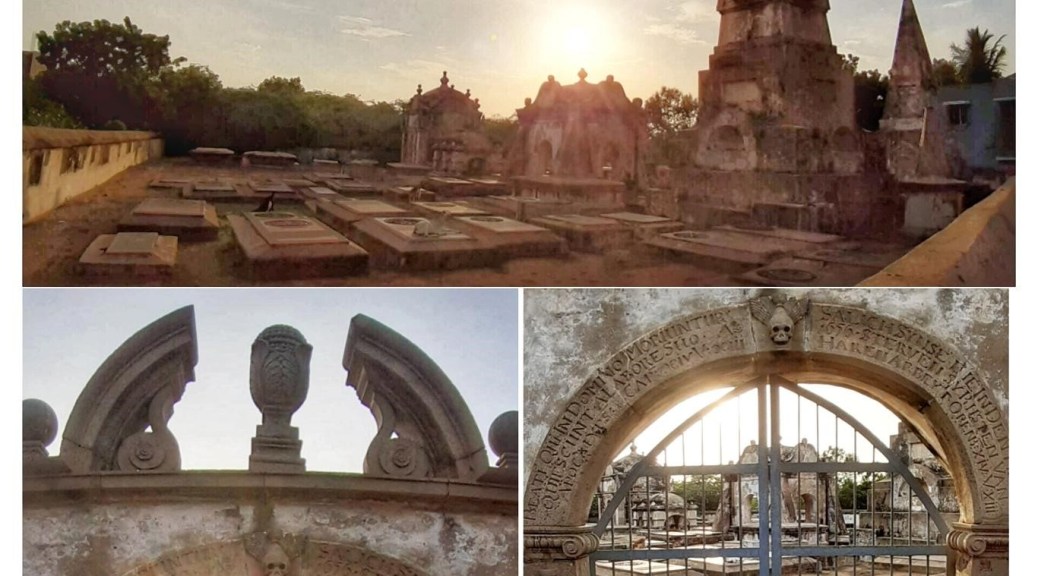
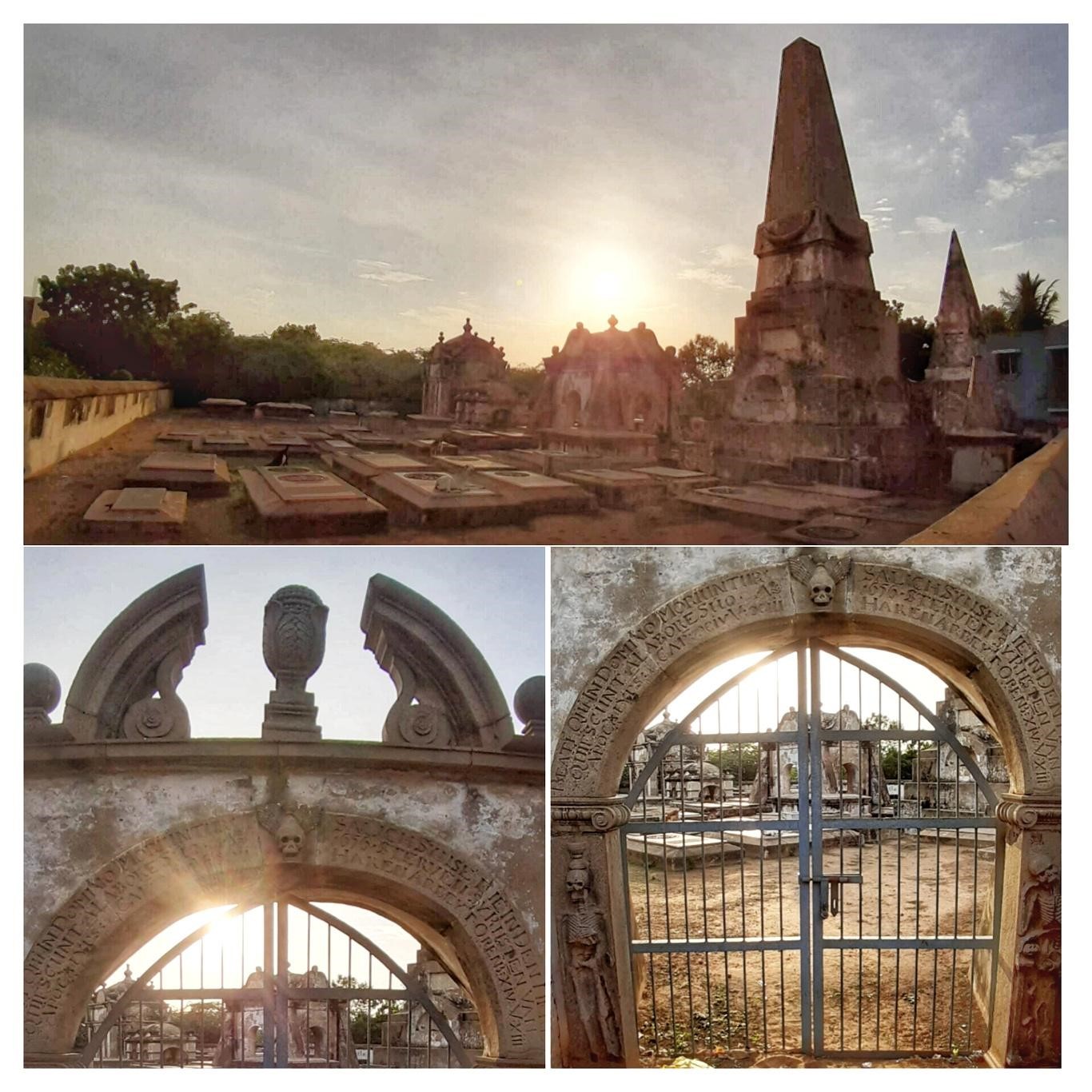
We returned to the bank and continued to drive in the direction of Sriharikota. While we were exiting from the village and were at a traffic signal waiting to enter the highway, my eyes fell on an interesting but ignored piece of construction by the roadside. I decided to go near and noticed that the entry gates were locked. The architecture style was different than anything I had seen before in the region and some strange alphabets were engraved on its entrance arches. Although interesting, it still seemed eerie and gave me some sense of it being an old, abandoned site of a graveyard. Since it was locked, I clicked a few pictures of the place from outside and returned to the car and continued our drive to Sriharikota.

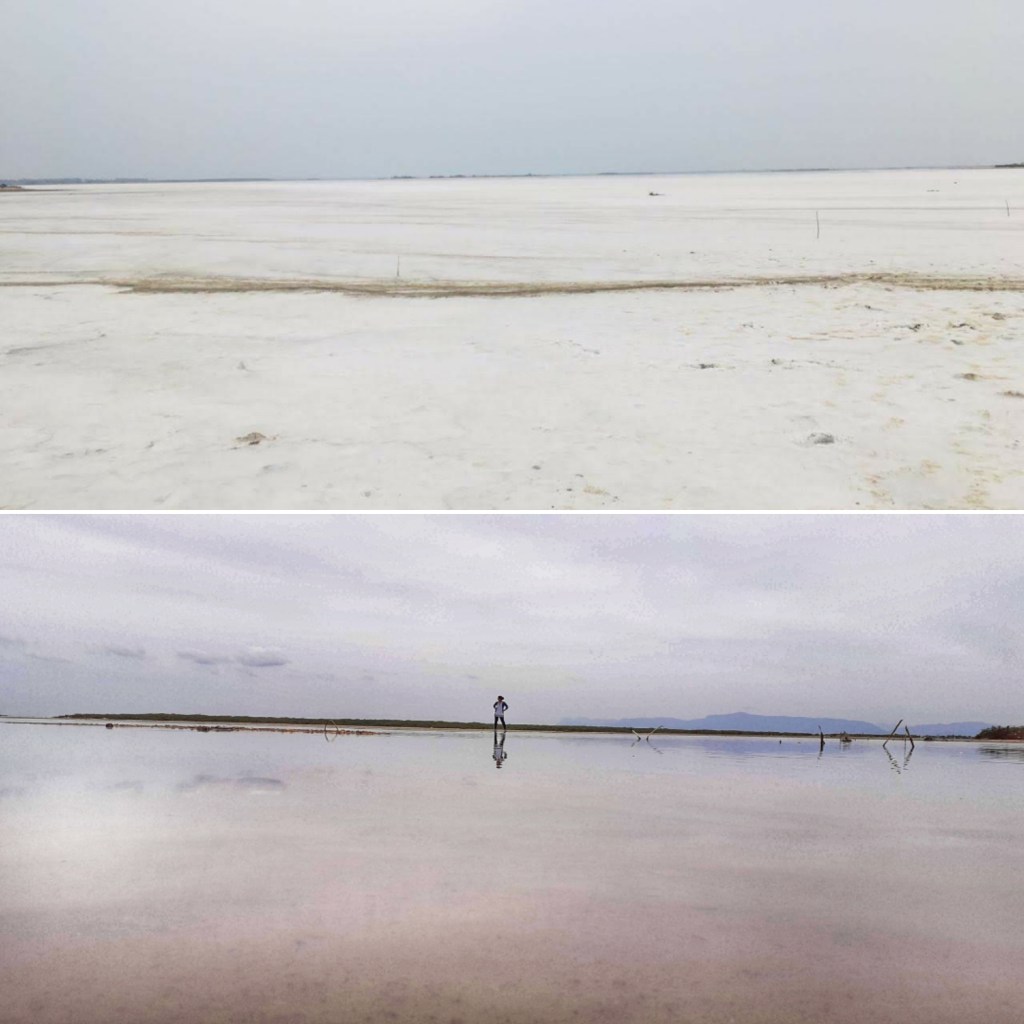
Top: Lake Pulicat enroute to SHAR in winter; Lake in Summer

When I looked it up on the internet, I found some interesting information about that old site I had just visited. There are about five main settlements dating back to the Dutch era across India namely at Gujarat (Surat), Kerala (Cochin), Andhra Pradesh (Machilipatnam), Tamil Nadu (Pulicat) and West Bengal (Hooghly) where forts or cemeteries can be found. This day, I had visited a Dutch cemetery which used to be a part of Fort Geldria or Fort Geldaria at Pulicat. Pulicat was the seat of the Dutch Republic’s first settlement in India, and the capital of Dutch Coromandel. This fort was the only fortification in the Indian empire whereas all other positions of the Dutch Company were trading posts. today, this cemetery houses about 76 tombstones, mostly carved in the Netherlands.

Dutch cemetery
The Dutch cemetery at Pulicat

It is interesting how I came across a random site that holds so much historical importance in India’s history of colonization and it is also unfortunate that how inaccessible or neglected are these sites that holds stories of an era bygone. Thus, the sun had set on Pulicat ending our quick visit to this lakeside settlement.

Exploring the untouched gems of GPM district

Gaurela-Pendra-Marwahi (GPM) is one of the youngest districts of Chhattisgarh and I recently had an opportunity to explore this region along with a friend. It has a deep-rooted connection with mythological stories and hence, several local tourists come here for pilgrimage. Otherwise, GPM is least explored on a typical tourist circuit and remains to be a hidden gem in the jungle, quite literally. Hence, through my trip to GPM, I wanted to explore, learn and document the adventure and cultural aspects of GPM district. On this journey, we had the guidance of GPM-tourism in arranging our accommodation and getting local experiences in some of the most exquisite places.

We started from Bilaspur that morning in a taxi to arrive at our first destination- Gaurela. My first encounter of a new religious practice was of the kavadis. Of course, Kavadi itself is not new to me. It is observed in different forms across different regions of South India. But Kavadi of Chhattisgarh was new to me. During the Shravan month, the pilgrims leave their respective houses on a barefooted march all dressed in saffron dhotis, carrying the Kavadi on their shoulders and chanting bhajans and praises for Lord Shiva. Along their way, they are joined by others whose houses fall enroute and the march progresses. The group is large towards the end of their feat when they all arrive at the Amreshwar temple.

Anyway, after passing this large group of pilgrims, we continued our drive through a very beautiful stretch of Sal forests and paddy fields. Our pre-ordered lunch was ready by the time we arrived at our first destination- Jhojha waterfalls. This region is presided over by the people of the Pando tribal community, whose culture we were unaware of until then. A tiny canteen run by a couple belonging to this community provided us with food cooked fresh and served in the most sustainable way possible. All the fresh and locally grown ingredients (organic veggies) cooked with firewood and served with handmade plates and bowls of Sal leaves. The simplest, yet a sumptuous meal was relished by us before heading out on our short hike into the woods.

As the rain gods had taken over the skies briefly, we wore our raincoats and tamed our legs towards the trail. There is a biking trail for the biker-heads and then there is the hiking trail for people like me. It is a trail of about 4 kms with moderate difficulty for beginners. As we approached the Jhojha waterfall, believe me as I say that I hadn’t heard or imagined the existence of such an offbeat and majestic waterfall in this part of Chhattisgarh before arriving here. It was beautiful. On a day otherwise, one can go closer to the waterfall or get into the water. But I refrained from it since the monsoon fury wasn’t a safe idea.
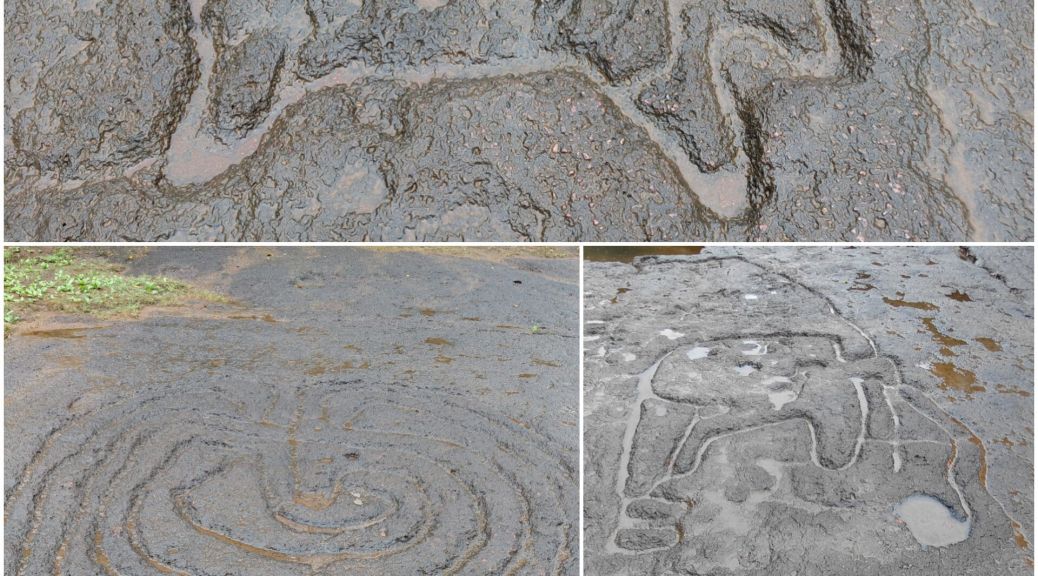
Jogi Gufa was a place close by where we had originally planned to visit the cave and a waterfall. Ghaghra dam is frequented by locals for watersports and Son-kund and Kariam Ashram are popular places of local pilgrimage. All located at a drivable distance from Basti / Jhojha. By the time we returned to the base after the hike, the other members of the Pando community had joined in. Hence, we decided to spend the remaining time at Jhojha itself. It was a good decision as the evening was filled with song and fun giving us a better acquaintance with the tribal culture of the Pando community.
Mahua liquor is an essential part of Chhattisgarhi culture in general. There are several folk songs and stories composed around Mahua’s significance in the tribal life. The folk who had joined us for the night sang these songs and narrated undocumented stories that had been passed on through generations. Later, we had the supper cooked by the same family and retired at the little mud-cottage / homestay run by them next to the canteen. One of the most serene and silent locations I had ever imagined retiring.

We started our day by having breakfast at a local restaurant at Pendra road (Town area). for someone whose taste palette is used to idly, dosa, roti etc., for breakfast, the samosas and jalebis were quite unusual to be consumed as a meal. But that’s how the rest of our day turned out to be- Sweet and Surprising. The untouched landscapes and the unaccounted number of mythological references make a great combination for hodophiles to explore Pendra. As soon as we moved away from the town area, the weather and the landscape took a dramatic change. crowded streets turned green and dry sunny skies began to cry rain.

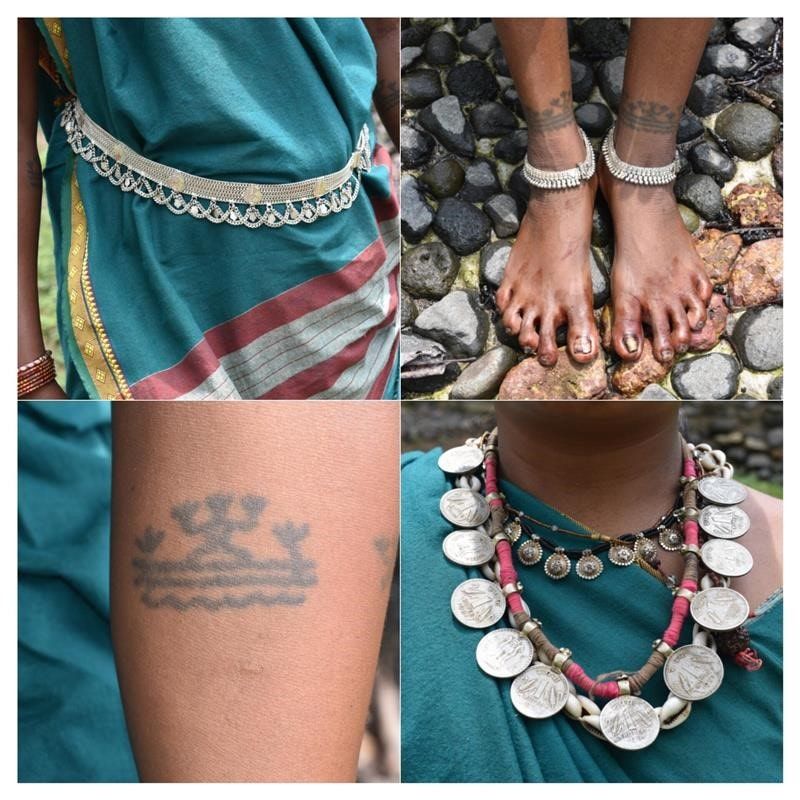
This region is predominantly resided by the Baiga tribes and hence, meeting folks from this community and documenting their stories were my focus on this visit. We drove past the mountainous road and flat paddy fields to arrive at our first stop. It was an under-construction nature camp run by the GPM-tourism and managed by a local family of the Baiga tribes. Traditional tribal cottages flanked a serene waterbody and together overlooked by a canopy of trees. Apart from a group of local boys who occasionally dropped by for a game of fishing, it was a paradise in seclusion. The only thought that I had while there was, if I ever felt the urge to run away from the city hustle to a non-Himalayan place filled with silence and solitude, where no known person would find me, it would be this. To simply put- I fell in love with this location. We visited the home of a local Baiga family, took leisurely stroll in their village and farms and shared warm conversations and laughter with their little kids, all even as the rain gods continued to show no mercy on us.

Traditional jewelry of Baiga tribes in Pendra, Chattisgarh.

A few kilometers away from there is a pilgrimage site, Mai ki Mandap’. It falls on the way for people visiting Amarkantak. Mythology has it that river Narmada was all dressed in her bridal attire, awaiting the arrival of Son Bhadra, the groom and his party but was cheated by her friend. Since then, Narmada has been hiding inside a cave here where an eternal flame has been burning for ages. The river Amravathi ganga cascades down the valley here forming a multi-tiered waterfall, which needs to be crossed by foot to get to the temple dedicated to Narmada. Since it was monsoon time, the currents were quite strong and the river crossing was an adventure.

This region is dotted with several pilgrimage sites that are inter-connected with each other through mythological stories. Although we drove past most of them, we decided to skip a ‘stop and visit’ to them. Some of them were Durga Dhara waterfalls, Amreshwar temple, and Jaaleshwar Mahadev temple. Achanakmar tiger reserve, Kabir Chabutara and Malaniya dam are few other local hang-out spots in Pendra region which we decided to skip due to lack of time.

The highlight of this entire trip to GPM was the drive to Rajmergarh hilltop and the best ending for this short stay that I could have asked for. The adventurous people hike up this hill over a couple of days’ time, but we were not in luxury of so many days. Lines of Sal trees and herds of cows grazing on the tabletop grasslands were a treat for the eyes. The drizzly rains and the gusty winds not only caressed my hair and cheeks but also my mind and soul, as I stood on the edge of the green grasslands. We were lucky to get a glimpse of the setting sun even on a cloudy evening. The locals informed us that this hilltop is a favorite haunt of adventure seekers who usually hike up to pitch their camps and wake up for the sunrise over these hills. Such a beautiful place feels wasted without good amenities for the tourists. Outdoor lovers can get their own tents and pitch their own tents here, basic meals and tea can be availed with prior information to the caretaker of this place. But I highly recommend a day visit to this place, especially during the monsoon if you are looking for something more offbeat, less crowded and yet beautiful. The night’s stay was arranged at Gagnai nature camp, a property run by the government.

The luxury of an additional day’s time would have allowed us to explore the Marwahi region, thus circling around the entire GPM district. ‘Beni Bai’ is an important and rare Jain pilgrimage site which I personally wanted to visit but couldn’t. A full day’s trip could include AdiShakti Mandir, Tara Khara waterfall, Pareva path, Chunha Dai, Shiv ghat, Samundalai kund and Lakhan ghat to complete a circuit before you head back to Bilaspur.

However, in our case, we started before sunrise because we had an afternoon flight to take from Raipur to Bangalore. Thus ended an offbeat trip to the heart of India, Chhattisgarh!

Purple Farms of the Saffron Flowers- Kashmir Story

Long ago, I watched a visual documentary about the farmers of Kashmir who woke up early on freezing cold mornings to gather fresh flowers from their fields. They all rose with the sun to harvest saffron, the most expensive spice in the world. Ever since, these romanticized visuals had me imagining myself walking on those farms someday.

For close to a year, I had been trying to reach out to people to know when the exact time of the year was to witness these inflorescences. I got in touch with a local person from Srinagar who would take me around the farms. I learnt that the flowers would bloom around late October when autumn sets in. As the season approached, I was getting too anxious to not miss the season. Thus, booked a last-minute flight ticket from Bengaluru, for a long weekend at Srinagar. After a missed connecting flight and spending almost an entire day at the Delhi airport, I had finally arrived at Srinagar on a late Friday evening.

‘Be ready early in the morning, we will be heading towards Pampore’, my local guide said to me before dropping me off at a homestay in the city.

On the following morning, the Chinar leaves of autumn had started to paint my entire journey in gold. The sun rising over the overlooking mountains that surrounded us all around only enhanced my excitement to reach my destination. The saffron grown in the Jammu and Kashmir region has gained a GI tag in the year 2020 with Pulwama, Budgam and Kishtwar districts being key saffron producing areas.

Welcome to the Saffron town of India’, a board stood at the entrance of Pampore in Pulwama. The wide stretch of land on both sides of the highway looked bare and dry, without sight of a single flower or even plants of saffron that I had come to see from 2000 kilometers away. I looked at the person accompanying me, enough for him to understand the meaning of the perplexing look on my face. “Haven’t the farmers cultivated saffron this year?”, I asked him.

He walked me down to one of the farms on the roadside and explained to me that even yield ready plants aren’t prominently visible, with barely one or two grass-like looking leaves emerging from each root (bulb). Only the flowers come out from the root that are extremely sensitive to the environmental temperature. “This stretch of the farms has no shade and the heat due to the highway traffic delays the blossom. We will go to the interior villages of Pampore which have more shade because of orchards like apples, almonds, apricots, etc. The blossom season begins in the shaded-cooler areas and ends with the open-warmer areas”, he said giving me some relief.

We then met a farmer at Pulwama town who then drove us through the interior village of Pulwama, which is otherwise untouched by tourists. Finding our way through the misty morning while being greeted by endless orchards on either side, my guide on the steering stopped at a point. “Madam, here you go!”, he said.

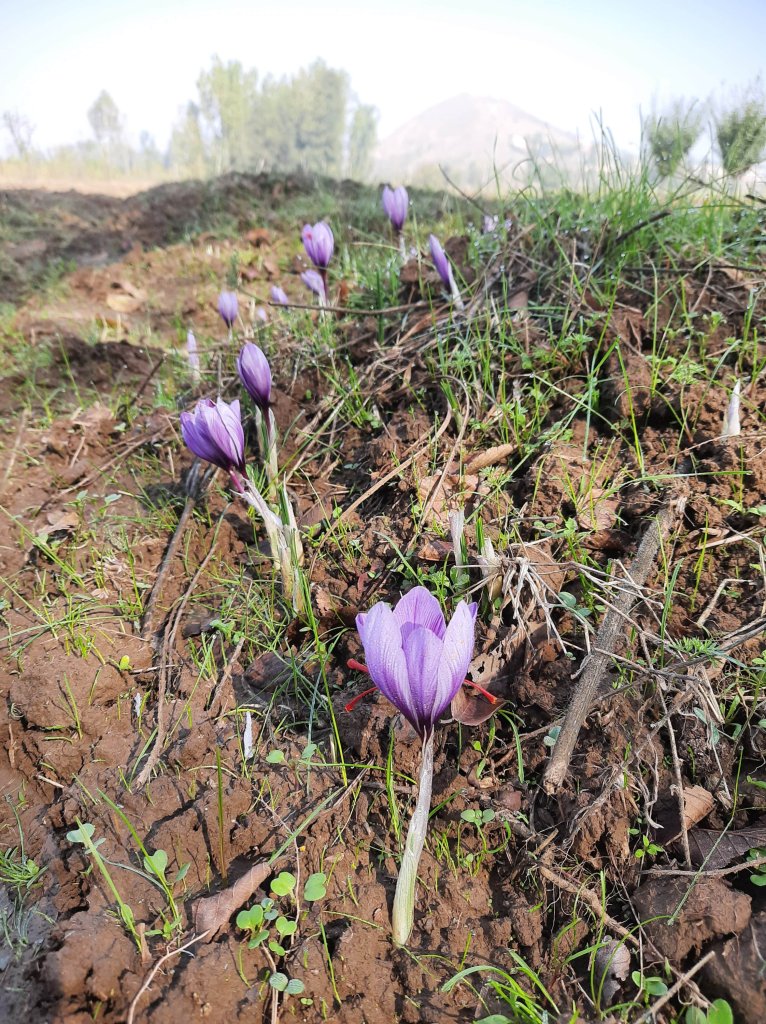
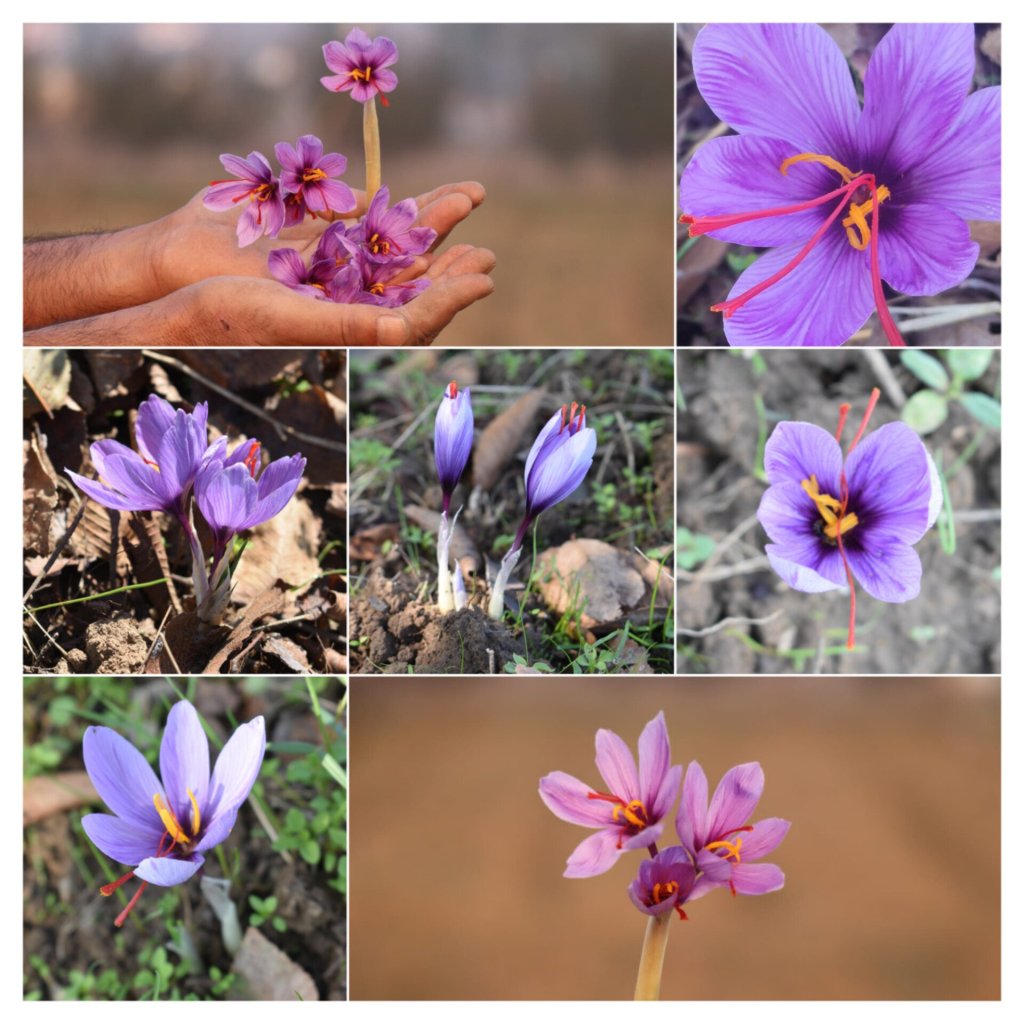
Saffron flowers in Kashmir farms
The purple flowers of saffron in Kashmir

I ran out of the car and watched the sight in awe. It seemed like a faint purple carpet of flowers had been laid on a hazy morning, with the apple orchards writing testimony to my presence and the snowy mountains standing guard against this beautiful view. I had a tear rolling down my cheek, which I am still unsure if was because of sheer joy or in disbelief that I had made it there. I spent hours that morning walking between the purple blossoms, caressing the tender, dewy and moist flowers of saffron, taking pictures of the flowers while enjoying the crisp autumn air. The people accompanying me for sure must have thought that I was a psychopath wandering and meandering all alone, who had travelled from so far just to see these flowers. A few flowers made it to my books, pressed carefully between the pages and getting to go home with me.

Saffron flowers in Kashmir farms

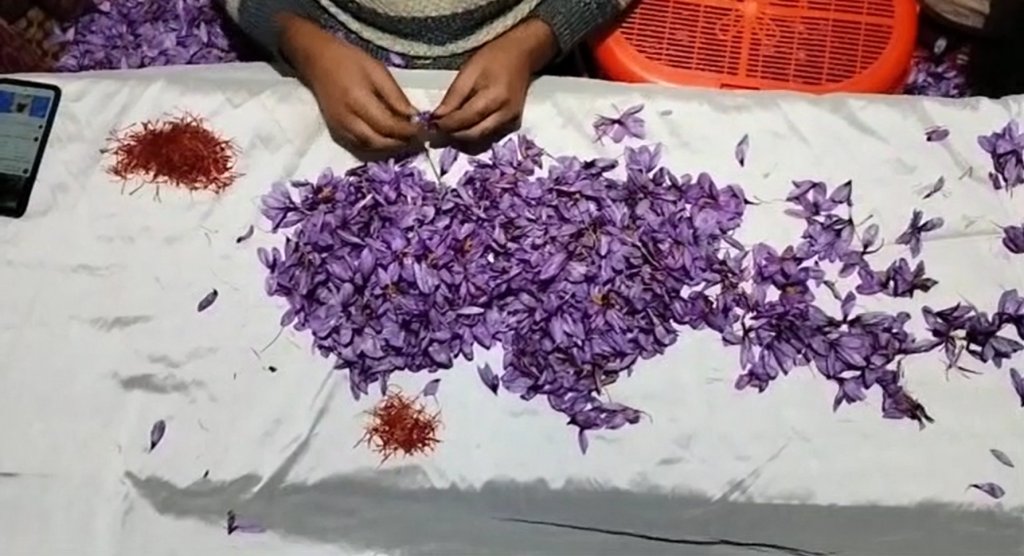
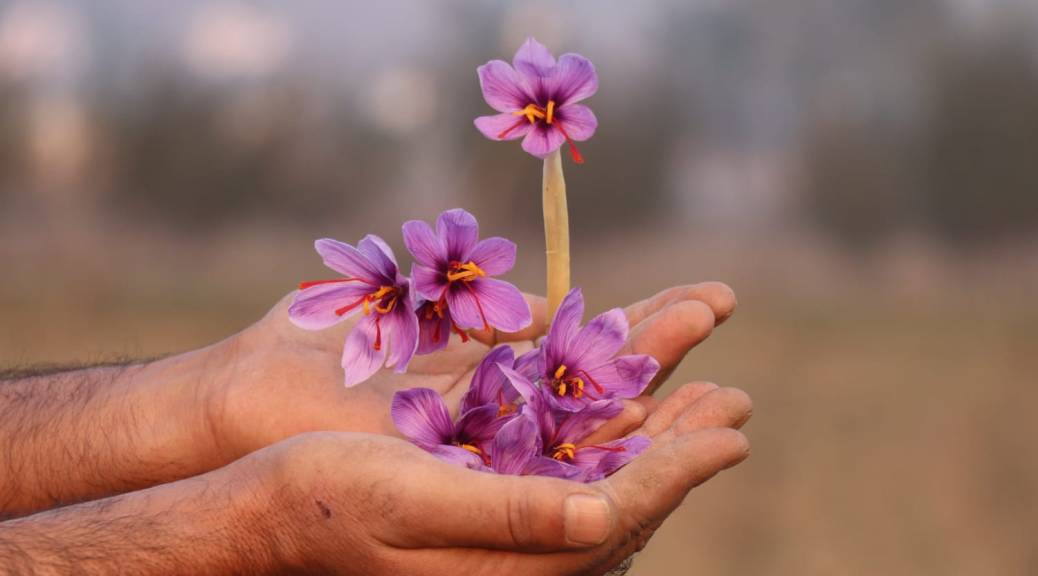
He picked the tender flowers and rested a bunch on my hands while pulling out the saffron strands from one, for me to eat. My tongue had turned yellow upon consumption which he explained was an indication of the authenticity of the spice. I was then invited to his work area where his family had gathered around a table and were separating the different parts of the flowers that would be used for different purposes. He explained the entire process of separation of the saffron strands (the stigma or the female part of the flower), the drying and the packaging. Sipping on hot brew of Kahwa served with the same strands of the saffron that I was holding a few moments ago was overwhelming.

Saffron flowers in Kashmir
Saffron flowers Separation

Of course, my visit would have been incomplete without picking up stashes of saffron from their shop as souvenirs for friends and family. In this short visit to the land of saffron, I had witnessed the world’s richest spice travel from farm to market. Sigh, it was a dream come true, to experience these fully blown saffron fields!

Fact file:

  • It is recommended to get in touch with proper sources and book taxis in advance who could take you on such guided tours of the saffron fields.
  • Pampore and Budgam can be reached on day trips from Srinagar. J&K tourism runs guests houses in Kishtwar as well, which can be reached via taxis hired from Jammu city.