Tag Archives: trekking in Trekking in Tamil Nadu

All you need to know about Girivalam

What is Girivalam?

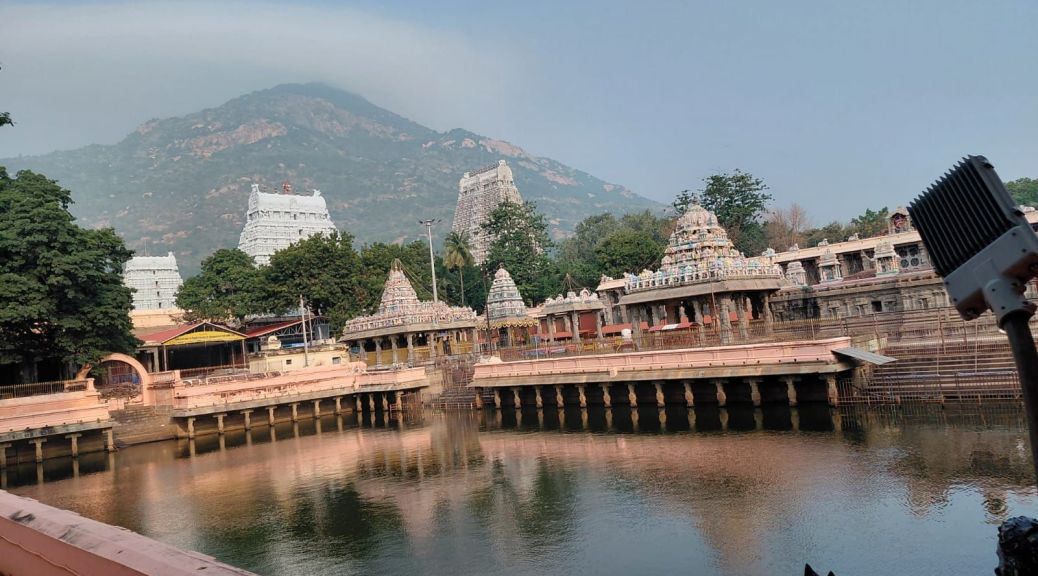
Mythology has it that Brahma and Vishnu got into an argument over their supremacies and finally sought Shiva’s help to resolve the issue. Shiva then created a cosmic column of fire and asked Brahma and Vishnu to find the end of the fire. Whoever found its end would be declared as the supreme god. Bramha went towards Akaasha and Vishnu went towards Pathaala to find the top and bottom ends respectively. However, both returned unsuccessful, thus renouncing Shiva to be supreme. This place came to be called Arunachala hill or Tiruvannamalai. The name of the hill is derived by combining three Tamil words, Thiru- meaning sacred, Vann meaning fire, and Malai meaning mountain, thus meaning “the holy fire mountain”.

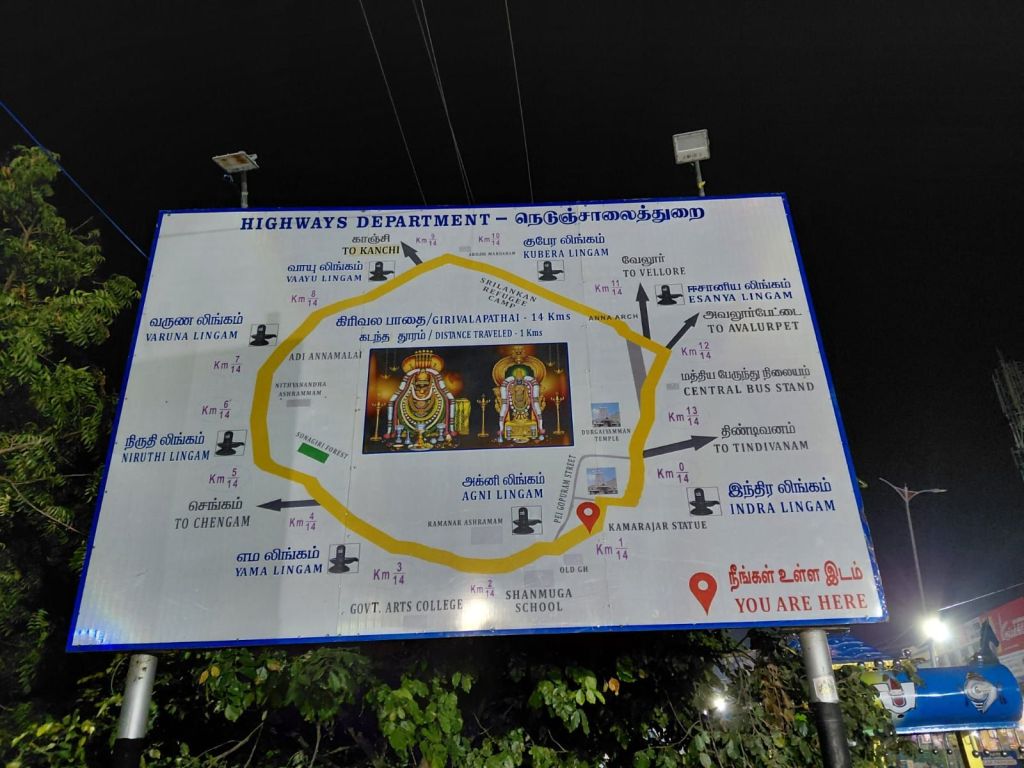
Girivalam, also called as Giri Pradakshina is a combination of two words, ‘Giri’ meaning mountain and ‘Valam’ meaning circumambulation. It is a sacred walk covering an approximate distance of 14-kilometer in the clockwise direction around the Arunachala Hill in Tiruvannamalai town of Tamil Nadu. Since the hill is considered a physical manifestation of Lord Shiva, conducting the Giri Pradakshina is believed to offer spiritual purification and liberation.

To commemorate the day of establishing Shiva’s supremacy, a large bonfire is lit atop the hill during the Karthika month of the Tamil calendar. This Karthigai Deepam lit on the previous night of the full moon symbolizes Shiva’s cosmic fire and burns continuously for the next eleven days attracting millions of devotees from all over for this annual festival.

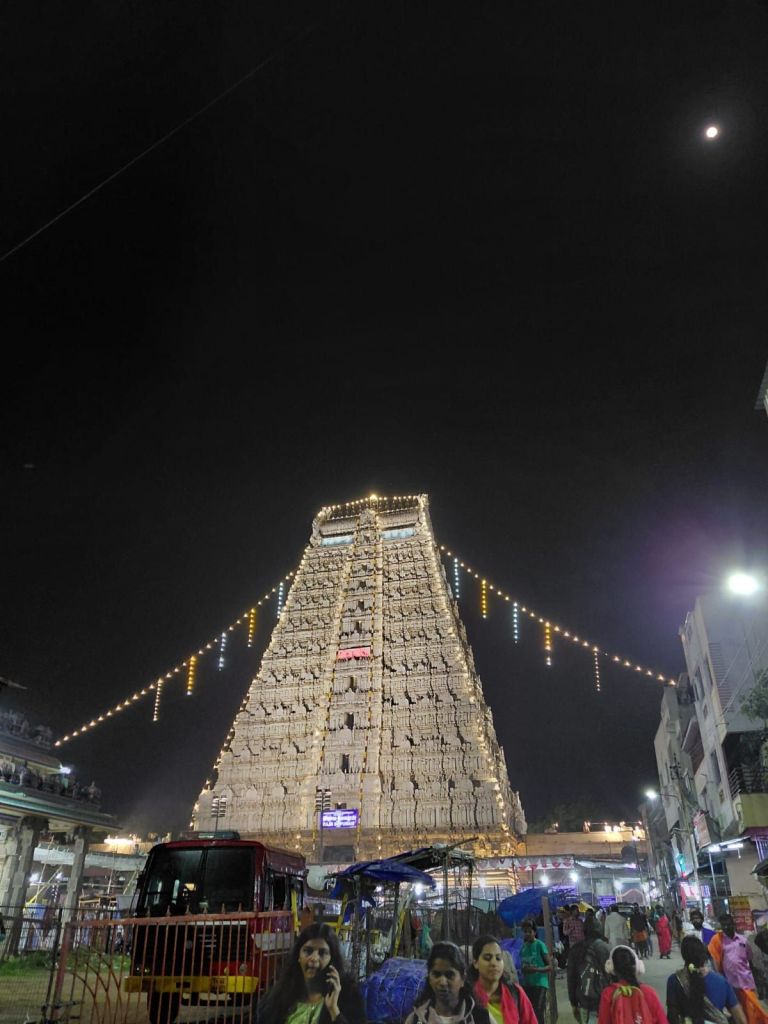
The Rajagopuram on a full moon night of Karthika month

How to do Girivalam?

  • The Pradakshina must start and end at the same spot, usually at the east entrance tower of the Arunachaleshwara temple located at the foothills.
  • Start the Pradakshina by visiting the Kalabhairava and Ganesha shrines, followed by breaking a coconut in front of the east Gopuram of the Arunachaleshwara temple.
  • Traditionally done barefoot, it is not wrong if one opts to wear just socks or footwear during the walk and removed before entering the temples passing along the path.
  • A visit to the Ashta Lingam shrines and other significant temples along the way is believed to enhance the benefits.
  • Girivalam can be conducted on any day and time of the year. However, offering it on full-moon days is considered more auspicious.
The Girivalam route map

When did I go?

Since my friend and I had been contemplating doing Girivalam for a very long time, it was a spontaneous decision to perform it as the last full-moon day of the 2025 calendar year, and a weekend had arrived together. Coincidentally, it also happened to be the Karthika Month and hence, the Karthika deepam would be lit over the eleven-day period.

We chose to go there on a Friday, which was a day after the full moon, assuming that the crowd of the full moon day would have subsided and the weekend crowd wouldn’t have poured in yet. It turned out to be a smart decision.

We also got lucky that we saw the flames deepam atop the Arunachalar hill, all the décor of the town and all the decoration inside the temple that had been done for the annual festival.

How did I go?

  • There are plenty and frequent public buses run by Karnataka and Tamil-Nadu Road transportation services. We boarded a TNSRTC bus onwards to Tiruvannamalai and KSRTC bus for our return to Bangalore, both without prior bookings.
  • We arrived at Tiruvannamalai at around 07.00.p.m. had a filling dinner and retired early at a hotel we had pre-booked close to the east tower of the temple.
  • We started our pradakshina by around 03.45.a.m. and finished it by 08.00.am.
  • We stood in the ticketed queue for Darshana and were done by noon we ate temple prasada (more like brunch).
  • We then checked out of our hotel and reached Bangalore by night.
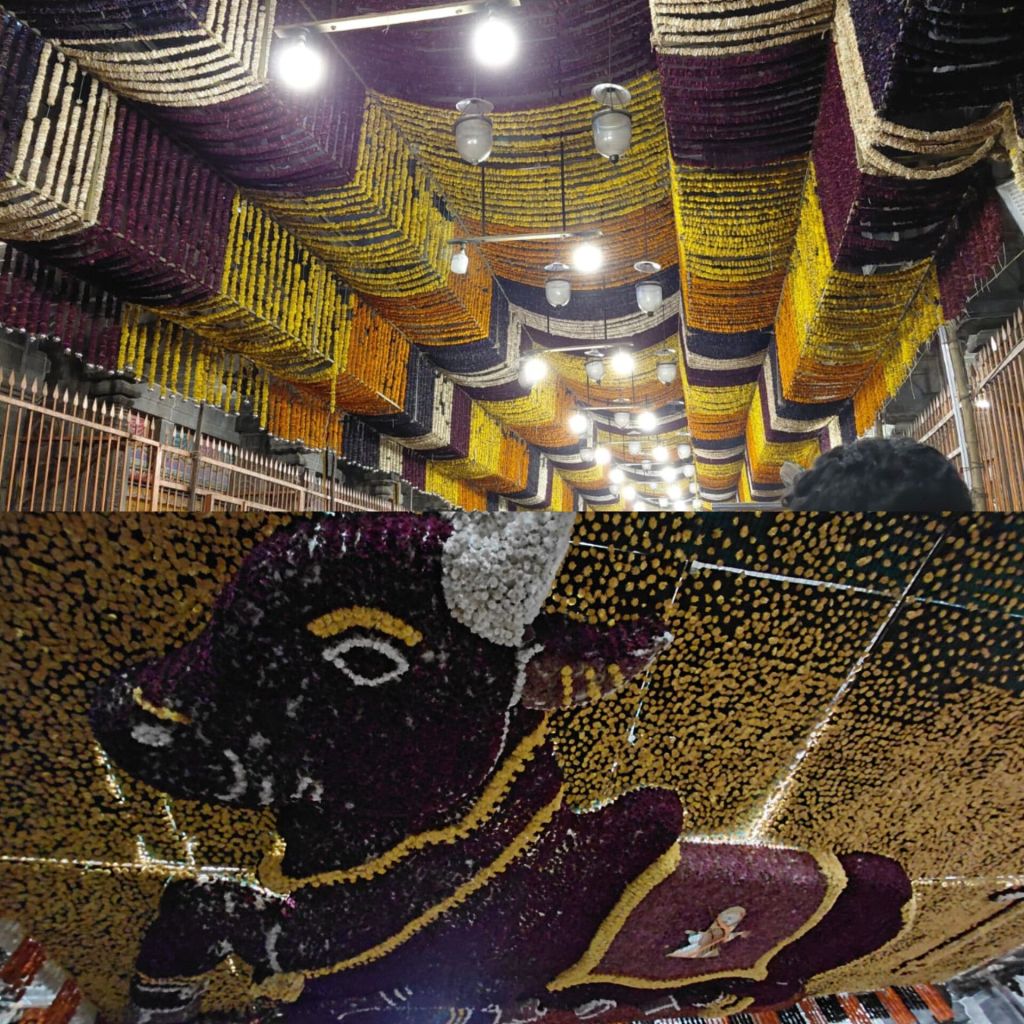
The flower decoration on the inside of the Arunachaleshwara temple on occasion of Karthika deepam

Some tips from my first Girivalam experience

  • The temple closes at night and opens by 06:00. a.m. and there will be a long queue for the Darshan. Hence, it is best advised to reach the temple gate as early as possible to get the earliest darshan with the shortest queue.
  • It is best to do the Pradakshina after sunset and finish it before sunrise to avoid the blazing sun- but also time it well to be able to visit the Ashta Lingams while they too are open.
  • I highly recommend buying the 50Rs. special entry ticket to reduce the walking distance in the queue and thus a faster Darshana.
  • Book a stay as closer to the East Gopuram as possible. This will help to reduce the overall walking distance and ease the accessibility to the Girivalam path.
  • I chose to skip going through the Moksha dwara, a small structure along the path. The queue was extremely long.
  • If possible, offer small donations to as many sanyasis and beggars sitting along the path. It will enhance the benefits of your prayers.
  • There are ample food stalls, water stations and clean public toilets all along the way to keep you going. However, we chose to break our fast only with the temple Prasada after the Darshana was completed.
  • The entire walk will be on an asphalted road / paved footpath. So, expect littering to be normal.

Other noteworthy things to do and places to see during Girivalam

  • Do not miss eating the Pongal and Puliyogare (Tamarind rice) at the paid prasada counter at the exit of the temple. It tastes delicious.
  • Check the timings of the free meals served at the Ramanashram, or simply pay a visit there to experience calmness.
  • You can walk a small distance from the Skandashram to reach a viewpoint where you can see the entire temple premise and Gopurams from.
  • Do not miss the Rudraksha beads distributed for free by volunteers anywhere along the Girivalam path.
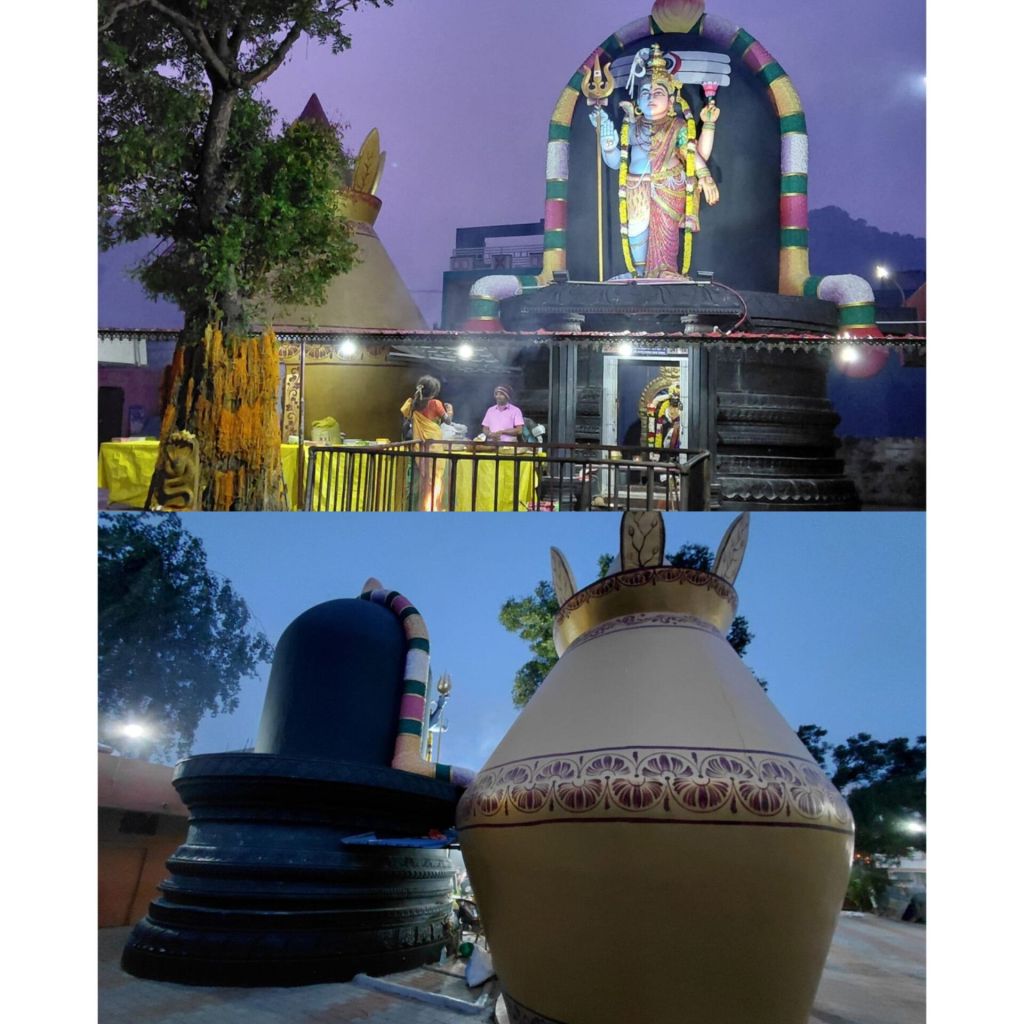
  • The deity and the structure of the Ardhanareeshwara temple were unique.
  • Observe how the direction of the Nandi changes in each temple depending on the direction of the holy hill with respect to the location of the Nandi, it always faces the mountain: The Arunachalar.
  • If you’re visiting Tiruvannamalai anytime after ‘Arudra Darshana’ (next full moon after Karthika Deepam, Do not miss collecting the holy Arudra Kajal / Kohl from the temple. It is made from the soot formed by the ‘Karthika deepam’ itself and will be distributed until stocks are available each year.
The front and back view of the Ardhanareeshwara temple

Do you have anything to share or ask about Girivalam? Comment below.

A Weekend Adventure: Hiking to Ankushagiri Fort

On yet another weekend, we were off on yet another hiking expedition. This time, we went to a lesser-known trail on Hosur-Krishnagiri road. The initial plan was to hike to ‘Aiyur Sami Lake’, a day hike organized by the Eco-tourism wing of the Tamil-Nadu tourism department. However, their site was not accepting registrations due to unknown reasons, and hence, we decided to randomly pick a hill around the region on Google Maps and hike it up. That’s when we came across the Ankushagiri fort.

Following the route indicated on Google Maps, we arrived at the base of the start point of the ascent to Ankushagiri. There is a Perumal temple and, hence, a proper space for vehicle parking. Since we arrived on a Saturday morning in the winter months, some pilgrims had already arrived to worship the chief deity here. However, we skipped the temple visit and began our hike toward the fort that was located (once upon a time) on the hilltop.

Ankushagiri Fort and Perumal Temple at Tamil Nadu
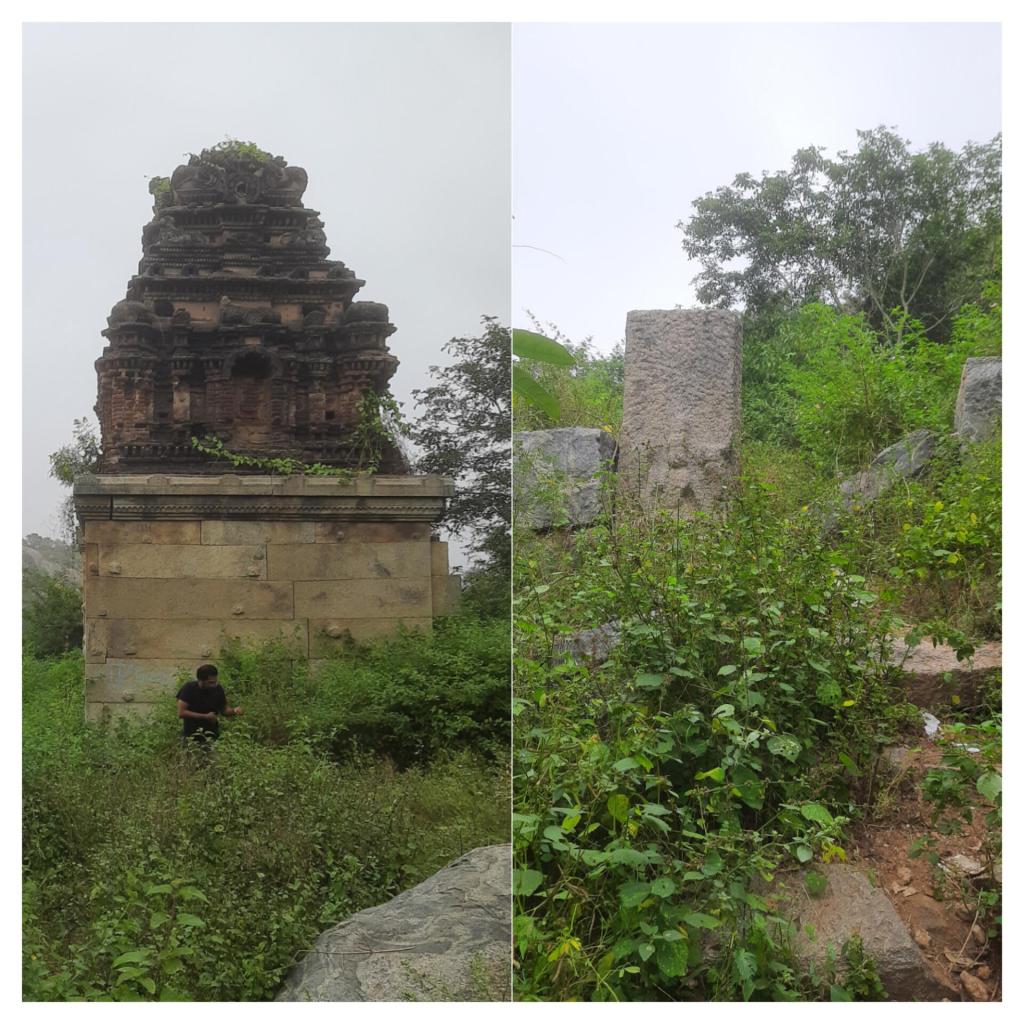
The ruins of the ancient temple at the base of Ankushagiri Hike

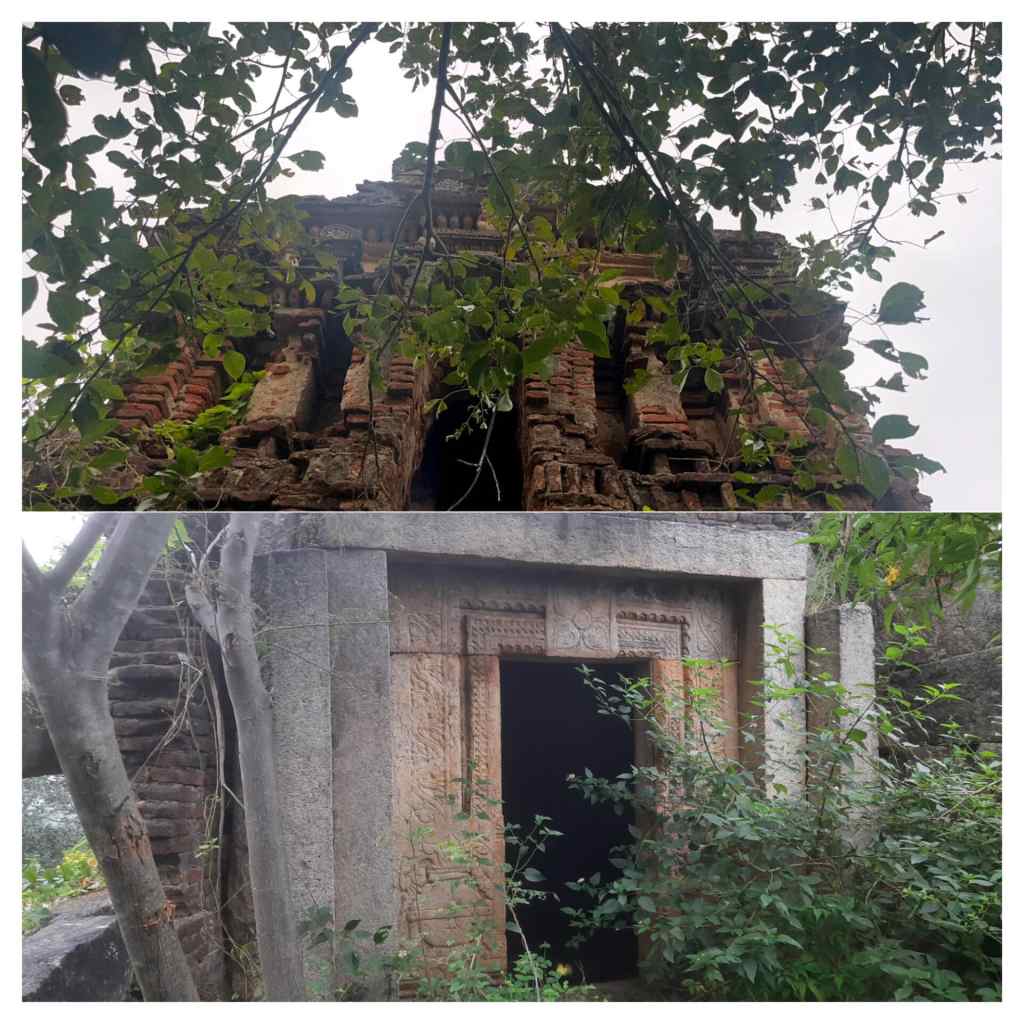
At the beginning of the hike route, there is an ancient structure, now in a dilapidated condition. Today, the Sanctorum lay empty with wild bushes and creepers taking over what once must have been a grand temple. The motifs on the walls of the two adjacent temple structures indicated both Perumal and Shiva.

Ankushagiri Fort and Perumal Temple at Tamil Nadu
The ruins of the ancient temple at the base of Ankushagiri Hike

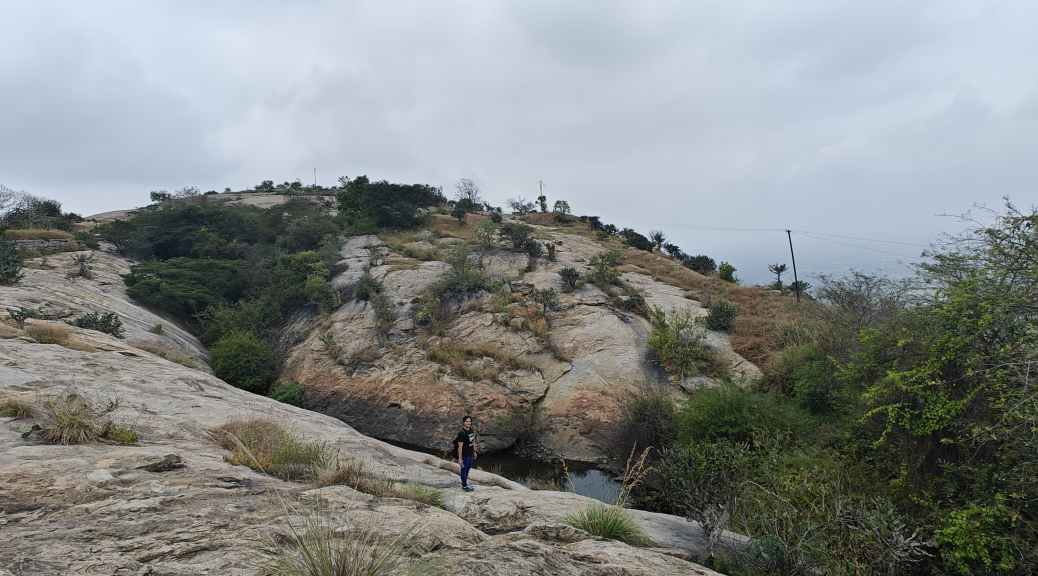
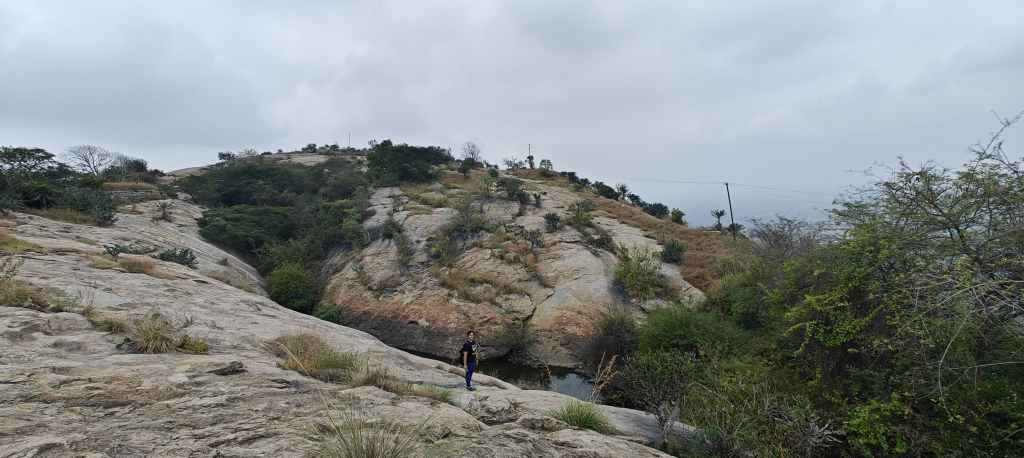
We went ahead from there and stopped after a brief walk. We were confused about the correct trail which seemed to split at a point from where either of them needed some more wear. We casually picked a path and continued to walk on the trail where the thorny bushes then opened to a rocky terrain. The rock looked interesting with varying patterns all over.

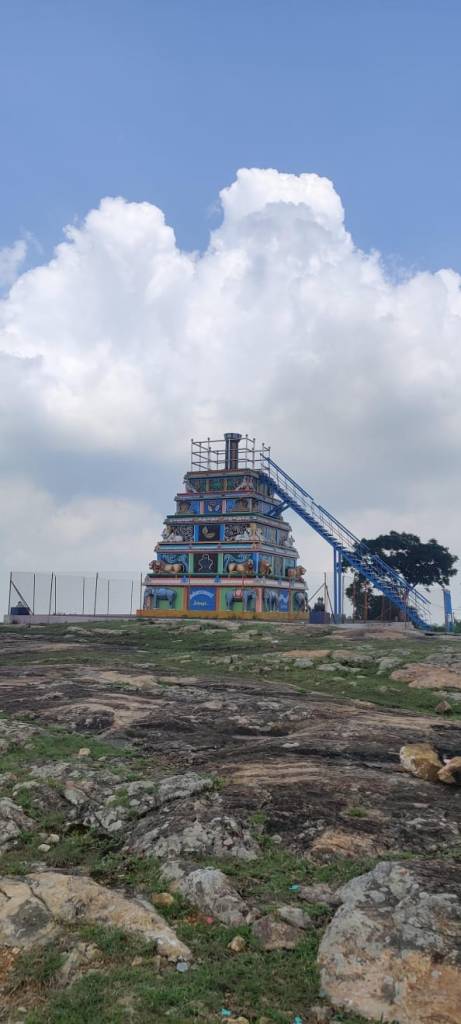
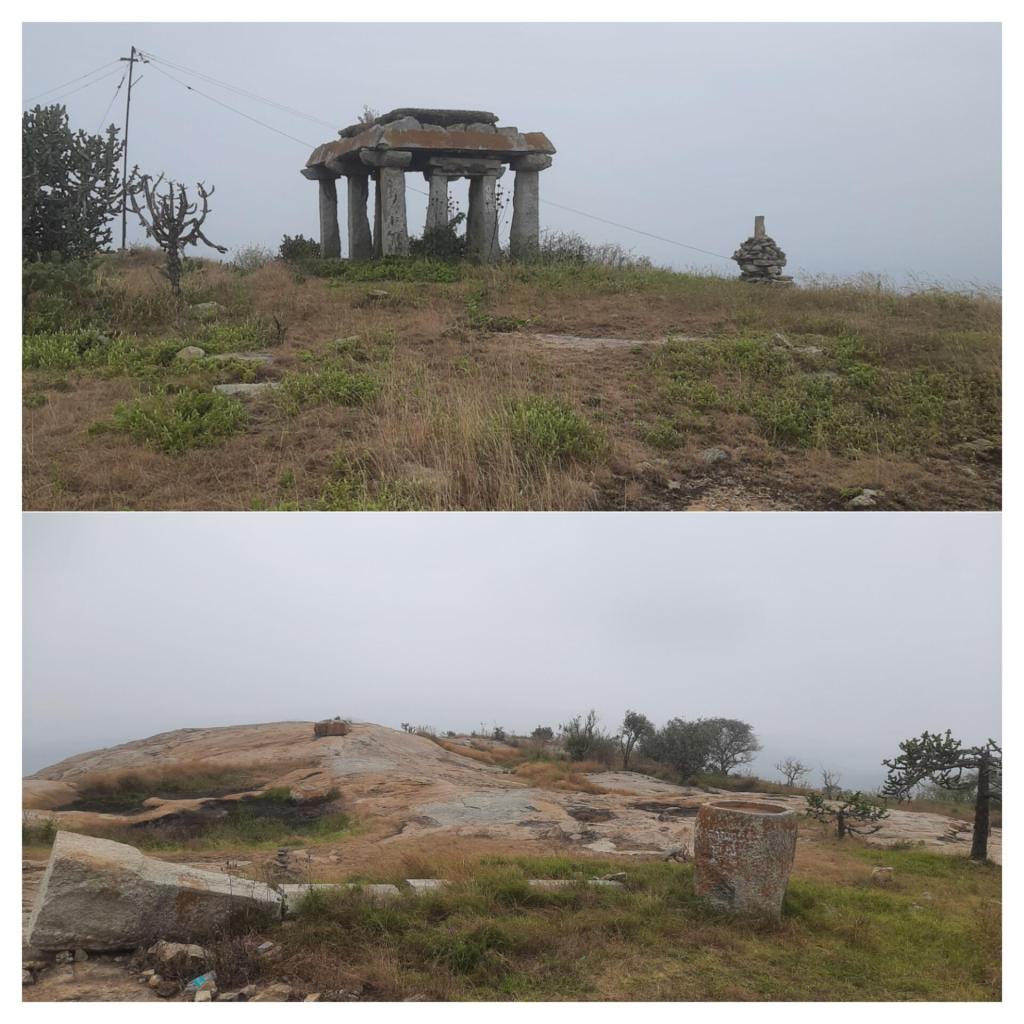
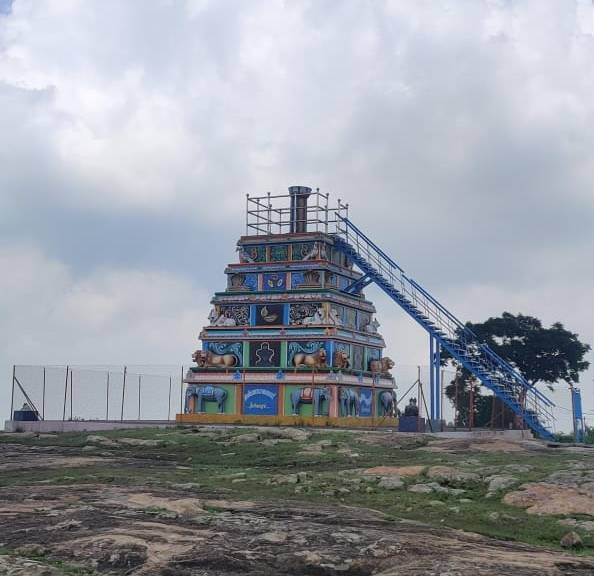
At the top, there were massive cacti plants dotting the area around an abandoned ancient temple structure. Only the pillars remained with the tall Garuda stambha lying down on the side and a stoneware that appeared to be an urn or a waterpot. Some previous visitors to this place had written ‘Someshwara Swamy Temple’ on the stoneware pot for our reference. We rested beside the temple on the large open rock bed overlooking the landscape. The gentle wind caressed our faces while we watched the hills appear one by one at a distance amid the clearing fog.

Ankushagiri Fort and Perumal Temple at Tamil Nadu
The ruins of Someshwara Swamy temple at the peak of Ankushagiri fort

After relaxing for a while and munching on some fruits and nuts that we had carried with us, we proceeded toward the next part of the hill. The trail was beautiful with a rocky gorge on one side and huge cacti lining the path on the other. There, we arrived at a single electric pole that stood in the middle of a heap of ruins of what appeared to be an old fort. Although a circular marking can still be seen to date, only a few large pillars, a few hero-stones like inscriptions, and a couple of kolam designs engraved on the floor were all that existed for us to decipher what might have been the real grandeur, expanse and the purpose of the structure there. Almost little to no history is available to us about who or how this place had served.

Ankushagiri Fort and Perumal Temple at Tamil Nadu
Ankushagiri Hike

Anyway, it was a very interesting outing for us to explore a place so lost in an area where we were the only humans in kilometers around us. We spent ample time there before descending back to the base. We photographed several other patterns on the rocks before arriving at the same bushy junction where we had chosen to take the random path for our ascent.

Upon our return, we paid a quick visit to the Perumal temple before heading back to the city.

Weekend Drive- Biligundlu Ranganatha Swamy Temple

Another weekend and another offbeat destination. This time, we found a temple on a small hillock in Dharmapuri district of Tamil Nadu. In my earlier post about Hogeynakal waterfalls, I have elaborated on how river Kaveri marks the boundary between the two states of Karnataka and Tamil Nadu. This post is somewhat related to the same connection. Because the history of the temple that we were planning to visit this weekend is rooted on the other side of the river, on the fertile plains of Karnataka.

The original Ranganatha swamy temple dating to the Cholas or the Vijayanagara era (as described by the locals) was on the Karnataka side. The stone structure of the temple is present even today (we hope to visit the structure on another weekend trip). The idol of the deity was destroyed by the British (which needs fact checking) and then, a new idol was reinstated on the Tamil Nadu side of the land where it stands today. The Ranganatha Swamy temple that we were heading to is in Biligundlu village and hence the name. The idol of the deity is carved out of a rock which is part of the hill overlooking the river.

On a summer day, when the water levels in the river are low, one can walk across to the other bank. Whereas, when the river is flowing full, the roads leading to both the old and the new temples are long ones. The old location is reachable via MM. hills in Chamarajanagar district of Karnataka, and the new temple is reachable via Anchetty forests in Dharmapuri district in Tamil Nadu.

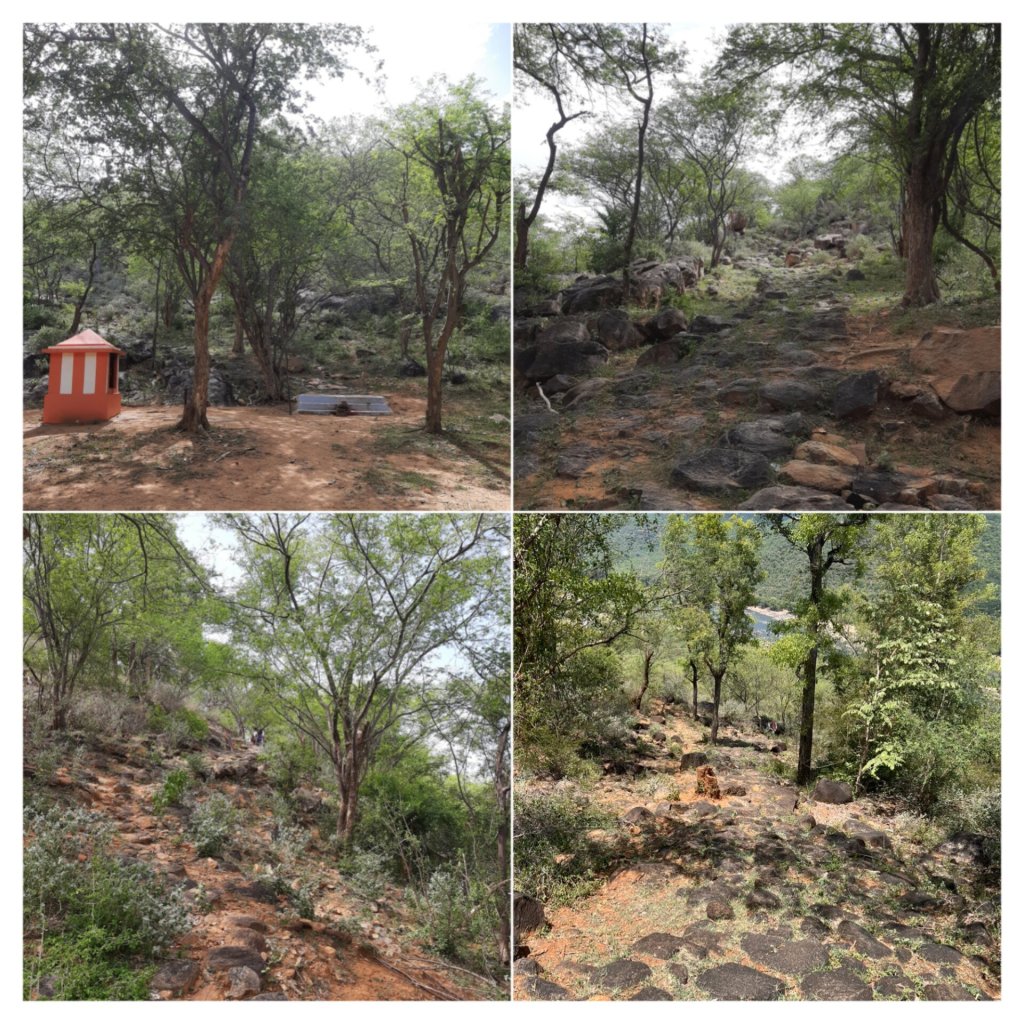
The trail to Biligundlu Ranganatha swamy temple

Anyway, coming back to this weekend, we started early on a weekend morning along the Anchetty forest leading to Hogeynakal waterfalls. We skipped the highway restaurants and stopped by a small local restaurant in Anchetty town for breakfast. It was a good decision as the experience was good with local food and the local atmosphere.

A few kilometers after the Biligundlu cemetery and few kilometers before Hogeynakal waterfalls, we stopped by at a location where river Kaveri flowed onto our right and a tiny structure of brick and mortar was built onto our left… We parked our vehicle there and started our short hike up from there. A properly laid stone path is there all the way to the hilltop which took us around half an hour to hike. The views of the river and hills around were just amazing all the way.

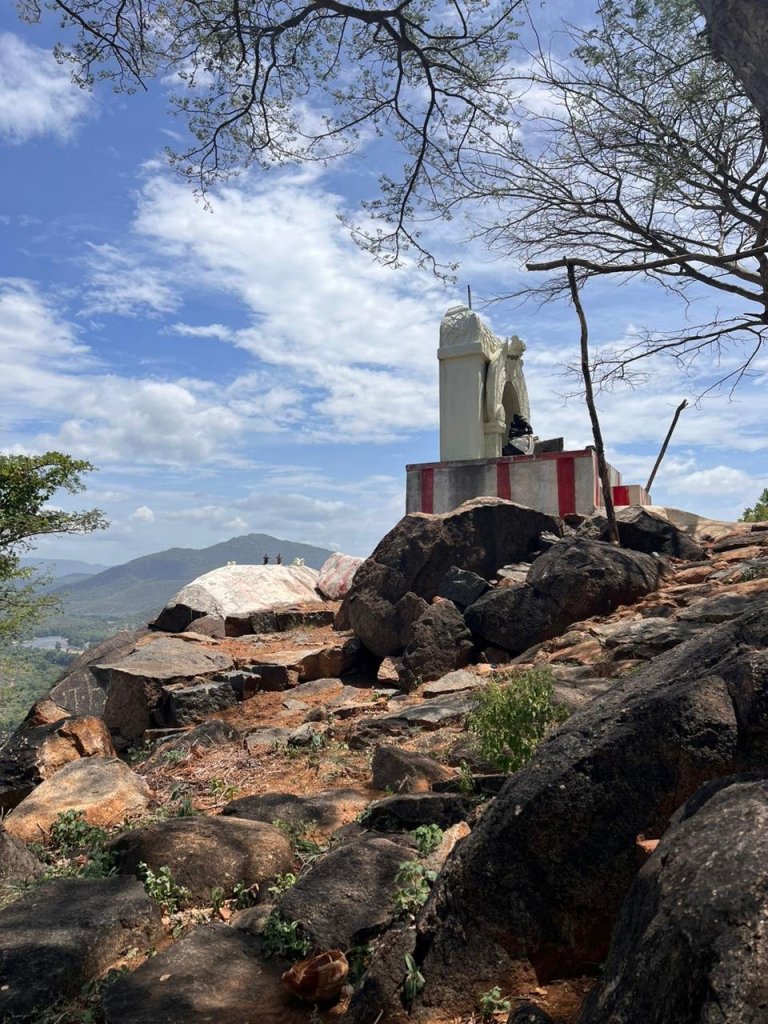
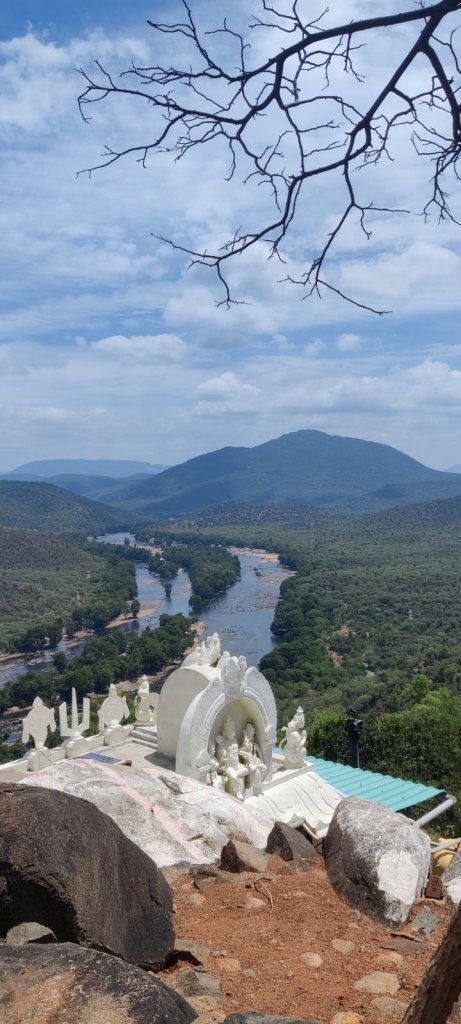
The Ganesha idol at the peak of Biligundlu Ranganatha swamy temple hill

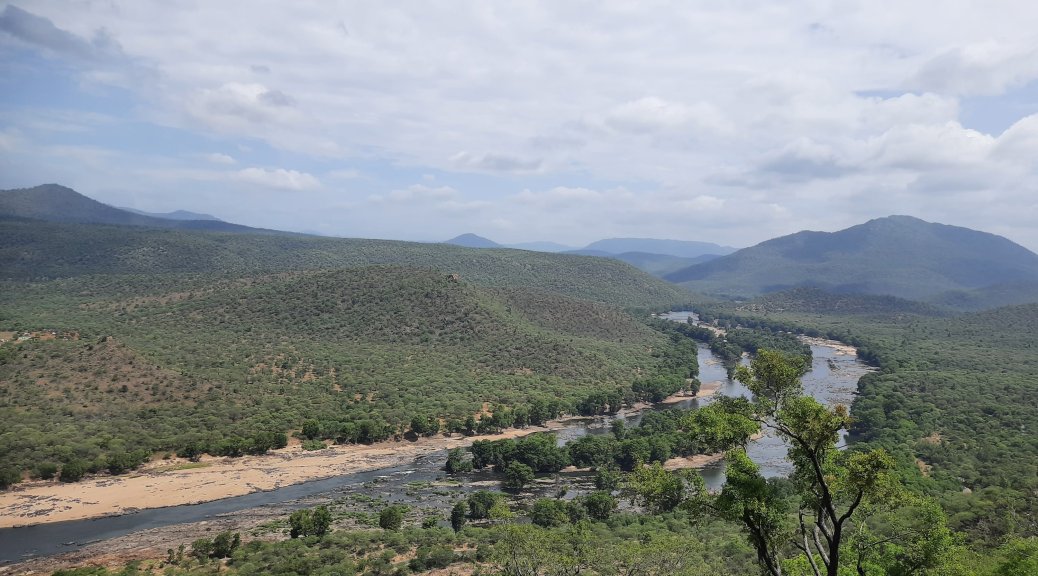
First, we were greeted by an idol of Ganesha sitting under the tree at the peak. This spot gave a splendid view of the river and the hills beyond. We sought Ganesha’s blessings and proceeded to the Ranganatha temple located below, connected by a short flight of stairs. The temple was closed by the time we arrived. However, we could see the idol through the meshed gate. After offering our prayers, we found a spot adjacent to the temple wall and sat there to soak in the beauty of the place. The view of river Kaveri flowing with a backdrop of green rolling hills looked amazing even as the winds caressed our faces. It was a beautiful place, indeed!

View from Biligundlu Ranganatha swamy temple
View from Biligundlu Ranganatha swamy temple; Photo Credits: Sugan @ TheBuffalorider

We headed back after a while and decided to take a dip in the shallow waters of the river to beat the summer sun. A word of caution if you plan to get into the river, that there will be a sudden drop in the depth at many spots and it is believed to have whirlpools as well. We stayed by the shores before calling it a day after a while.

Other nearby places to visit: