Tag Archives: South Indian Trek

Goa backpacking: Netravali Wildlife Sanctuary

Continued from Goa backpacking: Makarotsav Celebration and Temple Hopping.

Based out of Colva, my friend and I had hired a motorbike to explore Goa. Our plan for today was to see some prehistoric sites, take a dip at one of the nearby waterfalls and return to Colva by late evening. With a set of clothes for changing and a towel for each of us, we had woken up to start our day quite early. But the rain gods had brutally taken over the skies, and hence, our day started late.

I was about 10 a.m. when the rain slowed to drizzle, and we left our cottage. We stopped for a quick breakfast in Madgaon before continuing. Using Google Maps, we headed to our first destination: the ancient Buddhist meditation cave at Rivona. Although we struggled slightly with the directions initially, we managed to find the site through local inquiries, without too much trouble. The asphalt road first passes through a residential area before reaching a large natural pond. At this point, the road splits, and we took a muddy route to the right, stopping at a small grassland at the end. From there, a small staircase carved into the laterite ground leads down. We were unexpectedly greeted by a security guard from the ASI (Archaeological Survey of India), who checked our attendance before we entered the cave. We were told a guide is usually available, but none was present at the time. We took a few photos before leaving. If you’re not interested in history and are just a tourist, I recommend skipping this site.
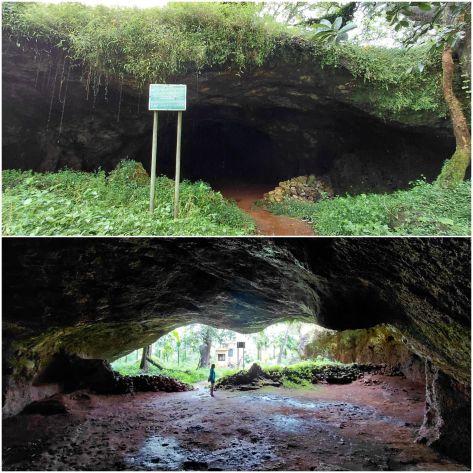
Buddhist cave at Rivona, Goa

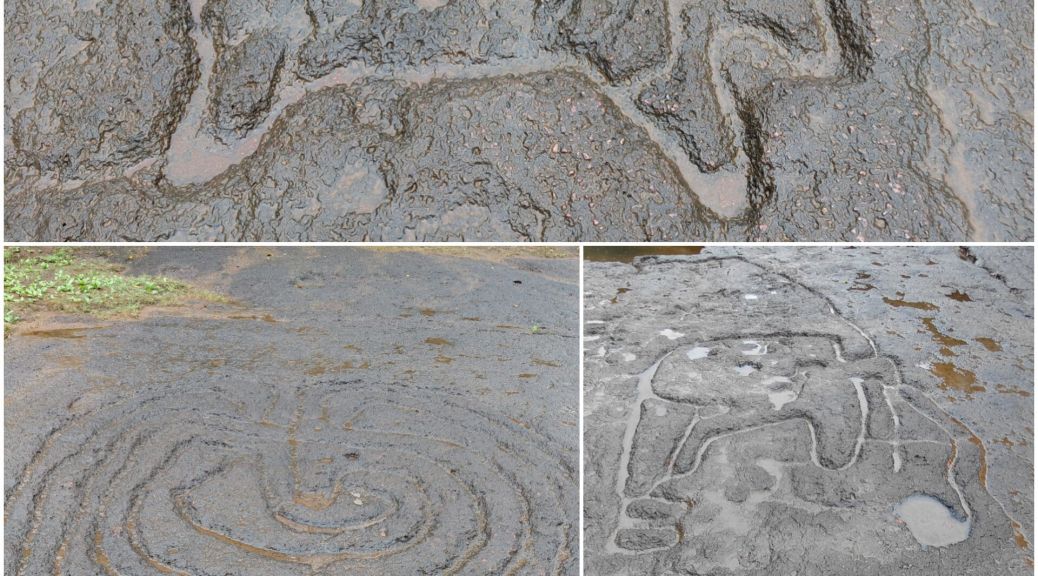
From there, we continued to follow the maps to our next destination- Usgalimal village, one that I was most excited about. For the first time, I was going to see petroglyphs, that too in Goa! The muddy trail that splits across the main road passes through thick forest right up to where the Google Map Pin takes you. After passing through a stretch of confusing deviations, patches of open grasslands and a laterite pond, the location pin finally took us to the banks of the river Kushavati, We parked our bike at the security post and wrote our names in the logbook. The security guard then walked along with us, guiding us through the riverbank. He showed us around various depictions/ Petroglyphs carved on the laterite stone bed of the river. He helped us identify several of the 100+ carvings discovered there, among which were various hunting scenes, several domesticated and wild animals, a trident, a labyrinth, etc., some of the notable ones. Seeing something like this for the first time piqued a new interest within me to learn more about Petroglyphs and ancient rock art, which I would want to travel to in future to explore.
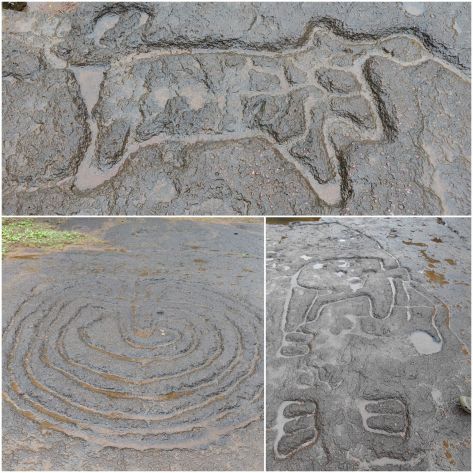
Petroglyphs at Usgalimal, Goa

After spending enough time trying to observe and decipher the art there, we casually asked the guard accompanying us if there was a spot somewhere nearby where we could take a dip in the river. He thought for a moment and nodded while looking at the riverbank on the other side. There’s a spice & areca farm across, where you can approach the caretakers to permit you into the safer section of the river that passes through the property. We thanked him for the recommendation, picked up our luggage from the bike, and crossed a little brook across the river, where we were able to secure our permission. There are NO words to describe the joy our two little hearts had found inside the safe, sweet and soulful waterbody. With just the two of us swimming and enjoying ourselves in the water all the while, we did not realise that we had spent over 2 hours already without being bothered by the rain that bashed down or by any deadlines to get back to waiting families back home. But soon it struck us that we had to make the most of the time when the rain had taken a break. Since we had already spent a lot of time at Usgalimal waters, we skipped our original plan to swim in the waterfalls later. We quickly changed into fresh clothes and got the bike running again.

Not too long after we hit the road, the rain gods took over again, and the terrain changed to an even denser canopied area. A little board read that we had officially entered the Netravali Wildlife Sanctuary. The natural light had become less, and riding harder due to the constant bashing of the heavy rain and wind. We had no option to stop in between since the houses were scarce along the forest, and we had to reach the destination before it got too late so that we could return to Colva safely before it was too late.
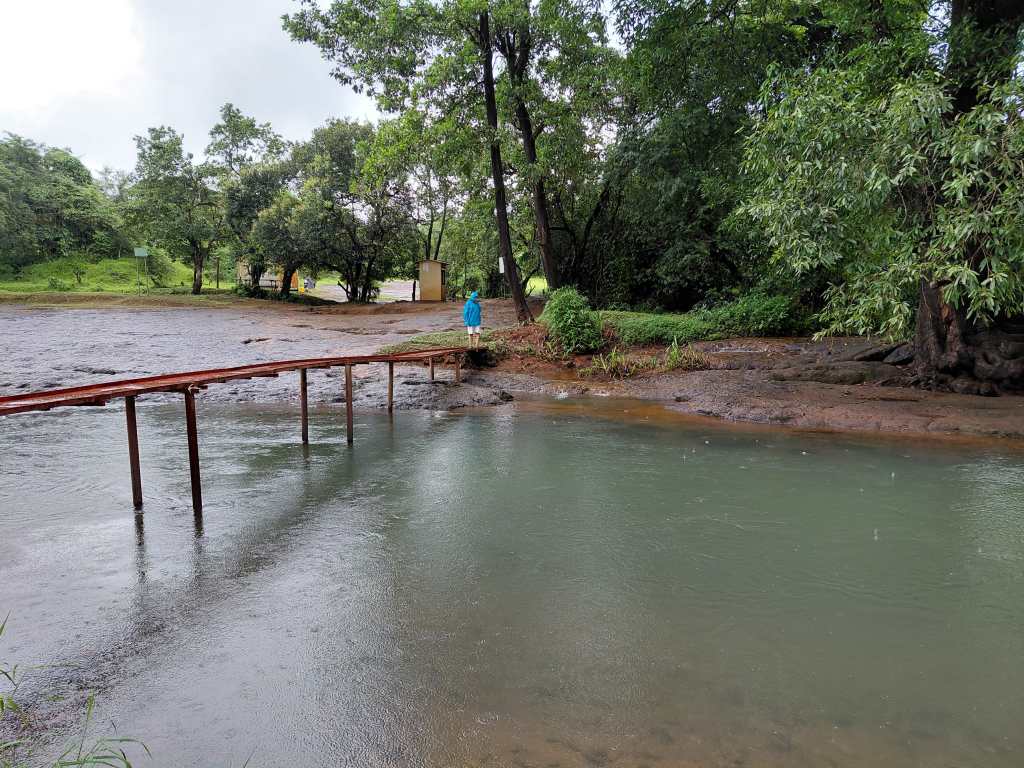
River Kushavati, Usgalimal, Goa

Upon our arrival at the forest gate, we were told that the entry to the waterfalls was closed at 05:00 p.m. We had arrived at 05:05 p.m. The forest personnel did not oblige us, even after several requests and explanations of our long ride back and forth. Now we had two options- One, skip exploring the sanctuary altogether, and return to Colva. Two, find accommodation nearby and explore Netravali (also called Netraulim) at leisure on the following day. We took a moment to think over, looked up at the constantly pounding rain and decided to stay back in Netravali. Even if we wanted to skip visiting places, riding back in the rain and darkness would only be next to madness.

Since the eco-stay run by the Goa forest department was all booked, the guards helped us to find a local homestay nearby. Shortly, our stay was arranged with a local family, and it got dark after that. We took a shower and changed back to the same clothes (there was no other option), devoured a comforting hot meal before retiring for the night.

After waking up in the morning, we watched our host light up a lamp at the Tulsi katte in their courtyard and milk their cows in the shed attached to the family home. We had our breakfast and left towards the forest gates soon after. In fact, we wanted to be the first visitors for the day so that we could avoid the crowd and start our return ride as early as we could. So, there are two waterfalls as one enters the gated area, which require separate permits. We were briefed about the condition of the roads leading to both and asked to register ourselves accordingly at the entry. We decided to visit the Mainapi waterfall by hiring a forest Jeep and riding our bike to the Neturlem (Saoli) waterfall later.
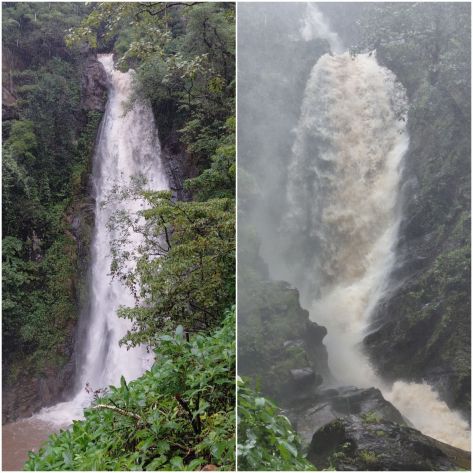
Waterfalls in Netravali Wildlife sanctuary, Goa
Left: Mainapi waterfall. Right: Saoli Waterfall. Netravali Wildlife sanctuary, Goa

The adventurous 5km drive to Mainapi waterfall constituted a crazy, bumpy drive on the rocky-hilly road cutting through thick canopied forest and river crossings. Further, a short hike down to the waterfall was accompanied by leeches, brightly coloured miniature crabs, frogs and other insects found commonly during monsoons. The first glimpse of the waterfalls had our breath pause for a moment. We hadn’t expected anything so beautiful in Goa, which is otherwise popular for its beaches. Thanks to the monsoons, the path further down to the waterfall was blocked for safety reasons. We sat down on the stairs, watching the water roaring down in all its might until we realised that a couple of leeches had entered my raincoat. I had to quickly get them out and also head back to keep the day’s schedule under control. After a good, bumpy drive back to the forest office, we returned to the forest on our bike. The road was good right up to the start point of the Saoli waterfall. After parking the bike, a short descent down the stairs leads us to the banks of the Saoli waterfall. We could get into the water, but the currents were still strong, and the water looked muddy from the heavy rain. We spent some time there, too, before exiting the forest gates.

We returned to the homestay where our host had promised to take us around their ancestral village. After a short drive in their car, we arrived in front of an old mansion, which was the ancestral home of our host, the Desai family. It was very interesting for me to walk into a traditional Hindu home because its history dated back to even before the Catholic-Portuguese mansions which I had seen thus far elsewhere in Goa. As we entered through the towering arch-like entrance to this house, we were greeted by a large open courtyard, which was divided into dwelling spaces for each member of the family. To the left of the entrance was a space dedicated to the sacred arms once used by the ancestors of the family. We were told that some even had the original blood stains with a history of valour and martyrdom dating centuries. Laterite walls, red-oxide floor and clay tiles set on wooden beams- it invoked nostalgia instantly. While the kids surrounded us in excitement to tell us about their stories from the rooms, the senior women wove garlands with colourful flowers picked from their backyard while being entertained by the chatter of their husbands. They were all happy to have us amongst them.
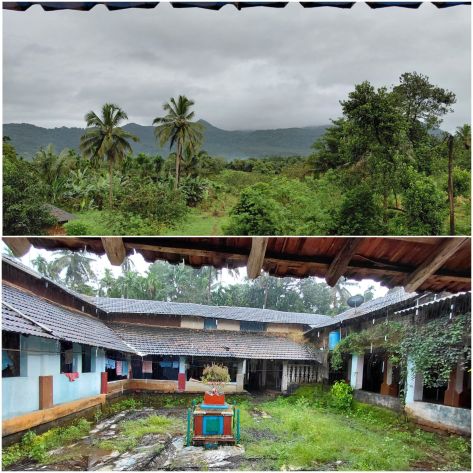
Goan Homestay
Top: View from our homestay; Bottom: Courtyard of the ancestral home

We then walked through the exit door on the back side, passing by a series of bathrooms where we could hear the water in the firewood-lit boilers. As rain-fed streams came to life while walking through their rubber plantation, we crossed a little river to arrive at Datta-Gufa, a family-maintained temple. This is an important temple in the village accessible from the main road as well, but we were more privileged to get private access from the other side. After spending time on their property, we returned to the homestay from where we took our bike and commenced our return ride towards Colva.

En route, our first stop was at the Gopinath temple in Netravali. The temple is rather popular for its sacred tank. Fondly called Bud-bud Lake, the pond water is believed to bubble up when one claps while standing in front of it. We too did witness the interesting phenomena, but felt it did so as a response to some other air pressure occurring naturally in the otherwise silent environment. In any case, it was something we were experiencing for the first time.

From there, we started to ride again to make the most of the time when the rain seemed to have taken a break. A short ride ahead were directions to ASI sites like the ancient ruins of Sri Lakshmi Narayani temple and Kajur Petroglyphs. But by seeing the Google Photos uploaded by past visitors, we decided to give them a miss. Shortly, we reached Rivona. Someshwar Sansthan, Jawali Damodar Sansthan and Vimleshwar temple were landmarks and renowned local temples that we visited along our ride. This has been written about separately in my previous post: Goa backpacking: Makarotsav Celebration and Temple Hopping. We had a quick coffee break at Margaon before reaching our home during the trip at Colva.

To be continued as Goa backpacking: Day trip to Rachel and Big Foot.

Goa backpacking: Mahavir National Park

I am not a person who enjoys large social gatherings with heart thumping loud music and parties. For me relaxation comes in silence, slowness and engaging in self-paced activities. I had always thought and heard about the cultural amalgamation that Goa is and what Goa must have been before the Europeans came. I have friends from the Saraswat Brahmin communities who always mentioned that the temple of their Kula devata (patron God of their community) was in Goa despite their long history of residence in Karnataka. Infact, the name Goa itself is a corrupted version of GauMantak, a Sanskrit word meaning ‘Land of Cows’, a sacred animal as per Hindu mythology. I wanted to learn more about this cultural amalgamation brought in by the influence of the Portuguese and that is why I decided to spend my post-monsoon vacation in the southern parts of this state. Through a fortnight long on a backpacking trip, I explored Mollem- Old Goa- Rivona-Netravali-Colva- Ponda-Rachol- Louterim- Shiroda-Palolem-Panjim. In this post, I would like to share the places we explored in and around Mollem.

My family and I started our drive from Bangalore by early morning and arrived at the nature-stay / an eco-friendly luxury resort we had booked at Mollem by late afternoon. Fortunately, or unfortunately for us, it had been pouring cats and dogs since the previous day of our arrival. Unfortunate because, driving in the rain was extremely blinding; Fortunate because, heavier the rains, better would be the sight for which we had driven down all the way. So what sight am I talking about? We had specifically booked this resort to do the night walk with them in the rainforests due to its proximity to the Mahavir National park. The night walk was a unique way to explore the lesser known “Nightlife” of Goa, a night crawl that introduced us to the nocturnal flora and fauna of the region rather than the bars and pubs.

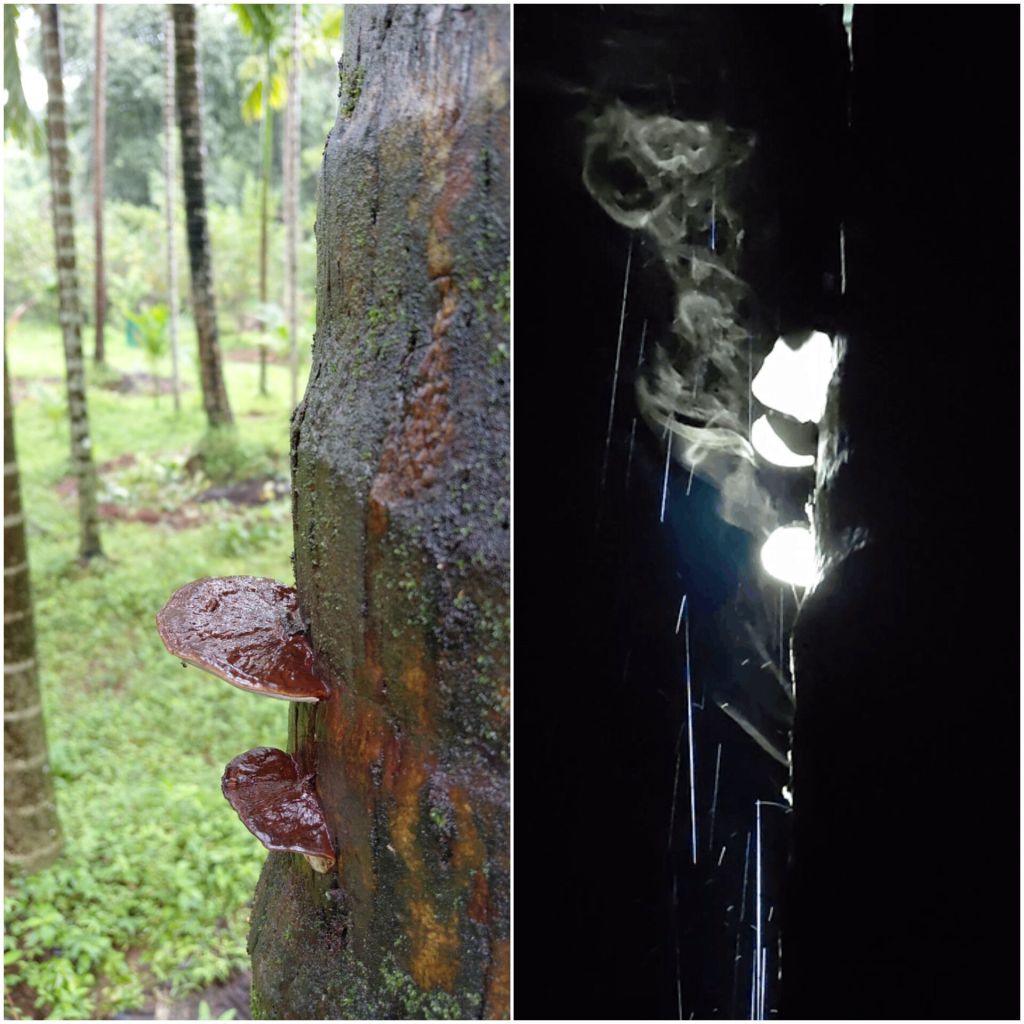
The lunch and dinner menu featured an all-local cuisine made with only locally sourced ingredients and tasted divine. Post dinner, we wore our raincoats, gumboots and headtorches and marched towards the forest after a short briefing. A guzzling water-steam flowing somewhere along in proximity stayed invisible in the darkness. Spiders, lizards, scorpions (that glowed under UV light), snakes and several types of mushrooms kept us accompanied in the constantly pouring rain during the entire walk. We then arrived at a spot in the middle of the forest, surrounded by massive trees and thick canopies. Our guide asked us to turn off all artificial lights and close our eyes for about a minute. It was for our eyes to set into the darkness of the forest after walking with flashlights until there. When we opened, we were all stunned by what our eyes beheld. The entire forest floor and the tree trunks were lit like radium. We were witnessing truly magical moments as bioluminescence was seen at its peak. The luminous fungi growing all over the ground, on tree trunks and even tiny wigs below my feet were glowing in the dark. An experience that I had wished to witness since so rftany years had finally come true.

The same Mushroom photographed during day(left) and night(right). Spores can be seen under torchlight at night.

We then returned to our cottages still holding the magic of the flowing forests still in our eyes. The other times of witnessing nature’s magic with light have been documented in separate posts.

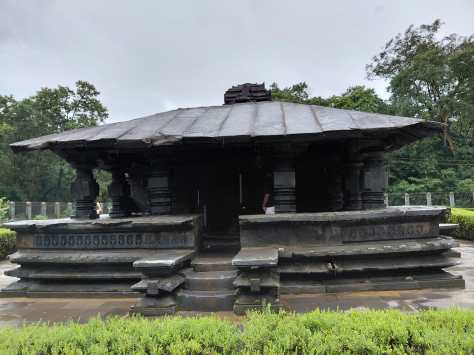
It was still raining as we devoured our breakfast and checked out of the resort. Our first visit was to Tambdi-Surla Mahadev temple. This is the oldest surviving Hindu temple in Goa, established by the Kadamba-Yadava dynasty and dates to 12th Century CE. It was a peaceful little temple built on the bank of the river Surla, whose upstream forms a cascading waterfall called by the same name. However, due to the monsoons, entry into the river or the hiking to the waterfall was prohibited at the time of our visit.

Tambdi Mahadev Temple, Goa
Tambdi Mahadev Temple at Tambdi Surla

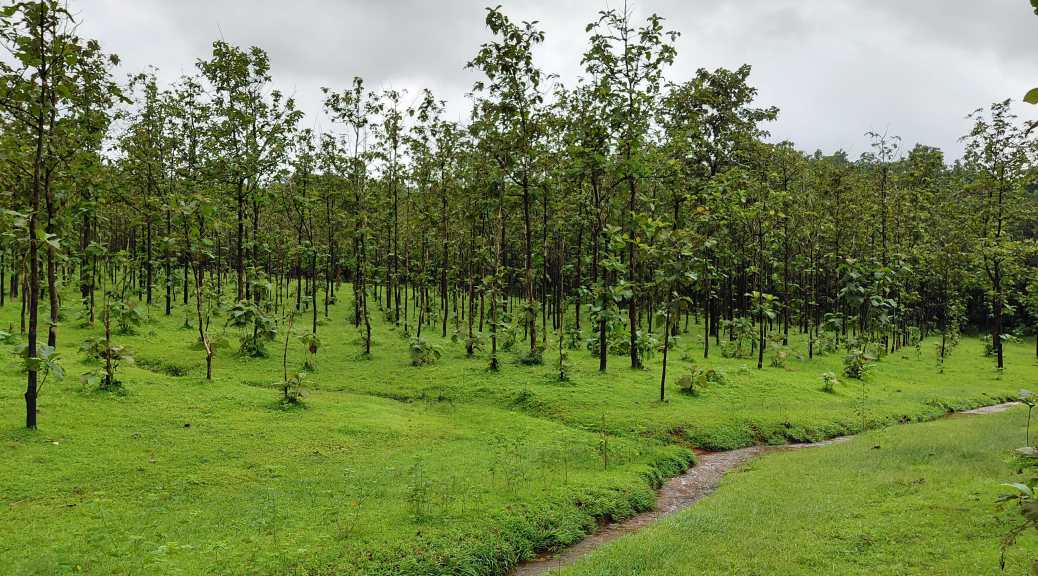
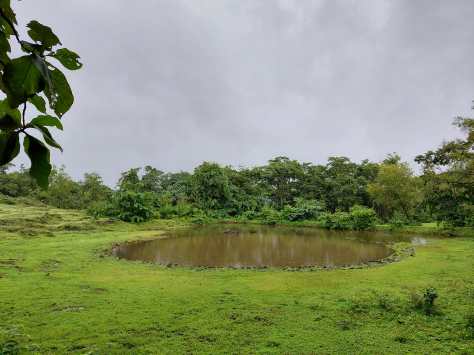
Upon our return from the Tambdi-Surla Mahadev temple, we were enchanted by the green cover all along the way. It was so tempting to the point that we parked our car by the roadside and simply walked into the neon green meadows running parallel to the road. We jumped across a tiny rainfed stream flowing across teak plantations which led us straight into a place that looked like a Windows wallpaper. We took lots of photos before coming across another random location on google maps that was named as a ‘crater lake’. Curious to find out what the lake was, we drove a little further and hiked a short distance by following google maps until we came across a small round shaped lake in the middle of a forest. I am still unsure if that was man-made or a natural pond which looked almost perfectly rounded in shape, but nevertheless it was a beautiful setting for yet another set of photography.

The Crater lake at Goa
The Crater Lake at Mollem National park, Goa

The stretch was mostly cut-off from mobile Connectivity, and we loved the peace we found amidst the chaotic monsoon drive. We occasionally stopped by at shops running in the backyards of small homes along the way to use free Wi-Fi in the name of drinking chai or coffee, local snacks sold in glass jars. It was thus far a beautiful trip exploring Mollem and Mahavir National Park.

We then proceeded towards Colva where we found our home for the next few days to explore the least explored places in Goa beyond beaches and parties. To be continued as Goa backpacking: Makarotsav Celebration and Temple Hopping.

All you need to know about Girivalam

What is Girivalam?

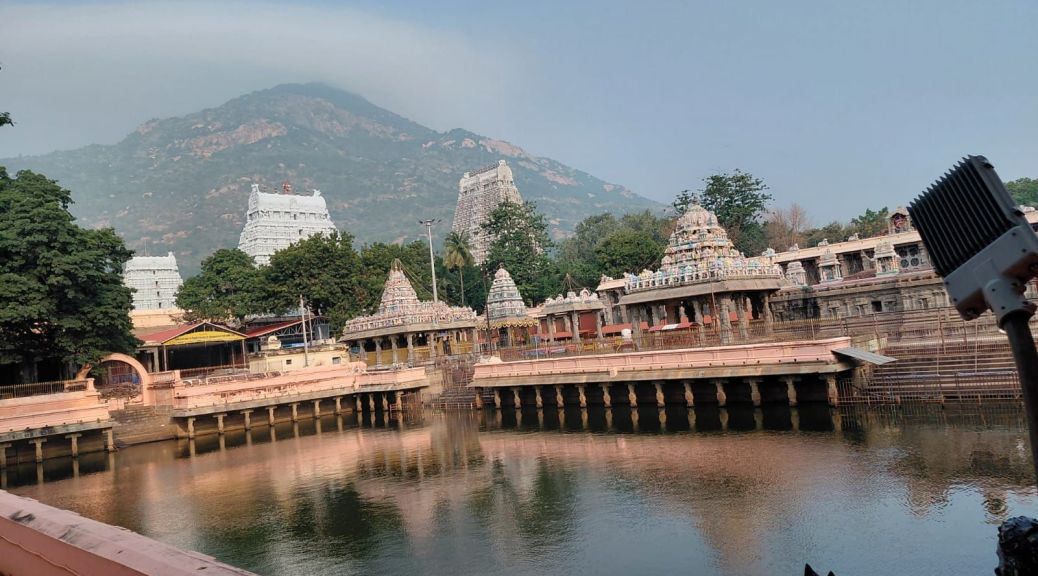
Mythology has it that Brahma and Vishnu got into an argument over their supremacies and finally sought Shiva’s help to resolve the issue. Shiva then created a cosmic column of fire and asked Brahma and Vishnu to find the end of the fire. Whoever found its end would be declared as the supreme god. Bramha went towards Akaasha and Vishnu went towards Pathaala to find the top and bottom ends respectively. However, both returned unsuccessful, thus renouncing Shiva to be supreme. This place came to be called Arunachala hill or Tiruvannamalai. The name of the hill is derived by combining three Tamil words, Thiru- meaning sacred, Vann meaning fire, and Malai meaning mountain, thus meaning “the holy fire mountain”.

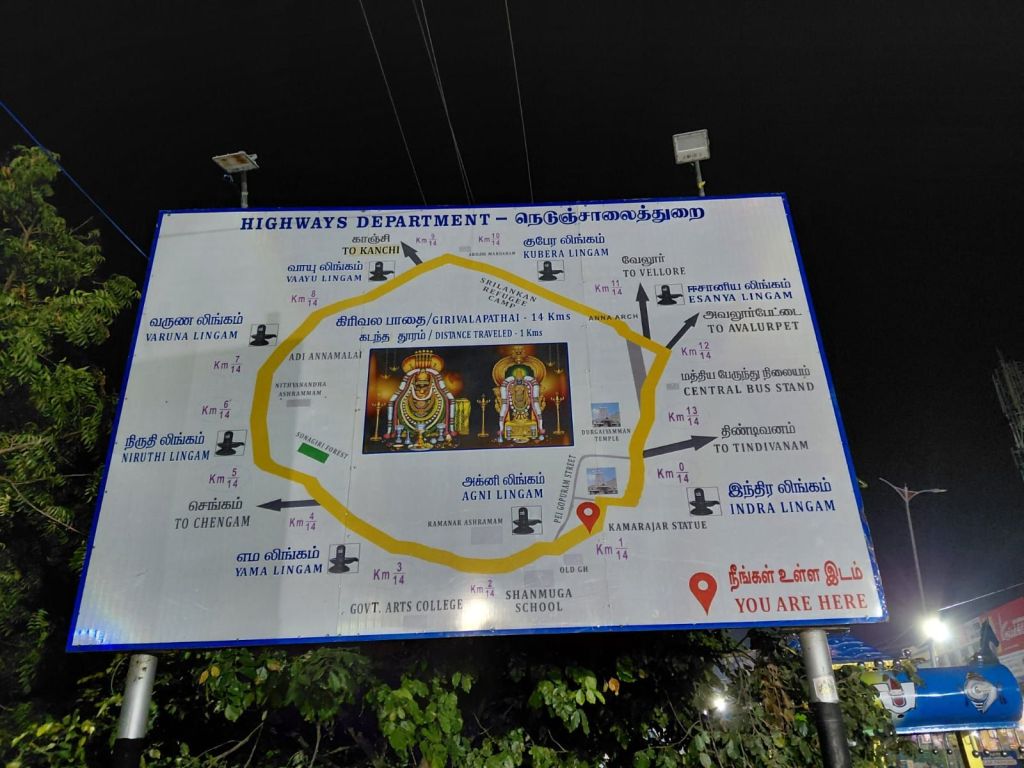
Girivalam, also called as Giri Pradakshina is a combination of two words, ‘Giri’ meaning mountain and ‘Valam’ meaning circumambulation. It is a sacred walk covering an approximate distance of 14-kilometer in the clockwise direction around the Arunachala Hill in Tiruvannamalai town of Tamil Nadu. Since the hill is considered a physical manifestation of Lord Shiva, conducting the Giri Pradakshina is believed to offer spiritual purification and liberation.

To commemorate the day of establishing Shiva’s supremacy, a large bonfire is lit atop the hill during the Karthika month of the Tamil calendar. This Karthigai Deepam lit on the previous night of the full moon symbolizes Shiva’s cosmic fire and burns continuously for the next eleven days attracting millions of devotees from all over for this annual festival.

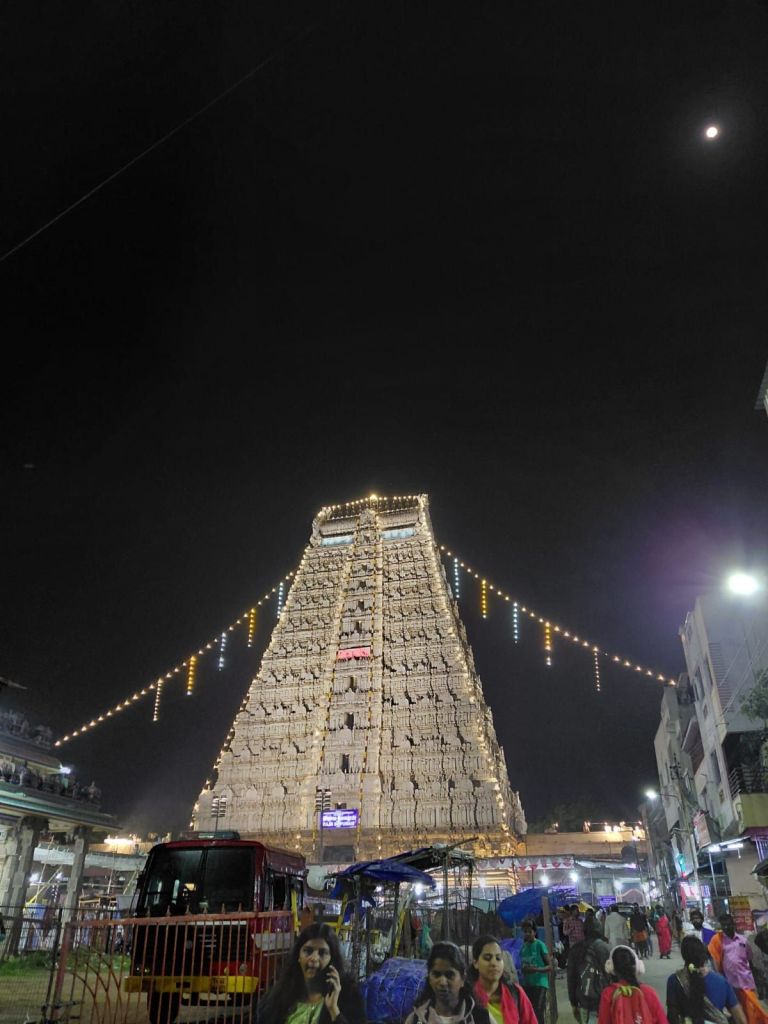
The Rajagopuram on a full moon night of Karthika month

How to do Girivalam?

  • The Pradakshina must start and end at the same spot, usually at the east entrance tower of the Arunachaleshwara temple located at the foothills.
  • Start the Pradakshina by visiting the Kalabhairava and Ganesha shrines, followed by breaking a coconut in front of the east Gopuram of the Arunachaleshwara temple.
  • Traditionally done barefoot, it is not wrong if one opts to wear just socks or footwear during the walk and removed before entering the temples passing along the path.
  • A visit to the Ashta Lingam shrines and other significant temples along the way is believed to enhance the benefits.
  • Girivalam can be conducted on any day and time of the year. However, offering it on full-moon days is considered more auspicious.
The Girivalam route map

When did I go?

Since my friend and I had been contemplating doing Girivalam for a very long time, it was a spontaneous decision to perform it as the last full-moon day of the 2025 calendar year, and a weekend had arrived together. Coincidentally, it also happened to be the Karthika Month and hence, the Karthika deepam would be lit over the eleven-day period.

We chose to go there on a Friday, which was a day after the full moon, assuming that the crowd of the full moon day would have subsided and the weekend crowd wouldn’t have poured in yet. It turned out to be a smart decision.

We also got lucky that we saw the flames deepam atop the Arunachalar hill, all the décor of the town and all the decoration inside the temple that had been done for the annual festival.

How did I go?

  • There are plenty and frequent public buses run by Karnataka and Tamil-Nadu Road transportation services. We boarded a TNSRTC bus onwards to Tiruvannamalai and KSRTC bus for our return to Bangalore, both without prior bookings.
  • We arrived at Tiruvannamalai at around 07.00.p.m. had a filling dinner and retired early at a hotel we had pre-booked close to the east tower of the temple.
  • We started our pradakshina by around 03.45.a.m. and finished it by 08.00.am.
  • We stood in the ticketed queue for Darshana and were done by noon we ate temple prasada (more like brunch).
  • We then checked out of our hotel and reached Bangalore by night.
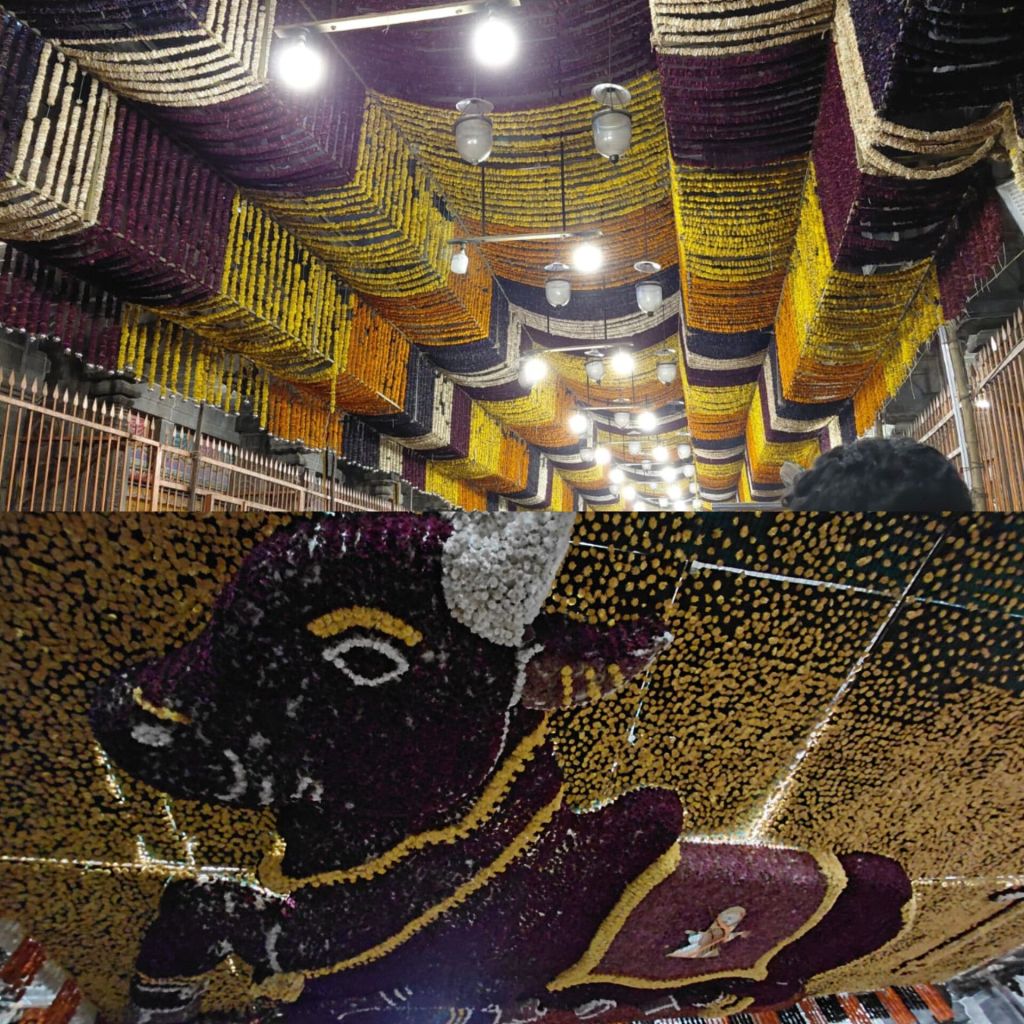
The flower decoration on the inside of the Arunachaleshwara temple on occasion of Karthika deepam

Some tips from my first Girivalam experience

  • The temple closes at night and opens by 06:00. a.m. and there will be a long queue for the Darshan. Hence, it is best advised to reach the temple gate as early as possible to get the earliest darshan with the shortest queue.
  • It is best to do the Pradakshina after sunset and finish it before sunrise to avoid the blazing sun- but also time it well to be able to visit the Ashta Lingams while they too are open.
  • I highly recommend buying the 50Rs. special entry ticket to reduce the walking distance in the queue and thus a faster Darshana.
  • Book a stay as closer to the East Gopuram as possible. This will help to reduce the overall walking distance and ease the accessibility to the Girivalam path.
  • I chose to skip going through the Moksha dwara, a small structure along the path. The queue was extremely long.
  • If possible, offer small donations to as many sanyasis and beggars sitting along the path. It will enhance the benefits of your prayers.
  • There are ample food stalls, water stations and clean public toilets all along the way to keep you going. However, we chose to break our fast only with the temple Prasada after the Darshana was completed.
  • The entire walk will be on an asphalted road / paved footpath. So, expect littering to be normal.

Other noteworthy things to do and places to see during Girivalam

  • Do not miss eating the Pongal and Puliyogare (Tamarind rice) at the paid prasada counter at the exit of the temple. It tastes delicious.
  • Check the timings of the free meals served at the Ramanashram, or simply pay a visit there to experience calmness.
  • You can walk a small distance from the Skandashram to reach a viewpoint where you can see the entire temple premise and Gopurams from.
  • Do not miss the Rudraksha beads distributed for free by volunteers anywhere along the Girivalam path.
  • The deity and the structure of the Ardhanareeshwara temple were unique.
  • Observe how the direction of the Nandi changes in each temple depending on the direction of the holy hill with respect to the location of the Nandi, it always faces the mountain: The Arunachalar.
  • If you’re visiting Tiruvannamalai anytime after ‘Arudra Darshana’ (next full moon after Karthika Deepam, Do not miss collecting the holy Arudra Kajal / Kohl from the temple. It is made from the soot formed by the ‘Karthika deepam’ itself and will be distributed until stocks are available each year.
The front and back view of the Ardhanareeshwara temple

Do you have anything to share or ask about Girivalam? Comment below.

A daytrip from Bengaluru- Adi Chunchanagiri

Adi-Chunchanagiri mutt is the spiritual headquarters of the Natha Parampara and Jogi Cult of Hindus of Karnataka. My dad, who had earlier visited this place with his friends, happened to insist on going there again with his family. His intention was not to take us on the spiritual path but rather to introduce us to a hiking path which he found picturesque after having ascended.

One Saturday morning, our family set forth to enjoy this day trip towards Adi-Chunchanagiri. We drove towards Hassan, along an excellent highway until Bellur cross from where we had to take a deviation towards Adi-Chunchanagiri betta (hill) as indicated on google-maps. There on, we enjoyed our drive through the countryside, with traditional homes scattered between vegetable farms, coconut groves, and forest patches of brown boulders and green trees. Google is not always right and that’s why we deviated from the course a little more than necessary until we found the correct track again. But it was the deviation which we enjoyed. We realized that the region is declared as Adi-Chunchanagiri peacock sanctuary. It was no surprise that dozens of peacocks were grazing freely on every other farm, moving around at every turn of the road and everywhere else along our way right until we reached the parking lot at the base of the Adi-Chunchanagiri hill.

Adichunchanagiri
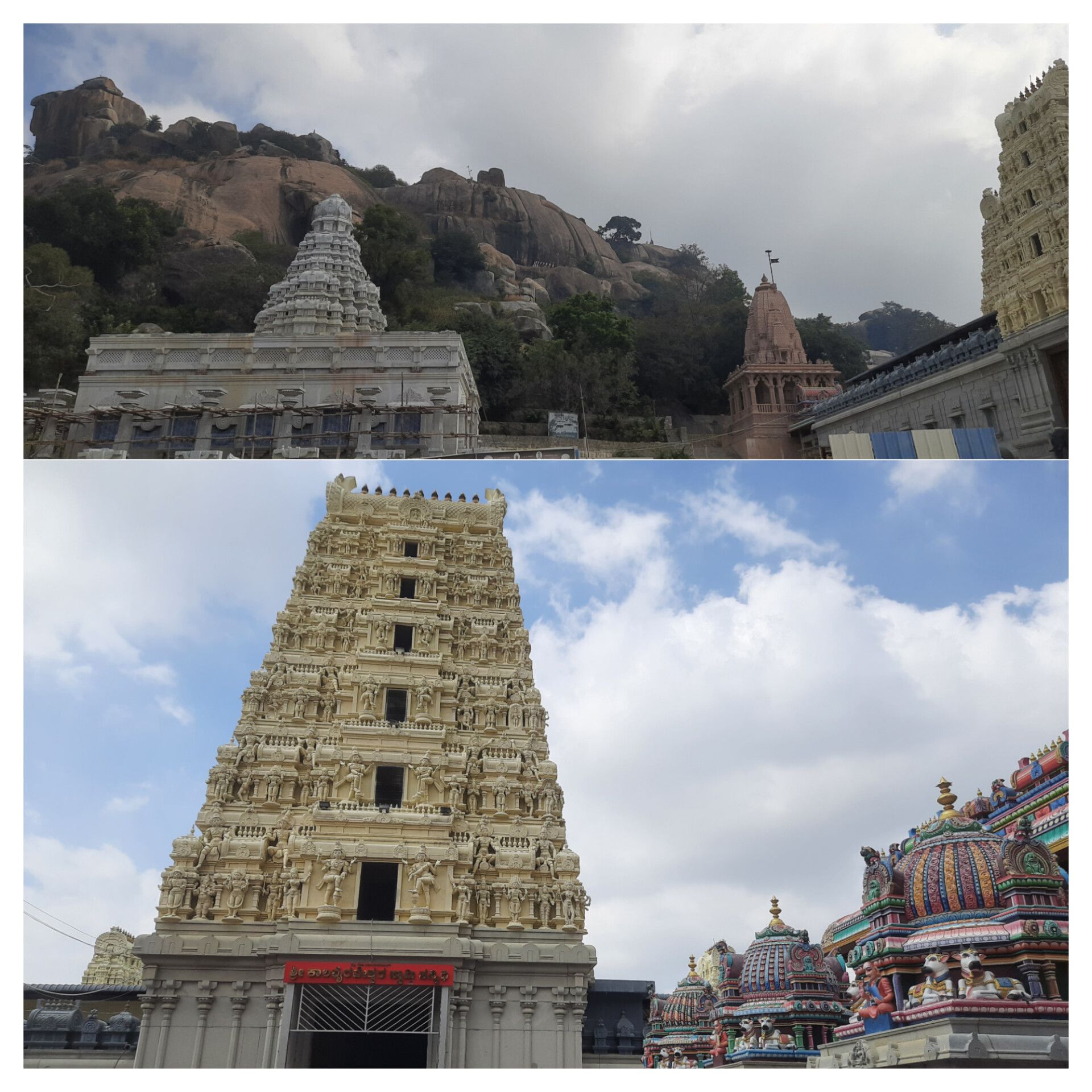
Top: The first glimpse of the Adichunchanagiri premises; Below: The entrance tower of the main temple

The initial approach towards the mutt premises starts with an ascent of about 100 steps leading to the welcome gate/ arch giving a visitor the first glimpse of the main temple. The large doors of the main temple opened into an ambience that felt divine and calm. It is entirely built with stones, and it gives a feeling of being in one of the ancient Dravidian temples though this one was built in modern times. The deities believed to be residing inside and revered highly by the pilgrims here are Sri Kalabhairaveshwara Swamy and Sri Stambhambika (Kambadamma).

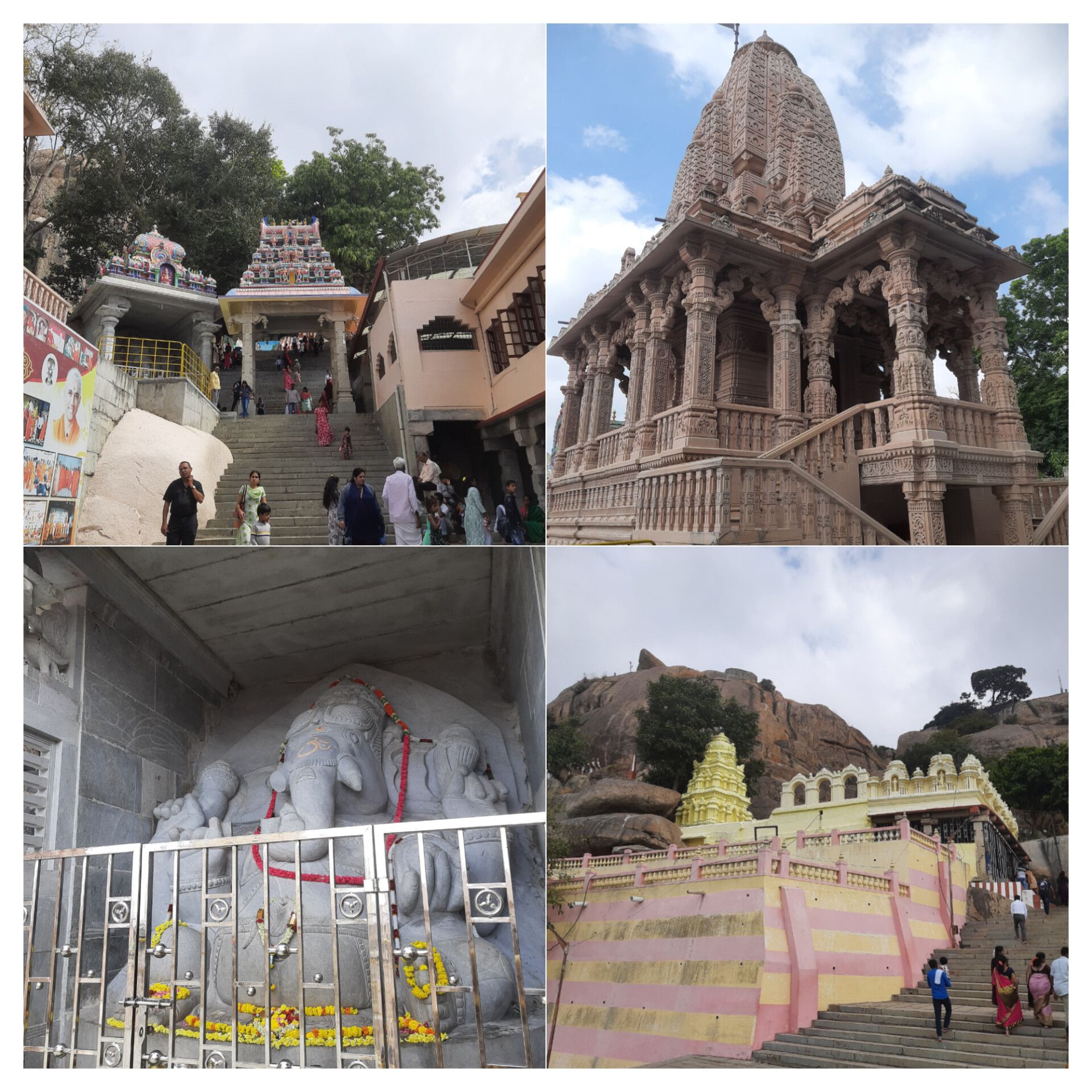
After sitting there for some time, we began our ascent towards the peak of the hill. Just after coming out of the main temple, there is a large Ganesha idol sculpted out of the rocky wall of the surrounding. We continued our climb by passing by some smaller temples with a look around offering beautiful views of the green cover.

Adichunchanagiri
The temples and shrines at the Adichunchanagiri hill

Scores of people were seen climbing up and down for pilgrimage purposes. The climb to the hilltop is done to see the Panchalingas comprising Gangadhareshwara, Malleshwara, Katthale Someshwara, Gavisiddeshwara and Chandramouleshwara, whose temples or shrines are scattered along the trail leading to the summit. But we were there to hike that hill as a recreational activity for the weekend. We climbed up the steep stairs right up to the top with the trail splitting at random places. My family ended up getting lost from each other’s’ sight and then picked whatever trail lied ahead of us and met each other again at the top. Well, not the peak exactly, but just beneath it.

That’s where I gave up any further climb. The peak point of the hillock is known as Akasha Bhairava. It can be reached by climbing the last bit of the rocky hill which had no stairs but only with the aid of a big, suspended metal chain. It was a straight climb (almost 90 deg. gradient) which included a small jump from one rock to an another. I doubted my ability to descend safely even if I were able to reach the peak. My brother, on the other hand, climbed it up and down with so much ease (and grace) demonstrating that he still possessed his ancestors’ (apes) strongest traits.

Adichunchanagiri hill
The view from the top where I was standing beneath the last rock which leads to the peak

After he returned, we all came down towards the main temple where we were guided towards the dining hall. We devoured the delicious temple food before heading back towards Bangalore.

We started back just after lunch to avoid the weekend traffic at Bangalore. But, if you are interested to cover more places in this day, you can google for some of the Hoysala temples along your way and add it into your itinerary.

A day hike from Bengaluru- Kunagalu Betta

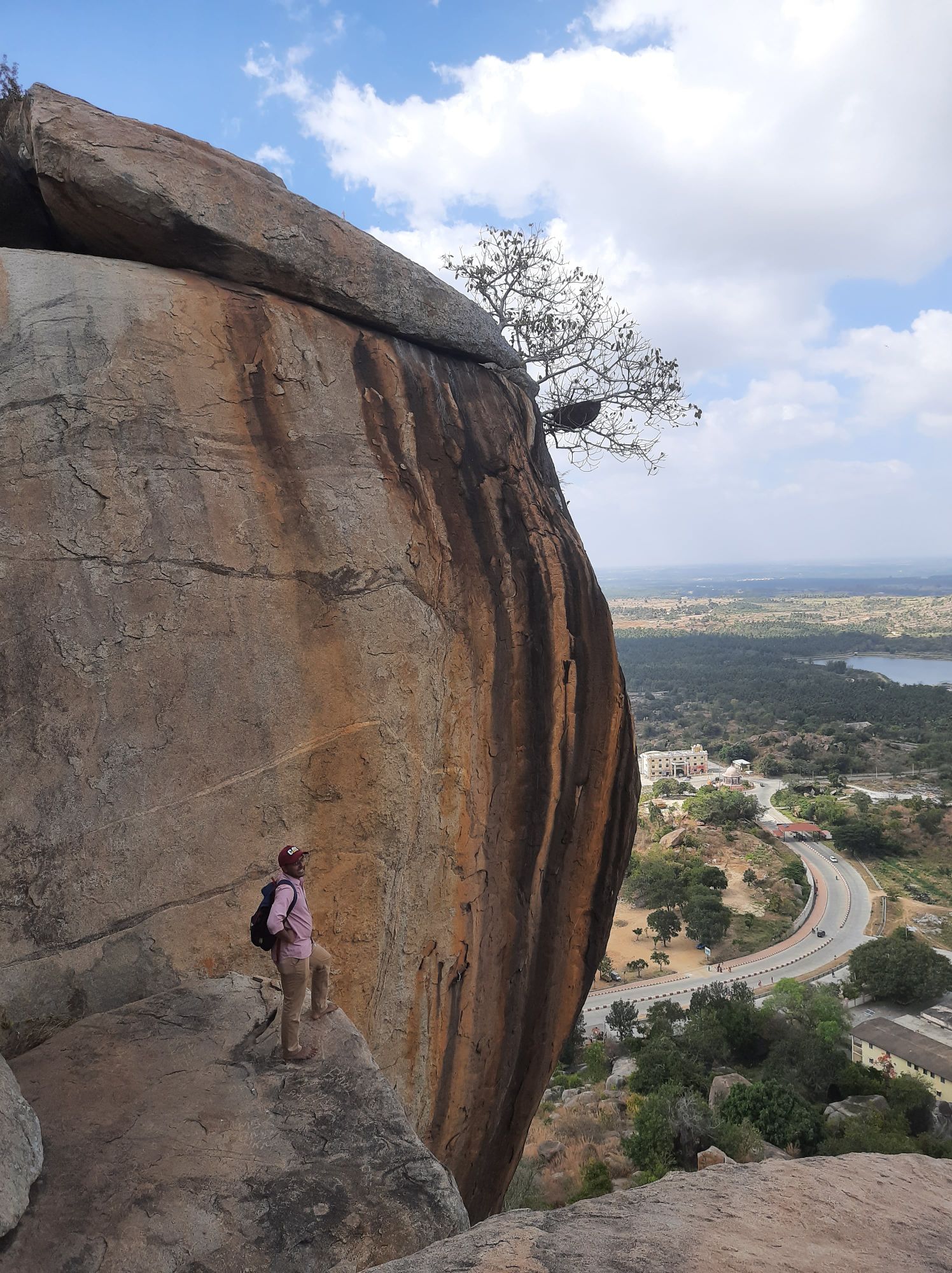
My friends and I picked yet another hill-top around Bengaluru for a day hike. ‘Kunagalu Betta’ on Kanakapura road, it was. We reached there early in the morning before the rest of the world discovered it (for that day). The car could go on to most stretch of the steep road until we parked it beside a small structure built for lord Hanuman by the roadside, under a large rock.

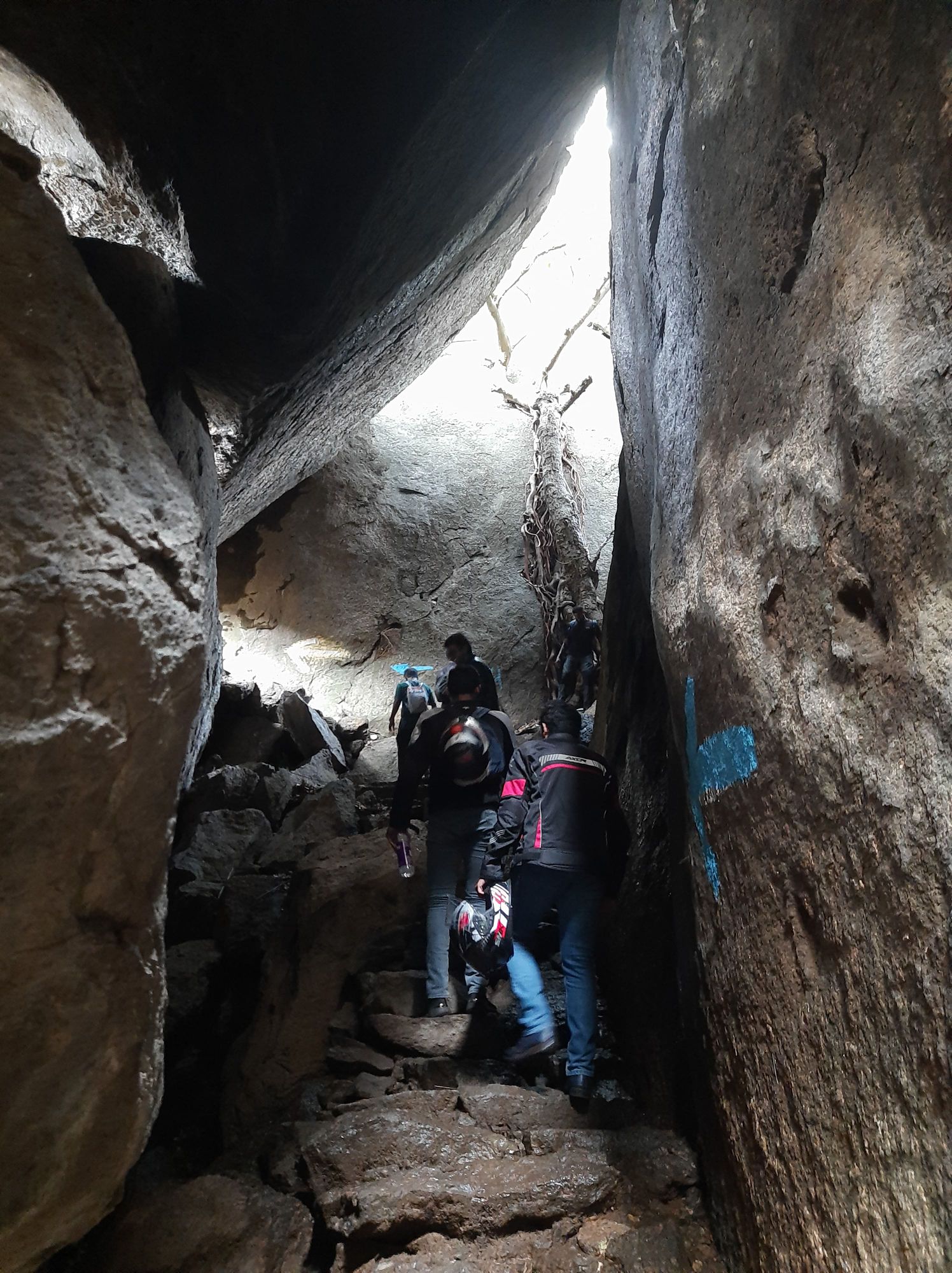
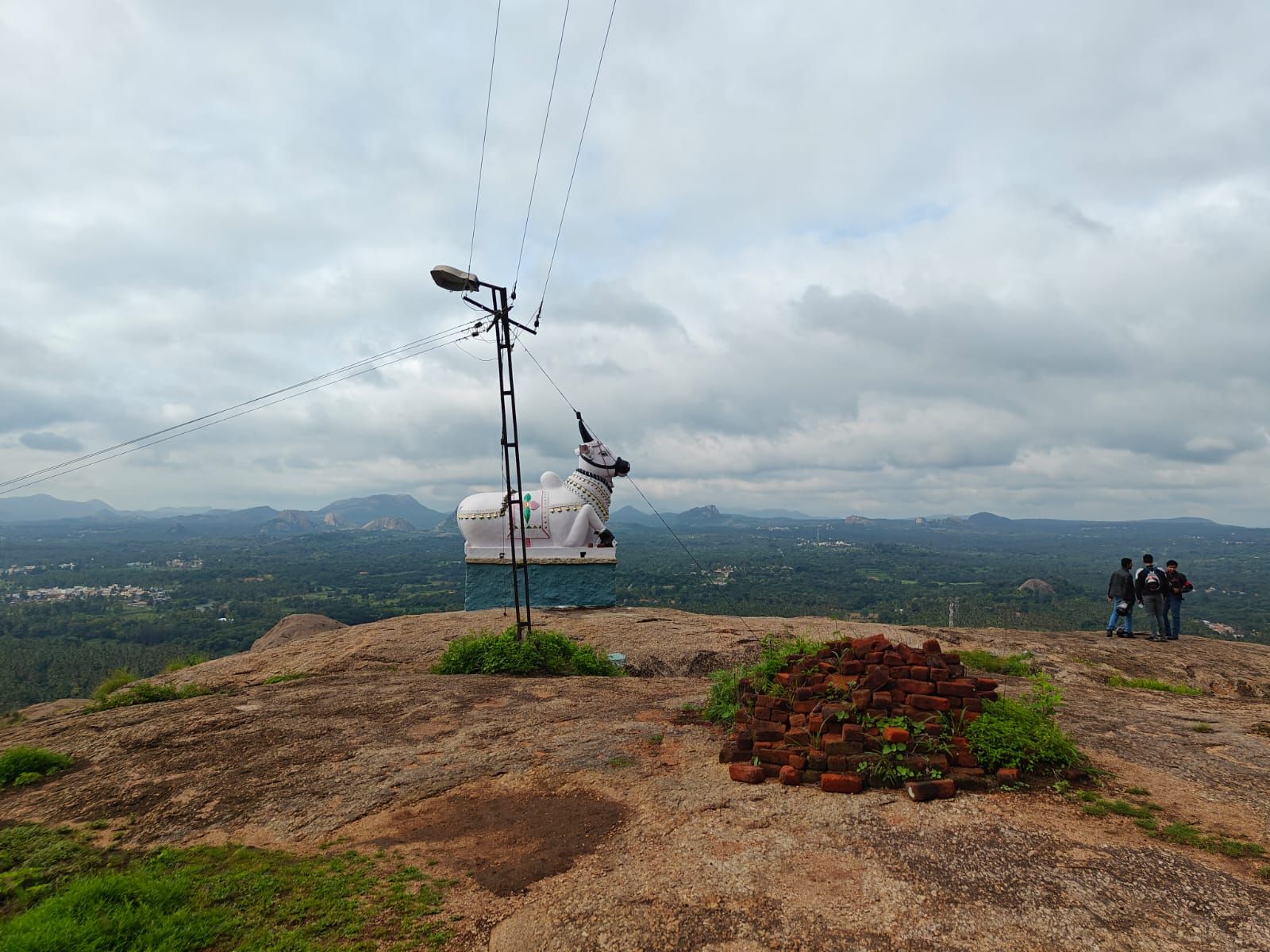
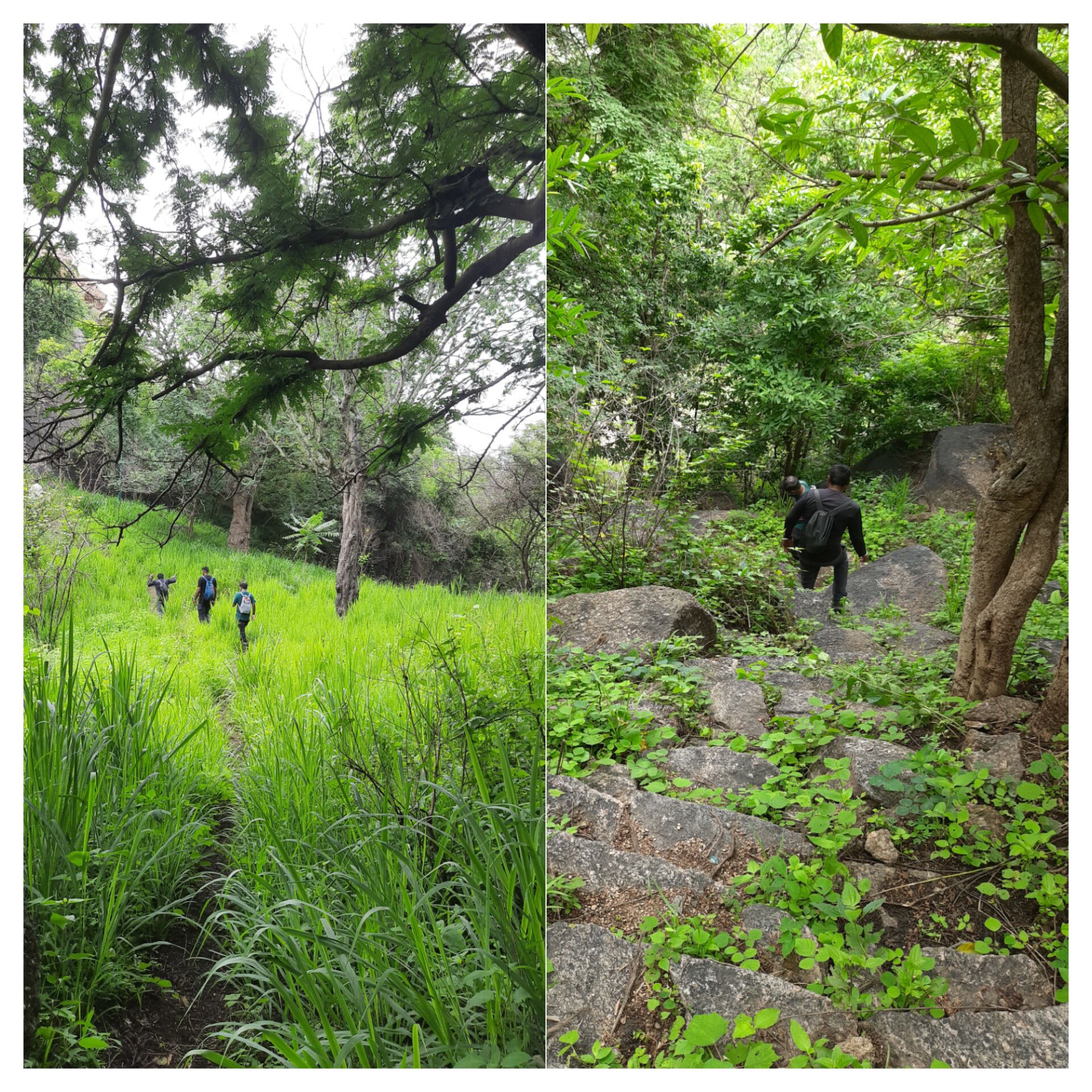
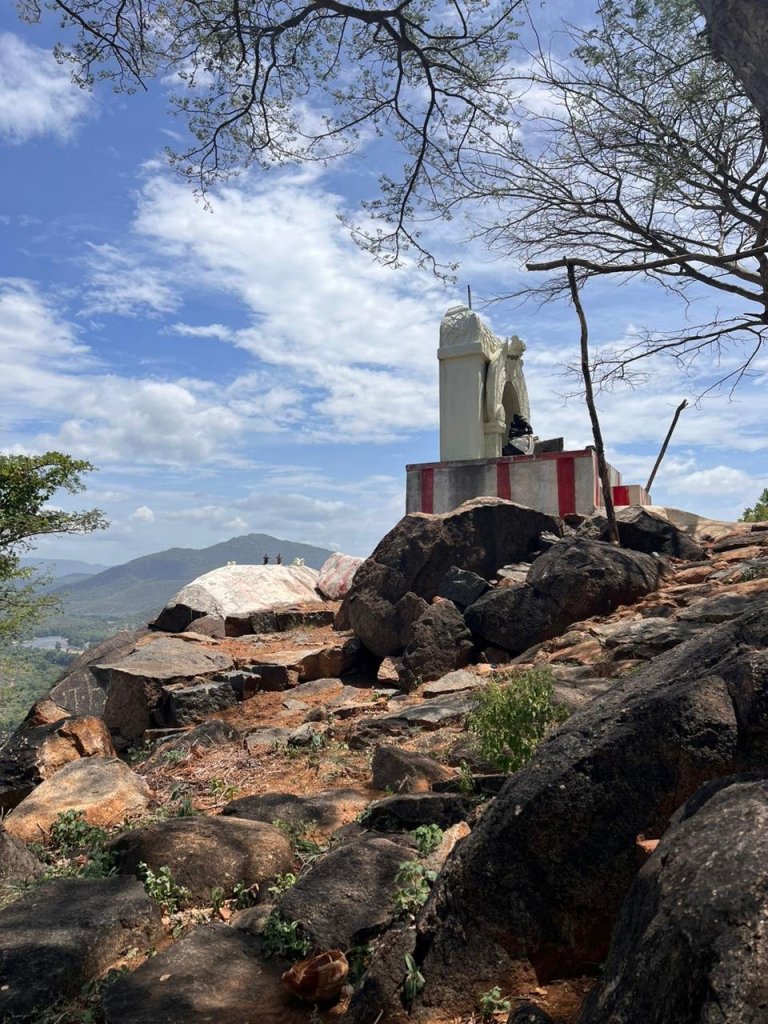
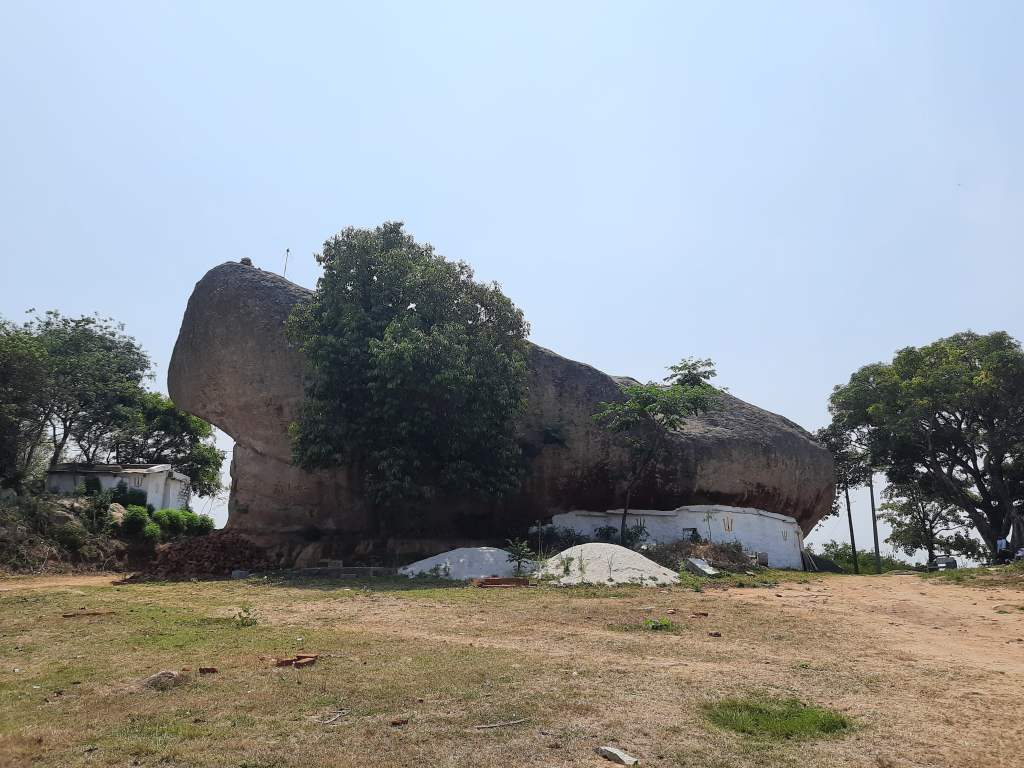
We started our hike uphill where the route was lined with several trees of custard apples for most stretch. After a kilometer of so, we came across a large rock that formed a cave-arch-like structure that kept the atmosphere inside very cool. After climbing out of the arch, it opened into the sky above a flat hill-top that offered a beautiful view of the other hills around. Do you remember my hike to Acchalu betta, where we went to find a statue of a Nandi on the hill-top? (you can read that story here). A similar Nandi was erected on this hilltop also, which was then overlooked by an ancient temple further atop a rocky outcrop from there.

The Cave like formation at Kunagalu Betta

To reach there, we crossed a small wooden brook formed out of a tree branch and then climbed to the peak where the temple stood. We sought the almighty’s blessings which mark the end of the ascent of the hike for most people. We had barely climbed a kilometer and half, and it didn’t feel like a hike yet considering we had done longer trails even on day trips. The breeze was cool, strong and yet soothing and hence, we decided to sit there and spend some time feeling the wind in our hair.

Kunagalu betta
The Nandi Statue atop Kunagalu betta

We then looked around and decided to find our own way to the adjacent hill from there. We climbed down the temple hill and climbed up the adjacent one. We again climbed it down and navigated our way through thick bushes and thorns to ascend yet another small peak. On that peak, we got a sense of getting lost if we tried to explore more hills because at that point, we were the only people and there was no trail that had worn out to lead us anywhere if we were lost. We descended that hill and were trying to find the direction that would lead us back to the temple.

Kunagalu Betta Peak
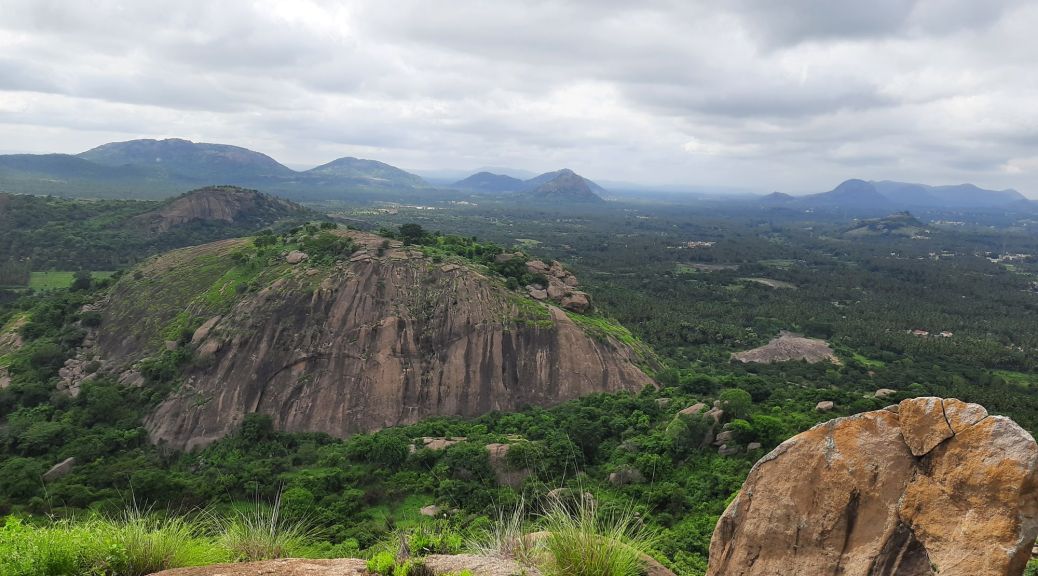
The view from Kunagalu Betta peak

Just then, our eyes caught a small slope in a random direction and all of us decided to explore one last random trail before heading back. We walked in that direction where the tall grass seemed to need some wear. We walked down further and suddenly out of nowhere; we were in for a surprise. There was a flight of stairs chiseled out of the rocks which was leading downwards. Finding stairs out of nowhere was a surprise, but what assured us was that the stairs would lead us somewhere interesting. Perhaps an abandoned piece of history? We thought as we headed in that direction.

Kunagalu Betta
In quest to explore the lost history at Kunagalu Betta

The grass laden stairs quickly cleared up to the view of a dozen motorbikes all parked side-by-side. That’s when we realized that we had already reached the parking lot. We had found a shortcut on our quest to explore random trails in random directions. Thus ended our quick hike to Kunagalu Betta. I picked up a bag from the car and tried to pluck as many custard apples as possible before heading back.
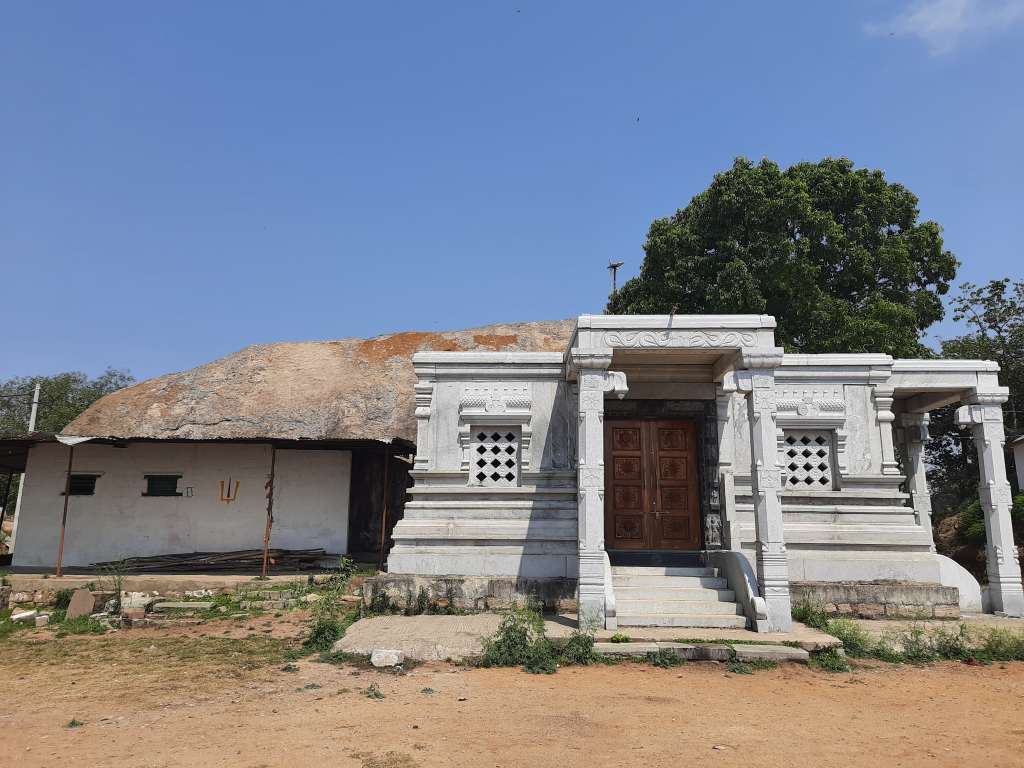
In conclusion, it was a short and easy hike. You can combine it with Acchalu betta or any other hike on Kanakapura road and make it a full-day activity.

Weekend Drive- Biligundlu Ranganatha Swamy Temple

Another weekend and another offbeat destination. This time, we found a temple on a small hillock in Dharmapuri district of Tamil Nadu. In my earlier post about Hogeynakal waterfalls, I have elaborated on how river Kaveri marks the boundary between the two states of Karnataka and Tamil Nadu. This post is somewhat related to the same connection. Because the history of the temple that we were planning to visit this weekend is rooted on the other side of the river, on the fertile plains of Karnataka.

The original Ranganatha swamy temple dating to the Cholas or the Vijayanagara era (as described by the locals) was on the Karnataka side. The stone structure of the temple is present even today (we hope to visit the structure on another weekend trip). The idol of the deity was destroyed by the British (which needs fact checking) and then, a new idol was reinstated on the Tamil Nadu side of the land where it stands today. The Ranganatha Swamy temple that we were heading to is in Biligundlu village and hence the name. The idol of the deity is carved out of a rock which is part of the hill overlooking the river.

On a summer day, when the water levels in the river are low, one can walk across to the other bank. Whereas, when the river is flowing full, the roads leading to both the old and the new temples are long ones. The old location is reachable via MM. hills in Chamarajanagar district of Karnataka, and the new temple is reachable via Anchetty forests in Dharmapuri district in Tamil Nadu.

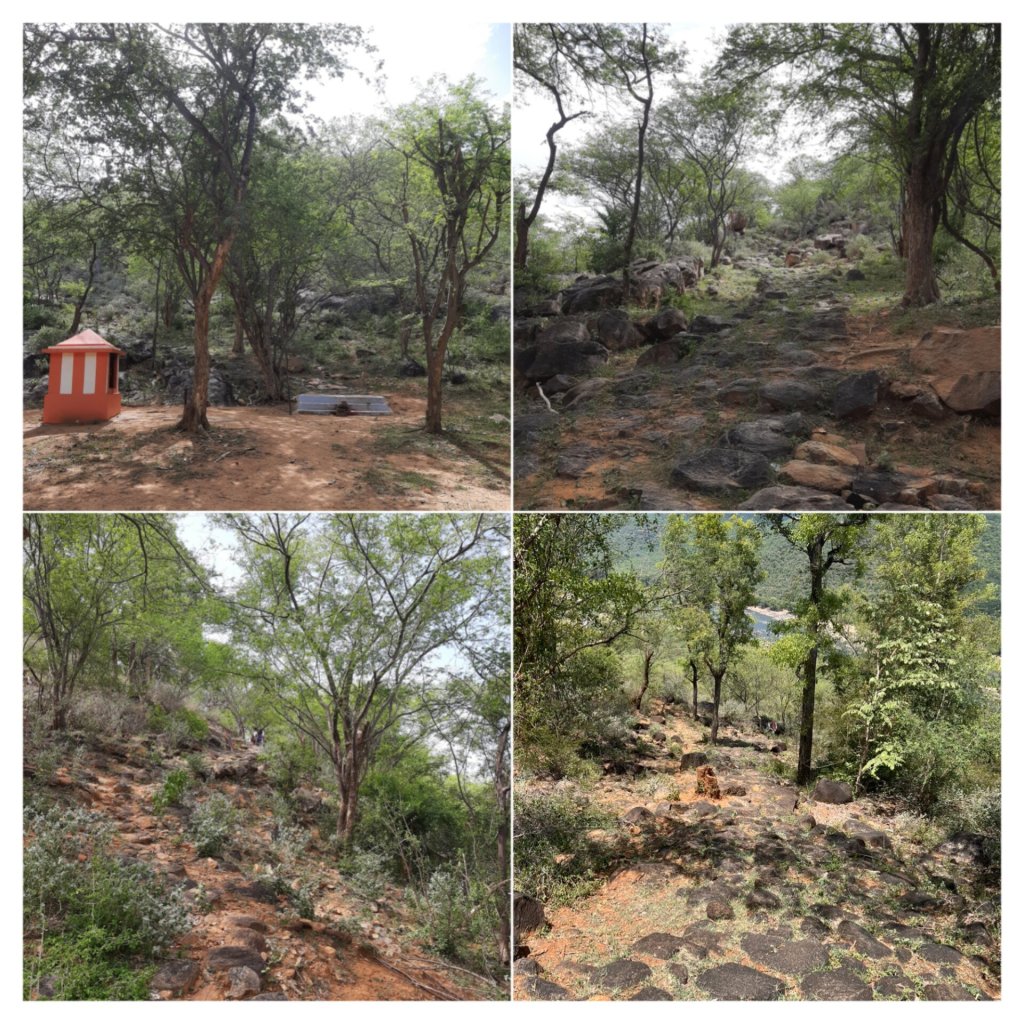
The trail to Biligundlu Ranganatha swamy temple

Anyway, coming back to this weekend, we started early on a weekend morning along the Anchetty forest leading to Hogeynakal waterfalls. We skipped the highway restaurants and stopped by a small local restaurant in Anchetty town for breakfast. It was a good decision as the experience was good with local food and the local atmosphere.

A few kilometers after the Biligundlu cemetery and few kilometers before Hogeynakal waterfalls, we stopped by at a location where river Kaveri flowed onto our right and a tiny structure of brick and mortar was built onto our left… We parked our vehicle there and started our short hike up from there. A properly laid stone path is there all the way to the hilltop which took us around half an hour to hike. The views of the river and hills around were just amazing all the way.

The Ganesha idol at the peak of Biligundlu Ranganatha swamy temple hill

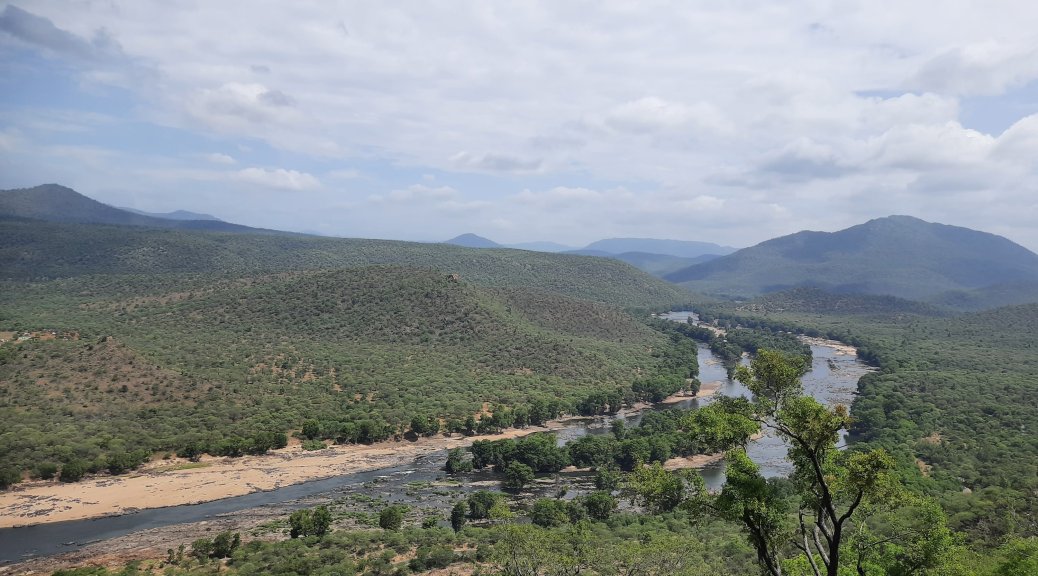
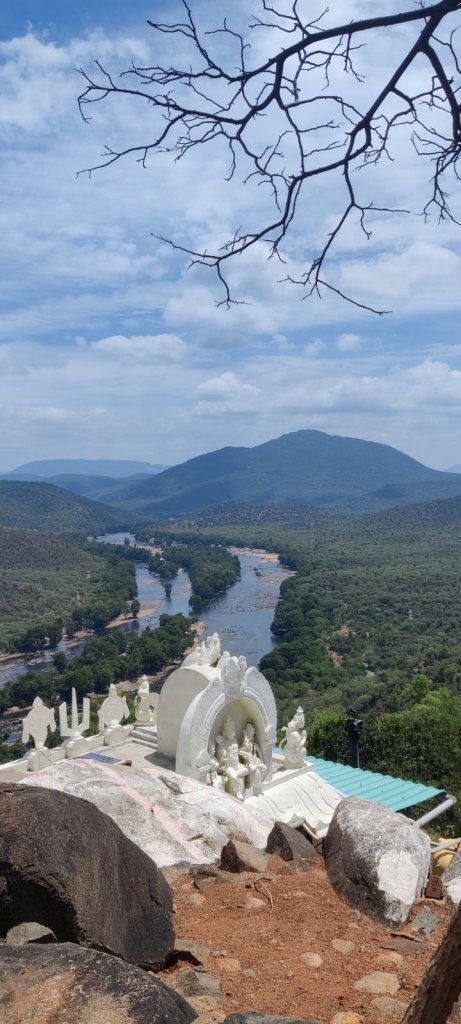
First, we were greeted by an idol of Ganesha sitting under the tree at the peak. This spot gave a splendid view of the river and the hills beyond. We sought Ganesha’s blessings and proceeded to the Ranganatha temple located below, connected by a short flight of stairs. The temple was closed by the time we arrived. However, we could see the idol through the meshed gate. After offering our prayers, we found a spot adjacent to the temple wall and sat there to soak in the beauty of the place. The view of river Kaveri flowing with a backdrop of green rolling hills looked amazing even as the winds caressed our faces. It was a beautiful place, indeed!

View from Biligundlu Ranganatha swamy temple
View from Biligundlu Ranganatha swamy temple; Photo Credits: Sugan @ TheBuffalorider

We headed back after a while and decided to take a dip in the shallow waters of the river to beat the summer sun. A word of caution if you plan to get into the river, that there will be a sudden drop in the depth at many spots and it is believed to have whirlpools as well. We stayed by the shores before calling it a day after a while.

Other nearby places to visit:

Weekend Hike- Bala Kodandaraya Swamy Temple

Although this destination is a recommendation for weekend and day hikers of Bengaluru, it is in Krishnagiri, a district bordering the two states of Karnataka and Tamil Nadu.

The views from an ancient temple had caught the attention of my friend and me, who are always in the look out for less crowded and less explored landscapes and places with cultural and historical importance. One such place was the ‘BalaKodandaraya Swamy temple’ whose history dates to the Vijayanagara era. Based on our online research, we found out that getting to the temple involved a short hike.

We started early on a Saturday morning by car. We had our breakfast along the way, in one of the several restaurants on the Hosur highway. From there, we followed the route on Google maps to reach our destination. A steep deviation to the left of the highway led us through villages. There were asphalted roads and good views of the surrounding hillocks for as long as the road passed through villages. The last couple of kilometers were through unpaved muddy roads passing through a slight forest stretch. We finally arrived at a small open space where we parked our car, at the base of the temple hill.

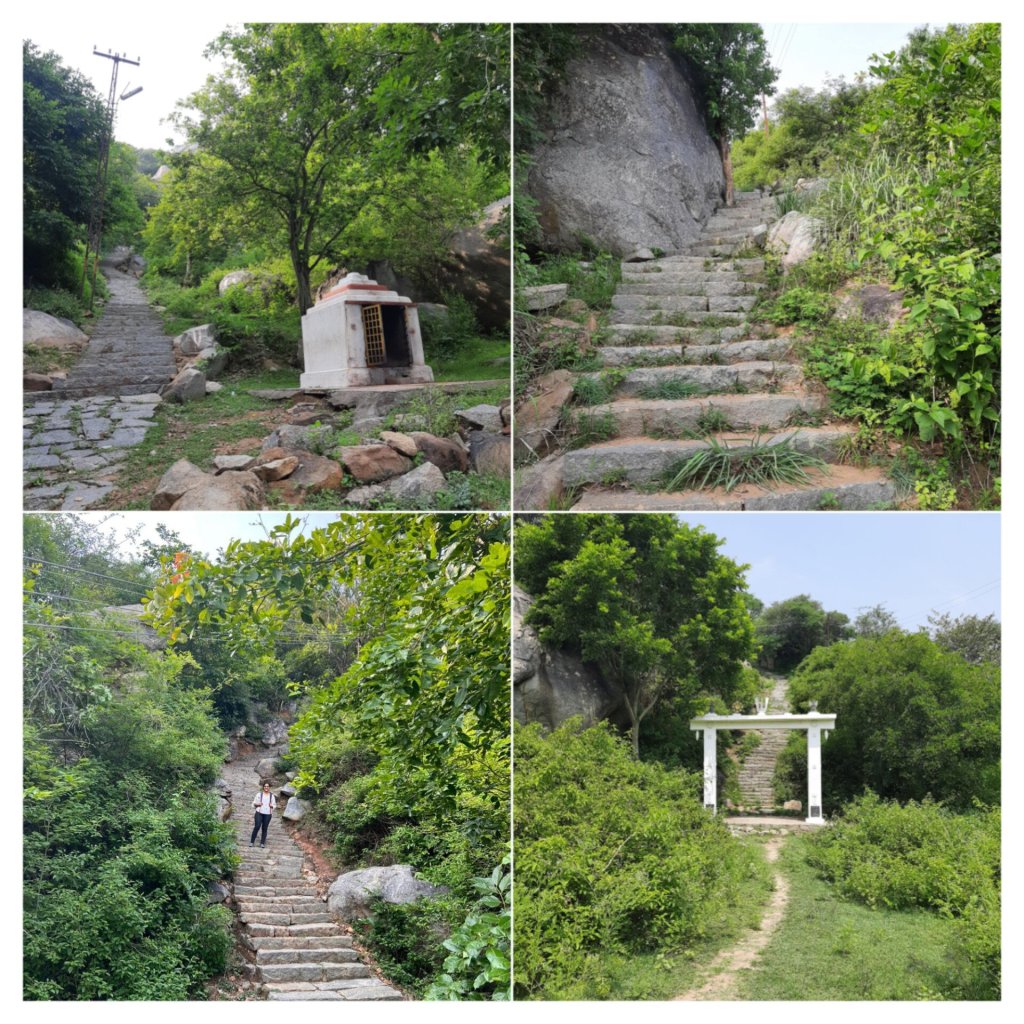
The forest trail
The trail through the forest cover, starting from the base to the temple arch

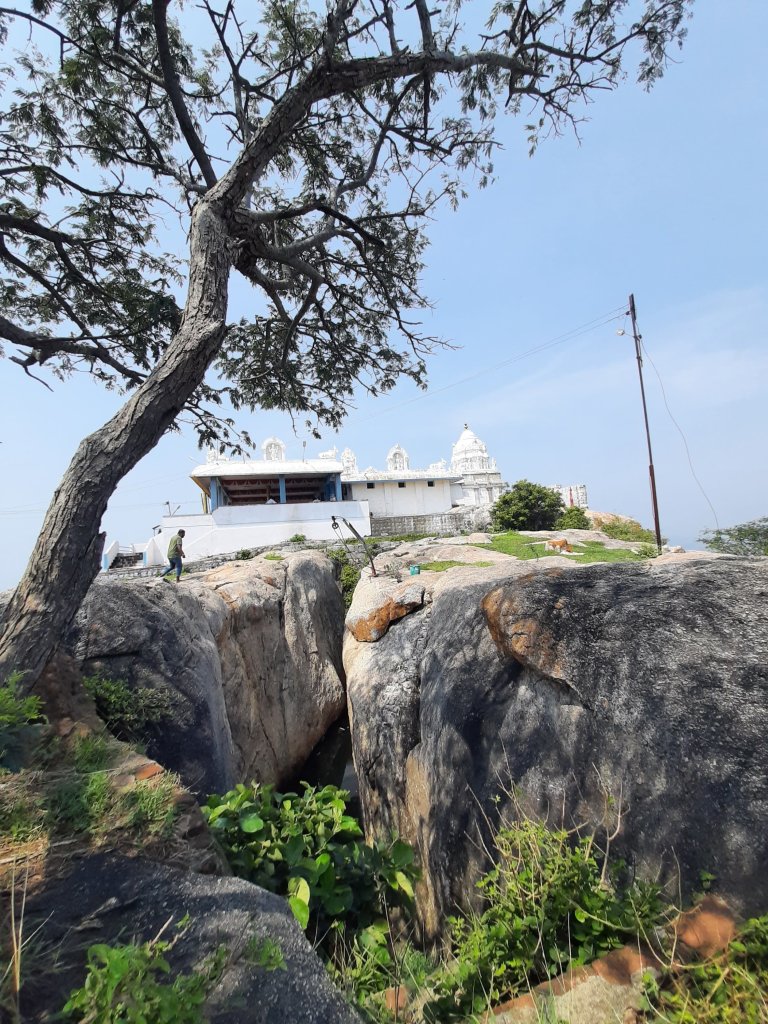
There was a small structure of brick and mortar (gudi) at the base, from where a flight of stairs led to the hilltop. People lit lamps, agarbattis and camphor here before starting their ascent. It took us about half an hour’s climb along properly laid stone steps leading to the top. These stone slabs bear the names of the devotees who have donated them and the count of their donations on each step. The ascent curved around at multiple places and offered amazing views of the valley below at every turn. The first half of the climb had a forest cover and large boulders on both sides, until we arrived at the welcome arch of the temple.

The path towards the left of the trail, towards the temple

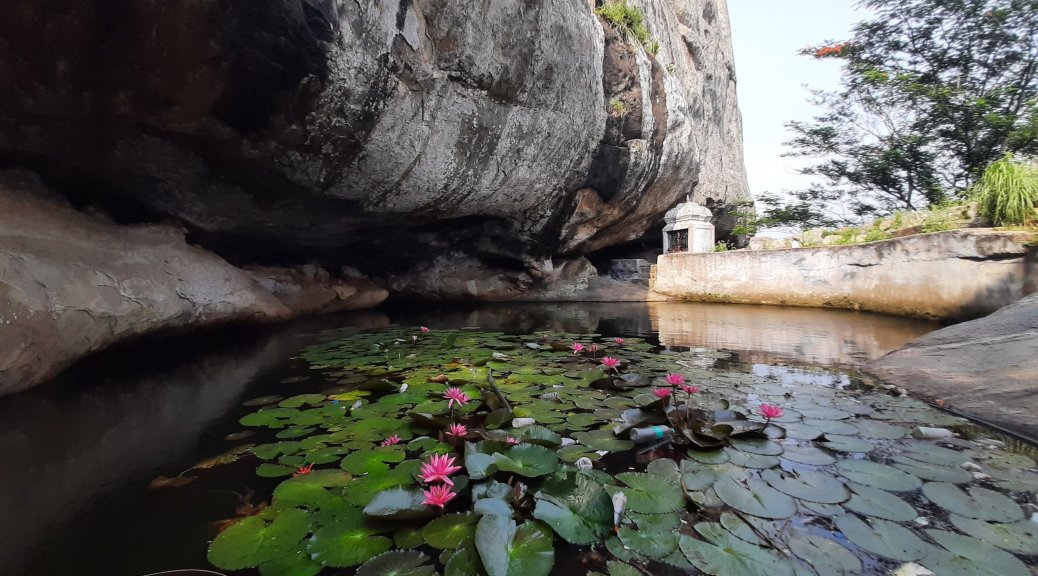
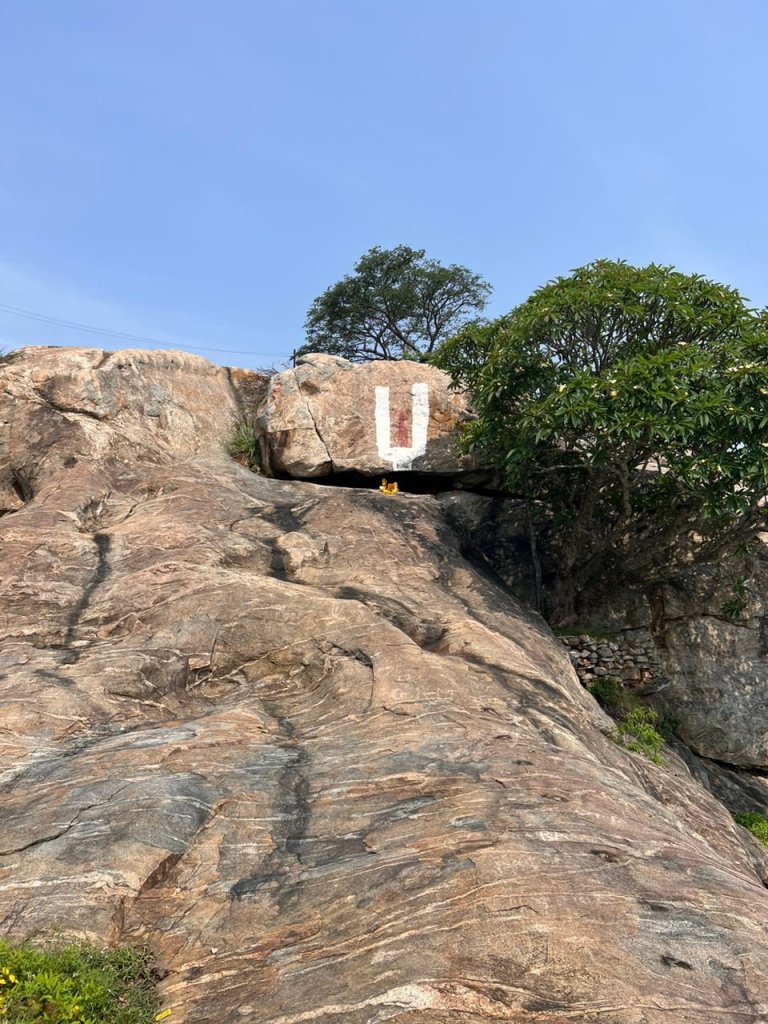
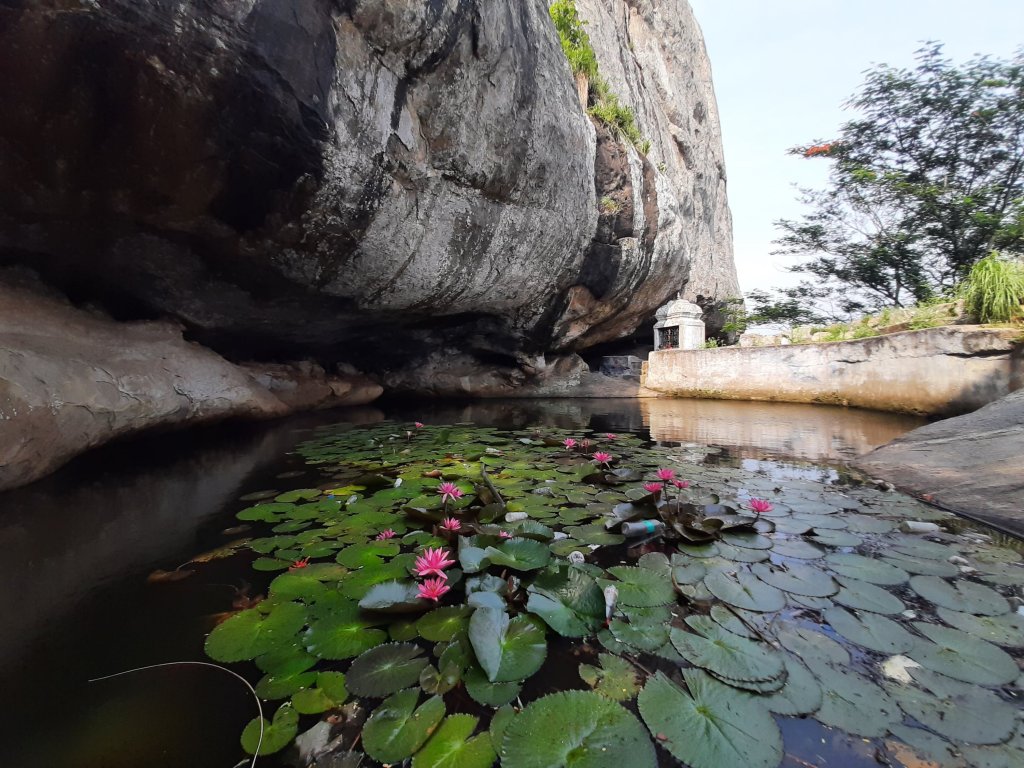
The forest cover ended after a few steps further from there and opened to a panoramic view of the valley of the villages and farms below. As one stands on a large rocky outgrowth, you will find the trail split into two paths. One, straight down through some Gulmohur trees. Second, up towards the temple. We decided to first walk the trail going straight. A few yards from there, the trees made way to a beautiful pond of pink lilies, dug right beneath a large rocky monolith. We later realized that devotees take a dip in this pond before proceeding towards the temple.

The path towards the right of the trail, leading to the temple pond

The view of the valley from there and the magical vibe of sitting by this pond of lilies could not let us go easily from there. My friend settled on the banks, with a book to read. Although the water was heavily littered with plastics, it was still a super calm spot to soak in some good energy. After spending a while, we then headed towards the temple, located on the peak of the hill, a short walk away. There was a panoramic 360 degrees view of Hosur and Krishnagiri from the temple, the green cover around, Krishnagiri dam and the Then Pennai river. The temple priest arrived much later at around 10.00.a.m. for the daily prayers.

Balakodandaraya swamy temple, Krishnagiri
Balakodandaraya swamy temple and the cleft for drawing water

Surprisingly, a small cleft in the rocky hill serves as a perennial source of potable water for temple use. The people who had gathered there by then, helped the priest in drawing water from this cleft and clean the temple premises before offering the day’s prayers. We sat there for a while and decided to head back to the base before the sun took over the skies and heated the rocks around. Overall, it was an incredibly beautiful place for a short trip from the city.

Other nearby places:

If you are looking at making it a full day trip, then you can explore the nearby places that include:

Bannerghatta beyond zoo- Bilikal Ranganathaswamy betta

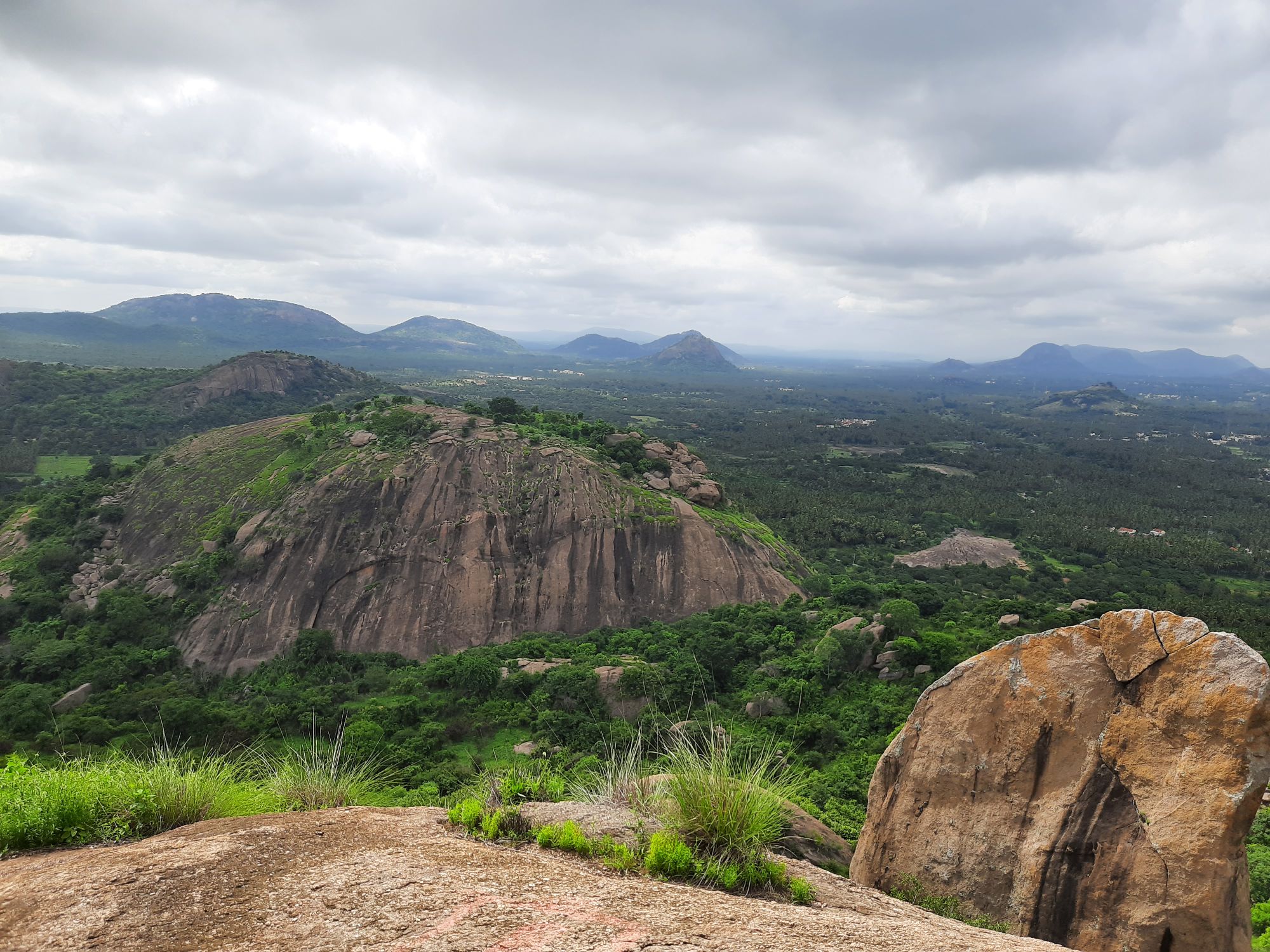
Initially, when a friend mentioned the destination for an impromptu drive on a Saturday morning, I hoped to correct him by telling it was ‘Biligiri Ranganathaswamy Betta’. “No, it is Bili-Kal’, he specified. ‘Bili’ translates to ‘white’ in Kannada. ‘Giri’ means ‘hill’. ‘Kallu’ means ’stone/ rock’. In this context, we were both talking about two different destinations. Although the presiding deity at the temples located atop both these hills are common, Biligiri is more popular than its counterpart at Bilikal. While Biligiri forms the core of Biligiri Ranganathaswamy Temple (BRT) tiger reserve, Bilikal is in the heart of a reserve forest that comes under Kodihalli wildlife division of Bannerghatta National Park. So, this time, we were heading to ‘Bilikal Ranganathaswamy Betta’, the closest of the two to Bangalore city limits, reachable through Kanakapura road.

We stopped by Halagur town for breakfast which has several old and popular eateries that serve unique types and authentic recipes of idlis for breakfast. (Comment below if you need hotel recommendations). Post this break, we followed google maps to reach our destination.

There is a forest check post enroute where one needs to make an entry to continue the journey ahead. The temple hill can be summited via two routes, one is a trek route with stairs, and another is through an unpaved road that is clearly marked till the end. Although four-wheel drive is not mandatory for those opting to drive up, it is recommended to have a vehicle with good ground clearance.

Bilikal ranganathaswamy temple
Bilikal ranganathaswamy temple, Rear view of the Monolithic rock

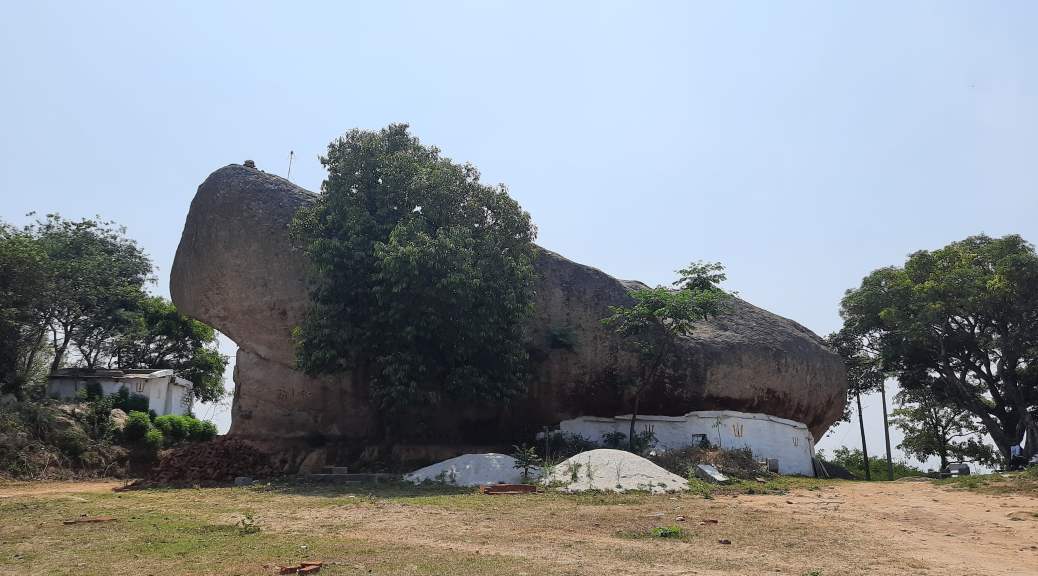
Upon reaching the peak, it was a large open area which came as quite a surprise. While one side of the hill had the temple pond dug into the edge of the rocky hill, the main temple of Ranganathaswamy is located on another side of the hill, overseeing a magnificent view of the surrounding hills. The main deity is carved out of a large monolithic rocky outcrop on the hill, which makes this place unique among all that I had visited thus far. There is a small sculpture on this rock which we were told is the original figurine of worship until it was damaged many years ago. Since then, an alternate idol has been carved out of the larger rock and a simple temple has been built outside leading into the prayer chamber within the monolithic rock.

Next to the temple rock, is another old and small room like stone structure. A few localites who were present there told us that it was the house of an old lady Kamalamma, who lived there and had dedicated her life in the service of Lord Ranganatha. Amid the wilderness of the thick jungle, she lived all alone in the belief that Ranga was her caretaker. She was accompanied by a few cattle that lived there whose milk was used to distribute buttermilk to pilgrims who arrived there every Saturday after a tiring ascent by foot (before the drivable route was laid out). She is no more, and her tomb is now housed inside the structure where she lived.

Bilikal ranganathaswamy temple, front view of the rock temple

A short climb from this structure is another viewpoint, where one can sit on the rocky outcrop under the shade of the surrounding trees and take in some good views of the valley around. We returned after spending some time there. Overall, this was a pleasant and an offbeat outing from the city.

Things to note:

  • The temple and the forest check-post are open for public access only on Saturdays. Only one Pooja is offered to the deity, once per week.
  • The annual temple fair is held here in January when a wooden temple car is assembled and taken around the rock-temple.
  • All along our way, we observed a lot of fresh elephant dung. Hence, we are certain that the trail is frequented by elephants and other wild animals at all times of the day. As both the routes pass through dense forest, it is recommended to comply with all guidelines laid by the forest department.

Other nearby places that you can combine your visit with:

  • Shri Govinakallu Anjaneya swami temple (an offroad drive in the same forest limits)
  • Mekedaatu and Sangama
  • Muthathi riverbank
  • Galibore fishing camp
  • Bheemeshwari adventure and nature camp
Bilikal Ranganatha swamy temple

Pondicherry- 10 Places to Visit and Things to Do While on A Tour

Do you want to visit the tranquil beaches of the south? Journey to Pondicherry. The city was previously a French colony and is now a small union territory on the eastern coast of the Indian subcontinent. In both the monuments and the city’s alleyways, you can still see examples of that era’s architecture. The city is well-known for its beautiful beaches and historical sites to visit. There are also some fantastic cafés and restaurants to visit while on tour. To learn more about the location, try the local food.

Pondicherry is appropriate for individuals of all ages and walks of life. It is ideal for seniors, couples, friends, family, children, and business travellers. While in the city, there are several sites to see, some of which are listed here. Stay at Treebo Hotels in Pondicherry to make your journey unforgettable. These resorts are spread around the city and provide some of the greatest features.

Places to Visit in Pondicherry for an amazing trip:

1. Paradise Beach

Lovers may visit Paradise Beach, which is ideal for relaxing. Tourists are drawn to the area because of its natural beauty. The sun’s rays reflecting on the golden sands of the coast create a captivating view of the entire region. To go to the beach, take a ferry from Chunnambar. The Bay of Bengal’s stunning beauty is worth seeing. It is a photographer’s dream since exotic birds may be found here. So, take a stroll along the beach or spend some quality time with your special someone. There are also food vendors here for some snacking.

2. Sri Aurobindo Ashram

Aurobindo Ashram is a spiritual destination for those who are on a trip. To discover more about the place, visit the Ashram library. The location has expanded from a tiny congregation that worshipped Sri Aurobindo. The site is worth viewing while sightseeing in the city. The Ashram also has a hall where guests may view a short film about Sri Aurobindo’s life and work.

3. The Basilica of Sacred Heart of Jesus

How can one miss the city’s most famous church? This church is a masterpiece of Gothic Medieval Architecture and is well worth seeing. Stained glass and paintings depicting the life of Jesus Christ may be seen inside the church. The church is adorned for Christmas and Easter, and people travel long distances to attend the festivities. The magnificence of the building, on the other hand, draws the majority of tourists to this location. It was built in the early 20th century and has been rebuilt multiple times to keep the entire structure in good condition.

4. Rock Beach

Another beach to visit in Pondicherry is Rock Beach, also known as Promenade Beach. The location is ideal for seeing the sunrise and sunset. During these hours, the waters become golden, creating a beautiful scene. People come here for peace and quiet or to take a stroll with their companions. The palm trees that line the shore are also considered to be the most photographed spot in the city.

5. Varadaraja Perumal Temple

This lovely Dravidian-styled temple is well worth a visit when in the White Town of Pondicherry. During festivals, the temple is inundated with people worshipping Lord Vishnu in and around the shrine. Seek heavenly blessings here and marvel at the temple’s architecture. Lord Vishnu, also known as Lord Varadaraja, is claimed to bless everyone who comes to the temple. The temple was established in the 11th century, and several legends have been told about how the temple came to be. One of the most popular is that the Lord’s idol was discovered in the sea, which is how the temple was established here.

6. French War Memorial

The War Memorial, located in the seaside region of Pondicherry, is recognised to be very important to the French Indians who live here. The war memorial was created to honour the troops who died during World War I. The Memorial was created in the first half of the 20th century and is visited by people from all over the world. Because it is positioned on a beach, the view of the entire region is breathtaking. The 14th of July is marked as a day to remember the martyred warriors. The entire region is illuminated, and people gather to remember the people’s sacrifices.

7. Auroville

This Ashram, which is also a piece of art by the Sri Aurobindo Society, is located about 15 kilometres from Pondicherry’s main city. This location is a must-visit because of the tranquilly and tranquillity it exudes. It is being created as a township and has recently become one of the most popular tourist destinations in the country. Visitors to the city come to view the Matrimandir. The architecture of the Gold Dome is what draws the majority of tourists.

8. Arikamedu

History aficionados might visit the Indo-Pacific bead-making site at Arikamedu. It is an archaeological site located within a few kilometres from Pondicherry’s main city. The site is claimed to have been a trading centre during the 1st century BCE. In addition, the French Jesuit Mission’s ruins may be found here. The traces of a bygone age are a must-see, located in a remote place. The surrounding natural beauty is still undisturbed because not many people visit the location.

9. Chunnambar Boat House

The magnificent seas of the Bay of Bengal are very captivating in this location. The little hamlet outside of Pondicherry’s main city is a popular tourist destination. Visitors may also participate in a variety of water activities in the area. Dolphins may also be seen here. Sit on the beach and soak up the rays, or watch others participate in various sports. For some adventure, one may even take a boat trip in the backwaters here.

10. Shopping in Pondicherry

Last but not least, shopping in Pondicherry’s streets is one of the nicest things to do. Souvenirs for loved ones can be purchased here. Serenity Beach Bazar, Nehru Street Market, Saram China Market, and many more are places to visit while in the city for some shopping. To shop from the city, look for things such as handicrafts, clothing, food, home décor, handbags, and so on.

The streets of Pondicherry are also known for photographic sessions as they are painted in either vibrant colours or plain white. Visit the place to experience all of this.

To check out all these beautiful places in Pondicherry, book your stay at Treebo Pondicherry. These hotels in the city are available at budget-friendly rates and provide some of the best amenities. Some of these services at Hotels in Pondicherry include-

  • Complimentary Breakfast
  • Free internet access
  • Hassle-free check-in
  • Branded Treebo toiletries.

These hotels in Pondicherry by Treebo are:

  1. Itsy by Treebo- Coastal Grand De Heritage
  2. Treebo Trend B Coral
  3. Treebo Trend Yagna Residency
  4. Itsy by Treebo- Red Lotus Heritage
  5. Treebo Trend Raffis’ Andalusia
  6. Treebo Trend South Avenue

I Belong to Everywhere: Theralu

This is an attempt to bring back nostalgia. Continued from- “I Belong to Everywhere: Chamarajpet“.

This is a small village in South Kodagu that is closer to Kerala borders than it is to Madikeri. This is where my maternal cousins originally hail from, and they went to school with me at some point while staying together at our maternal grandparents’ house. So, it was natural that I too would accompany them to their native village on several occasions when they went to their parent’s house at Theralu.

Apart from the expansive Tata tea estates and the Kerala borders some of the other popular landmarks that I enjoyed day tripping here were Irupu waterfalls, Mrithyunjaya temple and the Nagarhole National Park.

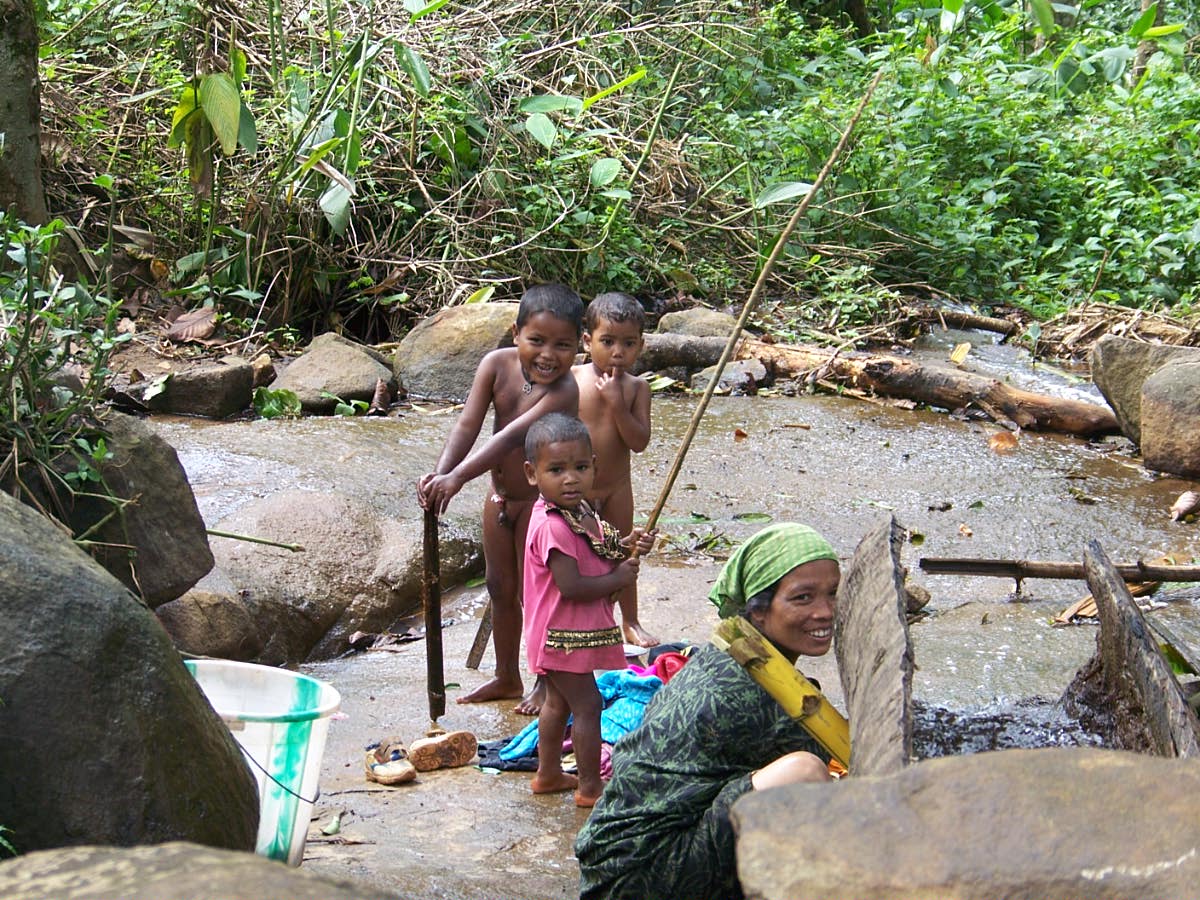
For all that I can remember from those visits were that there were people speaking and following different culture than I was familiar with. All the workers that worked in both my maternal and paternal hometowns were from the local tribal communities who spoke and ate quite same as what I did at home. But those working at my Uncle’s estate in Theralu spoke so many different languages. The larger group had almost created a mini-Assam in the site of their labourers quarters. They had built so many structures, equipment, tools out of bamboo (the most common site in all over Assam) and ate food that was made with ingredients that we in Kodagu didn’t know were edible until we saw them.

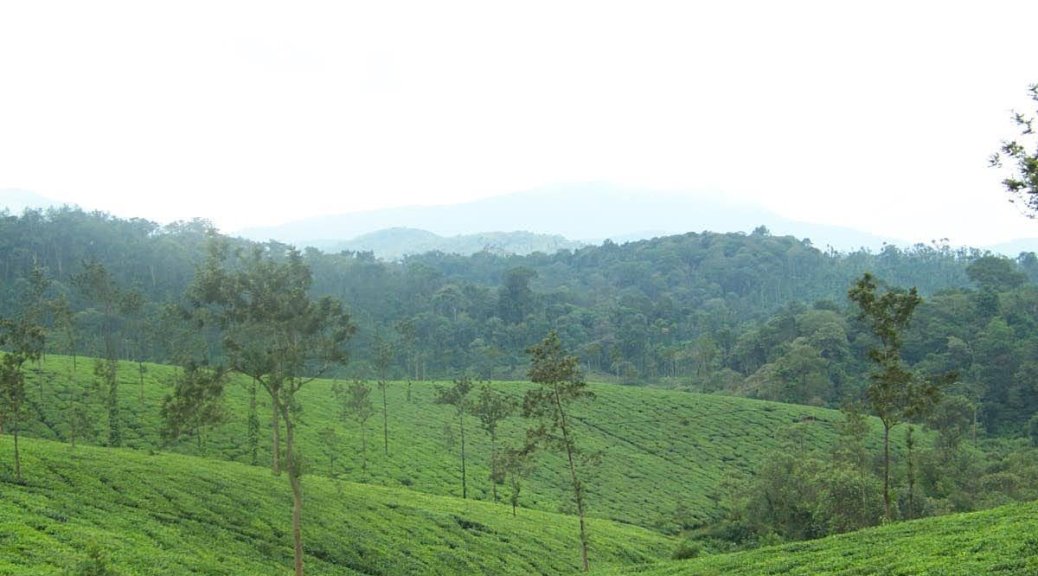
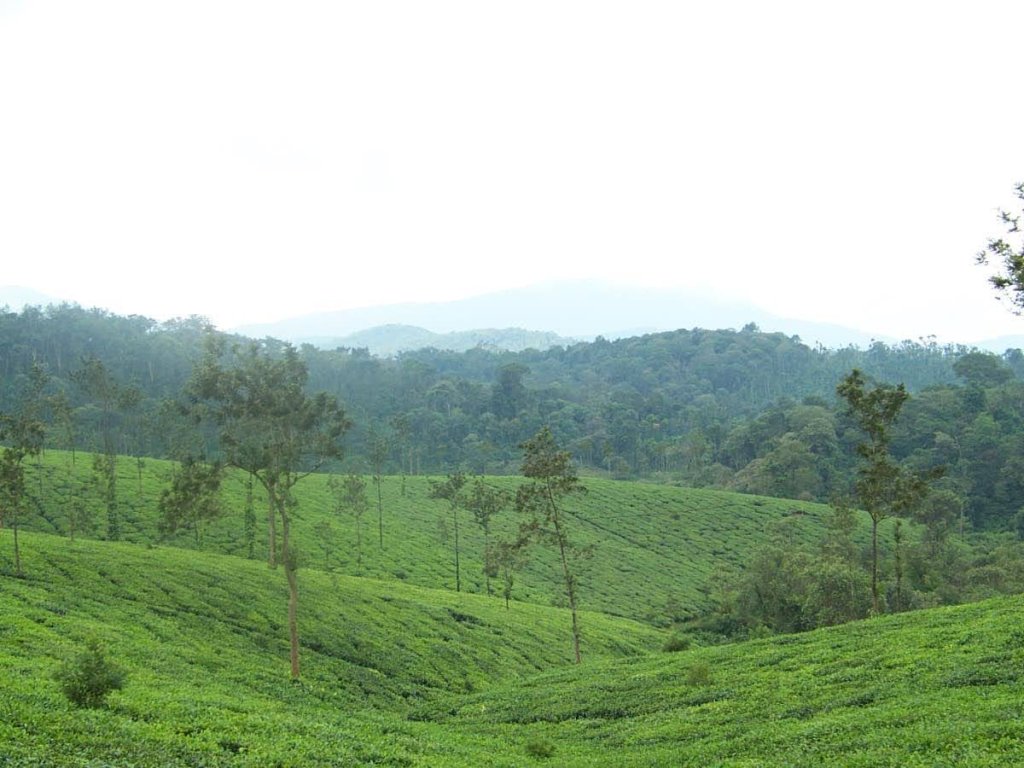
The Glenlorna tea estate Coorg

This is also where I was introduced to Tamil language and their movies. A large group of workers came to work in the farm at Theralu during the peak coffee harvest season and returned back to Tamil Nadu after the season ended. During evenings or on weekends, these workers often came to my cousins house to watch TV. Although I didn’t know their language and didn’t comprehend with most things they communicated, I picked up names of the stars whom they clapped hands in enjoyment or sounded a “Shhhhhh” to express disappointment while watching their favorite stars on the screen. In spite of not understanding a word of what the movie or tele-serial was about, it was an inevitable situation for me to sit and watch through whatever was being played 😀 Looking back at the days, those stars from the early 2000s are the only few whom I can associate with while talking about movies with a Tamilian!

Assamese kids enjoying their shower in a small stream in the estate

With limited means of communication, the major exposure we had in this small hill-district was just limited to living in estates or serving the army. Here, I saw migrant workers coming from faraway places in search of ANY doable jobs, saved a portion of their limited income and sent it to their families back in their hometowns and still lived a life of modesty. I learnt that life was not all easy for people living in other parts of the earth. It always made me think and reflect how unequal and different life was for everyone. Theralu taught me lessons of gratitude for the life I am living!

To be continued as- “I Belong to Everywhere: Jalahalli