Tag Archives: Road trip

A Grand Celebration of Masks- Padayani Festival at Othera

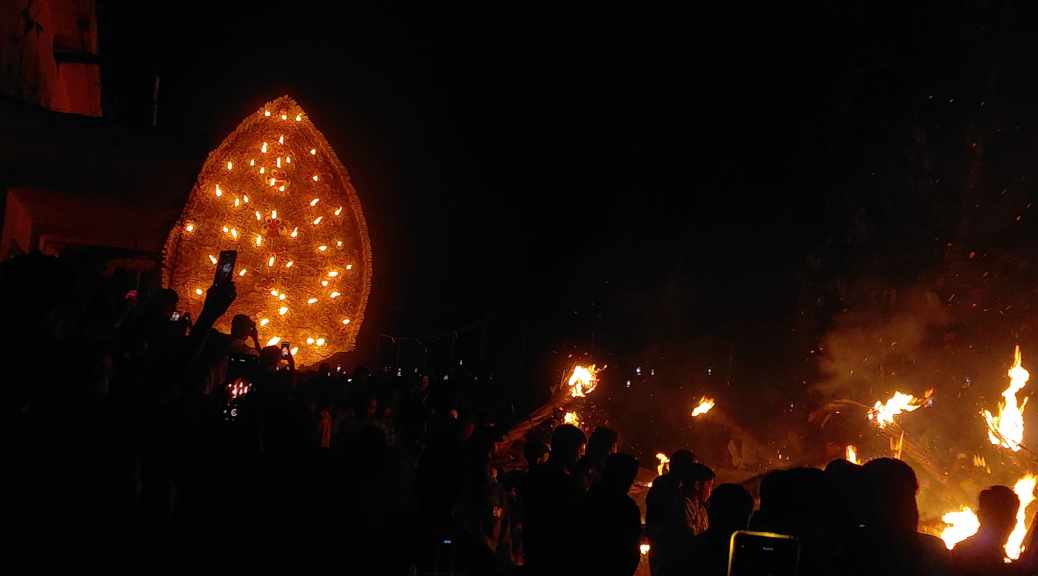
Continued from ‘Celebrating the chariot of light- Purapaadu Festival at Cheriyanaad

In my previous post, I had told you that I returned to Pattanamthitta more often than I expected. I was in Chengannur again to experience yet another festival. In this post, I am going to talk about my experience of the Padayani festival at Othera.

Padayani loosely translates to ‘Row of warriors’ in Malayalam. It is a ritualistic art form involving folk music, dance, theatre and hand-painted masks, observed in several Bhagavati temples across central Kerala, particularly in and around Pattanamthitta. ‘Kolam thullal’ is an important part of the festival to appease Goddess Bhagwati through the performance of rhythmic dance steps to the music played by traditional instruments like the thappu, chenda, para and kumba while wearing leafy costumes and masks made from arecanut and coconut sheaths, which are painted into various forms with the use of natural pigments. The impersonators performing Kolam thullal (Mask dance) represent both the divine and the evil forms through various depictions.

Although the festival’s origins are rooted in history, contemporary practices involve different duties and responsibilities assigned to members of various communities in Kerala. The duration of the festival ranges from 7 to 28 days, depending on the temple’s tradition, with the final day typically being the most elaborate and grand and therefore called the ‘Valiya Kolam’.
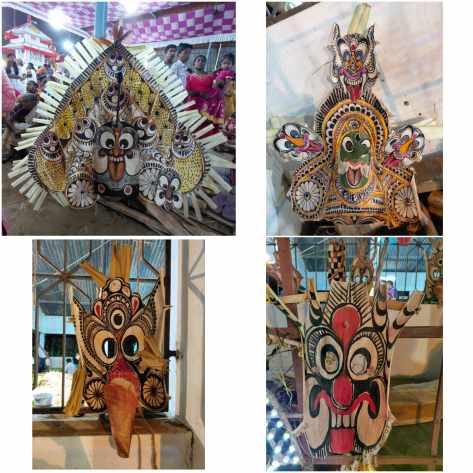
Various areca sheath painted Masks used for Kolam thullal

The Padayani festival at Puthukkulangara Devi temple in Othera village, Pattanamthitta district, is one of Kerala’s renowned Padayani celebrations. This ten-day annual event takes place from the 03rd to the 12th day of the Meenam month of the Malayalam calendar, featuring various Kolam dances performed nightly in the temple courtyard as acts of devotion. All the masks used in the Padayani festival are hand-painted by skilled men on each day of the festival and discarded after each use. The highlight of the festival, however, is the ‘MahaBhairavi Kolam’ a grand mask crafted from 1001 areca sheaths that draws large crowds from across the region on the last night of the festival.

A brief itinerary of the 10-day-long Padayani festival at Othera Puthukkulangara Devi temple is listed below. It is also noteworthy that each ritualistic performance begins with Chootuvaippu and ends with a Chootuvalathu and Kotti Vilikkal. ‘Chootuvaippu’ is the burning of torches made with dried coconut fronds behind whom each performer walks to the Padayani arena. ‘Chootuvalathu’ is a circumambulation of the temple by the performer, including the ‘Kotti Vilikkal’, meaning to inform the goddess after the performance is done.

Day 1 (Chathayam Nakshatra): The festival officially starts with the hoisting of the Adavi Kollika, the traditional flag and the lighting of the ‘Bhadra Deepam’, a traditional brass lamp with 21 wicks. It is followed by the arrival of the Vetapoola offerings to the idols. After this, the performance of thappu kottu (traditional frame drums played by hand), Ettu Kappoli (a rhythmic performance of multiple traditional music instruments), and Pulavrittam (a ritualistic dance performed by men in a circular formation) set the stage for all other performances on each day of the festival, starting this day.

Day 2 (Pooruruttathi Nakshatra): The performance of Thavadi (a ritualistic dance performed by rows of men by clapping hands to the tunes of drums and cymbals) gets added to Thappu Kottu, Ettu Kappoli and Pulavrittam from this day. This day also marks the beginning of the Kolam thullal and Panchakolam, which is performed for the next three days.

Day 3 (Uthrattathi Nakshatra): The evening begins with a Thiruvattira dance performance followed by Thappu kottu, Ettu Kappoli, Pulavrittam, Thavadi, Kolam thullal and Panchakolam. The Panchakolam is accompanied by the Sundarayakshi Kolam on this day.
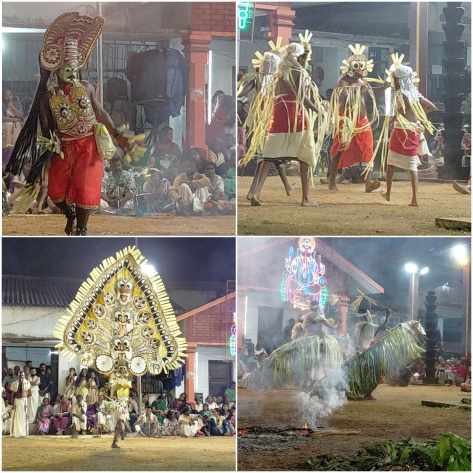
Kolams at Puthukulangara Devi padayani festival
Kolams at Puthukulangara Devi padayani festival. Clockwise from Top left: Yakshi; Top right: Pakshi; Bottom right: Kudiran; Bottom left: Bhairavi

Day 4 (Revathi Nakshatra): The Panchakolam is accompanied by the Kalayakshi and Bhairavi Kolam.

Day 5 (Ashwathi Nakshatra): This day includes Ettu Kappoli, Pulavrittam, Thavadi and the Kalankekalam Kolam.

Days 6 to 9: These days have performances of Ettu Kappoli, Pulavrittam, Thavadi and the Kalan Kolam.

Day 10 (Thiruvathira Nakshatra): All the rituals conducted over the last 9 days are repeated on this day. All the kolams come to the festival arena in a procession, which is traditionally called the ‘Nirathi Thullal’. Various Kolams alongside the Kakarisshi natakam and Paradeshi performances continue throughout the night, with the Mangalabhairavi Kolam and Poopada (A ritualistic dance performance to the music of percussion instruments and comic interludes) marking the end of the festival. A brief itinerary of the last evening of the Othera Padayani festival is indicated in the image below.
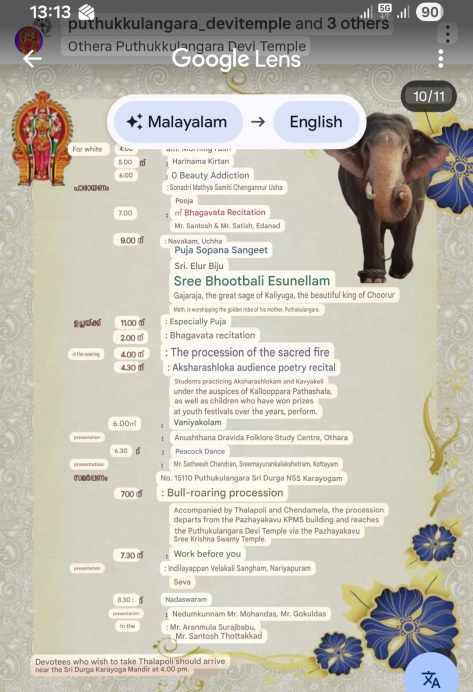
Day10 padayani festival itinerary- Othera

While all Kolams in the Padayani festival feature a human impersonator wearing a mask made from hand-painted areca sheaths, the MahaBhairavi Kolam stands out primarily because of its enormous size. A Bhairavi kolam is the largest wearable mask during Padayani, with the load resting on the wearer’s neck and shoulders, supported by their hands. In contrast, the MahaBhairavi is crafted from 1001 sheaths, all held in place by arranging them on a sturdy wooden frame from behind. It is nearly impossible for a single person to carry this. Therefore, after arranging the sheaths, the large mask/Kolam is lifted from the ground and mounted on a wooden cart using a crane. Community members then hand-draw the Kolam from the setup area to the Padayani arena. The cart is moved forward and backward three times to appease Goddess Bhadrakali, and the Kolam remains in the arena for several days, marking the festival’s conclusion.

Ladies are prohibited from entering the areas where the masks are painted and assembled. After the kolam is over, the masks are left for nature to take over them in its own way.

The MahaBhairavi Kolam at Puthukulangara Devi Padayani festival, Othera, Kerala

To summarise the entire experience in simple words, it was a festival so unique and unlike anything else I have experienced before. Based on the above itinerary shared by the temple authorities, my friend and I reached Othera by 05.30.p.m. At the same time, the procession of the sacred fire was in progress. Since the fire was accompanied by an elephant and devotees carrying thalapoli (a metal plate with rice, flowers, coconut and an earthen lamp), the narrow lane leading to the temple was blocked for vehicular movement, and we had to walk past to the temple. All the houses along the way had ‘Nela vilakku’ (the traditional brass lamp) with small pookalam (floral decorations) placed in front of their gates, as a greeting to the sacred fire at their homes.

After the procession reached the temple premises, it went towards the banks of the river Varattar for offerings and returned with tree branches. It was followed by cultural performances like Chendamelam, Vaniyakolam, Peacock dance, Kettukazhcha ceremony (procession of the bull-effigy), a parade of various folk-art forms like Malavazhiyattam, Amman Kudam (Karaga), etc. and the Nadaswaram Seva before the Kolam Thullal began extending right until dawn’s break. Simultaneously, the artists painted the masks, whilst another group of people readied the wooden frame on which the painted sheaths were later arranged. And finally, the fireworks went up while the horizontal wooden frame went up vertically, along with all the sheaths in place. We knew that the big wait was inching closer when we saw a crane carrying a man with a torch, lighting up the cotton burners attached to the MahaBhairavi Kolam. I believe it was a culturally immersive experience that one must experience at least once in their lifetime.
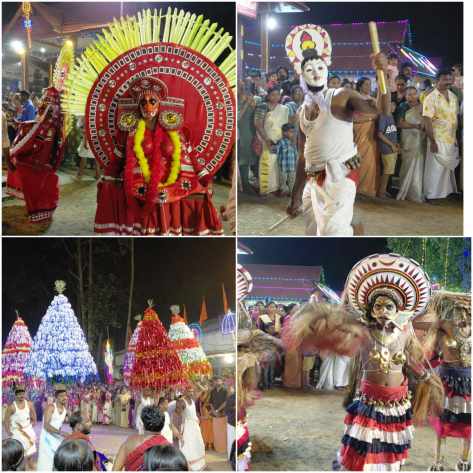
Various Folk artists at Puthukulangara Devi Padayani festival, Othera

Othera is located about 4 km away from Chengannur, the nearest major town that is well connected with major cities like Bangalore and Chennai with direct trains and buses. One can conveniently hire an autorickshaw from Chengannur town to reach Othera.

To be continued as “An Onam Celebration I will never forget at Aranmula Parthasarthy Temple

Goa backpacking: Netravali Wildlife Sanctuary

Continued from Goa backpacking: Makarotsav Celebration and Temple Hopping.

Based out of Colva, my friend and I had hired a motorbike to explore Goa. Our plan for today was to see some prehistoric sites, take a dip at one of the nearby waterfalls and return to Colva by late evening. With a set of clothes for changing and a towel for each of us, we had woken up to start our day quite early. But the rain gods had brutally taken over the skies, and hence, our day started late.

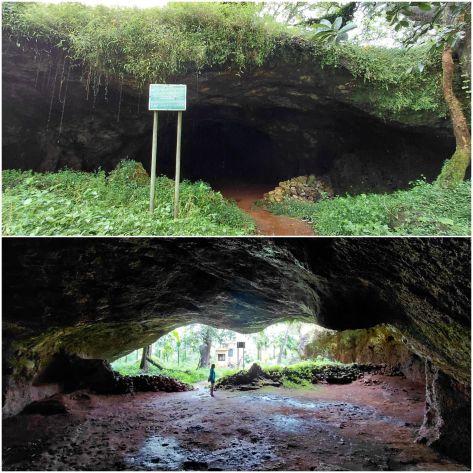
I was about 10 a.m. when the rain slowed to drizzle, and we left our cottage. We stopped for a quick breakfast in Madgaon before continuing. Using Google Maps, we headed to our first destination: the ancient Buddhist meditation cave at Rivona. Although we struggled slightly with the directions initially, we managed to find the site through local inquiries, without too much trouble. The asphalt road first passes through a residential area before reaching a large natural pond. At this point, the road splits, and we took a muddy route to the right, stopping at a small grassland at the end. From there, a small staircase carved into the laterite ground leads down. We were unexpectedly greeted by a security guard from the ASI (Archaeological Survey of India), who checked our attendance before we entered the cave. We were told a guide is usually available, but none was present at the time. We took a few photos before leaving. If you’re not interested in history and are just a tourist, I recommend skipping this site.

Buddhist cave at Rivona, Goa

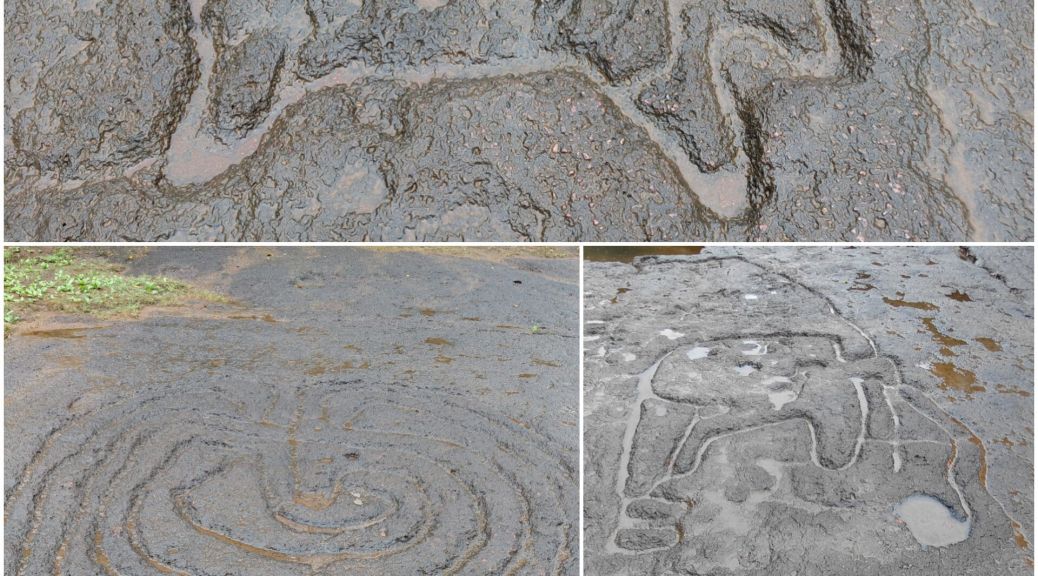
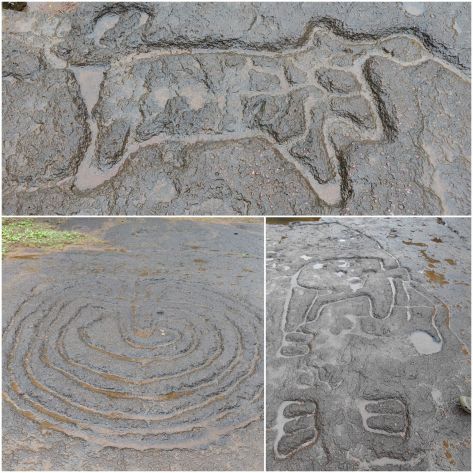
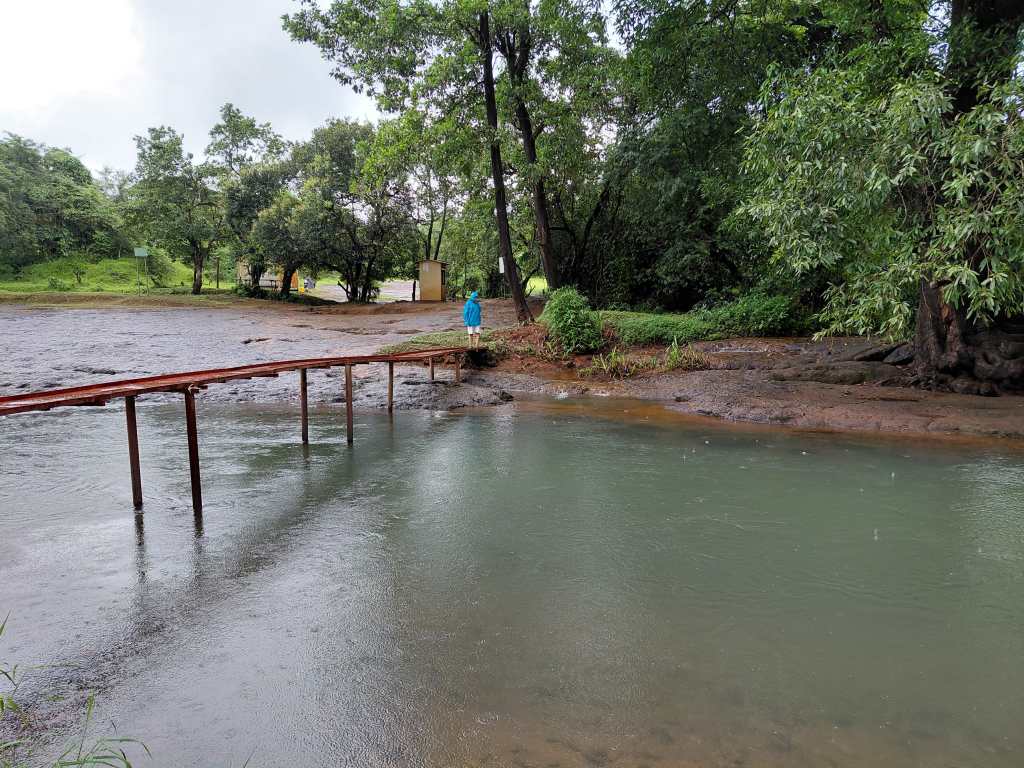
From there, we continued to follow the maps to our next destination- Usgalimal village, one that I was most excited about. For the first time, I was going to see petroglyphs, that too in Goa! The muddy trail that splits across the main road passes through thick forest right up to where the Google Map Pin takes you. After passing through a stretch of confusing deviations, patches of open grasslands and a laterite pond, the location pin finally took us to the banks of the river Kushavati, We parked our bike at the security post and wrote our names in the logbook. The security guard then walked along with us, guiding us through the riverbank. He showed us around various depictions/ Petroglyphs carved on the laterite stone bed of the river. He helped us identify several of the 100+ carvings discovered there, among which were various hunting scenes, several domesticated and wild animals, a trident, a labyrinth, etc., some of the notable ones. Seeing something like this for the first time piqued a new interest within me to learn more about Petroglyphs and ancient rock art, which I would want to travel to in future to explore.

Petroglyphs at Usgalimal, Goa

After spending enough time trying to observe and decipher the art there, we casually asked the guard accompanying us if there was a spot somewhere nearby where we could take a dip in the river. He thought for a moment and nodded while looking at the riverbank on the other side. There’s a spice & areca farm across, where you can approach the caretakers to permit you into the safer section of the river that passes through the property. We thanked him for the recommendation, picked up our luggage from the bike, and crossed a little brook across the river, where we were able to secure our permission. There are NO words to describe the joy our two little hearts had found inside the safe, sweet and soulful waterbody. With just the two of us swimming and enjoying ourselves in the water all the while, we did not realise that we had spent over 2 hours already without being bothered by the rain that bashed down or by any deadlines to get back to waiting families back home. But soon it struck us that we had to make the most of the time when the rain had taken a break. Since we had already spent a lot of time at Usgalimal waters, we skipped our original plan to swim in the waterfalls later. We quickly changed into fresh clothes and got the bike running again.

Not too long after we hit the road, the rain gods took over again, and the terrain changed to an even denser canopied area. A little board read that we had officially entered the Netravali Wildlife Sanctuary. The natural light had become less, and riding harder due to the constant bashing of the heavy rain and wind. We had no option to stop in between since the houses were scarce along the forest, and we had to reach the destination before it got too late so that we could return to Colva safely before it was too late.

River Kushavati, Usgalimal, Goa

Upon our arrival at the forest gate, we were told that the entry to the waterfalls was closed at 05:00 p.m. We had arrived at 05:05 p.m. The forest personnel did not oblige us, even after several requests and explanations of our long ride back and forth. Now we had two options- One, skip exploring the sanctuary altogether, and return to Colva. Two, find accommodation nearby and explore Netravali (also called Netraulim) at leisure on the following day. We took a moment to think over, looked up at the constantly pounding rain and decided to stay back in Netravali. Even if we wanted to skip visiting places, riding back in the rain and darkness would only be next to madness.

Since the eco-stay run by the Goa forest department was all booked, the guards helped us to find a local homestay nearby. Shortly, our stay was arranged with a local family, and it got dark after that. We took a shower and changed back to the same clothes (there was no other option), devoured a comforting hot meal before retiring for the night.

After waking up in the morning, we watched our host light up a lamp at the Tulsi katte in their courtyard and milk their cows in the shed attached to the family home. We had our breakfast and left towards the forest gates soon after. In fact, we wanted to be the first visitors for the day so that we could avoid the crowd and start our return ride as early as we could. So, there are two waterfalls as one enters the gated area, which require separate permits. We were briefed about the condition of the roads leading to both and asked to register ourselves accordingly at the entry. We decided to visit the Mainapi waterfall by hiring a forest Jeep and riding our bike to the Neturlem (Saoli) waterfall later.

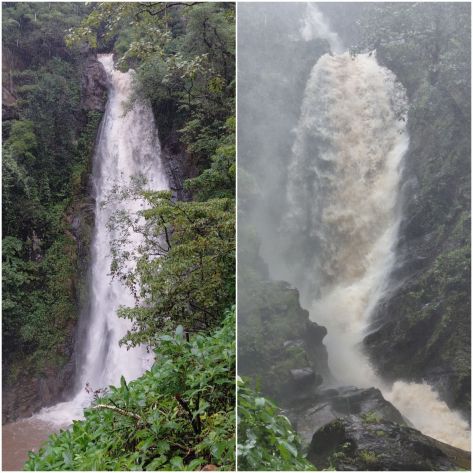
Waterfalls in Netravali Wildlife sanctuary, Goa
Left: Mainapi waterfall. Right: Saoli Waterfall. Netravali Wildlife sanctuary, Goa

The adventurous 5km drive to Mainapi waterfall constituted a crazy, bumpy drive on the rocky-hilly road cutting through thick canopied forest and river crossings. Further, a short hike down to the waterfall was accompanied by leeches, brightly coloured miniature crabs, frogs and other insects found commonly during monsoons. The first glimpse of the waterfalls had our breath pause for a moment. We hadn’t expected anything so beautiful in Goa, which is otherwise popular for its beaches. Thanks to the monsoons, the path further down to the waterfall was blocked for safety reasons. We sat down on the stairs, watching the water roaring down in all its might until we realised that a couple of leeches had entered my raincoat. I had to quickly get them out and also head back to keep the day’s schedule under control. After a good, bumpy drive back to the forest office, we returned to the forest on our bike. The road was good right up to the start point of the Saoli waterfall. After parking the bike, a short descent down the stairs leads us to the banks of the Saoli waterfall. We could get into the water, but the currents were still strong, and the water looked muddy from the heavy rain. We spent some time there, too, before exiting the forest gates.

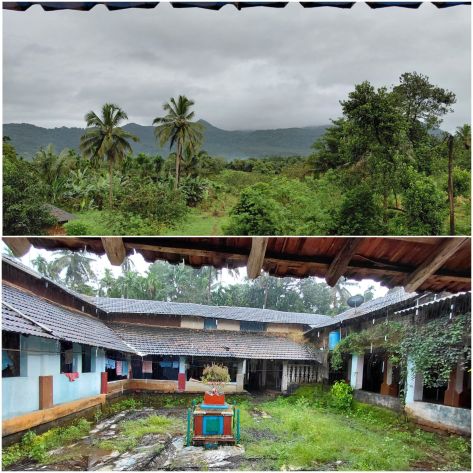
We returned to the homestay where our host had promised to take us around their ancestral village. After a short drive in their car, we arrived in front of an old mansion, which was the ancestral home of our host, the Desai family. It was very interesting for me to walk into a traditional Hindu home because its history dated back to even before the Catholic-Portuguese mansions which I had seen thus far elsewhere in Goa. As we entered through the towering arch-like entrance to this house, we were greeted by a large open courtyard, which was divided into dwelling spaces for each member of the family. To the left of the entrance was a space dedicated to the sacred arms once used by the ancestors of the family. We were told that some even had the original blood stains with a history of valour and martyrdom dating centuries. Laterite walls, red-oxide floor and clay tiles set on wooden beams- it invoked nostalgia instantly. While the kids surrounded us in excitement to tell us about their stories from the rooms, the senior women wove garlands with colourful flowers picked from their backyard while being entertained by the chatter of their husbands. They were all happy to have us amongst them.

Goan Homestay
Top: View from our homestay; Bottom: Courtyard of the ancestral home

We then walked through the exit door on the back side, passing by a series of bathrooms where we could hear the water in the firewood-lit boilers. As rain-fed streams came to life while walking through their rubber plantation, we crossed a little river to arrive at Datta-Gufa, a family-maintained temple. This is an important temple in the village accessible from the main road as well, but we were more privileged to get private access from the other side. After spending time on their property, we returned to the homestay from where we took our bike and commenced our return ride towards Colva.

En route, our first stop was at the Gopinath temple in Netravali. The temple is rather popular for its sacred tank. Fondly called Bud-bud Lake, the pond water is believed to bubble up when one claps while standing in front of it. We too did witness the interesting phenomena, but felt it did so as a response to some other air pressure occurring naturally in the otherwise silent environment. In any case, it was something we were experiencing for the first time.

From there, we started to ride again to make the most of the time when the rain seemed to have taken a break. A short ride ahead were directions to ASI sites like the ancient ruins of Sri Lakshmi Narayani temple and Kajur Petroglyphs. But by seeing the Google Photos uploaded by past visitors, we decided to give them a miss. Shortly, we reached Rivona. Someshwar Sansthan, Jawali Damodar Sansthan and Vimleshwar temple were landmarks and renowned local temples that we visited along our ride. This has been written about separately in my previous post: Goa backpacking: Makarotsav Celebration and Temple Hopping. We had a quick coffee break at Margaon before reaching our home during the trip at Colva.

To be continued as Goa backpacking: Day trip to Rachel and Big Foot.

Things to do in Yercaud

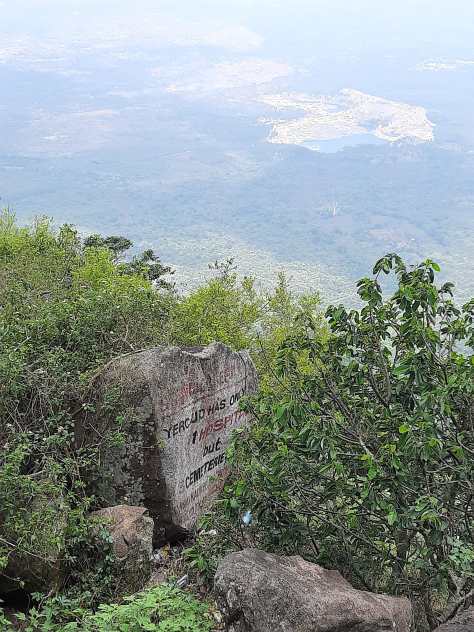
I chose Yercaud primarily because it is a hill station and ideal for a quick summer getaway from Bangalore. I was lured into it more because it is a coffee growing destination at the closest proximity to Bangalore (apart from my own hometown, Kodagu) Interestingly, Yercaud is a 100% Arabica coffee growing region, while it a Robusta major in Kodagu.

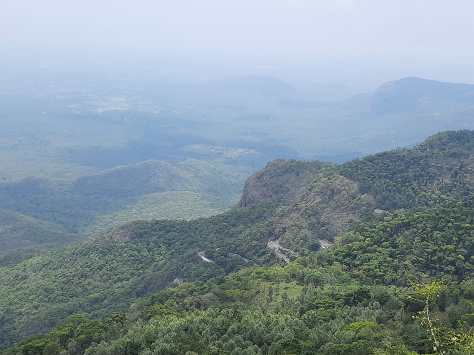
We were a bunch of friends who travelled from Bangalore to Salem by train and hired two-wheelers from Salem to Yercaud which we thought was the most convenient and fun way to explore a hill station for a good chilling scene in the peak of the summer season. Since it was sunset time by the time we started our ride from Salem towards Yercaud, darkness engulfed quickly. And even as we rode up the coffee hills via the 32 kms adventurous loop road, we were accompanied by strong winds, uprooted trees across the road, falling branches, a surprisingly heavy downpour and fearful thunderstorms. Despite being drenched to our bones and having a scary ride, we were still thankful that we could navigate the two-wheelers and not be stranded on a 4-wheeler for the rest of the night after being blocked by a fallen tree. The return ride during daylight was equally beautiful because our vacation coincided had with the Coffee blossom season and the entire valley looked and smelled amazing!

If you’re planning to make Yercaud your destination next weekend, here is a list of places you can visit. It is a small hill town, hence I highly recommend having your vehicle to explore as all places are quite a ride away from each other.

  1. Yercaud Lake: For a very laid-back day, you can spend it at the lake located in the heart of the town Boating and other water activities can be opted along with some coffee and local snacks by the lakeside.
  2. Lady’s seat, Gent’s seat, Children’s seat, Botanical Garden: Don’t go by the names of these spots like I did to find what the seats were about, they are just names for viewing towers that are built there. You can cover all these spots along a single stretch of a walking trail which offers good views of the surrounding hill ranges.
  3. Kiliyur waterfalls: You can have a rejuvenating day here by taking a dip in the waterfall here. However, keep the waterflow in check before deciding to venture into the waters depending on the season you visit there.
  4. Shevarayan hills: The hill gets its name from Shevarayan, the local deity who is worshipped inside a small cave at the top of the hill. The hilltop offers a flat area at the peak with great view of the surrounding hills and a favorite among the locals for short drives from the town. At then time of our visit, there was a small fair going on here with giant wheels, merry-go rounds etc, and a lot of small shacks selling snacks, chai and smoke.
  5. Karadiyur viewpoint: Thanks to the downpour from the previous night, our ride was hard, tricky and slippery through the muddy last stretch to get to the entrance of this place. But it was completely worth it, and it gets my highest recommendation to visit here for a sunset view. It was beautiful. Among all the viewpoints we had thus far explored in Yercaud, the entry here was ticketed but the view made complete justice to it. A short ride from here is the Sri Chakra Maha Meru temple. But we decided to skip this since we spent more time at the viewpoint rather that rushing to a more recently constructed temple before it got dark.
  6. Annamalaiyar temple: This place gets my second highest recommendation if I were allowed to rate places. We visited here in the afternoon and yet the 360 degrees view from here was just amazing. The temple itself was a small structure whose top can be accessed by a small ladder which serves as a watch tower also. Even at peak noon, the winds were so strong, the temperatures so cool and the vibe so peaceful.
  7. Pagoda viewpoint: A landmark usually marked on a touristy map of Yercaud, there is a watch tower which provides a good view but not as best as what I have seen at the above-mentioned less-frequented spots. There is also a telescope installed by the government for education purposes which can be accessed by any interested public. The access is free of charge, but it would be generous on your part to tip the person guiding you through when you handle the instrument by yourself.
Annamalaiyar temple
Annamalaiyar temple

We stayed at a luxury resort built within a 100+ acres coffee and spice plantation in Yercaud. We spent our vacation without packing too many things as the hills themselves are very laid back. Apart from spending time doing activities like plantation walks, birdwatching etc. at the resort, we explored the places listed above and feel that our time was aptly occupied. Depending on whether you want to extend your stay for another leisurely day or pack your day with few more spots, you can visit the places below.

Karadiyur viewpoint- Yercaud
  1. Montfort School: Located in the heart of the town, it came as a recommendation on google for places to visit. However, when we arrived at the school gates, we were denied entry into the premises. Not sure of the reason, maybe because it was still school time.
  2. Sangalathudi viewpoint: We skipped this since we had done few viewpoints already.
  3. Manjakuttai viewpoint: This was a high recommendation on google for a sunrise view. We decided to give this a miss considering the distance from our accommodation and the laziness to wake up so early on a leisurely weekend trip.
  4. Tippery viewpoint: Located on the southernmost point of Yercaud, it is another good place to see the hills.
  5. Norton bungalow: This used to be a British bungalow, now owned by a private entity on the way to Shevarayan temple. So, it requires prior permission to enter the premises. We tried to locate it on google, but could not get the right directions and leads for the required permits.
  6. Bear’s cave: This is a google landmark located inside a private estate near the Norton bungalow. But we had to skip it since we couldn’t locate it.
  7. Nallur waterfalls: We skipped this since we had already added Kiliyur waterfalls to our visit and Nallur was quite far away from our accommodation.
Pagoda viewpoint

Food:

We mostly ate our breakfast and dinner at the resort itself since they had good buffet and ala-carte menu. Apart from that, they also made good woodfired pizza served in an outdoor seating adding to the ambience. But we tried lunch at Sweet Rascal restaurant based on high user ratings. They serve Sri Lankan cuisine with a limited menu to choose from that menu changes every day. Since all the ingredients are freshly bought in limited quantities daily, it is highly recommended you make a prior reservation of a table. The food was good and the ambience even better. They have indoor and outdoor seating with lot of greenery and various kinds of pet animals around. But what makes your visit even more exciting is the collection of hearty anecdotes and funny quotes pasted and painted all around the property.

I hope this post is useful to plan your next weekend getaway from Bangalore. Let me know in comments if you have any questions or feedback.

Largest Railway Station in India | Complete List You Must Know

Collecting amazing information about the largest railway station in India that can blow your mind with its operations. Indian Railways operates many railway stations, but certain stations made their place on the list of the top 10 largest railway stations within India.

Railway stations are considered the largest in different terms, such as the area covered by the railway station, the number of available platforms, the number of trains that halt daily, the number of tracks, and passenger traffic and the availability of services like food in train, including station food courts, onboard catering, and online meal delivery options for passengers during their journey.

This post will explore railway stations that are considered the largest, based on the number of platforms or tracks, including platform length, which contribute to their ranking as top railway stations within India.

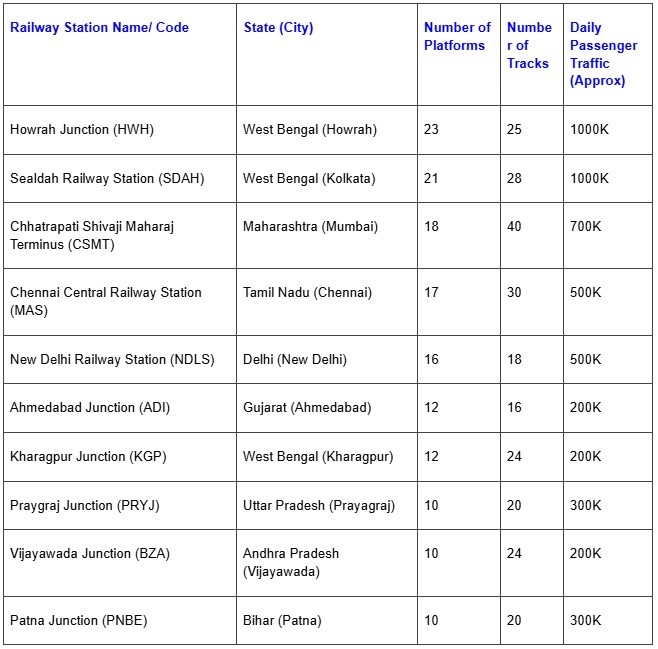
List of the Top 10 Largest Railway Stations in India

Check the list of the top 10 largest railway stations operated under the Indian Railways.

Largest Railway Stations in India

Key Details and Facts About the Largest Railway Station in India

1. Howrah Junction (HWH)

Howrah Junction comes in the top list automatically when you talk about the largest station in India due to the following.

  • Located in Howrah (West Bengal)
  • One of the oldest railway stations in India.
  • Operated under the Eastern Railway zone
  • Connect major cities like Mumbai, Delhi, Guwahati, and Chennai.
  • More than 23 platforms handle 1000K passengers daily.

2. Sealdah Railway Station (SDAH)

It is the 2nd largest railway station in India, located in West Bengal (Kolkata), due to the following reasons.

  • 21 Operational Platforms.
  • Handles about 1000K passengers daily.
  • One of the busiest suburban railway networks.
  • Major hub for local or non-local railway stations.
  • Railway food order with RailRestro to get delivery at the next station.

3. Chhatrapati Shivaji Maharaj Terminus (CSMT)

This station is popular as CSMT due to its iconic landmark. Therefore, check the PNR status before reaching the boarding station via the RailRestro app. So, check the following reasons behind it.

  • It counts as a UNESCO World Heritage Site.
  • It operates around 18 platforms with 40 tracks to manage a large number of trains.
  • This railway station is located in Mumbai (Maharashtra) as headquarter of central railway.
  • One of the busiest railway stations in India, managing around 700K passengers daily.

4. Chennai Central Railway Station (MAS)

Chennai Central is the primary railway terminus in Chennai, Tamil Nadu, and is considered the busiest railway station in South India. Reasons are as follows.

  • It operates 17 platforms with 30 tracks for a large number of trains.
  • It connects Tamil Nadu to other states and is considered a major terminal in South India.
  • MAS handles more than 500K traffic daily.
  • Online food on train service is available with the RailRestro train app.

5. New Delhi Railway Station (NDLS)

New Delhi railway station is one of the busiest and largest railway stations in India in terms of handling daily passengers.

  • It operates around 16 platforms that connect all the major cities.
  • Top revenue generating railway station in India.
  • Handles 400+ trains on a daily basis.
  • Located in the capital of India, which connects East, West, North, and South India.

6. Ahmedabad Junction (ADI)

It is another largest railway station that operates under indian Railways. The following points pull it into the list of the largest stations in India.

  • It operates 12 platforms to serve around 200K passengers daily.
  • It is a major Junction in the Western Railway zone.
  • A massive redevelopment project that can offer better connectivity to passengers.
  • Offering modern amenities such as 31 passenger lifts, 50 escalators, and others.

7. Kharagpur Junction (KGP)

Kharagpur Junction is not considered for its number of platforms or number of tracks. But it comes in the list of the largest railway station because of the following.

  • Longest railway platform in India and also one of the longest across the world.
  • It has a 1072-meter-long platform that grabs the attention of travel enthusiasts.
  • It handles 200K passengers daily.
  • Majorly connected with cities like Delhi, Mumbai, Kolkata, Chennai, and others.

8. Praygraj Junction (PRYJ)

Prayagraj Junction, formerly known as Allahabad Junction, is an important station in Uttar Pradesh. This railway station comes in the longest railway station due to the following reasons.

  • It has 10 platforms with 20 tracks to deal with hundreds of trains in a single day.
  • It deals with more than 300K footfalls daily.
  • This North Central Railway station has major connections with Kanpur, Varanasi, Delhi, Mumbai, and Kolkata.
  • Multiple tracks for local and long-distance trains.

9. Vijayawada Junction (BZA)

Vijayawada Junction is the most strategic railway station in Andhra Pradesh including southern India. Certain reasons make it count as the Indian largest railway station are as follows and passengers can easily check the Train Time Table for all arriving and departing trains.

  • This railway station operates 10 platforms and 24 tracks to manage hundreds of trains every day.
  • It handles over 200K passengers daily.
  • The station has major connections with Bengaluru, Chennai, Kolkata, Hyderabad, Howrah, and Delhi.

10. Patna Junction (PNBE)

Patna Junction is one of the largest railway stations in India due to the following reasons.

  • The important and busiest railway station in Bihar.
  • It connects eastern and northern India with other major cities.
  • It also facilitates the passengers and freight traffic.
  • PNBE operates 10 platforms and 20 tracks.
  • Offers facilities like modern waiting halls, food courts, digital information systems, including ticket counters.

Also Read:

Chain Pulling in Train: Rules, Valid Reasons & Fines

Five Types of Trains to Experience in India

Frequently Asked Questions

Q. Why is Howrah Junction considered the largest railway station in India?
Ans. Howrah Junction is considered as the largest in terms of number of platforms (23) in India, with more than 6000 train movements and daily traffic of about 10 lakh per day.

Q. How many platforms are there at Howrah Junction?
Ans. Howrah Junction operates 23 platforms, which makes it an Indian largest railway station. It helps to deal with large traffic and manage 600+ trains on a daily basis.

Q. What facilities are available at Howrah Junction railway station?
Ans. There are various facilities available at the HWH (Howrah Junction) that are listed below.

  • Escalators & Lifts
  • Free Wi-Fi
  • Retiring Room and Dormitories
  • Waiting Room (AC or Non-AC)
  • Clock Room
  • Parking Facilities
  • Food Courts
  • Road Connectivity

Q. Which is the second largest railway station in India?
Ans. Sealdah Railway Station is considered the 2nd largest railway station in India because of passenger traffic and numbers of platforms available. It operates with 21 numbers of platforms to deal with 800K to 1000K traffic daily.

Visiting the Panchabhuta Temples- The Five Elements of Life

There are five temples located across Southern Indian states representing the five elements of life or the Panchabhutas. They are built in such a way that the are all aligned in a single latitude and longitude with respect to each other. Through this article, I would like to share a summary of my stories of visiting each of these temples.

It all started with a family trip, way back in 2014 to Trichy. I had made a long list of places to visit in and around the temple town, and we happened to visit this temple by chance. It was a beautiful temple where the main Linga is believed to have been created by Goddess Parvathi with water from the nearby river. Today, the Linga is surrounded by a perennial stream of water. (Click here to read about my trip to Trichy)

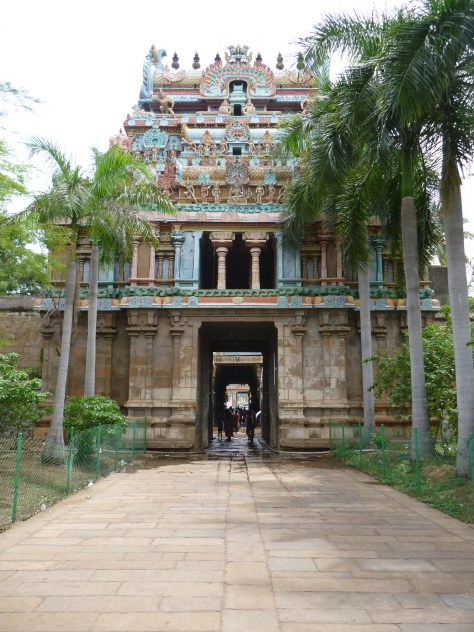
The entrance to Jambukeshwara temple

On a casual day trip with my mother to buy some sarees at Kanchipuram, I also made a list of temples to visit in this town which is also known as a ‘City of 100 temples’. Among the long list of sacred places we visited in Kanchipuram, the Ekambareshwara temple was also one. Here, the main Linga is made out of sand and is believed to have been installed by Goddess Parvati. Shiva is a lover of Abhisheka, however due to the nature of the porous & loose sand of the Linga, there is no abhishekam offered here. Instead, offered to another small bronze idol kept beneath it. (Click here to read about my trip to Kanchipuram)

The Sthala Vrushka inside the Ekambareshwara temple

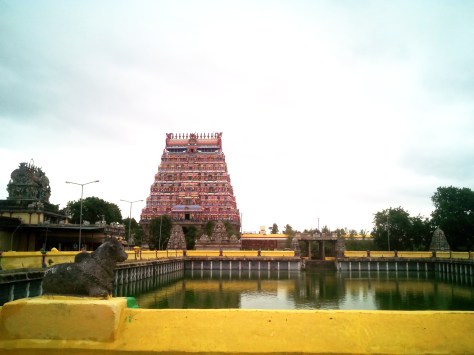
My brother and I happened to explore Chidambaram town during a backpacking trip along the East-coast of Tamil Nadu. We arrived at the temple on time for the first aarti when the doors opened in the evening. We were in the front line when the curtains were raised, and we had a stunning view of the main idol. I instantly felt a compelling energy from the idol in which Lord Shiva is depicted to be performing the Ananda Tandava dance. (Click here to read about my trip to Chidambaram)

One of the temple gopurams and the holy Sivaganga tank at Thillai Natarajar temple

We halted in this temple town on our way to Sriharikota to watch a rocket launch in 2019. We stood in a long queue to finally get a magical darshana of the Linga here which is made of a massive sized Camphor. Since the camphor is susceptible to fire, there is no direct aarti performed to this Linga. However, an eternal lamp / light is lit behind forming the silhouette of the Linga which indicates that there is continuous flow of air allowing the fire to burn. (Click here to read about my trip to Srikalahasthi)

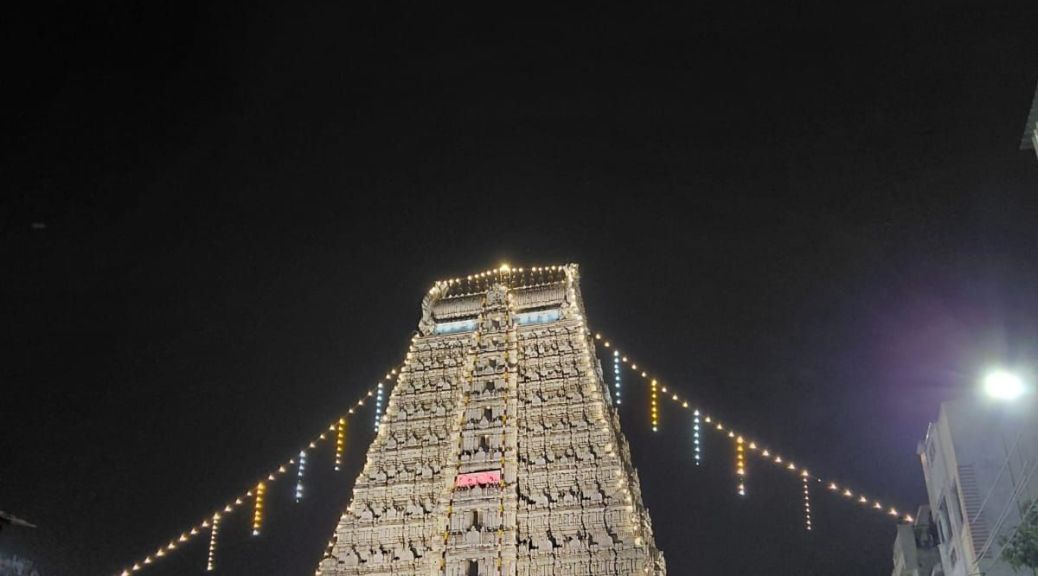
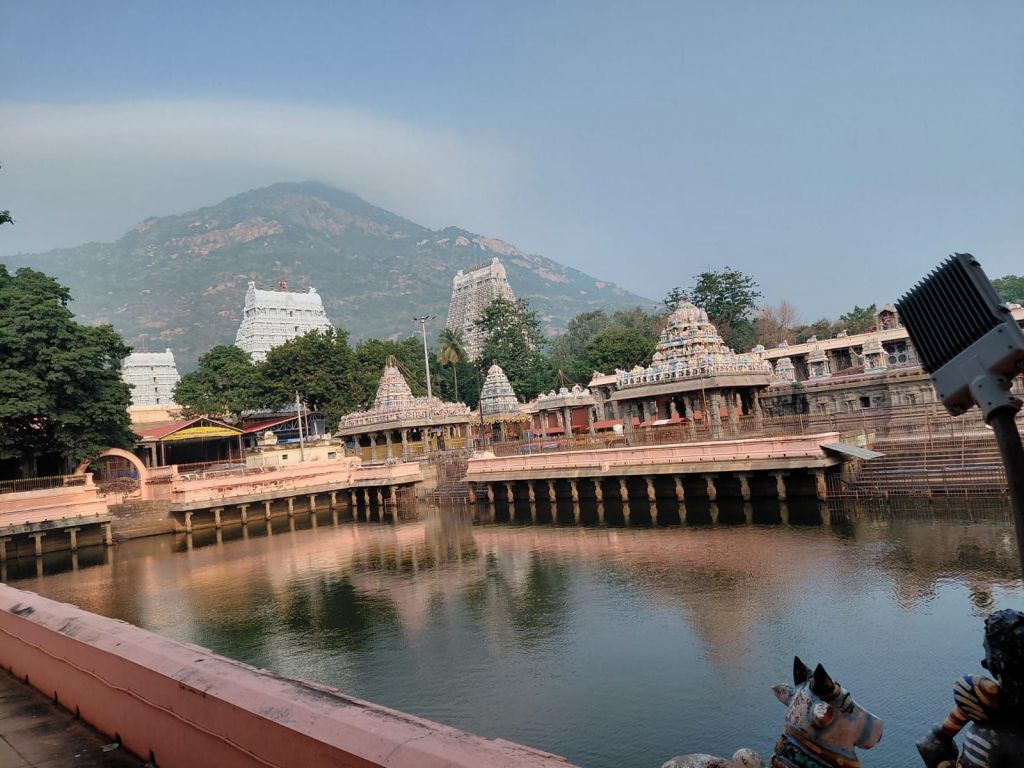
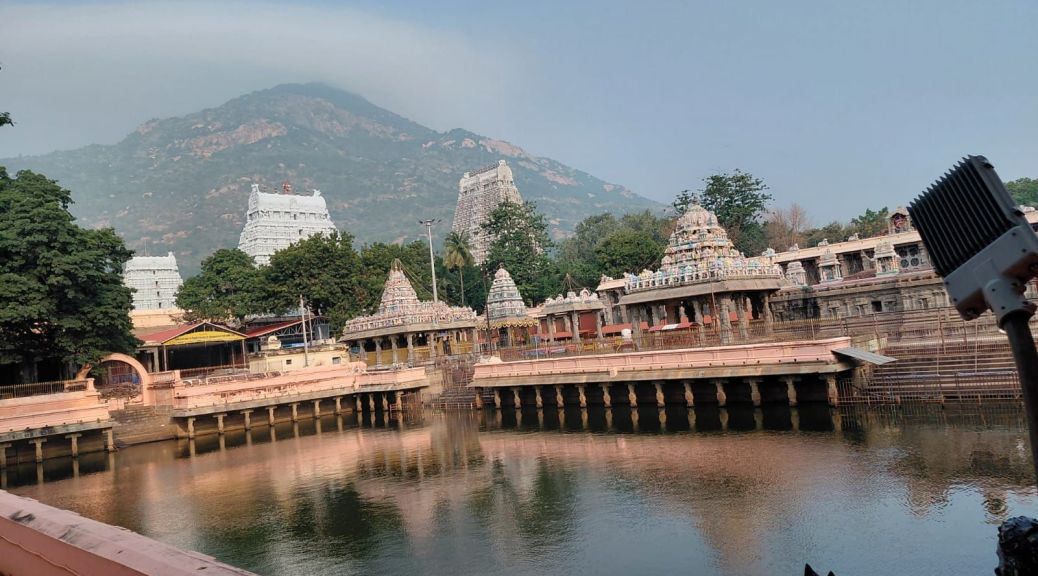
It was indeed a long wait until 2025 when my wish to visit this temple manifested. I got extremely lucky as my visit also coincided with the auspicious Karthika Deepam. I performed the Girivalam before I got the darshan of the Linga, illuminated by oil lamps around inside the sanctorum. The hill itself is believed to be a manifestation of Lord Shiva and the Karthika Deepam, a representation of cosmic fire (Click here to know more about my Girivalam trip)

The Tiru-Annamalai hill in the background of the Arunachaleshwara temple pond

All you need to know about Girivalam

What is Girivalam?

Mythology has it that Brahma and Vishnu got into an argument over their supremacies and finally sought Shiva’s help to resolve the issue. Shiva then created a cosmic column of fire and asked Brahma and Vishnu to find the end of the fire. Whoever found its end would be declared as the supreme god. Bramha went towards Akaasha and Vishnu went towards Pathaala to find the top and bottom ends respectively. However, both returned unsuccessful, thus renouncing Shiva to be supreme. This place came to be called Arunachala hill or Tiruvannamalai. The name of the hill is derived by combining three Tamil words, Thiru- meaning sacred, Vann meaning fire, and Malai meaning mountain, thus meaning “the holy fire mountain”.

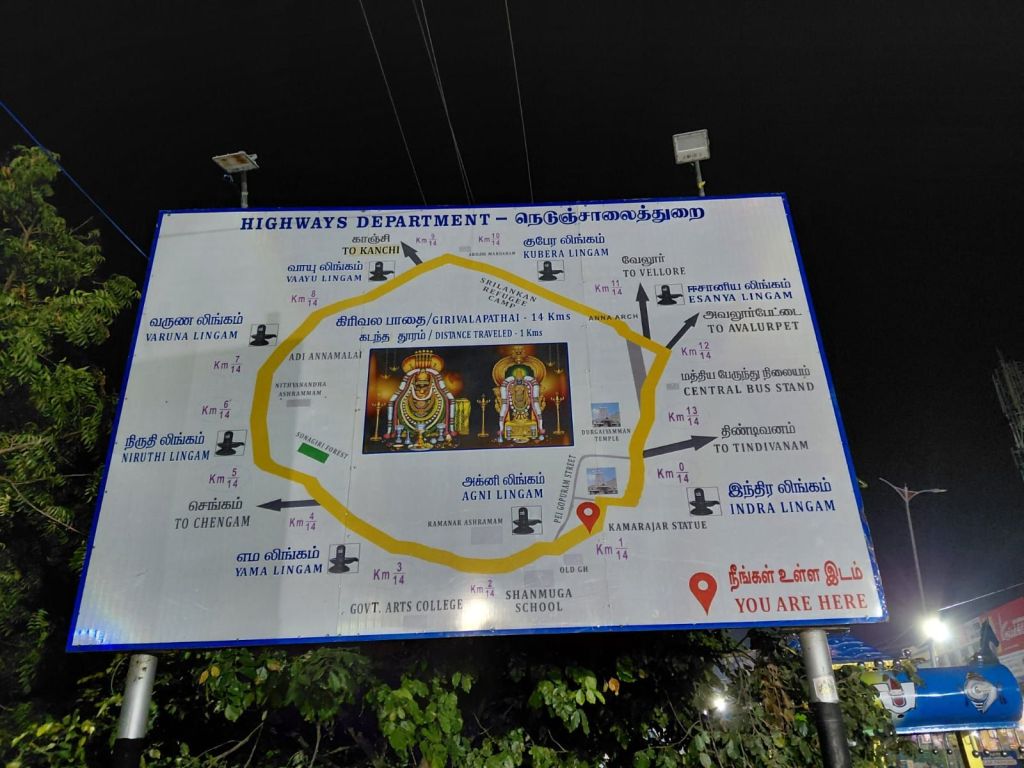
Girivalam, also called as Giri Pradakshina is a combination of two words, ‘Giri’ meaning mountain and ‘Valam’ meaning circumambulation. It is a sacred walk covering an approximate distance of 14-kilometer in the clockwise direction around the Arunachala Hill in Tiruvannamalai town of Tamil Nadu. Since the hill is considered a physical manifestation of Lord Shiva, conducting the Giri Pradakshina is believed to offer spiritual purification and liberation.

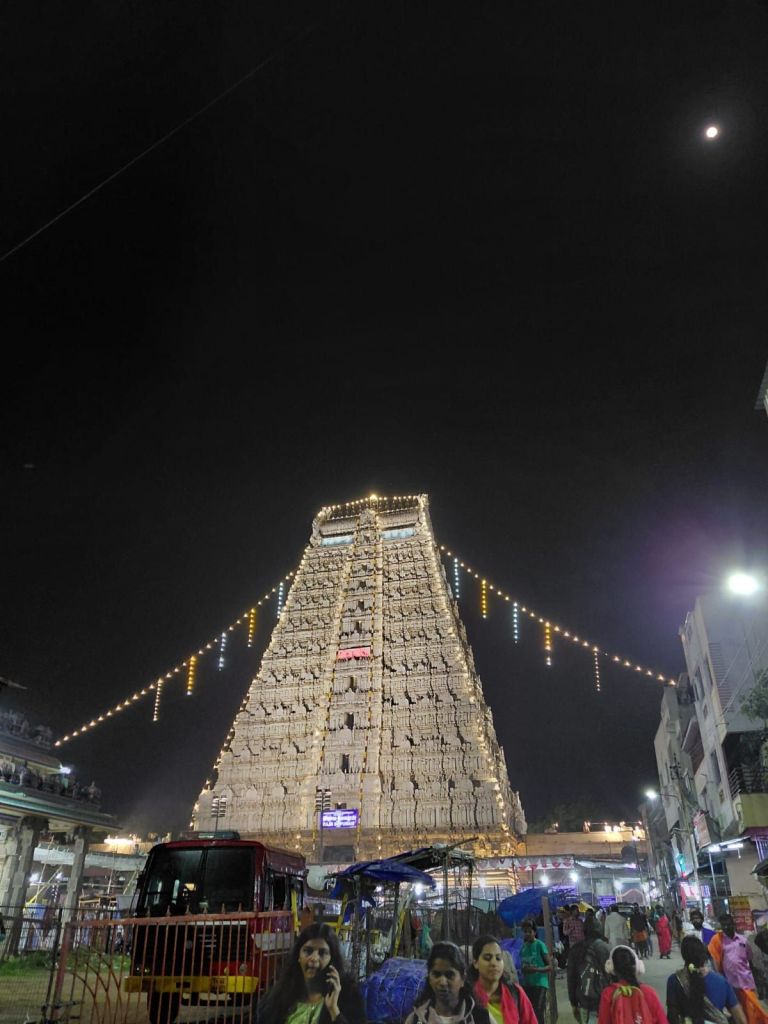
To commemorate the day of establishing Shiva’s supremacy, a large bonfire is lit atop the hill during the Karthika month of the Tamil calendar. This Karthigai Deepam lit on the previous night of the full moon symbolizes Shiva’s cosmic fire and burns continuously for the next eleven days attracting millions of devotees from all over for this annual festival.

The Rajagopuram on a full moon night of Karthika month

How to do Girivalam?

  • The Pradakshina must start and end at the same spot, usually at the east entrance tower of the Arunachaleshwara temple located at the foothills.
  • Start the Pradakshina by visiting the Kalabhairava and Ganesha shrines, followed by breaking a coconut in front of the east Gopuram of the Arunachaleshwara temple.
  • Traditionally done barefoot, it is not wrong if one opts to wear just socks or footwear during the walk and removed before entering the temples passing along the path.
  • A visit to the Ashta Lingam shrines and other significant temples along the way is believed to enhance the benefits.
  • Girivalam can be conducted on any day and time of the year. However, offering it on full-moon days is considered more auspicious.
The Girivalam route map

When did I go?

Since my friend and I had been contemplating doing Girivalam for a very long time, it was a spontaneous decision to perform it as the last full-moon day of the 2025 calendar year, and a weekend had arrived together. Coincidentally, it also happened to be the Karthika Month and hence, the Karthika deepam would be lit over the eleven-day period.

We chose to go there on a Friday, which was a day after the full moon, assuming that the crowd of the full moon day would have subsided and the weekend crowd wouldn’t have poured in yet. It turned out to be a smart decision.

We also got lucky that we saw the flames deepam atop the Arunachalar hill, all the décor of the town and all the decoration inside the temple that had been done for the annual festival.

How did I go?

  • There are plenty and frequent public buses run by Karnataka and Tamil-Nadu Road transportation services. We boarded a TNSRTC bus onwards to Tiruvannamalai and KSRTC bus for our return to Bangalore, both without prior bookings.
  • We arrived at Tiruvannamalai at around 07.00.p.m. had a filling dinner and retired early at a hotel we had pre-booked close to the east tower of the temple.
  • We started our pradakshina by around 03.45.a.m. and finished it by 08.00.am.
  • We stood in the ticketed queue for Darshana and were done by noon we ate temple prasada (more like brunch).
  • We then checked out of our hotel and reached Bangalore by night.
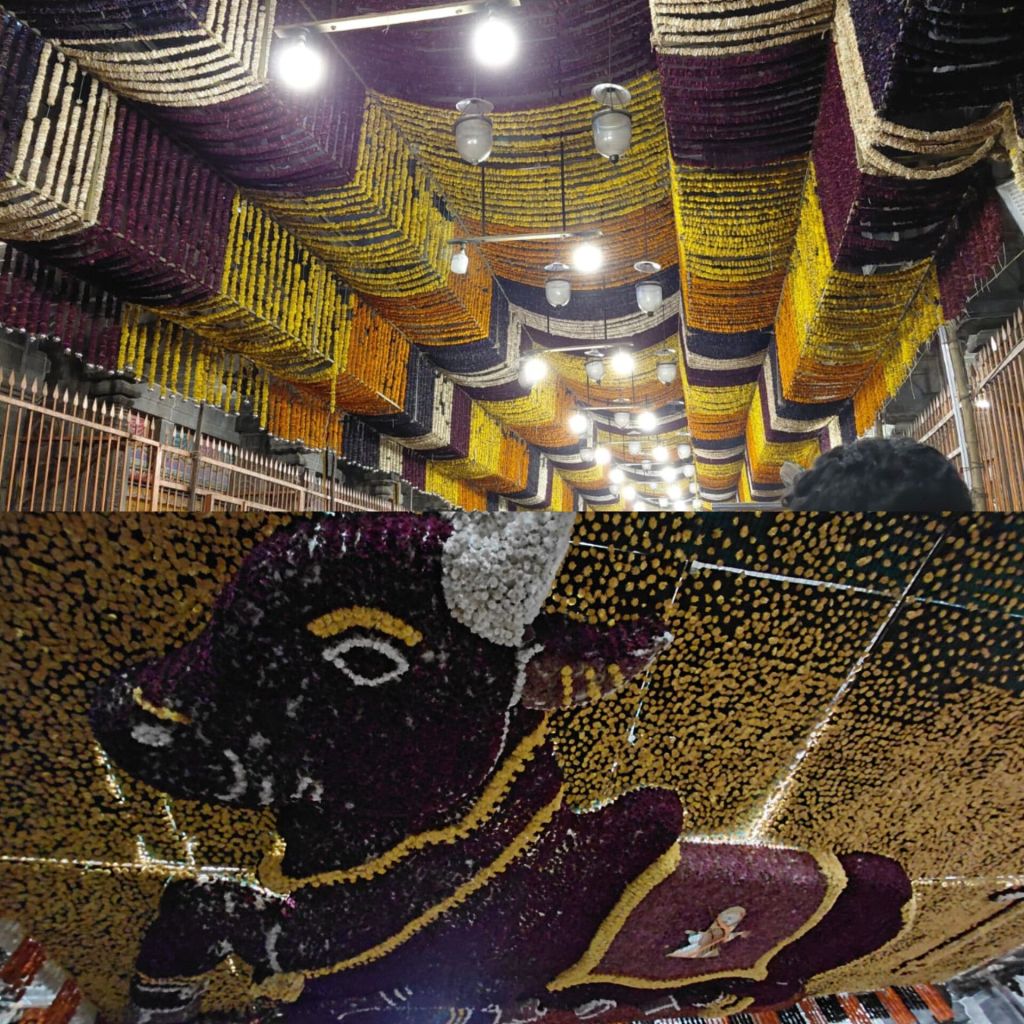
The flower decoration on the inside of the Arunachaleshwara temple on occasion of Karthika deepam

Some tips from my first Girivalam experience

  • The temple closes at night and opens by 06:00. a.m. and there will be a long queue for the Darshan. Hence, it is best advised to reach the temple gate as early as possible to get the earliest darshan with the shortest queue.
  • It is best to do the Pradakshina after sunset and finish it before sunrise to avoid the blazing sun- but also time it well to be able to visit the Ashta Lingams while they too are open.
  • I highly recommend buying the 50Rs. special entry ticket to reduce the walking distance in the queue and thus a faster Darshana.
  • Book a stay as closer to the East Gopuram as possible. This will help to reduce the overall walking distance and ease the accessibility to the Girivalam path.
  • I chose to skip going through the Moksha dwara, a small structure along the path. The queue was extremely long.
  • If possible, offer small donations to as many sanyasis and beggars sitting along the path. It will enhance the benefits of your prayers.
  • There are ample food stalls, water stations and clean public toilets all along the way to keep you going. However, we chose to break our fast only with the temple Prasada after the Darshana was completed.
  • The entire walk will be on an asphalted road / paved footpath. So, expect littering to be normal.

Other noteworthy things to do and places to see during Girivalam

  • Do not miss eating the Pongal and Puliyogare (Tamarind rice) at the paid prasada counter at the exit of the temple. It tastes delicious.
  • Check the timings of the free meals served at the Ramanashram, or simply pay a visit there to experience calmness.
  • You can walk a small distance from the Skandashram to reach a viewpoint where you can see the entire temple premise and Gopurams from.
  • Do not miss the Rudraksha beads distributed for free by volunteers anywhere along the Girivalam path.
  • The deity and the structure of the Ardhanareeshwara temple were unique.
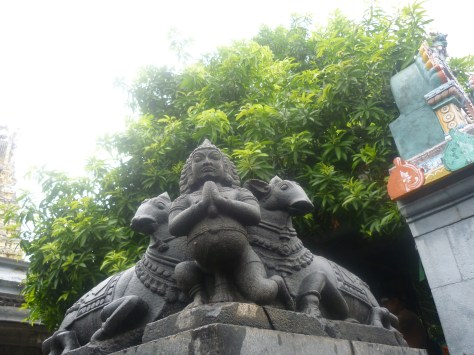
  • Observe how the direction of the Nandi changes in each temple depending on the direction of the holy hill with respect to the location of the Nandi, it always faces the mountain: The Arunachalar.
  • If you’re visiting Tiruvannamalai anytime after ‘Arudra Darshana’ (next full moon after Karthika Deepam, Do not miss collecting the holy Arudra Kajal / Kohl from the temple. It is made from the soot formed by the ‘Karthika deepam’ itself and will be distributed until stocks are available each year.
The front and back view of the Ardhanareeshwara temple

Do you have anything to share or ask about Girivalam? Comment below.

My 7-Day Thailand Travel Itinerary With TripFactory

Traveling to Thailand was one of my biggest dreams. For many years, I wanted to see its beautiful beaches, temples, and night markets. A few months ago, I finally decided to make it happen. After checking many websites and reading reviews, I booked a Thailand tour package with TripFactory. It was one of the best choices I have ever made!

I opted for a 7-day all-inclusive itinerary that covered flights, accommodation, meals, local transfers, sightseeing, and even a friendly tour guide. I didn’t have to worry about anything. From the moment I landed in Thailand to the time I took my flight back home, TripFactory took care of everything perfectly.

When I reached Bangkok airport, the TripFactory team was already waiting for me. They helped me with my luggage and took me to my hotel. The hotel impressed me with its cleanliness, comfortable beds, and respectful, welcoming staff. After some rest, I walked around the nearby streets to explore Bangkok on my own. The city was bright, busy, and full of energy. I tried the street food, including Pad Thai and mango sticky rice, and loved every bite!

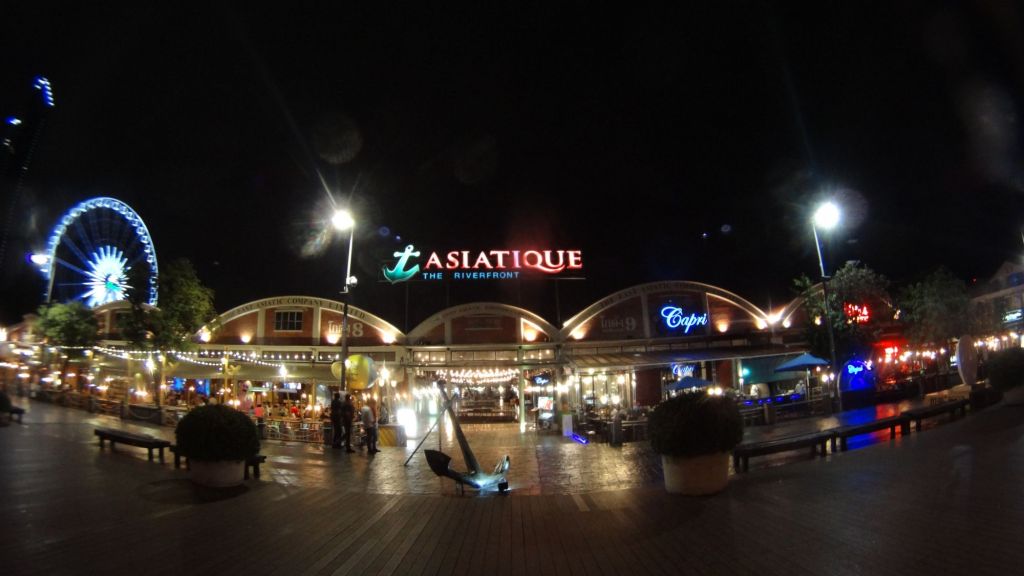
Asiatique riverfront

Day 2: Exploring Bangkok’s Temples and Markets

The next morning, our guide took us for a Bangkok city tour. We visited famous temples like Wat Arun (the Temple of Dawn) and Wat Pho, where I saw the huge golden Reclining Buddha. The guide told us interesting stories about Thai history and culture in simple English, so everyone could understand.

In the afternoon, we went shopping at the Chatuchak Market, one of the biggest in Asia. I bought souvenirs, clothes, and some local snacks. We spent the evening cruising down the Chao Phraya River, admiring the sunset and soaking in the calm atmosphere.

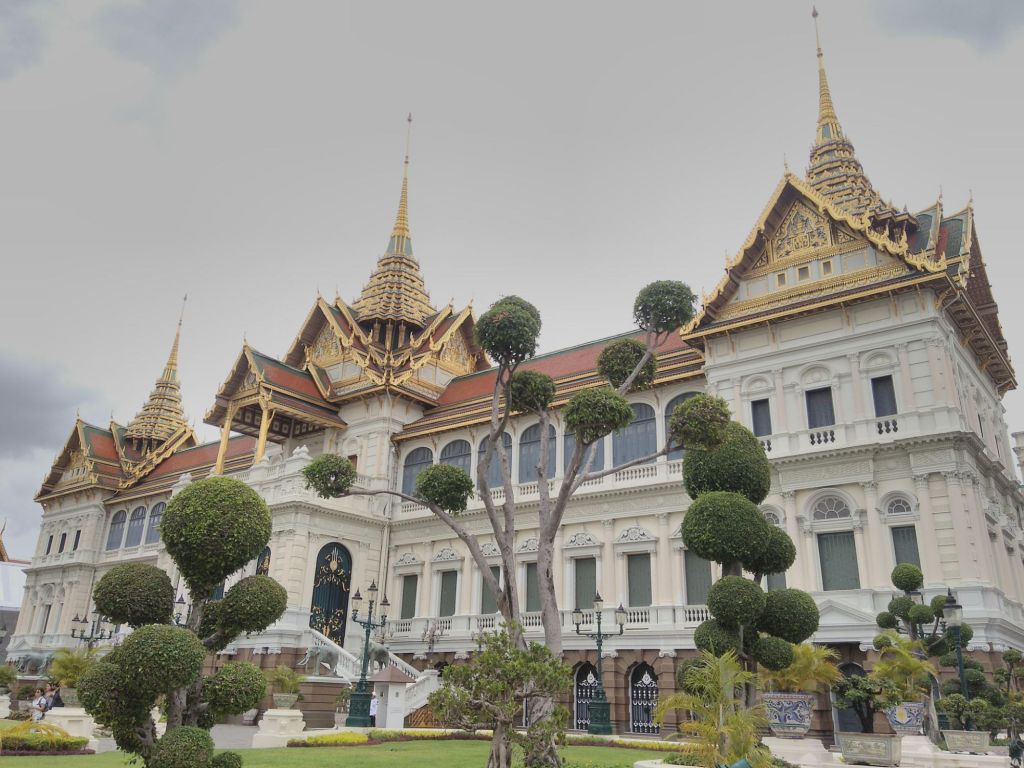
The Royal palace, Bangkok

Day 3: From Bangkok to Pattaya

After breakfast, we traveled to Pattaya, a lively city by the sea. The drive took about two hours and was very comfortable. When we arrived, we checked into another nice hotel with a sea view.

In the evening, we went to the Pattaya Viewpoint, where I saw the whole city shining with lights. Later, we watched the Alcazar Show, a colorful performance full of dance and music. The costumes were beautiful, and the show was full of energy. It was the perfect end to the day.

Day 4: Coral Island Adventure

This was one of the most fun days of my trip! After breakfast, we took a speedboat to Coral Island. The sea was bright blue, and the sand was soft and white.

I tried parasailing and jet skiing for the first time. It was so exciting to fly above the water and feel the wind on my face. Then, I relaxed on the beach, enjoyed some fresh coconut water, and swam in the sea. At a restaurant by the beach, we enjoyed a simple Thai meal that was absolutely packed with taste.

In the evening, we returned to Pattaya, and I took a walk along the beach before dinner. The sound of the waves and the cool breeze made me feel completely relaxed.

Day 5: Traveling to Phuket

After breakfast, we flew to Phuket, one of the most famous islands in Thailand. As soon as I arrived, I could feel the calm and beauty of the place. Our TripFactory-arranged hotel was charming, with palm trees all around and the beach only steps away.

That evening, we visited Patong Beach, which was full of life, music, and food stalls. I had dinner at a seaside restaurant and watched the sunset. The orange and pink sky looked magical.

Day 6: Phi Phi Island Tour

This was my favorite day of the whole trip! Early in the morning, we took a speedboat to Phi Phi Islands. The journey was very beautiful, the sea looked light blue and we crossed tall stone cliffs and green islands.

We stopped at Maya Bay, one of the most famous beaches in the world. I took so many pictures because every view looked like a postcard. Then we went snorkeling in the clear water and saw colorful fish and coral reefs.

We had lunch on one of the islands, and it was delicious with fresh fish, rice, and fruit. Everything was perfectly organized, so all we had to do was enjoy.

When we returned to Phuket in the evening, everyone was tired but very happy. I ended the day with a Thai massage, which was relaxing and refreshing after all the travel.

Day 7: Saying Goodbye to Thailand

On the last day, after breakfast in the hotel, I went to buy souvenirs like small gifts, handmade bags, and Thai food items. The TripFactory team helped with my airport transfer right on time.

As I sat on the plane back home, I felt thankful for such an amazing trip. Every day was full of joy, new experiences, and great memories.

I booked my trip with TripFactory after reading their excellent Google reviews. They have a rating of 4.3 out of 5 stars with over 3700+ reviews. After my trip, I can say those ratings are well deserved.

Their service was always on time. Pickups, hotel check-ins, and tours all happened just like they planned. The staff was friendly, and the guide was patient and spoke clear English. Whenever we needed help, they were just a phone call away.

Most importantly, I felt safe and comfortable throughout my trip. As a solo traveler, that really mattered to me.

After returning home, I couldn’t stop talking about my Thailand adventure. My friends loved the pictures I showed them of the beaches, temples, and bright streets. Many of them were so inspired that they started planning their own Thailand trips with TripFactory!

This 7-day trip was worth every single penny. It gave me new experiences, new friends, and beautiful memories that I’ll cherish forever.

My Thailand vacation with TripFactory felt very special. It was truly an experience of a lifetime. Everything was perfectly arranged, from the hotels to the tours. I explored three wonderful cities: Bangkok, Pattaya, and Phuket. Each city was beautiful and different.

If you’re thinking about visiting Thailand and want a smooth, stress-free holiday, I highly recommend TripFactory. They keep their word by giving excellent service, comfort, and memories you will never forget.

Thailand taught me that travel is not just about seeing new places; it’s about feeling alive, learning new things, and creating memories that stay in your heart forever.

7 Reasons Why Thrillophilia Is India’s Most Trusted Tour Package Brand

When it comes to planning a multi-day trip in India, trust is everything. Travellers want to be sure that what they book is what they’ll get—on time, on budget, and without last-minute surprises.

Over the years, Thrillophilia has earned a strong reputation as the most trusted name in the multi-day travel space, especially for its personalised tour packages with end-to-end planning. With over 6 million users, verified reviews, and presence across 70+ international and 200+ Indian destinations, it has become a go-to platform for Indian tourists looking for safe, organised, and high-quality travel experiences.

Here are seven key reasons why travellers continue to place their trust in Thrillophilia.

1. Everything Is Pre-Planned and Well-Coordinated

Thrillophilia’s tours are known for their clarity and structure. Every trip includes:

  • Confirmed and hand-picked stays
  • Pre-booked activities
  • Local transfers
  • Day-wise plans
  • Expert-guided tours and sightseeing
  • Flights and Visa assistance

One standout aspect is how the platform handles food preferences. Travellers can request Jain meals, pure vegetarian, or non-vegetarian menus ahead of time, so that the food stops and meals are arranged accordingly. This kind of detail matters, especially on longer trips or for families and groups with varied dietary needs.

The result: Fewer disturbances, less last-minute stress, and a smoother experience overall.

2. Verified and Trusted Local Partners

Trust often breaks down when the on-ground experience doesn’t match expectations and promised packages. Thrillophilia addresses this by working only with vetted, verified local operators—be it hotel partners, drivers, guides, or activity hosts.

All partners go through a selection and training process, and reviews are constantly monitored to maintain standards. This ensures quality and consistency across destinations.

3. Transparent Pricing and Inclusions

Hidden charges are a common problem in the travel industry. Thrillophilia aims to solve this with clear, upfront pricing and detailed inclusion lists for every trip.

Travellers know exactly what they’re paying for—whether it’s entrance fees, meals, transport, or guide services. There are no vague “to be paid later” clauses, which builds trust from the very start of the booking process.

4. Real Reviews, Real Experiences

Thrillophilia features over 250,000 verified traveller reviews on its website, across all its tour packages. These are from actual users who have completed trips, and they help future travellers make informed choices.

Travel photos, ratings, and detailed feedback provide honest insight into the on-ground reality of each package. This transparency plays a big role in building long-term credibility.

5. Reliable Customer Support

Unexpected things can happen during travel—weather issues, reschedules, or on-ground coordination delays. Thrillophilia’s 24×7 customer support is designed to help resolve these issues quickly, with an average response time of just 10 minutes.

Whether it’s reassigning a driver, updating hotel check-in info, or providing live help during a trip, the support team is accessible via phone, chat, and email. Many users highlight this as a key reason they return to the platform.

6. Flexible Customization Options

While fixed itineraries offer structure, many travellers want to tweak plans based on personal preferences—adding a detour, choosing a different hotel category, or adjusting the pace of the itinerary for aged groups.

Thrillophilia allows for a fair level of trip customisation, often without added complexity. This is especially valuable for families, honeymooners, and seniors who need more specific arrangements.

7. Trusted by Diverse Traveller Segments

From solo backpackers to large corporate groups, Thrillophilia serves a wide range of customers. It’s used by:

  • Families with children
  • Couples on honeymoons
  • Senior citizens
  • Women-only groups
  • International tourists

The platform’s ability to adapt to different needs while maintaining consistency has helped it earn trust across segments.

In a crowded market full of travel listings and tour operators, reliability, clarity, and support are what truly build trust. Thrillophilia’s structured approach, combined with local expertise, Ai and tech-backed operations, and customer transparency has made it one of the most dependable multi-day travel package brand in India.

As travel continues to bounce back, trust will remain the most valuable currency, and Thrillophilia has built its brand around just that.

A day exploring Lake Pulicat and its heritage

This story is from quite some time ago. My friend was tracking the arrival season of the flamingoes at Pulicat lake. He had an acquaintance of a Mr. Illaiyaraja, a fisherman who lived in Pulicat village. Through him, we got regular updates on the arrival of these seasonal beauties (flamingoes) who flocked to the brackish lake during their migration period. Meanwhile, our family was planning a drive to Sriharikota, to watch the launch of Chandrayaan 2. That’s another story altogether, you can read it here.

A week prior to our road trip, Mr. Illaiyaraja telephoned my friend and told him, “Anna, flamingoes vandichi.” loosely translating to “Brother, the flamingoes have arrived”, in Tamil. So, a drive to Lake Pulicat became a part of our road trip as well. Our family took our old reliable friend (Our Tata Indica) out on the road and prepped it for the long road trip. It was as if time was bringing all things together in our favor. The flamingoes had arrived, the rocket was set for its launch and the roads were calling us.

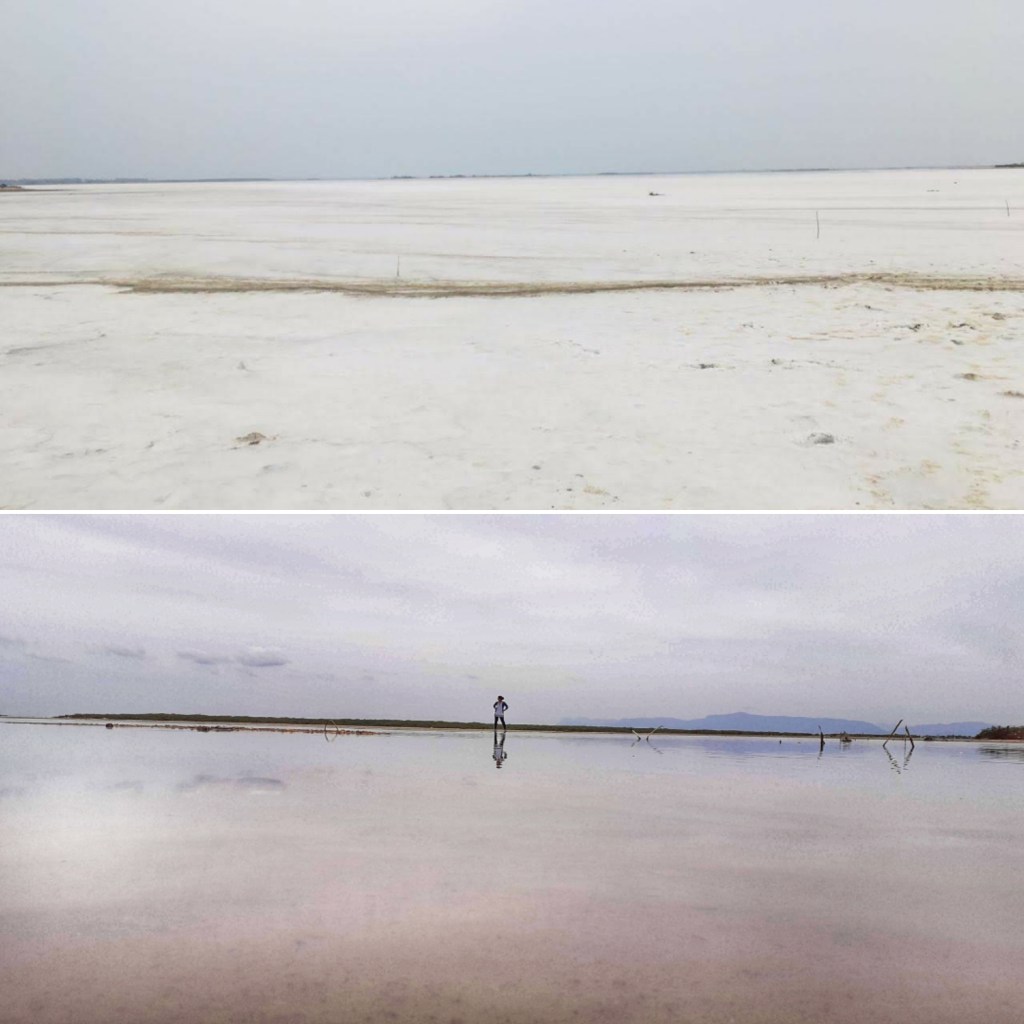
Pulicat village gets its name from Lake Pulicat, the second largest brackish water lagoon in India on whose banks is this tiny fishing hamlet. The lake itself is so vast that it is spans across Andhra Pradesh and Tamil Nadu. We approached Pulicat from the Tamil Nadu side. After exploring all the places enroute, we parked our car at the entrance of the village and walked by following google maps to the location where we were supposed to meet Mr. Illaiyaraja. With a can of diesel in his hand, he led us to his wooden boat anchored at the jetty. We boarded the boat with him and set off on an unforgettable experience of sailing on a sea-like vast lake, to see.

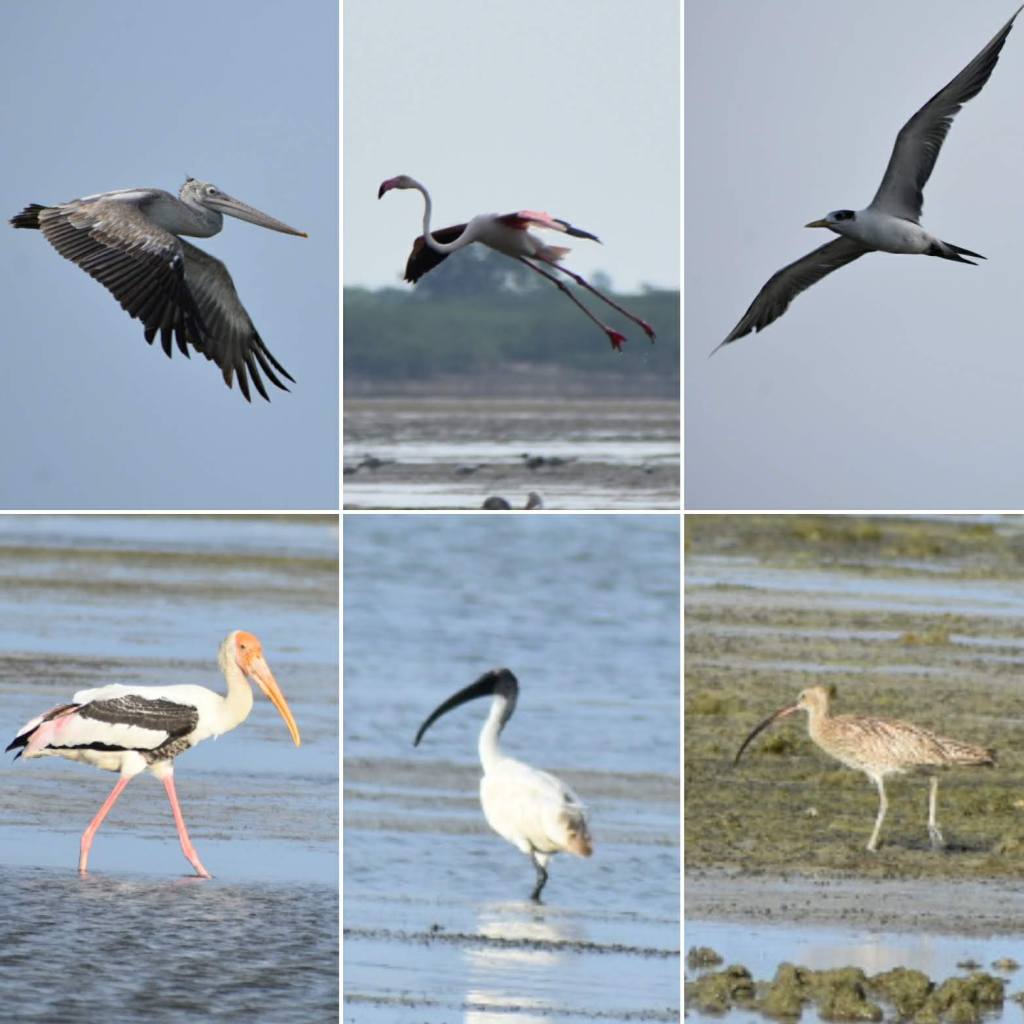
The birds at Lake Pulicat

Aquatic birds and shore birds that had migrated down from far across the globe birds to the Pulicat lake birds’ sanctuary. Pelicans, painted storks, kingfishers, herons, spoonbills, egrets, ducks, terns, gulls and several other species hovered on and off around us. But the peace within us came when the sound of the motorized boat came to a mute and there was an endless visual of the lake merging with the sky in a shade of ‘pink’. The greater flamingoes nesting peacefully in an unexplainable size of the flock. We spent quality time just watching them for a good hour or so before the sun started to turn the sky in hues of red.

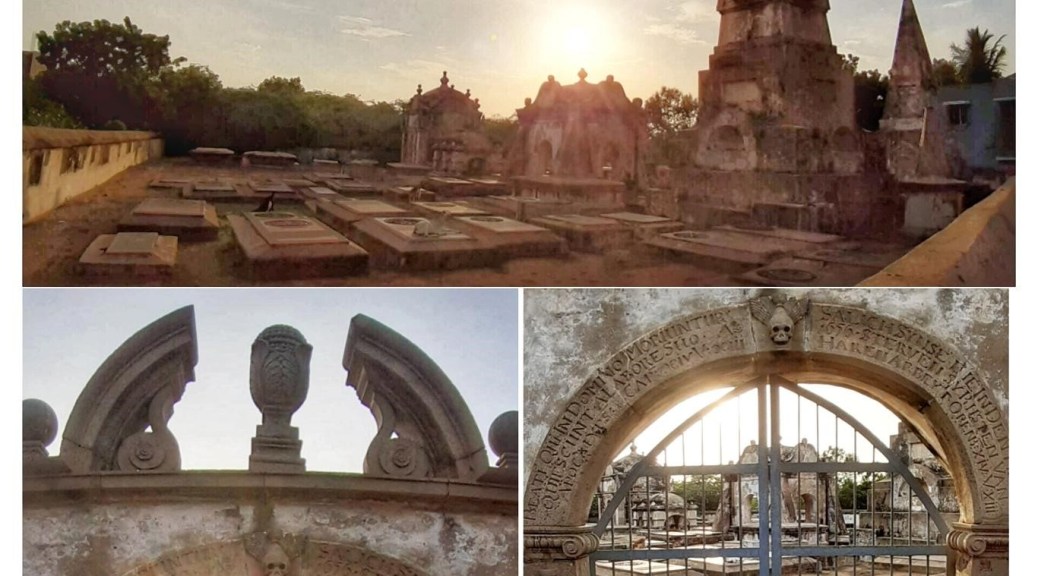
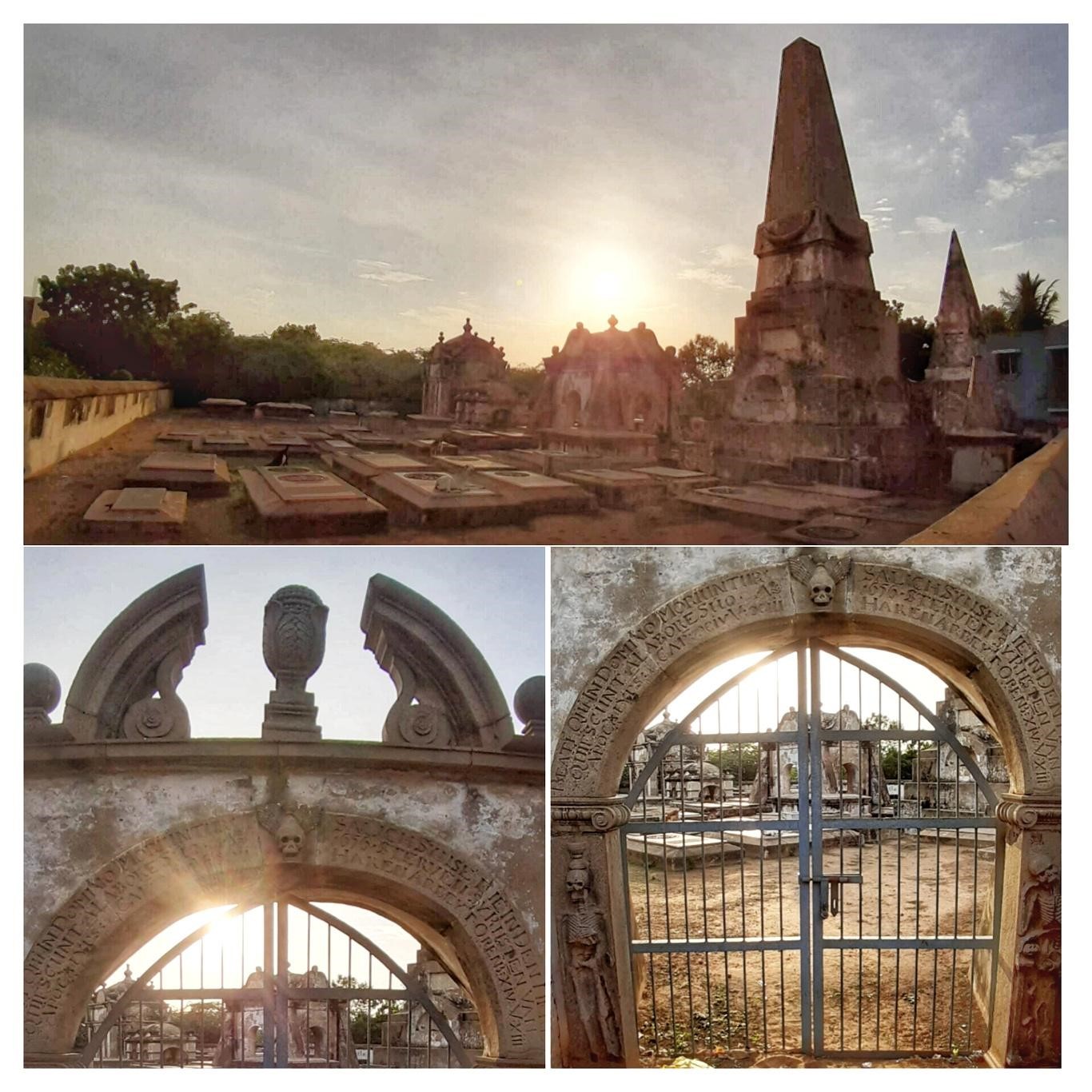
We returned to the bank and continued to drive in the direction of Sriharikota. While we were exiting from the village and were at a traffic signal waiting to enter the highway, my eyes fell on an interesting but ignored piece of construction by the roadside. I decided to go near and noticed that the entry gates were locked. The architecture style was different than anything I had seen before in the region and some strange alphabets were engraved on its entrance arches. Although interesting, it still seemed eerie and gave me some sense of it being an old, abandoned site of a graveyard. Since it was locked, I clicked a few pictures of the place from outside and returned to the car and continued our drive to Sriharikota.

Top: Lake Pulicat enroute to SHAR in winter; Lake in Summer

When I looked it up on the internet, I found some interesting information about that old site I had just visited. There are about five main settlements dating back to the Dutch era across India namely at Gujarat (Surat), Kerala (Cochin), Andhra Pradesh (Machilipatnam), Tamil Nadu (Pulicat) and West Bengal (Hooghly) where forts or cemeteries can be found. This day, I had visited a Dutch cemetery which used to be a part of Fort Geldria or Fort Geldaria at Pulicat. Pulicat was the seat of the Dutch Republic’s first settlement in India, and the capital of Dutch Coromandel. This fort was the only fortification in the Indian empire whereas all other positions of the Dutch Company were trading posts. today, this cemetery houses about 76 tombstones, mostly carved in the Netherlands.

Dutch cemetery
The Dutch cemetery at Pulicat

It is interesting how I came across a random site that holds so much historical importance in India’s history of colonization and it is also unfortunate that how inaccessible or neglected are these sites that holds stories of an era bygone. Thus, the sun had set on Pulicat ending our quick visit to this lakeside settlement.

Weekend Hike- Bala Kodandaraya Swamy Temple

Although this destination is a recommendation for weekend and day hikers of Bengaluru, it is in Krishnagiri, a district bordering the two states of Karnataka and Tamil Nadu.

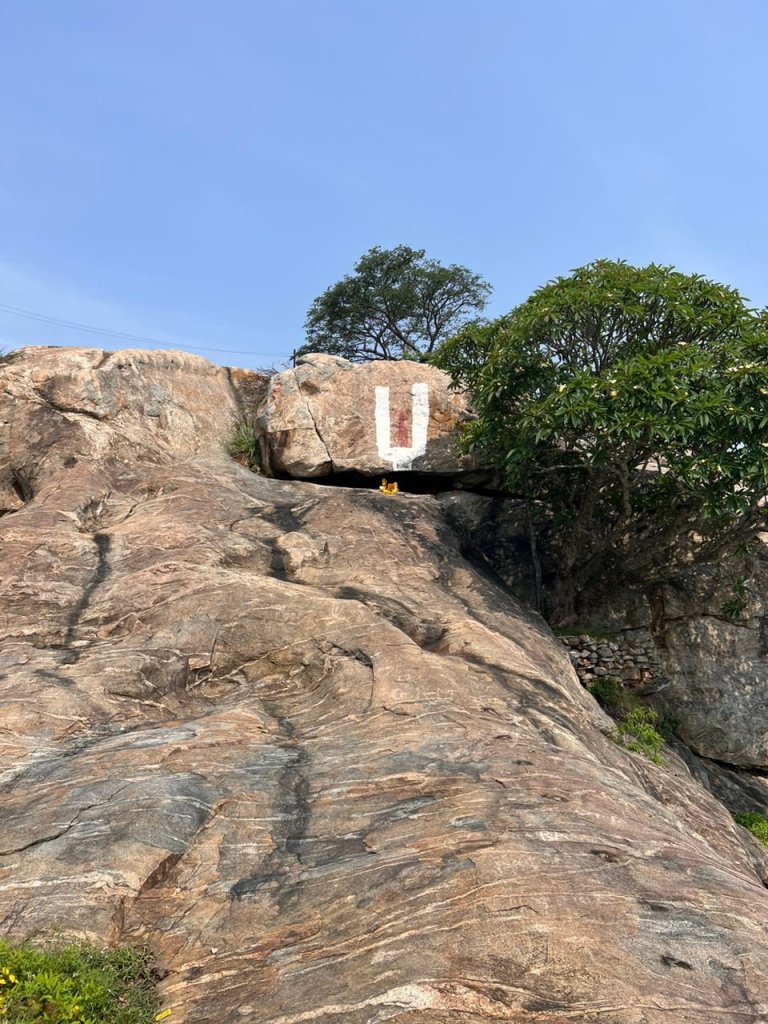
The views from an ancient temple had caught the attention of my friend and me, who are always in the look out for less crowded and less explored landscapes and places with cultural and historical importance. One such place was the ‘BalaKodandaraya Swamy temple’ whose history dates to the Vijayanagara era. Based on our online research, we found out that getting to the temple involved a short hike.

We started early on a Saturday morning by car. We had our breakfast along the way, in one of the several restaurants on the Hosur highway. From there, we followed the route on Google maps to reach our destination. A steep deviation to the left of the highway led us through villages. There were asphalted roads and good views of the surrounding hillocks for as long as the road passed through villages. The last couple of kilometers were through unpaved muddy roads passing through a slight forest stretch. We finally arrived at a small open space where we parked our car, at the base of the temple hill.

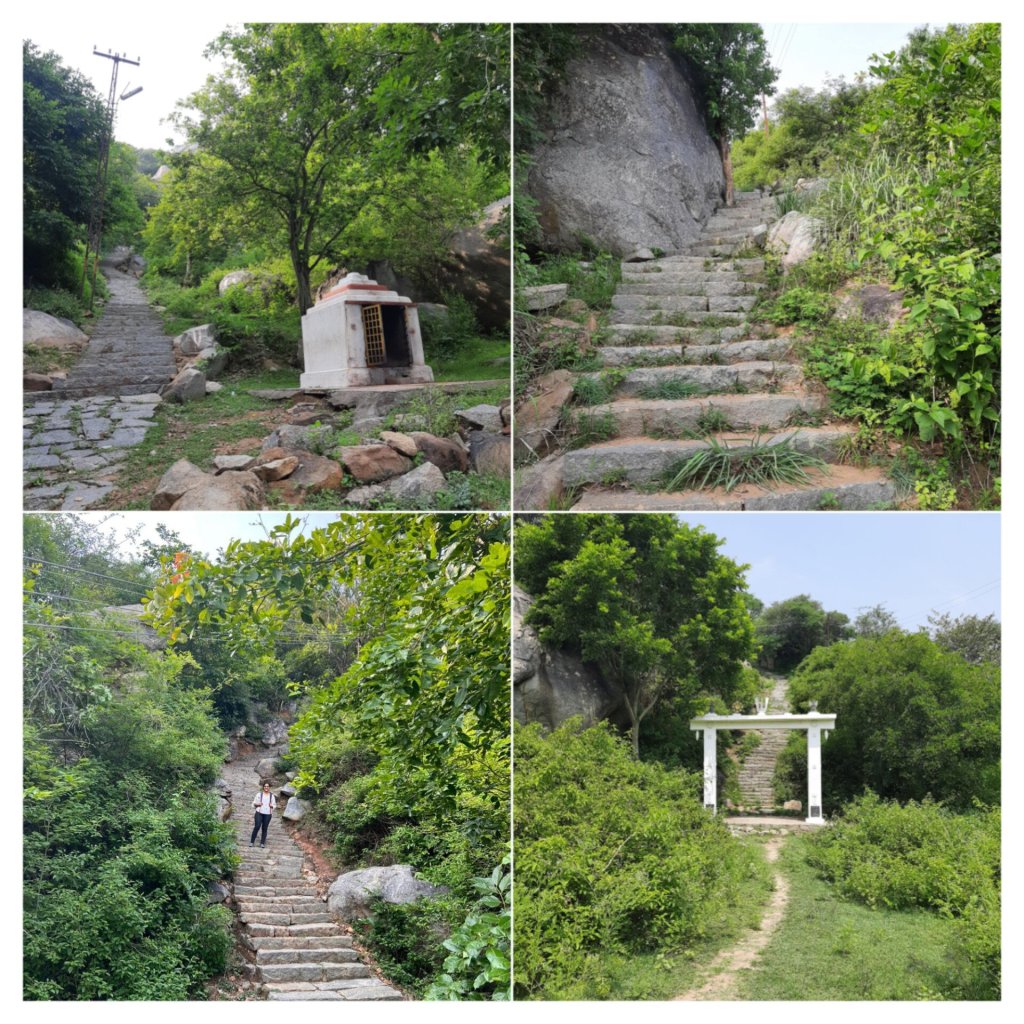
The forest trail
The trail through the forest cover, starting from the base to the temple arch

There was a small structure of brick and mortar (gudi) at the base, from where a flight of stairs led to the hilltop. People lit lamps, agarbattis and camphor here before starting their ascent. It took us about half an hour’s climb along properly laid stone steps leading to the top. These stone slabs bear the names of the devotees who have donated them and the count of their donations on each step. The ascent curved around at multiple places and offered amazing views of the valley below at every turn. The first half of the climb had a forest cover and large boulders on both sides, until we arrived at the welcome arch of the temple.

The path towards the left of the trail, towards the temple

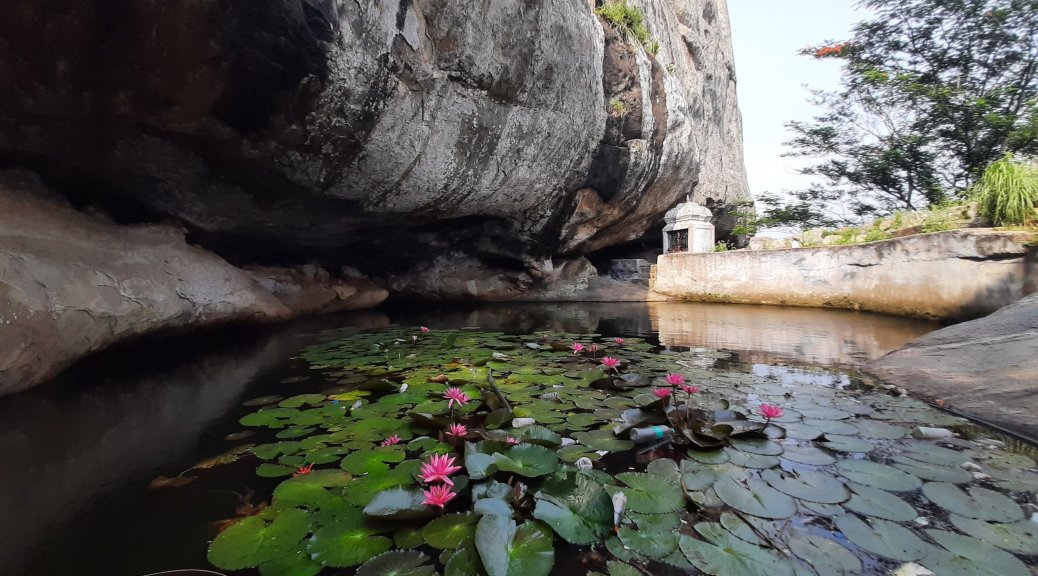
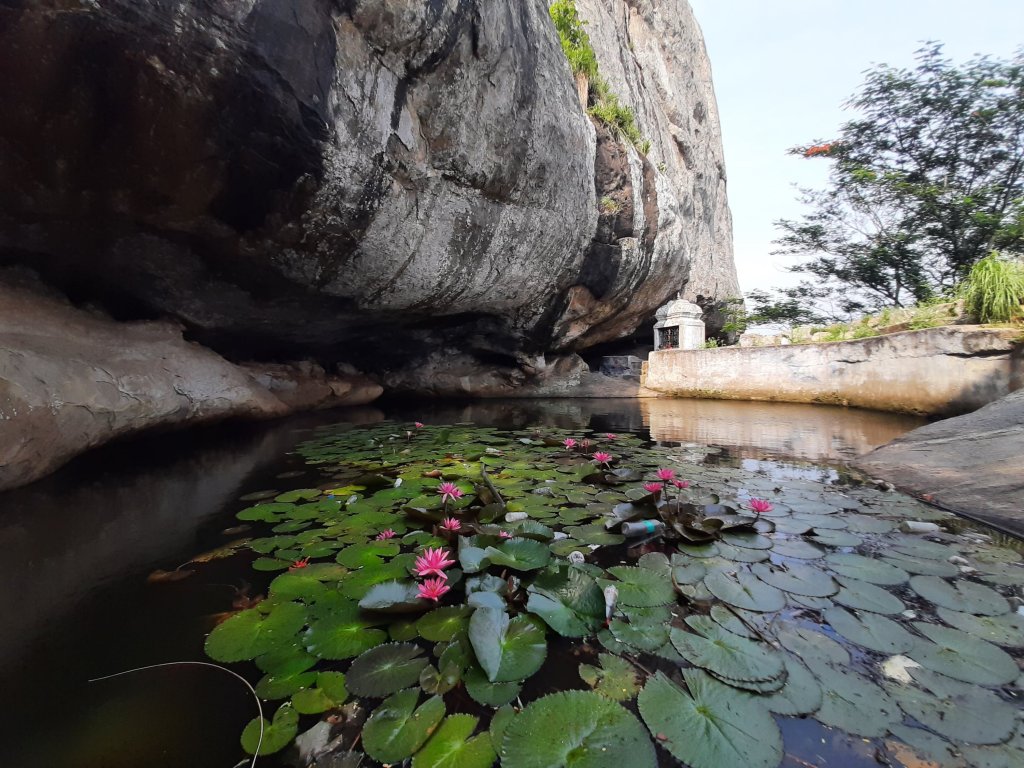
The forest cover ended after a few steps further from there and opened to a panoramic view of the valley of the villages and farms below. As one stands on a large rocky outgrowth, you will find the trail split into two paths. One, straight down through some Gulmohur trees. Second, up towards the temple. We decided to first walk the trail going straight. A few yards from there, the trees made way to a beautiful pond of pink lilies, dug right beneath a large rocky monolith. We later realized that devotees take a dip in this pond before proceeding towards the temple.

The path towards the right of the trail, leading to the temple pond

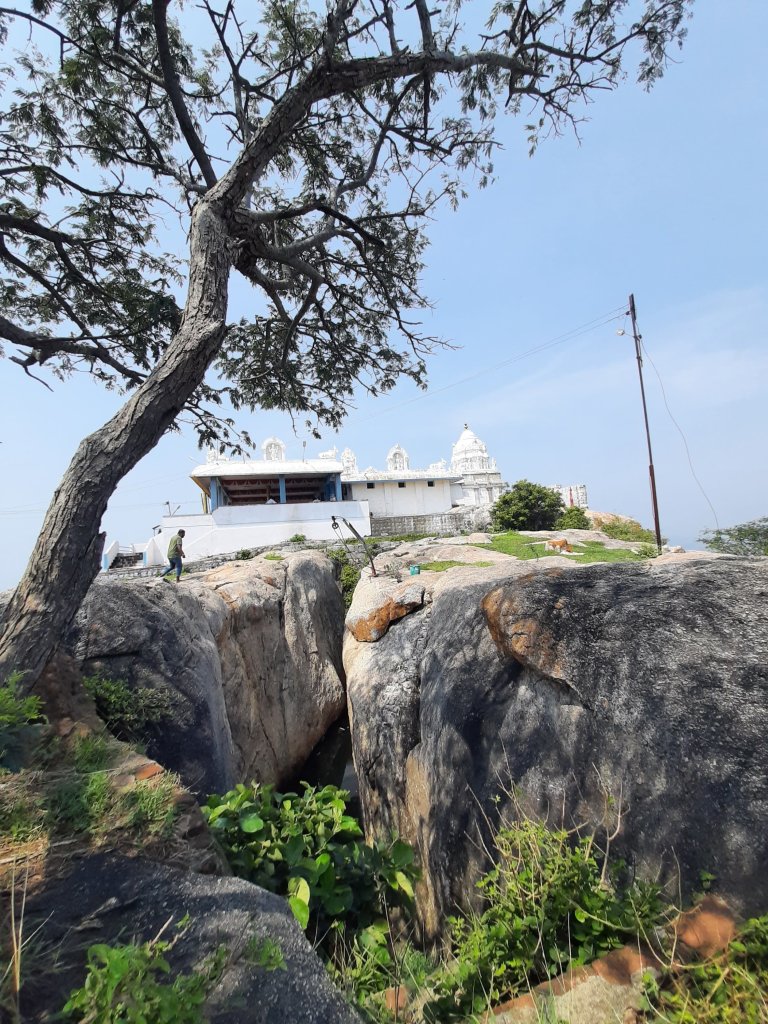
The view of the valley from there and the magical vibe of sitting by this pond of lilies could not let us go easily from there. My friend settled on the banks, with a book to read. Although the water was heavily littered with plastics, it was still a super calm spot to soak in some good energy. After spending a while, we then headed towards the temple, located on the peak of the hill, a short walk away. There was a panoramic 360 degrees view of Hosur and Krishnagiri from the temple, the green cover around, Krishnagiri dam and the Then Pennai river. The temple priest arrived much later at around 10.00.a.m. for the daily prayers.

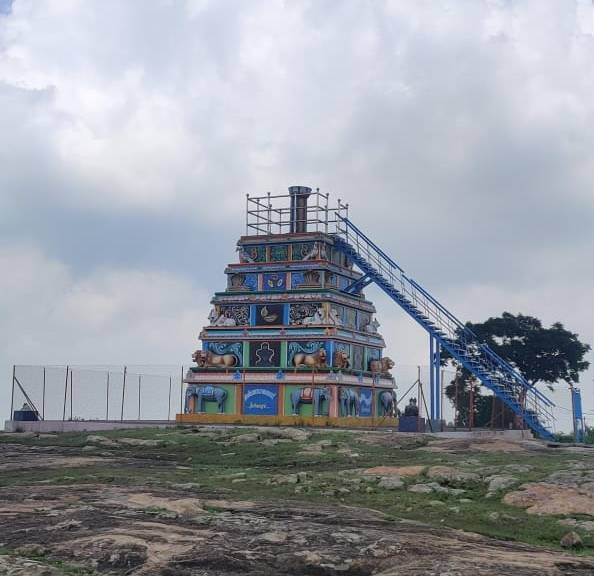
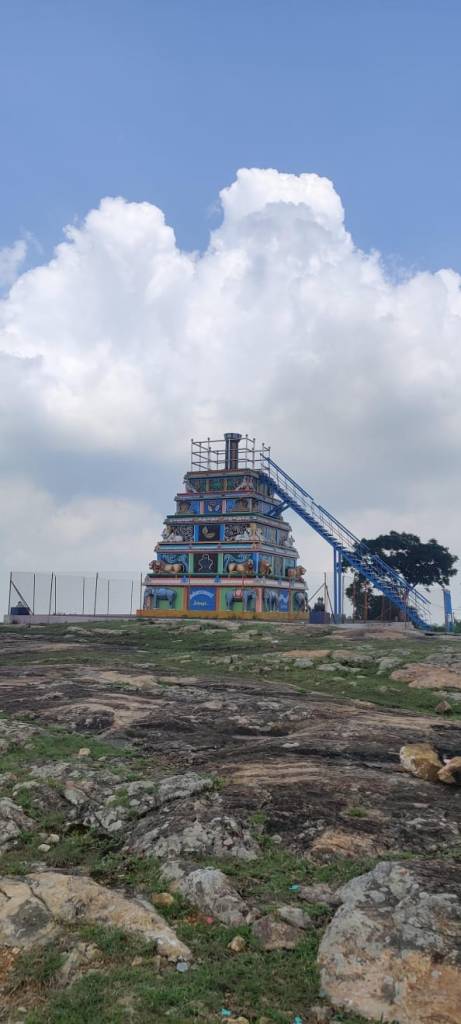
Balakodandaraya swamy temple, Krishnagiri
Balakodandaraya swamy temple and the cleft for drawing water

Surprisingly, a small cleft in the rocky hill serves as a perennial source of potable water for temple use. The people who had gathered there by then, helped the priest in drawing water from this cleft and clean the temple premises before offering the day’s prayers. We sat there for a while and decided to head back to the base before the sun took over the skies and heated the rocks around. Overall, it was an incredibly beautiful place for a short trip from the city.

Other nearby places:

If you are looking at making it a full day trip, then you can explore the nearby places that include: