Tag Archives: Danish fort

A day exploring Lake Pulicat and its heritage

This story is from quite some time ago. My friend was tracking the arrival season of the flamingoes at Pulicat lake. He had an acquaintance of a Mr. Illaiyaraja, a fisherman who lived in Pulicat village. Through him, we got regular updates on the arrival of these seasonal beauties (flamingoes) who flocked to the brackish lake during their migration period. Meanwhile, our family was planning a drive to Sriharikota, to watch the launch of Chandrayaan 2. That’s another story altogether, you can read it here.

A week prior to our road trip, Mr. Illaiyaraja telephoned my friend and told him, “Anna, flamingoes vandichi.” loosely translating to “Brother, the flamingoes have arrived”, in Tamil. So, a drive to Lake Pulicat became a part of our road trip as well. Our family took our old reliable friend (Our Tata Indica) out on the road and prepped it for the long road trip. It was as if time was bringing all things together in our favor. The flamingoes had arrived, the rocket was set for its launch and the roads were calling us.

Pulicat village gets its name from Lake Pulicat, the second largest brackish water lagoon in India on whose banks is this tiny fishing hamlet. The lake itself is so vast that it is spans across Andhra Pradesh and Tamil Nadu. We approached Pulicat from the Tamil Nadu side. After exploring all the places enroute, we parked our car at the entrance of the village and walked by following google maps to the location where we were supposed to meet Mr. Illaiyaraja. With a can of diesel in his hand, he led us to his wooden boat anchored at the jetty. We boarded the boat with him and set off on an unforgettable experience of sailing on a sea-like vast lake, to see.
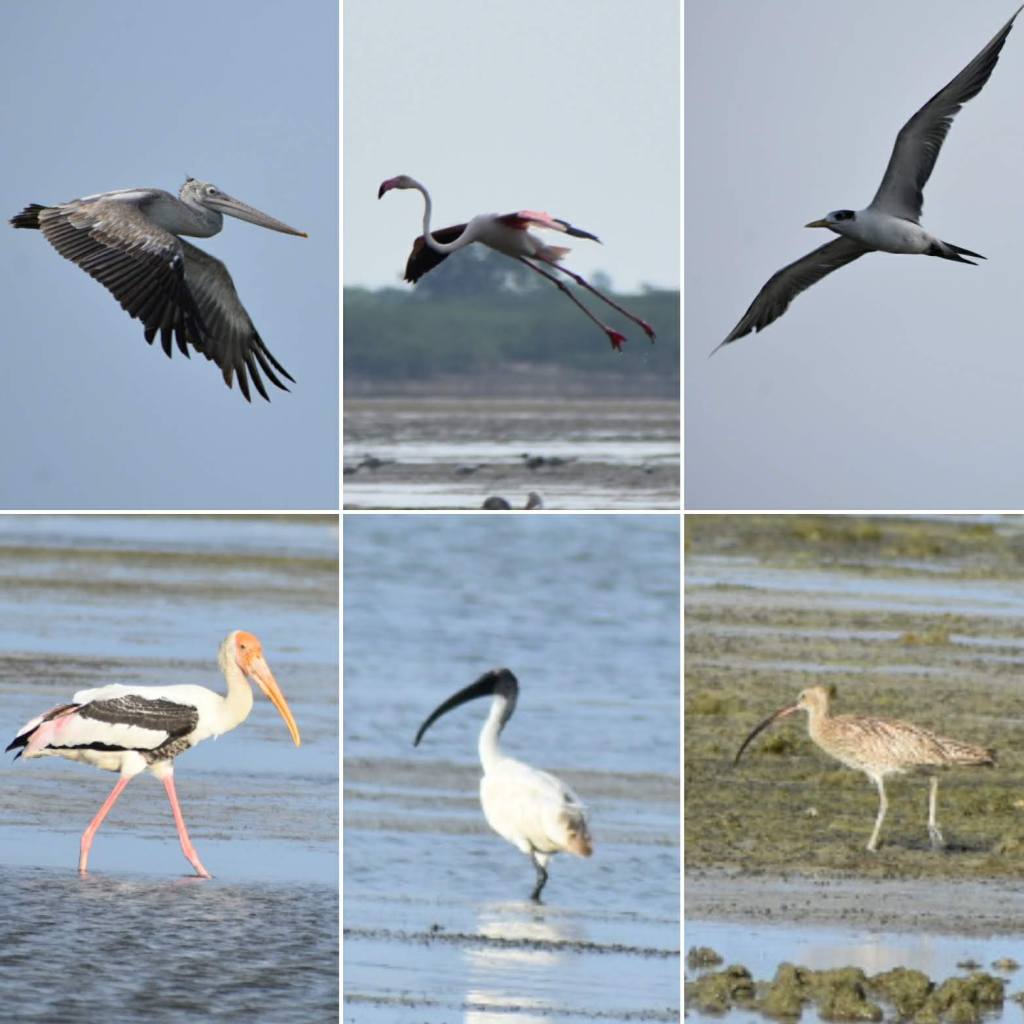
The birds at Lake Pulicat

Aquatic birds and shore birds that had migrated down from far across the globe birds to the Pulicat lake birds’ sanctuary. Pelicans, painted storks, kingfishers, herons, spoonbills, egrets, ducks, terns, gulls and several other species hovered on and off around us. But the peace within us came when the sound of the motorized boat came to a mute and there was an endless visual of the lake merging with the sky in a shade of ‘pink’. The greater flamingoes nesting peacefully in an unexplainable size of the flock. We spent quality time just watching them for a good hour or so before the sun started to turn the sky in hues of red.

We returned to the bank and continued to drive in the direction of Sriharikota. While we were exiting from the village and were at a traffic signal waiting to enter the highway, my eyes fell on an interesting but ignored piece of construction by the roadside. I decided to go near and noticed that the entry gates were locked. The architecture style was different than anything I had seen before in the region and some strange alphabets were engraved on its entrance arches. Although interesting, it still seemed eerie and gave me some sense of it being an old, abandoned site of a graveyard. Since it was locked, I clicked a few pictures of the place from outside and returned to the car and continued our drive to Sriharikota.
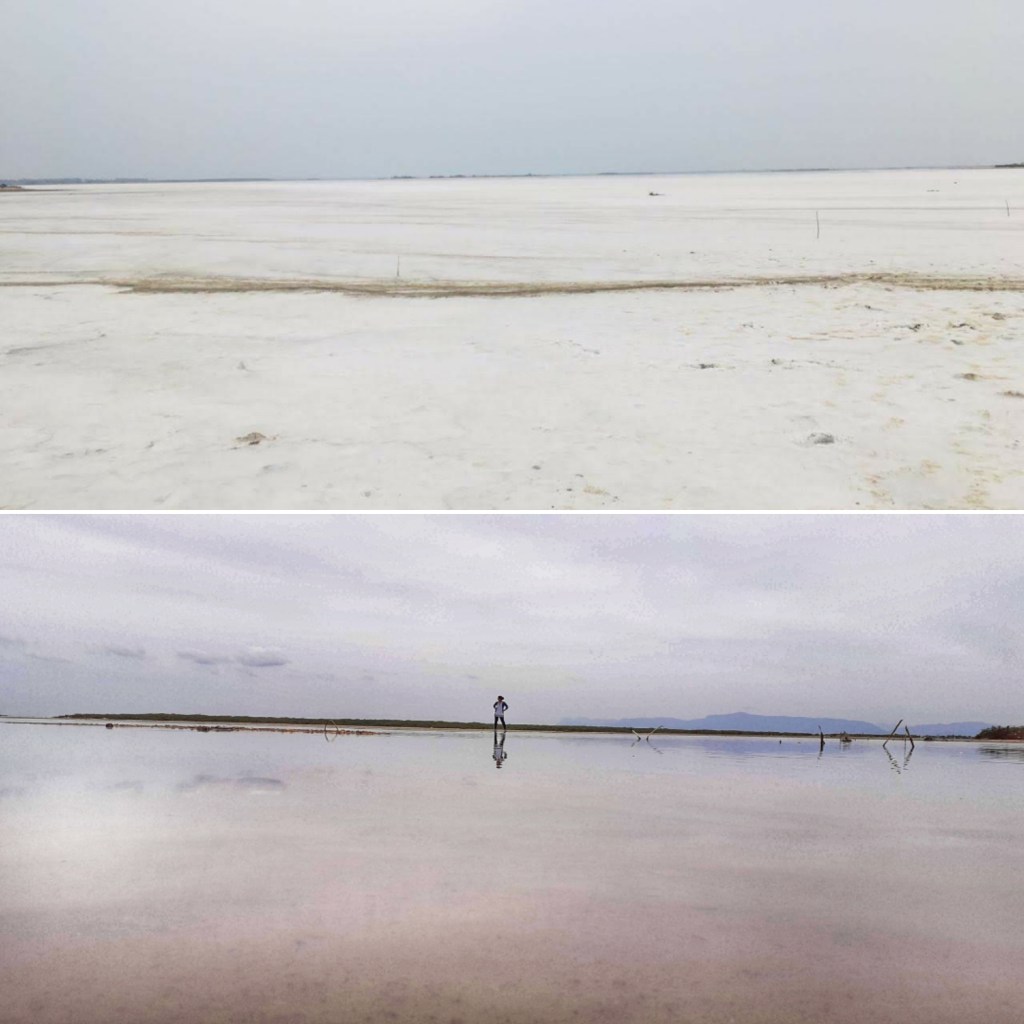
Top: Lake Pulicat enroute to SHAR in winter; Lake in Summer

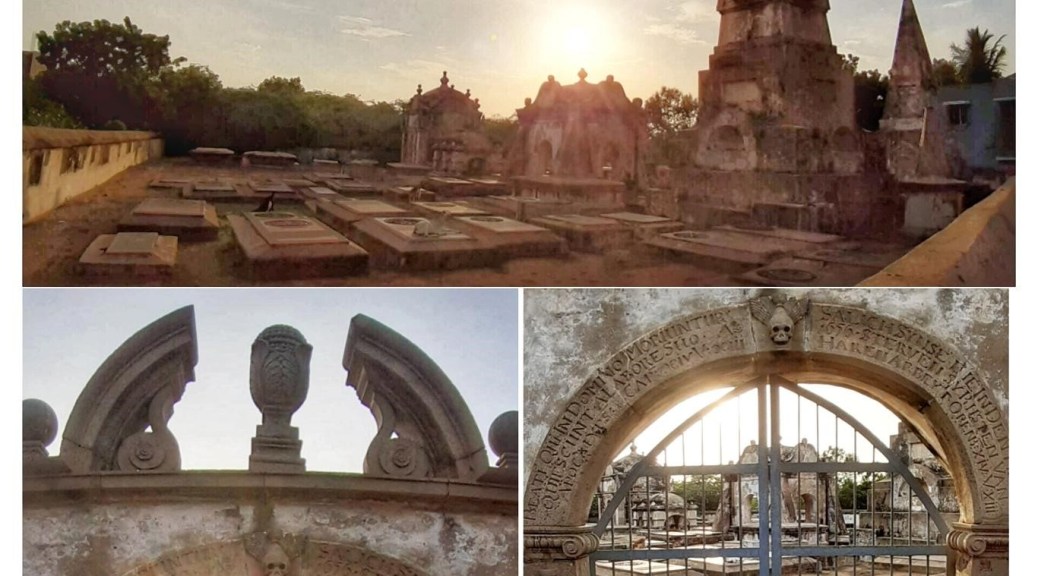
When I looked it up on the internet, I found some interesting information about that old site I had just visited. There are about five main settlements dating back to the Dutch era across India namely at Gujarat (Surat), Kerala (Cochin), Andhra Pradesh (Machilipatnam), Tamil Nadu (Pulicat) and West Bengal (Hooghly) where forts or cemeteries can be found. This day, I had visited a Dutch cemetery which used to be a part of Fort Geldria or Fort Geldaria at Pulicat. Pulicat was the seat of the Dutch Republic’s first settlement in India, and the capital of Dutch Coromandel. This fort was the only fortification in the Indian empire whereas all other positions of the Dutch Company were trading posts. today, this cemetery houses about 76 tombstones, mostly carved in the Netherlands.
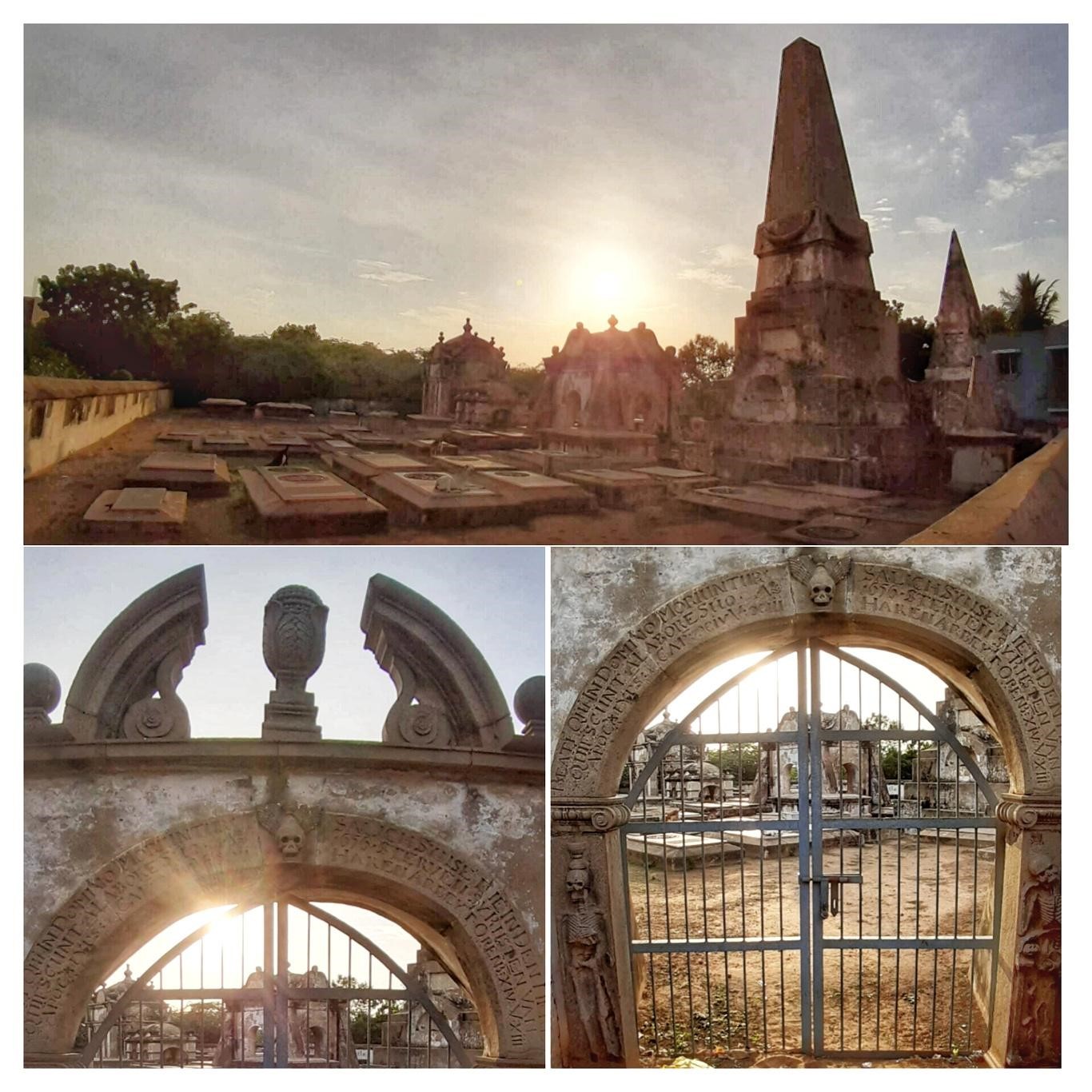
Dutch cemetery
The Dutch cemetery at Pulicat

It is interesting how I came across a random site that holds so much historical importance in India’s history of colonization and it is also unfortunate that how inaccessible or neglected are these sites that holds stories of an era bygone. Thus, the sun had set on Pulicat ending our quick visit to this lakeside settlement.

The land of the singing waves – Tranquebar

This visit to Tarangambadi was a part of our family’s backpacking trip, mainly conceptualized to cover a portion of the Coromandel coast. Our itinerary for this trip was Bangalore – Mayiladuthurai – Poompuhar – Tarangambadi – Karaikal – Nagapattinam – Velankanni – Tanjavur – Trichy – Bangalore.

This post is about destination no.3 on the first day on the east coast road. I had read about this place in one of the history texts about the Colonial empire in India. I had visited Portuguese, British and the French settlement towns during my earlier travels. The Danish colonized in India for over 200 years with three important settlements. Serampore (in West Bengal), Tranquebar (in Tamil Nadu) and Nicobar Islands (in Andaman & Nicobar Islands, all along the Bay of Bengal. To read about the existence of these places in modern day’s context, there was barely any information available online from a traveler’s perspective. Since we were anyway doing the ECR tour, my curiosity to know more about a Danish settlement motivated me to add Tranquebar in our itinerary. ‘Tranquebar’ as the Scandinavians called it, is a humble town known as ‘Tarangambadi’ in present times.

As we continued our secular pilgrimage, I bought tickets to a destination that was unheard of to my family until that moment. I requested the conductor to inform me when we arrived there. Accordingly, we alighted the bus at a small junction. The place looked very laid back, simple, untouched by any major developmental investments, just like any other fishing hamlet on the coasts of India. The bus conductor pointed to a small road to the right and guided us telling “one kilometer ahead is the fort”, and blew the whistle indicating the driver to proceed. My parents looked at me with a blank look on their face. I could sense that ‘Where are you taking us on this hot afternoon?’ question in their eyes. Although with the first look of the place, I too had similar apprehensions running in my mind, I wanted to walk further to see what was really there!

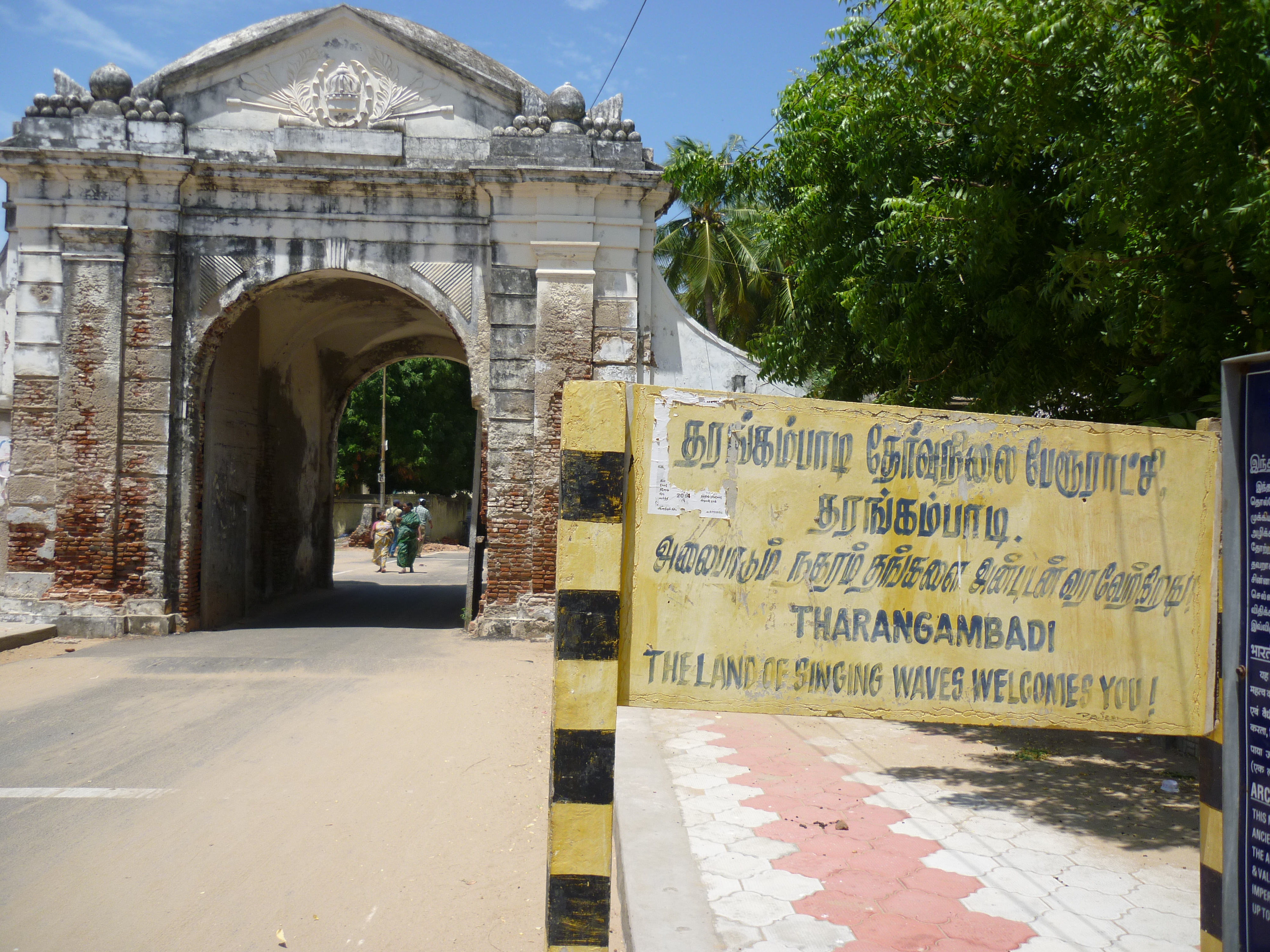
We walked for about half a kilometer and an old arch done with Danish art welcomed us at the entrance of the town. A board by the side of the arch read: ‘Welcome to- The land of the singing waves- Tranquebar’.

The entrance arch
The arch at the entrance of Tarangambadi/Tranquebar

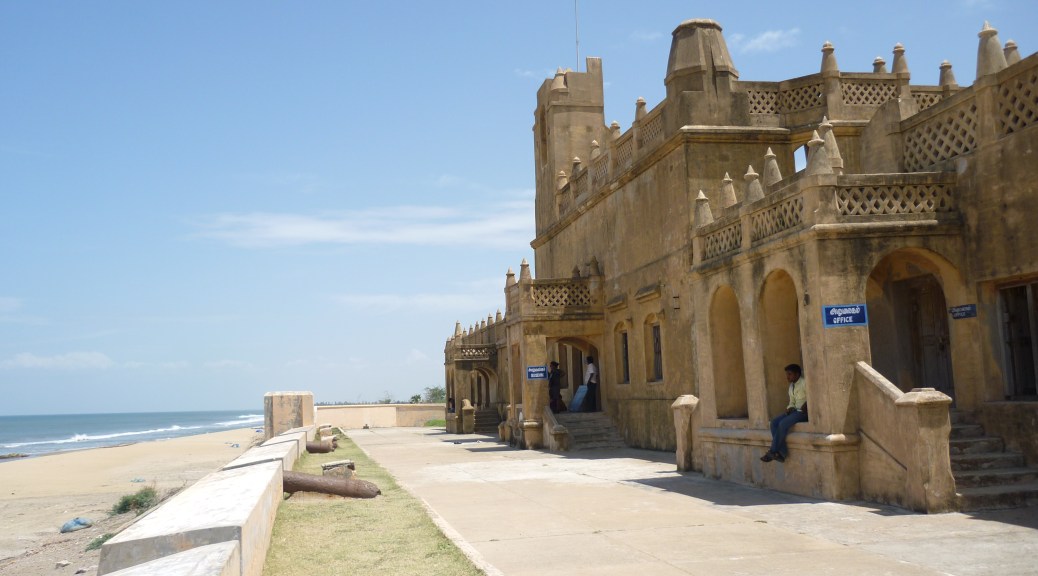
As we walked through this town welcome gate, the feel of the place transcended us instantly to a different country, or a different era- perhaps. The roads were super empty & clean and old Danish buildings stood tall on either side of it. The Zion church, the Teresa’s convent school, the Danish governor’s bungalow among several other structures that tell tales of an era bygone finally led us to a fort. ‘Fort Dansborg’ as it is called, is a structure peacefully nestled on the calm shores facing the Bay of Bengal. The moment we got a glimpse of the beach from the fort entrance, we got the link to the name of this quaint little place- Tranquebar: the land of tranquil waters. The place had tranquility overloaded not just in its waters, but in its air, land and whatever we saw around. I’m usually not a beach person, but this place was magical!

Since there are just countable properties (heritage bungalows turned resorts) in the town, Tranquebar is still unconquered on the tourist radar. Also, the unavailability of affordable food in a long stretch of kilometers, the budget hoppers are those who just drop in for day trips. Hence, except for a handful of fishermen, evenings and early mornings are idyllic with you being your only company if you choose to take stroll along the calm beach. This is by far, one of the BEST beaches along the east coast that I have been to.

The serene shoreline at Tranquebar
The serene shoreline around the Tranquebar fort

The fort is well maintained and converted into a museum. An important port between 1600s to early 1900s, the walls of the port now lay dilapidated, majorly battered by the tsunami in the year 2004. A stroll along the beach take you to the Masilamaninathar temple. It dates back to 13.C.E. and is believed to have mythological importance. The sculptures on the walls of this temple and the shikara have been corroded by the salts.

Although there isn’t much to see around in Tranquebar, it was a place that filled our mind with peace and tranquility even with just a few hours spent there. My parents too, were equally excited about the place where I had brought them to. I must admit that Tarangambadi is a place that I would COME BACK soon. Then, with more time and a hotel reservation at one of those bungalows on its beaches. But for now, it was a hard but a helpless option for us to pull ourselves out of this place. Unsatisfied with the quick visit, we promised ourselves to come back exclusively to stay here as we left for our next destination- Nagore.