Tag Archives: History of BENGALURU

Gold Market to Gold Fields in a Railbus

One Saturday off in a month and the crunch for exploration was at its peak… Dad and I decided to board the train to sit in a bus that runs on rails.. I mean.. We wanted to travel in the “RailBus”. There are only 2 railbuses still running in the country, one runs on narrow guage and the other runs on broad gauge. While the former is a part of the Kalka-Shimla mountain railways, the latter is operated by the South western railways. And we were interested in the one closer to home i.e. in South India. It plies between Bangarpet (literally translates to Gold Market in Kannada) and KGF a.k.a. Kolar Gold Fields.

Bangalore Cantonment Railway Station

It leaves Bangarpet at 9.00.a.m and returns by noon. Again leaves Bangarpet by 5.30.p.m and returns before its dark. So, technically we wanted to reach Bangarpet before 9.00.a.m. But the laziness that had set in because of a hectic work week, we woke up late and boarded the Bangarpet-Bangalore express at 9.45.a.m from Cantonment railway station. So the entire idea of railbus travel flopped even before it happened. Jeez..!!!

Once at Bangarpet, we walked from the railway junction to the dusty town and boarded a private bus that took us to KGF which had passengers 2.5XFOS (2.5 times the Factor of Safety) the bus was designed for..!! And our arrival at the destination was rather fast considering the time we had before we died of suffocation due to the availability of very little air to breathe(forget Oxygen) in the completely choked up bus 😛 (I seriously don’t know how to put our plight in words..!!)
The Cyanide Dumps
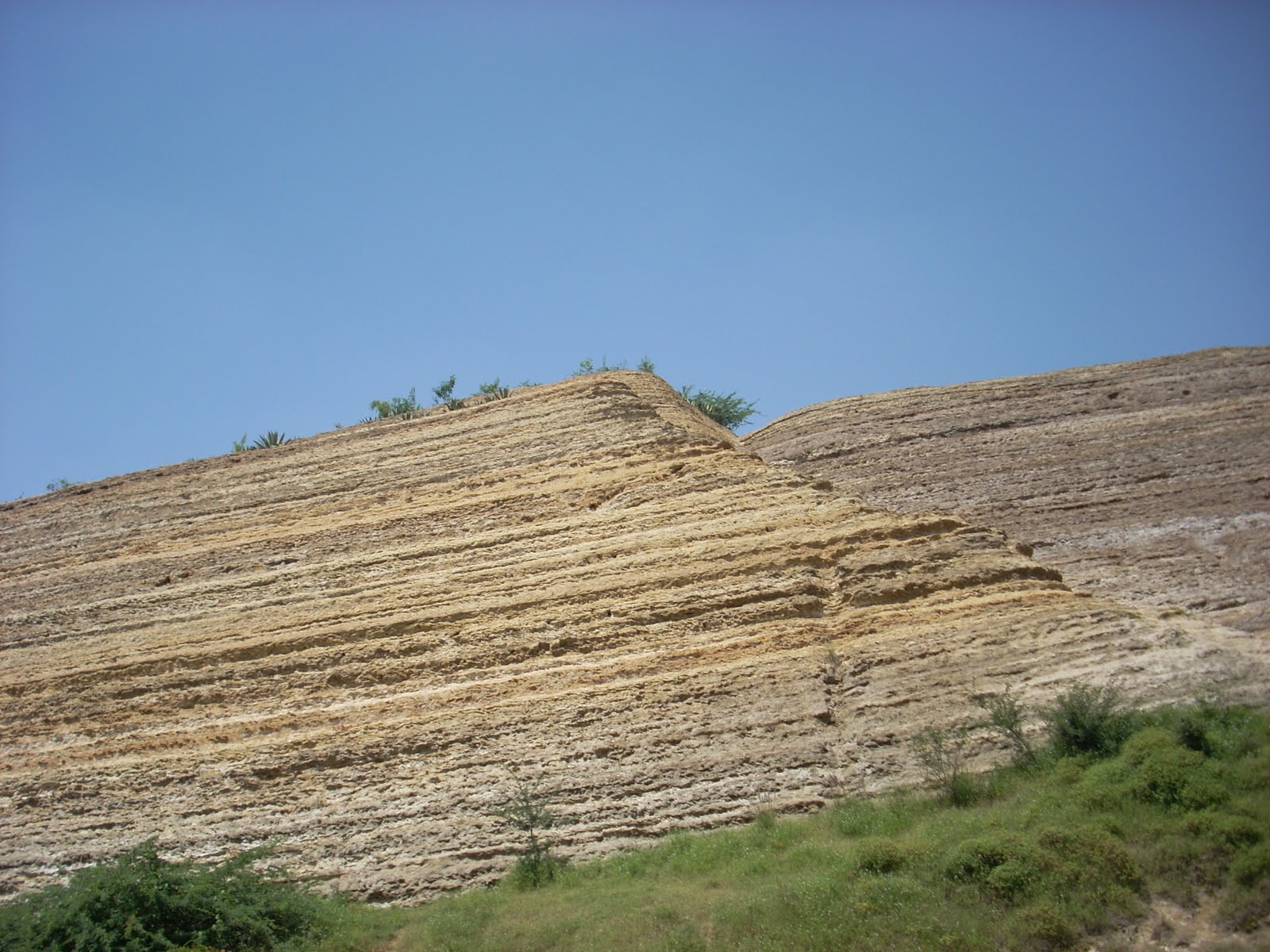
The Cyanide Dumps

KGF.. The road welcomes you with a continuous stretch of this really awesome looking hill on one side and an old dusty town on the other side. It is dusty because it is a mining hub and it has a hill because of the same reason.. These hills are called cyanide dumps- the slurry left over after gold extraction from the mines using Cyanide based alkalis are dumped here and this has hardened over time making it look like a hill. It reminded me of the formations in the Grand Canyon for some reason.

Kotilingeshwara Temple

From here, we again boarded a bus to reach the “Kotilingeshwara temple”. This place is said to have more than 1 crore Shivalingas, all donated by people. Though I’m not a very religious person, I wanted to visit the place for the history it unfolded. It was soon pack-up time for us as the scorching sun had sucked out most of our energy. But, most importantly, we had to return to Bangarpet before we could miss a glance of the sole reason of our trip..!! And.. We were back at BWT junction as per schedule.

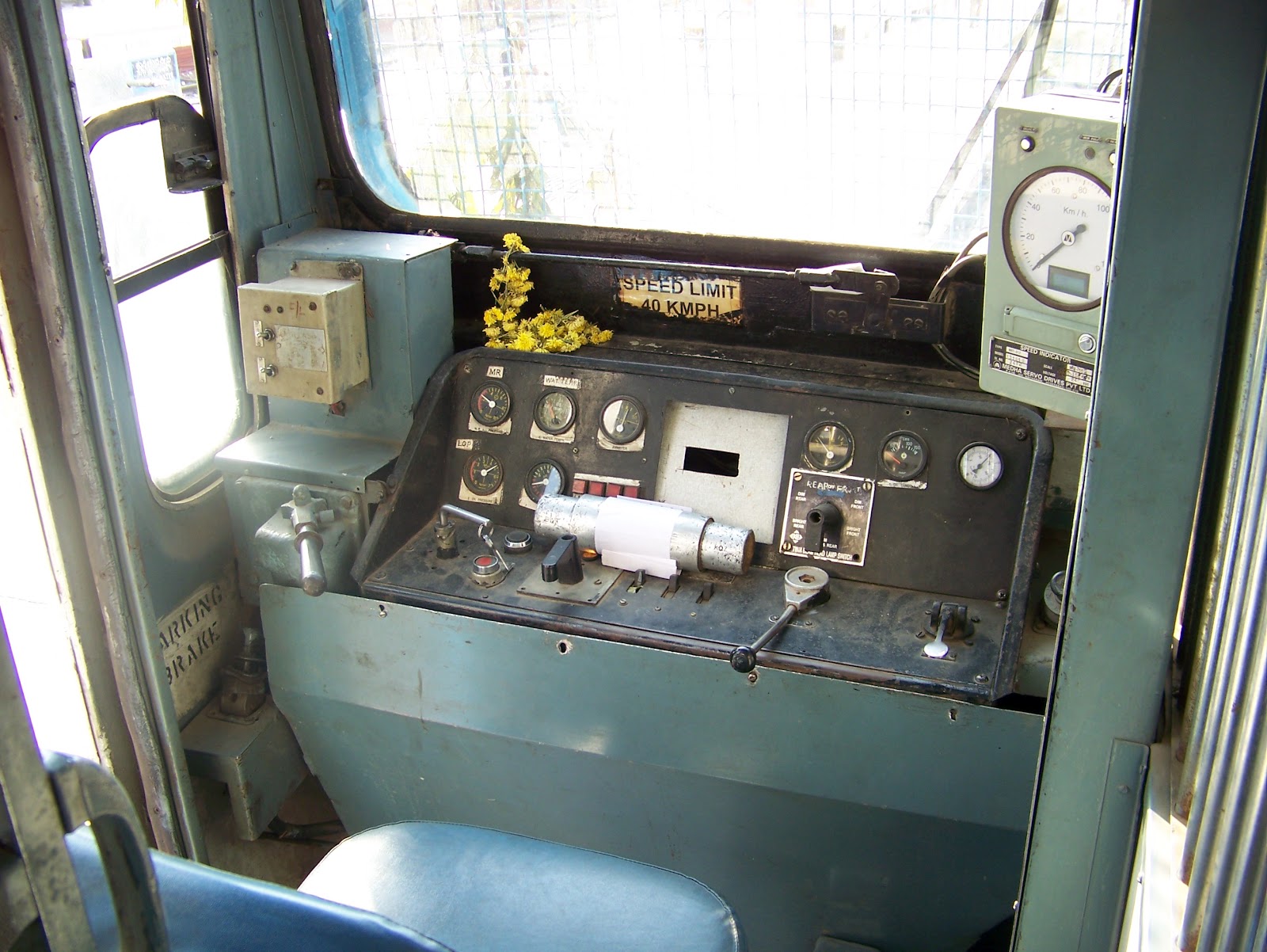
The loner was resting in the shade of a tree. And the loco pilot obliged to open the door and let us have a look inside of the train. It felt nice to see the last one left in the country but the trip ended soon. Ofcourse, it was with a heavy heart that we could not travel in it 😥

The RailBus in Karnataka
The RailBus
The RailBus in Karnataka

Have you been in a bus that travels on railway lines???? Do share your experiences below. I’d love to hear them!

A Green University Campus in the City – GKVK

This is quite an old story. But, nevertheless worth writing about, especially if you are looking for a quick outing in Bangalore within a short driving distance…

GKVK is the short form for Gandhi Krishi Vignana Kendra a.k.a. University of Agricultural Sciences (UAS). It is a research institute funded and managed by the Karnataka state government. With several sub-campuses located across the state, their main campus is located near Jakkur in Bangalore. If one travelling to Bengaluru airport is alert, he may find it on his way.

My cousin who was studying her undergraduate course in Agricultural science at that time, informed us about the “Agri-Mela” happening in her campus. It is an annual event organized sometime in November. Hailing from a farmer background, our family has the natural instincts to learn more about various crops, research and related advancement in technology. With that curiosity, my dad and I went for a bike ride to the venue. The bike ride was intended with two basic ideas. One, of getting some fresh air from their vast campus and the other was of course to look out for any suitable technology that we could implement in our farm back in my hometown. This is an excellent place for bird watching too.

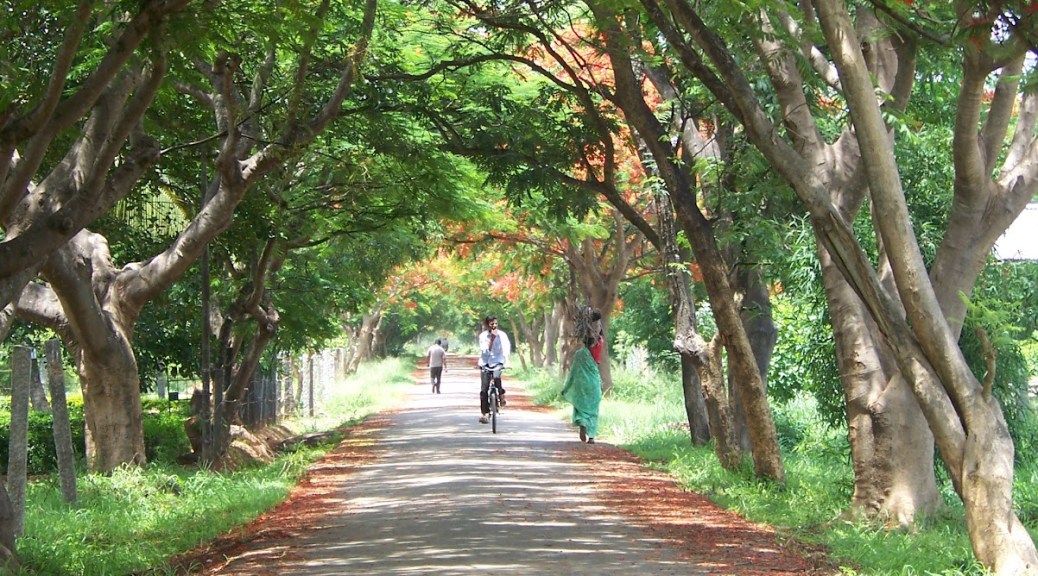
The Gulmohur trees inside the GKVK campus
The best stretch in the city- The Gulmohur Avenue

Although this 1000 odd acres university campus serves as a good lung space in the overburdened concrete city at any given time of the year, this is a season when it beams with extra life. The various plants across the campus will be bearing fruits and flowers in full bloom. Since the research in agriculture covers a range of topics, you could walk or ride around different patches of land with different types of crop, all mostly grown and managed by the students as part of their curriculum.

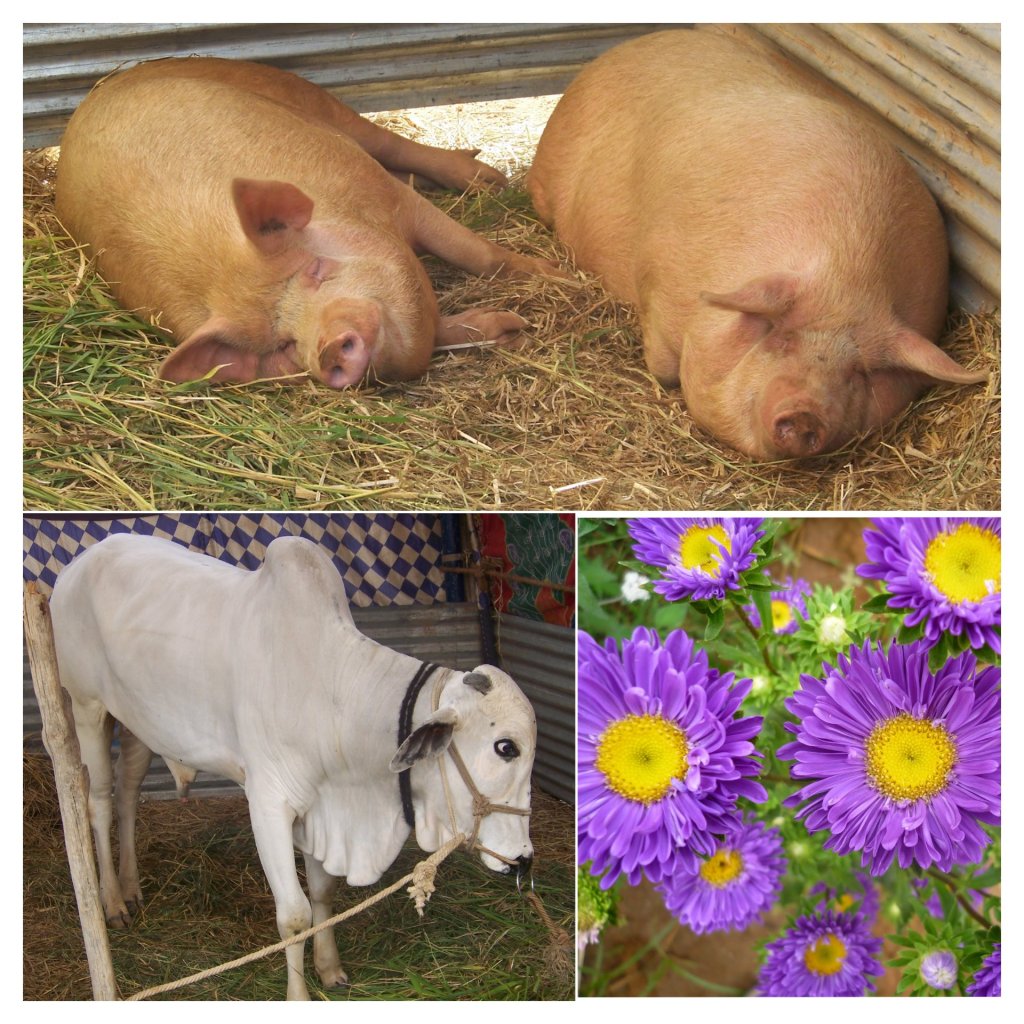
There are stalls covering range of topics like horticulture, sericulture, apiculture, cattle farming, poultry, food processing, storage, logistics, marketing, irrigation etc. covering almost all areas of agriculture and provides a platform for farmers from the state to share and learn newer developments in this field.

Images from Animal husbandry and horticulture stalls during the annual Krishi mela at GKVK
The exhibits at the agricultural stalls at GKVK

It was well over afternoon by the time we finished roaming around just a portion of the campus and exhausted. We bought a few homemade & processed foods from the stalls with an excitement to try newer flavors and decided to head back home. All in all, it was an afternoon well spent.

Things to do (on any day of the year):
• Take a drive if you want some fresh air without going too far from the city on a lazy evening.
• Spend a day bird watching here, there are often bird watching workshops conducted by hobbyists.
• You can buy fresh fruits and vegetables at their outlet on campus, many a times organic and sold at relatively cheaper prices as compared to the city.
• Sign up for one of the several training workshops conducted on campus, throughout the year.
• Visit the annual ‘Krishi-Mela’ and interact with farmers from across the state and the country.

The Hesaraghatta de-tour

My wants are vague… This weekend I wanted to drive through countryside. As you may know, my mother worked for a government bank, a subsidiary of NABARD that lends agricultural loans. While she was processing one of the farm loan files, I had once chanced to take a glance at the filename- Hesaraghatta. Through her, I had heard that Hesaraghatta is an important centre of several agricultural research in India. I had been familiar with the campus of Gandhi Krishi Vigyan Kendra (GKVK) in Bangalore and the amount of green cover there. Hence, I assumed that there must be a lot of greenery around Hesaraghatta too, and decided to head there.

We started from home at around 8.00.a.m towards Hesaraghatta. We first passed through a village called Aivaragandapura. It is a small village that gets its name from the Pandavas. ‘Aivara-Kanda-pura’ translates to ‘A village that has seen the five people’. There is a temple complex dedicated to the Pandavas who are beleived to have stayed here, briefly during their exile.

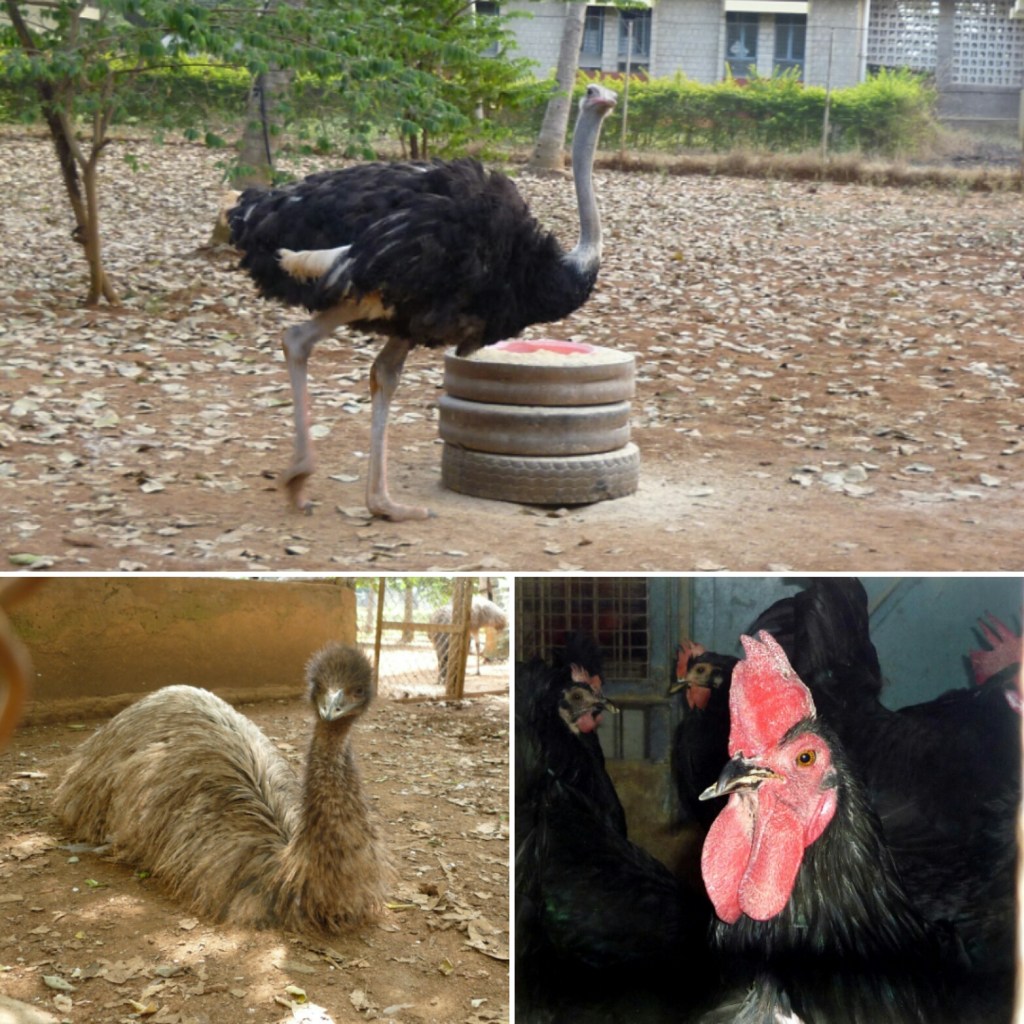
We continued our drive to catch up with our plan of going to the area of agricultural research. The government run research institute is spread across a massive area and is divided into separate sections, each having its own administration and permit requisites. We first reached the poultry farm. Various poultry breeds are kept in separate enclosures for research purposes. Along with several native varieties, we also saw Ostriches, Emus, turkeys, ducks, white geese, grey geese, swans etc. With permission from the concerned authorities, we could also visit the Indo-Danish cattle farm. I was awestruck with their size. They were massive, comparable with elephants. I mean, really! There is also rabbit farm, pig farm etc. which we thought of giving a miss because we could not figure out the route. Hesarghatta is also a centre for Horticulture-research. You will pass through large stretches of seasonal flowers, mango orchards and other farm crops.

Birds at the poultry farm at Hesaraghatta
The birds at the Hesarghatta farms

We were done with our pursuit of agricultural research and still had a lot of time with us. We decided to drive around and explore hesaraghatta a little more. We drove further ahead and passed through a narrow pot-holed road. We stopped by a high wall by the roadside which we learnt, was the once famous Hesaraghatta lake. This reservoir served as an important part of water supply to Bangalore City in the past. This is now just a stretch of barren land, open for cattle grazing and a playground for some village boys who go there for a game of cricket. These days, it barely fills even during the heaviest monsoon. While we stood on the tank bund, we could see some village youth playing cricket on the tank bed with a little water at the far end of the large area. The breeze was indeed good and that’s why we spent some time walking along the tank wall.

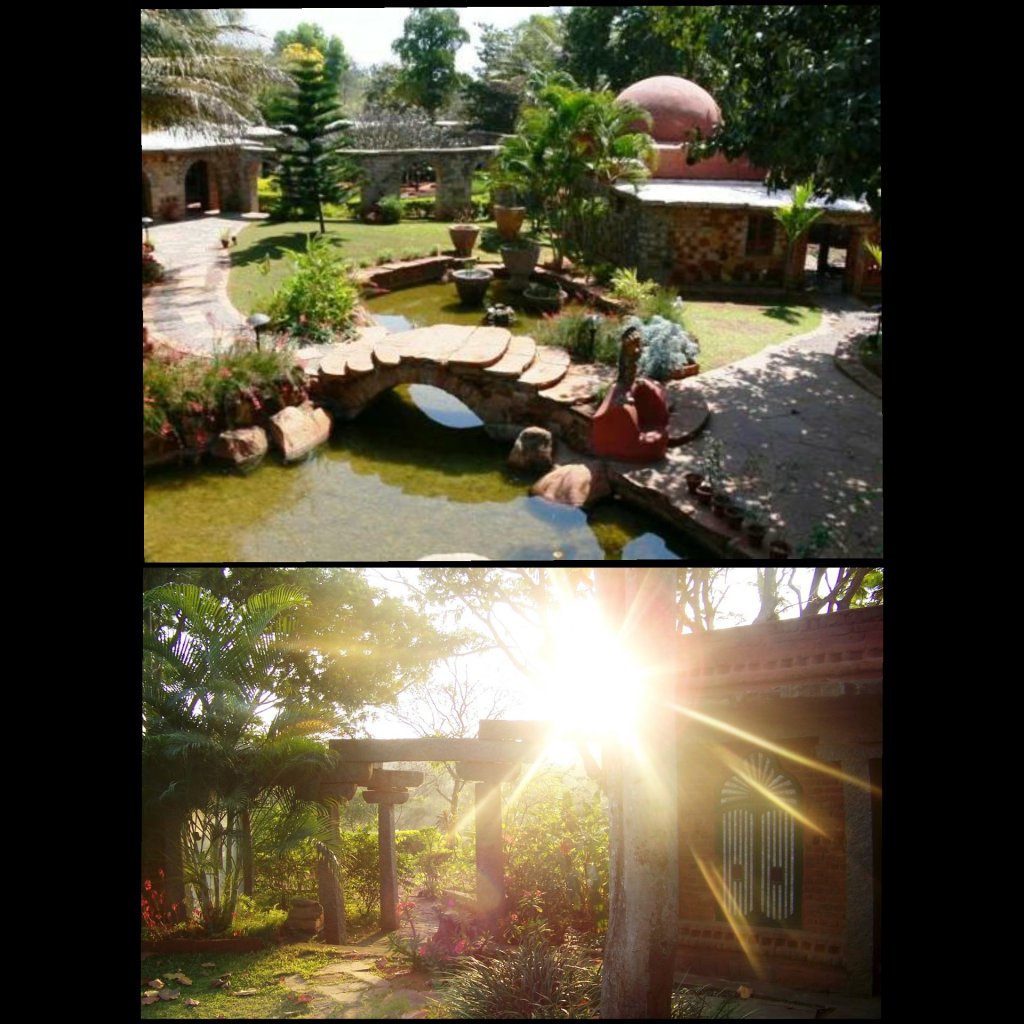
From there, our eyes fell on a direction board that read “Nrityagram”. It sounded familiar and it struck to me that it was a Gurukul dedicated to “Learning Dance”, founded by the famous danseuse Late. Pratima Bedi. When we reached there, we were told that the place was not open to visitors. However, there was hope. A portion of the beautiful dance school (constructed of natural materials) is now maintained by the Taj group. They run the “Taj Kuteeram”, a nice cozy resort. We dropped in for light snacks and coffee, as we were well into evening. We walked around the area and spent some good time amidst the chirping birds and the splendid nature. Since the setting sun was coming down, we thought of heading back home.

Taj Kuteeram / Nrityagram in Hesaraghatta
The Taj- Nrityagram, at Hesaraghatta

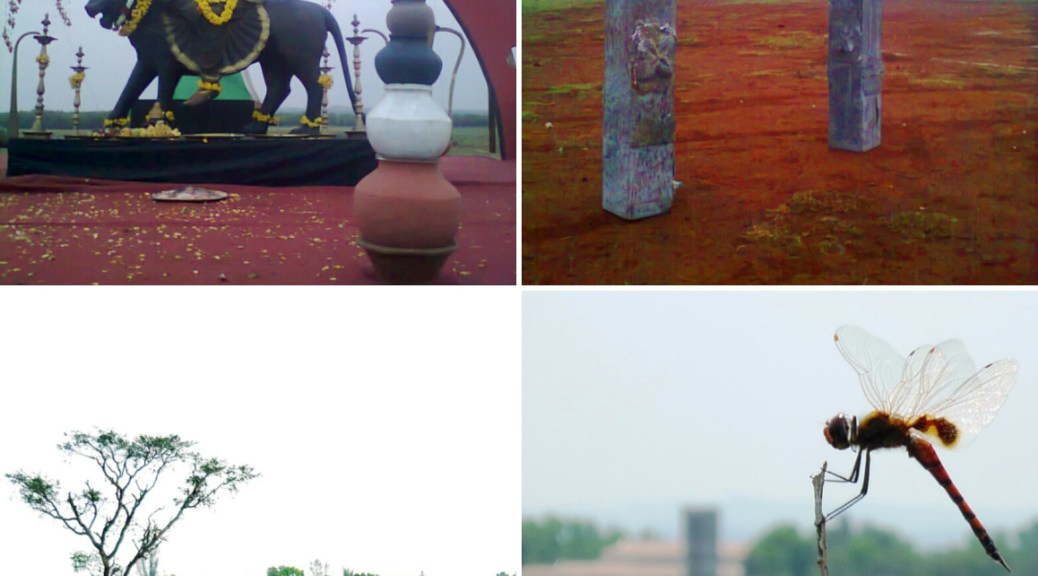
Half a kilometer from The Taj towards Bangalore city, we saw many vehicles going to a place to our left. The place looked secluded but made us curious to check out what was in there. We followed the vehicles that were going there. Oh, believe me! It was a nice suspicion. There lied a vast-neverending-wide-open stretch of plain-land. All those vehicles were actually ferrying some film crew. So that means, we also got to be on the sets of a movie shoot. A stage was set, some other make shift pillars were put up etc. We learnt that, many many movies and ads are shot here almost everyday. This barren land is converted to anything from a helipad to a swimming pool, a crowded village to a concert hall depending on the requirement. It is popularly called as the Hesaraghatta Grasslands.

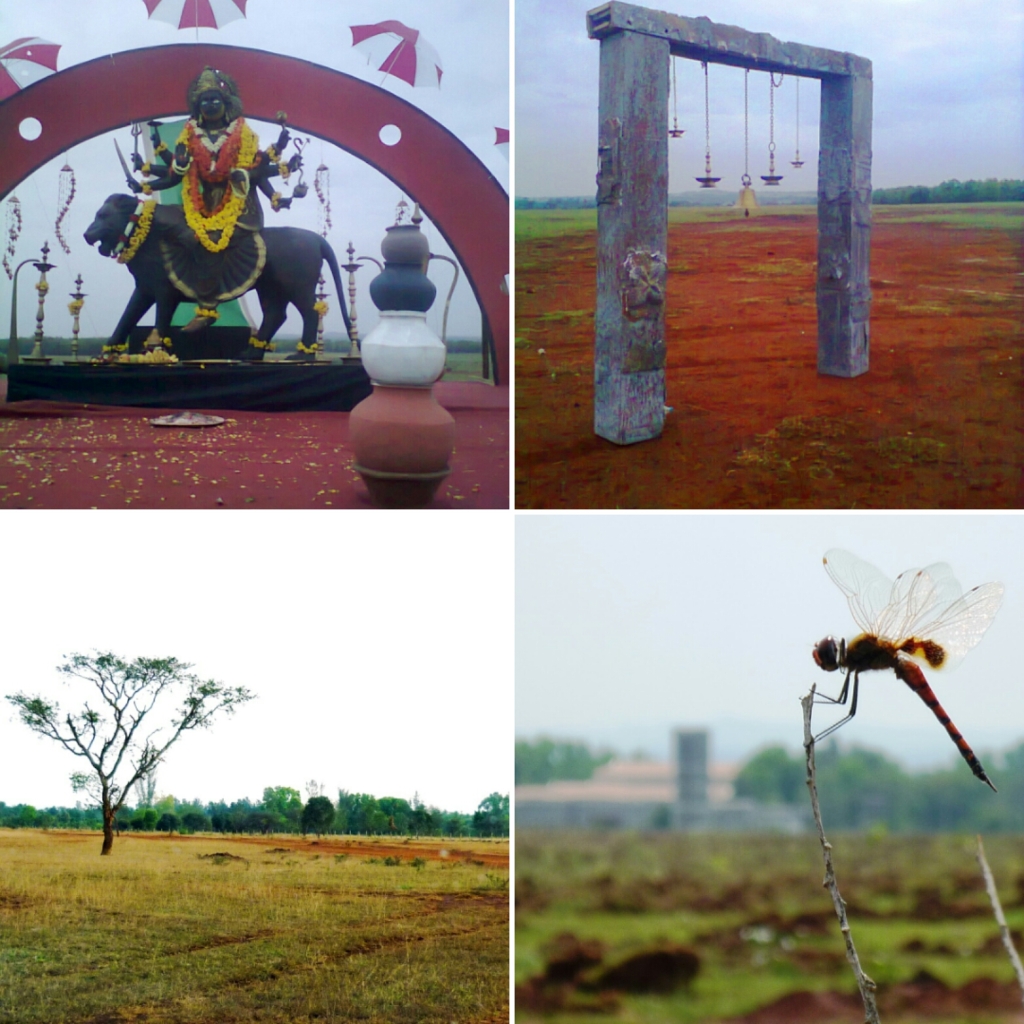
the Hesaraghatta grasslands
Top: A movie set at Hesarghatta grasslands; Below: The grasslands

We also had a good view of the sunset from the open area. It was getting dark by then. So, we drove back to the hustling and bustling city—away from the calm and rusty countryside. It was hard to believe that such calmness prevailed in our very own Bengalooru. I will surely go back there soon.. Very soon… It was a total get away from the maddening city life.