Tag Archives: Hosur

Weekend Hike- Bala Kodandaraya Swamy Temple

Although this destination is a recommendation for weekend and day hikers of Bengaluru, it is in Krishnagiri, a district bordering the two states of Karnataka and Tamil Nadu.

The views from an ancient temple had caught the attention of my friend and me, who are always in the look out for less crowded and less explored landscapes and places with cultural and historical importance. One such place was the ‘BalaKodandaraya Swamy temple’ whose history dates to the Vijayanagara era. Based on our online research, we found out that getting to the temple involved a short hike.

We started early on a Saturday morning by car. We had our breakfast along the way, in one of the several restaurants on the Hosur highway. From there, we followed the route on Google maps to reach our destination. A steep deviation to the left of the highway led us through villages. There were asphalted roads and good views of the surrounding hillocks for as long as the road passed through villages. The last couple of kilometers were through unpaved muddy roads passing through a slight forest stretch. We finally arrived at a small open space where we parked our car, at the base of the temple hill.
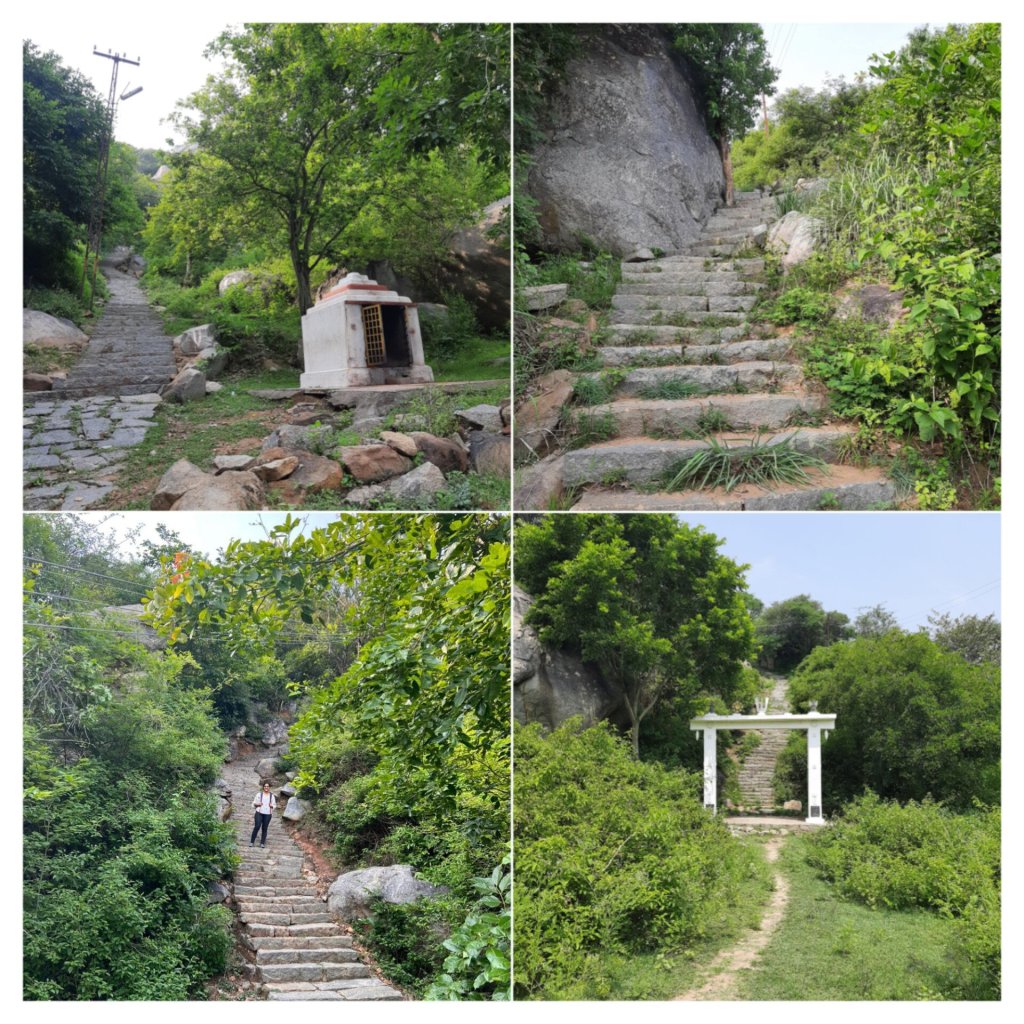
The forest trail
The trail through the forest cover, starting from the base to the temple arch

There was a small structure of brick and mortar (gudi) at the base, from where a flight of stairs led to the hilltop. People lit lamps, agarbattis and camphor here before starting their ascent. It took us about half an hour’s climb along properly laid stone steps leading to the top. These stone slabs bear the names of the devotees who have donated them and the count of their donations on each step. The ascent curved around at multiple places and offered amazing views of the valley below at every turn. The first half of the climb had a forest cover and large boulders on both sides, until we arrived at the welcome arch of the temple.
The path towards the left of the trail, towards the temple

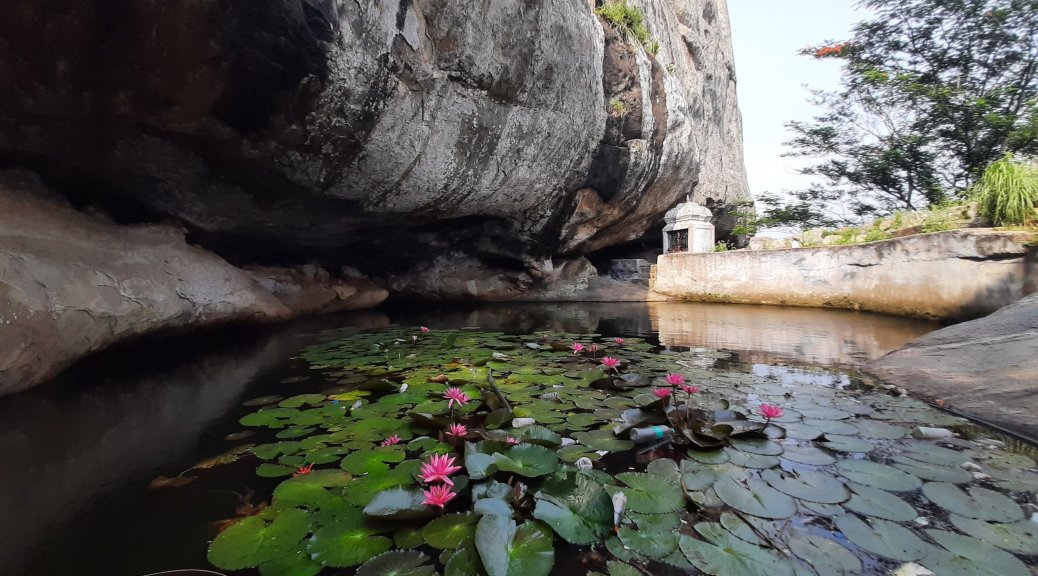
The forest cover ended after a few steps further from there and opened to a panoramic view of the valley of the villages and farms below. As one stands on a large rocky outgrowth, you will find the trail split into two paths. One, straight down through some Gulmohur trees. Second, up towards the temple. We decided to first walk the trail going straight. A few yards from there, the trees made way to a beautiful pond of pink lilies, dug right beneath a large rocky monolith. We later realized that devotees take a dip in this pond before proceeding towards the temple.
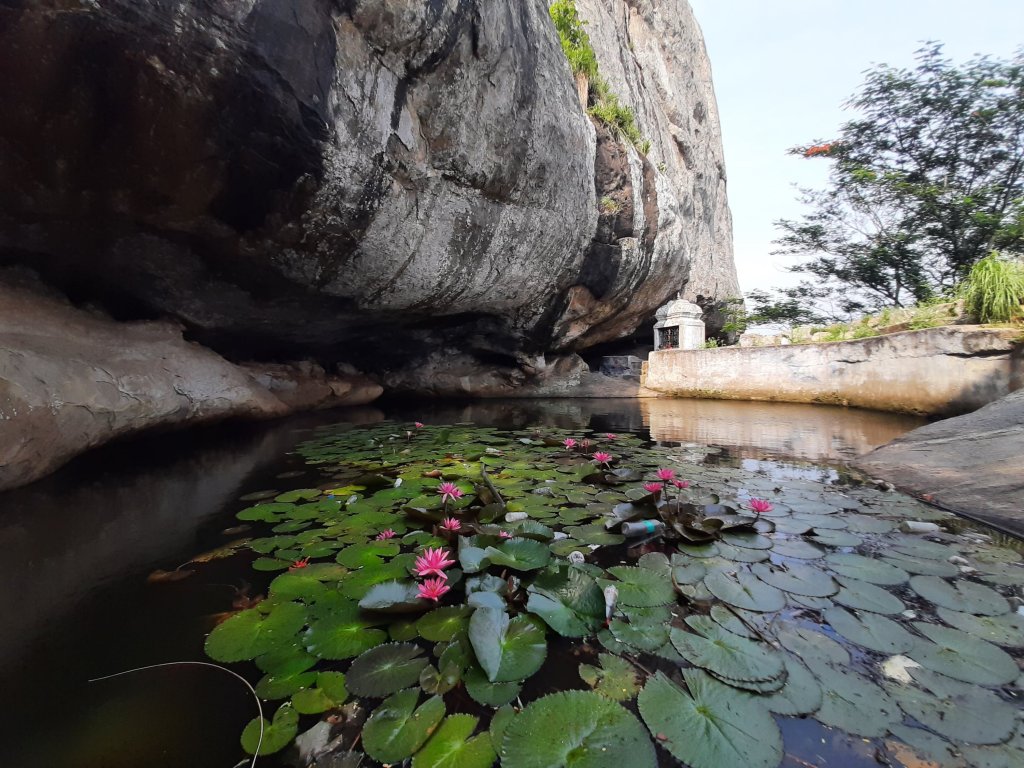
The path towards the right of the trail, leading to the temple pond

The view of the valley from there and the magical vibe of sitting by this pond of lilies could not let us go easily from there. My friend settled on the banks, with a book to read. Although the water was heavily littered with plastics, it was still a super calm spot to soak in some good energy. After spending a while, we then headed towards the temple, located on the peak of the hill, a short walk away. There was a panoramic 360 degrees view of Hosur and Krishnagiri from the temple, the green cover around, Krishnagiri dam and the Then Pennai river. The temple priest arrived much later at around 10.00.a.m. for the daily prayers.
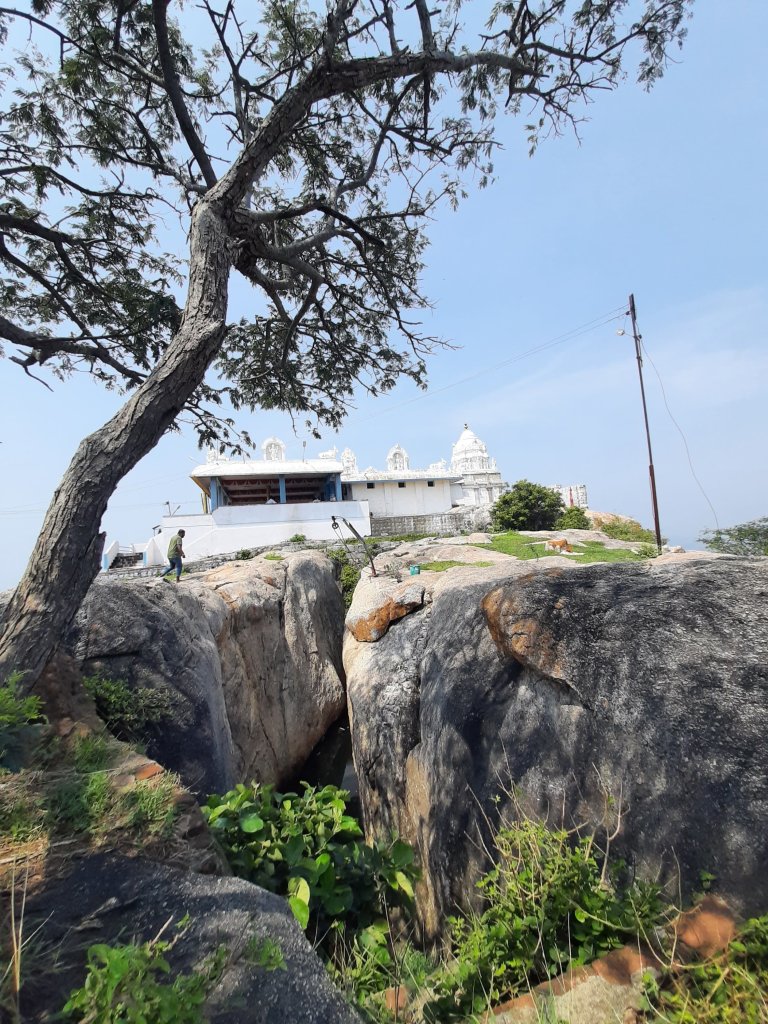
Balakodandaraya swamy temple, Krishnagiri
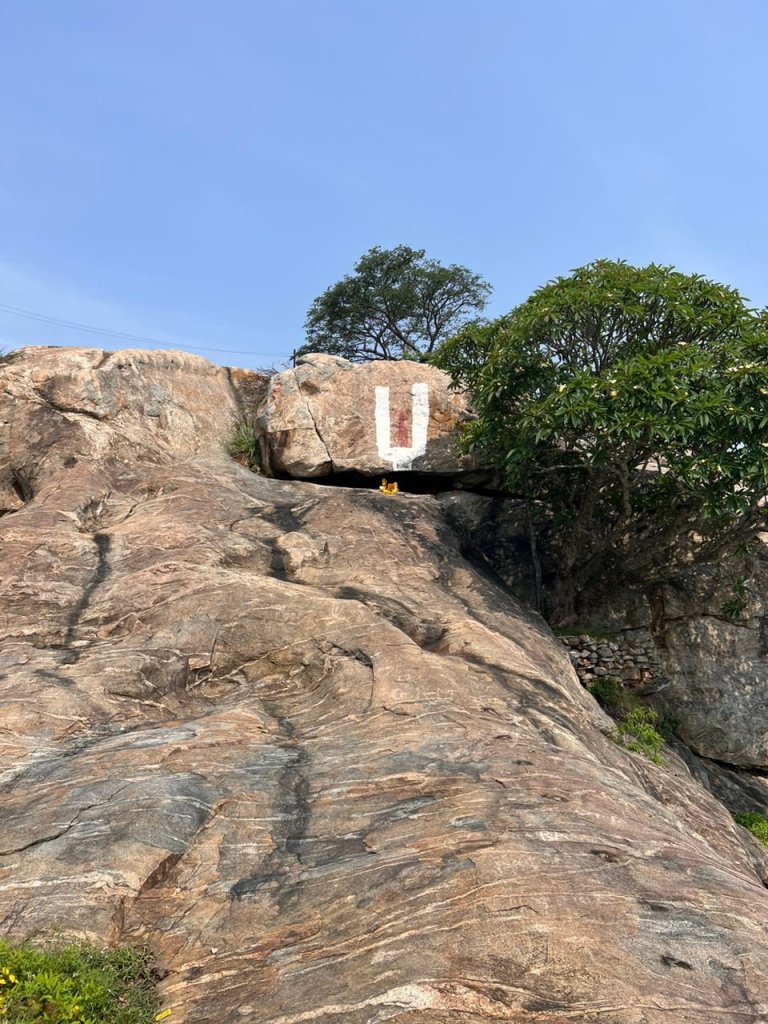
Balakodandaraya swamy temple and the cleft for drawing water

Surprisingly, a small cleft in the rocky hill serves as a perennial source of potable water for temple use. The people who had gathered there by then, helped the priest in drawing water from this cleft and clean the temple premises before offering the day’s prayers. We sat there for a while and decided to head back to the base before the sun took over the skies and heated the rocks around. Overall, it was an incredibly beautiful place for a short trip from the city.

Other nearby places:

If you are looking at making it a full day trip, then you can explore the nearby places that include:

A festival to Raid the graveyard- Mayana Kollai

Come the night of Mahashivaratri, there will be festivities across the country. People stay up all night and participate in bhajans, pooja offerings, chariot pulling etc. all to keep themselves awake for the night, so that their beloved Lord, Shiva gets good rest after taking care of them all year. But it is the day that follows the revered night, that is the essence to this story of mine. The day that follows Mahashivaratri is when Shakthi, the consort of Shiva and thus, the female power is celebrated across the Northern part of Tamil Nadu. The companionship of Mother Angalamman to Shiva, the graveyard dweller is celebrated with a festival called the ‘Mayana Kollai’. As a friend explains, Mayana Kollai translates to the ‘Raid of the graveyard’ in Tamil. I had planned to witness this festival at one such temple dedicated to Angalamman, closer home, at Kaveripattinam.

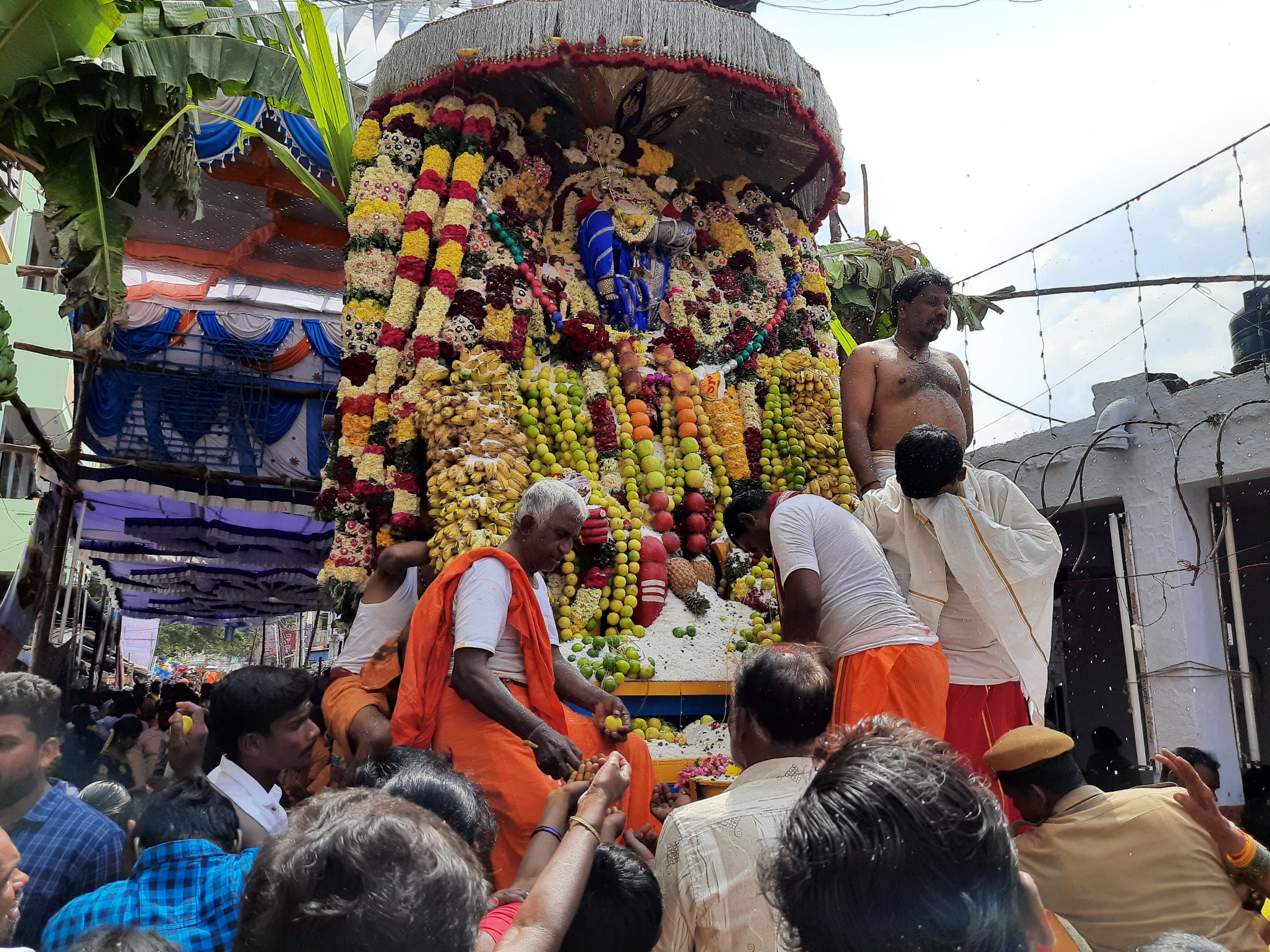
The festivities had started as early as the sunrise at the Angalamman temple, with the Goddess being taken on a temple car/ chariot. She is supposed to travel along the streets of the town, to the graveyard by evening from where she returns to the temple by night. All other rituals that are part of this journey of her’s are what make this festival more interesting. It is a festival where the entire town / village participates with no barrier of caste or societal status. The chariot leaves the temple with the idol of Angalamman.

20200222_1339022711065229733285812.jpg
The diety- Angalamman being taken on a procession on the temple car / chariot

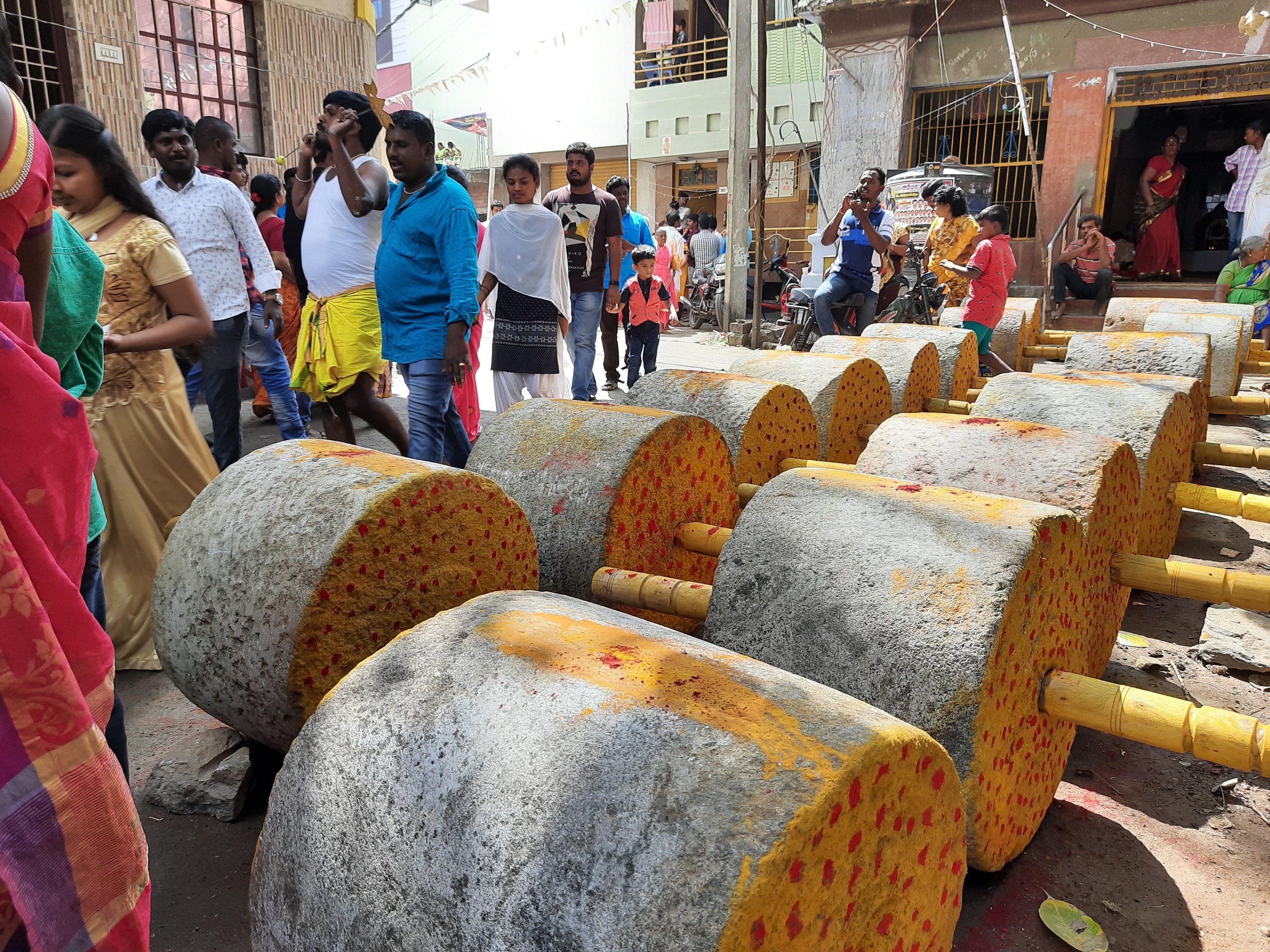
She is greeted by devotees who throw a mixture of salt crystals and black pepper or beans all along her way. She is hailed as a symbol of fertility who is calm throughout the year and takes on her powerful form on this day, once in a year. The villagers get their body pierced with various things near the temple premises and walk across the village to the graveyard, where the piercings are removed. This body paining is what they believe, is a gratitude to the almighty for the wishes that have come true or as a part of a prayer that needs to be fulfilled. The size and things pierced can vary depending on individual’s prayers. While those with tridents pierced around their mouth are a very common sight, the more pious go further to get their torso pierced with hundreds of lemons. Yet, a few pull cars, buses, trucks or large stones with ropes that are hooked through their bare skin.

20200222_1103493355118405534738936.jpg
Stones being readied to be hooked to the body as a man with a trident pierced to his cheeks walks past

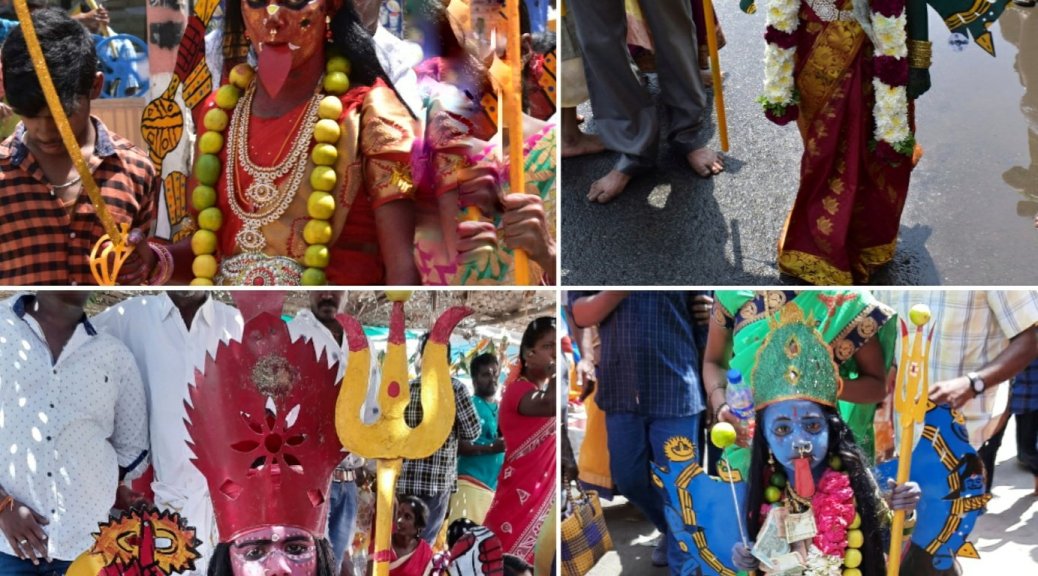
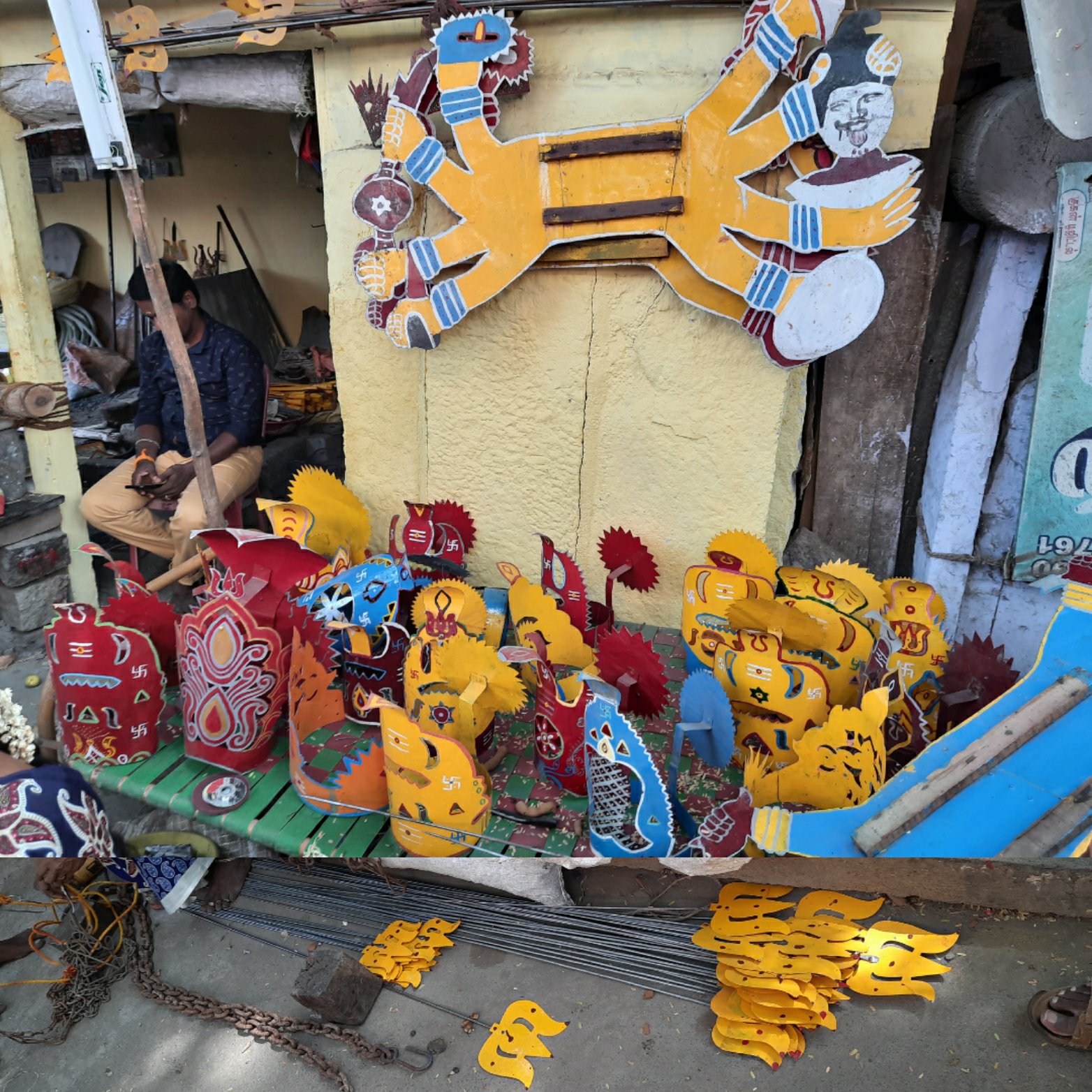
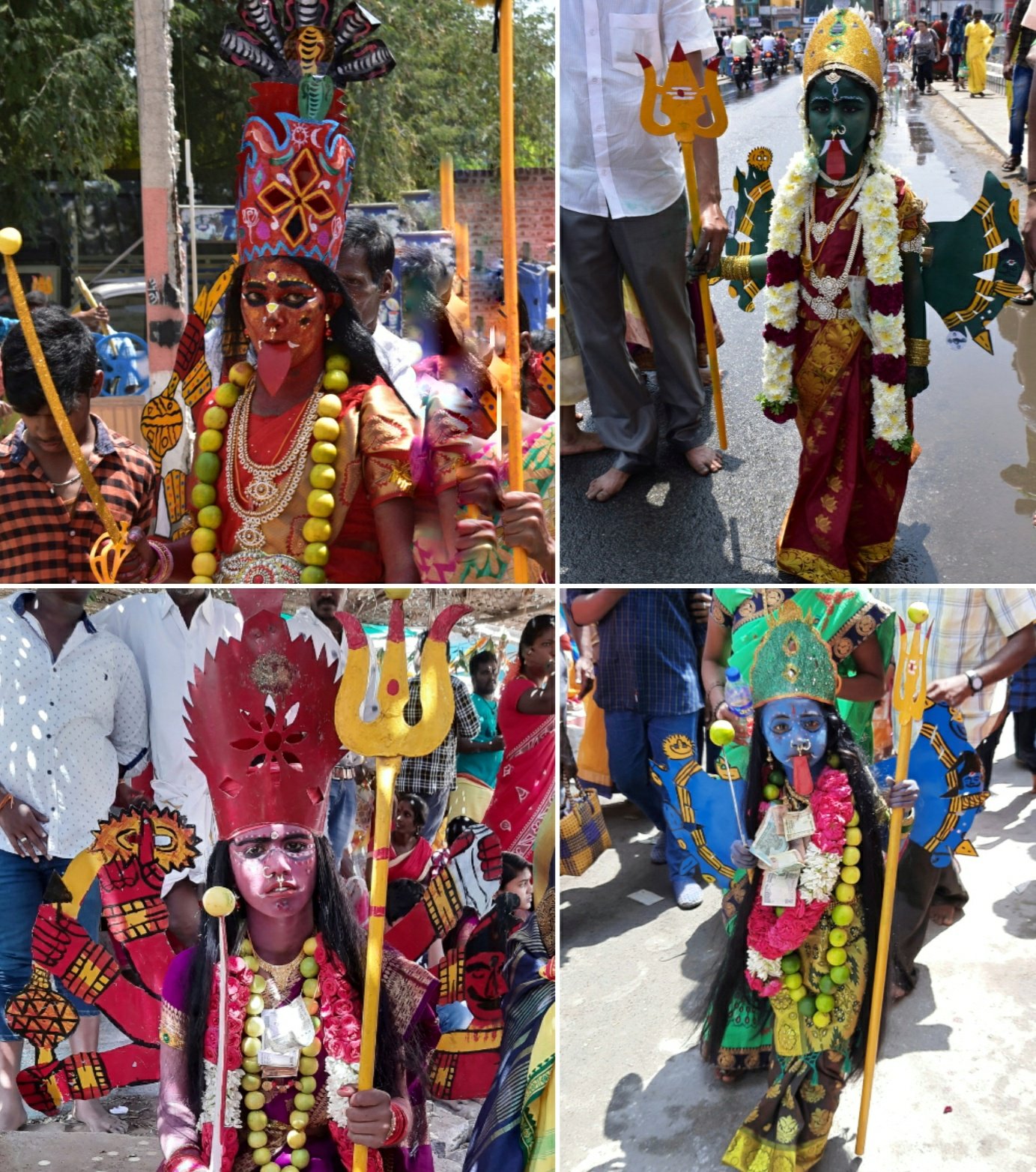
If u peek into one of the many shops (I don’t know if that is the correct noun for such places) around the town, apart from those getting the body piercings, you will find another set of people. Men and children will be getting their faces painted and dressed up in sarees, a representation of Angalamman. With metal arms attached to the backs, elaborate costumes, jewelry and crown worn, Angalamman is impersonated by these people. They hold tridents and dance to the beats of drums across the streets. Several times on their way, they get possessed or get into a state of trance, until they all finally congregate at the graveyard. Animal sacrifice too is a common sight on the streets on this day.

img_20200228_1030393231357977862522692.jpg
Stalls where the body piercings and paintings will be done

It is evening by the time the temple car and everyone else reaches the graveyard. That is when the most interesting part of the rituals takes place. The folk impersonating the goddess gather around a random grave and dig it up. The bones from the grave are pulled out and chewed by them. This is called the ‘bone chewing’ ritual or what gives the festival its name: Mayana Kollai or the ‘Raid of the graveyard’.

20200228_104051-01534021689575161698.jpeg
Men and kids dressed up like Angalamman

There are several legends and references that explain the significance of this ritual, depending on the region. Here are some of the references I found on the internet.

  1. The significance of the costume (Click here to read further)
  2. The significance of the Bone chewing ritual (Click here to read further)

Post this ritual, the goddess calms down and returns to the temple on the temple car. The festival culminates when the it reaches its home.

While witnessing all this self-violence, I started to deeply think, why this is necessary to please the gods. Although I couldn’t find a convincing conclusion, what I realized is that this form of ritual is not unique to Hinduism alone. It has been largely practiced worldwide, across all major religions. Some of the closest references are:

Whichever faith be it and whatever the belief, the intentions of every person involved is the same. To get closer to god. Aren’t all our beliefs connected?