Tag Archives: hoysala temples

10 offbeat things to do in Hampi

From a tourist’s perspective, Hampi can be broadly divided into two parts, separated by the Tungabhadra River. The heritage site of historical ruins is in the Vijayanagar district, whilst places of mythological importance and most homestays offering local experiences are concentrated in the Koppal district side (This is popular as the Hippie island). So, if one is planning a trip to Hampi for the first time, this geographical classification should provide you with a brief idea before you arrive there.

Everybody knows Hampi and there is enough content widely available on places to explore in this historical town. But here are some lesser-known experiences that I loved during my repeated visit to this UNESCO heritage site.

1. Sunrise at Matanga hills: How much amazement can your voracious vision hold? “Boundless” defines the view from the top of the Matanga hills. It was a dreamy view of the entire historical town in its ruined form scattered across the river flowing from one end to the other. And adding to the already picture-perfect frame was a bloody red rising sun in the backdrop. This is by far the BEST sunrise of my life. The early morning climb up the hill and the wait in the cold winds was so worth it that I had goosebumps watching the magic unfold.
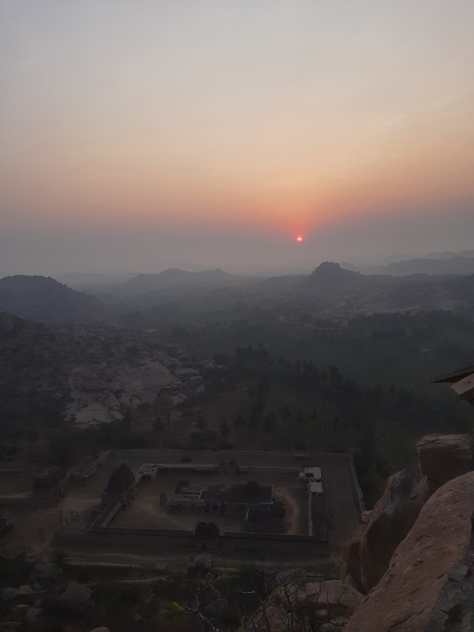
Sunrise at Matanga hills

2. Sunset at Hemkuta hills: A short ascent to the rocky hill by the side of the Virupaksa temple leads you to this best spot to catch the sunset at Hampi. Comfortable benches or the grainy-pebbly ground, you can choose the surface to just lose yourself in experiencing the glorious horizons of Hampi turn from Indigo to blue to misty to bright to rosy to a star-studded sky.
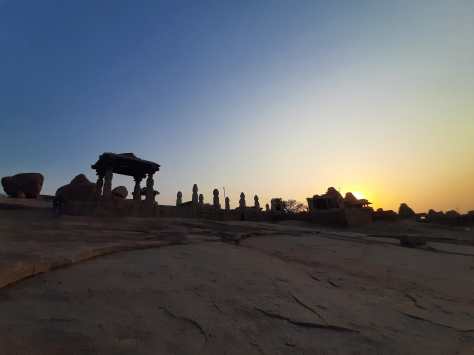
Sunset at Hemkuta hills

3. Bathing in the canal water: This is a closely guarded secret. There are irrigation canals passing through the villages in which you want to enjoy a quick dip, only if you befriend a local. If you do not get to enter the water, no worries, simply sitting by its side and seeing the time go by itself would be so comforting.
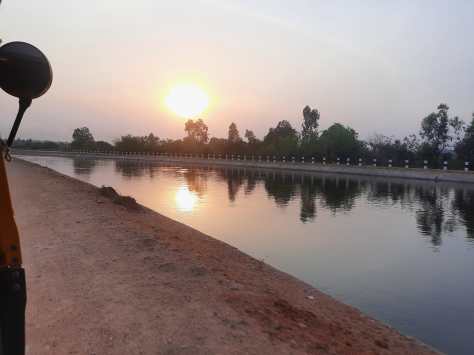
Water canals of Hampi

4. Coracle riding & elephant bathing: The river flows right behind the Virupaksa temple, and the temple elephant has a daily schedule of taking a shower in the river. Time your visit right and you can lend your helping hand too. A small ticket can help you cross the river on a coracle-a traditional round flat-bottomed boat built by knitting seasoned bamboo or cane. You can also see locals transporting their bicycles and motorcycles across the river through these boats.
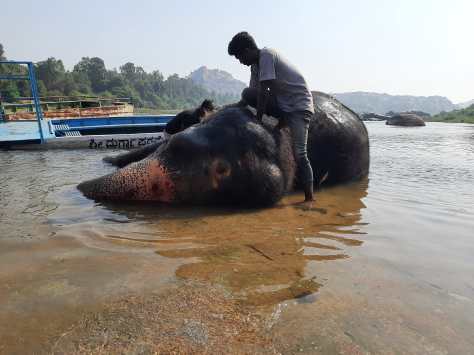
Elephant bathing in Tunga river at Hampi

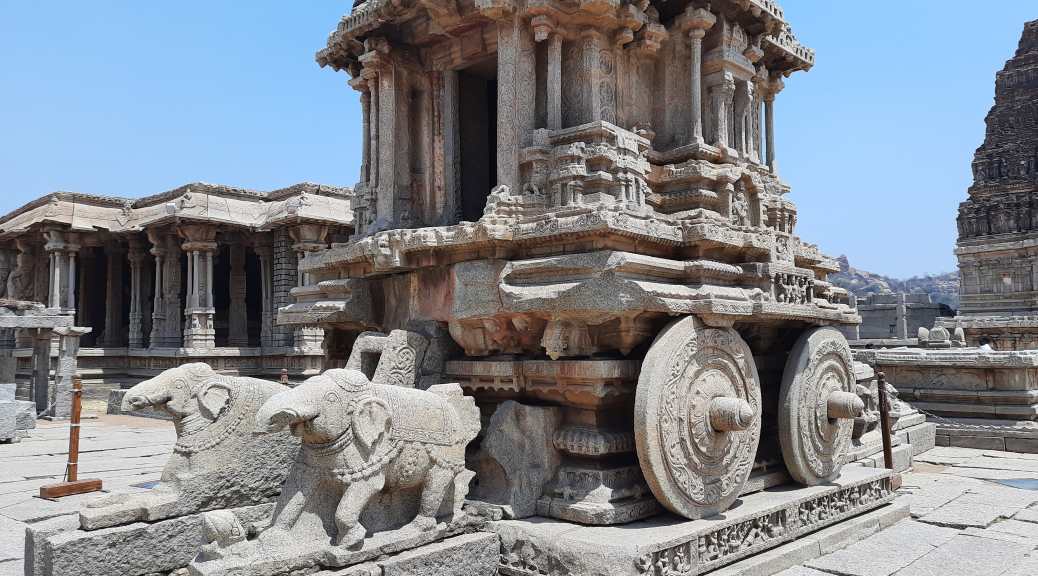
5. Cycle tour around the historical monuments: Several shops rent out bicycles to tourists. If you have a tourist map in hand and the luxury of time, trust me, it is one of the highly recommended ways to explore Hampi. For a little more comfort on a sunny day, you can opt for an autorickshaw with a good driver dueling as your tour guide.
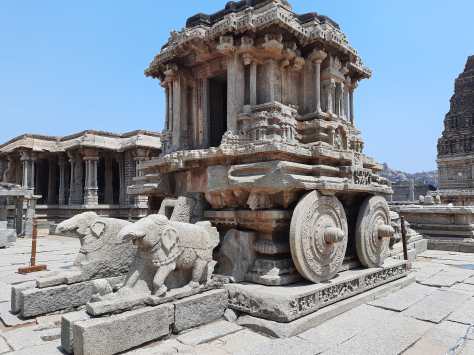
Stone Chariot- Hampi

6. Sunrise at Anjanadri Betta: Believed to be the birthplace of Lord Hanuman, it is frequented by pilgrims which tends to receive higher footfalls as the day progresses. So, if you make it to the peak of this hill as early for sunrise, you can enjoy the view of the surroundings in peace and calm.

7. Sunset at Bala Anjaneya Betta: Another popular spot in the hippie island, it is best when visited during sunset.

8. Bouldering: This area is part of the larger Deccan plateau, and the rocky boulder terrain forms its core geographical feature. Short workshops in free hand bouldering is a great way to either learn a new skill or simply let the inner monkey in you to hang around in the land of the monkey kingdom (it is the birthplace of Lord Hanuman after all).

9. Bike riding in the paddy fields of Gangavathi: Gangavathi is called the rice bowl of Karnataka, and this is where you can see infinite stretches of green paddy fields. Now imagine large boulders and bare old trees standing scattered across these green fields as if they had witnessed all the stories of the past. And then you cut across on a moped or a motorbike casually soaking up this view. Trust me the views will linger in your mind long after you leave Hampi.

10. Cliff jumping & Coracle riding at Sanapur lake: This is not really a lake but the backwaters of a reservoir. It offers amazing activities to get your adrenaline rushing while you jump off a cliff to the depths and a crazy coracle ride along the rapid of the waterbody. A must do while you are on a trip to Hampi.
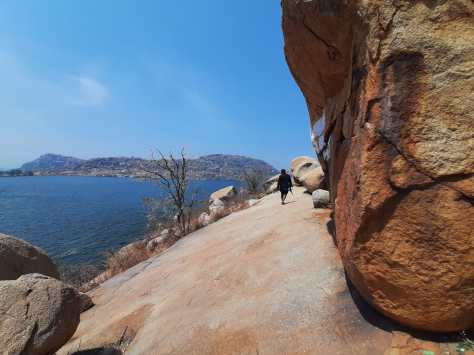
Sanapur lake
Sanapur lake

Are you going to try these experiences on your next trip to Hampi? Or what else have I missed out in this list? Tell me in the comments below.

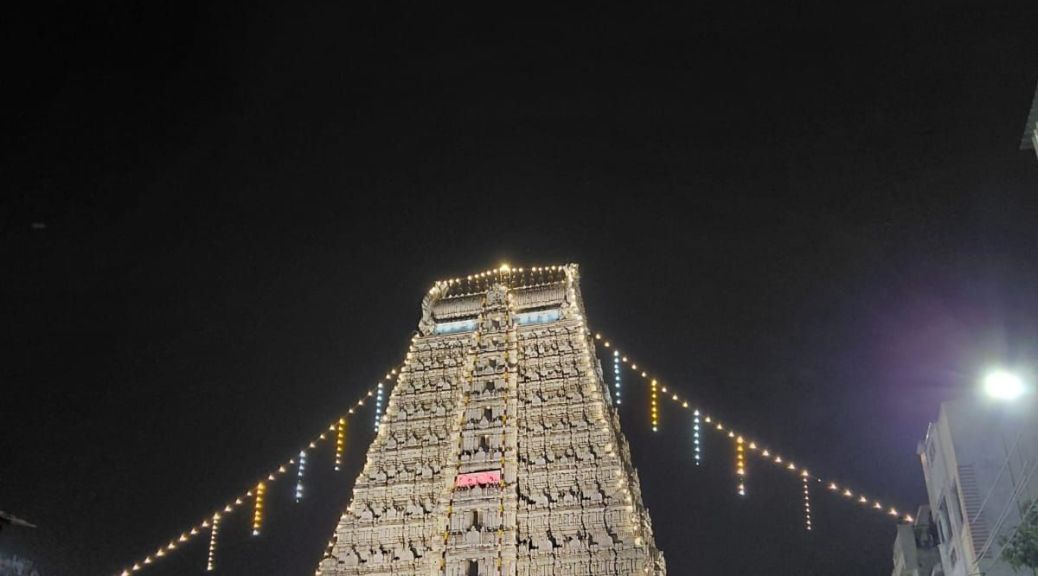
Visiting the Panchabhuta Temples- The Five Elements of Life

There are five temples located across Southern Indian states representing the five elements of life or the Panchabhutas. They are built in such a way that the are all aligned in a single latitude and longitude with respect to each other. Through this article, I would like to share a summary of my stories of visiting each of these temples.

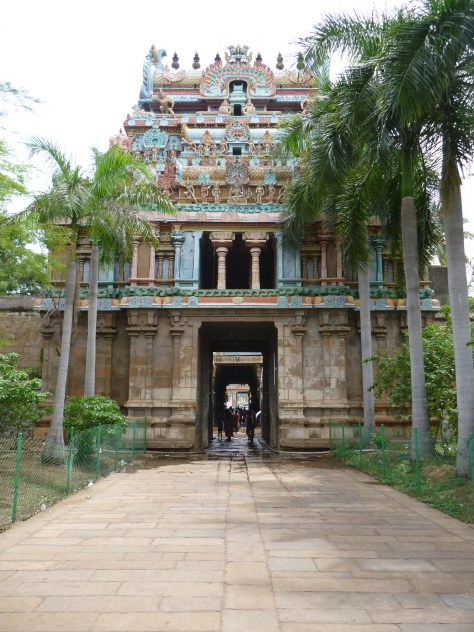
It all started with a family trip, way back in 2014 to Trichy. I had made a long list of places to visit in and around the temple town, and we happened to visit this temple by chance. It was a beautiful temple where the main Linga is believed to have been created by Goddess Parvathi with water from the nearby river. Today, the Linga is surrounded by a perennial stream of water. (Click here to read about my trip to Trichy)

The entrance to Jambukeshwara temple

On a casual day trip with my mother to buy some sarees at Kanchipuram, I also made a list of temples to visit in this town which is also known as a ‘City of 100 temples’. Among the long list of sacred places we visited in Kanchipuram, the Ekambareshwara temple was also one. Here, the main Linga is made out of sand and is believed to have been installed by Goddess Parvati. Shiva is a lover of Abhisheka, however due to the nature of the porous & loose sand of the Linga, there is no abhishekam offered here. Instead, offered to another small bronze idol kept beneath it. (Click here to read about my trip to Kanchipuram)

The Sthala Vrushka inside the Ekambareshwara temple

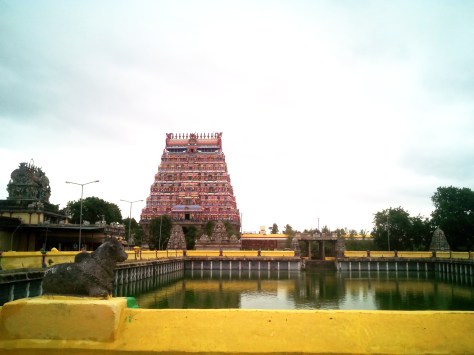
My brother and I happened to explore Chidambaram town during a backpacking trip along the East-coast of Tamil Nadu. We arrived at the temple on time for the first aarti when the doors opened in the evening. We were in the front line when the curtains were raised, and we had a stunning view of the main idol. I instantly felt a compelling energy from the idol in which Lord Shiva is depicted to be performing the Ananda Tandava dance. (Click here to read about my trip to Chidambaram)

One of the temple gopurams and the holy Sivaganga tank at Thillai Natarajar temple

We halted in this temple town on our way to Sriharikota to watch a rocket launch in 2019. We stood in a long queue to finally get a magical darshana of the Linga here which is made of a massive sized Camphor. Since the camphor is susceptible to fire, there is no direct aarti performed to this Linga. However, an eternal lamp / light is lit behind forming the silhouette of the Linga which indicates that there is continuous flow of air allowing the fire to burn. (Click here to read about my trip to Srikalahasthi)

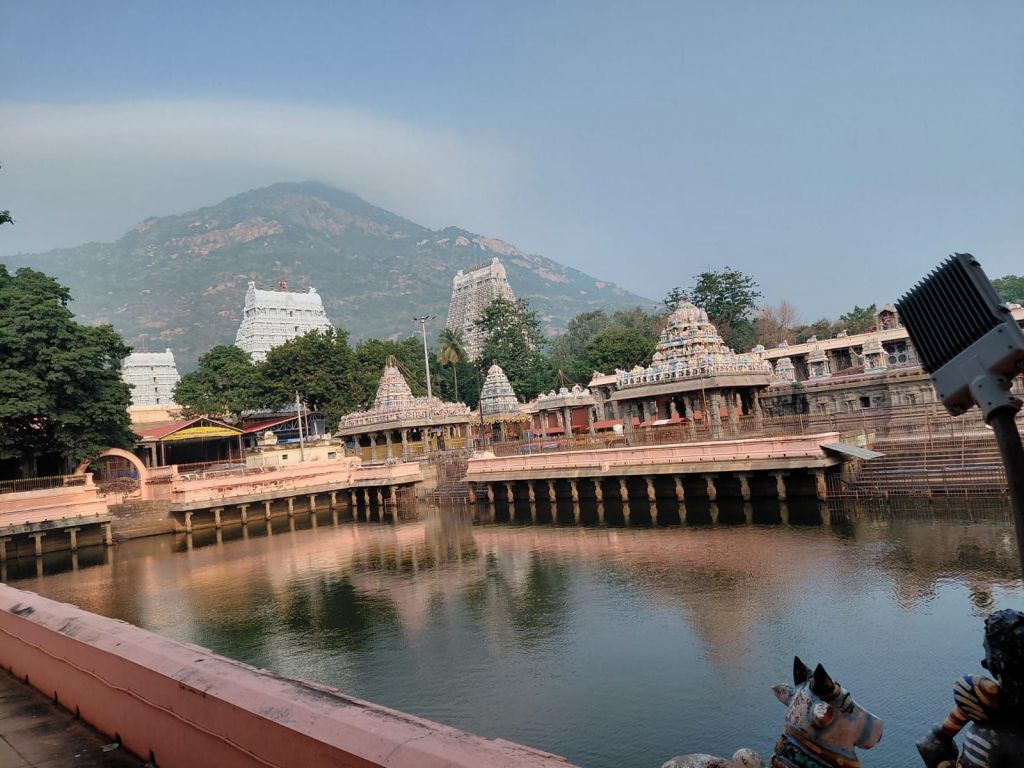
It was indeed a long wait until 2025 when my wish to visit this temple manifested. I got extremely lucky as my visit also coincided with the auspicious Karthika Deepam. I performed the Girivalam before I got the darshan of the Linga, illuminated by oil lamps around inside the sanctorum. The hill itself is believed to be a manifestation of Lord Shiva and the Karthika Deepam, a representation of cosmic fire (Click here to know more about my Girivalam trip)

The Tiru-Annamalai hill in the background of the Arunachaleshwara temple pond

Weekend Hike- Bala Kodandaraya Swamy Temple

Although this destination is a recommendation for weekend and day hikers of Bengaluru, it is in Krishnagiri, a district bordering the two states of Karnataka and Tamil Nadu.

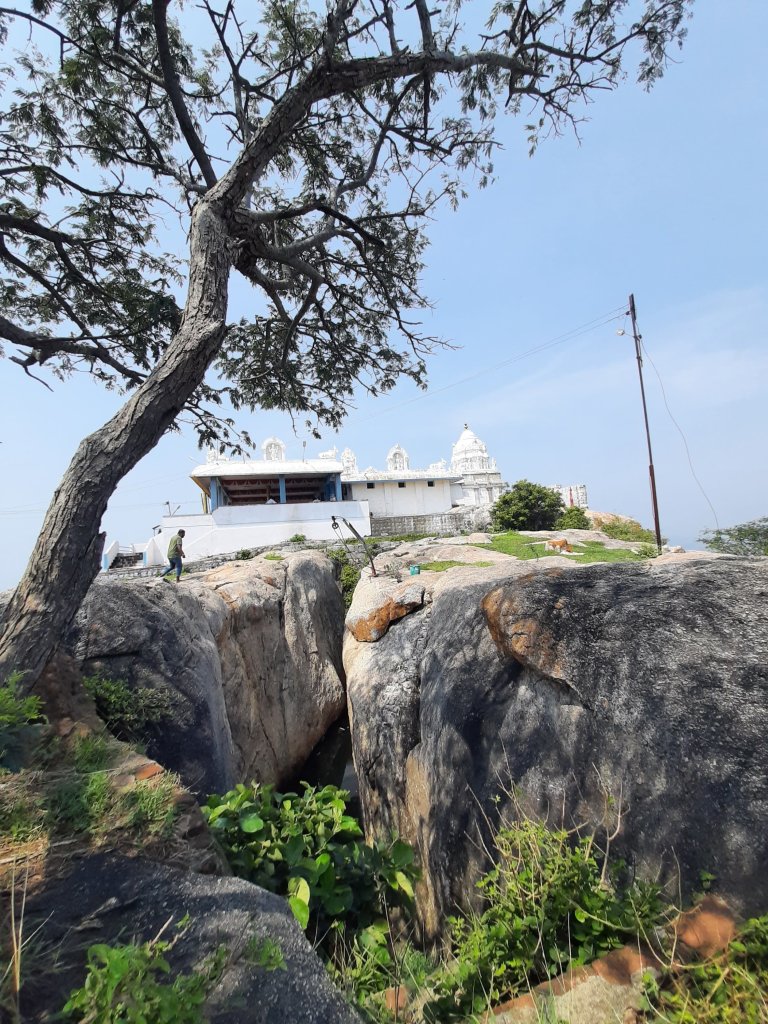
The views from an ancient temple had caught the attention of my friend and me, who are always in the look out for less crowded and less explored landscapes and places with cultural and historical importance. One such place was the ‘BalaKodandaraya Swamy temple’ whose history dates to the Vijayanagara era. Based on our online research, we found out that getting to the temple involved a short hike.

We started early on a Saturday morning by car. We had our breakfast along the way, in one of the several restaurants on the Hosur highway. From there, we followed the route on Google maps to reach our destination. A steep deviation to the left of the highway led us through villages. There were asphalted roads and good views of the surrounding hillocks for as long as the road passed through villages. The last couple of kilometers were through unpaved muddy roads passing through a slight forest stretch. We finally arrived at a small open space where we parked our car, at the base of the temple hill.

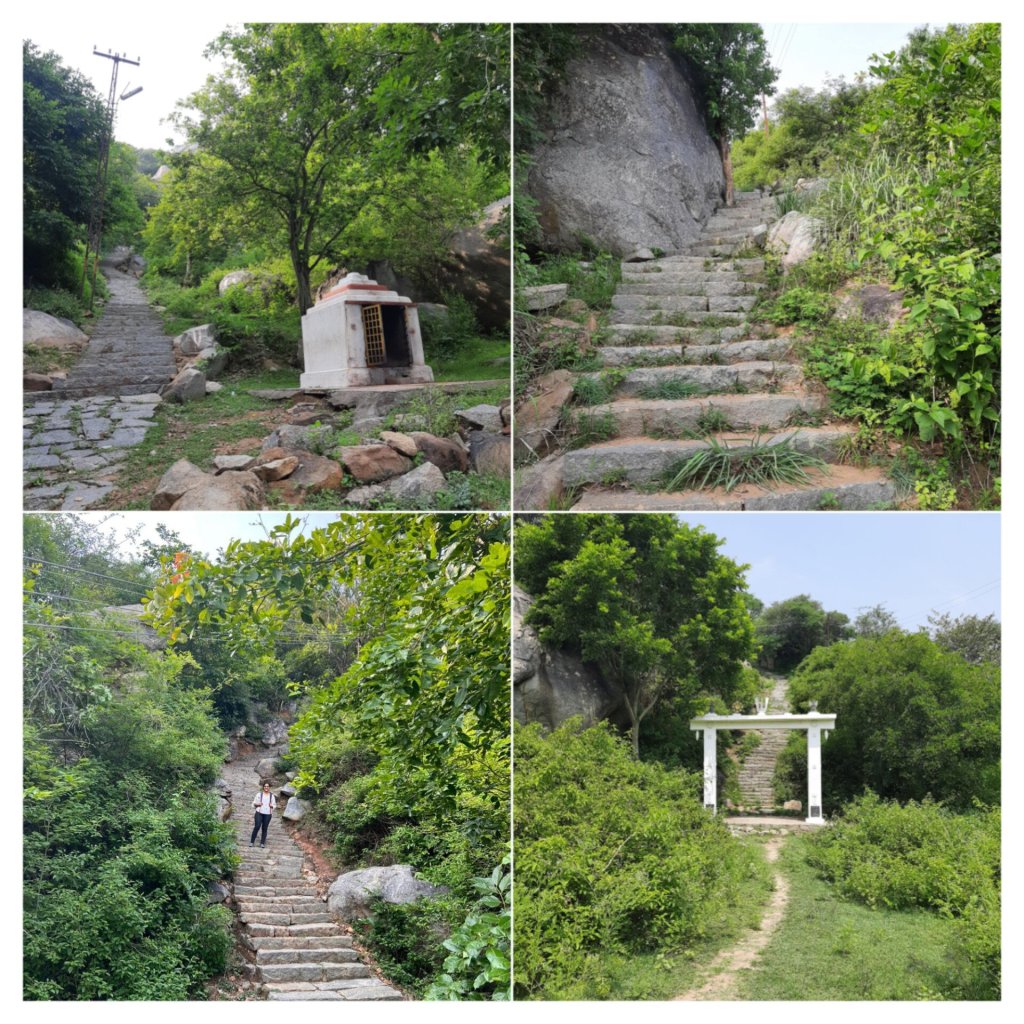
The forest trail
The trail through the forest cover, starting from the base to the temple arch

There was a small structure of brick and mortar (gudi) at the base, from where a flight of stairs led to the hilltop. People lit lamps, agarbattis and camphor here before starting their ascent. It took us about half an hour’s climb along properly laid stone steps leading to the top. These stone slabs bear the names of the devotees who have donated them and the count of their donations on each step. The ascent curved around at multiple places and offered amazing views of the valley below at every turn. The first half of the climb had a forest cover and large boulders on both sides, until we arrived at the welcome arch of the temple.

The path towards the left of the trail, towards the temple

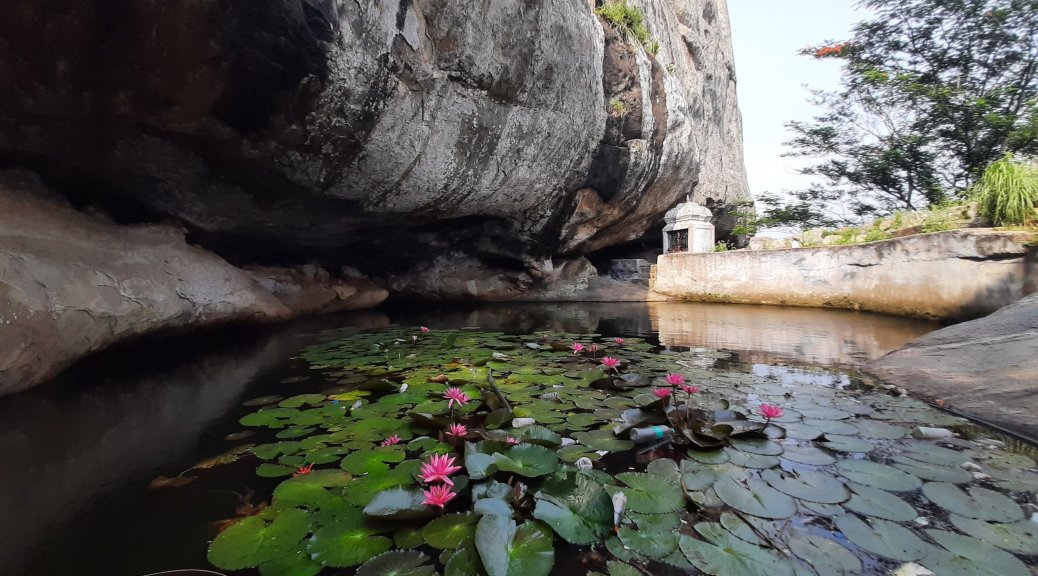
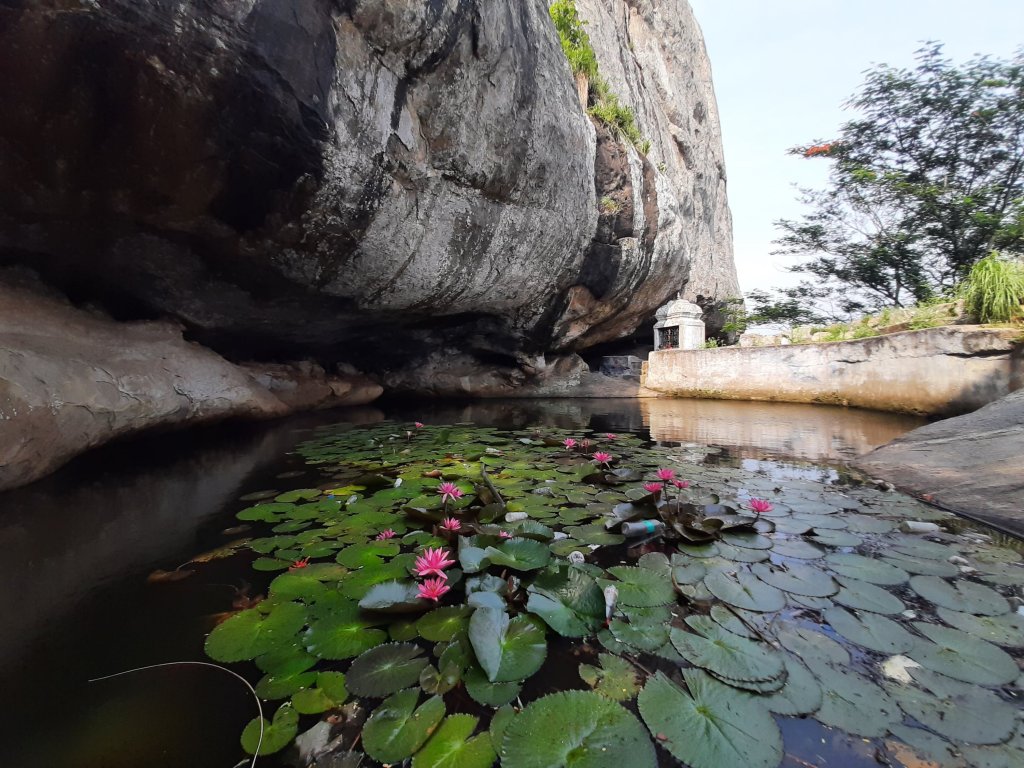
The forest cover ended after a few steps further from there and opened to a panoramic view of the valley of the villages and farms below. As one stands on a large rocky outgrowth, you will find the trail split into two paths. One, straight down through some Gulmohur trees. Second, up towards the temple. We decided to first walk the trail going straight. A few yards from there, the trees made way to a beautiful pond of pink lilies, dug right beneath a large rocky monolith. We later realized that devotees take a dip in this pond before proceeding towards the temple.

The path towards the right of the trail, leading to the temple pond

The view of the valley from there and the magical vibe of sitting by this pond of lilies could not let us go easily from there. My friend settled on the banks, with a book to read. Although the water was heavily littered with plastics, it was still a super calm spot to soak in some good energy. After spending a while, we then headed towards the temple, located on the peak of the hill, a short walk away. There was a panoramic 360 degrees view of Hosur and Krishnagiri from the temple, the green cover around, Krishnagiri dam and the Then Pennai river. The temple priest arrived much later at around 10.00.a.m. for the daily prayers.

Balakodandaraya swamy temple, Krishnagiri
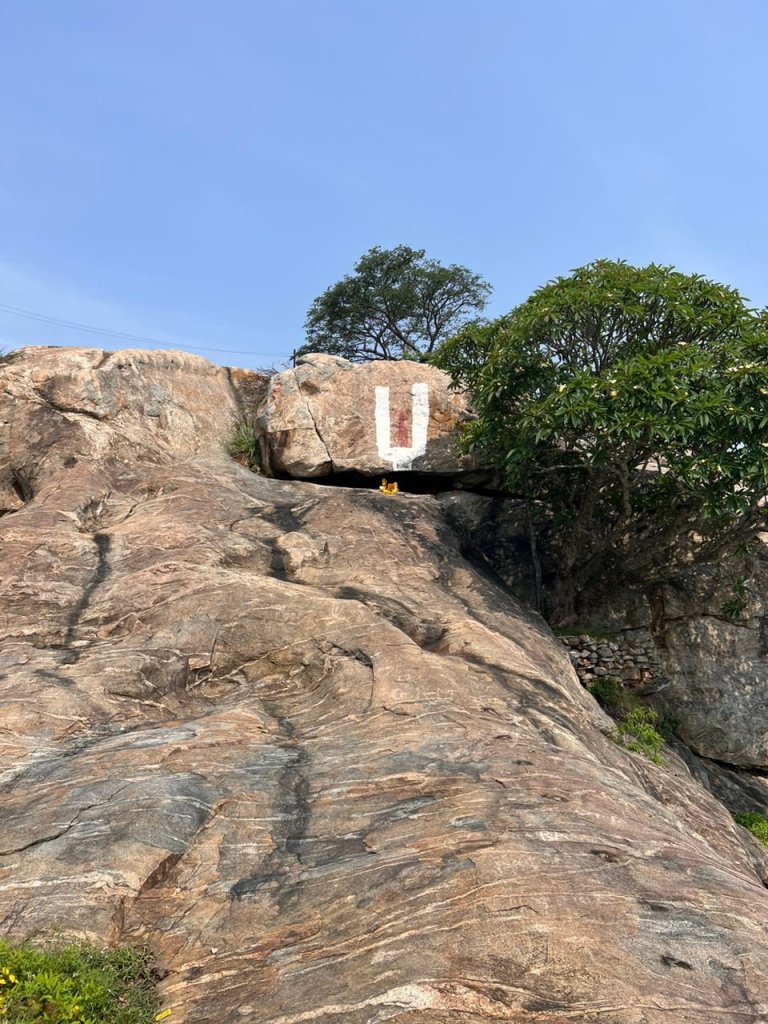
Balakodandaraya swamy temple and the cleft for drawing water

Surprisingly, a small cleft in the rocky hill serves as a perennial source of potable water for temple use. The people who had gathered there by then, helped the priest in drawing water from this cleft and clean the temple premises before offering the day’s prayers. We sat there for a while and decided to head back to the base before the sun took over the skies and heated the rocks around. Overall, it was an incredibly beautiful place for a short trip from the city.

Other nearby places:

If you are looking at making it a full day trip, then you can explore the nearby places that include:

The Hoysala Trail 2- Belavadi

In my wish list to visit as many Hoysala temples as possible in this lifetime, this is the second documentation. I started this series with the temples of Belur and Halebidu, as these were the erstwhile capital cities of the Hoysala. I will move on from there.

Continued from The Hoysala Trail 1- Belur & Halebidu

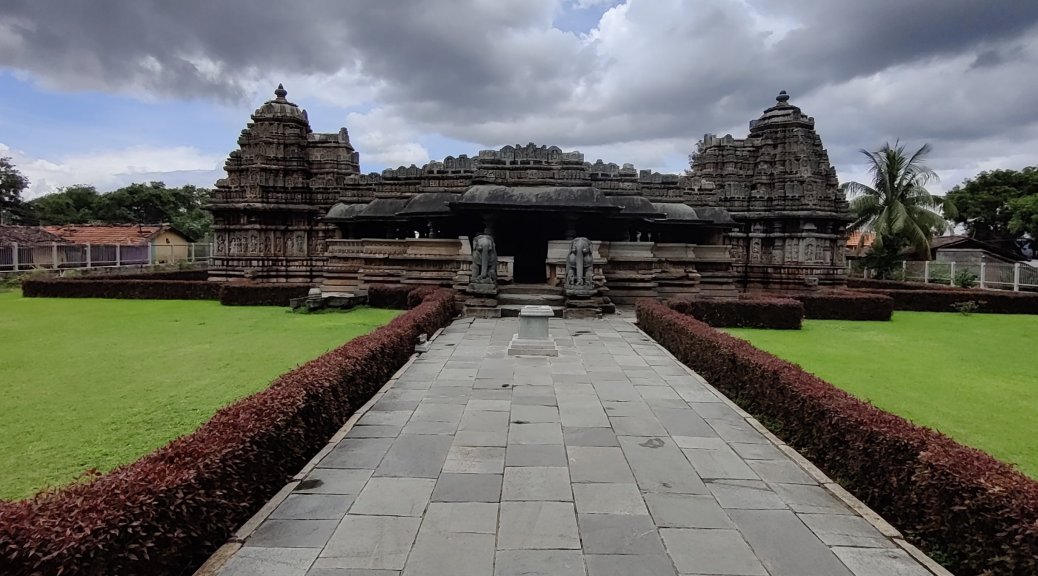
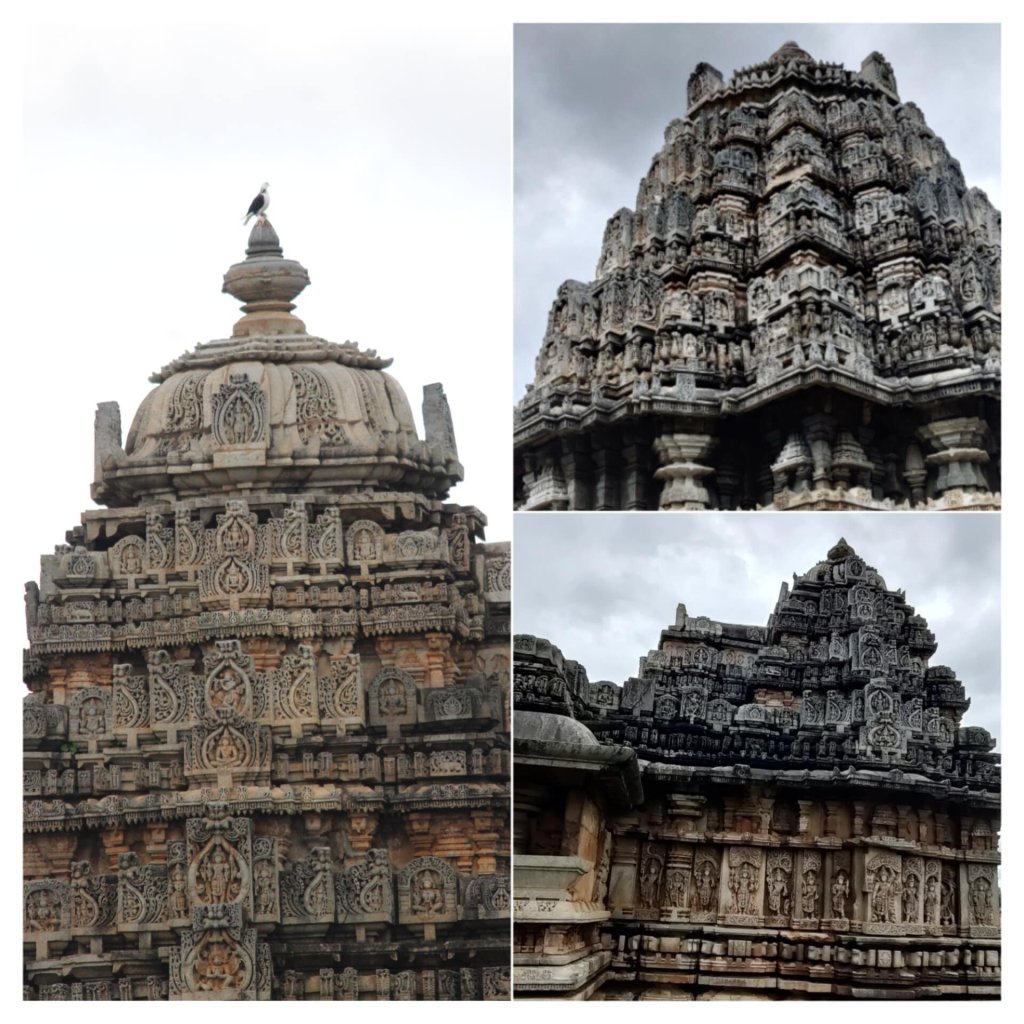
Belavadi is a quaint little village located approximately an hour away from the Hoysala capital town, Belur. The Veera Narayana swamy temple of Belavadi is one of those where the main idol of the presiding deity is still intact and regular prayers continue to be offered. The intricacy of the artwork on stone is very similar to that of the temples at Belur and Halebidu.

Veeranarayanaswamy temple, Belavadi
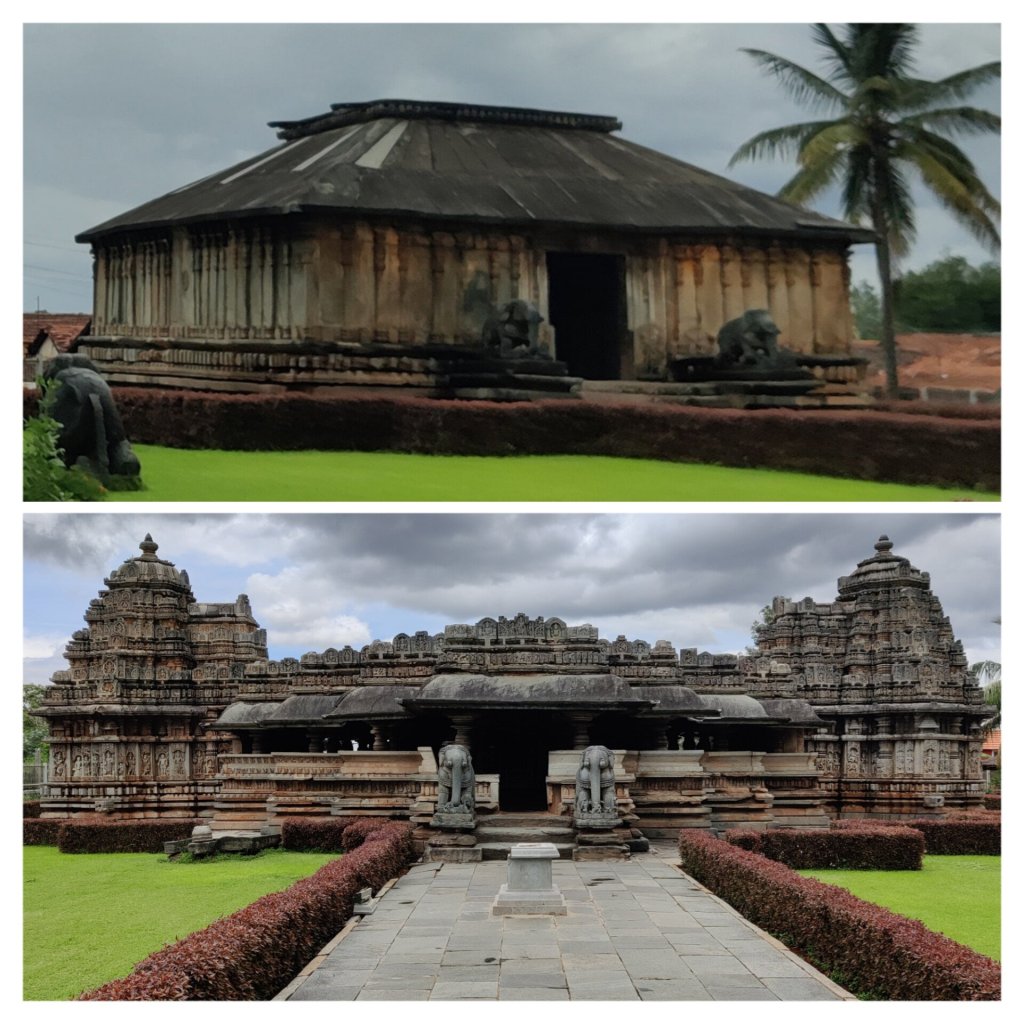
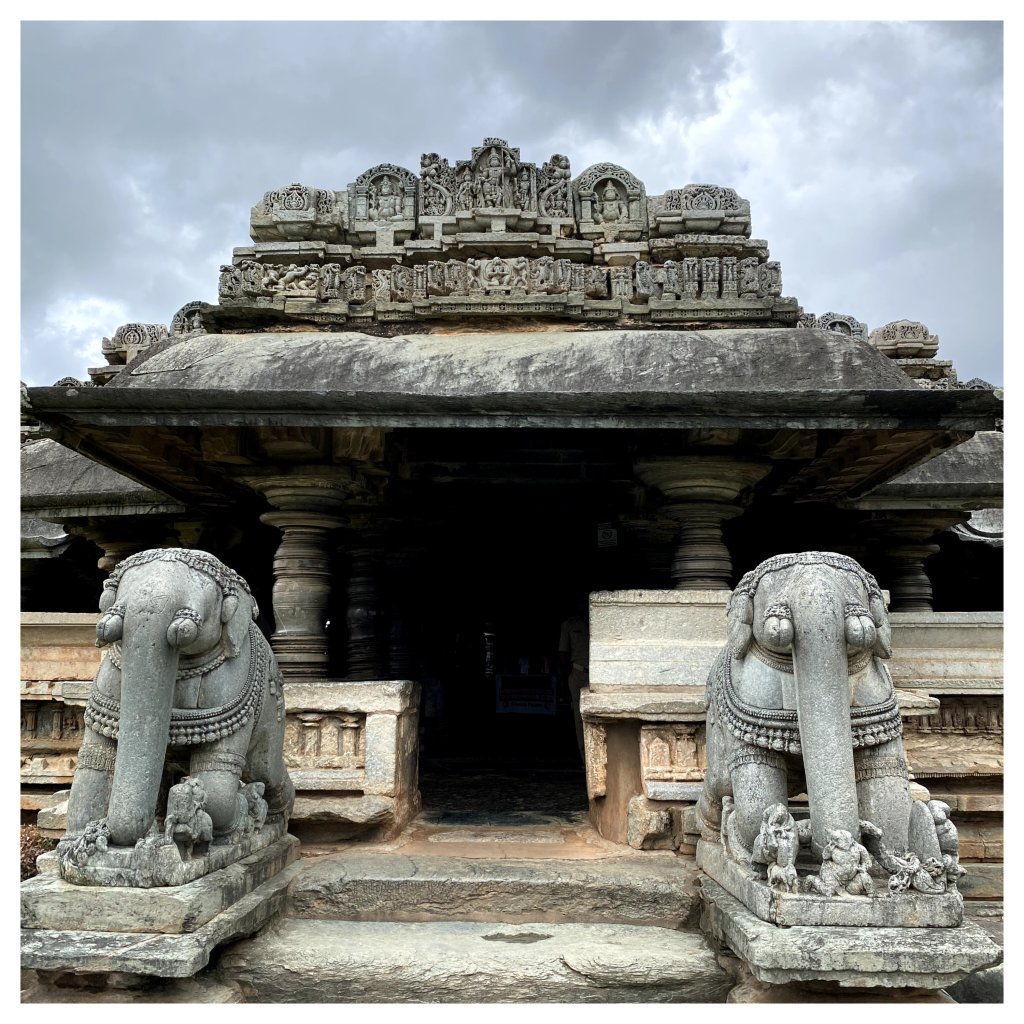
Images: Veeranarayanaswamy temple, Belavadi Top: Outer entrance gate to the temple Below: Inner entrance to main shrine at Veeranarayanaswamy temple, Belavadi

Unlike the main Gopuram (temple tower) at Belur, the entrance gate at the Belavadi temple is small. There are two ornate statues of two elephants that greets you inside. The sculpture on the outer wall is simple and minimalistic. as you enter, you notice that the inner walls are plain. It is possible that these were stolen, vandalized, or lost over the course of time, only historians can tell me better.

Veeranarayana swamy temple, Belavadi
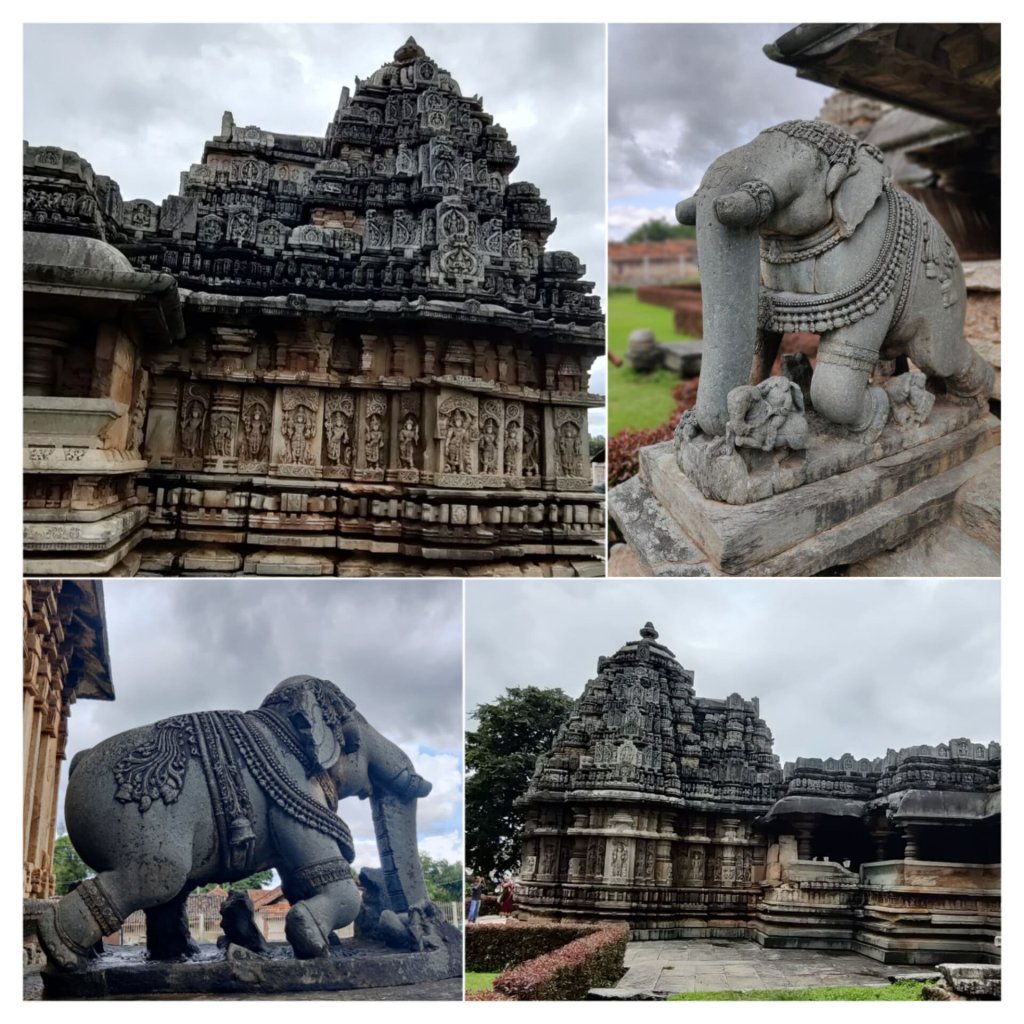
The sculptures on the exterior of Veeranarayana swamy temple, Belavadi

As you walk past this entrance gate, arch you pass the courtyard and are greeted again by a pair of standing elephant statues into the main temple that encompasses the shrines in the trikuta style of temple architecture. The three shrines inside houses idols of Lord Vishnu in three different forms. Huge lathe turned stone pillars and walls bearing fine and intricately carved figurines adorn the inner walls of the temple where photography is prohibited at the time of my visit (in July-2022).

Veeranarayana swamy temple, Belavadi
The Trikuta temple towers at Veeranarayana swamy temple, Belavadi

The outer walls are equally gorgeous too with intrinsic stone carvings and embossings all over. Due to limited permissions for photography, my photo story here consists only of photos of the exterior of the temple, but more than sufficient to give an idea of this marvel.

Veeranarayana swamy temple, Belavadi
The inner and the main entrance of Veeranarayana swamy temple, Belavadi

Also, a walk around the tiny hamlet of Belavadi is highly recommended. I loved the unique design of these traditional houses that emanated a vibe of an old world.

To be continued as Hoysala Trail 3