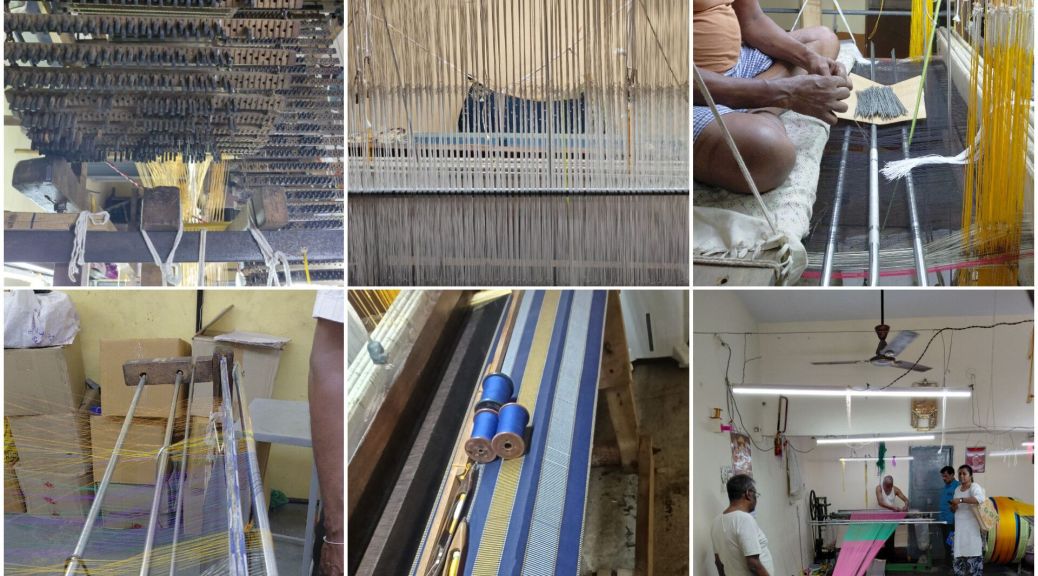
My readers and followers on social media are aware of my love for everything handmade. From handicrafts to handlooms, I have a liking for everything with a human touch. Today’s story is also about one such discovery of a handmade product.
It was on the first Sunday of October 2025, to be precise. I was at the ‘Kaaranu Kodupo’, an annual ceremony of Ancestral worship at the Ainmane- the ancestral home of our family. Once the ceremony was over, lunch followed. All the uncles, aunts and distant cousins who had been meeting after a long time had formed small groups and got busy catching up on conversations that hadn’t happened for a long time. Meanwhile, my mom noticed one of my cousins and complimented her on her saree. Upon enquiry about where she had got it from, she mentioned that the saree was part of her wedding trousseau, put together with collections from Kodiyala village in Mandya district. It was the first time I was hearing of the place. I quickly browsed the place on my phone and came across the history of the Kodiyala sarees.
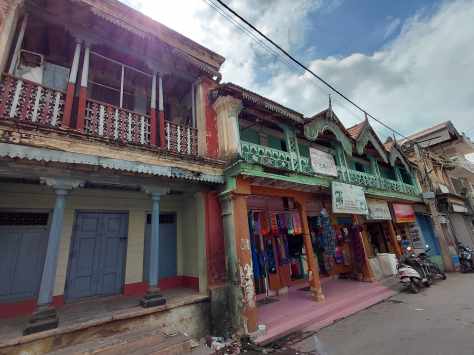
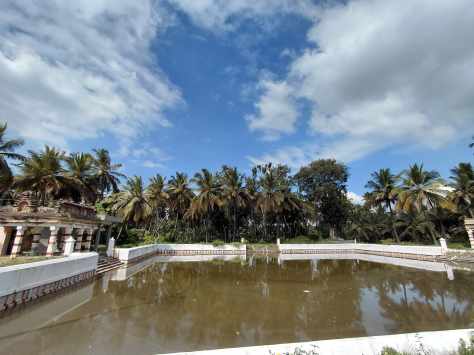
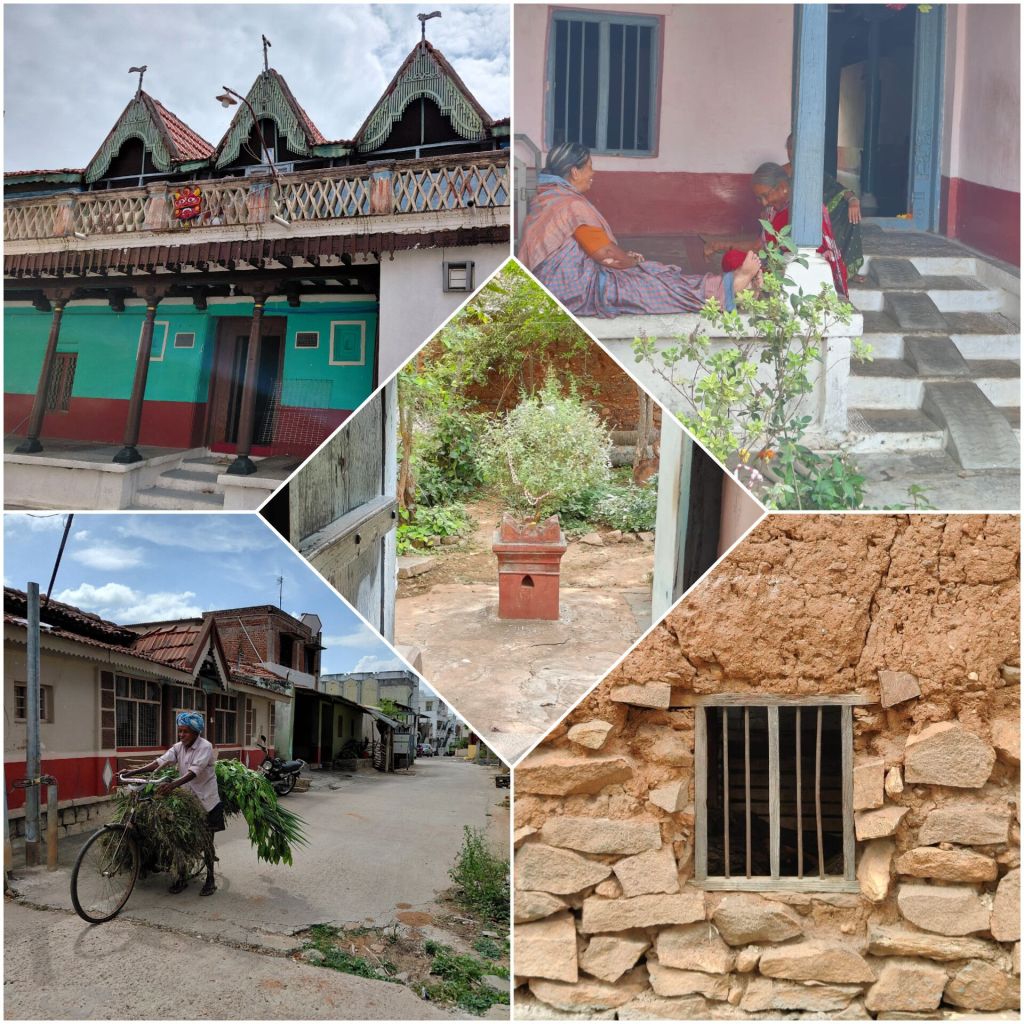
I spoke with a friend who shares an interest in handlooms, and we decided to visit a place we hadn’t known about until then. We boarded a train from Bangalore to Srirangapatna, then a KSRTC bus, which dropped us off at Kodiyala. It was a ‘Y’ junction. We were wondering which of the two divergent roads to take. We chose the one that looked a little denser than the other, with packed buildings and shops. As we entered the road, we realised that almost all the structures were quite old, probably dating back to the colonial era or the time of the Mysore Rajas. Some have been maintained in excellent condition. As we walked straight along the same main road, we hit a dead end, arriving at a large temple pond. A granite plaque placed next to it indicated that it had been commissioned much later.
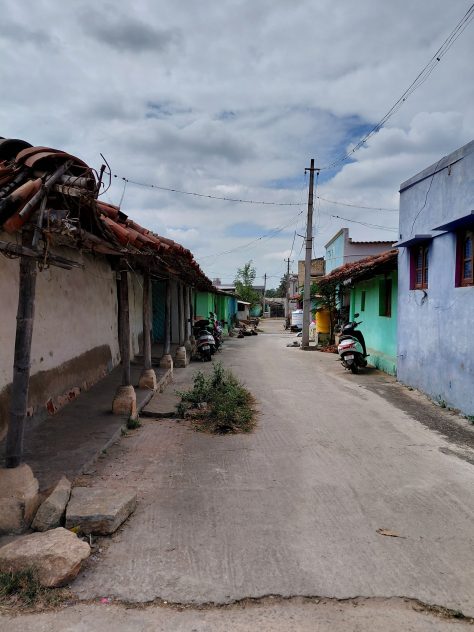
We turned back and took one of the crossroads. That’s when we heard the first sound of a loom. It was a steady, rhythmic hum from a power loom, which affirmed the journey we had undertaken so far. But we walked past several muddy streets, with cattle, both bovine and goats, tied outside houses, in search of a Kodiyala handloom that we had read about on Google. The humble smell of the village and the constant sound of the machines kept us company, but none of what we wanted had been spotted.
A lady who had been watching us walk around aimlessly on the street in front of her house paused to ask us what we wanted. We told her that we had been looking to buy authentic Kodiyala sarees, and she introduced herself as a weaver. We were excited and accepted her invitation to walk up to the first floor of her house. She displayed the collection she had at home, but we had to politely refuse them all, as they were all made on a power loom set up on the ground floor of their house. On the parallel street, we then walked into a random house with a cow dung-smeared floor and a low-rise clay-tiled roof. An old man greeted us with a smile and stopped the machine that was creating noise around him. We enquired with him about the looms, and he told us how almost 99% of the weavers in the village had adopted power looms, and there was no one in his known circles who still wove sarees the old-school way. We were heartbroken.
We continued to walk slowly, observing around for the universe’s hints and reached the ‘Y’ junction again. We took the other side of the road, and the same drill began. This time, the streets looked wider, and the houses looked a little more elaborate. Probably, the elite of the time bygone lived in this part of the village. As we walked, we saw a group of old women sitting on the verandah of one of the houses and sharing a fun discussion while stringing flowers. They asked us if we were looking for something or someone. We told them that we were casually walking around the pretty village and trying to find someone who made handwoven Kodiyala sarees. They were surprised and told us that they all used to be weavers themselves. They invited us over to their house for some coffee and showed us around their house.
It was a beautiful courtyard home, one end of which opened to a large garden behind. They showed us old photos and pits inside the house, which were now only memories of the handlooms that had been operated a couple of years ago. Though they are all third- or fourth-generation weavers based in the Mysore region, they all spoke Telugu at home. While we enquired about their mother tongue, they enlightened us a little more about the history of how Kodiyala, the weaving village, came into existence.
Generations ago, when severe hardships devastated weaving communities in Andhra Pradesh, thousands of skilled artisans were left without work, food, or shelter. Recognising the value of their extraordinary craftsmanship, the Wodeyar rulers of Mysore invited these weavers to settle within their kingdom. Handlooms were established in Kodiyala, allowing the artisans to rebuild their lives with dignity while preserving their ancestral craft. Belonging to the Padmashali community, these artisans soon became the official weavers to the Mysore royalty, renowned for crafting exquisite cotton sarees for everyday royal wear. This royal patronage ensured steady livelihoods while nurturing their traditional artistry across generations. Inspired by the beauty of life in the Mysore kingdom, Kodiyala sarees evolved into timeless expressions of local culture. Delicate motifs drawn from native flora, fauna, and architecture became signatures of the weave, earning Kodiyala sarees a reputation for refined craftsmanship, understated elegance, and quality worthy of royalty.
Today, however, the traditional handlooms of Kodiyala face an uncertain future. The rise of power looms has gradually replaced the painstaking artistry of hand weaving, pushing this heritage craft toward the brink of extinction. Only a handful of master Kodiyala handloom weavers remain across the Mysore region, continuing to uphold a tradition once treasured by royal households.
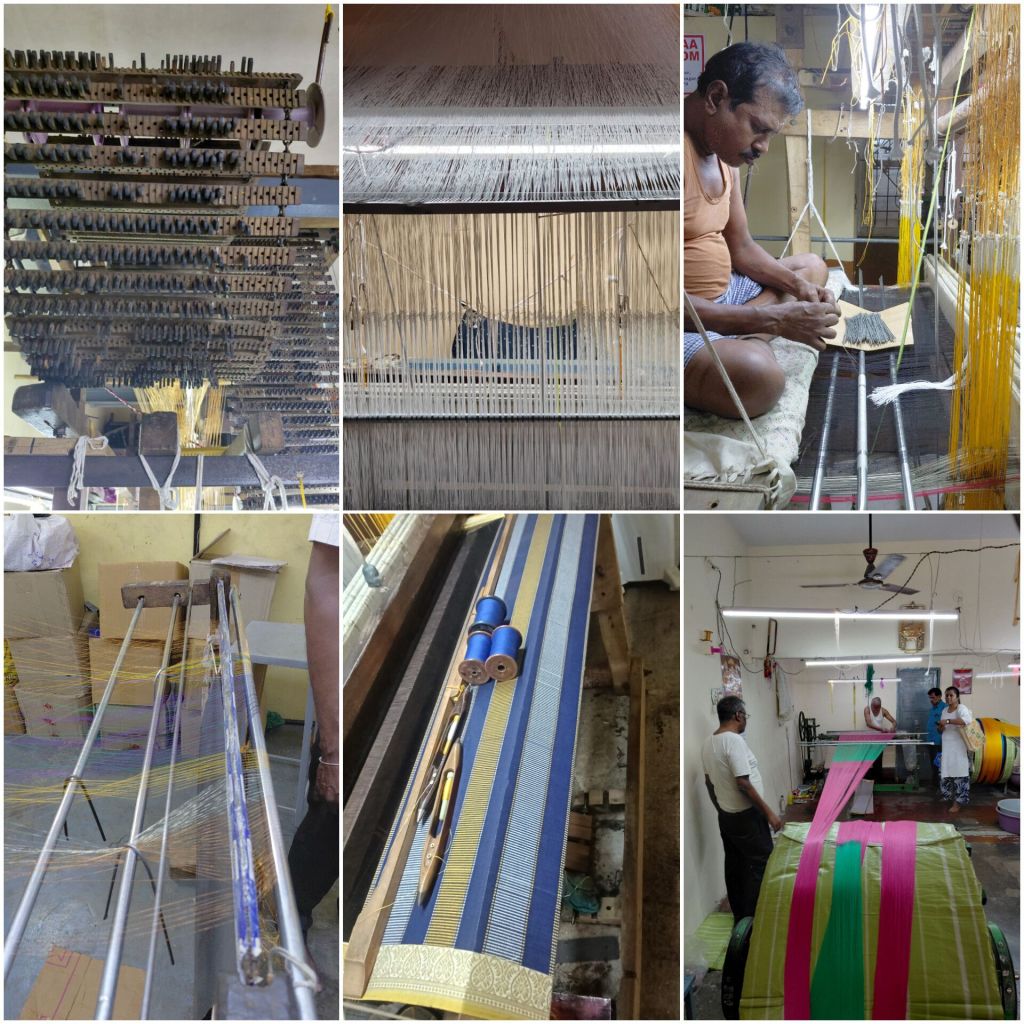
It was indeed an insightful meeting with this family. We thanked them for their hospitality and knowledge sharing and bid them goodbye. But at the end of this story, did we find what we had come looking for? Hell! yeah! We had our luck hidden in this house. They got us in touch with one of their relatives who continued to hand-weave the cotton sarees, just the old way. Among the 99% of the weavers who adopted powerloom, he is the remaining 1% who continued to nurture this art and preserve the beautiful Kodiyala saree weaving tradition. We got an opportunity to visit his loom and understand the working of a handloom and a Kodiyala- Weave, from where we bought our first authentic Kodiyala Hand-woven cotton saree. But that’s for another story 🙂

 The Lost Lander