Ever since I chose to do ‘Slow travel, it has given me ample opportunities to understand newer cultures and traditions. Since slow travel allows me to interact with more local people, I also get exposed to a lot of local music and art. One such knowledge gained during my interactions with the various tribes of Bastar is the various musical instruments made and used by them for various purposes.
Khut/ Khoot: This percussion instrument is a hollow trapezoidal shaped wooden block. It is hung around the neck of the person playing it and is struck with two wooden sticks to create a unique sound.
Maandaar: This is a small size drum that resembles a dholak. It has a hollow wooden body and wound with leather strips from end to end. The two sides used to create the sound are made using specially chose animal hide. It is tied around the waist and struck either with bare hands or using very thin wooden sticks to create the sound.
Gadha Baja: This is another percussion instrument with a resemblance to the (Bayan) Tabla. It has a hollow wooden body with a wide playing surface firmed with leather. It is used either individually by hanging on to the neck of the player during a celebration or used in pairs at temples and religious gatherings. Sticks are used for generating the sound here as well.
Taal: This instrument is a pair of metallic hand cymbals that are common to the rest of India’s folk music scenes as well.
Clockwise from top left: Khut, Maandaar, gadha baaja, Taal,
I got an opportunity to witness the indigenous music of the Muriya Gonds during my visit to a Gotul. All the above-mentioned instruments can be seen in their performance. Click below to watch the Muriya tribal performance with all these instruments.
Tribal ceremony at a Gotul in Bastar, Chattisgarh
The other musical instruments used by the tribes of Bastar are as below:
5. Sulur: This is a wind flute handcrafted out of a specific bamboo. The sound is generated by swinging the flute in the air (unlike the normal flutes that needs air to be blown into it). The bamboo tube is decorated with very fine and artistic designs engraved on to it. This flute is used for two purposes. Firstly, it is sounded while grazing their cattle and secondly, it is used in festivals and similar ceremonies. Click on the below video to watch how a wind flute is played.
Playing Sulur, the flute of Bastar
6. Mohiri: This is a wind instrument made using bell metal. There are two types. The ‘Bada mohiri’ is used in festive occasions and the ‘Chota Mohiri’ is used during all other ceremonial and social gatherings.
7. Tribal trumpet: Another common feature of the popular ‘Dokra bell metal craft’ in the region is the tribal trumpet. I couldn’t certainly tell which tribe uses this in particular, but this wind instrument is a popular souvenir picked by the tourists and art enthusiasts who flock the region in large numbers.
There were many iterations in the initial plan and the destination was changed multiple times, but my family and I finally decided to visit and explore Bastar. Holistically, Bastar is a region spread across multiple states and was primarily ruled by the Kakatiya dynasty. But with changing administrations and new state formations, the Bastar region is now split into seven districts in the state of Chhattisgarh with Bastar itself being the name of a district. The region is one of the richest in India in terms of tribal culture and reserves of natural resources. Taking Covid safety precautions into consideration, we decided to drive our own vehicle instead of taking a flight or public transportation to avoid coming in touch with random people.
When people in our immediate acquaintance got to know about our choice of destination, a few thought that we were crazy. And then, a few concluded that we had lost it when we told them that we were doing a road trip right through the red-corridor area. But it was a combination of inquisitiveness, curiosity, adventure and assurance of safety from a local friend that finally got my family and myself on a road trip to what is infamously called the Naxal heartland- Bastar. To add a little bit of spark to this wild road trip, was our new ‘Flame-red’ colored car that was delivered to us just a couple of days ago. We did not have a number plate on it and were going to cross five state borders with a ‘Temporary Registration’ sticker.
With all that background, let us discuss the crux of every traveler’s doubt- Is Bastar safe for travelers?
First things first, about Bastar-
The public transportation or connectivity in the Bastar region is almost non-existent. So, if you are a budget traveler or a backpacker, then this trip will not work out for you. Hire a self-drive vehicle either from Raipur or Vishakhapatnam (The nearest major cities with airports) or get one from home.
For stay at this point in time, there are ‘zero’ places listed on Airbnb. Limited hotels are available only at Jagadalpur which you can make your center point of travel. Alternatively, there are some resorts run by the Chhattisgarh Tourism Board (CTB) scattered in good locations across the region that you can manage to find online or through local contacts.
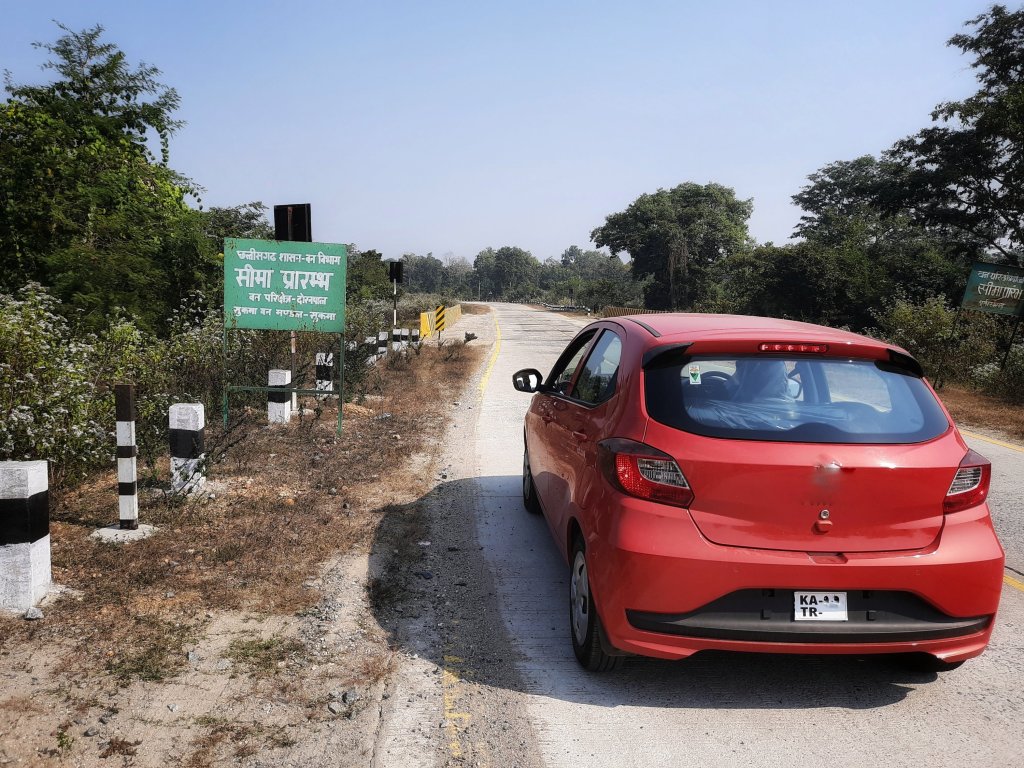
Entering Sukma, forest area begins
The Details of our visit to Bastar.
We started this trip from Hyderabad on the morning of Christmas-2020. As our journey proceeded from the plains towards the forests, the changing terrain was an indication that the red-color (of the red-corridor map) was getting more significant. We strictly adhered to two conditions laid by our friend/ local guide who was based out of Bastar. One, to stay connected from the time we started from Hyderabad and update him frequently (based on the mobile network). Two, do not drive after sunset. We had planned the entire route and our halts in consultation with him. With Kothagudem, we had officially entered the ancient ‘Dandakaranya forest’ region, the modern ‘Naxal heartland’. Only difference is Ravana had kidnapped Sita from the region back then, one could possibly be kidnapped or shot at by a Maoist in modern day. The day’s drive was mostly un-exciting with a good wide National highway passing through Sal tree forests alternating with cotton fields till Badrachalam, where we stayed for that night.
The following day, when we took a deviation towards Konta at Chatti junction is when we started to notice the actual change in terrain and demography. Civilizations suddenly disappeared and the roads became emptier. For most stretch it was just us, driving either through thick forested areas or large open grasslands. No man-made concrete structures, whatsoever. Even if it felt like we reached a tribal settlement after driving for a few kilometers, the settlement was limited to just one or two huts with their set of cattle and poultry. It was a little eerie to think of, but that did not stop us from halting our car and taking a few photographs.
A cattle shed in a village around Konta
After reaching Konta (The Andhra-Chhattisgarh state border) is when we started to sense the heavy air around us. Every village that came thereafter was spread across 1 to 2 kilometers along the highway. And every village had a CRPF camp with an armored MPV (Mine Protected Vehicle) at their gates, ready to be driven out at any given point. All camps had hero stones erected near the gates with names of the martyrs from the respective camps who had died during service. We were heading towards Sukma, possibly the brightest red spot one would find on the map. With extremely unreliable mobile connectivity to reach out to our guide, we had started to reconsider if we had made the right decision to take the road less travelled! Anyway, there was no way we could undo our plans since we were already there now. Instead, we decided to go ahead by thinking about the adventure and excitement that may come ahead to us.
Meanwhile, I got a message delivered on my phone from our guide. It had the contact name and number of a volunteer (Person X) based out of Sukma. We were told to meet Person X and have a cup of tea with him at Sukma before continuing our journey towards Jagadalpur. After reaching the Sukma bus stand, we called Person X and waited for him to arrive. In a bit, a young boy came to us on a bike and asked us to follow him. Even before we could complete our words of enquiring his name, he said: “Haan, haan, follow my bike” and we trailed him through narrow residential lanes to a big mansion. Another man (Person Y) welcomed us warmly and we were kind of overwhelmed and at the same time, wondering whom and why we had to meet someone in Sukma.
Person Y asked us, “Weren’t you supposed to be a big group of people?”
“No, it was just our family travelling”, we clarified.
“But Person Z told me that five of you will be arriving here for the meeting”, he said.
“Person Z? But we were supposed to meet Person X!”, we told him with a perplexed look on our faces.
We realized that there was some confusion. We were at a wrong place… in Sukma! I immediately called up Person X and told him about the situation. I then handed over my phone to Person Y and we were fortunate that both X & Y knew each other. Both of them were local leaders and represented the same political party. X came to Y’s house and it followed with some chai served to us. Our basic introduction and conversation were limited to local politics, our journey so far and our trip to Chhattisgarh. About half an hour later and as discussed with our guide from Bastar, we decided to continue our journey further.
A short while later, when we were ascending the Ghats, a bunch of CRPF men who were on their random patrol stopped us and enquired the details of our trip. Without much drama, they let us go after knowing that we were random tourists, heading to Jagadalpur from Bangalore.
Somewhere near Konta
Our guide arrived at Dorba with his family and escorted our car for the rest of the day. We reached Jagadalpur for the night’s stay. Over the next few days of our stay in Chhattisgarh, we explored several settlements and hamlets located in areas where no roads exist. Through our extensive drive through vast expanses of paddy fields and coal, iron and other mineral rich mountainous and forest terrain, we got a better sense of geography and geo-politics of the area.
So, come to the point! Was it safe?
I would like to explain this with multiple incidents and my viewpoints. PLEASE NOTE that these opinions are purely based on my personal experience. This may differ for each person visiting there.
As per our guide, our visit to the local’s house in Sukma was to acquaint us with a localite in that region so that, if we were being tracked by someone, they would know that we were harmless tourists and not associated with any other intention. But my viewpoint is that, apart from Sukma, we explored the districts of Dantewada, Bastar, Kondagaon, Kanker, Narayanpur, Gariaband and Dhamtari during the course of our stay in this region. All considered to be core areas of Naxalism/ LWE in the state. We drove our number less car with a ‘KA-TR’ sticker all around –> Not a single day did anyone stop us, ask us or threaten us. It felt like we were travelling in any other Hindi speaking place in India.
When we entered the villages, we had a local person accompanying us almost always. We were told that a lot of villagers worked as informants to the Naxals. (starting from children as young as 8-10 years to grown adults, across gender). So, if a localite familiar in a particular village that we were visiting accompanied us, we would be safe –> My viewpoint on this is, when we moved to the interior parts, the villagers could speak only the local dialects of either Halbi or Gondi. Why that, when we visited the Gotul on one of the days, I even understood a portion of a conversation between two villagers standing next to me. They were discussing that I was a foreigner, who had come there to see their dance. Like really? I look so INDIAN in color, features, dress and in every other sense. Even then, the exposure of these tribals to the world outside their villages is so limited that any visitor would look alien. In such a scenario, communication would’ve been a task for us if we wanted to understand their culture better. A translator helped us to bridge the gap in communication.
We were told that the Naxalites come out after sunset and bother the villagers for rice and other needs. We had heard of stories of how people/visitors/ guests were kidnapped from houses at night. We met so many villagers from various tribes, visited their houses and ate their food. They were excited to host us and shy to talk to urbanites. Never at any point did I feel like we were going to be harmed. We even stayed for a night at Dantewada and most other nights at Kondagaon. The villagers didn’t seem to talk about anything to me like kidnap or murder.
There are several tribal communities that are still primitive in their culture and do not come out in contact of normal civilization. Barter still exists in this part of the world. Permits are required for entry of many villages, especially for those visiting the Abujmadh area. To think of, it is unfortunate that inspite of conscious efforts by governments to empower the tribes, it is still falling short.
Somewhere near Kanker, we were by ourselves on a night journey towards Raipur. While we were told that the highways were safe, there is one point where we were asked to stop and wait for about 2 hours. With us, there were hundreds of other vehicles also who had stopped and spent the hours getting a nap during the waiting time. Daily, the ITBP policemen do combing in this area. Inspite of several positive experiences like those above, things like these present the intensity of the underlying danger and threat.
By having all these presumptions, it cannot be ruled out that naxalism is REAL. And it is in abundance in these areas. The underlying thought cannot be ignored that I must have gotten lucky!
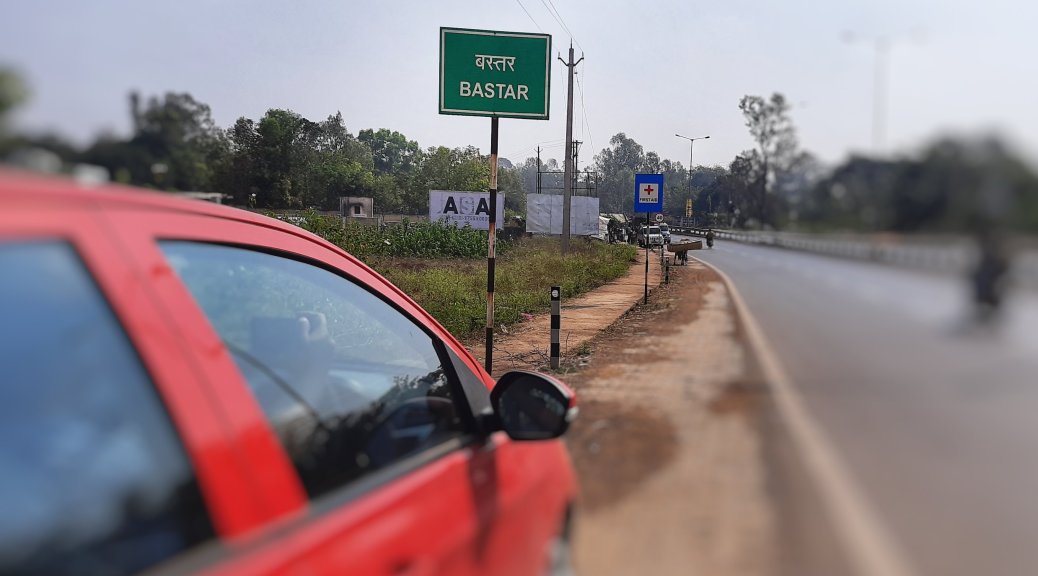
Bastar district, Chattisgarh
My verdict on safety for travelers:
I went to Chhattisgarh and returned safe. Every place across the WORLD has its own threat, but in different ways. When you are in Rome, be a Roman. So, whichever place you choose to travel, keep the local customs and sentiments in mind. If possible, get in touch with a localite and take them into confidence. Travel to build connections and build connections to travel.




 The Lost Lander