Tag Archives: hinduism

Goa backpacking: Makarotsav Celebration and Temple Hopping

Continued from Goa backpacking: Mahavir National Park.

I returned to Goa with a friend to spend our Dasara vacation and we chose to stay put at the same homestay in Colva that was our base while my family and I had explored Madgaon, Old Goa, and its surroundings during our earlier visit. Everybody associates Goa with the yuletide cheer, but my friend and I were more inclined towards experiencing Goa’s unique tradition of Makarotsav as part of the Dasara festival celebration. We had heard about it through our friends belonging to the Saraswat Brahmin communities, most of whose Kula devata (patron God of their community) happen to be in Goa.

“Makar’ is a boxy frame like swing decorated beautifully and carries the idol of the deity. It is rocked to the rhythmic beats of dhols, Tasha, temple bells along with Aarti. The history of this unique Dasara tradition dates to the 16th Century. During the Portuguese rule, several Hindu temples were destroyed across Goa. Many people fled these places overnight and arrived at the forests of Ponda region to take refuge.

It is said that these Hindus also carried their deities along with them which were installed across the region. Since then, Makarotsav has become a symbolic celebration. The act of ‘Swinging the deity’ is a representation of their God being with them in times of hardship, moving, swaying and living among the people.

The original sites at which the idols were installed eventually saw significant renovations under the Maratha rule. The style of temple architecture is typical to the region and is a blend of domes, pillars, and large lamp posts/towers in the courtyard. Some of the oldest structures that still stand strong bear the original wooden bars, intricate paintings alongside reliefs and carvings in their original condition. Water tanks or Kalyanis, are integral to the vast premises housing these temples.

Today, Ponda has the highest density of Hindu temples across the state of Goa and therefore revered as the Temple town of Goa. ‘Makarotsav’ is celebrated in most temples in and around Ponda which can be broadly classified into three categories. Temples that worship Shiva, Temples that worship Vishnu and Temples that worship Parvathi (Shakthi). Goddess Parvathi is worshipped as Shanta Durga and is believed to be the guardian of every village.

The legend has it that Goddess Shantadurga is the one who mediated peace between Shiva & Vishnu when they fought to establish who was the greatest among the two of them. Hence, her name is Shanta+Durga, a combination of two words ‘Shanthi+Shakthi. The Goddess is (Peaceful) Gentle enough to resolve any egos and (Brave) fierce enough to slay any demons. There are over 20 temples dedicated to Shantadurga located across Ponda and its surroundings where one can participate in Makarotsav.

The celebration happens simultaneously at different temples on all nine days of the Navaratri /Dasara festival, usually starting by 08.00.p.m. and finishing by 11.00.p.m. Hence, it is difficult to cover all temples in just 1 or 2 days, and requires detailed scheduling to take part in as many Makarotsavs as possible.
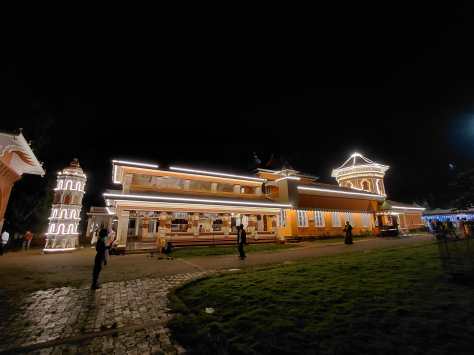
Shri Shantadurga temple, Kavalem

Below is the list of temples we visited on one of the evenings. We had planned them considering their proximity to each other and before knowing the timing of the Makarotsav at each temple.

1. Shree Shanta Durga, Kavalem (Temple dedicated to goddess Parvathi): This was our first stop by around 08.00.p.m. The outside of this temple felt like a village fair with lot of makeshift stalls selling things. It was crowded at the time of our visit, and we saw the Makar still being decorated extremely elaborately. We waited for some time in the belief that the utsav would start but we were told that it was scheduled for later at 10.30.p.m. Meanwhile, we were invited for dinner at the temple’s dining hall. However, we chose to politely reject since we had eaten a light meal before arriving. We decided to visit other temples in our list without spending further time waiting there. Our plan was to witness the utsav at whichever temple we arrived at, at the time or return to this place by 10.30.p.m as the case may turn out.

2. Shri Shanta Durga Shankleshwari temple, Veling (Temple dedicated to goddess Parvathi): It was roughly 09.30.p.m. when we arrived here by chance, on our pursuit to a different temple. But we considered ourselves most fortunate as we had come just in time before the Makarotsav started. We found ourselves on the floor, somewhere in the front with a good view of the Makar. The celebration lasted for about 45 minutes post which a large queue was formed to distribute the prasada offerings comprising of Black-chana dal salad, cut fruits and whole fruits. We devoured them and quickly proceeded towards the next temple located a short distance away where we were told that the Makarotsav was about to begin.
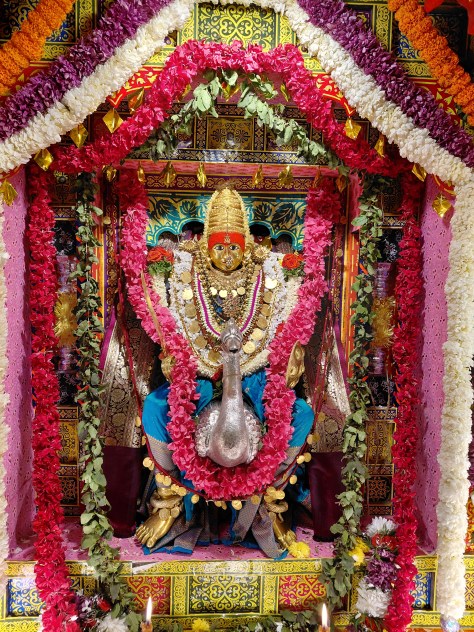
Shri Shantadurga Shankaleshwari Makarotsav

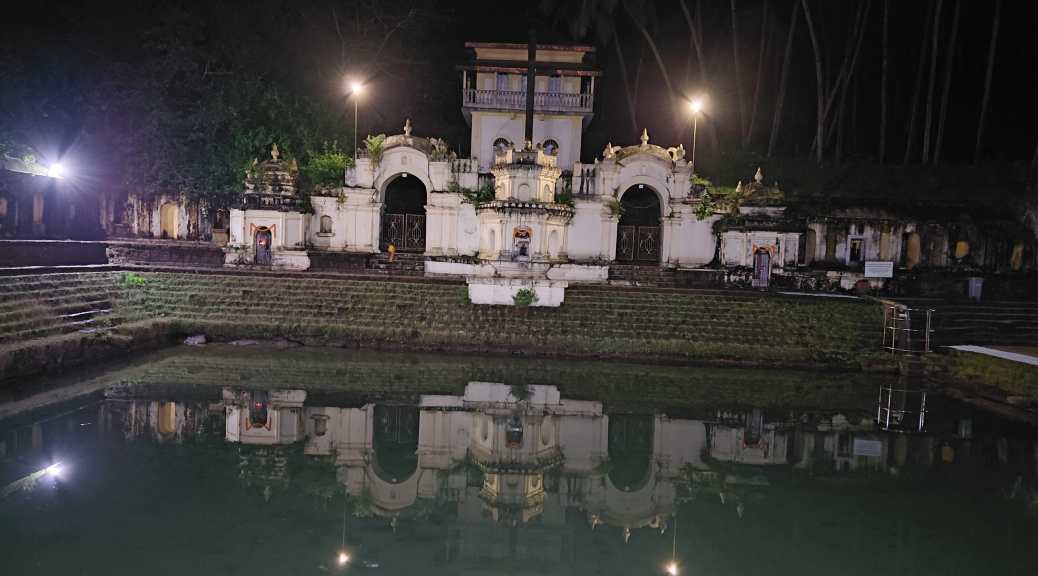
3. Shree Lakshmi Narasimha temple, Veling (Temple dedicated to Vishnu): The most beautiful temple I have been to on this trip, the temple complex has retained most of its old-world feel. The smell of seasoned wood used in its constructions, the frescos and paintings and the moss-laden temple tank with a backdrop of coconut and banana trees had all my heart. The Makarotsav began by 10.00.p.m. with the idol of Lord Narasimha and it was a transcending experience. The prasada was distributed to all devotees to wherever they were seated and the crowd dispersed immediately after the utsav had ended.
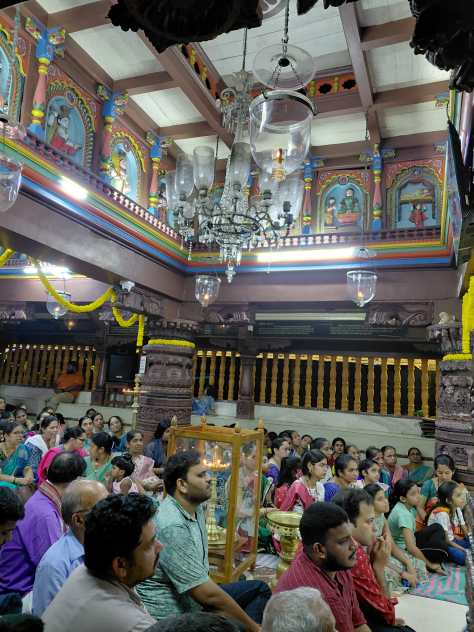
Shri Lakshmi Narasimha temple, Veling, Goa
Shri Lakshmi Narasimha temple, Veling

4. Shree Mahalasa Narayani, Mardol (Temple dedicated to Shakthi): Mahalasa is venerated in two forms in Goa. Mahalasa Narayani to be a female avatar (Mohin) of Vishnu and as a form of Parvathi, consort of Khandoba (a form of Shiva). One of the must-visit temples in this circuit, we missed the Makarotsav as the timing overlapped with Shree Lakshmi Narasimha temple and hence, we could only see the temple by requesting us get a glimpse while the security guards were closing the gates and not witness the Utsav.

5. Shree Mangesh temple, Mardol (Temple dedicated to Shiva): Our next stop was at yet another famous temple in this circuit, well after everything had wrapped up for the day. It was well past 11.30.p.m and hence, I had to make peace just seeing the temple arch.

6. Shree Kamakshi, Shirodha (Temple dedicated to goddess Parvathi): We visited this temple around afternoon, hence could not see the Makarotsav. However, the Makar was available but closed for viewing until evening. But for us the visit, though in the afternoon was still a highlight of temple hopping thus far because we had ended up here by chance on a random countryside exploration of Rachol (Written about in a separate post). But I got lucky to devour the hearty lunch at the temple distributed to everybody who came. Genuinely, it was unexpected and tasted so divine. We spent enough time resting on its courtyard before proceeding towards our next destination.
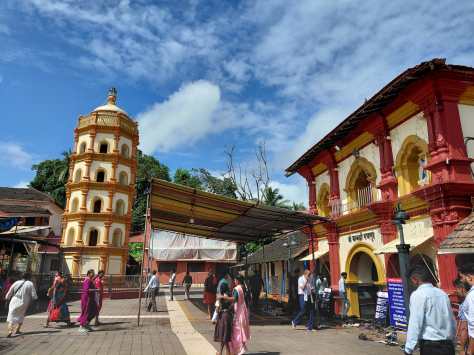
Shri Kamakshi temple, Shiroda, Goa
Shri Kamakshi temple, Shiroda

7. Vimleshwar temple, Rivona (Temple dedicated to Shiva): We arrived at this temple just when it had opened early in the evening and while we were on our way back from our Netravali exploration (Written about in a separate post). We did see the Makar carrying the idol of Lord Vimleshwar and all decorated for the Utsav but were quite early for the Utsav which was scheduled to start later around 08.00.p.m. as per the priest with whom we got talking. Without anybody else at the time of our visit and the strong energy of the temple itself, it was truly a wonderful time.

8. Damodar Sansthan, Fatorda (Temple dedicated to Shiva): Despite Damodar recognized as one of the names of Lord Vishnu elsewhere across regions where Hinduism is practiced, it is a reference to Lord Shiva in Goa. A massive temple complex in expanse, we happened to drop by here while on our way to Colva from Netravall. Our visit was unplanned. Hence, our attire was messy, and rain soaked but not as bad that we had to be chased out of the temple by the presiding priest. Therefore, we left without seeing the idol or anything else inside the temple despite having stepped inside.

The main deity inside the sanctum sanctorum is worshipped in various forms like anthill, wooden sculpture, Kalasa, brass, bronze idols etc. depending on the local legend about the deity. However, the Utsava Moorthi (idol) placed in the Makar is different from that worshipped inside the sanctum.

As a basic feature of all Makarotsavs, the rocking/ swinging of the wooden frame (Makar) to rhythmic sound of the instruments and Aarti is same across all temples. However, the beats of the music and the procedures preceding or succeeding the Utsav differ slightly from temple to temple. Once the swinging ceremony is completed, the following rituals may vary from temple to temple. For example, we witnessed it at two temples.

At the Shri Shanta Durga Shankleshwari temple in Veling, the floral decorations adorning the deity are auctioned among the gathered people. This is a way of raising funds for the upkeep of the temple and its maintenance. The prasad was served where in the devotees had to stand in queue to collect it. At the Shree Lakshmi Narasimha temple, The Prasada was distributed in pre-packed disposable leaf bowls to wherever the devotees were seated even as the Makarotsav was going on. There was no auctioning of anything associated with the temple or the Pooja. Even waste bins were kept across the main hall to collect the waste so that all could leave the premises as soon as the celebration was over and the gates were quickly closed for the day.

While the Makar was adorned and kept ready for viewing of everyone at the Vimleshwar temple by 05.00.p.m., at the other Shanta Durga temples that we visited, the decorated Makar was closed with a curtain and opened for public viewing just before the start of the Aarti. This might be something else in other temples.

If you know any other practice at any other temple that celebrates Makarotsav, share it with me in the comments below.

To be continued as Goa backpacking: Netravali Wildlife Sanctuary.

Part 2-The Story of The Maha Shivaratri and the Naga Sadhus

Continued from Part 1: The Story of The Maha Kumbh and the Naga Sadhus

We had taken help from a local person, Sunny, to make a last-minute hotel booking at Banaras. Sunny was a young lad who freelanced as a local guide, and was referred to us by one of my friends who had availed his services earlier. My friend and I checked into the hotel booked on the main road of Banaras, slept without dinner as were tired.

Meeting the Nagas

It was around 02:00 a.m. when I was woken up. “Wake up, Hitha. There is something happening on the road, I can hear people shouting slogans.”, my friend sounded very anxious.

It is Shivaratri. People maybe chanting Har Har Mahadev, as many were doing so when we arrived here.” I said.

No, wake up! I have been hearing this from quite some time, and it is getting louder now.” She barged outside the room to check what was going on.

Hitha, hurry up and come outside! All the Naga Sadhus are right here!” she shouted, while running towards my bed, huffing and puffing in the next couple of minutes. Then, we both ran out to the reception area.

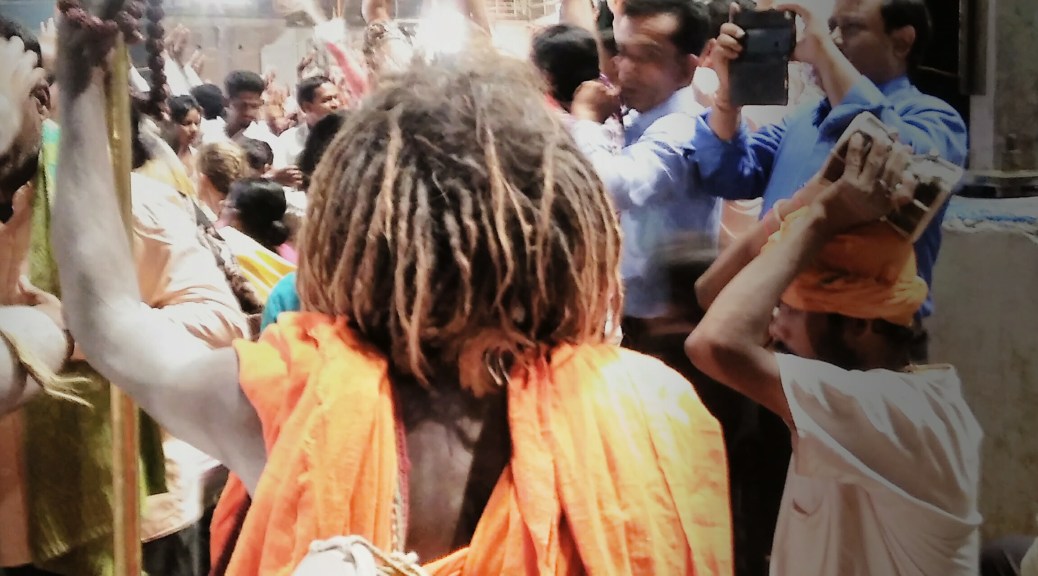
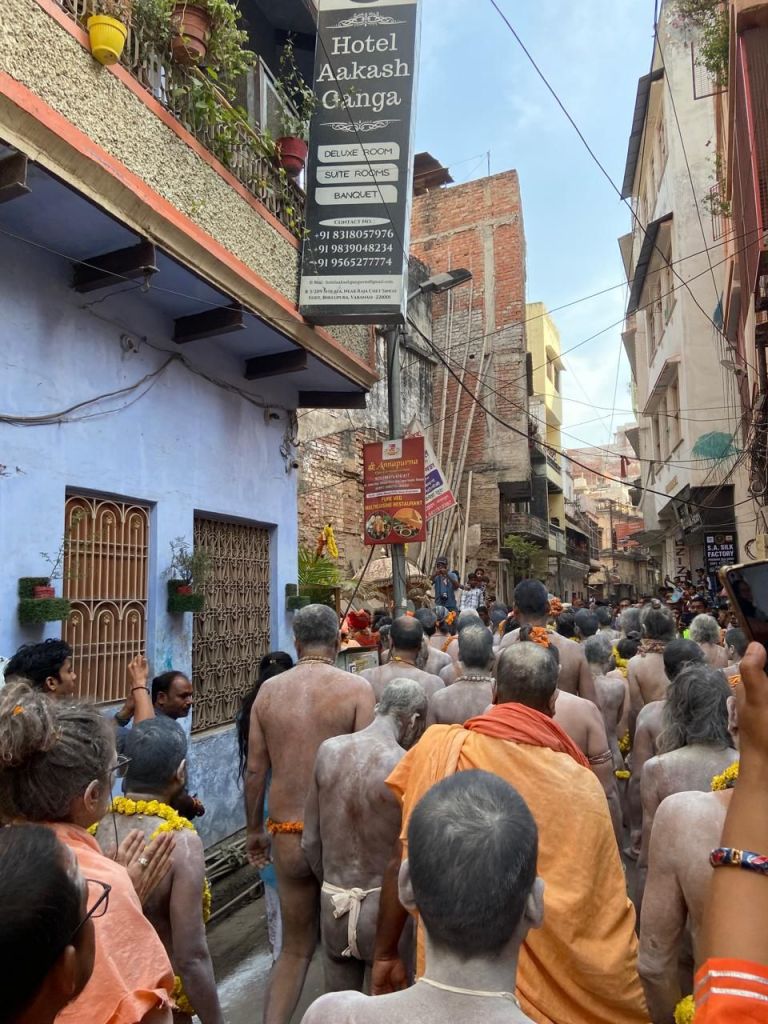
We were spellbound with what we saw there. With ash smeared bare bodies, matted locks, strings of Rudrakshas around their necks, trident and damrgo in hands, there were hundreds, or perhaps thousands of Naga Sadhus and Sadhwis representing every known Akhada with their respective Tableaux, had all assembled right in front of us. Calls of ‘Har Har Mahadev’ reverberated not just on this road but across the city as their convoy began with all the Nagas throwing ashes up in the air. Tight security with the CRPF barricading the streets on both sides ensured the convoy reached the ‘Kashi Vishweshwar Mandir’ thereby the Nagas got the first glimpse of their Adi Guru on the day of Maha Shivaratri before the rest of the public were allowed. A sight that seemed like a dream that I had just woken up from, one that I will cherish as one of the TOP memories of my life which I would have missed in a matter of seconds hadn’t my friend woken me up at the right time. The crowd then dispersed and we returned to our room to freshen up before starting our day.

In a couple of hours, Sunny updated us to stay at the entrance of the hotel for the procession was to return along the same path, with the Akhadas returning from the temple, back to their camps set along the Ghats from where they would all packup to head towards their respective abodes scattered across parts of India. When they all did arrive, I stood on the side of the road to capture a few shots for memory of this amazing day. Despite the security, my friend and I had unknowingly become a part of the parade. The parade of the Nagas. We were walking beside and amid the Nagas from Godowlia street, right until the Juna Akhada office before someone realized that we were outsiders and politely asked us to step aside. WOW! It was indeed an experience that gives us goosebumps just by imagining even today.

Naga Sadhus returning to their akhadas

Shiv-ji ka Baraat

Meanwhile, Sunny had us racing towards, yet another ceremony scheduled to happen on the parallel streets. The grand Shiv Baraat procession was on its way from Shri Tilbhandeshwar Mahadev temple towards the Gauri Kedareshwar temple, where the idols of Shiv and Parvati are set up the day before the main event. Sunny placed us both on strategic spots on the street from where we could watch the arrival of the Baraat clearly.

First, the camels arrived. Then the elephants. Then, all the Baraatis from the groom’s side accompanied by various orchestra/Band sets and tableaux from across the city arrived on different vehicles, chariots etc. (Children and young adults dressed in masks and costumes depicting various gods and Goddesses from Hindu Mythology) and Finally the groom made his appearance on horseback (yet, another young boy dressed like Lord Shiva), travelling across various lanes, streets and main roads of Banaras and finally reaching Gauri kund located at Kedar Ghat where the divine union of Lord Shiva and Goddess Parvati was to take place later that night.

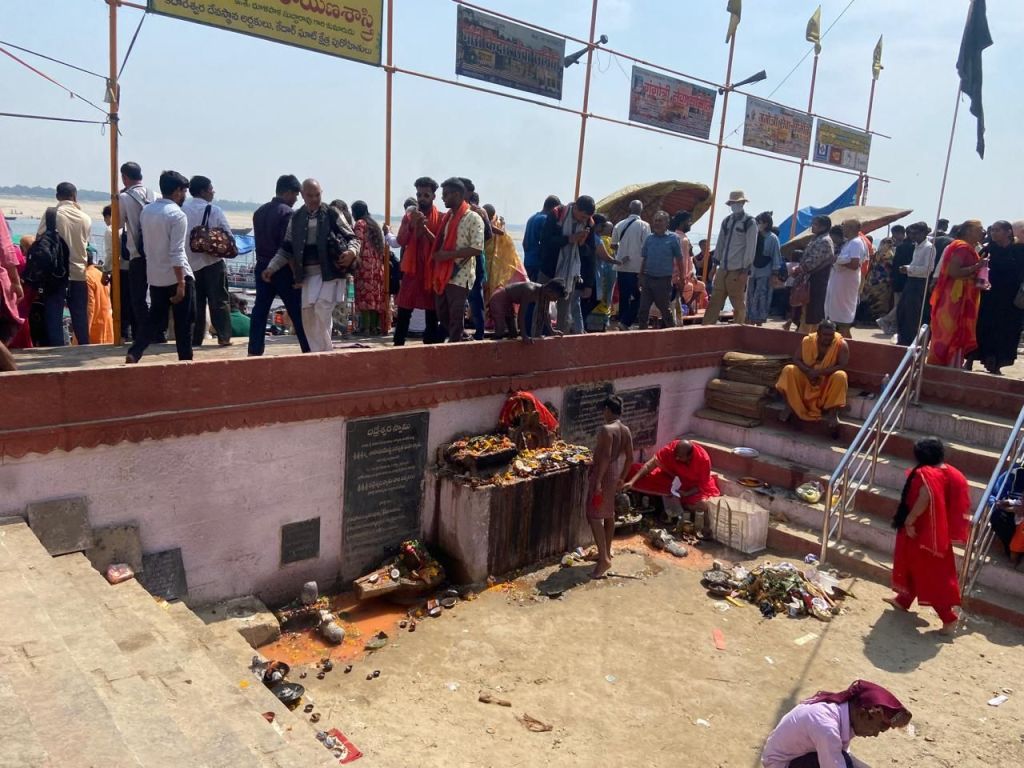
Gauri kund before the wedding prep

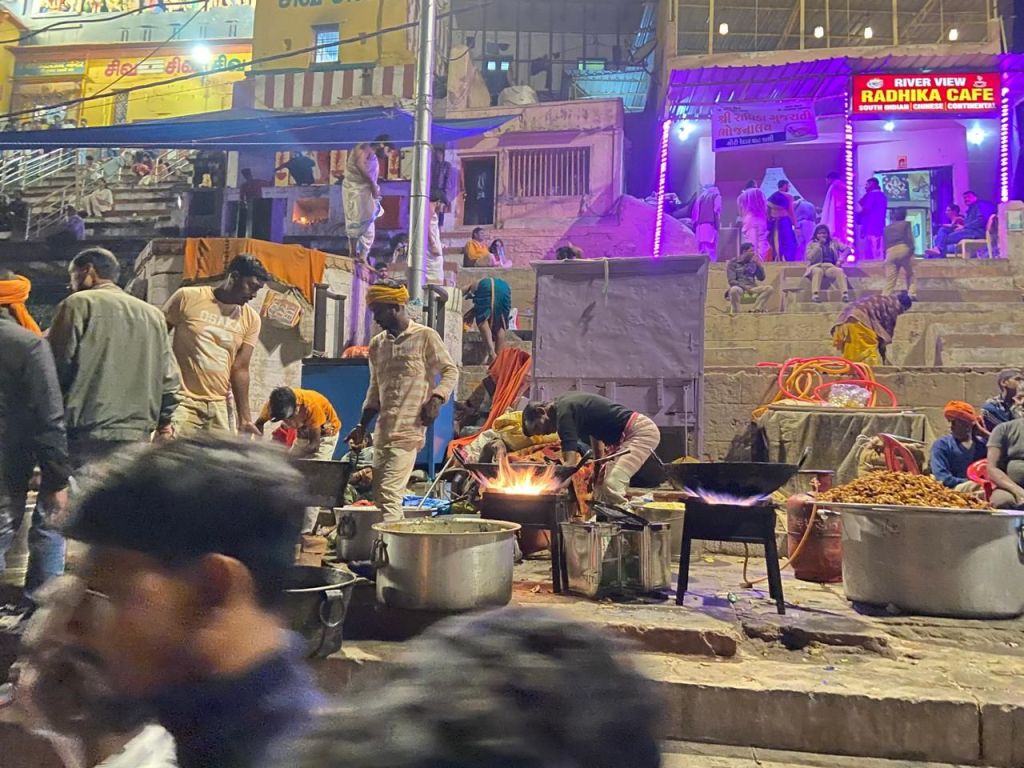
We found a strategic spot on the stairs of the Kedar Ghat to witness the grandest wedding that was supposed to take place all night with all the devotees staying up on night vigil as witnesses to the wedding on the banks of River Ganga. Ofcourse, any Indian wedding is incomplete without a grand feast for its attendees. How could it not be so when it is the wedding of their dear Lord himself? There was free and unlimited supply of potato sabzi and Thandai throughout the night to all devotees (guests) in attendance at Kedar Ghat, witnessing the wedding by participating in rituals and discourse of vedic chants.

Feast being prepared for the wedding

The common man seated hundreds in numbers occupying the riverfront stairs played witness to the divine marriage ceremony conducted in a style typical to the Uttar Pradesh region. My friend was on top of the world when she was randomly picked from the gallery of people to make her offerings to the newlyweds (perform abhisheka with milk on small lingas moulded out of fine soft sand from the Ganges on a decorated silver plate). The contents in each plate was offered back to the river as a part of the culmination of the marriage rituals. The chants and offerings went on until the break of dawn post which the audiences and witnesses dispersed.

The celestial wedding in progress at Gauri kund

Date with the Lord and his consort

If this was about witnessing the celestial wedding, wait. Our visit to Banaras was incomplete without this: Greetings to Lord Kashi Vishweshwara. We had decided to skip the temple visit on the day of Shivaratri to avoid the crowd and try our luck on the following day. So that day was about resting and catching up on the sleep deprived from the last night.

Come the following day, there were no signs of any less crowd. Rather it looked like the entire crowd from Prayag had alighted at Banaras after closing the Kumbha Mela. The queue to enter the temple extended several kilometers. But we are Indians with local contacts. Be it getting access to a no-entry spot or to wave a quick ‘Hai’ to our favourite god, why wouldn’t we utilize our privileges to bypass rules? We will! We found a legal way (Oh, that’s a secret!) to cut the longer queue and reduce our wait time to just an hour. Amid chants of ‘Har Har Mahadev’ we had finally arrived at the Lord’s doorstep, a window from where we were blessed with a view of a beautiful Pushpa alankar or the floral decoration. Despite wanting to stay there for a little longer, we had to move away making way for the lakhs of devotees waiting behind us.

A visit to any Shiva temple is incomplete without taking the blessings from his consort, Shakthi. In Kashi, Lord Vishweshwara’s consort is Goddess Vishalakshi. We expected another long line but as surprising as we were, we had just another 10 to 15 people along with us, all standing and praying inside the temple without any pressure to move out. It was such divine energy felt in peace. So, after coming out of there, the next important thing to do on our list was to eat food, food at the Annapurna temple, the home of the goddess of food and abundance. Let me not add more paragraphs into my story describing how symbolic this temple is from a religious and mythological context; Google Mata is just a click away with all the details. So, we had to satiate our fasting stomachs by finding our way to the temple of Annapurna (actually, to the dining hall!).

Upon enquiry of the route, we understood that we had to navigate through the same long queue of the Vishwanath temple before arriving at a small deviation that led to the temple that we were looking for. The same local contact who had helped us to jump the previous line provided us with some tips to skip the queue all together because we were not going to Vishwanath temple this time. We followed his hacks, paid a deaf ear to dozens of abuses that were being hurled at us by frustrated people who had been standing for hours in the long queue before joining a crowd that seemed unusual to an Annapurna temple (since we had not encountered it on our way to the Vishalakshi temple) or rather familiar (with the structure and chants around us were similar to that of Vishwanatha temple). It didn’t take us too long to realize that we had indeed arrived at the window of Lord Vishwanatha again, by entering from a different gate. This time, his darshana was without any of his adornments, a blessed moment briefly happening before he is completely covered up by his next alankaara and the offerings made by the devotees. It felt surreal. How lucky could one get to have a second chance on such a cringe day?

Anyway, moving on from there, we had to talk to few security personnel to help us find our way to the Annapurna temple. It was a short walk away with a maddening density of people pulling and pushing their way through a small temple verandah to enter the dining hall. Once there, we both had goosebumps thanking our fortunes for having us the opportunity to devour that meal! It was simple and comforting yet felt luxurious!

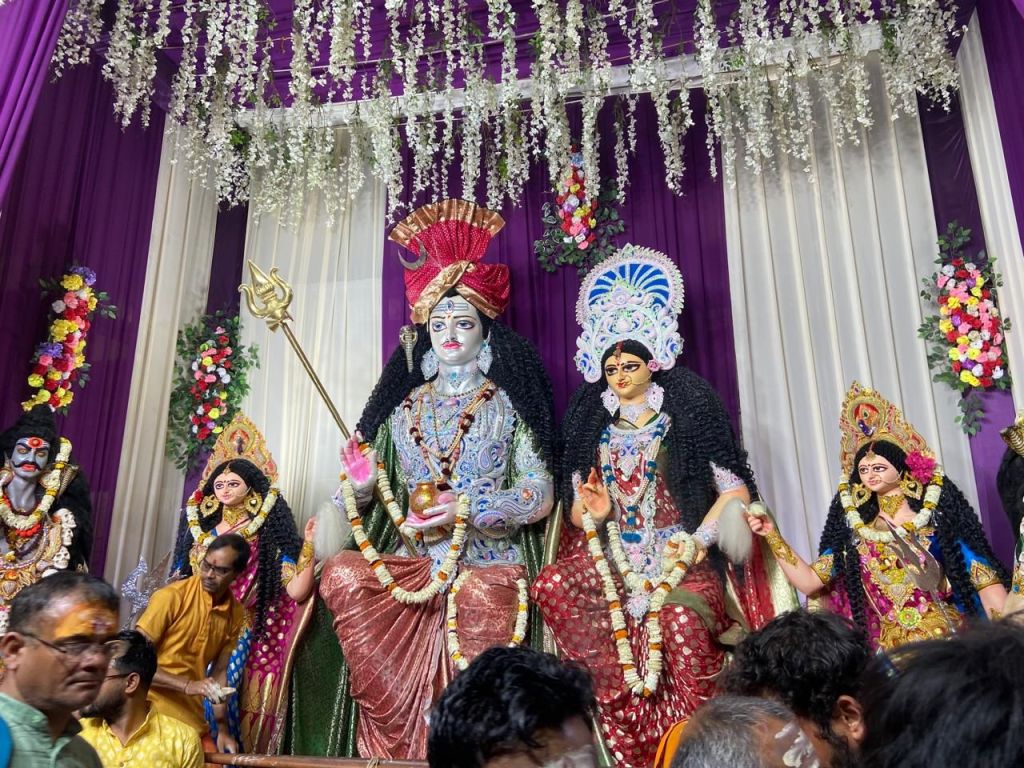
The reception of Lord Shiva and Goddess Parvathi

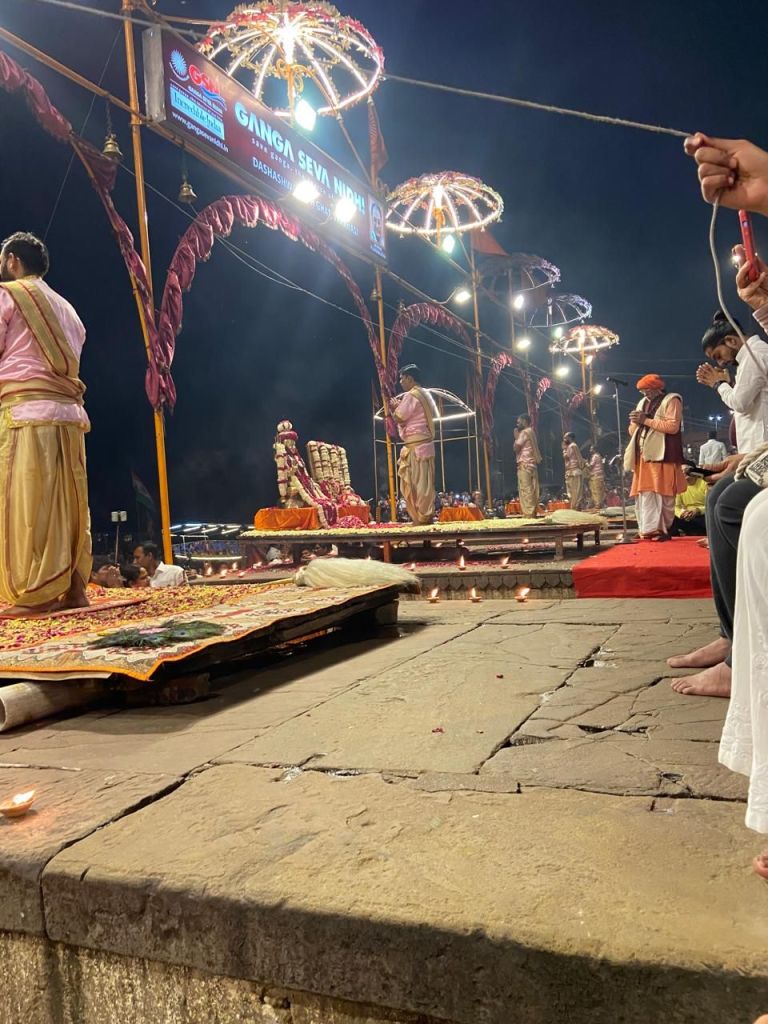
Lighting the Diyas at the Ganga Aarti

The famous Ganga Aarti performed twice daily on the ghats of the Ganga had been halted over the last couple of weeks, ever since the stampede had happened at Prayag. It was while having our lunch at the Annapurna temple, Sunny had dropped us as SMS informing us to arrive early at the Dashashwamedh Ghat as the evening aarti would be restarted from that evening. Even as we arrived at the ghat at 04:00 p.m., let alone sitting, it seemed impossible to find space to even keep our feet firmly on ground. The crowd had assembled on the ghats, on boats, atop all surrounding buildings, poles and structures to witness the Ganga Aarti that was scheduled to begin post-sunset. We both barely managed to find space just enough to cling on a supporting wall in front of the anchored boats.

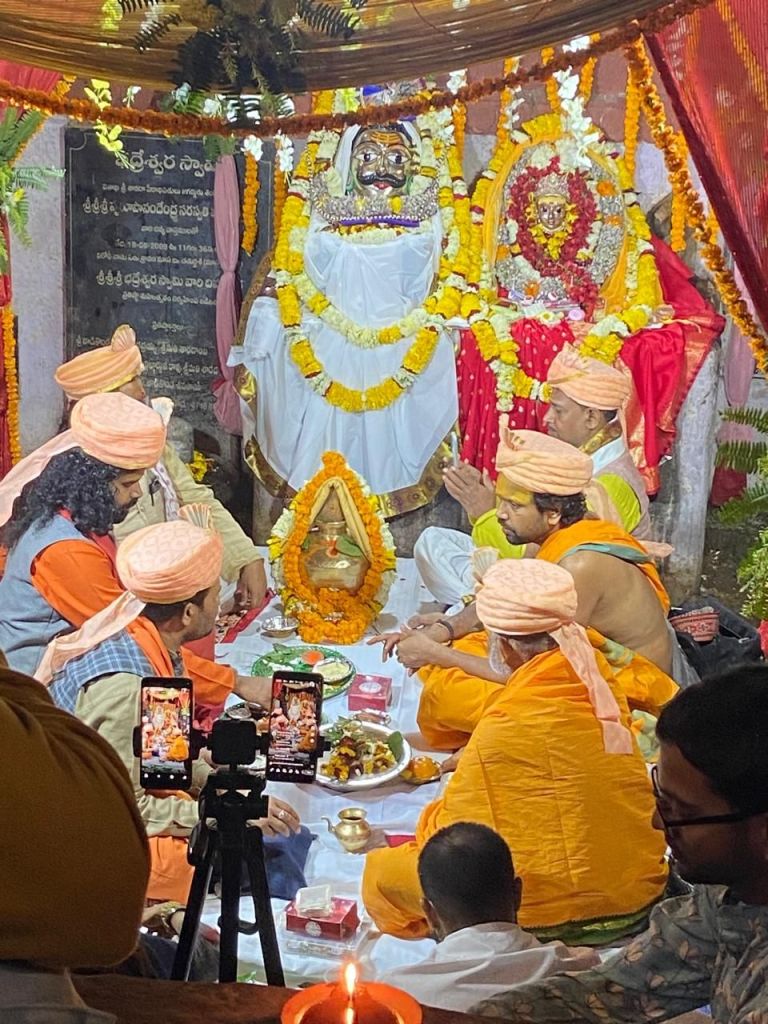
It was finally time for the aarti and the all the priests who had to perform the Ganga aarti had assembled on the podiums. Call it our luck or divine intervention, the head priest who overlooked the preparedness of the dais before commencing the sacred ceremony pointed at the two of us from the massive crowd that had gathered. He asked us to come over and light up all the clay lamps arranged around the podiums. After that, he offered us to sit on a red-carpeted arena, right behind the performing priests that provided us the best possible comfort and view that evening! We couldn’t help but pinch each other to convince ourselves that the way our day had unfolded was indeed real.

Parvati ki Bidaai

On the third day, we stayed back to play witness to the Bidaai ceremony of the daughter, Goddess Parvathi with her husband: Shiva. With the entire Banaras gathering on the streets, the pomp and grandeur of the send-off was even larger than the Baraat which finally culminated on the outskirts of Banaras. With that, it was also time for us to return to our hotel and pack our bags to head back to Bangalore.