There is no existence of a place without the people, and with civilization exists its culture. Madurai has its own share. My previous post (Madurai Part 1) was exclusively about the architectural landmarks spread across the city. But it would be injustice if the other things associated with this amazing city goes without a mention. Of course, the write-up could run into books if I had to write about each of them. And it isn’t necessary that everyone travelling is a pilgrim or a history buff or an architecture enthusiast. Hence, here’s an attempt to throw light on other aspects that any visitor to Madurai can expect. This is not a detailed one, but I touch upon various dimensions that you can theme your trip around Madurai. Do let me know if this post helps or if there is any other dimension I missed. Here goes my list.
Art:
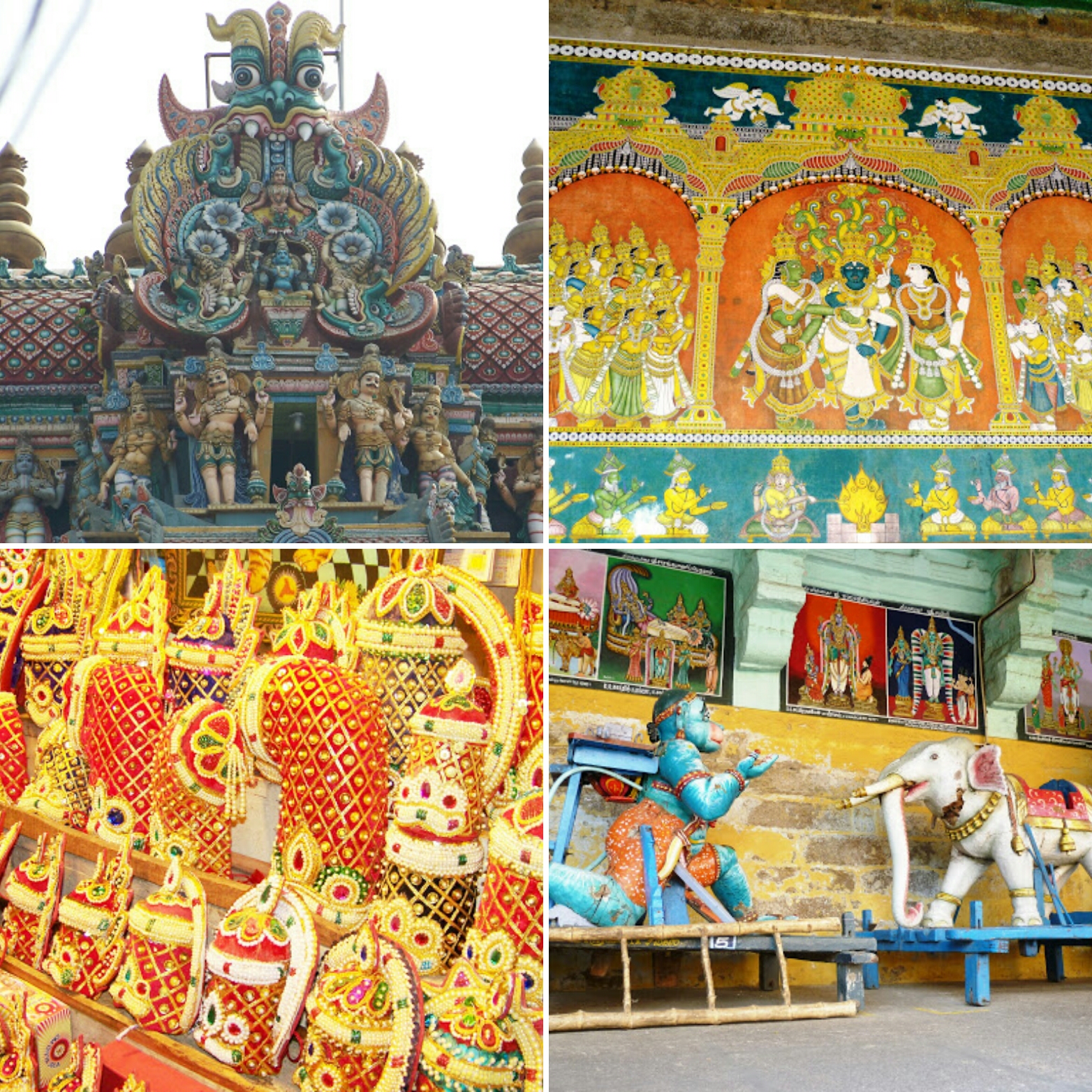
Sculptures: adorning every temple wall, pillar and their towers are a marvel in itself.
Carpentry: Several wooden vahanas used to carry the idols of the various deities in the temple are something that need the attention of art afficionados.
Handicrafts: Various accessories used for decorating Devi idols, made of delicate sequins, etc. are sold in several stall inside the large corridors of the Meenakshi temple.
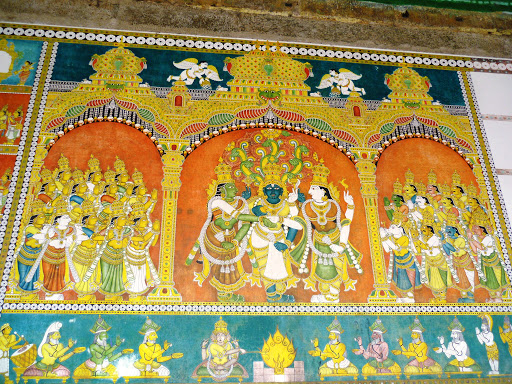
Mural paintings: This needs no introduction, the famous Madurai paintings are a gift of the Pandyan era, adorning the temple walls.
Clockwise from top left: 1.The sculptures on the western tower of the Meenakshi temple; 2.One of the mural paintings from the temple walls; 3.The wooden carriages for the temple idols; 4: Handicrafts from the temple stalls
Food:
Listing just a fixed menu while in Madurai would just be an understatement. If you are a foodie, Madurai would need two full days to explore its culinary delights alone. It is famous for both vegetarian and non-vegetarian specialties. I’d probably write a separate post about it sometime later. But this list is the list that we had when my family visited. But believe me- it is BEYOND!
Breakfast – Idly & Sambar, Pongal + a cup of filter coffee 11.00.a.m – Jigarthanda (it’s more like a combination of falooda & kulfi)
Dinner- Anything after 7.00.p.m is called meals. Must try is the ghee roast & rava Masala dosa
Costume:
Sarees for women & Dhotis for men.
Madurai cotton sarees with simple prints and zari borders with temple designs are popular.
Jewellery:
Among the locals- particularly those belonging to the Thevar cast, it is believed that women are prettier with bigger earlobes. Hence, the girl child born in this community is made to wear a traditional earring called the ‘Thandatti’ when she is young. The thandatti is said to evoke the 3 levels of our world: terrestrial, astral and divine and these levels are associated with Mandala. Each piece of this weighs 27gms and is made of gold and this piece of jewelry is specific to Madurai.
A Thevar woman wearing the traditional Thandatti earring
Shopping:
Shopping at Madurai is all about wholesale vendors and there are specified streets for each of them.
Cotton sarees/ dress materials: Shops are all around the temple complex
Steel utensils: Plastic beads & girls’ accessories, gold plated imitation jewelry to name a few.
Pooja related accessories & crafts: Particularly inside Pudumandapam (1000 years old market)
Farm produce: Varieties of plantains / bananas and green groceries among the others.
A brief intro to a city full of life and activities. Justice yet to be done. Signing off with a hope that it has helped someone somewhere in some form who is seeking for some info on this Pandyan city….
This was a family backpacking trip planned exclusively to explore Madurai. This city has served as the capital of the Pandyas and is a key destination that has nurtured the Dravidian culture. For anyone who hears the name of this famed city, they know of the Meenakshi Amman Kovil. A typical traveler / tourist / pilgrim would visit just that temple and takes pride in marking it in their travel map of places visited. But what one doesn’t realize is, that Madurai is beyond just this. The contribution of the Pandya kingdom is not limited to just the Madurai Meenakshi temple and can be seen and felt in several structures just around the same city. Also, a portion of the Madurai city has a history beyond the Pandyas too. Hence, our family wanted to reserve this long weekend, exclusively for Madurai. We boarded an overnight bus from Bangalore and reached Madurai at 6.00.a.m. on the following morning.
Like most of our family trips, we wanted this also to be an impromptu vacation. Apart from to and fro travel, nothing else was fixed. As per me, you would need a good 2-3 days to have a quick run around doing this same itinerary as ours, exploring ONLY Madurai. If you are an art and history buff or a foodie, I warn you to carry additional days!
Itinerary:
Day 0: Leave from Bangalore by night (KSRTC Bus) Day 1: Reach Madurai. Visit Meenakshi temple, Thirumalai Nayaka Mahal, Vandiyur temple tank, Koodal Alagar temple, Gandhi museum, Pudumandapam. Day 2: Alagar Kovil, Alagar Murugan temple, Pazhamudhir Solai temple, Tiruppanakundram Murugan temple, Dargah of Hazrat Sultan, return to Bengaluru.
The details:
After alighting the bus, we walked around the Meenakshi Amman Kovil to find a good hotel. Since this is the heart of the city, it wasn’t hard to find a decent lodge around there. We checked into a hotel that was located just in front of the temple’s west gate. We freshened up quickly and left for the main part of the trip for anyone visiting Madurai.
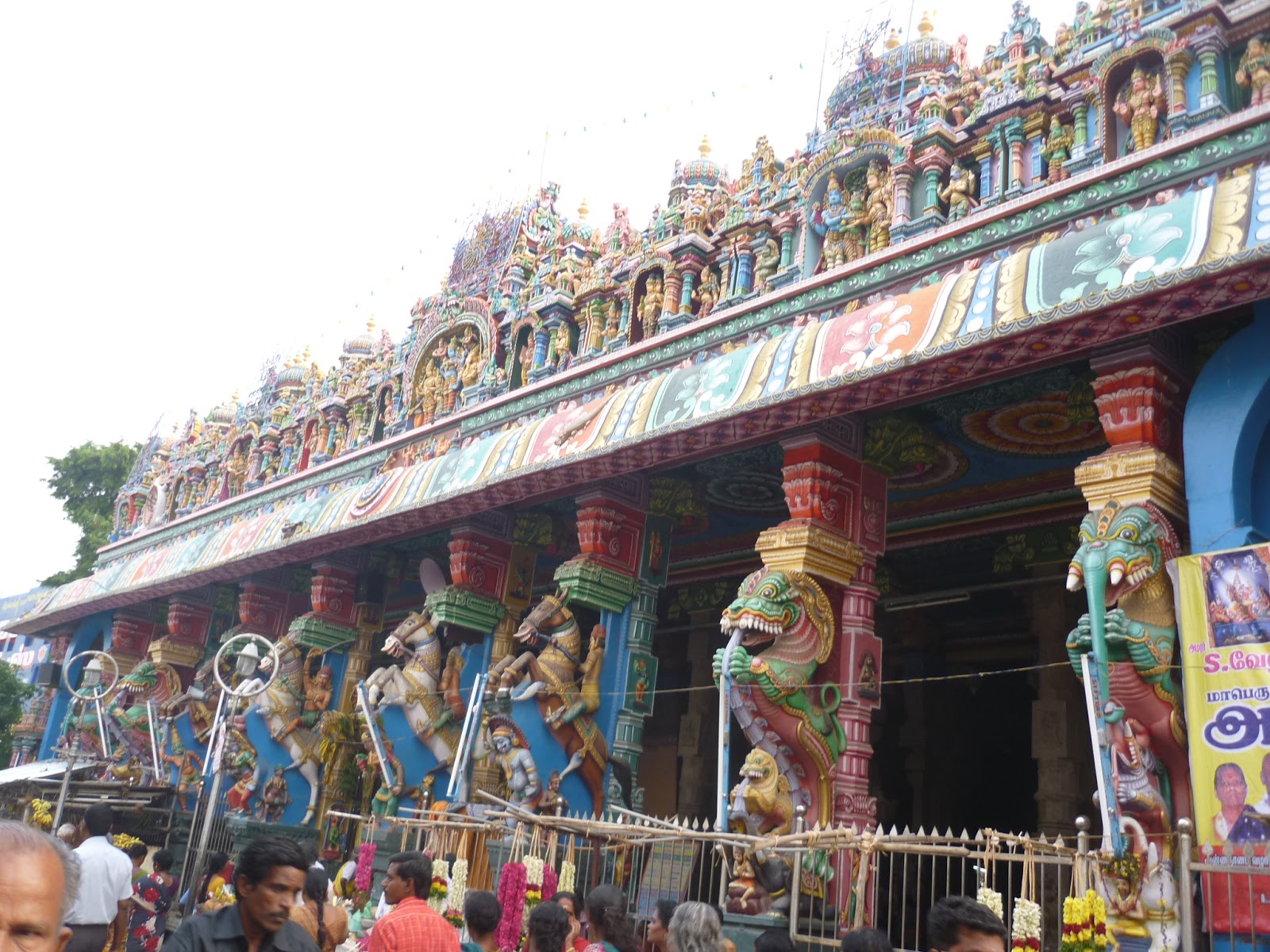
Meenakshi temple: A visit to the abode of the Pandya architecture. The entire temple complex is fortified and has 4 entrance towers, one on each of the 4 directions. The sculptures on each of these towers are out of the world. Once inside the complex, I started to wonder which world of wonder I had stepped into. It took us more than 4 hours to finish only a quick walk around inside the temple and also get the darshan of Meenakshi Amman and Lord Sundareswaran.
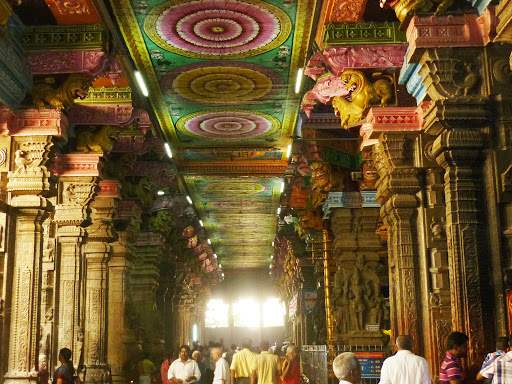
The finely decorated interiors of the Meenakshi Temple
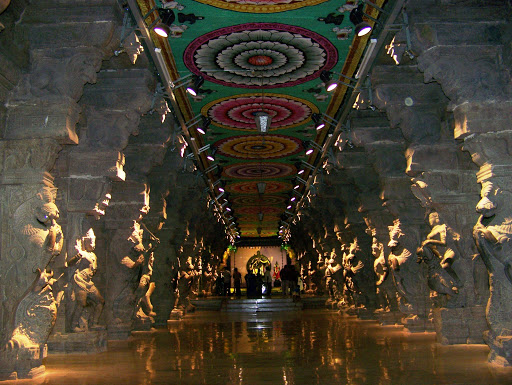
There are a lot of stalls inside the complex selling various handcrafted articles. The temple art museum within the same premises is a must visit. The central sculpture of Natarajan, or the dancing form of Shiva is believed to be one of the Pancha Sabha of the lord. This place represents the silver hall and Shiva is believed to have performed the ‘Sandhya Thandava’ dance form here (More on the Pancha Sabha Kshetras in another post). Also, there are 1000 pillars, all decorated with intricate pieces of sculpture. The dim light used for each pillar added up to the beauty of the place. The Madurai paintings adorning the walls of the temple requires another post to talk about. I go speechless when I get to explain about the South Indian temples. They are beyond words. Internet has plenty to feed and I don’t want to get into the details. After a tour of this massive temple complex, we decided to head out to explore the city beyond the Meenakshi Kovil.
Inside the Temple art museum
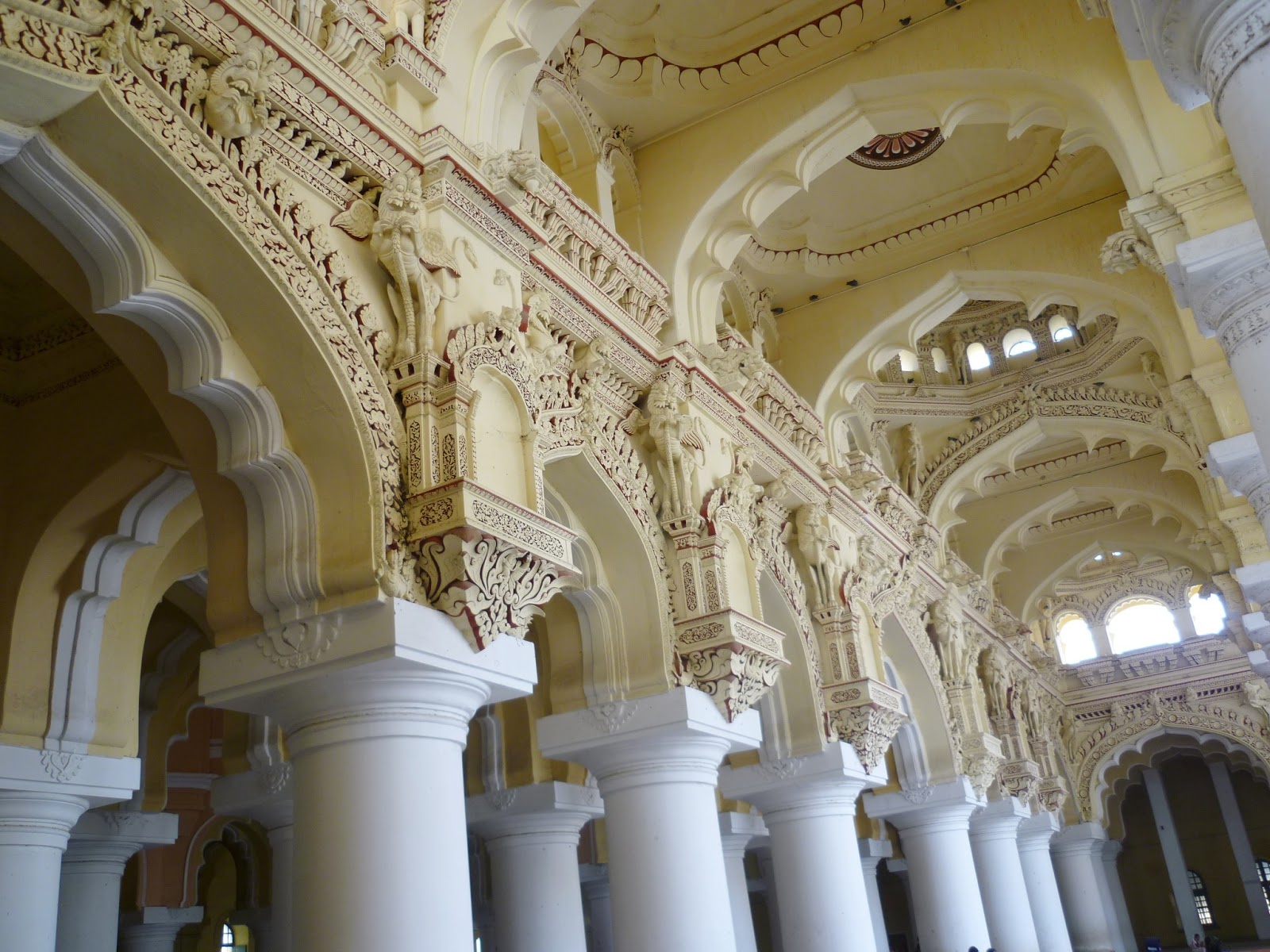
2. A small walk through the narrow lanes took us to the Thirumalai Nayaka Mahal built in the 16th century. Fine architecture with elegant paintings on the roofs and vaults is neatly presented in a simple combination of half-white and velvet red colors. There is sound and lights show conducted here every evening. However, we could not make it.
The interiors of Thirumalai Naickar Mahal
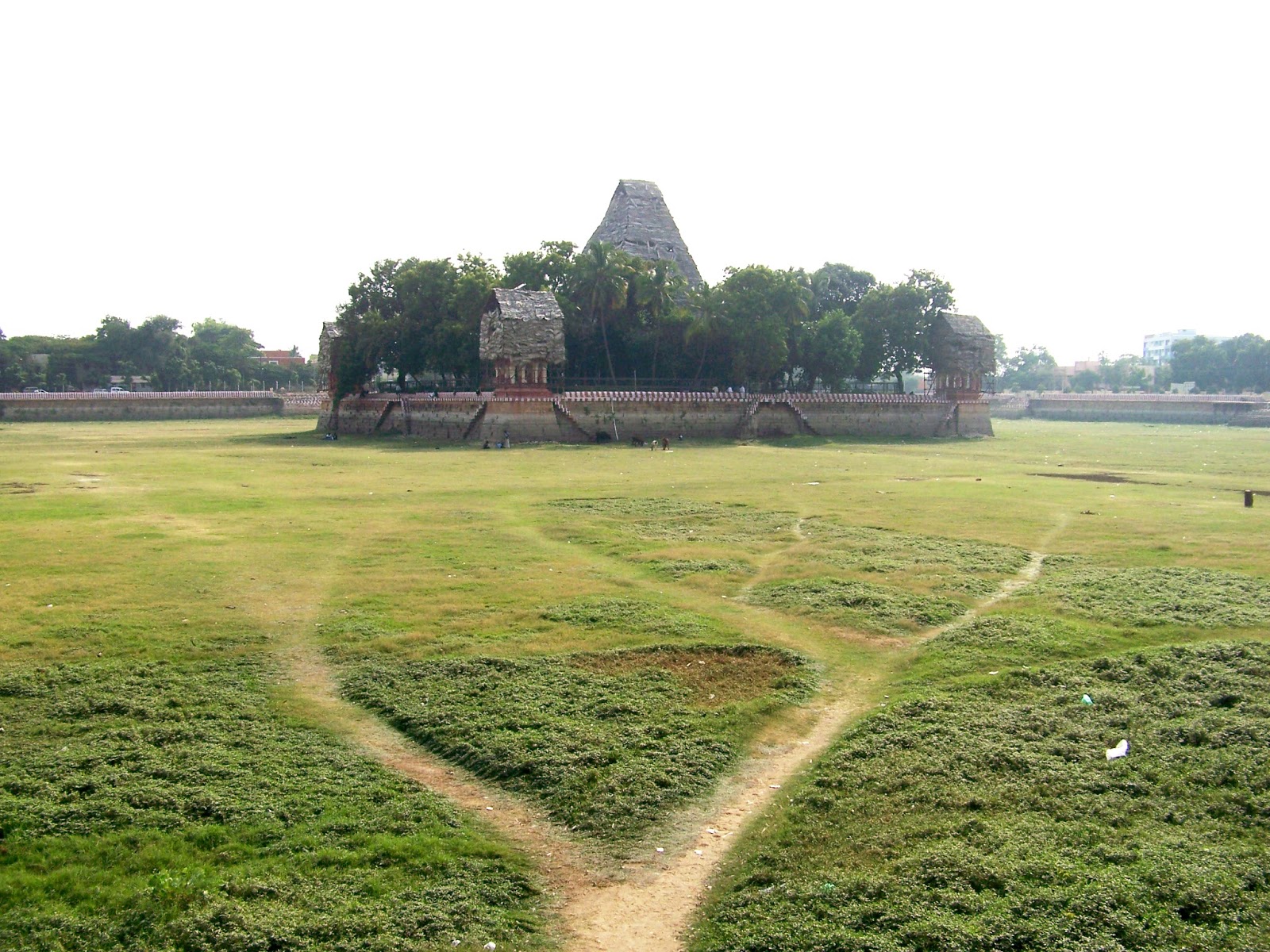
3. From there, we took a local bus to Vandiyur. This is where the annual event of the famed Teppotsavam / Float festival takes place to celebrate the birthday of King Thirumalai Nayak in January. This tank is supposedly the biggest of its kind in the state of Tamil Nadu. With the float festival just 2 months away and monsoon season just passing by, this tank still remained dry during our visit. When we enquired with a few locals passing by about how the event was going to be conducted in a dry tank, we were told that the water will be fed in January from the Vaigai river through artificially laid underground channels. This is truly amazing how such a concept was laid way back in the 16th century. But for a newcomer like me, the dried lake was an eye sore as it was used was a watering hole by many vandals at the time of our visit.
Vandiyur Mariamman Teppakulam – the island temple
4. Taking another bus from there to Periyar and a small walk from there through the stinking / dirty by-lanes, we reached the Koodal Alagar temple. A quick pooja and a walk around the temple was a nice boost up. The architecture here too, is similar to that of Meenakshi temple.
5. We had to rush to The Gandhi museum as it would close by 6.00.p.m. However, we could not make it on time. This was once called the Tamakkum palace of Rani Mangammal. Today, the museum supposedly houses 14 articles that were used by Gandhiji, along with his sacred ashes and blood-stained dhotis. Gandhiji is said to have visited the city five times during his lifetime.
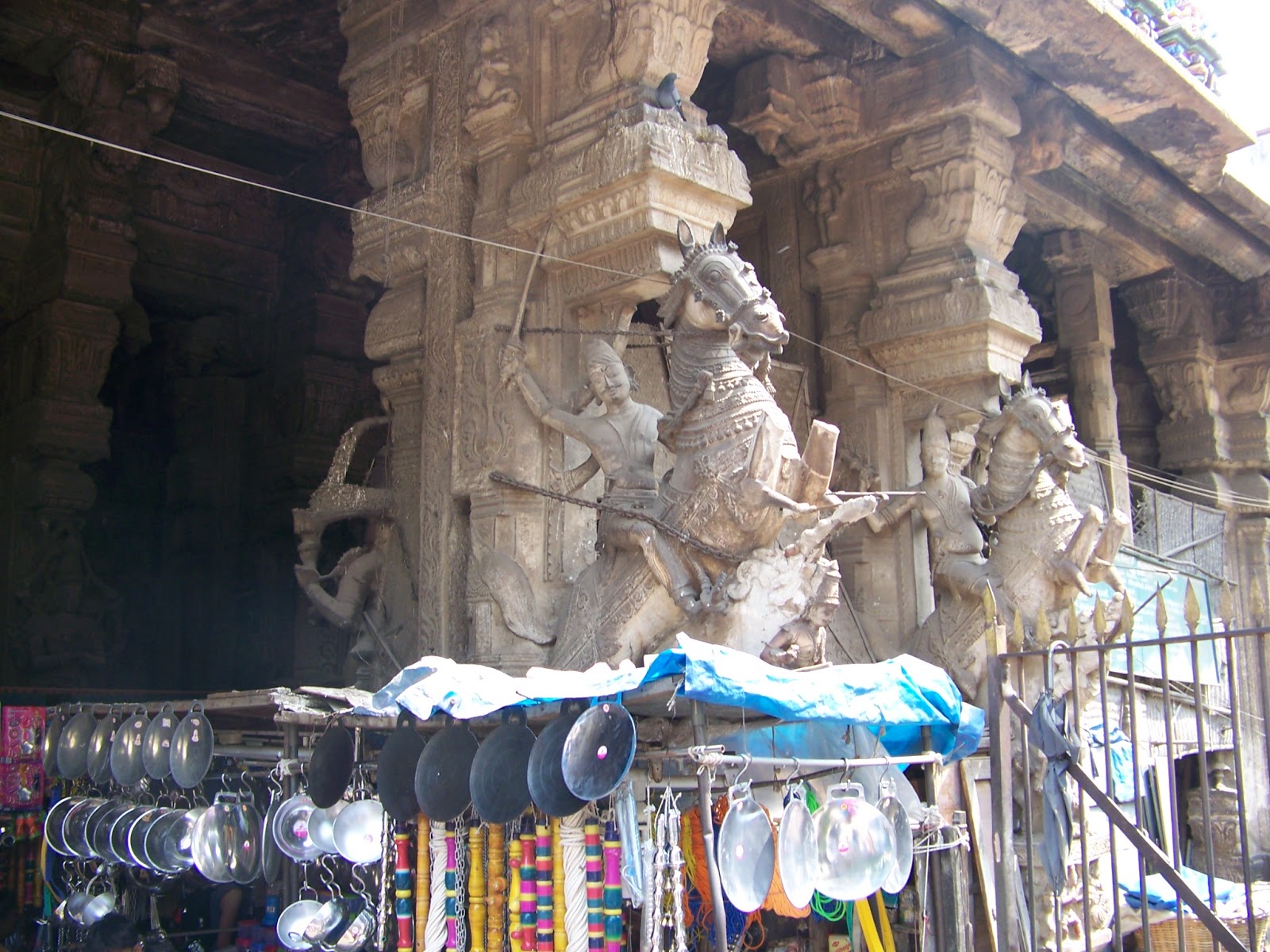
6. On our walk back to our hotel, we came across an old marketplace called as Pudumandapam. This is a 1000 years old shopping mall, supported by huge sculpture rich stone pillars. The stalls are occupied with tailors, handicrafts vendors, wholesale dealers of pooja related and general accessories. A good place for shopping traditional artefacts at Madurai, and that too in a market that is so old!
Entrance of the Pudumandapam
7. On the following morning, we boarded a local bus from Periyar bus stand to travel 21kms towards Alagar Kovil. The temple is dedicated to Lord Vishnu, Meenakshi Amman’s brother. The village is surrounded by an old fort wall, it gives a good view of the green hills around the temple. The architecture is similar to Koodal Alagar temple in the city.
8. A trek of 3kms uphill, through green forests and monkey infested walkways lead us to the Murugan temple. It is one among the six abodes of Lord Murugan and hence important among the pilgrims.
9. A walk of half a kilometer further uphill took us to Pazhamudhir Solai temple. A temple dedicated to Goddess Rakkaya exists close to a natural spring called Nuburagangai here, where devotees take a holy bath. But what seemed strange to me was that the place was probably the only temple I had ever been to, which charges an entry fee into the temple itself. This is where the famed Chittrai festival is observed during the month of April.
10. From there, we took the next bus back to Periyar, from where we had to take another connecting bus to Tiruppanakundram. This was a cave temple at the foothills of a hillock. It is believed that Lord Murugan was wedded to Devyani, daughter of Indra at this place. Hence, this is also counted one among the 6 abodes of Lord Murugan.
Entrance to the Tiruppanakundram Murugan temple
11. Up the hills, is the Dargah of Hazrat Sultan Sikandar Badshah shaheed Radiyallah Ta’al anhu. Owing to time constraint and exhaustion, we thought of skipping the climb.
Other lesser known places we skipped due to time constraints were the Kazimar mosque and Goripalyam Dargah. At the center of the city is the Kattabomman junction. This is where a part of the old Madurai fort exists. Today this is not more than a public library. Further, every street in the city has a history behind it: This link to an article from “The Hindu” don’t do this usually, but would make a special mention about the streets of Madurai. Every street in the city has a history behind it: This link to an article from “The Hindu” explains it all- ‘Where moats made way for motorways‘
This was all about us getting around the place for seeing some of the historically important landmarks around Madurai. But the list is endless and time, very limited ☹ I have covered a few other must-do things while at Madurai in a separate post. I wish to be of some use if you are planning a trip there. (Click here to read further)
Very few people know of the grandeur of the Dasara celebrations in Madikeri. Considered next to Mysore Dasara in pomp and celebrations in Karnataka, it is a 9 days long event.
The festivities start off on the day of Mahalaya Amavasya with 4 karagas getting all set at a place called Pampina Kere. These Karagas represent the 4 Mariamma temples of the town: Dandina Mariamma, Kanchi Kamakshi, Kundurumotte Sri Chowti Mariamma and Kote Mariamma. The Vrathadharis or the Karaga holders travel across the town to all households through the next 6 days of Navarathri. They dance and perform a balancing act with the idols(Karaga) on their shaved heads with a knife in one hand and a club(Bettha) in the other.
Karaga: Starting at Pampina kere
On the eighth day: people decorate their shops and vehicles to celebrate Ayudha Pooja. Also, vehicles are decorated and assembled at Gandhi Maidan where the best one is awarded in each category.
Above: A tableau outside a shop; Below: A narrative decoration of a vehicle at Gandhi Maidan
The 9th night commemorates the last part of the Dasara celebrations where 10 tableaux or Dasha Mantapas are taken out across the main streets. These are one from each temple in Madikeri, and depict a story from one of the epics. Each tableau will be as long as 4-5 trailers connected to a tractor. This inturn, will have separate trucks loaded with sound systems and other backup.
The participating temples in this grand finale of Dasara are: mantapa of Kote Mahaganapathy temple, Sri Kanchikamakshi temple, Pete Sri Rama Mandira, Sri Kote Mariamma temple, Dechoor Sri Rama Mandira temple, Sri Chowdeshwari temple, Sri Dandina Mariamma temple, Sri Karavale Bhagavathi temple, Sri Kodanda Rama temple and Kundurumotte Sri Chowti Mariamma temple.
The different tableaux at Madikeri Dasara
These mantapas will congregate at the center of the town in late night hours and put up a great show of colour, light, sound and an amazing display of creativity.. People flock to see this splendous show of efforts of over a 100 dedicated minds behind every tableau. The best tableau is awarded each year.. Finally, all the 10 tableaux proceed towards ‘Banni mantap’ and this brings the curtains down on the festivities and marks the dawn of a new day.
I had always wanted to witness this celebration but had been quite apprehensive about facing the wrath of the abuses that would follow with the joy of celebration.. And moreover, this festival happens in the southern part of Kodagu district and I always got to know about the celebration of this festival only after it was over!
But some wild wishes and what one truly seeks, do come true. This time my encounter was unplanned and I’m glad it happened.. I got to witness the unique celebration in Kodagu district, of a festival called “Kunde Namme” a.k.a. Kunde Habba or the “Festival of abuses”.
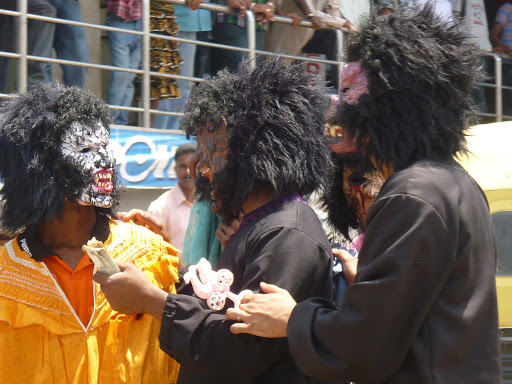
The tribes belonging to the Jenu-kurubas, Betta-Kurubas, Yeravas, Paniyas, Kembetti and other sects all congregate in a common place- usually a town area to celebrate their festival of abuses and to make merry. By abuse- I mean abuse God, man, machine and everything that they come across on that day. This is a tradition that has passed on through generations among these tribes.
Kunde Namme- The masked men
Legend has it that the main deity Aiyyappa had taken the tribe into a thick jungle for hunting. Deep in the jungle, he fell in love with Bhadrakali and eloped with her leaving his followers abandoned. Since then, the day is observed every year where these tribes abuse their god for betraying them. They find god in everything and every person they come across and hence abuse them in turn.
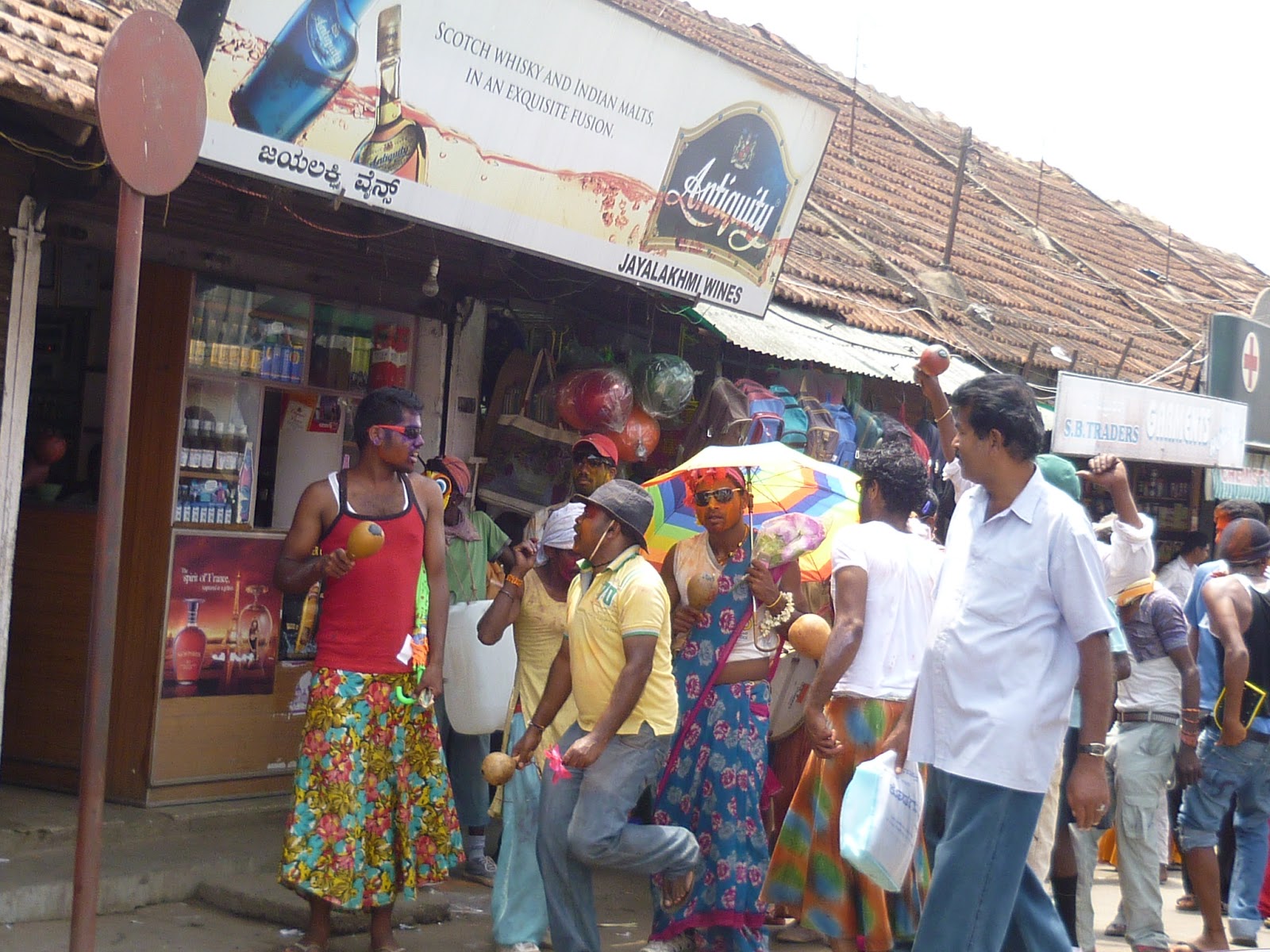
The tribal folk, mostly men are togged in weird clothes. Many take to cross-dressing, some dress like ghosts, some like witches and some dress up in costumes that are just random and as weird as possible.
They block every man(folk who belong to communities outside the above mentioned tribes) on roads, barge into shops in the town and demand money. If their demands are not met, then profound abuses are hurled at them. But one must not assume that they can escape from the wrath of the abuses by simply meeting their demands- they still get abused..!! Remember, no god will come to your rescue on that day as he himself is in being abused 😀
Kunde Namme- Dressed up men all set to charge into a shop
Also, most of the members of this group belong to the labour class who work in estates, domestic helps etc. Hence, the day doubles as a good opportunity for them to vent out all the frustration on their masters..!!
Kunde Namme- The band set guys
But, by the end of the day, they all congregate in their common place of worship and surrender to their god, plead for his mercy and ask for his blessings for the rest of the year. A portion of the total money collected by them on that day is religiously offered to the deity and the remaining is used for a lavish community dinner.
This festival happens on the 4th Thursday in the month of May and is celebrated in and around Gonikoppal considering its proximity to the Nagarhole National Park where most of these tribes are based.
On a weekend, my family planned to go for a day trip from Bengaluru. Since my dad wanted to visit Lepakshi since long, that was our destination for the weekend. There are several other small and major historical landmarks in a 50-100kms radius from Lepakshi; hence we had an initial plan to cover a few other places during our return as well. A super awesome NH7 from Bengaluru took us till Bagepalli, from where, Lepakshi was a small deviation away…
The belief is that, Jataayu- The vulture King (mentioned in the Ramayana) fell here when he was shot by Ravana’s arrow. Later, Rama is said to have commanded the bird to rise- Le Pakshi, and hence the name of that town. But not just its name, this entire place turned out to be a storehouse of history. Be it from mythology or the recent past history of the Vijayanagar Empire, every stone at Lepakshi had a tale to tell… We walked carefully reading every story that unfolded at every step
Although, I might advice you to take a personal guide while at Lepakshi who will be able to better put up all the stories and facts to you, here I would like to enlist a few noteworthy stories and art representations from Lepakshi.
The main shrine of this architectural complex is the Virbhadra temple. The human figurines/ sculptures in its main hall are believed to be made up to the specifications to measure the beauty of a perfect man and a perfect woman.
Left: The perfect man; Right: The perfect woman
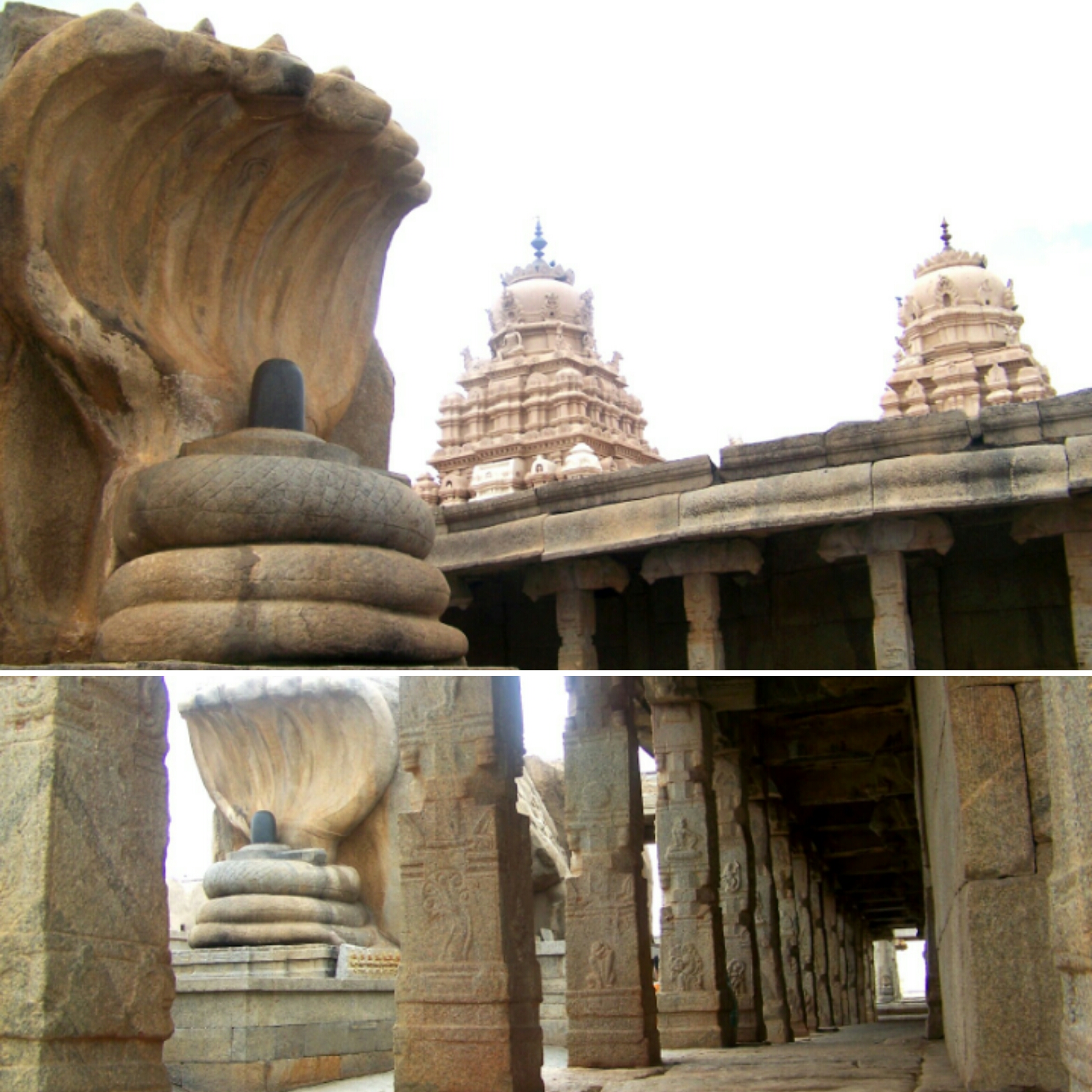
2. The idol of Nagalingesvara– Carved out of a natural boulder to the west of the shrine, is a seven-hooded Naga sheltering a black-polished lingam cradled in its ribbed coils. A saptamatrika panel is placed below to the right. History tells us that the sculptor had come home for lunch one day. His mother said she would be back soon with food for him. She was surprised with her son’s work when she returned and exclaimed “Oh my son..!! You have carved such a big and a beautiful statue in such a short interval.” Even before she completed, a big crack developed across the linga. This makes it un-worthy of any Pooja/ offerings at the temple.
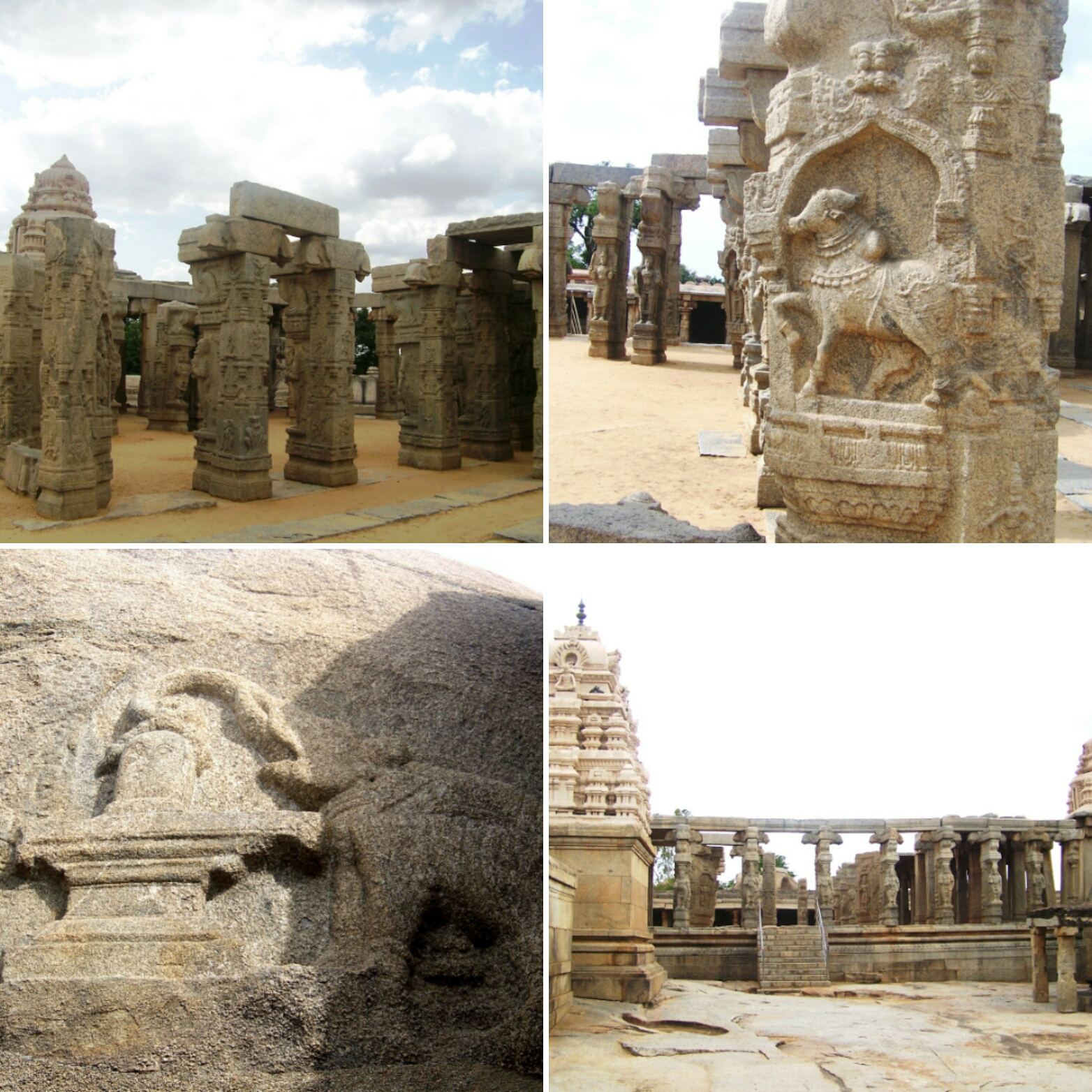
3. The hanging pillar– Among the several ornate pillars that decorate the temple corridor, this one takes a special mention as an architectural marvel. The pillar doesn’t rest completely on the ground and hence a sheet of paper can be easily passed through the gap beneath it. The roofs of these corridors are also adorned with several ancient painting, however they are largely lost due to apathy. Another noticeable feature on these pillars are the certain designs engravings specific to this temple. These designs are said to be the inspiration for the traditional Lepakshi prints found on Sarees around this area.
4. Kalyana mantapa-This incomplete structure has been depicted as the site of the celestial wedding of Shiva and Parvati. Each pillar here is supposed to be installed in celebration of this event. Hence, one can notice that there are depictions of drummers and musicians, gods and goddesses among others engraved in these pillars. A similar place is believed to exist in Kailash and it was therefore pronounced that a place more beautiful shouldn’t exist on the earth. And hence, this Kalyana mantapa was left unfinished.
The Kalyana Mantapa
5. History says, the place could have got its name referring to the two brothers- Veeranna and Virupanna, under King Achutaraya of the Vijayanagar dynasty. Virupanna got this temple built as a tribute to the Lord as his mute son regained his speech while he was playing near the Udbhava Moorthy of Shiva on this hillock. It is said that Virupanna spared no expense while having this temple constructed. However, since he was the treasurer of Penukonda province (today’s Anantapur), the money he was splurging lead to suspicions from the king about embezzlement of money. It is said that, Virupanna plucked out his own eyes and threw them against the wall in grief and in anticipation of royal punishment. And thus, lepa-akshi (blinded eyes). Till date one can find those blood stains on that wall. The locals say that it has even test have proven that the blood stains are indeed real..!!
6. The Natya Mantapa– This is an arena where the celestial dances are believed to have been performed. Besdie it, one can see a large footprint embedded on the ground and beleived to be the footprint of Sita. It is so large that is hard to imagine what it could have been or imagined to be when it was made.
Clockwise from top left: The Natya Mantapa; The idol of Chowti Ganesha; The Sita Paada; The bloodstains of Virupanna’s eyes
7. The statue of Basava or the Nandi is the largest monolithic Nandi in India. It is built facing the Naga Linga within the temple complex. However, this is half a kilometer away from the main temple.
The largest monolithic Nandi in the world- Facing the Veerabhadra temple
Jataayu is believed to have died at another place which is located at about 2 kms from the complex.This is quite sad that a place of such importance is not maintained or highlighted anywhere in the map. It didn’t have any walkable road to the exact spot. But, by this time we had already spent more than half a day at Lepakshi which we hadn’t anticipated. It was also very hot and dry and we were feeling all exhausted. Hence, decided to save all the other places for another day and returned to Bengaluru.
Conclusion: A wonderful place to visit if you are a history and art buff and looking for a place located at just about 120kms from Bangalore..!!
It was a Sunday morning and our family outing was fixed. We decided to take a day trip to Belur, Halebeedu and Shravanabelagola. These are places that I can NEVER get bored of visiting and can go over and over and over again. I prefer to write less in this post because I choose the pictures to speak for themselves.
‘Karnataka- is One State, many Worlds’.
-KSTDC, Karnataka State Tourism Development Corporation
As a part of an endless list of things that Karnataka has to offer to every traveler, are its unending list of historical and architectural monuments. With several kingdoms ruling over Karnataka at different points in history, the temple architecture in Karnataka doesn’t fail to get a ‘WOW’ even from a person not interested in art and history. And one such place that has always and always mesmerized me are the temples built by the Hoysalas. These temples are not as big in size as the grand Chola temples but aesthetically BRILLIANT and I run short of adjectives to describe their grandeur.
With the Hoysala style of architecture evolving over centuries, I take it quite seriously to visit and explore as many of these structures as possible.The erstwhile capital towns (now located in Hassan district) of the Hoysala empire hold the finest surviving examples of the Hoysala style today. Out of 900+ temples built across Central and South Karnataka, only around 400+ remain now many of which still need restoration and maintenance. Most of the now inexistent temples are believed to be destructed by the Delhi Sultanates in the 14th century and the remaining smaller ones bit into the dust due to apathy and negligence.
Our first place of visit for the day was Belur, or Velapura as it was called back in the time when it was the capital city of the Hoysalas. The Chennakeshava temple complex is a group of temples and the epitome of this style of art. This complex is located inside a walled fortress and has a tall Gopura at the entrance. For someone visiting it for the first time, the first look of the Gopura from the outside is quite deceitful of what is in store inside.
Hoysala structures within the Chennakeshava temple premises at Belur
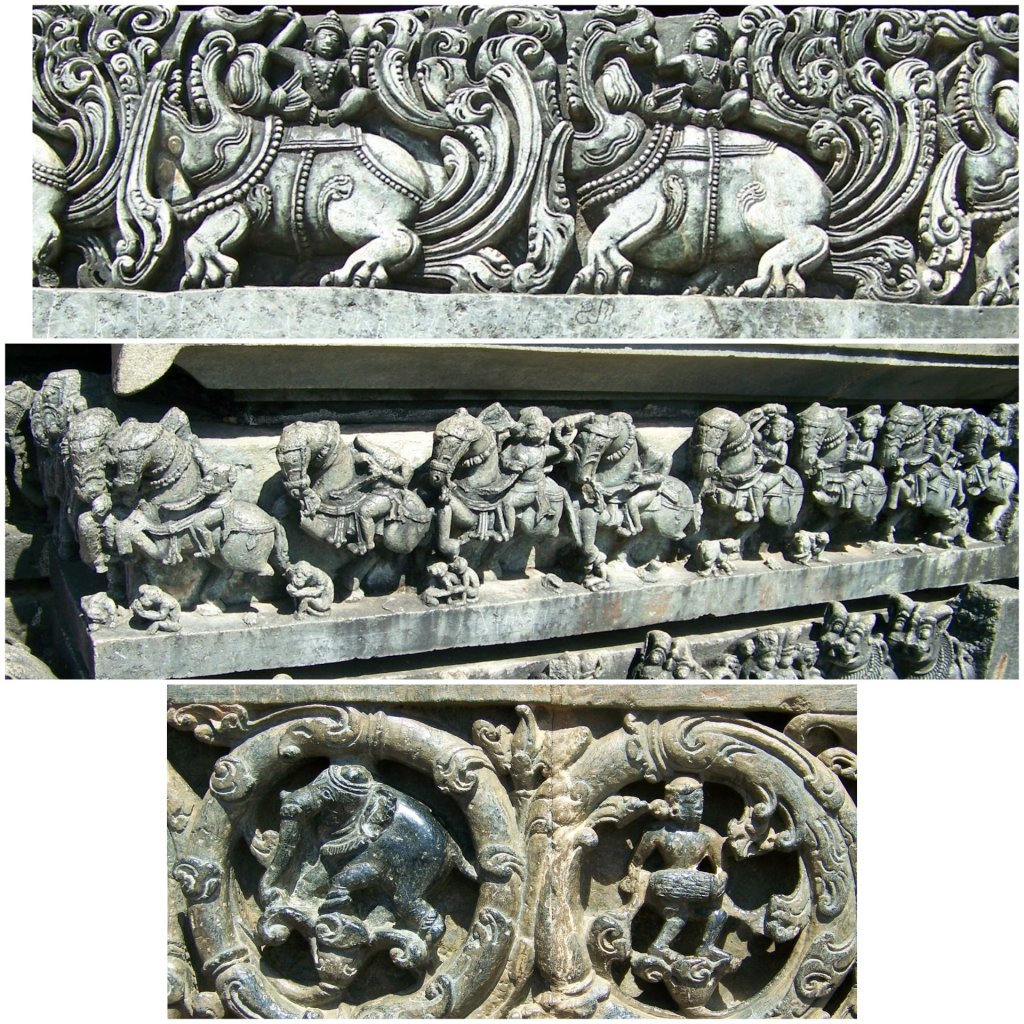
Salient features of the Hoysala temples: • Although the earliest Hoysala temples were made with the local sandstone, their finest temples are made by carving one of the hardest materials for making stone sculptures- the granite stone. • The ceilings of the Hoysala temples have extremely intricate and multi-tiered mural designs. • The pillars are lathe machined and mirror finished.
Friezes and murals at Chennakeshava temple, Belur
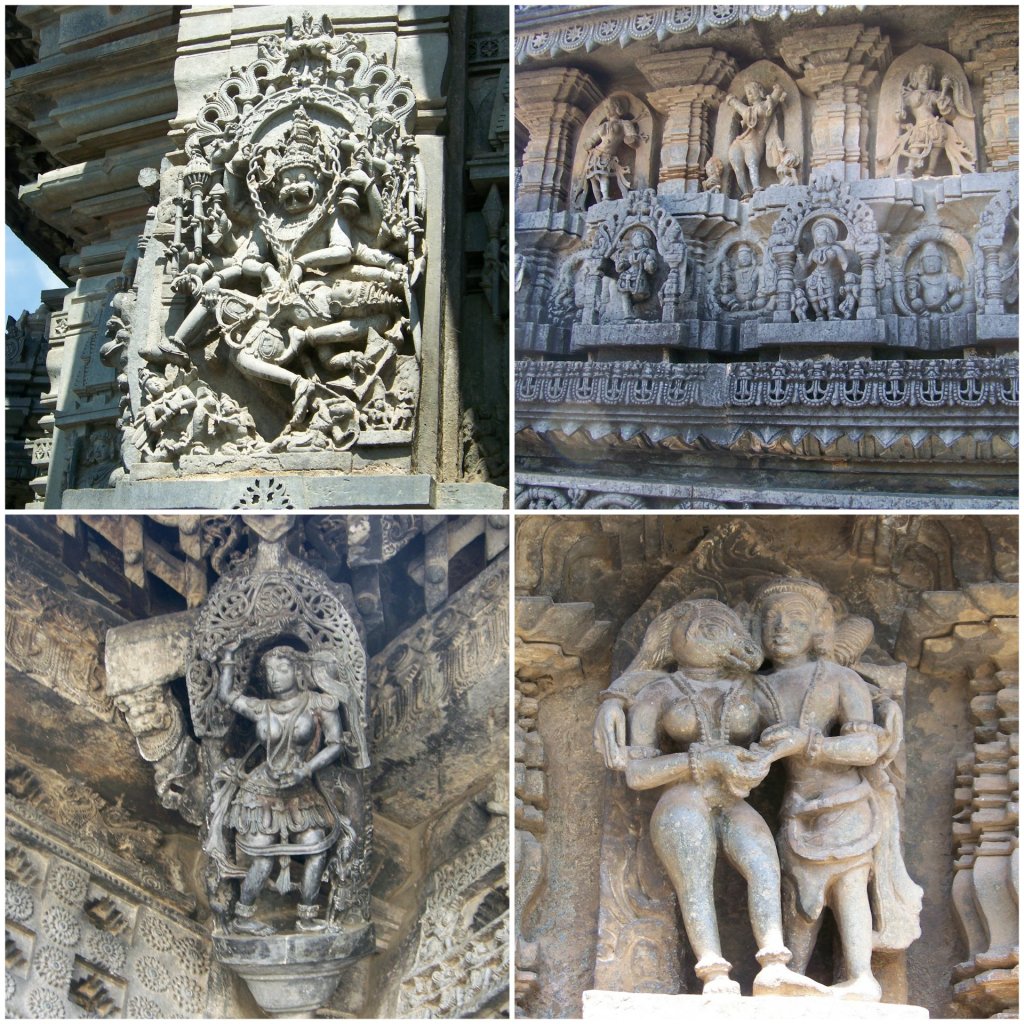
Fun Facts about the Hoysalas: • Jakanachari is the revered master craftsman behind most of the marvelous temples of this era. Legend has it that he was however challenged by his own son, Dankanacharya about a possible flaw in the sculpture made by his father. Jakanacharilost the challenge when a toad and water emerged out of an idol made by him after which he cut-off his right hand as a symbol of submission to his son’s skill. • Shantala, the wife of King Vishnuvardhana (One of the most prominent Hoysala ruler) was so mesmerised by the Sculptures of the dancing ladies carved here in different postures, it is believed that she used to dance with these Madalikes or ShilaBalikas in her dreams.
Art at Chennakeshava temple
The capital of the Hoysalas was shifted from Belur to Halebeedu, then called Dwarasamudra. The Hoysaleshwara temple is the most prominent among all. The monolithic statue of Nandi here, is the sixth largest in the world.
Hoysala sculptural Art at Halebidu
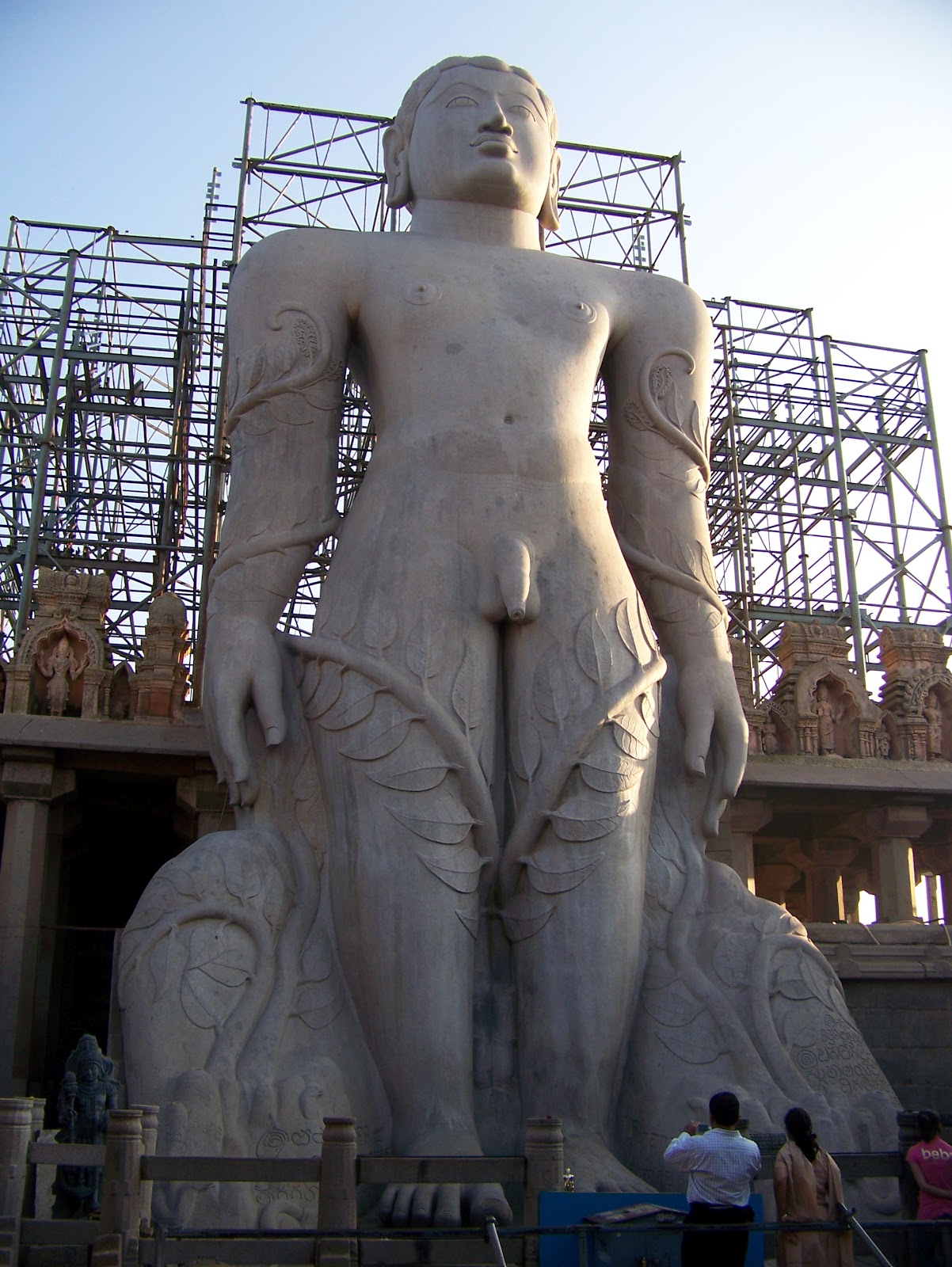
Although our next destination is not a Hoysala hotspot, we decided to include it in our itinerary as it was just around. We headed towards Shravanabelagola, one of the most important pilgrimage sites for the Jains. Shravanabelagola has two hills- Chandragiri and Vindhyagiri. The twin hills offer a panoramic view of the surrounding plains. Chandragiri hill gets its name from Chandragupta, one of the greatest emperors of India who converted to Jainism, gave up all his worldly pleasures and is believed to have passed away on this hill. The statue of Bahubali/ Gomateshwara located on the Vindhyagiri hill is the largest monolithic stone statue in the World.
The Gomateshwara Monolith statue
With this, I wind up with Part 1: of visiting the Hoysala temples. To put it in my words, I survived an ‘Art attack’ at Belur and Halebeedu.
Please do find a day to visit these places and you will not regret, trust me!
Our company has recently changed its working calendar and now, we have our weekly off on Wednesdays instead of Sundays. When I woke up this Wednesday morning, a weekend for me and when the rest of the world is working their asses off, halfway through their week… I sat wondering how I was going to kill the rest of the day amidst the four walls of my house, all jobless.
Then suddenly, I remembered a place that a friend had told me about, long ago. She had done her internship at ‘Kaiwara’ during the final year of her MBBS course. I jumped out of my bed and began to google for it. With lot of information available online, I was able to jort down a list of places to see in and around Kaiwara and with a quick route map. I dragged my mum along, pulled the car out of the garage and zooommm we went…….
List of Places covered: Narayanapa Mutt; Bheemeshwara temple; Bheema baana Betta or Kaiwara Betta; Tapovana; Vaikunta betta; MahaKailasaGiri Betta; ChenaKeshava Cave Temple; Alambagiri Venkateshwara temple
The details: It was around 09.00.a.m. when we started from Bangalore. We reached Devanahalli from where we took the Vijayapura bypass road. At an average speed of 60kmph, a drive of a good 45min from the Bengaluru airport is what it took us to reach Kaiwara.
As soon as one enters the Kaiwara town, a small lane on the left leads you to the Narayanappa ģMutt. This is where Saint Narayanappa attained ‘Jeeva Samadhi’ and the mutt is currently being managed by the M.S.Ramaiah trust. Half a kilometer away from the Mutt is the ‘Bheemeshwara temple’. This is where the mythology has it that Bheema killed Bakasura while the Pandavas were in exile. There is a group of small temples there, each named after the Pandavas within the same premises. Overlooking the Mutt is the Bheema baana Betta or Kaiwara Betta. We thought of skipping our visit there, considering the number of steps we had to climb up. Maybe a hike that I can plan for some other day.
The Entrance to Vaikunta betta
We drove for one kilometer further and reached ‘Tapovana’, the place where Saint Narayanappa used to meditate, back in the days. There is a small garden around there, which can be given a miss if you wish. Few yards uphill from there, we reached the ‘Vaikunta Betta’. At the base of the hill is the ‘Amaranareyana Temple’ dedicated to Lord Vishnu built by the Hoysala king Vishnuvardhana. With our climb upstairs, we reached the ‘Yoga Narasimha Temple’. The structure seemed to be ignored by the visitors. But we enjoyed the calm in this cave temple, believed to be the place where the Lord appeared in front of Narayanappa. The temple terrace had an excellent view of the entire town. A word of caution though: With too many monkeys around there, it was no monkey business.!!
A view from the Vaikunta temple
We then commenced the best stretch of the drive. After an uphill drive of 5kilometers, we wondered how beautiful Mount Kailash (in the Himalayas) could be if the lesser known ‘MahaKailasaGiri Betta’ in Kaiwara was this beautiful. Atop the hill, is a set of newly chiseled man-made caves that houses 3 temples.
Enroute to Kailasa
Unlimited food is provided to every pilgrim/visitor at KailasaGiri temple and the Mutt between 12.30.p.m and 3.00.p.m. So, we decided to hog some yummy temple food at Kailasa Giri itself. By this time, we had covered all the places I had enlisted in Kaiwara. But it was still 2.30.p.m and we had a lot of time left. While coming downhill, we decided to follow a signboard which indicated the way to ‘ChenaKeshava Cave Temple’. But it was quite a disappointment after reaching there. We could’ve probably skipped the visit to this place.
I then remembered someone mentioning about ‘Venkateshwara Temple’ in Alambagiri, located about 10kms from Kaiwara. The place is supposedly famous for Paper made handicrafts. So, we decided to explore this place too. But some renovation work in this ancient temple was in progress and there were absolutely no shops in that place (forget handicrafts stores). We were disappointed again by the unfruitful drive until there.
Alambagiri Venkateshwara temple
As per google, there was ‘Ambaji Durga Cave temple’ 7kms away from Kaiwara, and we tried to enquire with a few locals about the place. But nobody seemed to have heard of it and hence, we thought of giving it a miss too. With this, we thought it was time for us to return back to where we belong to- The Bengaluru city.
Conclusion:
Kaiwara alone is a nice place to plan a drive with family or a group of biking friends. Though it was a small trip, it was a pleasant one.
Kaiwara is famous for silk rearing & weaving. You will come across several houses stacking up the cocoon rearing trays for most of your way. Maybe you should try to pick up some silk stuffs while you are there or get hands-on working experience at silk rearing.














 The Lost Lander