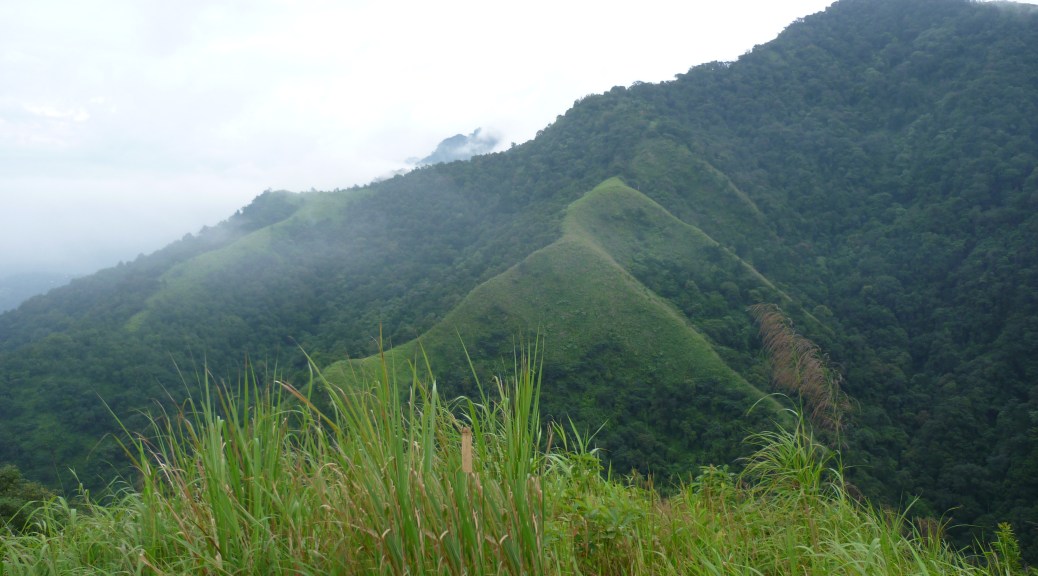
This post is part of my fortnight long road trip across North-east India, specifically covering parts of Meghalaya – Assam – Arunachal Pradesh I had tagged along with two other travelers and drove around the places in a self-drive car hired at Guwahati. We had arrived at Haflong, the only hill station in the state of Assam following a mis-adventurous trip. (Click here to know the details)
This trek to the highest point in Assam happened by chance, as a backup after the original plan for the day had failed. We were told that the hill isn’t yet popular in a typical tourist’s circuit. Apart from the local tribal folk who like to party atop the hill, hardly 4 to 5 trekkers come here from outside the district and the state to climb this hill each year. Having said that, we wanted to reach Hapeo peak, the highest point in the state of Assam for sunrise. However, due to the clouds that had hovered that morning, we decided to snooze for a little longer before going ahead with the plan.
There are totally 13 native tribes in Dima Hasao district of Assam state and each tribe has its own village. A local NGO called spectrum is working towards the empowerment of the local tribal communities through promotion of tourism in the district. They helped us in getting this event organized. We were driven in their 4WD vehicle from Haflong to a village called N.Liekung. N.Liekung village belonged to the Kuki tribes and the required permits from the village head was arranged by Spectrum. A local guide was assigned to take us through this off-beat wilderness to scale the highest point in Assam. I would like to present my trek in essentially three parts.
Part 1: The Ascent
After a small stop in front of the holy Cross at the prayer area of the Kukis, we began our ascent towards the peak. For the three of us, all seasoned trekkers doing this trip together, the climb to Hapeo peak wasn’t a very difficult one as compared to what we had done back in the Southern India. But what made it seem difficult was the high grass that had grown tall enough to cover the entire stretch. Since the trek is not frequented with people, the grass on the path is not worn out as much as in the popular trekking trails. Hence, the way up was something through which we had to FIND the trekking trail. Based on the ease of finding the trail, I would split the trail into three portions:
- A well traceable path with steps laid. However, at some places, the stairs have been lost amid the thickets. We had to cut the grass and bushes in order to find our way. The stretch was full of high grass with occasionally placed animal traps which our guide who walked ahead, would carefully move aside and make way for us.
- This was the only flat area with some grassland vegetation for a stretch of around 500mts.This was the only place apart from the highway, from where we could actually see the peak that we were apparently scaling up!
- The last part passes through thick jungle, with a canopy of trees that allowed very less sunlight to penetrate. Varieties of innocent looking wild mushrooms had bloomed at several patches, but we were warned not to pick any of them as they could actually be lethal with allergens or venom. We were accompanied by strange sounds and cries of migratory birds around.
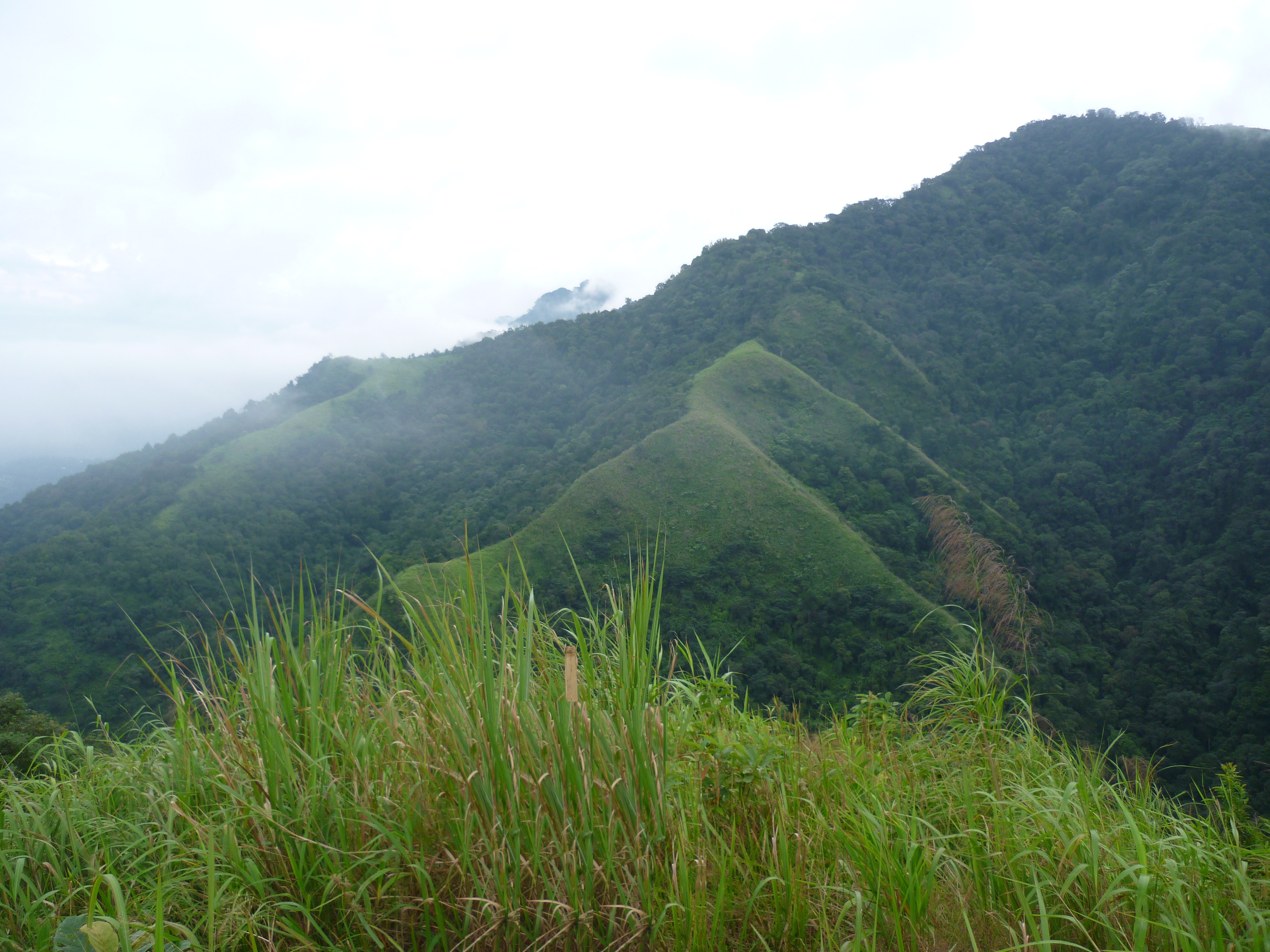
As we climbed up while chatting up with our Kuki guide, he enlightened us with their tribal customs, culture and showed us a few videos on his phone of their traditional dances, festivals ceremonies and the like. Our guide jokingly told us how his fellow folks are named in the tribe. The names may not mean anything and just anything random that sounds nice goes as a name. He was thus randomly called after a ‘Song that was Sung’ (I’m sorry, I don’t want to give out his name). But the tradition is, that the maternal grandfather selects a name for the granddaughter and the paternal grandmother picks a name for the grandson and vice-versa. It is a patrilineal system of inheritance.
Part 2: Reaching the Top
Suddenly, the darkness of the jungle had turned into snow white of the clouds. Before we could realise, we had reached the top already and we had barely taken us two hours. We were told that one could see the entire district of Dima Hasao from up there. But, we were greeted with thick fog and clouds upon arrival. We spent some time soaking in nature’s beauty and waited for the clouds to clear so that we could catch a glimpse of the beautiful view.
For the benefit of potential trekkers, there is just one small shelter with a bench atop the hill and nothing apart from yourself there! Our guide mentioned to us about a patch of land measuring about 2×2 feet, right behind the bench where a natural and strong magnetic force is believed to exist, due to which none of the mobile phones work in that spot. Yes, we tested the phenomenon too. Although all our phones had FULL network, we were unable to place any calls. But none of us had any scientific reasoning for what he told.

In the next fifteen minutes, the clouds had slowly started to clear. We spotted the railway bridge at Lumding onto the right side of the horizon. This rail line is the longest and highest in the Silchar route. Our guide pointed towards another hill onto our left, through which the longest railway tunnel (around 3.5kms long) in the North-east passes. The Silchar-Lumding railway route has been featured in several tourism websites and has been one of the scenic stretches in the country. As the weather slowly worsened and began to drizzle, we decided to start our descent.
Part 3: The Descent
When we had just started to climb down and we received a call from the NGO. We were told to return to the base of the hill ASAP as an alert for a cyclone had been issued by the meterological department and heavy rains were expected in this region in the next few hours. But, it had started to pour cats and dogs within no time. The fastest pace we could catch was by rolling down the hill. With all the rain, thick grass covered path and steep gradient, just a steady walk itself was a struggle as we descended on the slippery trail. There was nothing enroute to take shelter from the rain. But, waiting at any place made no sense because the pounding rains would continue for the entire day or even two. It made more sense to simply continue to walk down as we were already drenched till our bones.
We were back at the base by 11.00.a.m. and thus ended our trek to the highest point in the state of Assam. We were invited over to our guide’s house to dry ourselves up and have a cup of hot tea. We thanked him much and bid adieu with a warm heart to this lesser known corner of the world!




 The Lost Lander