Tag Archives: Karnataka tourism

Visiting the northern-most district of Karnataka- Bidar

Karnataka Bundh: The whole city of Bangalore was protesting against the Kaveri water verdict- 32 buses vandalized in the city and all that jazz. Well, I was away from the entire hustle bustle, where fighting for the water of Kaveri made no sense for the people. That day, I was spending time with my mom who was away from home since the last couple of months, on business travel.

My itinerary:
Day 0: Bangalore to Bidar (Overnight bus)
Day 1: Jharani Narasimha Swami Cave temple, Karanja reservoir, Basavakalyan (Basaveshwara temple, Basavanna statue, Basavanna Guhe, Akkamahadevi Guhe Anubhav Mantapa, Basavakalyan fort)
Day 2: Nanak Jira Gurudwara, Bareed Shahi park, Bidar Fort; Return from Bidar to Bangalore (night bus).

The details:
People in the Mysore-Karnataka region know Bidar and the rest of the districts of Kalyana Karnataka or Uttara-Karnataka mostly through media that only talks about them when there is a drought in the state. This somewhat had influenced me to paint a dry and a dusty picture of the region inside my head. There was not much that I had heard about this part of Karnataka on a typical tourist circuit of state and that’s why I chanced upon travelling to Bidar for a weekend. Since my mom was posted there for some time, I thought it was an opportunity for me to go and see what is in the northern-most district of my home state. Mom usually has a vehicle at her disposal whenever she travels and stays during the entire business trip. This solves most of the commutation problems.

Day 1:
When I reached there after a long overnight bus journey of 12hrs, I had a roaring welcome in the city, quite literally…!! An IAF “Hawk” flew past right above my head during their daily flying sorties. Right then, I had my first GK (general knowledge) moment of the tour. Bidar has been an important training base since the early 1960’s for the Indian Airforce. Bidar serves as the main base for Hawk AJTs and the Suryakiran HJTs. The first thing that I learnt about Bidar and is never shown or spoken about on mainstream media.

My mom received me at the bus stand and took me to the Inspection bungalow where she was staying at. After freshening up and post a quick breakfast, we headed to “the Jharani Narasimha Swami Cave temple”. The myth mentions that Lord Narasimha killed Hiranyakashipu and then proceeded to slay the demon Jalasura, a staunch devotee of Lord Shiva. After being killed by Lord Narasimha, the demon Jalasura turned into water and started flowing down the feet of Lord Narasimha. Today, devotees have to walk across a cave with water (1.7mts depth) to worship the idol. With bats flying around, roaches swimming with us and dimly lit path to lead us, it was a new experience for me, and I was seeing such a religious site for the first time.

Sightseeing at Bidar: Jharani Narasimha Swami Cave temple
Inside the cave- enroute to the Narasimha idol

We then proceeded towards our next destination. Enroute, we stopped by the Karanja dam, a small reservoir built across the Karanja river.

In a while from there, we had arrived at Basavakalyan- our main destination for the day. There, we visited the Basaveshwara temple, 108ft high Basavanna statue, Basavanna Guhe and Akkamahadevi Guhe. Then it was a turn to the right that took us to “Anubhav Mantapa”. This is a replica of the ShivanubhavaMantapa- an academy of mystics, saints and philosophers of the ‘Lingayat’ faith in the 12th century. Anubhav Mantapa is often referred as the first parliament in the world.
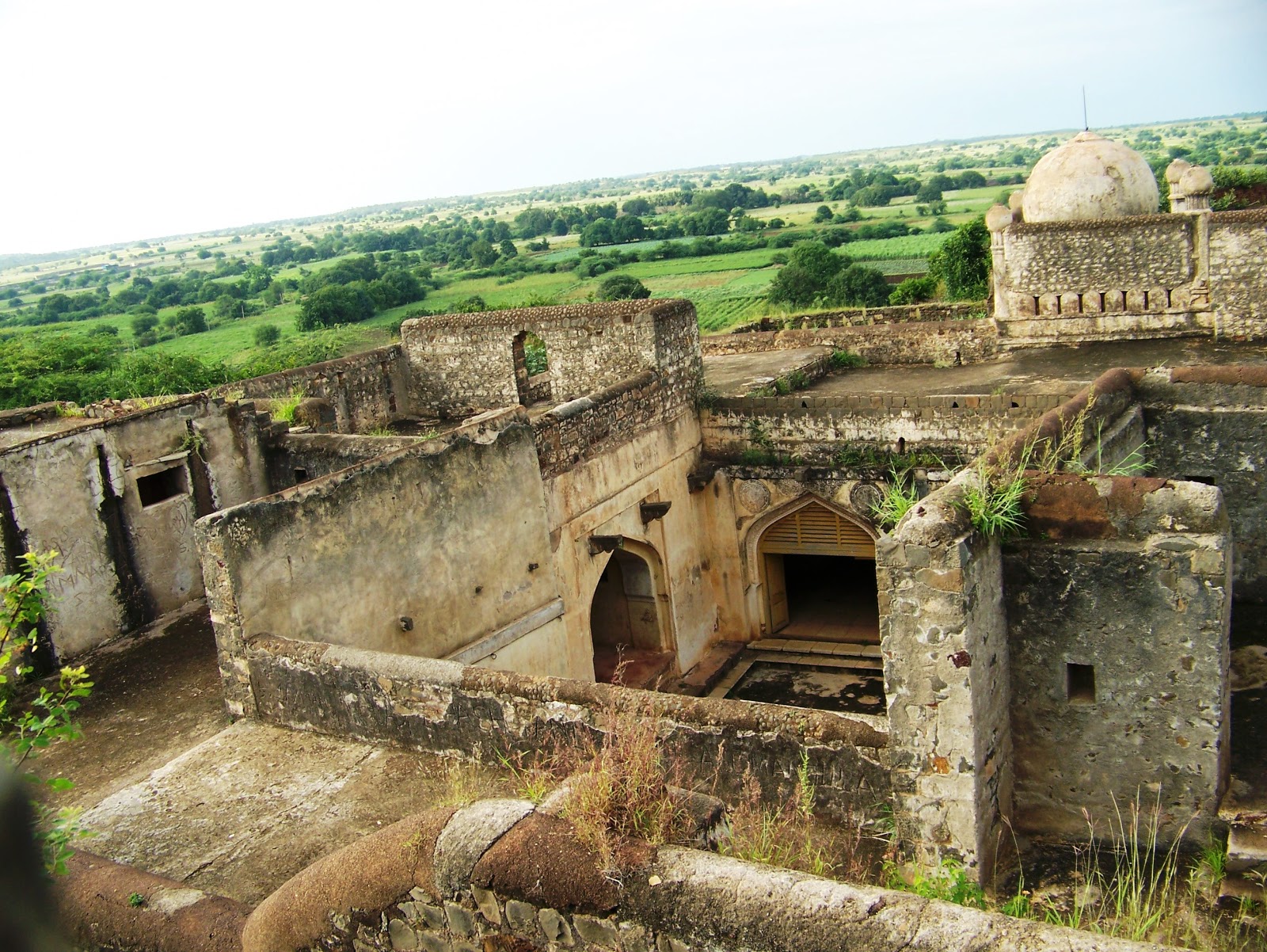
Sightseeing at Bidar: A view of Hyder Mahal from the Kadak Bijli Toph view point
A view of Hyder Mahal at the Basavakalyan fort

From there we visited the Basavakalyan fort, sparsely visited apart from a few localites who come there to play cricket. But it is indeed a monument forgotten on the maps. The lights falling on the inner chambers of the fort called for some good photography. Some of points of interest inside the Basavakalyan fort for an explorer may be the open-air theatre at the entrance of the fort and the view of Hyder Mahal from the Kadak Bijli Toph viewpoint. With that, it was dark, and we returned to our place of stay.

Day 2:
We started the day by spending some tranquil moments at the ‘Nanak Jira’. This Gurudwara is known for being the second occurrence out of the supernatural powers of Guru Nanak. The first one was ‘Sri Punja Sahib’. This is now in Pakistan and strictly prohibited for free visits. Hence Gurudwara Sri Nanak Jira Sahib is referred to as the ‘Second Punja Sahib’ of India and hence a very holy site for the Sikhs. The sweet water flowing from a spring is believed to clear one off, all sins.

Sightseeing at Bidar: The Nanak Jhira Gurudwara
The Nanak Jhira Gurudwara

Next, on the list was the Bareed Shahi park. The tombs of the Bahamani rulers lay here. This is small but a nice park maintained just to provide some lung space for morning joggers and evening walkers. We were told that this was a neglected piece of history just a year ago and good efforts have been made by the authorities for its restoration.

We had an invitation from one of the colleagues at my mom’s office to visit his home for lunch. To think of it, it is by far and large one of the MOST sumptuous and wholesome meal I have had all my life. Hahaha call it the downside or the funny part of relishing such a wonderful meal- My mom and I were handed over a large towel to wipe off our teary eyes and watery noses. The regional cuisine here is notoriously famous for being high on chilly. But even with the hot flames flying out of our senses, we couldn’t resist the taste of the flavorful spread. It was a typical North-Karnataka cuisine with a spread of over 50 dishes. We were overwhelmed by their hospitality and the flavorful cooking. Apart from the Millet roti and gunpowder, most of the dishes were new discoveries for me. I even had a box packed with roti and keema-curry for my return journey by train in the night.

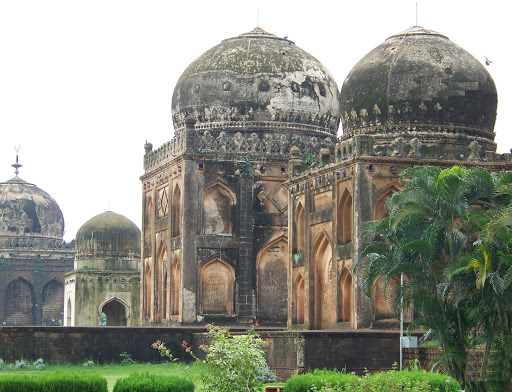
Sightseeing at Bidar: The Bahamani tombs
The Bahamani tombs

The last and final destination was the Bidar Fort: It is a multi-layered fort to say in simple words. It does not have a quantifiable boundary, though a few localites specify some digits to measure its expanse. The entire city of Bidar is actually within a fort wall which was the area where the citizens lived back during the rulers’ time. The second round of the wall is where the ministers lived. The third and the innermost zone is where today’s tourism is concentrated, the area where the King & the queen lived. This fort needs a minimum of half a day to explore for a person interested in history, architecture or archeology. In a tourist circuit in Bidar that I barely heard of, this fort came in as a surprise when I had least expected. It is HUGE!
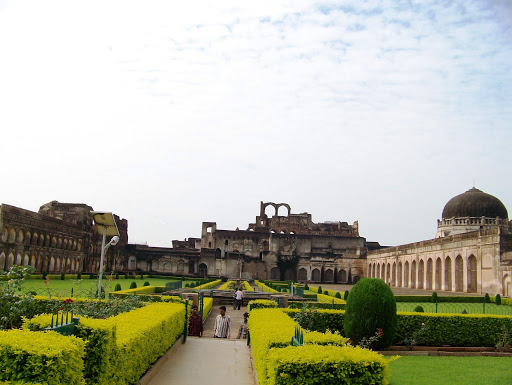
Sightseeing at Bidar: The Royal Residence within the Bidar fort
The Royal Residence within the main fort

Bidar has so much to offer for a backpacker on a tight budget. Apart from the travel distance between places, everything else is very affordable. Even the entry to all the major landmarks on the potential tourist trail was free. In spite of it, very few people plan a trip to this district. Maybe because the name pulls down an image of a dry, barren, hot, poor, drought prone landscape. What my eyes met here was contradicting to the imagination that I had, largely based on what I heard in the media. In reality, the city was lush green, well fed with good rains and clean (at least compared to the cleanest places of Bangalore).

Souvenirs to take back: Bidariware is a local form of metal art that has a GI (Geographical Identification) tag and extremely laborious and artistic. It takes an 8 stepped process to create one piece of art and a symbol of royalty, that’s been carried on from 14th century, largely promoted by the Bahamani Sultans.

So, a lesson to take back: Stop imagining how a place would be; go there and see it yourself.

Monsoon retreat- Jog falls

‘Jog’ is a charmer on all Karnataka tourism promotions. Why not? It’s the second highest waterfall in India after all! A glimpse of the mighty Jog at least once in a lifetime is an unwritten rule for every person born or living in Karnataka. And why not see it take a plunge in all its might? This exclusive visit could happen in no better time than the monsoons. So, my mother, brother and I planned this weekend trip to see the Jog. such that we could reach Shimoga by 6.00.a.m.

Our itinerary:
Day 0: Leave Bangalore to Shimoga (Overnight bus)
Day 1: Shimoga to Sagara (local transport), visit Linganamakki dam and hydroelectric project, The Jog falls, Tyarekoppa Lion & tiger safari. Return from Shimoga to Bangalore (overnight bus)

The details:
When we reached Shimoga in the morning, it was pouring not just cats & dogs, but also cows & buffaloes. A jeep’s ride had been arranged by my mother’s colleague to take us from Shimoga to Sagara town. The rains were so heavy that we could barely see the road ahead. With that, we would fall into just every other pothole that was covered under the flooded roads. Finally, we had managed to reach Sagara, the nearest accessible town to Jog falls.

Once there, we thought to see the Linganamakki Hydroelectric project that falls on the way to Jog. There also used to be a cable car ride down the reservoir that we were interested to go on. Unfortunately for us, our visit was timed just about when permission to visit the project was cancelled for some security reasons. Nevertheless, the view of the Linganamakki dam and the scenery around almost evened up for the miss.

Views of the Sharavati project around Jog falls
Top: the view of Sharavati valley; Below: The Linganamakki dam

And then, with an uphill drive of about six kilometers, we reached the place which was the sole motive of our travel from Bangalore. “The Jog”!! But, there was more disappointment awaiting us on our arrival. It was something that caused us total dismay…!!! The clouds paired up with thick mist had enshrouded the waterfalls completely. And our entire surrounding had just blanked out with mist. There was absolutely nothing in front of us except the mist and more mist… To top it all, it was raining cats and dogs. There was no Jog, nothing. ‘What an unfortunate day for us’, we thought and decided to return after a futile wait.

We turned our backs and started to walk towards the jeep with a heavy heart. As we did, I just happened to turn back and check on our luck with the waterfalls. And yes…. we were LUCKY…!! The mist was slowly clearing out… And we could faintly spot the Sharavathi streaming down in full action.

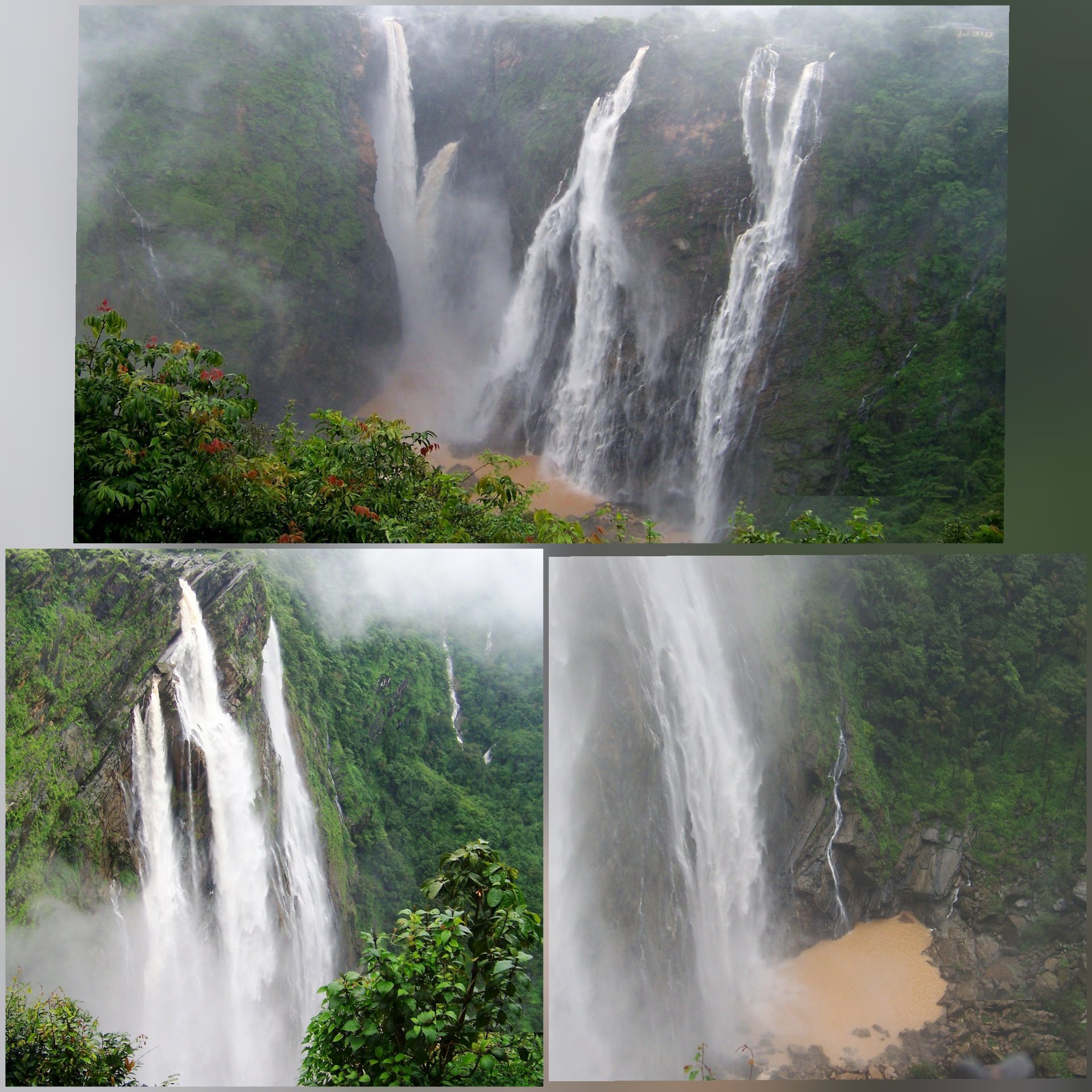
As we stood for two minutes more, the view was then all clear: The Mighty King (Raja), the Graceful Queen (Rani), the Thunderous Roarer and the Storming Rocket – YES… We saw them! We felt a great sense of achievement, very contrary to what we had felt just a couple of minutes ago. While we got some nice clicks, the mist enclothed the falls, back again. We waited for it to clear out to capture a few more photos because this time, we knew that the action was repetitive.

Jog falls in monsoon
Jog, from different view points

After a while we walked around to get different views of the falls. We went to the top of the waterfalls, walked down closer to the bottom of the waterfall, locatiosn from where we got the side view of the Jog, and so on… It was quite an adventure in itself to get around these difficult spots, especially considering the heavy rains and the slippery path. But, the excitement of getting to these locations was all worth the risk! After having an eyeful and heart full of ‘The JOG falls’, we decided to say good-bye to the place.

On our way back to Shimoga, we visited ‘Tyarekoppa Lion & tiger safari’. Along with spotting a lot of deer, sambars and peacocks, we also counted on the big cats like the lion and tigers on a safari ride. It wasn’t a typical safari you would have in the wild, but it was more like taking a ride inside a fenced enclosure. But, it is a well maintained place and great if you are travelling with children.

Tiger safari near Shimoga
Roarrr, a tiger at the safari

And that was all the time we had with us. We had almost reached the end of a fun day-Sunday and we boarded the bus back to Bangalore at night. We had to gear up for the crazy week that was awaiting us…

Conclusion: An experience of the monsoon in the western ghats and a glimpse of the Jog in the monsoon are retreats that should go into the bucket list of everyone visiting India.

The Western Ghats- To Save or Not ?

There is much ado about the Western Ghats getting tagged as a World heritage site by the UNESCO.

So, like everyone around me here, I too am excited about sharing my views on it.

Firstly the stronger points for consideration:

  1. The western Ghats is home to very rare species of flora & fauna- many snakes, frogs, birds etc. are critically endangered and also unique only to these Ghats.
  2. These ghats stop the wind from the east and bring rainfall to the south.
  3. The major rivers of the South are rain fed and originate here.
  4. I being an ardent nature lover would definitely support to save the ever lush green ghats.

Now, the points not to consider:

  1. There are a no. of tribes living in these Ghats like the Soligas, Kurubas, Maleya-kudiyas etc who will all be forced to vacate the forests and will be disturbed from their natural habitat though the government may promise them of providing alternate homes.
  2. The Coorgs (Kodavas)- by themselves are a very small community fighting hard against the “Jamma Bane” issue and now have yet another blow. Many localites holding lands in the identified areas will be forced to vacate and this will inturn force them out of Coorg.
  3. Myself being a hardcore Kodavathi, I would never be able to take this by my stride.

And now, the strongest of them all:

  1. The Ghats are a rich source for mining, timber and a major hub for tourism leading to severe deforestation in the name of building resorts, nature sports and the likes.
  2. It is important to consider that our beloved elected representatives are frequently in the limelight for the mining scams. The major share of resorts in this region are owned by big names and are tucked away deep in the core area of the jungles which compete for providing the best tiger spotting, elephant spotting, wild hunting, etc. etc, activities for their guests. So there is a valid point for these scamsters to fight against the prestigious tag.
  3. The heritage tag limits the human entry to most regions. Let alone restrictions on activities like trekking, hiking etc. just walking around this place without knowledge would lead to high penalty.

But, what if this has an impact on a Coorg’s lifestyle: the tag has come as a much needed  respite for a nature lover like me. We are Coorgs at the end of the day. We have lived our way through thick jungles, heavy downpours, deep dark nights, wild animals in our porticos. And that’s the way we enjoy our life at it’s best. So we can definitely live strong with thick jungles. We want our Green cover to be saved…!!

I am frustrated of being helpless and just a mute spectator watching the depletion of green cover in the name of development. I can hardly see any development in my area other than the fact that big names (let me say powerful people) are buying properties by offering good money and settling down in Coorg, becoming stake-holders in resorts etc and turning all their black money white.

I used to eagerly wait for the rainy season to start so that I would get my monsoon holidays while I was in school. And now, I am even more anxious that this rainy season may pass by without even seeing a “rainfall”. Yes, only conservation of these ghats can bring us the rains that we need.

I am frustrated with the fact that the place where is grew up catching little fishes and crabs with my cousins as a little girl beneath big boulders is now nothing but a fully concrete platform for the tourists to rest on.

What I once knew as a beautiful waterfall and a place where my grandpa gave me my swimming lessons is now nothing but a pool of sewage flowing from the town littered by ruthless tourists. The stench of this mess gets tears streaming down my eyes everytime I stand on the very same concrete platform and try to recollect the good old greener and cleaner grandpa days…

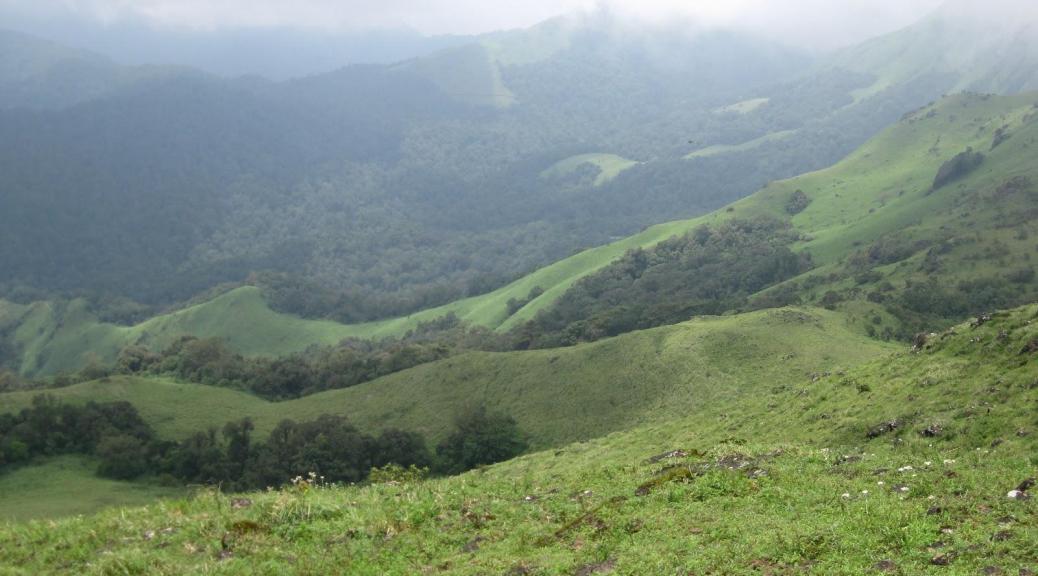
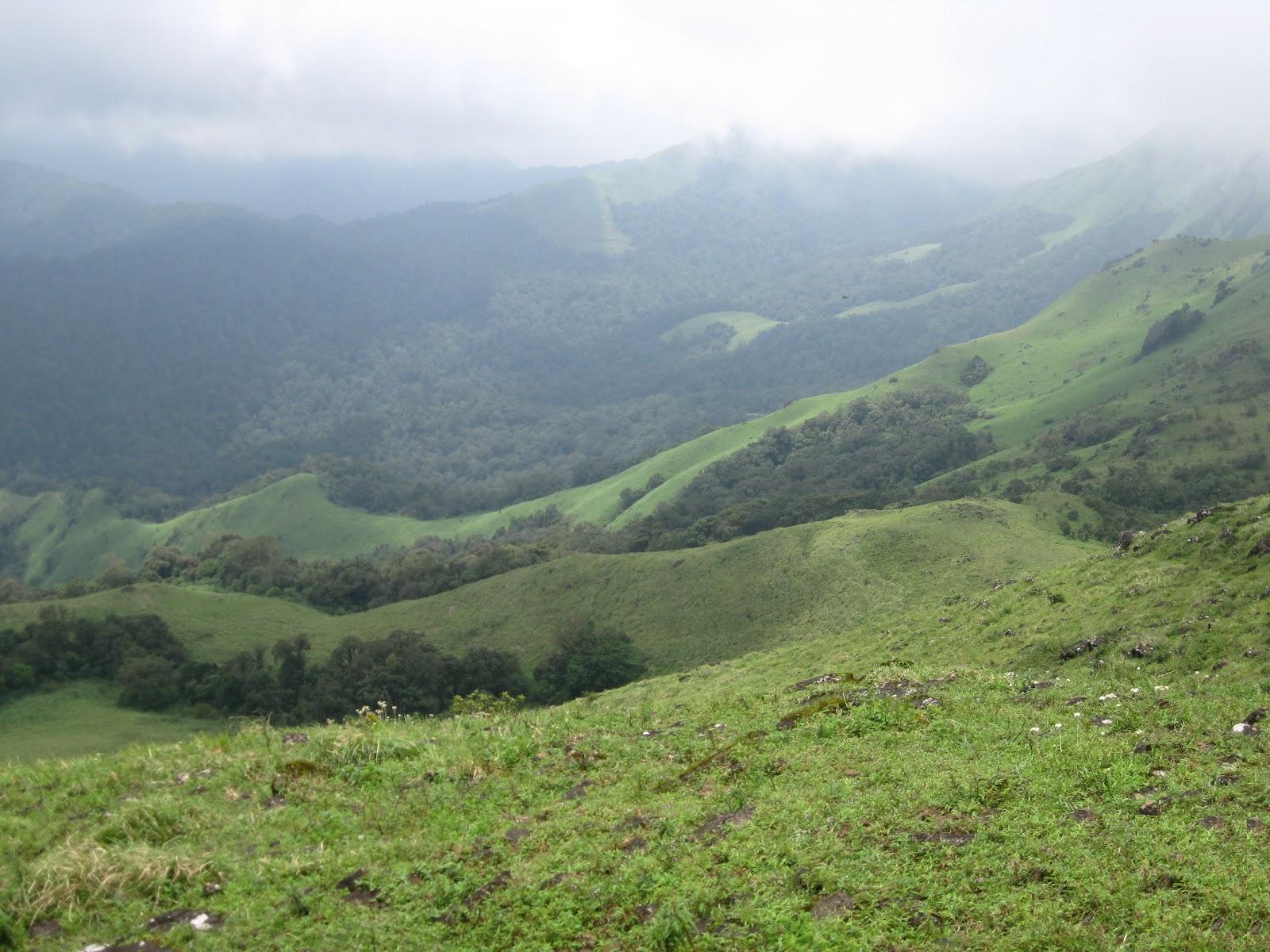
The Bramhagiri hills

And here I sum up (with lines from a famous song of a Bollywood movie):

Give me some sunshine, give me some rain
Give me another chance, I want to grow up once again…

– 3 Idiots