Tag Archives: North Karnataka

Breakfast on my plate: Bath- o- Baat..!!

<01-Dec-12>

Its 1st of December.. At 10a.m.; an e-mail was delivered to my inbox from the canteen department. “Monthly menu”- the subject head read. My immediate action was to click on the trash button which straight away dumped the unread mail in the trash bin. This action was not unique to me alone.. At least ten others in my office would have done the same.. And another ten would have just opened the mail to simply trash it without really reading it.. Nobody usually expects anything unusual in the menu. But just incase, some fresher bumps into you with a humble intension to strike a conversation and brings up the topic of breakfast menu:

“Hey ! You know what’s for breakfast for this month?”

The poor fellow is bound to get an equivalent reaction: “Aiyya…!! Looks like you have not had enough of a bath in the canteen..!!”

The oldies all know the menu by-heart. So what’s in a bath?? Read on…

  • Tuesday: Green- bath (Methi bath)
  • Wednesday: Red- bath (Vaangi bath)
  • Thursday: Deadly-oil bath (Darshini Pulav)
  • Friday: Mixed colour- bath (Chow-Chow bath)
  • Saturday: Brown- bath (bisi-bele bath)
  • Sunday: Yellow- bath (rice bath)

If I missed out on Monday in the list: that’s the 1st working day of the week; So the company tries to give us some motivation to enter the company gates.. That’s the “Have no Bath”-day. It is the only day when Idly-Vada-Sambar-Chutney is served.

Now: How do the employees identify what is for breakfast without actually entering the canteen or reading the menu? It comes with experience. Just a month’s time is enough..!!

Well, a Monday’s menu barely changes; so you know what is there. You go or don’t go depends on how bored or excited you are to get away with the Monday morning blues..!!

And the other days.. Usually standing at a distance and a small peep into someone’s plate from the canteen door is enough. By the colour on the plate, you know what it is.. and then, do an about turn and walk towards office.!!

But, a special mention needs to be made about Wednesdays.. The day being the mid-week and one would already have lost the motivation to work; the day greets you by serving a deadly bath on your platter. This is the original “Darshini Pulav”. I prefer to call it the deadly bath. It is because you don’t need to walk till the canteen door on that day. The strong smell of fried bread cubes doused in dalda oil and mixed with a weird coloured masala hits your nostrils instantly at the time you alight at the bus bay. So, you directly walk away to your office without wanting to even get closer to the source of smell.

Friday’s are special because not one, but two baths are given on a single platter. Chow-Chow-bath: as the name suggests, it is a combo of Rava bath and Kesari bath…!!

Oh.. Are you wondering why we even go near the canteen door every morning, huh? It is just out of curiosity and nothing else.. The curiosity to know how a bath can be had in different forms and in different colours- and every time, smell similar and taste the same even with different names..!!

Occasionally, Pongal, lemon rice, puliyogare, khara bath, tomato bath, curry leaves bath, vegetable bath, green peas bath are served too.. But considering these are still different colour forms of the same rice dish: it is an array of Bath-o-baat..!!

I agree that we are South Indians who are mainly rice eaters and fond of our daily showers. But nowhere in the peninsular India, would you find a Southie eat so much rice a day.. We have other better forms: dosa, poori, chapathi, akki-rotti, ragi-rotti, jola rotti, puttu, appam etc. etc… Why the hell on earth are we forced to have this bath every morning..!!

This is a serious allegation coming from a deeply disturbed rice hater who has stopped taking a bath just because of the traumatising “bath-o-phobia”..! Time the management does something about this one..!

Visiting the northern-most district of Karnataka- Bidar

Karnataka Bundh: The whole city of Bangalore was protesting against the Kaveri water verdict- 32 buses vandalized in the city and all that jazz. Well, I was away from the entire hustle bustle, where fighting for the water of Kaveri made no sense for the people. That day, I was spending time with my mom who was away from home since the last couple of months, on business travel.

My itinerary:
Day 0: Bangalore to Bidar (Overnight bus)
Day 1: Jharani Narasimha Swami Cave temple, Karanja reservoir, Basavakalyan (Basaveshwara temple, Basavanna statue, Basavanna Guhe, Akkamahadevi Guhe Anubhav Mantapa, Basavakalyan fort)
Day 2: Nanak Jira Gurudwara, Bareed Shahi park, Bidar Fort; Return from Bidar to Bangalore (night bus).

The details:
People in the Mysore-Karnataka region know Bidar and the rest of the districts of Kalyana Karnataka or Uttara-Karnataka mostly through media that only talks about them when there is a drought in the state. This somewhat had influenced me to paint a dry and a dusty picture of the region inside my head. There was not much that I had heard about this part of Karnataka on a typical tourist circuit of state and that’s why I chanced upon travelling to Bidar for a weekend. Since my mom was posted there for some time, I thought it was an opportunity for me to go and see what is in the northern-most district of my home state. Mom usually has a vehicle at her disposal whenever she travels and stays during the entire business trip. This solves most of the commutation problems.

Day 1:
When I reached there after a long overnight bus journey of 12hrs, I had a roaring welcome in the city, quite literally…!! An IAF “Hawk” flew past right above my head during their daily flying sorties. Right then, I had my first GK (general knowledge) moment of the tour. Bidar has been an important training base since the early 1960’s for the Indian Airforce. Bidar serves as the main base for Hawk AJTs and the Suryakiran HJTs. The first thing that I learnt about Bidar and is never shown or spoken about on mainstream media.

My mom received me at the bus stand and took me to the Inspection bungalow where she was staying at. After freshening up and post a quick breakfast, we headed to “the Jharani Narasimha Swami Cave temple”. The myth mentions that Lord Narasimha killed Hiranyakashipu and then proceeded to slay the demon Jalasura, a staunch devotee of Lord Shiva. After being killed by Lord Narasimha, the demon Jalasura turned into water and started flowing down the feet of Lord Narasimha. Today, devotees have to walk across a cave with water (1.7mts depth) to worship the idol. With bats flying around, roaches swimming with us and dimly lit path to lead us, it was a new experience for me, and I was seeing such a religious site for the first time.

Sightseeing at Bidar: Jharani Narasimha Swami Cave temple
Inside the cave- enroute to the Narasimha idol

We then proceeded towards our next destination. Enroute, we stopped by the Karanja dam, a small reservoir built across the Karanja river.

In a while from there, we had arrived at Basavakalyan- our main destination for the day. There, we visited the Basaveshwara temple, 108ft high Basavanna statue, Basavanna Guhe and Akkamahadevi Guhe. Then it was a turn to the right that took us to “Anubhav Mantapa”. This is a replica of the ShivanubhavaMantapa- an academy of mystics, saints and philosophers of the ‘Lingayat’ faith in the 12th century. Anubhav Mantapa is often referred as the first parliament in the world.

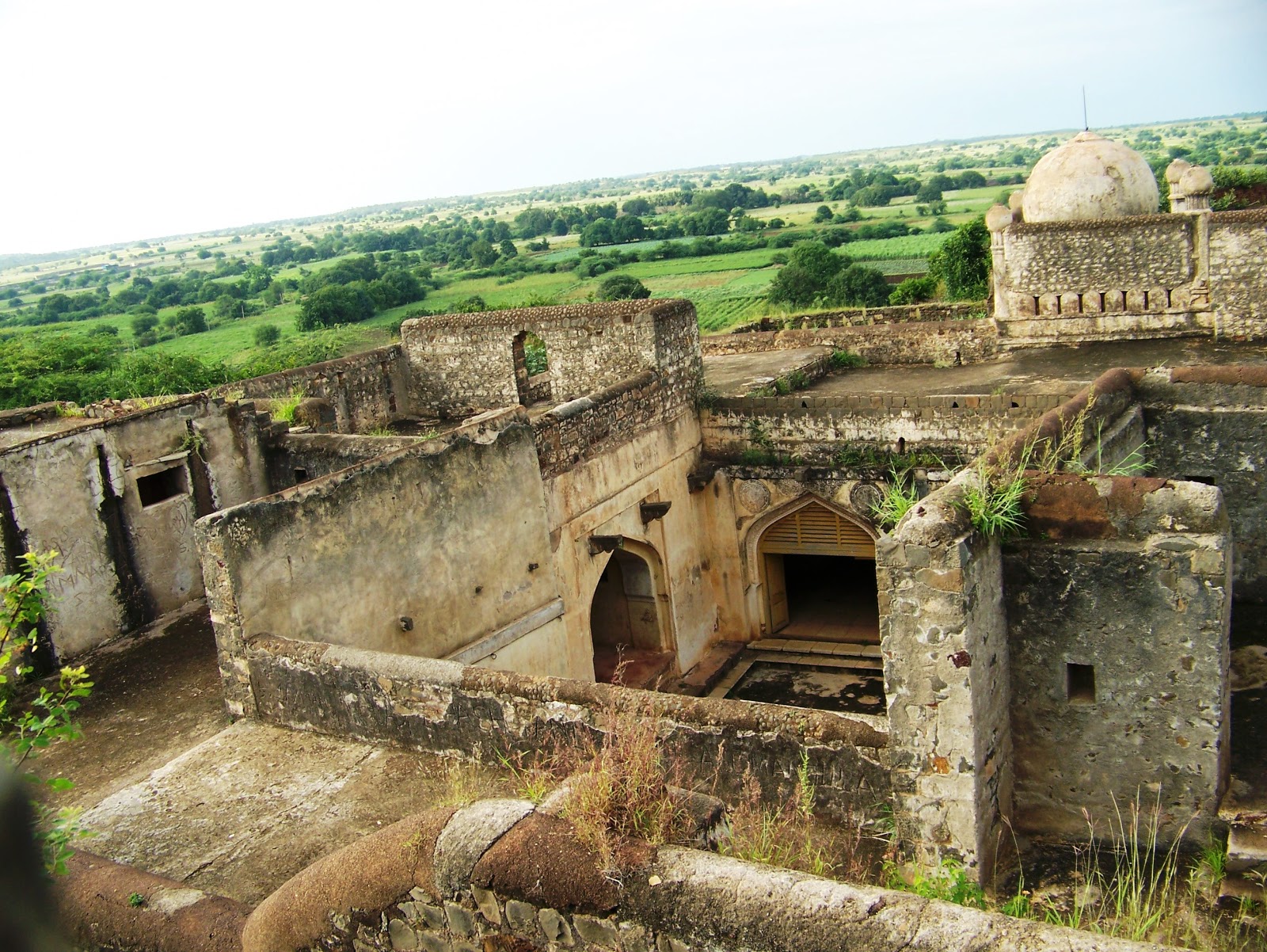
Sightseeing at Bidar: A view of Hyder Mahal from the Kadak Bijli Toph view point
A view of Hyder Mahal at the Basavakalyan fort

From there we visited the Basavakalyan fort, sparsely visited apart from a few localites who come there to play cricket. But it is indeed a monument forgotten on the maps. The lights falling on the inner chambers of the fort called for some good photography. Some of points of interest inside the Basavakalyan fort for an explorer may be the open-air theatre at the entrance of the fort and the view of Hyder Mahal from the Kadak Bijli Toph viewpoint. With that, it was dark, and we returned to our place of stay.

Day 2:
We started the day by spending some tranquil moments at the ‘Nanak Jira’. This Gurudwara is known for being the second occurrence out of the supernatural powers of Guru Nanak. The first one was ‘Sri Punja Sahib’. This is now in Pakistan and strictly prohibited for free visits. Hence Gurudwara Sri Nanak Jira Sahib is referred to as the ‘Second Punja Sahib’ of India and hence a very holy site for the Sikhs. The sweet water flowing from a spring is believed to clear one off, all sins.

Sightseeing at Bidar: The Nanak Jhira Gurudwara
The Nanak Jhira Gurudwara

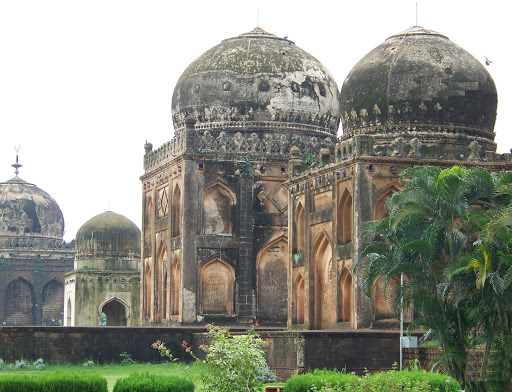
Next, on the list was the Bareed Shahi park. The tombs of the Bahamani rulers lay here. This is small but a nice park maintained just to provide some lung space for morning joggers and evening walkers. We were told that this was a neglected piece of history just a year ago and good efforts have been made by the authorities for its restoration.

We had an invitation from one of the colleagues at my mom’s office to visit his home for lunch. To think of it, it is by far and large one of the MOST sumptuous and wholesome meal I have had all my life. Hahaha call it the downside or the funny part of relishing such a wonderful meal- My mom and I were handed over a large towel to wipe off our teary eyes and watery noses. The regional cuisine here is notoriously famous for being high on chilly. But even with the hot flames flying out of our senses, we couldn’t resist the taste of the flavorful spread. It was a typical North-Karnataka cuisine with a spread of over 50 dishes. We were overwhelmed by their hospitality and the flavorful cooking. Apart from the Millet roti and gunpowder, most of the dishes were new discoveries for me. I even had a box packed with roti and keema-curry for my return journey by train in the night.

Sightseeing at Bidar: The Bahamani tombs
The Bahamani tombs

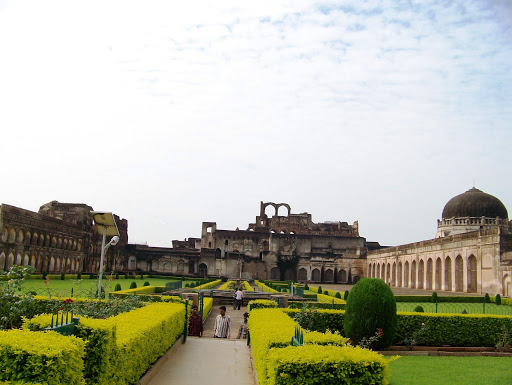
The last and final destination was the Bidar Fort: It is a multi-layered fort to say in simple words. It does not have a quantifiable boundary, though a few localites specify some digits to measure its expanse. The entire city of Bidar is actually within a fort wall which was the area where the citizens lived back during the rulers’ time. The second round of the wall is where the ministers lived. The third and the innermost zone is where today’s tourism is concentrated, the area where the King & the queen lived. This fort needs a minimum of half a day to explore for a person interested in history, architecture or archeology. In a tourist circuit in Bidar that I barely heard of, this fort came in as a surprise when I had least expected. It is HUGE!

Sightseeing at Bidar: The Royal Residence within the Bidar fort
The Royal Residence within the main fort

Bidar has so much to offer for a backpacker on a tight budget. Apart from the travel distance between places, everything else is very affordable. Even the entry to all the major landmarks on the potential tourist trail was free. In spite of it, very few people plan a trip to this district. Maybe because the name pulls down an image of a dry, barren, hot, poor, drought prone landscape. What my eyes met here was contradicting to the imagination that I had, largely based on what I heard in the media. In reality, the city was lush green, well fed with good rains and clean (at least compared to the cleanest places of Bangalore).

Souvenirs to take back: Bidariware is a local form of metal art that has a GI (Geographical Identification) tag and extremely laborious and artistic. It takes an 8 stepped process to create one piece of art and a symbol of royalty, that’s been carried on from 14th century, largely promoted by the Bahamani Sultans.

So, a lesson to take back: Stop imagining how a place would be; go there and see it yourself.