Tag Archives: Nagas

Part 1- The Story of The Maha Kumbh and the Naga Sadhus

The Kumbh Mela is the largest human gathering in the world, at least according to my school lessons. Since then, I’ve been curious to see what this massive congregation looks like. I happened to redo most of this route again in the company of another friend when I decided to witness the Maha Kumbh Mela in 2025.

By 2025, with the ability to fund my own travel and enough mental maturity to understand the world, I planned to attend the ‘Maha Kumbh Mela,’ scheduled for 45 days starting from the day of Makar Sankranti in January 2025 and ending on Maha Shivaratri in February 2025. Initially, I planned everything for a solo trip. Considering my leave, expected crowds, and other factors, I intended to take a holy dip at the Triveni Sangam in Prayag on Shivaratri. I had booked flights and accommodation well in advance. However, as the Kumbh Mela approached, news spread rapidly about this rare celestial event happening once every 144 years, attracting people worldwide eager to dip in the river. Many flocked to the site, driven more by FOMO, less by spirituality. Due to this unprecedented rush, transportation and public infrastructure were eventually overwhelmed. One of my friends decided to join me in my quest to wash away all my sins in the river confluence.

My plan was finalised well before the global frenzy began. I had a clear list of places I wanted to visit, the order of my travels, and the experiences I sought. This was the condition I set for my friend before accepting her request to join me. We flew from Bangalore to Ayodhya, where I finally got to see the Ram temple after his return from Vanavas. (My previous visit to Ayodhya has been detailed in a separate post). From there, the plan was to take the train to Prayag to experience the energy of the Kumbh Mela during its last two days. Afterwards, we would travel by train to Banaras, stay for a few days without a fixed itinerary, and then fly back to Bangalore.

When we reached Ayodhya, the small pilgrimage town was packed with crowds. Luckily, we had secured a slot to visit the Ram temple through online booking after staying awake until midnight, two weeks earlier. That sleepless night made our Shri Ram darshan quick and smooth. Without staying on the crowded streets, we slept through the night to catch the morning train to Prayag. Media reports emphasized the massive crowds at all railway stations around Prayag, raising our concerns before we arrived. We heard that daily visitors could reach 1-2 crores, excluding the main ‘Snan / Royal Bath’ days during the mela.
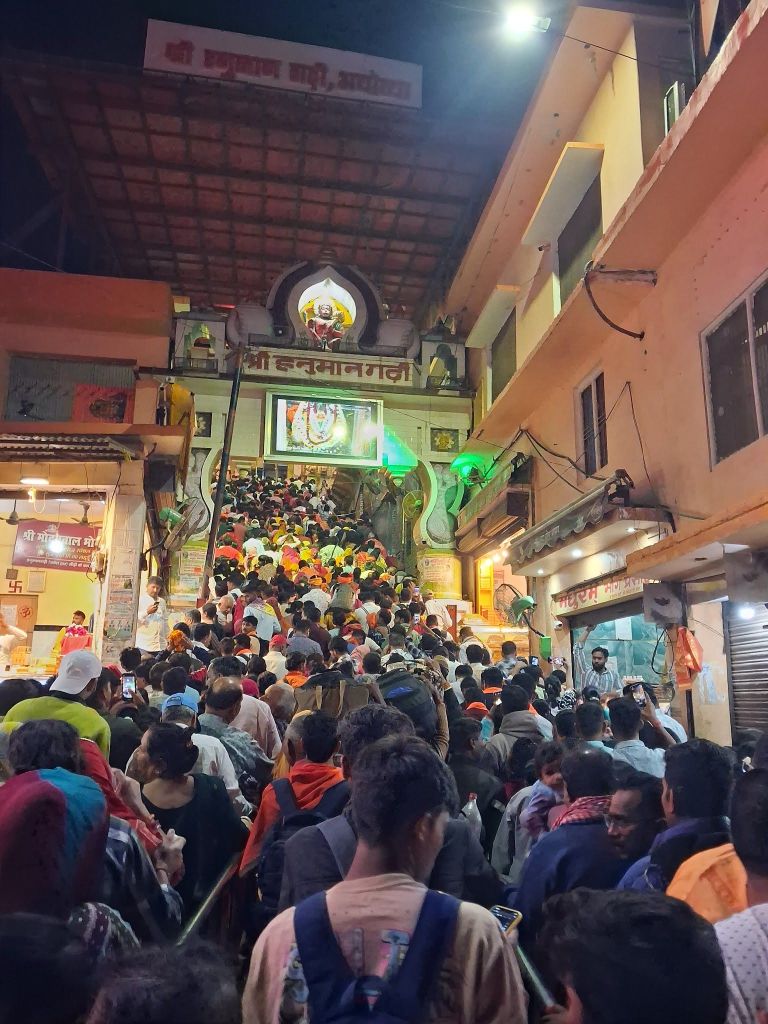
The Crowd at Hanuman Garhi temple, Ayodhya

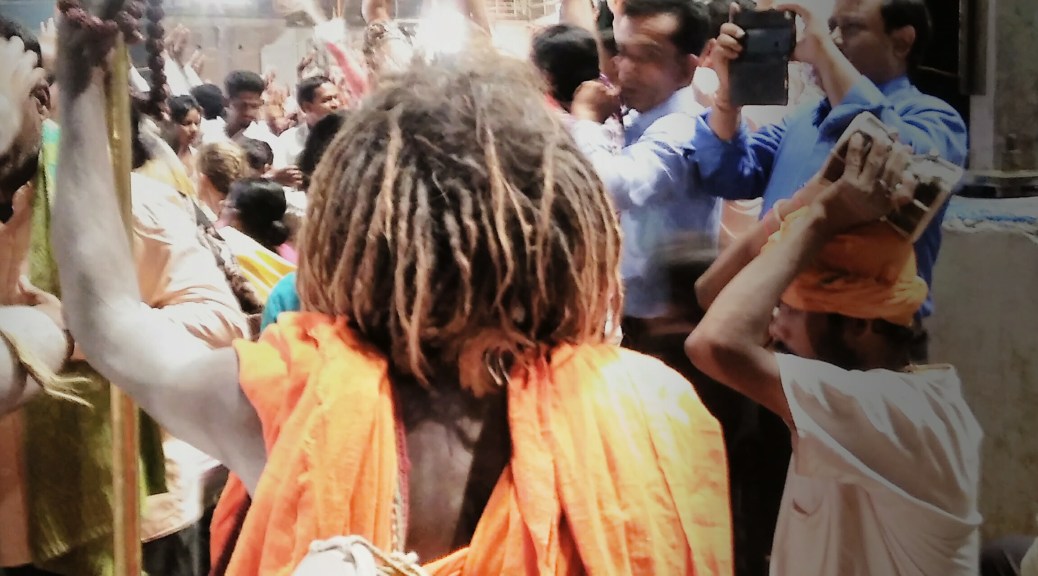
We had a small list of things to do and experience, that were exclusive to the Kumbh Mela. Upon alighting at Prayag, two things happened. First, apart from the holy dip in the confluence, another priority was to see and interact with the Naga Sadhus. We believed this was a golden opportunity to experience the energy of so many ascetics in the same place who otherwise live in solitary dwellings in remote natural areas like mountains, forests or caves. However, we learnt that most Nagas had left the mela after the royal bath on the day of Basanth Panchami.

Second, I received an SMS notification on my phone that the scheduled train from Prayag to Banaras on the MahaShivaratri day had been cancelled, as a precautionary to avoid a stampede like situation that had happened on the day of the holy bath on Mauni Amavasya. This was the same train in which he had a confirmed ticket to Banaras. This cancellation then put us in even more distress wondering how we are going to navigate our travel through the crammed-up transportation system that had garnered widespread coverage on media.

After arriving at Prayag railway station, there was still hope. Things didn’t seem as bad as we had imagined, and it was rather easy to navigate from the station to the hotel we had booked earlier. Also, during other occasions, the Nagas belonging to the major thirteen Akhadas leave for their abodes after the Kumbh mela. But this time was special, the last day of the Kumbh coincided with the Maha Shivaratri. They had all headed to Banaras, for the Lord’s darshan on the most important night of their Adi Guru, Lord Shiva. We still had a probability to see them all if we reached Banaras for Shivaratri. But, we had planned to take our holy dip on that same day as it was one of the most important bathing days.

On the other hand, some good Samaritans recommended us to leave Prayag before the last day of the mela as a large crowd was expected to flock to not miss out the once in 144 years opportunity to wash off their sins. All holy sites and landmarks within the proximity of the confluence were closed for the next couple of days to avoid overcrowding. Roads would be blocked for vehicular movement and reaching either the airport, railway stations or bus stations would be far off to be accessible by foot. Finding some wisdom in the words of so many people, my friend and I both decided to reschedule our plan for Prayag.
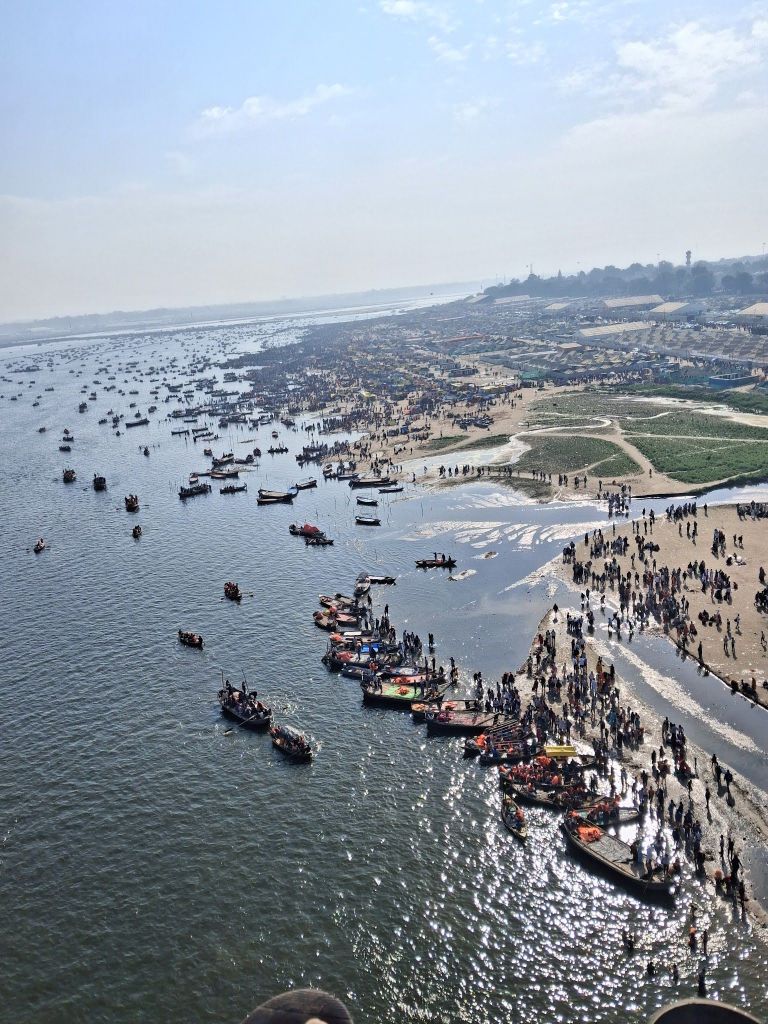
Bird's eye view of Triveni Sangam, Prayag
Bird’s eye view of Triveni Sangam, Prayag

Accordingly, after freshening up in our tented accommodation by late noon, we set out on a triple riding bike taxi to complete few of the things from our to-do list. Firstly, we tried para-motoring. Getting a bird’s eye view of the massive wall of the Allahabad fort setting a backdrop for the holy confluence and the tent city was a beautiful experience we had waited for. From there, we went visiting the temporary sets of the twelve jyotirlingas and finally reaching for the Ganga aarti at the ghat. We participated in the bhajans, did the aarti and slid into the warmth of the blankets in our tent.
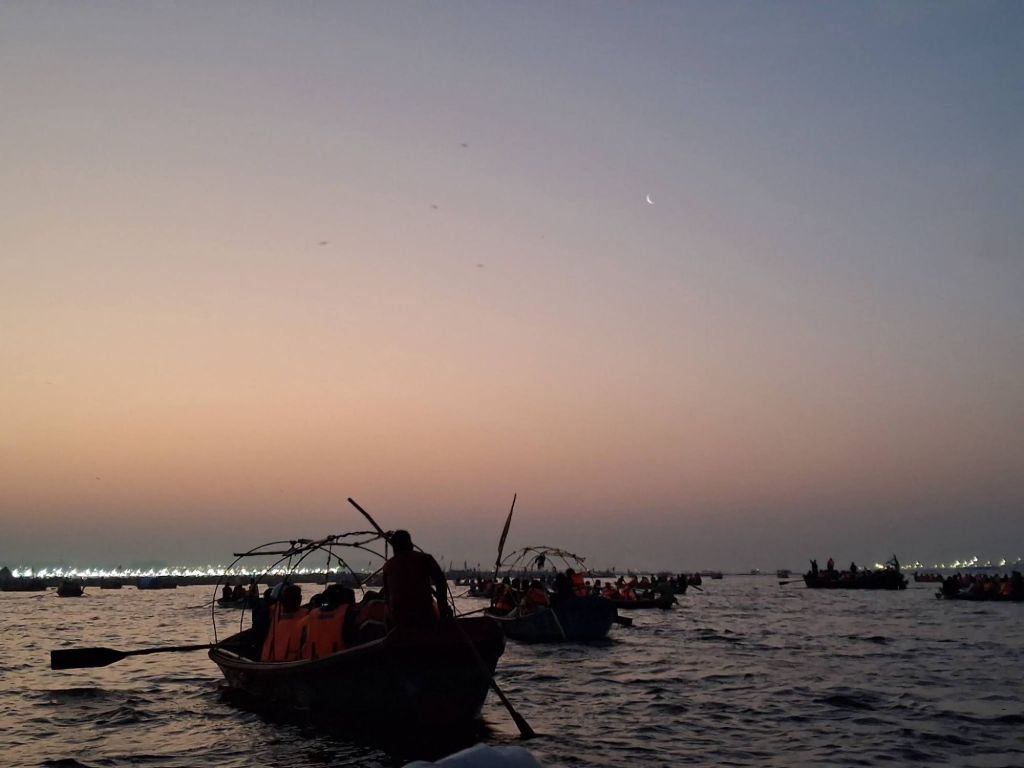
Early morning boat ride to the Sangam, Prayagraj

We woke up the following morning to board the boat that we had booked on the previous evening. The biting cold temperature made us a little hesitant to take the dip, but when we finally reached the confluence- the energy felt different. We both thanked the waters, greeted the rising sun and dipped ourselves in the Triveni Sangam, praying for good of us, our families and the world. It was a moment that I had looked forward to all my life, that twinkle in the eyes of the younger me was beaming with joy.
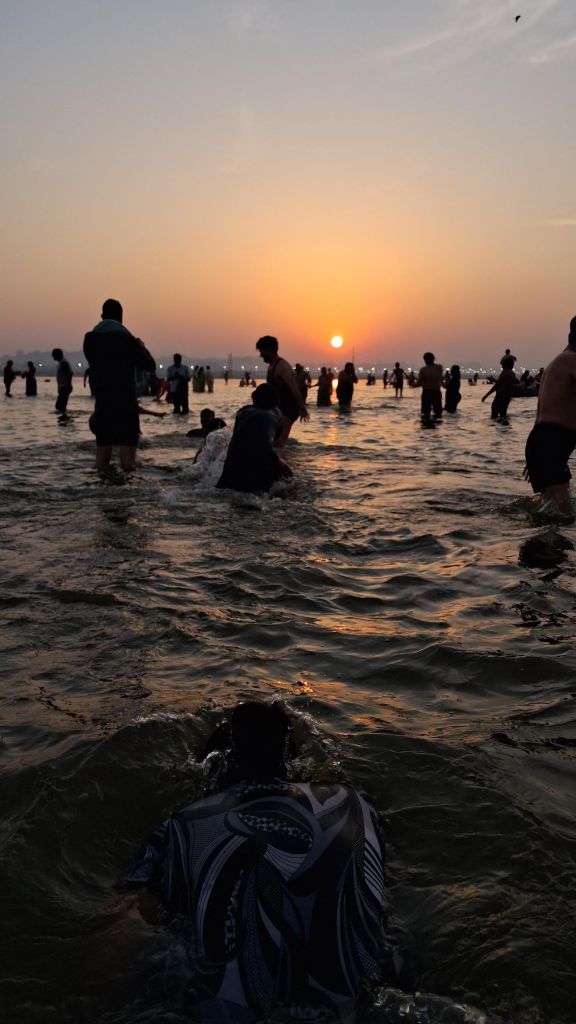
The Sangam dip during MahaKumbha 2025

After changing into dry clothes, we packed up and decided to move out of Prayag at the earliest. We hired bike taxis to reach a bus-station located on the outskirts of Prayag. To our surprise upon reaching, none of the buses were as crowded as we had expected them to be. Each bus left the stands as soon as the seats were occupied. The frequency was such that no passengers needed to stand on the aisle for their journey to Banaras from Prayag. The journey was smooth and rather on time, thanks to dedicated lanes marked for local and outside registered vehicles each and for public buses.

Continued as Part 2: The Story of The Maha Shivaratri and the Naga Sadhus

The traditional fire making of the Nagas

One of the earliest science lessons we learnt in school is that friction causes fire. We all have grown past reading how the early cavemen generated fire by rubbing two stones together and eventually how this accidental discovery lead to a massive turnaround in the evolution of mankind.

Leaving the past behind, the modern man uses a matchstick or a lighter to create fire, all based on the same science of friction. But, there in Nagaland, the culture still exits where albeit the formal education and access to matchboxes and lighters, the tribes continue to use their indigenous methods of lighting a fire. In order to keep this tradition alive, there are competitions conducted among the various tribes of the state to see who ignites the fire faster. I witnessed one such event during the hornbill festival-2019 in Nagaland.

img_20200216_1315148673833036174924531.jpg
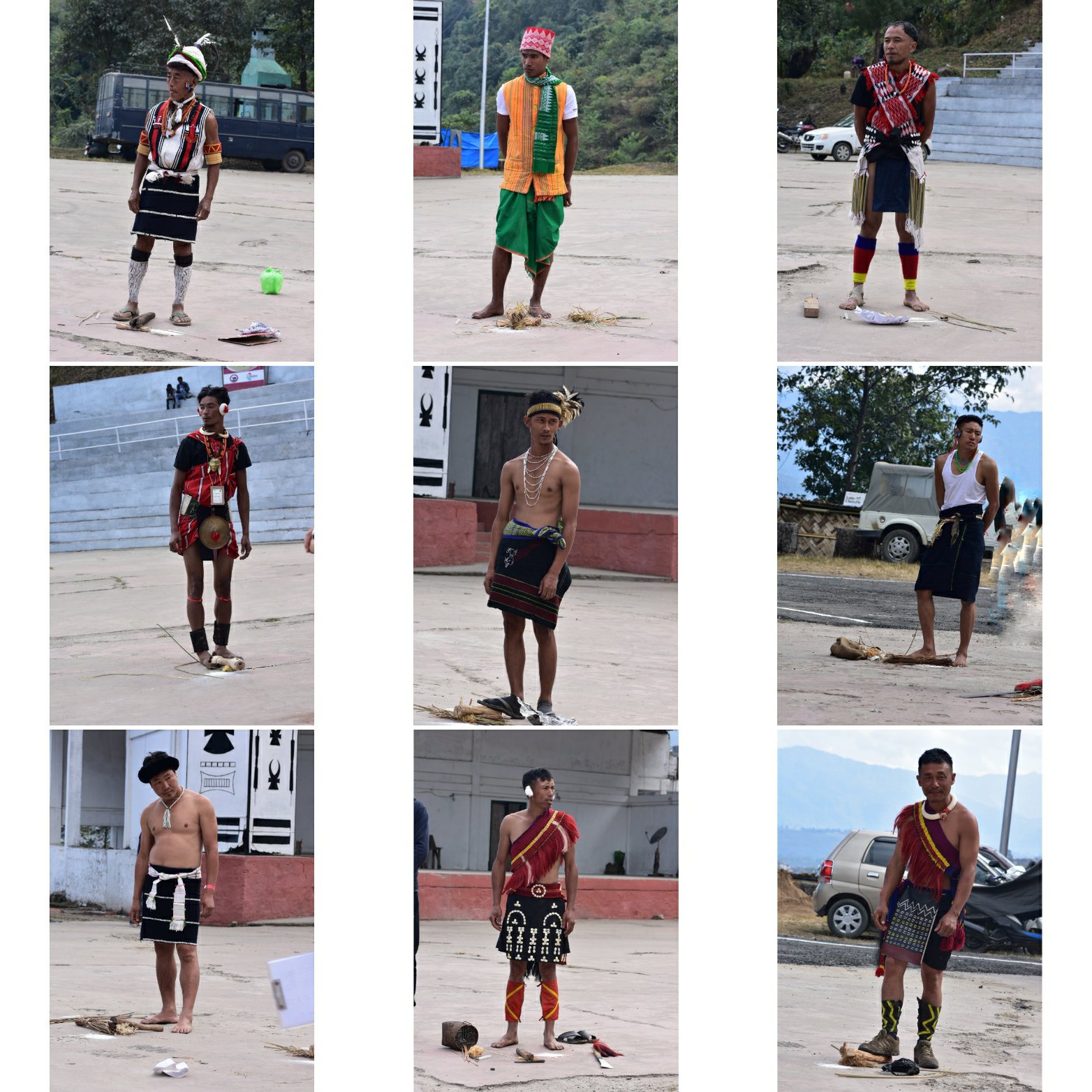
The nine other participating Naga tribes at the fire making competition

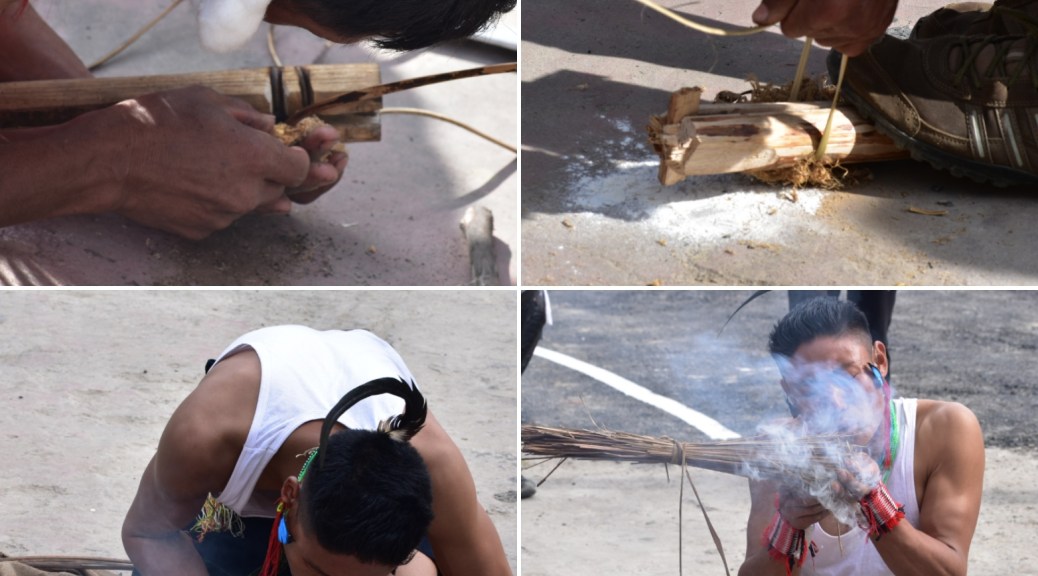
The traditional method of fire making is done by using wooden log and fiber. Wooden saw dust is placed between small crevices made in the log around which the long fiber is then rapidly pulled along, to create friction. The log and the fiber are the two surfaces creating friction and the saw dust is the fuel/ catalyst. It was a very distinct way of lighting fire to watch. The person who first lights a candle using the fire ignited by him in this traditional method gets to take home the trophy.

dsc_08571738360150418706737.jpg
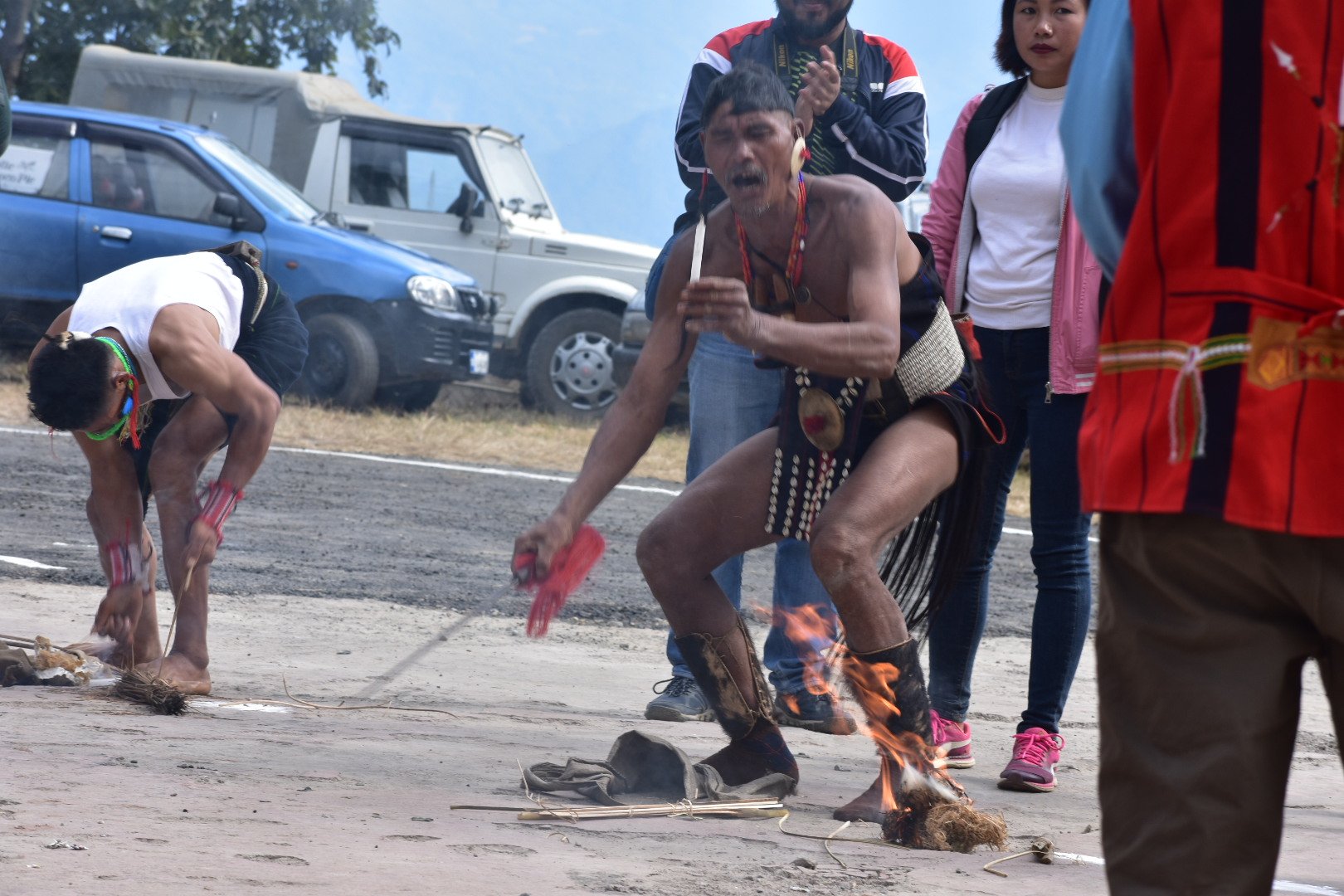
The winner of the contest (Naga fire making)

Here is a video to see how this fire is made in the indigenous Naga way.

The Folk Musical Instruments of Nagaland

It is that traveling exposes one to a multitude of cultures and people. The diverse geography of India is home to some of the most unheard traditions and untold folklores. During my 10 day stint of backpacking in Nagaland, I was introduced to so many of it all, as this little Indian state, tucked in the far North-east is home to more than 17 tribal sects and sub-tribes; each having their own culture, language, traditions and cuisine. Here, is a small list of indigenous musical instruments used in the folk culture of the Nagas.

Mrabung:

Mrabung is an indigenous musical instrument of the Zeliang Nagas. It is a single stringed instrument that is crafted with a hollow/ cured bottle gourd and a fretless wooden neck of about 12 inches long. It is played with hair string bow (Usually a cluster of horse tail tightly tied together to two ends of a thin wooden stick). This bow is used to strike the chords (like a violin) with one hand and the string along the neck is pressed down with the other hand at appropriate places to get the required tune and legato of the song. It is played during merry making in social gatherings and festivals where men and women congregate. I was narrated with a popular folklore of the Nagas wherein, a singer called Arum played the Mrabung. His music captivated the farmers so much that everyone working on the field left their work undone and sat around Arum listening to his songs. Arum had to be barred from playing any songs further just so the people went back to work on their farms. Click below to see an artisan playing the Mrabung.

Atutu:

The Atutu is a handcrafted bamboo trumpet used by the Pochury tribes of Meluri. A particular variety of bamboo is used in making the varied components that are fitted together to make this crafted trumpet. It is played to mark special occasions. For example, blowing of this trumpet towards the end of February means to herald and announce the advent of the Nazhu festival. Also, the male members of the tribe play it in their morungs in the evenings throughout the festival. Apart from this, the trumpet sound is used to ward off birds and animals from the rice fields and prevent from crop damage. In earlier days, trumpeting was a way to alert the collective habitat or a village of a possible enemy attack or as a signal of declaration of a war.

20191204_1102368093835930586387810.jpg
The Atutu: The bamboo trumpet

Dholak:

This common musical instrument has its own version and avatar in every region of India. Be it weddings or festivals, it is the most common and almost an essential part of any merry making in Indian celebrations. Similarly, each tribe in Nagaland has its own version of the dholaks or the Indian hand drums. Made with an outer casing of wood, laced tightly with cotton strings and the drumming surfaces made with the locally available materials, more often animal hide. Here are samples of the dholaks used by the Garos (Long slender shaped, narrowing at the ends), the Mech Kacharis (fatter and shorter than the Garos) and the Aao tribes (Shorter and fatter than the previous two types and Uniform sized throughout its length) of Nagaland. (Click the below link to watch the ceremonial dances of the Naga tribes with their dholaks)

This is my humble attempt at documenting some unique musical instruments that are lesser known to the world outside North-east India. These have been listed based on my actual experiences and interactions with the Nagas during the hornbill festival-2020. If you know any such unique musical instruments, please do share in the comments section below. I would be happy to learn it from you 🙂

Stone Pulling Ceremony with the Angami Nagas

Stone pulling Ceremony is an annual traditional event held across the Angami villages to commemorate a certain important day. It takes place in one village per year on a rotational basis. So that way, it takes about 5 to 10 years by the time this ceremony reoccurs in a particular village. This event is usually timed around the Hornbill festival as there will be people from across Nagaland and outside visiting Kohima (The region where the Angami tribe is a majority).

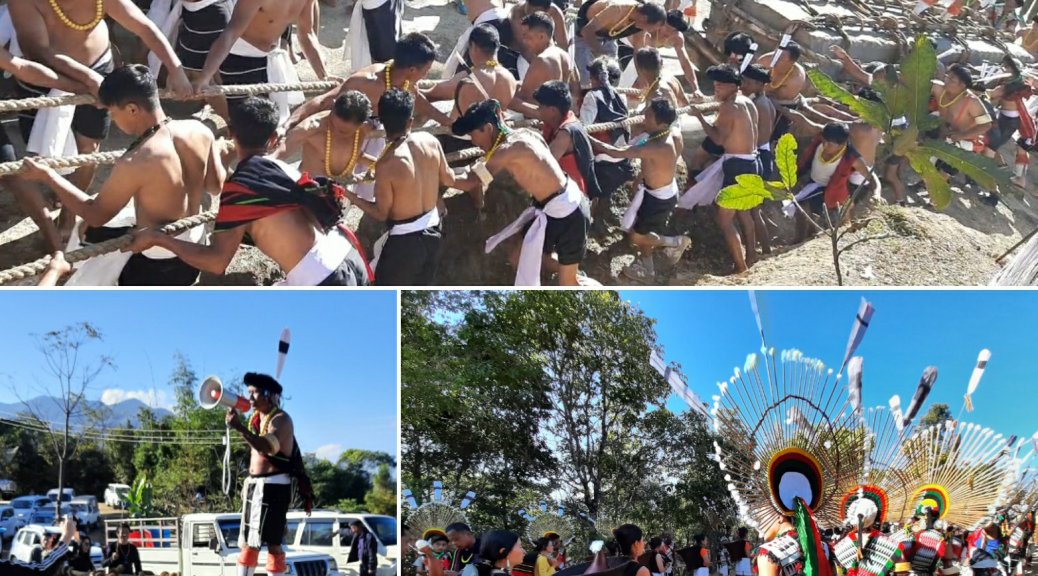
The stone referred here is a large monolith that weighs several tons and the size and shape is not fixed. It is at the villagers’ liberty to pick the monolith they want to use for the occasion and can be either quarried from the village itself or bought from somewhere else depending on the resources. The large stone slab is then placed on a sled that is made of tree trunks and pulled using thick entwined vines from the forest. Thousands of Angami Naga men pull the large monolith over a few kilometers to finally errect it upright, engrave the details of the event and mark the day.

This year, the stone pulling ceremony was held at Mima village. It was organised to commemorate the 75th anniversary of christianity in the village. The monolith was symbolized for forgiveness, friendship and peace to the enmities that the village had with various villages before the coming of the gospel to Mima village.

The typical stone pulling ceremony (Click here to watch the complete video) is solemnised by the pastor from the village’s church with recitals from the Angami bible before the start. It is then followed by firing a round of shots from the muzzle loaded guns in the air. The captain stands on the slab and shouts Angami cheers through a loudspeaker to motivate the pullers. While all the strong and younger men folk of the village join hands to pull the stone, The eldest two men of the clan walk, leading the tribe. The women get dressed in their traditional attire and walk with a khophi (an utility basket woven with bamboo or cane) hung on their back and they stay around as a mark of support to the pullers. A few of these women carry cotton in containers made of dried bottle guard and walk ahead of the pullers as a part of the tradition. And yet, the remaining women go around distributing gruel made of ‘Job’s tears or Chinese pearl barley’ to all the passersby and the participants from their traditional Aluminium pots. It is served in bamboo cups that are carried in the baskets hung around their foreheads. The gruel provides an instant boost of carbohydrates for the toiling men in the hot sun.

In a Christian majority state, the tribal traditions are still thriving. It was a different experience watching the entire village dressed in their ethnic best and gathering to pull the stone uphill from the starting point to its destination. I somehow drew parallels with the chariot pulling tradition of the Puri Jagannath and several other temples of South India.

Isn’t it true that we all somehow follow the same way of life, only with different names for our faith and the process we follow to achieve it?