Tag Archives: Pakistan occupied Kashmir

Kashmir Great Lakes Trek – Cost, Best Time, Route & Highlights

The Kashmir Great Lakes (KGL) trek is widely regarded as one of India’s most spectacular high-altitude circuits. Rolling alpine meadows, jagged granite ridges, and a string of emerald and turquoise lakes make this route feel like walking through a painter’s brightest palette. Great Lakes of Kashmir is a classic 7–9 day trek that usually takes trekkers from Sonamarg to the Naranag valley (or the reverse), crossing several high passes and visiting lakes such as Vishansar, Krishansar, Gadsar, Satsar and Gangabal.

This guide covers the route, daily plan, difficulty, best season, permits and safety, gear, food and packing, acclimatisation and practical tips so you can plan and enjoy the Kashmir Great Lakes trek with confidence.

  • Typical duration: 7–9 days (6–8 days of trekking).
  • Typical distance: ~65–75 km depending on start/end points and exact route.
  • Maximum altitude encountered: ~4,200–4,300 m (Gadsar / Nichnai passes). Most camps lie between 3,500–3,900 m.
  • Difficulty: Moderate to difficult (long days and 1–2 steep passes; not technical but physically demanding).
  • Best months: Late June to early September (peak July–August).

What sets KGL apart is the variety compressed into a single circuit. In a week you move from thick forest and pastoral Sonamarg meadows to barren moraines and dramatic glacial basins. Each lake has its own character — Vishansar’s wide shallow shores, Krishansar’s twin lake views, the dramatic bowl around Gadsar and the grand Gangabal beneath steep cliffs. The landscape changes day by day, making every campsite feel like a new world. Many trekkers call it a once-in-a-lifetime trek for the views alone.

This is a standard itinerary many operators and independent trekkers follow. Distances and times vary by pace and route choice.

Day 1: Srinagar to Sonamarg
Arrive in Srinagar and drive (~2–3 hours) to Sonamarg. Final gear checks, stay in a guesthouse or camp at Sonamarg (2,700–2,800 m).

Day 2: Sonamarg to Nichnai (~10–12 km, 6–8 hrs)
The trail climbs out of Sonamarg through meadows, forests and the Shekdur stretch before arriving at the high pasture of Nichnai (~3,500 m). There may be an army checkpost where ID is required.

Day 3: Nichnai to Vishansar Lake (~10–14 km, 5–7 hrs)
Cross the Nichnai pass (often ~4,100–4,150 m depending on route), then descend and reach Vishansar lake (~3,650 m). A spectacular first high-altitude lake.

Day 4: Vishansar to Gadsar (via Gadsar Pass) (~16 km, 6–8 hrs)
A long but rewarding day: ascent to Gadsar Pass (~4,200 m) and then a descent to the turquoise Gadsar Lake. Gadsar is in a sharp amphitheatre of cliffs and often has ice in early season.

Day 5: Gadsar to Satsar (~11–12 km, 4–6 hrs)
Cross rolling meadows and reach the Satsar lakes — a cluster of multiple small lakes — with scenic campsites.

Day 6 : Satsar to Gangabal (via Zaj or other pass) (~9–12 km, 5–7 hrs)
Cross the pass (sometimes called Zaj or another local saddle) into the Gangabal basin and camp by Gangabal Lake below Mount Harmukh. Gangabal is one of the most dramatic high-altitude lakes in Kashmir.

Day 7: Gangabal to Naranag / Thajiwas valley (~10–14 km)
Descend to Naranag, meet transport and drive back to Srinagar. Naranag has historical temple ruins and is a popular exit point.

Note: Many operators add a buffer day for weather, or extend to 8–9 days to allow lighter daily distances and better acclimatisation.

Kashmir Great Lakes Trek is not a technical climb since you won’t need ropes or glacier travel skills on the usual route but it is a sustained high-altitude Kashmir Trek with long ascents and descents. Expect:

  • Daily walking of 5–8 hours on varied terrain.
  • Two or three high passes around 4,000–4,250 m (steep sections, loose scree on approaches).
  • Nights at 3,500–3,900 m, so altitude symptoms are possible.

Fitness prep: a few weeks of aerobic conditioning (brisk walking, stair climbing, light trail runs) and weekend hikes will help. If you’re new to high altitude, allow an extra acclimatisation day (e.g., at Nichnai or a day in Sonamarg), many guided trek agencies like Cliffhangers India include one buffer day in their itinerary.

The trek is seasonal because snow blocks the high passes for much of the year. Late June to early September is the practical window: the snow melts, meadows bloom and passes are mostly passable. July–August are peak months. Trails are busiest then and weather is most stable; monsoon influence is limited compared with the lower Himalaya but occasional storms and afternoon rain/snow at high altitudes can occur. Early June may still have heavy snow; September can be cold with early snowfall. Plan accordingly.

  • Army or local checkposts are common near Sonamarg; keep valid photo ID (Aadhaar/passport/driving licence) handy for checks. Some itineraries require village levies or fees, your operator will handle.
  • Guided groups: using a local, licensed operator with experienced guides is strongly recommended if you’re new to Himalayan trekking. Operators provide tents, meals, porters/ponies and local knowledge of passes and weather patterns.
  • Altitude sickness: know the symptoms (headache, nausea, dizziness, reduced performance). Don’t push through progressive symptoms, descend immediately and seek medical help. Carry a basic first-aid kit and consider medications like acetazolamide only after consulting a doctor.
  • Operators provide 3 meals a day (simple, high-calorie trekking food). If self-supported, carry freeze-dried meals or easy staples (oats, pasta, nuts, energy bars).
  • Water: treat with chlorine tablets, purification drops or boil. Streams flowing from glaciers look clean but carry microscopic risks. Carry a 2–3 litre hydration setup; water points are frequent near lakes and streams.
  • Campsites are grassy meadows (pack down if wet); expect cold nights and  sleeping bags rated to at least -5°C to -10°C recommended for safety and comfort.
  • Sturdy trekking shoes/boots (broken in).
  • Waterproof shell jacket + insulated midlayer (down or synthetic).
  • Trekking pants, base layers (thermal if early/late season).
  • Hat, gloves (warm, windproof), sunhat.
  • Sleeping bag (rated to –5°C or lower).
  • SPF, sunglasses (high UV at altitude), lip balm.
  • Trekking poles (hugely helpful on steep descents).
  • Headlamp, spare batteries.
  • Water purification method and 1–2 litre bottles or bladder.
  • Light stove if self-cooking (or plan with operator food).
  • Basic medicines, blister kit, altitude info card.
  • ID and photocopies.

The region is home to mountain fauna (pheasants, marmots, ibex at very high altitudes, and sometimes brown bears in the lower forests).

Respect local wildlife, don’t feed animals, keep a safe distance, and store food properly.

The fragile alpine meadows recover slowly from damage, so follow Leave-No-Trace principles: carry out all plastics, avoid cutting vegetation, use designated campsites and follow toilet protocols (bury waste away from water sources or pack out).

Local communities and park authorities also emphasise low-impact travel.

  • Guided trek: expect a price range depending on services,  basic group treks are cheaper; private departures cost more. Pricing covers transport from Srinagar, tents, cooks, ponies/porters, permits and guide fees. Booking through reputable local agencies ensures safety infrastructure.
  • Independent: possible for experienced trekkers who can source local ponies and cooks, but permits, navigation and emergency response are more your responsibility. For first-timers, a guided trek is the safer, simpler option.
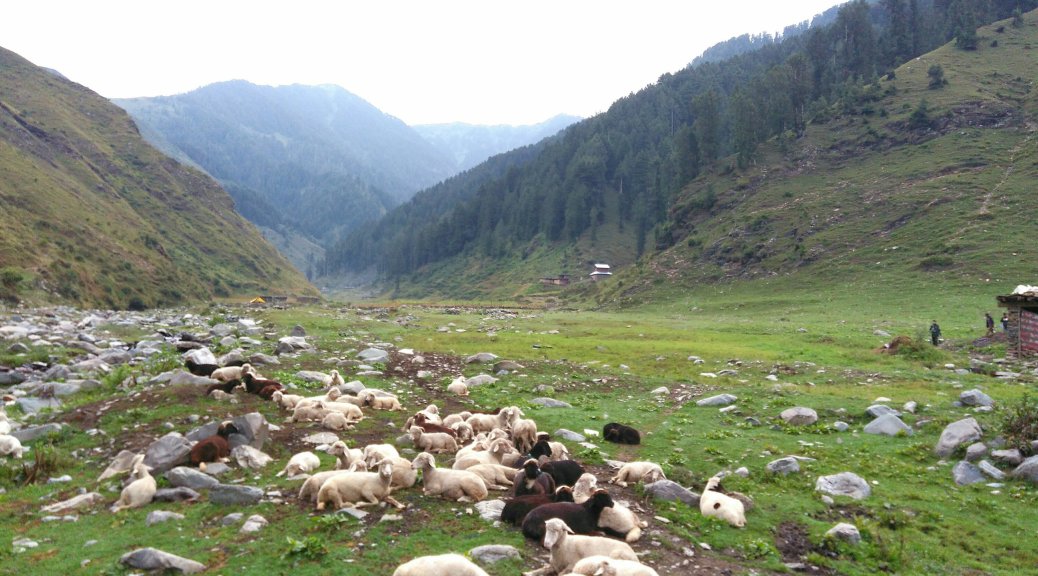
  • Gadsar Pass and Gadsar Lake — dramatic bowl views, turquoise water and cirques: one of the most photogenic spots on the trek.
  • Vishansar and Krishansar — approach views from the pass reveal twin lakes and meadows.
  • Gangabal below Harmukh — large alpine basin with sheer cliffs and reflective water — great for sunrise and sunset photos.

Bring a polarising filter if you shoot and protect gear from sudden drizzle or dust.

  • Pace yourself — better to arrive fresh at camp than collapsed; shorter, steadier steps up and down help.
  • Hydrate and snack — dehydration hides behind fatigue; sip water constantly and eat salty snacks to keep electrolytes.
  • Early starts — weather is most stable in the morning and you avoid afternoon wind or cloud.
  • Practice with poles — they save knees on long descents and steady you on screen.
  • Respect local advice — guides know micro-weather patterns and which days are risky for passes.
  • Check weather and pass conditions with your operator 48–24 hrs before start.
  • Confirm transport and meeting points in Srinagar/Sonamarg.
  • Carry sufficient cash (ATMs are not available en route).
  • Make a small emergency plan: share your itinerary with someone and ensure you know how to contact your operator or local authorities.
  • Pack exactly what you’ll need — light but complete.

The Kashmir Great Lakes trek is not the easiest Himalayan circuit, but with good preparation it is one of the most rewarding. Whether you go with a trusted local operator or plan a careful independent trip, respect the mountain, pace yourself, and soak in the views , the lakes will repay every step.

Beyond the physical challenge, KGL rewards with a sense of wonder: silent mornings by glassy lakes, wildflowers in meadows, the crunch of alpine gravel underfoot and nights under impossibly bright stars. It’s a trek that changes how many people think about scale and stillness, a lasting memory rather than just a checklist. Expect to return quieter, tired and richer in stories.

Purple Farms of the Saffron Flowers- Kashmir Story

Long ago, I watched a visual documentary about the farmers of Kashmir who woke up early on freezing cold mornings to gather fresh flowers from their fields. They all rose with the sun to harvest saffron, the most expensive spice in the world. Ever since, these romanticized visuals had me imagining myself walking on those farms someday.

For close to a year, I had been trying to reach out to people to know when the exact time of the year was to witness these inflorescences. I got in touch with a local person from Srinagar who would take me around the farms. I learnt that the flowers would bloom around late October when autumn sets in. As the season approached, I was getting too anxious to not miss the season. Thus, booked a last-minute flight ticket from Bengaluru, for a long weekend at Srinagar. After a missed connecting flight and spending almost an entire day at the Delhi airport, I had finally arrived at Srinagar on a late Friday evening.

‘Be ready early in the morning, we will be heading towards Pampore’, my local guide said to me before dropping me off at a homestay in the city.

On the following morning, the Chinar leaves of autumn had started to paint my entire journey in gold. The sun rising over the overlooking mountains that surrounded us all around only enhanced my excitement to reach my destination. The saffron grown in the Jammu and Kashmir region has gained a GI tag in the year 2020 with Pulwama, Budgam and Kishtwar districts being key saffron producing areas.

Welcome to the Saffron town of India’, a board stood at the entrance of Pampore in Pulwama. The wide stretch of land on both sides of the highway looked bare and dry, without sight of a single flower or even plants of saffron that I had come to see from 2000 kilometers away. I looked at the person accompanying me, enough for him to understand the meaning of the perplexing look on my face. “Haven’t the farmers cultivated saffron this year?”, I asked him.

He walked me down to one of the farms on the roadside and explained to me that even yield ready plants aren’t prominently visible, with barely one or two grass-like looking leaves emerging from each root (bulb). Only the flowers come out from the root that are extremely sensitive to the environmental temperature. “This stretch of the farms has no shade and the heat due to the highway traffic delays the blossom. We will go to the interior villages of Pampore which have more shade because of orchards like apples, almonds, apricots, etc. The blossom season begins in the shaded-cooler areas and ends with the open-warmer areas”, he said giving me some relief.

We then met a farmer at Pulwama town who then drove us through the interior village of Pulwama, which is otherwise untouched by tourists. Finding our way through the misty morning while being greeted by endless orchards on either side, my guide on the steering stopped at a point. “Madam, here you go!”, he said.

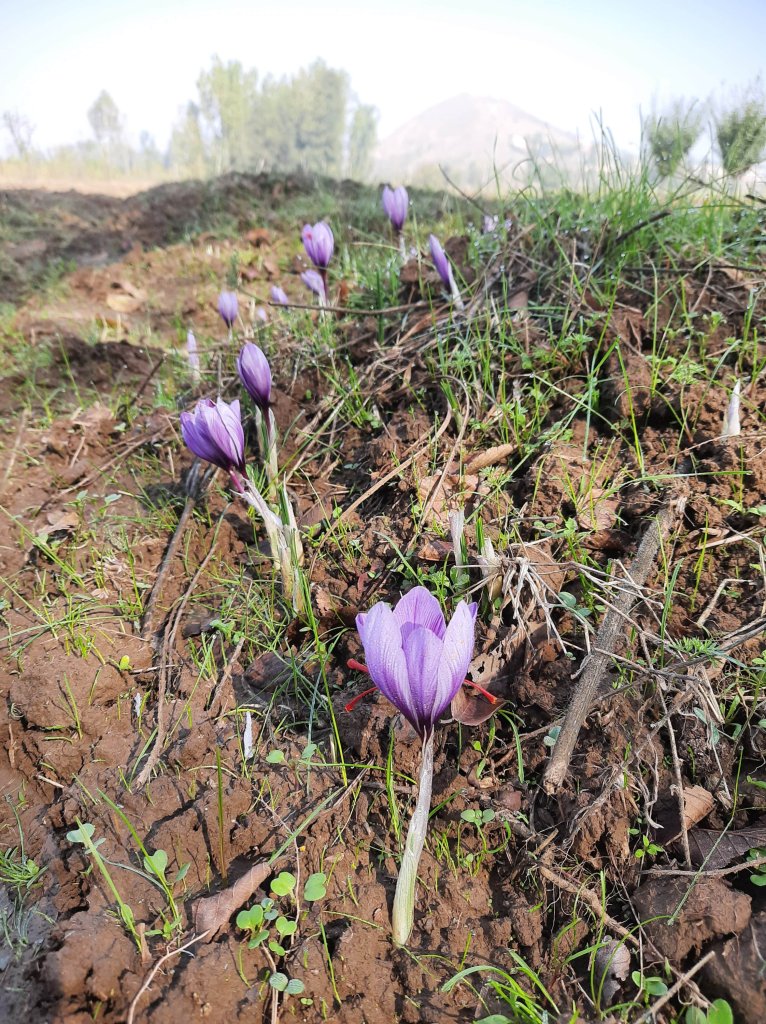
Saffron flowers in Kashmir farms
The purple flowers of saffron in Kashmir

I ran out of the car and watched the sight in awe. It seemed like a faint purple carpet of flowers had been laid on a hazy morning, with the apple orchards writing testimony to my presence and the snowy mountains standing guard against this beautiful view. I had a tear rolling down my cheek, which I am still unsure if was because of sheer joy or in disbelief that I had made it there. I spent hours that morning walking between the purple blossoms, caressing the tender, dewy and moist flowers of saffron, taking pictures of the flowers while enjoying the crisp autumn air. The people accompanying me for sure must have thought that I was a psychopath wandering and meandering all alone, who had travelled from so far just to see these flowers. A few flowers made it to my books, pressed carefully between the pages and getting to go home with me.

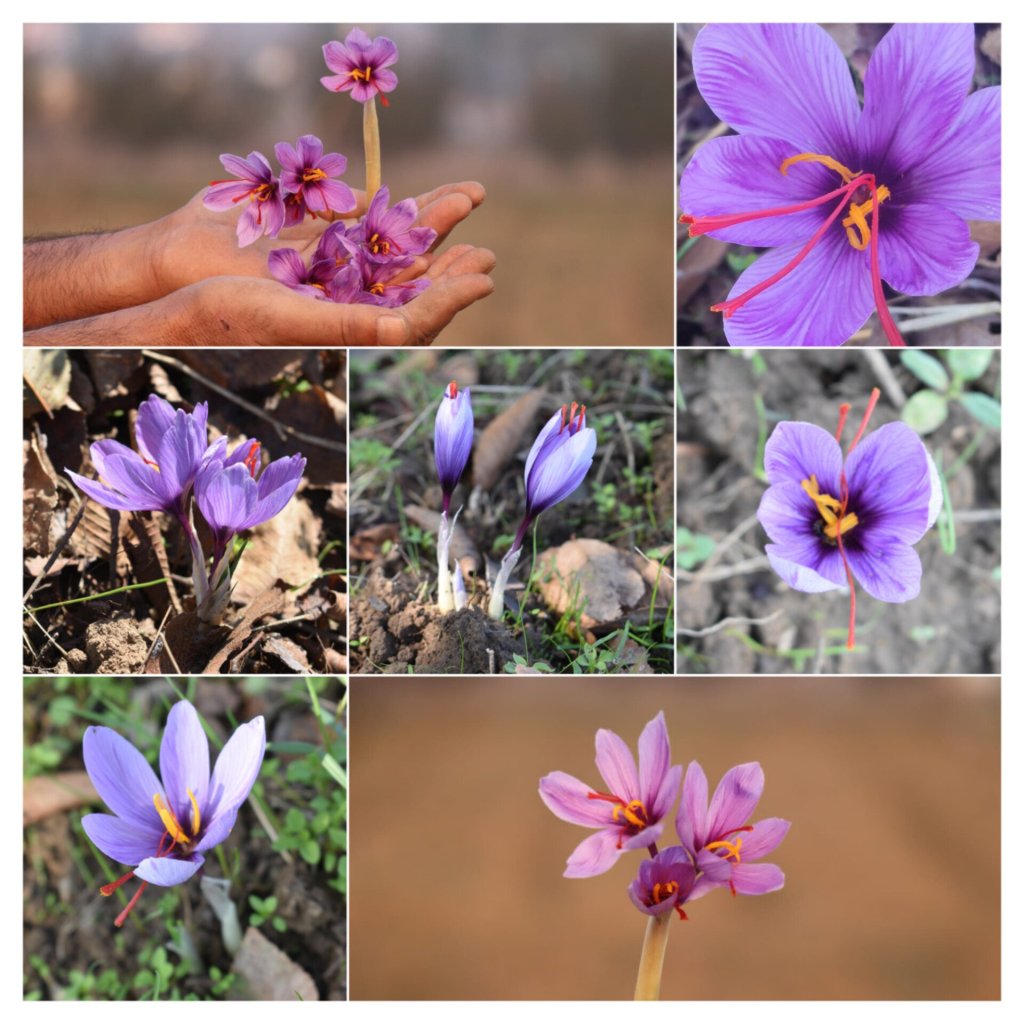
Saffron flowers in Kashmir farms

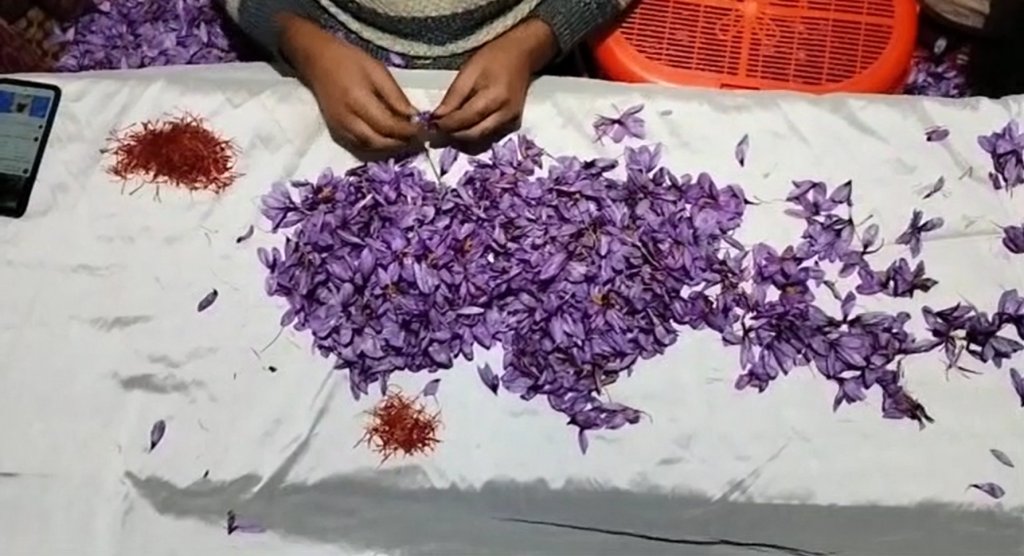
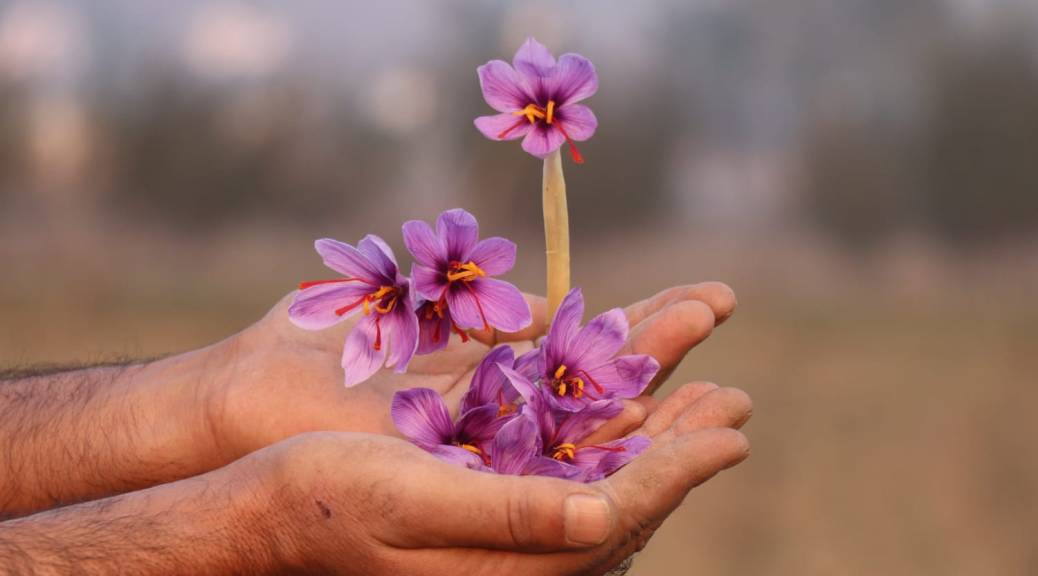
He picked the tender flowers and rested a bunch on my hands while pulling out the saffron strands from one, for me to eat. My tongue had turned yellow upon consumption which he explained was an indication of the authenticity of the spice. I was then invited to his work area where his family had gathered around a table and were separating the different parts of the flowers that would be used for different purposes. He explained the entire process of separation of the saffron strands (the stigma or the female part of the flower), the drying and the packaging. Sipping on hot brew of Kahwa served with the same strands of the saffron that I was holding a few moments ago was overwhelming.

Saffron flowers in Kashmir
Saffron flowers Separation

Of course, my visit would have been incomplete without picking up stashes of saffron from their shop as souvenirs for friends and family. In this short visit to the land of saffron, I had witnessed the world’s richest spice travel from farm to market. Sigh, it was a dream come true, to experience these fully blown saffron fields!

Fact file:

  • It is recommended to get in touch with proper sources and book taxis in advance who could take you on such guided tours of the saffron fields.
  • Pampore and Budgam can be reached on day trips from Srinagar. J&K tourism runs guests houses in Kishtwar as well, which can be reached via taxis hired from Jammu city.

A detailed guide to the Rann of Kutch

With winter, comes in the dry cold winds over the great Indian Thar desert region. The great Rann of Kutch is a part of the Thar desert and is shared between India and Pakistan. The cold winds carry the surface water along with it and dry up the salt marsh. Thus, the entire marshland looks like this phenomenal never-ending stretch of white salt flatland. Rann of Kutch is one of the largest salt marshes in the world and the amazing sunsets over the white salt flats has made it to the bucket list of every traveler and rider.

With all my backpacking experience in other places of India, I wanted to explore ROK too… But when I landed there with a rough idea about the places to visit, I was in for a surprise. Backpacking in Kutch was not as easy as it seemed to me. Firstly, the connectivity through public transportation wasn’t reliable and accommodation options were very few and expensive. It is close to a year since I did this trip and I think I should post this before the ROK travel season starts for this year.

So to begin with, let me tell you the transportation options for getting around Kutch.
1. Pre-book a taxi for your entire trip if you are flying down to Bhuj (The option which I chose).
2. Get a self-drive car or bike from Ahmedabad if that is where you are starting your trip from.
3. There are government buses connecting each place. However, as on date there is only one bus plying each day with long to very long traveling time.

For the stay, I would recommend making Bhuj your central location as it is easy to travel to each place if you choose to follow my itinerary and the stay would be relatively cheaper. The Tent city is extremely expensive and overly commercialized. If you want to experience the tent stay in the salt flats like the way it is portrayed everywhere on the internet, I would advise you to spend your last night at Dholavira.

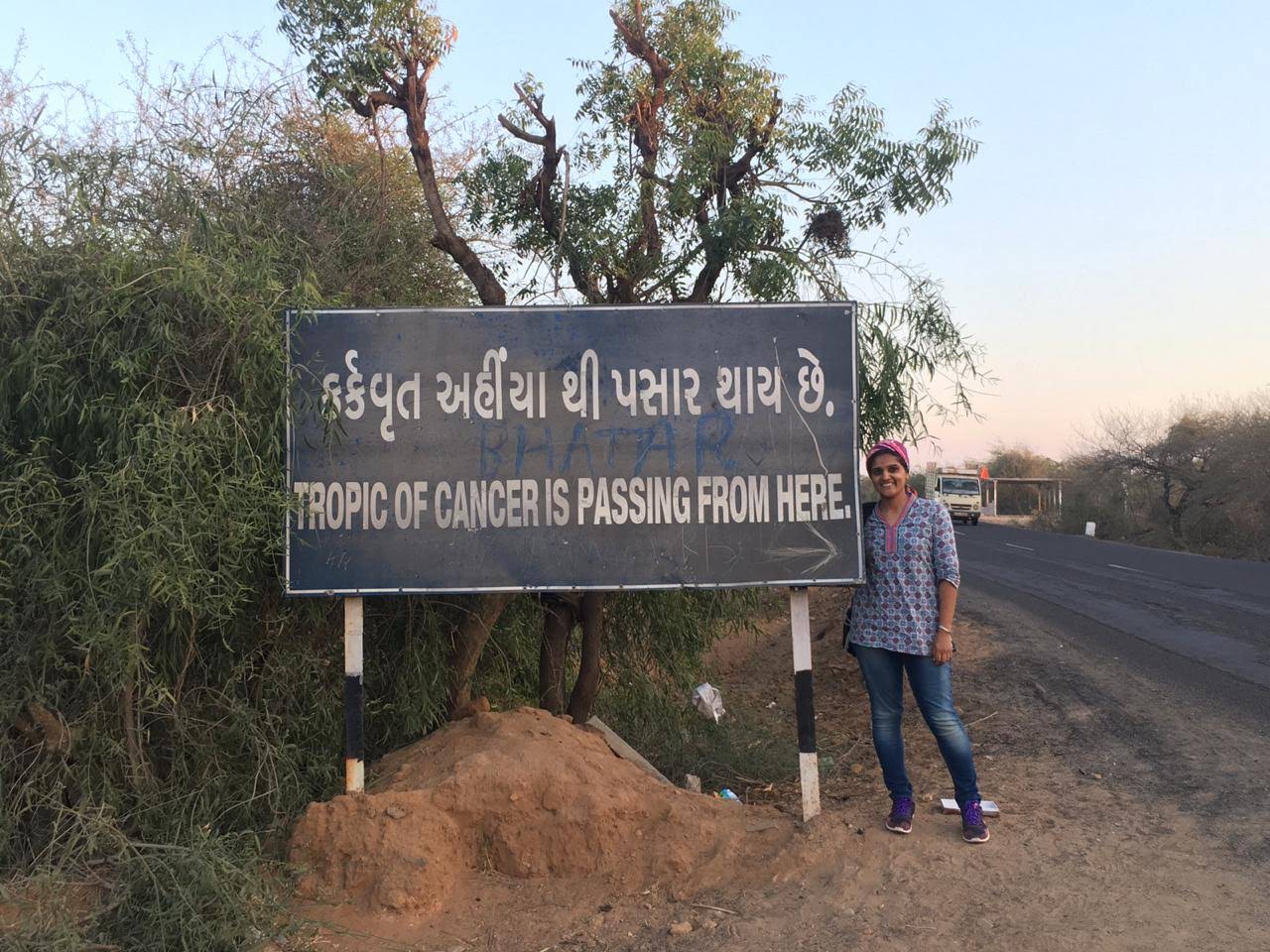
The roads in Kutch I must tell you are something that will amaze you with. They rip right into the horizon, they are super straight, and one would want to just stop by every other time and get the photos of the road with their car/ bike parked by the side.

IMG-20181217-WA0010
The Tropic of cancer passes across the road

Then comes the itinerary. This is what a typical itinerary for anyone traveling to Kutch looks like if the start and end point of your trip is Bhuj.

Day 1: Koteshwar + Lakhpat + Mata no Madh

  • You will be traveling to the western-most tip of Indian Sub-continent, Koteshwar. The Koteshwar Mahadev temple is of religious importance. Right after it is located the Narayan Sarovar which is popular for spotting Flamingoes if you are going there in the right season. You can have free lunch at the Narayan ashram located nearby.
  • You can then drive to Lakhpat. You will be welcomed by the large walls of an erstwhile fortress as you enter this town which is now a religiously important place for the Sikh community which maintains the Gurudwara Sahib that houses some of the relics of Sri.Guru Nanak.
  • Lakhpat, once used to be a buzzing port town and the economic center of the state until it was hit by a major famine. The entire town was abandoned for what it is today popularly known to be a haunted village. Anyway, it is guarded by the navy and the coast guards and with their permission, I enjoyed my walk there with some nice photos of the abandoned village, its houses and temples.
  • The deity at the Ashapura Devi temple located at Mata no Madh is believed to be a powerful goddess and hence visited by everyone traveling here. There really wasn’t much for me to do there and I preferred my 2kms drive up to the hill temple over this. We had reached there at sunset time and I decided to spend the remaining time watching the golden skies from there before heading back to Bhuj for the night.

dsc_03405687244969962579440.jpg
Enroute the Narayan Sarovar

Day 2: Dhordo + Kala Dhungar + Hodka + Dhorbana + Banni

  • Dhordo: For me, the photos of this exact place was what brought me here even before I knew what Rann of Kutch was. Popularly known as the tent city, it is a commercialized patch developed by the Gujarat government to promote tourism. You can spend some time enjoying the various folk dances, camel rides etc. along with various stalls put-up there.
  • Drive up to Kala Dungar. This is the highest point in the entire Kutch region and the view of 360deg salt flat is something you will not forget. There is a small temple on the top associated with a folklore.
  • Hodka, Dhrobana, Bhirandiyara, Ludiya, Kavda and Banni are some of the several villages along the edge of the Great Rann of Kutch where there are settlements of specific artisans and you can interact with these communities. Although the famous Kutchi embroidery is a generalized term, the patterns used in their stitching, their apparel and jewellery are unique to each community and thus is a representation of individual village. Each of their Bhungas (as the huts are called in Kutch) are uniquely painted and walking in these villages are experiences in themselves. This day trip is highly promoted by the Gujarat government as part of rural tourism.

dsc_05003075130792799605051.jpg
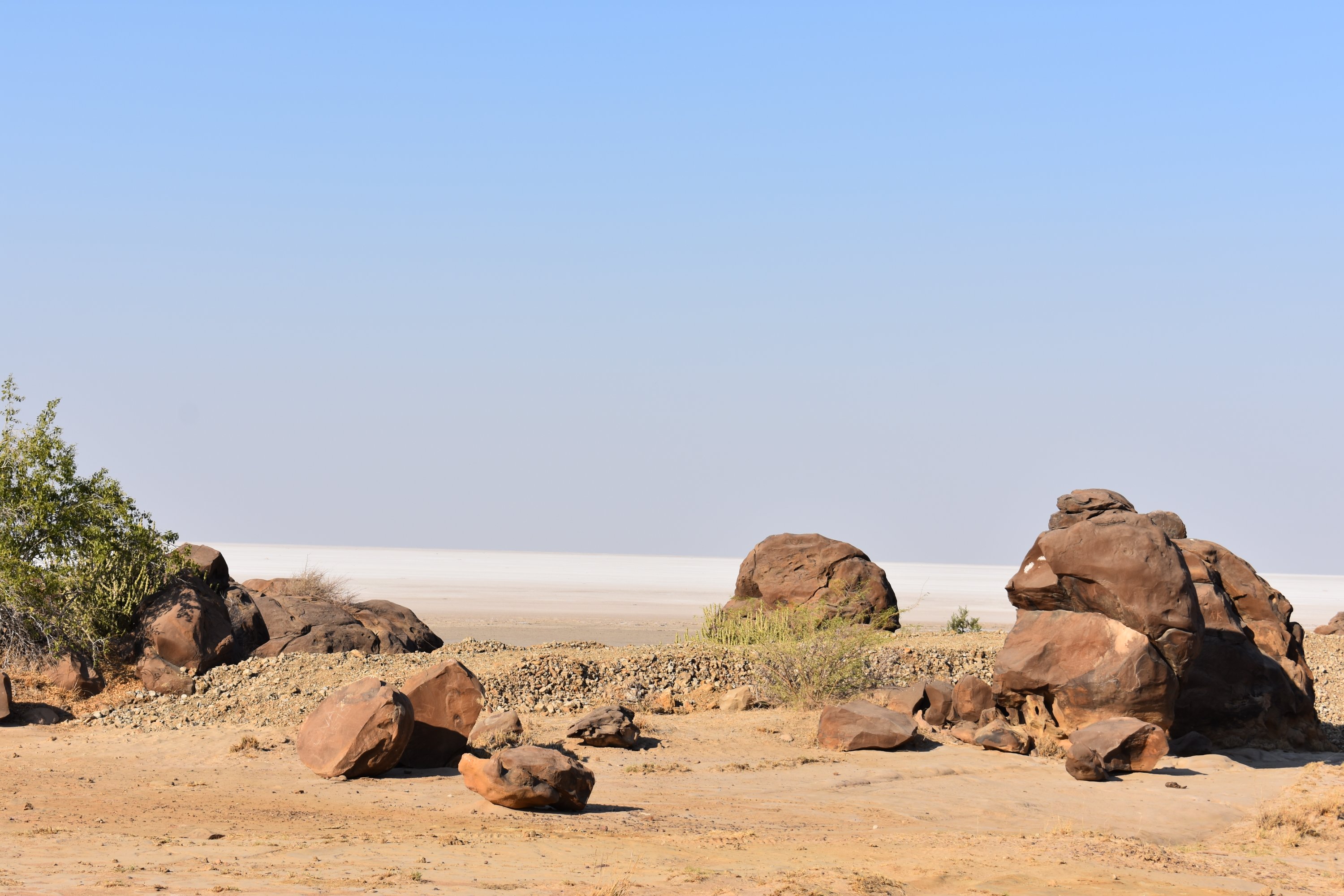
The fossils scattered around the fossil park and the great Rann in the backdrop

Day 3: Mandvi and Vijay Vilas palace

  • You can take the route via Nalia to reach Mandvi. This route offers amazing views and a stretch with windmills might even blow your mind 😛
  • Stop by at the Vijay Vilas palace
  • Spend some time chilling by the Mandvi beach

Day 4: Bhuj Local sightseeing (Every place has an entry fee and specific open days and timings)

  • Aina Mahal and Parag Mahal are both old palaces of the erstwhile royalty located within the same premises. A visit here is worth your time because it offers a lot of insights into history and photo spots to the shutterbugs.
  • The biggest Swaminarayan temple in India is located in Bhuj. For those of you who don’t know, it is the same organization that manages the Akshardham temple in Delhi.
  • This is a dedicated day for shopping all your Kutchi embroidered souvenirs. You can buy all the handicrafts directly from the artisans and get good deals either at Bhujodi handloom village or Bhuj Haat.
  • Take a walk around the Bhuj Haat premises. A replica of the Parliament building is made here and houses stories from the lives of several leaders who lead India to freedom.
  • A small hike up the Bhujio Dungar fort offers you a panoramic view of the entire Bhuj town, an early morning or evening visit is advised to avoid the harsh sun.
  • Befriend a local and there are some offbeat spots in the town that you would not find on the internet. The Kutchi museum, the Khari Nadi canyon, Paddhargadh ruins, Chattardi ruins, Tapkeshwari caves, Ramakund caves are among a few of those unexplored gems.

IMG-20181226-WA0070
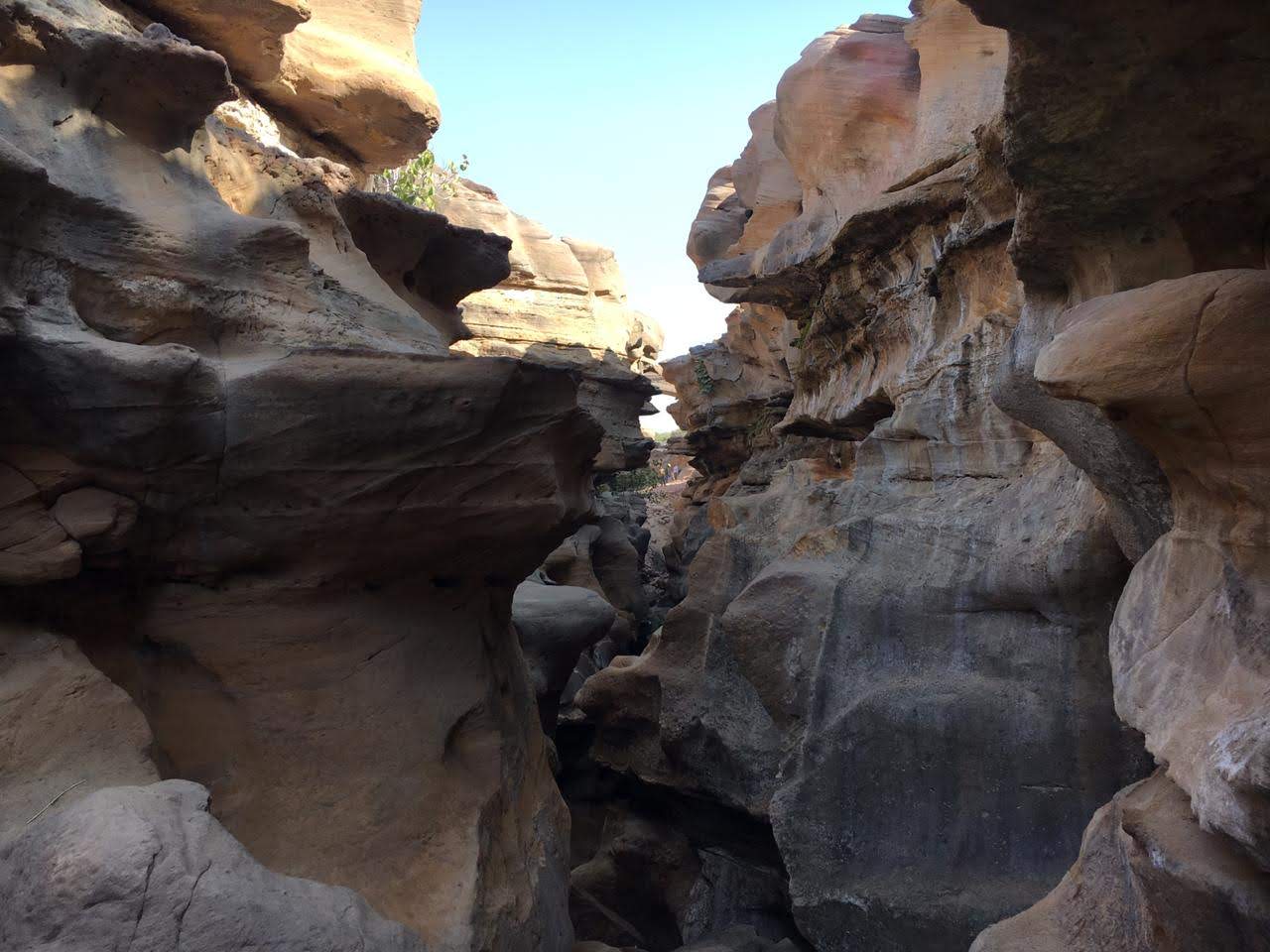
The Kari nadi canyon, Bhuj

Day 5: Dholavira
For me, this was the highlight of my trip. (Click here to read the detailed itinerary and my story in a separate post). An archaeological site from the Indus Valley civilization era, a fossil park from the dinosaur era, tribal settlements and the enormous stretch of salt flats- You need to time your stay here on a full moon night to get the best experience of the great Rann of Kutch.

Day 6: Head back to Bhuj for your return flight or proceed towards your next destination.

I assume this article was of some use if you were planning your trip to the Rann. Was it helpful? Is there something that I missed out? Tell me in the comments below…

I’m supposed to tell you this

While I write this post today, it’s obvious for one to think that I’m venting it out because of all the drama happening between India and it’s neighbour. But, why I choose to do it now is the video of an Indian warrior has kept my heart pounding with anxiety over the last 2days. The video released by the Pakistan army shows that the enemy captors interrogate a severely wounded Indian soldier, his hands tied, blindfolded and there.. with all poise, dignity and calmness in his voice and posture, the captive soldier replies, “Sorry Sir, I’m not supposed to tell you that!”

So here is what I want to tell you all..

My earliest connections with the uniform are mainly two. First is being born in a community which has given some of India’s most decorated defence officers and that had its own regiment in the Indian army. Seconly, being raised in a family of strong women with one of them going on to becoming the first women cop in the state. Yeah! I had quite a lot of stories to listen to while growing up, of both men and women in uniform… Can I say uniform runs in my blood? Stories of heroics of the officers from my hometown and the adventures of my aunt in her pursuit of a job in a male-dominated area has fuelled my curiosity, inspiration and motivation to pursue a life of adventure. Admiration for the #MenInUniform (and the women) had come naturally to me. But these instances take me back in time on how I have always been inspired as a growing up kid to pursue a career in the Indian Military Services.

Growing up in a small town meant limited access to things. So the only ‘Air Force’ thing we could see were occasional choppers that flew in with VVIPs visiting the hilltown (These could have never been the IAF choppers if I guess). Like all kids of the 90s did, we waived at the choppers hoping someone waived back at us.

I now travel to some other faint memories from childhood. It was my week long stay with a relative at Hyderabad. They were an army family living in their army bungalow somewhere in the viscinity of the Golconda fort. That was my closest meeting with defence personnel and the army way of life until then. The discipline, etiquette, mannerisms and all those were something that really caught my fascination. Until then, I had only heard stories and now, I was seeing them all.

But the most fanciest days of my life were my summer vacations spent at our house in Pune. The Sukhoi 30s were newly inducted in the Indian pride back then. And our house being in the proximity of the airbase, ‘The Hunting Hawks’ as they were called, flew past during their sorties all day long. The various formations and the thunder that rattled almost everything in the house were an eye candy and feast for the ears. It is something that really caught my fancy for fighter planes and more so for the adventure that the defence forces had to offer if I happened to join them ever! I am FOREVER grateful to my folks for having a home there… cuz that’s where a spark for the forces was ignited and a fancy for fighters struck me. And then were my share of stories I got to hear from my uncle (a veteran officer from the British Army during the world war) and his many colleagues at their army society at Salunke Vihar in Pune. I used to be a curious cat listening to them all. Year on year, the travels during my summer vacations were eagerly awaited!

Growing up, I got some insights into the way of life through my participation in the NCC (National Cadet Corps) while in high school. With a continuous pursuit of adventure and curiosity to understand how things worked, I think signing up for a course in Mechanical Engineering was inevitable. Sometimes, it is really okay if you don’t get the best. You get what is best for you. With that, I mean the real deal of life that came to me in the form of an admission at Nitte Meenakshi Institute of Technology, Bangalore. This is where I really got the whole Indian airforce thing into me. It’s beyond just an explanation of how fascinated and excited I used to be on just seeing a fighter plane. With almost all the planes from India’s might being there, it really opened up another world to me to learn about the airforce and its strength. I started to get back and google more to learn about each plane, the technology, its background, its history with India, what it takes to be a pilot in IAF and all those associated stories you find hyperlinked online. The more I read, the more I got thrilled. Ok, so a long story short- I too tried my hands at getting into the forces and failed a couple of times, if you asked me that question. So, yeah! Corporate world has me here by chance and not by choice. So if not here, you know where I would rather be!

Why am I telling you all these things today? Cuz, I’m hooked to the news channels along with a million other Indians praying for the safe return of our brave pilot, Wing Commander Abhinandan’s release from the captivity of Pakistan Army. It’s an expression of anxiety I’m not able to get out of myself over the last couple of days. With extreme courage and poise, this brave son of my nation has stood by the motto of the MIG-21 squadron: “Siddhirvasti Sahase” which in Sanskrit translates to: “Success lies in courage”. Like literally! What more defines courage than his encounter with the Pakistan fleet? Can you imagine a Bison (that’s the nickname of MIG21) hunting down a Cheetah? (A F16 Falcon in this case) It rarely happens, and this brave warrior has done it! Chased death by the enemy back into its territory! Isn’t this what makes a true warrior? And our country divides its people based on caste and age-old professions…

Be it the Army, Navy, Airforce, BSF, CRPF, coast guards or anybody out there… with the kind of passion, selflessness, skill, precision our brave hearts at the forces keep vigil of our nation… A million million THANK YOU to each one of you guarding us all and enabling us live this happy life in our so called ‘Safe Havens’. As one of my friends rightly points out, with Wg. Cmdr.Abhi, what all of us have seen is just a tiny glimpse of what our forces holds. There are a thousand other equally skilled warriors in our forces who are all waiting for a chance to strike back. They are collectively an epitome of what India Truly is!

Image credits & patch designed by: Saurav Chordia

IMG_20190515_180626.jpg