Category Archives: Sponsored posts

These are sponsored posts . However, the content is written purely based on honest reviews and are authenticated by me personally.

PNR Status Explained: WL, RAC and CNF Made Simple

From Waitlist to Confirmed: How to Actually Read Your PNR

Few things in Indian travel cause as much quiet anxiety as a string of letters on a train ticket. WL. RAC. CNF. For my first few trips, I genuinely did not know whether I would have a berth until I reached the platform. Once I understood what these codes actually mean, that anxiety vanished. Reading your reservation is a skill, and like most skills, it is simple once someone explains it clearly.

Here is everything I wish I had known the first time I stared at a waitlisted ticket.

What your reservation status really tells you

In one line: your pnr status tells you whether you have a confirmed berth, a shared one, or none yet and how your position is changing as departure nears.

Every ticket carries a 10-digit Passenger Name Record number. That number is the key to every update. As other passengers cancel before the journey, waitlisted and RAC tickets move up. Checking your status simply shows you where you stand in that queue at any moment.

This matters because Indian Railways carries around 21 million passengers a day, and confirmed berths on popular routes are genuinely scarce. A waitlisted ticket is not a dead end; it is a position in a line that keeps moving.

The three codes that decide your journey

Almost everything you need comes down to three statuses.
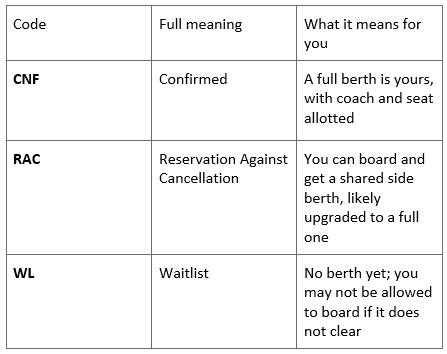
When I see CNF, I stop checking and start packing. When I see RAC, I know I am travelling for certain, just possibly sharing a side berth for part of the journey. When I see WL, I watch the number and prepare a backup.

Decoding the waitlist numbers

A waitlist is not one thing. The letters before “WL” tell you how likely it is to clear, and this is the detail most travellers miss.

  • GNWL (General Waitlist): the most common and the most likely to confirm.
  • RLWL (Remote Location Waitlist): issued for intermediate stations; clears more slowly.
  • PQWL (Pooled Quota Waitlist): shared across several stations; confirmation is harder.
  • TQWL (Tatkal Waitlist): for Tatkal bookings; clears only if Tatkal tickets are cancelled.

If my ticket reads “GNWL 4,” I am usually relaxed. If it reads “PQWL 20,” I start looking at alternatives straight away.

When to hold your plan and when to switch

This is the practical heart of reading your reservation. Over many trips I developed a rough decision guide.
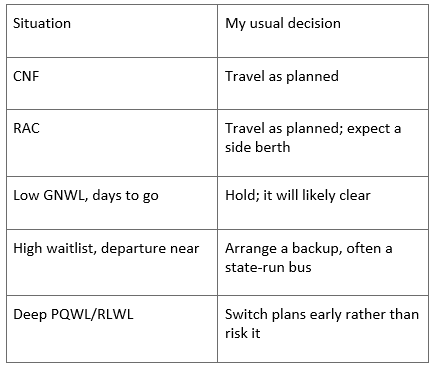
The key is to decide early. A waitlisted ticket checked the night before leaves you no time to react. Checked a few days out, it gives you options.

A real example of the queue in motion

On one trip my ticket started at GNWL 9 about ten days before travel. I checked every couple of days rather than obsessively. Five days out it was GNWL 4. Two days out it was RAC. By the morning of travel it read CNF, with a confirmed lower berth. Nothing I did changed the outcome, but watching the queue move meant I never panicked and never wasted money on a needless backup booking.

How booking choices affect your odds

Smart irctc ticket booking habits improve your chances before the waitlist game even begins. A few that consistently help:

  1. Book the moment the 60-day window opens for high-demand routes.
  2. Prefer GNWL over other waitlist types when you have a choice of trains.
  3. Consider a slightly less popular train on the same route with a shorter waitlist.
  4. Keep documents ready, since you must carry valid ID to travel.

What happens if a waitlisted ticket does not clear

It helps to know the rules so you are never caught out. For online tickets, a fully waitlisted ticket that does not confirm is generally cancelled automatically, and the fare is refunded. The cancellation charges that apply to confirmed tickets, for reference, around ₹120 for Sleeper, ₹180 for 3A and ₹200 for 2A when cancelled at least 48 hours before departure, do not hurt your wallet the same way on an unconfirmed online ticket. Knowing this removes the fear of “losing everything” on a waitlist, which is what pushes many travellers into panic decisions.

How chart preparation decides your berth

A detail that removed most of my waitlist anxiety was understanding when the queue actually settles. The reservation chart is usually prepared a few hours before the train departs from its origin. That is the moment most waitlisted and RAC tickets receive their final answer, as the system incorporates all cancellations up to that point.

Practically, this means:

  • Until the chart is prepared, your status can still improve as others cancel.
  • Most movement happens in the last day or two, when plans firm up across thousands of passengers.
  • Once the chart is out, your status is effectively final for that journey.

Knowing this stops the urge to refresh every hour. The useful checks are a few days out, when you still have time to arrange a backup, and once more around chart preparation, when you get your real answer.

Checking your status without obsessing

Early on, I checked my reservation a dozen times a day and felt worse for it. A waitlist number that has not moved in two hours is not bad news; it simply means no one has cancelled in that window. A calmer rhythm serves you far better.
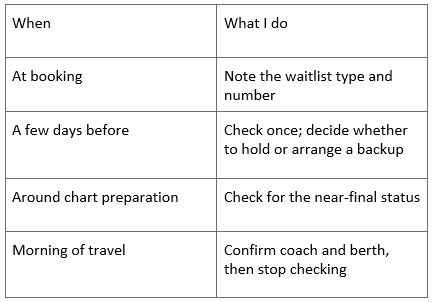
This rhythm gives you all the information you need at the moments it actually matters, without turning the days before a trip into a waiting game.

A simple way to act on what you see

When the status updates, my response is almost automatic now:

  1. CNF: pack and travel; nothing more to do.
  2. RAC: travel as planned and expect a shared side berth.
  3. Low GNWL with days to go: hold; it will most likely clear.
  4. High or pooled waitlist near departure: arrange a backup, often a state-run bus, before it is too late.

The whole point of reading your reservation is to turn uncertainty into a decision. Once you can do that, a string of letters on a ticket stops being a source of dread and becomes just another piece of useful travel information.

Frequently asked questions

What does PNR status confirmed mean? A confirmed status, shown as CNF, means a full berth has been allotted to you with a specific coach and seat number. You can board and travel without any further uncertainty.

Can I board the train with an RAC ticket? Yes. An RAC ticket allows you to board and gives you a shared side berth. There is a strong chance it upgrades to a full berth as other passengers cancel before departure.

Will a waitlisted ticket get confirmed? It depends on the waitlist type and number. A low General Waitlist (GNWL) usually clears, while a high Pooled or Remote Location Waitlist is less certain. Check a few days ahead so you can plan a backup if needed.

What happens to a waitlisted ticket booked online? If an online ticket remains fully waitlisted and does not confirm, it is generally cancelled automatically and the fare refunded, so you are not left stranded with a useless ticket.

How often should I check my reservation status? There is no need to check obsessively. Note your status at booking, check once a few days before travel to decide whether to hold or arrange a backup, then once more around chart preparation for the near-final result.

10 Best Places to Visit in Dubai for First-Time Travelers

Anyone who is visiting Dubai for the first time is bound to be excited but also confused. The City of Gold is brimming with attractions, both modern and new. One of the seven emirates of the United Arab Emirates, Dubai has innumerable buildings, monuments, and attractions – some of them being world-record holders. Hence, it is natural to find oneself overwhelmed about the sheer number of places to visit and things to do here. So, if you have a Dubai visit visa and are gearing up for your holiday in this emirate city, here are the top 10 places you must visit in Dubai.

1. Dubai Mall

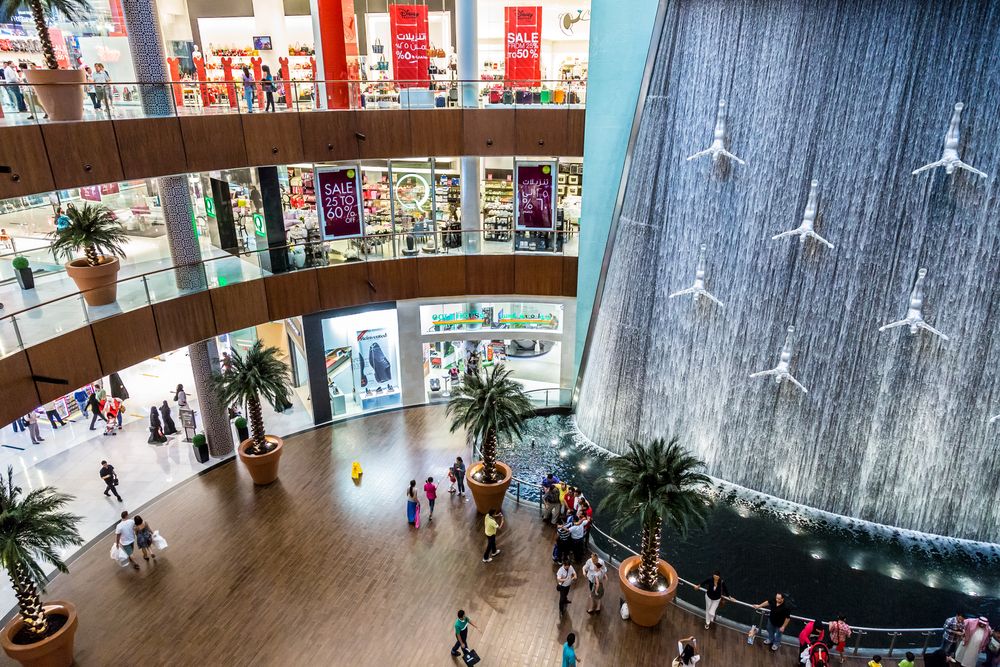
A mall may not be a typical tourist location. But Dubai Mall is no ordinary shopping mall. Spread around 12 million square feet, this is one of the largest shopping malls in the world and is home to over 1200 retail stores. But what sets it apart is that you will also find an aquarium, an underwater zoo, an ice rink, a kid-friendly theme park, a digital art museum, and entertainment avenues within its walls. You must also check out the Burj Lake right outside the mall, which plays the Dubai Fountain Show multiple times, every evening.

Dubai Mall
Dubai Mall

2. Burj Khalifa

One of the best places to visit in Dubai that you must not miss is the Burj Khalifa. Standing at the height of 829.8 meters, Burj Khalifa is the tallest building in the world. While the building has luxury hotels, restaurants, residential houses, and corporate offices, the most visited here is the observation decks on the 124th & 125th and 148th floors. Whichever observation deck you choose, you will get to see a 360-degree view of the entire city. Another highlight of you Burj Khalifa visit is to ride on one of the the fastest elevators in the world.

3. Desert Safari

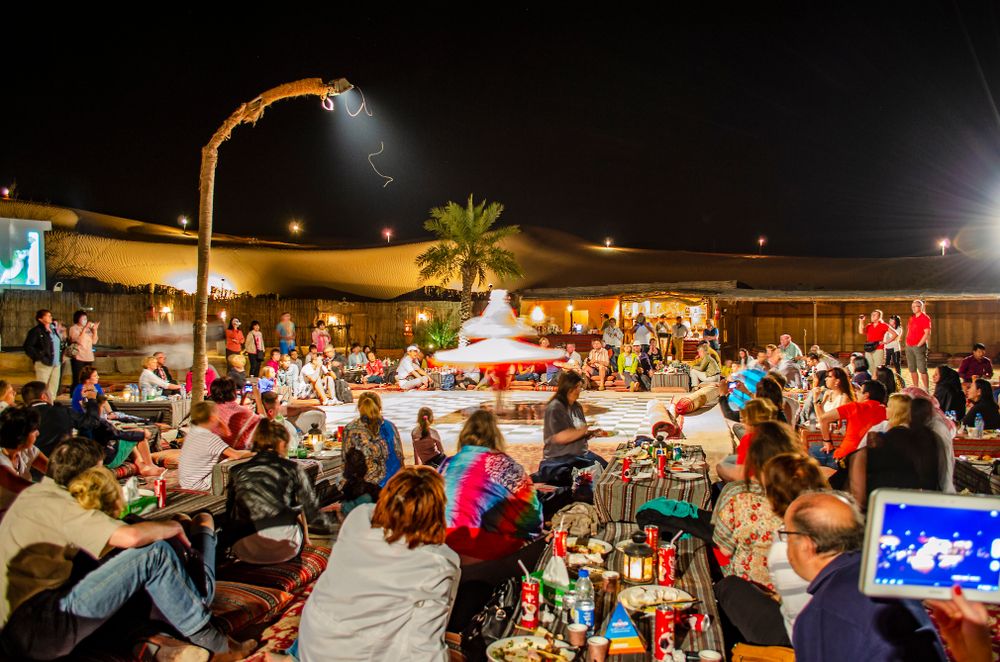
One of the ultimate experiences in Dubai is the desert safari. It is quite thrilling to drive away from the city and spend an evening surrounded by the golden desert dunes. Moreover, the evening desert safari is filled with thrilling and entertaining activities as well. During the safari, you get to enjoy dune bashing, camel riding, and sandboarding. Belly dance and Tanoura dance performances are also arranged for your entertainment. Sunset photography, henna designing, falcon photography, and BBQ dinner are the highlights of the desert safari.

Desert Safari, Dubai

4. The View at Palm Jumeirah

The Palm Jumeirah is the pride and joy of Dubai. This is the largest manmade island in the world. But what makes it unique is its palm-shape. Spread around 5.72 square kilometre, Palm Jumeirah is made up of large trunk, 16 fronds, and a crescent at the top. The island is filled with luxurious hotels, villas, malls, restaurants, and buildings. To enjoy the complete view of the Palm Jumeirah, you must head to The View at The Palm Jumeirah, located on level 52 of the Palm Tower. Perched 240 meters above the ground, The View gives you an uninterrupted aerial view of the island. You can also visit the interactive exhibition that tells you all about the development of Palm Jumeirah.

5. Dubai Marina

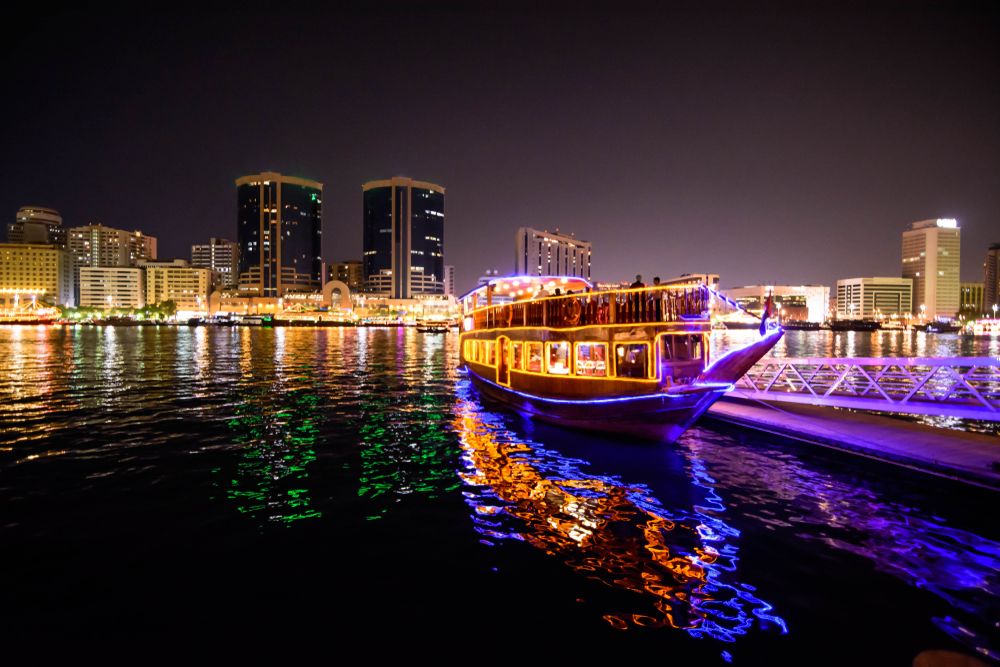
If there is a place that reflects everything Dubai is known for, it has to be Dubai Marina. Luxurious, vibrant, and buzzing, Dubai Marina is the perfect place to spend an evening for everyone, be it honeymooning couples, families, thrill seekers, or youngsters looking for a memorable night out. It is a waterfront city built around a Venetian-style canal, which adds to its charm. You can walk around the 7-kilometer-long, Marina Walk, cruise on a dhow cruise or luxury yacht, visit the JBR Beach, dine at one of the fine dining restaurants, and check out some of the classiest nightclubs of Dubai.

Dubai Marina
Dubai Marina

6. Old Dubai

Glamour is something that defines Dubai for most people. However, if you want to see a different side of the city, a visit to Old Dubai is a must. Located on the shores of the Dubai Creek, Old Dubai is the historical and cultural heart of the city. The area is lined with traditional buildings and homes made of coral and gypsum. As you walk around the narrow-cobbled streets, you will see homes with wind towers, a fort turned into a museum (Dubai Museum), old buildings converted into boutique hotels and cafes, traditional markets or souks. A visit to Old Dubai is your chance to glimpse into how life in Dubai was in the yesteryears.

7. Dubai Miracle Garden

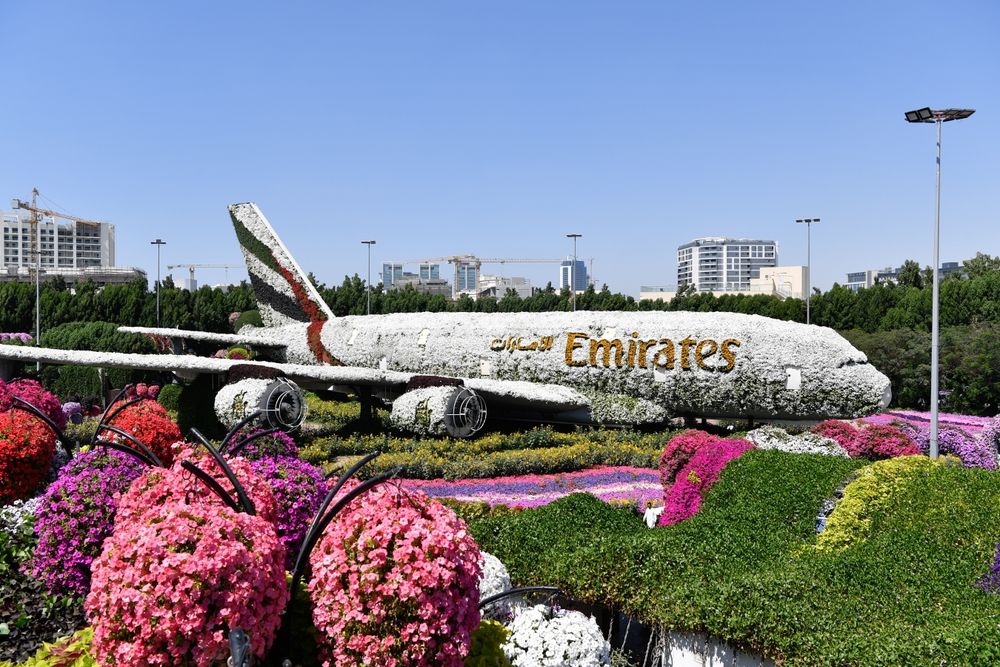
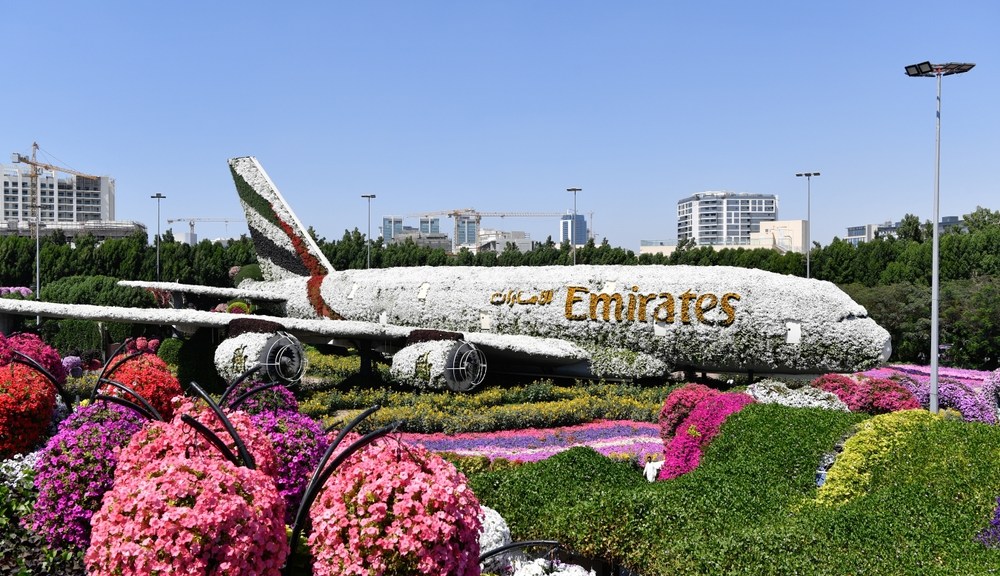
Dubai Miracle Garden is one of the top attractions in Dubai. True to its name, the Dubai Miracle Garden is truly a miracle, as it is the largest natural flower garden in the world. Spanning an area of 72,000 square meters, the Dubai Miracle Garden has more than 150 million flowers and plants. Moreover, these blooms are all presented in the form of jaw-dropping art installations. The 15-meter floral clock, Airbus A380, floral Mickey Mouse sculpture, etc., are some of the award-winning installations here. There are also floral castles, animal structures, passageways, and so much more to see here. The Dubai Miracle Garden is a seasonal attraction, open from October to March/April.

Dubai Miracle Garden

8. Ski Dubai

When Dubai’s warm desert climate becomes overwhelming, it is best to visit Ski Dubai, a winter paradise where you can have fun. This theme park is located inside Mall of Emirates and is the largest indoor ski park in the world. Here, you can enjoy winter sports like skiing, snowboarding, etc., all year long. There is a huge ski mountain that offers five difficulty levels. You can also try zorbing, tobogganing, tubing, ziplining, snow bullet, etc., here. It is also possible to play in real snow and see Genting and King Penguins at Ski Dubai.

9. The Green Planet

Dubai seems to do the impossible, and the Green Planet is a fine example of the same. The Green Planet is an indoor rainforest resting within a biodome. This is a vertical rainforest, with a large tree at its centre. The tree is divided into four parts: Canopy, Midstory, Forest Floor, and Flooded Forest, each representing the different features of a rainforest. During the tour of the rainforest, you will get to see different flora and fauna. More than 300 species of animals can be found here, including snakes, sloths, parrots, marmosets, porcupine, reptiles, echidna, etc. There are special experiences like animal encounters, being zookeeper for a day, and even a night tour.

10. Dubai Parks & Resorts

As a first-time traveller, your Dubai trip need not be only about sightseeing. If you want to have a day filled with fun, the city offers you Dubai Parks & Resorts. The place offers you not one but four world-class theme parks, and you can choose any one of them as per your interests. Motiongate Dubai is for Hollywood fans, while football lovers will have the time of their day at Real Madrid World. Both these theme parks have an amazing array of thrilling rides and rollercoasters. Families traveling with young kids must visit Legoland Dubai and Legoland Water Park. The World of Riverland Dubai and Neon Galaxy Indoor Playworld are also worth visiting.

Conclusion

There is no doubt that Dubai is an exciting place with lots of interesting places to visit and things to do, and one trip may not be enough to see and do everything. But do include most of the places mentioned here to understand the essence of the place.

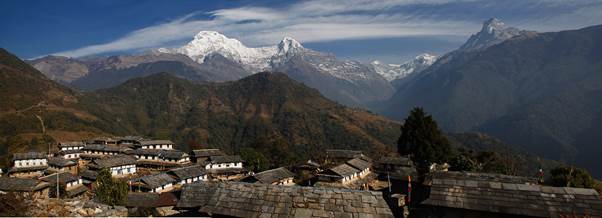
Annapurna Base Camp & Circuit Trek – The Ultimate Himalayan Adventure

Imagine waking up to the sun rising over 8,000m Himalayan giants, the crisp mountain air filling your lungs, and trails that wind through vibrant rhododendron forests, terraced villages, and sparkling rivers. This is not just a trek—it’s a life-changing journey.

Welcome to Annapurna Base Camp (ABC) and the legendary Annapurna Circuit, where every step promises adventure, romance, culture, and breathtaking natural beauty.

The Annapurna region is magical for everyone, but especially:

1. Couples Seeking Romance:

  • Walk hand-in-hand along trails with panoramic views of Machapuchare (“Fishtail Mountain”)
  • Cozy teahouses in Ghorepani or Chhomrong make for perfect quiet nights
  • Sunrise at Poon Hill – a memory that lasts a lifetime

2. Adventure Seekers:

  • Cross the legendary Thorong La Pass at 5,416m
  • Trek through glacial rivers, high-altitude deserts, and lush subtropical valleys
  • Multiple trail options like Tilicho Lake or Nar Phu Valley for hardcore explorers

3. Cultural Enthusiasts & Food Lovers:

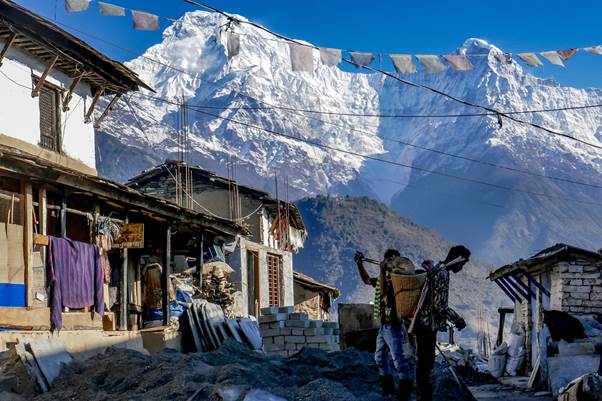
  • Experience Gurung and Thakali villages, interact with locals, and understand their traditions
  • Sample authentic local dishes like dal bhat, momo, and sel roti in mountain teahouses
  • Witness traditional festivals, rituals, and the energy of Himalayan communities

4. Nature Lovers & Photographers:

  • Panoramic Himalayan views, frozen waterfalls, alpine meadows, and serene lakes
  • Flora and fauna diversity, from rhododendron blooms in spring to snowy alpine landscapes in winter
  • Every trail offers Instagram-perfect viewpoints

Difficulty & Fitness Levels

| Trek | Duration | Difficulty | Fitness Level Needed | Best For |

|——|———-|————|——————-|———-|

| Annapurna Base Camp (ABC) | 7–12 days | Moderate | Average fitness; can handle 4–6 hrs/day | Couples, beginners, first-time trekkers |

| Annapurna Circuit | 12–20 days | Moderate to Challenging | Good fitness; must handle 6–8 hrs/day & high altitudes | Adventure seekers, experienced trekkers, culture lovers |

| Mardi Himal Trek | 5–7 days | Moderate | Average fitness; shorter days | Photographers, couples, offbeat trek lovers |

| Tilicho Lake Trek | 10–14 days | Challenging | High fitness; high-altitude trekking (4,919m) | Experienced trekkers, adventure enthusiasts |

| Ghorepani Poon Hill Trek | 4–6 days | Easy | Light fitness; beginner-friendly | Couples, beginners, short-trek lovers |

| Nar Phu Valley Trek | 12–15 days | Challenging | High fitness; remote trekking | Adventure seekers, offbeat cultural experience lovers |

Fitness Tips:

  • Start walking or light cardio before your trek
  • Do uphill training if possible
  • Hydrate and eat well during the trek
  • Take rest days for acclimatization

Why Annapurna is So Popular?

  • From subtropical forests to alpine meadows and snow-capped peaks
  • Glacial rivers, terraced farms, and waterfalls all along the way
  • Annapurna South, Machapuchare, Dhaulagiri, and Gangapurna—every step is a photo opportunity
  • Walk through Gurung, Thakali, and Tibetan-influenced villages
  • Explore ancient temples, monasteries, and local festivals
  •  Comfortable lodges, hearty food, and supportive local communities make it easier than remote treks
  • Couples, solo travelers, adventure junkies, culture lovers, foodies—all find something here
  • Start from Pokhara, just a few hours from Kathmandu
  • Trekking routes are well-mapped and can be customized
  • Sunrise hikes, remote passes, and cozy nights in teahouses
  • Authentic local food and energy-filled villages
  • A trek that is emotionally fulfilling as much as physically rewarding

Top Treks and Trails Around Annapurna

1. Annapurna Base Camp (ABC) Trek – Classic & Scenic

  • Duration: 7–12 days
  • Difficulty: Moderate
  • Highlights: Sunrise at Poon Hill, Machapuchare views, base camp 4,130m
  • Vibes: Peaceful, romantic, photogenic, and cozy

2. Annapurna Circuit – Epic Himalayan Adventure

  • Duration: 12–20 days
  • Difficulty: Moderate to Challenging
  • Highlights: Thorong La Pass, Muktinath Temple, Mustang landscapes
  • Vibes: Thrilling, spiritual, culturally immersive

3. Mardi Himal Trek – Hidden Gem

  • Duration: 5–7 days
  • Difficulty: Moderate
  • Highlights: Close-up views of Machapuchare
  • Vibes: Offbeat adventure, intimate experience, perfect for photographers

4. Tilicho Lake Trek – Ultimate Challenge

  • Duration: 10–14 days
  • Difficulty: Challenging
  • Highlights: One of the world’s highest lakes (4,919m)
  • Vibes: Remote, pristine, for hardcore trekkers

5. Ghorepani Poon Hill Trek – Quick & Rewarding

  • Duration: 4–6 days
  • Difficulty: Easy
  • Highlights: Sunrise views, short trek
  • Vibes: Romantic, accessible, colorful trails

6. Nar Phu Valley Trek – Offbeat Adventure

  • Duration: 12–15 days
  • Difficulty: Challenging
  • Highlights: Tibetan-style villages, untouched culture
  • Vibes: Remote, adventurous, culturally enriching

Best Seasons to Trek

  • Spring (March–May): Rhododendron blooms, clear skies, perfect views
  • Autumn (September–November): Best visibility, pleasant weather, and festive vibes
  • Winter (December–February): Snowy trails, peaceful and less crowded
  • Monsoon (June–August): Lush greenery, waterfalls, and serene forests

Insider Tips

  • Acclimatize properly for high passes like Thorong La
  • Pack layers: weather changes fast in the Himalayas
  • Carry trekking poles for comfort
  • Try local foods and interact with villagers—they make the trek magical
  • Start from Pokhara for convenient access and pre-trek relaxation

The Annapurna region is more than a trek—it’s a complete Himalayan experience. 

  • For couples, it’s romance amid majestic peaks 
  • For adventure seekers, it’s thrill and challenge 
  • For culture lovers, it’s immersion into Himalayan life 
  • For foodies, it’s a journey of flavors and mountain hospitality 

Every trail, every meal, every sunset here becomes a story you’ll carry forever. Annapurna isn’t just a trek—it’s a journey of the heart, mind, and soul.

Largest Railway Station in India | Complete List You Must Know

Collecting amazing information about the largest railway station in India that can blow your mind with its operations. Indian Railways operates many railway stations, but certain stations made their place on the list of the top 10 largest railway stations within India.

Railway stations are considered the largest in different terms, such as the area covered by the railway station, the number of available platforms, the number of trains that halt daily, the number of tracks, and passenger traffic and the availability of services like food in train, including station food courts, onboard catering, and online meal delivery options for passengers during their journey.

This post will explore railway stations that are considered the largest, based on the number of platforms or tracks, including platform length, which contribute to their ranking as top railway stations within India.

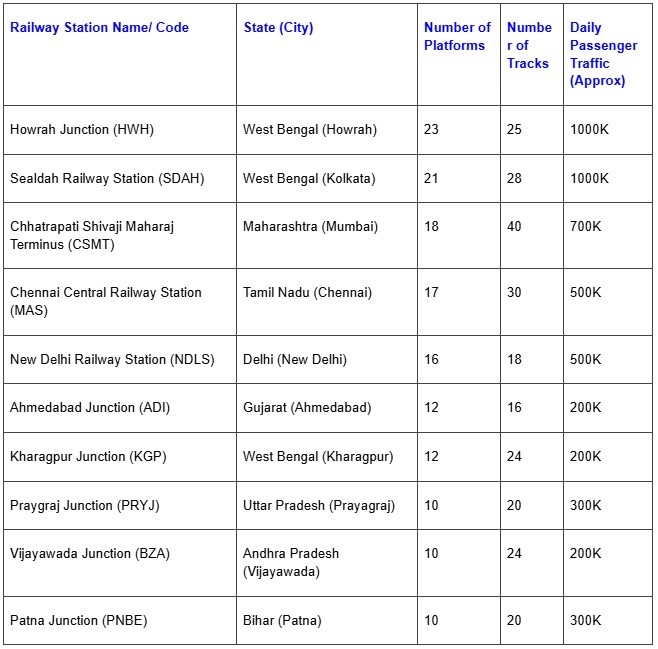
List of the Top 10 Largest Railway Stations in India

Check the list of the top 10 largest railway stations operated under the Indian Railways.

Largest Railway Stations in India

Key Details and Facts About the Largest Railway Station in India

1. Howrah Junction (HWH)

Howrah Junction comes in the top list automatically when you talk about the largest station in India due to the following.

  • Located in Howrah (West Bengal)
  • One of the oldest railway stations in India.
  • Operated under the Eastern Railway zone
  • Connect major cities like Mumbai, Delhi, Guwahati, and Chennai.
  • More than 23 platforms handle 1000K passengers daily.

2. Sealdah Railway Station (SDAH)

It is the 2nd largest railway station in India, located in West Bengal (Kolkata), due to the following reasons.

  • 21 Operational Platforms.
  • Handles about 1000K passengers daily.
  • One of the busiest suburban railway networks.
  • Major hub for local or non-local railway stations.
  • Railway food order with RailRestro to get delivery at the next station.

3. Chhatrapati Shivaji Maharaj Terminus (CSMT)

This station is popular as CSMT due to its iconic landmark. Therefore, check the PNR status before reaching the boarding station via the RailRestro app. So, check the following reasons behind it.

  • It counts as a UNESCO World Heritage Site.
  • It operates around 18 platforms with 40 tracks to manage a large number of trains.
  • This railway station is located in Mumbai (Maharashtra) as headquarter of central railway.
  • One of the busiest railway stations in India, managing around 700K passengers daily.

4. Chennai Central Railway Station (MAS)

Chennai Central is the primary railway terminus in Chennai, Tamil Nadu, and is considered the busiest railway station in South India. Reasons are as follows.

  • It operates 17 platforms with 30 tracks for a large number of trains.
  • It connects Tamil Nadu to other states and is considered a major terminal in South India.
  • MAS handles more than 500K traffic daily.
  • Online food on train service is available with the RailRestro train app.

5. New Delhi Railway Station (NDLS)

New Delhi railway station is one of the busiest and largest railway stations in India in terms of handling daily passengers.

  • It operates around 16 platforms that connect all the major cities.
  • Top revenue generating railway station in India.
  • Handles 400+ trains on a daily basis.
  • Located in the capital of India, which connects East, West, North, and South India.

6. Ahmedabad Junction (ADI)

It is another largest railway station that operates under indian Railways. The following points pull it into the list of the largest stations in India.

  • It operates 12 platforms to serve around 200K passengers daily.
  • It is a major Junction in the Western Railway zone.
  • A massive redevelopment project that can offer better connectivity to passengers.
  • Offering modern amenities such as 31 passenger lifts, 50 escalators, and others.

7. Kharagpur Junction (KGP)

Kharagpur Junction is not considered for its number of platforms or number of tracks. But it comes in the list of the largest railway station because of the following.

  • Longest railway platform in India and also one of the longest across the world.
  • It has a 1072-meter-long platform that grabs the attention of travel enthusiasts.
  • It handles 200K passengers daily.
  • Majorly connected with cities like Delhi, Mumbai, Kolkata, Chennai, and others.

8. Praygraj Junction (PRYJ)

Prayagraj Junction, formerly known as Allahabad Junction, is an important station in Uttar Pradesh. This railway station comes in the longest railway station due to the following reasons.

  • It has 10 platforms with 20 tracks to deal with hundreds of trains in a single day.
  • It deals with more than 300K footfalls daily.
  • This North Central Railway station has major connections with Kanpur, Varanasi, Delhi, Mumbai, and Kolkata.
  • Multiple tracks for local and long-distance trains.

9. Vijayawada Junction (BZA)

Vijayawada Junction is the most strategic railway station in Andhra Pradesh including southern India. Certain reasons make it count as the Indian largest railway station are as follows and passengers can easily check the Train Time Table for all arriving and departing trains.

  • This railway station operates 10 platforms and 24 tracks to manage hundreds of trains every day.
  • It handles over 200K passengers daily.
  • The station has major connections with Bengaluru, Chennai, Kolkata, Hyderabad, Howrah, and Delhi.

10. Patna Junction (PNBE)

Patna Junction is one of the largest railway stations in India due to the following reasons.

  • The important and busiest railway station in Bihar.
  • It connects eastern and northern India with other major cities.
  • It also facilitates the passengers and freight traffic.
  • PNBE operates 10 platforms and 20 tracks.
  • Offers facilities like modern waiting halls, food courts, digital information systems, including ticket counters.

Also Read:

Chain Pulling in Train: Rules, Valid Reasons & Fines

Five Types of Trains to Experience in India

Frequently Asked Questions

Q. Why is Howrah Junction considered the largest railway station in India?
Ans. Howrah Junction is considered as the largest in terms of number of platforms (23) in India, with more than 6000 train movements and daily traffic of about 10 lakh per day.

Q. How many platforms are there at Howrah Junction?
Ans. Howrah Junction operates 23 platforms, which makes it an Indian largest railway station. It helps to deal with large traffic and manage 600+ trains on a daily basis.

Q. What facilities are available at Howrah Junction railway station?
Ans. There are various facilities available at the HWH (Howrah Junction) that are listed below.

  • Escalators & Lifts
  • Free Wi-Fi
  • Retiring Room and Dormitories
  • Waiting Room (AC or Non-AC)
  • Clock Room
  • Parking Facilities
  • Food Courts
  • Road Connectivity

Q. Which is the second largest railway station in India?
Ans. Sealdah Railway Station is considered the 2nd largest railway station in India because of passenger traffic and numbers of platforms available. It operates with 21 numbers of platforms to deal with 800K to 1000K traffic daily.

Top 10 Best Homestays in Leh-  Ladakh

Are you in search of a place to stay in Leh? Skip the overpriced hotels. A homestay in Leh provides you with warm hospitality, local vibes, home-cooked meals, and an authentic Ladakh experience, all without breaking your budget. These are just regular families who open their homes to travelers. You’ll eat with them, hang out in their kitchen, and probably end up helping them around the house. The food is incredible; it’s way better than restaurant food because it’s made by someone’s mom or grandma who’s been cooking the same recipes for decades.

Don’t expect fancy rooms or room service. You get a basic bed and shared bathrooms, and that’s about it. But you also get to see what life is actually like there. There are real-life experiences such as kids running around, neighbors dropping by for tea, and arguments about cricket matches.

Want to experience this? There are many amazing and customized Leh Ladakh Tour Packages that hook you up with good homestay families.

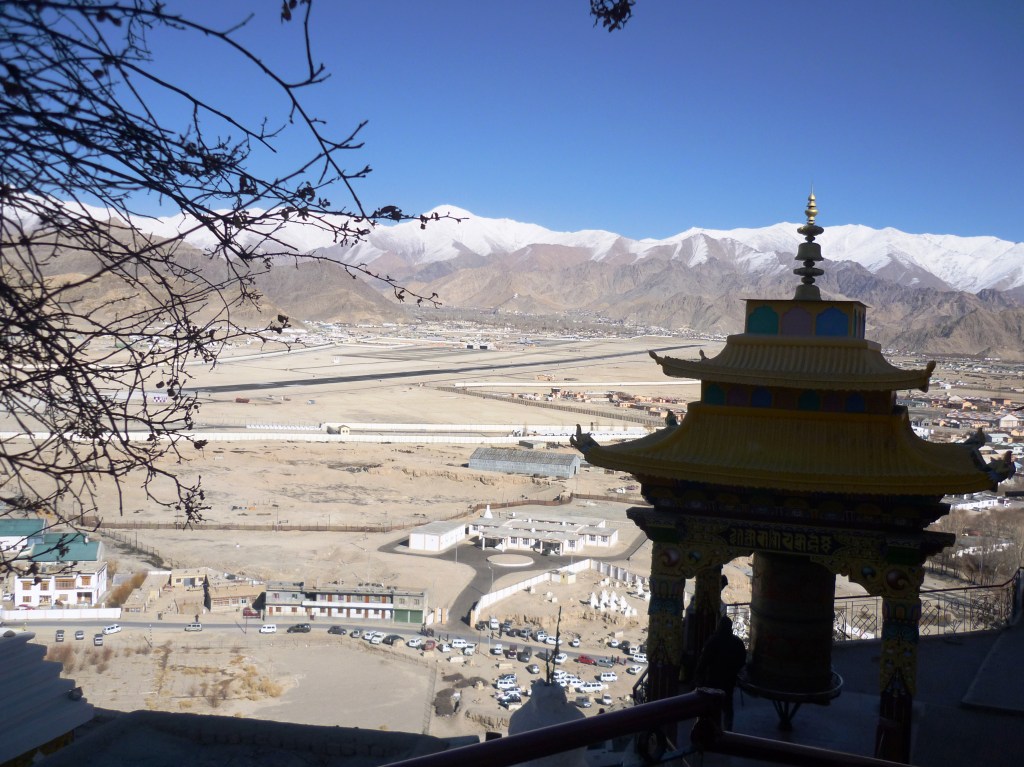
View of Leh town from a monastary

Best Homestays in Leh for an Authentic Ladakhi Stay

1. Gangba Homestay, Leh

Gangba Homestay is said to be one of the best homestays in Leh Ladakh. The rooms are clean and comfortable, and they have excellent views of the mountains. The host family makes you feel welcome and at home.

This is the best home stay in Leh for couples or families who want a quiet place to stay that is still close to the main town.

  • Location: Upper Tukcha Road, about a 10-minute walk from the Leh market.
  • Rating: 4.9 /5

2. Siala Guest House, Leh

Another nice homestay in Leh is Siala Guest House, which is close to the busy Leh market. It’s great for people who want to see new places and be comfortable at the same time. The hosts are always willing to help, the rooms are clean, and the food is good.

People often say that this guest house is the best place to stay in Leh because of how friendly the staff is and how well it is located.

  • Location: Fort Road, central Leh, close to the main bazaar and attractions.
  • Rating: 8.9/10

3. Zaltak Guest House, Leh

Zaltak Guest House is a peaceful homestay in Leh Ladakh that is perfect for travelers who love quiet places. It has a garden, mountain views, and clean rooms. The hosts cook fresh meals using vegetables from their garden.

If you are on a Leh Ladakh family trip, this homestay is a wonderful pick. Kids can enjoy the outdoor space while adults relax and soak in the views.

  • Location: Upper Tukcha Road, within walking distance of Leh Bazaar, with garden and orchard surroundings.
  • Rating: Excellent (4.5/5)

4. Reeyork Homestay, Leh

Reeyork Homestay is close to Shanti Stupa and has views of the town of Leh and the mountains. The rooms are big, and the staff is friendly and helpful. They help you plan your sightseeing and make sure everything goes smoothly on your trip.

  • Location: Chubi/Sankar Road, close to Shanti Stupa and Leh Bazaar.
  • Tariff: Not listed
  • Rating: Very good

5. Stok Palace Heritage Homestay

For a royal experience, try Stok Palace Homestay in Stok village. The palace has been converted into a heritage homestay. The rooms are large and decorated in traditional Ladakhi style.

Though it’s on the higher end of the budget, the experience is unforgettable. You’ll get to see royal art, enjoy quiet walks, and explore local life in the village. It’s one of the most unique homestays in Ladakh.

  • Location: Stok village, 16 km south of Leh, offering views over the Indus valley and palace grounds.
  • Rating: 4.5+/5

6. Lhachik Guest House, Leh

This guest house is in a quiet part of Leh, so it’s a good place to stay. The rooms are clean and great for digital nomads or people who are biking through Leh Ladakh. The Wi-Fi is great, and the family that runs the place makes you feel at home.

They also offer cooking lessons, local tours, and suggestions for trekking. It’s a homestay that mixes modern needs with Ladakhi customs.

  • Location: Upper Changspa area, 900 m from Shanti Stupa and within a short walk of Soma Gompa.
  • Rating: 9.3/10

7. Arctic Villa Homestay—Warm Comfort with a View

Travelers seeking a quiet place to stay with beautiful mountain views will love Arctic Villa Homestay in Leh. The rooms are clean and well-kept, and they have basic but comfortable amenities. The hosts are known for being friendly and helpful, and they are always happy to help with travel plans or give you tips on things to do in the area.

You can have a cup of tea on the terrace while you watch the sun rise. This home stay in Leh is also a great place for bikers to park their bikes safely and get a good night’s sleep after a long ride in the mountains.

  • Location: Lower Tukcha Road, near Napishu Guest House, 1.1 km from Leh center, 1.9 km from the airport.
  • Rating: Around 9.2/10

8. Norbooling Homestay, Leh Ladakh – Traditional Charm & Hospitality

Norbooling Homestay is one of the most-loved homestays in Ladakh. It’s a traditional Ladakhi house with big rooms and beautiful interiors. The family that runs this homestay is very friendly and serves guests home-cooked Ladakhi food that you will remember long after your trip is over.

If you’re going to Leh Ladakh with your family, this is the place to stay. Children can play in the garden, and adults can relax and look at the mountains.

  • Location: Kartsey Road area, a short distance from Leh market and landmarks.
  • Rating: Approximately 4.6/5

9. Nakpo Homestay—Simple, Clean, and Peaceful

In Leh, Nakpo Homestay is a clean and simple place to stay that is quiet and has views of the mountains. The rooms are simple, but they have everything you need, like hot water, Wi-Fi, and comfortable beds.

This homestay is a great place to stop and rest if you’re on a trip via Ladakh bike tour packages. The family that hosts you can also give you travel tips and help you get taxis or rental bikes if you need them.

  • Location: Sheynam New Road, 1 km from Leh Bazaar, 2 km from the airport, with a view of the Shanti Stupa from the roof.
  • Rating: 9.6/10

10. Tsabgyat Homestay—Feel at Home in the Mountains

The Tsabgyat Homestay is a small but beautiful place to stay in Leh Ladakh. It is run by a kind and welcoming Ladakhi family. It only has a few rooms, so you’ll get personal attention and a quiet stay. The rooms are clean and have traditional decorations.

If you’re travelling with your family, this homestay in Leh Ladakh is also a good choice. It feels just like home because it has home-cooked meals, a cozy space, and a safe place to stay.

  • Location: In Choglamsar, 10 km from Shanti Stupa, garden and terrace setting with mountain views.
  • Tariff: From INR 800-900 per night as per budget listings.
  • Rating: 9.3/10

Final Thoughts

Whether you are travelling with your family or riding through the hills on a bike, staying at a Best homestay in Leh Ladakh makes your trip more personal. It allows you to slow down, meet locals, and experience Ladakh in a true sense.

From cozy homes in Leh to remote places like Hanle Homestay, there are options for everyone. Some places are great for families; others are perfect for bikers or solo travelers. The variety of homestays in Ladakh means you can enjoy the mountains your way—with warmth, good food, and beautiful views.

The families know everyone in town and can even tell you where to go, what to avoid, and how much things should cost. They’ll also probably invite you to some family event or festival if you’re lucky with timing.

So instead of booking a hotel, try one of these homestays. You’ll carry back stories, not just photos—and that’s what travel is really about.

Chain Pulling in Train: Rules, Valid Reasons & Fines

Chain pulling in trains is an emergency action mechanism that has been introduced for passenger protection, thus it also ranks among the most misused amenities in the Indian Railways system. A sizable portion of passengers, however, do not know the precise train chain pulling regulations, the valid reason for chain pulling in trains, and the fines imposed when the act is done wrongly. It is imperative to know these details not only to avoid unwarranted fines but also to confirm the efficiency of the emergency feature during real scenarios. Whenever you are planning a train journey, ensure that you check your Live PNR status before departure.

Chain pulling, known as Alarm Chain Pulling (ACP) system, is fitted in coaches so that passengers can stop the train in emergencies at their request. However, since trains are shared public transport, misuse can lead to a hundred passengers being inconvenienced, train schedules being disrupted, and even safety risks occurring as a result. Hence, the Indian Railways has strict rules and a well-defined train chain pulling fine systems in place.
What Is Chain Pulling in Train and Why Does It Exist?

Chain pulling in trains is viewed as a protective measure designed to fill the gap where there are no quick fixes. The pulling of the chain leads to a drop in the brake system’s air pressure, thereby bringing about the stopping or slowing down of the train. This particular feature is set up to assist passengers with emergencies that cannot wait until the next station. For instance, medical emergencies, accidental boarding, and safety threats are some of the situations where stopping the train becomes a must.

Nonetheless, an emergency bearing importance akin to the one mentioned above is still often misconstrued as a convenience tool. Some passengers miss their stops and claim it as a reason to pull the chain, while others just want the train to halt at a non-scheduled station and use the chain as their instrument. Such actions are considered misuse and fall under punishable offences according to the train chain pulling rules.

Train Chain Pulling Rules You Must Know

The Indian Railways has defined the alarm chain regulations explicitly and in detail under the Railways Act. The chain should be pulled only in case of a real and unavoidable emergency. Pulling the chain, the railway personnel will first check the reason and then let the train go. If the reason is found to be invalid, the passenger responsible can be prosecuted.

To avoid unnecessary panic or misuse of the alarm chain, passengers are advised to check the Indian Railway Live Train Status  in advance. Knowing the real-time train status helps travellers stay informed about delays, stoppages, or rescheduling, reducing the chances of confusion or unwarranted emergency actions during the journey.

As per the provisions, the chain-puller has to inform the guard or the railway personnel about the reason. In case the explanation is not accepted as a valid reason for the chain pulling, fines are imposed. These regulations have been introduced to keep order, maintain time, and provide safety on the railways, particularly on long-distance routes where a delay can affect several trains.

Valid Reason for Chain Pulling in Train

A valid reason for chain pulling in trains has to do with passenger safety or health being at an immediate risk. Medical emergencies, such as a heart attack, severe injury, or sudden illness, are regarded as valid. If an elderly person, child, or disabled person accidentally boards the wrong train, this can also be treated as a valid reason in certain cases.

The other accepted reasons include fire in the coach, serious security threats, or a passenger falling out of the train or being caught between the cars. In these situations, pulling the chain is a good way to prevent the spread of harm. It should be mentioned that reasons like being hungry, wanting to order food on train.

Chain Pulling Fine and Legal Consequences

The fine for chain pulling can be very tough to deter misuse. Pulling a chain without authorisation, as mentioned in Section 141 of the Railways Act, can be punishable with a fine of ₹1,000, imprisonment for a period not exceeding one year, or both. In most cases, passengers are instructed to pay the fine at the time of the incident before they can continue their journey. Misuse of this facility could result in not only monetary fines, but also questioning by the railway officials and, in serious cases, court action.

Consequences of chain pulling misuse on other passengers.

Misuse of chain pulling in trains is not only a matter of paying fines. Just one unauthorized stop can cause a chain of events leading to a train delay so considerable that it will affect other trains and a large number of passengers. The domino effect of having connection problems because of delays around the train stopping unauthorised is one of the reasons why Indian Railway considers chain pulling misuse as a serious offence.

How to Avoid Chain Pulling Situations

Timely execution could outdo the majority of unnecessary chain-pulling cases. Concerns about the food onboard are manageable by booking meals online through authorised providers. This will prevent you from being tempted to pull the chain for food-related reasons. If you have any non-emergency matters, it is always wiser to approach the train guard, TTE, or railway helpline rather than chain pulling.

Conclusion

Train chain pulling is an essential safety measure, not a luxury. Knowing train chain pulling laws, understanding the situations that justify chain pulling, and realising the chain pulling fine can prevent passengers from getting into legal problems and contribute to the maintenance of railway operations’ smoothness. By being more knowledgeable about tools such as PNR status, Train Running Status, and food availability on the train, passengers will be able to have a safer and more comfortable trip without making any misuse of emergency systems. Responsible travel is the only way to keep emergency mechanisms open for the people who need them.

Five Types of Trains to Experience in India

8 Best Things to Do in India with Your Partner

FAQs

1. When is chain pulling allowed in Indian Railways?

Indian Railways permits chain pulling only in real emergencies where immediate action is needed to safeguard life, health, or safety. Major medical emergencies, fire outbreaks in the coach, security threats, or a passenger accidentally boarding the wrong train due to force majeure are some of the cases that are recognised as valid. The mechanism is for emergencies only and not for convenience or avoidable problems.

2. Can we pull chain in train if someone is late?

No, chain pulling is not allowed if a passenger is late or misses the train. Being late, missing a stop, or asking the train to halt for personal reasons does not qualify as an excuse. Pulling the chain under such circumstances is considered an abuse of power and can attract a train chain pulling fine or legal action under Indian Railways rules.

3. Who should be informed after chain pulling?

The passenger who has pulled the chain is to inform the train guard, ticket examiner (TTE), or any railway staff in the coach immediately after the chain is pulled. It has to be explained clearly why the chain was pulled. Railway officials will decide if the situation is a valid emergency or not before the train proceeds.

4. Can chain pulling be done for medical emergencies?

Yes, medical emergencies are among the most acceptable and legitimate reasons to pull the chain on the train. Instances like sudden sickness, severe injury, or a life-threatening condition give the passengers the right to pull the emergency chain so that medical help can be dispatched at the next station.

5. Are all coaches equipped with an emergency chain?

Most railway passenger coaches in India are fitted with an emergency alarm chain or an equivalent system of emergency brakes. Nonetheless, modern coaches might differ in their design to a certain extent, where alarm buttons or handles could be used instead of the orthodox chains, but still serve the same purpose in case of an emergency.

My 7-Day Thailand Travel Itinerary With TripFactory

Traveling to Thailand was one of my biggest dreams. For many years, I wanted to see its beautiful beaches, temples, and night markets. A few months ago, I finally decided to make it happen. After checking many websites and reading reviews, I booked a Thailand tour package with TripFactory. It was one of the best choices I have ever made!

I opted for a 7-day all-inclusive itinerary that covered flights, accommodation, meals, local transfers, sightseeing, and even a friendly tour guide. I didn’t have to worry about anything. From the moment I landed in Thailand to the time I took my flight back home, TripFactory took care of everything perfectly.

When I reached Bangkok airport, the TripFactory team was already waiting for me. They helped me with my luggage and took me to my hotel. The hotel impressed me with its cleanliness, comfortable beds, and respectful, welcoming staff. After some rest, I walked around the nearby streets to explore Bangkok on my own. The city was bright, busy, and full of energy. I tried the street food, including Pad Thai and mango sticky rice, and loved every bite!

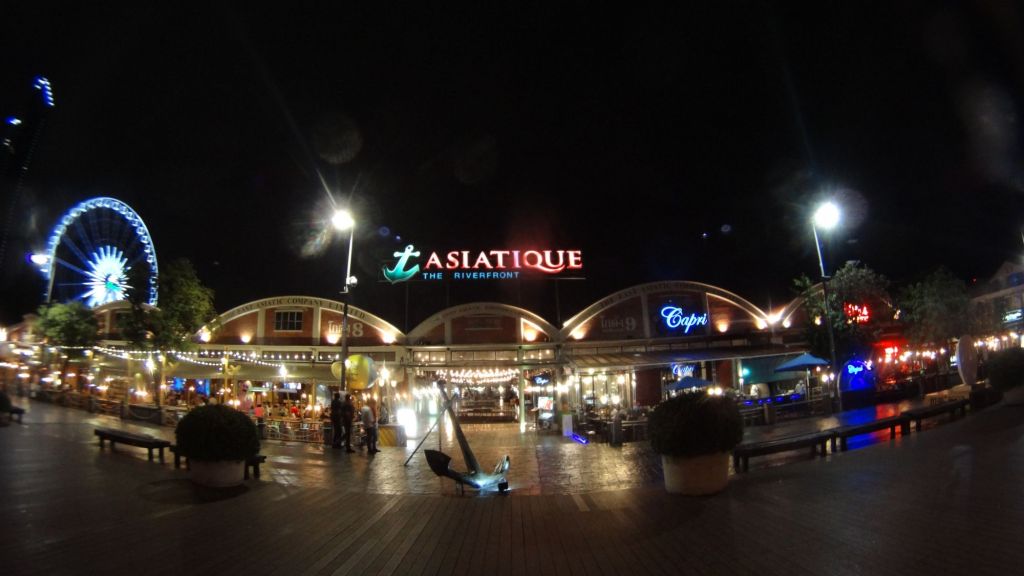
Asiatique riverfront

Day 2: Exploring Bangkok’s Temples and Markets

The next morning, our guide took us for a Bangkok city tour. We visited famous temples like Wat Arun (the Temple of Dawn) and Wat Pho, where I saw the huge golden Reclining Buddha. The guide told us interesting stories about Thai history and culture in simple English, so everyone could understand.

In the afternoon, we went shopping at the Chatuchak Market, one of the biggest in Asia. I bought souvenirs, clothes, and some local snacks. We spent the evening cruising down the Chao Phraya River, admiring the sunset and soaking in the calm atmosphere.

The Royal palace, Bangkok

Day 3: From Bangkok to Pattaya

After breakfast, we traveled to Pattaya, a lively city by the sea. The drive took about two hours and was very comfortable. When we arrived, we checked into another nice hotel with a sea view.

In the evening, we went to the Pattaya Viewpoint, where I saw the whole city shining with lights. Later, we watched the Alcazar Show, a colorful performance full of dance and music. The costumes were beautiful, and the show was full of energy. It was the perfect end to the day.

Day 4: Coral Island Adventure

This was one of the most fun days of my trip! After breakfast, we took a speedboat to Coral Island. The sea was bright blue, and the sand was soft and white.

I tried parasailing and jet skiing for the first time. It was so exciting to fly above the water and feel the wind on my face. Then, I relaxed on the beach, enjoyed some fresh coconut water, and swam in the sea. At a restaurant by the beach, we enjoyed a simple Thai meal that was absolutely packed with taste.

In the evening, we returned to Pattaya, and I took a walk along the beach before dinner. The sound of the waves and the cool breeze made me feel completely relaxed.

Day 5: Traveling to Phuket

After breakfast, we flew to Phuket, one of the most famous islands in Thailand. As soon as I arrived, I could feel the calm and beauty of the place. Our TripFactory-arranged hotel was charming, with palm trees all around and the beach only steps away.

That evening, we visited Patong Beach, which was full of life, music, and food stalls. I had dinner at a seaside restaurant and watched the sunset. The orange and pink sky looked magical.

Day 6: Phi Phi Island Tour

This was my favorite day of the whole trip! Early in the morning, we took a speedboat to Phi Phi Islands. The journey was very beautiful, the sea looked light blue and we crossed tall stone cliffs and green islands.

We stopped at Maya Bay, one of the most famous beaches in the world. I took so many pictures because every view looked like a postcard. Then we went snorkeling in the clear water and saw colorful fish and coral reefs.

We had lunch on one of the islands, and it was delicious with fresh fish, rice, and fruit. Everything was perfectly organized, so all we had to do was enjoy.

When we returned to Phuket in the evening, everyone was tired but very happy. I ended the day with a Thai massage, which was relaxing and refreshing after all the travel.

Day 7: Saying Goodbye to Thailand

On the last day, after breakfast in the hotel, I went to buy souvenirs like small gifts, handmade bags, and Thai food items. The TripFactory team helped with my airport transfer right on time.

As I sat on the plane back home, I felt thankful for such an amazing trip. Every day was full of joy, new experiences, and great memories.

I booked my trip with TripFactory after reading their excellent Google reviews. They have a rating of 4.3 out of 5 stars with over 3700+ reviews. After my trip, I can say those ratings are well deserved.

Their service was always on time. Pickups, hotel check-ins, and tours all happened just like they planned. The staff was friendly, and the guide was patient and spoke clear English. Whenever we needed help, they were just a phone call away.

Most importantly, I felt safe and comfortable throughout my trip. As a solo traveler, that really mattered to me.

After returning home, I couldn’t stop talking about my Thailand adventure. My friends loved the pictures I showed them of the beaches, temples, and bright streets. Many of them were so inspired that they started planning their own Thailand trips with TripFactory!

This 7-day trip was worth every single penny. It gave me new experiences, new friends, and beautiful memories that I’ll cherish forever.

My Thailand vacation with TripFactory felt very special. It was truly an experience of a lifetime. Everything was perfectly arranged, from the hotels to the tours. I explored three wonderful cities: Bangkok, Pattaya, and Phuket. Each city was beautiful and different.

If you’re thinking about visiting Thailand and want a smooth, stress-free holiday, I highly recommend TripFactory. They keep their word by giving excellent service, comfort, and memories you will never forget.

Thailand taught me that travel is not just about seeing new places; it’s about feeling alive, learning new things, and creating memories that stay in your heart forever.

Kashmir Great Lakes Trek – Cost, Best Time, Route & Highlights

The Kashmir Great Lakes (KGL) trek is widely regarded as one of India’s most spectacular high-altitude circuits. Rolling alpine meadows, jagged granite ridges, and a string of emerald and turquoise lakes make this route feel like walking through a painter’s brightest palette. Great Lakes of Kashmir is a classic 7–9 day trek that usually takes trekkers from Sonamarg to the Naranag valley (or the reverse), crossing several high passes and visiting lakes such as Vishansar, Krishansar, Gadsar, Satsar and Gangabal.

This guide covers the route, daily plan, difficulty, best season, permits and safety, gear, food and packing, acclimatisation and practical tips so you can plan and enjoy the Kashmir Great Lakes trek with confidence.

  • Typical duration: 7–9 days (6–8 days of trekking).
  • Typical distance: ~65–75 km depending on start/end points and exact route.
  • Maximum altitude encountered: ~4,200–4,300 m (Gadsar / Nichnai passes). Most camps lie between 3,500–3,900 m.
  • Difficulty: Moderate to difficult (long days and 1–2 steep passes; not technical but physically demanding).
  • Best months: Late June to early September (peak July–August).

What sets KGL apart is the variety compressed into a single circuit. In a week you move from thick forest and pastoral Sonamarg meadows to barren moraines and dramatic glacial basins. Each lake has its own character — Vishansar’s wide shallow shores, Krishansar’s twin lake views, the dramatic bowl around Gadsar and the grand Gangabal beneath steep cliffs. The landscape changes day by day, making every campsite feel like a new world. Many trekkers call it a once-in-a-lifetime trek for the views alone.

This is a standard itinerary many operators and independent trekkers follow. Distances and times vary by pace and route choice.

Day 1: Srinagar to Sonamarg
Arrive in Srinagar and drive (~2–3 hours) to Sonamarg. Final gear checks, stay in a guesthouse or camp at Sonamarg (2,700–2,800 m).

Day 2: Sonamarg to Nichnai (~10–12 km, 6–8 hrs)
The trail climbs out of Sonamarg through meadows, forests and the Shekdur stretch before arriving at the high pasture of Nichnai (~3,500 m). There may be an army checkpost where ID is required.

Day 3: Nichnai to Vishansar Lake (~10–14 km, 5–7 hrs)
Cross the Nichnai pass (often ~4,100–4,150 m depending on route), then descend and reach Vishansar lake (~3,650 m). A spectacular first high-altitude lake.

Day 4: Vishansar to Gadsar (via Gadsar Pass) (~16 km, 6–8 hrs)
A long but rewarding day: ascent to Gadsar Pass (~4,200 m) and then a descent to the turquoise Gadsar Lake. Gadsar is in a sharp amphitheatre of cliffs and often has ice in early season.

Day 5: Gadsar to Satsar (~11–12 km, 4–6 hrs)
Cross rolling meadows and reach the Satsar lakes — a cluster of multiple small lakes — with scenic campsites.

Day 6 : Satsar to Gangabal (via Zaj or other pass) (~9–12 km, 5–7 hrs)
Cross the pass (sometimes called Zaj or another local saddle) into the Gangabal basin and camp by Gangabal Lake below Mount Harmukh. Gangabal is one of the most dramatic high-altitude lakes in Kashmir.

Day 7: Gangabal to Naranag / Thajiwas valley (~10–14 km)
Descend to Naranag, meet transport and drive back to Srinagar. Naranag has historical temple ruins and is a popular exit point.

Note: Many operators add a buffer day for weather, or extend to 8–9 days to allow lighter daily distances and better acclimatisation.

Kashmir Great Lakes Trek is not a technical climb since you won’t need ropes or glacier travel skills on the usual route but it is a sustained high-altitude Kashmir Trek with long ascents and descents. Expect:

  • Daily walking of 5–8 hours on varied terrain.
  • Two or three high passes around 4,000–4,250 m (steep sections, loose scree on approaches).
  • Nights at 3,500–3,900 m, so altitude symptoms are possible.

Fitness prep: a few weeks of aerobic conditioning (brisk walking, stair climbing, light trail runs) and weekend hikes will help. If you’re new to high altitude, allow an extra acclimatisation day (e.g., at Nichnai or a day in Sonamarg), many guided trek agencies like Cliffhangers India include one buffer day in their itinerary.

The trek is seasonal because snow blocks the high passes for much of the year. Late June to early September is the practical window: the snow melts, meadows bloom and passes are mostly passable. July–August are peak months. Trails are busiest then and weather is most stable; monsoon influence is limited compared with the lower Himalaya but occasional storms and afternoon rain/snow at high altitudes can occur. Early June may still have heavy snow; September can be cold with early snowfall. Plan accordingly.

  • Army or local checkposts are common near Sonamarg; keep valid photo ID (Aadhaar/passport/driving licence) handy for checks. Some itineraries require village levies or fees, your operator will handle.
  • Guided groups: using a local, licensed operator with experienced guides is strongly recommended if you’re new to Himalayan trekking. Operators provide tents, meals, porters/ponies and local knowledge of passes and weather patterns.
  • Altitude sickness: know the symptoms (headache, nausea, dizziness, reduced performance). Don’t push through progressive symptoms, descend immediately and seek medical help. Carry a basic first-aid kit and consider medications like acetazolamide only after consulting a doctor.
  • Operators provide 3 meals a day (simple, high-calorie trekking food). If self-supported, carry freeze-dried meals or easy staples (oats, pasta, nuts, energy bars).
  • Water: treat with chlorine tablets, purification drops or boil. Streams flowing from glaciers look clean but carry microscopic risks. Carry a 2–3 litre hydration setup; water points are frequent near lakes and streams.
  • Campsites are grassy meadows (pack down if wet); expect cold nights and  sleeping bags rated to at least -5°C to -10°C recommended for safety and comfort.
  • Sturdy trekking shoes/boots (broken in).
  • Waterproof shell jacket + insulated midlayer (down or synthetic).
  • Trekking pants, base layers (thermal if early/late season).
  • Hat, gloves (warm, windproof), sunhat.
  • Sleeping bag (rated to –5°C or lower).
  • SPF, sunglasses (high UV at altitude), lip balm.
  • Trekking poles (hugely helpful on steep descents).
  • Headlamp, spare batteries.
  • Water purification method and 1–2 litre bottles or bladder.
  • Light stove if self-cooking (or plan with operator food).
  • Basic medicines, blister kit, altitude info card.
  • ID and photocopies.

The region is home to mountain fauna (pheasants, marmots, ibex at very high altitudes, and sometimes brown bears in the lower forests).

Respect local wildlife, don’t feed animals, keep a safe distance, and store food properly.

The fragile alpine meadows recover slowly from damage, so follow Leave-No-Trace principles: carry out all plastics, avoid cutting vegetation, use designated campsites and follow toilet protocols (bury waste away from water sources or pack out).

Local communities and park authorities also emphasise low-impact travel.

  • Guided trek: expect a price range depending on services,  basic group treks are cheaper; private departures cost more. Pricing covers transport from Srinagar, tents, cooks, ponies/porters, permits and guide fees. Booking through reputable local agencies ensures safety infrastructure.
  • Independent: possible for experienced trekkers who can source local ponies and cooks, but permits, navigation and emergency response are more your responsibility. For first-timers, a guided trek is the safer, simpler option.
  • Gadsar Pass and Gadsar Lake — dramatic bowl views, turquoise water and cirques: one of the most photogenic spots on the trek.
  • Vishansar and Krishansar — approach views from the pass reveal twin lakes and meadows.
  • Gangabal below Harmukh — large alpine basin with sheer cliffs and reflective water — great for sunrise and sunset photos.

Bring a polarising filter if you shoot and protect gear from sudden drizzle or dust.

  • Pace yourself — better to arrive fresh at camp than collapsed; shorter, steadier steps up and down help.
  • Hydrate and snack — dehydration hides behind fatigue; sip water constantly and eat salty snacks to keep electrolytes.
  • Early starts — weather is most stable in the morning and you avoid afternoon wind or cloud.
  • Practice with poles — they save knees on long descents and steady you on screen.
  • Respect local advice — guides know micro-weather patterns and which days are risky for passes.
  • Check weather and pass conditions with your operator 48–24 hrs before start.
  • Confirm transport and meeting points in Srinagar/Sonamarg.
  • Carry sufficient cash (ATMs are not available en route).
  • Make a small emergency plan: share your itinerary with someone and ensure you know how to contact your operator or local authorities.
  • Pack exactly what you’ll need — light but complete.

The Kashmir Great Lakes trek is not the easiest Himalayan circuit, but with good preparation it is one of the most rewarding. Whether you go with a trusted local operator or plan a careful independent trip, respect the mountain, pace yourself, and soak in the views , the lakes will repay every step.

Beyond the physical challenge, KGL rewards with a sense of wonder: silent mornings by glassy lakes, wildflowers in meadows, the crunch of alpine gravel underfoot and nights under impossibly bright stars. It’s a trek that changes how many people think about scale and stillness, a lasting memory rather than just a checklist. Expect to return quieter, tired and richer in stories.

A Trip to Kanger Valley National Park

My first thoughts about visiting a national park used to be safaris, birdwatching and game sighting. But my trip to Kanger valley national park in Chhattisgarh helped me change that perspective by letting me understand that a trip to a forest can be beyond wildlife. Even without having any major landmarks to visit, a trip can be complete by simply traveling slow, being present and immersive in the energies of the moment.

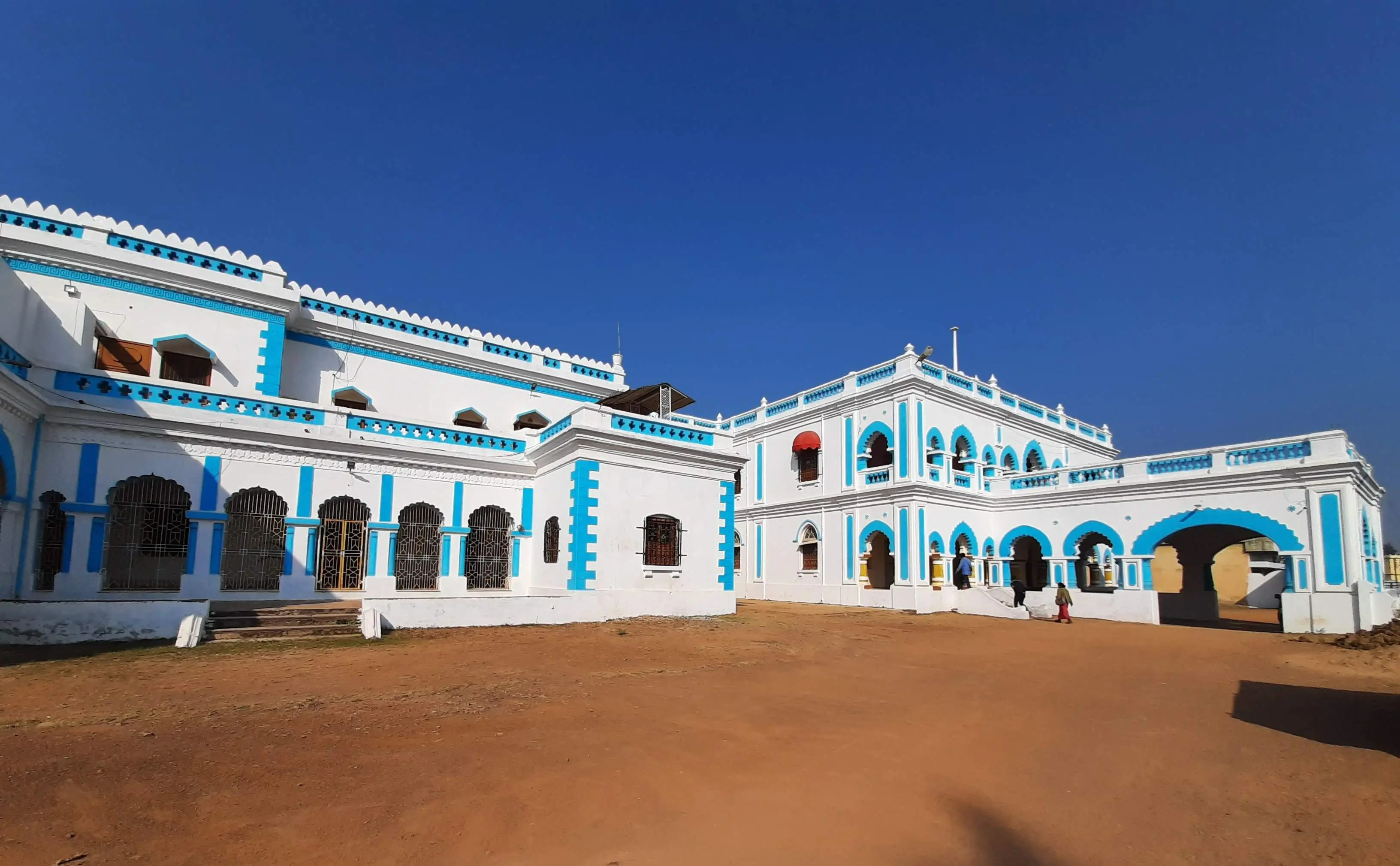
A walk tour around Jagadalpur set a good preamble by introducing me to the culture and history of the tribal communities and the royal family of Bastar. Jagadalpur is where most rituals of the Bastar Dussehra center around. Bastar Dussehra, the longest festival in the world is celebrated for seventy-five days thereby attracting tourists from across the globe to witness the congregation and unique rituals of Adivasis inhabiting the region.

The Royal Palace at Jagdalpur

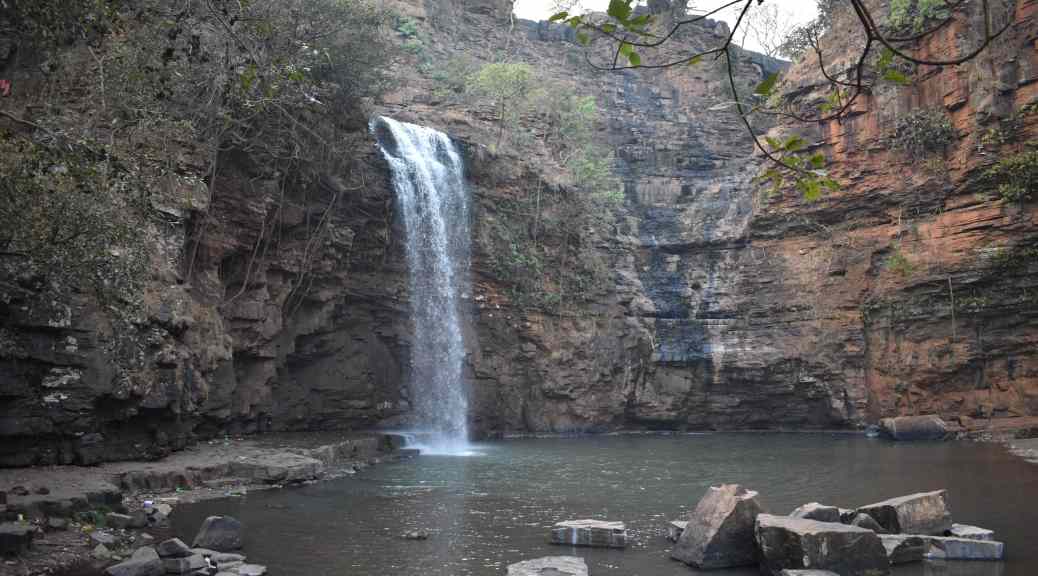
We then drove towards Kanger valley National Park, the only national park in India where human settlements is allowed within the heart of the forest that is thriving around the Kanger River. A sumptuous lunch served on patravalis was followed by a walk to see the beautiful Thirathgarh waterfalls and the serene Sita Kund, important sites of pilgrimage in the local culture. After spending some time there, I went on a guided trek to Shivaganga, an untouched gem. ‘The seclusion of the waterfall, reachable by a flight of bamboo stairs laid out through the thickets would be best complimented by an overnight camping and the dance of the fireflies’ as described by the guide.

Sita Kund, Thirathgarh waterfalls, Kanger valley National Park
Sita Kund at Thirathgarh waterfalls

That night’s accommodation was at an Adivasi homestay. A traditional greeting was followed by warm conversation with the host family, accompanied by homebrewed Mahua liquor and red-ant chutney around a bon-fire, in the courtyard overlooked by a huge Mahua tree. The night’s sky there is certainly a delight for astrophotography enthusiasts. I woke up for sunrise and joined my host on his walk along the riverbank to collect ferns for a perfectly organic meal to start our day. With the mud and bamboo houses, wooden fences, dining on cow-dung smeared floors, slow-cooked food in claypot and on firewood with locally available ingredients, my stay was an incomprehensible experience of sustainable living.

Among three magnificent limestone caves located within the national park, we explored the stalactites and stalagmites of Dandak caves. A fifteen-minute session of meditation inside the dark and silent chamber of the cave was transcending. A Gypsy ride to Kanger Dhara waterfall was followed by bamboo rafting on the pristine and calm waters at Kailash Jheel. Since, our campsite was at a walkable distance from a tribal hamlet, I sneaked out and spent time at the local fair there. Tribal folk had congregated from all neighboring hamlets to watch the ‘Naat’, a theater form where excerpts from epics are adapted into local stories and performed all night.

The next morning started early with an inspiring birding session along the river trail as I was accompanied by a ‘Myna Mitra’, the friend of the Myna birds. This is an initiative by the forest department toward conservation of the Hill-myna, the state bird of Chhattisgarh by getting the local forest dwelling tribal youth involved to track the daily activities of these birds. We got lucky to spot a pair of these birds, the highlight for a typical wildlife trip.

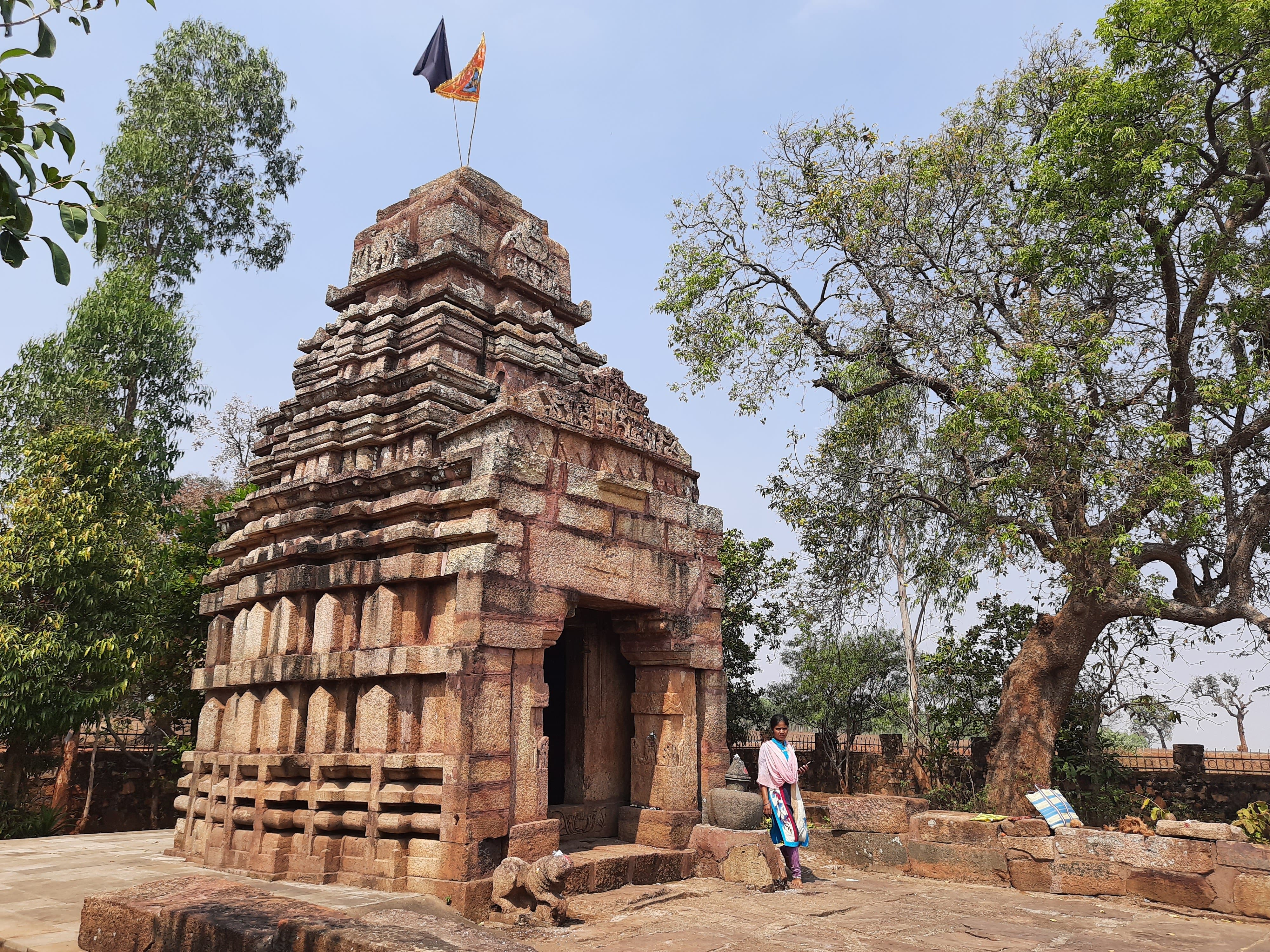
Gumadpal temple, Bastar

After a quick meal, we headed towards Gumadpal to see a 14th century Shiva temple. Historians haven’t yet found the reason for its unique three-tiered Linga. That day happened to be the weekly market or haat, as locally called. A walk around the haat was another opportunity to get a closer understanding of the local way of life. Haats do not just provide for trade but also for worshipping local deities, entertainment, socialization and even matchmaking. A few women were singing and dancing to the local songs and asked us to join in as well. It was surprising to know that barter still exists here. I tasted local food like tubers, mahua, tendu, and a variety of local brews and wines. Jewelry and home-décor items in dhokra, a GI tagged craft made by a method believed to be practiced since over 4000 years were being sold among several other unique crafts of the region. I witnessed an energy packed session of cockfighting as well.

Dokra art at various stages of metal casting

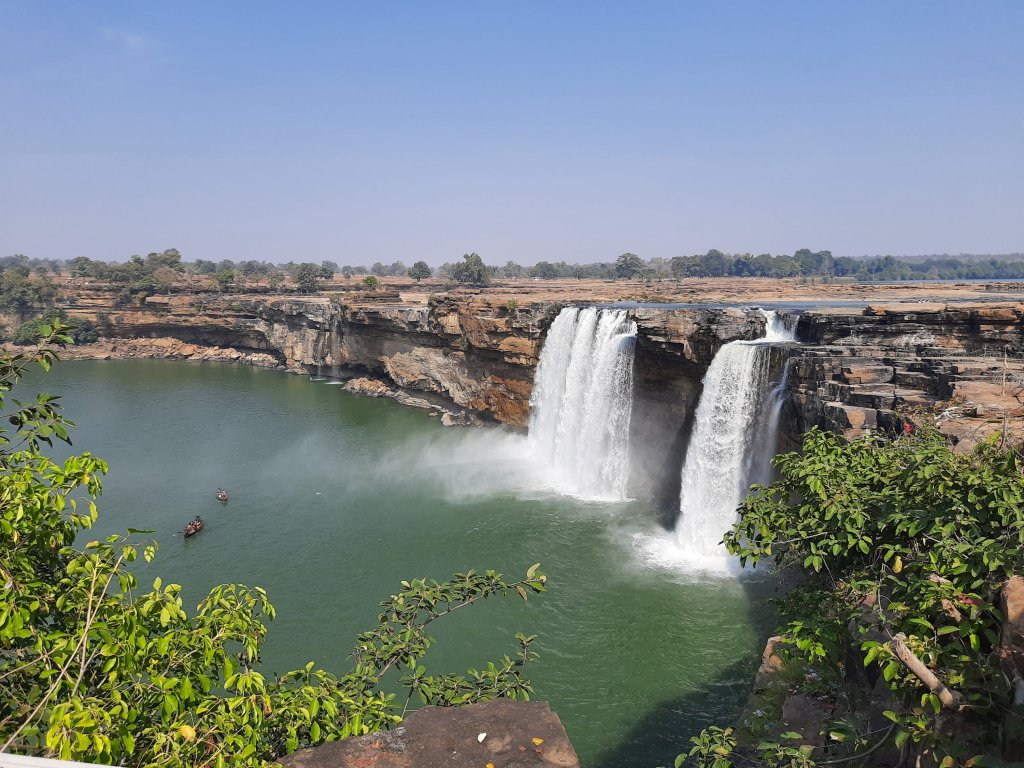
Having travelled to Chhattisgarh and not seeing the poster boy of its tourism advertisements, did not seem fair. River Indravati plummets down with all her might in a horseshoe shape, making Chitrakote waterfalls the widest in India. I checked into the government run luxury resort to spend my last evening, where every cottage offered a view of the setting sun over the waterfall. A ride in a country boat right into India’s Niagara waterfalls was just the prefect way to say good bye.

Chitrakote waterfalls during summer season

From waterfalls and caves to tribal hamlets and local markets, from history and folklore to art and craft, from food and wine to mud-houses and palaces, from dance and music to culture and architecture, my experience at Kanger valley national park was replete, wholesome and truly full of surprises!

Fact file:

  • Transport: Jagadalpur is connected by daily flights, rail route and by buses. Self-drive cars or taxis can be availed for travelling within Bastar.
  • Stay: Several tribal homestays are available within the national park. Nature camps and resorts run by Chhattisgarh tourism board and heritage stays in palaces are managed by the erstwhile royal family of Bastar. Good hotels of all budgets are available at Jagadalpur.
  • Food: Bastar cuisine mostly comprises of locally grown rice and vegetables.

This travel was part of the ‘Dekho Bastar- Season 1’ event organised by India Tourism Board and Bastar District administration in collaboration with Kanger Valley National Park. The article appeared in ‘Apr~May’23’ edition of ‘Bastar Bhoomi’ magazine.

Pondicherry- 10 Places to Visit and Things to Do While on A Tour

Do you want to visit the tranquil beaches of the south? Journey to Pondicherry. The city was previously a French colony and is now a small union territory on the eastern coast of the Indian subcontinent. In both the monuments and the city’s alleyways, you can still see examples of that era’s architecture. The city is well-known for its beautiful beaches and historical sites to visit. There are also some fantastic cafés and restaurants to visit while on tour. To learn more about the location, try the local food.

Pondicherry is appropriate for individuals of all ages and walks of life. It is ideal for seniors, couples, friends, family, children, and business travellers. While in the city, there are several sites to see, some of which are listed here. Stay at Treebo Hotels in Pondicherry to make your journey unforgettable. These resorts are spread around the city and provide some of the greatest features.

Places to Visit in Pondicherry for an amazing trip:

1. Paradise Beach

Lovers may visit Paradise Beach, which is ideal for relaxing. Tourists are drawn to the area because of its natural beauty. The sun’s rays reflecting on the golden sands of the coast create a captivating view of the entire region. To go to the beach, take a ferry from Chunnambar. The Bay of Bengal’s stunning beauty is worth seeing. It is a photographer’s dream since exotic birds may be found here. So, take a stroll along the beach or spend some quality time with your special someone. There are also food vendors here for some snacking.

2. Sri Aurobindo Ashram

Aurobindo Ashram is a spiritual destination for those who are on a trip. To discover more about the place, visit the Ashram library. The location has expanded from a tiny congregation that worshipped Sri Aurobindo. The site is worth viewing while sightseeing in the city. The Ashram also has a hall where guests may view a short film about Sri Aurobindo’s life and work.

3. The Basilica of Sacred Heart of Jesus

How can one miss the city’s most famous church? This church is a masterpiece of Gothic Medieval Architecture and is well worth seeing. Stained glass and paintings depicting the life of Jesus Christ may be seen inside the church. The church is adorned for Christmas and Easter, and people travel long distances to attend the festivities. The magnificence of the building, on the other hand, draws the majority of tourists to this location. It was built in the early 20th century and has been rebuilt multiple times to keep the entire structure in good condition.

4. Rock Beach

Another beach to visit in Pondicherry is Rock Beach, also known as Promenade Beach. The location is ideal for seeing the sunrise and sunset. During these hours, the waters become golden, creating a beautiful scene. People come here for peace and quiet or to take a stroll with their companions. The palm trees that line the shore are also considered to be the most photographed spot in the city.

5. Varadaraja Perumal Temple

This lovely Dravidian-styled temple is well worth a visit when in the White Town of Pondicherry. During festivals, the temple is inundated with people worshipping Lord Vishnu in and around the shrine. Seek heavenly blessings here and marvel at the temple’s architecture. Lord Vishnu, also known as Lord Varadaraja, is claimed to bless everyone who comes to the temple. The temple was established in the 11th century, and several legends have been told about how the temple came to be. One of the most popular is that the Lord’s idol was discovered in the sea, which is how the temple was established here.

6. French War Memorial

The War Memorial, located in the seaside region of Pondicherry, is recognised to be very important to the French Indians who live here. The war memorial was created to honour the troops who died during World War I. The Memorial was created in the first half of the 20th century and is visited by people from all over the world. Because it is positioned on a beach, the view of the entire region is breathtaking. The 14th of July is marked as a day to remember the martyred warriors. The entire region is illuminated, and people gather to remember the people’s sacrifices.

7. Auroville

This Ashram, which is also a piece of art by the Sri Aurobindo Society, is located about 15 kilometres from Pondicherry’s main city. This location is a must-visit because of the tranquilly and tranquillity it exudes. It is being created as a township and has recently become one of the most popular tourist destinations in the country. Visitors to the city come to view the Matrimandir. The architecture of the Gold Dome is what draws the majority of tourists.

8. Arikamedu

History aficionados might visit the Indo-Pacific bead-making site at Arikamedu. It is an archaeological site located within a few kilometres from Pondicherry’s main city. The site is claimed to have been a trading centre during the 1st century BCE. In addition, the French Jesuit Mission’s ruins may be found here. The traces of a bygone age are a must-see, located in a remote place. The surrounding natural beauty is still undisturbed because not many people visit the location.

9. Chunnambar Boat House

The magnificent seas of the Bay of Bengal are very captivating in this location. The little hamlet outside of Pondicherry’s main city is a popular tourist destination. Visitors may also participate in a variety of water activities in the area. Dolphins may also be seen here. Sit on the beach and soak up the rays, or watch others participate in various sports. For some adventure, one may even take a boat trip in the backwaters here.

10. Shopping in Pondicherry

Last but not least, shopping in Pondicherry’s streets is one of the nicest things to do. Souvenirs for loved ones can be purchased here. Serenity Beach Bazar, Nehru Street Market, Saram China Market, and many more are places to visit while in the city for some shopping. To shop from the city, look for things such as handicrafts, clothing, food, home décor, handbags, and so on.

The streets of Pondicherry are also known for photographic sessions as they are painted in either vibrant colours or plain white. Visit the place to experience all of this.

To check out all these beautiful places in Pondicherry, book your stay at Treebo Pondicherry. These hotels in the city are available at budget-friendly rates and provide some of the best amenities. Some of these services at Hotels in Pondicherry include-

  • Complimentary Breakfast
  • Free internet access
  • Hassle-free check-in
  • Branded Treebo toiletries.

These hotels in Pondicherry by Treebo are:

  1. Itsy by Treebo- Coastal Grand De Heritage
  2. Treebo Trend B Coral
  3. Treebo Trend Yagna Residency
  4. Itsy by Treebo- Red Lotus Heritage
  5. Treebo Trend Raffis’ Andalusia
  6. Treebo Trend South Avenue