Category Archives: Statewise Travel

Journey away from Bangalore that includes night journey and an overnight stay… Especially ones planned on long weekends with Saturday and Sunday off :)

Tracing the Cholan trail- Kumbakonam

This was part of a backpacking trip by my brother and me with an original itinerary to cover Bangalore- Kumbakonam – Gangaikondacholapuram – Chidambaram – Pichavaram – Pondicherry – Tiruvannamalai – Bengaluru

Although being located in the same district, soaked in history and RICH architectural heritage from the Chola era, Kumbakonam is a place that is mostly overshadowed by its counterpart at Tanjavur town. Hence, it is a place that is often spoken less about on a typical tourist’s circuit. I was curious to cover this city and absorb as much of it as possible. While I embarked on a weeklong backpacking trip through some parts of the East Coast road, I had enlisted the temples that seemed culturally important and hoped to visit them while I passed through the city of Kumbakonam.

Getting around:

As you may know, most of my trips are by using public transportation. During this trip, all the places within the city were covered on foot. (You can alternatively hire an autorickshaw to show you around and save some time). All other places located on the outskirts were explored through public/ local buses that are very frequent and extremely light on the pocket. If you are using this blog as a reference to explore this ancient city of the Cholas, you can plan your commute accordingly. Places to visit in Kumbakonam city largely comprise temples and can be broadly grouped into three categories depending on their location and proximity of accessibility.

a. Temples within a cluster within the city (temples 1~5 and 11~12 in my list)
b. Temples within a cluster on the city outskirts (temples 6~8 in my list)
c. Temples located in separate locations on the city outskirts (9~10 and 13~18 in my list)

Accommodation:

It was raining cats and dogs when we alighted at Kumbakonam bus stand in the morning. We had pre-booked a hotel in Kumbakonam city through an online portal. But after reaching the place, we realized that there was a mistake on the portal, and the hotel was closed for the Deepawali vacation. We sat there and browsed through websites to find alternate accommodation options. Meanwhile, the pounding rain had mellowed down to a drizzle. We finally managed to find a hotel nearby where we dumped all our baggage, freshened up, and ventured out to explore. Bonus for the online goof up by the website: We had a room upgrade.

So, here are the places we visited during our short stint of 2 days at this historical city of Kumbakonam in the order of our travel.

Day 1:

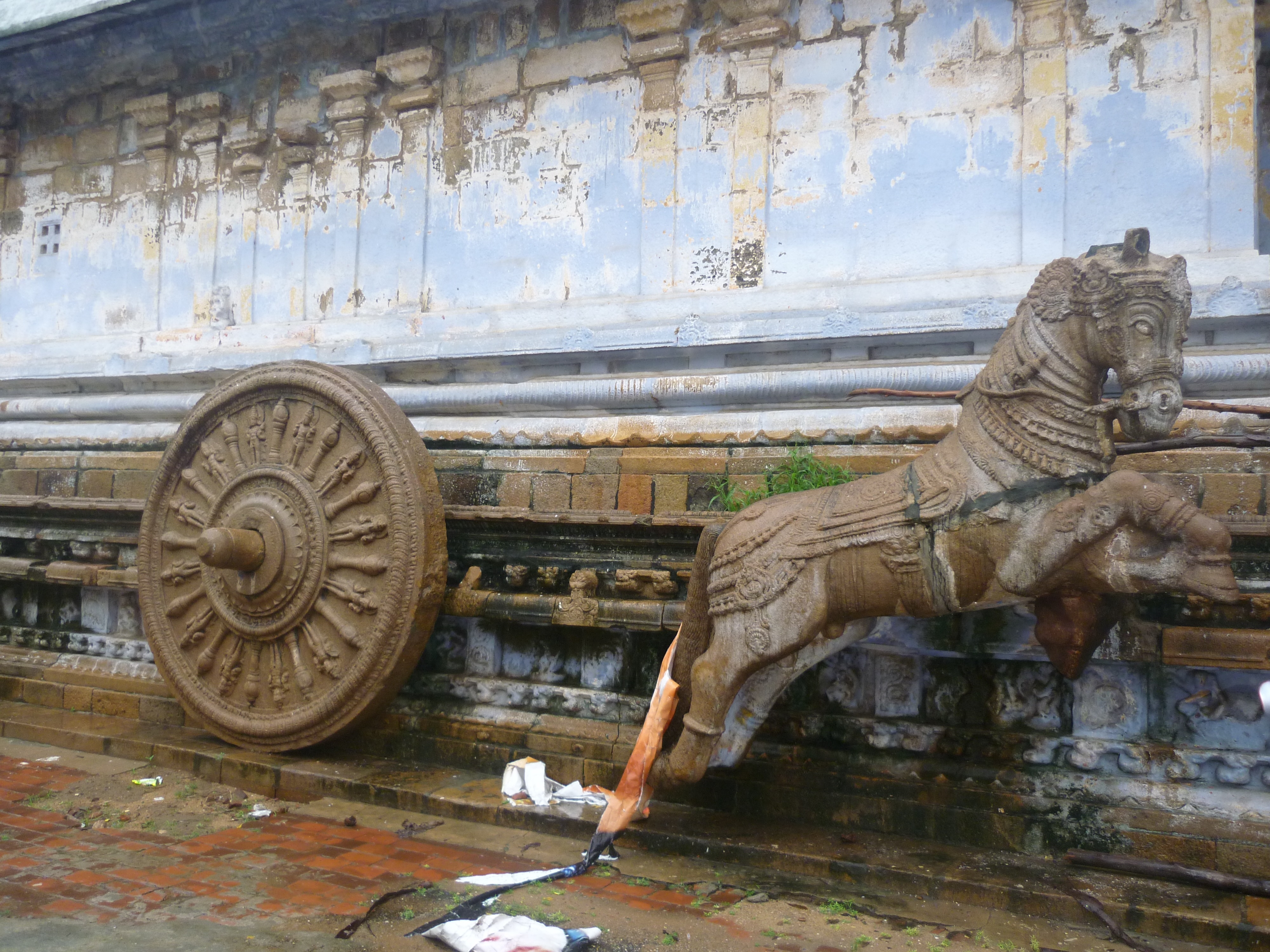
  1. The Nageswara temple: A sizable temple dedicated to the Snake king Adishesha, who is believed to have offered his prayers to Lord Shiva here. An interesting part of this vast 1000-year-old temple premise is the kalyana mantap. The Cholas have sculpted this stone structure in the form of a chariot being drawn by life-sized elephants and horses with the suspension technique.
The Kalyana mantap at Nageswaran Kovil
The Kalyana mantapa at Nageswaram kovil

2. Sarangampani: We reached this temple that follows the Vaishnavism cult after wading through a flooded road. Notable contributions have been made by the Cholas, Vijayanagar, Madurai Nayaks, etc., to the overall architecture of this temple. A temple tank is located on the western side of this temple.

The Rajagopuram at the Sarangampani Kovil

3. Someshwar temple: This is located adjacent to the Sarangampani temple. We skipped an exclusive visit to this temple after getting some photos from the outside of the temple. From there, we continued through the busy shopping lanes of the town to reach our next landmark.

4. Adikumbeshwara temple: It is believed that Kumbakonam gets its name from this Shiva temple. Legend has it that lord Brahma’s pot (Kumba), containing the nectar of worldly lives, was rolled down and stopped at this town after being hit by Shiva’s arrow. The sculptures at the temple are interesting, where a 16-pillar hall built by the Vijayanagar kings has all the 27 stars and 12 zodiacs sculpted on a single stone. Also, the piped instruments(nagaswarams) etched out of stone and the cattle shed are noteworthy. Today, this vast temple premise is also used for commercial purposes with several shops and restaurants setup in this complex.

5. Ramasamy temple: A place dedicated to lord Rama; it is believed to be the only temple that houses the idols of Rama & Sita along with all his brothers inside the sanctum Sanctorum. The entire story of Ramayana has been painted on the corridor walls of this temple. And hence, for someone interested in art and beyond just checking places, it would require at least a day or two to observe the murals here.

Obviously, we did not have the luxury of more than a couple of hours to spend, and hence our visit was limited to just a quick brush-up on whatever we could understand of the images there.

The Ramayana painted on the corridor walls of the Ramasami temple

6. Mahamahan tank: We timed our visit to this place around noon, when all temples in South India usually close down. This mythologically important tank is spread across 6 acres and is believed to have been created out of the nectar that was spilled from Brahma’s pot.

7. Kashivishwanathar temple: This is located at the entrance of the Mahamahan tank. It is believed that the navakannigas or the 9 maidens of Shiva (Ganga, Yamuna, Saraswathi, Kaveri, Godavari, Narmada, Krishna, Tungabhadra & Sarayu) representing 9 rivers visit and bathe in this tank once in 12 years. A day when lakhs of devotees flock here. It is believed that people who cannot make it to Kailash / Manasa Sarovar visit this temple as an alternative to wash off their sins. Though the temple was closed when we reached there, we were very fortunate to get the prasadam that made a nice filling lunch.

8. Abhimukeshwara temple: Located nearby, on the other side of the tank, we only walked past this place as it too remained closed. From there, we boarded a bus to our next major landmark on my ‘to visit’ list.

9. Airavateshwara temple at Darasuram: We visited this temple, on the outskirts of Kumbakonam (one of the three living Chola temples), when no one else would! By the time we walked from the bus stop to the temple, our umbrellas were flipped by the heavy winds, and the pounding rain had battered and gotten us drenched to our bones. The entire temple complex was FLOODED (with knee-deep water). It was an insane visit where my brother and I both decided to go ahead, wade through the water, and have the entire place for ourselves. We climbed up a ladder (placed by the temple priest to perform the daily rituals) to reach the temple corridor. It was BEAUTY, up there! Bonus: The sight of the entire temple complex in a reflection in the accumulated water. (I know this photo is not its best, but still the best memory that our mobile phone camera could capture for our grandkids when we would tell them about this place!).

Airavateshwara temple at Darasuram

After getting some nice shots, we made our way out to the main road to catch a bus to our next destination. The short journey thereon reminded us of Sebastian Vettel cruising on narrow countryside tarmac amid overflowing potholes and LOUD tapangucchi music in the background. With nothing to hold on to during the frequent braking by the driver to stop the bus for passengers to board/alight, the bus kept coming to screeching halts from the revving speeds. It was a fun ride that ended in a few minutes as we alighted at our next planned landmark.

10. Pateeswaran temple: This is originally a Shiva temple, but the goddess has been given prime importance here. It is said that the Cholas offered prayers to the goddess Patti(daughter), calf of the sacred cow Kamdhenu, here before proceeding for any battles during their reign. However, when we arrived here, it remained closed only to open again at 05.00.p.m.

As the rain gods again took over the silent skies, we decided to head back to the city. After reaching Kumbakonam city, we looked out for a place that served the trademark ‘Kumbakonam degree coffee’, our piping hot cuppa filter coffee to warm ourselves to some extent from the chilling rain. It was only 06.00.p.m but already dark. As planned, we set out to find our way through the super crowded streets of the city to find the remaining two temples from our list.

The main bazaar street is a state highway- All thanks to the festival of Deepawali, it seemed like the entire district had come down to one street in Kumbakonam for shopping. The street was jam-packed with not even an inch of breathing space. We somehow managed to get out without actually facing a stampede. Albeit the heavy rain, we closed our umbrellas and stood amid the crowd. The crowd pulled us along to reach the exit of the street, from where we walked to the next temple on our list.

11. Chakrapani temple: Here, Vishnu is worshipped in his sleeping posture holding his ‘Chakra’ on one finger. We witnessed the last pooja of the day, after which we wondered if we had to continue to the next temple or not, since all the nearby temples had started to close down. Anyway, we had a lot of time to kill and walked across to take a chance.

12. Brahma temple: We considered ourselves to be fortunate to have decided to take a chance and arrive here. The temple was still open, and we had made it to the last pooja at this temple as well. The priest was ecstatic to greet us, who went on narrating us stories from mythology and depicting the importance of this otherwise small temple in Kumbakonam. We were told that it was 1 of the only 2 temples in all of Tamil Nadu that are dedicated to Lord Brahma. We were happy to savor the prasadam, which was very unexpected.

We then had a sumptuous supper at a restaurant before we called it a day. It took the same amount of pain to cross the crowded bazaar street to return to the hotel and catch a good night’s sleep.

Day 2:

On the following morning, we were early risers to catch up with our planned itinerary. We boarded a 07.00.a.m. bus to our first destination of the day, situated on a small hillock on the outskirts of Kumbakonam.

13. Swamimalai: Abode of one of the six important Murugan temples in Tamil Nadu, Swamimalai is also an important destination for idol making in India. A limited number of artisans who all live in clusters around the temple here, have carried along a science and art of bronze idol making from the Chola period. The technology used in the ‘lost wax method’ of metal casting is practiced as per the Vedas and is something that needs a more elaborate citation, in another post.

After offering our prayers, we decided to head back to the city to get buses to the other places on our list.

Swami Malai- One of the six holy shrines of lord Murugan

Meanwhile, we couldn’t locate any restaurant that was open for breakfast even at 08:00 a.m. Hence, we decided to have lunch once and for all wherever we would reach. If one had the convenience of an own transportation, there are several other ancient temples that I would recommend visiting. It would be ideal to have an additional day in hand and make Kumbakonam the central place, as all these recommended places are located in different directions, forming somewhat of a radius around this town. Local buses are available from Kumbakonam to each of these places, but it would be very time-consuming to come back to Kumbakonam to change a bus to every time. Hence, we decided to skip the following places and head to our last major landmark.

14. Uppiliappan

15. Thirubuvanam

16. Thiruvalanchizi

17. Thiruvidaimaruthur etc.

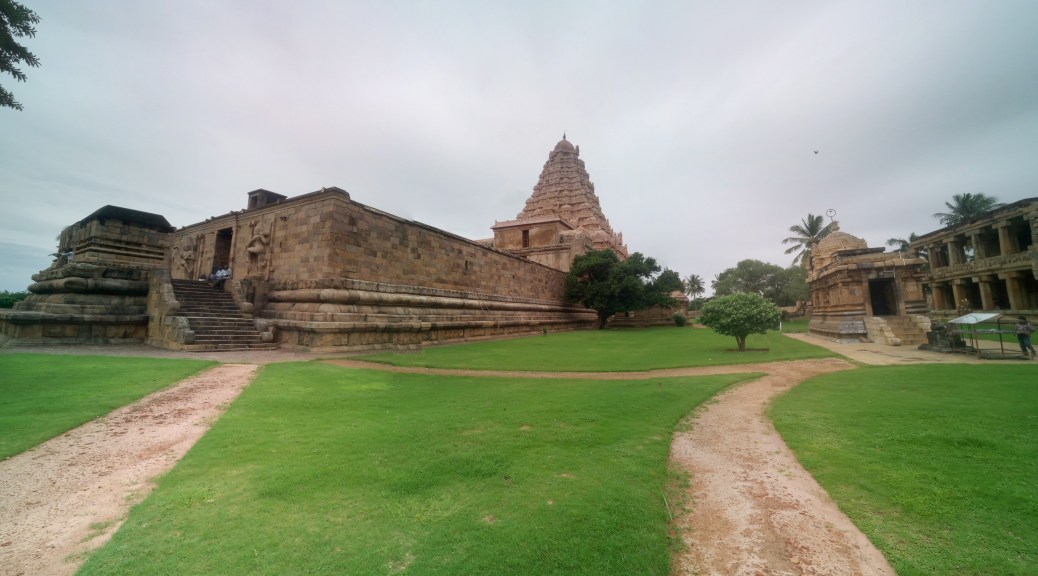
18. The Brihadeeshwara temple at Gangaikondacholapuram: We reached this yet another magnanimous temple after changing two buses (A change of bus at Kork road / GK cross). The biggest (of the three great living Chola temples enlisted by UNESCO), this structure stood right adjacent to the national highway, enchanting every tourist with all its might. The 3 living temples are together called so because the prayers, festivities followed thousands of years ago, during the Chola period, are still being followed religiously to date and have stood as true testimony of time and Tamil culture.

The Brihadeeshwara temple at Gangaikonda Cholapuram

From here, we continued our backpacking into another territory within Tamil Nadu. From the Tanjavur district, we were then heading towards Chidambaram via Pichavaram. Backpacking trips and road trips always carry elements of surprise, and they are supposed to be like that. They can never be planned precisely. These trips always carry scope for making impromptu changes in the itinerary and taking on new adventures. That’s what was awaiting us on the next leg of this weeklong trip, far away in the southernmost state of India. Click here to read more about my journey to Chidambaram.

The silent whine of a valley at Khas Pattar

“Thank you very much for online registration to Visit Kas Plateau.” Read the auto-response mail from the Satara divison forest office. Our slot for the much anticipated trip to the South India’s very own valley of flowers was confirmed.

We reached Khas plateau by hiring a cab from Satara town as early as sunrise. One reason was to get good shots of the valley with different hues of sunrise; second was to enjoy the oneness with nature, undisturbed by the senseless, rather ruthless people who would pour in later during the day in the name of tourism. Recognised among the world’s 39 natural heritage sites by the UNESCO in 2012, Khas has over 350 flower species including orchids, insectivorous plants and other herbaceous plants. There are plants whose flowers change their sex each year too..!! Atleast 20 species of plants are endemic to the Khas valley alone. Someone rightly called it the “Nature’s very own laboratory”. Since Khas is a part of the Koyna Sanctuary, the place is often frequented by animals like the barking deers, bears etc. in search of water. It is nature’s treasure in every sense.

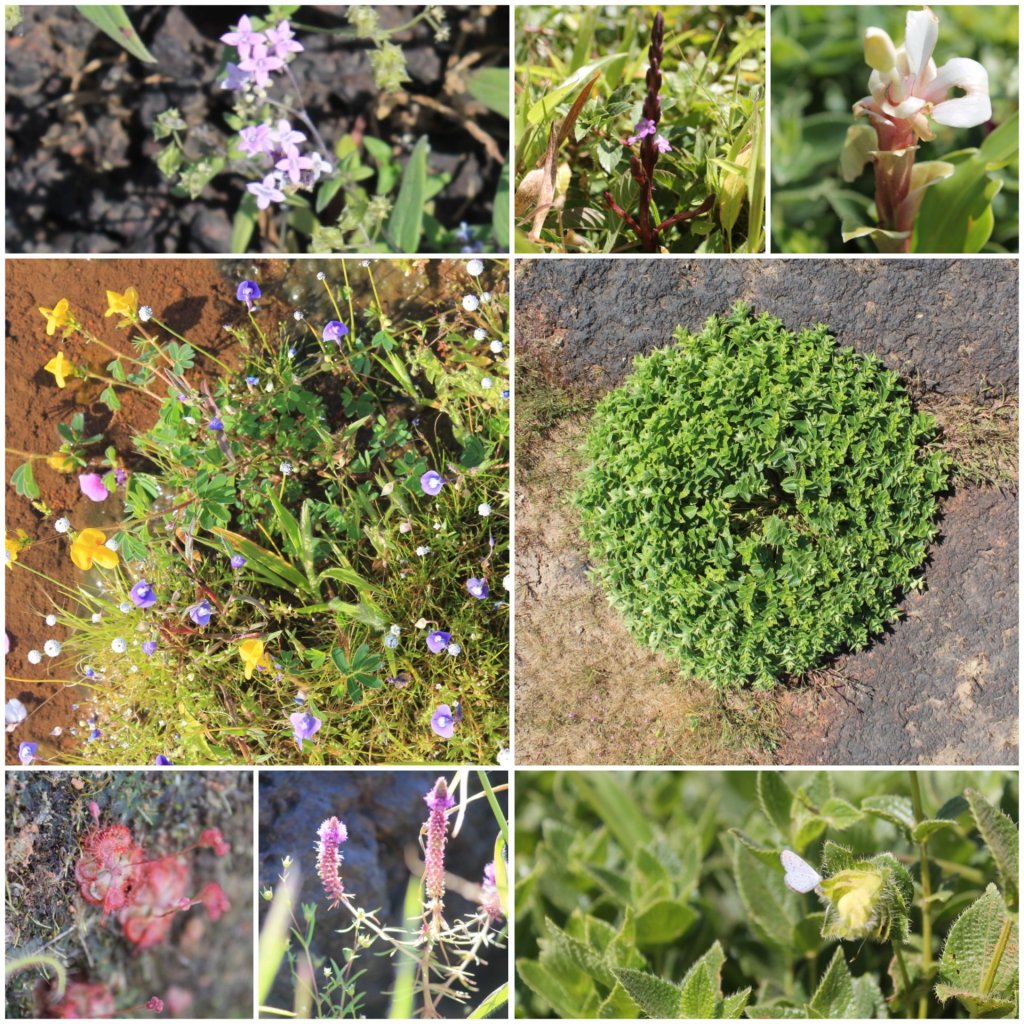
The flowers of Khas plateau- Part 1

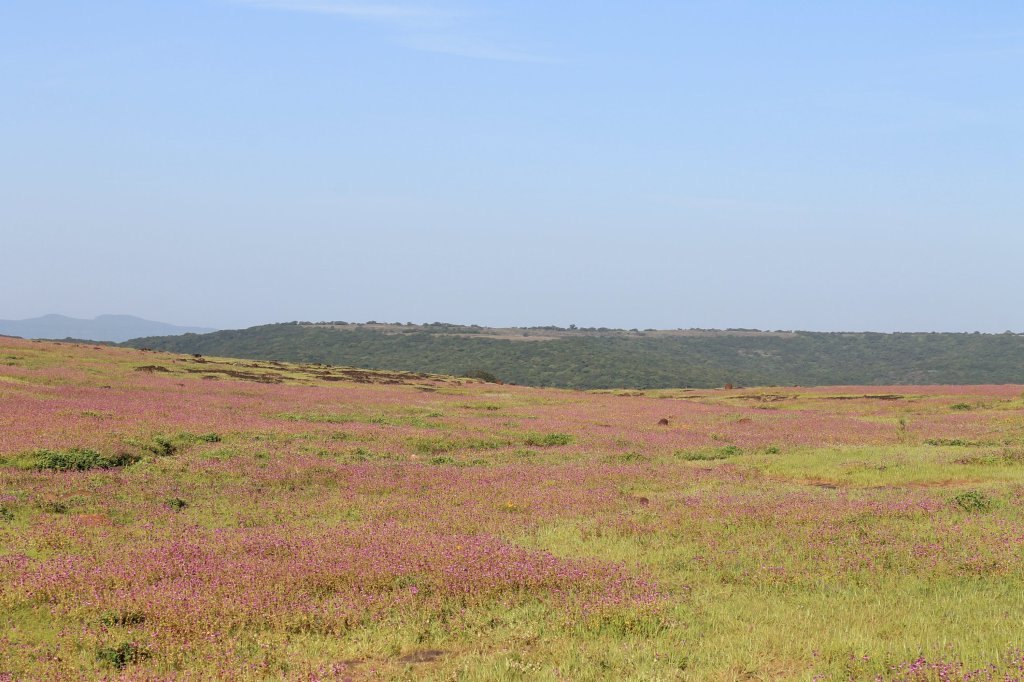
Life is not a bed of roses, but at Khas- it is a bed of balsams.. Oops.. Bad one, I know..!! But that’s what came into my mind when I was finally there..!! The complete valley looked as if painted in pink with an endless stretch of balsam flowers, dotted here and there with small ponds like a bindi on a beautiful lass’s forehead that would complete her looks. These ponds dual as watering holes to the wild animals that visit here occasionally. A narrow stream flows silently on the other side over black basalt rocks until it plummets down into the Khas lake. Beauty of the Western ghats is beyond expression when one stands here at the edge of the Sahyadri ranges overlooking the Sajjangad fort and the Kanher dam.

The Pink balsam carpet at Khas valley

It is a pitiful plight of the place when several plants are smashed under the reckless visitors who pour in there in thousands during the peak months of blossom. A well laid asphalt road cuts right through this protected land until the Khas lake. No entry tolls, no parking fees, no written commitments to gain entry- but just a nominal registration fee of 10Rs. per head is all it takes to get to this colourful patch of nature. It is just a place to hangout for the majority without actually knowing the ecological importance of the place. NO… It doesn’t have any restaurants, playgrounds, toy-trains for you to lunch over with your family and kids. And definitely, NOT a photo studio for you have NO rights to sleep over the flower bed to get those sexy hot babe-kinda photoshoots done. Be educated before heading there that this place is ONLY for the people who respect nature’s gifts. Infact, none-of us even have the rights to walk through the laid walkpaths for there is always a possibility that one can step on an endangered plant and therefore kill it. So think about visiting there ONLY if you’re genuinely into research or in quest of knowledge- NOT for anything else.

The flowers of Khas plateau- Part 2

Be reminded, the acknowledgement mail from the forest dept. also read the following:

Please note that, Kas a plateau of flowers is a divine gift. Please observe carefully, enjoy the beauty of these tiny tots and convey others also but not to hurt.”

Here’s a request to the authorities: Taking a cue from a protected island called ‘Kurusudai’ in Tamil Nadu, It is really the need of the hour to treat Khas at such level. My suggestions are:

  • Do-NOT make the valley accessible to public and make the entry STRICTLY based on requirement from education/research institutions.
  • Please increase the entry fees. A HEFTY fee (possibly in thousands) will make it possible to filter out only genuinely interested people visiting there for whom money does not matter against knowledge.

My visit to the Panchgani tableland also reflected a similar letdown. The vegetation at the tableland is very fragile & similar to that of the Khas. However, onslaught of exploitative tourism has left it in a state of pity. If the flow of tourists continues the same way at Khas, it won’t take more than just a couple of years to lose this treasure FOREVER.

Strawberry heartland of India- Mahabaleshwar

This post is a follow-up on my 3-days backpacking trip to Satara. If you haven’t read it already, you can do so by clicking here. I had backpacked across Satara district covering Satara town – Wai – Panchgani – Mahabaleshwar – Khas plateau – Satara town

In this post, I have tried to share details of my day trip to Mahabaleshwar. The place as such, doesn’t needs any special introduction. This hill station is a favorite haunt of tourists from the nearby metropolis and afar. While its stunning views of the surrounding Sahyadri mountains and Deccan traps attracts the weekenders in large numbers, it sees a large footfall of Hindu pilgrims as well. Mahabaleshwar can be broadly classified into two parts, the New and the Old. I started my day trip to Mahabaleshwar from Panchgani on a Sunday morning. I have tried to explain my Mahabaleshwar trip in detail through this post.

Part 1: New Mahabaleshwar

This part of the hill station is popular for its breathtaking sceneries of the western Ghats or the Sahyadri mountains. It was mainly popularized as the summer capital by the British. The table top mountains were strategically used by the Marathas for holding up enemies. Today, it is especially popular among the honeymooners and millennials as a short getaway from the nearby cities.

With many good viewpoints falling on the way, the 15kilometer stretch from Panchgani to Mahabaleshwar calls for many pitstops enroute. We stopped in the following order of places.

a. Parsi point: that gives a view of the Dhom dam from a different direction than what we had been seeing all through the previous day.

b. The Lingmala & Bhilawar waterfalls: These places weren’t as appealing as the case would have been with a good monsoon season.

c. Mapro garden & chocolate factory: This is the venue of the annual strawberry festival and one can see the chocolate making process at the factory through a glass wall. We tried shots of different juices & crushes they offer at the factory and picked up some bottles and chocolates as souvenirs from our trip.

The Mapro strawberry garden and Chocolate factory

d. Kate’s point: It was a pleasant drive amid the Koyna forest reserve to get here. The highlight for tourists visiting this valley is the echo point and the elephant’s head / Needle hole point. From here, we caught a beautiful view of Dhom dam, Balkawadi dam, Krishna valley and the Kamalgarh fort.

e. Savitri point: We drove through the forests hoping to sight a few peafowls, deer etc. but had no luck. Our visit to Savitri point was disappointing because the entire valley had been engulfed by mist. Since the entire valley was filled with mist even at peak noon-time, there seemed no signs of it clearing out.

Kate's point & the elephant head
Kate’s point & the elephant head

f. Castle rock, 3 monkey point, Malcom point, window point, tiger spring, hunter’s point, echo point and Arthur’s point: These are view-points in the same valley, but now enshrouded by the clouds. We only walked past all these spots without being able to see even the faces of the people standing next to us. In fact, this very valley was what had inspired me to plan my trip to Mahabaleshwar. The view of these deccan traps / table-top mountains had mesmerized me through several Bollywood movies that had been shot here. However, that visit was a matter of bad luck.

g. Marjorie and the Elphinstone points: The drive through these places too meant only disappointment.

Part 2: Old Mahabaleshwar

This part of Mahabaleshwar spikes up the interest of the history buffs and those that are culturally or spiritually inclined. Several ancient temples are dotted here amid the serenity of the Krishna valley. Some of the important landmarks are listed below:

h. Panchganga temple: This is the place of origin for 5 important rivers in the region, namely Gayathri, Savitri, Koyna, Venna and Krishna. The five rivers conflux underground and then spout together through the mouth of a cow carved out of a stone about 4500 years ago.

i. Mahabaleshwar temple: This temple dedicated to lord Shiva is accessible from the Panchganga temple, after a small walk through the shopping lanes. This temple is what gives the hill station, it’s name. The legends mention about Atibaleshwar and Kotibaleshwar also, but those are temples that are lost.

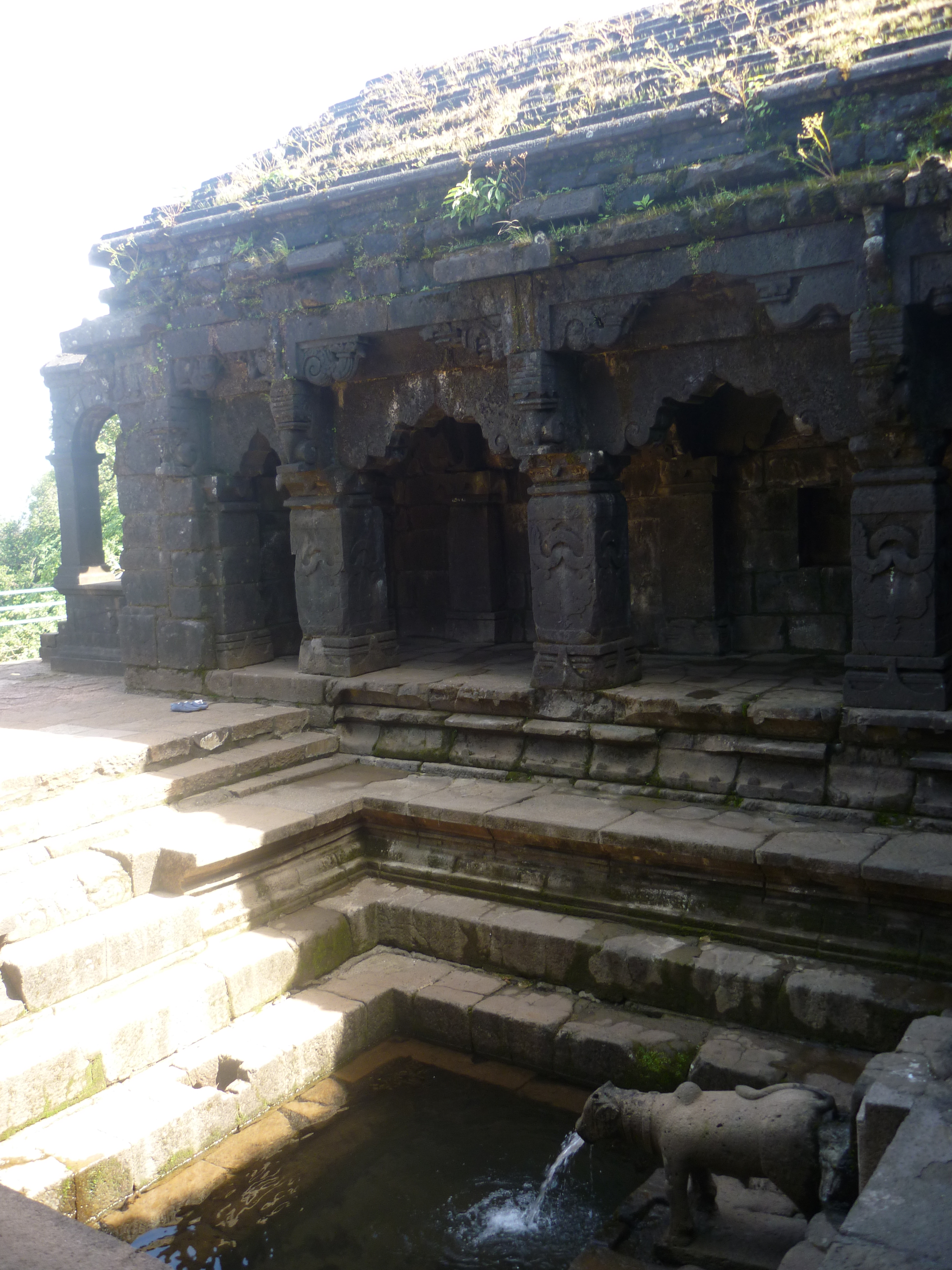
j. Krishnabhai temple: A further walk of about 100 meters from the Mahabaleshwar temple led us to an archeological treasure that remains untouched by mainstream tourists. The stream of water spouting from a Gomukh (the mouth of a stone sculpted cow) in this 13.C.E temple is believed by a few to be the origin of river Krishna. Situated almost on a cliff, the place offered a great view of the Krishna valley around. For those familiar with ancient architectural styles, this temple is a good example of the Hemadpanti style of temple architecture.

The Krishnabhai temple

k. Venna lake: A popular and a beautiful place otherwise, we decided not to stop here when we arrived there. The place was maddening and crowded with tourists.

l. Other places of interest in Mahabaleshwar: On a clear day, one could plan to see the sunrise at Wilson point that is known to be the highest part of Mahabaleshwar and Sunset at Bombay point. Both viewpoints are part of the Sindola hill.

NOTE:

  • The entry and exit to Mahabaleshwar is only between 06.00.a.m. to 06.00.p.m. as it is a protected forest area. So, it is required to plan your travel or stay at Mahabaleshwar accordingly.
  • This hill station contributes to 80% of the total strawberry produce of India. Hence, it is safe to call it as the strawberry heartland of India. DO NOT miss to eat fresh strawberry with cream for dessert after a nice Maharashtrian lunch at any of the restaurants in the Mahabaleshwar market.

Backwaters and boat races at Alleppey

It was the 2nd Friday of August 2012, a day before the Biiigg sporting event of South India: “The Nehru trophy boat race”. After a long haul of planning, two of my friends and I had alighted at our destination- Allapuzha, a popular little town on a tourist circuit in Kerala. Fondly known as Alleppey, we were there to experience the festivities of ‘The Olympics of Kuttanad’- Vallamkali or the boat race. The Nehru trophy boat race is an annual event held in the Vembanad lake, in the Kuttanad region of Kerala. Vembanad lake is the longest lake in India and spans across several districts of Kerala. Depending on the region, the lake is known by different names. It is called as the Punnamada Lake here in Kuttana, of which Alleppey is a part. Along with the boat race, we wanted to explore the backwaters that’s a popular haunt of the tourists in this region.

My Itinerary:

Day 0: Leave from Bangalore to Kochi (Overnight train);
Day 1: Kochi to Alleppey (local train), Shikara ride in the Vembanad lake, Sunset at Alleppey beach.
Day 2: Nehru trophy boat race, Champakulam St. Mary Forane Church, Kalloorkkadu Angadi (local & oldest market in the region), Latin church. Return from Alleyppey to Bengaluru (Overnight Train)

Other Places of Interest:
• Karumadi Thodu- famous for the black granite idol of lord Buddha
• Ambalapuzha Sree Krishna temple- known for the ‘Palpayasam’ or the milk porridge offered as prasad to the deity.
• Kokkothamangalam church- This is one of the seven churches founded by St.Thomas, one of the twelve disciples of Jesus Christ.
• Ayyappan temple in Mukkal vattam (near Muhamma)- known for the Kalari from which Lord Ayyappa is believed to have learnt his skills in martial arts. The hermitage where Ayyappan lived during the training period has been preserved in its original form by successive generations of the Cheerappanchira family.

The Details:

Day 1:

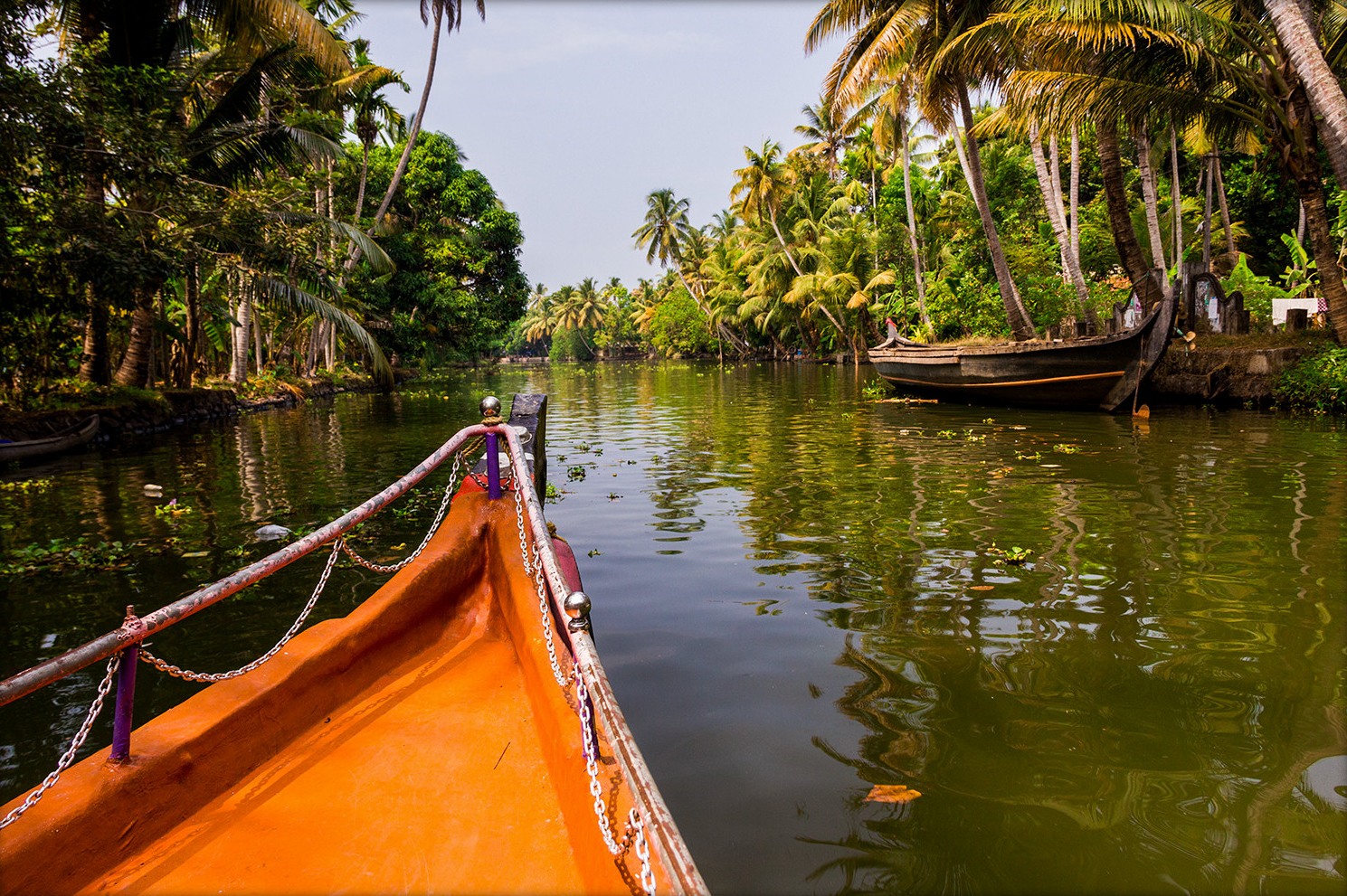
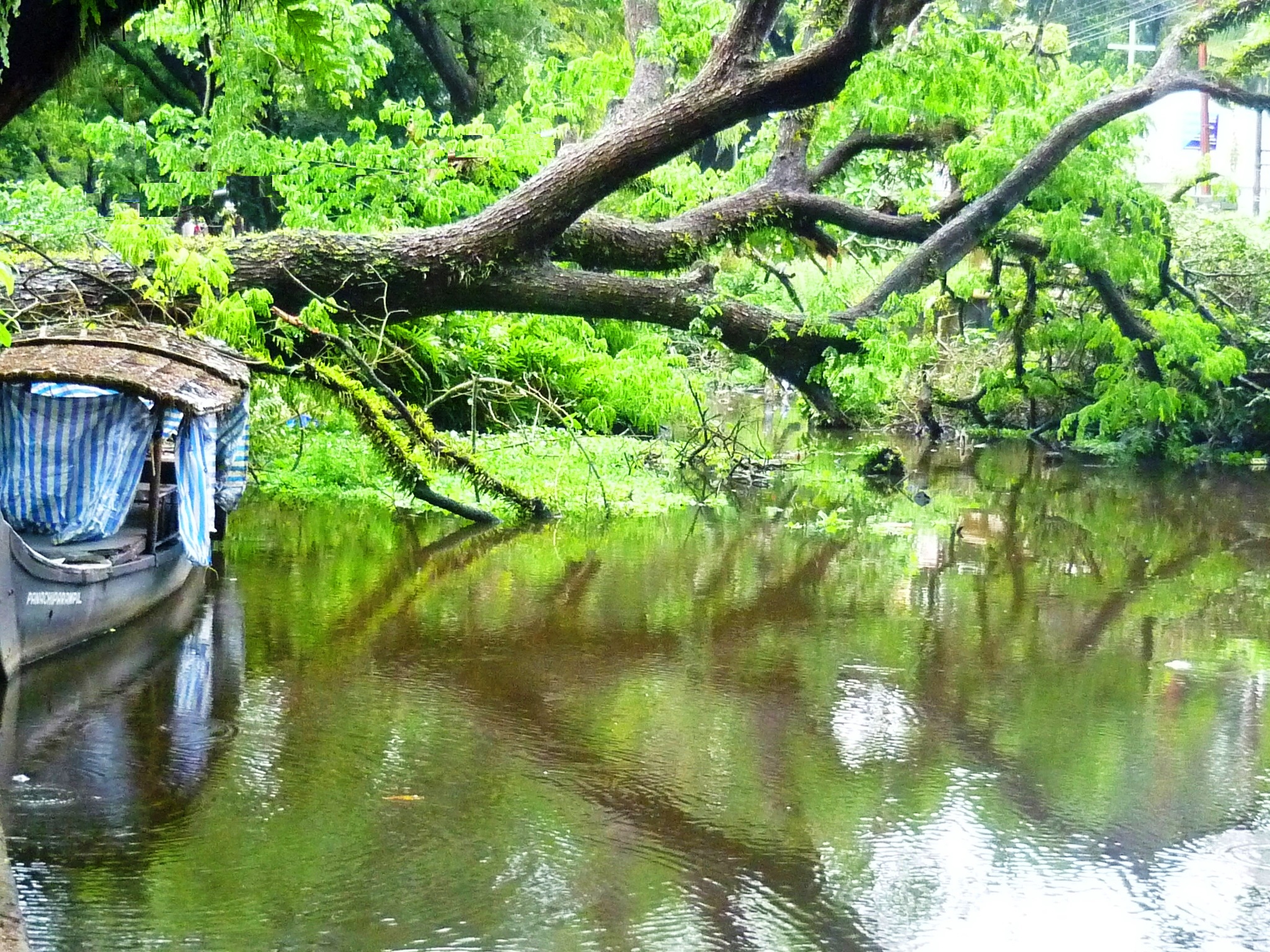
It was noon by the time we checked into our hotel room. We freshened up quickly and set out to explore Alleppey. We walked around a little bit and reached at a small boat jetty. We hired a ‘Shikhara’, a local motorboat to cruise around the narrow canals, passing through several fishing hamlets. While the womenfolk were washing clothes, the men were spiralling their fishing nets into the water and a few kids were diving into the waters for a refreshing swim. It was a nice experience of seeing local lifestyle of the people for whom, the backwaters are a lifeline. Along our ride, we picked up some fresh lobsters and pomfret at a local market and got them cooked in the local style at a fisherman’s house.

The Shikara cruise in the narrow canals of Alleppey

Further, we were oared across to the end of the canal which opened into the wide Vembanad lake where all the teams were practising for the boat race and the venue was getting set for the ‘Big’ event. The energy and enthusiasm in the atmosphere was no less than that of the main event itself. Though we wanted to stay there till sunset, the government deadline for all activities in the waters forced us to return to the jetty before 06.00.p.m.

On returning to the mainland, we meandered through the lanes of Alleppey town searching for a dose of Kerala chai and palam-pori (Banana fritters). We then decided to settle down by the beach until dark. While finding our way to the beach, we walked past the coir industries that Alleppey was once known for, and now remained shut and non-functional.

A stationed shikara enroute to the Alleppey beach

While walking back to the town area from the beach, we happened to see a hoarding of a concert happening at a nearby stadium. Post sunset on normal days, most towns in Kerala sleep to silence after 7.00.p.m. and there will be not many options to see or do after that. Since we did not want to waste the remaining evening by sitting inside our hotel room, we decided to head to the stadium to kill the rest of our evening. ‘Music never disappoints’, all the three of us had the same thought. Upon arrival at the stadium, we enjoyed the on-going performance of ‘Theyyam’, one of the colourful, traditional & spiritual dances of the state. But after some time in the audience gallery, is when we experienced a surprise on the stage. A MIND-BLOWING show by the violin maestro- Balabaskaran and team.. It was there that we were LOST in dreamland..!!

Day 2:

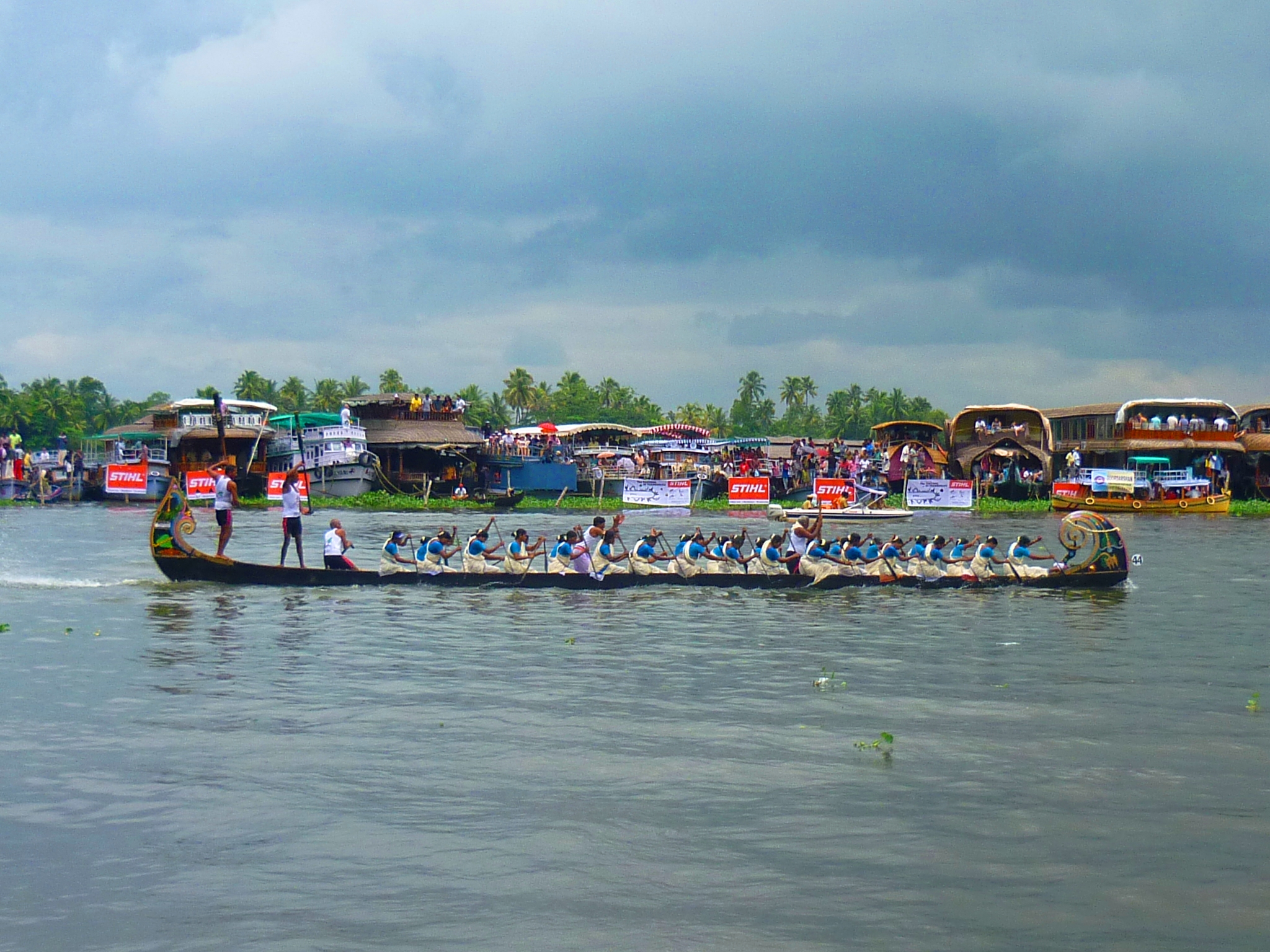
The next morning, we had to reach the racing venue as early as 08.00.a.m. to ensure that we had a place to sit. (Read about the madness of the event). The snake boats are the world’s biggest water vessel used for sports. One by one, they arrived for assembly. Locally called as the Chundan Vallam (Beaked boats), these 100~120 feet long wooden canoes carry 90- 110 rowers and move like snakes through the channels. And soon, the races started under different categories. Every single soul in the arena was singing songs of cheer. All through the event, only one thing echoed in the atmosphere: Vanchipattu or the Boat song. It was a once in a lifetime experience to be a part of that enthusiastic crowd.

The oarsmen '"Women"
The oarsmen ‘”Women”

Post the event, we still had time to explore the town and hence boarded a bus to Champakulam. As we passed through the waterlogged villages of Kuttanad, we were reminded that the region we were passing through was the ‘granary of Kerala’ or the rice bowl of Kerala. It is one of the few places in the world where farming is done below sea level.

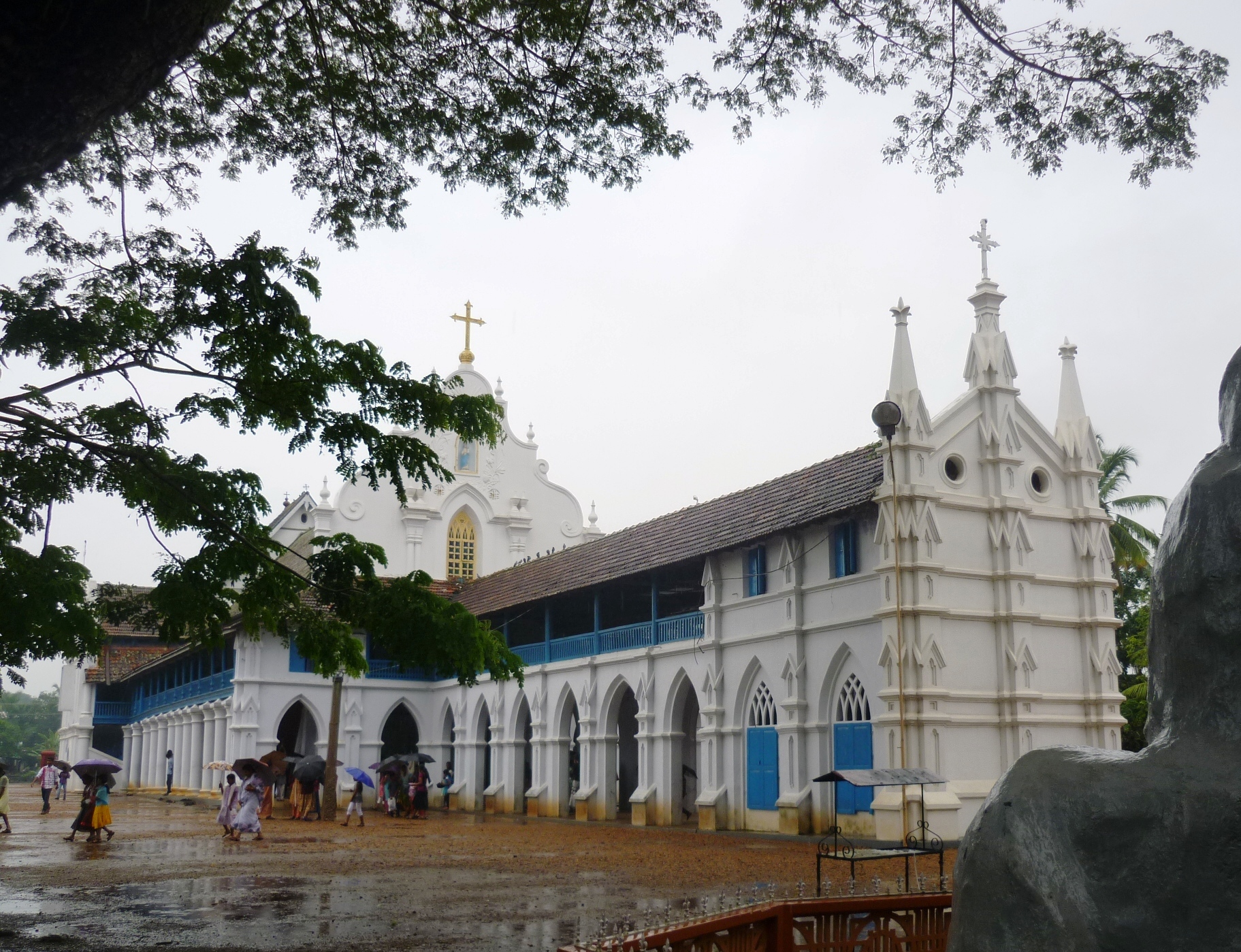
Soon, we reached the St. Mary Forane Church. Since it was a Sunday, we were lucky to take part in the mass. Built in 427A.D., this riverside church is a testimony of time with its finely maintained beautiful mural paintings. From there, we took a boat to reach the other end of the river: the oldest market in the region known as Kalloorkkadu angadi.

Champakulam St. Marys church

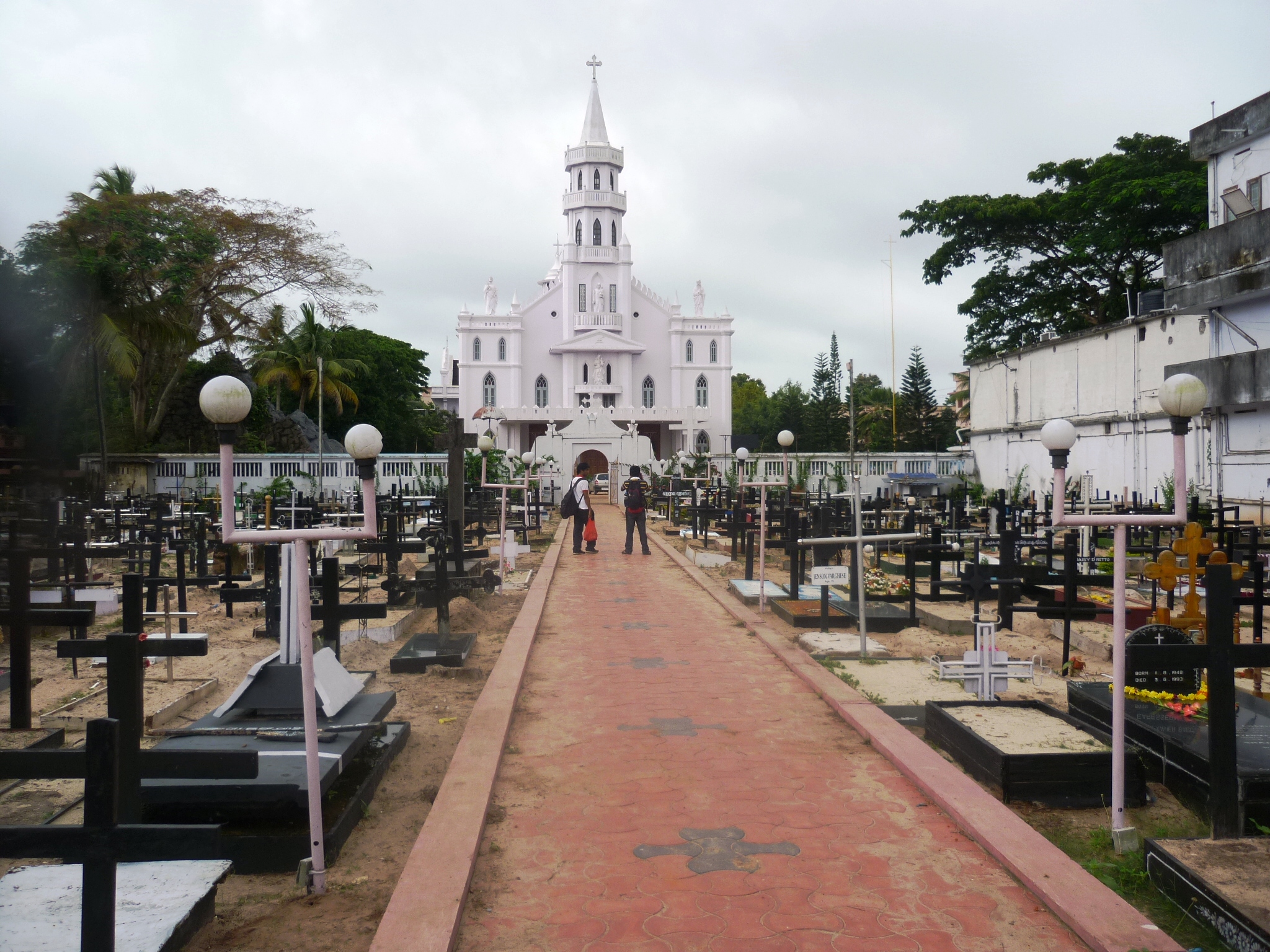
With a local bus ride from there, back to the town, we then took a walk to the Latin church in the town. The entire town of Alleppey can be viewed from the terrace of this church (permitted only during visiting hours). What particularly caught our interest was the cemetery where all members of a family were buried in the same pit. Hundreds of such graves laid within the church premises.

The premises of the Latin Church

We then checked out our lodge and headed to the railway station for our return, scheduled for the night. It was time for us to depart with a mind filled with beautiful memories of sailing afloat on a boat in the backwaters of land that is called ‘God’s own country’ and hope to return soon.

Must dos: Experience the madness of the Snake boat race
Must eat: Freshly caught and cooked seafood while on a backwater cruise tour

A mind numbing winter experience in Ladakh

So well, thank you for dropping by. This post is an elaborate impromptu itinerary we came up with when we were stranded in Leh, sometime before Ladakh became a separate Union territory. If you’d are interested in planning an itinerary, stick around this post. But, if you’re keen to know the fun story behind our plan going haywire, I recommend you to also read my brother/ co-traveller’s perspective. (Click here to read his story)

Stick around a little more, to know my side of the same story. Then tell me what you liked 🙂

Here’s mine!

What was supposed to be an once in a lifetime experience of trekking on a frozen river- ‘The chadar trek’, rather turned out to be a wonderful experience in its own way.. Thanks to a landslide on the Zanskar, a natural dam had been formed stocking up water for over 5 kms. If incase this natural dam collapsed due to the built up pressure, the stored water would wash away the nearby areas causing flash floods. Hence, citing safety reasons, the goverment had issued ‘section 144 – Shoot at sight’ to anyone attempting to go anywhere close to the river.

We decided to break away from the trek organiser and explore Ladakh on our own.. Oh yeah, before I forget to mention- None of our phones were working(No connectivity via phone or internet)- Thanks to all our pre-paid connections. Only postpaid connections work in this part of the country due to security reasons (given its proximity to disputed border areas). Thus started our lifetime experience of the mind-numbing winters in Ladakh.

Day 1: It was noon by the time our early morning flight took off from Delhi airport, thanks to bad weather conditions. Just 20minutes after take off, a small but prominent layer of cloud seemed to appear at the horizon.. But within no time, we realised that we were approaching the Himalayas. In just few minutes, the GPS indicated Shimla on the map in the TV infront of our seats. A never-ending stretch of deep gorges, ravines, formed the beautiful landscape below. Few minutes further up.. Yes..!!! we couldn’t contain our excitement of flying over the snow covered mighty Himalayan peaks, we were jumping for a spot at the windows taking turns.. It was the first time we were seeing snow! Click click click…. The cameras went on and on… It was as if we were in an enclosure which was floating up in heaven.. It was absolute FEAST to the senses.. all the way… till touch down🙂

You are flying over the Himalayas...
You are flying over the Himalayas…

Inspite of the glaring bright sun, it was 6 below zero degrees when our flight landed at Leh- one of the highest airstrips in the world. We took a cab to the hotel that we were informed by the trek organiser.

The day went by just making an alternative plan for the trek that could not happen. Also, it was necessary to get acclimatized to a scary combo of High altitude + low temperature(It went upto -25deg on some days of our trip). So we just had to stay bummed to our rooms(without heaters..!!) and warmup ourselves 😛 We shopped for a lot of thermals in Leh market (we got cheap & good quality stuff..)

Day 2: It was the last day of the Gustor festival – the annual fair at the Spituk monastery– Enroute we visited the ‘Hall of fame‘- the war museum. We happened to be there at the right time when an Indian airforce carrier was about to land. With the Sham valley & other mountain ranges all around the airstrip, it called for the exact photo that had inspired me to visit Ladakh more than a year ago.. We later headed to the monastery where the day long festivities and mask dance was going on.. We walked up the stairs to the holy abode of Kali(which is open for public viewing only during Gustor festival) before we comforted ourselves by finding a seat amid the chaotic crowd that had assembled. After the event, we did a bit of souvenir shopping at the mela that was put up and a lot of binging on Ladakhi food. We took a cab to Shanti Stupa which is best for sunset viewing. After the sun was down, we took the stairs down which we were told was a shortcut to reach Leh town by foot.

Mask dance at the Gustor festival - the annual fair at the Spituk monastary
Mask dance at the Gustor festival – the annual fair at the Spituk monastery

Day 3: Drive through Changla pass(the 3rd highest pass in the world) at a nerve freezing temperature: Get a quick grab of food at Karu town. Here one needs to get the Inner Line Permit to proceed towards Pangong Tso- the controversial border between India & China. The lake was partially frozen- where we could drive over most part of it and experience the chadar partially 😛 If one has an extra day, they could head to Tso Moriri, a salt water lake and camp there overnight before returning to Leh. But, we took back the same route so we could cover the Shey Palace, Thikse monastery & got a glimpse of the Rancho school of the ‘3 Idiots’ fame. Hemis monastery- the wealthiest monastery in India remained unreachable by road since it was winter.

A milestone at the Pangong tso

Day 4: It was a lonng day.. A wonderful drive on a roadless route which seemed to have been carved all out of ice and sprinkled with snow.. A small slip of tyre could get deadly as beautiful as the valley seemed to appear. We couldn’t ask for more when it began to snow just when we alighted at the end of the highest motorable road in the world- the Khardungla pass. Continue on the road that leads to the cold desert of Ladakh- The Nubra valley. With minimal vegetation, and sand dunes all around, you should not be missing out the ride on the Bactrian camels which are endemic to this region and is a critically endangered species. Visit the Diskit monastary- where a 32 feet statue of Maitreya Buddha looks upon Pakistan. Towards the end of the valley is the Siachen glacier- the highest battleground in the world and the glacier forms the source to the biggest irrigation system in the world-The Indus. Catch a good night’s sleep at a traditional homestay there and experience authentic Ladakhi hospitality.

View from a monastary
View from a monastery

Day 5: Start early cuz the day will be short with too many places to cover on a single stretch from Leh. We took the Kargil road- a drive through Sham valley. First stop was at Nimmoo where we filled our fasting tummies. The next quick stopover was at Pattar Sahib Gurudwara. The straight stretch of road looked as if it was peircing right through the horizon. We were driving through the magnetic hill. The road which is believed to have defied gravity where a car with ignition off and neutral gear moves uphill- against gravity..!! We were not quite convinced with our experience though, which made us agree to the scientific explanation of it being an optical illusion. We arrived at Chilling- The confluence of the Indus and Zanskar. The partially frozen stretch was intimidating to walk over.. But we were warned by a cop not to go near the banks.. all thanks to section 144 😛

The confluence of the Indus and the Zanskar

We continued our journey through rustic Ladakhi villages, monasteries dotting the distant hillocks, frozen waterfalls, bare poplar trees, narrow truss bridges, army barracks, hot water springs, ice hockey fields, etc. We came across wild deers, yaks, pashmina sheep, wild horses and other fauna endemic to this high altitude region.. Likir monastery was beautiful with the Buddha statue smiling in between the snow clad mountains all around. Our last destination was Lamayuru monastery– The start point for many treks in this region.

Unfortunately, we did not have the luxury of a few more hours and safe conditions at the border to go further upto the Kargil border. We wanted to drive back through Drass valley- The coldest inhabited place in India and the second coldest in the world. Again, If I had an additional day in hand, I would have loved to get an inner line permit to spend a day at DhaHanu valley: home to the endangered community of the Dard people. I would love to go back ASAP atleast to document their customs, traditions, photograph their intricate jewellery and costumes before their numbers further deplete. Had I been blessed with a couple more days, I would want to do the Markha valley trek andand experience the tribal life in its raw & purest form.. And spot a snow leopard in its natural habitat at the Hemis national park- the largest national park in India and the highest national park in the world.

During winters, most of the town is shut for the season. The few places that are up, open after 11.00.a.m and close by 5~6.p.m. We missed out on some fine shopping of souvenirs, local handicrafts and dry fruits.. Probably, some form of connectivity of phone or internet could have helped us to cover more places and organise our trip in possibly a better way.. But, NO REGRETS..!! We’ve still done what most people don’t dare to- Experience the bitter winter of Ladakh. That’s all the time we had for.. We had to pack our bags with a super heavy heart to carry back home..
Day 6: It was a rare phenomenon that we had woken up with that day, early at 6.a.m. It was snowing in Leh. There usually is no snowfall at Leh town… But that day I guess the town had started to miss us… the sky was crying heavily.. We reached the airport by 07.30.a.m. The security measures are very stringent for those leaving Leh which easily needs about 2hrs. 2 rounds of passengers’ frisking and 2 rounds of baggage screening. And then, you have to individually identify your baggage until which it will not be loaded to the flight..!! Quite a strenuous task for the security personnel… While it is considered as a fun trip for the touristy people like us.. It’s a salute to the bravehearts : The Indian army.. Who bare all odds like extreme climatic conditions and unpredictable threats to their lives, strive day and night to ensure that we are safe.. The flight took off over the mountainthat said ‘Touch the sky with glory’.. in the true sense…

I will come back ASAP for more..

Julley Leh..!!

Thally- The little England of Tamil Nadu

I had seen the name of this place on the boards of inter-state private buses plying in the roads of Bangalore. On a little bit of research, I came to know that it was a popular summer destination of the British which has twin hills called Devarabetta, with a good view point.

One day, when my friends and I were looking for a destination for a random ride to kill time, Thally popped up in my head. In what was meant to be just a ride to kill time on a weekend, turned out to be a discovery of a new hideout to escape the frenzy of the city..

We used google maps for navigation. A small ride through Jigani, past Chandapura town lead us to a small barricade that marked the Karnataka- Tamil Nadu border. There was a sudden drop in temperature leading to a rather pleasant ride than expected, in an otherwise hot Tamil Nadu.

The colourful brick making kilns

The colourful brick making kilns

Brick making kilns and artistically structures built with raw bricks and tiles dotted some stretch of the bordering village. We proceeded through the serene greens of vegetable farms and yellow blossomed mustard fields to reach the junction of Thally town. The temple fair seemed to be happening beside the huge Thally lake. We thought of giving it a miss owing to the village crowd and proceeded towards our next destination: ‘Devarabetta’.

View of the Twin Devarabetta  hills from the farm lined road
View of the Twin Devarabetta hills from the farm lined road

We were excited as we spotted the twin hills from a distance. We passed through rough countryside terrain and kaccha roads that finally lead us to the temple at the foothill of Devarabetta.

The stairway to Devarabetta :P
The stairway to Devarabetta 😛

It wasn’t a strenuous climb with mere 100+ steps leading us to the top (Read about scaling the second highest monolith in Asia- A day trek in Bangalore) where an ancient temple exists. We took a 360 deg view around and it looked beautiful.. Surrounded by the Anchetty /Bannerghatta forest range on one side, the rocky hillock on another side and green pastures all around.. And a very pleasant weather: This could be why this place was once called ‘The Little England’. We spent sometime soaking in some pure air of the forest cover around and chatting up for a while.

Since our stomachs were growling and there were no hotels nearby to sate our hunger, we decided to head back to the city. (This update is as on Jan-2015. Current condition might be different as the rapid urbanisation and expasion of Bengaluru city limits has reached Thally)

The Vishnu temple enroute to Devarabetta from Thally

The Vishnu temple enroute to Devarabetta from Thally

But on our way back, I found an interesting piece of architecture, I wanted to explore more. We parked our bike and walked into this old temple complex. The door to the sanctum was closed. There was no one around who could throw some light about this place. However, the design looked liked a scaled down version of the temple at Tirupathi, suggesting that it was dedicated to Lord Vishnu. There was an old well, a wooden temple car and a dilapidated mantap adjacent to the temple. Further, with my little knowledge of temple architecture, I recognise that the art had some relevance to the Chola style of architecture (the stairs had resemblance to the Varadaraja Perumal Temple at Kanchipuram & the Big temple at Tanjavur).

Inside the temple premises

I would be really happy if someone could help me out in knowing the actuals about the history of this temple. The map of the temple is shared below.

The forgotten Chola temple- Google maps

Thereafter, we continued our return journey to the city. This place makes for half a day’s outing if you are looking for some solace with nothing much to do, at a stone’s throw away distance from the city. You can make a full day outing if you combine it with a tour to hosur, Denkanikottai fort in Tamil nadu or the pearl valley in Karnataka.

Conclusion Remarks:

Not a great place to plan an exclusive trip, you can consider it only if you’re planning for a random ride on a weekend to get away from the Bangalore chaos.

Places to Visit in Trichy in a day

This visit to Trichy was a part of our family’s backpacking trip, mainly conceptualized to cover a portion of the Coromandel coast during this trip. Our itinerary for this trip was Bangalore – Mayiladuthurai – Poompuhar – Tarangambadi – Karaikal – Nagapattinam – Velankanni – Tanjavur – Trichy – Bangalore.

After a long day exploring Tanjavur, we boarded an evening bus to Tiruchirappalli. Trichy is a name given by the British, perhaps the shortened version of the original used for the ease of pronunciation. After reaching the town, we checked into a lodge in front of the central bus stand, had a sumptuous meal and retired early.

  • It was day 3 of our backpacking. The places covered in our Trichy day trip were:
    • The island town of Srirangam
    • Thiruvannaikaval
    • St. Lourdes’s church
    • Rock Fort

The visit in detail:

Since this was not the first visit to Trichy for my parents, this plan was just a Trichy day trip. They wanted to just go around the major landmarks that are typically frequented on a traveler’s circuit. But Trichy is beyond just pilgrimage and ours is a family of explorers. So, in spite of covering these popular landmarks, we still added a few elements of history and architectural explorations into it to make it more meaningful than just going around these places. In fact, as someone who views places from a historian’s perspective, places are usually recognized by a specific dynasty that had an influence in its overall culture. For example, Mahabalipuram is associated with the Pallavas, Tanjavur or Kumbakonam is a major territory of the Cholas, Madurai with the Pandya and so on. But, when it comes to Trichy, this town was never a capital of one particular kingdom. However, it has remained a very important place throughout history and across timelines, thereby picking up influences of all major dynasties that ruled over this region. Hence, it is safe to say that Trichy represents a confluence of all south-Indian architectural styles.
I would like to elaborate on the places we visited to give my readers a brief idea of these places when they plan their trip to Trichy.

Landmark 1: Srirangam

We got ready early next morning and boarded a local bus to Srirangam- the abode of Sri Antya Ranganatha Swamy. This is the Tamilian counterpart of AdiRanga at Srirangapatna and MadhyaRanga in Shivana Samudra (All three are island towns formed by river Kaveri). Srirangam is an important place of worship for the Vaishnava sect of Brahmins or the followers of Lord Vishnu. When we arrive there, there was a long queue and we managed to get a glimpse of the historic idol of Sri Ranganatha sleeping on a serpent after a long wait in the queue. (There is a long history of how this idol came into being, worth a read).

But pilgrimage aside, we were there to enjoy the architectural marvels of the city. If you are someone who loves to walk and explore a place by foot, it would take a good 2-3 hours to simply walk around the main temple complex. Although the main gopuram or the outermost tower is the latest among all the towers in this temple complex, it is the largest temple tower in the world. With a spread of 156 acres, the temple complex itself is believed to be the largest functional temple premises in the world.

The complex consists seven rounds of walls/fortifications before you reach the sanctum sanctorum. Each wall was added by the successive dynasties that reigned in this town including the Pandya, Cholas, Hoysala, Vijayanagar, Pallavas and the others. The art specific to each of these eras can be noticed in the complex. The entire complex has 21 temple gopurams where one could easily get lost in the vastness of the complex if attempting to see each of them individually. After entering the main complex, a ticket of Rs.10 per head took us through narrow stairs leading to the roof of the temple. This is called the temple viewpoint, from where all 21 temple towers could be seen from a single spot. There is also a 1000 pillar hall which was earlier used as a venue to host dance events, now remained locked. We admired the fine sculptures on these pillars through the bars of the closed gates and continued our walk further.

The Antya Ranganathar swamy temple at Srirangam

The banks of river Kaveri is just behind the temple, which can be accessed by walking through the rear door of the temple. With blazing sun even at 10.00.a.m, the sand and the asphalt road were already heated up. Hence, our barefooted attempt to walk to the riverbank was less a walk and more a run. Hailing from a place where the holy river originates and flows gracefully with water all through the year, it was unexpected and disappointing and to see her riverbed running TOTALLY dry in this part of her journey. But after talking to the localites, I cheered up a bit as they were looking forward for a good monsoon in the coming month. We were told that the river would flow almost in spate during the monsoons (Even submerging the very place that I was standing at). We came back to the temple again, had some fresh fruit juice from one of the stalls outside, wore our footwear and took a walk around the temple.

Big houses, with very small entrance, compactly built next to each other, allowing no or very less ventilation inside was the trademark style of Srirangam. These streets take pride in being home to one of the highly educated communities of the country- the Iyengar Brahmins.

Oh yeah…!! It was BURNING hot and I was pretty sure I’d go back home like a grilled chicken after this walk. But then, we wanted to make the most of the visit because life is uncertain, and no one knows for sure when we would be visiting again.

Landmark 2: Thiruvannaikaval

Though the population of Srirangam mainly comprises the Iyengar (the followers of Vaishnavism), the then rulers have also built temples for the Iyers (the followers of Shaivism). Hence, our next destination was to see the temple built for Lord Shiva. We boarded a bus to Thiruvannaikaval. This temple is as beautiful as the Ranganatha temple, however, the history behind the latter has made it more prominent. Though many people visiting this city give a miss to this temple, it should be noted that this is one among the five temples built for Shiva representing the five elements of life. This one represents water or Jala Linga. One of the residents in the complex noticed our interest in exploration and suggested us to visit the Amma or Parvathi temple, another beautiful ancient temple usually missed by visitors. It is located right behind the Shiva temple.

The entrance to Thiruvannaikaval Shiva temple

Landmark 3: St. Lourdes’s church

From the temple, we had a nice south Indian meal at a nearby hotel after which we headed back to Trichy town. We visited the St. Lourdes’s church in the city. The Gallo-Catholic design of the church architecture and the neo-Gothic spires are beautiful in this early 2 centuries old heritage structure.

St. Lourde's church
St. Lourde’s church

We did a bit of shopping in the by lanes and the Trichy market around the Teppakulam (Temple tank) before we started our ascend to our next destination.

Landmark 4: Rock Fort

This single projection of land in an otherwise low/Flat Trichy town dates back to the pre-historic era. It is beyond words to describe how in those days, could someone has created such beautiful structures out of a hard monolith. What appears to be just a random protrusion of earth from outside, is in fact a haven for the art lovers in the inside. There are stairs, numerous temples, artistic pillars and idols carved out of the same rock all the way up. There is a Ganesha temple at the summit from where one can enjoy the view of the entire Trichy town, the Kaveri river flowing around Srirangam, the temple gopuram, the rail lines traveling in and outside the city. The fun was doubled by the cool but strong winds that blew taking away all the tiredness from our minds.

The view of river Kaveri from the summit of Rockfort
The view of Srirangam and the river bed from the summit of Rockfort

As we decided to descend down, we realized that a door that had remained closed during our ascent was now wide open. There were some beautiful paintings peeking out of the door intimidating us to go inside and see what was there. We stepped inside and it was amusement that followed. It was a vast hall carved out inside the same rock with beautifully sculptured pillars and amazing paintings adorning the walls. A priest noticed our interest and started explaining the story depicted by each painting. He then told us to hurry up and walk inside through another door. There, the maha mangalaarthi (the last pooja of the day.!!) for goddess Parvathi was just about to begin. Just as we reached there, they unveiled the curtains for us to get an eyeful of the beautifully decorated goddess.

Just while we were sipping the holy water, we were again asked to rush through another door, cross a narrow chamber that led to the Shiva temple. The deity was getting ready for the final pooja of the day. Prayers are offered only thrice a day: During sunrise, at noon and before sunset. And we were lucky for being there for one of these (the last one). The curtains were parted from the deity and the huge idol was being bathed in the pancha-Amrutha. Then, he was neatly dressed in dhoti, decorated with fresh flowers and the pooja culminating with Arathi. The curtains were back signaling us that the god would then go to sleep. We felt truly BLESSED…!! by the end of this, I could see my mom weeping in joy for being lucky to witness this Pooja. We had witnessed an event that was so unexpected.

At the exit of the Cave temple / Rockfort

Again, the presence and strong hold of almost all major south Indian dynasties could be felt there with the exquisite designs present in the art there. We thanked the priest and took leave to descend the stairs leading us down to the market.

Landmark 5: GR restaurant

A final destination to our tour: a local recommendation for an evening chai. GR restaurant is housed in an old building in the heart of the city (enroute to Rock fort). The Valli appam is a must try here. The interiors of the hotel are commendable which has rock pillars, structures & collectibles that reminds one of the grandeurs of temple architecture that this region is renowned for. A cup of piping hot filter coffee was a grand ending to our Trichy day trip!
There are many lesser known temples around Trichy and equally beautiful with rich artwork which takes up another full day. But one day was all the time we had with us before wrapping up trip in Trichy to Bangalore. So, I shall come back soon.

A secular pilgrimage along the Coramandel coast

This was a family backpacking trip, mainly conceptualized by my dad and had been long due. He wanted to see how the end of River Kaveri; our family deity looks like. Accordingly, we made an itinerary and a route map. Our family of four backpacked with the below itinerary:

Our Itinerary:

Day 0: Depart from Bangalore (Travel mode: Overnight train to Mayiladuthurai)
Day 1: Visit Poompuhar, Tarangambadi, Karaikal, Nagore and Velankanni (Travel mode: local bus; Stay: Church run lodges at Velankanni)
Day 2: Explore Tanjavur (Travel mode: local bus; Stay: Hotel at Trichy)
Day 3: Explore Trichy (Depart to Bangalore by overnight bus)

The first day of our backpacking is presented here, which took us across three important landmark destinations along the east-coast, covering all three prominent faiths in India. That’s why I call this part of the trip as a ‘secular trip’ with of course covering the intended destination: Poompuhar, the end of the River Kaveri or the point where this Holy river meets the sea.

Destination 1– Poompuhar

The name reminds one of the arts and crafts of Tamil Nadu while Cauvery emporium strikes a similar bell back home at Karnataka. The link for both the names is common. While the latter relates to Tala-Cauvery, the birthplace of river Cauvery at Karnataka, the former marks the end of the same river at Tamil Nadu. Both being holy places for the Hindus of South India.

We were welcomed by a stretch of fishermen selling salted/seasoned & dried fish at the shore of this historic beach. There is a sculpture art museum on to the right side, at the entrance. To the left is Ilanji Mandran, a bathing place said to have had mysterious powers of curing health ailments that dates back to the Chola era. A walk for about a kilometer along the roaring sea leads us to the river mouth. It is believed that river Cauvery (a female) runs towards the sea (a male) at this point. If one stands and watches the river mouth at this point, the rapids of the river joining the calm sea can be seen quite evidently. The calm sea lashes her back towards the land with his waves side by side. A dip at this juncture is believed to be very holy (Hailing from a community that worships this river as a family deity, at least this is what I have grown up listening to). This place is also called Kaveripoompattinam as called by the Cholas and is a place of importance to the archaeologists.

The Ilanji Mandran at Poompuhar

Apart from the river mouth and a walk through the historical monuments mentioned above, there is nothing much to do at Poompuhar otherwise. The Kethu & Budha sthalams among the Navagraha temples are close by- I will save them for another article.

With that, we boarded a bus to our next destination- Tarangambadi. Then from there, to Karaikal beach.

Destination 2- Nagore

The little town of Nagore is known for the Hazrat Syed Shahul Hameed Dargah of the Islam faith. We were welcomed warmly by the priests there who helped us with the procedures of offering our prayers. Going by history, this dargah stands as a symbol of peaceful co-existence between the Hindus & the Muslims as people from all faiths come here for worship. There are 5 minarets out of which the tallest one was built by a Maratha King of Tanjavur for being cured of his ailment by the miracles of Shahul Hameed. From there, we headed to our last destination of the day.

One of the 5 minarets at the Nagore dargah

Destination 3: Velankanni

It was sunset time when we arrived at the Catholic shrine of Our Lady of Good Health. We walked through the lines of stalls bustling with activities, pilgrims, tourists, hotels and other urchins to reach the seashore. This place is so crowded almost all through the year, that if one just stands in the crowd, the crowd will take you forward without you actually having to try to walk. We walked back to the Basilica of the Arogya Matha as she is fondly called to offer our prayers. The history dates back to 3 events occurring from 16th century onwards where Mother Mary appeared to a milk vendor, a buttermilk vendor and the Portuguese sailors who survived a severe sea storm. There is Matha Kulam / the holy pond and 2 chapels built at the respective places of the above occurrences.

We then took a brief walk at the donation’s library where all the gold, silver & other expensive offerings made by the devotees are kept for exhibits.

The shrine of Our Lady of Good Health at Velankanni

With that, a tiring, yet a pleasant journey in quest of god ended in a peaceful slumber at a Church run lodge… The following morning, we board another TNSRTC bus to our next destination: Tanjavur.

Offbeat Places to See in Tanjavur on a daytrip

This visit to Tanjavur was a part of our family’s backpacking trip covering the route: Bangalore – Mayiladuthurai – Poompuhar – Tarangambadi – Karaikal – Nagapattinam – Velankanni – Tanjavur – Trichy – Bangalore.

Following a long day of a secular pilgrimage in the Coromandel coast, we boarded a morning bus to Tanjavur. Tanjavur, the cradle of Dravidian culture and a hub of the Chola art and architecture needs no introduction. There’s no dearth for information on the internet. A visit to this land was on my parent’s ‘bucket list’ and this was a trip planned for its materialization. With a day’s time at our disposal (VERY short for a slow traveler like me), we decided to cover the major landmarks that a typical tourist would want to see in the capital of the Cholas.

It was the second day of our backpacking. The places covered in Tanjavur were:
• BIG temple (Brihadeesvaran temple)
• Saraswathi Mahal complex
• Grand Anicut / Kallanai dam

The details:

As in case of every other civilization, a river holds all the life. In this case, Tanjavur was born on the fertile delta created by river Kaveri. This is the land that has nurtured and held on to the Dravidian culture till date. Apart from this, its local economy has largely been agrarian based ana is rightly called as the rice bowl of South India.

Landmark 1: The Big temple

The iconic monolith of this land was spotted even as our bus was still pulling off at the bus station. The monolith seated gracefully atop the ancient temple with a weight of 800 tonnes was still far away. As we reached, we stood there in awe, gazing at the vast premises of the mighty temple. The temple tower is the tallest in the world and stands testimony to the Cholas’ love for art and fine engineering skills even in the iron age. It is believed that a ramp was laid from about six kilometers to facilitate the placement of the monolith Kalasha atop the tower. The walls of the corridor are adorned by fine paintings that were done with a mixture of limestone and organic extracts. The temple walls have sculptures of numerous mythic animals which is the highlight of the Cholas’ temple architecture.

The entrance at the Brihadeesvaran temple

‘The Great living Chola temples’ is a group of three Chola temples located across Tanjavur district. Together, these three temples represent an architectural conception of the pure form of the Dravidian style. The Tanjavur Brihadeshwara temple is the most easily accessible of them all and is located in the heart of the city. (The other two temples are the Airavatesvara temple at Darasuram and Gangaikondacholisvaram). Although the Brihadeshwara temple is fondly called as the Big temple, it has multiple names. With a simple translation of the name into local language, it is called Thanjavur Periya kovil. The great Chola king Raja raja named this temple as Rajarajesvaram and the deity Shiva in Linga form as Peruvudaiyar. A few people also refer the temple with the name of its deity as Peruvudaiyar kovil.

The Tanjavur paintings adorning one of the roofs

Landmark 2: Saraswathi Mahal complex

We took an autorickshaw ride from the Big temple to Saraswathi Mahal. This is reckoned among the oldest functional libraries in the world and was patronized by the Tanjavur rulers. One can find some very old, rare and original copies of important manuscripts, scientific research publications etc. here. Adjoining it, is the palace of the Marathas of Tanjavur. The palace is partially used as the residence of the descendants and remaining portion is converted into a museum.

Behind this building, is the art museum which houses some rare and famous bronze idols created during the Chola era. The Cholas were the earliest people to have used the lost wax technique to create the bronze idols with a very scientific approach (as per the documented procedures in the Vedas).

The Saraswathi Mahal Library

Just outside the museum, we picked up a pair of Tanjavur bommai from the souvenir shop. These famous Tanjavur dolls are colorful handcrafted figurines where the head is suspended on a pivot which gives a dancing/swinging movement to the doll. Hence, they are often referred as the Tanjavur thalayatti bommai or the dancing headed dolls. Another artform you cannot ignore or miss while in this city are the Tanjavur paintings. Considered as a divine artform, with gold embellishments, Tanjavur paintings are considered as a symbol of royalty.

Landmark 3: Grand Anicut / Kallanai dam

From there, we boarded a local bus to reach Grand Anicut (as called by the Britishers) or Kallanai (the local name). This is a standing example of the engineering marvels constructed over 2000 years ago by the Cholas (later modified by the British). This oldest functional water regulation structure in the world is a dam constructed with uneven stones / random boulders across river Kaveri with a desperate intention to divert the water before joining the sea so that it can be used for irrigation around the delta region. This dam divides the river into four streams known as Kollidam Aru, Kaveri, Vennar and Puthu. Later, the Lower Anicut/ Kollidam was constructed by the British before the water actually joins the sea.

An epitaph at the  Grand Anicut
An epitaph at the Grand Anicut

With this, our time in Tanjavur had almost come to an end. On the other end of the dame, we sat inside a local bus and waited for it to start to our next destination on our trip: Trichy.

Visiting the Niagara of Karnataka- Gokak

This is a pick from old memories of exactly a year ago, in August 2013. My mother was away in Belagavi for a month-long business trip and I had decided to catch up with her over the weekend. We then got together, and explored the places around Belgaum, fondly called Belagavi. This time, it was only a day trip around Belgaum with a quick visit to the widest waterfall in my state, the Niagara of Karnataka.

Our Itinerary:
Friday: Overnight journey from Bangalore to Belgaum
Saturday: Explore Gokak (waterfalls, hanging bridge & Tarakeshwara temple), Godchinmalki waterfalls, Savadatti Yellamma temple)- Return to Bangalore by night journey.

The Details:

I boarded the bus to Belgaum from Bangalore and my mom was there to receive me when I alighted there the next morning… We freshened up at the place where mom was put up and then headed straight to Gokak. The little town known for its cotton mill, is also famous for the nature’s treat- the mighty Niagara of Karnataka. The bubbling, roaring and crashing waters of the Ghataprabha river creates steady patterns here with endless rhythm while it leaps down from 52meters between two tall, craggy cliffs to form the Gokak falls.

The century old hanging bridge, the only mode for the textile workers to cross the river allows the public to enjoy the breathtaking vista of the waterfall as the gushing water plummets down. The presence of turbines dating back to 1885 stands testimony to the electricity generation station established here which still provides power source for the cotton mill across the street. The 11th century Shiva temple dedicated to Lord Mahalingeshwara (Locally known as Tarakeshwara temple), built in the Kalyani Chalukyan style, faces the cotton mill and flanks one side of the gorge.

Above: The front view of Gokak falls from the Volkart view point; Below: A view from the Hanging bridge.

Meanwhile, I called a friend of mine who hails from Belagavi district to enquire about other places that we could visit around his hometown. He guided us to a small village named Godchinmalki where river Markandeya cascades down amid a scenic backdrop forming another beautiful waterfall called by the same name. Mom and I walked down for 2kms through rolling green pastures, fields of maize and banana plantation to reach this waterfall that plummets down in 2 tiers. Once we reached the place, it was a thorough treat to our senses to watch the waterfalls racing ferociously through the deep gorge.

On our way back, we took a little longer route from where we got a complete view of river Markandeya snaking through the greens. A 9kms long underground canal carries water from the river across which can be seen emerging out of the hill from this viewpoint. The snaking roads with beautiful views of the valley was a wonderful drive to the city.

Top: The Godchinmalki waterfalls; Below: The Gochinmalki view point from the main road

After all the waterfall hopping was done, it was time for some temple visit. We headed to Saundatti a.k.a. Savadatti. This place was the capital of the Ratta / Rastrakuta dynasty from 820, until it was shifted to Belgaum in 1230. There is a fort here also called the Parasgad fort. But the most famous is the Renukadevi temple located atop the Yellamma gudda. This is an important place for devout followers of Goddess Shakthi and also for the devadasis- or the servants of god. We had a good darshan during the evening pooja time.

Savadatti Yellamma temple

With that, it was a quick wrap for a short weekend and time for me to head back to Bangalore for another long and boring work week ahead…

Must eat while at Belagavi/ Belgaum:

  • Karadantu at Gokak– it is a sweet made with dry fruits rolled into balls with jaggery.
  • Kunda at Belgaum– This is a sweet made with milk.