Tag Archives: Offbeat things to do in Bangalore

Meeting the farmers of the forests at Dandeli

Being one of the first hotspots of the elusive black panthers and a place known as the ‘Rishikesh of the South’ for its river rafting in the waters of River Kali weren’t reasons enough for me to grab-in when opportunity struck! A Solo trip that was long due, finally happened one weekend. I packed my backpack and hit the road in an overnight bus to reach Dandeli. This trip was part of an invitation to review a resort and a homestay at Dandeli, arranged by www.dandeli.com However, the reviews of the places are in separate posts and this one is something else, worth your reading time. Or so, I believe.

Apart from the cool and wonderful green cover that Dandeli has, I had a surprise awaiting me on the second day of my trip. It added yet another perspective to my travels- “Bird-watching”. If you have been following my blogs for a while, then you must already be aware that I have always been interested in wildlife and its conservation. But I neither did I have an opportunity to meet someone closely involved in such form of travel nor did I have any close acquaintances who was good at bird or animal tracking. Here, at Dandeli I met a person who has dedicated time and money in tracking and documenting the birds of the region. The entire experience of birdwatching with this person is something that I will cherish for long time.

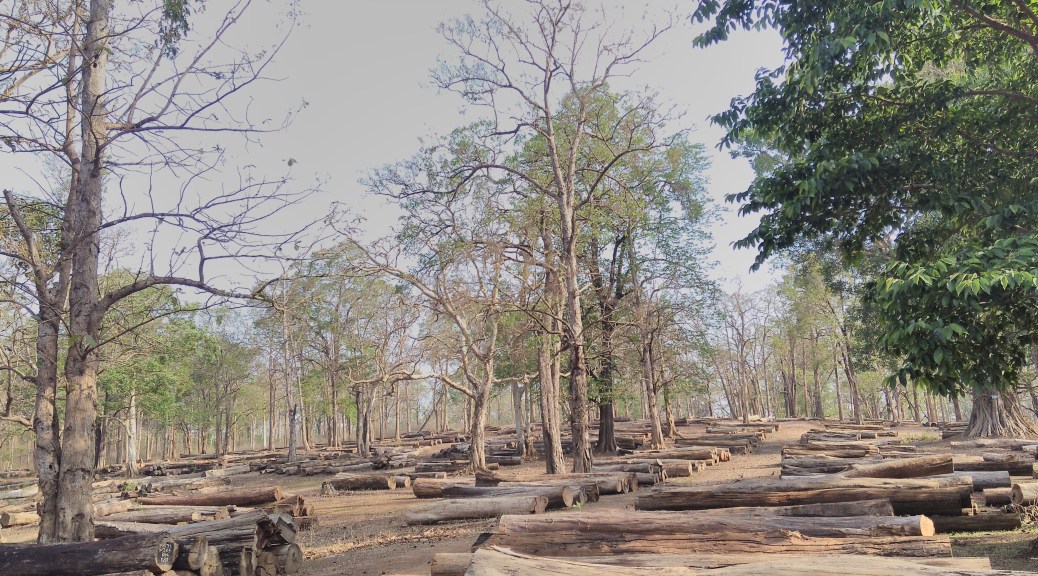
As a part of the trip package by the homestay, I was asked to be ready by 6.00.a.m. and was taken to the Dandeli timber depot. I was introduced to Ms. Rajani, a government schoolteacher by profession and an avid nature keeper by passion. She was assigned to take me on a bird watching tour around the depot where over 150 bird species could be spotted on any given day- A true haven for the bird watchers!

Dandeli timber depot

Among several species that she went on showing me around and shedding light on facts about them, the one that opened my eyes to an all new perspective of seeing avian life were the ‘Hornbills’. The hornbill is one species that is referred to Lord Ram and Sita for the couple bonding that they share. These birds have a very unique way of finding their mates and if ever happened that one bird dies anytime, the other remains single all life without finding another mate which is unique to hornbills. The reproduction cycle of these birds is once in 5 years and hence, the male bird is extremely protective about the female and the chick. The male bestows his beloved with berries of her choice from faraway places during this period. While it carries around 40-50 berries in its beak to feed its family, a few fruits may fall down during its flight, thus contributing to afforestation- The hornbills are the farmers of the forests in true sense and live a life of awe and inspiration to mankind. Another interesting fact is among the 54 species of hornbill across the world, 9 are found in India. Out of these, the world’s largest species- The great Indian hornbill and world’s smallest- the Malabar Grey hornbill with Malabar pied and Indian Grey, 4 species can be found in Dandeli alone. And I was fortunate to see all 4 of these during my 3 days of stay at Dandeli, an experience that cannot be explained but only be felt.

Another unique sighting was of the jungle babbler or the ‘seven sister birds’. With enormous untold stories, the tour ended rather quickly as we both lost track of time.

My enthusiastic guide visits this place every morning and evening which she describes as her day being incomplete without talking to the woods and strengthening her nature connect. She ensures she talks about them to her pupils at school as well. That’s a novel way to inculcate the habit and awareness about nature conservation among children from a very young age itself. I gave her a tight hug for the wonderful ways of teaching her students in school about conservation of natural resources and I bid farewell.

Bonus tip for birdwatching at Dandeli: Watch the hornbills mud-bathing on the riverbank near Ganeshgudi (sometime around winter)

Visit my detailed posts below, for itineraries if you are planning your trip to Dandeli.
Option 1: With sightseeing and stay at ‘Old Magazine House’, a Jungle Lodges venture
Option 2: With sightseeing and stay at ‘Dandeli jungle camp’, an offbeat homestay.

Exploring the backwaters of Karnataka- Thonse

Although the places that I choose to write about may not stand a chance to be compared with the Sundarbans or the Pichavaram forests… None the less- The Arabian seacoast has its own share of beautiful places in terms of its mangrove creeks. And while Kerala is synonymous with its enchanting backwaters, Karnataka too has its fair share of backwater system which is still untouched and yet to be explored… Through my innumerous journeys in this coastal stretch, I don’t remember a time when I did not put my neck out to be tantalized by the view of the backwaters as I passed on those bridges that fall in between Mangalore and Udupi. So, this time I had set aside one weekend exclusively to explore these lesser known places of the west coast and mark myself in those remote places on the map-of-India.

My itinerary:
Friday: Start from Bangalore – Overnight bus journey to Udupi
Saturday: Kemmannu (Explore the backwaters in a traditional boat ride), Kodi bengre (explore the village and an estuary), Malpe beach (water sports), Krishna temple and the seven Mathas,
Sunday: Chill at Sasihitlu beach and estuary, Kapu beach & lighthouse, return to Bangalore by bus (You can alternate this with a day visit to St. Mary’s island)

The details:

First things first- Having good connectivity, taking the public transport to reach these places has its own experience, the way I enjoyed my trip. But I strongly recommend having your own vehicle to these places. Given the hassle of waiting for a ride, the remoteness of the place and the joy of riding through such a beautiful stretch of road be best enjoyed on a two-wheeler only. That said, my mother and I had reached Udupi by an overnight bus and stayed at a hotel close to the Krishna temple. We freshened up and headed to the service bus stand located at a walkable distance to the hotel.

IMG_20171209_130602.jpg
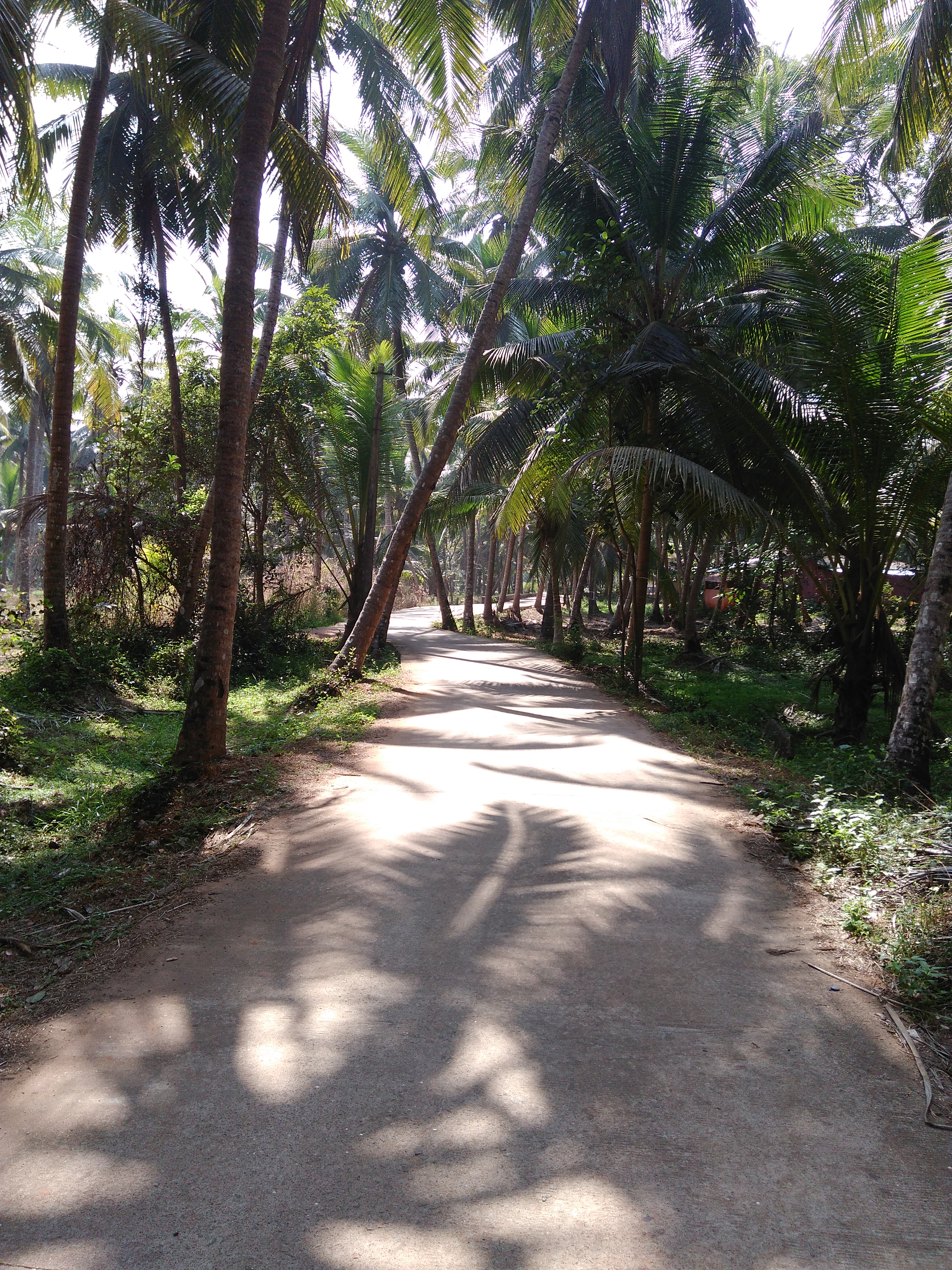
street leading to Kemmannu

The entire district of Udupi is dotted by innumerous temples and churches and hence, I prefer not to make a mention of them in this post. There is no dearth of local buses to any place within the coastal belt of Karnataka and hence, I relied totally on public transportation for my commutation. All set to explore Thonse, we boarded a bus that passed through Kallianpur village (This was once, a part of the Vijayanagara empire). The ruins of an old laterite fort stand testimony to that era.

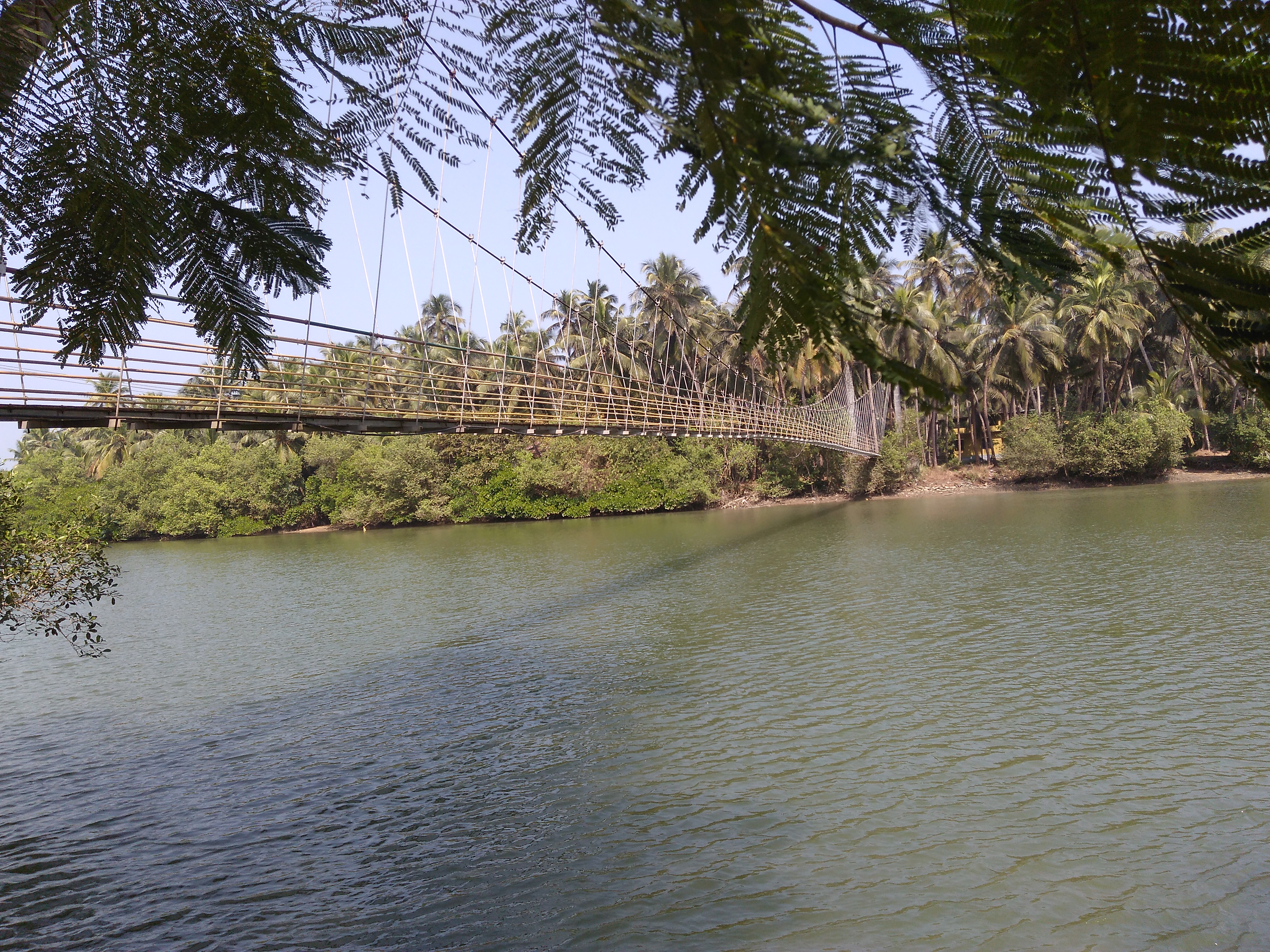
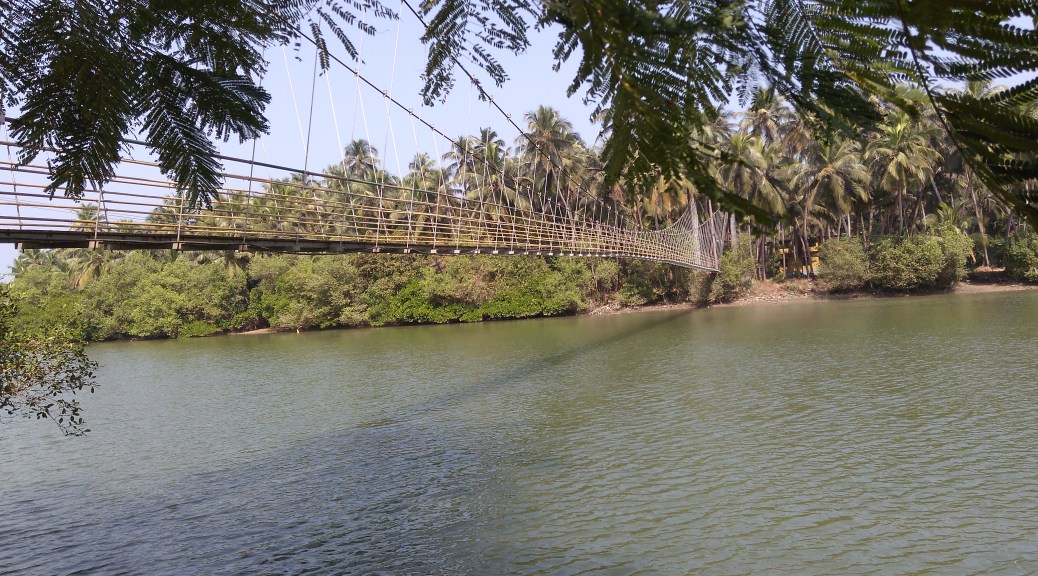
My first stop was at Kemmannu. A short walk on a meandering road through coconut plantations took me to a serene system of backwater canals connected to river Swarna. A suspension bridge has been laid across the river and set in an idyllic location of mangrove creeks. There was a boatman and his family living in a small house on the riverbank. When we enquired with the, they agreed to take us on a ride into the river for a fee. As our country boat set sail in the river, the oarsman suggested us to take a boat ride in the high tides either for sunrise or sunset. According to him, the delta beach would look brilliant at that time. He took us around several islets in the backwaters of river Swarna that gave us good sighting of rare birds. It was a very pleasant experience of sailing in the lap of nature, after having landed from the madness of the metropolis.

IMG_20171209_121635
The suspension bridge at Kemmannu

From there, we walked back to the main road to get a vehicle to our next destination. While we walked beside a broken bridge, something caught my attention near the harbored boats. There was something amusing happening down there at the canals. I felt as if I was witnessing a bioluminescent spectacle in daylight. The sight was something I had never seen before. On a closer look, I realized that the canal was filled endlessly with jelly fishes of various colors and sizes. After spending some time there video graphing the sight, we boarded the bus to our next destination- Kodi bengre.

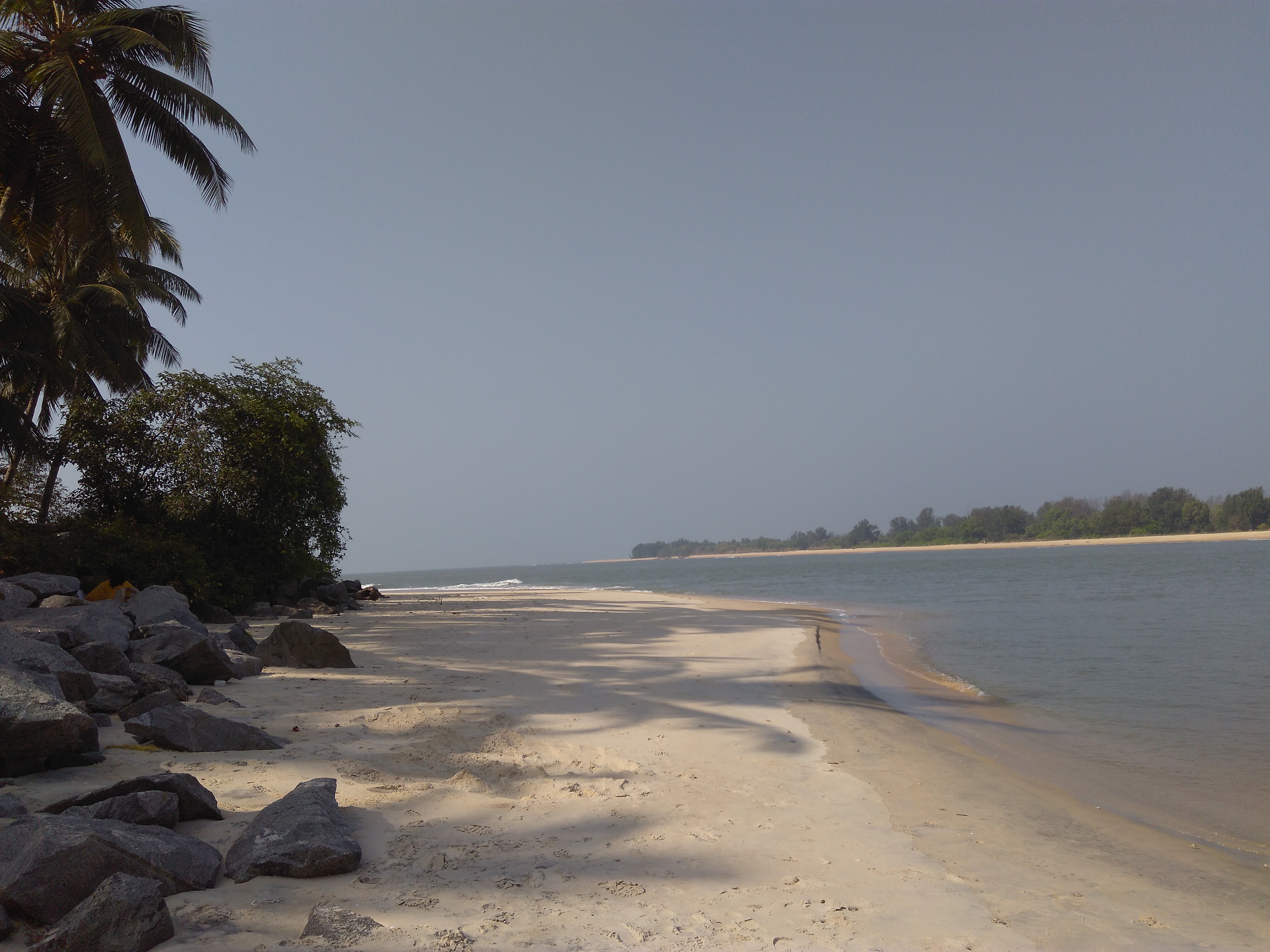
This small fishing hamlet is located on a narrow strip of land mass, placed geographically between river Swarna and the Arabian sea. While your heart will surely skip a beat at the first sight of the vastness of the sea at Hoodi beach, a deviation to the right is what we took. This road narrows into the village and gave us an experiential ride, right until the estuary at Bengre beach. The ‘tip of land’ is a great place for sunset viewing and enjoying the silence with the waves. The several shacks in the hamlet serves freshly caught sea food served spicy hot which is something not to be missed while you’re there!

IMG_20171209_143447.jpg
The Kodi Bengre beach

From there, we took a bus to the coast, on the other side of the junction (Hoodi beach) where we had taken a right deviation from. With a quick ride through country roads flanked with traditional sea facing mansions, we reached Malpe beach. This being a popular tourist place, it was bustling with activities including various water sports. We walked down to the fish market / port area, away from the crowd- and got a good sight of the setting sun.
There is a dedicated ferry service from the jetty to the Saint Mary’s Island for those seeking for a day trip which I personally recommend for anyone who is visiting this coastal town. It’s a great place and there is enough information available all over the net to get there… If you are driving your own vehicle, then I recommend you take the Pithrody route to reach back the Udupi town. This will complete your coastal stretch of Udupi giving you an experience of driving through yet another estuary and delta- that’s formed by river Udyavara and the Arabian sea.

You can complement your beach trip with a visit to the Krishna temple and the seven Mathas that are associated with the temple administration. Top it up with delectable Udupi chaats and the famous Gadbad ice-cream that saw its origin in this coastal town.

A piazza of paintings- ChitraSanthe

It has been a while since I did the local rounds as I have been tad busy on weekends with lot of get-togethers with family and friends. So to start the year 2017, I did not think twice to go solo shopping in the market. Typically, the one stop campo where all villagers come-together to trade grains, vegetables, cattle, clothes etc. is called a ‘Santhe’ in Kannada. But this was a unique market that sold only paintings (Chithra) of various artists who gather from around the country.

It is an annual event organized by the Karnataka Chitrakala Parishath on the first Sunday of January every year and is all about art in the form of paintings. Canvas, glass, paper, fabric, wood, plastic, beer bottles- you name them and you can find beautiful paintings on them being sold at this fair with products strewn on both sides of an entire road. KumaraKrupa main road and it’s cross roads would be choc-o-block from dawn to dusk with art enthusiasts pouring in large numbers.

From very modern styles of mass-media art to traditional Madurai and Mysore royal paintings, artwork of school going kids to Octogenarians to handicapped artists, celebrity portraits, wildlife, architecture, conceptual paintings- art lovers will be spoilt for choices. Although the artistic skill cannot be gauged with a price tag, things range from 50Rs. to 1lakh Rs. Per painting depending on the material used and time spent.

img_20170125_111012
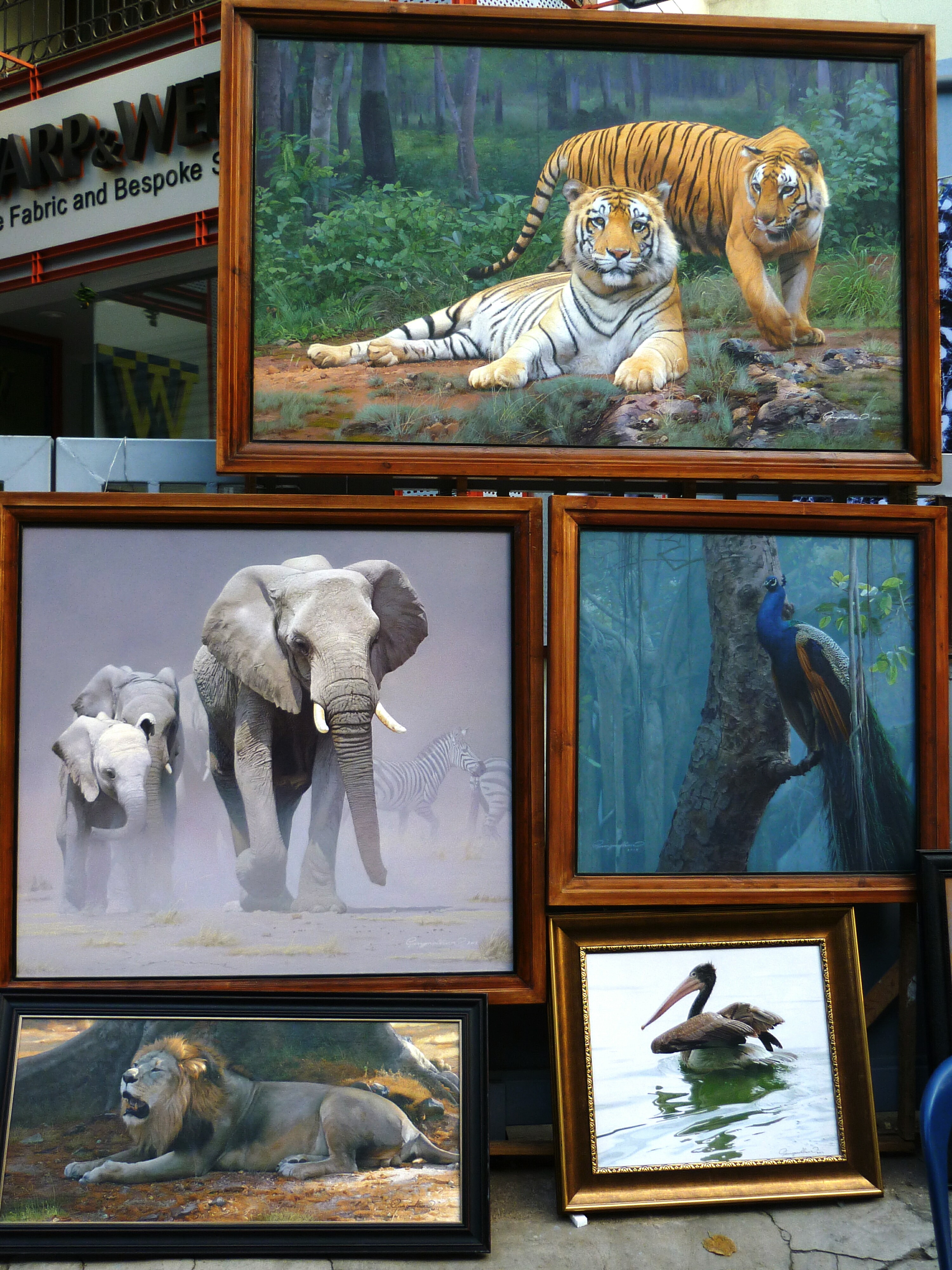
Wildlife paintings

This is not an event for the trippers who want to take a selfie and post on social media but a wonderful event for talented artists to get some genuine investors. A must go for the artist in you…

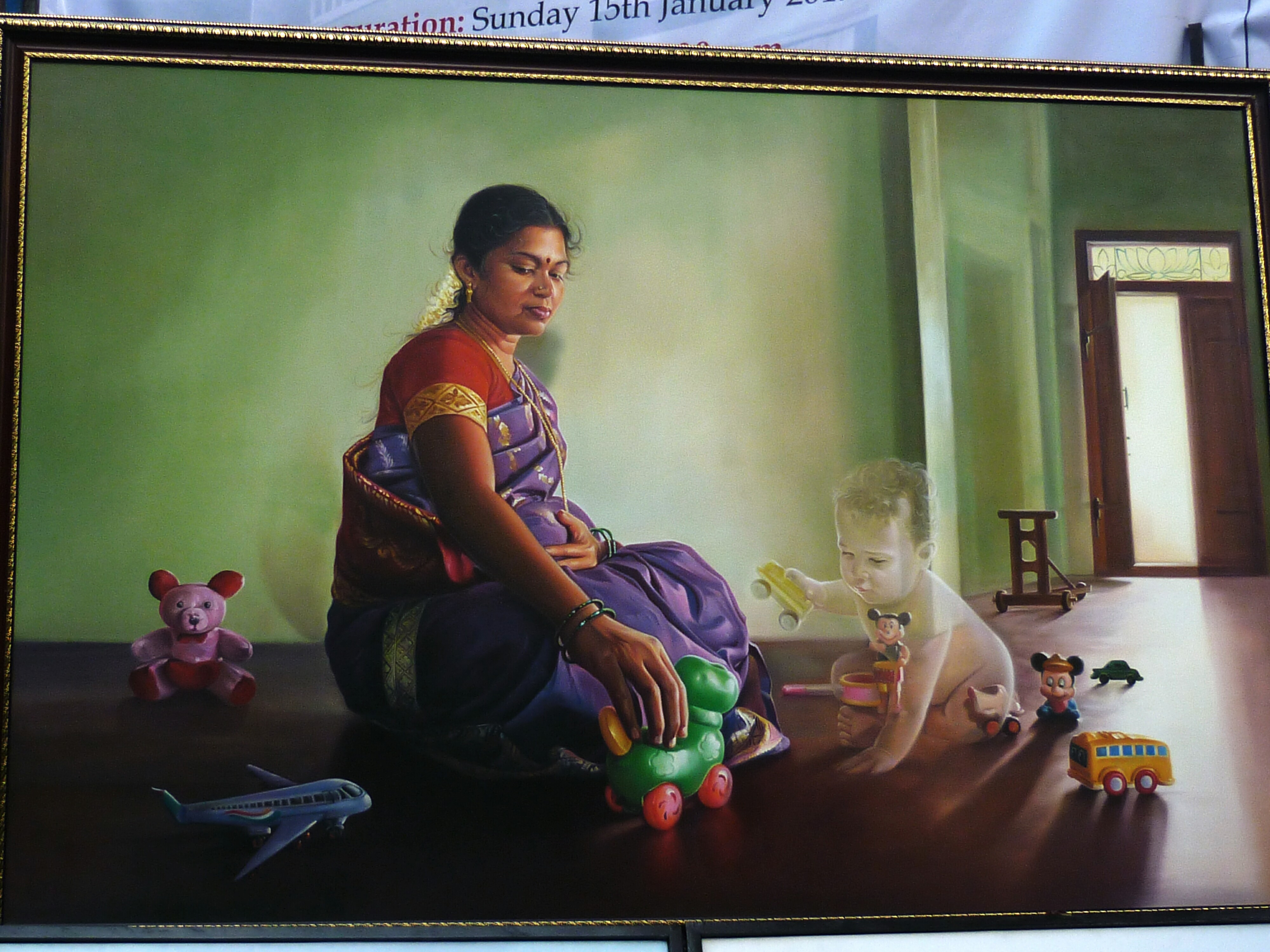
Finally, here is a life sized painting that I loved the most- An expecting mother playing with her unborn baby in the real world. Everything in the real world- the mother, the door and the toys have their shadow except the imaginary baby. The clarity in the artist’s thoughts about his subject has been represented with every detail in this picture looking so real.

img_20170125_111109

PS: Do not reproduce any images as there is a lot of effort that has gone into every piece of art. #Respect

Have you been to ChitraSanthe? What kind of art do you like? What other art festival have you been to? Do let me know what was your favourite part of the visit to this annual market of art in the comments below.

Marvel at Caves and Crannies- Kurnool

A trip that was pending since over two years, finally took wings last weekend. The places covered were an unusual combination of natural and contrived elements that created beauty. Had the both not been there, the existence of these places would have a lesser value than what it is today.

Our Itinerary:
Friday night: Drive from Bangalore
Saturday: Yaganti group of temples, Banaganapally Nawab’s bungalow, Owk reservoir, Belum caves, Sunset and night’s stay at Gandikota.
Sunday: Explore Jammalamadugu fort & Gandikota, Lakshminarayanaswamy temple in Kadiri town, Lepakshi and reach Bangalore by late evening.

The details:
An overnight drive was aimed at starting our trip from Bethamcherla- a town in the Kurnool district of Andhra Pradesh. A couple of articles on the internet had caught our interest to visit this place which is a treasure trove for archaeological studies. Invaluable Pleistocene remains have been excavated from several caves that are scattered around this region. We wanted to explore the Yerrajala & BillaSurgam caves in particular after being impressed by the photos online. However, even after talking to several localites, we failed miserably to get anywhere close to the places we were looking for. Language was a BIG concern there and for any small enquiries too, the curious people would throng in large numbers and stare at us while we were trying to communicate with our hand signs. Luckily, we had a Telugu-ite in our group who would do most of the talking throughout the trip. So without really finding the place, the day started somewhat on a low note.

As per the plan, the first day was a long one with target being to reach Gandikota for sunset. In quest of the place, we had already lost 3 hours doing nothing. So, we decided to skip Yerrajala and proceed to accomplish the rest of the itinerary. The winding roads of Tadipatri are carved out of the rocky hills. These hills are rich sources of the infamous Kadapa stones used in constructions. Its sedimentary rocks formed over years can be seen in layers, which make driving along this stretch a delight! We stopped at several spots to photograph the beautiful landscape as we drove through, to reach our next destination- Yaganti.

This is an ancient cave temple patronized by the rulers of the Sangam dynasty. ‘Keep left’ is the rule one needs to bear in mind in order to cover all the caves located around. Here, every cave has a special story to tell. Just keep taking the stairs whenever & wherever you spot them, so that you don’t miss out on any cave. At a point, a flight of steep stairs takes you to Agastya Cave where Lord Shiva is worshipped. And yet another chamber leads you to Lord Venkateshwara. Although, the lord is otherwise known for all the wealth, the minimal deco and the dimly lit chamber here, has some positive energy that emanates out of the place. We needed a little more time than what we had initially thought we would need to observe this place, where art, history & mythology co-exist.

PICT_20160709_094820
The temple pond at Yaganti- amidst a backdrop of several caves

On our return, we halted at Banaganapally village, in front of a mansion that stands magnificently atop a small hillock, by the road side. An old rusted name board read- ‘Nawab’s bungalow’. Though the exteriors have stood the ravages of time, the interiors of this imposing structure built of wood and rock, is crumbling. In spite of being featured in several movies, nobody really knows who the Nawab who owns this bungalow is.

Further into the drive, we stopped by for a quick group photo at the Owk reservoir. We were ‘literally stopped’ while we were trying to capture a photo with the serene backdrop of the dam. The wind blew so hard that we were struggling to move against the strong currents and felt stationary most of the times. It was my first time experience, of ‘fighting’ the wind. I really wonder how strong a ‘storm’ could be..!!

Having found NO hotels for breakfast, it was a hungry drive down until Belum village. After wandering around, we settled down to have lunch at the only A/C- restaurant in the region (with no electricity for A/C service) on a recommendation by a localite. Not like we had an option either..!! After a quick lunch, we drove over to Belum caves.

As expected, the weekend crowd was insane. But, the weather was in our favor on that breezy afternoon! On a flat/potent fertile land that seemed fit for cultivation, there appears a deep well like opening in the land. A steep flight of stairs takes one by surprise, as he enters the infamous caves. The magnificent stalactites & stalagmites formations of limestone make Belum caves the longest and the 2nd largest complex in the country. Several ancient remnants of pre-historic human dwellings and relics of the Buddhist era have been discovered, marking the caves on the map of archaeologically and culturally important places. Due to the crowd, high humidity levels and low level of oxygen inside, most of us had a severe headache by the time we walked out of the place to sunlight. But whatever the hardship, it was totally worth every drop of sweat.

DSC02269
Inside the Belum caves

We were running behind schedule and we had to zip, zap, zoom… to reach the sunset point… After a 2-3 hrs drive, we were excited to spot the windmills dotting the distant horizon. The long wall of the Jammalamadagu fortress stood spread across, bordering the land’s end. It was an indication that we were approaching our destination- Gandikota.

But the sunset..??? Hell yeah! We did make it in time, but the clouds played spoilt sport! Never mind, we still had chores to accomplish before it was dark. We wanted to trust the roads and go where they took us. That’s why, we hadn’t booked our stay. In worst case of not finding a hotel, we had carried tents and sleeping bags as backup. The trip had been good so far and we hoped that all went fine till the end… As expected, the rooms were all occupied at Haritha- The only stay option around, for miles (A resort run by the AP tourism). We negotiated with the caretakers to let us use the washrooms and dining facility.

We struck a deal with a couple of villagers and then hiked down the steep gorge to pitch our tents for the night. It was really dark and well past 9.00.p.m. when we started our descent down to the river ridge. The descent seemed longer than expected, with the luggage and the total darkness of the night adding to our woes. A few loose stones rolled down our feet as we paved our way down carefully. Once we reached the bottom, it was immense silence that had engulfed the calm environment and our ‘cubicle bred minds’. The fresh cool air filled our souls. It had been a windy day throughout, and the night by the river side could’nt be any different. We managed to pitch one tent with great difficulty and the rest of us decided to just cuddle inside their sleeping bags. The weather wasn’t harsh and the cool temperature remained pleasant, right till dawn. The only thing we were hoping for was, that no dam gates were opened for that night and that we all don’t get washed away in the dark 😉

DSC02312
That’s the view from our tent- from the Pennar river bed

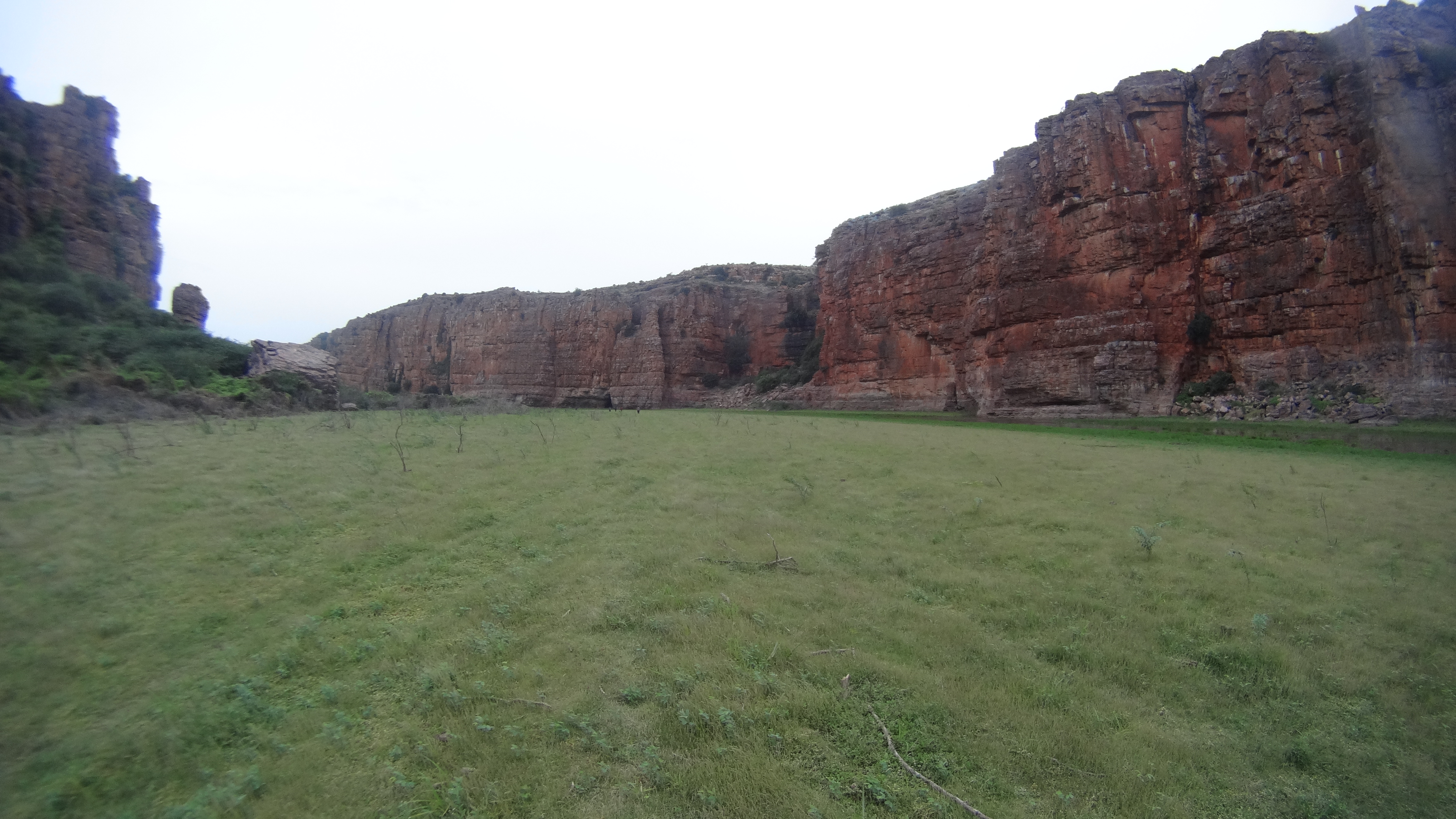
We all were awakened by the first rays of dawn and opened our eyes to a dream… We all knew we were camping on the ridge of river Pennar all night. But only with sunlight, we realized that we were actually sleeping on the ‘river bed’!! No wonder that, the soil felt moist and loose while we were struggling to pitch our tents last night!! With the mighty gorge standing all around us, our hearts skipped more than a few beats at the splendid view of the painterly beauty. We strolled across the river bed till both ends of the fort wall, taking in sufficient clean air into our lungs through the billowing winds and the burnt yellow-green grass. We returned to our tent, cooked maggi and ate bread-jam for breakfast. Soon, we had to undesiringly call it ‘Pack-up’, lest face the brunt of the burning sun while climbing back with the entire load.

Once on top, we explored the view point, the old mosque, the fort remnants, the granary and the temples in the village. The entire village exists within the fort walls. It was a beautiful place to bid good bye!

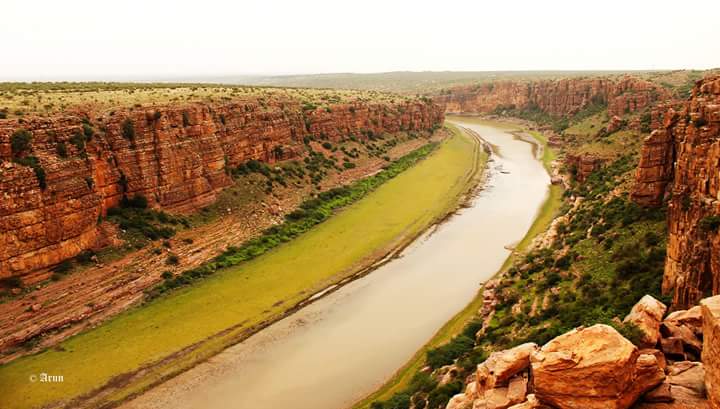
The Pennar gorge at Gandikota Photo credits: Arun Kumar B.R.

For a pious traveler, a visit to the Lakshminarayanaswamy temple in Kadiri town and the Madhvarayaswamy temple at Gorantla is recommended. Both from the Vijayanagara era, would complete their religious trip. Half a day could be well spent at the Lepakshi complex too, if opted for on the way back to Bangalore. We opted out of these temple visits and drove back to Bangalore through the bypass road. In this route, we travelled mostly through protected forest reserve area which was another highlight of our journey. The Rollapadu bird sanctuary, the only habitat in Andhra for the largest flying bird in the world, the endangered – ‘Great Indian Bustard’, lays just a small deviation away. The mighty rocks balancing on each other and the greenery all along just made every bit of the trip so joyful.

We had to reach Bangalore to drop a friend at the airport for her late evening flight! Thus ended a quick weekend… like zip, zap zoom…!!!

Thally- The little England of Tamil Nadu

I had seen the name of this place on the boards of inter-state private buses plying in the roads of Bangalore. On a little bit of research, I came to know that it was a popular summer destination of the British which has twin hills called Devarabetta, with a good view point.

One day, when my friends and I were looking for a destination for a random ride to kill time, Thally popped up in my head. In what was meant to be just a ride to kill time on a weekend, turned out to be a discovery of a new hideout to escape the frenzy of the city..

We used google maps for navigation. A small ride through Jigani, past Chandapura town lead us to a small barricade that marked the Karnataka- Tamil Nadu border. There was a sudden drop in temperature leading to a rather pleasant ride than expected, in an otherwise hot Tamil Nadu.

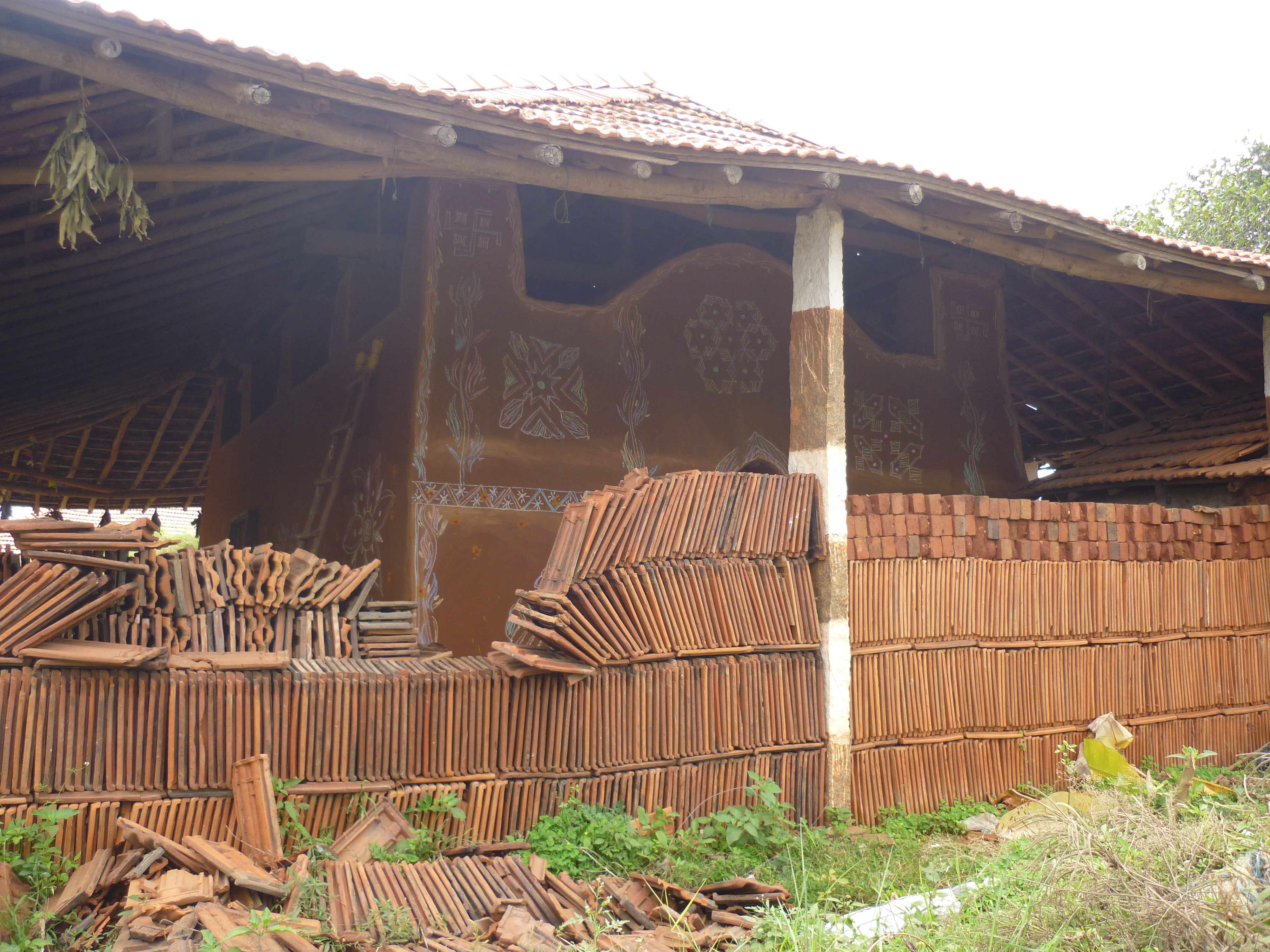
The colourful brick making kilns

The colourful brick making kilns

Brick making kilns and artistically structures built with raw bricks and tiles dotted some stretch of the bordering village. We proceeded through the serene greens of vegetable farms and yellow blossomed mustard fields to reach the junction of Thally town. The temple fair seemed to be happening beside the huge Thally lake. We thought of giving it a miss owing to the village crowd and proceeded towards our next destination: ‘Devarabetta’.

View of the Twin Devarabetta  hills from the farm lined road
View of the Twin Devarabetta hills from the farm lined road

We were excited as we spotted the twin hills from a distance. We passed through rough countryside terrain and kaccha roads that finally lead us to the temple at the foothill of Devarabetta.

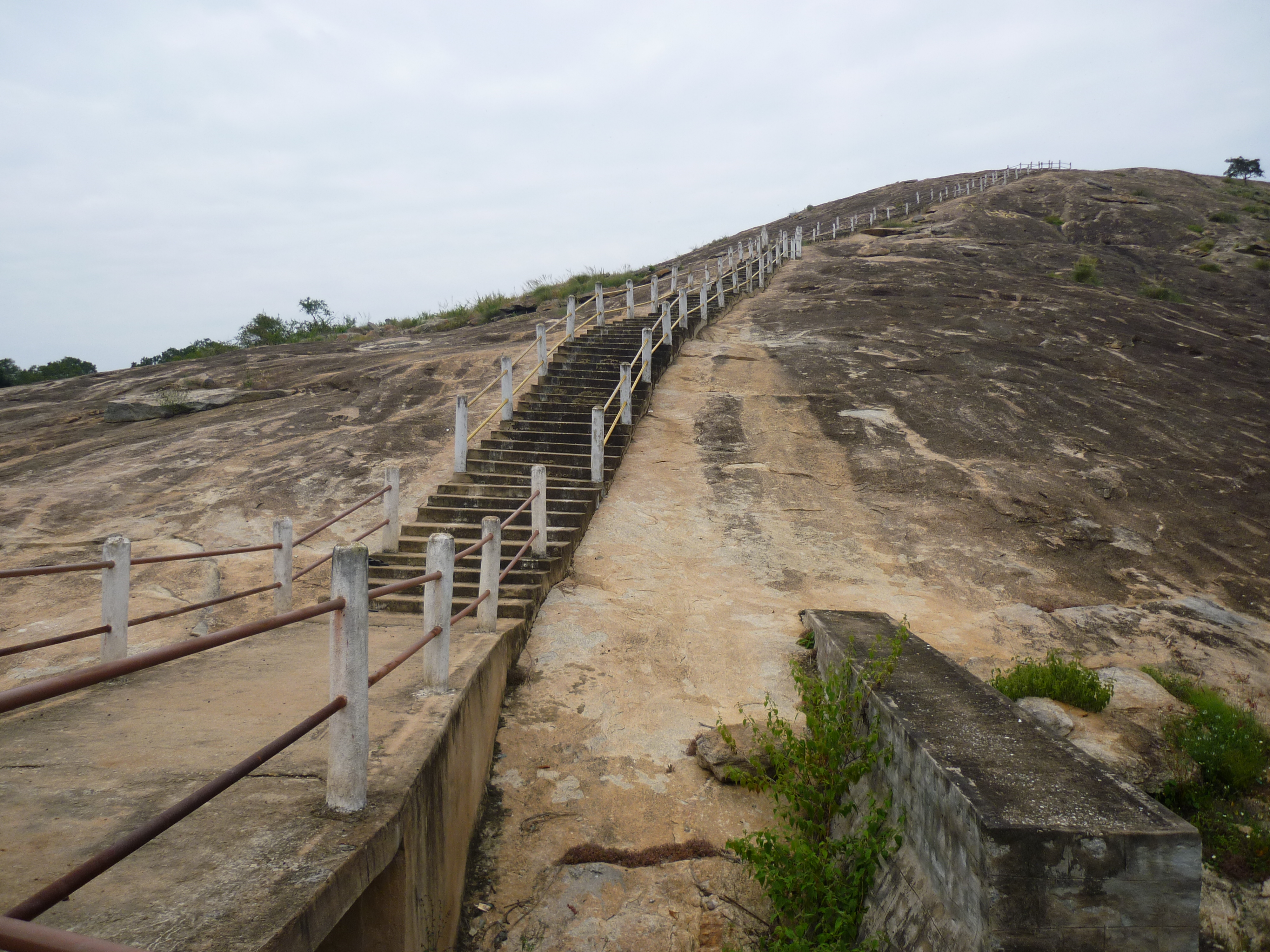
The stairway to Devarabetta :P
The stairway to Devarabetta 😛

It wasn’t a strenuous climb with mere 100+ steps leading us to the top (Read about scaling the second highest monolith in Asia- A day trek in Bangalore) where an ancient temple exists. We took a 360 deg view around and it looked beautiful.. Surrounded by the Anchetty /Bannerghatta forest range on one side, the rocky hillock on another side and green pastures all around.. And a very pleasant weather: This could be why this place was once called ‘The Little England’. We spent sometime soaking in some pure air of the forest cover around and chatting up for a while.

Since our stomachs were growling and there were no hotels nearby to sate our hunger, we decided to head back to the city. (This update is as on Jan-2015. Current condition might be different as the rapid urbanisation and expasion of Bengaluru city limits has reached Thally)

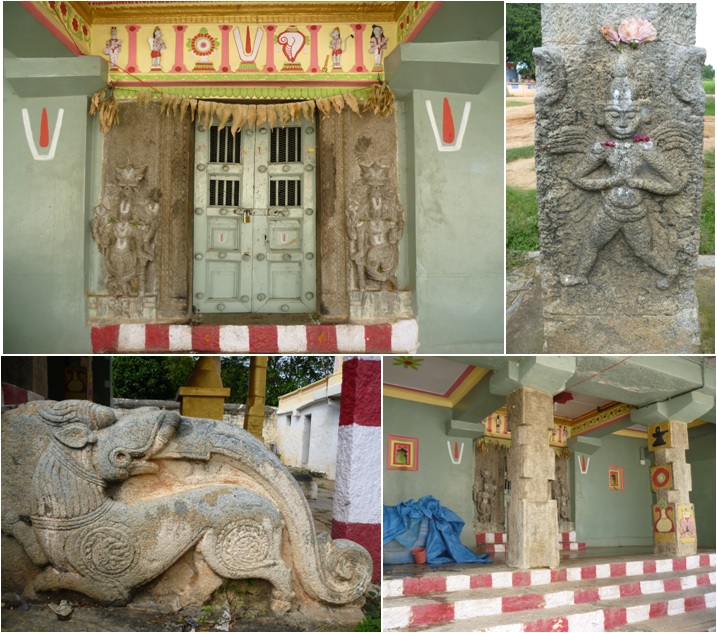
The Vishnu temple enroute to Devarabetta from Thally

The Vishnu temple enroute to Devarabetta from Thally

But on our way back, I found an interesting piece of architecture, I wanted to explore more. We parked our bike and walked into this old temple complex. The door to the sanctum was closed. There was no one around who could throw some light about this place. However, the design looked liked a scaled down version of the temple at Tirupathi, suggesting that it was dedicated to Lord Vishnu. There was an old well, a wooden temple car and a dilapidated mantap adjacent to the temple. Further, with my little knowledge of temple architecture, I recognise that the art had some relevance to the Chola style of architecture (the stairs had resemblance to the Varadaraja Perumal Temple at Kanchipuram & the Big temple at Tanjavur).

Inside the temple premises

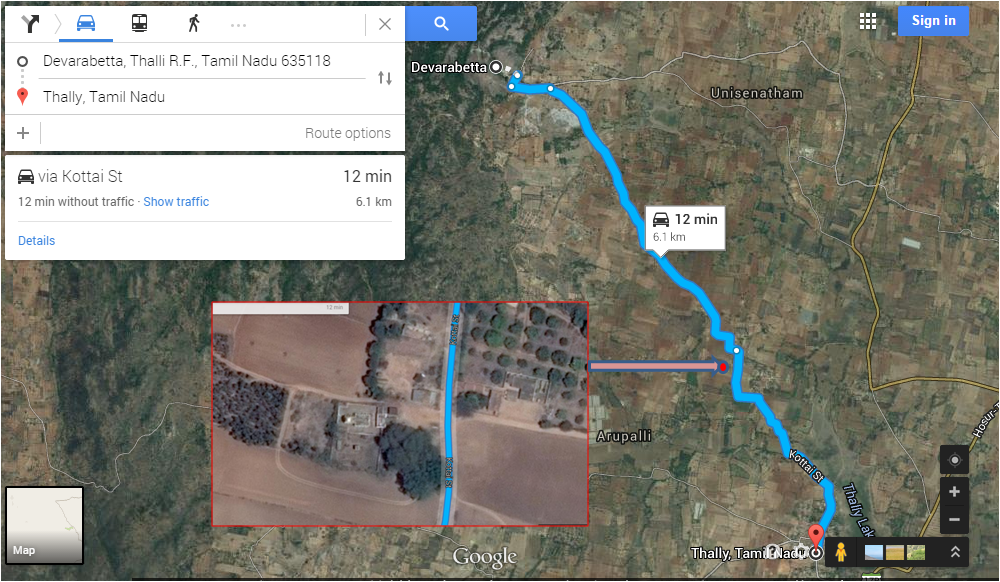
I would be really happy if someone could help me out in knowing the actuals about the history of this temple. The map of the temple is shared below.

The forgotten Chola temple- Google maps

Thereafter, we continued our return journey to the city. This place makes for half a day’s outing if you are looking for some solace with nothing much to do, at a stone’s throw away distance from the city. You can make a full day outing if you combine it with a tour to hosur, Denkanikottai fort in Tamil nadu or the pearl valley in Karnataka.

Conclusion Remarks:

Not a great place to plan an exclusive trip, you can consider it only if you’re planning for a random ride on a weekend to get away from the Bangalore chaos.

Visiting the Niagara of Karnataka- Gokak

This is a pick from old memories of exactly a year ago, in August 2013. My mother was away in Belagavi for a month-long business trip and I had decided to catch up with her over the weekend. We then got together, and explored the places around Belgaum, fondly called Belagavi. This time, it was only a day trip around Belgaum with a quick visit to the widest waterfall in my state, the Niagara of Karnataka.

Our Itinerary:
Friday: Overnight journey from Bangalore to Belgaum
Saturday: Explore Gokak (waterfalls, hanging bridge & Tarakeshwara temple), Godchinmalki waterfalls, Savadatti Yellamma temple)- Return to Bangalore by night journey.

The Details:

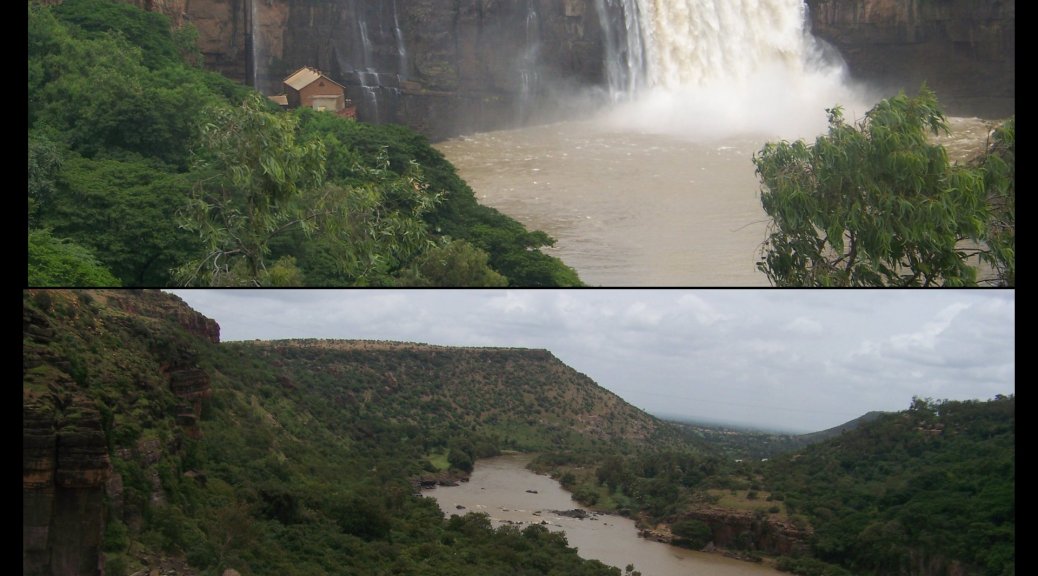
I boarded the bus to Belgaum from Bangalore and my mom was there to receive me when I alighted there the next morning… We freshened up at the place where mom was put up and then headed straight to Gokak. The little town known for its cotton mill, is also famous for the nature’s treat- the mighty Niagara of Karnataka. The bubbling, roaring and crashing waters of the Ghataprabha river creates steady patterns here with endless rhythm while it leaps down from 52meters between two tall, craggy cliffs to form the Gokak falls.

The century old hanging bridge, the only mode for the textile workers to cross the river allows the public to enjoy the breathtaking vista of the waterfall as the gushing water plummets down. The presence of turbines dating back to 1885 stands testimony to the electricity generation station established here which still provides power source for the cotton mill across the street. The 11th century Shiva temple dedicated to Lord Mahalingeshwara (Locally known as Tarakeshwara temple), built in the Kalyani Chalukyan style, faces the cotton mill and flanks one side of the gorge.

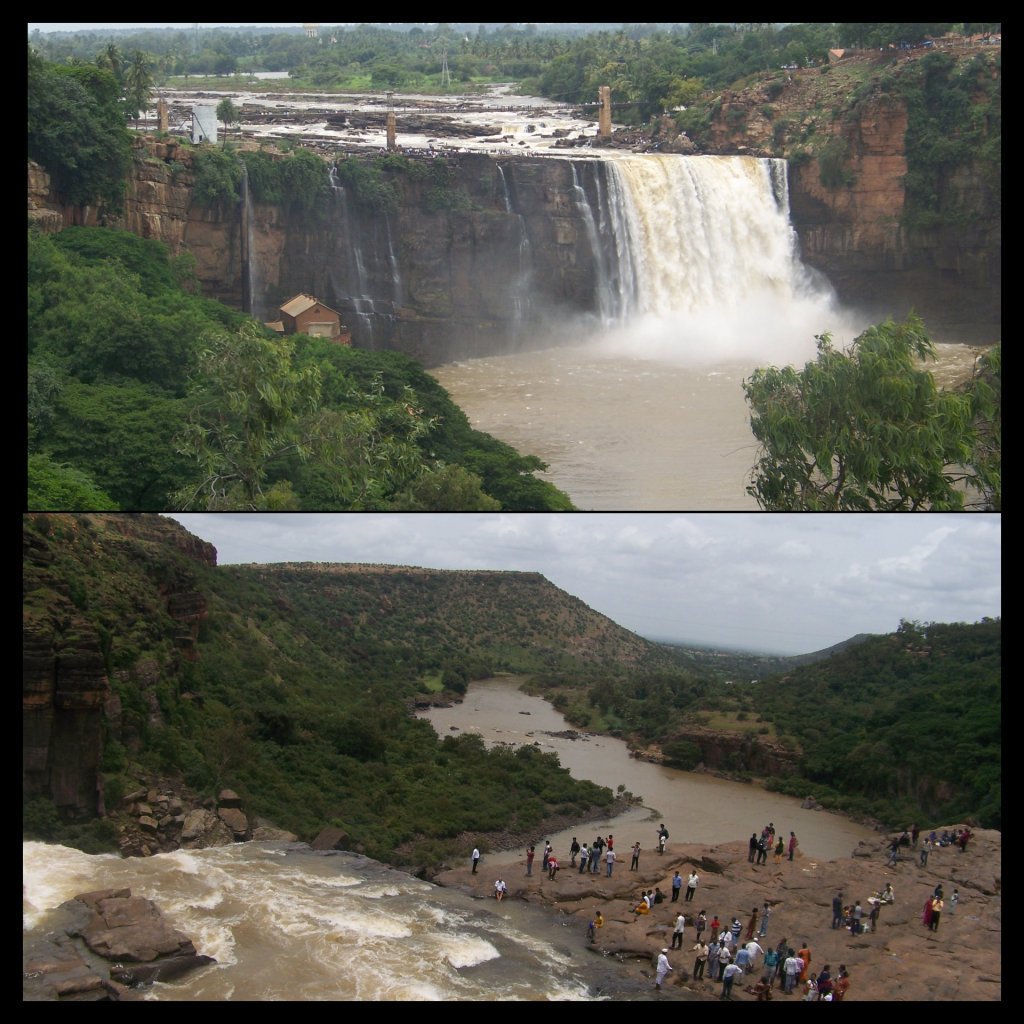
Above: The front view of Gokak falls from the Volkart view point; Below: A view from the Hanging bridge.

Meanwhile, I called a friend of mine who hails from Belagavi district to enquire about other places that we could visit around his hometown. He guided us to a small village named Godchinmalki where river Markandeya cascades down amid a scenic backdrop forming another beautiful waterfall called by the same name. Mom and I walked down for 2kms through rolling green pastures, fields of maize and banana plantation to reach this waterfall that plummets down in 2 tiers. Once we reached the place, it was a thorough treat to our senses to watch the waterfalls racing ferociously through the deep gorge.

On our way back, we took a little longer route from where we got a complete view of river Markandeya snaking through the greens. A 9kms long underground canal carries water from the river across which can be seen emerging out of the hill from this viewpoint. The snaking roads with beautiful views of the valley was a wonderful drive to the city.

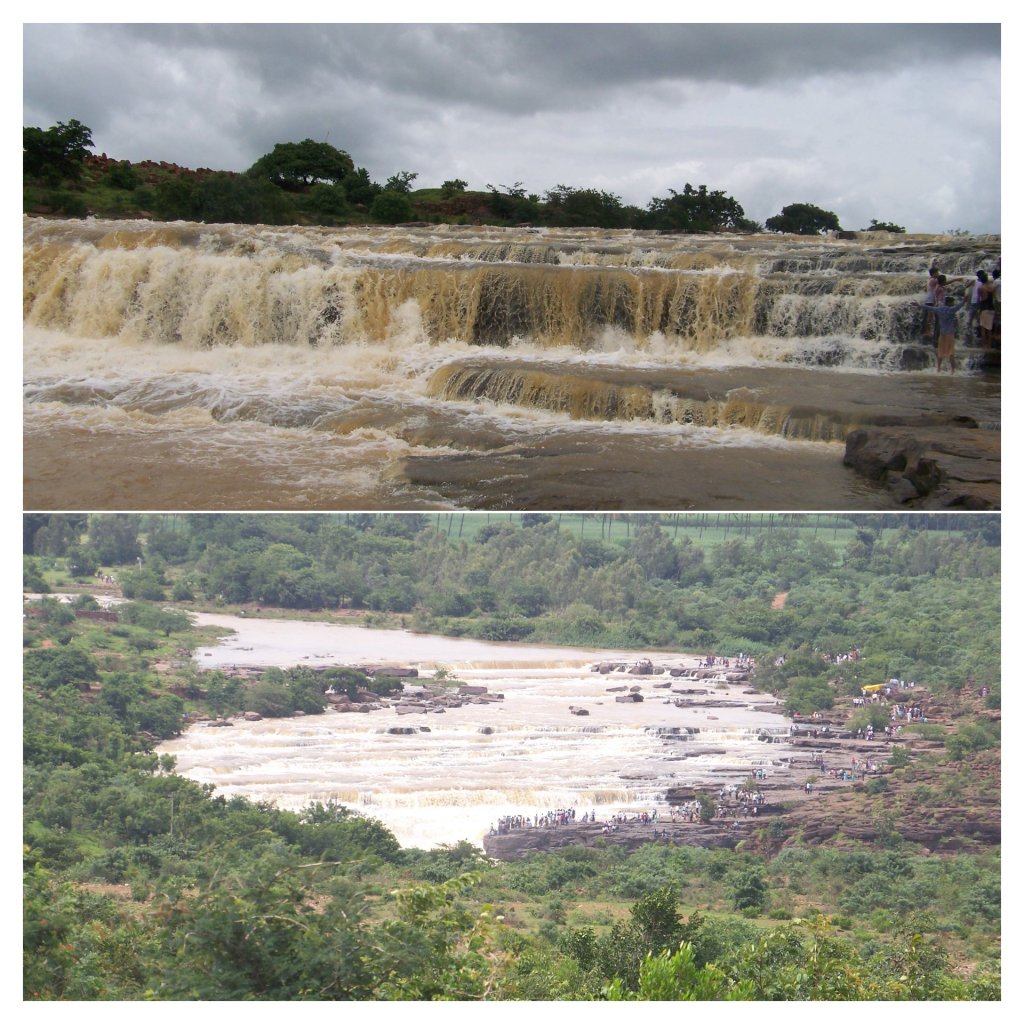
Top: The Godchinmalki waterfalls; Below: The Gochinmalki view point from the main road

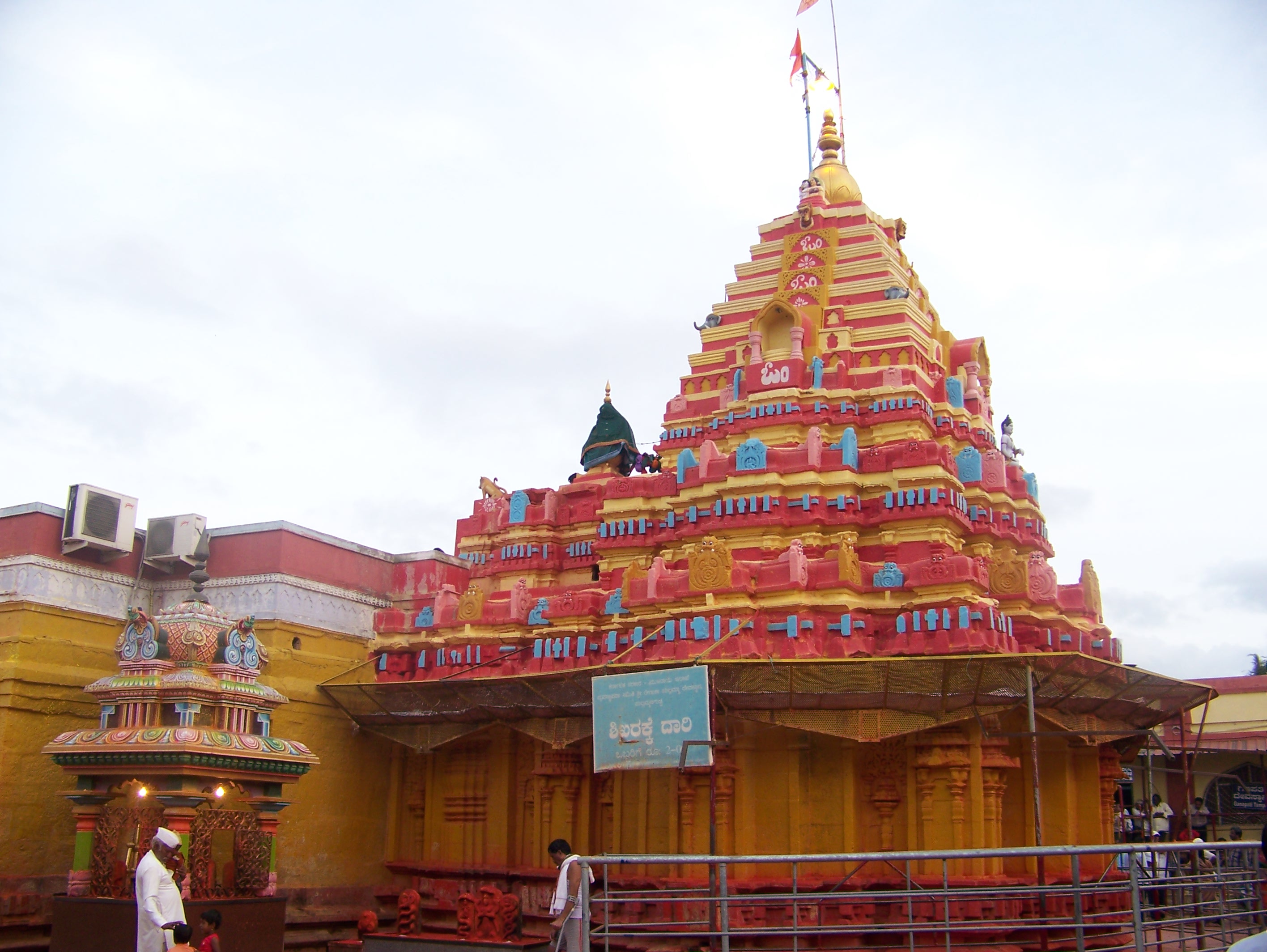
After all the waterfall hopping was done, it was time for some temple visit. We headed to Saundatti a.k.a. Savadatti. This place was the capital of the Ratta / Rastrakuta dynasty from 820, until it was shifted to Belgaum in 1230. There is a fort here also called the Parasgad fort. But the most famous is the Renukadevi temple located atop the Yellamma gudda. This is an important place for devout followers of Goddess Shakthi and also for the devadasis- or the servants of god. We had a good darshan during the evening pooja time.

Savadatti Yellamma temple

With that, it was a quick wrap for a short weekend and time for me to head back to Bangalore for another long and boring work week ahead…

Must eat while at Belagavi/ Belgaum:

  • Karadantu at Gokak– it is a sweet made with dry fruits rolled into balls with jaggery.
  • Kunda at Belgaum– This is a sweet made with milk.

Of pre-monsoon showers and coffee blossoms

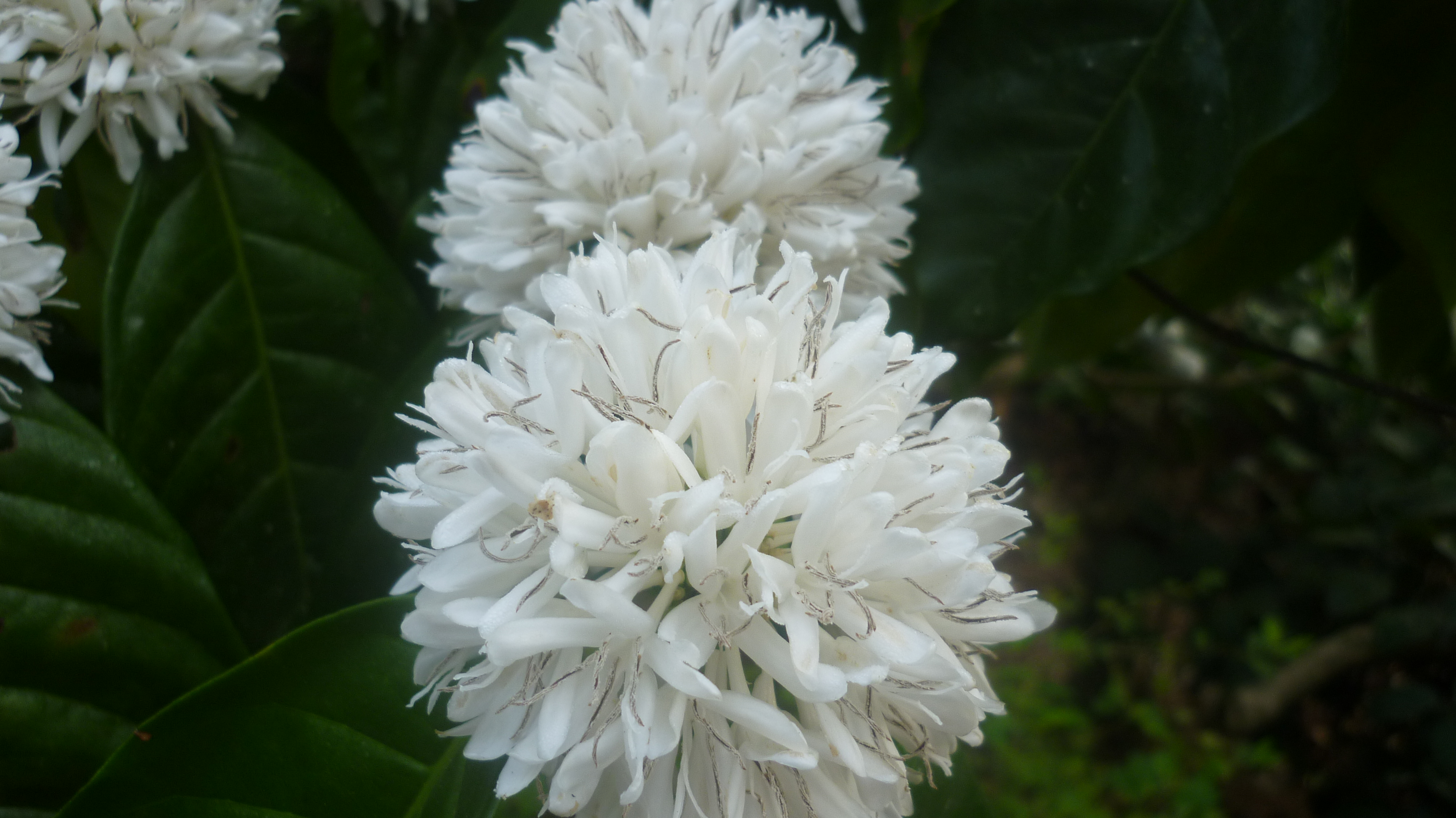
It is that time of the year when the entire hill station awakens with the fragrance of the blossoms.. On the ninth day after the 1st pre-monsoon showers, the coffee plants around the hills of Kodagu will be in bloom..

P1000890

It is an annual spectacle of nature whose occurance is unpredictable and is wholely dependent on the pre-monsoon showers. If the rain fails, it creates some sort of panic among the growers who then resort to artificial sprinkling sytems.. Be it rain showers or irrigation, in either case, what follows is something that one must experience atleast once in a lifetime..

White bunches of coffee blossoms adorn the trees as if some one has strewn cotton all over the hills.. And these flowers last for a maximum of 24 hrs which makes it even more special.. And like the saying goes.. You HAVE to be at the right place at the right TIME to see the right thing happen..

Have you experienced the fragrance of coffee flowers?

Explore the Best of Valparai on a Weekend

My friends and I had heard sufficiently about the rich wildlife of the region surrounding Pollachi, its beautiful sceneries and perfectly trimmed tea estates. Valparai is a lesser known hill station in the Indira Gandhi Wildlife Sanctuary (earlier known as Annamalai Wildlife Sanctuary). Kollywood stars and burnt out urbanites frequent this place to de-stress themselves and savor a slice of nature. Here, as one ambles past mud walled, thatched roof dwellings, granaries of farmers and tea estates fringed plateau, don’t be surprised if you happen to hear someone screaming ‘start camera’, ‘action’. This is a hot spot for movie makers with over 1500 movies and commercials having been shot here. And we too got lucky when we happened to visit the sets and share our homestay with the crew of the movie- ‘Madras cafe’ during this trip of ours.

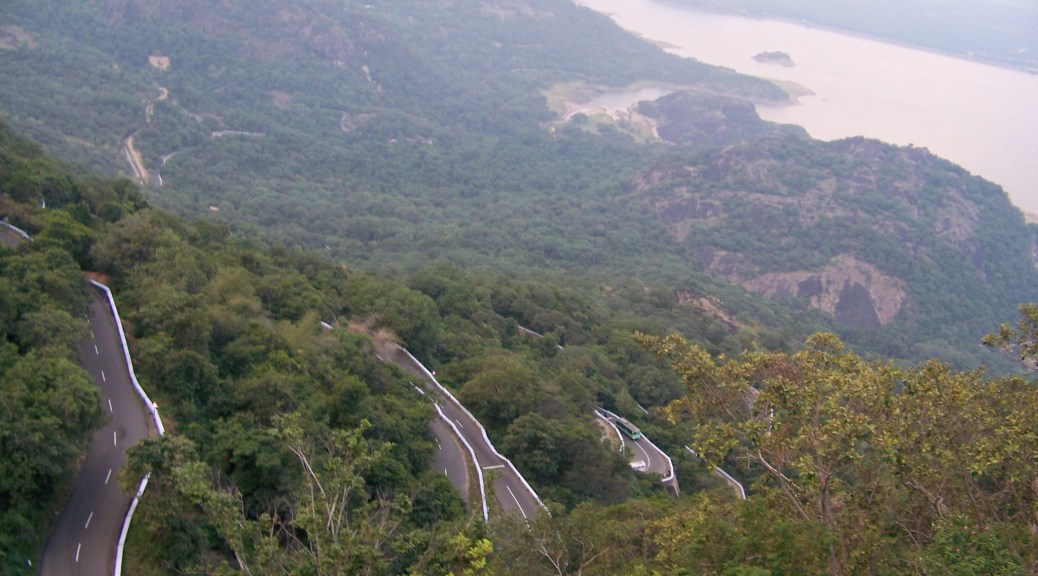
A weekend itinerary was primarily planned by one of my friends and a few must-see items were pushed into the plan by me. Since this place falls on the border of Kerala and Tamil Nadu, we decided to make it a three states’ drive including Karnataka. Accordingly, five of us started from Bangalore on a Friday night. Since it is also a bio-diversity hotspot, I had listed 5 animals on my ‘to-spot’ list while at Valparai. Valparai is the end destination after driving through 32 hairpin bends. Being a hill station, Valparai weather is specifically delightful with a cool climate throughout the year. It is usually the road leading to Valparai that is enjoyable with scenic vistas and photo-points. I had enlisted them with day 1 in the Tamil Nadu side of the sanctuary and then spending the second day on the Kerala side of the forested land.

Itinerary:

Day 0: Leave from Bangalore by night (Own car)
Day 1: Reach Pollachi before sunrise. Backwaters of the Aliyar dam, monkey falls, Loam’s viewpoint, Carver Marsh viewpoint, Congreve falls, Vinayagar temple, Birla falls, Balaji temple, Iraichalparai falls, Nallamudi Pooncholai viewpoint, ChinnarKallar hanging bridge trek, Sholaiyar backwaters (night stay at a homestay in Chalakudy)
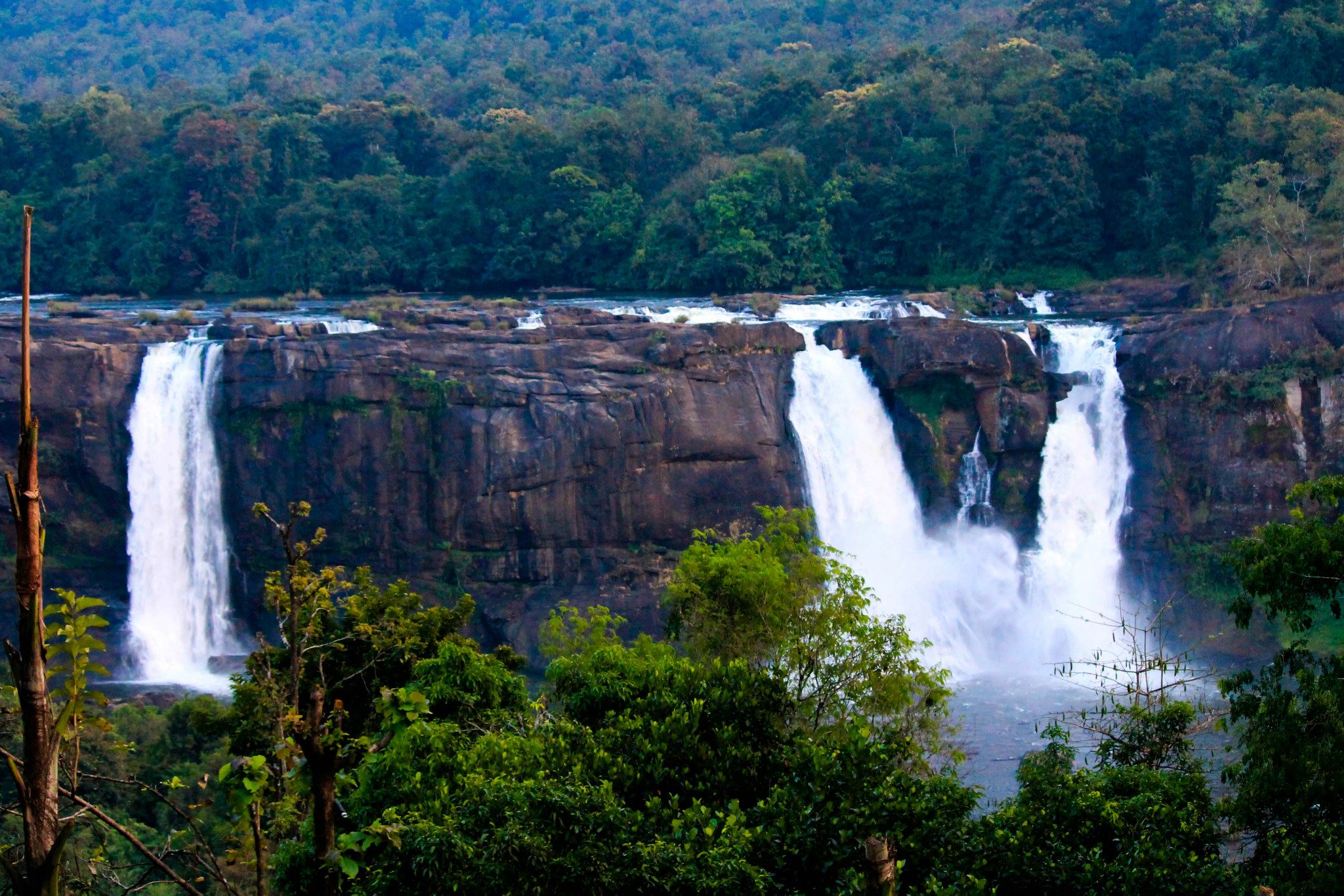
Day 2: Athirapally falls, Vazachal falls and return to Bengaluru via Ooty.

The details:

Part 1: Tamil Nadu

During the night journey, I had dozed away on the rear seat of the car. When I opened my eyes to the misty morning dawn, our car was greeted by beautiful countryside with tree-lined roads, emerald fields of paddy, whispering palms and coconut plantations in the backdrop of the towering Western Ghats. We had reached Pollachi in Tamil Nadu. We waited near Aliyar park until 06.00.a.m. for the forest check post to open.

a. We registered our entry into the wildlife sanctuary there and proceeded on our journey. Our drive further towards Valparai, was an ascent along the winding road by the backwaters of the Aliyar irrigation dam.

View of the Aliyar backwaters

b. Four kilometers further from the forest check post, we reached the monkey falls. The waterfall is aptly named due to the many troublesome monkeys here. One even entered our car and happily carried away a bag full of fruits from the rear seat. Our drive continued…

c. Just as we approached the 9th curve (the Loam’s viewpoint), we were greeted by this gentleman who was calmly grazing on the edge of the steep rocks.
We scored off the first member on our list of top 5 wildlife to see- ‘The Nilgiri Tahr’.

Nilgiri Tahr – Photo credits: Samson Joseph

d. Continuing our drive, we stopped at Carver Marsh viewpoint adjoining the Kavarkal estate. On a clear day, we were told that one can see the Sholayar reservoir (2nd deepest dam in Asia) from there.

e. We then cruised past the Tiger valley from where we caught a good view of the upper Aliyar reservoir.

At the entrance to Sholayar / Kallyar estates

f. We covered Congreve falls (located in the Nadumalai estate), Vinayagar temple (Jayashree estate) & Birla falls along the way up. We got good view of the Manopally forest and the grass hills of the sanctuary.

g. Ox-bow lakes situated inside the protected area is supposedly the highlight of this region for those who can manage to get permission from the forest authorities. We failed at it since we didn’t have insufficient information on the channels for the permits.

h. We visited the Balaji temple and the nearby Iraichalparai falls along way.

Just along our way, it was time to score off no.2: groups of ‘Lion tailed Macaque’ were walking all over the road and around. Even before we realized, we had reached the hilltop.

Lion Tailed Macaque- Valparai

i. We stopped by and trekked through the tea estates to reach the ‘Seen god shrine’ at the Nallamudi Pooncholai viewpoint. An old man, who claims to have seen god, blessed us with some prayers and turned out to be an encyclopedia of knowledge about the local culture and history. He explained to us about the various tribal settlements in these hills… pointing out at colonies, he would tell- Kadars, Muthuvars and Malai Malasars. They are estimated to have 190 households in 8 settlements in the sanctuary.

While we walked towards our car, the women picking tea shoots warned us not to proceed further. She pointed at a herd of 8-9 elephants feasting around at a distance, thus scoring off no.3 on my list.

j. We then drove to ChinnarKallar for the hanging bridge trek. In spite of driving all the way, we refrained from shelling out 250 Rs. per head just for the entry which sounded to us more like a bribe at the forest check post. This place is among the highest rainfall receiving areas in India. No doubt that the Valparai weather is pleasant all through the year and is an upcoming weekend destination among the urban crowd of the nearby metro cities.

We put our car in reverse and just then… no.4: The giant flying squirrel (a young one and wasn’t flying though) crossed our road. We were excited…!!

k. After covering places in the Tamil Nadu part of the sanctuary, we headed towards the Kerala border. We saw a calm stretch of the Koolangal river and decided to spend some time there. We could not compel ourselves from not taking a sip of its crystal-clear waters.

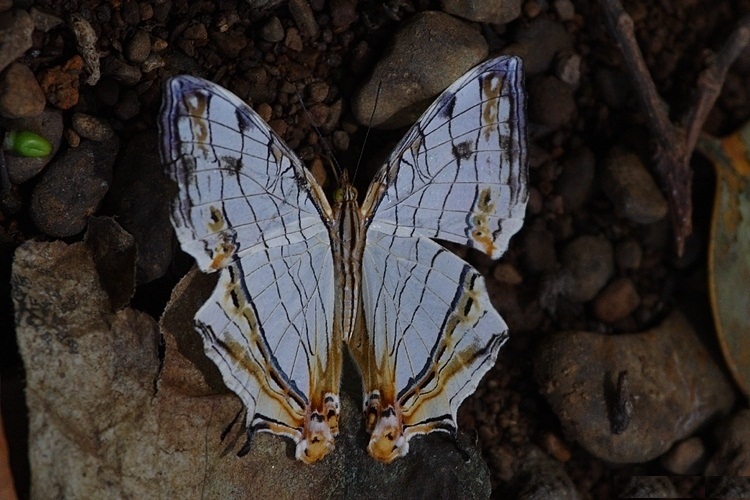
And right there. we saw this little creature on no.5: ‘The common map butterfly

The Common map butterfly

Part 2: Kerala

We registered at the border check post and prepared to enter the Kerala land. Thick rainforests on both sides accompanied us all the way till our destination. We happened to drive through what I think is one of the dangerous roads I have been through. With the Sholaiyar backwaters on one side and a valley on the other side, only one vehicle can pass at a time. Beautiful views for most of the stretch kept us in an awe. Tunnels have been bored through the mountains to supply water to Parambikulam reserve from the Nirar dam.

We reached Athirapally reserve just after sunset. We got a quick glance of the beautiful waters cascading down to join the Chalakudy river. It was soon dark, and we checked into Maria cottage (a local homestay) where we were made us feel at home and served some sumptuous Mallu food.

Next morning, we walked past the palm plantations to reach the Chalakudy river to freshen up. This place is frequented by elephants at all times, but we did not care. We enjoyed the clear but rapids of the water there. We took a refreshing dip before returning to our homestay. We checked out of the place after having a good filling Malayalee breakfast.

Post this, we went back to the Athirapally waterfalls. We walked down to the base of the waterfalls and spent good time there. We had to then continue our drive, as our target was to reach Bangalore by night. After a quick stop at the Vazachal waterfalls (it is more like water flowing down a steep rock than a waterfall), we decided to say goodbye to Kerala.

Athirapally waterfalls

Part 3: Karnataka

The original plan was to drive through the route covering Ooty-Bandipur-Mysore to reach Bangalore. But, since we were behind schedule, we could not reach Bandipur before the forest gates closed (the forest gates are open only between 06.00a.m. to 06.p.m.). So, we decided to drive back through the curvy stretch of Pollachi road again.

We further drove through Udumalpet which happens to be one of the windiest places in Southern India. Thousands of windmills dot the stretch on either side which is a sight to behold. It was dark in no time and we had to zip ASAP to reach our offices on the following morning.

Thus, ended our 50 hours’ drive, covering 1000 kms across 3 states!

Day tripping at Tumkur

It was exactly a year ago, that I decided to celebrate my birthday by taking a short trip and break from my work. Mom and I drove our car from home in Bangalore at around 8.00.a.m. and headed towards Tumkur with a plan to spend the entire day outside. We wanted to cover as many landmarks in Tumkur as possible.

List of places covered:

  • Devarayanadurga hills: This area has two ancient temples, also a reserved forest area at Naamada chilume
  • Koratagere: Goravanahalli Lakshmi temple and the reservoir nearby.
  • Siddaganga Mutt: You can combine this with a short trek up the Siddaganga hilltop.

First, we headed towards Devarayanadurga hills where the twin temples are located. A winding road along a picturesque landscape lead us to Yoga Narasimha Swamy temple atop. The view from the top was beautiful with early morning dew settling on the warm rocks. We got the first aarathi (Pooja) of the day and rushed to Bhoganarasimha Swamy temple situated at the base of the hill. It is the custom that the doors of the later opens only after pooja at the hilltop.

Top: The view of Devarayanadurga hills; Bottom left: the temple pond at Yoganarasimha temple; Bottom right: Bhoganarasimha temple

From there, we drove towards Naamada chilume. This is a small spring nestled amid the greenery protected by the forest department. It is believed that Lord Rama rested at this place enroute to Lanka. When he woke up in the morning, he did not find water to make his vermillion (Naama- in Kannada). Hence, shot an arrow to a boulder from where a small spring emerged. This is a perennial water source even till date. This is part of a reserve forest area and there are a few spotted deer kept in an enclosure. Nothing very exciting about this place, we would have skipped it if we had known.

Top: The road to Naamada Chilume; Bottom left: A guesthouse at Naamada Chilume park, Bottom right: the water spring where Lord Rama’s arrow struck

From there, we lost our way and reached the main road after a very long drive. We asked the locals for directions towards Goravanahalli. This village is famous for the Lakshmi temple and better known for- Late Kamalamma, the holy lady. We finished our pooja amidst the crowd, took turns to make a wish at the wishing pillar. There is a small lake and a reservoir at a walkable distance from there. We went up there and had our packed lunch with the cool breeze and a good view. Soon after, we planned our next destination- Sri.Siddaganga Mutt.

We were blessed with the holy water of Siddaganga. We took a stroll around the huge campus of the mutt and were awestruck with the service rendered to the society. And then, we were in for a BIG surprise… An occult of the least expected. We felt blessed when we got the darshan of his holiness Sri.Shivakumara Swamiji… It is when least expected, miracles happen. Swamiji who is fondly called ‘the walking god’, was gracefully sitting on the porch of the Mutt and blessing the visitors. Even after several days of planning to get an opportunity to see him, people consider it hard to be able to see him. And there I was, right at his feet, taking blessings from this Holy man. I was thrilled, ecstatic and had goosebumps. Only countable people on this planet have this magical aura around them (according to me), and he is one!

Sri Siddaganga Mutt
A nandi carved out of a rock at Sri Siddaganga Mutt with the image of Sri.Shivakumara Swamiji

With that, it was a wrap to our day tripping, and we headed back home, feeling all blessed (literally! With a long day of temple visits) and having a small peek into history and mythology here and there along our way.

Trekking enthusiasts have a lot of options around Tumkur. I have covered these places on separate occasions.

  • Siddara Betta: A trek and a holy place
  • Madhugiri Betta: A trek with a good view and has ruins of an old fort atop
  • Siddaganga Betta: A hike accessible near the mutt, offers good view from the top with some mythological spots along the way.
  • Seebi: A place for those interested in history

An Offbeat Guide of Best Things to do in Ooty

While considering Ooty to Bangalore distance, the Ooty is one of the favourite haunts for Bangaloreans, along with the people from nearby cities like Mysore, Coimbatore, Chennai etc. Popular for its well-groomed tea estates, the pleasant Ooty weather although the year has earned it the title of ‘Queen of Hills’. We were nine friends in two cars on this monsoon weekend trip to explore Ooty district. But this trip was planned by skipping all the tourist places of Ooty and exploring the lesser known corners of the district. We started from Bangalore on a Friday night at 2.00.a.m. hoping to reach Bandipur by 6.00.a.m. That’s when the forest check-post opens, and we hoped that could spot some wild animals along our way. But, due to frequent pit-stops, we made it to the check-post only by 7.00.a.m. Nevertheless, we spotted a good number of elephants, peafowls, fox, deer, sambars, wild boars etc. With so many sightings, it was quite a good start for a trip, I must say! The itinerary for our weekend is as given below.

Itinerary:

Day 0: Leave from Bangalore by night
Day 1: Explore Avalanche forest reserve, explore Ooty, stay at Masinagudi
Day 2: Trekking and other activities at Masinagudi, Wildlife safari at mudumulai forest or Bandipur range, drive back to Bangalore through Bandipur. (Visit Himavad Gopala Swamy temple, if time permits)

The details:

Part 1: Avalanche and Ooty

First in the visit list was the Avalanche, a steep & breathtaking climb of 35 hairpin bends with deep valley covered by thick white snowy clouds on one side led us to Udhagamandalam a.k.a. Ootacamund a.k.a. Ooty. Without wasting much time amidst the maddening crowd of tourists there, we drove down another set of 34 hairpin curves- 25 kms further from Ooty to reach the forest check post of Avalanche. Thick rainforests on either side, bumpy waterlogged potholes and scenic view of the Emerald dam backwaters at every turn, accompanied us all the way till the start point of the eco-tour. Once there, we hired the forest jeep for a 24 kms drive through the Shola forests- A place that was BEAUTIFUL.

Enroute to Lakdi spot @ Avalanche
Enroute to the Bhavani temple at Avalanche

On a clear day, one can see the dam from this place. If one is lucky, he could spot a leopard or an elephant on the way, we were told. Since we were there during monsoon, the thick fog made the visibility poor adding onto the adventure of our jeep ride. On this eco-tour, we visited a century old Bhavani temple, innumerous waterfalls and ended at a beautiful spot called as ‘Lakdi spot’. It had a small stream cascading down in full fury and then running through the shola grasslands surrounded all around. After spending some time there and getting all drenched, we realized that we were all wet till the bones and chattering with cold. Thus, decided to head back to our cars at the entrance.

One of the many waterfalls tucked away in the Avalanche forest

From Avalanche, we commenced our drive towards our next and the main destination of the trip: “Masinagudi. Masinagudi is a part of the Mudumulai forest range, the extension of Bandipur National park (in Karnataka) towards the state of Tamil Nadu. Since Ooty is the only and the last town before heading towards the forest area, we decided to take a short break there. We filled our cars with fuel, withdrew cash from the ATM and bought some Ooty chocolates along with other essentials before heading towards the cottage we had booked for our stay. Our stay was in a private estate adjoining the forest fringes or rather say it was located within the reserve forest itself. It was late evening (already dark) by the time we reached our cottage. (NOTE: The forest check-post closes by 06.p.m)
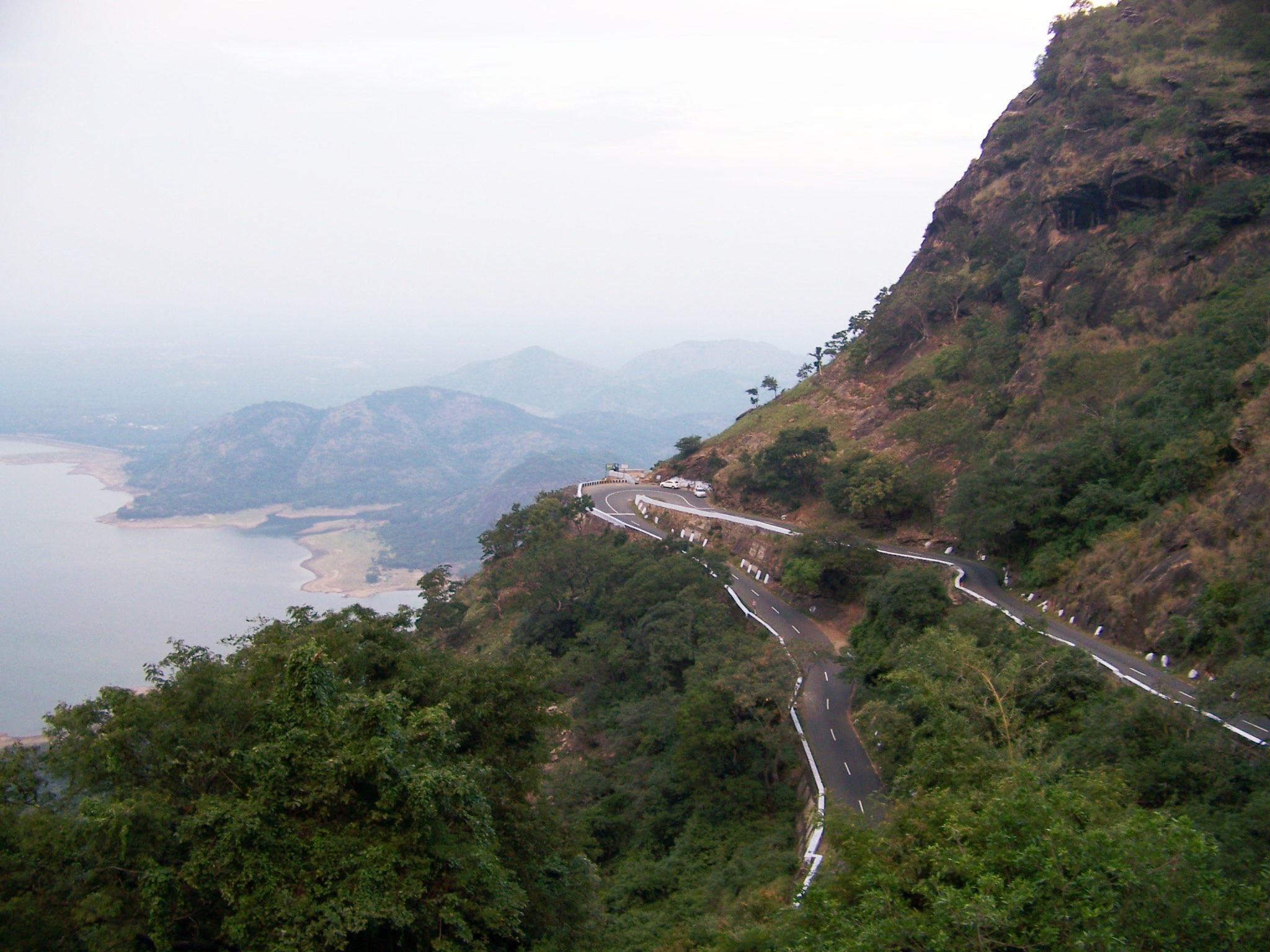
A view of the valley from one of the hairpin bends of Ooty

Part 2: Masinagudi

We parked our cars at the Singara check post, beyond which the roads are drivable only with a 4WD/SUVs to reach the cottages. Two Mahindra Jeeps were arranged by the cottage guys itself. This 3 km ride from the Singara check post to our cottage was a GRAND welcome in itself: Our road was blocked by herds of elephants, bison and deer. These encounters took our excitement to a soaring high…!!

After a quick round of dinner, we all got ready for the highlight of the trip- The night safari: at 00.00 hrs. in the night, who can believe if we say we drove in an open jeep into the heart of the national park in search of a tiger that was feasting on its latest kill..?? Our safari guide and his clients had been lucky to get this rare sighting on the previous night. And once we were there in the middle of the forest, the screeching engines of our jeep halted, lights were switched off. It was a new-moon day. So, there was no moonlight even, only the open sky with the twinkling stars guided us through. The only 2 sounds we could hear were that of the orchestra of the cicadas and the pounding of our anxious hearts. What we all discovered right there, in the middle of nowhere was “ETERNAL BLISS”. Even after a thorough search through the remotest corners of the grassland, we could not find the tiger until 2.00.a.m. Although we spotted a few other animals, we were definitely sad about the fact. But the bumpy ride to the forest and back was an experience in itself that was all worth it!
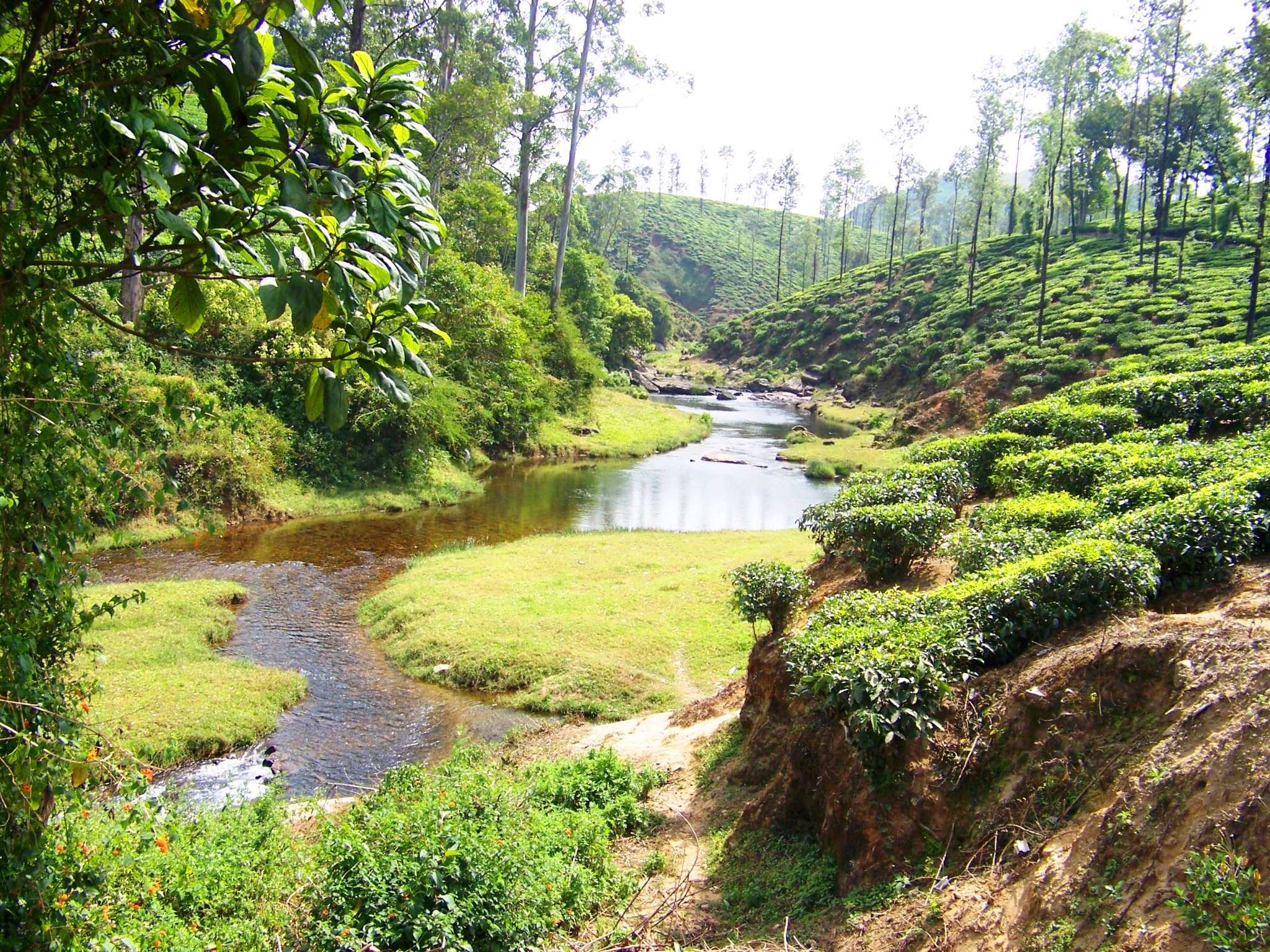
Next morning, we were greeted by the excellent view of the Blue mountains (Nilgiris hills) through the window glasses. We all jumped up for the guided walk along the stream, lining the boundary of the reserve area. We captured some rare fauna like the Nilgiri langurs, Malabar grey hornbill, Malabar giant squirrel, peafowl etc. in our machine-gun-sized cameras. The climb to the tree top house is also worth a mention that gave us a good view of the forest around. It was afternoon already by then and we had to pack up for our return journey towards Bangalore.

At Bandipur National forest

Contrary to the normal boring return journeys when all are usually exhausted and silent, all the 9 of us were jumping off our seats every now and then, until we crossed Bandipur: We encountered at least 24 elephants including a herd with a new born, at least 20 peacocks all set to open up their feathers as it had started to drizzle, sounder of wild boars etc.

For someone who finds peace in nature, this was a magical trip! This is that ONE trip that I would love to do all over again and that time, it would be for a longer stay here… in the cradle of mother nature.