Tag Archives: Tamil nadu tourism

Offbeat Places to Visit in Rameshwaram on a Weekend

This was a destination that my friend and I had been contemplating to travel for some time. The trip turned into certainty only when my friend had the confirmed tatkal tickets in her hands after a wait of over an hour in the queue at the railway station. Then on the following evening, the two of us commenced our weekend journey towards Rameswaram by boarding our train from Bengaluru cantonment station to Madurai. We had a few important things to check-off on our small list for places to see and things to do at Rameswaram. Since the travel tickets were confirmed in the last moment, we had barely any time to make hotel reservations. We decided to go there and find something for ourselves.

Our Itinerary:

Day 0: Evening train to Madurai from Bengaluru Cantonment railway station.
Day 1: Arrival at Rameswaram and visit to Ramanathaswamy temple (TNSRTC bus from Madurai to Rameswaram)
Day 2: Visit to Dhanushkodi (Local bus from Rameswaram to Dhanushkodi), Rameswaram local sightseeing (hire an autorickshaw for half day), Sunset & Beach walk near Pamban bridge.
Day 3: Visit to Kurusudai islands (Local bus to Vivekananda Mandapam & hire a local boat from there to reach Kurusudai islands), Return to Pamban boat jetty; Return to Bangalore (Train to Madurai & change train from Madurai to Bangalore).

The details:

Day 1– Arrival at Rameswaram and visit to Ramanathaswamy temple

The train reached Madurai by 7.20.a.m. After freshening up at the station itself, we left for our main destination. The TNSRTC buses are quite frequent and it took us a journey of 3.5 hours to reach Rameswaram. Enroute, we passed through Ramanathapuram- the last stretch of mainland India. Once we reached Mandapam, the entry point to the island town of Rameswaram, we had our excitement running at its peak. For the next 15minutes, our bus was cruising over the bow shaped road bridge that oversaw the famous Pamban rail bridge. Pamban bridge is an edifice of engineering that is still standing strong on its 100th year in commissioning. This is a bridge that would connect us to the other side of the land, to a town that would host hundreds of stories from the Ramayana during our stay there, over the next couple of days.

After arriving at the Rameswaram bus stand, we noticed the tourist office that stood right opposite. We wanted to try our chance to get permission to the Kurusudai island and hence, registered our names as tourists in their logbook. This island is a protected area and we had tried hard to get permission for our visit even before starting our trip. Though indirectly, our random chance visit to the tourist office in fact helped us BIG time (Click here to read the story in detail).

Lord Rama is believed to be an incarnation of Lord Vishnu. Then, why is the city named after Eshwar? It is important to know at least this while you are there in Rameswaram. Here goes the story… Ravana, (a Brahmin) was a devotee of Lord Shiva (aka Eswaran). On performing penance, Ravana was blessed with a boon by Shiva such that- anyone who tried to harm Ravana would face Brahma dosha. Further, during the war between Rama & Ravana, Rama (a Kshatriya) killed Ravana who then happened to face the wrath of the dosha. Rama then, had to perform pooja to Shiva, the only one who could help him out of the dosha. Here, Eswaran helped Rama. Thus, the name to the town- Rameshwar. I was told that there is a similar story for a town called Ravaneshwar in Lanka.

We walked towards the temple road, roamed around a bit and finally checked into a decent looking hotel close to the main temple. After freshening up, we headed to the main landmark of this pilgrim town, Sri Ramanathaswamy temple. The world’s fifth largest monolithic Nandi statue guards the entrance of this temple. We were overwhelmed to walk across the longest temple corridor in the world and felt blessed after bathing in the water from the 22 sacred wells on the temple. Since it was quite a tiring day due to all the traveling, we decided to sleep early as we had a long day of exploration on the itinerary, next.

Day 2: Exploring Dhanushkodi and local sightseeing at Rameswaram

On the following day, it was Holi: The festival of colors. We were sitting at the Agnitheertham beach at 4.30.a.m watching hundreds of devotees taking a holy dip in the sea. But we were waiting for something else. We were waiting to welcome a day that would unfold with a palette of the best colors that nature could show. Although the wait was long, it was only by 07.00.a.m. when we witnessed what is by far, one of the best sunrises we had seen till date.

Sunrise viewed from Agnitheertham beach

We boarded a bus from there to Dhanushkodi- The ghost city. Although a visit to Dhanushkodi was one of the most awaited part of the trip, it was not our best. From all the stories and experiences, we had imagined of Dhanushkodi, we had expected to need at least one full day there. It is a place that we wanted to explore and not run through which can be best done only if one had a vehicle at his / her own disposal. However, we were at the mercy of public transportation on this budget trip. Like all visitors or “tourists” who had come down there, we too had to settle for a tour of this deserted city in one of the local tourist buses. A round trip was completed in about 3hours with a cost of 100Rs per head not satiating our need to see more of this abandoned town.

  • Apart from the few main structures and temples (old railway station, church, temple of the floating stone, etc.) that you would see during your tour package(local bus), a few other things that you can do during your trip to Dhanushkodi are:
    • A walk through the waters of the Bay of Bengal till the Kodandaramasamy temple is a must do. The water level never goes above your knees.
    • The Ramasetu or the Sethusamudram is something that can be visualized if you have a proper guide with you.
    • A drive on the asphalt road that stretches up to Dhanushkodi is something to die for. With the calm Bay of Bengal on one side and the rough Arabian sea on the other, the drive is every traveler’s delight.
    • On your return, you can cover Jada Teertha & Nambu Nayagiamman temple (both located at just a couple of kms before Dhanushkodi.
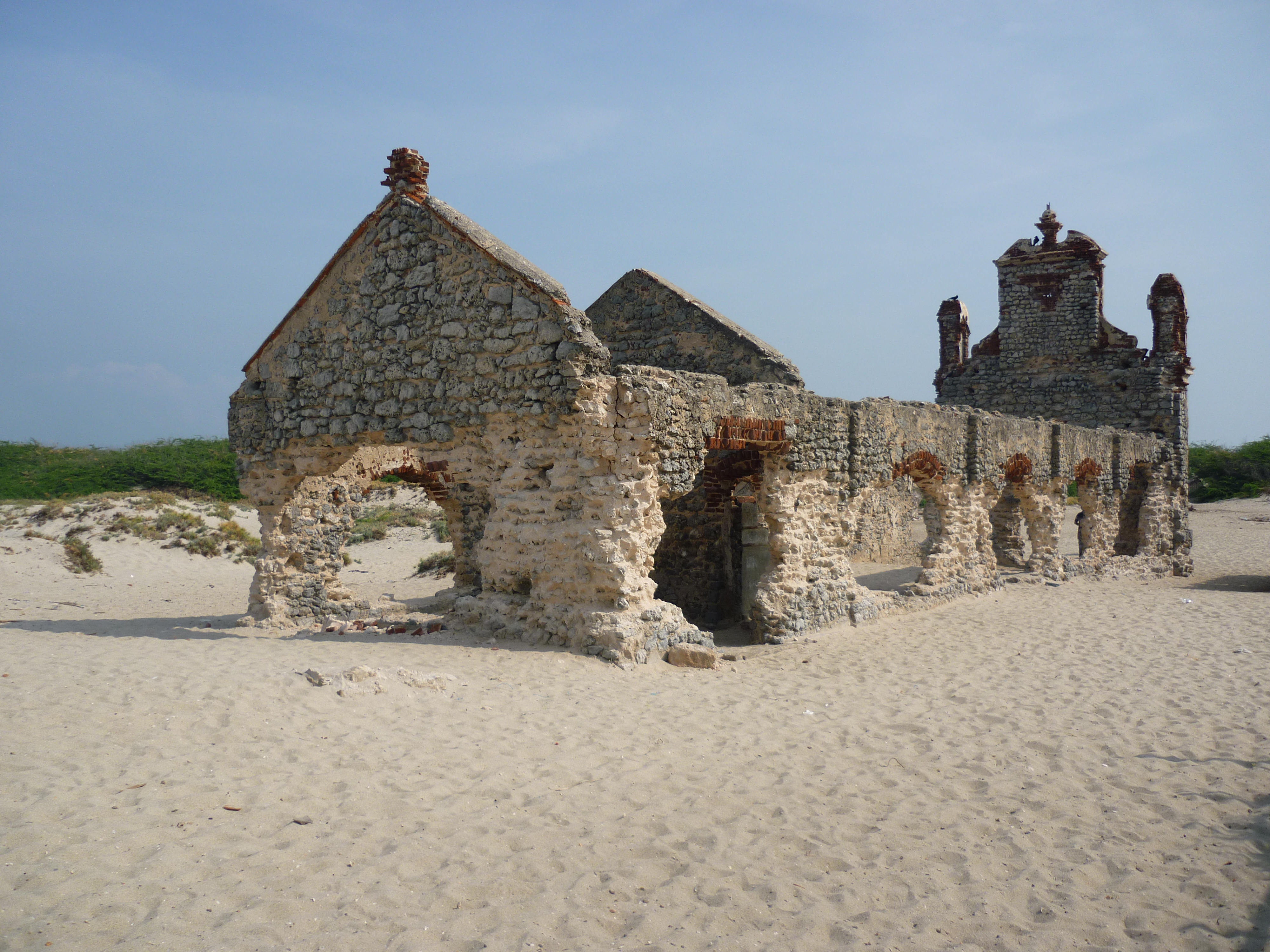
Ruins of the old church

One hour up on our watches and we were back in the main town. We settled a deal for Rs.250 with an autorickshaw guy who would take us on a quick visit of the major places around the town. Some of the places thus covered include:

• Gandaparvatham / Rama paadam- the highest point in the island town from where one can catch a good view of the scenery around.
• Sugriva Teertha (a small pond)
• Saatchi Hanuman temple
• Bhadrakali Amman temple
• Rama Teertha
• Krishna temple
• Lakshmana Teertha
• Five-faced Hanuman temple- The floating stones used for the construction of Rama Sethu can be seen here as well.
• The house of former President of India, his honor: A.P.J. Abdul Kalam- It is now converted into a museum.
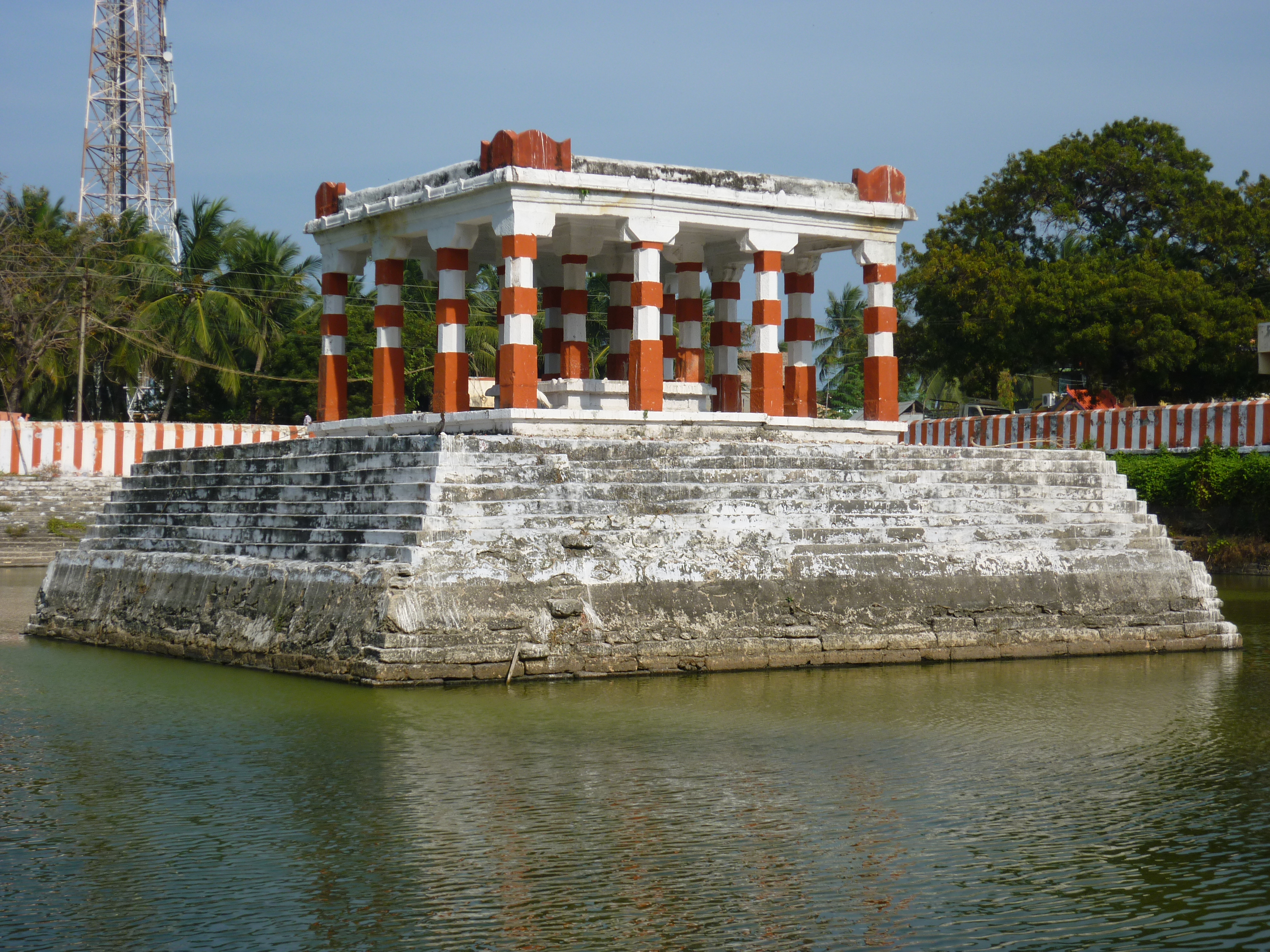
Sri Rama theertham
Sri Rama theertham

An interesting thing we noticed in the architectural style of all the structures in Rameswaram was that with the Ramanathaswamy temple being an exception, all the other temples that I have mentioned above are typically built in the Nagara style of architecture. Having covered Rama, Sugriva and Lakshmana teertha, we were curious to enquire if there was a ‘Sita Teertha’ too. Our guide cum autorickshaw driver nodded and brought us to a place on the highway. And to our dismay, he pointed to a small tank by the roadside. It was filled with green stagnant water and a good mosquito breeding ground. “Damn…!! this patriarchal Indian society…!!” I exclaimed.

We were done with local sightseeing by early evening, and still had a LOT of time left until sunset. Standing on the road bridge and peeking down at the train tug over the century old engineering marvel- Pamban was a sight not to be missed. So, we decided to head towards Pamban bridge.

Once we saw a train pass over it, we decided to stroll around a small fishing hamlet that we just across the street. We got some good clicks of the Pamban from the boat jetty in this fishing hamlet. While straying around there, my eyes fell on the light house that was located a few meters across the village. We asked for directions and reached there in less than half and hours’ time. While we waited for the gates to the lighthouse to open, we tagged along with a few kids, our new friends at the fishermen’s cove. With the kids excited to converse in English with us, we did so while taking a walk further down to the seashore. With a magnificent view of the sun setting in the backdrop of the Pamban in the distant end, we settled down under the shade of a mangrove tree until the sun went down completely.
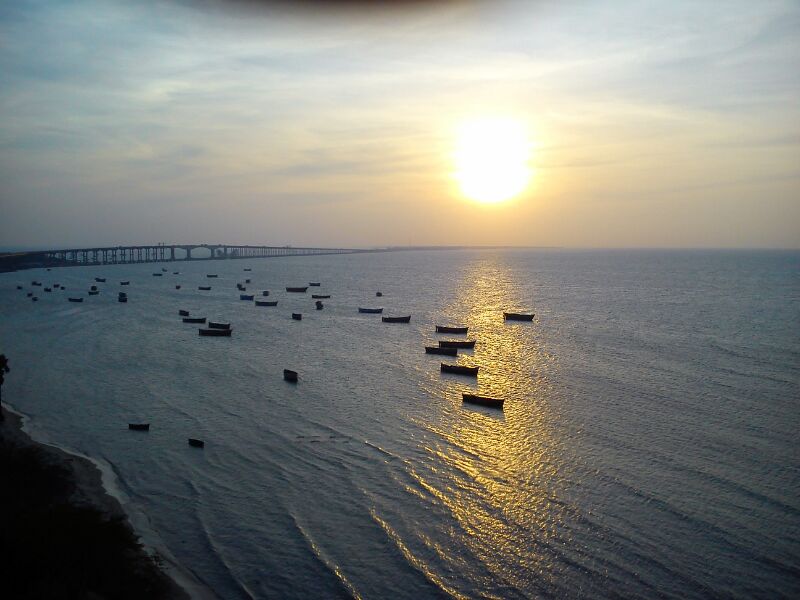
The sunset from the fishermen's cove
The sunset from the fishermen’s cove

It was soon dark, and we had to head back to the temple road for a safer crowd. We bought some peanuts masala from the vendor on the seashore and found a comfortable seat for ourselves to catch some peaceful time. It was a full moon night.

On that wonderful day: We had seen the faint horizon emerge out from the pitch darkness of the sky that brightened into broad daylight with a series of color change and then the white sky of the day fade into the black of the night … And again, the night’s sky was lit up by the beautiful full moon… Yes… We had witnessed one COMPLETE day…
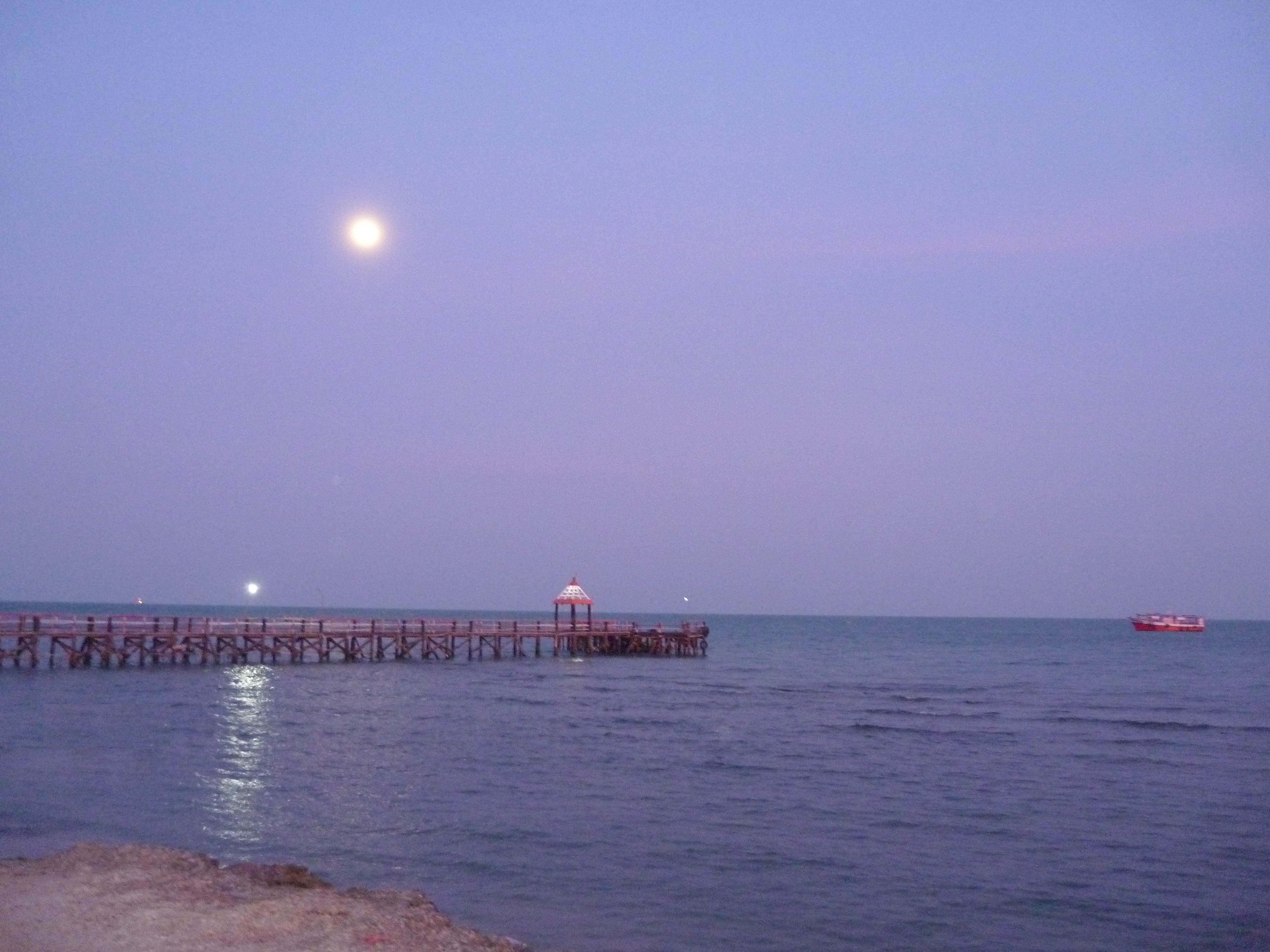
Full moon lit night sky as seen from the Agnitheertham boat jetty

Day 3: Visit to Kurusudai island and return to Bengaluru

Based on some local contacts, we had got a last-minute permit to visit the Kurusudai island. As per the directions given, we had to check out early and catch the 8.00.a.m bus from Akka-Madang to Vivekananda memorial hall. Our boat was waiting for us with the guide to take us to another world- A world of exotic marine animals- ‘the Kurusudai island ‘. (A more elaborate article on this visit can be read by clicking here). To sum up- “We were lucky to get there”.

From Kurusudai island, we got dropped at the Pamban boat jetty. Our boat was anchored somewhere amid hundred other boats and hence, we had to walk across through knee deep sea water to get to the shore. This walking experience was unique in its own way as one doesn’t get such a sight in any other boat jetty. We had to place every step of ours’ so carefully that we did not want to accidentally step on and kill the in-numerous star fishes or sea cucumbers that were lying on the shore bed.

We walked further up to the Pamban railway station and bought our tickets for the 12.00. O’clock train to Madurai. And soon the train arrived. We boarded and our hearts were pounding hard with excitement. We had bought tickets for a train…. A train to Madurai which would actually ply over the Pamban bridge, an experience that we were waiting to live through. It was an even special ride since it was a journey over the historical Pamban bridge on its 100th year of existence. We couldn’t ask for more…!!!

View of the bow shaped road bridge from the Pamban bridge

In 4 hours, we alighted at the Madurai junction… But yeah, even as I was wondering how everything went so fine through this entire trip, the surprise was waiting for us at the station- our train to Bengaluru would arrive 3hours late. And what followed is… history.

Have you visited Rameswaram? What was the purpose of your visit, Pilgrimage, family vacation or backpacking? What is your story from your visit? I would be excited to hear from you!

An Offbeat Guide of Best Things to do in Ooty

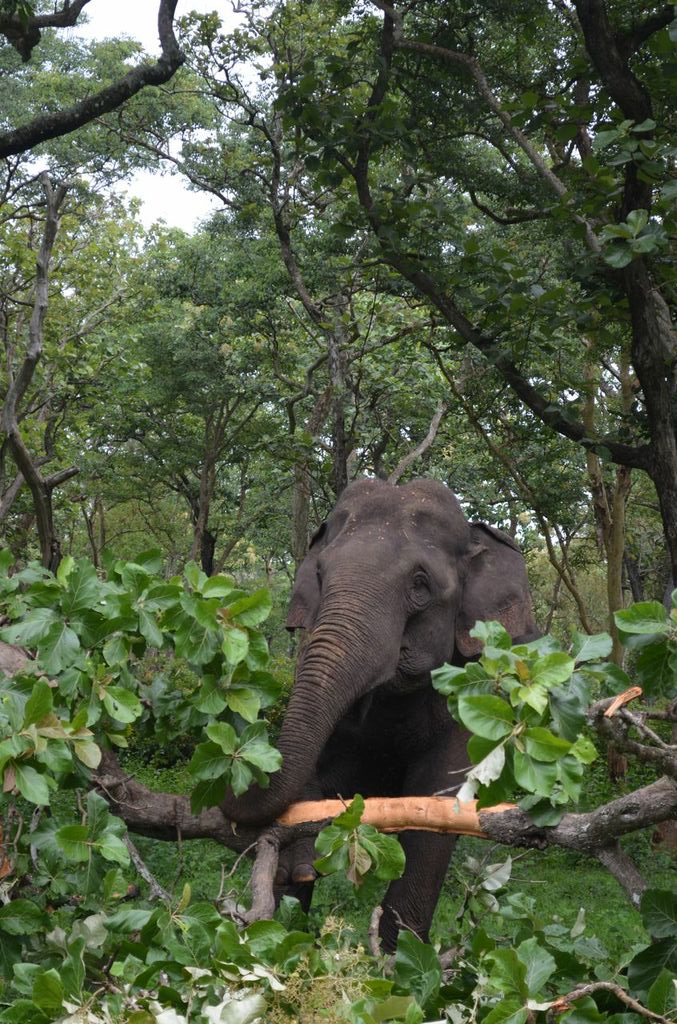
While considering Ooty to Bangalore distance, the Ooty is one of the favourite haunts for Bangaloreans, along with the people from nearby cities like Mysore, Coimbatore, Chennai etc. Popular for its well-groomed tea estates, the pleasant Ooty weather although the year has earned it the title of ‘Queen of Hills’. We were nine friends in two cars on this monsoon weekend trip to explore Ooty district. But this trip was planned by skipping all the tourist places of Ooty and exploring the lesser known corners of the district. We started from Bangalore on a Friday night at 2.00.a.m. hoping to reach Bandipur by 6.00.a.m. That’s when the forest check-post opens, and we hoped that could spot some wild animals along our way. But, due to frequent pit-stops, we made it to the check-post only by 7.00.a.m. Nevertheless, we spotted a good number of elephants, peafowls, fox, deer, sambars, wild boars etc. With so many sightings, it was quite a good start for a trip, I must say! The itinerary for our weekend is as given below.

Itinerary:

Day 0: Leave from Bangalore by night
Day 1: Explore Avalanche forest reserve, explore Ooty, stay at Masinagudi
Day 2: Trekking and other activities at Masinagudi, Wildlife safari at mudumulai forest or Bandipur range, drive back to Bangalore through Bandipur. (Visit Himavad Gopala Swamy temple, if time permits)

The details:

Part 1: Avalanche and Ooty

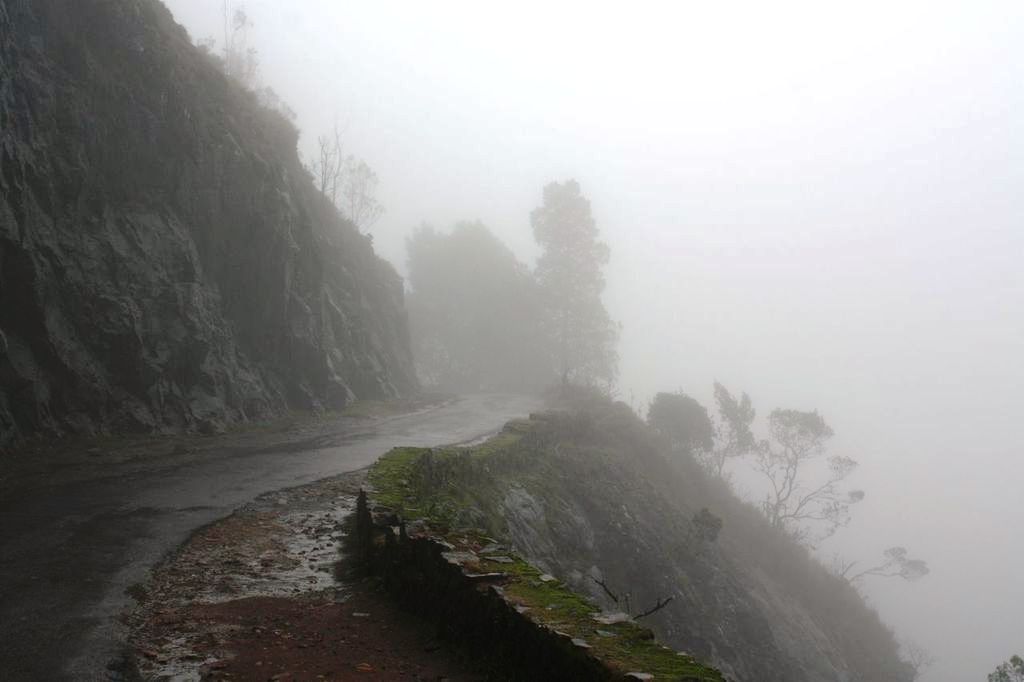
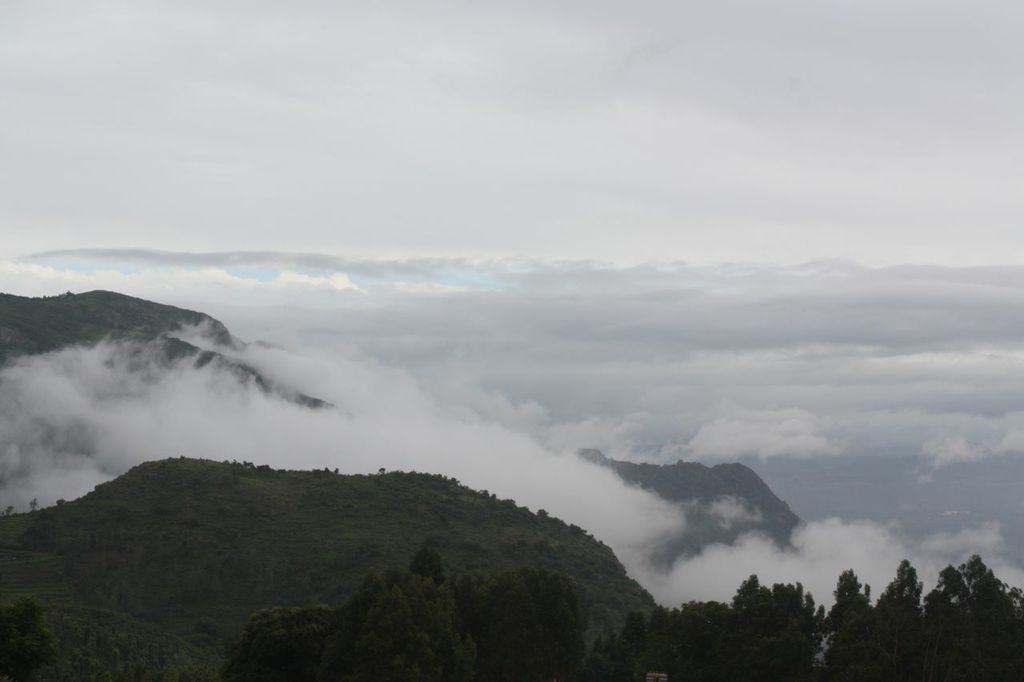
First in the visit list was the Avalanche, a steep & breathtaking climb of 35 hairpin bends with deep valley covered by thick white snowy clouds on one side led us to Udhagamandalam a.k.a. Ootacamund a.k.a. Ooty. Without wasting much time amidst the maddening crowd of tourists there, we drove down another set of 34 hairpin curves- 25 kms further from Ooty to reach the forest check post of Avalanche. Thick rainforests on either side, bumpy waterlogged potholes and scenic view of the Emerald dam backwaters at every turn, accompanied us all the way till the start point of the eco-tour. Once there, we hired the forest jeep for a 24 kms drive through the Shola forests- A place that was BEAUTIFUL.

Enroute to Lakdi spot @ Avalanche
Enroute to the Bhavani temple at Avalanche

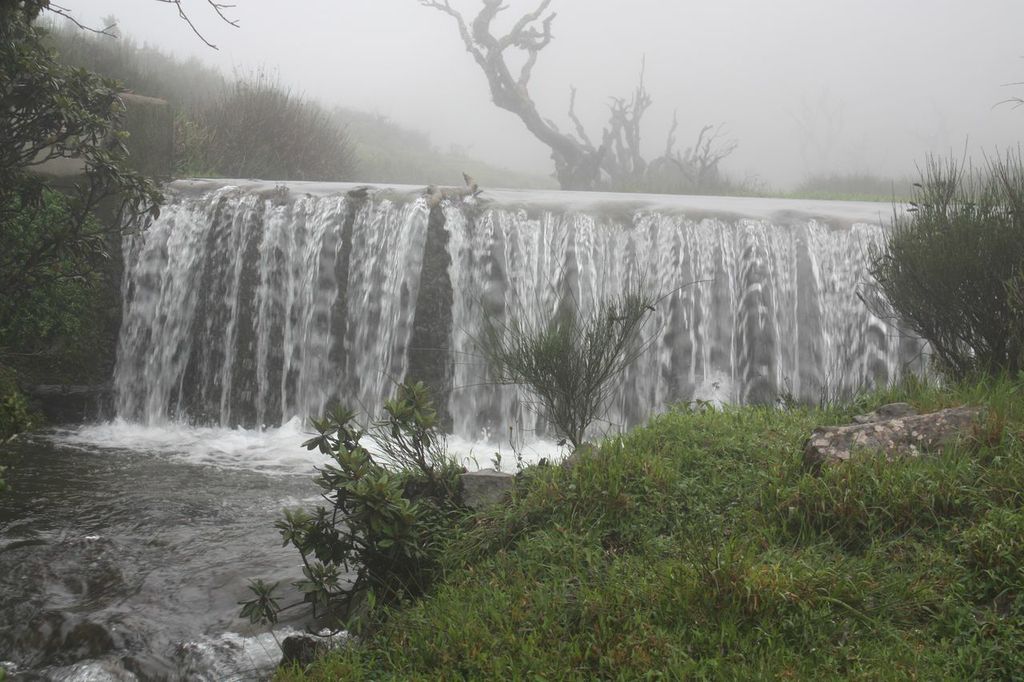
On a clear day, one can see the dam from this place. If one is lucky, he could spot a leopard or an elephant on the way, we were told. Since we were there during monsoon, the thick fog made the visibility poor adding onto the adventure of our jeep ride. On this eco-tour, we visited a century old Bhavani temple, innumerous waterfalls and ended at a beautiful spot called as ‘Lakdi spot’. It had a small stream cascading down in full fury and then running through the shola grasslands surrounded all around. After spending some time there and getting all drenched, we realized that we were all wet till the bones and chattering with cold. Thus, decided to head back to our cars at the entrance.

One of the many waterfalls tucked away in the Avalanche forest

From Avalanche, we commenced our drive towards our next and the main destination of the trip: “Masinagudi. Masinagudi is a part of the Mudumulai forest range, the extension of Bandipur National park (in Karnataka) towards the state of Tamil Nadu. Since Ooty is the only and the last town before heading towards the forest area, we decided to take a short break there. We filled our cars with fuel, withdrew cash from the ATM and bought some Ooty chocolates along with other essentials before heading towards the cottage we had booked for our stay. Our stay was in a private estate adjoining the forest fringes or rather say it was located within the reserve forest itself. It was late evening (already dark) by the time we reached our cottage. (NOTE: The forest check-post closes by 06.p.m)

A view of the valley from one of the hairpin bends of Ooty

Part 2: Masinagudi

We parked our cars at the Singara check post, beyond which the roads are drivable only with a 4WD/SUVs to reach the cottages. Two Mahindra Jeeps were arranged by the cottage guys itself. This 3 km ride from the Singara check post to our cottage was a GRAND welcome in itself: Our road was blocked by herds of elephants, bison and deer. These encounters took our excitement to a soaring high…!!

After a quick round of dinner, we all got ready for the highlight of the trip- The night safari: at 00.00 hrs. in the night, who can believe if we say we drove in an open jeep into the heart of the national park in search of a tiger that was feasting on its latest kill..?? Our safari guide and his clients had been lucky to get this rare sighting on the previous night. And once we were there in the middle of the forest, the screeching engines of our jeep halted, lights were switched off. It was a new-moon day. So, there was no moonlight even, only the open sky with the twinkling stars guided us through. The only 2 sounds we could hear were that of the orchestra of the cicadas and the pounding of our anxious hearts. What we all discovered right there, in the middle of nowhere was “ETERNAL BLISS”. Even after a thorough search through the remotest corners of the grassland, we could not find the tiger until 2.00.a.m. Although we spotted a few other animals, we were definitely sad about the fact. But the bumpy ride to the forest and back was an experience in itself that was all worth it!

Next morning, we were greeted by the excellent view of the Blue mountains (Nilgiris hills) through the window glasses. We all jumped up for the guided walk along the stream, lining the boundary of the reserve area. We captured some rare fauna like the Nilgiri langurs, Malabar grey hornbill, Malabar giant squirrel, peafowl etc. in our machine-gun-sized cameras. The climb to the tree top house is also worth a mention that gave us a good view of the forest around. It was afternoon already by then and we had to pack up for our return journey towards Bangalore.

At Bandipur National forest

Contrary to the normal boring return journeys when all are usually exhausted and silent, all the 9 of us were jumping off our seats every now and then, until we crossed Bandipur: We encountered at least 24 elephants including a herd with a new born, at least 20 peacocks all set to open up their feathers as it had started to drizzle, sounder of wild boars etc.

For someone who finds peace in nature, this was a magical trip! This is that ONE trip that I would love to do all over again and that time, it would be for a longer stay here… in the cradle of mother nature.

The Turtle Walk in the beaches of Chennai

One of the things on my bucket list – ‘The Turtle walk’ : An all night trek along the beaches of the East-Coast road.. It’s more of a walk with a bunch of similar minded volunteers with a sole intention to find Olive Ridley turtle nests- and relocate the eggs to a safer location.. Among the seven sea turtle species, five have been tracked in India during their breeding seasons between December to March. Among them, the Olive Ridley turtles: famous for arribadas or mass nesting are found along the Coromandel coast in large numbers.

We had booked a slot for ourselves on a fine weekend and traveled to Chennai to be a part of this volunteering and to learn more about these turtles. All the volunteers had gathered at the Neelangarai beach by 11.00.p.m where we all had an interactive session with the organisers which enabled us to clear all our doubts about these reptiles. The walk started at around 1.00.a.m as we were told that most nesting happens late at night and leaving later would allow us to find more nests which we would miss out if we start early.

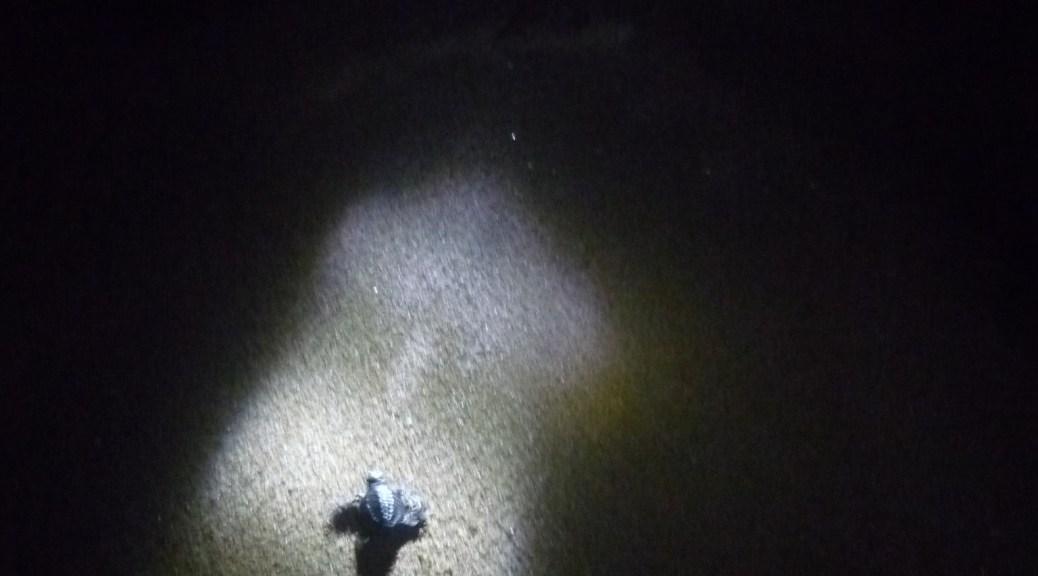
As we kept walking, suddenly someone found a baby turtle in the dark. We were all excited and began to look out for the nest where there was a possibility of finding the other hatchlings. However, we couldn’t find any, owing to the dogs that could have eaten them up or the babies would have already swam into the sea.

The Baby turtle- Our prized catch for the day

The sea turtle hatchlings always walk towards the brighter side(usually sea water in normal conditions). Hence, we had to switch off all the lights we had and just one person stood in the water holding a torch, which the baby followed inorder to reach the water. It was amazing how these babies find their way into the sea and it is disturbing to know that due to modernisation, the cities/land is getting brighter and these turtles are walking towards light(township) and becoming prey to several factors.

The baby being guided towards water with a torch

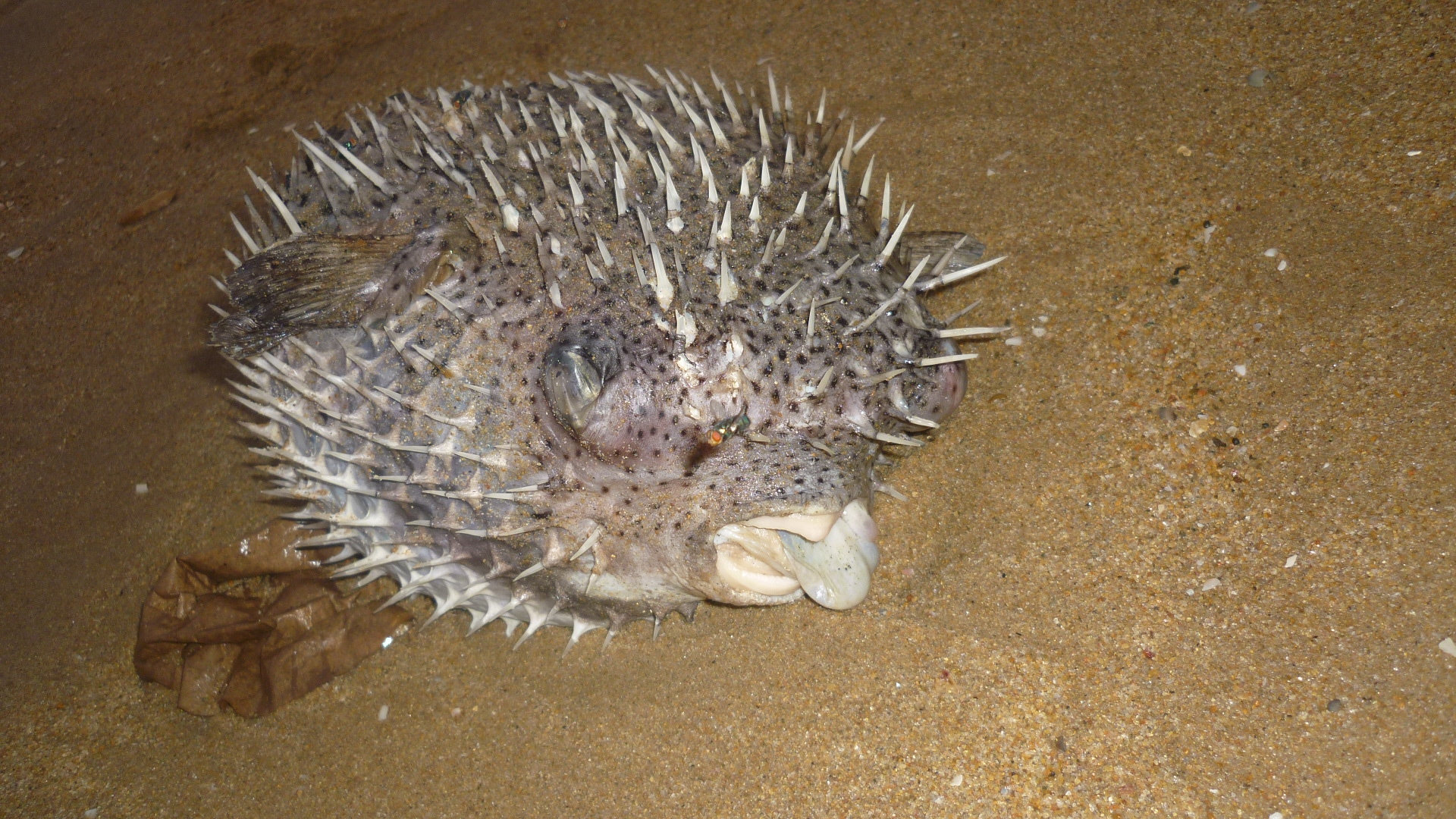
We then continued to walk.. We found so many dead turtles(which reminded us of the brutal fishermen, ship propellers which pose a great threat to the turtles), pufferfish(Fugus), cats, cuttle fishes etc. along our way..

A dead pufferfish along the beach

We walked and walked and could not find a single nest. It was already 02.00.a.m and time for the fishermen to venture into the sea for their daily vatch. We crossed numerous hamlets along the coast- most of them were extremely filthy where the fishermen were pooping in the water, staying insensitive to the number of people walking there.

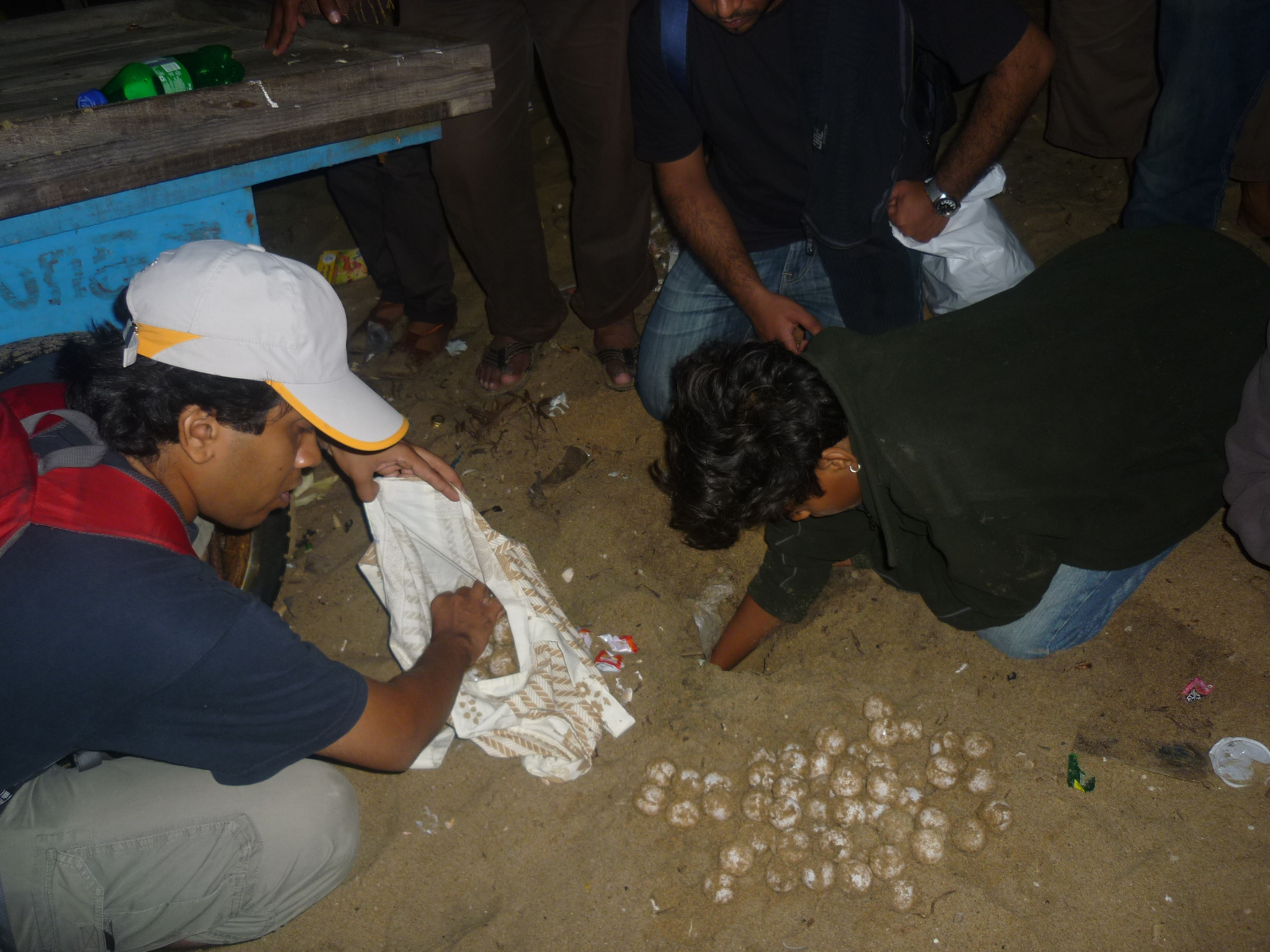
And then.. We reached Besantnagar Beach- the end point of our trek. We were all extremely sad that we hadn’t found any nests- the sole purpose of us going all the way from Bangalore was not met 😦 Just as we were all about to depart, the organiser got a call from a volunteer who had reached there much earlier. They had found a nest: Right there, under a pull cart, in the dirty sands of Besantnagar beach: ‘Thank God.!!’ was the first exclamation from all of us. It was followed by a ‘WOWWWww’ 🙂

The volunteers unearthing the eggs

We removed 147 eggs out of the nest. We could understand that the turtle had come to land for the first time in this season. While they were measuring the nest size, we got a message of spotting another nest nearby. It was all worth the travel from Bangalore 🙂 We found 42 eggs in the second one- Probably the turtle had come for the 3rd time in this season.

A volunteer measuring the nest's specifications
A volunteer measuring the nest’s specifications

The organisers will keep an account of the depth, width, temperature and the distance of the nest from the high/low tide; create a similar incubation atmosphere in a safer location/artificial hatchery. Then, let all the babies into the water when they hatch out after about 40-45 days. It is amazing to know how these turtles come back to the same place where they were born, after about 12 years for breeding. These 12years are called ‘lost years’.. It is still unknown what happens to these turtles for those twelve years in the sea.. Yes, Radio tagging has lately been in use to study these hatchlings once they enter the sea on their maiden swim which is still an ongoing subject of research. So, Yes! These hatchlings are going to return back to this same place where they were born only after 12 years, and that time, to start yet another generation of turtles..!

Of late, there are a few more places across India promoting conservation of sea turtles. You can be a part of it too at places like Chennai, Orissa, Ratnagiri, Andaman Islands etc. When are you planning your beach trek? Keep me posted 🙂

Madurai (Part 2) – Centre of arts and culture

There is no existence of a place without the people, and with civilization exists its culture. Madurai has its own share. My previous post (Madurai Part 1) was exclusively about the architectural landmarks spread across the city. But it would be injustice if the other things associated with this amazing city goes without a mention. Of course, the write-up could run into books if I had to write about each of them. And it isn’t necessary that everyone travelling is a pilgrim or a history buff or an architecture enthusiast. Hence, here’s an attempt to throw light on other aspects that any visitor to Madurai can expect. This is not a detailed one, but I touch upon various dimensions that you can theme your trip around Madurai. Do let me know if this post helps or if there is any other dimension I missed. Here goes my list.

Art:

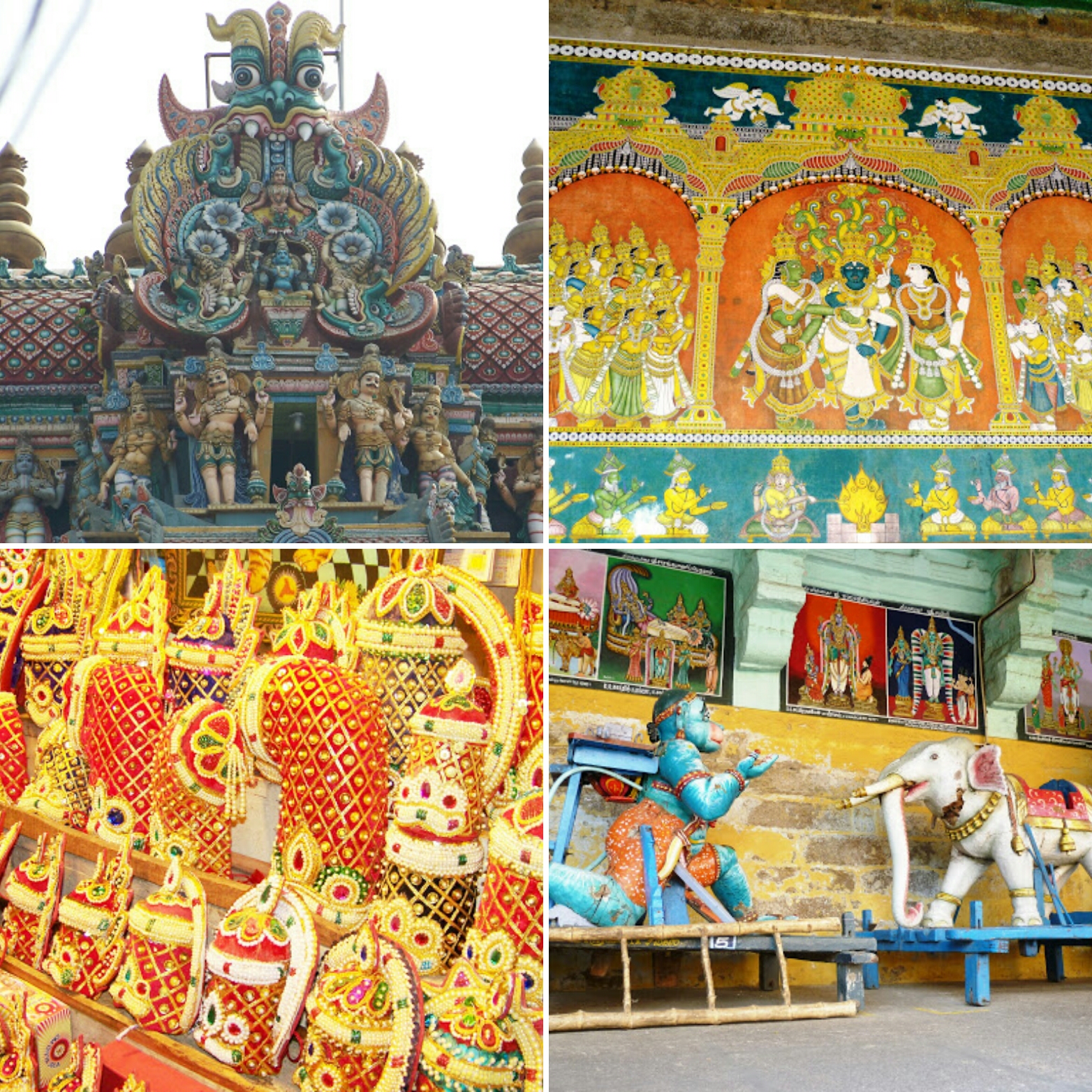
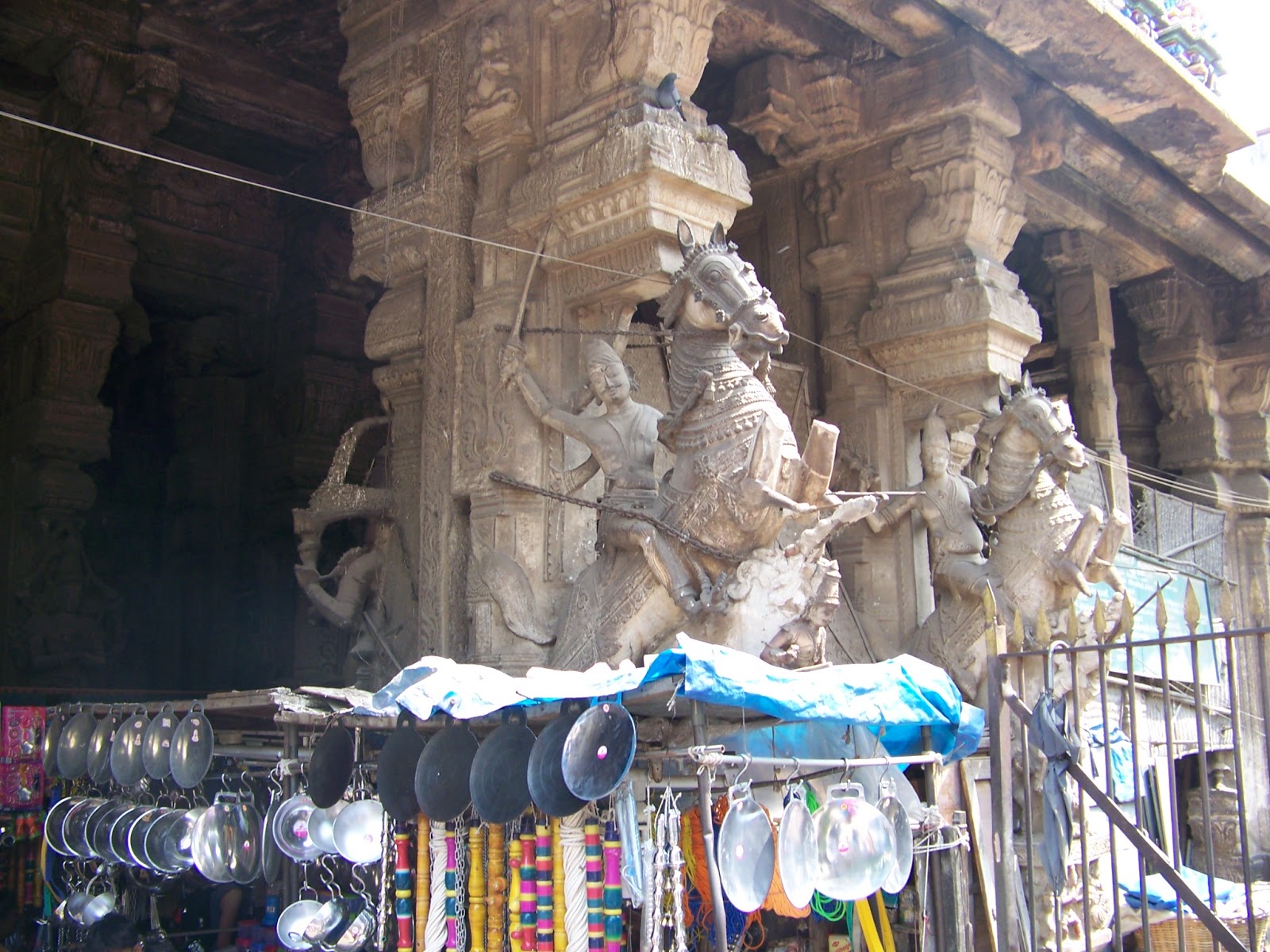
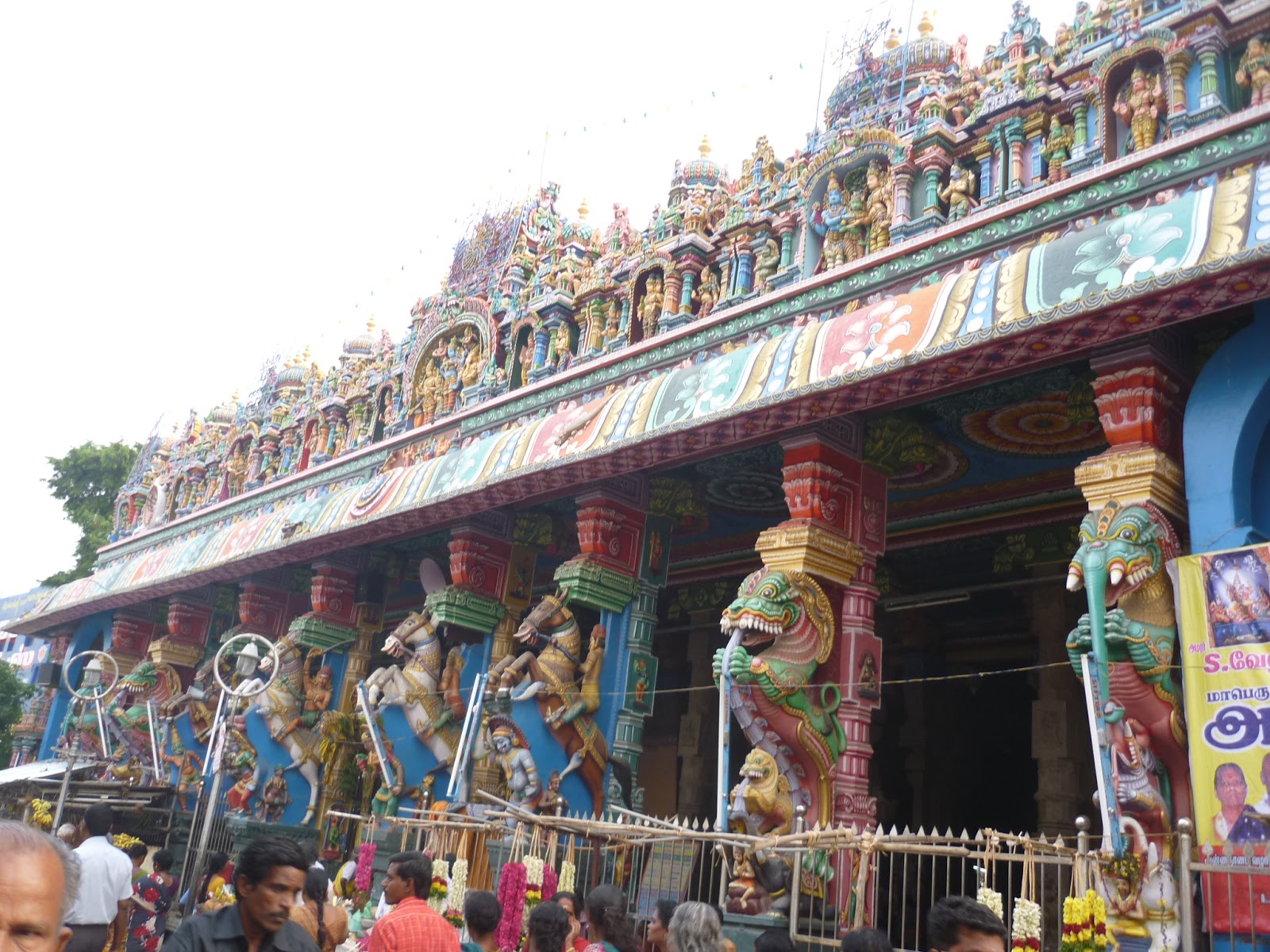
  • Sculptures: adorning every temple wall, pillar and their towers are a marvel in itself.
  • Carpentry: Several wooden vahanas used to carry the idols of the various deities in the temple are something that need the attention of art afficionados.
  • Handicrafts: Various accessories used for decorating Devi idols, made of delicate sequins, etc. are sold in several stall inside the large corridors of the Meenakshi temple.
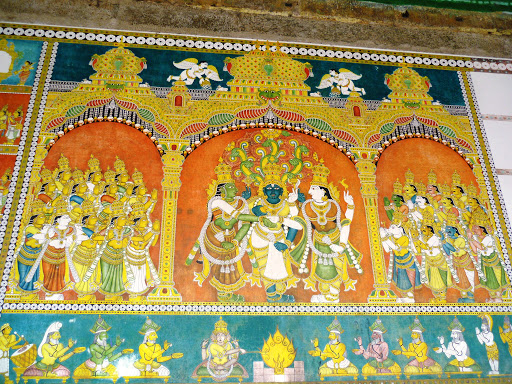
  • Mural paintings: This needs no introduction, the famous Madurai paintings are a gift of the Pandyan era, adorning the temple walls.
Clockwise from top left: 1.The sculptures on the western tower of the Meenakshi temple; 2.One of the mural paintings from the temple walls; 3.The wooden carriages for the temple idols; 4: Handicrafts from the temple stalls

Food:

Listing just a fixed menu while in Madurai would just be an understatement. If you are a foodie, Madurai would need two full days to explore its culinary delights alone. It is famous for both vegetarian and non-vegetarian specialties. I’d probably write a separate post about it sometime later. But this list is the list that we had when my family visited. But believe me- it is BEYOND!

  • Breakfast – Idly & Sambar, Pongal + a cup of filter coffee
    11.00.a.m – Jigarthanda (it’s more like a combination of falooda & kulfi)
  • Lunch- Puliyogare @ the temple store, curd rice, Sambar rice
    4.00.p.m.- Karupatti (palm sugar) coffee
  • Dinner- Anything after 7.00.p.m is called meals. Must try is the ghee roast & rava Masala dosa

Costume:

  • Sarees for women & Dhotis for men.
  • Madurai cotton sarees with simple prints and zari borders with temple designs are popular.

Jewellery:

Among the locals- particularly those belonging to the Thevar cast, it is believed that women are prettier with bigger earlobes. Hence, the girl child born in this community is made to wear a traditional earring called the ‘Thandatti’ when she is young. The thandatti is said to evoke the 3 levels of our world: terrestrial, astral and divine and these levels are associated with Mandala. Each piece of this weighs 27gms and is made of gold and this piece of jewelry is specific to Madurai.

A Thevar woman wearing the traditional Thandatti earring

Shopping:

Shopping at Madurai is all about wholesale vendors and there are specified streets for each of them.

  • Cotton sarees/ dress materials: Shops are all around the temple complex
  • Steel utensils: Plastic beads & girls’ accessories, gold plated imitation jewelry to name a few.
  • Pooja related accessories & crafts: Particularly inside Pudumandapam (1000 years old market)
  • Farm produce: Varieties of plantains / bananas and green groceries among the others.

A brief intro to a city full of life and activities. Justice yet to be done. Signing off with a hope that it has helped someone somewhere in some form who is seeking for some info on this Pandyan city….

Exploring the Architectural Marvels of Madurai

This was a family backpacking trip planned exclusively to explore Madurai. This city has served as the capital of the Pandyas and is a key destination that has nurtured the Dravidian culture. For anyone who hears the name of this famed city, they know of the Meenakshi Amman Kovil. A typical traveler / tourist / pilgrim would visit just that temple and takes pride in marking it in their travel map of places visited. But what one doesn’t realize is, that Madurai is beyond just this. The contribution of the Pandya kingdom is not limited to just the Madurai Meenakshi temple and can be seen and felt in several structures just around the same city. Also, a portion of the Madurai city has a history beyond the Pandyas too. Hence, our family wanted to reserve this long weekend, exclusively for Madurai. We boarded an overnight bus from Bangalore and reached Madurai at 6.00.a.m. on the following morning.

Like most of our family trips, we wanted this also to be an impromptu vacation. Apart from to and fro travel, nothing else was fixed. As per me, you would need a good 2-3 days to have a quick run around doing this same itinerary as ours, exploring ONLY Madurai. If you are an art and history buff or a foodie, I warn you to carry additional days!

Itinerary:

Day 0: Leave from Bangalore by night (KSRTC Bus)
Day 1: Reach Madurai. Visit Meenakshi temple, Thirumalai Nayaka Mahal, Vandiyur temple tank, Koodal Alagar temple, Gandhi museum, Pudumandapam.
Day 2: Alagar Kovil, Alagar Murugan temple, Pazhamudhir Solai temple, Tiruppanakundram Murugan temple, Dargah of Hazrat Sultan, return to Bengaluru.

The details:

After alighting the bus, we walked around the Meenakshi Amman Kovil to find a good hotel. Since this is the heart of the city, it wasn’t hard to find a decent lodge around there. We checked into a hotel that was located just in front of the temple’s west gate. We freshened up quickly and left for the main part of the trip for anyone visiting Madurai.

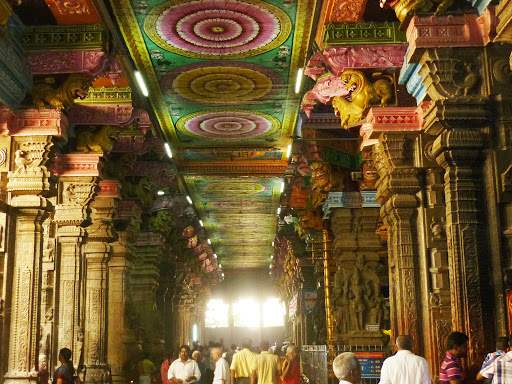
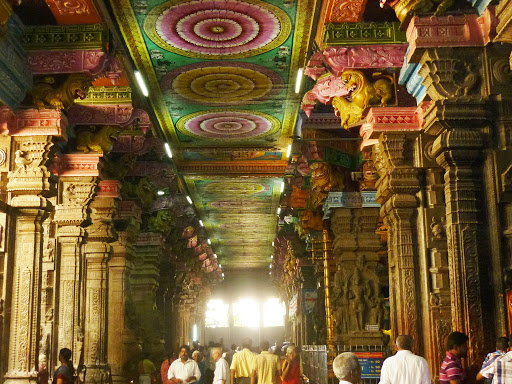
  1. Meenakshi temple: A visit to the abode of the Pandya architecture. The entire temple complex is fortified and has 4 entrance towers, one on each of the 4 directions. The sculptures on each of these towers are out of the world. Once inside the complex, I started to wonder which world of wonder I had stepped into. It took us more than 4 hours to finish only a quick walk around inside the temple and also get the darshan of Meenakshi Amman and Lord Sundareswaran.
The finely decorated interiors of the Meenakshi Temple

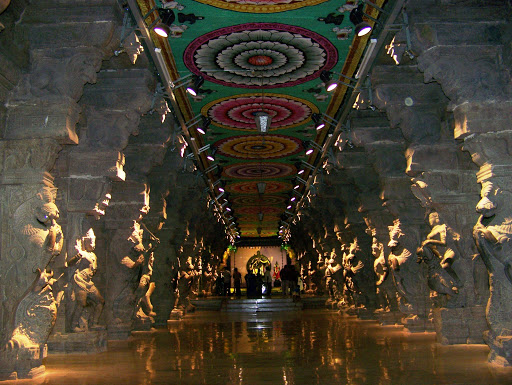
There are a lot of stalls inside the complex selling various handcrafted articles. The temple art museum within the same premises is a must visit. The central sculpture of Natarajan, or the dancing form of Shiva is believed to be one of the Pancha Sabha of the lord. This place represents the silver hall and Shiva is believed to have performed the ‘Sandhya Thandava’ dance form here (More on the Pancha Sabha Kshetras in another post). Also, there are 1000 pillars, all decorated with intricate pieces of sculpture. The dim light used for each pillar added up to the beauty of the place. The Madurai paintings adorning the walls of the temple requires another post to talk about. I go speechless when I get to explain about the South Indian temples. They are beyond words. Internet has plenty to feed and I don’t want to get into the details. After a tour of this massive temple complex, we decided to head out to explore the city beyond the Meenakshi Kovil.

Inside the Temple art museum

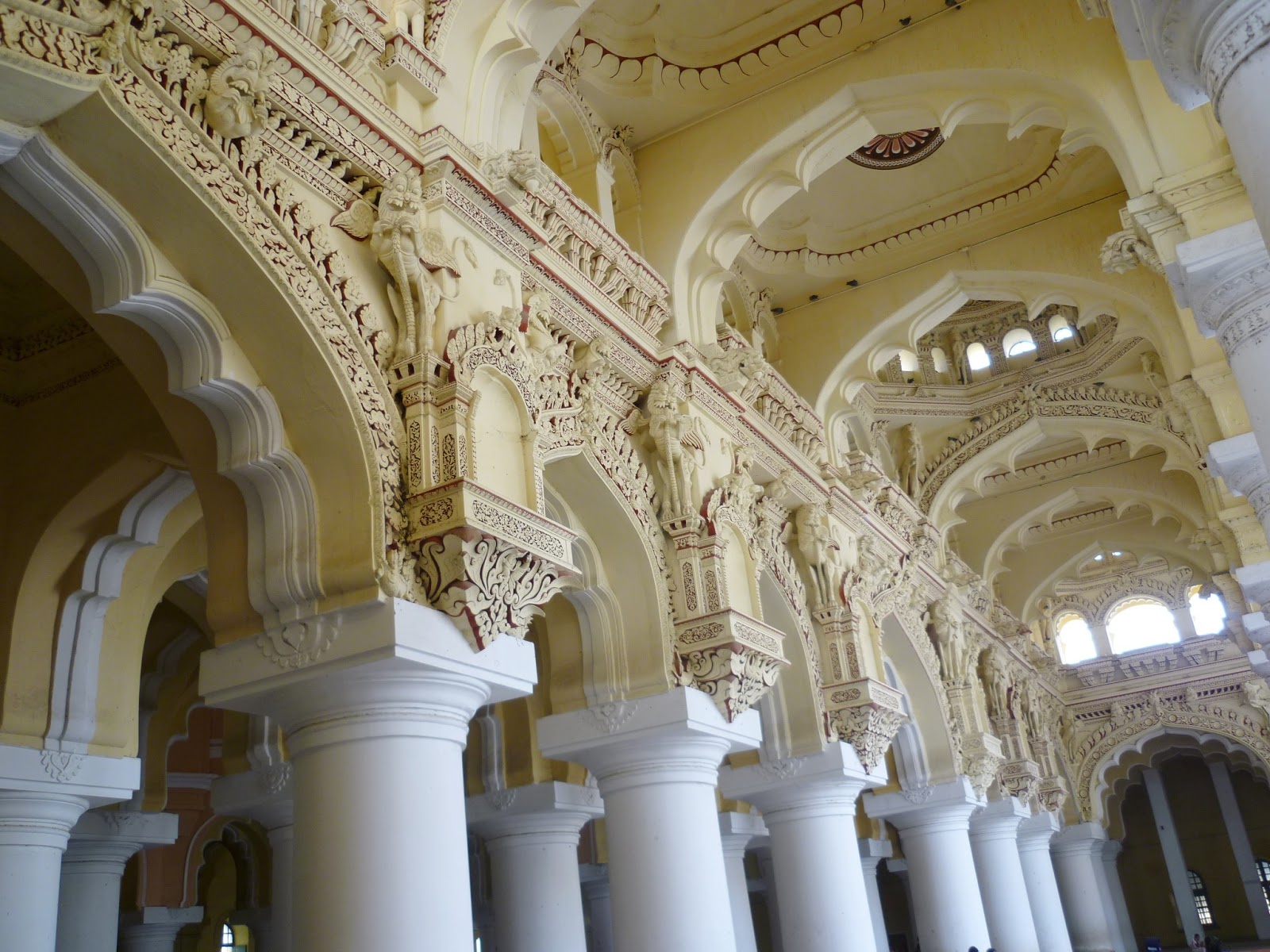
2. A small walk through the narrow lanes took us to the Thirumalai Nayaka Mahal built in the 16th century. Fine architecture with elegant paintings on the roofs and vaults is neatly presented in a simple combination of half-white and velvet red colors. There is sound and lights show conducted here every evening. However, we could not make it.

The interiors of Thirumalai Naickar Mahal

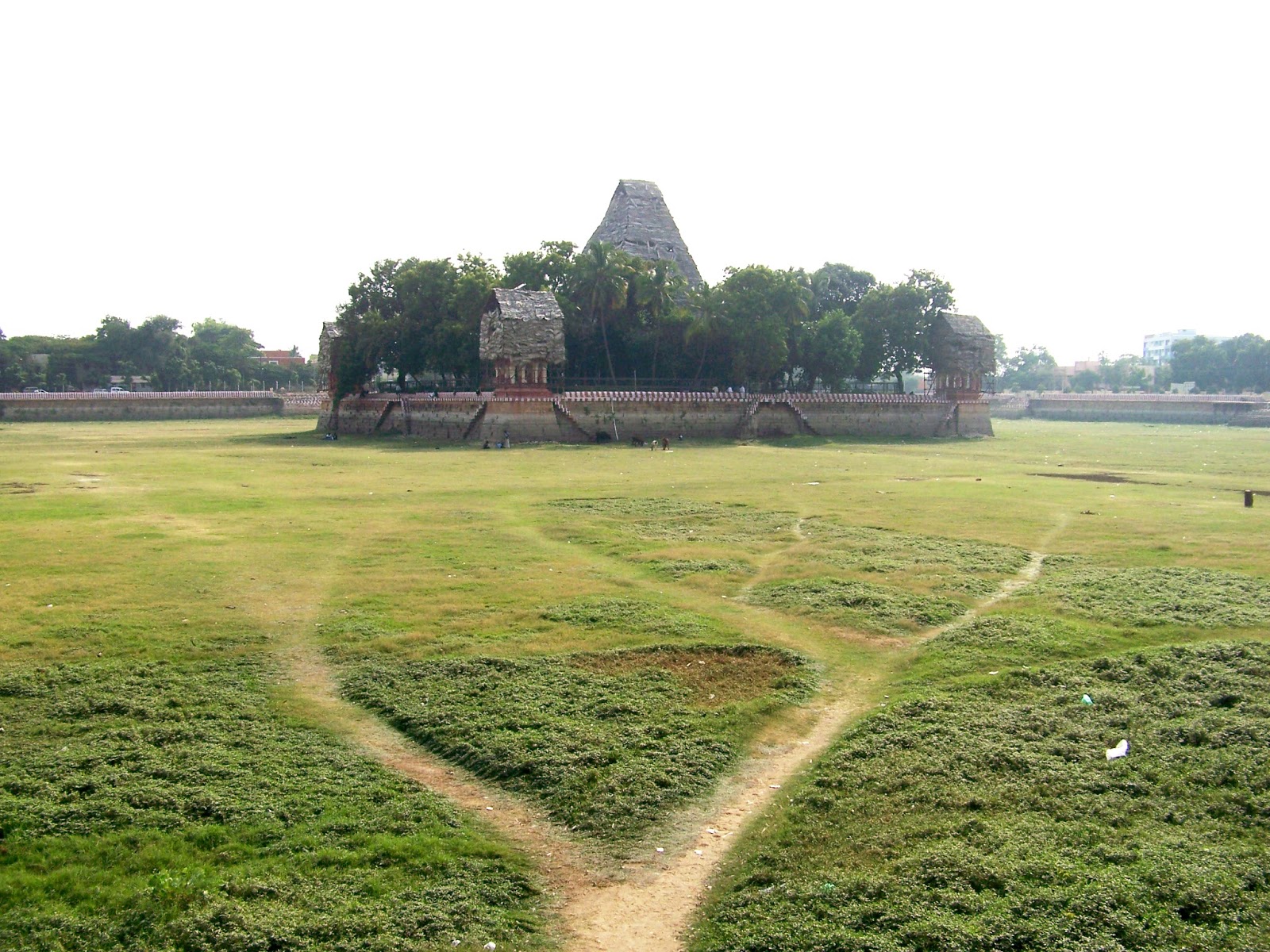
3. From there, we took a local bus to Vandiyur. This is where the annual event of the famed Teppotsavam / Float festival takes place to celebrate the birthday of King Thirumalai Nayak in January. This tank is supposedly the biggest of its kind in the state of Tamil Nadu. With the float festival just 2 months away and monsoon season just passing by, this tank still remained dry during our visit. When we enquired with a few locals passing by about how the event was going to be conducted in a dry tank, we were told that the water will be fed in January from the Vaigai river through artificially laid underground channels. This is truly amazing how such a concept was laid way back in the 16th century. But for a newcomer like me, the dried lake was an eye sore as it was used was a watering hole by many vandals at the time of our visit.

Vandiyur Mariamman Teppakulam - the island temple
Vandiyur Mariamman Teppakulam – the island temple

4. Taking another bus from there to Periyar and a small walk from there through the stinking / dirty by-lanes, we reached the Koodal Alagar temple. A quick pooja and a walk around the temple was a nice boost up. The architecture here too, is similar to that of Meenakshi temple.

5. We had to rush to The Gandhi museum as it would close by 6.00.p.m. However, we could not make it on time. This was once called the Tamakkum palace of Rani Mangammal. Today, the museum supposedly houses 14 articles that were used by Gandhiji, along with his sacred ashes and blood-stained dhotis. Gandhiji is said to have visited the city five times during his lifetime.

6. On our walk back to our hotel, we came across an old marketplace called as Pudumandapam. This is a 1000 years old shopping mall, supported by huge sculpture rich stone pillars. The stalls are occupied with tailors, handicrafts vendors, wholesale dealers of pooja related and general accessories. A good place for shopping traditional artefacts at Madurai, and that too in a market that is so old!

Entrance of the Pudumandapam

7. On the following morning, we boarded a local bus from Periyar bus stand to travel 21kms towards Alagar Kovil. The temple is dedicated to Lord Vishnu, Meenakshi Amman’s brother. The village is surrounded by an old fort wall, it gives a good view of the green hills around the temple. The architecture is similar to Koodal Alagar temple in the city.

8. A trek of 3kms uphill, through green forests and monkey infested walkways lead us to the Murugan temple. It is one among the six abodes of Lord Murugan and hence important among the pilgrims.

9. A walk of half a kilometer further uphill took us to Pazhamudhir Solai temple. A temple dedicated to Goddess Rakkaya exists close to a natural spring called Nuburagangai here, where devotees take a holy bath. But what seemed strange to me was that the place was probably the only temple I had ever been to, which charges an entry fee into the temple itself. This is where the famed Chittrai festival is observed during the month of April.

10. From there, we took the next bus back to Periyar, from where we had to take another connecting bus to Tiruppanakundram. This was a cave temple at the foothills of a hillock. It is believed that Lord Murugan was wedded to Devyani, daughter of Indra at this place. Hence, this is also counted one among the 6 abodes of Lord Murugan.

Entrance to the Tiruppanakundram Murugan temple

11. Up the hills, is the Dargah of Hazrat Sultan Sikandar Badshah shaheed Radiyallah Ta’al anhu. Owing to time constraint and exhaustion, we thought of skipping the climb.

Other lesser known places we skipped due to time constraints were the Kazimar mosque and Goripalyam Dargah. At the center of the city is the Kattabomman junction. This is where a part of the old Madurai fort exists. Today this is not more than a public library. Further, every street in the city has a history behind it: This link to an article from “The Hindu” don’t do this usually, but would make a special mention about the streets of Madurai. Every street in the city has a history behind it: This link to an article from “The Hindu” explains it all- Where moats made way for motorways

This was all about us getting around the place for seeing some of the historically important landmarks around Madurai. But the list is endless and time, very limited ☹ I have covered a few other must-do things while at Madurai in a separate post. I wish to be of some use if you are planning a trip there. (Click here to read further)

The baby steps to Isha foundation

< 02-July-2012>

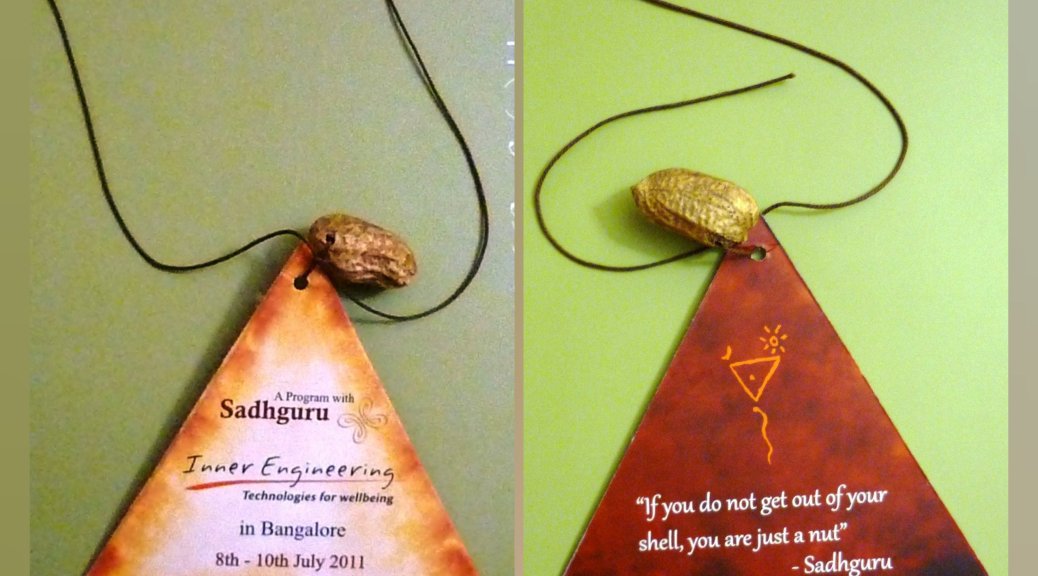
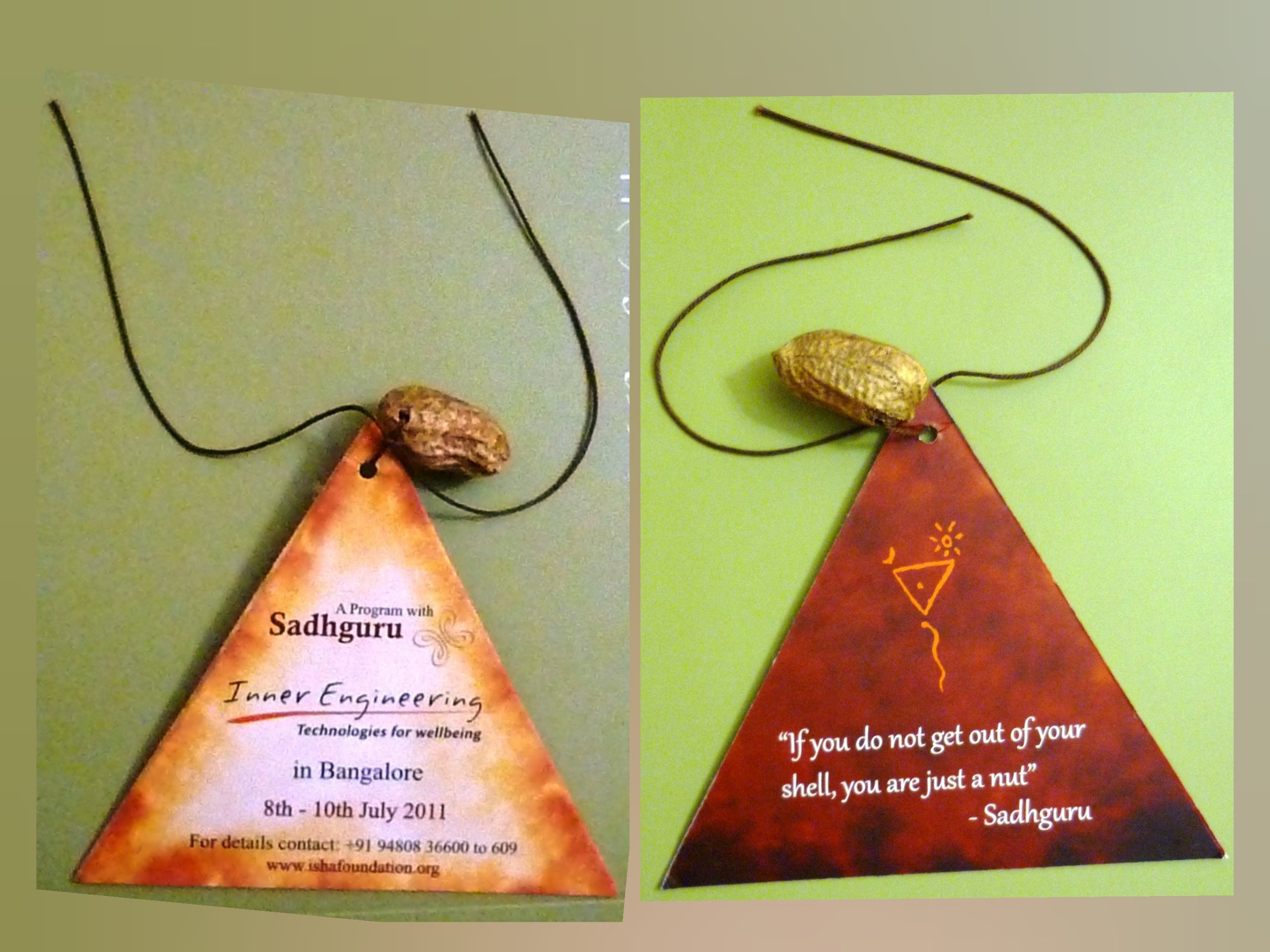
On one of usual walks at Sankey Tank.. there was this guy at the gate giving away handouts.. the groundnut(kadale-kai) hanging down the handout caught my attention and I stretched my hand out to get one…

Sri Sri Sadhguru Baba (Sorry.. I hadn’t heard of this name before.. my bad..!!) had his program on “Inner Engineering” sometime it read.. All this spirituality stuff is too much to take into my peanut sized brain.. But this fancy handout is the only reason that has inspired me to post this 😛

“Spirituality is belief in an ultimate or an alleged immaterial reality; an inner path enabling a person to discover the essence of his/her being; or the “deepest values and meanings by which people live. Spiritual practices are intended to develop an individual’s inner life. Spiritual experiences include being connected to a larger reality, yielding a more comprehensive self; joining with other individuals or the human community; with nature or the cosmos; or with the divine realm. Spirituality is often experienced as a source of inspiration or orientation in life. It can encompass belief in immaterial realities or experiences of the immanent or transcendent nature of the world.”

Whoa….. that’s an extract from Wikipedia..

“If you do not get out of your shell, you’re just a nut”- This definitely makes sense…

#Update as on 15-may-2020

Someone who started small with this peanut marketing, is now one of the most influential persons in India and the world: Sri Jaggi Vasudev or fondly called as ‘Sadhguru’, the founder of the ‘Isha foundation’. Big milestones are achieved with small baby steps, indeed!

An iconic statue of Adiyogi Shiva’s bust (it holds the guiness record for being the largest bust sculpture) near Coimbatore, Tamil Nadu is a ‘must go’ place on the list of those seeking spiritual cleansing.

For the adventure seekers, you can trek up the Velliangiri hills in the neighborhood while your spiritual accompanice can get enlightened at the Shiva temple atop, considered to be one of the holiest places in South India.

Studying ‘Bachelor of Cycle-logy’ at IIT-Madras

This trip to Chennai is going to be a memorable one. Because, this was my first solo business trip. Apart from traveling alone in a land that spoke a language I barely understood, I managed to pretty decently pull-off the audit at a vendor company, all by myself. Some small little personal milestones! So, here’s a peek into my first solo business day, without business :p

I landed at the Meenambakkam international airport at around 8.00.a.m. and hired a taxi to the vendor’s place. This is when my tryst with Tamil started. The driver did not know my language and I did not know his. But, one thing I learnt quite fast was, being a Kodava really helps while roaming around in South India. I could mix up bits of Malayalam and a little more of Kodava thakk and make it sound pretty much like Tamil. The driver managed to understand the basic instructions. And the rest, sign language it was. But yeah, it was a lucky start for a solo stint.

But imagine finishing work ahead of schedule and having a late night flight to return! Especially when you don’t have a backup plan in hand and do not know the local language. Even if I googled for some place to hang around, I was not able to communicate it to my driver.. The sign language wouldn’t be of much help if I had to spend a longer unplanned day. Hell! I felt stranded in my own country.

That’s when a friend studying at IIT-Madras came to my rescue. I rang him up and he guided the driver in Tamil to reach his campus. The plan was that he would show me around the campus and then drop me back to the airport. Fair! So that’s what I did..

What if I did not crash the GATE (The toughest entrance exam in India) ?? That did not stop me from learning at the prestigious IIT-M..!! Thanks to my friend pursuing research at IIT-M, this was where I completed my “Bachelor of Cycle-logy” which I had left unfinished way back in primary school. He suggested that cycling around the vast campus was the easiest way of getting around and I agreed to his suggestion. He got his bicycle out and borrowed one for me from one of his classmates. Then, we had gotten pedalling on the roads of the vast 600+ acres of lush greenery on the campus of IIT-Madras.

IIT madras campus
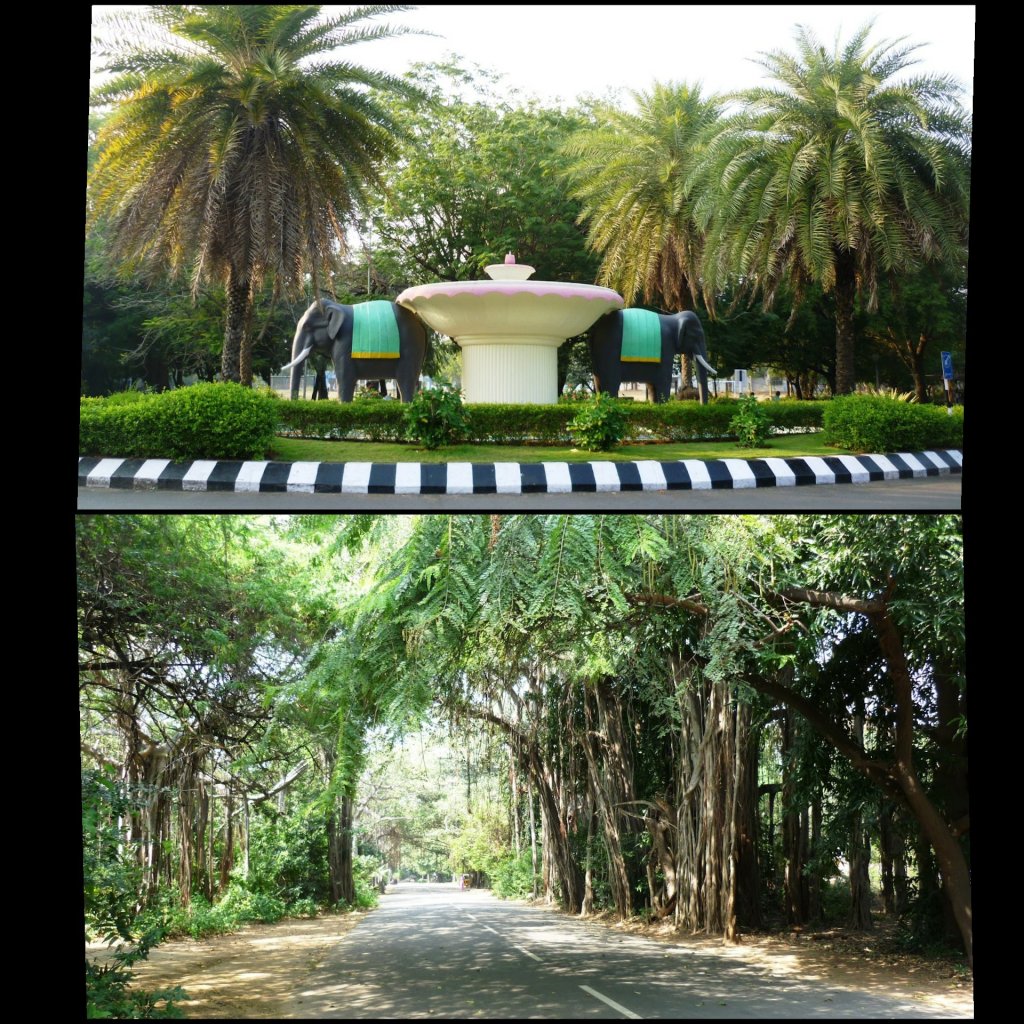
Top: Gajanan circle at IIT-M premises; Below: Bonn avenue at IIT-M

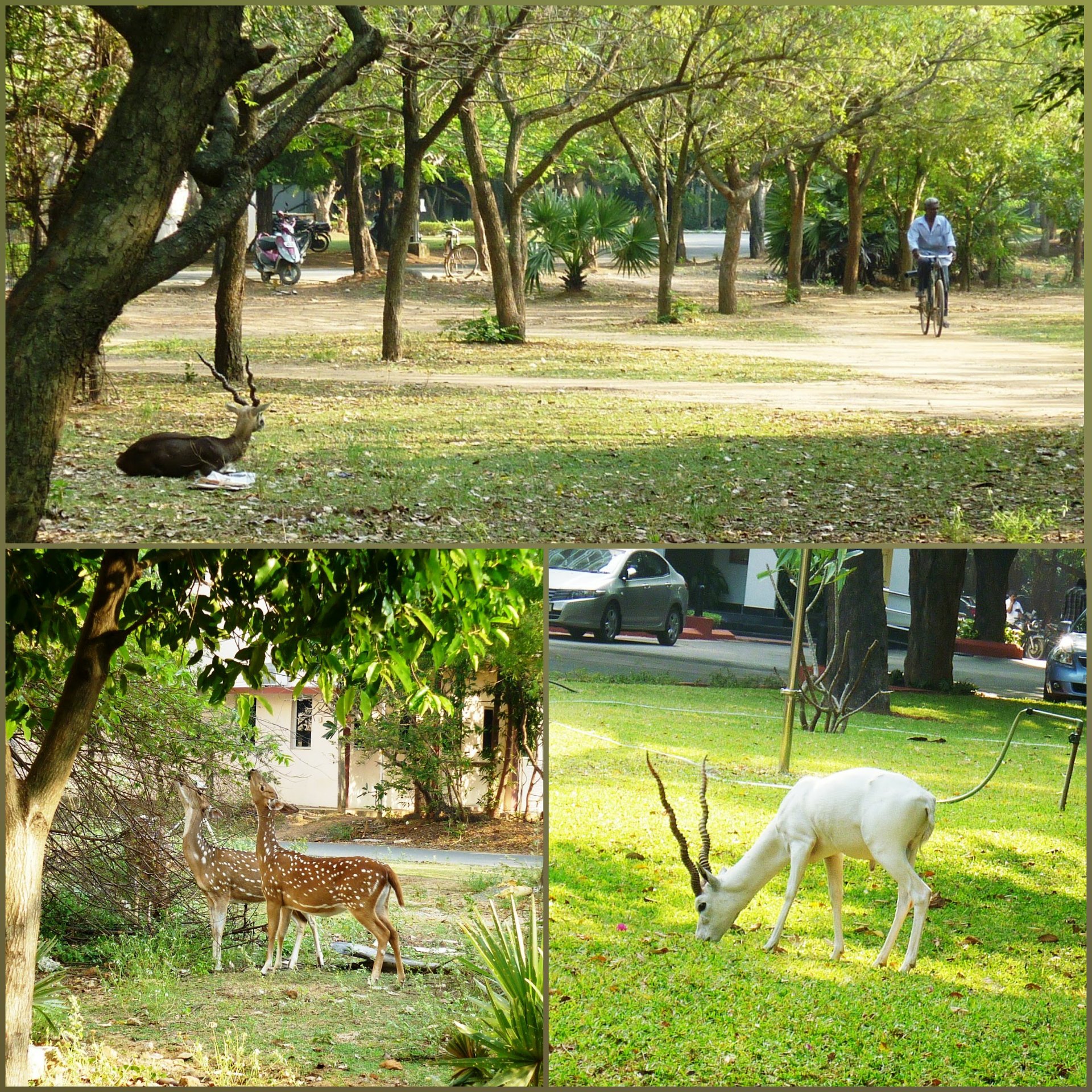
IIT-Madras is located adjacent to Guindy national park(the 8th smallest in India)- the last bit of the tropical dry evergreen forest in India. There is so much greenery in the entire canyons, that our cycling stint was indeed refreshing. This allowed me to witness the harmonious co-existence of man and the wild, in an urban setting. While the Black bucks, spotted deers etc. walked around fearlessly on the campus, the humans went about their businesses without coming on the ways of these wild animals.

Wildlife at IIT Madras campus
Wild animals walking around freely inside the IIT-Madras campus

After we had pedalled around almost all corners of the campus, we checked in to the ‘cafe coffee day’ on their campus. Since restaurants are heavily subsidized in such institutions, this was the “Cheapest” CCD I had been till date. It was 5.00.p.m. something and we still had so much time left. So, we decided to hit the “Elliot Beach” in Besant nagar about 6.kms from IIT-M.

We had some corn, I bought a Rajnikanth mask, flew a kite etc. on the sea shore. We did all that which helped us to kill time. The beach was a wee bit dirtier than the ones I had seen all my life (in Mangalore and Kerala). Meanwhile, I waited patiently to see the sunset. I waited and waited… and it was dark already. Only then did I realize that the sun only rises in the East coast 😛

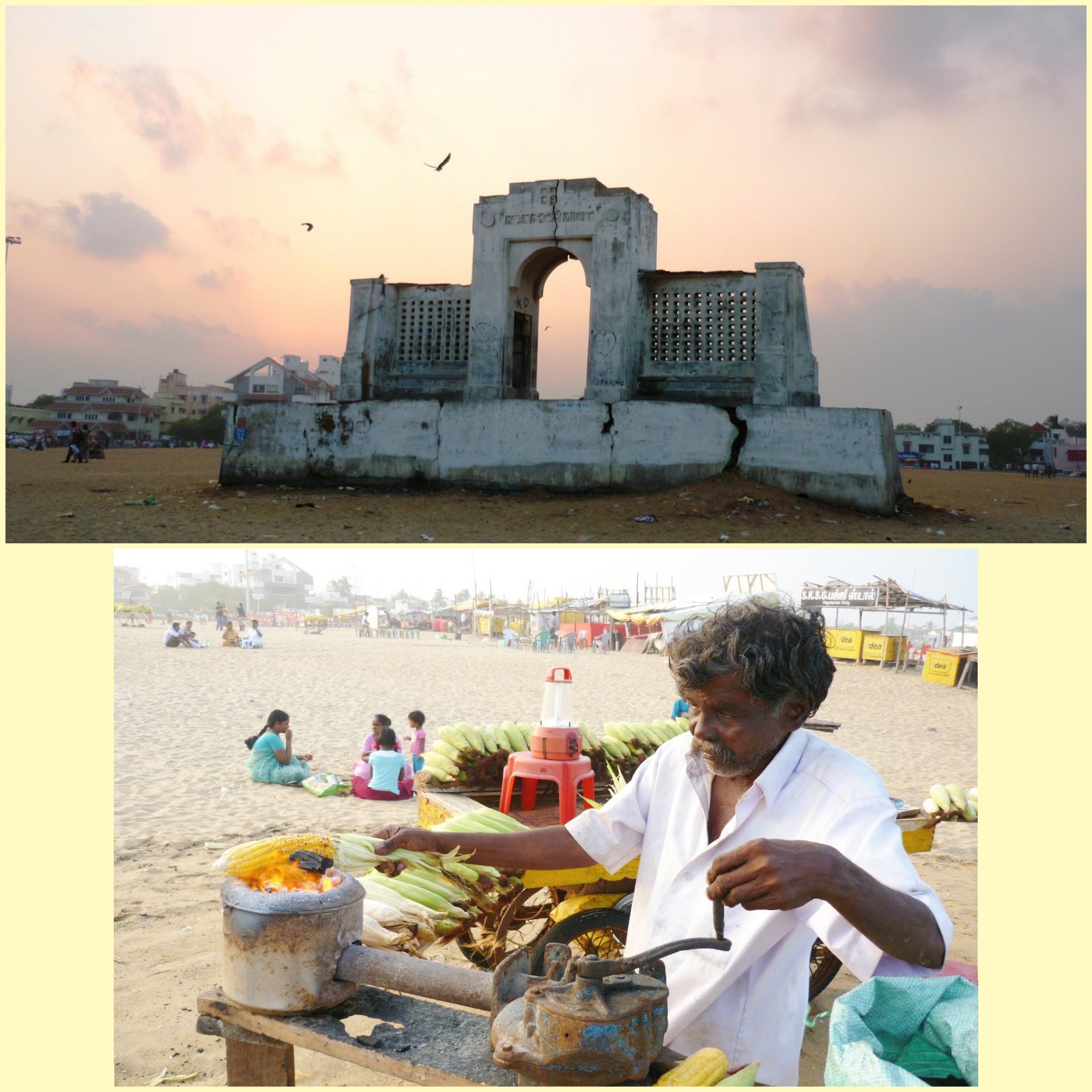
Besantnagar beach in Chennai
Top:The Karl Schmidt memorial; Below: A corn vendor at Elliot’s/ Besantnagar beach

It was going to be 6.30.p.m and we thought it would be wiser to leave, because we had to brave through the Chennai traffic so that we made it on time to the airport.

All in all, a day well spent. Looking forward for many more business trips 😛