Tag Archives: tradition

The best of Trivandrum in a day

I had the opportunity of visiting this city in the southernmost part of India as a part of a Business trip. Our work was mostly sufficient to do for one full day. However, the transportation options connecting Bengaluru to Trivandrum weren’t convenient. Trains took nearly 48 hours one way and the distance is too far to cover by road. The connecting flights are scheduled around noon. Hence, by choosing to fly to complete my work assignment (as a car doctor), I had some time to explore the city as well. Since my visit spanned over a period of three days, I used my spare time (early mornings and evenings) to cover major landmarks in and around Trivandrum (officially called as Thiruvananthapuram). If you are someone visiting this city for exclusively tourism purpose, then these places can be covered in one day and combine it with an additional day trip to Kanyakumari- the southern-most tip of mainland India.

My Itinerary:

Day 1: Bengaluru to Thiruvananthapuram (morning flight), drive past Shangamughan beach, Sri Padmanabhaswamy temple visit, Puthenmalika / Kuthiramalika Palace & wooden museum,
Day 2: Shopping at SMSM institute crafts emporium, Maha Chips store, Covalam beach & Vizhinjam lighthouse.
Day 3: Return from Thiruvananthapuram to Bengaluru (Flight)

The details:

Was it the coastal line being abundantly lined by the coconut trees along with the rhythmic beats of the famous drums resonating in the air? Or could it be the SUVs & MUVs that underwent the brutal checkup by me during my so called ‘Business trip’? Well, I’m not sure. But, all these definitely made my visit to this little silent capital city, an AWESOME one. A city of Trees & Vans & Drums put together, Trivandrum it was!

Day 1:

A morning flight from Bangalore landed my colleague and myself at the Trivandrum airport by 09.30 a.m. A car was waiting for us outside, which drove us past a fishing hamlet enroute to our workplace. We began our work without wasting much time. My job (as a car doctor) more often involves driving around the places we go to as part of the checking routine of the automobiles. It was no different here either.

We got to see scenic and offbeat roads around this capital city of Kerala. Fishing dories anchored, fishermen carrying their day’s catch, the blue sea water reaching to the horizon and a lovely lady’s figurine sculptured by the Shangamughan beach side were some of the views I caught from the cabin. Further, as we crossed the toll road and drove across a bridge through the by-pass road, we were greeted by the backwaters dotted by the houseboats. It was indeed a warm welcome to the city..

After finishing the day’s work in the evening, we freshened up at the hotel and headed out for the much anticipated part of our visit to Thiruvananthapuram. A visit to the richest temple in the country: Sri Padmanabhaswamy. For all the hype and media space grabbed by this temple, I had expected a BIG crowd of tourists(Not Pilgrims) here. I had imagined the sight to be like all other famous temples in India with fussy godmen, lot of petty shops dotting the walkway selling pooja items etc. among other things. But in total contrast to what I had imagined, this has been one of the BEST temples I have visited till date (among the well-known and famous landmarks).

I’m not a pious or a temple person, but this place has truly stood apart. I am someone who believes that ‘a temple is a place where one has to FEEL god and that’s possible only when the place is PEACEful’. I prefer holy places to be silent and less-crowded. And this place stood out for just that..!! A strict dress code and prohibited entry for non-hindus, a stringent adherence to the temple rules, limited crowd, silent ambience, an eyeful of the darshan of the massive idol lit by mere oil fed lamps: The place hadn’t given up its sanctity in the form of commercialisation, to all the attention grabbed by it’s hidden chambers of gold.

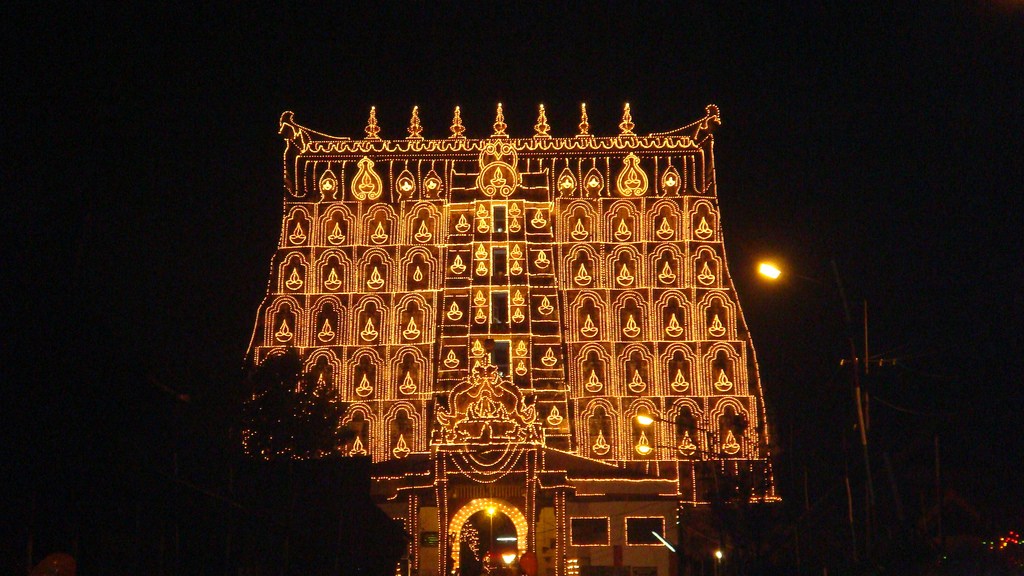
Main gate - Padmanabhaswamy temple
Main gate – Padmanabhaswamy temple

After offering our prayers, we visited the old wooden museum inside the Puthenmalika / Kuthiramalika Palace just outside the temple premises. The structure built by the erstwhile Travancore kings is a damn nice place for the art lovers. Like most regions in Kerala that sleeps with the setting sun, we headed back to the hotel to call it a day.

Day 2:

After finishing our work around evening, we set-out to do a little bit of city trotting. No visit is complete without taking back souvenirs. The rule in my work team is (on a lighter side), ‘Whether you finish your assigned job or not, whether you return safely or not, we don’t care. Bring us souvenirs and the local snacks to eat.’ So, we shopped for some local crafts at SMSM institute crafts emporium.
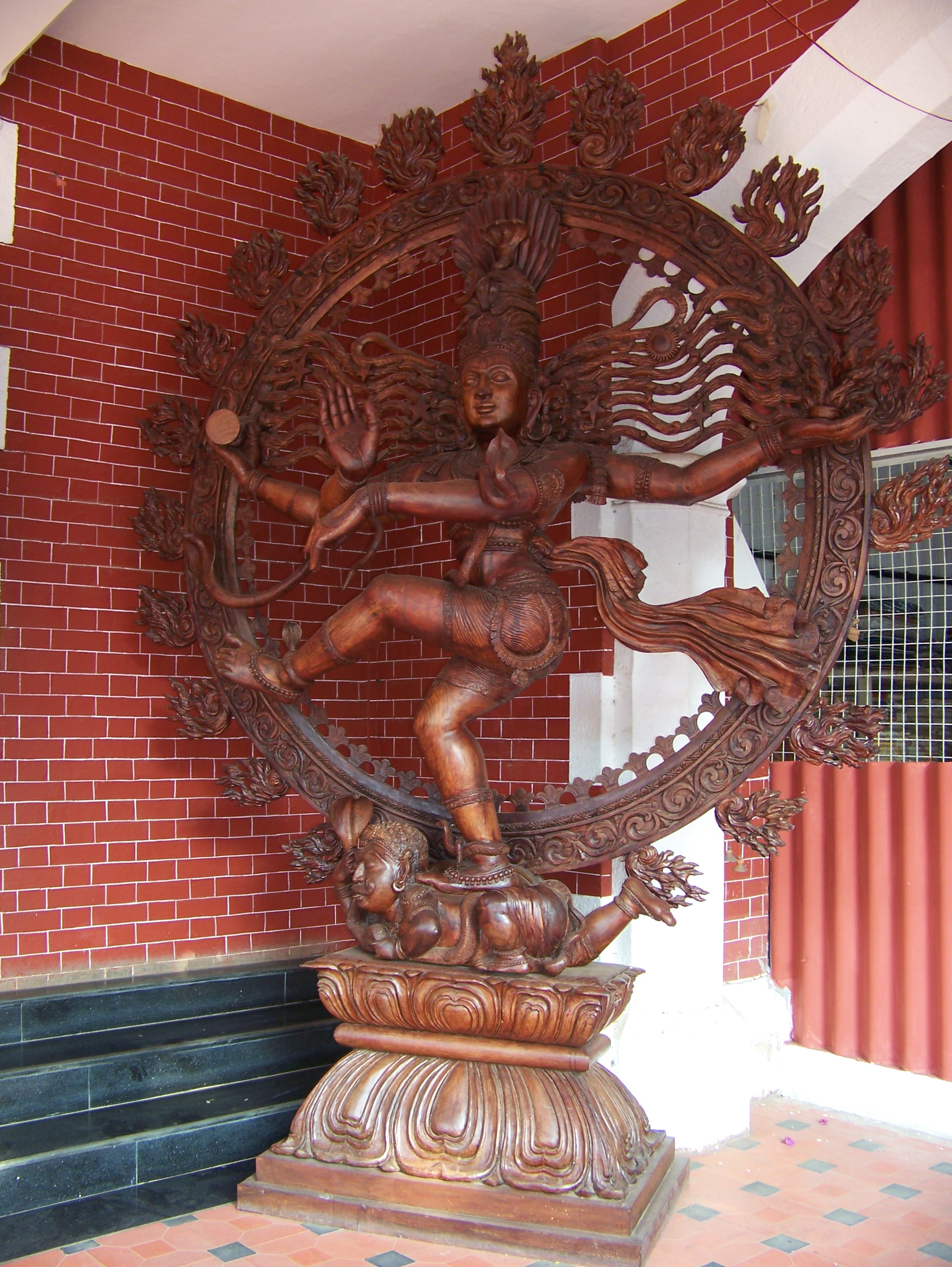
SMSM institute crafts emporium
A wooden piece of art at SMSM institute crafts emporium

From there, we walked through the narrow lanes to one of the biggest shops I have ever known that sells just ‘CHIPS’: ‘The Mahachips store’. Chips of different varieties, made to order and packed just then. I picked up about 10kilos of banana chips & jackfruit chips as giveaways, something that will be much awaited for back home in Bangalore, even more than my safe return. (The even funnier part was that this bag of chips was the single largest (Fragile) cabin baggage I was carrying with me. The cabin-crew was amused to know what was in it when she offered help to place it in the upper cabinet).

What’s a visit to Thiruvananthapuram, without soaking your feet in Covalam beach? That’s where we were headed next. After strolling along the beaches, we walked upto the Vizhinjam lighthouse for a good view of the sea. The view was simply delightful. A stroll along the crowded beach, beautiful view of the sunset, some yummy local chaats to munch on, it was indeed an awesome end to an eventful business trip.
And we head back to Bangalore in the earliest flight on the following day.
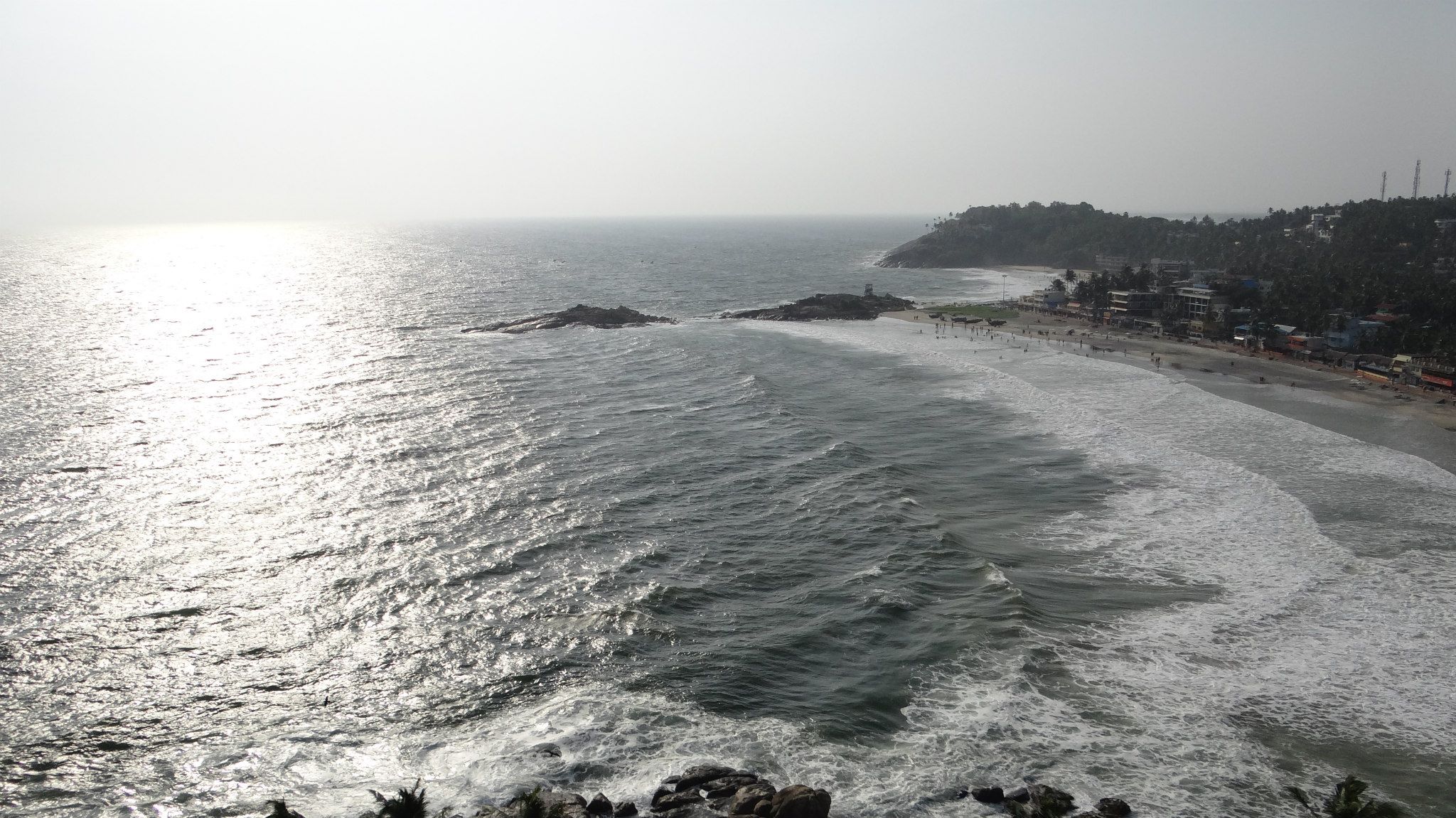
View from the Vizinjam lighthouse
The view from the Vizinjam lighthouse

Don’t miss to try these three things while you are in Trivandrum (or anywhere else in Kerala):

  • Fresh banana & jackfruit chips and Kerala halwa
  • Hot palam puri with a cup of burning hot Kerala tea
  • Frog thigh fry (available only in select places).

Madurai (Part 2) – Centre of arts and culture

There is no existence of a place without the people, and with civilization exists its culture. Madurai has its own share. My previous post (Madurai Part 1) was exclusively about the architectural landmarks spread across the city. But it would be injustice if the other things associated with this amazing city goes without a mention. Of course, the write-up could run into books if I had to write about each of them. And it isn’t necessary that everyone travelling is a pilgrim or a history buff or an architecture enthusiast. Hence, here’s an attempt to throw light on other aspects that any visitor to Madurai can expect. This is not a detailed one, but I touch upon various dimensions that you can theme your trip around Madurai. Do let me know if this post helps or if there is any other dimension I missed. Here goes my list.

Art:

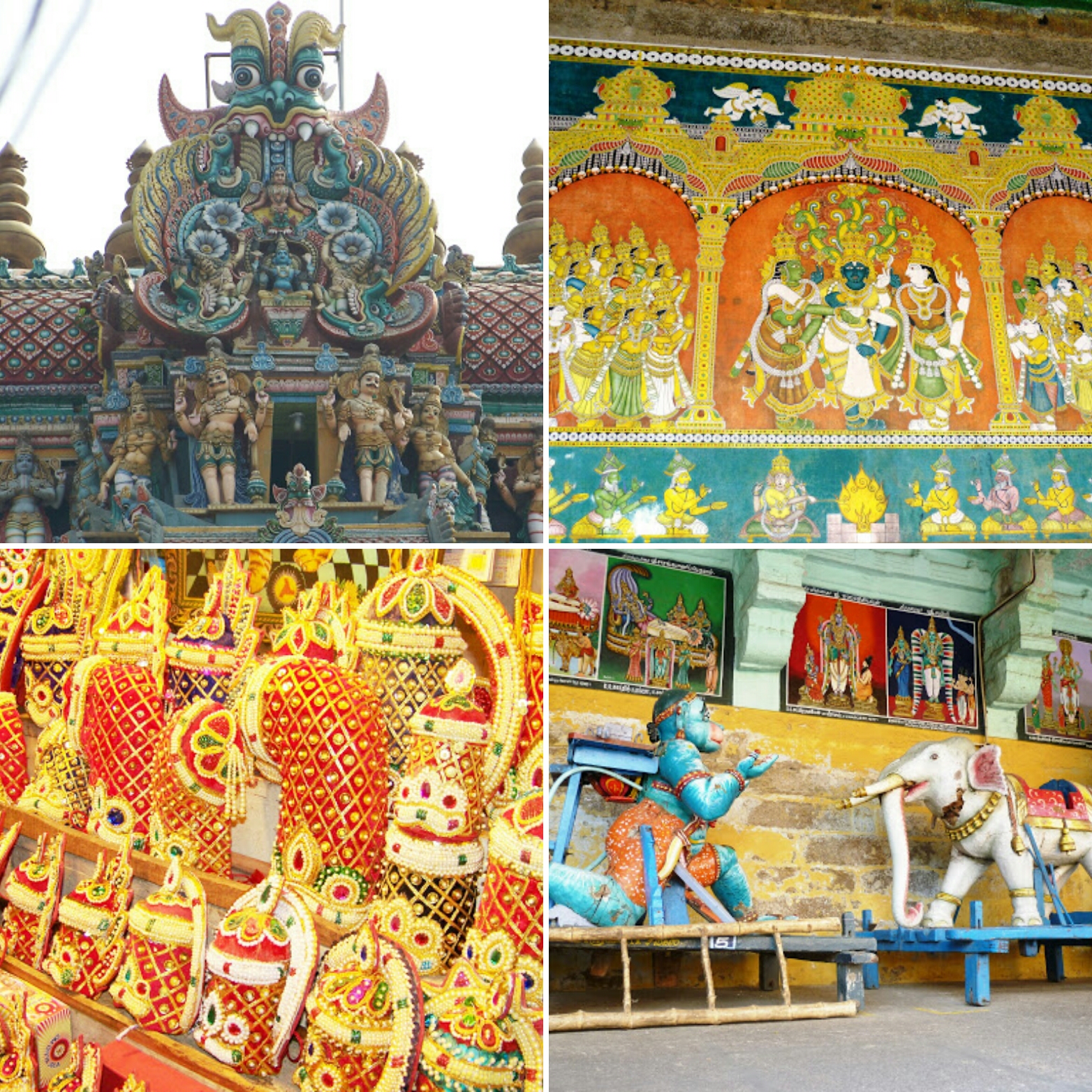
  • Sculptures: adorning every temple wall, pillar and their towers are a marvel in itself.
  • Carpentry: Several wooden vahanas used to carry the idols of the various deities in the temple are something that need the attention of art afficionados.
  • Handicrafts: Various accessories used for decorating Devi idols, made of delicate sequins, etc. are sold in several stall inside the large corridors of the Meenakshi temple.
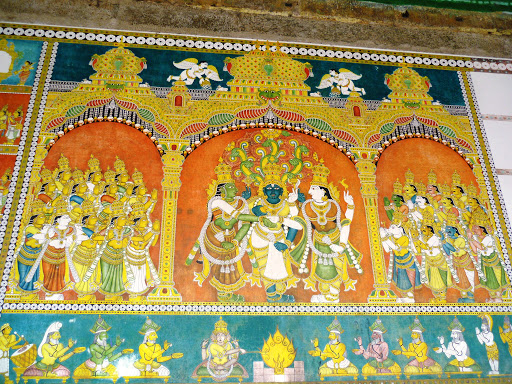
  • Mural paintings: This needs no introduction, the famous Madurai paintings are a gift of the Pandyan era, adorning the temple walls.
Clockwise from top left: 1.The sculptures on the western tower of the Meenakshi temple; 2.One of the mural paintings from the temple walls; 3.The wooden carriages for the temple idols; 4: Handicrafts from the temple stalls

Food:

Listing just a fixed menu while in Madurai would just be an understatement. If you are a foodie, Madurai would need two full days to explore its culinary delights alone. It is famous for both vegetarian and non-vegetarian specialties. I’d probably write a separate post about it sometime later. But this list is the list that we had when my family visited. But believe me- it is BEYOND!

  • Breakfast – Idly & Sambar, Pongal + a cup of filter coffee
    11.00.a.m – Jigarthanda (it’s more like a combination of falooda & kulfi)
  • Lunch- Puliyogare @ the temple store, curd rice, Sambar rice
    4.00.p.m.- Karupatti (palm sugar) coffee
  • Dinner- Anything after 7.00.p.m is called meals. Must try is the ghee roast & rava Masala dosa

Costume:

  • Sarees for women & Dhotis for men.
  • Madurai cotton sarees with simple prints and zari borders with temple designs are popular.

Jewellery:

Among the locals- particularly those belonging to the Thevar cast, it is believed that women are prettier with bigger earlobes. Hence, the girl child born in this community is made to wear a traditional earring called the ‘Thandatti’ when she is young. The thandatti is said to evoke the 3 levels of our world: terrestrial, astral and divine and these levels are associated with Mandala. Each piece of this weighs 27gms and is made of gold and this piece of jewelry is specific to Madurai.

A Thevar woman wearing the traditional Thandatti earring

Shopping:

Shopping at Madurai is all about wholesale vendors and there are specified streets for each of them.

  • Cotton sarees/ dress materials: Shops are all around the temple complex
  • Steel utensils: Plastic beads & girls’ accessories, gold plated imitation jewelry to name a few.
  • Pooja related accessories & crafts: Particularly inside Pudumandapam (1000 years old market)
  • Farm produce: Varieties of plantains / bananas and green groceries among the others.

A brief intro to a city full of life and activities. Justice yet to be done. Signing off with a hope that it has helped someone somewhere in some form who is seeking for some info on this Pandyan city….

Exploring the Architectural Marvels of Madurai

This was a family backpacking trip planned exclusively to explore Madurai. This city has served as the capital of the Pandyas and is a key destination that has nurtured the Dravidian culture. For anyone who hears the name of this famed city, they know of the Meenakshi Amman Kovil. A typical traveler / tourist / pilgrim would visit just that temple and takes pride in marking it in their travel map of places visited. But what one doesn’t realize is, that Madurai is beyond just this. The contribution of the Pandya kingdom is not limited to just the Madurai Meenakshi temple and can be seen and felt in several structures just around the same city. Also, a portion of the Madurai city has a history beyond the Pandyas too. Hence, our family wanted to reserve this long weekend, exclusively for Madurai. We boarded an overnight bus from Bangalore and reached Madurai at 6.00.a.m. on the following morning.

Like most of our family trips, we wanted this also to be an impromptu vacation. Apart from to and fro travel, nothing else was fixed. As per me, you would need a good 2-3 days to have a quick run around doing this same itinerary as ours, exploring ONLY Madurai. If you are an art and history buff or a foodie, I warn you to carry additional days!

Itinerary:

Day 0: Leave from Bangalore by night (KSRTC Bus)
Day 1: Reach Madurai. Visit Meenakshi temple, Thirumalai Nayaka Mahal, Vandiyur temple tank, Koodal Alagar temple, Gandhi museum, Pudumandapam.
Day 2: Alagar Kovil, Alagar Murugan temple, Pazhamudhir Solai temple, Tiruppanakundram Murugan temple, Dargah of Hazrat Sultan, return to Bengaluru.

The details:

After alighting the bus, we walked around the Meenakshi Amman Kovil to find a good hotel. Since this is the heart of the city, it wasn’t hard to find a decent lodge around there. We checked into a hotel that was located just in front of the temple’s west gate. We freshened up quickly and left for the main part of the trip for anyone visiting Madurai.

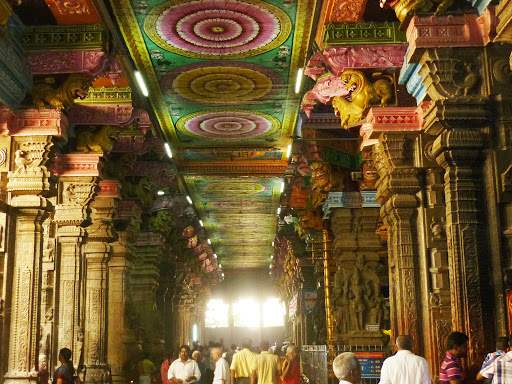
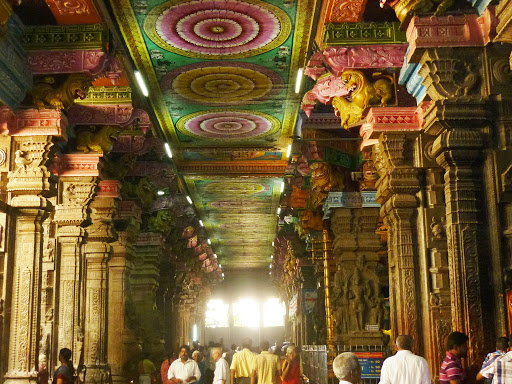
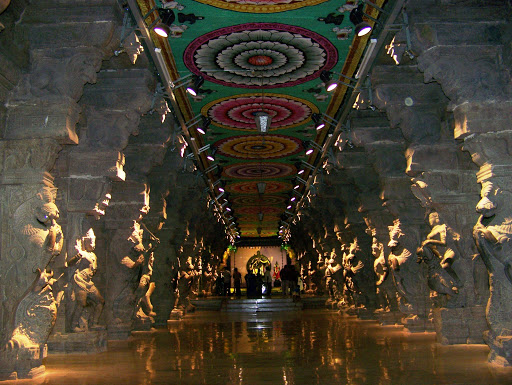
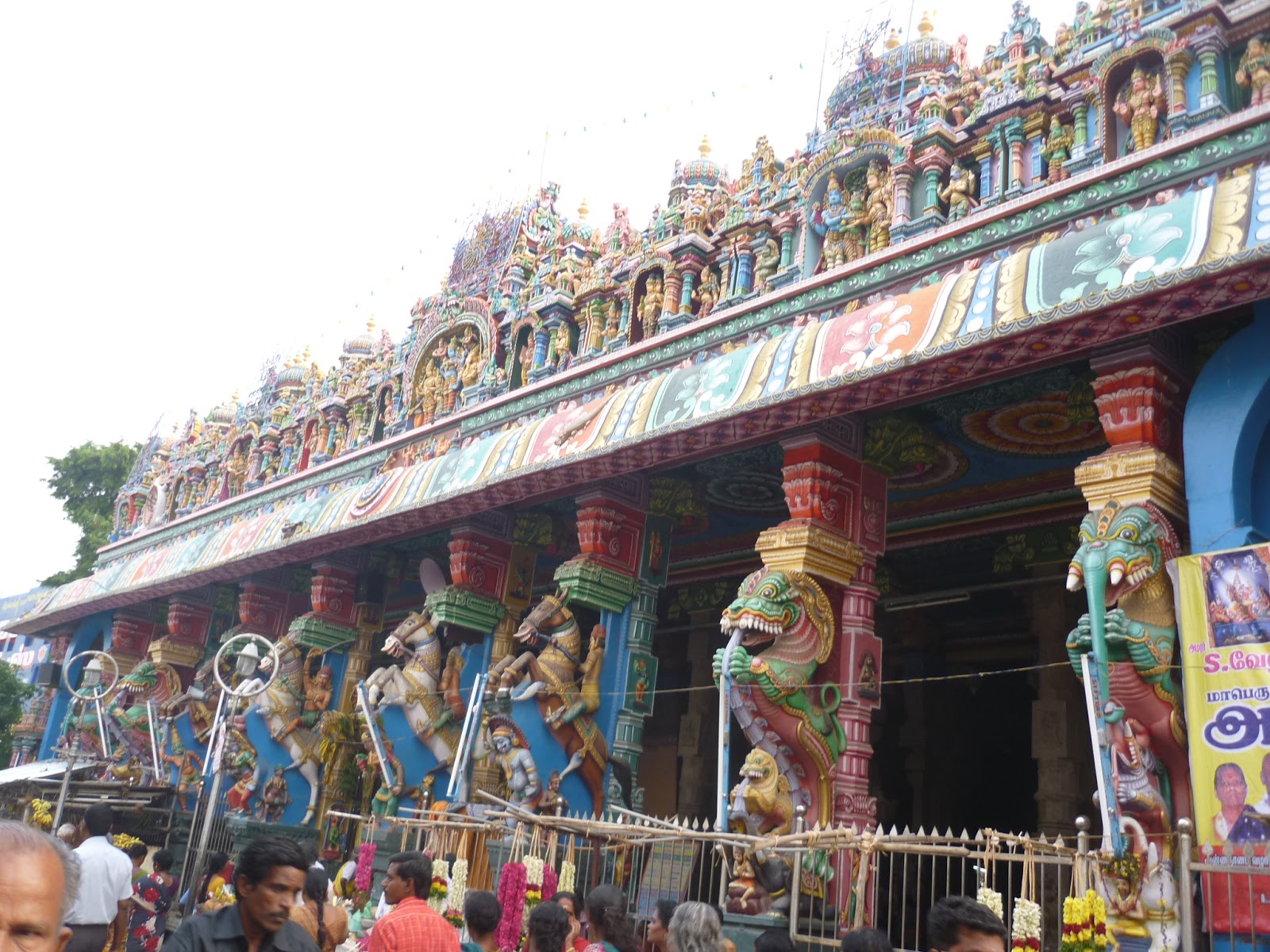
  1. Meenakshi temple: A visit to the abode of the Pandya architecture. The entire temple complex is fortified and has 4 entrance towers, one on each of the 4 directions. The sculptures on each of these towers are out of the world. Once inside the complex, I started to wonder which world of wonder I had stepped into. It took us more than 4 hours to finish only a quick walk around inside the temple and also get the darshan of Meenakshi Amman and Lord Sundareswaran.
The finely decorated interiors of the Meenakshi Temple

There are a lot of stalls inside the complex selling various handcrafted articles. The temple art museum within the same premises is a must visit. The central sculpture of Natarajan, or the dancing form of Shiva is believed to be one of the Pancha Sabha of the lord. This place represents the silver hall and Shiva is believed to have performed the ‘Sandhya Thandava’ dance form here (More on the Pancha Sabha Kshetras in another post). Also, there are 1000 pillars, all decorated with intricate pieces of sculpture. The dim light used for each pillar added up to the beauty of the place. The Madurai paintings adorning the walls of the temple requires another post to talk about. I go speechless when I get to explain about the South Indian temples. They are beyond words. Internet has plenty to feed and I don’t want to get into the details. After a tour of this massive temple complex, we decided to head out to explore the city beyond the Meenakshi Kovil.

Inside the Temple art museum

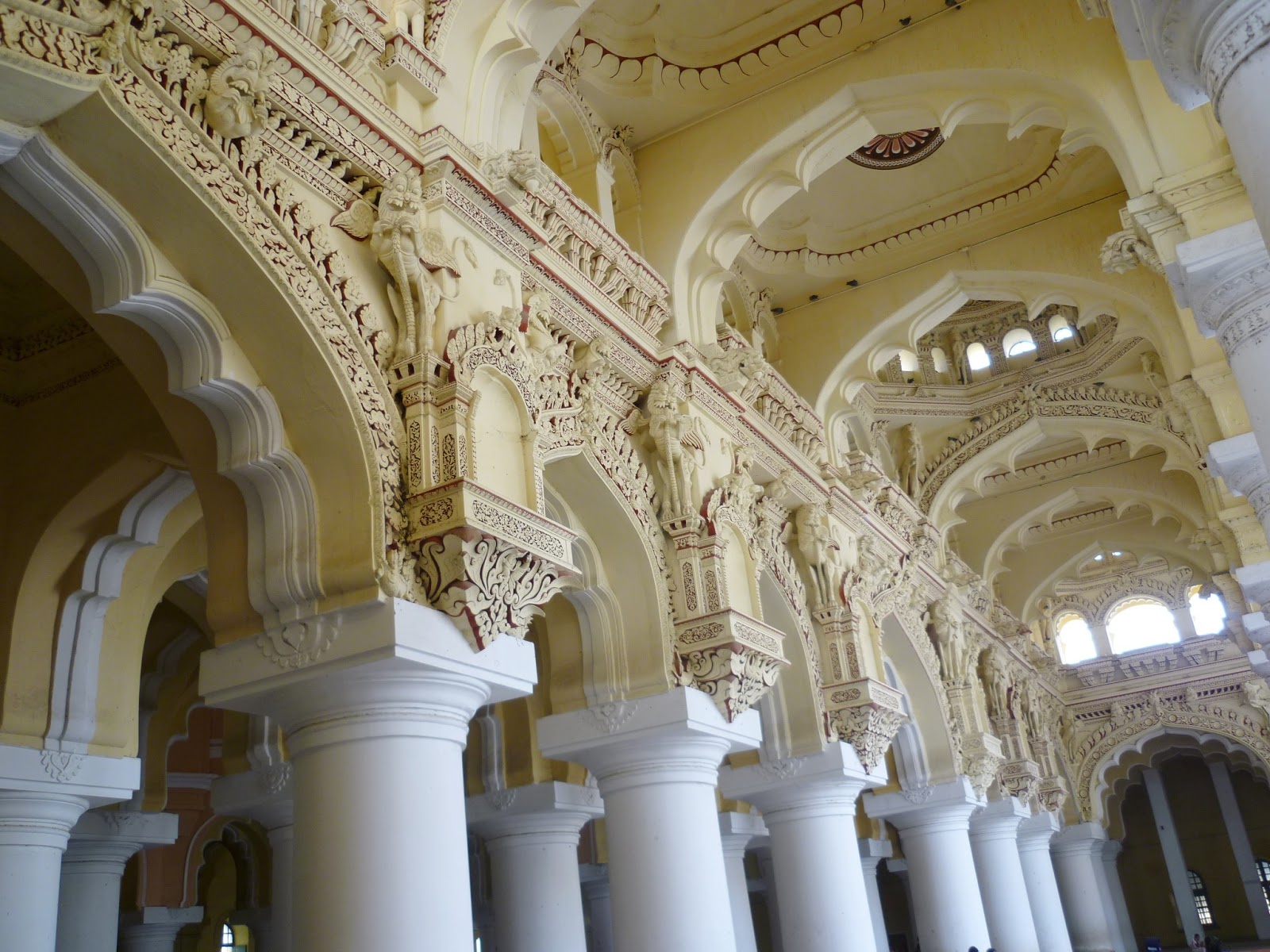
2. A small walk through the narrow lanes took us to the Thirumalai Nayaka Mahal built in the 16th century. Fine architecture with elegant paintings on the roofs and vaults is neatly presented in a simple combination of half-white and velvet red colors. There is sound and lights show conducted here every evening. However, we could not make it.

The interiors of Thirumalai Naickar Mahal

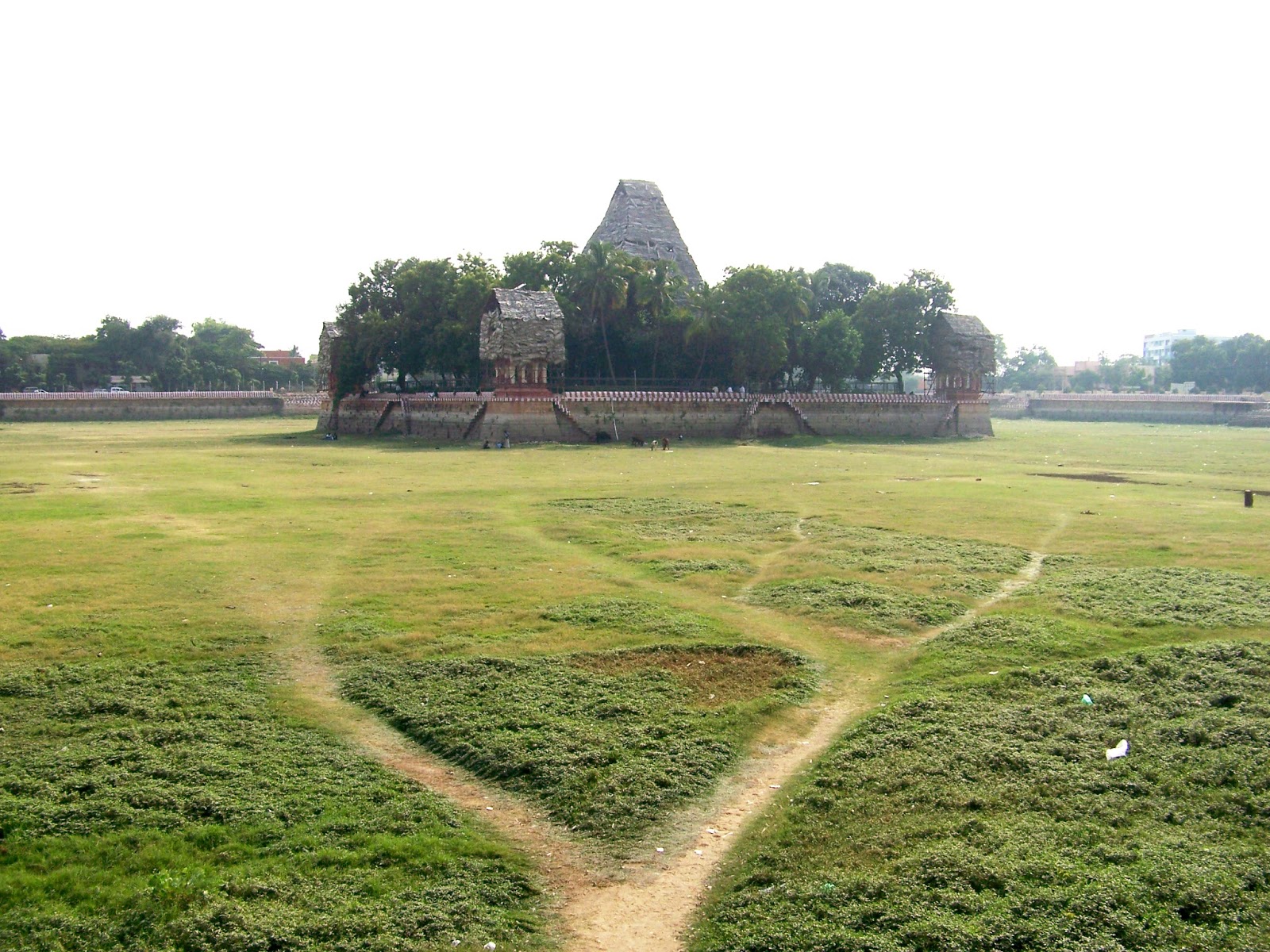
3. From there, we took a local bus to Vandiyur. This is where the annual event of the famed Teppotsavam / Float festival takes place to celebrate the birthday of King Thirumalai Nayak in January. This tank is supposedly the biggest of its kind in the state of Tamil Nadu. With the float festival just 2 months away and monsoon season just passing by, this tank still remained dry during our visit. When we enquired with a few locals passing by about how the event was going to be conducted in a dry tank, we were told that the water will be fed in January from the Vaigai river through artificially laid underground channels. This is truly amazing how such a concept was laid way back in the 16th century. But for a newcomer like me, the dried lake was an eye sore as it was used was a watering hole by many vandals at the time of our visit.

Vandiyur Mariamman Teppakulam - the island temple
Vandiyur Mariamman Teppakulam – the island temple

4. Taking another bus from there to Periyar and a small walk from there through the stinking / dirty by-lanes, we reached the Koodal Alagar temple. A quick pooja and a walk around the temple was a nice boost up. The architecture here too, is similar to that of Meenakshi temple.

5. We had to rush to The Gandhi museum as it would close by 6.00.p.m. However, we could not make it on time. This was once called the Tamakkum palace of Rani Mangammal. Today, the museum supposedly houses 14 articles that were used by Gandhiji, along with his sacred ashes and blood-stained dhotis. Gandhiji is said to have visited the city five times during his lifetime.

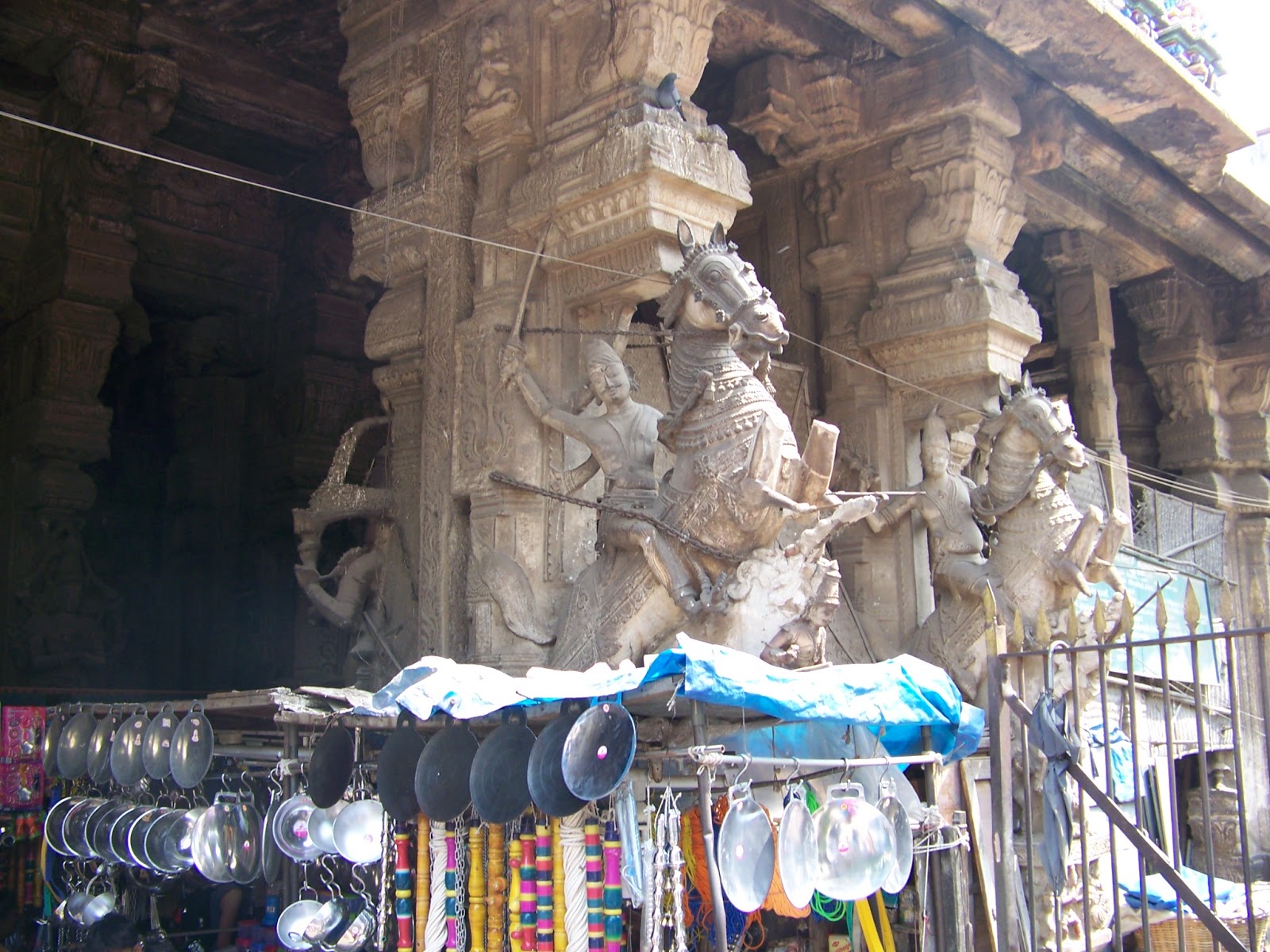
6. On our walk back to our hotel, we came across an old marketplace called as Pudumandapam. This is a 1000 years old shopping mall, supported by huge sculpture rich stone pillars. The stalls are occupied with tailors, handicrafts vendors, wholesale dealers of pooja related and general accessories. A good place for shopping traditional artefacts at Madurai, and that too in a market that is so old!

Entrance of the Pudumandapam

7. On the following morning, we boarded a local bus from Periyar bus stand to travel 21kms towards Alagar Kovil. The temple is dedicated to Lord Vishnu, Meenakshi Amman’s brother. The village is surrounded by an old fort wall, it gives a good view of the green hills around the temple. The architecture is similar to Koodal Alagar temple in the city.

8. A trek of 3kms uphill, through green forests and monkey infested walkways lead us to the Murugan temple. It is one among the six abodes of Lord Murugan and hence important among the pilgrims.

9. A walk of half a kilometer further uphill took us to Pazhamudhir Solai temple. A temple dedicated to Goddess Rakkaya exists close to a natural spring called Nuburagangai here, where devotees take a holy bath. But what seemed strange to me was that the place was probably the only temple I had ever been to, which charges an entry fee into the temple itself. This is where the famed Chittrai festival is observed during the month of April.

10. From there, we took the next bus back to Periyar, from where we had to take another connecting bus to Tiruppanakundram. This was a cave temple at the foothills of a hillock. It is believed that Lord Murugan was wedded to Devyani, daughter of Indra at this place. Hence, this is also counted one among the 6 abodes of Lord Murugan.

Entrance to the Tiruppanakundram Murugan temple

11. Up the hills, is the Dargah of Hazrat Sultan Sikandar Badshah shaheed Radiyallah Ta’al anhu. Owing to time constraint and exhaustion, we thought of skipping the climb.

Other lesser known places we skipped due to time constraints were the Kazimar mosque and Goripalyam Dargah. At the center of the city is the Kattabomman junction. This is where a part of the old Madurai fort exists. Today this is not more than a public library. Further, every street in the city has a history behind it: This link to an article from “The Hindu” don’t do this usually, but would make a special mention about the streets of Madurai. Every street in the city has a history behind it: This link to an article from “The Hindu” explains it all- Where moats made way for motorways

This was all about us getting around the place for seeing some of the historically important landmarks around Madurai. But the list is endless and time, very limited ☹ I have covered a few other must-do things while at Madurai in a separate post. I wish to be of some use if you are planning a trip there. (Click here to read further)

The abandoned tribes and the abuses- Kunde Habba

I had always wanted to witness this celebration but had been quite apprehensive about facing the wrath of the abuses that would follow with the joy of celebration.. And moreover, this festival happens in the southern part of Kodagu district and I always got to know about the celebration of this festival only after it was over!

But some wild wishes and what one truly seeks, do come true. This time my encounter was unplanned and I’m glad it happened.. I got to witness the unique celebration in Kodagu district, of a festival called “Kunde Namme” a.k.a. Kunde Habba or the “Festival of abuses”.

The tribes belonging to the Jenu-kurubas, Betta-Kurubas, Yeravas, Paniyas, Kembetti and other sects all congregate in a common place- usually a town area to celebrate their festival of abuses and to make merry. By abuse- I mean abuse God, man, machine and everything that they come across on that day. This is a tradition that has passed on through generations among these tribes.

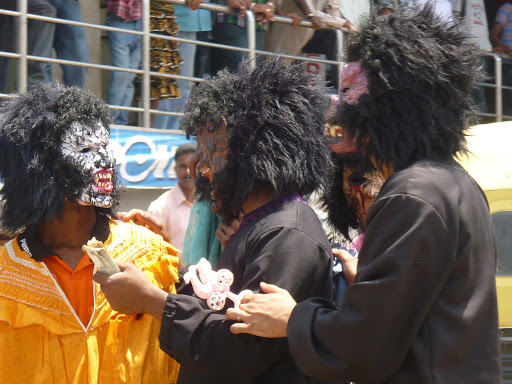
Kunde Namme- The masked men

Legend has it that the main deity Aiyyappa had taken the tribe into a thick jungle for hunting. Deep in the jungle, he fell in love with Bhadrakali and eloped with her leaving his followers abandoned. Since then, the day is observed every year where these tribes abuse their god for betraying them. They find god in everything and every person they come across and hence abuse them in turn.

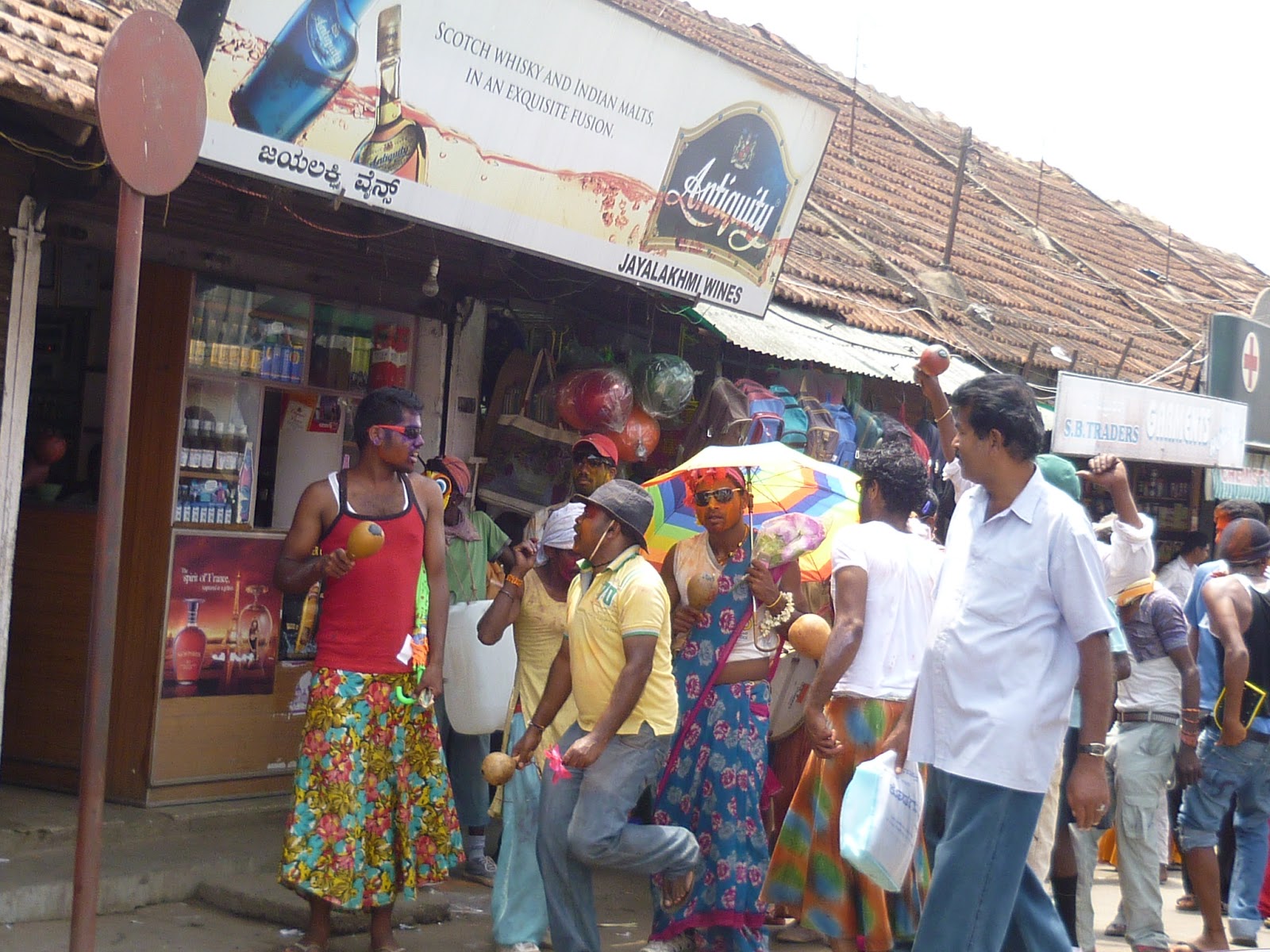
The tribal folk, mostly men are togged in weird clothes. Many take to cross-dressing, some dress like ghosts, some like witches and some dress up in costumes that are just random and as weird as possible.

They block every man(folk who belong to communities outside the above mentioned tribes) on roads, barge into shops in the town and demand money. If their demands are not met, then profound abuses are hurled at them. But one must not assume that they can escape from the wrath of the abuses by simply meeting their demands- they still get abused..!! Remember, no god will come to your rescue on that day as he himself is in being abused 😀

Kunde Namme- Dressed up men all set to charge into a shop

Also, most of the members of this group belong to the labour class who work in estates, domestic helps etc. Hence, the day doubles as a good opportunity for them to vent out all the frustration on their masters..!!

Kunde Namme- The band set guys

But, by the end of the day, they all congregate in their common place of worship and surrender to their god, plead for his mercy and ask for his blessings for the rest of the year. A portion of the total money collected by them on that day is religiously offered to the deity and the remaining is used for a lavish community dinner.

This festival happens on the 4th Thursday in the month of May and is celebrated in and around Gonikoppal considering its proximity to the Nagarhole National Park where most of these tribes are based.