Category Archives: Festivals of India

Its all about the lesser known festivals of India.. through my eyes…..

The not so Holi- Festival of Braj Bhoomi

Holi is Big in Northern India and the most beautiful in the Braj Bhoomi- the Land of Lord Krishna. Festivities start a week in advance with Lath-mar Holi in Barsana and Nandgaon, phoolonwali Holi (Holi played with flowers) and Widow’s Holi in Vrindavan, Huranga at Baldeo and Holika dahan and Rangowali Holi at Mathura and Vrindavan are some of the major parts of the festival. Articles, blogs and photos are all over the internet about how beautiful this celebration is and the fun of participating in the festival of colours. Deeply inspired, a two week trip was planned through the state of Uttar Pradesh whole-ly, to soak in the festive fervor of Holi.

This visit to Mathura is a part of my fortnight long backpacking in the typical pilgrimage circuit of Uttar Pradesh covering Lucknow- Ayodhya- Faizabad– Varanasi- Saranath– Allahabad- Agra- Mathura-Brindavan- Fathehpur Sikri– Delhi

As per plan, we reached Vrindavan to spend the last two days of Holi- the main days and get coloured in different hues of Gulal. The plan was to reach the hotel, change to clothes that we had kept aside specifically for Holi and then go out to the areas where the colours were being thrown at. However, the entire town was already painted with colours by the time we arrived in our delayed train. A samaritan helped us get an e-rickshaw so that we could reach our hotel. The rickshaw had to squeeze its way through the crowd that had already gathered out on all roads. By the time we reached the hotel, we started to feel miserable about having wasted our leaves and having travelled all the way to Mathura from Bangalore was a big mistake. It was very unfortunate that our experience of the famous Vrindavan Holi was no-where close to fun. Although we were inside the rickshaw, we felt more vulnerable to getting coloured than the rickshaw itself. Goon like mobs would specially target people who were new to this kind of celebration. I had atleast 4-5 men together hold me by my head inside the rickshaw and colour my face. Few others even pulled my scarf and shawl to ensure that every inch of skin was coloured. No! It was not a pleasant way to welcome guests to a new place!

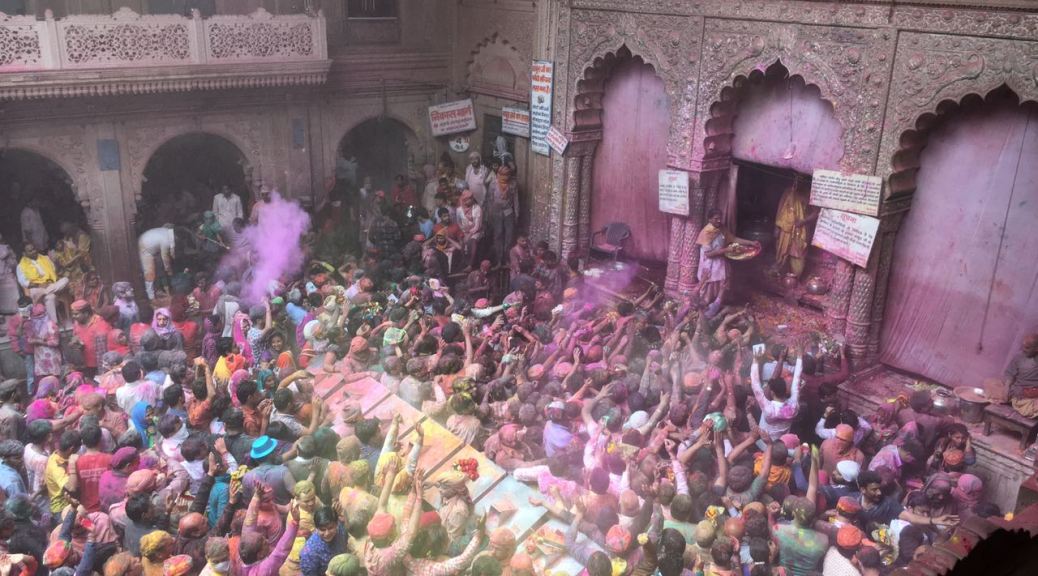
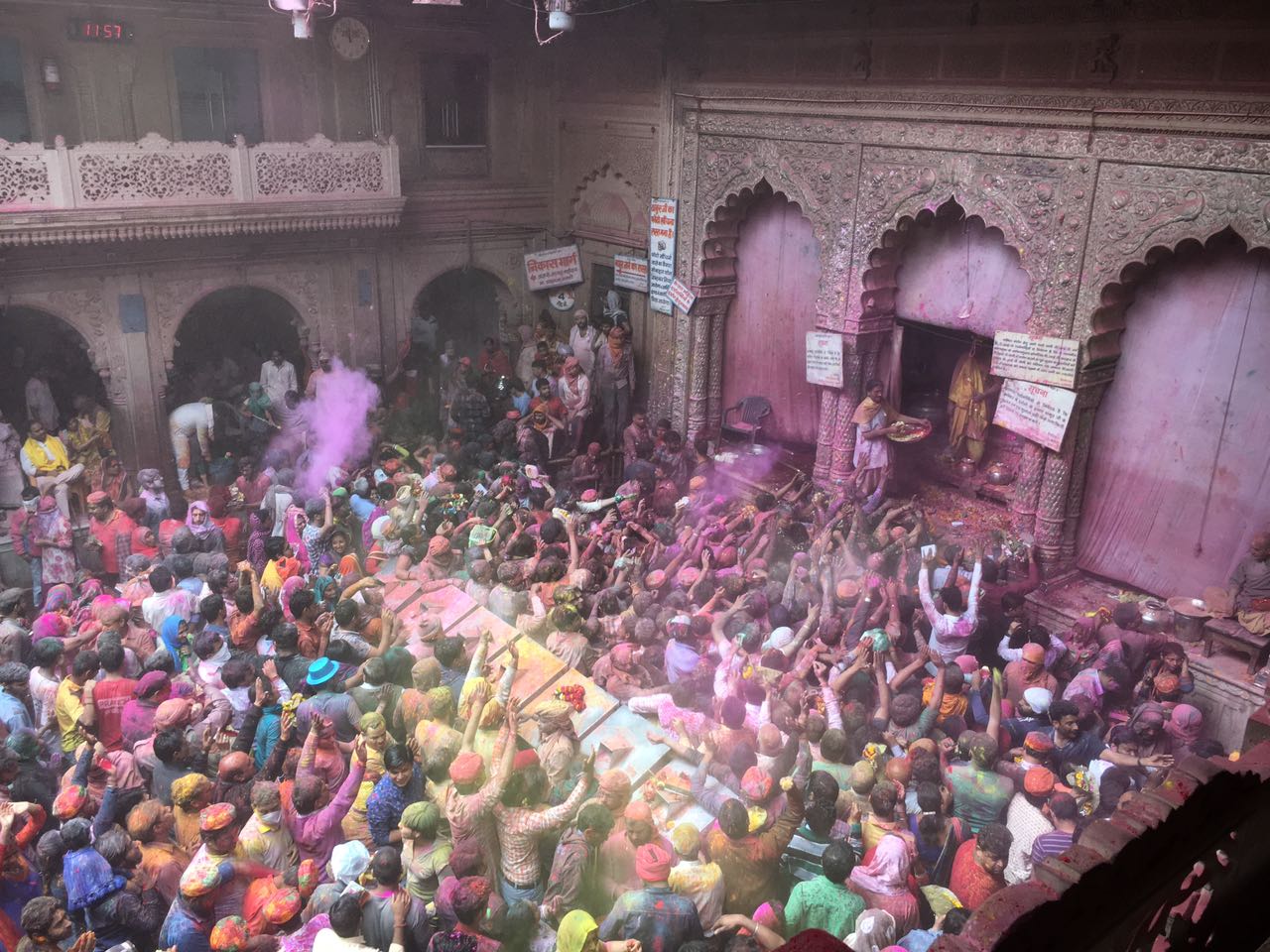
Banke Bihari temple in Vrindavan is where Holi is best celebrated with the priests throwing colours at everyone. On the day of Choti Holi, although we managed to go to the temple, we were drenched in wet colours. Leave that, our faces, hands and every bit of skin was chapped because we were smeared either with coloured cement or sand. This mixture is a norm and hurts like hell when it is being thrown at. We somehow managed to catch glimpses of Holika that were being burnt in some interior corners of the town. Women folk had gathered around effigies placed in the middle of firewood, food grains, vegetables and all other important things required for burning the pyre. We were colour soaked till the bone by the time we braved the task of reaching the safe confines of our hotel doorstep amid all the cemented colours and sand. Taking pity at our plight, our hotel incharge asked us to stay indoors the following day, as the last day could get wilder.

Finally, the main day of our fortnight long trip had arrived. But, we could barely think of venturing out on the streets on the day of Rangowali holi. Since our hotel was located in the main city area, we set our chairs out in the balcony of our room on the 3rd floor and watched the frenzy on the streets. It was disappointing to watch the Rangowali Holi turn into an event of Kheechadwali Holi (Holi played with water from the drainage). This kind of celebration can give the worst memories especially for girls and foreigners while goons attempt with ruthless amount of coloured glass powder. It can affect your eyes, skin, blood vessels anything! On top of it all, people are sloshed in Bhang and one cannot be sure of what’s gonna happen next!

Really, I’m not exaggerating the displeasure; the festival of colours is exaggerated through good photography by the photo enthusiasts who are all mostly male. I’d bet you not to plan your Holi trip to Braj with a bunch of girlfriends or with anyone who is new to this area. I strongly recommend you either plan on the day of Phoolon wali Holi or be a part of a private Holi celebration at a friend’s place amidst known crowd. This trip to Mathura has left scars of ir-repairable displeasure and sadness!

IMG-20170311-WA0001
The Banke Bihari temple Clicking credits: Gowtham Shastry

A Buffalo Valentine at Kambala

14-Feb-2016

The air painted red with romance and roses, the atmosphere illuminated with candles and balloons.. Couples holding hands out on dates- both young and old…. That’s the scene in rest of the world on that day.. But for me, Valentine’s day was an unusual form of celebration amid the Tulu-Naadu people. It was a celebration of folk culture and a celebration of earth’s gifts. While in some parts, it is the celebration post harvest, yet in other parts it is a celebration to commence the sowing season for the next crop. The Dakshina Kannada region, fondly called ‘Tulu-Nadu’ was a place where love and war co-existed on that day.. LOVE for a sport of thousands of passionate spectators and a WAR of prestige for hundreds of participating landlords. And amid all pomp and pride, a buffalo soldier fights it out in glory thus emerging as the showstopper..!!

A rickshaw ride from the Mangalore city centre traversed through some Kuccha roads, then across a highway and completely off-road to reach the banks of river Nethravati. Coconut tree lined mud road flanked with dozens of anchored fishing boats on the river bank ended straight at the arena where the big-event was set to take place. As I stood amid thousands of spectators in the gallery, the air felt heavy with anxiety. The show-stealers of the day walked down the ramp(Read it the slush pool) one-by-one to take their places and get set for their D-day. A day where all the effort and hard-work of hundreds of buffalo owners will be put to test. It was time to score off ‘Kambala’ from my bucket list when I decided to spend my weekend at ‘Joppinamogaru Kambala-2016’ in the coastal stretches of Mangalore.

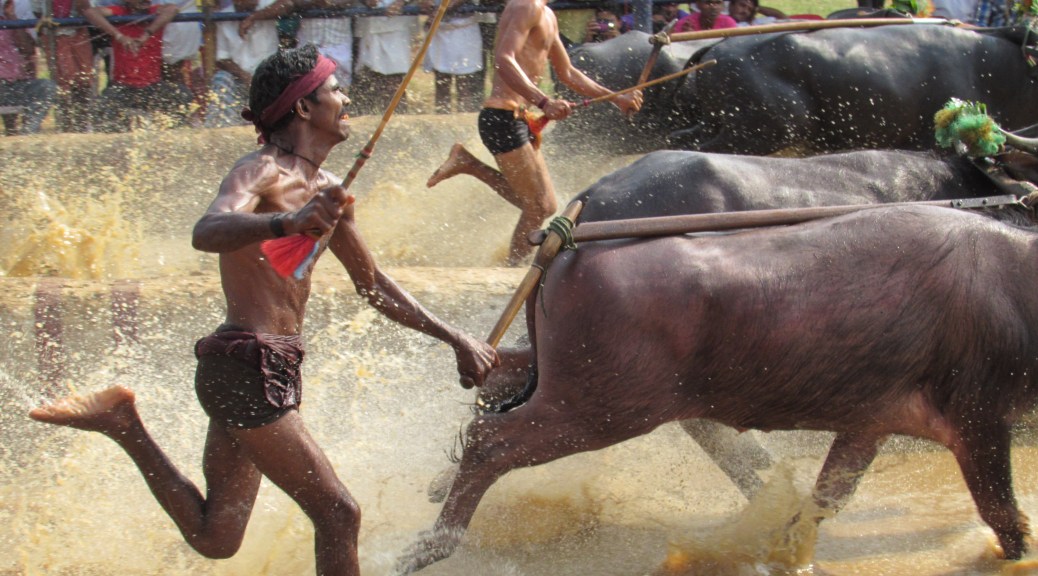
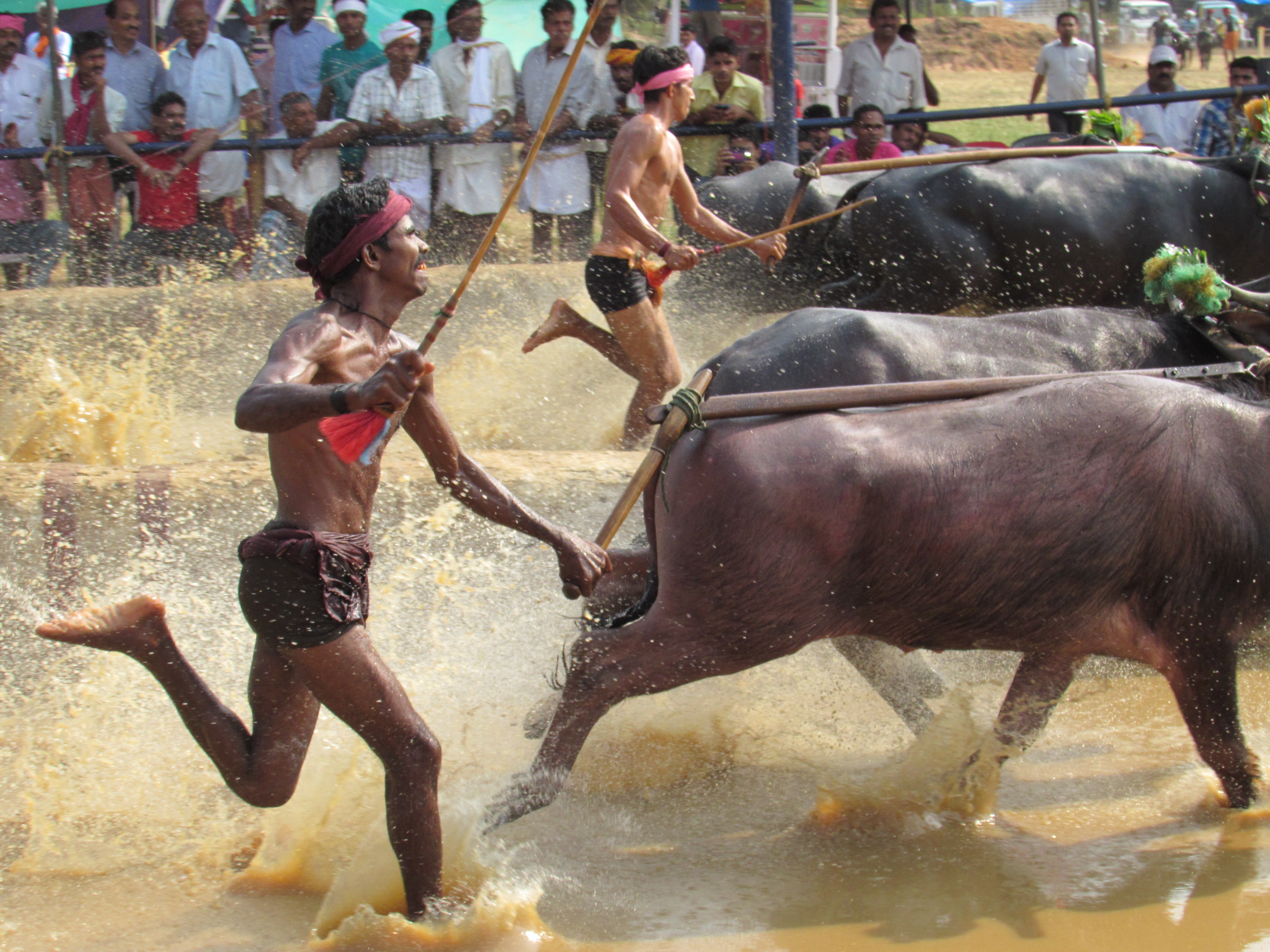
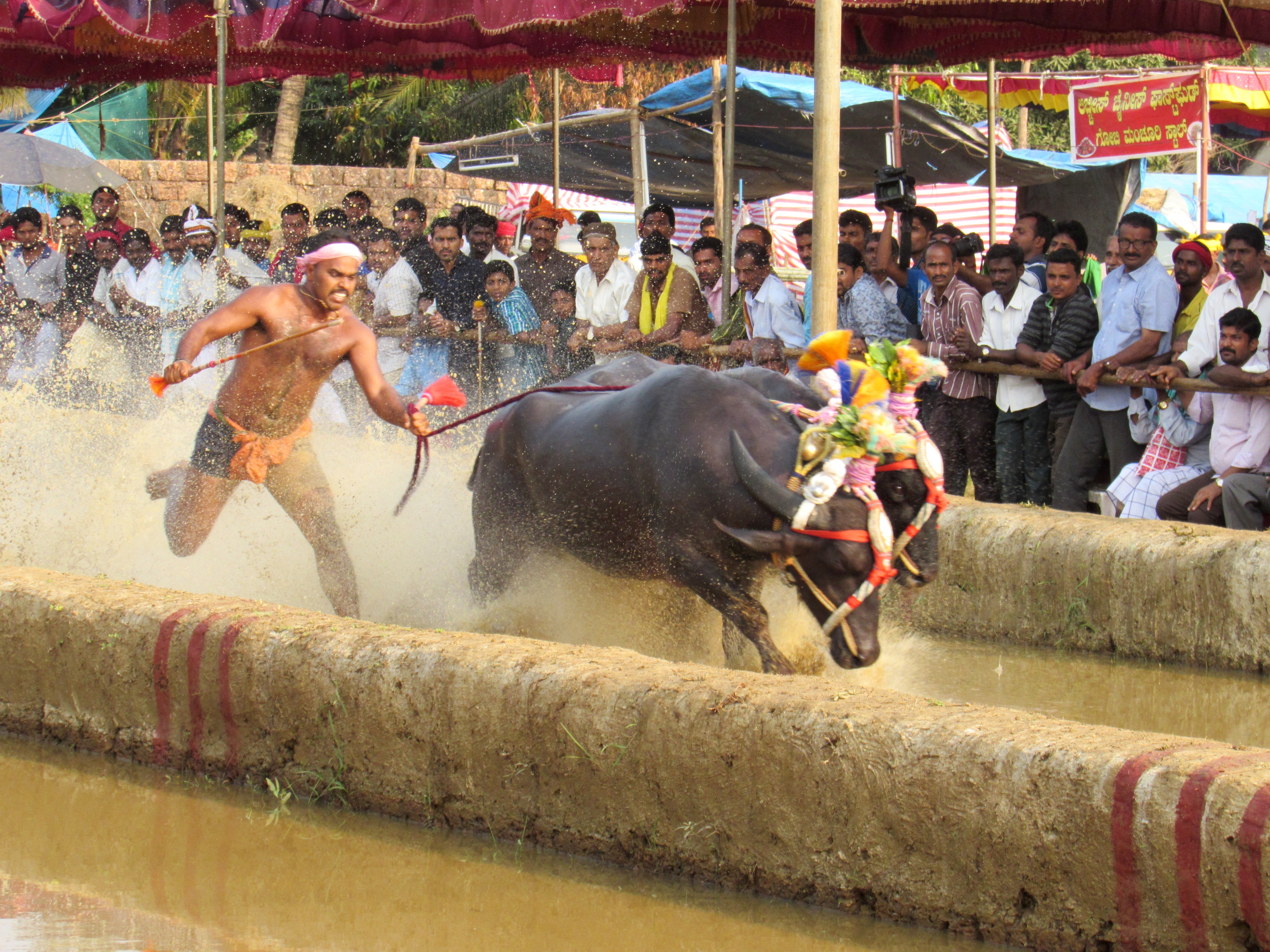
The ‘Raging bull’, the ’Buffalo skinned’ are idioms that we commonly refer to humans as expressions of exasperation. But when all the action brings forth the literal sense of these words- The event happens to be ‘Kambala’. Kambala is a sport where He-buffaloes are made to run on a mud filled slush track to reach the ‘Nishana’ or the finishing post. In the modern races, there are usually two tracks running parallel and thus called ‘Jodu Kare’ or ‘pair of tracks’. Each track is given a name so that it becomes easy to communicate in events where both the tracks are being used. In Joppinamogaru, the tracks are called Jaya kare and Vijaya kare. A coin is tossed for the team to choose the track. As loud drums beats and hoot sound of the timekeeper goes out, the whip lash of the runner crackles in the air before it hits the buffalo and the action finally takes off… The soldiers begin the battle..

There are different forms of kambala. Firstly, the Negilu category- Here, a representation of a plough is attached to the buffaloes which has evolved over period of modernisation. This is a race mostly for the younger buffaloes. Usually two pairs of buffaloes are made to run at a time and the fastest of the two is considered for the consecutive rounds.

IMG_3172
Negilu Kambala

Hagga kambala- This form is similar to the Negilu kambala, only difference being that the negilu or the plough is replaced by a hagga or a rope. Both these forms of the sport requires a great deal of stamina for the runner as he too is expected to run as fast as the buffaloes.

IMG_3236
Hagga Kambala

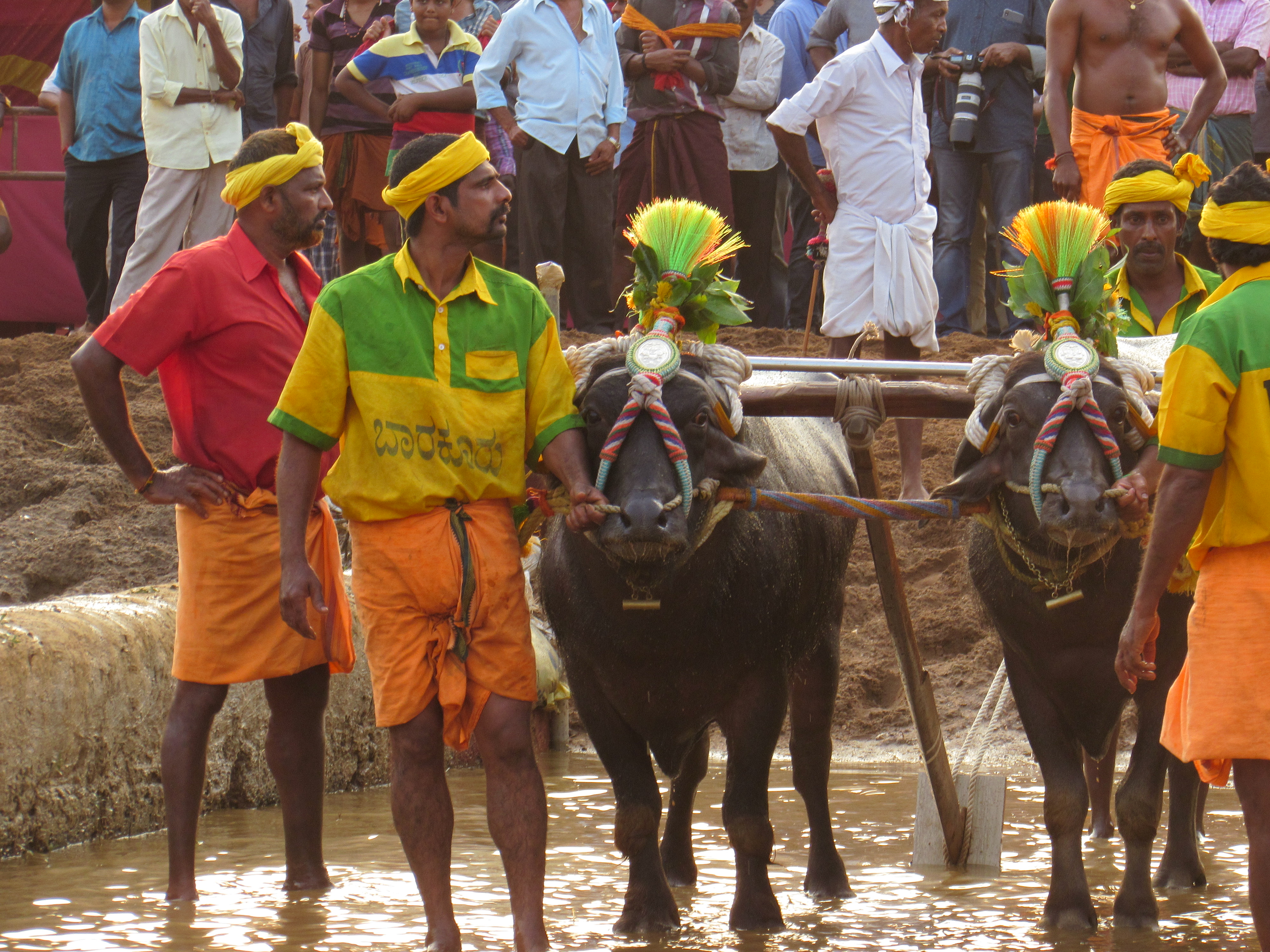
Adda halage kambala- This is a category mainly for the senior buffaloes(decided by age). A cross wooden plank is attached to the buffaloes on which the driver stands firmly and controls the speed and direction of the buffaloes to reach the Nishana. This is mostly a time based event where one pair runs at a time and the fastest pair is awarded.

IMG_3261
A pair of buffaloes getting ready to run the Adda Halage Kambala

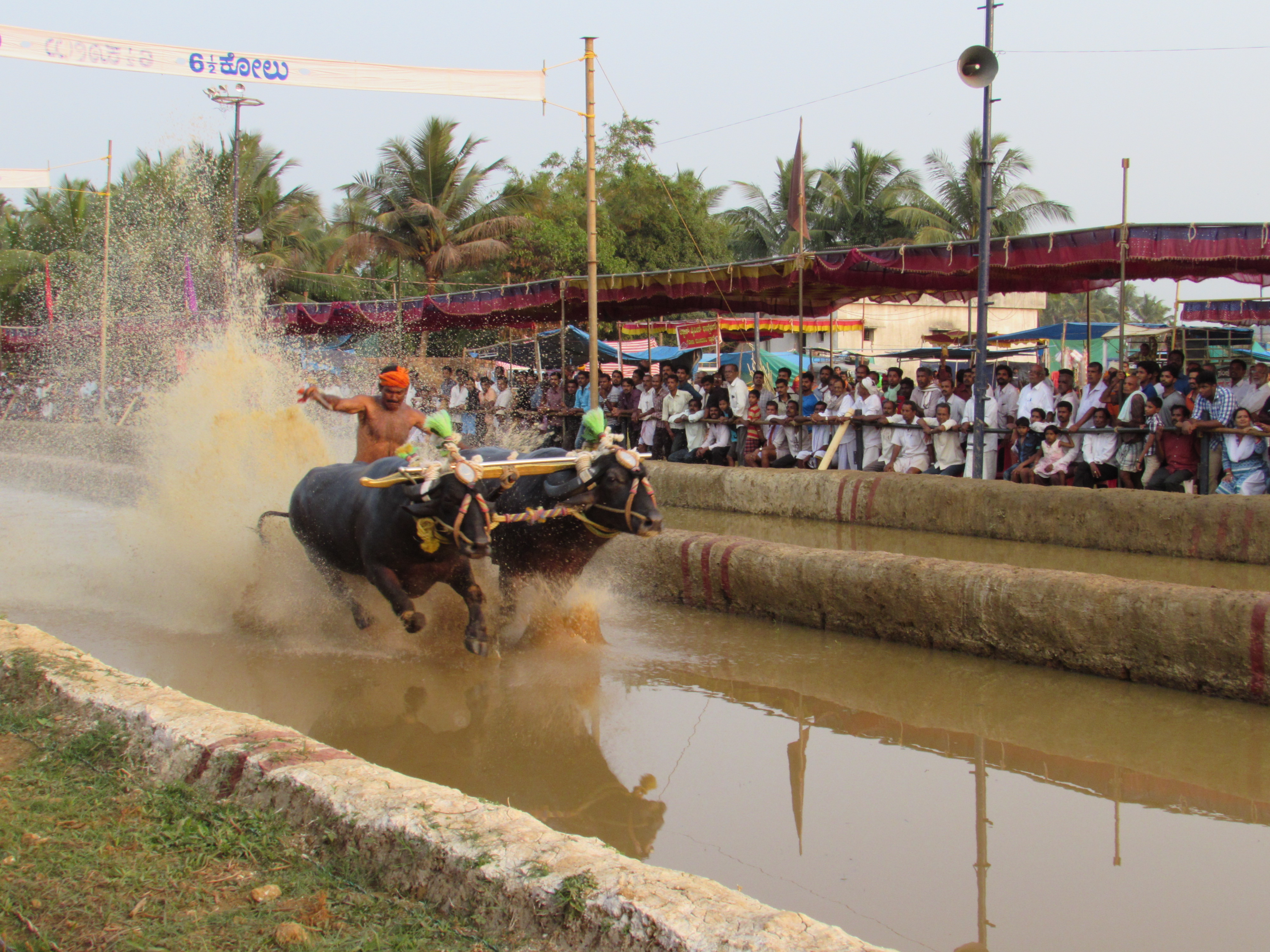
Kane halage kambala- In this form, a round wooden plank with two holes is tied to the buffalo pair and the driver stands on it to control them. Two strips of white cloth are tied across the track which are used for measurement of the height of water spurt. One cloth is tied at a height of 7.5kolu(9.37mts) and the other at 6.5kolu(8.125mts). Faster the pair runs, higher the water spurts out of the holes on the plank. Here, one pair runs at a time and is specific to the senior buffalo category. It is very difficult to run at the expected speed and hence every team that spurts high enough to wet the cloth is awarded unlike the other forms.

IMG_3265
Kane Halage Kambala

With a history of over 500years, the event is a treat to watch the enthusiasm and the energy of the participants and the spectators. However, it is heart wrenching at the same time to see the welts and the swollen bruises on the buffaloes as a result of continuous whip lashing. For this reason, Kambala has been in the radar of seeing a ban for a while now as demanded by several animal rights activists. We don’t know what the future beholds, but one MUST experience the vibrance of India’s rich folk culture in all forms before its name joins the pages of history..

Backwaters and boat races at Alleppey

It was the 2nd Friday of August 2012, a day before the Biiigg sporting event of South India: “The Nehru trophy boat race”. After a long haul of planning, two of my friends and I had alighted at our destination- Allapuzha, a popular little town on a tourist circuit in Kerala. Fondly known as Alleppey, we were there to experience the festivities of ‘The Olympics of Kuttanad’- Vallamkali or the boat race. The Nehru trophy boat race is an annual event held in the Vembanad lake, in the Kuttanad region of Kerala. Vembanad lake is the longest lake in India and spans across several districts of Kerala. Depending on the region, the lake is known by different names. It is called as the Punnamada Lake here in Kuttana, of which Alleppey is a part. Along with the boat race, we wanted to explore the backwaters that’s a popular haunt of the tourists in this region.

My Itinerary:

Day 0: Leave from Bangalore to Kochi (Overnight train);
Day 1: Kochi to Alleppey (local train), Shikara ride in the Vembanad lake, Sunset at Alleppey beach.
Day 2: Nehru trophy boat race, Champakulam St. Mary Forane Church, Kalloorkkadu Angadi (local & oldest market in the region), Latin church. Return from Alleyppey to Bengaluru (Overnight Train)

Other Places of Interest:
• Karumadi Thodu- famous for the black granite idol of lord Buddha
• Ambalapuzha Sree Krishna temple- known for the ‘Palpayasam’ or the milk porridge offered as prasad to the deity.
• Kokkothamangalam church- This is one of the seven churches founded by St.Thomas, one of the twelve disciples of Jesus Christ.
• Ayyappan temple in Mukkal vattam (near Muhamma)- known for the Kalari from which Lord Ayyappa is believed to have learnt his skills in martial arts. The hermitage where Ayyappan lived during the training period has been preserved in its original form by successive generations of the Cheerappanchira family.

The Details:

Day 1:

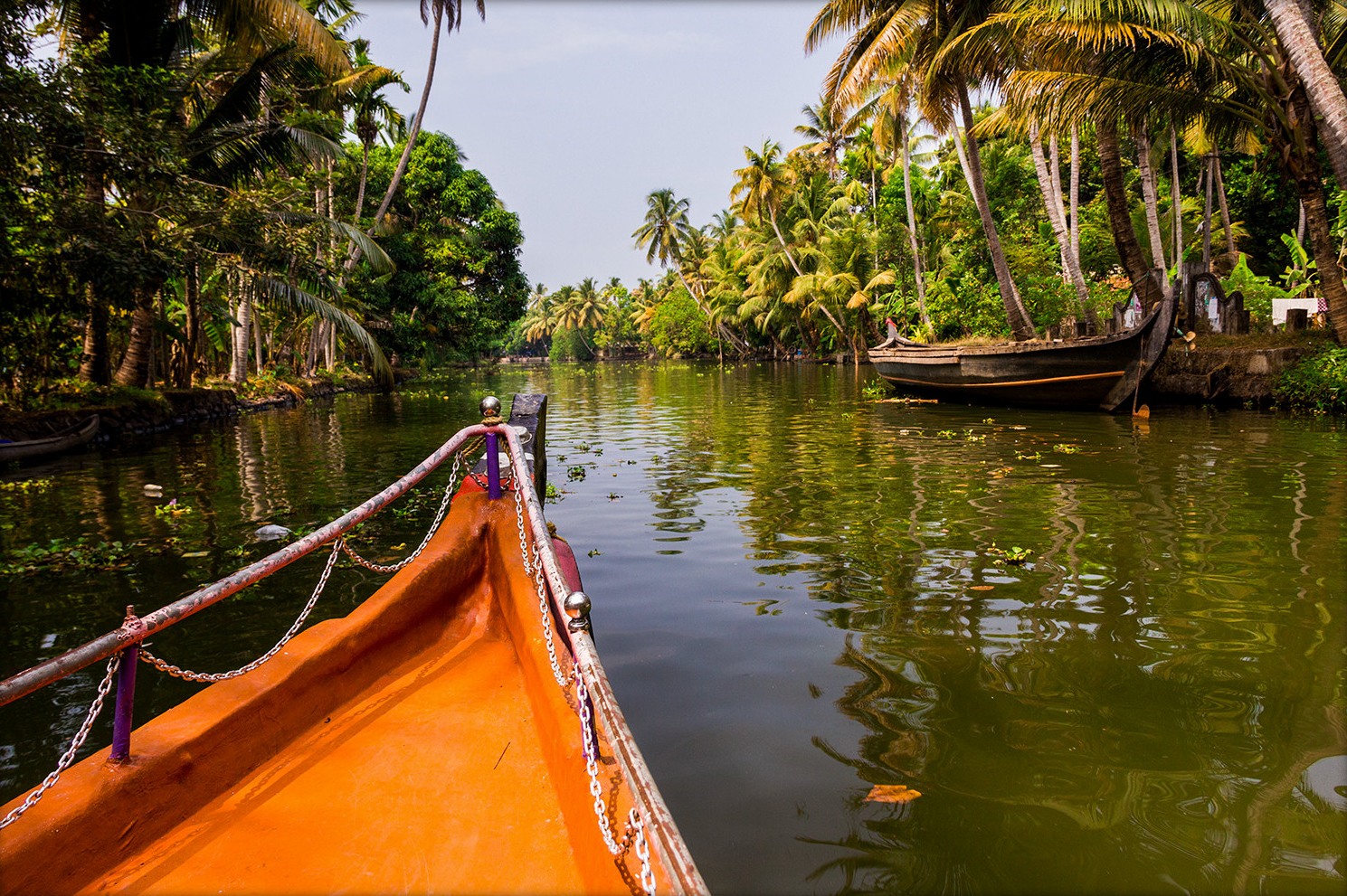
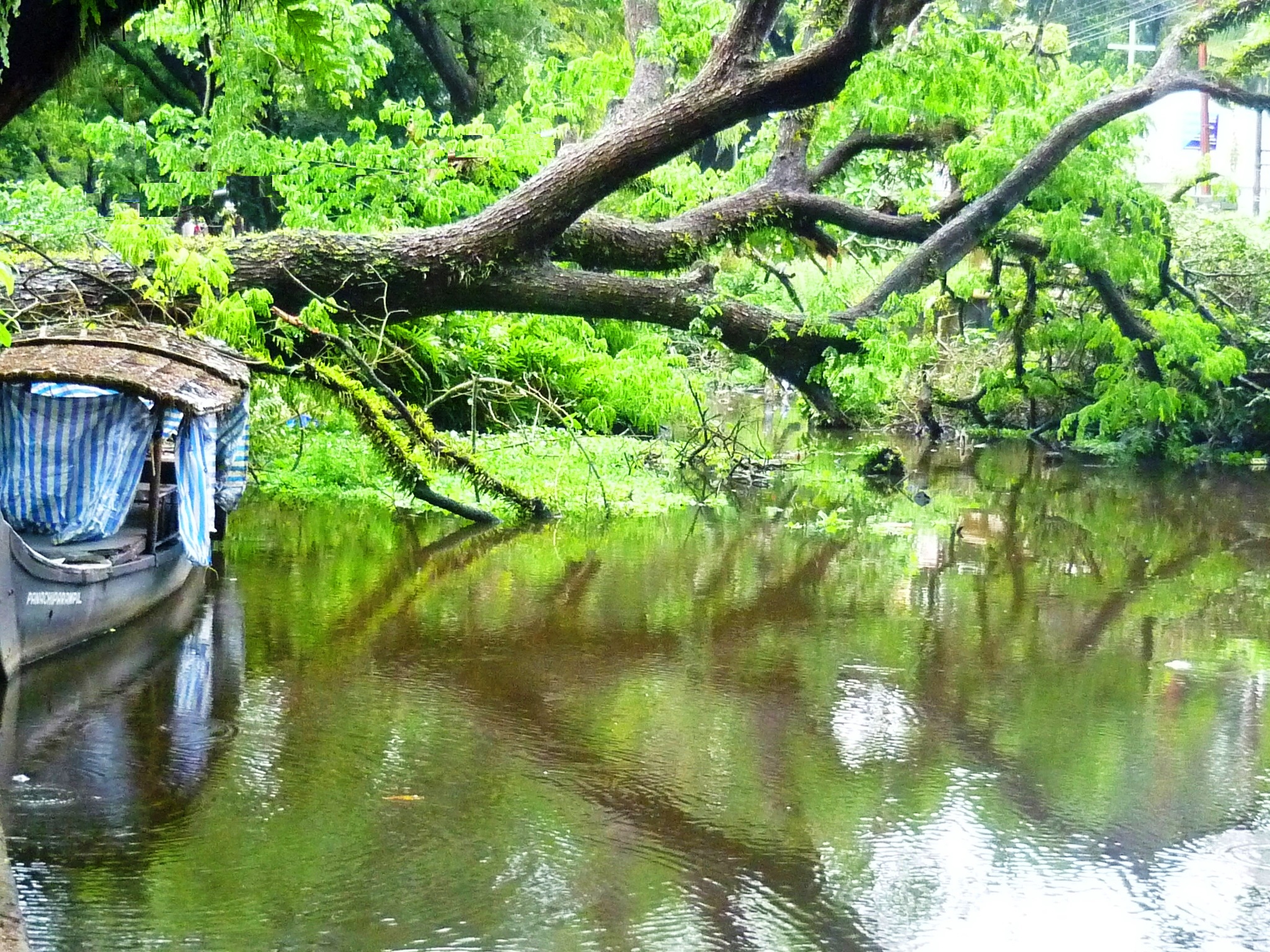
It was noon by the time we checked into our hotel room. We freshened up quickly and set out to explore Alleppey. We walked around a little bit and reached at a small boat jetty. We hired a ‘Shikhara’, a local motorboat to cruise around the narrow canals, passing through several fishing hamlets. While the womenfolk were washing clothes, the men were spiralling their fishing nets into the water and a few kids were diving into the waters for a refreshing swim. It was a nice experience of seeing local lifestyle of the people for whom, the backwaters are a lifeline. Along our ride, we picked up some fresh lobsters and pomfret at a local market and got them cooked in the local style at a fisherman’s house.

The Shikara cruise in the narrow canals of Alleppey

Further, we were oared across to the end of the canal which opened into the wide Vembanad lake where all the teams were practising for the boat race and the venue was getting set for the ‘Big’ event. The energy and enthusiasm in the atmosphere was no less than that of the main event itself. Though we wanted to stay there till sunset, the government deadline for all activities in the waters forced us to return to the jetty before 06.00.p.m.

On returning to the mainland, we meandered through the lanes of Alleppey town searching for a dose of Kerala chai and palam-pori (Banana fritters). We then decided to settle down by the beach until dark. While finding our way to the beach, we walked past the coir industries that Alleppey was once known for, and now remained shut and non-functional.

A stationed shikara enroute to the Alleppey beach

While walking back to the town area from the beach, we happened to see a hoarding of a concert happening at a nearby stadium. Post sunset on normal days, most towns in Kerala sleep to silence after 7.00.p.m. and there will be not many options to see or do after that. Since we did not want to waste the remaining evening by sitting inside our hotel room, we decided to head to the stadium to kill the rest of our evening. ‘Music never disappoints’, all the three of us had the same thought. Upon arrival at the stadium, we enjoyed the on-going performance of ‘Theyyam’, one of the colourful, traditional & spiritual dances of the state. But after some time in the audience gallery, is when we experienced a surprise on the stage. A MIND-BLOWING show by the violin maestro- Balabaskaran and team.. It was there that we were LOST in dreamland..!!

Day 2:

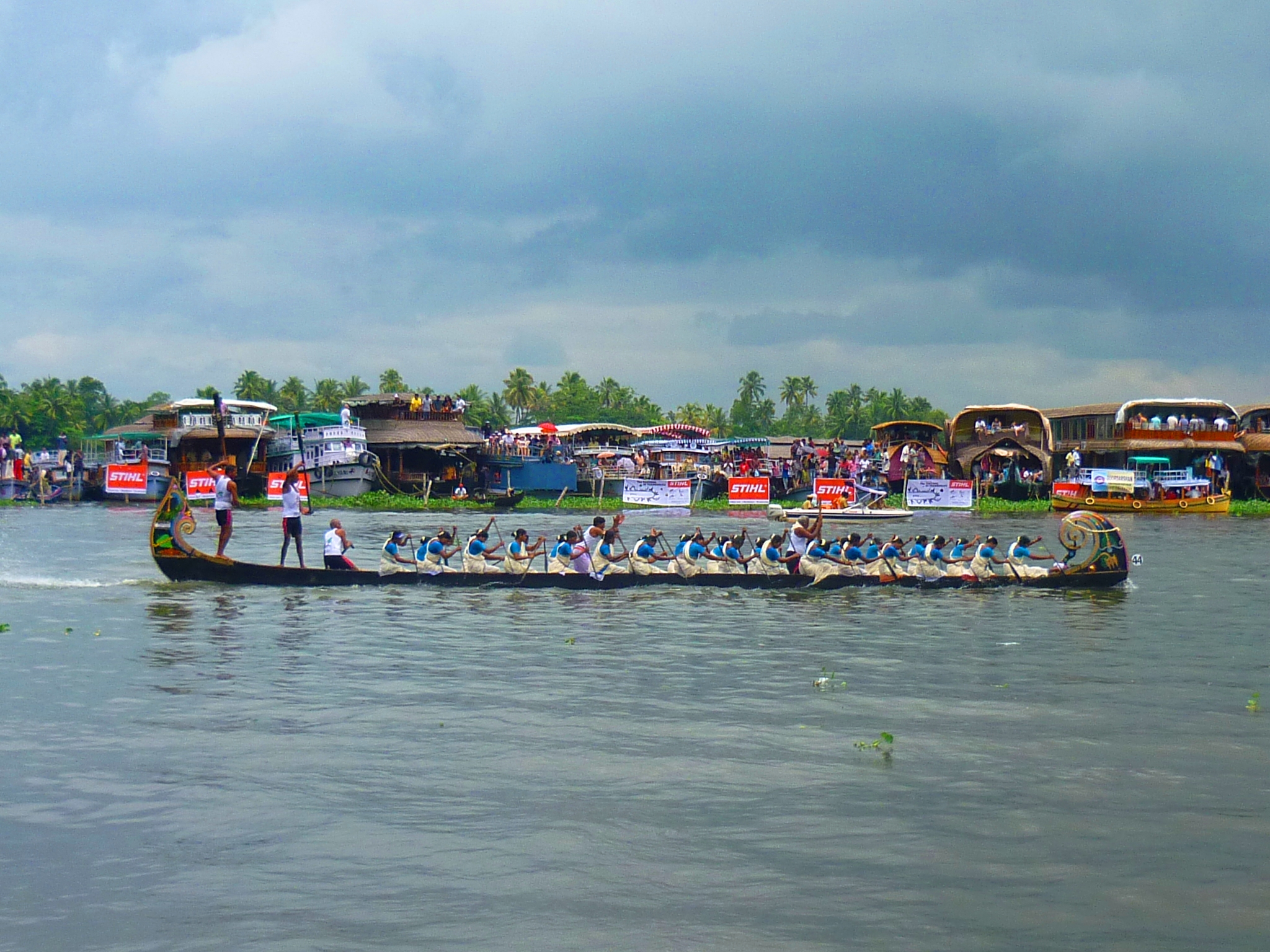
The next morning, we had to reach the racing venue as early as 08.00.a.m. to ensure that we had a place to sit. (Read about the madness of the event). The snake boats are the world’s biggest water vessel used for sports. One by one, they arrived for assembly. Locally called as the Chundan Vallam (Beaked boats), these 100~120 feet long wooden canoes carry 90- 110 rowers and move like snakes through the channels. And soon, the races started under different categories. Every single soul in the arena was singing songs of cheer. All through the event, only one thing echoed in the atmosphere: Vanchipattu or the Boat song. It was a once in a lifetime experience to be a part of that enthusiastic crowd.

The oarsmen '"Women"
The oarsmen ‘”Women”

Post the event, we still had time to explore the town and hence boarded a bus to Champakulam. As we passed through the waterlogged villages of Kuttanad, we were reminded that the region we were passing through was the ‘granary of Kerala’ or the rice bowl of Kerala. It is one of the few places in the world where farming is done below sea level.

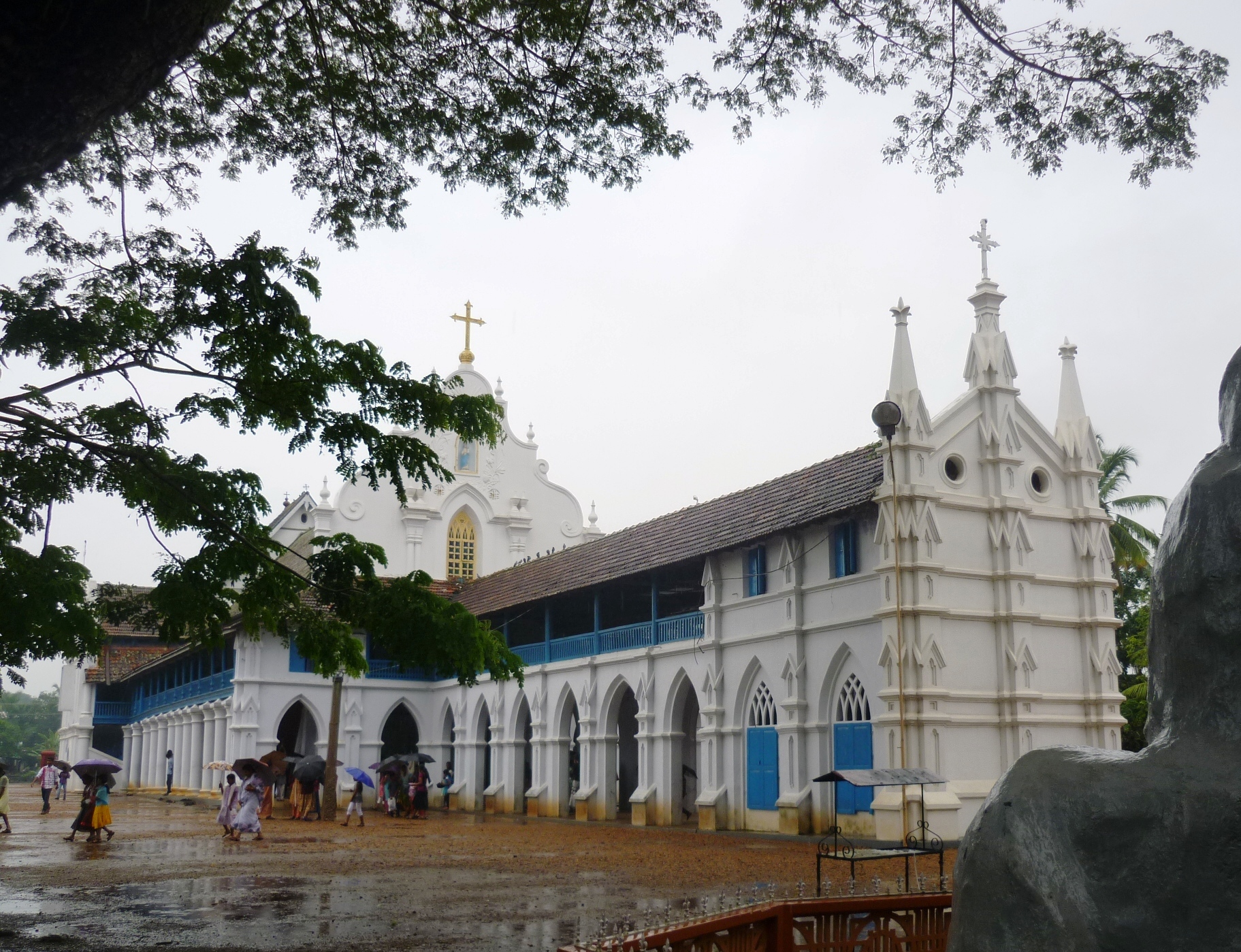
Soon, we reached the St. Mary Forane Church. Since it was a Sunday, we were lucky to take part in the mass. Built in 427A.D., this riverside church is a testimony of time with its finely maintained beautiful mural paintings. From there, we took a boat to reach the other end of the river: the oldest market in the region known as Kalloorkkadu angadi.

Champakulam St. Marys church

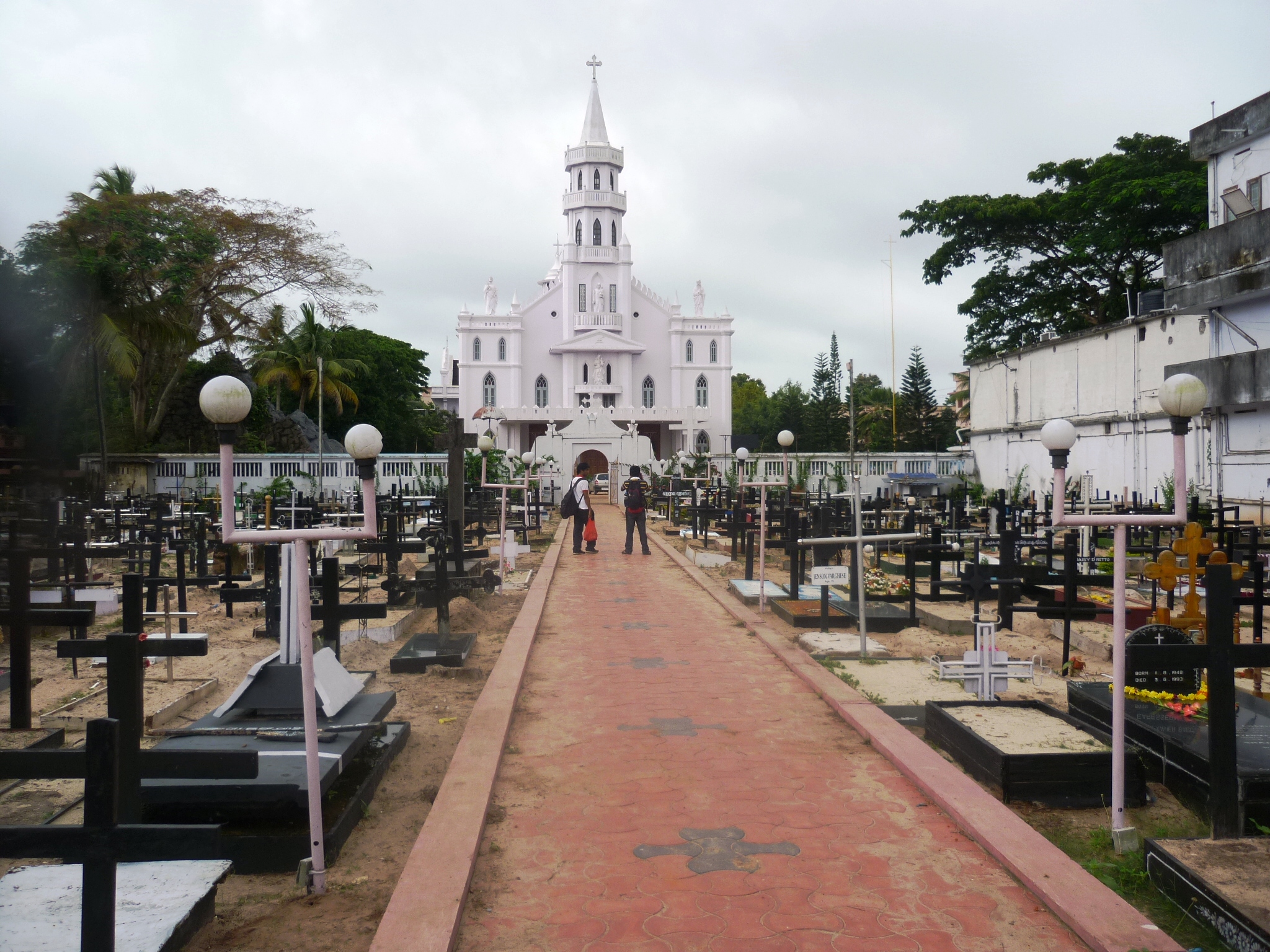
With a local bus ride from there, back to the town, we then took a walk to the Latin church in the town. The entire town of Alleppey can be viewed from the terrace of this church (permitted only during visiting hours). What particularly caught our interest was the cemetery where all members of a family were buried in the same pit. Hundreds of such graves laid within the church premises.

The premises of the Latin Church

We then checked out our lodge and headed to the railway station for our return, scheduled for the night. It was time for us to depart with a mind filled with beautiful memories of sailing afloat on a boat in the backwaters of land that is called ‘God’s own country’ and hope to return soon.

Must dos: Experience the madness of the Snake boat race
Must eat: Freshly caught and cooked seafood while on a backwater cruise tour

The Kodava Hockey Festival

Army and Hockey runs in Kodava blood.. It is that time of the year again when the schools and colleges are closed for summer.. Bosses have approved the leave requests from their Kodava employees atleast a month in advance.. Schedule is out.. Flight tickets booked in time as a player /Techie/Banker working abroad has to make it for their family match.. Its the biggest and the maddest festival dedicated to a sport anywhere in the world… It’s the ‘Kodava Hockey Festival’ yet again…!!

Over 300 teams participate with players including people of all age groups- right from a 10yr old primary school kid to a 75 yrs old granma.. Anyone with a mere passion for the game are allowed to join the team, only to fight it out for the coveted trophy each year.. Only 2 rules apply to participate- #1. Be a Kodava and represent your family team   #2. Play the game with passion.

One Kodava family volunteers to take the ownership to organise this huge event each year. This year- it was the ‘Madanda’ family. Hooked up with too much work, I couldn’t make it to this year’s tournament.

The Iychettira cup cover photo

Hence, I’d like to make a mention of the last tournament I had attended- ‘The Iychettira Cup-2012’.

The Indian hockey team during the opening match

The opening ceremony was a gala event with some of the who’s who of the Indian VVIP league gracing the event.. It was followed by a nail biting, action packed, stiff fight during the exhibition match between the ‘Indian national team’ and the ‘Coorg XI’.. The men in blue(Oops.. in white) battled it out at the end though..

Palanganda vs Kaliyanda match in progress

During the 23 days long sporting fiesta, the family where I belong to- The Somayanda family, came through till the 5th round/the quarter finals, but failed to make it further.. The last day was the final fight between Palanganda and Kaliyanda.. The latter lost the cup inspite of a tough fight of 1-2.

Trophies lined up for the final presentation ceremony

One has to experience the madness sitting amidst the crowd cheering for their family teams atleast once in their lifetime.. All up there in the spectator gallery with just one thought in their mind and one feeling in their hearts- ‘HOCKEY’..!!

Picture courtesy: Iychettira cup website

Misty mountains and Madikeri Dasara

Very few people know of the grandeur of the Dasara celebrations in Madikeri. Considered next to Mysore Dasara in pomp and celebrations in Karnataka, it is a 9 days long event.

The festivities start off on the day of Mahalaya Amavasya with 4 karagas getting all set at a place called Pampina Kere. These Karagas represent the 4 Mariamma temples of the town: Dandina Mariamma, Kanchi Kamakshi, Kundurumotte Sri Chowti Mariamma and Kote Mariamma. The Vrathadharis or the Karaga holders travel across the town to all households through the next 6 days of Navarathri. They dance and perform a balancing act with the idols(Karaga) on their shaved heads with a knife in one hand and a club(Bettha) in the other.

Madikeri dasara Karaga
Karaga: Starting at Pampina kere

On the eighth day: people decorate their shops and vehicles to celebrate Ayudha Pooja. Also, vehicles are decorated and assembled at Gandhi Maidan where the best one is awarded in each category.

Madikeri dasara- tableau
Above: A tableau outside a shop; Below: A narrative decoration of a vehicle at Gandhi Maidan

The 9th night commemorates the last part of the Dasara celebrations where 10 tableaux or Dasha Mantapas are taken out across the main streets. These are one from each temple in Madikeri, and depict a story from one of the epics. Each tableau will be as long as 4-5 trailers connected to a tractor. This inturn, will have separate trucks loaded with sound systems and other backup.

The participating temples in this grand finale of Dasara are: mantapa of Kote Mahaganapathy temple, Sri Kanchikamakshi temple, Pete Sri Rama Mandira, Sri Kote Mariamma temple, Dechoor Sri Rama Mandira temple, Sri Chowdeshwari temple, Sri Dandina Mariamma temple, Sri Karavale Bhagavathi temple, Sri Kodanda Rama temple and Kundurumotte Sri Chowti Mariamma temple.

Madikeri dasara- dasha mantapa
The different tableaux at Madikeri Dasara

These mantapas will congregate at the center of the town in late night hours and put up a great show of colour, light, sound and an amazing display of creativity.. People flock to see this splendous show of efforts of over a 100 dedicated minds behind every tableau. The best tableau is awarded each year.. Finally, all the 10 tableaux proceed towards ‘Banni mantap’ and this brings the curtains down on the festivities and marks the dawn of a new day.

The abandoned tribes and the abuses- Kunde Habba

I had always wanted to witness this celebration but had been quite apprehensive about facing the wrath of the abuses that would follow with the joy of celebration.. And moreover, this festival happens in the southern part of Kodagu district and I always got to know about the celebration of this festival only after it was over!

But some wild wishes and what one truly seeks, do come true. This time my encounter was unplanned and I’m glad it happened.. I got to witness the unique celebration in Kodagu district, of a festival called “Kunde Namme” a.k.a. Kunde Habba or the “Festival of abuses”.

The tribes belonging to the Jenu-kurubas, Betta-Kurubas, Yeravas, Paniyas, Kembetti and other sects all congregate in a common place- usually a town area to celebrate their festival of abuses and to make merry. By abuse- I mean abuse God, man, machine and everything that they come across on that day. This is a tradition that has passed on through generations among these tribes.

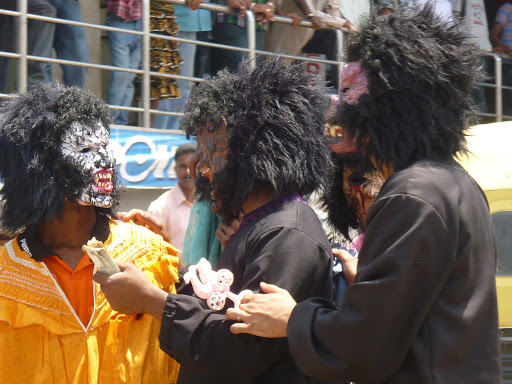
Kunde Namme- The masked men

Legend has it that the main deity Aiyyappa had taken the tribe into a thick jungle for hunting. Deep in the jungle, he fell in love with Bhadrakali and eloped with her leaving his followers abandoned. Since then, the day is observed every year where these tribes abuse their god for betraying them. They find god in everything and every person they come across and hence abuse them in turn.

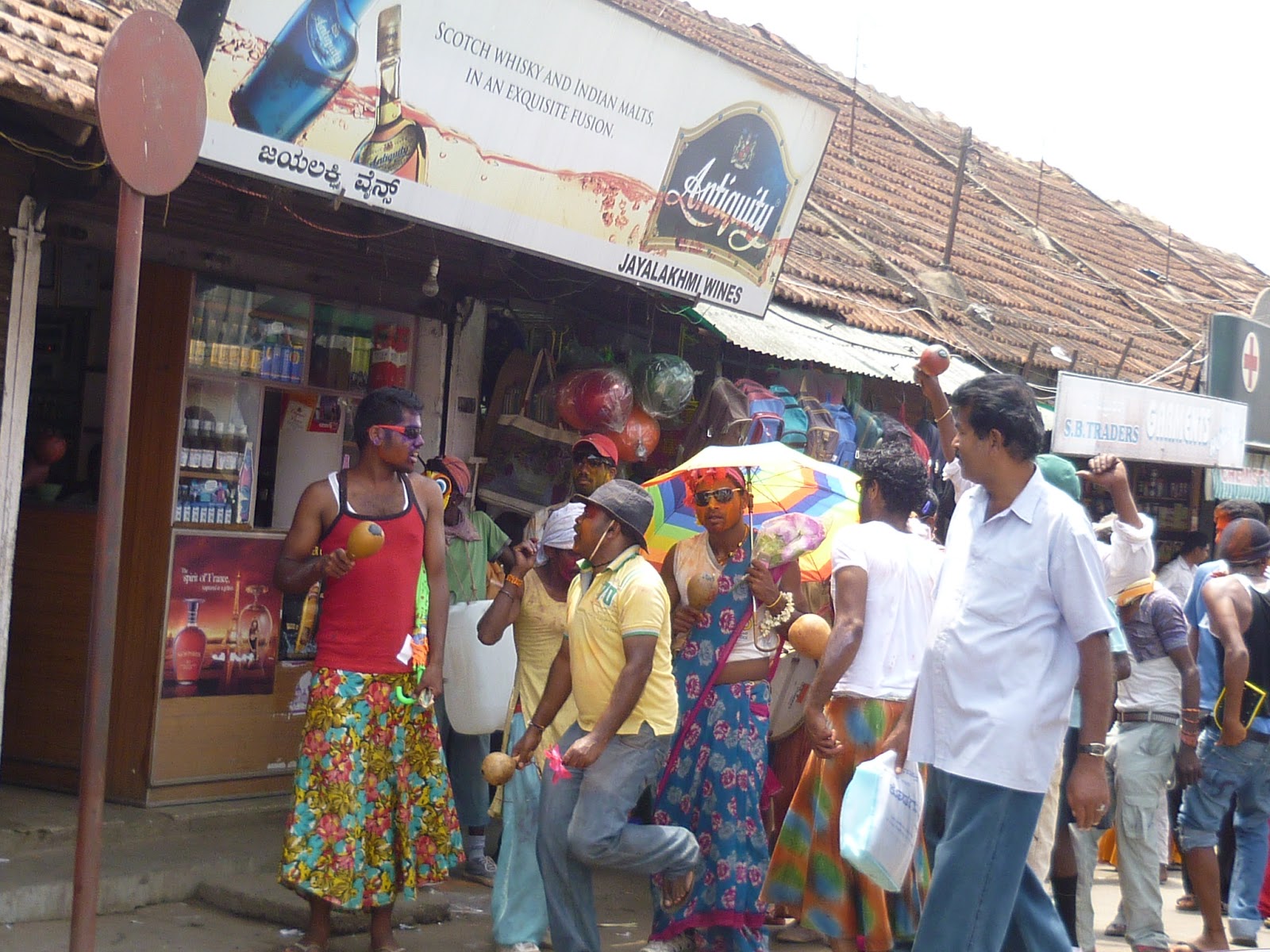
The tribal folk, mostly men are togged in weird clothes. Many take to cross-dressing, some dress like ghosts, some like witches and some dress up in costumes that are just random and as weird as possible.

They block every man(folk who belong to communities outside the above mentioned tribes) on roads, barge into shops in the town and demand money. If their demands are not met, then profound abuses are hurled at them. But one must not assume that they can escape from the wrath of the abuses by simply meeting their demands- they still get abused..!! Remember, no god will come to your rescue on that day as he himself is in being abused 😀

Kunde Namme- Dressed up men all set to charge into a shop

Also, most of the members of this group belong to the labour class who work in estates, domestic helps etc. Hence, the day doubles as a good opportunity for them to vent out all the frustration on their masters..!!

Kunde Namme- The band set guys

But, by the end of the day, they all congregate in their common place of worship and surrender to their god, plead for his mercy and ask for his blessings for the rest of the year. A portion of the total money collected by them on that day is religiously offered to the deity and the remaining is used for a lavish community dinner.

This festival happens on the 4th Thursday in the month of May and is celebrated in and around Gonikoppal considering its proximity to the Nagarhole National Park where most of these tribes are based.