Tag Archives: Arasalu railway station

Largest Railway Station in India | Complete List You Must Know

Collecting amazing information about the largest railway station in India that can blow your mind with its operations. Indian Railways operates many railway stations, but certain stations made their place on the list of the top 10 largest railway stations within India.

Railway stations are considered the largest in different terms, such as the area covered by the railway station, the number of available platforms, the number of trains that halt daily, the number of tracks, and passenger traffic and the availability of services like food in train, including station food courts, onboard catering, and online meal delivery options for passengers during their journey.

This post will explore railway stations that are considered the largest, based on the number of platforms or tracks, including platform length, which contribute to their ranking as top railway stations within India.

List of the Top 10 Largest Railway Stations in India

Check the list of the top 10 largest railway stations operated under the Indian Railways.
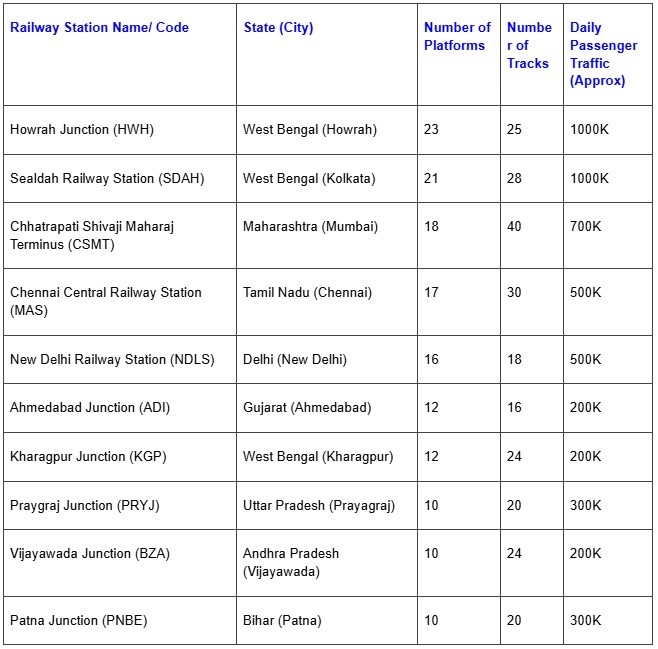
Largest Railway Stations in India

Key Details and Facts About the Largest Railway Station in India

1. Howrah Junction (HWH)

Howrah Junction comes in the top list automatically when you talk about the largest station in India due to the following.

  • Located in Howrah (West Bengal)
  • One of the oldest railway stations in India.
  • Operated under the Eastern Railway zone
  • Connect major cities like Mumbai, Delhi, Guwahati, and Chennai.
  • More than 23 platforms handle 1000K passengers daily.

2. Sealdah Railway Station (SDAH)

It is the 2nd largest railway station in India, located in West Bengal (Kolkata), due to the following reasons.

  • 21 Operational Platforms.
  • Handles about 1000K passengers daily.
  • One of the busiest suburban railway networks.
  • Major hub for local or non-local railway stations.
  • Railway food order with RailRestro to get delivery at the next station.

3. Chhatrapati Shivaji Maharaj Terminus (CSMT)

This station is popular as CSMT due to its iconic landmark. Therefore, check the PNR status before reaching the boarding station via the RailRestro app. So, check the following reasons behind it.

  • It counts as a UNESCO World Heritage Site.
  • It operates around 18 platforms with 40 tracks to manage a large number of trains.
  • This railway station is located in Mumbai (Maharashtra) as headquarter of central railway.
  • One of the busiest railway stations in India, managing around 700K passengers daily.

4. Chennai Central Railway Station (MAS)

Chennai Central is the primary railway terminus in Chennai, Tamil Nadu, and is considered the busiest railway station in South India. Reasons are as follows.

  • It operates 17 platforms with 30 tracks for a large number of trains.
  • It connects Tamil Nadu to other states and is considered a major terminal in South India.
  • MAS handles more than 500K traffic daily.
  • Online food on train service is available with the RailRestro train app.

5. New Delhi Railway Station (NDLS)

New Delhi railway station is one of the busiest and largest railway stations in India in terms of handling daily passengers.

  • It operates around 16 platforms that connect all the major cities.
  • Top revenue generating railway station in India.
  • Handles 400+ trains on a daily basis.
  • Located in the capital of India, which connects East, West, North, and South India.

6. Ahmedabad Junction (ADI)

It is another largest railway station that operates under indian Railways. The following points pull it into the list of the largest stations in India.

  • It operates 12 platforms to serve around 200K passengers daily.
  • It is a major Junction in the Western Railway zone.
  • A massive redevelopment project that can offer better connectivity to passengers.
  • Offering modern amenities such as 31 passenger lifts, 50 escalators, and others.

7. Kharagpur Junction (KGP)

Kharagpur Junction is not considered for its number of platforms or number of tracks. But it comes in the list of the largest railway station because of the following.

  • Longest railway platform in India and also one of the longest across the world.
  • It has a 1072-meter-long platform that grabs the attention of travel enthusiasts.
  • It handles 200K passengers daily.
  • Majorly connected with cities like Delhi, Mumbai, Kolkata, Chennai, and others.

8. Praygraj Junction (PRYJ)

Prayagraj Junction, formerly known as Allahabad Junction, is an important station in Uttar Pradesh. This railway station comes in the longest railway station due to the following reasons.

  • It has 10 platforms with 20 tracks to deal with hundreds of trains in a single day.
  • It deals with more than 300K footfalls daily.
  • This North Central Railway station has major connections with Kanpur, Varanasi, Delhi, Mumbai, and Kolkata.
  • Multiple tracks for local and long-distance trains.

9. Vijayawada Junction (BZA)

Vijayawada Junction is the most strategic railway station in Andhra Pradesh including southern India. Certain reasons make it count as the Indian largest railway station are as follows and passengers can easily check the Train Time Table for all arriving and departing trains.

  • This railway station operates 10 platforms and 24 tracks to manage hundreds of trains every day.
  • It handles over 200K passengers daily.
  • The station has major connections with Bengaluru, Chennai, Kolkata, Hyderabad, Howrah, and Delhi.

10. Patna Junction (PNBE)

Patna Junction is one of the largest railway stations in India due to the following reasons.

  • The important and busiest railway station in Bihar.
  • It connects eastern and northern India with other major cities.
  • It also facilitates the passengers and freight traffic.
  • PNBE operates 10 platforms and 20 tracks.
  • Offers facilities like modern waiting halls, food courts, digital information systems, including ticket counters.

Also Read:

Chain Pulling in Train: Rules, Valid Reasons & Fines

Five Types of Trains to Experience in India

Frequently Asked Questions

Q. Why is Howrah Junction considered the largest railway station in India?
Ans. Howrah Junction is considered as the largest in terms of number of platforms (23) in India, with more than 6000 train movements and daily traffic of about 10 lakh per day.

Q. How many platforms are there at Howrah Junction?
Ans. Howrah Junction operates 23 platforms, which makes it an Indian largest railway station. It helps to deal with large traffic and manage 600+ trains on a daily basis.

Q. What facilities are available at Howrah Junction railway station?
Ans. There are various facilities available at the HWH (Howrah Junction) that are listed below.

  • Escalators & Lifts
  • Free Wi-Fi
  • Retiring Room and Dormitories
  • Waiting Room (AC or Non-AC)
  • Clock Room
  • Parking Facilities
  • Food Courts
  • Road Connectivity

Q. Which is the second largest railway station in India?
Ans. Sealdah Railway Station is considered the 2nd largest railway station in India because of passenger traffic and numbers of platforms available. It operates with 21 numbers of platforms to deal with 800K to 1000K traffic daily.

Chain Pulling in Train: Rules, Valid Reasons & Fines

Chain pulling in trains is an emergency action mechanism that has been introduced for passenger protection, thus it also ranks among the most misused amenities in the Indian Railways system. A sizable portion of passengers, however, do not know the precise train chain pulling regulations, the valid reason for chain pulling in trains, and the fines imposed when the act is done wrongly. It is imperative to know these details not only to avoid unwarranted fines but also to confirm the efficiency of the emergency feature during real scenarios. Whenever you are planning a train journey, ensure that you check your Live PNR status before departure.

Chain pulling, known as Alarm Chain Pulling (ACP) system, is fitted in coaches so that passengers can stop the train in emergencies at their request. However, since trains are shared public transport, misuse can lead to a hundred passengers being inconvenienced, train schedules being disrupted, and even safety risks occurring as a result. Hence, the Indian Railways has strict rules and a well-defined train chain pulling fine systems in place.

What Is Chain Pulling in Train and Why Does It Exist?

Chain pulling in trains is viewed as a protective measure designed to fill the gap where there are no quick fixes. The pulling of the chain leads to a drop in the brake system’s air pressure, thereby bringing about the stopping or slowing down of the train. This particular feature is set up to assist passengers with emergencies that cannot wait until the next station. For instance, medical emergencies, accidental boarding, and safety threats are some of the situations where stopping the train becomes a must.

Nonetheless, an emergency bearing importance akin to the one mentioned above is still often misconstrued as a convenience tool. Some passengers miss their stops and claim it as a reason to pull the chain, while others just want the train to halt at a non-scheduled station and use the chain as their instrument. Such actions are considered misuse and fall under punishable offences according to the train chain pulling rules.

Train Chain Pulling Rules You Must Know

The Indian Railways has defined the alarm chain regulations explicitly and in detail under the Railways Act. The chain should be pulled only in case of a real and unavoidable emergency. Pulling the chain, the railway personnel will first check the reason and then let the train go. If the reason is found to be invalid, the passenger responsible can be prosecuted.

To avoid unnecessary panic or misuse of the alarm chain, passengers are advised to check the Indian Railway Live Train Status  in advance. Knowing the real-time train status helps travellers stay informed about delays, stoppages, or rescheduling, reducing the chances of confusion or unwarranted emergency actions during the journey.

As per the provisions, the chain-puller has to inform the guard or the railway personnel about the reason. In case the explanation is not accepted as a valid reason for the chain pulling, fines are imposed. These regulations have been introduced to keep order, maintain time, and provide safety on the railways, particularly on long-distance routes where a delay can affect several trains.

Valid Reason for Chain Pulling in Train

A valid reason for chain pulling in trains has to do with passenger safety or health being at an immediate risk. Medical emergencies, such as a heart attack, severe injury, or sudden illness, are regarded as valid. If an elderly person, child, or disabled person accidentally boards the wrong train, this can also be treated as a valid reason in certain cases.

The other accepted reasons include fire in the coach, serious security threats, or a passenger falling out of the train or being caught between the cars. In these situations, pulling the chain is a good way to prevent the spread of harm. It should be mentioned that reasons like being hungry, wanting to order food on train.

Chain Pulling Fine and Legal Consequences

The fine for chain pulling can be very tough to deter misuse. Pulling a chain without authorisation, as mentioned in Section 141 of the Railways Act, can be punishable with a fine of ₹1,000, imprisonment for a period not exceeding one year, or both. In most cases, passengers are instructed to pay the fine at the time of the incident before they can continue their journey. Misuse of this facility could result in not only monetary fines, but also questioning by the railway officials and, in serious cases, court action.

Consequences of chain pulling misuse on other passengers.

Misuse of chain pulling in trains is not only a matter of paying fines. Just one unauthorized stop can cause a chain of events leading to a train delay so considerable that it will affect other trains and a large number of passengers. The domino effect of having connection problems because of delays around the train stopping unauthorised is one of the reasons why Indian Railway considers chain pulling misuse as a serious offence.

How to Avoid Chain Pulling Situations

Timely execution could outdo the majority of unnecessary chain-pulling cases. Concerns about the food onboard are manageable by booking meals online through authorised providers. This will prevent you from being tempted to pull the chain for food-related reasons. If you have any non-emergency matters, it is always wiser to approach the train guard, TTE, or railway helpline rather than chain pulling.

Conclusion

Train chain pulling is an essential safety measure, not a luxury. Knowing train chain pulling laws, understanding the situations that justify chain pulling, and realising the chain pulling fine can prevent passengers from getting into legal problems and contribute to the maintenance of railway operations’ smoothness. By being more knowledgeable about tools such as PNR status, Train Running Status, and food availability on the train, passengers will be able to have a safer and more comfortable trip without making any misuse of emergency systems. Responsible travel is the only way to keep emergency mechanisms open for the people who need them.

Five Types of Trains to Experience in India

8 Best Things to Do in India with Your Partner

FAQs

1. When is chain pulling allowed in Indian Railways?

Indian Railways permits chain pulling only in real emergencies where immediate action is needed to safeguard life, health, or safety. Major medical emergencies, fire outbreaks in the coach, security threats, or a passenger accidentally boarding the wrong train due to force majeure are some of the cases that are recognised as valid. The mechanism is for emergencies only and not for convenience or avoidable problems.

2. Can we pull chain in train if someone is late?

No, chain pulling is not allowed if a passenger is late or misses the train. Being late, missing a stop, or asking the train to halt for personal reasons does not qualify as an excuse. Pulling the chain under such circumstances is considered an abuse of power and can attract a train chain pulling fine or legal action under Indian Railways rules.

3. Who should be informed after chain pulling?

The passenger who has pulled the chain is to inform the train guard, ticket examiner (TTE), or any railway staff in the coach immediately after the chain is pulled. It has to be explained clearly why the chain was pulled. Railway officials will decide if the situation is a valid emergency or not before the train proceeds.

4. Can chain pulling be done for medical emergencies?

Yes, medical emergencies are among the most acceptable and legitimate reasons to pull the chain on the train. Instances like sudden sickness, severe injury, or a life-threatening condition give the passengers the right to pull the emergency chain so that medical help can be dispatched at the next station.

5. Are all coaches equipped with an emergency chain?

Most railway passenger coaches in India are fitted with an emergency alarm chain or an equivalent system of emergency brakes. Nonetheless, modern coaches might differ in their design to a certain extent, where alarm buttons or handles could be used instead of the orthodox chains, but still serve the same purpose in case of an emergency.

Five Types of Trains to Experience in India

Indian railways have one of the largest networks in the world and forms the lifeline of domestic transportation and logistics in the country. For me as a millennial, the thought of a train journey brings back nostalgia. Over the years, I have experienced the crowd of a general bogey, the liveliness of second-class travel as well as the comfort of the air-conditioning through journeys in the upper-class cabins. Through this article, I would like to share five of my unique experiences of travelling in special trains operated by the Indian railways.

1. Vista Dome trains:

The best experience in these trains is by opting for a day journey to truly observe the beautiful landscape through the glass dome roof. The one that I have done is the vista dome ride from Bangalore to Mangalore. The view of the green forest of the western ghats, dark tunnels and deep gorges is an experience to add to your bucket list.

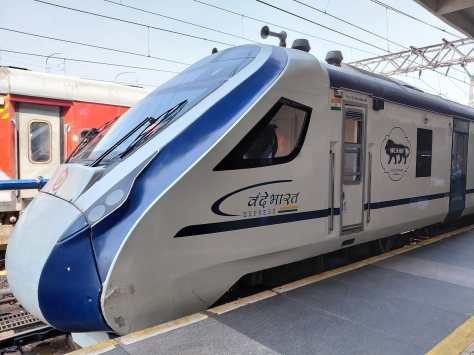
Vande Bharat express

2. Double-decker trains:

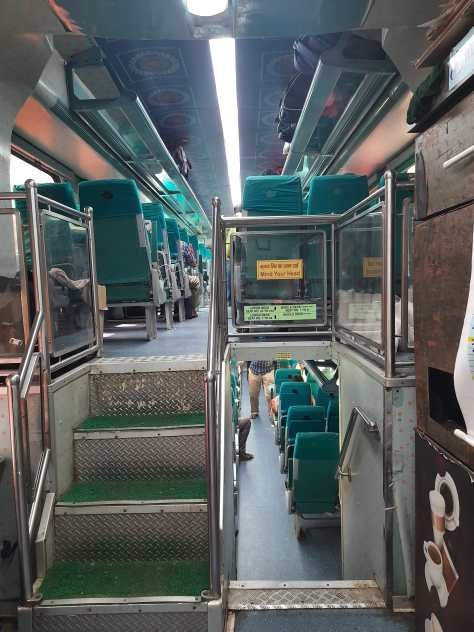
I realized that my ticket from Bangalore to Salem was on a double-decker train only after arriving at the platform. My seat was located on an air-conditioned cabin on the top deck, offering a completely different experience for my journey.

Inside Double decker train

3. Mountain trains:

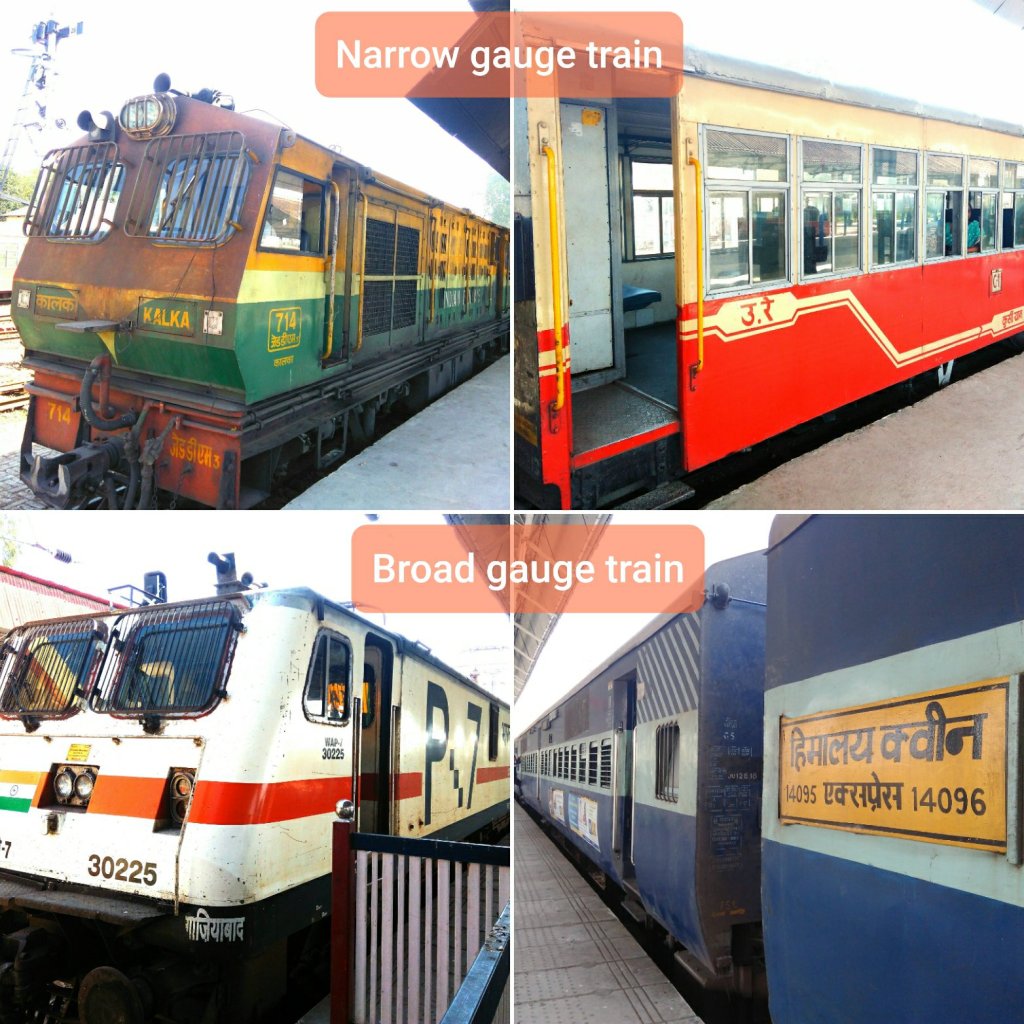
Listed as one of the UNESCO heritages, the Kalka-Shimla train, Darjeeling-Siliguri and the Nilgiris mountain railways collectively offer a travel back in time. All these trains ply on the OG narrow gauge railway lines and the interiors too are still kept the same way that they used to be.

The Himalayan Queen Trains. Top: The narrow gauge train between Kalka & Shimla; Bottom: The broad gauge train between Delhi & Kalka

4. Luxury trains:

These trains offer opulent experiential tours covering iconic landmarks across the states that they operate in. The Maharajas’ Express, the Golden Chariot, the Deccan Odyssey, Palace on Wheels are some of these luxurious trains one must experience.

5. Rail buses:

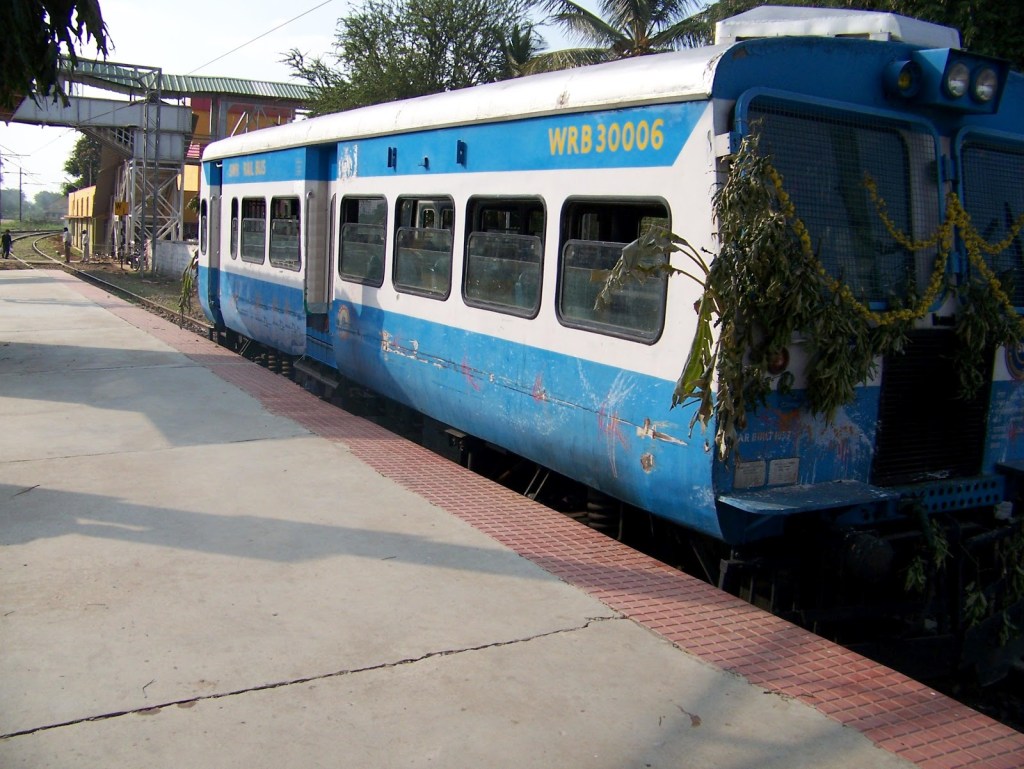
These are actually single bogie trains that comprise the engine and the cabin in the same segment which is why they are called buses. The one which I had travelled in was the Bangarpet-Kolar railbus, now decommissioned from service. You can also experience the railbus which are run by the mountain railways.

The RailBus

What is your favorite memory of travelling in train? I would be glad to hear from you in my comments below.

Travelling down the memory lane- Malgudi days

The unfortunate lockdown that the pandemic has brought has sure got the netizens busy. I’m not a TV person but sitting in a spot for video conferences all day (for work) gets me worked up sometimes. My terrace is too hot to go out in this hot summer month. This has given me some time to indulge in watching some series online. Not to fall into the fancy of the latest trending series on OTT platforms, I preferred to catch up on some old classics that were a hit on Doordarshan, back in the days of my childhood. That’s why I chose to start with Malgudi days.

While some claim that Agumbe was the ‘Malgudi town’ and there exists a ‘Malgudi house’, nobody really knows where the entire ‘Malgudi days’ serial was shot. However, since most of the episodes were predominantly shot in and around Shimoga, the present-day railway station at Arasalu (near Shimoga) is named as the ‘Malgudi station’ in honour of the famous serial. One of the trains too is named as the ‘Malgudi Express’ by the Southern railways. The popular serial telecast in the late 1980s comprised of 39 episodes shot and directed by Late.Shankarnag. Banking in on its popularity, the other 15 episodes were later directed by Kavita Lankesh in 2016. From what established a cult in Indian cinema, I am keen on taking a trip down the streets of Shankar Nag’s Malgudi because that is what I grew up watching.

Based entirely out of Karnataka, the rural setting, the culture and top-of-the-notch actors were totally relatable for me as I watched it. As I continued to watch the episodes, what started to intrigue me were the familiarity with several places featured in the episodes. I also started to take note that all were not in Shimoga. ‘Armchair travelling’ is a fancy outcome of being locked down by the pandemic and that got me to travel through my home-state Karnataka and map some of the heritage structures that have been featured in the classic ‘Malgudi days’. So, here are my relative screenshots from the serial and photos of the landmarks, as they stand today. You too can contribute your findings and let us unravel the mysterious locations of the old-timer 😊

1. Episode name: Oldman of the temple- Mandir ka budda
The episode opens with the author R.K.Narayanan himself telling that Malgudi is a fictitious town. It being located in Southern India is only half truth. The truth is, it is applicable to anyone anywhere across the world. Here, starts my quest to map the locations of Malgudi, spread across the state of Karnataka.
a. Ofcourse, Sheshadri and his friends are seen sitting on a platform of a tree that is present even today, at the town centre of Agumbe.
b. The old dilapidated temple that the Old man- Krishna Bhattar’s spirit lived in the episode is the ‘Thimmarayaswamy temple at Bettadadasanapura’ on the outskirts of Bangalore.

2. Episode (serial) name: Swami and his friends.

a. This is an 8-episode long story and is one of the most iconic part of the series. The ‘Doddamane’ in Agumbe perhaps is what was Swami’s house. We still need to look at several other structures that have been featured in the serial.

b. Although I am unable to locate the structure that housed ‘Albert Mission School’ in the series, I sure know where the School logo ‘Fide Et Labore’ featured in it came from. It was easy for me to point it out as my brother happens to be an alumnus of the 150+ years old ‘St. Joseph’s European High school’. Given the setting of pre-independence days in the serial, it was obvious for a Bangalore based director to be inspired to borrow the school logo from here.

c. Swami’s Friend- Rajam lived in a huge bungalow. This is the Thippagondanahalli IB (Inspection Bungalow)

d. Yes, most part of the series was shot at Agumbe. But when the team had packed up and Director Shankar Nag felt that a few scenes needed a re-take, the entire street of Malgudi was setup at a street adjacent to Yediyur lake in Bangalore.

img_20200419_1558003885394149311384243.jpg

Top- The map of Malgudi as conceptualized by Shri.R.K.Narayanan; Below- The present day Arasalu railway station

3. Episode name: A Hero
With some actors replacing the characters of ‘Swami and his friends’, it somewhat is a continuation of the 8-episode series. Though the house indicated as Swami’s house in this episode may not be wholly same as the 8-episode series, it is true that a large part of this episode (The attic of Swami’s house and the riverbank) are common.

4. Episode name: The hoard- Maha Kanjus
This too has been shot in the ‘Doddamane’. The main road facing entrance, the sit-out on either side at the entrance with wooden pillars and doors and the central courtyard indeed are from the ‘Doddamane’ of Agumbe.

img_20200419_1558408646436733945467627.jpg
Episode: The Hoard; Location: Doddamane, Agumbe

5. Episode (serial) name: Mithai Wala- The vendor of sweets.
All I have heard is that ‘Malgudi’ itself is a fictional town created for the serial. The name was derived as a combination of two prominent townships of Old Bengaluru: Malleswaram and Basavanagudi. The story of its origin can’t go away from its offspring, right? What has always been popular as the ‘Shooting house in Basavanagudi’ is in fact the house where the Mithai Wala lives in this 8-episode long series.

img_20200419_1820188489192852779148580.jpg
Series: The vendor of sweets; Location: The shooting house of Basavanagudi

6. Episode name: Nitya
Nitya, the protagonist is taken to a distant hill-temple where his parents had a prayer to be offered. The entire setting of the hill-temple is the present-day popular trekking destination- Devarayanadurga’ in Tumkur district, on the outskirts of Bangalore.

img_20200419_1556242313197449996913817.jpg
Episode: Nitya; Location: Devarayandurga

7. Episode name: The seventh house- Saathvan ghar
This episode has been shot across multiple locations. However, there were a couple of them I could identify.
The scene where the couple and their families go to offer pooja in a temple is Devarayanadurga, same as the one in the episode Nitya.
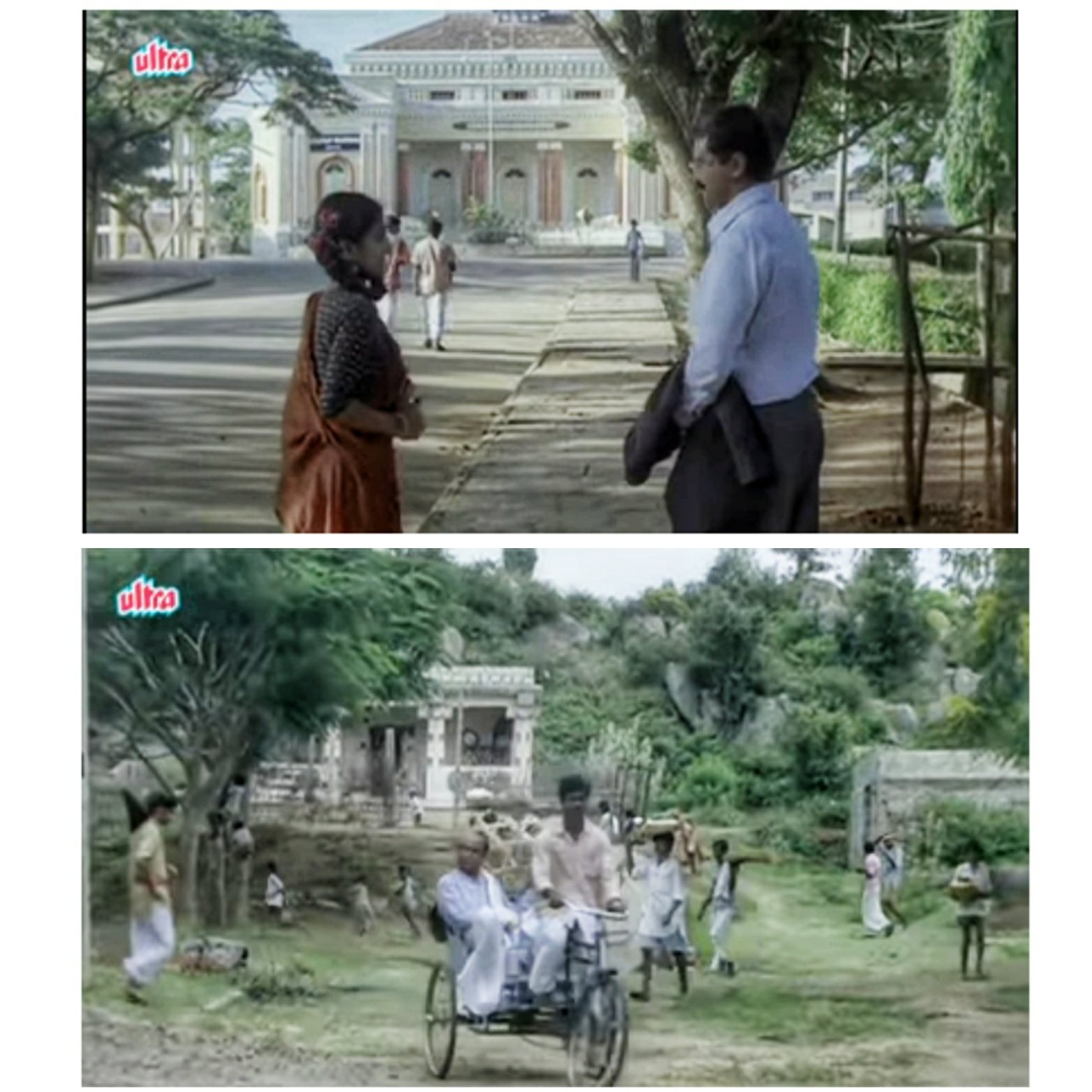
a. The scene where the couple meet after college has the Town hall building of Mysore in the backdrop.
b. The scene where the protagonist rides to see an astrologer is the temple at Kaiwara. It has largely been renovated as on today. But the Narayanappa temple in the background, the rocky hillock on one side and a motorable road seen in a glimpse indicate it is indeed Kaiwara.

img_20200419_2359087779830708236567927.jpg
Episode: The seventh house; Location: Top- , Below- Kaiwara

8. Episode name: Iswaran
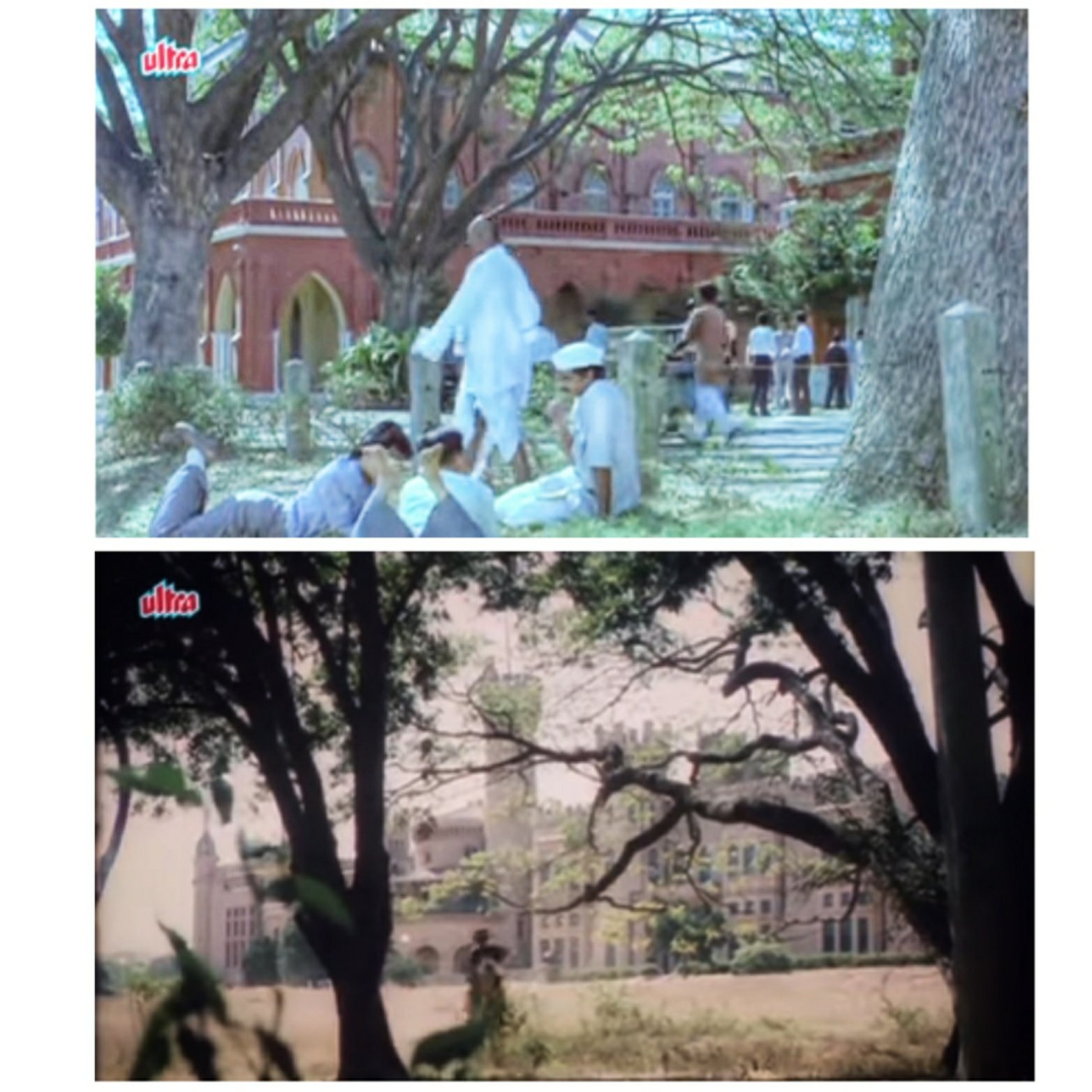
a. The college or the senate hall with its Gothic style of architecture featured in the episode is the ‘Central College of Bangalore University’ located in the heart of Bangalore.
b. The Protagonist, Iswaran watches a movie at a cinema. The palace featured in the movie is the ‘Bangalore Palace’.
c. Time and again, Sarayu river has been mentioned in the episode. Given the typical setting of Karnataka and the writer’s hometown of Mysore, the lifeline of this region is river Kaveri. I believe that the river where the protagonist drowns in at Sangama, near Srirangapatna.

img_20200419_1557072785711876990109400.jpg
Episode: Iswaran; Location: Top- Central college, Below- Bangalore palace

9. Episode name: The performing child- Abhinetri
Given the fact that it is still one of the iconic lung space of Bengaluru and there runs a toy-train amid a lot of greenery, the train journey featured in the child’s dream is in Cubbon park.

10. Episode name: Roman image- Rome ka Murthi
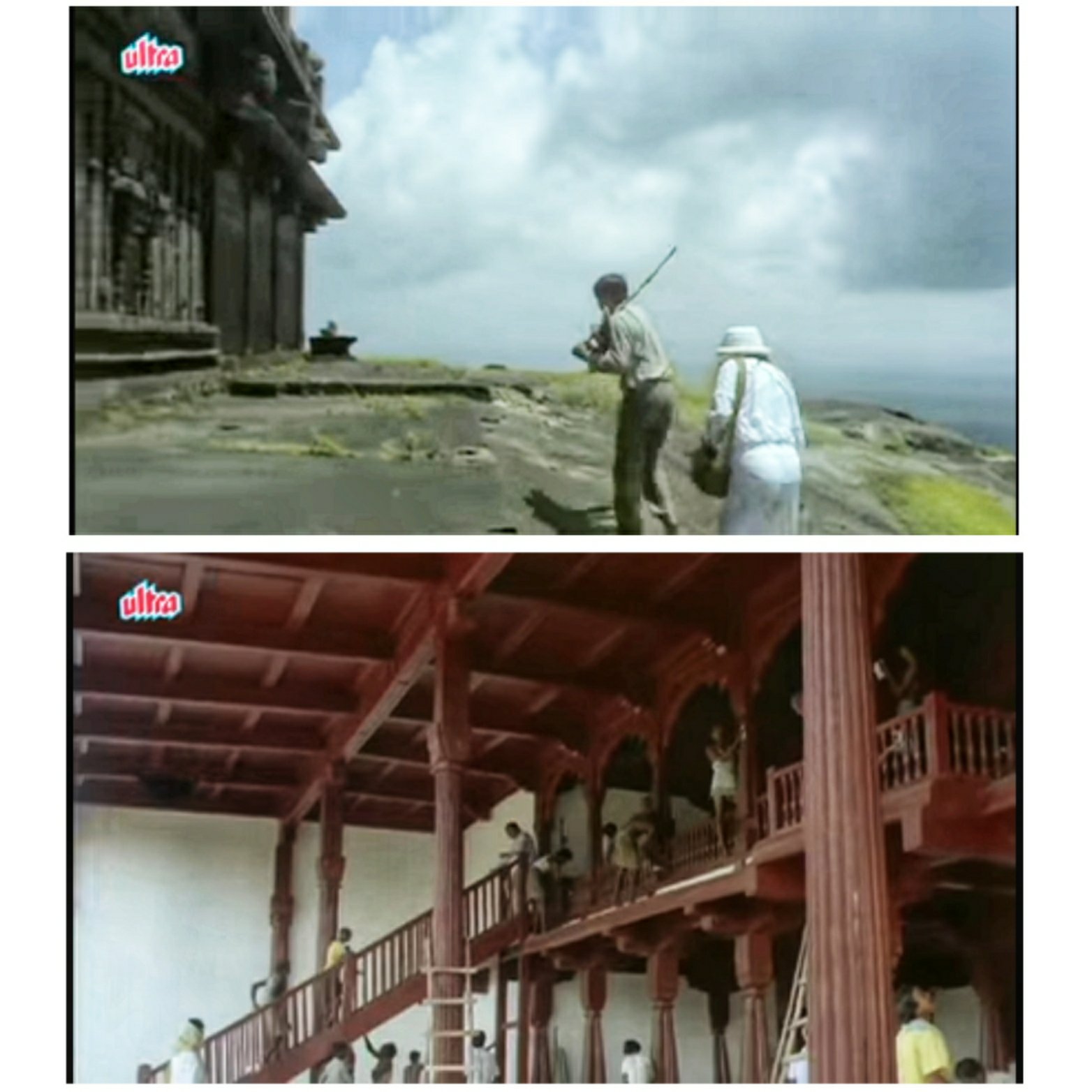
a. The stone temple that Sheshadri and Professor walk around after climbing up a rocky hillock that overlooks green meadows is the ‘Mantapa’ located at the peak point of Kodachadri.
b. The red structure where professor Bandopadhyay is indicated to be working on a renovation of a Jaipuri palace- is the Shivappa Nayaka’s Palace located near Shimoga.

img_20200419_1559211829629155025381725.jpg
Episode: The Roman idol; Location: Top- Kodachadri, Below: Shivappa Nayaka’s palace, Shimoga

11. Episode name: The watchman- Chowkidar
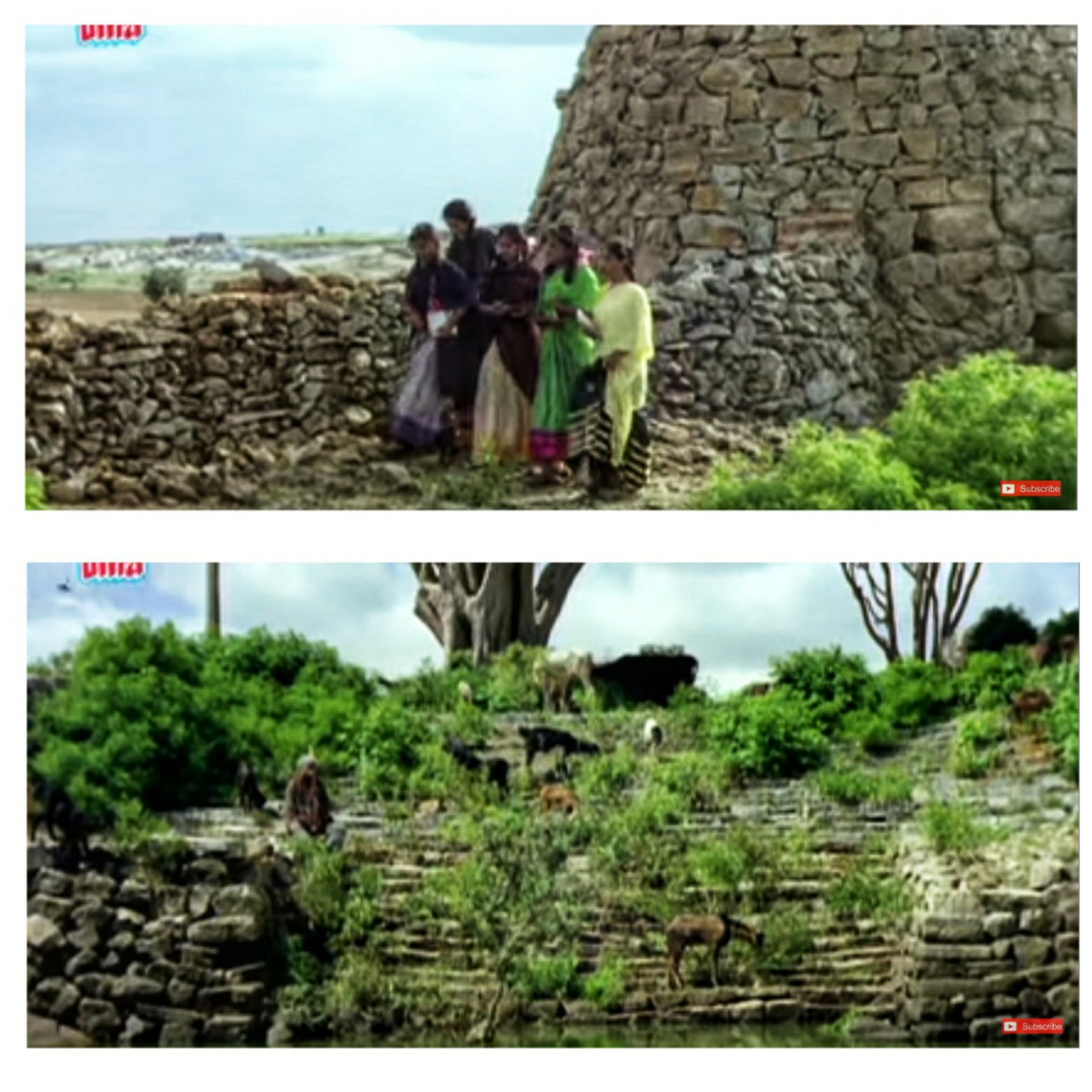
Although the structure and the surroundings seems to be in a dilapidated condition in this episode, it has been largely renovated and restored as on date. The entire episode has been shot in the ‘Thimmaraya swamy temple complex at Bettadadasanapura’ in Bangalore. The large trees in the premises, the temple pond, the entrance stone pillars and the fortress like wall encompassing the temple premises on a rocky hillock are the things that stand testimony to the famous episode.

img_20200419_1603378700133774239826933.jpg
Episode: The watchman; Location: Bettadasanapura temple

12. Episode name: A horse and two goats- Muni
Given the rural setting of the protagonist’s house and the fact that he eats Ragi mudde, it is a story from the Mysore region. The place where he goes to graze his goats daily in a eucalyptus grove and the slopy terrain of the hills where the road passes, could it be the road that leads to Chamundi betta? Or could it be Nandi hills? (as guessed by ‘The light baggage)

13. Episode name: Trail of the green blazer – Pocket maar

The temple where the protagonist offers his prayers with a coconut before heading for stealing is the Panchalingeshwara temple at Begur, located in the outskirts of Bangalore. (Information contributed by ‘The Light Baggage‘)

img_20200421_0011247701976065440120278.jpg
The Panchalingeshwara temple at Begur

Are there any familiar locations that you could identify in the serial? Let me know..

Here are the remaining episodes 🙂

14. Episode name: Leela’s friend- Siddha

15. Episode name: The missing mail- Dhakia

16. Episode name: Engine trouble- Engine Ki kahani

17. Episode name: Forty-five a month- 45 rupiya

18. Episode name: The career- Ramji Ki Leela

19. Episode (series name)- Naga

20. Episode name: Sweets for angels- Kaali

21. Episode name: A willing slave- Aaya

22. Episode name: Cat within- Paap ka gada

23. Episode name: The gateman’s gift- Govind Singh Ki Bhent

24. Episode name: The edge- Dhara