In the rapidly expanding Bengaluru city, Malleswaram and Chamarajpet are like two lungs that breathe out air of cultural relevance and nostalgia of Old Bengaluru. Malleswaram in the North and Chamarajpet in the South have always stood equal in their heritage of what the real Bangalore once represented. Although one might disagree with my personal viewpoint, Malleswaram represents the face of Bengaluru that boasts of intellects in the science and academics fields whereas Chamarajpet represents a city that is filled with scholars from the creatives like literature, art and commerce. In the proximity to premium research institutes like IISC, ISRO, C.V. Raman institute, the Wood institute and organizations like BEL, HMT, Mysore lamps, Sandal Soap factory etc. Malleswaram was the closest residential area. Meanwhile, Chamarajpet was an extension of the Pete area and is also the home to the Karnataka Sahitya Parishad. So, those in trade, literary luminaries and Pandits naturally moved in here. Anyway, my intention is not to explain those details and get into a debate, but to come to the point on how and why I believe that I belong to Malleswaram. (More on Chamarajpet in the next post)
Kaadu Malleshwara temple at Malleswaram
Talking about Malleswaram, where do I start from? 18th cross, maybe? I often entered into the premises of Sankey tank from Sadashivanagar and I exited from the other end to Malleswaram. For the first two years of living in Sadashivanagar, I played Basketball. I was trained at the ‘Beagles Basketball Club’ and envisioned to make it big in this sport over the coming years (Destiny had different plans and that’s for another story). Mind you, I had been an ardent follower of Kobe Bryant and the Lakers since school!
Finishing the day’s training usually meant savoring a honey cake for Rs.7 and a biscuit sandwich ice-cream for Rs.5 at the lyengar’s bakery at 16th cross. The aroma of filter coffee in the darshini hotels and a walk in the old Malleswaram market are sensory experiences that cannot be taken away from me. The CTR dosey is an inseparable part for my taste buds (I take the metro train from my current residence in South Bengaluru to Malleswaram even to date, just to eat CTR dosa).
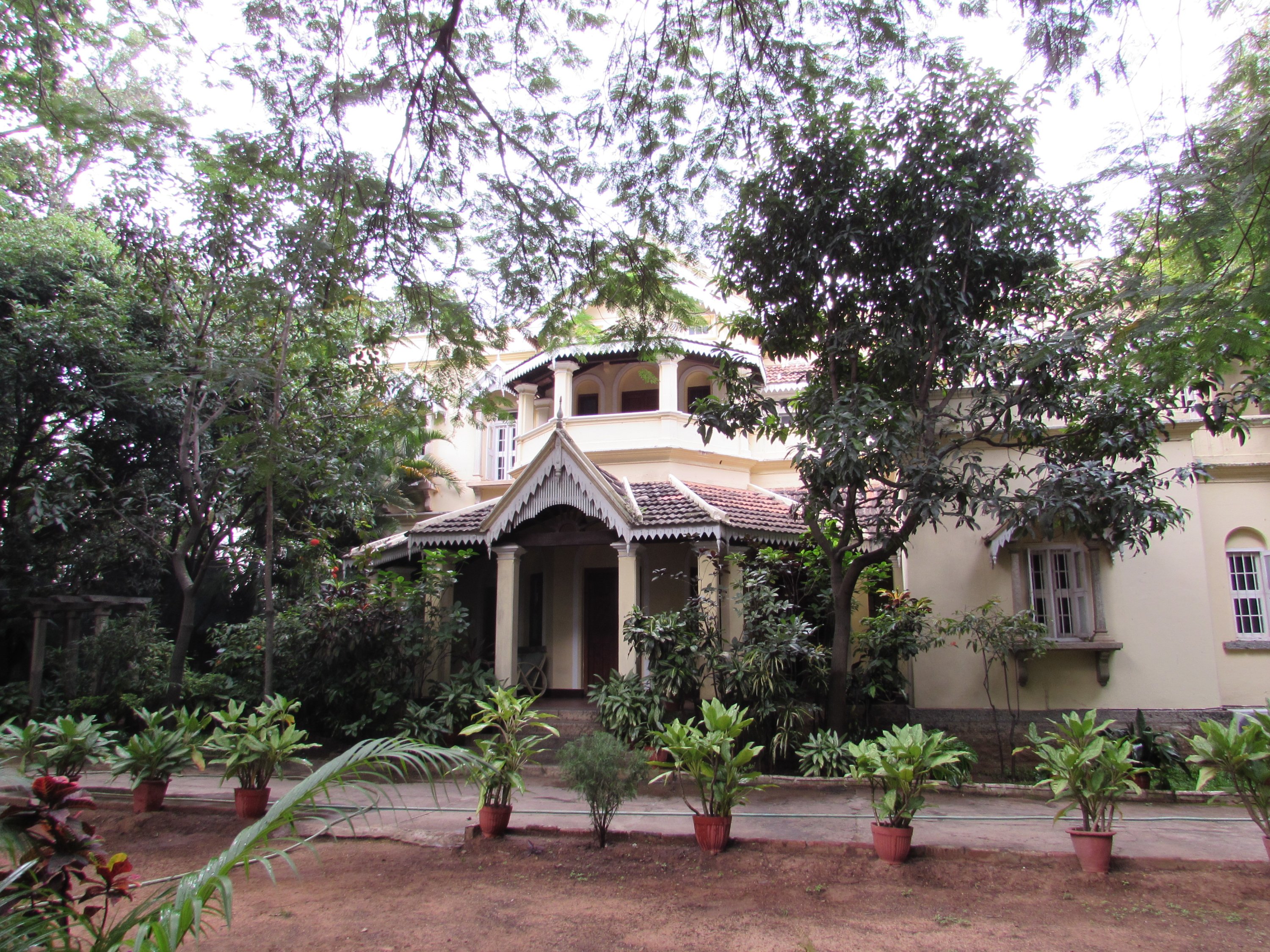
Villa Pottipatti- a heritage hotel in Malleswaram, Bangalore
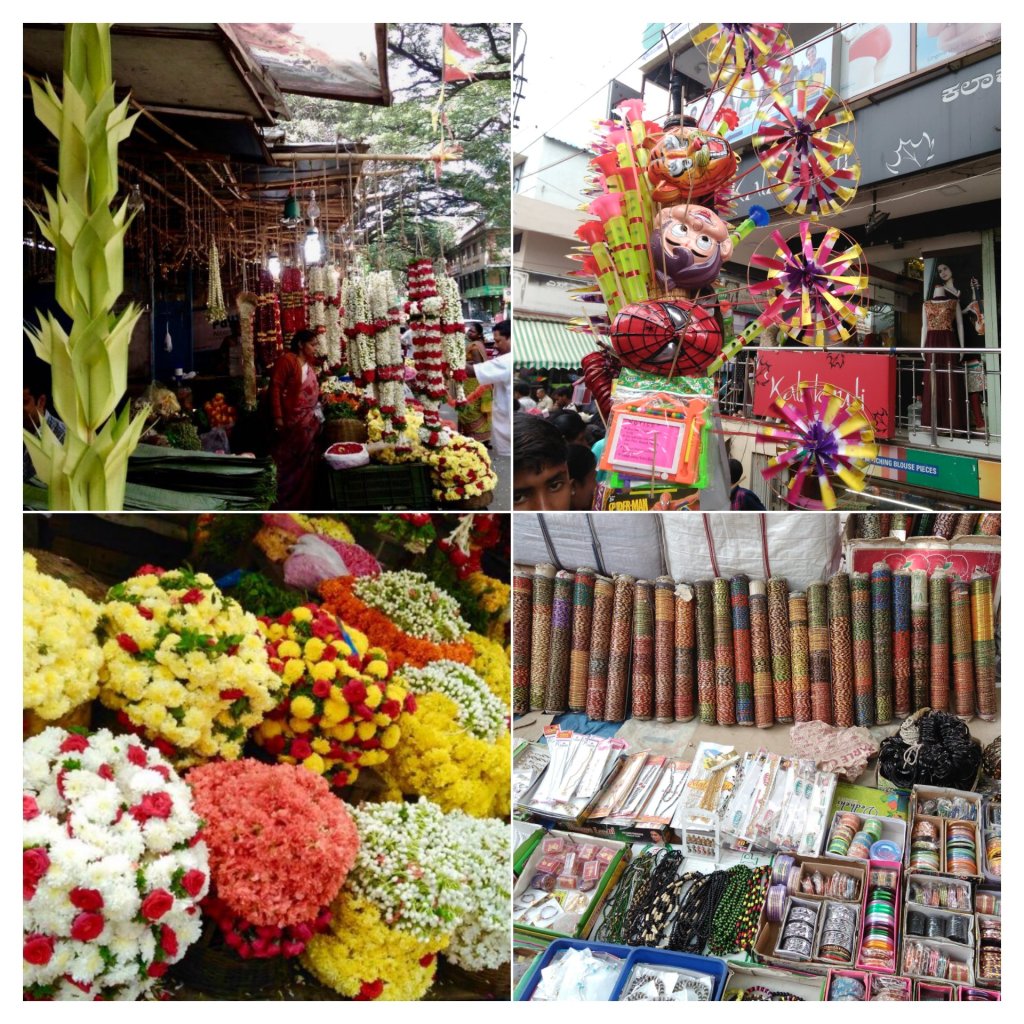
The atmosphere of festivities brought in by scores of vendors on the 8th cross road were the days that were much awaited by me to see what each festival was about and what the key items associated with a specific festival were (decorations, food and other knick-knacks). I had even made up an entire itinerary on my own and applied for a part time job of a tour guide who wanted to walk the interested people through the lanes of this heritage area.
Malleswaram market
Since I had only then moved into Bangalore after finishing my schooling in Madikeri, for me Malleswaram served as an open school to open my mind to cultures that I was totally unaware until then. The cuisine, the festivals, the spoken Kannada, the traditions and the mindset of people in general, everything seemed new to me in Bangalore from what I had been exposed to until then. I was quick to adopt and adapt and this is where I became a true blue Bangalorean.
With the premium research institutes of India being around, Malleswaram sort of sparked my urge to keep learning/exploring something constantly and inclined me towards pursuing research in general.
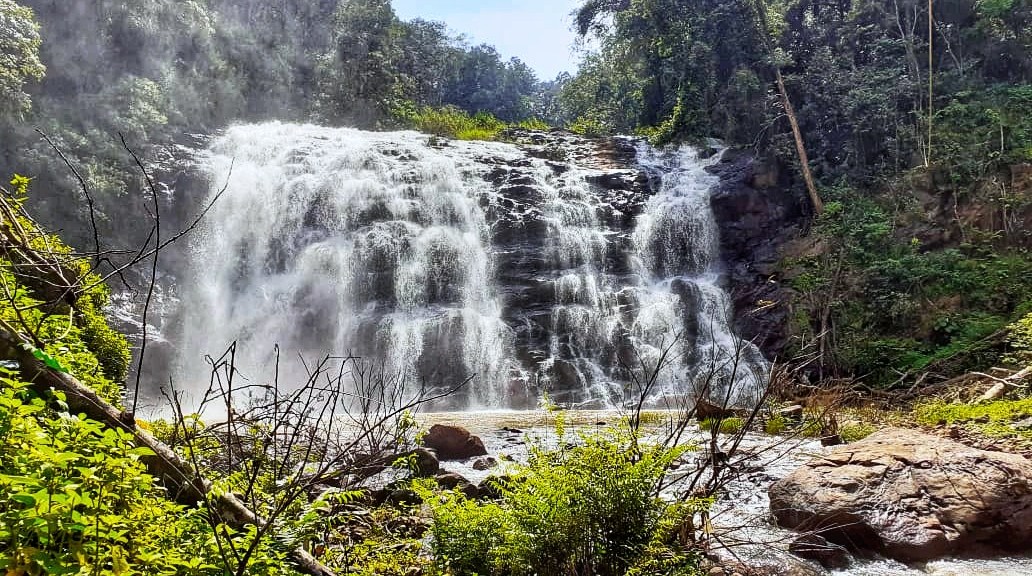
Abbi falls is one of the most popular landmarks in Kodagu, located in ‘Kalakeri Nidugane village’ on the outskirts of Madikeri. This is where the Lostlander was stung by the travel bug, much before she was born! History speaks about Columbus and Vasco-da-Gama, but the lostlander grew up listening to the stories of her grandfather’s adventures of discovering Abbi falls. Those are the very stories that sowed the seeds of seeking adventure and finding her own life path for the Lostlander.
The memories associated with Abbi falls is an endless list, so this post is going to be a photo tour with some old photos of the Lostlander with her grandfather at Abbi falls estate.
Abbi falls, Madikeri
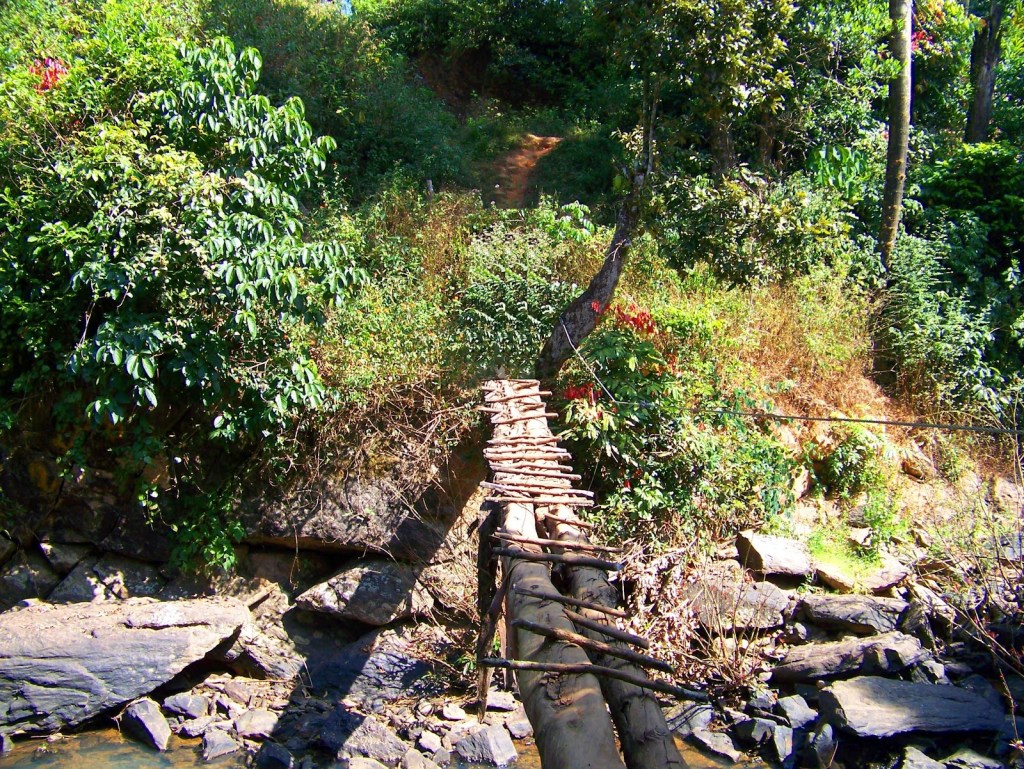
This is a brook built by my grandfather to provide accessibility to the surrounding villagers to get across the river, on the upstream of Abbi waterfalls during the monsoons. It has been replaced by a concrete bridge only in yr.2021, several decades after it was originally requested for. (Click here to read further)
The wooden bridge, upstream at Abbi falls
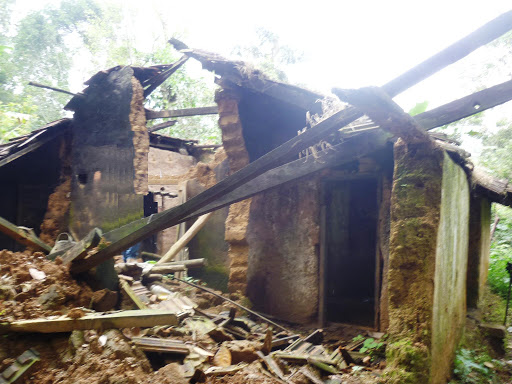
Only memories remain of a house that once served as the heart of the family’s life. (Click here to read further)
The Abbi Villa- Now
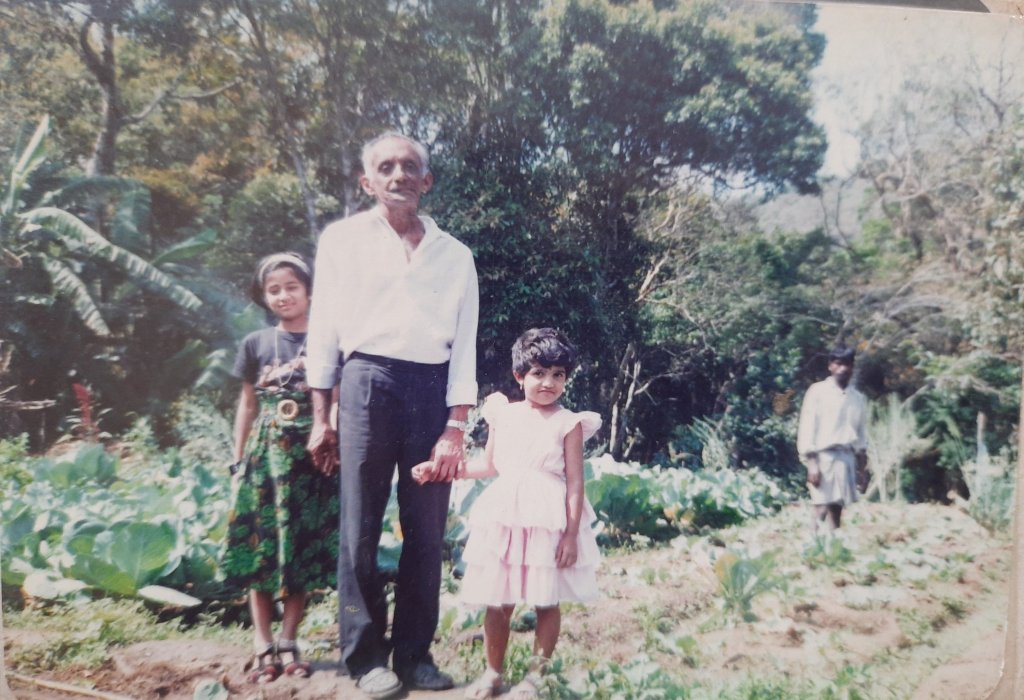
In this photo, the lost lander is lost in the vegetable garden, set in the middle of the coffee plantations, overlooked by the beautiful hills of the Pushpagiri ranges. Gravity fed sprinkler jets sprayed water from the stream that was fed by the larger waterfall. (Click here to read further about the LostLander’s love for honeybees).
The author with her grandfather (center) and cousin in the vegetable garden at Abbi falls
I wish to compile a book someday, comprising of all these stories from the life of “My grandfather”. Do share in all your thoughts and any personal stories associated with this place that I will be glad to add them in my book with due credits.
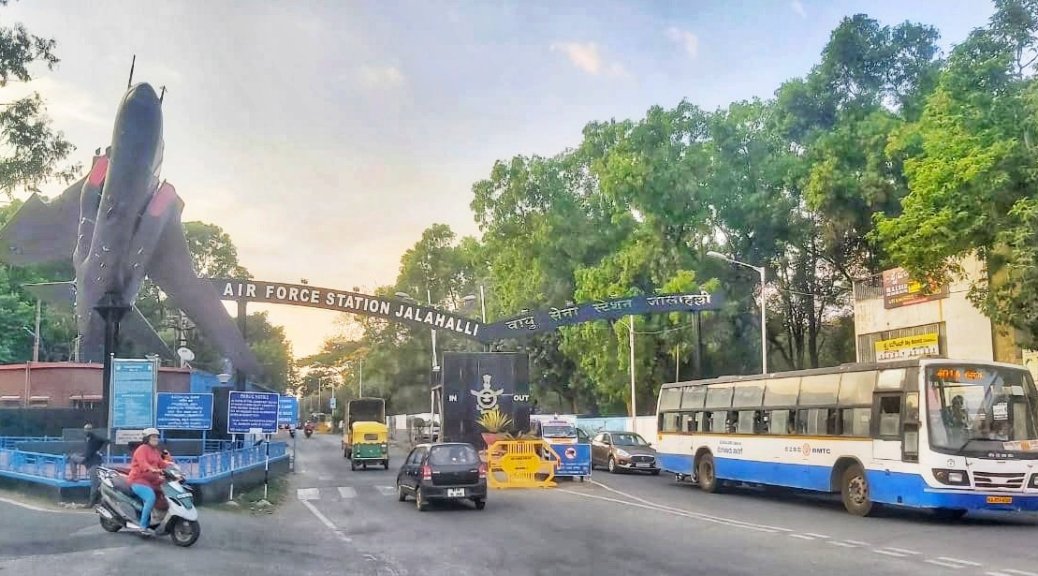
Sadashivanagar is a locality in North Bengaluru, widely comprising of the upper and the lower orchards. For those unfamiliar with Bangalore’s demography, Sadashivanagar is rather known as a VIP and VVIP haven and a high security residential area. For the non-VIPs living around here for too long, the periphery extends beyond. It covers Vyalikaval, Malleswaram, RMV extension and Yeswantapur. Having spent a significant number of years and the most youthful days of my life here in the early 2000s, a large part of my heart belongs to Sadashivanagar. Here are some of the best memories from the years spent here.
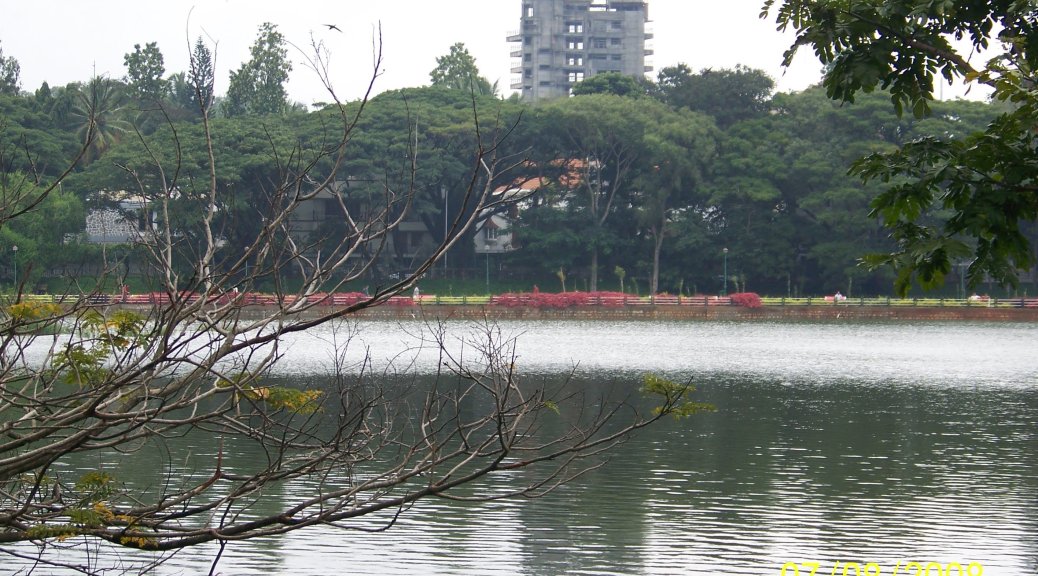
Sankey tank, in Sadashivanagar
Having lived at a proximity to Sankey tank, it was my ‘go-to’ place for all the years that I lived in North Bengaluru. You can say, ‘Sankey tank was to me as Chamundi Betta is to a Mysorean’. I would go there when I was sad, when I was happy and when I felt nothing. I went there every day! Simply walking there and watching the ducks and the several fish-consuming birds that nested in the middle of this waterbody rejuvenated my senses. However, I hated the months that followed the festival of Ganesh Chaturthi when large number of Bangalore’s population came here for the immersion of the idol and the water would smell bad for several more months until the concerned authorities cleaned it.
The garden around Sri Ramana Maharshi’s meditation center and Kempegowda tower at Mekhri circle, the single screen cinema at Cauvery theater, late night ice-creams at Baskin Robbins were some of my favorite peace places around this locality.
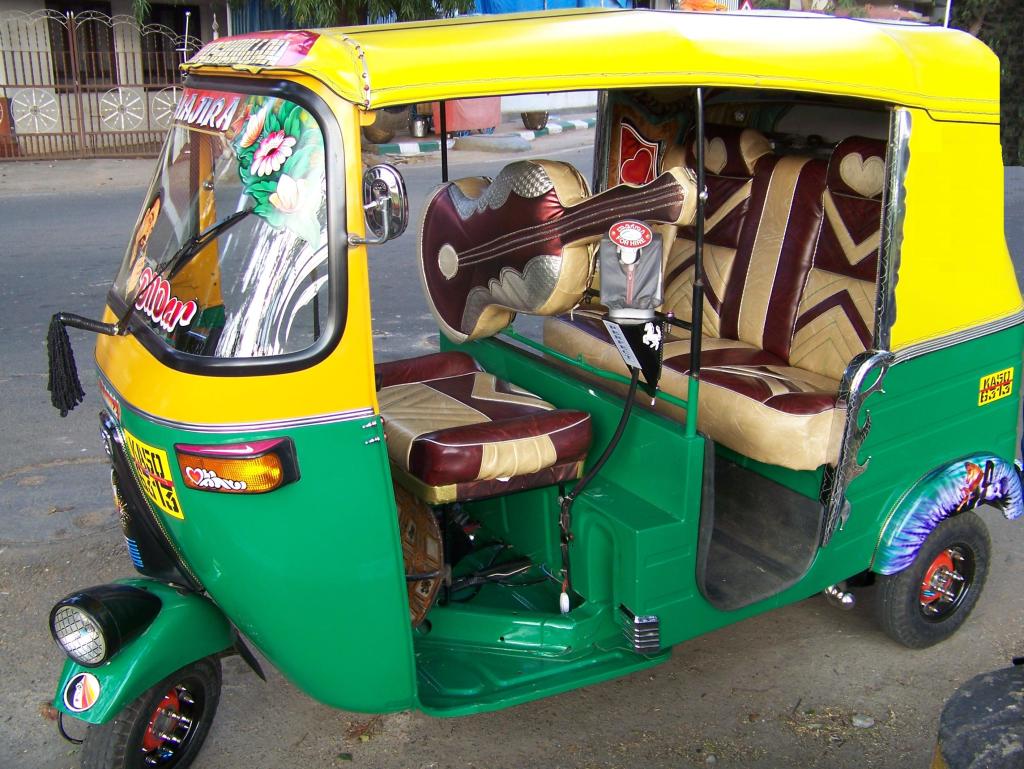
A decked-up autorickshaw at Sadashivanagar
Again, proximity to Mekhri circle and Palace grounds added another dimension to my interests- Music! Back in those days, Palace grounds was synonymous with hosting the BIG concerts of Bengaluru. Iron Maiden, Aerosmith, Megadeth, Metallica, Bryan Adams, Deep Purple ’em all… If you hear me having a flair for the western music, along while I’m humming the songs of Sonu Nigam, Sunidhi Chauhan and several other traditional musicians, Sadashivanagar is probably the place that has influenced me! Even on days that I couldn’t make it to the concert arena, the blaring sound would rock the glasses and doors of our house wanting me to be a part of the cheering crowd!
Kumbaldal is a village in Madikeri taluk, north of Kodagu district. The descendance of my maternal lineage belongs to this village. Currently, my uncle stays here with his family.
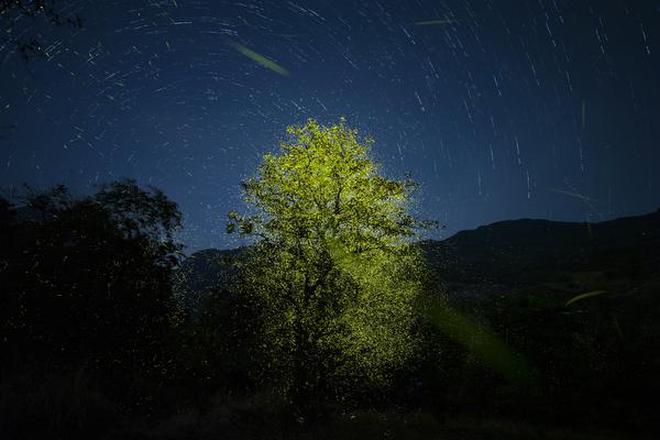
This award-winning wildlife photograph not often but always brings back memories of simply being at Kumbaldal.
‘Lights of Passion’ fetched Aishwarya the ‘Highly Commended’ award at the 56th Wildlife Photographer of the Year Awards (2020) under the ‘Behaviour-Invertebrates’ category. | Photo Credit: Aishwarya Sridhar
If you are there at the right time, then your senses can feast on bioluminescence. Millions of fireflies rest on the ground under the coffee plants all night and it literally feels as if you are standing on the porch of a mud house that is surrounded with a zillion flashlights. No words of mine can justify what I want to express! But, what I now realize is that the experience is not the same anymore. The usage of chemical fertilisers and pesticides have done damage that’s beyond repair to the environment. Going organic would need several decades to fix these glow worms and fireflies back into their normal habitat.
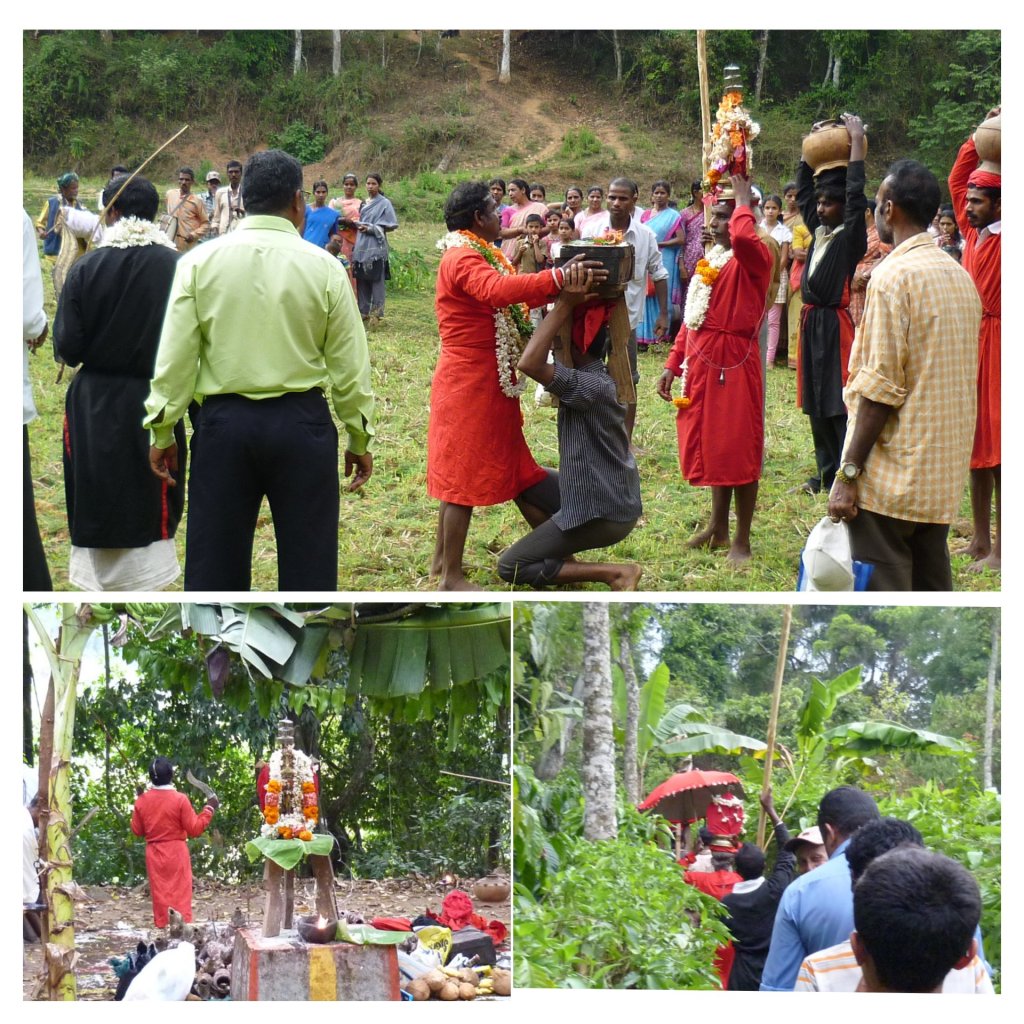
Every village in Kodagu has its own deity and it is quite an experience to participate in these local festivals. At Kumbaldal, the temple’s Kuli kund (the holy bathing pond) happens to be in our land. Hence, the idol of the presiding deity of the village is brought to our farm for the first ceremonial formalities during the village’s annual festival.
The annual village festival at Kumbaldal
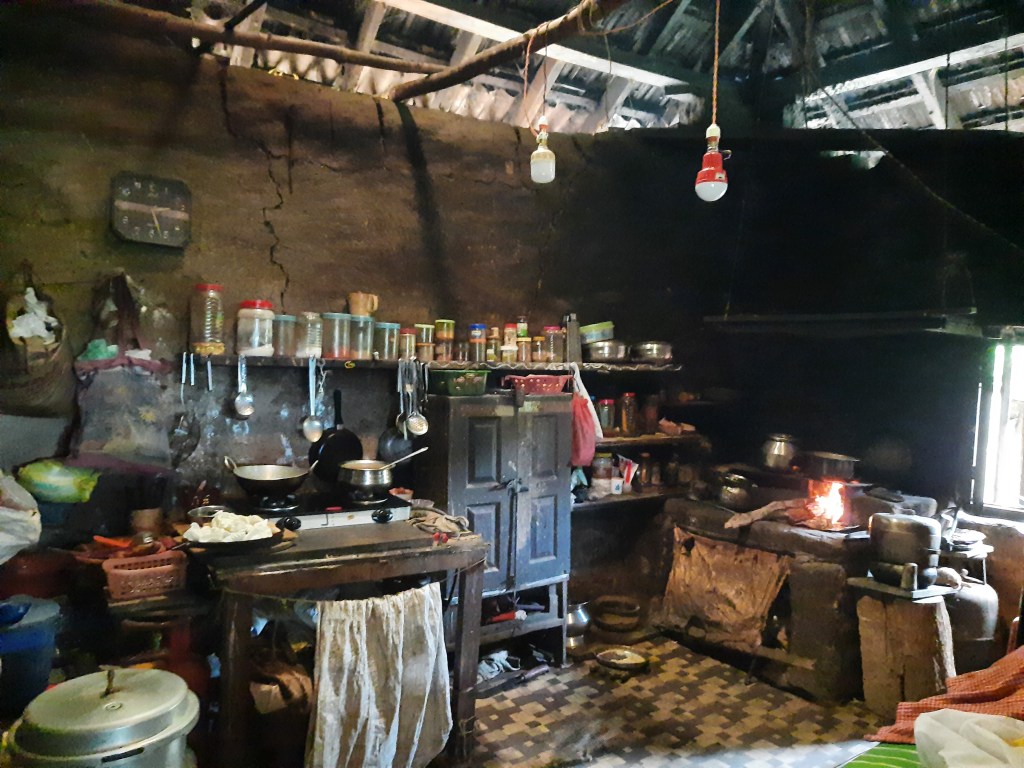
Not until late 2010-ish, that this village house had an electricity connection. The lifestyle was rustic and charming, to say the least. Mud smeared walls, cow dung smeared frontal yard and prayer room, firewood cooked food, kerosene lit lanterns and a perfectly mountain facing portico: Why wouldn’t anyone want a vacation like this! For me, my visits to this village were wholesome experiences.
The kitchen at the Kumbaldal house
Accessibility being scarce for reaching the commercial areas as and when required, the food and the entertainment at uncle’s house used to be the most traditionally rooted. Even to date, a visit to Kumbaldal is welcomed with a festive spread that largely comprises of the traditional Kodava recipes and prepared with the locally available ingredients as much as possible.
When I think of Kumbaldal, it reminds me of staying rooted to my culture and grounded with a minimalistic lifestyle. if you liked this story, you might also want to give a read to: “The monsoon delicacies of Coorg” for some more nostalgia.
‘Ontiangadi’ literally translates to The Only Shop’ in Kannada, and it is the name of a village in South Kodagu, where my paternal lineage hails from. Now, this village has grown beyond just one shop, into a tiny township.
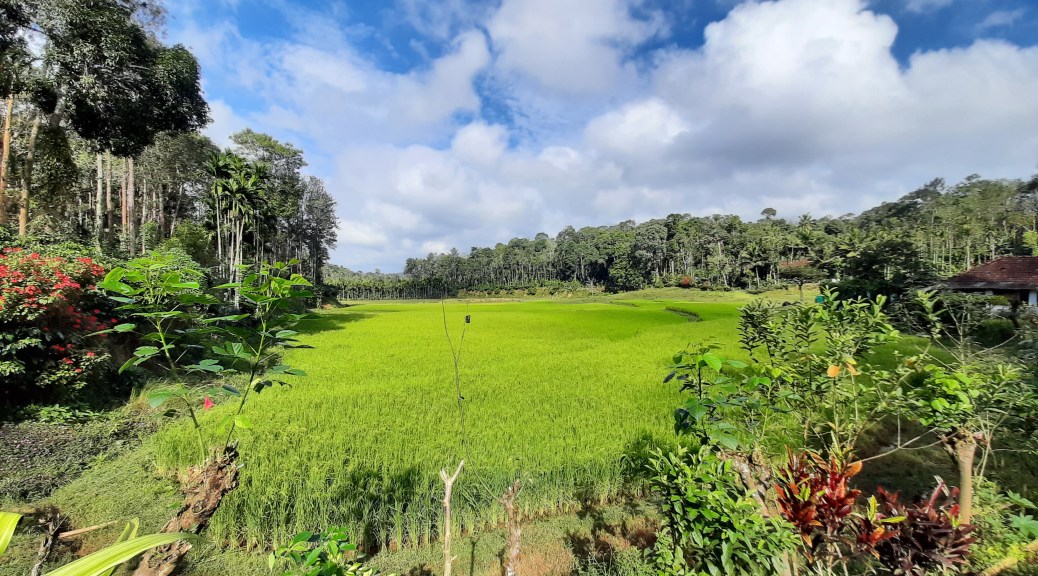
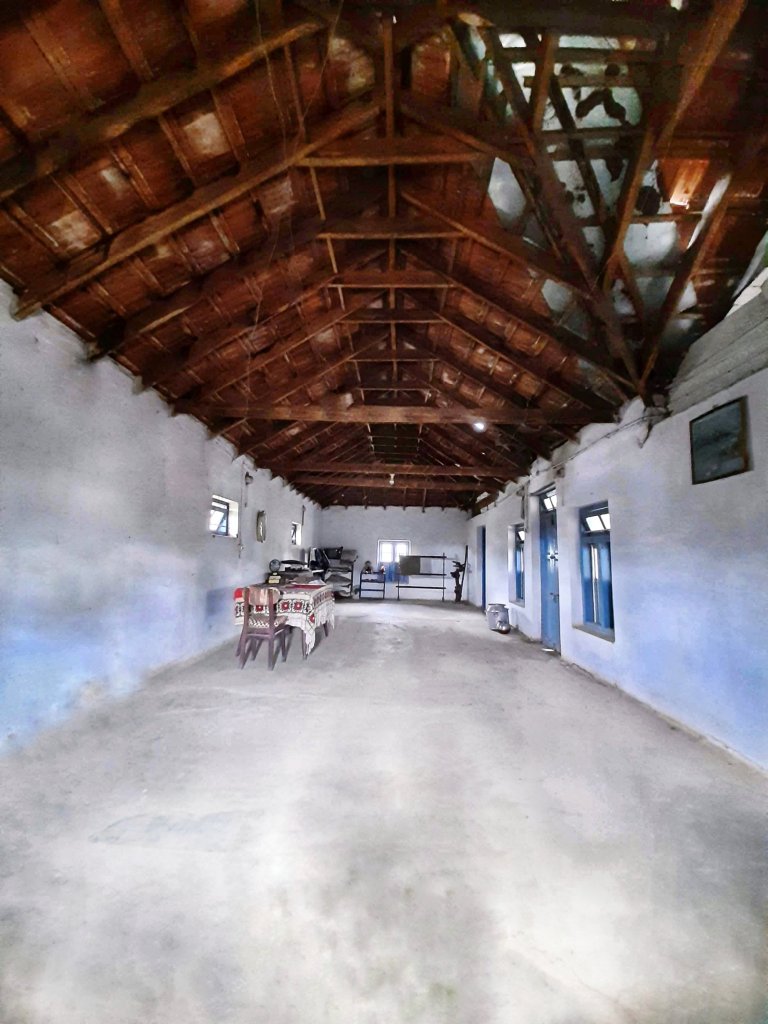
As a child, I would come here on those weekends, when my parents came down from Bangalore. But whenever I came here, there has always been a calm of a different kind. There are two ancestral houses located within the large premises: one nearly 200 years old which is now used as a warehouse and the other, around 50+ years old that is currently being resided at by our family. The latter is surrounded with coffee plants, paddy fields, overflowing ponds and streams, an open well at a walkable distance to fetch potable water. This place has always seemed magical to me, then and now!
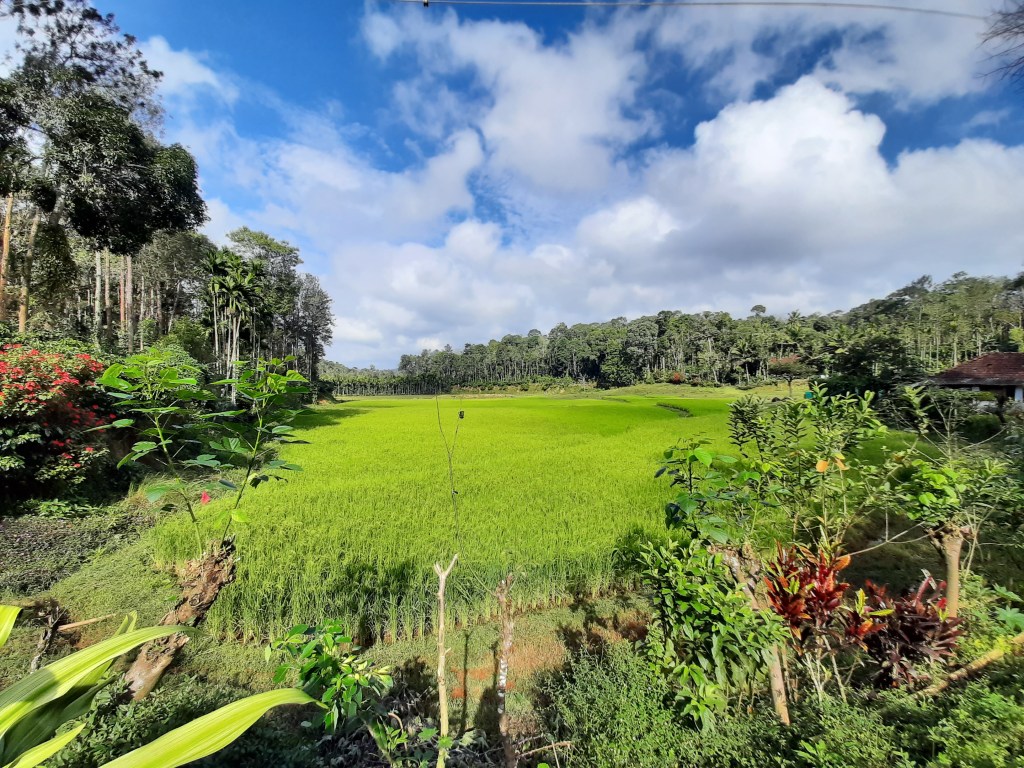
View of the farm from our ancestral home in Kodagu
While the green paddy fields have been a treat to the eyes, the offseason is when I have lived some of my best holidays. The paddy field would turn into a playground when my cousins, other kids from the village and their cousins, would all congregate here for a game or two of football. Not with a foot-BALL, but with hollow balls of pomelo skin (grapefruit).
And then, came the first monsoons: we ran to the large wild-mango tree and fought a mango war. Who won or lost the battle would be decided by how much mango juice we were soaked in and who got the maximum scolding from our elders!
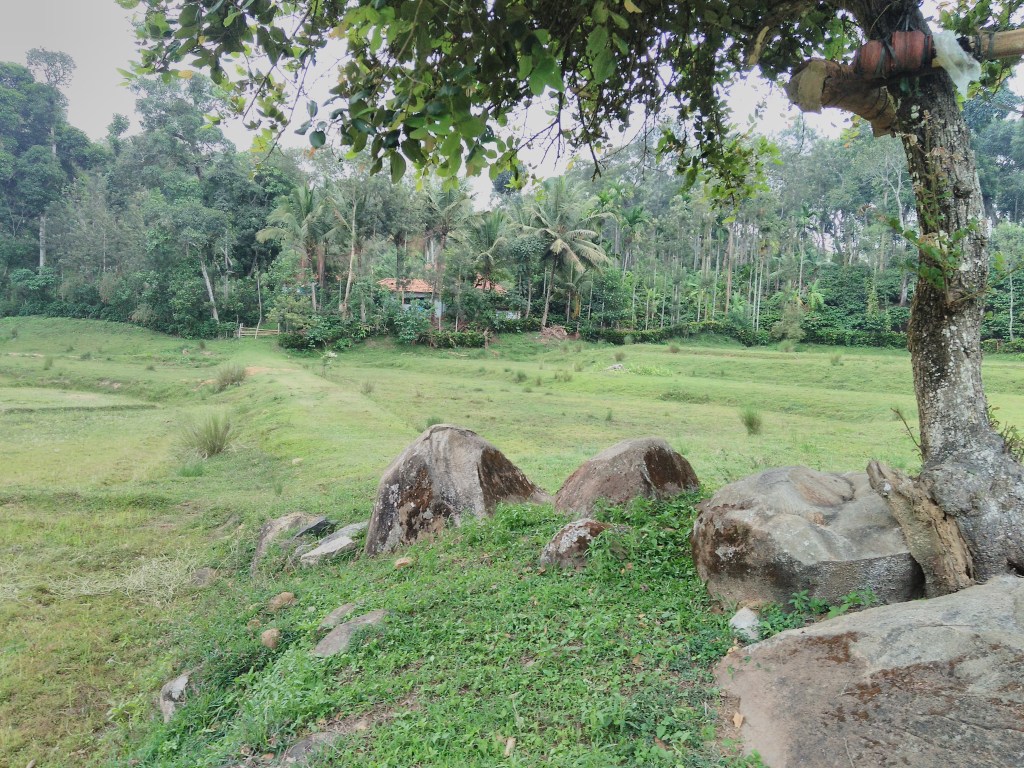
The farm and the mango tree, on the drier days in Ontiangadi
Wait for a few more days to pass by and the monsoon will peak. Then, the streams would overflow and bring that time of the year for our prized catches: Laying bamboo traps to collect fresh water eels and Koile meen (a local fish in Kodagu), fishing out mud-crabs from crevices along the downstream were normal. On (un)Lucky days, one or two smushy crabs would turn out to be snakes after being grabbed out 😀
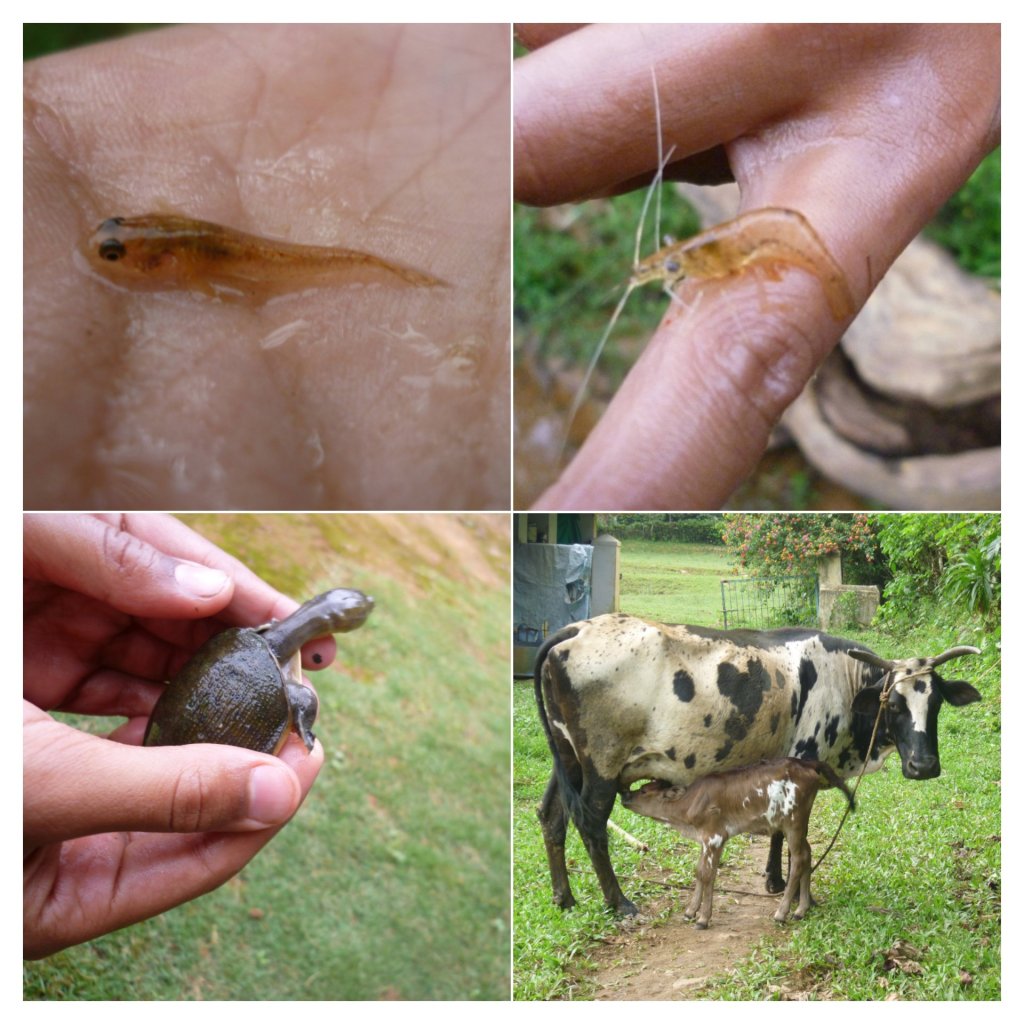
Once, the workers had brought home several soft shelled turtles which they had found while working in the paddy field. It was timed well with my then recent experience of volunteering for a sea turtle conservation project in Chennai. With all excitement and inspiration, I had written to so many organizations about my new discovery in the western Ghats 😀 Aaah, what memories!
Clockwise from top left: 1. Koile meen, 2. Freshwater shrimp, 3. Cattle, 4. A soft shelled turtle
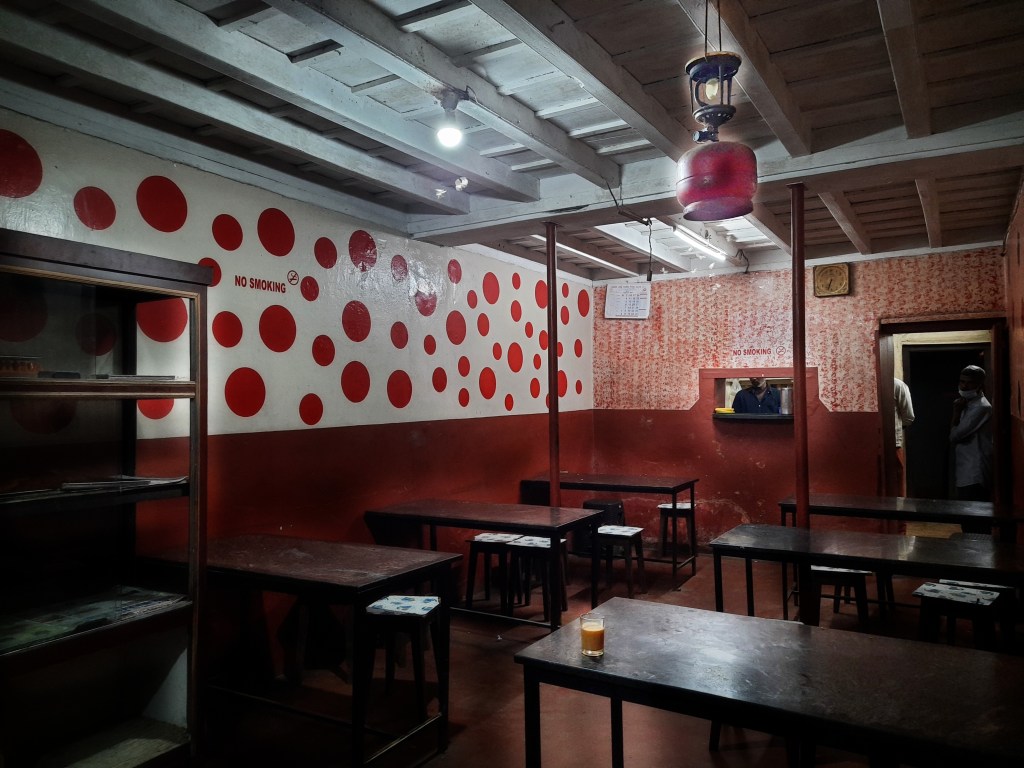
Apart from this, the ‘Subramanya temple’ at Byrambada and the ‘Palli Swamy Dargah’ (Pulkimaad dargah) have been important landmarks in and closer to Ontiangadi. A nice warm day even now, is often concluded with a hot plate of palam pori and a cup of kattan chai from ‘Ganesh hotel’ at Ontiangadi.
‘Ganesh hotel’ at Ontiangadi, Kodagu
I borrow my surname from this village and so, definitely a part of me belongs here 😀
If you liked this story, you might also want to give a read to: “OMG! Life has changed!” for some more nostalgic content.
Vasanthanagar is an old locality in North Bengaluru, adjoining some of the prominent English areas like the Cantonment, Miller’s road, Cunningham road, Palace road etc. I had been visiting and staying in this locality for all the years that my aunt’s family lived here. Right from the time I was an infant to the time I started to go to college, I have been a regular around this locality. Or to say, this has been my second home whenever I have been in Bangalore. (First home in Bangalore is of course where my parents lived, I will talk about it in another post 😀 )
When you live in an area, your boundary extends beyond. Hence, high grounds, racecourse, golf course, Windsor Manor, Indian Express building, Basava Bhavan, Vidhana Soudha were all just a walk away. If you let my aunt or mom take over this page, then probably they would tell you that even Shivajinagar or Commercial street were also walkable from Vasanthanagar (at least considered so, back in the 80’s and 90’s). So, let me take you through some of the landmarks in Vasanthanagar that bring back nostalgia.
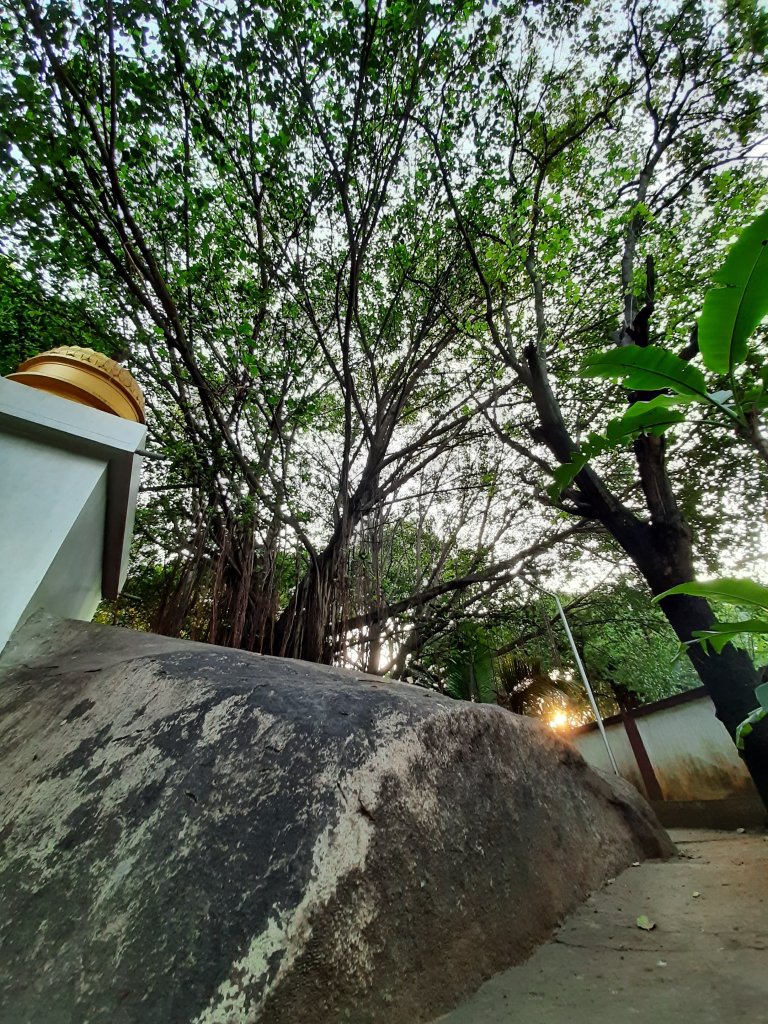
The Sampangi Ramaswamy temple: My aunt’s house was located right opposite to this temple and it was every day, that I woke up to the melody of M.S. Subbalakshmi’s suprabhatam played at this temple. But what best remains with me are the days that my cousin and I were made to believe that a small depression on the boulder in the temple premises were footprints of Lord Rama. So as kids, we would go there every day (whenever I was there) and offer our prayers with vermillion to this rock (and NOT to the temple!)
The premises of Sri Sampangi Ramaswamy temple in Vasanthanagar
Loafers’ lane: Palace road is where a majority of my female cousins have attended school. This is also where I got my pre-university education before graduation. Being an all-women’s college, needless to say that the road running perpendicular to the college gate has always been a haunt of all the men of Bengaluru. Apart from the ‘Dove nuts’ from Chechi’s canteen on campus, the chaats from Raj’s on loafer’s lane has always been synonymous with the crowd.
Kodava Samaja: Then, there is this convention hall where almost all community gatherings like festival celebrations, weddings etc., happen. Even if my aunt’s family and I moved out of the area, Vasanthanagar wouldn’t leave us 😀
The Mount Carmel College junction of Palace road and Loafers’ lane
Adding to the list, the delicious sizzlers of ‘Miller’s 46’, Mughlai Biriyani from ‘hotel Chandrika’, honey cake from lyengar’s bakery and home-needs supermarket were our family’s go-to places for quick bites. Catching a local gig at ‘Alliance Francaise’, a movie or a Mc.D burger at ‘Sigma mall’, Infinitea and several other cafes and restaurants that sprung up and shut down along the way were other newer additions (during the early 2000s).
Talking about the role of this area on my personality: This place has influenced me in more than one way.
If you have ever conversed with me and have spotted a certain peculiar vocabulary sneaking out during a formal discussion, I owe that part of me to Vasanthanagar. That “English” has brushed onto me from my almamater here! For all you should know is that I studied in a gender-neutral women’s college, where we addressed peers as ‘hey, Man!’, ‘hey, Bro!’, ‘hey, dude!’.
This is also where I was introduced to ‘fusion rock’ music. The college fest hosted by my almamater is one of the most popular stages in the country for aspiring college bands who seek a launchpad and get recognition. This small-town girl had grown up listening to the voices of Lata Mangeshkar, Mukesh, Rafi, Kishore da, Yesudas, P.B.Srinivas and the likes, until she moved into the city. ‘Fusion’ was a new form of music she was listening to for the first time, here. She had an instant connection.
Although tending to animals is in the genes and the blood of this girl who belongs to forests of the western Ghats, I owe my understanding and awareness for conservations of wildlife and nature to Vasanthanagar. My bond with a classmate whose dad worked in the forest department was so deeply rooted about the holistic topic of environmental conservation, that we would spend several sleepless nights discussing about births, deaths and general health of individual animals from the zoos that we both had seen together, met and knew by names (Click here for a detailed read)
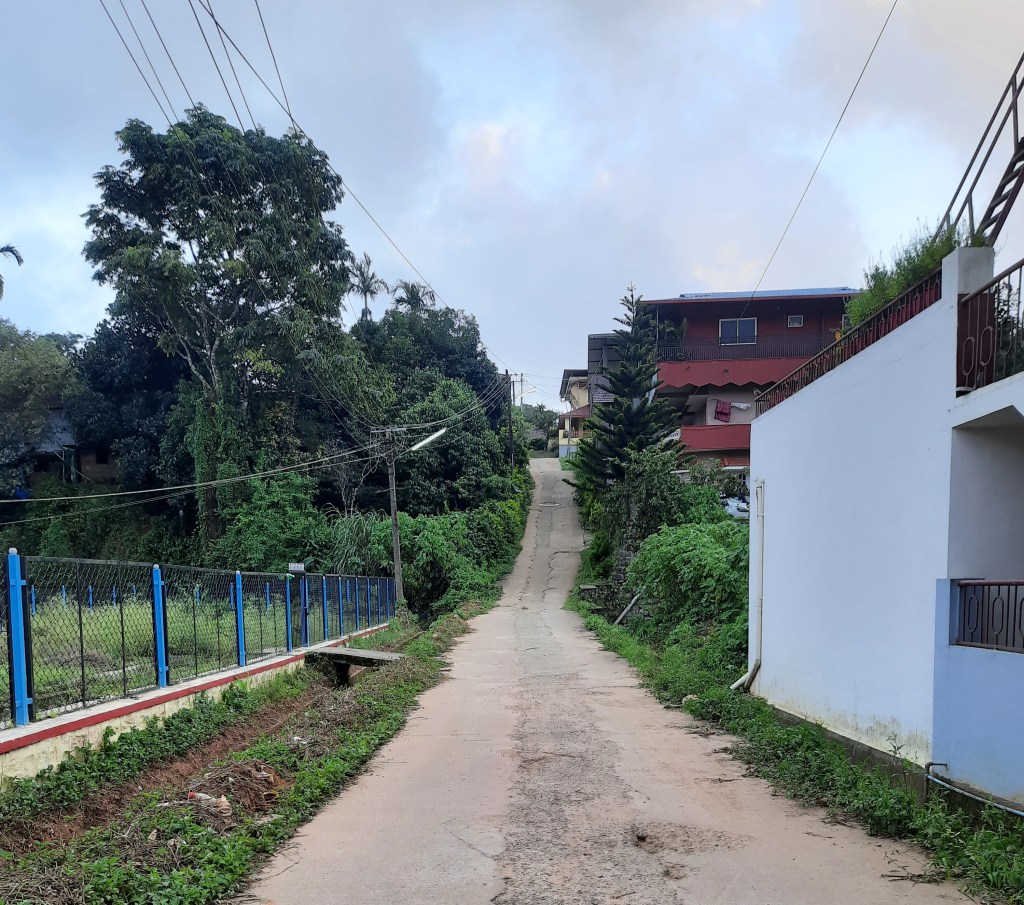
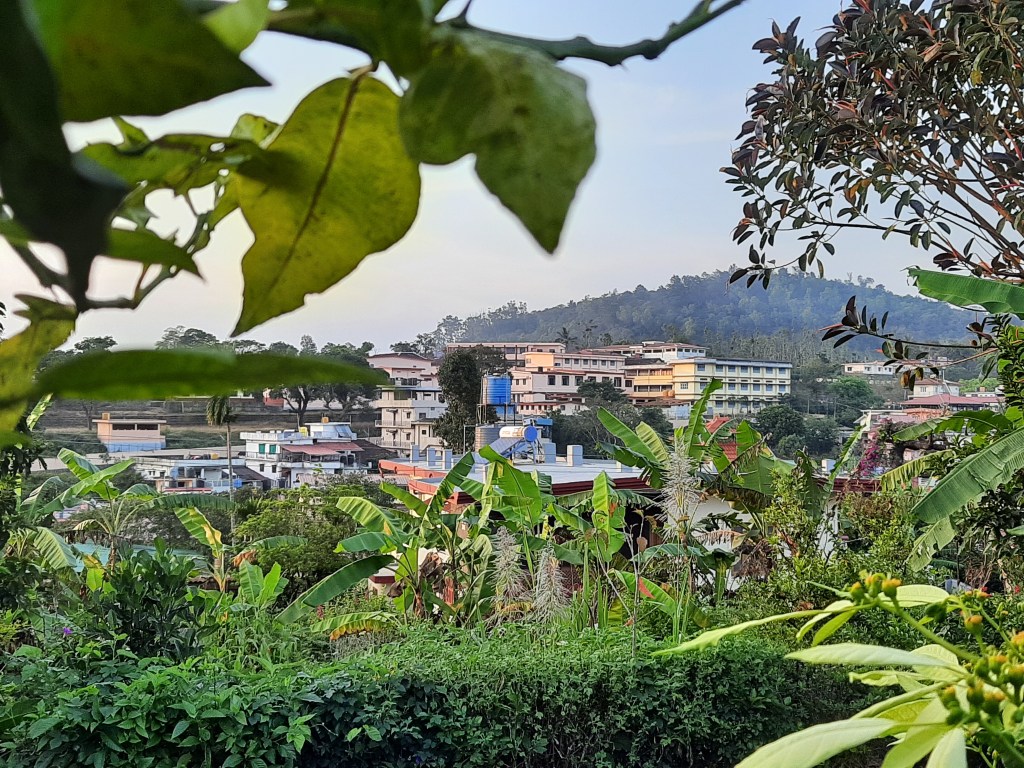
This HAS to be the beginning 😀 Madikeri (earlier called as Mercara) is the district headquarters of Kodagu (earlier called as Coorg). In this post, I talk about Karavalebadaga village in Madikeri Taluk, where my house and my school were both located in proximity. Although the village retains its name in the government documents, the newer names of these fragmented localities have now taken over people’s memories.
This is where I was born and have spent most of my life, so far! I was raised by my maternal grandparents who lived in Madikeri. A large compound with a shed full of cows, a kennel full of dogs, a sty full of pigs, a lair full of cats and an attic full of sparrows in their nests; a house surrounded by a colourful garden, fruiting trees and coffee estate; A short walk down, took us to a paddy field in which flowed a pretty little stream. This is where I grew up, in the heart of Madikeri town.
The attic at my maternal grandparents’ house
Throwback to 90’s: As young kids, my cousin and I often sneaked out of the house on weekends for our usual stints. We would steal empty jars of Horlicks and cotton towels from granny’s stash and head towards the stream. We would catch fishes from the stream, get them to fill the tank that had purple lilies in our house’s front yard. We then hid the jar and the towel back near the stream for the next weekend. Come next weekend, the jar would have gone missing and the drill repeated!
Forward to present day: The sheds are empty, the dog is lonely, the sty is erased, the trees are gone and the stream has become part of a concreted sewage.
Watching the rains batter and the lily tank in the frontyard
Throwback to 90’s: My friends and I walked to school, braving the heavy monsoon downpour. Our heavy armours comprising of thick raincoats, high ankle gumboots and wide black umbrellas weren’t enough to keep us dry. Along with this, we made sure we did not return home empty handed in the evening. We filled our lunch boxes with wild mushrooms or mud-crabs that we would pick up from the paddy field for a sumptuous monsoon dinner.
Forward to present day: There exists no trace of a paddy field that has now been transformed to a full fledged housing layout, the present day ‘Cauvery layout’.
The road connecting Ranipet and Cauvery layout in Madikeri is now laid over a sewage stream
Throwback to 90’s: My SCHOOL, the oldest educational institution in the hills is a landmark in itself. Named after it, an entire locality is simply referred to as ‘Convent junction’ that is accessible via a narrow lane (locally called as Oni). This was our alternate route on monsoon days when the paddy fields were flooded. The joy of relishing the masala vadas from ‘Kunyali’s canteen’ or a bite into a pastry from ‘hotel Coorg International’ (probably the only star hotel from our times) gave us a high of a different level.
Forward to present day: The oni is partially gone, but the of joy of taking a ride around the Convent junction and visiting school can never be replaced!
A tour of Convent Junction
They say home is where schooling starts, and then the formal schooling: My personality is probably a reflection of Karavalebadaga because this is where it all started!
So, that’s all folks! Next week, I will share a post about another place where I belong to. I hope you all will enjoy and share your thoughts with me.
But before that, I hope you all have read my earlier throwback post about Madikeri as well. If you haven’t, here’s the link: ‘My growing up days at Madikeri’.
With the Pandemic, it needs no explanation to admit that my weekend travels have significantly come down. Meanwhile, ‘Armchair Travelling’ is a concept that seems to have caught up with most millennials to have themselves virtually travelling. This ideology doesn’t work for me because all my posts have been based only on my personal and real experiences. It seems hard for me to sit on a chair and imagine being at a destination just so that I can generate content.
In my contemplation of creating authentic content, I have passed several months without any posts of any value on my website. Meanwhile, this time also gave me space to explore my own backyard, drive over to familiar places and revisit old memories. But old memories for me are scattered. These memories are primarily divided between Bengaluru (my current place of residence) and Kodagu (my hometown, where I have spent most of my childhood and teenage). But they are also scattered across places because I have a large family, both on my paternal and maternal sides who live across these places and outside.
For me, the person I have evolved into and perceptions I derive have largely been based on the influences I have picked up while growing up across all these places. So, a little bit of me comes from all these places and a little bit of me stays everywhere. So, neither do I belong to rural or urban Bengaluru nor do I belong to North or South Kodagu, I belong to everywhere!
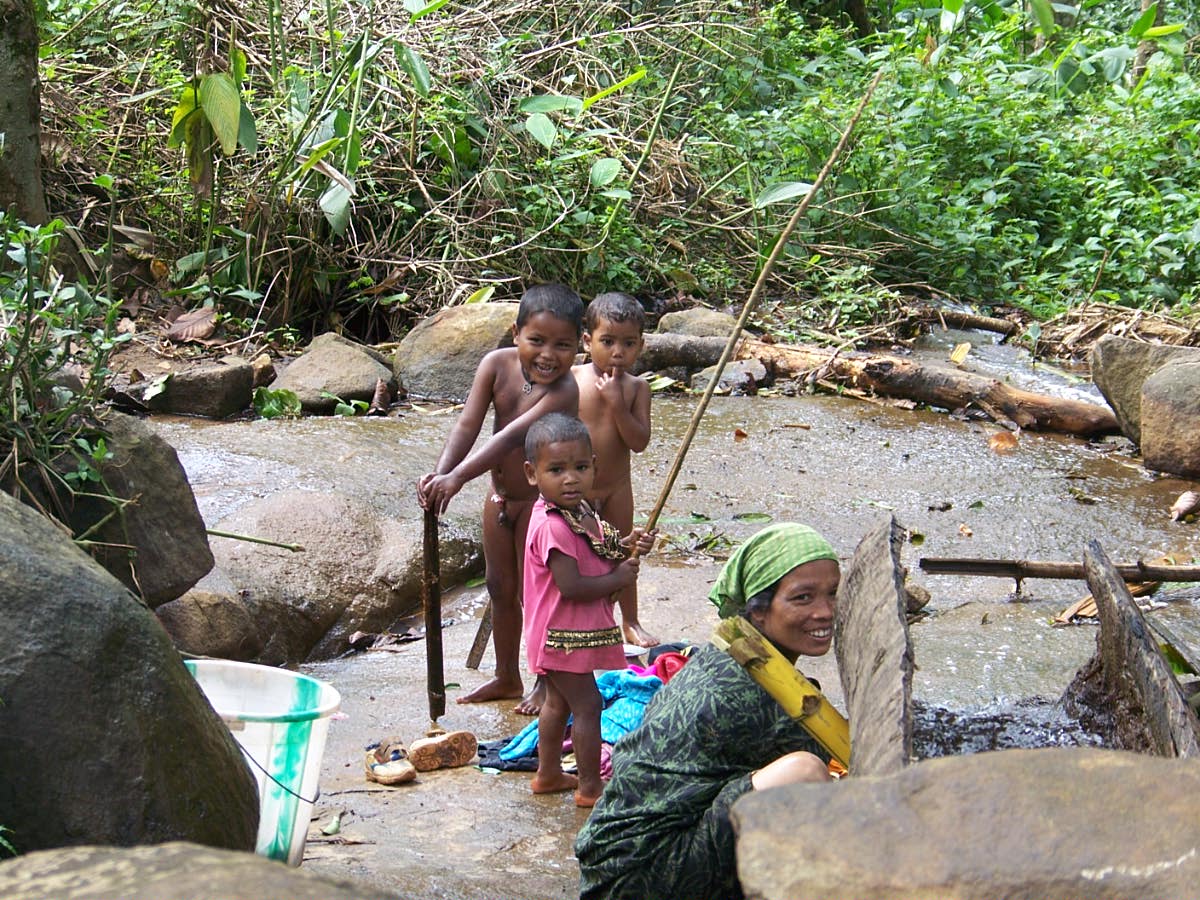
A young member from the Yerava tribe in Coorg
So, I thought I can take you all on a virtual tour of some of these places that are close to my heart and share some stories from the good days that have gone by… Through this series, I will give you small peeks into my hangout places, hideouts, local history, trivia, restaurants and everything else as I take you through these places and tell you how these places have influenced my personality….
But before that, I hope you all have read my earlier throwback post as well. If you haven’t, here’s the link to: ‘My growing up days at Madikeri‘
Each week, I will try to share a new post about a place / locality that I share a bond with and has influenced my personality, in no specific order of chronology with an attempt to bring back nostalgia. I hope you all will enjoy and share your thoughts with me 🙂
After an exhausting day exploring the streets crammed with Chettinad houses in Karaikudi, we were dropped at the bus stand to board the local bus to our next destination. The bus snaked through the narrow lanes and we craned our necks out of the window to stare at a few bungalows along the road at Pallathur before we finally alighted at ‘THE’ destination of our tour- Kaanadukathan.
Part 2: Exploring Kaanadukathan
Although we had listed down the must-see things, we felt lost upon our arrival at this village. The place looked like any other village in India and we wondered where had all the stately houses gone, the only reason that had brought us there. It was evening already, and we still didn’t have a definite place to stay. Without having a clue on how to go about further on our trip, we decided to follow our instincts.
Firstly, we decided to walk till that road’s end hoping to find some hotel for our night’s stay. After a short distance, we heaved a sigh of relief when we came across ‘Visalam heritage hotel’. It was a heritage property and expensive on our budget, but it was assurance that there was some place we could fall back to in the worst case of not finding a stay for the night. Having some relief, we decided to walk further down the street in our quest for both a hotel that would fit our budget or for the palatial mansions that had brought us all the way from Bangalore.
After walking further down the street, my friend and I stopped at the sight in front of us. We were psyched out for a minute when our eyes caught a never-ending stretch of road flanked by the Palatial- country homes on both sides… We were in for an unexpected shock!! We knew there were many large mansions but had never imagined a real street to look just out of a movie setting. The facades of these large villas had fine sculptures of their family deities and the heavy wooden doors at the main entrances were decorated with artistic friezes.
The streets of Kaanaadukathan village
This village in particular did not seem to be very tourist friendly with most of these bungalows being locked up and their owners living elsewhere for various reasons. A few residents, however, have been kind to the keen travelers by permitting entry to their princely manors. Here is a summary of our pursuits of landmarks at Kaanadukathan.
CVRM house: This is one of the very few Chettinad mansions that are open for public viewing that can be visited with a small entry fee. Although, nobody lives in this house now where once lived a large and an affluent family, it is well maintained with some of its antique cupboards, piano, swings etc. kept intact to retain the grandeur of this house. While we were admiring the grand interiors, the caretaker at the mansion recognized that we were lost and offered to accommodate us at her house for the night. Well, meeting such Samaritans needs a separate post.
The CVRM house at Kaanadukathan
We started early on the following morning to make best use of the time before the sun became fully active. There were (ancient) temple visits in the day’s itinerary and a lot of walking to be done. With our host’s support, we managed to book an auto-rickshaw for the entire day and to take us around places as listed below.
The nine clan temples of Chettinad: Temples of Soorakudi, Kundrakudi Murugan temple, Pillayarpatti Vinayaka temple and Vairavanpatti temples are beautiful structures dating back to the Pandya era. These architectural treasures are a win for history buffs in quest of places least touched by the maddening tourists. If one is a pious traveler, one may also consider visiting the temples at Iraniyur, Tirupattur, Velankudi, Kottaiyur, Kandanur and Mathur. Collectively, these temples represent the family deity of each of the nine major clans inhabiting around the region. After having our lunch served by donors at the Vairavanpatti temple, we headed towards our next destination
Aathangudi Palace: Fondly called as the ‘Periyaveedu’ for being the biggest house in the village, this mansion is aptly named as the Aathangudi palace. The roofs, the floors, the walls- they made our jaws drop in awe at their splendor and grandeur as we stood in the portico at its entrance. Although, we were charged an entry fee, we weren’t allowed to stay inside the mansion beyond 15 minutes by the caretakers. Their behavior towards visitors was somewhat a turn-off as they chased us out with verbal abuses. Forget observing the intricacies of the architecture of such a place, 15 minutes weren’t sufficient to even take a casual walk around the entire house.
Inside the Periyaveedu- The Athangudi Palace
There was no heed given to requests by our driver even as he tried to convince them in the local language. Pissed off with their attitude, our driver drove us off from there, towards our next destination. Before I continue ranting about our exploration of the region, I pause a bit to talk about my autorickshaw ride: The cranking lever of the vehicle had come off and was kept under our feet (in the rear seat) and the brake pads had worn out till their last dust. That meant, that the vehicle needed to be push started every time we stopped, and the driver had to jump out of the slow-moving rickshaw to stop it every time we wanted to halt. Especially under the blazing sun and some annoying caretakers like the one mentioned above, it is natural to gain a few additional horsepower in our muscles. So, the raging ride from Aathangudi palace until our next stop was quite a thing!
Aathangudi tiles factory & wood art restoration center: This is a place where we met the men who create beauty out of lifeless soil and wood. We observed demonstration of how these GI tagged colorful tiles are created. An art in themselves, apart from adorning all Chettinad mansions, I remember the grandeur of the Mysore and Bangalore palaces whose flooring is made with tiles sourced from Aathangudi.
Making of the Athangudi tiles
Chettinad railway station: This small and least haunted railway station on a typical traveler’s itinerary was included in our list after we had heard that the local Raja had a special waiting room for himself in the railway station. This quick and an exhausting ride ended in disappointment when we reached there. We learnt that the special room is not open to public viewing and will be opened only on special occasions for the members of the Raja’s family.
The entrance to one of the houses at Kaanadukathan
By this time, our tummies were grumbling of hunger. In spite of having been in the land of spices for two days, our taste buds hadn’t savored authentic Chettinad cuisine yet. It was a hard hunt for us to find a good hotel that served us authentic Chettinad food. Our craving gustatory cells were finally satiated with a lip-smacking array of culinary delight at a small hotel that we found on a random lookout. Post lunch, we decided to spend the rest of the day exploring the somnolent streets of Kaanadukathan by foot.
Local weaving centers: We shopped for the Kandangi handloom saris from one of the many local weaving centers.
Chettinad Raja’s palace: The largest mansion in the whole of Chettinad is a sprawling edifice extending over an entire lane on all four sides. And that’s why it is called as the Chettinad palace. We made futile attempts to get a small peek into the interiors of this massive dwelling space that I had seen in some of the movies.
Our walk tour of Kaanadukathan continued until dusk. We clicked some nice photos of this ‘heritage’ village with the perfect lighting by the setting sun. Along with the setting sun, we set ourselves for the return journey. We had to reach Trichy on time to catch our bus back to Bangalore. Thus, concluded a weekend in Chettinad- the land of palatial mansions and piquant cuisine.
Must-dos in Chettinad:
Take a walk in the Muneeshwaran Koil street or the antique market in Karaikudi
Shop for a colorful palm basket- The local handicraft that has gained a GI tag
Treat your palette with Chettinad cuisine (I definitely mean Non-Veg)
Take a bicycle / walk tour around the streets of Kaanadukathan
This July: the July of 2021, I complete ten years as a professional. From graduating as an engineer to becoming a professional automobile engineer, this journey as a car doctor has been an enriching one.
Working with machines is every mechanical engineer’s dream, and I have been fortunate to have lived it through. To give a peek into what I did during the last 10 years: I handled after-market quality issues in all Toyota & Lexus cars that are manufactured in India. So, this largely involved travelling to dealers to diagnose problems in customers’ cars (clinic), testing them and taking suitable countermeasures (hospital) through investigation (Read here to know more about my work).
This has been one of those rare jobs that helped me to couple my passion for travelling along with opportunities to learn new technology and science. From the paddy fields of Fatehgarh Sahib to the casting foundries of Aranmula, my work has taken me to the remotest places that I had not even imagined. With dealers and suppliers located across India, it was a unique opportunity to experience different cultures from across my country. Culture not just in terms of traditions, customs or cuisine, but also the culture that influences the habits of people using automobiles. Every state in India offers diversity in terms of their purpose and intent of using a car, I believe is unique to India.
After 10 years, it is now time for me to hang my boots…. Or the stethoscope, should I say! Although I will still continue to serve the same hospital, I will be taking over newer responsibilities: in car forensics! With a decade long experience spanning across functions in the organization and technical areas like plastics, paint, glass, fabric, electricals, rubber and metals, I will now be wearing the hat of a specialist in metallurgy. More on this, some other time!
For now, it’s time for this car doctor to hang down her stethoscope and take a chill pill. Let me find the hat of an investigator and try to get my hands on that magnifying glass!