Words are not enough and pages needed are endless to write about this trip.. The much awaited, dreamt of and anticipated vacation was finally here.. For reasons galore, only Mom & I ended up going..
I cannot make justice, but will sum up the entire trip with as less words as possible.. “White sand, Blue sea, crystal clear waters, lashing waves, spotting the flying fishes, sunset from the ship’s deck, diverse deep sea, ever mesmerising beaches, if ever I had a choice to choose my death, I’d love to get washed away by the waves right there.. @ the Andaman sea.”
This should be an easy guide to anyone who wants to visit the Andamans.. I would say: please don’t plan your trip if it is not atleast a week’s holiday you are aiming at..
Day 1:
10.20.a.m- Depart from Chennai; 12.45.p.m- Check-in @ Port Blair
2.45.p.m- Quick walk through the Science Centre and proceed to Corbyn’s Cove beach
4.00.p.m- Leave for the Cellular jail. Walk around the historic memorial of brave martyrs- the backbone for Indian freedom movement
6.00.p.m- Sound & music show at the Cellular jail
07.30.p.m – A brisk walk through the Gandhi park
08.00.p.m- Water scooter ride @ Rajiv Gandhi sports complex, a speedy walk through the Traffic police park in the same premises
Day 2:
8.30.a.m- Board the ferry @Rajiv Gandhi sports complex jetty for 3 island tour with a seven harbour view
10.30.a.m- Alight for delight @ Ross island– the place of erstwhile British settlement which is now a live museum.
11.30.a.m- Off to Viper island with the gallows of imprisonment established before the cellular jail.
12.30.p.m- Arrive at North Bay island– go snorkelling, walk upto the light house and go SEA WALKING..!!
05.00.p.m- Reach Port Blair
06.00.p.m- Freshen up and leave for shopping at Aberdeen bazaar– the local market.
Day 3:
08.30.a.m- Arrive at Phoenix bay jetty
09.00.a.m- Aboard Makruzz(a Catamaran) to Havelock islands
11.00.a.m- Off to Radhanagar beach– Asia’s no.7 best beach.
12.00.p.m- Catch the ferry to Elephanta beach: one of the best dive sites in Andamans and home to world’s only snorkeling elephant- Rajan 🙂
02.00.p.m- Begin the explorations deep in the beds of the sea- SCUBA DIVING
04.00.p.m- Onboard Baratang- the government ferry from Havelock
Day 4:
07.30.a.m- Leave the confines of our nest for the day’s work- We’ve got lots to explore
09.00.a.m- Registration for the convoy at the forest checkpost. This is a must for anyone travelling on the Grand Trunk road through the Jarawa tribal reserve. Jarawas are one of the aboriginal tribal group out of the 6 tribes inhabiting in the island groups.
11.30.a.m- Aboard the govt. ferry at Middle Strait
11.45.a.m- Alight at Baratang island
12.00.p.m- Cruising on a motor boat through one of the best mangrove creeks I have ever been to.
12.30.p.m- End of the jungle trek- reaching the destiny. One of the 46 limestone caves in the Islands. A spellbinding experience..!!
1.00.p.m- An 8kms flight(read it jeep ride) to see the mud volcano
02.00.p.m- Back at Baratang jetty, ferry ride back to Middle strait.
06.00.p.m- Walk around Port Blair.
Day 5:
07.30.a.m- Sippighat horticultural farm visit.
08.00.am.- A quick turn-up at Wandoor beach
08.30.a.m- Walk around the Mahatma Gandhi museum
09.00.a.m- Off for a ride- An un-expressible journey to the Mahatma Gandhi Marine National Park
11.00.a.m.- Glass bottom boat ride, sun-bathing & SNORKELING in the crystal clear waters of Jolly Buoy island
01.00.p.m- A spicy walk through the Mongluton rubber & spices plantation. ‘Coconut Malai Sharbat’ is a must try drink there.
03.30.p.m- A super drive through a very different part of the Andamans- took us to ChidiyaTapu. We were the last people for the day to get entry into the mini zoo there.
04.00.p.m- I’m on one of the best beaches hitherto- backwaters of the tsunami affected area.. We did not even realise that we had walked over a kilometer deep into the sea- and the water level had not risen beyond our ankles.
04.30.p.m- Exploring the Chidiyatapu hills. An AMAZING place for the landscape photographers
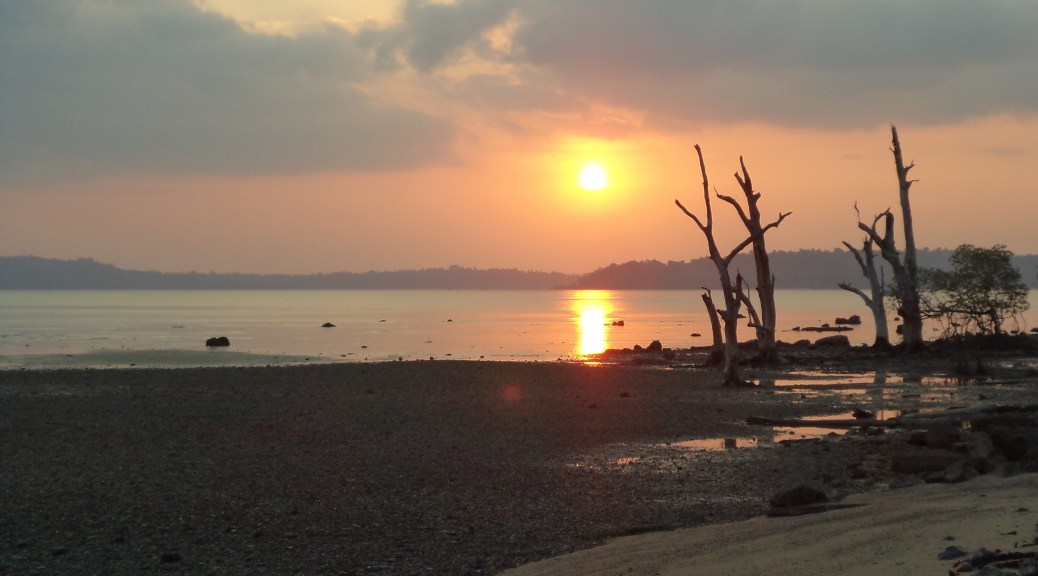
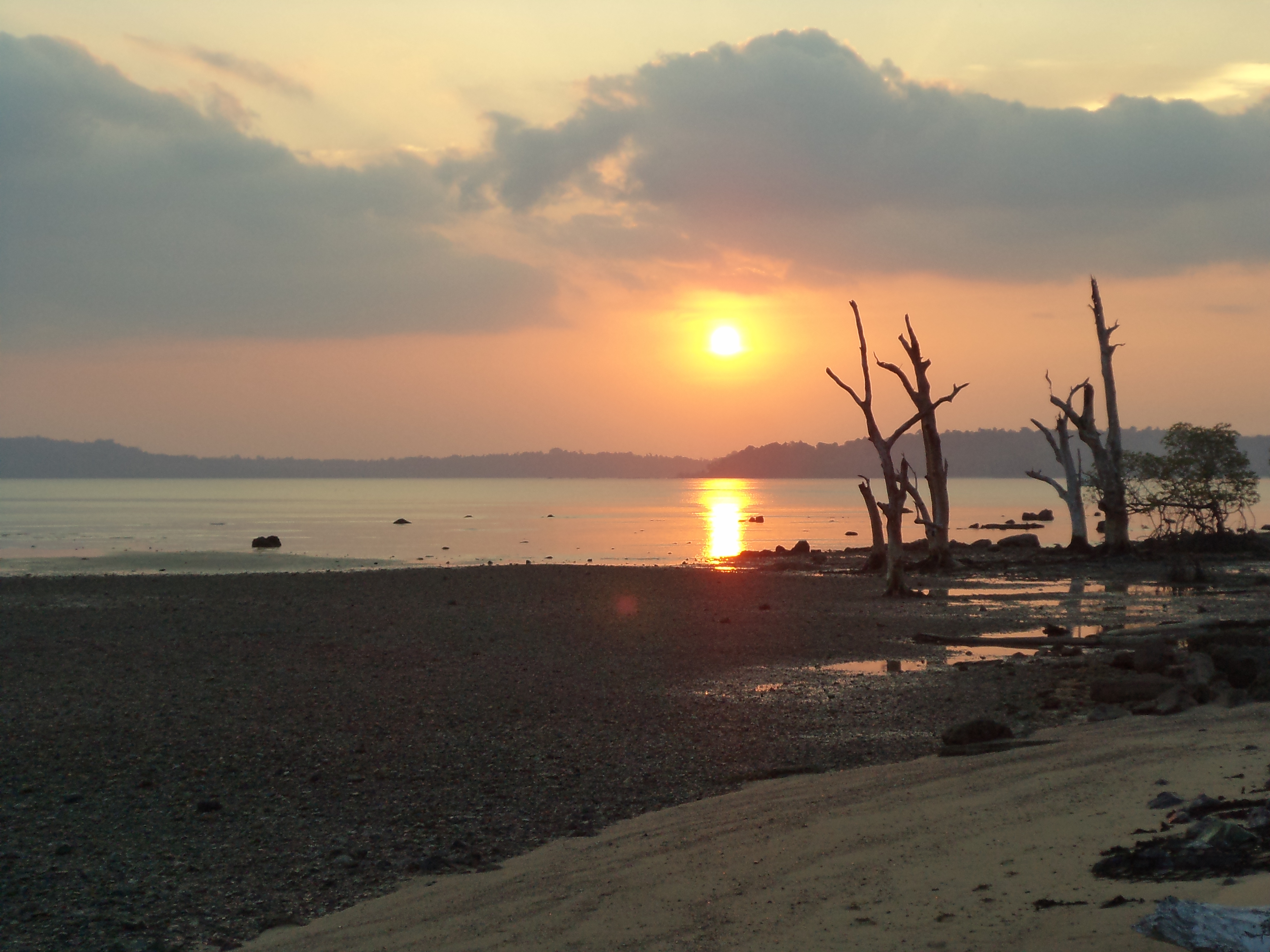
05.00.p.m.- Sunset point – by far the BEST sunset I have witnessed on a seashore.
06.30.p.m- We are at Sagarika– the govt. emporium for shopping for souvenirs
Day 6:
09.00.a.m- Chawtham island– Asia’s biggest timber saw mill and forest museum
10.15.a.m- Samudrika– A museum maintained by the Indian Navy
11.00.a.m- Anthropological museum visit
12.00.p.m- Check out and arrive at Veer Savarkar airport.
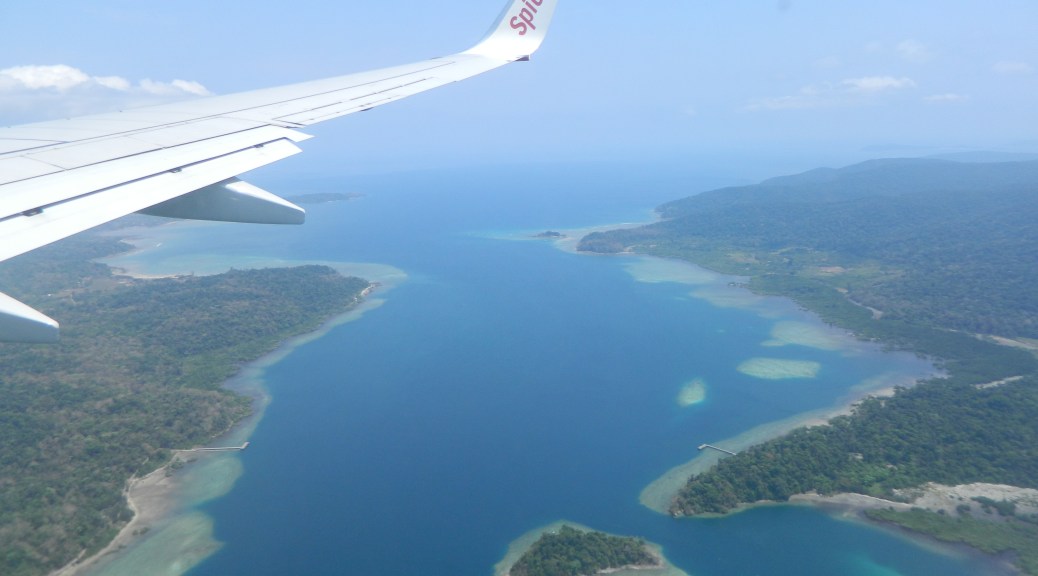
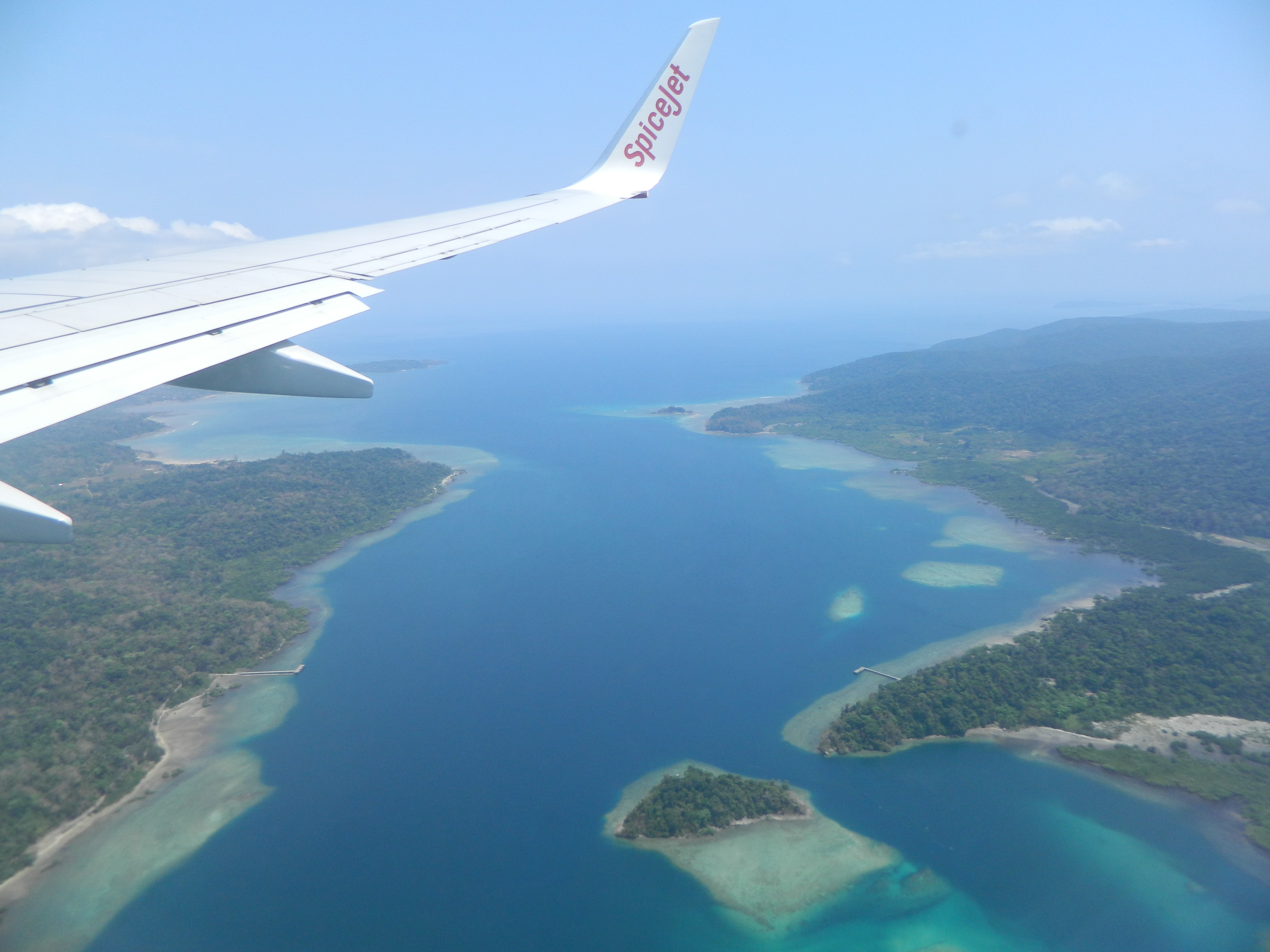
Andamans from the air
This is the maximum number of places anyone could squeeze into the list for a Sunday to Sunday trip.. The islands has so much to explore that only a month long vacation can do justice 🙂 I’d suggest you take a 2hr motor boat ride from Havelock to South button island- the smallest national park in India for scuba diving known for its shallow waters Tropical coral reefs. You could add Mt. Harriet, Niel island, Cinque island, Barren island, Diglipur, Mayabunder, Rangat, Ross & smith island, Saddle peak etc. among the important places of Andamans. However, a trip to Nicobar islands has to be planned separately as it is special in its own way.
Words of caution:
Please adhere to your time schedule strictly because every ferry ride, every museum, every zoo runs/remains open only on a specified time frame.
The city remains awake only between 8.00.a.m and 08.00.p.m. Plan your entertainment well to keep yourself occupied.
If you are planning to eat out or take a coffee walk, it has to be before 7.00.p.m. All shops shut down after that.
This was a family backpacking trip planned exclusively to explore Madurai. This city has served as the capital of the Pandyas and is a key destination that has nurtured the Dravidian culture. For anyone who hears the name of this famed city, they know of the Meenakshi Amman Kovil. A typical traveler / tourist / pilgrim would visit just that temple and takes pride in marking it in their travel map of places visited. But what one doesn’t realize is, that Madurai is beyond just this. The contribution of the Pandya kingdom is not limited to just the Madurai Meenakshi temple and can be seen and felt in several structures just around the same city. Also, a portion of the Madurai city has a history beyond the Pandyas too. Hence, our family wanted to reserve this long weekend, exclusively for Madurai. We boarded an overnight bus from Bangalore and reached Madurai at 6.00.a.m. on the following morning.
Like most of our family trips, we wanted this also to be an impromptu vacation. Apart from to and fro travel, nothing else was fixed. As per me, you would need a good 2-3 days to have a quick run around doing this same itinerary as ours, exploring ONLY Madurai. If you are an art and history buff or a foodie, I warn you to carry additional days!
Itinerary:
Day 0: Leave from Bangalore by night (KSRTC Bus) Day 1: Reach Madurai. Visit Meenakshi temple, Thirumalai Nayaka Mahal, Vandiyur temple tank, Koodal Alagar temple, Gandhi museum, Pudumandapam. Day 2: Alagar Kovil, Alagar Murugan temple, Pazhamudhir Solai temple, Tiruppanakundram Murugan temple, Dargah of Hazrat Sultan, return to Bengaluru.
The details:
After alighting the bus, we walked around the Meenakshi Amman Kovil to find a good hotel. Since this is the heart of the city, it wasn’t hard to find a decent lodge around there. We checked into a hotel that was located just in front of the temple’s west gate. We freshened up quickly and left for the main part of the trip for anyone visiting Madurai.
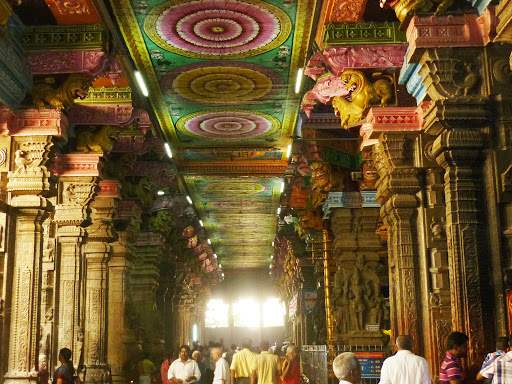
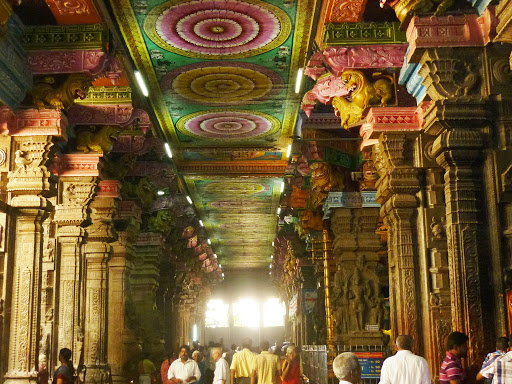
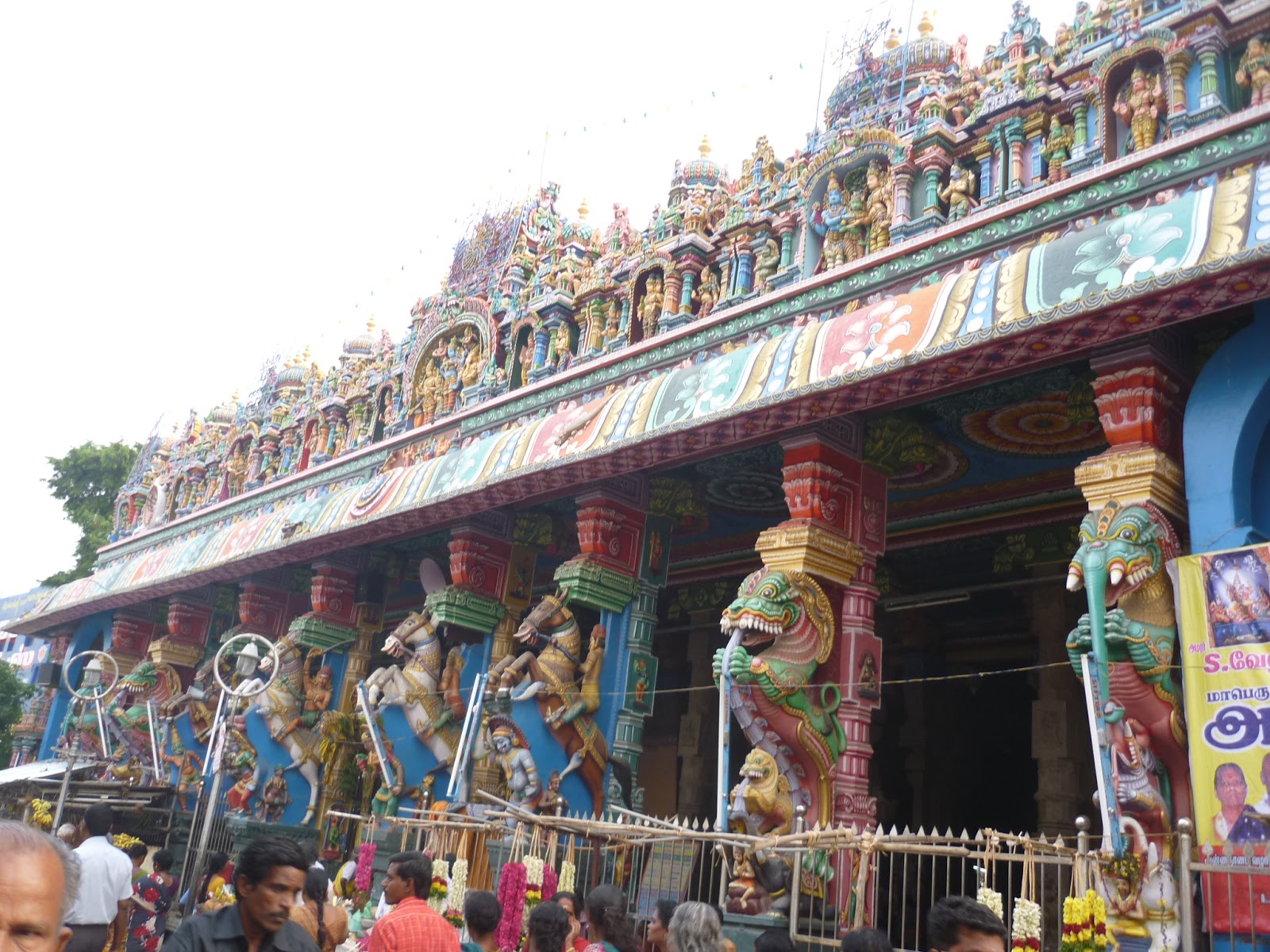
Meenakshi temple: A visit to the abode of the Pandya architecture. The entire temple complex is fortified and has 4 entrance towers, one on each of the 4 directions. The sculptures on each of these towers are out of the world. Once inside the complex, I started to wonder which world of wonder I had stepped into. It took us more than 4 hours to finish only a quick walk around inside the temple and also get the darshan of Meenakshi Amman and Lord Sundareswaran.
The finely decorated interiors of the Meenakshi Temple
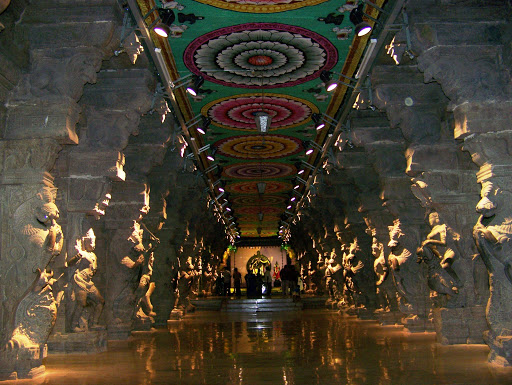
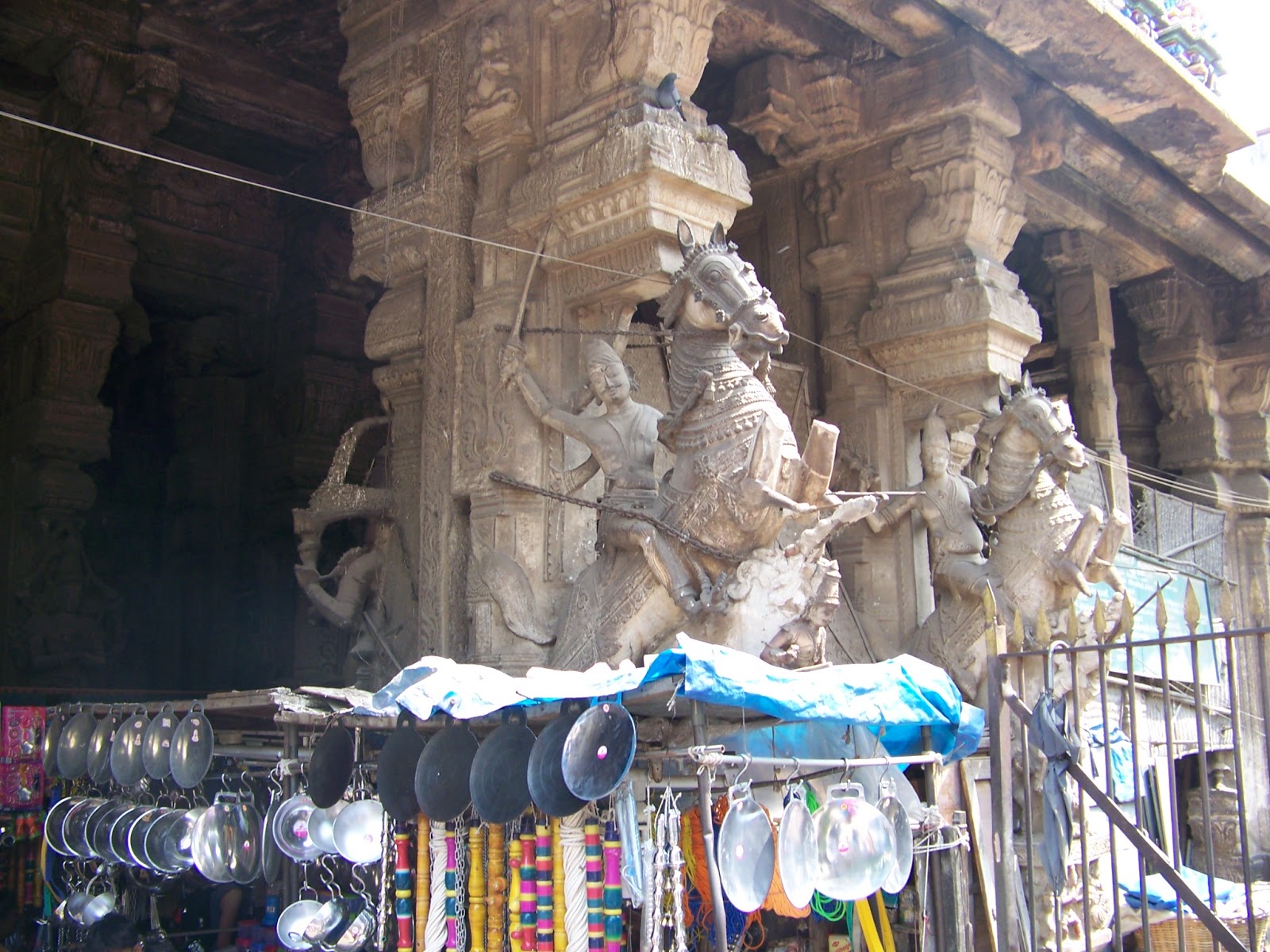
There are a lot of stalls inside the complex selling various handcrafted articles. The temple art museum within the same premises is a must visit. The central sculpture of Natarajan, or the dancing form of Shiva is believed to be one of the Pancha Sabha of the lord. This place represents the silver hall and Shiva is believed to have performed the ‘Sandhya Thandava’ dance form here (More on the Pancha Sabha Kshetras in another post). Also, there are 1000 pillars, all decorated with intricate pieces of sculpture. The dim light used for each pillar added up to the beauty of the place. The Madurai paintings adorning the walls of the temple requires another post to talk about. I go speechless when I get to explain about the South Indian temples. They are beyond words. Internet has plenty to feed and I don’t want to get into the details. After a tour of this massive temple complex, we decided to head out to explore the city beyond the Meenakshi Kovil.
Inside the Temple art museum
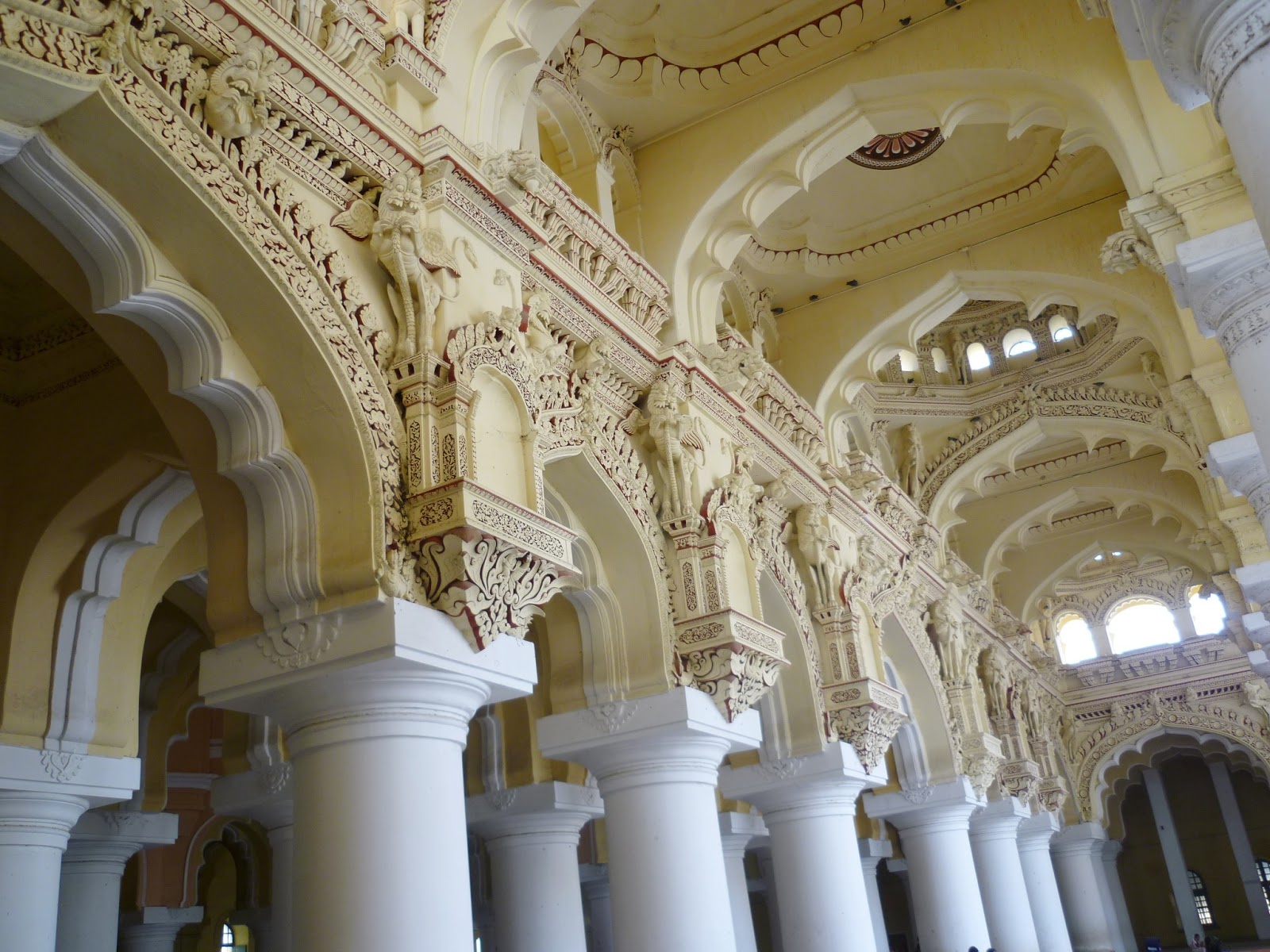
2. A small walk through the narrow lanes took us to the Thirumalai Nayaka Mahal built in the 16th century. Fine architecture with elegant paintings on the roofs and vaults is neatly presented in a simple combination of half-white and velvet red colors. There is sound and lights show conducted here every evening. However, we could not make it.
The interiors of Thirumalai Naickar Mahal
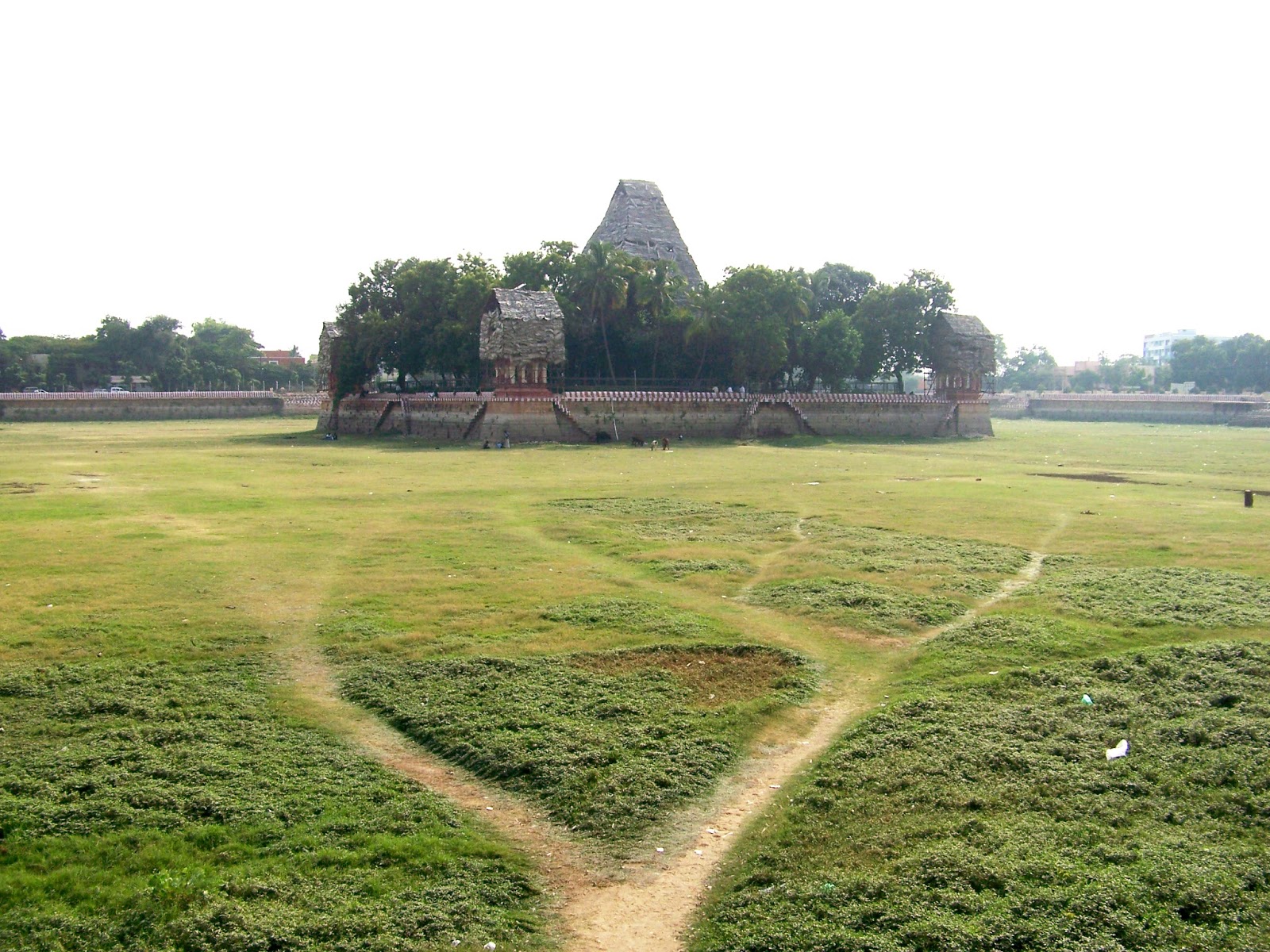
3. From there, we took a local bus to Vandiyur. This is where the annual event of the famed Teppotsavam / Float festival takes place to celebrate the birthday of King Thirumalai Nayak in January. This tank is supposedly the biggest of its kind in the state of Tamil Nadu. With the float festival just 2 months away and monsoon season just passing by, this tank still remained dry during our visit. When we enquired with a few locals passing by about how the event was going to be conducted in a dry tank, we were told that the water will be fed in January from the Vaigai river through artificially laid underground channels. This is truly amazing how such a concept was laid way back in the 16th century. But for a newcomer like me, the dried lake was an eye sore as it was used was a watering hole by many vandals at the time of our visit.
Vandiyur Mariamman Teppakulam – the island temple
4. Taking another bus from there to Periyar and a small walk from there through the stinking / dirty by-lanes, we reached the Koodal Alagar temple. A quick pooja and a walk around the temple was a nice boost up. The architecture here too, is similar to that of Meenakshi temple.
5. We had to rush to The Gandhi museum as it would close by 6.00.p.m. However, we could not make it on time. This was once called the Tamakkum palace of Rani Mangammal. Today, the museum supposedly houses 14 articles that were used by Gandhiji, along with his sacred ashes and blood-stained dhotis. Gandhiji is said to have visited the city five times during his lifetime.
6. On our walk back to our hotel, we came across an old marketplace called as Pudumandapam. This is a 1000 years old shopping mall, supported by huge sculpture rich stone pillars. The stalls are occupied with tailors, handicrafts vendors, wholesale dealers of pooja related and general accessories. A good place for shopping traditional artefacts at Madurai, and that too in a market that is so old!
Entrance of the Pudumandapam
7. On the following morning, we boarded a local bus from Periyar bus stand to travel 21kms towards Alagar Kovil. The temple is dedicated to Lord Vishnu, Meenakshi Amman’s brother. The village is surrounded by an old fort wall, it gives a good view of the green hills around the temple. The architecture is similar to Koodal Alagar temple in the city.
8. A trek of 3kms uphill, through green forests and monkey infested walkways lead us to the Murugan temple. It is one among the six abodes of Lord Murugan and hence important among the pilgrims.
9. A walk of half a kilometer further uphill took us to Pazhamudhir Solai temple. A temple dedicated to Goddess Rakkaya exists close to a natural spring called Nuburagangai here, where devotees take a holy bath. But what seemed strange to me was that the place was probably the only temple I had ever been to, which charges an entry fee into the temple itself. This is where the famed Chittrai festival is observed during the month of April.
10. From there, we took the next bus back to Periyar, from where we had to take another connecting bus to Tiruppanakundram. This was a cave temple at the foothills of a hillock. It is believed that Lord Murugan was wedded to Devyani, daughter of Indra at this place. Hence, this is also counted one among the 6 abodes of Lord Murugan.
Entrance to the Tiruppanakundram Murugan temple
11. Up the hills, is the Dargah of Hazrat Sultan Sikandar Badshah shaheed Radiyallah Ta’al anhu. Owing to time constraint and exhaustion, we thought of skipping the climb.
Other lesser known places we skipped due to time constraints were the Kazimar mosque and Goripalyam Dargah. At the center of the city is the Kattabomman junction. This is where a part of the old Madurai fort exists. Today this is not more than a public library. Further, every street in the city has a history behind it: This link to an article from “The Hindu” don’t do this usually, but would make a special mention about the streets of Madurai. Every street in the city has a history behind it: This link to an article from “The Hindu” explains it all- ‘Where moats made way for motorways‘
This was all about us getting around the place for seeing some of the historically important landmarks around Madurai. But the list is endless and time, very limited ☹ I have covered a few other must-do things while at Madurai in a separate post. I wish to be of some use if you are planning a trip there. (Click here to read further)
Karnataka Bundh: The whole city of Bangalore was protesting against the Kaveri water verdict- 32 buses vandalized in the city and all that jazz. Well, I was away from the entire hustle bustle, where fighting for the water of Kaveri made no sense for the people. That day, I was spending time with my mom who was away from home since the last couple of months, on business travel.
My itinerary: Day 0: Bangalore to Bidar (Overnight bus) Day 1: Jharani Narasimha Swami Cave temple, Karanja reservoir, Basavakalyan (Basaveshwara temple, Basavanna statue, Basavanna Guhe, Akkamahadevi Guhe Anubhav Mantapa, Basavakalyan fort) Day 2: Nanak Jira Gurudwara, Bareed Shahi park, Bidar Fort; Return from Bidar to Bangalore (night bus).
The details: People in the Mysore-Karnataka region know Bidar and the rest of the districts of Kalyana Karnataka or Uttara-Karnataka mostly through media that only talks about them when there is a drought in the state. This somewhat had influenced me to paint a dry and a dusty picture of the region inside my head. There was not much that I had heard about this part of Karnataka on a typical tourist circuit of state and that’s why I chanced upon travelling to Bidar for a weekend. Since my mom was posted there for some time, I thought it was an opportunity for me to go and see what is in the northern-most district of my home state. Mom usually has a vehicle at her disposal whenever she travels and stays during the entire business trip. This solves most of the commutation problems.
Day 1: When I reached there after a long overnight bus journey of 12hrs, I had a roaring welcome in the city, quite literally…!! An IAF “Hawk” flew past right above my head during their daily flying sorties. Right then, I had my first GK (general knowledge) moment of the tour. Bidar has been an important training base since the early 1960’s for the Indian Airforce. Bidar serves as the main base for Hawk AJTs and the Suryakiran HJTs. The first thing that I learnt about Bidar and is never shown or spoken about on mainstream media.
My mom received me at the bus stand and took me to the Inspection bungalow where she was staying at. After freshening up and post a quick breakfast, we headed to “the Jharani Narasimha Swami Cave temple”. The myth mentions that Lord Narasimha killed Hiranyakashipu and then proceeded to slay the demon Jalasura, a staunch devotee of Lord Shiva. After being killed by Lord Narasimha, the demon Jalasura turned into water and started flowing down the feet of Lord Narasimha. Today, devotees have to walk across a cave with water (1.7mts depth) to worship the idol. With bats flying around, roaches swimming with us and dimly lit path to lead us, it was a new experience for me, and I was seeing such a religious site for the first time.
Inside the cave- enroute to the Narasimha idol
We then proceeded towards our next destination. Enroute, we stopped by the Karanja dam, a small reservoir built across the Karanja river.
In a while from there, we had arrived at Basavakalyan- our main destination for the day. There, we visited the Basaveshwara temple, 108ft high Basavanna statue, Basavanna Guhe and Akkamahadevi Guhe. Then it was a turn to the right that took us to “Anubhav Mantapa”. This is a replica of the ShivanubhavaMantapa- an academy of mystics, saints and philosophers of the ‘Lingayat’ faith in the 12th century. Anubhav Mantapa is often referred as the first parliament in the world.
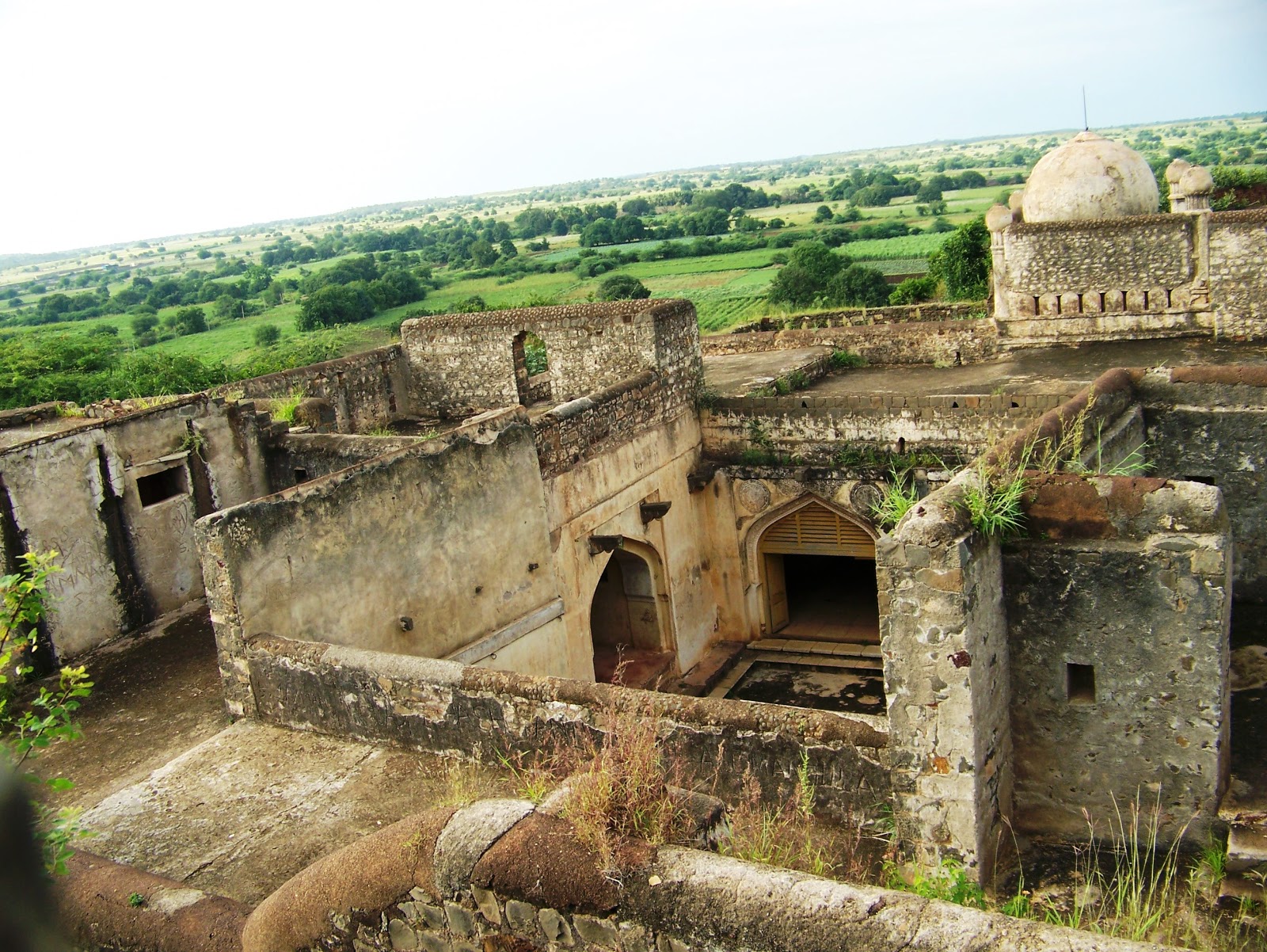
A view of Hyder Mahal at the Basavakalyan fort
From there we visited the Basavakalyan fort, sparsely visited apart from a few localites who come there to play cricket. But it is indeed a monument forgotten on the maps. The lights falling on the inner chambers of the fort called for some good photography. Some of points of interest inside the Basavakalyan fort for an explorer may be the open-air theatre at the entrance of the fort and the view of Hyder Mahal from the Kadak Bijli Toph viewpoint. With that, it was dark, and we returned to our place of stay.
Day 2: We started the day by spending some tranquil moments at the ‘Nanak Jira’. This Gurudwara is known for being the second occurrence out of the supernatural powers of Guru Nanak. The first one was ‘Sri Punja Sahib’. This is now in Pakistan and strictly prohibited for free visits. Hence Gurudwara Sri Nanak Jira Sahib is referred to as the ‘Second Punja Sahib’ of India and hence a very holy site for the Sikhs. The sweet water flowing from a spring is believed to clear one off, all sins.
The Nanak Jhira Gurudwara
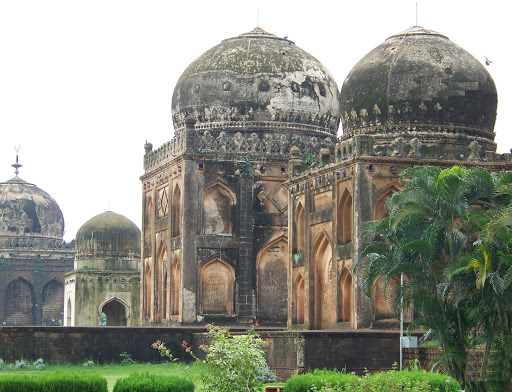
Next, on the list was the Bareed Shahi park. The tombs of the Bahamani rulers lay here. This is small but a nice park maintained just to provide some lung space for morning joggers and evening walkers. We were told that this was a neglected piece of history just a year ago and good efforts have been made by the authorities for its restoration.
We had an invitation from one of the colleagues at my mom’s office to visit his home for lunch. To think of it, it is by far and large one of the MOST sumptuous and wholesome meal I have had all my life. Hahaha call it the downside or the funny part of relishing such a wonderful meal- My mom and I were handed over a large towel to wipe off our teary eyes and watery noses. The regional cuisine here is notoriously famous for being high on chilly. But even with the hot flames flying out of our senses, we couldn’t resist the taste of the flavorful spread. It was a typical North-Karnataka cuisine with a spread of over 50 dishes. We were overwhelmed by their hospitality and the flavorful cooking. Apart from the Millet roti and gunpowder, most of the dishes were new discoveries for me. I even had a box packed with roti and keema-curry for my return journey by train in the night.
The Bahamani tombs
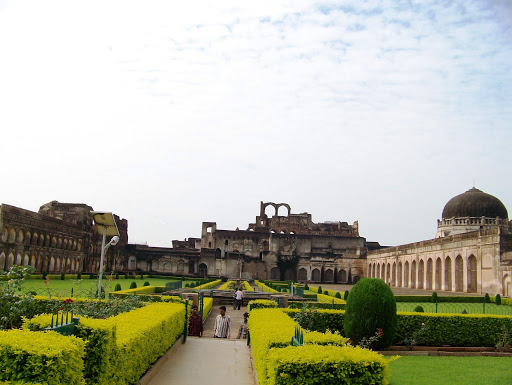
The last and final destination was the Bidar Fort: It is a multi-layered fort to say in simple words. It does not have a quantifiable boundary, though a few localites specify some digits to measure its expanse. The entire city of Bidar is actually within a fort wall which was the area where the citizens lived back during the rulers’ time. The second round of the wall is where the ministers lived. The third and the innermost zone is where today’s tourism is concentrated, the area where the King & the queen lived. This fort needs a minimum of half a day to explore for a person interested in history, architecture or archeology. In a tourist circuit in Bidar that I barely heard of, this fort came in as a surprise when I had least expected. It is HUGE!
The Royal Residence within the main fort
Bidar has so much to offer for a backpacker on a tight budget. Apart from the travel distance between places, everything else is very affordable. Even the entry to all the major landmarks on the potential tourist trail was free. In spite of it, very few people plan a trip to this district. Maybe because the name pulls down an image of a dry, barren, hot, poor, drought prone landscape. What my eyes met here was contradicting to the imagination that I had, largely based on what I heard in the media. In reality, the city was lush green, well fed with good rains and clean (at least compared to the cleanest places of Bangalore).
Souvenirs to take back: Bidariware is a local form of metal art that has a GI (Geographical Identification) tag and extremely laborious and artistic. It takes an 8 stepped process to create one piece of art and a symbol of royalty, that’s been carried on from 14th century, largely promoted by the Bahamani Sultans.
So, a lesson to take back: Stop imagining how a place would be; go there and see it yourself.







 The Lost Lander