Tag Archives: South Indian food

Exploring the backwaters of Karnataka- Thonse

Although the places that I choose to write about may not stand a chance to be compared with the Sundarbans or the Pichavaram forests… None the less- The Arabian seacoast has its own share of beautiful places in terms of its mangrove creeks. And while Kerala is synonymous with its enchanting backwaters, Karnataka too has its fair share of backwater system which is still untouched and yet to be explored… Through my innumerous journeys in this coastal stretch, I don’t remember a time when I did not put my neck out to be tantalized by the view of the backwaters as I passed on those bridges that fall in between Mangalore and Udupi. So, this time I had set aside one weekend exclusively to explore these lesser known places of the west coast and mark myself in those remote places on the map-of-India.

My itinerary:
Friday: Start from Bangalore – Overnight bus journey to Udupi
Saturday: Kemmannu (Explore the backwaters in a traditional boat ride), Kodi bengre (explore the village and an estuary), Malpe beach (water sports), Krishna temple and the seven Mathas,
Sunday: Chill at Sasihitlu beach and estuary, Kapu beach & lighthouse, return to Bangalore by bus (You can alternate this with a day visit to St. Mary’s island)

The details:

First things first- Having good connectivity, taking the public transport to reach these places has its own experience, the way I enjoyed my trip. But I strongly recommend having your own vehicle to these places. Given the hassle of waiting for a ride, the remoteness of the place and the joy of riding through such a beautiful stretch of road be best enjoyed on a two-wheeler only. That said, my mother and I had reached Udupi by an overnight bus and stayed at a hotel close to the Krishna temple. We freshened up and headed to the service bus stand located at a walkable distance to the hotel.
IMG_20171209_130602.jpg
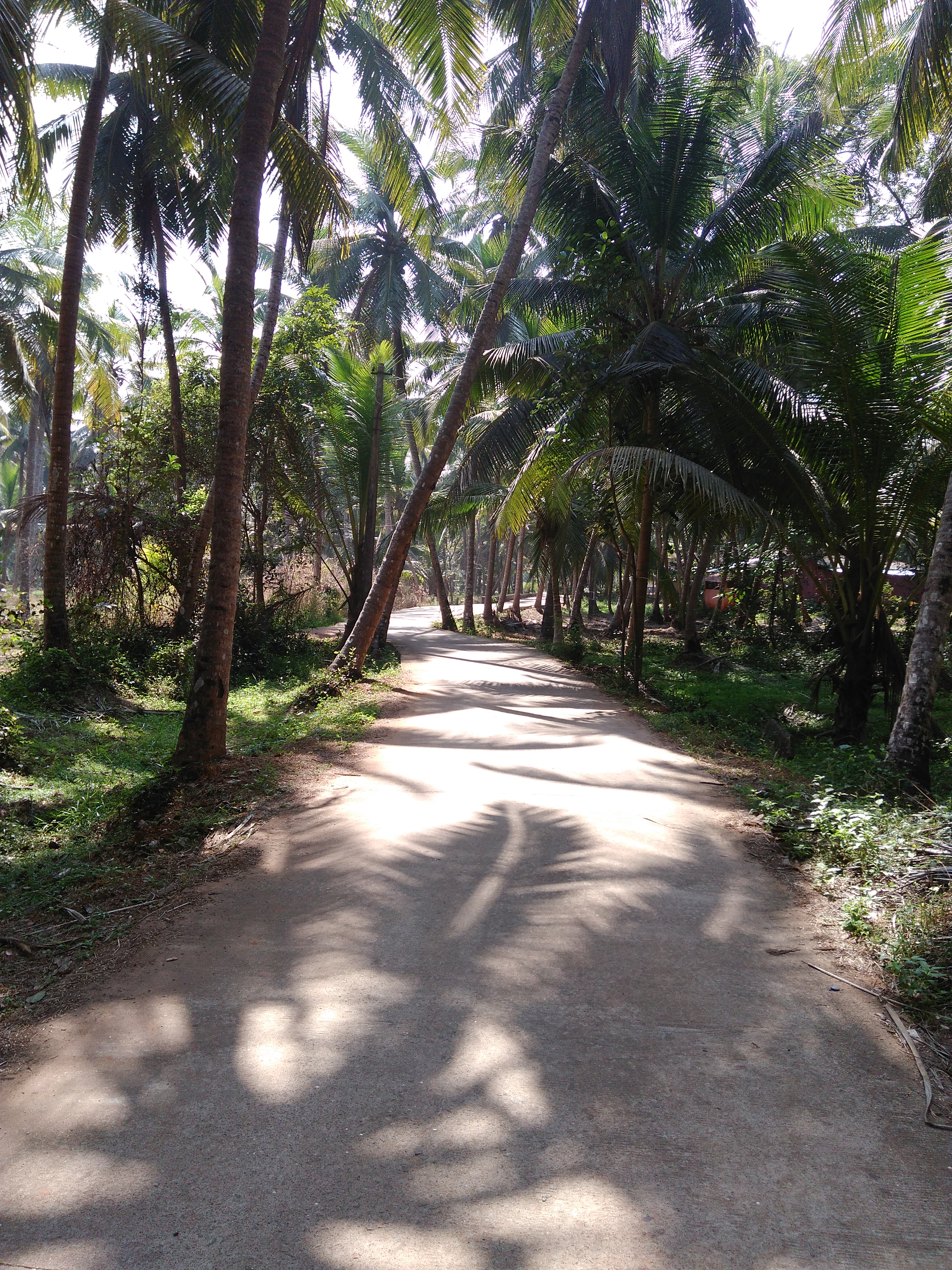
street leading to Kemmannu

The entire district of Udupi is dotted by innumerous temples and churches and hence, I prefer not to make a mention of them in this post. There is no dearth of local buses to any place within the coastal belt of Karnataka and hence, I relied totally on public transportation for my commutation. All set to explore Thonse, we boarded a bus that passed through Kallianpur village (This was once, a part of the Vijayanagara empire). The ruins of an old laterite fort stand testimony to that era.

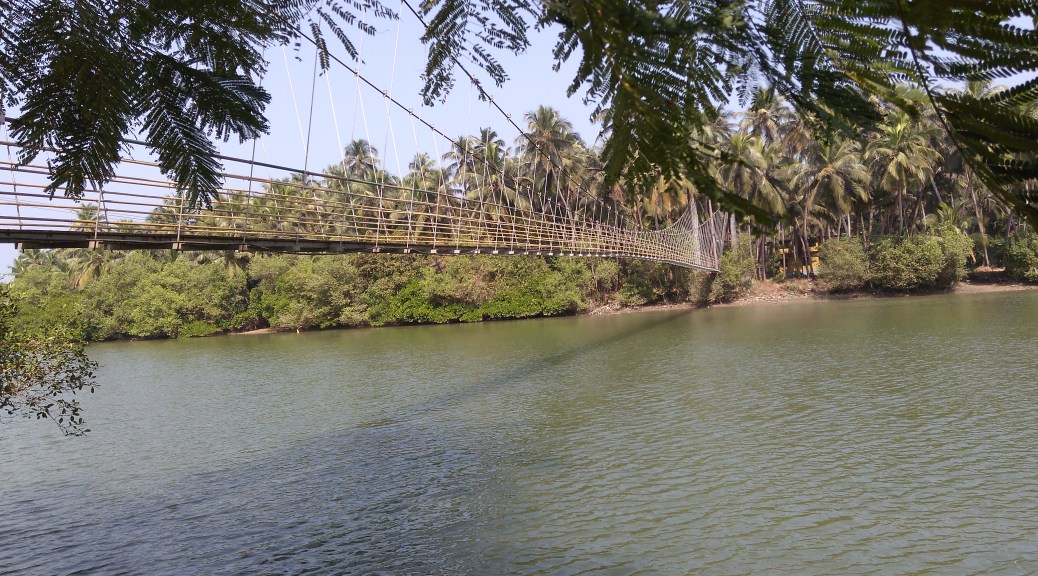
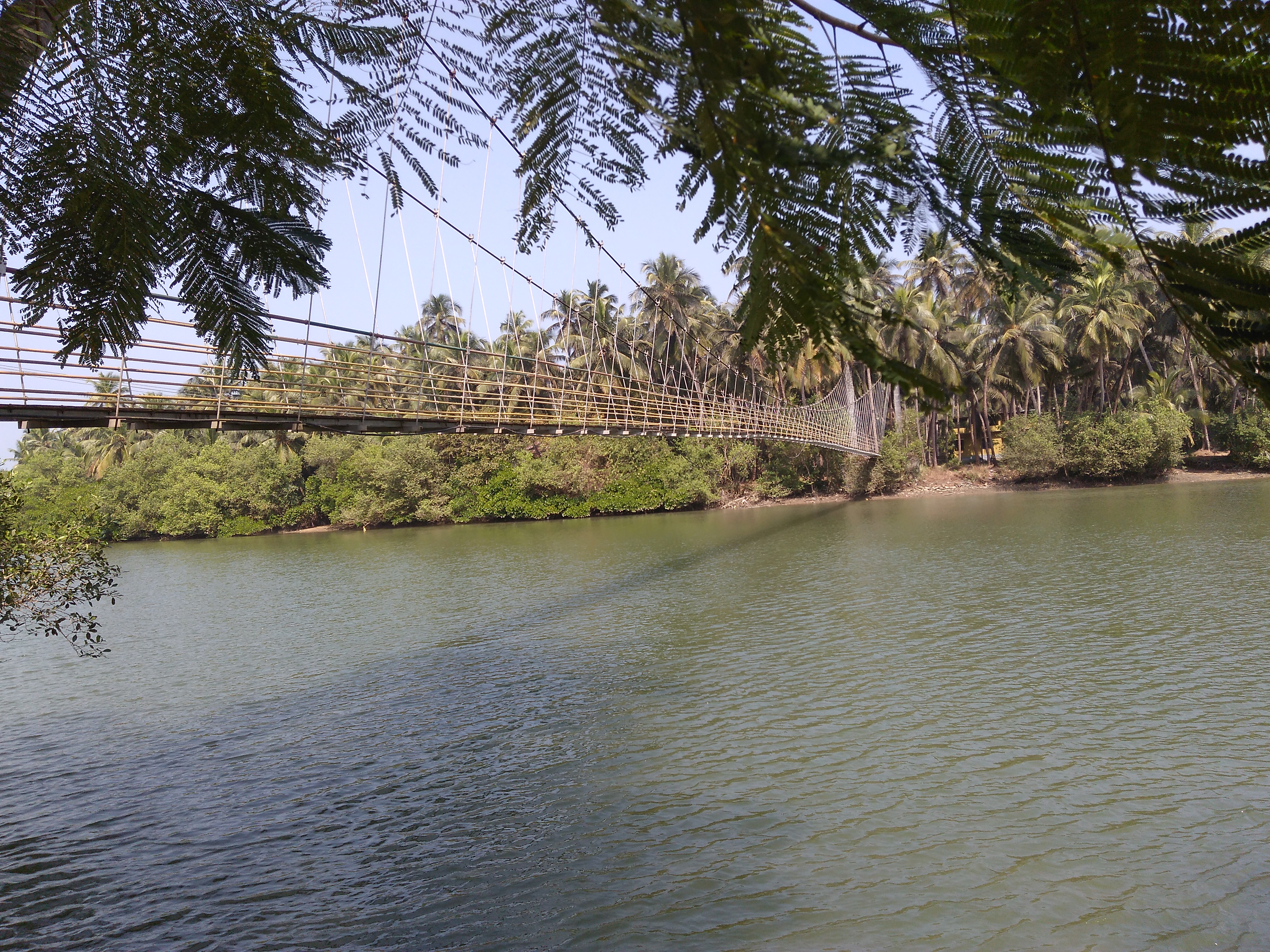
My first stop was at Kemmannu. A short walk on a meandering road through coconut plantations took me to a serene system of backwater canals connected to river Swarna. A suspension bridge has been laid across the river and set in an idyllic location of mangrove creeks. There was a boatman and his family living in a small house on the riverbank. When we enquired with the, they agreed to take us on a ride into the river for a fee. As our country boat set sail in the river, the oarsman suggested us to take a boat ride in the high tides either for sunrise or sunset. According to him, the delta beach would look brilliant at that time. He took us around several islets in the backwaters of river Swarna that gave us good sighting of rare birds. It was a very pleasant experience of sailing in the lap of nature, after having landed from the madness of the metropolis.
IMG_20171209_121635
The suspension bridge at Kemmannu

From there, we walked back to the main road to get a vehicle to our next destination. While we walked beside a broken bridge, something caught my attention near the harbored boats. There was something amusing happening down there at the canals. I felt as if I was witnessing a bioluminescent spectacle in daylight. The sight was something I had never seen before. On a closer look, I realized that the canal was filled endlessly with jelly fishes of various colors and sizes. After spending some time there video graphing the sight, we boarded the bus to our next destination- Kodi bengre.

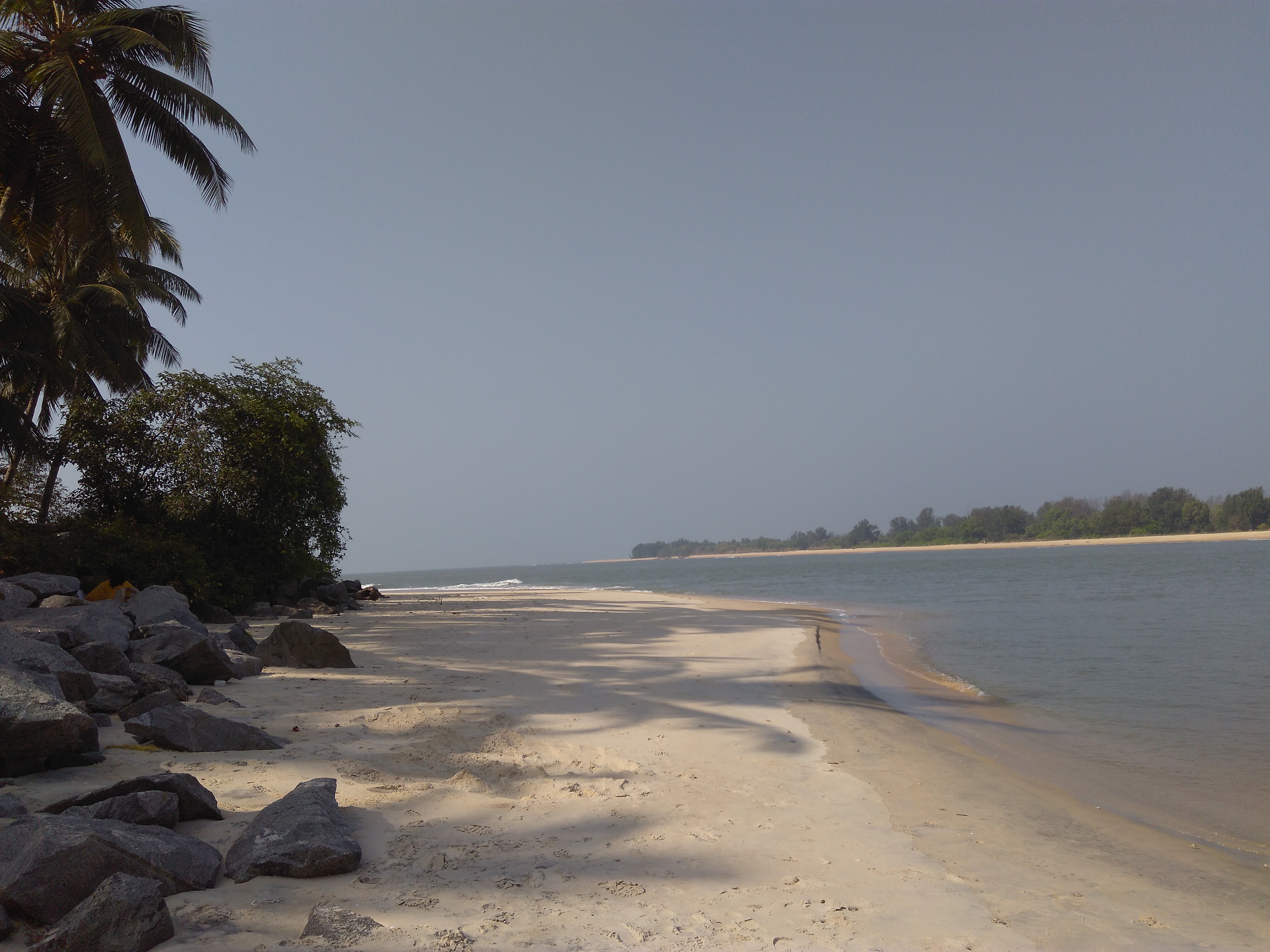
This small fishing hamlet is located on a narrow strip of land mass, placed geographically between river Swarna and the Arabian sea. While your heart will surely skip a beat at the first sight of the vastness of the sea at Hoodi beach, a deviation to the right is what we took. This road narrows into the village and gave us an experiential ride, right until the estuary at Bengre beach. The ‘tip of land’ is a great place for sunset viewing and enjoying the silence with the waves. The several shacks in the hamlet serves freshly caught sea food served spicy hot which is something not to be missed while you’re there!
IMG_20171209_143447.jpg
The Kodi Bengre beach

From there, we took a bus to the coast, on the other side of the junction (Hoodi beach) where we had taken a right deviation from. With a quick ride through country roads flanked with traditional sea facing mansions, we reached Malpe beach. This being a popular tourist place, it was bustling with activities including various water sports. We walked down to the fish market / port area, away from the crowd- and got a good sight of the setting sun.
There is a dedicated ferry service from the jetty to the Saint Mary’s Island for those seeking for a day trip which I personally recommend for anyone who is visiting this coastal town. It’s a great place and there is enough information available all over the net to get there… If you are driving your own vehicle, then I recommend you take the Pithrody route to reach back the Udupi town. This will complete your coastal stretch of Udupi giving you an experience of driving through yet another estuary and delta- that’s formed by river Udyavara and the Arabian sea.

You can complement your beach trip with a visit to the Krishna temple and the seven Mathas that are associated with the temple administration. Top it up with delectable Udupi chaats and the famous Gadbad ice-cream that saw its origin in this coastal town.

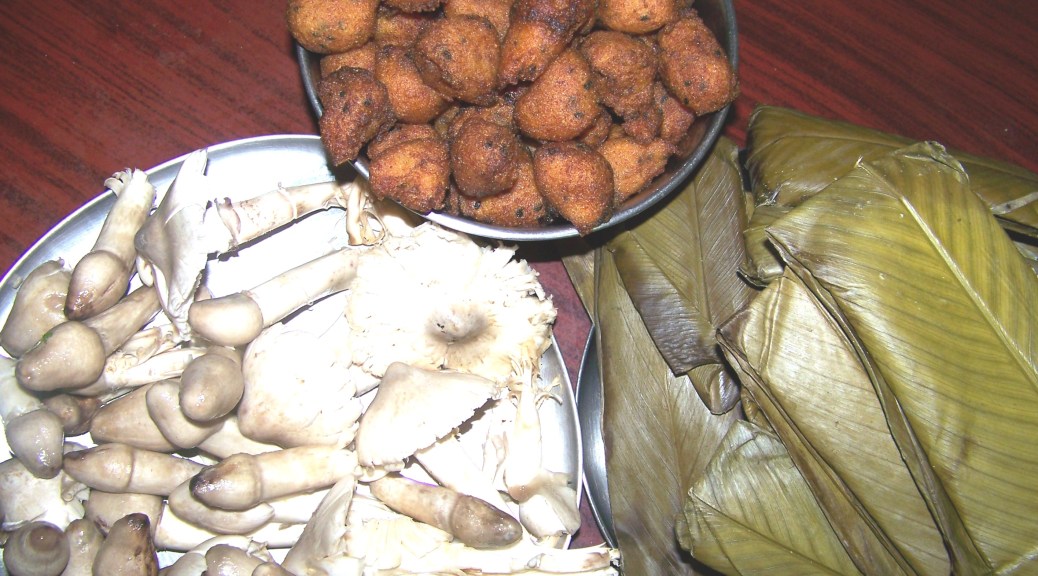
The monsoon delicacies of Coorg

So stuck up with my professional life.. I am finding little / No time to visit my native, where my basics belong to.. Politics, emotions, manners, education- on the whole the basics of every aspect of the human that I am today 🙂

Nostalgia fills my heart as I hear of heavy rains in the recent weeks- little villages have turned into islands, water levels are atleast 2 feet above bridges, waterlogged paddy fields now look like a never ending stretch of the river itself.. WOWwww…. An amazing picture of a rain fed rather filled-green COORG flashes infront of me.. And what my heart is craving for at the moment is some AWESOME Coorgie food.. And what my taste buds are asking for are the lesser known typical monsoon delicacies native to Coorg and cannot match their original taste if tried to re-create in any part of this wide world even by the greatest chef ever born..!! So here goes the list..

VEGETARIAN:

1. Therme thoppu palya (Fern salad)

2. Kembu suli curry ( Colocasia shoots)

3. Baimbale curry (Bamboo shoot curry)

These are varieties found only on river banks.

4. Kaad maange curry (Wild mango curry)

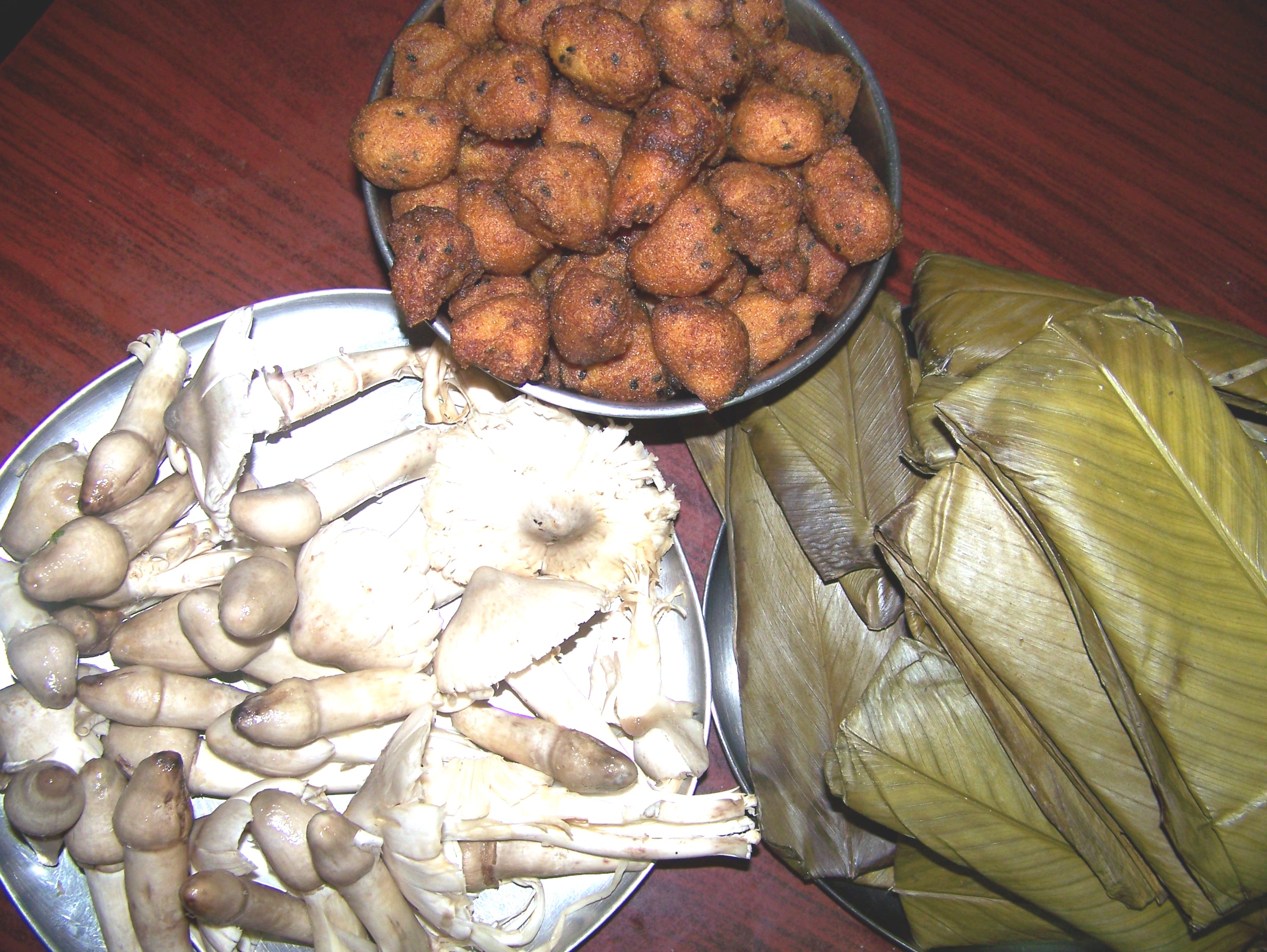
5. Kummu curry (Mushroom curry) especially the wild varieties- Aalandi kummu, Nucchi kummu, kaatola kummu.

The above stuffs taste deadly when combined with hot Akki Otti(Rice rotis) prepared on mud ovens lit with firewood 😉

6. Chutta chekke kuru (Roasted seeds of ripe jackfruit smeared with red soil and dried in the sun and preserved especially for the monsoon)

NON-VEGETARIAN:

7. Njend curry / Chutta njend (Fresh water crab curry /Roasted crabs)

8. Chutta yarchi (Barbecued meat)

9. Onak yarchi fry (Since Coorgs hunted regularly, venison, wild boar, barking deer and several other kinds of wild game formed part of their diet. These meats were also sliced, rubbed with salt and turmeric, strung or skewered and sun-dried or hung from the rafters in smoky, wood fired kitchens)

10. Koile meen curry (Used to be in abundance where bamboo traps were laid in cold, swift flowing streams and the flooded paddy fields were full of these tiny freshwater eels)

SWEET DISHES:

11. Kuvale putt (Prepared with ripe Kuvale chekke (a variety of jackfruit, locally called Kuvale) wrapped in Kuvale ele (Leaf from a local plant found on riverbanks) and steam cooked.

12. Baale nurk / nurk putt ( Bananas fritters)

13. Maddh paaysa/ Maddh putt (Porridge /cake made of an aromatic herb, which is expected to have 18 types of medicine available only during the month of kakkada or aadi)

And last but definitely not the least – A peg of Nell-kall (vodka made of paddy) and some homemade wine…. Or a cup of steaming hot ‘Bellatha Kaapi’ for the teetotalers .. 🙂

People often complain about my eating habits and how choosy I get about what I eat and the little quantity that I peck onto.. Treat me with a platter filled with the above stuffs and see how I can binge on… This city food is CRAP.. and not what I savour…Not even the 6-course expensive meal cooked by the executive chef de cuisine of the costliest restaurant in the world…!!

Kuvaleputt , Nurkputt & Kummu

The best of Trivandrum in a day

I had the opportunity of visiting this city in the southernmost part of India as a part of a Business trip. Our work was mostly sufficient to do for one full day. However, the transportation options connecting Bengaluru to Trivandrum weren’t convenient. Trains took nearly 48 hours one way and the distance is too far to cover by road. The connecting flights are scheduled around noon. Hence, by choosing to fly to complete my work assignment (as a car doctor), I had some time to explore the city as well. Since my visit spanned over a period of three days, I used my spare time (early mornings and evenings) to cover major landmarks in and around Trivandrum (officially called as Thiruvananthapuram). If you are someone visiting this city for exclusively tourism purpose, then these places can be covered in one day and combine it with an additional day trip to Kanyakumari- the southern-most tip of mainland India.

My Itinerary:

Day 1: Bengaluru to Thiruvananthapuram (morning flight), drive past Shangamughan beach, Sri Padmanabhaswamy temple visit, Puthenmalika / Kuthiramalika Palace & wooden museum,
Day 2: Shopping at SMSM institute crafts emporium, Maha Chips store, Covalam beach & Vizhinjam lighthouse.
Day 3: Return from Thiruvananthapuram to Bengaluru (Flight)

The details:

Was it the coastal line being abundantly lined by the coconut trees along with the rhythmic beats of the famous drums resonating in the air? Or could it be the SUVs & MUVs that underwent the brutal checkup by me during my so called ‘Business trip’? Well, I’m not sure. But, all these definitely made my visit to this little silent capital city, an AWESOME one. A city of Trees & Vans & Drums put together, Trivandrum it was!

Day 1:

A morning flight from Bangalore landed my colleague and myself at the Trivandrum airport by 09.30 a.m. A car was waiting for us outside, which drove us past a fishing hamlet enroute to our workplace. We began our work without wasting much time. My job (as a car doctor) more often involves driving around the places we go to as part of the checking routine of the automobiles. It was no different here either.

We got to see scenic and offbeat roads around this capital city of Kerala. Fishing dories anchored, fishermen carrying their day’s catch, the blue sea water reaching to the horizon and a lovely lady’s figurine sculptured by the Shangamughan beach side were some of the views I caught from the cabin. Further, as we crossed the toll road and drove across a bridge through the by-pass road, we were greeted by the backwaters dotted by the houseboats. It was indeed a warm welcome to the city..

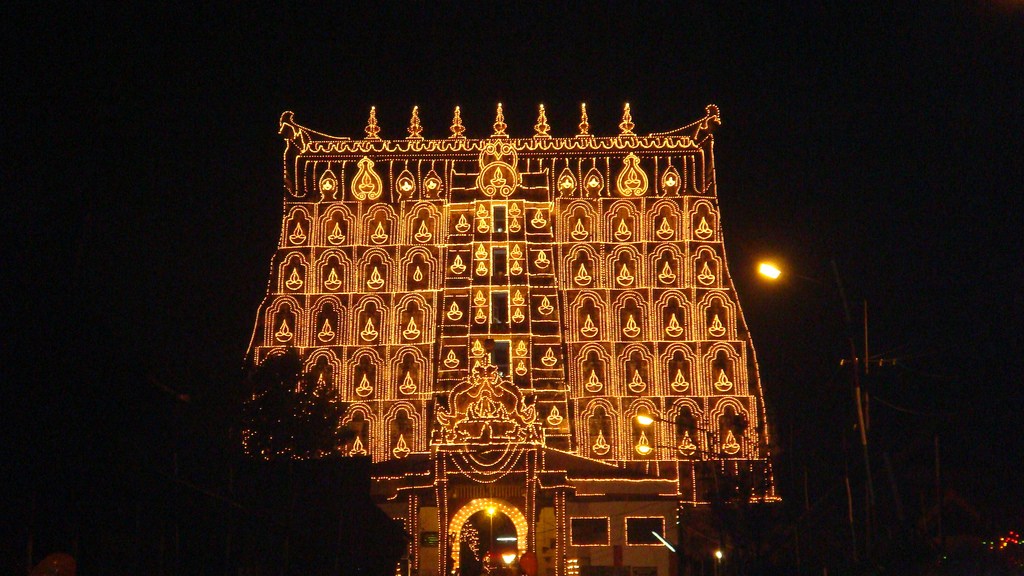
After finishing the day’s work in the evening, we freshened up at the hotel and headed out for the much anticipated part of our visit to Thiruvananthapuram. A visit to the richest temple in the country: Sri Padmanabhaswamy. For all the hype and media space grabbed by this temple, I had expected a BIG crowd of tourists(Not Pilgrims) here. I had imagined the sight to be like all other famous temples in India with fussy godmen, lot of petty shops dotting the walkway selling pooja items etc. among other things. But in total contrast to what I had imagined, this has been one of the BEST temples I have visited till date (among the well-known and famous landmarks).

I’m not a pious or a temple person, but this place has truly stood apart. I am someone who believes that ‘a temple is a place where one has to FEEL god and that’s possible only when the place is PEACEful’. I prefer holy places to be silent and less-crowded. And this place stood out for just that..!! A strict dress code and prohibited entry for non-hindus, a stringent adherence to the temple rules, limited crowd, silent ambience, an eyeful of the darshan of the massive idol lit by mere oil fed lamps: The place hadn’t given up its sanctity in the form of commercialisation, to all the attention grabbed by it’s hidden chambers of gold.

Main gate - Padmanabhaswamy temple
Main gate – Padmanabhaswamy temple

After offering our prayers, we visited the old wooden museum inside the Puthenmalika / Kuthiramalika Palace just outside the temple premises. The structure built by the erstwhile Travancore kings is a damn nice place for the art lovers. Like most regions in Kerala that sleeps with the setting sun, we headed back to the hotel to call it a day.

Day 2:

After finishing our work around evening, we set-out to do a little bit of city trotting. No visit is complete without taking back souvenirs. The rule in my work team is (on a lighter side), ‘Whether you finish your assigned job or not, whether you return safely or not, we don’t care. Bring us souvenirs and the local snacks to eat.’ So, we shopped for some local crafts at SMSM institute crafts emporium.

SMSM institute crafts emporium
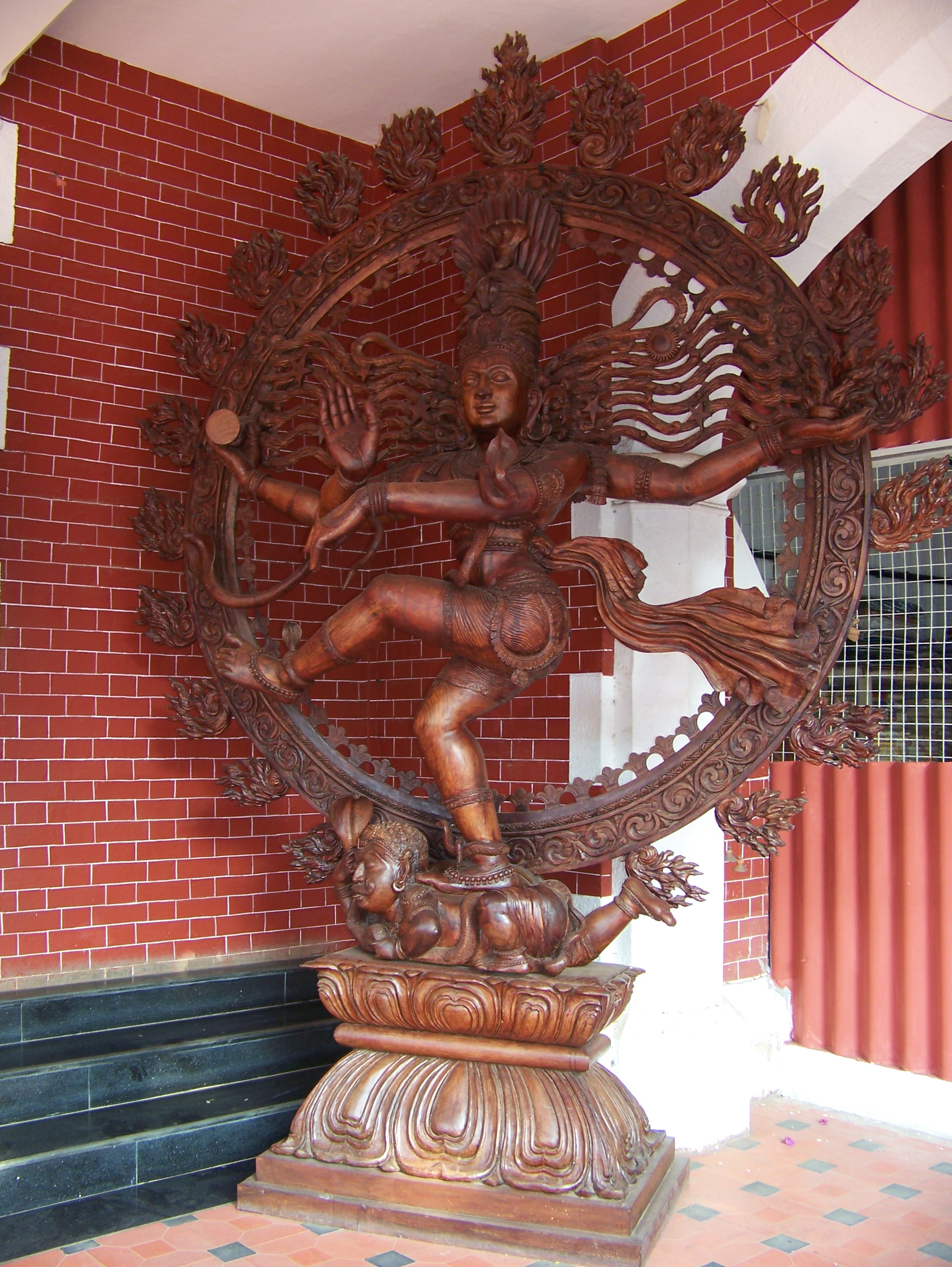
A wooden piece of art at SMSM institute crafts emporium

From there, we walked through the narrow lanes to one of the biggest shops I have ever known that sells just ‘CHIPS’: ‘The Mahachips store’. Chips of different varieties, made to order and packed just then. I picked up about 10kilos of banana chips & jackfruit chips as giveaways, something that will be much awaited for back home in Bangalore, even more than my safe return. (The even funnier part was that this bag of chips was the single largest (Fragile) cabin baggage I was carrying with me. The cabin-crew was amused to know what was in it when she offered help to place it in the upper cabinet).

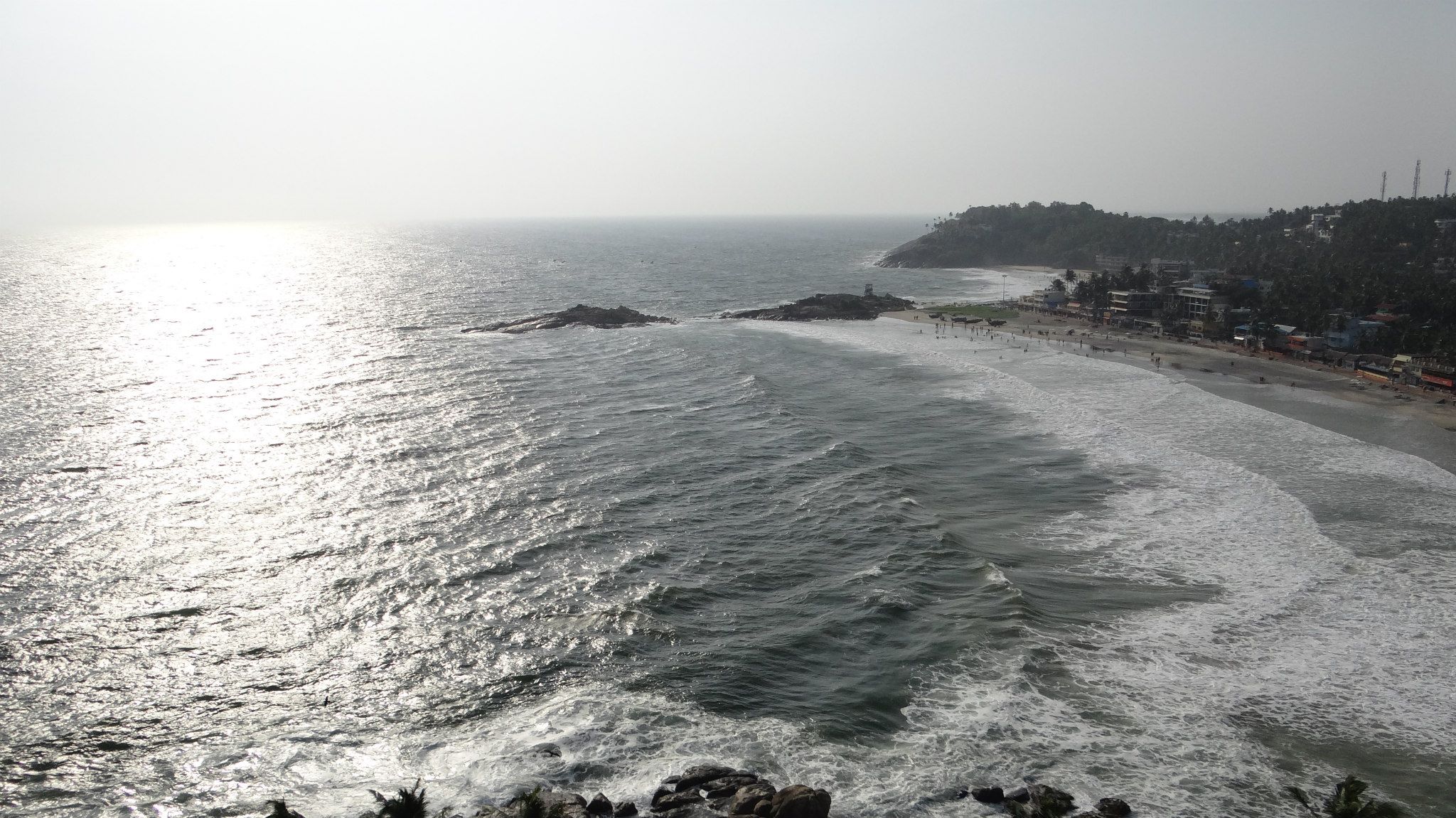
What’s a visit to Thiruvananthapuram, without soaking your feet in Covalam beach? That’s where we were headed next. After strolling along the beaches, we walked upto the Vizhinjam lighthouse for a good view of the sea. The view was simply delightful. A stroll along the crowded beach, beautiful view of the sunset, some yummy local chaats to munch on, it was indeed an awesome end to an eventful business trip.
And we head back to Bangalore in the earliest flight on the following day.

View from the Vizinjam lighthouse
The view from the Vizinjam lighthouse

Don’t miss to try these three things while you are in Trivandrum (or anywhere else in Kerala):

  • Fresh banana & jackfruit chips and Kerala halwa
  • Hot palam puri with a cup of burning hot Kerala tea
  • Frog thigh fry (available only in select places).

Breakfast on my plate: Bath- o- Baat..!!

<01-Dec-12>

Its 1st of December.. At 10a.m.; an e-mail was delivered to my inbox from the canteen department. “Monthly menu”- the subject head read. My immediate action was to click on the trash button which straight away dumped the unread mail in the trash bin. This action was not unique to me alone.. At least ten others in my office would have done the same.. And another ten would have just opened the mail to simply trash it without really reading it.. Nobody usually expects anything unusual in the menu. But just incase, some fresher bumps into you with a humble intension to strike a conversation and brings up the topic of breakfast menu:

“Hey ! You know what’s for breakfast for this month?”

The poor fellow is bound to get an equivalent reaction: “Aiyya…!! Looks like you have not had enough of a bath in the canteen..!!”

The oldies all know the menu by-heart. So what’s in a bath?? Read on…

  • Tuesday: Green- bath (Methi bath)
  • Wednesday: Red- bath (Vaangi bath)
  • Thursday: Deadly-oil bath (Darshini Pulav)
  • Friday: Mixed colour- bath (Chow-Chow bath)
  • Saturday: Brown- bath (bisi-bele bath)
  • Sunday: Yellow- bath (rice bath)

If I missed out on Monday in the list: that’s the 1st working day of the week; So the company tries to give us some motivation to enter the company gates.. That’s the “Have no Bath”-day. It is the only day when Idly-Vada-Sambar-Chutney is served.

Now: How do the employees identify what is for breakfast without actually entering the canteen or reading the menu? It comes with experience. Just a month’s time is enough..!!

Well, a Monday’s menu barely changes; so you know what is there. You go or don’t go depends on how bored or excited you are to get away with the Monday morning blues..!!

And the other days.. Usually standing at a distance and a small peep into someone’s plate from the canteen door is enough. By the colour on the plate, you know what it is.. and then, do an about turn and walk towards office.!!

But, a special mention needs to be made about Wednesdays.. The day being the mid-week and one would already have lost the motivation to work; the day greets you by serving a deadly bath on your platter. This is the original “Darshini Pulav”. I prefer to call it the deadly bath. It is because you don’t need to walk till the canteen door on that day. The strong smell of fried bread cubes doused in dalda oil and mixed with a weird coloured masala hits your nostrils instantly at the time you alight at the bus bay. So, you directly walk away to your office without wanting to even get closer to the source of smell.

Friday’s are special because not one, but two baths are given on a single platter. Chow-Chow-bath: as the name suggests, it is a combo of Rava bath and Kesari bath…!!

Oh.. Are you wondering why we even go near the canteen door every morning, huh? It is just out of curiosity and nothing else.. The curiosity to know how a bath can be had in different forms and in different colours- and every time, smell similar and taste the same even with different names..!!

Occasionally, Pongal, lemon rice, puliyogare, khara bath, tomato bath, curry leaves bath, vegetable bath, green peas bath are served too.. But considering these are still different colour forms of the same rice dish: it is an array of Bath-o-baat..!!

I agree that we are South Indians who are mainly rice eaters and fond of our daily showers. But nowhere in the peninsular India, would you find a Southie eat so much rice a day.. We have other better forms: dosa, poori, chapathi, akki-rotti, ragi-rotti, jola rotti, puttu, appam etc. etc… Why the hell on earth are we forced to have this bath every morning..!!

This is a serious allegation coming from a deeply disturbed rice hater who has stopped taking a bath just because of the traumatising “bath-o-phobia”..! Time the management does something about this one..!

Madurai (Part 2) – Centre of arts and culture

There is no existence of a place without the people, and with civilization exists its culture. Madurai has its own share. My previous post (Madurai Part 1) was exclusively about the architectural landmarks spread across the city. But it would be injustice if the other things associated with this amazing city goes without a mention. Of course, the write-up could run into books if I had to write about each of them. And it isn’t necessary that everyone travelling is a pilgrim or a history buff or an architecture enthusiast. Hence, here’s an attempt to throw light on other aspects that any visitor to Madurai can expect. This is not a detailed one, but I touch upon various dimensions that you can theme your trip around Madurai. Do let me know if this post helps or if there is any other dimension I missed. Here goes my list.

Art:

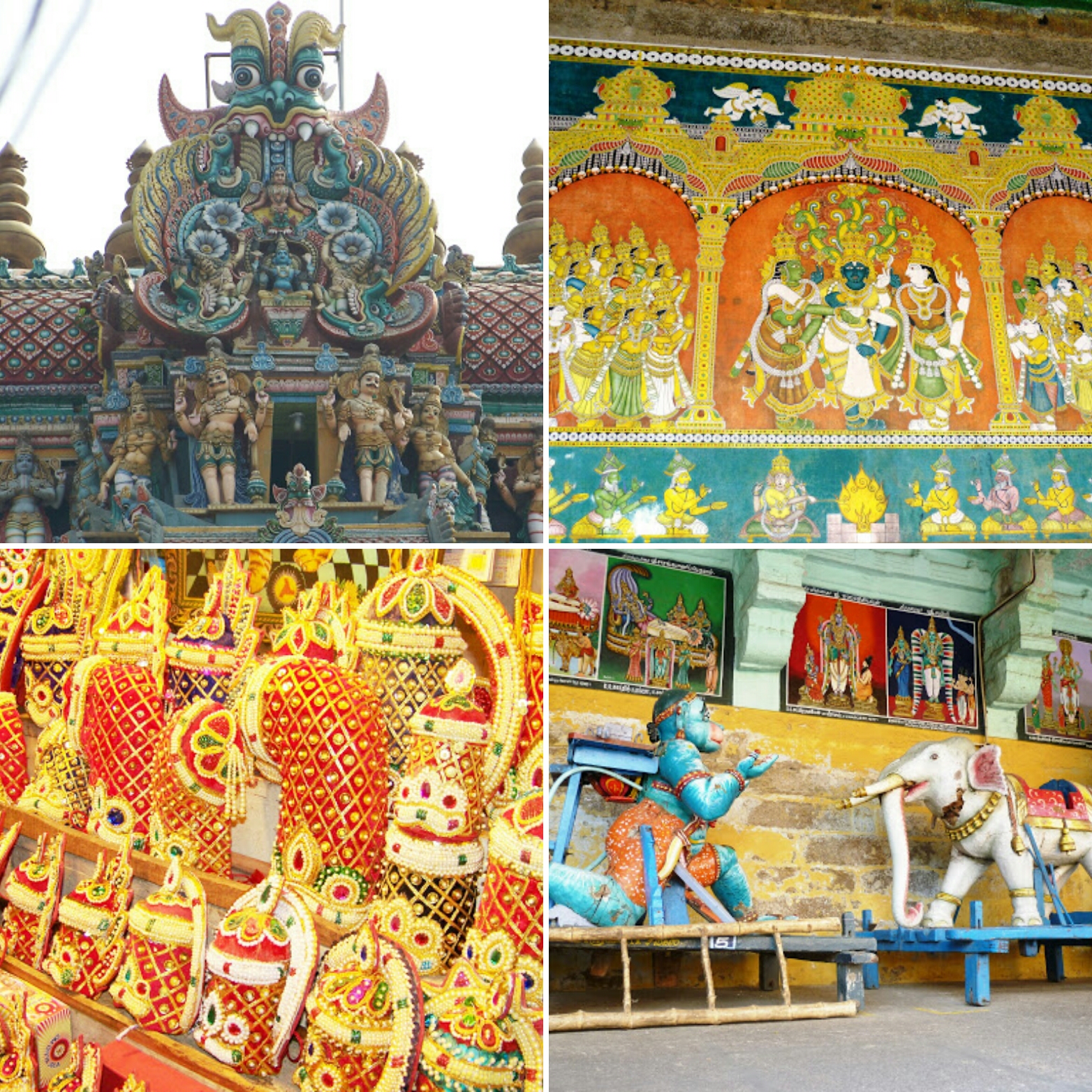
  • Sculptures: adorning every temple wall, pillar and their towers are a marvel in itself.
  • Carpentry: Several wooden vahanas used to carry the idols of the various deities in the temple are something that need the attention of art afficionados.
  • Handicrafts: Various accessories used for decorating Devi idols, made of delicate sequins, etc. are sold in several stall inside the large corridors of the Meenakshi temple.
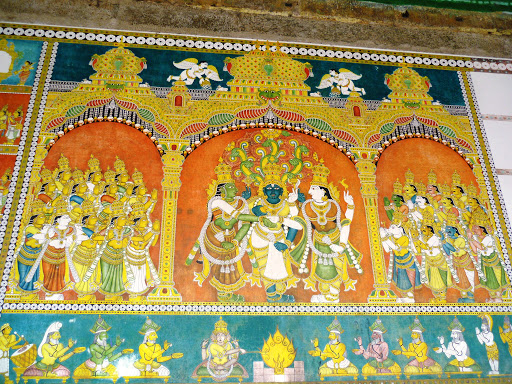
  • Mural paintings: This needs no introduction, the famous Madurai paintings are a gift of the Pandyan era, adorning the temple walls.
Clockwise from top left: 1.The sculptures on the western tower of the Meenakshi temple; 2.One of the mural paintings from the temple walls; 3.The wooden carriages for the temple idols; 4: Handicrafts from the temple stalls

Food:

Listing just a fixed menu while in Madurai would just be an understatement. If you are a foodie, Madurai would need two full days to explore its culinary delights alone. It is famous for both vegetarian and non-vegetarian specialties. I’d probably write a separate post about it sometime later. But this list is the list that we had when my family visited. But believe me- it is BEYOND!

  • Breakfast – Idly & Sambar, Pongal + a cup of filter coffee
    11.00.a.m – Jigarthanda (it’s more like a combination of falooda & kulfi)
  • Lunch- Puliyogare @ the temple store, curd rice, Sambar rice
    4.00.p.m.- Karupatti (palm sugar) coffee
  • Dinner- Anything after 7.00.p.m is called meals. Must try is the ghee roast & rava Masala dosa

Costume:

  • Sarees for women & Dhotis for men.
  • Madurai cotton sarees with simple prints and zari borders with temple designs are popular.

Jewellery:

Among the locals- particularly those belonging to the Thevar cast, it is believed that women are prettier with bigger earlobes. Hence, the girl child born in this community is made to wear a traditional earring called the ‘Thandatti’ when she is young. The thandatti is said to evoke the 3 levels of our world: terrestrial, astral and divine and these levels are associated with Mandala. Each piece of this weighs 27gms and is made of gold and this piece of jewelry is specific to Madurai.

A Thevar woman wearing the traditional Thandatti earring

Shopping:

Shopping at Madurai is all about wholesale vendors and there are specified streets for each of them.

  • Cotton sarees/ dress materials: Shops are all around the temple complex
  • Steel utensils: Plastic beads & girls’ accessories, gold plated imitation jewelry to name a few.
  • Pooja related accessories & crafts: Particularly inside Pudumandapam (1000 years old market)
  • Farm produce: Varieties of plantains / bananas and green groceries among the others.

A brief intro to a city full of life and activities. Justice yet to be done. Signing off with a hope that it has helped someone somewhere in some form who is seeking for some info on this Pandyan city….