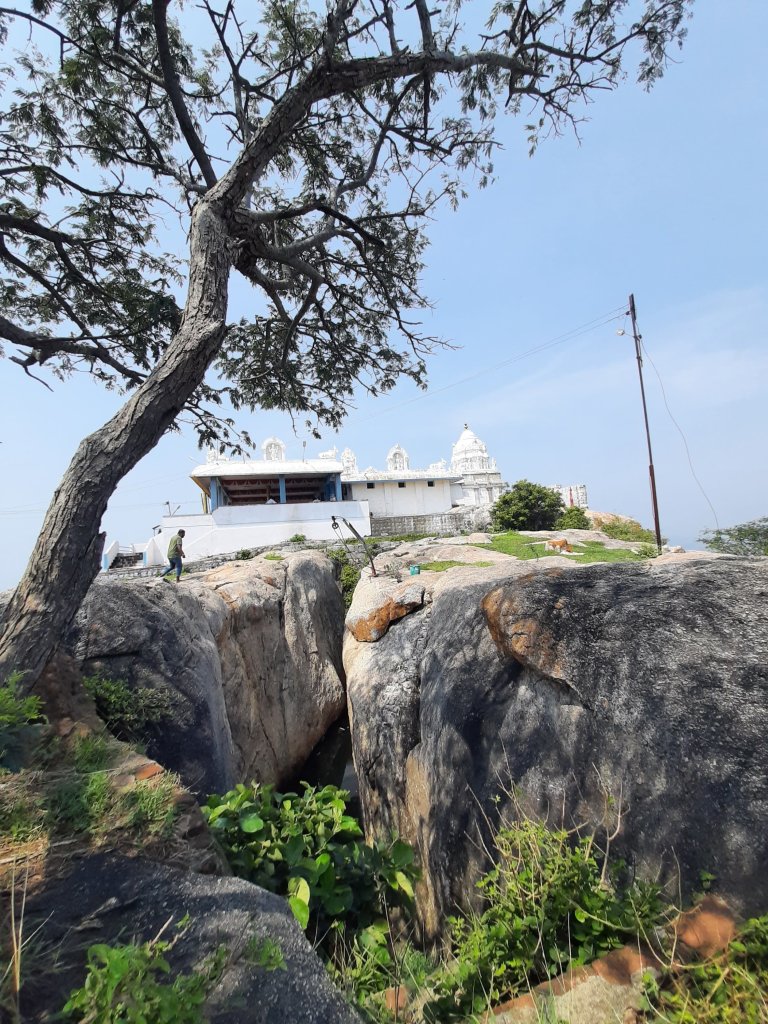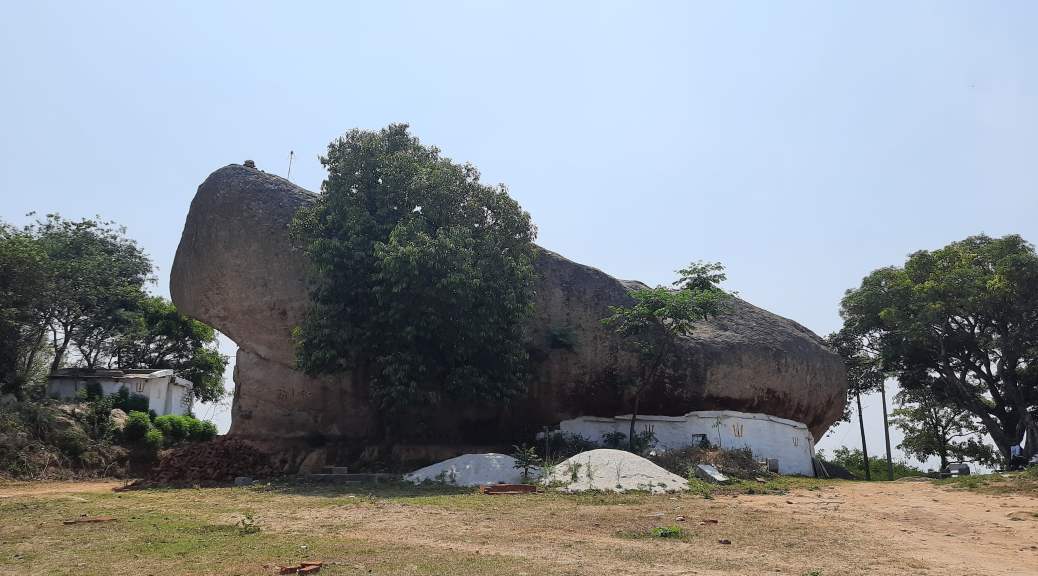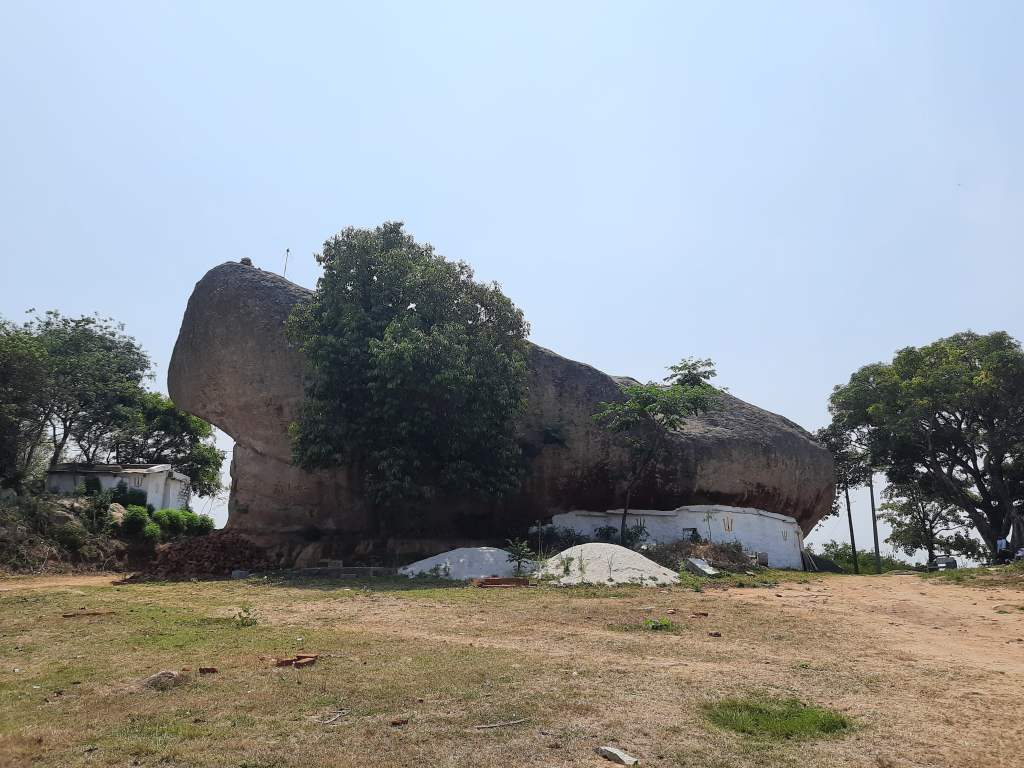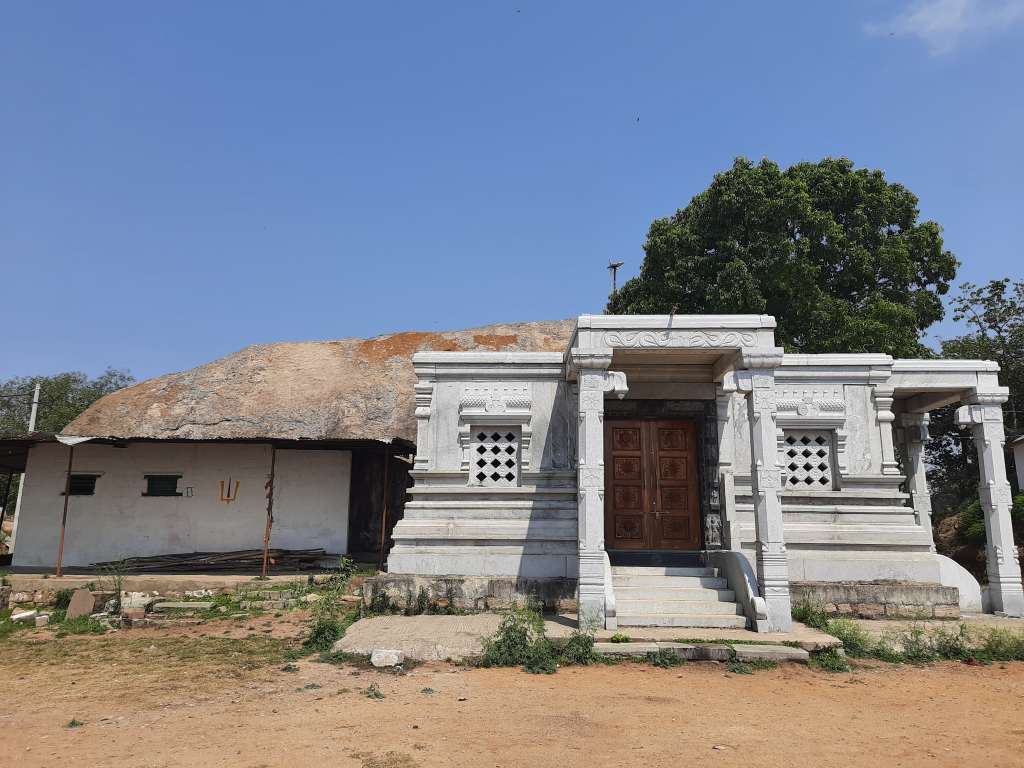
Tag Archives: Bangalore treks

Three immersive cultural experiences in Bengaluru

Despite being a cosmopolitan hub, Bengaluru is a metropolis that still firmly holds onto its cultural essence. There may be several festivals being celebrated year-round and across the city but a few of them transcend beyond any religion and community and are rather synonymous with the city’s name. Through this post, I would like to enumerate three such festivals that must be on any Bengaluru resident or tourist’s list of experiences whilst in the city.

    This nine-day festival is a reverence to Adishakti Draupadi and a celebration of her annual homecoming to earth from heaven, on the day of Chaitra Poornami as per the Hindu calendar. Although a main festival of the Thigala community living across Karnataka, people of all castes and religions participate in it. The Karaga bearer (the chief person in the festivities) carries the Karaga (the deity) bedecked with jasmine flowers and begins the procession from Shri Dharmaraya Swamy temple in Nagarathpete, in old Bengaluru. The Karaga bearer is accompanied by the gante dhaari (bell bearer) and hundreds of veerakumaras who together traverse across the streets of the Bengaluru Pete area. The Karaga visits all the temples and the Mastan Saheba Dargah that come along the route until they return to the Shri Dharmaraya Swamy temple before dawn break the following morning.

    Though the festival is observed for nine days, the rituals involving the Karaga bearer spans over several months prior to it. One part of the ritual involves the Karaga bearer undergoing his strength and weight training at one of the several Garadi mane (traditional gyms). Hence, these Garadi manes are considered holy places where replicas of the Karaga and placed and worshipped during the festival. Also, several temples located in the Pete area take out floral palanquins of their deities on procession across the streets of Pete. All these things make Bengaluru Karaga, a special experience.

    Similar Karaga festivals are observed in outskirts of Bengaluru like Hoskote, Kolar, Malur etc. But Bengaluru Karaga is one of its kind and experiences.

    Bangalore’s reputation as a garden city finds a reflection in various traditional festivities of the city. Just as flowers are integral to Karaga, there is another famous festival that has flowers in its very name. The ‘Poo Pallakki Utsava’ is an annual car festival celebrated as part of the Someshwara temple festival in the old locality of Ulsoor. Albeit being a temple festival, it is rather better known as an annual competition between gods and goddesses from temples in and around Ulsoor over which one arrives in the best flower-bedecked palanquin. The car festival is believed to be the wedding day of Someshwara with Kamakshi, and flowers are the theme of all decorations.

    There will be over 80 poo pallakkis from the surrounding temples who attend the wedding celebration of Sri Someshwara Temple with Goddess Kamakshi. The grandest Poo Pallaki is one of the bride, Goddess Kamakshi. Celebrated annually during the Hindu month of Chaitra (around April/May), it is a night long event.

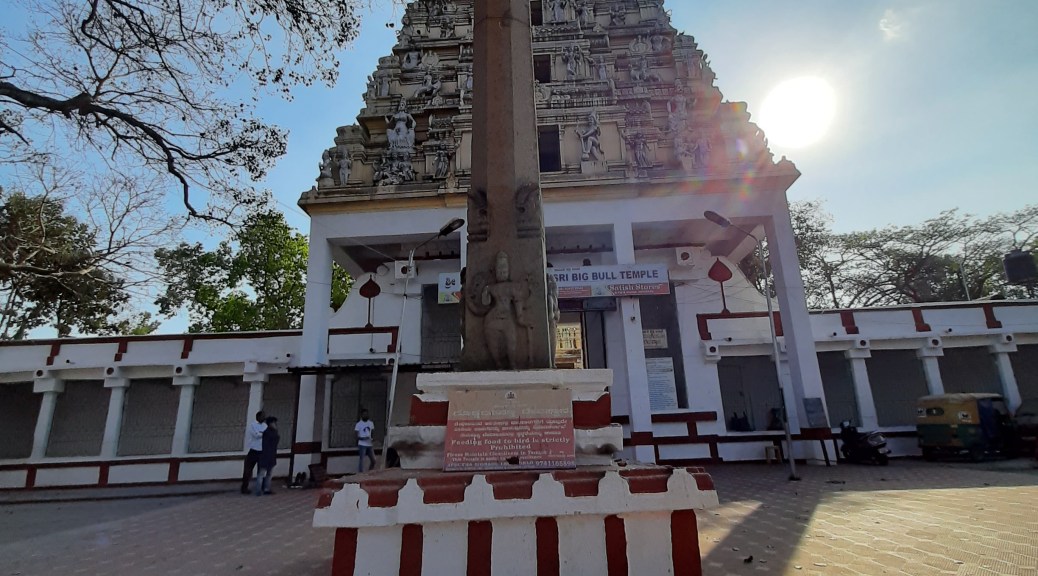
    ‘Kadlekai Parishe’ translating to ‘groundnut fair’ in Kannada is an annual coming together of farmers on the last Monday of Karthika Masa (month in Hindu calendar) celebrated since the 16th century. Legend has it that a raging bull used to damage the groundnut crops that were ready for harvest. The farmers prayed to Basava (bull in Kannada) to protect their harvest, by setting up an idol of a Nandi (Basava / Bull) and a temple at that place and offered their first crop to the Lord. This temple is called Basavanagudi (Bull temple) and the area surrounding it eventually came to be known by the name of the temple.

    Although the groundnut farms made way to residential and commercial structures, the tradition of the groundnut fair is celebrated with great fervor and enthusiasm even today. Farmers from across the state bring their first yield of ground nuts to offer to the temple and to sell them to others during this festival.

    More recently, a similar event is being organized in Malleswaram, around the Kadu Malleswara temple as well.

      A weekend hike from Bengaluru- Akkayammana Betta

      On a random day, we decided to drive towards Kempegowda International Airport with a basic idea to catch the sunset from a nice vantage point. We have explored the Devanahalli fort area on one of our previous day trips and wanted to explore some new places around there. But this time, we had a new family member along with us whose comfort was also meant to be kept in mind while choosing the destination- Our pet dog.

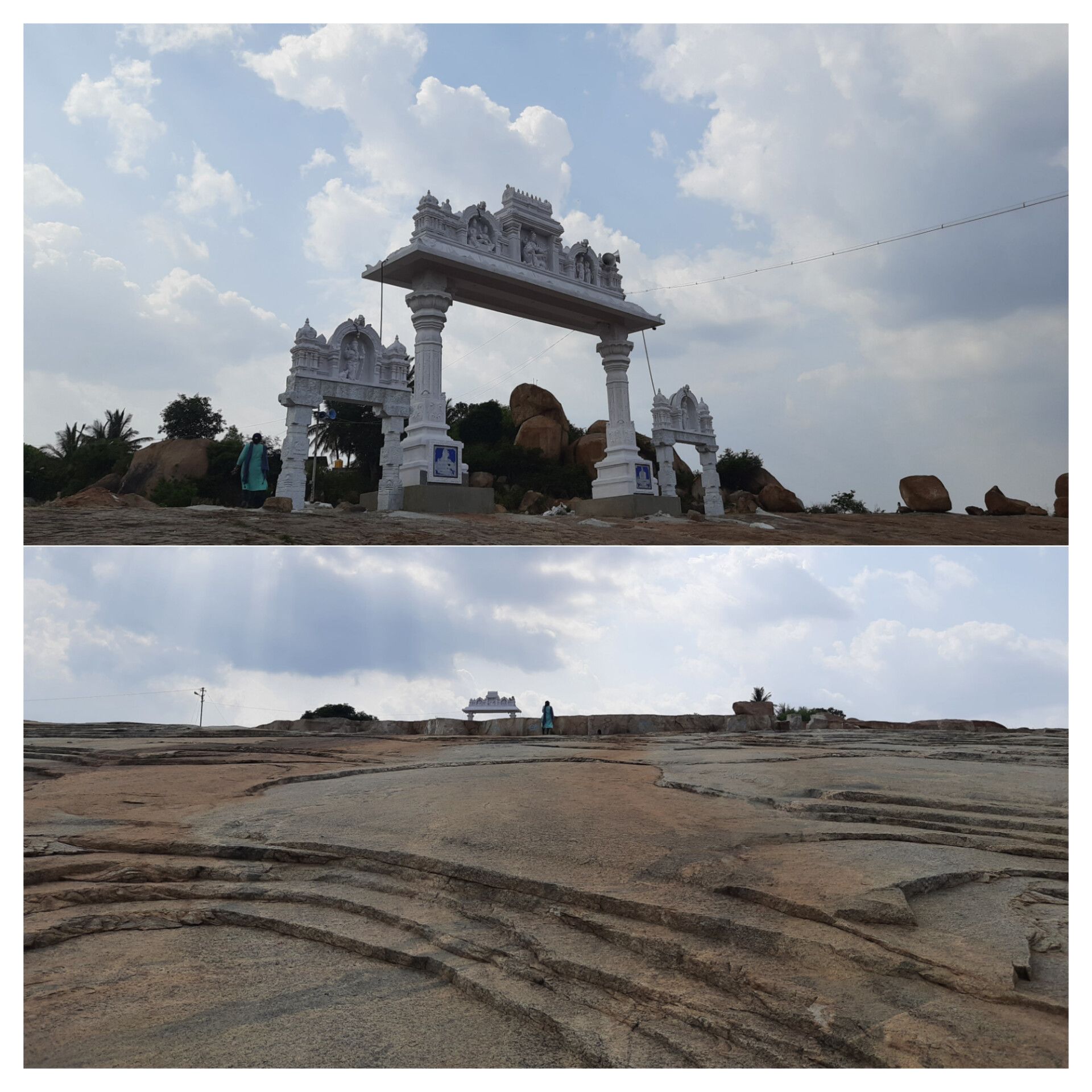
      By looking up a little on google, we came across the sunset point from ‘Akkayammana Betta’. We drove up right until its base where we parked our car and unleashed our dog to freely walk up the small hillock with us. The climb up was easy, leading to a welcome arch of the hilltop temple.

      Akkayammana Betta
      The climb and the welcome arch to Akkayammana Betta

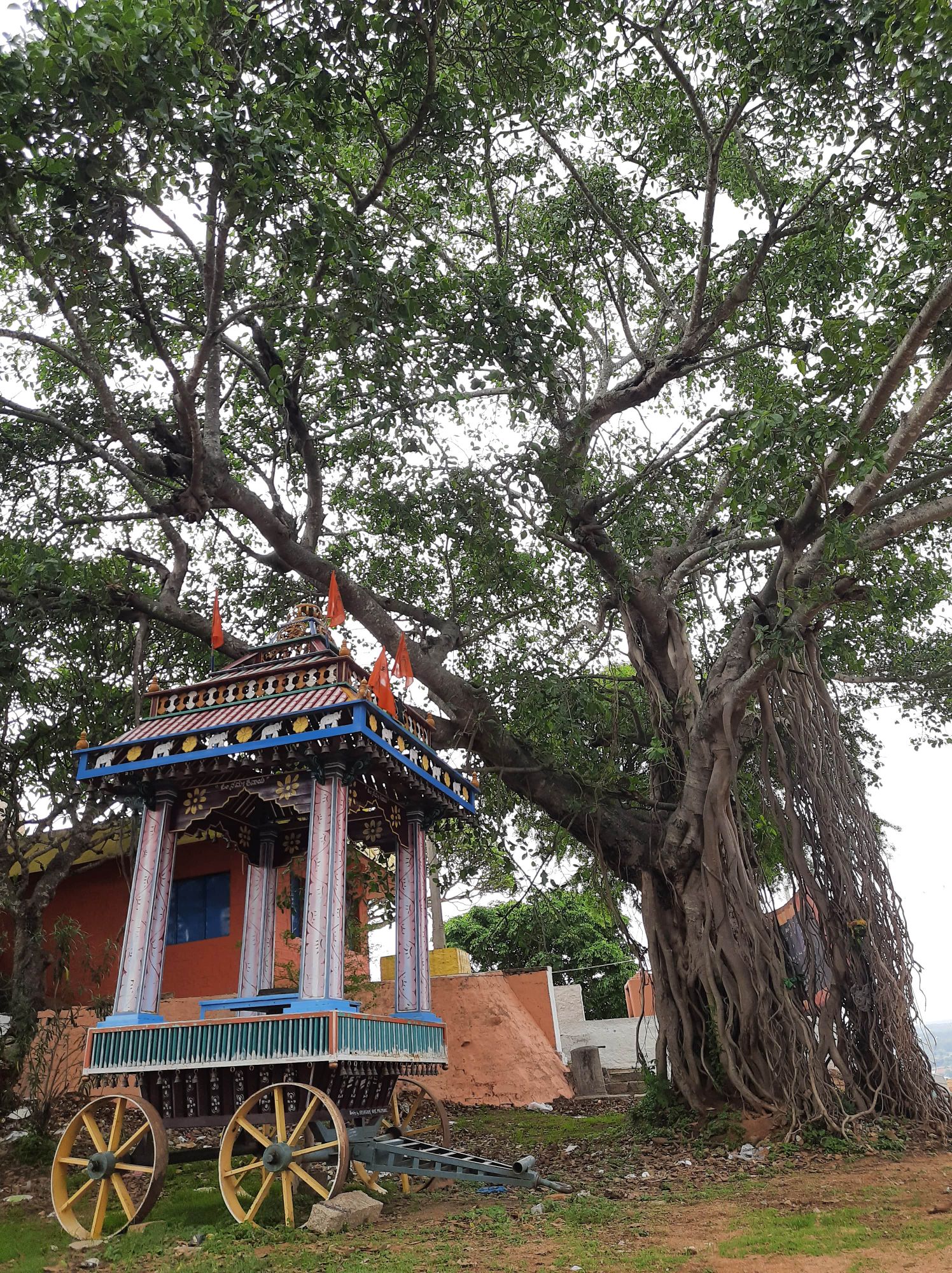
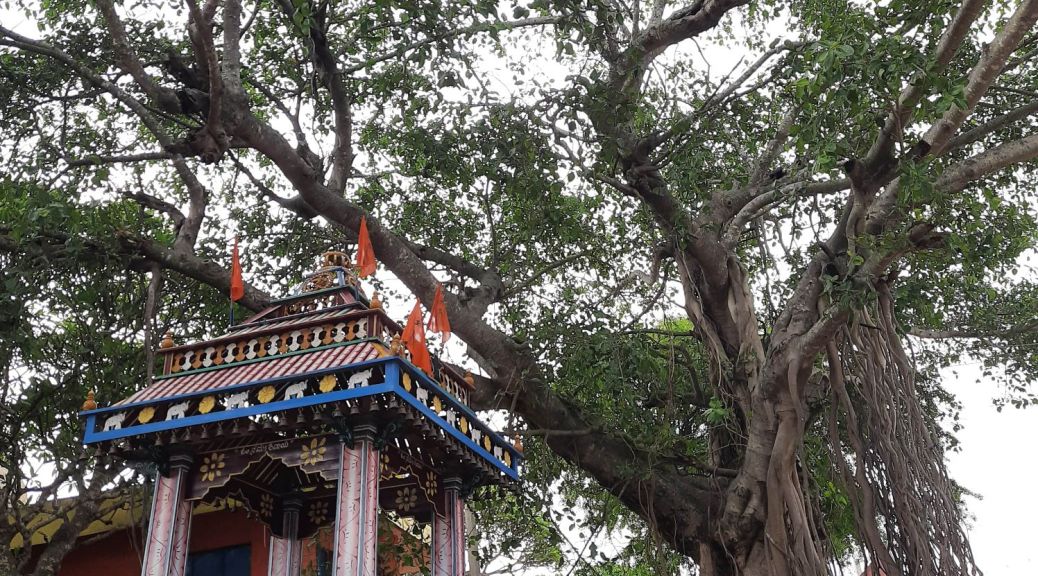
      We walked further and reached a small temple under a large peepal tree that remained closed at the time of our visit. Beyond that was a large rocky tabletop hill offering a view of the surrounding villages and farms.

      Akkayammana Betta
      The temple and the wooden cart at Akkayammana Betta

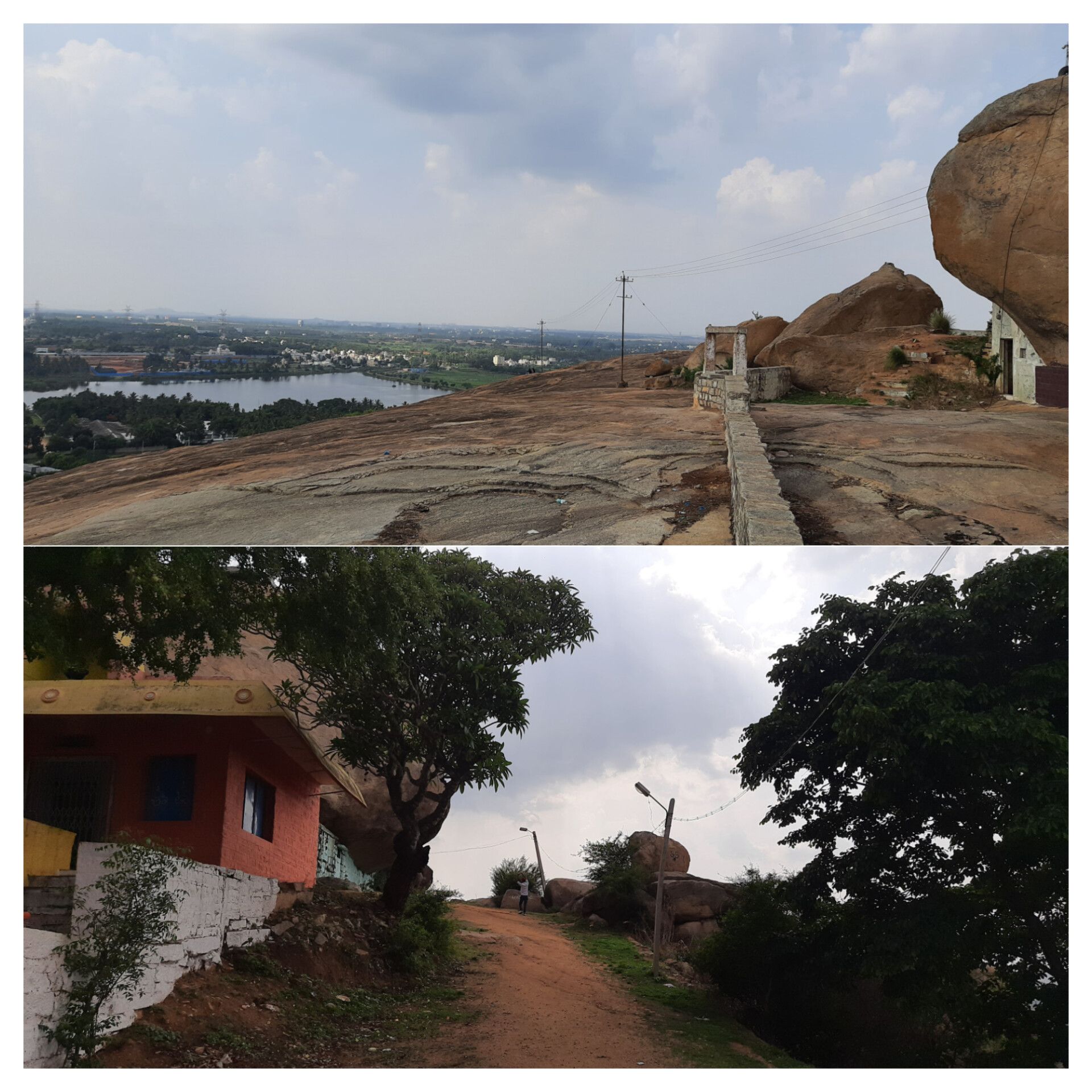
      While our dog got busy enjoying his time in a puddle of rainwater, we comforted ourselves on the rocky ground watching him enjoy his dip as the sky was prepping itself to see-off the setting sun for the day. Until sunset, the airplanes landing and taking-off at the KempeGowda International airport kept us accompanied. It was a beautiful sunset.

      Akkayammana Betta
      The route from the temple to the hilltop view point at Akkayammana Betta

      After that, we took a walk from across the hill and passed by a few other smaller shrines at the top before descending towards our car. As we approached the temple arch, I noticed a petty shop that sold some eatables and soft drinks. We took a small snack break and fed biscuits to the stray dogs that had followed us. We reached back to the car before it got dark and headed back towards the city, thus ending a short day-out.

      A daytrip from Bengaluru- Adi Chunchanagiri

      Adi-Chunchanagiri mutt is the spiritual headquarters of the Natha Parampara and Jogi Cult of Hindus of Karnataka. My dad, who had earlier visited this place with his friends, happened to insist on going there again with his family. His intention was not to take us on the spiritual path but rather to introduce us to a hiking path which he found picturesque after having ascended.

      One Saturday morning, our family set forth to enjoy this day trip towards Adi-Chunchanagiri. We drove towards Hassan, along an excellent highway until Bellur cross from where we had to take a deviation towards Adi-Chunchanagiri betta (hill) as indicated on google-maps. There on, we enjoyed our drive through the countryside, with traditional homes scattered between vegetable farms, coconut groves, and forest patches of brown boulders and green trees. Google is not always right and that’s why we deviated from the course a little more than necessary until we found the correct track again. But it was the deviation which we enjoyed. We realized that the region is declared as Adi-Chunchanagiri peacock sanctuary. It was no surprise that dozens of peacocks were grazing freely on every other farm, moving around at every turn of the road and everywhere else along our way right until we reached the parking lot at the base of the Adi-Chunchanagiri hill.
      Adichunchanagiri
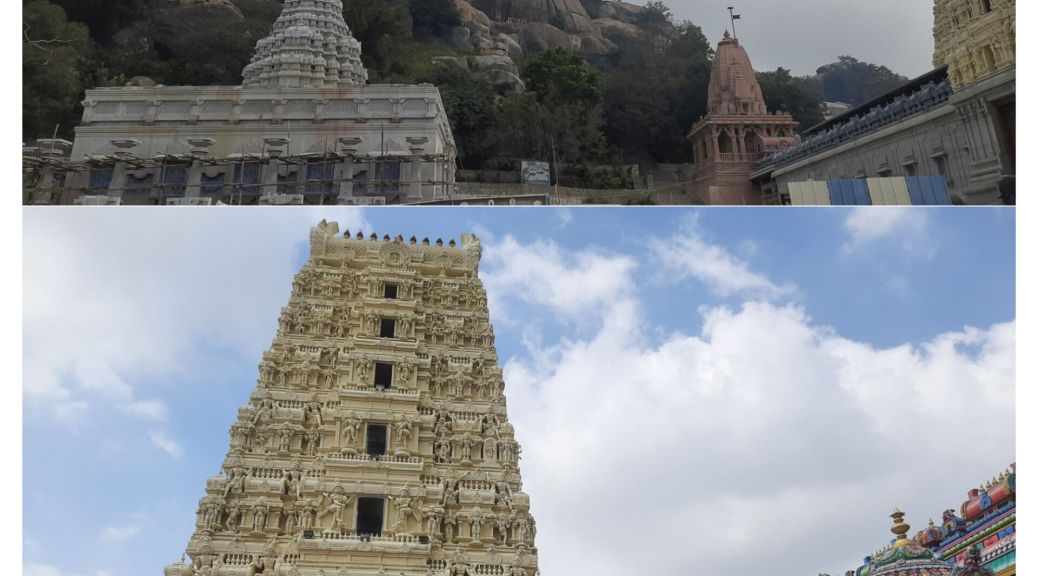
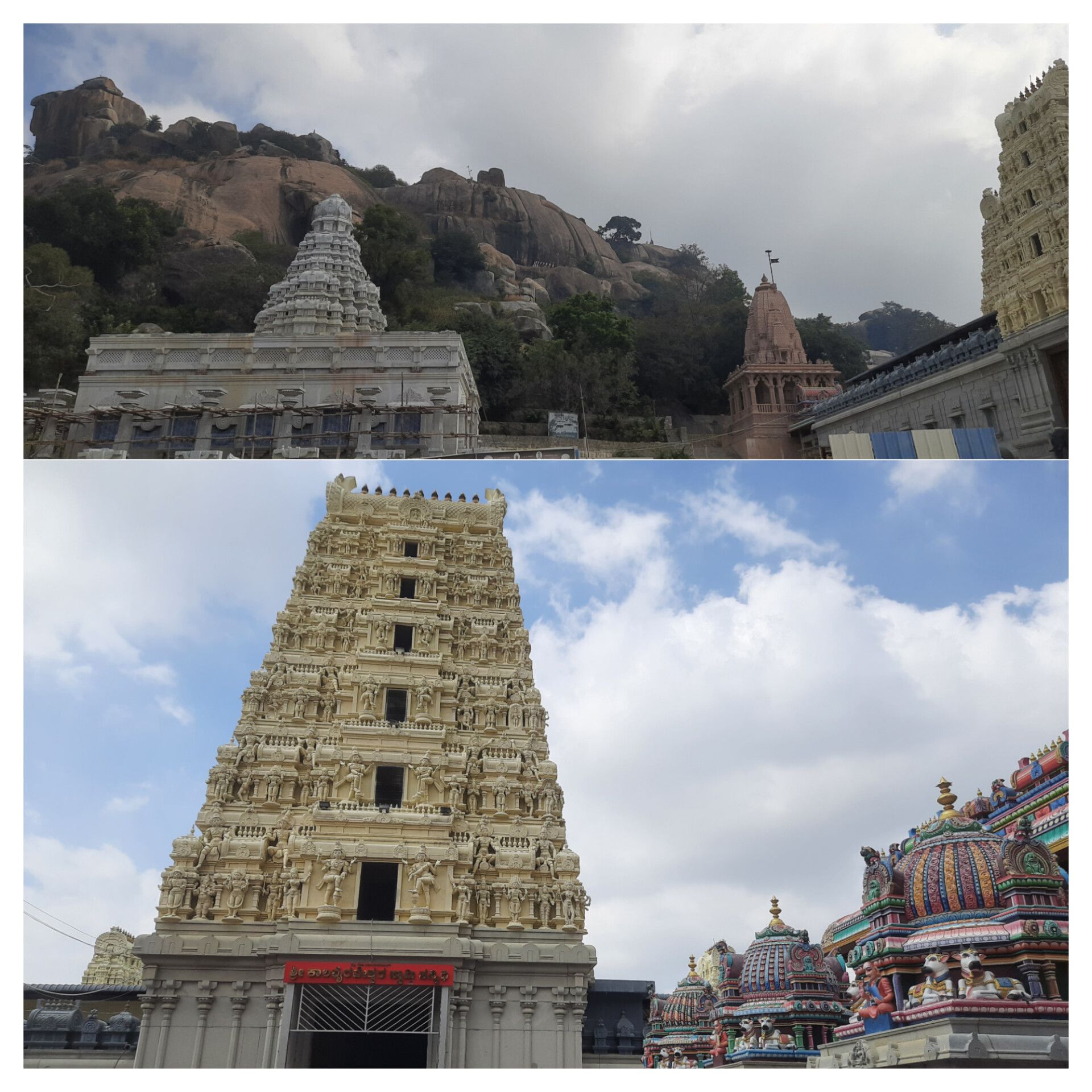
      Top: The first glimpse of the Adichunchanagiri premises; Below: The entrance tower of the main temple

      The initial approach towards the mutt premises starts with an ascent of about 100 steps leading to the welcome gate/ arch giving a visitor the first glimpse of the main temple. The large doors of the main temple opened into an ambience that felt divine and calm. It is entirely built with stones, and it gives a feeling of being in one of the ancient Dravidian temples though this one was built in modern times. The deities believed to be residing inside and revered highly by the pilgrims here are Sri Kalabhairaveshwara Swamy and Sri Stambhambika (Kambadamma).

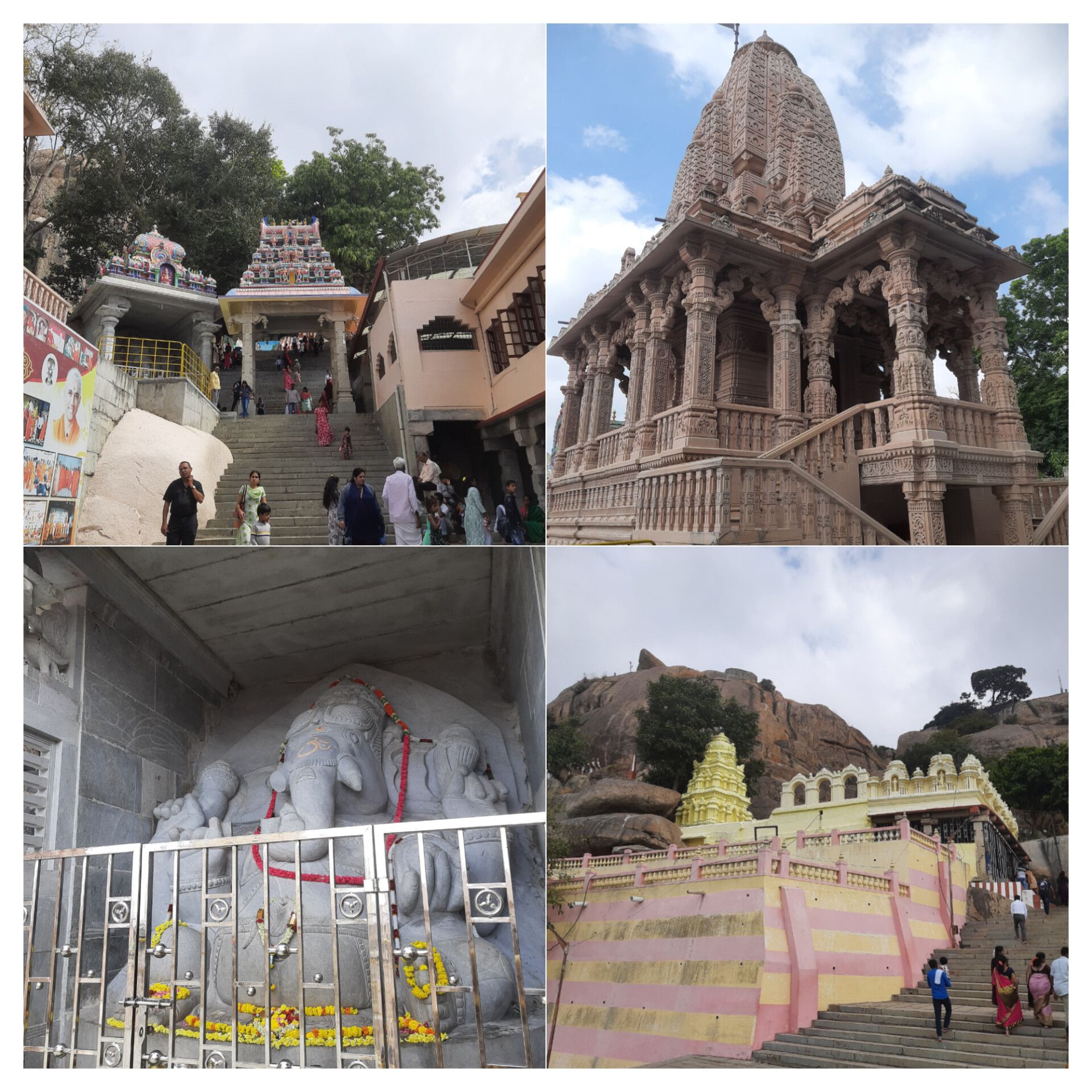
      After sitting there for some time, we began our ascent towards the peak of the hill. Just after coming out of the main temple, there is a large Ganesha idol sculpted out of the rocky wall of the surrounding. We continued our climb by passing by some smaller temples with a look around offering beautiful views of the green cover.
      Adichunchanagiri
      The temples and shrines at the Adichunchanagiri hill

      Scores of people were seen climbing up and down for pilgrimage purposes. The climb to the hilltop is done to see the Panchalingas comprising Gangadhareshwara, Malleshwara, Katthale Someshwara, Gavisiddeshwara and Chandramouleshwara, whose temples or shrines are scattered along the trail leading to the summit. But we were there to hike that hill as a recreational activity for the weekend. We climbed up the steep stairs right up to the top with the trail splitting at random places. My family ended up getting lost from each other’s’ sight and then picked whatever trail lied ahead of us and met each other again at the top. Well, not the peak exactly, but just beneath it.

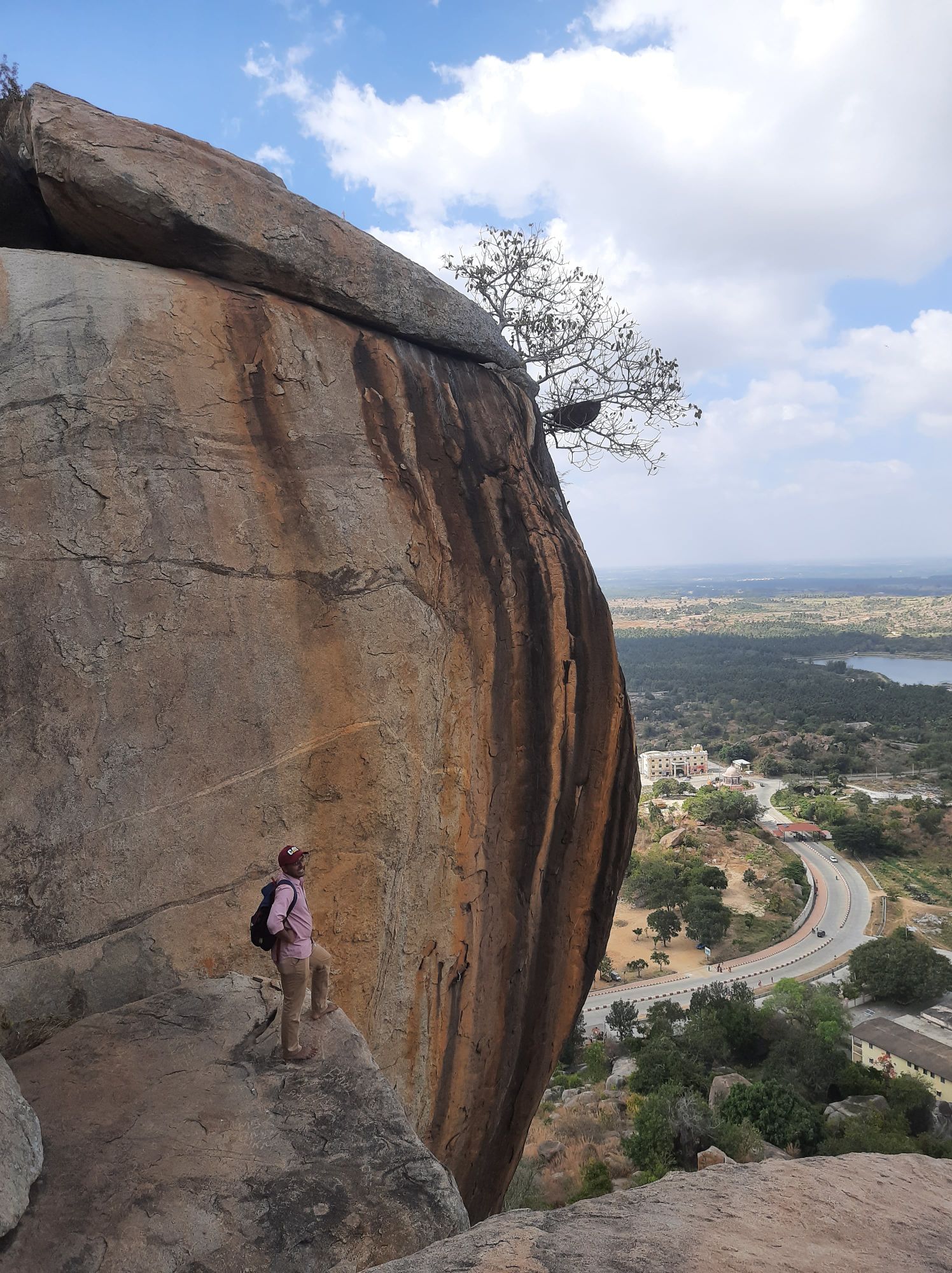
      That’s where I gave up any further climb. The peak point of the hillock is known as Akasha Bhairava. It can be reached by climbing the last bit of the rocky hill which had no stairs but only with the aid of a big, suspended metal chain. It was a straight climb (almost 90 deg. gradient) which included a small jump from one rock to an another. I doubted my ability to descend safely even if I were able to reach the peak. My brother, on the other hand, climbed it up and down with so much ease (and grace) demonstrating that he still possessed his ancestors’ (apes) strongest traits.

      Adichunchanagiri hill
      The view from the top where I was standing beneath the last rock which leads to the peak

      After he returned, we all came down towards the main temple where we were guided towards the dining hall. We devoured the delicious temple food before heading back towards Bangalore.

      We started back just after lunch to avoid the weekend traffic at Bangalore. But, if you are interested to cover more places in this day, you can google for some of the Hoysala temples along your way and add it into your itinerary.

      A day hike from Bengaluru- Kunagalu Betta

      My friends and I picked yet another hill-top around Bengaluru for a day hike. ‘Kunagalu Betta’ on Kanakapura road, it was. We reached there early in the morning before the rest of the world discovered it (for that day). The car could go on to most stretch of the steep road until we parked it beside a small structure built for lord Hanuman by the roadside, under a large rock.

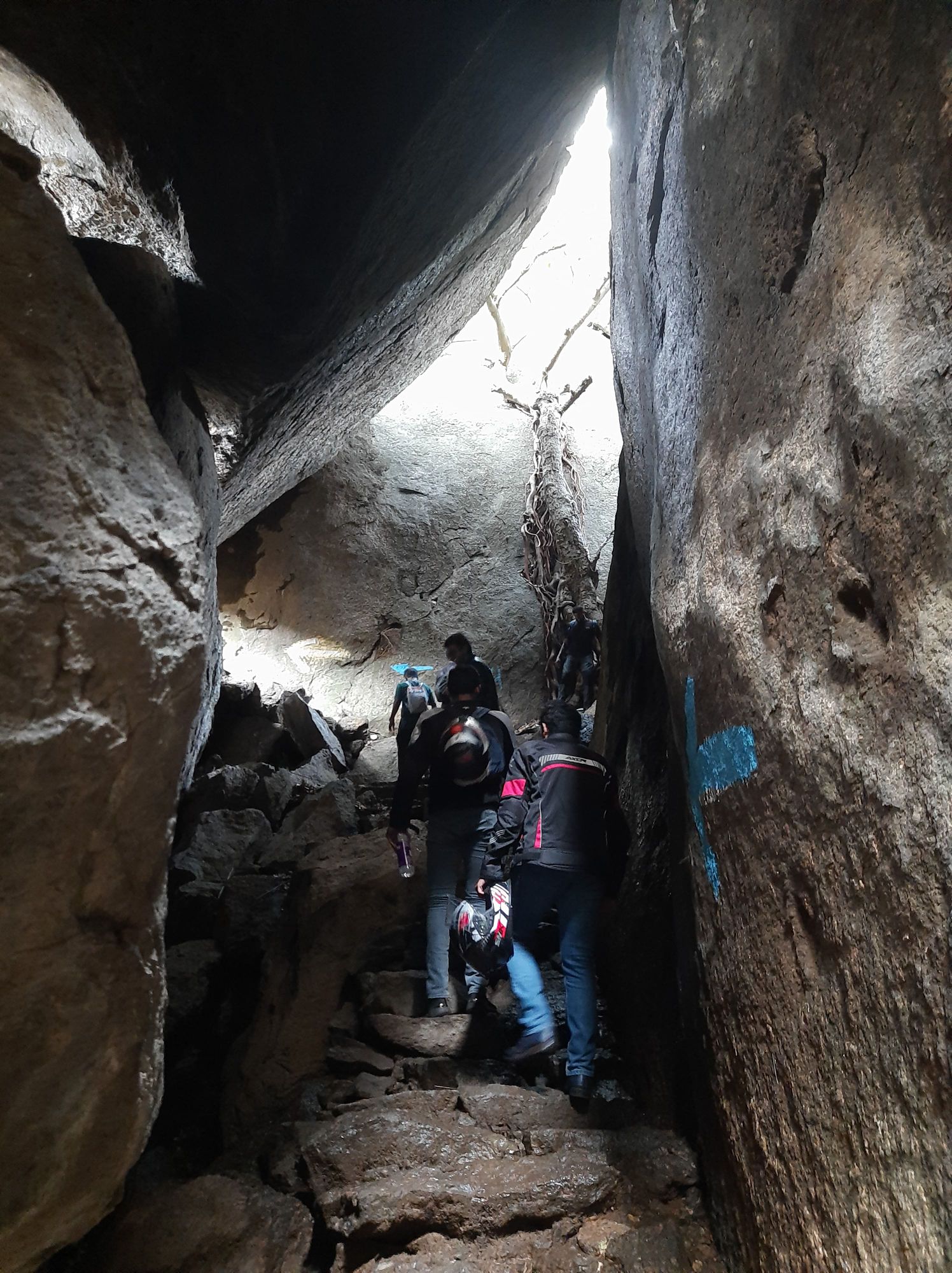
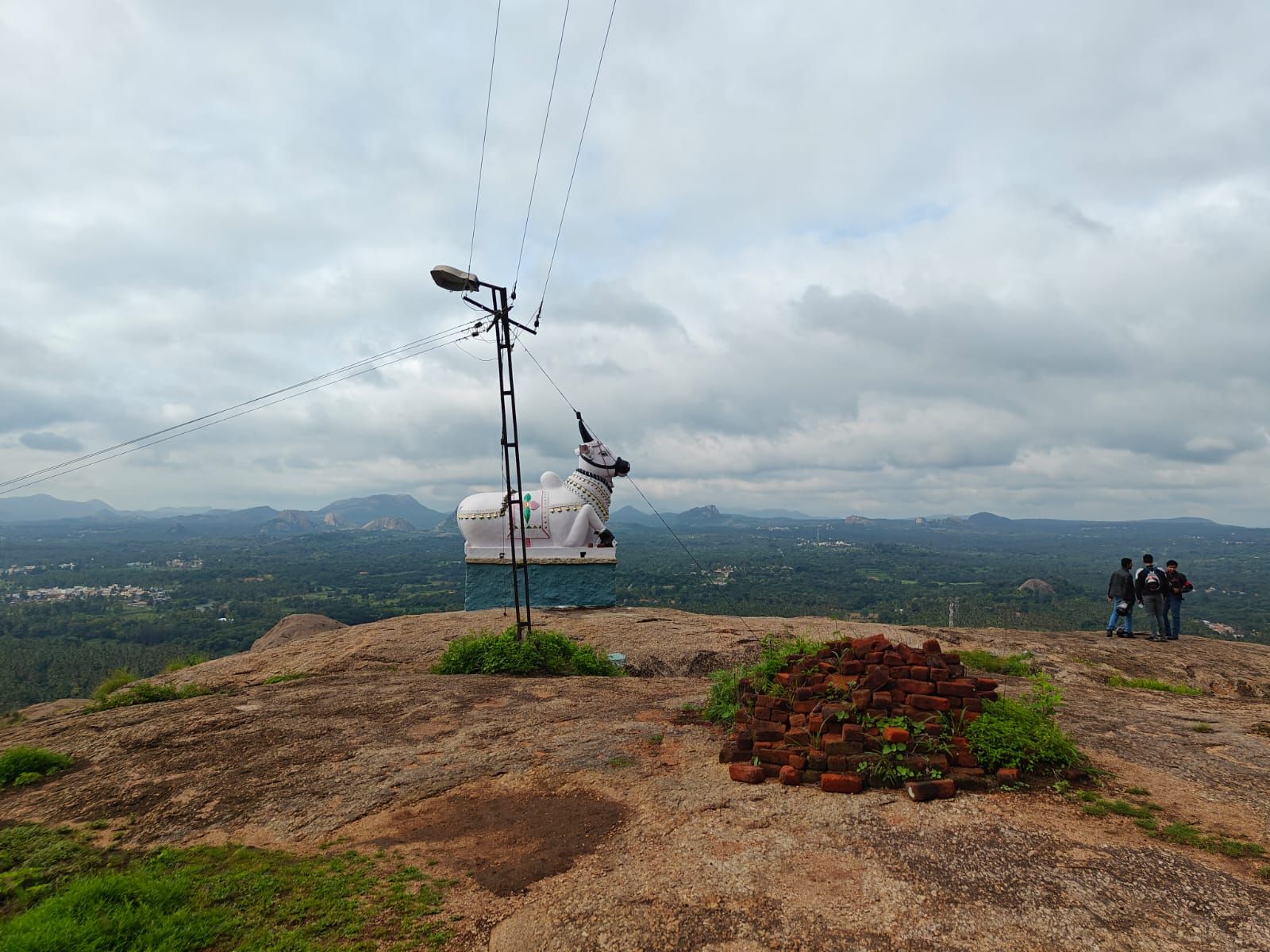
      We started our hike uphill where the route was lined with several trees of custard apples for most stretch. After a kilometer of so, we came across a large rock that formed a cave-arch-like structure that kept the atmosphere inside very cool. After climbing out of the arch, it opened into the sky above a flat hill-top that offered a beautiful view of the other hills around. Do you remember my hike to Acchalu betta, where we went to find a statue of a Nandi on the hill-top? (you can read that story here). A similar Nandi was erected on this hilltop also, which was then overlooked by an ancient temple further atop a rocky outcrop from there.

      The Cave like formation at Kunagalu Betta

      To reach there, we crossed a small wooden brook formed out of a tree branch and then climbed to the peak where the temple stood. We sought the almighty’s blessings which mark the end of the ascent of the hike for most people. We had barely climbed a kilometer and half, and it didn’t feel like a hike yet considering we had done longer trails even on day trips. The breeze was cool, strong and yet soothing and hence, we decided to sit there and spend some time feeling the wind in our hair.

      Kunagalu betta
      The Nandi Statue atop Kunagalu betta

      We then looked around and decided to find our own way to the adjacent hill from there. We climbed down the temple hill and climbed up the adjacent one. We again climbed it down and navigated our way through thick bushes and thorns to ascend yet another small peak. On that peak, we got a sense of getting lost if we tried to explore more hills because at that point, we were the only people and there was no trail that had worn out to lead us anywhere if we were lost. We descended that hill and were trying to find the direction that would lead us back to the temple.

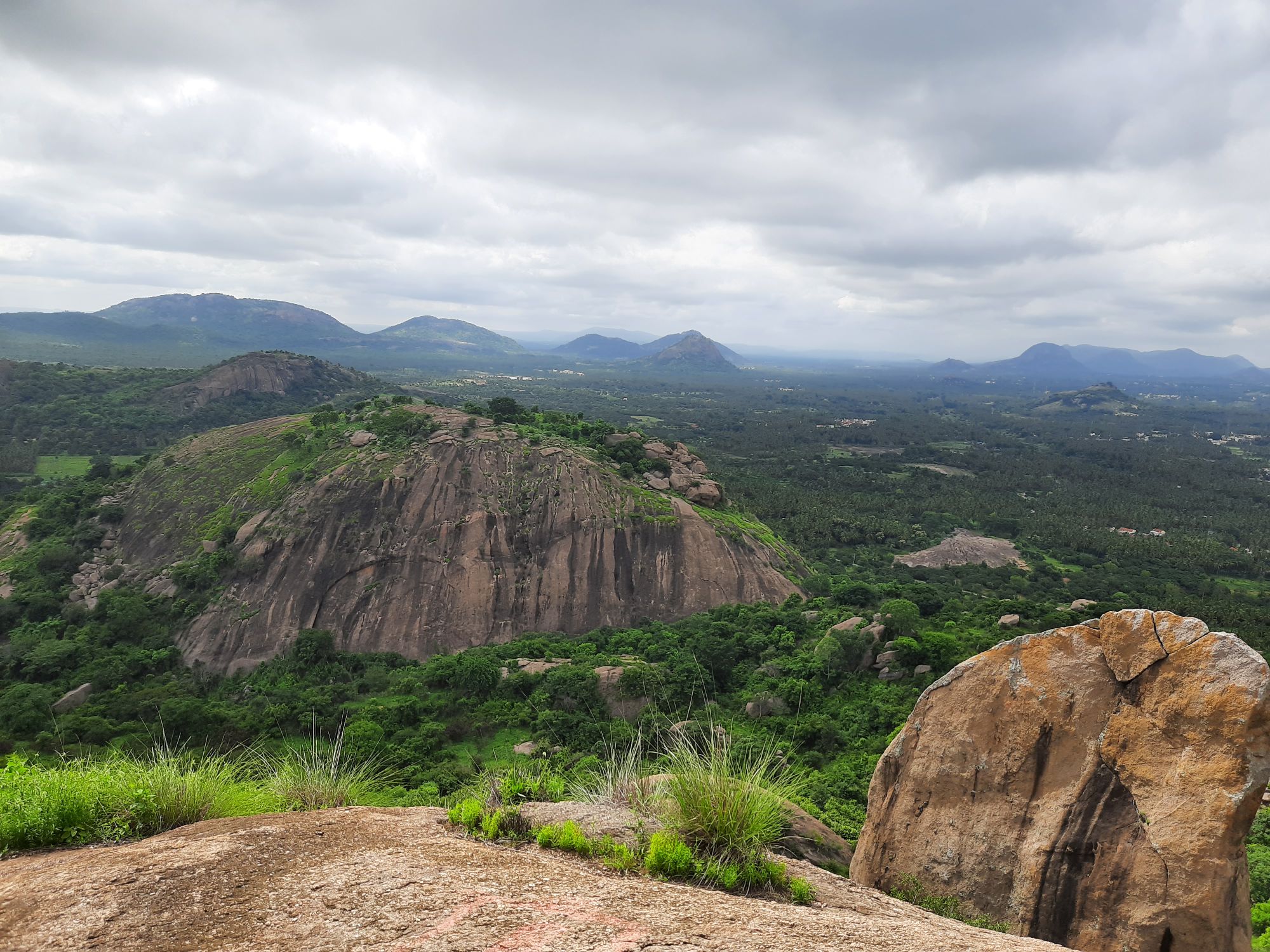
      Kunagalu Betta Peak
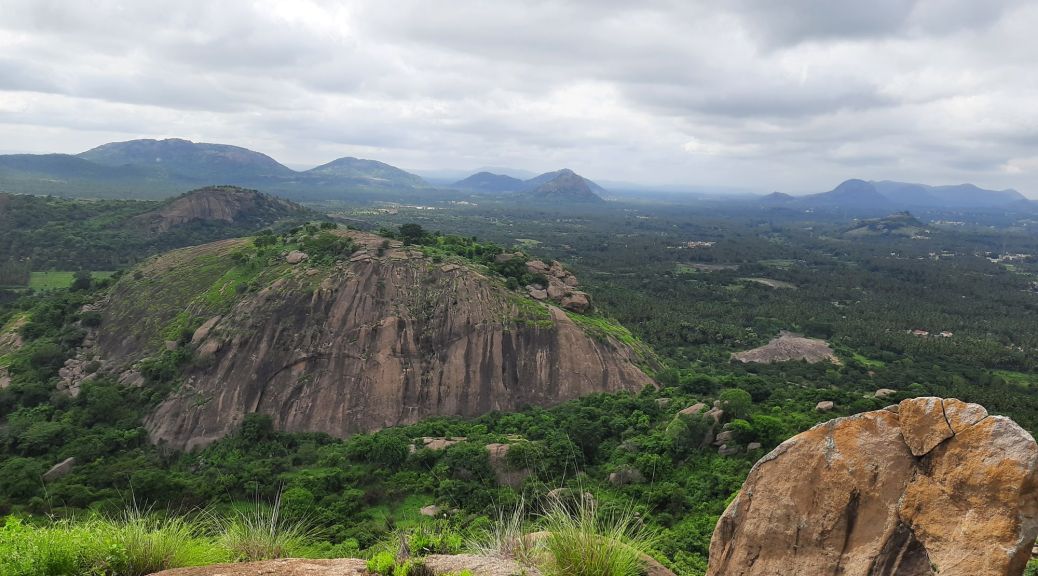
      The view from Kunagalu Betta peak

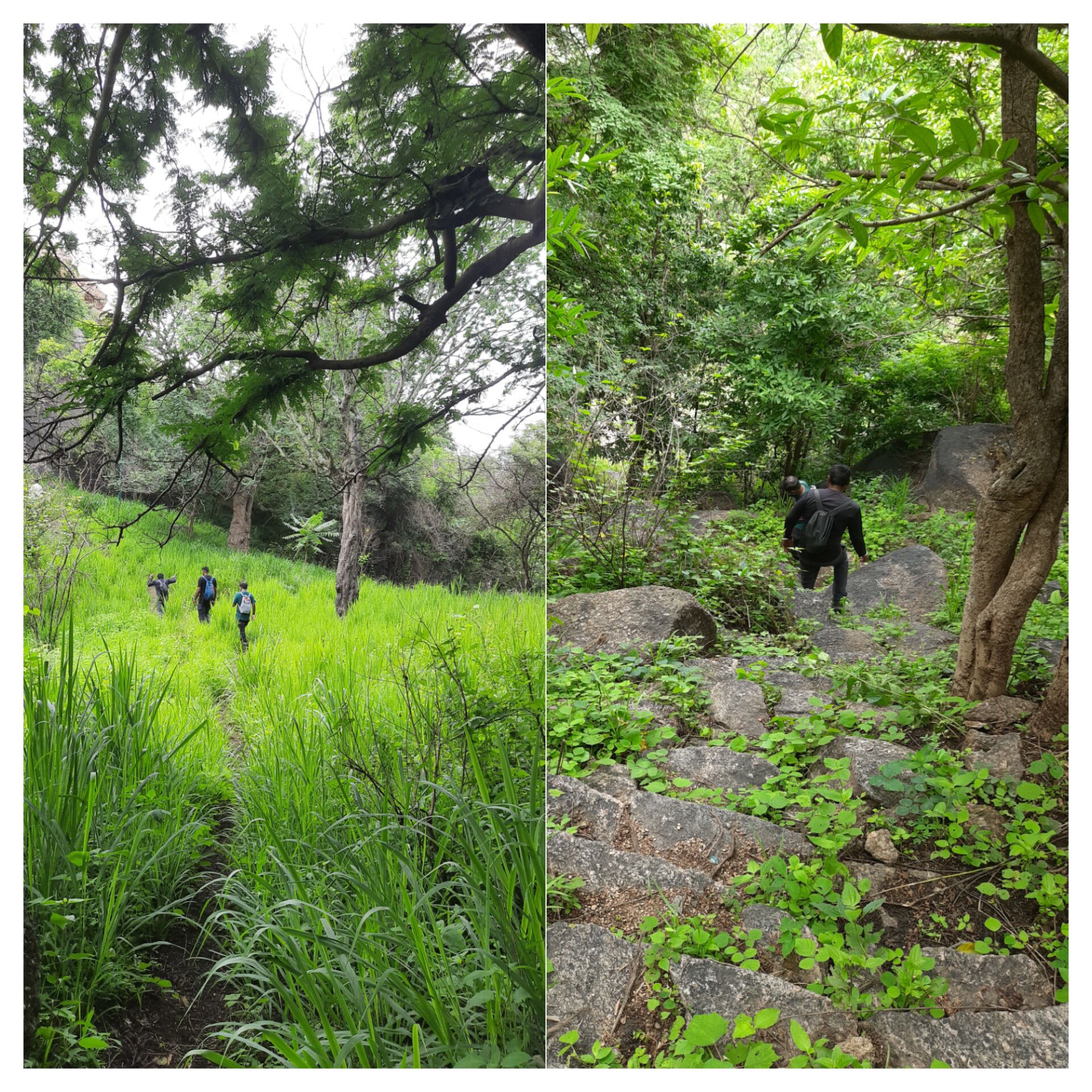
      Just then, our eyes caught a small slope in a random direction and all of us decided to explore one last random trail before heading back. We walked in that direction where the tall grass seemed to need some wear. We walked down further and suddenly out of nowhere; we were in for a surprise. There was a flight of stairs chiseled out of the rocks which was leading downwards. Finding stairs out of nowhere was a surprise, but what assured us was that the stairs would lead us somewhere interesting. Perhaps an abandoned piece of history? We thought as we headed in that direction.

      Kunagalu Betta
      In quest to explore the lost history at Kunagalu Betta

      The grass laden stairs quickly cleared up to the view of a dozen motorbikes all parked side-by-side. That’s when we realized that we had already reached the parking lot. We had found a shortcut on our quest to explore random trails in random directions. Thus ended our quick hike to Kunagalu Betta. I picked up a bag from the car and tried to pluck as many custard apples as possible before heading back.

      In conclusion, it was a short and easy hike. You can combine it with Acchalu betta or any other hike on Kanakapura road and make it a full-day activity.

      Weekend Hike- Bala Kodandaraya Swamy Temple

      Although this destination is a recommendation for weekend and day hikers of Bengaluru, it is in Krishnagiri, a district bordering the two states of Karnataka and Tamil Nadu.

      The views from an ancient temple had caught the attention of my friend and me, who are always in the look out for less crowded and less explored landscapes and places with cultural and historical importance. One such place was the ‘BalaKodandaraya Swamy temple’ whose history dates to the Vijayanagara era. Based on our online research, we found out that getting to the temple involved a short hike.

      We started early on a Saturday morning by car. We had our breakfast along the way, in one of the several restaurants on the Hosur highway. From there, we followed the route on Google maps to reach our destination. A steep deviation to the left of the highway led us through villages. There were asphalted roads and good views of the surrounding hillocks for as long as the road passed through villages. The last couple of kilometers were through unpaved muddy roads passing through a slight forest stretch. We finally arrived at a small open space where we parked our car, at the base of the temple hill.

      The forest trail
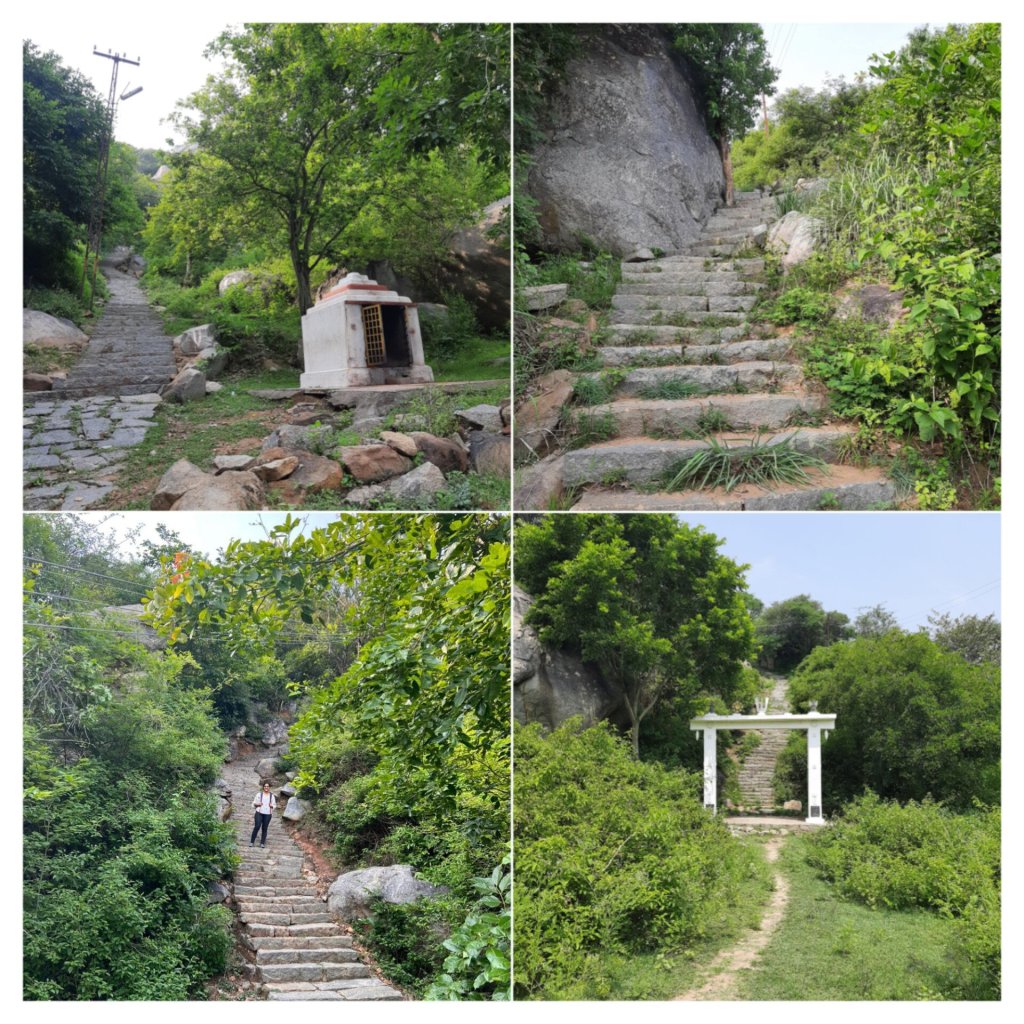
      The trail through the forest cover, starting from the base to the temple arch

      There was a small structure of brick and mortar (gudi) at the base, from where a flight of stairs led to the hilltop. People lit lamps, agarbattis and camphor here before starting their ascent. It took us about half an hour’s climb along properly laid stone steps leading to the top. These stone slabs bear the names of the devotees who have donated them and the count of their donations on each step. The ascent curved around at multiple places and offered amazing views of the valley below at every turn. The first half of the climb had a forest cover and large boulders on both sides, until we arrived at the welcome arch of the temple.

      The path towards the left of the trail, towards the temple
      The path towards the left of the trail, towards the temple

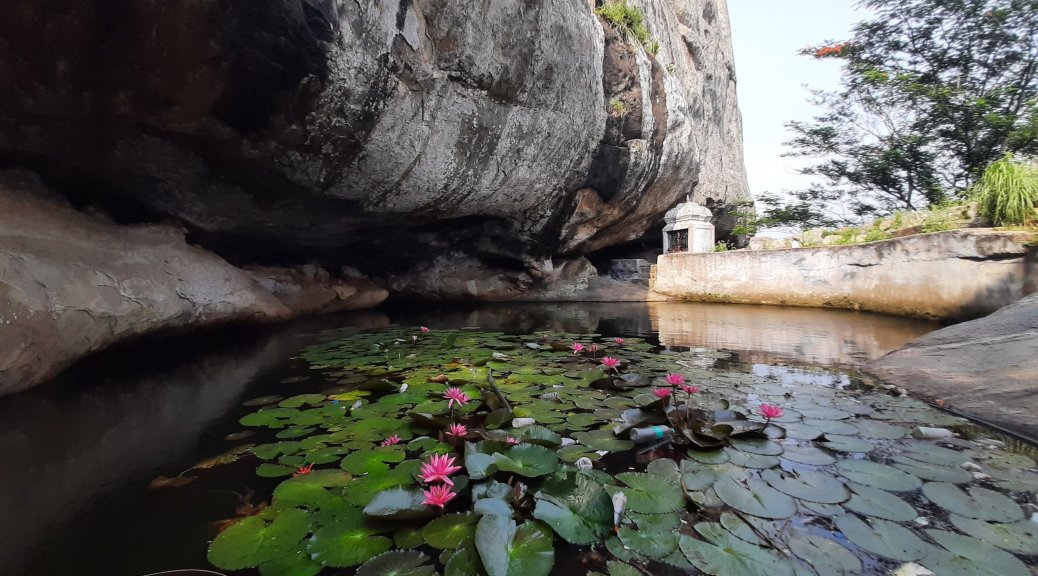
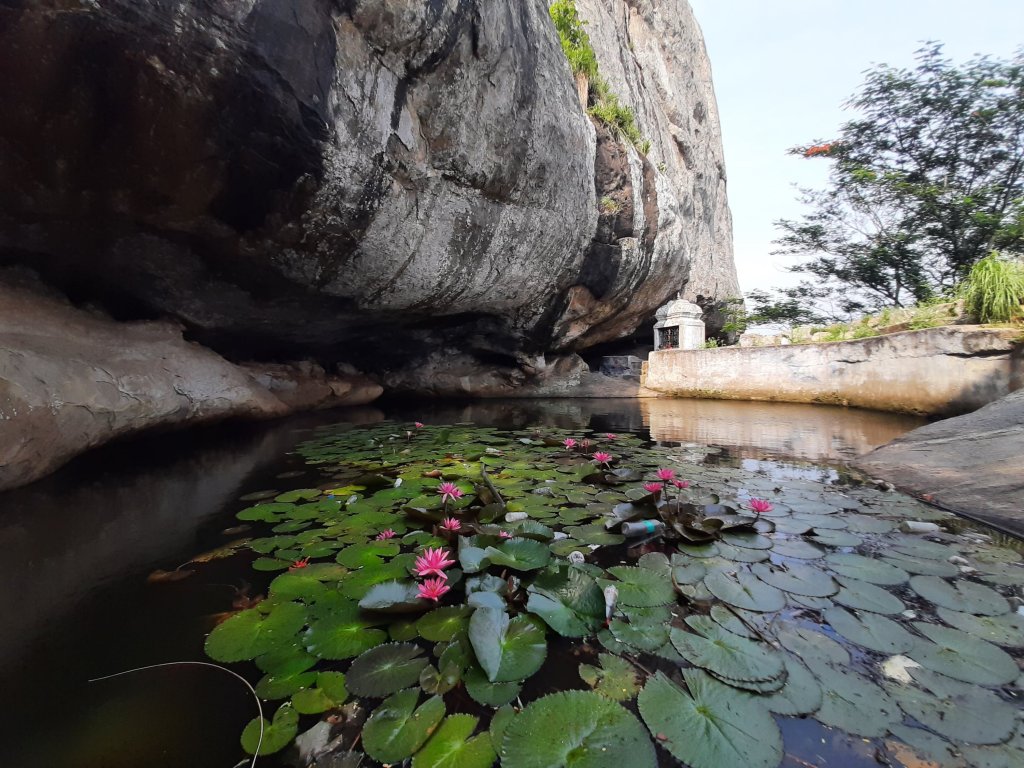
      The forest cover ended after a few steps further from there and opened to a panoramic view of the valley of the villages and farms below. As one stands on a large rocky outgrowth, you will find the trail split into two paths. One, straight down through some Gulmohur trees. Second, up towards the temple. We decided to first walk the trail going straight. A few yards from there, the trees made way to a beautiful pond of pink lilies, dug right beneath a large rocky monolith. We later realized that devotees take a dip in this pond before proceeding towards the temple.

      The path towards the right of the trail, leading to the temple pond
      The path towards the right of the trail, leading to the temple pond

      The view of the valley from there and the magical vibe of sitting by this pond of lilies could not let us go easily from there. My friend settled on the banks, with a book to read. Although the water was heavily littered with plastics, it was still a super calm spot to soak in some good energy. After spending a while, we then headed towards the temple, located on the peak of the hill, a short walk away. There was a panoramic 360 degrees view of Hosur and Krishnagiri from the temple, the green cover around, Krishnagiri dam and the Then Pennai river. The temple priest arrived much later at around 10.00.a.m. for the daily prayers.

      Balakodandaraya swamy temple, Krishnagiri
      Balakodandaraya swamy temple and the cleft for drawing water

      Surprisingly, a small cleft in the rocky hill serves as a perennial source of potable water for temple use. The people who had gathered there by then, helped the priest in drawing water from this cleft and clean the temple premises before offering the day’s prayers. We sat there for a while and decided to head back to the base before the sun took over the skies and heated the rocks around. Overall, it was an incredibly beautiful place for a short trip from the city.

      Other nearby places:

      If you are looking at making it a full day trip, then you can explore the nearby places that include:

      Bannerghatta beyond zoo- Bilikal Ranganathaswamy betta

      Initially, when a friend mentioned the destination for an impromptu drive on a Saturday morning, I hoped to correct him by telling it was ‘Biligiri Ranganathaswamy Betta’. “No, it is Bili-Kal’, he specified. ‘Bili’ translates to ‘white’ in Kannada. ‘Giri’ means ‘hill’. ‘Kallu’ means ’stone/ rock’. In this context, we were both talking about two different destinations. Although the presiding deity at the temples located atop both these hills are common, Biligiri is more popular than its counterpart at Bilikal. While Biligiri forms the core of Biligiri Ranganathaswamy Temple (BRT) tiger reserve, Bilikal is in the heart of a reserve forest that comes under Kodihalli wildlife division of Bannerghatta National Park. So, this time, we were heading to ‘Bilikal Ranganathaswamy Betta’, the closest of the two to Bangalore city limits, reachable through Kanakapura road.

      We stopped by Halagur town for breakfast which has several old and popular eateries that serve unique types and authentic recipes of idlis for breakfast. (Comment below if you need hotel recommendations). Post this break, we followed google maps to reach our destination.

      There is a forest check post enroute where one needs to make an entry to continue the journey ahead. The temple hill can be summited via two routes, one is a trek route with stairs, and another is through an unpaved road that is clearly marked till the end. Although four-wheel drive is not mandatory for those opting to drive up, it is recommended to have a vehicle with good ground clearance.

      Bilikal ranganathaswamy temple
      Bilikal ranganathaswamy temple, Rear view of the Monolithic rock

      Upon reaching the peak, it was a large open area which came as quite a surprise. While one side of the hill had the temple pond dug into the edge of the rocky hill, the main temple of Ranganathaswamy is located on another side of the hill, overseeing a magnificent view of the surrounding hills. The main deity is carved out of a large monolithic rocky outcrop on the hill, which makes this place unique among all that I had visited thus far. There is a small sculpture on this rock which we were told is the original figurine of worship until it was damaged many years ago. Since then, an alternate idol has been carved out of the larger rock and a simple temple has been built outside leading into the prayer chamber within the monolithic rock.

      Next to the temple rock, is another old and small room like stone structure. A few localites who were present there told us that it was the house of an old lady Kamalamma, who lived there and had dedicated her life in the service of Lord Ranganatha. Amid the wilderness of the thick jungle, she lived all alone in the belief that Ranga was her caretaker. She was accompanied by a few cattle that lived there whose milk was used to distribute buttermilk to pilgrims who arrived there every Saturday after a tiring ascent by foot (before the drivable route was laid out). She is no more, and her tomb is now housed inside the structure where she lived.

      Bilikal ranganathaswamy temple, front view of the rock temple

      A short climb from this structure is another viewpoint, where one can sit on the rocky outcrop under the shade of the surrounding trees and take in some good views of the valley around. We returned after spending some time there. Overall, this was a pleasant and an offbeat outing from the city.

      Things to note:

      • The temple and the forest check-post are open for public access only on Saturdays. Only one Pooja is offered to the deity, once per week.
      • The annual temple fair is held here in January when a wooden temple car is assembled and taken around the rock-temple.
      • All along our way, we observed a lot of fresh elephant dung. Hence, we are certain that the trail is frequented by elephants and other wild animals at all times of the day. As both the routes pass through dense forest, it is recommended to comply with all guidelines laid by the forest department.

      Other nearby places that you can combine your visit with:

      • Shri Govinakallu Anjaneya swami temple (an offroad drive in the same forest limits)
      • Mekedaatu and Sangama
      • Muthathi riverbank
      • Galibore fishing camp
      • Bheemeshwari adventure and nature camp
      Bilikal Ranganatha swamy temple

      Bannerghatta beyond zoo- Suvarnamukhi

      Suvarnamukhi is located inside the reserved forest area within the boundaries of Bannerghatta National Park which can be accessed through a main road till its base. This was one of the unplanned and random destinations that my family had arrived at, a couple of years ago, which I believe needed to be documented.

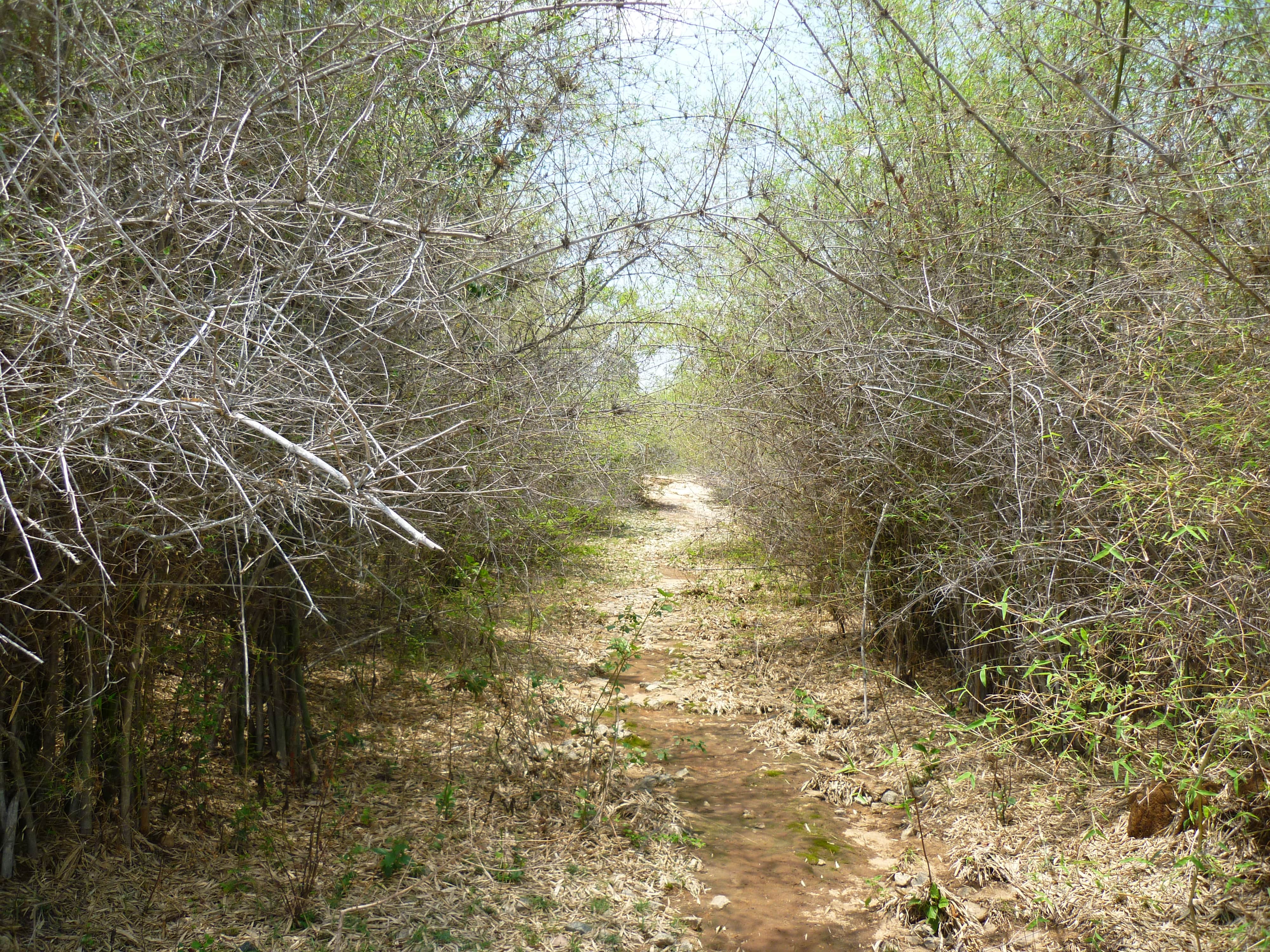
      It was a brief hike through the forest terrain which was rough and interspersed with bushes and rocks that lead us to an ancient temple. Along the way, we observed pebbles and stones arranged in circular and a maze-like pattern depicting various complex themes. We were told that it dates to the pre-historic era and represents some kind of tribal worship or dolmens.

      Hike trail to Suvarnamukhi temple, Bannerghatta
      Hike trail to Suvarnamukhi temple, Bannerghatta

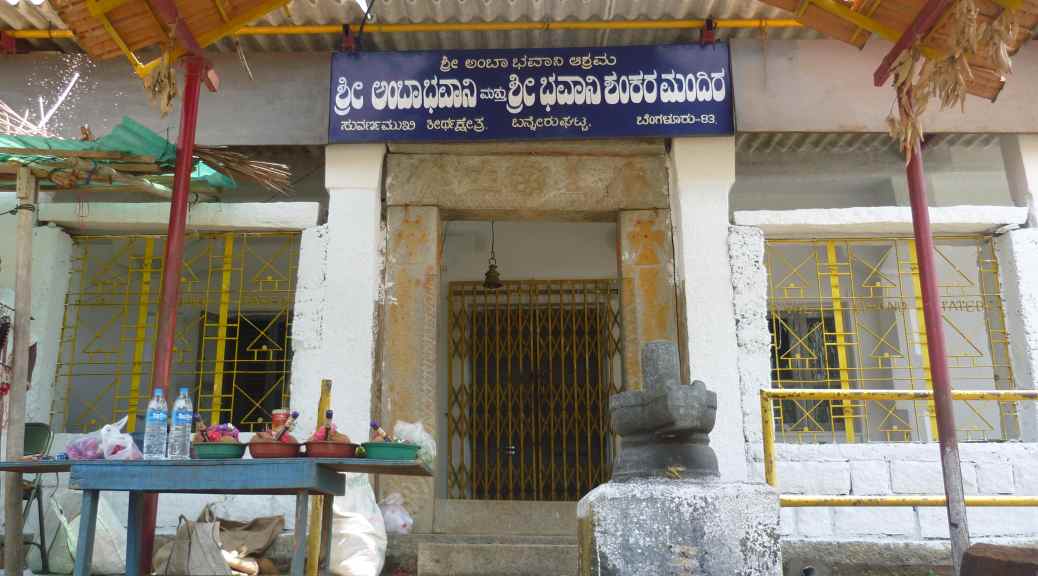
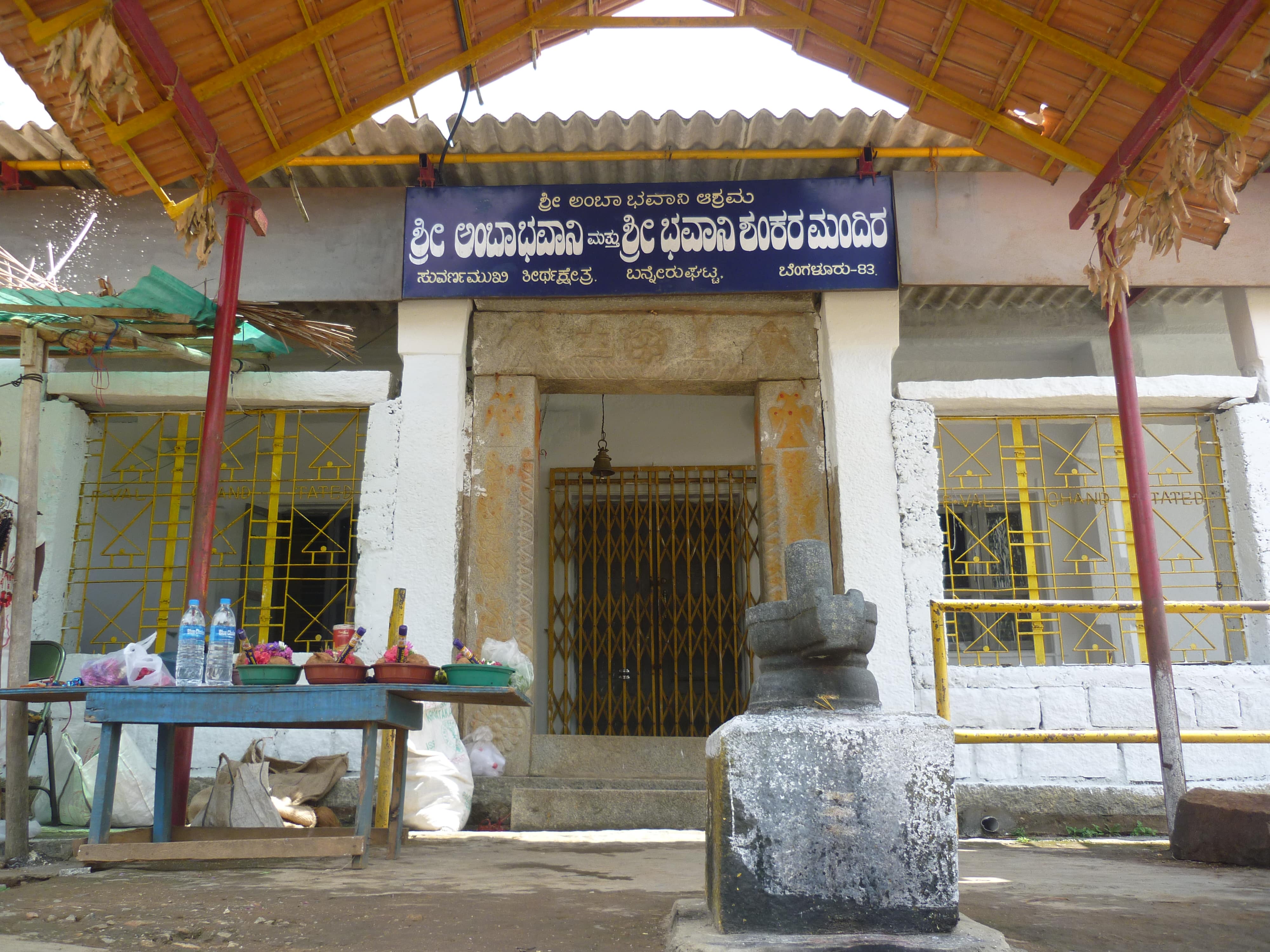
      Walking past, we arrived at the AmbaBhavani and SriBhavani temple which was closed at the time. There is a pushkarini / Temple tank in front of this temple whose water is believed to be able to heal skin ailments. I was told that the tank is emptied once a year, to worship a Hanuman sculpture that lays at the bottom of this tank.

      Suvarnamukhi temple, Bannerghatta
      Ambabhavani temple at Suvarnamukhi, Bannerghatta

      A short walk away from here is the Champaka swamy temple, an important site of local worship. Alternatively, people arriving by own transport can park their vehicles at the Champaka swamy temple before starting their hike towards Suvarnamukhi. The relevance of these temples and the pond in Indian mythology attracts people in large numbers on special occasions to visit this place.

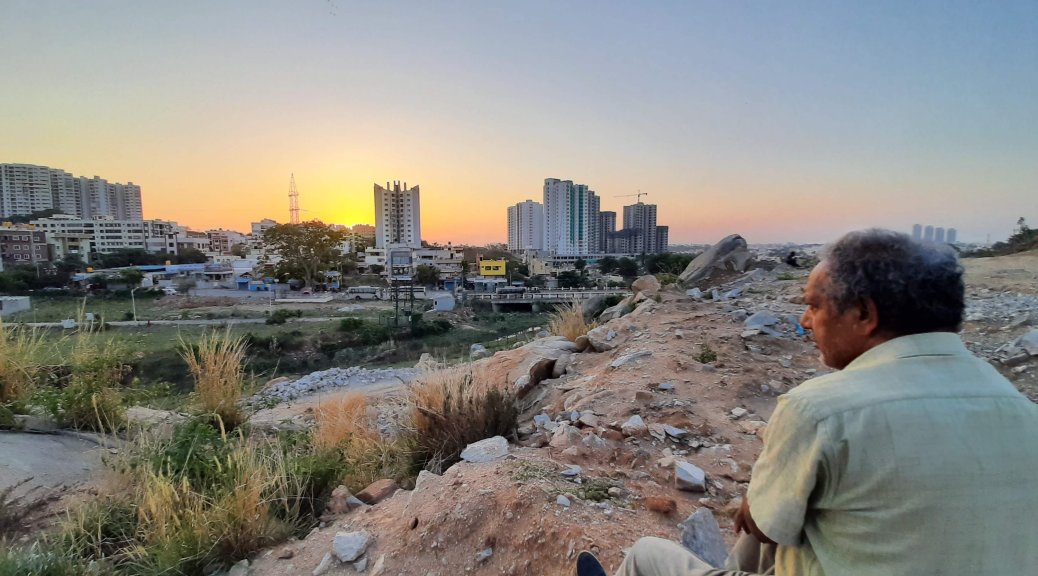
      A few meters away from the temple is the Vahnigiri peak, which gives an unhindered view of Bangalore’s expanding skyline. I remember spending some time sitting atop the rocky hill as the wind continued to waft past us before walking back down through the forest.

      Things to note:

      The entire hike trail passes through thick forest area that will be frequented by wild animals including elephants. This visit of ours was a few years ago when we needed no forest permits. It is recommended to check the latest rules with the authorities for any relevant permits before venturing out all by yourself.

      Bangalore Day Trips

      If you are visiting Bangalore just for a day or are a resident of the city figuring out how to spend your day, here is a curation for those who are short on time and high on interest to explore. Depending on your choice, you can choose from what I have put-in together under three different categories.

      Short drives:

      The soil of Bengaluru is believed to be extremely fertile. One can visit a new farm and learn about agriculture in every direction. Also, several reserved forests dot the city boundaries. But the rapidly expanding boundary of the city has been soon taking over these green spaces and the limits of the city outskirts has been constantly changing.

      My family and I have always loved to drive or ride out of the city in search of green spaces and spend some time in random destinations that are as random as just a lonely tree, a lake or a large boulder that gives a good view of the surroundings. Here is a list of such routes, trips and stories to help you plan yours.

      1. Day trip of villages around Channapatna
      2. Drive to Gulakamale lake
      3. Drive to Ragihalli Betta
      4. Drive to Koratagere Doddi
      5. Drive to Gullahatti Kaval
      6. Drive and local trip to Mekedaatu
      7. Drive to Ghati Subramanya and Makalidurga
      8. Drive to Kaiwara
      9. Driving around Devanahalli town
      10. Visiting GKVK university campus
      11. Driving around Haniyur village
      12. Visiting Railway Gollahalli
      13. Exploring Bannerghatta zoo and National park
      14. Driving around Hesaraghatta
      15. Drive to Biligundlu Ranganatha Swamy temple
      16. Drive to Bilikal Ranganatha Swamy temple

      Treks & hikes:

      Bangalore is blessed with abundant hills surrounding its periphery on all sides. There is an endless opportunity to explore a new hiking trail almost every day of the year. There are only a few that have been caught by the explorers and thanks to social media, have become popular. Here is a list of few such trails that I have hiked up and found time to document my experience.

      1. A natural arch – Bheemanakindi
      2. Night hike to see sunrise – Kunti Betta
      3. Hike to Siddarabetta
      4. Trek to Madhugiri fort
      5. Hike to Kunagalu Betta
      6. Hike to Acchalu Betta
      7. Hike to Balakodandaraya Swamy temple
      8. Hike to Suvarnamukhi Betta and temple

      Explore city:

      Once popular as the garden city, no one really saw Bengaluru to be expanding as much as it has and has been. Albeit being so modern, it is old and conservative. Despite being advanced with IT and tech, it is still laid back with its art and history. If you are someone with an interest to explore all sides of this metropolitan city, then I’ve tried my best to share some of my knowledge here.

      1. A Gastronomic walk-tour of South Bengaluru
      2. History of IISc and HAL, the two Premier institutes of India
      3. A list of premier museums in Bengaluru and their history
      4. Visiting a HMT watch store

      Long drives:

      These are places that you can visit in one day by road from Bangalore. if you are in a mood for a lonng drive, beyond Bangalore, here are itineraries for one-full day.

      1. Hogeynakal waterfalls
      2. Exploring nature around Mysore circuit
      3. Historical temples of Lepakshi
      4. Unesco Heritage (tentative) site- Temples of Belur & Halebeedu
      5. Exploring KGF (Kolar Gold Field)
      6. Pilgrimage to Adichunchanagiri betta

      I Belong to Everywhere: Uttarahalli

      This is an attempt to bring back nostalgia. Continued from- “I Belong to Everywhere: Napoklu

      ‘Uttarahalli’ translates to ‘Northern Village’ in Kannada. The irony is, it is located in the southern-most part of Bangalore. This is the current place of residence of my family and is also the last post in this series. This home seems like a perfect retirement plan for a family that seeks a little bit of nature in the midst of a bustling metropolitan city.

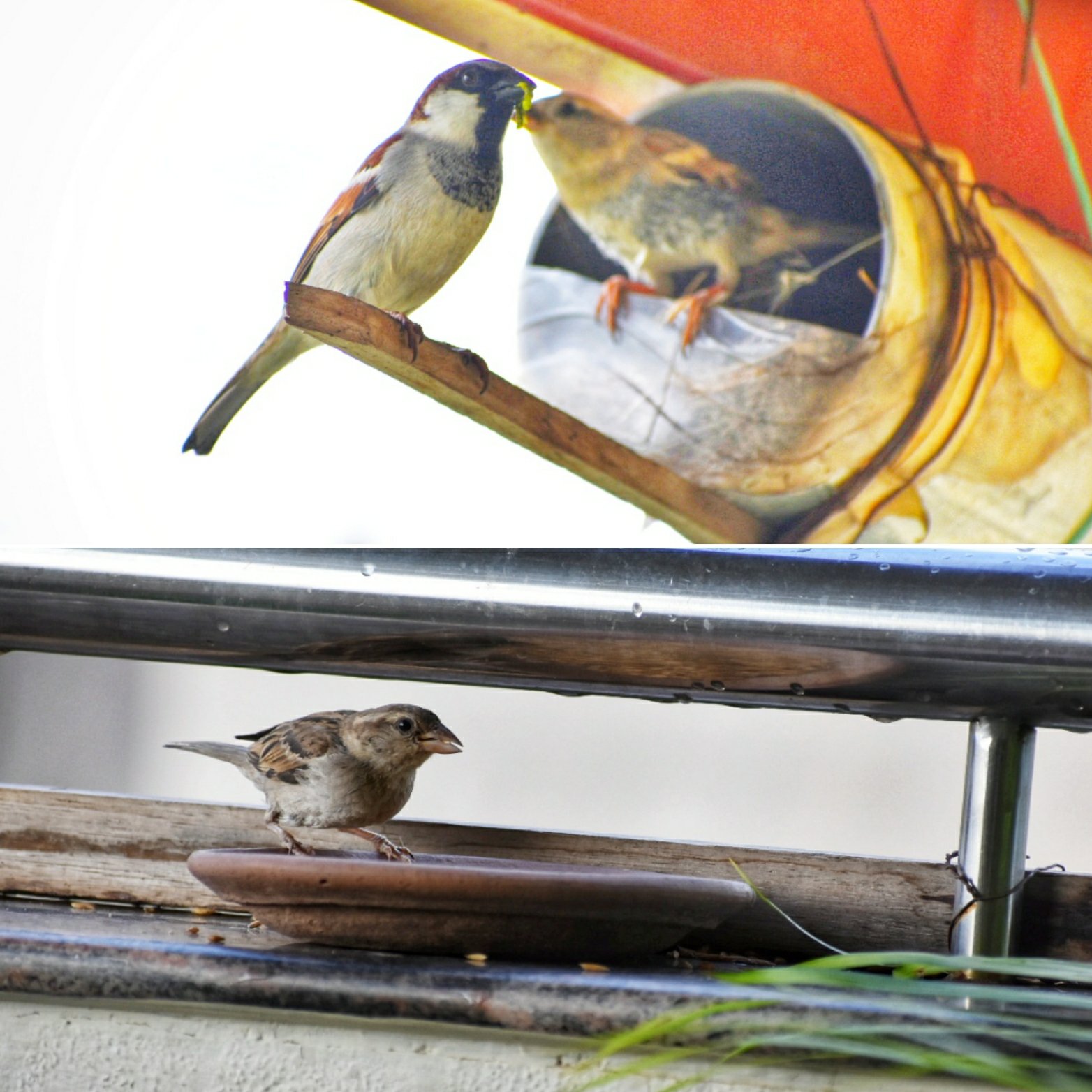
      With very little vacant space available, my parents try to grow their own vegetables and fruits, welcome birds and squirrels to have meals with them and sip their ‘kaapi’ while watching the sun go down. These are some among many other things they do to keep themselves running through the day.

      The sparrows in my portico
      The sparrows in my portico

      The area is soaked in rich history as well.. While the ‘Vasantha Vallabharaya swamy temple’ dates back to the Chola era, an adjacent cave is believed to be the place where Rishi Mandavya had meditated.

      The Turahalli forest is a small patch of lung space nearby, that joggers, cyclists, conservationists and the realtors all seem to have an eye on!

      The latest addition to the landmarks is ISKCON’s ‘Krishna Leela theme park’ located on the Vaikunta hill. The sunrises and rainbows on cloudy days are mesmerizing, adding a backdrop to the view of this temple from my doorstep.

      Annual fair of Vasanthavallabha temple, Vasanthapura, Bangalore

      This is the last post of this series: “I Belong to Everywhere“. I hope you all have enjoyed time travelling with me hopping on- and off from Bangalore to Kodagu. Which place did you like the most? What place would you want to go after reading my posts? What more do you want to know about, from these places?

      I Belong to Everywhere: Abbi falls

      This is an attempt to bring back nostalgia. Continued from- “I Belong to Everywhere: Sadashivanagar

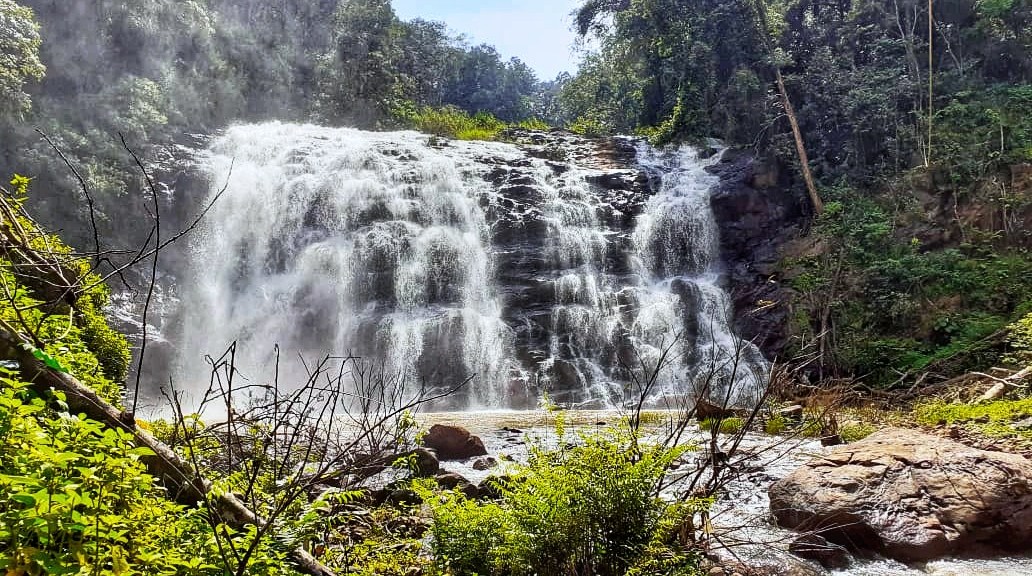
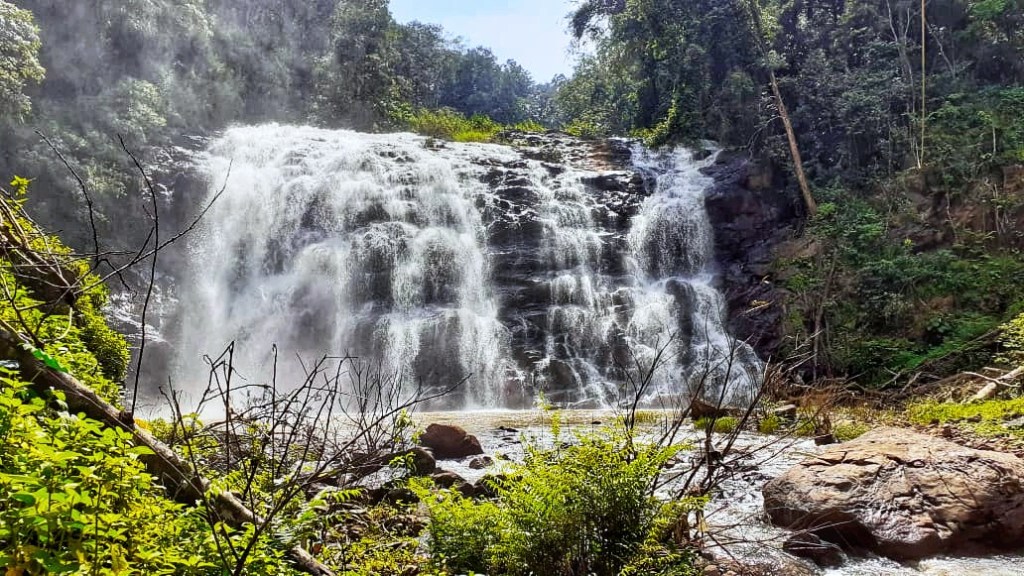
      Abbi falls is one of the most popular landmarks in Kodagu, located in ‘Kalakeri Nidugane village’ on the outskirts of Madikeri. This is where the Lostlander was stung by the travel bug, much before she was born! History speaks about Columbus and Vasco-da-Gama, but the lostlander grew up listening to the stories of her grandfather’s adventures of discovering Abbi falls. Those are the very stories that sowed the seeds of seeking adventure and finding her own life path for the Lostlander.

      The memories associated with Abbi falls is an endless list, so this post is going to be a photo tour with some old photos of the Lostlander with her grandfather at Abbi falls estate.

      Abbi falls, Madikeri
      Abbi falls, Madikeri

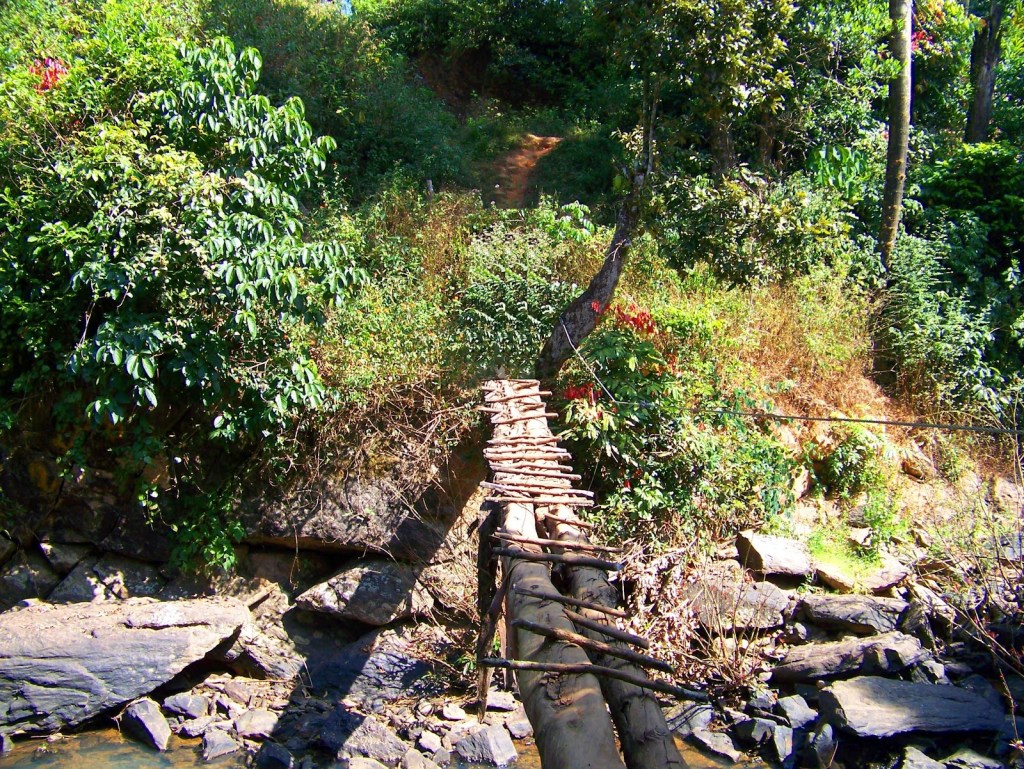
      This is a brook built by my grandfather to provide accessibility to the surrounding villagers to get across the river, on the upstream of Abbi waterfalls during the monsoons. It has been replaced by a concrete bridge only in yr.2021, several decades after it was originally requested for. (Click here to read further)

      The wooden bridge, upstream at Abbi falls
      The wooden bridge, upstream at Abbi falls

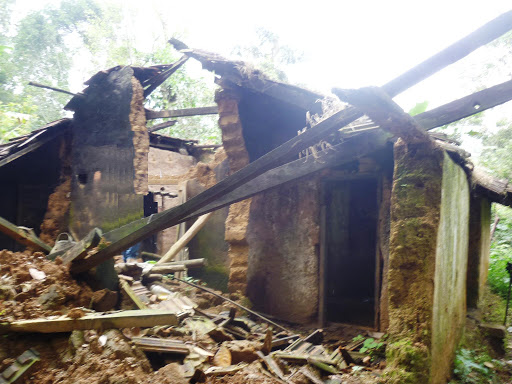
      Only memories remain of a house that once served as the heart of the family’s life. (Click here to read further)

      The Abbi Villa- Now

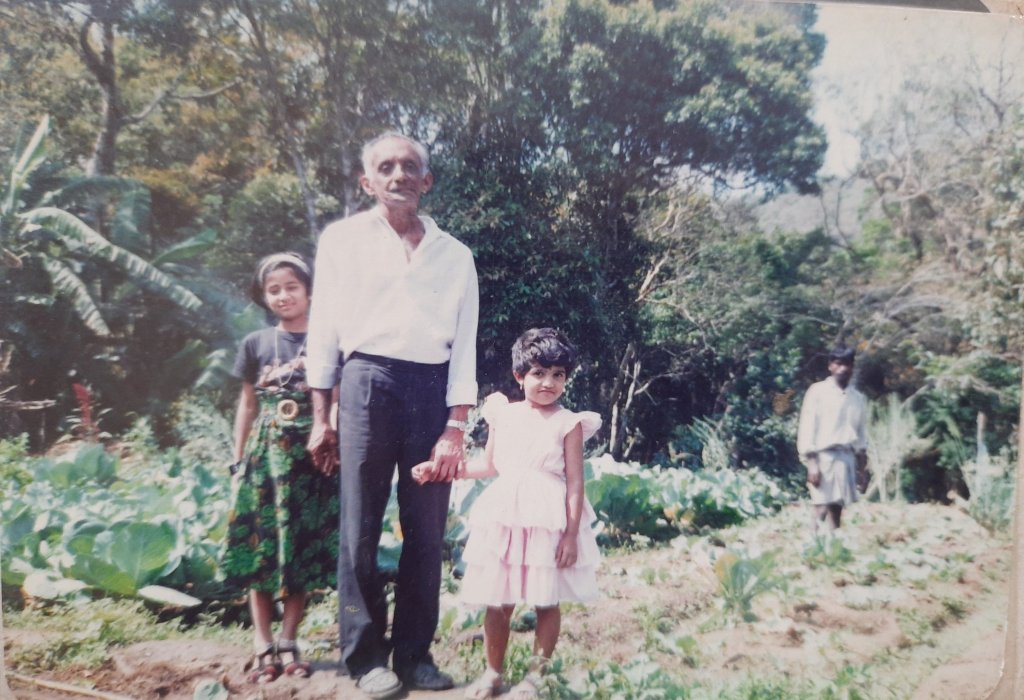
      In this photo, the lost lander is lost in the vegetable garden, set in the middle of the coffee plantations, overlooked by the beautiful hills of the Pushpagiri ranges. Gravity fed sprinkler jets sprayed water from the stream that was fed by the larger waterfall. (Click here to read further about the LostLander’s love for honeybees).

      The author with her grandfather (center) and cousin in the vegetable garden at Abbi falls

      I wish to compile a book someday, comprising of all these stories from the life of “My grandfather”. Do share in all your thoughts and any personal stories associated with this place that I will be glad to add them in my book with due credits.

      To be continued as- “I Belong to Everywhere: Malleswaram