Tag Archives: Offbeat India

Exploring Ramnami Community: A Journey into Tradition

Over recent years, my travels across India ignited my fascination with how tattoos hold cultural significance among different Indian communities. In many areas, tattoos serve as symbols tied to tribal customs. One community that particularly intrigued me was the Ramnami of Central India. When I shared this with a friend, she too showed interest in delving deeper into this culture. We eventually connected with a community member who graciously allowed us to visit his village, even inviting us to stay with his family. We happily arranged our visit.
We initially flew from Bangalore to Raipur. From there, we caught a local bus to the GPM district. Subsequently, we explored GPM by taxi, which dropped us off at Chandlidih, the Ramnami village. It was raining heavily as we navigated the damaged, flooded roads and finally arrived at the location indicated by Google Maps. We carried our backpacks while crossing a small reservoir wall built over a stream swollen by the monsoon. On the other side was our host’s house. By the time we reached the front yard of the Ramnami family’s modest home, we were covered in mud from puddles stretching from the parking lot to the house.

Portraits of the Ramnamis

Our host welcomed us upon arrival and directed us to the guest room to drop off our luggage. The room, an extension of the main house, was built with cob and wood, offering basic amenities such as two beds for resting and a light bulb for illumination at night. We relied on mobile internet throughout our stay. According to tradition, anyone visiting from outside must bathe and cleanse themselves before entering a Ramnami home. The next experience was something my friend and I will both remember for a long time: the bathroom!

It was a simple enclosure with two and a half walls and a roof. Half of the third wall was intentionally built to shoulder height, making it easy to bring in water from outside either with buckets or through a gravity pipe connected to a nearby perennial stream that filled a concrete tank inside the bathroom. The fourth side was left open for easy access, featuring a modest saree stitched into a sliding blind that could be moved to open or close. There was no running water; hot water had to be fetched from an outdoor firewood oven, or one had to make do with the chilly water stored in the tank inside. Our city dwelling bodies were used to a sturdy lockable door for bathing with unlimited hot water from a tap or shower. While the cold-water setup was tolerable for my outdoor spirit, I could not imagine standing unclothed inside a doorless bathroom.

The Ramnami Community

If I were hiking, I could go days without bathing, but here, it was crucial to start our trip by experiencing the Ramnami culture. Hesitantly, I took off my clothes and poured a couple of mugs of water, just as I heard giggles outside. I paused to check if I was imagining things or if it was real. Soon, I saw the shadows of a few kids moving behind the curtain. As I began applying soap, I saw two toddler heads peeking in from the sides of the curtain, giggling again. I panicked, yelled my friend’s name, and hoped she would come to help. She got scared and ran over to see what was wrong. I told her about the curious kids, and she decided to stay at the bathroom entrance until I finished. Later, I returned the favor.

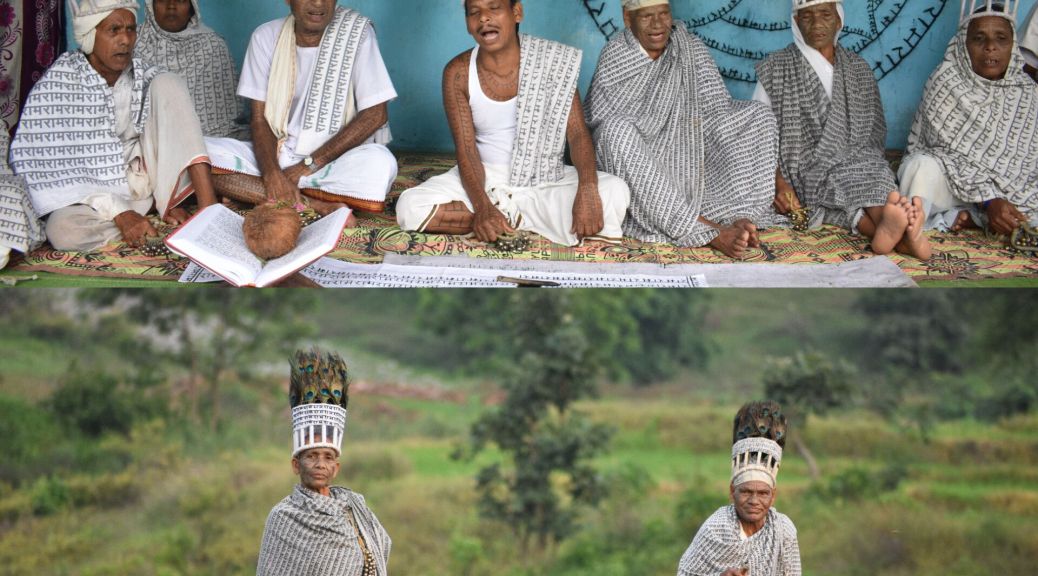
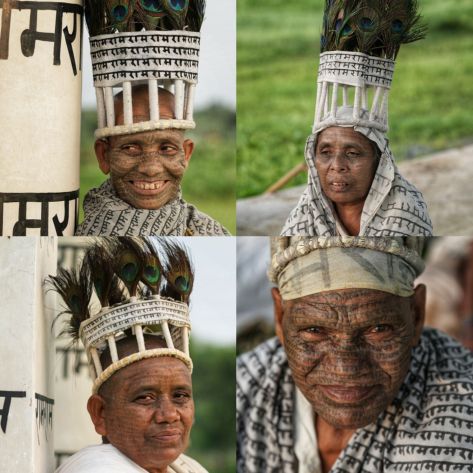
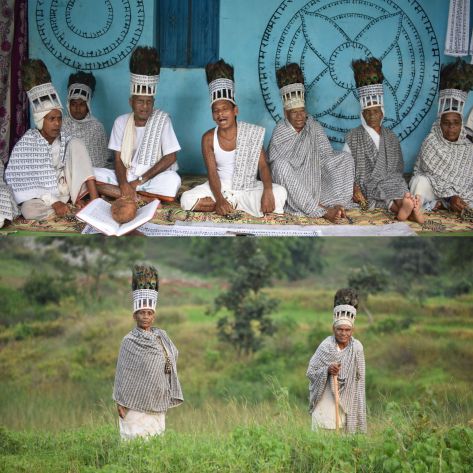
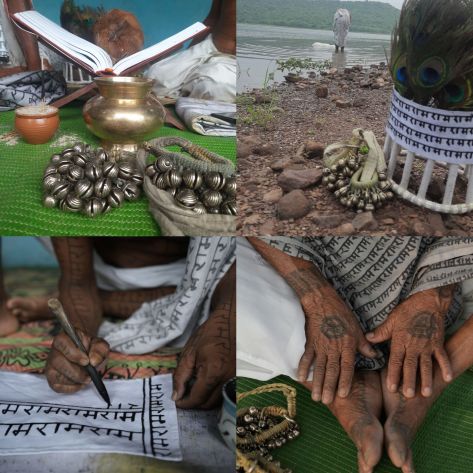
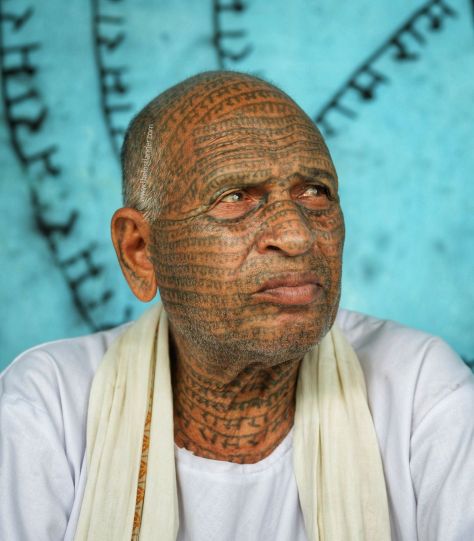
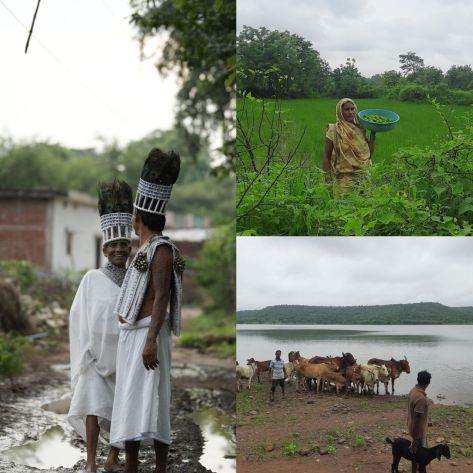
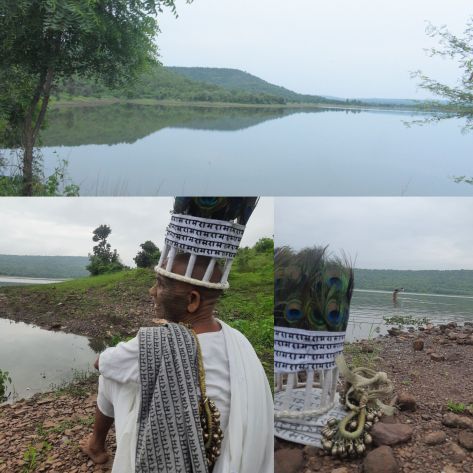
After changing into fresh clothes, my friend and I headed to the porch of their house, where the entire family had been singing hymns of Lord Ram since sunrise, even before we arrived. We greeted them with a coconut and some fresh flowers, which we were asked to bring as part of their tradition of introducing a new guest to the family. Most adults had tattoos reading ‘Ram-Ram’ in Hindi covering their bodies. Some had full-body tattoos, while others had only face, arm, or forehead patches. They all wore pure white clothes handwritten with ‘Ram-Ram’ patterns. Their Dhotis, shawls, and headgear featured the same ‘Ram’ writing in a consistent style. The handmade headgear, unique to the Ramnami, was decorated with peacock feathers. All participants in the Ram bhajan carried strings of small jingling metal bells, each stamped with ‘Ram’ during casting.
We introduced ourselves and joined their Bhajan until lunch was served. I savored a simple Satvik meal made with ingredients from their farm. The faint aroma of firewood used in cooking enhanced the local flavors with a divine touch.

Daily utility items and life of the Ramnamis

We traveled without a fixed schedule, aiming for a slow, immersive experience of this community’s daily life. After lunch, my friend and I joined members singing Ram Bhajans on the porch to understand what defines the Ramnami. We were transported back to the 1890s to learn about their history. Like the rest of India at that time, casteism barred lower castes from entering shared places of worship. Some rebelled by declaring their bodies as temples dedicated to Ram, tattooing the Ram-Nam (Lord’s Name) with a locally made ink derived from herbs. They formed the Ramnami community. A senior member leads events, whether a baby’s birth or a funeral. Their greetings and farewells are solely marked by singing Ram-Bhajans, even during major life events like marriages. They do not conduct any Brahminical rituals, poojas, or havans as part of their practices.
A portrait of a Ramnami community member

With the rain gods commanding the skies and earth, we saw them prepare their shawls, made from woven, stitched white cloth they crafted themselves. These shawls were then covered with Ram-Nam. After carefully observing them write with their native ink for a while, we joined in to write on some of the other pieces. Once finished, they set them aside to dry, initiating a series of procedures to prevent the white cloth from bleeding black.

A walk through Ramnami village

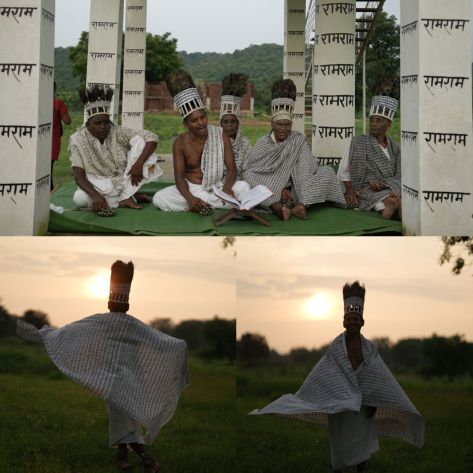
When the rains stopped, our host guided us through their village. We crossed a stream, carefully walked along the paddy field edges, and eventually made our way along muddy, winding roads. We met several members of the Ramnami community, mostly relatives or neighbors from the same village. We greeted women working in the fields and enjoyed coffee at welcoming houses. Later, we visited JayaStambh, a small monument commemorating the annual Ramnami mela held here a few years prior. Some older community members joined us there at sunset, singing Ram bhajans as a tribute to the setting sun. Afterwards, we visited a small reservoir across the lake. The Ram Bhajans, sung warmly around a bonfire, echoed over the calm water, with the sky changing colors dramatically until nightfall.

The evening prayers at the Ramnami Jayastambh

We walked home carefully through the night darkness to avoid slipping on the slush. After a satisfying dinner, we drifted into a peaceful, childlike sleep, concluding a long and exhausting day.

The following morning, we rose early to witness a normal day in the life of the Ramnami. We went to the reservoir with the elder members of our host family, who offered prayers to the sun god and recited blessings before their water dip. After changing into clean clothes, they went back home to continue household tasks such as cleaning, preparing food, and having breakfast.

The morning at the Chandlidih reservoir

Spending time at a Ramnami home offered a genuine glimpse into a culture that is remarkably different from the rest of India. The younger Ramnami generation might not be eager to follow the traditional paths laid out by their elders. However, this community exemplifies how faith in God can help us overcome great challenges. They defied the odds, forging their path, which they believe will lead them to a divine connection.

After a simple breakfast and Ram Bhajans, we packed our bags for our next destination in Chhattisgarh. Our host assisted us with pillion rides on two motorbikes, skimming over the slushy village roads before reaching the highway, where we caught a local bus to continue our journey.

8 Best Things to Do in India with Your Partner

India, with its rich history, diverse landscapes, and vibrant culture, offers a plethora of romantic experiences for couples. Whether you’re newlyweds on a honeymoon or partners looking to rekindle your romance, India provides the perfect backdrop for unforgettable moments. Picture yourselves cruising through Kerala’s serene backwaters on a houseboat, exploring the majestic palaces of Rajasthan, relaxing on the sun-kissed beaches of Goa, or trekking the scenic hills of Uttarakhand. Envision witnessing the timeless beauty of the Taj Mahal, experiencing the serene charm of Kashmir’s valleys, wandering through the lush tea gardens of Darjeeling, and discovering the rich cultural heritage of South India. Each destination offers a unique blend of romance, adventure, and tranquility, making India an ideal choice for creating cherished memories with your loved one. Here are the eight best things to do in India with your partner.

1. Cruise the Backwaters of Kerala

Kerala, often referred to as “God’s Own Country,” is a paradise for couples. A 5-day Kerala tour package is perfect for exploring the serene backwaters, lush greenery, and tranquil beaches. Start your journey with a houseboat cruise on the backwaters of Alleppey or Kumarakom. The houseboats, equipped with modern amenities, offer a unique experience as you drift through the calm waters, surrounded by coconut groves and paddy fields. Enjoy the picturesque views, indulge in delicious Kerala cuisine, and relax in the peaceful ambiance with your partner.

The Shikara cruise in the narrow canals of Alleppey

2. Explore the Royal Heritage of Rajasthan

Rajasthan, known for its royal heritage and grand palaces, offers a romantic escape into the past. Visit the stunning city of Udaipur, often called the “Venice of the East.” Take a boat ride on Lake Pichola, visit the magnificent City Palace, and stroll through the colorful markets. Jaipur, the Pink City, is another must-visit with its impressive forts and palaces. Stay at one of the heritage hotels to experience royal hospitality. The desert city of Jaisalmer, with its golden sand dunes, offers an adventurous yet romantic camel safari under the starlit sky.

3. Relax on the Beaches of Goa

Goa, with its sun-kissed beaches, vibrant nightlife, and laid-back vibe, is an ideal destination for couples. Spend your days lounging on the sandy shores, swimming in the azure waters, and enjoying beachside meals. For a more secluded experience, head to the beaches of South Goa like Palolem and Agonda. Explore the charming streets of Old Goa, visit the famous churches, and indulge in water sports for an adrenaline rush. As the sun sets, the beach shacks come alive with music and dance, offering a perfect end to a romantic day.

4. Trek the Hills of Uttarakhand

Uttarakhand, with its scenic beauty and tranquil environment, is a haven for couples who love nature and adventure. A 10-day Uttarakhand tour package can take you through the stunning hill stations of Nainital, Mussoorie, and Ranikhet. Enjoy boating on Naini Lake, take a cable car ride to Gun Hill, and explore the lush forests and waterfalls. For a spiritual experience, visit the holy towns of Haridwar and Rishikesh, and attend the evening Ganga Aarti. If you’re into trekking, the Valley of Flowers and Chopta Tungnath treks offer breathtaking views and an unforgettable experience.

5. Witness the Romance of the Taj Mahal

No trip to India is complete without visiting the iconic Taj Mahal in Agra. This magnificent white marble mausoleum, built by Emperor Shah Jahan in memory of his beloved wife Mumtaz Mahal, stands as a symbol of eternal love. Walk hand in hand with your partner through the beautifully manicured gardens, and admire the intricate architecture and craftsmanship. For a magical experience, visit the Taj Mahal at sunrise or sunset when the monument is bathed in a golden hue, creating a truly romantic atmosphere.

6. Experience the Serenity of Kashmir

Kashmir, often described as “Paradise on Earth,” is a dream destination for couples. Stay in a traditional houseboat on Dal Lake in Srinagar, and enjoy a shikara ride amidst the floating gardens and vibrant markets. Visit the Mughal Gardens, and take a stroll through the fragrant blooms. In winter, Gulmarg transforms into a winter wonderland, offering skiing and snowboarding opportunities. The pristine beauty of Pahalgam and Sonmarg, with their lush meadows, sparkling rivers, and snow-capped peaks, provide a perfect setting for romance.

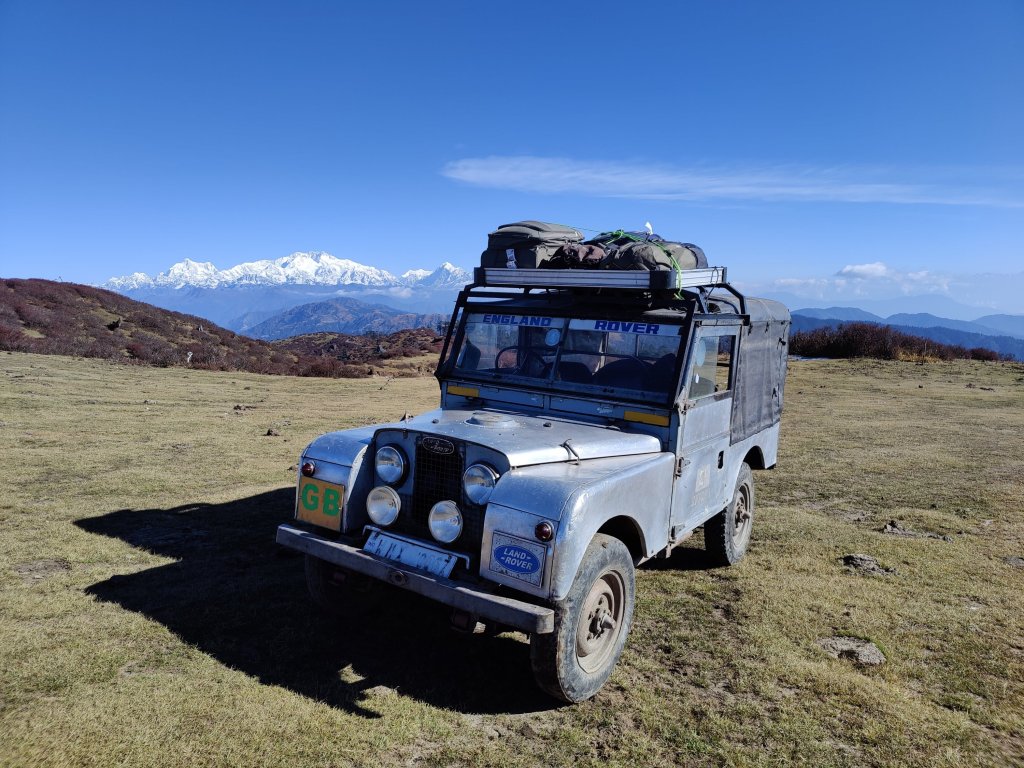
Land rover Defender and 'Sleeping Buddha' at Sandakphu
Our Land rover Defender with the ‘Sleeping Buddha’ in the Background at Sandakphu

7. Enjoy the Tea Gardens of Darjeeling

Darjeeling, with its rolling tea gardens and stunning views of the Himalayas, offers a peaceful retreat for couples. Take a ride on the Darjeeling Himalayan Railway, a UNESCO World Heritage Site, and enjoy the scenic journey. Visit the tea estates, where you can walk through the lush plantations and learn about the tea-making process. The Tiger Hill viewpoint offers breathtaking sunrise views over the Kanchenjunga range. Explore the vibrant local markets, and don’t miss out on tasting the delicious momos and local delicacies.

8. Discover the Vibrant Culture of South India

South India, with its rich cultural heritage, ancient temples, and beautiful landscapes, is perfect for a romantic getaway. Visit the temples of Tamil Nadu, such as the Brihadeeswarar Temple in Thanjavur and the Meenakshi Temple in Madurai, known for their architectural brilliance. Explore the backwaters and beaches of Kerala, and take a trip to the hill stations of Munnar and Wayanad. In Karnataka, the historical sites of Hampi and the royal city of Mysore offer a blend of history and romance. The serene beaches of Pondicherry and the French colonial charm make it a unique destination.

The Brihadeeshwaran temple at the backdrop

Plan Your Kerala and Uttarakhand Tours

When planning your romantic getaway in India, consider Kerala tour packages for 5 days and Uttarakhand tour packages for 10 days to make the most of these beautiful regions. In Kerala, opt for packages that include houseboat cruises, beach stays, and visits to hill stations like Munnar and Thekkady. For Uttarakhand, look for packages that cover the hill stations, spiritual towns, and trekking destinations to experience the diverse offerings of this picturesque state.

India, with its diverse landscapes and rich cultural heritage, offers endless possibilities for romantic escapades. Whether you’re cruising the backwaters of Kerala, witnessing the grandeur of the Taj Mahal, or trekking the hills of Uttarakhand, each experience promises to bring you closer to your partner. So, pack your bags and embark on a journey of love and adventure in this incredible country.

A festival to celebrate rebirth- Valangaiman Padai Kavadi

It was an online link that led me to a few photographs of a rare celebration. The images were accompanied by very little write-up for me to get a clear idea about the occasion. All I could infer was that it was a festival called ‘Padai Kavadi,’ celebrated in a village called Valangaiman, near Kumbakonam in Tamil Nadu.

I reached out to a few friends from Tamil Nadu who, in turn, connected with their acquaintances from the region and gave me information that the festival is celebrated annually, on the second Sunday of the Palguni month as per the Tamil calendar. Since I had ample time, I could meticulously plan my itinerary for that weekend and wait for my arrival at Kumbakonam. I had earlier visited Kumbakonam, so I included a few places that I could not cover in my previous trip. But that is for another story. For now, the focus is on ‘the Valangaiman Padai Kavadi festival.’

What is the festival about?

For a South Indian in general, one might think the Kavadi festival happens in every other village during this season. So, what got me curious about this place? Well, this Kavadi festival at Valangaiman celebrates the rebirth of a person. As per the local belief, people suffering from smallpox (still considered a deadly illness in most parts of India) make a vow at the Sri Padaikatti Maha Mariamman temple to perform the Padai Kavadi if cured. Once completely cured, they believe they have seen death and returned. Therefore, the convalesced person is made to lay on a bier or a handbarrow, lifted and carried by pallbearers, and the entire ceremony or the ritual of a traditional funeral is conducted as if he/she were dead.

There are primarily two types of biers. One, a simple yellow cloth tied to a bundle of sugarcanes or a single sturdy bamboo that is used as a cradle for kids and carried by two men on either end; second, a handbarrow with two bamboo culms knitted together with coconut fronds on which an adult convalesced is carried by four men. The adult bier is made more elaborate and decorative depending upon the interest and financial status of the person offering his vow.

Valangaiman Paadai Kavadi festival
An adult-female laying on a bier at Valangaiman Paadai Kavadi festival

I was told that three sister goddesses are living (at dedicated temples) in parallel streets of the village. The kavadi (usually body piercings or holy water carried in decorated pots on heads) is offered as vows to all three sisters, but the Padai Kavadi (the resumption of the dead, celebrated by sleeping on a bier) is offered only to Sri Padaikatti Maha Mariamman, the second among the three sisters, during the auspicious day of Palguni month.

Valangaiman Paadai Kavadi festival
A child being carried on a bier at the Valangaiman Paadai Kavadi festival

What happens on the festival day?

The procession of the convalesced people lying on biers starts early morning, mostly to avoid the noon sun. One can find hundreds of devotees who gather either at the small shrine of Vinayakan on the banks of the river Kudamurti or at a dozen makeshift temporary shrines set up by various local priests on the dried riverbed. Here, the bier, the person supposed to lay on it, and the respective kith and kin assemble for the rituals. Each person offering their vow is made to sleep on the bier after their family deity is invoked. Their eyes, nose, and mouth are closed with yellow cotton fabric, hands and legs are tied together as if those of dead people lying in coffins. Holy water is sprinkled around, and all the people gathering touch the feet of the sleeping person to take his/her blessings before the pallbearers carry them for the procession towards the Mariamman temple. For as long as a convalesced person is sleeping on the bier, he/she is treated equivalent to God as they are someone who has neared death, seen God, and returned. Then, a person carrying a clay pot with burning wood and incense leads the procession, and one with a pot full of water trails them, all being accompanied by drumbeats and flower throwers.

Valangaiman Paadai Kavadi festival
A funeral entourage going towards Padikatti Maha Mariamman temple

The procession circumambulates the Mariamman temple thrice, and then the bier is lowered down in front of the temple. Rituals are performed, post which the person descends from it and goes inside the temple to see the goddess and complete his vow. This is about the Padai Kavadi for people who survived death.

Valangaiman Paadai Kavadi festival
An adult man being carried on a bier at Valangaiman Paadai Kavadi festival

However, people who have suffered other ailments also make vows to offer a replica of the body part/ organ that has been cured through their prayers to Mariamman. One can see models in clay or silver, like eyes, legs, hands, etc., being sold around and offered by people at the temple, depending on their cured illnesses.

Apart from this, one can also see several people with various kinds of body piercings walking on the road (which is also a form of Kavadi) and circumambulating the three sister temples to offer their vows and prayers. A man suspended from a crane with his back hooked with metal loops and circumambulated around and in front of the temple, some men with full torsos pierced with lemons, long and heavy tridents passed through both cheeks, etc., were some of the unique and different Kavadi offerings I witnessed here. A detailed post of a dedicated festival of body piercings called ‘Mayana Kolai’ is available on my blog for further reading.

Valangaiman Paadai Kavadi festival
Body piercings at Valangaiman Paadai Kavadi festival

After all the kavadi offerings are over, the presiding deity, Goddess Padaikatti Maha Mariamman, is then brought out of the temple by around 03.00.p.m. on a procession. Around that time, cattle (goats and sheep) and poultry donated by the devotees are tied to another central post that is erected in front of the temple and suspended up and down with their bodies held firmly in the center. I could not gather sufficient information about the significance of this ritual, but I would be glad to learn from any of my readers here.

Valangaiman Paadai Kavadi festival
A devotee with body piercings; Also the wooden post used to swing cattle hoisted infront of the Padikatti Maha Mariamman temple

The festival then culminates after the deity returns inside the temple.

Valangaiman padai Kavadi festival

India’s largest Cattle fair- Anthiyur Gurunathaswamy temple

When a friend mentioned taking a road trip to a fair at Anthiyur village, neither of us had many expectations. What can one expect at a village festival in India, after all? All that we had learnt before commencing our road trip was that it was a cattle fair, which was held as part of the annual festival of the Gurunathaswamy temple at Anthiyur village. Supplemented by a handful of YouTube videos in Tamil, we decided to take the long drive from Bangalore to spend a weekend.

We started from Bangalore before dawn to reach Anthiyur at the earliest and get sufficient time to see all the cattle stalls before returning. But only to our surprise, the scale of this temple village fair was anything beyond our imagination. Neither of us had seen or heard of a small village festival to be of such a large scale and spread.

The beautiful hills around Anthiyur village

The story dates to around 600 years, when there lived a clan near Pichavaram forest, that worshipped three stones known as ‘Kutty Aandavar’ (translates to ‘Small God’, in Tamil). The local ruler wanted to marry the priest’s daughter. However, the priest’s family was against the marriage proposal. Meanwhile, one of the members of the priest’s clan gets possessed by their deity’s spirit, and the family is told to abandon the village along with the three prayer stones to avoid the outrage of the ruler’s anger. Following this, the family started to move north until they found a safe place to settle down. At some point, the family felt that their survival was going to be difficult and that the stones being carried by them were an additional burden. Hence, they continued their journey by throwing the stones into a nearby pond. They halted at Anthiyur for the night.

On the following morning, Santhakumaran (one of the family members) was surprised to find the same three stones back in his bag. They realized the powers of their deity and resumed worship of the stones by giving them three different names. The first stone was called Kamatchi, the second one was Perumal (Vishnu), and the last one was Gurunatha Swamy (a combination of Shiva and Kantha).

During the festival, three deities are taken on a procession from the main shrine at Anthiyur village to a temple in the nearby forest. As per mythology, a demon is believed to have occupied the forest in which Goddess Kamatchiamman wanted to reside. A fierce war was then fought between Veerabhadra (the warrior assistant of the Lord, protector of Kamatchi-amman) and the demon, in which the demon eventually surrendered. It is said that instead of leaving the forest, the demon requested lord Gurunathar to allow him to stay there on a condition that Kamatchiamman came there once a year to visit him. However, Veerabhadra agreed to this on the condition that he, too, was allowed to stay in the same forest. This temple is today called Vanakovil (translates to ‘Temple in the forest’ in Tamil), where Kamatchiamman is brought in a palanquin from the main temple.

The current temple structure is believed to have been built by the Pandya kings. The Gurunathar temple houses an 11*11*11 feet kulukai. A kulukai is a large earthen storage container mainly used for storing food grains, with a large opening at the top (to fill the container) and a small vent at the bottom (to take the grains out for consumption). It is believed that the kulukai in this temple is used to store the jewels and other items related to worship, and is guarded by snakes. Only the head priest is allowed to enter the container and access the stored things, and is unharmed by the guarding snakes. Therefore, this kulukai is worshipped by the local people and it is believed to keep them safe from reptiles, scorpions, etc.

The month-long temple festival held during the Aadi month of the Tamil calendar hosts a range of unique rituals and celebrations during this time. Temple cars built for each deity are prepared and managed by the respective caste of people. Two large, towering, nicely decorated temple cars (the largest is of Gurunathaswamy and the smaller is of Perumal Swamy) are pulled by thousands of devotees who gather from across the nearby villages, from the main Gurunathaswamy temple to the Vanakovil and back. Today, animal sacrifice is practiced in Vanakovil.

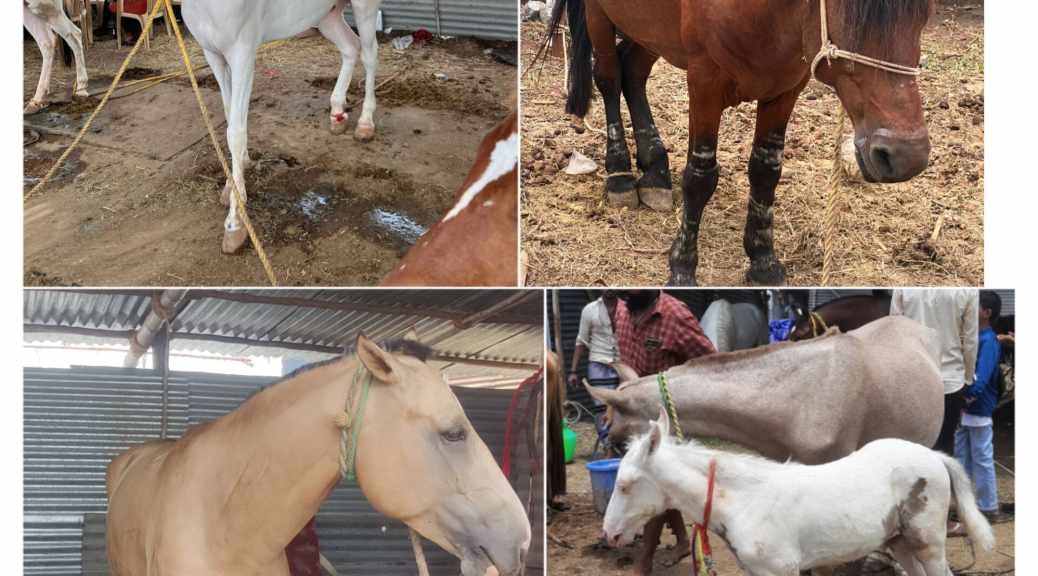
A four-day-long cattle fair is, however, the highlight of the festival for which people come from across the districts of Tamil Nadu and the states of India. There are only two cattle fairs held at this scale in India. First, at Anthiyur (more popular for the horse fair) and second, at Pushkar in Rajasthan (Primarily a Camel fair). The history of the ‘Kudurai Santhai’ (the Horse fair) dates to the times when Tipu Sultan was the ruler of Mysore. He visited this cattle market to buy the best horses for his cavalry and sold his horses that were no longer fit for battles.

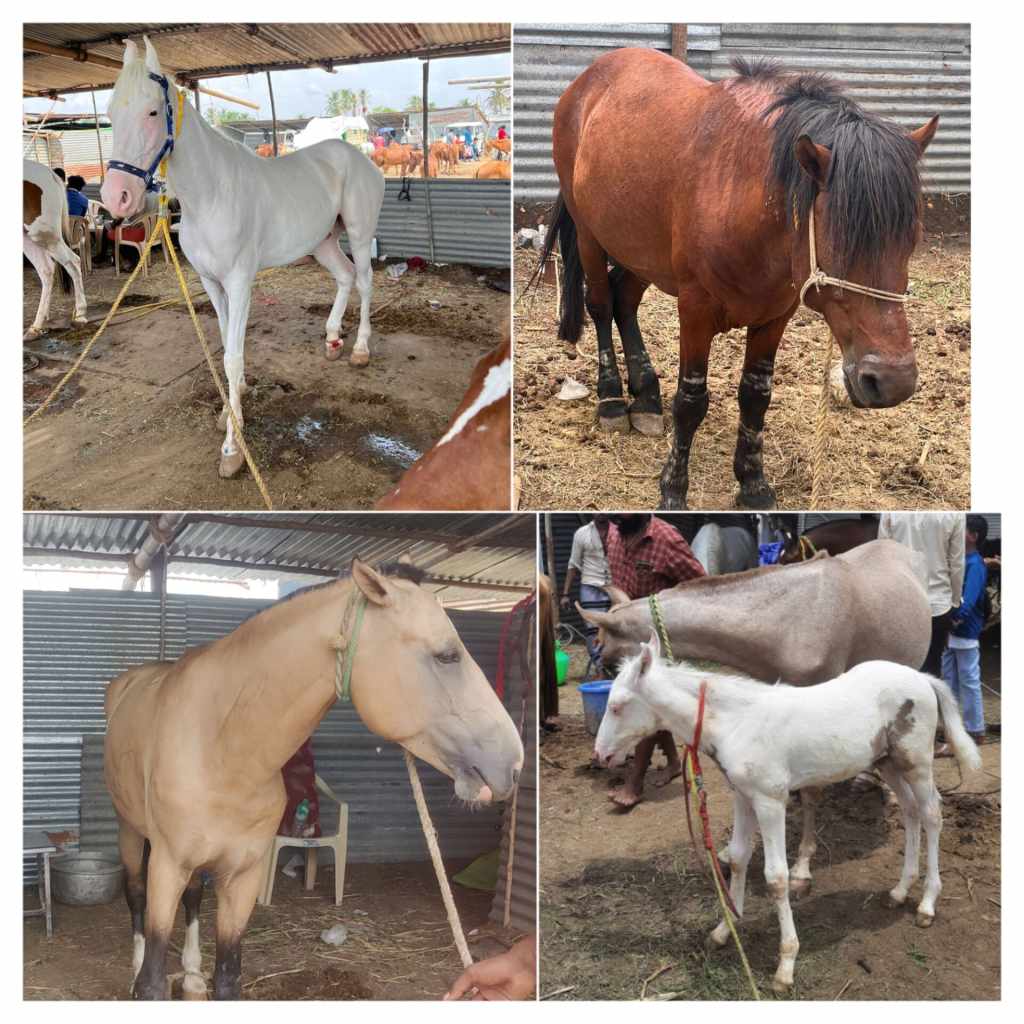
It has, over time, gained popularity among horse enthusiasts across the country who consider buying horses from this market as a matter of pride and prestige. The cost of each horse can range anywhere between 50 thousand to 50 lakhs rupees. Today, apart from buying and selling horses at the ‘Kudurai Santhai’, many horse owners come here to simply display their prized possessions. One gets to see stallions, mares, sires, and ponies of various native indigenous and pure breeds here. Some horses are made to perform to drumbeats and kept on exhibition. On the last day of the four-day-long ‘horse fair’, Geegees are judged based on their structure, build, and looks, and finally, awards are given away. On the day we visited in 2023, there were over 1000 horses at the fair brought in for various purposes.

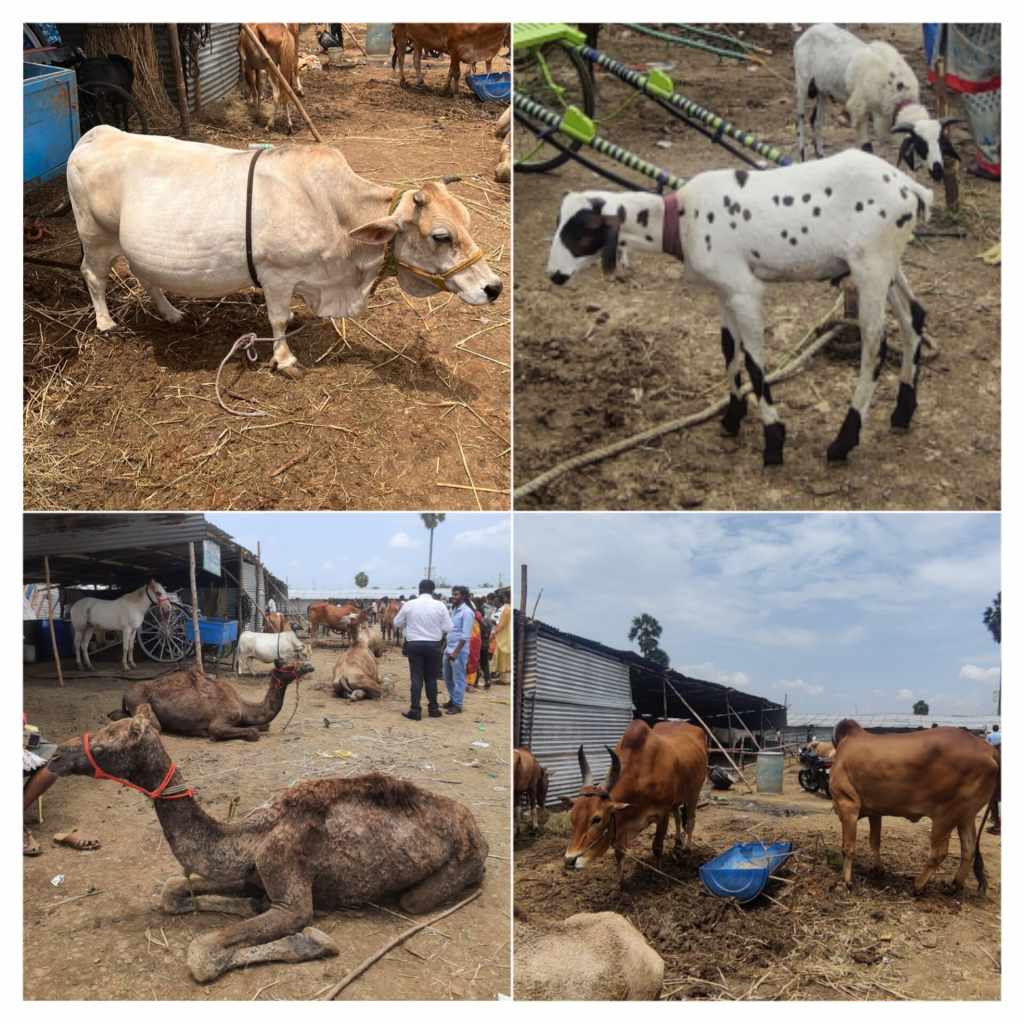
All accessories, equipment, and other things that are associated with horse-keeping and equestrian training can be found and are sold here. Apart from horses, this fair is also the largest marketplace in India for other breeds of cattle and livestock like cows, goats, sheep, camels, rabbits, dogs, and birds. With encouragement given to native breeds, it is a great experience to see cattle across the 34+ acres of land.

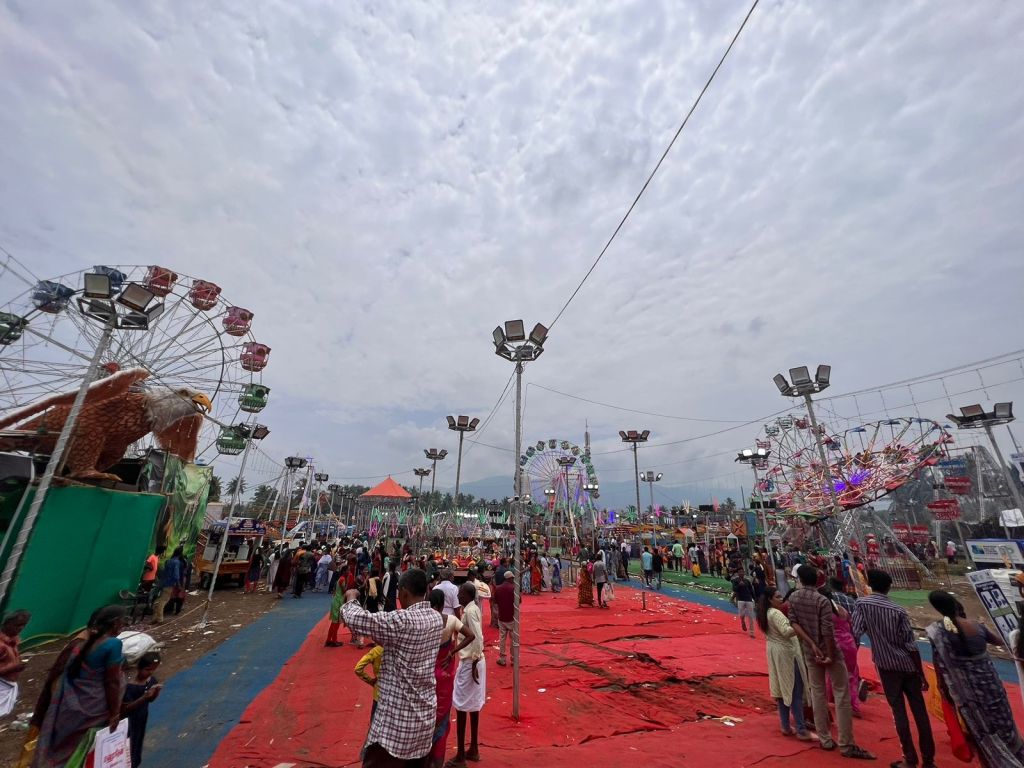
To supplement the cattle markets, there is a makeshift amusement park set up, which is also by far the largest makeshift amusement park I have ever seen. Over ten giant wheels, rollercoasters, circus tents, and at least three globes of death are set up among several other types of amusement rides. The energy and ecstasy of this fair is all together only to be witnessed rather than to be read about.

Anthiyur festival
The makeshift amusement park at Anthiyur festival
  • Bamboo staff- You will find people buying them, as it is considered auspicious to keep this weapon of Gurunathar Swamy at home.
  • Colorful horse whips
  • Horseshoes- this is believed to absorb negative energy if hung at the entrance of houses.

Disclaimer: This article is posted to document folklore and lesser-known festivals of India. If any mistakes are found, it could be based on what was heard as stories. Kindly comment below or message directly for any corrections required.

Weekend Hike- Bala Kodandaraya Swamy Temple

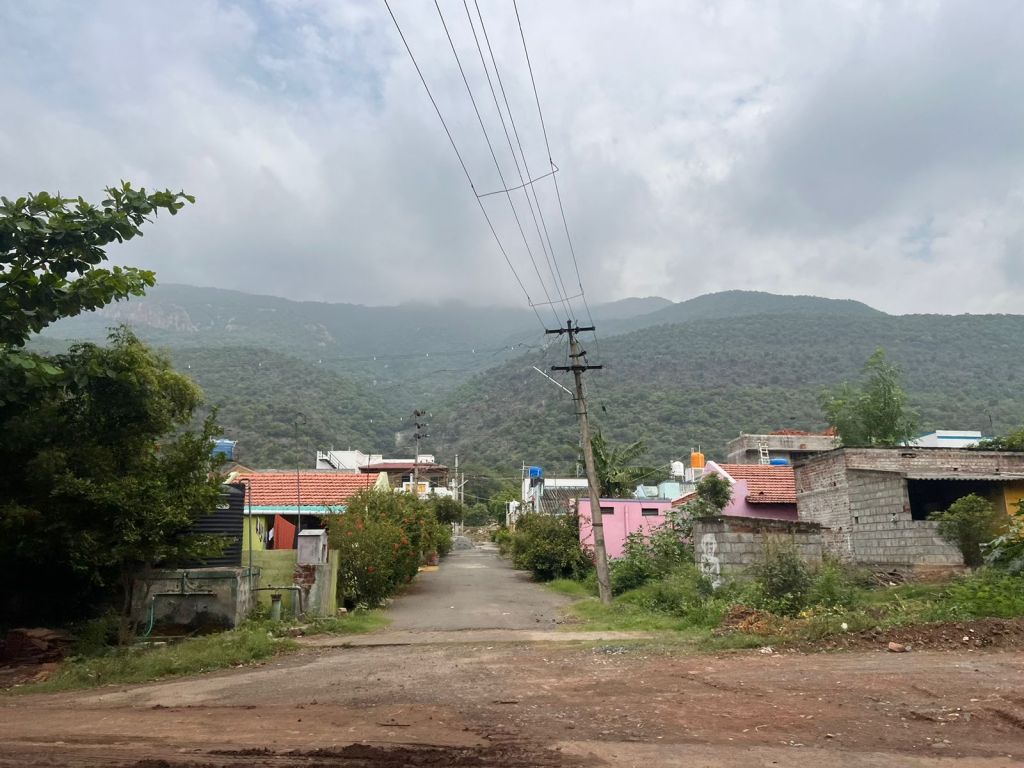
Although this destination is a recommendation for weekend and day hikers of Bengaluru, it is in Krishnagiri, a district bordering the two states of Karnataka and Tamil Nadu.

The views from an ancient temple had caught the attention of my friend and me, who are always in the look out for less crowded and less explored landscapes and places with cultural and historical importance. One such place was the ‘BalaKodandaraya Swamy temple’ whose history dates to the Vijayanagara era. Based on our online research, we found out that getting to the temple involved a short hike.

We started early on a Saturday morning by car. We had our breakfast along the way, in one of the several restaurants on the Hosur highway. From there, we followed the route on Google maps to reach our destination. A steep deviation to the left of the highway led us through villages. There were asphalted roads and good views of the surrounding hillocks for as long as the road passed through villages. The last couple of kilometers were through unpaved muddy roads passing through a slight forest stretch. We finally arrived at a small open space where we parked our car, at the base of the temple hill.

The forest trail
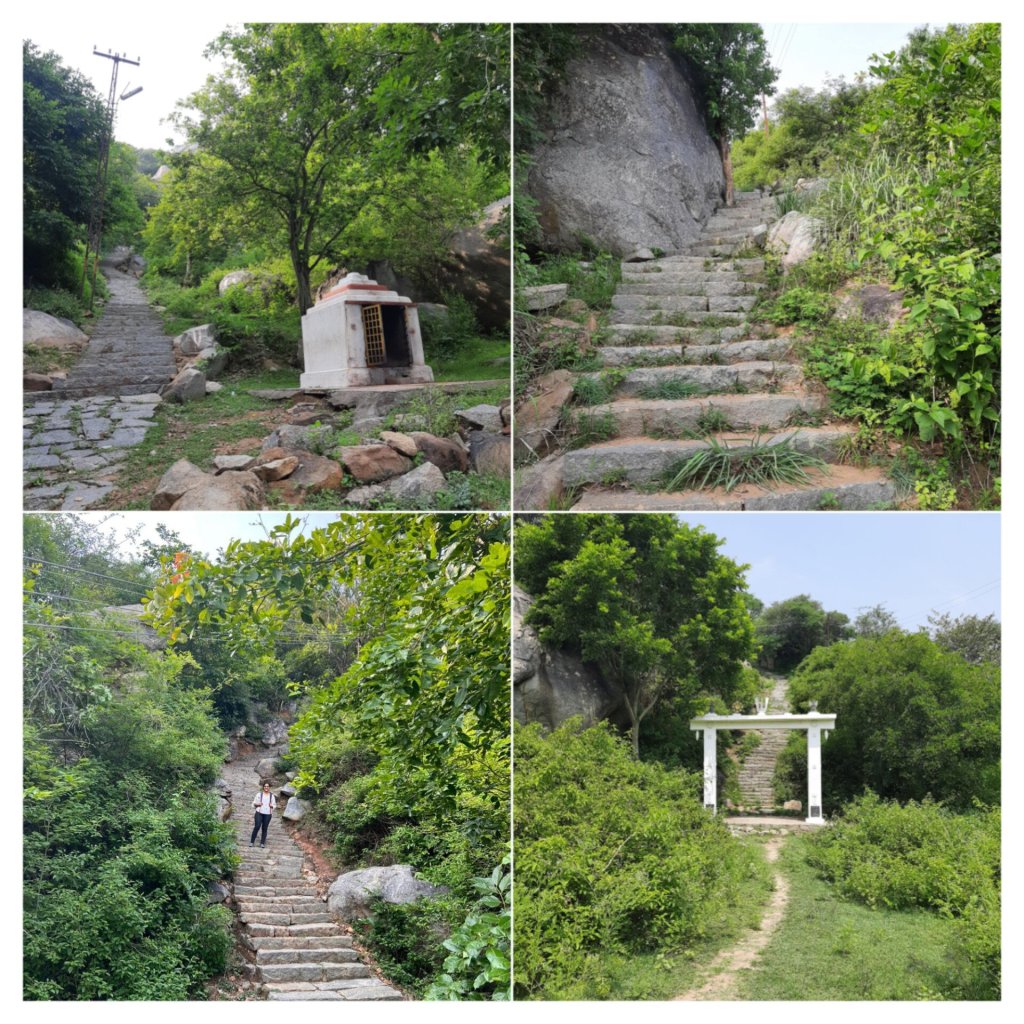
The trail through the forest cover, starting from the base to the temple arch

There was a small structure of brick and mortar (gudi) at the base, from where a flight of stairs led to the hilltop. People lit lamps, agarbattis and camphor here before starting their ascent. It took us about half an hour’s climb along properly laid stone steps leading to the top. These stone slabs bear the names of the devotees who have donated them and the count of their donations on each step. The ascent curved around at multiple places and offered amazing views of the valley below at every turn. The first half of the climb had a forest cover and large boulders on both sides, until we arrived at the welcome arch of the temple.

The path towards the left of the trail, towards the temple

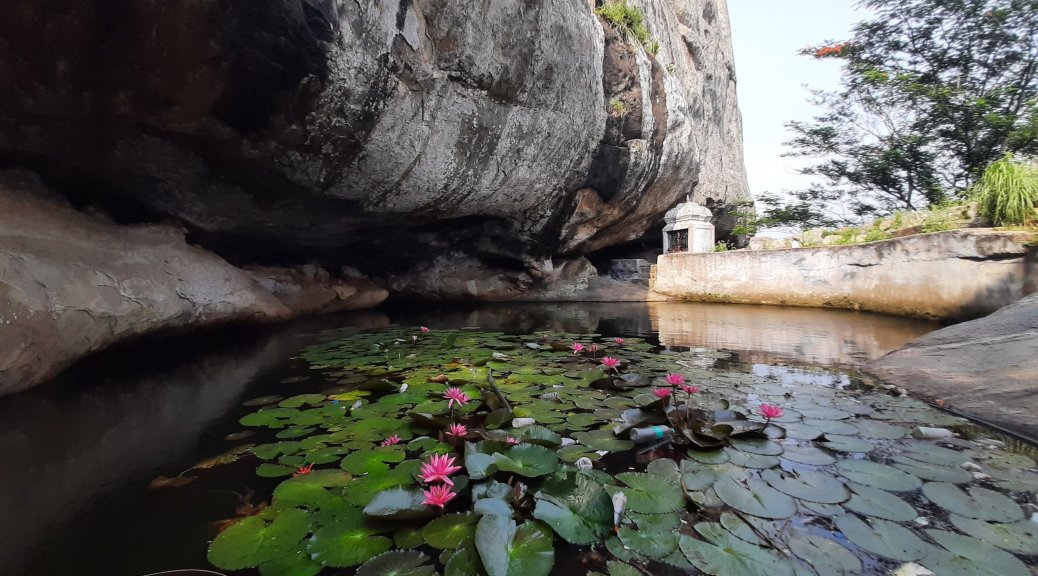
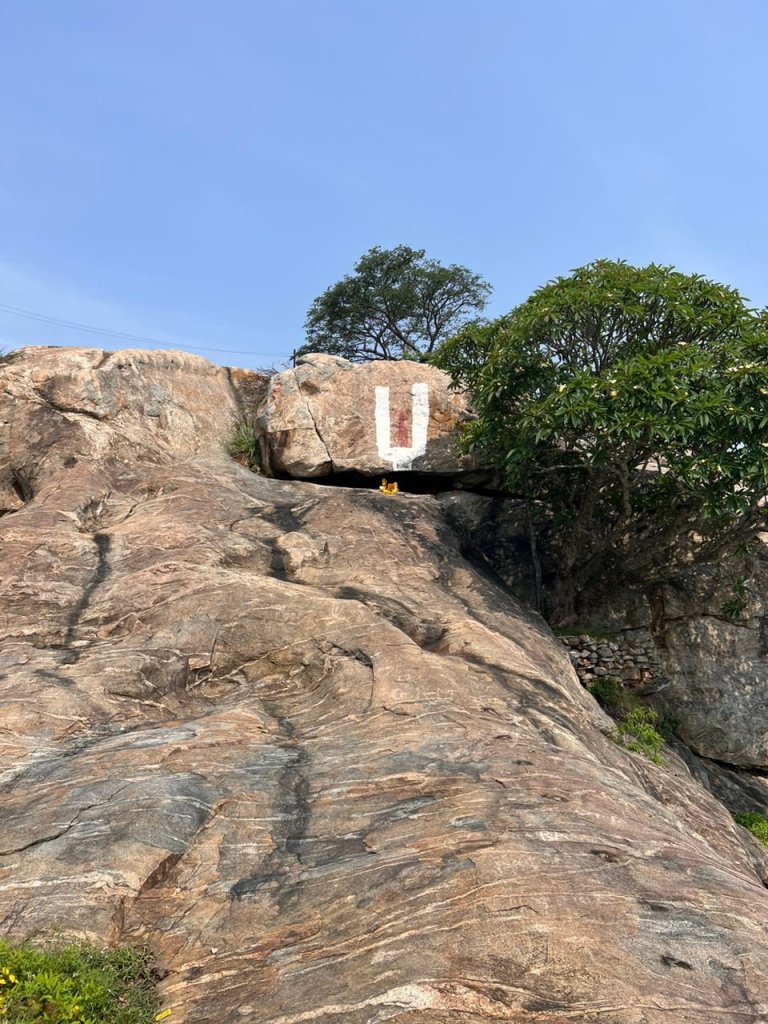
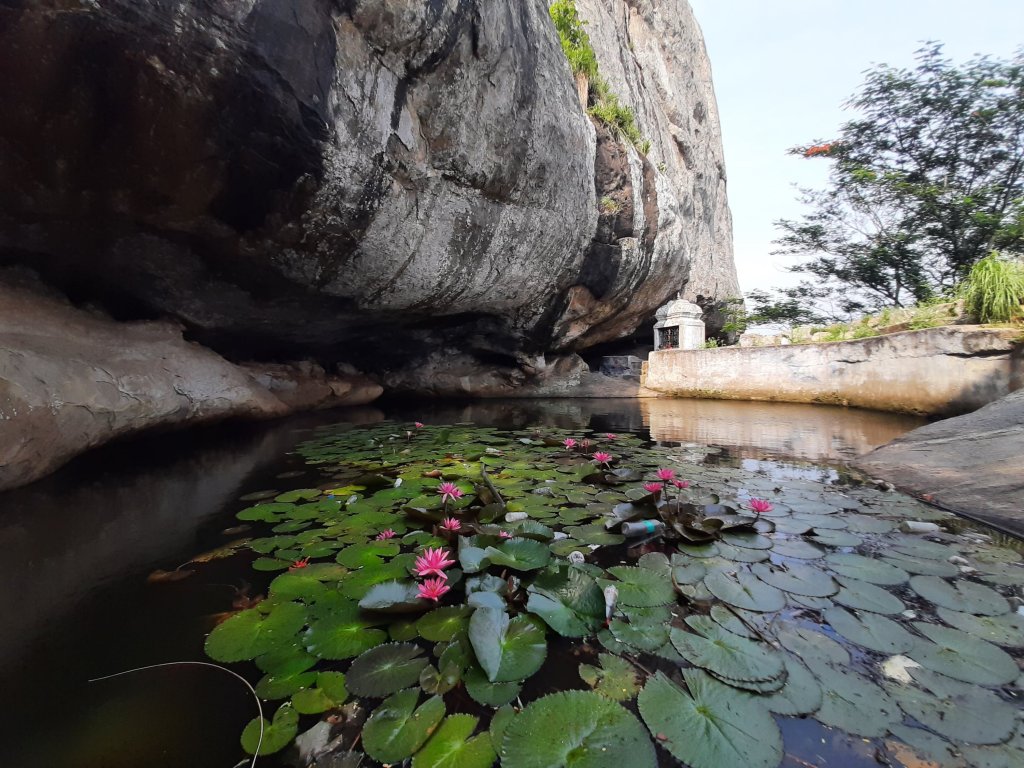
The forest cover ended after a few steps further from there and opened to a panoramic view of the valley of the villages and farms below. As one stands on a large rocky outgrowth, you will find the trail split into two paths. One, straight down through some Gulmohur trees. Second, up towards the temple. We decided to first walk the trail going straight. A few yards from there, the trees made way to a beautiful pond of pink lilies, dug right beneath a large rocky monolith. We later realized that devotees take a dip in this pond before proceeding towards the temple.

The path towards the right of the trail, leading to the temple pond

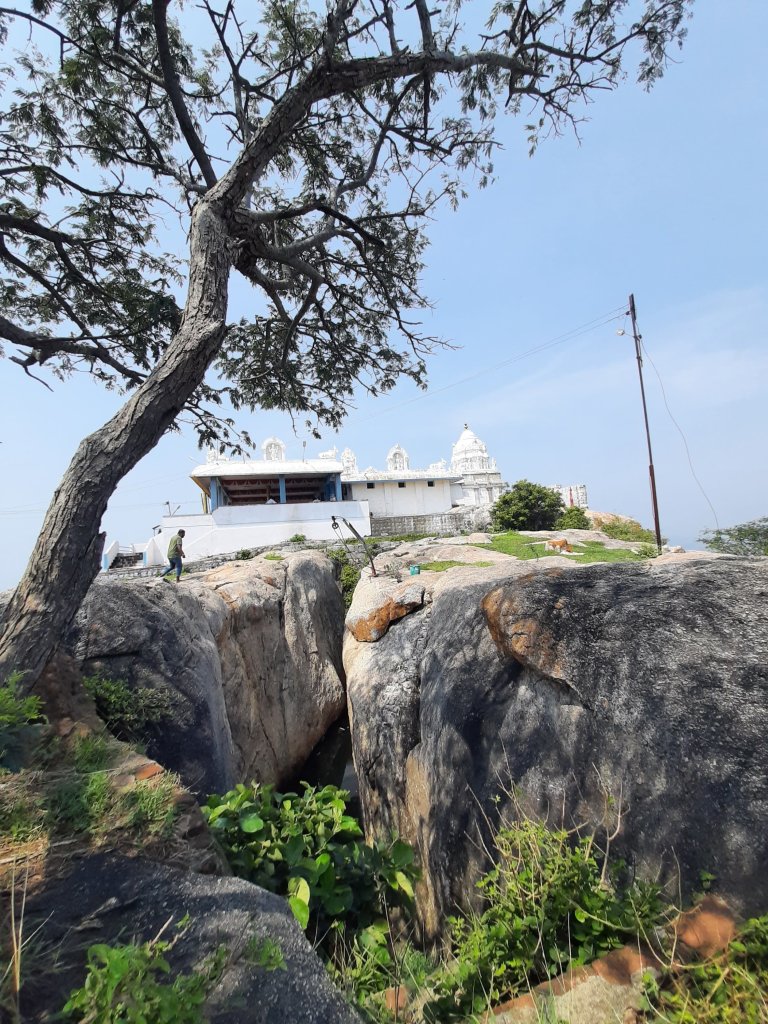
The view of the valley from there and the magical vibe of sitting by this pond of lilies could not let us go easily from there. My friend settled on the banks, with a book to read. Although the water was heavily littered with plastics, it was still a super calm spot to soak in some good energy. After spending a while, we then headed towards the temple, located on the peak of the hill, a short walk away. There was a panoramic 360 degrees view of Hosur and Krishnagiri from the temple, the green cover around, Krishnagiri dam and the Then Pennai river. The temple priest arrived much later at around 10.00.a.m. for the daily prayers.

Balakodandaraya swamy temple, Krishnagiri
Balakodandaraya swamy temple and the cleft for drawing water

Surprisingly, a small cleft in the rocky hill serves as a perennial source of potable water for temple use. The people who had gathered there by then, helped the priest in drawing water from this cleft and clean the temple premises before offering the day’s prayers. We sat there for a while and decided to head back to the base before the sun took over the skies and heated the rocks around. Overall, it was an incredibly beautiful place for a short trip from the city.

Other nearby places:

If you are looking at making it a full day trip, then you can explore the nearby places that include:

The Hoysala Trail 2- Belavadi

In my wish list to visit as many Hoysala temples as possible in this lifetime, this is the second documentation. I started this series with the temples of Belur and Halebidu, as these were the erstwhile capital cities of the Hoysala. I will move on from there.

Continued from The Hoysala Trail 1- Belur & Halebidu

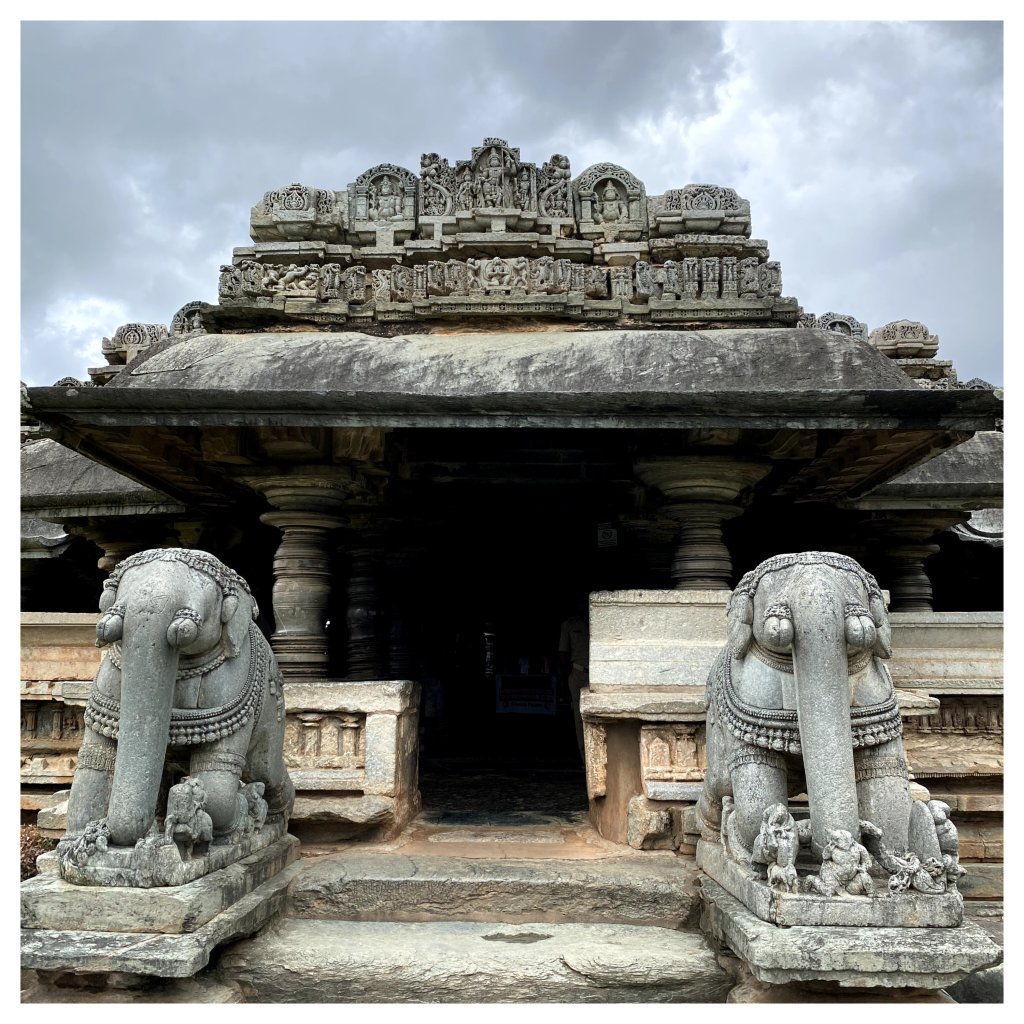
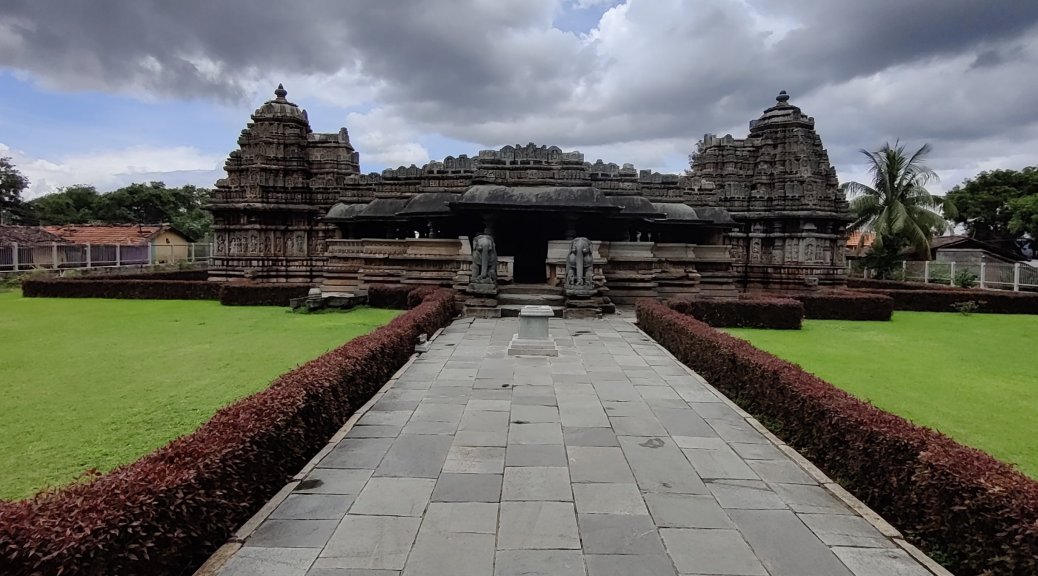
Belavadi is a quaint little village located approximately an hour away from the Hoysala capital town, Belur. The Veera Narayana swamy temple of Belavadi is one of those where the main idol of the presiding deity is still intact and regular prayers continue to be offered. The intricacy of the artwork on stone is very similar to that of the temples at Belur and Halebidu.

Veeranarayanaswamy temple, Belavadi
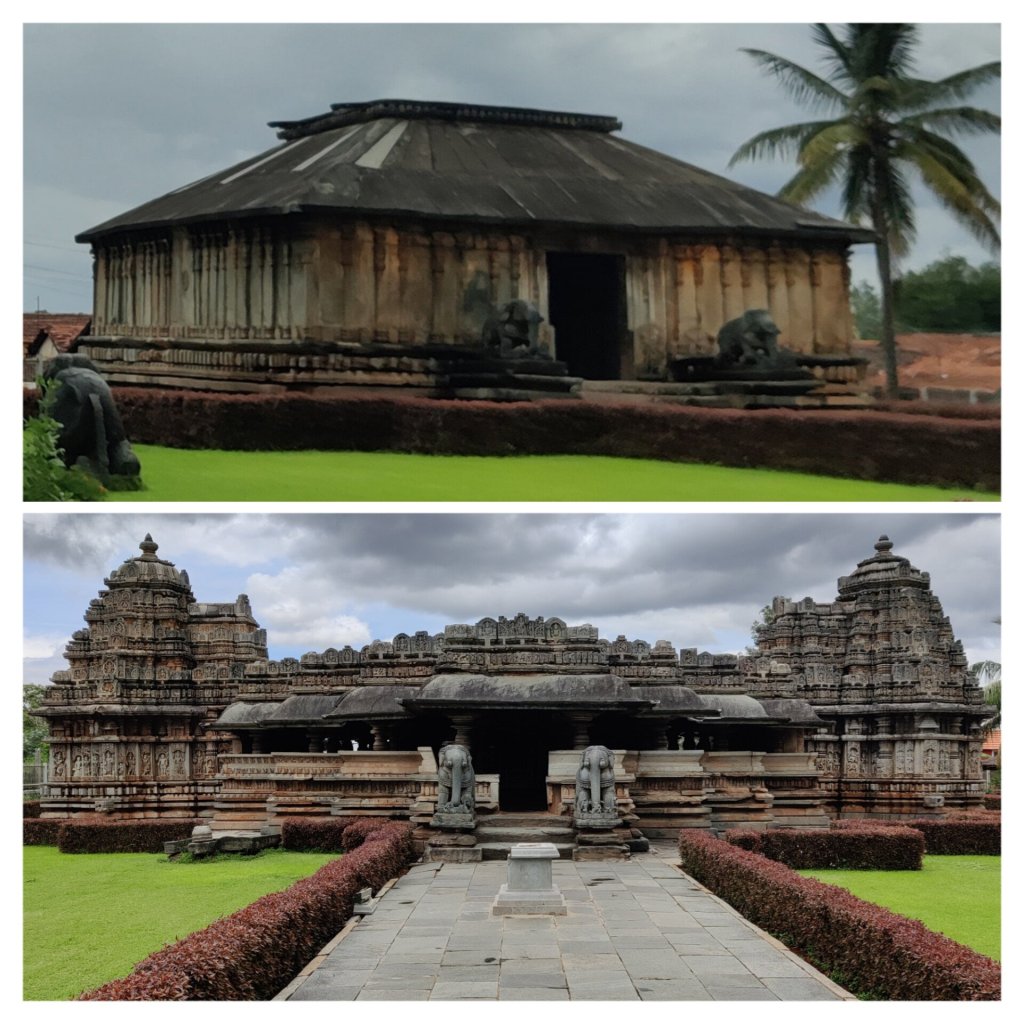
Images: Veeranarayanaswamy temple, Belavadi Top: Outer entrance gate to the temple Below: Inner entrance to main shrine at Veeranarayanaswamy temple, Belavadi

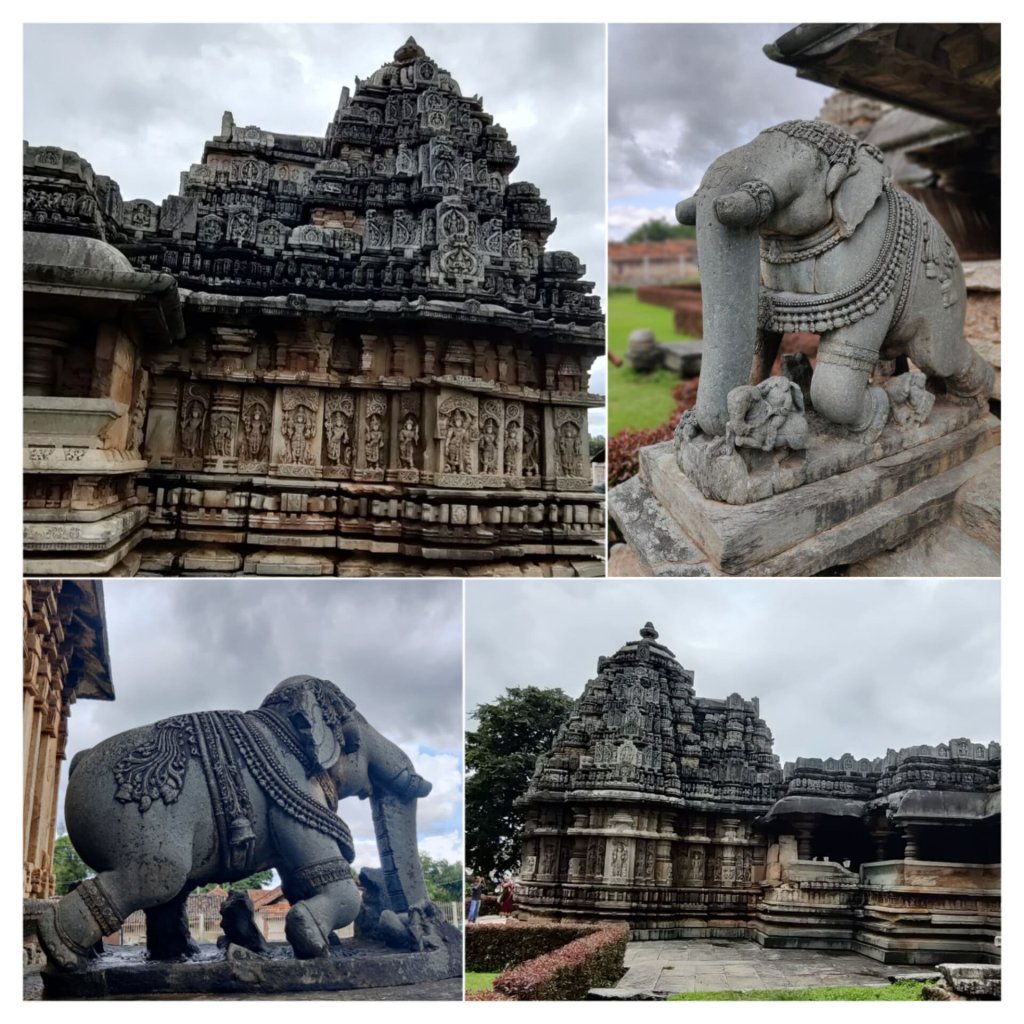
Unlike the main Gopuram (temple tower) at Belur, the entrance gate at the Belavadi temple is small. There are two ornate statues of two elephants that greets you inside. The sculpture on the outer wall is simple and minimalistic. as you enter, you notice that the inner walls are plain. It is possible that these were stolen, vandalized, or lost over the course of time, only historians can tell me better.

Veeranarayana swamy temple, Belavadi
The sculptures on the exterior of Veeranarayana swamy temple, Belavadi

As you walk past this entrance gate, arch you pass the courtyard and are greeted again by a pair of standing elephant statues into the main temple that encompasses the shrines in the trikuta style of temple architecture. The three shrines inside houses idols of Lord Vishnu in three different forms. Huge lathe turned stone pillars and walls bearing fine and intricately carved figurines adorn the inner walls of the temple where photography is prohibited at the time of my visit (in July-2022).

Veeranarayana swamy temple, Belavadi
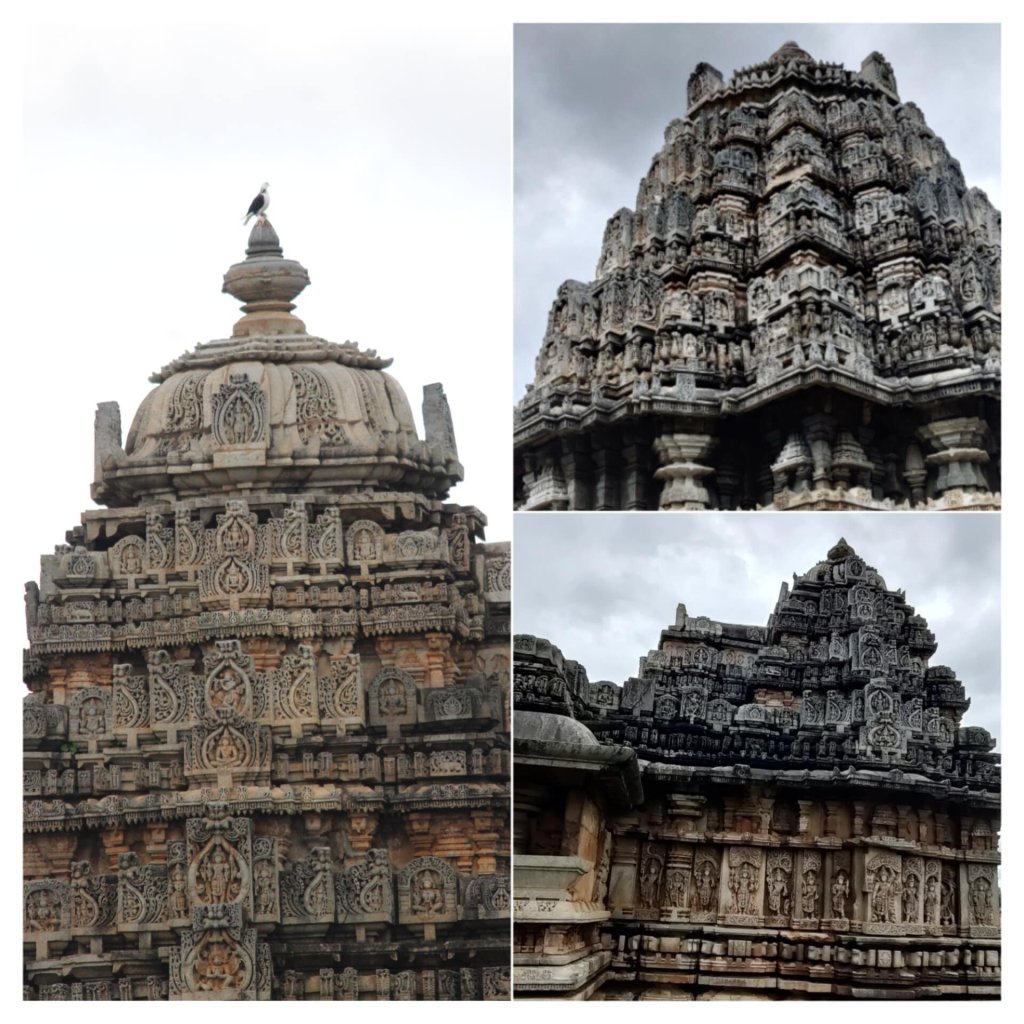
The Trikuta temple towers at Veeranarayana swamy temple, Belavadi

The outer walls are equally gorgeous too with intrinsic stone carvings and embossings all over. Due to limited permissions for photography, my photo story here consists only of photos of the exterior of the temple, but more than sufficient to give an idea of this marvel.

Veeranarayana swamy temple, Belavadi
The inner and the main entrance of Veeranarayana swamy temple, Belavadi

Also, a walk around the tiny hamlet of Belavadi is highly recommended. I loved the unique design of these traditional houses that emanated a vibe of an old world.

To be continued as Hoysala Trail 3

A Trip to Kanger Valley National Park

My first thoughts about visiting a national park used to be safaris, birdwatching and game sighting. But my trip to Kanger valley national park in Chhattisgarh helped me change that perspective by letting me understand that a trip to a forest can be beyond wildlife. Even without having any major landmarks to visit, a trip can be complete by simply traveling slow, being present and immersive in the energies of the moment.

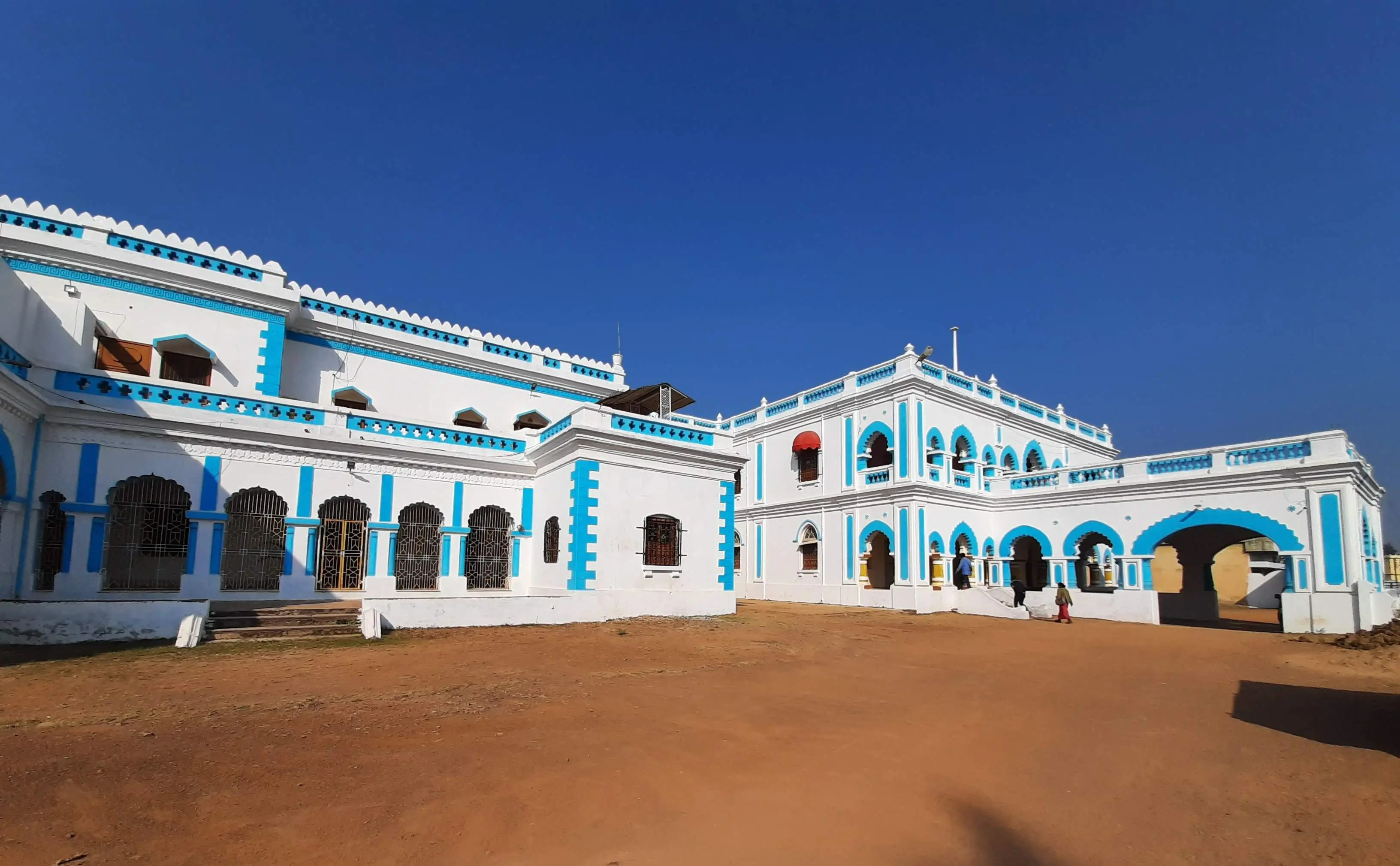
A walk tour around Jagadalpur set a good preamble by introducing me to the culture and history of the tribal communities and the royal family of Bastar. Jagadalpur is where most rituals of the Bastar Dussehra center around. Bastar Dussehra, the longest festival in the world is celebrated for seventy-five days thereby attracting tourists from across the globe to witness the congregation and unique rituals of Adivasis inhabiting the region.

The Royal Palace at Jagdalpur

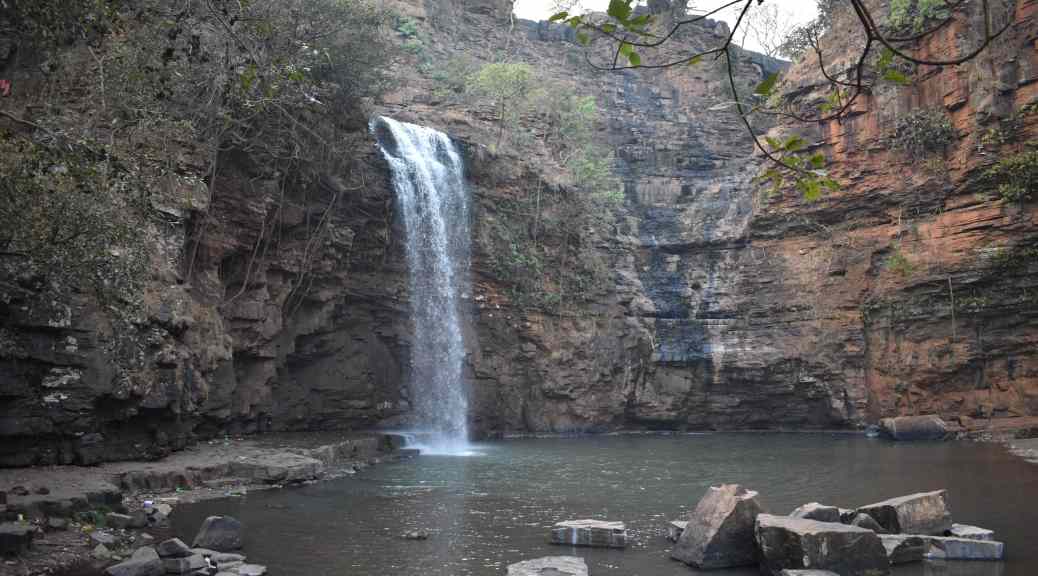
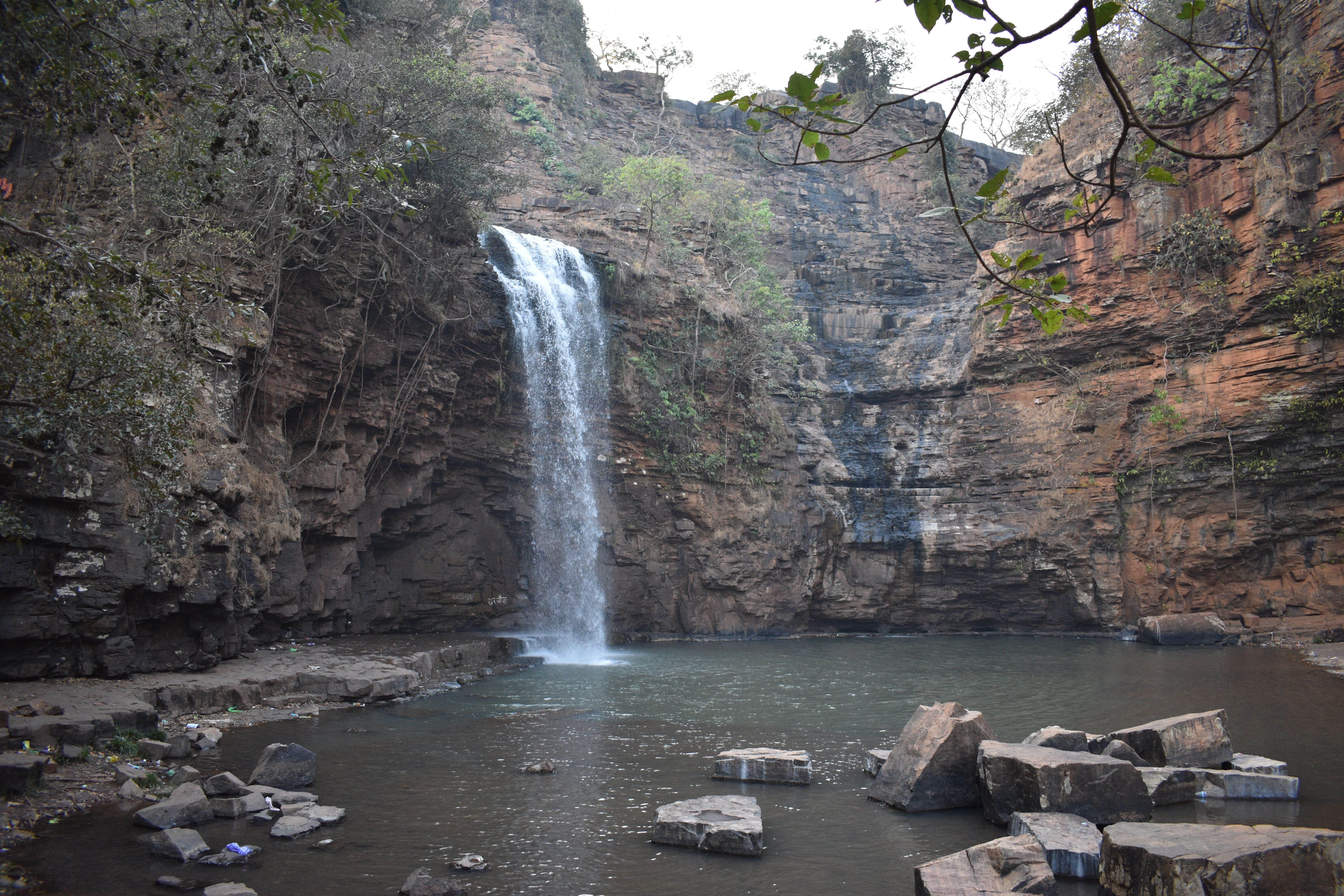
We then drove towards Kanger valley National Park, the only national park in India where human settlements is allowed within the heart of the forest that is thriving around the Kanger River. A sumptuous lunch served on patravalis was followed by a walk to see the beautiful Thirathgarh waterfalls and the serene Sita Kund, important sites of pilgrimage in the local culture. After spending some time there, I went on a guided trek to Shivaganga, an untouched gem. ‘The seclusion of the waterfall, reachable by a flight of bamboo stairs laid out through the thickets would be best complimented by an overnight camping and the dance of the fireflies’ as described by the guide.

Sita Kund, Thirathgarh waterfalls, Kanger valley National Park
Sita Kund at Thirathgarh waterfalls

That night’s accommodation was at an Adivasi homestay. A traditional greeting was followed by warm conversation with the host family, accompanied by homebrewed Mahua liquor and red-ant chutney around a bon-fire, in the courtyard overlooked by a huge Mahua tree. The night’s sky there is certainly a delight for astrophotography enthusiasts. I woke up for sunrise and joined my host on his walk along the riverbank to collect ferns for a perfectly organic meal to start our day. With the mud and bamboo houses, wooden fences, dining on cow-dung smeared floors, slow-cooked food in claypot and on firewood with locally available ingredients, my stay was an incomprehensible experience of sustainable living.

Among three magnificent limestone caves located within the national park, we explored the stalactites and stalagmites of Dandak caves. A fifteen-minute session of meditation inside the dark and silent chamber of the cave was transcending. A Gypsy ride to Kanger Dhara waterfall was followed by bamboo rafting on the pristine and calm waters at Kailash Jheel. Since, our campsite was at a walkable distance from a tribal hamlet, I sneaked out and spent time at the local fair there. Tribal folk had congregated from all neighboring hamlets to watch the ‘Naat’, a theater form where excerpts from epics are adapted into local stories and performed all night.

The next morning started early with an inspiring birding session along the river trail as I was accompanied by a ‘Myna Mitra’, the friend of the Myna birds. This is an initiative by the forest department toward conservation of the Hill-myna, the state bird of Chhattisgarh by getting the local forest dwelling tribal youth involved to track the daily activities of these birds. We got lucky to spot a pair of these birds, the highlight for a typical wildlife trip.

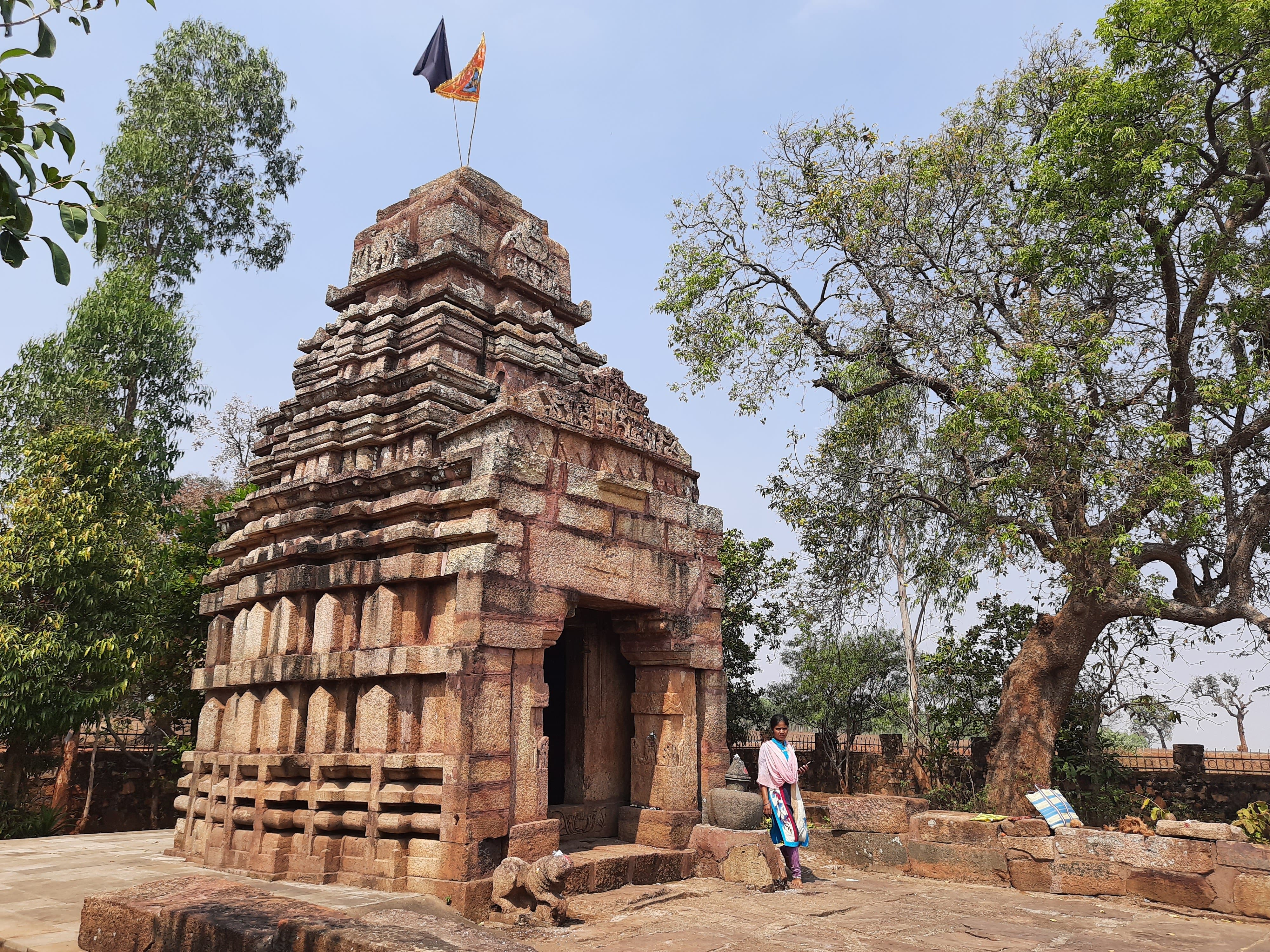
Gumadpal temple, Bastar

After a quick meal, we headed towards Gumadpal to see a 14th century Shiva temple. Historians haven’t yet found the reason for its unique three-tiered Linga. That day happened to be the weekly market or haat, as locally called. A walk around the haat was another opportunity to get a closer understanding of the local way of life. Haats do not just provide for trade but also for worshipping local deities, entertainment, socialization and even matchmaking. A few women were singing and dancing to the local songs and asked us to join in as well. It was surprising to know that barter still exists here. I tasted local food like tubers, mahua, tendu, and a variety of local brews and wines. Jewelry and home-décor items in dhokra, a GI tagged craft made by a method believed to be practiced since over 4000 years were being sold among several other unique crafts of the region. I witnessed an energy packed session of cockfighting as well.

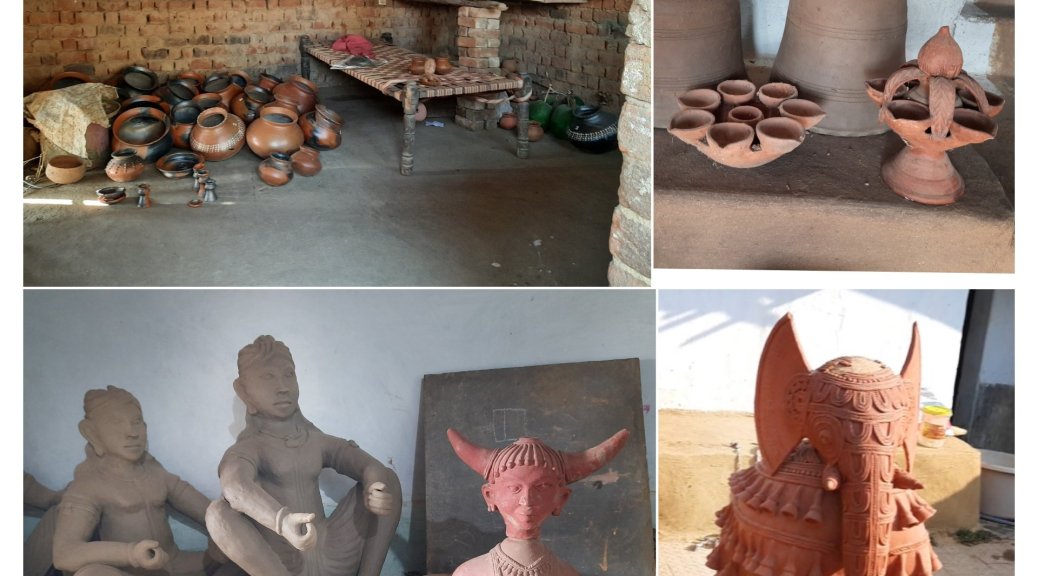
Dokra art at various stages of metal casting

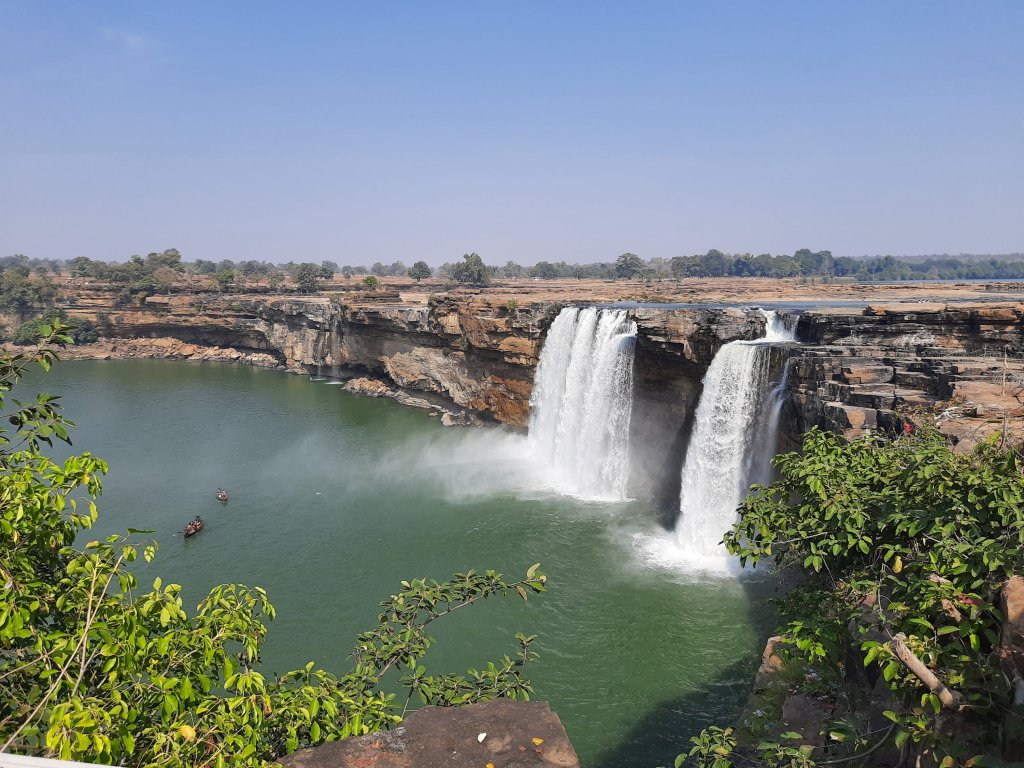
Having travelled to Chhattisgarh and not seeing the poster boy of its tourism advertisements, did not seem fair. River Indravati plummets down with all her might in a horseshoe shape, making Chitrakote waterfalls the widest in India. I checked into the government run luxury resort to spend my last evening, where every cottage offered a view of the setting sun over the waterfall. A ride in a country boat right into India’s Niagara waterfalls was just the prefect way to say good bye.

Chitrakote waterfalls during summer season

From waterfalls and caves to tribal hamlets and local markets, from history and folklore to art and craft, from food and wine to mud-houses and palaces, from dance and music to culture and architecture, my experience at Kanger valley national park was replete, wholesome and truly full of surprises!

Fact file:

  • Transport: Jagadalpur is connected by daily flights, rail route and by buses. Self-drive cars or taxis can be availed for travelling within Bastar.
  • Stay: Several tribal homestays are available within the national park. Nature camps and resorts run by Chhattisgarh tourism board and heritage stays in palaces are managed by the erstwhile royal family of Bastar. Good hotels of all budgets are available at Jagadalpur.
  • Food: Bastar cuisine mostly comprises of locally grown rice and vegetables.

This travel was part of the ‘Dekho Bastar- Season 1’ event organised by India Tourism Board and Bastar District administration in collaboration with Kanger Valley National Park. The article appeared in ‘Apr~May’23’ edition of ‘Bastar Bhoomi’ magazine.

A compilation of art and science from the by-lanes of India

I am an art enthusiast by passion and an engineer by qualification. I seek to be an art aficionado and a curious kid within me is always on the lookout to learn how things are made and work. In fact, I believe the best art is created by the culmination of science and creativity. As a traveler, I do not miss a chance to visit and interact with artisans and understand how they make things what they are good at.

When I travel to a new place, I try to accommodate time to explore the lesser touristy streets of any place because according to me, the real soul of any place lives in its by-lanes. I try to meet enthusiasts (across genres) and visit their creative abodes or workshops to see things take form.

Here is a compilation of such posts describing the souvenirs that combine two worlds of art and science which one can buy when visiting these destinations.

  1. Bangalore : HMT Watches
  2. Rajahmundry: Ratnam fountain pens
  3. Aranmula: Metallic mirrors
  4. Bastar: Metal crafts (wrought iron and bell-metal crafts)
  5. South India: Bronze icons

How many of these souvenirs have you collected, yet?

List of the Widest Waterfalls of India

We all know that the widest waterfall in the world is the Niagara, and it is in America! So, we take it for convenience to use Niagara as a synonym to refer to every other wide waterfall in our region. But how many of us have really seen the widest waterfall in India? Or for that matter, how many of us have seen the widest waterfall of our own states within India? Irony is we surely know Niagara, but we might have not even heard of the one in our own backyard.

So, here’s my attempt at listing some of the widest waterfalls in the Indian states that we love to call the Niagara of our country! (Note: These are by width of the waterfalls and not by their height)

1. Chitrakote waterfalls, Chhattisgarh:

The WIDEST waterfall in India is this, where river Indravati plummets down a horse-shoe shaped gorge. A beauty to behold in all true senses, a ride in a country boat to right under the waterfall is a spell-binding experience.

Chitrakote waterfalls during summer season

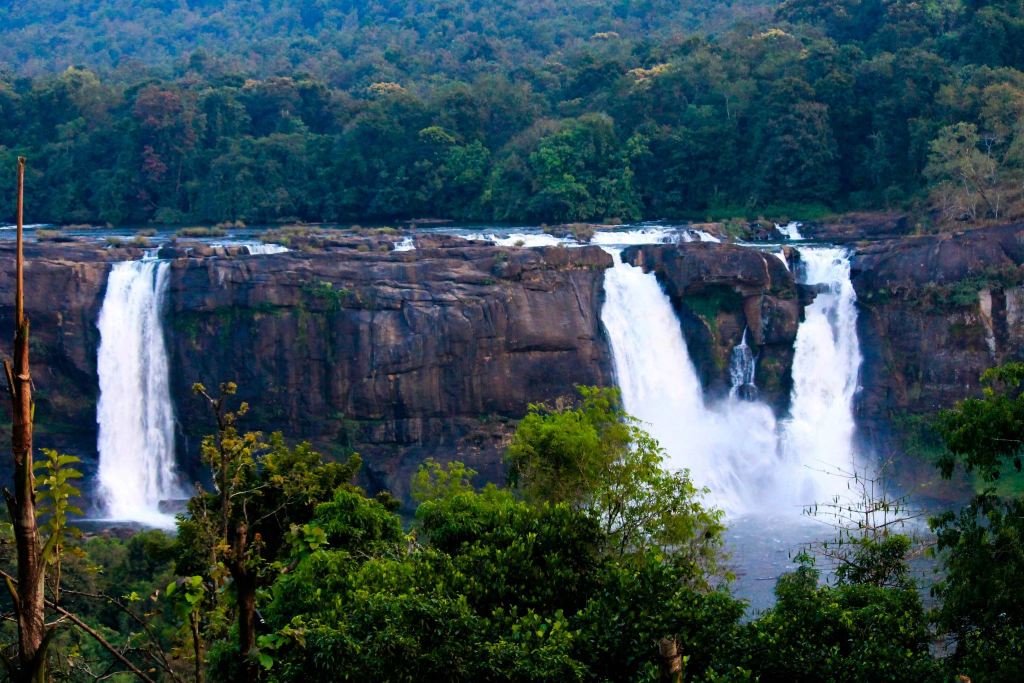
2. Athirappilly waterfalls, Kerala:

Chalakudy river cascades down a rocky gorge forming this spectacular waterfall is something that one would not want to miss on their next haunt to Kerala to explore its backwaters and canals.

Athirapilly waterfalls, Thrissur district Kerala

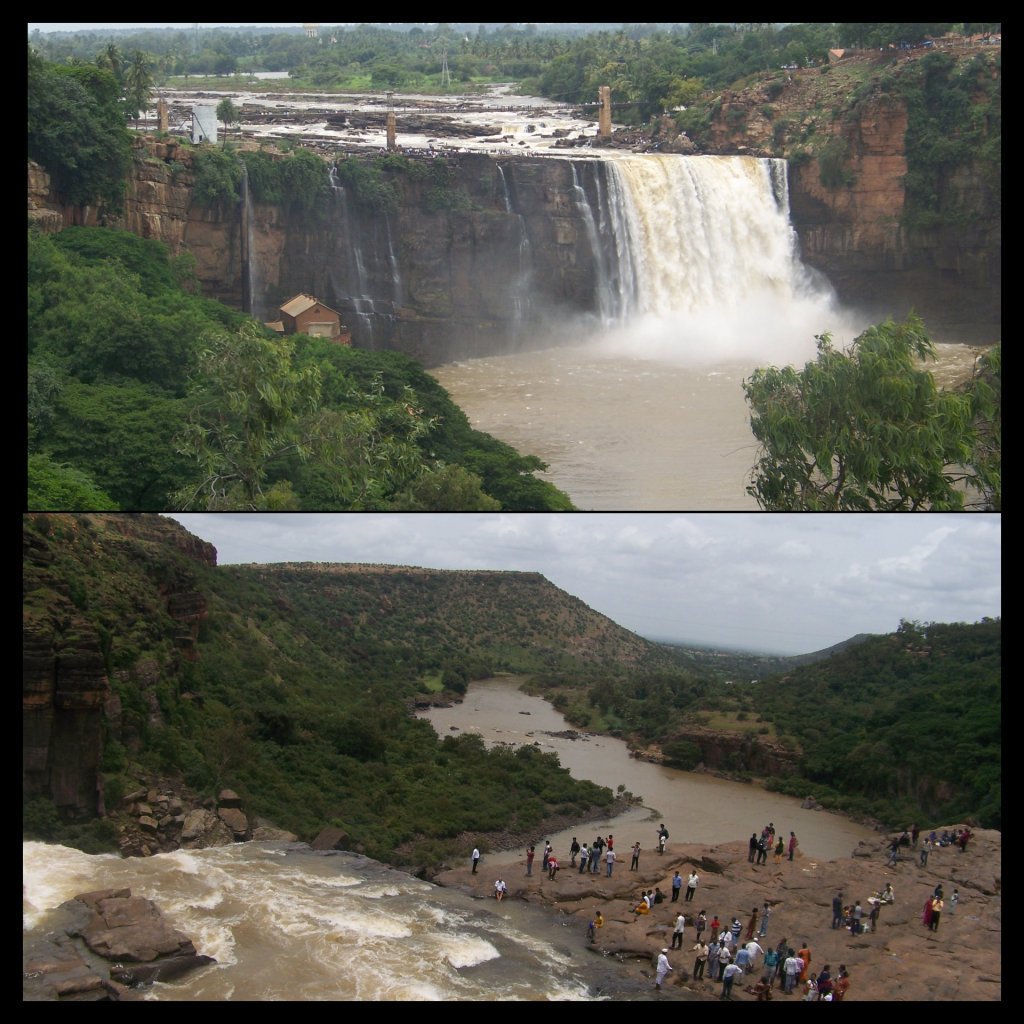
3. Gokak waterfalls, Karnataka:

Formed by the Ghataprabha river, Gokak falls is Karnataka’s best kept secret. A walk on the hanging-bridge laid right across the waterfall when it is flowing full, is an experience worth considering.

Gokak waterfalls
Above: The front view of Gokak falls from the Volkart rock view point; Below: A view from the Hanging bridge.

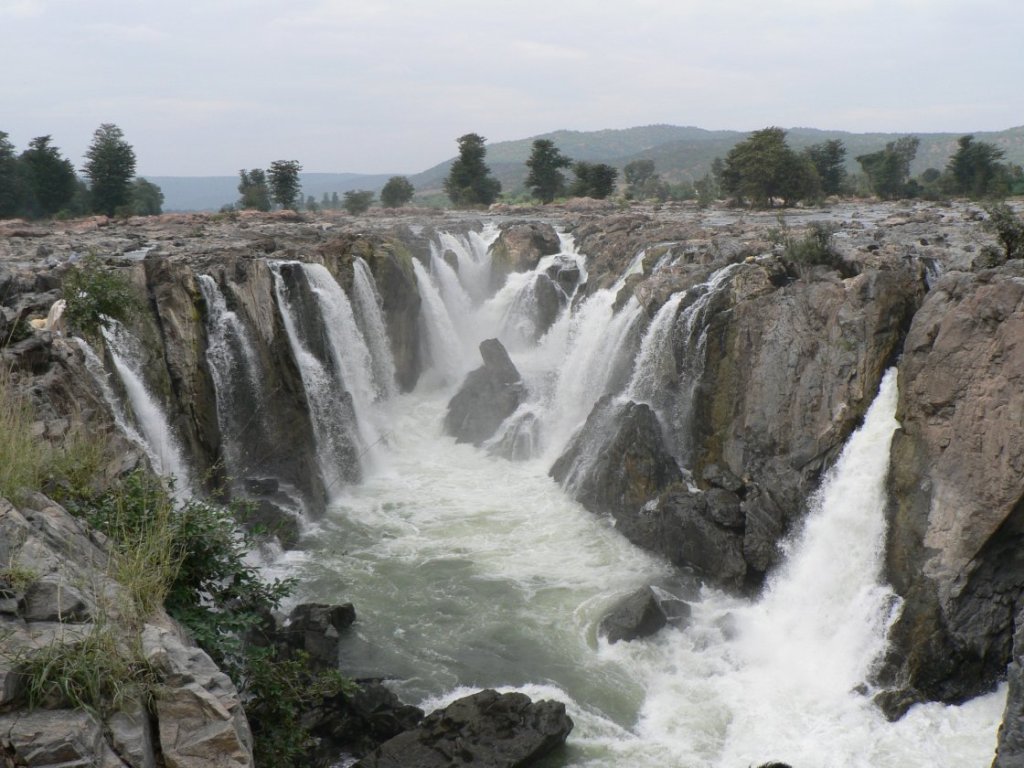
4. Hogeynakal waterfalls, Tamil Nadu:

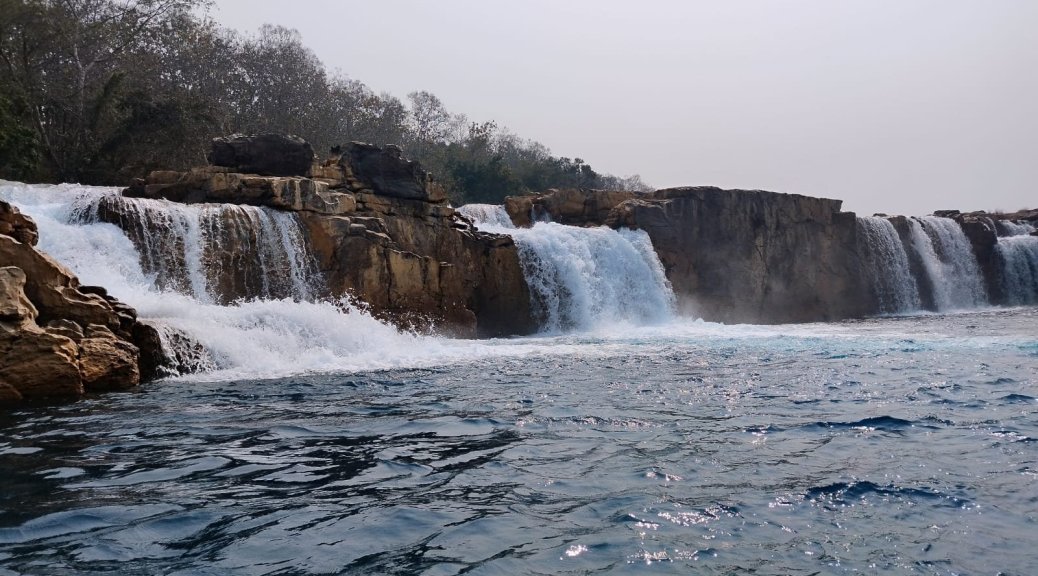
As river Kaveri enters Tamil-Nadu, she plummets down forming this beautiful waterfall where a coracle ride is highly recommended.

Hogeynakal waterfalls
The breathtaking view of the Hogeynakal waterfalls from the watch tower

5. Bogatha waterfalls, Telangana:

An unexplored beauty, the Cheekupally stream cascades down forming this waterfall that has still been off the radar of mass-tourism.

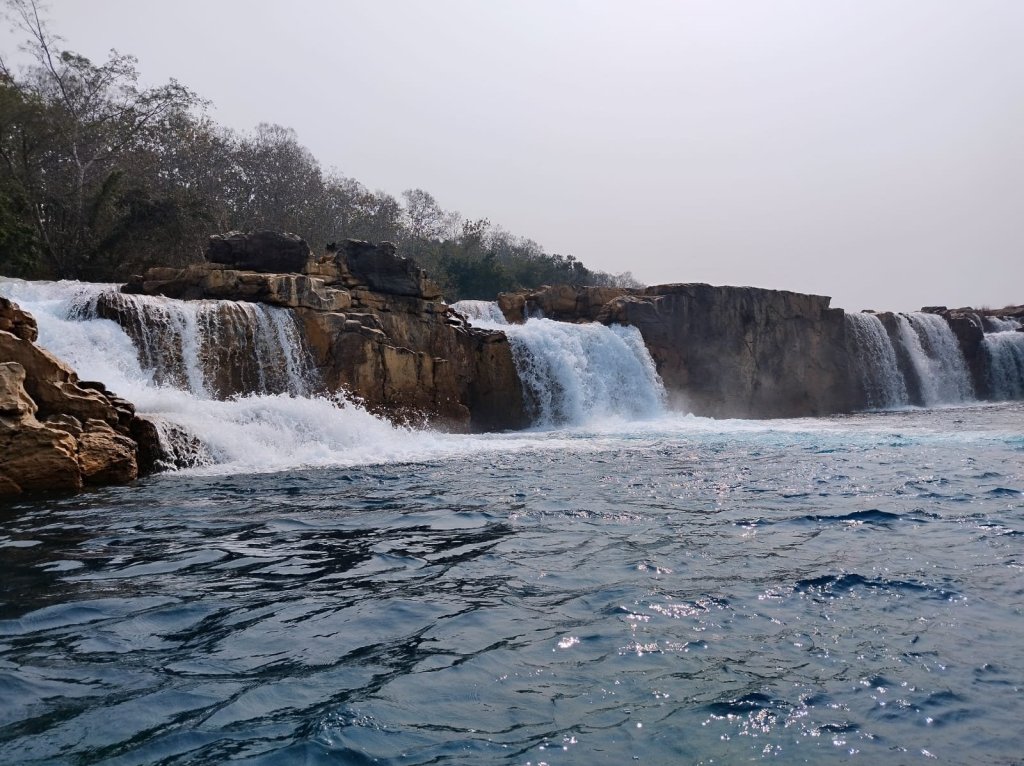
6. Panimur waterfalls, Assam:

Assam is mainly a low-land / plain area with Dima Hasao district being its only hill-station. The high altitude of the region holds some of the best waterfalls of the state as well, among which Panimur waterfalls formed by the Kopili river is its best-kept secret.

Panimur waterfalls at Dima Hasao district, Assam

7. Bahuti waterfalls, Madhya Pradesh:

Some may revere it to be the highest in Madhya Pradesh state, but I couldn’t find an equivalent in width to match this place of natural beauty which is formed by Sellar river in Rewa district.

8. Seven sister waterfalls, Meghalaya:

Thanks to its year-round rainfall, Meghalaya is a land of waterfalls, each being spectacular on its own. Talking about wide waterfalls, this set of seven-segmented waterfalls drops down a limestone cliff at Cherrapunjee which looks spectacularly wide when it is full during the monsoon-season.

9. Gira waterfalls, Gujarat:

Formed by the river Ambika, a jeep ride through a nice green landscape to reach this waterfall is what the locals recommend to enjoy this visit better.

This is my humble attempt to enlist some of the widest waterfalls, picking one from each state in India. Let me know what is the widest waterfall at where you are?

Boat ride at Chitrakote waterfalls, Chhattisgarh

Five Amazing Places to Explore Caves in India

As a high school student, I was intrigued by the terminologies called ‘Stalactites’ and ‘Stalagmites’ in my Geography curriculum. ‘These were formations of calcium deposits formed by continuous flowing of water over several years, below the Earth’s crust’, it read.

“These structures are beautiful to see. I had the opportunity to visit one of these underground caverns during my visit to France. We walked down a flight of stairs and then were taken on a boat, to see stalactites and stalagmites, underground”, my geography teacher said. Her voice echoes in my ears even today, because back then my jaws had dropped in awe wondering how beautiful the landscape and topography of the countries outside India were. I wished to see the stalactites and stalagmites someday.

Cut to today, I am so glad that time has been kind on me with so many opportunities to explore my own country, India. These opportunities have opened my senses to realize that “India is a world”. From snow to deserts, mountains to beaches, plains to rainforests, the landscape comprises of EVERY type from across the world! Based on my travels, I have seen some amazing cave systems in India. Without including the caves that have been part of India’s ‘art and architectural heritage’, here are five best places in India where you can explore caves in their natural form.

1. Meghalaya:

Top on the list, there are hundreds of caves that are open to explorers, hundreds being discovered every day and maybe thousands that are still unknown to people yet. ‘Krem Liat Prah’, India’s longest cave system is in Meghalaya.

2. Andhra Pradesh:

Borra caves’ in Andhra is the largest cave in India. A heritage railway line passes just above this limestone cave. Having such a big cave system is proof and motivation enough to know that several other caves are available in this region waiting to be explored by adventurers and tourists alike.

Inside the Belum caves

3. Chhattisgarh:

The state sitting within the mythologically important forests called ‘Dandakaranya,’ these forests are home to several limestone cave systems that are yet untouched by mass-tourism. Only about 57 caves are known to people as of now, and there is immense scope for exploring new caves. The remoteness of the places adds to the joy of the explorer while caving in Chhattisgarh. The video of exploring a cave at Bastar, Chhattisgarh is shared below.

Cave exploration at Madarkonta caves

4. Andaman & Nicobar Islands:

This archipelago and Union territory of India is one of the best kept secrets of nature enthusiasts who want to go caving. In fact, this is where I saw a stalactite and stalagmite for the first time in my life. The connectivity of these remote caves located on different islands through a channel of interconnected mangrove forests passing through pristine blue sea water makes it a memorable experience.

5. Karnataka:

While all the above cave systems I have enlisted above are limestone caves, Karnataka is home to some of the beautiful sandstone caves which are scattered across the middle and northern region of the state. Unlike underground, the caves in Karnataka are formed above the earth’s surface and give a completely distinct perspective of exploring this state, which is my home-state as well!

Rocky hills at Badami