Tag Archives: Temples of South India

A festival to celebrate rebirth- Valangaiman Padai Kavadi

It was an online link that led me to a few photographs of a rare celebration. The images were accompanied by very little write-up for me to get a clear idea about the occasion. All I could infer was that it was a festival called ‘Padai Kavadi,’ celebrated in a village called Valangaiman, near Kumbakonam in Tamil Nadu.

I reached out to a few friends from Tamil Nadu who, in turn, connected with their acquaintances from the region and gave me information that the festival is celebrated annually, on the second Sunday of the Palguni month as per the Tamil calendar. Since I had ample time, I could meticulously plan my itinerary for that weekend and wait for my arrival at Kumbakonam. I had earlier visited Kumbakonam, so I included a few places that I could not cover in my previous trip. But that is for another story. For now, the focus is on ‘the Valangaiman Padai Kavadi festival.’

What is the festival about?

For a South Indian in general, one might think the Kavadi festival happens in every other village during this season. So, what got me curious about this place? Well, this Kavadi festival at Valangaiman celebrates the rebirth of a person. As per the local belief, people suffering from smallpox (still considered a deadly illness in most parts of India) make a vow at the Sri Padaikatti Maha Mariamman temple to perform the Padai Kavadi if cured. Once completely cured, they believe they have seen death and returned. Therefore, the convalesced person is made to lay on a bier or a handbarrow, lifted and carried by pallbearers, and the entire ceremony or the ritual of a traditional funeral is conducted as if he/she were dead.

There are primarily two types of biers. One, a simple yellow cloth tied to a bundle of sugarcanes or a single sturdy bamboo that is used as a cradle for kids and carried by two men on either end; second, a handbarrow with two bamboo culms knitted together with coconut fronds on which an adult convalesced is carried by four men. The adult bier is made more elaborate and decorative depending upon the interest and financial status of the person offering his vow.

Valangaiman Paadai Kavadi festival
An adult-female laying on a bier at Valangaiman Paadai Kavadi festival

I was told that three sister goddesses are living (at dedicated temples) in parallel streets of the village. The kavadi (usually body piercings or holy water carried in decorated pots on heads) is offered as vows to all three sisters, but the Padai Kavadi (the resumption of the dead, celebrated by sleeping on a bier) is offered only to Sri Padaikatti Maha Mariamman, the second among the three sisters, during the auspicious day of Palguni month.

Valangaiman Paadai Kavadi festival
A child being carried on a bier at the Valangaiman Paadai Kavadi festival

What happens on the festival day?

The procession of the convalesced people lying on biers starts early morning, mostly to avoid the noon sun. One can find hundreds of devotees who gather either at the small shrine of Vinayakan on the banks of the river Kudamurti or at a dozen makeshift temporary shrines set up by various local priests on the dried riverbed. Here, the bier, the person supposed to lay on it, and the respective kith and kin assemble for the rituals. Each person offering their vow is made to sleep on the bier after their family deity is invoked. Their eyes, nose, and mouth are closed with yellow cotton fabric, hands and legs are tied together as if those of dead people lying in coffins. Holy water is sprinkled around, and all the people gathering touch the feet of the sleeping person to take his/her blessings before the pallbearers carry them for the procession towards the Mariamman temple. For as long as a convalesced person is sleeping on the bier, he/she is treated equivalent to God as they are someone who has neared death, seen God, and returned. Then, a person carrying a clay pot with burning wood and incense leads the procession, and one with a pot full of water trails them, all being accompanied by drumbeats and flower throwers.

Valangaiman Paadai Kavadi festival
A funeral entourage going towards Padikatti Maha Mariamman temple

The procession circumambulates the Mariamman temple thrice, and then the bier is lowered down in front of the temple. Rituals are performed, post which the person descends from it and goes inside the temple to see the goddess and complete his vow. This is about the Padai Kavadi for people who survived death.

Valangaiman Paadai Kavadi festival
An adult man being carried on a bier at Valangaiman Paadai Kavadi festival

However, people who have suffered other ailments also make vows to offer a replica of the body part/ organ that has been cured through their prayers to Mariamman. One can see models in clay or silver, like eyes, legs, hands, etc., being sold around and offered by people at the temple, depending on their cured illnesses.

Apart from this, one can also see several people with various kinds of body piercings walking on the road (which is also a form of Kavadi) and circumambulating the three sister temples to offer their vows and prayers. A man suspended from a crane with his back hooked with metal loops and circumambulated around and in front of the temple, some men with full torsos pierced with lemons, long and heavy tridents passed through both cheeks, etc., were some of the unique and different Kavadi offerings I witnessed here. A detailed post of a dedicated festival of body piercings called ‘Mayana Kolai’ is available on my blog for further reading.

Valangaiman Paadai Kavadi festival
Body piercings at Valangaiman Paadai Kavadi festival

After all the kavadi offerings are over, the presiding deity, Goddess Padaikatti Maha Mariamman, is then brought out of the temple by around 03.00.p.m. on a procession. Around that time, cattle (goats and sheep) and poultry donated by the devotees are tied to another central post that is erected in front of the temple and suspended up and down with their bodies held firmly in the center. I could not gather sufficient information about the significance of this ritual, but I would be glad to learn from any of my readers here.

Valangaiman Paadai Kavadi festival
A devotee with body piercings; Also the wooden post used to swing cattle hoisted infront of the Padikatti Maha Mariamman temple

The festival then culminates after the deity returns inside the temple.

Valangaiman padai Kavadi festival

India’s largest Cattle fair- Anthiyur Gurunathaswamy temple

When a friend mentioned taking a road trip to a fair at Anthiyur village, neither of us had many expectations. What can one expect at a village festival in India, after all? All that we had learnt before commencing our road trip was that it was a cattle fair, which was held as part of the annual festival of the Gurunathaswamy temple at Anthiyur village. Supplemented by a handful of YouTube videos in Tamil, we decided to take the long drive from Bangalore to spend a weekend.

We started from Bangalore before dawn to reach Anthiyur at the earliest and get sufficient time to see all the cattle stalls before returning. But only to our surprise, the scale of this temple village fair was anything beyond our imagination. Neither of us had seen or heard of a small village festival to be of such a large scale and spread.

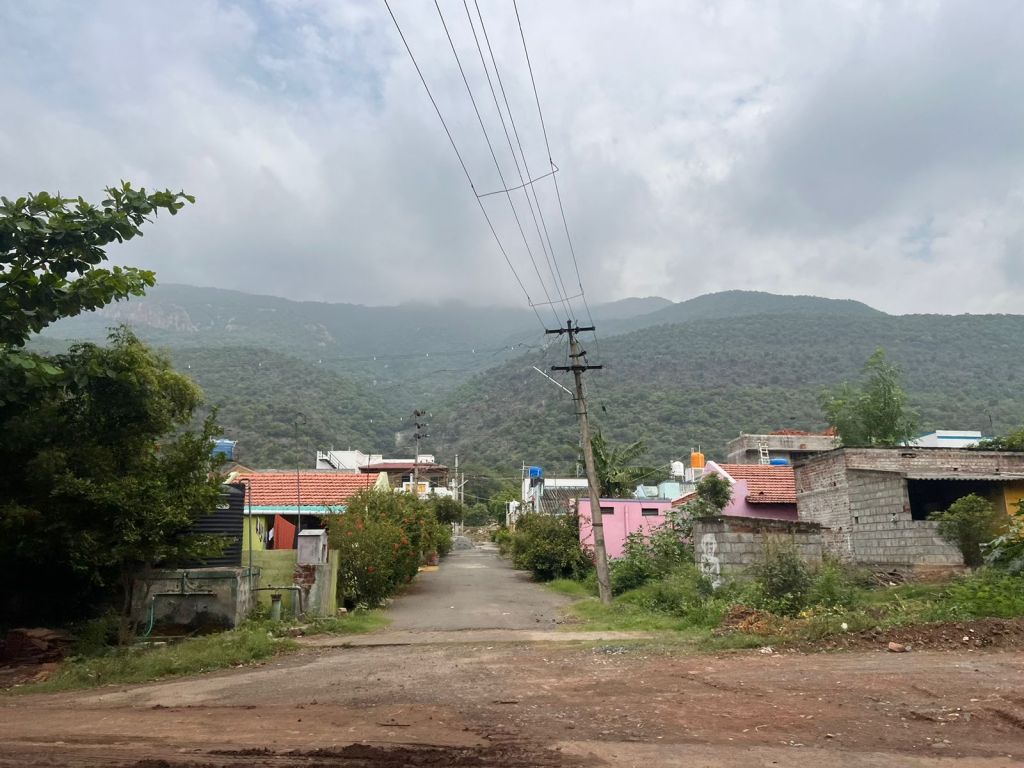
The beautiful hills around Anthiyur village

The story dates to around 600 years, when there lived a clan near Pichavaram forest, that worshipped three stones known as ‘Kutty Aandavar’ (translates to ‘Small God’, in Tamil). The local ruler wanted to marry the priest’s daughter. However, the priest’s family was against the marriage proposal. Meanwhile, one of the members of the priest’s clan gets possessed by their deity’s spirit, and the family is told to abandon the village along with the three prayer stones to avoid the outrage of the ruler’s anger. Following this, the family started to move north until they found a safe place to settle down. At some point, the family felt that their survival was going to be difficult and that the stones being carried by them were an additional burden. Hence, they continued their journey by throwing the stones into a nearby pond. They halted at Anthiyur for the night.

On the following morning, Santhakumaran (one of the family members) was surprised to find the same three stones back in his bag. They realized the powers of their deity and resumed worship of the stones by giving them three different names. The first stone was called Kamatchi, the second one was Perumal (Vishnu), and the last one was Gurunatha Swamy (a combination of Shiva and Kantha).

During the festival, three deities are taken on a procession from the main shrine at Anthiyur village to a temple in the nearby forest. As per mythology, a demon is believed to have occupied the forest in which Goddess Kamatchiamman wanted to reside. A fierce war was then fought between Veerabhadra (the warrior assistant of the Lord, protector of Kamatchi-amman) and the demon, in which the demon eventually surrendered. It is said that instead of leaving the forest, the demon requested lord Gurunathar to allow him to stay there on a condition that Kamatchiamman came there once a year to visit him. However, Veerabhadra agreed to this on the condition that he, too, was allowed to stay in the same forest. This temple is today called Vanakovil (translates to ‘Temple in the forest’ in Tamil), where Kamatchiamman is brought in a palanquin from the main temple.

The current temple structure is believed to have been built by the Pandya kings. The Gurunathar temple houses an 11*11*11 feet kulukai. A kulukai is a large earthen storage container mainly used for storing food grains, with a large opening at the top (to fill the container) and a small vent at the bottom (to take the grains out for consumption). It is believed that the kulukai in this temple is used to store the jewels and other items related to worship, and is guarded by snakes. Only the head priest is allowed to enter the container and access the stored things, and is unharmed by the guarding snakes. Therefore, this kulukai is worshipped by the local people and it is believed to keep them safe from reptiles, scorpions, etc.

The month-long temple festival held during the Aadi month of the Tamil calendar hosts a range of unique rituals and celebrations during this time. Temple cars built for each deity are prepared and managed by the respective caste of people. Two large, towering, nicely decorated temple cars (the largest is of Gurunathaswamy and the smaller is of Perumal Swamy) are pulled by thousands of devotees who gather from across the nearby villages, from the main Gurunathaswamy temple to the Vanakovil and back. Today, animal sacrifice is practiced in Vanakovil.

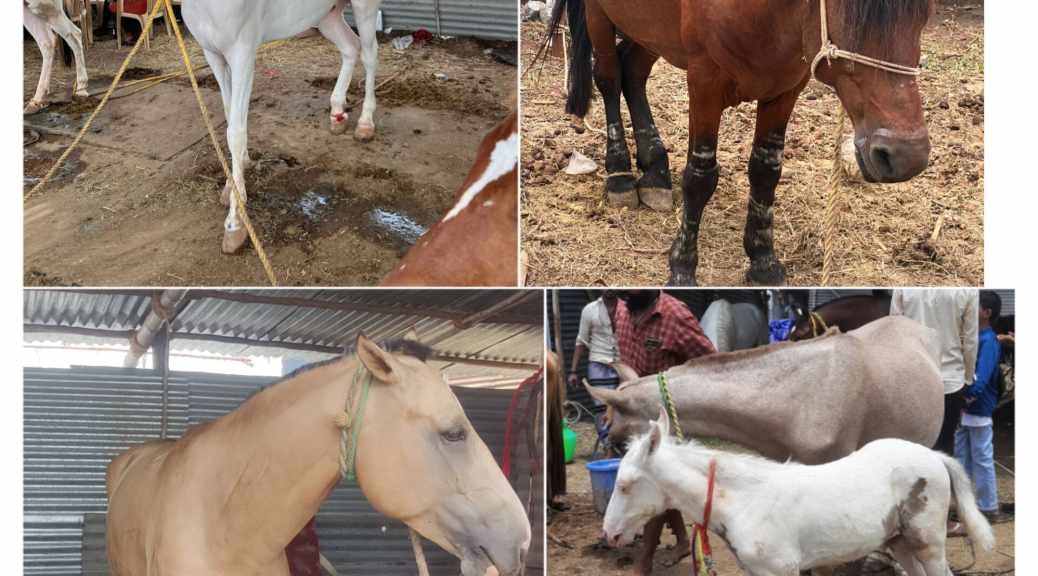
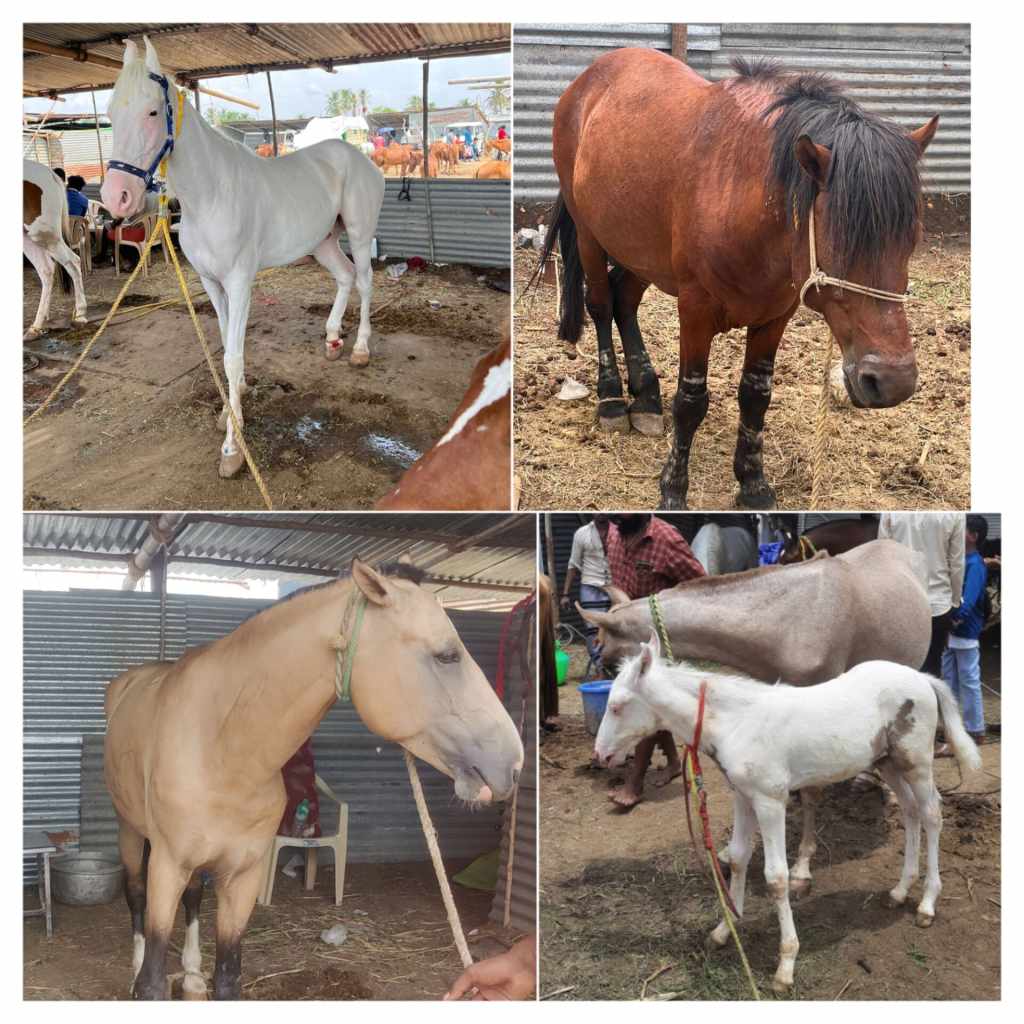
A four-day-long cattle fair is, however, the highlight of the festival for which people come from across the districts of Tamil Nadu and the states of India. There are only two cattle fairs held at this scale in India. First, at Anthiyur (more popular for the horse fair) and second, at Pushkar in Rajasthan (Primarily a Camel fair). The history of the ‘Kudurai Santhai’ (the Horse fair) dates to the times when Tipu Sultan was the ruler of Mysore. He visited this cattle market to buy the best horses for his cavalry and sold his horses that were no longer fit for battles.

It has, over time, gained popularity among horse enthusiasts across the country who consider buying horses from this market as a matter of pride and prestige. The cost of each horse can range anywhere between 50 thousand to 50 lakhs rupees. Today, apart from buying and selling horses at the ‘Kudurai Santhai’, many horse owners come here to simply display their prized possessions. One gets to see stallions, mares, sires, and ponies of various native indigenous and pure breeds here. Some horses are made to perform to drumbeats and kept on exhibition. On the last day of the four-day-long ‘horse fair’, Geegees are judged based on their structure, build, and looks, and finally, awards are given away. On the day we visited in 2023, there were over 1000 horses at the fair brought in for various purposes.

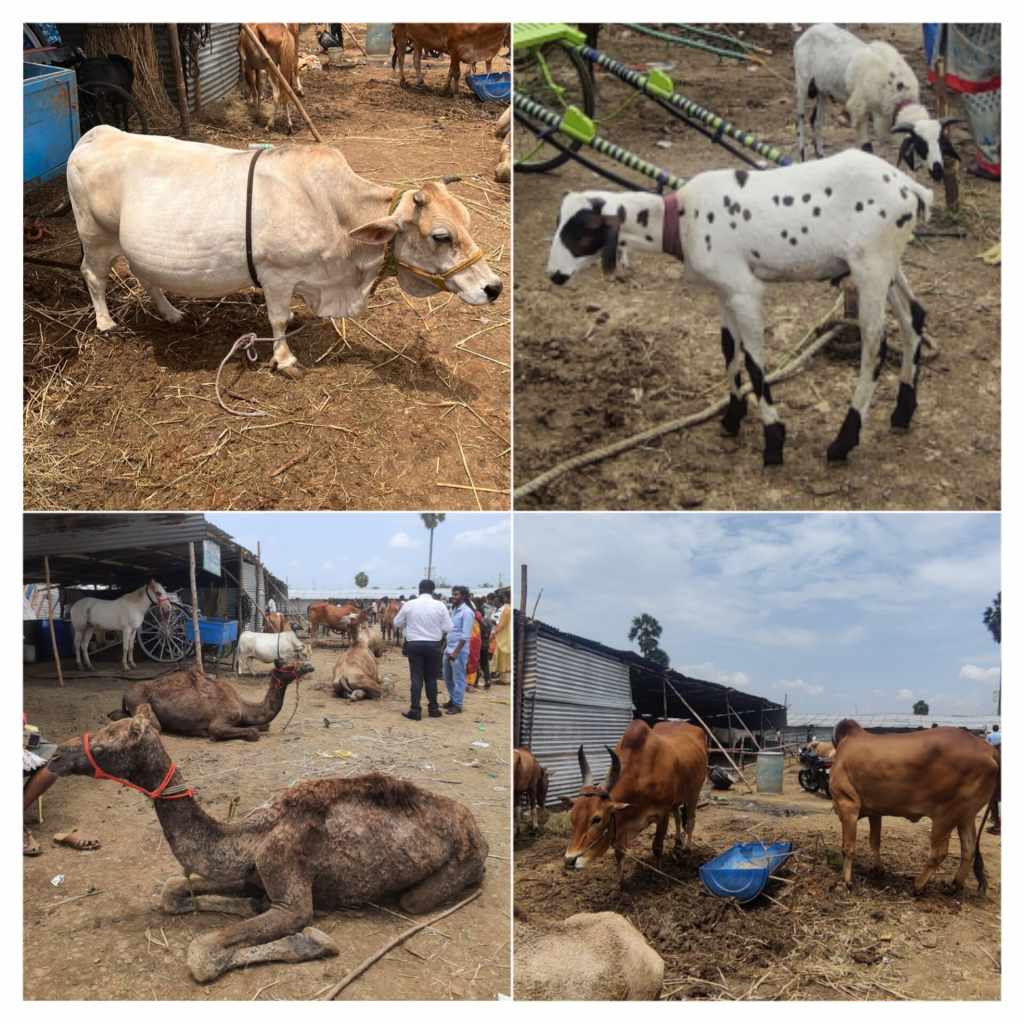
All accessories, equipment, and other things that are associated with horse-keeping and equestrian training can be found and are sold here. Apart from horses, this fair is also the largest marketplace in India for other breeds of cattle and livestock like cows, goats, sheep, camels, rabbits, dogs, and birds. With encouragement given to native breeds, it is a great experience to see cattle across the 34+ acres of land.

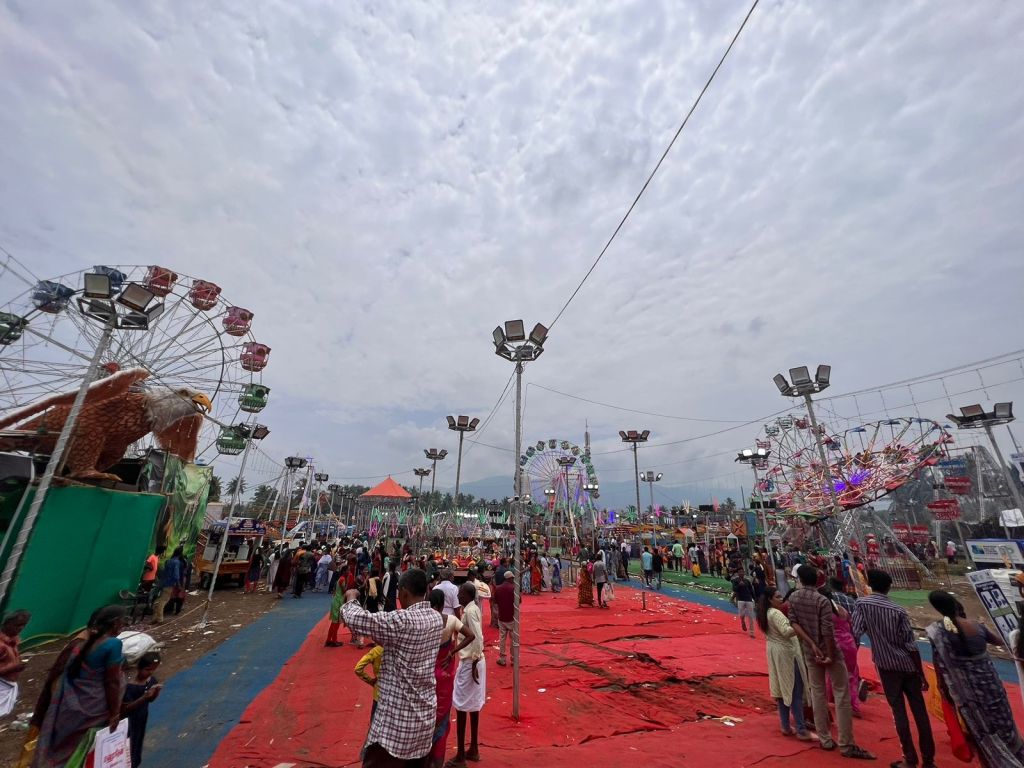
To supplement the cattle markets, there is a makeshift amusement park set up, which is also by far the largest makeshift amusement park I have ever seen. Over ten giant wheels, rollercoasters, circus tents, and at least three globes of death are set up among several other types of amusement rides. The energy and ecstasy of this fair is all together only to be witnessed rather than to be read about.

Anthiyur festival
The makeshift amusement park at Anthiyur festival
  • Bamboo staff- You will find people buying them, as it is considered auspicious to keep this weapon of Gurunathar Swamy at home.
  • Colorful horse whips
  • Horseshoes- this is believed to absorb negative energy if hung at the entrance of houses.

Disclaimer: This article is posted to document folklore and lesser-known festivals of India. If any mistakes are found, it could be based on what was heard as stories. Kindly comment below or message directly for any corrections required.

Weekend Drive- Biligundlu Ranganatha Swamy Temple

Another weekend and another offbeat destination. This time, we found a temple on a small hillock in Dharmapuri district of Tamil Nadu. In my earlier post about Hogeynakal waterfalls, I have elaborated on how river Kaveri marks the boundary between the two states of Karnataka and Tamil Nadu. This post is somewhat related to the same connection. Because the history of the temple that we were planning to visit this weekend is rooted on the other side of the river, on the fertile plains of Karnataka.

The original Ranganatha swamy temple dating to the Cholas or the Vijayanagara era (as described by the locals) was on the Karnataka side. The stone structure of the temple is present even today (we hope to visit the structure on another weekend trip). The idol of the deity was destroyed by the British (which needs fact checking) and then, a new idol was reinstated on the Tamil Nadu side of the land where it stands today. The Ranganatha Swamy temple that we were heading to is in Biligundlu village and hence the name. The idol of the deity is carved out of a rock which is part of the hill overlooking the river.

On a summer day, when the water levels in the river are low, one can walk across to the other bank. Whereas, when the river is flowing full, the roads leading to both the old and the new temples are long ones. The old location is reachable via MM. hills in Chamarajanagar district of Karnataka, and the new temple is reachable via Anchetty forests in Dharmapuri district in Tamil Nadu.

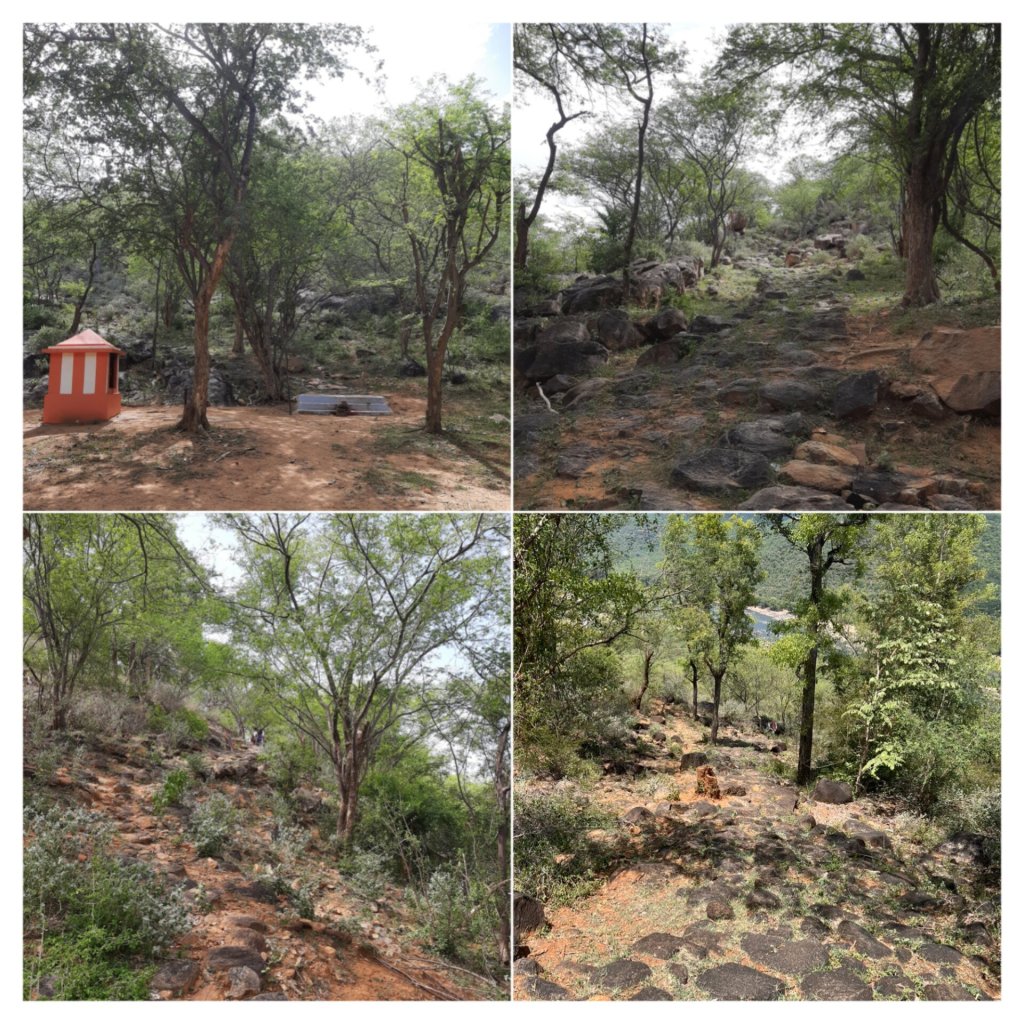
The trail to Biligundlu Ranganatha swamy temple

Anyway, coming back to this weekend, we started early on a weekend morning along the Anchetty forest leading to Hogeynakal waterfalls. We skipped the highway restaurants and stopped by a small local restaurant in Anchetty town for breakfast. It was a good decision as the experience was good with local food and the local atmosphere.

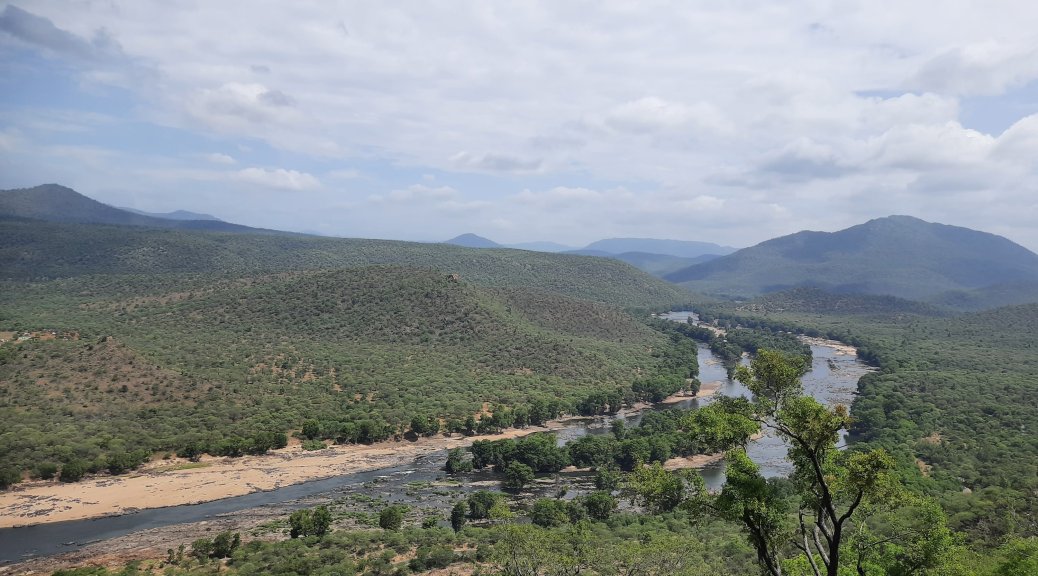
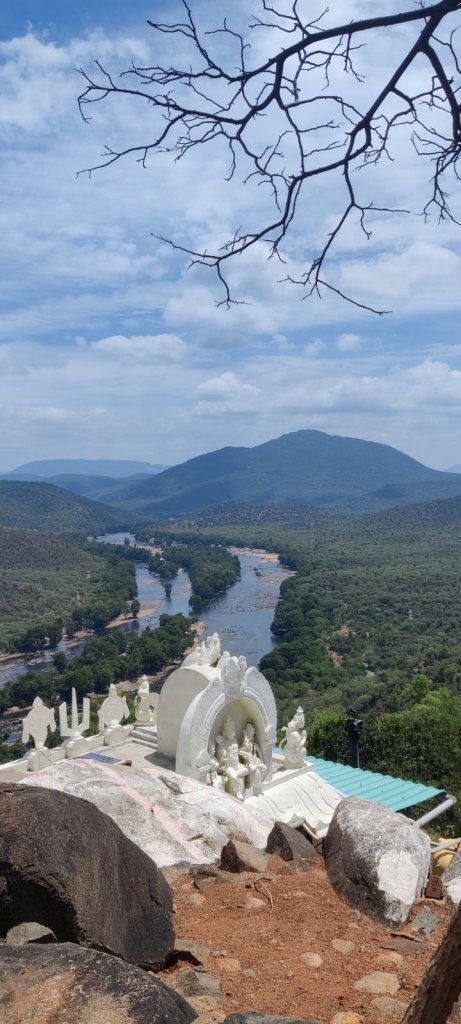
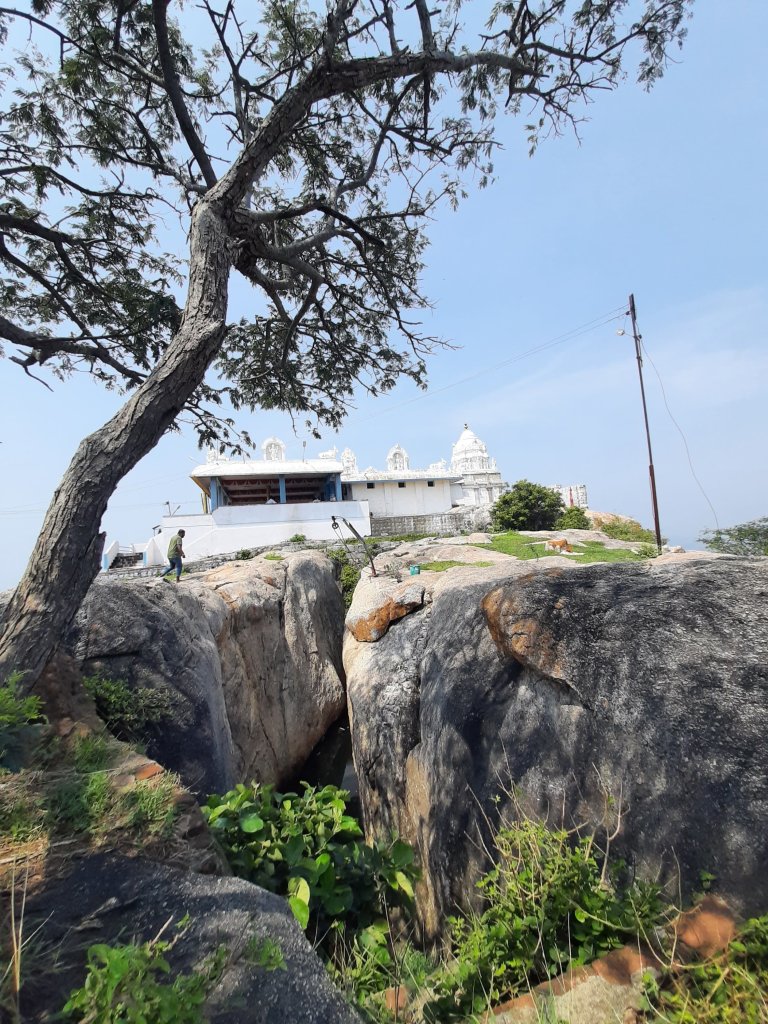
A few kilometers after the Biligundlu cemetery and few kilometers before Hogeynakal waterfalls, we stopped by at a location where river Kaveri flowed onto our right and a tiny structure of brick and mortar was built onto our left… We parked our vehicle there and started our short hike up from there. A properly laid stone path is there all the way to the hilltop which took us around half an hour to hike. The views of the river and hills around were just amazing all the way.

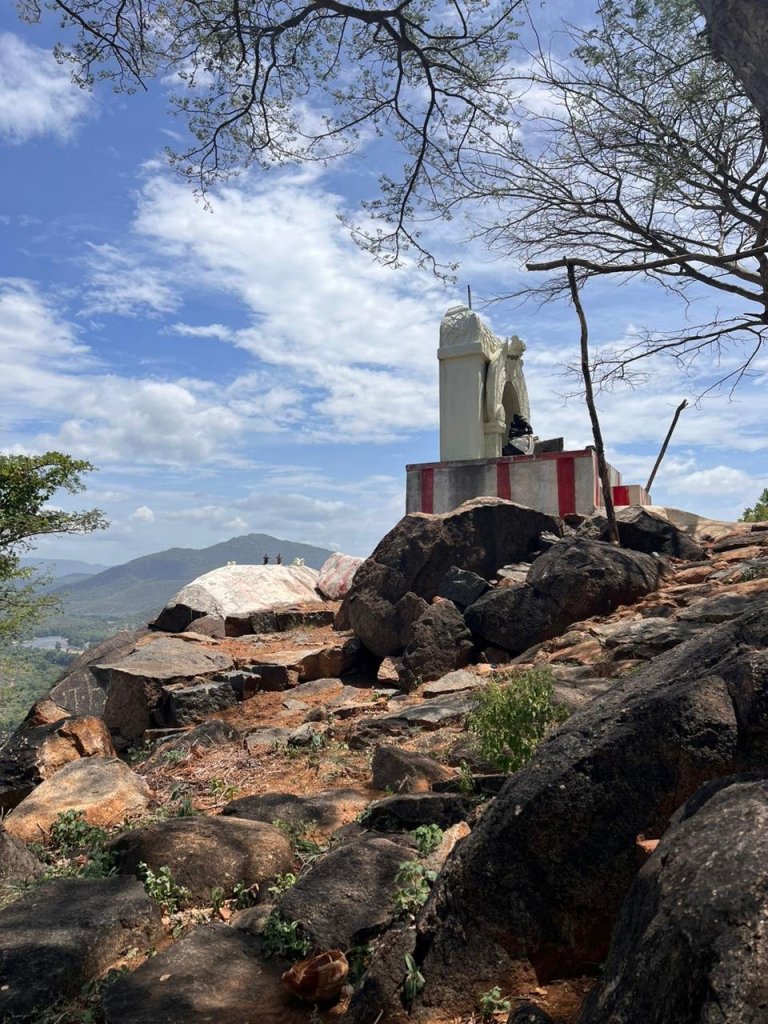
The Ganesha idol at the peak of Biligundlu Ranganatha swamy temple hill

First, we were greeted by an idol of Ganesha sitting under the tree at the peak. This spot gave a splendid view of the river and the hills beyond. We sought Ganesha’s blessings and proceeded to the Ranganatha temple located below, connected by a short flight of stairs. The temple was closed by the time we arrived. However, we could see the idol through the meshed gate. After offering our prayers, we found a spot adjacent to the temple wall and sat there to soak in the beauty of the place. The view of river Kaveri flowing with a backdrop of green rolling hills looked amazing even as the winds caressed our faces. It was a beautiful place, indeed!

View from Biligundlu Ranganatha swamy temple
View from Biligundlu Ranganatha swamy temple; Photo Credits: Sugan @ TheBuffalorider

We headed back after a while and decided to take a dip in the shallow waters of the river to beat the summer sun. A word of caution if you plan to get into the river, that there will be a sudden drop in the depth at many spots and it is believed to have whirlpools as well. We stayed by the shores before calling it a day after a while.

Other nearby places to visit:

Weekend Hike- Bala Kodandaraya Swamy Temple

Although this destination is a recommendation for weekend and day hikers of Bengaluru, it is in Krishnagiri, a district bordering the two states of Karnataka and Tamil Nadu.

The views from an ancient temple had caught the attention of my friend and me, who are always in the look out for less crowded and less explored landscapes and places with cultural and historical importance. One such place was the ‘BalaKodandaraya Swamy temple’ whose history dates to the Vijayanagara era. Based on our online research, we found out that getting to the temple involved a short hike.

We started early on a Saturday morning by car. We had our breakfast along the way, in one of the several restaurants on the Hosur highway. From there, we followed the route on Google maps to reach our destination. A steep deviation to the left of the highway led us through villages. There were asphalted roads and good views of the surrounding hillocks for as long as the road passed through villages. The last couple of kilometers were through unpaved muddy roads passing through a slight forest stretch. We finally arrived at a small open space where we parked our car, at the base of the temple hill.

The forest trail
The trail through the forest cover, starting from the base to the temple arch

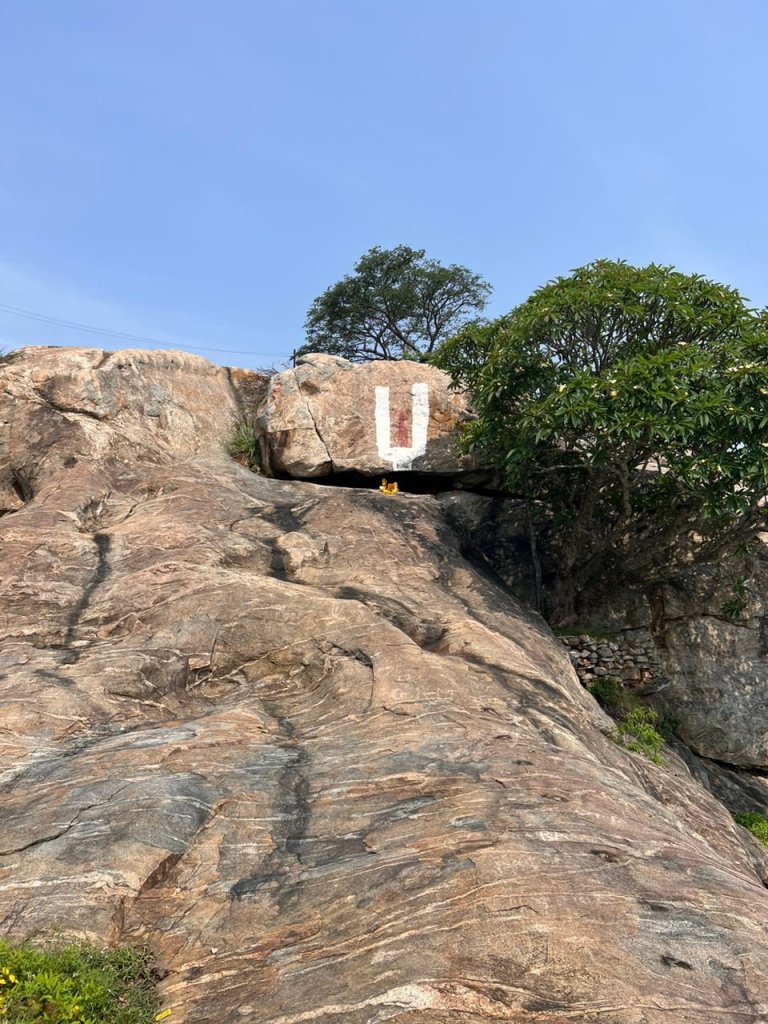
There was a small structure of brick and mortar (gudi) at the base, from where a flight of stairs led to the hilltop. People lit lamps, agarbattis and camphor here before starting their ascent. It took us about half an hour’s climb along properly laid stone steps leading to the top. These stone slabs bear the names of the devotees who have donated them and the count of their donations on each step. The ascent curved around at multiple places and offered amazing views of the valley below at every turn. The first half of the climb had a forest cover and large boulders on both sides, until we arrived at the welcome arch of the temple.

The path towards the left of the trail, towards the temple

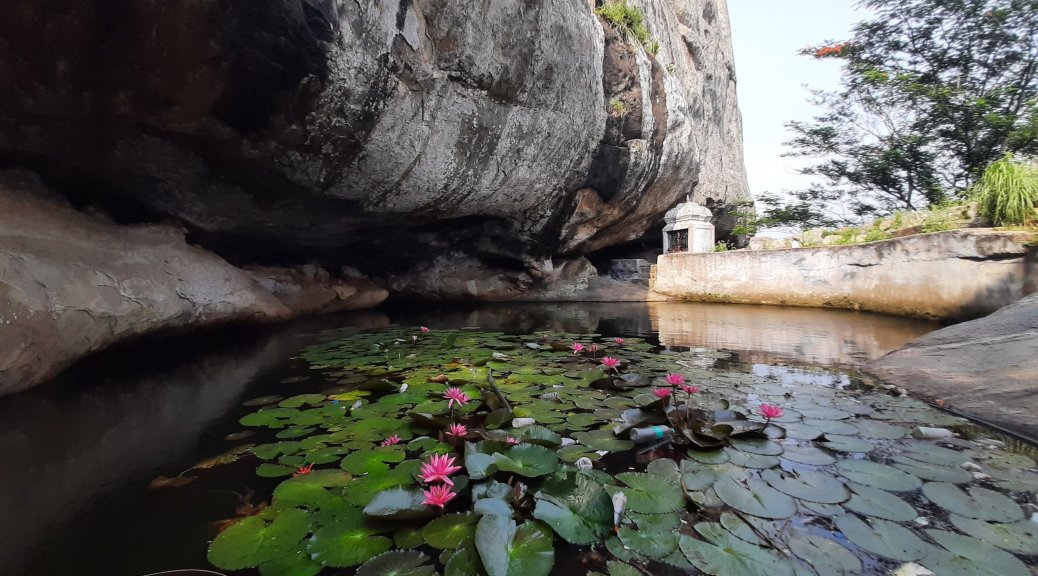
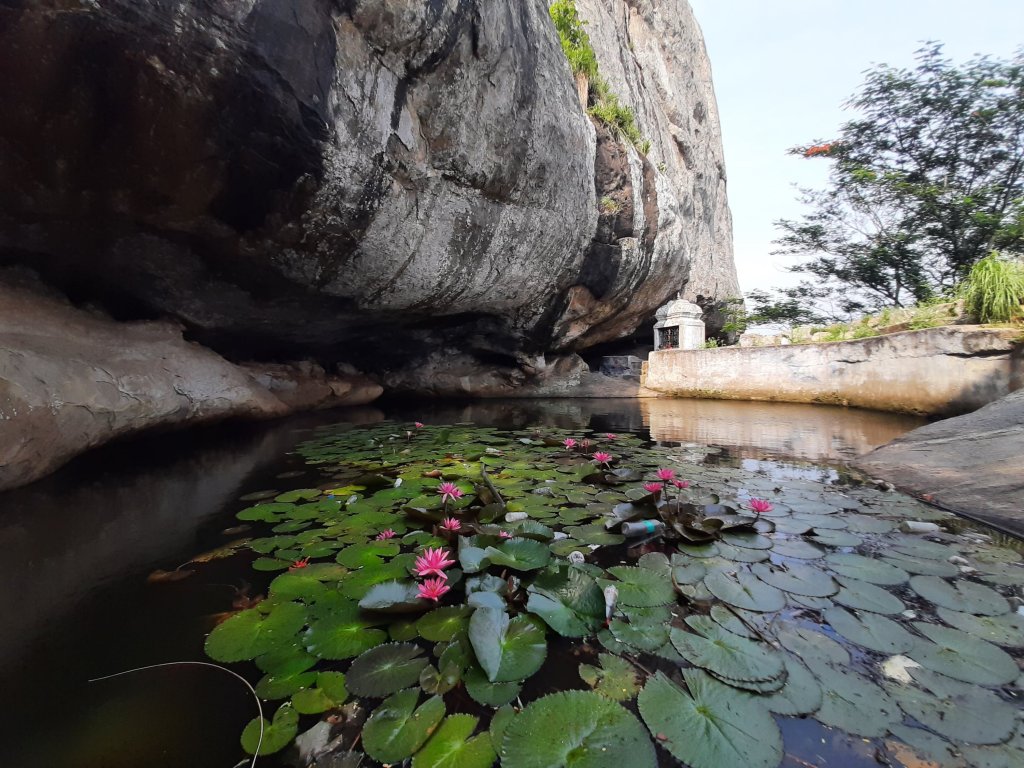
The forest cover ended after a few steps further from there and opened to a panoramic view of the valley of the villages and farms below. As one stands on a large rocky outgrowth, you will find the trail split into two paths. One, straight down through some Gulmohur trees. Second, up towards the temple. We decided to first walk the trail going straight. A few yards from there, the trees made way to a beautiful pond of pink lilies, dug right beneath a large rocky monolith. We later realized that devotees take a dip in this pond before proceeding towards the temple.
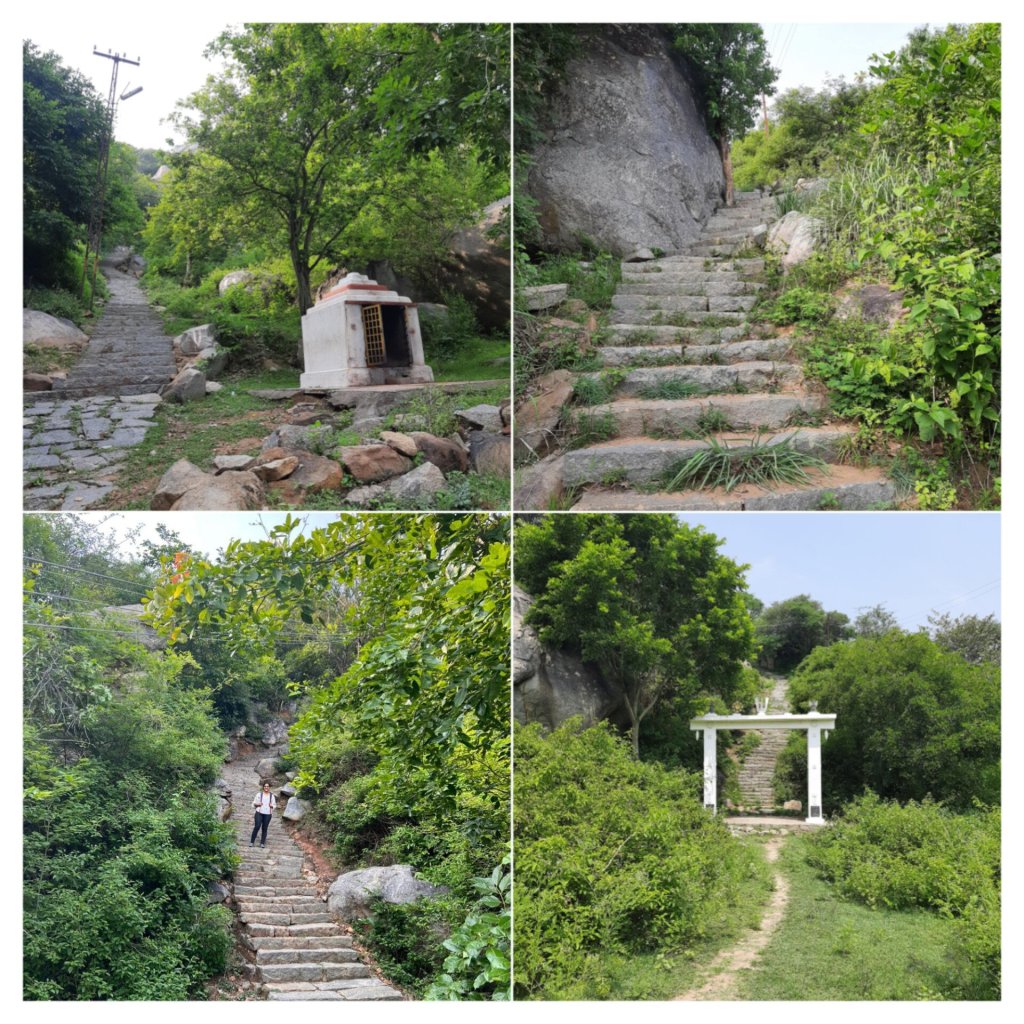
The path towards the right of the trail, leading to the temple pond

The view of the valley from there and the magical vibe of sitting by this pond of lilies could not let us go easily from there. My friend settled on the banks, with a book to read. Although the water was heavily littered with plastics, it was still a super calm spot to soak in some good energy. After spending a while, we then headed towards the temple, located on the peak of the hill, a short walk away. There was a panoramic 360 degrees view of Hosur and Krishnagiri from the temple, the green cover around, Krishnagiri dam and the Then Pennai river. The temple priest arrived much later at around 10.00.a.m. for the daily prayers.

Balakodandaraya swamy temple, Krishnagiri
Balakodandaraya swamy temple and the cleft for drawing water

Surprisingly, a small cleft in the rocky hill serves as a perennial source of potable water for temple use. The people who had gathered there by then, helped the priest in drawing water from this cleft and clean the temple premises before offering the day’s prayers. We sat there for a while and decided to head back to the base before the sun took over the skies and heated the rocks around. Overall, it was an incredibly beautiful place for a short trip from the city.

Other nearby places:

If you are looking at making it a full day trip, then you can explore the nearby places that include:

The Hoysala Trail 2- Belavadi

In my wish list to visit as many Hoysala temples as possible in this lifetime, this is the second documentation. I started this series with the temples of Belur and Halebidu, as these were the erstwhile capital cities of the Hoysala. I will move on from there.

Continued from The Hoysala Trail 1- Belur & Halebidu

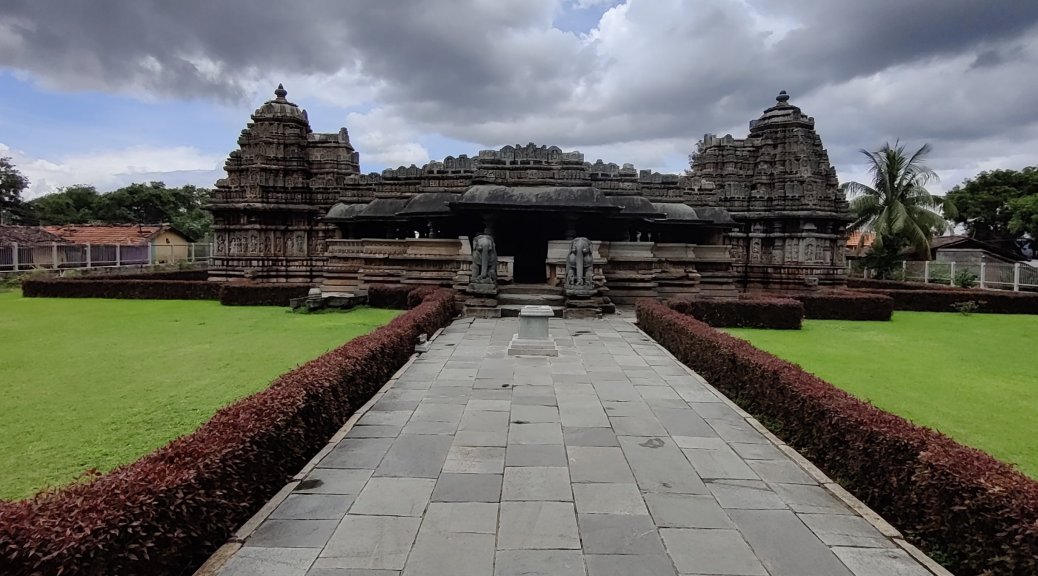
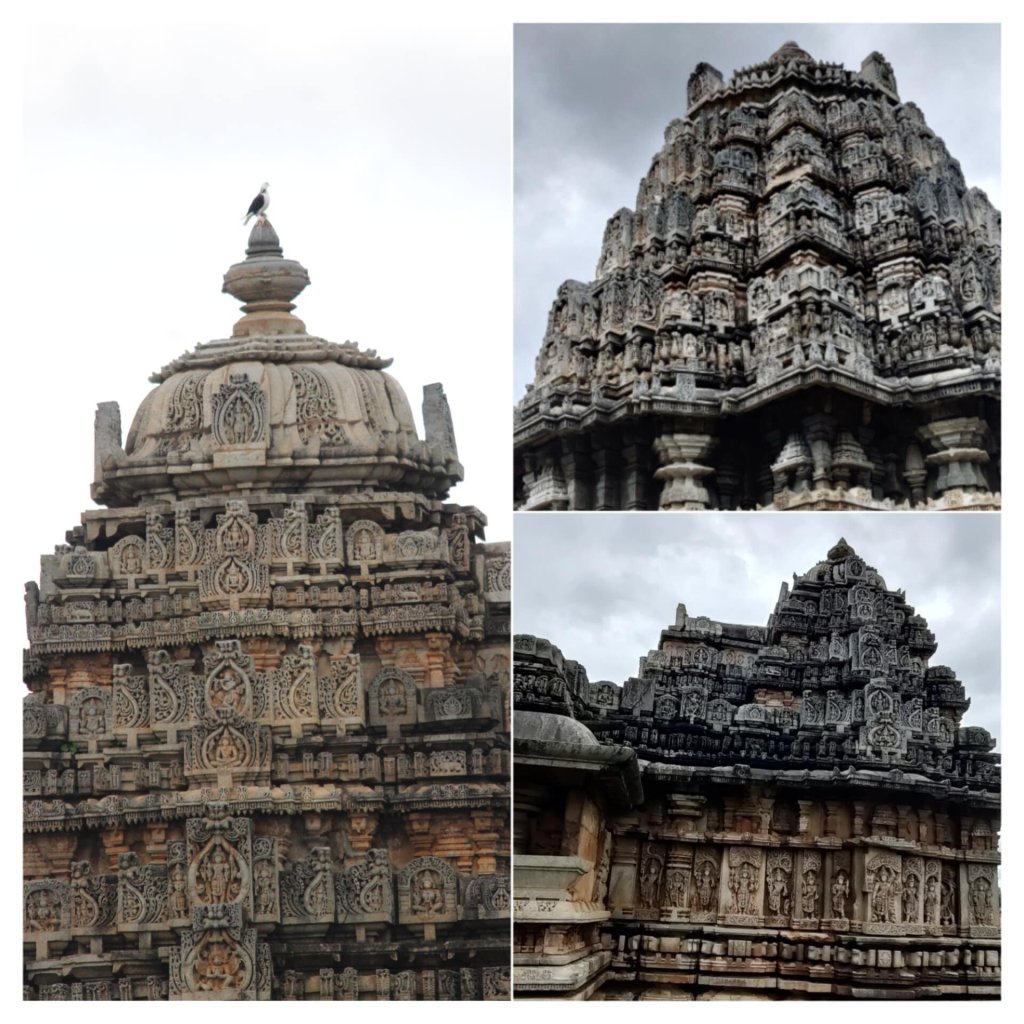
Belavadi is a quaint little village located approximately an hour away from the Hoysala capital town, Belur. The Veera Narayana swamy temple of Belavadi is one of those where the main idol of the presiding deity is still intact and regular prayers continue to be offered. The intricacy of the artwork on stone is very similar to that of the temples at Belur and Halebidu.

Veeranarayanaswamy temple, Belavadi
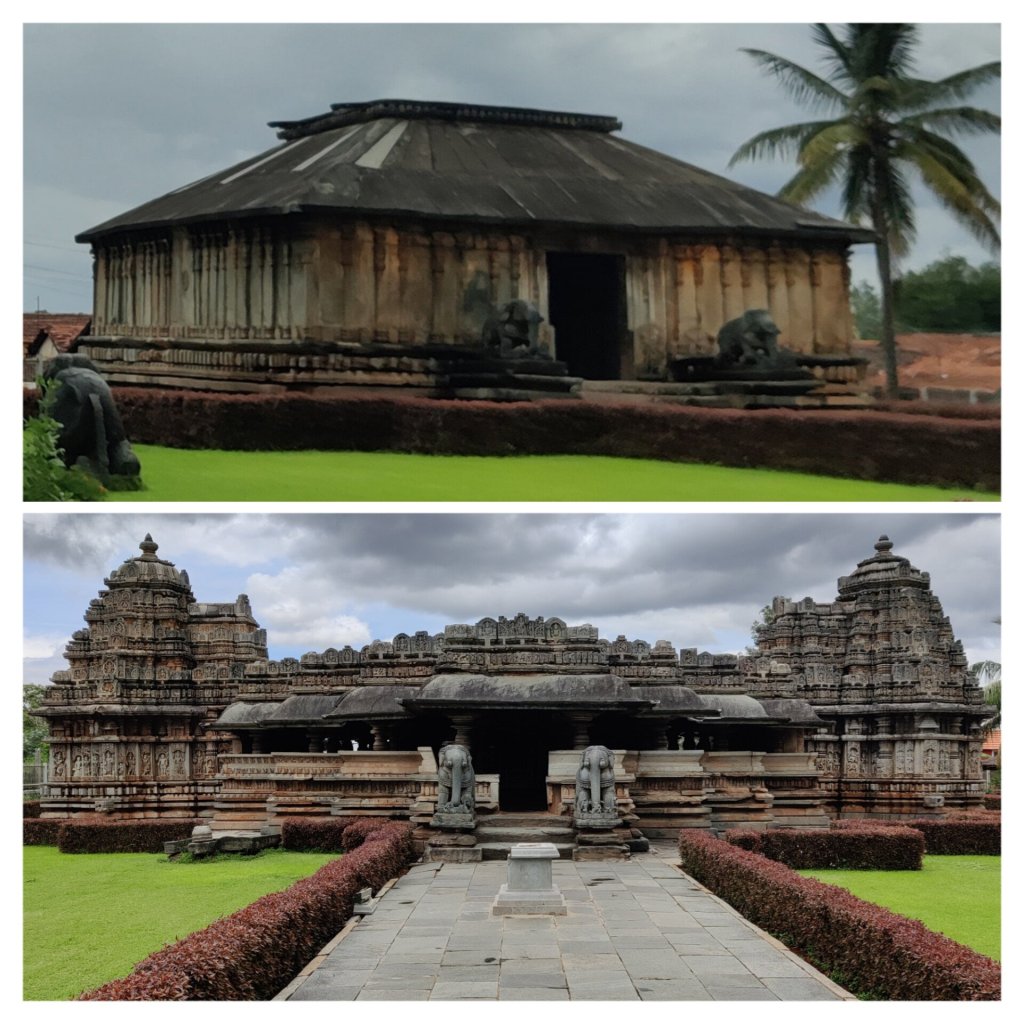
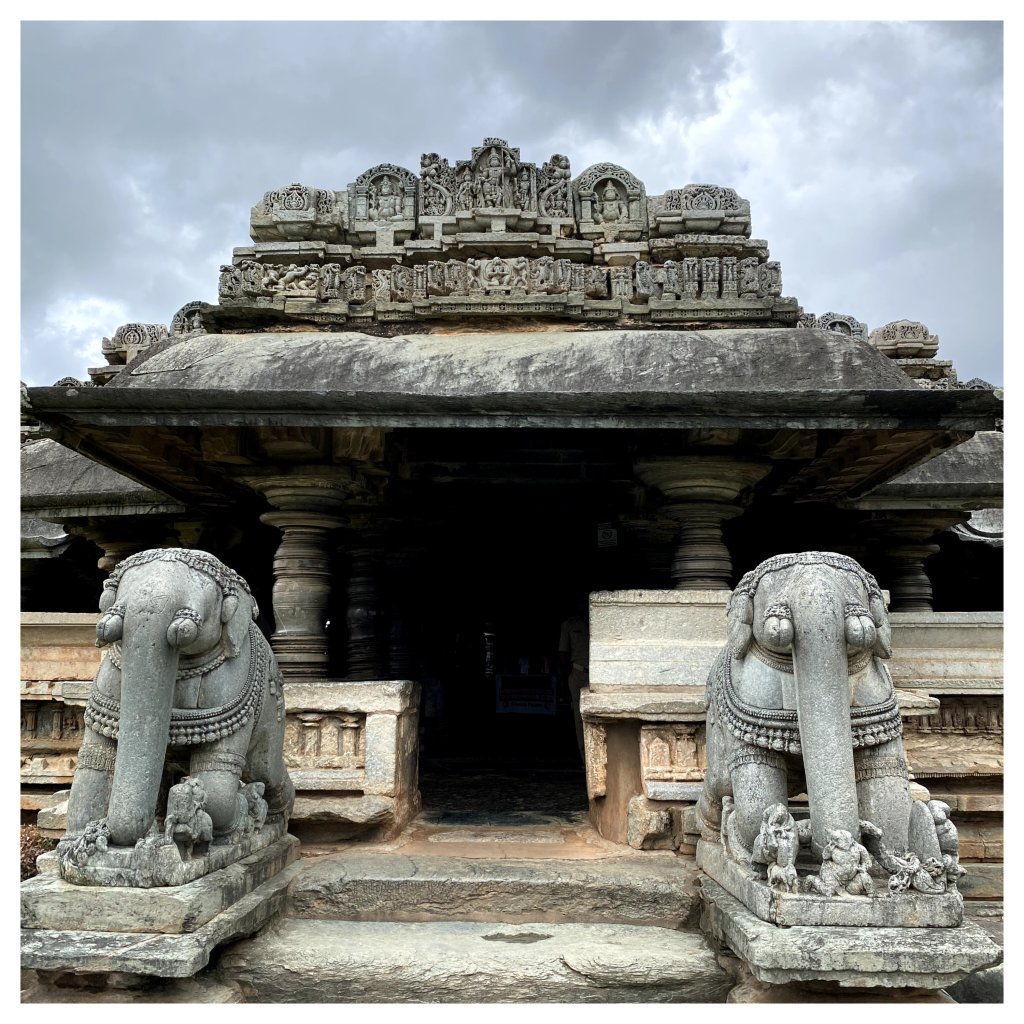
Images: Veeranarayanaswamy temple, Belavadi Top: Outer entrance gate to the temple Below: Inner entrance to main shrine at Veeranarayanaswamy temple, Belavadi

Unlike the main Gopuram (temple tower) at Belur, the entrance gate at the Belavadi temple is small. There are two ornate statues of two elephants that greets you inside. The sculpture on the outer wall is simple and minimalistic. as you enter, you notice that the inner walls are plain. It is possible that these were stolen, vandalized, or lost over the course of time, only historians can tell me better.

Veeranarayana swamy temple, Belavadi
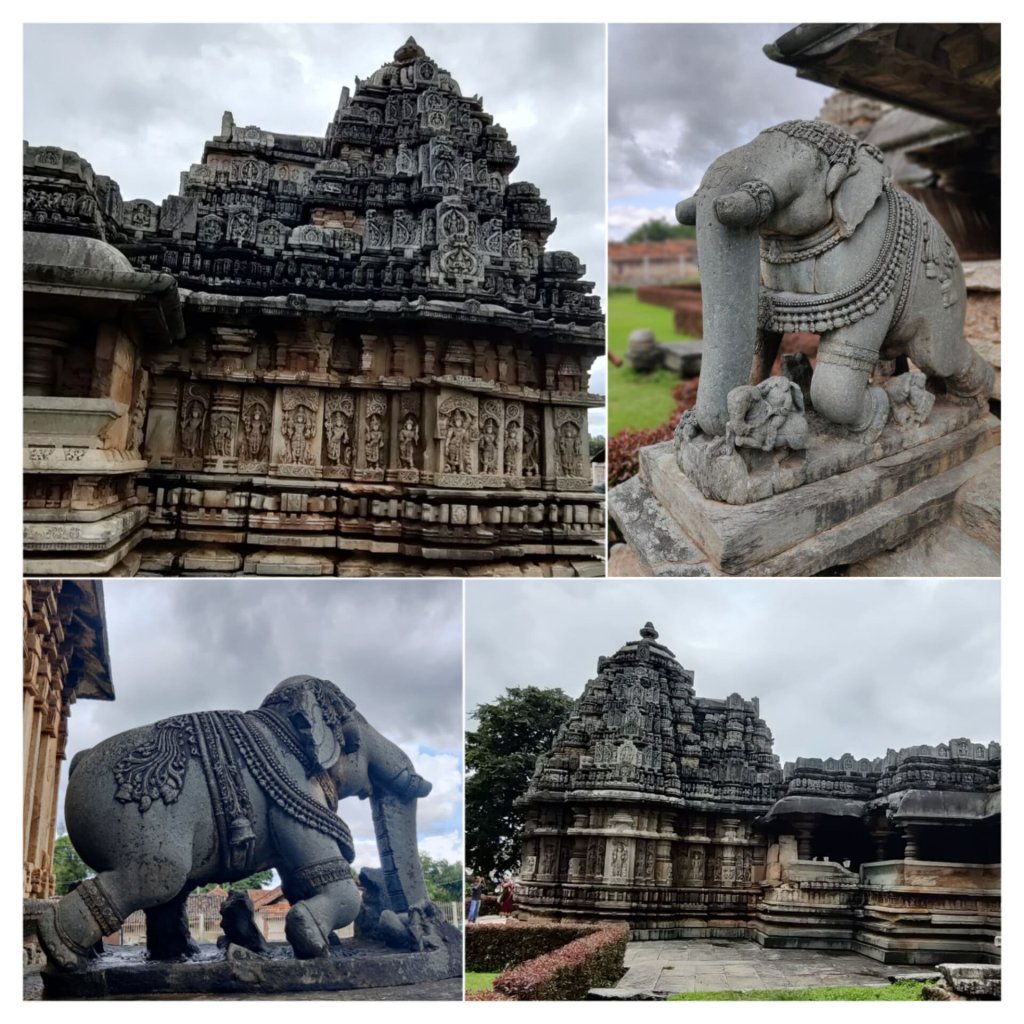
The sculptures on the exterior of Veeranarayana swamy temple, Belavadi

As you walk past this entrance gate, arch you pass the courtyard and are greeted again by a pair of standing elephant statues into the main temple that encompasses the shrines in the trikuta style of temple architecture. The three shrines inside houses idols of Lord Vishnu in three different forms. Huge lathe turned stone pillars and walls bearing fine and intricately carved figurines adorn the inner walls of the temple where photography is prohibited at the time of my visit (in July-2022).

Veeranarayana swamy temple, Belavadi
The Trikuta temple towers at Veeranarayana swamy temple, Belavadi

The outer walls are equally gorgeous too with intrinsic stone carvings and embossings all over. Due to limited permissions for photography, my photo story here consists only of photos of the exterior of the temple, but more than sufficient to give an idea of this marvel.

Veeranarayana swamy temple, Belavadi
The inner and the main entrance of Veeranarayana swamy temple, Belavadi

Also, a walk around the tiny hamlet of Belavadi is highly recommended. I loved the unique design of these traditional houses that emanated a vibe of an old world.

To be continued as Hoysala Trail 3

Bannerghatta beyond zoo- Bilikal Ranganathaswamy betta

Initially, when a friend mentioned the destination for an impromptu drive on a Saturday morning, I hoped to correct him by telling it was ‘Biligiri Ranganathaswamy Betta’. “No, it is Bili-Kal’, he specified. ‘Bili’ translates to ‘white’ in Kannada. ‘Giri’ means ‘hill’. ‘Kallu’ means ’stone/ rock’. In this context, we were both talking about two different destinations. Although the presiding deity at the temples located atop both these hills are common, Biligiri is more popular than its counterpart at Bilikal. While Biligiri forms the core of Biligiri Ranganathaswamy Temple (BRT) tiger reserve, Bilikal is in the heart of a reserve forest that comes under Kodihalli wildlife division of Bannerghatta National Park. So, this time, we were heading to ‘Bilikal Ranganathaswamy Betta’, the closest of the two to Bangalore city limits, reachable through Kanakapura road.

We stopped by Halagur town for breakfast which has several old and popular eateries that serve unique types and authentic recipes of idlis for breakfast. (Comment below if you need hotel recommendations). Post this break, we followed google maps to reach our destination.

There is a forest check post enroute where one needs to make an entry to continue the journey ahead. The temple hill can be summited via two routes, one is a trek route with stairs, and another is through an unpaved road that is clearly marked till the end. Although four-wheel drive is not mandatory for those opting to drive up, it is recommended to have a vehicle with good ground clearance.

Bilikal ranganathaswamy temple
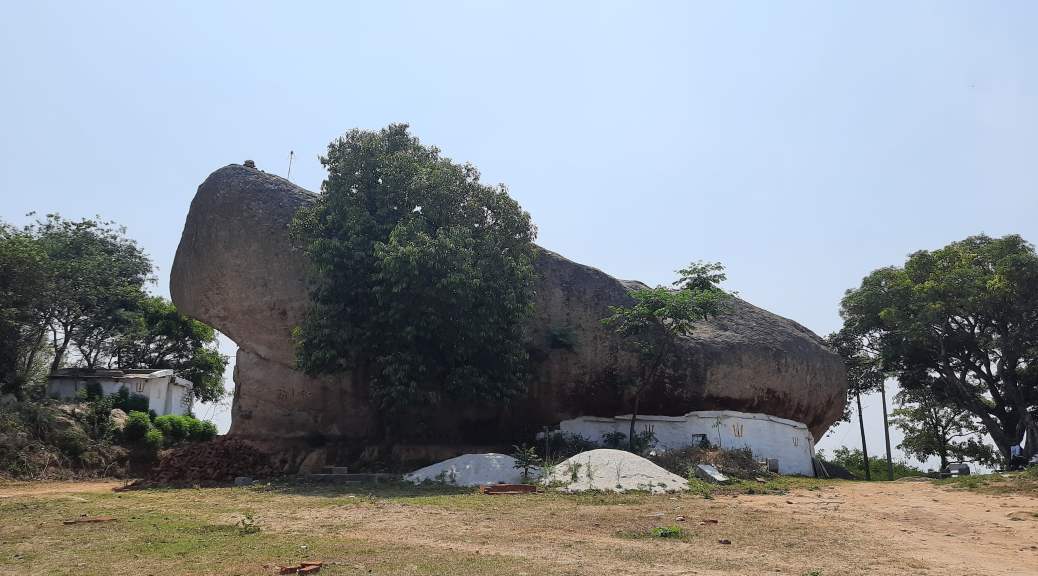
Bilikal ranganathaswamy temple, Rear view of the Monolithic rock

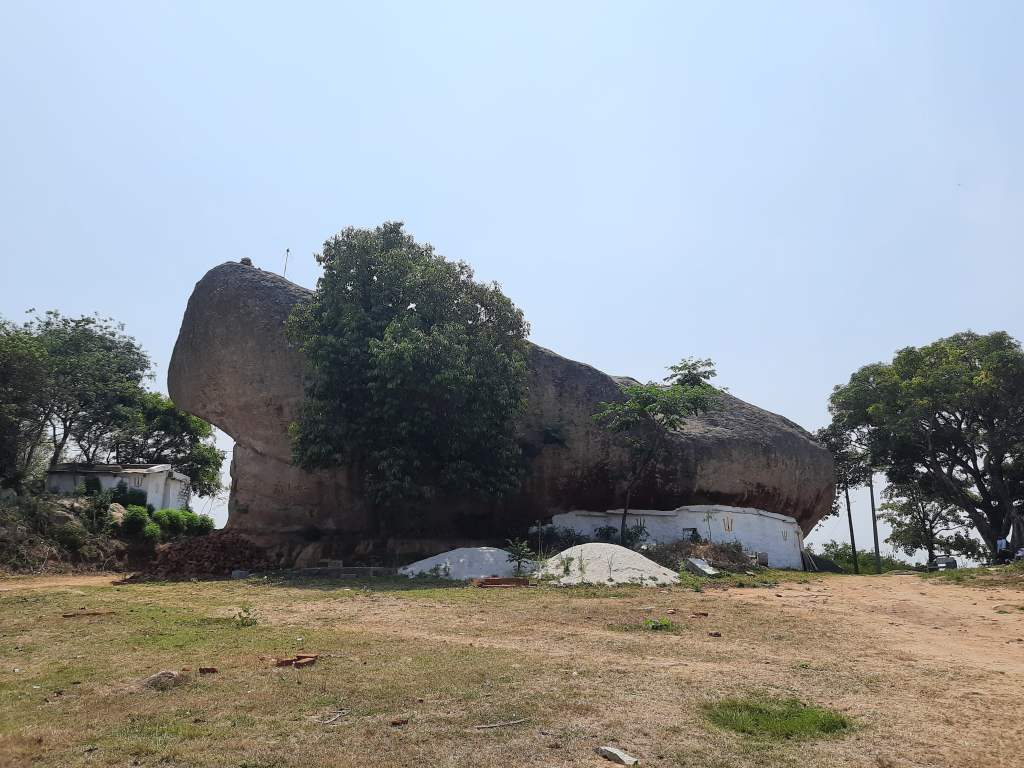
Upon reaching the peak, it was a large open area which came as quite a surprise. While one side of the hill had the temple pond dug into the edge of the rocky hill, the main temple of Ranganathaswamy is located on another side of the hill, overseeing a magnificent view of the surrounding hills. The main deity is carved out of a large monolithic rocky outcrop on the hill, which makes this place unique among all that I had visited thus far. There is a small sculpture on this rock which we were told is the original figurine of worship until it was damaged many years ago. Since then, an alternate idol has been carved out of the larger rock and a simple temple has been built outside leading into the prayer chamber within the monolithic rock.

Next to the temple rock, is another old and small room like stone structure. A few localites who were present there told us that it was the house of an old lady Kamalamma, who lived there and had dedicated her life in the service of Lord Ranganatha. Amid the wilderness of the thick jungle, she lived all alone in the belief that Ranga was her caretaker. She was accompanied by a few cattle that lived there whose milk was used to distribute buttermilk to pilgrims who arrived there every Saturday after a tiring ascent by foot (before the drivable route was laid out). She is no more, and her tomb is now housed inside the structure where she lived.

Bilikal ranganathaswamy temple, front view of the rock temple

A short climb from this structure is another viewpoint, where one can sit on the rocky outcrop under the shade of the surrounding trees and take in some good views of the valley around. We returned after spending some time there. Overall, this was a pleasant and an offbeat outing from the city.

Things to note:

  • The temple and the forest check-post are open for public access only on Saturdays. Only one Pooja is offered to the deity, once per week.
  • The annual temple fair is held here in January when a wooden temple car is assembled and taken around the rock-temple.
  • All along our way, we observed a lot of fresh elephant dung. Hence, we are certain that the trail is frequented by elephants and other wild animals at all times of the day. As both the routes pass through dense forest, it is recommended to comply with all guidelines laid by the forest department.

Other nearby places that you can combine your visit with:

  • Shri Govinakallu Anjaneya swami temple (an offroad drive in the same forest limits)
  • Mekedaatu and Sangama
  • Muthathi riverbank
  • Galibore fishing camp
  • Bheemeshwari adventure and nature camp
Bilikal Ranganatha swamy temple

I Belong to Everywhere: Uttarahalli

This is an attempt to bring back nostalgia. Continued from- “I Belong to Everywhere: Napoklu

‘Uttarahalli’ translates to ‘Northern Village’ in Kannada. The irony is, it is located in the southern-most part of Bangalore. This is the current place of residence of my family and is also the last post in this series. This home seems like a perfect retirement plan for a family that seeks a little bit of nature in the midst of a bustling metropolitan city.

With very little vacant space available, my parents try to grow their own vegetables and fruits, welcome birds and squirrels to have meals with them and sip their ‘kaapi’ while watching the sun go down. These are some among many other things they do to keep themselves running through the day.

The sparrows in my portico

The area is soaked in rich history as well.. While the ‘Vasantha Vallabharaya swamy temple’ dates back to the Chola era, an adjacent cave is believed to be the place where Rishi Mandavya had meditated.

The Turahalli forest is a small patch of lung space nearby, that joggers, cyclists, conservationists and the realtors all seem to have an eye on!

The latest addition to the landmarks is ISKCON’s ‘Krishna Leela theme park’ located on the Vaikunta hill. The sunrises and rainbows on cloudy days are mesmerizing, adding a backdrop to the view of this temple from my doorstep.

Annual fair of Vasanthavallabha temple, Vasanthapura, Bangalore

This is the last post of this series: “I Belong to Everywhere“. I hope you all have enjoyed time travelling with me hopping on- and off from Bangalore to Kodagu. Which place did you like the most? What place would you want to go after reading my posts? What more do you want to know about, from these places?

I Belong to Everywhere: Napoklu

This is an attempt to bring back nostalgia. Continued from- “I Belong to Everywhere: Yelahanka

Napoklu is a small town located in Madikeri Taluk, in the northern part of Kodagu district. I have spent several memorable holidays here, living a high energy childhood. There are several places of interests for tourists and local pilgrimage that are centered around Napoklu. Some of them are ‘Sri Makki Sastavų temple’, ‘Chelavara waterfalls’ etc. The ‘puttari festival’ is one of the best and the most elaborate one celebrated by the Kodava clan native to Napoklu.

Puttari festival at Kolu Mand

If any of you find a tinge of madness in me, it is likely that it has been due to the influence of my cousin who hails from this town. He has been my closest friend as we both grew up together, roaming farms, fields and streams. On weekends when he didn’t come to our grandparents’ house in Madikeri, we would be roaming together, around the other places that are mentioned in this series of posts.

Although I have spoken about how I developed the awareness for conservation of wildlife in one of my earlier posts, but it is in Napoklu, that I originally imbibed the qualities of empathy for animals. Apart from the cattle, dogs and cats that I was surrounded with in Madikeri, my cousin had birds, fishes, tortoises, rabbits and poultry in his house. They shared a unique bond with him. While during the days, we caught dragonflies with aquarium nets, we chased fireflies at night and trapped them all together in empty glass jars to create a mini ecosystem of our own.

Beetles and ladybugs

If you wonder how I know some names of celebrities from across the globe, it is because we followed them. I watched Formula-One, WWF, Tennis and Cricket without missing a single match or a tournament, because the TV remote would always be with this guy and I had no option. The craziest automobile geek I had ever known, much until I became an automobile engineer and met a few other geeks along the way, was this cousin alone. We traded ‘trump cards’ and fought each other over the ownership rights of the rarest WWF and Cricket cards. We still hold back some of these treasured collections and often reminisce those good days of innocent fun. These are the same things that trigger little momentous joy to me even today and that which helps me spread positive energy.

To be continued as- “I Belong to Everywhere: Uttarahalli

I Belong to Everywhere: Malleswaram

This is an attempt to bring back nostalgia. Continued from-“I Belong to Everywhere: Abbi falls“.

In the rapidly expanding Bengaluru city, Malleswaram and Chamarajpet are like two lungs that breathe out air of cultural relevance and nostalgia of Old Bengaluru. Malleswaram in the North and Chamarajpet in the South have always stood equal in their heritage of what the real Bangalore once represented. Although one might disagree with my personal viewpoint, Malleswaram represents the face of Bengaluru that boasts of intellects in the science and academics fields whereas Chamarajpet represents a city that is filled with scholars from the creatives like literature, art and commerce. In the proximity to premium research institutes like IISC, ISRO, C.V. Raman institute, the Wood institute and organizations like BEL, HMT, Mysore lamps, Sandal Soap factory etc. Malleswaram was the closest residential area. Meanwhile, Chamarajpet was an extension of the Pete area and is also the home to the Karnataka Sahitya Parishad. So, those in trade, literary luminaries and Pandits naturally moved in here. Anyway, my intention is not to explain those details and get into a debate, but to come to the point on how and why I believe that I belong to Malleswaram. (More on Chamarajpet in the next post)

Kaadu Malleshwara temple at Malleswaram

Talking about Malleswaram, where do I start from? 18th cross, maybe? I often entered into the premises of Sankey tank from Sadashivanagar and I exited from the other end to Malleswaram. For the first two years of living in Sadashivanagar, I played Basketball. I was trained at the ‘Beagles Basketball Club’ and envisioned to make it big in this sport over the coming years (Destiny had different plans and that’s for another story). Mind you, I had been an ardent follower of Kobe Bryant and the Lakers since school!

Finishing the day’s training usually meant savoring a honey cake for Rs.7 and a biscuit sandwich ice-cream for Rs.5 at the lyengar’s bakery at 16th cross. The aroma of filter coffee in the darshini hotels and a walk in the old Malleswaram market are sensory experiences that cannot be taken away from me. The CTR dosey is an inseparable part for my taste buds (I take the metro train from my current residence in South Bengaluru to Malleswaram even to date, just to eat CTR dosa).

Villa Pottipatti- a heritage hotel in Malleswaram, Bangalore

The atmosphere of festivities brought in by scores of vendors on the 8th cross road were the days that were much awaited by me to see what each festival was about and what the key items associated with a specific festival were (decorations, food and other knick-knacks). I had even made up an entire itinerary on my own and applied for a part time job of a tour guide who wanted to walk the interested people through the lanes of this heritage area.

Malleswaram market
Malleswaram market

Since I had only then moved into Bangalore after finishing my schooling in Madikeri, for me Malleswaram served as an open school to open my mind to cultures that I was totally unaware until then. The cuisine, the festivals, the spoken Kannada, the traditions and the mindset of people in general, everything seemed new to me in Bangalore from what I had been exposed to until then. I was quick to adopt and adapt and this is where I became a true blue Bangalorean.

With the premium research institutes of India being around, Malleswaram sort of sparked my urge to keep learning/exploring something constantly and inclined me towards pursuing research in general.

To be continued as- “I Belong to Everywhere: Chamarajpet

An Offbeat Day Trip from Bengaluru to Channapatna

The original plan for this short family outing was to make an early morning visit to Sanjeevaraya Swamy temple in Channapatna Taluk of Ramanagara district and return. But, since my workplace is located along the same route, I expressed my disinterest in traveling that way. I pitched in the idea to have a change of route at least for one-way. Hence, I added a couple of other landmarks, picked up an offbeat village road and created a circuit with aid from google maps.

For those of you who are not familiar with the geography of Karnataka, Ramanagara is popularly known for its Sholay hills that was featured as the village- ‘Ramgarh’ in the Bollywood movie Sholay. Channapatna is popular for its cottage industries of wooden toys. I am not going to write about any of these places, the search engines are already flooded enough! I am going to take you around some lesser known places in Channapatna, for a half a day’s trip from Bengaluru.

Our circuit route was:
Bengaluru – Bidadi – Kengal – Devarahosahalli – Neelasandra – Vittalenahalli – Bhoohalli – Kanakapura – Bengaluru

The Details:

We set out on a Saturday morning and decided to have our breakfast on the way. Sri.Renukamba tatte idly (translates to ‘Plate idli’ in Kannada) needs no introduction for the Bengalureans. So, after a filling plate of tatte idly at Bidadi, we proceeded towards our intended destination for the day. To reach there, we had to pass through Kengal, a village popular for yet another Hanuman temple. Moving ahead from there along a small deviation, we arrived at our first major destination: Sanjeevaraya Swamy temple at Devarahosahalli village. This is a small stone structure dedicated to Lord Hanuman and dates back to the Vijayanagar era. The deity is believed to be powerful and hence, we were there to offer or prayers following the recommendations of some well-wishers.

After spending some time there, we continued onward to our next destination, a little cave temple located atop of a hill. The drive, the scenery, the canopy of the majestic trees along the highway was a pleasant one. We stopped by to do some bird watching at the Neelasandra lake as well. We could see Pelicans flocking in large numbers.

Our next major stop came as a rather surprise to us. Gavi Ranganatha Swamy temple was a random destination included in our day based on an internet search result. The drive, the location of the temple, the valley, the village view from the temple porch and the overall scenery was just so stunning and unexpected. There was just no one else in the temple apart from our family and a few local kids playing in the hill, atop which this temple is located. You can watch the video of our visit to Gavi Ranganatha Swamy temple below:

Drive to Gavirangana betta

By this time, the sun was already up and beaming bright. So, we decided to drive back, of course through a different route. We descended the Gavi Ranganatha Swamy hill and took the route that connected to Kanakapura. On the way, we stopped at this beautiful location where the highway passes through green farms on one side, a large lake on the other side and the entire scenery was being overlooked by the temple hill.

Vittalenahalli highway and lake

Our drive from there continued through large stretches of rocky hillocks, mango orchards, paddy fields, coconut groves and mulberry farms. Ramanagara is also known for sericulture. Several households in the villages here are involved in silkworm rearing. As we passed through, we noticed that families were sitting out in the verandahs of their traditional houses and collecting the fully grown cocoons from the bamboo trays. We stopped by and walked over to one of the houses on our way and learnt a thing or two about sericulture from them.

Silk Cocoon trays

In a short while, we reached the Kanakapura main road where we had our lunch. Well, it was a late evening lunch before continuing towards home and thus ending a quick trip to the Bengaluru outskirts.