Category Archives: Statewise Travel

Journey away from Bangalore that includes night journey and an overnight stay… Especially ones planned on long weekends with Saturday and Sunday off :)

Exploring the untouched gems of GPM district

Gaurela-Pendra-Marwahi (GPM) is one of the youngest districts of Chhattisgarh and I recently had an opportunity to explore this region along with a friend. It has a deep-rooted connection with mythological stories and hence, several local tourists come here for pilgrimage. Otherwise, GPM is least explored on a typical tourist circuit and remains to be a hidden gem in the jungle, quite literally. Hence, through my trip to GPM, I wanted to explore, learn and document the adventure and cultural aspects of GPM district. On this journey, we had the guidance of GPM-tourism in arranging our accommodation and getting local experiences in some of the most exquisite places.

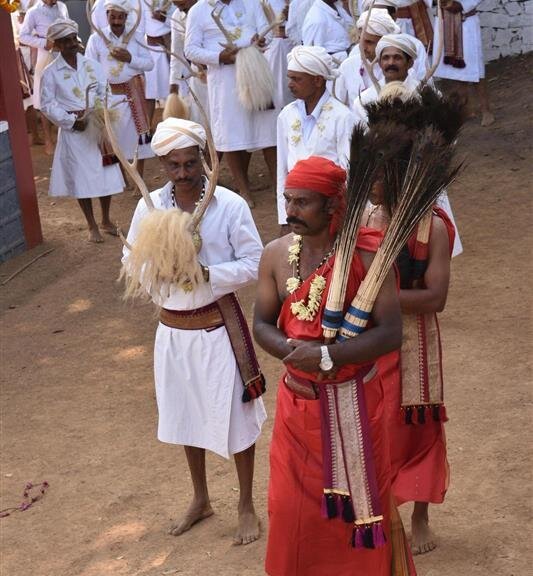
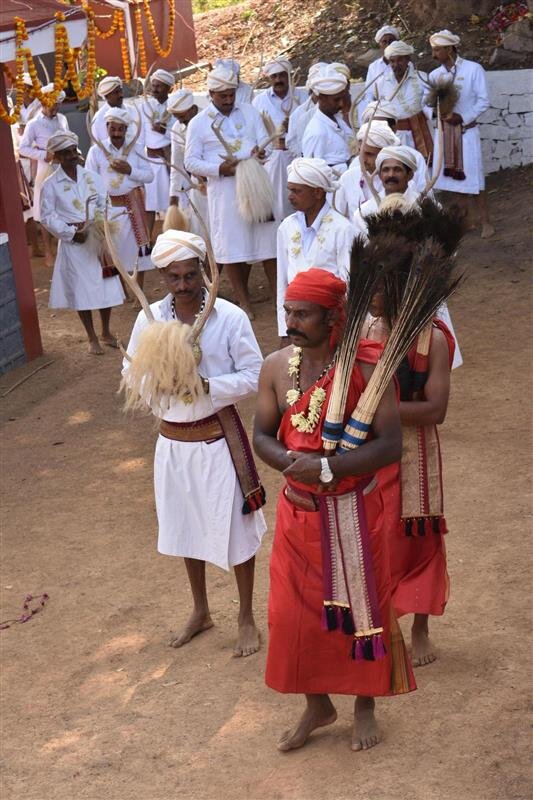
We started from Bilaspur that morning in a taxi to arrive at our first destination- Gaurela. My first encounter of a new religious practice was of the kavadis. Of course, Kavadi itself is not new to me. It is observed in different forms across different regions of South India. But Kavadi of Chhattisgarh was new to me. During the Shravan month, the pilgrims leave their respective houses on a barefooted march all dressed in saffron dhotis, carrying the Kavadi on their shoulders and chanting bhajans and praises for Lord Shiva. Along their way, they are joined by others whose houses fall enroute and the march progresses. The group is large towards the end of their feat when they all arrive at the Amreshwar temple.

Anyway, after passing this large group of pilgrims, we continued our drive through a very beautiful stretch of Sal forests and paddy fields. Our pre-ordered lunch was ready by the time we arrived at our first destination- Jhojha waterfalls. This region is presided over by the people of the Pando tribal community, whose culture we were unaware of until then. A tiny canteen run by a couple belonging to this community provided us with food cooked fresh and served in the most sustainable way possible. All the fresh and locally grown ingredients (organic veggies) cooked with firewood and served with handmade plates and bowls of Sal leaves. The simplest, yet a sumptuous meal was relished by us before heading out on our short hike into the woods.

As the rain gods had taken over the skies briefly, we wore our raincoats and tamed our legs towards the trail. There is a biking trail for the biker-heads and then there is the hiking trail for people like me. It is a trail of about 4 kms with moderate difficulty for beginners. As we approached the Jhojha waterfall, believe me as I say that I hadn’t heard or imagined the existence of such an offbeat and majestic waterfall in this part of Chhattisgarh before arriving here. It was beautiful. On a day otherwise, one can go closer to the waterfall or get into the water. But I refrained from it since the monsoon fury wasn’t a safe idea.

Jogi Gufa was a place close by where we had originally planned to visit the cave and a waterfall. Ghaghra dam is frequented by locals for watersports and Son-kund and Kariam Ashram are popular places of local pilgrimage. All located at a drivable distance from Basti / Jhojha. By the time we returned to the base after the hike, the other members of the Pando community had joined in. Hence, we decided to spend the remaining time at Jhojha itself. It was a good decision as the evening was filled with song and fun giving us a better acquaintance with the tribal culture of the Pando community.

Mahua liquor is an essential part of Chhattisgarhi culture in general. There are several folk songs and stories composed around Mahua’s significance in the tribal life. The folk who had joined us for the night sang these songs and narrated undocumented stories that had been passed on through generations. Later, we had the supper cooked by the same family and retired at the little mud-cottage / homestay run by them next to the canteen. One of the most serene and silent locations I had ever imagined retiring.

We started our day by having breakfast at a local restaurant at Pendra road (Town area). for someone whose taste palette is used to idly, dosa, roti etc., for breakfast, the samosas and jalebis were quite unusual to be consumed as a meal. But that’s how the rest of our day turned out to be- Sweet and Surprising. The untouched landscapes and the unaccounted number of mythological references make a great combination for hodophiles to explore Pendra. As soon as we moved away from the town area, the weather and the landscape took a dramatic change. crowded streets turned green and dry sunny skies began to cry rain.

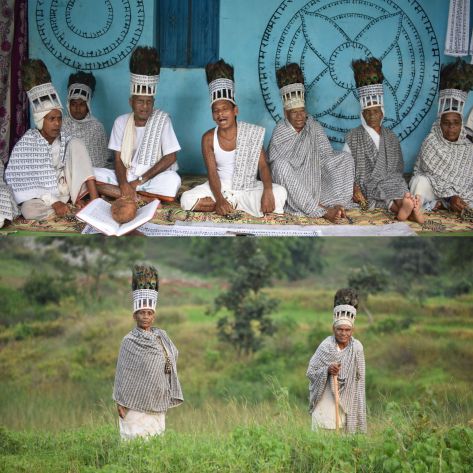
This region is predominantly resided by the Baiga tribes and hence, meeting folks from this community and documenting their stories were my focus on this visit. We drove past the mountainous road and flat paddy fields to arrive at our first stop. It was an under-construction nature camp run by the GPM-tourism and managed by a local family of the Baiga tribes. Traditional tribal cottages flanked a serene waterbody and together overlooked by a canopy of trees. Apart from a group of local boys who occasionally dropped by for a game of fishing, it was a paradise in seclusion. The only thought that I had while there was, if I ever felt the urge to run away from the city hustle to a non-Himalayan place filled with silence and solitude, where no known person would find me, it would be this. To simply put- I fell in love with this location. We visited the home of a local Baiga family, took leisurely stroll in their village and farms and shared warm conversations and laughter with their little kids, all even as the rain gods continued to show no mercy on us.

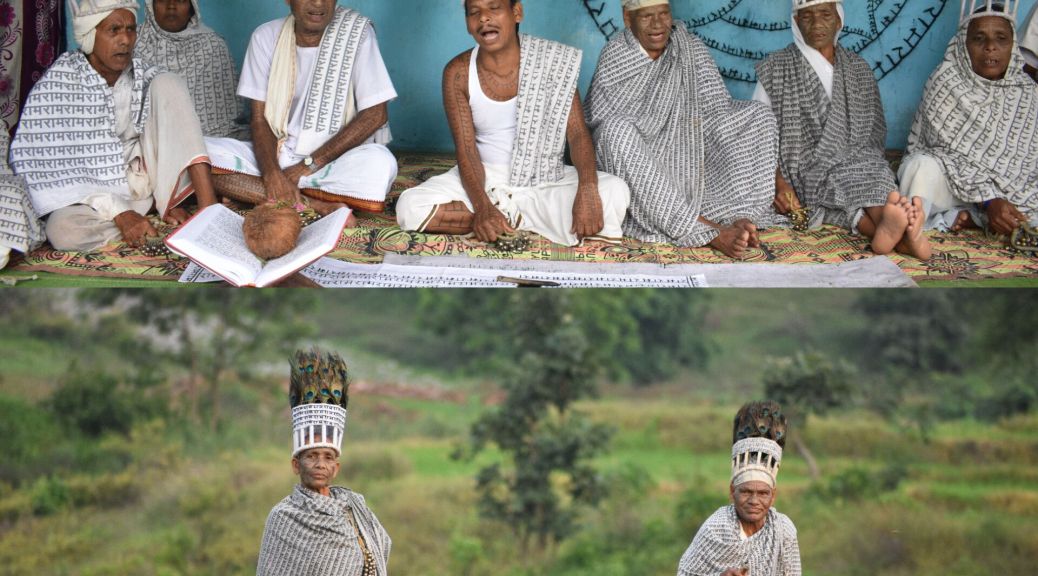
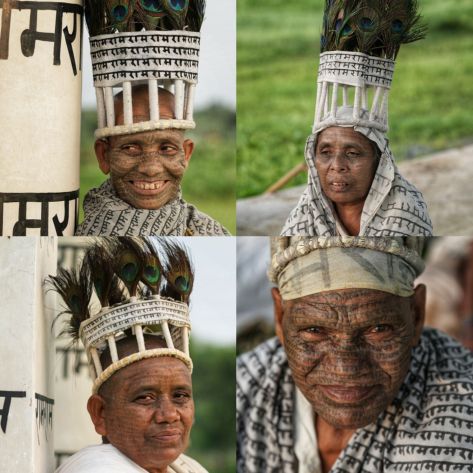
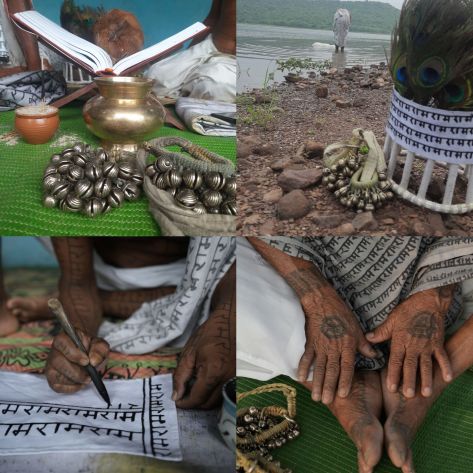
Traditional jewelry of Baiga tribes in Pendra, Chattisgarh.

A few kilometers away from there is a pilgrimage site, Mai ki Mandap’. It falls on the way for people visiting Amarkantak. Mythology has it that river Narmada was all dressed in her bridal attire, awaiting the arrival of Son Bhadra, the groom and his party but was cheated by her friend. Since then, Narmada has been hiding inside a cave here where an eternal flame has been burning for ages. The river Amravathi ganga cascades down the valley here forming a multi-tiered waterfall, which needs to be crossed by foot to get to the temple dedicated to Narmada. Since it was monsoon time, the currents were quite strong and the river crossing was an adventure.

This region is dotted with several pilgrimage sites that are inter-connected with each other through mythological stories. Although we drove past most of them, we decided to skip a ‘stop and visit’ to them. Some of them were Durga Dhara waterfalls, Amreshwar temple, and Jaaleshwar Mahadev temple. Achanakmar tiger reserve, Kabir Chabutara and Malaniya dam are few other local hang-out spots in Pendra region which we decided to skip due to lack of time.
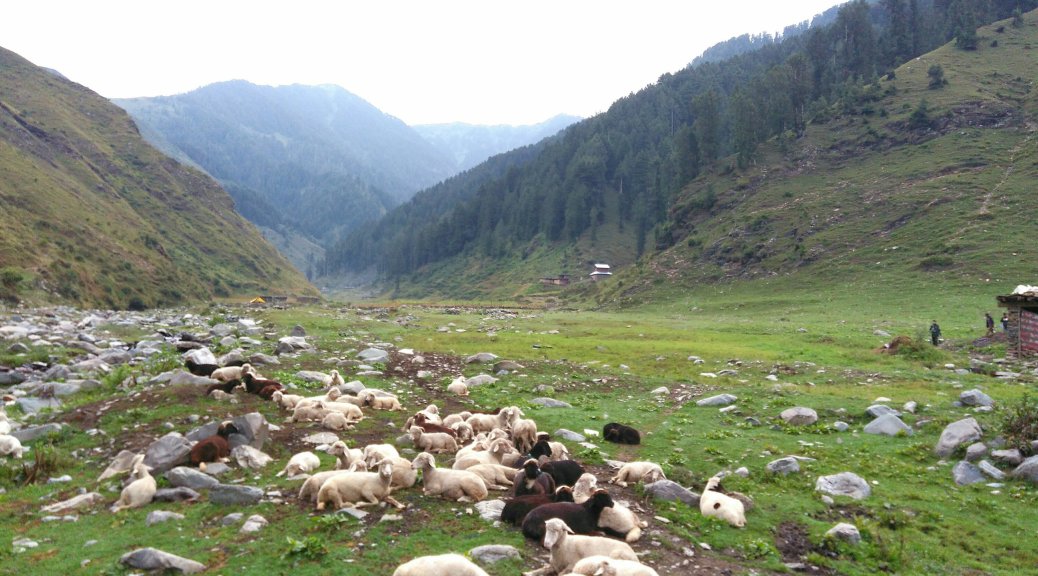
The highlight of this entire trip to GPM was the drive to Rajmergarh hilltop and the best ending for this short stay that I could have asked for. The adventurous people hike up this hill over a couple of days’ time, but we were not in luxury of so many days. Lines of Sal trees and herds of cows grazing on the tabletop grasslands were a treat for the eyes. The drizzly rains and the gusty winds not only caressed my hair and cheeks but also my mind and soul, as I stood on the edge of the green grasslands. We were lucky to get a glimpse of the setting sun even on a cloudy evening. The locals informed us that this hilltop is a favorite haunt of adventure seekers who usually hike up to pitch their camps and wake up for the sunrise over these hills. Such a beautiful place feels wasted without good amenities for the tourists. Outdoor lovers can get their own tents and pitch their own tents here, basic meals and tea can be availed with prior information to the caretaker of this place. But I highly recommend a day visit to this place, especially during the monsoon if you are looking for something more offbeat, less crowded and yet beautiful. The night’s stay was arranged at Gagnai nature camp, a property run by the government.

The luxury of an additional day’s time would have allowed us to explore the Marwahi region, thus circling around the entire GPM district. ‘Beni Bai’ is an important and rare Jain pilgrimage site which I personally wanted to visit but couldn’t. A full day’s trip could include AdiShakti Mandir, Tara Khara waterfall, Pareva path, Chunha Dai, Shiv ghat, Samundalai kund and Lakhan ghat to complete a circuit before you head back to Bilaspur.

However, in our case, we started before sunrise because we had an afternoon flight to take from Raipur to Bangalore. Thus ended an offbeat trip to the heart of India, Chhattisgarh!

Day hike from Bengaluru- Acchalu betta

My friend had learnt about a hill in Kanakapura Taluk through a YouTube documentary. ‘A large statue of Nandi, the sacred bull of Lord Shiva has been installed at the peak of the hill which can be reached by foot, through a hike,’ he told me. A hike plan was charted, and a few common friends joined us over a weekend to see this ‘statue of the Nandi’ located at the peak of ‘Acchalu Betta.’

We started from Bengaluru quite early that morning and had our breakfast at a popular location at Kanakapura. From there, we followed google maps to Acchalu village and arrived at a small village temple located on the foothills of a large monolithic hillock. Based on what we had read online, we knew this hill was what we were supposed to summit. We parked our car beside the temple, but we were not sure of the hiking trail that would lead us to the top.

The temple at the foothills of Acchalu Betta

Beyond the temple was a mud-road which we planned to walk further. We walked about a kilometer and realized that vehicles could have been driven until that point. There was yet another temple with an open field around which provided ample space for parking. Anyway, we did not mind the additional kilometer we had walked. From there began the actual hike to Acchalu betta.

The entire trail is nicely made with the kaccha roads cleared off all rocks, boulders, and grass, making it easy to walk and good to drive with a 4W-drive vehicle. However, the initial stretch had been washed down by the recent rain, so there was no way a vehicle could drive past that. After this stretch was over, it was an effortless walk to the peak, but through a thick canopy of bamboo forests. It is frequented by elephants which was evident with freshly dropped dungs enroute.

The initial trail of Acchalu betta hike

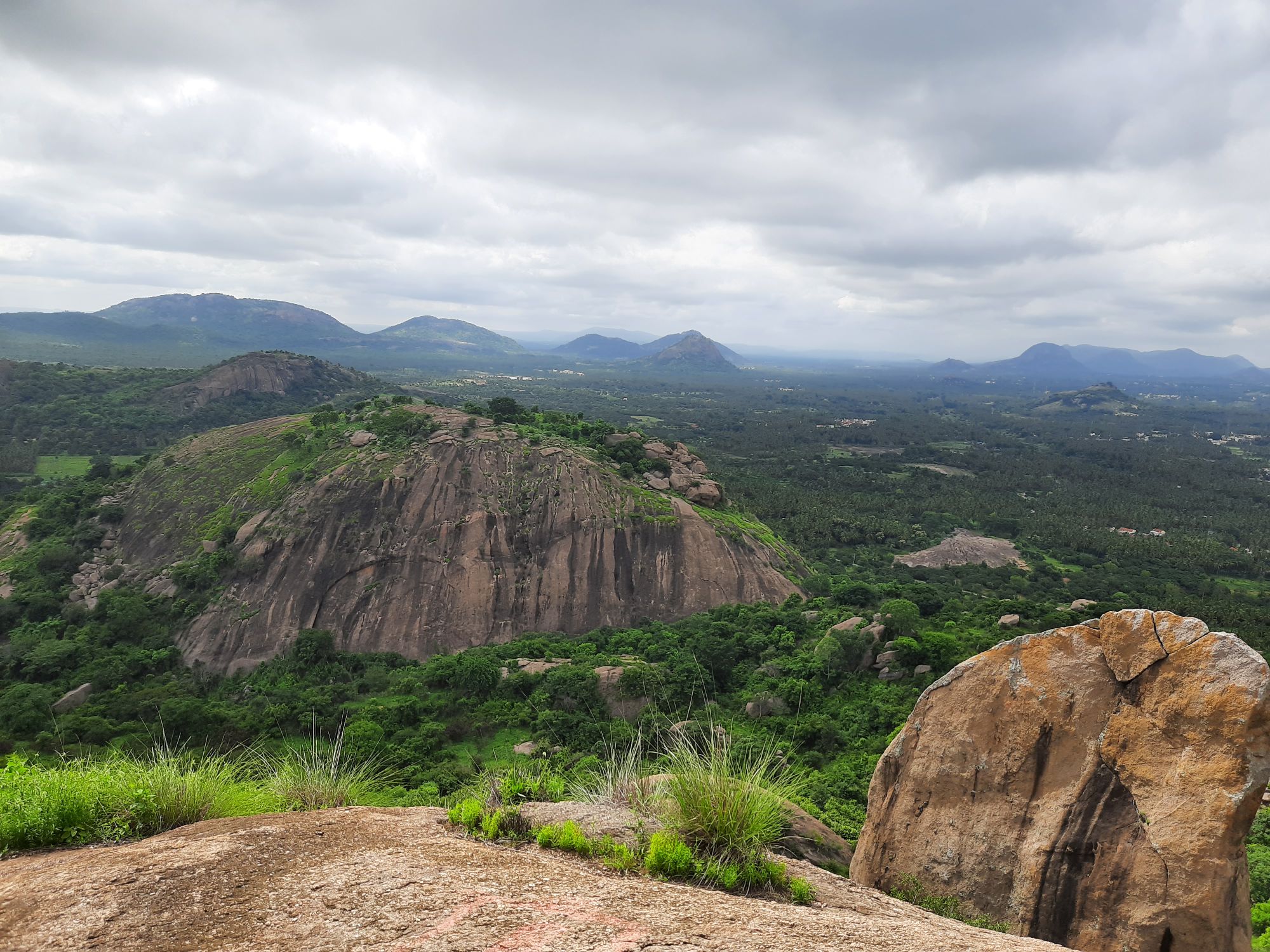
The canopy then opened to a rocky outcrop offering a panoramic view of Bengaluru cityscape at the horizon. There was an old guesthouse that is abandoned and used by nighthawkers as a place to have a bonfire party.
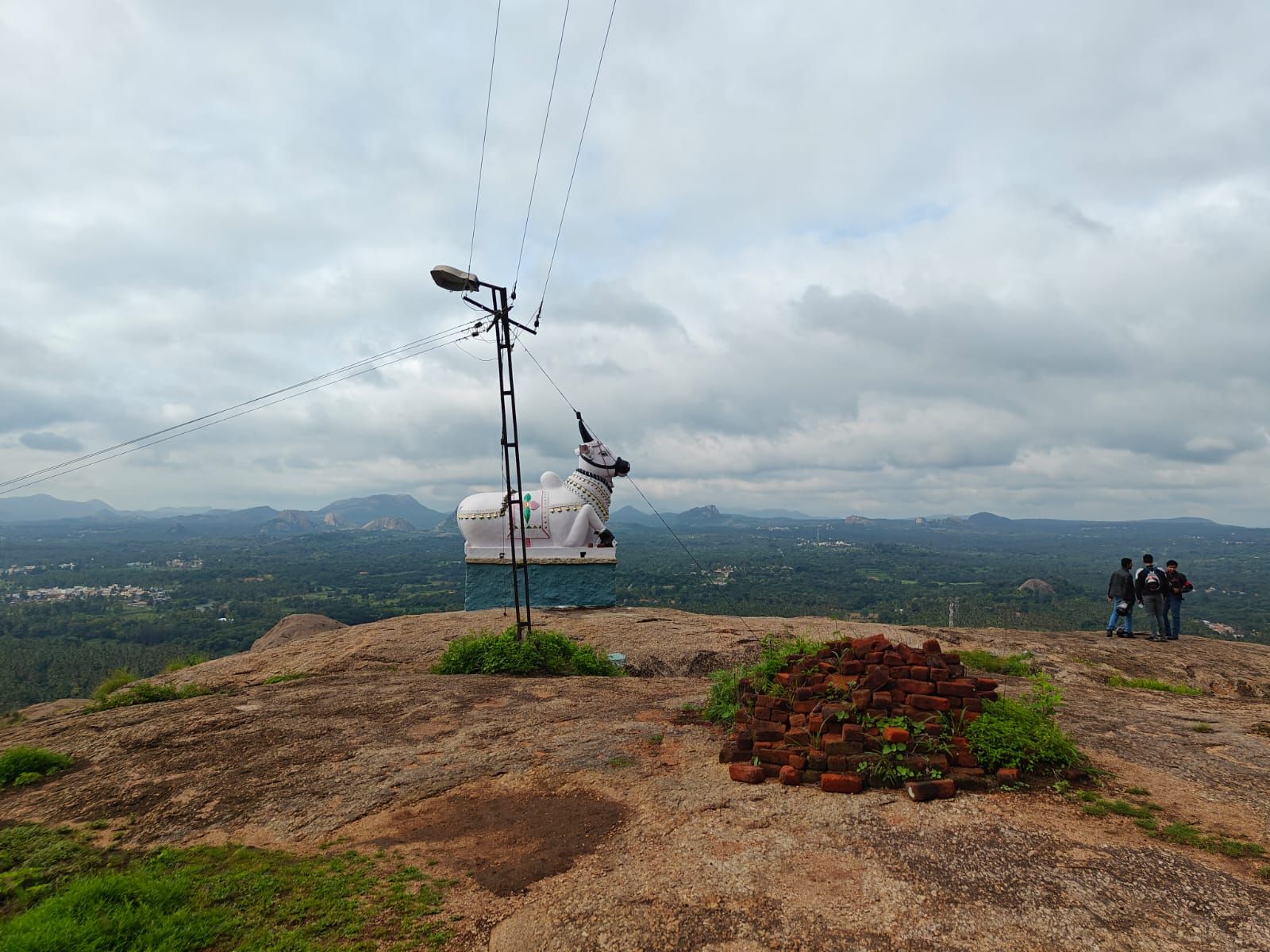
A short, paved pathway from there leads to a small pond filled with white lilies. We sat there for a while before proceeding towards the statue that we had motivated us to ascend this hill. The statue of a lone bull (the Holy Nandi) sat gracefully overlooking the cityscape beneath. We too sat there at his foot soaking in the calmness that was swept in by the strong wind that was blowing there. Nandi is the mythological vehicle of Lord Shiva. Hence, a small shrine dedicated to Shiva exists opposite to the statue. It is in fact, a small rocky outcrop under a large tree which is worshipped as the presiding deity. We bowed our heads down to seek his blessings before commencing our return hike.

The lilly pond at the peak of Acchalu betta with the Nandi statue in the backdrop

On our way back, we wanted to explore a shortcut to the base and hence, decided to follow an electric line that connected to pole at the place where we had parked our cars. This route was indeed beautiful and interesting as compared to our ascent. This descent was more open to the skies, with lot of green bamboo patches scattered amidst large brown boulders with a constant company of the blowing winds. It was no doubt shorter but was steeper and harder for amateur hikers.

A day hike to Acchalu betta, weekend plan near Bengaluru
The shrine dedicated to Shiva, facing the Nandi statue at Acchalu betta peak

The good decision to explore a new trail came with its own set-of challenges, especially in the last stretch. As the path was unused for ages, thick thorny bushes had taken over the trail. We did not carry any tools with us that would help us to clear our path as we walked ahead. Hence, we tried all methods to navigate our way through the last few meters of our hike. But in the pursuit, we slid a few slopes, our clothes and hair got entangled in the bushes and we came out with bruises all over our limbs, bums and back. We rolled down the hill and got out on an open farm on whose side stood our car.

The bruises did not bother us as we returned with the content that we had conquered another hill around Bengaluru.

Watch the Acchalu betta hiking trail here

6 Best Things to Do in Kashmir tour in 2024

The ‘Heaven on Earth” region of Kashmir with the onset of 2024 offers a bucket list of experiences that captivates the soul. This exquisite destination is immersed in hues of emerald-green valleys and azure-blue lakes that are intertwined to weave a timeless tale of its beauty.

The well-curated Kashmir tours invites you to unfurl these layers of beauty in this paradise. With so many options to explore, it becomes difficult to decide from where to begin your journey. Ideally, consider a peaceful shikara ride on the calm waters of the Dal Lake or visit the pilgrimage sites and religious places of worship.

Seek Blessings at Shankaracharya Temple in Srinagar

The magic unfolds if you take up any of the Srinagar tours and visit the Shankaracharya Temple. It is the oldest temple in the valley and is dedicated to Lord Shiva. Many believe that the great saint Adi Shankaracharya meditated here and attained spiritual enlightenment.

Perched atop a hill it offers a mesmerising bird’s eye view of Srinagar and is also known as the Jyeshteshwara temple. The temple dates back to the 9th century and features a fusion of Persian and Indian styles of architecture, with minute detailing and inscriptions embellishing the structure.

The temple holds a special historical and religious importance as it attracts devotees and visitors alike for its tranquil atmosphere, architectural grandeur, and the aura that transcends the surroundings. Pilgrims ascend a fleet of two hundred and fifty stairs, and along the way experience a spiritual vacation.

Golfing in Gulmarg Golf Club

Gulmarg is located around fifty-two km from Srinagar and houses the highest golf course in the world. This prime golf course was opened in 1911 by the British and designed by Colonel Neville Chamberlain. Located amidst the pristine beauty of the Himalayan mountain, it is encompassed by verdant meadows and snow-covered peaks.

This eighteen-hole course blends natural beauty and pits it against a challenging layout, making it a golfer’s delight. As you play at an elevation of 2,600 m, golfers can enjoy the fresh mountain air against a backdrop of tall pine trees. It has been a favourite hub for golf fanatics looking for a unique and stunning experience.

In summer it provides a lush green landscape, while the winters transform the course into a winter wonderland. Making it a year-round golfing destination that is beyond the ordinary. Whether seasoned or novice golfer, a game of golf in Gulmarg is a charming experience to be cherished for a lifetime.

Trekking in Kashmir

Kashmir, regarded as “Paradise on Earth” houses several treks through its alpine meadows and lakes making it a favourite destination for trekkers. The Great Lakes Trek is the most renowned in Kashmir. It leads the wanderers through alpine lakes enveloped by snow-covered peaks, while the Tarsar Marsar unfolds meadows adorned with untamed blooms.

Explore scenic trails from  Gulmarg to the iconic Amarnath Yatra route, and immerse yourself in the pristine beauty that Kashmir’s trekking trails have to offer. The mountain breeze, the music orchestrated by the gushing streams, and the panoramic views stir the adventure soul of the trekkers leaving a heart full of happiness.

Pony Ride Excursions in Pahalgam

Pony ride excursions in Kashmir present a unique and delightful way to come up close and personal with the scenic beauty of the region. The gentle stride of the ponies adds an element of charm as the riders travel across meandering trails, verdant valleys, and remote villages.

The pony rides in Pahalgam take the visitors to places of interest like Betaab Valley and Aru Valley. It is an enchanting experience as the riders are greeted with lush meadows and gurgling rivers. Pony rides traverse through narrow lanes and guide you toward remote areas and hidden gems that are not easily accessible.

Pony rides are also available in Sonmarg where they tread through alpine forests and meadows heading towards captivating viewpoints like Thajiwas Glacier. You can also enjoy pony rides in Srinagar around the Dal Lake offering a glimpse into the city’s alluring surroundings.

Go wild with  Wildlife Tours

The dense forests and snow capped mountains house some of the most amazing and rare species of flora and fauna. Protected amidst the boundaries of more than seven wildlife sanctuaries and national parks, wildlife enthusiasts can explore places such as Dachigam National Park, Hemis National Park, and Kishtwar National Park.

Snow leopards, musk deer, brown bears, black Himalayan bears, griffon vultures, and Monal pheasants are some of the rare animals found in the area. Visitors can also visit birds in one of the twenty-four wetlands as they are home to more than five hundred species of birds.

Shop for Kashmiri Exclusives

Kashmir is a paradise for shopaholics as you can buy souvenirs that blend tradition and craftsmanship. Nobody can deny the warmth of Pashmina and Shahtoosh shawls which have won the hearts of many. The lively and bustling markets are known for hand woven carpets and beautifully crafted paper-mache items.

Other exclusive items included are walnut wood carvings, spices like Kashmiri red chilies and saffron to special green tea leaves. Floating markets on Dal Lake are known for unique shopping experiences as vendors sell fresh produce and handicrafts from their jam-packed boats.

Saffron flowers in Kashmir

A festival to celebrate rebirth- Valangaiman Padai Kavadi

It was an online link that led me to a few photographs of a rare celebration. The images were accompanied by very little write-up for me to get a clear idea about the occasion. All I could infer was that it was a festival called ‘Padai Kavadi,’ celebrated in a village called Valangaiman, near Kumbakonam in Tamil Nadu.

I reached out to a few friends from Tamil Nadu who, in turn, connected with their acquaintances from the region and gave me information that the festival is celebrated annually, on the second Sunday of the Palguni month as per the Tamil calendar. Since I had ample time, I could meticulously plan my itinerary for that weekend and wait for my arrival at Kumbakonam. I had earlier visited Kumbakonam, so I included a few places that I could not cover in my previous trip. But that is for another story. For now, the focus is on ‘the Valangaiman Padai Kavadi festival.’

What is the festival about?

For a South Indian in general, one might think the Kavadi festival happens in every other village during this season. So, what got me curious about this place? Well, this Kavadi festival at Valangaiman celebrates the rebirth of a person. As per the local belief, people suffering from smallpox (still considered a deadly illness in most parts of India) make a vow at the Sri Padaikatti Maha Mariamman temple to perform the Padai Kavadi if cured. Once completely cured, they believe they have seen death and returned. Therefore, the convalesced person is made to lay on a bier or a handbarrow, lifted and carried by pallbearers, and the entire ceremony or the ritual of a traditional funeral is conducted as if he/she were dead.

There are primarily two types of biers. One, a simple yellow cloth tied to a bundle of sugarcanes or a single sturdy bamboo that is used as a cradle for kids and carried by two men on either end; second, a handbarrow with two bamboo culms knitted together with coconut fronds on which an adult convalesced is carried by four men. The adult bier is made more elaborate and decorative depending upon the interest and financial status of the person offering his vow.

Valangaiman Paadai Kavadi festival
An adult-female laying on a bier at Valangaiman Paadai Kavadi festival

I was told that three sister goddesses are living (at dedicated temples) in parallel streets of the village. The kavadi (usually body piercings or holy water carried in decorated pots on heads) is offered as vows to all three sisters, but the Padai Kavadi (the resumption of the dead, celebrated by sleeping on a bier) is offered only to Sri Padaikatti Maha Mariamman, the second among the three sisters, during the auspicious day of Palguni month.

Valangaiman Paadai Kavadi festival
A child being carried on a bier at the Valangaiman Paadai Kavadi festival

What happens on the festival day?

The procession of the convalesced people lying on biers starts early morning, mostly to avoid the noon sun. One can find hundreds of devotees who gather either at the small shrine of Vinayakan on the banks of the river Kudamurti or at a dozen makeshift temporary shrines set up by various local priests on the dried riverbed. Here, the bier, the person supposed to lay on it, and the respective kith and kin assemble for the rituals. Each person offering their vow is made to sleep on the bier after their family deity is invoked. Their eyes, nose, and mouth are closed with yellow cotton fabric, hands and legs are tied together as if those of dead people lying in coffins. Holy water is sprinkled around, and all the people gathering touch the feet of the sleeping person to take his/her blessings before the pallbearers carry them for the procession towards the Mariamman temple. For as long as a convalesced person is sleeping on the bier, he/she is treated equivalent to God as they are someone who has neared death, seen God, and returned. Then, a person carrying a clay pot with burning wood and incense leads the procession, and one with a pot full of water trails them, all being accompanied by drumbeats and flower throwers.

Valangaiman Paadai Kavadi festival
A funeral entourage going towards Padikatti Maha Mariamman temple

The procession circumambulates the Mariamman temple thrice, and then the bier is lowered down in front of the temple. Rituals are performed, post which the person descends from it and goes inside the temple to see the goddess and complete his vow. This is about the Padai Kavadi for people who survived death.

Valangaiman Paadai Kavadi festival
An adult man being carried on a bier at Valangaiman Paadai Kavadi festival

However, people who have suffered other ailments also make vows to offer a replica of the body part/ organ that has been cured through their prayers to Mariamman. One can see models in clay or silver, like eyes, legs, hands, etc., being sold around and offered by people at the temple, depending on their cured illnesses.

Apart from this, one can also see several people with various kinds of body piercings walking on the road (which is also a form of Kavadi) and circumambulating the three sister temples to offer their vows and prayers. A man suspended from a crane with his back hooked with metal loops and circumambulated around and in front of the temple, some men with full torsos pierced with lemons, long and heavy tridents passed through both cheeks, etc., were some of the unique and different Kavadi offerings I witnessed here. A detailed post of a dedicated festival of body piercings called ‘Mayana Kolai’ is available on my blog for further reading.

Valangaiman Paadai Kavadi festival
Body piercings at Valangaiman Paadai Kavadi festival

After all the kavadi offerings are over, the presiding deity, Goddess Padaikatti Maha Mariamman, is then brought out of the temple by around 03.00.p.m. on a procession. Around that time, cattle (goats and sheep) and poultry donated by the devotees are tied to another central post that is erected in front of the temple and suspended up and down with their bodies held firmly in the center. I could not gather sufficient information about the significance of this ritual, but I would be glad to learn from any of my readers here.

Valangaiman Paadai Kavadi festival
A devotee with body piercings; Also the wooden post used to swing cattle hoisted infront of the Padikatti Maha Mariamman temple

The festival then culminates after the deity returns inside the temple.

Valangaiman padai Kavadi festival

Purple Farms of the Saffron Flowers- Kashmir Story

Long ago, I watched a visual documentary about the farmers of Kashmir who woke up early on freezing cold mornings to gather fresh flowers from their fields. They all rose with the sun to harvest saffron, the most expensive spice in the world. Ever since, these romanticized visuals had me imagining myself walking on those farms someday.

For close to a year, I had been trying to reach out to people to know when the exact time of the year was to witness these inflorescences. I got in touch with a local person from Srinagar who would take me around the farms. I learnt that the flowers would bloom around late October when autumn sets in. As the season approached, I was getting too anxious to not miss the season. Thus, booked a last-minute flight ticket from Bengaluru, for a long weekend at Srinagar. After a missed connecting flight and spending almost an entire day at the Delhi airport, I had finally arrived at Srinagar on a late Friday evening.

‘Be ready early in the morning, we will be heading towards Pampore’, my local guide said to me before dropping me off at a homestay in the city.

On the following morning, the Chinar leaves of autumn had started to paint my entire journey in gold. The sun rising over the overlooking mountains that surrounded us all around only enhanced my excitement to reach my destination. The saffron grown in the Jammu and Kashmir region has gained a GI tag in the year 2020 with Pulwama, Budgam and Kishtwar districts being key saffron producing areas.

Welcome to the Saffron town of India’, a board stood at the entrance of Pampore in Pulwama. The wide stretch of land on both sides of the highway looked bare and dry, without sight of a single flower or even plants of saffron that I had come to see from 2000 kilometers away. I looked at the person accompanying me, enough for him to understand the meaning of the perplexing look on my face. “Haven’t the farmers cultivated saffron this year?”, I asked him.

He walked me down to one of the farms on the roadside and explained to me that even yield ready plants aren’t prominently visible, with barely one or two grass-like looking leaves emerging from each root (bulb). Only the flowers come out from the root that are extremely sensitive to the environmental temperature. “This stretch of the farms has no shade and the heat due to the highway traffic delays the blossom. We will go to the interior villages of Pampore which have more shade because of orchards like apples, almonds, apricots, etc. The blossom season begins in the shaded-cooler areas and ends with the open-warmer areas”, he said giving me some relief.

We then met a farmer at Pulwama town who then drove us through the interior village of Pulwama, which is otherwise untouched by tourists. Finding our way through the misty morning while being greeted by endless orchards on either side, my guide on the steering stopped at a point. “Madam, here you go!”, he said.

Saffron flowers in Kashmir farms
The purple flowers of saffron in Kashmir

I ran out of the car and watched the sight in awe. It seemed like a faint purple carpet of flowers had been laid on a hazy morning, with the apple orchards writing testimony to my presence and the snowy mountains standing guard against this beautiful view. I had a tear rolling down my cheek, which I am still unsure if was because of sheer joy or in disbelief that I had made it there. I spent hours that morning walking between the purple blossoms, caressing the tender, dewy and moist flowers of saffron, taking pictures of the flowers while enjoying the crisp autumn air. The people accompanying me for sure must have thought that I was a psychopath wandering and meandering all alone, who had travelled from so far just to see these flowers. A few flowers made it to my books, pressed carefully between the pages and getting to go home with me.

Saffron flowers in Kashmir farms

He picked the tender flowers and rested a bunch on my hands while pulling out the saffron strands from one, for me to eat. My tongue had turned yellow upon consumption which he explained was an indication of the authenticity of the spice. I was then invited to his work area where his family had gathered around a table and were separating the different parts of the flowers that would be used for different purposes. He explained the entire process of separation of the saffron strands (the stigma or the female part of the flower), the drying and the packaging. Sipping on hot brew of Kahwa served with the same strands of the saffron that I was holding a few moments ago was overwhelming.

Saffron flowers in Kashmir
Saffron flowers Separation

Of course, my visit would have been incomplete without picking up stashes of saffron from their shop as souvenirs for friends and family. In this short visit to the land of saffron, I had witnessed the world’s richest spice travel from farm to market. Sigh, it was a dream come true, to experience these fully blown saffron fields!

Fact file:

  • It is recommended to get in touch with proper sources and book taxis in advance who could take you on such guided tours of the saffron fields.
  • Pampore and Budgam can be reached on day trips from Srinagar. J&K tourism runs guests houses in Kishtwar as well, which can be reached via taxis hired from Jammu city.

India’s largest Cattle fair- Anthiyur Gurunathaswamy temple

When a friend mentioned taking a road trip to a fair at Anthiyur village, neither of us had many expectations. What can one expect at a village festival in India, after all? All that we had learnt before commencing our road trip was that it was a cattle fair, which was held as part of the annual festival of the Gurunathaswamy temple at Anthiyur village. Supplemented by a handful of YouTube videos in Tamil, we decided to take the long drive from Bangalore to spend a weekend.

We started from Bangalore before dawn to reach Anthiyur at the earliest and get sufficient time to see all the cattle stalls before returning. But only to our surprise, the scale of this temple village fair was anything beyond our imagination. Neither of us had seen or heard of a small village festival to be of such a large scale and spread.

The beautiful hills around Anthiyur village

The story dates to around 600 years, when there lived a clan near Pichavaram forest, that worshipped three stones known as ‘Kutty Aandavar’ (translates to ‘Small God’, in Tamil). The local ruler wanted to marry the priest’s daughter. However, the priest’s family was against the marriage proposal. Meanwhile, one of the members of the priest’s clan gets possessed by their deity’s spirit, and the family is told to abandon the village along with the three prayer stones to avoid the outrage of the ruler’s anger. Following this, the family started to move north until they found a safe place to settle down. At some point, the family felt that their survival was going to be difficult and that the stones being carried by them were an additional burden. Hence, they continued their journey by throwing the stones into a nearby pond. They halted at Anthiyur for the night.

On the following morning, Santhakumaran (one of the family members) was surprised to find the same three stones back in his bag. They realized the powers of their deity and resumed worship of the stones by giving them three different names. The first stone was called Kamatchi, the second one was Perumal (Vishnu), and the last one was Gurunatha Swamy (a combination of Shiva and Kantha).

During the festival, three deities are taken on a procession from the main shrine at Anthiyur village to a temple in the nearby forest. As per mythology, a demon is believed to have occupied the forest in which Goddess Kamatchiamman wanted to reside. A fierce war was then fought between Veerabhadra (the warrior assistant of the Lord, protector of Kamatchi-amman) and the demon, in which the demon eventually surrendered. It is said that instead of leaving the forest, the demon requested lord Gurunathar to allow him to stay there on a condition that Kamatchiamman came there once a year to visit him. However, Veerabhadra agreed to this on the condition that he, too, was allowed to stay in the same forest. This temple is today called Vanakovil (translates to ‘Temple in the forest’ in Tamil), where Kamatchiamman is brought in a palanquin from the main temple.

The current temple structure is believed to have been built by the Pandya kings. The Gurunathar temple houses an 11*11*11 feet kulukai. A kulukai is a large earthen storage container mainly used for storing food grains, with a large opening at the top (to fill the container) and a small vent at the bottom (to take the grains out for consumption). It is believed that the kulukai in this temple is used to store the jewels and other items related to worship, and is guarded by snakes. Only the head priest is allowed to enter the container and access the stored things, and is unharmed by the guarding snakes. Therefore, this kulukai is worshipped by the local people and it is believed to keep them safe from reptiles, scorpions, etc.

The month-long temple festival held during the Aadi month of the Tamil calendar hosts a range of unique rituals and celebrations during this time. Temple cars built for each deity are prepared and managed by the respective caste of people. Two large, towering, nicely decorated temple cars (the largest is of Gurunathaswamy and the smaller is of Perumal Swamy) are pulled by thousands of devotees who gather from across the nearby villages, from the main Gurunathaswamy temple to the Vanakovil and back. Today, animal sacrifice is practiced in Vanakovil.

A four-day-long cattle fair is, however, the highlight of the festival for which people come from across the districts of Tamil Nadu and the states of India. There are only two cattle fairs held at this scale in India. First, at Anthiyur (more popular for the horse fair) and second, at Pushkar in Rajasthan (Primarily a Camel fair). The history of the ‘Kudurai Santhai’ (the Horse fair) dates to the times when Tipu Sultan was the ruler of Mysore. He visited this cattle market to buy the best horses for his cavalry and sold his horses that were no longer fit for battles.

It has, over time, gained popularity among horse enthusiasts across the country who consider buying horses from this market as a matter of pride and prestige. The cost of each horse can range anywhere between 50 thousand to 50 lakhs rupees. Today, apart from buying and selling horses at the ‘Kudurai Santhai’, many horse owners come here to simply display their prized possessions. One gets to see stallions, mares, sires, and ponies of various native indigenous and pure breeds here. Some horses are made to perform to drumbeats and kept on exhibition. On the last day of the four-day-long ‘horse fair’, Geegees are judged based on their structure, build, and looks, and finally, awards are given away. On the day we visited in 2023, there were over 1000 horses at the fair brought in for various purposes.

All accessories, equipment, and other things that are associated with horse-keeping and equestrian training can be found and are sold here. Apart from horses, this fair is also the largest marketplace in India for other breeds of cattle and livestock like cows, goats, sheep, camels, rabbits, dogs, and birds. With encouragement given to native breeds, it is a great experience to see cattle across the 34+ acres of land.

To supplement the cattle markets, there is a makeshift amusement park set up, which is also by far the largest makeshift amusement park I have ever seen. Over ten giant wheels, rollercoasters, circus tents, and at least three globes of death are set up among several other types of amusement rides. The energy and ecstasy of this fair is all together only to be witnessed rather than to be read about.

Anthiyur festival
The makeshift amusement park at Anthiyur festival
  • Bamboo staff- You will find people buying them, as it is considered auspicious to keep this weapon of Gurunathar Swamy at home.
  • Colorful horse whips
  • Horseshoes- this is believed to absorb negative energy if hung at the entrance of houses.

Disclaimer: This article is posted to document folklore and lesser-known festivals of India. If any mistakes are found, it could be based on what was heard as stories. Kindly comment below or message directly for any corrections required.
The Boad Namme of Chembebellur

‘Boad’ in Kodava language means to beg/ request. ‘Namme’ translates to ‘festival.’ Thus, the ‘Boad Namme’ can be loosely called as the festival in which the people of Kodagu request ‘Goddess Bhagavati’ to grant their wishes.

The Boad namme is observed across Bhagavathi temples located in several villages in the southern part of Kodagu district, in series. The first Boad of the year starts at the temple of Kunda and the last one is observed at Parana village. Kudure (Horse) worship is an integral part of the Boad namme. In this, a young boy belonging to a designated clan from the respective village dresses up in the costumes of a horse and participates in the various ceremonies during the festival. Hence, it is said that ‘Kundath-ra Bott-le nenda Kudure, Parana mani-le ilinja Kudure.’ Translating to ‘the horse which rises at Kunda will only settle at Parana.’
I will talk about these two Boad festivals in separate posts. Among a series of all other Boad namme that are observed across villages in South Kodagu, I am starting from the middle, at Chembebellur village. The Boad Namme of Chembebellur is among the most popular of them all. It is observed over a period of four days and usually happens around the last week of April of each year.

Day one is Pattani. People belonging to all the native clans of Chembebellur observe ‘Fast’ on this day.

Day two is Kudure. Three young boys representing three clans of the three main Keris (areas) of Chembebellur i.e., Ajjinakanda clan of Podakeri, Coluvanda clan of Podakote and Chembanda clan of Nadikeri wear the costumes resembling horses (Kudure) and start from their respective Ain mane (clan’s ancestral home). They are accompanied by men impersonating other local deities of the village like Choundi, Aiyappa and the others during their march towards the Bhadrakali temple where they all assemble and hold the following rituals. Post this, there is a fire set up in front of the temple in which effigies are burnt.

Kudure at Chembebellur Bhadrakali temple
Day 2: Kudure at Chembebellur Bhadrakali temple

The gathering then moves towards the village’s ‘Eshwara temple’ where the rest of the men and boys of all age groups dress up in various costumes. This dressing-up is a form of a vow they make to invoke Goddess Bhadrakali’s blessings. The costumes could range from traditional Bund-kali (Mud-smearing), Pill-Bhoota (Hay man), Puli-vesha (Tiger costume) etc. to more modern forms of cricketers, Llamas, swamijis, seducers etc. These dressed up men folk visit every house of Chembebellur asking/begging’ for alms all night and it is a fun time for all the households who host these men in the houses.

Day Three is Boad. This part of the festival is the most awaited and the highlight of the four-day celebration. All the dressed men congregate at the Bhadrakali temple in the afternoon. They are accompanied by the men impersonating the local deities as well. They all together circumambulate the temple thrice and go around begging form alms from the thousands of people who gather there to participate in the festivities. The end of the circumambulation marks the end of the Boad where all the men collectively offer all the money collected through begging to the Goddess and seek her blessings.

Day 3- Boad festival at Chembebellur Bhadrakali temple

Day four is Choole. Young boys who are yet to reach adolescence, cross-dress in attire of Kodava women and offer their prayers at the Bhadrakali temple. This day marks the end of a fun and yet traditionally rooted festival of Chembebellur, paving way for a Boad namme to start at yet another village of South Kodagu.

Disclaimer: The purpose of this article is for documentation of lesser known festivals of India. The above information is only based on what I could gather by discussing with people who had gathered at the temple. My apologies for any wrong representation. Readers are welcome to contribute any information that is deemed important and useful to be shared here.

Weekend Drive- Biligundlu Ranganatha Swamy Temple

Another weekend and another offbeat destination. This time, we found a temple on a small hillock in Dharmapuri district of Tamil Nadu. In my earlier post about Hogeynakal waterfalls, I have elaborated on how river Kaveri marks the boundary between the two states of Karnataka and Tamil Nadu. This post is somewhat related to the same connection. Because the history of the temple that we were planning to visit this weekend is rooted on the other side of the river, on the fertile plains of Karnataka.

The original Ranganatha swamy temple dating to the Cholas or the Vijayanagara era (as described by the locals) was on the Karnataka side. The stone structure of the temple is present even today (we hope to visit the structure on another weekend trip). The idol of the deity was destroyed by the British (which needs fact checking) and then, a new idol was reinstated on the Tamil Nadu side of the land where it stands today. The Ranganatha Swamy temple that we were heading to is in Biligundlu village and hence the name. The idol of the deity is carved out of a rock which is part of the hill overlooking the river.

On a summer day, when the water levels in the river are low, one can walk across to the other bank. Whereas, when the river is flowing full, the roads leading to both the old and the new temples are long ones. The old location is reachable via MM. hills in Chamarajanagar district of Karnataka, and the new temple is reachable via Anchetty forests in Dharmapuri district in Tamil Nadu.
The trail to Biligundlu Ranganatha swamy temple

Anyway, coming back to this weekend, we started early on a weekend morning along the Anchetty forest leading to Hogeynakal waterfalls. We skipped the highway restaurants and stopped by a small local restaurant in Anchetty town for breakfast. It was a good decision as the experience was good with local food and the local atmosphere.
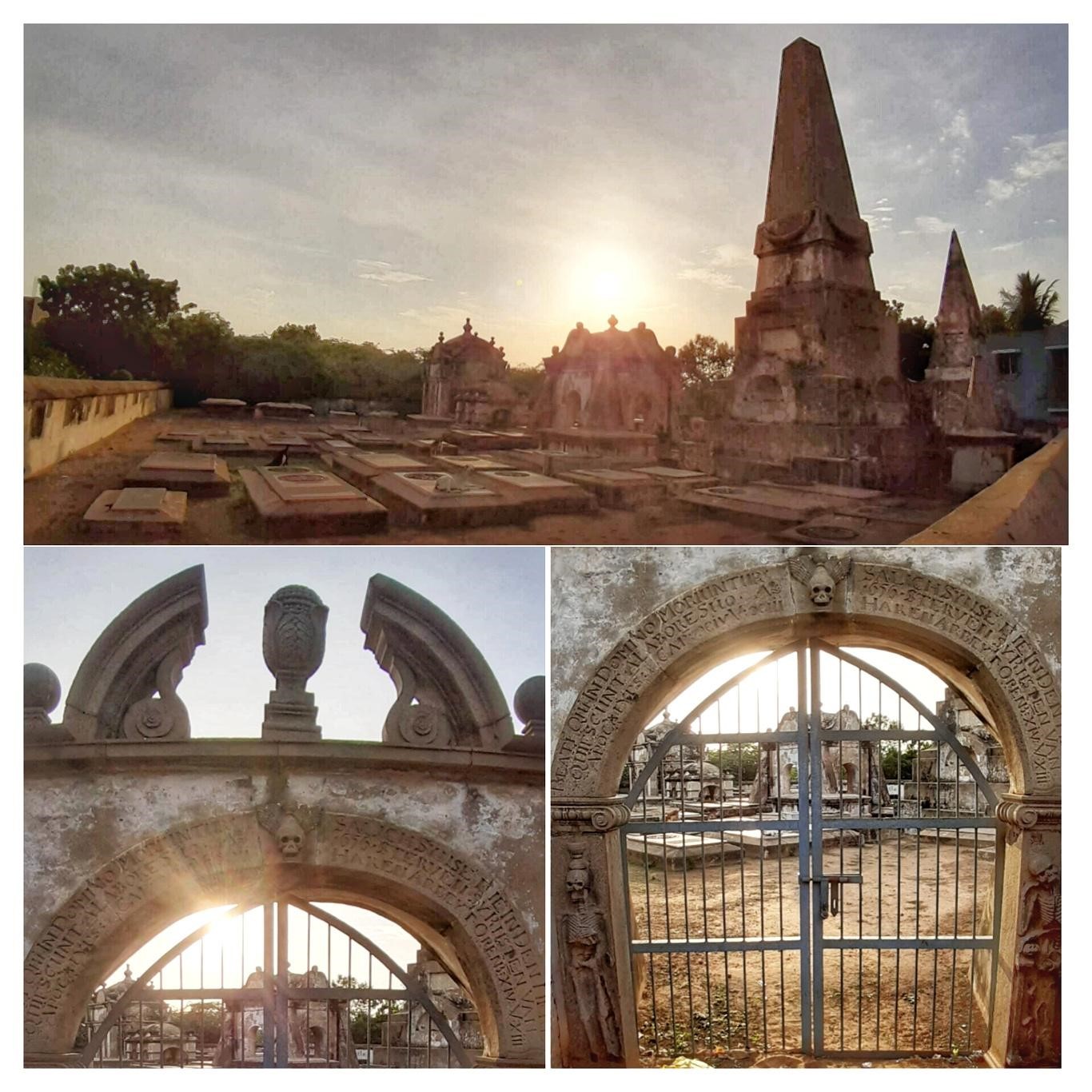
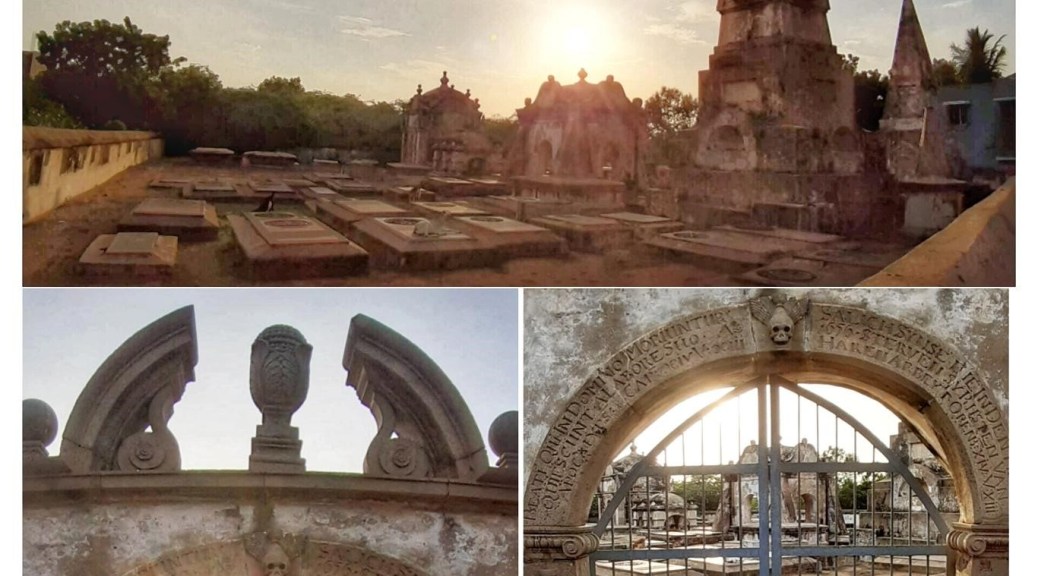
A few kilometers after the Biligundlu cemetery and few kilometers before Hogeynakal waterfalls, we stopped by at a location where river Kaveri flowed onto our right and a tiny structure of brick and mortar was built onto our left… We parked our vehicle there and started our short hike up from there. A properly laid stone path is there all the way to the hilltop which took us around half an hour to hike. The views of the river and hills around were just amazing all the way.

The Ganesha idol at the peak of Biligundlu Ranganatha swamy temple hill

First, we were greeted by an idol of Ganesha sitting under the tree at the peak. This spot gave a splendid view of the river and the hills beyond. We sought Ganesha’s blessings and proceeded to the Ranganatha temple located below, connected by a short flight of stairs. The temple was closed by the time we arrived. However, we could see the idol through the meshed gate. After offering our prayers, we found a spot adjacent to the temple wall and sat there to soak in the beauty of the place. The view of river Kaveri flowing with a backdrop of green rolling hills looked amazing even as the winds caressed our faces. It was a beautiful place, indeed!

View from Biligundlu Ranganatha swamy temple
View from Biligundlu Ranganatha swamy temple; Photo Credits: Sugan @ TheBuffalorider

We headed back after a while and decided to take a dip in the shallow waters of the river to beat the summer sun. A word of caution if you plan to get into the river, that there will be a sudden drop in the depth at many spots and it is believed to have whirlpools as well. We stayed by the shores before calling it a day after a while.

Other nearby places to visit:

Weekend Hike- Bala Kodandaraya Swamy Temple

Although this destination is a recommendation for weekend and day hikers of Bengaluru, it is in Krishnagiri, a district bordering the two states of Karnataka and Tamil Nadu.

The views from an ancient temple had caught the attention of my friend and me, who are always in the look out for less crowded and less explored landscapes and places with cultural and historical importance. One such place was the ‘BalaKodandaraya Swamy temple’ whose history dates to the Vijayanagara era. Based on our online research, we found out that getting to the temple involved a short hike.

We started early on a Saturday morning by car. We had our breakfast along the way, in one of the several restaurants on the Hosur highway. From there, we followed the route on Google maps to reach our destination. A steep deviation to the left of the highway led us through villages. There were asphalted roads and good views of the surrounding hillocks for as long as the road passed through villages. The last couple of kilometers were through unpaved muddy roads passing through a slight forest stretch. We finally arrived at a small open space where we parked our car, at the base of the temple hill.

The forest trail
The trail through the forest cover, starting from the base to the temple arch

There was a small structure of brick and mortar (gudi) at the base, from where a flight of stairs led to the hilltop. People lit lamps, agarbattis and camphor here before starting their ascent. It took us about half an hour’s climb along properly laid stone steps leading to the top. These stone slabs bear the names of the devotees who have donated them and the count of their donations on each step. The ascent curved around at multiple places and offered amazing views of the valley below at every turn. The first half of the climb had a forest cover and large boulders on both sides, until we arrived at the welcome arch of the temple.

The path towards the left of the trail, towards the temple

The forest cover ended after a few steps further from there and opened to a panoramic view of the valley of the villages and farms below. As one stands on a large rocky outgrowth, you will find the trail split into two paths. One, straight down through some Gulmohur trees. Second, up towards the temple. We decided to first walk the trail going straight. A few yards from there, the trees made way to a beautiful pond of pink lilies, dug right beneath a large rocky monolith. We later realized that devotees take a dip in this pond before proceeding towards the temple.

The path towards the right of the trail, leading to the temple pond

The view of the valley from there and the magical vibe of sitting by this pond of lilies could not let us go easily from there. My friend settled on the banks, with a book to read. Although the water was heavily littered with plastics, it was still a super calm spot to soak in some good energy. After spending a while, we then headed towards the temple, located on the peak of the hill, a short walk away. There was a panoramic 360 degrees view of Hosur and Krishnagiri from the temple, the green cover around, Krishnagiri dam and the Then Pennai river. The temple priest arrived much later at around 10.00.a.m. for the daily prayers.

Balakodandaraya swamy temple, Krishnagiri
Balakodandaraya swamy temple and the cleft for drawing water

Surprisingly, a small cleft in the rocky hill serves as a perennial source of potable water for temple use. The people who had gathered there by then, helped the priest in drawing water from this cleft and clean the temple premises before offering the day’s prayers. We sat there for a while and decided to head back to the base before the sun took over the skies and heated the rocks around. Overall, it was an incredibly beautiful place for a short trip from the city.

Other nearby places:

If you are looking at making it a full day trip, then you can explore the nearby places that include:

The Hoysala Trail 2- Belavadi

In my wish list to visit as many Hoysala temples as possible in this lifetime, this is the second documentation. I started this series with the temples of Belur and Halebidu, as these were the erstwhile capital cities of the Hoysala. I will move on from there.

Continued from The Hoysala Trail 1- Belur & Halebidu

Belavadi is a quaint little village located approximately an hour away from the Hoysala capital town, Belur. The Veera Narayana swamy temple of Belavadi is one of those where the main idol of the presiding deity is still intact and regular prayers continue to be offered. The intricacy of the artwork on stone is very similar to that of the temples at Belur and Halebidu.

Veeranarayanaswamy temple, Belavadi
Images: Veeranarayanaswamy temple, Belavadi Top: Outer entrance gate to the temple Below: Inner entrance to main shrine at Veeranarayanaswamy temple, Belavadi

Unlike the main Gopuram (temple tower) at Belur, the entrance gate at the Belavadi temple is small. There are two ornate statues of two elephants that greets you inside. The sculpture on the outer wall is simple and minimalistic. as you enter, you notice that the inner walls are plain. It is possible that these were stolen, vandalized, or lost over the course of time, only historians can tell me better.

Veeranarayana swamy temple, Belavadi
The sculptures on the exterior of Veeranarayana swamy temple, Belavadi

As you walk past this entrance gate, arch you pass the courtyard and are greeted again by a pair of standing elephant statues into the main temple that encompasses the shrines in the trikuta style of temple architecture. The three shrines inside houses idols of Lord Vishnu in three different forms. Huge lathe turned stone pillars and walls bearing fine and intricately carved figurines adorn the inner walls of the temple where photography is prohibited at the time of my visit (in July-2022).

Veeranarayana swamy temple, Belavadi
The Trikuta temple towers at Veeranarayana swamy temple, Belavadi

The outer walls are equally gorgeous too with intrinsic stone carvings and embossings all over. Due to limited permissions for photography, my photo story here consists only of photos of the exterior of the temple, but more than sufficient to give an idea of this marvel.

Veeranarayana swamy temple, Belavadi
The inner and the main entrance of Veeranarayana swamy temple, Belavadi

Also, a walk around the tiny hamlet of Belavadi is highly recommended. I loved the unique design of these traditional houses that emanated a vibe of an old world.

To be continued as Hoysala Trail 3