So stuck up with my professional life.. I am finding little / No time to visit my native, where my basics belong to.. Politics, emotions, manners, education- on the whole the basics of every aspect of the human that I am today 🙂
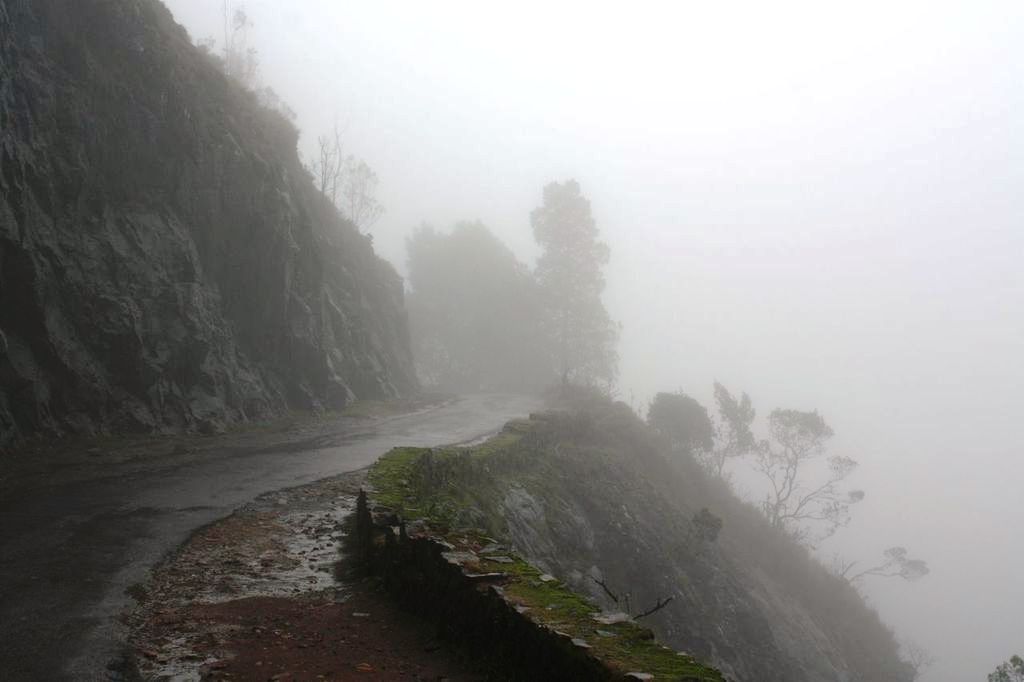
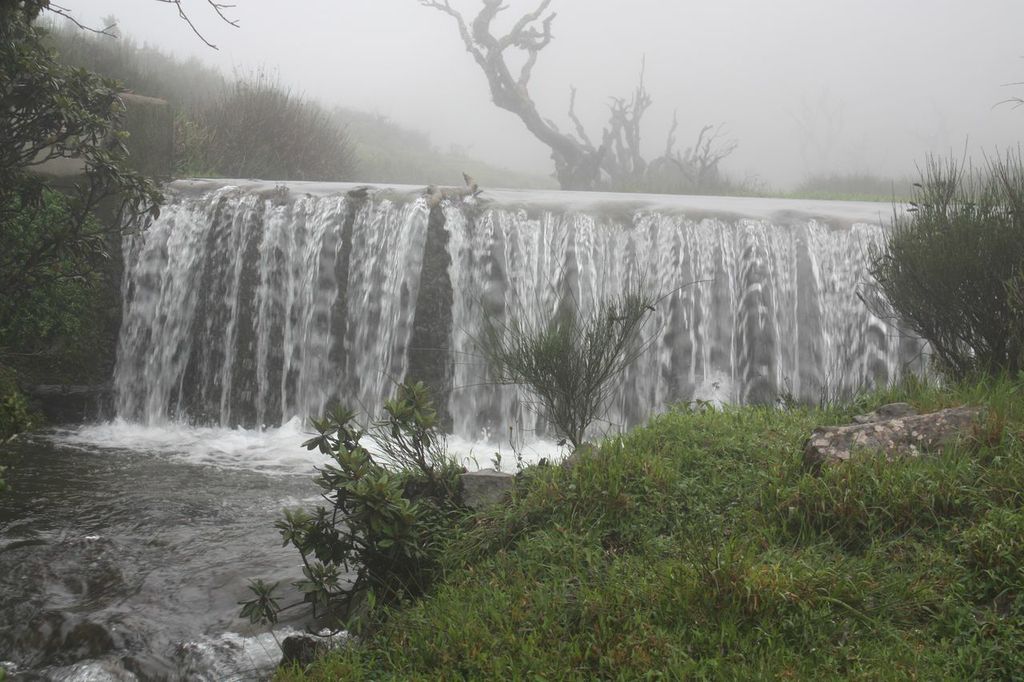
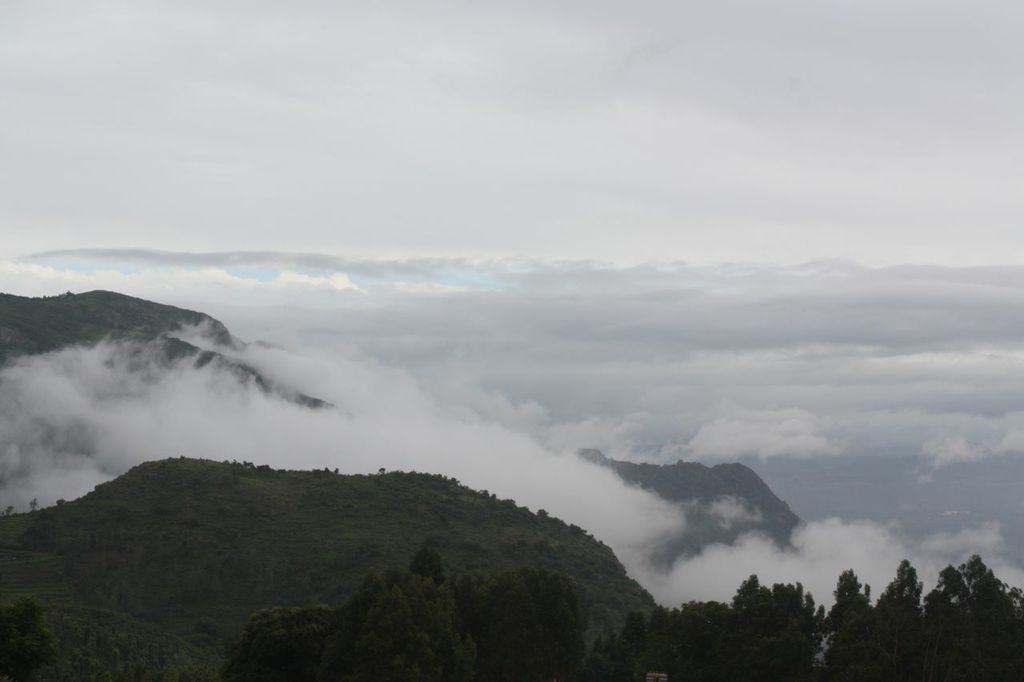
Nostalgia fills my heart as I hear of heavy rains in the recent weeks- little villages have turned into islands, water levels are atleast 2 feet above bridges, waterlogged paddy fields now look like a never ending stretch of the river itself.. WOWwww…. An amazing picture of a rain fed rather filled-green COORG flashes infront of me.. And what my heart is craving for at the moment is some AWESOME Coorgie food.. And what my taste buds are asking for are the lesser known typical monsoon delicacies native to Coorg and cannot match their original taste if tried to re-create in any part of this wide world even by the greatest chef ever born..!! So here goes the list..
VEGETARIAN:
1. Therme thoppu palya (Fern salad)
2. Kembu suli curry ( Colocasia shoots)
3. Baimbale curry (Bamboo shoot curry)
These are varieties found only on river banks.
4. Kaad maange curry (Wild mango curry)
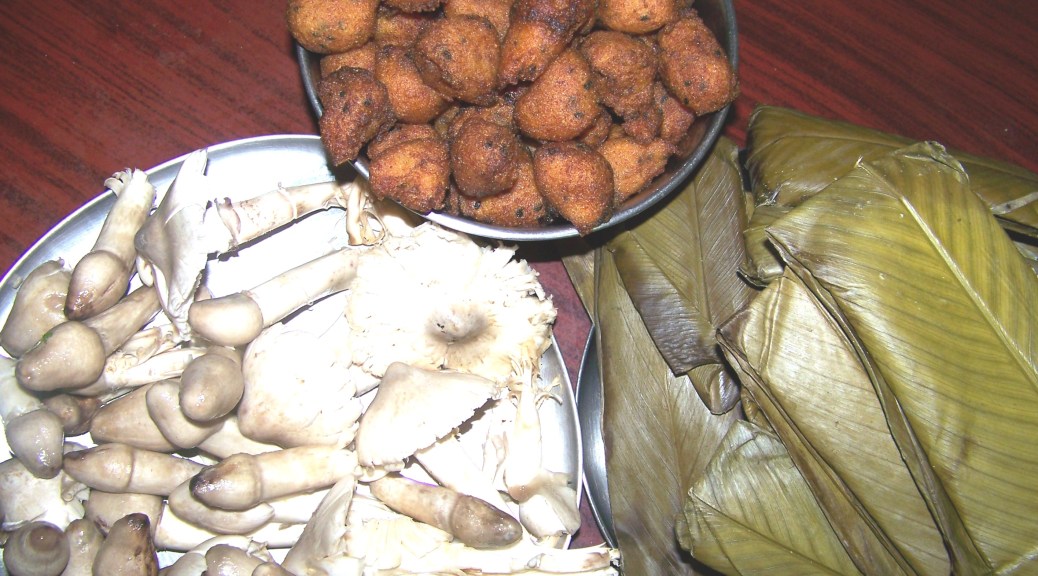
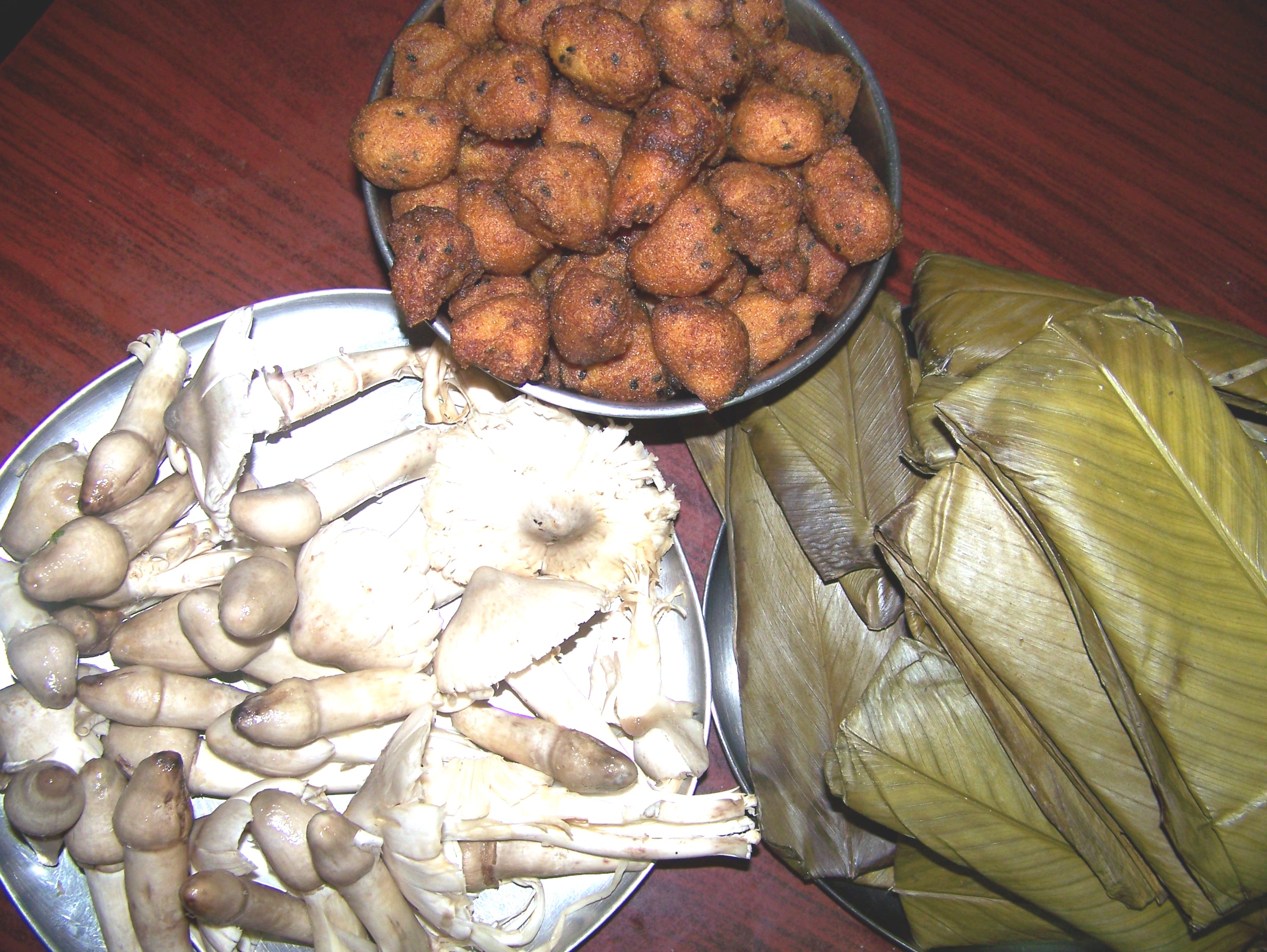
5. Kummu curry (Mushroom curry) especially the wild varieties- Aalandi kummu, Nucchi kummu, kaatola kummu.
The above stuffs taste deadly when combined with hot Akki Otti(Rice rotis) prepared on mud ovens lit with firewood 😉
6. Chutta chekke kuru (Roasted seeds of ripe jackfruit smeared with red soil and dried in the sun and preserved especially for the monsoon)
9. Onak yarchi fry (Since Coorgs hunted regularly, venison, wild boar, barking deer and several other kinds of wild game formed part of their diet. These meats were also sliced, rubbed with salt and turmeric, strung or skewered and sun-dried or hung from the rafters in smoky, wood fired kitchens)
10. Koile meen curry (Used to be in abundance where bamboo traps were laid in cold, swift flowing streams and the flooded paddy fields were full of these tiny freshwater eels)
SWEET DISHES:
11. Kuvale putt (Prepared with ripe Kuvale chekke (a variety of jackfruit, locally called Kuvale) wrapped in Kuvale ele (Leaf from a local plant found on riverbanks) and steam cooked.
12. Baale nurk / nurk putt ( Bananas fritters)
13. Maddh paaysa/ Maddh putt (Porridge /cake made of an aromatic herb, which is expected to have 18 types of medicine available only during the month of kakkada or aadi)
And last but definitely not the least – A peg of Nell-kall (vodka made of paddy) and some homemade wine…. Or a cup of steaming hot ‘Bellatha Kaapi’ for the teetotalers .. 🙂
People often complain about my eating habits and how choosy I get about what I eat and the little quantity that I peck onto.. Treat me with a platter filled with the above stuffs and see how I can binge on… This city food is CRAP.. and not what I savour…Not even the 6-course expensive meal cooked by the executive chef de cuisine of the costliest restaurant in the world…!!
Army and Hockey runs in Kodava blood.. It is that time of the year again when the schools and colleges are closed for summer.. Bosses have approved the leave requests from their Kodava employees atleast a month in advance.. Schedule is out.. Flight tickets booked in time as a player /Techie/Banker working abroad has to make it for their family match.. Its the biggest and the maddest festival dedicated to a sport anywhere in the world… It’s the ‘Kodava Hockey Festival’ yet again…!!
Over 300 teams participate with players including people of all age groups- right from a 10yr old primary school kid to a 75 yrs old granma.. Anyone with a mere passion for the game are allowed to join the team, only to fight it out for the coveted trophy each year.. Only 2 rules apply to participate- #1. Be a Kodava and represent your family team #2. Play the game with passion.
One Kodava family volunteers to take the ownership to organise this huge event each year. This year- it was the ‘Madanda’ family. Hooked up with too much work, I couldn’t make it to this year’s tournament.
The Iychettira cup cover photo
Hence, I’d like to make a mention of the last tournament I had attended- ‘The Iychettira Cup-2012’.
The Indian hockey team during the opening match
The opening ceremony was a gala event with some of the who’s who of the Indian VVIP league gracing the event.. It was followed by a nail biting, action packed, stiff fight during the exhibition match between the ‘Indian national team’ and the ‘Coorg XI’.. The men in blue(Oops.. in white) battled it out at the end though..
Palanganda vs Kaliyanda match in progress
During the 23 days long sporting fiesta, the family where I belong to- The Somayanda family, came through till the 5th round/the quarter finals, but failed to make it further.. The last day was the final fight between Palanganda and Kaliyanda.. The latter lost the cup inspite of a tough fight of 1-2.
Trophies lined up for the final presentation ceremony
One has to experience the madness sitting amidst the crowd cheering for their family teams atleast once in their lifetime.. All up there in the spectator gallery with just one thought in their mind and one feeling in their hearts- ‘HOCKEY’..!!
One of our friends was moving out of India and we thought it was good idea to send him off on a happy note; with something that he likes doing and something that he will cherish. With that, my group of friends hosted him for a dinner and then planned a trek to Madhugiri. Madhugiri is Asia’s second highest monolithic hill and has the ruins of an old fort at the top.
After a dinner party on a Friday night, we started to drive towards NH-4 in 2 cars and 2 bikes at 1.00.a.m. With a smooth highway road and bumpy country sides, we reached the guest house at the foothill of Madhugiri by around 4.00.a.m. The initial plan was to reach the peak for sunrise. But, on reaching the guesthouse, we were advised by the caretaker to start the hike after sunrise. There were recent cases of hikers attacked by bears reported on the hills. We waited in anticipation until sunrise.
From the foothills of Madhugiri – A view from our guest house
It was 7.00.a.m by the time we started our ascent after a coffee break at a petty shop in front of the fort entrance. The start of the trek made me feel like it was going to be an easy climb. A well laid flight of concrete stairs took us to about 1/5 th of the total climb of the hill. However, the climb started to get tricky further from there. The hill seemed a little steep, the concrete stairs were replaced by steps carved out of the rock itself. With this stretch, we covered 2/5th of the total distance.
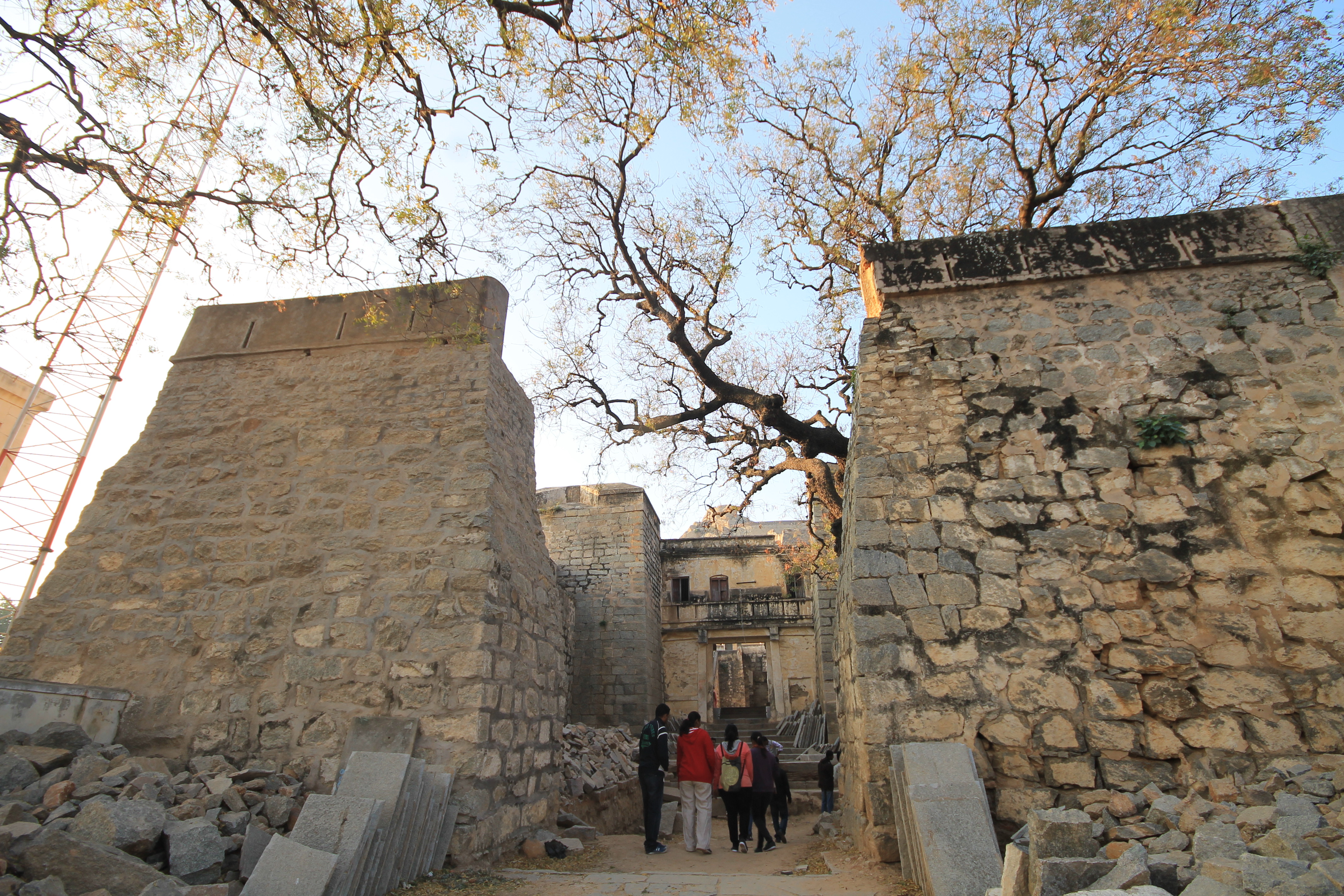
The Madhugiri fort entrance
The steps disappeared in the next stretch. There was only a rod fixed firmly to the monolith with some barbed wire and the hill had become a little steeper. This was covering 3/5th of the ascent.
A view of the Madhugiri town after climbing the flight of stairs
And then the steps disappeared. There was only a rod fixed firmly to the monolith with some barbed wire and the hill had become a little more steeper. This was covering 3/5th of the ascent.
Somewhere in between, an old and ruined wall emerged out. This added to the climbing woes which gave us only limited space to place our footsteps and less grip to place our hand. And then, we had to jump across a crack in the monolith to get to the other side was the steep valley. Once we reached the other side, every structure that was man made suddenly disappeared. It was just one super steep hill stretching into the sky. we had to literally use all four limbs to scale this 4/5th of the hill.
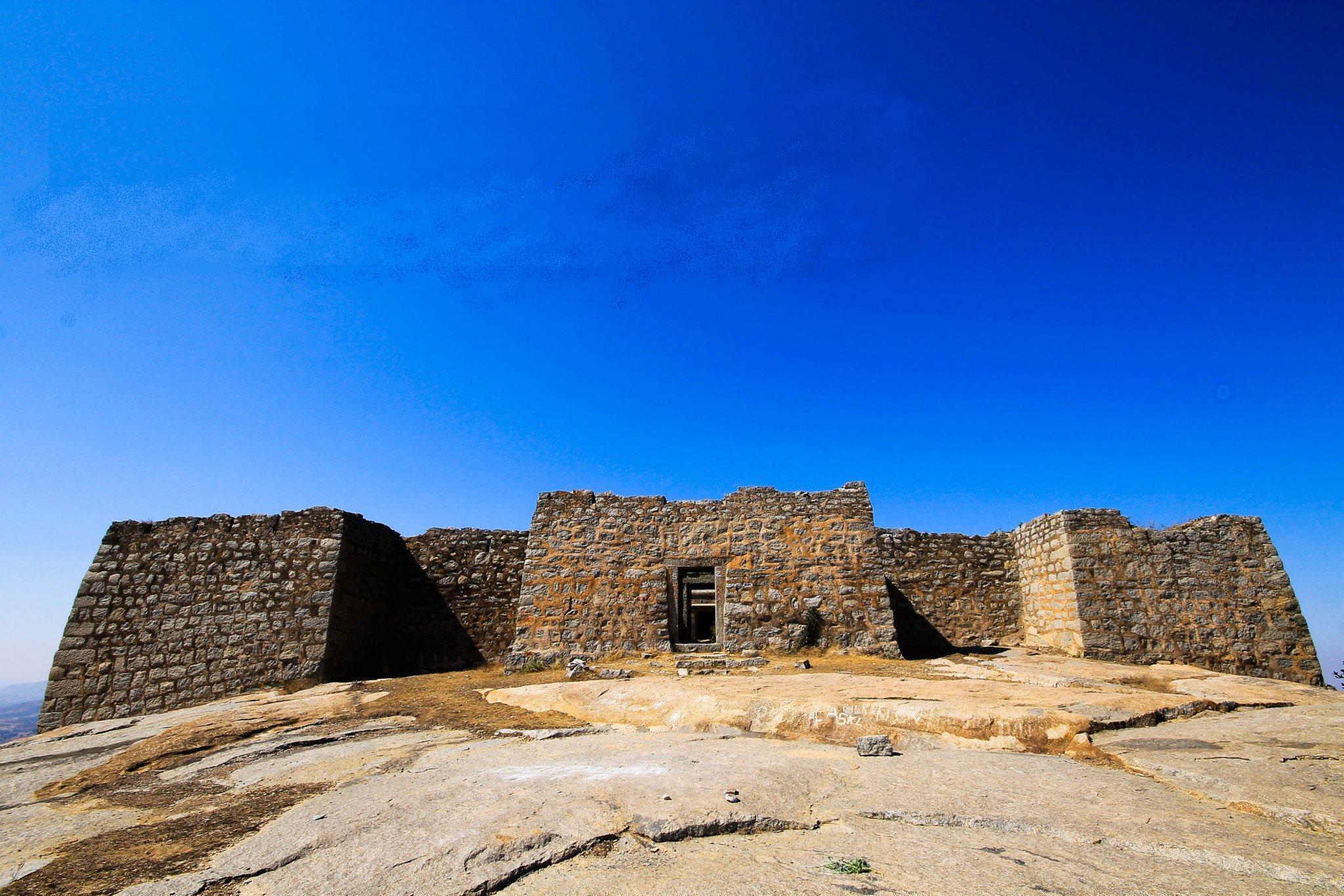
Fort Madhugiri
And finally, there emerged the first glimpse of the Madhugiri fort- gritty, yet seemingly elegant. This was built by Raja Heere Gowda who owed allegiance to the Vijayanagara kings, which was later reinforced by Hyder Ali. It is believed that this fort was a comfortable hideout for many freedom fighters during the Independence struggle. Beehives on the ramparts of the fort were the only means of sustenance for them and that is said to have given the place its name – Madhu(honey)- Giri(hill).
We walked across the structure in its dilapidated form, where the view on the other side was a treat to our eyes and feast for our tired souls. Our joy knew no bounds when we found a puddle of rainwater, which tasted no less than nectar from a beehive.
A puddle of water atop the hills
We spent some time atop and started our descent so that we could reach the base before the scorching sun made his way. The descent was a rather difficult, with me losing my grip every now and then and having nothing to hold onto. I had to sit and slide down inch by inch at most places. And finally, Bang at 12.00. noon, we had reached the base…
Overall, it was an awesome trek and the last one with our friend.
Cheers..!!
P.S.: photo credits to Sam (I’d left my camera in the safe confines of my home)
It was after a long-time that we cousins were catching up and so we planned to have an all cousins day out (no aunties, uncles, mammas and Pappas). We narrowed down to visit Mekedaatu for the weekend. At 10.00a.m on a Sunday morning, we were late to leave home to any tourist places around the city. And to add to our woes, it was Banashankari temple’s annual festival that day. This only means that we had to wade through hopeless traffic jam along with the Kanakapura road metro line construction also being underway…!!
List of places covered: Food stop at Vasu hotel, Kanakapura- This is popular for its crusty Masala Dosa Chunchi falls Sangama Mekedatu viewpoint
Details of the trip:
Six kms before Mekedaatu, a board pointing to the left indicated the way to Chunchi falls. We decided to take the deviation. The summertime visit to Chunchi falls was a disappointment for us after reaching there. There was hardly any water in the river and the rocks shined bright in the sun’s reflection. Just as we were about to turn our backs to return, a localite who was around us started a conversation with us. He eventually told us that he could take us to a better viewpoint. We blindly decided to follow him.
We crossed a small dam, a ridge and continued to walk. after a tiring walk in the scorching sun for about 1.5 kms, we slowly started to grow suspicious as to where this man was taking us as the place started to look more secluded. But, just then, he pointed at a watch tower and told us that we could get a good view from there. Before we could react, he intruded – “But, you need to walk down there. Behind that bush”. We were like, “OK… hmm huh…!!” and continued to walk further. He would certainly not be able to mug us as we outnumbered him, we thought. Once we reached that spot, it was a total sense of relief and a surprise. Had we returned earlier; we would have missed such a great spot. I’m sure this place would look more amazing in the monsoon season.
Chunchi falls
After spending a while at the falls, we thanked the old man with a goodwill amount and headed towards Sangama. ‘Sangama’ is a confluence of river Kaveri and Arkavathi and supposedly a very scenic spot post monsoon. But disappointment was waiting for us again after reaching there. Insufficient rains and the influx of tourist on a weekend, the place was crammed with very little place to even sit peacefully on the riverbank.
Legend has it, that a goat had jumped across a gorge to escape from a chasing tiger and hence our destination derived its name in Kannada. (Meke = goat; daatu = cross). Trekking the 3 kms distance from Sangama to Mekedatu was banned then and hence, we had to wait for the pick-up bus to come. After disappointments back to back, we were apprehensive of going forward till Mekedaatu wondering if it would be worth our visit. We lost our patience in waiting and walked across the shallow waters to reach back to our car. The security guard who had been observing us, walked up to us and suggested that we go to Mekedaatu since we had already come so far from the city. We were still half minded and tossed a coin. Heads said a ‘Go’.
The view around Sangama
After disappointments back to back, we were apprehensive of going to Mekedaatu wondering if that place would really be worth our visit. Trekking the 3 kms distance from Sangama to Mekedatu is banned now and hence, we had to wait for the pick up bus to come. We lost our patience, and crossed the shallow waters back to reach our car. The security guard who had been observing us, walked upto us and suggested that we go to Mekedaatu since we had already come so far from the city. We were still half minded, and tossed a coin. Heads said a ‘Go’.. So we again crossed the river, by then the bus had returned. We got the last seat for ourselves. The bus was a total-out-of-the-junk-yard-thing. The seats we were sitting on were infact tied to the roof rails with strings- more like a swing..!! And the fully crammed bus(packed to twice its capacity) started. It was an unpaved road, and a lot of dust was filled inside the bus which made us literally stand up from those swinging seats..
View enroute to Mekedaatu from Sangama
So, we again crossed the river and by then, the bus had returned. We got the last seat for ourselves. The bus was a total-out-of-the-junk-yard-thing. The seats we were sitting on were in fact tied to the roof rails with ropes. It felt less like a bus seat and more like a swing…!! And bus was fully crammed and packed to twice its capacity. The drive was through an unpaved road, and a lot of dust was filled inside the bus. We could barely breathe inside and all we stood up from those swinging seats. Once we reached Mekedaatu after a strenuous back seat ride, we felt that the security guard was right- It was a nice place. But again, insufficient rains did not give me the internet picture I wanted.
Since our onward ride was a bad experience, we chose to sit on the top of the bus for our return. Trust me when I say that the ride was the highlight of our entire day… The best bus ride we all ever had in our life. The bus went at high speed blowing the dust high up from the unpaved roads. There was just one thin steel rod around for us to hold onto, that too was tied to the windows below. At one point, another bus came in the opposite direction, and our bus went completely off road. It felt as if our bus was balancing on a few small stones on the slope of the valley so that the driver could make enough space for the other bus to pass through the narrow road. We could reach the treetops, see the best views of the river and the valley below. It was one AMAZING ride.
The bus, road and our shadow of sitting on the top of the bus- between Mekedatu and Sangama
We ended up feeling that the return trip was a very short one and wanted more… one adrenaline rush moment it was…!! It was the last ride for the day as the sun had already set and we returned to our homes high on energy and all charged up and motivated for another boring week ahead.
There are a lot of options around Kanakapura for a full day or half-day trip. I have covered these places on separate occasions. A few of them are: * Kabbala Durga trek * Bheemanakindi trek * Pyramid valley meditation center
The initial plan was to leave before sunrise so that we could see the birds at the Ranganathittu Bird sanctuary before they left their homes for the day’s chores. However, a flat tyre and multiple pit stops added up to late arrival at the Srirangapatna-Yelwala bypass. This led to a few additions and deletions in the original plan so that we could see the birds when they returned to their nests late in the evening.
List of places covered: Gaganachukki and Bharachukki waterfalls Talakadu Kaaranji kere in Mysore Ranganathittu Bird sanctuary
Details of the trip:
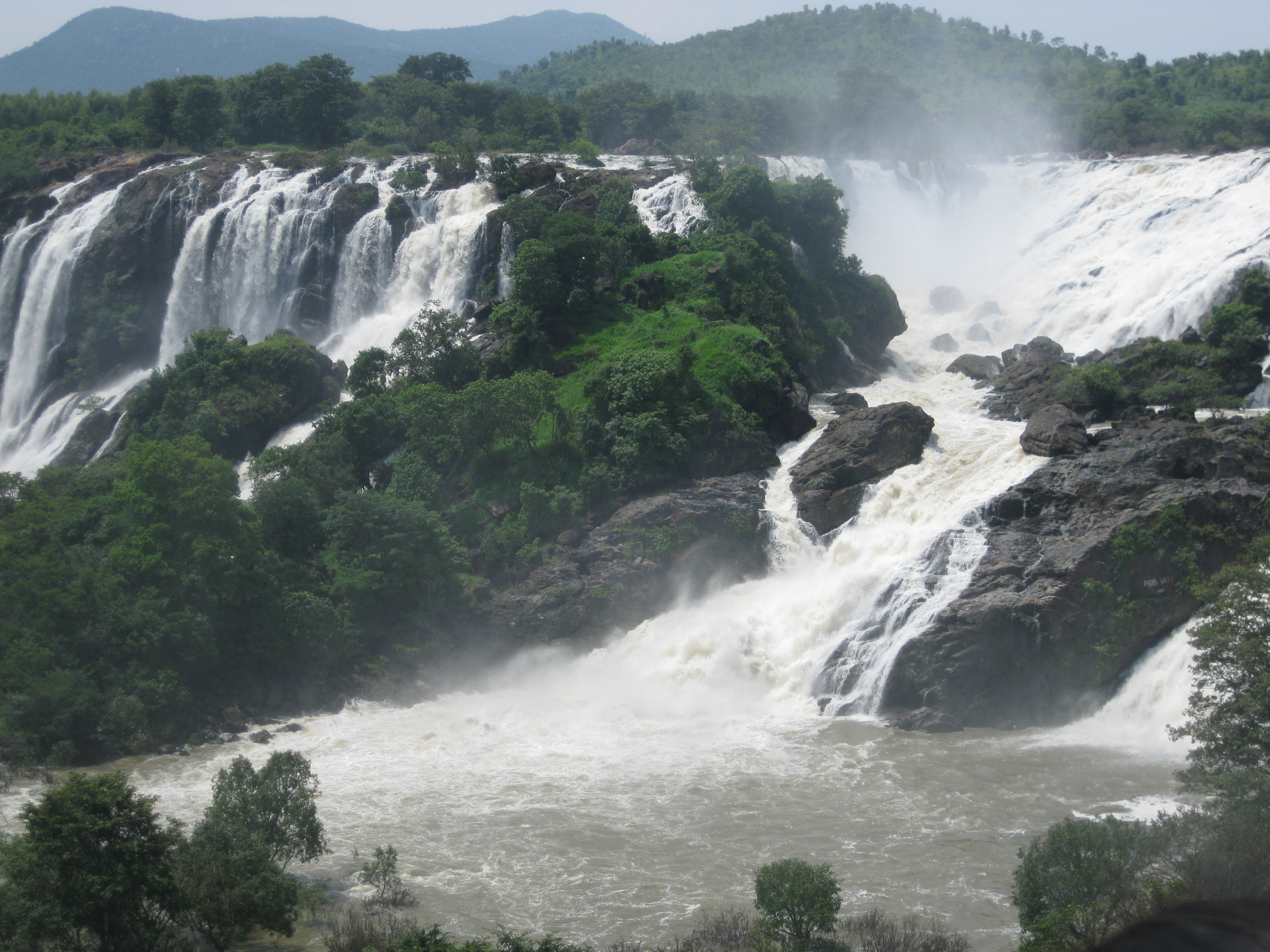
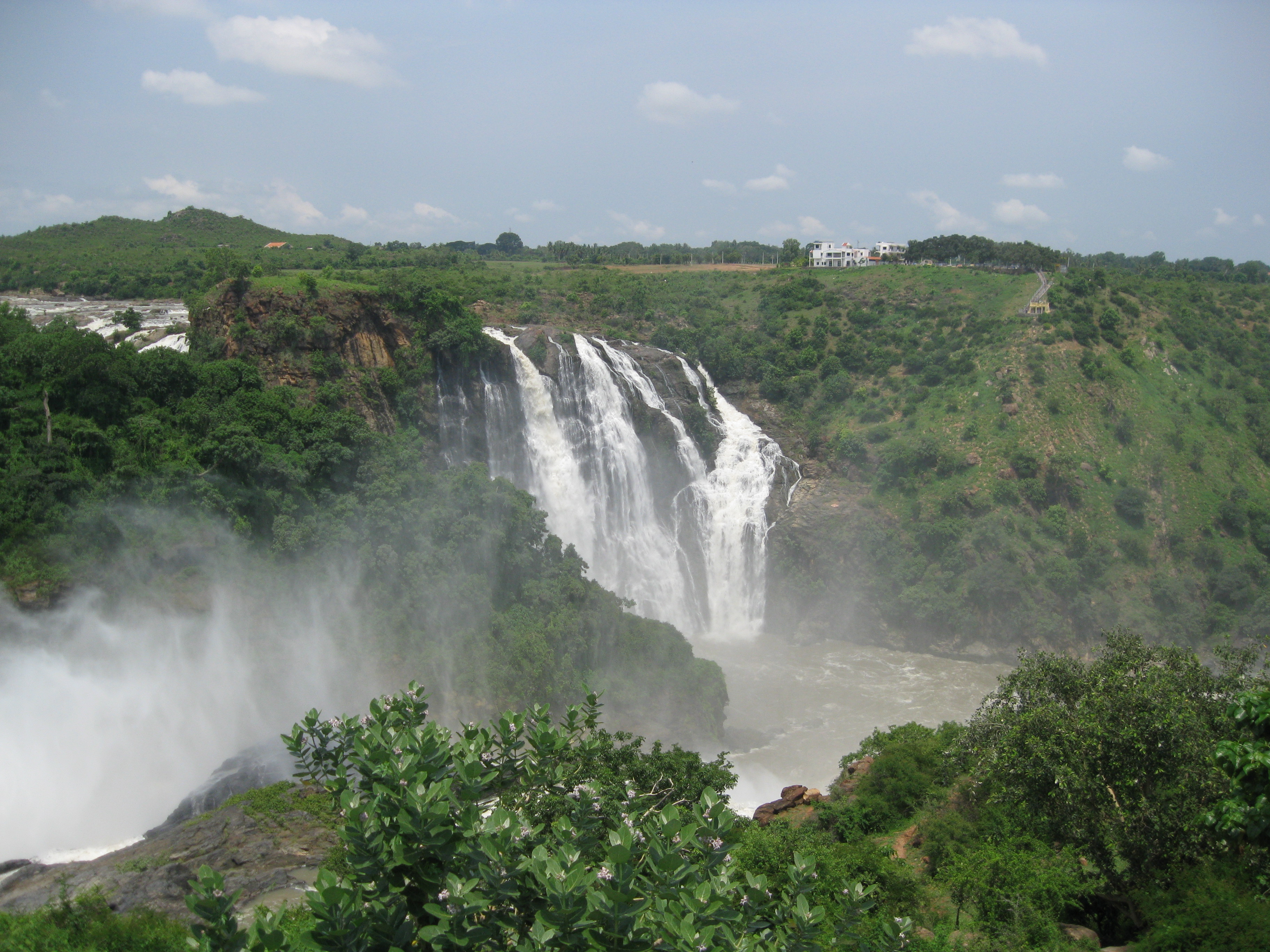
As per the new plan, we headed to Gaganachukki and Bharachukki waterfalls. After a nice long drive through the green paddy fields and rusty countryside, we reached Shivanasamudra. This is one of the island towns formed by river Kaveri through its course. This is where Asia’s first hydel-power project was set up, commissioned by the then Diwan of Mysore- K. Seshadri Iyer; in order to supply electricity for mining at Kolar Gold Fields. River Kaveri plummets down at two places, a couple of kilometers away from each other and then merging together again. The beauty of the twin waterfalls is truly mesmerizing. If you’re seeking for some thrill, coracle rides are available that takes you closer to the spot where the water drops. But we did not want to take the risk of venturing into the water without a life jacket. At least, not after we heard someone say that the water was 1000 feet deep at some point. We weren’t not sure of the exact depth of the river, but certainly did not want to take a chance!
Gaganachukki- The western branch of river Kaveri
The sun was approaching his highest point by this time, and hence we decided that we should be heading towards our next destination- Talakadu. Kannadigas have all grown up listening to the story of the curse of Alamelamma. It is believed that her spell turned this once prosperous town to a sand desert. As a student reading history in school, I had always been intrigued to visit this place and see the romance between the sand and the temples during different seasons. However, the excitement that we had when we started to this place soon died when we arrived there (in fact, it got buried deep under its sands). Given the poor rainfall, less waters and hordes of tourists over the weekend, the place was had gathered so much filth and poop everywhere. There was an unbearable stench that had spread around. The river was shallow and looked stagnant and unappealing. Yet, we did manage to go for a coracle ride which was definitely not worth the buck. The place was a total turn off…!! We lost our interest to explore the famed temples of Talakadu and left the place (I did visit the historically important temples on a later date though).
Bharachukki- The eastern branch of river Kaveri
We wanted to reach the highway back again but lost our way at some point. Without being able to connect to the highway, we just kept driving on some narrow road through the countryside. After the frayed trip to Talakadu, this drive through the rustic countryside was somewhat a deal breaker and a feast to our city bred souls. After a bit of driving around and just when we thought we had reached the highway, we realized that we had in fact reached Mysore…!! Mysore city was never on our itinerary when we left home that morning. We were extremely hungry and hence decided to feast at a nice restaurant in the city itself.
Some friend suggested us to visit Kaaranji kere in Mysore where we could do some birding. Around 3.00.p.m, we headed there- This was in fact the highlight of the trip- though unplanned, it came as a treat to us. We took a boat ride around the lake where we spotted several migratory birds. Not in large numbers, but many in varieties. It surely is a haven for the bird lovers. I pitied myself for not being able to identify what birds most of them were. I’m not an enthusiast of zoos as these places are where animals and birds are kept in enclosures. But, if you are around with kids, this place is good as there is an enclosure here as well that hosts many native birds, a few animals and reptiles.
The birds at Karanji kere
So, finally by 5.00.p.m, we headed out for what we had come all the way– Ranganathittu Bird sanctuary. It was the time when all the birds returned to their nests… We were there for sunset. We then took a boat ride around the small islets where thousands of birds have made their homes. The trees looked amazing with the birds and the water looked equally dangerous- with crocodiles swimming right past us… Again, we spotted a lot of different birds since it was the peak of the migratory season.
The winged hosts on the islet
With a pleasant sunset ride in the river, a long day tripping in the Mysore circuit came to an end. Although most part of the day was unplanned, it was a weekend well deserved.
I have been tad busy at work with less time to post a thought.. February being a month of love, inspite of my hectic schedule at work, I’ve managed to make the most of my weekends spending quality time with my 1st love- “Traveling”. Every weekend will be posted separately in the days to come.. But, before the ‘month of love’ ends.. I wanted to ensure that the chronicle for the month ends with a love note on my 2nd crush – ‘The Aeroplanes’ 🙂
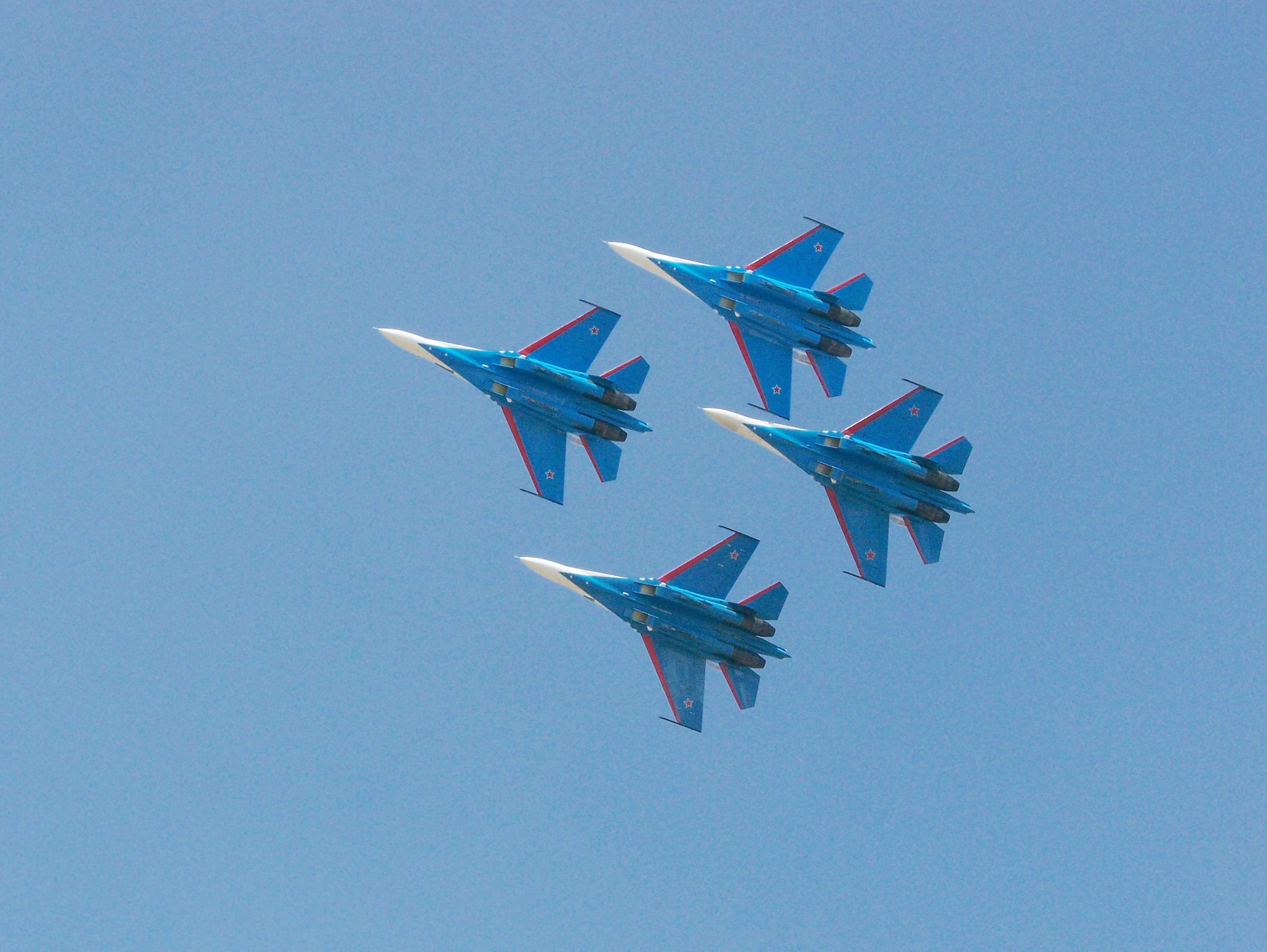
“Aero India” is a biennial event that happens only in Bangalore and is something that I have been religiously visiting since it’s inception.. I was there this year too.. But, compared to the previous years, it wasn’t a great show.. Unfortunately, the expectations set for the aero-enthusiasts by ‘The Russian Knights’ were too high to be met.!!
The ‘Mirror Image’ formation by the Flying Bulls
The Suryakirans were missed greatly, due to the passing away of 2 pilots in mid-air crashes 😥 The ‘Flying bulls’ and the Desi-team ‘Sarang’ were clearly the show stoppers.
The Russian Knights
<14-Feb-2009>
This takes me back to the show of 2009 – When there were too many participants with almost all the biggies in this business from around the world who had set up stalls. India was on a look out for 126 fighters for its mighty air-force. The F-16, F-18, Eurofighters, Rafael, Sukhoi etc etc. India’s LCA- Tejas made her 1st debut. There were many other contenders among the LCH-Choppers like Dhruv, Cheetah, Cobra; Cargo carriers like the C-130: Super Hercules, Omega tankers; Missiles and UAVs.
It was a day of dreams to several other aero-enthusiasts like me. Hopping from one stall to another understanding the latest technological developments in the industry, defence and warfare from across the world can happen only at one-stop-shows like these and not everytime or everyone gets such opportunities to learn.
Here, knowledge is accompanied with entertainment. Aerobatics by various teams from India and abroad, individual competitions that are related to flying or making scaled-down models, display of some vintage aircrafts, flight simulators, interactions with the personnel from major aviation companies are opportunities that every enthusiast looks forward for show after show. Aero-India 2009, being its biggest show ever, it was an amazing day… especially when it falls on 14-Feb..!!!
The ‘Tango’ formation by the Suryakirans
A great show put up by the SuryaKirans and the Sarang team..!!
The Sarang team
It is a feeling of contentment that fills my heart when I come here for each show and a sense of sadness to think about waiting for 2 years for the next show.. It gives us a sense of pride when we say we are Bangaloreans and the Air show happens only here..
If you want me to write further, I can go on.. About every show and every machine there.. But i’d like to save some for the coming shows too.. So, I end it here with a ‘Love Note’ in the month of love and let the love spread in the world 😛
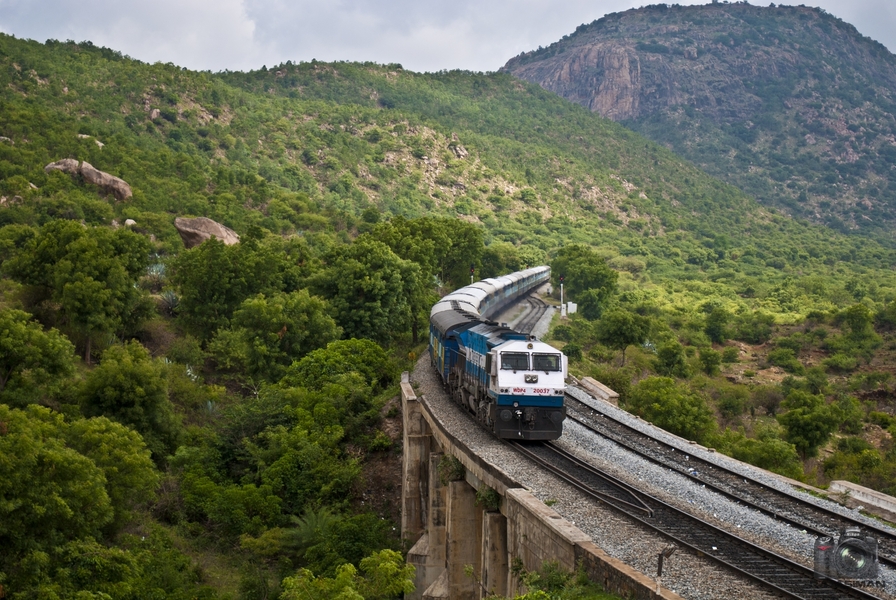
Even then, the second visit to Makalidurga happened. I was forcibly dragged out of bed on a cozy Sunday morning. I was supposed to be the guide to the first timers so that they could hike up the hill.
I knew the way to reach Makalidurga- but could not guide them any further to the exact spot from where they could get the photo of the train crossing which they wanted.. Considering it was around 11.00.a.m, the sun had already reached a good position to suck the fluid in us..
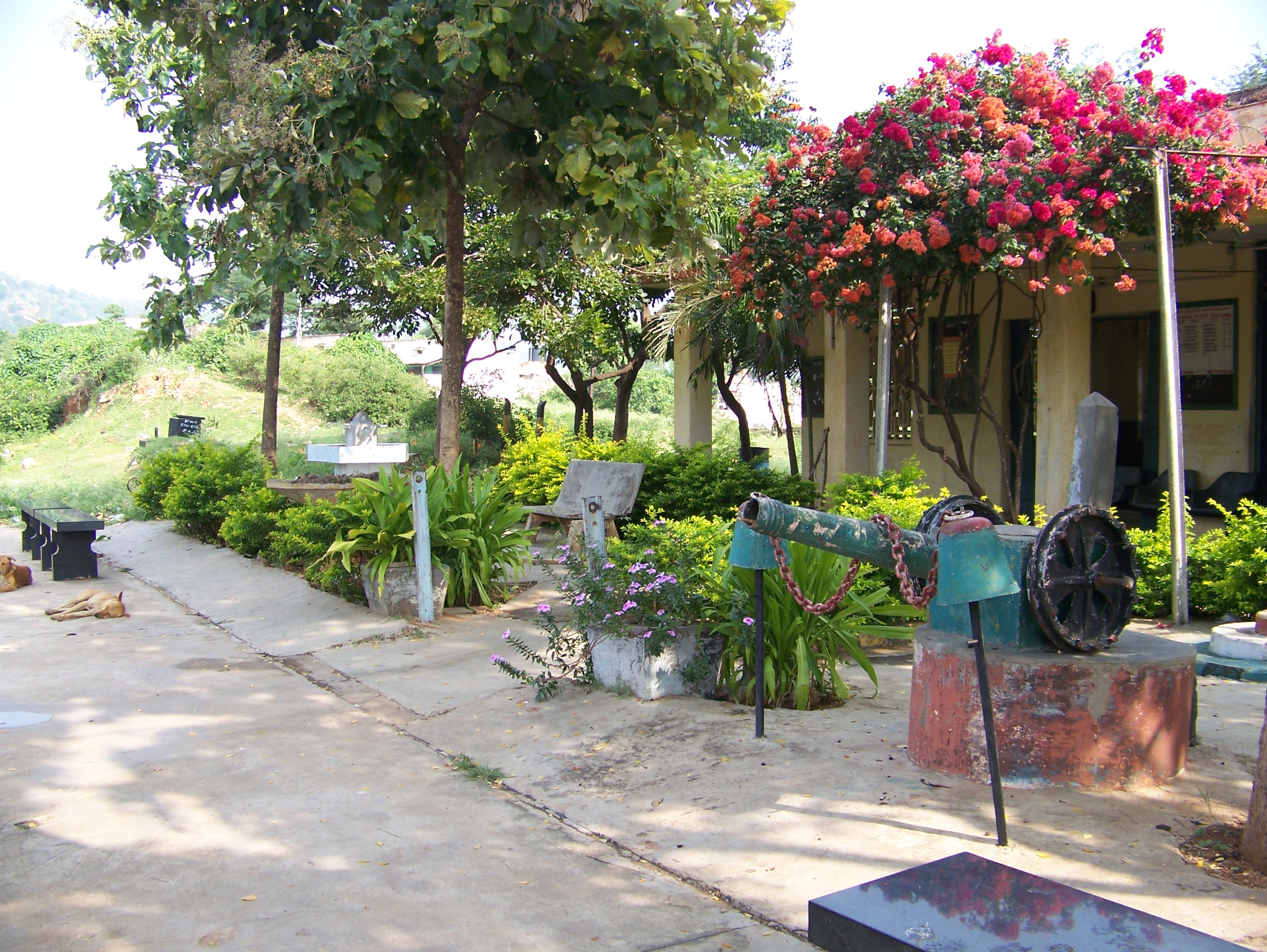
Alighting @ the Happy valley : Makalidurga railway station
We had left home without breakfast hoping that we could have something on our way and pick up some water bottles.. Hard luck..!! We could find neither!!
The Makalidurga railway crossing
All of us reached a railway track finally.. And randomly climbed a hillock, climbed further up.. We continued to climb hoping to find some shade to sit and wait till our catch of the day appeared… But again, no luck- no water, no food, no shade. We randomly stopped on a considerably flat area without being able to proceed further under the ruthlessly shining sun and waited for the train..
After about half an hour, the smoke from the engine chimney appeared near the horizon.. We all got excited.. As it neared, the engine emerged from behind a bush, then a bogie.. Before our cameras reached their position, we saw the end of the train 😥 It was a small train with just 1 engine and 4 bogies…
So, we continued our wait.. After a while again we found some smoke at the horizon. So, this time we hoped that our tiring wait would end soon and we could get that perfect internet photo of a blue passenger train passing across the frame… Hard luck once again- It was indeed a super long train with over 55 bogies: But, it was a goods loco and not the one that we had waited for and moreover its colour did not match the background 😥
This meant that we still had to wait. We were restless… We decided to walk further up hoping to find some shade atleast..!! And we did find a small tree (or rather a bush). Something that was better than nothing, we thought. All the five of us squeezed into that small patch of shade and continued to wait….
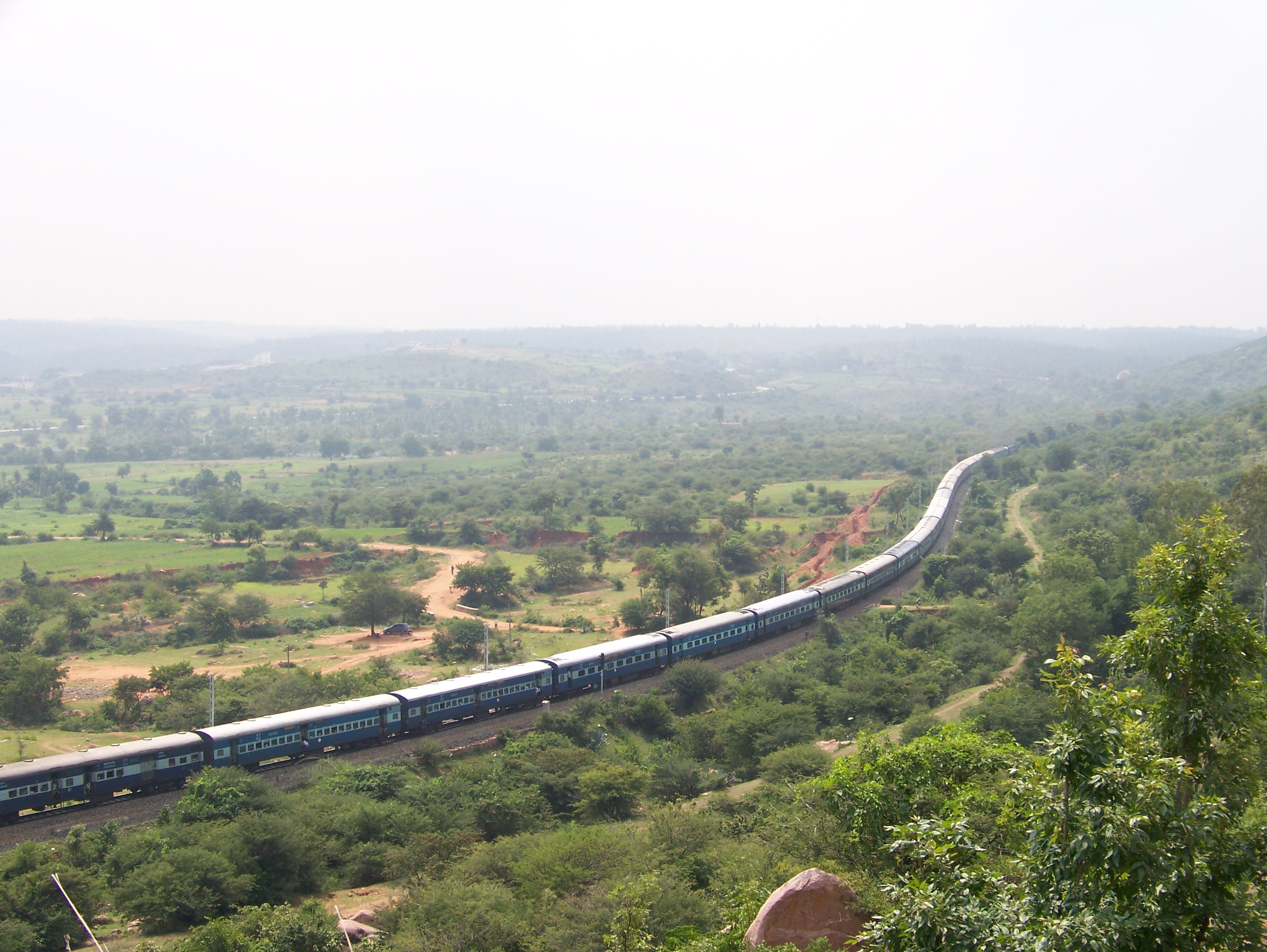
After a while, we heard the hooting of a train at a distance… This time, we couldn’t see any smoke rising up… The sound became louder and louder but still- there were no signs of the train. But, we knew for sure that the source was somewhere closeby. And suddenly, a Nizamuddin-Yeswantpur bound passenger train came buzzing into our visibility. We all took our cameras out and started clicking… The train was really long and it stretched beyond the 2 ends of the frame. Yet, this was not the photo we wanted. The train was actually in the opposite direction. So, even if the engine is very much in the frame, it appears like it is gone beyond 😥 But, anyway it seemed like we could not hope for anything further because we were all dehydrated.. So, we had to be contended with what we got and return back to pavilion 😦
Our prized catch- The Nizammuddin-Yeswantpur passenger
My family decided to visit the Ghati Subramanya temple on Ganesh Chaturthi day considering that there would be less crowd in a Subramanya temple. A short drive into the Bangalore outskirts, Ghati welcomed us with a mesmerizing view of the hills, ponds scattered in the meadow and a lot of greenery around… The boundary of the meadow was lined by a railway track- It looked beautiful.!!
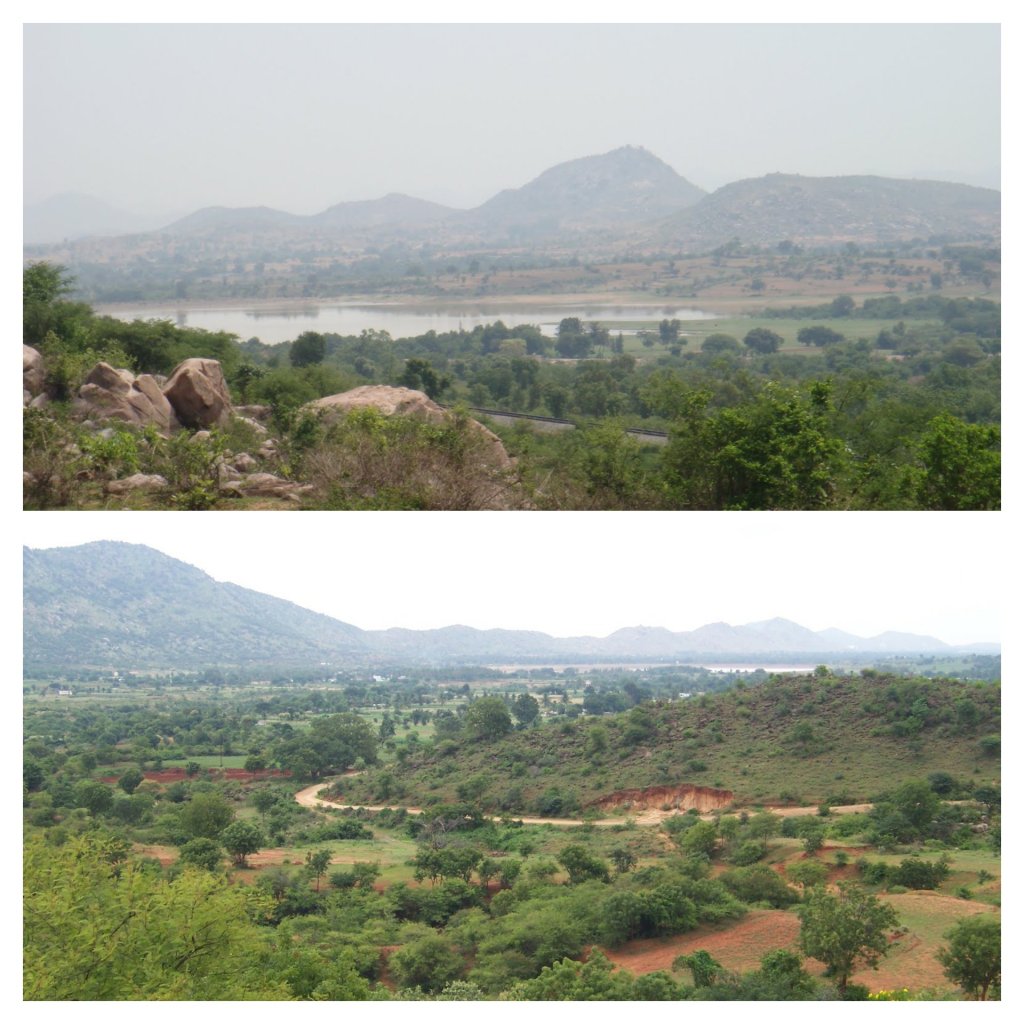
Some views of the Makalidurga valley
And just as we slowed down to appreciate the view, a freight loco came zipping along the line- and now it looked picture perfect…!! And just as I thought that this scene was familiar- my mind wandered to recollect where I had seen it. Soon I knew the answer: it was the “Makalidurga Ghats” that I had seen in an IRCTC hoarding of the South Western railways at Cantonment station. Back then, I remember that I had gone back home and googled about Makalidurga but had soon forgotten. So, this felt great today!!
We then proceeded to the temple and finished the darshan early (considering less crowd). And we then straight away followed the milestones to Makalidurga. I was back from a railway trek to Dudhsagar just two days ago and here, I was with a view that inspired for another railway trek. We stopped our car close to the railway station and walked 3-4kms along the railway track to reach the bridge that I had seen in the hoarding. But sadly, there was no train that would pass at that time…
Top: The Subramanya temple at Ghati; Below: The naga pratishtapana installations outside the temple
We then explored the place around by foot. One of the hills offered an amazing view of the surrounding villages. There are ruins of an old fort atop the hill which makes it a great place for some exploration. I later learnt that the place is crowded with trekkers on weekends who usually come here for adventure sports and camping. It is a nice place if you are looking for a quick and a random drive just around the city.
We had guest dropping by at home and hence, headed back home early.
The IRCTC photo that I couldnt capture 😥 Picture courtesy: IRCTC hoarding at Cantonment station
I visited this place again with friends on a later date. That time, exclusively to do train spotting. Click here to read further.
Its 1st of December.. At 10a.m.; an e-mail was delivered to my inbox from the canteen department. “Monthly menu”- the subject head read. My immediate action was to click on the trash button which straight away dumped the unread mail in the trash bin. This action was not unique to me alone.. At least ten others in my office would have done the same.. And another ten would have just opened the mail to simply trash it without really reading it.. Nobody usually expects anything unusual in the menu. But just incase, some fresher bumps into you with a humble intension to strike a conversation and brings up the topic of breakfast menu:
“Hey ! You know what’s for breakfast for this month?”
The poor fellow is bound to get an equivalent reaction: “Aiyya…!! Looks like you have not had enough of a bath in the canteen..!!”
The oldies all know the menu by-heart. So what’s in a bath?? Read on…
Tuesday: Green- bath (Methi bath)
Wednesday: Red- bath (Vaangi bath)
Thursday: Deadly-oil bath (Darshini Pulav)
Friday: Mixed colour- bath (Chow-Chow bath)
Saturday: Brown- bath (bisi-bele bath)
Sunday: Yellow- bath (rice bath)
If I missed out on Monday in the list: that’s the 1st working day of the week; So the company tries to give us some motivation to enter the company gates.. That’s the “Have no Bath”-day. It is the only day when Idly-Vada-Sambar-Chutney is served.
Now: How do the employees identify what is for breakfast without actually entering the canteen or reading the menu? It comes with experience. Just a month’s time is enough..!!
Well, a Monday’s menu barely changes; so you know what is there. You go or don’t go depends on how bored or excited you are to get away with the Monday morning blues..!!
And the other days.. Usually standing at a distance and a small peep into someone’s plate from the canteen door is enough. By the colour on the plate, you know what it is.. and then, do an about turn and walk towards office.!!
But, a special mention needs to be made about Wednesdays.. The day being the mid-week and one would already have lost the motivation to work; the day greets you by serving a deadly bath on your platter. This is the original “Darshini Pulav”. I prefer to call it the deadly bath. It is because you don’t need to walk till the canteen door on that day. The strong smell of fried bread cubes doused in dalda oil and mixed with a weird coloured masala hits your nostrils instantly at the time you alight at the bus bay. So, you directly walk away to your office without wanting to even get closer to the source of smell.
Friday’s are special because not one, but two baths are given on a single platter. Chow-Chow-bath: as the name suggests, it is a combo of Rava bath and Kesari bath…!!
Oh.. Are you wondering why we even go near the canteen door every morning, huh? It is just out of curiosity and nothing else.. The curiosity to know how a bath can be had in different forms and in different colours- and every time, smell similar and taste the same even with different names..!!
Occasionally, Pongal, lemon rice, puliyogare, khara bath, tomato bath, curry leaves bath, vegetable bath, green peas bath are served too.. But considering these are still different colour forms of the same rice dish: it is an array of Bath-o-baat..!!
I agree that we are South Indians who are mainly rice eaters and fond of our daily showers. But nowhere in the peninsular India, would you find a Southie eat so much rice a day.. We have other better forms: dosa, poori, chapathi, akki-rotti, ragi-rotti, jola rotti, puttu, appam etc. etc… Why the hell on earth are we forced to have this bath every morning..!!
This is a serious allegation coming from a deeply disturbed rice hater who has stopped taking a bath just because of the traumatising “bath-o-phobia”..! Time the management does something about this one..!
This post is based on my trek to Dudhsagar waterfalls in the year 2013. If you have read my previous post: The railway adventure, then you’re sure to have had an insight to the adventure part of my trip to Dudhsagar waterfalls. This post is more on the trip and the sightseeing part of the story. I elaborate on the beautiful vistas that we came across as passed tunnel after tunnel, walking along a railway track, in the middle of a National park and finally seeing the beautiful Dudhsagar waterfalls.
17 of us boarded ‘MAS-Vasco express’ from ‘YPR’ on a Friday night and alighted at ‘Castle rock station’ on the following morning at 9.15.a.m. ‘Castle Rock’ is cute little station that divides the village into two- on one side is the railway colony, school, hospital, offices etc. and on the other side is the town(if at all it is called so) with basic amenities like a grocery store and a few petty shops. Since we were travelling in monsoon, the station was all green and a treat to all the eyes that had just landed from a concrete city.
With no facilities available anywhere around the station and even the basic offices closed on a weekend, we all freshened up in the washroom of the railway station itself. This is a point from where our railway trek starts. It is less of a trek and more of a walk along the railway track, all the way to our destination: The Dudhsagar waterfalls. But like they say, its is the journey more than the destination that matters, the entire stretch of this trail is what makes the trip all the more special.
We couldn’t and just couldn’t ignore the gazillion scenic spots that we come across for which we had to stop after every minute or 5 minutes of the walk for a photo. The Castle rock railway station itself was so good looking. This green moss laden station is located in the midst of the Braganza Ghats, in the heart of a National park. Take for example, this ART (Accident Relief Train) parked by the side of the tracks. It is adding so much colour to a photospot.
@Castle rock station- in the midst of the Braganza Ghats ART a.ka. Accident Relief Train is parked by the side
We continued to walk in the direction of Dudhsagar, but were unable to ignore the numerous waterfalls we encountered on our way. We stopped every time for photos. We had to walk through a total of 11 railway tunnels before reaching the main waterfalls. The first one can be approached by crossing a girder bridge laid over a scenic view of the valley.
The 2nd tunnel is the longest-at 624m. and the most beautiful one. It resembles an entrance of a Castle.
After crossing tunnel no.3, we walked slightly off the track, into the woods to see another large waterfall. Then came another waterfall, plunging down inside a vault kind of a structure built into the cliff.
Top: The vault by the trackside; Below: The waterfall within the vault
The 4th tunnel is special. After crossing this tunnel, we would be setting foot in another state altogether. This tunnel marks the border between Karnataka and Goa.
Top: The first tunnel on the Goa side of the land; Below: The location marked where the actual Goa territory starts
After a long walk from there, we crossed tunnel no.5. While still navigating our way with torchlights on the tracks, inside the tunnel, we heard the hooting of a train approaching us from behind. There wasn’t much time for us to get out and hence, we all decided to get down from the track and stick as close as possible to the wall of the tunnel to stay safe. When the goods train arrived, we literally held onto our dear lives. It was dark inside the tunnel and no place to move.
Clockwise from top left: A train passing over the girder bridge before tunnel no.1; Exit of tunnel no.2; Light between tunnel no.6&7; A train inside tunnel no.5
The 6th and the 7th tunnels came together. The 7th one was nothing more than a small arch. Then we walked through tunnel no. 8, 9 and 10.
The 10th one was long and dark. And with exiting it, we saw Light at the end of darkness.. We had arrived at the ‘Dudhsagar station’. This is a de-func station and hence, neither the trains stops nor any tickets are issued for passengers who board from here. However, some lucky visitors manage to get a stop here but, they take a risk with a ticket-less travel. But, this is where we all realized that we were all tired by walking along the tracks. But, the fact that our destination was nearby gave us energy.
The DDS station
Then, we proceeded towards the 11th tunnel…. When we were exiting it, we were all hooting and clapping in joy. That’s because we all got our first glance of our destination. The mighty Dudhsagar: “Ocean of Milk”. The feeling was inexplainable. It was a great sense of contentment after a long tiring walk that was alllllll worth it..!! There was now a sudden spike in our energy levels and we all hurried towards the waterfalls. We dumped all our luggage right there, in front of the waterfall and crashed down in awe. As we were basking in the glory of the waterfalls, it had started to get dark. We looked out for space to unpack our luggage and our tents.
Top: The first glimpse of Dudhsagar waterfall out of tunnel 11; Below: Different views of the Dudhsagar waterfall
The only shelter (a small roofed structure) available to pitch a tent was already occupied by a large group who had arrived before us. We had no choice but to camp in the open, just by the side of the railway tracks. We put up a small campfire sort of a thing so that we had enough light to see each other’s face. But mind you, we were in the middle of a monsoon season in the western Ghats. The rain gods who had been kind on us during the entire hike were now playing spoilt sport. The campfire was put off too soon and we managed the rest of the night with our torches.
It poured cats and dogs the whole night.. The roaring noise of the waterfalls in the backdrop and the loud hooting sound of the train that passed atleast once in every half an hour, the tent pitched right next to the track with the waterfalls on the other side, it was indeed a night to remember..!!
Next morning, we all rose with the sun and spent some peaceful time in watching the water gushing down violently. Apart from freshening up last at Castle rock, it was already 2 days & 2 nights since we had last seen a decent restroom or a bathroom. We looked around to find a little place where we could finish off our stuff in peace. A small waterfall nestled deep inside the woods is what we found instead. All the girls in our group jumped into the water while the guys kept a watch for any trespassers 😉
Mythology says that the “DevaKannikas or the Apsaras are often seen bathing in the midst of the woods, before sunrise.. and if one is lucky, he can see them walk by in wet clothes” to think of it from a strangers’ perspective, I guess the scene that morning must have been something similar to that. We couldn’t find a place near the waterfall where we could change into dry clothes. Hence, we all wore our jackets over wet clothes and walked 1.5kms towards our tents. On the way, we came across tens of trekkers who desperately stared at us.. I understand the natural human instinct to drool at divine looking girls who are walking wet after getting all soaked in pristine water. Nobody could help the sight.!!
The waterfall where we took our morning shower at Dudhsagar
We were told that the passenger train would cross the waterfalls by 9.15.a.m. This meant that we had to be at the view point by that time to get that perfect internet photo..!! It took us to cross the 2 more tunnels to reach the viewpoint. After reaching there and waiting for a few minutes, we finally got the wallpaper worthy photo that we wanted.
Finally.. We got what we wanted..!!
After a long photo session of the large group that we were and before the crowd who had just arrived in that passenger train would spoil the peace, we headed back to our tents.. We had a round of heavy brunch (carried from home) and slowly packed up. The initial plan was to walk the track all the way to Kulem, but owing to the cruel sun and the tiring walking experience on the tracks on the previous day, we decided to wait to find a train ride, either to Kulem or Castle rock. We missed the goods’ train to Kulem by a few minutes and so, we had to wait at the Dudhsagar station for the passenger train going towards Castle Rock.And with that.. Curtains down to our trip to DDS falls..!!!
Update as on Year 2019: • Trekking on the tracks in prohibited as it passes through a National park. There is a risk of a human-animal conflict. • If you wish to visit the Dudhsagar waterfalls, you can sign up with one of the organisers based out of Londa in Karnataka or Kulem in Goa. They can take you through an authorized trail or a 4WD ride to a nearest point can be arranged.