In my wish list to visit as many Hoysala temples as possible in this lifetime, this is the second documentation. I started this series with the temples of Belur and Halebidu, as these were the erstwhile capital cities of the Hoysala. I will move on from there.
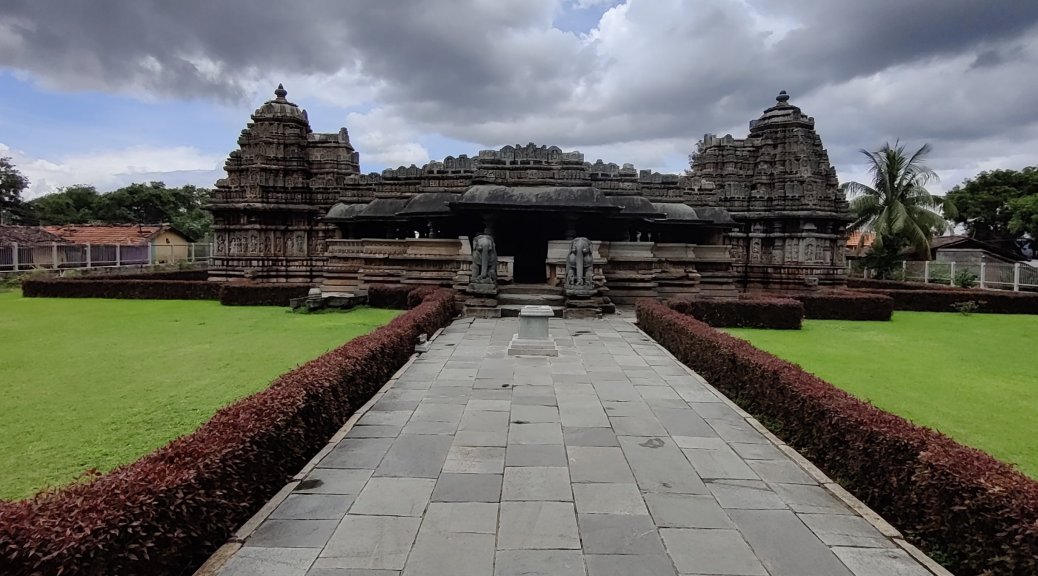
Belavadi is a quaint little village located approximately an hour away from the Hoysala capital town, Belur. The Veera Narayana swamy temple of Belavadi is one of those where the main idol of the presiding deity is still intact and regular prayers continue to be offered. The intricacy of the artwork on stone is very similar to that of the temples at Belur and Halebidu.
Images: Veeranarayanaswamy temple, Belavadi
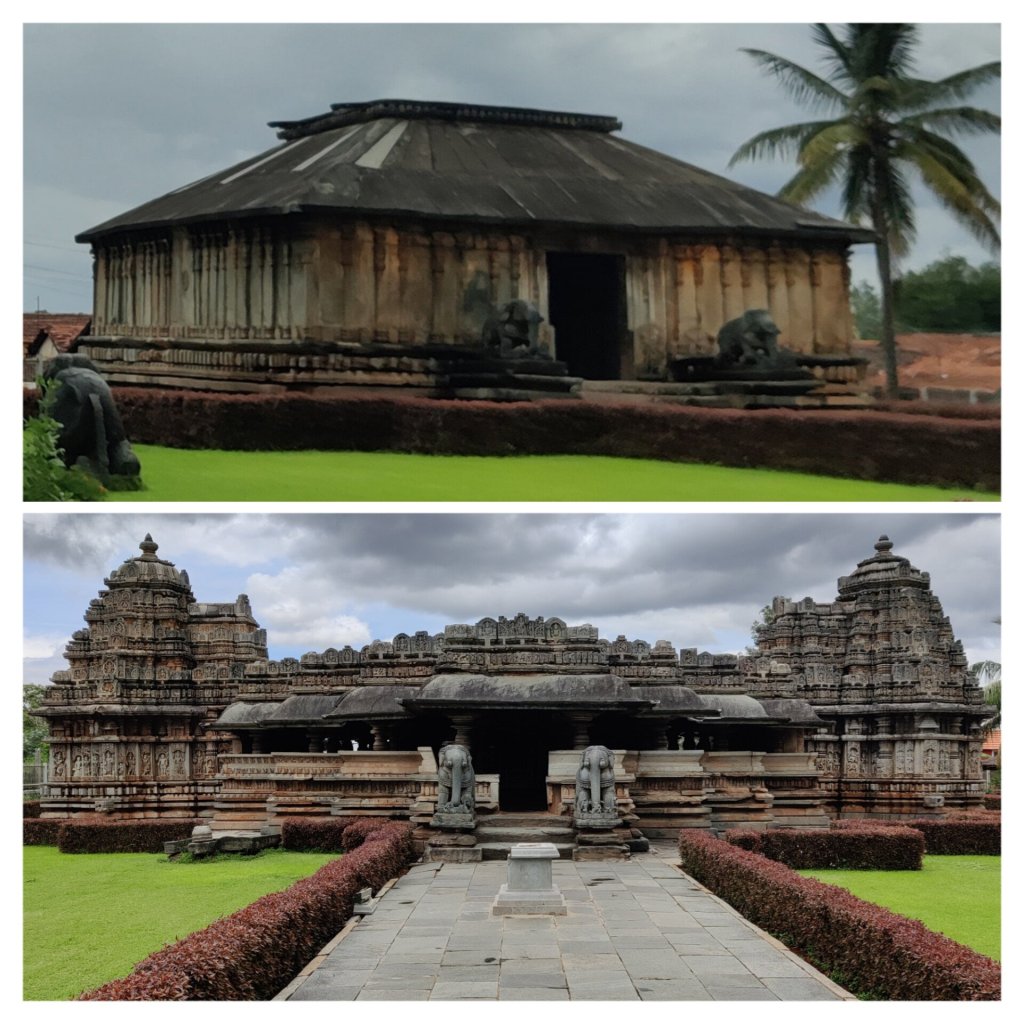
Top: Outer entrance gate to the temple
Below: Inner entrance to main shrine at Veeranarayanaswamy temple, Belavadi
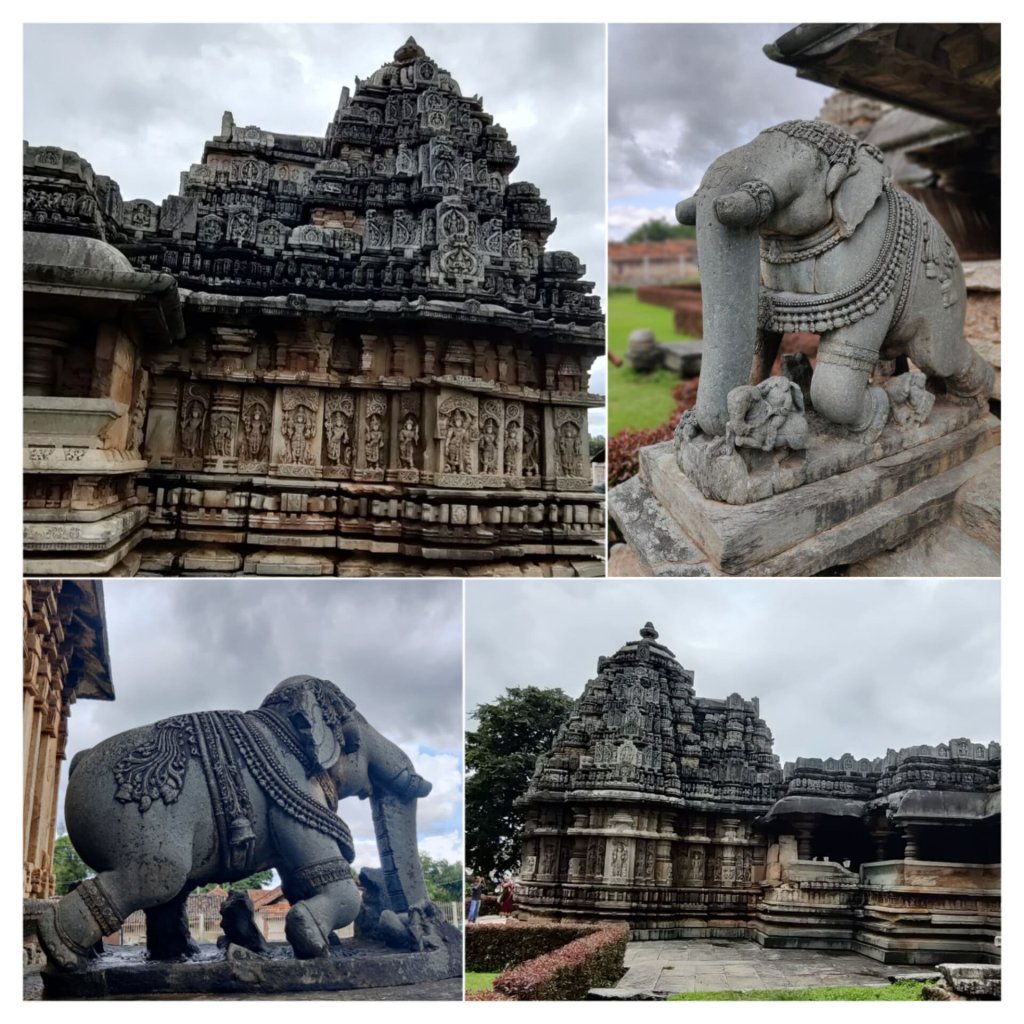
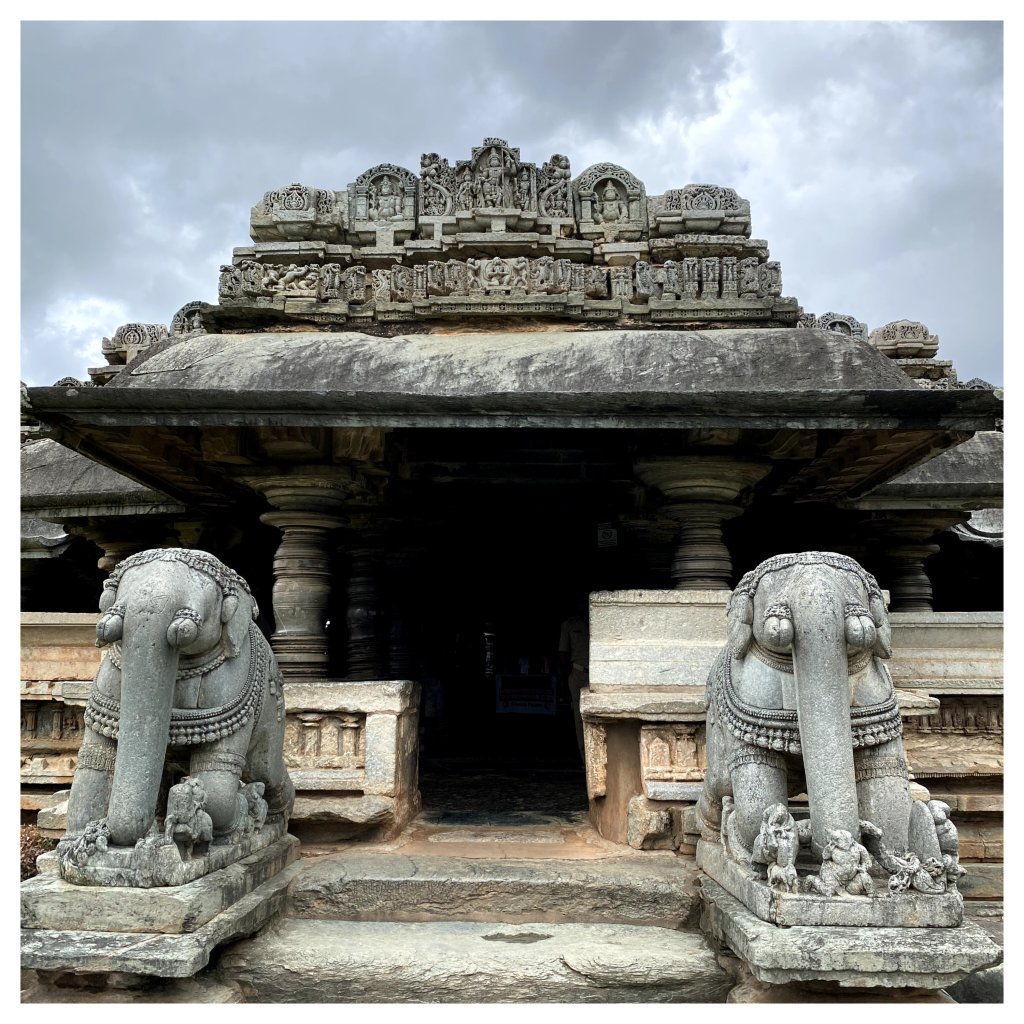
Unlike the main Gopuram (temple tower) at Belur, the entrance gate at the Belavadi temple is small. There are two ornate statues of two elephants that greets you inside. The sculpture on the outer wall is simple and minimalistic. as you enter, you notice that the inner walls are plain. It is possible that these were stolen, vandalized, or lost over the course of time, only historians can tell me better.
The sculptures on the exterior of Veeranarayana swamy temple, Belavadi
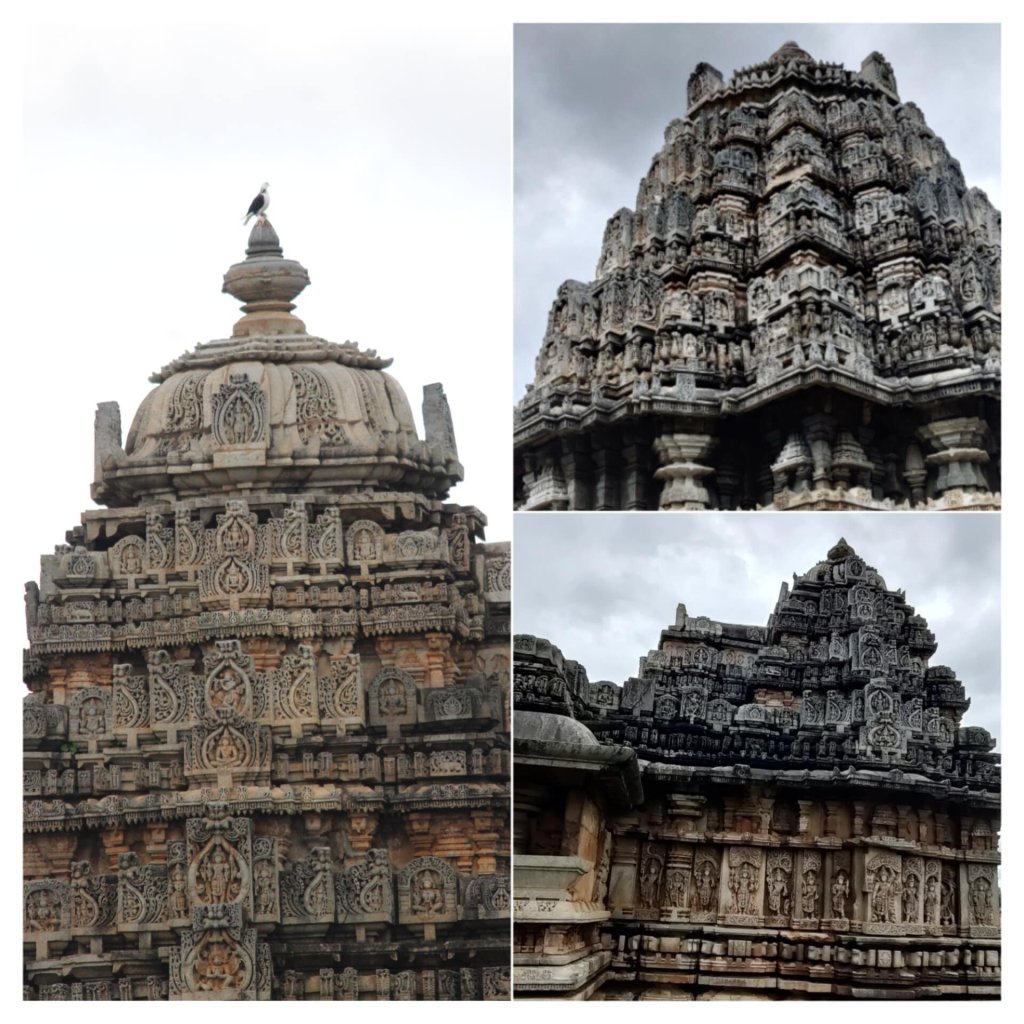
As you walk past this entrance gate, arch you pass the courtyard and are greeted again by a pair of standing elephant statues into the main temple that encompasses the shrines in the trikuta style of temple architecture. The three shrines inside houses idols of Lord Vishnu in three different forms. Huge lathe turned stone pillars and walls bearing fine and intricately carved figurines adorn the inner walls of the temple where photography is prohibited at the time of my visit (in July-2022).
The Trikuta temple towers at Veeranarayana swamy temple, Belavadi
The outer walls are equally gorgeous too with intrinsic stone carvings and embossings all over. Due to limited permissions for photography, my photo story here consists only of photos of the exterior of the temple, but more than sufficient to give an idea of this marvel.
The inner and the main entrance of Veeranarayana swamy temple, Belavadi
Also, a walk around the tiny hamlet of Belavadi is highly recommended. I loved the unique design of these traditional houses that emanated a vibe of an old world.
Heard of the potential of Aqua-tourism in Karnataka? We did just that. Read Further.
Water activities like kayaking, surfing, and diving are slowly catching up with enthusiasts, both for recreation and as a sport. Thanks to favorable winds, some of the most serene estuaries with mangrove ecosystems and untouched diving spots, Karnataka’s coastal region has been attracting enthusiasts and vacationers from all over. It was a family road trip driving down from the hills of Kodagu to the coast of Karnataka.
Just like the gad-bad ice-cream that originated in this region, our itinerary was packed with experiences. We wanted to see the bioluminescent waters. Bioluminescence is a naturally occurring phenomenon in which the microorganisms present in the water emit light when disturbed thus making the water glow. The darker the surroundings, the better the visibility of this phenomenon. Hence, we had signed up for a night kayaking session on a no-moon night in the backwaters of river Shambavi at Mulki. We chose to camp by the riverbank to have a closer connection to the waters.
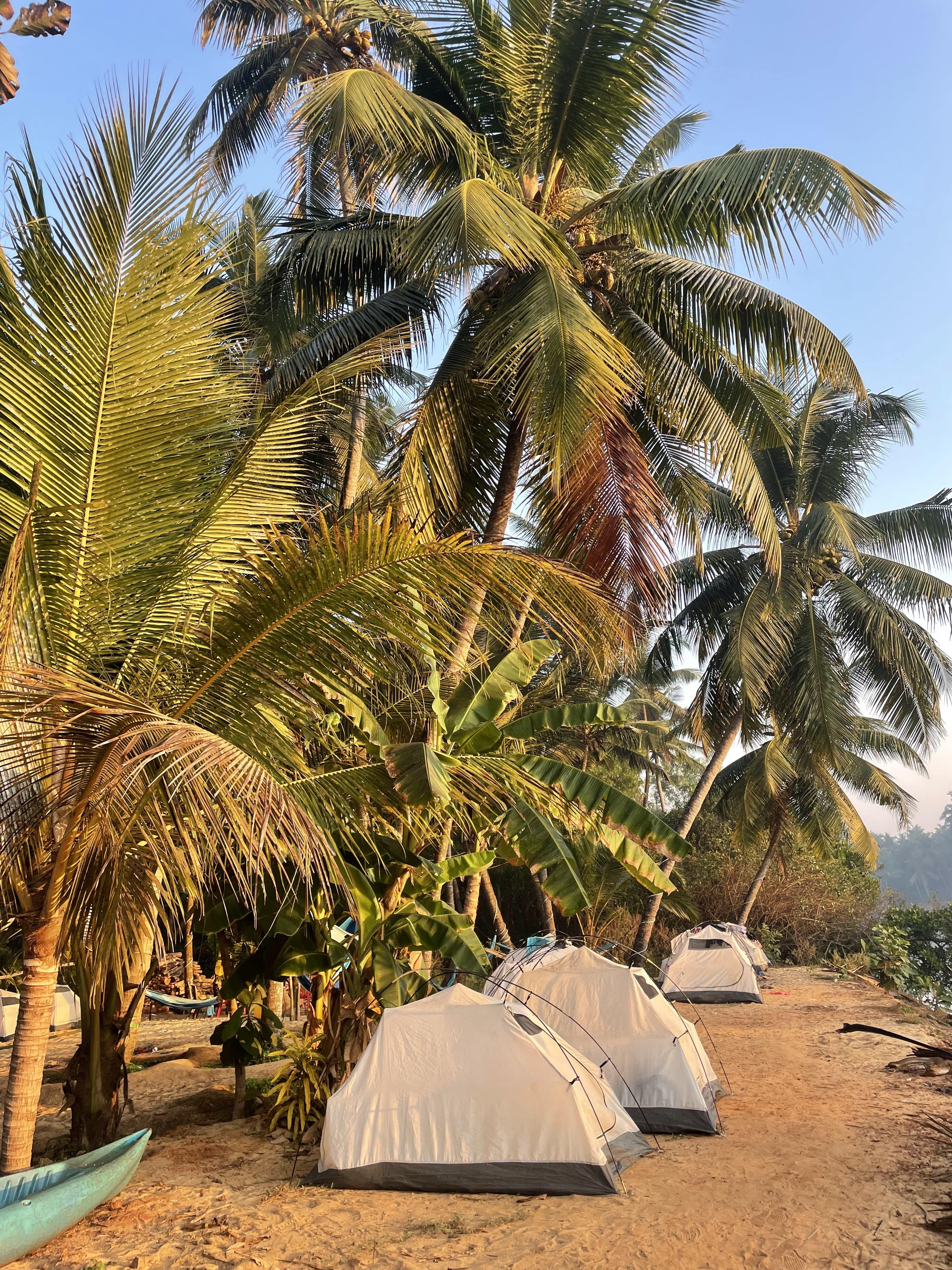
Our Campsite at Shambavi river bank, Mulki
After arriving at the campsite and while my parents enjoyed their time strolling around the place, my brother and I took our lessons on taming the waves with the surfboards. Although my brother was quick to get the knack of balancing himself on the surfboard, I fell into the water several times before finally getting it right. It was a fun session under the harsh sun until we returned to the campsite. We then tried some wakeboarding in the backwaters and then headed towards the beach again, to see the sunset.
Padubidri beach is among the only twelve beaches in India and two in Karnataka to have the blue flag certification. The drive to the beach itself was a beautiful experience with coconut trees towering over the narrow road running parallel to the sea. With all facilities including clean washrooms and good restaurants, the swim, and the sunset at Padubidri was one for the books. After grabbing some refreshments at the stalls there, we headed back to our campsite to relax a bit before the beautiful night that had to follow.
Since it was a no-moon night, the tides had caused the water levels to rise. It was pitch dark as we set our individual kayaks out into the water and began to paddle along the river. Geared with life jackets and our oars, we were ready to set the water ablaze, quite literally! We had no sense of where we were going but to follow a faint beam of torch light on the first kayak that guided us in the correct direction. The magic slowly started to unfold in the water after we had covered a certain distance. The glowing waters peaked while we all had gathered at the river mouth on our kayaks. Although, it is said that bioluminescent waters are a sign of unhealthy water, I convince myself of not being guilty of enjoying this experience. We all screamed with joy as we splashed the blue waters on each other with our hands and our paddles. With each dip of our hand in the river, our arms would glow in neon blue, which seemed nothing but a fairytale.
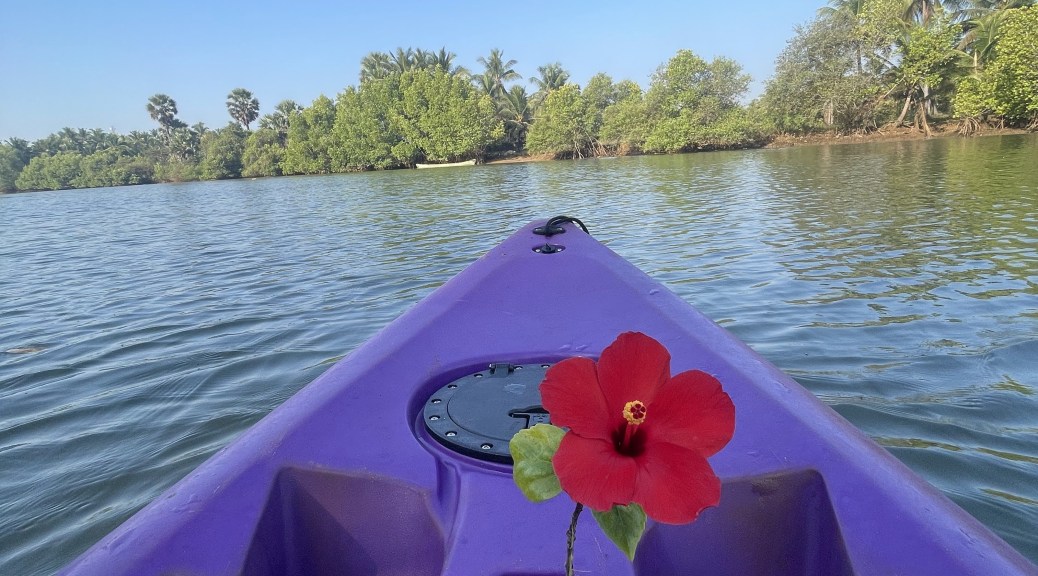
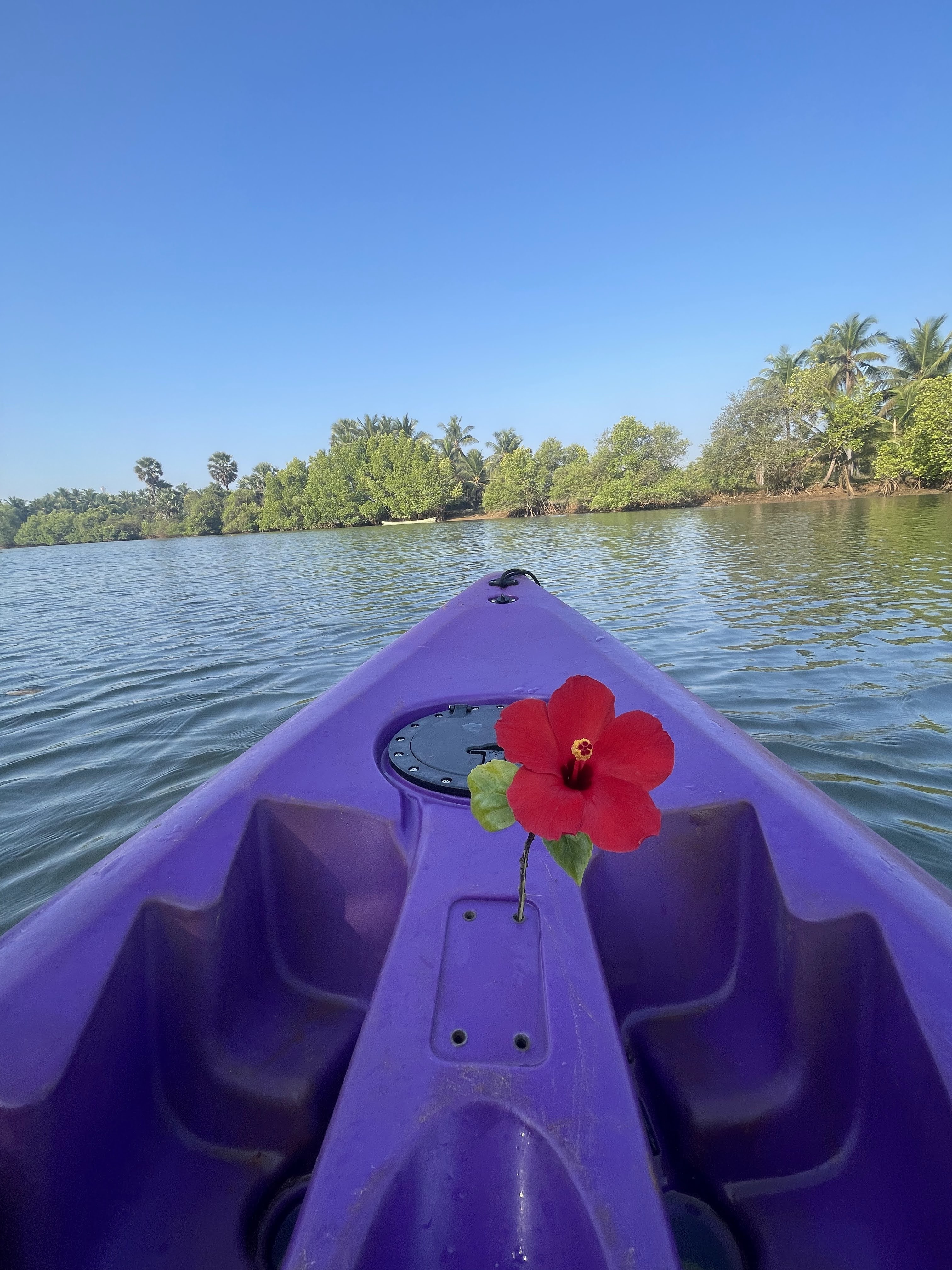
Kayaking in Shambavi backwaters
The following morning, we drove up to the temple town of Murudeshwara to score off yet another item on my bucket list. At about 20 kilometers off the coast of this temple town is Netrani island, a strategic patch of land controlled by the Indian Navy. Although entry to the island itself is restricted, the surrounding waters are open for public access during the spring months each year. This area is one of the best dive-sites in mainland India and that’s why I had been contemplating a visit here. We had pre-booked our slot for scuba diving with one of the several diving agencies around there.
Soon after filling out forms, a boat arrived at the beach to take us on a ride of approximately one hour to reach the dive spot. Our family was accompanied by a few other travelers, who like us were enthusiastic about their dive. Enroute, the instructions were given to everyone on the boat, both first timers and experienced. After reaching the site, without wasting time sitting inside the boat and waiting for our turn to scuba dive, we grabbed the snorkel gears and jumped into the water. The view inside had already set a good momentum for the expectations we had for the deep dive. Soon, each of us took turns to go underwater, touch the seabed and live our moments in a new world under the water. Especially for my sexagenarian parents, it was something that they hadn’t done before, and they felt a sense of accomplishment. It was evening by the time we returned to the shore with our boat tossing hard in the unusually rough sea.
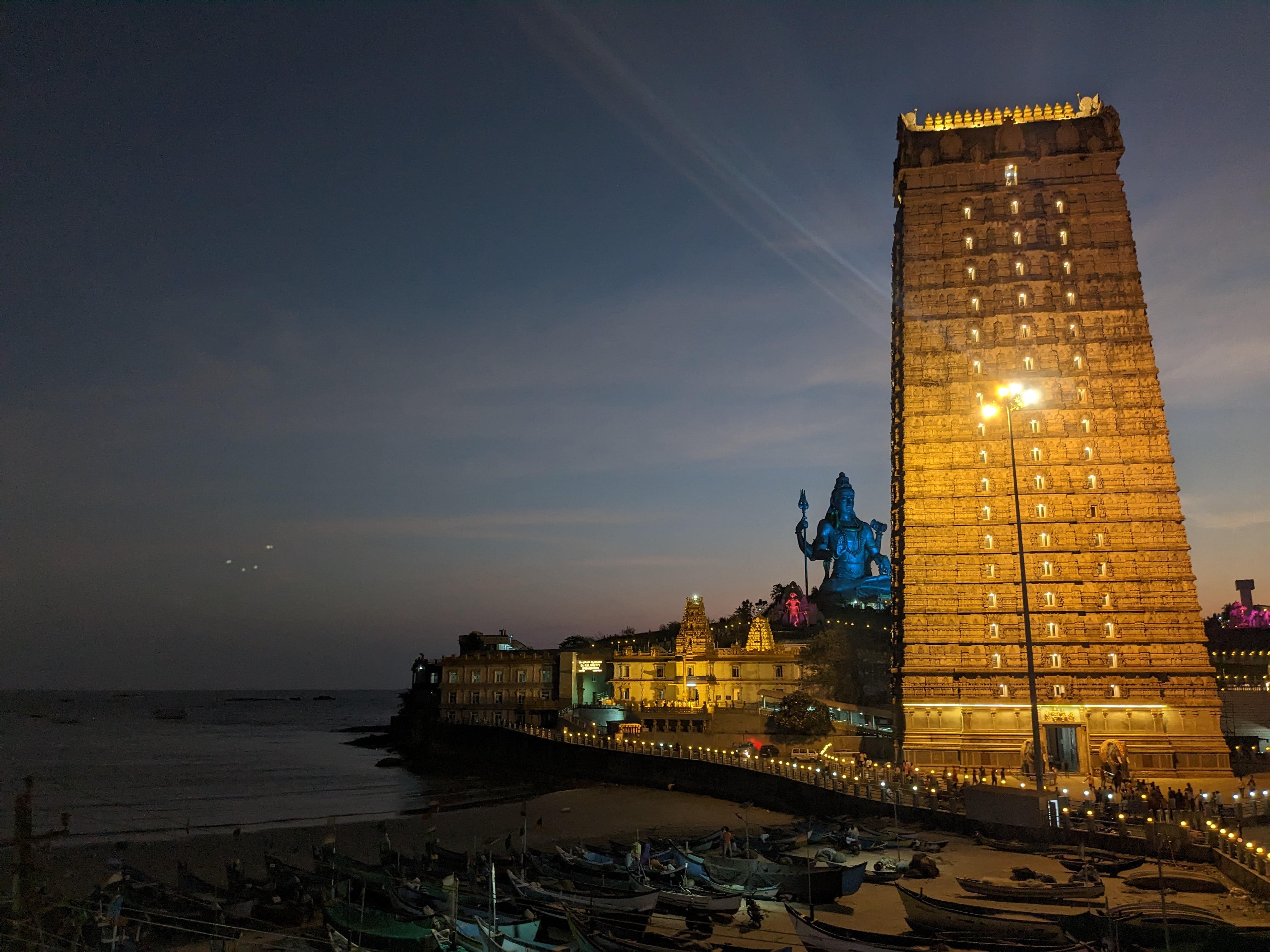
Murudeshwar temple during Sunset
We freshened up at a nearby lodge before visiting the Murudeshwara temple. We called it a day while watching the sun go down from atop the temple tower. It is highly recommended that this spring-summer trip to the coast of Karnataka should go onto everyone’s bucket list!
Initially, when a friend mentioned the destination for an impromptu drive on a Saturday morning, I hoped to correct him by telling it was ‘Biligiri Ranganathaswamy Betta’. “No, it is Bili-Kal’, he specified. ‘Bili’ translates to ‘white’ in Kannada. ‘Giri’ means ‘hill’. ‘Kallu’ means ’stone/ rock’. In this context, we were both talking about two different destinations. Although the presiding deity at the temples located atop both these hills are common, Biligiri is more popular than its counterpart at Bilikal. While Biligiri forms the core of Biligiri Ranganathaswamy Temple (BRT) tiger reserve, Bilikal is in the heart of a reserve forest that comes under Kodihalli wildlife division of Bannerghatta National Park. So, this time, we were heading to ‘Bilikal Ranganathaswamy Betta’, the closest of the two to Bangalore city limits, reachable through Kanakapura road.
We stopped by Halagur town for breakfast which has several old and popular eateries that serve unique types and authentic recipes of idlis for breakfast. (Comment below if you need hotel recommendations). Post this break, we followed google maps to reach our destination.
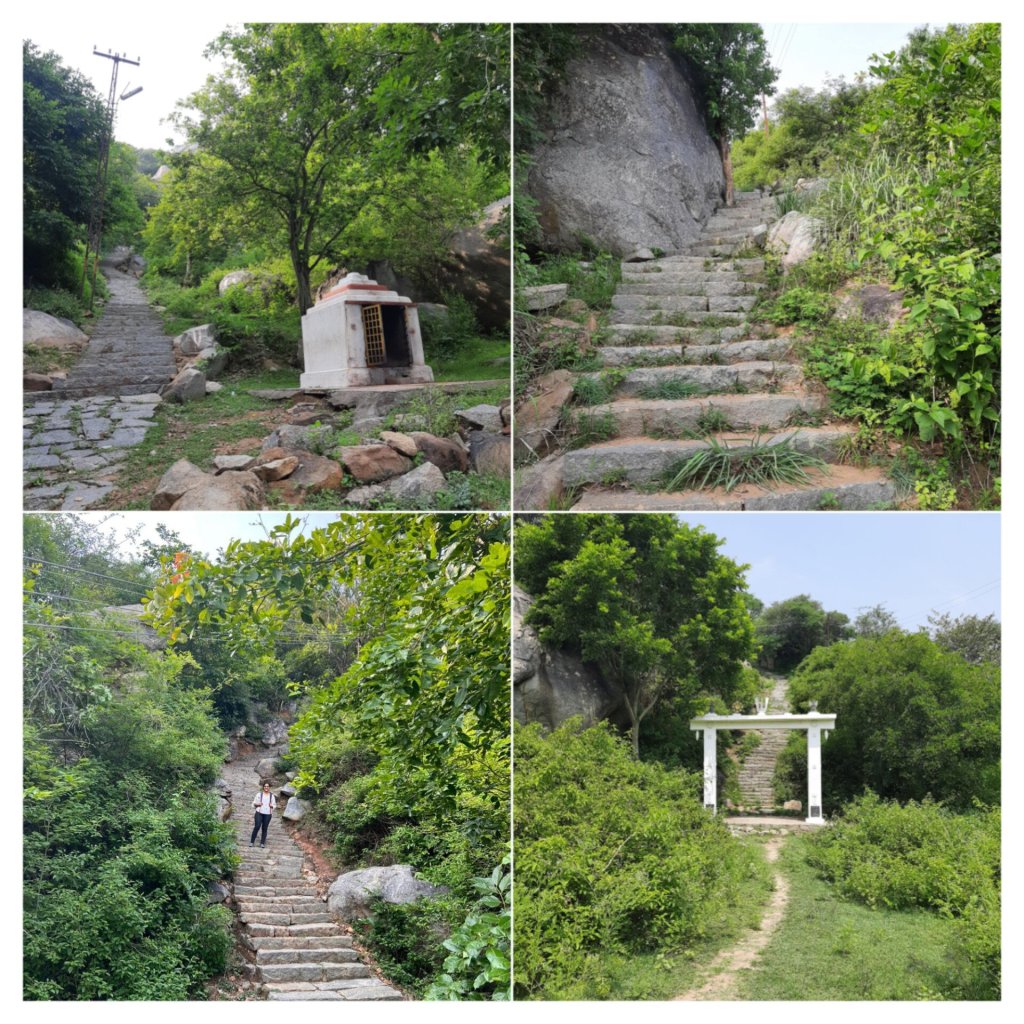
There is a forest check post enroute where one needs to make an entry to continue the journey ahead. The temple hill can be summited via two routes, one is a trek route with stairs, and another is through an unpaved road that is clearly marked till the end. Although four-wheel drive is not mandatory for those opting to drive up, it is recommended to have a vehicle with good ground clearance.
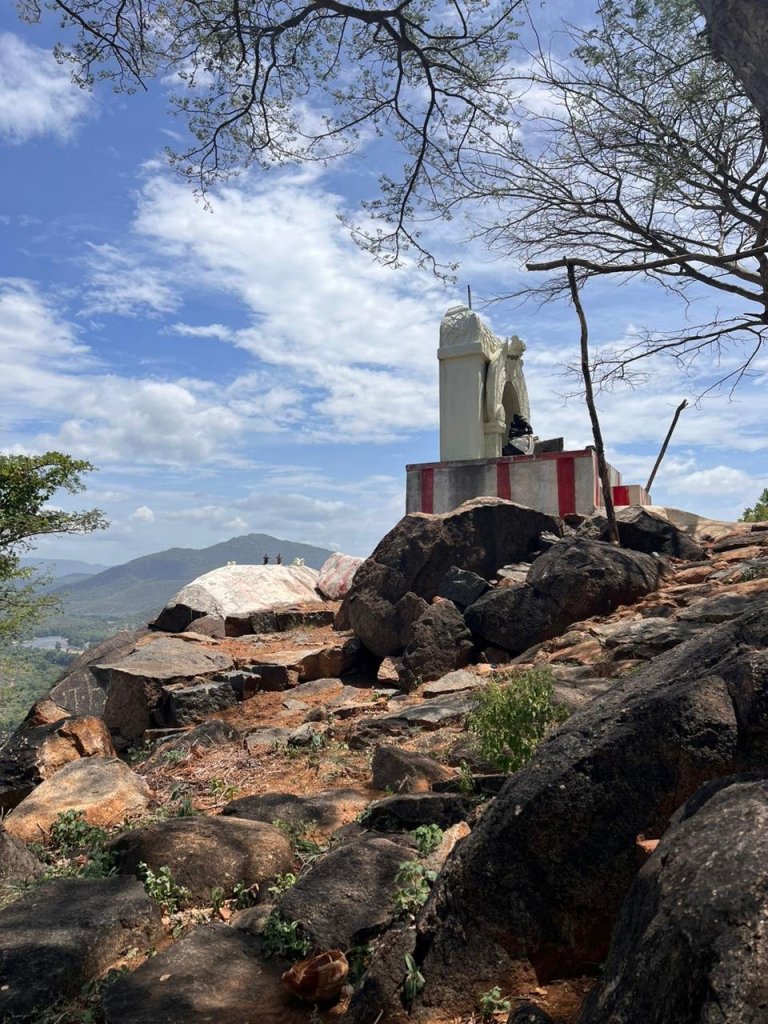
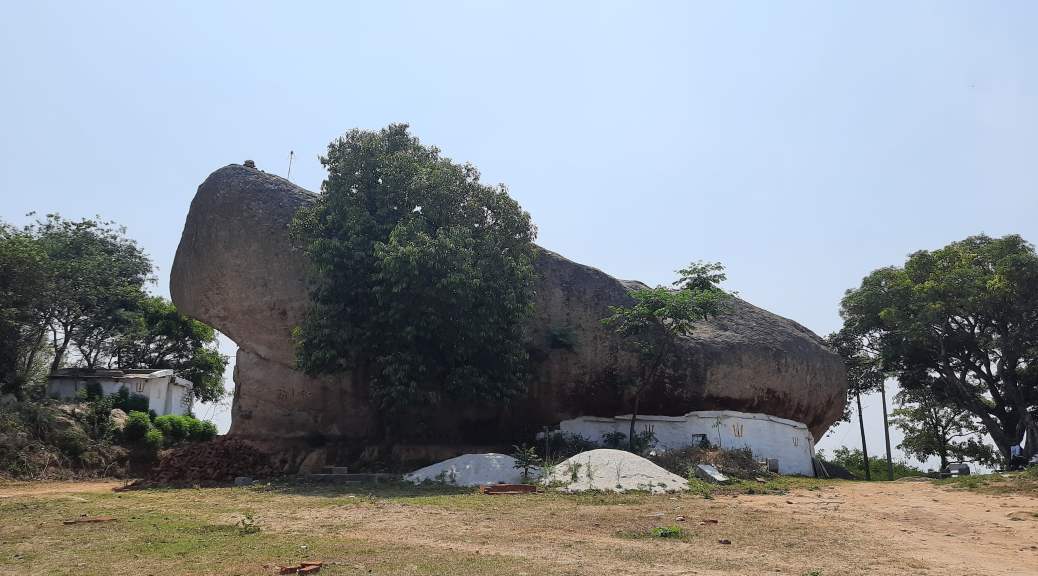
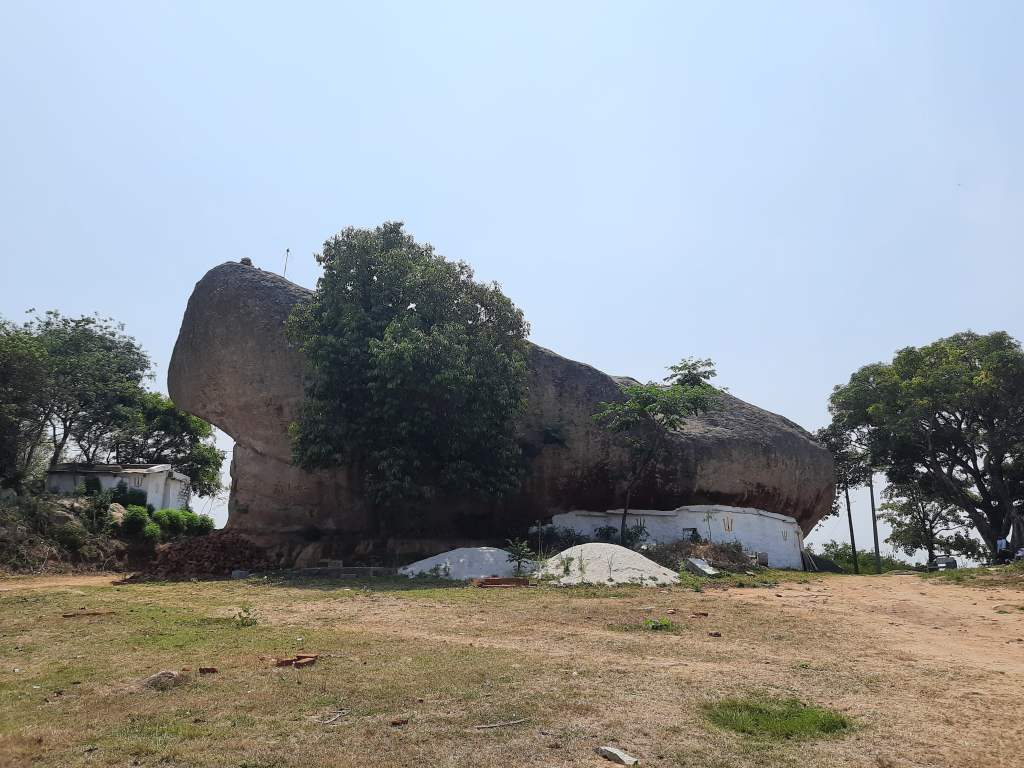
Bilikal ranganathaswamy temple, Rear view of the Monolithic rock
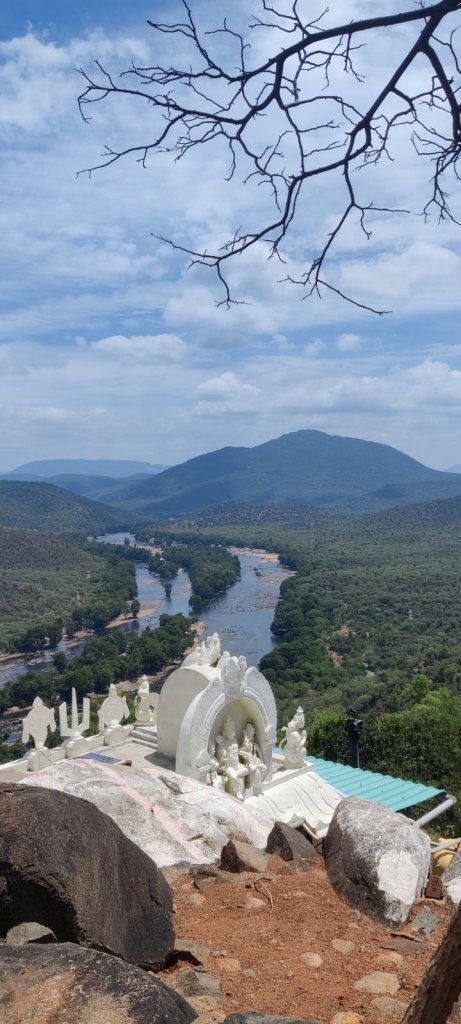
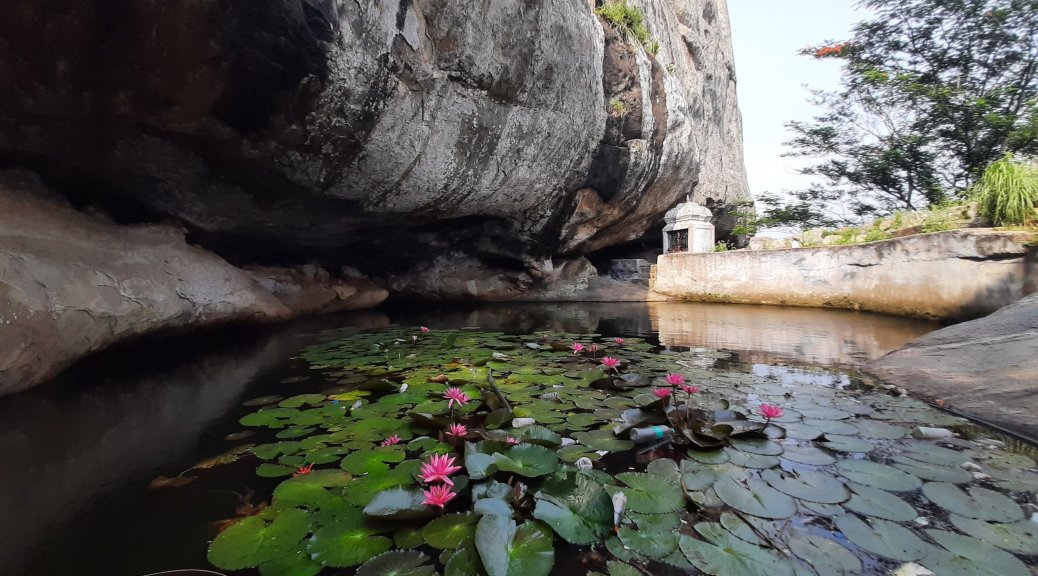
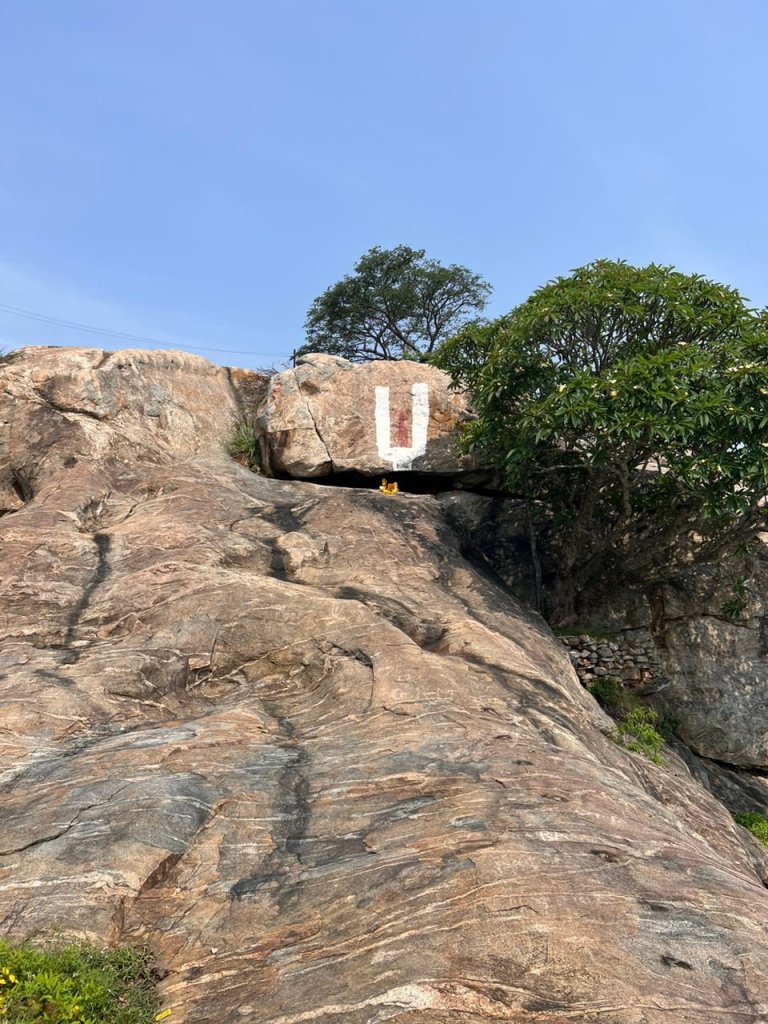
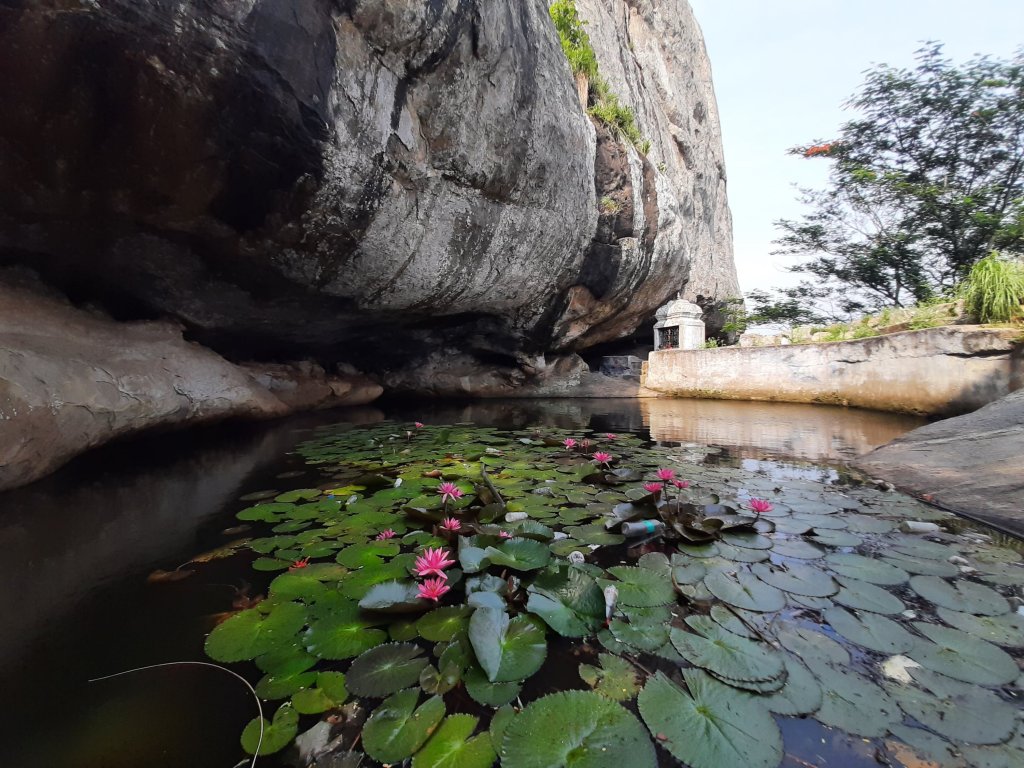
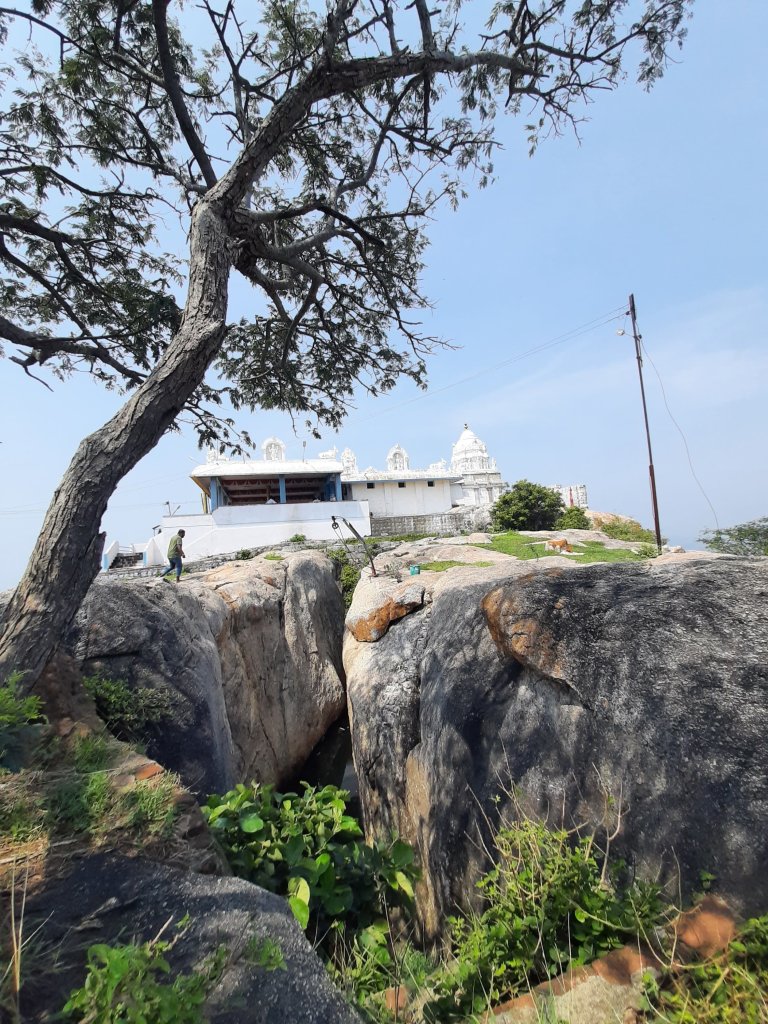
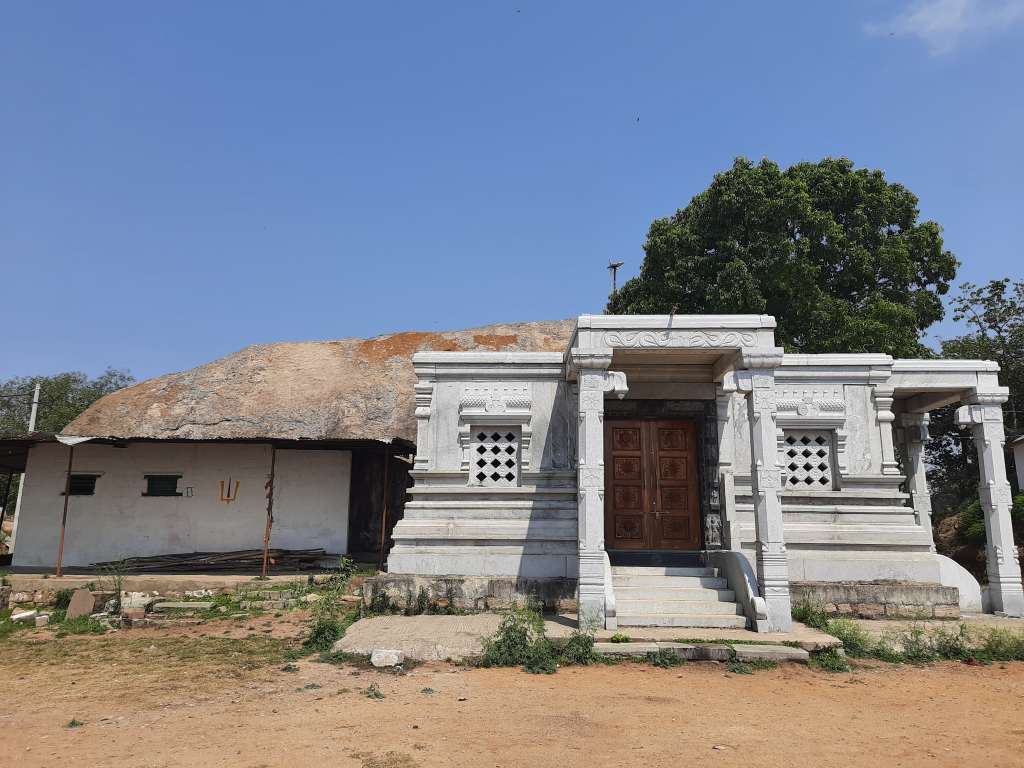
Upon reaching the peak, it was a large open area which came as quite a surprise. While one side of the hill had the temple pond dug into the edge of the rocky hill, the main temple of Ranganathaswamy is located on another side of the hill, overseeing a magnificent view of the surrounding hills. The main deity is carved out of a large monolithic rocky outcrop on the hill, which makes this place unique among all that I had visited thus far. There is a small sculpture on this rock which we were told is the original figurine of worship until it was damaged many years ago. Since then, an alternate idol has been carved out of the larger rock and a simple temple has been built outside leading into the prayer chamber within the monolithic rock.
Next to the temple rock, is another old and small room like stone structure. A few localites who were present there told us that it was the house of an old lady Kamalamma, who lived there and had dedicated her life in the service of Lord Ranganatha. Amid the wilderness of the thick jungle, she lived all alone in the belief that Ranga was her caretaker. She was accompanied by a few cattle that lived there whose milk was used to distribute buttermilk to pilgrims who arrived there every Saturday after a tiring ascent by foot (before the drivable route was laid out). She is no more, and her tomb is now housed inside the structure where she lived.
Bilikal ranganathaswamy temple, front view of the rock temple
A short climb from this structure is another viewpoint, where one can sit on the rocky outcrop under the shade of the surrounding trees and take in some good views of the valley around. We returned after spending some time there. Overall, this was a pleasant and an offbeat outing from the city.
Things to note:
The temple and the forest check-post are open for public access only on Saturdays. Only one Pooja is offered to the deity, once per week.
The annual temple fair is held here in January when a wooden temple car is assembled and taken around the rock-temple.
All along our way, we observed a lot of fresh elephant dung. Hence, we are certain that the trail is frequented by elephants and other wild animals at all times of the day. As both the routes pass through dense forest, it is recommended to comply with all guidelines laid by the forest department.
Other nearby places that you can combine your visit with:
Shri Govinakallu Anjaneya swami temple (an offroad drive in the same forest limits)
Suvarnamukhi is located inside the reserved forest area within the boundaries of Bannerghatta National Park which can be accessed through a main road till its base. This was one of the unplanned and random destinations that my family had arrived at, a couple of years ago, which I believe needed to be documented.
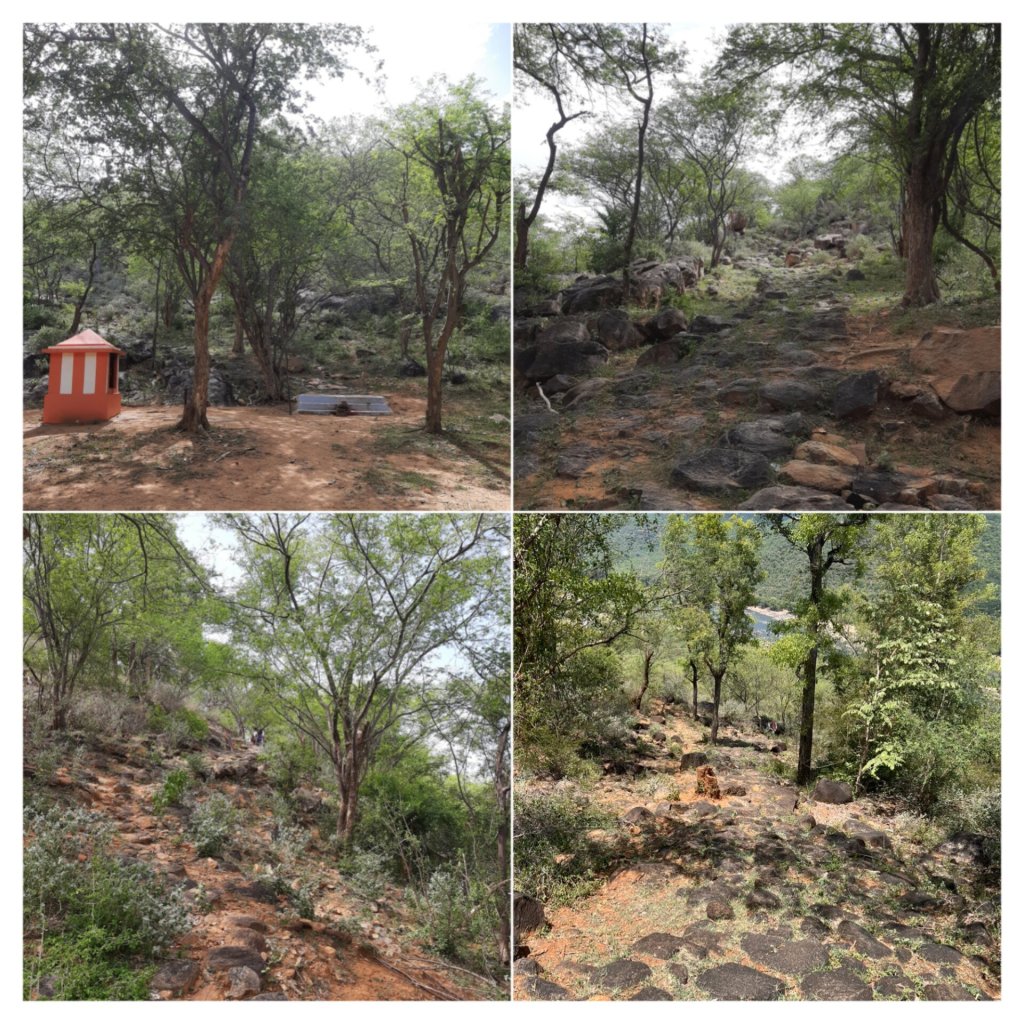
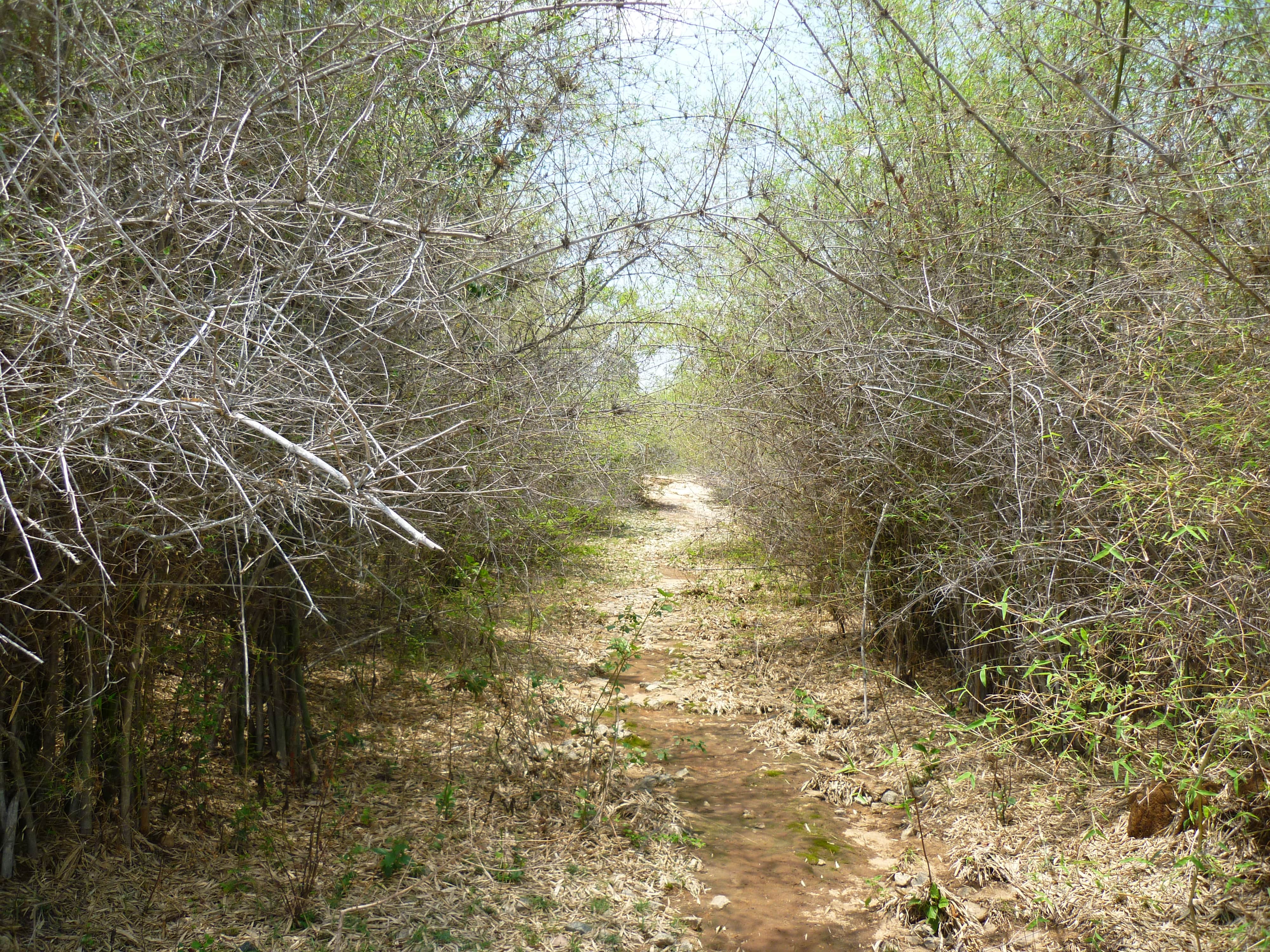
It was a brief hike through the forest terrain which was rough and interspersed with bushes and rocks that lead us to an ancient temple. Along the way, we observed pebbles and stones arranged in circular and a maze-like pattern depicting various complex themes. We were told that it dates to the pre-historic era and represents some kind of tribal worship or dolmens.
Hike trail to Suvarnamukhi temple, Bannerghatta
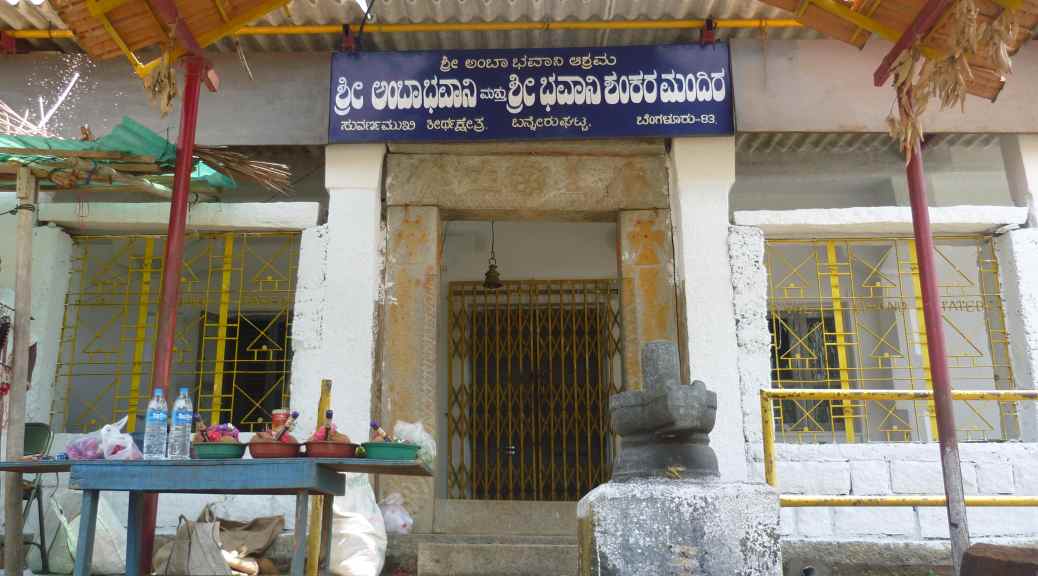
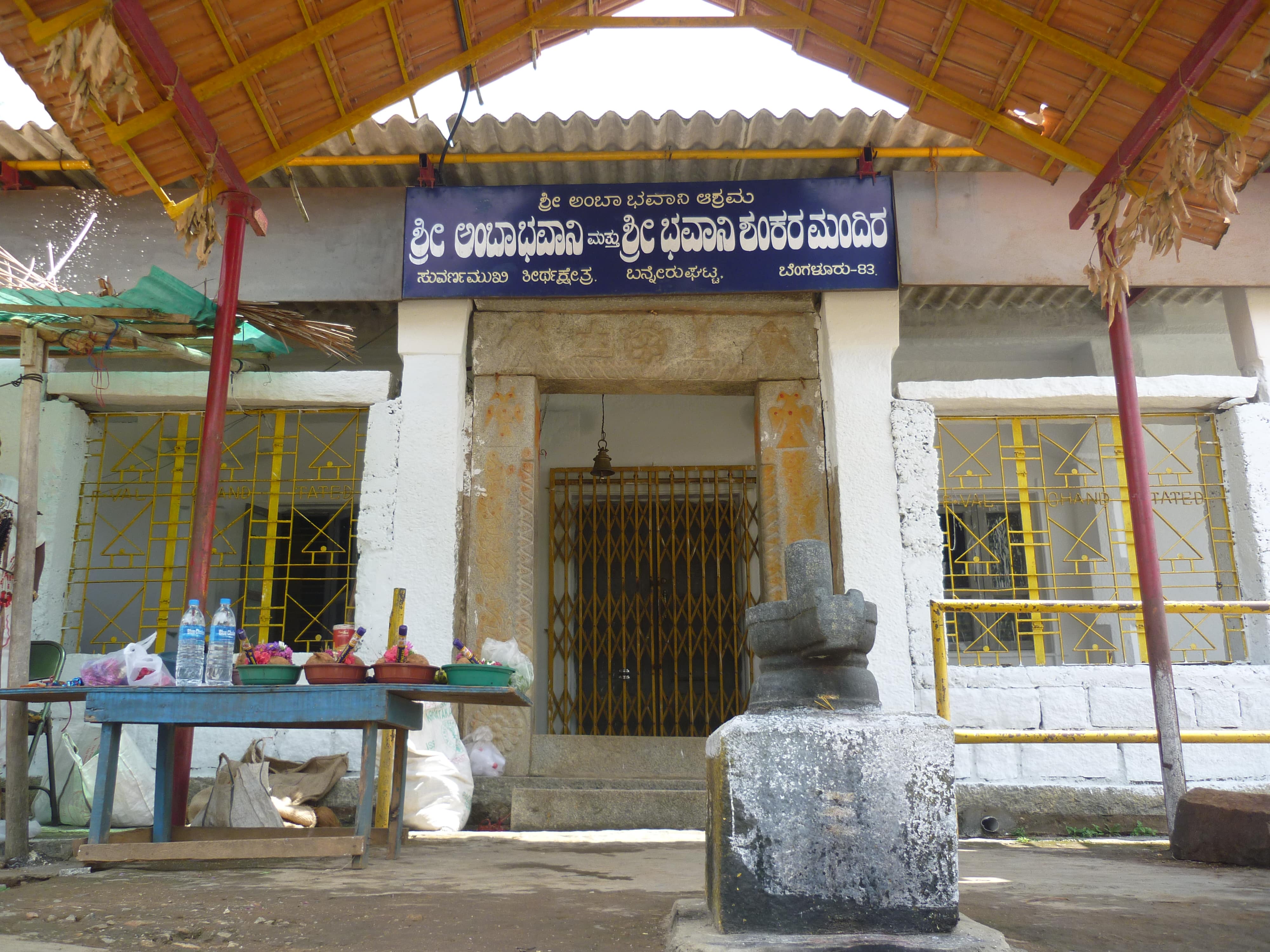
Walking past, we arrived at the AmbaBhavani and SriBhavani temple which was closed at the time. There is a pushkarini / Temple tank in front of this temple whose water is believed to be able to heal skin ailments. I was told that the tank is emptied once a year, to worship a Hanuman sculpture that lays at the bottom of this tank.
Ambabhavani temple at Suvarnamukhi, Bannerghatta
A short walk away from here is the Champaka swamy temple, an important site of local worship. Alternatively, people arriving by own transport can park their vehicles at the Champaka swamy temple before starting their hike towards Suvarnamukhi. The relevance of these temples and the pond in Indian mythology attracts people in large numbers on special occasions to visit this place.
A few meters away from the temple is the Vahnigiri peak, which gives an unhindered view of Bangalore’s expanding skyline. I remember spending some time sitting atop the rocky hill as the wind continued to waft past us before walking back down through the forest.
Things to note:
The entire hike trail passes through thick forest area that will be frequented by wild animals including elephants. This visit of ours was a few years ago when we needed no forest permits. It is recommended to check the latest rules with the authorities for any relevant permits before venturing out all by yourself.
If you are visiting Bangalore just for a day or are a resident of the city figuring out how to spend your day, here is a curation for those who are short on time and high on interest to explore. Depending on your choice, you can choose from what I have put-in together under three different categories.
Short drives:
The soil of Bengaluru is believed to be extremely fertile. One can visit a new farm and learn about agriculture in every direction. Also, several reserved forests dot the city boundaries. But the rapidly expanding boundary of the city has been soon taking over these green spaces and the limits of the city outskirts has been constantly changing.
My family and I have always loved to drive or ride out of the city in search of green spaces and spend some time in random destinations that are as random as just a lonely tree, a lake or a large boulder that gives a good view of the surroundings. Here is a list of such routes, trips and stories to help you plan yours.
Bangalore is blessed with abundant hills surrounding its periphery on all sides. There is an endless opportunity to explore a new hiking trail almost every day of the year. There are only a few that have been caught by the explorers and thanks to social media, have become popular. Here is a list of few such trails that I have hiked up and found time to document my experience.
Once popular as the garden city, no one really saw Bengaluru to be expanding as much as it has and has been. Albeit being so modern, it is old and conservative. Despite being advanced with IT and tech, it is still laid back with its art and history. If you are someone with an interest to explore all sides of this metropolitan city, then I’ve tried my best to share some of my knowledge here.
These are places that you can visit in one day by road from Bangalore. if you are in a mood for a lonng drive, beyond Bangalore, here are itineraries for one-full day.
Karnataka is “One State Many Worlds, without a doubt! To explore a different aspect of travelling through this beautiful state, I take you on a path that is en-Lightening, in literal sense- ‘Bioluminescence’. Bioluminescence is a naturally occurring phenomenon of production and emission of light in living organisms. Apart from the visual treat to senses that they offer, the presence of these organisms can tell a lot about our environment as well.
With the Arabian Sea forming the entire coastal belt and the Western Ghats forming most of the green-cover of Karnataka, it is easy to witness bioluminescence anywhere in the state. Traversing a path from the southern rainforests of the state to the northern plainlands through the coastal beaches across all the seasons, here is a list of the different kinds of bioluminescence that one can experience in Karnataka.
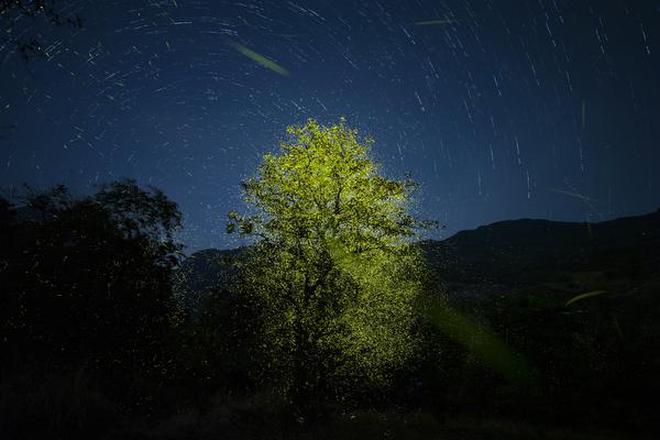
Fireflies: An aerial illumination for spectators, these insects produce light to attract a potential mate. Abundant during the months of pre-monsoon showers and summers, the untouched sacred groves and the organic farms of Kodagu and Malenadu offer a post sunset visual delight. A good number of fireflies indicates the good soil and air quality.
Bioluminescent planktons: These light emitting micro-organisms are present in the sea water. They produce a greenish-blue light when disturbed. This means, they produce light irrespective of day or night but can be seen with normal eyes after dark. These glowing waters can be viewed at their brightest best on a no-moon night between two consecutive monsoon months. But what is not the brighter about it is the fact that the brighter the sea glows due to these planktons, the poorer is the health of the sea water.
Bioluminescent fungi: This can be the hardest find of them all. Enter the core of the rainforest during the peak of the monsoon season, with a slow and careful walk and without use of any torch or flashlights. Only if you are lucky, you can spot these glowing sticks or the fallen barks covered by the glowing fungi. Documented sightings have been found in Karnataka, but I’m sure the Western Ghats are home to more species of luminant mushrooms.
Glow worms: These are larvae of some insects that can be largely found along the banks of streams, rivers and under the foliage on moist ground. An indication of healthy soil, these worms emit light to ward off predators and visually offering a delight to the human eyes.
Have you witnessed any other bioluminescent experiences? Are there any specific place that you wish to share your stories about? Do let me know in comments below!
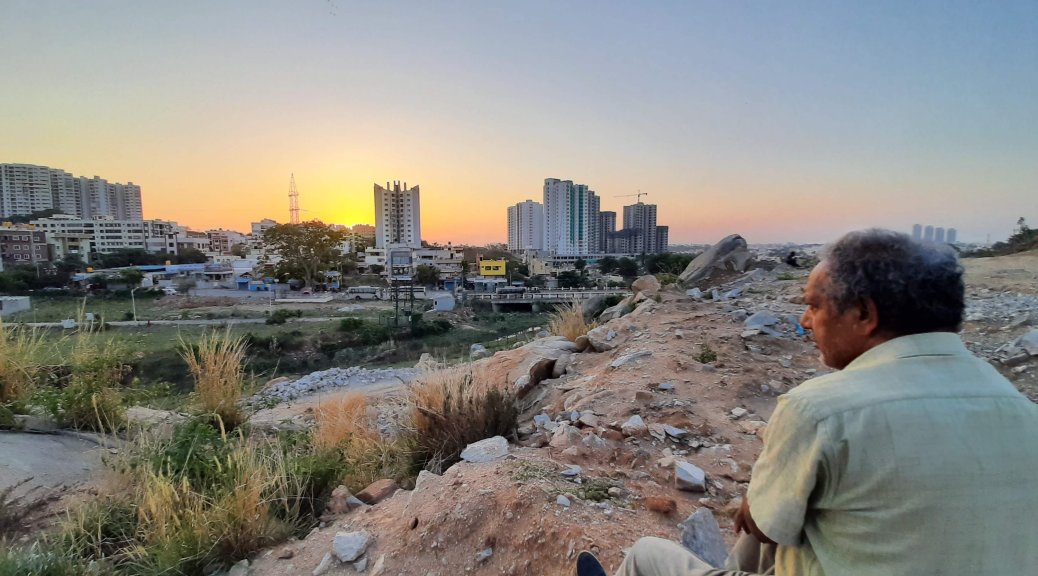
‘Uttarahalli’ translates to ‘Northern Village’ in Kannada. The irony is, it is located in the southern-most part of Bangalore. This is the current place of residence of my family and is also the last post in this series. This home seems like a perfect retirement plan for a family that seeks a little bit of nature in the midst of a bustling metropolitan city.
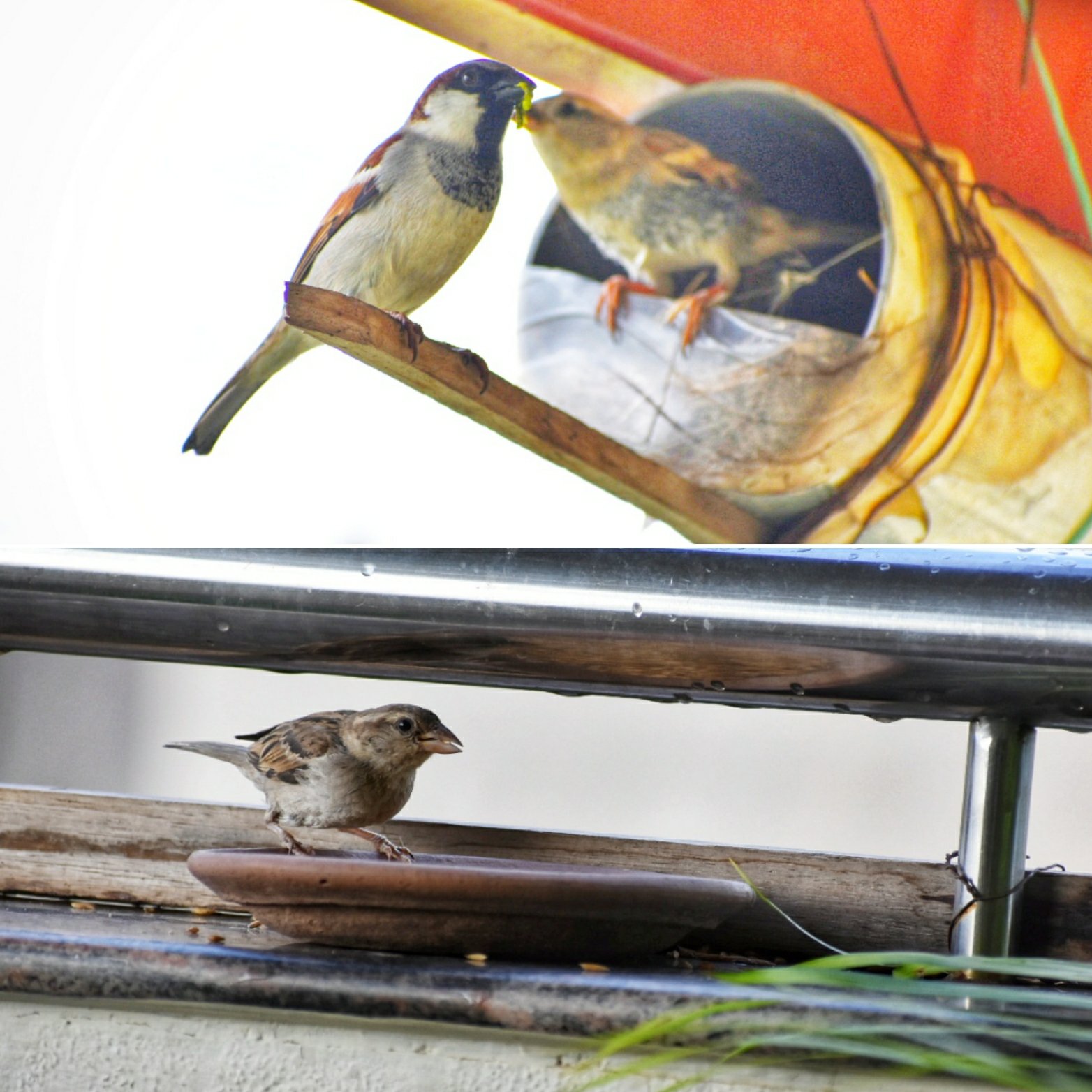
With very little vacant space available, my parents try to grow their own vegetables and fruits, welcome birds and squirrels to have meals with them and sip their ‘kaapi’ while watching the sun go down. These are some among many other things they do to keep themselves running through the day.
The sparrows in my portico
The area is soaked in rich history as well.. While the ‘Vasantha Vallabharaya swamy temple’ dates back to the Chola era, an adjacent cave is believed to be the place where Rishi Mandavya had meditated.
The Turahalli forest is a small patch of lung space nearby, that joggers, cyclists, conservationists and the realtors all seem to have an eye on!
The latest addition to the landmarks is ISKCON’s ‘Krishna Leela theme park’ located on the Vaikunta hill. The sunrises and rainbows on cloudy days are mesmerizing, adding a backdrop to the view of this temple from my doorstep.
Annual fair of Vasanthavallabha temple, Vasanthapura, Bangalore
This is the last post of this series: “I Belong to Everywhere“. I hope you all have enjoyed time travelling with me hopping on- and off from Bangalore to Kodagu. Which place did you like the most? What place would you want to go after reading my posts? What more do you want to know about, from these places?
Napoklu is a small town located in Madikeri Taluk, in the northern part of Kodagu district. I have spent several memorable holidays here, living a high energy childhood. There are several places of interests for tourists and local pilgrimage that are centered around Napoklu. Some of them are ‘Sri Makki Sastavų temple’, ‘Chelavara waterfalls’ etc. The ‘puttari festival’ is one of the best and the most elaborate one celebrated by the Kodava clan native to Napoklu.
Puttari festival at Kolu Mand
If any of you find a tinge of madness in me, it is likely that it has been due to the influence of my cousin who hails from this town. He has been my closest friend as we both grew up together, roaming farms, fields and streams. On weekends when he didn’t come to our grandparents’ house in Madikeri, we would be roaming together, around the other places that are mentioned in this series of posts.
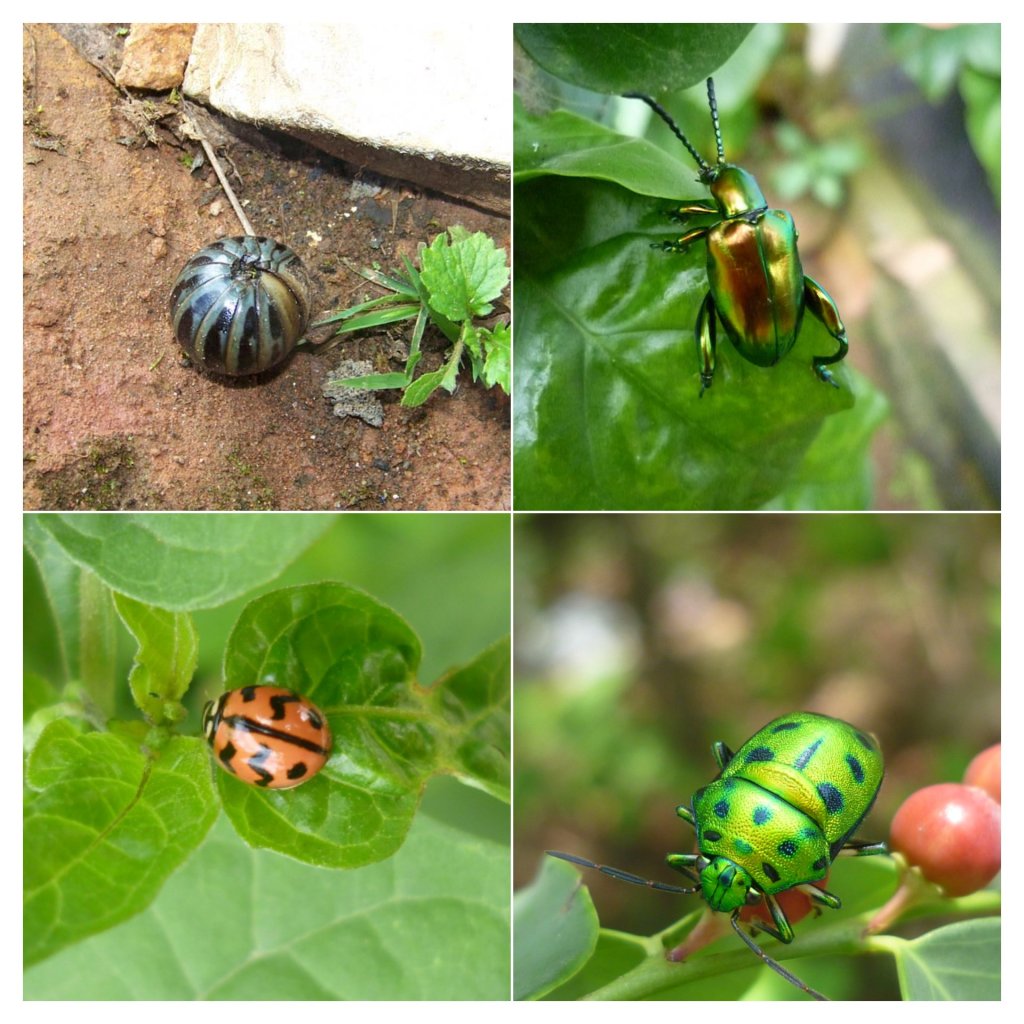
Although I have spoken about how I developed the awareness for conservation of wildlife in one of my earlier posts, but it is in Napoklu, that I originally imbibed the qualities of empathy for animals. Apart from the cattle, dogs and cats that I was surrounded with in Madikeri, my cousin had birds, fishes, tortoises, rabbits and poultry in his house. They shared a unique bond with him. While during the days, we caught dragonflies with aquarium nets, we chased fireflies at night and trapped them all together in empty glass jars to create a mini ecosystem of our own.
Beetles and ladybugs
If you wonder how I know some names of celebrities from across the globe, it is because we followed them. I watched Formula-One, WWF, Tennis and Cricket without missing a single match or a tournament, because the TV remote would always be with this guy and I had no option. The craziest automobile geek I had ever known, much until I became an automobile engineer and met a few other geeks along the way, was this cousin alone. We traded ‘trump cards’ and fought each other over the ownership rights of the rarest WWF and Cricket cards. We still hold back some of these treasured collections and often reminisce those good days of innocent fun. These are the same things that trigger little momentous joy to me even today and that which helps me spread positive energy.
In this post, I’m going to tell you about my connection with ‘Yelahanka’, an area located on the northern side of Bengaluru. It is rather popular for the air force station located here. And that’s also why Yelahanka has my heart with it.
This is where my engineering college was located, at very close proximity to the Airforce base. My love for airplanes has a separate post dedicated to it. This is also where the Aero- India show happens, a biennial display of India’s air might.
The campus of Nitte Meenakshi Institute of Technology
One of the camps of the Central Reserved Police Force (CRPF) is located at a little distance from my college. So, most of the morning drives to college were alongside the CRPF troops running on their daily fitness routine. The sight of camouflaged men (at least a hundred of them), marching or running in a single line, with rifles in their hands, weight bags on their backs and the tapping of their heavy boots were just enough motivation for a girl whose little heart goes numb in front of any man wearing uniform of the forces.
And then there are days when we bunked classes and we set out on adventure activities: Adventures of sneaking into random grape vineyards around the college campus, grab a few bunches before being pelted with stones by the farmers if caught 😀 It was sort of days of co-existence between the farmers / local villagers and the students. The students just lived up their share of fun from their college days and the villagers were just entertaining themselves with our tactics.
Some structures at Gantiganahalli, Yelahanka
The Yelahanka we know today wasn’t the same back then. There were hardly any good restaurants, cafes or any place where we could hangout apart from the college canteen. Some of the addas that the students would swear by are the railway tracks, the lake, the stables and Balaji. Well, mention these places to any student from this college and watch their expression: These were not just places, these were emotions.
And the most fun rides were those when we wanted to bunk classes and to find transportation to reach to wherever we wanted to go (out of Yelahanka). Back in those days, the college bus was the only available mode of transportation from college until the airport road / highway. If any commutation was required during the day (if we bunked, that is!), the only options were to either hitch a ride or walk to cover the distance of almost 4-5 kilometers. On some days we sat pillion, some days a bumpy lorry, on some days were cars with AC and some days, we sat on haystack and tractors that carried firewood.
A view of the Su-30 on the otherside of the Lake.
Yelahanka is where I have spent four memorable years of college, a place that has made me worthy of a human being and that has guided me towards earning my own food. Yelahanka will always be closest to me, because my heart will always be wandering around my college (in the form of fighter planes :P)
Jalahalli is a locality in the Northern part of Bengaluru where my family stayed for a brief period until I finished my graduation in Yelahanka. Being involved in sports, languages, music, travelling and so many other things along with regular college, some of the busiest days of my late teens were spent here.
On a lighter note, our family lived with a confused identity for all the years spent at Jalahalli. We were surrounded by employees of BEL and HMT in majority, and none in our family worked at either of these organizations. More often, we struggled to decide which side to take when we had friends from both these companies sitting on either side of a discussion table 😀
Above: The seven signature clocks of HMT placed in different cities of India
Below: Floral clock at Lal Bagh, Bangalore
The BEL sports ground was one of our favorite places, where I accompanied my father for his evening walks and my brother for his hockey matches, while catching up on conversations with some of the who’s who of Indian hockey. The Ganesha temple in the BEL colony was one of the go-to places when my family wanted a shot of calmness, not in praying but by simply soaking in the tranquility of the silent atmosphere.
The HMT sports complex, HMT hospital, HMT theater, HMT employees’ quarters and the HMT shopping complex were less just concrete structures and more like emotions.
A racing heart while entering the ‘Jalahalli Airforce station’ would calm down only after a plate of parathas from the air force canteen and some tasty samosas and Sondesh at the Bengali sweet meat stall at Gangamma circle. Catching up with friends mostly happened on the new-BEL road or at Malleswaram.
The entrance to Jalahalli Airforce Station at Gangamma circle
Well, Jalahalli is a place which reflected the importance of having a friendly neighborhood. Even when any of us had to stay alone at home, there was always someone from the neighborhood checking on our safety and sharing food with us. The months of yuletide were especially memorable because the carol singers came to all houses and we all made merry together.
We left Jalahalli and thus, North Bengaluru to finally come one full circle by making South Bengaluru our forever home (where we currently reside at).