Tag Archives: Road trip

My 7-Day Thailand Travel Itinerary With TripFactory

Traveling to Thailand was one of my biggest dreams. For many years, I wanted to see its beautiful beaches, temples, and night markets. A few months ago, I finally decided to make it happen. After checking many websites and reading reviews, I booked a Thailand tour package with TripFactory. It was one of the best choices I have ever made!

I opted for a 7-day all-inclusive itinerary that covered flights, accommodation, meals, local transfers, sightseeing, and even a friendly tour guide. I didn’t have to worry about anything. From the moment I landed in Thailand to the time I took my flight back home, TripFactory took care of everything perfectly.

When I reached Bangkok airport, the TripFactory team was already waiting for me. They helped me with my luggage and took me to my hotel. The hotel impressed me with its cleanliness, comfortable beds, and respectful, welcoming staff. After some rest, I walked around the nearby streets to explore Bangkok on my own. The city was bright, busy, and full of energy. I tried the street food, including Pad Thai and mango sticky rice, and loved every bite!

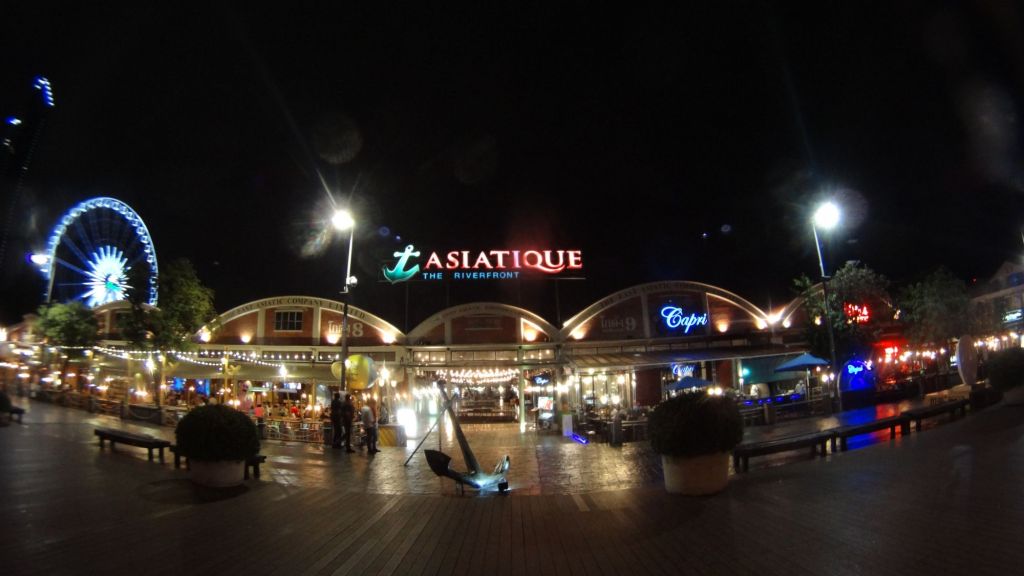
Asiatique riverfront

Day 2: Exploring Bangkok’s Temples and Markets

The next morning, our guide took us for a Bangkok city tour. We visited famous temples like Wat Arun (the Temple of Dawn) and Wat Pho, where I saw the huge golden Reclining Buddha. The guide told us interesting stories about Thai history and culture in simple English, so everyone could understand.

In the afternoon, we went shopping at the Chatuchak Market, one of the biggest in Asia. I bought souvenirs, clothes, and some local snacks. We spent the evening cruising down the Chao Phraya River, admiring the sunset and soaking in the calm atmosphere.

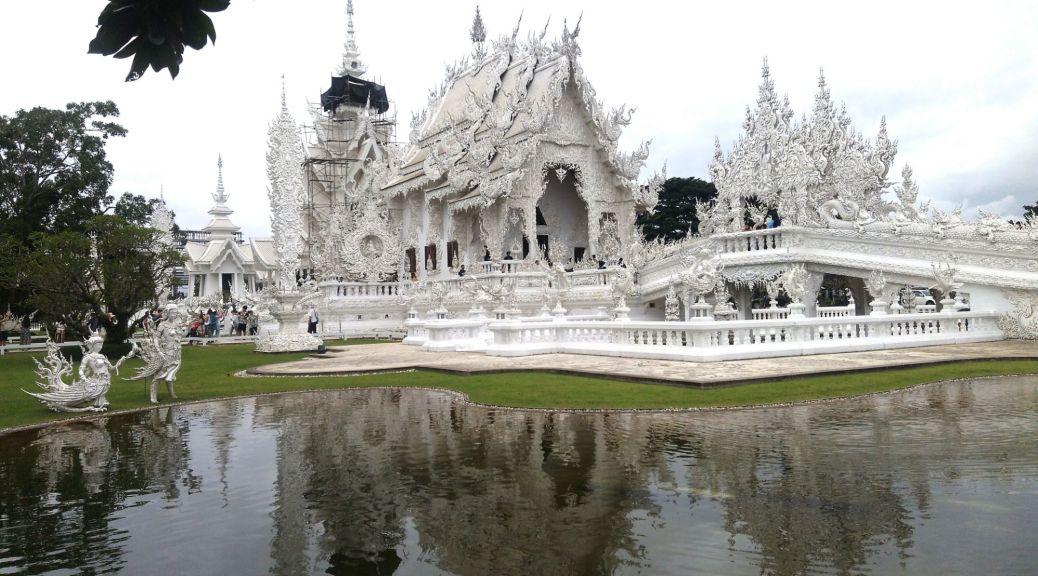
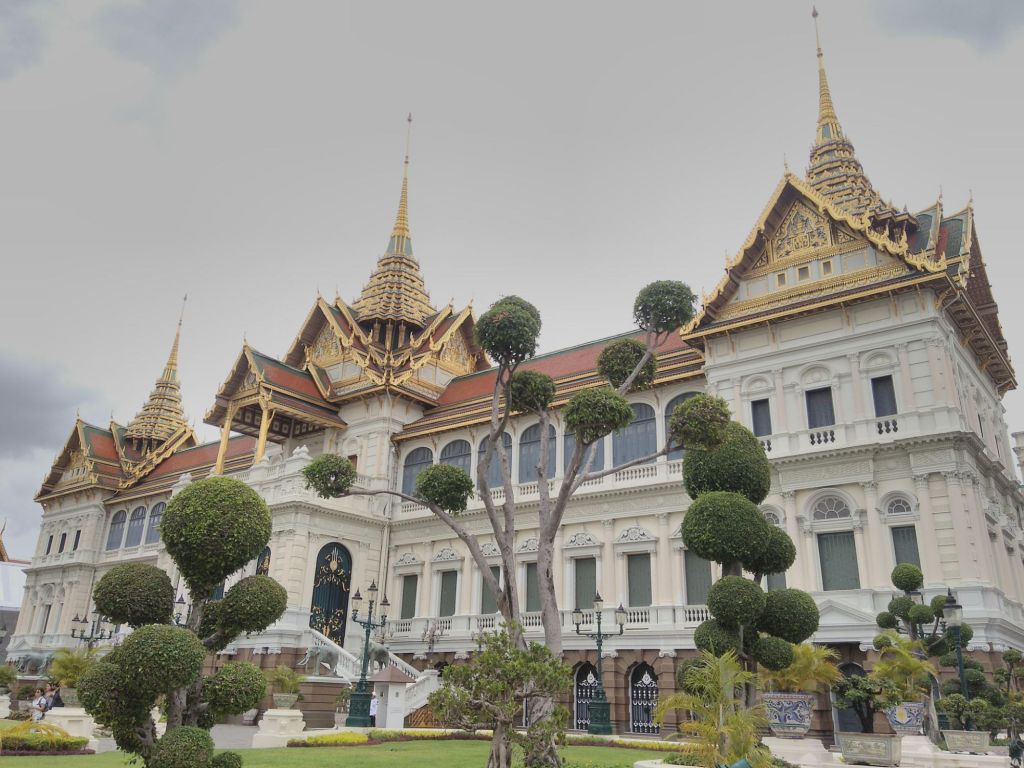
The Royal palace, Bangkok

Day 3: From Bangkok to Pattaya

After breakfast, we traveled to Pattaya, a lively city by the sea. The drive took about two hours and was very comfortable. When we arrived, we checked into another nice hotel with a sea view.

In the evening, we went to the Pattaya Viewpoint, where I saw the whole city shining with lights. Later, we watched the Alcazar Show, a colorful performance full of dance and music. The costumes were beautiful, and the show was full of energy. It was the perfect end to the day.

Day 4: Coral Island Adventure

This was one of the most fun days of my trip! After breakfast, we took a speedboat to Coral Island. The sea was bright blue, and the sand was soft and white.

I tried parasailing and jet skiing for the first time. It was so exciting to fly above the water and feel the wind on my face. Then, I relaxed on the beach, enjoyed some fresh coconut water, and swam in the sea. At a restaurant by the beach, we enjoyed a simple Thai meal that was absolutely packed with taste.

In the evening, we returned to Pattaya, and I took a walk along the beach before dinner. The sound of the waves and the cool breeze made me feel completely relaxed.

Day 5: Traveling to Phuket

After breakfast, we flew to Phuket, one of the most famous islands in Thailand. As soon as I arrived, I could feel the calm and beauty of the place. Our TripFactory-arranged hotel was charming, with palm trees all around and the beach only steps away.

That evening, we visited Patong Beach, which was full of life, music, and food stalls. I had dinner at a seaside restaurant and watched the sunset. The orange and pink sky looked magical.

Day 6: Phi Phi Island Tour

This was my favorite day of the whole trip! Early in the morning, we took a speedboat to Phi Phi Islands. The journey was very beautiful, the sea looked light blue and we crossed tall stone cliffs and green islands.

We stopped at Maya Bay, one of the most famous beaches in the world. I took so many pictures because every view looked like a postcard. Then we went snorkeling in the clear water and saw colorful fish and coral reefs.

We had lunch on one of the islands, and it was delicious with fresh fish, rice, and fruit. Everything was perfectly organized, so all we had to do was enjoy.

When we returned to Phuket in the evening, everyone was tired but very happy. I ended the day with a Thai massage, which was relaxing and refreshing after all the travel.

Day 7: Saying Goodbye to Thailand

On the last day, after breakfast in the hotel, I went to buy souvenirs like small gifts, handmade bags, and Thai food items. The TripFactory team helped with my airport transfer right on time.

As I sat on the plane back home, I felt thankful for such an amazing trip. Every day was full of joy, new experiences, and great memories.

I booked my trip with TripFactory after reading their excellent Google reviews. They have a rating of 4.3 out of 5 stars with over 3700+ reviews. After my trip, I can say those ratings are well deserved.

Their service was always on time. Pickups, hotel check-ins, and tours all happened just like they planned. The staff was friendly, and the guide was patient and spoke clear English. Whenever we needed help, they were just a phone call away.

Most importantly, I felt safe and comfortable throughout my trip. As a solo traveler, that really mattered to me.

After returning home, I couldn’t stop talking about my Thailand adventure. My friends loved the pictures I showed them of the beaches, temples, and bright streets. Many of them were so inspired that they started planning their own Thailand trips with TripFactory!

This 7-day trip was worth every single penny. It gave me new experiences, new friends, and beautiful memories that I’ll cherish forever.

My Thailand vacation with TripFactory felt very special. It was truly an experience of a lifetime. Everything was perfectly arranged, from the hotels to the tours. I explored three wonderful cities: Bangkok, Pattaya, and Phuket. Each city was beautiful and different.

If you’re thinking about visiting Thailand and want a smooth, stress-free holiday, I highly recommend TripFactory. They keep their word by giving excellent service, comfort, and memories you will never forget.

Thailand taught me that travel is not just about seeing new places; it’s about feeling alive, learning new things, and creating memories that stay in your heart forever.

7 Reasons Why Thrillophilia Is India’s Most Trusted Tour Package Brand

When it comes to planning a multi-day trip in India, trust is everything. Travellers want to be sure that what they book is what they’ll get—on time, on budget, and without last-minute surprises.

Over the years, Thrillophilia has earned a strong reputation as the most trusted name in the multi-day travel space, especially for its personalised tour packages with end-to-end planning. With over 6 million users, verified reviews, and presence across 70+ international and 200+ Indian destinations, it has become a go-to platform for Indian tourists looking for safe, organised, and high-quality travel experiences.

Here are seven key reasons why travellers continue to place their trust in Thrillophilia.

1. Everything Is Pre-Planned and Well-Coordinated

Thrillophilia’s tours are known for their clarity and structure. Every trip includes:

  • Confirmed and hand-picked stays
  • Pre-booked activities
  • Local transfers
  • Day-wise plans
  • Expert-guided tours and sightseeing
  • Flights and Visa assistance

One standout aspect is how the platform handles food preferences. Travellers can request Jain meals, pure vegetarian, or non-vegetarian menus ahead of time, so that the food stops and meals are arranged accordingly. This kind of detail matters, especially on longer trips or for families and groups with varied dietary needs.

The result: Fewer disturbances, less last-minute stress, and a smoother experience overall.

2. Verified and Trusted Local Partners

Trust often breaks down when the on-ground experience doesn’t match expectations and promised packages. Thrillophilia addresses this by working only with vetted, verified local operators—be it hotel partners, drivers, guides, or activity hosts.

All partners go through a selection and training process, and reviews are constantly monitored to maintain standards. This ensures quality and consistency across destinations.

3. Transparent Pricing and Inclusions

Hidden charges are a common problem in the travel industry. Thrillophilia aims to solve this with clear, upfront pricing and detailed inclusion lists for every trip.

Travellers know exactly what they’re paying for—whether it’s entrance fees, meals, transport, or guide services. There are no vague “to be paid later” clauses, which builds trust from the very start of the booking process.

4. Real Reviews, Real Experiences

Thrillophilia features over 250,000 verified traveller reviews on its website, across all its tour packages. These are from actual users who have completed trips, and they help future travellers make informed choices.

Travel photos, ratings, and detailed feedback provide honest insight into the on-ground reality of each package. This transparency plays a big role in building long-term credibility.

5. Reliable Customer Support

Unexpected things can happen during travel—weather issues, reschedules, or on-ground coordination delays. Thrillophilia’s 24×7 customer support is designed to help resolve these issues quickly, with an average response time of just 10 minutes.

Whether it’s reassigning a driver, updating hotel check-in info, or providing live help during a trip, the support team is accessible via phone, chat, and email. Many users highlight this as a key reason they return to the platform.

6. Flexible Customization Options

While fixed itineraries offer structure, many travellers want to tweak plans based on personal preferences—adding a detour, choosing a different hotel category, or adjusting the pace of the itinerary for aged groups.

Thrillophilia allows for a fair level of trip customisation, often without added complexity. This is especially valuable for families, honeymooners, and seniors who need more specific arrangements.

7. Trusted by Diverse Traveller Segments

From solo backpackers to large corporate groups, Thrillophilia serves a wide range of customers. It’s used by:

  • Families with children
  • Couples on honeymoons
  • Senior citizens
  • Women-only groups
  • International tourists

The platform’s ability to adapt to different needs while maintaining consistency has helped it earn trust across segments.

In a crowded market full of travel listings and tour operators, reliability, clarity, and support are what truly build trust. Thrillophilia’s structured approach, combined with local expertise, Ai and tech-backed operations, and customer transparency has made it one of the most dependable multi-day travel package brand in India.

As travel continues to bounce back, trust will remain the most valuable currency, and Thrillophilia has built its brand around just that.

A day exploring Lake Pulicat and its heritage

This story is from quite some time ago. My friend was tracking the arrival season of the flamingoes at Pulicat lake. He had an acquaintance of a Mr. Illaiyaraja, a fisherman who lived in Pulicat village. Through him, we got regular updates on the arrival of these seasonal beauties (flamingoes) who flocked to the brackish lake during their migration period. Meanwhile, our family was planning a drive to Sriharikota, to watch the launch of Chandrayaan 2. That’s another story altogether, you can read it here.

A week prior to our road trip, Mr. Illaiyaraja telephoned my friend and told him, “Anna, flamingoes vandichi.” loosely translating to “Brother, the flamingoes have arrived”, in Tamil. So, a drive to Lake Pulicat became a part of our road trip as well. Our family took our old reliable friend (Our Tata Indica) out on the road and prepped it for the long road trip. It was as if time was bringing all things together in our favor. The flamingoes had arrived, the rocket was set for its launch and the roads were calling us.

Pulicat village gets its name from Lake Pulicat, the second largest brackish water lagoon in India on whose banks is this tiny fishing hamlet. The lake itself is so vast that it is spans across Andhra Pradesh and Tamil Nadu. We approached Pulicat from the Tamil Nadu side. After exploring all the places enroute, we parked our car at the entrance of the village and walked by following google maps to the location where we were supposed to meet Mr. Illaiyaraja. With a can of diesel in his hand, he led us to his wooden boat anchored at the jetty. We boarded the boat with him and set off on an unforgettable experience of sailing on a sea-like vast lake, to see.

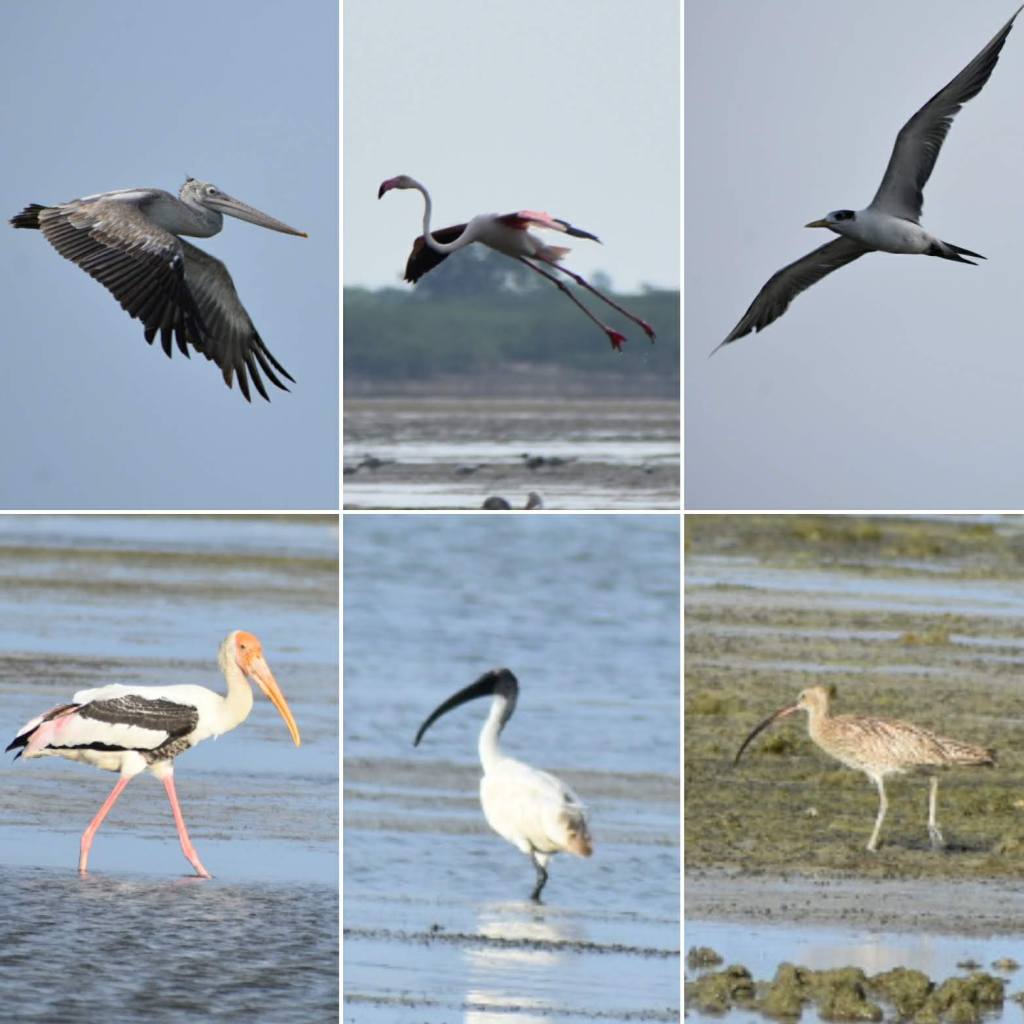
The birds at Lake Pulicat

Aquatic birds and shore birds that had migrated down from far across the globe birds to the Pulicat lake birds’ sanctuary. Pelicans, painted storks, kingfishers, herons, spoonbills, egrets, ducks, terns, gulls and several other species hovered on and off around us. But the peace within us came when the sound of the motorized boat came to a mute and there was an endless visual of the lake merging with the sky in a shade of ‘pink’. The greater flamingoes nesting peacefully in an unexplainable size of the flock. We spent quality time just watching them for a good hour or so before the sun started to turn the sky in hues of red.
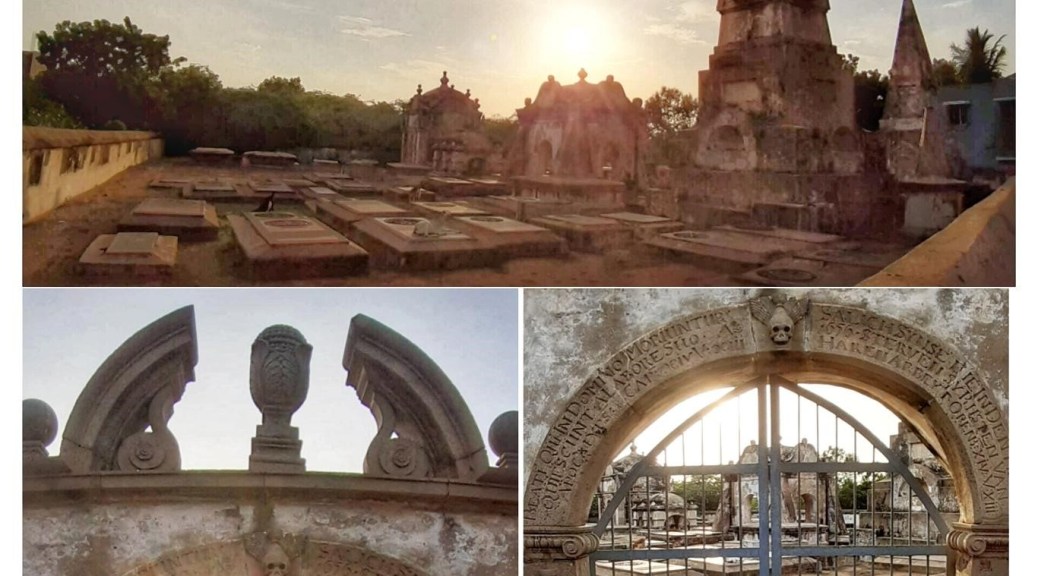
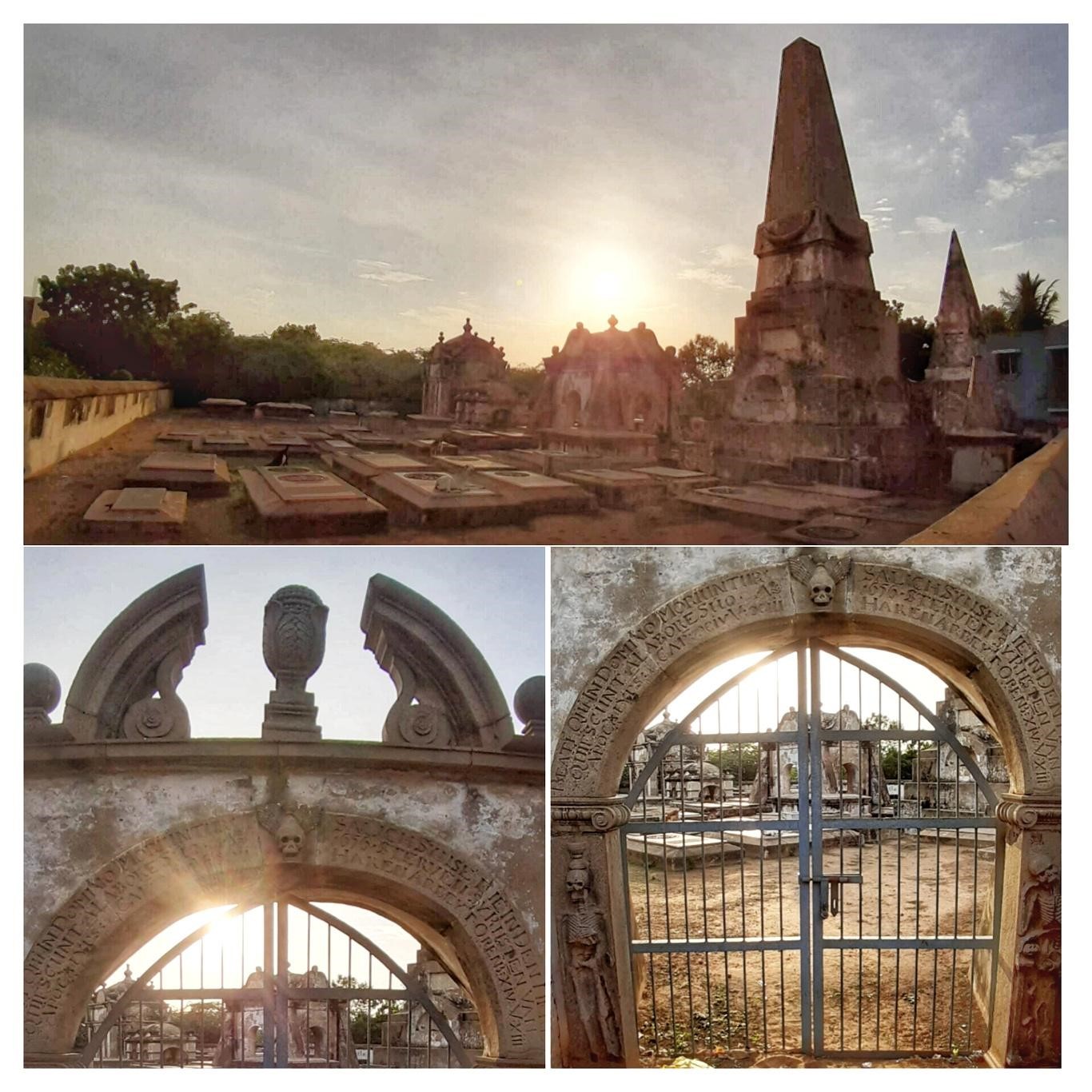
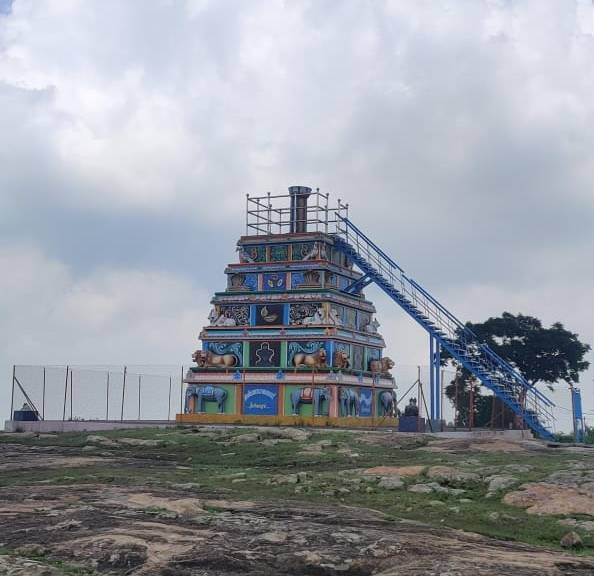
We returned to the bank and continued to drive in the direction of Sriharikota. While we were exiting from the village and were at a traffic signal waiting to enter the highway, my eyes fell on an interesting but ignored piece of construction by the roadside. I decided to go near and noticed that the entry gates were locked. The architecture style was different than anything I had seen before in the region and some strange alphabets were engraved on its entrance arches. Although interesting, it still seemed eerie and gave me some sense of it being an old, abandoned site of a graveyard. Since it was locked, I clicked a few pictures of the place from outside and returned to the car and continued our drive to Sriharikota.

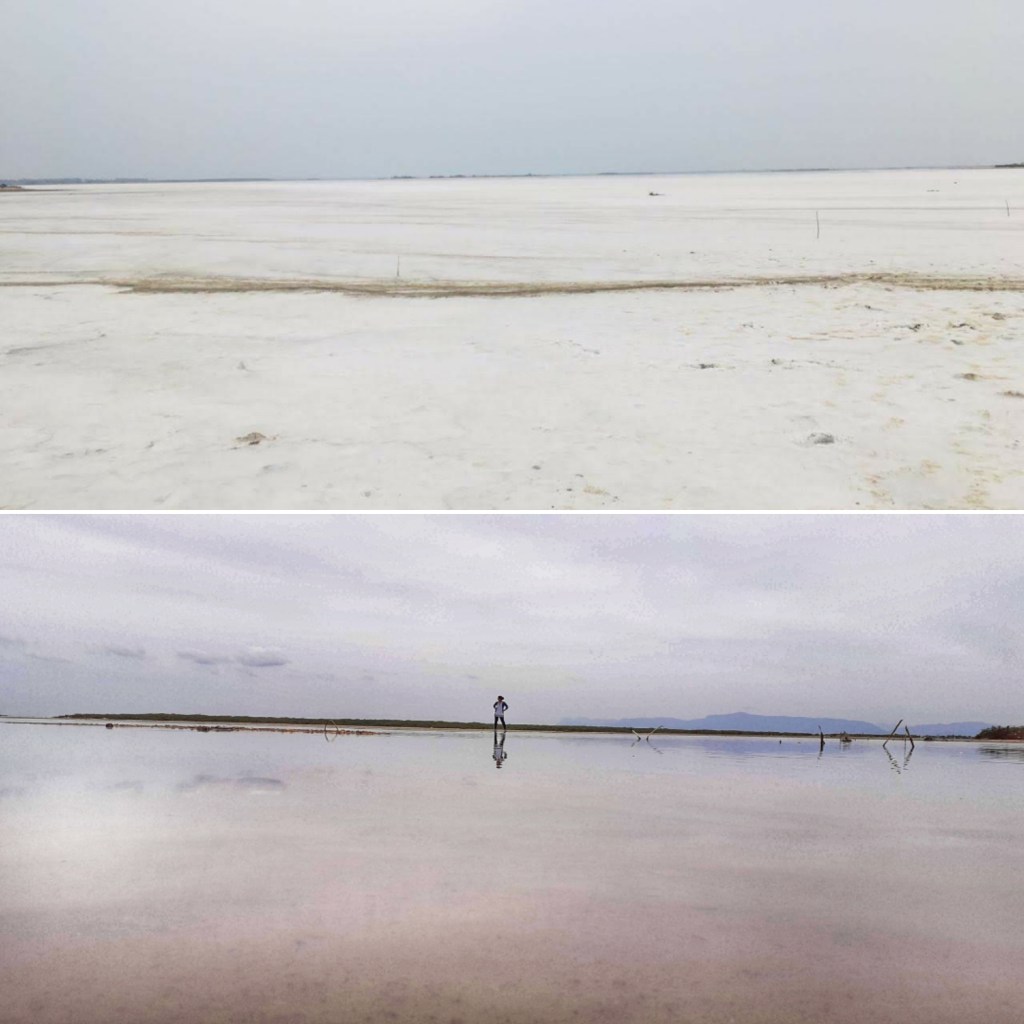
Top: Lake Pulicat enroute to SHAR in winter; Lake in Summer

When I looked it up on the internet, I found some interesting information about that old site I had just visited. There are about five main settlements dating back to the Dutch era across India namely at Gujarat (Surat), Kerala (Cochin), Andhra Pradesh (Machilipatnam), Tamil Nadu (Pulicat) and West Bengal (Hooghly) where forts or cemeteries can be found. This day, I had visited a Dutch cemetery which used to be a part of Fort Geldria or Fort Geldaria at Pulicat. Pulicat was the seat of the Dutch Republic’s first settlement in India, and the capital of Dutch Coromandel. This fort was the only fortification in the Indian empire whereas all other positions of the Dutch Company were trading posts. today, this cemetery houses about 76 tombstones, mostly carved in the Netherlands.

Dutch cemetery
The Dutch cemetery at Pulicat

It is interesting how I came across a random site that holds so much historical importance in India’s history of colonization and it is also unfortunate that how inaccessible or neglected are these sites that holds stories of an era bygone. Thus, the sun had set on Pulicat ending our quick visit to this lakeside settlement.

Weekend Hike- Bala Kodandaraya Swamy Temple

Although this destination is a recommendation for weekend and day hikers of Bengaluru, it is in Krishnagiri, a district bordering the two states of Karnataka and Tamil Nadu.

The views from an ancient temple had caught the attention of my friend and me, who are always in the look out for less crowded and less explored landscapes and places with cultural and historical importance. One such place was the ‘BalaKodandaraya Swamy temple’ whose history dates to the Vijayanagara era. Based on our online research, we found out that getting to the temple involved a short hike.

We started early on a Saturday morning by car. We had our breakfast along the way, in one of the several restaurants on the Hosur highway. From there, we followed the route on Google maps to reach our destination. A steep deviation to the left of the highway led us through villages. There were asphalted roads and good views of the surrounding hillocks for as long as the road passed through villages. The last couple of kilometers were through unpaved muddy roads passing through a slight forest stretch. We finally arrived at a small open space where we parked our car, at the base of the temple hill.

The forest trail
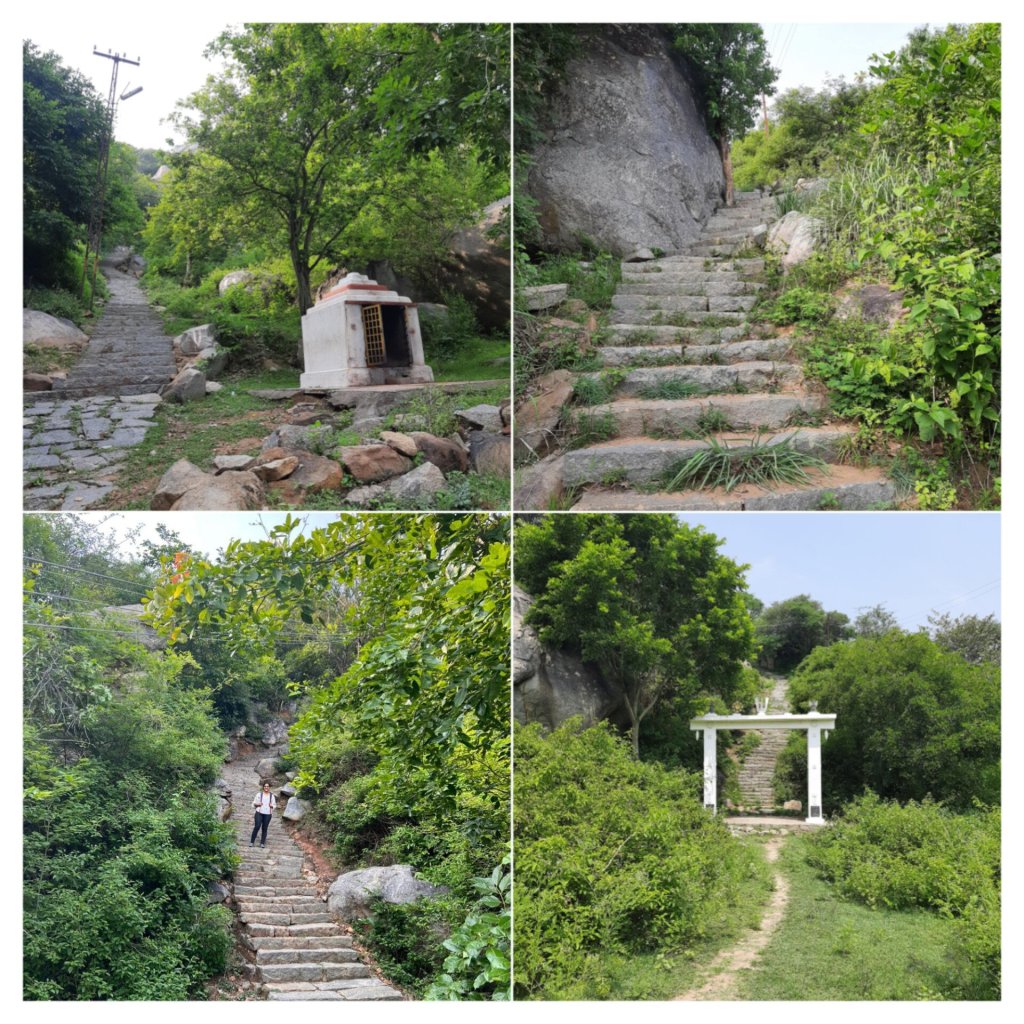
The trail through the forest cover, starting from the base to the temple arch

There was a small structure of brick and mortar (gudi) at the base, from where a flight of stairs led to the hilltop. People lit lamps, agarbattis and camphor here before starting their ascent. It took us about half an hour’s climb along properly laid stone steps leading to the top. These stone slabs bear the names of the devotees who have donated them and the count of their donations on each step. The ascent curved around at multiple places and offered amazing views of the valley below at every turn. The first half of the climb had a forest cover and large boulders on both sides, until we arrived at the welcome arch of the temple.

The path towards the left of the trail, towards the temple

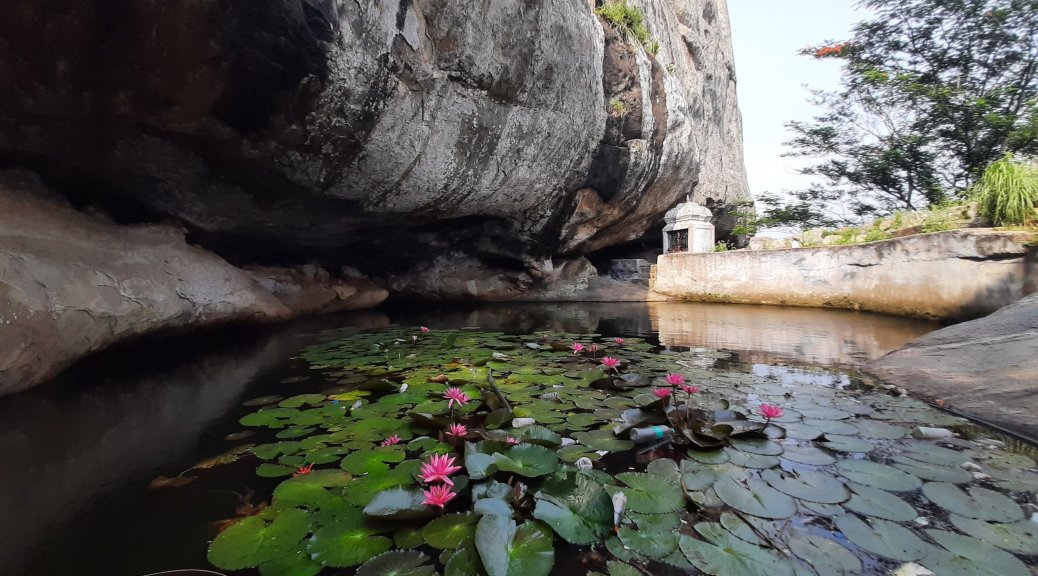
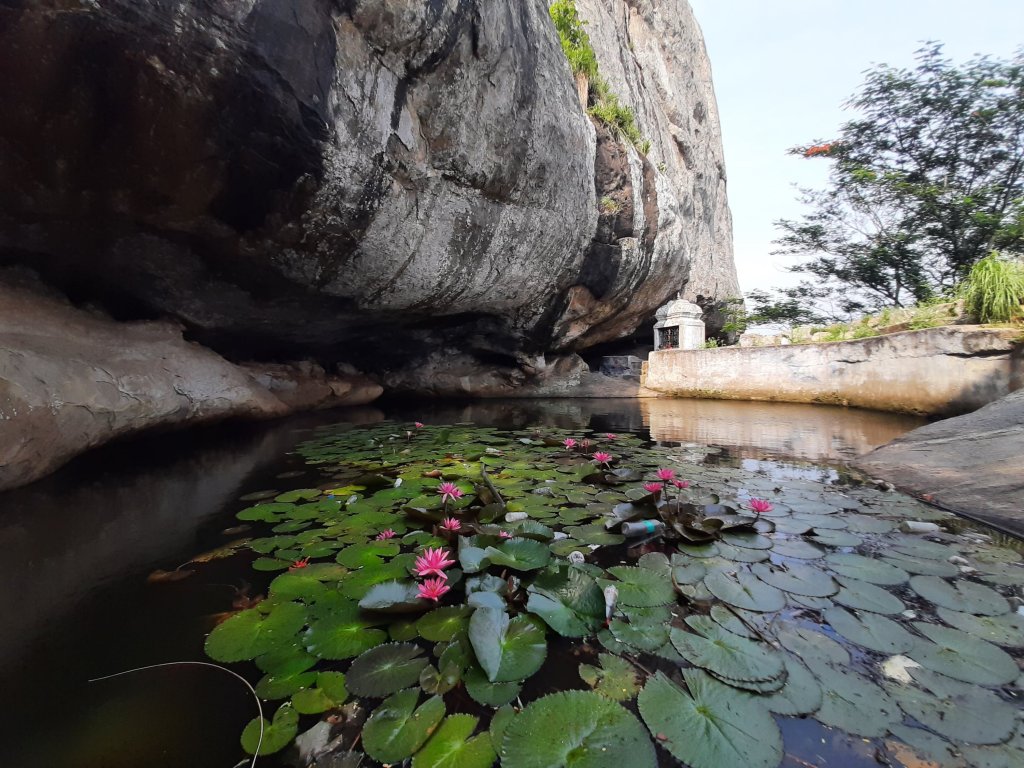
The forest cover ended after a few steps further from there and opened to a panoramic view of the valley of the villages and farms below. As one stands on a large rocky outgrowth, you will find the trail split into two paths. One, straight down through some Gulmohur trees. Second, up towards the temple. We decided to first walk the trail going straight. A few yards from there, the trees made way to a beautiful pond of pink lilies, dug right beneath a large rocky monolith. We later realized that devotees take a dip in this pond before proceeding towards the temple.

The path towards the right of the trail, leading to the temple pond

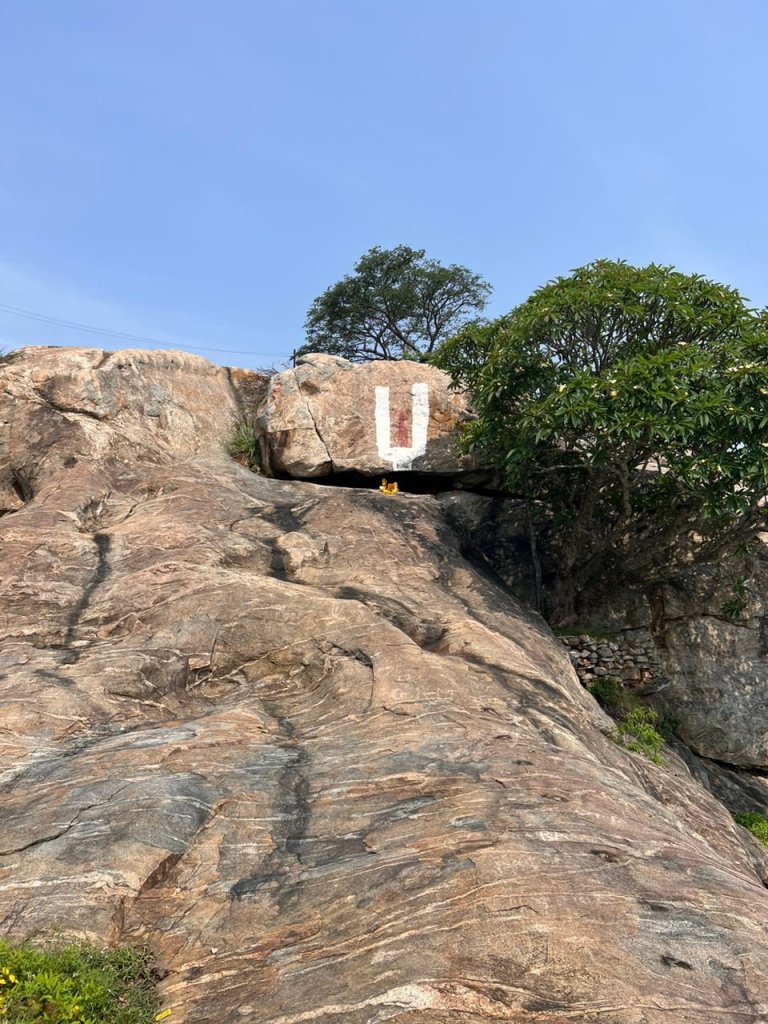
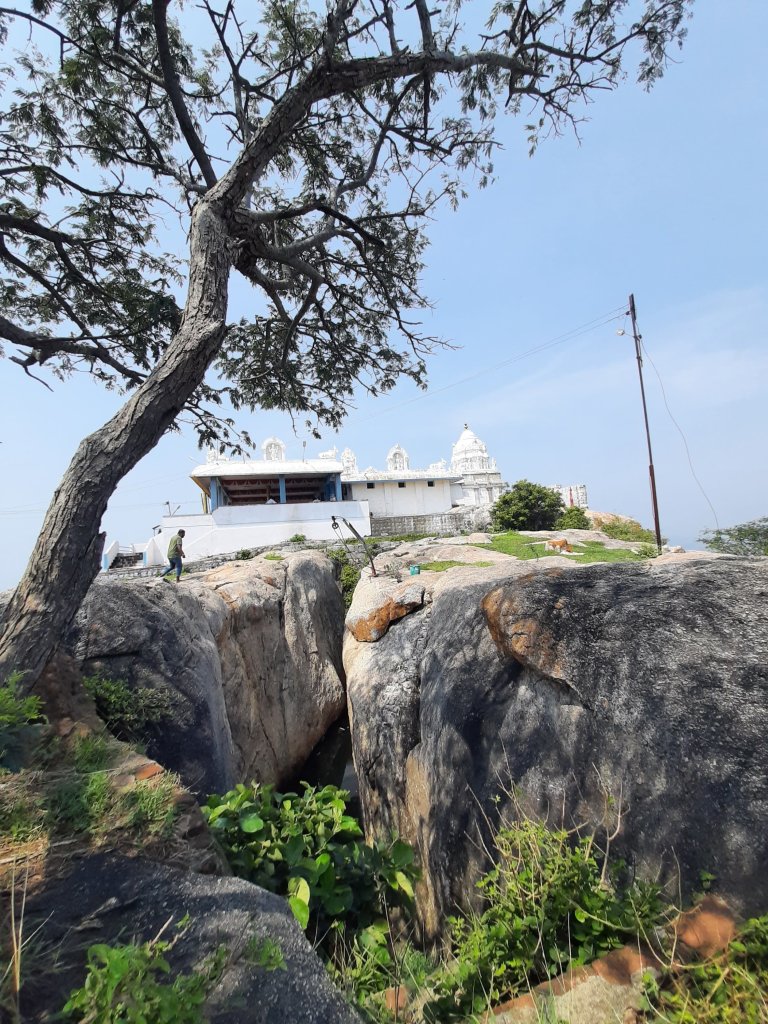
The view of the valley from there and the magical vibe of sitting by this pond of lilies could not let us go easily from there. My friend settled on the banks, with a book to read. Although the water was heavily littered with plastics, it was still a super calm spot to soak in some good energy. After spending a while, we then headed towards the temple, located on the peak of the hill, a short walk away. There was a panoramic 360 degrees view of Hosur and Krishnagiri from the temple, the green cover around, Krishnagiri dam and the Then Pennai river. The temple priest arrived much later at around 10.00.a.m. for the daily prayers.

Balakodandaraya swamy temple, Krishnagiri
Balakodandaraya swamy temple and the cleft for drawing water

Surprisingly, a small cleft in the rocky hill serves as a perennial source of potable water for temple use. The people who had gathered there by then, helped the priest in drawing water from this cleft and clean the temple premises before offering the day’s prayers. We sat there for a while and decided to head back to the base before the sun took over the skies and heated the rocks around. Overall, it was an incredibly beautiful place for a short trip from the city.

Other nearby places:

If you are looking at making it a full day trip, then you can explore the nearby places that include:

The four-wheeled connection between the south-western and north-eastern hills of India

Britishers chose beautiful and yet strategic places across India to create their summer and recreational destinations, mostly hill-stations. Needless to mention that despite the colonial rule ending seventy-five years ago, their influence in our culture has been inseparable. One aspect of these cultural influences is the slow lifestyle of the people in these hill stations and bungalows nestled amid large plantations. When the British vacated the Indian hill stations, they also left behind all the automobiles, machinery and equipment used in their plantations and factories. With that, a legacy of four-wheel drive vehicles as well.

The Date:

When I planned a trip around North-east India in 2021, I had included an ascent to Sandakphu-Phalut, a small settlement in northern-most part of West-Bengal on the Indo-Nepal border. I wanted to see the ‘Sleeping Buddha’ at sunrise. The sleeping Buddha is a series of mountain peaks in the Himalayas including Kanchenjunga, Kumbakarna and others collectively appearing like the Lord Buddha resting in the horizon, over whom a golden shade is cast during sunrise. Trekking enthusiasts opt to walk through the Singalila National Park, a week-long trek to reach Sandakphu and Phalut.

But I (along with my brother and friends) planned to summit the trail by road. Not that I was less adventurous or lazy to walk, but I felt that my adrenaline rushed a little more at the thought of being driven on a four-wheel drive vehicle. ‘Why so?’, you may ask.
I am a kid who was born and raised in the south-western hills of Madikeri. ‘So, what?’, one might think. Madikeri, in Kodagu is where the Britishers have played an influential role in raising a culture of using and loving our four-wheeled drive vehicles. The jeeps from the Mahindra stables are like family for the people of the coffee hills. Be it the Willys, left-hand-drives, petrol engines and all that followed, you will find them all in shining spec and ruling the roads of Kodagu. This natural affinity for automobiles in my genes and the nature of my profession that lets me earn my daily bread (I’m an automobile engineer by profession), I don’t think my choice of transport needs further elaboration. So, for me the thought of a drive in the north-eastern hills exuded more thrill than trekking through the woods.
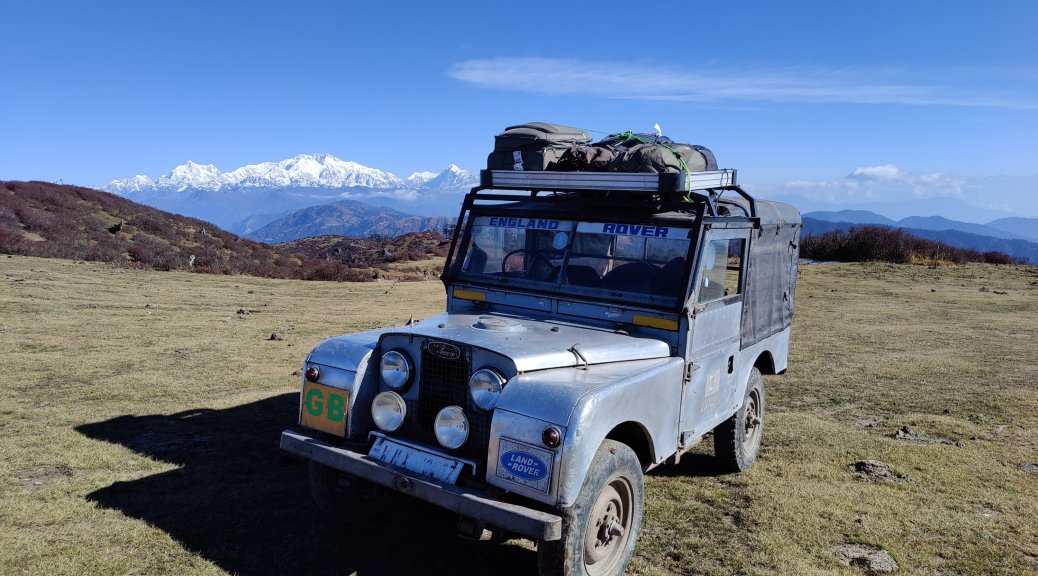
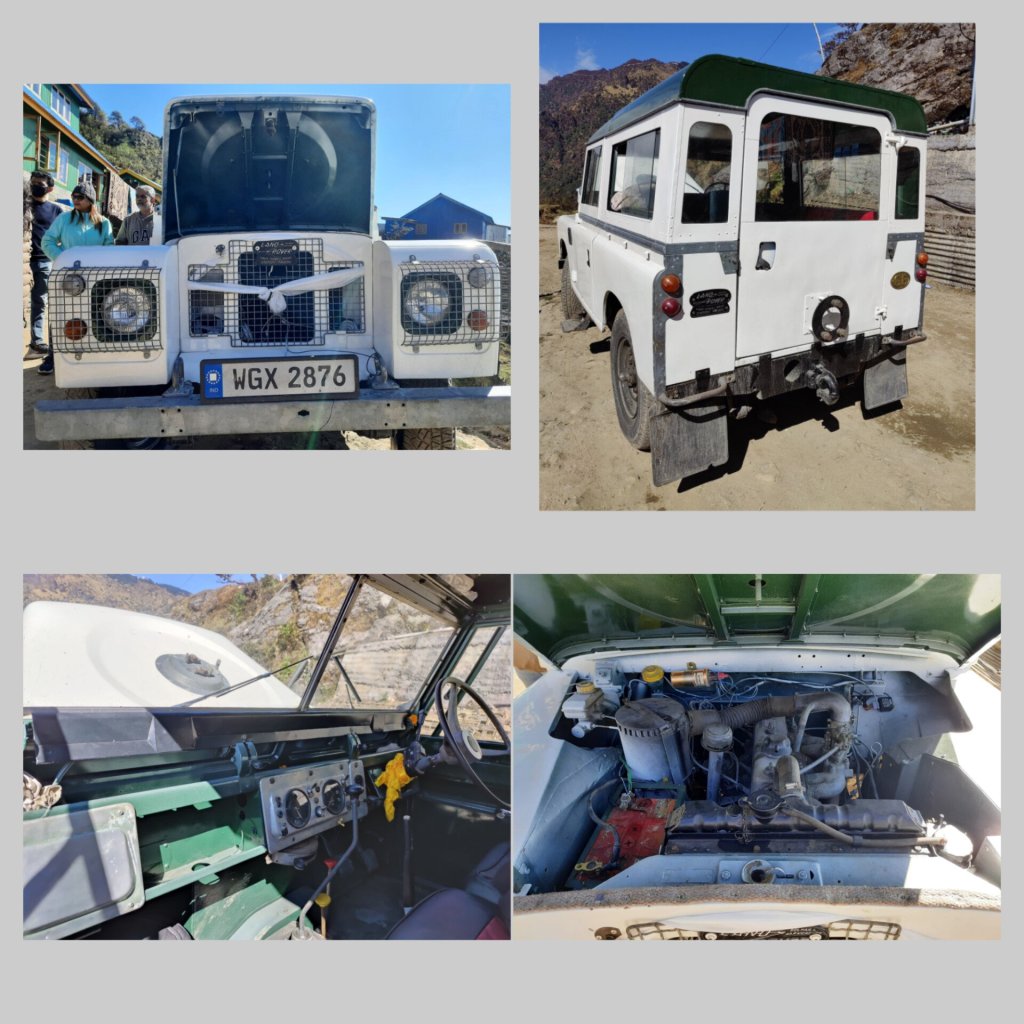
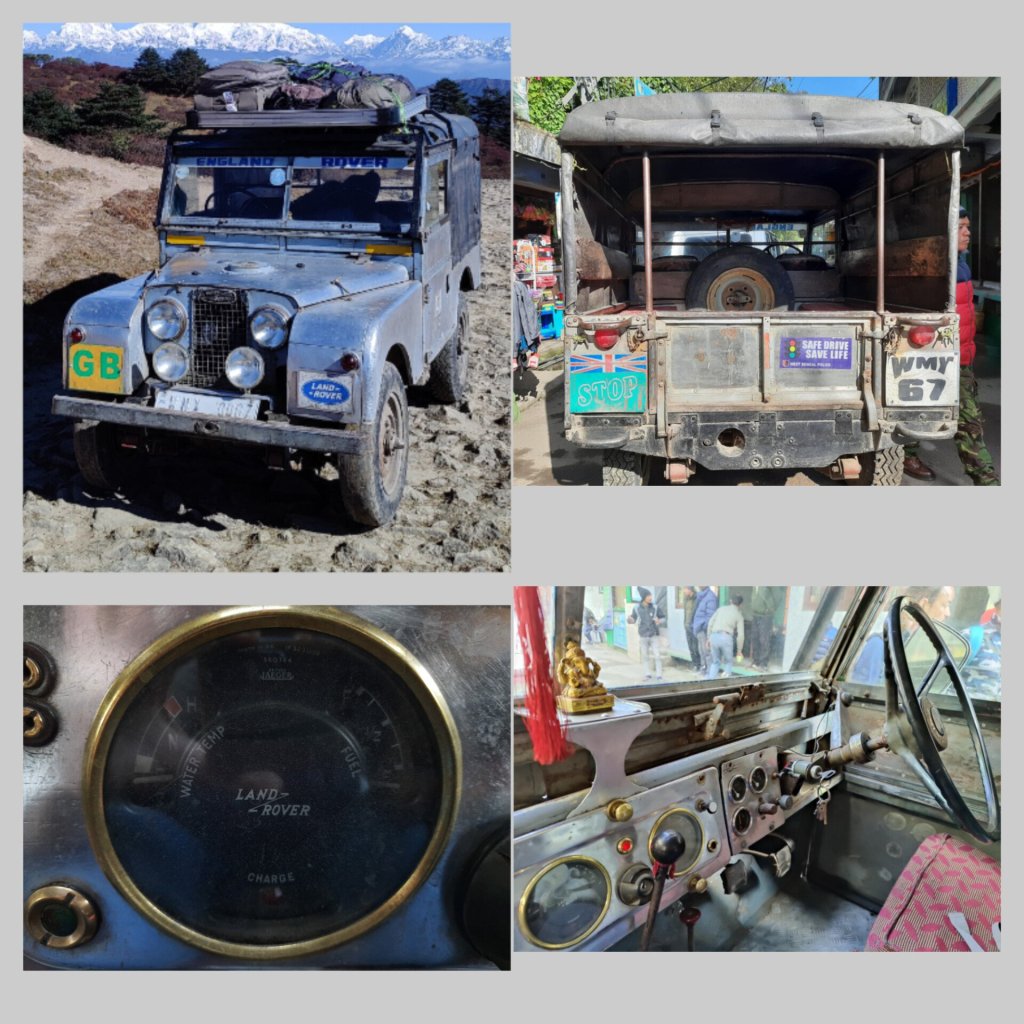
The vehicle here in discussion is a vintage ‘Land rover Defender’ that is at the least, as old as the Indian Independence! Maneybanjang is a small town that serves as a base for the Sandakphu trek. But it has gained the moniker ‘the Land of Land rovers’ for it is home to over 40 vintage Land-rover Defenders. These vehicles were used by the British to tame the unpaved terrain of the tea plantations at nearby Darjeeling and surrounding hills and were left behind when they left India for good. These vehicles are now the proud possessions of individuals living in this village who have now formed a ‘Land-rover owners’ association’ from whom rides can be hired by travelers who want to see the sleeping Buddha.

A vintage Land rover Defender petrol vehicle at Maneybanjang

For someone from Madikeri who found an instant connection with Maneybanjang, it was like a love-story between coffee and tea. It was a meeting of the grasslands of Western Ghats with the snow-clad peaks of the Himalayas. As it was the last day of Deepawali on the day of our arrival at Maneybanjang, we also witnessed the local culture of how Deepawali was celebrated in that part of the world. With a mixed influence of Hinduism and Buddhism, the Indian and Nepali, the Gorkha and the Bengali cultures, it was indeed a unique experience. The localites form groups and go from house to house all night singing, dancing, and spreading joy, much like carol singing. That night, we too joined them during our stay and immersed ourselves in the local culture.

The Journey:

On the following morning, we started our journey from Maneybanjang around 08.00.a.m. in the morning and stopped at several villages, check posts, viewpoints until we reached the homestay at Sandakphu by evening. We tried local cuisine, yak cheese, fresh brews, and aged fruit wines along our way. We hiked around to get to the nearest sunset-point, even though the fog had engulfed the entire atmosphere. We cooked noodles with the locals in their kitchens and grooved to their native music before calling it a day.

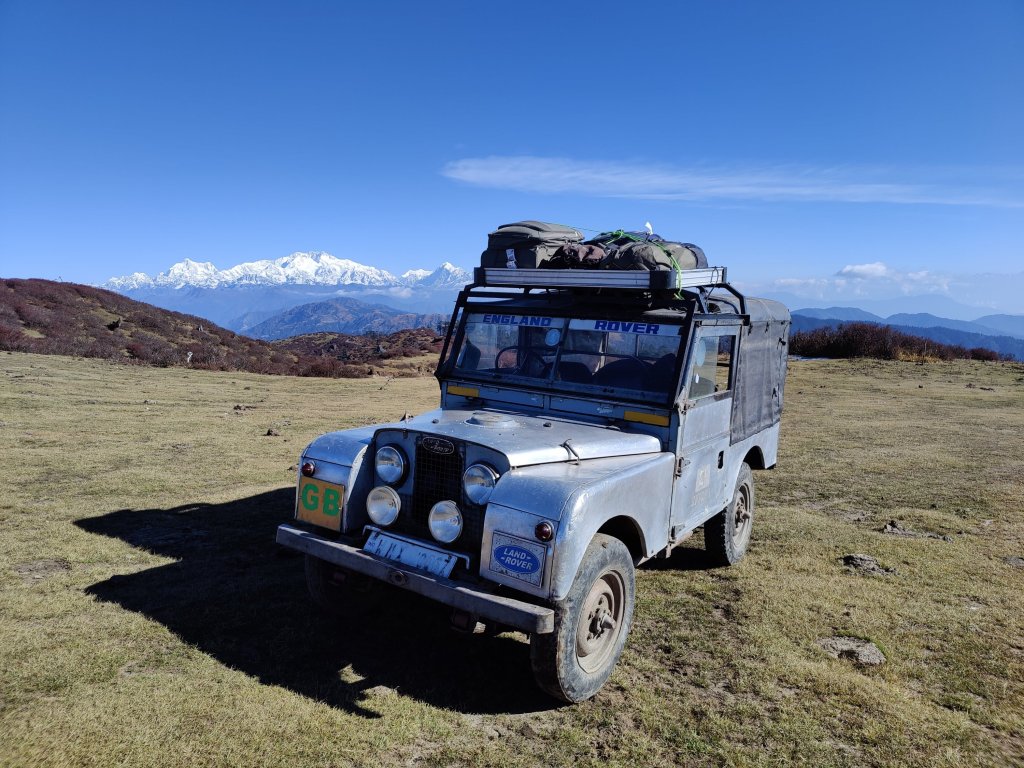
The vintage Land rover Defender diesel vehicle, in which we traveled to Sandakphu and Phalut

On the following morning, we woke up as early as 04.00a.m. to climb up a small, elevated point from where we would get a wholesome 360degree view of the rising sun and the sleeping Buddha. We were chattering and shivering in the freezing cold as thin sheets of ice were crackling under our feet. But when the sun started to come out, the few minutes of spectacle was simple breathtaking.

Post breakfast, we drove up to Phalut, walked around the place and planned our descent. Not without taking a lot of photos with the machine we have travelled on thus far. It was early evening when we finally made it back to Maneybanjang, thus ending our date with the ‘Defenders’. It was a bittersweet moment as we had to leave each other’s company. Sweet for the drive, the vistas, and the thrill; Bitter for having to depart without knowing when we would be back again.

Land rover Defender and 'Sleeping Buddha' at Sandakphu
Our Land rover Defender with the ‘Sleeping Buddha’ in the Background at Sandakphu

We hired a local taxi to proceed towards our next destination- Gangtok, for the night.

Bannerghatta beyond zoo- Bilikal Ranganathaswamy betta

Initially, when a friend mentioned the destination for an impromptu drive on a Saturday morning, I hoped to correct him by telling it was ‘Biligiri Ranganathaswamy Betta’. “No, it is Bili-Kal’, he specified. ‘Bili’ translates to ‘white’ in Kannada. ‘Giri’ means ‘hill’. ‘Kallu’ means ’stone/ rock’. In this context, we were both talking about two different destinations. Although the presiding deity at the temples located atop both these hills are common, Biligiri is more popular than its counterpart at Bilikal. While Biligiri forms the core of Biligiri Ranganathaswamy Temple (BRT) tiger reserve, Bilikal is in the heart of a reserve forest that comes under Kodihalli wildlife division of Bannerghatta National Park. So, this time, we were heading to ‘Bilikal Ranganathaswamy Betta’, the closest of the two to Bangalore city limits, reachable through Kanakapura road.

We stopped by Halagur town for breakfast which has several old and popular eateries that serve unique types and authentic recipes of idlis for breakfast. (Comment below if you need hotel recommendations). Post this break, we followed google maps to reach our destination.

There is a forest check post enroute where one needs to make an entry to continue the journey ahead. The temple hill can be summited via two routes, one is a trek route with stairs, and another is through an unpaved road that is clearly marked till the end. Although four-wheel drive is not mandatory for those opting to drive up, it is recommended to have a vehicle with good ground clearance.

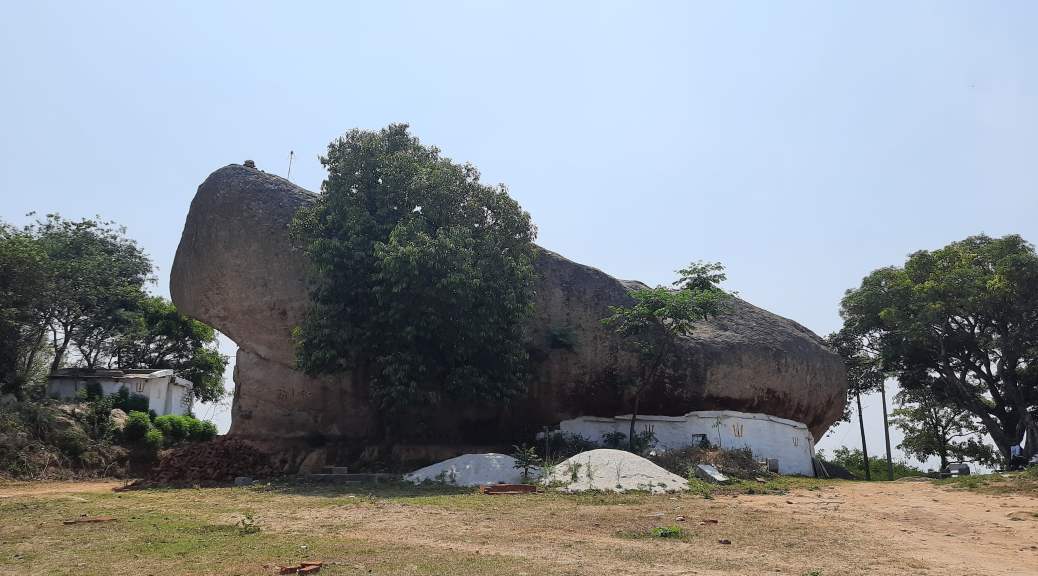
Bilikal ranganathaswamy temple
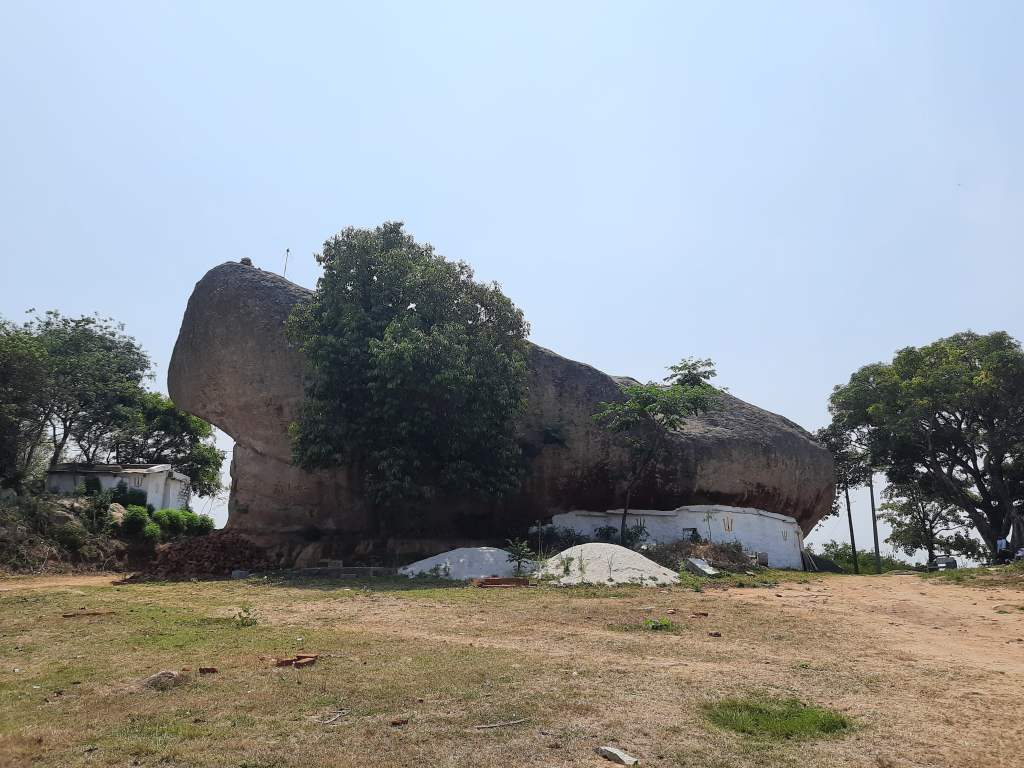
Bilikal ranganathaswamy temple, Rear view of the Monolithic rock

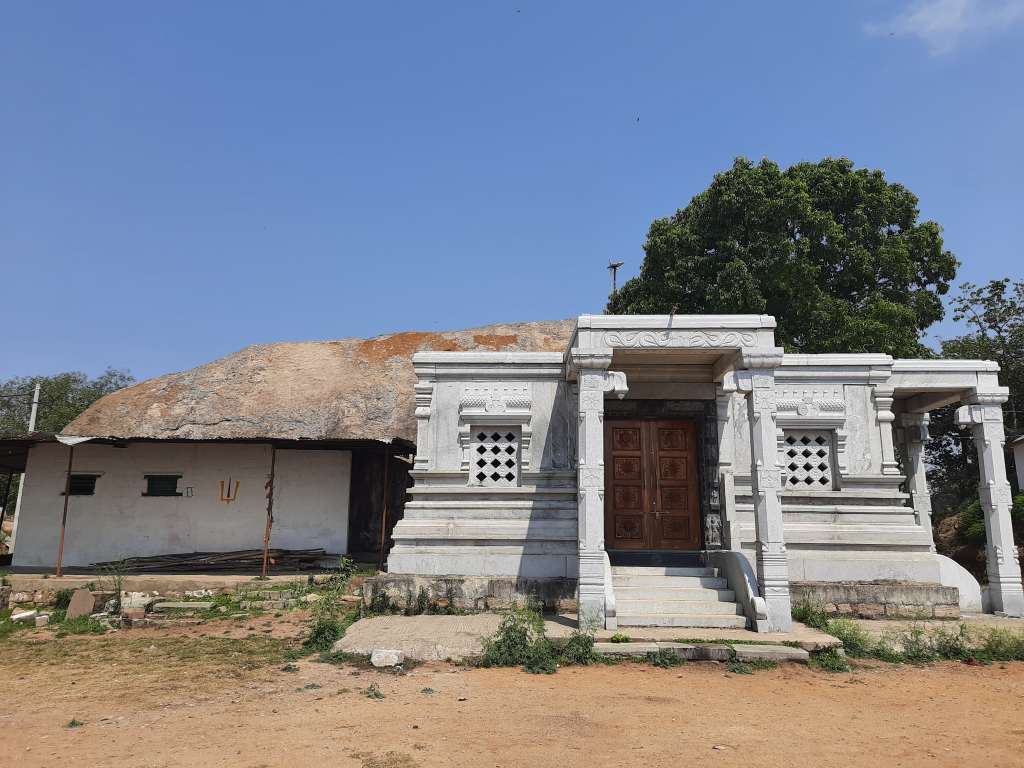
Upon reaching the peak, it was a large open area which came as quite a surprise. While one side of the hill had the temple pond dug into the edge of the rocky hill, the main temple of Ranganathaswamy is located on another side of the hill, overseeing a magnificent view of the surrounding hills. The main deity is carved out of a large monolithic rocky outcrop on the hill, which makes this place unique among all that I had visited thus far. There is a small sculpture on this rock which we were told is the original figurine of worship until it was damaged many years ago. Since then, an alternate idol has been carved out of the larger rock and a simple temple has been built outside leading into the prayer chamber within the monolithic rock.

Next to the temple rock, is another old and small room like stone structure. A few localites who were present there told us that it was the house of an old lady Kamalamma, who lived there and had dedicated her life in the service of Lord Ranganatha. Amid the wilderness of the thick jungle, she lived all alone in the belief that Ranga was her caretaker. She was accompanied by a few cattle that lived there whose milk was used to distribute buttermilk to pilgrims who arrived there every Saturday after a tiring ascent by foot (before the drivable route was laid out). She is no more, and her tomb is now housed inside the structure where she lived.

Bilikal ranganathaswamy temple, front view of the rock temple

A short climb from this structure is another viewpoint, where one can sit on the rocky outcrop under the shade of the surrounding trees and take in some good views of the valley around. We returned after spending some time there. Overall, this was a pleasant and an offbeat outing from the city.

Things to note:

  • The temple and the forest check-post are open for public access only on Saturdays. Only one Pooja is offered to the deity, once per week.
  • The annual temple fair is held here in January when a wooden temple car is assembled and taken around the rock-temple.
  • All along our way, we observed a lot of fresh elephant dung. Hence, we are certain that the trail is frequented by elephants and other wild animals at all times of the day. As both the routes pass through dense forest, it is recommended to comply with all guidelines laid by the forest department.

Other nearby places that you can combine your visit with:

  • Shri Govinakallu Anjaneya swami temple (an offroad drive in the same forest limits)
  • Mekedaatu and Sangama
  • Muthathi riverbank
  • Galibore fishing camp
  • Bheemeshwari adventure and nature camp
Bilikal Ranganatha swamy temple

Five Amazing Places to Explore Caves in India

As a high school student, I was intrigued by the terminologies called ‘Stalactites’ and ‘Stalagmites’ in my Geography curriculum. ‘These were formations of calcium deposits formed by continuous flowing of water over several years, below the Earth’s crust’, it read.

“These structures are beautiful to see. I had the opportunity to visit one of these underground caverns during my visit to France. We walked down a flight of stairs and then were taken on a boat, to see stalactites and stalagmites, underground”, my geography teacher said. Her voice echoes in my ears even today, because back then my jaws had dropped in awe wondering how beautiful the landscape and topography of the countries outside India were. I wished to see the stalactites and stalagmites someday.

Cut to today, I am so glad that time has been kind on me with so many opportunities to explore my own country, India. These opportunities have opened my senses to realize that “India is a world”. From snow to deserts, mountains to beaches, plains to rainforests, the landscape comprises of EVERY type from across the world! Based on my travels, I have seen some amazing cave systems in India. Without including the caves that have been part of India’s ‘art and architectural heritage’, here are five best places in India where you can explore caves in their natural form.

1. Meghalaya:

Top on the list, there are hundreds of caves that are open to explorers, hundreds being discovered every day and maybe thousands that are still unknown to people yet. ‘Krem Liat Prah’, India’s longest cave system is in Meghalaya.

2. Andhra Pradesh:

Borra caves’ in Andhra is the largest cave in India. A heritage railway line passes just above this limestone cave. Having such a big cave system is proof and motivation enough to know that several other caves are available in this region waiting to be explored by adventurers and tourists alike.

Inside the Belum caves

3. Chhattisgarh:

The state sitting within the mythologically important forests called ‘Dandakaranya,’ these forests are home to several limestone cave systems that are yet untouched by mass-tourism. Only about 57 caves are known to people as of now, and there is immense scope for exploring new caves. The remoteness of the places adds to the joy of the explorer while caving in Chhattisgarh. The video of exploring a cave at Bastar, Chhattisgarh is shared below.

Cave exploration at Madarkonta caves

4. Andaman & Nicobar Islands:

This archipelago and Union territory of India is one of the best kept secrets of nature enthusiasts who want to go caving. In fact, this is where I saw a stalactite and stalagmite for the first time in my life. The connectivity of these remote caves located on different islands through a channel of interconnected mangrove forests passing through pristine blue sea water makes it a memorable experience.

5. Karnataka:

While all the above cave systems I have enlisted above are limestone caves, Karnataka is home to some of the beautiful sandstone caves which are scattered across the middle and northern region of the state. Unlike underground, the caves in Karnataka are formed above the earth’s surface and give a completely distinct perspective of exploring this state, which is my home-state as well!

Rocky hills at Badami

Stories Through Souvenirs- An e-book

A compilation of 18 short stories based on my experiences of traveling on the roads of India, I’m happy to share that my second e-book is now available for my readers.

My book- ‘Stories Through Souvenirs‘ is a compilation of my stories of meeting people, hearing their stories and the learnings from my experiences. These are the stories of how these stories influenced me to become who I am.

Do give it a read and I am sure you will like it 😊

Pondicherry- 10 Places to Visit and Things to Do While on A Tour

Do you want to visit the tranquil beaches of the south? Journey to Pondicherry. The city was previously a French colony and is now a small union territory on the eastern coast of the Indian subcontinent. In both the monuments and the city’s alleyways, you can still see examples of that era’s architecture. The city is well-known for its beautiful beaches and historical sites to visit. There are also some fantastic cafés and restaurants to visit while on tour. To learn more about the location, try the local food.

Pondicherry is appropriate for individuals of all ages and walks of life. It is ideal for seniors, couples, friends, family, children, and business travellers. While in the city, there are several sites to see, some of which are listed here. Stay at Treebo Hotels in Pondicherry to make your journey unforgettable. These resorts are spread around the city and provide some of the greatest features.

Places to Visit in Pondicherry for an amazing trip:

1. Paradise Beach

Lovers may visit Paradise Beach, which is ideal for relaxing. Tourists are drawn to the area because of its natural beauty. The sun’s rays reflecting on the golden sands of the coast create a captivating view of the entire region. To go to the beach, take a ferry from Chunnambar. The Bay of Bengal’s stunning beauty is worth seeing. It is a photographer’s dream since exotic birds may be found here. So, take a stroll along the beach or spend some quality time with your special someone. There are also food vendors here for some snacking.

2. Sri Aurobindo Ashram

Aurobindo Ashram is a spiritual destination for those who are on a trip. To discover more about the place, visit the Ashram library. The location has expanded from a tiny congregation that worshipped Sri Aurobindo. The site is worth viewing while sightseeing in the city. The Ashram also has a hall where guests may view a short film about Sri Aurobindo’s life and work.

3. The Basilica of Sacred Heart of Jesus

How can one miss the city’s most famous church? This church is a masterpiece of Gothic Medieval Architecture and is well worth seeing. Stained glass and paintings depicting the life of Jesus Christ may be seen inside the church. The church is adorned for Christmas and Easter, and people travel long distances to attend the festivities. The magnificence of the building, on the other hand, draws the majority of tourists to this location. It was built in the early 20th century and has been rebuilt multiple times to keep the entire structure in good condition.

4. Rock Beach

Another beach to visit in Pondicherry is Rock Beach, also known as Promenade Beach. The location is ideal for seeing the sunrise and sunset. During these hours, the waters become golden, creating a beautiful scene. People come here for peace and quiet or to take a stroll with their companions. The palm trees that line the shore are also considered to be the most photographed spot in the city.

5. Varadaraja Perumal Temple

This lovely Dravidian-styled temple is well worth a visit when in the White Town of Pondicherry. During festivals, the temple is inundated with people worshipping Lord Vishnu in and around the shrine. Seek heavenly blessings here and marvel at the temple’s architecture. Lord Vishnu, also known as Lord Varadaraja, is claimed to bless everyone who comes to the temple. The temple was established in the 11th century, and several legends have been told about how the temple came to be. One of the most popular is that the Lord’s idol was discovered in the sea, which is how the temple was established here.

6. French War Memorial

The War Memorial, located in the seaside region of Pondicherry, is recognised to be very important to the French Indians who live here. The war memorial was created to honour the troops who died during World War I. The Memorial was created in the first half of the 20th century and is visited by people from all over the world. Because it is positioned on a beach, the view of the entire region is breathtaking. The 14th of July is marked as a day to remember the martyred warriors. The entire region is illuminated, and people gather to remember the people’s sacrifices.

7. Auroville

This Ashram, which is also a piece of art by the Sri Aurobindo Society, is located about 15 kilometres from Pondicherry’s main city. This location is a must-visit because of the tranquilly and tranquillity it exudes. It is being created as a township and has recently become one of the most popular tourist destinations in the country. Visitors to the city come to view the Matrimandir. The architecture of the Gold Dome is what draws the majority of tourists.

8. Arikamedu

History aficionados might visit the Indo-Pacific bead-making site at Arikamedu. It is an archaeological site located within a few kilometres from Pondicherry’s main city. The site is claimed to have been a trading centre during the 1st century BCE. In addition, the French Jesuit Mission’s ruins may be found here. The traces of a bygone age are a must-see, located in a remote place. The surrounding natural beauty is still undisturbed because not many people visit the location.

9. Chunnambar Boat House

The magnificent seas of the Bay of Bengal are very captivating in this location. The little hamlet outside of Pondicherry’s main city is a popular tourist destination. Visitors may also participate in a variety of water activities in the area. Dolphins may also be seen here. Sit on the beach and soak up the rays, or watch others participate in various sports. For some adventure, one may even take a boat trip in the backwaters here.

10. Shopping in Pondicherry

Last but not least, shopping in Pondicherry’s streets is one of the nicest things to do. Souvenirs for loved ones can be purchased here. Serenity Beach Bazar, Nehru Street Market, Saram China Market, and many more are places to visit while in the city for some shopping. To shop from the city, look for things such as handicrafts, clothing, food, home décor, handbags, and so on.

The streets of Pondicherry are also known for photographic sessions as they are painted in either vibrant colours or plain white. Visit the place to experience all of this.

To check out all these beautiful places in Pondicherry, book your stay at Treebo Pondicherry. These hotels in the city are available at budget-friendly rates and provide some of the best amenities. Some of these services at Hotels in Pondicherry include-

  • Complimentary Breakfast
  • Free internet access
  • Hassle-free check-in
  • Branded Treebo toiletries.

These hotels in Pondicherry by Treebo are:

  1. Itsy by Treebo- Coastal Grand De Heritage
  2. Treebo Trend B Coral
  3. Treebo Trend Yagna Residency
  4. Itsy by Treebo- Red Lotus Heritage
  5. Treebo Trend Raffis’ Andalusia
  6. Treebo Trend South Avenue

Favorite memories from the year 2022

Favorite Sunsets:

  • Sitting atop the Hemkuta hill and watching the sun casting a golden touch on the Vithala temple at Hampi, India.
  • Feeling all my stress getting washed down by the waves of the blue flag beach by walking deep into the sea at Padubidri beach, India.
  • Feeling the vastness and emptiness of the world while staring at the setting sun from the ‘End Of The World’ viewpoint, Saudi Arabia.

Favorite Sunrises:

  • Clapping my hands with joy at seeing the sun rising over the ruins of Hampi at Matanga hill, India.
  • Waking up in a tent pitched by the backwaters and kayaking out to watch the rising sun on river Shambhavi, India.
  • Hiking across an extinct volcano to watch the sun rise over the Arabian desert at Wahaba crater, Saudi Arabia.

Favorite Outdoor Activities:

Accomplishing the below outdoor activities in Karnataka that I had been contemplating for many years:

  • Cliff jumping at Sanapur lake, Koppala district
  • Rock climbing at Badami, Bagalkot district
  • Kayaking to watch the Bioluminescent waters at Mulki, Dakshina Kannada district.

Favorite Hikes:

Hiked new trails, explored new waterfalls, and feasted delicious cuisines in the Western Ghats.

  • Relished a variety of wild berries, took a dip at the Catherine waterfalls, and tasted Badaga cuisine while meandering through trails in the tea gardens at Kotagiri.
  • Walked through the misty grasslands to see a dilapidated fortress, stood atop the snout of a waterfall at Bandaje, took a dip in Kodige waterfalls, and tasted Malnad cuisine at Chickmagalur.
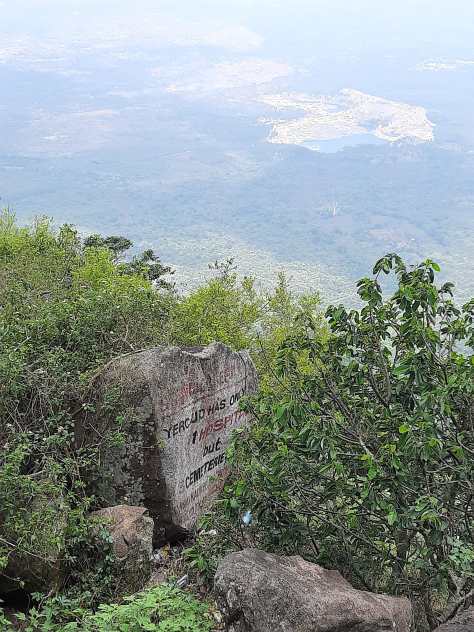
  • Discovered untapped hiking trails, visited lesser known view points and tried natural foods from the local tribal community and saw hills full of Arabica coffee blossoms at Yercaud.

Favorite Movies:

Albeit not a movie person, 2022 was a year in which I watched the maximum number of movies at a cinema, and that too solo. Apart from catching up on some highly recommended movies on OTT platforms, I watched four movies on the big screen. These four were the regional movies whose release I had eagerly waited for and was particular about a theatrical watch only. Apart from ‘777 Charlie’ which I watched with my family; I watched three other movies in the company of just myself: Rocketry, Kantara, and Gandhadha Gudi.

Apart from these, some remarkable events made 2022 special for me.

  • A trek to Kodachadri hill on New Year’s Day was truly memorable that found me socializing with more people and making newer friends.
  • Glen’, my pet dog who was one month old at the time of entering our home and warmed up our hearts in the first week of the new year.
  • I said goodbye to my first job after serving the company for over a decade, a change that I had been long contemplating.
  • Experienced a moment of realization that I was all by myself. A realization that the contacts, the people, the respect, and the inspiration I thought I had accumulated and given to people around me could all mean just ‘Zero’. A moment of realization that trusting even the people you have known for a long could be wrong. A moment of realization that the closest people could have no emotions of empathy at all.