Category Archives: Statewise Travel

Journey away from Bangalore that includes night journey and an overnight stay… Especially ones planned on long weekends with Saturday and Sunday off :)

Celebrating Diwali in the island of Satras- Majuli

This post is part of my fortnight long road trip across North-east India, specifically covering parts of Meghalaya – Assam – Arunachal Pradesh

A good photo can tell a story… But a camera can never capture what the real eyes see’. This expression explains my feeling when my drive to Majuli started.

After our wildlife safari at Kaziranga National Park, we drove down towards Neemati Ghat from where we had to get our car onboard a ferry… Although the ferry sailed away from the banks, we saw ourselves taking a detour and approaching the same bank within 15minutes. A person who had alighted at Neemati Ghat had created a ruckus for having lost his bag of crackers in the ferry. So, he made the entire ferry return to the bank to find his bag back. Oh yes… Diwali with no fireworks?? After all the drama, our ferry took sail on its final trip of the day… It was approximately an hour’s journey across the mighty Brahmaputra towards Kamalabari ghat on the other end that had conveniently faded into the horizon. On the other end of our journey was Majuli, the largest river island in the World.

Places covered:
• Natun Samaguri Satra (known for mask making)
• Uttar Kamalabari Satra (known for the origin of Sattriya dance)
• Kamalabari Satra (known for boat making)
• Aouniati Satra (the largest Satra)
• Dakhinpat Satra (The oldest Satra in Assam)

The Details:
We were sailing in the middle of the widest of the Indian rivers which seemed no less than a sea… In no time, it was sunset in the sky!! We saw the gold of daylight changing into molten red merging with the darkness of the sea to call it a day! Each fraction of a second was a spectacle to the eye while the universe around us was changing into hues of red. And at the distant horizon, the dark sky was being lit up with fireworks as if the world’s largest river island was set for our grand welcome. With last drop of the set-sun, our ferry reached Majuli Island. The welcome was more than what we had imagined while in the waters… The streetlights in the entire island were switched off and it was like time travel to the history books of ancient days when all towns and villages used to be lit by lamps with oil soaked wicks… All villages, all streets, all houses & shops, every courtyard and like every damned place in the island was lit up with diyas of Diwali reminding us the exact purpose of the festival- Celebration of the grand return of Lord Ram, Sita & Lakshman at Ayodhya..!! The distinct rural ambience with lamp lit bamboo huts reflecting in the swamp waters just added to the amusement we had.
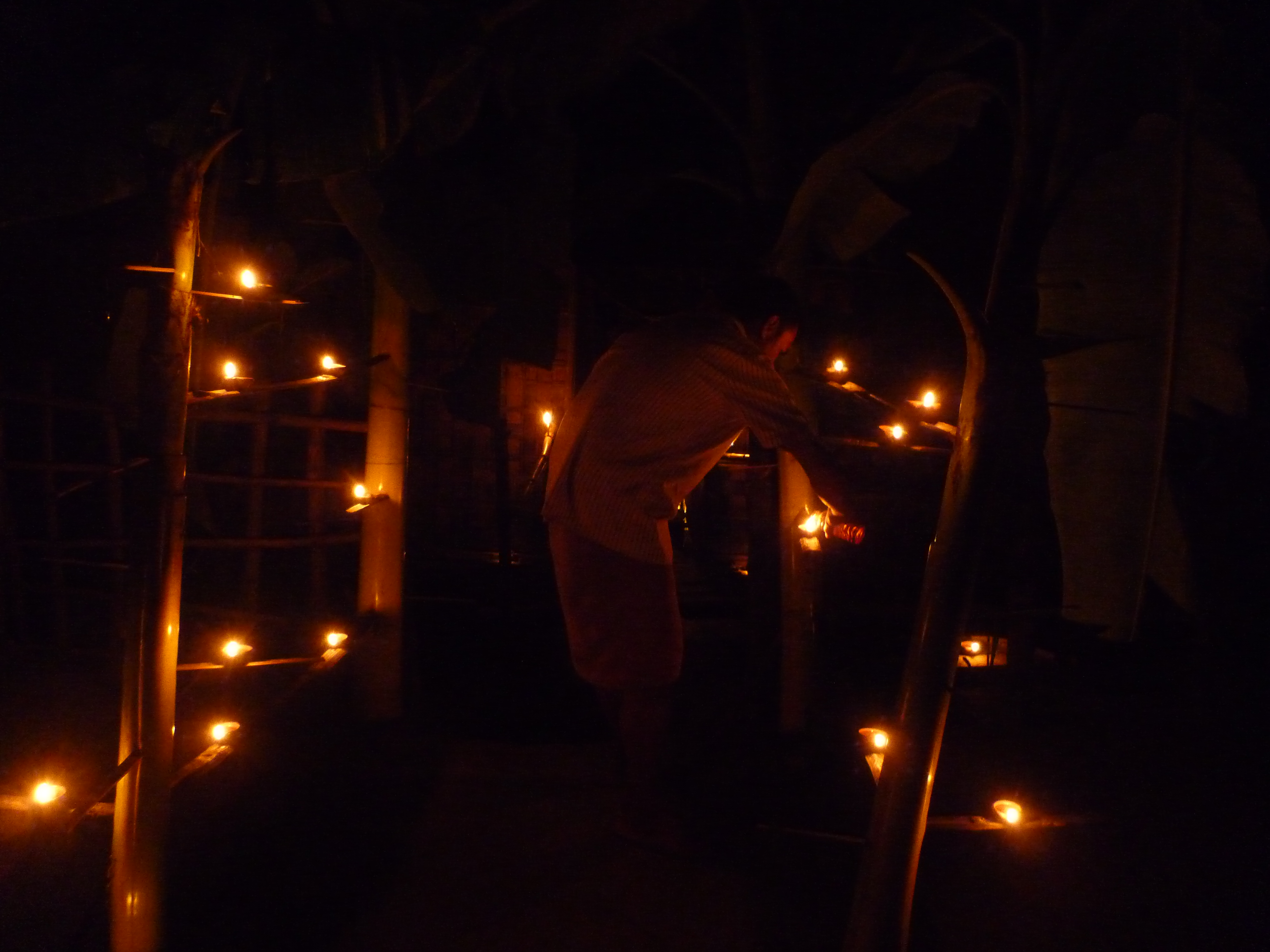
p1140385
Lamps being lit at one of the huts at the Missing village

After getting directions from our homestay owner, we drove through stretches of Gurmur only to be guided with lamps that marked the boundary between the road and the bamboo forests on a moon-less night… A neatly done-up bamboo cottage was awaiting our arrival in that bamboo island… After freshening up in our cottage, we took a stroll in that magical village in search of some local food for dinner. We had to satiate our hunger at a small but pleasant hotel with a simple Assamese Thali.

The rest of the night was spent star gazing in a clear moon-less sky outside our bamboo hut, with moist dew-kissed grass underneath and sipping apong- the local rice-beer… Right there, I found what I wanted from my trip- A piece of peaceful life… It was BLISS..!!

The next morning, we woke up leisurely and took a stroll around the village enjoying the rustic countryside… As it was start of the winter, we witnessed several endemic & endangered bird species including migratory birds that had come to nest in this extensive wetland. After breakfast, we decided to explore the cultural diversity offered by the island. Although I would any day choose to cycle around this vast district, my friend wanted to drive around instead and so we did…
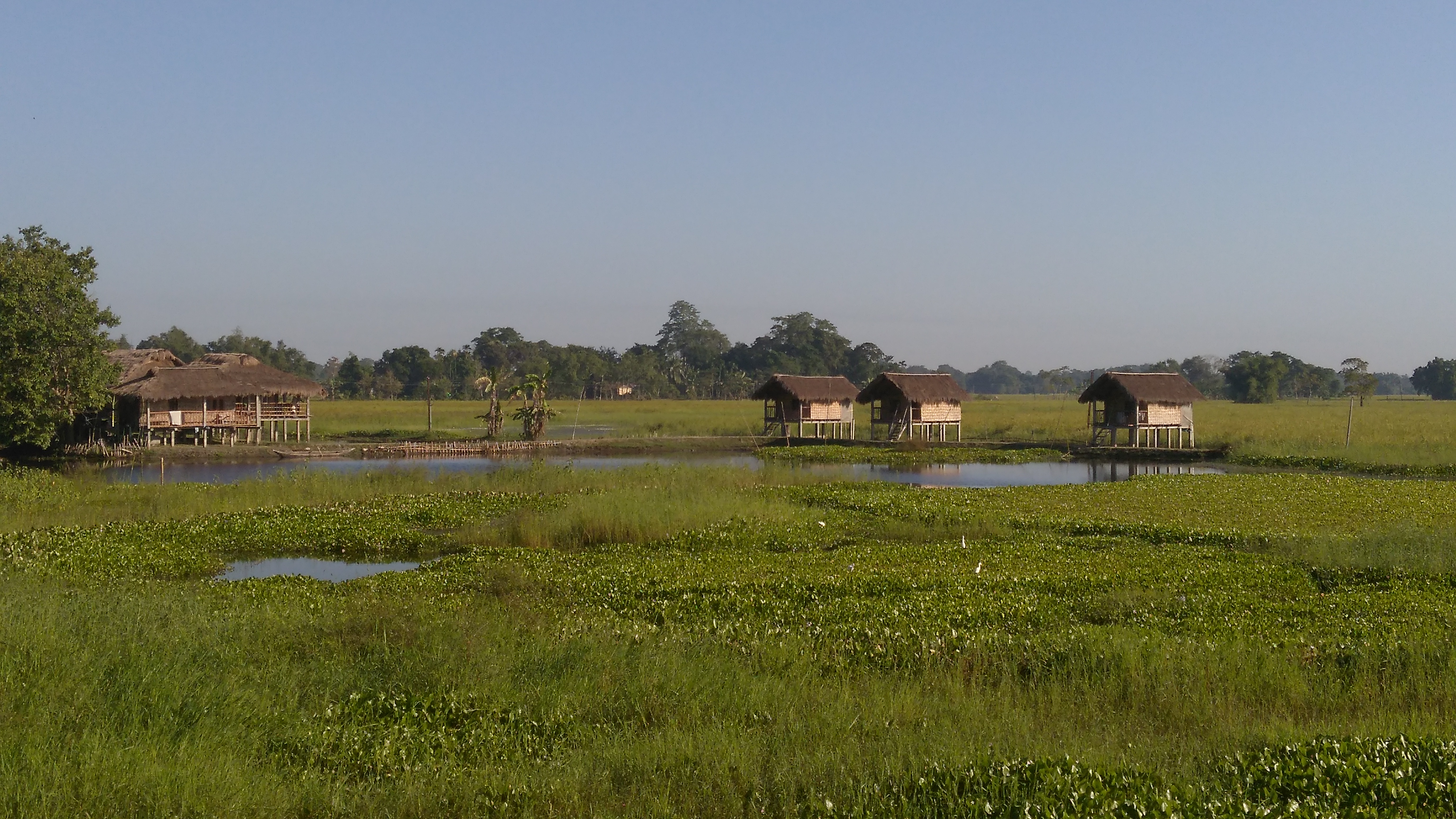
img_20161031_073505_1
The bamboo huts/ houses in the Mising village

Majuli has always been the cultural headquarters of Assam. It is known for its ancient monasteries which have been practicing various forms of art for over 500years now. These monasteries are called Satras. There were over 660 Satras in the island which has reduced to a handful of practicing schools now. We were hence keen on exploring a few of them. The drive around the bamboo groves alternately opened up to the swamp waters of the island making the drive very enjoyable. And every household had a loom placed outside under the shade of the hut with several women folk weaving the famous textile of Majuli. Several others were busy with the preparations for ‘RaasLeela’ the biggest cultural festival of the island flocked with people from across the world due for a few weeks ahead.

Firstly, we visited the ‘NatunSamaguri Satra’- known for mask making. The humble person Mr. Hem Goswami was patiently explaining the process of mask making to every visitor who dropped by. Since, the preparations were on for RaasLeela, most of the masks available were those of characters from Ramayana. We were amused with the way Mr. Goswami got into the skin of the character of the mask that he wore each time. Be it the aggression of King Vali or the gracefulness of seditious Mohini- He adorned them all with ease… We then drove across the island visiting various Satras scattered across the village. Lastly, at Dakhinpat Satra, we greeted the monks or Bramhacharis as they are called were all occupied in the practice of hymns for the Raas night!

p1140393
The masks at the Samaguri satra

The island is inhabited by the Mising, Deori & Sonowal Kachari tribes in separate villages in this bamboo district. And hence, the indigenous culture of the tribal folk is another attraction in addition to all the cultural and bio-diversity that the island has to offer. After all this exploration of the island district, we headed towards Dhunaguri Ghat from where a 3hour drive would get us to the gates of Arunachal Pradesh.

img_20161031_152130
The ferry and the under construction bamboo bridge at Dhunaguri ghat

Firstly, we need to cross a small swamp with a ferry which is available at any point in time, so one needs to just hop in and get rowed across. There is a bamboo bridge being constructed by the local tribes parallely which I think is eligible to be called world’s longest bamboo bridge. The amount of engineering and effort the locals have been putting in is noteworthy. Next was a short drive through the tribal settlements to catch another ferry that runs on a fixed time. But, this drive was again like an emotional farewell to us by this beautiful island… The oblique rays of the setting sun laid a golden tone for the entire backdrop. With the bamboo huts onto our right, the view to our left was a visual treat! Grey waters of the Brahmaputra, green paddy fields, blue Himalayas at a distance with the golden sunset- all in one sight looked like layers of colors and terrain merging into one another forming as if a dream was frozen on canvas.

We waited at the banks for a long time and captured various silhouettes in the backdrop of a dreamy sunset until our ferry arrived. We boarded our car onto the launch and bid a final goodbye to the beautiful island and its people…

Summary:
Majuli is THE place for a traveler who wants to break through some offbeat destination with multiple touch points- Cultural, traditional, geographical, eco and biological diversity all at one place!

Must do:
• Take a cycle tour exploring the Satras around the island.
• Attend the annual cultural festival- RaasLeela in 3rd week of November.

A day out at the Khasi cultural centre- Smit

This post is part of my fortnight long road trip across North-east India, specifically covering parts of Meghalaya – Assam – Arunachal Pradesh I had planned to visit Shillong – Smit – Cherrapunjee – Mawlynnong – Dawki – Ribhoi- Shillong during my weeklong stay in Meghalaya.

I had decided to explore some places all by myself and Smit happens to be one of them. After seeing some spellbinding photos on the internet, I wanted to visit the Laitlum valley as well. Although there are public buses from Shillong to Smit, the connectivity further to Laitlum isn’t great. This is where one needs to have a travel arrangemtn of their own, or in my case: to hitch a ride to reach Laitlum. Since it was my first day in the state, I did not want to get too adventurous for being alone. That’s why, I hired a taxi from Police bazaar (in Shillong) to Laitlum.

This drive was very refreshing for me, whose mind was cluttered by all the madness of traffic, pollution and work tension back in the metropolis (Bengaluru). I was requesting my driver to stop the car after every other kilometer to capture the seducing beauty of the place with my not-so-good camera. The bamboo trees and terrace lands with potato farms, all added charm to the landscape that was very beautiful even otherwise. To add to the pleasure of the drive, I was having a good conversation with the driver as well. Althiugh I had hired a personal taxi, I did not mind to let a few locals into the car when the driver asked me if I could allow them. Given the remoteness of places and the scarce connectivity through transposration, I had absolutely no problem with offering a ride. The next thing I experienced was that there were atleast 50 passengers hopping on and off at every stretch for their ride. And would you know what was exciting for me? All locals who boarded the car used to get overly excited about meeting a foreigner (Yeah… That’s what they called me!).

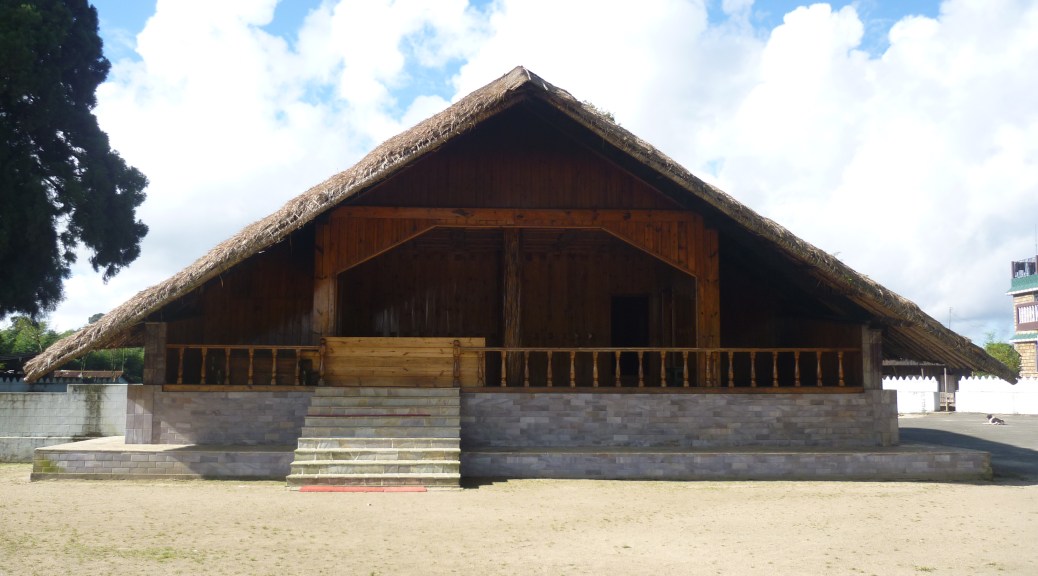
Smit is an old rustic town and the cultural centre of the East Khasi hills, but there isn’t much in this town apart from the Siam’s house. A road flanked with well groomed pine trees lead to the Khasi Raja’s palace. The Raja or the head of the clan is called ‘Siam’ and he lives in the same premises. However, the wooden palace is used only on special occasions when there will be large tribal congregations, like the Nongkrem festival for example. This typical Khasi styled wooden house is said to have been constructed with zero iron nails and only wood for all joints. Although I met the Siam, he did not seem to be a photo friendly person when I asked for permission to photograph his little children.

p1130680
The Siam’s house at Smit

We then drove to Laitlum valley, located at about 5kms ahead of Smit. It was an offbeat drive through the rarest stretches of countryside. We passed by a lot of school kids who were on their way to school. Few were happy waving at me while a few were busy pranking at their pals as they walked. Having been born and raised in a small town myself, it was a flashback of typical childhood days in a rural setup. There were a couple of school teachers in my backseat, chatting happily with me and patiently waiting in the car while I would get down to take photos. Overall, it was a very pleasant drive until we reached the Laitlum gate. While the driver wanted to sit back in the car, he asked me to enjoy the view and return.

I was the only person amid the green scintillating valley until I walked down and saw 2 local boys cleaning the pristine place. They had already parked aside 4-5 sacks full of waste. When I spoke to them, they told me that they came there every morning before leaving for school, to pick up plastics left behind by the previous day’s tourists. While it was a heartfelt respect for these boys for doing their bit to save earth without having any expectations of monetary gain, it was a subtle slap on my face because I too represented the tourists who unmindfully damage the same earth in the name of travel and enjoyment.

P1130730.JPG
The Laitlum valley

I walked down to the cliff and stood in amazement at the beauty that the place beheld. While I was standing on the brink on a large flat rock, it felt like I was the only person in the whole wide beautiful world. The gentle winds kissed my cheeks and the chirping bird was a welcome guest. There were several waterfalls flowing down the valley gracefully at a distance… Then there were a few villagers who appeared to be popping out of the deep valley beneath. They seemed to be friendly and told me that their village was located far down the valley and they had to climb up each time to meet their basic life requirements, trade their farm products etc.

There is a cable car made of bamboo which will be dropped down and pulled up for old people and goods, but their daily commutation is by foot most of the time. I grew curious and my feet dragged me down the stones that were laid on the path to the village. The beauty of the 360 degree greenery and the fresh air had already cleansed my mind off half my worries and tension by the time I clocked the distance to the village. There is a small stream, a church and a few huts in this little fairy tale village nestled deep down the valley. And the villagers I met on my way enriched me with the simplicity and contentment in life. After a good walk down the beautiful valley of Mawkeynrew, my tummy had started to call out for me. I savoured the plantains offered to me by the villagers and unwillingly decided to climb back.

p1130853
The bamboo cable car and the village below

Once I reached the top, I finally sat down at a small hut like stall at the valley gate that had opened by that time. It was run by a lady who couldn’t understand what I was trying to communicate in English. her little son helped me with a cup of lemon tea in English before running to school. The lady there could not understand anything other than Khasi language and I didn’t know that. In spite of the language barrier, we both soon became friends and managed to communicate with hand signs. She cooked maggi noodles and Jadoh with chicken curry for breakfast while I was eagerly waiting for my first Khasi meal. Jadoh is a traditional Khasi meal where rice is cooked with chicken blood instead of water. It was one of the most relishing and sumptuous maggi noodles I had eaten before! What made the meal so special was not that I found it in a no-man’s land or at an extremely low price. It was something that I would travel back again all the way for the humility and dollops of warmth with which the meal was served to me.

She cut a pomello fruit and mixed it with chilly powder and packed it for my road.. With a heart full of gratitude, I bid goodbye to this new Khasi friend of mine!

Kublei Shiboon,
Hitha.

Tripping in Scotland of the east- Shillong

This post is part of my fortnight long backpacking across North-east India, specifically covering parts of Meghalaya – Assam – Arunachal Pradesh I had planned to visit Shillong – Smit – Cherrapunjee – Mawlynnong – Dawki – Ribhoi- Shillong during my weeklong stay in Meghalaya.

The planned solo trip started when I boarded the BLR- GAU bound flight to Guwahati. An argument over having to pay an additional Rs.50 per head for turning the A/C on for 1 passenger’s need in a shared taxi from Guwahati airport ended when the drive uphill pulled-off at Police Bazaar in Shillong at 3.00.p.m. While the streets were bustling with the weekenders finding their way out of the hill state, an acquaintance who had offered to let me stay at her place was waiting for my arrival. Thus started my weeklong backpacking trip at Meghalaya and my first day at the capital town, Shillong.

On my first ever solo trip, it being my first day in an unknown city and having very little time with daylight left (The sun sets early in the North-eastern part of India), I decided not to move too far from my friend’s house and eventually cause trouble to people in finding me. I dumped my luggage at the house and started to explore the city by foot.

My Itinerary for Shillong:

Day 1: Arrive at Shillong by 03.00.p.m., Walk around the residential lanes, Shopping at Police Bazaar
Day 2: Golf course, drive to the outskirts (Laitlung valley), local city tour, Elephant falls, Shillong peak & Sweet falls
Day 3: Proceed with the next day’s itinerary

The Details:

The first day went pretty well where I tagged along with another solo-traveler and together we were able to explore the markets, street food and have a fine conversation about travel & music- we kind of struck similar chords. We shopped for woolens, thermals and shoes at dirt cheap prices on the streets of police bazaar. We tasted a lot of local fruits and even picked up some ‘Bhoot Jhalokias, world’s spiciest chilly as mementoes to our relatives.
While we were walking through the narrow residential lanes of the city, we learned about the architecture of the buildings here. Shillong falls under the red belt for earthquakes. Hence, the houses are constructed with light-weight roofs- usually a combination of hay and metal sheet. Also, the houses are usually constructed a few feet above the ground with insulating materials to keep them warm during the winters. Although, a few buildings seemed to have been constructed of concrete, I was told that the walls were mud smeared and if a hole was made with a slightly large nail, the sand from within would ooze out and eventually collapse the wall. This was to protect the people from earthquake & chilly winters together. Pork forms a major part of Khasi cuisine and that made us eat a lot of it (chops, barbequed, fried etc.) since pork goes into almost all dishes. All in all, my landing on the first day in the North-eastern India as a solo traveler went rather well without seeming so lost!

Day 2 can be broadly divided into 3 parts:

  1. Taxi ride to the outskirts (Smit & Laitlung valley)
  2. Walk around the city
  3. Taxi ride to the cantonment area (Shillong peak & Sweet falls)

An early morning walk down the road from my friend’s house lead to the Golf course- The largest, oldest, wettest and the toughest to play in Asia. Green pastures have been scientifically proven to have a soothing effect on human mind and it was nothing different to expect from this golf course. I walked back up to the Police Bazaar and hired a taxi thereon to Smit.

Part 1: Taxi ride to the outskirts (Smit & Laitlung valley)

The drive of 25kms was refreshing as I passed through potato farms and scenic Khasi villages on the way. After a small stopover, we drove to Laitlung valley- about 5kms further. The beauty of the valley with 360 degree greenery and fresh air cleansed my mind off half my worries and tension. The villagers I met on my way enriched me with the simplicity and content of life. After a good walk down and up the beautiful valley of Mawkeynrew, my tummy had started to call out for me. I savoured the plantains offered to me by the villagers and sat down with a few school kids who were excited to catch up for a conversation with a foreigner in English! I managed to get breakfast at one of the stalls where a simple plate of noodles was served with a heavy dose of warmth and humility. (Click here to read more on this visit to Laitlung valley)

Part 2: Local city tour

After reaching back to Shillong, I enquired with a few taxis to show me around local sightseeing places. For a backpacking budget that I had, the taxi charges seemed to be expensive. Hence, I decided to explore the city by foot with support from my best friend: Google maps. With a little bit of browsing, I listed down many places, all located within a radius of 5 kilometers. Depending on what one’s interest lies in, it is possible to find something for everyone in this little hillstation.

P1130784.JPG
The Ward’s lake at Shillong

Things to see in Shillong include:

• For the museum bums: Air force museum (at Upper Shillong), Forest museum (Inside Lady Hydari park), Rhino heritage museum, Zoological museum, Anthropological museum (at Mawsbuit/ahead of Happy Valley), Botanical museum, Arunachal museum, State museum, Don-Bosco centre of culture (At Mawlai).
• For the water & nature lovers: Shillong peak, the Wards lake, Bishop Beadon falls, Spread eagle falls (also called as Sati or Umkaliar falls), Crinoline falls and Elephant falls.
• For the spirituality seekers: There are a large number of Cathedrals and churches where you can attend the Sunday mass with hymns melodiously sung in the Khasi language.

Part 3: Taxi ride to the cantonment area (Shillong peak & Sweet falls)

By sunset time, I realized that I had done several rounds of the same roads and had checked off very few places. And that’s when I decided to take a taxi and visit the farthest of the city’s sightseeing landmark. I was heading towards the highest point of the hill station: Shillong peak. However, the road taken towards the peak was blocked by the Indian air-force staff due to security reasons. So, that’s when my driver offered an alternate plan for me to spend the remaining evening. I nodded to his idea and sat back as he drove through the ‘Happy Valley’ and the army cantonment area at Mawsbuit to show me the most beautiful of all places around Shillong: the Sweet falls.

P1130811.JPG
Sweet falls

Being tucked away from the city crowd and having limited access to people due to the army area, this place was very serene, clean and beautiful. However, apart from a couple of riders who had dropped over for a drink, the place seemed to be very secluded. Since this was my “first” solo backpacking trip, I wasn’t feeling great about being in a less-crowded place like this one. So, I went back to the taxi and decided to be driven back to the city area.

Just then, I had a surprise waiting for me inside my taxi. My driver fallen sick and seemed to be partially unconscious. He was struggling to respond when I tried to talk to him. I suspected that his sugar levels had dropped and quickly gave him some toffees from my bag. After letting him rest in the car for a while, he seemed to come back to normalcy (at least enough conscious to be able to drive the car out of the deserted area). He then dropped me back to the city and bid me farewell.

After a short shopping break at the Police bazaar market, I headed to MTDC (Meghalaya Tourism Development Corporation) office where I thought I would be able to plan my next day’s itinerary… and what happened next is history.!!

Closing Remarks:

• It’s a safe and a friendly city for the solo travelers.
• Time required for covering all places in the city- 1.5 days

Must dos:

  • For the music buffs: Attend the Shillong Weekender NH7 music festival
  • For the cultural buffs: Attend the Nongkrehm festival of the Khasi tribes at Smit
  • For the foodies: Try Khasi cuisine at the many restaurants and give it a try for street food post 6.00.p.m across the city.
  • For the shopaholics: lots of amazing winter wears, shoes and boots at dirt cheap prices across the city!

Tracing the abode of celestial congregation- Kollur

While I was flipping through old photos of my college days, I was taken back in time to this so-called ‘Industrial trip’. This class trip consisted of trekking, pilgrimage, beaching and lastly, not to forget our industrial visit (only If time permitted, that was!). Basically, it was less of industries and more of place hopping. So here goes the first part of the so called ‘Not-so-Industrial-Trip’.

Although I had walked for miles to reach places during my school days, this was my first ‘Official’ trek! A trek in the ‘Kodachadri hills’ in Malnad region of the western ghats.. After a really long bus journey, we alighted at the Nittoor forest checkpost late in the evening. We got the permits at the forest checkpost for the night’s camping ahead, at the old forest guesthouse. We parked our bus there and got into the 4WD jeeps that were waiting for us since early evening. There is NO road from Nittor to the guest house and is only a muddy pathway. And in monsoon, it makes way for a deep trench kinda massive slush pool. This stretch can be covered by various modes based on each person’s interest. You can walk up or drive or ride.. The more adventurous people choose the latter; cycling comes with the greatest challenge. We chose the safest- The 4WD. But, driving through such terrain calls for great skill of steering control, lest have at least 7-8 people thrown off the road. That said, it was a crazy drive up the hill, until we reached the guesthouse in the darkness of 10~11.00.p.m.

After reaching the guesthouse, we could barely stand because of the strong winds. So, you can only imagine our next task of pitching tents.. We called off the idea of camping under the moonlight as we struggled to even hold the tents firmly in our hands. The winds were so strong. That’s when we had to camp indoors, at the guesthouse 😛 We had only a roof above us and no mats or sleeping bags. So we decided to pitch the tents inside the guesthouse hall for the rest of the night.

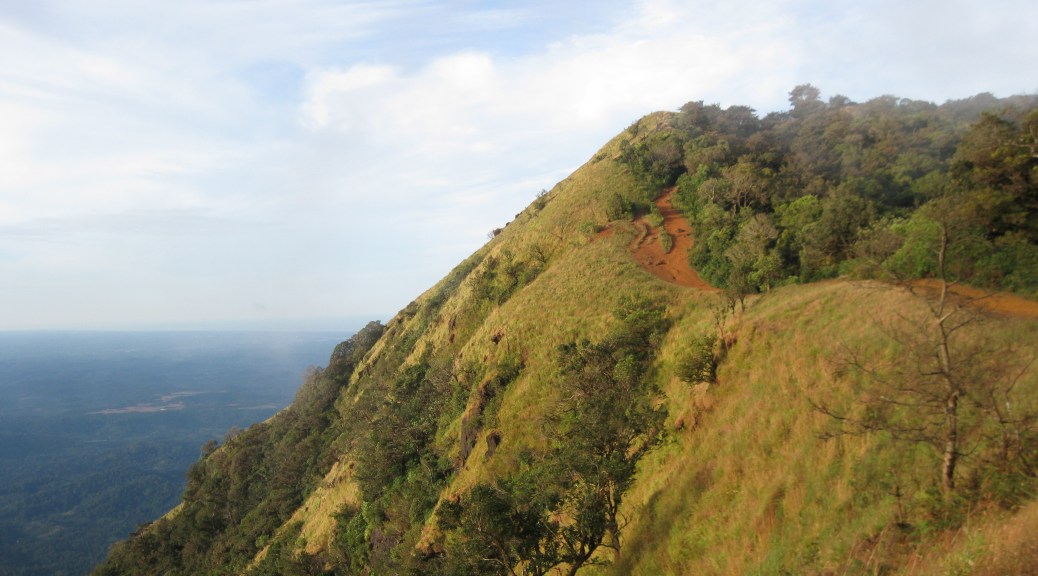
We woke up early next morning and started our hike up the Kodachadri hill. Our hike mainly consisted of two target activities- one was to reach the Shankaracharya mantapa at the peak, for sunrise and the second was to take a shower in the Hidlumane waterfall. We did not hire a guide as the organisers claimed their familiarity with the route. The sight all the way till the mantapa was beautiful and the sunrise and the Arabian Sea at the distant horizon just added up to the view! The climb was great, giving us an eyeful of the valley that was in all bloom with colourful wild flowers. After a brief walk, we reached the Mantapa. After spending some time at the peak, we readied ourselves for the descent.

bye-bye-6
The Kodachadri hills- Overlooking the Arabian sea

The descend was towards the waterfall. With the descending gradient, we slipped, jumped down, clung onto wild creepers in the event of finding our way to the waterfall amidst the thicket of the forest. Somewhere, we had already started to realize that we were lost in the forest. The thumb rule of finding the way out of a forest is to follow a flowing water body. The organisers followed the sound of flowing water and we followed the organisers. We stopped by at a small cave like structure enroute, where someone had installed an idol of Lord Ganesha and offered some flowers. We prayed for our safe exit out of the forest and continued with our pursuit of the waterfall. So we finally reached at the source of the flowing water!

Sure it was a waterfall.. But ain’t the mighty one that we had thought it would be. It was a stream that was directed to a storage tank by the localites and the tank was overflowing forming a waterfall!! Neither the organisers nor the others knew how to react at our misadventurous pursuit. But we were all happy that we had found some pure water where we could fill our water bottles and ease ourselves out of the tiring hike that we had been through so far! We were now sure that the tank was there for a purpose and the pipe attached would lead us back to base point. And the descent continued, along the same stream to the base.

There is a small temple dedicated to Mookambika Devi at the base. It is believed to be the original temple that is tagged to the legend of Shankaracharya’s installation of the idol at Kollur. We reached the priest’s house near the temple where we had a simple-wholesome breakfast. After packing our stuffs from the guesthouse, it was time for us to head out to our next destination: Kollur.

morning-trek-34

A view of the Arabian sea from the Kodachadri peak

People who prefer to trek further, can cover the Agnitheertham waterfalls enroute to Kollur Mookambika temple. But, having had enough in the quest of a waterfall, we decided to take the bus route. The bumpy drive continued until we reached Kollur, the small temple town known for the Mookambika temple, one of the Shakti peethas. This temple is said to have been developed by the Keladi rulers later in time so that pilgrims don’t have to trek up the overlooking Kodachadri hills to worship the goddess. Another legend has it that Lord Shiva appeared before Sage Kola and agreed to be present there in the form of Linga with his consort Devi. Along with Shiva and Parvathi, all other gods and goddesses are believed to be residing in a non-form in the Linga. Hence, Kollur is referred as ‘an abode of the entire celestial congregation’. We took a little time to offer our prayers and admire this beautiful little temple built in the typical Kerala style of architecture. Post that, we proceeded to the forest guest house where we had our stay booked for the night.

7th-morning-6
The forest guesthouse

The forest guest house is located in a serene location in the middle of the ‘Mookambika wildlife sanctuary’ and on the banks of river Sowparnika. With banks I mean, just a couple of steps lie in between the guesthouse and the river. This river is frequented by spotted deers & leopards to drink water. And we were told that just the previous morning, a tiger was spotted on the same steps that we were standing on, at that time! The river flowed gracefully with the crystal clear water and the school of fishes enjoying their swim in between the tree roots that grew beneath. It was a SPECIAL place to go back again indeed! We cherished every moment of our stay there while being in harmony with nature in its purest form.

mookambika-temple-8
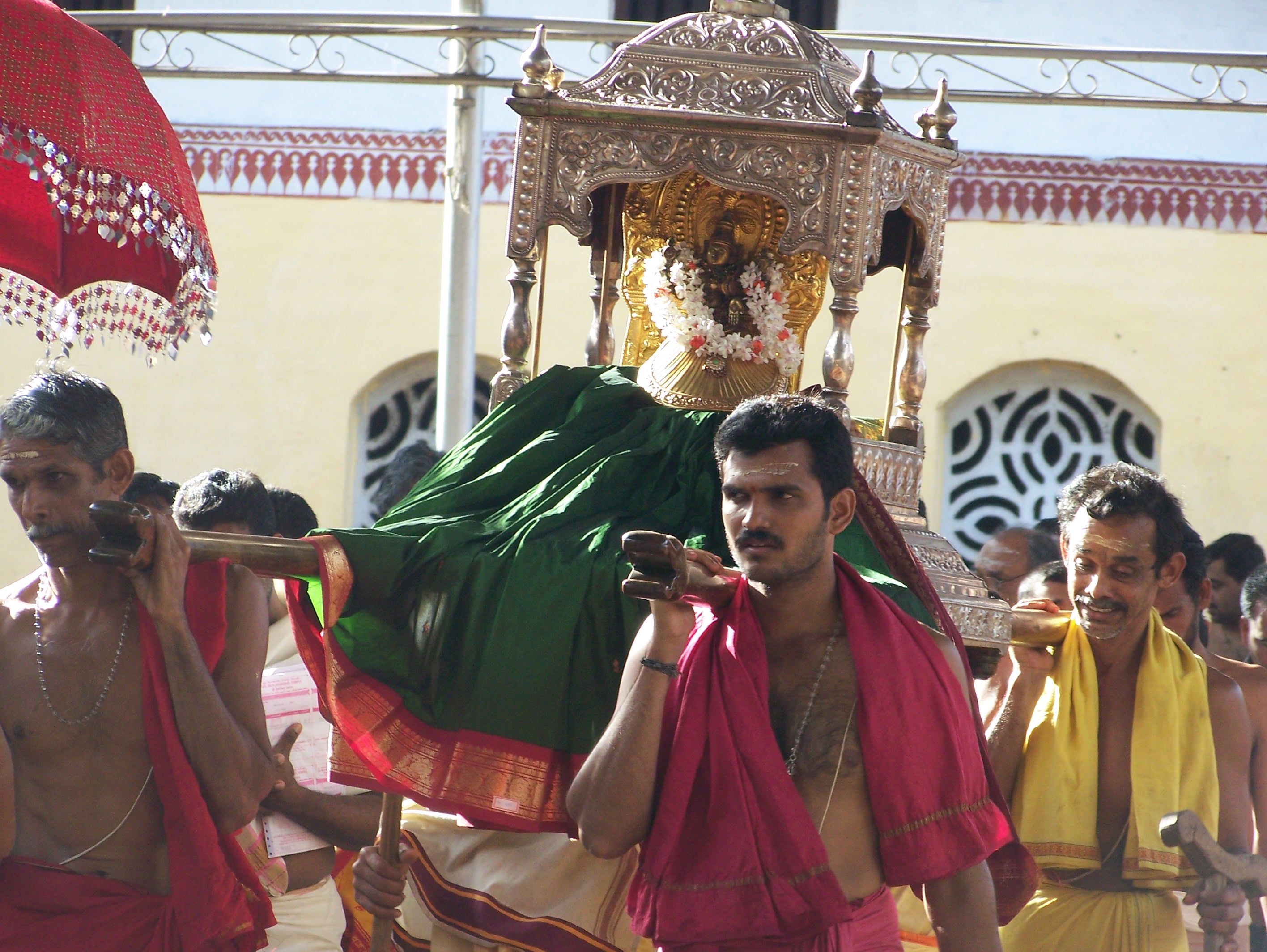
The Idol of Mookambika being taken out as a part of the daily ritual

Soon, the dawn broke the next morning awakening us to another day reminding us of our journey to the next destination- Bhadravathi. It was the last day of our tour and that meant we had to do the most important part of this trip ‘Our Industrial visit’! That’s for another story altogether…

Marvel at Caves and Crannies- Kurnool

A trip that was pending since over two years, finally took wings last weekend. The places covered were an unusual combination of natural and contrived elements that created beauty. Had the both not been there, the existence of these places would have a lesser value than what it is today.

Our Itinerary:
Friday night: Drive from Bangalore
Saturday: Yaganti group of temples, Banaganapally Nawab’s bungalow, Owk reservoir, Belum caves, Sunset and night’s stay at Gandikota.
Sunday: Explore Jammalamadugu fort & Gandikota, Lakshminarayanaswamy temple in Kadiri town, Lepakshi and reach Bangalore by late evening.

The details:
An overnight drive was aimed at starting our trip from Bethamcherla- a town in the Kurnool district of Andhra Pradesh. A couple of articles on the internet had caught our interest to visit this place which is a treasure trove for archaeological studies. Invaluable Pleistocene remains have been excavated from several caves that are scattered around this region. We wanted to explore the Yerrajala & BillaSurgam caves in particular after being impressed by the photos online. However, even after talking to several localites, we failed miserably to get anywhere close to the places we were looking for. Language was a BIG concern there and for any small enquiries too, the curious people would throng in large numbers and stare at us while we were trying to communicate with our hand signs. Luckily, we had a Telugu-ite in our group who would do most of the talking throughout the trip. So without really finding the place, the day started somewhat on a low note.

As per the plan, the first day was a long one with target being to reach Gandikota for sunset. In quest of the place, we had already lost 3 hours doing nothing. So, we decided to skip Yerrajala and proceed to accomplish the rest of the itinerary. The winding roads of Tadipatri are carved out of the rocky hills. These hills are rich sources of the infamous Kadapa stones used in constructions. Its sedimentary rocks formed over years can be seen in layers, which make driving along this stretch a delight! We stopped at several spots to photograph the beautiful landscape as we drove through, to reach our next destination- Yaganti.

This is an ancient cave temple patronized by the rulers of the Sangam dynasty. ‘Keep left’ is the rule one needs to bear in mind in order to cover all the caves located around. Here, every cave has a special story to tell. Just keep taking the stairs whenever & wherever you spot them, so that you don’t miss out on any cave. At a point, a flight of steep stairs takes you to Agastya Cave where Lord Shiva is worshipped. And yet another chamber leads you to Lord Venkateshwara. Although, the lord is otherwise known for all the wealth, the minimal deco and the dimly lit chamber here, has some positive energy that emanates out of the place. We needed a little more time than what we had initially thought we would need to observe this place, where art, history & mythology co-exist.

PICT_20160709_094820
The temple pond at Yaganti- amidst a backdrop of several caves

On our return, we halted at Banaganapally village, in front of a mansion that stands magnificently atop a small hillock, by the road side. An old rusted name board read- ‘Nawab’s bungalow’. Though the exteriors have stood the ravages of time, the interiors of this imposing structure built of wood and rock, is crumbling. In spite of being featured in several movies, nobody really knows who the Nawab who owns this bungalow is.

Further into the drive, we stopped by for a quick group photo at the Owk reservoir. We were ‘literally stopped’ while we were trying to capture a photo with the serene backdrop of the dam. The wind blew so hard that we were struggling to move against the strong currents and felt stationary most of the times. It was my first time experience, of ‘fighting’ the wind. I really wonder how strong a ‘storm’ could be..!!

Having found NO hotels for breakfast, it was a hungry drive down until Belum village. After wandering around, we settled down to have lunch at the only A/C- restaurant in the region (with no electricity for A/C service) on a recommendation by a localite. Not like we had an option either..!! After a quick lunch, we drove over to Belum caves.

As expected, the weekend crowd was insane. But, the weather was in our favor on that breezy afternoon! On a flat/potent fertile land that seemed fit for cultivation, there appears a deep well like opening in the land. A steep flight of stairs takes one by surprise, as he enters the infamous caves. The magnificent stalactites & stalagmites formations of limestone make Belum caves the longest and the 2nd largest complex in the country. Several ancient remnants of pre-historic human dwellings and relics of the Buddhist era have been discovered, marking the caves on the map of archaeologically and culturally important places. Due to the crowd, high humidity levels and low level of oxygen inside, most of us had a severe headache by the time we walked out of the place to sunlight. But whatever the hardship, it was totally worth every drop of sweat.

DSC02269
Inside the Belum caves

We were running behind schedule and we had to zip, zap, zoom… to reach the sunset point… After a 2-3 hrs drive, we were excited to spot the windmills dotting the distant horizon. The long wall of the Jammalamadagu fortress stood spread across, bordering the land’s end. It was an indication that we were approaching our destination- Gandikota.

But the sunset..??? Hell yeah! We did make it in time, but the clouds played spoilt sport! Never mind, we still had chores to accomplish before it was dark. We wanted to trust the roads and go where they took us. That’s why, we hadn’t booked our stay. In worst case of not finding a hotel, we had carried tents and sleeping bags as backup. The trip had been good so far and we hoped that all went fine till the end… As expected, the rooms were all occupied at Haritha- The only stay option around, for miles (A resort run by the AP tourism). We negotiated with the caretakers to let us use the washrooms and dining facility.

We struck a deal with a couple of villagers and then hiked down the steep gorge to pitch our tents for the night. It was really dark and well past 9.00.p.m. when we started our descent down to the river ridge. The descent seemed longer than expected, with the luggage and the total darkness of the night adding to our woes. A few loose stones rolled down our feet as we paved our way down carefully. Once we reached the bottom, it was immense silence that had engulfed the calm environment and our ‘cubicle bred minds’. The fresh cool air filled our souls. It had been a windy day throughout, and the night by the river side could’nt be any different. We managed to pitch one tent with great difficulty and the rest of us decided to just cuddle inside their sleeping bags. The weather wasn’t harsh and the cool temperature remained pleasant, right till dawn. The only thing we were hoping for was, that no dam gates were opened for that night and that we all don’t get washed away in the dark 😉

DSC02312
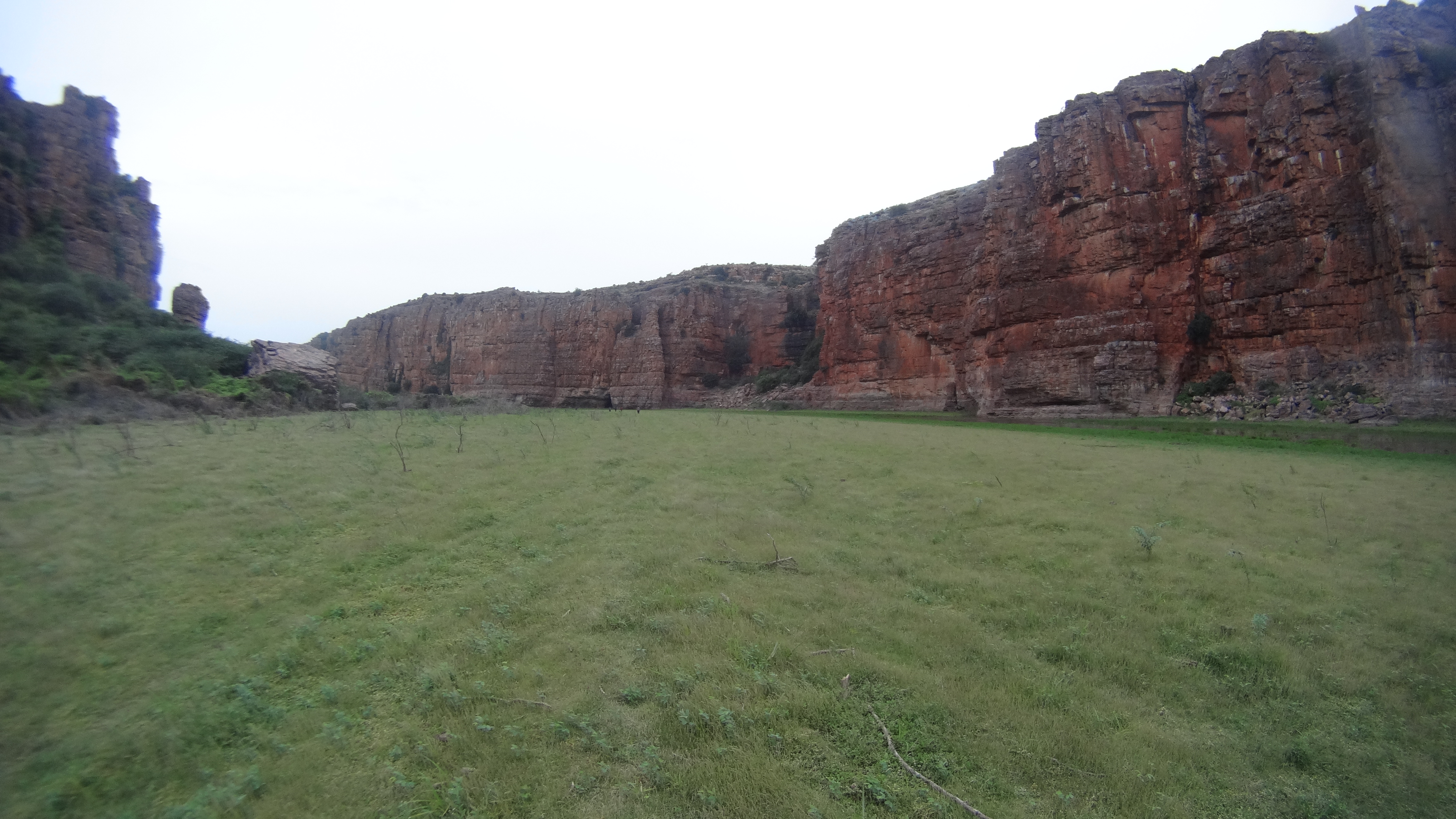
That’s the view from our tent- from the Pennar river bed

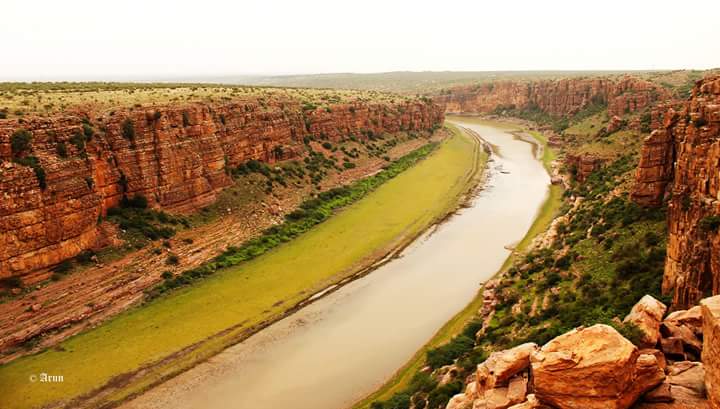
We all were awakened by the first rays of dawn and opened our eyes to a dream… We all knew we were camping on the ridge of river Pennar all night. But only with sunlight, we realized that we were actually sleeping on the ‘river bed’!! No wonder that, the soil felt moist and loose while we were struggling to pitch our tents last night!! With the mighty gorge standing all around us, our hearts skipped more than a few beats at the splendid view of the painterly beauty. We strolled across the river bed till both ends of the fort wall, taking in sufficient clean air into our lungs through the billowing winds and the burnt yellow-green grass. We returned to our tent, cooked maggi and ate bread-jam for breakfast. Soon, we had to undesiringly call it ‘Pack-up’, lest face the brunt of the burning sun while climbing back with the entire load.

Once on top, we explored the view point, the old mosque, the fort remnants, the granary and the temples in the village. The entire village exists within the fort walls. It was a beautiful place to bid good bye!

The Pennar gorge at Gandikota Photo credits: Arun Kumar B.R.

For a pious traveler, a visit to the Lakshminarayanaswamy temple in Kadiri town and the Madhvarayaswamy temple at Gorantla is recommended. Both from the Vijayanagara era, would complete their religious trip. Half a day could be well spent at the Lepakshi complex too, if opted for on the way back to Bangalore. We opted out of these temple visits and drove back to Bangalore through the bypass road. In this route, we travelled mostly through protected forest reserve area which was another highlight of our journey. The Rollapadu bird sanctuary, the only habitat in Andhra for the largest flying bird in the world, the endangered – ‘Great Indian Bustard’, lays just a small deviation away. The mighty rocks balancing on each other and the greenery all along just made every bit of the trip so joyful.

We had to reach Bangalore to drop a friend at the airport for her late evening flight! Thus ended a quick weekend… like zip, zap zoom…!!!

Chettinad Part 1: Exploring Karaikudi- The Land of Palatial Mansions and Piquant Cuisine

Under the influence of watching Tamil movies, my friend and I had sufficiently heard about the mansions of Chettinad. Further, our curiosity was piqued when we heard stories about how rich a land this region had been around a century ago, how the native people were involved in a lot of trade between Chettinad and Burma (present Myanmar). There is a Tamil settlement in modern day Myanmar consisting mainly Chettiars who decided to settle there. Burma Teak is still a word that is abundantly used for those familiar with timber and carpentry, primarily adorning these mansions of Chettinad. With that, we wanted to visit this region over a weekend and worked on our google research to set our travel plan.

The native community inhabiting Chettinad are the Chettiars. Well-educated, affluent, entrepreneurial are some adjectives that are synonymous with the Chettiars. The region comprises of 73 villages and spans over two districts of Shivagangai and Pudukkottai. Since we couldn’t be driving down, our usual resort for commutation was public transportation. Given that we had only a weekend’s time in hand, we wanted to plan our itinerary well and be able to make the most use of whatever time and resources we had.

The stay options on the other hand were limited to just a couple of Chettinad houses that have been converted to luxury resorts or heritage homestays. Although we wished that we could stay at one of those palatial mansions, we were restricted with our budget (we had just started to work after graduation from college). There were no budget stays anywhere in the region. So that was something we wanted to figure out after reaching there. In the worst case, we wanted to find at least a floor space where we could lay our sleeping bags.

This article is a first of the two part story about my trip to Chettinad. This post has been featured on BlogAdda’s ‘Spicy Saturday’s Picks’ column.

Our Itinerary:

Day 0: Leave from Bengaluru (Overnight bus to Karaikudi)
Day 1: Explore Karaikudi- Koviloor, Devakottai & Pallathur (Night’s stay at Kaanadukathan)
Day 2: Explore Kaanadukathan- Aathangudi (Return to Bengaluru by overnight bus from Trichy)

The Details:

Upon reaching Karaikudi on Saturday morning, we freshened up at a nearby hotel. Our day started with a delicious south-Indian breakfast with aromatic ghee roast masala dosa and idiyappams served with coconut milk sweetened to perfection. A piping hot cuppa filter coffee topped it up. Meanwhile, we worked out our options of commutation as we got taking with a very friendly waiter at the hotel. We figured out that hiring an autorickshaw was the best way if we had to get to the remote villages and unexplored lanes of Chettinad. The local bus or even a self-driven car wouldn’t be of much help as it needed someone familiar with the streets to wade through and the hot summer sun would just add up to our woes. After finishing our breakfast, we struck a good deal with an autorickshaw guy who would show us around and help us do a bit of mansion hopping.

Part 1: Exploring Karaikudi

Ariyakudi Perumal temple: Following the plan on our list, we decided to visit the temple first as the temples in South India close by 11.00.a.m. The history of this temple mentions it as an alternative Tirupati. Unfortunately, the temple remained shut at the time of our arrival due to the demise of the temple priest that morning. We spent some time photographing random things around the temple before heading to our next destination, to see the Chettinad houses in Karaikudi.

Ayiram jannal: This was our first tryst with the palatial residential structures of Chettinad. The name that literally translates to “mansion with 1000 windows”, this Chettinad house in Karaikudi is a common shoot location for those familiar with South Indian cinema. Much to our disappointment, tourists do not have access to the inside of this house as the people still live in this house.

IMG-20160607-WA0005
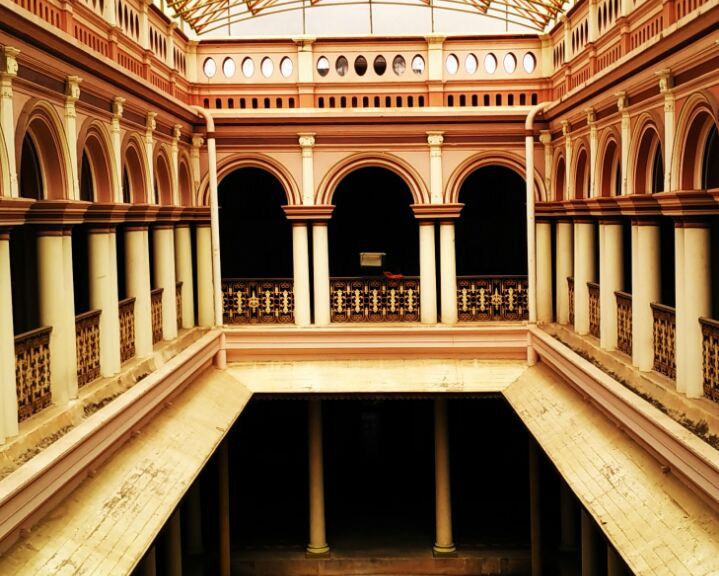
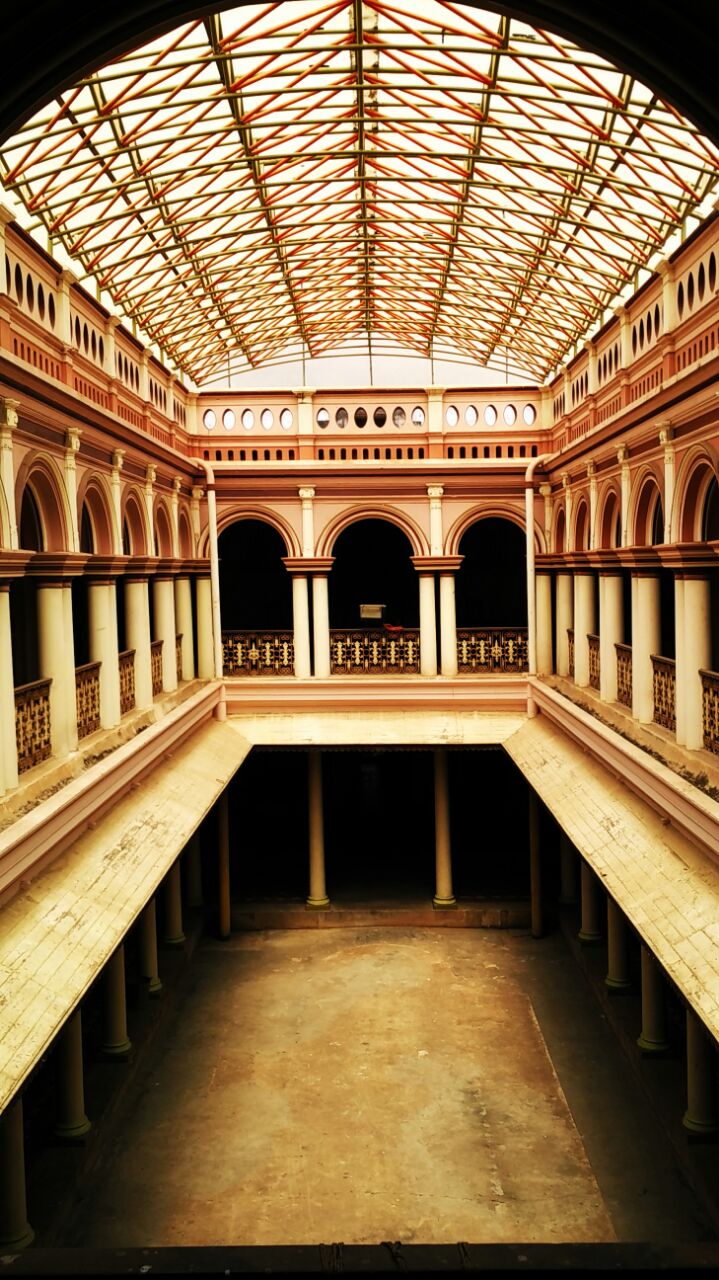
The Inner courtyard of one of the mansions in Devakottai

Meenakshi-Sundareswaran temple: We were surprised to see the assembly of 108 idols of lord Ganesha at this temple. He is seen in rare avatars and seated on vahana that are usually considered as the others. We had visited this temple on the outskirts of Karaikudi, while on our way to Devakottai. It was a bumpy auto ride with the stiff tarmac having been withered off at several places and a lot of dust entering our ears, eyes and nose.

Koviloor Shiva temple: This beautiful little temple is set in a very pleasant location and is surrounded with mansions. We had gotten busy clicking photos.

Koviloor antique museum: Excitement was at its peak when our entry into the first stately house happened. It was a strong structure built of granite blocks facing the temple. One part of it has been converted into a museum of antiques that were used by the Chettiars, one part has been converted to a government office while another part is used by some self-help groups for basket weaving, coconut de-husking etc. A few localites had gathered for the afternoon prayers in the two temples housed inside the mansion -one dedicated to Shiva & Parvathi each which had served as personal prayer rooms for the family in the yester years. We envied the people who lived there a century ago thinking of how peacefully they could decorate their own temple with flowers and lamps and celebrate the festivals without the interference of random people in their way of offering prayers.

One of the warehouses at Koviloor

Memorials built for the famous Tamil poets: Since we weren’t keen on visiting memorials, we gave it a miss to visiting the Kamban Mani mandapam & Kaviarasu Kannadasan Mani Mandapam.

Nagara Shivan temple: This temple stop happened by chance as our auto-driver cum guide stopped for a break at a random place after a short ride. We walked into this temple where a sumptuous lunch was served as part of donations from the devotees and that kept us full for the rest of the day.

Devakottai: We had read that this village has some of the well-kept mansions in the region. By now, our driver had a good understanding of our interests in exploring the region. Over the course of the day, he was very accommodative and stopped at several mansions thereby letting us admire and awe at the vast and artistic dwelling places. He even spoke to a dozen of localites to permit us inside their houses as this would help our studies (We never mentioned we were architecture students though!!) Although a couple of mansion owners were kind enough to entertain strangers like us to have a look at their magnificent mansions, we got shooed away at the gate by several others.

IMG-20160607-WA0002
The Mansion filled streets of Devakottai

There was one such incident where the proud caretakers gave us a guided tour of the entire house and we were even greeted by a colony of bats flying past our heads when one of the most unused parts of that mansion was opened just for our academic purpose! We climbed up the guano filled wooden stairs leading to an attic where hundreds of bats roosted. We ducked down as we further walked across a wooden bridge opening out into the terrace to be treated with an amazing view of the overstretching lanes of Devakottai filled with mansions.

Kandadevi temple: We stopped at this temple on our way back to Karaikudi from Devakottai. The temple pond is spread across 2 acres and is believed to be the largest in Chettinad.

Alagappa University & the Annavar memorial: Originally, these were not in our list. But we visited these places as our enthusiastic auto-driver wanted us to see these landmarks named after prominent personalities who have contributed in the development of this region.

The making of Athangudi tiles

After an exhausting day exploring the streets crammed with Chettinad houses in Karaikudi, we were dropped at the bus stand to board the local bus to our next destination. The bus snaked through the narrow lanes and we craned our necks out of the window to stare at a few bungalows along the road at Pallathur before we finally alighted at ‘THE’ destination of our tour- Kaanadukathan.

Click here to continue reading Part 2.

Must do’s in Chettinad:

  • Take a walk in the Muneeshwaran Koil street or the antique market in Karaikudi
  • Shop for a colorful palm basket- The local handicraft that has gained a GI tag
  • Treat your palette with Chettinad cuisine (I definitely mean Non-Veg)
  • Take a bicycle / walk tour around the streets of Kaanadukathan

Journey to the edge of India- Kanyakumari

Abstract: This was a family backpacking trip on a long weekend. The target destination was the southernmost tip of mainland India- Kanyakumari. We took a train on both ways. Hence, we had planned our route in such a way that we didn’t repeat the trail and could explore new places on both ways. Here’s a glimpse of the itinerary before I narrate the details:

Overnight train: Bangalore to Nagercoil by the ‘Nagercoil Express’
Day 1: The green stretch of Nagercoil comprising Padmanabhapuram palace, Udayagiri fort, Mathur aqueduct, Thiruvatturu Adi Perumal temple, enter the east coast and drive to Kanyakumari for sunset
Day 2: Catch the sunrise at Kanyakumari, a ferry ride to Vivekananda Rock, Vatakottai fort, Suchindran temple and board the night train at Nagercoil.

The details:
How can the thought of standing on the edge of land be expressed? As a kid, I always wondered how we stood steadily on a round globe… My curiosity grew further, when I was handed a world map for the first time. On it, the round globe looked flat. And on the world that looked flat on a map, India took the center position. And when carefully observed, I noticed that there is nothing below India but only water. On a closer look of the Indian sub-continent, Kanyakumari pops out in the edge, as the southern-most tip of the Indian mainland. Then I made a wish- ‘to make a journey to that end of land’…

Our overnight train journey was very pleasant through the route that was lush green and beautiful, even in the peak of summer. As the train entered Tirunelveli district, the landscape took a different look. Thousands and thousands of windmills seemed like they were strewn around, until the horizon. Our train slowly chugged past the hills only to later reach its destination- ‘Nagercoil junction’, the next morning.

Day 1:
We freshened up at the station and hired a taxi for the rest of the day. I managed to explain our itinerary to the driver with my broken Tamil and he managed to understand the jist: ‘To cover all the places listed down and ensure we make it to the Sunset point at Kanyakumari in time..!!’ That said, our sightseeing started in the order given below:

  1. The Nagaraja temple– The temple that gives its name to the city.
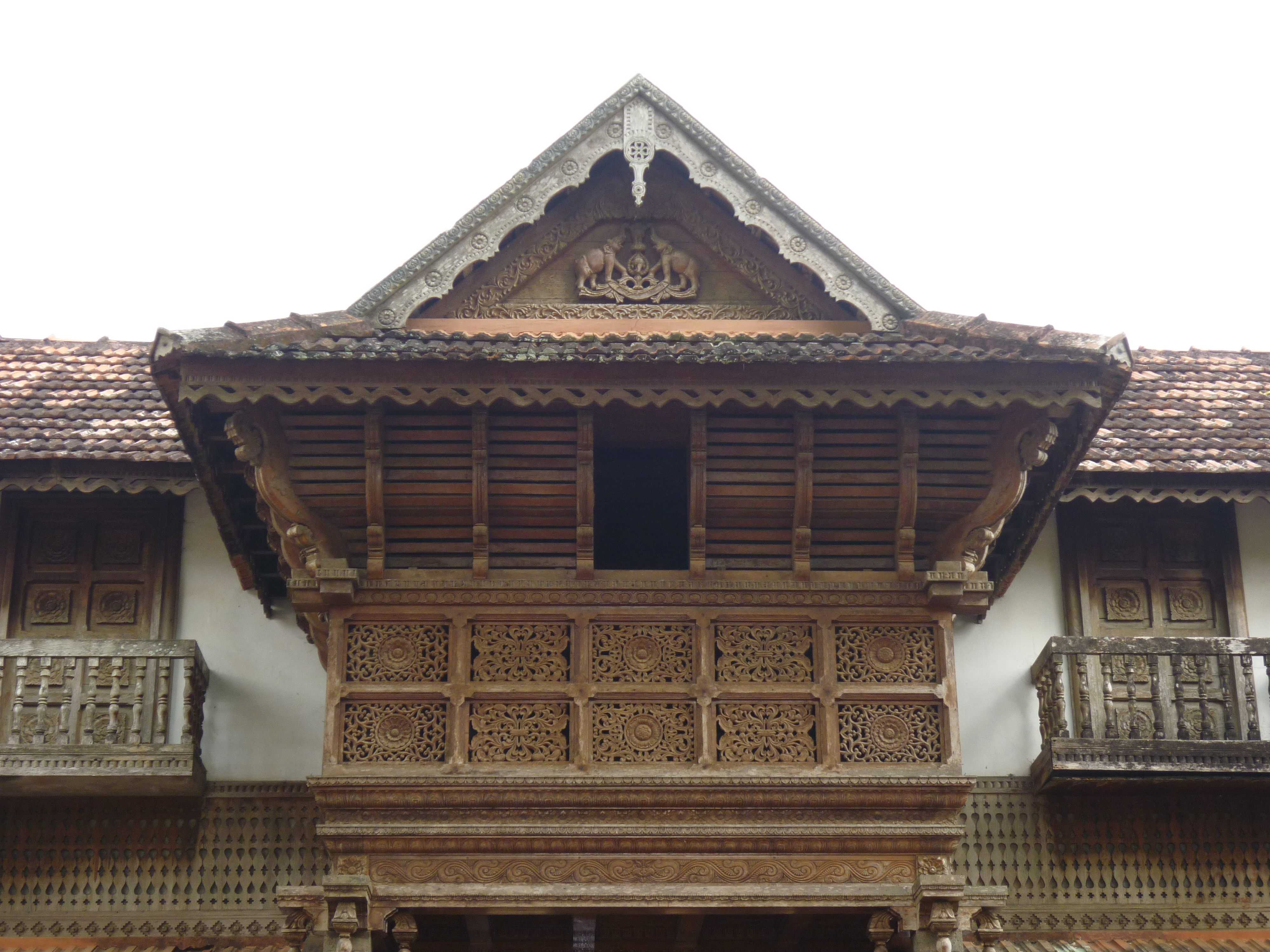
  2. We spent a good couple of hours photographing the BEAUTIFUL Padmanabhapuram palace in Thuckalay. It is by far, one of the beautiful palaces in South India. You don’t regret paying the entry fees as there is so much effort that has gone into the maintenance of this wooden palace. A surprising fact I discovered was that, although this palace is located in the state of Tamil-Nadu, it is maintained and controlled completely by the Kerala Government.
Padmanabhapuram palace (97)
The wooden facade of the Padmanabhapuram palace

3. Next was the Udayagiri fort. It wasn’t a great place as a traveler, but maybe a paradise for the bird watchers. It is converted into a mini zoo and houses the memorial of Commander De Lannoy- of the Dutch east India company.

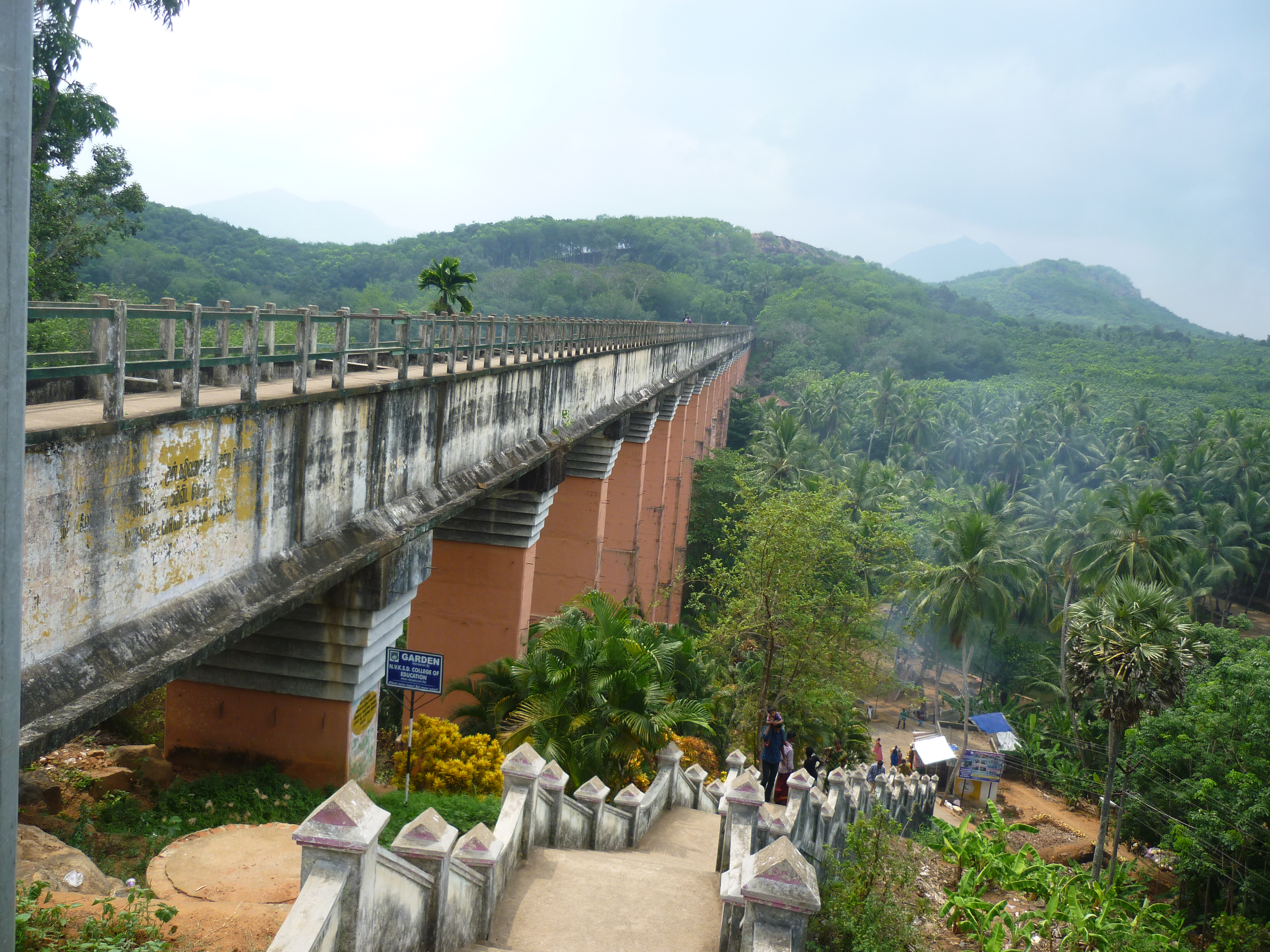
4. The hanging trough / aqueduct at Mathur– The longest in Asia, is set amid a very beautiful surrounding of lush green cashew, coconut and rubber plantations.

5. Adi Perumal temple at Thiruvatturu- adorned with intricate sculptures (of the Cheras period probably). It was strange to know that the people of the Muslim community do not and cannot live in a radius of 6kms around this temple due to a curse by one of the rulers in history. Tippu Sultan had tried to steal the main idol with the help of the Nawab of Arcot. Also, this is probably the only temple where a grave of a ruler is seen next to the main idol of the temple.

Mathoor aqueduct (4)
Mathoor aqueduct

6. Jadeshwara temple and Mariamman temple are at a walkable distance from Perumal temple. It is here, Lord Vishnu had come to seek support of his sister- Parvathi to convince Goddess Lakshmi when the latter suspected Vishnu of being involved in an extra-marital affair while he had gone hunting in realty.. Strange legends!!

7. Chittaral jain temple at Vellomcode- is a part of the rocky hills. It is small but a nice place for the history buffs and the pilgrims alike.

8. Thiraparappu Mahadeva temple– This place was a turn off with very less to NO water in the waterfalls and being overly crowded with tourists(NOT pilgrims!!). I suppose it will be worth the while only if it is monsoon and when the river flows with all its might down the gorge forming the beautiful waterfalls and the temple at the backdrop.

9. Pechiparai dam– We gave this one a miss anticipating disappointment with no water in the dam.

For this trip, the drive was the highlight and not the places visited. The main road would have traffic and that would waste our time. Trying to ensure that we could cover all the places, our driver took us through the remote roads of Nagercoil. These narrow and winding roads flanked by coconut trees on either sides were probably least exploited by a normal tourist and hence we could have a feel of the rustic part of an otherwise pilgrim city. The cool and pleasant weather was another surprise. What was more surprising was that the weather in Nagercoil supported the spices plantations, in an otherwise hot and humid climate that Tamil Nadu is recognized with.

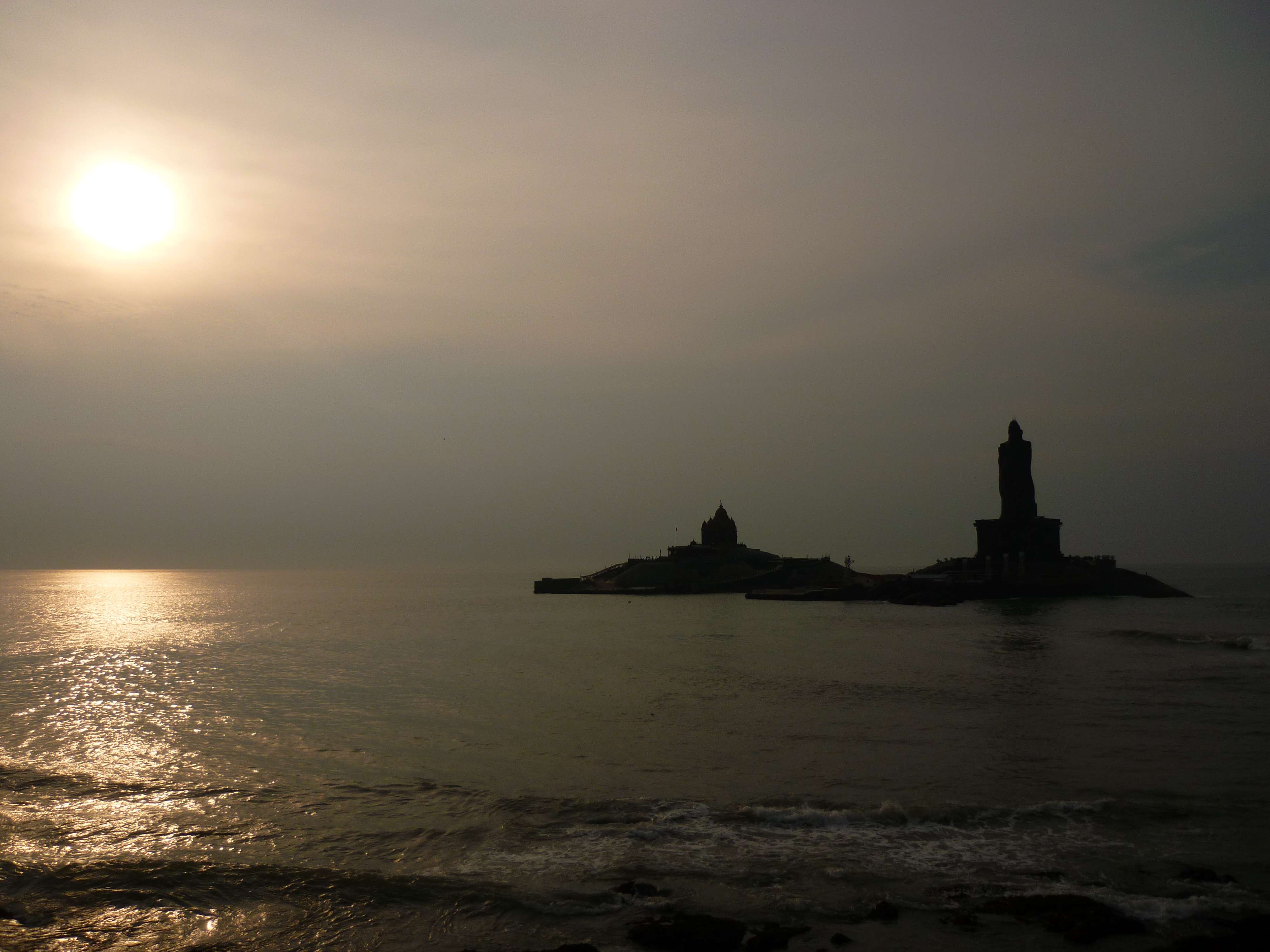
It was the southern-most part of the western coast of India, that we were planning to drive through, to reach the end of land. Suddenly, the weather changed and the dark clouds hovered over us. As we were approaching the seashore, the clouds broke hell. As we watched the rain batter, we had lost an hour doing nothing. This meant that if we had to arrive at the Sunset point on time, we could only drive through without stopping anywhere. We drove past the Thengapattinam beach, Colachel port (it has a victory pillar to commemorate the victory of the Travancore king over the Dutch army), Mandaikadu temple, Muttom beach, Tekkurichi beach, Sanguthurai beach, Sothavilai beach and Manarkudi. When we finally reach our destination, what awaited us was sheer disappointment. There were clouds, clouds and more clouds..!!! We spent some time with the waves and headed to the hotel in the city where we had booked our stay.

Day 2:
We saw ourselves seated amid thousands of people who had gathered there for the same reason as us. The famous ‘SUNRISE of Kanyakumari’. We watched the sea change its colour from pitch black to different hues of the spectrum until dawn’s break. But, again our woes with badluck continued on day 2 as well. A nebule of cloud sat adamantly blocking the rising sun.. adding much to all our disappointment from the previous evening.

Kanyakumari (16)
The post sunrise visuals of the Vivekananda rock

We visited the ‘Kanyakumari Amman temple’ and the confluence point of the three oceans along with the other touristy places in the city (There is enough written about the places to see in the internet- I don’t want to repeat the same stuff again!) The wait in the queue that was at least 3 furlongs, under the hot sun was a big turn off. My expectations of finding the calm I was told about across the waters (Read it- the Vivekananda Rock) was let down by the galling tourists who had thronged there in thousands on that weekend. We left Kanyakumari in the afternoon, all disheartened by the way things turned out on a much anticipated trip.

We did a quick visit to Vatakottai fort- a small but a calm place away from the vexing crowd. We then stopped at Suchindran temple that stood grand with its majestic tower, but remained closed when we arrived there. We spent some time sitting by the temple pond and feeding the fishes with puffed rice.. And we finally left back to Nagercoil to board our evening train back to Namma Bengaluru.

Summary:
Kanyakumari, being the edge of land is more of an emotion that every Indian grows up listening to. So, this is one of those places in every Indian’s bucket list. Mine was an ideal itinerary covering a lot of places. But the rain gods didn’t seem to be in our favour. But I would like to mention the highlights that SHOULD go into the list of anyone visiting Kanyakumari:

  • When you go to this particular spot at Kanyakumari- You can feel the waves touching your feet from 3 directions- left, right and center.. quite literally..!! That’s when you sense that you are standing in the end of land where the three seas meet- The Bay of Bengal, The Arabian Sea and the Indian Ocean. The feeling can only be experienced and not expressed.
  • The ruby nose stud adorned by the chief deity- Goddess Parvathi is believed to be shining so bright that history has it that many ships had been misguided due to its light. And that’s also the reason why the sea facing door on the eastern side of the temple is always kept closed, except for a few special occasions.
  • Lot of shopping… Shell crafts..!!

Kanchipuram- Beyond its sarees

The first thing that hits your mind when you hear this city’s name is its Silk sarees. The Kanjeevaram or Kanchi silk sarees define a sense of style, gorgeousness, elegance, classy and royalty. But what goes rather unnoticed is the fact that Kanchipuram is also called a ‘City of temples’. Despite being the erstwhile capital of the Pallavas, the influences of Pandyas, Cholas, Hoysalas, and Vijayanagaras can also be significantly observed in the artistic structures constructed across the city. Also, it is noteworthy that the influences in temple architecture are across different sects of faith. The City of Kanchi can be broadly classified into three- Shiva Kanchi-the holy land of the Shaivaites, the Vishnu Kanchi- the holy land of the Vaishnavaites and the Jaina Kanchi- the holy land of the Jains. Kanchipuram is known to be a land of 108 ancient temples, all unique in their own way. Beyond its world-famous handloom, the sculptures, architecture, classical dance, music and all those traditional art forms of Kanchi puts up the city high up on centers of history and heritage on the map of India. That’s why I like to call Kanchipuram as ‘an abode of the trio- Art, culture and history’.

When my mom planned to buy some drapes from the local weavers of Kanchi, I chanced upon the opportunity to explore this city, beyond its sarees and handlooms. Obviously, one day wouldn’t be sufficient if I had to visit each of these 108 temples, and hence, I made a list of 10 temples based on their mythological importance. Given that I’m mostly a public transport-dependent creature, the ease of commutation was also a factor considered while making my list. We boarded an overnight bus from Bangalore to Kanchipuram.

As we alighted at the Kanchipuram bus terminus, we were greeted by the drizzling rain. Usually, the autorickshaws work this way in this city. You tell them the purpose of your visit, and they will plan and handle the entire itinerary for you. Thus, we hired an autorickshaw and that sorted our transportation for the entire duration of our visit around the city. Our auto driver took us to a travellers’ dormitory where we freshened up quickly and then headed to the first temple on my list.

1. Kanchi Kamakshiamman temple: The timing of our visit was important and we wanted to reach there before sunrise. This is one of the Shakthi peethas in India. The prayers in all other temples in Kanchi starts only after prayers are offered here. Unlike any other temples in India, the first pooja to the presiding deity is offered by an elephant and a cow in the sanctum here. The positive energy we felt in witnessing the ritual was enough to keep us going for at least another week.

The entrance of Kanchi Kamakshiamman temple

2. Next up was a quick visit to Adi Kanchi temple, a relatively smaller of the 3 main temples dedicated to Parvathi in Kanchi. But this place is considered a must if one is on a pilgrimage in Kanchipuram.

3. Adjacent to the Adi Kanchi temple is the Kumarakottam- Murugan Swami temple. It is believed that Lord Bramha was imprisoned by Murugan at this place and later released with Shiva’s interference. The temple is known for the idol in the Soma Skanda posture.

4. Ekambareshwara temple: This is the biggest temple in the city. I’d need a separate post altogether to write about the significance of this temple alone. But the primary reason for me to include this temple in my itinerary is the fact that this is one of the Panchabhuta sthalas of Shiva’s manifestations. The linga here is made up of sand and hence represents Prithvi or the element ‘Earth’. This majestic temple complex houses a very sacred mango tree at its centre, whose 4 branches are believed to represent the 4 Vedas that give its name to the temple. Each branch bears mangoes of four different tastes(sweet, sour, bitter, and spicy) in the 4 seasons. The special souvenir that I take back from Kanchi was not a saree, but a priceless green leaf that withered off from this holy tree right there, as if the tree was communicating with me.. I was quick to pick it up and wrap it carefully to be kept in my handbag.

Under the mango tree at the Ekambareshwara temple

5. Next was the Varadaraja Perumal temple. We had to stand in a really long queue to get a glimpse of the main deity seated atop the elephant hill. As if this wasn’t enough, another long queue to get to touch the sculptures of the holy lizards. These metal lizards are believed to have been installed by lord Indra after he was released from the curse by Goddess Saraswati. It is also believed that people who touch these 2 lizard sculptures (the Golden lizard representing the sun and the silver lizard representing the moon) will be relieved of all sins that are associated with lizards. Another specialty of this temple is the fact that the wooden idol of lord Vishnu is kept deep down inside a 3 tiered well that in turn is in between a large pond at the temple entrance. The idol is taken out only once in 40 years for pooja offerings. (The latest festival was held in 2019.) I would recommend you to hire a guide at this complex so that you can get a better insight into the intricacies of the ornate pillars adorning a 100-pillared hall. You can find sculptures of vivid yogic postures, representations of the usage of arms and ammunitions in ancient battles, musical pillars, etc., which explains the rich heritage of Indian art, history, and science.

A mural at Varadaraja Perumal temple

Thus, with Kamakshiamman temple, Ekambareshwar temple, and the Varadaraja Perumal temple, we had completed the mumurthivasam- or the abode of the trio in Kanchipuram.

6. Just a few meters away from there is the Ulagalandar temple, primarily constructed by the Cholas. Here, Vishnu is celebrated in his Trivikrama pose or the Vamana Avatar. The main idol is a massive 30+ feet tall, and the devotees can see only the legs of the Vamana moorthi. The temple itself is small but an important one for pilgrims on the Divyadesams circuit.

7. Further from here is the Kacchappa Eshwarar temple. Here, Vishnu is seen in his Kuruma avatar or the Tortoise form, worshipping Lord Shiva.

8. We did a quick stopover at Vaikunta Perumal temple or the Tiruparameshwara Vinnagaram, another among the 108 divyadesams. The temple houses lord Vishnu in 3 different postures- sitting, lying, and standing. The corridors are decorated with fine carvings from the Ramayana and Mahabharata, and fine stone pillars around the sanctum.

9. The Kailasanathar temple needs a special mention. This temple, dating back to the Pallava period, is located slightly on the outskirts and hence away from the regular tourist/pilgrim circuit. It is an entire complex of intricate artwork sculpted on limestone. Although a board claims it to be a protected monument, most of the statues have eroded over time and need maintenance. Yet, this place has a very powerful force to draw art lovers and travelers looking for an offbeat experience. One really needs to spend a lot of time here to appreciate the intricacies with which legends and mythological episodes have been carved out. Don’t miss spotting the statue of laughing Parvathi and Shiva performing the thandava here.

The Kailasanathar temple

10. There is also the Vijayaraghava Perumal temple at about 7kms from the city center. It is one of the 108 divyadesams of Rama, where he is believed to have performed the funeral rites of Jatayu, the vulture friend. Since the vulture(Pul) was buried in a pit(Kuli), this place is also called Thiruputkuli.

Not only is Hinduism, but the city is an important place for the Jains too.. Bonus for your temple tour, if you have some more time left. You can include the Trilokyanatha & Chandraprabha twin temples dedicated to lord Mahaveer at Tirupparuthikkundram. It has inscriptions belonging to Pallavas, Cholas, and the Vijayanagara period. I’m told that the place houses beautiful paintings of these periods but lies in utter neglect. The place is frequented by fewer tourists and more vandals, gamblers, and hawkers.

Enroute, we passed through ‘Kanchi Kudil’- an old traditional house that has now been converted to a museum that exhibits the rich Tamilian tradition.

But well, Saree shopping was why the entire visit to Kanchipuram was planned in the first place. Hence off we were, on a handloom circuit. Our driver took us through the narrow bylanes of Kanchi to some of the finest weavers and their handloom workshops. A spectrum of colours, heavy brocades, golden zaris, heavy pattu sarees… we were spoilt for choice… We thanked our driver, Mr.Ravi, heartily for taking us around the city and bearing with us so patiently as we hopped from one shop to another. We picked up some beautiful sarees in silk and cotton and returned to Bangalore in an evening bus.

Thus, ended an eventful weekend…. 🙂

A Buffalo Valentine at Kambala

14-Feb-2016

The air painted red with romance and roses, the atmosphere illuminated with candles and balloons.. Couples holding hands out on dates- both young and old…. That’s the scene in rest of the world on that day.. But for me, Valentine’s day was an unusual form of celebration amid the Tulu-Naadu people. It was a celebration of folk culture and a celebration of earth’s gifts. While in some parts, it is the celebration post harvest, yet in other parts it is a celebration to commence the sowing season for the next crop. The Dakshina Kannada region, fondly called ‘Tulu-Nadu’ was a place where love and war co-existed on that day.. LOVE for a sport of thousands of passionate spectators and a WAR of prestige for hundreds of participating landlords. And amid all pomp and pride, a buffalo soldier fights it out in glory thus emerging as the showstopper..!!

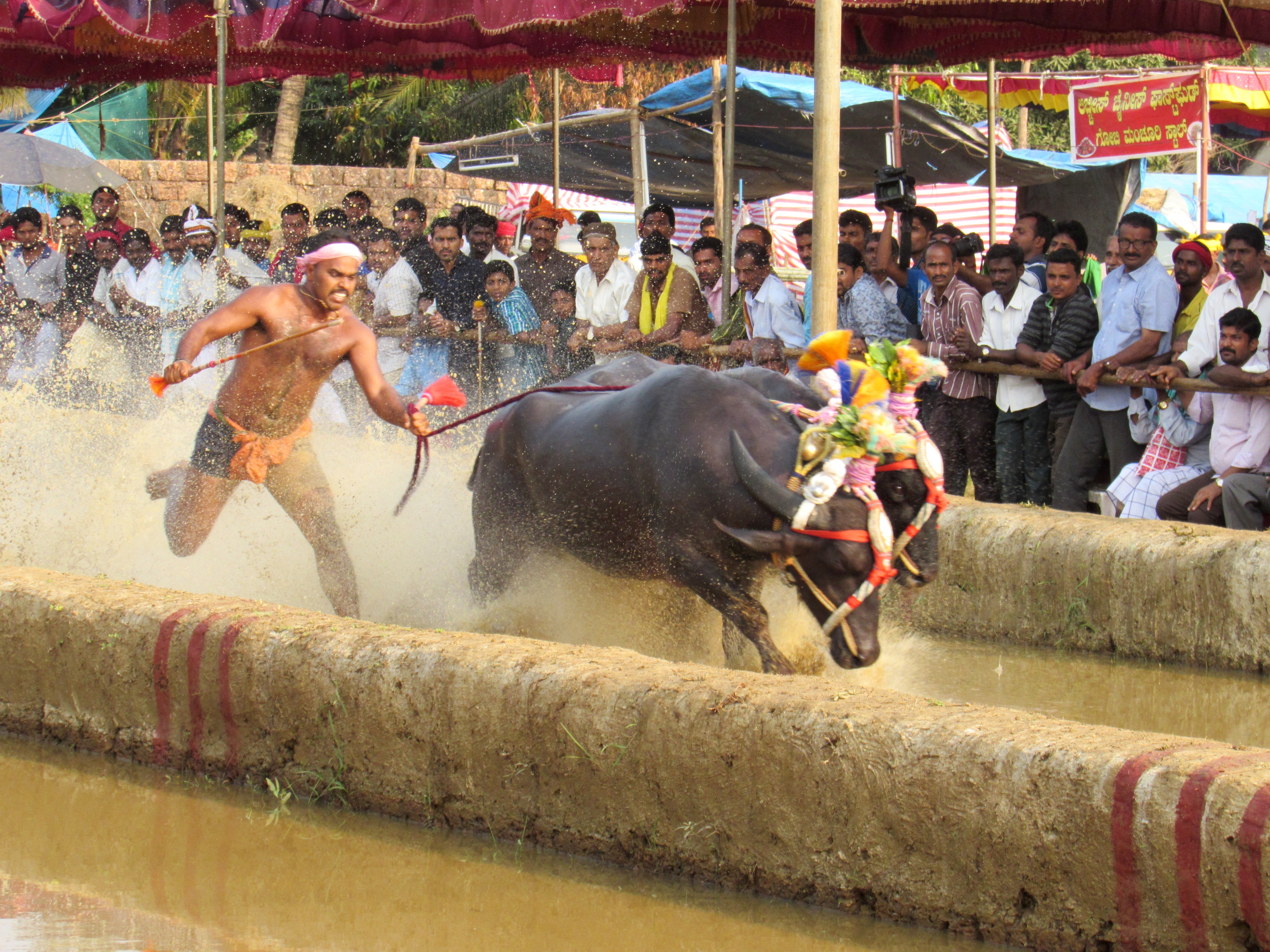
A rickshaw ride from the Mangalore city centre traversed through some Kuccha roads, then across a highway and completely off-road to reach the banks of river Nethravati. Coconut tree lined mud road flanked with dozens of anchored fishing boats on the river bank ended straight at the arena where the big-event was set to take place. As I stood amid thousands of spectators in the gallery, the air felt heavy with anxiety. The show-stealers of the day walked down the ramp(Read it the slush pool) one-by-one to take their places and get set for their D-day. A day where all the effort and hard-work of hundreds of buffalo owners will be put to test. It was time to score off ‘Kambala’ from my bucket list when I decided to spend my weekend at ‘Joppinamogaru Kambala-2016’ in the coastal stretches of Mangalore.

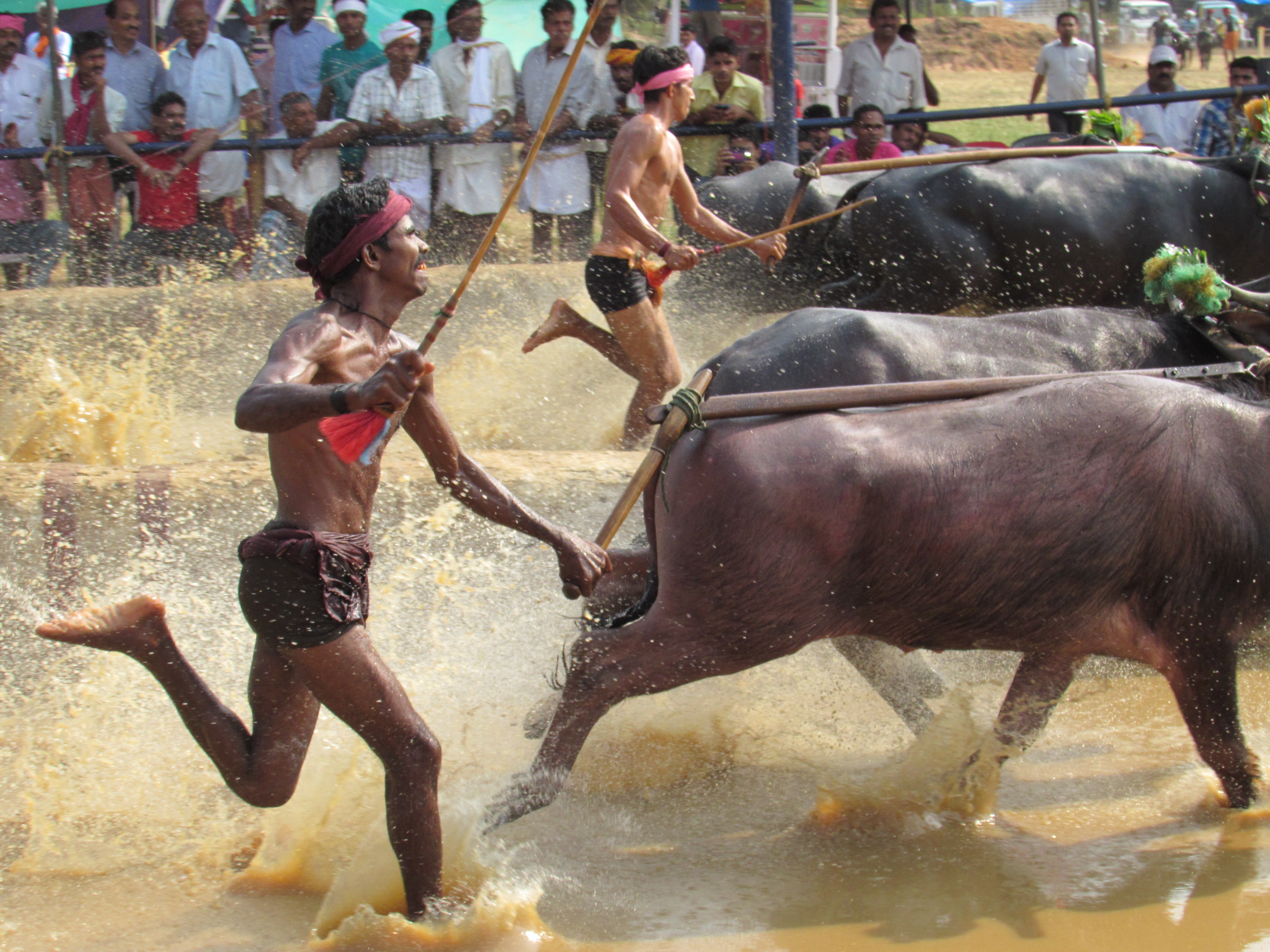
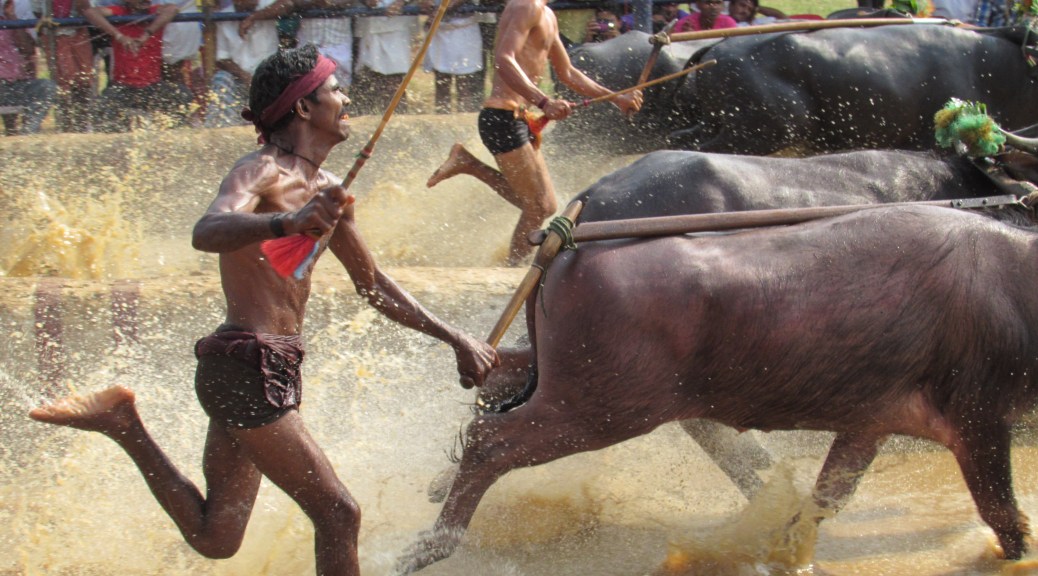
The ‘Raging bull’, the ’Buffalo skinned’ are idioms that we commonly refer to humans as expressions of exasperation. But when all the action brings forth the literal sense of these words- The event happens to be ‘Kambala’. Kambala is a sport where He-buffaloes are made to run on a mud filled slush track to reach the ‘Nishana’ or the finishing post. In the modern races, there are usually two tracks running parallel and thus called ‘Jodu Kare’ or ‘pair of tracks’. Each track is given a name so that it becomes easy to communicate in events where both the tracks are being used. In Joppinamogaru, the tracks are called Jaya kare and Vijaya kare. A coin is tossed for the team to choose the track. As loud drums beats and hoot sound of the timekeeper goes out, the whip lash of the runner crackles in the air before it hits the buffalo and the action finally takes off… The soldiers begin the battle..

There are different forms of kambala. Firstly, the Negilu category- Here, a representation of a plough is attached to the buffaloes which has evolved over period of modernisation. This is a race mostly for the younger buffaloes. Usually two pairs of buffaloes are made to run at a time and the fastest of the two is considered for the consecutive rounds.

IMG_3172
Negilu Kambala

Hagga kambala- This form is similar to the Negilu kambala, only difference being that the negilu or the plough is replaced by a hagga or a rope. Both these forms of the sport requires a great deal of stamina for the runner as he too is expected to run as fast as the buffaloes.

IMG_3236
Hagga Kambala

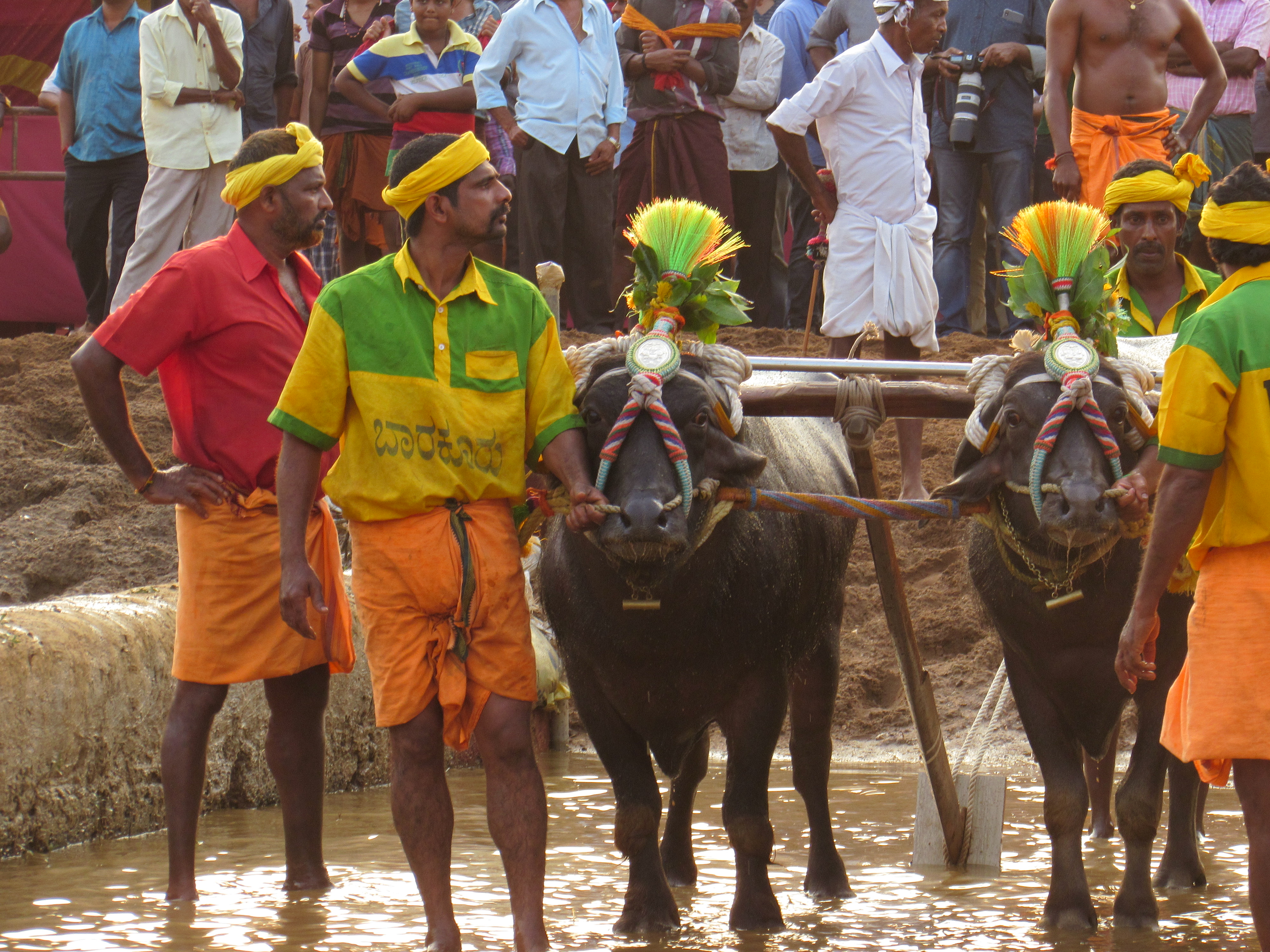
Adda halage kambala- This is a category mainly for the senior buffaloes(decided by age). A cross wooden plank is attached to the buffaloes on which the driver stands firmly and controls the speed and direction of the buffaloes to reach the Nishana. This is mostly a time based event where one pair runs at a time and the fastest pair is awarded.

IMG_3261
A pair of buffaloes getting ready to run the Adda Halage Kambala

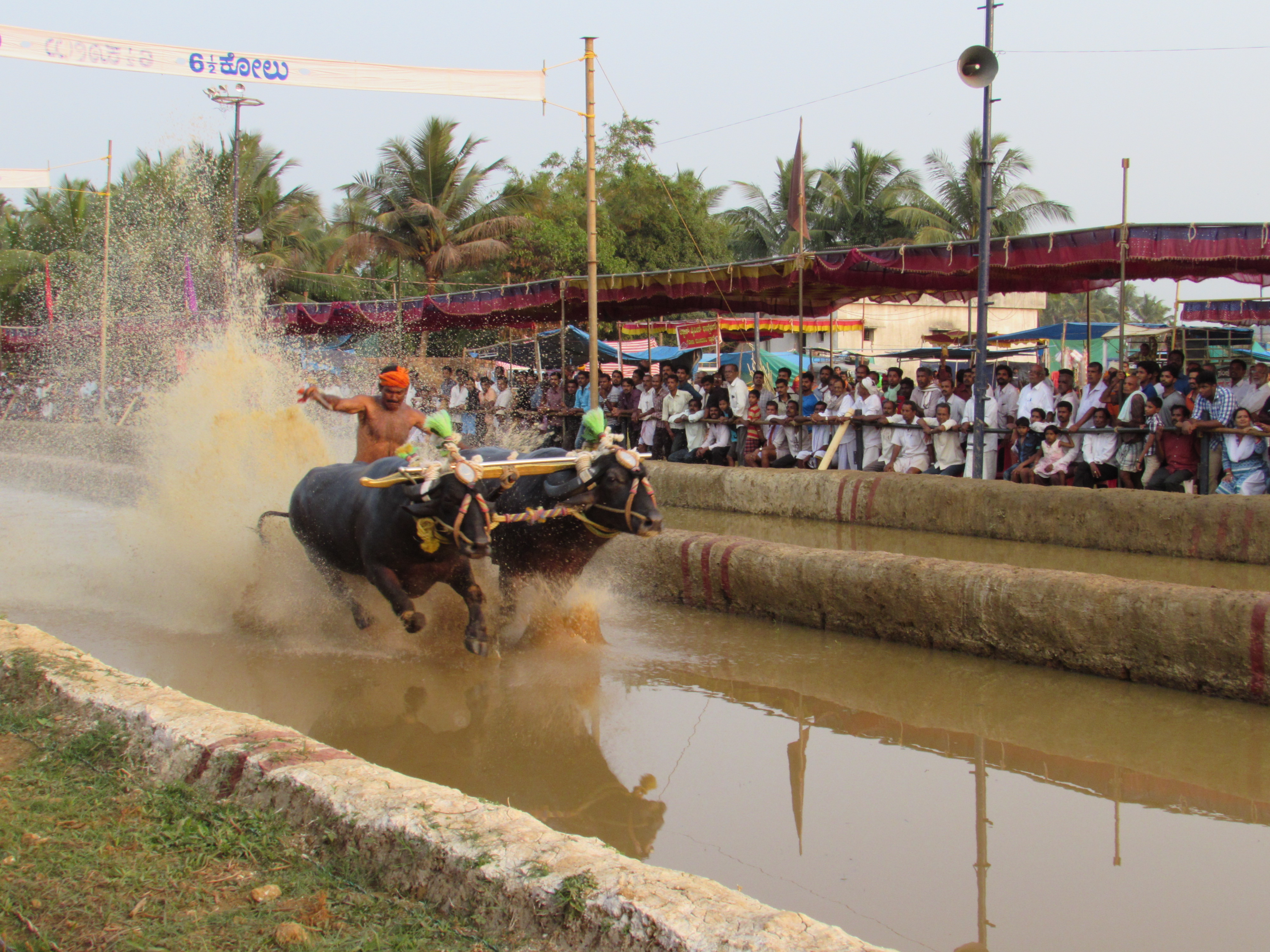
Kane halage kambala- In this form, a round wooden plank with two holes is tied to the buffalo pair and the driver stands on it to control them. Two strips of white cloth are tied across the track which are used for measurement of the height of water spurt. One cloth is tied at a height of 7.5kolu(9.37mts) and the other at 6.5kolu(8.125mts). Faster the pair runs, higher the water spurts out of the holes on the plank. Here, one pair runs at a time and is specific to the senior buffalo category. It is very difficult to run at the expected speed and hence every team that spurts high enough to wet the cloth is awarded unlike the other forms.

IMG_3265
Kane Halage Kambala

With a history of over 500years, the event is a treat to watch the enthusiasm and the energy of the participants and the spectators. However, it is heart wrenching at the same time to see the welts and the swollen bruises on the buffaloes as a result of continuous whip lashing. For this reason, Kambala has been in the radar of seeing a ban for a while now as demanded by several animal rights activists. We don’t know what the future beholds, but one MUST experience the vibrance of India’s rich folk culture in all forms before its name joins the pages of history..

A Not so Blissful Trip to the City of Eternal Bliss- Chidambaram

This trip was part of a backpacking by my brother and me with an original itinerary to cover Bangalore- Kumbakonam – Gangaikondacholapuram – Chidambaram – Pichavaram – Pondicherry – Tiruvannamalai – Bangalore

As per this, we left Bangalore on a Sunday night in a bus and decided to explore further at our own pace, using public transport and staying at places with bookings made on the go. Plan was all set. But well, with a small glitch. We assumed that the monsoon season was the same in the entire southern India. But what we hadn’t taken into consideration was the fact that Tamil Nadu doesn’t come under the south-western monsoon. Hence, the monsoon peaks (with north-east winds) after the season ends in its neighboring states. So, we were now on an exploration of Tamil Nadu in October, during the peak of its monsoon season! Anyway, with its share of travel miseries, poor planning gave us the benefit of experiencing a different kind of backpacking.

Firstly, we explored Kumbakonam, a place which is often spoken less about on a typical tourist’s circuit. It was a wonderful experience to explore a place that is soaked in history and RICH architectural heritage, mostly from the Chola era. (This is elaborated in a separate post, click here to read). From Kumbakonam, our next planned destination for a major halt was the place that’s is often referred as ‘a city of eternal bliss’. But our experience was as unblissful as it could get, even as we wished to get a glimpse of the deity of a temple whose manifestation is revered to be as one of the five elements of life- ‘Space’. I would like to elaborate this trip for my readers to get a wholesome idea of our visit to this city was like for us!

With incessant rains, our mobile-phone network had been patchy. On day 2 at Kumbakonam, we received a call from our parents who had been trying to get in touch with us since the previous night. They informed us about the alert issued by the Met. Department. We checked online and confirmed the news about the weather forecast of cyclone- Roanu and a deep depression in the Bay of Bengal. We were asked not to venture near the seacoast. Our intended trip itself was supposed to be along the Coromandel coast- including Cuddalore and Pondicherry. Since the day was bright, we did not take our Met.dept. seriously and decided to take a chance by continuing with the plan from Kumbakonam.

With a visit to the Brihadeeshwara temple at Gangaikondacholapuram (another of the three living Chola temples), we boarded a bus to Mannarkudi. From Mannarkudi, we were supposed to take another bus towards our next planned destination: Chidambaram. However, the conductor informed us that the road beyond Mannarkudi was blocked since the previous night due to an uprooted tree. Although the tree was cleared, he wasn’t sure if the route was worthy for us to go. Without really understanding the seriousness of his advice, we boarded an overly priced private bus which ferried us to Chidambaram. Our road was flanked by the Kollidam until most stretch. Last time we had seen this part of the state was with our family, during our quest to see the end of river Kaveri. The dam was empty and dry back then. Today, she was flowing in full spate and the Grand Anicut was filled till its maximum limit. Kaveri looked beautiful with her brown waters reflecting back the sun rays that sneaked from amid the thick grey clouds. That was the point from where, the real saga of our road trip started.

As we covered a little distance ahead of the dam, the river began to touch the road around the corners at most turns. Gradually, the river started to spill over the road at some stretches. Instead of plying on the road, it seemed like our bus was driving over the river at these junctions. Further into the journey, the water level increased. Several stretches (in kilometers) of the road was submerged by the river. Our driver was a real super star- who could figure out exactly where the road laid in the ground in spite of the water being above the tire height. Even a slight slip in the road only meant death and nothing less. The entire bus with about 25-30 passengers could have been washed away by the currents of the spiteful river. I had only seen such things in the news. Now I was right there, experiencing a flood scene, firsthand.

The flooded villages enroute to Chidambaram

Stretches of villages laid submerged ahead. At some places, the thatched roofs and the hay huts had given away. We could see utensils floating around on the road, helpless villagers wading across the (once existent) streets, even as the flood water stayed above their waist level. Their plight was heart rendering to see, even as the rest of us inside the bus continued to wonder if we were going to see a safe arrival at our destination at all. The rain of just one night had wreaked so much havoc across the state of Tamil Nadu. However, our driver remained focused and drove us across to reach the safe harbor at Chidambaram by around 03.00.p.m.

My brother and I decided to drop the luggage at the hotel which we had booked online and find some food for ourselves. We hadn’t eaten anything since that morning. On arrival at the hotel, we were a little perplexed to see our room. The bedsheets looked extremely old, torn and dirty. The bathroom was a disaster. The toilet floor was covered with a thick layer of algae, slush and mud, all that had accumulated over years without washing it. The flush lever was broken, the taps rusted and a crazy layer of deposits on the bucket and the mug. The nasty smell of alcohol hit our noses from outside through the opened door even as we continued to feel suffocated inside that room. My brother and I looked at each other’s face- and both of us knew what was running in each other’s mind. In spite of being exhausted and hungry, we decided to leave the place and find some other place to stay. Just when we started to descend the stairs and as if the injury (of finding a bad room online) wasn’t enough, I happened to step on a large mess of barf, thrown up by some drunkard on the stairs and slip down a couple of steps.

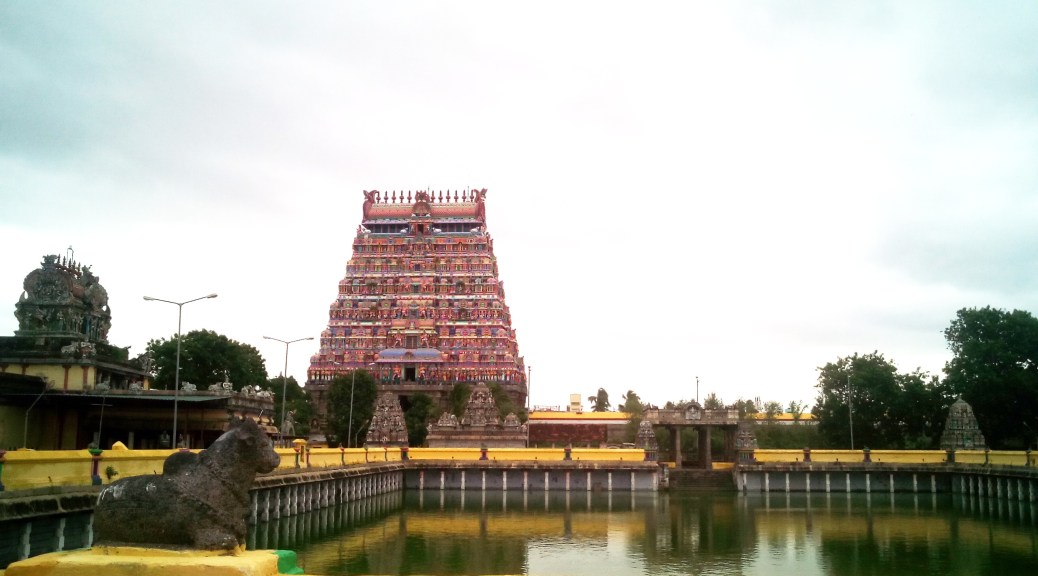
Until this moment of our day, I had managed to keep my calm, but my brother gave up. He wanted to end the trip right there and return to Bangalore. While he found no buses that would leave Chidambaram immediately to Bangalore, I managed to convince him to stay calm until we boarded a night bus at least. I found a place near the ‘Nataraja temple’ where I could clean myself and headed to get the darshan of the lord. The visit was peaceful, maybe I will write about in another post someday.

The Bharatanatyam postures sculpted on the walls of the west-tower of the temple

After finishing the evening prayers, my brother booked our tickets to Bangalore for the same night. Since my holidays were still not over, somewhere deep in my mind, I still wanted to complete my trip. I didn’t want one bad experience of the day ruin the entire holiday for us. But, given the weather condition further ahead in our planned route, I couldn’t rule out my apprehensions of getting stranded in the cyclone at Pondicherry as well.

But right now, our priority was different. We had been starving since morning and had to find something to fill our stomach. In spite of walking the WHOLE of Chidambaram town, we couldn’t locate a single place where we could find food. Thanks to the day of Deepawali festival- there were absolutely NO eateries open! Also, the entire town was SOO DIRTY with garbage littered everywhere. After a long search, we finally found ONE supermarket in the entire town. And what did we get to eat there? Just a cup of sweet corn to sate our hungry bodies.

Our city woes did not end after eating the steamed corn. It was still 07.00.p.m and we had three hours more to kill. On enquiring with a few locals, we were told that we would find a decent restaurant near the bus stand. And so as per the recommendations of the local people, we found this AC luxury restaurant called ‘Vandayar- Southern Spice’.

When we arrived there, the waiter informed us that they served only fried rice for the day. The waiter came to our table thrice to take our order (for the only dish available) and after two hours of waiting for food, there arrived a convoy of VIP customers at the restaurant. Bonus for waiting: A feast was set for this VIP family that comprised of all dishes from the menu. Even while all the tables were occupied with middle-class customers including my brother and me, there was no one from the restaurant that cared for our existence that day. Wondering if we were waiting for any free food to be served at 09.00.p.m. several customers grew furious and started to walk out of the restaurant. It was also time for us to board our bus. As we too walked out of this VIP restaurant, there was power cut in the town.

In a dark and dingy bus-stand, we spotted the only stall that served tea and some biscuits. The little candlelight was just enough for the tea-stall guy to reach out to things in his kiosk. We were essentially scared of stamping some more muck that could’ve been laid in the littered path. As we dunked the last biscuit into our chai, we had yet another surprise for us. Our bus to Bangalore was delayed by 2 hrs.!!! As we waited there in the dark platform of the bus stand, some drunk men started to throw glass bottles at the crowd there. Luckily no one was injured, but the downpour of bottles and splatter of glass pieces continued for a while. Our bus arrived after a while and we boarded at 10.00.p.m.

With all the crazy stuff that happened that day, we fell asleep quickly… Only to be woken up at sunrise. That’s when the rain was battering outside, and our bus had broken down on the highway. Although we were given an alternate bus in a while, our anxiety continued until we reached home.

The temple Gopuram at Chidambaram Nataraja temple

Conclusion Remarks: The people on the east coast are god’s chosen ones to have a grand celebration of festivals. Tsunami for Christmas. Cyclones for Diwali…!! One cannot sit in a place, hear stories and imagine of places and people. You need to move yourself to places to experience and explore. This trip was one such experiences where I got a first had experience of braving a flood and starvation of food. Also, this is a trip where I managed to find a place in India that I wouldn’t want to return.