Tag Archives: famous waterfalls

Climbing the highest waterfall in Andhra Pradesh- Talakona

It is needless to elaborate on the names Tirumala and Tirupathi! Famous as the richest temple in the world, the seat of Swamy Venkateshwara- the lord of seven hills. What goes beyond just this RICH temple is its geographical location. For someone who has been there and used the 11km long stairs to get to the top, I’m sure he must have enjoyed the multiple pit stops and deviations off the course to see the ‘Papavinasanam’ and ‘Akasha Ganga’ waterfalls enroute. And then there is the magnificent Silathoranam, the natural arch bridge formed due to volcanic erosions several million years ago… As if these pit stops weren’t enough, one is bound to get enchanted by the stunning view of the entire range of hills surrounding the temple with the Nagari quartzite formations… Ever since I had been there, exploring these hills has always been on my bucket-list… And when I chanced upon an opportunity to do it over a weekend, I jumped in with excitement. Taking cue from a random couch-surfing meet-up, we had decided to hit the roads to explore the hill ranges of Eastern Ghats. So on a Saturday morning, we started from Bangalore before sunrise to see the highest waterfall in the state of Andhra Pradesh, nestled in the Venkateshwara National Park. While I slept for most of the way, I was awakened to a blurred view of a fiery-red sunrise seen through the dew-laden window glass of our car, cruising through misty roads with hazy paddy fields around. We stopped by at one of the several restaurants on the way for a nice south-Indian breakfast and coffee.

With good asphalted road all the way, we arrived at the forest check-post at Talakona. While our friend was getting the required permits / entry tickets into the national park, we got chatting with a fruit vendor who let us try the variety of fruits in his cane basket which all tasted as sweet as nectar. He then told us that he could be our guide (at a small cost) and show us some offbeat corners of the forest. We agreed upon the idea and promised to buy more fruits from him on our return to make up for his business. We then reached the eco-lodge, managed by the forest department and ordered for food which would be kept ready by the time we returned from our trek from the woods. We then drove up, till the Siddeshwara Swamy temple and parked our vehicle near the foothills of the waterfalls. Our guide took us off the course from there on through stone-laid stairs that seemed like we were walking into oblivion in the jungle that is notoriously famous for red-sandalwood smugglers and the elusive beasts- the Royal Bengal tigers. Our first stop was at this view point from where most of the green and brown stretch of alternating forest and quartzite was seen. After a short climb thereon, our guide made us cross a stream of water and took us to the edge of the rocky path. The stream now seemed like it was jumping down in a mad rush from the cliff we were standing upon, and we could hear the screaming of several tourists down beneath. That’s when our guide burst the bubble for us- We were standing right on top of the highest waterfall of the state. It was a nerve wracking experience to stand atop there and watch the water gush down under our feet and have a post-monsoon gorgeous view of the green ranges.

IMG_20171216_141757_HDR
The view of the ranges atop the waterfall

We were then guided through a canopy of lush green trees and hanging branches along the flowing water, at the end of where our feet stopped! Stopped in amusement… Amusement at what our eyes were seeing… A thick moss laden semi-circular rocky wall due to the flowing water over ages across whom several creepers hung and the water dropped down with all grace. This entire set-up of nature reflected in the mirror-like crystal clear water of the pond formed beneath where the golden fishes were enjoying their undisturbed swim. The rocks inside the pool made it appear rather shallow and was enticing us for a quick swim! With absolutely nobody else in the place- No exaggeration, it felt like we had found our long lost connection with nature right there! All unprepared for a swim, we put our legs into the freezing cold water to get a nice fish pedicure that de-stressed the city souls in us!

IMG_20171216_150524_HDR
The pool atop the Talakona waterfall

After getting our natural fish pedicure done, we headed back towards the base of the Talakona waterfall. But, it was a different route this time… It was a beautiful path with a canopy of trees, a deep gorge to our left and the massive rocky caves to our right accompanied by an eerie silence of the jungle… At the end was another waterfall. It was one of the levels of this multi-tiered waterfall which we had to cross through. For a look from the distance, we could not gauge the level of difficulty until we actually got on the rocky path to cross it. While each one of us mocked and took fun in laughing at why the other person couldn’t cross it with ease, we dreaded our own feat of the waterfall-crossing when we slipped, slid and even glided across the super slippery rock over which the algae had settled making it an armed to the teeth adventure. We had a friend who slid and landed right at the edge of the cliff, just an inch further would have taken him rolling down the multiple tiers of the highest waterfall of the state 😛 All said and done, with we being drenched to our bones, our jaws chattering with cold and an unexplainable feeling of accomplishment, we had reached the last part of our hike.

IMG_20171216_154525
The path across the caves

We then walked down to get a good look of the mighty Talakona waterfall from its base right-up, to understand where we had just arrived from… We then drove to the eco-lodge to dry ourselves, get some food and to call it a wrap for an eventful day that we concluded at twilight!

Experiencing the warmth of Khasi hospitality in Cherrapunjee

I could not express better than these lines picked up from a website, “If the Raindrops elevate your mood, clouds stir your senses and rainbow brings out childlike pleasure in you, then don’t hold yourself back. We are taking you to the abode of clouds-Meghalaya; where rain weaves a magical spell, spellbinding beauty haunts your senses and you witness nature at its best. Witness the monsoon magic, majestic waterfalls, live root bridges and more…” and one can go to no better place than Sohra fondly called Cherrapunjee to experience all of that Meghalaya has to offer in a small place.

This post is part of my fortnight long road trip across North-east India, specifically covering parts of Meghalaya – Assam – Arunachal Pradesh I had tagged along with two other travelers and drove around the state of Meghalaya in a self-drive car hired at Shillong. The places visited in Meghalaya include Shillong – Smit – Cherrapunjee – Mawlynnong – Dawki – Ribhoi- Shillong.

Our Itinerary:

Day 1: Arrive from Shillong / Smit; Wahkabah waterfall, Arwah or Lumshynna caves, Nohkalikai waterfalls, seven sister / Nongsthiang falls (Night’s stay at a local homestay)
Day 2: Tyrna village, Nongriat trek (Double decker rootbridge & Rainbow falls), Mawsmai cave/Krem Phyllut, Ummunoi root bridge at Laitkynsew village (Night camping at Nohkalikai)
Day 3: Dianthlen waterfall trek, Sohra market, Ramakrishna mission, Mawkdok valley, Thangkharang park, Moktrop rock; journey towards Mawlynnong.

The Details:

Like most tourists, we started our day early from Shillong via Smit. To differ from the rest, we had a self-drive car at our disposal so that we had the liberty to stop whenever and wherever we wanted. The drive route was mostly untouched and its rustic charm kept us excited all through as this route is less treaden by the tourists. Pine plantations, lesser explored waterfalls nestled away from the main road, well groomed vegetable farms, hay shacks were a common thing for us while we had stopped atleast 100 times for photos.

p1130875
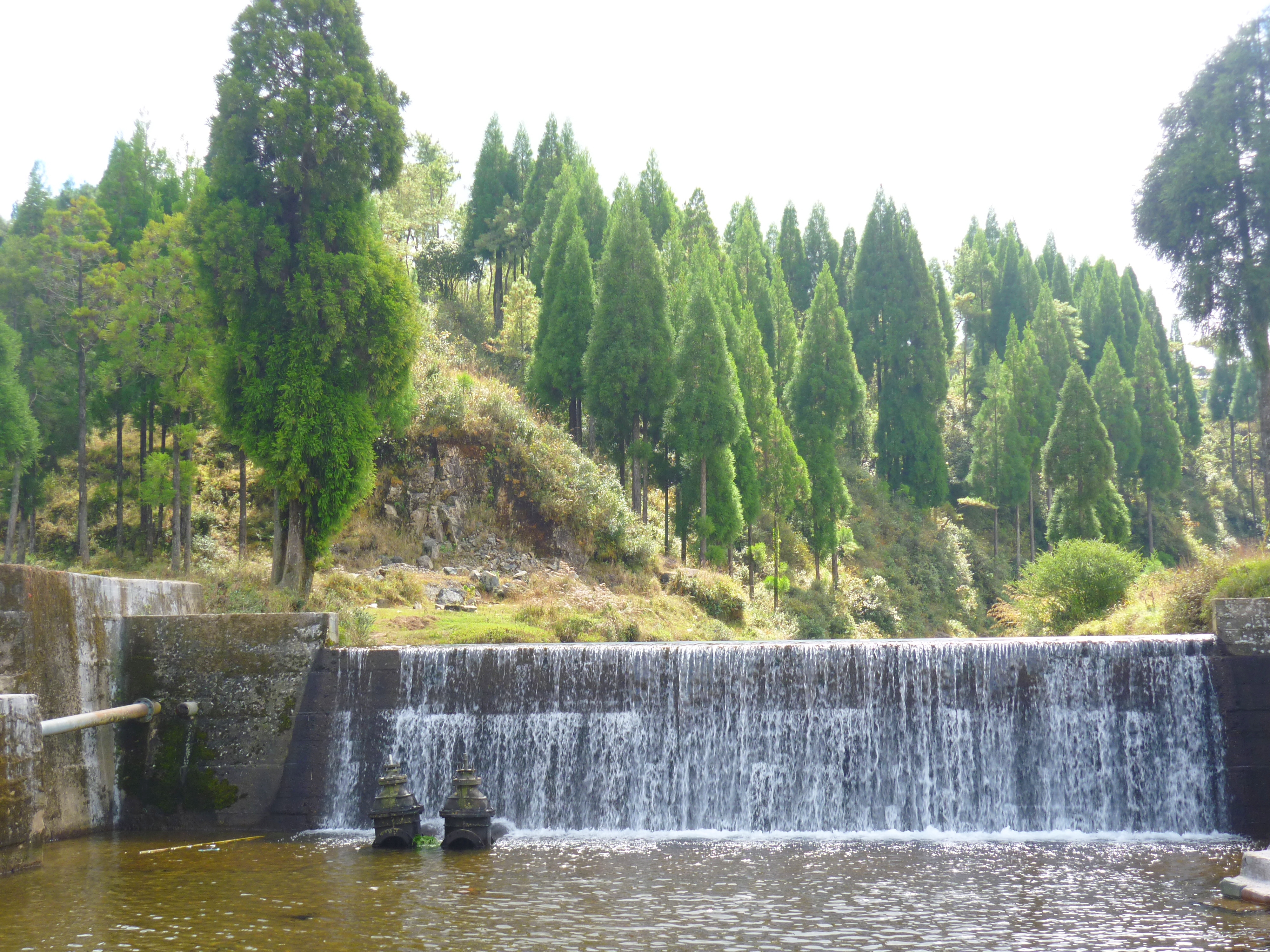
A reservoir enroute to Cherrapunjee

As we approached Sohra, we stopped at several view points, Wahkabah waterfall being one among them. India’s longest cave and the most numbers of limestone caves in one place happens to be in Meghalaya and hence Meghalaya is a haven for cave explorers. Our first stop at Sohra was at the Arwah or Lumshynna caves. Relatively smaller compared to the other caves in the viscinity, but is tucked away in a gorgeous location overlooking the deep valley with the Nongsthiang waterfalls.

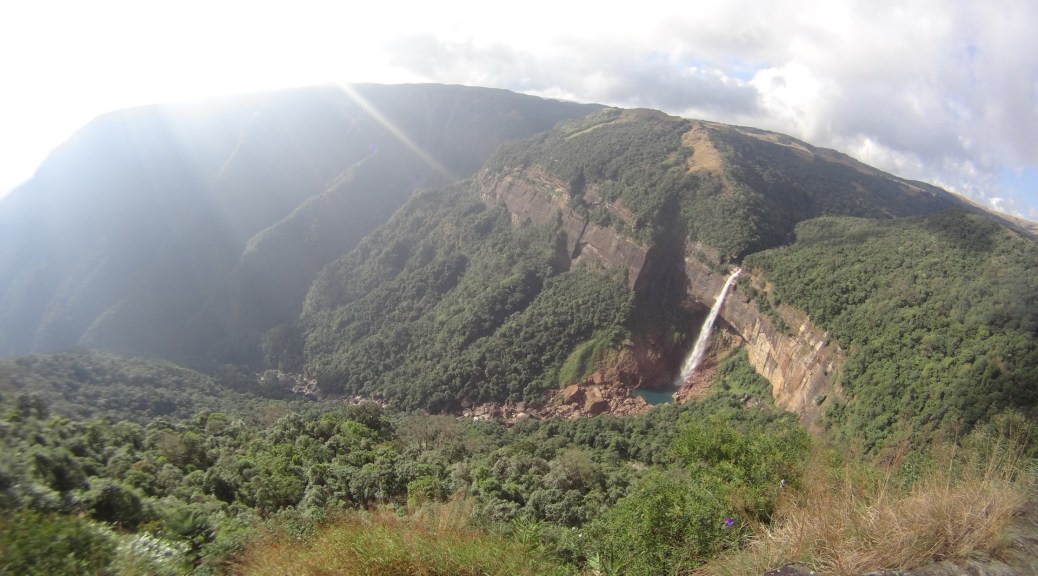
After a brief visit, we headed towards our next stop: Plunging down from a height of over 1100 feet, Nohkalikai is the highest waterfall in India. We trekked down the steps and a little beyond into the bushes and enjoyed the rare views of the waterfall away from the reaches of normal tourist. There is an option to camp at the Eco park, over the seven sister / Nongsthiang falls. But we decided against it as the place is filled with backpackers and would’ve been too clumsy for us, we were someone who wanted a peaceful place away from the crowd.

dsc02827
The Nohkalikai falls

Pitching a tent in Sohra requires prior permission from 4 different authorities: the land owner, the Siam of the village, the local government body and the police. In search of a nice place to pitch our tents, we took help of one of a local Khasi friend. With the local connect, our quest to find a piece of land to pitch a tent ended up more like an exploration of Sohra. We could go to some of the untouched places and sunset views that was completely out-of-reach from typical travellers. We were taken to remote places like banks of a small river, a cliff off-a-small hillock, plains overlooking massive gorges, cement factory backyards among other places. With the sun-going down early in this part of the world, we had very little time in hand and insufficient preparation for the night’s camping.

We finally ended up staying with a Khasi family in a local homestay located amid a serene location. The stay however was the highlight of our day: the warm hospitality of the Khasis is something that will never let one regret their choice of stay. Our host at the homestay, accompanied us for dinner and for a drink as we got discussing everything from Khasi culture, ceremonies, politics, sports, tourism et all under the sky, a clear night’s sky. With no pollution in the atmosphere, my friend helped me to identify several constellations from the place that was brilliant for star gazing. It was an unforgettable night for us with the Khasi family.

p1130943
The village settlements around our homestay

Next day, we drove to places around Cherrapunjee including the villages of Tyrna, Nongriat, Mawsmai cave/Krem Phyllut, Laitsynkew to explore the living root bridges which was an activity from dawn to dusk! We got in touch with a local guide ‘Mr.Paradise’, who then arranged for our camping in the Nohkalikai village for the night. It was yet another wonderful night spent with new Khasi friends, as we enjoyed Khasi music, the enriching conversation with Paradise and his friends about the Khasi culture. We gained insights about their customs, religious practices, respect for people, nature’s love among many other things. It was a long night under the starry sky with only my friends, Paradise’s friends, myself and the campfire! Suddenly, while the last bit of the firewood was being lit and just before the night broke into dawn, the skies of Meghalaya had shown their power. It poured cats and dogs for the rest of the night, with thunder storm and lightning. We sheltered ourselves inside our tents while I continued to shiver with cold.
At dawn’s break on the following morning, the skies had seemed to have mellowed down and we stepped out of our tents only to be awed by the beautiful sun rising over India’s highest waterfall! Yeah, Meghalaya has been wonderful to us all this while and this was another new day in this ‘land of clouds’. While we had planned a short trek across the Dianthlen falls, the rain gods continued to lash throughout the day.
Cherrapunjee is the wettest part of the world. So, what’s the whole point if one doesn’t experience the rains here, right? We walked in the places around Dianthlen falls and enjoyed the rains for some wild fun but getting drenched till our bones.

Momentous 100%
One of the suspension bridges on the way to Dianthlen falls

It was already noon and we couldn’t cover the other few places as planned in Cherrapunjee because of the poor visibility due to heavy rains. Anyway, speculating no possibilities for any improvement in the weather conditions, we decided to drive to our next destination- the Jaintia hills district.

Shine 100%
The rain fed roads of Cherrapunjee

While the warmth of the very hospitable Khasis has still left me in awe and amusement, I’d like to end this note here with these lines:

Even then, goodbye dear Cherra, and your rain goodbye.
For my life is yonder, though my love is here.”

-Karavan, Stokholm, Sweden

Visiting the Niagara of Karnataka- Gokak

This is a pick from old memories of exactly a year ago, in August 2013. My mother was away in Belagavi for a month-long business trip and I had decided to catch up with her over the weekend. We then got together, and explored the places around Belgaum, fondly called Belagavi. This time, it was only a day trip around Belgaum with a quick visit to the widest waterfall in my state, the Niagara of Karnataka.

Our Itinerary:
Friday: Overnight journey from Bangalore to Belgaum
Saturday: Explore Gokak (waterfalls, hanging bridge & Tarakeshwara temple), Godchinmalki waterfalls, Savadatti Yellamma temple)- Return to Bangalore by night journey.

The Details:

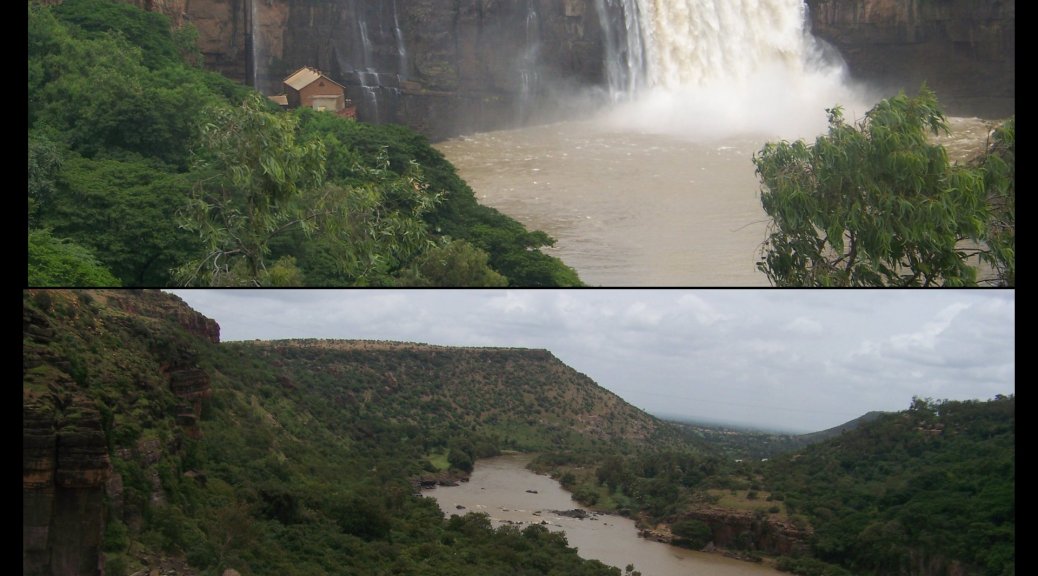
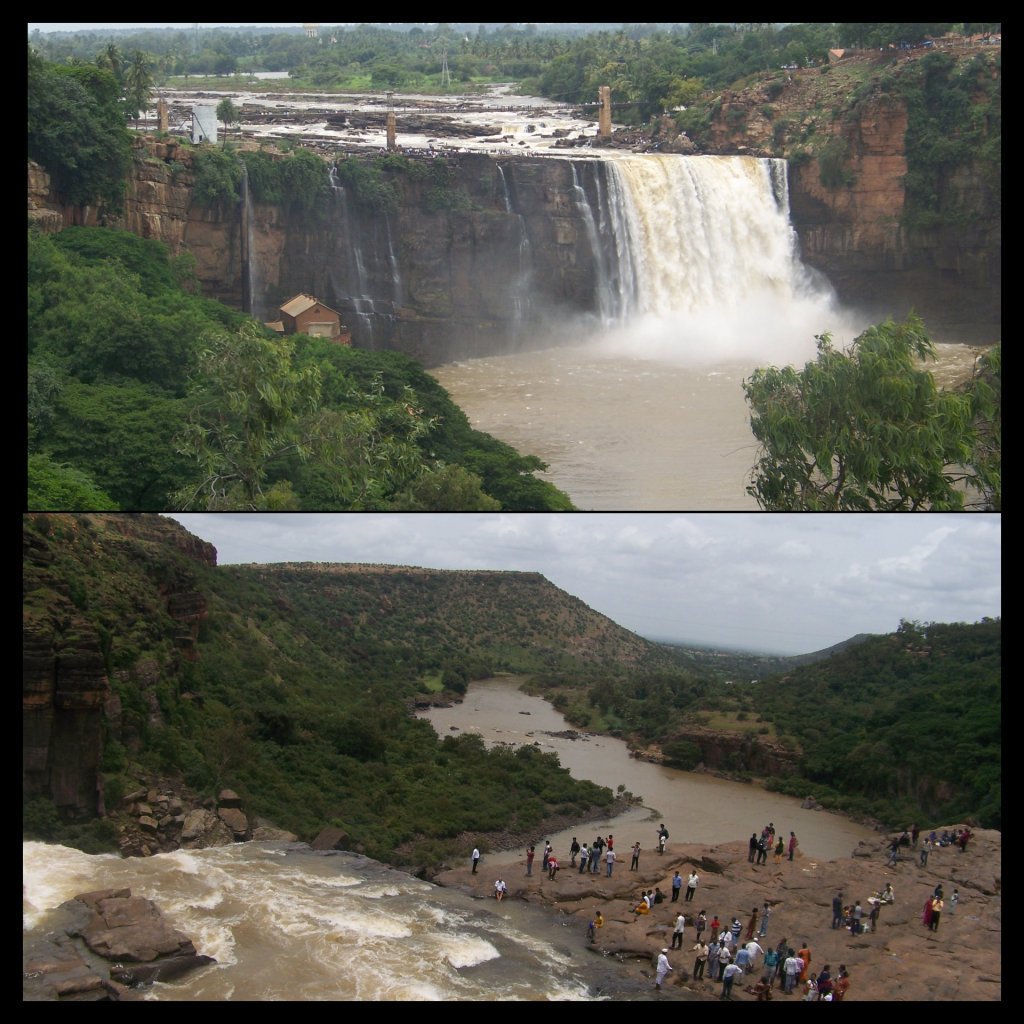
I boarded the bus to Belgaum from Bangalore and my mom was there to receive me when I alighted there the next morning… We freshened up at the place where mom was put up and then headed straight to Gokak. The little town known for its cotton mill, is also famous for the nature’s treat- the mighty Niagara of Karnataka. The bubbling, roaring and crashing waters of the Ghataprabha river creates steady patterns here with endless rhythm while it leaps down from 52meters between two tall, craggy cliffs to form the Gokak falls.

The century old hanging bridge, the only mode for the textile workers to cross the river allows the public to enjoy the breathtaking vista of the waterfall as the gushing water plummets down. The presence of turbines dating back to 1885 stands testimony to the electricity generation station established here which still provides power source for the cotton mill across the street. The 11th century Shiva temple dedicated to Lord Mahalingeshwara (Locally known as Tarakeshwara temple), built in the Kalyani Chalukyan style, faces the cotton mill and flanks one side of the gorge.

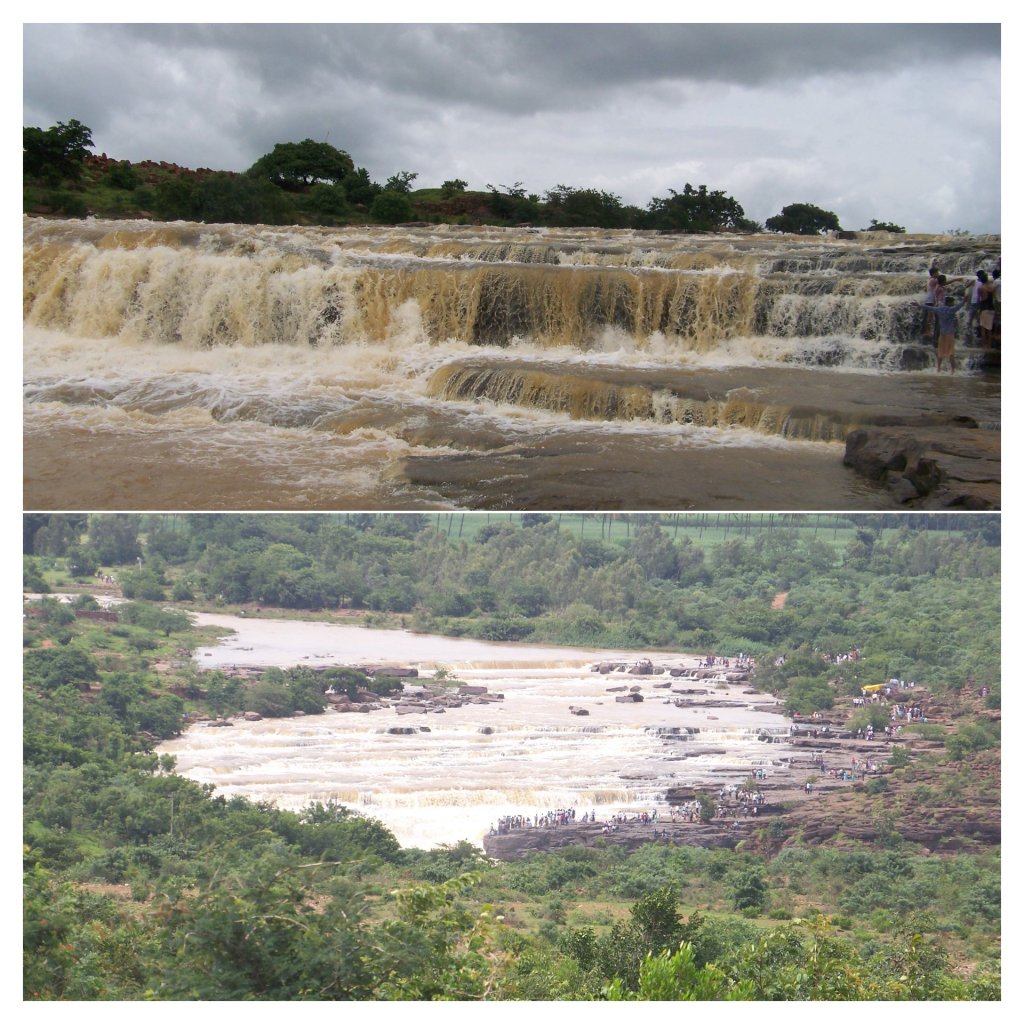
Above: The front view of Gokak falls from the Volkart view point; Below: A view from the Hanging bridge.

Meanwhile, I called a friend of mine who hails from Belagavi district to enquire about other places that we could visit around his hometown. He guided us to a small village named Godchinmalki where river Markandeya cascades down amid a scenic backdrop forming another beautiful waterfall called by the same name. Mom and I walked down for 2kms through rolling green pastures, fields of maize and banana plantation to reach this waterfall that plummets down in 2 tiers. Once we reached the place, it was a thorough treat to our senses to watch the waterfalls racing ferociously through the deep gorge.

On our way back, we took a little longer route from where we got a complete view of river Markandeya snaking through the greens. A 9kms long underground canal carries water from the river across which can be seen emerging out of the hill from this viewpoint. The snaking roads with beautiful views of the valley was a wonderful drive to the city.

Top: The Godchinmalki waterfalls; Below: The Gochinmalki view point from the main road

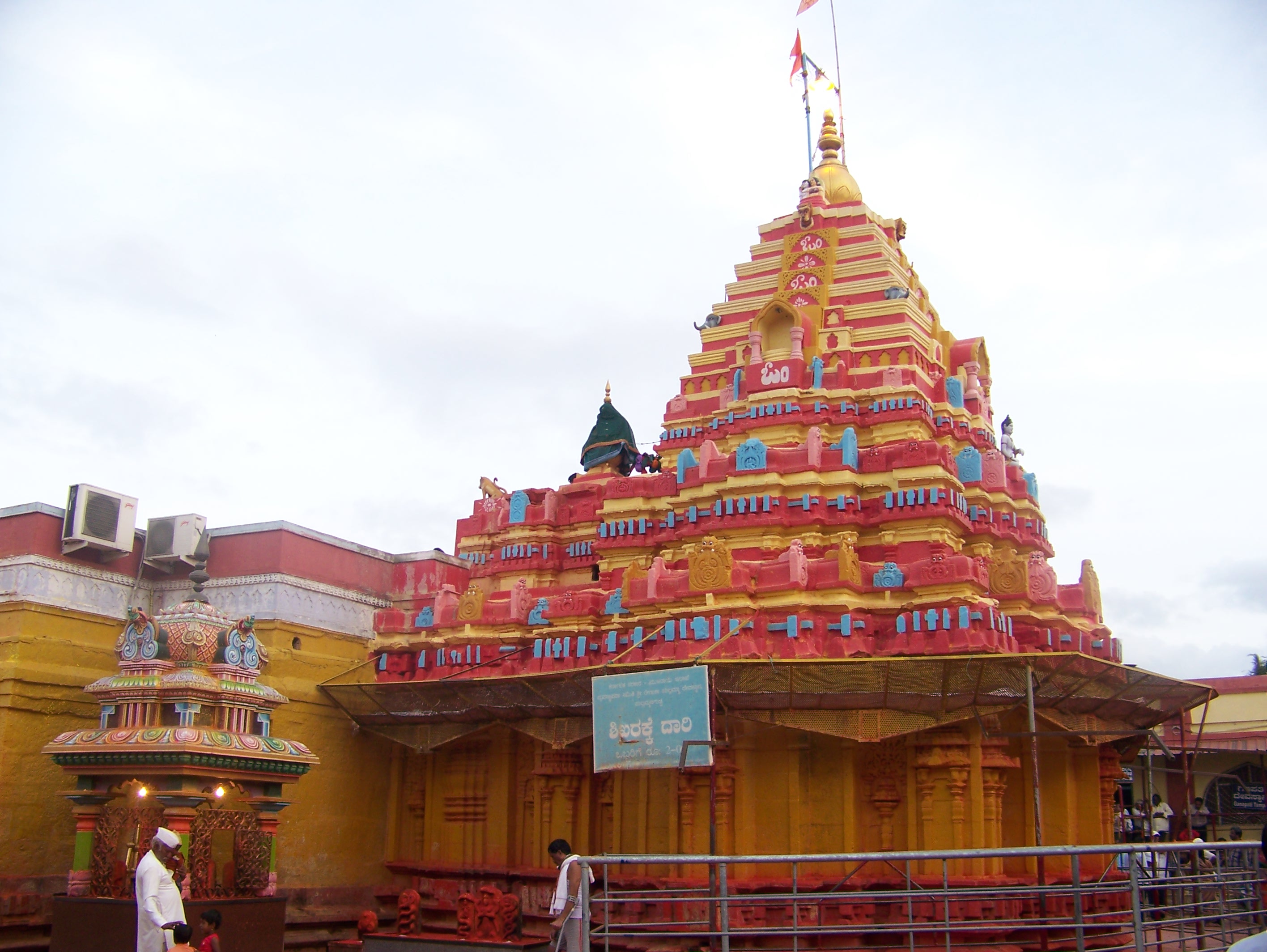
After all the waterfall hopping was done, it was time for some temple visit. We headed to Saundatti a.k.a. Savadatti. This place was the capital of the Ratta / Rastrakuta dynasty from 820, until it was shifted to Belgaum in 1230. There is a fort here also called the Parasgad fort. But the most famous is the Renukadevi temple located atop the Yellamma gudda. This is an important place for devout followers of Goddess Shakthi and also for the devadasis- or the servants of god. We had a good darshan during the evening pooja time.

Savadatti Yellamma temple

With that, it was a quick wrap for a short weekend and time for me to head back to Bangalore for another long and boring work week ahead…

Must eat while at Belagavi/ Belgaum:

  • Karadantu at Gokak– it is a sweet made with dry fruits rolled into balls with jaggery.
  • Kunda at Belgaum– This is a sweet made with milk.

Explore the Best of Valparai on a Weekend

My friends and I had heard sufficiently about the rich wildlife of the region surrounding Pollachi, its beautiful sceneries and perfectly trimmed tea estates. Valparai is a lesser known hill station in the Indira Gandhi Wildlife Sanctuary (earlier known as Annamalai Wildlife Sanctuary). Kollywood stars and burnt out urbanites frequent this place to de-stress themselves and savor a slice of nature. Here, as one ambles past mud walled, thatched roof dwellings, granaries of farmers and tea estates fringed plateau, don’t be surprised if you happen to hear someone screaming ‘start camera’, ‘action’. This is a hot spot for movie makers with over 1500 movies and commercials having been shot here. And we too got lucky when we happened to visit the sets and share our homestay with the crew of the movie- ‘Madras cafe’ during this trip of ours.

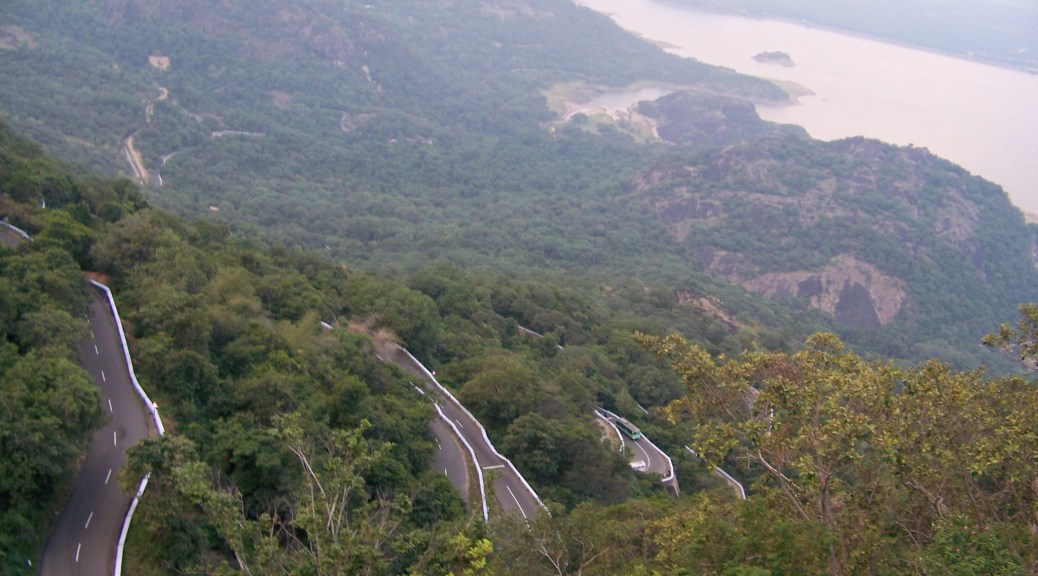
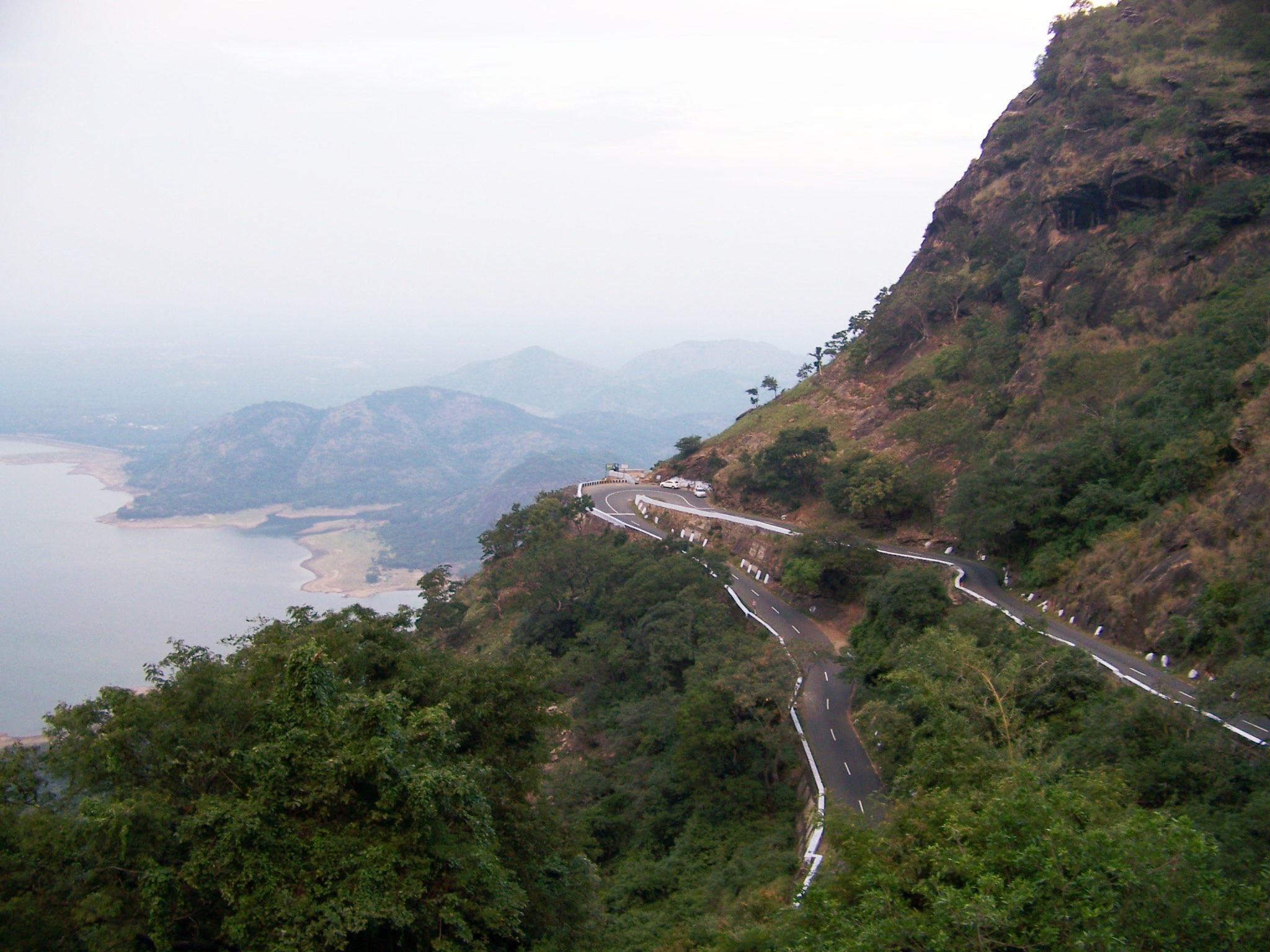
A weekend itinerary was primarily planned by one of my friends and a few must-see items were pushed into the plan by me. Since this place falls on the border of Kerala and Tamil Nadu, we decided to make it a three states’ drive including Karnataka. Accordingly, five of us started from Bangalore on a Friday night. Since it is also a bio-diversity hotspot, I had listed 5 animals on my ‘to-spot’ list while at Valparai. Valparai is the end destination after driving through 32 hairpin bends. Being a hill station, Valparai weather is specifically delightful with a cool climate throughout the year. It is usually the road leading to Valparai that is enjoyable with scenic vistas and photo-points. I had enlisted them with day 1 in the Tamil Nadu side of the sanctuary and then spending the second day on the Kerala side of the forested land.

Itinerary:

Day 0: Leave from Bangalore by night (Own car)
Day 1: Reach Pollachi before sunrise. Backwaters of the Aliyar dam, monkey falls, Loam’s viewpoint, Carver Marsh viewpoint, Congreve falls, Vinayagar temple, Birla falls, Balaji temple, Iraichalparai falls, Nallamudi Pooncholai viewpoint, ChinnarKallar hanging bridge trek, Sholaiyar backwaters (night stay at a homestay in Chalakudy)
Day 2: Athirapally falls, Vazachal falls and return to Bengaluru via Ooty.

The details:

Part 1: Tamil Nadu

During the night journey, I had dozed away on the rear seat of the car. When I opened my eyes to the misty morning dawn, our car was greeted by beautiful countryside with tree-lined roads, emerald fields of paddy, whispering palms and coconut plantations in the backdrop of the towering Western Ghats. We had reached Pollachi in Tamil Nadu. We waited near Aliyar park until 06.00.a.m. for the forest check post to open.

a. We registered our entry into the wildlife sanctuary there and proceeded on our journey. Our drive further towards Valparai, was an ascent along the winding road by the backwaters of the Aliyar irrigation dam.

View of the Aliyar backwaters

b. Four kilometers further from the forest check post, we reached the monkey falls. The waterfall is aptly named due to the many troublesome monkeys here. One even entered our car and happily carried away a bag full of fruits from the rear seat. Our drive continued…

c. Just as we approached the 9th curve (the Loam’s viewpoint), we were greeted by this gentleman who was calmly grazing on the edge of the steep rocks.
We scored off the first member on our list of top 5 wildlife to see- ‘The Nilgiri Tahr’.

Nilgiri Tahr – Photo credits: Samson Joseph

d. Continuing our drive, we stopped at Carver Marsh viewpoint adjoining the Kavarkal estate. On a clear day, we were told that one can see the Sholayar reservoir (2nd deepest dam in Asia) from there.

e. We then cruised past the Tiger valley from where we caught a good view of the upper Aliyar reservoir.

At the entrance to Sholayar / Kallyar estates

f. We covered Congreve falls (located in the Nadumalai estate), Vinayagar temple (Jayashree estate) & Birla falls along the way up. We got good view of the Manopally forest and the grass hills of the sanctuary.

g. Ox-bow lakes situated inside the protected area is supposedly the highlight of this region for those who can manage to get permission from the forest authorities. We failed at it since we didn’t have insufficient information on the channels for the permits.

h. We visited the Balaji temple and the nearby Iraichalparai falls along way.

Just along our way, it was time to score off no.2: groups of ‘Lion tailed Macaque’ were walking all over the road and around. Even before we realized, we had reached the hilltop.

Lion Tailed Macaque- Valparai

i. We stopped by and trekked through the tea estates to reach the ‘Seen god shrine’ at the Nallamudi Pooncholai viewpoint. An old man, who claims to have seen god, blessed us with some prayers and turned out to be an encyclopedia of knowledge about the local culture and history. He explained to us about the various tribal settlements in these hills… pointing out at colonies, he would tell- Kadars, Muthuvars and Malai Malasars. They are estimated to have 190 households in 8 settlements in the sanctuary.

While we walked towards our car, the women picking tea shoots warned us not to proceed further. She pointed at a herd of 8-9 elephants feasting around at a distance, thus scoring off no.3 on my list.

j. We then drove to ChinnarKallar for the hanging bridge trek. In spite of driving all the way, we refrained from shelling out 250 Rs. per head just for the entry which sounded to us more like a bribe at the forest check post. This place is among the highest rainfall receiving areas in India. No doubt that the Valparai weather is pleasant all through the year and is an upcoming weekend destination among the urban crowd of the nearby metro cities.

We put our car in reverse and just then… no.4: The giant flying squirrel (a young one and wasn’t flying though) crossed our road. We were excited…!!

k. After covering places in the Tamil Nadu part of the sanctuary, we headed towards the Kerala border. We saw a calm stretch of the Koolangal river and decided to spend some time there. We could not compel ourselves from not taking a sip of its crystal-clear waters.

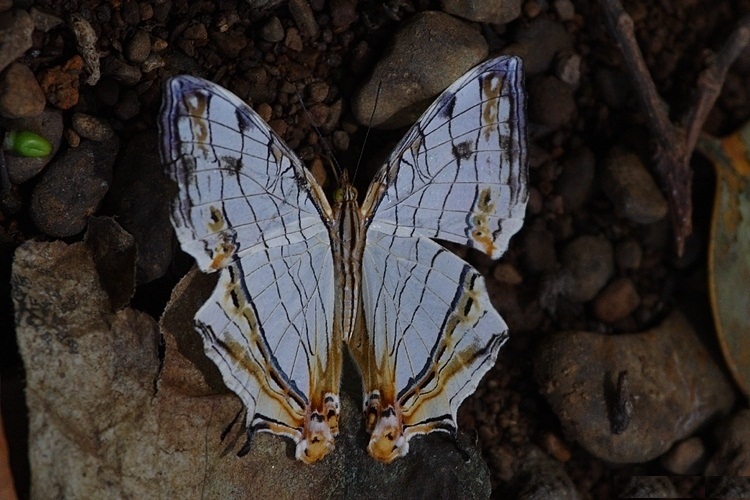
And right there. we saw this little creature on no.5: ‘The common map butterfly

The Common map butterfly

Part 2: Kerala

We registered at the border check post and prepared to enter the Kerala land. Thick rainforests on both sides accompanied us all the way till our destination. We happened to drive through what I think is one of the dangerous roads I have been through. With the Sholaiyar backwaters on one side and a valley on the other side, only one vehicle can pass at a time. Beautiful views for most of the stretch kept us in an awe. Tunnels have been bored through the mountains to supply water to Parambikulam reserve from the Nirar dam.

We reached Athirapally reserve just after sunset. We got a quick glance of the beautiful waters cascading down to join the Chalakudy river. It was soon dark, and we checked into Maria cottage (a local homestay) where we were made us feel at home and served some sumptuous Mallu food.

Next morning, we walked past the palm plantations to reach the Chalakudy river to freshen up. This place is frequented by elephants at all times, but we did not care. We enjoyed the clear but rapids of the water there. We took a refreshing dip before returning to our homestay. We checked out of the place after having a good filling Malayalee breakfast.

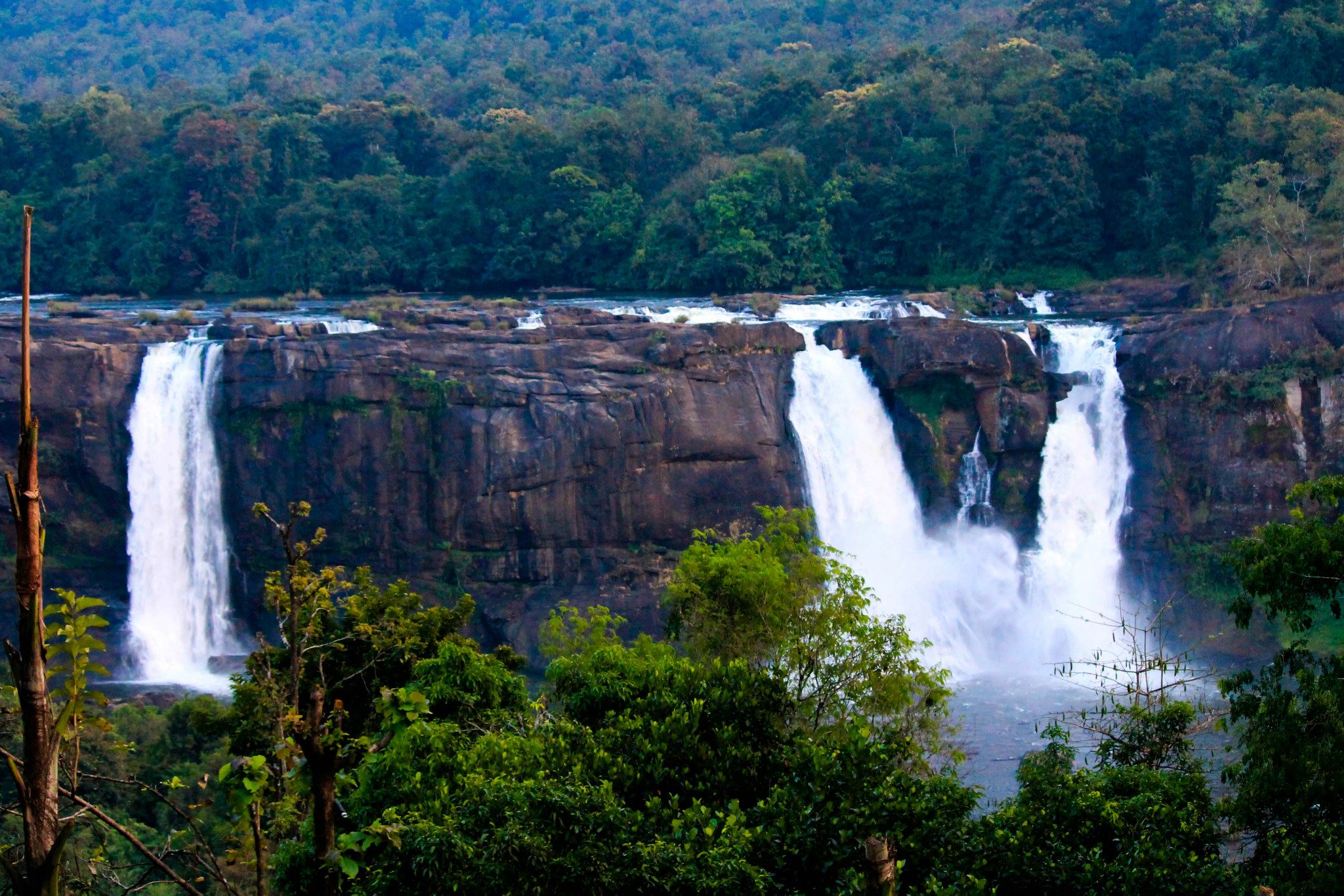
Post this, we went back to the Athirapally waterfalls. We walked down to the base of the waterfalls and spent good time there. We had to then continue our drive, as our target was to reach Bangalore by night. After a quick stop at the Vazachal waterfalls (it is more like water flowing down a steep rock than a waterfall), we decided to say goodbye to Kerala.

Athirapally waterfalls

Part 3: Karnataka

The original plan was to drive through the route covering Ooty-Bandipur-Mysore to reach Bangalore. But, since we were behind schedule, we could not reach Bandipur before the forest gates closed (the forest gates are open only between 06.00a.m. to 06.p.m.). So, we decided to drive back through the curvy stretch of Pollachi road again.

We further drove through Udumalpet which happens to be one of the windiest places in Southern India. Thousands of windmills dot the stretch on either side which is a sight to behold. It was dark in no time and we had to zip ASAP to reach our offices on the following morning.

Thus, ended our 50 hours’ drive, covering 1000 kms across 3 states!

The Enchanting Andamans- Part 1

<07-Apr-13>

Words are not enough and pages needed are endless to write about this trip.. The much awaited, dreamt of and anticipated vacation was finally here.. For reasons galore, only Mom & I ended up going..

There are so many first time experiences that makes this trip so special..

  • My first stinct with scuba diving happened here
  • Feeding the fishes 15 meters down under water- Sea walk
  • One of the best sunset views- off a ships’ deck– right in front of the navigator
  • Seeing over 30 members of the Jarawas: A rare opportunity for many tourists 🙂
  • A hospital visit and a tetanus shot right at the start of a vacation
  • Snorkeling in a protected area like a marine national park
  • A visit to the site where India’s only active volcano exists
  • Getting surrounded by flying fishes making me live filmy moments from the ‘Life of Pi’
  • A camera breakdown on the first day of the trip and no back-up
  • A roll down the stairway and hurting both knees to trek a deep jungle
  • A cancelled flight and an extra day at the airport

Every day had a unique experience to unfold. (Read detailed itinerary here)

I cannot make justice, but will sum up the entire trip with as less words as possible.. “White sand, Blue sea, crystal clear waters, lashing waves, spotting the flying fishes, sunset from the ship’s deck, diverse deep sea, ever mesmerising beaches, if ever I had a choice to choose my death, I’d love to get washed away by the waves right there.. @ the Andaman sea.”

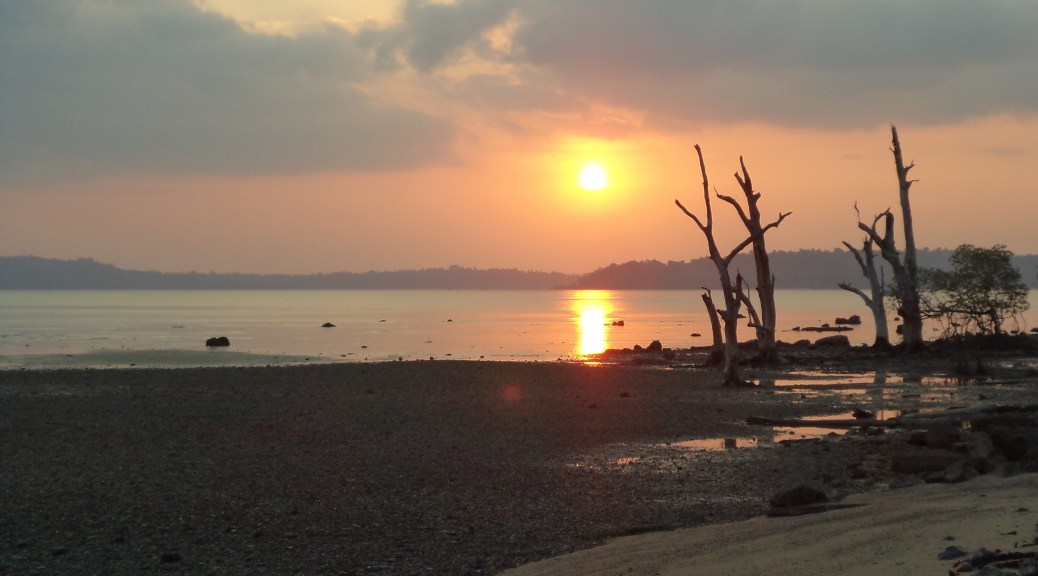
Sunset point - Chidiyatapu
Sunset point – Chidiyatapu

A Day Out At Mekedaatu

It was after a long-time that we cousins were catching up and so we planned to have an all cousins day out (no aunties, uncles, mammas and Pappas). We narrowed down to visit Mekedaatu for the weekend. At 10.00a.m on a Sunday morning, we were late to leave home to any tourist places around the city. And to add to our woes, it was Banashankari temple’s annual festival that day. This only means that we had to wade through hopeless traffic jam along with the Kanakapura road metro line construction also being underway…!!

List of places covered:
Food stop at Vasu hotel, Kanakapura- This is popular for its crusty Masala Dosa
Chunchi falls
Sangama
Mekedatu viewpoint

Details of the trip:

Six kms before Mekedaatu, a board pointing to the left indicated the way to Chunchi falls. We decided to take the deviation. The summertime visit to Chunchi falls was a disappointment for us after reaching there. There was hardly any water in the river and the rocks shined bright in the sun’s reflection. Just as we were about to turn our backs to return, a localite who was around us started a conversation with us. He eventually told us that he could take us to a better viewpoint. We blindly decided to follow him.

We crossed a small dam, a ridge and continued to walk. after a tiring walk in the scorching sun for about 1.5 kms, we slowly started to grow suspicious as to where this man was taking us as the place started to look more secluded. But, just then, he pointed at a watch tower and told us that we could get a good view from there. Before we could react, he intruded – “But, you need to walk down there. Behind that bush”. We were like, “OK… hmm huh…!!” and continued to walk further. He would certainly not be able to mug us as we outnumbered him, we thought. Once we reached that spot, it was a total sense of relief and a surprise. Had we returned earlier; we would have missed such a great spot. I’m sure this place would look more amazing in the monsoon season.

Chunchi falls
Chunchi falls

After spending a while at the falls, we thanked the old man with a goodwill amount and headed towards Sangama. ‘Sangama’ is a confluence of river Kaveri and Arkavathi and supposedly a very scenic spot post monsoon. But disappointment was waiting for us again after reaching there. Insufficient rains and the influx of tourist on a weekend, the place was crammed with very little place to even sit peacefully on the riverbank.

Legend has it, that a goat had jumped across a gorge to escape from a chasing tiger and hence our destination derived its name in Kannada. (Meke = goat; daatu = cross). Trekking the 3 kms distance from Sangama to Mekedatu was banned then and hence, we had to wait for the pick-up bus to come. After disappointments back to back, we were apprehensive of going forward till Mekedaatu wondering if it would be worth our visit. We lost our patience in waiting and walked across the shallow waters to reach back to our car. The security guard who had been observing us, walked up to us and suggested that we go to Mekedaatu since we had already come so far from the city. We were still half minded and tossed a coin. Heads said a ‘Go’.

The view around Sangama

After disappointments back to back, we were apprehensive of going to Mekedaatu wondering if that place would really be worth our visit. Trekking the 3 kms distance from Sangama to Mekedatu is banned now and hence, we had to wait for the pick up bus to come. We lost our patience, and crossed the shallow waters back to reach our car. The security guard who had been observing us, walked upto us and suggested that we go to Mekedaatu since we had already come so far from the city. We were still half minded, and tossed a coin. Heads said a ‘Go’.. So we again crossed the river, by then the bus had returned. We got the last seat for ourselves. The bus was a total-out-of-the-junk-yard-thing. The seats we were sitting on were infact tied to the roof rails with strings- more like a swing..!! And the fully crammed bus(packed to twice its capacity) started. It was an unpaved road, and a lot of dust was filled inside the bus which made us literally stand up from those swinging seats..

View enroute to Mekedaatu from Sangama

So, we again crossed the river and by then, the bus had returned. We got the last seat for ourselves. The bus was a total-out-of-the-junk-yard-thing. The seats we were sitting on were in fact tied to the roof rails with ropes. It felt less like a bus seat and more like a swing…!! And bus was fully crammed and packed to twice its capacity. The drive was through an unpaved road, and a lot of dust was filled inside the bus. We could barely breathe inside and all we stood up from those swinging seats. Once we reached Mekedaatu after a strenuous back seat ride, we felt that the security guard was right- It was a nice place. But again, insufficient rains did not give me the internet picture I wanted.

Since our onward ride was a bad experience, we chose to sit on the top of the bus for our return. Trust me when I say that the ride was the highlight of our entire day… The best bus ride we all ever had in our life. The bus went at high speed blowing the dust high up from the unpaved roads. There was just one thin steel rod around for us to hold onto, that too was tied to the windows below. At one point, another bus came in the opposite direction, and our bus went completely off road. It felt as if our bus was balancing on a few small stones on the slope of the valley so that the driver could make enough space for the other bus to pass through the narrow road. We could reach the treetops, see the best views of the river and the valley below. It was one AMAZING ride.

The bus, road and our shadow of sitting on the top of the bus- between Mekedatu and Sangama

We ended up feeling that the return trip was a very short one and wanted more… one adrenaline rush moment it was…!! It was the last ride for the day as the sun had already set and we returned to our homes high on energy and all charged up and motivated for another boring week ahead.

There are a lot of options around Kanakapura for a full day or half-day trip. I have covered these places on separate occasions. A few of them are:
* Kabbala Durga trek
* Bheemanakindi trek
* Pyramid valley meditation center

Day tripping in Nature- the Mysore Circuit

The initial plan was to leave before sunrise so that we could see the birds at the Ranganathittu Bird sanctuary before they left their homes for the day’s chores. However, a flat tyre and multiple pit stops added up to late arrival at the Srirangapatna-Yelwala bypass. This led to a few additions and deletions in the original plan so that we could see the birds when they returned to their nests late in the evening.

List of places covered:
Gaganachukki and Bharachukki waterfalls
Talakadu
Kaaranji kere in Mysore
Ranganathittu Bird sanctuary

Details of the trip:

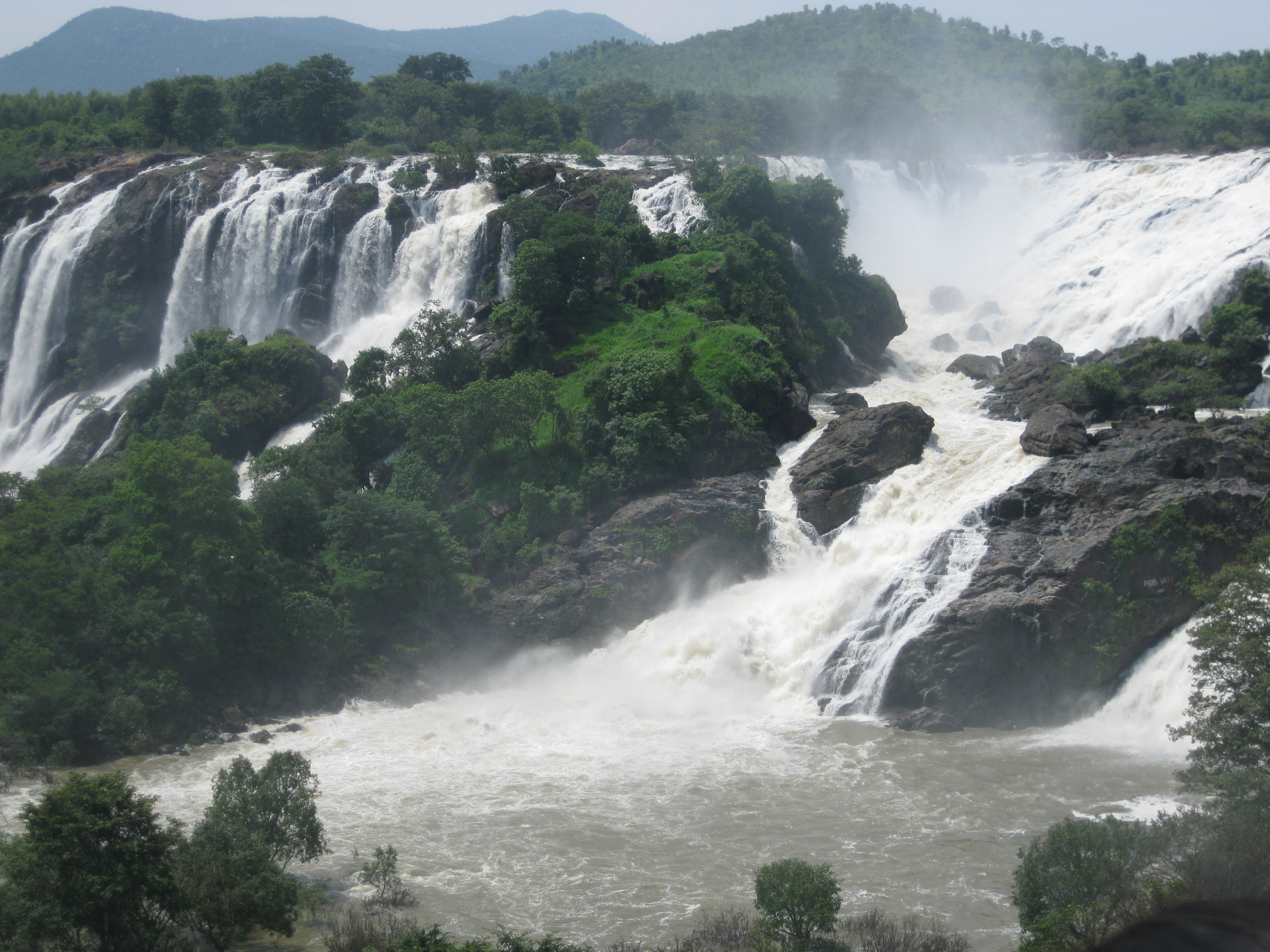
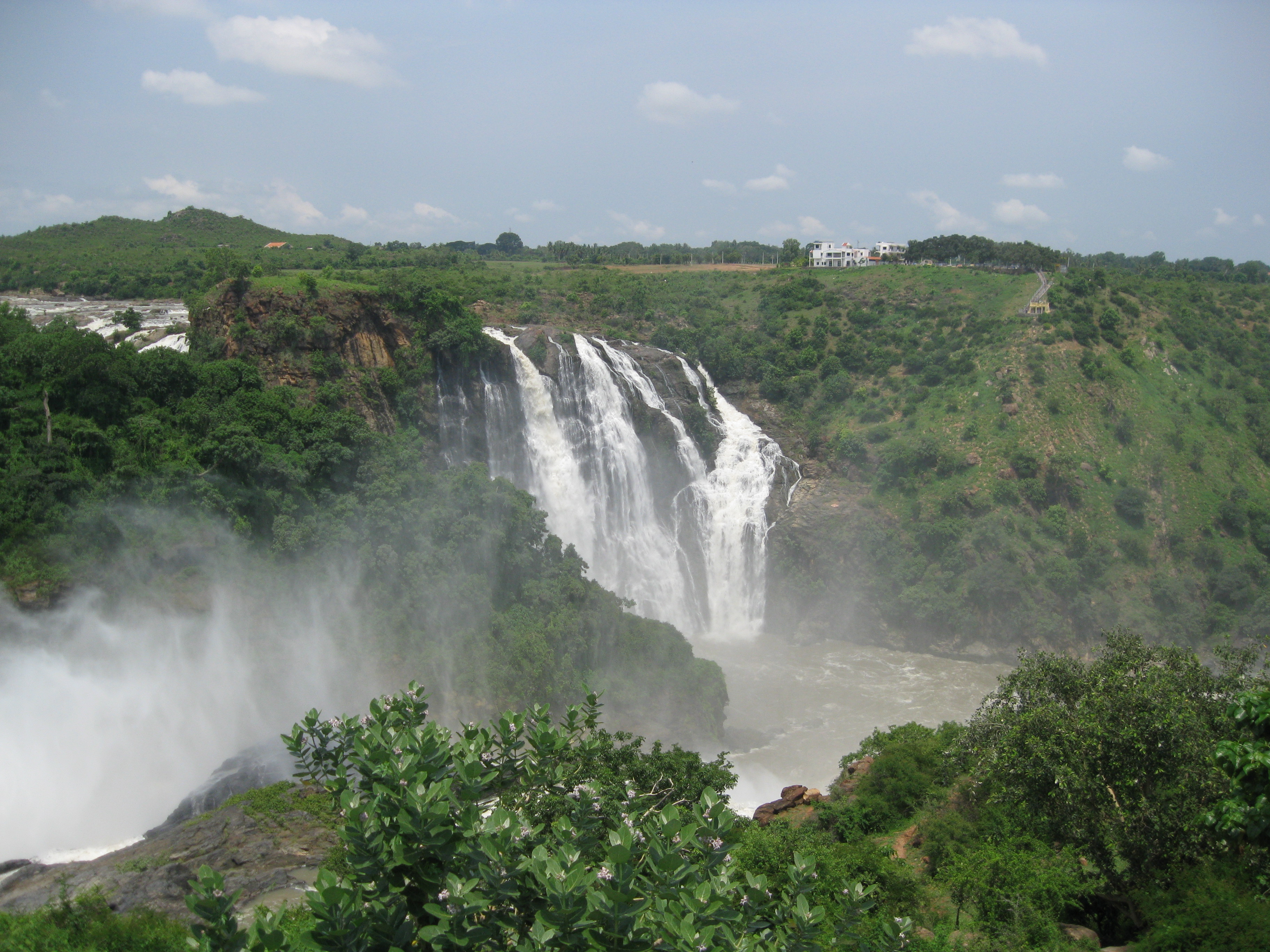
As per the new plan, we headed to Gaganachukki and Bharachukki waterfalls. After a nice long drive through the green paddy fields and rusty countryside, we reached Shivanasamudra. This is one of the island towns formed by river Kaveri through its course. This is where Asia’s first hydel-power project was set up, commissioned by the then Diwan of Mysore- K. Seshadri Iyer; in order to supply electricity for mining at Kolar Gold Fields. River Kaveri plummets down at two places, a couple of kilometers away from each other and then merging together again. The beauty of the twin waterfalls is truly mesmerizing. If you’re seeking for some thrill, coracle rides are available that takes you closer to the spot where the water drops. But we did not want to take the risk of venturing into the water without a life jacket. At least, not after we heard someone say that the water was 1000 feet deep at some point. We weren’t not sure of the exact depth of the river, but certainly did not want to take a chance!

Gaganachukki- The western branch of river Kaveri

The sun was approaching his highest point by this time, and hence we decided that we should be heading towards our next destination- Talakadu. Kannadigas have all grown up listening to the story of the curse of Alamelamma. It is believed that her spell turned this once prosperous town to a sand desert. As a student reading history in school, I had always been intrigued to visit this place and see the romance between the sand and the temples during different seasons. However, the excitement that we had when we started to this place soon died when we arrived there (in fact, it got buried deep under its sands). Given the poor rainfall, less waters and hordes of tourists over the weekend, the place was had gathered so much filth and poop everywhere. There was an unbearable stench that had spread around. The river was shallow and looked stagnant and unappealing. Yet, we did manage to go for a coracle ride which was definitely not worth the buck. The place was a total turn off…!! We lost our interest to explore the famed temples of Talakadu and left the place (I did visit the historically important temples on a later date though).

Bharachukki- The eastern branch of river Kaveri

We wanted to reach the highway back again but lost our way at some point. Without being able to connect to the highway, we just kept driving on some narrow road through the countryside. After the frayed trip to Talakadu, this drive through the rustic countryside was somewhat a deal breaker and a feast to our city bred souls. After a bit of driving around and just when we thought we had reached the highway, we realized that we had in fact reached Mysore…!! Mysore city was never on our itinerary when we left home that morning. We were extremely hungry and hence decided to feast at a nice restaurant in the city itself.

Some friend suggested us to visit Kaaranji kere in Mysore where we could do some birding. Around 3.00.p.m, we headed there- This was in fact the highlight of the trip- though unplanned, it came as a treat to us. We took a boat ride around the lake where we spotted several migratory birds. Not in large numbers, but many in varieties. It surely is a haven for the bird lovers. I pitied myself for not being able to identify what birds most of them were. I’m not an enthusiast of zoos as these places are where animals and birds are kept in enclosures. But, if you are around with kids, this place is good as there is an enclosure here as well that hosts many native birds, a few animals and reptiles.

The birds at Karanji kere

So, finally by 5.00.p.m, we headed out for what we had come all the way– Ranganathittu Bird sanctuary. It was the time when all the birds returned to their nests… We were there for sunset. We then took a boat ride around the small islets where thousands of birds have made their homes. The trees looked amazing with the birds and the water looked equally dangerous- with crocodiles swimming right past us… Again, we spotted a lot of different birds since it was the peak of the migratory season.

The winged hosts on the islet

With a pleasant sunset ride in the river, a long day tripping in the Mysore circuit came to an end. Although most part of the day was unplanned, it was a weekend well deserved.

The railway trek to Dudhsagar

This post is based on my trek to Dudhsagar waterfalls in the year 2013. If you have read my previous post: The railway adventure, then you’re sure to have had an insight to the adventure part of my trip to Dudhsagar waterfalls. This post is more on the trip and the sightseeing part of the story. I elaborate on the beautiful vistas that we came across as passed tunnel after tunnel, walking along a railway track, in the middle of a National park and finally seeing the beautiful Dudhsagar waterfalls.

17 of us boarded ‘MAS-Vasco express’ from ‘YPR’ on a Friday night and alighted at ‘Castle rock station’ on the following morning at 9.15.a.m. ‘Castle Rock’ is cute little station that divides the village into two- on one side is the railway colony, school, hospital, offices etc. and on the other side is the town(if at all it is called so) with basic amenities like a grocery store and a few petty shops. Since we were travelling in monsoon, the station was all green and a treat to all the eyes that had just landed from a concrete city.

With no facilities available anywhere around the station and even the basic offices closed on a weekend, we all freshened up in the washroom of the railway station itself. This is a point from where our railway trek starts. It is less of a trek and more of a walk along the railway track, all the way to our destination: The Dudhsagar waterfalls. But like they say, its is the journey more than the destination that matters, the entire stretch of this trail is what makes the trip all the more special.

We couldn’t and just couldn’t ignore the gazillion scenic spots that we come across for which we had to stop after every minute or 5 minutes of the walk for a photo. The Castle rock railway station itself was so good looking. This green moss laden station is located in the midst of the Braganza Ghats, in the heart of a National park. Take for example, this ART (Accident Relief Train) parked by the side of the tracks. It is adding so much colour to a photospot.

@Castle rock station- in the midst of the Braganza GhatsART a.ka. Accident Relief Train is parked by the side
@Castle rock station- in the midst of the Braganza Ghats
ART a.ka. Accident Relief Train is parked by the side

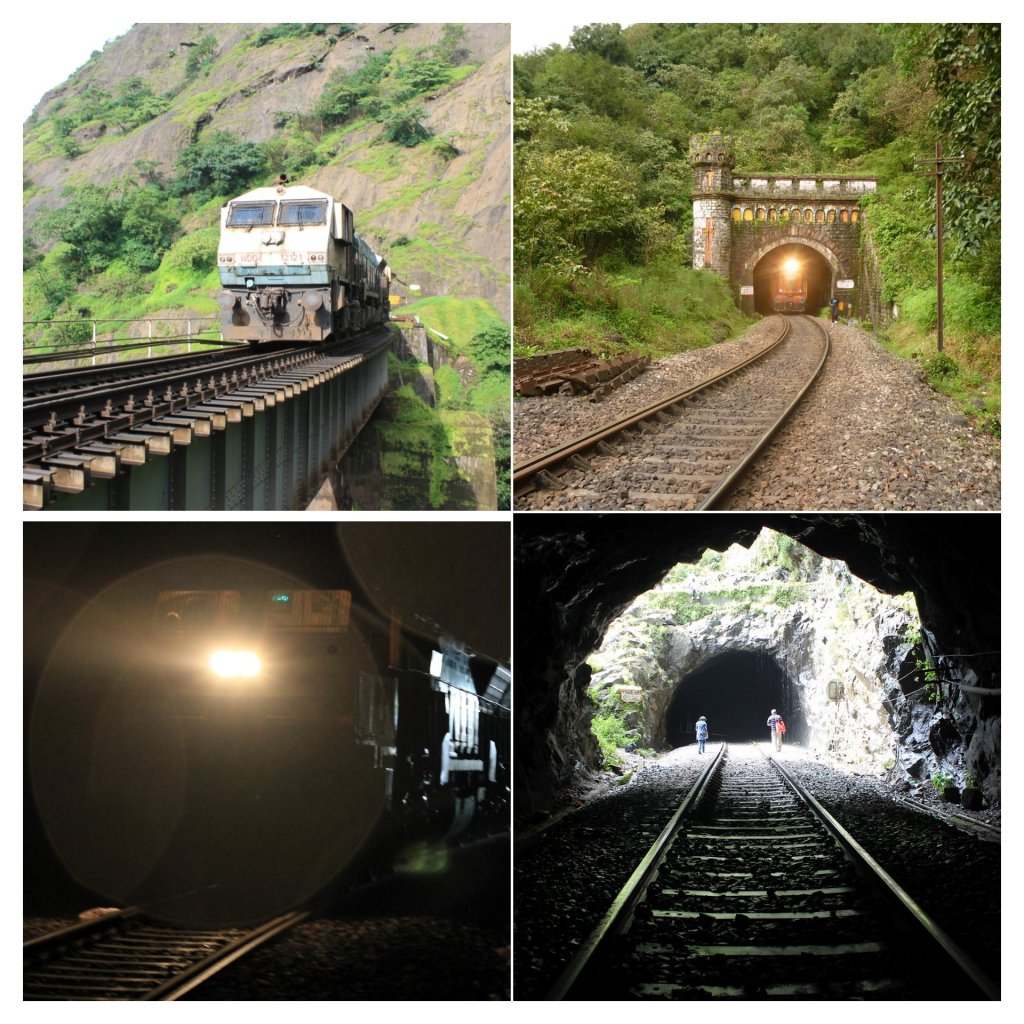
We continued to walk in the direction of Dudhsagar, but were unable to ignore the numerous waterfalls we encountered on our way. We stopped every time for photos. We had to walk through a total of 11 railway tunnels before reaching the main waterfalls. The first one can be approached by crossing a girder bridge laid over a scenic view of the valley.

The 2nd tunnel is the longest-at 624m. and the most beautiful one. It resembles an entrance of a Castle.

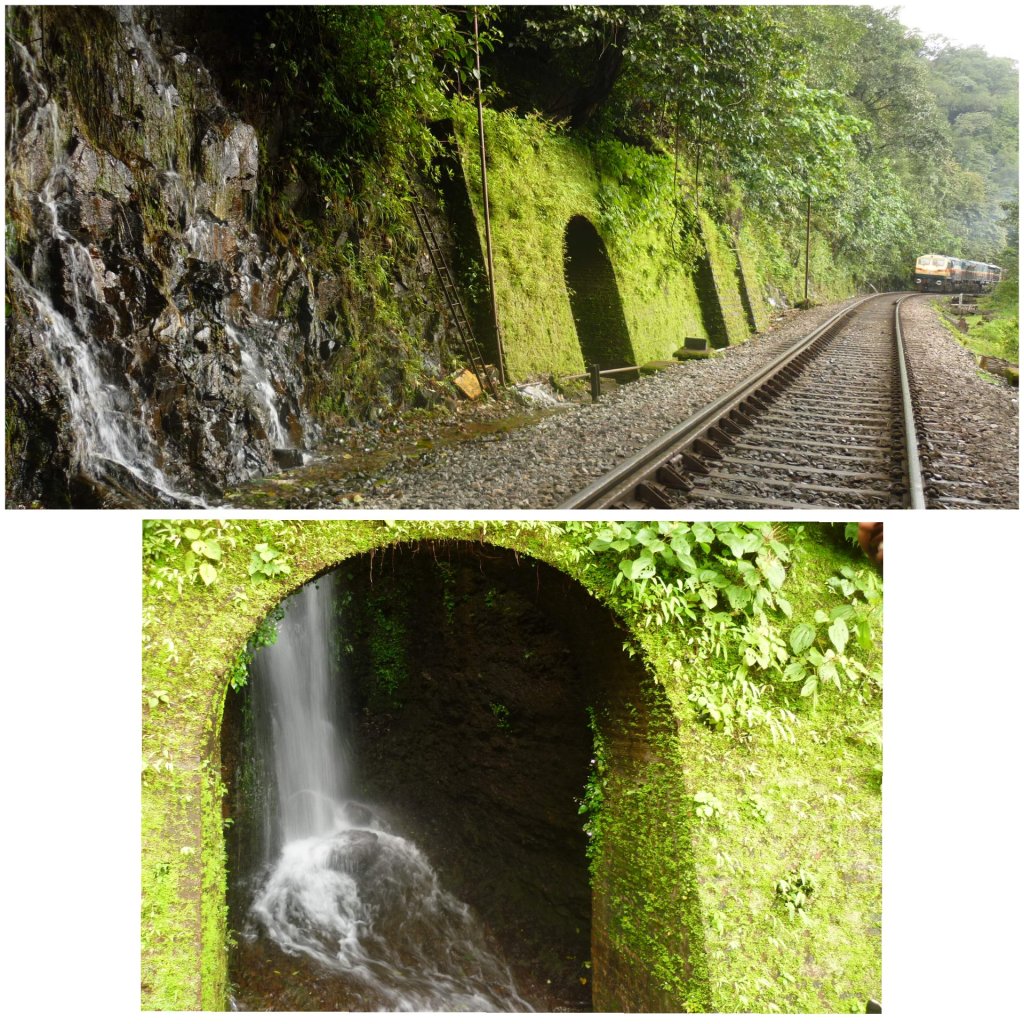
After crossing tunnel no.3, we walked slightly off the track, into the woods to see another large waterfall. Then came another waterfall, plunging down inside a vault kind of a structure built into the cliff.

Top: The vault by the trackside; Below: The waterfall within the vault

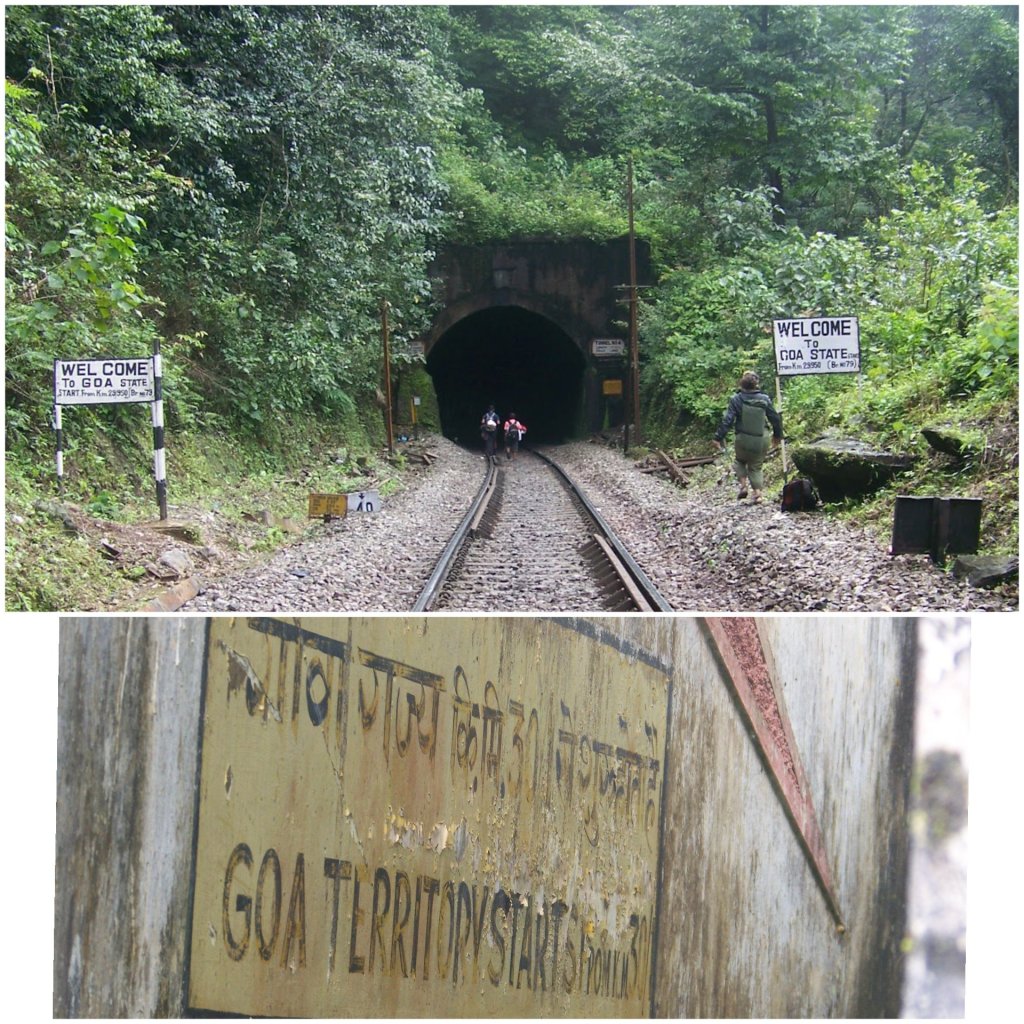
The 4th tunnel is special. After crossing this tunnel, we would be setting foot in another state altogether. This tunnel marks the border between Karnataka and Goa.

Top: The first tunnel on the Goa side of the land; Below: The location marked where the actual Goa territory starts

After a long walk from there, we crossed tunnel no.5. While still navigating our way with torchlights on the tracks, inside the tunnel, we heard the hooting of a train approaching us from behind. There wasn’t much time for us to get out and hence, we all decided to get down from the track and stick as close as possible to the wall of the tunnel to stay safe. When the goods train arrived, we literally held onto our dear lives. It was dark inside the tunnel and no place to move.

Run for life..!!
Clockwise from top left: A train passing over the girder bridge before tunnel no.1; Exit of tunnel no.2; Light between tunnel no.6&7; A train inside tunnel no.5

The 6th and the 7th tunnels came together. The 7th one was nothing more than a small arch. Then we walked through tunnel no. 8, 9 and 10.

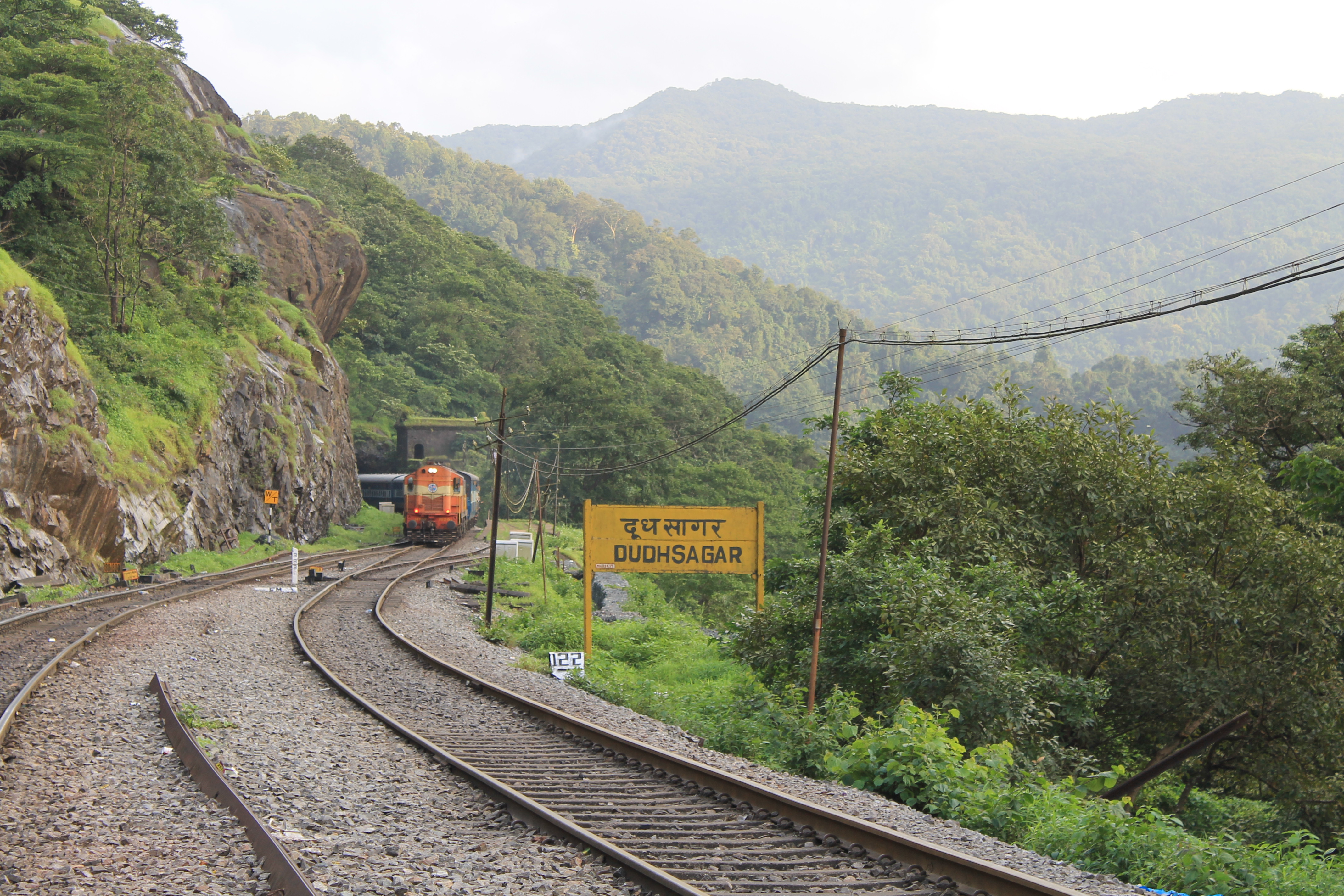
The 10th one was long and dark. And with exiting it, we saw Light at the end of darkness.. We had arrived at the ‘Dudhsagar station’. This is a de-func station and hence, neither the trains stops nor any tickets are issued for passengers who board from here. However, some lucky visitors manage to get a stop here but, they take a risk with a ticket-less travel. But, this is where we all realized that we were all tired by walking along the tracks. But, the fact that our destination was nearby gave us energy.

The DDS station
The DDS station

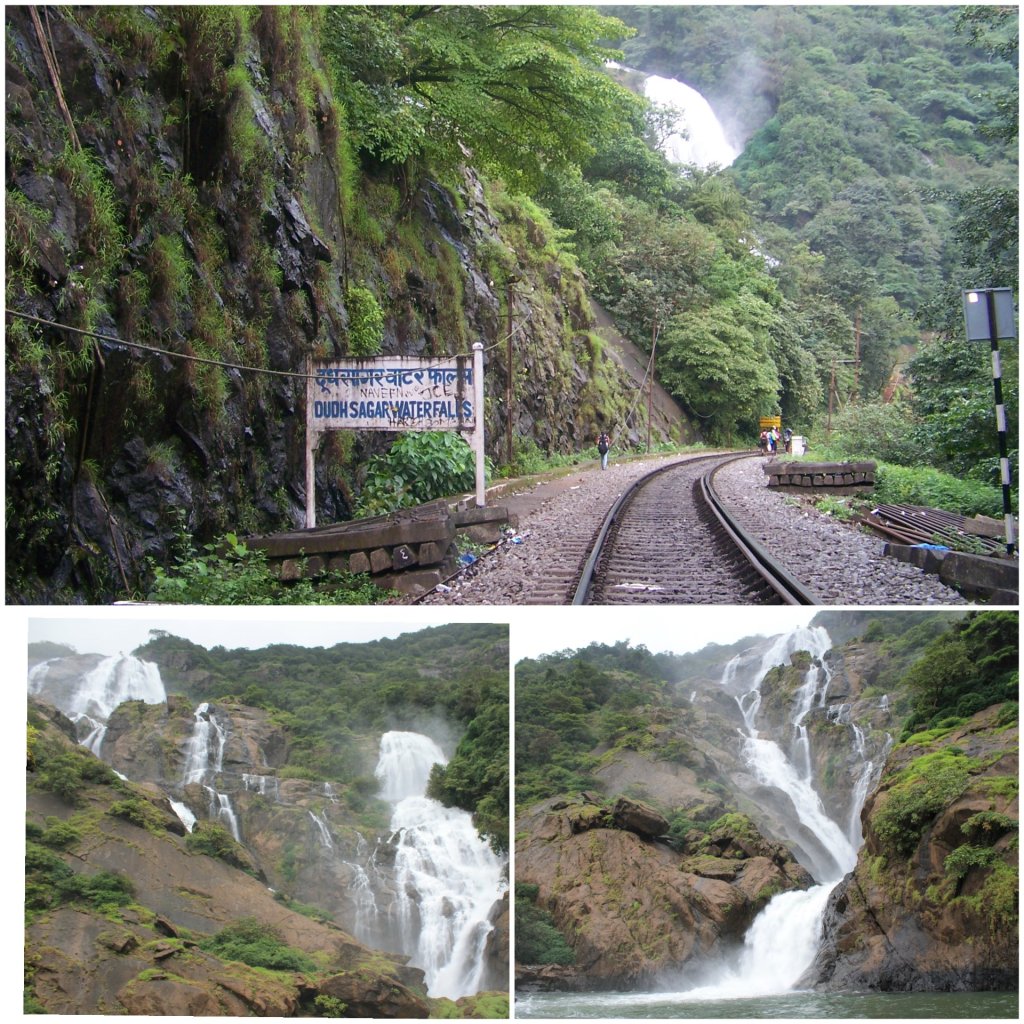
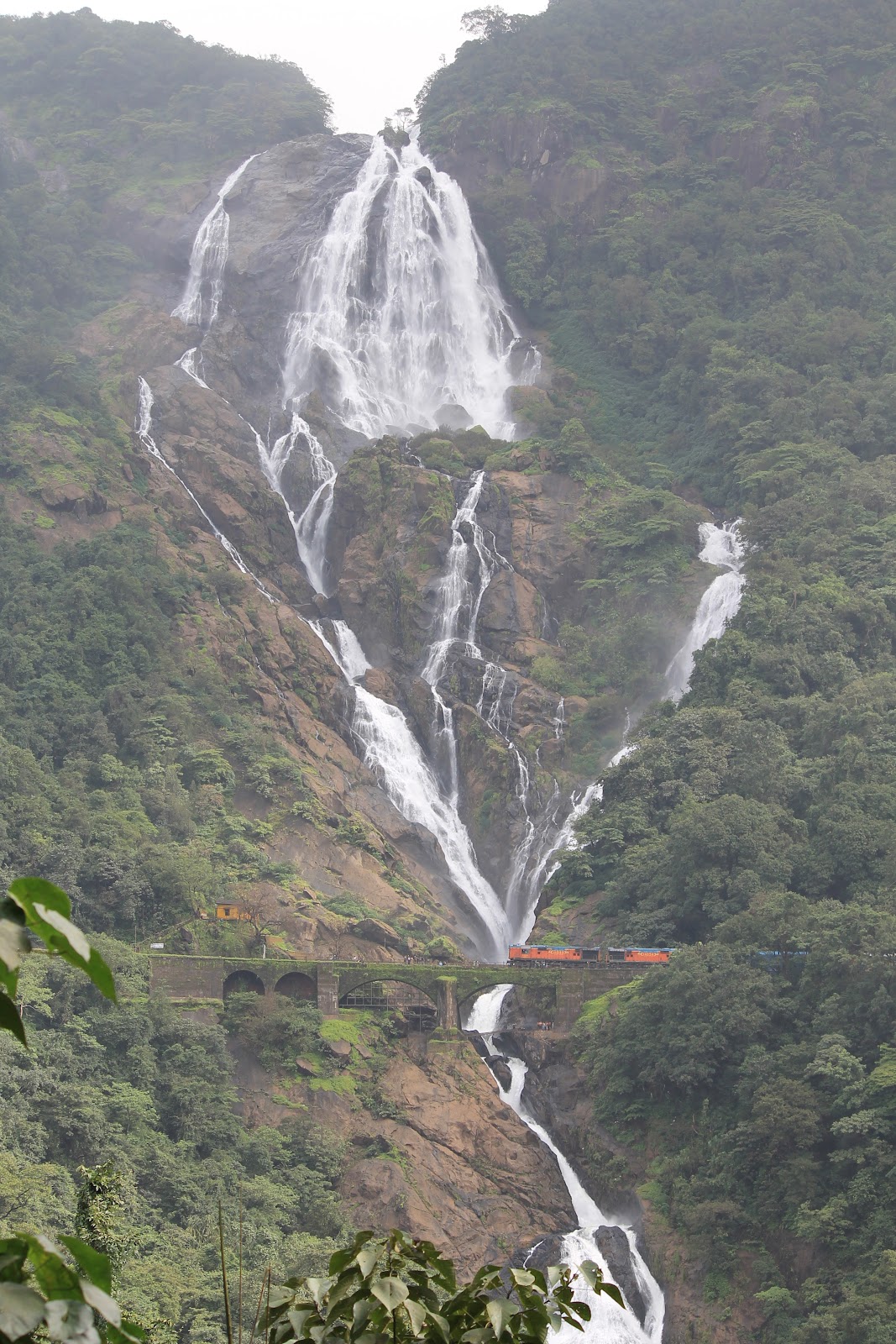
Then, we proceeded towards the 11th tunnel…. When we were exiting it, we were all hooting and clapping in joy. That’s because we all got our first glance of our destination. The mighty Dudhsagar: “Ocean of Milk”. The feeling was inexplainable. It was a great sense of contentment after a long tiring walk that was alllllll worth it..!! There was now a sudden spike in our energy levels and we all hurried towards the waterfalls. We dumped all our luggage right there, in front of the waterfall and crashed down in awe. As we were basking in the glory of the waterfalls, it had started to get dark. We looked out for space to unpack our luggage and our tents.

Top: The first glimpse of Dudhsagar waterfall out of tunnel 11; Below: Different views of the Dudhsagar waterfall

The only shelter (a small roofed structure) available to pitch a tent was already occupied by a large group who had arrived before us. We had no choice but to camp in the open, just by the side of the railway tracks. We put up a small campfire sort of a thing so that we had enough light to see each other’s face. But mind you, we were in the middle of a monsoon season in the western Ghats. The rain gods who had been kind on us during the entire hike were now playing spoilt sport. The campfire was put off too soon and we managed the rest of the night with our torches.

It poured cats and dogs the whole night.. The roaring noise of the waterfalls in the backdrop and the loud hooting sound of the train that passed atleast once in every half an hour, the tent pitched right next to the track with the waterfalls on the other side, it was indeed a night to remember..!!

Next morning, we all rose with the sun and spent some peaceful time in watching the water gushing down violently. Apart from freshening up last at Castle rock, it was already 2 days & 2 nights since we had last seen a decent restroom or a bathroom. We looked around to find a little place where we could finish off our stuff in peace. A small waterfall nestled deep inside the woods is what we found instead. All the girls in our group jumped into the water while the guys kept a watch for any trespassers 😉

Mythology says that the “DevaKannikas or the Apsaras are often seen bathing in the midst of the woods, before sunrise.. and if one is lucky, he can see them walk by in wet clothes” to think of it from a strangers’ perspective, I guess the scene that morning must have been something similar to that. We couldn’t find a place near the waterfall where we could change into dry clothes. Hence, we all wore our jackets over wet clothes and walked 1.5kms towards our tents. On the way, we came across tens of trekkers who desperately stared at us.. I understand the natural human instinct to drool at divine looking girls who are walking wet after getting all soaked in pristine water. Nobody could help the sight.!!

The waterfall where we took our morning shower at Dudhsagar

We were told that the passenger train would cross the waterfalls by 9.15.a.m. This meant that we had to be at the view point by that time to get that perfect internet photo..!! It took us to cross the 2 more tunnels to reach the viewpoint. After reaching there and waiting for a few minutes, we finally got the wallpaper worthy photo that we wanted.

Finally.. We got what we wanted..!!

After a long photo session of the large group that we were and before the crowd who had just arrived in that passenger train would spoil the peace, we headed back to our tents.. We had a round of heavy brunch (carried from home) and slowly packed up. The initial plan was to walk the track all the way to Kulem, but owing to the cruel sun and the tiring walking experience on the tracks on the previous day, we decided to wait to find a train ride, either to Kulem or Castle rock. We missed the goods’ train to Kulem by a few minutes and so, we had to wait at the Dudhsagar station for the passenger train going towards Castle Rock.And with that.. Curtains down to our trip to DDS falls..!!!

Update as on Year 2019:
• Trekking on the tracks in prohibited as it passes through a National park. There is a risk of a human-animal conflict.
• If you wish to visit the Dudhsagar waterfalls, you can sign up with one of the organisers based out of Londa in Karnataka or Kulem in Goa. They can take you through an authorized trail or a 4WD ride to a nearest point can be arranged.

Across the brook- Bridging two Worlds

<Dated: Sometime when I was three or four>

Every girl has a Superman in her life.. For some it could be her father or in some case- a distant uncle.. And for me- it is “My Super Grandpa”.The wooden bridge layed across a brook in my hometown is one of the many reasons for which he is immortal in the memories of the nearby villagers even a decade after his departure. So, now I get down to how this happened: 

Introduction:

There are three ways to reach Abbi falls:

  1. A motor able asphalted road- about 8kms from Madikeri town. The most comfortable one if you have own transport from the town.(Lots of details are available on the net)  
  2. A partially adventurous one- about 8kms from Madikeri. One needs to take a private bus from Madikeri to Kootpole. And hike for about 4 kms to reach the falls.
  3. The most adventurous route(difficult)-  trek through thick jungle lined by deep valley on one side and thorny bushes on the other side.(Will write about this one some other day) 

There are moments in life, when the heart is so full of emotion That if by chance it be shaken, or into its depths like a pebble Drops some careless word, it overflows, and its secret, Spilt on the ground like water, can never be gathered together  Henry Wadsworth Longfellow

I choose to write about the 2nd route- The closest to my heart..!!

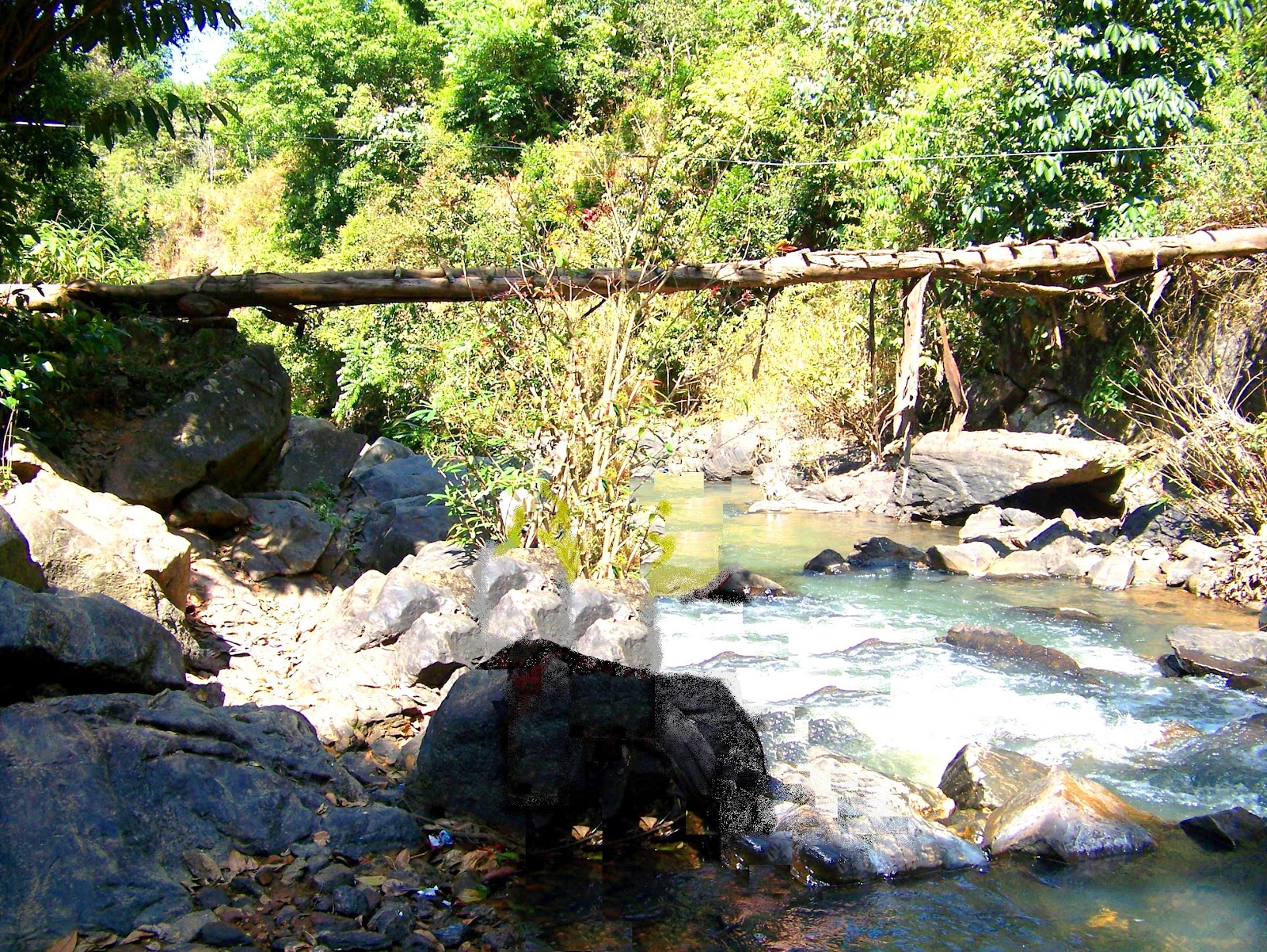
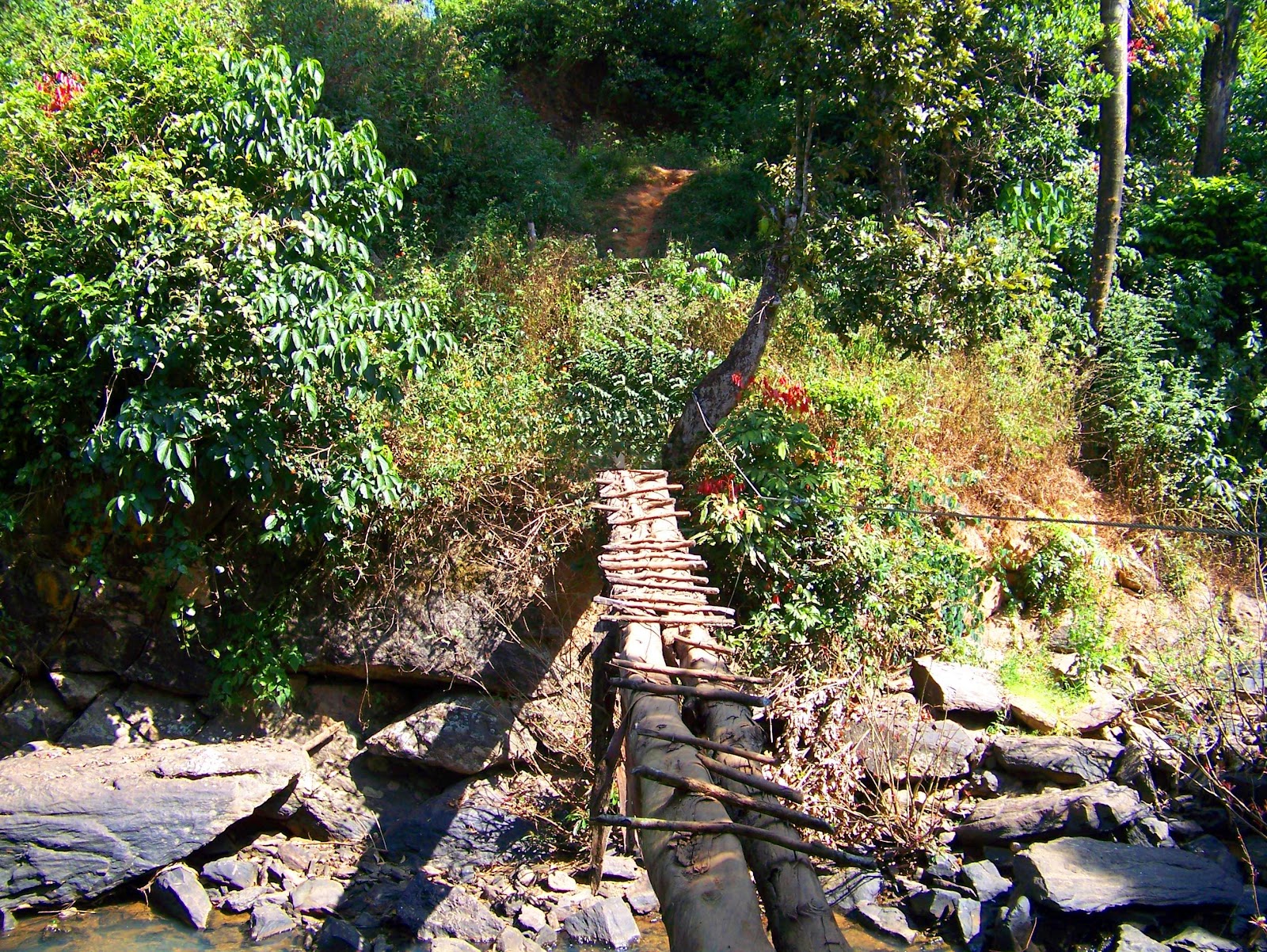
It is in this route, that one has to cross a brook in order to reach the waterfalls. When I say a brook- it is not a small stream that you can jump across; especially during the monsoons. One needs to walk over a carefully laid wooden bridge holding tightly onto nothing more than a thin steel wire..!!

The Bridge across the brook

This is a bridge which is not meant for the tourists and that is why it continues to remain unknown. This bridge is actually one single tree kept across the river carefully. It was laid across with a purpose of providing accessibility to the nearby villagers who could not afford a taxi for daily commutation.

And among these villagers, the one who stands out is “The Superman- My Grandpa”. He is the sole man behind the existence of this bridge. From selection of the finest tree(neeredithakai Mara- in Kodava Thakk), to gathering labourers to pull it all the way up from his estate to the river bank and putting it across the rivulet(about 60 feet wide)- he is the only mastermind behind it all..!!

I recollect faint memories of sitting by the side and watching all this action as a little girl… Some 25 odd men pulling the tree up the sloppy estate, I lending a squirrel’s help with my tiny hands to my grandpa in his mission, getting a pat on my back for my hard work.. And once the bridge was done, I remember the days when grandpa used to hold my hands tight and teach me how to cross the river.. It just fills my heart with coldness…


Walking over the wooden bridge

This bridge stands strong till date- even after bearing all seasons for more than two decades now.. It is become a part of the villagers’ everyday life… Though it was built with the idea of having easy access for grandpa to reach his estates every day, he did not restrict it only for himself. It was open for the public too, helping all the villagers living around this area. This truly stands out as a symbol of his greatness… And I miss him so much every time I walk this way or I hear of people speak of this great man..!!

Update as on 10-July-20:

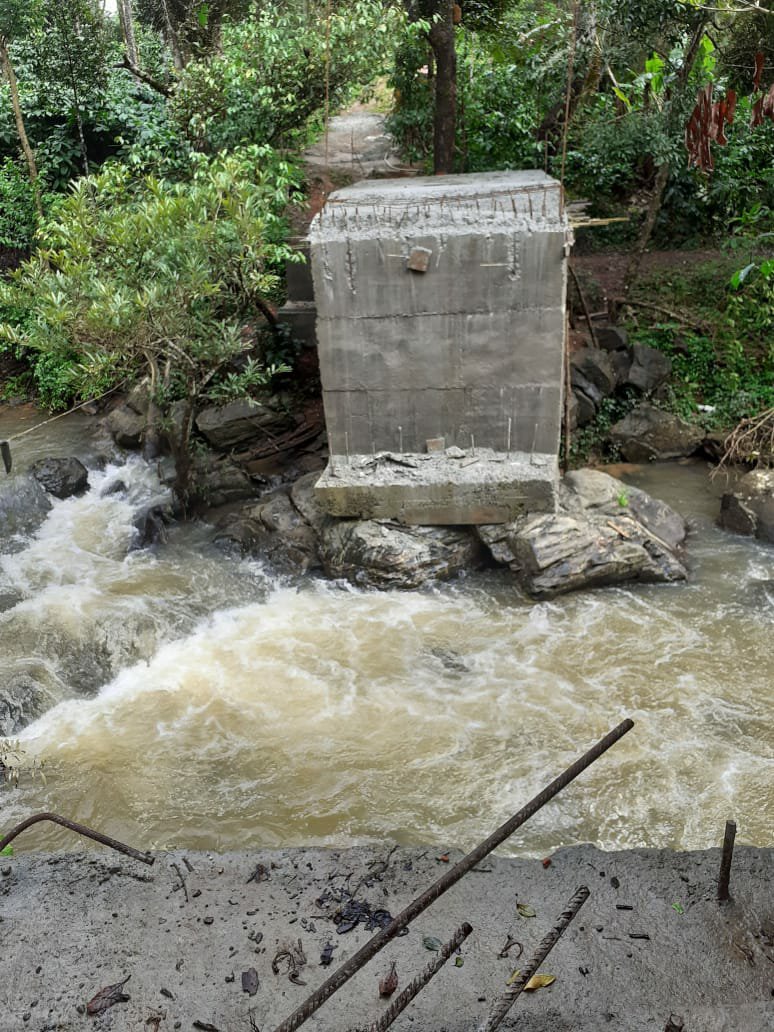
The wooden brooke that connected worlds for so many decades is now gone. A concrete walk bridge is underway. Thanks to the lockdown due to Covid19, the work on the bridge has stopped and there exists none at the moment.

img-20200712-wa00184714343028133359887.jpg
A concrete bridge underway

Stay tuned for updates….

Monsoon retreat- Jog falls

‘Jog’ is a charmer on all Karnataka tourism promotions. Why not? It’s the second highest waterfall in India after all! A glimpse of the mighty Jog at least once in a lifetime is an unwritten rule for every person born or living in Karnataka. And why not see it take a plunge in all its might? This exclusive visit could happen in no better time than the monsoons. So, my mother, brother and I planned this weekend trip to see the Jog. such that we could reach Shimoga by 6.00.a.m.

Our itinerary:
Day 0: Leave Bangalore to Shimoga (Overnight bus)
Day 1: Shimoga to Sagara (local transport), visit Linganamakki dam and hydroelectric project, The Jog falls, Tyarekoppa Lion & tiger safari. Return from Shimoga to Bangalore (overnight bus)

The details:
When we reached Shimoga in the morning, it was pouring not just cats & dogs, but also cows & buffaloes. A jeep’s ride had been arranged by my mother’s colleague to take us from Shimoga to Sagara town. The rains were so heavy that we could barely see the road ahead. With that, we would fall into just every other pothole that was covered under the flooded roads. Finally, we had managed to reach Sagara, the nearest accessible town to Jog falls.

Once there, we thought to see the Linganamakki Hydroelectric project that falls on the way to Jog. There also used to be a cable car ride down the reservoir that we were interested to go on. Unfortunately for us, our visit was timed just about when permission to visit the project was cancelled for some security reasons. Nevertheless, the view of the Linganamakki dam and the scenery around almost evened up for the miss.

Views of the Sharavati project around Jog falls
Top: the view of Sharavati valley; Below: The Linganamakki dam

And then, with an uphill drive of about six kilometers, we reached the place which was the sole motive of our travel from Bangalore. “The Jog”!! But, there was more disappointment awaiting us on our arrival. It was something that caused us total dismay…!!! The clouds paired up with thick mist had enshrouded the waterfalls completely. And our entire surrounding had just blanked out with mist. There was absolutely nothing in front of us except the mist and more mist… To top it all, it was raining cats and dogs. There was no Jog, nothing. ‘What an unfortunate day for us’, we thought and decided to return after a futile wait.

We turned our backs and started to walk towards the jeep with a heavy heart. As we did, I just happened to turn back and check on our luck with the waterfalls. And yes…. we were LUCKY…!! The mist was slowly clearing out… And we could faintly spot the Sharavathi streaming down in full action.

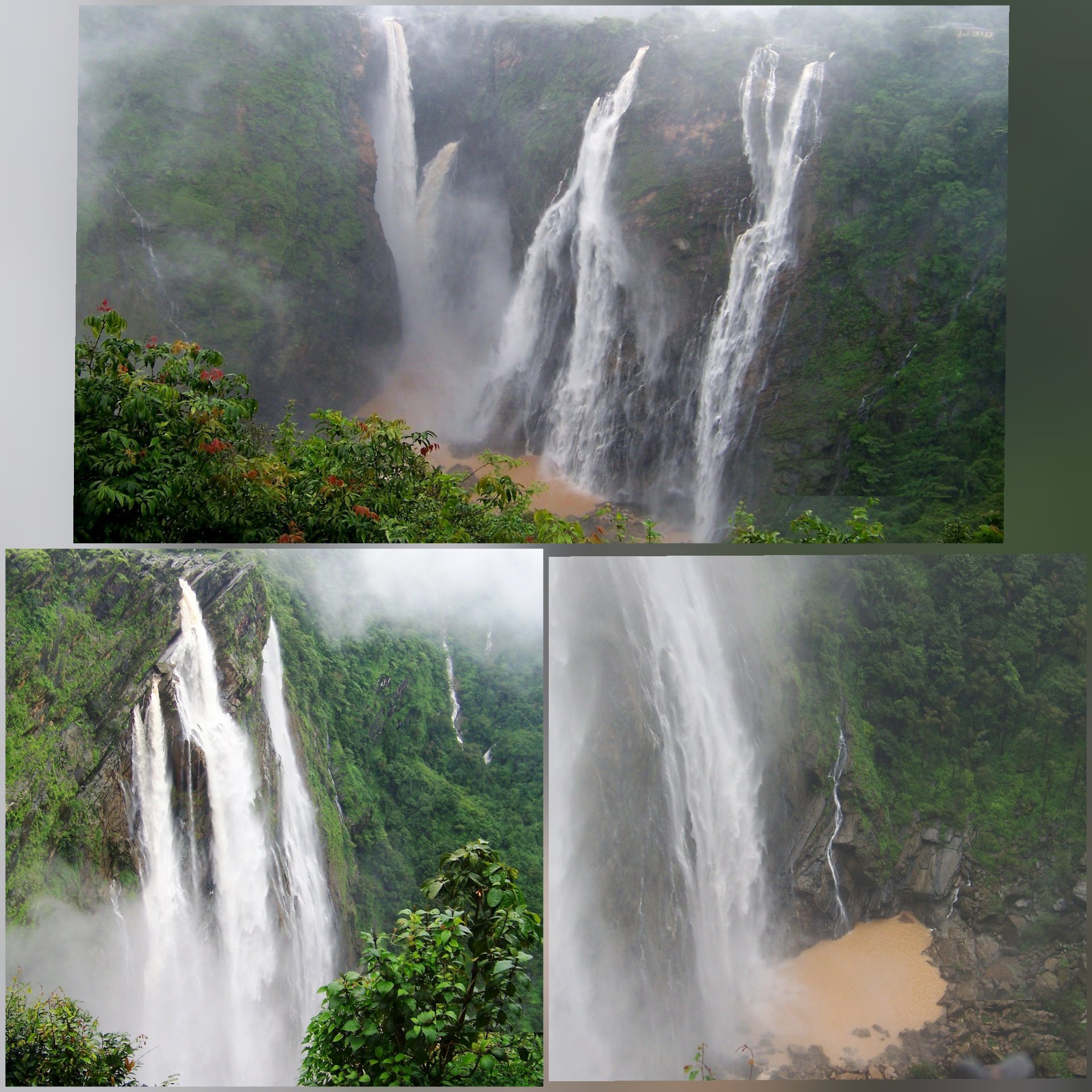
As we stood for two minutes more, the view was then all clear: The Mighty King (Raja), the Graceful Queen (Rani), the Thunderous Roarer and the Storming Rocket – YES… We saw them! We felt a great sense of achievement, very contrary to what we had felt just a couple of minutes ago. While we got some nice clicks, the mist enclothed the falls, back again. We waited for it to clear out to capture a few more photos because this time, we knew that the action was repetitive.

Jog falls in monsoon
Jog, from different view points

After a while we walked around to get different views of the falls. We went to the top of the waterfalls, walked down closer to the bottom of the waterfall, locatiosn from where we got the side view of the Jog, and so on… It was quite an adventure in itself to get around these difficult spots, especially considering the heavy rains and the slippery path. But, the excitement of getting to these locations was all worth the risk! After having an eyeful and heart full of ‘The JOG falls’, we decided to say good-bye to the place.

On our way back to Shimoga, we visited ‘Tyarekoppa Lion & tiger safari’. Along with spotting a lot of deer, sambars and peacocks, we also counted on the big cats like the lion and tigers on a safari ride. It wasn’t a typical safari you would have in the wild, but it was more like taking a ride inside a fenced enclosure. But, it is a well maintained place and great if you are travelling with children.

Tiger safari near Shimoga
Roarrr, a tiger at the safari

And that was all the time we had with us. We had almost reached the end of a fun day-Sunday and we boarded the bus back to Bangalore at night. We had to gear up for the crazy week that was awaiting us…

Conclusion: An experience of the monsoon in the western ghats and a glimpse of the Jog in the monsoon are retreats that should go into the bucket list of everyone visiting India.