Tag Archives: North Karnataka

10 offbeat things to do in Hampi

From a tourist’s perspective, Hampi can be broadly divided into two parts, separated by the Tungabhadra River. The heritage site of historical ruins is in the Vijayanagar district, whilst places of mythological importance and most homestays offering local experiences are concentrated in the Koppal district side (This is popular as the Hippie island). So, if one is planning a trip to Hampi for the first time, this geographical classification should provide you with a brief idea before you arrive there.

Everybody knows Hampi and there is enough content widely available on places to explore in this historical town. But here are some lesser-known experiences that I loved during my repeated visit to this UNESCO heritage site.

1. Sunrise at Matanga hills: How much amazement can your voracious vision hold? “Boundless” defines the view from the top of the Matanga hills. It was a dreamy view of the entire historical town in its ruined form scattered across the river flowing from one end to the other. And adding to the already picture-perfect frame was a bloody red rising sun in the backdrop. This is by far the BEST sunrise of my life. The early morning climb up the hill and the wait in the cold winds was so worth it that I had goosebumps watching the magic unfold.
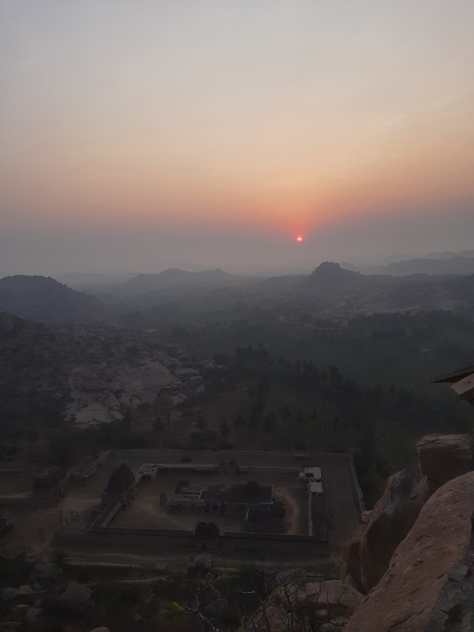
Sunrise at Matanga hills

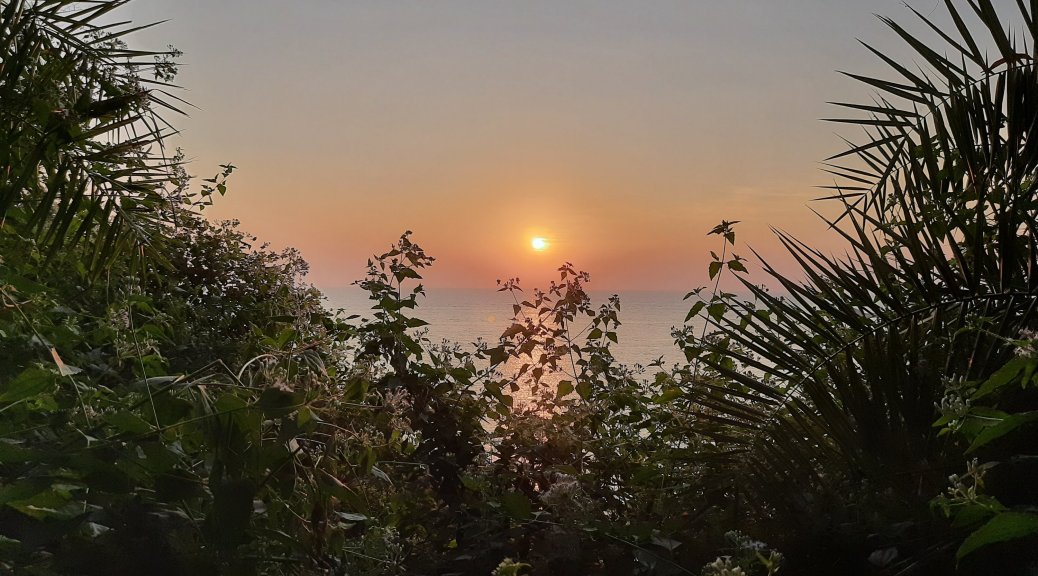
2. Sunset at Hemkuta hills: A short ascent to the rocky hill by the side of the Virupaksa temple leads you to this best spot to catch the sunset at Hampi. Comfortable benches or the grainy-pebbly ground, you can choose the surface to just lose yourself in experiencing the glorious horizons of Hampi turn from Indigo to blue to misty to bright to rosy to a star-studded sky.
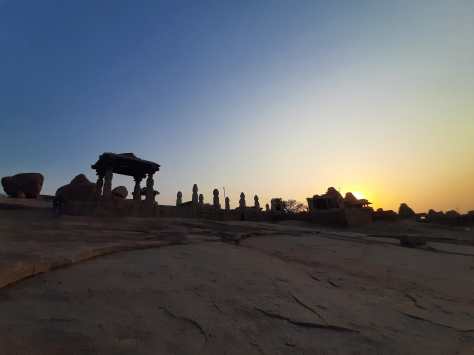
Sunset at Hemkuta hills

3. Bathing in the canal water: This is a closely guarded secret. There are irrigation canals passing through the villages in which you want to enjoy a quick dip, only if you befriend a local. If you do not get to enter the water, no worries, simply sitting by its side and seeing the time go by itself would be so comforting.
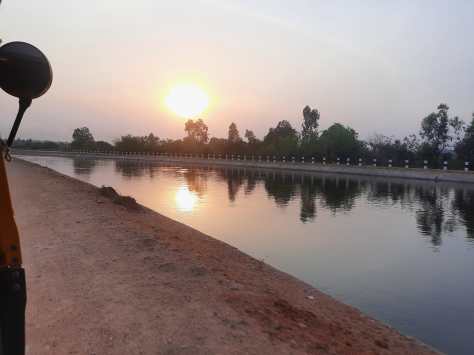
Water canals of Hampi

4. Coracle riding & elephant bathing: The river flows right behind the Virupaksa temple, and the temple elephant has a daily schedule of taking a shower in the river. Time your visit right and you can lend your helping hand too. A small ticket can help you cross the river on a coracle-a traditional round flat-bottomed boat built by knitting seasoned bamboo or cane. You can also see locals transporting their bicycles and motorcycles across the river through these boats.
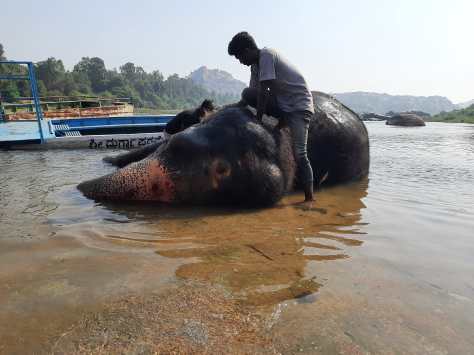
Elephant bathing in Tunga river at Hampi

5. Cycle tour around the historical monuments: Several shops rent out bicycles to tourists. If you have a tourist map in hand and the luxury of time, trust me, it is one of the highly recommended ways to explore Hampi. For a little more comfort on a sunny day, you can opt for an autorickshaw with a good driver dueling as your tour guide.
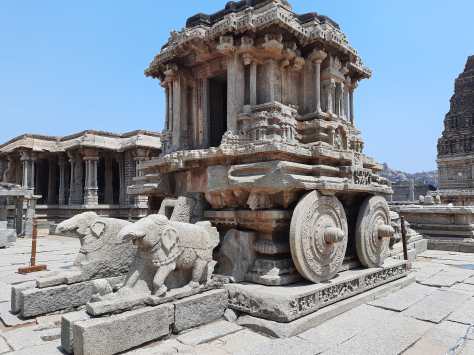
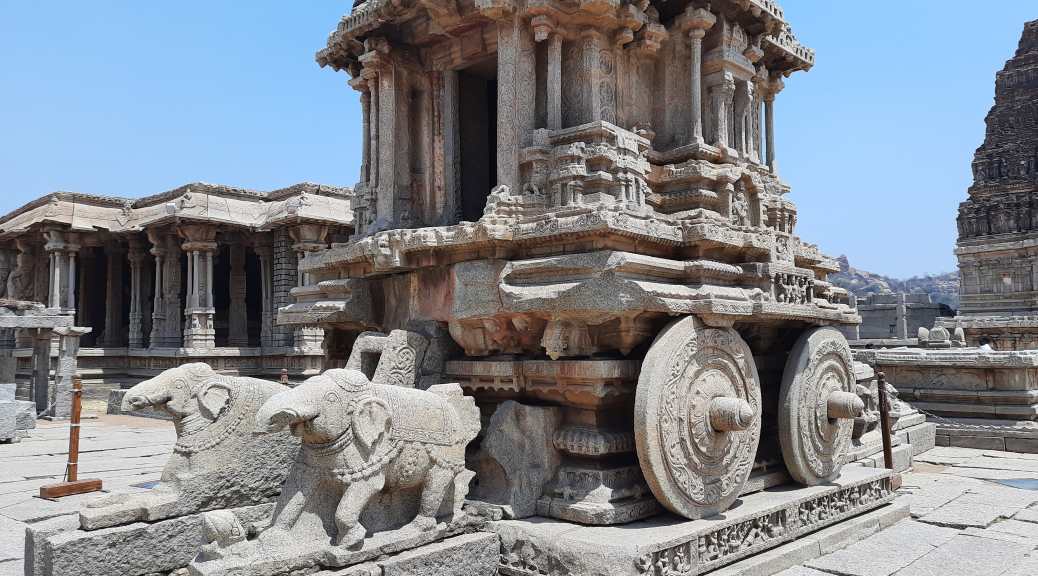
Stone Chariot- Hampi

6. Sunrise at Anjanadri Betta: Believed to be the birthplace of Lord Hanuman, it is frequented by pilgrims which tends to receive higher footfalls as the day progresses. So, if you make it to the peak of this hill as early for sunrise, you can enjoy the view of the surroundings in peace and calm.

7. Sunset at Bala Anjaneya Betta: Another popular spot in the hippie island, it is best when visited during sunset.

8. Bouldering: This area is part of the larger Deccan plateau, and the rocky boulder terrain forms its core geographical feature. Short workshops in free hand bouldering is a great way to either learn a new skill or simply let the inner monkey in you to hang around in the land of the monkey kingdom (it is the birthplace of Lord Hanuman after all).

9. Bike riding in the paddy fields of Gangavathi: Gangavathi is called the rice bowl of Karnataka, and this is where you can see infinite stretches of green paddy fields. Now imagine large boulders and bare old trees standing scattered across these green fields as if they had witnessed all the stories of the past. And then you cut across on a moped or a motorbike casually soaking up this view. Trust me the views will linger in your mind long after you leave Hampi.

10. Cliff jumping & Coracle riding at Sanapur lake: This is not really a lake but the backwaters of a reservoir. It offers amazing activities to get your adrenaline rushing while you jump off a cliff to the depths and a crazy coracle ride along the rapid of the waterbody. A must do while you are on a trip to Hampi.
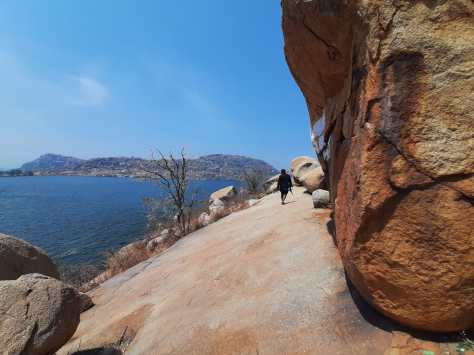
Sanapur lake
Sanapur lake

Are you going to try these experiences on your next trip to Hampi? Or what else have I missed out in this list? Tell me in the comments below.

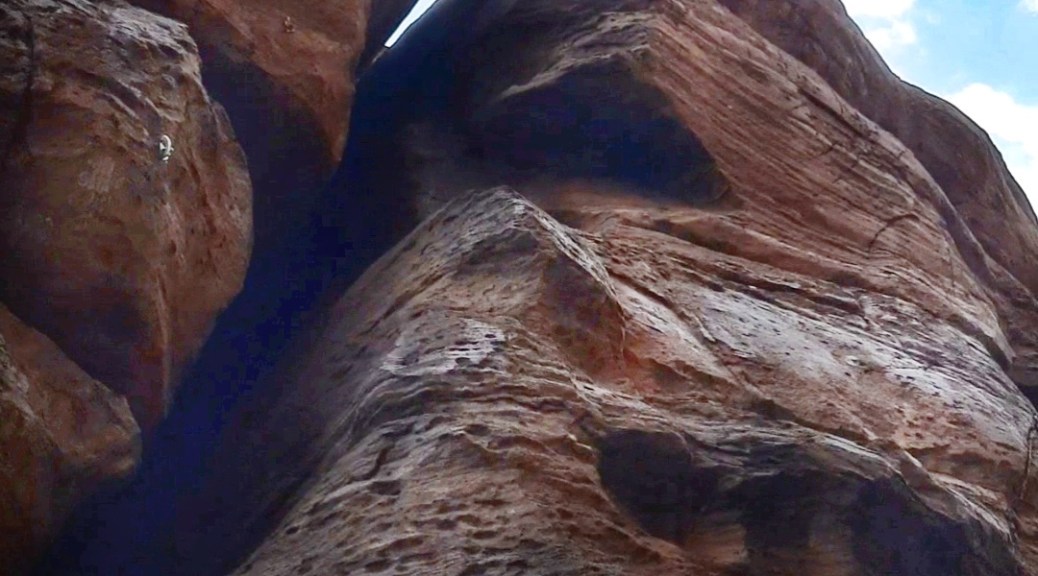
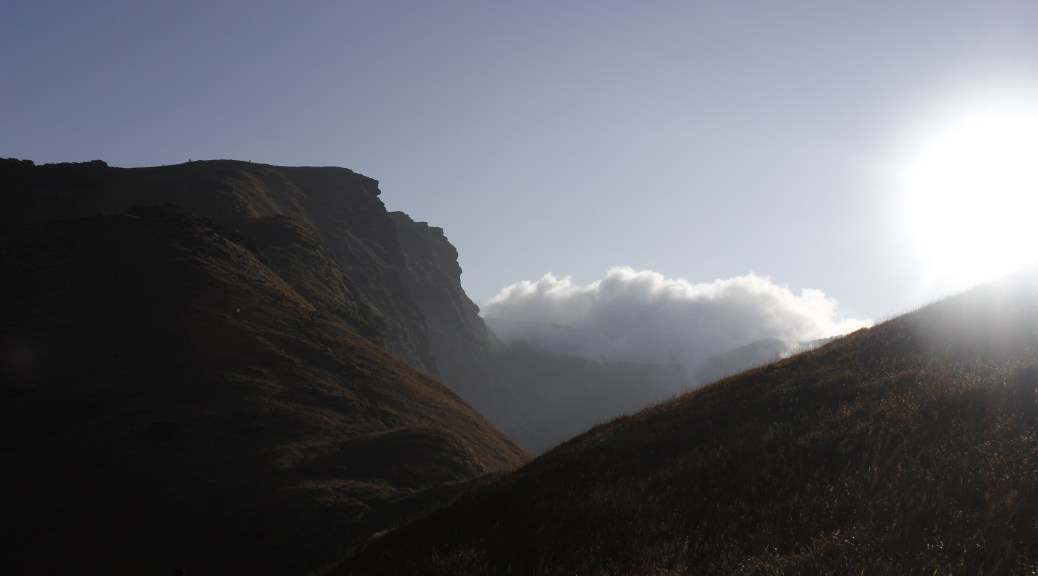
Rock Climbing Weekend at Badami

During my tenure as a freelance outdoor leader, the organization that I was working for had arranged an adventure outing for all the leaders to catch up for one weekend. The itinerary seemed interesting but I could not join the team due to personal reasons. When the pictures from the tour were shared in the common group, I had myself filled with regret and envy for not joining them. One photo was of a participant hanging down from a massive rocky hill which triggered me to plan my own trip to finish the undone.

When I did a bit of research on other destinations to learn rock-climbing, several options appeared from locations nearby to Bangalore. But nothing could match the one at Badami in Karnataka. Apart from Badami being a UNESCO site of heritage, its rocky mountainous terrain is popular among climbing enthusiasts. Technical courses in various difficult levels of climbing, from entry to professional are offered by a couple of well-known trainers in Badami. Well, I combined my trip to Badani with a visit to Hampi, but that is for another story. I contacted one of these trainers, booked myself a weekend slot for a beginners’ course and arrived at Badami one morning.

As told, I arrived at Ranganathana Gudda, on the hillocks where my course was supposed to be conducted. Since the weather can get very hot by mid-day in this region, all climbing activities are usually conducted during early morning and late afternoon hours. The surrounding rocky hills cast a shadow at these hours, and this shade provides a cool environment for climbers in an otherwise arid climate of Badami. With safety harness around my waist, climbing shoes, helmets, and chalk powder on my hands, I felt like a warrior ready to enter a war field. I attended four sessions spanning 2 days and completely loved it. Under good guidance, I was able to quickly leam the knack of rock climbing with ease even as a beginner. The overall experience was utterly amazing and worth all the hype and urge I had created within myself to try my hands at it.

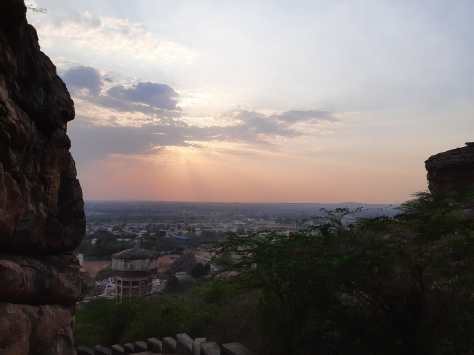
Sunset from Ranganathana Gudda- Badami

For first timers in Badami, the gap hours between climbing sessions can be utilized to explore Badami’s historical and cultural heritage. It is amazing and impressive. However, I decided to skip all of it this time because I had been to Badami before exclusively for cultural exploration. This time I decided to just relax in the comfort of our hotel (Mayura, Badami) rather than drain our in the scorching heat of the March Sun after the morning climbing session and just soak up the tranquility of the setting sun from the Ranganathana Gudda post the evening sessions.

Along with all the above wonders to be experienced again, what will bring me again to Badami is to experience the full moon night’s camping and hiking over these rocky hills. This was a discovery I made only during this visit and hence could not prepare for it. A full moon night’s view with bonfire to keep us warm with our tents pitched up above there is only a vacation I manifest to happen soon.

The Hoysala Trail 2- Belavadi

In my wish list to visit as many Hoysala temples as possible in this lifetime, this is the second documentation. I started this series with the temples of Belur and Halebidu, as these were the erstwhile capital cities of the Hoysala. I will move on from there.

Continued from The Hoysala Trail 1- Belur & Halebidu

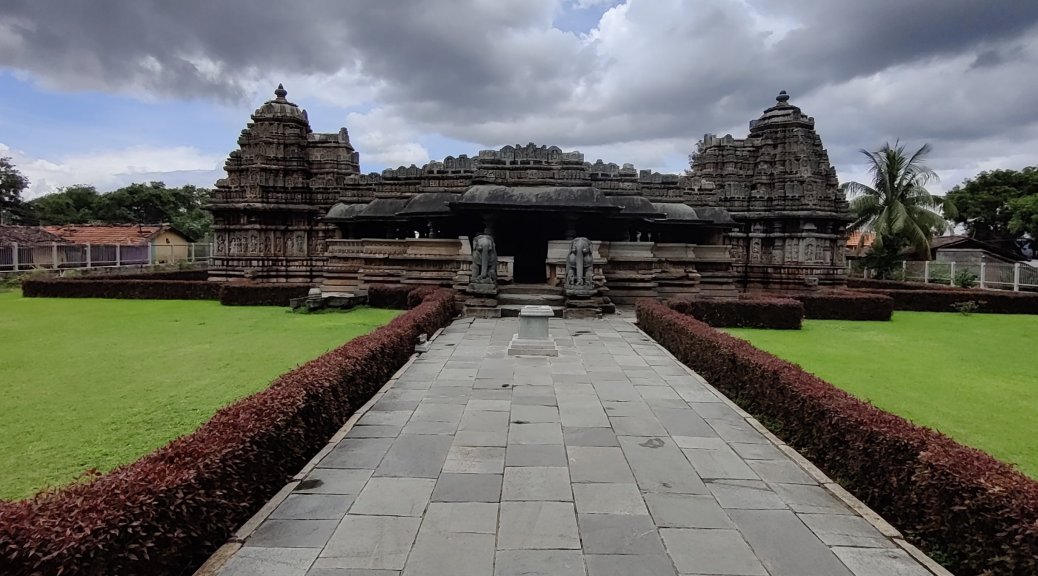
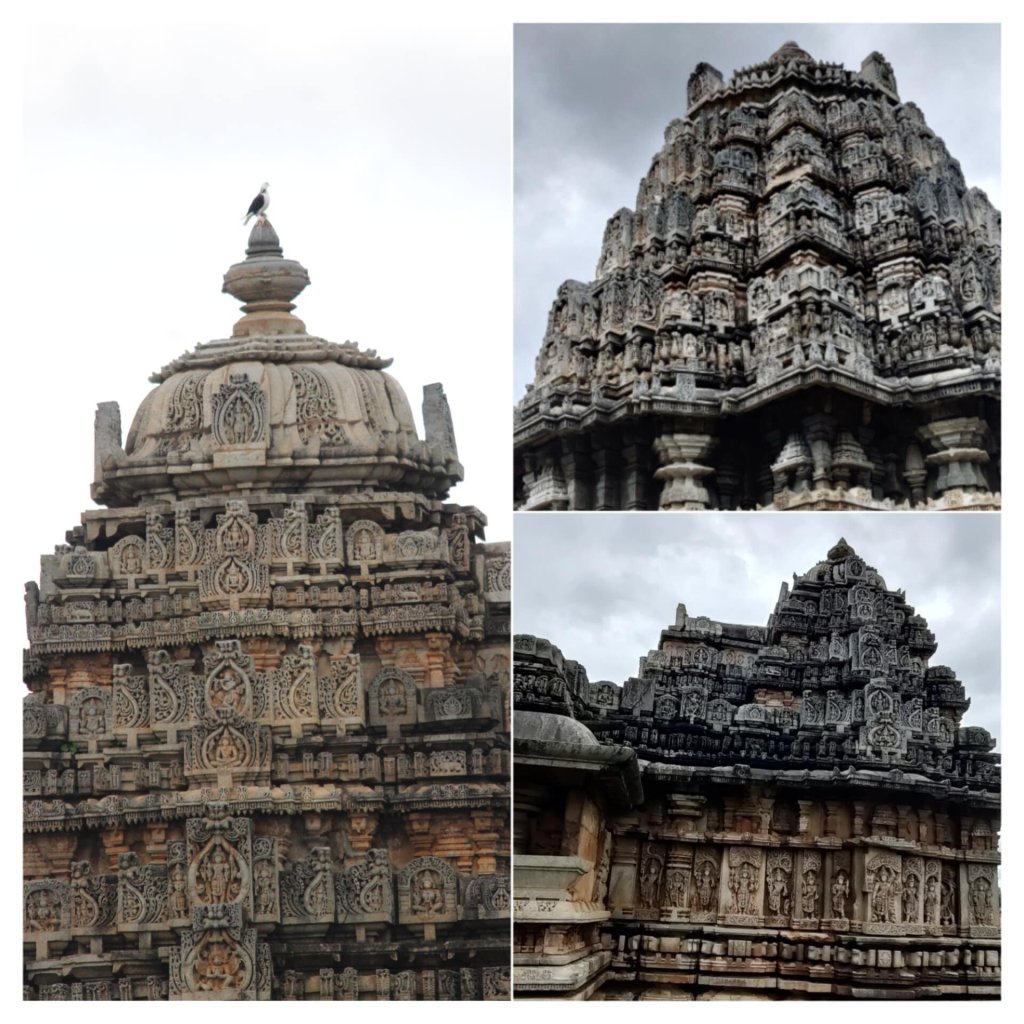
Belavadi is a quaint little village located approximately an hour away from the Hoysala capital town, Belur. The Veera Narayana swamy temple of Belavadi is one of those where the main idol of the presiding deity is still intact and regular prayers continue to be offered. The intricacy of the artwork on stone is very similar to that of the temples at Belur and Halebidu.

Veeranarayanaswamy temple, Belavadi
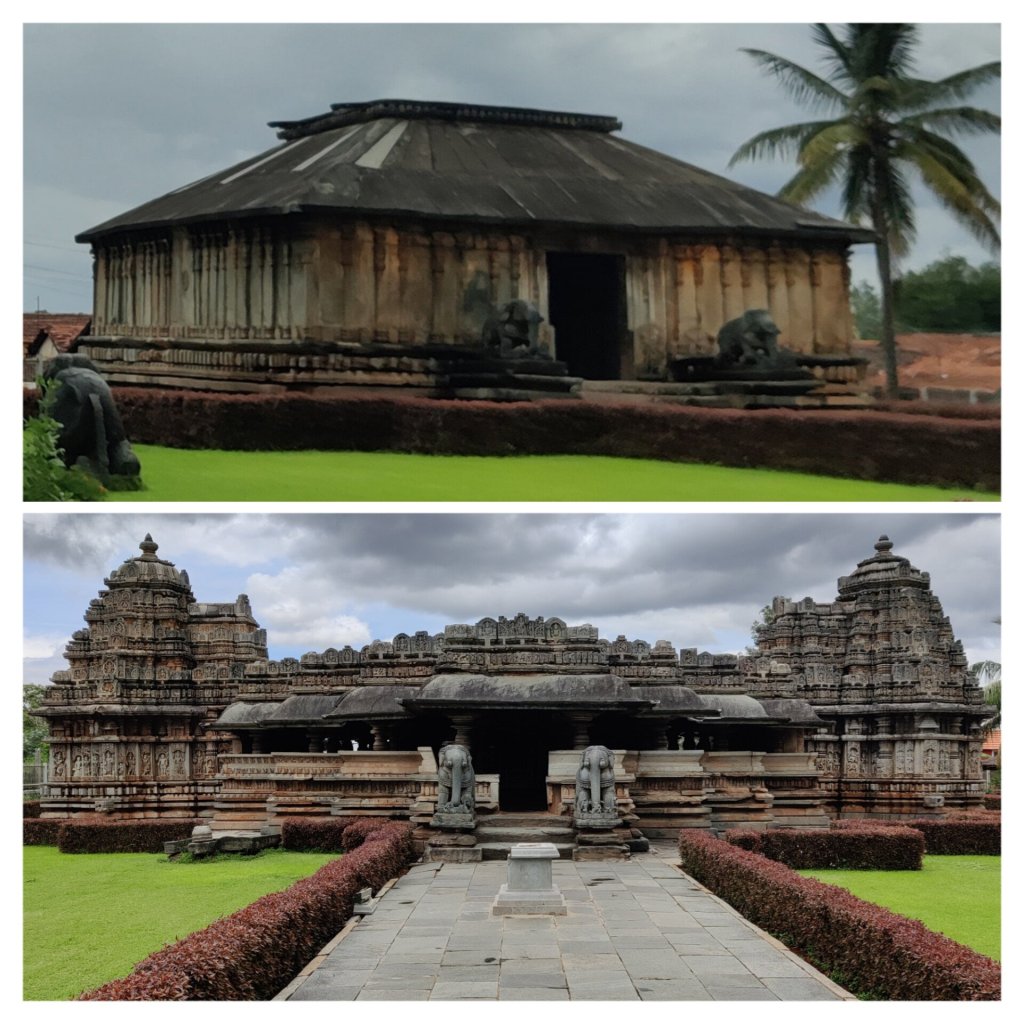
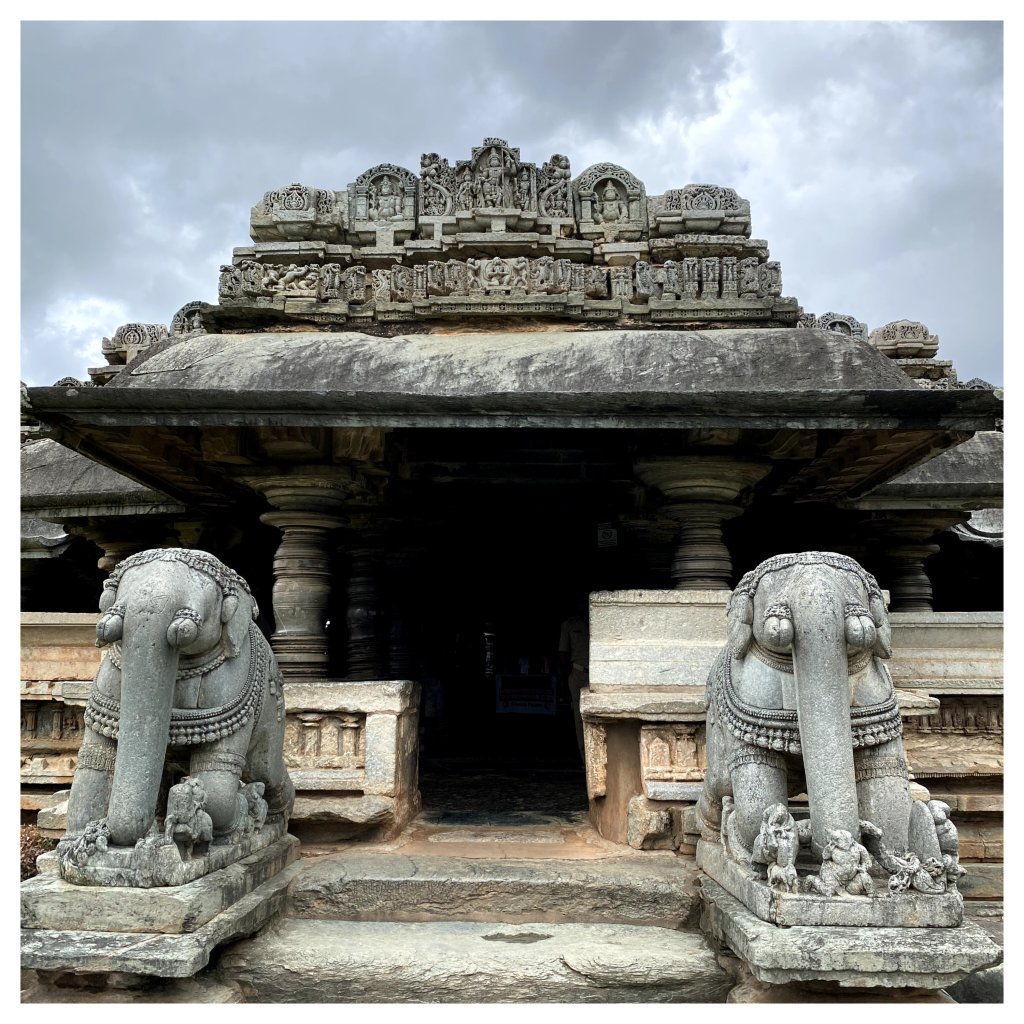
Images: Veeranarayanaswamy temple, Belavadi Top: Outer entrance gate to the temple Below: Inner entrance to main shrine at Veeranarayanaswamy temple, Belavadi

Unlike the main Gopuram (temple tower) at Belur, the entrance gate at the Belavadi temple is small. There are two ornate statues of two elephants that greets you inside. The sculpture on the outer wall is simple and minimalistic. as you enter, you notice that the inner walls are plain. It is possible that these were stolen, vandalized, or lost over the course of time, only historians can tell me better.

Veeranarayana swamy temple, Belavadi
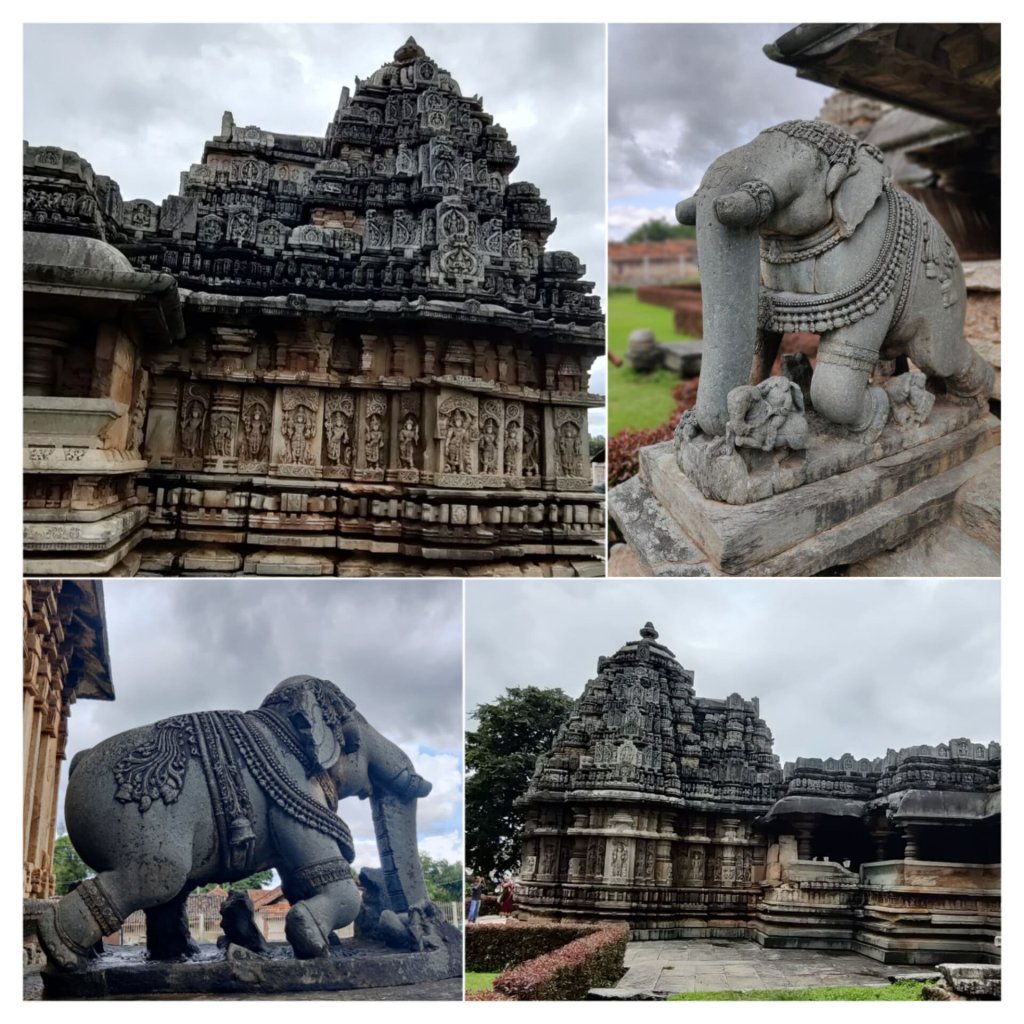
The sculptures on the exterior of Veeranarayana swamy temple, Belavadi

As you walk past this entrance gate, arch you pass the courtyard and are greeted again by a pair of standing elephant statues into the main temple that encompasses the shrines in the trikuta style of temple architecture. The three shrines inside houses idols of Lord Vishnu in three different forms. Huge lathe turned stone pillars and walls bearing fine and intricately carved figurines adorn the inner walls of the temple where photography is prohibited at the time of my visit (in July-2022).

Veeranarayana swamy temple, Belavadi
The Trikuta temple towers at Veeranarayana swamy temple, Belavadi

The outer walls are equally gorgeous too with intrinsic stone carvings and embossings all over. Due to limited permissions for photography, my photo story here consists only of photos of the exterior of the temple, but more than sufficient to give an idea of this marvel.

Veeranarayana swamy temple, Belavadi
The inner and the main entrance of Veeranarayana swamy temple, Belavadi

Also, a walk around the tiny hamlet of Belavadi is highly recommended. I loved the unique design of these traditional houses that emanated a vibe of an old world.

To be continued as Hoysala Trail 3

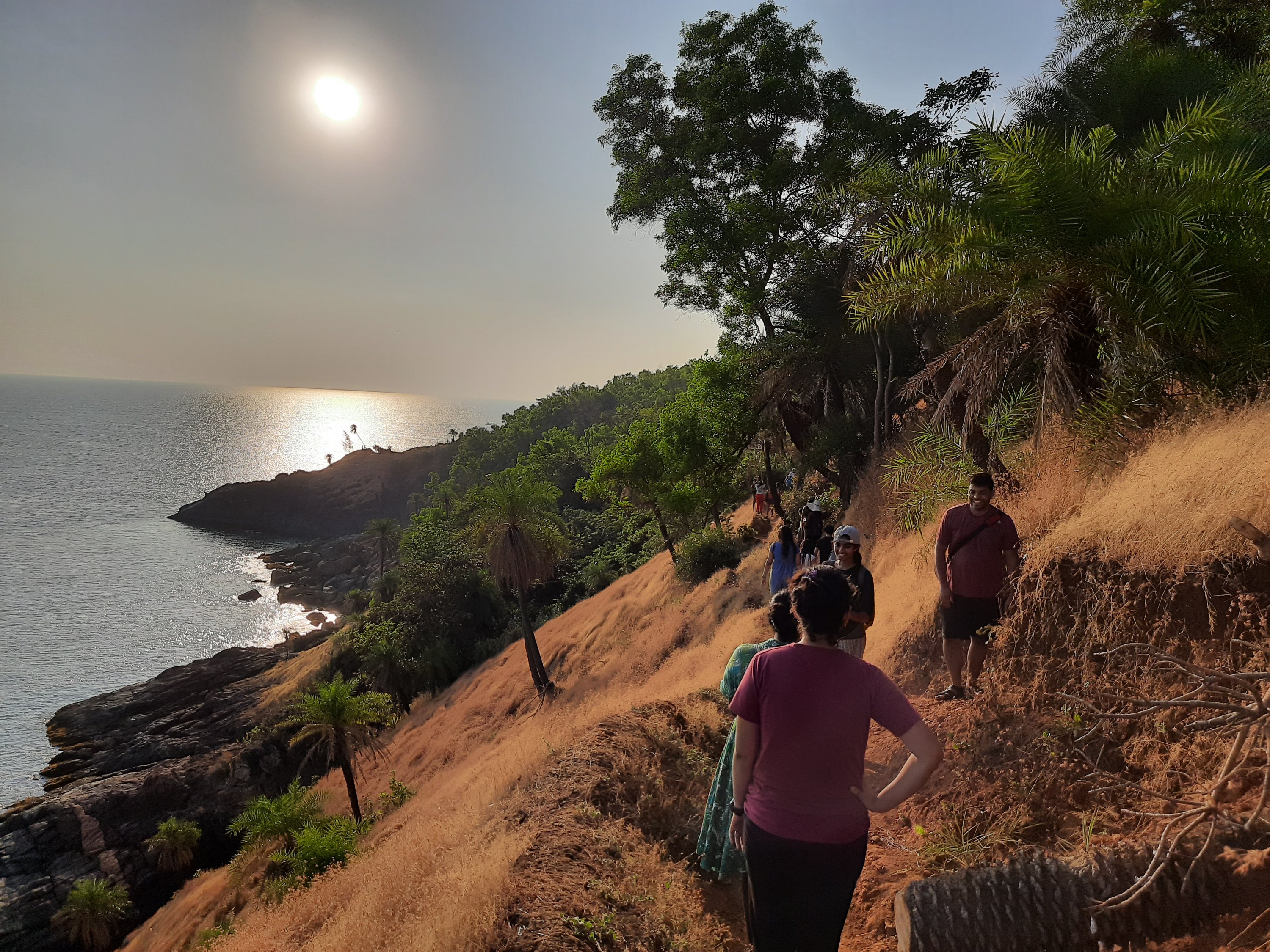
My First as a Trek lead- Gokarna

When you feel things are not going right, life has its own ways to heal its kids, you see? While I was feeling morally weak, an unexpected trip to Gokarna was awaiting my way. This time, I was going to lead a group of people, or at least assist a leader with ‘Plan The Unplanned’. With many firsts of experiences in its kitty, I was looking forward for this weekend trip.

So, after braving the outbound traffic on a Friday evening, the group of 25 of us left Bangalore and alighted at Gokarna the next morning. Blame it on the bus driver or the roads, 11.30.a.m. was late by all standards to reach Gokarna for the team that left GGpalya at 11.00.p.m. on the previous night. Anyway, that’s where the leadership aspects began to be tested. Considering that we were 3+hrs behind schedule and all 25 in the group were first time hikers, controlling the overall time to cover all that was mentioned in the itinerary was crucial.

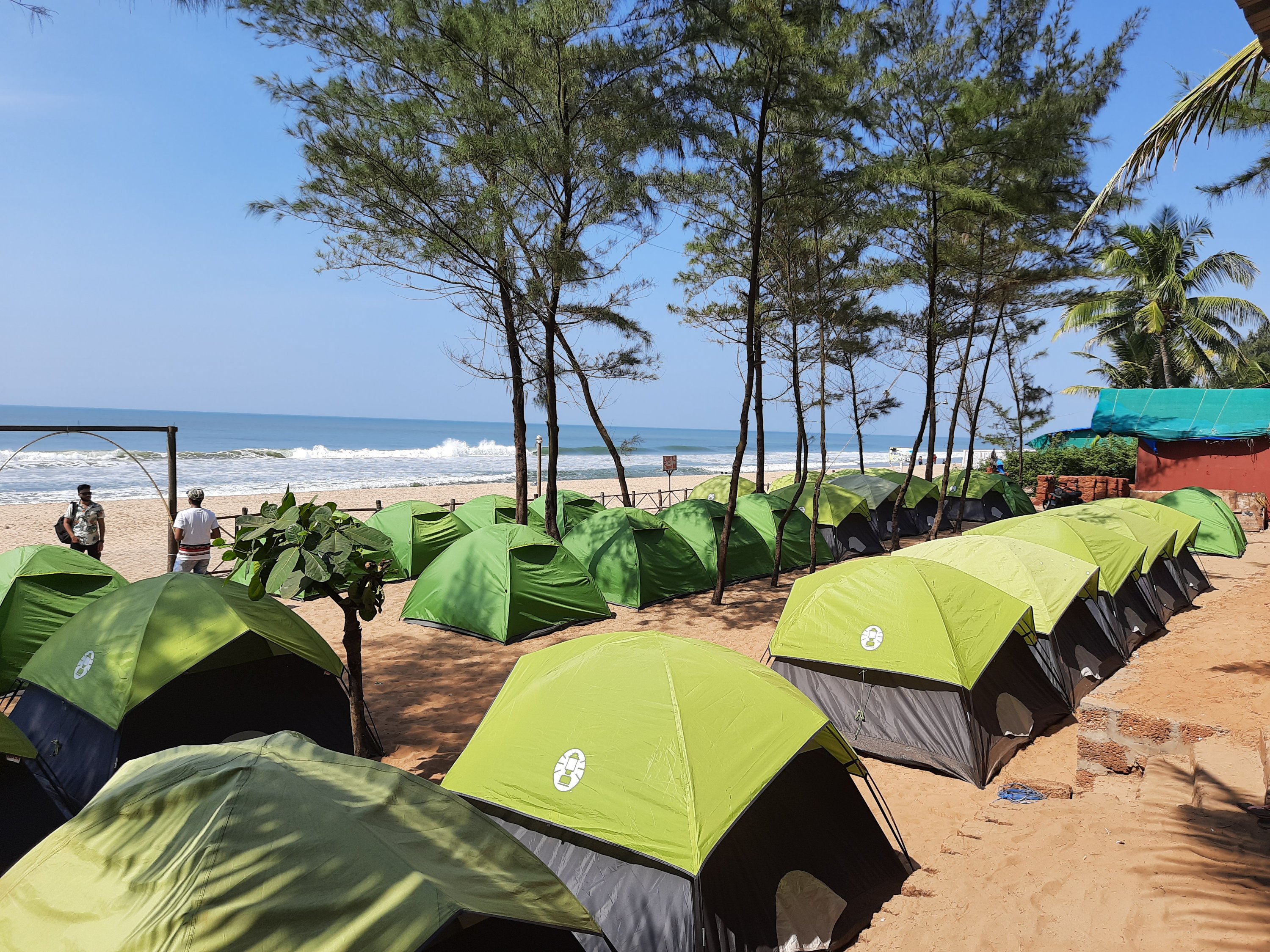
That said, we checked-in to the campsite where our tents were pitched by the seashore. Without wasting much time, the team freshened up and started the hike quickly after a filling breakfast. A minibus took us to the start point of our hike- the Belekan beach. From there, the actual weekend started to unfold. Since the internet is filled with itineraries for a Gokarna trip, I will not add another one to them. Unlike my usual style of writing long detailed posts, I’d like to keep this short and to the point.

20191214_1202132936725430722663151.jpg
The beachfront campsite at Gokarna

For the experienced trekkers, this was merely a walk along the coastline. But even for them, the small stretches of forests opening to amazing views of the blue sea now and then made the walk worthwhile.

Despite being late, we caught up with the schedule and spent ample time to take a swim in each of the beaches along the trail. Paradise beach for a snack break (fresh tender-coconut water and cut-pineapple with masala are a mandate on any Indian beach), Half-moon beach for a filling lunch (The beachside shacks serve an array of cuisines catering to its large visitors’ base from across the globe), Om beach for chasing the most mesmerizing sunset of the year, Kudle beach for a sumptuous dinner and finally walking along the Gokarna main beach to reach our campsite on a moonlit night… We spotted dolphins from the rock of peace, something that I had been wanting to see for the longest time. And then, I got that long pending hair braid done by a beachside vendor (Click here to read about it in detail). These were the highlights of my beach walk. Until then, I thought my day was GREAT!

20191214_1648531958167003538987319.jpg
The hiking trail between paradise and Om beach

But wait, my co-leads took it up a notch higher. It was late into the night by the time the team had settled down in their tents. And I too was settling down to call it a day. By that time, my co-leads asked me to ditch my tent for the night and join them with my sleeping bag on the beach. The beaches of Gokarna are infamously known only next to Goa for having some badass drunken hippies strolling around. I did not want any misadventures on my first assignment as a lead. Although I was a little hesitant to do something wacky, I soon hit the sands with my co-leads and a fellow traveler.

Just in a bit and even before I realized it, I was sleeping under a clear sky, watching the stars. Well… watching a meteor shower! It was that night when the Geminids meteor shower was at its peak. We laid on the beach counting the number of shooting stars. When only one of us saw the meteor, the others would pull her leg telling that she was hallucinating. When all of us saw it together, we would shout in unison scaring away a few drunken people loitering around the beach. They would wonder who was drunk 😀

Eight… Nine… Ten… We counted the number of stars until we fell asleep to the lullaby sound of the waves. When I opened my eyes again, I was lying on the beach and seeing the white lights from the distant ships disappear into the light of the breaking dawn. This beach experience is something that killed it for the mountain girl in me!!! Only because I could strike a similar chord of interests with an awesome pair of co-leads and I can’t thank them enough for the night!

Yeah, managing a large group comes with its own set of challenges. Managing medical emergencies in the middle of the trail, accommodating quick changes in the itineraries and finding alternate destinations when abnormality struck were the unexpected things which I believe we handled with diligence. All said and done, the trip has been a memorable one in more than one way and a thumbs up to my new journey with Plan The Unplanned 😊

Join me in my future expeditions with Plan The Unplanned. Click here to sign up!

365 days around the state- Wild Karnataka

03-Mar-19: I was extremely sad that I had missed the premiere screening of this much anticipated documentary. All I knew was that it was a project based on wildlife and had not much idea about what to expect apart from the Tigers which grab the limelight in almost every other content made on wildlife conservation. ‘Even then, it was the first time a government organization had come forward with an ambitious project as this, that too pioneered by my home state‘ I thought. I was excited! Luck came knocking at my door again when British council, Bengaluru center decided to screen it in their premises on 08-Jun-19. It was a Saturday, a workday for me. I registered, took leave and finally, there I was… I was going to watch a movie, solo 😀

Buckle up my dear readers, I’m taking you on a new journey through my ‘TRAVEL’ article. You can call it a movie review if you wish to. But for me, it is a journey across my home state, through the eyes of a wildlife enthusiast. Yeah, I thanked my previous travels for I was able to travel with the ‘team Wild Karnataka’ exactly the way they wanted its audience to travel along the storyline of its documentary. It is the story of the monsoons… It is the story of one year… It is the story of traveling from South to the north and then coming back along the coastline to where it all begins, in my home state- Wild Karnataka: It is a Travel movie!

The movie opened with aerial shots of the western Ghats, the breathtaking greenery and the mighty waterfalls these hills hold in them. And then, the story pierced right through these dense evergreen forests of the western Ghats. Welcome to South Karnataka! Location undisclosed, I assumed it was my hometown at the southern tip of the state. Somewhere, his majesty wandered with his family on their familiar trail in search of a watering hole. His familiar face with probably the longest tusks in India reminded me that he is an Instagram celebrity from the woods of Kabini. Not before the first drops of the monsoon reached his skin, his highness, the Royal Bengal tiger roared in a distant deciduous forest probably at Bandipur or Nagarhole. Karnataka has the largest population of the Asiatic elephants and the Royal Bengal tigers in the world! No, they didn’t grab the limelight and they silently disappeared into the mysterious jungle making way for the newer celebrities to grab their screen space.

The camera then traveled slightly north, with the langurs who were joyfully jumping across the rocky outcrops of the deccan plateau. A hundred times that I have travelled through this rocky terrain, I had never given it a thought that these scattered lifeless rocks could hold up so much life in them. Be it the peacocks who fought each other to woo their potential mate or the playful sloth bear cubs that were piggy backing on their mother at the Daroji sanctuary, they stole my heartbeats. As if these thieves weren’t enough, there was more awaiting in the grasslands of Koppala. The jungle cat mother was teaching her kittens to hone up their life skills in confronting a venomous spectacled cobra- and my heart was taken!

Giving due credits to the wolves and the blackbucks along the way, the familiar voice of the narrator visually transported me further north over to the western Ghats again, this time in Uttara Kannada. It was the season of love making and the great Indian hornbills had gathered for their mud bathing ritual with each one trying to win their mate. These high canopy forests are perhaps the only place where all 4 main species of the hornbills are found. Meanwhile in a nearby farm, there was another superhero marking his territory by gliding across tree trunks. Draco or the gliding lizards are like feathers on the crown of the wild heritage of Karnataka.

While the winter was over and the forests had bloomed in spring, the voice guided the audience under the water. The corals spawned and schools of fishes swam around freely along the 320kms long coastline of the state. Not many know that the Netrani island is one of the best dive spots in the country. By swimming through the Karavali, I didn’t realize that I had reached back safely to where I had begun. The elephant family joyfully welcomed the first rain of the next cycle!

As the evergreen watering hole of the Kabini began to revive with the monsoon showers, the plot went around the western ghats again, giving the Dholes their share of the screen space along the way. A yawning baby King Cobra emerging from its nest and the frog stretching its limbs to grab the attention of its mate were clearly the stars ruling the rainforests of the second wettest place in the country, Agumbe. A family of the smooth-coated otters somewhere along the riverbanks didn’t fail me to wonder where they had been hiding until then. The river terns from the Bhadra backwaters came in with a fresh breeze of air from across the borders.

After the unspoken celebrities of wildlife ruled the screen for the 52 minutes, it was as if God himself appeared before the audience in the end. Sir David Attenborough greeted the audience in Kannada. None of us present there could have asked for a better finish! A first for any Indian film, he has lent his voice for this movie accompanied with a heart thumping music score by Grammy award winning composer, Ricky Kej.

While justice is done with the team attempting to throw light to as many permanent residents of the state as possible, hopefully the dwindling numbers of Vultures at Ramnagara and Great Indian Bustard of Siruguppa along with the innumerable visitors who cross borders like flamingoes of Raichur, the pelicans and the spoonbills from Srirangapatna and so many others from the woods too find their screen space someday!

A wildlife documentary, as the team may wish to call it, it is perhaps one of the best travel movies I have ever watched. It is that one which got closer to my heart because it took me time travelling around my home state with a new perspective and is all documented with a talented bunch of home bred filmmakers.

Natural wonders of South India – My favourites

India has intrigued the world with its history, geography and culture- each individually dating back to several ages ago. I have been no different from the rest of the world. The LostLander has begun to embrace her landings after getting lost at random places in her incredible country. The more she is exploring her country, the more she has been discovering about its descendance and getting mind blown with new discoveries each time.

“The history of India’s physical geography is older than that of its civilization or even that of the human race. The subcontinent has been a distinct geological entity for millions of years. Therefore, to understand India, we must go back to the very beginning.”

-Sanjeev Sanyal

The fact that it is called as a subcontinent is associated to a larger theory of it being separated out of a supercontinent called ‘Rodinia’ and drifting apart from Africa, Antarctica and then Madagascar before it struck with the Asian continent. No, I’m not time traveling that far for now! It was just to put an exclamation to how amazing this country’s geography has evolved to be and what the natural bounty as we called it, has to offer in this beautiful country to an explorer… To take my article forward and with no biases, I divide the geography of this subcontinent into North and the South, just by drawing an imaginary line passing through its center, Seoni in Madhya Pradesh. Here is a humble attempt to take my readers through some of the beautiful destinations I have been to enjoy the natural marvels of Southern India. They are in random order and listed as and when I recollected them. For more details, you need to read my individual posts on them by clicking on their respective tags!

1. Kurusudai islands: Nestled off the coast of Rameswaram in the Gulf of Mannar, it is the only place in the world where the oldest and the last surviving living fossil is found in the world.

2. The table tops of Maharashtra: Be it the beautifully painted pink valleys of the Khas plateau, valleys of Matheran, Mahabaleshwar or any place thought of for a scenic drive for the Mumbaikars- have all formed out of large volcanic eruptions as the subcontinent merged with Asia. Not just that, these geographical features were strategically used by Shivaji to stop the invasion by the Mughals and hence called the Deccan traps.

3. Limestone caves of Andhra Pradesh: Belum caves, a part of a larger cave complex in the Erramalai region is the largest and longest cave system that is open to public. Similarly, the Borra caves is the deepest in the country. The speleothem formations are worth a visit which have formed due to continuous flowing of water over a thousand years, easily dating back to the Archaean age.

4. Gandikota: People call it as the ‘Grand Canyon of India. It is a beautiful gorge formed by the Pennar river as it squeezes from between the rock formation that has played witness to several kingdoms in history.

5. Eastern Ghats: Although I use a very generic term that specifies an entire region, they are older and mineral rich than their popular counterparts on the western side. All, again a resultant of several tectonic activities in the event of formation of the Indian mass.

6. Dhanushkodi: This abandoned town has more than just history of a cyclone. The revered ‘RamaSethu’ or the Adam’s bridge was formerly considered to be the largest Tombolo in the world and is believed to have formed due to the drifting of India and the Lankan land masses several thousand years ago..

Well… If all these have been the outcomes of several tectonic activities of the earth over a million years, there are yet several other amazing things that nature has to offer in the Southern peninsula.

7. Have you been to Wayanad in Northern Kerala? There is a heart shaped lake after a good climb up the Chembra peak in the western Ghats. It’s the nature’s way of telling ‘I Love You’!

8. Heard of the Barren island? It is the only active volcano in India, with the most recent eruption being in 2017. The sea area around it is considered to be one of the best dive sites in the world!

9. And then there is Baratang islands- It is the only mud volcano in India, situated in the Andaman group of islands.

10. Have you seen the Purple hills? Where do you think the Nilgiri hills in the western Ghats derive their name from? They’re so called because these green verdant hills are painted blue/purple (Neela in Hindi) by the Neelakurinji flowers, something that blooms only once in twelve years. The latest mass-blossoming being in 2018.

11. Cruised through the canals of Kuttanad? Mostly popular among the honeymooners and families alike for its backwaters and houseboats, what many don’t know about this region is that it is the only region in the world where paddy farming is done below sea level.

12. How about a boat ride in the Mangrove forests of the Bay of Bengal? The Sundarbans and Pichavaram forests are the first and the second largest mangrove marshlands in the world. A world heritage site that they are, an extremely important part of the ecology.

13. What happens when a meteor hits the earth? A massive crater is formed giving form to Lonar lake in Maharashtra. This Geo-heritage monument saline soda lake is the only high velocity impact crater lake on earth.

14. Seen the waterfalls of the Deccan plateau? Be it the Chitrakoot falls in Chhattisgarh, Gokak falls in Karnataka, Athirapally in Kerala or Hogeynakal in Tamil Nadu… They’re all so good they can give a good competition to the Niagara!

15. Heard of the Sentinelese tribesmen in the Andaman sea? They’ve long avoided contact with the outside world and their gene pool is believed to be one of the crucial links to early man and the evolution of mankind on the planet.

What India has to offer is abundant! And these are only a few places that I have been to in the southern India. Do you have any recommendations? Have I missed out on anything? I would LOVE to know… Please drop n your suggestions, recommendations, feedback in the comments section below 😊

Camping in the Indian forests of the African tribes- Dandeli Jungle Camp

Being abundantly blessed with natural beauty, Anshi National park and Dandeli Tiger reserve is one of the first hotspots of the elusive black panthers in India. Apart from its paper mills, Dandeli is also known as the ‘Rishikesh of the South’ for its river rafting in the waters of River Kali. As if these weren’t reasons enough for me to backpack, I got invited to stay at the ‘Dandeli Jungle Camp’. What better way to reconnect the lost bond with nature than camping in the woods? I jumped to grab-in when opportunity struck! This was a Solo trip that was long due, and I had alighted for sunrise at the Dandeli bus stand on a Saturday morning.

Itinerary:
Friday: Overnight journey from Bangalore
Saturday: Alight at Dandeli town, Drive to ‘Dandeli Jungle Camp’, Visit backwaters of Supa dam, Shop for some forest produces at the tribal shop, Visit Syntheri rocks, sunset hike at the homestay
Sunday: Birdwatching at timber depot, river rafting & coracle ride, (Visit Kavala caves or the Siddi tribal village if you have more time), Leave for Bangalore by evening (direct bus from Dandeli or by train from Hubli)

Details:

After a 30mins drive through the forests to Pradhani, a further off-roading of 2kms from the main road lead me to this simple homestay and camp run in the lap of nature amid the woods. The eerie silence of the elusive woods and the stridulations of the crickets instantly calmed my soul by responding to the deep calls of nature. A basic cottage with all the essential and neat amenities was awaiting me in the midst of the jungle overlooking a farm of areca and mangoes. I couldn’t ask for a better place to be, to feed the wanderlust and nomad in me for the weekend. I was excited to be greeted by Malabar giant squirrels and sambar deer at my doorstep to say the least. One can also avail their tenting facilities with bon-fire if it’s a bunch of friends traveling together. Mr. Dharmesh, the ever smiling owner of the property says that the camp was started by a French lady 3 decades ago from whom he has taken over so that he could settle down in the woods after he quit his well-paying job at one of the top-star hotels in Bangalore. He had planned a detailed itinerary for me, and I can’t thank him enough for his warm hospitality. After dumping my luggage and a nice lunch, I set out for some exploration.

View from the Supa dam backwaters

A stroll along the dwindling lonely road on the backwaters of Supa dam offered a panoramic view of the distant hills, only if there was good rainfall- it would have been a gorgeous sight. After a quick stop-over at the tribal shop to relish a glass of kokum juice and buy some jackfruit chips and papads to take back home, I was taken to Syntheri rocks. This is a very beautiful little place located deep in the woods and formed by rich mineral ores that have formed beautiful rock patterns by standing the test of time. A drive to the Kavala caves, A coracle ride in the ferocious rapids of the Kali river, a dip in the natural Jacuzzi, crocodile walk is some of the other activities included in the package that kept me busy through the day. An evening walk in the woods around the property with a personal guide was a memorable time spent identifying the calls of various birds and inhabitants of the forest. The large number of hornbills that fly into their nests in this forest with a small hike into the jungle at sunset or catching the sunrise from my window are only some of the fancy things that my stay offered to me.

Syntheri rocks
Syntheri rocks, Photo by: Gowtham Shastry

The next day, Mr.Dharmesh personally dropped me off for the early morning bird watching walk that was arranged at the Dandeli timber depot. This first time experience of birding is something that I will cherish for a long time and is written about as a separate post. A bird watching tour around the depot where over 150 bird species could be spotted on any given day- was the highlight of my trip to Dandeli!

So, the next big agenda was meeting the Siddhis- The tribal community endemic to the Kali reserve region who are believed to be of the African origin. Be it chilling with them over some rustic music or trying their favourite delicacy- the red ant/ termite chutney, the experience is sure to leave one amused and feel time travelled.

dsc05439-1720115372.jpg
A coracle ride in the Kali River, Photo by: Gowtham Shastry

With so many activities included in the package that kept me on toes through the 2 days I stayed at this property, it is a high recommendation from me. If you wish to extend your stay by another day, you have no dearth of things to do- from river rafting, to a canopy walk and visit to Dudhsagar falls, all can be arranged by the camp guys themselves. After freshening up at the camp, I started my journey back to Bangalore. I took a KSRTC bus from Dandeli to Hubli from where I had booked my train. Whoa! Such a wonderful trip!

Dandeli Jungle Camp’ is an offbeat stay which does not have its own webpage or have direction boards to keep commercialization at check. From the time I alighted at the bus stand till the time I boarded for return, my entire trip was managed by www.dandeli.com through whom my package was booked. The connectivity of public transport within the reserve area is scarce and being a solo traveler, all my travel hassles were taken care by these wonderful organizers.

Luxury in Wilderness of Dandeli- Old magazine house

With an invitation to review a nature resort, I struck an opportunity to explore Dandeli. I packed my bag and hit the road in an overnight bus to reach Dandeli. I was excited with the much-anticipated trip that materialized after really long. I was received at the Dandeli bus stand the next morning and transferred to the resort located 20kms away at Ganeshgudi where I had the booking. The resort is situated in the buffer zone of Anshi National park and Dandeli Tiger reserve, and hence I could pamper myself with luxury in the wilderness.

Itinerary:

Friday: Overnight journey from Bangalore

Saturday: Alight at Dandeli town, Drive to ‘The Old Magazine house’. Depending on your interest, you can either indulge in birdwatching on their premises and enjoy the food or visit backwaters of Supa dam, Shop for some forest produces at the tribal shop with a visit to Syntheri rocks

Sunday: Go for a nature and Birdwatching walk by the inhouse naturalist, river rafting & coracle ride, relax and Leave for Bangalore by evening

Details:

The name of the property where I was supposed to stay at was as enticing as the woods itself. The first thought that struck me when I heard ‘The Old Magazine house’ was an old rugged cottage painted on canvas straight out of a magazine cover. But that’s not what the fancy name beholds. Originally built by the British, it once served as a warehouse of gelatin and gunpowder (hence the name) during the construction of the Supa dam built across River Kali, the lifeline of the National Park. I was hosted at this renovated property, now run as a resort by the Karnataka Forest Department.

The road leading to the Old magazine house

Their 3 categories of accommodation to suit all budget includes- the individual luxurious wooden cottages, the standard large rooms housed in the actual magazine house and the dormitories for large groups who want to stay together. I chose the second one and had a very comfortable stay. The Old magazine house is a simple place nestled in the midst of high rise thick canopy of trees with abundance of peace and calm in nature’s lap.

Water bowls have been placed with entwined twigs collected from the forest where the winged beauties come down to beat the heat. The set-up offers abundant opportunities to click the perfect postcard/wallpaper shots of these winged beauties. While most of the resort operators in the region keep food to attract more birds, “that makes the birds lazy and inactivity makes them vulnerable to prey. Hence, we only keep water bowls to help them quench their thirst and provide a more natural habitat for the birds” says one of the staff. Given their dedication to avian conservation and hospitability, no doubt the place is quite a hit among the bird photographers’ fraternity. I was surprised to meet so many enthusiasts who had made this place their home for over a week straight. All they did was eat the meals served at their place and wait patiently to get their perfect shot or spot that one bird they had come down for, all the way!

IMG_20180519_111615
Some of the visitors at the property from over 50 species, photos by: Gowtham Shastry

The early morning nature walk too offered some good birding opportunities with their very knowledgeable in-house naturalist. No doubt, the resort is a birder’s haven, but the place has lot more to offer like the flying lizards, the great Indian hornbill, sloth bears, the giant Malabar squirrel etc. which are easily spotted here than any other resort in Dandeli. Don’t be surprised if you drive past a leopard or a black panther post sunset, hence venturing out of the property after 6.00.p.m. is not advised and the guests are required to stay indoors post dinner at 10.00.p.m.

The Dining area at breakfast and Supper

If you are more of an outdoor person always in action, their package does not disappoint you either- It includes a hike to the sunset point, coracle ride and bon-fire if the weather is friendly. While you are in a place known for its white water rafting, you can indulge in the water sports offered by the resort run Kali adventure camp. With a river seeming deadly with uncountable whirlpools, the coracle ride was sure an experience in itself. With the Kali river flowing as ferocious as her name sounds, I chose them over any other private property because all the permits for treks and adventure activities are legally obtained and conducted under the supervision of authorized and trained personnel from the forest department and hence, a safe bet. The neat spread of dishes for all 3 meals completed my stay into one memorable trip!

The Ganeshgudi bridge as seen from the coracle in the Kali River

Summary:

Must dos:

Watch the hornbills mud-bathing on the river bank near Ganeshgudi bridge

• Spot flying lizards that can be seen in abundance just outside your room window.

• Get lucky to come face-off with the black panthers.

Since the resort is secluded inside the Dandeli wildlife reserve, the accessibility to places is difficult through public transport. My entire trip was very well taken care by www.dandeli.com. From my bus-stand/railway station transfers, accommodation to local sightseeing, everything was perfectly handled with their efficient personnel Mr.Sanjay, Mr.Ramnath and Mr.Rajesh. Even if you are a solo-traveler or a bunch of friends or family, I would definitely recommend their services not just in Dandeli but other places as well.

Meeting the farmers of the forests at Dandeli

Being one of the first hotspots of the elusive black panthers and a place known as the ‘Rishikesh of the South’ for its river rafting in the waters of River Kali weren’t reasons enough for me to grab-in when opportunity struck! A Solo trip that was long due, finally happened one weekend. I packed my backpack and hit the road in an overnight bus to reach Dandeli. This trip was part of an invitation to review a resort and a homestay at Dandeli, arranged by www.dandeli.com However, the reviews of the places are in separate posts and this one is something else, worth your reading time. Or so, I believe.

Apart from the cool and wonderful green cover that Dandeli has, I had a surprise awaiting me on the second day of my trip. It added yet another perspective to my travels- “Bird-watching”. If you have been following my blogs for a while, then you must already be aware that I have always been interested in wildlife and its conservation. But I neither did I have an opportunity to meet someone closely involved in such form of travel nor did I have any close acquaintances who was good at bird or animal tracking. Here, at Dandeli I met a person who has dedicated time and money in tracking and documenting the birds of the region. The entire experience of birdwatching with this person is something that I will cherish for long time.

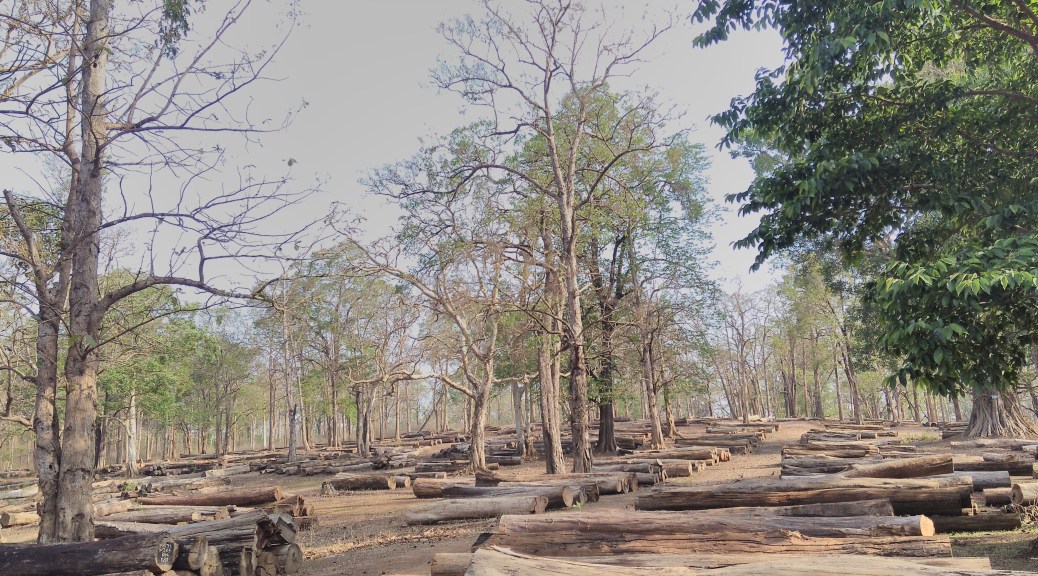
As a part of the trip package by the homestay, I was asked to be ready by 6.00.a.m. and was taken to the Dandeli timber depot. I was introduced to Ms. Rajani, a government schoolteacher by profession and an avid nature keeper by passion. She was assigned to take me on a bird watching tour around the depot where over 150 bird species could be spotted on any given day- A true haven for the bird watchers!

Dandeli timber depot

Among several species that she went on showing me around and shedding light on facts about them, the one that opened my eyes to an all new perspective of seeing avian life were the ‘Hornbills’. The hornbill is one species that is referred to Lord Ram and Sita for the couple bonding that they share. These birds have a very unique way of finding their mates and if ever happened that one bird dies anytime, the other remains single all life without finding another mate which is unique to hornbills. The reproduction cycle of these birds is once in 5 years and hence, the male bird is extremely protective about the female and the chick. The male bestows his beloved with berries of her choice from faraway places during this period. While it carries around 40-50 berries in its beak to feed its family, a few fruits may fall down during its flight, thus contributing to afforestation- The hornbills are the farmers of the forests in true sense and live a life of awe and inspiration to mankind. Another interesting fact is among the 54 species of hornbill across the world, 9 are found in India. Out of these, the world’s largest species- The great Indian hornbill and world’s smallest- the Malabar Grey hornbill with Malabar pied and Indian Grey, 4 species can be found in Dandeli alone. And I was fortunate to see all 4 of these during my 3 days of stay at Dandeli, an experience that cannot be explained but only be felt.

Another unique sighting was of the jungle babbler or the ‘seven sister birds’. With enormous untold stories, the tour ended rather quickly as we both lost track of time.

My enthusiastic guide visits this place every morning and evening which she describes as her day being incomplete without talking to the woods and strengthening her nature connect. She ensures she talks about them to her pupils at school as well. That’s a novel way to inculcate the habit and awareness about nature conservation among children from a very young age itself. I gave her a tight hug for the wonderful ways of teaching her students in school about conservation of natural resources and I bid farewell.

Bonus tip for birdwatching at Dandeli: Watch the hornbills mud-bathing on the riverbank near Ganeshgudi (sometime around winter)

Visit my detailed posts below, for itineraries if you are planning your trip to Dandeli.
Option 1: With sightseeing and stay at ‘Old Magazine House’, a Jungle Lodges venture
Option 2: With sightseeing and stay at ‘Dandeli jungle camp’, an offbeat homestay.

Visiting the Niagara of Karnataka- Gokak

This is a pick from old memories of exactly a year ago, in August 2013. My mother was away in Belagavi for a month-long business trip and I had decided to catch up with her over the weekend. We then got together, and explored the places around Belgaum, fondly called Belagavi. This time, it was only a day trip around Belgaum with a quick visit to the widest waterfall in my state, the Niagara of Karnataka.

Our Itinerary:
Friday: Overnight journey from Bangalore to Belgaum
Saturday: Explore Gokak (waterfalls, hanging bridge & Tarakeshwara temple), Godchinmalki waterfalls, Savadatti Yellamma temple)- Return to Bangalore by night journey.

The Details:

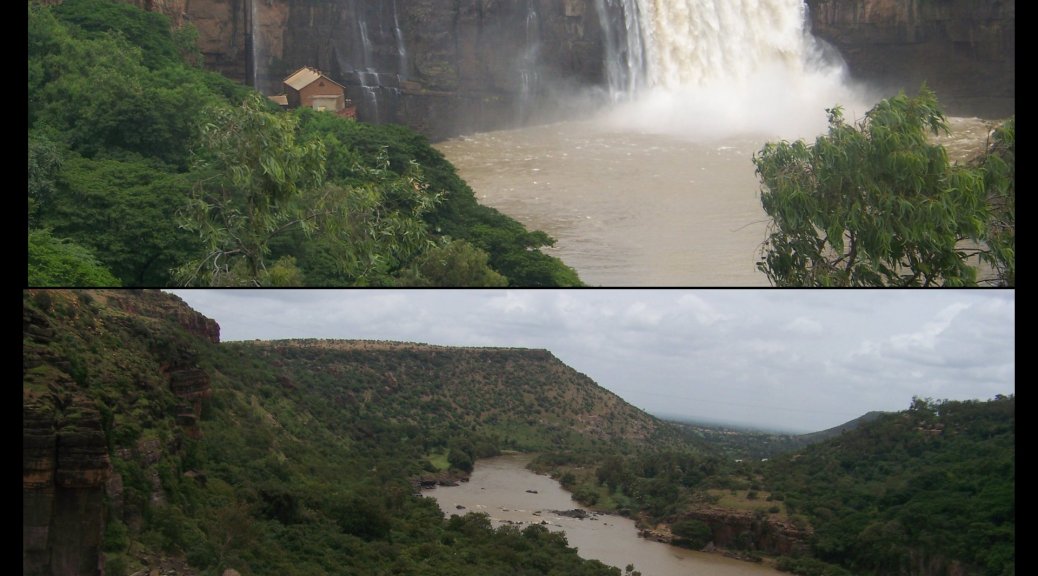
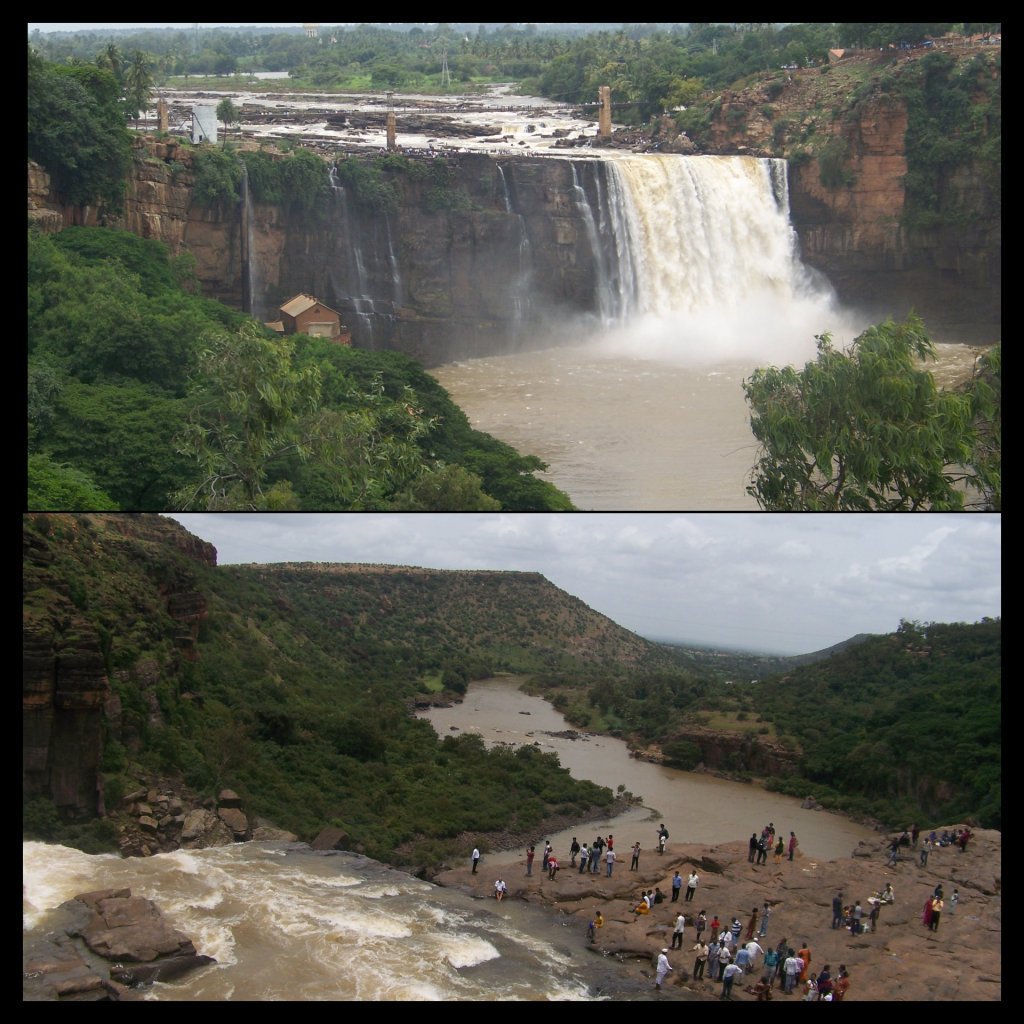
I boarded the bus to Belgaum from Bangalore and my mom was there to receive me when I alighted there the next morning… We freshened up at the place where mom was put up and then headed straight to Gokak. The little town known for its cotton mill, is also famous for the nature’s treat- the mighty Niagara of Karnataka. The bubbling, roaring and crashing waters of the Ghataprabha river creates steady patterns here with endless rhythm while it leaps down from 52meters between two tall, craggy cliffs to form the Gokak falls.

The century old hanging bridge, the only mode for the textile workers to cross the river allows the public to enjoy the breathtaking vista of the waterfall as the gushing water plummets down. The presence of turbines dating back to 1885 stands testimony to the electricity generation station established here which still provides power source for the cotton mill across the street. The 11th century Shiva temple dedicated to Lord Mahalingeshwara (Locally known as Tarakeshwara temple), built in the Kalyani Chalukyan style, faces the cotton mill and flanks one side of the gorge.

Above: The front view of Gokak falls from the Volkart view point; Below: A view from the Hanging bridge.

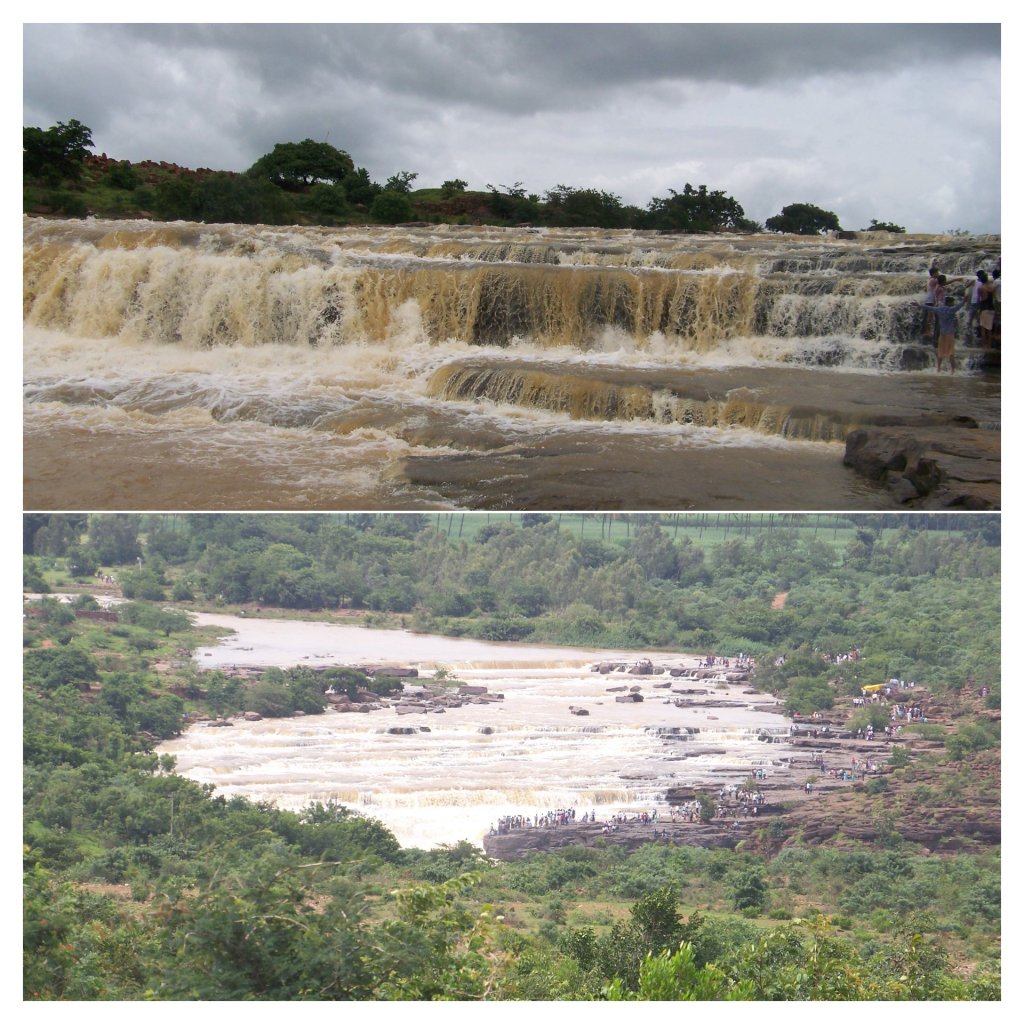
Meanwhile, I called a friend of mine who hails from Belagavi district to enquire about other places that we could visit around his hometown. He guided us to a small village named Godchinmalki where river Markandeya cascades down amid a scenic backdrop forming another beautiful waterfall called by the same name. Mom and I walked down for 2kms through rolling green pastures, fields of maize and banana plantation to reach this waterfall that plummets down in 2 tiers. Once we reached the place, it was a thorough treat to our senses to watch the waterfalls racing ferociously through the deep gorge.

On our way back, we took a little longer route from where we got a complete view of river Markandeya snaking through the greens. A 9kms long underground canal carries water from the river across which can be seen emerging out of the hill from this viewpoint. The snaking roads with beautiful views of the valley was a wonderful drive to the city.

Top: The Godchinmalki waterfalls; Below: The Gochinmalki view point from the main road

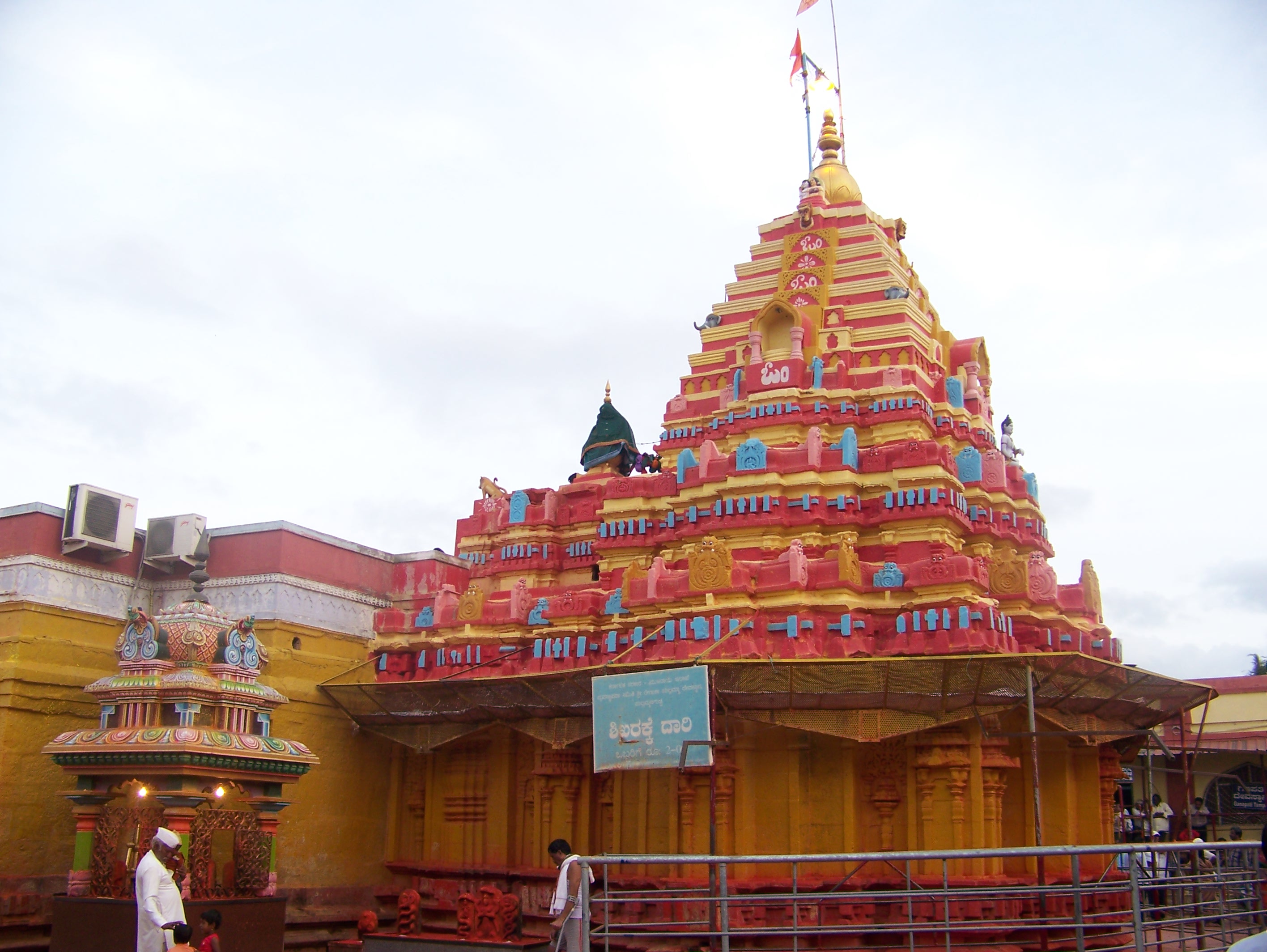
After all the waterfall hopping was done, it was time for some temple visit. We headed to Saundatti a.k.a. Savadatti. This place was the capital of the Ratta / Rastrakuta dynasty from 820, until it was shifted to Belgaum in 1230. There is a fort here also called the Parasgad fort. But the most famous is the Renukadevi temple located atop the Yellamma gudda. This is an important place for devout followers of Goddess Shakthi and also for the devadasis- or the servants of god. We had a good darshan during the evening pooja time.

Savadatti Yellamma temple

With that, it was a quick wrap for a short weekend and time for me to head back to Bangalore for another long and boring work week ahead…

Must eat while at Belagavi/ Belgaum:

  • Karadantu at Gokak– it is a sweet made with dry fruits rolled into balls with jaggery.
  • Kunda at Belgaum– This is a sweet made with milk.