Tag Archives: Offbeat things to do in India

A Not so Blissful Trip to the City of Eternal Bliss- Chidambaram

This trip was part of a backpacking by my brother and me with an original itinerary to cover Bangalore- Kumbakonam – Gangaikondacholapuram – Chidambaram – Pichavaram – Pondicherry – Tiruvannamalai – Bangalore

As per this, we left Bangalore on a Sunday night in a bus and decided to explore further at our own pace, using public transport and staying at places with bookings made on the go. Plan was all set. But well, with a small glitch. We assumed that the monsoon season was the same in the entire southern India. But what we hadn’t taken into consideration was the fact that Tamil Nadu doesn’t come under the south-western monsoon. Hence, the monsoon peaks (with north-east winds) after the season ends in its neighboring states. So, we were now on an exploration of Tamil Nadu in October, during the peak of its monsoon season! Anyway, with its share of travel miseries, poor planning gave us the benefit of experiencing a different kind of backpacking.

Firstly, we explored Kumbakonam, a place which is often spoken less about on a typical tourist’s circuit. It was a wonderful experience to explore a place that is soaked in history and RICH architectural heritage, mostly from the Chola era. (This is elaborated in a separate post, click here to read). From Kumbakonam, our next planned destination for a major halt was the place that’s is often referred as ‘a city of eternal bliss’. But our experience was as unblissful as it could get, even as we wished to get a glimpse of the deity of a temple whose manifestation is revered to be as one of the five elements of life- ‘Space’. I would like to elaborate this trip for my readers to get a wholesome idea of our visit to this city was like for us!

With incessant rains, our mobile-phone network had been patchy. On day 2 at Kumbakonam, we received a call from our parents who had been trying to get in touch with us since the previous night. They informed us about the alert issued by the Met. Department. We checked online and confirmed the news about the weather forecast of cyclone- Roanu and a deep depression in the Bay of Bengal. We were asked not to venture near the seacoast. Our intended trip itself was supposed to be along the Coromandel coast- including Cuddalore and Pondicherry. Since the day was bright, we did not take our Met.dept. seriously and decided to take a chance by continuing with the plan from Kumbakonam.

With a visit to the Brihadeeshwara temple at Gangaikondacholapuram (another of the three living Chola temples), we boarded a bus to Mannarkudi. From Mannarkudi, we were supposed to take another bus towards our next planned destination: Chidambaram. However, the conductor informed us that the road beyond Mannarkudi was blocked since the previous night due to an uprooted tree. Although the tree was cleared, he wasn’t sure if the route was worthy for us to go. Without really understanding the seriousness of his advice, we boarded an overly priced private bus which ferried us to Chidambaram. Our road was flanked by the Kollidam until most stretch. Last time we had seen this part of the state was with our family, during our quest to see the end of river Kaveri. The dam was empty and dry back then. Today, she was flowing in full spate and the Grand Anicut was filled till its maximum limit. Kaveri looked beautiful with her brown waters reflecting back the sun rays that sneaked from amid the thick grey clouds. That was the point from where, the real saga of our road trip started.

As we covered a little distance ahead of the dam, the river began to touch the road around the corners at most turns. Gradually, the river started to spill over the road at some stretches. Instead of plying on the road, it seemed like our bus was driving over the river at these junctions. Further into the journey, the water level increased. Several stretches (in kilometers) of the road was submerged by the river. Our driver was a real super star- who could figure out exactly where the road laid in the ground in spite of the water being above the tire height. Even a slight slip in the road only meant death and nothing less. The entire bus with about 25-30 passengers could have been washed away by the currents of the spiteful river. I had only seen such things in the news. Now I was right there, experiencing a flood scene, firsthand.

The flooded villages enroute to Chidambaram

Stretches of villages laid submerged ahead. At some places, the thatched roofs and the hay huts had given away. We could see utensils floating around on the road, helpless villagers wading across the (once existent) streets, even as the flood water stayed above their waist level. Their plight was heart rendering to see, even as the rest of us inside the bus continued to wonder if we were going to see a safe arrival at our destination at all. The rain of just one night had wreaked so much havoc across the state of Tamil Nadu. However, our driver remained focused and drove us across to reach the safe harbor at Chidambaram by around 03.00.p.m.

My brother and I decided to drop the luggage at the hotel which we had booked online and find some food for ourselves. We hadn’t eaten anything since that morning. On arrival at the hotel, we were a little perplexed to see our room. The bedsheets looked extremely old, torn and dirty. The bathroom was a disaster. The toilet floor was covered with a thick layer of algae, slush and mud, all that had accumulated over years without washing it. The flush lever was broken, the taps rusted and a crazy layer of deposits on the bucket and the mug. The nasty smell of alcohol hit our noses from outside through the opened door even as we continued to feel suffocated inside that room. My brother and I looked at each other’s face- and both of us knew what was running in each other’s mind. In spite of being exhausted and hungry, we decided to leave the place and find some other place to stay. Just when we started to descend the stairs and as if the injury (of finding a bad room online) wasn’t enough, I happened to step on a large mess of barf, thrown up by some drunkard on the stairs and slip down a couple of steps.

Until this moment of our day, I had managed to keep my calm, but my brother gave up. He wanted to end the trip right there and return to Bangalore. While he found no buses that would leave Chidambaram immediately to Bangalore, I managed to convince him to stay calm until we boarded a night bus at least. I found a place near the ‘Nataraja temple’ where I could clean myself and headed to get the darshan of the lord. The visit was peaceful, maybe I will write about in another post someday.
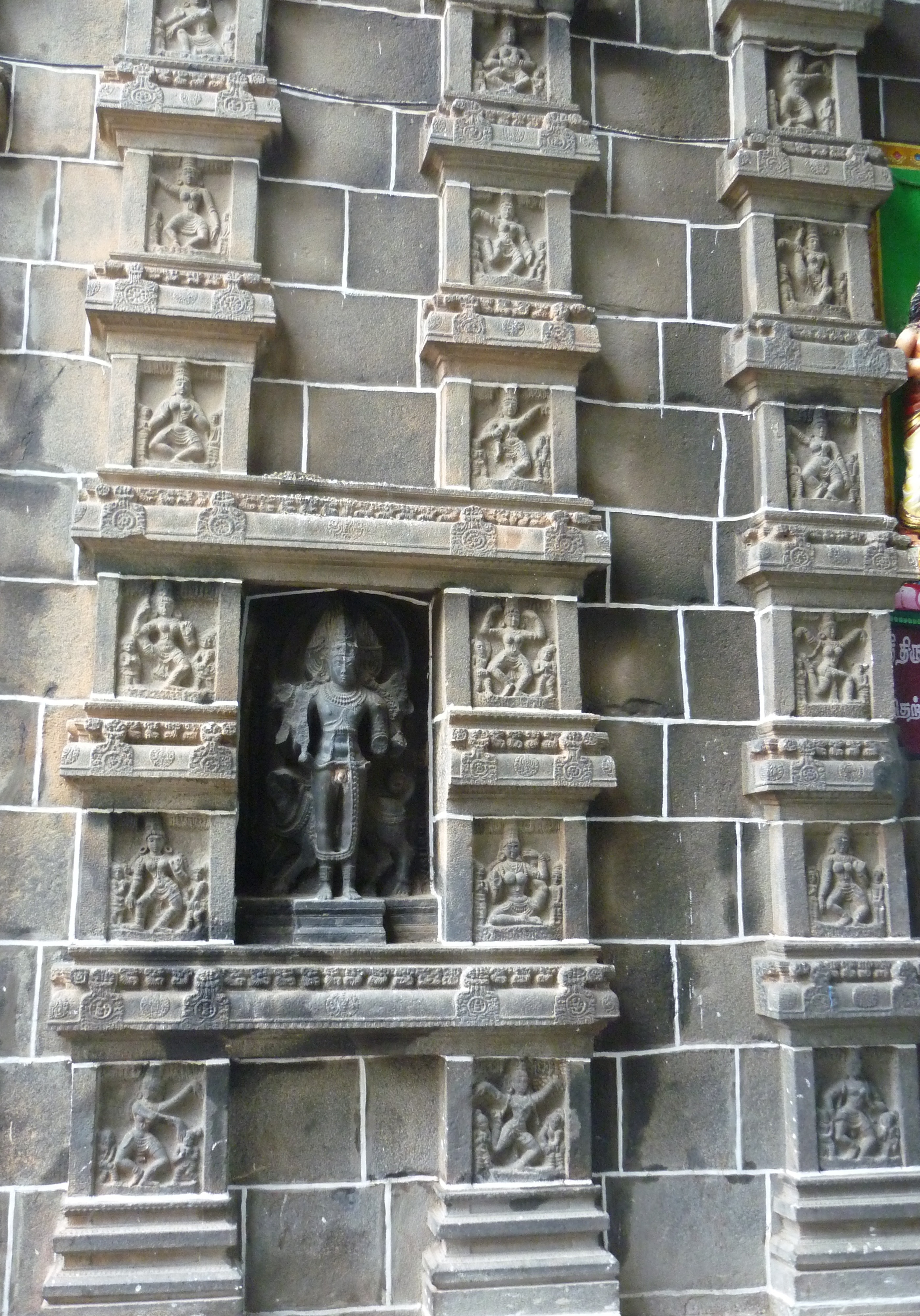
The Bharatanatyam postures sculpted on the walls of the west-tower of the temple

After finishing the evening prayers, my brother booked our tickets to Bangalore for the same night. Since my holidays were still not over, somewhere deep in my mind, I still wanted to complete my trip. I didn’t want one bad experience of the day ruin the entire holiday for us. But, given the weather condition further ahead in our planned route, I couldn’t rule out my apprehensions of getting stranded in the cyclone at Pondicherry as well.

But right now, our priority was different. We had been starving since morning and had to find something to fill our stomach. In spite of walking the WHOLE of Chidambaram town, we couldn’t locate a single place where we could find food. Thanks to the day of Deepawali festival- there were absolutely NO eateries open! Also, the entire town was SOO DIRTY with garbage littered everywhere. After a long search, we finally found ONE supermarket in the entire town. And what did we get to eat there? Just a cup of sweet corn to sate our hungry bodies.

Our city woes did not end after eating the steamed corn. It was still 07.00.p.m and we had three hours more to kill. On enquiring with a few locals, we were told that we would find a decent restaurant near the bus stand. And so as per the recommendations of the local people, we found this AC luxury restaurant called ‘Vandayar- Southern Spice’.

When we arrived there, the waiter informed us that they served only fried rice for the day. The waiter came to our table thrice to take our order (for the only dish available) and after two hours of waiting for food, there arrived a convoy of VIP customers at the restaurant. Bonus for waiting: A feast was set for this VIP family that comprised of all dishes from the menu. Even while all the tables were occupied with middle-class customers including my brother and me, there was no one from the restaurant that cared for our existence that day. Wondering if we were waiting for any free food to be served at 09.00.p.m. several customers grew furious and started to walk out of the restaurant. It was also time for us to board our bus. As we too walked out of this VIP restaurant, there was power cut in the town.

In a dark and dingy bus-stand, we spotted the only stall that served tea and some biscuits. The little candlelight was just enough for the tea-stall guy to reach out to things in his kiosk. We were essentially scared of stamping some more muck that could’ve been laid in the littered path. As we dunked the last biscuit into our chai, we had yet another surprise for us. Our bus to Bangalore was delayed by 2 hrs.!!! As we waited there in the dark platform of the bus stand, some drunk men started to throw glass bottles at the crowd there. Luckily no one was injured, but the downpour of bottles and splatter of glass pieces continued for a while. Our bus arrived after a while and we boarded at 10.00.p.m.

With all the crazy stuff that happened that day, we fell asleep quickly… Only to be woken up at sunrise. That’s when the rain was battering outside, and our bus had broken down on the highway. Although we were given an alternate bus in a while, our anxiety continued until we reached home.

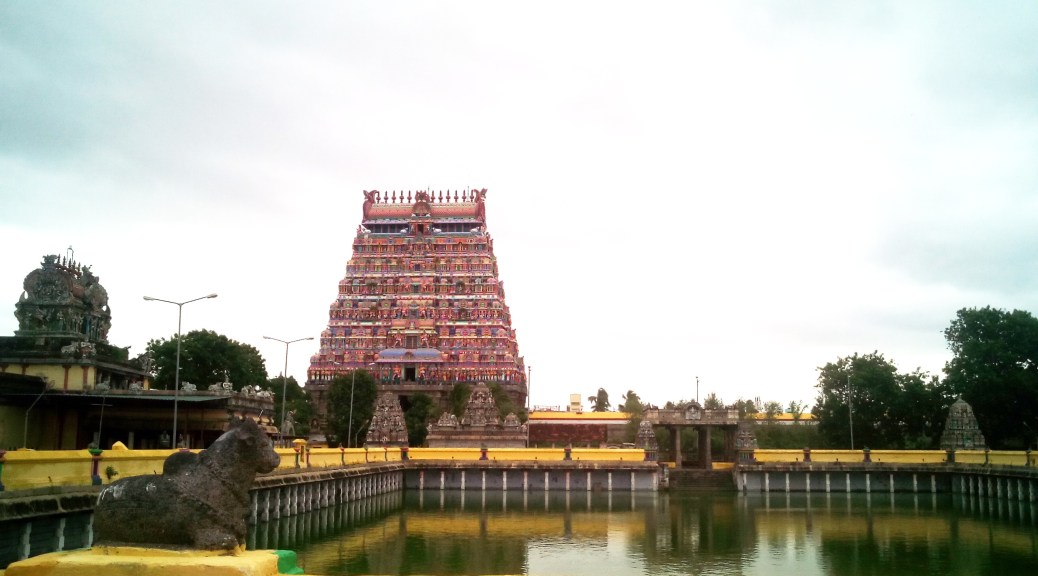
The temple Gopuram at Chidambaram Nataraja temple

Conclusion Remarks: The people on the east coast are god’s chosen ones to have a grand celebration of festivals. Tsunami for Christmas. Cyclones for Diwali…!! One cannot sit in a place, hear stories and imagine of places and people. You need to move yourself to places to experience and explore. This trip was one such experiences where I got a first had experience of braving a flood and starvation of food. Also, this is a trip where I managed to find a place in India that I wouldn’t want to return.

Tracing the Cholan trail- Kumbakonam

This was part of a backpacking trip by my brother and me with an original itinerary to cover Bangalore- Kumbakonam – Gangaikondacholapuram – Chidambaram – Pichavaram – Pondicherry – Tiruvannamalai – Bengaluru

Although being located in the same district, soaked in history and RICH architectural heritage from the Chola era, Kumbakonam is a place that is mostly overshadowed by its counterpart at Tanjavur town. Hence, it is a place that is often spoken less about on a typical tourist’s circuit. I was curious to cover this city and absorb as much of it as possible. While I embarked on a weeklong backpacking trip through some parts of the East Coast road, I had enlisted the temples that seemed culturally important and hoped to visit them while I passed through the city of Kumbakonam.
Getting around:

As you may know, most of my trips are by using public transportation. During this trip, all the places within the city were covered on foot. (You can alternatively hire an autorickshaw to show you around and save some time). All other places located on the outskirts were explored through public/ local buses that are very frequent and extremely light on the pocket. If you are using this blog as a reference to explore this ancient city of the Cholas, you can plan your commute accordingly. Places to visit in Kumbakonam city largely comprise temples and can be broadly grouped into three categories depending on their location and proximity of accessibility.

a. Temples within a cluster within the city (temples 1~5 and 11~12 in my list)
b. Temples within a cluster on the city outskirts (temples 6~8 in my list)
c. Temples located in separate locations on the city outskirts (9~10 and 13~18 in my list)

Accommodation:

It was raining cats and dogs when we alighted at Kumbakonam bus stand in the morning. We had pre-booked a hotel in Kumbakonam city through an online portal. But after reaching the place, we realized that there was a mistake on the portal, and the hotel was closed for the Deepawali vacation. We sat there and browsed through websites to find alternate accommodation options. Meanwhile, the pounding rain had mellowed down to a drizzle. We finally managed to find a hotel nearby where we dumped all our baggage, freshened up, and ventured out to explore. Bonus for the online goof up by the website: We had a room upgrade.

So, here are the places we visited during our short stint of 2 days at this historical city of Kumbakonam in the order of our travel.

Day 1:

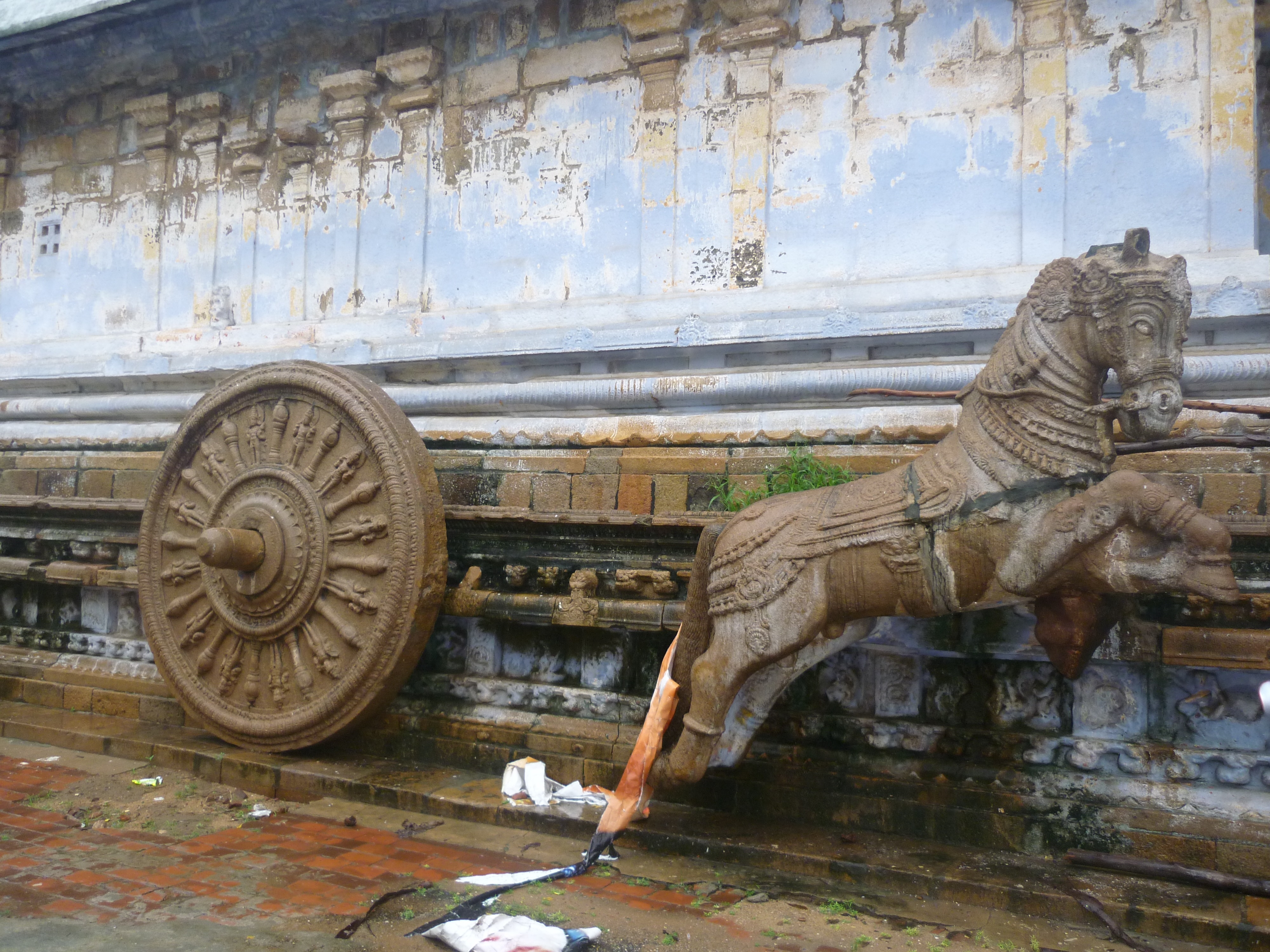
  1. The Nageswara temple: A sizable temple dedicated to the Snake king Adishesha, who is believed to have offered his prayers to Lord Shiva here. An interesting part of this vast 1000-year-old temple premise is the kalyana mantap. The Cholas have sculpted this stone structure in the form of a chariot being drawn by life-sized elephants and horses with the suspension technique.
The Kalyana mantap at Nageswaran Kovil
The Kalyana mantapa at Nageswaram kovil

2. Sarangampani: We reached this temple that follows the Vaishnavism cult after wading through a flooded road. Notable contributions have been made by the Cholas, Vijayanagar, Madurai Nayaks, etc., to the overall architecture of this temple. A temple tank is located on the western side of this temple.

The Rajagopuram at the Sarangampani Kovil

3. Someshwar temple: This is located adjacent to the Sarangampani temple. We skipped an exclusive visit to this temple after getting some photos from the outside of the temple. From there, we continued through the busy shopping lanes of the town to reach our next landmark.

4. Adikumbeshwara temple: It is believed that Kumbakonam gets its name from this Shiva temple. Legend has it that lord Brahma’s pot (Kumba), containing the nectar of worldly lives, was rolled down and stopped at this town after being hit by Shiva’s arrow. The sculptures at the temple are interesting, where a 16-pillar hall built by the Vijayanagar kings has all the 27 stars and 12 zodiacs sculpted on a single stone. Also, the piped instruments(nagaswarams) etched out of stone and the cattle shed are noteworthy. Today, this vast temple premise is also used for commercial purposes with several shops and restaurants setup in this complex.

5. Ramasamy temple: A place dedicated to lord Rama; it is believed to be the only temple that houses the idols of Rama & Sita along with all his brothers inside the sanctum Sanctorum. The entire story of Ramayana has been painted on the corridor walls of this temple. And hence, for someone interested in art and beyond just checking places, it would require at least a day or two to observe the murals here.

Obviously, we did not have the luxury of more than a couple of hours to spend, and hence our visit was limited to just a quick brush-up on whatever we could understand of the images there.

The Ramayana painted on the corridor walls of the Ramasami temple

6. Mahamahan tank: We timed our visit to this place around noon, when all temples in South India usually close down. This mythologically important tank is spread across 6 acres and is believed to have been created out of the nectar that was spilled from Brahma’s pot.

7. Kashivishwanathar temple: This is located at the entrance of the Mahamahan tank. It is believed that the navakannigas or the 9 maidens of Shiva (Ganga, Yamuna, Saraswathi, Kaveri, Godavari, Narmada, Krishna, Tungabhadra & Sarayu) representing 9 rivers visit and bathe in this tank once in 12 years. A day when lakhs of devotees flock here. It is believed that people who cannot make it to Kailash / Manasa Sarovar visit this temple as an alternative to wash off their sins. Though the temple was closed when we reached there, we were very fortunate to get the prasadam that made a nice filling lunch.

8. Abhimukeshwara temple: Located nearby, on the other side of the tank, we only walked past this place as it too remained closed. From there, we boarded a bus to our next major landmark on my ‘to visit’ list.

9. Airavateshwara temple at Darasuram: We visited this temple, on the outskirts of Kumbakonam (one of the three living Chola temples), when no one else would! By the time we walked from the bus stop to the temple, our umbrellas were flipped by the heavy winds, and the pounding rain had battered and gotten us drenched to our bones. The entire temple complex was FLOODED (with knee-deep water). It was an insane visit where my brother and I both decided to go ahead, wade through the water, and have the entire place for ourselves. We climbed up a ladder (placed by the temple priest to perform the daily rituals) to reach the temple corridor. It was BEAUTY, up there! Bonus: The sight of the entire temple complex in a reflection in the accumulated water. (I know this photo is not its best, but still the best memory that our mobile phone camera could capture for our grandkids when we would tell them about this place!).

Airavateshwara temple at Darasuram

After getting some nice shots, we made our way out to the main road to catch a bus to our next destination. The short journey thereon reminded us of Sebastian Vettel cruising on narrow countryside tarmac amid overflowing potholes and LOUD tapangucchi music in the background. With nothing to hold on to during the frequent braking by the driver to stop the bus for passengers to board/alight, the bus kept coming to screeching halts from the revving speeds. It was a fun ride that ended in a few minutes as we alighted at our next planned landmark.

10. Pateeswaran temple: This is originally a Shiva temple, but the goddess has been given prime importance here. It is said that the Cholas offered prayers to the goddess Patti(daughter), calf of the sacred cow Kamdhenu, here before proceeding for any battles during their reign. However, when we arrived here, it remained closed only to open again at 05.00.p.m.

As the rain gods again took over the silent skies, we decided to head back to the city. After reaching Kumbakonam city, we looked out for a place that served the trademark ‘Kumbakonam degree coffee’, our piping hot cuppa filter coffee to warm ourselves to some extent from the chilling rain. It was only 06.00.p.m but already dark. As planned, we set out to find our way through the super crowded streets of the city to find the remaining two temples from our list.

The main bazaar street is a state highway- All thanks to the festival of Deepawali, it seemed like the entire district had come down to one street in Kumbakonam for shopping. The street was jam-packed with not even an inch of breathing space. We somehow managed to get out without actually facing a stampede. Albeit the heavy rain, we closed our umbrellas and stood amid the crowd. The crowd pulled us along to reach the exit of the street, from where we walked to the next temple on our list.

11. Chakrapani temple: Here, Vishnu is worshipped in his sleeping posture holding his ‘Chakra’ on one finger. We witnessed the last pooja of the day, after which we wondered if we had to continue to the next temple or not, since all the nearby temples had started to close down. Anyway, we had a lot of time to kill and walked across to take a chance.

12. Brahma temple: We considered ourselves to be fortunate to have decided to take a chance and arrive here. The temple was still open, and we had made it to the last pooja at this temple as well. The priest was ecstatic to greet us, who went on narrating us stories from mythology and depicting the importance of this otherwise small temple in Kumbakonam. We were told that it was 1 of the only 2 temples in all of Tamil Nadu that are dedicated to Lord Brahma. We were happy to savor the prasadam, which was very unexpected.

We then had a sumptuous supper at a restaurant before we called it a day. It took the same amount of pain to cross the crowded bazaar street to return to the hotel and catch a good night’s sleep.

Day 2:

On the following morning, we were early risers to catch up with our planned itinerary. We boarded a 07.00.a.m. bus to our first destination of the day, situated on a small hillock on the outskirts of Kumbakonam.

13. Swamimalai: Abode of one of the six important Murugan temples in Tamil Nadu, Swamimalai is also an important destination for idol making in India. A limited number of artisans who all live in clusters around the temple here, have carried along a science and art of bronze idol making from the Chola period. The technology used in the ‘lost wax method’ of metal casting is practiced as per the Vedas and is something that needs a more elaborate citation, in another post.

After offering our prayers, we decided to head back to the city to get buses to the other places on our list.

Swami Malai- One of the six holy shrines of lord Murugan

Meanwhile, we couldn’t locate any restaurant that was open for breakfast even at 08:00 a.m. Hence, we decided to have lunch once and for all wherever we would reach. If one had the convenience of an own transportation, there are several other ancient temples that I would recommend visiting. It would be ideal to have an additional day in hand and make Kumbakonam the central place, as all these recommended places are located in different directions, forming somewhat of a radius around this town. Local buses are available from Kumbakonam to each of these places, but it would be very time-consuming to come back to Kumbakonam to change a bus to every time. Hence, we decided to skip the following places and head to our last major landmark.

14. Uppiliappan

15. Thirubuvanam

16. Thiruvalanchizi

17. Thiruvidaimaruthur etc.

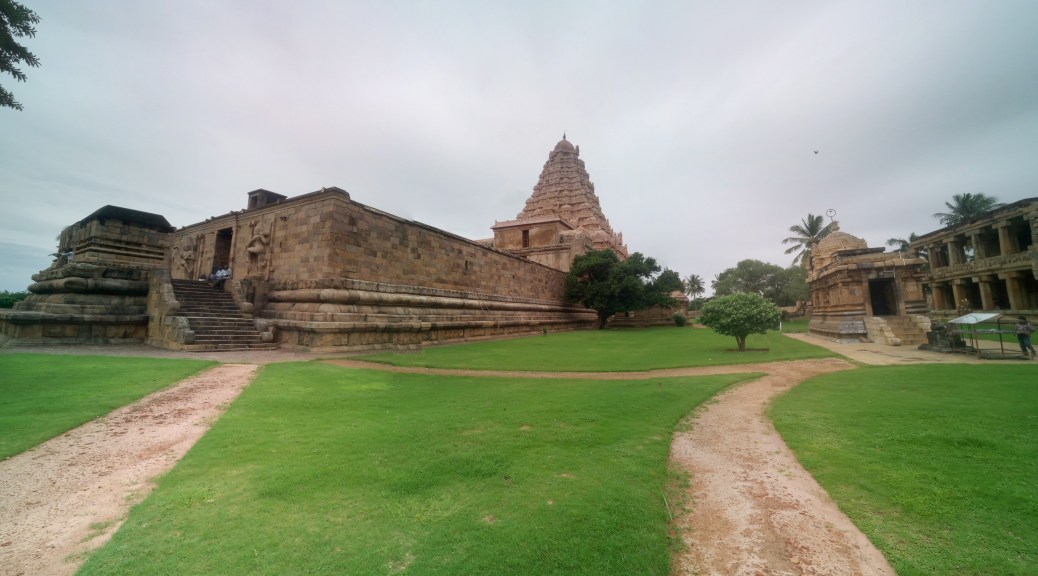
18. The Brihadeeshwara temple at Gangaikondacholapuram: We reached this yet another magnanimous temple after changing two buses (A change of bus at Kork road / GK cross). The biggest (of the three great living Chola temples enlisted by UNESCO), this structure stood right adjacent to the national highway, enchanting every tourist with all its might. The 3 living temples are together called so because the prayers, festivities followed thousands of years ago, during the Chola period, are still being followed religiously to date and have stood as true testimony of time and Tamil culture.

The Brihadeeshwara temple at Gangaikonda Cholapuram

From here, we continued our backpacking into another territory within Tamil Nadu. From the Tanjavur district, we were then heading towards Chidambaram via Pichavaram. Backpacking trips and road trips always carry elements of surprise, and they are supposed to be like that. They can never be planned precisely. These trips always carry scope for making impromptu changes in the itinerary and taking on new adventures. That’s what was awaiting us on the next leg of this weeklong trip, far away in the southernmost state of India. Click here to read more about my journey to Chidambaram.

Strawberry heartland of India- Mahabaleshwar

This post is a follow-up on my 3-days backpacking trip to Satara. If you haven’t read it already, you can do so by clicking here. I had backpacked across Satara district covering Satara town – Wai – Panchgani – Mahabaleshwar – Khas plateau – Satara town

In this post, I have tried to share details of my day trip to Mahabaleshwar. The place as such, doesn’t needs any special introduction. This hill station is a favorite haunt of tourists from the nearby metropolis and afar. While its stunning views of the surrounding Sahyadri mountains and Deccan traps attracts the weekenders in large numbers, it sees a large footfall of Hindu pilgrims as well. Mahabaleshwar can be broadly classified into two parts, the New and the Old. I started my day trip to Mahabaleshwar from Panchgani on a Sunday morning. I have tried to explain my Mahabaleshwar trip in detail through this post.

Part 1: New Mahabaleshwar

This part of the hill station is popular for its breathtaking sceneries of the western Ghats or the Sahyadri mountains. It was mainly popularized as the summer capital by the British. The table top mountains were strategically used by the Marathas for holding up enemies. Today, it is especially popular among the honeymooners and millennials as a short getaway from the nearby cities.

With many good viewpoints falling on the way, the 15kilometer stretch from Panchgani to Mahabaleshwar calls for many pitstops enroute. We stopped in the following order of places.

a. Parsi point: that gives a view of the Dhom dam from a different direction than what we had been seeing all through the previous day.

b. The Lingmala & Bhilawar waterfalls: These places weren’t as appealing as the case would have been with a good monsoon season.

c. Mapro garden & chocolate factory: This is the venue of the annual strawberry festival and one can see the chocolate making process at the factory through a glass wall. We tried shots of different juices & crushes they offer at the factory and picked up some bottles and chocolates as souvenirs from our trip.

The Mapro strawberry garden and Chocolate factory

d. Kate’s point: It was a pleasant drive amid the Koyna forest reserve to get here. The highlight for tourists visiting this valley is the echo point and the elephant’s head / Needle hole point. From here, we caught a beautiful view of Dhom dam, Balkawadi dam, Krishna valley and the Kamalgarh fort.

e. Savitri point: We drove through the forests hoping to sight a few peafowls, deer etc. but had no luck. Our visit to Savitri point was disappointing because the entire valley had been engulfed by mist. Since the entire valley was filled with mist even at peak noon-time, there seemed no signs of it clearing out.

Kate's point & the elephant head
Kate’s point & the elephant head

f. Castle rock, 3 monkey point, Malcom point, window point, tiger spring, hunter’s point, echo point and Arthur’s point: These are view-points in the same valley, but now enshrouded by the clouds. We only walked past all these spots without being able to see even the faces of the people standing next to us. In fact, this very valley was what had inspired me to plan my trip to Mahabaleshwar. The view of these deccan traps / table-top mountains had mesmerized me through several Bollywood movies that had been shot here. However, that visit was a matter of bad luck.

g. Marjorie and the Elphinstone points: The drive through these places too meant only disappointment.

Part 2: Old Mahabaleshwar

This part of Mahabaleshwar spikes up the interest of the history buffs and those that are culturally or spiritually inclined. Several ancient temples are dotted here amid the serenity of the Krishna valley. Some of the important landmarks are listed below:

h. Panchganga temple: This is the place of origin for 5 important rivers in the region, namely Gayathri, Savitri, Koyna, Venna and Krishna. The five rivers conflux underground and then spout together through the mouth of a cow carved out of a stone about 4500 years ago.

i. Mahabaleshwar temple: This temple dedicated to lord Shiva is accessible from the Panchganga temple, after a small walk through the shopping lanes. This temple is what gives the hill station, it’s name. The legends mention about Atibaleshwar and Kotibaleshwar also, but those are temples that are lost.

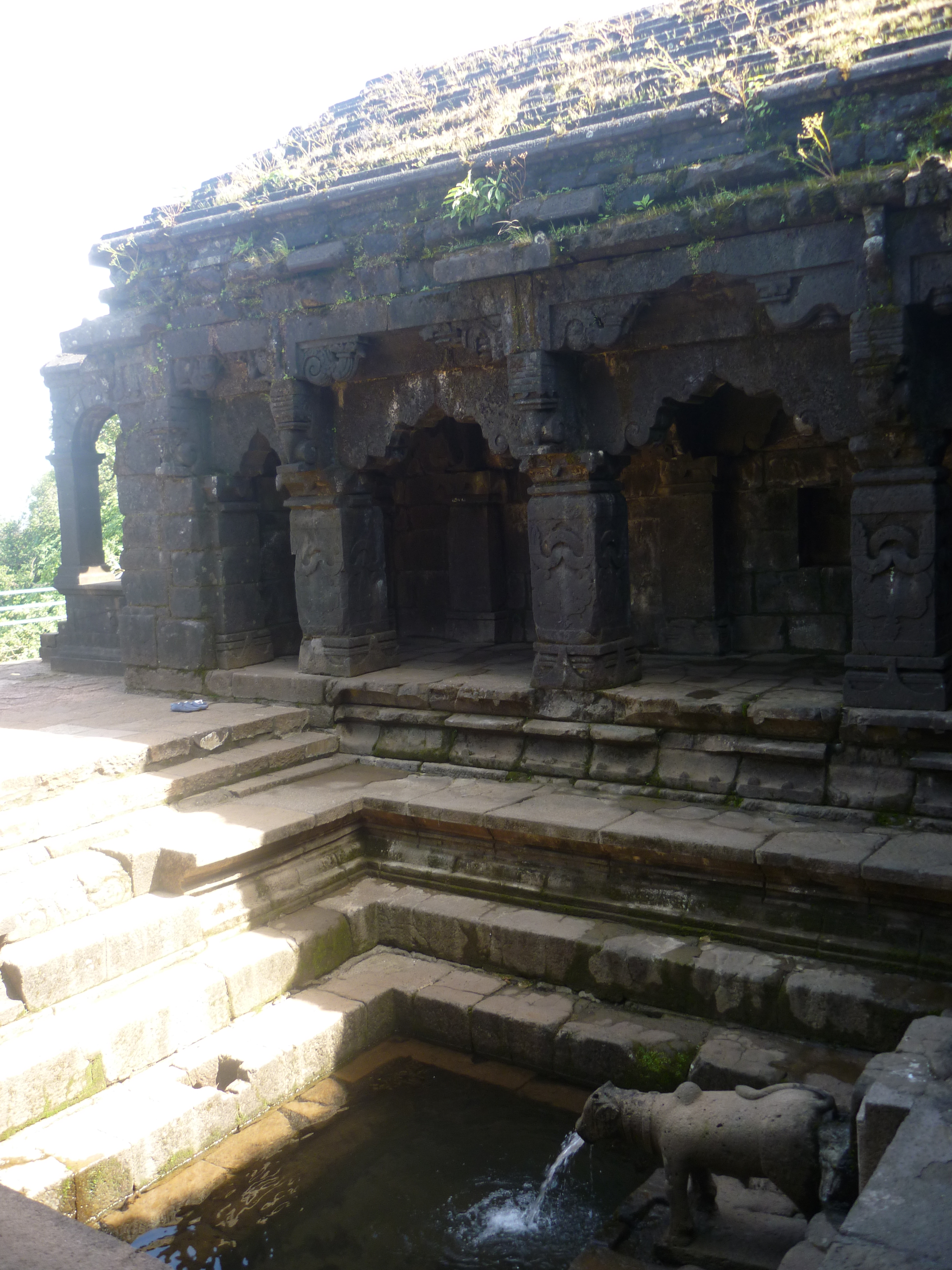
j. Krishnabhai temple: A further walk of about 100 meters from the Mahabaleshwar temple led us to an archeological treasure that remains untouched by mainstream tourists. The stream of water spouting from a Gomukh (the mouth of a stone sculpted cow) in this 13.C.E temple is believed by a few to be the origin of river Krishna. Situated almost on a cliff, the place offered a great view of the Krishna valley around. For those familiar with ancient architectural styles, this temple is a good example of the Hemadpanti style of temple architecture.

The Krishnabhai temple

k. Venna lake: A popular and a beautiful place otherwise, we decided not to stop here when we arrived there. The place was maddening and crowded with tourists.

l. Other places of interest in Mahabaleshwar: On a clear day, one could plan to see the sunrise at Wilson point that is known to be the highest part of Mahabaleshwar and Sunset at Bombay point. Both viewpoints are part of the Sindola hill.

NOTE:

  • The entry and exit to Mahabaleshwar is only between 06.00.a.m. to 06.00.p.m. as it is a protected forest area. So, it is required to plan your travel or stay at Mahabaleshwar accordingly.
  • This hill station contributes to 80% of the total strawberry produce of India. Hence, it is safe to call it as the strawberry heartland of India. DO NOT miss to eat fresh strawberry with cream for dessert after a nice Maharashtrian lunch at any of the restaurants in the Mahabaleshwar market.

Backwaters and boat races at Alleppey

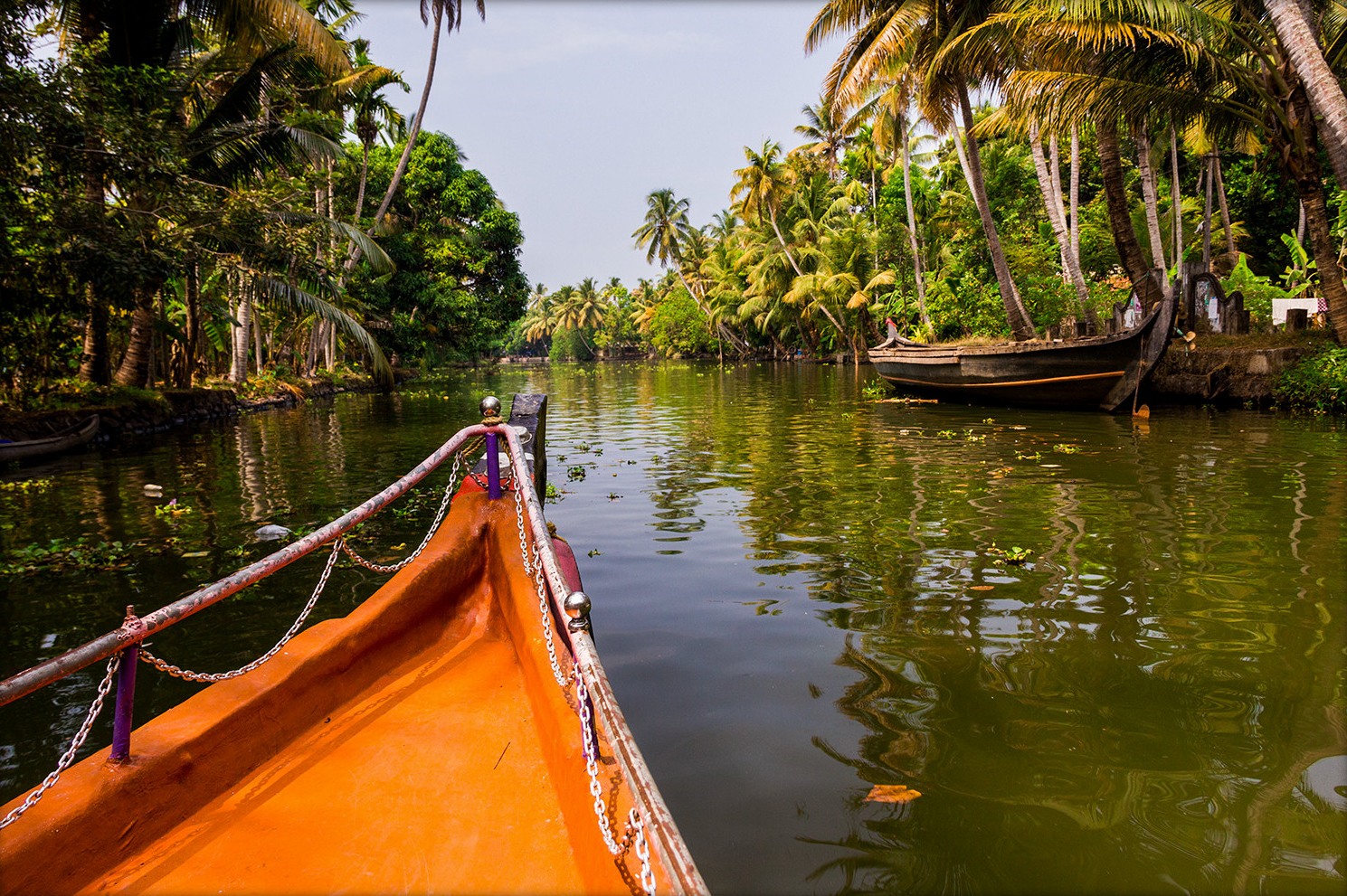
It was the 2nd Friday of August 2012, a day before the Biiigg sporting event of South India: “The Nehru trophy boat race”. After a long haul of planning, two of my friends and I had alighted at our destination- Allapuzha, a popular little town on a tourist circuit in Kerala. Fondly known as Alleppey, we were there to experience the festivities of ‘The Olympics of Kuttanad’- Vallamkali or the boat race. The Nehru trophy boat race is an annual event held in the Vembanad lake, in the Kuttanad region of Kerala. Vembanad lake is the longest lake in India and spans across several districts of Kerala. Depending on the region, the lake is known by different names. It is called as the Punnamada Lake here in Kuttana, of which Alleppey is a part. Along with the boat race, we wanted to explore the backwaters that’s a popular haunt of the tourists in this region.

My Itinerary:

Day 0: Leave from Bangalore to Kochi (Overnight train);
Day 1: Kochi to Alleppey (local train), Shikara ride in the Vembanad lake, Sunset at Alleppey beach.
Day 2: Nehru trophy boat race, Champakulam St. Mary Forane Church, Kalloorkkadu Angadi (local & oldest market in the region), Latin church. Return from Alleyppey to Bengaluru (Overnight Train)

Other Places of Interest:
• Karumadi Thodu- famous for the black granite idol of lord Buddha
• Ambalapuzha Sree Krishna temple- known for the ‘Palpayasam’ or the milk porridge offered as prasad to the deity.
• Kokkothamangalam church- This is one of the seven churches founded by St.Thomas, one of the twelve disciples of Jesus Christ.
• Ayyappan temple in Mukkal vattam (near Muhamma)- known for the Kalari from which Lord Ayyappa is believed to have learnt his skills in martial arts. The hermitage where Ayyappan lived during the training period has been preserved in its original form by successive generations of the Cheerappanchira family.

The Details:

Day 1:

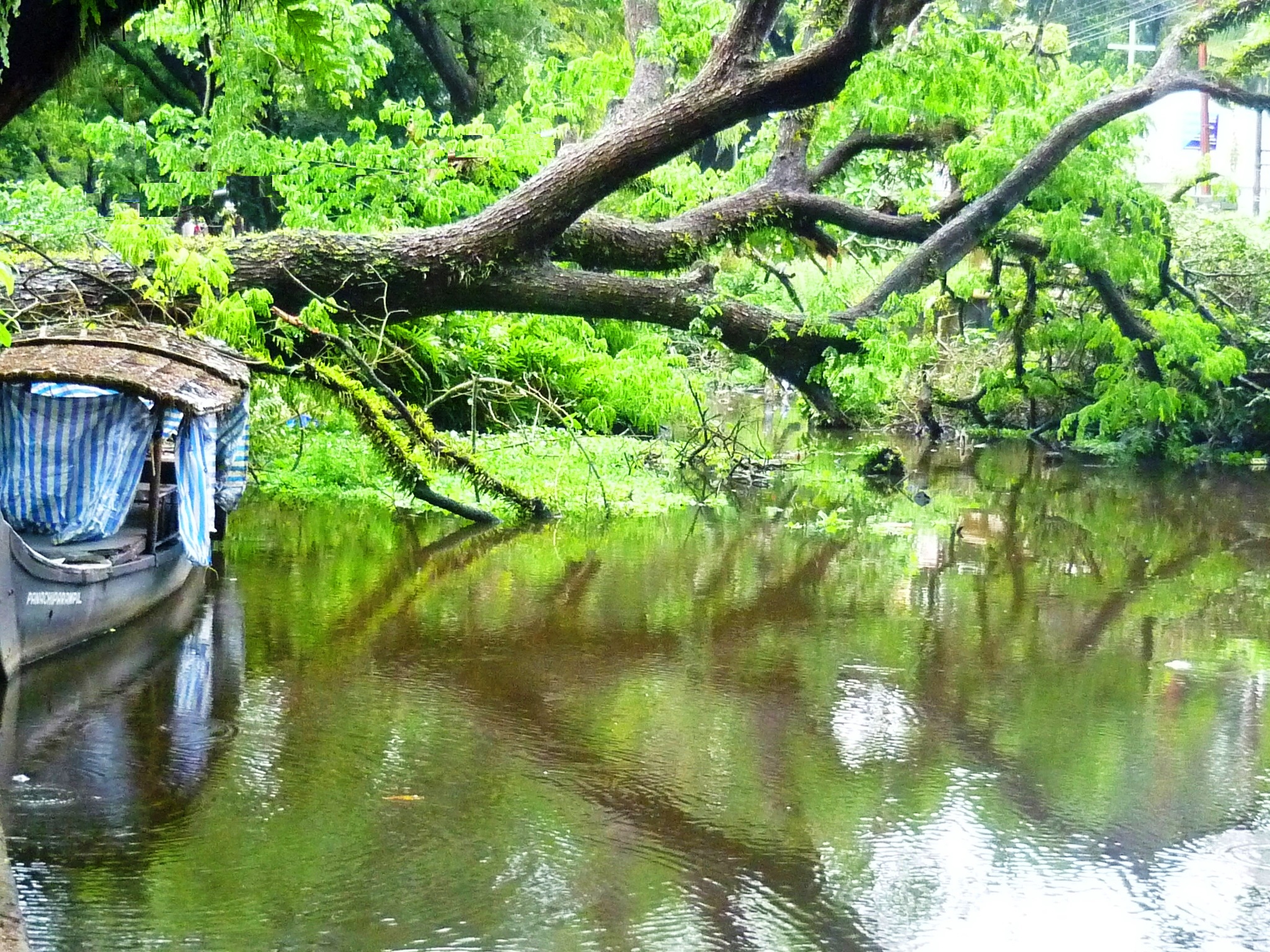
It was noon by the time we checked into our hotel room. We freshened up quickly and set out to explore Alleppey. We walked around a little bit and reached at a small boat jetty. We hired a ‘Shikhara’, a local motorboat to cruise around the narrow canals, passing through several fishing hamlets. While the womenfolk were washing clothes, the men were spiralling their fishing nets into the water and a few kids were diving into the waters for a refreshing swim. It was a nice experience of seeing local lifestyle of the people for whom, the backwaters are a lifeline. Along our ride, we picked up some fresh lobsters and pomfret at a local market and got them cooked in the local style at a fisherman’s house.

The Shikara cruise in the narrow canals of Alleppey

Further, we were oared across to the end of the canal which opened into the wide Vembanad lake where all the teams were practising for the boat race and the venue was getting set for the ‘Big’ event. The energy and enthusiasm in the atmosphere was no less than that of the main event itself. Though we wanted to stay there till sunset, the government deadline for all activities in the waters forced us to return to the jetty before 06.00.p.m.

On returning to the mainland, we meandered through the lanes of Alleppey town searching for a dose of Kerala chai and palam-pori (Banana fritters). We then decided to settle down by the beach until dark. While finding our way to the beach, we walked past the coir industries that Alleppey was once known for, and now remained shut and non-functional.

A stationed shikara enroute to the Alleppey beach

While walking back to the town area from the beach, we happened to see a hoarding of a concert happening at a nearby stadium. Post sunset on normal days, most towns in Kerala sleep to silence after 7.00.p.m. and there will be not many options to see or do after that. Since we did not want to waste the remaining evening by sitting inside our hotel room, we decided to head to the stadium to kill the rest of our evening. ‘Music never disappoints’, all the three of us had the same thought. Upon arrival at the stadium, we enjoyed the on-going performance of ‘Theyyam’, one of the colourful, traditional & spiritual dances of the state. But after some time in the audience gallery, is when we experienced a surprise on the stage. A MIND-BLOWING show by the violin maestro- Balabaskaran and team.. It was there that we were LOST in dreamland..!!

Day 2:

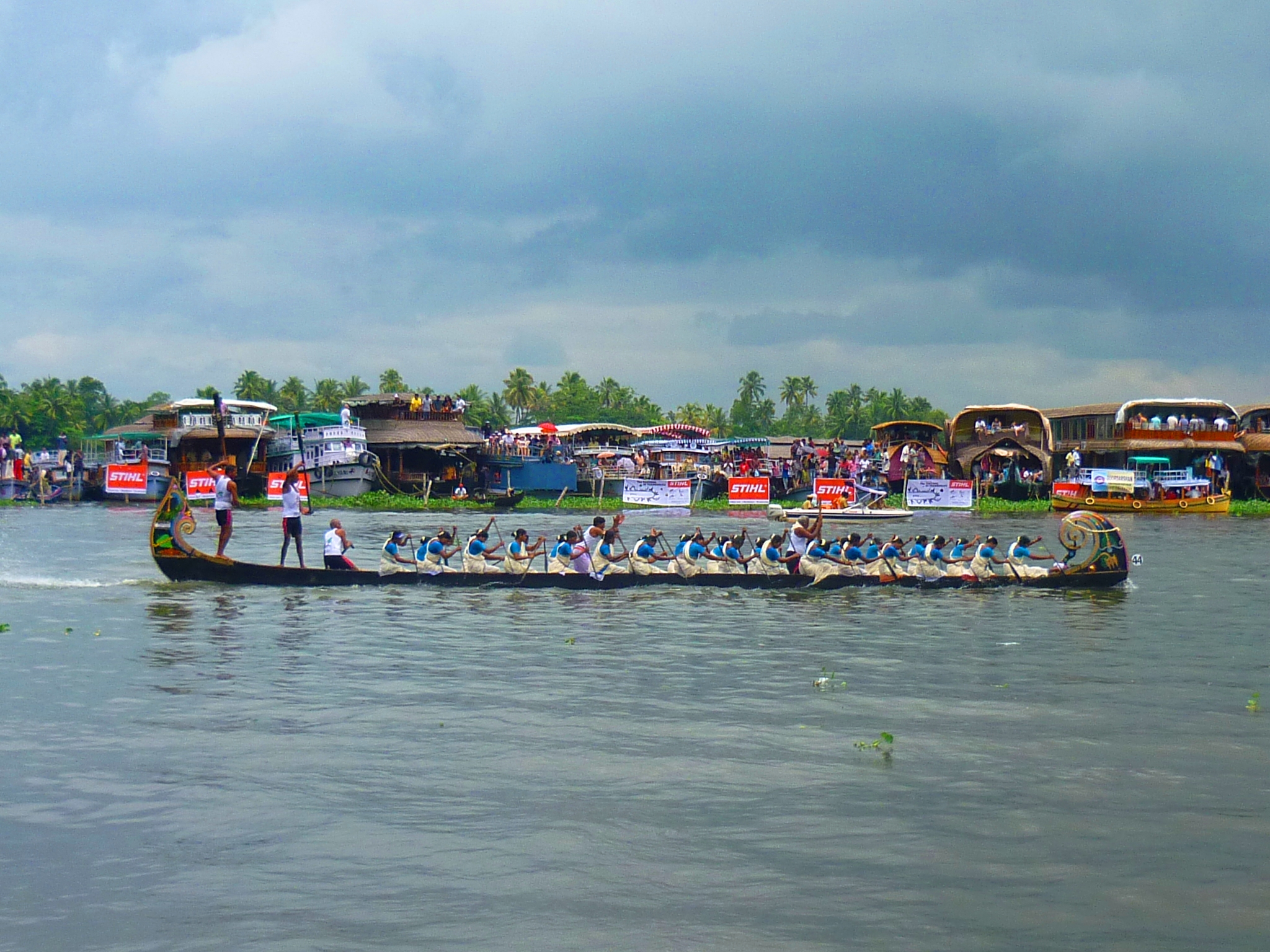
The next morning, we had to reach the racing venue as early as 08.00.a.m. to ensure that we had a place to sit. (Read about the madness of the event). The snake boats are the world’s biggest water vessel used for sports. One by one, they arrived for assembly. Locally called as the Chundan Vallam (Beaked boats), these 100~120 feet long wooden canoes carry 90- 110 rowers and move like snakes through the channels. And soon, the races started under different categories. Every single soul in the arena was singing songs of cheer. All through the event, only one thing echoed in the atmosphere: Vanchipattu or the Boat song. It was a once in a lifetime experience to be a part of that enthusiastic crowd.

The oarsmen '"Women"
The oarsmen ‘”Women”

Post the event, we still had time to explore the town and hence boarded a bus to Champakulam. As we passed through the waterlogged villages of Kuttanad, we were reminded that the region we were passing through was the ‘granary of Kerala’ or the rice bowl of Kerala. It is one of the few places in the world where farming is done below sea level.

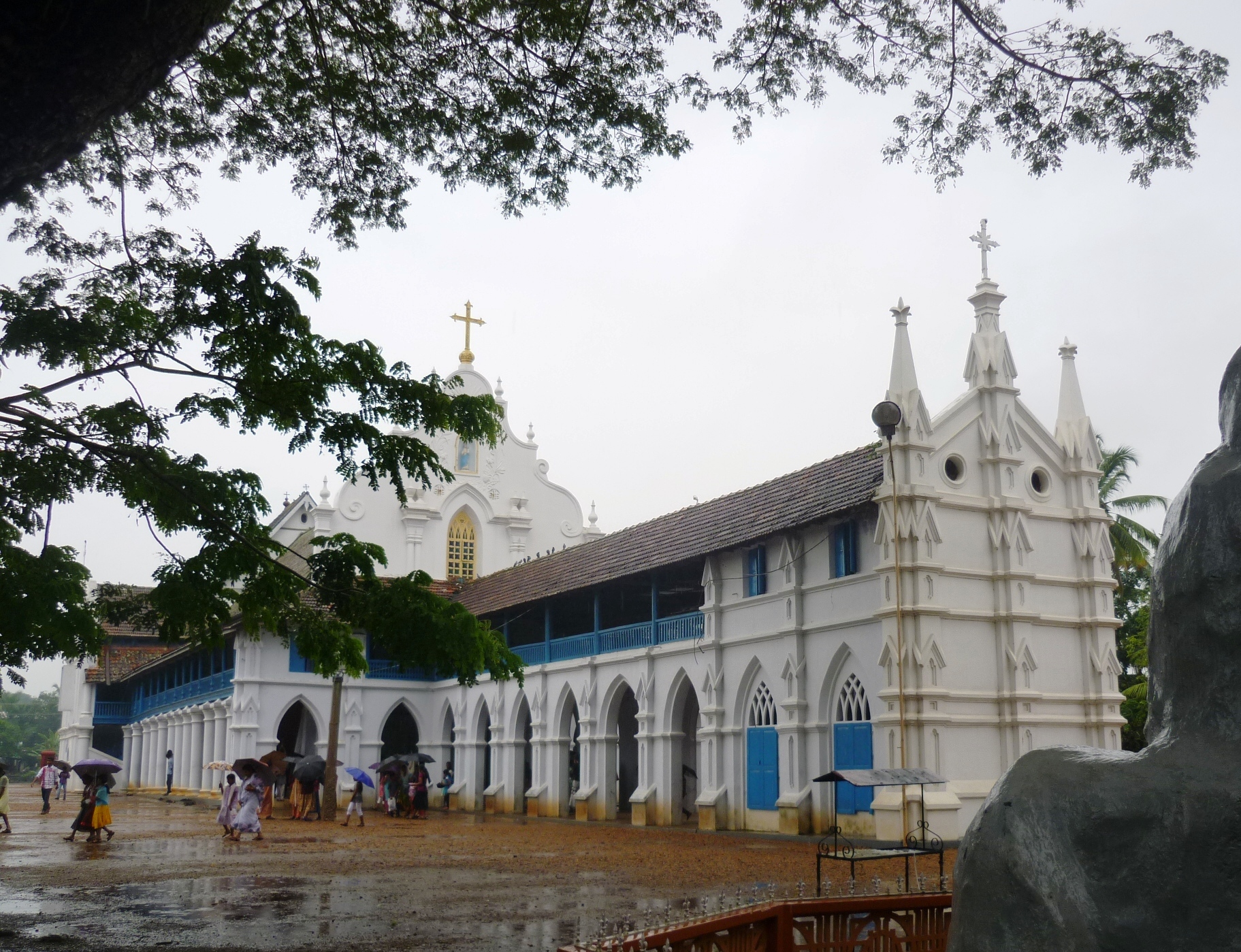
Soon, we reached the St. Mary Forane Church. Since it was a Sunday, we were lucky to take part in the mass. Built in 427A.D., this riverside church is a testimony of time with its finely maintained beautiful mural paintings. From there, we took a boat to reach the other end of the river: the oldest market in the region known as Kalloorkkadu angadi.

Champakulam St. Marys church

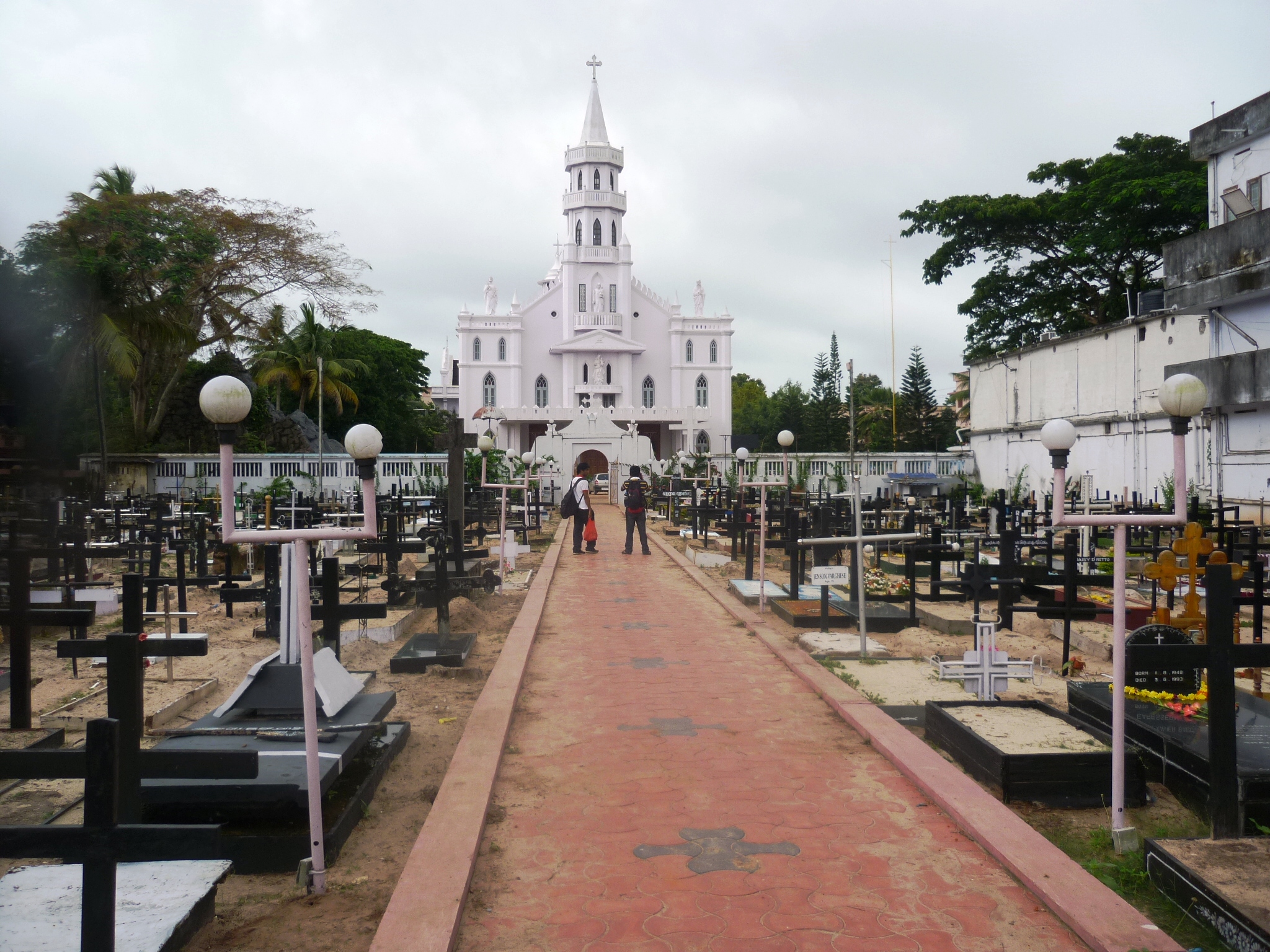
With a local bus ride from there, back to the town, we then took a walk to the Latin church in the town. The entire town of Alleppey can be viewed from the terrace of this church (permitted only during visiting hours). What particularly caught our interest was the cemetery where all members of a family were buried in the same pit. Hundreds of such graves laid within the church premises.

The premises of the Latin Church

We then checked out our lodge and headed to the railway station for our return, scheduled for the night. It was time for us to depart with a mind filled with beautiful memories of sailing afloat on a boat in the backwaters of land that is called ‘God’s own country’ and hope to return soon.

Must dos: Experience the madness of the Snake boat race
Must eat: Freshly caught and cooked seafood while on a backwater cruise tour

A secular pilgrimage along the Coramandel coast

This was a family backpacking trip, mainly conceptualized by my dad and had been long due. He wanted to see how the end of River Kaveri; our family deity looks like. Accordingly, we made an itinerary and a route map. Our family of four backpacked with the below itinerary:

Our Itinerary:

Day 0: Depart from Bangalore (Travel mode: Overnight train to Mayiladuthurai)
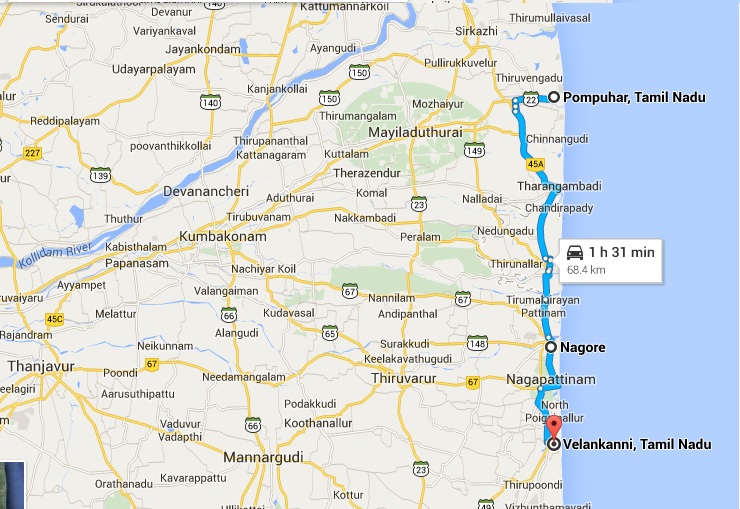
Day 1: Visit Poompuhar, Tarangambadi, Karaikal, Nagore and Velankanni (Travel mode: local bus; Stay: Church run lodges at Velankanni)
Day 2: Explore Tanjavur (Travel mode: local bus; Stay: Hotel at Trichy)
Day 3: Explore Trichy (Depart to Bangalore by overnight bus)

The first day of our backpacking is presented here, which took us across three important landmark destinations along the east-coast, covering all three prominent faiths in India. That’s why I call this part of the trip as a ‘secular trip’ with of course covering the intended destination: Poompuhar, the end of the River Kaveri or the point where this Holy river meets the sea.

Destination 1– Poompuhar

The name reminds one of the arts and crafts of Tamil Nadu while Cauvery emporium strikes a similar bell back home at Karnataka. The link for both the names is common. While the latter relates to Tala-Cauvery, the birthplace of river Cauvery at Karnataka, the former marks the end of the same river at Tamil Nadu. Both being holy places for the Hindus of South India.

We were welcomed by a stretch of fishermen selling salted/seasoned & dried fish at the shore of this historic beach. There is a sculpture art museum on to the right side, at the entrance. To the left is Ilanji Mandran, a bathing place said to have had mysterious powers of curing health ailments that dates back to the Chola era. A walk for about a kilometer along the roaring sea leads us to the river mouth. It is believed that river Cauvery (a female) runs towards the sea (a male) at this point. If one stands and watches the river mouth at this point, the rapids of the river joining the calm sea can be seen quite evidently. The calm sea lashes her back towards the land with his waves side by side. A dip at this juncture is believed to be very holy (Hailing from a community that worships this river as a family deity, at least this is what I have grown up listening to). This place is also called Kaveripoompattinam as called by the Cholas and is a place of importance to the archaeologists.

The Ilanji Mandran at Poompuhar

Apart from the river mouth and a walk through the historical monuments mentioned above, there is nothing much to do at Poompuhar otherwise. The Kethu & Budha sthalams among the Navagraha temples are close by- I will save them for another article.

With that, we boarded a bus to our next destination- Tarangambadi. Then from there, to Karaikal beach.

Destination 2- Nagore

The little town of Nagore is known for the Hazrat Syed Shahul Hameed Dargah of the Islam faith. We were welcomed warmly by the priests there who helped us with the procedures of offering our prayers. Going by history, this dargah stands as a symbol of peaceful co-existence between the Hindus & the Muslims as people from all faiths come here for worship. There are 5 minarets out of which the tallest one was built by a Maratha King of Tanjavur for being cured of his ailment by the miracles of Shahul Hameed. From there, we headed to our last destination of the day.

One of the 5 minarets at the Nagore dargah

Destination 3: Velankanni

It was sunset time when we arrived at the Catholic shrine of Our Lady of Good Health. We walked through the lines of stalls bustling with activities, pilgrims, tourists, hotels and other urchins to reach the seashore. This place is so crowded almost all through the year, that if one just stands in the crowd, the crowd will take you forward without you actually having to try to walk. We walked back to the Basilica of the Arogya Matha as she is fondly called to offer our prayers. The history dates back to 3 events occurring from 16th century onwards where Mother Mary appeared to a milk vendor, a buttermilk vendor and the Portuguese sailors who survived a severe sea storm. There is Matha Kulam / the holy pond and 2 chapels built at the respective places of the above occurrences.

We then took a brief walk at the donation’s library where all the gold, silver & other expensive offerings made by the devotees are kept for exhibits.

The shrine of Our Lady of Good Health at Velankanni

With that, a tiring, yet a pleasant journey in quest of god ended in a peaceful slumber at a Church run lodge… The following morning, we board another TNSRTC bus to our next destination: Tanjavur.

Offbeat Places to See in Tanjavur on a daytrip

This visit to Tanjavur was a part of our family’s backpacking trip covering the route: Bangalore – Mayiladuthurai – Poompuhar – Tarangambadi – Karaikal – Nagapattinam – Velankanni – Tanjavur – Trichy – Bangalore.

Following a long day of a secular pilgrimage in the Coromandel coast, we boarded a morning bus to Tanjavur. Tanjavur, the cradle of Dravidian culture and a hub of the Chola art and architecture needs no introduction. There’s no dearth for information on the internet. A visit to this land was on my parent’s ‘bucket list’ and this was a trip planned for its materialization. With a day’s time at our disposal (VERY short for a slow traveler like me), we decided to cover the major landmarks that a typical tourist would want to see in the capital of the Cholas.

It was the second day of our backpacking. The places covered in Tanjavur were:
• BIG temple (Brihadeesvaran temple)
• Saraswathi Mahal complex
• Grand Anicut / Kallanai dam

The details:

As in case of every other civilization, a river holds all the life. In this case, Tanjavur was born on the fertile delta created by river Kaveri. This is the land that has nurtured and held on to the Dravidian culture till date. Apart from this, its local economy has largely been agrarian based ana is rightly called as the rice bowl of South India.

Landmark 1: The Big temple

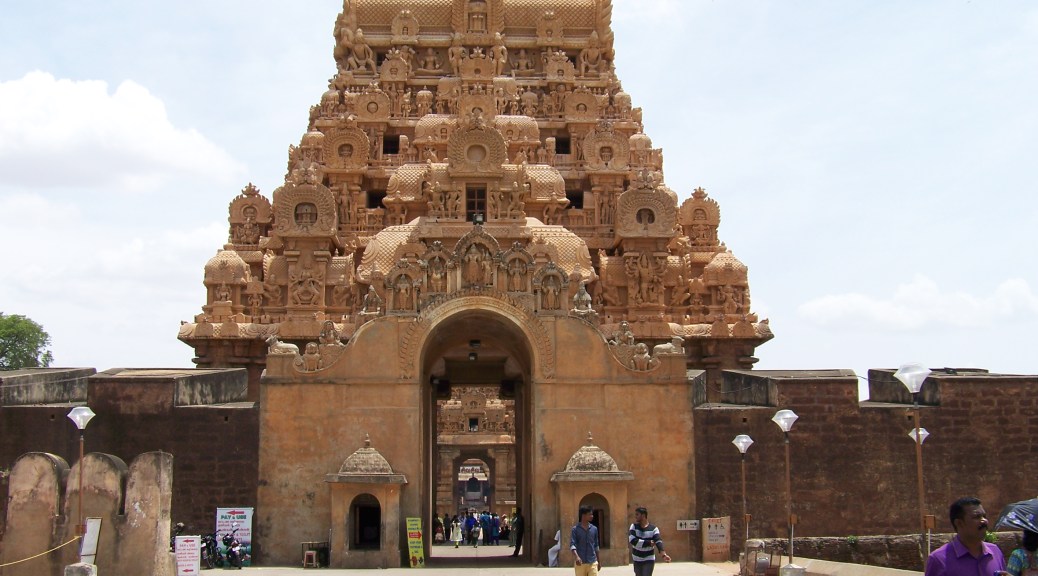
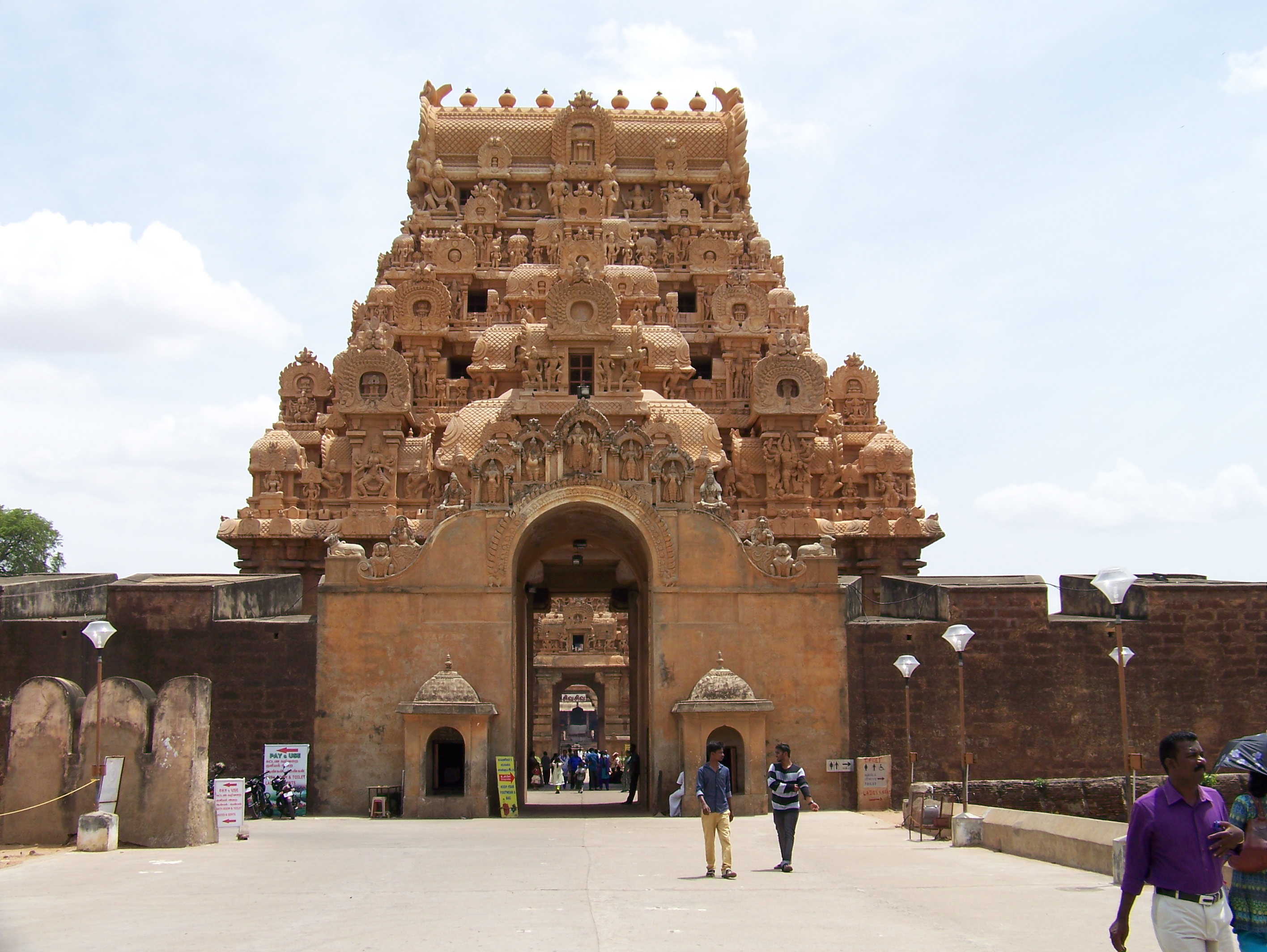
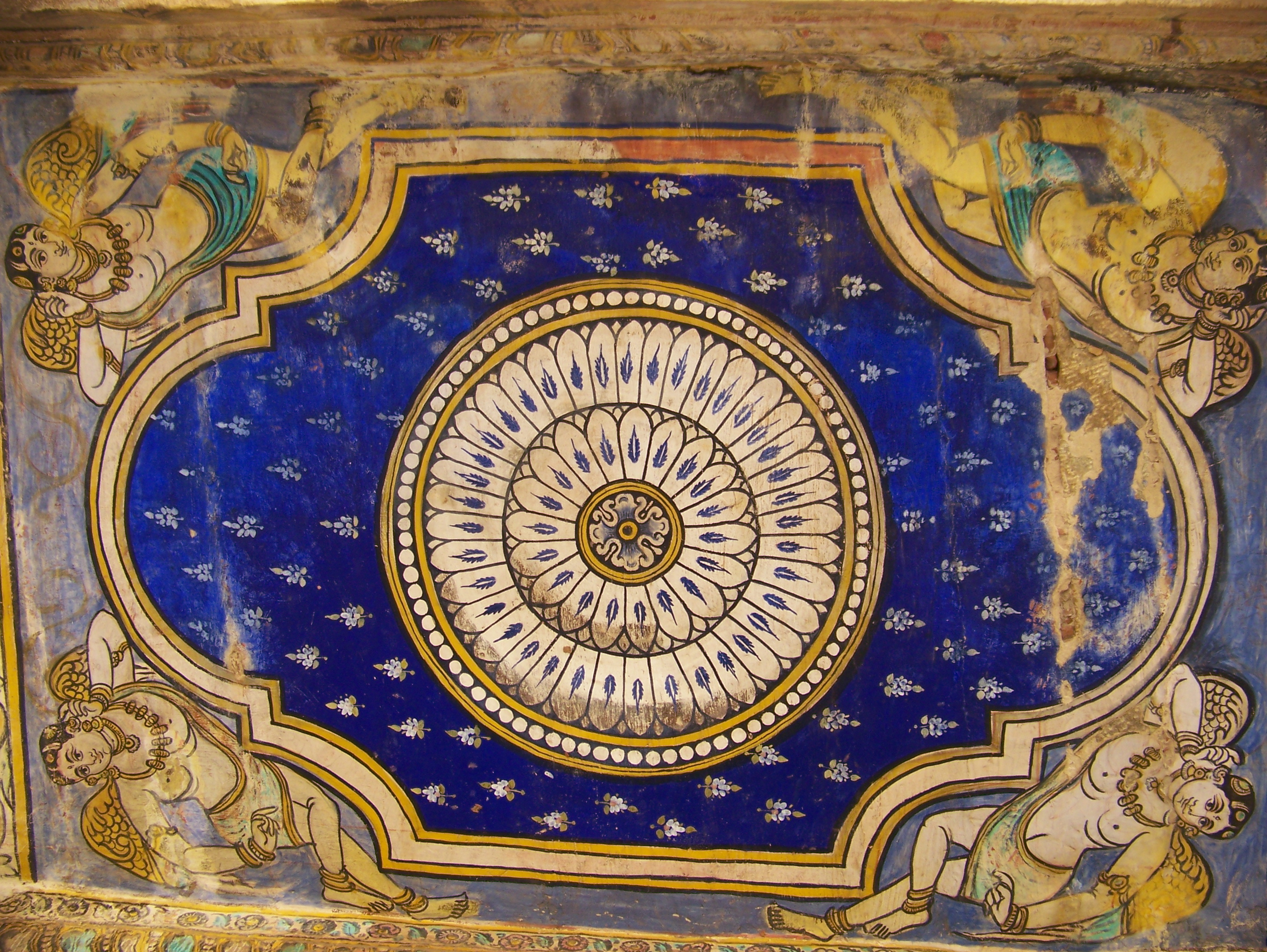
The iconic monolith of this land was spotted even as our bus was still pulling off at the bus station. The monolith seated gracefully atop the ancient temple with a weight of 800 tonnes was still far away. As we reached, we stood there in awe, gazing at the vast premises of the mighty temple. The temple tower is the tallest in the world and stands testimony to the Cholas’ love for art and fine engineering skills even in the iron age. It is believed that a ramp was laid from about six kilometers to facilitate the placement of the monolith Kalasha atop the tower. The walls of the corridor are adorned by fine paintings that were done with a mixture of limestone and organic extracts. The temple walls have sculptures of numerous mythic animals which is the highlight of the Cholas’ temple architecture.

The entrance at the Brihadeesvaran temple

‘The Great living Chola temples’ is a group of three Chola temples located across Tanjavur district. Together, these three temples represent an architectural conception of the pure form of the Dravidian style. The Tanjavur Brihadeshwara temple is the most easily accessible of them all and is located in the heart of the city. (The other two temples are the Airavatesvara temple at Darasuram and Gangaikondacholisvaram). Although the Brihadeshwara temple is fondly called as the Big temple, it has multiple names. With a simple translation of the name into local language, it is called Thanjavur Periya kovil. The great Chola king Raja raja named this temple as Rajarajesvaram and the deity Shiva in Linga form as Peruvudaiyar. A few people also refer the temple with the name of its deity as Peruvudaiyar kovil.

The Tanjavur paintings adorning one of the roofs

Landmark 2: Saraswathi Mahal complex

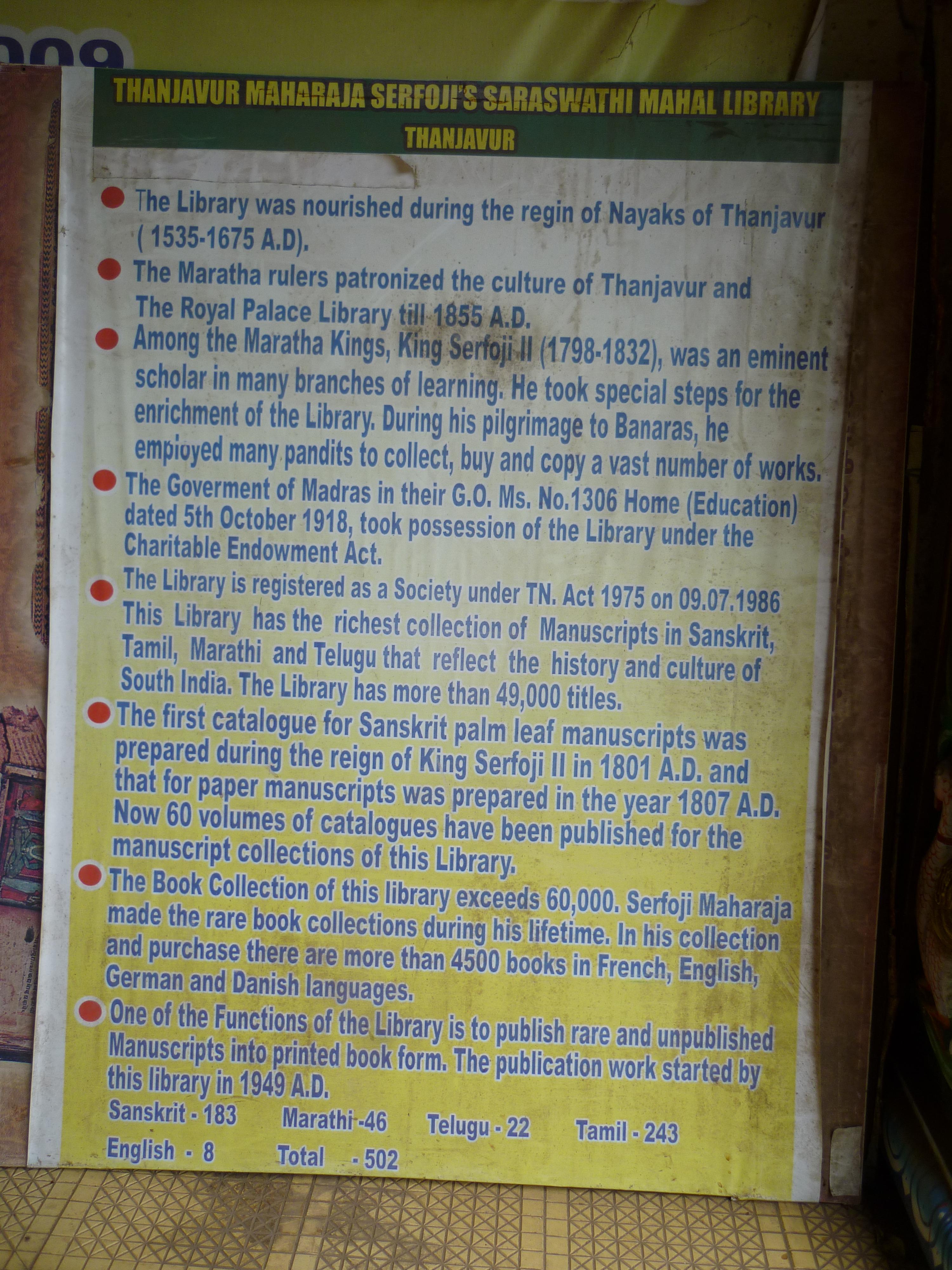
We took an autorickshaw ride from the Big temple to Saraswathi Mahal. This is reckoned among the oldest functional libraries in the world and was patronized by the Tanjavur rulers. One can find some very old, rare and original copies of important manuscripts, scientific research publications etc. here. Adjoining it, is the palace of the Marathas of Tanjavur. The palace is partially used as the residence of the descendants and remaining portion is converted into a museum.

Behind this building, is the art museum which houses some rare and famous bronze idols created during the Chola era. The Cholas were the earliest people to have used the lost wax technique to create the bronze idols with a very scientific approach (as per the documented procedures in the Vedas).

The Saraswathi Mahal Library

Just outside the museum, we picked up a pair of Tanjavur bommai from the souvenir shop. These famous Tanjavur dolls are colorful handcrafted figurines where the head is suspended on a pivot which gives a dancing/swinging movement to the doll. Hence, they are often referred as the Tanjavur thalayatti bommai or the dancing headed dolls. Another artform you cannot ignore or miss while in this city are the Tanjavur paintings. Considered as a divine artform, with gold embellishments, Tanjavur paintings are considered as a symbol of royalty.

Landmark 3: Grand Anicut / Kallanai dam

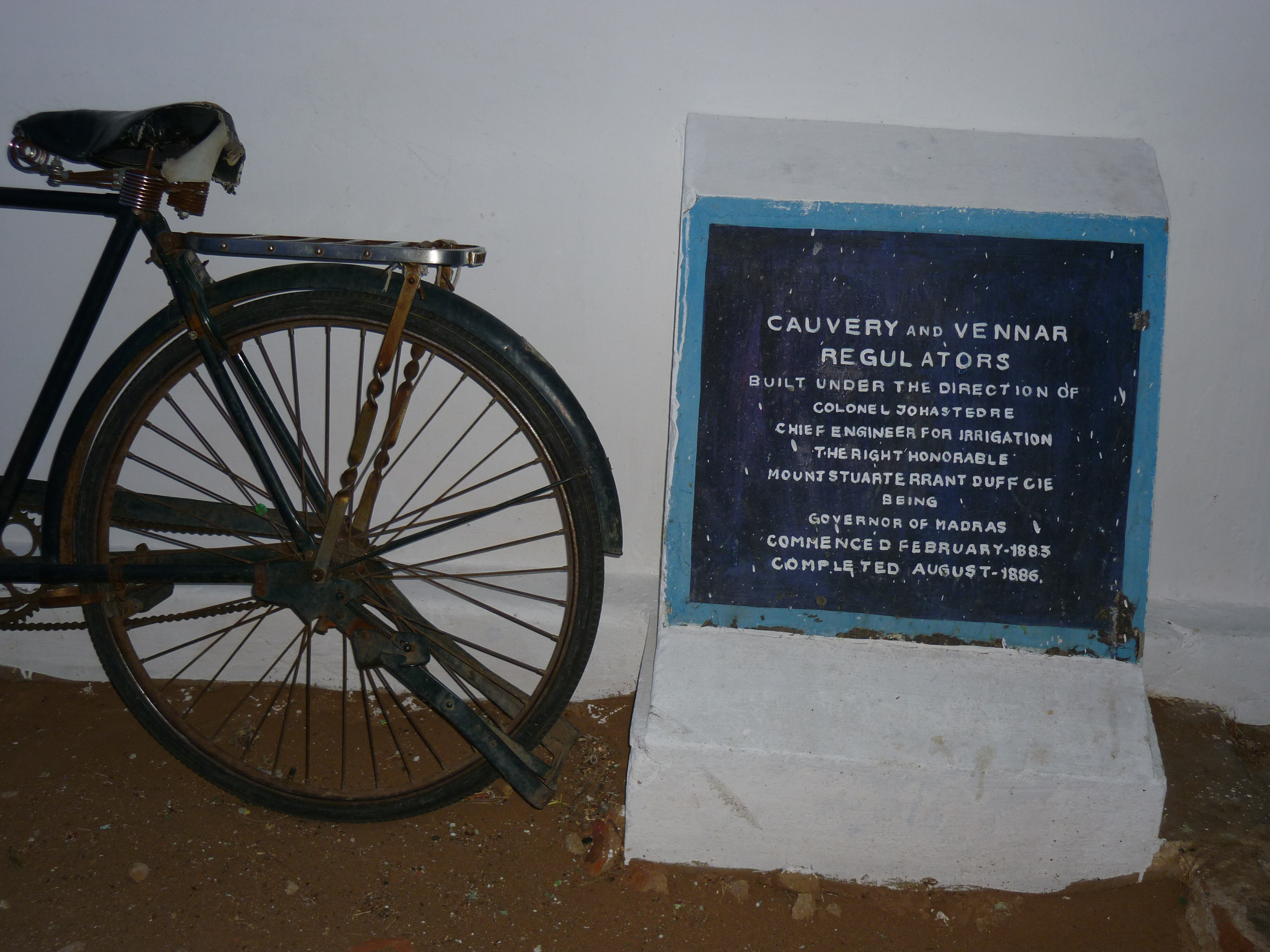
From there, we boarded a local bus to reach Grand Anicut (as called by the Britishers) or Kallanai (the local name). This is a standing example of the engineering marvels constructed over 2000 years ago by the Cholas (later modified by the British). This oldest functional water regulation structure in the world is a dam constructed with uneven stones / random boulders across river Kaveri with a desperate intention to divert the water before joining the sea so that it can be used for irrigation around the delta region. This dam divides the river into four streams known as Kollidam Aru, Kaveri, Vennar and Puthu. Later, the Lower Anicut/ Kollidam was constructed by the British before the water actually joins the sea.

An epitaph at the  Grand Anicut
An epitaph at the Grand Anicut

With this, our time in Tanjavur had almost come to an end. On the other end of the dame, we sat inside a local bus and waited for it to start to our next destination on our trip: Trichy.

The land of the singing waves – Tranquebar

This visit to Tarangambadi was a part of our family’s backpacking trip, mainly conceptualized to cover a portion of the Coromandel coast. Our itinerary for this trip was Bangalore – Mayiladuthurai – Poompuhar – Tarangambadi – Karaikal – Nagapattinam – Velankanni – Tanjavur – Trichy – Bangalore.

This post is about destination no.3 on the first day on the east coast road. I had read about this place in one of the history texts about the Colonial empire in India. I had visited Portuguese, British and the French settlement towns during my earlier travels. The Danish colonized in India for over 200 years with three important settlements. Serampore (in West Bengal), Tranquebar (in Tamil Nadu) and Nicobar Islands (in Andaman & Nicobar Islands, all along the Bay of Bengal. To read about the existence of these places in modern day’s context, there was barely any information available online from a traveler’s perspective. Since we were anyway doing the ECR tour, my curiosity to know more about a Danish settlement motivated me to add Tranquebar in our itinerary. ‘Tranquebar’ as the Scandinavians called it, is a humble town known as ‘Tarangambadi’ in present times.

As we continued our secular pilgrimage, I bought tickets to a destination that was unheard of to my family until that moment. I requested the conductor to inform me when we arrived there. Accordingly, we alighted the bus at a small junction. The place looked very laid back, simple, untouched by any major developmental investments, just like any other fishing hamlet on the coasts of India. The bus conductor pointed to a small road to the right and guided us telling “one kilometer ahead is the fort”, and blew the whistle indicating the driver to proceed. My parents looked at me with a blank look on their face. I could sense that ‘Where are you taking us on this hot afternoon?’ question in their eyes. Although with the first look of the place, I too had similar apprehensions running in my mind, I wanted to walk further to see what was really there!

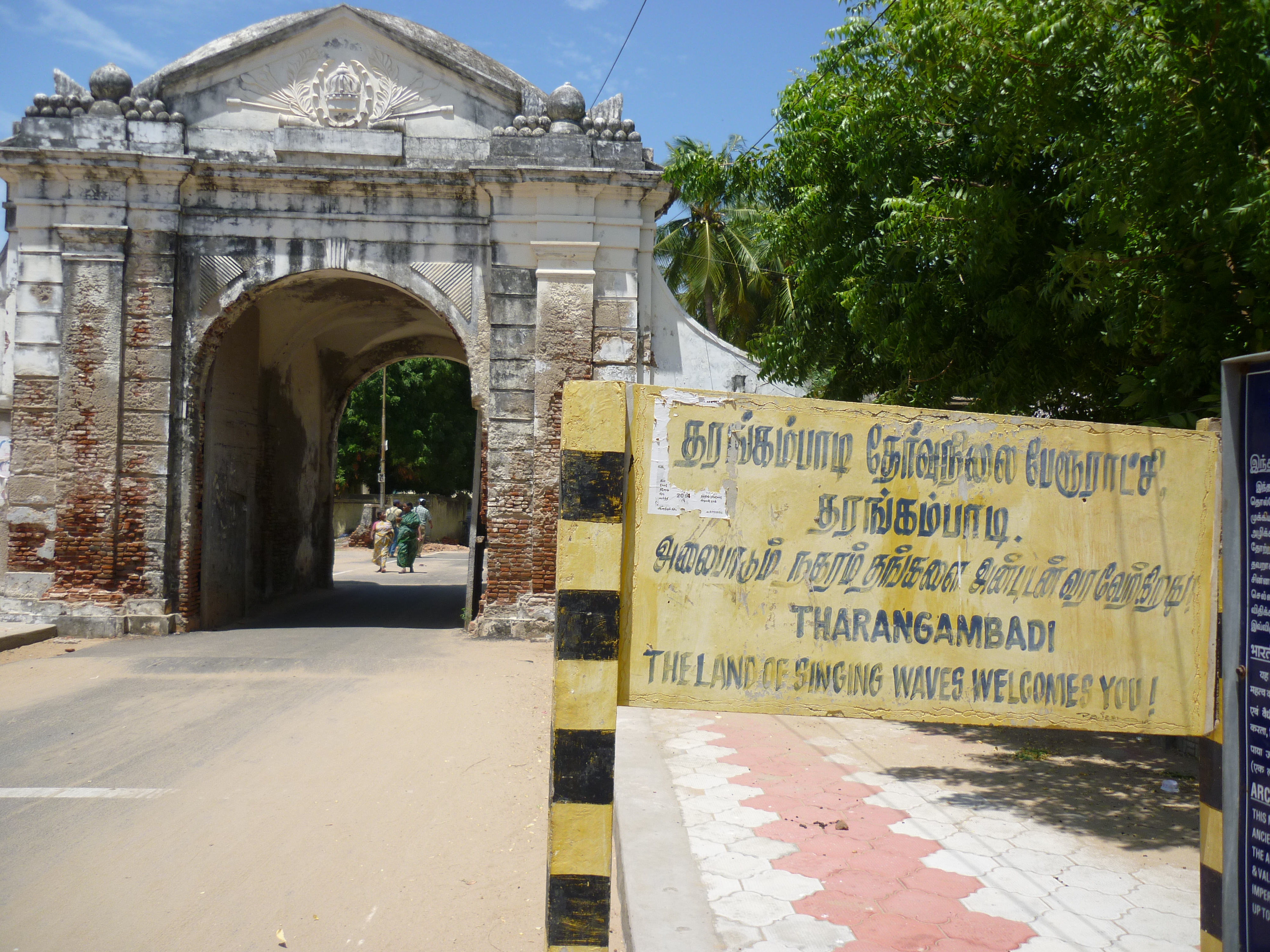
We walked for about half a kilometer and an old arch done with Danish art welcomed us at the entrance of the town. A board by the side of the arch read: ‘Welcome to- The land of the singing waves- Tranquebar’.

The entrance arch
The arch at the entrance of Tarangambadi/Tranquebar

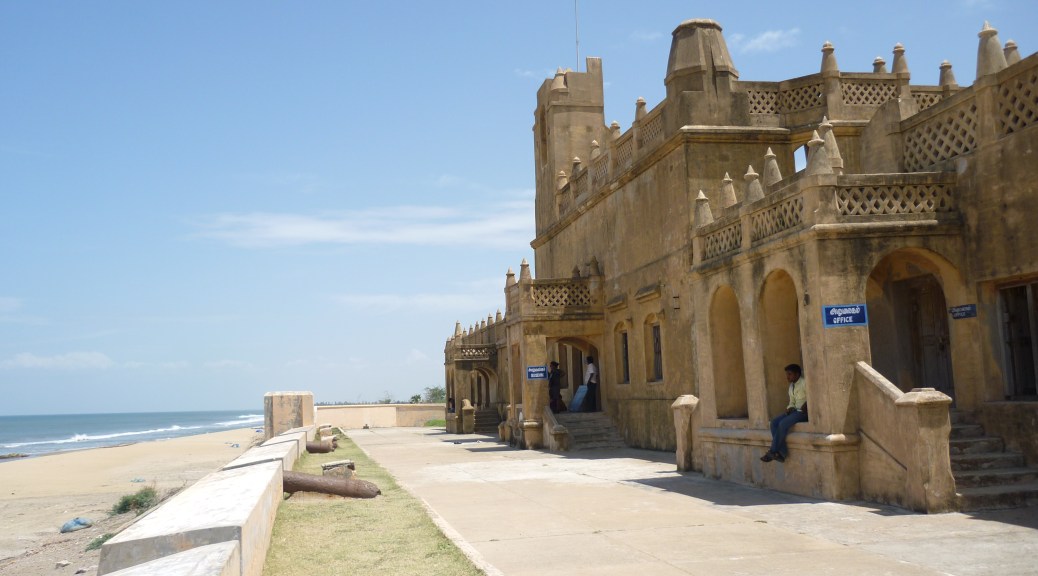
As we walked through this town welcome gate, the feel of the place transcended us instantly to a different country, or a different era- perhaps. The roads were super empty & clean and old Danish buildings stood tall on either side of it. The Zion church, the Teresa’s convent school, the Danish governor’s bungalow among several other structures that tell tales of an era bygone finally led us to a fort. ‘Fort Dansborg’ as it is called, is a structure peacefully nestled on the calm shores facing the Bay of Bengal. The moment we got a glimpse of the beach from the fort entrance, we got the link to the name of this quaint little place- Tranquebar: the land of tranquil waters. The place had tranquility overloaded not just in its waters, but in its air, land and whatever we saw around. I’m usually not a beach person, but this place was magical!

Since there are just countable properties (heritage bungalows turned resorts) in the town, Tranquebar is still unconquered on the tourist radar. Also, the unavailability of affordable food in a long stretch of kilometers, the budget hoppers are those who just drop in for day trips. Hence, except for a handful of fishermen, evenings and early mornings are idyllic with you being your only company if you choose to take stroll along the calm beach. This is by far, one of the BEST beaches along the east coast that I have been to.

The serene shoreline at Tranquebar
The serene shoreline around the Tranquebar fort

The fort is well maintained and converted into a museum. An important port between 1600s to early 1900s, the walls of the port now lay dilapidated, majorly battered by the tsunami in the year 2004. A stroll along the beach take you to the Masilamaninathar temple. It dates back to 13.C.E. and is believed to have mythological importance. The sculptures on the walls of this temple and the shikara have been corroded by the salts.

Although there isn’t much to see around in Tranquebar, it was a place that filled our mind with peace and tranquility even with just a few hours spent there. My parents too, were equally excited about the place where I had brought them to. I must admit that Tarangambadi is a place that I would COME BACK soon. Then, with more time and a hotel reservation at one of those bungalows on its beaches. But for now, it was a hard but a helpless option for us to pull ourselves out of this place. Unsatisfied with the quick visit, we promised ourselves to come back exclusively to stay here as we left for our next destination- Nagore.

Mission accomplished- Kumara Parvatha

This trek was planned to celebrate the 1st anniversary of Sam’s farewell trek (Click here for details).. on the same day, exactly a year ago..

Let me get you going directly from where this trek to Kumara parvatha or KP peak is actually supposed to start. We reached Kukke Sri kshetra and checked into the lodge(a meagre 100Rs. Per day) run by the temple trust, freshened up and feasted on some sumptuous Mangalorean food for breakfast. Without wasting much time, we started the much hyped- one of the toughest treks in South India.. to the Kumara parvatha peak in the Pushpagiri wildlife zone.

The original plan was to start from the base by 7.00.a.m and camp at Bhatru mane. Then, leave Bhatru mane by 3.00.a.m the next morning and reach the peak to witness the sunrise, what is supposedly one of the best.

As planned, we entered the trekking trail.. It starts off with thick forest around and steep climbs uphill.. There was NO water sources along the way (We didn’t know that there was a perennial stream, with a small deviation after 2.5km) and a possibility of occasional encounters with elephants. We took frequent stops before taking a longer halt at Bhima’s rock. This stretch of 3km had oozed the fluid out of us..

 A view from Bhima's rock
A view from Bhima’s rock

Once this 3kms stretch was covered, we got our first view of Kukke town.. The thick canopy of forests made way to the grasslands after walking 1km further from there.. It was well past noon and the sun shined at its hottest.. We were running out of water already.. We started to wonder if Bhatru mane really existed and literally pulled ourselves to reach there. Or rather say, we pushed ourselves to walk the small distance that seemed never ending.. Finally… we were overjoyed at the first glimpse of Bhatru mane…

The first glance of Bhatru mane

We ran down to his nestle amid a small piece of green land.. I find NO words to express the joy of finding water.. That too, clear and cold water from the stream that ran through his farm.. We had a simple, yet the tastiest lunch served by Bhatru and rested under the shades of his arecanut farm..

We then made a small change in the plan and decided to continue the trek until it was dark. We feared the pace at which we were climbing up and did not want to return late on the following day.. We halted at a view point along the way for some photographs, before reaching the forest checkpost. We continued our hike up after registering our names at the forest office.. We stopped again at yet another view point.. The sun was coming down by the time we reached kal-mantapa and hence we decided to pitch our tent near the stream that ran by..

The sunset from our tent

The sunset from our tent

I don’t remember which sane person in the group chose the place.. I agree that we got a place which became every other trekker’s envy.. The place was for sure, a top rated spot for sunset viewing.. But we girls, who stayed inside the tent know what we went through that night.. The tent was pitched on a slope, on the edge of a rocky cliff which seemed like the place where the earth ended.. It was soon dark and we ate the little food that we had carried and hit the bed (Read hit the rocks)..

The boys comforted themselves in their sleeping bags and threw the poor girls inside the tent.. The entire night went by like this: ‘Our respective backpacks were used as pillows inside our tent. We all would slide down with our bags inside the tent.. again we would push back everything and move up.. Slide down.. Slide up.. Phew..!!’ And a while into midnight.. The intensity of the wind also increased.. The cover of the tent started to fly.. We hoped for it to be 3.00.a.m soon so that we all could start our ascend.. But another surprise was awaiting us.. Madhu heard the cracking sound of the tent support and scared all the girls inside to vacate the tent. We carried our luggage from inside and jumped out of the tent, one by one.. The last girl just came out and the tent crashed down to a flat.. The guys woke up and one of them attempted to slowly remove the pegs.. One peg was removed and then… The tent flew.. away from our reach.. off the cliff.. down the valley.. We had borrowed the tent, on hire.

Everyone woke up and sat wondering why this had to happen. It was still dark at 4.00.a.m. and with the wind that continued to blow ruthlessly, our ascend to the peak seemed impossible.. We stayed back until sunrise 😦 We decided to compromise on one of the main agenda of our trek- Watching the sunrise at KP peak.

After there was dawn,one of the boys dared to go down the cliff. He had a thrilling feat with adventure and managed to bring back the tent that had settled on a boulder in the middle of a water body, down below in the valley.. More than getting excited about finding the tent, we were all celebrating his safe return.. It was around 7.00.a.m by the time we started our ascent.

Inspite of missing the sunrise, the views post that period were equally spectacular, all along the way. The climb was pretty smooth. It was around 11.00.a.m. by the time we reached the first peak/ false peak- Shesha parvatha.

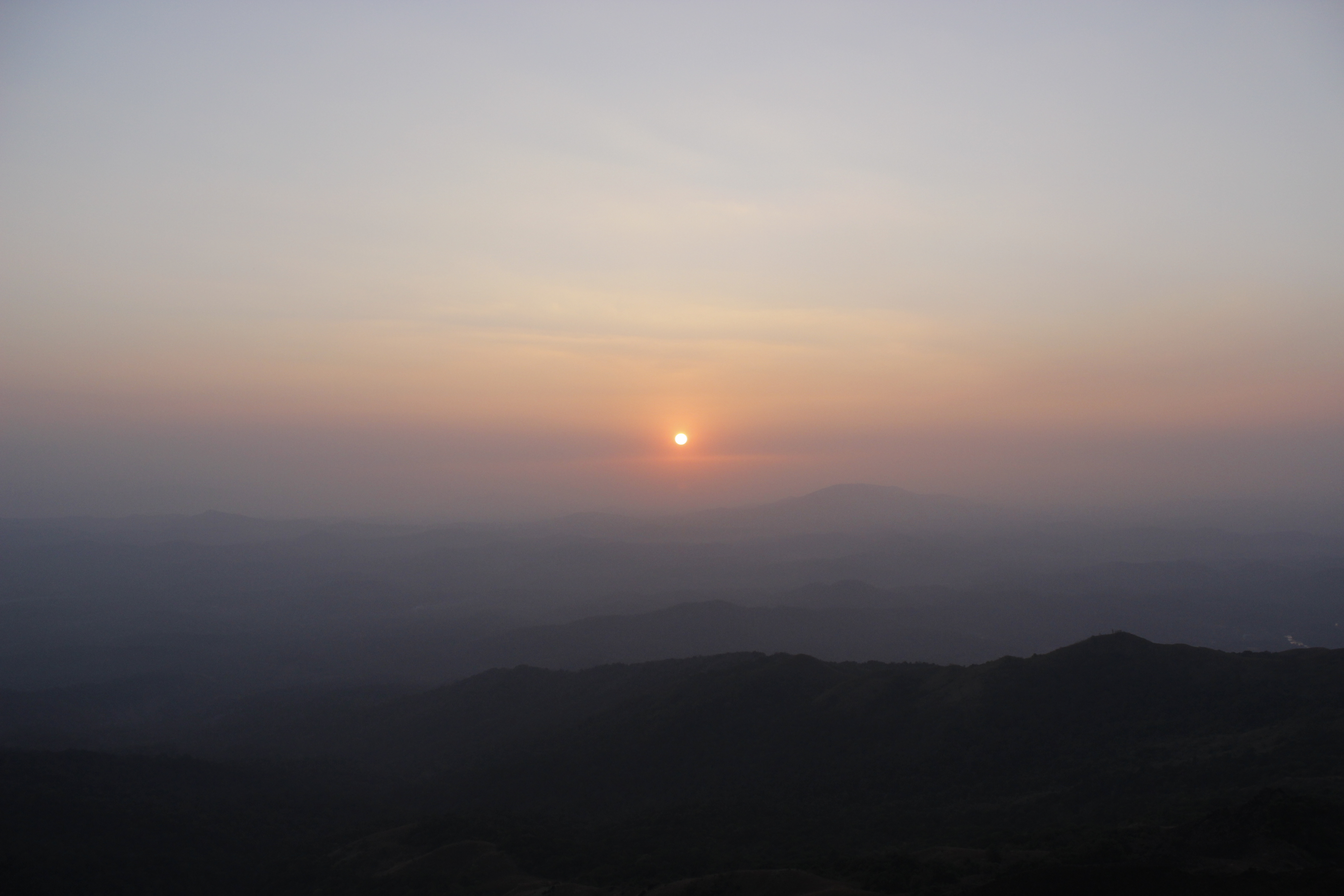
Post sunrise

The view from the base of Shesha Parvatha

After just a few photo moments, we decided to continue our journey.. We descended the steep rock and waded through super cool, thick jungles.. And then, climbed up another steep rock. This rockclimbing with bare hands and legs reminded me of our monkey ancestors.!! A small walk further up took us to the actual end of the earth. Right there, we had conquered our destination- Kumara Parvatha..!!

Shiva temple atop Pushpagiri hill

Shiva temple atop Kumara parvatha

Thanking the diety with a small bow in the temple on the peak, we set our return journey.. Getting down the rocky slope of KP seemed tricky with one of my friends ending up with torn trousers when he decided to sit and slide down on his butt 😉

The descend from Shesha Psrvatha was no easy task either. The loose gravel all along the trail made walking difficult without slipping. It was 4.00.p.m by the time we reached Bhatru mane.. We realised that we had covered only half the distance and had very less time left with sunlight.. We had to complete the remaining distance before it got dark because that was the toughest stretch with thick forests and wild animals. We had a quick lunch at Bhatru mane and got some rest in fast forward mode and started our descend by 5.00.p.m..

We knew we had very less time in hand and a LONG way to go.. We all walked as fast as we could. Our legs had given up already.. I was preparing my mind to stay back in the forest and make a feast of myself to some wild animal at night.. I ran down the slope at times.. My knees seemed like they would part away from my thighs.. We saw the sun coming down.. We continued to walk fast.. We saw the sun going down the horizon.. We paced up.. Suddenly we all halted.. There was pin drop silence.. We realised that some wild animal(mostly elephant) was somewhere around.. It took us a few minutes to feel the sound move away from us.. Then, we resumed our walk. We saw the bright day fade into darkness and every shade in this process. The toughest and the last stretch was almost coming to an end.. We had FINALLY reached the KP gate… And the last ray of light too waned into darkness.. Thus came an end to the KP trek- a mission….. accomplished..!!

We all then freshened up at the same lodge and did a quick visit to the Kukke temple before hitting the roads on our return journey.

NOTE: The above story is written based on my trek back in 2013 when there was no restriction on camping in the entire trail. As on 2019, camping is allowed only around the forest checkpost and Bhatru mane. So, it is wiser to plan the distance, hiking time and camping accordingly.

Must do things/ Highlights of Kumara parvatha trek:

  • Bhatru mane is the ONLY place you will find food and it is an experience in itself to get your turn in the queue to have your meal served. The same basic rice and sambar is served for all 3 meals and nobody complains. Not tasty, but finding food after a long day is LUXURY here. Bhatru has a fixed time for serving food and very punctual. The crowd is huge especially on weekends and the wait for your meal can take longer if you dont have your own plate.
  • The sunset from the view point enroute forest checkpost or Kal-Mantapa
  • To watch the Sunrise from Kumara parvatha is like going to a different world. Try to make it there in time.
  • The sky is in its clearest form and star gazing at night is a whole different experience. You see so many stars, bright and clear that it feels as if the sky has moved closer to earth. We got lucky as it was also a night of a meteor shower, so we saw many shooting stars.
  • Drinking water from the stream felt like nectar. So clean and tasty. You can fill your bottles at 4 places along the way. First after 3kms, near the Bhimas rock. Second, at Bhatru mane. Third, at the forest checkpost. Fourth, at a stream just before kal-mantapa.

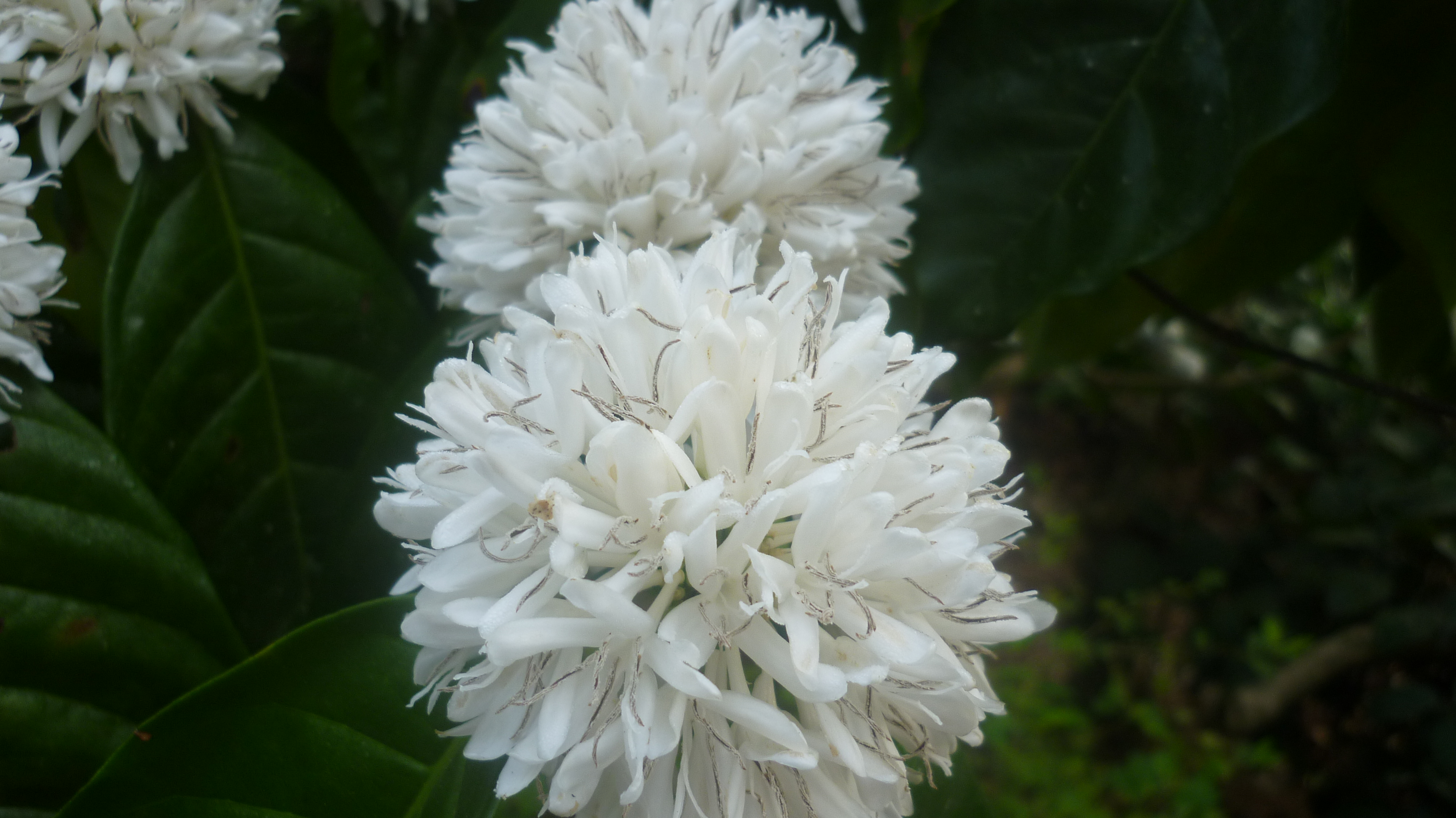
Of pre-monsoon showers and coffee blossoms

It is that time of the year when the entire hill station awakens with the fragrance of the blossoms.. On the ninth day after the 1st pre-monsoon showers, the coffee plants around the hills of Kodagu will be in bloom..

P1000890

It is an annual spectacle of nature whose occurance is unpredictable and is wholely dependent on the pre-monsoon showers. If the rain fails, it creates some sort of panic among the growers who then resort to artificial sprinkling sytems.. Be it rain showers or irrigation, in either case, what follows is something that one must experience atleast once in a lifetime..

White bunches of coffee blossoms adorn the trees as if some one has strewn cotton all over the hills.. And these flowers last for a maximum of 24 hrs which makes it even more special.. And like the saying goes.. You HAVE to be at the right place at the right TIME to see the right thing happen..

Have you experienced the fragrance of coffee flowers?

Explore the Best of Valparai on a Weekend

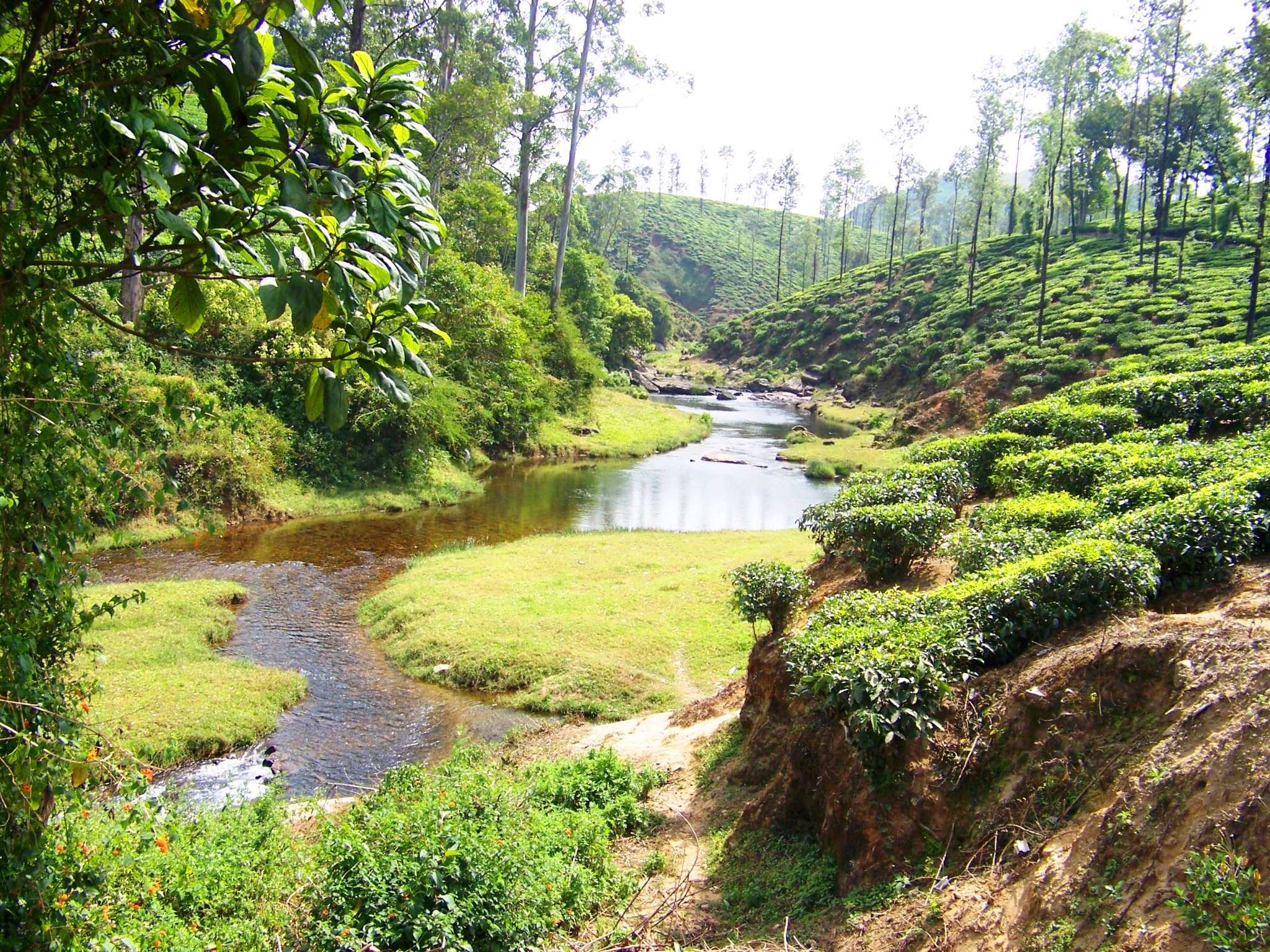
My friends and I had heard sufficiently about the rich wildlife of the region surrounding Pollachi, its beautiful sceneries and perfectly trimmed tea estates. Valparai is a lesser known hill station in the Indira Gandhi Wildlife Sanctuary (earlier known as Annamalai Wildlife Sanctuary). Kollywood stars and burnt out urbanites frequent this place to de-stress themselves and savor a slice of nature. Here, as one ambles past mud walled, thatched roof dwellings, granaries of farmers and tea estates fringed plateau, don’t be surprised if you happen to hear someone screaming ‘start camera’, ‘action’. This is a hot spot for movie makers with over 1500 movies and commercials having been shot here. And we too got lucky when we happened to visit the sets and share our homestay with the crew of the movie- ‘Madras cafe’ during this trip of ours.

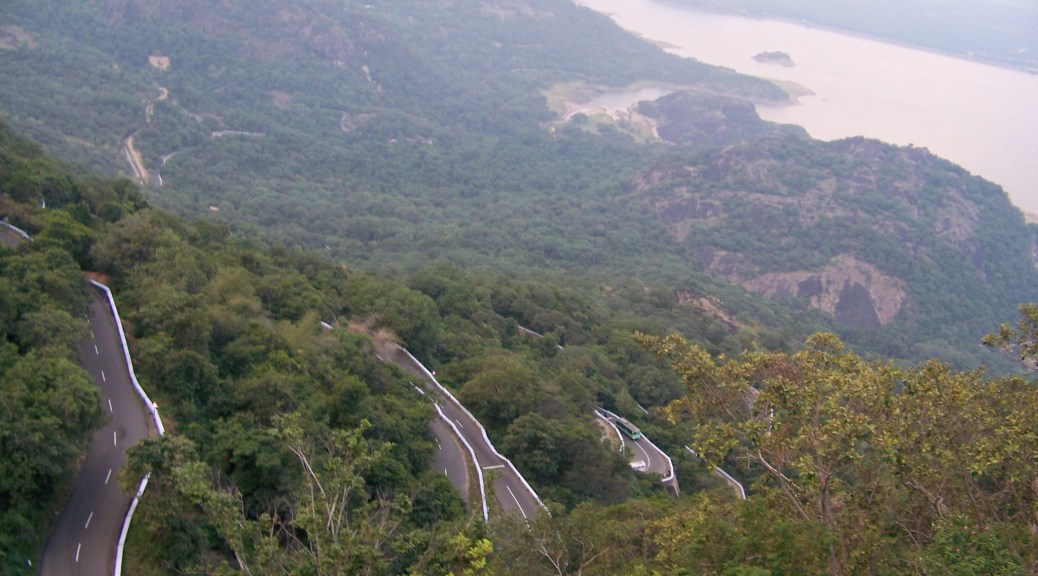
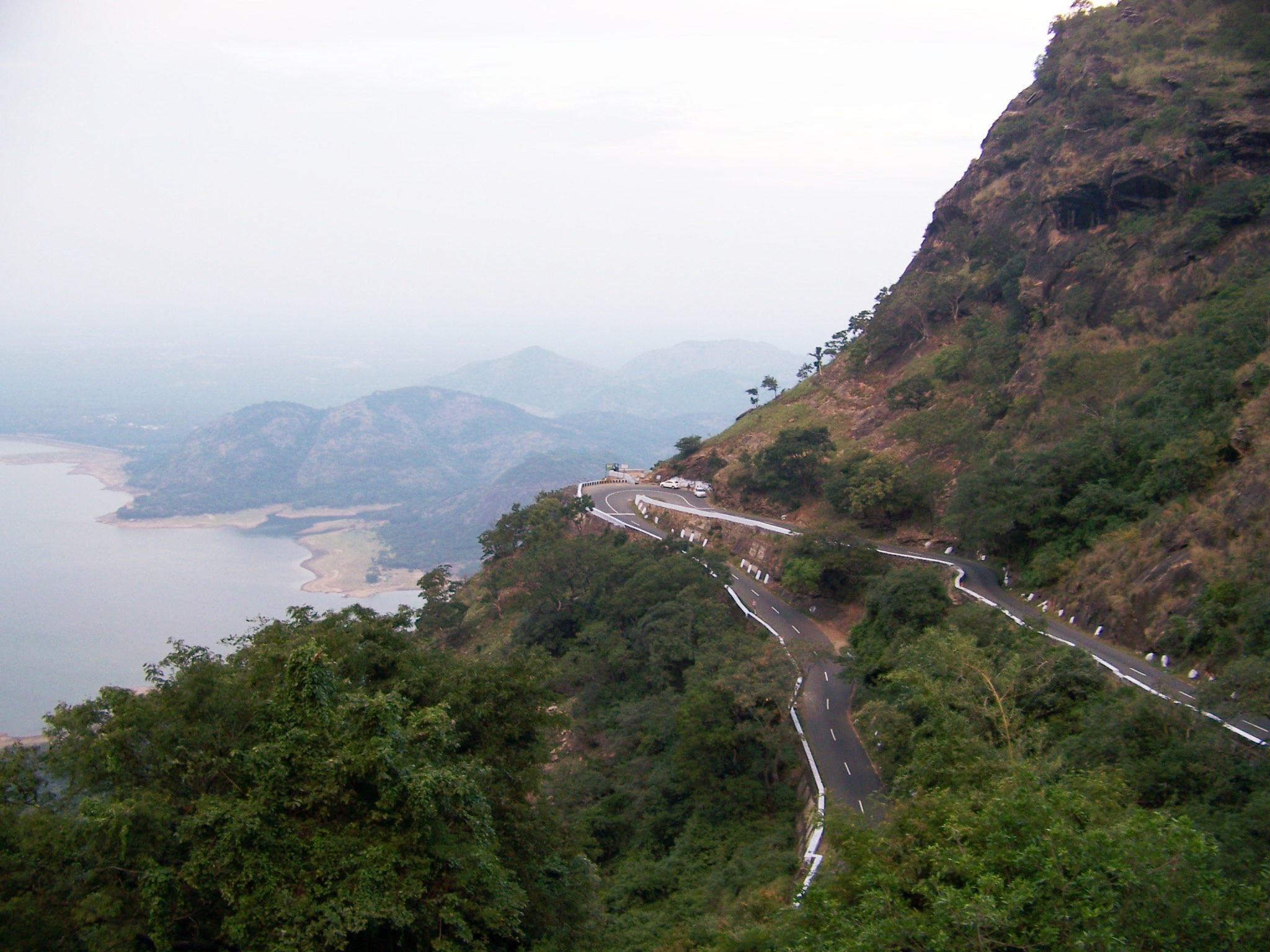
A weekend itinerary was primarily planned by one of my friends and a few must-see items were pushed into the plan by me. Since this place falls on the border of Kerala and Tamil Nadu, we decided to make it a three states’ drive including Karnataka. Accordingly, five of us started from Bangalore on a Friday night. Since it is also a bio-diversity hotspot, I had listed 5 animals on my ‘to-spot’ list while at Valparai. Valparai is the end destination after driving through 32 hairpin bends. Being a hill station, Valparai weather is specifically delightful with a cool climate throughout the year. It is usually the road leading to Valparai that is enjoyable with scenic vistas and photo-points. I had enlisted them with day 1 in the Tamil Nadu side of the sanctuary and then spending the second day on the Kerala side of the forested land.

Itinerary:

Day 0: Leave from Bangalore by night (Own car)
Day 1: Reach Pollachi before sunrise. Backwaters of the Aliyar dam, monkey falls, Loam’s viewpoint, Carver Marsh viewpoint, Congreve falls, Vinayagar temple, Birla falls, Balaji temple, Iraichalparai falls, Nallamudi Pooncholai viewpoint, ChinnarKallar hanging bridge trek, Sholaiyar backwaters (night stay at a homestay in Chalakudy)
Day 2: Athirapally falls, Vazachal falls and return to Bengaluru via Ooty.

The details:

Part 1: Tamil Nadu

During the night journey, I had dozed away on the rear seat of the car. When I opened my eyes to the misty morning dawn, our car was greeted by beautiful countryside with tree-lined roads, emerald fields of paddy, whispering palms and coconut plantations in the backdrop of the towering Western Ghats. We had reached Pollachi in Tamil Nadu. We waited near Aliyar park until 06.00.a.m. for the forest check post to open.

a. We registered our entry into the wildlife sanctuary there and proceeded on our journey. Our drive further towards Valparai, was an ascent along the winding road by the backwaters of the Aliyar irrigation dam.

View of the Aliyar backwaters

b. Four kilometers further from the forest check post, we reached the monkey falls. The waterfall is aptly named due to the many troublesome monkeys here. One even entered our car and happily carried away a bag full of fruits from the rear seat. Our drive continued…

c. Just as we approached the 9th curve (the Loam’s viewpoint), we were greeted by this gentleman who was calmly grazing on the edge of the steep rocks.
We scored off the first member on our list of top 5 wildlife to see- ‘The Nilgiri Tahr’.

Nilgiri Tahr – Photo credits: Samson Joseph

d. Continuing our drive, we stopped at Carver Marsh viewpoint adjoining the Kavarkal estate. On a clear day, we were told that one can see the Sholayar reservoir (2nd deepest dam in Asia) from there.

e. We then cruised past the Tiger valley from where we caught a good view of the upper Aliyar reservoir.

At the entrance to Sholayar / Kallyar estates

f. We covered Congreve falls (located in the Nadumalai estate), Vinayagar temple (Jayashree estate) & Birla falls along the way up. We got good view of the Manopally forest and the grass hills of the sanctuary.

g. Ox-bow lakes situated inside the protected area is supposedly the highlight of this region for those who can manage to get permission from the forest authorities. We failed at it since we didn’t have insufficient information on the channels for the permits.

h. We visited the Balaji temple and the nearby Iraichalparai falls along way.

Just along our way, it was time to score off no.2: groups of ‘Lion tailed Macaque’ were walking all over the road and around. Even before we realized, we had reached the hilltop.

Lion Tailed Macaque- Valparai

i. We stopped by and trekked through the tea estates to reach the ‘Seen god shrine’ at the Nallamudi Pooncholai viewpoint. An old man, who claims to have seen god, blessed us with some prayers and turned out to be an encyclopedia of knowledge about the local culture and history. He explained to us about the various tribal settlements in these hills… pointing out at colonies, he would tell- Kadars, Muthuvars and Malai Malasars. They are estimated to have 190 households in 8 settlements in the sanctuary.

While we walked towards our car, the women picking tea shoots warned us not to proceed further. She pointed at a herd of 8-9 elephants feasting around at a distance, thus scoring off no.3 on my list.

j. We then drove to ChinnarKallar for the hanging bridge trek. In spite of driving all the way, we refrained from shelling out 250 Rs. per head just for the entry which sounded to us more like a bribe at the forest check post. This place is among the highest rainfall receiving areas in India. No doubt that the Valparai weather is pleasant all through the year and is an upcoming weekend destination among the urban crowd of the nearby metro cities.

We put our car in reverse and just then… no.4: The giant flying squirrel (a young one and wasn’t flying though) crossed our road. We were excited…!!

k. After covering places in the Tamil Nadu part of the sanctuary, we headed towards the Kerala border. We saw a calm stretch of the Koolangal river and decided to spend some time there. We could not compel ourselves from not taking a sip of its crystal-clear waters.

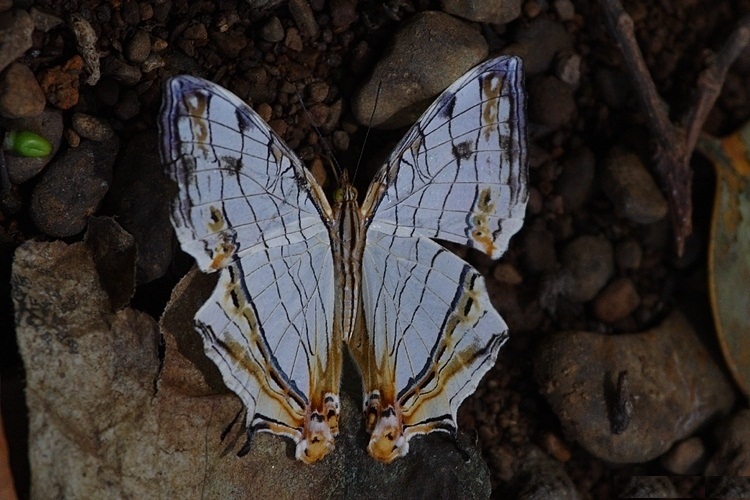
And right there. we saw this little creature on no.5: ‘The common map butterfly

The Common map butterfly

Part 2: Kerala

We registered at the border check post and prepared to enter the Kerala land. Thick rainforests on both sides accompanied us all the way till our destination. We happened to drive through what I think is one of the dangerous roads I have been through. With the Sholaiyar backwaters on one side and a valley on the other side, only one vehicle can pass at a time. Beautiful views for most of the stretch kept us in an awe. Tunnels have been bored through the mountains to supply water to Parambikulam reserve from the Nirar dam.

We reached Athirapally reserve just after sunset. We got a quick glance of the beautiful waters cascading down to join the Chalakudy river. It was soon dark, and we checked into Maria cottage (a local homestay) where we were made us feel at home and served some sumptuous Mallu food.

Next morning, we walked past the palm plantations to reach the Chalakudy river to freshen up. This place is frequented by elephants at all times, but we did not care. We enjoyed the clear but rapids of the water there. We took a refreshing dip before returning to our homestay. We checked out of the place after having a good filling Malayalee breakfast.

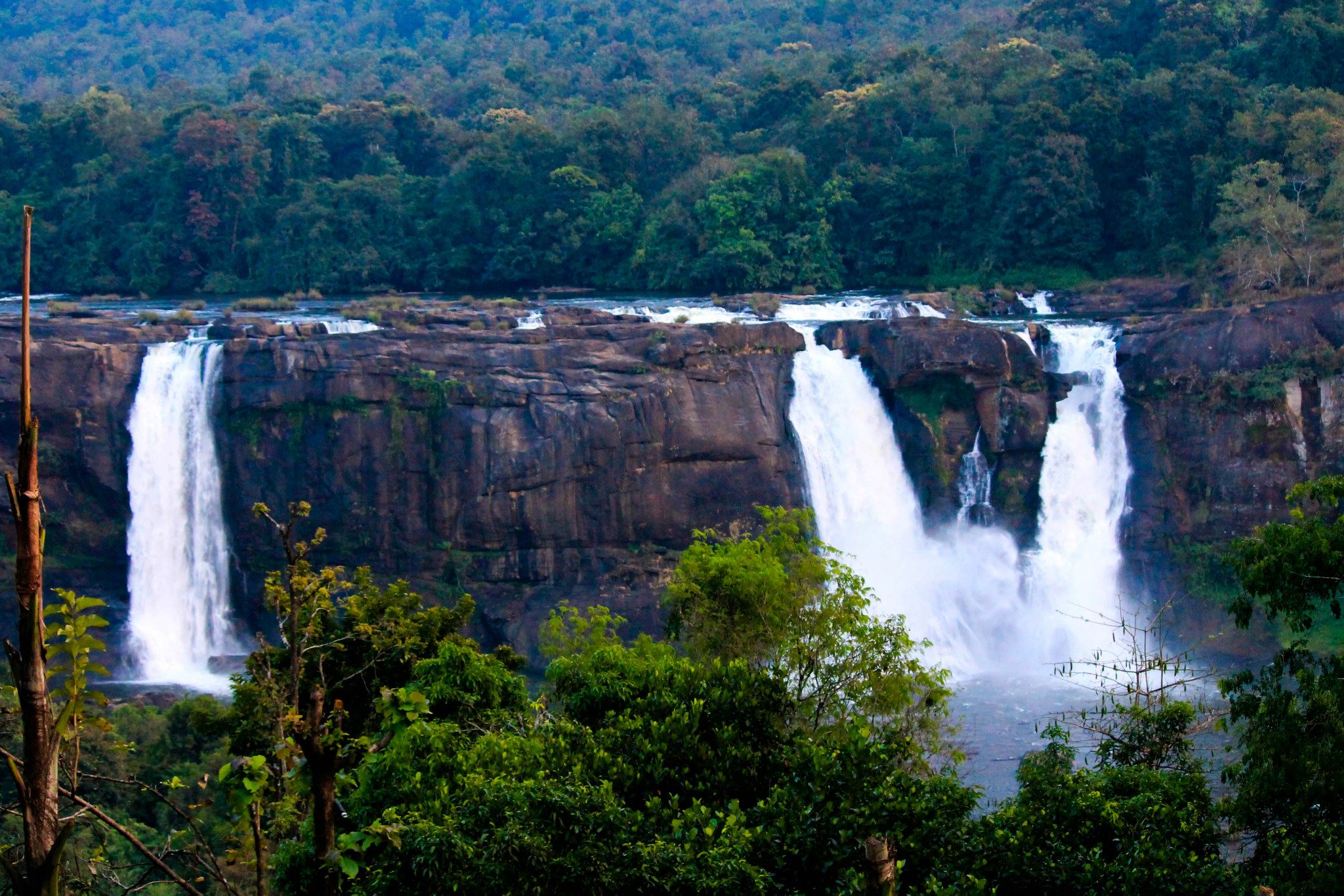
Post this, we went back to the Athirapally waterfalls. We walked down to the base of the waterfalls and spent good time there. We had to then continue our drive, as our target was to reach Bangalore by night. After a quick stop at the Vazachal waterfalls (it is more like water flowing down a steep rock than a waterfall), we decided to say goodbye to Kerala.

Athirapally waterfalls

Part 3: Karnataka

The original plan was to drive through the route covering Ooty-Bandipur-Mysore to reach Bangalore. But, since we were behind schedule, we could not reach Bandipur before the forest gates closed (the forest gates are open only between 06.00a.m. to 06.p.m.). So, we decided to drive back through the curvy stretch of Pollachi road again.

We further drove through Udumalpet which happens to be one of the windiest places in Southern India. Thousands of windmills dot the stretch on either side which is a sight to behold. It was dark in no time and we had to zip ASAP to reach our offices on the following morning.

Thus, ended our 50 hours’ drive, covering 1000 kms across 3 states!