Category Archives: Statewise Travel

Journey away from Bangalore that includes night journey and an overnight stay… Especially ones planned on long weekends with Saturday and Sunday off :)

Riding on the sapphire valley- Paddar

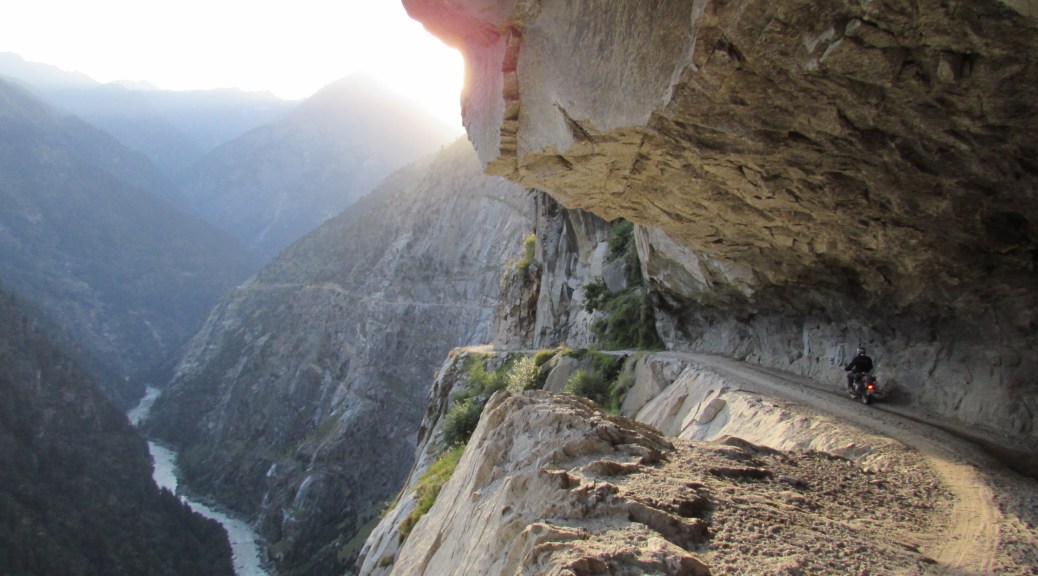
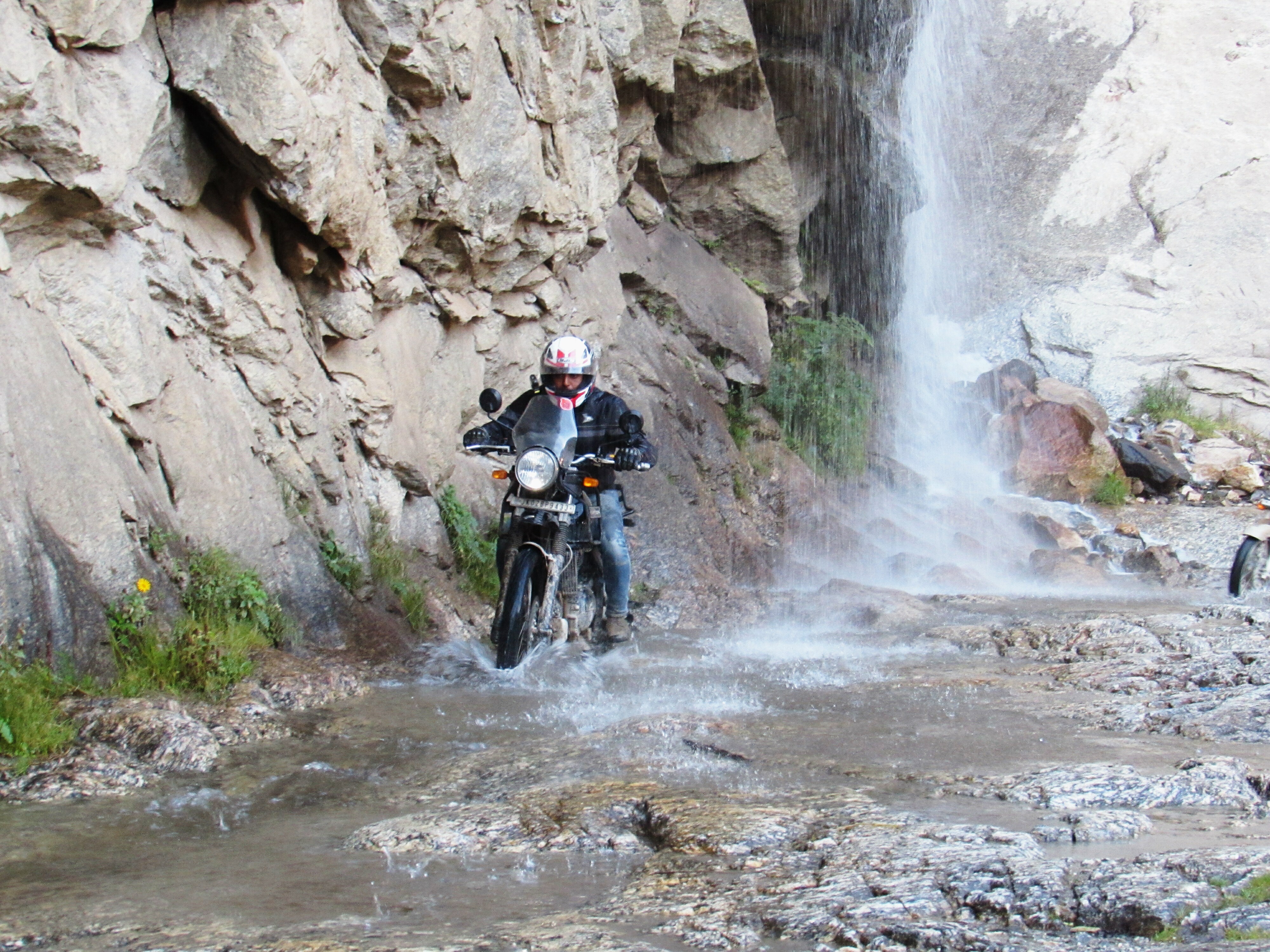
It was post sunset, a meagre road carved out of the sapphire hills with about 75deg. gradient, no aid of streetlights and just the growling sound of the flowing Chenab down the deep valley to keep company. We had absolutely no idea of what the surrounding looked like and we had started our ride with only a rough visualization of the dangerous geography based on what we had heard the people say before we left Kishtwar. We thugged the cliff with our concentration impounded to just the meter wide area lit up by the single headlamp, being cautious of the biker leading and an eye on the rear mirrors to ensure the one behind is on safe track, avoiding hundreds of potholes and still falling into few more, crossing several waterfalls that cut our roads, landslides, missing narrow encounters with the cattle that stayed overnight by the narrow roads, freezing temperature and all those things adding to the ruggedness of the terrain, we had finally reached Gulabgarh at 09.00.p.m. The thought of inching every mile still gives me goosebumps. While the makeshift army tents at the Gulabgarh stadium hosted the men of this entourage, the women participants were given a comfortable hotel room for the two nights that were scheduled to be spent there. After a nice meal cooked at the army camp, all the riders crashed for it was going to be a long day to follow.

IMG_20171126_234714
Waterfall crossing enroute to Sansari

After a hard night at the camp with pounding rain and thunderstorm all night, a new dawn brought with it the most anticipated part of the trip… Everyone was up early while the distant peaks were still being painted by early snowfall of the season. The camp site looked beautiful with green and white peaks surrounding 360deg. After a quick breakfast and farm fresh apples being served, all the riders assembled in the stadium for the flag-off. The amassment of so many machines in the middle of the mountains was one hell of a sight to watch and the wham from the exhausts sounded like medley to the ears. And then, by dispersing in a disciplined single line, the ride to one of the dangerous roads in the world through Gulabgarh-Sansari-Killar along the Paddar valley was kick-started… literally!!

IMG_3905
The winding roads of Paddar valley

Thanks to the BRO- Border Roads Organisation, there is at least a rudimentary path for transportation here that connects people in the valley. It is impossible to picture how life would have been for these settlements (villages with as less as 2 houses) that are nestled in the remotest corners/cliffs of these mountains. And the basic healthcare and trade is unimaginable to think over when even this road is cut-off in the winters due to snowfall! With a neat asphalted tarmac ending after a 3 km stretch, the challenge ahead unfolded stage by stage. The road got narrow just enough for one vehicle to pass at a time and we were cornered at several junctures to make way for the 4-wheelers that ferry people across this highway connecting the states of J&K and Himachal Pradesh. The innumerable waterfalls cascading on to the road, slush puddles, stone laid roads were the easiest stretches that we rode on. As the ride progressed, we had the mighty cliffhangers to keep our excitement hanging onto. It became less of a road and more of a trek route to ride on with absolutely nothing apart from a worn out pathway… Further ahead, laid a road that descended and ascended with very steep gradients coupled with blind curves. After riding through the outrageous cliffhangers, foot bridges across rivers, meandering forests and unexplainably beautiful vistas of the valley, we arrived at the Gannaur or Sansari bridge at the confluence of river Chandrabagha and Sansari nallah- the last point of Jammu & Kashmir on this treacherous road at sunset time. There is a police check post at this point for those wishing to cross the state border towards Himachal Pradesh. There-on, the valley will be called as Pangi valley.

IMG_3835
One of the steep roads before approaching Sansari bridge

The sun had started to set which meant there was no time to waste and we had to head back to our camps ASAP. We had to cover as much as possible of this treacherous route while there was still decent visibility. The familiarity of the terrain helped us catch some speed and stability for our return ride to Gulabgarh. What took us about 4-5 hours on the onward ride to Sansari was done in less than 3hours on the return. We had ripped the roads and made it back to our camp just at twilight! That was one hell of a ride I tell you… Quite literally!

This trip was part of our ‘Peace ride’, sponsored by Jammu tourism as a part of the Himalayan expedition to promote tourism in the lesser explored places of Jammu. The route we covered over the week was Jammu-Mansar-Basholi–Sarthal–Baderwah-Kishtwar-Gulabgarh-Sansari-Gulabgarh-Patnitop-Udhampur-Jammu.

Riding in the land of miniature paintings- Basohli

If you thought Jammu was all about shrines and temples, wait a minute. You are not alone. Even I did not know about all the beautiful places that exist within a driveable distance from the city. This trip to Basohli was a part of our ‘Peace ride’, sponsored by Jammu tourism as a part of the Himalayan expedition to promote tourism in the lesser explored places of Jammu. The route we covered over the week was Jammu-Mansar-Basholi–Sarthal–Baderwah-Kishtwar-Gulabgarh-Sansari-Gulabgarh-Patnitop-Udhampur-Jammu.This trip was an opportunity for us to see so many beautiful places that are off the tourist map, totally untouched and waiting to be explored.

Places to visit in Basohli:

• Surinsar-Mansar wildlife sanctuary
• Surinsar lake
• Mansar lake
• Atal bridge
• Sunset at Ranjit Sagar Dam & RSD backwaters
• Sunrise from Chanchala mata mandir

The Details:

On a warm Saturday morning, we started from Jammu on a well asphalted highway cutting through the Surinsar-Mansar wildlife sanctuary towards Basohli. Needless to say, the route is blessed with natural bounty with the road flanked by wooded hills all the way. We did a quick stopover at the twin lakes from where the sanctuary gets it same. The Surinsar lake and Mansar lake are serene patches of nature which play an important role among the Hindu pilgrims as it is associated with mythology. It is believed that the arrow shot by Arjuna pierced the earth at Surinsar and came out at Mansar spouting water, what are now the two bunyanesque lakes. If you have nothing to do, then you can forget your watches by just sitting on the banks and feeding the squillion fishes there. These lakes are also known for the Indian flapshell turtles that are found in abundance.

At Mansar lake

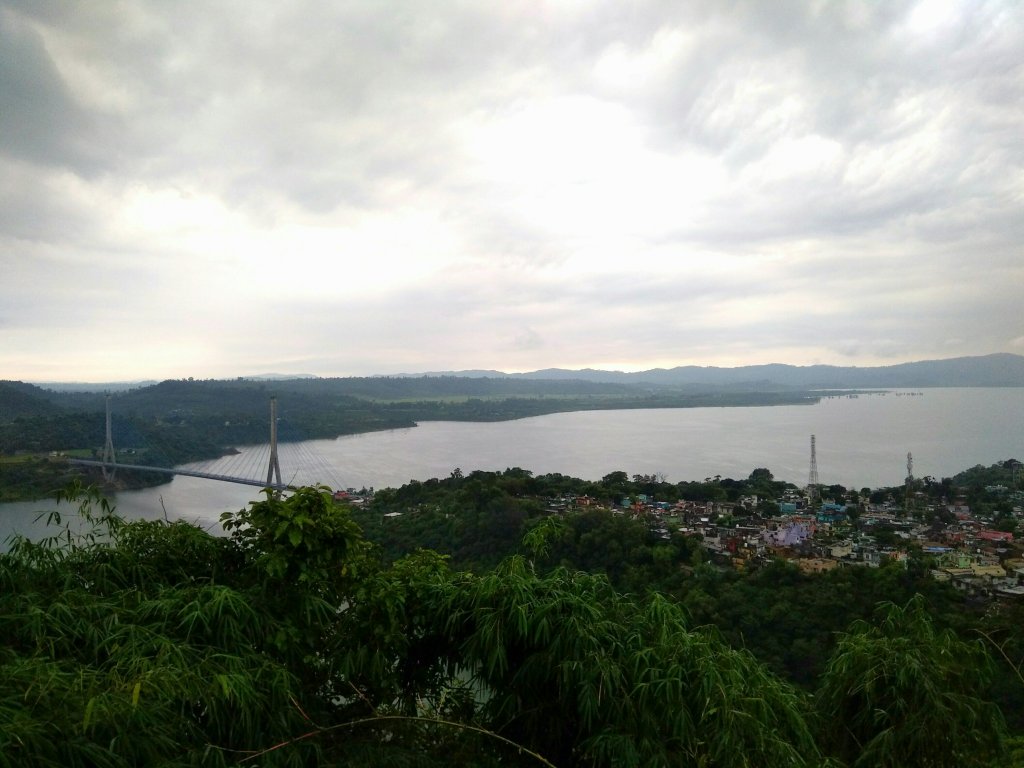
After freshening up at the TRC guest house, we headed to the Atal bridge built across river Ravi. This happens to be the first cable suspension bridge in the state of Jammu & Kashmir. We got an eyefull of the setting sun from there and got some good silhoute photos of the fishermen busy with their last catch on their vessels drifting past us from under the bridge. The view of the surrounding lush green hills and several islets in the backwaters of the Ranjit Sagar Dam was a feast for the eyes with a golden backdrop. On a summer evening, it is highly recommended that you spend some time at the dam backwaters, what is fondly refered as the RSD beach by the localites. With swaying palm trees along the sandbars of the river bed, it is a very picturesque place surrounded by the lashing waves of the dam’s backwaters.

Our bike at the Atal bridge

Although we had plans of reaching the Chanchala mata mandir to catch the sunrise next morning, we were woken up rather early by the roaring thunder and the rattle of our window glasses. It was pouring cats and dogs and we watched the dawn break into a bright day while sitting by the window side. There seemed no signs of the rain gods taking a break and hence, we decided to head out in the rains…

While we sought directions from the public, we realised that this town was home to over a dozen temples dedicated to Durga Mata. With a wild guess, we hit the accelerator towards one that was located atop a hillock. Oh Man! The view from up there was stunning… The temple had a 360degree view of the dam water and the hills. We could see the bridge along with several ruins of the old town dotting the view here and there. With the rocky valley at a distance, the entire Basohli town was visible from up there treating our eyes on a perfect morning!! With such a view around, the silver lightning in the dark grey sky, we couldn’t ask for a better start for the day…We were drenched to the bone but coudn’t get enough of the view. We somehow dragged ourselves back to our bikes, lest be a reason for the delay of all other fellow travellers back in the guest house.

view of Ranjit Sagar dam from Chanchala mata mandir

Basohli is known for the traditional miniature paintings that carry a heritage tag with it. Basohli is believed to be a cradle of a new school of mythological paintings. But sadly, only a handful of practicing artists exist today in this hill town. How much ever I intended to meet these artists and buy a couple of paintings as souvenirs from this land, I couldn’t. A countable number of shops selling these artworks would open only later during the day, a few kilometers away from the place where we were staying at. We decided to return to the guest house.

We were already running late and had nothing left for breakfast, we satiated our stomachs with fruit juices and coffee. When the rain gods seemed to calm down a bit, we called it a wrap for the wonderful time spent in this historical town of Basohli. The journey continued, to yet another beautiful place waiting to be explored, waiting to be talked about to the world outside. A place that I call as my “FAVOURITE” destination in India- Sarthal.

Fact file:

  • Getting there: Jammu is well connected by airport, rail and road. You can hire a self-drive car or a taxi from the city to visit the other sightseeing places. Basohli is 147kms(about 3hrs) by road from Jammu city.
  • Stay: TRC (Tourist Reception Centre) guesthouse is run by the J&K tourism dept. on the banks of Ranjit Sagar dam and offers great views.
  • Must buy: Basohli miniature paintings.

Enraptured on my way- at Sarthal

Talk about beautiful places in India- my mind will take me to this untouched valley in the lower Himalayas tucked away from the maddening frenzy of the tourists in the Kathua district, located in the state of Jammu and Kashmir. Thanks to snowfall in the winters, this region will be cut off from civilization for almost 6months and when the snow disappears, it does not fail to mesmerize every passerby with a different landscape each time.

If you have been following me in this journey,  my day started on a rainy morning as a part of the Himalayan expedition from Basohli (Click here to read the complete story) towards Sarthal. In a bid to keep myself warm (like duh!!) I opted a seat in the comfort of the tempo-traveler over a pillion seat of a bike. Although I regretted my choice later, I had my share of fun getting to stop the vehicle almost everywhere and capture the beauty of the landscape all along. The consistent rains over the past couple of days had brought in greenery for as long as the eyes could see. With winding roads, I was accompanied by the tributary of river Ravi on one side and vibrant hills on the other for most part of the road. There was even a magnificent stretch of the dam backwaters and dotting waterfalls by the roadside that added their charm to the beautiful landscape. We stopped over at one of the small rivulets where we relished the packed lunch we had carried for ourselves. The drive along the curvaceous roads almost until the town of Bani is definitely a delight for every passionate rider. Bani is the last major town one arrives until the next destination on this stretch where we all stopped by for a cup of tea. The roads beyond Bani gets a little treacherous with poor roads, deep valley and possible landslides. I remember how we had missed a landslide by a whisker!! But, the beauty of the mountains did not let us down even a bit and continued to fascinate us all the way. It was dark by the time we arrived at the ‘Tourist Reception Centre’ where we were hosted by the Jammu tourism for the night’s stay. Comfortable tents were pitched in with bon-fire to keep us warm through a cold night under a clear starry night’s sky that I had been longing for a long time…

Enroute to Bani from Basohli

When I came out of my tent at the break of dawn- I was blown away with the beauty of the place. Our camp site was surrounded by the beautiful mountain on all sides which we barely knew of while sleeping through the freezing night! The tranquil atmosphere was filled with fragrant air that carried perfumes of wildflowers from the distant mountains. While the other fellow travelers seemed to be snoring still, I decided to venture out to explore the place on my own… After a small stroll amidst the livestock including buffaloes, sheep, goats, horses, donkeys etc. outside the camp, I was warmly greeted by a Gujjar family for a cup of ‘Desi Chai’ with them. The life of these Bakarwals (the shepherd community) was a good motivation for the nomad in me. They are continuously on the move with their makeshift tents who earn their livelihood purely through diary and wool. Meanwhile, I was joined by my brothers who then decided to walk further towards the Gujjar settlements on the slopes. The beautiful setting with rock-laden plains, flat-roofed clay/rock houses, the sturdy wooden bridges across the murmuring stream hoaxed us to get into its ice-cold water. It was a wonderful morning!!

Livestock at Sarthal

We then decided to rush on the bikes to soak in the views of the Lawang valley that we had missed out on the previous evening, since we had travelled after sunset. For the pious ones, there are several temples around the valley that can be done by foot all of which have Chandi mata as the presiding deity. We were looking out for an adventurous trail. We were fascinated by the beauty of the seven waterfalls at around 3kms behind our campsite. The stream that probably originates from the molten glaciers, gushed down in seven tiers making it a surreal place. We wished we had more time with us to hike down the valley and spend a couple of peaceful hours by the water, alas! A quick breakfast post this short ride and we had to pack-up for the road ahead towards Baderwah… Since, the TT I was travelling in was the backup vehicle, we had to drive behind the last rider… So when a rider stayed back with more than 10 punctures in a single tyre, it meant that we had over 2 hours of time to kill… Meanwhile, I hiked up a small hillock from where I got a good view of the Gujjar valley below… Along with a couple of unicorns that had strayed down from nowhere, the local flora was another thing that caught my attention up there!! After spending a couple of peaceful hours, the silence of the atmosphere was broken by the roaring beasts (bikes) that hinted us to get ready to continue our onward journey…

The Gujjar settlements at the Sarthal valley

The roads that we traversed ahead came as a stunner… The drive through the loose gravel laid roads flanked by tall pine trees, snaking through virgin hills which was abundantly blessed with wild flowers of different colours seemed nothing less than traveling in a fairyland. I enjoyed every bit of this road all the way up to Chattargala top, the highest point in this area. We shared a cup of tea and a nice conversation with the soldiers of the Indian army posted up there. Bidding a warm goodbye to them, I then hopped on to the pillion seat of brother’s bike and got set to pull down the valley to our next destination- Baderwah!

Summary:

Must do:
• Spot a white vulture at the Chattargala top. These birds are critically endangered.
• Participate in the 3-day Bani festival and enjoy the Shinj- the wrestling competition.
Must have:
Sip on a cup of piping hot ‘Desi Chai’, a pink coloured drink prepared with tea twigs boiled in sheep milk. It can be consumed either with salt or sugar.

This post is written in collaboration with Jammu Tourism, the tour was a part of ‘The peace ride’ to explore lesser known places in Jammu. The route we covered over the week was Jammu-Mansar-Basholi–Sarthal–Baderwah-Kishtwar-Gulabgarh-Sansari-Gulabgarh-Patnitop-Udhampur-Jammu.

A biking expedition in the Himalayas

When my name was included in the list, I had a bag of mixed feelings. I was glad to have got an all sponsored trip to one of the least explored parts of the country. But at the same time, I had my apprehensions about being a part of an organized trip. I was excited to travel on one of the deadliest roads in the world and then the fear of being a misfit as a pillion among what was supposed to be a biking event with professional riders from across the country kept flashing frequent thoughts of pulling-out of the event! And finally the evening arrived, where we had to start our journey towards Jammu Tawi- The start-point of all the action filled seven-memorable days of my life!!!

No one knew the other fellow rider at the start, but during the course of time- each one ensured they stopped, waited and helped the next one in times of need. Reaching the destination on time did not matter to anyone; they would halt and wait when the rider behind went out of sight in the rear view mirrors. Whether it was running to lift up a rider who slipped on the slush pool or to push one up the steep valley roads when the machine refused to move… whether it was picking up a fallen silencer of a rider who has gone way ahead without noticing or going back to get tools from the back-up vehicle to fix a broken bike.. Whether it was escorting a rider whose headlamps and brakes had given way while riding at night on the treacherous Paddar Valley or towing a halted biker all the way on a militant infested highway… And then, on the last day when I had a miraculous escape from death while trying to avoid overriding on a biker who slipped off-his-course, the entire battalion of riders had stopped by to check on my sprained leg! No fights, no misunderstandings, no quarrels- It ain’t a common thing while you are traveling with a group of over 80 riders from across India who were all strangers. But, they were all united and stood by each other at every turn (literally!!) of life during these 7 days…

Doctors, scientists, engineers, lawyers, were all just educational qualifications. While some made it after a nasty tiff with their bosses, yet a few had quit jobs to do this trip. While some rode to satiate their hunger for travel, some rode to earn livelihood for their towns through promotion of tourism. While some came to make few quick bucks with their photos and videos, yet a few came to love the mountains… Yet, a few rode to spread the good word of beautiful landscapes, safety to travelers and cultural wealth of their hometown which otherwise is perceived with horror and poverty. Every rider had a purpose to travel and a story to tell that’s associated with this trip. Irrespective of the geographical, cultural and educational differences- Travelling was the common religion and riding was the only God… No one big, no one small. No one to judge who you are… For a person that I am who otherwise likes to go slow, walk and take in things and places at my own pace- riding only meant whizzing past things with speed… What I realized during these 7 days is that there lies a whole new perspective to life out there- Biking binds people like brothers… Cheers to all the wonderful friends I made here, who helped me to create truck loads of wonderful memories that I can cherish for several years to come…

The route we covered over the week was Jammu-Mansar-BasholiSarthalBaderwah-Kishtwar-Gulabgarh-Sansari-Gulabgarh-Patnitop-Udhampur-Jammu. It was a complete package with picturesque landscapes accompanied with art, history, culture, religion, natural resources, adventure, offbeat traveling. It had something for every kind of traveler. I strongly recommend this trip for every person who wants to travel but do not like going to the commercialized and overly crowded places that are so done and dusted. This stretch is a must-do once in a lifetime thing!

I will be posting details of each day and each place that I visited in separate posts in days to come. Do subscribe and get updates 🙂

This trip was a part of ‘The Peace ride’ to explore the lesser known places in Jammu and was sponsored by Jammu tourism.

Tracking the Big Five at Kaziranga

The monsoon has caused the mighty Brahmaputra to take a toll on the North-eastern part of India causing innumerable and irreplaceable losses. I saw this one particular photo of a floating carcass of the striped beast, the National animal of India in the newspaper this morning and I was taken back in time when I visited Kaziranga last year, post monsoon.

This post is part of my fortnight long road trip across North-east India, specifically covering parts of Meghalaya – Assam – Arunachal Pradesh I had tagged along with two other travelers and drove around the places in a self-drive car hired at Guwahati. Our visit to Kaziranga had just one agenda, a safari in the Kaziranga National park and get a glimpse of at least one rhinocerous! Kazhiranga National Park is counted in the list of UNESCO’s world Heritage sites.

My Itinerary:

Day 1: Evening drive from Guwahati to Kaziranga (Kohora forest range)
Day 2: Early morning elephant safari & jeep safari in Kaziranga national park, Orchid research centre. Continue the journey onward to Jorhat.

The Details:

After a wonderful drive through the National highway from Guwahati, we reached Kaziranga on a night lit with Diwali lamps all around. Kaziranga national park is divided into four main areas: The Central range at Kohora, Western range at Bagori, Eastern range at Agaratoli and the Burapahar range at Ghorakhati. Here, the tourists can enjoy the elephant and jeep rides into the forest that are organized by either government or private parties. The park is closed during monsoon and we were lucky that the central zone at Kohora had opened just around our visit time. We had a nice meal and settled down at one of the numerous resorts that exist on the boundary of the National park in the Kohora range. Meanwhile, our resort guys helped us to get tickets for a safari ride scheduled for early next morning.

We woke up the next morning and headed towards the forest gates where the elephant ride was supposed to commence. The drive from the resort until the forest gate was so refreshing in itself. With the addictive smell of wet ground, kaccha roads passing through green paddy fields dotted with bamboo huts here and there, thick mist slowly clearing up with dew drops reflecting the rising sun: It was just wonderful all the way.

P1140268
Enroute to the forest gates

Kaziranga is synonymous with the one-horned rhinoceros. With about 2/3rd of the world’s population of these beauties found in just this area, it was no surprise that we began to spot them one after the other. Even before we started our ride, we spotted rhino families all around the watch tower we were standing at. We even found a few of them grazing in the fields on the sides of the highway. With that we realized, that Kaziranga was beyond rhinos. There are some other wild animals that are exclusive to the park and are collectively called as the ‘Big Five’, a must on the list of every wildlife enthusiast visiting the state of Assam.

Our elephant had arrived in a bit. We sat atop and started our ride into the haze of the misty green grasslands of Kazhiranga to track the ‘Big Five’ of the this land. The elephants that we were seated on, were walking through dense thickets of elephant grass: the grass that was taller even for elephants to walk through. Slowly, the mahout started to point out and show us the animal at far distance.

P1140264
The elephants marching into the forest

First, it was a wild elephant with its calf. We were told that rhino and elephant conflicts were common and that mother elephant was wounded just that morning in a bid to protect its new born calf. So, that meant we were not safe sitting on one either! We slowly moved out of tall grass to another area where a couple of rhinos were finishing their morning chores. It was very surprising for us to know that large rhino groups identify space where each rhino marks its own spot (making a private toilet space for itself) and does not let any other rhino enter the area.

Wow! We slowly passed that place and spotted herds of swamp deer. World’s largest population of these herbivores too is concentrated in these forests. Swamp deer are handsome animals.

Just as we were photographing them, we saw a herd of Asiatic wild water buffaloes marching out of a slush pool. Until our guide told us, we had no idea that over 57% of the world’s water buffaloes too were accommodated in the woods here!

Kazhiranga
Clockwise: The Single horned Rhino, Swamp deer, Wild water buffaloes and the Asiatic elephants

Another surprise information awaited us: Kazhiranga national park has the highest density of the Royal Bengal tigers in the world!!! Whoa!!!! That’s like……..something that was unknown to me, a person who hails from the land of Nagarhole, Bandipur & Bannerghatta. But as always, no luck with spotting the elusive beast. Seeing a tiger in the wild is a LONG dream, awaiting to be realised. (So much adventure to see a wild tiger, Click here to read more!)

So, we had checked off 4 out of the big 5 of the Kazhiranga before heading towards the exit gates- The One horned rhinos, Asiatic elephants, swamp deer and wild water buffaloes. Meanwhile, we realized that we still had time to make it for the morning batch of jeep ride. So, after enquiry and booking at the counter, we had a gypsy to take us into the forest again. Needless to mention, we were greeted by herds and herds of rhinos all along our path. Wild boars, barking deer etc. too were spotted in abundance. The highlight was however, the innumerable species of migratory birds that were spotted. Our driver cum guide mentioned several bird names, out of which only pelicans and spoon-billed storks were the ones that I have managed to remember.

On the other end of our drive into the forest, we were taken to a watch tower from where we could catch a very good view of hundreds of animals that had come to drink water from the flowing river. It was a very calm and a serene place to spend a while with nature. What caught our curiosity was some random years mentioned on the wall of the watch tower. So, here is a picture that may give an idea of the monsoon fury and severity of floods that affect this area year after year.

The tower itself is located at an elevation from the river. My friend in the below picture is a 6-footer. The water level of 2016 is marked above him… Can you imagine how impossible it is for the animals to escape out of the area??? It’s insane to think of and the image of the floating tiger’s carcass hovers around in my thoughts.

P1140350
Record of the flood water level of the Bramhaputra

The drive back to the resort, on the highway was an extremely nice one which had gone unnoticed during the hurried drive through misty roads in the morning. Tea plantations flanked the roads on both sides. The famous Assam tea grows in flat lands and under shade, totally contrary to what I had seen and grown up seeing in the hills in down South. We stopped by to sip on some hot brew and bought some processed tea leaves for our caffeine addicts back home. A quick visit to the Orchid research centre was an interesting place to drop by too.

P1140352
The Assam tea estate

Overall, our day was eventful at Kazhiranga with warm memories from the woods before heading to our next destination- Jorhat. Although a little disappointed for not being able to spot a tiger by the end of our safari ride, we were feeling content for having our long pending wish of visiting this heritage site come true!

Concluding remarks: For those of you planning to visit Kaziranga, I strongly recommend to try both ways of exploring the woods, on elephant back and by a four-wheel drive. Both are different experiences and the type of terrain and sightings are different. While an elephant will be able to take you through the tall grass, a 4-wheel automobile will be able to enter deeper areas of the forest. If you wish to spend more time with nature, I recommend you all to explore all the 4 ranges of the national park. Don’t go by recommendations of people of which range to go in… Each area is distinct with different types of vegetation, landscape, flora and fauna concentrations.

Beyond music and tribes- Ziro valley

This post is part of my fortnight long road trip across North-east India, specifically covering parts of Meghalaya – Assam – Arunachal Pradesh

After visiting Majuli in Assam, we were heading towards Ziro in Arunachal Pradesh. This small township is popular for its’ native Apathani tribes and the annual music festival that it hosts just before their harvest season. Since, we were going there around late October, we missed the music festival. But nevertheless, and we wished to meet the beautiful Apathani people from Ziro. Before I take you through this journey, it is required to know that Ziro is the name of an entire area. It is a valley located in the Lower Subansiri district and surrounded with mountains 360 degrees. If you are planning a trip there, this post can be helpful for you to plan your own ‘Ziro music festival itinerary’.

Our itinerary:
Night 1: Reach Ziro and check-in to a home stay at Siiro
Day 1: Visit Tarin fish farm, Siddheshwar Nath Temple at Kardo, Hapoli market, Putu sunset point, Stay at an Apathani tribal home
Day 2: Explore Apathani villages on leisure and return.

Other places & Things of interest:
• Short trek to DilopolyangManiipolyang- the twin hillocks
• Dolo Mando hill
• Middey- the place of the largest pine tree of the valley
• KilePakho ridge
• Meghna cave temple
• The orchid research center
• Drive to Talley Valley national park- Here you can spot the illusive clouded leopard

The Details:
We were in our shorts and loafers shivering with cold at a temperature of 2 deg C. when we arrived the top of Ziro valley at 12.30.a.m. At Hapoli market, we met the caretaker of the home stay we had booked who had come down to pick us to his home located in Siiro, a further drive up. After reaching his place, I couldn’t help but jump into the cozy bed that was set up in this traditional house with bamboo interiors and wrapped myself with the warm fluffy blankets. I passed out almost immediately!

IMG_20161101_091759
The interior of our homestay at Siiro

The next morning was an interesting day. We visited the fish farm at Tarin. The Ngihi variety of fish is cultured in tanks located amid the pine trees in a beautiful location that you reach after a very scenic drive. Ziro is the only place in India where this species of high altitude fishes are reared and that too as an inter-crop in paddy fields. September would be an ideal month to see these aquaculture farms that set a beautiful green backdrop for the popular Ziro music festival.

P1140462
The fish farm at Tarin

I must say that there are no roads in Ziro and one has to just randomly drive. So, we drove amid some scenic stretches and parked our car at the end of an eddy path. From there, we trekked up a small path inside the Kardo hills to reach the Sri Siddheshwar Nath Temple. Lord Shiva is believed to be residing here with his entire family in the form of a 20+ feet high self-manifested idol. We were introduced to Lord Shiva, Parvathi, Karthikeyan, Ganesh and even his little mouse in this remote location filled with just silence and the smell of burning incense. We walked a little further which we were told to be the only place in India where kiwi fruits are grown. This fact came as a rather surprise to us who are so used to seeing the New-Zealand seal on kiwi packs bought in the Indian markets. I picked up a kilo of these home-grown fruits at the price of what I would generally pay for one fruit at the supermarkets in Bengaluru.

P1140477.JPG
Shiva temple at Kardo

We then, wandered around the Hapoli market which was altogether an experience in itself! Clothes, shoes, thermals, utensils, vegetables (that are mostly local), local sweets and confectionaries – everything was sold under the same roof. Bunches of bhoot-Jhalokias (the hottest chilies in the world) were sold in abundance. And then we reached this section of the market where we went berserk… Trust me! Rats, moths, honeybee larvae, silkworms, roaches were all there- up for sale. Rats were fancy. These rodents were sold in their farm fresh or dried & seasoned form. A dozen of them tied by their tails were handed over to the person next to me as if the vendor was giving him a bunch of litchis. However, I decided not to get too adventurous in trying any of these local delicacies.

IMG_20161101_144557
The chillies and dried rats at the Hapoli market

From there, we drove to Putu (Hill-top) to catch the sunset. This is the top-most point in Ziro and you can see the entire town and the surrounding hills from here. The Ziro airport runway cuts right through the several Apathani tribal hamlets that lay scattered all over as seen from the top. We stayed there for some time enjoying the 360deg view and the cool breeze before heading back to Siiro.

We requested our homestay caretaker to serve us some local and traditional meal for the night. So, he enquired us if we would like to visit an Apathani tribal home over for dinner. What better than eating with an Apathani family in the land of the Apathanis! Without a second thought, we all jumped up and said “YES” in unison! We drove past several bamboo groves, pine forests and finally alighted at Hong village- A village full of the Apathani inhabitants. It was a sudden shift in the environment with almost all structures being only of bamboo. We were greeted at the village entrance by the carols and guitars at the church (That also was a traditional Apathani bamboo structure with fireplace in the center of the room). Although we couldn’t understand the lyrics, we were still lost in the magic of the native music. We waited there until the mass was over and visited the family that was waiting for our visit.

We were hosted by a warm welcome by all the members of the family where the eldest women of the family handed over bamboo mugs with the local brew of rice beer- Apong. I noticed that the construction of Apathani homes were simple. A large room with a central fireplace. Given the extreme cold temperatures of the place, almost all activities of a normal house are in this room since the fire keeps everything warm. The room has bamboo chairs in the living area, cots with beds on the other end for sleeping purposes, food will be cooked in this central fireplace and food grains & meat hung right above it for drying, a small water outlet to be used as a wash-basin that gets drained down the hut that is situated slightly above the ground. The washrooms are however located on the backside of the huts separately.

Then, we were served with a sumptuous Apathani meal. It was a complicated and an exotic spread for us as almost all the ingredients were new to us except the rice. Rice was accompanied with chicken cooked inside bamboo, Teak flower & shredded pork curry, Pika pila- a pickle made with bamboo shoot and pork fat and made to taste with Tapyo- the salt made by burning the local herbs without any water ( not from the sea!). Bliss… Since our visit to this Apathani home was exclusively for the dinner experience and as while we were still thinking that we couldn’t ask for more, the friendly family invited us over to stay with them for the night! Hearing that, our joy knew no bounds! We were excited and went back to Siiro to return to Hong with our luggage for the night!

IMG_20161102_072140_1
The bamboo mugs that are used to serve rice beer

We spent the next morning photographing the village, discussing about the Apathani traditions, feeding the domesticated pigs and relaxing in this place that was so cut-off from the rest of the world. We were served simple sweetened rice with boiled eggs for breakfast after which we got busy chatting with the local folk. So, Apathanis are known world-over for their unique tradition of wearing huge nose studs with women folk having tattoos across their faces. The culture of drawing permanent face tattoos was practiced back then to avoid men from neighboring villages from abducting the girls of Apathani tribe who were considered to be very beautiful (indeed they are!). However, the younger generations of the tribe are against this practice in modern days who often get bullied in the cities/towns for the weird designs on the faces. It is sad that the so-called cultured people in the urban areas fail to recognize the line between tradition, culture and style! Although I have photos of the folk who had been so welcoming towards us, I will not post any of them here as a mark of respect for them as they don’t like the exploitation the photos undergo in the electronic media.

P1140526
The village post office at Hong

That is all the time we had in this beautiful village. It was farewell to Ziro, its incredible natural beauty and the wonderful people, until next time! We drove down the valley with company of two Apathani women seated in our rear seat until half way (thanks to the poor connectivity of the place) and the serene river flowing down on our left side all the way down!

From here, we proceed on yet another eventful journey, to Haflong.

Key Notes:
Must do: Stay with an Apathani family, enjoy the Ziro music festival, spot a Mithun (a cattle breed endemic to this region), and shop groceries at the Hapoli market
Must see: The aquaculture in paddy fields.

A festival for protection of the borders- Chowdi

While on a random drive around the Malenadu region, my curious eyes fell on a family of road-trippers who were out on a rather interesting journey.. It was an unusual sighting of wooden toys with a beautiful backdrop of the Bhadra dam in the backdrop.. I got off the car to click a few pictures of wooden toys consisting of six people riding on a pull cart.. I did not know what it represented and who had left them.. We continued our journey all the way from Bhadravathi to down the hills of Agumbe via Shimoga while spotting several carts carrying different representations, all lying on roadside. My curiosity grew intense and got an insight into what all of these really meant after consulting a friend who happens to be a native of this region.

This is a part of Chowdi- a festival endemic to this region of Malenaadu. Maari is the sister of goddess Durga, she’s the controller of evils. She likes drinking blood and doesn’t spare any evil passing her way. Gadi Maari- the protector of the borders, keeps a vigil on evil entering into the village. During Chowdi, Gadi Maari who is always stationed at the village border is invited into the village and celebrated once in a year. She is represented with a wooden pull cart.

The cart and all other representations on it are made of a special wood called ‘Ghost wood’, painted and decked up. As the cart enters a boundary, the villagers start to collect money from all localites to manage the expenses of the festivities ahead. Animal sacrifice is an important part of this ritual where blood of either sheep or  roosters is offered to Maari, the village keeper. All possible things are taken care of to keep this violent diety calm and happy. It culminates in a lavish dinner served to all villagers. This is a rather rude way of telling let the evil eyes (Maari Kannu) not fall on the happiness of the village, we have made Maari happy with all that she likes during the festival, now her job is to guard the boundaries, let her stay there!

IMG_20170627_131044
A Gadi Maari cart by the roadside

Then, the cart is hand-pulled and left at the exit boundary of the village i.e. entrance of the next village. There-on the festival starts at the next village and the cart thus moves forward from one village to the other. The transport of these carts to the next village is mostly done during the night so that the evil doesn’t find its way back into the village. People leave broomsticks, clay pots, umbrellas etc. alongside the cart as weapons of Maari. This trip of the Maari thus traverses all the way from the hills down to finally reach the ocean. This entire cycle repeats in every two years.

So with one cart starting in each village, I wondered how many carts may pass through any given village throughout the 2 years period and how many animal sacrifices need to be done. I was told that some villages may have several carts at a time and some may never have any. For convenience, yet some villages accumulate the carts and celebrate all at once. Spread across the calendar, carts keep coming and carts keep going.. But it’s an opportunity for the entire village for some joyous celebration together!

The home of the Indian National Emblem- Saranath

This visit to Saranath is a part of my fortnight long backpacking in the typical pilgrimage circuit of Uttar Pradesh covering Lucknow- Ayodhya- Faizabad- Varanasi- Saranath- Allahabad- Agra- Mathura-Brindavan- Fathehpur Sikri– Delhi

This article was featured in Toyota’s in-house magazine ‘Carz’ Apr~Jun’18 edition

The Details:

Back then, I had read history for the heck of passing the subject and today here I am… Travelling to know more about the rich history soaked heritage of my country… And in the pursuit, my friend and I stumbled upon this little forgotten land from the pages of history- Saranath. It was as if the history textbooks of primary school were walking alive with us… Saranath is an important destination both religiously and historically. So, people of varied interests can be found strolling the streets of Saranath. When we alighted, a volunteer offered to take us for a guided tour around the place and we nodded a yes! A couple of visitors from different countries joined us seeking me to be their translator while the Hindi speaking guide took us around. So I was doubling as a curious traveler and a travel guide cum translator.

Firstly, Saranath is the place where Lord Buddha delivered his first sermon to the five disciples after attaining enlightenment. Hence, a very important place religiously for the Buddhists. Today, the Chaukhandi Stupa, an octagonal structure made of brick and mortar stands at the very same place welcoming the visitors to this town. It was originally built in the Gupta era and later renovated during the Mughal rule.

As I explored the place, I realized that people from different countries have made their presence with Buddha temples built in their native styles of architecture. The Nepali, Thai, Chinese, Japanese, Tibetan, Bhutanese etc. to name a few. While each temple style is unique and beautiful, you realize that the statue of Lord Buddha too is different in each of them. Buddha is worshipped in different forms in different countries… Seated Buddha, sleeping Buddha, standing Buddha, meditating Buddha ET all… The murals inside the Japanese temple grabbed my attention… I was told that the complete interiors is made of sandalwood… The idol, palanquin, the doors and even the chandeliers!

A small walk from there, is ‘Mulagandha Kuti Vihar’, the Nepali temple. What makes this place special is the third generation peepal tree adjacent to its premises. Fondly called as the grandson of the Bodhi tree, it is grown from a twig of a peepal tree believed to be the son of the original Bodhi tree that exists in Sri Lanka. With prayer chants and smell of incense in the air, it is truly a place of calm and solitude. We were quick to pick a few leaves of this holy tree as a souvenir from this little place.

IMG_20170309_121021
The Thai temple

Next, it was some history time! We bought an entry ticket at the ASI counter to take a stroll around the ruins surrounding the Dhammek stupa. It is believed that the Mauryan emperor Ashoka had built small clay mounds at ten places where the ashes, the urn and the embers of Lord Buddha were buried which were eventually refurbished as large stupas by the different rulers in the course of history. Dhammek stupa is believed to be one among these ten stupas and hence, a very important one for the Buddhist pilgrims who throng here from across the globe. And that very place where the Indian National emblem was born! The pillar on which the four headed lion is seated was commissioned by emperor Ashoka to commemorate his visit to Saranath. The broken part of the pillar was found during the excavations of this site and later transferred to the ASI museum in Saranath. Today, the bottom portion of the pillar surrounded by four posts holding a stone slab are the things remaining from the original relics at the exact same spot. One way it is nice that nobody has tried to restore this pillar back as the easy accessibility to it would have got the emblem all over the internet with the insensitive photo/selfie-enthusiastic tourists.

IMG_20170309_135651
The site of Ashoka pillar with the Dhammek Stupa in the backdrop

A visit to Saranath would definitely be incomplete without getting a glimpse of the ORIGINAL National emblem of India. We deposited our valuables including cameras and cellphones in lockers provided along with the entry ticket to the ASI museum and headed to THE place. A chill ran down my spine on being greeted by this majestic sandstone structure bearing the lion capital, the original form of our National emblem. The four headed Asiatic Lion is seated on a lotus- The national flower of India. Our guide narrated the religious relevance of the emblem in Buddha’s life. The lion represents Buddha himself who stressed upon equality and justice in all spheres of life (all 4 directions). While Gautama was in his mother’s womb- she had a dream of a white elephant entering her womb representing prosperity. The bull represents the young prince Siddhartha’s strength, the horse depicts Siddhartha’s renouncing his royal life and Lion is the depiction of Siddhartha’s transformation into Buddha. When Baby Siddhartha learnt to walk, a lotus bloomed under his feet after the first seven steps and the lotus is said to have faded at the passing away of the Lord- Hence, the inverted lotus. The Ashoka wheel is called the Dharma Chakra, representing the movement of life with 24 spokes- each for the hours of a day… It is true to admit that the national emblem evoked a sense of pride in my heart.

Ours is such a rich country in terms of history, culture and heritage! Every stone in India has a tale to tell… Having been restricted from the access of shutterbugs makes this sight all the more valuable and meaningful! There are several other sculptures and artefacts in this museum making it THE BEST museum day in my life!

The last leg of our Saranath walk tour was a visit to the handloom centre where demonstration of weaving a Banarasi saree was given and there it concludes! Sometimes you end up having this feeling of unplanned trips are the best things to happen… And Saranath is one such place!

Conclusion Remarks:

  • Must do– Walk tour of the town
  • Must see– The Original form of the Indian National emblem at the ASI museum
  • Best souvenir– The leaves of the Grandson of the Bodhi tree.
  • How to reach– There is a railway station in Saranath. It is more convenient to hire an autorickshaw for a 30minute ride from Varanasi.
  • Stay– There are several Dharamshalas run by people from different countries.

A Weekend at the Land of Ramayana- Ayodhya

This visit to Ayodhya is a part of my fortnight long backpacking in the typical pilgrimage circuit of Uttar Pradesh covering Lucknow- Ayodhya- Faizabad- Varanasi- Saranath– Allahabad- Agra- Mathura-Brindavan– Fathehpur Sikri– Delhi

We were scheduled to arrive at the land of Ramayana- The Epic of Indian Mythology! Ayodhya is believed to be built by Manu, the first man on earth as per the Vedas. This land was the capital of Ikshvaku dynasty of Suryavamsha- lineage of the Sun, of which Lord Ram was the most popular ruler. Lord Ram has been revered as a symbol of a perfect man. Irrespective of religion, every child born in India grows up listening to stories from the Ramayana. Young girls grow with dreams of having a husband similar to Lord Ram. That said, it was no less a dream to travel all the way to the land where the greatest empire of all times existed, at Ayodhya.

Our Itinerary:

  • Day 1: Arrive at Ayodhya, Lakshman ghat & Saryu Aarti during sunset, boat ride in river Saryu
  • Day 2: Saryu Aarti during sunrise, Treta Ke Thakur, Ram ki Paidi, Nageshwarnath temple, Hanuman Garhi, Dashrath Mahal, Kaikeyi Mahal, Baal Ram Mandir, Dant Dhawan kund, Kanak Bhawan, Ram janmabhoomi, return to Faizabad.

The Details:

A small platform which ended even before the train made its 1 minute long stop, very laid back village scene and just 2 tracks with a yellow ‘AYODHYA’ railway board welcomed us as we arrived there by an afternoon train. An old man and his cycle rickshaw awaited us on the other side of the tracks. We told him our hotel’s name and he said 50 Rs. We hopped on to the cycle and our dream journey kickstarted!

It was as if the rickshaw was our time machine that took us back in time as it slowly inched through the main commercial area.. A typical rural setup. Dusty roads were flanked by old tenements on both sides from end to end. The rich embossings on the facades of each house was unique and gave us a sense of an era bygone. Each house enclosed a shrine from where the smell of incense had filled the environment. The main street had everything being sold in the stalls from colourful plastic ware, brass souvenirs, religious beads, clay articles et all. The Chai-wallas were busy serving their brew in clay cups and the Jalebi-wallas were spiraling the batter into hot oil. Fruit vendors did brisk business on carts.. Amid all this, the prayer chants of ‘Ram Siya Ram, Siya Ram Jai Jai Ram’ from the temples in the bylanes echoed in the air giving us the sense of a heavy atmosphere. There was so much character in this small stretch! Just as if we were woken up from a dream, our rickshaw halted and our driver broke the silence- “Madam, your hotel.” he said pointing out at a very modern building which looked very sophisticated for an otherwise laid back country side.

We freshened up and had a rather sumptuous meal at their inhouse restaurant. It was already sunset time and upon enquiring about the nearest sightseeing places, our hotel caretaker told us to head towards the ghats to catch the Saryu Aarti. We had to rush as the sun was nearing the horizon. While we were asking for directions and running towards the Lakshman Ghat, my friend and I stopped abruptly at a sight.. The first glance of the Ayodhya that we had heard about, as kids. A visual treat that looked straight out of a fairy tale. ‘This is AYODHYA, Man!” we both blurted in unison. The oblique rays of the setting sun added a glorious gold to this Royal beauty. Although the structure is relatively new from the 19th century or so and not the original Kingdom that Ram had spent his days at, we stood there dumbfounded for a couple of minutes. After taking an eyeful of it, we walked towards the Lakshman Ghat where the Aarti was about to begin. We hitched a boat ride across river Saryu and back, from where we watched the aarti. Upon return to the river bank, we took a rickshaw to the Hanuman garhi main road to get our dose of kulladwala chai before calling it a day.

IMG_20170307_070712
Our “The AYODHYA view” at Lakshman ghat

Next day, we woke up early to reach the ghats for the aarti during sunrise. Post that, we took a walk along the chawl photographing the artistic friezes. We explored the inside streets and the several temples inside those ancient tenements. Treta Ke Thakur, Ram ki Paidi, Nageshwarnath temple are all in this surrounding. We got talking to several residents both Muslims and Hindus and they all seemed excited to share what Ram meant to them. For some Lord Ram was a brother, for some a father and a son for some.. A curious family from the chawl even invited us over to their house for breakfast and took us across the fortress to introduce us to their relatives.. We were deeply moved by the innocence and simplicity of these people. We then bid a warm goodbye and headed towards the heart of the town..

From there, we reached the Hanuman Garhi, an important temple built on a fortified walled structure high above the ground level. Lord Hanuman is believed to have had kept a vigil on Lord Ram as a kid. A man offered to guide us around other important temples around the place. Some being Dashrath Mahal, Kaikeyi Mahal, Baal Ram Mandir, Dant Dhawan kund among the important places out of the 7500+ temples that are believed to exist in Ayodhya. Some of these places accepted donation towards the construction of the Ram temple. One’s name would be then sculpted out on a tile or a block of stone which would be used in the construction of the temple, that the localites were hopeful would be built someday, soon.

Kanak Bhawan was the highlight of the places with its architectural beauty. This structure is said to have been entirely plated with gold (Kanak) back when Kaikeyi had gifted it to Sita during Ramayana. A board on the wall explains the evolution and modifications done over different periods and by different rulers who ruled Ayodhya. We attended the aarti at noon before heading towards THE PLACE!! “Ram Janmabhoomi”.

Being one of the MOST controversial areas in India, we had to deposit all the things in a safety locker including watches, water bottles, cameras- basically everything before entering the premises of the birth place of Ram! Rifle armed commandos guarded the entire area. We had a long queue and four rounds of frisking to really get there. Women guards frisked us in really uncomfortable places and it was a strange experience to go through, inside our own country. I was made to throw away even the vermillion I had kept in my pocket from the Hanuman Garhi temple because they couldn’t trust me on carrying random powder.

With all the embarrassment, uncomfort, tiredness in the scorching sun- when we finally made it there: I did not realize that it was Lord Ram’s birth place. The King of Ayodhya!!! Small idols of Ram, Sita and Lakshman were placed inside a Swiss tent as if the trio were still continuing their vanavas in the Kaliyug. Off-beat camping in a deforested jungle. I had still not come into belief that this is how India’s mythological hero was treated in his own house. I burst into tears and I didn’t have a reaction. I went berserk for a while until my friend calmed me down.

We couldn’t visit the Ayodhya research centre which has lot of information collected from across the world about Ramayana and the holy land of Ayodhya. Mani Parvat on the outskirts is another place I would suggest if you have time which gives a good view of Ayodhya. Although a 20Rs. per head ride in a tempo can take you to Faizabad, the district headquarters; I would recommend you to take a 1000Rs. boat ride along the Saryu which will take you to Ram Ghat at Faizabad for the evening aarti.

Summary:

My entire stay here has been a great one with both Hindus and Muslims coexisting and helping me get around the place. Never did I feel the communal rife. It is one BIG political ticket for easy votes and in interest of no social harmony. Like really!! When there is Ali in Diwali and Ram in Ramzan, do we really need to fight in the name of God??? The question needs to be pondered over…

Fact file:

Must buys: Chillums (clay pipes), handmade religious cotton carry bags.
Must dos: Get a glance of the Ramayana trail on the India map at the Ayodhya research centre, boat ride from Lakshman ghat(Ayodhya) to the Ram ghat (Faizabad)

The not so Holi- Festival of Braj Bhoomi

Holi is Big in Northern India and the most beautiful in the Braj Bhoomi- the Land of Lord Krishna. Festivities start a week in advance with Lath-mar Holi in Barsana and Nandgaon, phoolonwali Holi (Holi played with flowers) and Widow’s Holi in Vrindavan, Huranga at Baldeo and Holika dahan and Rangowali Holi at Mathura and Vrindavan are some of the major parts of the festival. Articles, blogs and photos are all over the internet about how beautiful this celebration is and the fun of participating in the festival of colours. Deeply inspired, a two week trip was planned through the state of Uttar Pradesh whole-ly, to soak in the festive fervor of Holi.

This visit to Mathura is a part of my fortnight long backpacking in the typical pilgrimage circuit of Uttar Pradesh covering Lucknow- Ayodhya- Faizabad– Varanasi- Saranath– Allahabad- Agra- Mathura-Brindavan- Fathehpur Sikri– Delhi

As per plan, we reached Vrindavan to spend the last two days of Holi- the main days and get coloured in different hues of Gulal. The plan was to reach the hotel, change to clothes that we had kept aside specifically for Holi and then go out to the areas where the colours were being thrown at. However, the entire town was already painted with colours by the time we arrived in our delayed train. A samaritan helped us get an e-rickshaw so that we could reach our hotel. The rickshaw had to squeeze its way through the crowd that had already gathered out on all roads. By the time we reached the hotel, we started to feel miserable about having wasted our leaves and having travelled all the way to Mathura from Bangalore was a big mistake. It was very unfortunate that our experience of the famous Vrindavan Holi was no-where close to fun. Although we were inside the rickshaw, we felt more vulnerable to getting coloured than the rickshaw itself. Goon like mobs would specially target people who were new to this kind of celebration. I had atleast 4-5 men together hold me by my head inside the rickshaw and colour my face. Few others even pulled my scarf and shawl to ensure that every inch of skin was coloured. No! It was not a pleasant way to welcome guests to a new place!

Banke Bihari temple in Vrindavan is where Holi is best celebrated with the priests throwing colours at everyone. On the day of Choti Holi, although we managed to go to the temple, we were drenched in wet colours. Leave that, our faces, hands and every bit of skin was chapped because we were smeared either with coloured cement or sand. This mixture is a norm and hurts like hell when it is being thrown at. We somehow managed to catch glimpses of Holika that were being burnt in some interior corners of the town. Women folk had gathered around effigies placed in the middle of firewood, food grains, vegetables and all other important things required for burning the pyre. We were colour soaked till the bone by the time we braved the task of reaching the safe confines of our hotel doorstep amid all the cemented colours and sand. Taking pity at our plight, our hotel incharge asked us to stay indoors the following day, as the last day could get wilder.

Finally, the main day of our fortnight long trip had arrived. But, we could barely think of venturing out on the streets on the day of Rangowali holi. Since our hotel was located in the main city area, we set our chairs out in the balcony of our room on the 3rd floor and watched the frenzy on the streets. It was disappointing to watch the Rangowali Holi turn into an event of Kheechadwali Holi (Holi played with water from the drainage). This kind of celebration can give the worst memories especially for girls and foreigners while goons attempt with ruthless amount of coloured glass powder. It can affect your eyes, skin, blood vessels anything! On top of it all, people are sloshed in Bhang and one cannot be sure of what’s gonna happen next!

Really, I’m not exaggerating the displeasure; the festival of colours is exaggerated through good photography by the photo enthusiasts who are all mostly male. I’d bet you not to plan your Holi trip to Braj with a bunch of girlfriends or with anyone who is new to this area. I strongly recommend you either plan on the day of Phoolon wali Holi or be a part of a private Holi celebration at a friend’s place amidst known crowd. This trip to Mathura has left scars of ir-repairable displeasure and sadness!

IMG-20170311-WA0001
The Banke Bihari temple Clicking credits: Gowtham Shastry