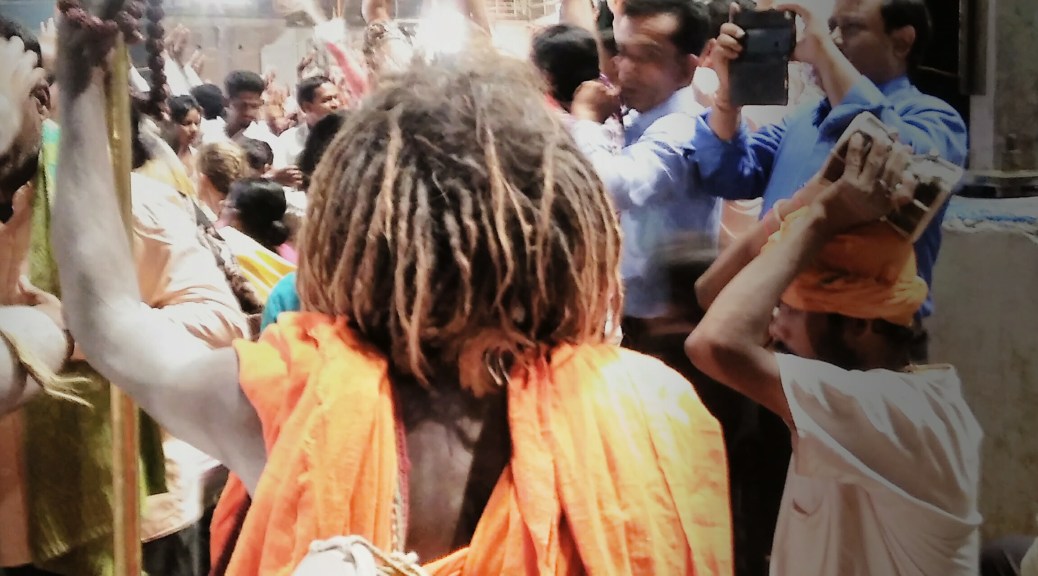
Tag Archives: Festival across the world

Three immersive cultural experiences in Bengaluru

Despite being a cosmopolitan hub, Bengaluru is a metropolis that still firmly holds onto its cultural essence. There may be several festivals being celebrated year-round and across the city but a few of them transcend beyond any religion and community and are rather synonymous with the city’s name. Through this post, I would like to enumerate three such festivals that must be on any Bengaluru resident or tourist’s list of experiences whilst in the city.

    This nine-day festival is a reverence to Adishakti Draupadi and a celebration of her annual homecoming to earth from heaven, on the day of Chaitra Poornami as per the Hindu calendar. Although a main festival of the Thigala community living across Karnataka, people of all castes and religions participate in it. The Karaga bearer (the chief person in the festivities) carries the Karaga (the deity) bedecked with jasmine flowers and begins the procession from Shri Dharmaraya Swamy temple in Nagarathpete, in old Bengaluru. The Karaga bearer is accompanied by the gante dhaari (bell bearer) and hundreds of veerakumaras who together traverse across the streets of the Bengaluru Pete area. The Karaga visits all the temples and the Mastan Saheba Dargah that come along the route until they return to the Shri Dharmaraya Swamy temple before dawn break the following morning.

    Though the festival is observed for nine days, the rituals involving the Karaga bearer spans over several months prior to it. One part of the ritual involves the Karaga bearer undergoing his strength and weight training at one of the several Garadi mane (traditional gyms). Hence, these Garadi manes are considered holy places where replicas of the Karaga and placed and worshipped during the festival. Also, several temples located in the Pete area take out floral palanquins of their deities on procession across the streets of Pete. All these things make Bengaluru Karaga, a special experience.

    Similar Karaga festivals are observed in outskirts of Bengaluru like Hoskote, Kolar, Malur etc. But Bengaluru Karaga is one of its kind and experiences.

    Bangalore’s reputation as a garden city finds a reflection in various traditional festivities of the city. Just as flowers are integral to Karaga, there is another famous festival that has flowers in its very name. The ‘Poo Pallakki Utsava’ is an annual car festival celebrated as part of the Someshwara temple festival in the old locality of Ulsoor. Albeit being a temple festival, it is rather better known as an annual competition between gods and goddesses from temples in and around Ulsoor over which one arrives in the best flower-bedecked palanquin. The car festival is believed to be the wedding day of Someshwara with Kamakshi, and flowers are the theme of all decorations.

    There will be over 80 poo pallakkis from the surrounding temples who attend the wedding celebration of Sri Someshwara Temple with Goddess Kamakshi. The grandest Poo Pallaki is one of the bride, Goddess Kamakshi. Celebrated annually during the Hindu month of Chaitra (around April/May), it is a night long event.

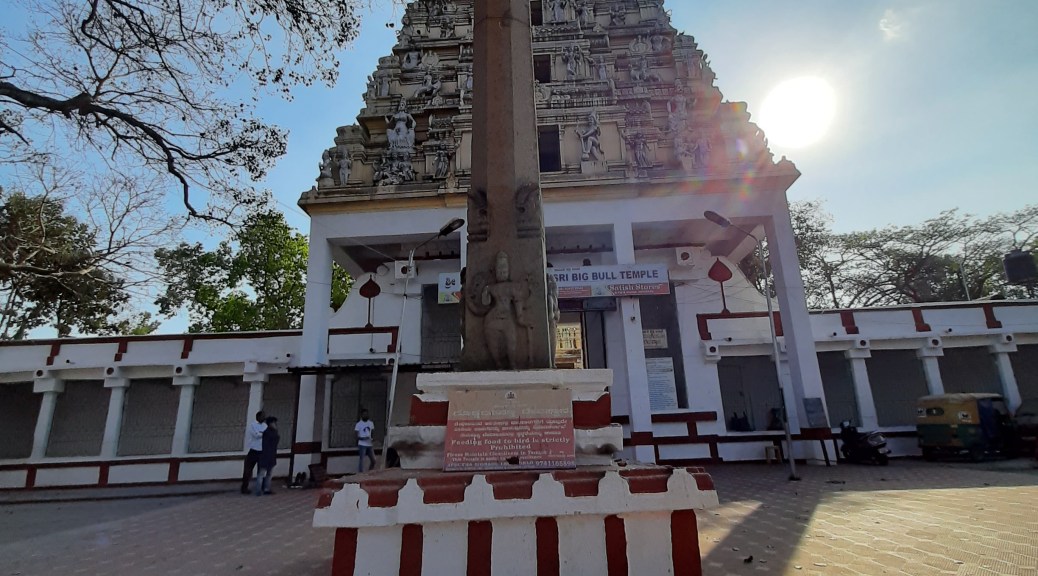
    ‘Kadlekai Parishe’ translating to ‘groundnut fair’ in Kannada is an annual coming together of farmers on the last Monday of Karthika Masa (month in Hindu calendar) celebrated since the 16th century. Legend has it that a raging bull used to damage the groundnut crops that were ready for harvest. The farmers prayed to Basava (bull in Kannada) to protect their harvest, by setting up an idol of a Nandi (Basava / Bull) and a temple at that place and offered their first crop to the Lord. This temple is called Basavanagudi (Bull temple) and the area surrounding it eventually came to be known by the name of the temple.

    Although the groundnut farms made way to residential and commercial structures, the tradition of the groundnut fair is celebrated with great fervor and enthusiasm even today. Farmers from across the state bring their first yield of ground nuts to offer to the temple and to sell them to others during this festival.

    More recently, a similar event is being organized in Malleswaram, around the Kadu Malleswara temple as well.

      The Povvadi Namme of Ibbanivalavadi

      It was back during my school going days, that I had an opportunity to visit the Haleri (Paaleri) Bhadrakali temple in Madikeri taluk. I was especially intrigued by several antlers hung on the wooden beams through the length of the temple verandah. Upon enquiry, the temple priest fed my curiosity by letting me know that the antlers are used during the temple festival to perform ‘Kombaat.’ Kombaat is a word derived as a combination of two Kodava words, Kombu (antler) and Aat (dance). It is one of the ritualistic dances performed during temple festivals of Bhadrakali, a local deity of Kodagu. Ever since then, I was trying to get details or the schedule to witness one of these festivals where Kombaat is performed.

      Finally, it was in the year 2024 when my friend informed me that the Povvadi festival at her native village was scheduled to be held in April. After a long wait, I had finally arrived at the ‘Kaitale’ (ground) attached to the ‘Bhadrakali temple’ of Valavadi village. ‘Ibbani’ and ‘Valavadi’ are two sister villages in Madikeri taluk. The annual temple festival is hosted by each of these two villages on alternating years at the Bhadrakali temple premises of the respective village. This year, it was the turn of Valavadi villagers to host this festival. There are eleven clans that are the original inhabitants of Ibbanivalavadi. Therefore, they take precedence in the conduction of the overall festival.

      Bhadrakali, also known as Bhagavathi or Povvadi, is a local deity worshipped in every village of Kodagu with dedicated temples. The annual festival celebrated in her honor is the Povvadi festival. There are several native communities in Kodagu and each of these members have their own significant roles and responsibilities to be performed at these festivals.

      ‘Maadayi Kaavu’ is a Bhagavathi temple located in the Malabar region of Kerala. It is believed to be the Aadi Neley (primary destination) from where the deity took station at several places across Kodagu. Among these places, is a group of temples called as the ‘Elu Neley’ (seven station) Bagavathi located across the northern and western parts of Kodagu. This group comprises of one brother- Appangeriappa at Kaatakeri and six sisters, namely- Poramalenaad Povvadi at Galibeedu, Karavale Badaga Povvadi, Paaleri Povvadi, Ummeti Povvadi at Makkandur, Kedakal Povvadi, Ibbni and Valavadi Povvadi at Ibbanivalavadi

      Peeli aat

      The beginning of the festivities is marked by a ritual called as ‘Kett boovo’. Thereafter, none in the village is allowed to consume non-vegetarian and alcohol over the next fifteen days. The festival is celebrated towards the last seven days with specific rituals on each day.

      Kombaat

      On the first day, the Ooru-thakka (Village-keepers), Deva-thakka (Keepers of the temple administration) and Bandara-thakka (Keepers of the temple’s valuables) all arrive in a grand procession, carrying the Bandara-Potti (Donation box) and the jewelry for the deity from its treasury to the temple. This marks the beginning of the festival. The people are accompanied by the music of the ‘Dudi’ and ‘Poda mani’ kott (traditional percussion instruments). There are noteworthy rituals like the Boad kali, boad aat etc. among others.

      There are other rituals performed over the next three days. The fifth day is the most interesting as several traditions unique to the ‘Elu Neley’ Bagavathi temples can be witnessed. The day began with ‘Kadi-aat’ followed by a ritual called Aangola-Pongola. It is performed by married couples as an offering to the goddess after their prayers for having children are fulfilled. The vow is fulfilled by their kids by cross-dressing in a wedding ceremonial attire any time before they hit puberty. A son dresses up as a traditional bride (Pongola) and a daughter wears a groom’s costumes (Pongola) as the family together offers their prayers to the Goddess.

      Kombaat

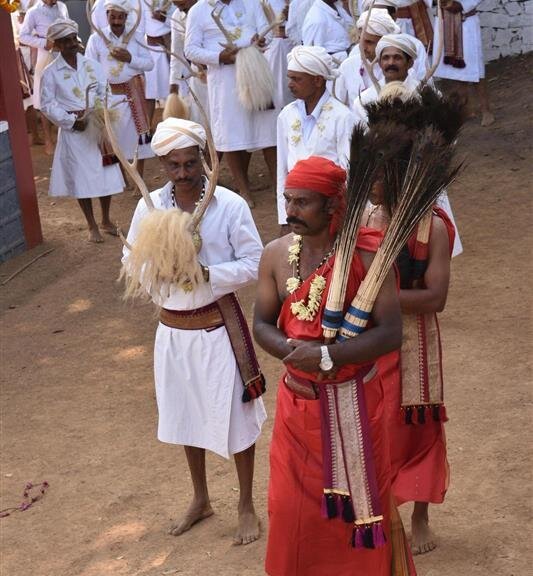
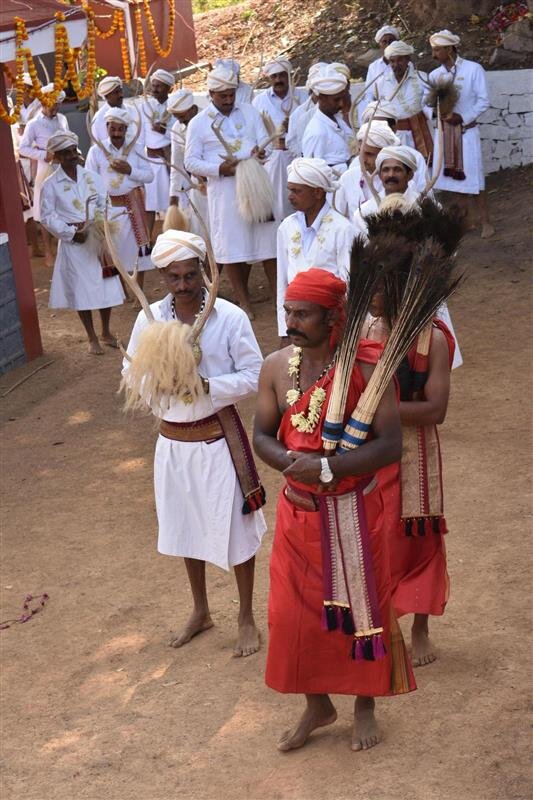
      Then, all the men of the native clans get dressed in ‘Boltha Kupya’- The white robe worn only on auspicious occasions. They then hold a bundle of peacock feathers (peeli) in their hands and perform a rhythmic dance to drumbeats in a circular formation around a ‘Kutthi bolcha’ (traditional lamp). This dance is called ‘Peeli-aat’. Post the performance, the crowd dispersed from the kaitale and gathered around the temple.

      Here, the men in white kupya again perform the Kombaat to the beats of the traditional drums and Valaga (traditional wind instruments played by the members of the Meda community). Along with the ‘Ajjappa,’ (a person possessed by the spirit of ‘Ajjappa’, another local deity), all the other men in white Kupya circumambulate the temple while dancing with the Kombu and Chowri (a cluster of yak hair).

      After that, all the villagers gathered to offer bandara to Ajjappa and Bhadrakali. After everyone had finished offering their prayers, they then went back to the podium with a spirit that was competitive. Competitive, because the next ceremony was like a competition of sorts. All the native clans of the village competed against each other in a coconut shooting competition. Three coconuts tied to a distant high pole were to be shot at as targets. It was a fun event to end the day of festivities.

      After the sun went down, the men came together in an area nearby to the temple to offer animal sacrifice to the deity. Women are not allowed to this space. The food is then distributed among all the village folk.

      Povvadi Namme, Kodagu
      Povvadi Namme, Kodagu

      On the following day, there is a similar celebration with Kombaat and Valaga, but on a smaller grandeur. on the seventh day of the festival, a pooja is offered to the goddess by all the thakkas, before returning the bandara potti and the temple jewelry to the treasury. The last and the final day of the fortnight long festival was marked by a ‘Kalasa Pooja’ offered to the goddess before drawing curtains on such a beautiful festival until next year.

      Disclaimer: The purpose of this article is for documentation of lesser known festivals of India. The above information is only based on what I could gather by discussing with people who had come together at the temple. My apologies for any wrong representation. Readers are welcome to contribute any information that is deemed important and useful to be shared here.

      This post was featured  on 24-Oct-24 edition of ‘Spectrum’ in Deccan Herald National daily.

      A Series- Festivals of Kodagu

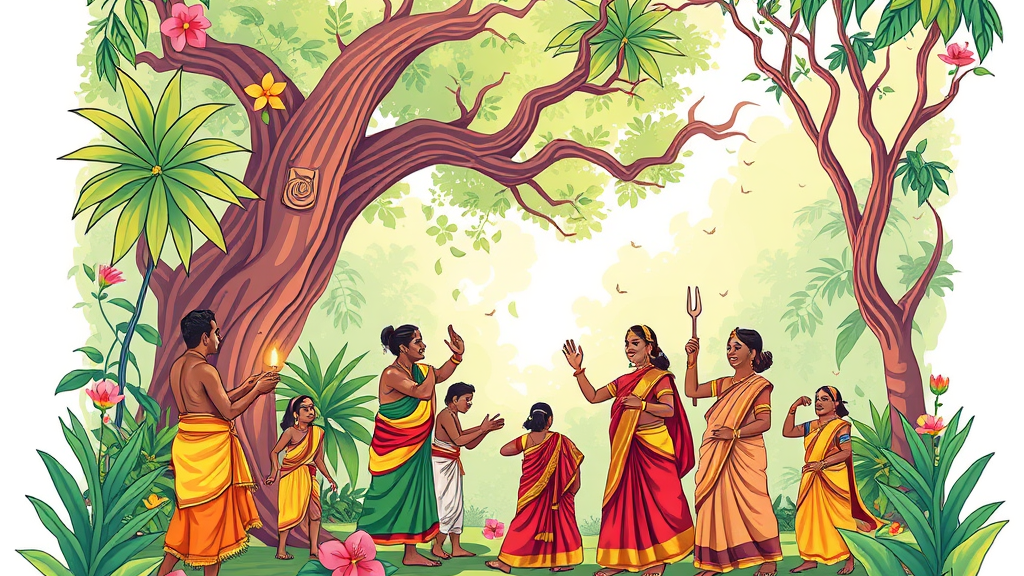
      The Kodavas and the other native tribes inhabiting the Kodagu region are primarily nature worshippers. There is no idol worship, and the five elements of nature and the guiding spirits of their ancestors are central to their worship. However, there are several other deities that are associated with the Kodava folklore and the regional culture in general. As per some historians, the worship of Shiva and Parvathi, which is also integral in Kodava folklore, can be attributed to the influences of the Haleri kingdom’s rule.

      “A Mahadeva (Shiva) for each province, Povvadi / Bhadrakali / Bagavathi (Parvathi) for each hometown, Aiyappa for each village, Natha (snake god) for each lane and Puda (indigenous soil lord) for each family,” goes a Kodava saying. In Kodagu, Mahadeva and Bhadrakali are worshipped in temples that are built and managed by the respective villagers. On the other hand, Choundi and Ayyappa are forest dwellers. They mostly live in ‘Devara Kaadu’, the sacred groves.

      Although the chief deities are the same in every province or hometown or village, the way they are worshipped is unique to every temple. The rituals and ceremonies vary depending on the folklore in which its roots are embedded. These stories are compelling and narrate the importance of connections with the motherland and nature worship. Bright colours, earthy music and traditional dances mark these festivals.

      While the main festivals of the community like ‘Kailpodh’, ‘Edamyar’, ‘Puthari’ and Kaveri Sankramana and the older tradition of Nari-Mangala have been well documented through several mediums, it is these indigenous and lesser-known local festivals of Kodagu that I would like to experience and document, one festival at a time.

      I would like to hence, start this series- “Festivals of Kodagu”. The purpose of this series is only for documentation of lesser-known festivals. All the information shared through my series’ posts are based purely on what I could gather by discussing with people who are closely associated with the temple or are natives of each village. My apologies for any wrong representations. Readers are welcome to contribute any information that is deemed important and useful to be shared here.

      1. The abandoned tribes and the abuses- Kunde Habba
      2. The Boad Namme of Chembebellur
      3. The Povvadi Namme of Ibbanivalavadi

      A festival to celebrate rebirth- Valangaiman Padai Kavadi

      It was an online link that led me to a few photographs of a rare celebration. The images were accompanied by very little write-up for me to get a clear idea about the occasion. All I could infer was that it was a festival called ‘Padai Kavadi,’ celebrated in a village called Valangaiman, near Kumbakonam in Tamil Nadu.

      I reached out to a few friends from Tamil Nadu who, in turn, connected with their acquaintances from the region and gave me information that the festival is celebrated annually, on the second Sunday of the Palguni month as per the Tamil calendar. Since I had ample time, I could meticulously plan my itinerary for that weekend and wait for my arrival at Kumbakonam. I had earlier visited Kumbakonam, so I included a few places that I could not cover in my previous trip. But that is for another story. For now, the focus is on ‘the Valangaiman Padai Kavadi festival.’

      What is the festival about?

      For a South Indian in general, one might think the Kavadi festival happens in every other village during this season. So, what got me curious about this place? Well, this Kavadi festival at Valangaiman celebrates the rebirth of a person. As per the local belief, people suffering from smallpox (still considered a deadly illness in most parts of India) make a vow at the Sri Padaikatti Maha Mariamman temple to perform the Padai Kavadi if cured. Once completely cured, they believe they have seen death and returned. Therefore, the convalesced person is made to lay on a bier or a handbarrow, lifted and carried by pallbearers, and the entire ceremony or the ritual of a traditional funeral is conducted as if he/she were dead.

      There are primarily two types of biers. One, a simple yellow cloth tied to a bundle of sugarcanes or a single sturdy bamboo that is used as a cradle for kids and carried by two men on either end; second, a handbarrow with two bamboo culms knitted together with coconut fronds on which an adult convalesced is carried by four men. The adult bier is made more elaborate and decorative depending upon the interest and financial status of the person offering his vow.

      Valangaiman Paadai Kavadi festival
      An adult-female laying on a bier at Valangaiman Paadai Kavadi festival

      I was told that three sister goddesses are living (at dedicated temples) in parallel streets of the village. The kavadi (usually body piercings or holy water carried in decorated pots on heads) is offered as vows to all three sisters, but the Padai Kavadi (the resumption of the dead, celebrated by sleeping on a bier) is offered only to Sri Padaikatti Maha Mariamman, the second among the three sisters, during the auspicious day of Palguni month.

      Valangaiman Paadai Kavadi festival
      A child being carried on a bier at the Valangaiman Paadai Kavadi festival

      What happens on the festival day?

      The procession of the convalesced people lying on biers starts early morning, mostly to avoid the noon sun. One can find hundreds of devotees who gather either at the small shrine of Vinayakan on the banks of the river Kudamurti or at a dozen makeshift temporary shrines set up by various local priests on the dried riverbed. Here, the bier, the person supposed to lay on it, and the respective kith and kin assemble for the rituals. Each person offering their vow is made to sleep on the bier after their family deity is invoked. Their eyes, nose, and mouth are closed with yellow cotton fabric, hands and legs are tied together as if those of dead people lying in coffins. Holy water is sprinkled around, and all the people gathering touch the feet of the sleeping person to take his/her blessings before the pallbearers carry them for the procession towards the Mariamman temple. For as long as a convalesced person is sleeping on the bier, he/she is treated equivalent to God as they are someone who has neared death, seen God, and returned. Then, a person carrying a clay pot with burning wood and incense leads the procession, and one with a pot full of water trails them, all being accompanied by drumbeats and flower throwers.

      Valangaiman Paadai Kavadi festival
      A funeral entourage going towards Padikatti Maha Mariamman temple

      The procession circumambulates the Mariamman temple thrice, and then the bier is lowered down in front of the temple. Rituals are performed, post which the person descends from it and goes inside the temple to see the goddess and complete his vow. This is about the Padai Kavadi for people who survived death.

      Valangaiman Paadai Kavadi festival
      An adult man being carried on a bier at Valangaiman Paadai Kavadi festival

      However, people who have suffered other ailments also make vows to offer a replica of the body part/ organ that has been cured through their prayers to Mariamman. One can see models in clay or silver, like eyes, legs, hands, etc., being sold around and offered by people at the temple, depending on their cured illnesses.

      Apart from this, one can also see several people with various kinds of body piercings walking on the road (which is also a form of Kavadi) and circumambulating the three sister temples to offer their vows and prayers. A man suspended from a crane with his back hooked with metal loops and circumambulated around and in front of the temple, some men with full torsos pierced with lemons, long and heavy tridents passed through both cheeks, etc., were some of the unique and different Kavadi offerings I witnessed here. A detailed post of a dedicated festival of body piercings called ‘Mayana Kolai’ is available on my blog for further reading.

      Valangaiman Paadai Kavadi festival
      Body piercings at Valangaiman Paadai Kavadi festival

      After all the kavadi offerings are over, the presiding deity, Goddess Padaikatti Maha Mariamman, is then brought out of the temple by around 03.00.p.m. on a procession. Around that time, cattle (goats and sheep) and poultry donated by the devotees are tied to another central post that is erected in front of the temple and suspended up and down with their bodies held firmly in the center. I could not gather sufficient information about the significance of this ritual, but I would be glad to learn from any of my readers here.

      Valangaiman Paadai Kavadi festival
      A devotee with body piercings; Also the wooden post used to swing cattle hoisted infront of the Padikatti Maha Mariamman temple

      The festival then culminates after the deity returns inside the temple.

      Valangaiman padai Kavadi festival

      India’s largest Cattle fair- Anthiyur Gurunathaswamy temple

      When a friend mentioned taking a road trip to a fair at Anthiyur village, neither of us had many expectations. What can one expect at a village festival in India, after all? All that we had learnt before commencing our road trip was that it was a cattle fair, which was held as part of the annual festival of the Gurunathaswamy temple at Anthiyur village. Supplemented by a handful of YouTube videos in Tamil, we decided to take the long drive from Bangalore to spend a weekend.

      We started from Bangalore before dawn to reach Anthiyur at the earliest and get sufficient time to see all the cattle stalls before returning. But only to our surprise, the scale of this temple village fair was anything beyond our imagination. Neither of us had seen or heard of a small village festival to be of such a large scale and spread.

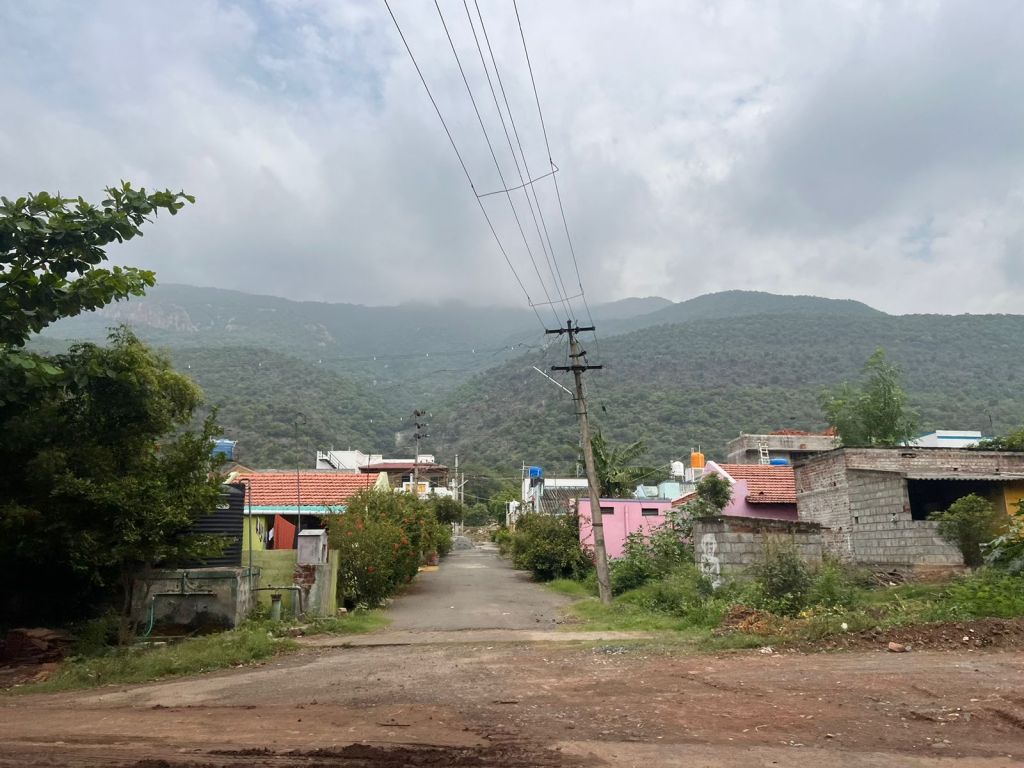
      The beautiful hills around Anthiyur village
      The beautiful hills around Anthiyur village

      The story dates to around 600 years, when there lived a clan near Pichavaram forest, that worshipped three stones known as ‘Kutty Aandavar’ (translates to ‘Small God’, in Tamil). The local ruler wanted to marry the priest’s daughter. However, the priest’s family was against the marriage proposal. Meanwhile, one of the members of the priest’s clan gets possessed by their deity’s spirit, and the family is told to abandon the village along with the three prayer stones to avoid the outrage of the ruler’s anger. Following this, the family started to move north until they found a safe place to settle down. At some point, the family felt that their survival was going to be difficult and that the stones being carried by them were an additional burden. Hence, they continued their journey by throwing the stones into a nearby pond. They halted at Anthiyur for the night.

      On the following morning, Santhakumaran (one of the family members) was surprised to find the same three stones back in his bag. They realized the powers of their deity and resumed worship of the stones by giving them three different names. The first stone was called Kamatchi, the second one was Perumal (Vishnu), and the last one was Gurunatha Swamy (a combination of Shiva and Kantha).

      During the festival, three deities are taken on a procession from the main shrine at Anthiyur village to a temple in the nearby forest. As per mythology, a demon is believed to have occupied the forest in which Goddess Kamatchiamman wanted to reside. A fierce war was then fought between Veerabhadra (the warrior assistant of the Lord, protector of Kamatchi-amman) and the demon, in which the demon eventually surrendered. It is said that instead of leaving the forest, the demon requested lord Gurunathar to allow him to stay there on a condition that Kamatchiamman came there once a year to visit him. However, Veerabhadra agreed to this on the condition that he, too, was allowed to stay in the same forest. This temple is today called Vanakovil (translates to ‘Temple in the forest’ in Tamil), where Kamatchiamman is brought in a palanquin from the main temple.

      The current temple structure is believed to have been built by the Pandya kings. The Gurunathar temple houses an 11*11*11 feet kulukai. A kulukai is a large earthen storage container mainly used for storing food grains, with a large opening at the top (to fill the container) and a small vent at the bottom (to take the grains out for consumption). It is believed that the kulukai in this temple is used to store the jewels and other items related to worship, and is guarded by snakes. Only the head priest is allowed to enter the container and access the stored things, and is unharmed by the guarding snakes. Therefore, this kulukai is worshipped by the local people and it is believed to keep them safe from reptiles, scorpions, etc.

      The month-long temple festival held during the Aadi month of the Tamil calendar hosts a range of unique rituals and celebrations during this time. Temple cars built for each deity are prepared and managed by the respective caste of people. Two large, towering, nicely decorated temple cars (the largest is of Gurunathaswamy and the smaller is of Perumal Swamy) are pulled by thousands of devotees who gather from across the nearby villages, from the main Gurunathaswamy temple to the Vanakovil and back. Today, animal sacrifice is practiced in Vanakovil.

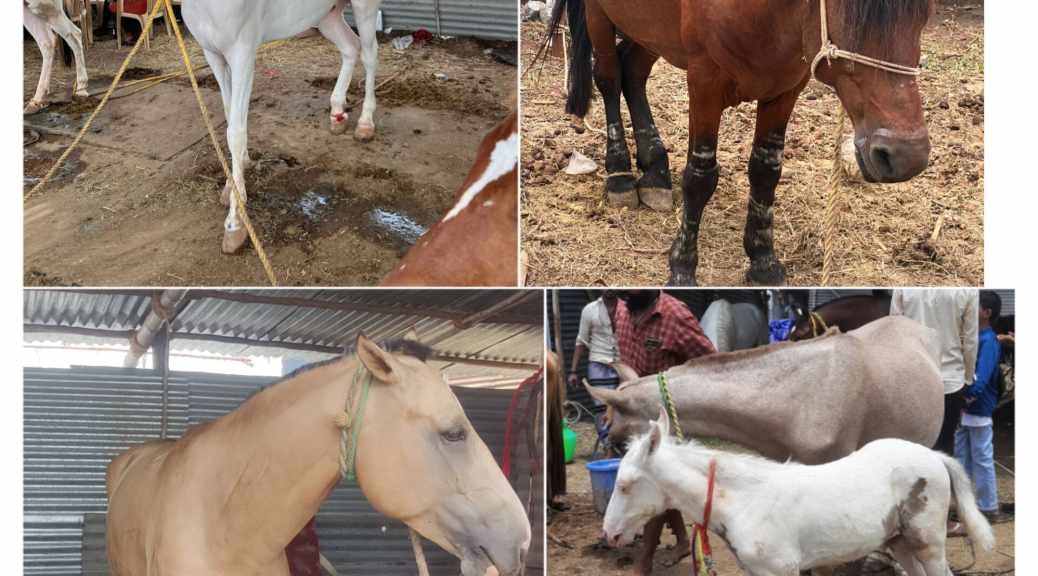
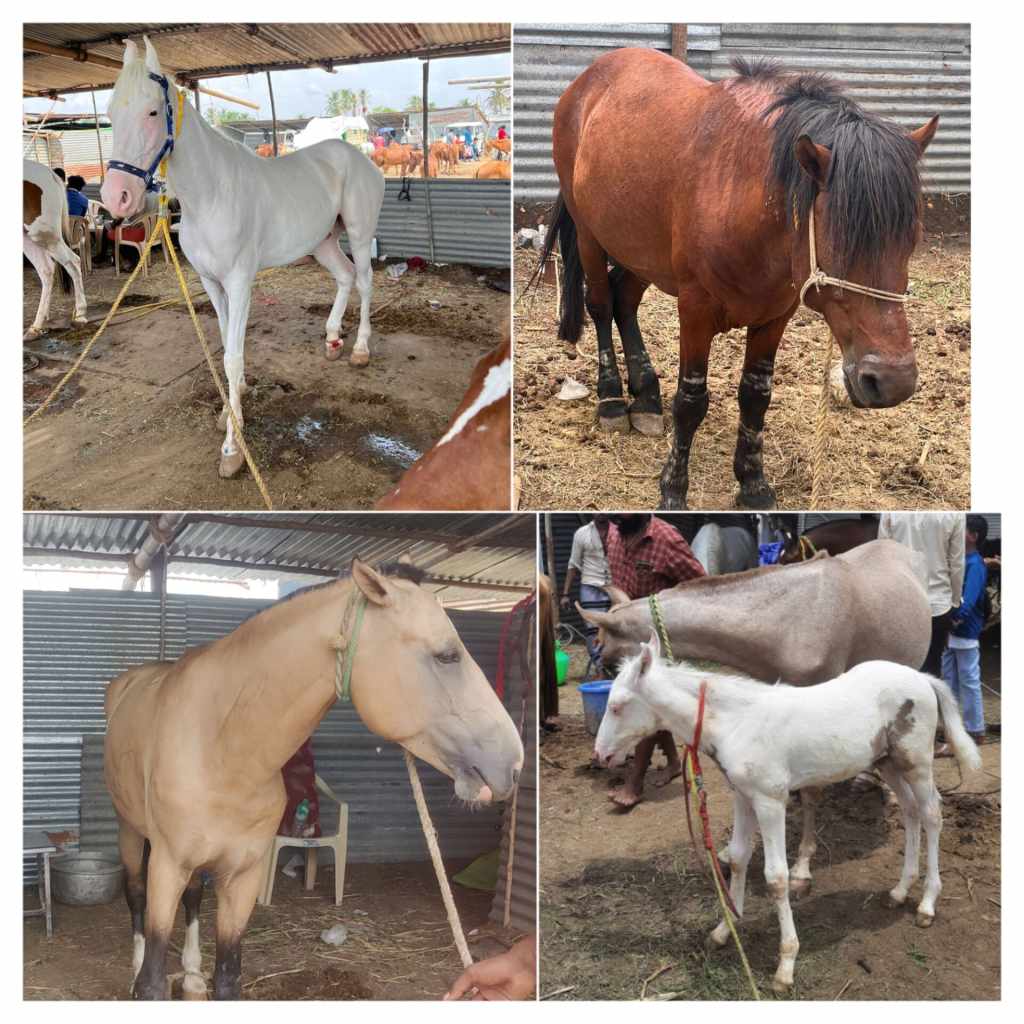
      A four-day-long cattle fair is, however, the highlight of the festival for which people come from across the districts of Tamil Nadu and the states of India. There are only two cattle fairs held at this scale in India. First, at Anthiyur (more popular for the horse fair) and second, at Pushkar in Rajasthan (Primarily a Camel fair). The history of the ‘Kudurai Santhai’ (the Horse fair) dates to the times when Tipu Sultan was the ruler of Mysore. He visited this cattle market to buy the best horses for his cavalry and sold his horses that were no longer fit for battles.

      It has, over time, gained popularity among horse enthusiasts across the country who consider buying horses from this market as a matter of pride and prestige. The cost of each horse can range anywhere between 50 thousand to 50 lakhs rupees. Today, apart from buying and selling horses at the ‘Kudurai Santhai’, many horse owners come here to simply display their prized possessions. One gets to see stallions, mares, sires, and ponies of various native indigenous and pure breeds here. Some horses are made to perform to drumbeats and kept on exhibition. On the last day of the four-day-long ‘horse fair’, Geegees are judged based on their structure, build, and looks, and finally, awards are given away. On the day we visited in 2023, there were over 1000 horses at the fair brought in for various purposes.

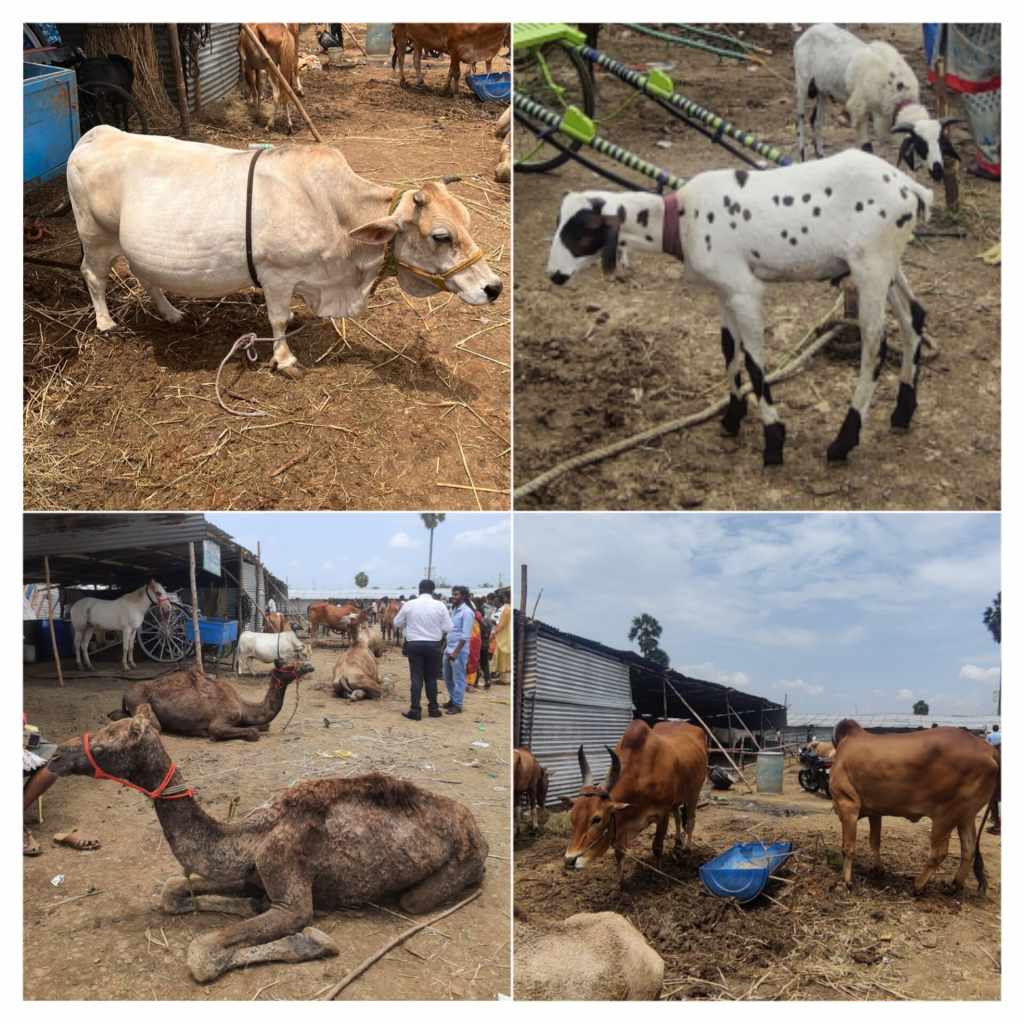
      All accessories, equipment, and other things that are associated with horse-keeping and equestrian training can be found and are sold here. Apart from horses, this fair is also the largest marketplace in India for other breeds of cattle and livestock like cows, goats, sheep, camels, rabbits, dogs, and birds. With encouragement given to native breeds, it is a great experience to see cattle across the 34+ acres of land.

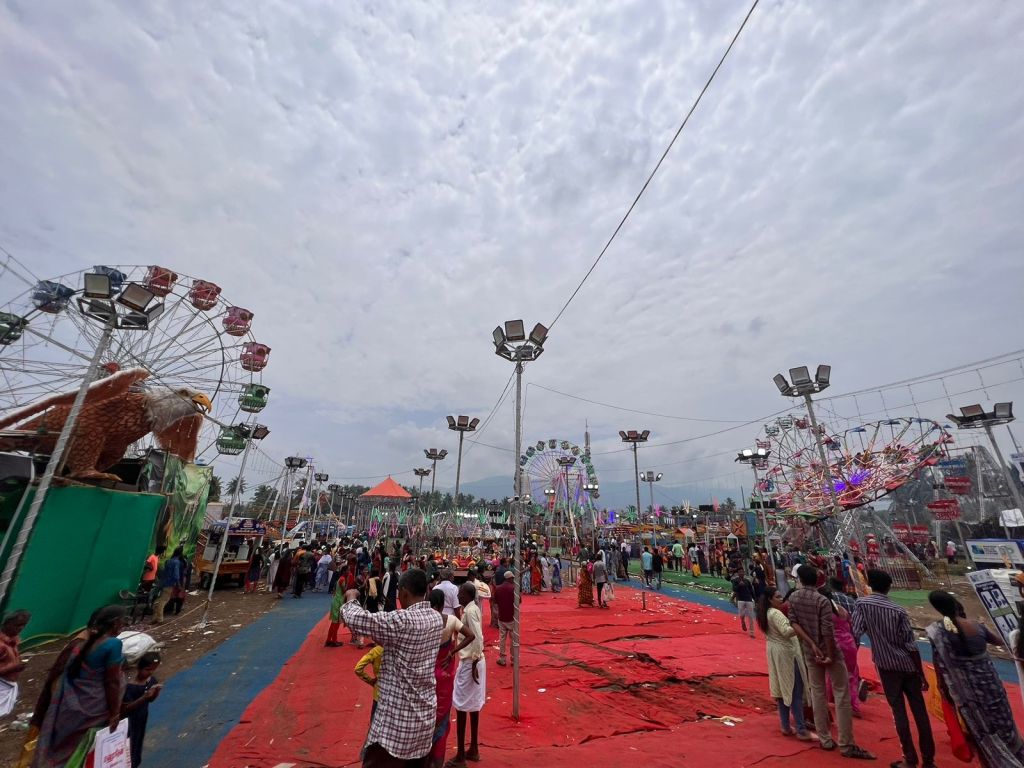
      To supplement the cattle markets, there is a makeshift amusement park set up, which is also by far the largest makeshift amusement park I have ever seen. Over ten giant wheels, rollercoasters, circus tents, and at least three globes of death are set up among several other types of amusement rides. The energy and ecstasy of this fair is all together only to be witnessed rather than to be read about.

      Anthiyur festival
      The makeshift amusement park at Anthiyur festival
      • Bamboo staff- You will find people buying them, as it is considered auspicious to keep this weapon of Gurunathar Swamy at home.
      • Colorful horse whips
      • Horseshoes- this is believed to absorb negative energy if hung at the entrance of houses.

      Disclaimer: This article is posted to document folklore and lesser-known festivals of India. If any mistakes are found, it could be based on what was heard as stories. Kindly comment below or message directly for any corrections required.

      The Boad Namme of Chembebellur

      ‘Boad’ in Kodava language means to beg/ request. ‘Namme’ translates to ‘festival.’ Thus, the ‘Boad Namme’ can be loosely called as the festival in which the people of Kodagu request ‘Goddess Bhagavati’ to grant their wishes.

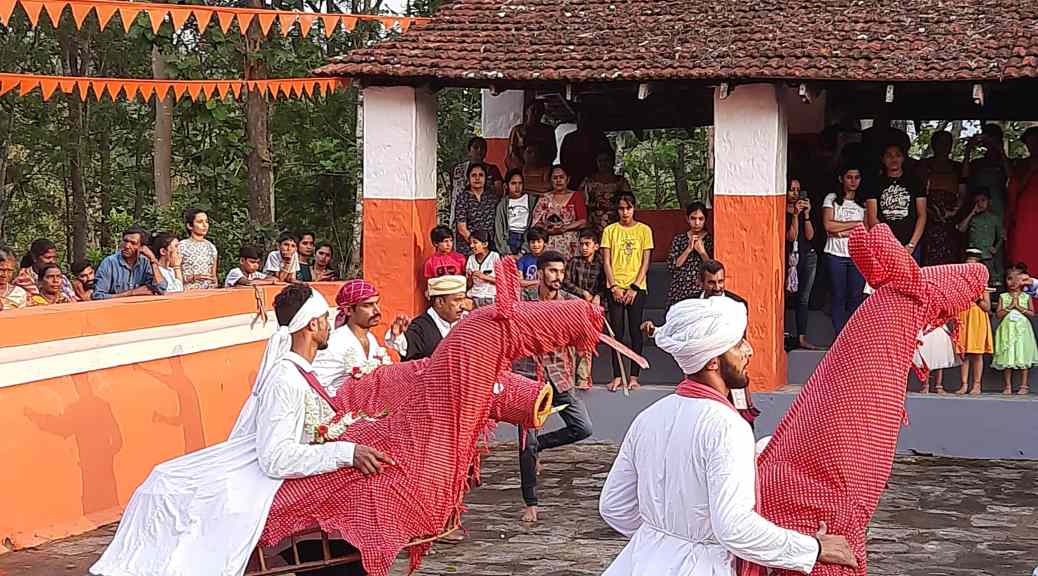
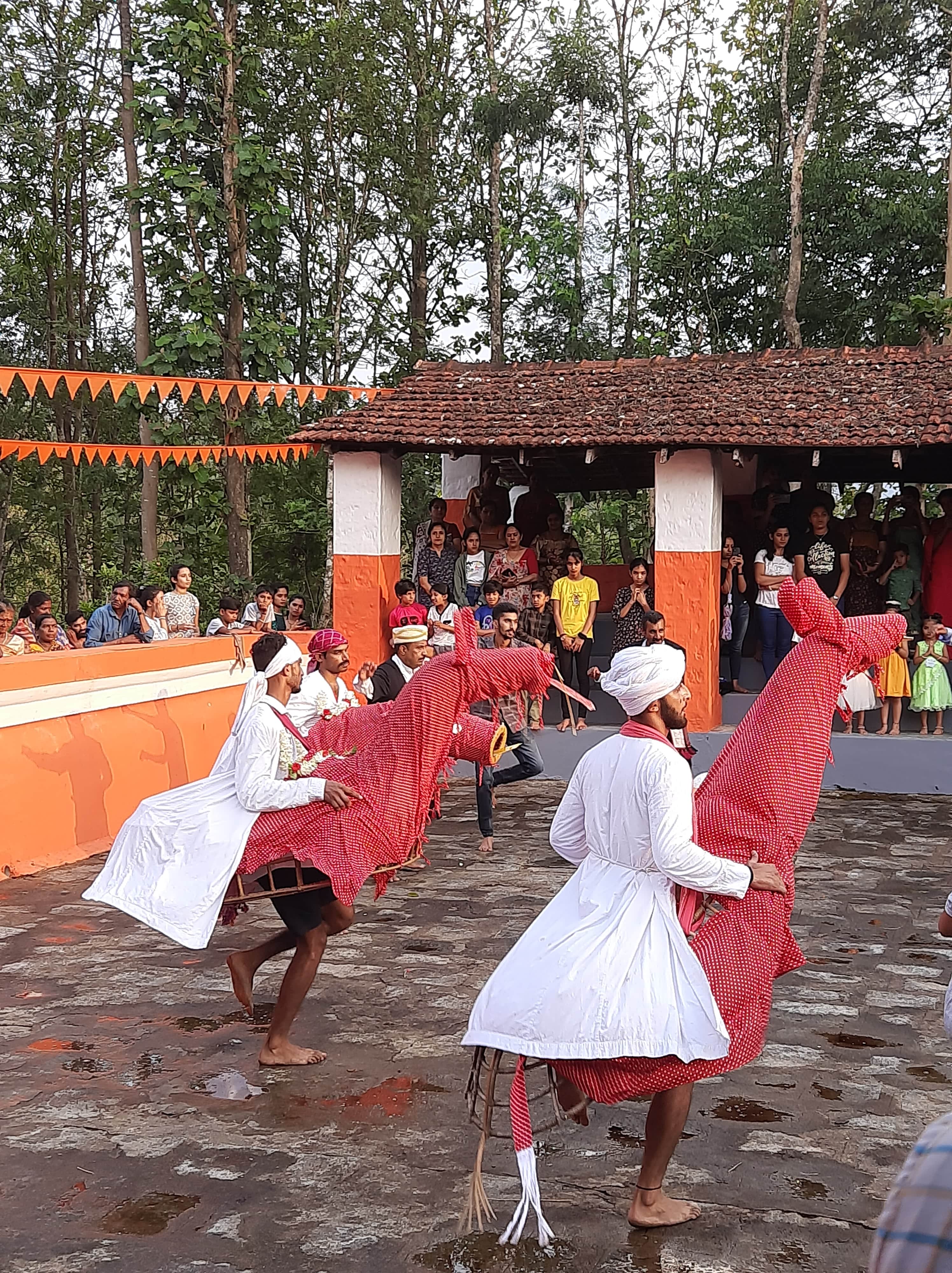
      The Boad namme is observed across Bhagavathi temples located in several villages in the southern part of Kodagu district, in series. The first Boad of the year starts at the temple of Kunda and the last one is observed at Parana village. Kudure (Horse) worship is an integral part of the Boad namme. In this, a young boy belonging to a designated clan from the respective village dresses up in the costumes of a horse and participates in the various ceremonies during the festival. Hence, it is said that ‘Kundath-ra Bott-le nenda Kudure, Parana mani-le ilinja Kudure.’ Translating to ‘the horse which rises at Kunda will only settle at Parana.’

      I will talk about these two Boad festivals in separate posts. Among a series of all other Boad namme that are observed across villages in South Kodagu, I am starting from the middle, at Chembebellur village. The Boad Namme of Chembebellur is among the most popular of them all. It is observed over a period of four days and usually happens around the last week of April of each year.

      Day one is Pattani. People belonging to all the native clans of Chembebellur observe ‘Fast’ on this day.

      Day two is Kudure. Three young boys representing three clans of the three main Keris (areas) of Chembebellur i.e., Ajjinakanda clan of Podakeri, Coluvanda clan of Podakote and Chembanda clan of Nadikeri wear the costumes resembling horses (Kudure) and start from their respective Ain mane (clan’s ancestral home). They are accompanied by men impersonating other local deities of the village like Choundi, Aiyappa and the others during their march towards the Bhadrakali temple where they all assemble and hold the following rituals. Post this, there is a fire set up in front of the temple in which effigies are burnt.

      Kudure at Chembebellur Bhadrakali temple
      Day 2: Kudure at Chembebellur Bhadrakali temple

      The gathering then moves towards the village’s ‘Eshwara temple’ where the rest of the men and boys of all age groups dress up in various costumes. This dressing-up is a form of a vow they make to invoke Goddess Bhadrakali’s blessings. The costumes could range from traditional Bund-kali (Mud-smearing), Pill-Bhoota (Hay man), Puli-vesha (Tiger costume) etc. to more modern forms of cricketers, Llamas, swamijis, seducers etc. These dressed up men folk visit every house of Chembebellur asking/begging’ for alms all night and it is a fun time for all the households who host these men in the houses.

      Day Three is Boad. This part of the festival is the most awaited and the highlight of the four-day celebration. All the dressed men congregate at the Bhadrakali temple in the afternoon. They are accompanied by the men impersonating the local deities as well. They all together circumambulate the temple thrice and go around begging form alms from the thousands of people who gather there to participate in the festivities. The end of the circumambulation marks the end of the Boad where all the men collectively offer all the money collected through begging to the Goddess and seek her blessings.

      Day 3- Boad festival at Chembebellur Bhadrakali temple

      Day four is Choole. Young boys who are yet to reach adolescence, cross-dress in attire of Kodava women and offer their prayers at the Bhadrakali temple. This day marks the end of a fun and yet traditionally rooted festival of Chembebellur, paving way for a Boad namme to start at yet another village of South Kodagu.

      Disclaimer: The purpose of this article is for documentation of lesser known festivals of India. The above information is only based on what I could gather by discussing with people who had gathered at the temple. My apologies for any wrong representation. Readers are welcome to contribute any information that is deemed important and useful to be shared here.

      A Rare Connection of Hockey Between Karnataka and Tamil Nadu

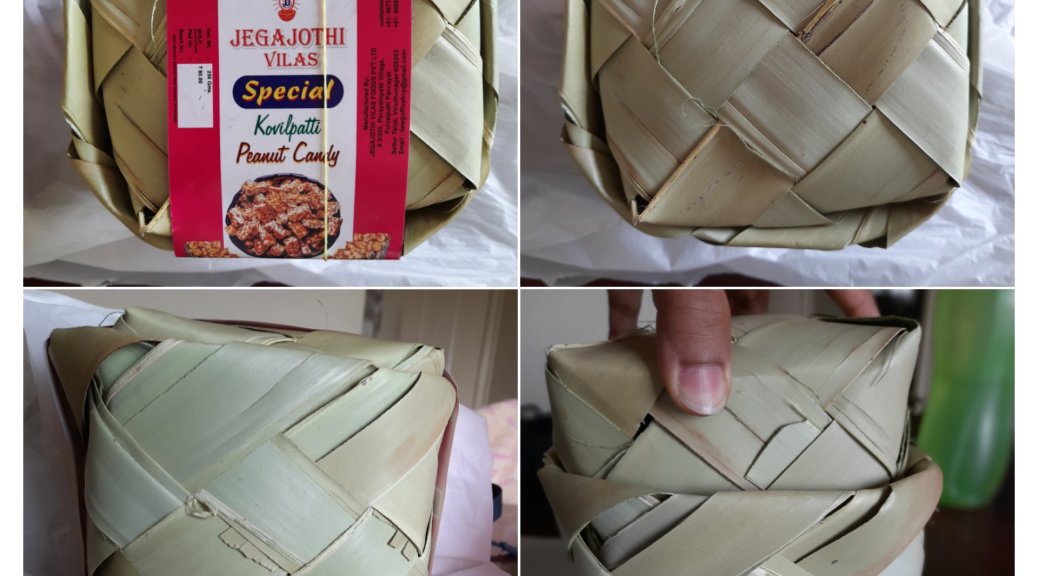
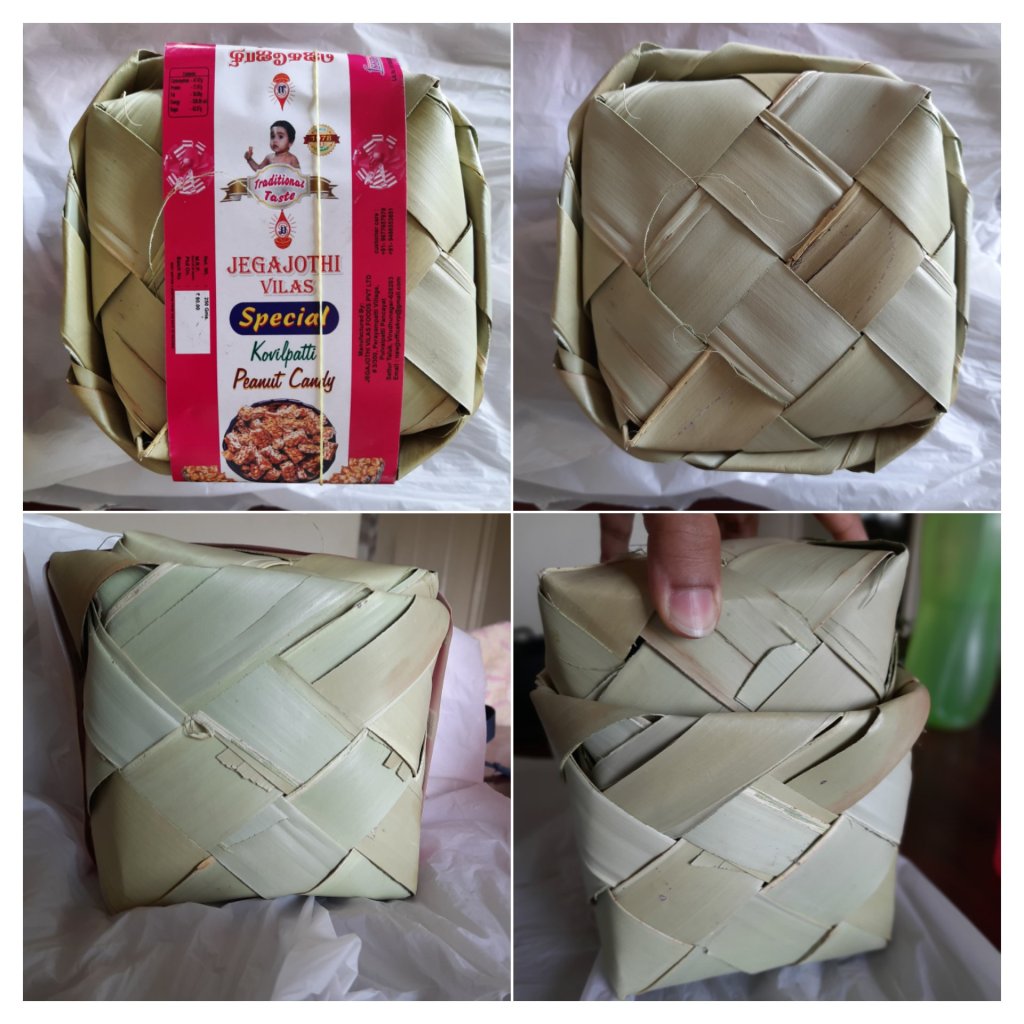
      I have been fortunate to meet many like-minded people online, through travel blogging. Recently, I happened to meet one of such friends offline, during his visit to Bangalore. He greeted me with a souvenir, a nice palm leaf box containing chikkis. He explained that it was the ‘panai olai petti’ containing the famous candies from his hometown. After I returned home, a little bit of online browsing about this souvenir unfolded some interesting facts for me.
      The palm leaf box containing the Kovilpatti chikki
      The palm leaf box containing the Kovilpatti chikki

      Talking about the southern states of India, two neighbours have a lot in common. What triggered this thought were the names of places starting with the letter ‘K’, one from each state. Kodagu and Kovilpatti from Karnataka and Tamil Nadu respectively. Meanwhile, the ‘C’ is what makes these two ‘K’ places famous. ‘Cauvery’, the holy river originates in Kodagu and ‘Chikkis’, the peanut candies of Kovilpatti has earned a GI tag for itself. Enough is written and done on the internet about either of the places.

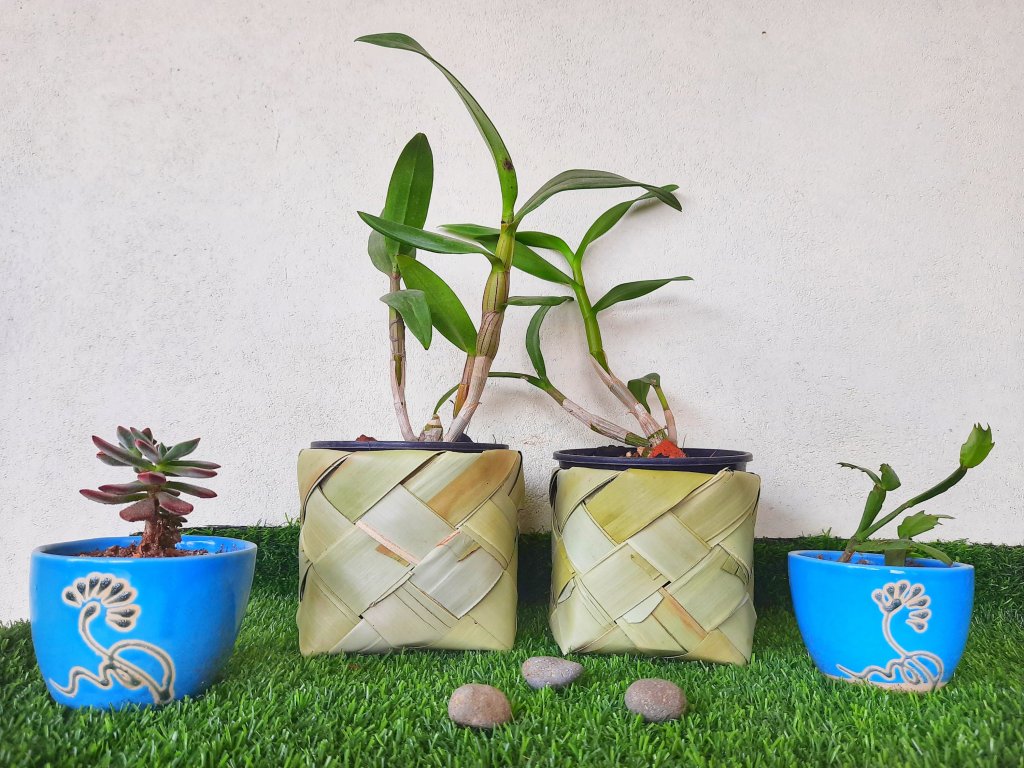
      Palm leaf boxes of Kovilpatti mithai being Repurposed as planters
      Palm leaf boxes of Kovilpatti mithai being Repurposed as planters

      But what turned out to be more surprising and a rather rare connection between the two ‘K’ places of these states is their common love for the National sport of India- Hockey. In my earlier post, I have mentioned how the largest festival in the world dedicated for any sport (hockey) is celebrated in Kodagu. But what I learn now is that Kovilpatti too, shares its history with Indian military and the influences of the British to have a strong hockey culture. With at least a dozen hockey clubs and several players making it to the Indian national team over time, the people of Kovilpatti have an unabated enthusiasm for the national sport.

      What I do know is, that there are several other lesser-known places in India where people celebrate sports other than cricket. Only initiatives by governments, support from sponsors and adequate media publicity can encourage and motivate more people to nurture a sporting culture in our country, anything other than cricket.

      I Belong to Everywhere: Kumbaldal

      This is an attempt to bring back nostalgia. Continued from- “I Belong to Everywhere: Ontiangadi“.

      Kumbaldal is a village in Madikeri taluk, north of Kodagu district. The descendance of my maternal lineage belongs to this village. Currently, my uncle stays here with his family.

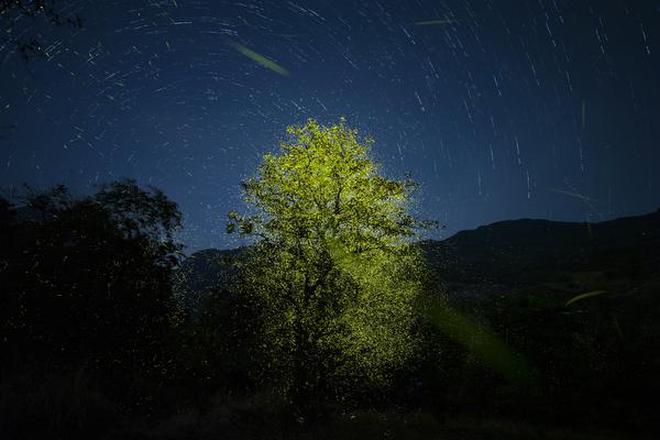
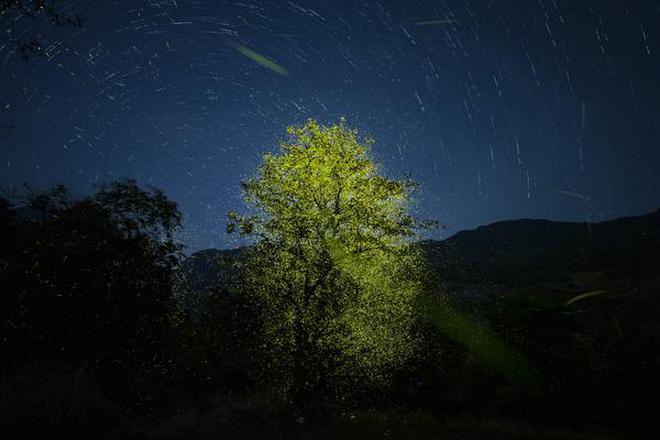
      This award-winning wildlife photograph not often but always brings back memories of simply being at Kumbaldal.

      'Lights of Passion’, An award winning photograph of the bioluminiscent fireflies in the Western ghats
      ‘Lights of Passion’ fetched Aishwarya the ‘Highly Commended’ award at the 56th Wildlife Photographer of the Year Awards (2020) under the ‘Behaviour-Invertebrates’ category. | Photo Credit: Aishwarya Sridhar

      If you are there at the right time, then your senses can feast on bioluminescence. Millions of fireflies rest on the ground under the coffee plants all night and it literally feels as if you are standing on the porch of a mud house that is surrounded with a zillion flashlights. No words of mine can justify what I want to express! But, what I now realize is that the experience is not the same anymore. The usage of chemical fertilisers and pesticides have done damage that’s beyond repair to the environment. Going organic would need several decades to fix these glow worms and fireflies back into their normal habitat.
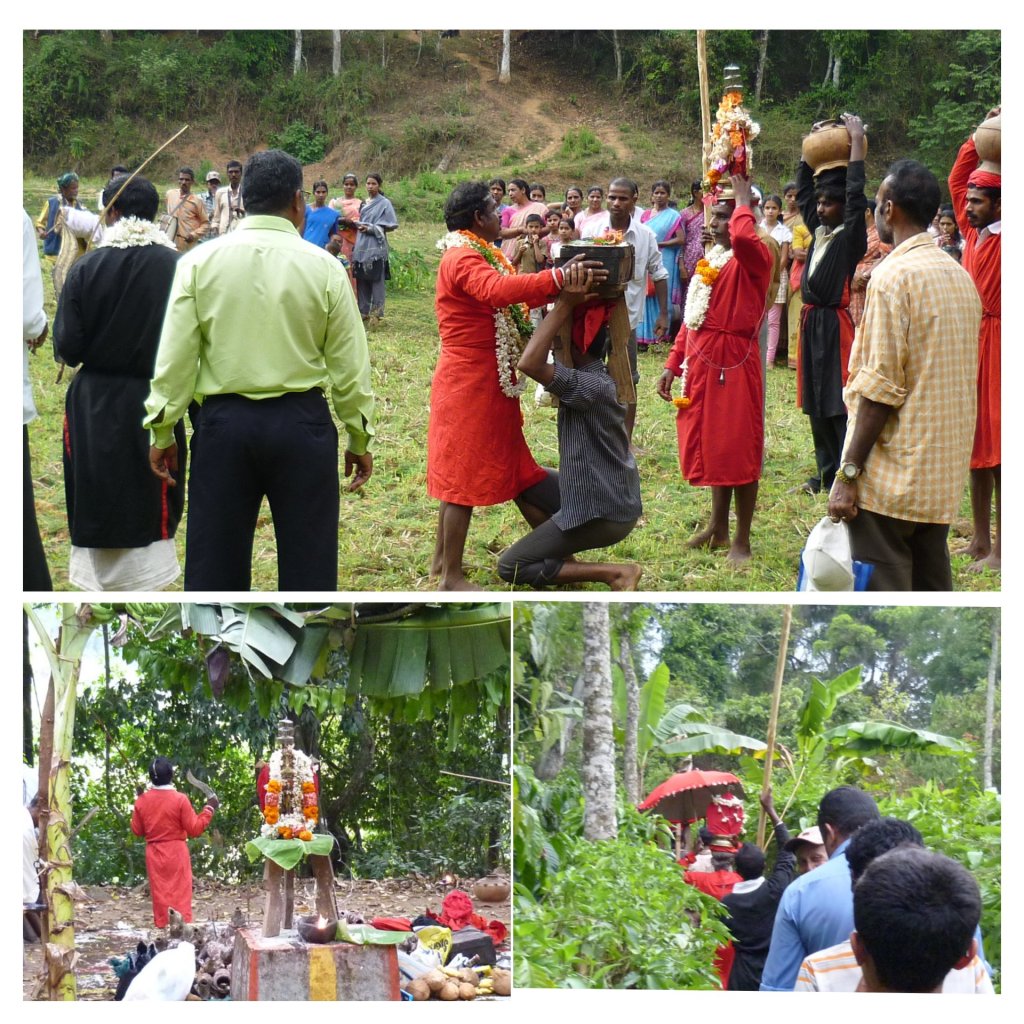
      Every village in Kodagu has its own deity and it is quite an experience to participate in these local festivals. At Kumbaldal, the temple’s Kuli kund (the holy bathing pond) happens to be in our land. Hence, the idol of the presiding deity of the village is brought to our farm for the first ceremonial formalities during the village’s annual festival.

      The annual village festival at Kumbaldal
      The annual village festival at Kumbaldal

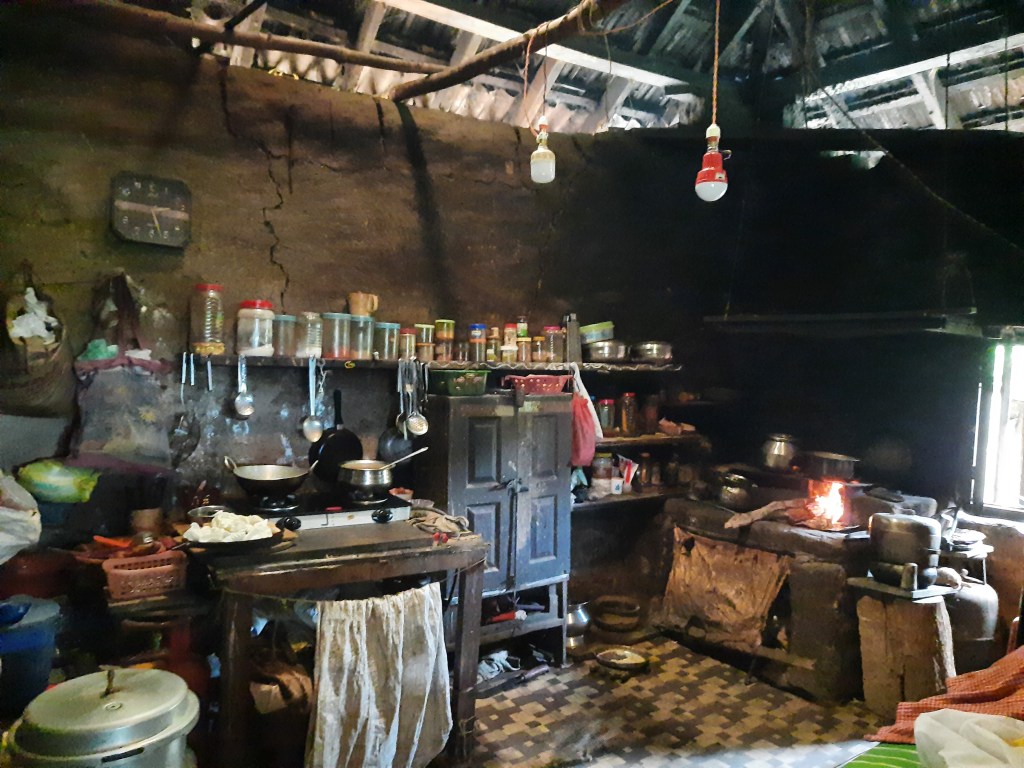
      Not until late 2010-ish, that this village house had an electricity connection. The lifestyle was rustic and charming, to say the least. Mud smeared walls, cow dung smeared frontal yard and prayer room, firewood cooked food, kerosene lit lanterns and a perfectly mountain facing portico: Why wouldn’t anyone want a vacation like this! For me, my visits to this village were wholesome experiences.

      The kitchen at the Kumbaldal house
      The kitchen at the Kumbaldal house

      Accessibility being scarce for reaching the commercial areas as and when required, the food and the entertainment at uncle’s house used to be the most traditionally rooted. Even to date, a visit to Kumbaldal is welcomed with a festive spread that largely comprises of the traditional Kodava recipes and prepared with the locally available ingredients as much as possible.

      When I think of Kumbaldal, it reminds me of staying rooted to my culture and grounded with a minimalistic lifestyle. if you liked this story, you might also want to give a read to: “The monsoon delicacies of Coorg” for some more nostalgia.

      To be continued as- “I Belong to Everywhere: Sadashivanagar

      A personal chronology of Deepawali celebration

      The list starts from 2015, a religious celebration of the festival of love and lights- Deepawali. Well, I’m not a religious person who would indulge in ritualistic prayers and pooja on any festival. But what started as travelling during this season to utilise my unused leaves combined with maintenance shutdown period at my workplace, has somehow religiously stuck on as a ritual of travelling to a new place, every year.

      Circa 2015- Tamil Nadu:
      My brother and I ventured out on our backpacking roadtrip to Tamil Nadu, Kumbakonam to Pondicherry. Well, this was an adventurous start I guess, we had to cut short our trip due to a cyclone that had battered the east coast. Result: Crazy floods and crazy drive through the flooded areas. On the main festival day, we had reached Chidambaram- a must read post about our experience. A bad one then, a memorable one now.

      A flooded village near the Indian east coast after a cyclone
      The flooded villages enroute to Chidambaram

      Circa 2016- Assam:
      This was my first solo trip ever and the first time in the north-eastern part of India. After exploring Meghalaya, I had tagged along with a couple of other fellow travellers. We happened to experience one of the most beautiful Deepawali sights. First, the drive through the lamp lit national highway, then watching the best sunset over river Brahmaputra onboard a ferry to Majuli and the crazy ass lamp lit welcome on the Majuli island.

      An image of the daily life in Majuli shot during sunset
      Sunset at Majuli

      Circa 2017- Karnataka:
      After a crazy long year of travelling across India, my friends and I decided to have a simple deepawali roadtrip, closer home in the western ghats. We drove to the famous Agumbe ghats and the places around.

      Circa 2018- Himachal Pradesh:
      One of THE best solo trips of my life, where I couldn’t find a single traveller to tag along through the entire trip. This thus, became a thorough personal and local experience in the Spiti valley. On the day of Deepawali, I was on my way back with a brief stopover at Shimla. A trip that made an impact on me, perhaps forever.

      the view of the Kinnaur Kailash mountains at Sangla
      Sunset view from Sangla bus stand

      Circa 2019- Kerala:
      A solo weekend exploring Varkala, it was a short one but yet overwhelming. It was a happy-hippy trip, in a true sense.

      Sunset from Varkala Cliff
      The sunset from Varkala cliff on Deepavali 2019

      Circa 2020- Karnataka:
      Fears of travelling afar due to Covid-19, personal commitments and taking advantage of working from home, this was the longest duration I spent in my hometown in the last 15 years. Quite unlikely to mention the highlights, but the Deepawali of 2020 indeed tops all the above from the list.

      Paddy and coffee plantation in Kodagu
      The view of the farm, from our ancestral home in Kodagu

      Circa 2021 – West Bengal: This was a trip that was planned on a whim by 2 of my friends and me, where my brother joined in at the last minute. It was a completely new kind of Deepawali celebration which we experienced during trip. Large pandals setup at every 100meters to celebrate Kali Pooja was something unknown to us about Siliguri in the state of West Bengal. That night, we reached ‘Manebhanjang’ a small town located at the entrance of the Sandakphu trek to the Singalila ridge, the highest point of West Bengal. It was yet another experience to witness an amalgamation of Gurkha, Buddhist, and Hindu culture in the way this town celebrates its festival of lights. Much like the carol singers during Christmas, people form into small teams and go from door to door singing, dancing, and spreading joy and blessings.

      Circa 2022- Saudi Arabia: It’s a first time for me to spend Deepawali out of my home country but still in accordance to my tradition of visiting a new place during the festival. This time, work brought me here. Although there wasn’t much we could do like in India, some shopping for sweets at Indian sweet meat shops was a little bit of home we brought for ourselves while staying away from homeland. But, I feel grateful for this opportunity and experience life has brought to me during this Deepawali that has helped me to grow into a little stronger person I was when left India.
      What are your stories about celebrating Deepawali / Diwali? What do you do normally?

      A festival to Raid the graveyard- Mayana Kollai

      Come the night of Mahashivaratri, there will be festivities across the country. People stay up all night and participate in bhajans, pooja offerings, chariot pulling etc. all to keep themselves awake for the night, so that their beloved Lord, Shiva gets good rest after taking care of them all year. But it is the day that follows the revered night, that is the essence to this story of mine. The day that follows Mahashivaratri is when Shakthi, the consort of Shiva and thus, the female power is celebrated across the Northern part of Tamil Nadu. The companionship of Mother Angalamman to Shiva, the graveyard dweller is celebrated with a festival called the ‘Mayana Kollai’. As a friend explains, Mayana Kollai translates to the ‘Raid of the graveyard’ in Tamil. I had planned to witness this festival at one such temple dedicated to Angalamman, closer home, at Kaveripattinam.
      The festivities had started as early as the sunrise at the Angalamman temple, with the Goddess being taken on a temple car/ chariot. She is supposed to travel along the streets of the town, to the graveyard by evening from where she returns to the temple by night. All other rituals that are part of this journey of her’s are what make this festival more interesting. It is a festival where the entire town / village participates with no barrier of caste or societal status. The chariot leaves the temple with the idol of Angalamman.

      20200222_1339022711065229733285812.jpg
      The diety- Angalamman being taken on a procession on the temple car / chariot

      She is greeted by devotees who throw a mixture of salt crystals and black pepper or beans all along her way. She is hailed as a symbol of fertility who is calm throughout the year and takes on her powerful form on this day, once in a year. The villagers get their body pierced with various things near the temple premises and walk across the village to the graveyard, where the piercings are removed. This body paining is what they believe, is a gratitude to the almighty for the wishes that have come true or as a part of a prayer that needs to be fulfilled. The size and things pierced can vary depending on individual’s prayers. While those with tridents pierced around their mouth are a very common sight, the more pious go further to get their torso pierced with hundreds of lemons. Yet, a few pull cars, buses, trucks or large stones with ropes that are hooked through their bare skin.

      20200222_1103493355118405534738936.jpg
      Stones being readied to be hooked to the body as a man with a trident pierced to his cheeks walks past

      If u peek into one of the many shops (I don’t know if that is the correct noun for such places) around the town, apart from those getting the body piercings, you will find another set of people. Men and children will be getting their faces painted and dressed up in sarees, a representation of Angalamman. With metal arms attached to the backs, elaborate costumes, jewelry and crown worn, Angalamman is impersonated by these people. They hold tridents and dance to the beats of drums across the streets. Several times on their way, they get possessed or get into a state of trance, until they all finally congregate at the graveyard. Animal sacrifice too is a common sight on the streets on this day.

      img_20200228_1030393231357977862522692.jpg
      Stalls where the body piercings and paintings will be done

      It is evening by the time the temple car and everyone else reaches the graveyard. That is when the most interesting part of the rituals takes place. The folk impersonating the goddess gather around a random grave and dig it up. The bones from the grave are pulled out and chewed by them. This is called the ‘bone chewing’ ritual or what gives the festival its name: Mayana Kollai or the ‘Raid of the graveyard’.

      20200228_104051-01534021689575161698.jpeg
      Men and kids dressed up like Angalamman

      There are several legends and references that explain the significance of this ritual, depending on the region. Here are some of the references I found on the internet.

      1. The significance of the costume (Click here to read further)
      2. The significance of the Bone chewing ritual (Click here to read further)

      Post this ritual, the goddess calms down and returns to the temple on the temple car. The festival culminates when the it reaches its home.

      While witnessing all this self-violence, I started to deeply think, why this is necessary to please the gods. Although I couldn’t find a convincing conclusion, what I realized is that this form of ritual is not unique to Hinduism alone. It has been largely practiced worldwide, across all major religions. Some of the closest references are:

      Whichever faith be it and whatever the belief, the intentions of every person involved is the same. To get closer to god. Aren’t all our beliefs connected?