‘Ontiangadi’ literally translates to The Only Shop’ in Kannada, and it is the name of a village in South Kodagu, where my paternal lineage hails from. Now, this village has grown beyond just one shop, into a tiny township.
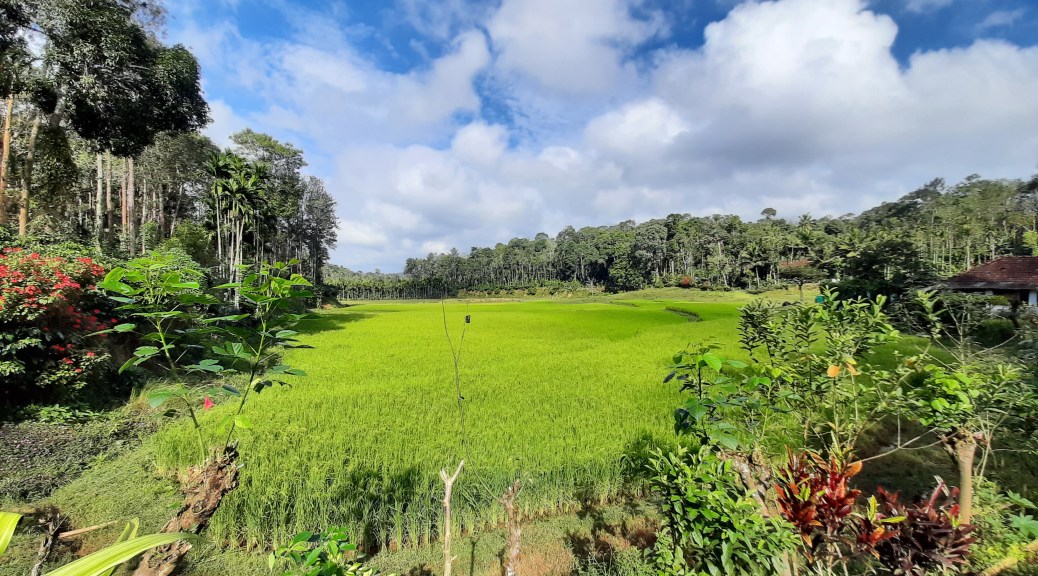
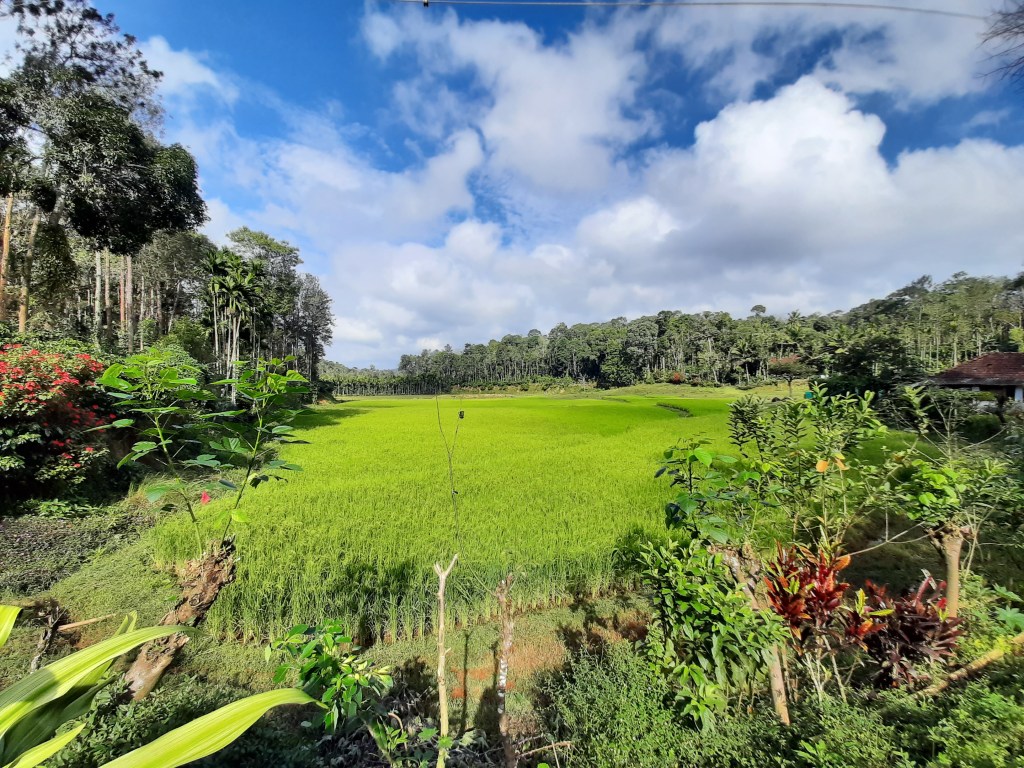
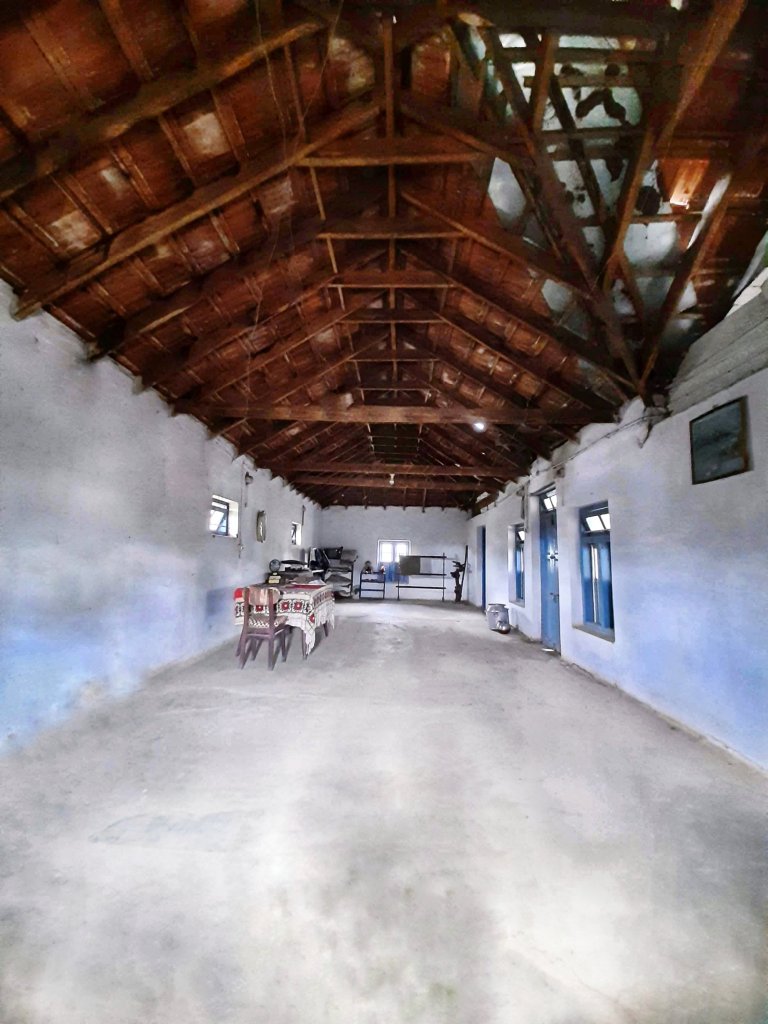
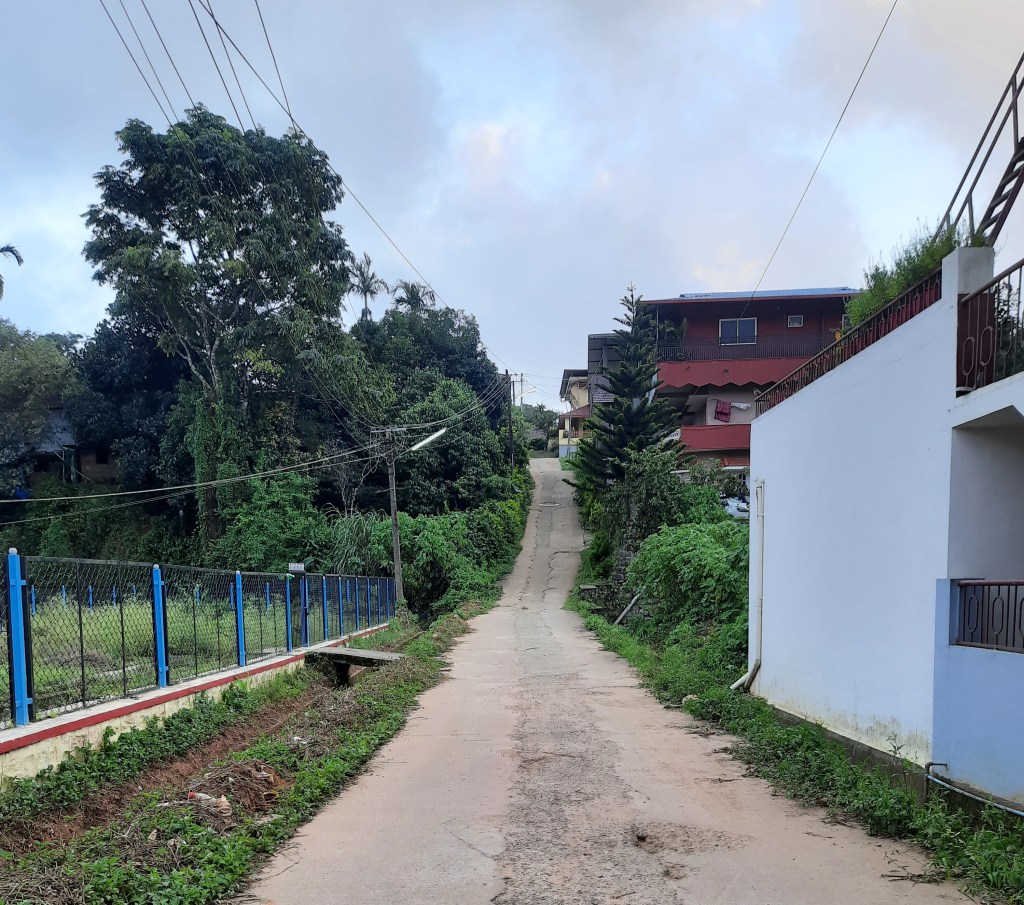
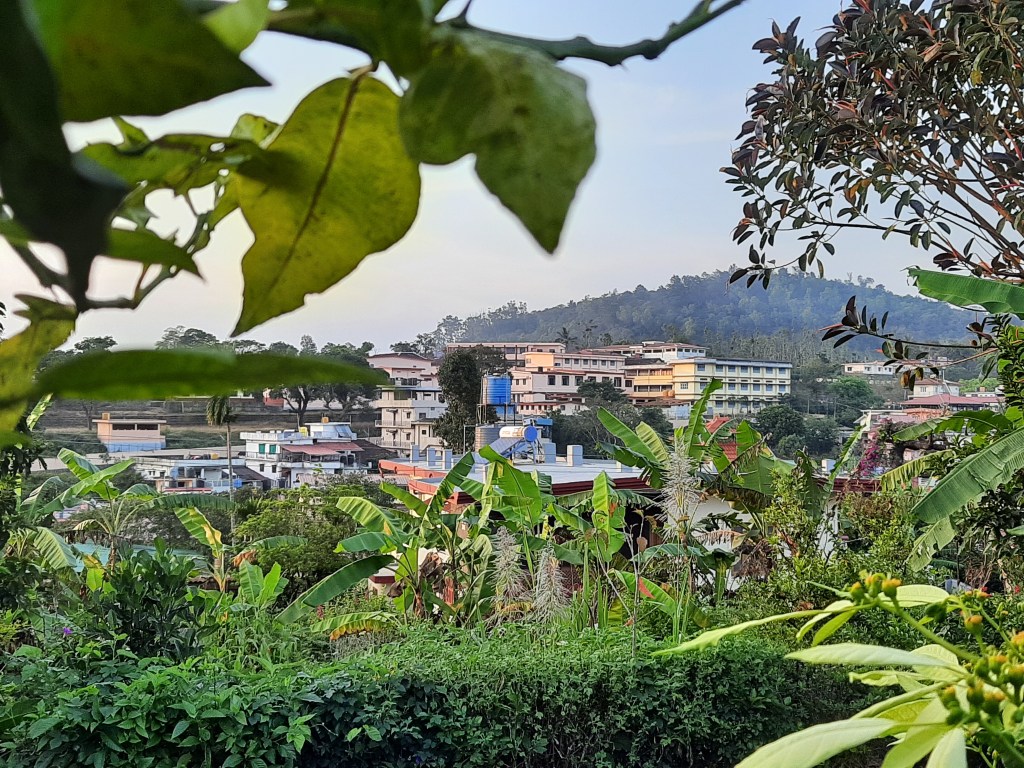
As a child, I would come here on those weekends, when my parents came down from Bangalore. But whenever I came here, there has always been a calm of a different kind. There are two ancestral houses located within the large premises: one nearly 200 years old which is now used as a warehouse and the other, around 50+ years old that is currently being resided at by our family. The latter is surrounded with coffee plants, paddy fields, overflowing ponds and streams, an open well at a walkable distance to fetch potable water. This place has always seemed magical to me, then and now!
View of the farm from our ancestral home in Kodagu
While the green paddy fields have been a treat to the eyes, the offseason is when I have lived some of my best holidays. The paddy field would turn into a playground when my cousins, other kids from the village and their cousins, would all congregate here for a game or two of football. Not with a foot-BALL, but with hollow balls of pomelo skin (grapefruit).
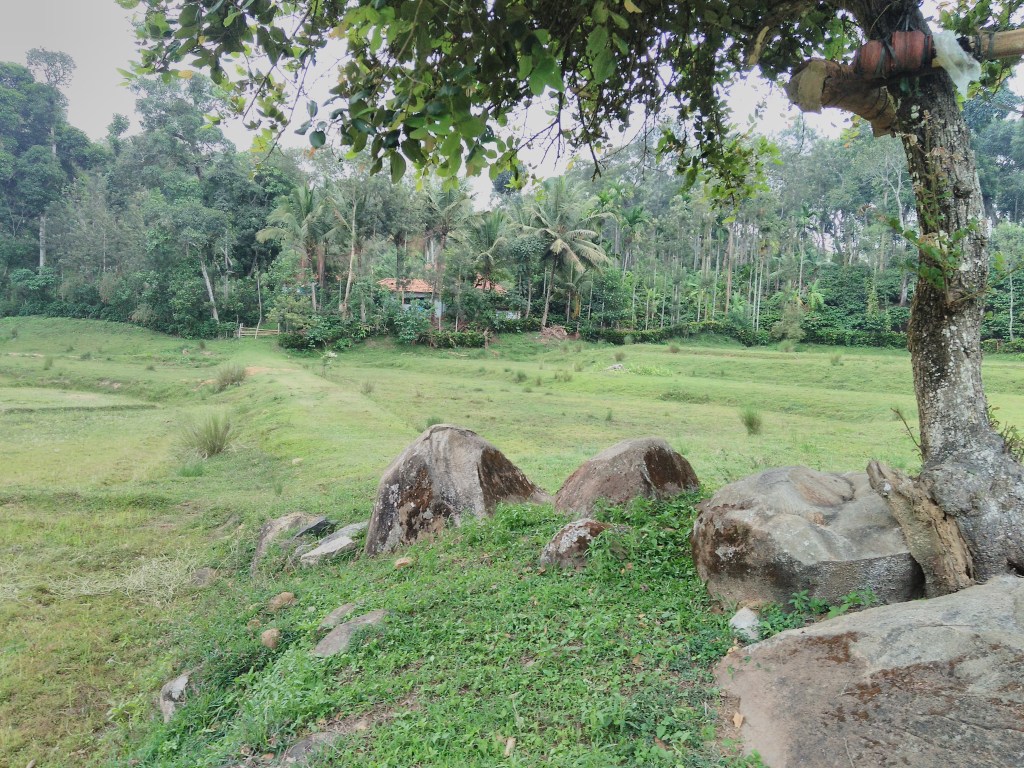
And then, came the first monsoons: we ran to the large wild-mango tree and fought a mango war. Who won or lost the battle would be decided by how much mango juice we were soaked in and who got the maximum scolding from our elders!
The farm and the mango tree, on the drier days in Ontiangadi
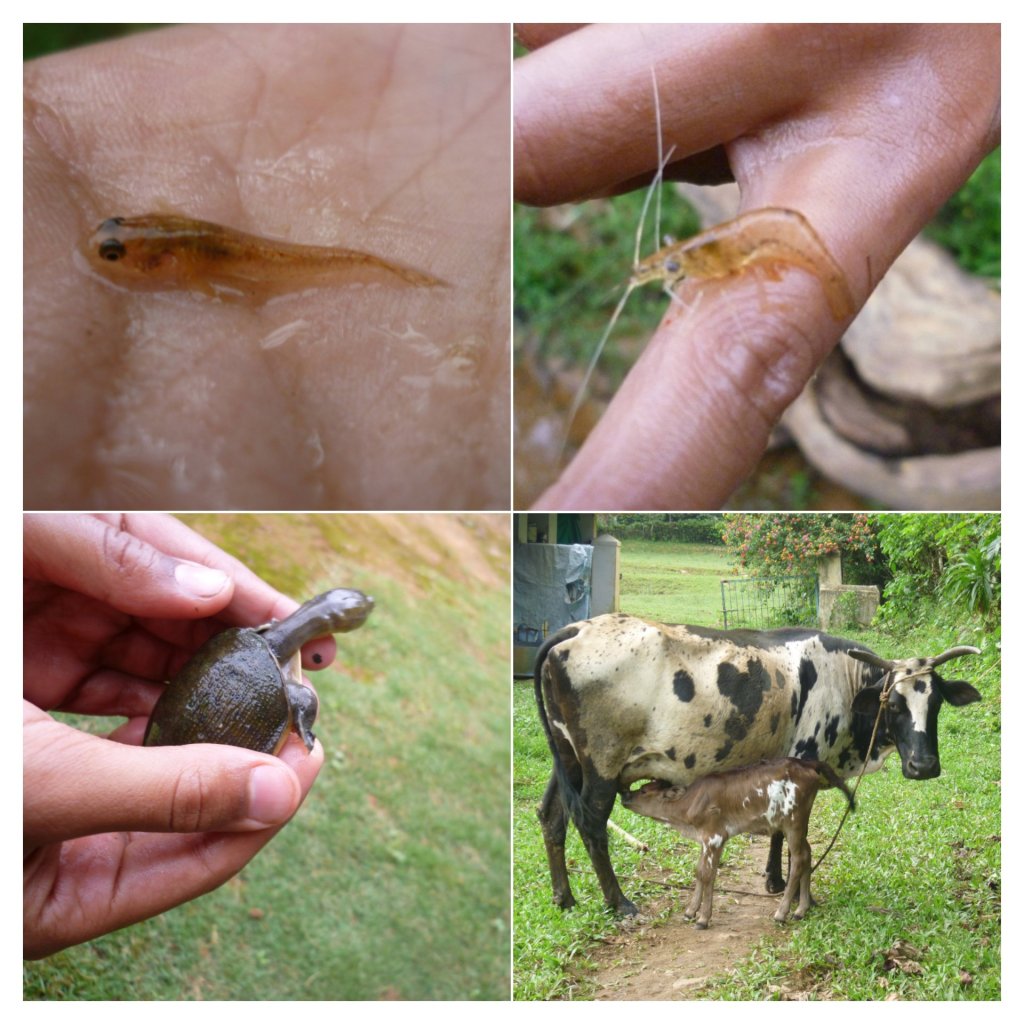
Wait for a few more days to pass by and the monsoon will peak. Then, the streams would overflow and bring that time of the year for our prized catches: Laying bamboo traps to collect fresh water eels and Koile meen (a local fish in Kodagu), fishing out mud-crabs from crevices along the downstream were normal. On (un)Lucky days, one or two smushy crabs would turn out to be snakes after being grabbed out 😀
Once, the workers had brought home several soft shelled turtles which they had found while working in the paddy field. It was timed well with my then recent experience of volunteering for a sea turtle conservation project in Chennai. With all excitement and inspiration, I had written to so many organizations about my new discovery in the western Ghats 😀 Aaah, what memories!
Clockwise from top left: 1. Koile meen, 2. Freshwater shrimp, 3. Cattle, 4. A soft shelled turtle
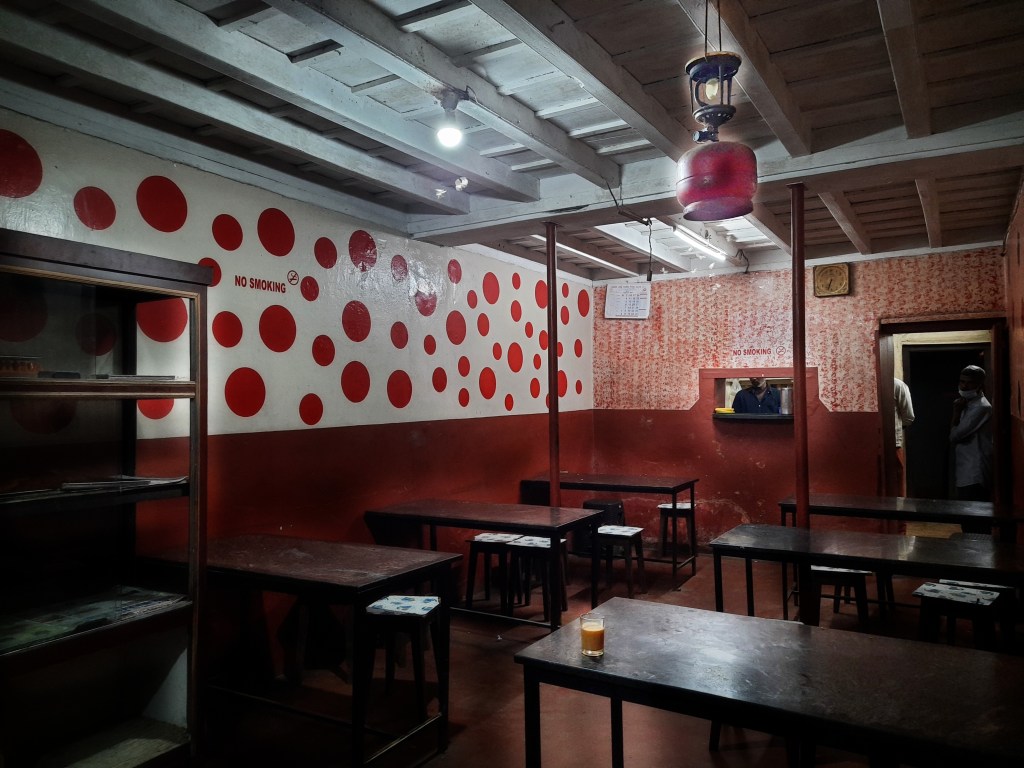
Apart from this, the ‘Subramanya temple’ at Byrambada and the ‘Palli Swamy Dargah’ (Pulkimaad dargah) have been important landmarks in and closer to Ontiangadi. A nice warm day even now, is often concluded with a hot plate of palam pori and a cup of kattan chai from ‘Ganesh hotel’ at Ontiangadi.
‘Ganesh hotel’ at Ontiangadi, Kodagu
I borrow my surname from this village and so, definitely a part of me belongs here 😀
Vasanthanagar is an old locality in North Bengaluru, adjoining some of the prominent English areas like the Cantonment, Miller’s road, Cunningham road, Palace road etc. I had been visiting and staying in this locality for all the years that my aunt’s family lived here. Right from the time I was an infant to the time I started to go to college, I have been a regular around this locality. Or to say, this has been my second home whenever I have been in Bangalore. (First home in Bangalore is of course where my parents lived, I will talk about it in another post 😀 )
When you live in an area, your boundary extends beyond. Hence, high grounds, racecourse, golf course, Windsor Manor, Indian Express building, Basava Bhavan, Vidhana Soudha were all just a walk away. If you let my aunt or mom take over this page, then probably they would tell you that even Shivajinagar or Commercial street were also walkable from Vasanthanagar (at least considered so, back in the 80’s and 90’s). So, let me take you through some of the landmarks in Vasanthanagar that bring back nostalgia.
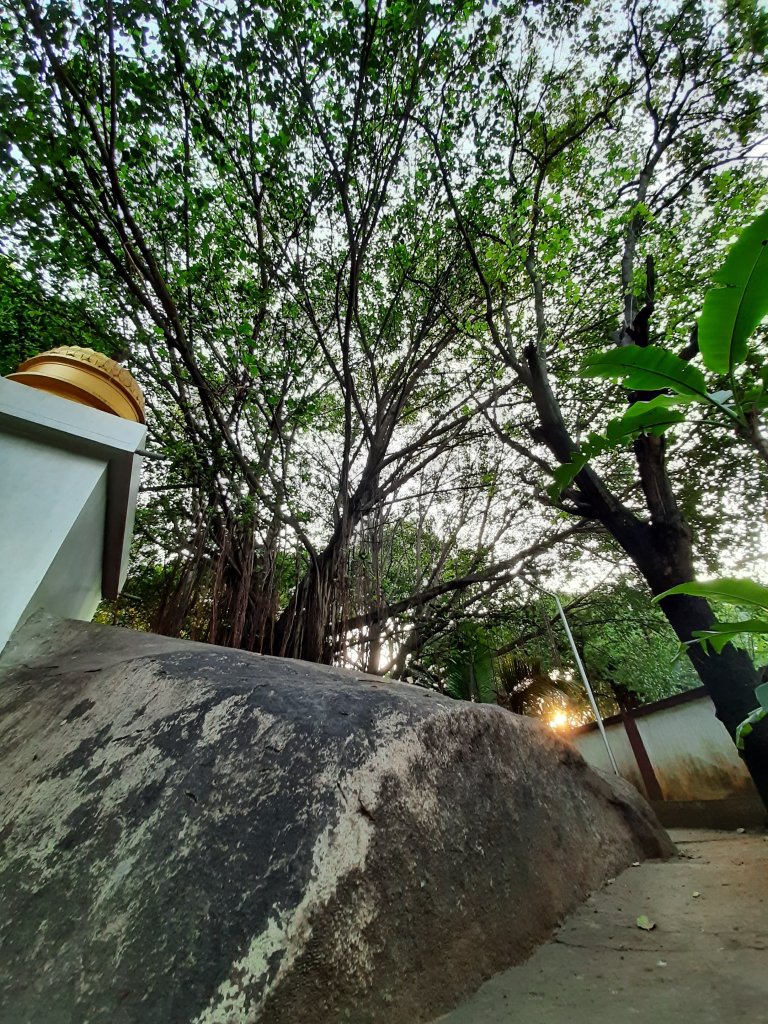
The Sampangi Ramaswamy temple: My aunt’s house was located right opposite to this temple and it was every day, that I woke up to the melody of M.S. Subbalakshmi’s suprabhatam played at this temple. But what best remains with me are the days that my cousin and I were made to believe that a small depression on the boulder in the temple premises were footprints of Lord Rama. So as kids, we would go there every day (whenever I was there) and offer our prayers with vermillion to this rock (and NOT to the temple!)
The premises of Sri Sampangi Ramaswamy temple in Vasanthanagar
Loafers’ lane: Palace road is where a majority of my female cousins have attended school. This is also where I got my pre-university education before graduation. Being an all-women’s college, needless to say that the road running perpendicular to the college gate has always been a haunt of all the men of Bengaluru. Apart from the ‘Dove nuts’ from Chechi’s canteen on campus, the chaats from Raj’s on loafer’s lane has always been synonymous with the crowd.
Kodava Samaja: Then, there is this convention hall where almost all community gatherings like festival celebrations, weddings etc., happen. Even if my aunt’s family and I moved out of the area, Vasanthanagar wouldn’t leave us 😀
The Mount Carmel College junction of Palace road and Loafers’ lane
Adding to the list, the delicious sizzlers of ‘Miller’s 46’, Mughlai Biriyani from ‘hotel Chandrika’, honey cake from lyengar’s bakery and home-needs supermarket were our family’s go-to places for quick bites. Catching a local gig at ‘Alliance Francaise’, a movie or a Mc.D burger at ‘Sigma mall’, Infinitea and several other cafes and restaurants that sprung up and shut down along the way were other newer additions (during the early 2000s).
Talking about the role of this area on my personality: This place has influenced me in more than one way.
If you have ever conversed with me and have spotted a certain peculiar vocabulary sneaking out during a formal discussion, I owe that part of me to Vasanthanagar. That “English” has brushed onto me from my almamater here! For all you should know is that I studied in a gender-neutral women’s college, where we addressed peers as ‘hey, Man!’, ‘hey, Bro!’, ‘hey, dude!’.
This is also where I was introduced to ‘fusion rock’ music. The college fest hosted by my almamater is one of the most popular stages in the country for aspiring college bands who seek a launchpad and get recognition. This small-town girl had grown up listening to the voices of Lata Mangeshkar, Mukesh, Rafi, Kishore da, Yesudas, P.B.Srinivas and the likes, until she moved into the city. ‘Fusion’ was a new form of music she was listening to for the first time, here. She had an instant connection.
Although tending to animals is in the genes and the blood of this girl who belongs to forests of the western Ghats, I owe my understanding and awareness for conservations of wildlife and nature to Vasanthanagar. My bond with a classmate whose dad worked in the forest department was so deeply rooted about the holistic topic of environmental conservation, that we would spend several sleepless nights discussing about births, deaths and general health of individual animals from the zoos that we both had seen together, met and knew by names (Click here for a detailed read)
This HAS to be the beginning 😀 Madikeri (earlier called as Mercara) is the district headquarters of Kodagu (earlier called as Coorg). In this post, I talk about Karavalebadaga village in Madikeri Taluk, where my house and my school were both located in proximity. Although the village retains its name in the government documents, the newer names of these fragmented localities have now taken over people’s memories.
This is where I was born and have spent most of my life, so far! I was raised by my maternal grandparents who lived in Madikeri. A large compound with a shed full of cows, a kennel full of dogs, a sty full of pigs, a lair full of cats and an attic full of sparrows in their nests; a house surrounded by a colourful garden, fruiting trees and coffee estate; A short walk down, took us to a paddy field in which flowed a pretty little stream. This is where I grew up, in the heart of Madikeri town.
The attic at my maternal grandparents’ house
Throwback to 90’s: As young kids, my cousin and I often sneaked out of the house on weekends for our usual stints. We would steal empty jars of Horlicks and cotton towels from granny’s stash and head towards the stream. We would catch fishes from the stream, get them to fill the tank that had purple lilies in our house’s front yard. We then hid the jar and the towel back near the stream for the next weekend. Come next weekend, the jar would have gone missing and the drill repeated!
Forward to present day: The sheds are empty, the dog is lonely, the sty is erased, the trees are gone and the stream has become part of a concreted sewage.
Watching the rains batter and the lily tank in the frontyard
Throwback to 90’s: My friends and I walked to school, braving the heavy monsoon downpour. Our heavy armours comprising of thick raincoats, high ankle gumboots and wide black umbrellas weren’t enough to keep us dry. Along with this, we made sure we did not return home empty handed in the evening. We filled our lunch boxes with wild mushrooms or mud-crabs that we would pick up from the paddy field for a sumptuous monsoon dinner.
Forward to present day: There exists no trace of a paddy field that has now been transformed to a full fledged housing layout, the present day ‘Cauvery layout’.
The road connecting Ranipet and Cauvery layout in Madikeri is now laid over a sewage stream
Throwback to 90’s: My SCHOOL, the oldest educational institution in the hills is a landmark in itself. Named after it, an entire locality is simply referred to as ‘Convent junction’ that is accessible via a narrow lane (locally called as Oni). This was our alternate route on monsoon days when the paddy fields were flooded. The joy of relishing the masala vadas from ‘Kunyali’s canteen’ or a bite into a pastry from ‘hotel Coorg International’ (probably the only star hotel from our times) gave us a high of a different level.
Forward to present day: The oni is partially gone, but the of joy of taking a ride around the Convent junction and visiting school can never be replaced!
A tour of Convent Junction
They say home is where schooling starts, and then the formal schooling: My personality is probably a reflection of Karavalebadaga because this is where it all started!
So, that’s all folks! Next week, I will share a post about another place where I belong to. I hope you all will enjoy and share your thoughts with me.
But before that, I hope you all have read my earlier throwback post about Madikeri as well. If you haven’t, here’s the link: ‘My growing up days at Madikeri’.
The original plan for this short family outing was to make an early morning visit to Sanjeevaraya Swamy temple in Channapatna Taluk of Ramanagara district and return. But, since my workplace is located along the same route, I expressed my disinterest in traveling that way. I pitched in the idea to have a change of route at least for one-way. Hence, I added a couple of other landmarks, picked up an offbeat village road and created a circuit with aid from google maps.
For those of you who are not familiar with the geography of Karnataka, Ramanagara is popularly known for its Sholay hills that was featured as the village- ‘Ramgarh’ in the Bollywood movie Sholay. Channapatna is popular for its cottage industries of wooden toys. I am not going to write about any of these places, the search engines are already flooded enough! I am going to take you around some lesser known places in Channapatna, for a half a day’s trip from Bengaluru.
We set out on a Saturday morning and decided to have our breakfast on the way. Sri.Renukamba tatte idly (translates to ‘Plate idli’ in Kannada) needs no introduction for the Bengalureans. So, after a filling plate of tatte idly at Bidadi, we proceeded towards our intended destination for the day. To reach there, we had to pass through Kengal, a village popular for yet another Hanuman temple. Moving ahead from there along a small deviation, we arrived at our first major destination: Sanjeevaraya Swamy temple at Devarahosahalli village. This is a small stone structure dedicated to Lord Hanuman and dates back to the Vijayanagar era. The deity is believed to be powerful and hence, we were there to offer or prayers following the recommendations of some well-wishers.
After spending some time there, we continued onward to our next destination, a little cave temple located atop of a hill. The drive, the scenery, the canopy of the majestic trees along the highway was a pleasant one. We stopped by to do some bird watching at the Neelasandra lake as well. We could see Pelicans flocking in large numbers.
Our next major stop came as a rather surprise to us. Gavi Ranganatha Swamy temple was a random destination included in our day based on an internet search result. The drive, the location of the temple, the valley, the village view from the temple porch and the overall scenery was just so stunning and unexpected. There was just no one else in the temple apart from our family and a few local kids playing in the hill, atop which this temple is located. You can watch the video of our visit to Gavi Ranganatha Swamy temple below:
Drive to Gavirangana betta
By this time, the sun was already up and beaming bright. So, we decided to drive back, of course through a different route. We descended the Gavi Ranganatha Swamy hill and took the route that connected to Kanakapura. On the way, we stopped at this beautiful location where the highway passes through green farms on one side, a large lake on the other side and the entire scenery was being overlooked by the temple hill.
Vittalenahalli highway and lake
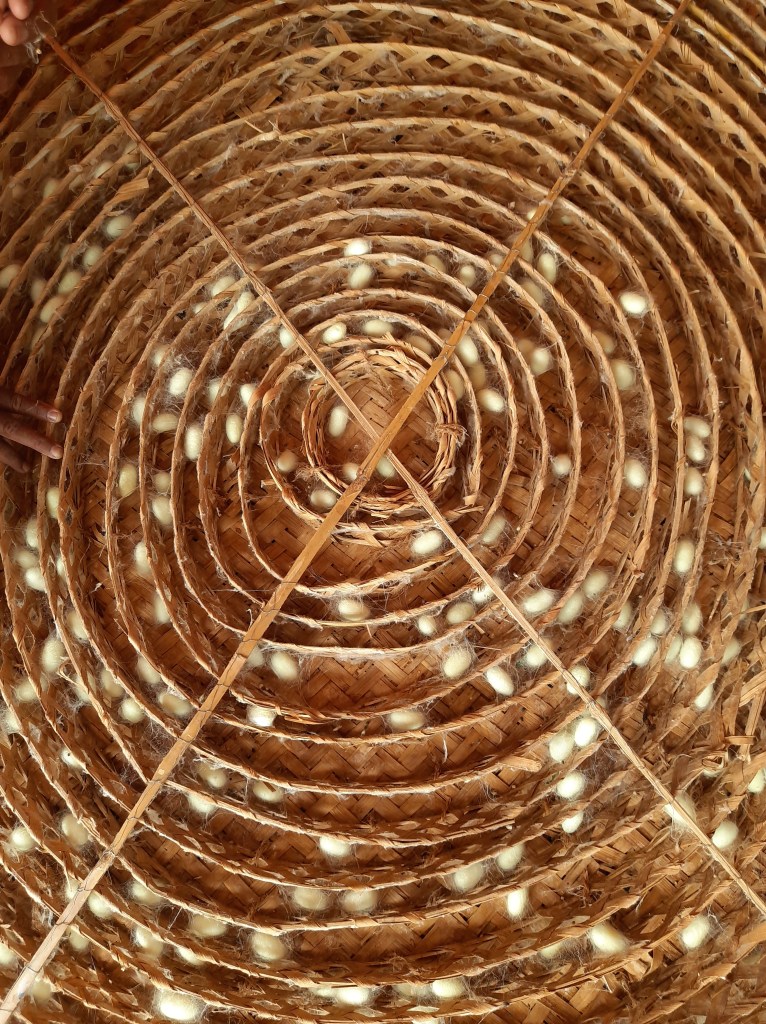
Our drive from there continued through large stretches of rocky hillocks, mango orchards, paddy fields, coconut groves and mulberry farms. Ramanagara is also known for sericulture. Several households in the villages here are involved in silkworm rearing. As we passed through, we noticed that families were sitting out in the verandahs of their traditional houses and collecting the fully grown cocoons from the bamboo trays. We stopped by and walked over to one of the houses on our way and learnt a thing or two about sericulture from them.
Silk Cocoon trays
In a short while, we reached the Kanakapura main road where we had our lunch. Well, it was a late evening lunch before continuing towards home and thus ending a quick trip to the Bengaluru outskirts.
If you are someone who has been following my blogs for some time now, you would know that most of our family trips are on weekends and to random destinations located around the Bangalore outskirts. We leave home with random reasons to drive out and then pick up equally random roads and follow-it till the road reaches a dead-end. We have thus far explored several villages like this. This weekend too was a similar one. And the reason to drive out, you may be curious to know, right?
My dad had long heard of a pig farm located somewhere around Kanakapura road. We had first stopped for lunch at a hotel on Kanakapura road. There, my dad enquired with the hotelier if they knew of any pig-farm around. They informed us that the kitchen waste from their hotel too was collected by someone who runs a pig farm but was unsure of its location. He gave us the possible location of the place with rough directions. After lunch, we headed out in that direction, a deviation before Kaggalipura.
Our drive to Gulakamale lake
With just the deviation, there was a sudden and a contrasting change in the scenery to drive through as compared to the super congested Kanakapura highway. For a moment I felt as if I were driving through some remote lanes of Coastal Karnataka or the Malnad region. There were stretches of areca and banana plantations on either side creating abundant greenery and change in the ambience. Since there were barely any people on the road, we continued to drive till we found some village ahead. By this time, we had covered a good distance and passed through several types of fruit and vegetable farms.
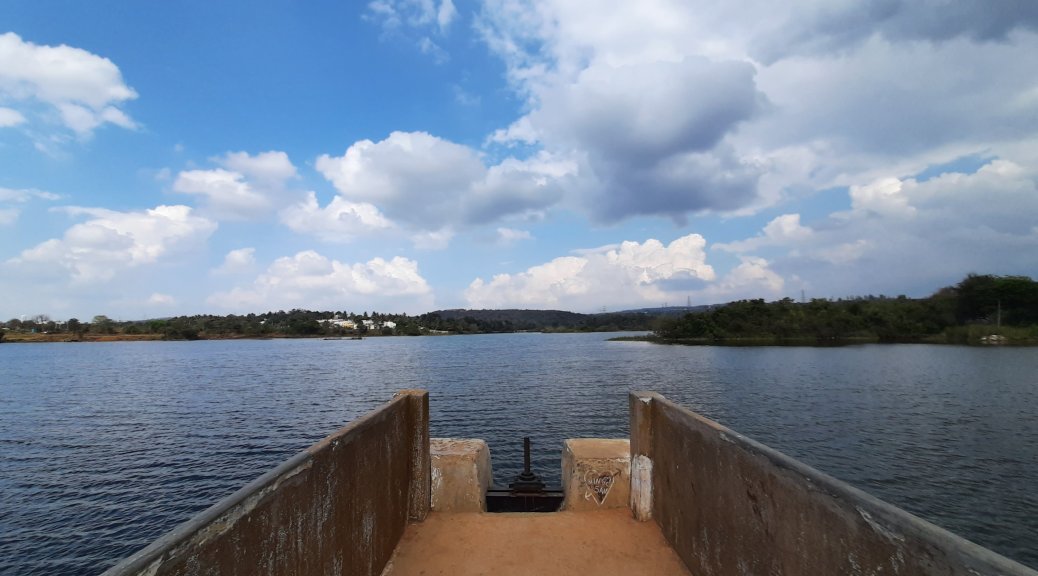
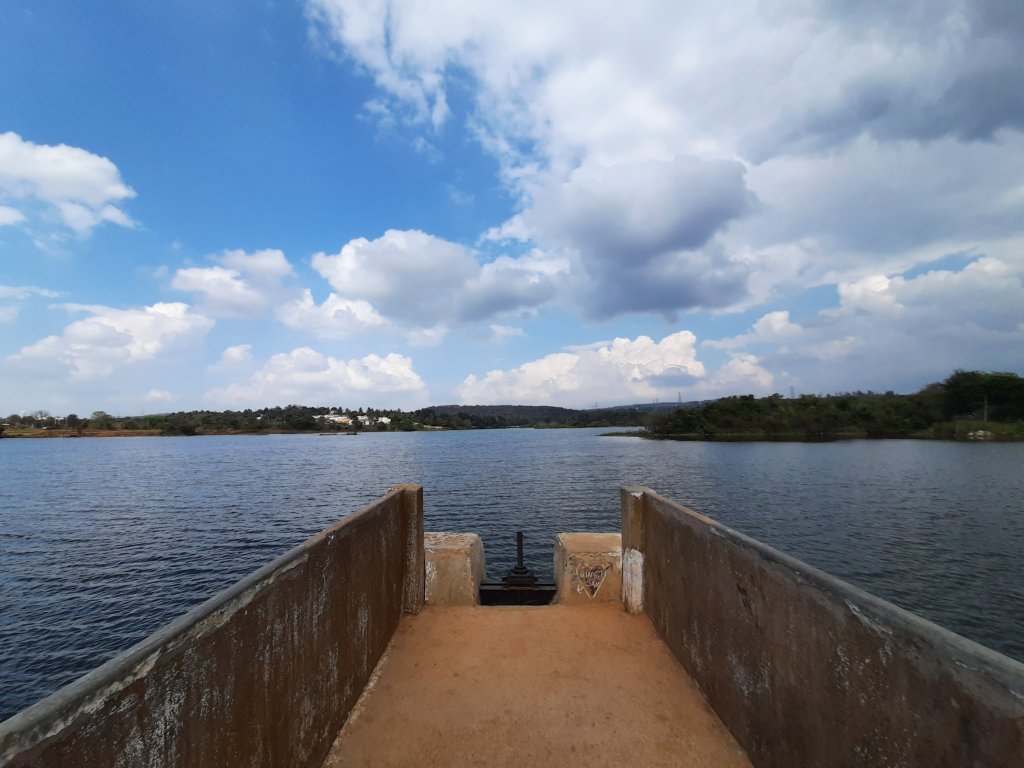
After reaching the village, we stopped by to enquire a villager on the roadside about the farm, he guided us to a pig-farm located next to his farm. But after reaching there, we realized that it was a different one that my dad had heard of and we had no entry into the place where we had now reached. So, we continued our drive further and reached a junction where we had to pick a direction to turn, the left or the right. Instead, we chose to stop the car in a side and walk up a large wall in front of us that looked like a high-rise wall of a reservoir or something. Indeed, it was a lake up there and surrounded by farms and distant hills of Bannerghatta on the other side. A flock of migratory birds too seemed to be resting in a small islet in the middle of the lake. I checked the location on google maps and I learnt that the place was called as ‘Gulakamale lake’.
Gulakamale lake
The water looked so good and we sat there for some time, enjoying the cool breeze even on a hot and humid afternoon. It was just my family in the entire place until we noticed some local kids who arrived there. They removed their clothes and jumped into the lake one after the other, enjoying their fair share of fun time. They took all of us back to our childhood days and it was a pleasure to watch them enjoy it that way.
After a while, we decided to move further on the road. This time, we chose to take the road to our left and continued at it. We passed through millet farms, taking a round about of the same lake, papaya farms and other vegetable farms before arriving at a village called ‘Nallakkanadoddi’. It was a small settlement with nothing noteworthy to see or do. Hence, we went ahead as we saw that the road was newly laid and in good condition.
The road reached a dead-end and that was the parking lot of ‘Tottikallu falls’ commonly known as TK falls among the urban crowd of Bangalore. This was the second time for me that I had reached the entrance of TK falls, both times an unplanned drive had taken me there. Again, I decided not to go there on both occassions given the large crowd that had come down over the weekend. More so, given the Covid-19 situation and the crazy crowd this time, we didn’t even dare to step out of our car. So, TK falls has to wait until next time. From here, we decided to head back home and not stop anywhere on the way. Thanks to the weekend rush on Kanakapura road, we would need good number of hours to make our way back through the traffic.
It has been nearly 3 months of staying at home due to the nationwide lockdown and the fear of the pandemic. With India’s unlock 1.0 in place, our family of four decided to take a short drive outside to breathe some new air. We planned to head to ‘Mango Mandi’ at a village called Somanahalli, off Kanakapura road for this weekend. As we reached there, we learnt from the locals that the government run fruit trading market has been shifted elsewhere for social distancing purposes. However, buying mangoes was just a reason for us to go out and the idea was to go “somewhere” outside home.
This reminds me of some old travel tales of my family. On weekends, my parents used to take us to Majestic bus stand from where we would board a random bus to a destination, that we had unheard of. Back then, BMTC buses plied with boards called red-board and black-board. Red-board for villages outside the city limits and Black-board for those very much within the city. We would sit in just any Red-board bus and buy a ticket to “the last stop”. Most people (Villagers travelling to and from the city) on these routes used to be familiar with the drivers and conductors. Hence, on issuing the ticket to the last stop to us, the conductor would enquire “Whose house we were visiting or where we wanted to go in the last stop”. We used to then get into a conversation with them and get details about the village we would reach at the end of our journey. We would then walk around these villages, appreciating the lung space, learning about new crops, new traditions in the countryside etc. We had thus explored “Remote” villages like Kumbalagodu (coffee plantations), Begur (the oldest Kannada inscription), Hesaraghatta (horticulture & animal husbandry farms), Gollahalli (so many varieties of Gollahallis in different directions of Bengaluru), Harohalli (so many varieties of Harohallis in different directions of Bengaluru), Haniyur (Madure Shani mahatma temple), Devanahalli (Tippu’s fort) etc. Come today, Bengaluru has grown to ‘Bruhat Bengaluru’. People would laugh at you if you called some of these places remote. Why that… even the house where we live now had once been our destination on one such Red-board bus journeys!
The road between Mukkodlu to Gullahatti kavalu
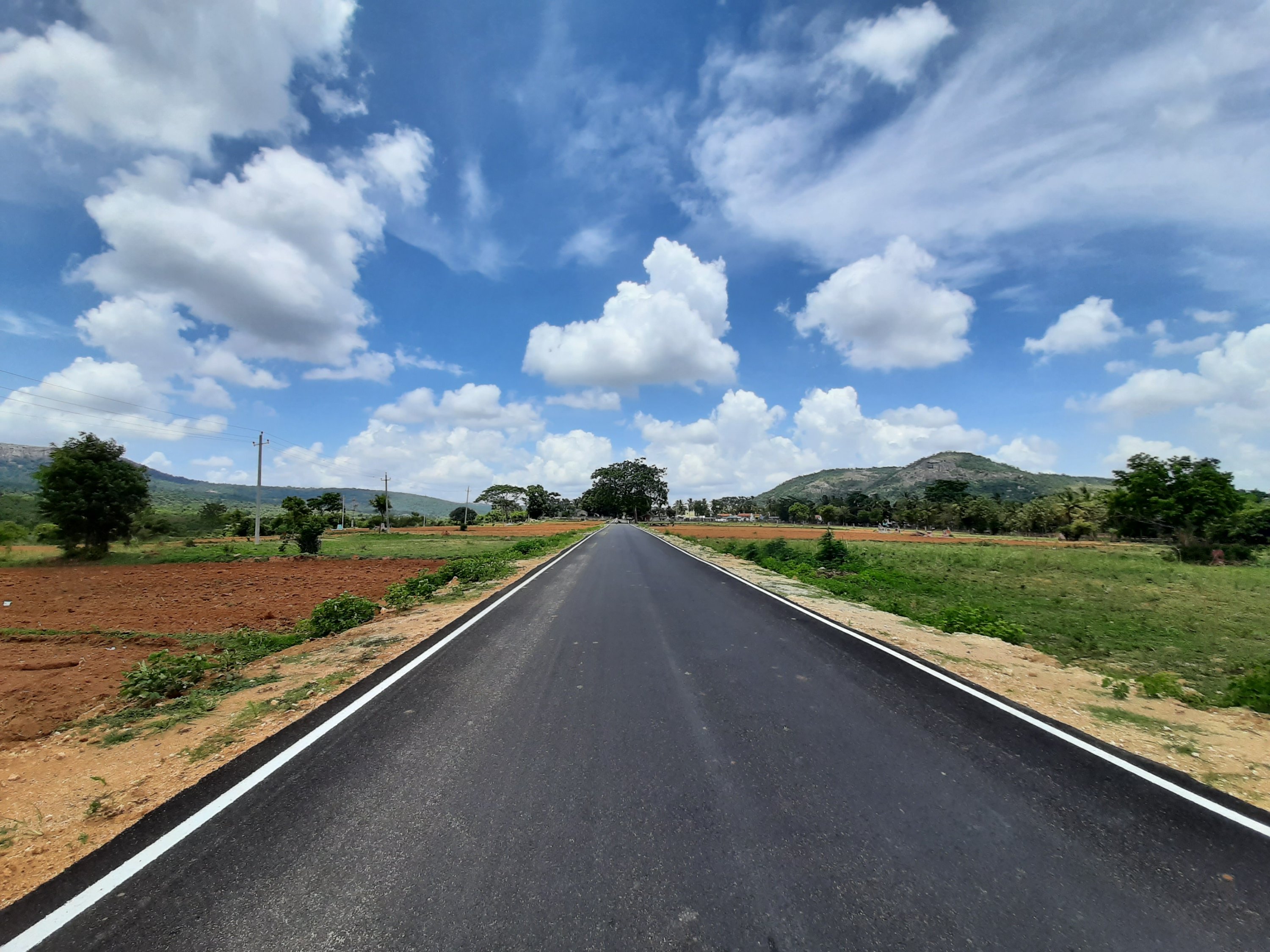
Back to this weekend of Unlock 1.0, we decided to continue on the road that we were driving until we reached the dead end. And that’s how we reached a village called ‘Mukkodlu’. The name of the village came as a surprise as there exists another village of the same name, back in my native district. The red soil of the farmland was being ploughed all along our route and readied for sowing Ragi millet during the monsoon. The clouds looked amazing with newly laid asphalt road. The green hills complimented the scene well, with ‘Munikallu betta’ to the right and ‘Ragi halli betta’ on the distant left. A little further from there exists the Muninagara reservoir. We thought we would stop by this place on our return.
The reservoir and beyond comes under the supervision of the forest department, a sub-division of the Bannerghatta National park. We proceeded further to know where the milestone indicated ‘1km’ – Gullahatti Kavalu. That also happened to be a ‘Dead end’ on Google maps, from where we would return. Also, the idea of our drive was to not meet any villagers or eat at any petty shops which we normally did on such trips. When we reached our destination, the end of the village was marked by a peepal tree and a government school. The ‘Arali katte’ are arenas buzzing with life and a hub of activities on a usual day in the Indian villages. This one here, was staring at us with all villagers confining themselves to their homes for social distancing. We sat there for some time, soaking in the fresh air on the fringes of Bannerghatta National park before returning.
The dead end point at Gullahatti kavalu
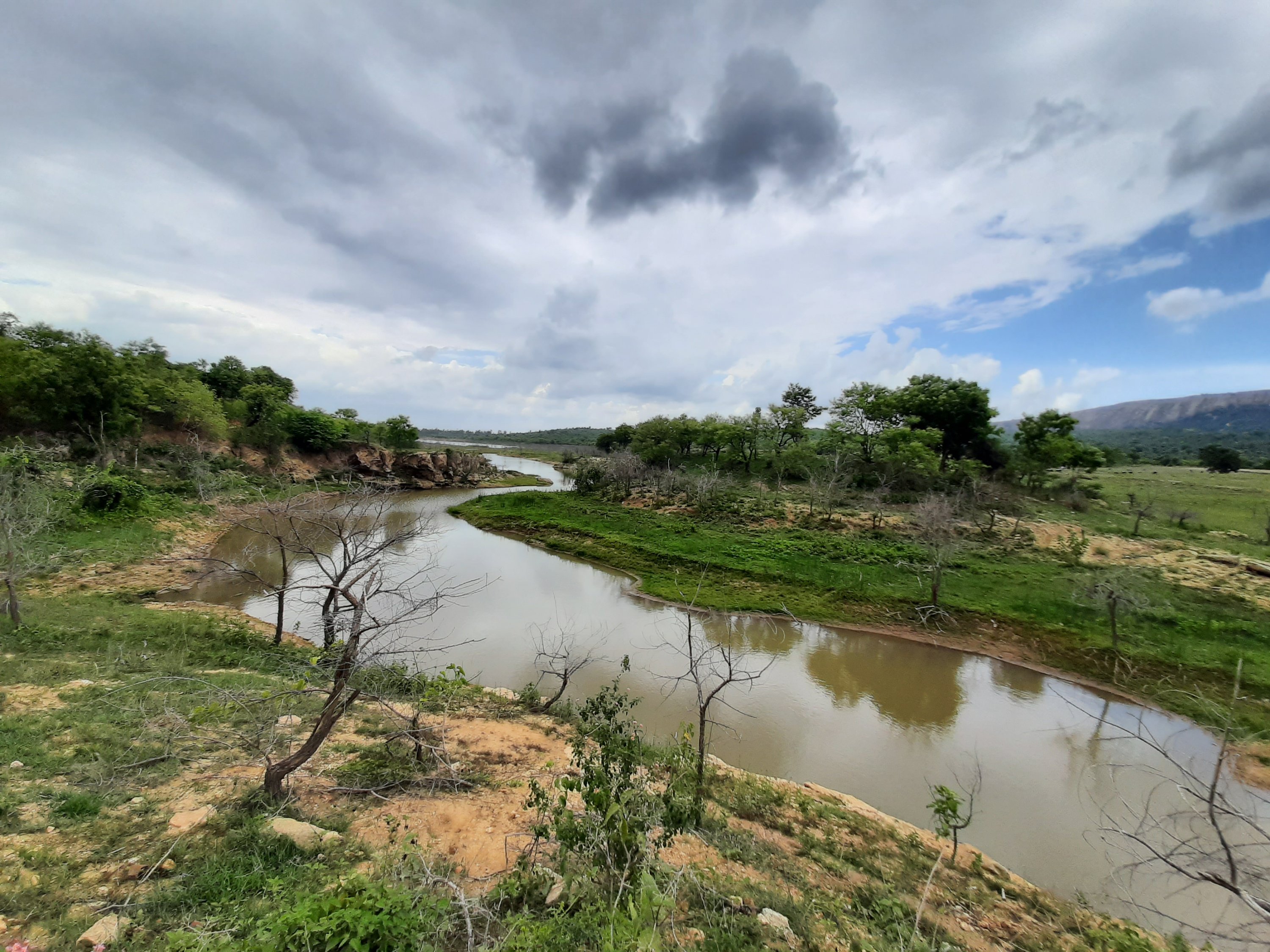
On our way back, we decided to stop at the sight of the reservoir. My itchy feet wanted to hike a bit and I dragged my folks along with me for a few meters away from the road. It was indeed a good decision. Considering we were in the fag end of summer, the reservoir still held a good amount of water. A localite who had come there to graze his cattle told us that wild animals like elephants, leopards, deer, peacocks, wild boars, porcupines etc. are spotted here in the mornings and on most other occasions. At the first sight, it seemed to me like the Kabini backwaters. Kabini is like a summer resort for all wild animals. When all water bodies within the forest run dry, this spot holds enough water and all animals come here to chill in the summers. The fact and the view of Muninagara reservoir too gave me a similar feeling. We sat there for some time until the rain gods showered blessings on us.
The Muninagara reservoir with Ragihalli hill in the backdrop
Thus, a day in India unlock 1.0 was well spent.
Note: For the adventurous ones, there exists a trekking trail called ‘Muni nagara trails’ on google maps starting from the reservoir to the Ragihalli betta. But ensure that you have all permits in place before venturing on a trek here. As afore mentioned, this area belongs to the Karnataka forest department.
The unfortunate lockdown that the pandemic has brought has sure got the netizens busy. I’m not a TV person but sitting in a spot for video conferences all day (for work) gets me worked up sometimes. My terrace is too hot to go out in this hot summer month. This has given me some time to indulge in watching some series online. Not to fall into the fancy of the latest trending series on OTT platforms, I preferred to catch up on some old classics that were a hit on Doordarshan, back in the days of my childhood. That’s why I chose to start with Malgudi days.
While some claim that Agumbe was the ‘Malgudi town’ and there exists a ‘Malgudi house’, nobody really knows where the entire ‘Malgudi days’ serial was shot. However, since most of the episodes were predominantly shot in and around Shimoga, the present-day railway station at Arasalu (near Shimoga) is named as the ‘Malgudi station’ in honour of the famous serial. One of the trains too is named as the ‘Malgudi Express’ by the Southern railways. The popular serial telecast in the late 1980s comprised of 39 episodes shot and directed by Late.Shankarnag. Banking in on its popularity, the other 15 episodes were later directed by Kavita Lankesh in 2016. From what established a cult in Indian cinema, I am keen on taking a trip down the streets of Shankar Nag’s Malgudi because that is what I grew up watching.
Based entirely out of Karnataka, the rural setting, the culture and top-of-the-notch actors were totally relatable for me as I watched it. As I continued to watch the episodes, what started to intrigue me were the familiarity with several places featured in the episodes. I also started to take note that all were not in Shimoga. ‘Armchair travelling’ is a fancy outcome of being locked down by the pandemic and that got me to travel through my home-state Karnataka and map some of the heritage structures that have been featured in the classic ‘Malgudi days’. So, here are my relative screenshots from the serial and photos of the landmarks, as they stand today. You too can contribute your findings and let us unravel the mysterious locations of the old-timer 😊
1. Episode name: Oldman of the temple- Mandir ka budda
The episode opens with the author R.K.Narayanan himself telling that Malgudi is a fictitious town. It being located in Southern India is only half truth. The truth is, it is applicable to anyone anywhere across the world. Here, starts my quest to map the locations of Malgudi, spread across the state of Karnataka.
a. Ofcourse, Sheshadri and his friends are seen sitting on a platform of a tree that is present even today, at the town centre of Agumbe.
b. The old dilapidated temple that the Old man- Krishna Bhattar’s spirit lived in the episode is the ‘Thimmarayaswamy temple at Bettadadasanapura’ on the outskirts of Bangalore.
2. Episode (serial) name: Swami and his friends.
a. This is an 8-episode long story and is one of the most iconic part of the series. The ‘Doddamane’ in Agumbe perhaps is what was Swami’s house. We still need to look at several other structures that have been featured in the serial.
b. Although I am unable to locate the structure that housed ‘Albert Mission School’ in the series, I sure know where the School logo ‘Fide Et Labore’ featured in it came from. It was easy for me to point it out as my brother happens to be an alumnus of the 150+ years old ‘St. Joseph’s European High school’. Given the setting of pre-independence days in the serial, it was obvious for a Bangalore based director to be inspired to borrow the school logo from here.
c. Swami’s Friend- Rajam lived in a huge bungalow. This is the Thippagondanahalli IB (Inspection Bungalow)
d. Yes, most part of the series was shot at Agumbe. But when the team had packed up and Director Shankar Nag felt that a few scenes needed a re-take, the entire street of Malgudi was setup at a street adjacent to Yediyur lake in Bangalore.
Top- The map of Malgudi as conceptualized by Shri.R.K.Narayanan; Below- The present day Arasalu railway station
3. Episode name: A Hero
With some actors replacing the characters of ‘Swami and his friends’, it somewhat is a continuation of the 8-episode series. Though the house indicated as Swami’s house in this episode may not be wholly same as the 8-episode series, it is true that a large part of this episode (The attic of Swami’s house and the riverbank) are common.
4. Episode name: The hoard- Maha Kanjus
This too has been shot in the ‘Doddamane’. The main road facing entrance, the sit-out on either side at the entrance with wooden pillars and doors and the central courtyard indeed are from the ‘Doddamane’ of Agumbe.
Episode: The Hoard; Location: Doddamane, Agumbe
5. Episode (serial) name: Mithai Wala- The vendor of sweets.
All I have heard is that ‘Malgudi’ itself is a fictional town created for the serial. The name was derived as a combination of two prominent townships of Old Bengaluru: Malleswaram and Basavanagudi. The story of its origin can’t go away from its offspring, right? What has always been popular as the ‘Shooting house in Basavanagudi’ is in fact the house where the Mithai Wala lives in this 8-episode long series.
Series: The vendor of sweets; Location: The shooting house of Basavanagudi
6. Episode name: Nitya
Nitya, the protagonist is taken to a distant hill-temple where his parents had a prayer to be offered. The entire setting of the hill-temple is the present-day popular trekking destination- Devarayanadurga’ in Tumkur district, on the outskirts of Bangalore.
Episode: Nitya; Location: Devarayandurga
7. Episode name: The seventh house- Saathvan ghar
This episode has been shot across multiple locations. However, there were a couple of them I could identify.
The scene where the couple and their families go to offer pooja in a temple is Devarayanadurga, same as the one in the episode Nitya.
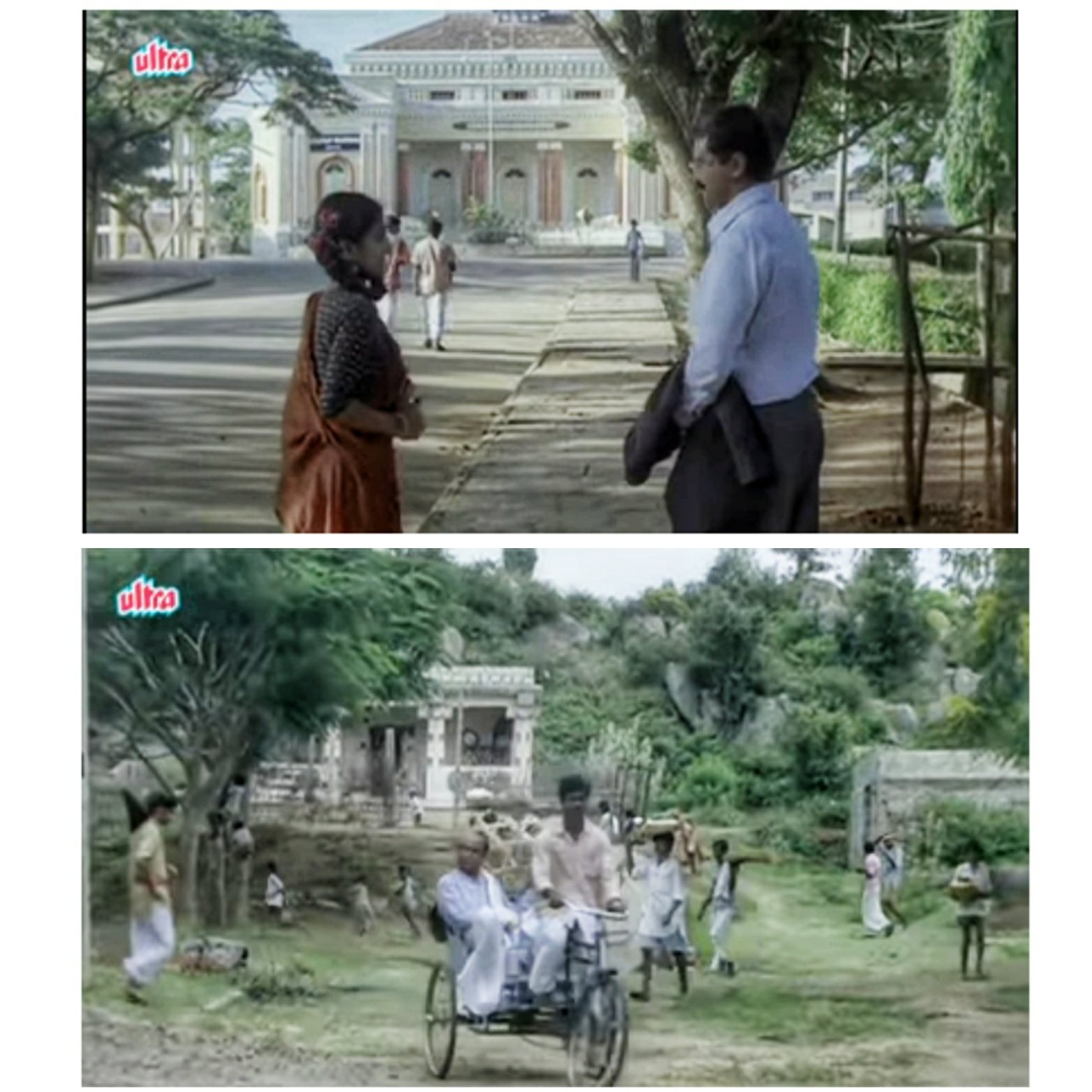
a. The scene where the couple meet after college has the Town hall building of Mysore in the backdrop.
b. The scene where the protagonist rides to see an astrologer is the temple at Kaiwara. It has largely been renovated as on today. But the Narayanappa temple in the background, the rocky hillock on one side and a motorable road seen in a glimpse indicate it is indeed Kaiwara.
Episode: The seventh house; Location: Top- , Below- Kaiwara
8. Episode name: Iswaran
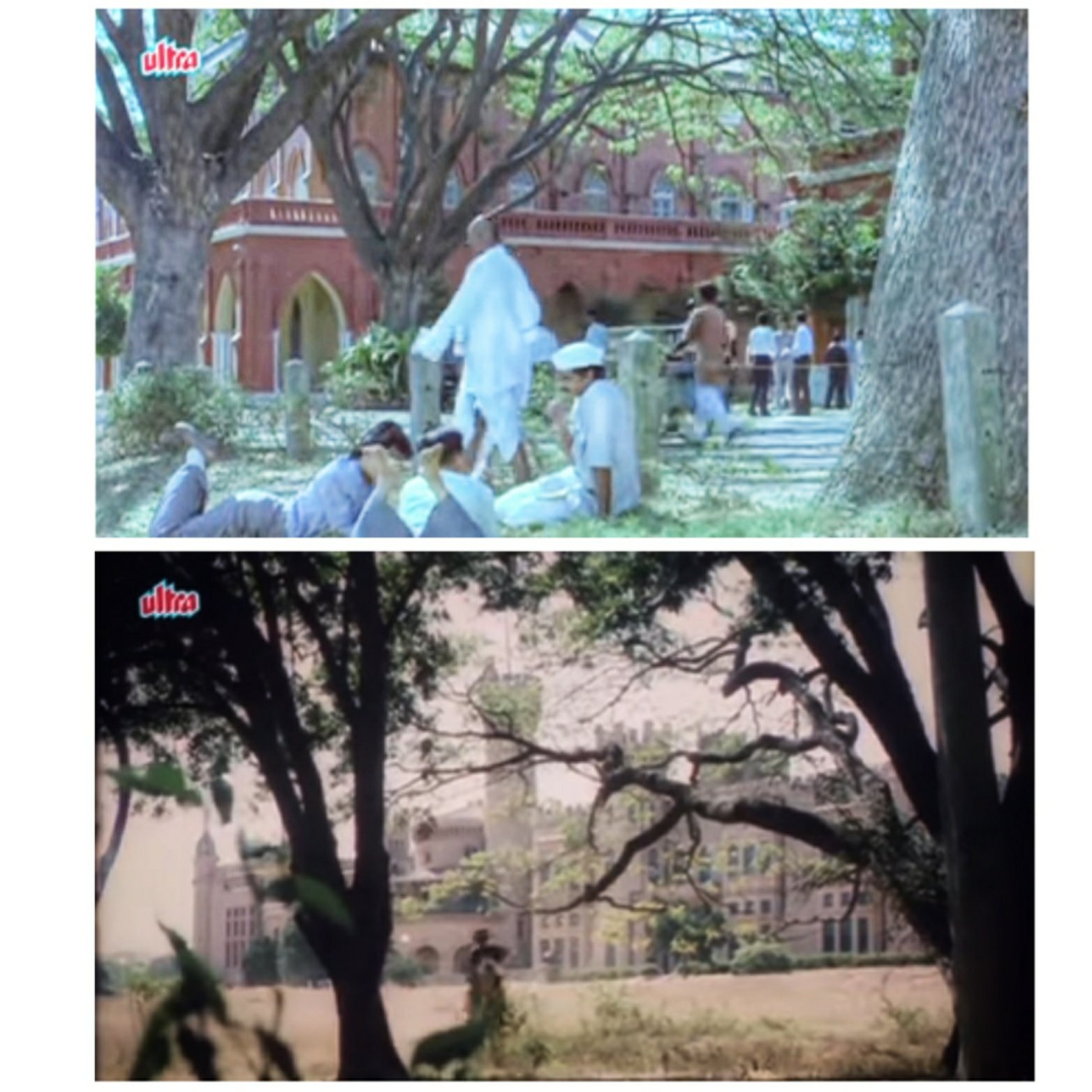
a. The college or the senate hall with its Gothic style of architecture featured in the episode is the ‘Central College of Bangalore University’ located in the heart of Bangalore.
b. The Protagonist, Iswaran watches a movie at a cinema. The palace featured in the movie is the ‘Bangalore Palace’.
c. Time and again, Sarayu river has been mentioned in the episode. Given the typical setting of Karnataka and the writer’s hometown of Mysore, the lifeline of this region is river Kaveri. I believe that the river where the protagonist drowns in at Sangama, near Srirangapatna.
Episode: Iswaran; Location: Top- Central college, Below- Bangalore palace
9. Episode name: The performing child- Abhinetri
Given the fact that it is still one of the iconic lung space of Bengaluru and there runs a toy-train amid a lot of greenery, the train journey featured in the child’s dream is in Cubbon park.
10. Episode name: Roman image- Rome ka Murthi
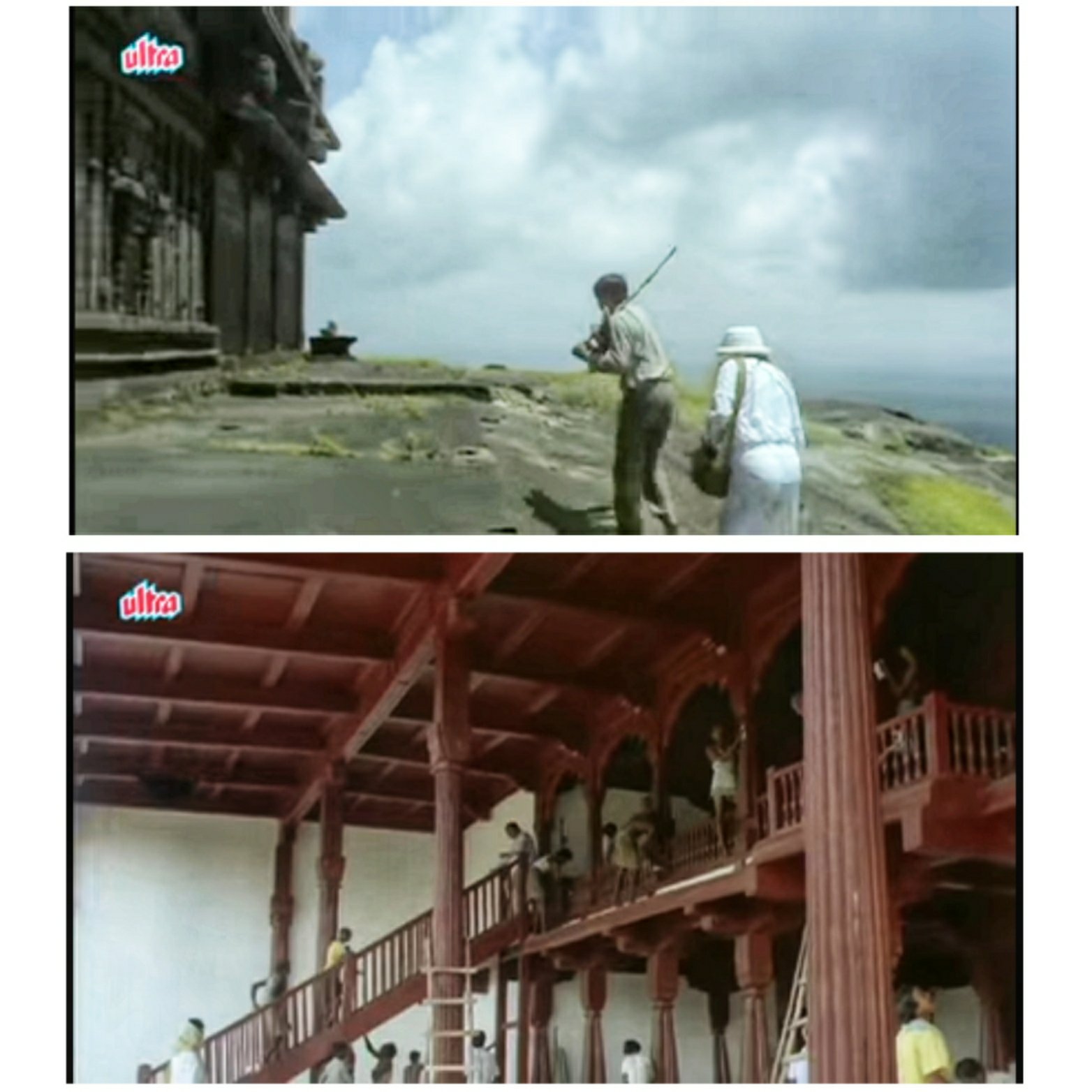
a. The stone temple that Sheshadri and Professor walk around after climbing up a rocky hillock that overlooks green meadows is the ‘Mantapa’ located at the peak point of Kodachadri.
b. The red structure where professor Bandopadhyay is indicated to be working on a renovation of a Jaipuri palace- is the Shivappa Nayaka’s Palace located near Shimoga.
Episode: The Roman idol; Location: Top- Kodachadri, Below: Shivappa Nayaka’s palace, Shimoga
11. Episode name: The watchman- Chowkidar
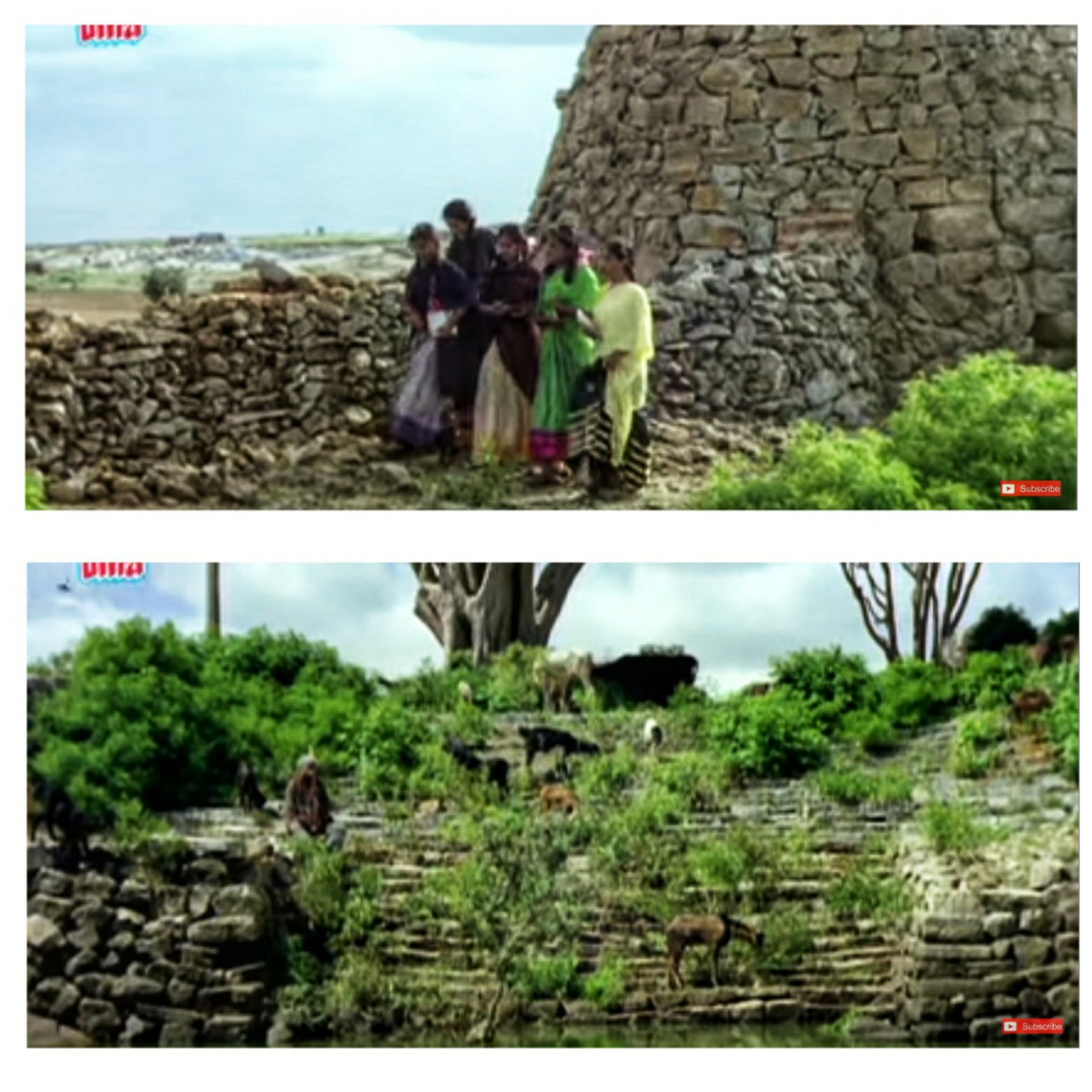
Although the structure and the surroundings seems to be in a dilapidated condition in this episode, it has been largely renovated and restored as on date. The entire episode has been shot in the ‘Thimmaraya swamy temple complex at Bettadadasanapura’ in Bangalore. The large trees in the premises, the temple pond, the entrance stone pillars and the fortress like wall encompassing the temple premises on a rocky hillock are the things that stand testimony to the famous episode.
Episode: The watchman; Location: Bettadasanapura temple
12. Episode name: A horse and two goats- Muni
Given the rural setting of the protagonist’s house and the fact that he eats Ragi mudde, it is a story from the Mysore region. The place where he goes to graze his goats daily in a eucalyptus grove and the slopy terrain of the hills where the road passes, could it be the road that leads to Chamundi betta? Or could it be Nandi hills? (as guessed by ‘The light baggage)
13. Episode name: Trail of the green blazer – Pocket maar
The temple where the protagonist offers his prayers with a coconut before heading for stealing is the Panchalingeshwara temple at Begur, located in the outskirts of Bangalore. (Information contributed by ‘The Light Baggage‘)
The Panchalingeshwara temple at Begur
Are there any familiar locations that you could identify in the serial? Let me know..
Here are the remaining episodes 🙂
14. Episode name: Leela’s friend- Siddha
15. Episode name: The missing mail- Dhakia
16. Episode name: Engine trouble- Engine Ki kahani
17. Episode name: Forty-five a month- 45 rupiya
18. Episode name: The career- Ramji Ki Leela
19. Episode (series name)- Naga
20. Episode name: Sweets for angels- Kaali
21. Episode name: A willing slave- Aaya
22. Episode name: Cat within- Paap ka gada
23. Episode name: The gateman’s gift- Govind Singh Ki Bhent
You have probably read my earlier post on exploring the offbeat landmarks of Old Bengaluru. Here is another one. This time, it was a culinary trip of Old Bengaluru to a friend who had flown down to this southern metropolis, from the so-called Northern part of India. I had been asked to take him on a gastronomic tour of my city. For someone who has a penchant for everything old school, I thought Old Bengaluru would be perfect to call it a day. ‘From vintage automobiles, architecture, iconic restaurants serving traditional recipes to by lanes and alleys that narrate their own individual story of the city, this section of Bengaluru has everything that would tickle a bone or two of this mad man’, I thought.
Having largely spent my teenage in North Bengaluru and given my familiarity with the area, Malleswaram was my first choice. However, given the convenience of commutation from my current place of stay, I chose to show him around South Bengaluru. But when one says South Bengaluru, it is a world in itself and the geographical area is large to fit all in one day. Hence, I took time to mark a quick map of restaurants to cover, along with giving a peak into the cultural heart of the city. This part of the metro lays in stark contrast to the Bengaluru, that the millennials from Whitefield and Marathahalli know of.
The obvious choice was a walk tour of Basavanagudi and the Pete area. These are the two most important clusters of true Bengaluru that have held onto the roots, despite the rapid and traumatic transition this city has seen in the last decade in the name of urbanization and modernization. Under the canopy of massive native trees, the aroma of the by-two filter kaapis shared at the numerous Shanti Sagar and darshini food joints, the air here feels different from anywhere else. With almost every street dotted with Classical dance and music schools and happy nonagenarian couples whizzing in their Padminis and Ambassadors, it has a different vibe here. One can find some of the traditional old houses and landmark restaurants only in these localities to really experience old Bengaluru. Each of these iconic eateries have a near century old history and their old school ambience is still intact inside the heritage structures that house them. With a small appetite for food and a big quest for exploration, the portions of food were limited only to the signature dishes of each restaurant, to accommodate more places. So, here is my itinerary of a gastronomic tour of Bangalore of yore.
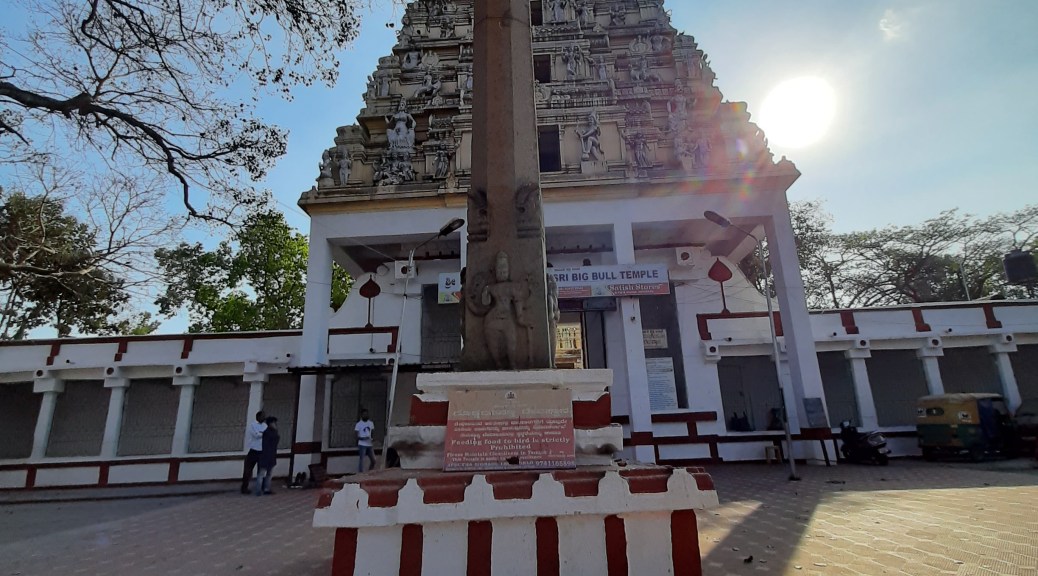
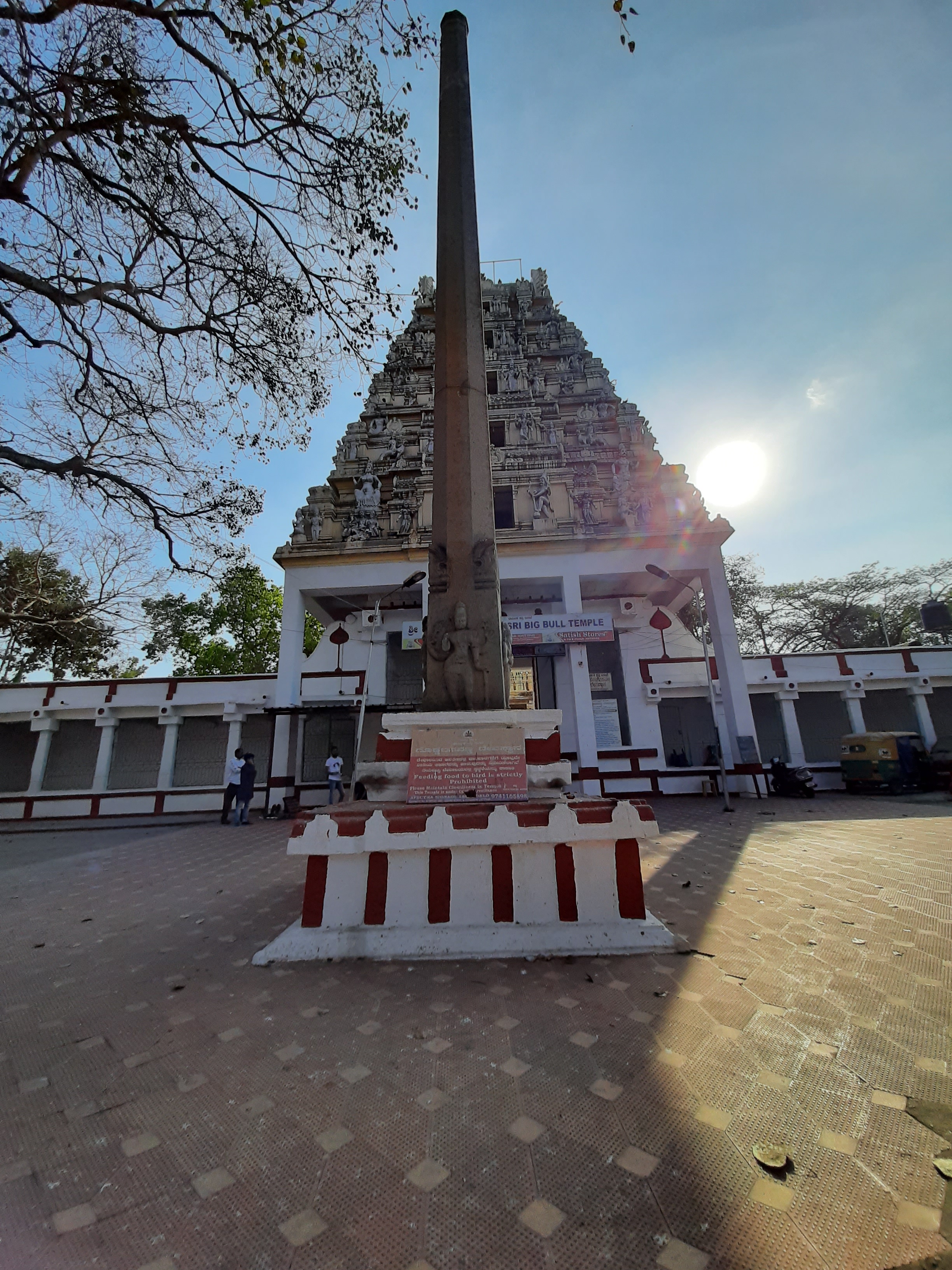
The Big bull temple, Basavanagudi
Meet-up point: Basavanagudi is the name of a temple (It translates to ‘Bull- Temple’). Basavanagudi is the name of a locality in South Bangalore, named after the temple. It is an extension of the Pete area, which was specifically created to accommodate the upper class, and more-specifically the Brahmin community. No trip to South Bengaluru is complete without a visit to this landmark temple built by Kempegowda, the founder of Bengaluru. Apart from the Big Bull temple, the Dodda Ganapathi and the Bugle rock (a small watch tower from the Kempegowda era) are a must visit on the same premises. If you time it up well, you can part-take in the annual groundnut fair in the locality. (Read here to know more about the history of the Kadlekai Parishe). After meeting my friend here, we started our gastronomic tour to our first food stop.
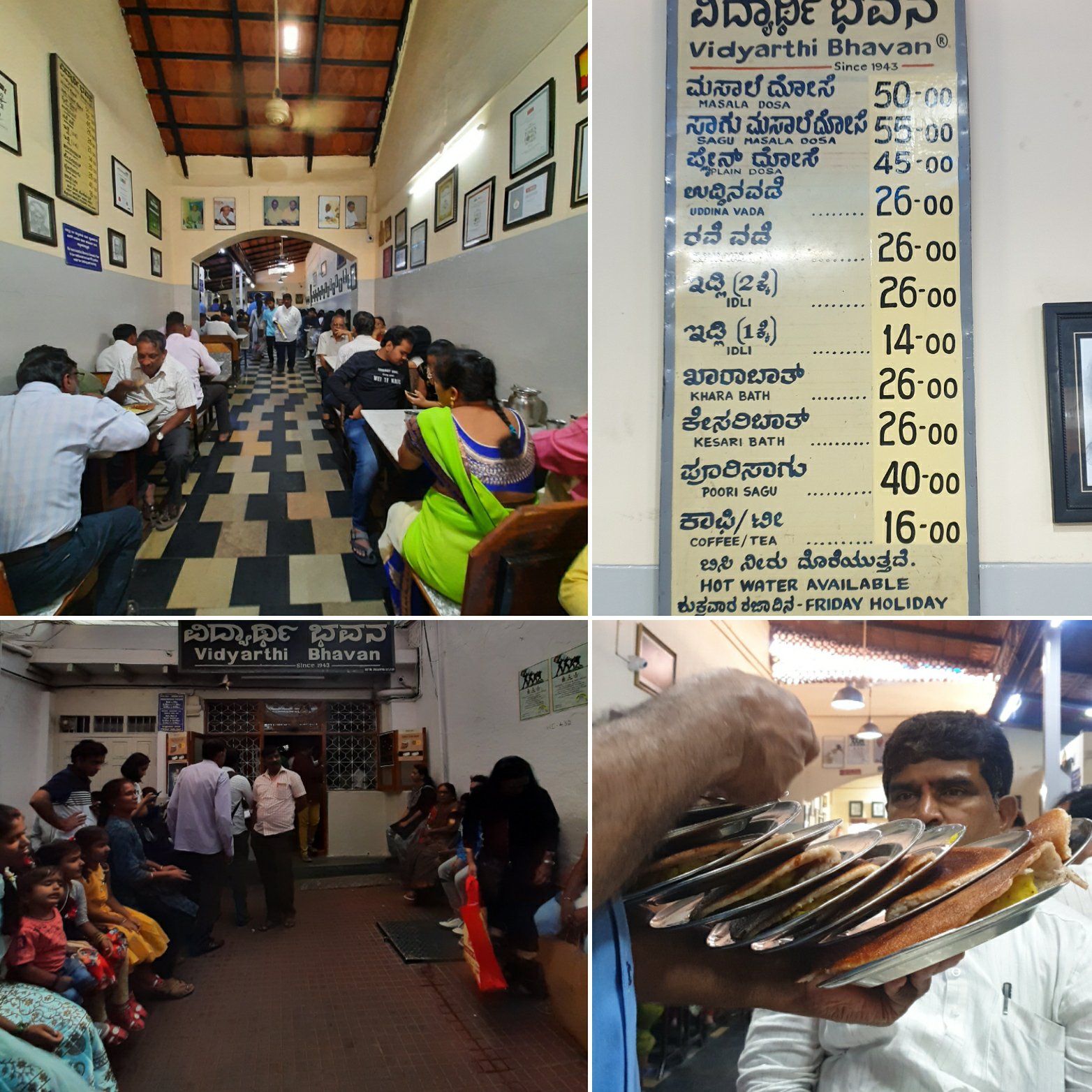
Food stop 1 (Breakfast): As synonymous as Dosa is with South India, Vidyarthi Bhavan is with South Bengaluru. Ask anyone for the best Dosa in the city and this place scores on top unanimously. It is a restaurant started initially to cater to the student community of the area which started a new culture of a hangout place for friends in those days. On most days, the queue can extend well up to a kilometer. My friend and I wiped off our plates of their signature Masala dosa for breakfast. (Click here to read further about the history of Vidyarthi Bhavan)
Vidyarthi bhavan, Basavanagudi
Food stop 2 (Light eats): No foodie who visits Bangalore is satisfied without taking an evening walk on the Eat street at VV-Puram. However, I decided to go here in the morning, in order to avoid the maddening rush. Honey cake and Congress bun at the iconic VB Bakery was what we needed. This is the first Iyengar bakery to be established in Karnataka which has paved a new culture in baking (Read here for more about V.B.Bakery). Avarebele (Val bean) is a favorite ingredient of the Bengalureans, who have a dedicated annual fair to celebrate this pulse (Click here to read further about Avarekai mela). Hence, picking up a packet of avarebele mixture for home from one of the stores there was an obvious choice.
Food stop 3 (11 o clock, coffee): It is an important break time for the employed section of the society. Brahmin’s Coffee bar is a household name for their filter coffee and the delectable chutney served with idly on their very limited menu. This tiny eatery is in a corner of Shankarapuram, which is also famed for the Shankaramatha, a learning center of the advaitha philosophy. We had a quick stopover for a hot cuppa this little place is known for, before heading to Pete. (Read further about Brahmin’s coffee bar here)
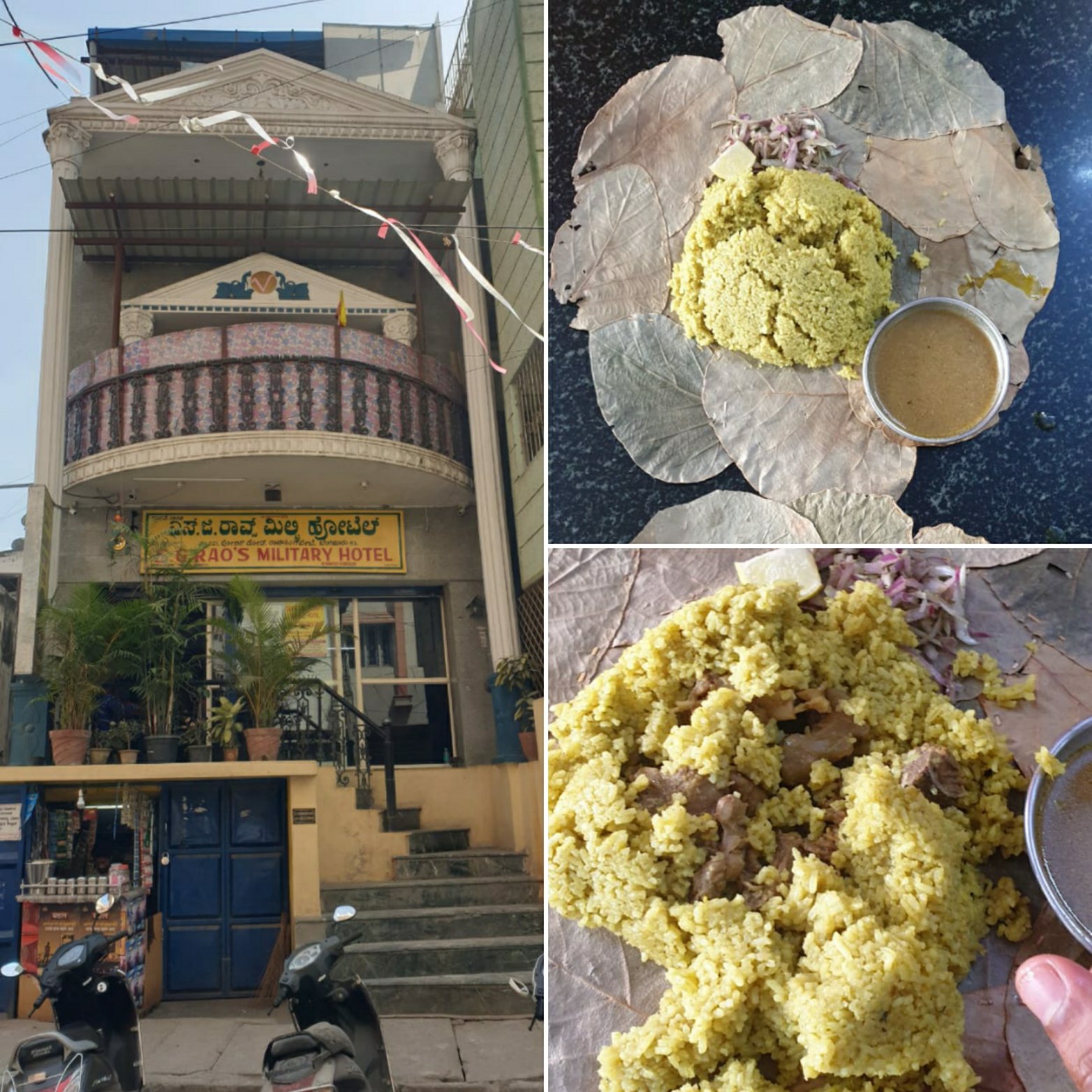
Food stop 4 (Lunch): To satiate the hunger pangs, I planned to treat my friend with an authentic Bangalorean affair. With multiple theories surrounding the origin of the military hotel culture, the history of these restaurants dotting across the southern part of Karnataka is unclear. Bangalore is home to some of the best in the state. I don’t think there would be any better meal than ‘Ragi Mudde oota’ savored at a military hotel to get a peek into the local flavor, including the ambience. Hence, we were lunching that afternoon at S.G. Rao’s military hotel, located in the cotton Pete area. A typical military hotel meal includes Kaal soup, Ragi Mudde and Mutton biriyani. (Click here to read further about S.G. Rao’s military hotel)
S.G.Rao’s military hotel, cottonpete
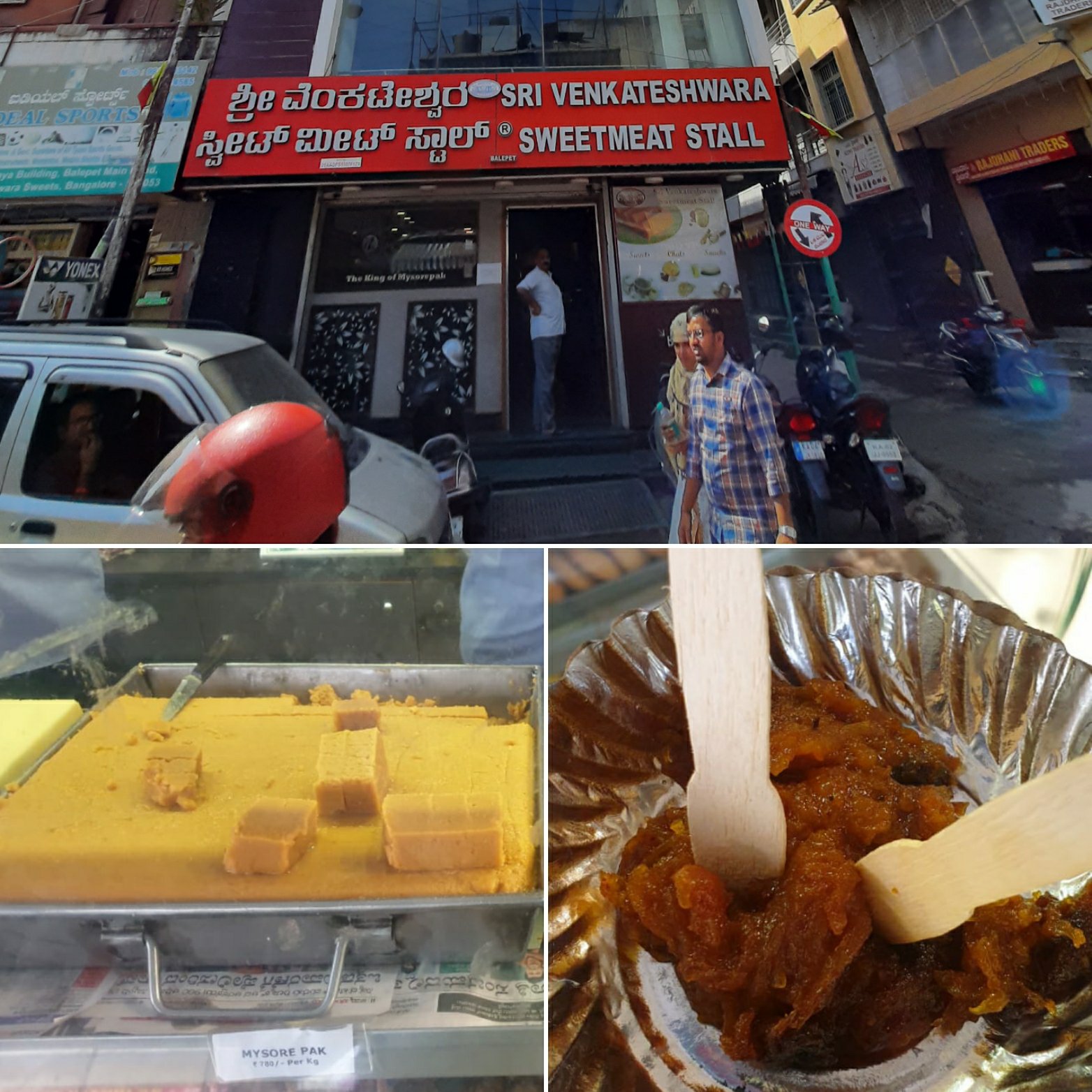
Food stop 5 (dessert): A meal is complete only with a nice dessert. If there is one sweet meat that is synonymous with Karnataka (Mysore state), it is Mysore pak. Since I couldn’t take my guest to Mysore for that, the closest I could get is at Sri Venkateshwara sweet meat stall located at Bale Pete, a short walk away from cotton Pete. Their Mysore pak and dumroot are the sweets my friend packed for his roommates back in his hometown. (Click here to read about Sri Venkateshwara sweet meat stall).
Sri Venkateshwara sweet meat stall, Balepete
The Pete walk: An old Bengaluru exploration is nothing without a walk along the narrow snaking lanes of the Pete area, the true business epicenter of both New and Old Bengaluru. This area is segmented into various sections and named according to the commodity sold and the communities that resided there in the yester years. From green groceries, handloom, steel, plastic to precious metal, everything is available in this locality. An early morning walk in the famed flower market is an experience in itself. We limited ourselves to just the mainstream sections while exploring some of the ancient temples, mosques and heritage houses of the Kempegowda era. In the meanwhile, we kept munching on numerous snacks from several popular stalls on our way. Although these eateries are old, the flavors are largely north Indian, owing to the Marwari and Baniya community that reside here in majority.
The heritage structures of the Victoria hospital, Bangalore fort and Tippu Sultan’s summer palace all lay on the side of the road for the history and architecture buffs who have a little more time in hand. But this is all we could fit in our day. Thus, ended a gastronomic tour of South Bengaluru.
I hope you enjoyed this virtual tour with me too… did you? Or did you not? Share your thoughts with me…
There are many other iconic restaurants in Basavanagudi if you have a larger appetite. These are a few other places that you must check out when you are here: The new modern hotel, Mahalakshmi Tiffin room, Janata Tiffin rooms are a few among many others.
Souvenirs to buy:
Coffee filter and freshly roasted coffee powder: The best filter coffee is available only in South Bengaluru, and hence my friend thought this was a more significant thing to buy from here.
Channapatna wooden toys: These are GI tagged handicrafts made with organic colors and largely popular in the western market, it comprises a large collection of traditional toys.
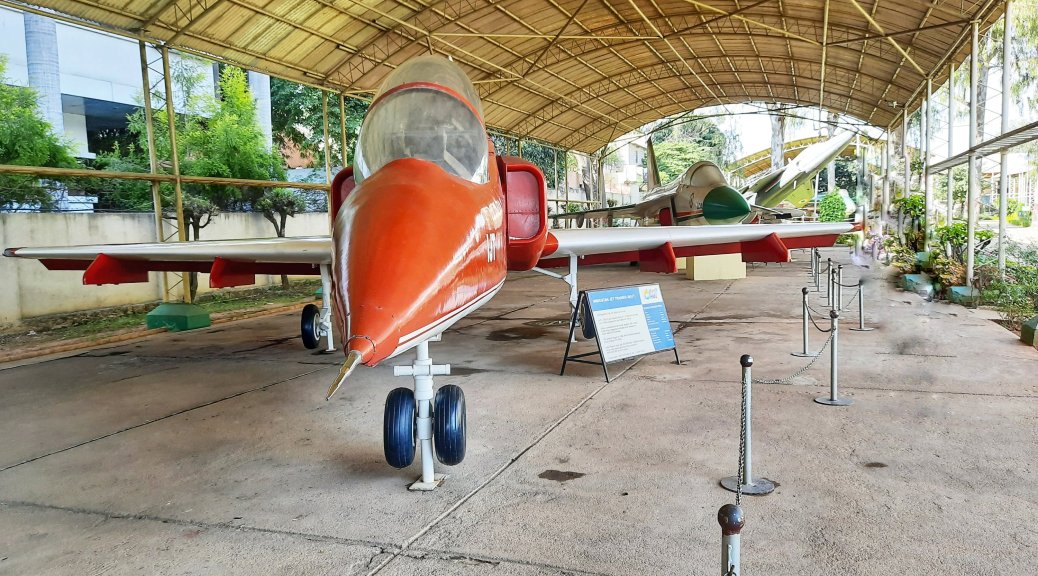
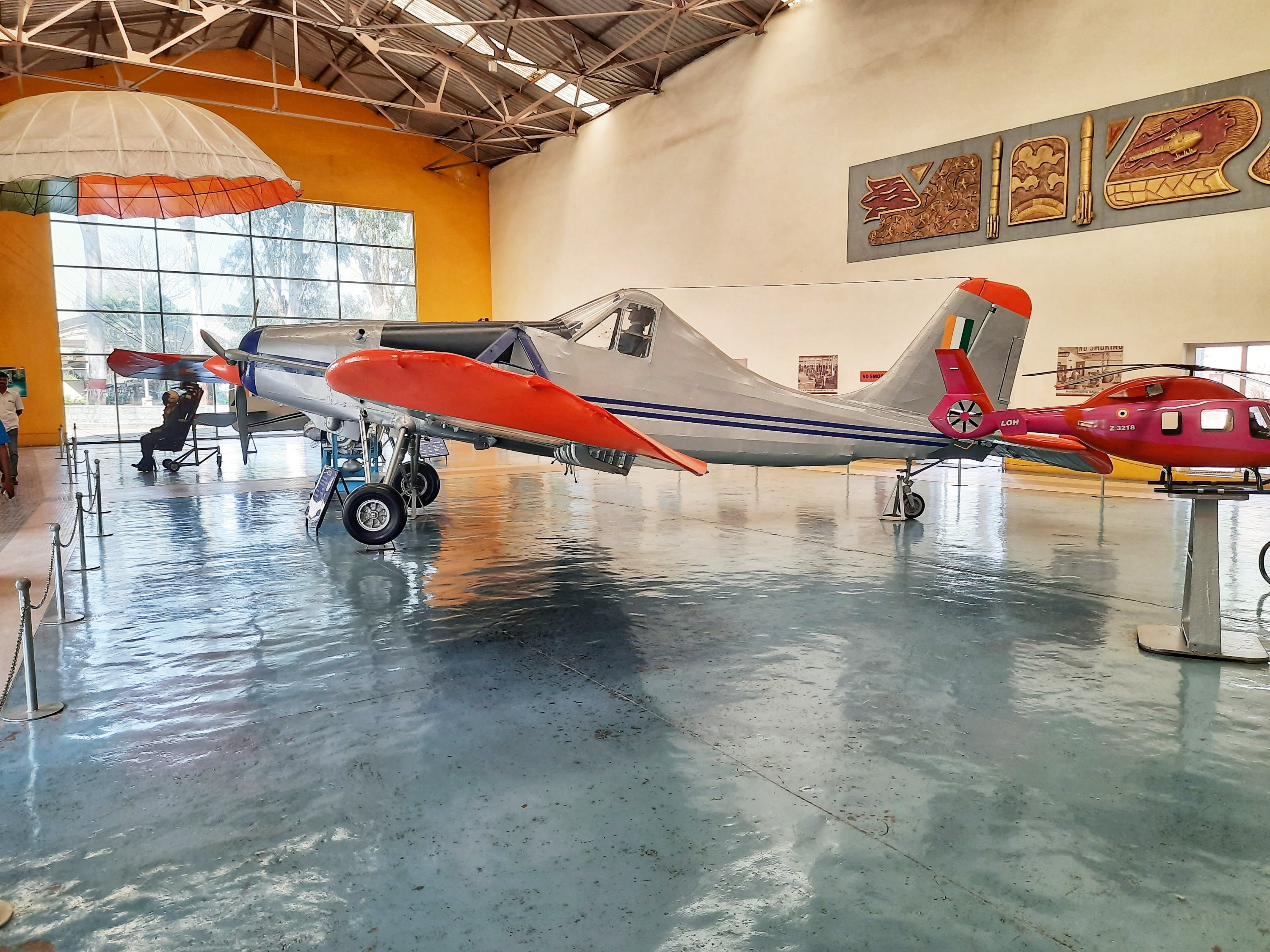
HAL (Hindustan Aeronautics Limited), Asia’s largest and India’s first aerospace establishment was founded and is headquartered in Bangalore. If you want to walk down this journey of how aviation industry has evolved in India, a visit to the HAL Aerospace Museum, India’s first aviation museum located at the HAL premises is highly recommended. From the first aircraft, Harlow PC to be assembled at its stables to manufacturing the most modern helicopters, planes and equipment for present day requirements of the Indian airfare, navy, railways and space research, HAL’s journey has been a long one. One is bound to get amused in another world by taking a walk between vintage planes, flight simulators, mock ATC and all things associated in this subject of fantasy at the museum hall. Now, this place leads me to my next destination: The IISc (Indian Institute of Science).
An exhibit of the Pushpak aircraft at HAL
That morning, I had ordered a plate of idlis at this little restaurant on the IISc campus. Just like any other day at that restaurant, the environment was abuzz with the chitter chatter of the people I was surrounded by. A typical scene on any given day includes the best scientists of India and abroad discussing new experiments over a plate of food in what is one of the premier research institutes in the country! Irony has it that similar discussions happened under the same roof, sometime in history. But back then, the discussions were about something more strategic and destructive. It was right here that a bunch of people discussed a war plot. What is now the top-of-the-notch science and technology institution in India, served as a hub for maintenance and repairs of the aircrafts during World-War II.
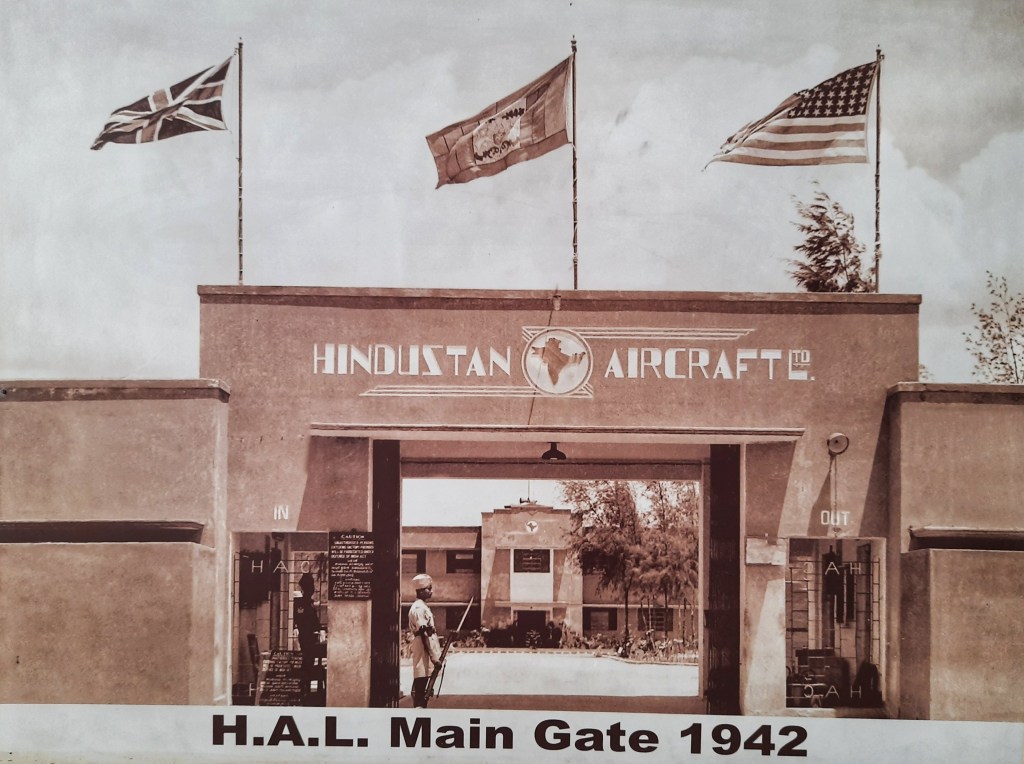
In the late 1930s, a factory meant for automobile maintenance was setup by an industrialist named Walchand Hirachand in the present day IISc campus. History has it that on his way to China, Hirachand chanced upon a meeting with William D. Pawley who was attached to the Intercontinental Aircraft Corporation of New York, an American aircraft exporter. This connection lead to the procurement of the necessary tools and equipment from the US to setup an aircraft production line in India. It was in December 1940, with funds from the Mysore state, the Hindustan Aircraft Private Limited came into being. The plan was to manufacture the Harlow trainer, Hawk fighter and the Vultee attack bombers at this factory. However, this required huge manpower that was trained in Aeronautics which lead to the establishment of the department of Aeronautical engineering.
A 1942 file photo of the HAL main gate.
Photo courtesy: HAL museum gallery
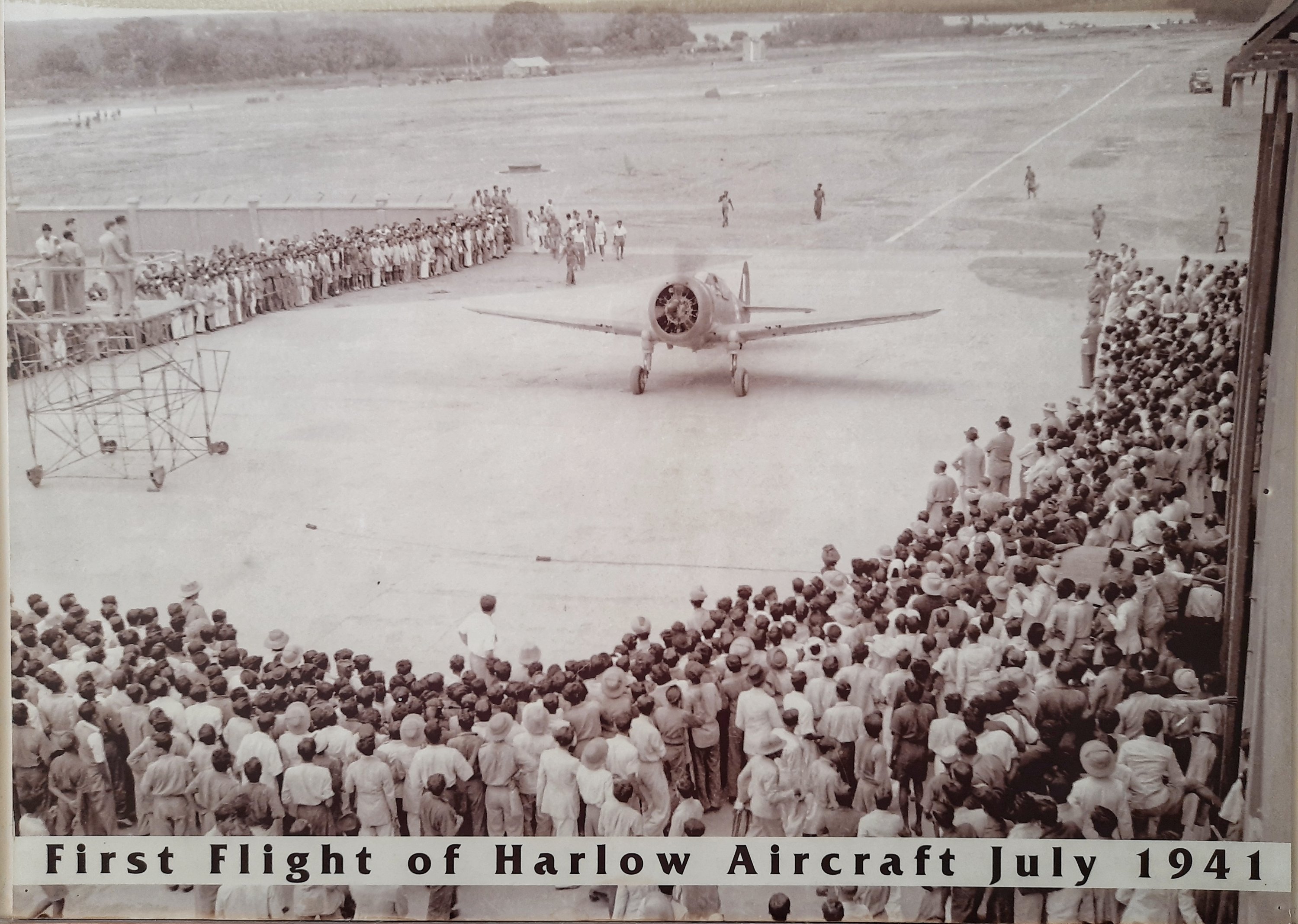
The structure that housed the aeronautical engineering department was designed by German architect Otto Koenigsberger. Otto Koenigsberger was a young Jew who had fled his country during the Nazi regime and was later in time, employed as the government architect of the erstwhile Mysore state. His architectural design is an amalgamation of European and traditional Indian styles and can also be seen in the present-day metallurgical department and the hostel office on the IISc campus along with many structures across India. Talking about the aeronautical engineering building- it is an oblong structure with high ceilings and narrow corridors that integrated natural climate control. He has also designed the closed-circuit wind Tunnel, the first of its kind in India and hydrogen plant among other things that are associated with aircrafts. With all the technical back up from IISc, it was in 1941 that Hindustan Aircraft Limited (HAL) assembled the first aircraft in India: A Harlow PC-5.
Meanwhile, the threat posed by Imperial Japan loomed large in the on-going World War II because of which there was a need by the British Royal Air Force to boost its military hardware supplies in Asia. With all likelihood, HAL was most suitable as a base for the South East Asia Command of the allied forces for servicing their aircrafts. Hence, all the aircraft manufacturing plans in India were abandoned to support the repair and overhaul services of the American aircrafts and the factory was eventually taken over by the US Army Air Forces in 1943. This led to rapid expansion in the facilities and became the 84th Air depot for overhaul and repair of American aircrafts during WWII. The very same hydrogen plant on the IISc premises was used as a loading dock to supply hydrogen for the American aircrafts. Later in 1964, the factory was taken over by the Government of India and has morphed into the modern-day Hindustan Aeronautics Limited (HAL) in its present-day location. However, the original Aeronautical engineering department continues to contribute enormously towards research and has its own little airstrip on the present day IISc campus.
As I finished my plate of idlis, I wondered how unassuming I was. This deceptively functional place had just served my meal that had just been cooked inside a hydrogen plant that powered the military aircrafts during WWII.
On a casual weekday off, dad and I decided to take a train trip to some random place on the fringes of Bangalore. So, with tickets that costed us Rs.4 per head, we headed towards the platform. We boarded the Yeswantapur-Devanahalli Passenger train. What surprised us what this train with 5 bogies had just 5 passengers, for a round trip. That makes it 1 passenger per bogie 😛
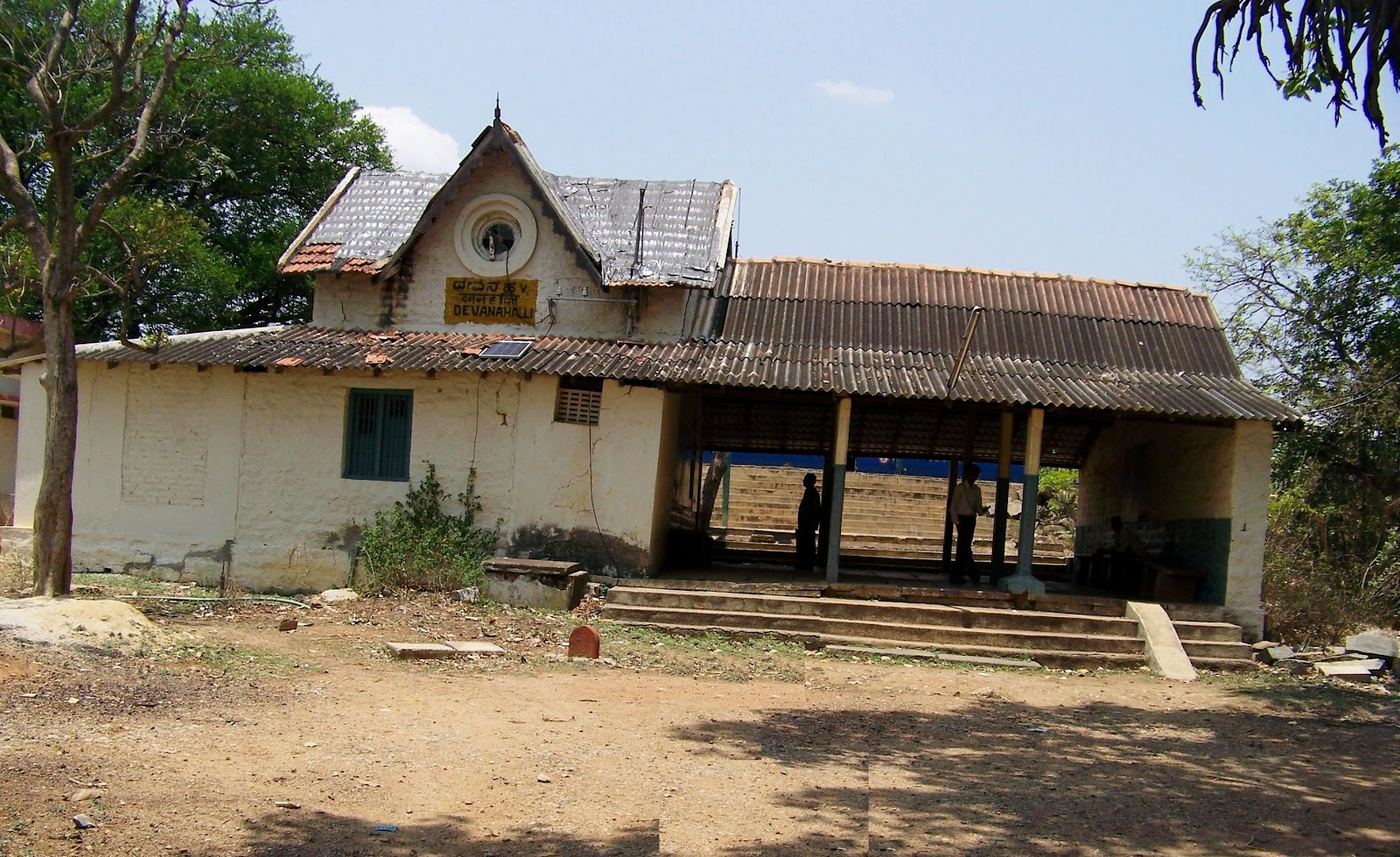
Anyway, the journey towards Devanahalli began and considering that the train still plied well within Bangalore, it felt like we were riding through some unknown green route. We alighted at Devanahalli Railway Station, a small structure from the colonial era (Updated as on Yr.2019, the structure doesn’t exist any longer. It has been demolished making way for a newer station that now welcomes modern passengers who alight here to go to the Bengaluru International Airport) We decided to undertake some exploration and started to walk towards the main town area of Devanahalli.
Places of interest:
Birthplace of Tipu Sultan, Fort Devanahalli, a few ancient temples located within the fortress.
Devanahalli railway station
The Details:
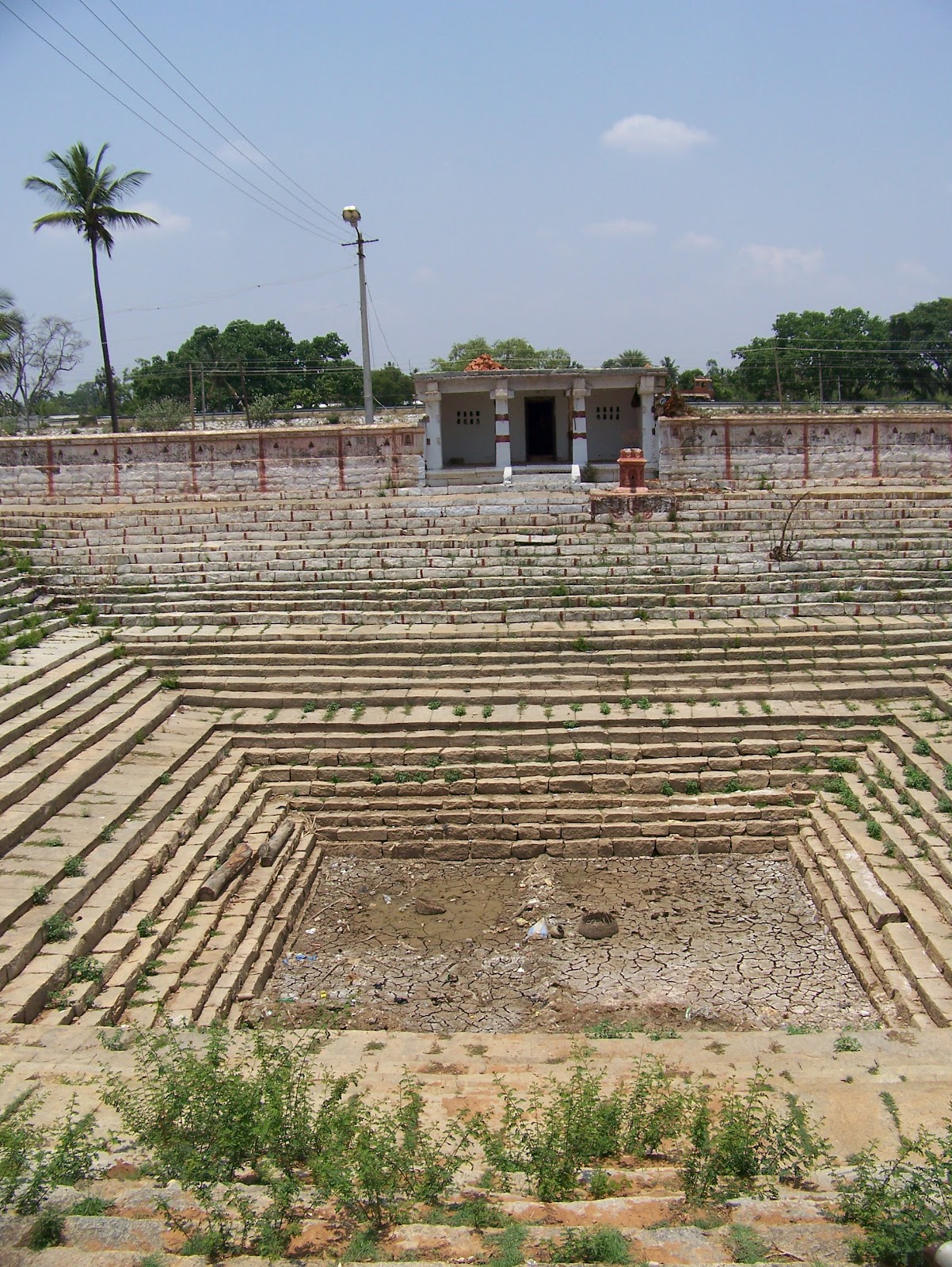
Enroute, we came across a large stepwell (the only memoir of an once existent temple) which was all dried up now. As we continued to walk further from there, we came across several ancient temples along our way.
An Old temple pond
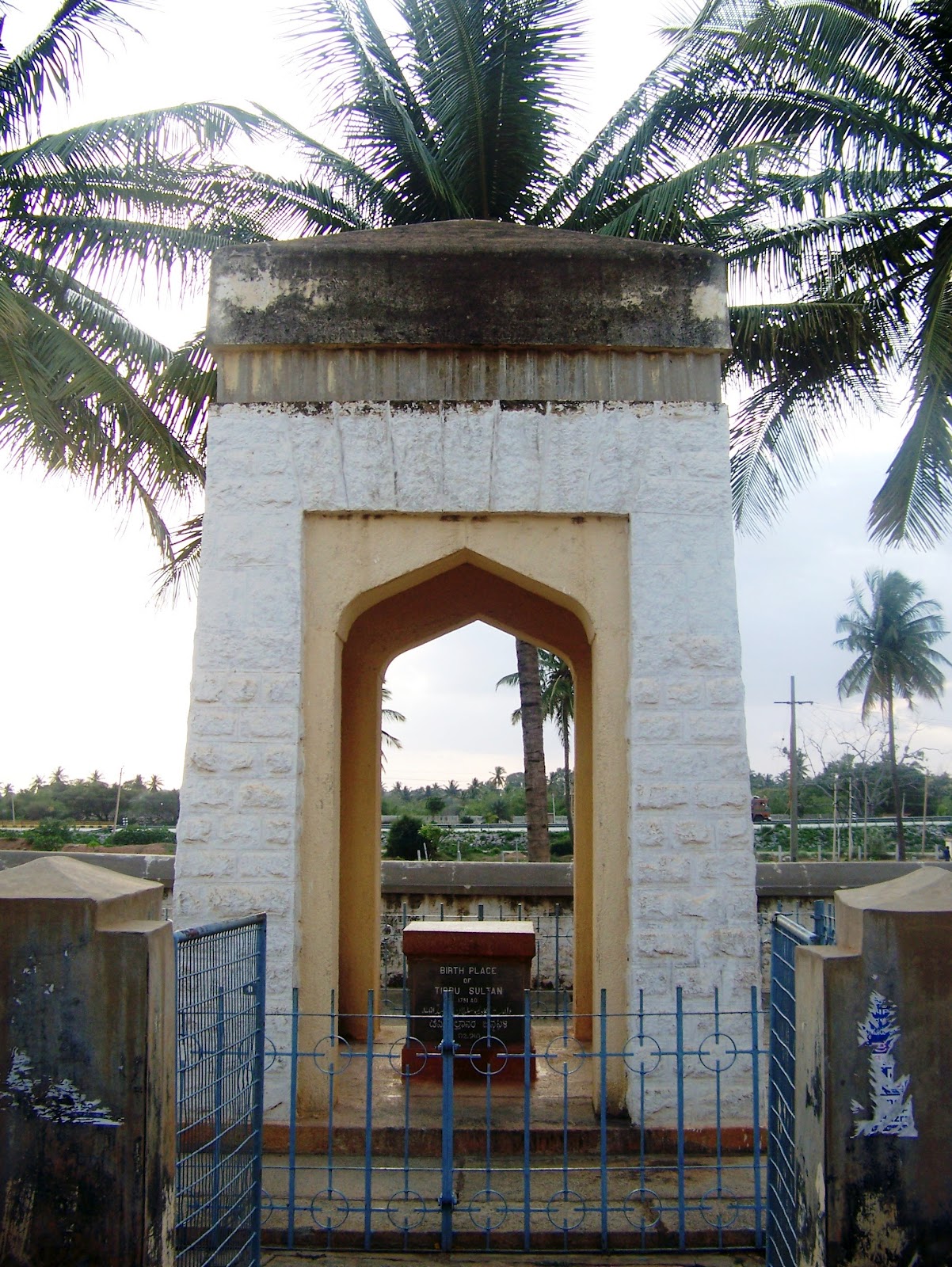
Before the Bengaluru Airport was shifted to the neighbourhood of this little village, Devanahalli was already popular as the hometown of Tippu Sultan, often referred as the ‘Tiger of Mysore’. We arrived at a small mantap like structure which has an engraved stone that mentions it as the Birth place of this controversial ruler in South India. With this structure lying right by the side of the main road, it didn’t seem very exciting to me to think of whether this famous ruler was born by the road side (or so it seemed).
Tippu’s Birth place
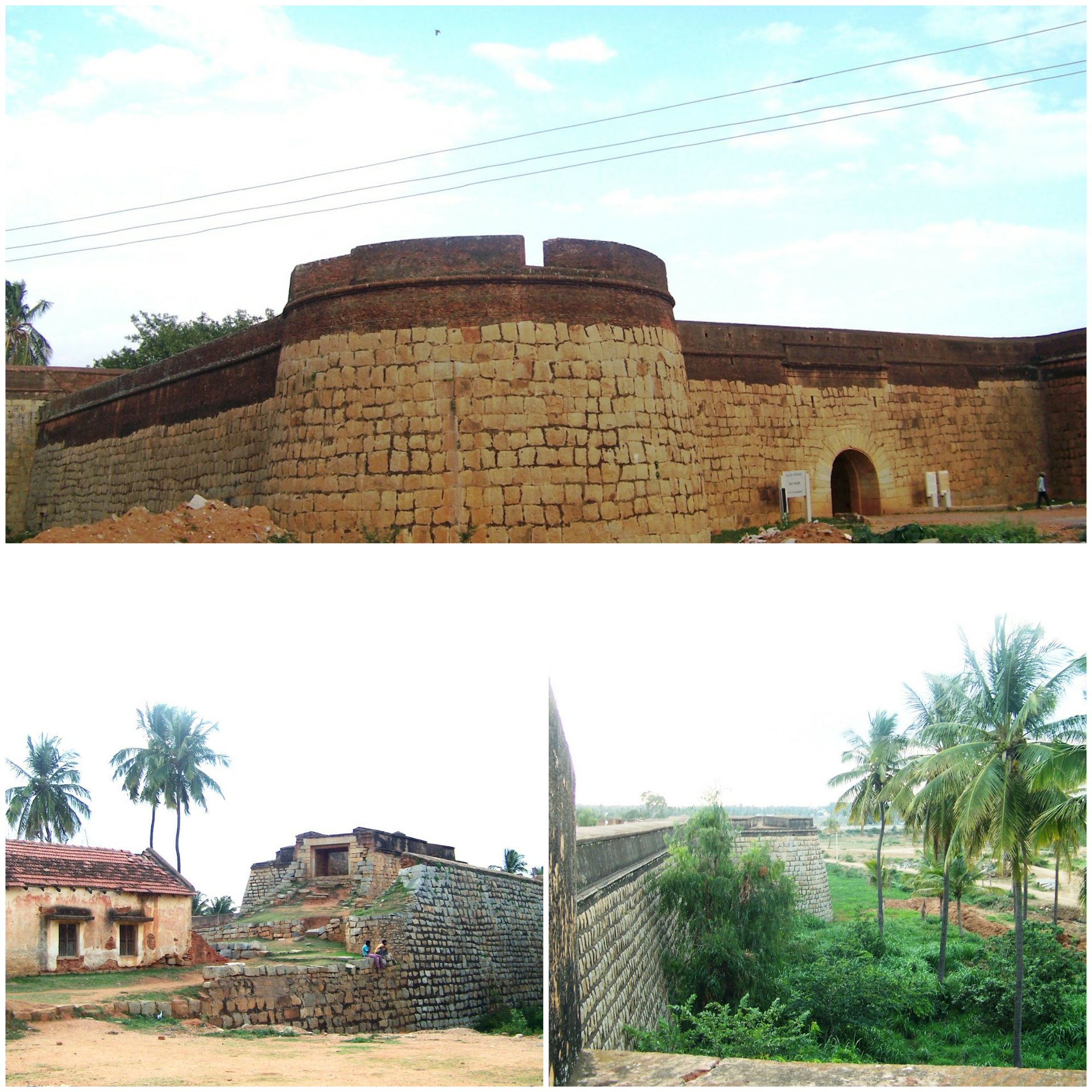
As we continued to walk further, we came across a large walled structure. With rain water stagnating by its side, excavation waste from the city dumped at the entrance, unpaved dusty roads and all that, it seemed to me like it was a neglected piece of history with a first glance. As we passed through the super narrow doorway in this wall, we realized that we were entering a fortress.
After entering it, we decided to walk on a raised platform along the inner side of the fortress wall. It was a walk longer than we expected it to be and we soon realized that it is one whole town that actually exists within the walls of the fort. The actual ‘Devanahalli’ from the history books existed within the walls and what one knows around the highway is just an extension of the town that overgrew the walls due to the boom in real estate that followed the commencement of the airport.
But after walking so much around this place, it felt like there was nothing much in this place that spoke about Tippu’s valour that is often spoken about in history books.Talking about back in the time in history and with my experience of visiting Srirangapatna (a stronghold of Tippu & his father), Devanahalli as a town lacked development.We walked around the place till evening and were able to cover one half of the Fort. But, with that we had already exited from the other end of the town. We boarded a BMTC bus back to the city from there.
Closing Remarks: • A good day for a jobless person like me seeking for offbeat places around the city • It isn’t an exclusive place, but if someone has couple of hours of transit at the airport and don’t know what to do, this is an option. It is the nearest place to venture out in a taxi from the airport as Bengaluru city is too far to reach.


















 The Lost Lander