Tag Archives: India travel

List of the Widest Waterfalls of India

We all know that the widest waterfall in the world is the Niagara, and it is in America! So, we take it for convenience to use Niagara as a synonym to refer to every other wide waterfall in our region. But how many of us have really seen the widest waterfall in India? Or for that matter, how many of us have seen the widest waterfall of our own states within India? Irony is we surely know Niagara, but we might have not even heard of the one in our own backyard.

So, here’s my attempt at listing some of the widest waterfalls in the Indian states that we love to call the Niagara of our country! (Note: These are by width of the waterfalls and not by their height)

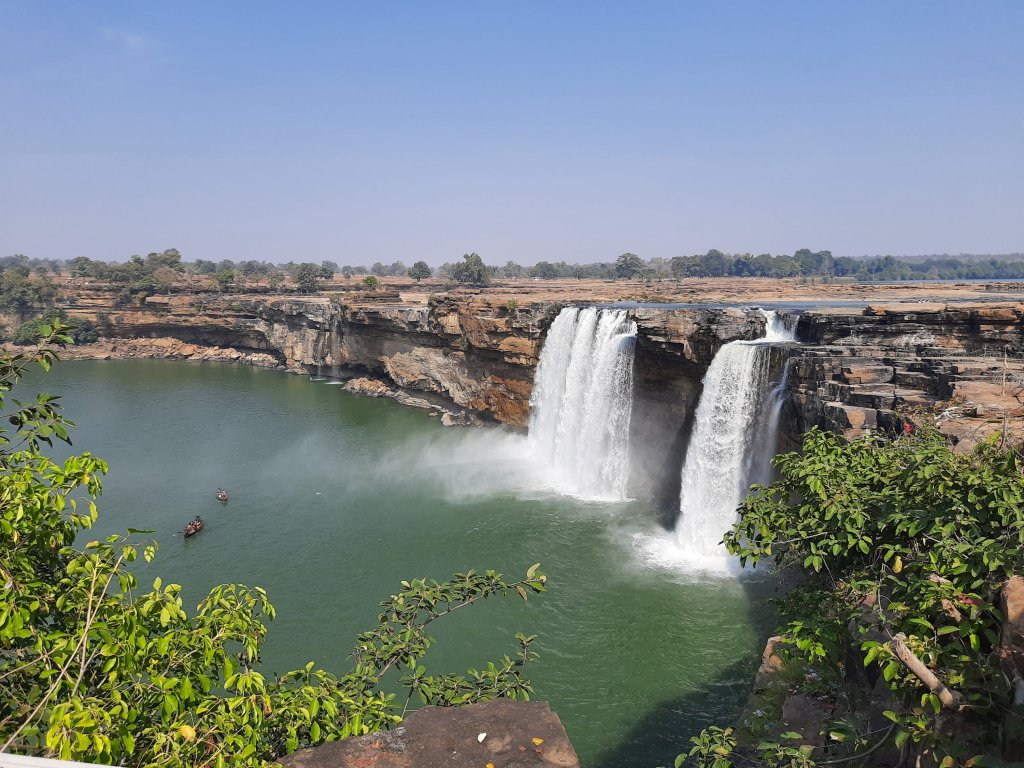
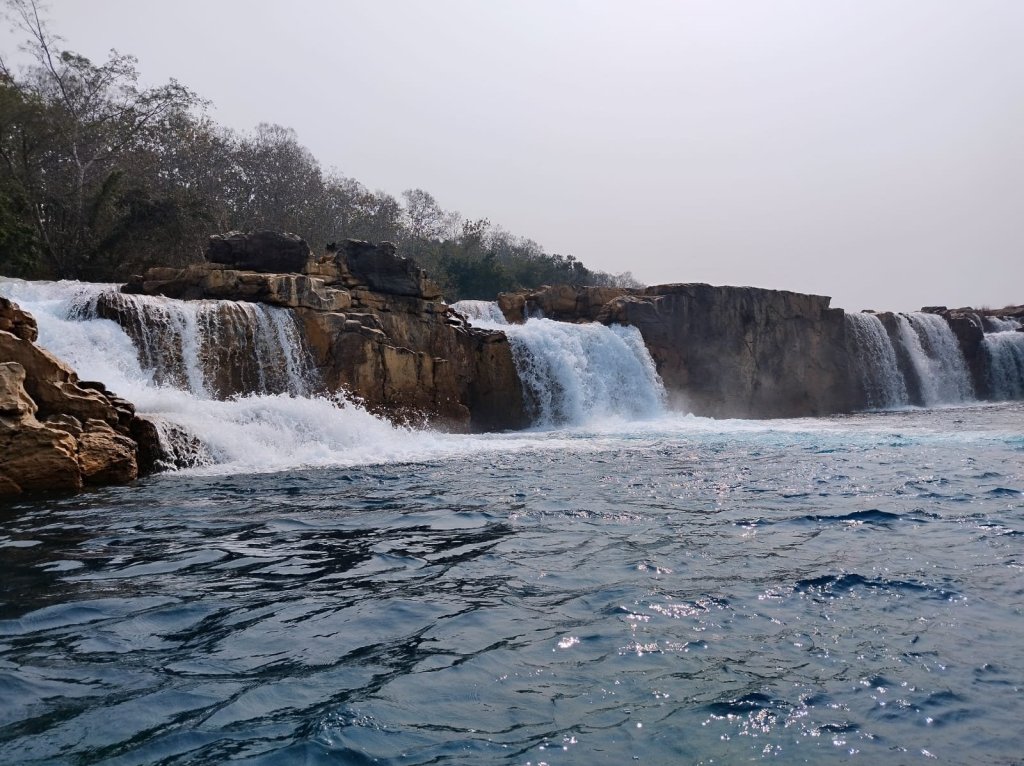
1. Chitrakote waterfalls, Chhattisgarh:

The WIDEST waterfall in India is this, where river Indravati plummets down a horse-shoe shaped gorge. A beauty to behold in all true senses, a ride in a country boat to right under the waterfall is a spell-binding experience.

Chitrakote waterfalls during summer season

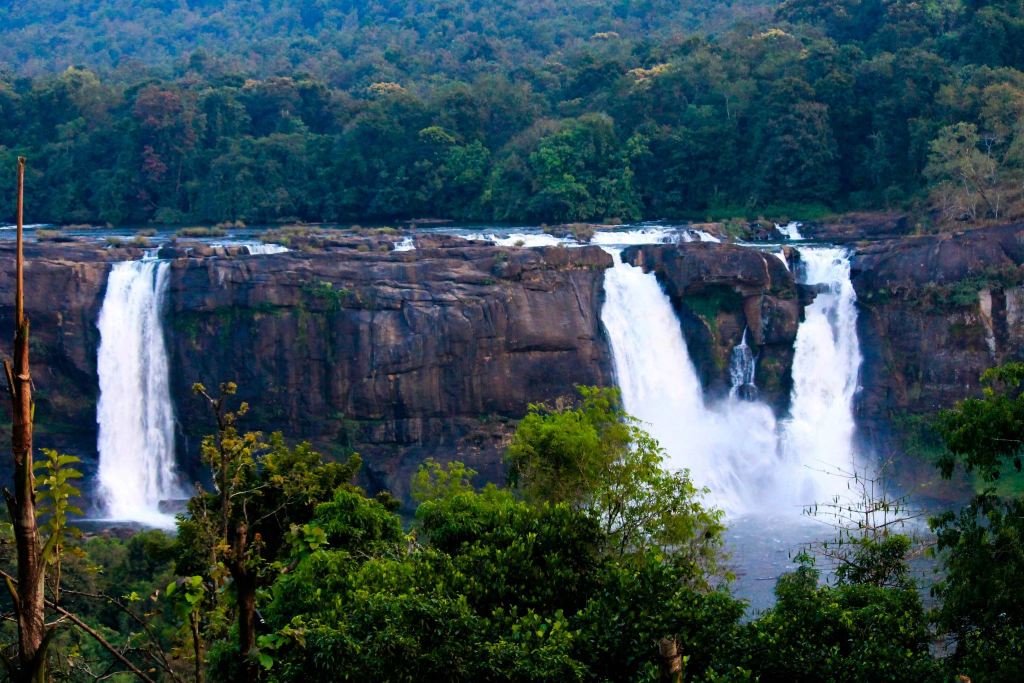
2. Athirappilly waterfalls, Kerala:

Chalakudy river cascades down a rocky gorge forming this spectacular waterfall is something that one would not want to miss on their next haunt to Kerala to explore its backwaters and canals.

Athirapilly waterfalls, Thrissur district Kerala

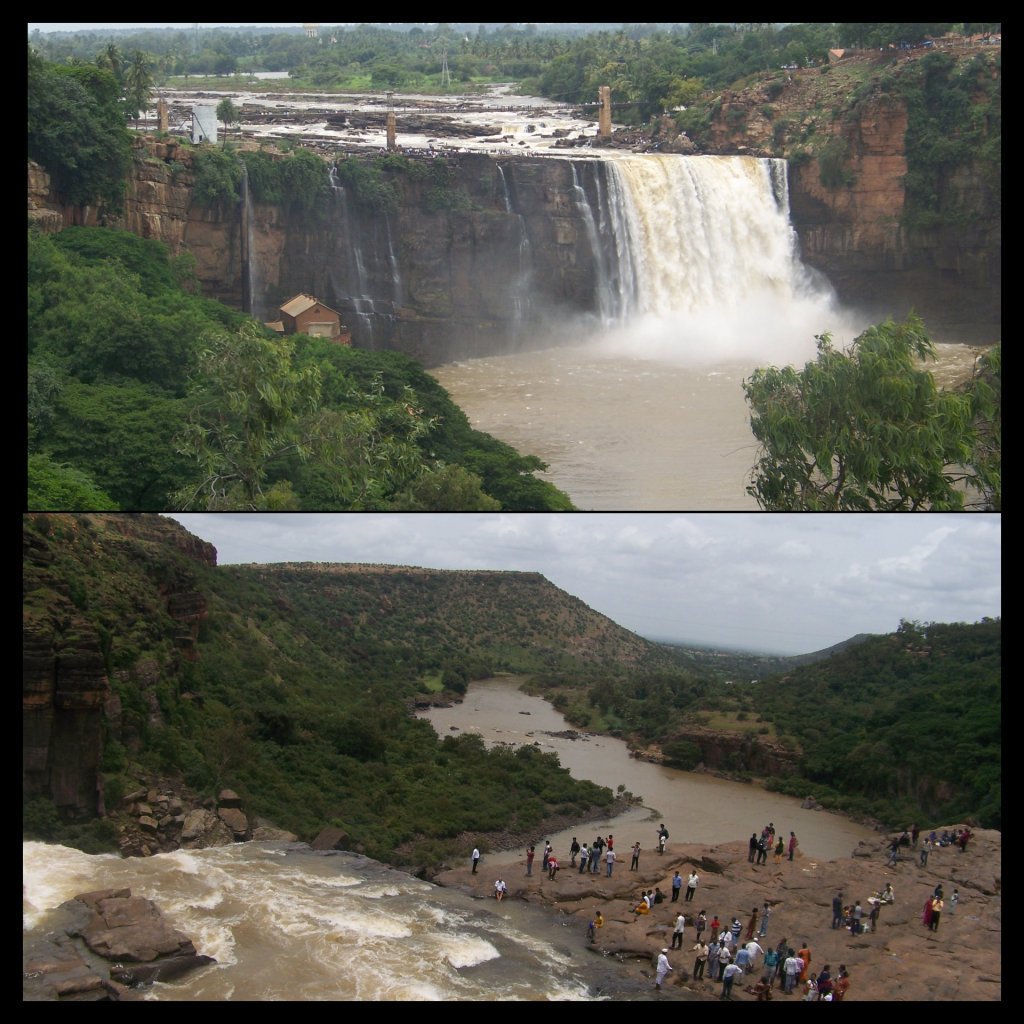
3. Gokak waterfalls, Karnataka:

Formed by the Ghataprabha river, Gokak falls is Karnataka’s best kept secret. A walk on the hanging-bridge laid right across the waterfall when it is flowing full, is an experience worth considering.

Gokak waterfalls
Above: The front view of Gokak falls from the Volkart rock view point; Below: A view from the Hanging bridge.

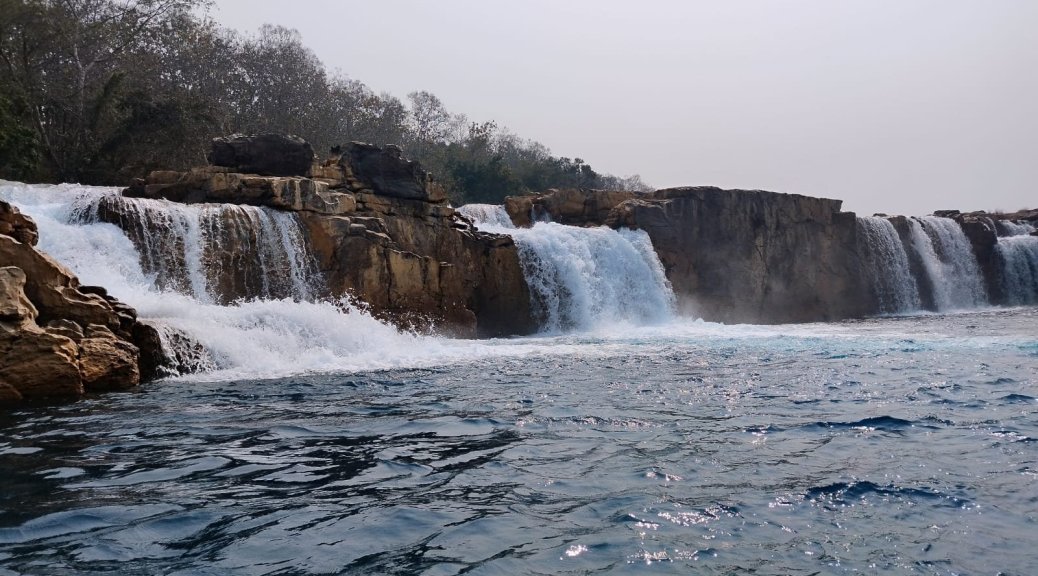
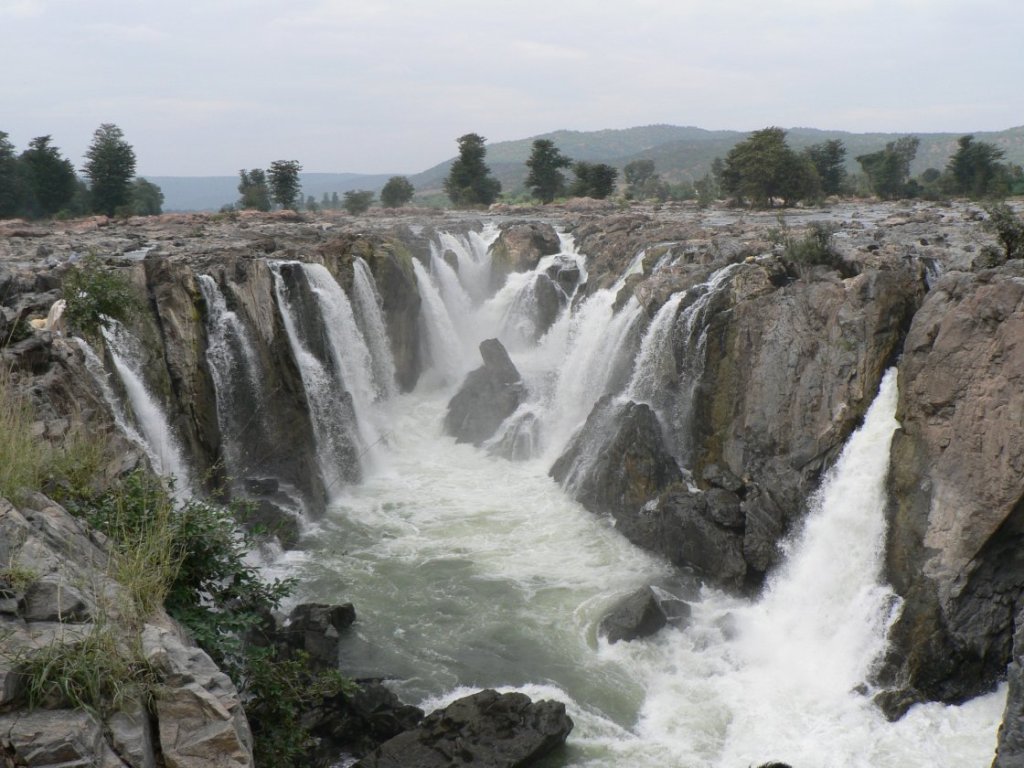
4. Hogeynakal waterfalls, Tamil Nadu:

As river Kaveri enters Tamil-Nadu, she plummets down forming this beautiful waterfall where a coracle ride is highly recommended.

Hogeynakal waterfalls
The breathtaking view of the Hogeynakal waterfalls from the watch tower

5. Bogatha waterfalls, Telangana:

An unexplored beauty, the Cheekupally stream cascades down forming this waterfall that has still been off the radar of mass-tourism.

6. Panimur waterfalls, Assam:

Assam is mainly a low-land / plain area with Dima Hasao district being its only hill-station. The high altitude of the region holds some of the best waterfalls of the state as well, among which Panimur waterfalls formed by the Kopili river is its best-kept secret.

Panimur waterfalls at Dima Hasao district, Assam

7. Bahuti waterfalls, Madhya Pradesh:

Some may revere it to be the highest in Madhya Pradesh state, but I couldn’t find an equivalent in width to match this place of natural beauty which is formed by Sellar river in Rewa district.

8. Seven sister waterfalls, Meghalaya:

Thanks to its year-round rainfall, Meghalaya is a land of waterfalls, each being spectacular on its own. Talking about wide waterfalls, this set of seven-segmented waterfalls drops down a limestone cliff at Cherrapunjee which looks spectacularly wide when it is full during the monsoon-season.

9. Gira waterfalls, Gujarat:

Formed by the river Ambika, a jeep ride through a nice green landscape to reach this waterfall is what the locals recommend to enjoy this visit better.

This is my humble attempt to enlist some of the widest waterfalls, picking one from each state in India. Let me know what is the widest waterfall at where you are?

Boat ride at Chitrakote waterfalls, Chhattisgarh

Five Amazing Places to Explore Caves in India

As a high school student, I was intrigued by the terminologies called ‘Stalactites’ and ‘Stalagmites’ in my Geography curriculum. ‘These were formations of calcium deposits formed by continuous flowing of water over several years, below the Earth’s crust’, it read.

“These structures are beautiful to see. I had the opportunity to visit one of these underground caverns during my visit to France. We walked down a flight of stairs and then were taken on a boat, to see stalactites and stalagmites, underground”, my geography teacher said. Her voice echoes in my ears even today, because back then my jaws had dropped in awe wondering how beautiful the landscape and topography of the countries outside India were. I wished to see the stalactites and stalagmites someday.

Cut to today, I am so glad that time has been kind on me with so many opportunities to explore my own country, India. These opportunities have opened my senses to realize that “India is a world”. From snow to deserts, mountains to beaches, plains to rainforests, the landscape comprises of EVERY type from across the world! Based on my travels, I have seen some amazing cave systems in India. Without including the caves that have been part of India’s ‘art and architectural heritage’, here are five best places in India where you can explore caves in their natural form.

1. Meghalaya:

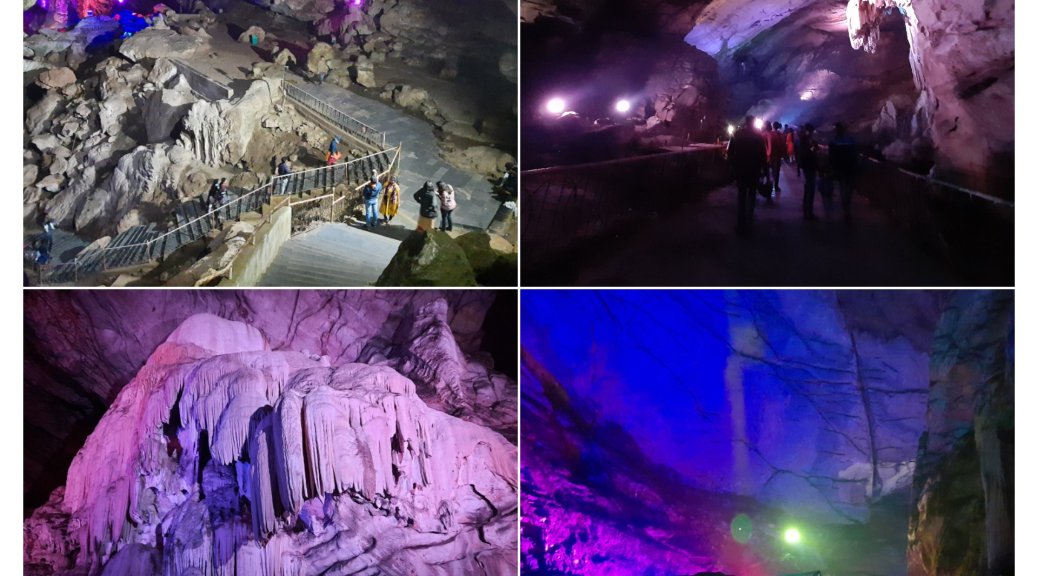
Top on the list, there are hundreds of caves that are open to explorers, hundreds being discovered every day and maybe thousands that are still unknown to people yet. ‘Krem Liat Prah’, India’s longest cave system is in Meghalaya.

2. Andhra Pradesh:

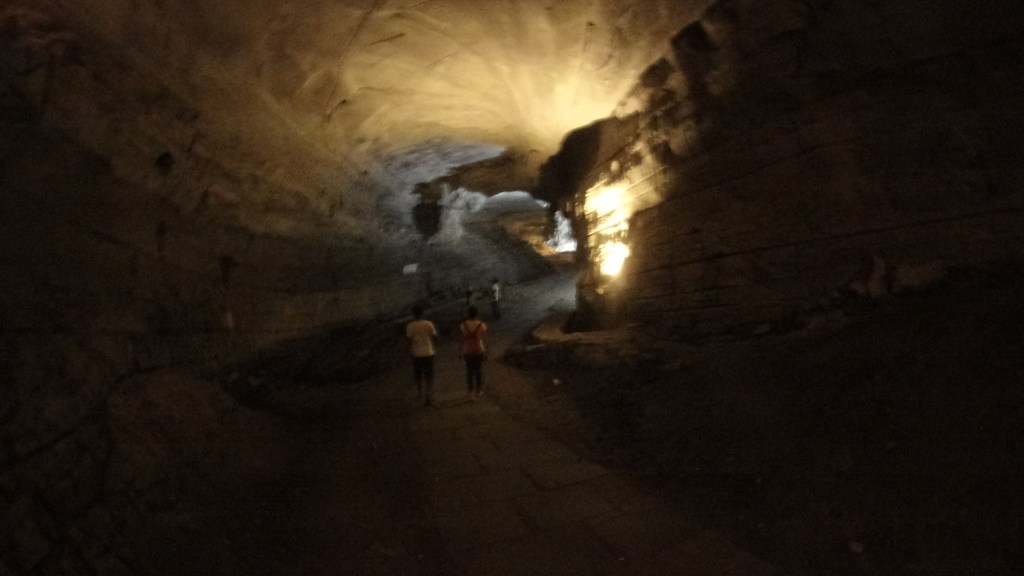
Borra caves’ in Andhra is the largest cave in India. A heritage railway line passes just above this limestone cave. Having such a big cave system is proof and motivation enough to know that several other caves are available in this region waiting to be explored by adventurers and tourists alike.

Inside the Belum caves

3. Chhattisgarh:

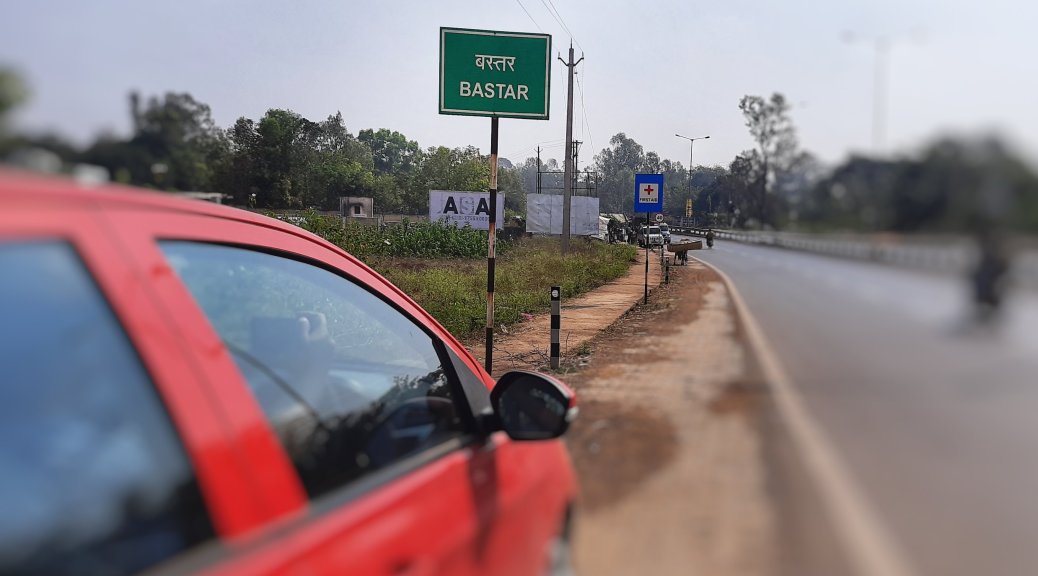
The state sitting within the mythologically important forests called ‘Dandakaranya,’ these forests are home to several limestone cave systems that are yet untouched by mass-tourism. Only about 57 caves are known to people as of now, and there is immense scope for exploring new caves. The remoteness of the places adds to the joy of the explorer while caving in Chhattisgarh. The video of exploring a cave at Bastar, Chhattisgarh is shared below.

Cave exploration at Madarkonta caves

4. Andaman & Nicobar Islands:

This archipelago and Union territory of India is one of the best kept secrets of nature enthusiasts who want to go caving. In fact, this is where I saw a stalactite and stalagmite for the first time in my life. The connectivity of these remote caves located on different islands through a channel of interconnected mangrove forests passing through pristine blue sea water makes it a memorable experience.

5. Karnataka:

While all the above cave systems I have enlisted above are limestone caves, Karnataka is home to some of the beautiful sandstone caves which are scattered across the middle and northern region of the state. Unlike underground, the caves in Karnataka are formed above the earth’s surface and give a completely distinct perspective of exploring this state, which is my home-state as well!

Rocky hills at Badami

Stories Through Souvenirs- An e-book

A compilation of 18 short stories based on my experiences of traveling on the roads of India, I’m happy to share that my second e-book is now available for my readers.

My book- ‘Stories Through Souvenirs‘ is a compilation of my stories of meeting people, hearing their stories and the learnings from my experiences. These are the stories of how these stories influenced me to become who I am.

Do give it a read and I am sure you will like it 😊

Pondicherry- 10 Places to Visit and Things to Do While on A Tour

Do you want to visit the tranquil beaches of the south? Journey to Pondicherry. The city was previously a French colony and is now a small union territory on the eastern coast of the Indian subcontinent. In both the monuments and the city’s alleyways, you can still see examples of that era’s architecture. The city is well-known for its beautiful beaches and historical sites to visit. There are also some fantastic cafés and restaurants to visit while on tour. To learn more about the location, try the local food.

Pondicherry is appropriate for individuals of all ages and walks of life. It is ideal for seniors, couples, friends, family, children, and business travellers. While in the city, there are several sites to see, some of which are listed here. Stay at Treebo Hotels in Pondicherry to make your journey unforgettable. These resorts are spread around the city and provide some of the greatest features.

Places to Visit in Pondicherry for an amazing trip:

1. Paradise Beach

Lovers may visit Paradise Beach, which is ideal for relaxing. Tourists are drawn to the area because of its natural beauty. The sun’s rays reflecting on the golden sands of the coast create a captivating view of the entire region. To go to the beach, take a ferry from Chunnambar. The Bay of Bengal’s stunning beauty is worth seeing. It is a photographer’s dream since exotic birds may be found here. So, take a stroll along the beach or spend some quality time with your special someone. There are also food vendors here for some snacking.

2. Sri Aurobindo Ashram

Aurobindo Ashram is a spiritual destination for those who are on a trip. To discover more about the place, visit the Ashram library. The location has expanded from a tiny congregation that worshipped Sri Aurobindo. The site is worth viewing while sightseeing in the city. The Ashram also has a hall where guests may view a short film about Sri Aurobindo’s life and work.

3. The Basilica of Sacred Heart of Jesus

How can one miss the city’s most famous church? This church is a masterpiece of Gothic Medieval Architecture and is well worth seeing. Stained glass and paintings depicting the life of Jesus Christ may be seen inside the church. The church is adorned for Christmas and Easter, and people travel long distances to attend the festivities. The magnificence of the building, on the other hand, draws the majority of tourists to this location. It was built in the early 20th century and has been rebuilt multiple times to keep the entire structure in good condition.

4. Rock Beach

Another beach to visit in Pondicherry is Rock Beach, also known as Promenade Beach. The location is ideal for seeing the sunrise and sunset. During these hours, the waters become golden, creating a beautiful scene. People come here for peace and quiet or to take a stroll with their companions. The palm trees that line the shore are also considered to be the most photographed spot in the city.

5. Varadaraja Perumal Temple

This lovely Dravidian-styled temple is well worth a visit when in the White Town of Pondicherry. During festivals, the temple is inundated with people worshipping Lord Vishnu in and around the shrine. Seek heavenly blessings here and marvel at the temple’s architecture. Lord Vishnu, also known as Lord Varadaraja, is claimed to bless everyone who comes to the temple. The temple was established in the 11th century, and several legends have been told about how the temple came to be. One of the most popular is that the Lord’s idol was discovered in the sea, which is how the temple was established here.

6. French War Memorial

The War Memorial, located in the seaside region of Pondicherry, is recognised to be very important to the French Indians who live here. The war memorial was created to honour the troops who died during World War I. The Memorial was created in the first half of the 20th century and is visited by people from all over the world. Because it is positioned on a beach, the view of the entire region is breathtaking. The 14th of July is marked as a day to remember the martyred warriors. The entire region is illuminated, and people gather to remember the people’s sacrifices.

7. Auroville

This Ashram, which is also a piece of art by the Sri Aurobindo Society, is located about 15 kilometres from Pondicherry’s main city. This location is a must-visit because of the tranquilly and tranquillity it exudes. It is being created as a township and has recently become one of the most popular tourist destinations in the country. Visitors to the city come to view the Matrimandir. The architecture of the Gold Dome is what draws the majority of tourists.

8. Arikamedu

History aficionados might visit the Indo-Pacific bead-making site at Arikamedu. It is an archaeological site located within a few kilometres from Pondicherry’s main city. The site is claimed to have been a trading centre during the 1st century BCE. In addition, the French Jesuit Mission’s ruins may be found here. The traces of a bygone age are a must-see, located in a remote place. The surrounding natural beauty is still undisturbed because not many people visit the location.

9. Chunnambar Boat House

The magnificent seas of the Bay of Bengal are very captivating in this location. The little hamlet outside of Pondicherry’s main city is a popular tourist destination. Visitors may also participate in a variety of water activities in the area. Dolphins may also be seen here. Sit on the beach and soak up the rays, or watch others participate in various sports. For some adventure, one may even take a boat trip in the backwaters here.

10. Shopping in Pondicherry

Last but not least, shopping in Pondicherry’s streets is one of the nicest things to do. Souvenirs for loved ones can be purchased here. Serenity Beach Bazar, Nehru Street Market, Saram China Market, and many more are places to visit while in the city for some shopping. To shop from the city, look for things such as handicrafts, clothing, food, home décor, handbags, and so on.

The streets of Pondicherry are also known for photographic sessions as they are painted in either vibrant colours or plain white. Visit the place to experience all of this.

To check out all these beautiful places in Pondicherry, book your stay at Treebo Pondicherry. These hotels in the city are available at budget-friendly rates and provide some of the best amenities. Some of these services at Hotels in Pondicherry include-

  • Complimentary Breakfast
  • Free internet access
  • Hassle-free check-in
  • Branded Treebo toiletries.

These hotels in Pondicherry by Treebo are:

  1. Itsy by Treebo- Coastal Grand De Heritage
  2. Treebo Trend B Coral
  3. Treebo Trend Yagna Residency
  4. Itsy by Treebo- Red Lotus Heritage
  5. Treebo Trend Raffis’ Andalusia
  6. Treebo Trend South Avenue
Are Indians less patriotic?

On a recent trip to Saudi Arabia, I had come across people of several nationalities, all living in harmony and brotherhood in the country. I noticed that the people from the larger Indian sub-continent are greatly respected by the locals irrespective of their nationality. By the Indian subcontinent I mean, India, Pakistan, Bangladesh and to somewhat an extent, Sri Lanka. Everybody shares a common language, ethnicity, and identity of being an “Indian”. During my stay there, I witnessed National festival celebrations of three countries including Pakistan’s Independence Day, Indian Independence Day, and Saudi National day (Independence Day).

Celebrating Pakistan’s National festival:

I arrived in Saudi on 13th August’22. It was the first day of my presence in a new country, I was all excited to get acquainted with my neighborhood. But, I was suffering from a headache due to lack of sleep. Hence, I just identified a mall, some Indian restaurants, and a few grocery stores nearby for availing emergency items and called it a day.

On the 14th morning, I noticed that a big Pakistani flag was hung in a shop located right in front of the hotel where I was staying. It indicated that the store was owned/run by a Pakistani citizen, and they were celebrating Pakistan’s 75th Independence Day. For me, it came as a surprise that another country’s flag was allowed to be displayed publicly. But what piqued my interest more was meeting a Pakistani national for the first time. It needs no explanation that any form of free communication between the people of India and Pakistan isn’t accepted in both nations when we are residing in our respective countries. I decided to buy a small flag as a souvenir to mark my first meeting with any Pakistani person in my lifetime. Hence, I crossed the road and entered the large textile store.

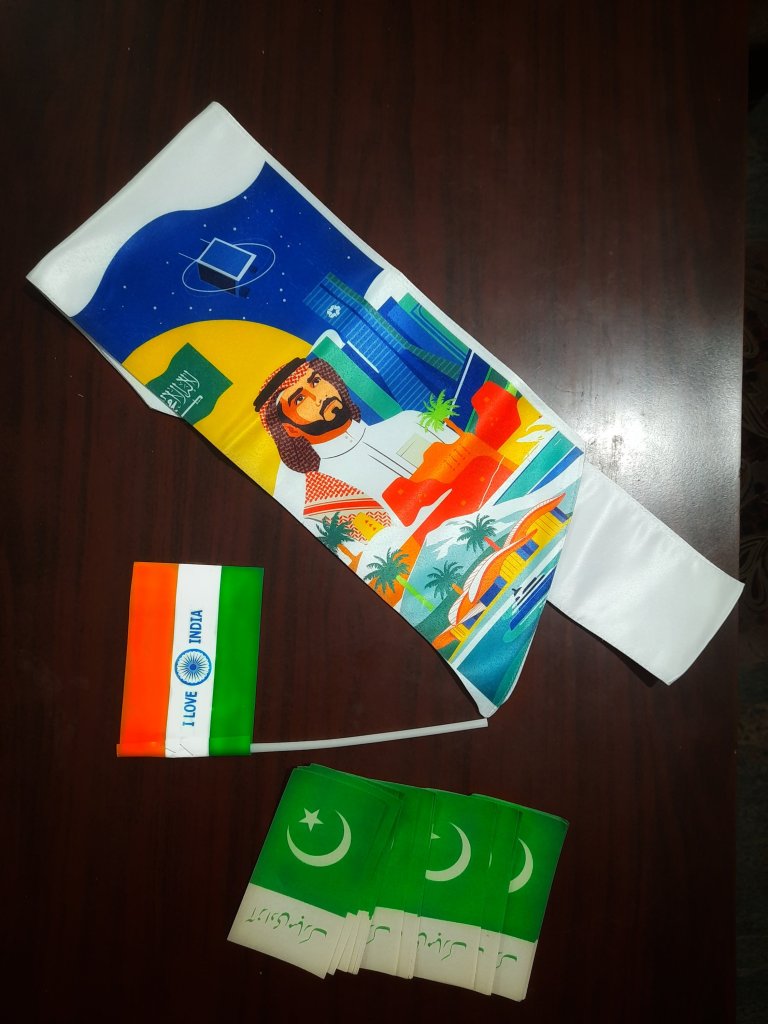
Ranging from bangles, frocks, cufflinks, brooches, keychains, and flags, there were several Pakistani National day themed knickknacks available for purchase. The shopkeeper asked me what I was looking for. I asked him to give me the smallest available replica of the Pakistani national flag in the thought that I could paste it in my personal journal/ scrapbook. But, there was none in the size that could fit into my book. He showed me some of the other accessories available, and I informed him that none could be used in my country. A little surprised, he asked me where I was from. I told him that I was from India. Learning of my interest in buying a Pakistani flag as a souvenir excited him. He happily handed over a small stack of miniature flag stickers into my hands and asked me to keep them all, for which he refused to accept any money. He wished me in advance for India’s Independence Day and I returned the greetings for his country’s special day before leaving his shop.

Celebrating India’s National festival:

It was 15th August on the following morning, a day that India was celebrating as ‘Azadi ka Amrit Mahotsav’ back home on her 75th Independence Day. That day, there was no sight of any Indian flag hanging anywhere outside on the streets. I decided to seize the opportunity to explore the neighborhood a little more in the name of adding an Indian national flag to my journal in memory of my first Indian national festival celebration, outside of India. I walked into a few Indian textiles stores asking them if they had any Indian flags to which they responded with a negative. I walked into a few Indian restaurants to check if they had anything on display or if they could give me any leads to where I could find one. A few of them asked me the purpose of why I was searching for an Indian flag. When I told them that I wanted to use it as a souvenir, they either smiled or had a smirk on their faces. They must have wondered that I was some crazy woman walking freely on the streets of Saudi in search of my country’s independence.

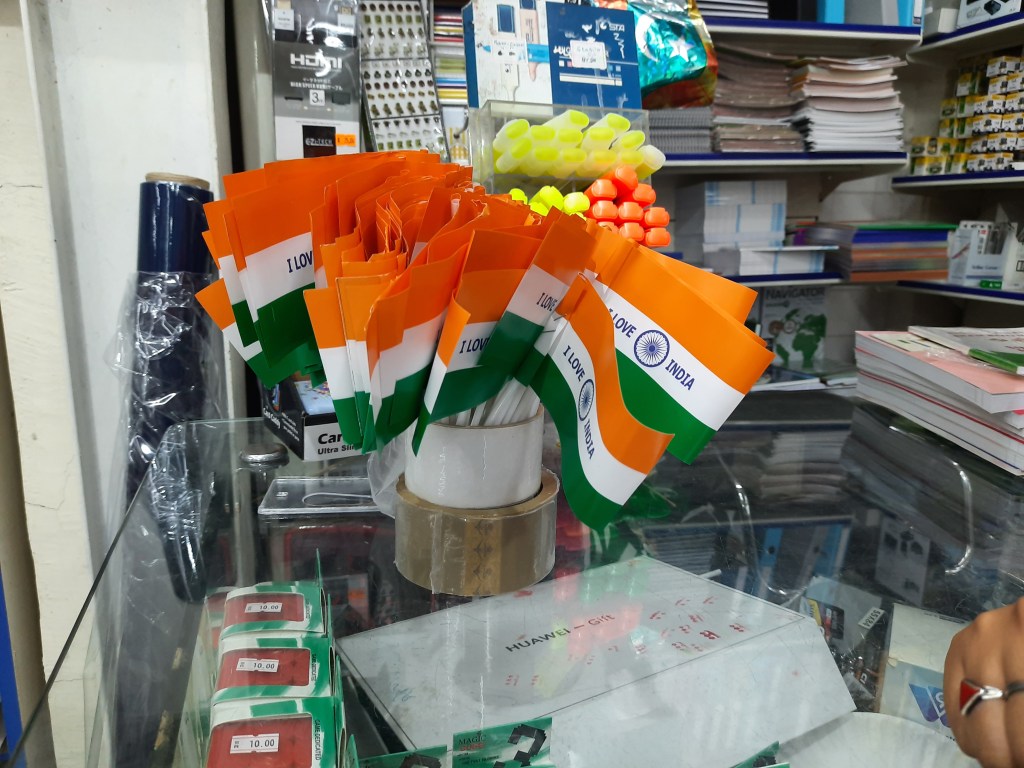
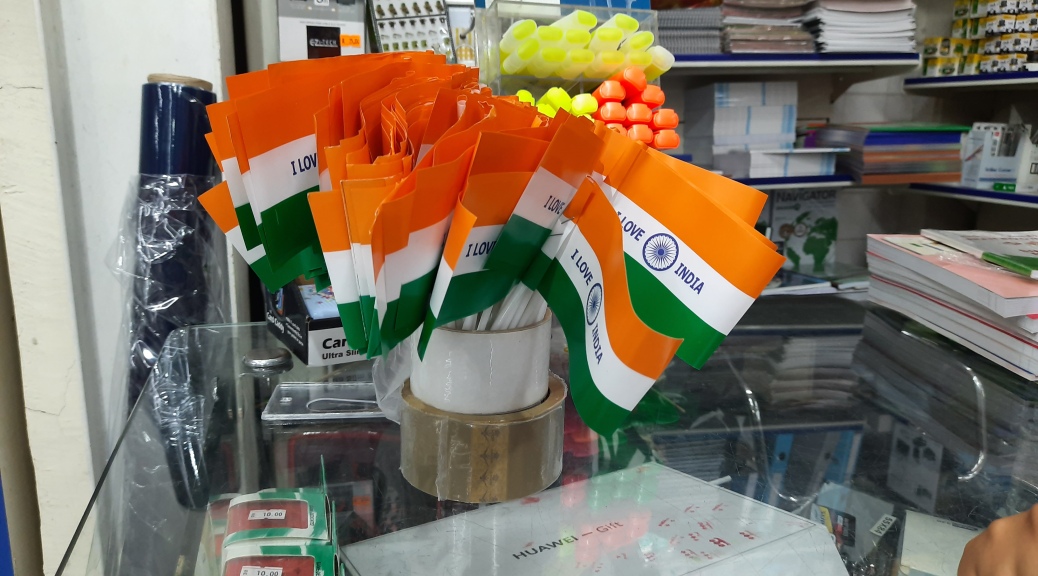
None of them had any clue where I could find one. In the pursuit of an Indian National flag in Saudi Arabia, I wandered across a few streets walking over 9800 steps as indicated in the activity tracker on my smartphone. After concluding it to be a futile attempt to find an Indian tricolor, I decided to head back to my hotel. During my return, my eyes fell on a stationary shop and I decided to give it a last try. There was an Indian storekeeper who smiled upon hearing my inquiry. He took me to the section where a bundle of small plastic flags was kept. I asked for one flag for which he charged me 2 SAR without a bill. I came out of the shop all happy after a successful hunt at exactly the 10,000th step in the activity tracker, only to realize that I was standing just a few yards away from my hotel and that I had searched all over to find a little flag.

Indian National flag
Indian National flags at the stationary store

Celebrating Saudi Arabia’s National festival:

It was a long weekend due to the Saudi National day celebration on the 23rd of September. I was in Riyadh, the country’s administrative capital where several ceremonies were scheduled for the observance of the National day. The entire city was lit up and decorated with the theme of the Saudi national flag, which I was told was the case throughout the country. The level of public involvement and the fervor with which a national day is celebrated in Saudi was something that I felt missing back in my country on a national festival.

At the end of the National day celebrations, I and a few others who had accompanied me for the weekend were at the airport terminal in Riyadh, waiting for our return flight. We noticed that all staff working at the airport and the shops were wearing representative brooches or sashes. By then, I had realized that I had the national flags of two countries as souvenirs with a backstory of how I got them. I didn’t want to miss out on adding one from Saudi to the collection because that’s where I was to celebrate the national days of all three countries in 2022. I asked one of the staff about where I could get one for myself and that’s it. She got a sash not just for me, but one for each person who had accompanied me. Her colleagues and she were extremely excited to give us the sashes and click selfies with us wearing them. And any money offered in exchange was refused to be taken, as they called it a gift for us from them.

Conclusion remarks:

Sitting back on my flight, I was trying to recollect my experience of how a national festival was perceived by three different countries. As a foreigner, I was given a gift (free of cost) by Saudi Arabia and Pakistan with excessive excitement. Whereas, being an Indian, I expected myself to be warmly greeted by a fellow Indian on foreign soil and share the same enthusiasm to wish each other on India’s national festival. Instead, I bought an Indian flag from an Indian (it was a small cost by any reference, that could be waived off). It was not the free item I was seeking, but at least an Indian to be able to guide me to a place where I could get Indian products. The expectation was to meet another Indian who shared the same excitement to celebrate India’s festival as that of a Saudi or a Pakistani.

Are we Indians less patriotic? What are your thoughts?

A Rare Connection of Hockey Between Karnataka and Tamil Nadu

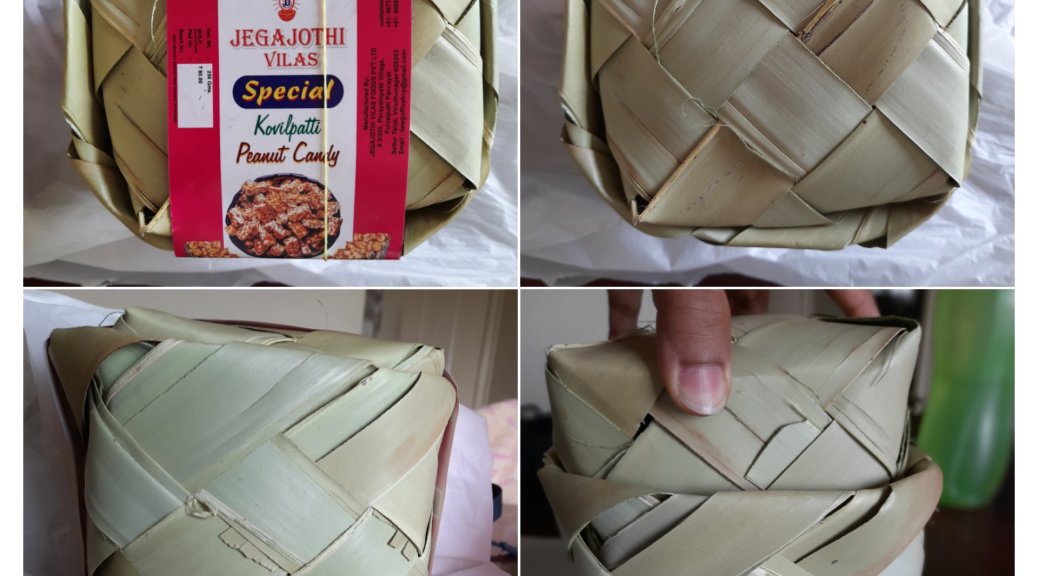
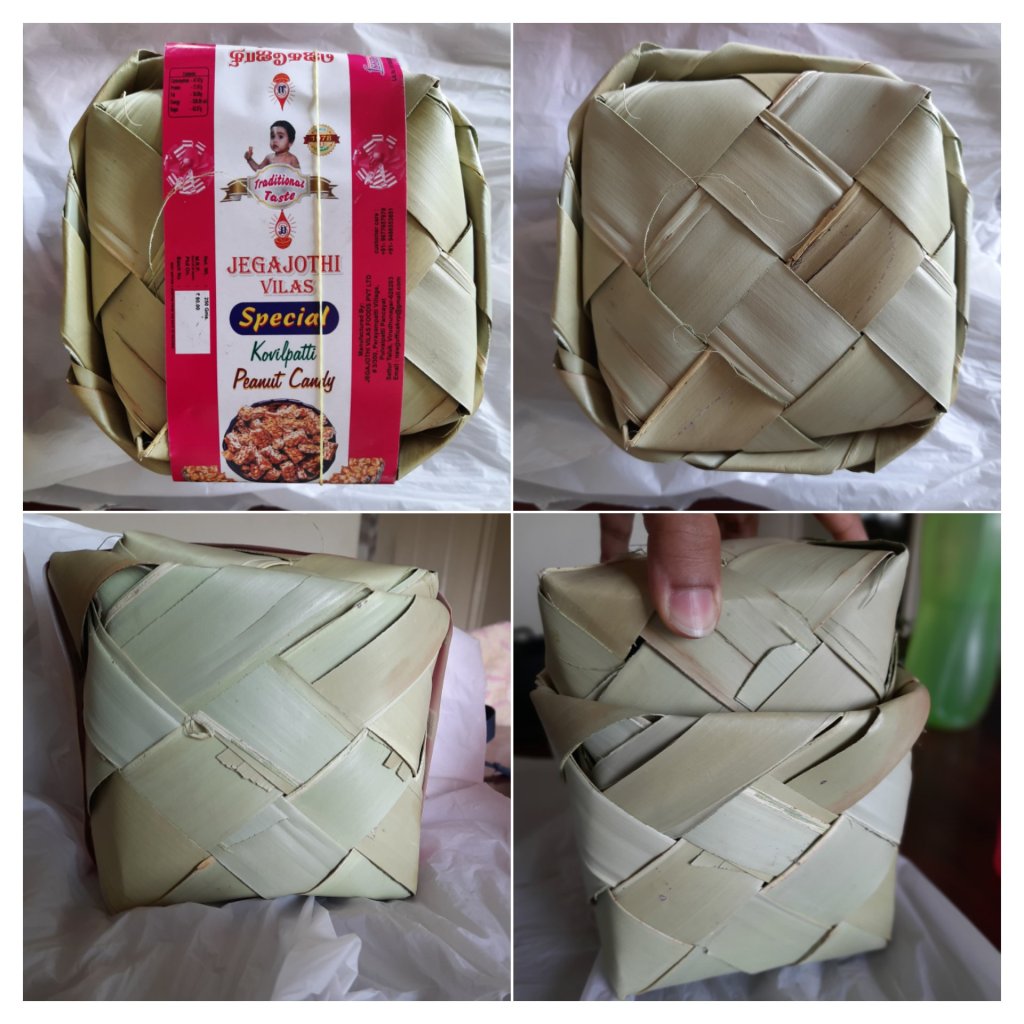
I have been fortunate to meet many like-minded people online, through travel blogging. Recently, I happened to meet one of such friends offline, during his visit to Bangalore. He greeted me with a souvenir, a nice palm leaf box containing chikkis. He explained that it was the ‘panai olai petti’ containing the famous candies from his hometown. After I returned home, a little bit of online browsing about this souvenir unfolded some interesting facts for me.

The palm leaf box containing the Kovilpatti chikki

Talking about the southern states of India, two neighbours have a lot in common. What triggered this thought were the names of places starting with the letter ‘K’, one from each state. Kodagu and Kovilpatti from Karnataka and Tamil Nadu respectively. Meanwhile, the ‘C’ is what makes these two ‘K’ places famous. ‘Cauvery’, the holy river originates in Kodagu and ‘Chikkis’, the peanut candies of Kovilpatti has earned a GI tag for itself. Enough is written and done on the internet about either of the places.

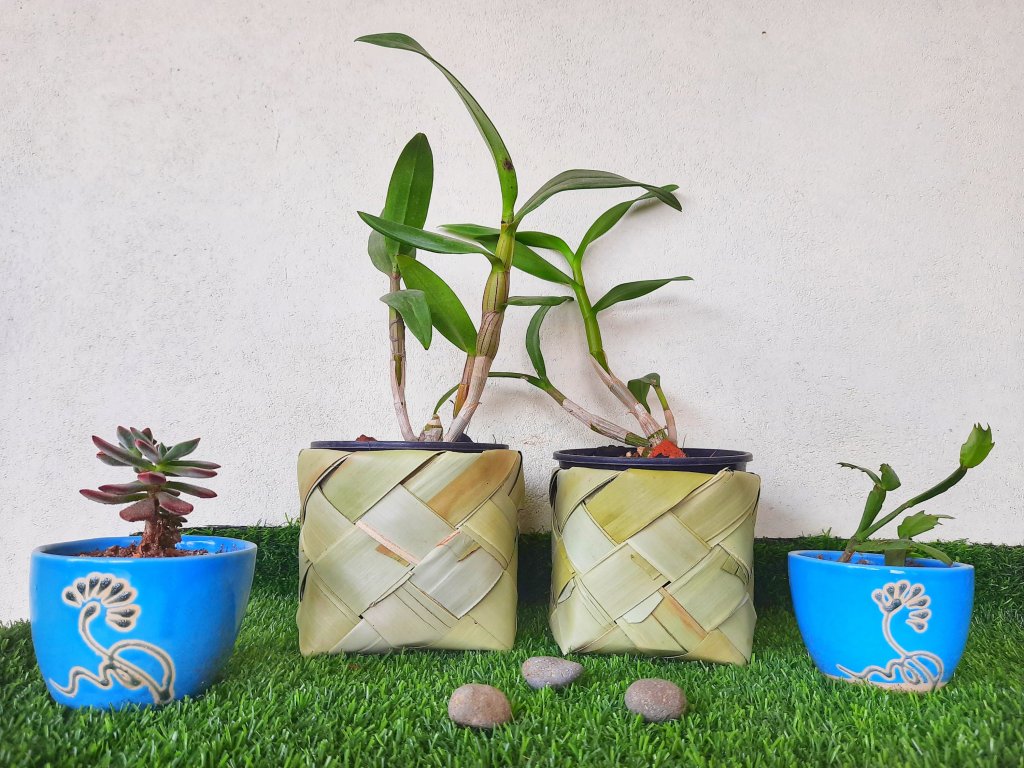
Palm leaf boxes of Kovilpatti mithai being Repurposed as planters

But what turned out to be more surprising and a rather rare connection between the two ‘K’ places of these states is their common love for the National sport of India- Hockey. In my earlier post, I have mentioned how the largest festival in the world dedicated for any sport (hockey) is celebrated in Kodagu. But what I learn now is that Kovilpatti too, shares its history with Indian military and the influences of the British to have a strong hockey culture. With at least a dozen hockey clubs and several players making it to the Indian national team over time, the people of Kovilpatti have an unabated enthusiasm for the national sport.

What I do know is, that there are several other lesser-known places in India where people celebrate sports other than cricket. Only initiatives by governments, support from sponsors and adequate media publicity can encourage and motivate more people to nurture a sporting culture in our country, anything other than cricket.

Five must have experiences in Jagdalpur

Bastar region in Chhattisgarh is very popular for its Dussehra celebrations and people flock from far away to witness its tribal congregation during this time. Noting that Jagdalpur is the biggest city in Bastar, it is likely that it will be the central place for planning one’s stay and travel around this region. But, if one happens to be there for a very short stay and interested in exploring Bastar beyond its festivities, then here are some of my recommendations.

1. Caving at Madarkonta: There are so many massive limestone caves and cave systems in and around Jagdalpur and just a countable few of them have been promoted by the Chhattisgarh tourism board. Although these are also great places to visit, my caving experience at Madarkonta is one that stands apart. This cave is still inaccessible without a local guide and no tools or digging has been made to accommodate tourists. So, the entire caving experience here is still in its raw form, just the way it was found by the local men, many years ago. You need to duck down and walk barefoot, navigating your way through the hollow limestone chambers with torch light. (Barefoot because the locals believe that some deities reside inside the cave). Watch the entire video below:

Exploring Madarkonta caves

2. A boat ride into the Chitrakoot waterfalls: Chhattisgarh is home to over a hundred amazing waterfalls. But the poster boy on all their tourism ads is the Chitrakoot. Also known as the Chitrakote waterfalls, it is referred to as India’s Niagara for a reason… During monsoon, river Indravati plummets down with all her might in a horseshoe shape, making it the widest waterfall in India. A ride in a country boat right into the waterfalls is an exhilarating experience! Watch the entire video below:

Boat ride at Chitrakote waterfalls

3. A sunrise visit to the Island temple at Dalpat Sagar lake: Although tourists can take a boat ride in the largest artificial lake of Chhattisgarh state all through the day, an experience that stands out is a ride during sunrise, to the temple located in the middle of this lake. I was told that an underground chamber connects the temple to the royal palace located in the city. This chamber is used by the members of the royal family and VIPs to participate in special ceremonies during Dussehra. On other days, if one is lucky to get access to a country boat for an early morning ride (even better if it is along with the temple priest), they can see the entrance of this chamber illuminated with oil torches while the priest makes his visit to offer the first prayers of the day.

An early morning view of the Dalpat Sagar lake in Kondagaon

4. A Gotul visit: I’ve already spoken about the significance about a Gotul in the tribal culture of Bastar in a separate post. This is a great way to get acquainted with the rich tribal culture through its traditions, music, dance and food, all at one common place.

A tribal ceremony at a Gotul in Bastar

5. A tour of the artisans villages: Wrought iron crafts, Dokra art, wooden crafts, stone sculpting, pottery, handloom, paintings, jewelry making- the list of indigenous art in this region is long and the region boasts of several artisans of National and International fame. Even a quick day tour of these hamlets is worth every little time of yours, while you are here!

Making of wrought iron craft at Kondagaon, Bastar

Do you plan to make Chattisgarh your next destination? Or have you already been there before? What are your recommendations or queries? Let me know!

Happy Ten, TheLostLander

There is no big leap, only baby steps. TheLostLander celebrates a decade on the cloud!

‘The Lost Lander’ celebrates her birthday in February, virtually and literally! 10 years ago, I hosted my first blog on the world-wide web a.k.a. the cloud. And a few decades prior to this, I came kicking to this badass world… Both in February!

It all started with a concept of having a scrapbook. I would write about special moments and save all the memories from pleasant trips by pasting the tickets in a book. As the book started to get filled and weigh bulky, I eventually learnt about a thing called “blogging”. All I knew about this fancy terminology was that people wrote what they wanted and posted it in a space called internet cloud. So, that’s how I opened my account on a platform called ‘Blogspot’. Honestly, I don’t remember the timeline and this screenshot from the now de-func ‘BlogSpot’ page is what reminded me that it was way back in 2011.C.E. that I first created a page for myself on BlogSpot and posted personal content for two years.

My first blog page on blogspot

I was somehow not happy with the aesthetics of my page when I saw other bloggers creating content on fancy looking websites. While browsing, one of the earliest websites on this space, a site called as www.thelightbaggage.com is something that really triggered a new direction for my content. Mr. Arun is one of the earliest travel bloggers whom I followed and continue to admire for his dedication to explore and document offbeat and lesser-known places till date. Meanwhile, a friend suggested that I change my platform to ‘WordPress’ to host my website. That’s when I exported my existing content to a new platform (WordPress), built my feature rich website from scratch and picked a random (fancy-sounding) blog-name for myself. Back then, I had no idea what and why people wrote blogs. That’s perhaps the reason for choosing my blog name as well… ‘The Lost Lander’ on a clueless mission to explore the web and the world.

Not even in my wildest dreams had I thought that I would come this long. For me, what started as a transition from a paper-back scrapbook to a virtual book-keeping of special memories, has today evolved and grown into a full-fledged web space to discuss travel.

With a focus on travel writing, the need to create content for my site encouraged me to embark on newer travels and that in turn led me to writing more. Yes, with so much content and less readership, I make no denial that there has been a low phase too. The website went into a year or two with absolutely no content. ‘A phase of self-discovery’, they call it in philosophy. But that’s when a few friends at my workplace discovered ‘The Lost Lander’ and motivated the innate writer in me to create more content. With that, I started to write again and tried to improve its structuring with continuous feedback from well-wishers who read it.

Parallelly, each travel gave me a newer perspective on things. Wildlife tourism, heritage walks, architectural tourism, cultural tourism, Agri-tourism, Industrial tourism, art-study tours, tribal tours, eco-tours, biking, trekking, spiritual tours, culinary tours, ancestral tourism- I hadn’t imagined that I would learn so many forms of travel existed and that I would enjoy EACH of it in wholesome! With that, my travel preferences and style too evolved. From being one who crammed up a trip schedule with as many places as possible on the itinerary to slow travel, from family vacations to road trips with friends, from solo travel to leading a group of people on treks, from being a quick one to post a trip itinerary to being mindful of responsible travel, I have grown!

Noting the consistency and the honesty in my content, I got lucky that brands started to approach me with opportunities to collaborate. A few were paid and a few were barter. And the urge to vent out my travel stories paved way to a few publications in National and local newspapers along with some magazines as well. Although I don’t consider myself a good photographer, a few photos from my website saw the light of the day by getting featured on prominent sites as well. While at this, the sustenance on the cloud too, started to become extremely competitive. From the basic need of setting up a website to maintaining it so that my website shows up somewhere there, Blogging has thrown open an entire universe to me. I learnt tools and terms like SEO, Analytics, Traffic, Keywords, backlink generation and so many other things.

Since the last decade, ‘The Lost Lander’ has only been on a continuous journey of learning, growing and evolving. And without the constant support of YOU wonderful readers, this wouldn’t have been possible. Positive feedback has been taken with humility and criticism is welcomed with equal respect. Constructive criticism is what motivates me to learn more. While I try to take this journey forward, I request you all to shower me with your support and blessings!

Lots of Love,
The Lost Lander

A personal chronology of Deepawali celebration

The list starts from 2015, a religious celebration of the festival of love and lights- Deepawali. Well, I’m not a religious person who would indulge in ritualistic prayers and pooja on any festival. But what started as travelling during this season to utilise my unused leaves combined with maintenance shutdown period at my workplace, has somehow religiously stuck on as a ritual of travelling to a new place, every year.

Circa 2015- Tamil Nadu:
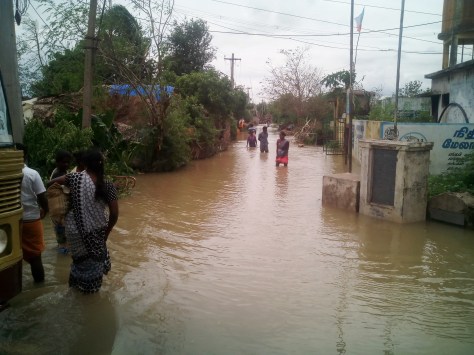
My brother and I ventured out on our backpacking roadtrip to Tamil Nadu, Kumbakonam to Pondicherry. Well, this was an adventurous start I guess, we had to cut short our trip due to a cyclone that had battered the east coast. Result: Crazy floods and crazy drive through the flooded areas. On the main festival day, we had reached Chidambaram- a must read post about our experience. A bad one then, a memorable one now.

A flooded village near the Indian east coast after a cyclone
The flooded villages enroute to Chidambaram

Circa 2016- Assam:
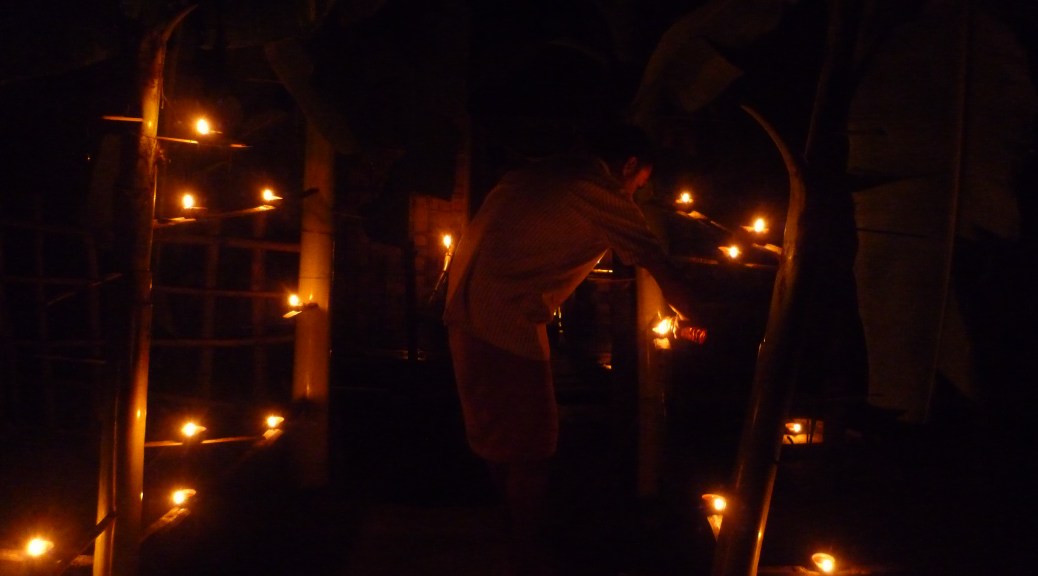
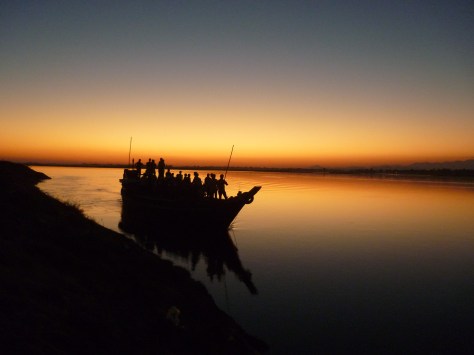
This was my first solo trip ever and the first time in the north-eastern part of India. After exploring Meghalaya, I had tagged along with a couple of other fellow travellers. We happened to experience one of the most beautiful Deepawali sights. First, the drive through the lamp lit national highway, then watching the best sunset over river Brahmaputra onboard a ferry to Majuli and the crazy ass lamp lit welcome on the Majuli island.

An image of the daily life in Majuli shot during sunset
Sunset at Majuli

Circa 2017- Karnataka:
After a crazy long year of travelling across India, my friends and I decided to have a simple deepawali roadtrip, closer home in the western ghats. We drove to the famous Agumbe ghats and the places around.

Circa 2018- Himachal Pradesh:
One of THE best solo trips of my life, where I couldn’t find a single traveller to tag along through the entire trip. This thus, became a thorough personal and local experience in the Spiti valley. On the day of Deepawali, I was on my way back with a brief stopover at Shimla. A trip that made an impact on me, perhaps forever.

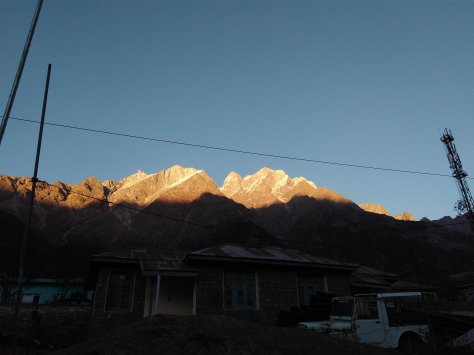
the view of the Kinnaur Kailash mountains at Sangla
Sunset view from Sangla bus stand

Circa 2019- Kerala:
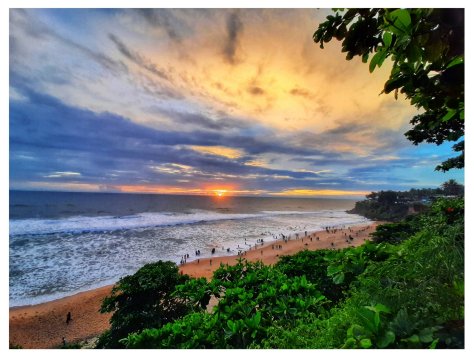
A solo weekend exploring Varkala, it was a short one but yet overwhelming. It was a happy-hippy trip, in a true sense.

Sunset from Varkala Cliff
The sunset from Varkala cliff on Deepavali 2019

Circa 2020- Karnataka:
Fears of travelling afar due to Covid-19, personal commitments and taking advantage of working from home, this was the longest duration I spent in my hometown in the last 15 years. Quite unlikely to mention the highlights, but the Deepawali of 2020 indeed tops all the above from the list.

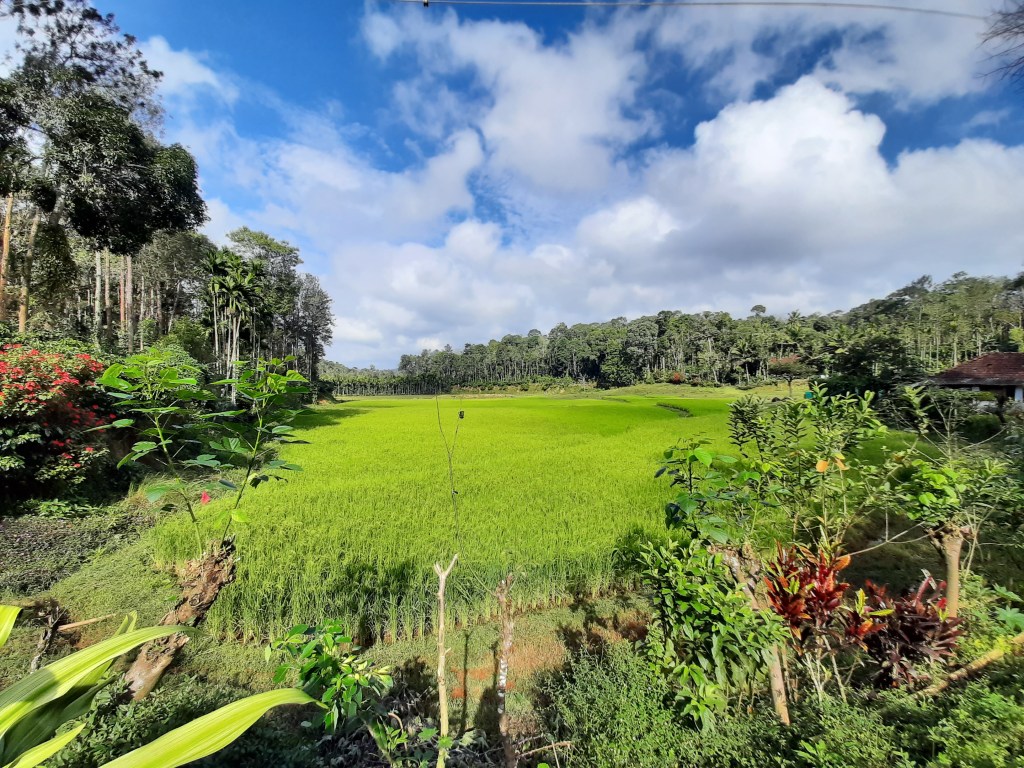
Paddy and coffee plantation in Kodagu
The view of the farm, from our ancestral home in Kodagu

Circa 2021 – West Bengal: This was a trip that was planned on a whim by 2 of my friends and me, where my brother joined in at the last minute. It was a completely new kind of Deepawali celebration which we experienced during trip. Large pandals setup at every 100meters to celebrate Kali Pooja was something unknown to us about Siliguri in the state of West Bengal. That night, we reached ‘Manebhanjang’ a small town located at the entrance of the Sandakphu trek to the Singalila ridge, the highest point of West Bengal. It was yet another experience to witness an amalgamation of Gurkha, Buddhist, and Hindu culture in the way this town celebrates its festival of lights. Much like the carol singers during Christmas, people form into small teams and go from door to door singing, dancing, and spreading joy and blessings.

Circa 2022- Saudi Arabia: It’s a first time for me to spend Deepawali out of my home country but still in accordance to my tradition of visiting a new place during the festival. This time, work brought me here. Although there wasn’t much we could do like in India, some shopping for sweets at Indian sweet meat shops was a little bit of home we brought for ourselves while staying away from homeland. But, I feel grateful for this opportunity and experience life has brought to me during this Deepawali that has helped me to grow into a little stronger person I was when left India.

What are your stories about celebrating Deepawali / Diwali? What do you do normally?

To Spiti valley- The journey

So… I headed straight from office to Bengaluru Airport to catch a late-night flight. Just so that I could make it to the railway station to catch the early morning ‘Himalayan Queen’ on time. Just so that I could reach Kalka on time. My friend in Delhi helped me in my commutation juggle between the airport and the railway station. Then, the Himalayan Queen chugged off from Delhi. Apart from seeing a hazy sunrise through the windows, I slept through most of the journey until I reached my first destination in my 10-day long tour, that afternoon. I ran to the special platform in the other end of the station at Kalka to board the ‘Himalayan Queen’ that ran on a narrow-gauge thereafter. Only to realise that it was delayed by an hour.

20200526_14470353833319360455278.jpg
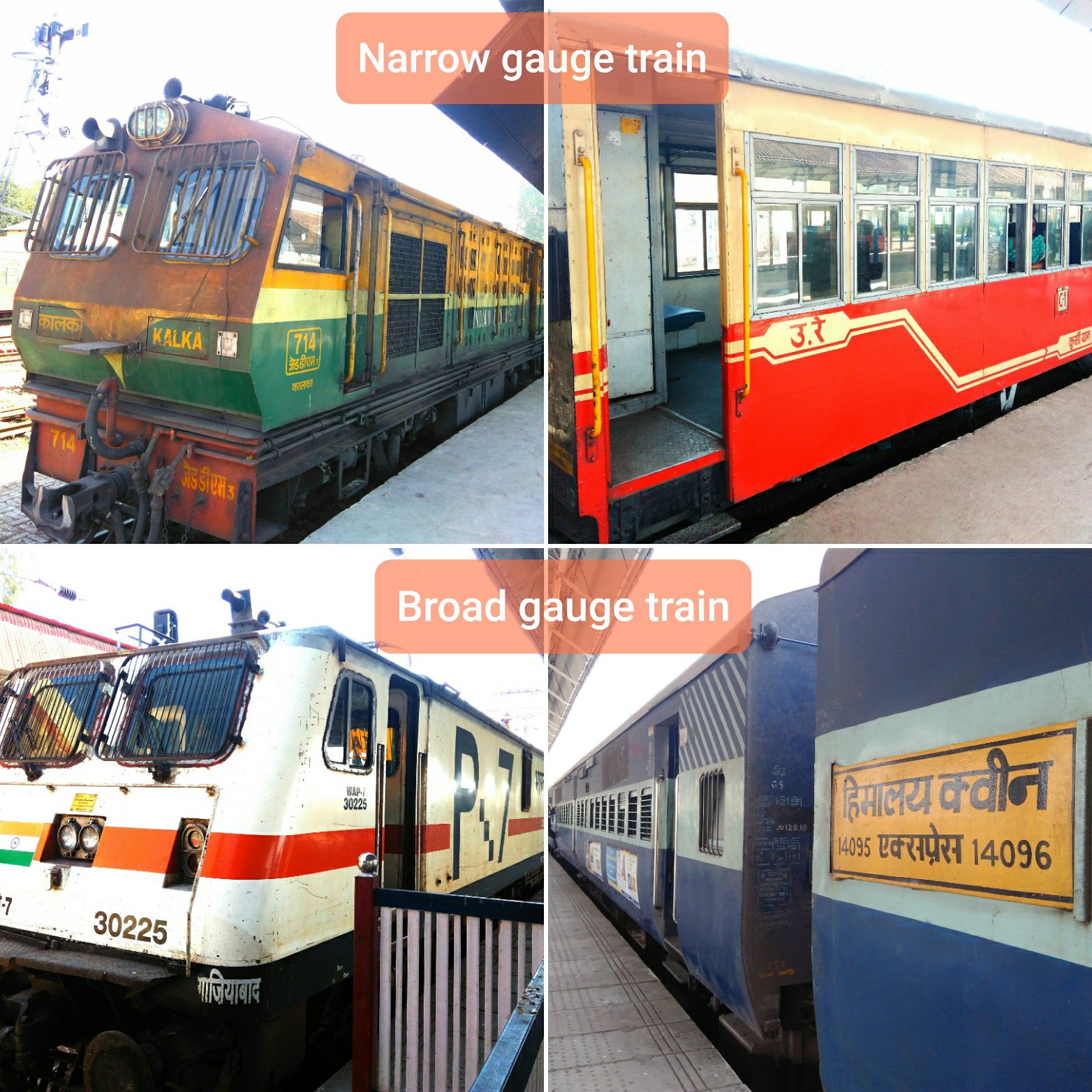
The Himalayan Queen Trains. Top: The narrow gauge train between Kalka & Shimla; Bottom: The broad gauge train between Delhi & Kalka

Anyway, the ride in this train which is a part of UNESCO Heritage was a different experience. The 1st class bogie had old cushioned wooden adjustable chairs like you would have at old single screen cinemas, an unfamiliar thing for those familiar with the regular compartments of Indian Railways. The route was scenic as the train passed through hills, forests, tunnels and cliffs. It stops at several stations that allows ample time for photography and for exploration for passengers who are mostly foreigners. One such stop was the halt at the Railway museum at Barog. But yeah, the initial excitement of experiencing a narrow-gauge waned down soon as the journey got monotonous and long having none of the co-passengers to talk to. It was dark and cold by the time I alighted at Shimla. That’s where my real trip began…

img_20200526_1501081388858492136879642.jpg
The Barog railway station and museum

After searching multiple online sites and walking around in the unknown city in search of a suitable place to stay, I was still clueless of where to go. I finally settled down at a rather shady looking place when I realized that the backpack was quite heavy, and the cold was becoming unbearable for me. The guest house was old and the things in the room were unkempt too… Anyway, I had settled there as the caretaker seemed okay to believe in. I locked myself up in the room, used my sleeping bag inside the warm blankets that were provided and tried to sleep (although I didn’t!).

I checked out of the place at 05.00.a.m. on the following morning and started to walk towards the HSRTC bus-stand based on directions given by the caretaker. I took the wrong deviation and lost my way. I saw that I was reaching the city central area and continued to walk as I hoped to find someone. I heaved a sigh when I saw the army command building. I stopped by to enquire the guard outside for directions. Since I was carrying a large backpack, walking with a face covered with a balaclava, all alone on the empty dark roads, he began to question me suspiciously. Once he heard the girl’s voice and I told him that I was traveling from South India, he introduced himself as a Tamilian who had been posted there just a couple of days ago. He was of little help and I proceeded. Google maps didn’t seem to be of any help either, as the distance only increased every time I walked ahead. I then came across a man on his morning walk who guided me through what he called was the shortest walk path. It was long, dark and scary initially. Although there didn’t exist an official road, the distance (may be aerial) on google map kept shortening. It was a descent downhill and I did back and forth when I had my doubts. Finally, it had dawned when I reached the bus stand and relieved when I saw a few newspaper distributors sorting their dispatches. I had missed the first bus that was heading towards Sangla. They introduced me to a man in a tea stall, whom they said was the driver of the next bus which was scheduled an hour later. The driver offered me chai and asked me to stay around.

Finally, the bus started. It would drop me until Karccham from where I had to board another one. The journey to my destination was going to be a long one. Amidst the early morning rays, the verdant hills looked amazing and I was excited about the road. The bus conductor and the driver were both nice people who kept checking on me every now and then as I was alone and new. They even bought me peanuts to munch along for my journey. An hour on the road, our bus halted. There was a massive traffic jam due to an accident on the highway. A car had gone almost completely under a lorry that came from the opposite side. It was over an hour by the time the police arrived and cleared the spot after inspection. Meanwhile, the hospitable people in the hills obliged to allow me inside their house when I wanted to use a washroom. Would you allow a random person on the road enter your house? I’m certainly not sure if I’d do that myself.

By around noon, the bus that I was travelling in broke down. Given that Rampur Bushar was the nearest town where he could find a mechanic, our driver somehow managed to negotiate the ride till there. Also, the passengers could board another bus from the large terminus in the town. He ensured that I sat in a spot, informed the bus station master to keep an eye on my safety and to guide me to the right bus when it arrived. These are the kind of interactions that make you feel confident about having a safe journey ahead. isn’t it?

That said, I sat in the next bus a good 2 hours later. It was a direct bus to my destination: Sangla. But I had a carry-over ticket from the previous bus only until Karccham. The conductor of that bus was fussy about considering the carry-over ticket until Karccham. But I stuck to what I was instructed by the previous driver. A good argument later, I got my ticket extended by paying only for the journey between Karccham to Sangla. The sun was slowly coming down as I approached my destination.

img_20181028_1720451090248996987769050.jpg
Sunset view from Sangla bus stand

Finally, when I alighted at the Sangla bus stand, it was by far the most magical sunset I had witnessed all my life until that day. Right in front of me lied the snow-capped Kinnaur Kailash mountains and the peaks had turned golden. The rest is for another story!

This trip has been compiled into a book. If you like to read about the complete journey, you can avail it on Amazon or read it for free with your kindle. Use the link below.