Tag Archives: India

Exploring the backwaters of Karnataka- Thonse

Although the places that I choose to write about may not stand a chance to be compared with the Sundarbans or the Pichavaram forests… None the less- The Arabian seacoast has its own share of beautiful places in terms of its mangrove creeks. And while Kerala is synonymous with its enchanting backwaters, Karnataka too has its fair share of backwater system which is still untouched and yet to be explored… Through my innumerous journeys in this coastal stretch, I don’t remember a time when I did not put my neck out to be tantalized by the view of the backwaters as I passed on those bridges that fall in between Mangalore and Udupi. So, this time I had set aside one weekend exclusively to explore these lesser known places of the west coast and mark myself in those remote places on the map-of-India.

My itinerary:
Friday: Start from Bangalore – Overnight bus journey to Udupi
Saturday: Kemmannu (Explore the backwaters in a traditional boat ride), Kodi bengre (explore the village and an estuary), Malpe beach (water sports), Krishna temple and the seven Mathas,
Sunday: Chill at Sasihitlu beach and estuary, Kapu beach & lighthouse, return to Bangalore by bus (You can alternate this with a day visit to St. Mary’s island)

The details:

First things first- Having good connectivity, taking the public transport to reach these places has its own experience, the way I enjoyed my trip. But I strongly recommend having your own vehicle to these places. Given the hassle of waiting for a ride, the remoteness of the place and the joy of riding through such a beautiful stretch of road be best enjoyed on a two-wheeler only. That said, my mother and I had reached Udupi by an overnight bus and stayed at a hotel close to the Krishna temple. We freshened up and headed to the service bus stand located at a walkable distance to the hotel.

IMG_20171209_130602.jpg
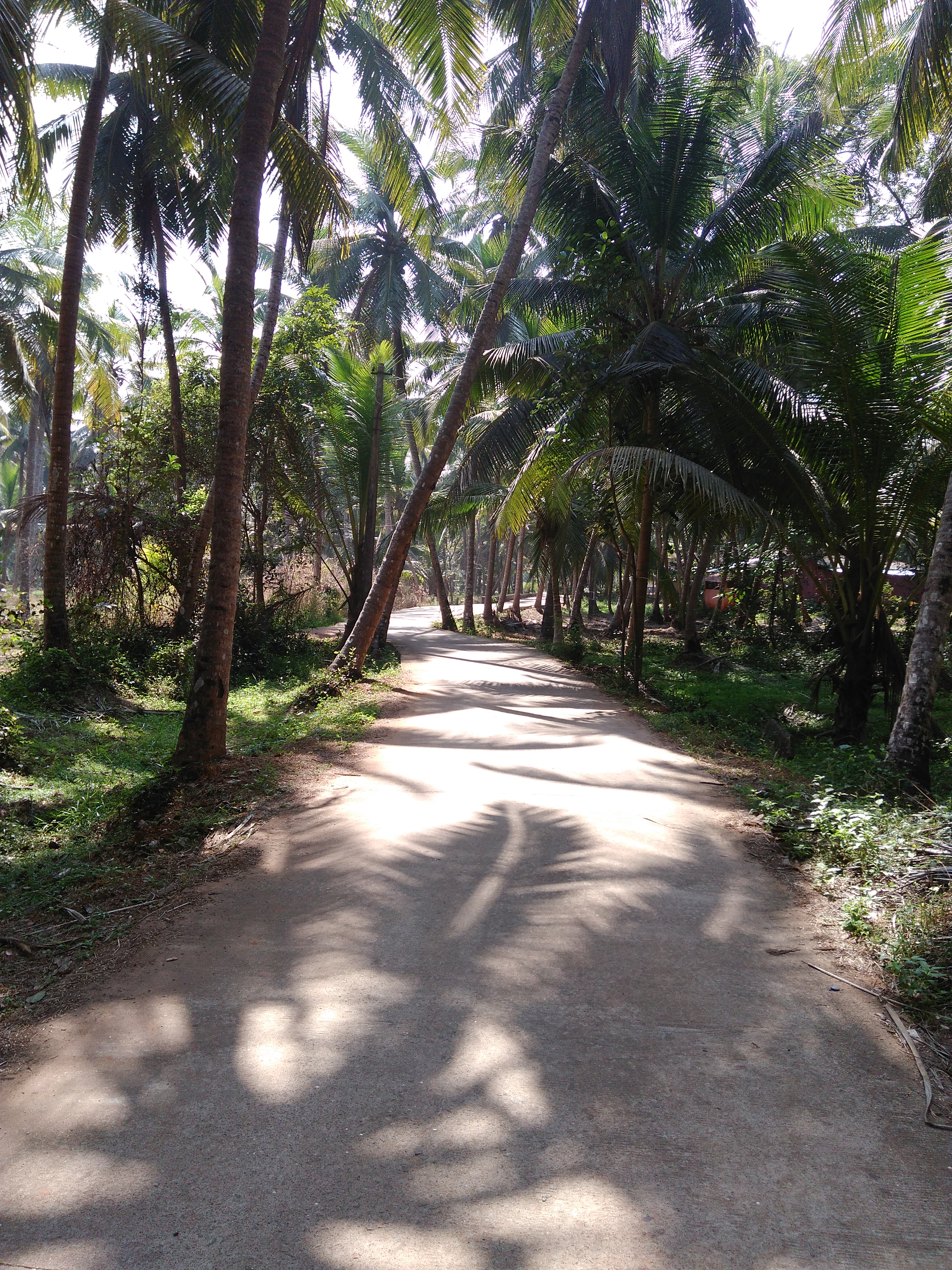
street leading to Kemmannu

The entire district of Udupi is dotted by innumerous temples and churches and hence, I prefer not to make a mention of them in this post. There is no dearth of local buses to any place within the coastal belt of Karnataka and hence, I relied totally on public transportation for my commutation. All set to explore Thonse, we boarded a bus that passed through Kallianpur village (This was once, a part of the Vijayanagara empire). The ruins of an old laterite fort stand testimony to that era.

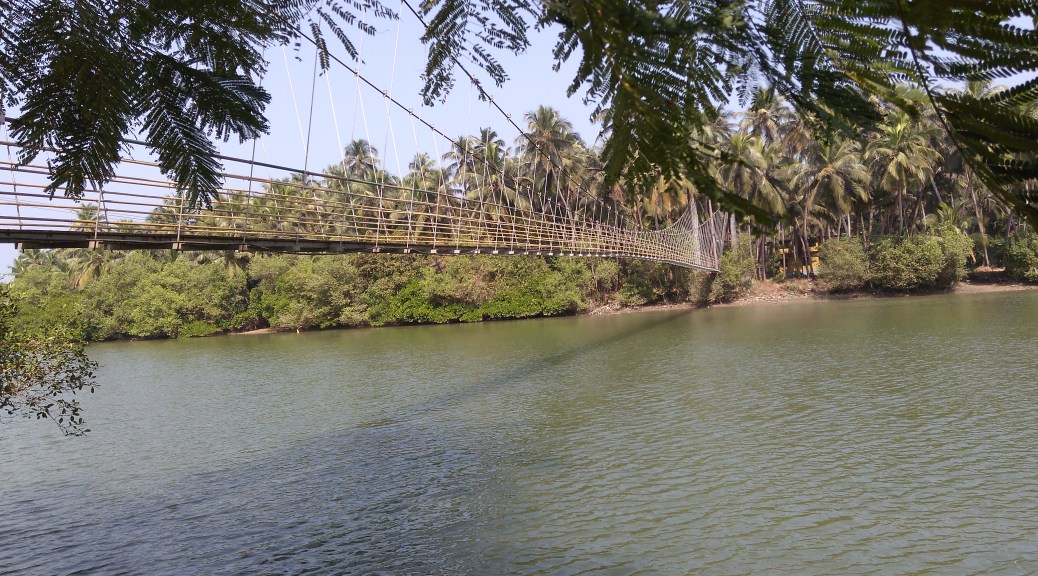
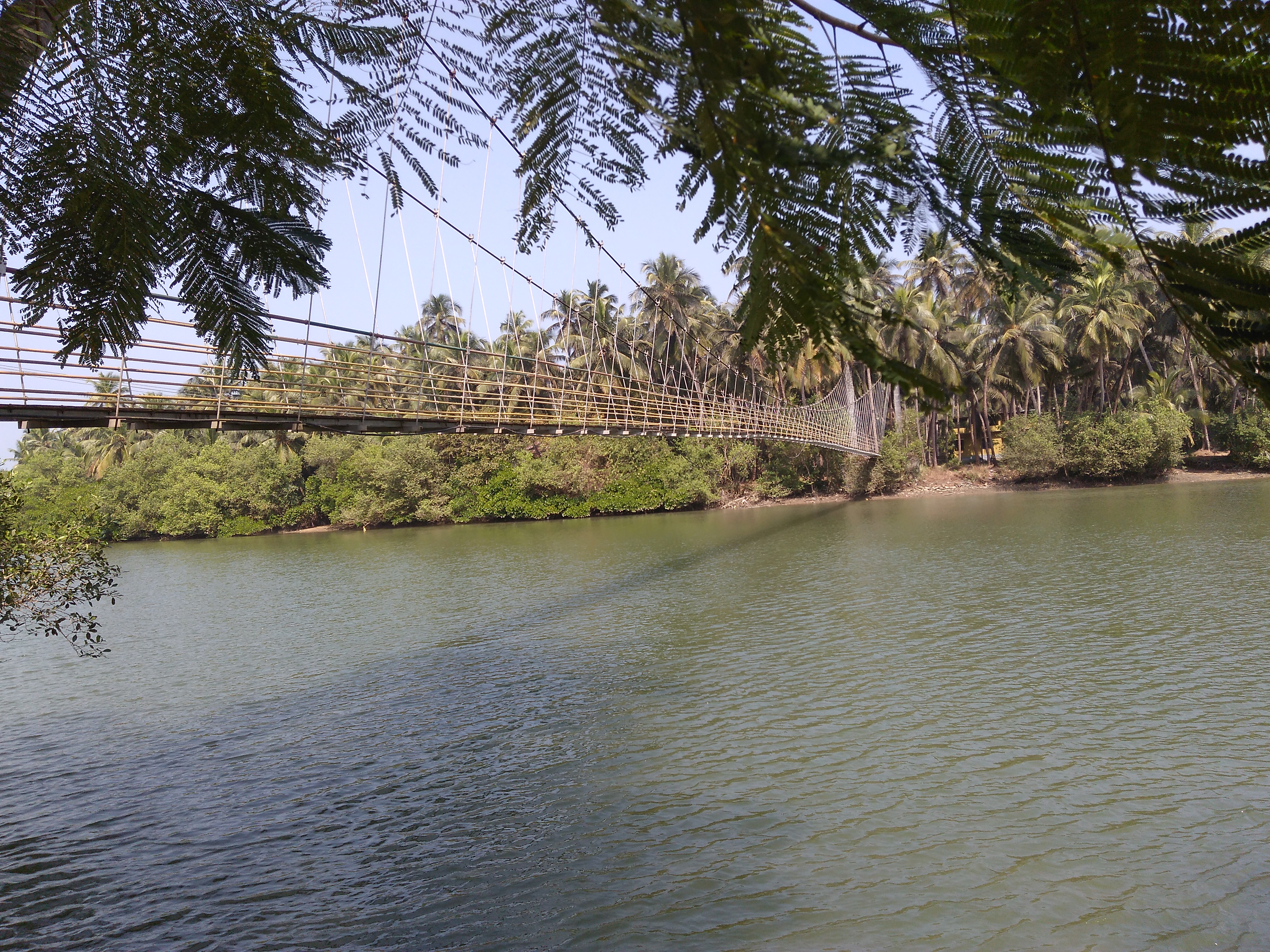
My first stop was at Kemmannu. A short walk on a meandering road through coconut plantations took me to a serene system of backwater canals connected to river Swarna. A suspension bridge has been laid across the river and set in an idyllic location of mangrove creeks. There was a boatman and his family living in a small house on the riverbank. When we enquired with the, they agreed to take us on a ride into the river for a fee. As our country boat set sail in the river, the oarsman suggested us to take a boat ride in the high tides either for sunrise or sunset. According to him, the delta beach would look brilliant at that time. He took us around several islets in the backwaters of river Swarna that gave us good sighting of rare birds. It was a very pleasant experience of sailing in the lap of nature, after having landed from the madness of the metropolis.

IMG_20171209_121635
The suspension bridge at Kemmannu

From there, we walked back to the main road to get a vehicle to our next destination. While we walked beside a broken bridge, something caught my attention near the harbored boats. There was something amusing happening down there at the canals. I felt as if I was witnessing a bioluminescent spectacle in daylight. The sight was something I had never seen before. On a closer look, I realized that the canal was filled endlessly with jelly fishes of various colors and sizes. After spending some time there video graphing the sight, we boarded the bus to our next destination- Kodi bengre.

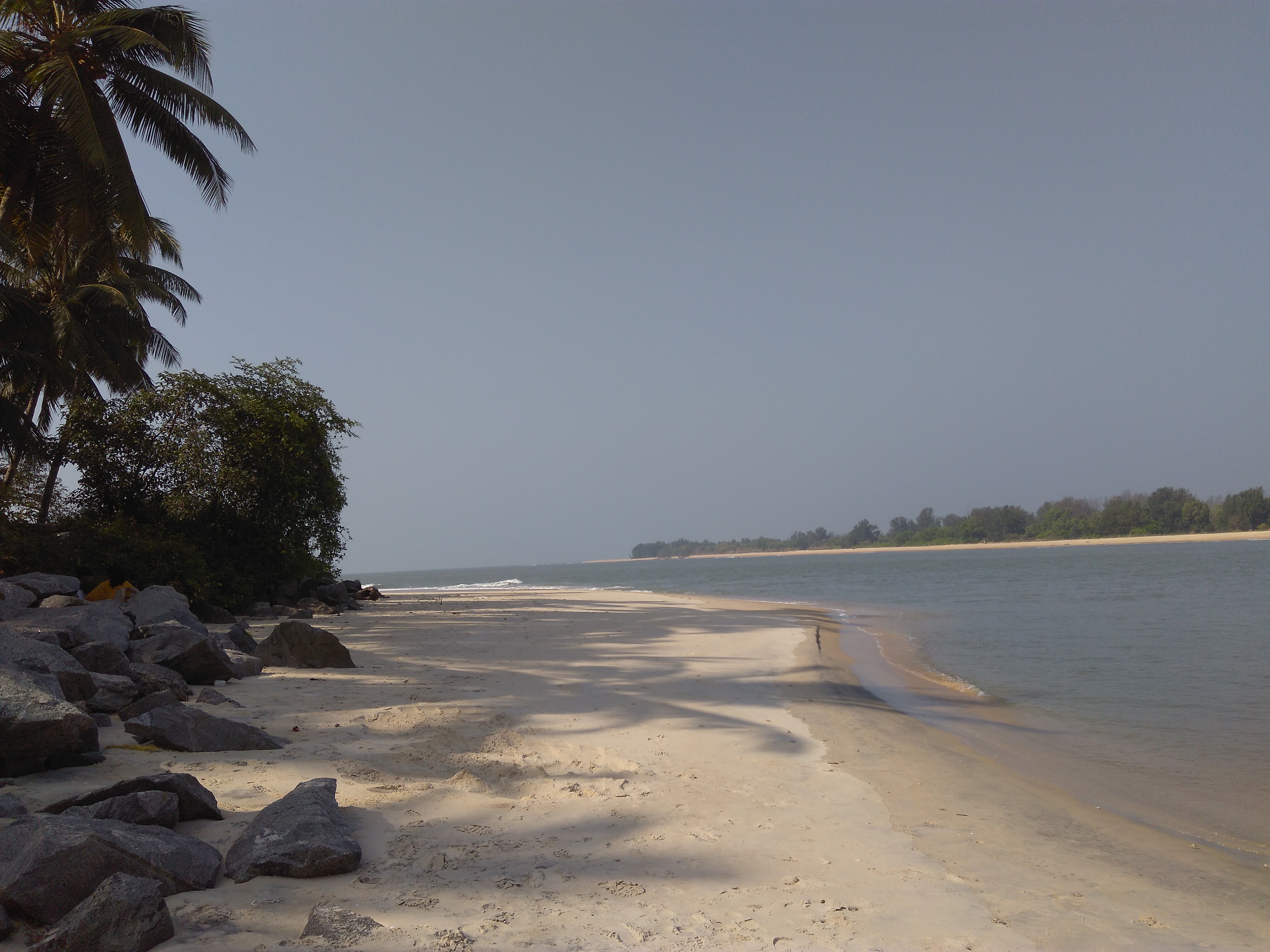
This small fishing hamlet is located on a narrow strip of land mass, placed geographically between river Swarna and the Arabian sea. While your heart will surely skip a beat at the first sight of the vastness of the sea at Hoodi beach, a deviation to the right is what we took. This road narrows into the village and gave us an experiential ride, right until the estuary at Bengre beach. The ‘tip of land’ is a great place for sunset viewing and enjoying the silence with the waves. The several shacks in the hamlet serves freshly caught sea food served spicy hot which is something not to be missed while you’re there!

IMG_20171209_143447.jpg
The Kodi Bengre beach

From there, we took a bus to the coast, on the other side of the junction (Hoodi beach) where we had taken a right deviation from. With a quick ride through country roads flanked with traditional sea facing mansions, we reached Malpe beach. This being a popular tourist place, it was bustling with activities including various water sports. We walked down to the fish market / port area, away from the crowd- and got a good sight of the setting sun.
There is a dedicated ferry service from the jetty to the Saint Mary’s Island for those seeking for a day trip which I personally recommend for anyone who is visiting this coastal town. It’s a great place and there is enough information available all over the net to get there… If you are driving your own vehicle, then I recommend you take the Pithrody route to reach back the Udupi town. This will complete your coastal stretch of Udupi giving you an experience of driving through yet another estuary and delta- that’s formed by river Udyavara and the Arabian sea.

You can complement your beach trip with a visit to the Krishna temple and the seven Mathas that are associated with the temple administration. Top it up with delectable Udupi chaats and the famous Gadbad ice-cream that saw its origin in this coastal town.

Riding in the land of miniature paintings- Basohli

If you thought Jammu was all about shrines and temples, wait a minute. You are not alone. Even I did not know about all the beautiful places that exist within a driveable distance from the city. This trip to Basohli was a part of our ‘Peace ride’, sponsored by Jammu tourism as a part of the Himalayan expedition to promote tourism in the lesser explored places of Jammu. The route we covered over the week was Jammu-Mansar-Basholi–Sarthal–Baderwah-Kishtwar-Gulabgarh-Sansari-Gulabgarh-Patnitop-Udhampur-Jammu.This trip was an opportunity for us to see so many beautiful places that are off the tourist map, totally untouched and waiting to be explored.

Places to visit in Basohli:

• Surinsar-Mansar wildlife sanctuary
• Surinsar lake
• Mansar lake
• Atal bridge
• Sunset at Ranjit Sagar Dam & RSD backwaters
• Sunrise from Chanchala mata mandir

The Details:

On a warm Saturday morning, we started from Jammu on a well asphalted highway cutting through the Surinsar-Mansar wildlife sanctuary towards Basohli. Needless to say, the route is blessed with natural bounty with the road flanked by wooded hills all the way. We did a quick stopover at the twin lakes from where the sanctuary gets it same. The Surinsar lake and Mansar lake are serene patches of nature which play an important role among the Hindu pilgrims as it is associated with mythology. It is believed that the arrow shot by Arjuna pierced the earth at Surinsar and came out at Mansar spouting water, what are now the two bunyanesque lakes. If you have nothing to do, then you can forget your watches by just sitting on the banks and feeding the squillion fishes there. These lakes are also known for the Indian flapshell turtles that are found in abundance.

At Mansar lake

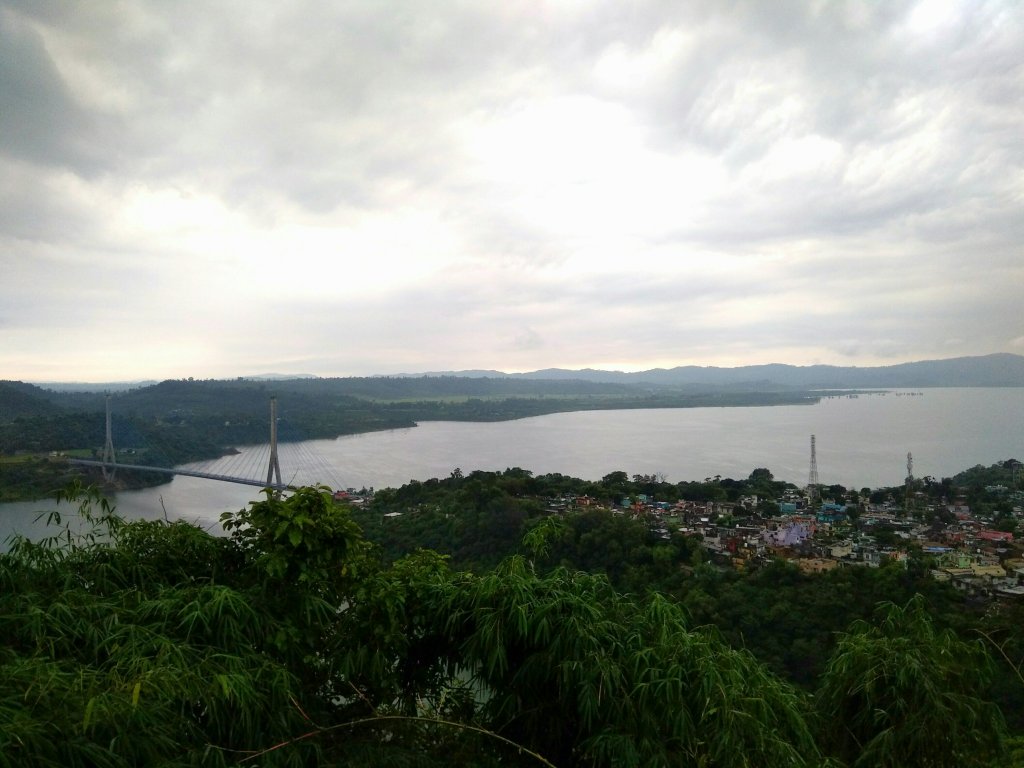
After freshening up at the TRC guest house, we headed to the Atal bridge built across river Ravi. This happens to be the first cable suspension bridge in the state of Jammu & Kashmir. We got an eyefull of the setting sun from there and got some good silhoute photos of the fishermen busy with their last catch on their vessels drifting past us from under the bridge. The view of the surrounding lush green hills and several islets in the backwaters of the Ranjit Sagar Dam was a feast for the eyes with a golden backdrop. On a summer evening, it is highly recommended that you spend some time at the dam backwaters, what is fondly refered as the RSD beach by the localites. With swaying palm trees along the sandbars of the river bed, it is a very picturesque place surrounded by the lashing waves of the dam’s backwaters.

Our bike at the Atal bridge

Although we had plans of reaching the Chanchala mata mandir to catch the sunrise next morning, we were woken up rather early by the roaring thunder and the rattle of our window glasses. It was pouring cats and dogs and we watched the dawn break into a bright day while sitting by the window side. There seemed no signs of the rain gods taking a break and hence, we decided to head out in the rains…

While we sought directions from the public, we realised that this town was home to over a dozen temples dedicated to Durga Mata. With a wild guess, we hit the accelerator towards one that was located atop a hillock. Oh Man! The view from up there was stunning… The temple had a 360degree view of the dam water and the hills. We could see the bridge along with several ruins of the old town dotting the view here and there. With the rocky valley at a distance, the entire Basohli town was visible from up there treating our eyes on a perfect morning!! With such a view around, the silver lightning in the dark grey sky, we couldn’t ask for a better start for the day…We were drenched to the bone but coudn’t get enough of the view. We somehow dragged ourselves back to our bikes, lest be a reason for the delay of all other fellow travellers back in the guest house.

view of Ranjit Sagar dam from Chanchala mata mandir

Basohli is known for the traditional miniature paintings that carry a heritage tag with it. Basohli is believed to be a cradle of a new school of mythological paintings. But sadly, only a handful of practicing artists exist today in this hill town. How much ever I intended to meet these artists and buy a couple of paintings as souvenirs from this land, I couldn’t. A countable number of shops selling these artworks would open only later during the day, a few kilometers away from the place where we were staying at. We decided to return to the guest house.

We were already running late and had nothing left for breakfast, we satiated our stomachs with fruit juices and coffee. When the rain gods seemed to calm down a bit, we called it a wrap for the wonderful time spent in this historical town of Basohli. The journey continued, to yet another beautiful place waiting to be explored, waiting to be talked about to the world outside. A place that I call as my “FAVOURITE” destination in India- Sarthal.

Fact file:

  • Getting there: Jammu is well connected by airport, rail and road. You can hire a self-drive car or a taxi from the city to visit the other sightseeing places. Basohli is 147kms(about 3hrs) by road from Jammu city.
  • Stay: TRC (Tourist Reception Centre) guesthouse is run by the J&K tourism dept. on the banks of Ranjit Sagar dam and offers great views.
  • Must buy: Basohli miniature paintings.

Enraptured on my way- at Sarthal

Talk about beautiful places in India- my mind will take me to this untouched valley in the lower Himalayas tucked away from the maddening frenzy of the tourists in the Kathua district, located in the state of Jammu and Kashmir. Thanks to snowfall in the winters, this region will be cut off from civilization for almost 6months and when the snow disappears, it does not fail to mesmerize every passerby with a different landscape each time.

If you have been following me in this journey,  my day started on a rainy morning as a part of the Himalayan expedition from Basohli (Click here to read the complete story) towards Sarthal. In a bid to keep myself warm (like duh!!) I opted a seat in the comfort of the tempo-traveler over a pillion seat of a bike. Although I regretted my choice later, I had my share of fun getting to stop the vehicle almost everywhere and capture the beauty of the landscape all along. The consistent rains over the past couple of days had brought in greenery for as long as the eyes could see. With winding roads, I was accompanied by the tributary of river Ravi on one side and vibrant hills on the other for most part of the road. There was even a magnificent stretch of the dam backwaters and dotting waterfalls by the roadside that added their charm to the beautiful landscape. We stopped over at one of the small rivulets where we relished the packed lunch we had carried for ourselves. The drive along the curvaceous roads almost until the town of Bani is definitely a delight for every passionate rider. Bani is the last major town one arrives until the next destination on this stretch where we all stopped by for a cup of tea. The roads beyond Bani gets a little treacherous with poor roads, deep valley and possible landslides. I remember how we had missed a landslide by a whisker!! But, the beauty of the mountains did not let us down even a bit and continued to fascinate us all the way. It was dark by the time we arrived at the ‘Tourist Reception Centre’ where we were hosted by the Jammu tourism for the night’s stay. Comfortable tents were pitched in with bon-fire to keep us warm through a cold night under a clear starry night’s sky that I had been longing for a long time…

Enroute to Bani from Basohli

When I came out of my tent at the break of dawn- I was blown away with the beauty of the place. Our camp site was surrounded by the beautiful mountain on all sides which we barely knew of while sleeping through the freezing night! The tranquil atmosphere was filled with fragrant air that carried perfumes of wildflowers from the distant mountains. While the other fellow travelers seemed to be snoring still, I decided to venture out to explore the place on my own… After a small stroll amidst the livestock including buffaloes, sheep, goats, horses, donkeys etc. outside the camp, I was warmly greeted by a Gujjar family for a cup of ‘Desi Chai’ with them. The life of these Bakarwals (the shepherd community) was a good motivation for the nomad in me. They are continuously on the move with their makeshift tents who earn their livelihood purely through diary and wool. Meanwhile, I was joined by my brothers who then decided to walk further towards the Gujjar settlements on the slopes. The beautiful setting with rock-laden plains, flat-roofed clay/rock houses, the sturdy wooden bridges across the murmuring stream hoaxed us to get into its ice-cold water. It was a wonderful morning!!

Livestock at Sarthal

We then decided to rush on the bikes to soak in the views of the Lawang valley that we had missed out on the previous evening, since we had travelled after sunset. For the pious ones, there are several temples around the valley that can be done by foot all of which have Chandi mata as the presiding deity. We were looking out for an adventurous trail. We were fascinated by the beauty of the seven waterfalls at around 3kms behind our campsite. The stream that probably originates from the molten glaciers, gushed down in seven tiers making it a surreal place. We wished we had more time with us to hike down the valley and spend a couple of peaceful hours by the water, alas! A quick breakfast post this short ride and we had to pack-up for the road ahead towards Baderwah… Since, the TT I was travelling in was the backup vehicle, we had to drive behind the last rider… So when a rider stayed back with more than 10 punctures in a single tyre, it meant that we had over 2 hours of time to kill… Meanwhile, I hiked up a small hillock from where I got a good view of the Gujjar valley below… Along with a couple of unicorns that had strayed down from nowhere, the local flora was another thing that caught my attention up there!! After spending a couple of peaceful hours, the silence of the atmosphere was broken by the roaring beasts (bikes) that hinted us to get ready to continue our onward journey…

The Gujjar settlements at the Sarthal valley

The roads that we traversed ahead came as a stunner… The drive through the loose gravel laid roads flanked by tall pine trees, snaking through virgin hills which was abundantly blessed with wild flowers of different colours seemed nothing less than traveling in a fairyland. I enjoyed every bit of this road all the way up to Chattargala top, the highest point in this area. We shared a cup of tea and a nice conversation with the soldiers of the Indian army posted up there. Bidding a warm goodbye to them, I then hopped on to the pillion seat of brother’s bike and got set to pull down the valley to our next destination- Baderwah!

Summary:

Must do:
• Spot a white vulture at the Chattargala top. These birds are critically endangered.
• Participate in the 3-day Bani festival and enjoy the Shinj- the wrestling competition.
Must have:
Sip on a cup of piping hot ‘Desi Chai’, a pink coloured drink prepared with tea twigs boiled in sheep milk. It can be consumed either with salt or sugar.

This post is written in collaboration with Jammu Tourism, the tour was a part of ‘The peace ride’ to explore lesser known places in Jammu. The route we covered over the week was Jammu-Mansar-Basholi–Sarthal–Baderwah-Kishtwar-Gulabgarh-Sansari-Gulabgarh-Patnitop-Udhampur-Jammu.

Tracking the Big Five at Kaziranga

The monsoon has caused the mighty Brahmaputra to take a toll on the North-eastern part of India causing innumerable and irreplaceable losses. I saw this one particular photo of a floating carcass of the striped beast, the National animal of India in the newspaper this morning and I was taken back in time when I visited Kaziranga last year, post monsoon.

This post is part of my fortnight long road trip across North-east India, specifically covering parts of Meghalaya – Assam – Arunachal Pradesh I had tagged along with two other travelers and drove around the places in a self-drive car hired at Guwahati. Our visit to Kaziranga had just one agenda, a safari in the Kaziranga National park and get a glimpse of at least one rhinocerous! Kazhiranga National Park is counted in the list of UNESCO’s world Heritage sites.

My Itinerary:

Day 1: Evening drive from Guwahati to Kaziranga (Kohora forest range)
Day 2: Early morning elephant safari & jeep safari in Kaziranga national park, Orchid research centre. Continue the journey onward to Jorhat.

The Details:

After a wonderful drive through the National highway from Guwahati, we reached Kaziranga on a night lit with Diwali lamps all around. Kaziranga national park is divided into four main areas: The Central range at Kohora, Western range at Bagori, Eastern range at Agaratoli and the Burapahar range at Ghorakhati. Here, the tourists can enjoy the elephant and jeep rides into the forest that are organized by either government or private parties. The park is closed during monsoon and we were lucky that the central zone at Kohora had opened just around our visit time. We had a nice meal and settled down at one of the numerous resorts that exist on the boundary of the National park in the Kohora range. Meanwhile, our resort guys helped us to get tickets for a safari ride scheduled for early next morning.

We woke up the next morning and headed towards the forest gates where the elephant ride was supposed to commence. The drive from the resort until the forest gate was so refreshing in itself. With the addictive smell of wet ground, kaccha roads passing through green paddy fields dotted with bamboo huts here and there, thick mist slowly clearing up with dew drops reflecting the rising sun: It was just wonderful all the way.

P1140268
Enroute to the forest gates

Kaziranga is synonymous with the one-horned rhinoceros. With about 2/3rd of the world’s population of these beauties found in just this area, it was no surprise that we began to spot them one after the other. Even before we started our ride, we spotted rhino families all around the watch tower we were standing at. We even found a few of them grazing in the fields on the sides of the highway. With that we realized, that Kaziranga was beyond rhinos. There are some other wild animals that are exclusive to the park and are collectively called as the ‘Big Five’, a must on the list of every wildlife enthusiast visiting the state of Assam.

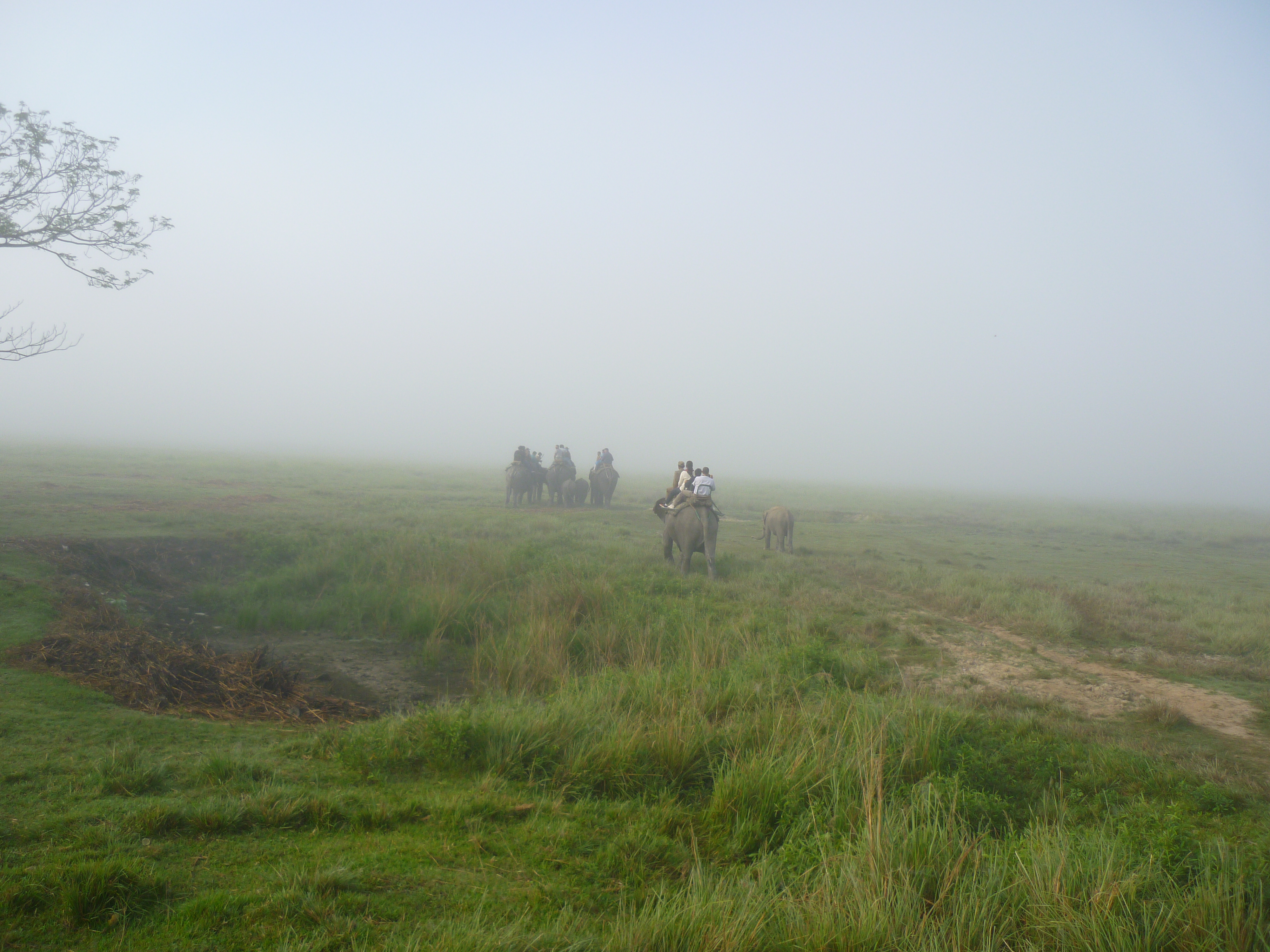
Our elephant had arrived in a bit. We sat atop and started our ride into the haze of the misty green grasslands of Kazhiranga to track the ‘Big Five’ of the this land. The elephants that we were seated on, were walking through dense thickets of elephant grass: the grass that was taller even for elephants to walk through. Slowly, the mahout started to point out and show us the animal at far distance.

P1140264
The elephants marching into the forest

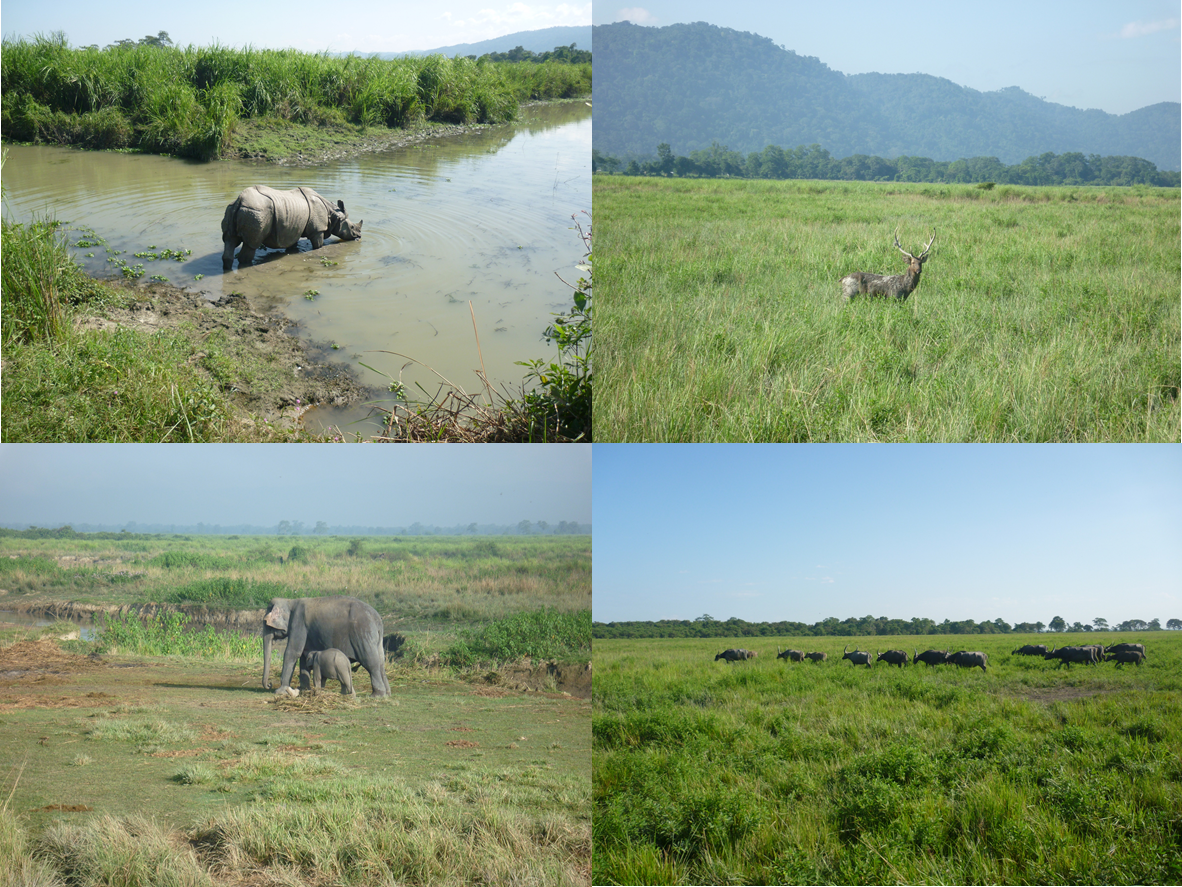
First, it was a wild elephant with its calf. We were told that rhino and elephant conflicts were common and that mother elephant was wounded just that morning in a bid to protect its new born calf. So, that meant we were not safe sitting on one either! We slowly moved out of tall grass to another area where a couple of rhinos were finishing their morning chores. It was very surprising for us to know that large rhino groups identify space where each rhino marks its own spot (making a private toilet space for itself) and does not let any other rhino enter the area.

Wow! We slowly passed that place and spotted herds of swamp deer. World’s largest population of these herbivores too is concentrated in these forests. Swamp deer are handsome animals.

Just as we were photographing them, we saw a herd of Asiatic wild water buffaloes marching out of a slush pool. Until our guide told us, we had no idea that over 57% of the world’s water buffaloes too were accommodated in the woods here!

Kazhiranga
Clockwise: The Single horned Rhino, Swamp deer, Wild water buffaloes and the Asiatic elephants

Another surprise information awaited us: Kazhiranga national park has the highest density of the Royal Bengal tigers in the world!!! Whoa!!!! That’s like……..something that was unknown to me, a person who hails from the land of Nagarhole, Bandipur & Bannerghatta. But as always, no luck with spotting the elusive beast. Seeing a tiger in the wild is a LONG dream, awaiting to be realised. (So much adventure to see a wild tiger, Click here to read more!)

So, we had checked off 4 out of the big 5 of the Kazhiranga before heading towards the exit gates- The One horned rhinos, Asiatic elephants, swamp deer and wild water buffaloes. Meanwhile, we realized that we still had time to make it for the morning batch of jeep ride. So, after enquiry and booking at the counter, we had a gypsy to take us into the forest again. Needless to mention, we were greeted by herds and herds of rhinos all along our path. Wild boars, barking deer etc. too were spotted in abundance. The highlight was however, the innumerable species of migratory birds that were spotted. Our driver cum guide mentioned several bird names, out of which only pelicans and spoon-billed storks were the ones that I have managed to remember.

On the other end of our drive into the forest, we were taken to a watch tower from where we could catch a very good view of hundreds of animals that had come to drink water from the flowing river. It was a very calm and a serene place to spend a while with nature. What caught our curiosity was some random years mentioned on the wall of the watch tower. So, here is a picture that may give an idea of the monsoon fury and severity of floods that affect this area year after year.

The tower itself is located at an elevation from the river. My friend in the below picture is a 6-footer. The water level of 2016 is marked above him… Can you imagine how impossible it is for the animals to escape out of the area??? It’s insane to think of and the image of the floating tiger’s carcass hovers around in my thoughts.

P1140350
Record of the flood water level of the Bramhaputra

The drive back to the resort, on the highway was an extremely nice one which had gone unnoticed during the hurried drive through misty roads in the morning. Tea plantations flanked the roads on both sides. The famous Assam tea grows in flat lands and under shade, totally contrary to what I had seen and grown up seeing in the hills in down South. We stopped by to sip on some hot brew and bought some processed tea leaves for our caffeine addicts back home. A quick visit to the Orchid research centre was an interesting place to drop by too.

P1140352
The Assam tea estate

Overall, our day was eventful at Kazhiranga with warm memories from the woods before heading to our next destination- Jorhat. Although a little disappointed for not being able to spot a tiger by the end of our safari ride, we were feeling content for having our long pending wish of visiting this heritage site come true!

Concluding remarks: For those of you planning to visit Kaziranga, I strongly recommend to try both ways of exploring the woods, on elephant back and by a four-wheel drive. Both are different experiences and the type of terrain and sightings are different. While an elephant will be able to take you through the tall grass, a 4-wheel automobile will be able to enter deeper areas of the forest. If you wish to spend more time with nature, I recommend you all to explore all the 4 ranges of the national park. Don’t go by recommendations of people of which range to go in… Each area is distinct with different types of vegetation, landscape, flora and fauna concentrations.

A roadtrip in the coffee land- Karnataka

There’s a proverb in Kannada, “Hitlu gida maddalla” meaning ‘We don’t recognize the medicinal value of plant that’s lying in our backyard’. True to this, I have been traveling and writing about beautiful places from across the country.. And suddenly I felt that I had left out to explore places in my home state itself..!! We just wanted to have a rough theme before we hit the road. What was fitting well in the time available was the coffee tour!

Karnataka produces about 51% of India’s coffee and it is all on the southern stretch of the Malnad region. The coffee grown here is highly priced in the international market owing to its better flavor as it is grown under the shade. That’s it, my brother and I pulled out dad’s bike from our cellar and decided to hit the road for a long weekend covering the entire stretch of coffee belt in Karnataka. Unlike cars, we won’t have the luxury of having a spare wheel in a 2-wheeler. Inorder to get our 125CC, 4-stoke, single cylinder, 10 year old boy running smoothly, it was necessary to give him a fine pair of CEAT tyres that could sustain our long ride on different terrain. So finally, here we go.. Our road trip along the coffee belt on the western ghats.

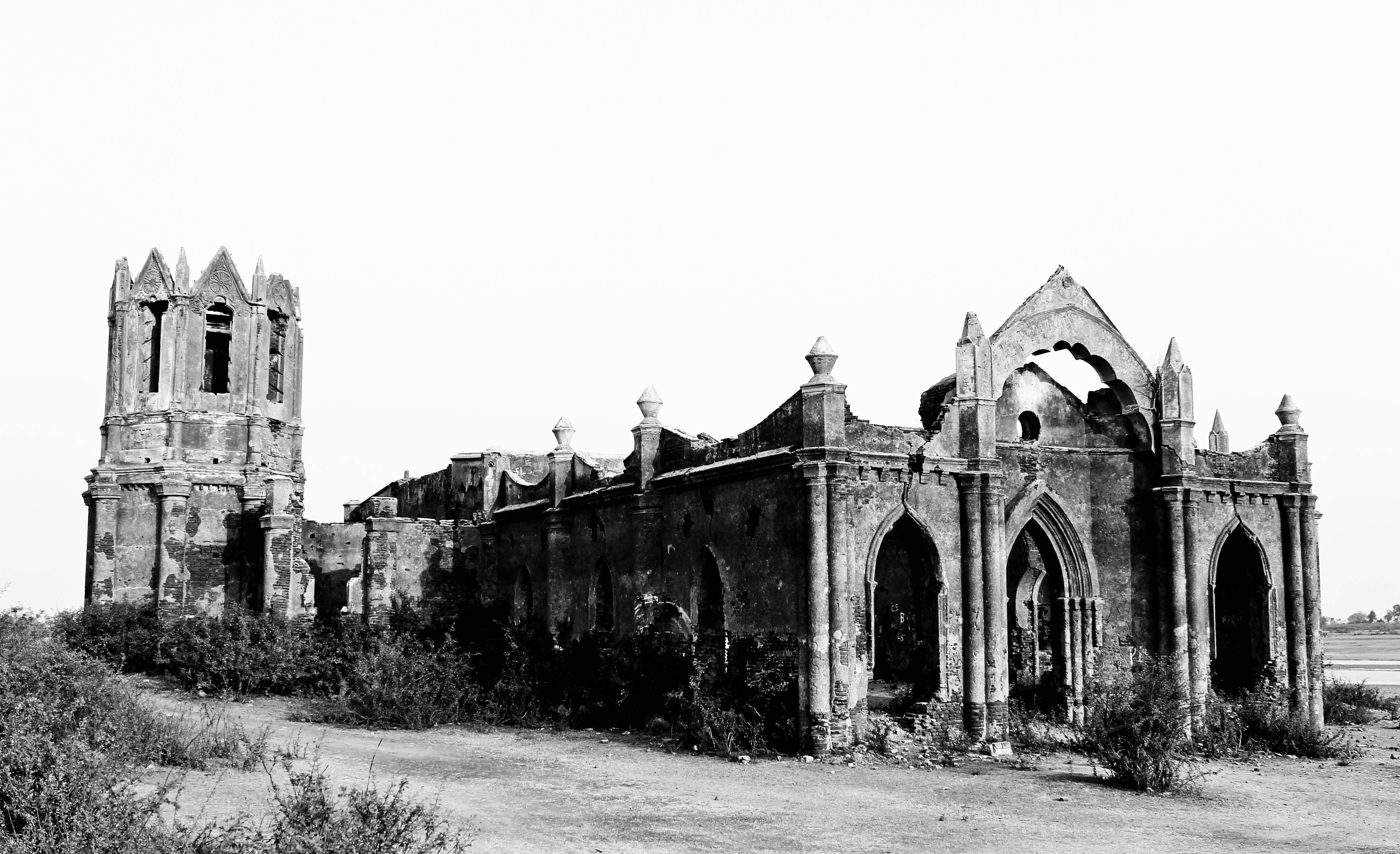
On a January weekend, we rode through the finely maintained NH- through Nelmangala and Kunigal. Our first coffee stop was to sip on some caffeine from the Hassan plantations. A simple hot cuppa at a petty shop before a deviation to Shettyhalli was all that we wanted. At a distance of about 20kms from Hassan, the Rosary church at Shettyhalli stood testimony to time and silently narrated a story of a painful past. This church emerges out when the water levels in river Hemavathi recede as if playing a game of hide and seek. We spent some time admiring this architectural beauty and trying to reconstruct it’s glorious past through our imagination. We left Hassan after a sumptuous lunch at a friend’s house located in the middle of a coffee estate.

IMG_0087-2
The Rosary church at Shettyhalli. Clicking credits: Samson Joseph

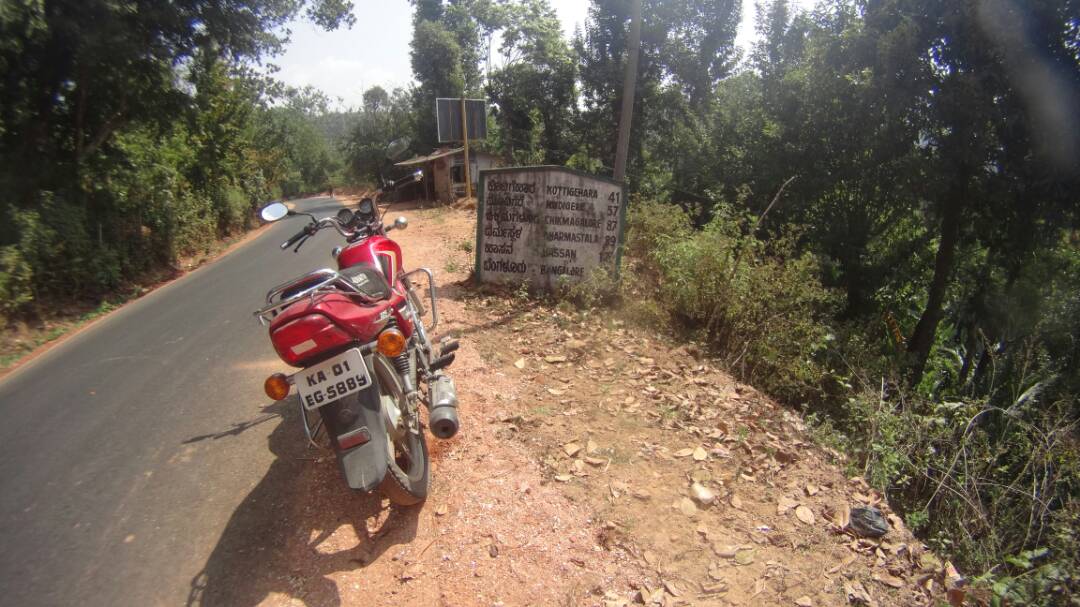
As we passed through the winding roads of Chickmagalur, we were reminded that the hillstation is the birthplace of Indian coffee. Bababudangiri range is the place where coffee was first brought to India and the plantations flourished. Mullayangiri, the highest peak in Karnataka is a hotspot among trekkers. Also, being the native of the famous chain- Café Coffee day, we couldn’t help but stop over for a cup of cappuccino.. After having our dose of caffeine, we continued on the road for our night’s stay at Sringeri.

IMG-20170424-WA0010
Enroute to Chickmagalur

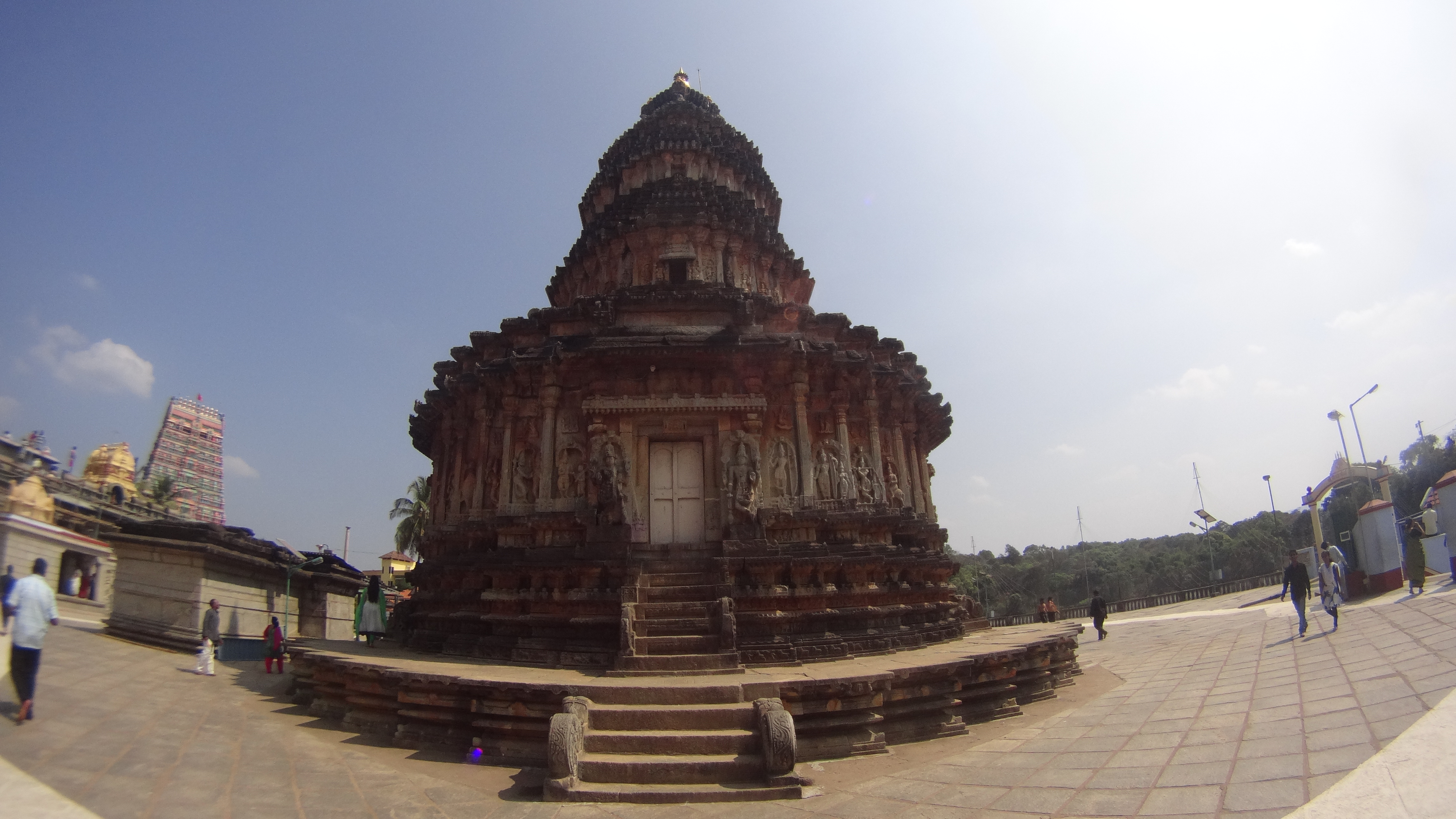
Next day, we set out to explore the pilgrim town of Sringeri. The Sharadamba temple is one among the 4 main Mutts established by Sri.Adi Shankaracharya. The Vidhyashankara temple on the same premises is a beautiful structure built in a combination of Hoysala and Vijayanagara style of architecture. After a small ride, we stopped by at Sri Rushyashrungeshwara swamy temple in Kigga, locally called as the God of rains. The route to our next destination- Sirimane waterfalls was a pleasant one passing through thick jungle on either sides, once notoriously famous as a haven of dacoits. Narasimha Parvata and Meghebaile waterfalls are other places of interest for the forest bums. However, we decided to spend the remaining time whiling away on the banks of river Thunga feeding the school of fishes with puffed rice.

210
The Vidhyashankara temple at Sringeri

We started early the following day as we had a long route to cover and the BEST stretch of our roadtrip. We arrived early at the Kalaseshwara temple and enjoyed the serenity and oneness with nature that Kalasa town had to offer. The Breakfast served at the Annapurna temple happens to be one of the best prasadams and there was no way we were going to miss it. So we had to speed our way towards Horanadu, before the food counter closed. We then had to do a small off-roading which took us to a place of Ultra Calm- Javali in Mudigere Taluk, the birthplace of river Hemavathi.

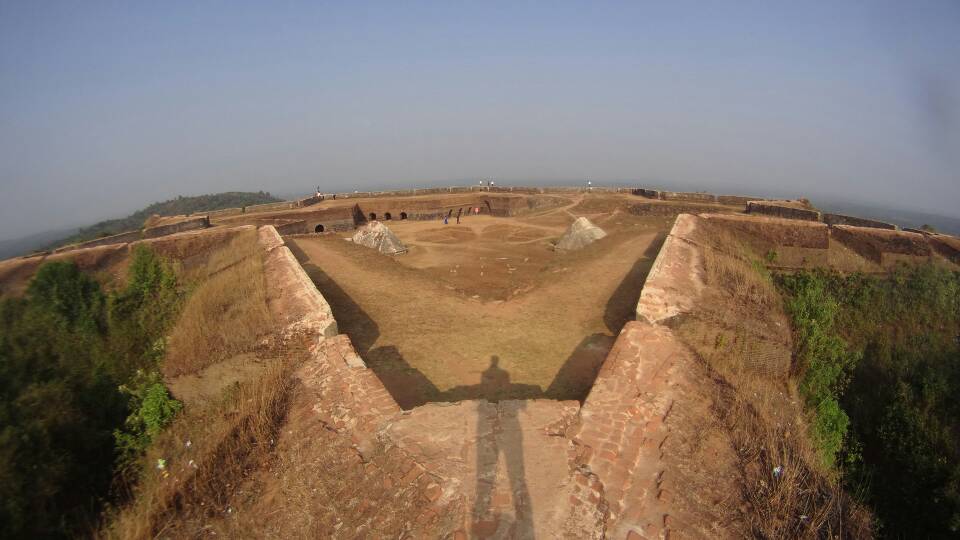
After a refreshing break, we headed towards the next coffee hotspot. It had been an awesome ride so far and time to get our caffeine fix. We parked our bike at one of the stalls put up with a bare table and a stove serving banana fritters and our dose of Sakleshpur coffee. We then climbed up the stairs to reach the beautifully located and strategically built Armory of Tipu Sultan- Manjarabad fort. It is a multi-walled star shaped fortress and worth photographing for an aerial view. Having Shiradi ghat and Bisle ghat in the vicinity, the view from the fort is amazing!

IMG-20170424-WA0005
The Manjarabad fort

The ride has been brilliant so far and we stopped by for a picture of this solo tree standing in a serene place.

671

As we continued to enjoy our ride further, god decided to add in a tinge of adventure. We lost our way and we missed a deviation.. So that’s when our CEAT tyres were put into real test. We were scared of having lost our way and running on low battery on our mobile phones during our off-roading tryst. However, we were fortunate to reach the main road that ran parallel to our wrong road. Astonishingly, we later got to know that the official name of that road was ‘Kundu-Rasthe’ which literally means ‘Pot-hole road’ in Kannada.

The sun was already setting and we were the last and the only people in the middle of no-where, walking down the stairs towards Mallalli waterfalls. The place was drop-dead deserted by the time we reached there. We hurriedly clicked some photographs and rode for a short coffee break at the last part of our coffee trip, entrance to Coorg or Kodagu district. Interestingly, we passed through several small towns named after the days of the week when the weekly shandy is held. Shukravarapete, ShanivaraSanthe and Somwarpet were among them.

706
The Mallalli falls

So it was past 07.00.p.m. when we finally reached our ancestral home at Madikeri town. And there was no better way to be greeted at home and end the long trip than having a sinful brew of Bella kaapi of Coorg. That said, our ride on the coffee belt had come to an end.. We rode on excellent national highways, state highways and stretches with no roads.. I must mention that coffee kept us awake and the tyres kept us on track and it was a wonderful experience.

Summary:

It is not an expensive car / bike you need for a wonderful trip. An efficient engine and a pair of reliable tyres is all that is required if you have a zeal to conquer the roads.. Bring it on and enjoy the ride!

Request to all riding & driving enthusiasts:

I myself work for an automobile manufacturer and my roles include attending to quality issues of seats & airbags. I have seen tests performed on dummys for evaluation. Trust me, it is insane to imagine the impact of not wearing seat belts.

  1. Seat belts alone can reduces the risk by 60% in case of a collision. In most cars, the airbags don’t deploy unless the seatbelts are worn as they are inter-connected for the electrical system to identify the seat occupancy. So buckle up and ensure all your co-passengers too have!
  2. Helmets on the other hand reduce fatal accidents by up to 60% avoiding severe head injuries. So, please invest on a quality assured helmet and strap it properly for your own safety and DO NOT look out for any cash savings by picking the one’s sold on roadside.

You may be a safe rider/driver. But you don’t know that stranger on the road.. Remember, someone is waiting back at home for your return. Please follow safety rules for their happiness. This is the least you can do!

A day out at the Khasi cultural centre- Smit

This post is part of my fortnight long road trip across North-east India, specifically covering parts of Meghalaya – Assam – Arunachal Pradesh I had planned to visit Shillong – Smit – Cherrapunjee – Mawlynnong – Dawki – Ribhoi- Shillong during my weeklong stay in Meghalaya.

I had decided to explore some places all by myself and Smit happens to be one of them. After seeing some spellbinding photos on the internet, I wanted to visit the Laitlum valley as well. Although there are public buses from Shillong to Smit, the connectivity further to Laitlum isn’t great. This is where one needs to have a travel arrangemtn of their own, or in my case: to hitch a ride to reach Laitlum. Since it was my first day in the state, I did not want to get too adventurous for being alone. That’s why, I hired a taxi from Police bazaar (in Shillong) to Laitlum.

This drive was very refreshing for me, whose mind was cluttered by all the madness of traffic, pollution and work tension back in the metropolis (Bengaluru). I was requesting my driver to stop the car after every other kilometer to capture the seducing beauty of the place with my not-so-good camera. The bamboo trees and terrace lands with potato farms, all added charm to the landscape that was very beautiful even otherwise. To add to the pleasure of the drive, I was having a good conversation with the driver as well. Althiugh I had hired a personal taxi, I did not mind to let a few locals into the car when the driver asked me if I could allow them. Given the remoteness of places and the scarce connectivity through transposration, I had absolutely no problem with offering a ride. The next thing I experienced was that there were atleast 50 passengers hopping on and off at every stretch for their ride. And would you know what was exciting for me? All locals who boarded the car used to get overly excited about meeting a foreigner (Yeah… That’s what they called me!).

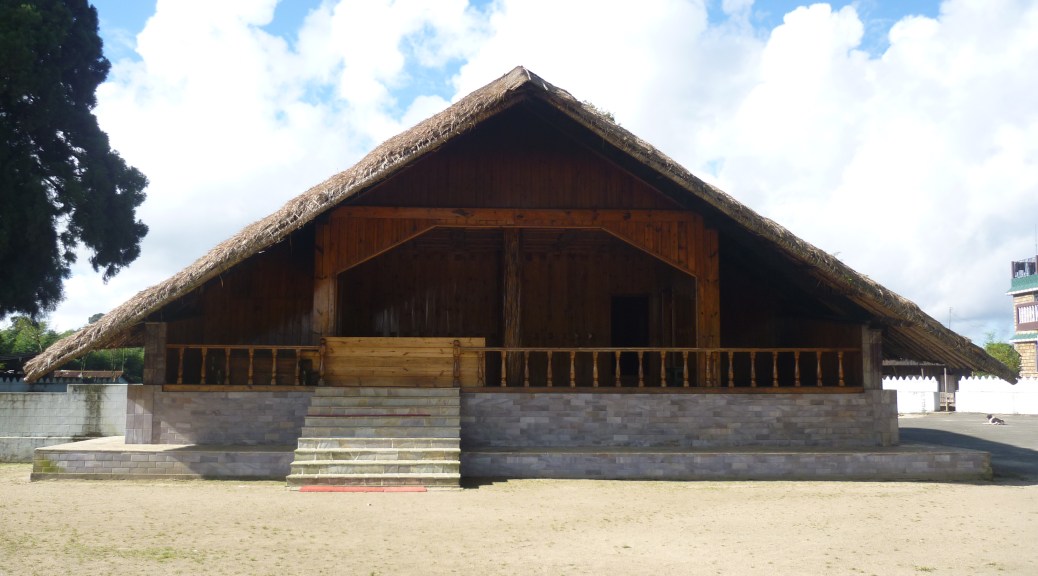
Smit is an old rustic town and the cultural centre of the East Khasi hills, but there isn’t much in this town apart from the Siam’s house. A road flanked with well groomed pine trees lead to the Khasi Raja’s palace. The Raja or the head of the clan is called ‘Siam’ and he lives in the same premises. However, the wooden palace is used only on special occasions when there will be large tribal congregations, like the Nongkrem festival for example. This typical Khasi styled wooden house is said to have been constructed with zero iron nails and only wood for all joints. Although I met the Siam, he did not seem to be a photo friendly person when I asked for permission to photograph his little children.

p1130680
The Siam’s house at Smit

We then drove to Laitlum valley, located at about 5kms ahead of Smit. It was an offbeat drive through the rarest stretches of countryside. We passed by a lot of school kids who were on their way to school. Few were happy waving at me while a few were busy pranking at their pals as they walked. Having been born and raised in a small town myself, it was a flashback of typical childhood days in a rural setup. There were a couple of school teachers in my backseat, chatting happily with me and patiently waiting in the car while I would get down to take photos. Overall, it was a very pleasant drive until we reached the Laitlum gate. While the driver wanted to sit back in the car, he asked me to enjoy the view and return.

I was the only person amid the green scintillating valley until I walked down and saw 2 local boys cleaning the pristine place. They had already parked aside 4-5 sacks full of waste. When I spoke to them, they told me that they came there every morning before leaving for school, to pick up plastics left behind by the previous day’s tourists. While it was a heartfelt respect for these boys for doing their bit to save earth without having any expectations of monetary gain, it was a subtle slap on my face because I too represented the tourists who unmindfully damage the same earth in the name of travel and enjoyment.

P1130730.JPG
The Laitlum valley

I walked down to the cliff and stood in amazement at the beauty that the place beheld. While I was standing on the brink on a large flat rock, it felt like I was the only person in the whole wide beautiful world. The gentle winds kissed my cheeks and the chirping bird was a welcome guest. There were several waterfalls flowing down the valley gracefully at a distance… Then there were a few villagers who appeared to be popping out of the deep valley beneath. They seemed to be friendly and told me that their village was located far down the valley and they had to climb up each time to meet their basic life requirements, trade their farm products etc.

There is a cable car made of bamboo which will be dropped down and pulled up for old people and goods, but their daily commutation is by foot most of the time. I grew curious and my feet dragged me down the stones that were laid on the path to the village. The beauty of the 360 degree greenery and the fresh air had already cleansed my mind off half my worries and tension by the time I clocked the distance to the village. There is a small stream, a church and a few huts in this little fairy tale village nestled deep down the valley. And the villagers I met on my way enriched me with the simplicity and contentment in life. After a good walk down the beautiful valley of Mawkeynrew, my tummy had started to call out for me. I savoured the plantains offered to me by the villagers and unwillingly decided to climb back.

p1130853
The bamboo cable car and the village below

Once I reached the top, I finally sat down at a small hut like stall at the valley gate that had opened by that time. It was run by a lady who couldn’t understand what I was trying to communicate in English. her little son helped me with a cup of lemon tea in English before running to school. The lady there could not understand anything other than Khasi language and I didn’t know that. In spite of the language barrier, we both soon became friends and managed to communicate with hand signs. She cooked maggi noodles and Jadoh with chicken curry for breakfast while I was eagerly waiting for my first Khasi meal. Jadoh is a traditional Khasi meal where rice is cooked with chicken blood instead of water. It was one of the most relishing and sumptuous maggi noodles I had eaten before! What made the meal so special was not that I found it in a no-man’s land or at an extremely low price. It was something that I would travel back again all the way for the humility and dollops of warmth with which the meal was served to me.

She cut a pomello fruit and mixed it with chilly powder and packed it for my road.. With a heart full of gratitude, I bid goodbye to this new Khasi friend of mine!

Kublei Shiboon,
Hitha.

Tracing the abode of celestial congregation- Kollur

While I was flipping through old photos of my college days, I was taken back in time to this so-called ‘Industrial trip’. This class trip consisted of trekking, pilgrimage, beaching and lastly, not to forget our industrial visit (only If time permitted, that was!). Basically, it was less of industries and more of place hopping. So here goes the first part of the so called ‘Not-so-Industrial-Trip’.

Although I had walked for miles to reach places during my school days, this was my first ‘Official’ trek! A trek in the ‘Kodachadri hills’ in Malnad region of the western ghats.. After a really long bus journey, we alighted at the Nittoor forest checkpost late in the evening. We got the permits at the forest checkpost for the night’s camping ahead, at the old forest guesthouse. We parked our bus there and got into the 4WD jeeps that were waiting for us since early evening. There is NO road from Nittor to the guest house and is only a muddy pathway. And in monsoon, it makes way for a deep trench kinda massive slush pool. This stretch can be covered by various modes based on each person’s interest. You can walk up or drive or ride.. The more adventurous people choose the latter; cycling comes with the greatest challenge. We chose the safest- The 4WD. But, driving through such terrain calls for great skill of steering control, lest have at least 7-8 people thrown off the road. That said, it was a crazy drive up the hill, until we reached the guesthouse in the darkness of 10~11.00.p.m.

After reaching the guesthouse, we could barely stand because of the strong winds. So, you can only imagine our next task of pitching tents.. We called off the idea of camping under the moonlight as we struggled to even hold the tents firmly in our hands. The winds were so strong. That’s when we had to camp indoors, at the guesthouse 😛 We had only a roof above us and no mats or sleeping bags. So we decided to pitch the tents inside the guesthouse hall for the rest of the night.

We woke up early next morning and started our hike up the Kodachadri hill. Our hike mainly consisted of two target activities- one was to reach the Shankaracharya mantapa at the peak, for sunrise and the second was to take a shower in the Hidlumane waterfall. We did not hire a guide as the organisers claimed their familiarity with the route. The sight all the way till the mantapa was beautiful and the sunrise and the Arabian Sea at the distant horizon just added up to the view! The climb was great, giving us an eyeful of the valley that was in all bloom with colourful wild flowers. After a brief walk, we reached the Mantapa. After spending some time at the peak, we readied ourselves for the descent.

bye-bye-6
The Kodachadri hills- Overlooking the Arabian sea

The descend was towards the waterfall. With the descending gradient, we slipped, jumped down, clung onto wild creepers in the event of finding our way to the waterfall amidst the thicket of the forest. Somewhere, we had already started to realize that we were lost in the forest. The thumb rule of finding the way out of a forest is to follow a flowing water body. The organisers followed the sound of flowing water and we followed the organisers. We stopped by at a small cave like structure enroute, where someone had installed an idol of Lord Ganesha and offered some flowers. We prayed for our safe exit out of the forest and continued with our pursuit of the waterfall. So we finally reached at the source of the flowing water!

Sure it was a waterfall.. But ain’t the mighty one that we had thought it would be. It was a stream that was directed to a storage tank by the localites and the tank was overflowing forming a waterfall!! Neither the organisers nor the others knew how to react at our misadventurous pursuit. But we were all happy that we had found some pure water where we could fill our water bottles and ease ourselves out of the tiring hike that we had been through so far! We were now sure that the tank was there for a purpose and the pipe attached would lead us back to base point. And the descent continued, along the same stream to the base.

There is a small temple dedicated to Mookambika Devi at the base. It is believed to be the original temple that is tagged to the legend of Shankaracharya’s installation of the idol at Kollur. We reached the priest’s house near the temple where we had a simple-wholesome breakfast. After packing our stuffs from the guesthouse, it was time for us to head out to our next destination: Kollur.

morning-trek-34

A view of the Arabian sea from the Kodachadri peak

People who prefer to trek further, can cover the Agnitheertham waterfalls enroute to Kollur Mookambika temple. But, having had enough in the quest of a waterfall, we decided to take the bus route. The bumpy drive continued until we reached Kollur, the small temple town known for the Mookambika temple, one of the Shakti peethas. This temple is said to have been developed by the Keladi rulers later in time so that pilgrims don’t have to trek up the overlooking Kodachadri hills to worship the goddess. Another legend has it that Lord Shiva appeared before Sage Kola and agreed to be present there in the form of Linga with his consort Devi. Along with Shiva and Parvathi, all other gods and goddesses are believed to be residing in a non-form in the Linga. Hence, Kollur is referred as ‘an abode of the entire celestial congregation’. We took a little time to offer our prayers and admire this beautiful little temple built in the typical Kerala style of architecture. Post that, we proceeded to the forest guest house where we had our stay booked for the night.

7th-morning-6
The forest guesthouse

The forest guest house is located in a serene location in the middle of the ‘Mookambika wildlife sanctuary’ and on the banks of river Sowparnika. With banks I mean, just a couple of steps lie in between the guesthouse and the river. This river is frequented by spotted deers & leopards to drink water. And we were told that just the previous morning, a tiger was spotted on the same steps that we were standing on, at that time! The river flowed gracefully with the crystal clear water and the school of fishes enjoying their swim in between the tree roots that grew beneath. It was a SPECIAL place to go back again indeed! We cherished every moment of our stay there while being in harmony with nature in its purest form.

mookambika-temple-8
The Idol of Mookambika being taken out as a part of the daily ritual

Soon, the dawn broke the next morning awakening us to another day reminding us of our journey to the next destination- Bhadravathi. It was the last day of our tour and that meant we had to do the most important part of this trip ‘Our Industrial visit’! That’s for another story altogether…

Kanchipuram- Beyond its sarees

The first thing that hits your mind when you hear this city’s name is its Silk sarees. The Kanjeevaram or Kanchi silk sarees define a sense of style, gorgeousness, elegance, classy and royalty. But what goes rather unnoticed is the fact that Kanchipuram is also called a ‘City of temples’. Despite being the erstwhile capital of the Pallavas, the influences of Pandyas, Cholas, Hoysalas, and Vijayanagaras can also be significantly observed in the artistic structures constructed across the city. Also, it is noteworthy that the influences in temple architecture are across different sects of faith. The City of Kanchi can be broadly classified into three- Shiva Kanchi-the holy land of the Shaivaites, the Vishnu Kanchi- the holy land of the Vaishnavaites and the Jaina Kanchi- the holy land of the Jains. Kanchipuram is known to be a land of 108 ancient temples, all unique in their own way. Beyond its world-famous handloom, the sculptures, architecture, classical dance, music and all those traditional art forms of Kanchi puts up the city high up on centers of history and heritage on the map of India. That’s why I like to call Kanchipuram as ‘an abode of the trio- Art, culture and history’.

When my mom planned to buy some drapes from the local weavers of Kanchi, I chanced upon the opportunity to explore this city, beyond its sarees and handlooms. Obviously, one day wouldn’t be sufficient if I had to visit each of these 108 temples, and hence, I made a list of 10 temples based on their mythological importance. Given that I’m mostly a public transport-dependent creature, the ease of commutation was also a factor considered while making my list. We boarded an overnight bus from Bangalore to Kanchipuram.

As we alighted at the Kanchipuram bus terminus, we were greeted by the drizzling rain. Usually, the autorickshaws work this way in this city. You tell them the purpose of your visit, and they will plan and handle the entire itinerary for you. Thus, we hired an autorickshaw and that sorted our transportation for the entire duration of our visit around the city. Our auto driver took us to a travellers’ dormitory where we freshened up quickly and then headed to the first temple on my list.

1. Kanchi Kamakshiamman temple: The timing of our visit was important and we wanted to reach there before sunrise. This is one of the Shakthi peethas in India. The prayers in all other temples in Kanchi starts only after prayers are offered here. Unlike any other temples in India, the first pooja to the presiding deity is offered by an elephant and a cow in the sanctum here. The positive energy we felt in witnessing the ritual was enough to keep us going for at least another week.

The entrance of Kanchi Kamakshiamman temple

2. Next up was a quick visit to Adi Kanchi temple, a relatively smaller of the 3 main temples dedicated to Parvathi in Kanchi. But this place is considered a must if one is on a pilgrimage in Kanchipuram.

3. Adjacent to the Adi Kanchi temple is the Kumarakottam- Murugan Swami temple. It is believed that Lord Bramha was imprisoned by Murugan at this place and later released with Shiva’s interference. The temple is known for the idol in the Soma Skanda posture.

4. Ekambareshwara temple: This is the biggest temple in the city. I’d need a separate post altogether to write about the significance of this temple alone. But the primary reason for me to include this temple in my itinerary is the fact that this is one of the Panchabhuta sthalas of Shiva’s manifestations. The linga here is made up of sand and hence represents Prithvi or the element ‘Earth’. This majestic temple complex houses a very sacred mango tree at its centre, whose 4 branches are believed to represent the 4 Vedas that give its name to the temple. Each branch bears mangoes of four different tastes(sweet, sour, bitter, and spicy) in the 4 seasons. The special souvenir that I take back from Kanchi was not a saree, but a priceless green leaf that withered off from this holy tree right there, as if the tree was communicating with me.. I was quick to pick it up and wrap it carefully to be kept in my handbag.

Under the mango tree at the Ekambareshwara temple

5. Next was the Varadaraja Perumal temple. We had to stand in a really long queue to get a glimpse of the main deity seated atop the elephant hill. As if this wasn’t enough, another long queue to get to touch the sculptures of the holy lizards. These metal lizards are believed to have been installed by lord Indra after he was released from the curse by Goddess Saraswati. It is also believed that people who touch these 2 lizard sculptures (the Golden lizard representing the sun and the silver lizard representing the moon) will be relieved of all sins that are associated with lizards. Another specialty of this temple is the fact that the wooden idol of lord Vishnu is kept deep down inside a 3 tiered well that in turn is in between a large pond at the temple entrance. The idol is taken out only once in 40 years for pooja offerings. (The latest festival was held in 2019.) I would recommend you to hire a guide at this complex so that you can get a better insight into the intricacies of the ornate pillars adorning a 100-pillared hall. You can find sculptures of vivid yogic postures, representations of the usage of arms and ammunitions in ancient battles, musical pillars, etc., which explains the rich heritage of Indian art, history, and science.

A mural at Varadaraja Perumal temple

Thus, with Kamakshiamman temple, Ekambareshwar temple, and the Varadaraja Perumal temple, we had completed the mumurthivasam- or the abode of the trio in Kanchipuram.

6. Just a few meters away from there is the Ulagalandar temple, primarily constructed by the Cholas. Here, Vishnu is celebrated in his Trivikrama pose or the Vamana Avatar. The main idol is a massive 30+ feet tall, and the devotees can see only the legs of the Vamana moorthi. The temple itself is small but an important one for pilgrims on the Divyadesams circuit.

7. Further from here is the Kacchappa Eshwarar temple. Here, Vishnu is seen in his Kuruma avatar or the Tortoise form, worshipping Lord Shiva.

8. We did a quick stopover at Vaikunta Perumal temple or the Tiruparameshwara Vinnagaram, another among the 108 divyadesams. The temple houses lord Vishnu in 3 different postures- sitting, lying, and standing. The corridors are decorated with fine carvings from the Ramayana and Mahabharata, and fine stone pillars around the sanctum.

9. The Kailasanathar temple needs a special mention. This temple, dating back to the Pallava period, is located slightly on the outskirts and hence away from the regular tourist/pilgrim circuit. It is an entire complex of intricate artwork sculpted on limestone. Although a board claims it to be a protected monument, most of the statues have eroded over time and need maintenance. Yet, this place has a very powerful force to draw art lovers and travelers looking for an offbeat experience. One really needs to spend a lot of time here to appreciate the intricacies with which legends and mythological episodes have been carved out. Don’t miss spotting the statue of laughing Parvathi and Shiva performing the thandava here.

The Kailasanathar temple

10. There is also the Vijayaraghava Perumal temple at about 7kms from the city center. It is one of the 108 divyadesams of Rama, where he is believed to have performed the funeral rites of Jatayu, the vulture friend. Since the vulture(Pul) was buried in a pit(Kuli), this place is also called Thiruputkuli.

Not only is Hinduism, but the city is an important place for the Jains too.. Bonus for your temple tour, if you have some more time left. You can include the Trilokyanatha & Chandraprabha twin temples dedicated to lord Mahaveer at Tirupparuthikkundram. It has inscriptions belonging to Pallavas, Cholas, and the Vijayanagara period. I’m told that the place houses beautiful paintings of these periods but lies in utter neglect. The place is frequented by fewer tourists and more vandals, gamblers, and hawkers.

Enroute, we passed through ‘Kanchi Kudil’- an old traditional house that has now been converted to a museum that exhibits the rich Tamilian tradition.

But well, Saree shopping was why the entire visit to Kanchipuram was planned in the first place. Hence off we were, on a handloom circuit. Our driver took us through the narrow bylanes of Kanchi to some of the finest weavers and their handloom workshops. A spectrum of colours, heavy brocades, golden zaris, heavy pattu sarees… we were spoilt for choice… We thanked our driver, Mr.Ravi, heartily for taking us around the city and bearing with us so patiently as we hopped from one shop to another. We picked up some beautiful sarees in silk and cotton and returned to Bangalore in an evening bus.

Thus, ended an eventful weekend…. 🙂

A Buffalo Valentine at Kambala

14-Feb-2016

The air painted red with romance and roses, the atmosphere illuminated with candles and balloons.. Couples holding hands out on dates- both young and old…. That’s the scene in rest of the world on that day.. But for me, Valentine’s day was an unusual form of celebration amid the Tulu-Naadu people. It was a celebration of folk culture and a celebration of earth’s gifts. While in some parts, it is the celebration post harvest, yet in other parts it is a celebration to commence the sowing season for the next crop. The Dakshina Kannada region, fondly called ‘Tulu-Nadu’ was a place where love and war co-existed on that day.. LOVE for a sport of thousands of passionate spectators and a WAR of prestige for hundreds of participating landlords. And amid all pomp and pride, a buffalo soldier fights it out in glory thus emerging as the showstopper..!!

A rickshaw ride from the Mangalore city centre traversed through some Kuccha roads, then across a highway and completely off-road to reach the banks of river Nethravati. Coconut tree lined mud road flanked with dozens of anchored fishing boats on the river bank ended straight at the arena where the big-event was set to take place. As I stood amid thousands of spectators in the gallery, the air felt heavy with anxiety. The show-stealers of the day walked down the ramp(Read it the slush pool) one-by-one to take their places and get set for their D-day. A day where all the effort and hard-work of hundreds of buffalo owners will be put to test. It was time to score off ‘Kambala’ from my bucket list when I decided to spend my weekend at ‘Joppinamogaru Kambala-2016’ in the coastal stretches of Mangalore.

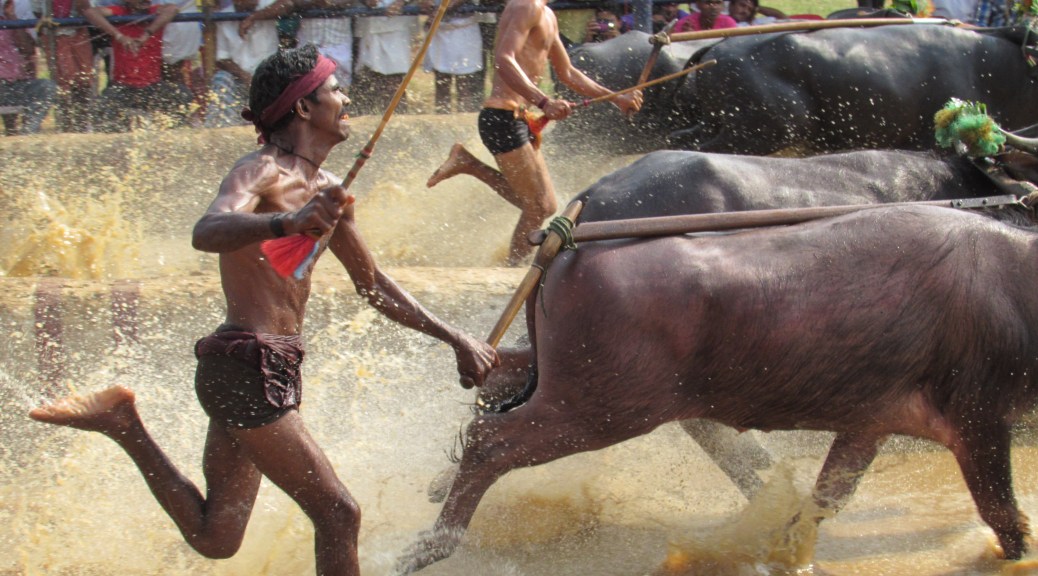
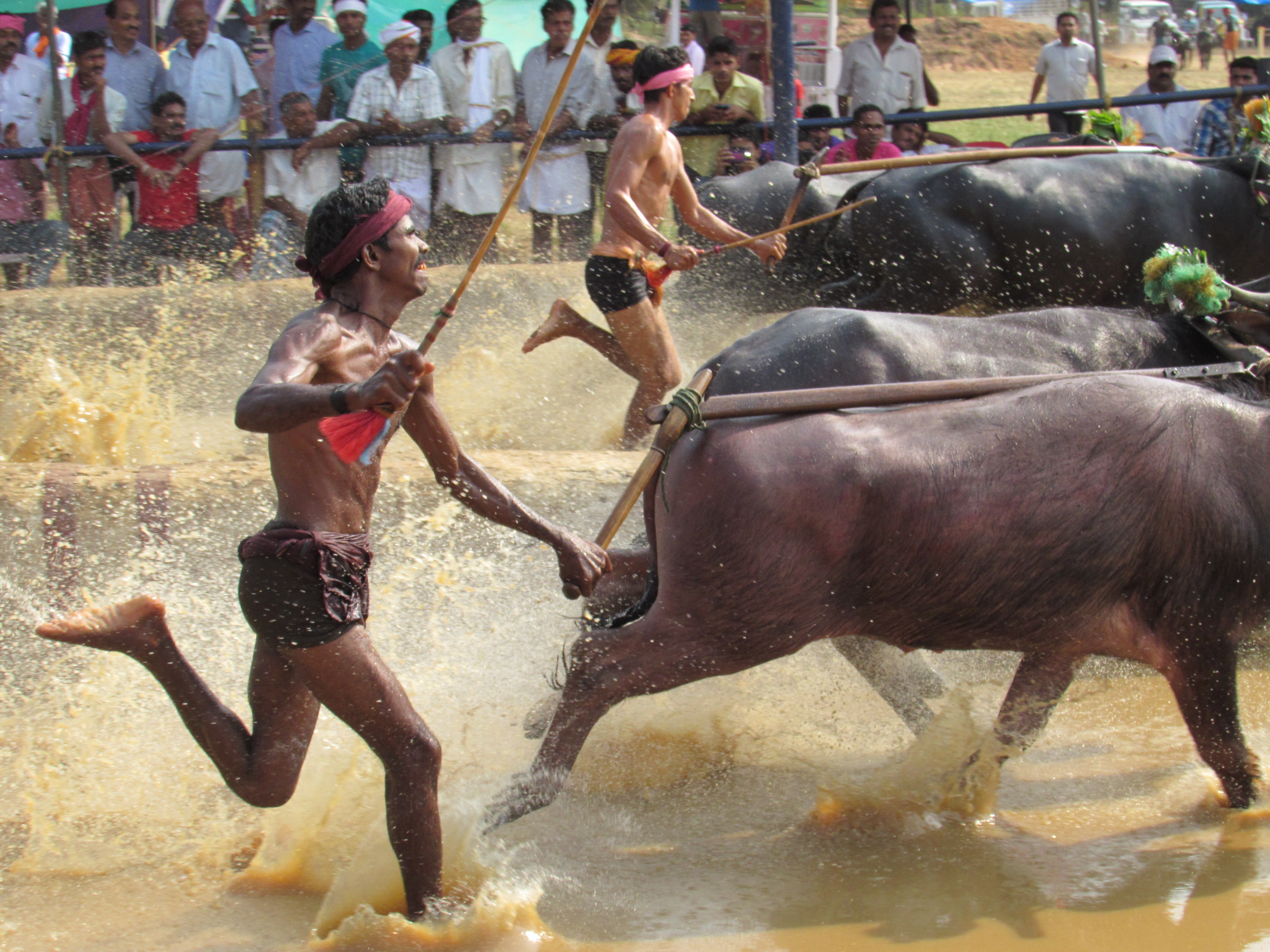
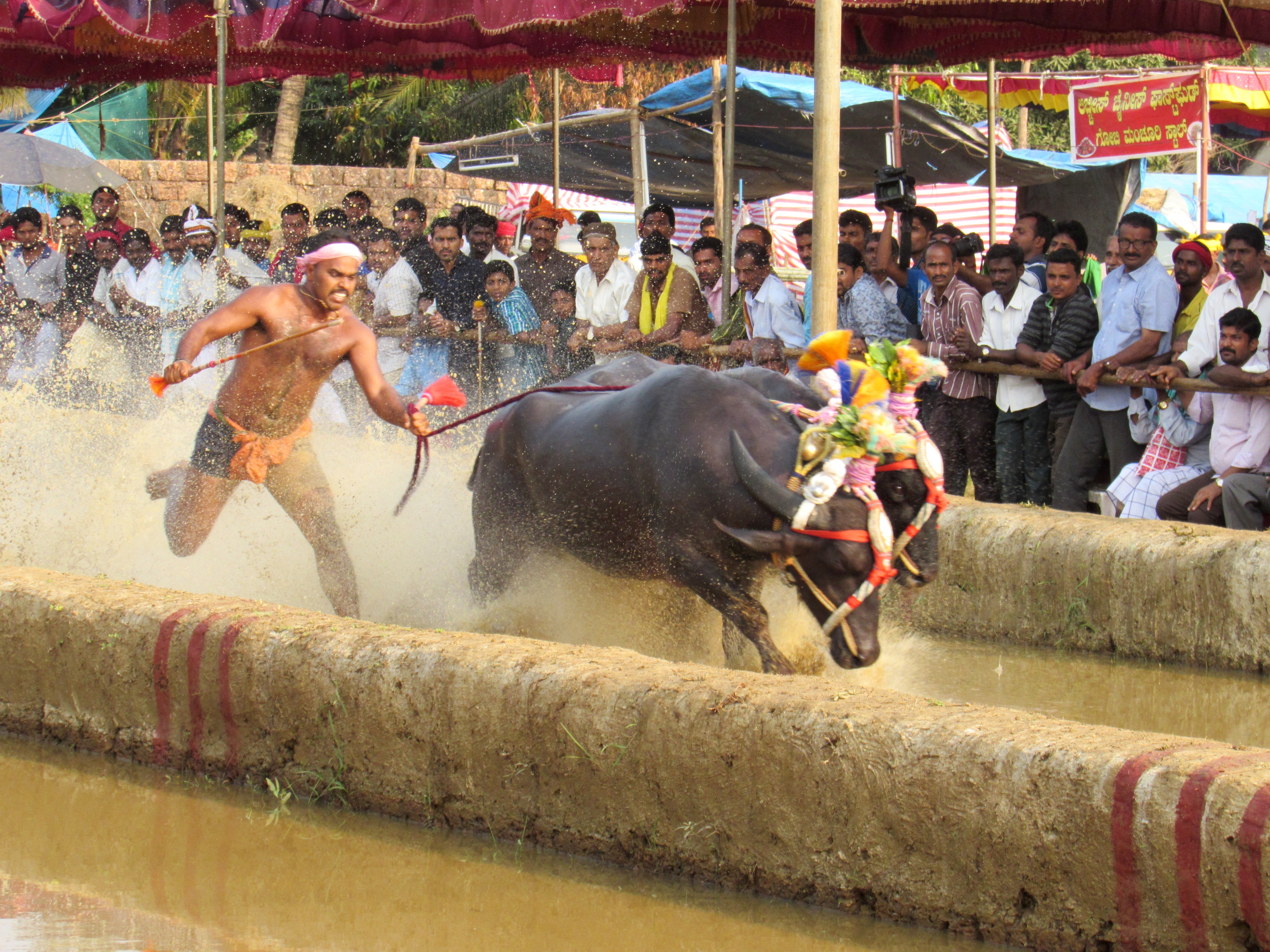
The ‘Raging bull’, the ’Buffalo skinned’ are idioms that we commonly refer to humans as expressions of exasperation. But when all the action brings forth the literal sense of these words- The event happens to be ‘Kambala’. Kambala is a sport where He-buffaloes are made to run on a mud filled slush track to reach the ‘Nishana’ or the finishing post. In the modern races, there are usually two tracks running parallel and thus called ‘Jodu Kare’ or ‘pair of tracks’. Each track is given a name so that it becomes easy to communicate in events where both the tracks are being used. In Joppinamogaru, the tracks are called Jaya kare and Vijaya kare. A coin is tossed for the team to choose the track. As loud drums beats and hoot sound of the timekeeper goes out, the whip lash of the runner crackles in the air before it hits the buffalo and the action finally takes off… The soldiers begin the battle..

There are different forms of kambala. Firstly, the Negilu category- Here, a representation of a plough is attached to the buffaloes which has evolved over period of modernisation. This is a race mostly for the younger buffaloes. Usually two pairs of buffaloes are made to run at a time and the fastest of the two is considered for the consecutive rounds.

IMG_3172
Negilu Kambala

Hagga kambala- This form is similar to the Negilu kambala, only difference being that the negilu or the plough is replaced by a hagga or a rope. Both these forms of the sport requires a great deal of stamina for the runner as he too is expected to run as fast as the buffaloes.

IMG_3236
Hagga Kambala

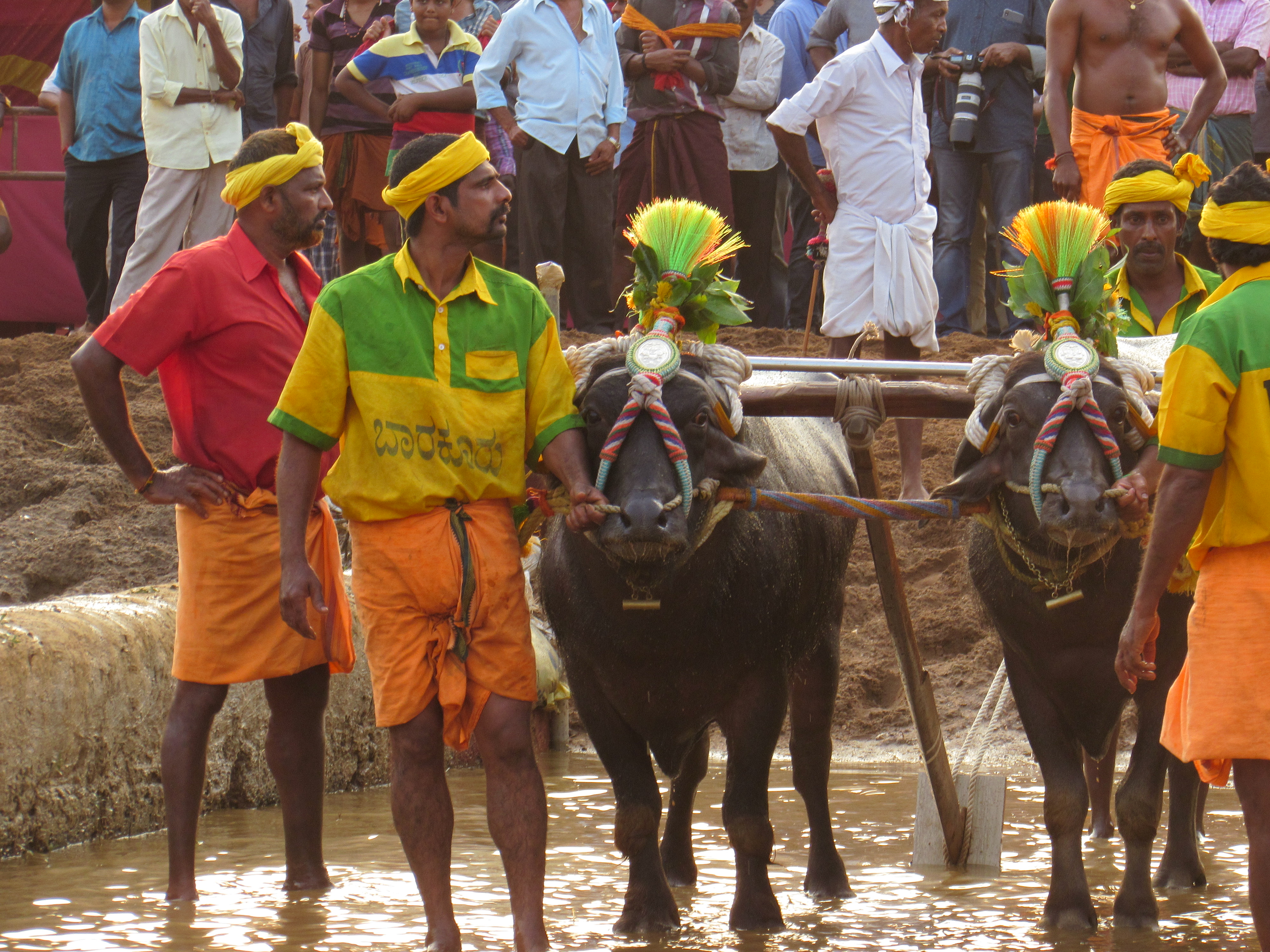
Adda halage kambala- This is a category mainly for the senior buffaloes(decided by age). A cross wooden plank is attached to the buffaloes on which the driver stands firmly and controls the speed and direction of the buffaloes to reach the Nishana. This is mostly a time based event where one pair runs at a time and the fastest pair is awarded.

IMG_3261
A pair of buffaloes getting ready to run the Adda Halage Kambala

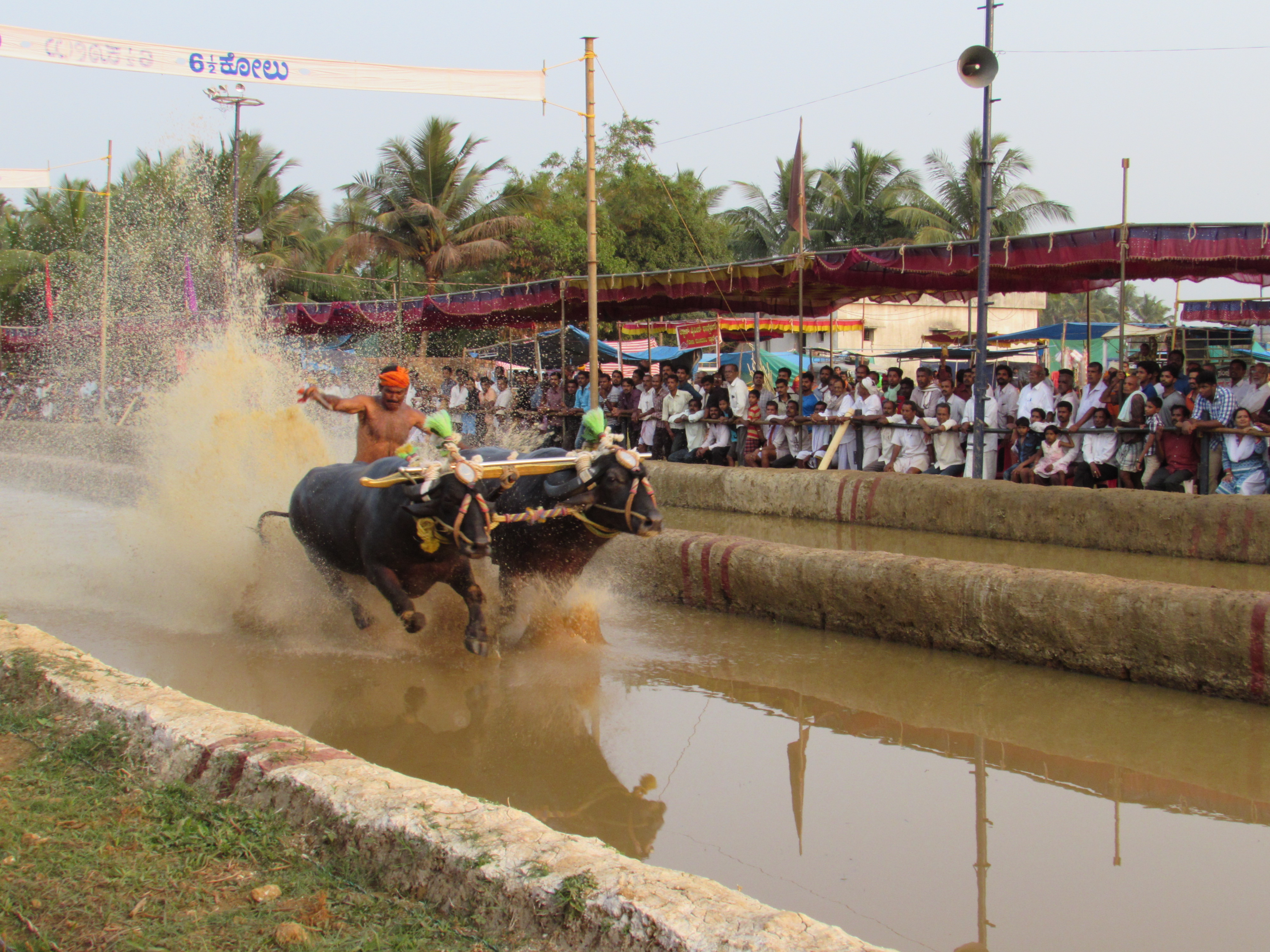
Kane halage kambala- In this form, a round wooden plank with two holes is tied to the buffalo pair and the driver stands on it to control them. Two strips of white cloth are tied across the track which are used for measurement of the height of water spurt. One cloth is tied at a height of 7.5kolu(9.37mts) and the other at 6.5kolu(8.125mts). Faster the pair runs, higher the water spurts out of the holes on the plank. Here, one pair runs at a time and is specific to the senior buffalo category. It is very difficult to run at the expected speed and hence every team that spurts high enough to wet the cloth is awarded unlike the other forms.

IMG_3265
Kane Halage Kambala

With a history of over 500years, the event is a treat to watch the enthusiasm and the energy of the participants and the spectators. However, it is heart wrenching at the same time to see the welts and the swollen bruises on the buffaloes as a result of continuous whip lashing. For this reason, Kambala has been in the radar of seeing a ban for a while now as demanded by several animal rights activists. We don’t know what the future beholds, but one MUST experience the vibrance of India’s rich folk culture in all forms before its name joins the pages of history..

Tracing the Cholan trail- Kumbakonam

This was part of a backpacking trip by my brother and me with an original itinerary to cover Bangalore- Kumbakonam – Gangaikondacholapuram – Chidambaram – Pichavaram – Pondicherry – Tiruvannamalai – Bengaluru

Although being located in the same district, soaked in history and RICH architectural heritage from the Chola era, Kumbakonam is a place that is mostly overshadowed by its counterpart at Tanjavur town. Hence, it is a place that is often spoken less about on a typical tourist’s circuit. I was curious to cover this city and absorb as much of it as possible. While I embarked on a weeklong backpacking trip through some parts of the East Coast road, I had enlisted the temples that seemed culturally important and hoped to visit them while I passed through the city of Kumbakonam.

Getting around:

As you may know, most of my trips are by using public transportation. During this trip, all the places within the city were covered on foot. (You can alternatively hire an autorickshaw to show you around and save some time). All other places located on the outskirts were explored through public/ local buses that are very frequent and extremely light on the pocket. If you are using this blog as a reference to explore this ancient city of the Cholas, you can plan your commute accordingly. Places to visit in Kumbakonam city largely comprise temples and can be broadly grouped into three categories depending on their location and proximity of accessibility.

a. Temples within a cluster within the city (temples 1~5 and 11~12 in my list)
b. Temples within a cluster on the city outskirts (temples 6~8 in my list)
c. Temples located in separate locations on the city outskirts (9~10 and 13~18 in my list)

Accommodation:

It was raining cats and dogs when we alighted at Kumbakonam bus stand in the morning. We had pre-booked a hotel in Kumbakonam city through an online portal. But after reaching the place, we realized that there was a mistake on the portal, and the hotel was closed for the Deepawali vacation. We sat there and browsed through websites to find alternate accommodation options. Meanwhile, the pounding rain had mellowed down to a drizzle. We finally managed to find a hotel nearby where we dumped all our baggage, freshened up, and ventured out to explore. Bonus for the online goof up by the website: We had a room upgrade.

So, here are the places we visited during our short stint of 2 days at this historical city of Kumbakonam in the order of our travel.

Day 1:

  1. The Nageswara temple: A sizable temple dedicated to the Snake king Adishesha, who is believed to have offered his prayers to Lord Shiva here. An interesting part of this vast 1000-year-old temple premise is the kalyana mantap. The Cholas have sculpted this stone structure in the form of a chariot being drawn by life-sized elephants and horses with the suspension technique.
The Kalyana mantap at Nageswaran Kovil
The Kalyana mantapa at Nageswaram kovil

2. Sarangampani: We reached this temple that follows the Vaishnavism cult after wading through a flooded road. Notable contributions have been made by the Cholas, Vijayanagar, Madurai Nayaks, etc., to the overall architecture of this temple. A temple tank is located on the western side of this temple.

The Rajagopuram at the Sarangampani Kovil

3. Someshwar temple: This is located adjacent to the Sarangampani temple. We skipped an exclusive visit to this temple after getting some photos from the outside of the temple. From there, we continued through the busy shopping lanes of the town to reach our next landmark.

4. Adikumbeshwara temple: It is believed that Kumbakonam gets its name from this Shiva temple. Legend has it that lord Brahma’s pot (Kumba), containing the nectar of worldly lives, was rolled down and stopped at this town after being hit by Shiva’s arrow. The sculptures at the temple are interesting, where a 16-pillar hall built by the Vijayanagar kings has all the 27 stars and 12 zodiacs sculpted on a single stone. Also, the piped instruments(nagaswarams) etched out of stone and the cattle shed are noteworthy. Today, this vast temple premise is also used for commercial purposes with several shops and restaurants setup in this complex.

5. Ramasamy temple: A place dedicated to lord Rama; it is believed to be the only temple that houses the idols of Rama & Sita along with all his brothers inside the sanctum Sanctorum. The entire story of Ramayana has been painted on the corridor walls of this temple. And hence, for someone interested in art and beyond just checking places, it would require at least a day or two to observe the murals here.

Obviously, we did not have the luxury of more than a couple of hours to spend, and hence our visit was limited to just a quick brush-up on whatever we could understand of the images there.

The Ramayana painted on the corridor walls of the Ramasami temple

6. Mahamahan tank: We timed our visit to this place around noon, when all temples in South India usually close down. This mythologically important tank is spread across 6 acres and is believed to have been created out of the nectar that was spilled from Brahma’s pot.

7. Kashivishwanathar temple: This is located at the entrance of the Mahamahan tank. It is believed that the navakannigas or the 9 maidens of Shiva (Ganga, Yamuna, Saraswathi, Kaveri, Godavari, Narmada, Krishna, Tungabhadra & Sarayu) representing 9 rivers visit and bathe in this tank once in 12 years. A day when lakhs of devotees flock here. It is believed that people who cannot make it to Kailash / Manasa Sarovar visit this temple as an alternative to wash off their sins. Though the temple was closed when we reached there, we were very fortunate to get the prasadam that made a nice filling lunch.

8. Abhimukeshwara temple: Located nearby, on the other side of the tank, we only walked past this place as it too remained closed. From there, we boarded a bus to our next major landmark on my ‘to visit’ list.

9. Airavateshwara temple at Darasuram: We visited this temple, on the outskirts of Kumbakonam (one of the three living Chola temples), when no one else would! By the time we walked from the bus stop to the temple, our umbrellas were flipped by the heavy winds, and the pounding rain had battered and gotten us drenched to our bones. The entire temple complex was FLOODED (with knee-deep water). It was an insane visit where my brother and I both decided to go ahead, wade through the water, and have the entire place for ourselves. We climbed up a ladder (placed by the temple priest to perform the daily rituals) to reach the temple corridor. It was BEAUTY, up there! Bonus: The sight of the entire temple complex in a reflection in the accumulated water. (I know this photo is not its best, but still the best memory that our mobile phone camera could capture for our grandkids when we would tell them about this place!).

Airavateshwara temple at Darasuram

After getting some nice shots, we made our way out to the main road to catch a bus to our next destination. The short journey thereon reminded us of Sebastian Vettel cruising on narrow countryside tarmac amid overflowing potholes and LOUD tapangucchi music in the background. With nothing to hold on to during the frequent braking by the driver to stop the bus for passengers to board/alight, the bus kept coming to screeching halts from the revving speeds. It was a fun ride that ended in a few minutes as we alighted at our next planned landmark.

10. Pateeswaran temple: This is originally a Shiva temple, but the goddess has been given prime importance here. It is said that the Cholas offered prayers to the goddess Patti(daughter), calf of the sacred cow Kamdhenu, here before proceeding for any battles during their reign. However, when we arrived here, it remained closed only to open again at 05.00.p.m.

As the rain gods again took over the silent skies, we decided to head back to the city. After reaching Kumbakonam city, we looked out for a place that served the trademark ‘Kumbakonam degree coffee’, our piping hot cuppa filter coffee to warm ourselves to some extent from the chilling rain. It was only 06.00.p.m but already dark. As planned, we set out to find our way through the super crowded streets of the city to find the remaining two temples from our list.

The main bazaar street is a state highway- All thanks to the festival of Deepawali, it seemed like the entire district had come down to one street in Kumbakonam for shopping. The street was jam-packed with not even an inch of breathing space. We somehow managed to get out without actually facing a stampede. Albeit the heavy rain, we closed our umbrellas and stood amid the crowd. The crowd pulled us along to reach the exit of the street, from where we walked to the next temple on our list.

11. Chakrapani temple: Here, Vishnu is worshipped in his sleeping posture holding his ‘Chakra’ on one finger. We witnessed the last pooja of the day, after which we wondered if we had to continue to the next temple or not, since all the nearby temples had started to close down. Anyway, we had a lot of time to kill and walked across to take a chance.

12. Brahma temple: We considered ourselves to be fortunate to have decided to take a chance and arrive here. The temple was still open, and we had made it to the last pooja at this temple as well. The priest was ecstatic to greet us, who went on narrating us stories from mythology and depicting the importance of this otherwise small temple in Kumbakonam. We were told that it was 1 of the only 2 temples in all of Tamil Nadu that are dedicated to Lord Brahma. We were happy to savor the prasadam, which was very unexpected.

We then had a sumptuous supper at a restaurant before we called it a day. It took the same amount of pain to cross the crowded bazaar street to return to the hotel and catch a good night’s sleep.

Day 2:

On the following morning, we were early risers to catch up with our planned itinerary. We boarded a 07.00.a.m. bus to our first destination of the day, situated on a small hillock on the outskirts of Kumbakonam.

13. Swamimalai: Abode of one of the six important Murugan temples in Tamil Nadu, Swamimalai is also an important destination for idol making in India. A limited number of artisans who all live in clusters around the temple here, have carried along a science and art of bronze idol making from the Chola period. The technology used in the ‘lost wax method’ of metal casting is practiced as per the Vedas and is something that needs a more elaborate citation, in another post.

After offering our prayers, we decided to head back to the city to get buses to the other places on our list.

Swami Malai- One of the six holy shrines of lord Murugan

Meanwhile, we couldn’t locate any restaurant that was open for breakfast even at 08:00 a.m. Hence, we decided to have lunch once and for all wherever we would reach. If one had the convenience of an own transportation, there are several other ancient temples that I would recommend visiting. It would be ideal to have an additional day in hand and make Kumbakonam the central place, as all these recommended places are located in different directions, forming somewhat of a radius around this town. Local buses are available from Kumbakonam to each of these places, but it would be very time-consuming to come back to Kumbakonam to change a bus to every time. Hence, we decided to skip the following places and head to our last major landmark.

14. Uppiliappan

15. Thirubuvanam

16. Thiruvalanchizi

17. Thiruvidaimaruthur etc.

18. The Brihadeeshwara temple at Gangaikondacholapuram: We reached this yet another magnanimous temple after changing two buses (A change of bus at Kork road / GK cross). The biggest (of the three great living Chola temples enlisted by UNESCO), this structure stood right adjacent to the national highway, enchanting every tourist with all its might. The 3 living temples are together called so because the prayers, festivities followed thousands of years ago, during the Chola period, are still being followed religiously to date and have stood as true testimony of time and Tamil culture.

The Brihadeeshwara temple at Gangaikonda Cholapuram

From here, we continued our backpacking into another territory within Tamil Nadu. From the Tanjavur district, we were then heading towards Chidambaram via Pichavaram. Backpacking trips and road trips always carry elements of surprise, and they are supposed to be like that. They can never be planned precisely. These trips always carry scope for making impromptu changes in the itinerary and taking on new adventures. That’s what was awaiting us on the next leg of this weeklong trip, far away in the southernmost state of India. Click here to read more about my journey to Chidambaram.