Tag Archives: Kerala tourism

8 Best Things to Do in India with Your Partner

India, with its rich history, diverse landscapes, and vibrant culture, offers a plethora of romantic experiences for couples. Whether you’re newlyweds on a honeymoon or partners looking to rekindle your romance, India provides the perfect backdrop for unforgettable moments. Picture yourselves cruising through Kerala’s serene backwaters on a houseboat, exploring the majestic palaces of Rajasthan, relaxing on the sun-kissed beaches of Goa, or trekking the scenic hills of Uttarakhand. Envision witnessing the timeless beauty of the Taj Mahal, experiencing the serene charm of Kashmir’s valleys, wandering through the lush tea gardens of Darjeeling, and discovering the rich cultural heritage of South India. Each destination offers a unique blend of romance, adventure, and tranquility, making India an ideal choice for creating cherished memories with your loved one. Here are the eight best things to do in India with your partner.

1. Cruise the Backwaters of Kerala

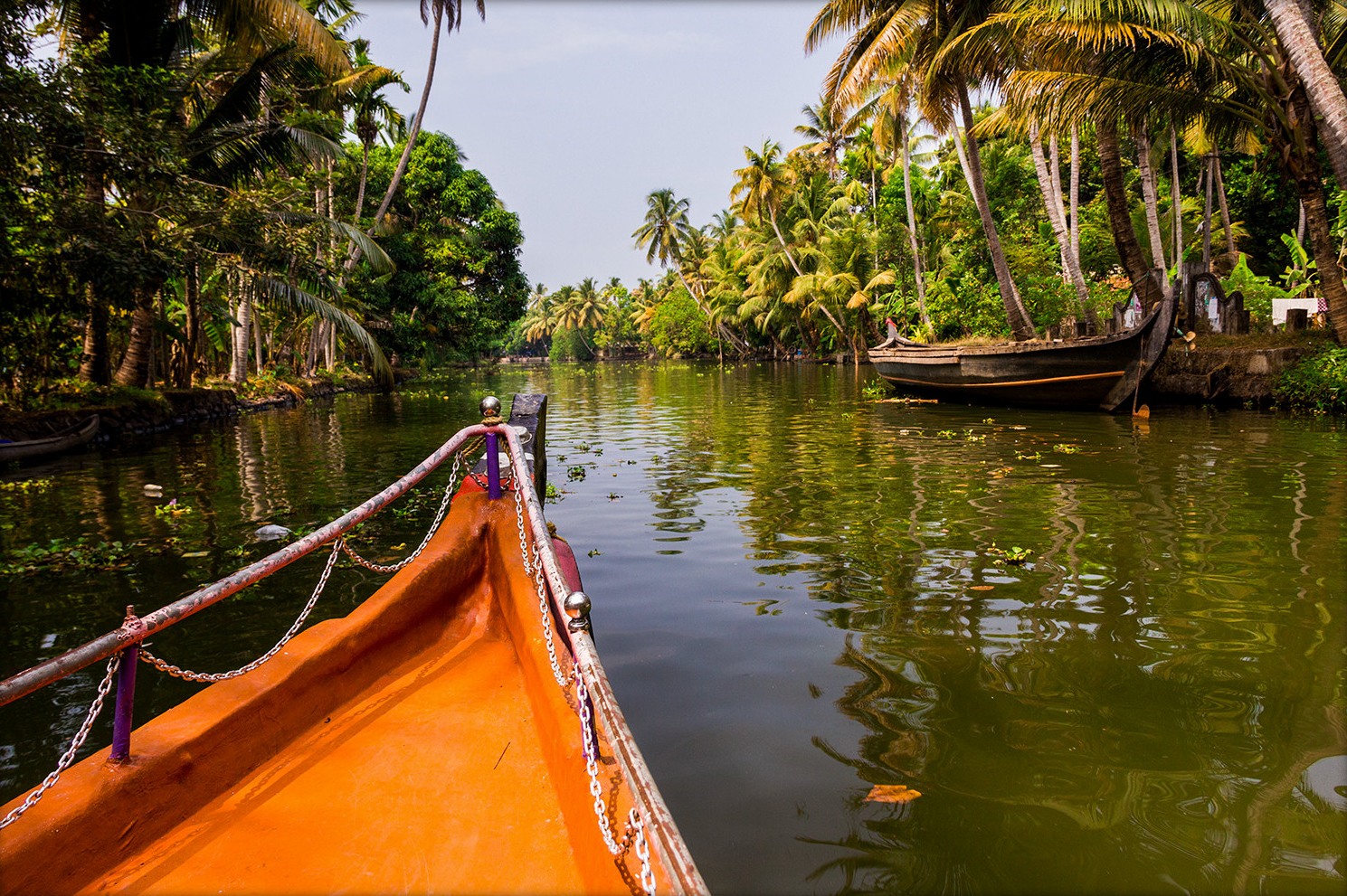
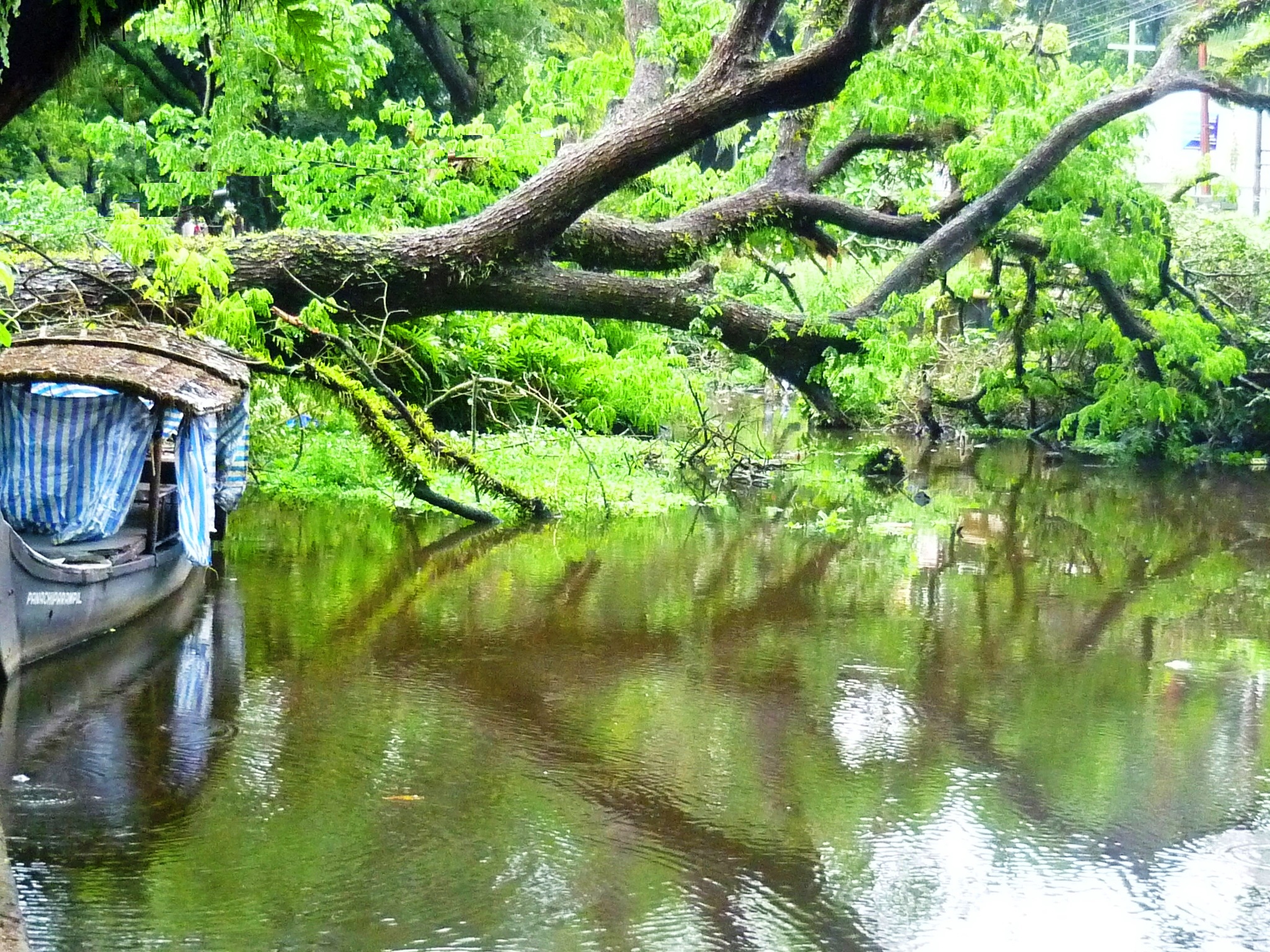
Kerala, often referred to as “God’s Own Country,” is a paradise for couples. A 5-day Kerala tour package is perfect for exploring the serene backwaters, lush greenery, and tranquil beaches. Start your journey with a houseboat cruise on the backwaters of Alleppey or Kumarakom. The houseboats, equipped with modern amenities, offer a unique experience as you drift through the calm waters, surrounded by coconut groves and paddy fields. Enjoy the picturesque views, indulge in delicious Kerala cuisine, and relax in the peaceful ambiance with your partner.

The Shikara cruise in the narrow canals of Alleppey

2. Explore the Royal Heritage of Rajasthan

Rajasthan, known for its royal heritage and grand palaces, offers a romantic escape into the past. Visit the stunning city of Udaipur, often called the “Venice of the East.” Take a boat ride on Lake Pichola, visit the magnificent City Palace, and stroll through the colorful markets. Jaipur, the Pink City, is another must-visit with its impressive forts and palaces. Stay at one of the heritage hotels to experience royal hospitality. The desert city of Jaisalmer, with its golden sand dunes, offers an adventurous yet romantic camel safari under the starlit sky.

3. Relax on the Beaches of Goa

Goa, with its sun-kissed beaches, vibrant nightlife, and laid-back vibe, is an ideal destination for couples. Spend your days lounging on the sandy shores, swimming in the azure waters, and enjoying beachside meals. For a more secluded experience, head to the beaches of South Goa like Palolem and Agonda. Explore the charming streets of Old Goa, visit the famous churches, and indulge in water sports for an adrenaline rush. As the sun sets, the beach shacks come alive with music and dance, offering a perfect end to a romantic day.

4. Trek the Hills of Uttarakhand

Uttarakhand, with its scenic beauty and tranquil environment, is a haven for couples who love nature and adventure. A 10-day Uttarakhand tour package can take you through the stunning hill stations of Nainital, Mussoorie, and Ranikhet. Enjoy boating on Naini Lake, take a cable car ride to Gun Hill, and explore the lush forests and waterfalls. For a spiritual experience, visit the holy towns of Haridwar and Rishikesh, and attend the evening Ganga Aarti. If you’re into trekking, the Valley of Flowers and Chopta Tungnath treks offer breathtaking views and an unforgettable experience.

5. Witness the Romance of the Taj Mahal

No trip to India is complete without visiting the iconic Taj Mahal in Agra. This magnificent white marble mausoleum, built by Emperor Shah Jahan in memory of his beloved wife Mumtaz Mahal, stands as a symbol of eternal love. Walk hand in hand with your partner through the beautifully manicured gardens, and admire the intricate architecture and craftsmanship. For a magical experience, visit the Taj Mahal at sunrise or sunset when the monument is bathed in a golden hue, creating a truly romantic atmosphere.

6. Experience the Serenity of Kashmir

Kashmir, often described as “Paradise on Earth,” is a dream destination for couples. Stay in a traditional houseboat on Dal Lake in Srinagar, and enjoy a shikara ride amidst the floating gardens and vibrant markets. Visit the Mughal Gardens, and take a stroll through the fragrant blooms. In winter, Gulmarg transforms into a winter wonderland, offering skiing and snowboarding opportunities. The pristine beauty of Pahalgam and Sonmarg, with their lush meadows, sparkling rivers, and snow-capped peaks, provide a perfect setting for romance.
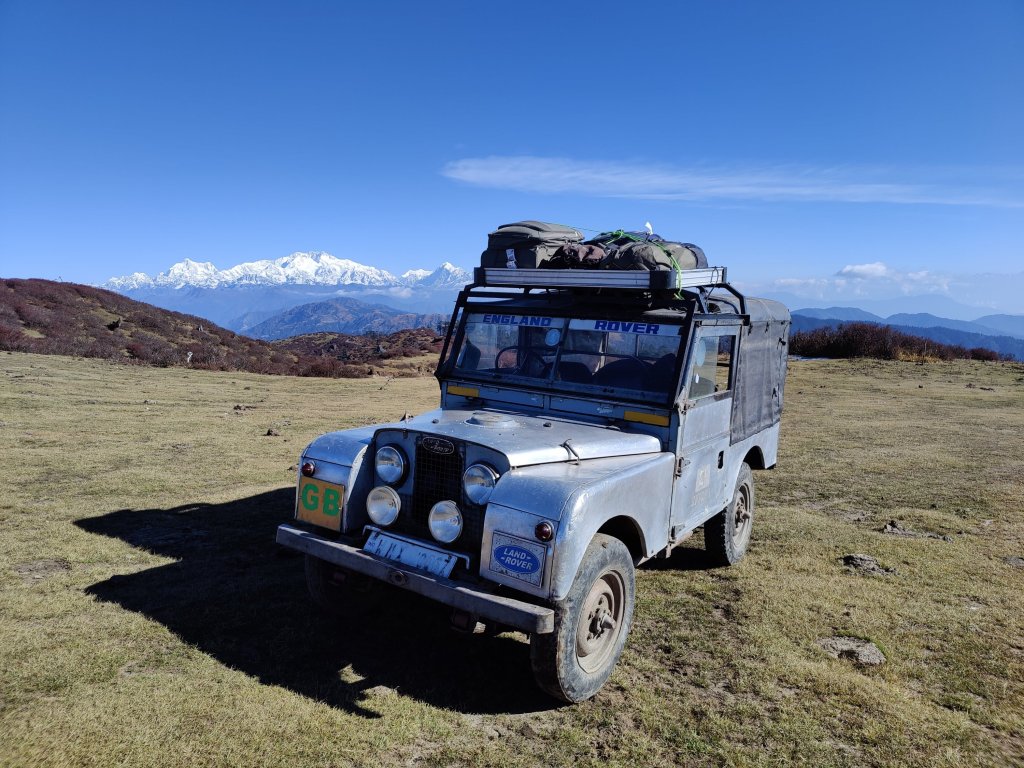
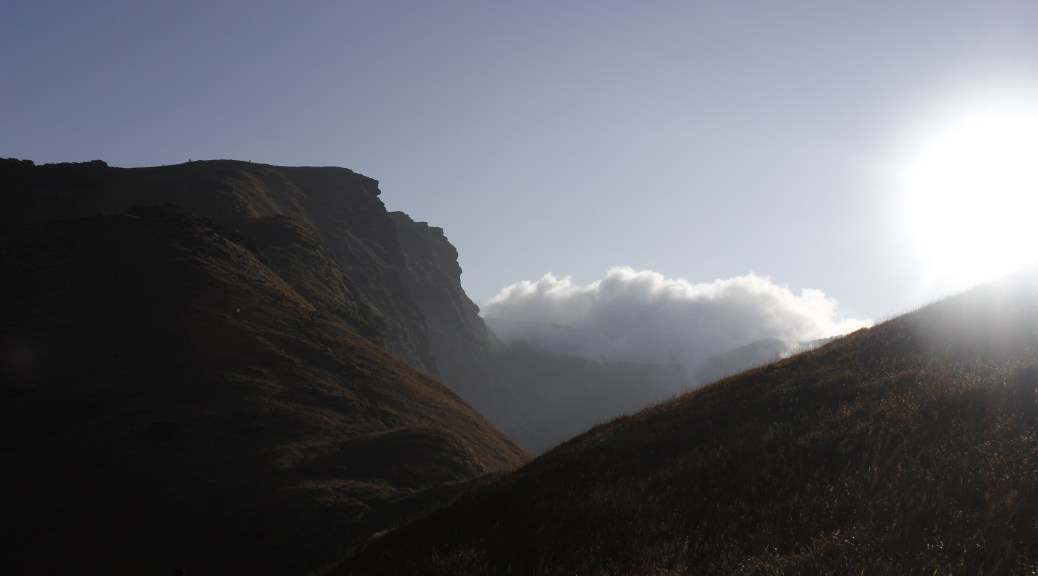
Land rover Defender and 'Sleeping Buddha' at Sandakphu
Our Land rover Defender with the ‘Sleeping Buddha’ in the Background at Sandakphu

7. Enjoy the Tea Gardens of Darjeeling

Darjeeling, with its rolling tea gardens and stunning views of the Himalayas, offers a peaceful retreat for couples. Take a ride on the Darjeeling Himalayan Railway, a UNESCO World Heritage Site, and enjoy the scenic journey. Visit the tea estates, where you can walk through the lush plantations and learn about the tea-making process. The Tiger Hill viewpoint offers breathtaking sunrise views over the Kanchenjunga range. Explore the vibrant local markets, and don’t miss out on tasting the delicious momos and local delicacies.

8. Discover the Vibrant Culture of South India

South India, with its rich cultural heritage, ancient temples, and beautiful landscapes, is perfect for a romantic getaway. Visit the temples of Tamil Nadu, such as the Brihadeeswarar Temple in Thanjavur and the Meenakshi Temple in Madurai, known for their architectural brilliance. Explore the backwaters and beaches of Kerala, and take a trip to the hill stations of Munnar and Wayanad. In Karnataka, the historical sites of Hampi and the royal city of Mysore offer a blend of history and romance. The serene beaches of Pondicherry and the French colonial charm make it a unique destination.

The Brihadeeshwaran temple at the backdrop

Plan Your Kerala and Uttarakhand Tours

When planning your romantic getaway in India, consider Kerala tour packages for 5 days and Uttarakhand tour packages for 10 days to make the most of these beautiful regions. In Kerala, opt for packages that include houseboat cruises, beach stays, and visits to hill stations like Munnar and Thekkady. For Uttarakhand, look for packages that cover the hill stations, spiritual towns, and trekking destinations to experience the diverse offerings of this picturesque state.

India, with its diverse landscapes and rich cultural heritage, offers endless possibilities for romantic escapades. Whether you’re cruising the backwaters of Kerala, witnessing the grandeur of the Taj Mahal, or trekking the hills of Uttarakhand, each experience promises to bring you closer to your partner. So, pack your bags and embark on a journey of love and adventure in this incredible country.

Stories Through Souvenirs- An e-book

A compilation of 18 short stories based on my experiences of traveling on the roads of India, I’m happy to share that my second e-book is now available for my readers.

My book- ‘Stories Through Souvenirs‘ is a compilation of my stories of meeting people, hearing their stories and the learnings from my experiences. These are the stories of how these stories influenced me to become who I am.

Do give it a read and I am sure you will like it 😊

A Tour of Indian Foundries- Investment Casting

In this post today, I like to discuss a technical subject by standing in the shoes of a traveler. During my student life, I have never been in a race to become a top-scorer. However, it was Professor Mukunda’s enthusiastic teaching method, that ‘Material science and Metallurgy’ has been one subject that I topped the department (I like to show-off a bit, with those dark glasses emoticon). With an in-hand admission letter to one of the top universities to pursue a post-graduation in the subject, the lostlander deviated along the way, only to become a professional ‘Metallurgical Failure Mode Analyst’ much later in her career. If not for Prof.Mukunda, a seed of interest in the subject would have never been sown and I wouldn’t be writing about such an unconventional travel post, it seems.

Metallurgy is a science in which India has mastered from even before the world could imagine. The Vedas have a devoted section to teach these techniques. Prof.Mukunda’s favorite topic was ‘Metal casting with the lost wax technique’. His face beamed in joy every time he mentioned the intricacies that were achieved in the metal art thus created. “No two pieces that are exact replicas of each other can ever be created”, he stressed. We had foundry visits as part of our curriculum but that’s where we could only see sand, centrifugal and other forms of metal casting. Without having easy access, investment casting, also called as the ‘lost wax technique’ of metal casting was only left to our imagination. Many years after my graduation, I have been fortunate that I have been able to visit some of the amazing and traditional foundries in my country that practice the lost wax technique. These places have got them their individual ‘GI’ tags. Here is a walk through my foundry visits which I believe I should share with my fellow readers.

Idols of Swamimalai:

Swamimalai translates to the ‘Hill of the Lord’ that is named after an important temple in Tamil culture dedicated to Lord Murugan. This little town is famous beyond just this holy abode. One doesn’t need explanation at the mention of the bronze idols of the Cholas era. Apart from several of these antiques being prized possessions at museums across the globe, these treasures are among the highly traded commodities in the black market. These are ALL brought to form in Swamimalai. It is believed that the artisans of Swamimalai are a group of skilled men called as the Stapathis who have passed on their heritage of metal idol making, since the 12th century. The precision of composition and the measurements of these metal idols, mostly bronze are followed as per the ‘Agama Shastras’. This holy land of the alchemists was a part of my weeklong backpacking with my brother, back in Year-2015.

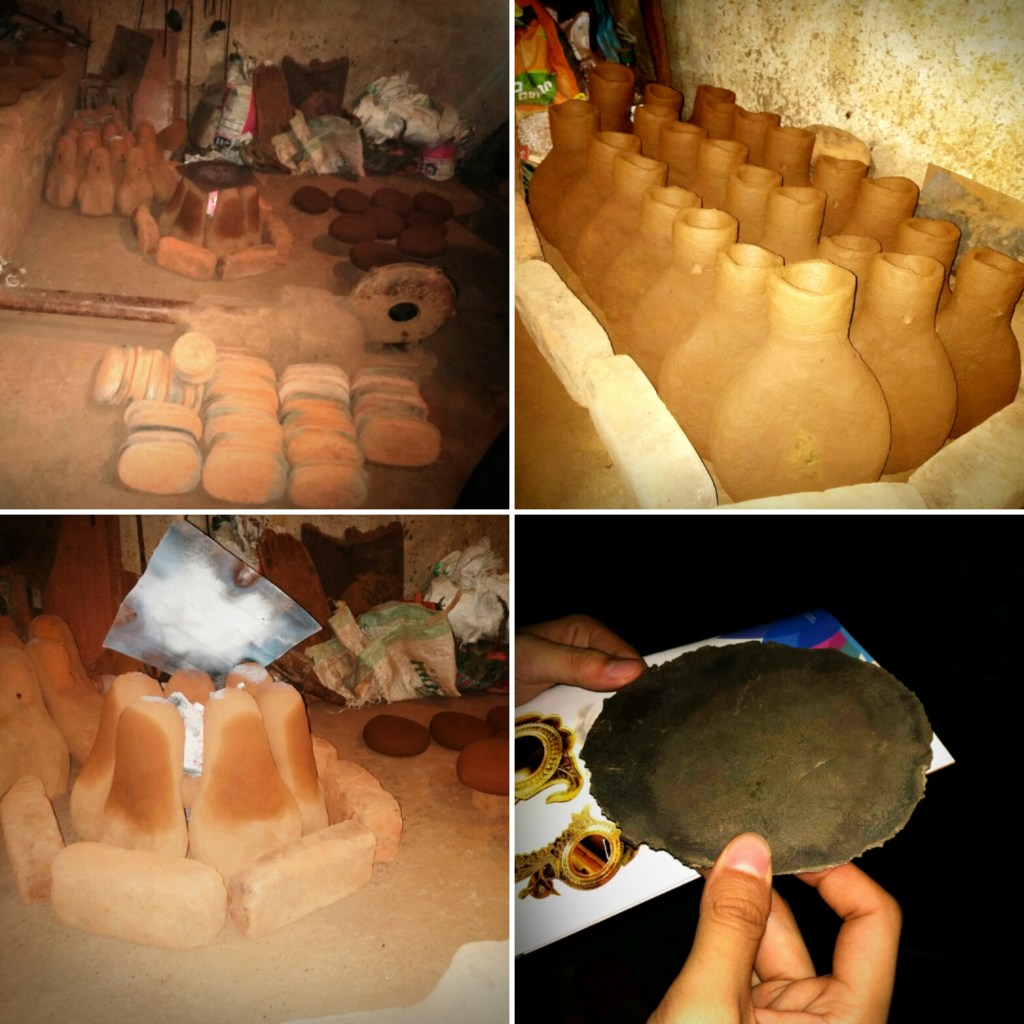
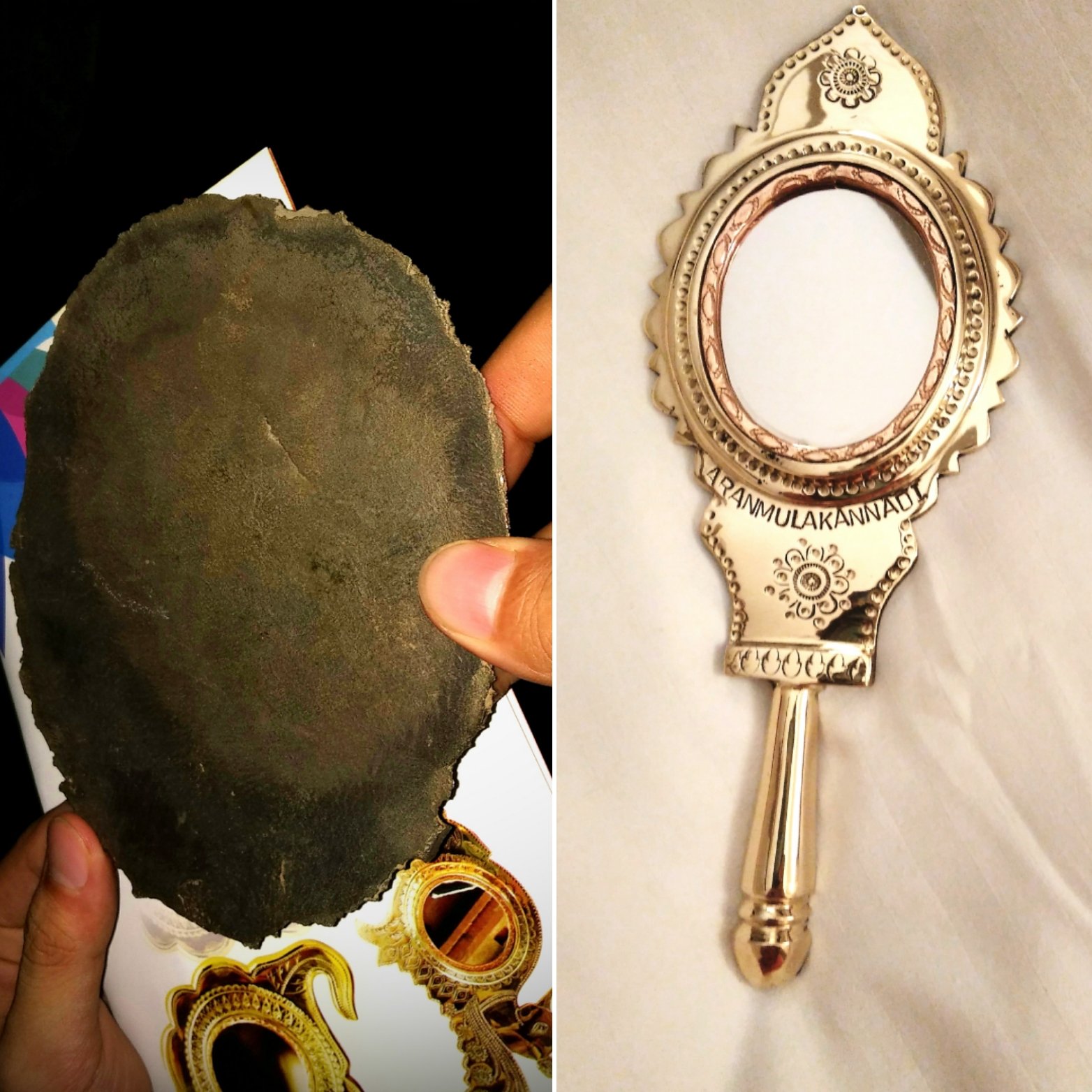
Work-in-progress at a foundry that makes Aranmula Kannadi
Clockwise from top left: 1. Raw material for mould making with the furnace and blower 2. The mould 3. Furnace 4. Metal sheet after moulding ready to be polished

Aranmula Kannadi:

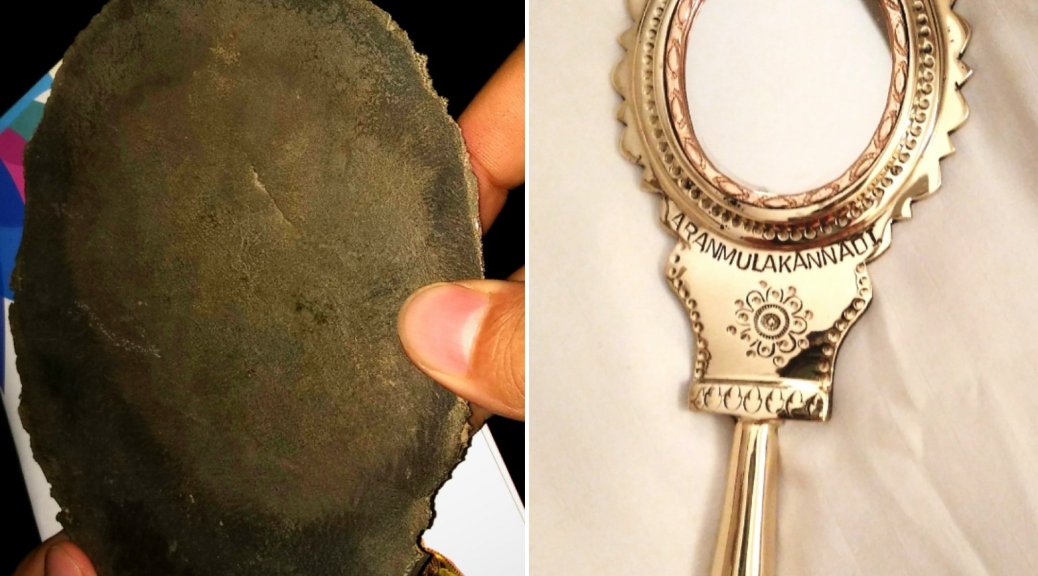
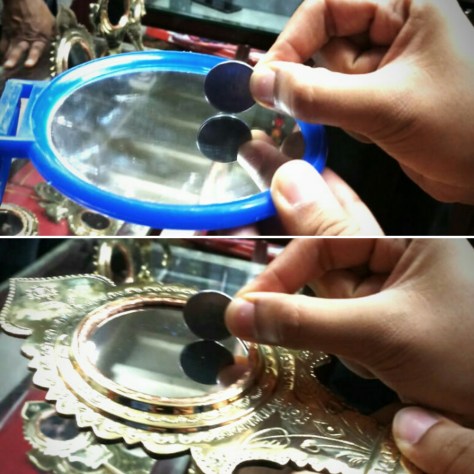
An extremely important part of malayalee culture, this handcrafted mirror is a quintessential part of Kerala. I was told that on the day of ‘Vishu’ festival, after waking up in the morning- he/she should first see themselves in an Aranmula Kannadi placed alongside the ‘Canacona flowers and a lit oil lamp’ before anything else. ‘What is it about a mirror?’ a person unknown to the traditions of this land might ask. ‘These mirrors are not glass!’ These mirrors are super-polished metal surfaces that are capable of reflecting real images. A glass always reflects a secondary image (you can notice that there is a distance from the reflecting surface to the image formed) whereas, the metal surface reflects primary images (There is no additional distance between the object and the image).

Two images that give the comparison of reflection in a glass and a metal mirror (Aranmula kannadi)
Top: The secondary reflection in a glass mirror; Below: The primary reflection in a metal ‘Aranmula Kannadi’ mirror

These manually polished mirrors are created through investment casting whose composition remains to be a secret that is passed down through generations of just 1 family. The small group of these master craftsmen who are protecting their secret recipe of the Malayalee culture all reside around the Aranmula Parthasarthy temple in the state of Pathanamthitta. I had the esteemed opportunity of visiting one of these foundries when I sneaked out after working hours on one of my business trips in Year-2019.

Video of my visit to the mirror making foundry at Aranmula

Dokra art of Bastar:

This non-ferrous metal art is created by the forest dwelling tribes of Chhattisgarh. Historians believe that this art has evolved from what was used by the primitive tribes to create figurines of their local deities for worship and for jewellery purposes. The metals used were earlier collected directly from earth in the mineral rich area of Bastar, then smelted to separate the desired elements and mixed in intended proportions to form the final material for casting. This is an undocumented tribal technique that has been passed down through several centuries. Today, it is widely used for commercial purposes of decoration and gifting. It is now revered as a part of the tribal culture that represents the state of Chhattisgarh. I had an opportunity to visit one of these foundries and observed keenly the lifeless metal take form into art during my family’s five states’ road trip in Year-2020.

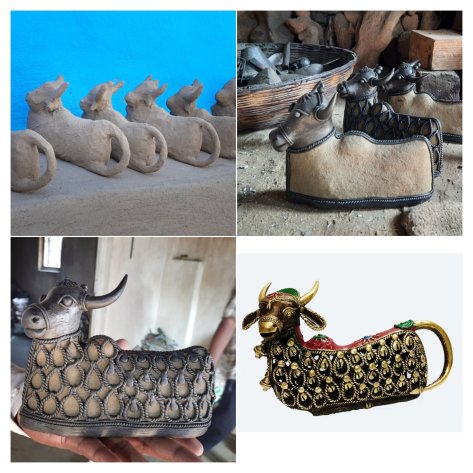
Work-in-progress at a foundry that makes Dokra art in Bastar
Dokra art at various stages of metal casting

Kola masks of Karkala:

Talking about all these foundries, I cannot be leaving my homestate behind. Although the folk art of metal mask making is slowly dying, these masks are an extremely important part of the culture of the Tulunad region. These bell metal masks are used in the spiritual performance of the ‘Bhoota Kola‘. Today, the art is used beyond mask making and can be seen in idols, lamps, bowls, utensils among other things used and sold extensively in Udupi district of Karnataka.

The lamps and idols of Nagamangala:

The contribution of the Hoysalas to the art and heritage of Karnataka cannot be justified with any number of words. Their intricacies and detailing in their work can be seen not only in the stone sculptures of their temples but also in their metal crafts. A few of the practitioners of the Hoysala style of metal casting have saved and passed on their knowledge to a few artisans who have made the town of Nagamangala their home. This thriving art can be seen in the traditional bronze lamps widely used across Karnataka and in the idols of various deities in this region. Although bronze is believed to be a godly material, other metals like tin, copper etc. too are cast into various articles using this technique.

This post is my small attempt towards promoting local art. I look forward to influence at least a few of my readers to learn more about the rich heritage of India and encourage local artisans in various ways possible. Do share your thoughts with me through the comments below.

A hidden gem of Wayanad- Aranamala waterfalls

I have discussed with you all why I volunteered to become a ‘Trek leader on weekends’ and how much I enjoy doing it with ‘Plan the Unplanned’ (PTU). With Covid19 lockdowns and safety precautions that followed, break from my weekends with PTU has been longer than I had thought. Although I have been travelling with a closed group of friends and family since few months now, the fear of socializing with a bunch of unknown people had kept me away from PTU. Finally, this January, I decided to get out and lead a group of trekkers. The destination assigned for this weekend was Sultan Bathery in Wayanad district of Kerala. And the task was to find a hidden gem in the Aranamala hills. We were going to hike along a stream to see a waterfall.

Itinerary:

Day 0: Leave Bangalore by night
Day 1: Day hike to Aranamala waterfall, Visit sunset-point and night camping at Ambukutti hills
Day 2: Watch sunrise, visit Edakkal caves and explore Wayanad. Return to Bangalore by night.

The Aranmala waterfall trek

The Details:

It is a very hazy memory from the cold dark January morning of sitting inside our bus at the Wayanad wildlife sanctuary’s Sultan Bathery check post. We had arrived much before 06.00.a.m., when the forest gates would open for public entry. Since we were not allowed to make any noise or get out of the bus in the forest area, we all decided to get some sleep until the gates opened. At first, I was woken up by the cries of peacocks that seemed to be somewhere very near to the bus and some distant elephant trumpet. But then, the darkness around and the exhaustion from the previous workday got me back to fall asleep. I was woken up again in a while, by a sound that was very contrasting and disturbing as compared to what I had heard before falling asleep the last time. This time, the loud deafening sounds were of honking buses and trucks that had congregated at the check post. I opened my eyes to see the dawn of the day with a red sun rising over a mist laden green paddy field from my window. The fresh dung just outside the bus gave me a momentary fright at the thought of having had an elephant walk right past us, in the dark. All said and done, the entry formalities at the inter-state border was sorted and we were at a hotel in a bit. We freshened up, had a nice Kerala breakfast and got ready for the long day ahead.

The start of the hike, Thollayiram kandi in the backdrop

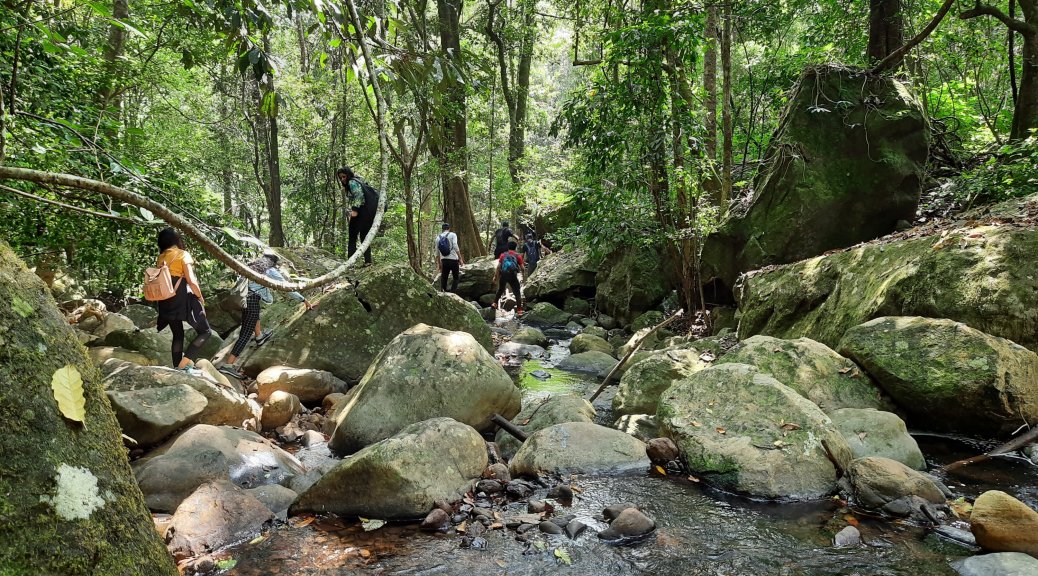
After arriving at Meppadi town, we met our local guide and shifted from our minibus to 4WD Jeeps. The initial stretch deceived me in thinking why a 4WD was needed to drive on a properly laid concrete road. Just then, the roads disappeared, and the real ride started… Although I was sitting in the rear end of the vehicle, I preferred not to sit on the seat and chose to hang on to the roof lest have all my joints and bones displaced. The long drive through the thick canopied forest trail culminated at the start point of our hike. We descended through the path that deviated from the main road towards a river. That’s the ‘Thollayiram Kandi’, our guide pointed out at a peak topped by the rolling clouds. “Kandi is a local unit of measurement”, he elaborated as we continued to walk. We walked through cardamom plantations and jumped over a few fallen tree trunks and creeping roots until we reached a stream.

The stream and the hiking trail at Aranamala

From there onwards, the hike was mainly upstream. While enjoying the absolute music of the gurgling waters of the stream, the croaking frogs and the shrilling cicadas, we slipped down a few large rocks and fell into the shallow waters a couple of times. In spite of trying hard not to get our shoes wet, we ended up soaking them up and picking out occasional leeches from our feet. We realized that given our pace of hiking up, we would not be able to return on time with sufficient daylight. Hence from there onwards, our guide made his own path, through the thick forest. He walked ahead by cutting the thick bushes that came across, all by keeping the stream in sight. We did slip and tumble down the steep a couple of times though. But the hanging vines and lianas came to our rescue. And suddenly, our first view of the waterfall emerged. It was beautiful and the water pool looked crystal clear, tempting to step inside. Apart from our group, there was no one else.

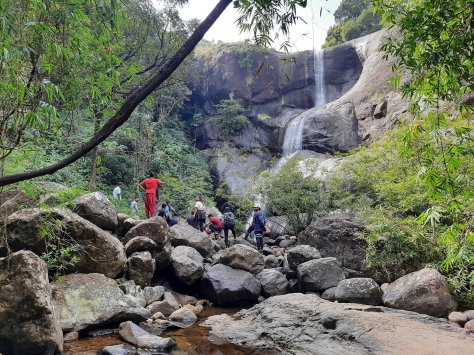
The first waterfall enroute

As we got ready to step into the pool, “This is not the main waterfall. We need to walk further ahead”, said our guide. If this waterfall was so calm and beautiful, we wondered how the main waterfall would be like. We were excited! But our excitement sought energy 😛 We had to climb up the same rock, on one end of which the water plunged down. Quite a tricky climb but worth every inch of it! A short walk further from there waaaaasssss the hidden gem that we had come in search of. Now, don’t ask me the name of the waterfall, it is completely off the map and mobile network. So, there is NO way you will find it on google. To make it simple, you can call it the Aranamala waterfall, the waterfall in the Aranamala hills.

The Aranamala waterfalls

That’s all folks, we’re off into the pool to enjoy our dip! But hey, it was not so easy…. The water was bloody cold, and I had cramps in my feet for the first few minutes. I meanwhile enjoyed my free fish-pedicure too, it sort of eased the cramps for me. And then with a dip, I was all set! A waterfall so secluded, a pool so clear and a feeling so divine, I couldn’t have asked for any better to make up for all the travels missed in nearly a year now. After spending some good time under the waterfall and with our soaking wet clothes on, we decided to return. It was already 03.30.p.m and hence decided to take an easy path instead of walking back through the same terrain of forest and the rocks. So, we were taken through a shorter but a beautiful path through cardamom plantation for our descent.

After a nice filling lunch at a campsite enroute, we boarded the jeeps back towards Meppadi. The original itinerary did include a short sunset ride, but the clouds didn’t seem to part for the entire day. From Meppadi, we reached the base of Ambukutti hills for the night. It took us yet another jeep ride to a homestay where we had our chai and conversations. And a fun time around the bonfire until dinner was served.

Post dinner, we carried our tents and sleeping bags up the hill and managed to pitch them atop. The winds were strong, and the rocky ground was tough. With the thick mist blinding all around and the instructions from our guide to not venture away from the tents, all that we could envisage was a deep valley below. The bonus of holding up in the cold until morning, u ask? ‘The view from the tent, of the sun rising above the clouds at 06.00a.m.’ But come morning, we had a surprise awaiting. There was so many clouds until 09.00.a.m that we got a glimpse of the sun for barely a few seconds. We walked up the hill a little further from our campsite, took in some clean air and good views of the range around. We then returned to pack our tents and freshen up for the day. Our breakfast and our ride back to Meppadi was awaiting us at the homestay.

Ambukutti hills as seen from our campsite

That was my story about offbeat Wayanad with ‘Plan the Unplanned’, of leading a group of weekenders and enjoying my weekend, both at the same time.

Other Travel recommendations:

  • Edakkal caves are located at a walkable distance from the campsite at Ambukutti hills
  • You can visit Tirunelli temple and Irupu waterfalls by driving through Wayanad Wildlife Sanctuary (Tholpetta) and Nagarhole National park.
  • Alternately, you can explore Sultan Bathery, visit the ancient Jain temple and Banasura sagar dam that offers a good view of the surrounding hills.

Celebrating the festival of Love and lights at Varkala

Solo tripping during Deepavali has somehow been a ritual that has caught on to me since 2015. In 2019, I was out in Kerala. I was going to spend three days at a place considered somewhat to be a hippie destination. Train tickets were sold out and hence, I boarded an evening bus from Bengaluru. After a long journey, I alighted at Kollam on the following morning, from where I got a passenger train ride to my destination: Varkala Sivagiri.

The itinerary for three days is as follows:
Day 1: Janardhan Swamy temple visit, Lazing and hippying around the cliff and the Varkala Promenade
Day 2: Golden island, Sivagiri Mutt, Ajengo Fort, Varkala Light house and Munroe island
Day 3: Kappil beach

The Story:
It was a pleasant train journey along a scenic route. I had a nice Kerala breakfast at a restaurant across the railway station and then followed google maps to the hostel that I had booked online. I did not mind the long walk to the hostel that was located close to the famous ‘Cliff point’. I always consider walking as an opportunity to explore the streets and get acquainted with any place that I visit. After checking in at the hostel and freshening up, I headed out to visit the ancient Janardhan Swamy temple. After offering my prayers, I walked back to spend the rest of the day at the beach.

While I was walking along the beach and silently enjoying the romance of my feet with the waves, I noticed a woman (in her sixties, which she later mentioned during our conversation) walking on the beach too. With a smile on her face, she was enjoying her lone time. But at the same time, she seemed to be struggling with something. I felt as if she wanted to mingle with the people around there, she wanted to get herself photographed, but something was holding her back. I smiled at her and she smiled in return. I offered to take her photo and she was glad. Eventually as I spoke to her, I realized that she wanted to socialize with the locals but was struggling with the language. She was French and couldn’t speak neither the local language nor English.

As I spoke slowly, she translated it on her phone and communicated back with me through the mobile phone translator. we had become good friends by the next hour. She mentioned to me that she was in India to help herself with the loss of her husband and was accompanied by a friend who had traveled all the way only to be by her side. She was in Varkala since a month and was staying at her cousin’s house who was married to a localite. She was learning Yoga and aromatherapy and was keen on buying good incense sticks from India. She walked me along the entire beach and showed me around the marketplace. She then sought my help to negotiate with a local vendor to buy her a ‘Hapi pan’, a musical instrument that she had been eyeing since the past month that she had been living there.

A demonstration of playing the hand pan/ Hapi pan by the vendor

I managed to get it for her at almost half the price that he had quoted to this ‘Foreigner’ and I can’t explain how happy she was with her new possession. She then walked me down the cliff, laid down her shawl on the ground and sat me down. She started to play her musical instrument and it was a sight to see the sparkle of happiness in her eyes. Sometimes, these little things of bringing joy in others’ life means EVERYTHING!

My friend enjoying her time with the happy pan (Image blurred intentionally)

Post sunset, she walked me till my hostel and bid goodbye with a REALLY tight hug! She said she was extremely glad that she had met me and asked me to join her at the Yoga classes on the following morning if I had time. “The morning recitation of the Shlokas by the beach is my favorite time of the day” she said. I informed her of my plans of exploring other places around Varkala and that I wouldn’t be able to meet her. I gave her my phone number to get in touch if she needed any help and we both parted.

It was a night of celebration at the hostel. The hostel had people from various corners of India and the world and were all dressed up in traditional Indian wear. The premises were decorated with diyas and rangolis. It was a special Diwali, for sure 😊

My visit to the Golden island

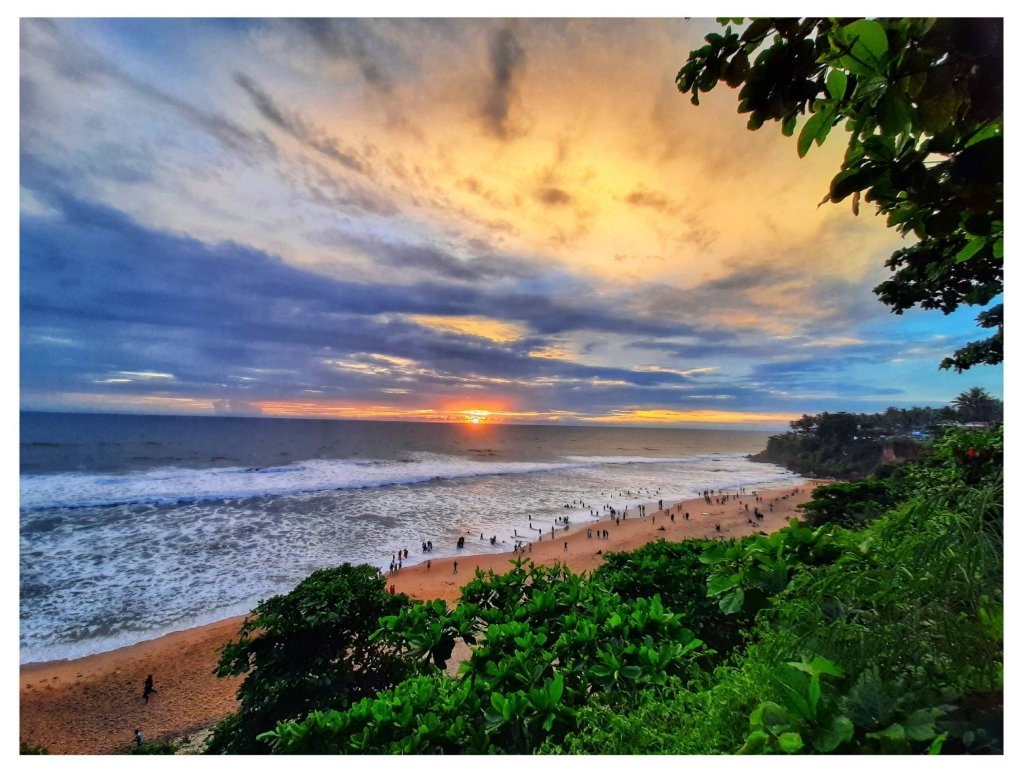
The following morning, I hired an auto rickshaw and did a quick visit to the Sivagiri Mutt and the fort before heading towards Ponnumthuruttu. Fondly called as the Golden Island, it is a protected forest area reachable only by boat. It has a few ancient temples and it reminds me much in line of ‘Devarakaadu’ or sacred groves in my hometown. It was indeed a pleasant ride. Apart from the auto driver and the boatman, I was the only other person in the boat, in the island and hence had the blissful time with nature. Although I had plans of taking a boat ride in the nearby Munroe island at Sunset, I later decided to stay back in Varkala itself. By evening, I returned to the cliff again at sunset time. Believe me when I say, the BEST Diwali of my life was in that day’s evening sky. It was a riot of colours.

The sunset from Varkala cliff on Deepavali 2019

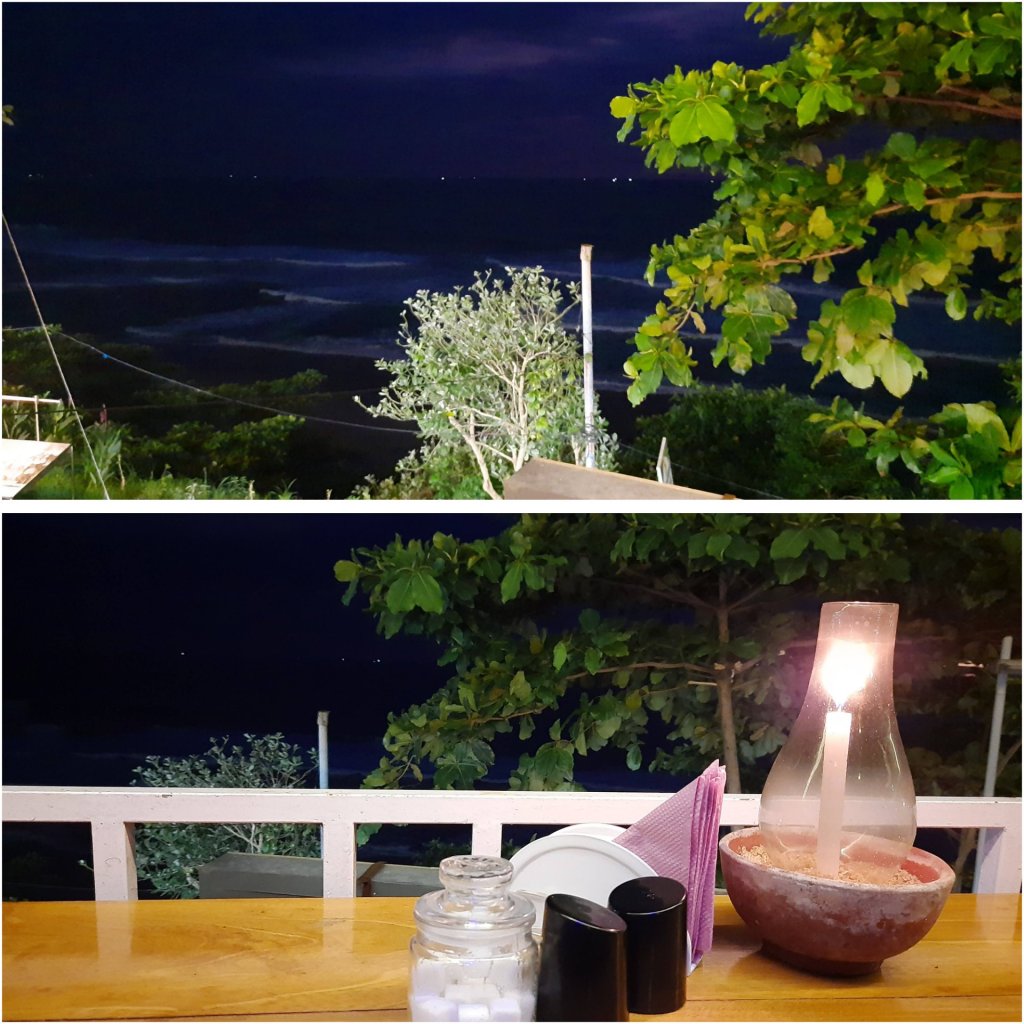
After the sun sank into the horizon completely, I decided to treat myself with some nice sea food. It is one of those strange moments when you are made to feel at home in an unknown land. As I was strolling along the promenade, undecisive of which restaurant to go, I heard someone say: “Akkayya, ninga Kodagu-l elli?” in a male voice. In my mother tongue, that translates to: “Sister, which part of Kodagu do you belong to?” I was astonished and surprised for a moment. We got talking and he said he belonged to a native tribe from Kodagu, settled in Varkala. He had been working at a restaurant there since several years. On being asked how he recognized me to be a Kodavati, he pointed out at my unique Kodava facial features. That was SOMETHING for me to hear now! He volunteered to choose the lobsters and the crab for me from the aquarium, got me a beach-facing-candle-lit table and served the best sea platter I had tasted in a while. It is one of those overwhelming evenings of my life. All time for myself on a Solo-date-dinner night and still made to feel at home by a random person.

My sea view dinner table at Varkala

The next morning, I headed to the beach to grab some English breakfast. I was pleasantly surprised when my French friend and her friend, both arrived at the same restaurant. We three conversed on a multitude of topics and spent good long time together. While the two of them later dispersed, I stayed back at the restaurant waiting for a friend who was riding down from Kochi to meet me. On his arrival, I walked up to settle my restaurant bill at the counter. The cashier said: “No madam, your bill is already settled.” I was amused and told him that I had been eating until now and hadn’t left my table. So, he informed me that a foreigner lady had paid for my orders. There I was, in yet another overwhelming situation. My French friend had paid for my share of the bill too.

Kappil beach

My friend and I then commenced our ride towards Kappil beach, situated on the outskirts of Varkala. It is one of the finest beach side roads I have been to. Somehow, I drew parallels with Maravanthe beach in coastal Karnataka. But moving away from the highway, my friend took me to some deep hidden jewel of locations. I guess it would be fair to call this as my 4th best part of the same trip. Some amazing places can be explored only by hanging out with the locals. He is a Malayali and knowing the offbeat locations enable me to experience one of the craziest bike rides of my life. We drove several kilometers LITERALLY along the edge of the world; like the EDGE! Even if the moist soil under our wheel slipped or the rider went slightly off balance, we both would’ve gone along with the sea, beyond the cliff. All this, while riding through poor visibility due to wild shrubs that were standing taller than us. And then, the shrubs opened into yet another beautiful sunset.

Upon return to Varkala, I picked up some incense sticks with essential oils and dropped them off as souvenirs to my French friend at the Yoga center (A surprise that she would receive only the following morning, after I was gone). Then, I did a quick check out from the hostel and boarded the night train back to Bengaluru. The train route is for yet another post, someday!

My Deepawali of 2019 was all about spreading love and feeling loved. How often have you got lucky and overwhelmed with warm experiences during travel? And how often has it been multiple times on the same trip?

As the Neelakurinji blossoms, the Nilgiris spectacles

Heard of the blue hills? Does the name ‘Nilgiris’ strike any bell? For those who know less, it is a part of the Western Ghats, a UNESCO World heritage site in the southern peninsula of India. The ‘Neel-giris’ literally translates to ‘Blue-Hills’ because these hills get their colour from a particular phenomenon. A particular species of the Strobilanthes kunthiana flowers, locally called the Neela-Kurinji bloom once in twelve years. When in full bloom, the entire hill range looks blue, thus giving the hills their name. The last mass-flowering of the neelakurinji flowers happened in 2018 and I left no leaf unturned to witness this spectacle. There were a couple of hotspots identified by the Kerala forest department where arrangements were made to allow visitors to see the flowers.
My friends and I decided to visit the Eravikulam National park, located close to Munnar. This stretch of the hills was where most of the blossoms were supposed to happen. After finalizing the visit dates in Sept’18, the Delhi friends had booked their flight tickets to fly down and the remaining of us booked our bus tickets from Bangalore to Munnar. I had got all the necessary entry permits from the forest authorities and booked accommodation in Munnar for all of us. All this was done months in advance to have a confirmed entry anticipating the tourist influx for such a spectacle, if we waited until later. We were all set and waiting for the travel to finally happen.

Come July’18, the rain gods had wreaked havoc in the western Ghats. The entire stretch of western Ghats in Karnataka and Kerala had been damaged by the heaviest rains in eight decades. The damage done was massive to geography, property and life along these areas. In the event of things, damage was done even to the neelakurinji plants and the blossoms were feared to be washed out. Once the rain gods had calmed down and the ground situation of floods seemed to have receded, we waited to see if there was any luck in waiting until September. We were in constant touch with a few locals who gave us the updates on the status of the blue hills. Come September and we decided to go ahead with our original plan. We all had finally arrived at Munnar and were heading towards Eravikulam National Park.

Once there, Yes, there were enough plants destroyed. The stronger few, had managed to bear flowers. We walked along the laden path, feeling grateful for at least so many of the plants had survived. Since these plants blossom only once every 12 years, it means that their reproduction cycle is longer than usual. This also means that, most of the Neelakurinji vegetation is lost in the 2018 monsoon and the next flowering cycle of the year 2030 may not happen at a mass-scale as it is usually supposed to happen at all!! Anyway, we enjoyed whatever we were witnessing.

img_20200216_1230514763208106210940115.jpg
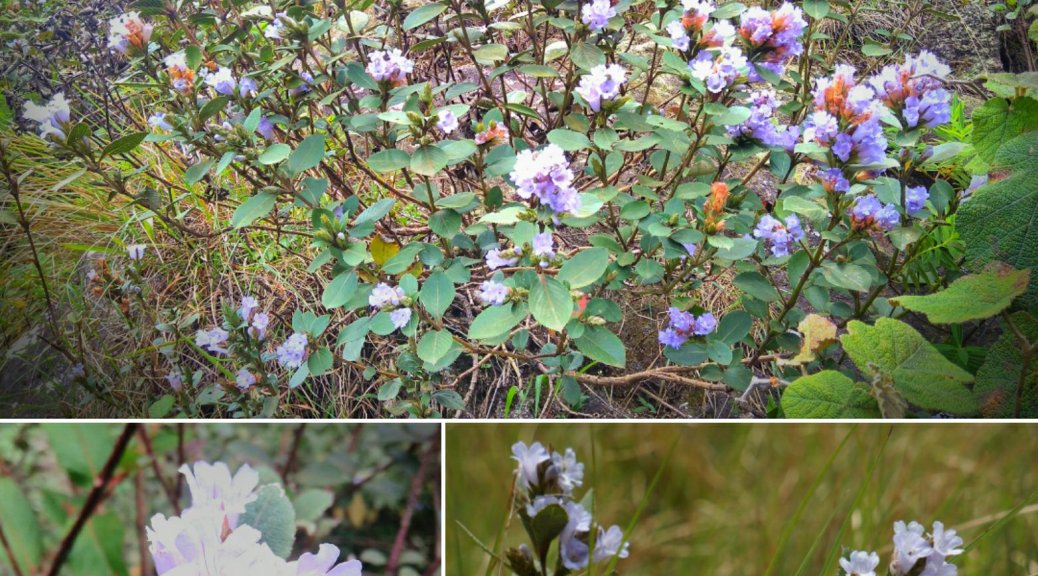
The Neelakurinji flowers at Eravikulam National park

Also, Neelakurinji is only a sub-species of the larger group of flowers called the Kurinji. The Kurinji flowers come in several colors- white, peach, purple, etc. Here is a collection of the Kurinji flowers from Eravikulam National park that we saw during our visit.

img_20200216_1232387674453963735820057.jpg
The various Kurinji flowers at Eravikulam National park

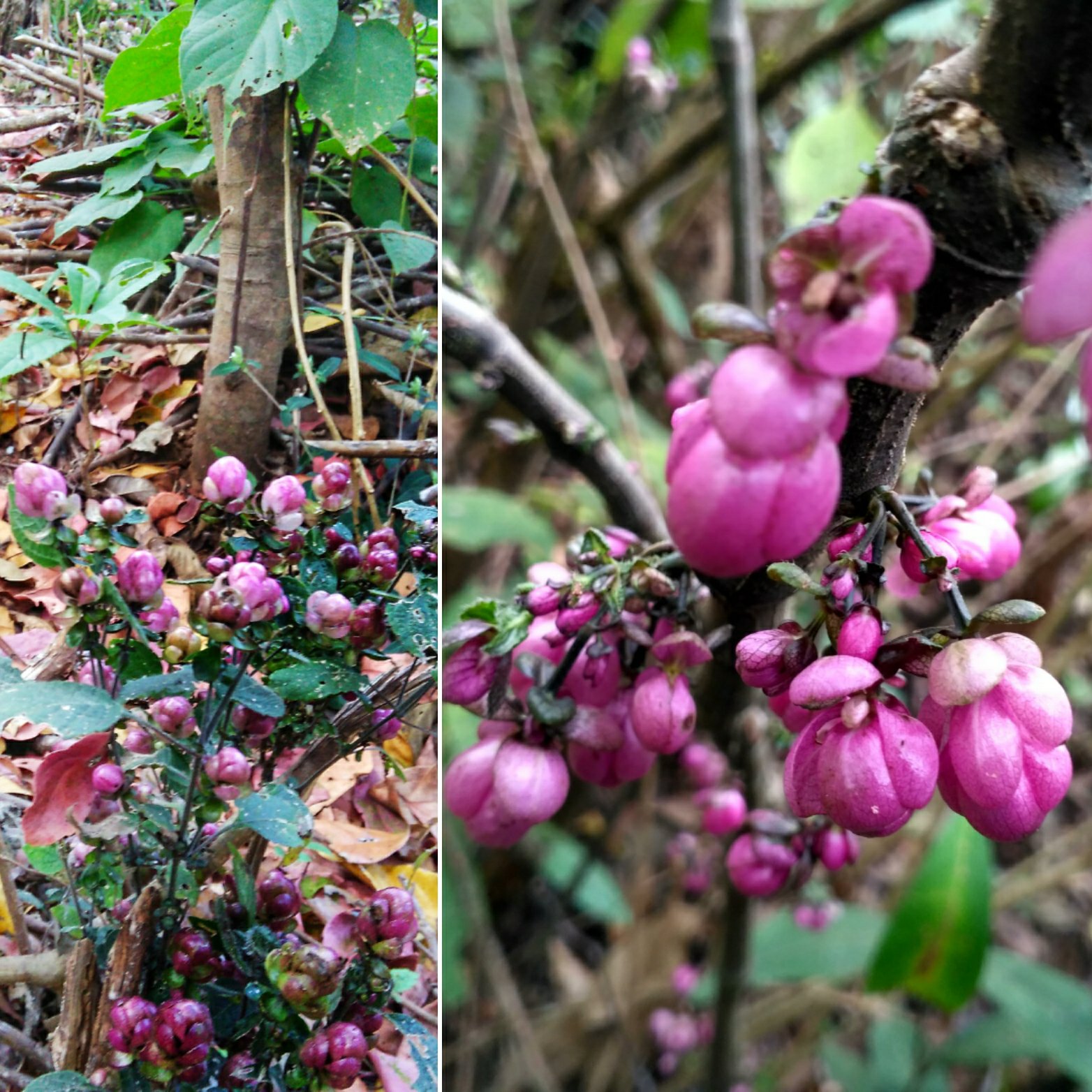
So that said, I was back in my hometown the following week and visited our piece of farmland to check on its status after the monsoon. It used to be a spice plantation that remained unmaintained for a long time before we, siblings ventured into developing it. our farm is a short walk away from the main road. When we arrived there and decided to walk, the entire path was filled with what seemed like some weed that had overgrown during the monsoon. We used a machete to make way for ourselves to walk further. Just a few steps into the area, we were surrounded with pink/ maroon flowers all around us. ‘These weeds had flowered expansively’, we wondered. We took a lot of photos, made way for ourselves, finished our work and returned home. When we discussed about the weeds with the elders in the family, we were surprised to hear that these plants also belonged to the Kurinji family.

img_20200216_1228147702483363187051058.jpg
The Kurinji flowers from our farm in Kodagu

Further, an important month in the Kodava and the Tamil calendar is the month of Kakkada or Aadi. In Kodagu, on the 18th day of this month a special dish is prepared using a locally available herb. Its juice is believed to contain 18 medicinal values. It leaves a very deep blue/violet pigment when cooked and consumed only on this day. And what is this plant called? Don’t even guess… Locally called ‘Maddh thoppu’ or ‘Aadi soppu’, it is also a variety of Kurunji.
So, Kodagu primarily has three types of Kurinji; the flowering weed(Maley Kurinji(as in hill), Etth Kurinji(as in cattle) and Maddh Kurinji(as in medicine).
A little bit of googling allowed me learn that there are many sub-species of the Kurinji and each have their own flowering cycles. While some bloom annually, some bloom once in six years and some take a couple of decades. Neelakurinji was just one among them.

Lesson learnt: How often do we tend to ignore the little things from our own backyard? We think these are too trivial to spend time and look for things elsewhere. It is often that people associate that better things come only when money is spent and distances are travelled, but the truth may be that it is something that we have been conveniently ignoring in our own vicinity.
What is your take on this thought?

Land where Art is Divine- Pathanamthitta

Dense canopy of trees, swaying coconut palms, houseboats cruising through the pristine backwaters, wooden canoes of the locals fishing in narrow canals- Well, does this paint a picture of Gods own country? When opportunity struck, I decided to give the usual things a miss and explore a region that is least spoken about in a typical tourist circuit in Kerala. I wanted to explore the land where art is considered divine and celebrated in all its form. I was heading towards Pathanamthitta.

My Itinerary:

Day 1: Leave from Bangalore to Kochi (by Flight); Drive from Kochi to Pathanamthitta. Visit Aranmula Parthasarthy temple (take a local foundry tour); Visit Thiruvalla Srivallabha temple (Watch a Kathakali performance in the temple);
Day 2: Gavi or Konni elephant camp, Charalkunnu, Kakki reservoir, Perunthenaruvi waterfalls, Kalloppara church, Paliakkara church and Niranam church. Return to Bengaluru.

The details:

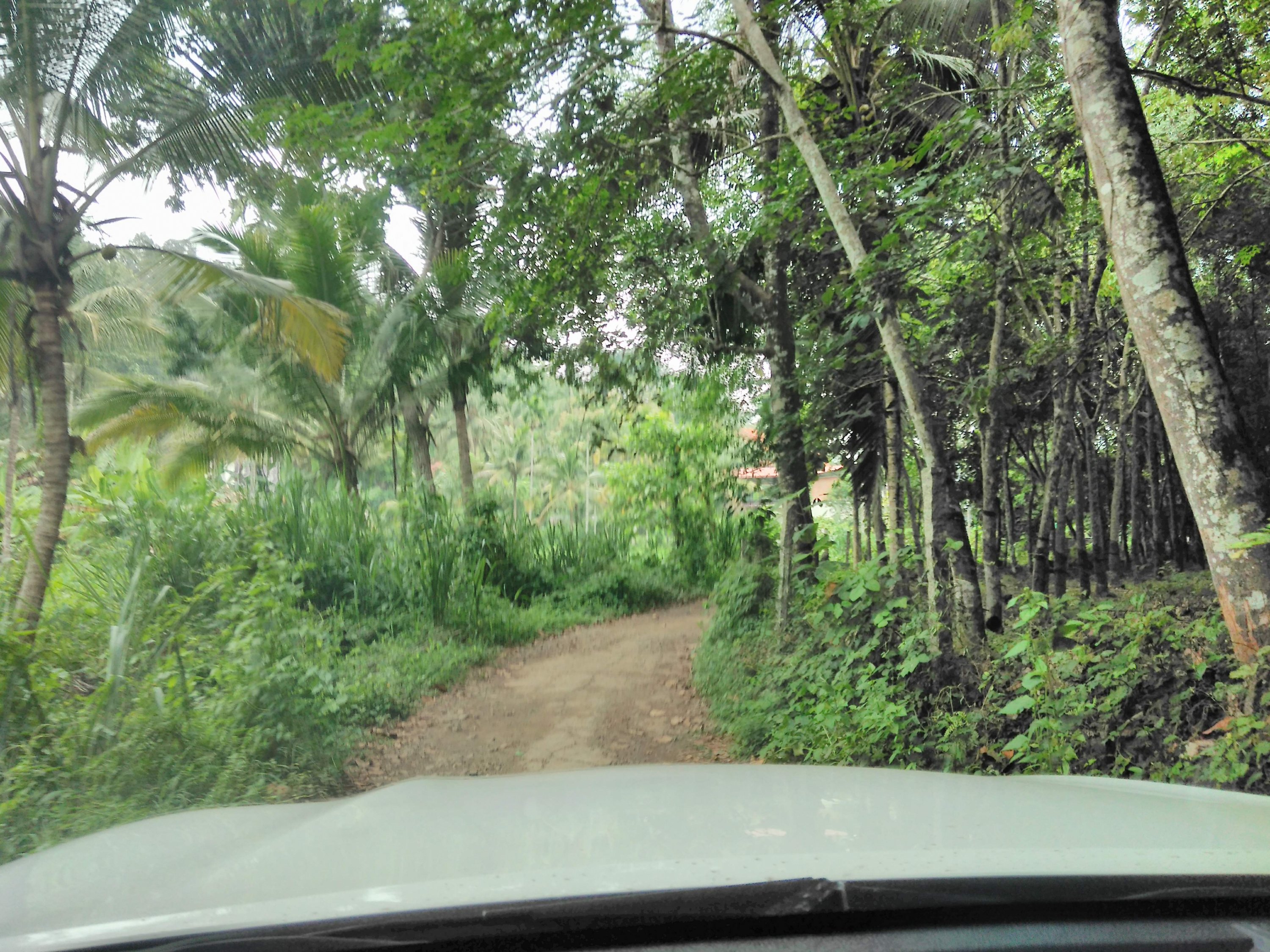
First thing I did while approaching Pathanamthitta was lowering all the windows of my car, to breathe in some clean air. With almost two third of the district comprising of forest cover, it is no wonder that Pathanamthitta is the least polluted city in India. The remaining one third is a combination of the city and plantations. We were heading to the homestay we had booked, not very far from the city centre. It was nestled in what the locals call as a residential area that was far from imagination of a city soul. The narrow roads were flanked by rubber, tapioca and banana plantations for most stretch and marsh lands for the rest. Bunches of jackfruits hung down from tall trees among several other tropical trees like litchi, rambutan etc. that had the fruit lover in me all drooling. My stay was at a traditional Kerala house nestled amidst a huge garden. Its wooden portico with clay tiled roof had me fancy struck.

img_20190531_1320012544330379495427061.jpg
Enroute to the homestay

Surprisingly for me, Pathanamthitta hosts some of the largest annual religious congregations in the world. The Sabarimala yatra and Maramon convention are next only to the Haj. Giving a pass to the famous backwaters of Kerala, I had driven this far to explore its vibrant and divine culture and art. My plan for the first day was to visit two of the 108 Divyadesams, both located in Pathanamthitta. I had arrived at the Aranmula Parthasarthy temple, particularly for a tour of a foundry that makes the historical ‘Aranmula Kannadi’ (Click to watch the video).

This GI tagged handicraft is culturally important in the state of Kerala. The know-how of making it is endemic to Aranmula and limited to the descendants of only one family who now live around this temple. Unlike the familiar glass mirrors, these are finely polished metal sheets. Watching these men toiling in their workshop to bring an alloy to life, which is integral in all Malayali celebrations was like living a dream for me.

img_20190622_2343003929859773219572362.jpg

Left: moulded metal sheet before polishing; Right: Polished & finished mirror

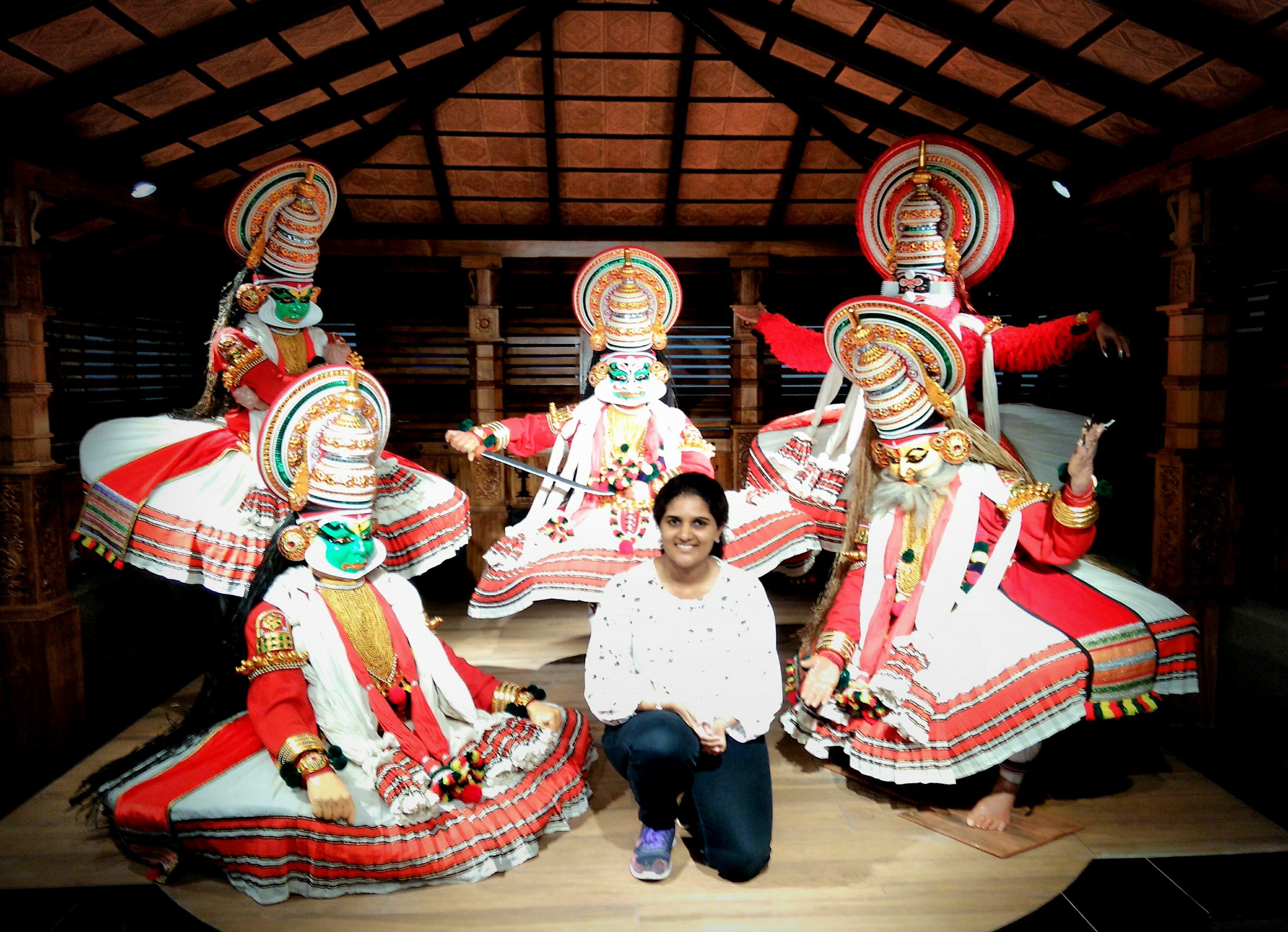
A short drive away from there was my next destination: Thiruvalla Srivallabha temple. With its ancient wooden architecture, this beautiful temple sprawls on a huge area. Here, the prayers are offered five times a day and the last prayer was specifically that interested me the most to visit here. Kathakali is performed inside the temple premises everyday as a form of prayer to put the deity to sleep. I was like a little child in wonderland who lost track of time watching this performance that went late into the night.

img_20190601_1301236968219467911473755.jpg
A traditional Kathakali setup at the Kochi international airport

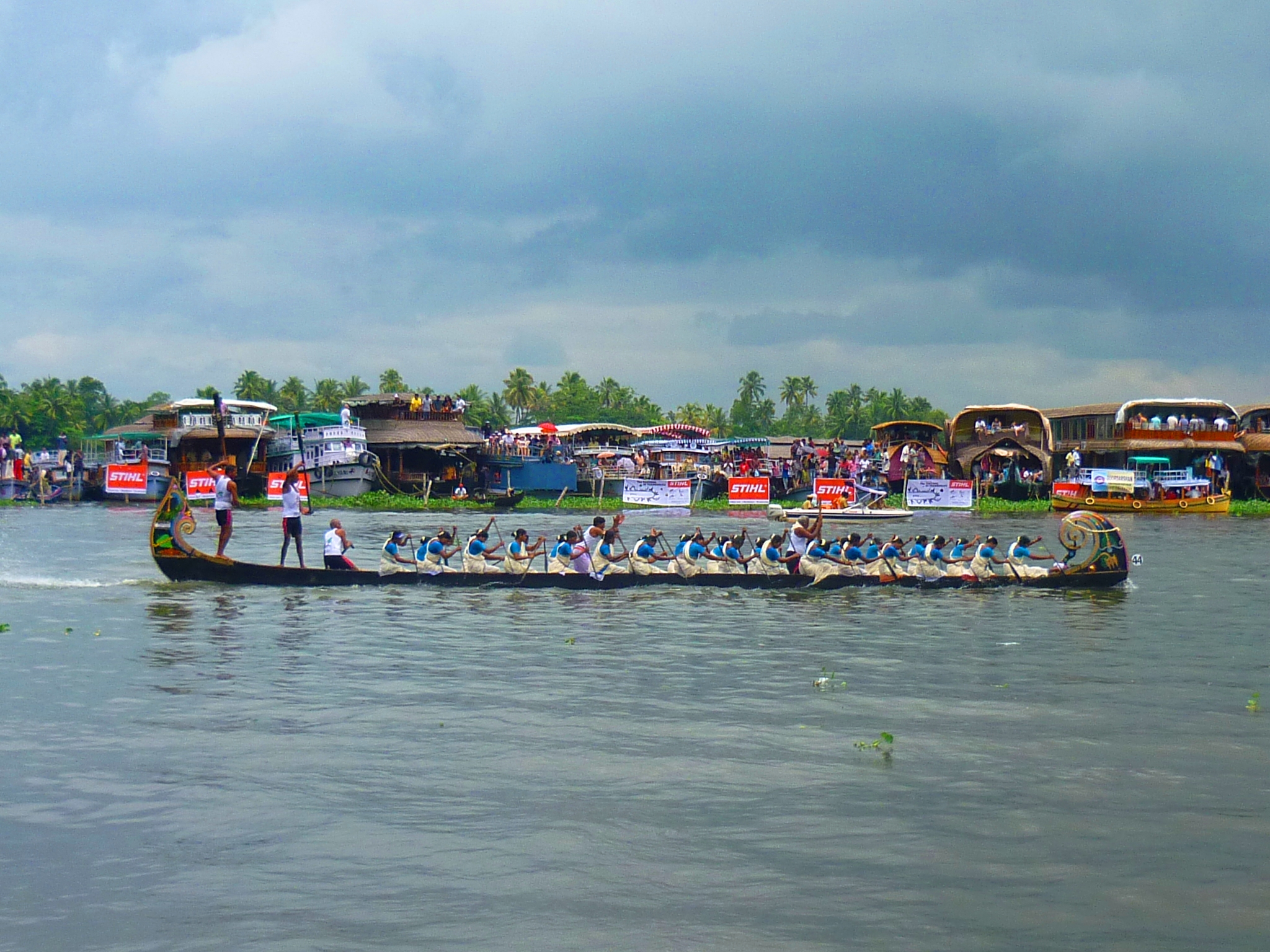
An early morning drive to Gavi or Konni elephant camp is what I was recommended for finding a piece of nature. Charalkunnu, Kakki reservoir, Perunthenaruvi waterfalls are few of the other nearby places that tourists usually visit. But I decided against it all and while away some time exploring the neighbourhood of my homestay before checkout. It was as calm and peaceful as anywhere else. While sipping a cup of Kattan chai, I was reminded of my previous trip to Alleppey. Hundreds of wooden canoes measuring over 100 feet, long enough to be called snake boats, gather from across Kerala to compete for the coveted title. Each boat carries at least hundred oarsmen, all singing the Vanchipattu in chorus. Breathing the heavy air filled with anxiety of the spectators, it was a lifetime experience. Like Alleppey, Aranmula too hosts one of the largest boat races in Kerala. The Aranmula race is held on the last day of Onam as a celebration of Lord Krishna crossing river Pampa.

Boat Race finals (22)
The oarsmen ‘”Women” from Alleppey

I had planned my return route to Kochi such that I could cover some of the interesting landmarks along the way. The first stop was at Kalloppara, where an ancient Hindu inscription exists inside a church. I had read about how two faiths co-exist under the same roof that houses a Bhagavati temple and a Mary’s church. But my drive through the streets of a residential area ended at a bridge that connected Kalloppara. It had collapsed during the floods that ravaged Kerala last year. Having three rivers flowing through it, Pathanamthitta was one of the worst affected.

I hit the main road again and headed to Thiruvalla. Since it was dark the previous night, I was there again to have a look at the famed mural paintings on the altar of the Paliakkara Church. The church at Paliakkara and Niranam (my next destination) both have their history dating back to the arrival of St.Thomas in India in 54.A.D. This trip was all about an amalgamation of art and tradition. Be it wildlife, religion, architecture, history, art or culture, I believe Pathanamthitta has something for everyone.

(P.S.: I’m against the idea of taking photos inside any place of worship, as a form of respect to its sanctity. Hence, I do not have any pictures from the interiors of any place of worship)

Fact File:

  • How to reach: The nearest airports are at Kochi and Trivandrum. Kottayam and Alleppey are the nearest Railway stations. KSRTC buses and taxis are available from these places to reach Pathanamthitta by road.
  • Get around: local buses are quite frequent; Taxis can be easily availed.
  • Best time to visit: September to May (Anytime apart from monsoon)
  • Stay: Luxury hotels are sparse. Cheap and Budget hotels are available in plenty considering the pilgrims who come here for Sabarimala yatra. Homestays are available to experience the true essence of Kerala.
  • Must do: Attend a Kathakali performance, visit a mirror foundry, Bathe elephants at Konni.

Natural wonders of South India – My favourites

India has intrigued the world with its history, geography and culture- each individually dating back to several ages ago. I have been no different from the rest of the world. The LostLander has begun to embrace her landings after getting lost at random places in her incredible country. The more she is exploring her country, the more she has been discovering about its descendance and getting mind blown with new discoveries each time.

“The history of India’s physical geography is older than that of its civilization or even that of the human race. The subcontinent has been a distinct geological entity for millions of years. Therefore, to understand India, we must go back to the very beginning.”

-Sanjeev Sanyal

The fact that it is called as a subcontinent is associated to a larger theory of it being separated out of a supercontinent called ‘Rodinia’ and drifting apart from Africa, Antarctica and then Madagascar before it struck with the Asian continent. No, I’m not time traveling that far for now! It was just to put an exclamation to how amazing this country’s geography has evolved to be and what the natural bounty as we called it, has to offer in this beautiful country to an explorer… To take my article forward and with no biases, I divide the geography of this subcontinent into North and the South, just by drawing an imaginary line passing through its center, Seoni in Madhya Pradesh. Here is a humble attempt to take my readers through some of the beautiful destinations I have been to enjoy the natural marvels of Southern India. They are in random order and listed as and when I recollected them. For more details, you need to read my individual posts on them by clicking on their respective tags!

1. Kurusudai islands: Nestled off the coast of Rameswaram in the Gulf of Mannar, it is the only place in the world where the oldest and the last surviving living fossil is found in the world.

2. The table tops of Maharashtra: Be it the beautifully painted pink valleys of the Khas plateau, valleys of Matheran, Mahabaleshwar or any place thought of for a scenic drive for the Mumbaikars- have all formed out of large volcanic eruptions as the subcontinent merged with Asia. Not just that, these geographical features were strategically used by Shivaji to stop the invasion by the Mughals and hence called the Deccan traps.

3. Limestone caves of Andhra Pradesh: Belum caves, a part of a larger cave complex in the Erramalai region is the largest and longest cave system that is open to public. Similarly, the Borra caves is the deepest in the country. The speleothem formations are worth a visit which have formed due to continuous flowing of water over a thousand years, easily dating back to the Archaean age.
4. Gandikota: People call it as the ‘Grand Canyon of India. It is a beautiful gorge formed by the Pennar river as it squeezes from between the rock formation that has played witness to several kingdoms in history.
5. Eastern Ghats: Although I use a very generic term that specifies an entire region, they are older and mineral rich than their popular counterparts on the western side. All, again a resultant of several tectonic activities in the event of formation of the Indian mass.

6. Dhanushkodi: This abandoned town has more than just history of a cyclone. The revered ‘RamaSethu’ or the Adam’s bridge was formerly considered to be the largest Tombolo in the world and is believed to have formed due to the drifting of India and the Lankan land masses several thousand years ago..

Well… If all these have been the outcomes of several tectonic activities of the earth over a million years, there are yet several other amazing things that nature has to offer in the Southern peninsula.

7. Have you been to Wayanad in Northern Kerala? There is a heart shaped lake after a good climb up the Chembra peak in the western Ghats. It’s the nature’s way of telling ‘I Love You’!

8. Heard of the Barren island? It is the only active volcano in India, with the most recent eruption being in 2017. The sea area around it is considered to be one of the best dive sites in the world!

9. And then there is Baratang islands- It is the only mud volcano in India, situated in the Andaman group of islands.

10. Have you seen the Purple hills? Where do you think the Nilgiri hills in the western Ghats derive their name from? They’re so called because these green verdant hills are painted blue/purple (Neela in Hindi) by the Neelakurinji flowers, something that blooms only once in twelve years. The latest mass-blossoming being in 2018.

11. Cruised through the canals of Kuttanad? Mostly popular among the honeymooners and families alike for its backwaters and houseboats, what many don’t know about this region is that it is the only region in the world where paddy farming is done below sea level.

12. How about a boat ride in the Mangrove forests of the Bay of Bengal? The Sundarbans and Pichavaram forests are the first and the second largest mangrove marshlands in the world. A world heritage site that they are, an extremely important part of the ecology.
13. What happens when a meteor hits the earth? A massive crater is formed giving form to Lonar lake in Maharashtra. This Geo-heritage monument saline soda lake is the only high velocity impact crater lake on earth.
14. Seen the waterfalls of the Deccan plateau? Be it the Chitrakoot falls in Chhattisgarh, Gokak falls in Karnataka, Athirapally in Kerala or Hogeynakal in Tamil Nadu… They’re all so good they can give a good competition to the Niagara!

15. Heard of the Sentinelese tribesmen in the Andaman sea? They’ve long avoided contact with the outside world and their gene pool is believed to be one of the crucial links to early man and the evolution of mankind on the planet.

What India has to offer is abundant! And these are only a few places that I have been to in the southern India. Do you have any recommendations? Have I missed out on anything? I would LOVE to know… Please drop n your suggestions, recommendations, feedback in the comments section below 😊

Backwaters and boat races at Alleppey

It was the 2nd Friday of August 2012, a day before the Biiigg sporting event of South India: “The Nehru trophy boat race”. After a long haul of planning, two of my friends and I had alighted at our destination- Allapuzha, a popular little town on a tourist circuit in Kerala. Fondly known as Alleppey, we were there to experience the festivities of ‘The Olympics of Kuttanad’- Vallamkali or the boat race. The Nehru trophy boat race is an annual event held in the Vembanad lake, in the Kuttanad region of Kerala. Vembanad lake is the longest lake in India and spans across several districts of Kerala. Depending on the region, the lake is known by different names. It is called as the Punnamada Lake here in Kuttana, of which Alleppey is a part. Along with the boat race, we wanted to explore the backwaters that’s a popular haunt of the tourists in this region.

My Itinerary:

Day 0: Leave from Bangalore to Kochi (Overnight train);
Day 1: Kochi to Alleppey (local train), Shikara ride in the Vembanad lake, Sunset at Alleppey beach.
Day 2: Nehru trophy boat race, Champakulam St. Mary Forane Church, Kalloorkkadu Angadi (local & oldest market in the region), Latin church. Return from Alleyppey to Bengaluru (Overnight Train)

Other Places of Interest:
• Karumadi Thodu- famous for the black granite idol of lord Buddha
• Ambalapuzha Sree Krishna temple- known for the ‘Palpayasam’ or the milk porridge offered as prasad to the deity.
• Kokkothamangalam church- This is one of the seven churches founded by St.Thomas, one of the twelve disciples of Jesus Christ.
• Ayyappan temple in Mukkal vattam (near Muhamma)- known for the Kalari from which Lord Ayyappa is believed to have learnt his skills in martial arts. The hermitage where Ayyappan lived during the training period has been preserved in its original form by successive generations of the Cheerappanchira family.

The Details:

Day 1:

It was noon by the time we checked into our hotel room. We freshened up quickly and set out to explore Alleppey. We walked around a little bit and reached at a small boat jetty. We hired a ‘Shikhara’, a local motorboat to cruise around the narrow canals, passing through several fishing hamlets. While the womenfolk were washing clothes, the men were spiralling their fishing nets into the water and a few kids were diving into the waters for a refreshing swim. It was a nice experience of seeing local lifestyle of the people for whom, the backwaters are a lifeline. Along our ride, we picked up some fresh lobsters and pomfret at a local market and got them cooked in the local style at a fisherman’s house.

The Shikara cruise in the narrow canals of Alleppey

Further, we were oared across to the end of the canal which opened into the wide Vembanad lake where all the teams were practising for the boat race and the venue was getting set for the ‘Big’ event. The energy and enthusiasm in the atmosphere was no less than that of the main event itself. Though we wanted to stay there till sunset, the government deadline for all activities in the waters forced us to return to the jetty before 06.00.p.m.

On returning to the mainland, we meandered through the lanes of Alleppey town searching for a dose of Kerala chai and palam-pori (Banana fritters). We then decided to settle down by the beach until dark. While finding our way to the beach, we walked past the coir industries that Alleppey was once known for, and now remained shut and non-functional.

A stationed shikara enroute to the Alleppey beach

While walking back to the town area from the beach, we happened to see a hoarding of a concert happening at a nearby stadium. Post sunset on normal days, most towns in Kerala sleep to silence after 7.00.p.m. and there will be not many options to see or do after that. Since we did not want to waste the remaining evening by sitting inside our hotel room, we decided to head to the stadium to kill the rest of our evening. ‘Music never disappoints’, all the three of us had the same thought. Upon arrival at the stadium, we enjoyed the on-going performance of ‘Theyyam’, one of the colourful, traditional & spiritual dances of the state. But after some time in the audience gallery, is when we experienced a surprise on the stage. A MIND-BLOWING show by the violin maestro- Balabaskaran and team.. It was there that we were LOST in dreamland..!!

Day 2:

The next morning, we had to reach the racing venue as early as 08.00.a.m. to ensure that we had a place to sit. (Read about the madness of the event). The snake boats are the world’s biggest water vessel used for sports. One by one, they arrived for assembly. Locally called as the Chundan Vallam (Beaked boats), these 100~120 feet long wooden canoes carry 90- 110 rowers and move like snakes through the channels. And soon, the races started under different categories. Every single soul in the arena was singing songs of cheer. All through the event, only one thing echoed in the atmosphere: Vanchipattu or the Boat song. It was a once in a lifetime experience to be a part of that enthusiastic crowd.

The oarsmen '"Women"
The oarsmen ‘”Women”

Post the event, we still had time to explore the town and hence boarded a bus to Champakulam. As we passed through the waterlogged villages of Kuttanad, we were reminded that the region we were passing through was the ‘granary of Kerala’ or the rice bowl of Kerala. It is one of the few places in the world where farming is done below sea level.

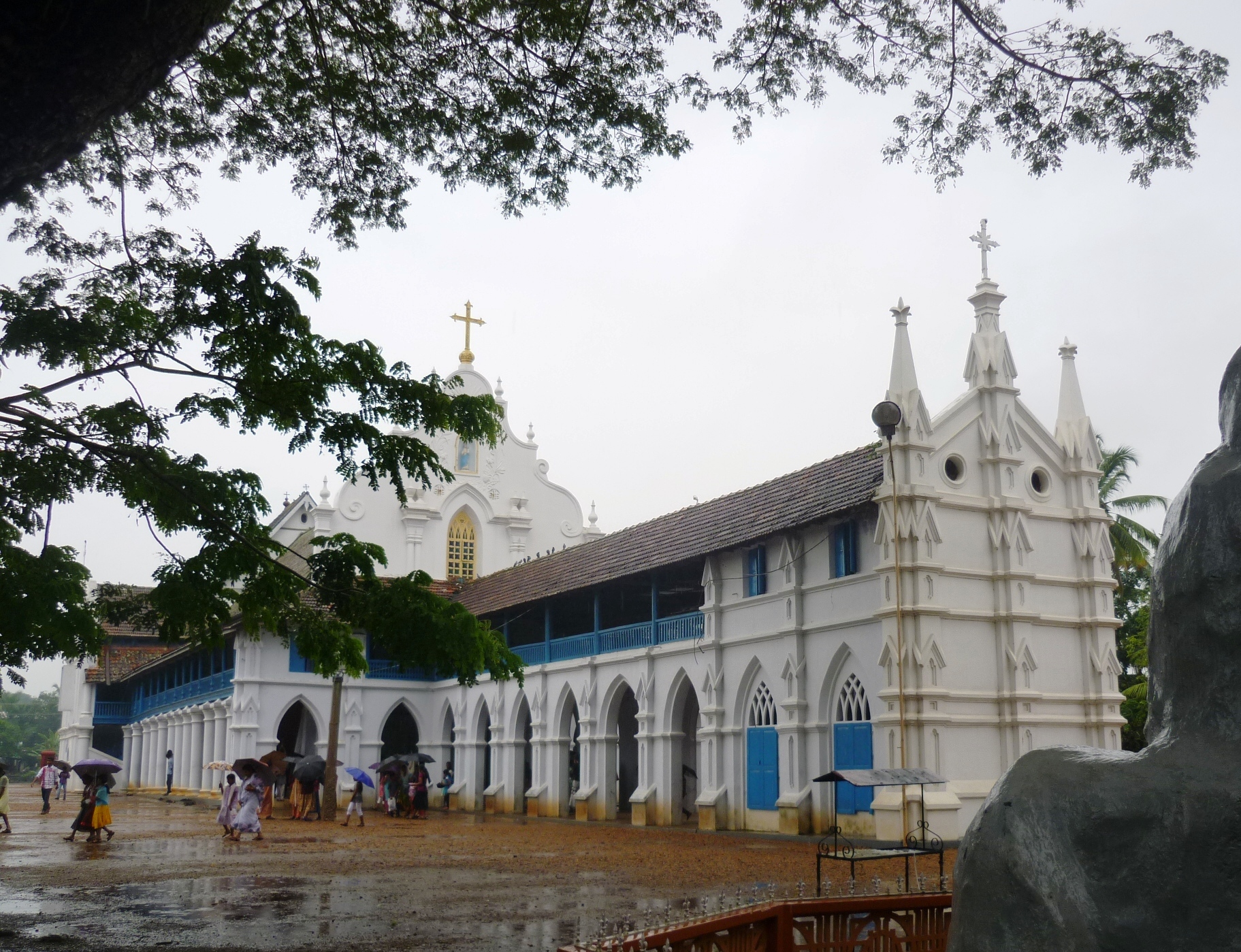
Soon, we reached the St. Mary Forane Church. Since it was a Sunday, we were lucky to take part in the mass. Built in 427A.D., this riverside church is a testimony of time with its finely maintained beautiful mural paintings. From there, we took a boat to reach the other end of the river: the oldest market in the region known as Kalloorkkadu angadi.

Champakulam St. Marys church

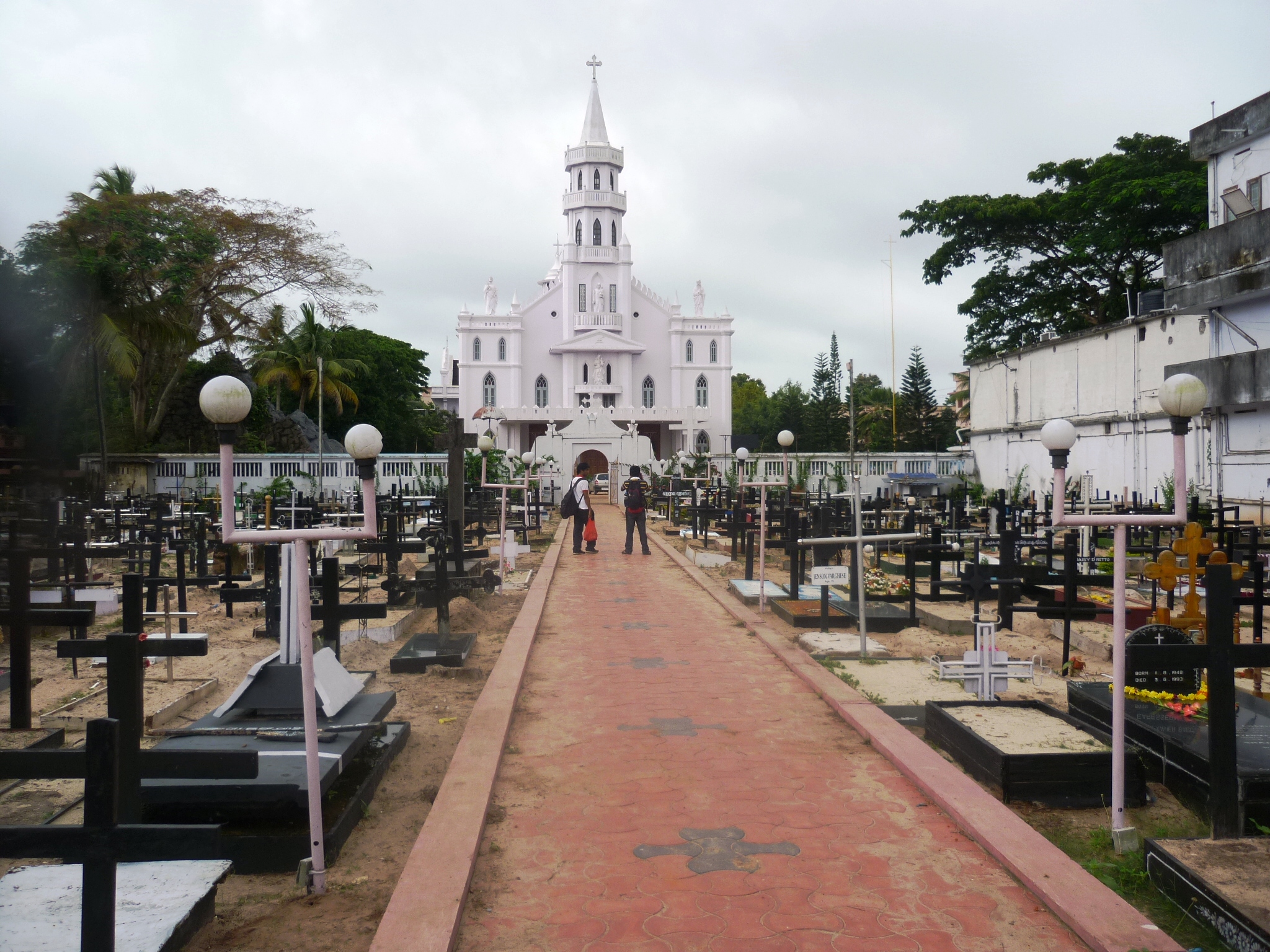
With a local bus ride from there, back to the town, we then took a walk to the Latin church in the town. The entire town of Alleppey can be viewed from the terrace of this church (permitted only during visiting hours). What particularly caught our interest was the cemetery where all members of a family were buried in the same pit. Hundreds of such graves laid within the church premises.

The premises of the Latin Church

We then checked out our lodge and headed to the railway station for our return, scheduled for the night. It was time for us to depart with a mind filled with beautiful memories of sailing afloat on a boat in the backwaters of land that is called ‘God’s own country’ and hope to return soon.

Must dos: Experience the madness of the Snake boat race
Must eat: Freshly caught and cooked seafood while on a backwater cruise tour

The best of Trivandrum in a day

I had the opportunity of visiting this city in the southernmost part of India as a part of a Business trip. Our work was mostly sufficient to do for one full day. However, the transportation options connecting Bengaluru to Trivandrum weren’t convenient. Trains took nearly 48 hours one way and the distance is too far to cover by road. The connecting flights are scheduled around noon. Hence, by choosing to fly to complete my work assignment (as a car doctor), I had some time to explore the city as well. Since my visit spanned over a period of three days, I used my spare time (early mornings and evenings) to cover major landmarks in and around Trivandrum (officially called as Thiruvananthapuram). If you are someone visiting this city for exclusively tourism purpose, then these places can be covered in one day and combine it with an additional day trip to Kanyakumari- the southern-most tip of mainland India.

My Itinerary:

Day 1: Bengaluru to Thiruvananthapuram (morning flight), drive past Shangamughan beach, Sri Padmanabhaswamy temple visit, Puthenmalika / Kuthiramalika Palace & wooden museum,
Day 2: Shopping at SMSM institute crafts emporium, Maha Chips store, Covalam beach & Vizhinjam lighthouse.
Day 3: Return from Thiruvananthapuram to Bengaluru (Flight)

The details:

Was it the coastal line being abundantly lined by the coconut trees along with the rhythmic beats of the famous drums resonating in the air? Or could it be the SUVs & MUVs that underwent the brutal checkup by me during my so called ‘Business trip’? Well, I’m not sure. But, all these definitely made my visit to this little silent capital city, an AWESOME one. A city of Trees & Vans & Drums put together, Trivandrum it was!

Day 1:

A morning flight from Bangalore landed my colleague and myself at the Trivandrum airport by 09.30 a.m. A car was waiting for us outside, which drove us past a fishing hamlet enroute to our workplace. We began our work without wasting much time. My job (as a car doctor) more often involves driving around the places we go to as part of the checking routine of the automobiles. It was no different here either.

We got to see scenic and offbeat roads around this capital city of Kerala. Fishing dories anchored, fishermen carrying their day’s catch, the blue sea water reaching to the horizon and a lovely lady’s figurine sculptured by the Shangamughan beach side were some of the views I caught from the cabin. Further, as we crossed the toll road and drove across a bridge through the by-pass road, we were greeted by the backwaters dotted by the houseboats. It was indeed a warm welcome to the city..

After finishing the day’s work in the evening, we freshened up at the hotel and headed out for the much anticipated part of our visit to Thiruvananthapuram. A visit to the richest temple in the country: Sri Padmanabhaswamy. For all the hype and media space grabbed by this temple, I had expected a BIG crowd of tourists(Not Pilgrims) here. I had imagined the sight to be like all other famous temples in India with fussy godmen, lot of petty shops dotting the walkway selling pooja items etc. among other things. But in total contrast to what I had imagined, this has been one of the BEST temples I have visited till date (among the well-known and famous landmarks).

I’m not a pious or a temple person, but this place has truly stood apart. I am someone who believes that ‘a temple is a place where one has to FEEL god and that’s possible only when the place is PEACEful’. I prefer holy places to be silent and less-crowded. And this place stood out for just that..!! A strict dress code and prohibited entry for non-hindus, a stringent adherence to the temple rules, limited crowd, silent ambience, an eyeful of the darshan of the massive idol lit by mere oil fed lamps: The place hadn’t given up its sanctity in the form of commercialisation, to all the attention grabbed by it’s hidden chambers of gold.

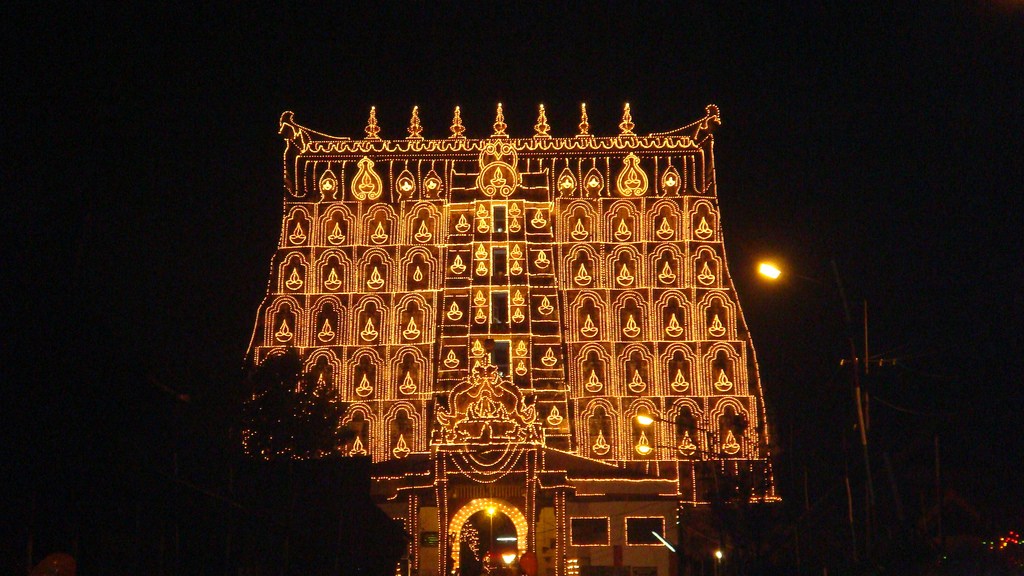
Main gate - Padmanabhaswamy temple
Main gate – Padmanabhaswamy temple

After offering our prayers, we visited the old wooden museum inside the Puthenmalika / Kuthiramalika Palace just outside the temple premises. The structure built by the erstwhile Travancore kings is a damn nice place for the art lovers. Like most regions in Kerala that sleeps with the setting sun, we headed back to the hotel to call it a day.

Day 2:

After finishing our work around evening, we set-out to do a little bit of city trotting. No visit is complete without taking back souvenirs. The rule in my work team is (on a lighter side), ‘Whether you finish your assigned job or not, whether you return safely or not, we don’t care. Bring us souvenirs and the local snacks to eat.’ So, we shopped for some local crafts at SMSM institute crafts emporium.

SMSM institute crafts emporium
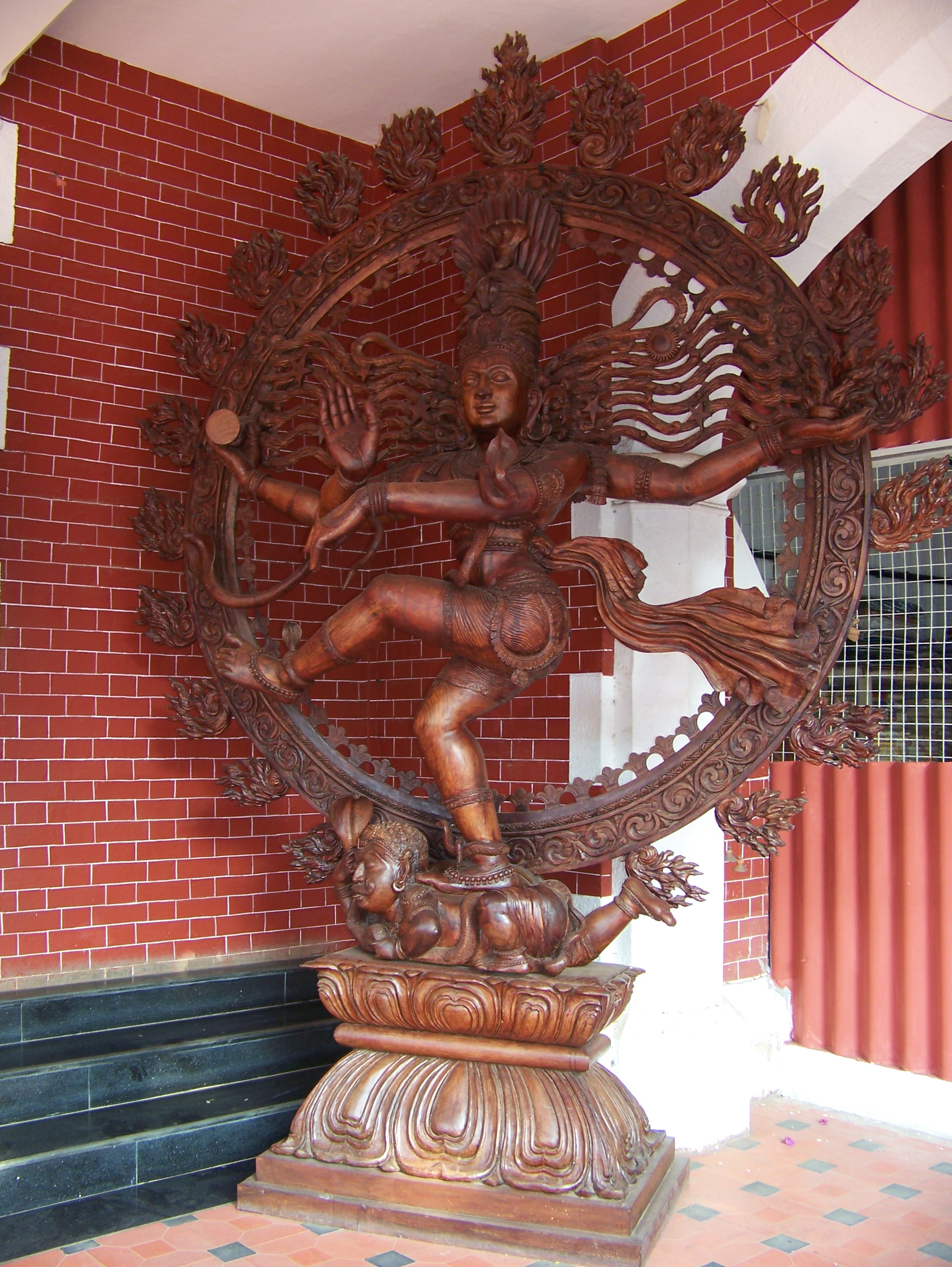
A wooden piece of art at SMSM institute crafts emporium

From there, we walked through the narrow lanes to one of the biggest shops I have ever known that sells just ‘CHIPS’: ‘The Mahachips store’. Chips of different varieties, made to order and packed just then. I picked up about 10kilos of banana chips & jackfruit chips as giveaways, something that will be much awaited for back home in Bangalore, even more than my safe return. (The even funnier part was that this bag of chips was the single largest (Fragile) cabin baggage I was carrying with me. The cabin-crew was amused to know what was in it when she offered help to place it in the upper cabinet).

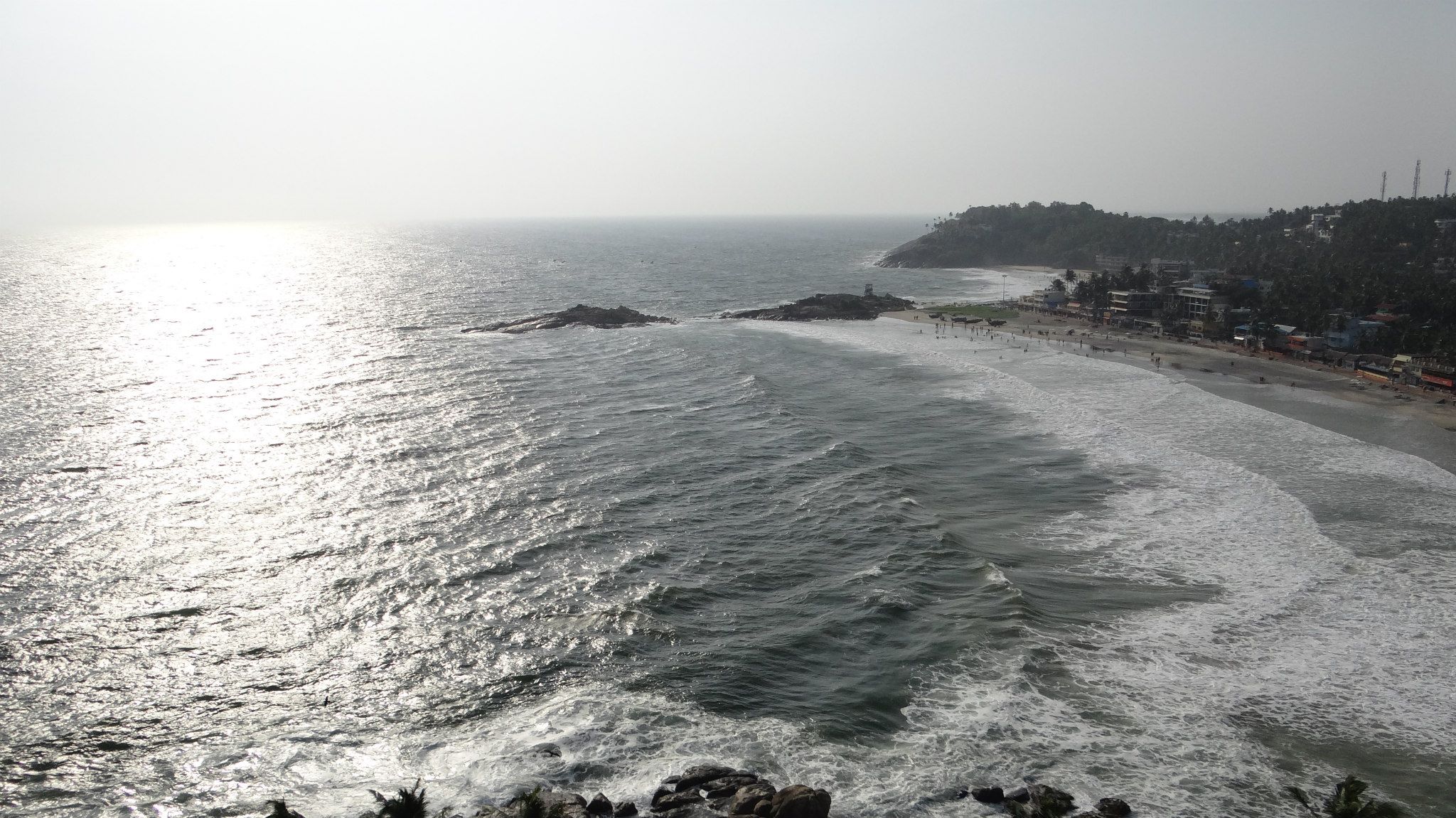
What’s a visit to Thiruvananthapuram, without soaking your feet in Covalam beach? That’s where we were headed next. After strolling along the beaches, we walked upto the Vizhinjam lighthouse for a good view of the sea. The view was simply delightful. A stroll along the crowded beach, beautiful view of the sunset, some yummy local chaats to munch on, it was indeed an awesome end to an eventful business trip.
And we head back to Bangalore in the earliest flight on the following day.

View from the Vizinjam lighthouse
The view from the Vizinjam lighthouse

Don’t miss to try these three things while you are in Trivandrum (or anywhere else in Kerala):

  • Fresh banana & jackfruit chips and Kerala halwa
  • Hot palam puri with a cup of burning hot Kerala tea
  • Frog thigh fry (available only in select places).