Holi is Big in Northern India and the most beautiful in the Braj Bhoomi- the Land of Lord Krishna. Festivities start a week in advance with Lath-mar Holi in Barsana and Nandgaon, phoolonwali Holi (Holi played with flowers) and Widow’s Holi in Vrindavan, Huranga at Baldeo and Holika dahan and Rangowali Holi at Mathura and Vrindavan are some of the major parts of the festival. Articles, blogs and photos are all over the internet about how beautiful this celebration is and the fun of participating in the festival of colours. Deeply inspired, a two week trip was planned through the state of Uttar Pradesh whole-ly, to soak in the festive fervor of Holi.
This visit to Mathura is a part of my fortnight long backpacking in the typical pilgrimage circuit of Uttar Pradesh covering Lucknow- Ayodhya- Faizabad– Varanasi- Saranath– Allahabad- Agra- Mathura-Brindavan- Fathehpur Sikri– Delhi
As per plan, we reached Vrindavan to spend the last two days of Holi- the main days and get coloured in different hues of Gulal. The plan was to reach the hotel, change to clothes that we had kept aside specifically for Holi and then go out to the areas where the colours were being thrown at. However, the entire town was already painted with colours by the time we arrived in our delayed train. A samaritan helped us get an e-rickshaw so that we could reach our hotel. The rickshaw had to squeeze its way through the crowd that had already gathered out on all roads. By the time we reached the hotel, we started to feel miserable about having wasted our leaves and having travelled all the way to Mathura from Bangalore was a big mistake. It was very unfortunate that our experience of the famous Vrindavan Holi was no-where close to fun. Although we were inside the rickshaw, we felt more vulnerable to getting coloured than the rickshaw itself. Goon like mobs would specially target people who were new to this kind of celebration. I had atleast 4-5 men together hold me by my head inside the rickshaw and colour my face. Few others even pulled my scarf and shawl to ensure that every inch of skin was coloured. No! It was not a pleasant way to welcome guests to a new place!
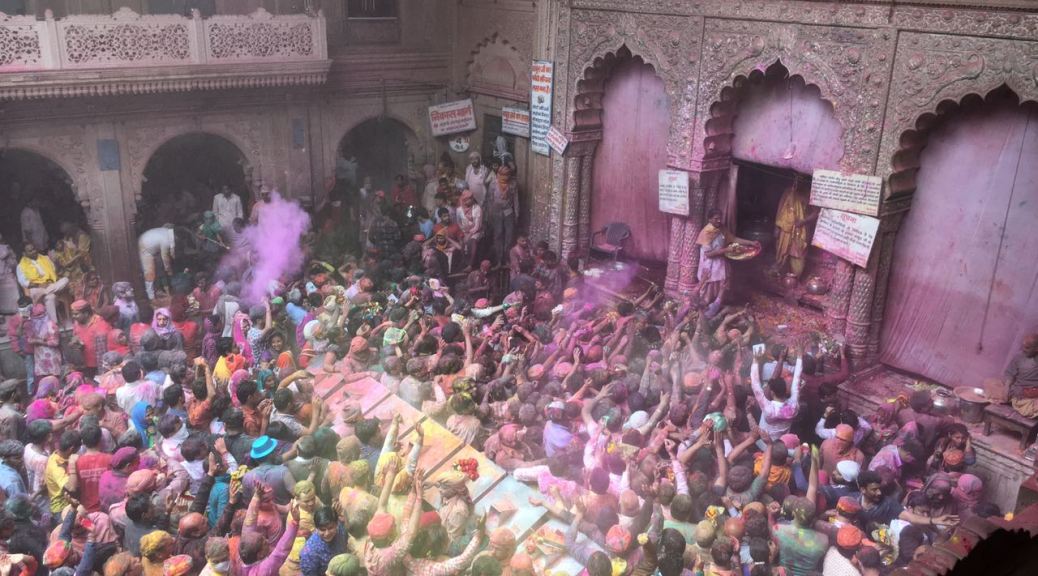
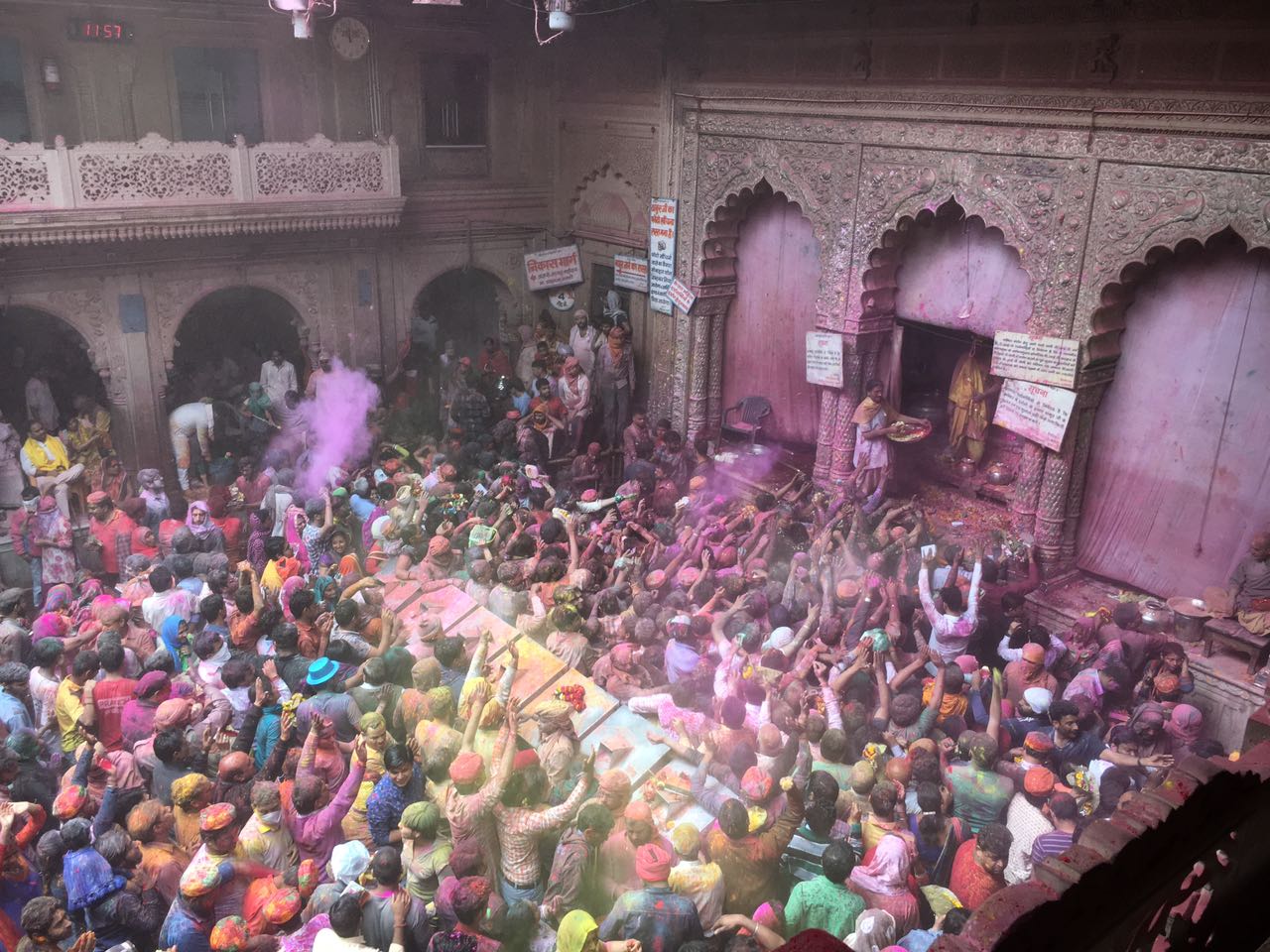
Banke Bihari temple in Vrindavan is where Holi is best celebrated with the priests throwing colours at everyone. On the day of Choti Holi, although we managed to go to the temple, we were drenched in wet colours. Leave that, our faces, hands and every bit of skin was chapped because we were smeared either with coloured cement or sand. This mixture is a norm and hurts like hell when it is being thrown at. We somehow managed to catch glimpses of Holika that were being burnt in some interior corners of the town. Women folk had gathered around effigies placed in the middle of firewood, food grains, vegetables and all other important things required for burning the pyre. We were colour soaked till the bone by the time we braved the task of reaching the safe confines of our hotel doorstep amid all the cemented colours and sand. Taking pity at our plight, our hotel incharge asked us to stay indoors the following day, as the last day could get wilder.
Finally, the main day of our fortnight long trip had arrived. But, we could barely think of venturing out on the streets on the day of Rangowali holi. Since our hotel was located in the main city area, we set our chairs out in the balcony of our room on the 3rd floor and watched the frenzy on the streets. It was disappointing to watch the Rangowali Holi turn into an event of Kheechadwali Holi (Holi played with water from the drainage). This kind of celebration can give the worst memories especially for girls and foreigners while goons attempt with ruthless amount of coloured glass powder. It can affect your eyes, skin, blood vessels anything! On top of it all, people are sloshed in Bhang and one cannot be sure of what’s gonna happen next!
Really, I’m not exaggerating the displeasure; the festival of colours is exaggerated through good photography by the photo enthusiasts who are all mostly male. I’d bet you not to plan your Holi trip to Braj with a bunch of girlfriends or with anyone who is new to this area. I strongly recommend you either plan on the day of Phoolon wali Holi or be a part of a private Holi celebration at a friend’s place amidst known crowd. This trip to Mathura has left scars of ir-repairable displeasure and sadness!
The Banke Bihari temple Clicking credits: Gowtham Shastry
This post is part of my fortnight long backpacking in the typical pilgrimage circuit of Uttar Pradesh covering Lucknow- Ayodhya-Faizabad- Varanasi – Saranath- Allahabad- Agra- Mathura- Brindavan– Fathehpur Sikri– Delhi
I’m not a political person and I don’t prefer blogging about something that can spark a political row with my writings.. But, this one goes here because I want to narrate the election campaign as seen through my eyes as a traveler traversing through a state where the election fever had hit hard! One of the most awaited elections of the country and an important one for the current ruling party of the state to prove their influence.. Uttar Pradesh State assembly elections!
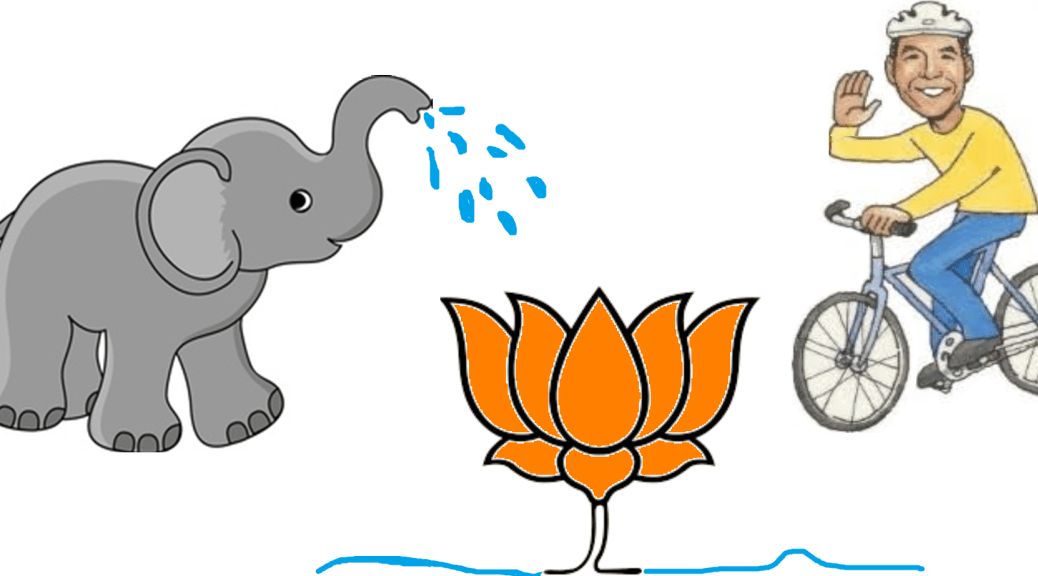
Firstly, we were roaming the streets of the state capital- Lucknow. One fellow told us, “There were elephants standing at all corners and across all streets, then the cycle lanes were laid. Neither the elephants nor the cycles did any good to the city. Unemployment is an evil left over by the previous governments. Ours kids are struggling in the slush. Let us give a chance for the lotus to bloom.”
Moving ahead, we were temple hopping at Ayodhya. A local boy offered to be our guide. We were amused with the stringent security checks and the big political drama directed by man in the name of God. Just as we were talking among ourselves, our guide blatantly told- “Don’t worry, you will not have to go through all this when you are here next time. ModiJi aayenge tho sab theek hojayega! (ModiJi will resolve everything)”
The following day we were at Varanasi, the Lok Sabha constituency of Modiji himself! It was election day when we arrived there. The security was tight and with very less traffic, the spiritual city was a sight. That said, we went for a boat ride along the Ghats of the Ganges.. Explaining the history and significance of each ghat, our boatman rowed the vessel forward. In between he said- “Do you see that structure up there? Modiji aayenge tho uss Masjid ka samasya ka hal mil jayega (The issue around that mosque will be solved if Modiji wins), pointing at a mosque that is a subject of historical controversy.
It was 11th March: The D-day.. We were travelling to our next destination- Allahabad. The counting of votes was in progress and the poll trend was being aired by all news channels.. The customers in shops and hotels were glued to their TV screens.. Our fellow passengers were lost with news updates on their smartphones.. The driver and conductor of our bus caught up every now and then to get updates on the running poll trend.. Clearly, curiosity and anxiety were the only things in the air.. Everybody was discussing about who or which party would win the elections. We caught up with a conversation with our oarsman while being rowed to the confluence. He was casually talking about how he had left home to find a better job but later returned back to his family with the grace of mother Ganges et all.. And in the event, he told us that, “Mother Ganges gets more polluted on her journey forward through Banaras. But, Let us give a chance to Modiji, Ganga Zaroor Saaf hojaayegi! (Ganga will definitely become clean)”.
It is a very tough deal to commit for something as big as this, given the various religious, cultural and sentimental dimensions linked to everything that requires a change. These were not just hopes, It was an assurance given by the BJP.. It made me realize how just one man has changed the way common man looks at politics.. At any situation, we must stick to the basic morals of being an Indian- Secularism is the beauty of India! Exhibit ‘Unity in Diversity’ because the nation needs us.
And in between all the frenzy, we were waiting at Faizabad junction for our night train to Varanasi.. A train with no display board thugged slowly on Platform no.1. In the next few minutes, we were amused by looking at the platform. It was crowded with the men in uniform till as far as our eyes could reach on both ends. We saw arms and ammunitions being stacked up on the pavement and dedicated men with rifles guarding them. In a time where the entire nation was celebrating Holi, it was a strange but an overwhelming event to watch so many personnel from the armed forces who were there on duty. I hold very high regard for the defence personnel who guard us regardless of time and place. I had goose-bumps for having been in the midst of all this action. I couldn’t contain my anxiety and spoke to one of the men, while a couple of others joined in. We were told that they were from the Border Security Force (BSF) and had travelled down from Srinagar for security reasons during the state elections. That gave us an idea of how massive and sensitive the event of elections in UP is for whom, things are a lot peaceful and easy back in our home state- Karnataka.
Coming back to politics, declaring the party leader / Ministerial candidate before elections is a normal way to attract votes from the public based on various other parameters. In contrary to this style, having fielded no chief ministerial candidate; the BJP (Bharatiya Janata Party) has managed to win the great battle with just the name of one man- ModiJi! A sweeping victory of 325 /403 votes that has pushed the entire nation into amazement. Now, that the lotus has bloomed, whether the fragrance of the flower or the stench of the drainage would spread is left for the citizen to watch..
Sometimes, it is not about the place.. It is about the people that brings you closer.. And that’s precisely my take on this little quaint village called Mawlynnong.. After a refreshing drive through some breathtaking views and best roads of India, we had alighted at ‘God’s Own garden’ nestled deep in the East Khasi hills of Meghalaya. Although it is being largely promoted by the Meghalaya Tourism Department(MTD) as Asia’s cleanest village after being awarded so by the ‘Discover India Magazine’ in 2003, I feel it holds a different charm in it with the warmest people I have met so far!
This post is part of my fortnight long road trip across North-east India, specifically covering parts of Meghalaya – Assam – Arunachal Pradesh I had tagged along with two other travelers and drove around the state of Meghalaya visiting Shillong – Smit – Cherrapunjee – Mawlynnong – Dawki – Ribhoi- Shillong.
Tourists flock to this place in large numbers just because they have heard about it in MTD handouts. These senseless creatures litter the place extensively with chocolate wrappers, chips sachets etc. all strewn around this supposedly cleanest village they have come to see.. But, the humble villagers watch on with a smile and pick up these wastes themselves and put them in the cane trash bins places visibly infront of every household in the village, thus keeping up to its reputation of being clean!
Things to see in Mawlynnong:
• Inside Mawlynnong village: The old church, floating stone, the water shed and the Bangladesh view point. • 1 kilometer away: Riwai village (Living root-bridge)
The Details:
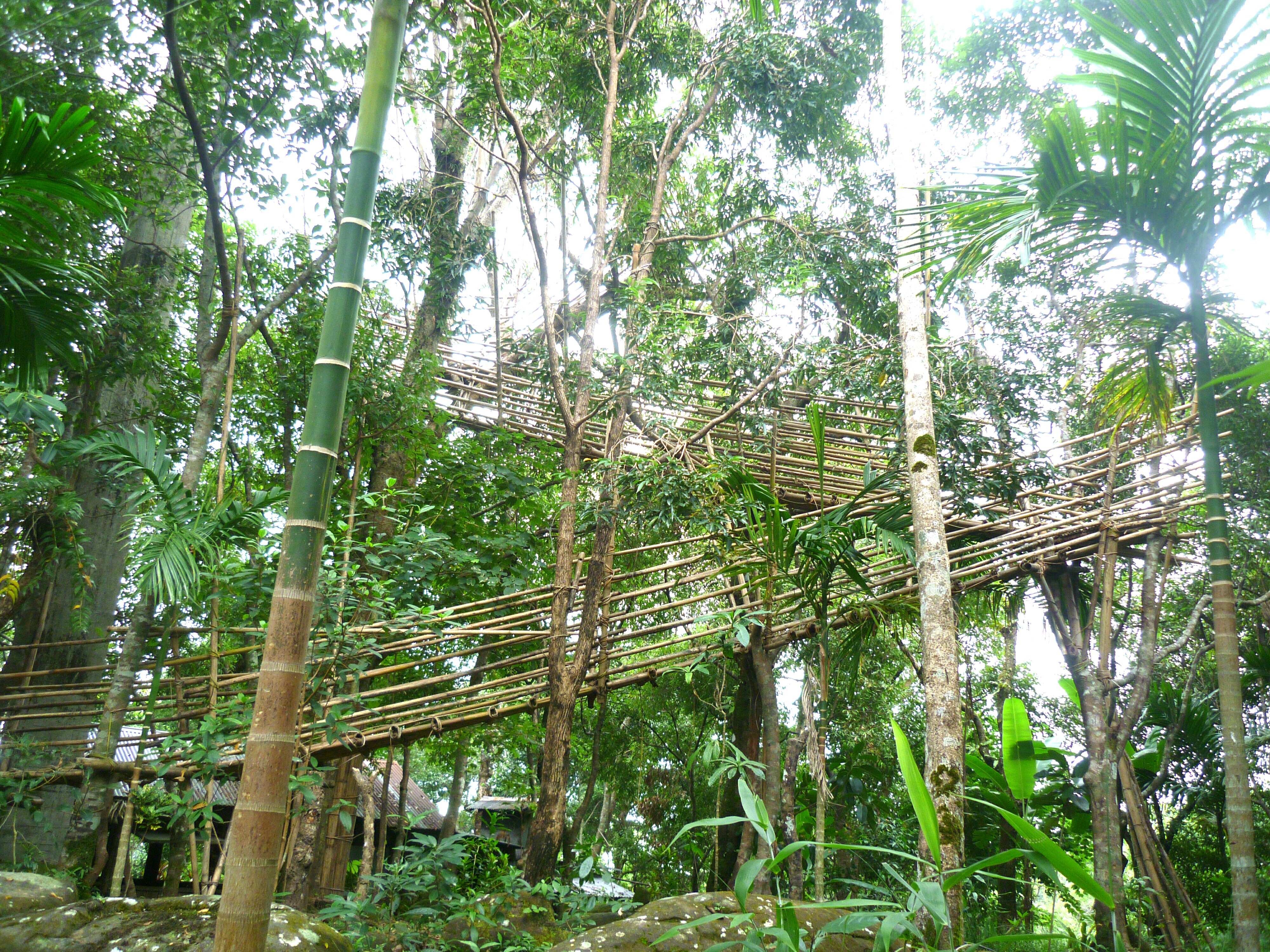
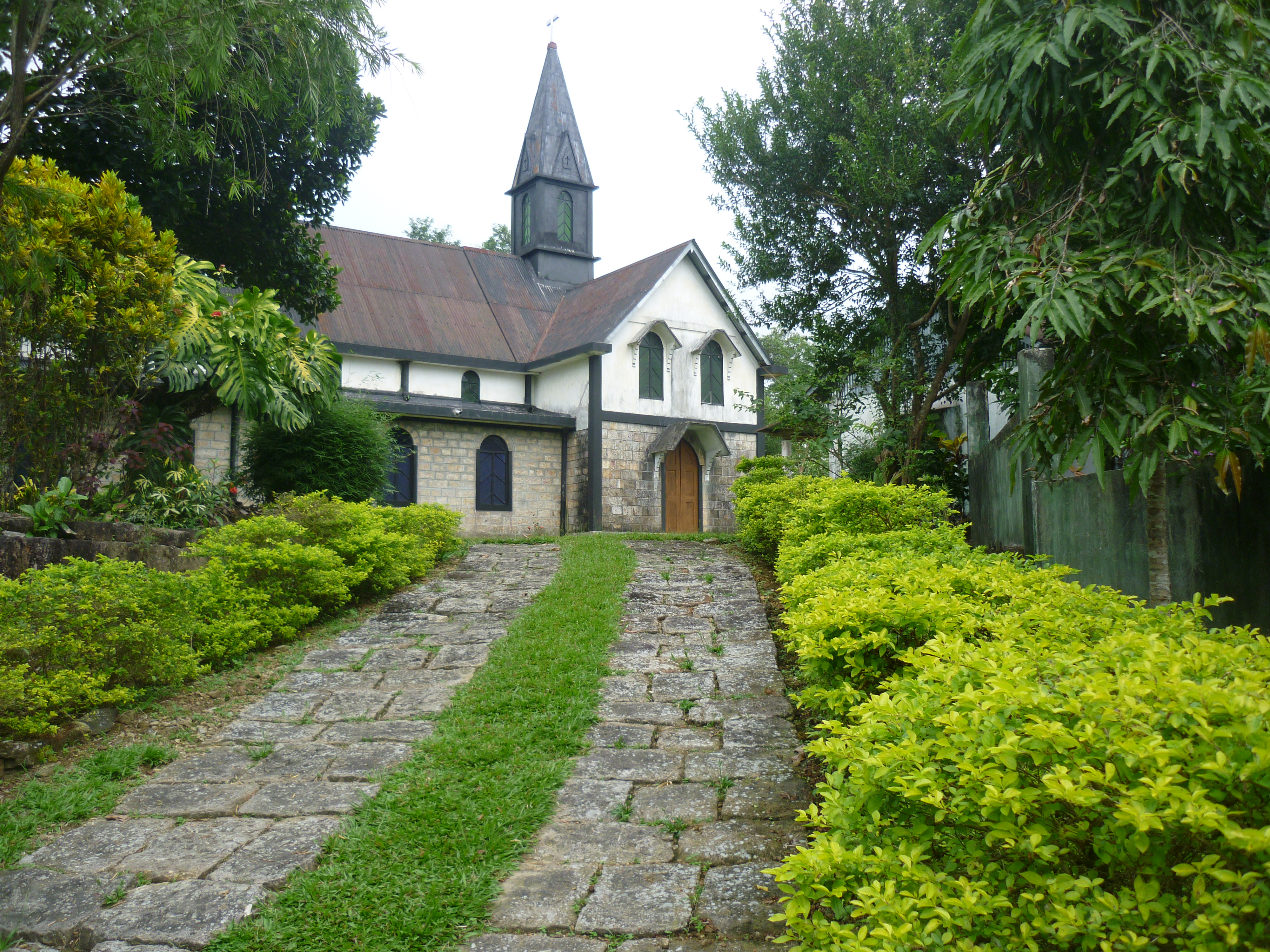
I walked around the laid back lanes of the village exploring the old church, the floating stone and the water shed maintained by the villagers. The flowers lining the fences of each household added myriad hues to the green village and grey of the cloudy sky.. I climbed up the skywalk laid up with bamboo and cane that threw up a nice view overlooking the plains of Bangladesh.
The Skyview bridge at Mawlynnong
Finally, I settled down at a locally run restaurant for a cup of chai to beat the chills of the cloudy weather. I caught up on a conversation with a pretty Khasi lady draped in her Asiangyake (the traditional dress of the Khasi women also called Dhara). While she helped me to memorise a few words in her dialect, I learnt about the Khasi culture and customs. Being a matrilineal society, women are respected and are given the preference to choose her husband-to-be. It is considered a bad omen, if a man proposes to a woman.
While she was attending to other customers at the restaurant, I called out for ‘Oikong’ (Khasi alternative for addressing ‘Didi’ in other parts of northern India) to help me with some Soh (Khasi for fruit). “Ohhhh” A voice filled with humility came in response… She then sat down with me and prepared a plate of pineapple seasoned with salt and flakes of the ‘Bhut Jholokias’ (the spiciest chilli in the world). It was one of the best snack I had in years!
I then walked down to the playground where some local kids were playing. They seemed excited to meet me, talk in English and pose for a few candid photos. It was a warm and a very pleasant evening for me. There is nothing in particular in this village to see or do.. Yet, the nomad in me strongly intended to stay there for an extra day. There are homestays that are available where the warmth of the Khasi hospitality can be experienced.
Kids playing on the lanes of Mawlynnong
I would recommend an early morning walk to Riwai village that helps you avoid the chaotic tourists who flock in later during the day. At a distance of about 1km before Mawlynnong, is the most easily accessible living root bridge and hence, a lot of visitors throng down. So after a nice walk, savouring a nice Khasi breakfast and lemon tea, it was time to pack bags to head out to my next destination- Dawki: the last village of Meghalaya on the Indian border!
The church at Mawlynnong
Request to tourists:
Please remember that the sole reason that you are at Mawlynnong is to see how ‘Asia’s cleanest village’ looks like. How on earth will you ever feel like littering such a place? Do you want to see if you can take off the ‘Cleanest’ tag from the place? Or do you want to just prove that you are only an uncultured educated rich person who could afford enough money to tour the North-east India? Ask yourself… Be sensible and responsible!
This post is part of my fortnight long road trip across North-east India, specifically covering parts of Meghalaya – Assam – Arunachal Pradesh I had tagged along with two other travelers and drove around the state of Meghalaya visiting Shillong – Smit – Cherrapunjee – Mawlynnong – Dawki – Ribhoi- Shillong.
A long winding highway up the hill from Guwahati leads to Meghalaya: Abode of the clouds. And up there, one will be greeted by blue waters of a calm lake flanking the road on the right with no sign boards indicating the arrival at Ri Bhoi district. With no major landmark to explore for a typical tourist, this small distrct is full of fables and legends. If you’re someone interested in fairy tales, I highly recommend you to take a local person with you and follow my trail.
The Umiam lake from NH40
The Umiam Lake or Barapani has been gracefully present there in a serene backdrop of green hills of the state. There is no passerby who doesn’t stop for at least a minute to capture the beauty of this place! This is a man-made lake formed due to the construction of a reservoir across the Umiam river. Today, this reservoir is one of the main sources of potable water to Shillong. For people looking for a leisure trip, one can go for boat rides in the clear waters of the lake. It is also called as the ‘water of tears’ named after a legend which talks about two sisters who were travelling to heaven. It is beleived that one of the sisters slipped from the hills and died, the other sister cried out of grief and her tears are said to have trickled down and formed the lake!
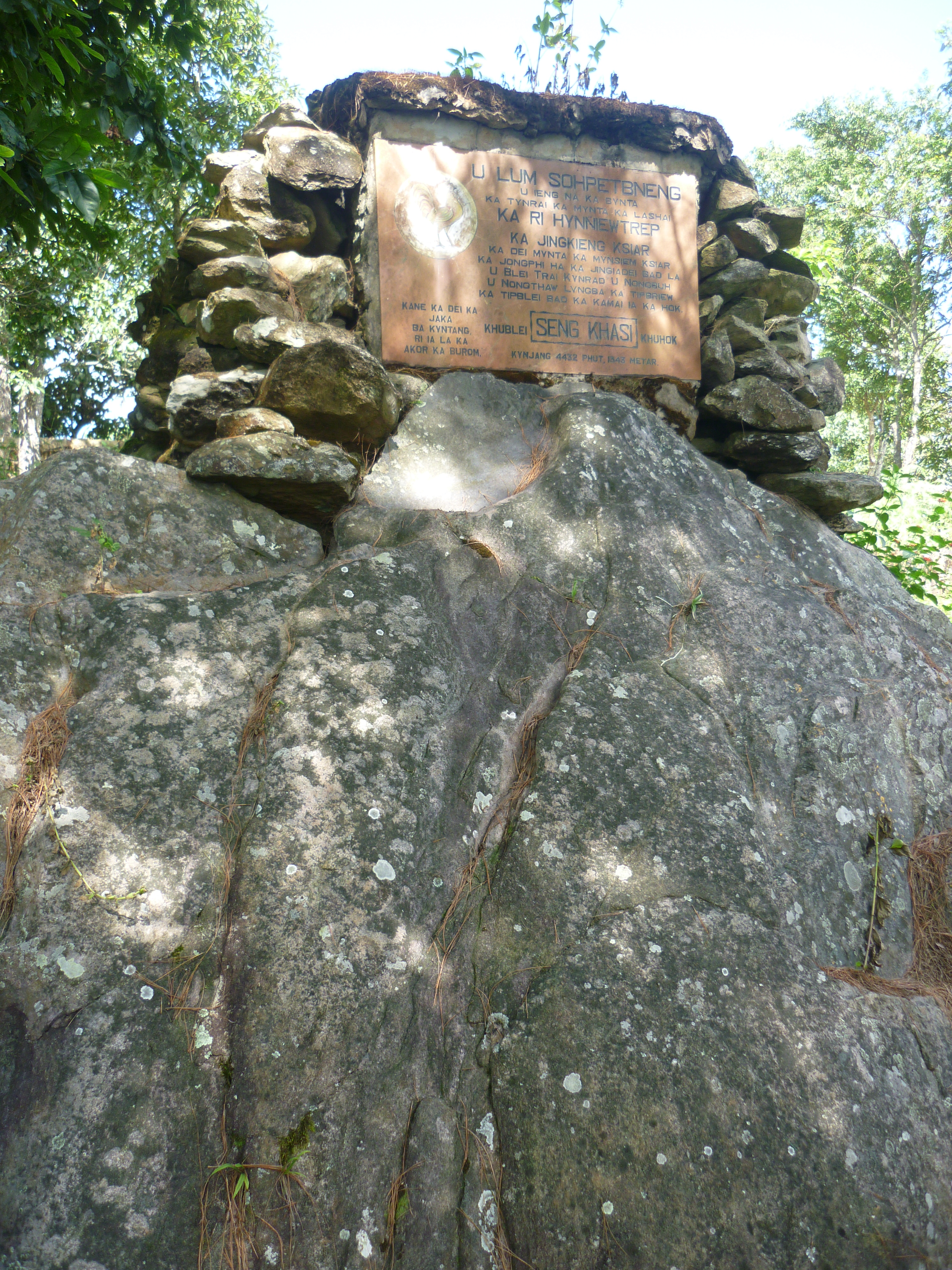
We had read about this place called ‘Lum Sohpetbneng’ close to Umiam and asked our driver if he could take us there. Although he himself had never been there earlier, he readily agreed to take us there. ‘Lum Sohpetbneng’ is a sacred grove of pine trees where a golden ladder is believed to have existed which connected Heaven and Earth. Although there is a motorable road, the place looked eerily deserted with absolutely NO ONE until the peak. We kind of got lost with several deviations in the route but since we were in the middle of the forest, we decided to reach the destination before we gave up. We wanted to know how the ladder looked like that connected God and Man. Finally, we arrived there… Only a dilapidated structure what appeared like some prayer hall and an under-construction structure was there, which our driver told us was a place where an annual fair is held with a large congregation of Hindus.
An epitaph at Lum Sohpetbneng
A few steps away from the concrete structure, our driver took us to a neglected patch of land under an old withering tree. He pointed at a rock and told us, “See, these massive footprints here? It is of the humans who tried to climb heaven. Back in the days, humans used to be massive in size. One day, God realized that heaven was getting full and so he cut-off the ladder which laid right here, where this tree is now growing.” Although the shape of a feet with heels and toes were demarked clearly in the footprints, it is interesting to know how we grow up with fables without understanding the scientific logic behind.
There isn’t much to do on the peak apart from a good view of the Umiam Lake on one side and the Jaintia hills, Shillong airport, the Asian highway on the other. We drove back to Shillong.
A view of Umiam lake from Lum Sohpetbneng
I personally would not recommend this trip if you are on a packed schedule. But if you are an explorer, interested in studying religion and culture, I would advise you to go there with a person familiar and knowledgeable about the place. A deviation from Umiam Lake can help one to explore the Diengiei Peak, where a crater formed by an extinct volcano exists. Dwarksuid is yet another place we gave a miss on the Umroi Bhoilymbong road where a rocky lake exists and is believed to be ‘Devil’s doorway’ because of the dark colored rocks surrounding the lake.
Closing remarks: Being the first scenic spot while entering Meghalaya through NH40, Umiam Lake is a good stop-over to watch the sunset and chill with friends on the banks. There, you can flip your arms open and let Meghalaya breathe some life into you before you head over for a wonderful trip ahead!
As kids, we always imagined fairies with wings flying amidst colourful gardens, rope like creepers hanging across the forest thickets, rainbows emerging on the tranquil sky. Do you agree when I say this is how most of the animated movies depict fairy tales ? Nestled deep in the rich forests of Meghalaya; with NO exaggeration, that’s how I would describe this village called Nongriat!
This post is part of my fortnight long road trip across North-east India, specifically covering parts of Meghalaya – Assam – Arunachal Pradesh I had tagged along with two other travelers and drove around the state of Meghalaya visiting Shillong – Smit – Cherrapunjee – Mawlynnong – Dawki – Ribhoi- Shillong.
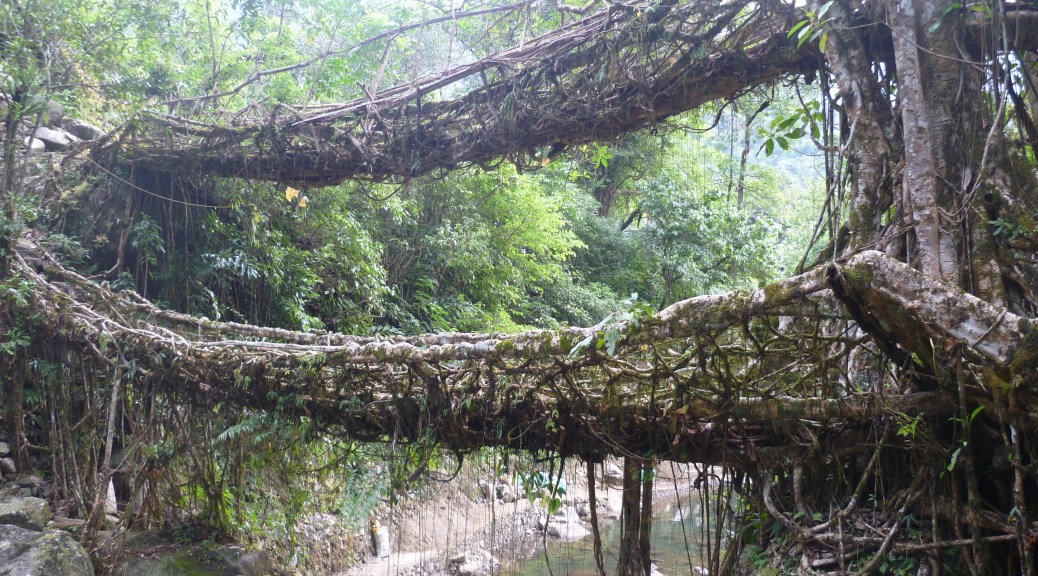
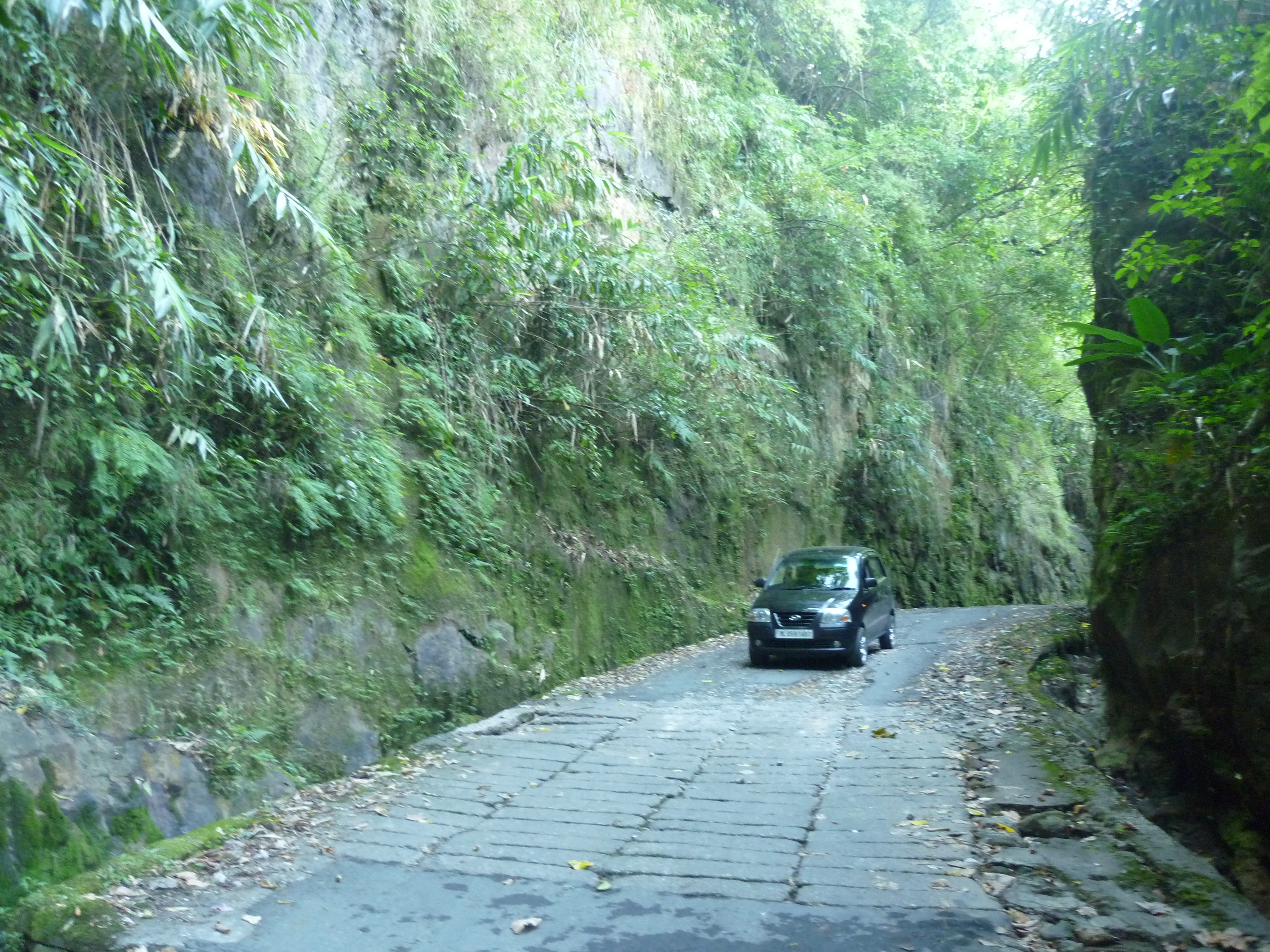
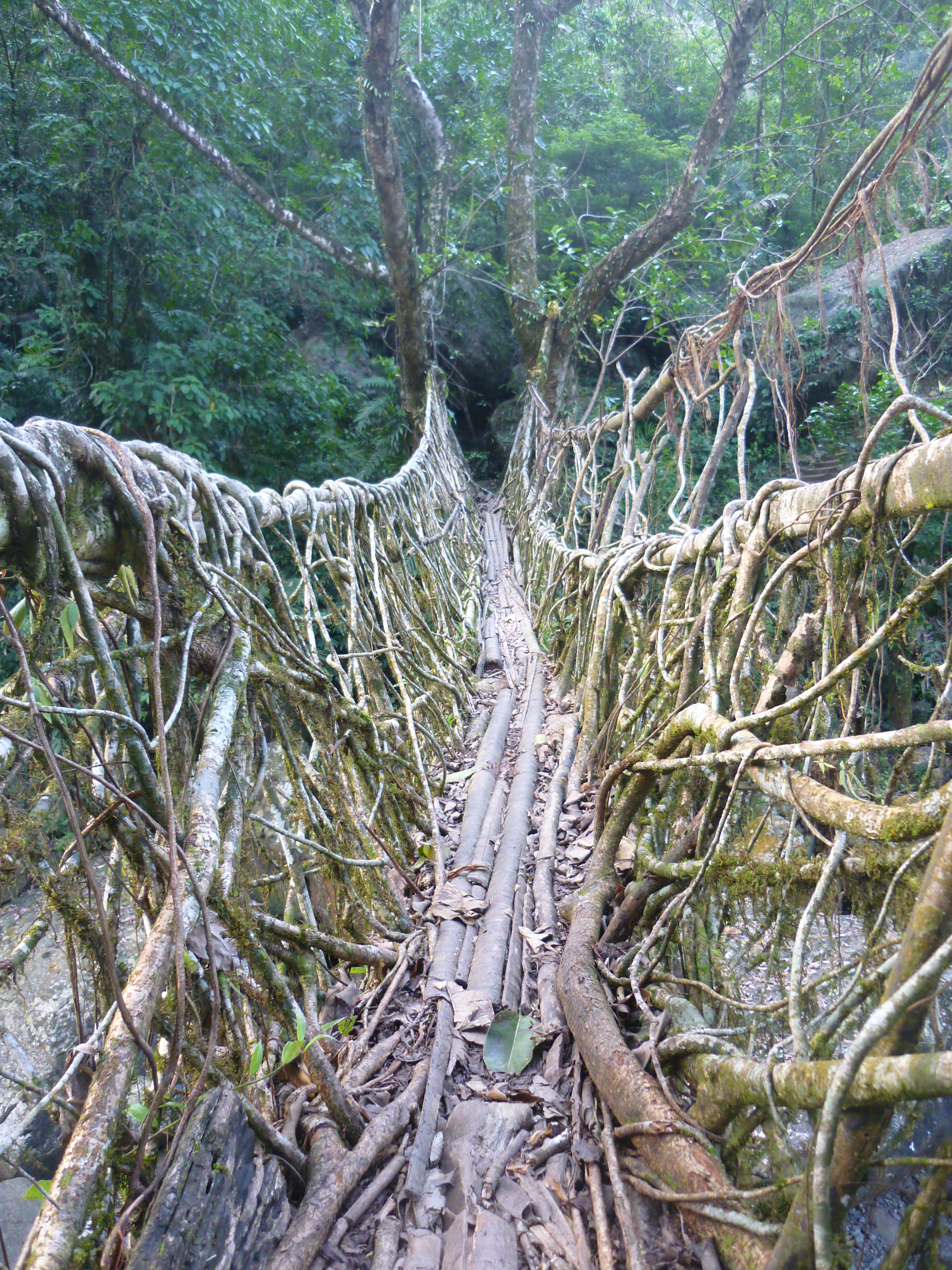
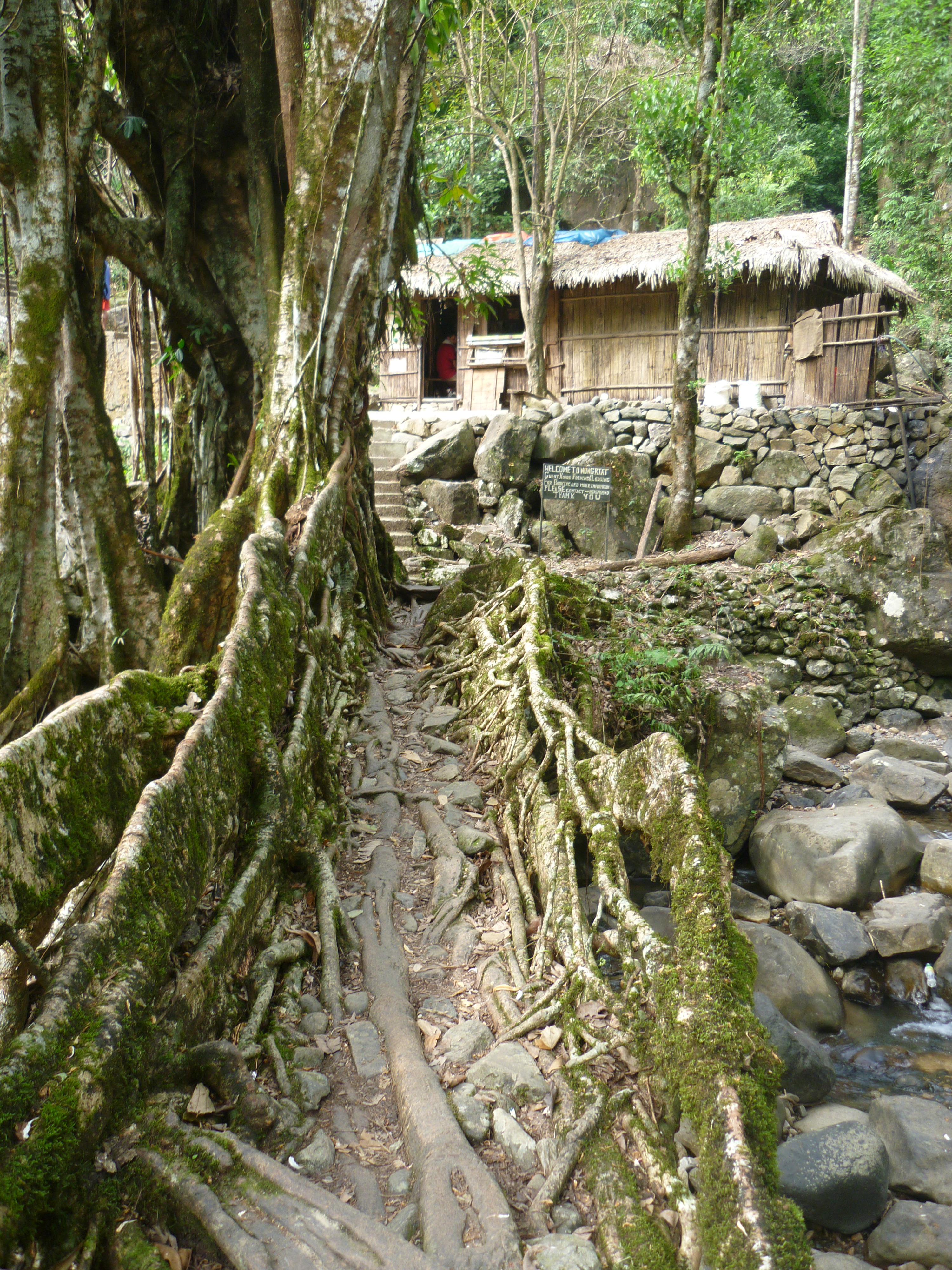
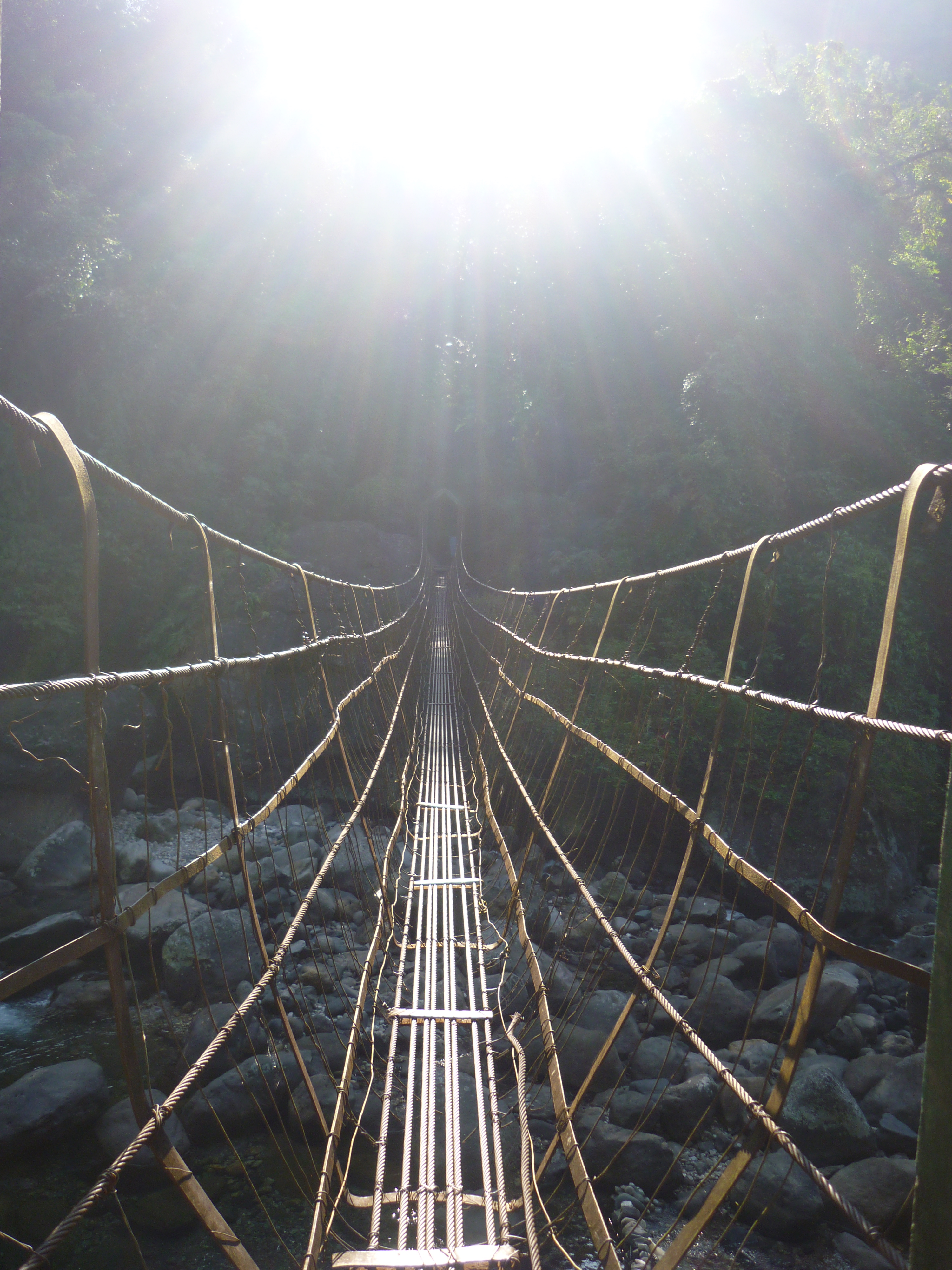
A pleasant drive through the breathtakingly beautiful valleys and naturally formed creepy high limestone walls brought us to a village called Tyrna in Cherrapunjee. That’s where the tarmac ends and our car had to be parked. Further, we trekked down to the Nongriat village: where the ‘Umshiang bridge’ or popularly called ‘the double decker root bridge’ exists. One needs to climb over 2500 steps each way, so that this piece of marvel can be seen at close quarters. Root bridges are created by inter-weaving the roots of the rubber tree by the tribal folks who live in the deep forests of Meghalaya for their local commute across the bloated rivers during monsoon. A bridge fit for usage can take a minimum of a couple of decades and it only gets stronger with age. There are several such living root bridges across Meghalaya and most of them continue to be untouched by the tourists due to their remoteness. We were here, to tread on some of the most popular living root-bridges of Meghalaya.
The route to Tyrna village
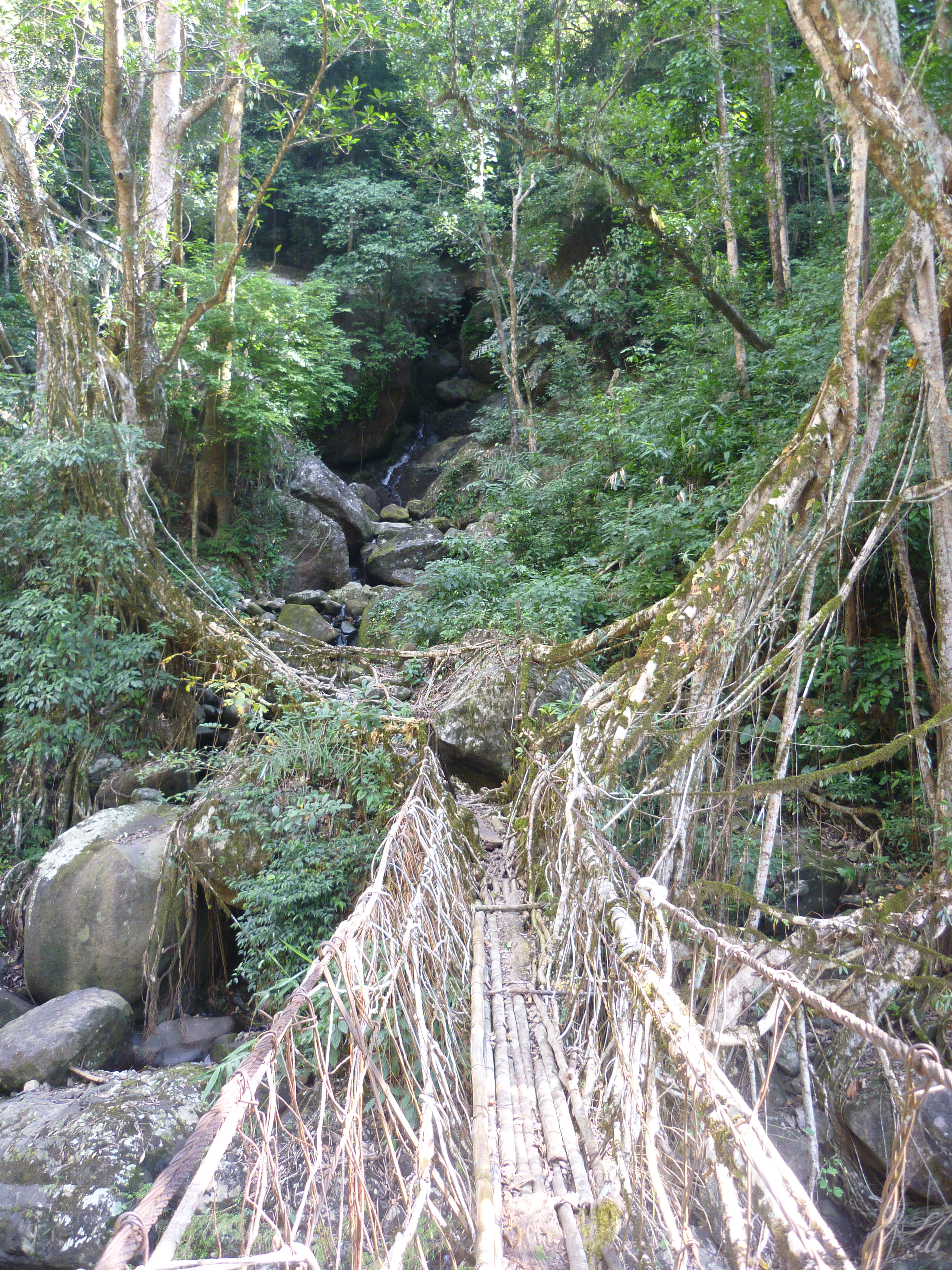
Although, there is a well laid out path of stairs all the way, we thought it was wiser to have a localite who would enrich us with the facts and figures that we wouldn’t get to learn otherwise. At Tyrna, we met a Khasi villager from Nongriat who agreed upon to guide us through our trek. We passed through several sacred groves and areca farms belonging to the villagers. After decending about 1000 steps, a small deviation to the right indicated the way to Nongthymmai village. We took this deviation to reach the ‘Ritymmen root bridge’ a single bridge and another old one next to it which has taken its toll due to the negligence by the localites. Our hearts were jumping with joy at the first experience of treading on a living root bridge, that we had only read about until then… I decided to throw my shoes away for a while and enjoy the feeling of walking barefoot on the bridge.
The Rythimmen bridge at Nongthymmai village
After spending some time, we decided to continue the trek and our new friend cum guide, continued to enlighten us about the rich traditions and culture of the Khasis. We stopped by for a quick breakfast at a straw hut selling 2-minute noodles and lemon tea. Further, a short climb of stairs continued only to be awestruck by the marvel of indigenous engineering: The double decker root bridge, the main motivation for us to trek this far. It was like fantasy out of a fairytale: creepers hanging across a little waterfall, fed by a pristine river in the middle of nowhere! It was tempting to get our feet wet as we watched a few tourists who had stayed in the Khasi homes around the root-bridge over the previous night and enjoying their swim in the cold waters. However, spending some time admiring this piece of absolute marvel, we decided to move ahead, towards our next mission: Rainbow falls!
Entry bridge to Nongriat village
Nature’s best kept secrets are those which are untouched due to their remoteness. Rainbow waterfalls being one of those. The small number of tourists who make it till the double decker bridge seemed to have had disappeared there onwards. The tiring path ahead was going to be tiring, we were told. But, nothing comes easy.
I was doing this trip post monsoon (October to be precise) and that’s when the caterpillar larvae take wings! Like winged fairies, we were greeted and accompanied by butterflies of all colours, shapes and sizes all along the stretch from Umshiang bridge (the local name for the double-decker bridge) till the rainbow falls. We had to be extremely cautious while walking, clear the way for ourselves with a stick, lest accidentally step on these little winged beauties. The path was so full of butterflies, that it cannot be expressed with words and the joy can only be experienced. Truly, in every sense: I was Alice, walking in wonderland!
Another root bridge enroute to Rainbow falls
It was a walk of nearly 2hours through the thickets of the sacred forests and crossing at least 5 other root bridges and a couple of metal rope bridges that were laid across the deep river that flowed down with its seductive clear blue waters. After the brisk climb, we had finally arrived at the place where a hidden jewel of nature unfolded itself, from amid the greens…
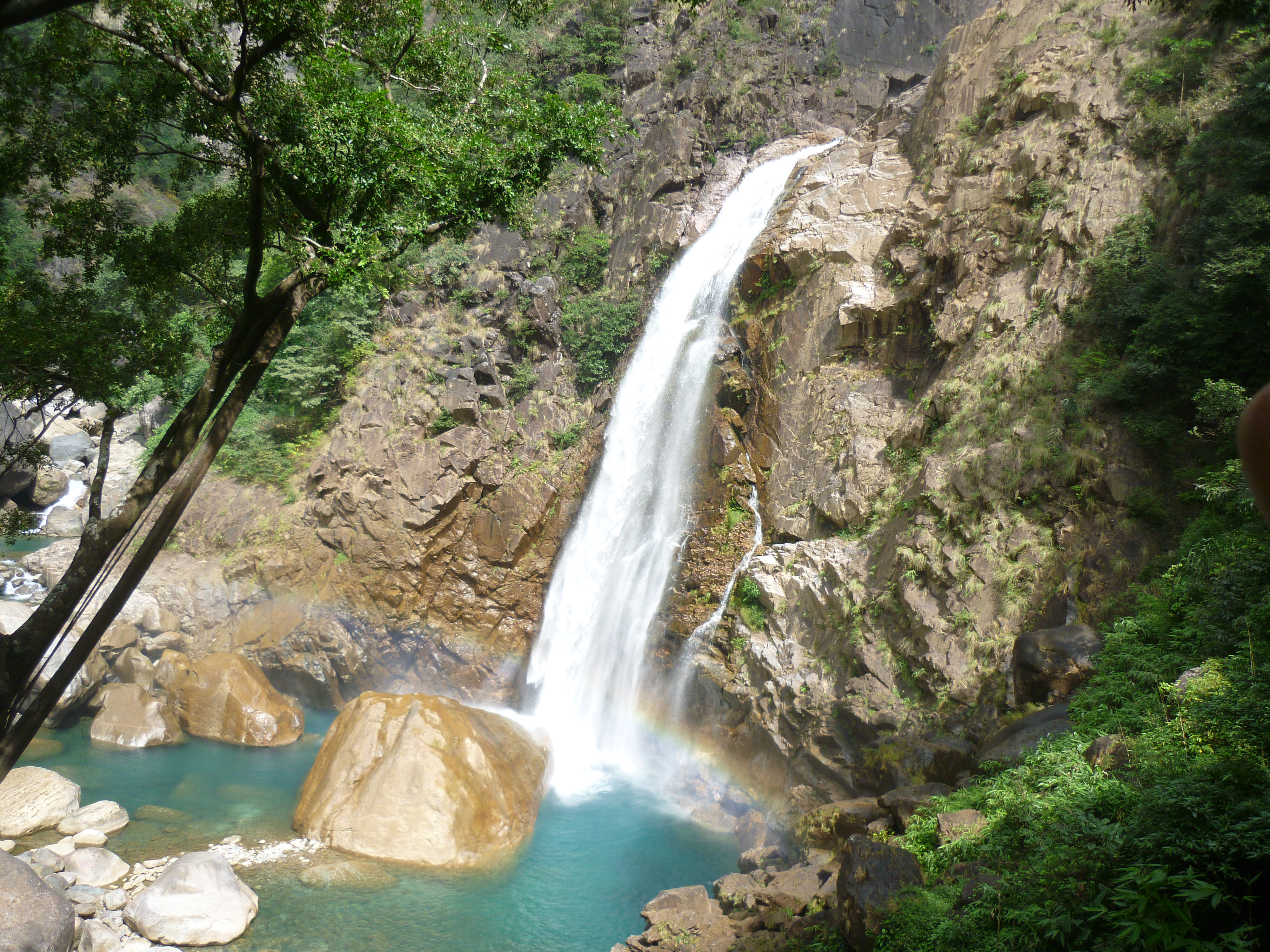
We stood there in AWE….. the green trees and bushes had opened up to display a canvas with milky white waters gracefully tumbling down into a pool of turquoise blue and a hundred fairies flying around us. A dozen spectrums added to this heavenly scenery! On a clear sunny day, there could be 50-100 spectrums around the waterfall, giving the place its name: Rainbow falls! We enjoyed a couple of hours in calm just by sitting beside the naturally formed swimming pool as we were the only people in this fairyland and restoring our lost bond with nature that was shared long ago.
The Rainbow falls
As described by our guide, camping at the Mawsmai caves (2hours trek further) and climbing up the hill to be greeted by the Nohkalikai waterfalls, the highest waterfall in India would have been a complete story! Unfortunately, we hadn’t known much about the enchanting beauty of this trek before embarking on it and had no preparations now, to have it extended further. So now, it was well past afternoon and distance that required to be walked back was long. The sun sets early in this part of India and that meant that we had very less time of daylight left. During our return, we stopped by at another hut near the Umshiang bridge for a late lunch where we relished a simple Khasi meal of rice and bitter lime curry.
A metal rope bridge near Rainbow falls
The walk back from there onwards was taxing and it is a very steep climb up the 2500 odd stairs.. I stopped several times at the little homes and stalls put up by the villagers on the way to keep myself hydrated with the local energy drinks and fruit juices. I cannot forget the way our guide cum friend Denzil kept motivating me to complete the stretch. He kept reducing the count of steps by hundreds so that I would climb faster with the intention of reaching the top ASAP. Finally, I was back at Tyrna, even while there was sufficient sunlight for us to drive back to Cherrapunjee.
A small deviation from Tyrna will lead one to ‘Ummunoi root bridge’ in the Laitkynsew village, one of the oldest bridges in the viscinity. It has been truly a very refreshing way to explore ‘the abode of the clouds- Meghalaya’.
Conclusion remarks:
For all trekking enthusiasts, a two day trek covering Laitkynsew, Nongriat, Mawsmai and Nohkalikai is highly recommended.
Under the influence of watching Tamil movies, my friend and I had sufficiently heard about the mansions of Chettinad. Further, our curiosity was piqued when we heard stories about how rich a land this region had been around a century ago, how the native people were involved in a lot of trade between Chettinad and Burma (present Myanmar). There is a Tamil settlement in modern day Myanmar consisting mainly Chettiars who decided to settle there. Burma Teak is still a word that is abundantly used for those familiar with timber and carpentry, primarily adorning these mansions of Chettinad. With that, we wanted to visit this region over a weekend and worked on our google research to set our travel plan.
The native community inhabiting Chettinad are the Chettiars. Well-educated, affluent, entrepreneurial are some adjectives that are synonymous with the Chettiars. The region comprises of 73 villages and spans over two districts of Shivagangai and Pudukkottai. Since we couldn’t be driving down, our usual resort for commutation was public transportation. Given that we had only a weekend’s time in hand, we wanted to plan our itinerary well and be able to make the most use of whatever time and resources we had.
The stay options on the other hand were limited to just a couple of Chettinad houses that have been converted to luxury resorts or heritage homestays. Although we wished that we could stay at one of those palatial mansions, we were restricted with our budget (we had just started to work after graduation from college). There were no budget stays anywhere in the region. So that was something we wanted to figure out after reaching there. In the worst case, we wanted to find at least a floor space where we could lay our sleeping bags.
This article is a first of the two part story about my trip to Chettinad. This post has been featured on BlogAdda’s ‘Spicy Saturday’s Picks’ column.
Our Itinerary:
Day 0: Leave from Bengaluru (Overnight bus to Karaikudi) Day 1: Explore Karaikudi- Koviloor, Devakottai & Pallathur (Night’s stay at Kaanadukathan) Day 2:Explore Kaanadukathan- Aathangudi (Return to Bengaluru by overnight bus from Trichy)
The Details:
Upon reaching Karaikudi on Saturday morning, we freshened up at a nearby hotel. Our day started with a delicious south-Indian breakfast with aromatic ghee roast masala dosa and idiyappams served with coconut milk sweetened to perfection. A piping hot cuppa filter coffee topped it up. Meanwhile, we worked out our options of commutation as we got taking with a very friendly waiter at the hotel. We figured out that hiring an autorickshaw was the best way if we had to get to the remote villages and unexplored lanes of Chettinad. The local bus or even a self-driven car wouldn’t be of much help as it needed someone familiar with the streets to wade through and the hot summer sun would just add up to our woes. After finishing our breakfast, we struck a good deal with an autorickshaw guy who would show us around and help us do a bit of mansion hopping.
Part 1:Exploring Karaikudi
Ariyakudi Perumal temple:Following the plan on our list, we decided to visit the temple first as the temples in South India close by 11.00.a.m. The history of this temple mentions it as an alternative Tirupati. Unfortunately, the temple remained shut at the time of our arrival due to the demise of the temple priest that morning. We spent some time photographing random things around the temple before heading to our next destination, to see the Chettinad houses in Karaikudi.
Ayiram jannal: This was our first tryst with the palatial residential structures of Chettinad. The name that literally translates to “mansion with 1000 windows”, this Chettinad house in Karaikudi is a common shoot location for those familiar with South Indian cinema. Much to our disappointment, tourists do not have access to the inside of this house as the people still live in this house.
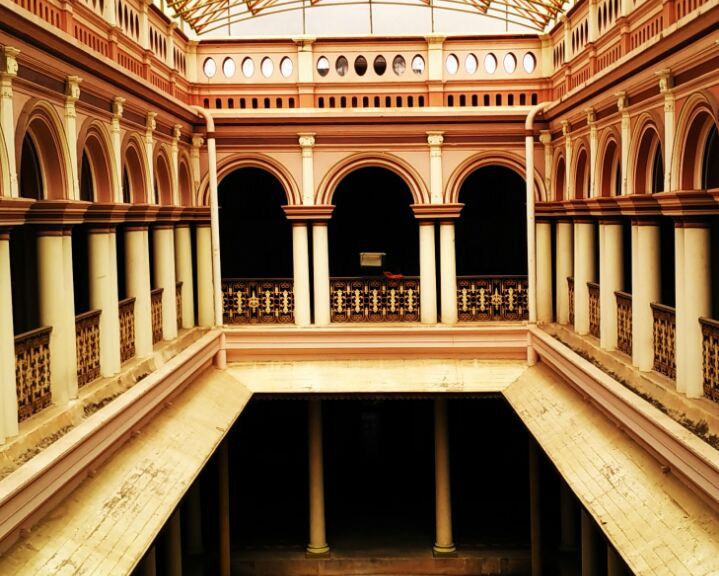
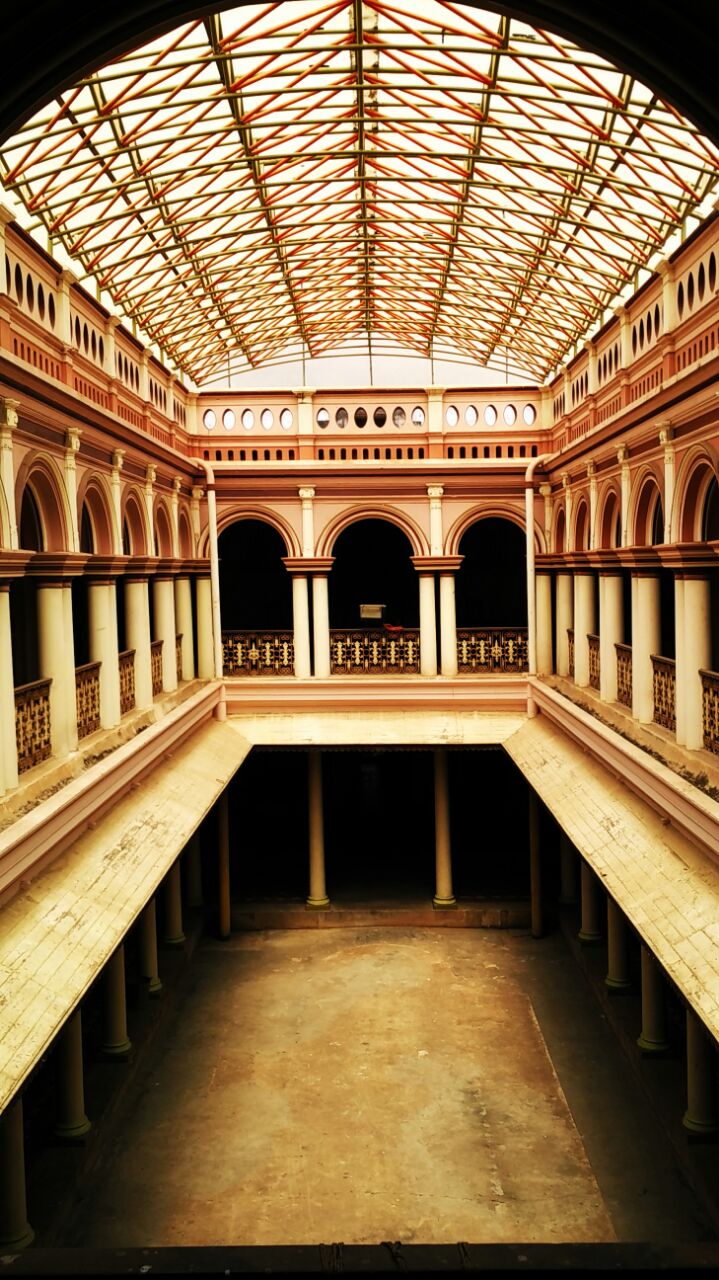
The Inner courtyard of one of the mansions in Devakottai
Meenakshi-Sundareswaran temple: We were surprised to see the assembly of 108 idols of lord Ganesha at this temple. He is seen in rare avatars and seated on vahana that are usually considered as the others. We had visited this temple on the outskirts of Karaikudi, while on our way to Devakottai. It was a bumpy auto ride with the stiff tarmac having been withered off at several places and a lot of dust entering our ears, eyes and nose.
Koviloor Shiva temple:This beautiful little temple is set in a very pleasant location and is surrounded with mansions. We had gotten busy clicking photos.
Koviloor antique museum: Excitement was at its peak when our entry into the first stately house happened. It was a strong structure built of granite blocks facing the temple. One part of it has been converted into a museum of antiques that were used by the Chettiars, one part has been converted to a government office while another part is used by some self-help groups for basket weaving, coconut de-husking etc. A few localites had gathered for the afternoon prayers in the two temples housed inside the mansion -one dedicated to Shiva & Parvathi each which had served as personal prayer rooms for the family in the yester years. We envied the people who lived there a century ago thinking of how peacefully they could decorate their own temple with flowers and lamps and celebrate the festivals without the interference of random people in their way of offering prayers.
One of the warehouses at Koviloor
Memorials built for the famous Tamil poets: Since we weren’t keen on visiting memorials, we gave it a miss to visiting the Kamban Mani mandapam & Kaviarasu Kannadasan Mani Mandapam.
Nagara Shivan temple: This temple stop happened by chance as our auto-driver cum guide stopped for a break at a random place after a short ride. We walked into this temple where a sumptuous lunch was served as part of donations from the devotees and that kept us full for the rest of the day.
Devakottai: We had read that this village has some of the well-kept mansions in the region. By now, our driver had a good understanding of our interests in exploring the region. Over the course of the day, he was very accommodative and stopped at several mansions thereby letting us admire and awe at the vast and artistic dwelling places. He even spoke to a dozen of localites to permit us inside their houses as this would help our studies (We never mentioned we were architecture students though!!) Although a couple of mansion owners were kind enough to entertain strangers like us to have a look at their magnificent mansions, we got shooed away at the gate by several others.
The Mansion filled streets of Devakottai
There was one such incident where the proud caretakers gave us a guided tour of the entire house and we were even greeted by a colony of bats flying past our heads when one of the most unused parts of that mansion was opened just for our academic purpose! We climbed up the guano filled wooden stairs leading to an attic where hundreds of bats roosted. We ducked down as we further walked across a wooden bridge opening out into the terrace to be treated with an amazing view of the overstretching lanes of Devakottai filled with mansions.
Kandadevi temple: We stopped at this temple on our way back to Karaikudi from Devakottai. The temple pond is spread across 2 acres and is believed to be the largest in Chettinad.
Alagappa University & the Annavar memorial: Originally, these were not in our list. But we visited these places as our enthusiastic auto-driver wanted us to see these landmarks named after prominent personalities who have contributed in the development of this region.
The making of Athangudi tiles
After an exhausting day exploring the streets crammed with Chettinad houses in Karaikudi, we were dropped at the bus stand to board the local bus to our next destination. The bus snaked through the narrow lanes and we craned our necks out of the window to stare at a few bungalows along the road at Pallathur before we finally alighted at ‘THE’ destination of our tour- Kaanadukathan.
The first thing that hits your mind when you hear this city’s name is its Silk sarees. The Kanjeevaram or Kanchi silk sarees define a sense of style, gorgeousness, elegance, classy and royalty. But what goes rather unnoticed is the fact that Kanchipuram is also called a ‘City of temples’. Despite being the erstwhile capital of the Pallavas, the influences of Pandyas, Cholas, Hoysalas, and Vijayanagaras can also be significantly observed in the artistic structures constructed across the city. Also, it is noteworthy that the influences in temple architecture are across different sects of faith. The City of Kanchi can be broadly classified into three- Shiva Kanchi-the holy land of the Shaivaites, the Vishnu Kanchi- the holy land of the Vaishnavaites and the Jaina Kanchi- the holy land of the Jains. Kanchipuram is known to be a land of 108 ancient temples, all unique in their own way. Beyond its world-famous handloom, the sculptures, architecture, classical dance, music and all those traditional art forms of Kanchi puts up the city high up on centers of history and heritage on the map of India. That’s why I like to call Kanchipuram as ‘an abode of the trio- Art, culture and history’.
When my mom planned to buy some drapes from the local weavers of Kanchi, I chanced upon the opportunity to explore this city, beyond its sarees and handlooms. Obviously, one day wouldn’t be sufficient if I had to visit each of these 108 temples, and hence, I made a list of 10 temples based on their mythological importance. Given that I’m mostly a public transport-dependent creature, the ease of commutation was also a factor considered while making my list. We boarded an overnight bus from Bangalore to Kanchipuram.
As we alighted at the Kanchipuram bus terminus, we were greeted by the drizzling rain. Usually, the autorickshaws work this way in this city. You tell them the purpose of your visit, and they will plan and handle the entire itinerary for you. Thus, we hired an autorickshaw and that sorted our transportation for the entire duration of our visit around the city. Our auto driver took us to a travellers’ dormitory where we freshened up quickly and then headed to the first temple on my list.
1. Kanchi Kamakshiamman temple: The timing of our visit was important and we wanted to reach there before sunrise. This is one of the Shakthi peethas in India. The prayers in all other temples in Kanchi starts only after prayers are offered here. Unlike any other temples in India, the first pooja to the presiding deity is offered by an elephant and a cow in the sanctum here. The positive energy we felt in witnessing the ritual was enough to keep us going for at least another week.
The entrance of Kanchi Kamakshiamman temple
2. Next up was a quick visit to Adi Kanchi temple, a relatively smaller of the 3 main temples dedicated to Parvathi in Kanchi. But this place is considered a must if one is on a pilgrimage in Kanchipuram.
3. Adjacent to the Adi Kanchi temple is the Kumarakottam- Murugan Swami temple. It is believed that Lord Bramha was imprisoned by Murugan at this place and later released with Shiva’s interference. The temple is known for the idol in the Soma Skanda posture.
4. Ekambareshwara temple: This is the biggest temple in the city. I’d need a separate post altogether to write about the significance of this temple alone. But the primary reason for me to include this temple in my itinerary is the fact that this is one of the Panchabhuta sthalas of Shiva’s manifestations. The linga here is made up of sand and hence represents Prithvi or the element ‘Earth’. This majestic temple complex houses a very sacred mango tree at its centre, whose 4 branches are believed to represent the 4 Vedas that give its name to the temple. Each branch bears mangoes of four different tastes(sweet, sour, bitter, and spicy) in the 4 seasons. The special souvenir that I take back from Kanchi was not a saree, but a priceless green leaf that withered off from this holy tree right there, as if the tree was communicating with me.. I was quick to pick it up and wrap it carefully to be kept in my handbag.
Under the mango tree at the Ekambareshwara temple
5. Next was the Varadaraja Perumal temple. We had to stand in a really long queue to get a glimpse of the main deity seated atop the elephant hill. As if this wasn’t enough, another long queue to get to touch the sculptures of the holy lizards. These metal lizards are believed to have been installed by lord Indra after he was released from the curse by Goddess Saraswati. It is also believed that people who touch these 2 lizard sculptures (the Golden lizard representing the sun and the silver lizard representing the moon) will be relieved of all sins that are associated with lizards. Another specialty of this temple is the fact that the wooden idol of lord Vishnu is kept deep down inside a 3 tiered well that in turn is in between a large pond at the temple entrance. The idol is taken out only once in 40 years for pooja offerings. (The latest festival was held in 2019.) I would recommend you to hire a guide at this complex so that you can get a better insight into the intricacies of the ornate pillars adorning a 100-pillared hall. You can find sculptures of vivid yogic postures, representations of the usage of arms and ammunitions in ancient battles, musical pillars, etc., which explains the rich heritage of Indian art, history, and science.
A mural at Varadaraja Perumal temple
Thus, with Kamakshiamman temple, Ekambareshwar temple, and the Varadaraja Perumal temple, we had completed the mumurthivasam- or the abode of the trio in Kanchipuram.
6. Just a few meters away from there is the Ulagalandar temple, primarily constructed by the Cholas. Here, Vishnu is celebrated in his Trivikrama pose or the Vamana Avatar. The main idol is a massive 30+ feet tall, and the devotees can see only the legs of the Vamana moorthi. The temple itself is small but an important one for pilgrims on the Divyadesams circuit.
7. Further from here is the Kacchappa Eshwarar temple. Here, Vishnu is seen in his Kuruma avatar or the Tortoise form, worshipping Lord Shiva.
8. We did a quick stopover at Vaikunta Perumal temple or the Tiruparameshwara Vinnagaram, another among the 108 divyadesams. The temple houses lord Vishnu in 3 different postures- sitting, lying, and standing. The corridors are decorated with fine carvings from the Ramayana and Mahabharata, and fine stone pillars around the sanctum.
9. The Kailasanathar temple needs a special mention. This temple, dating back to the Pallava period, is located slightly on the outskirts and hence away from the regular tourist/pilgrim circuit. It is an entire complex of intricate artwork sculpted on limestone. Although a board claims it to be a protected monument, most of the statues have eroded over time and need maintenance. Yet, this place has a very powerful force to draw art lovers and travelers looking for an offbeat experience. One really needs to spend a lot of time here to appreciate the intricacies with which legends and mythological episodes have been carved out. Don’t miss spotting the statue of laughing Parvathi and Shiva performing the thandava here.
The Kailasanathar temple
10. There is also the Vijayaraghava Perumal temple at about 7kms from the city center. It is one of the 108 divyadesams of Rama, where he is believed to have performed the funeral rites of Jatayu, the vulture friend. Since the vulture(Pul) was buried in a pit(Kuli), this place is also called Thiruputkuli.
Not only is Hinduism, but the city is an important place for the Jains too.. Bonus for your temple tour, if you have some more time left. You can include the Trilokyanatha & Chandraprabha twin temples dedicated to lord Mahaveer at Tirupparuthikkundram. It has inscriptions belonging to Pallavas, Cholas, and the Vijayanagara period. I’m told that the place houses beautiful paintings of these periods but lies in utter neglect. The place is frequented by fewer tourists and more vandals, gamblers, and hawkers.
Enroute, we passed through ‘Kanchi Kudil’- an old traditional house that has now been converted to a museum that exhibits the rich Tamilian tradition.
But well, Saree shopping was why the entire visit to Kanchipuram was planned in the first place. Hence off we were, on a handloom circuit. Our driver took us through the narrow bylanes of Kanchi to some of the finest weavers and their handloom workshops. A spectrum of colours, heavy brocades, golden zaris, heavy pattu sarees… we were spoilt for choice… We thanked our driver, Mr.Ravi, heartily for taking us around the city and bearing with us so patiently as we hopped from one shop to another. We picked up some beautiful sarees in silk and cotton and returned to Bangalore in an evening bus.
This trip was part of a backpacking by my brother and me with an original itinerary to cover Bangalore- Kumbakonam – Gangaikondacholapuram – Chidambaram – Pichavaram – Pondicherry – Tiruvannamalai – Bangalore
As per this, we left Bangalore on a Sunday night in a bus and decided to explore further at our own pace, using public transport and staying at places with bookings made on the go. Plan was all set. But well, with a small glitch. We assumed that the monsoon season was the same in the entire southern India. But what we hadn’t taken into consideration was the fact that Tamil Nadu doesn’t come under the south-western monsoon. Hence, the monsoon peaks (with north-east winds) after the season ends in its neighboring states. So, we were now on an exploration of Tamil Nadu in October, during the peak of its monsoon season! Anyway, with its share of travel miseries, poor planning gave us the benefit of experiencing a different kind of backpacking.
Firstly, we explored Kumbakonam, a place which is often spoken less about on a typical tourist’s circuit. It was a wonderful experience to explore a place that is soaked in history and RICH architectural heritage, mostly from the Chola era. (This is elaborated in a separate post, click here to read). From Kumbakonam, our next planned destination for a major halt was the place that’s is often referred as ‘a city of eternal bliss’. But our experience was as unblissful as it could get, even as we wished to get a glimpse of the deity of a temple whose manifestation is revered to be as one of the five elements of life- ‘Space’. I would like to elaborate this trip for my readers to get a wholesome idea of our visit to this city was like for us!
With incessant rains, our mobile-phone network had been patchy. On day 2 at Kumbakonam, we received a call from our parents who had been trying to get in touch with us since the previous night. They informed us about the alert issued by the Met. Department. We checked online and confirmed the news about the weather forecast of cyclone- Roanu and a deep depression in the Bay of Bengal. We were asked not to venture near the seacoast. Our intended trip itself was supposed to be along the Coromandel coast- including Cuddalore and Pondicherry. Since the day was bright, we did not take our Met.dept. seriously and decided to take a chance by continuing with the plan from Kumbakonam.
With a visit to the Brihadeeshwara temple at Gangaikondacholapuram (another of the three living Chola temples), we boarded a bus to Mannarkudi. From Mannarkudi, we were supposed to take another bus towards our next planned destination: Chidambaram. However, the conductor informed us that the road beyond Mannarkudi was blocked since the previous night due to an uprooted tree. Although the tree was cleared, he wasn’t sure if the route was worthy for us to go. Without really understanding the seriousness of his advice, we boarded an overly priced private bus which ferried us to Chidambaram. Our road was flanked by the Kollidam until most stretch. Last time we had seen this part of the state was with our family, during our quest to see the end of river Kaveri. The dam was empty and dry back then. Today, she was flowing in full spate and the Grand Anicut was filled till its maximum limit. Kaveri looked beautiful with her brown waters reflecting back the sun rays that sneaked from amid the thick grey clouds. That was the point from where, the real saga of our road trip started.
As we covered a little distance ahead of the dam, the river began to touch the road around the corners at most turns. Gradually, the river started to spill over the road at some stretches. Instead of plying on the road, it seemed like our bus was driving over the river at these junctions. Further into the journey, the water level increased. Several stretches (in kilometers) of the road was submerged by the river. Our driver was a real super star- who could figure out exactly where the road laid in the ground in spite of the water being above the tire height. Even a slight slip in the road only meant death and nothing less. The entire bus with about 25-30 passengers could have been washed away by the currents of the spiteful river. I had only seen such things in the news. Now I was right there, experiencing a flood scene, firsthand.
The flooded villages enroute to Chidambaram
Stretches of villages laid submerged ahead. At some places, the thatched roofs and the hay huts had given away. We could see utensils floating around on the road, helpless villagers wading across the (once existent) streets, even as the flood water stayed above their waist level. Their plight was heart rendering to see, even as the rest of us inside the bus continued to wonder if we were going to see a safe arrival at our destination at all. The rain of just one night had wreaked so much havoc across the state of Tamil Nadu. However, our driver remained focused and drove us across to reach the safe harbor at Chidambaram by around 03.00.p.m.
My brother and I decided to drop the luggage at the hotel which we had booked online and find some food for ourselves. We hadn’t eaten anything since that morning. On arrival at the hotel, we were a little perplexed to see our room. The bedsheets looked extremely old, torn and dirty. The bathroom was a disaster. The toilet floor was covered with a thick layer of algae, slush and mud, all that had accumulated over years without washing it. The flush lever was broken, the taps rusted and a crazy layer of deposits on the bucket and the mug. The nasty smell of alcohol hit our noses from outside through the opened door even as we continued to feel suffocated inside that room. My brother and I looked at each other’s face- and both of us knew what was running in each other’s mind. In spite of being exhausted and hungry, we decided to leave the place and find some other place to stay. Just when we started to descend the stairs and as if the injury (of finding a bad room online) wasn’t enough, I happened to step on a large mess of barf, thrown up by some drunkard on the stairs and slip down a couple of steps.
Until this moment of our day, I had managed to keep my calm, but my brother gave up. He wanted to end the trip right there and return to Bangalore. While he found no buses that would leave Chidambaram immediately to Bangalore, I managed to convince him to stay calm until we boarded a night bus at least. I found a place near the ‘Nataraja temple’ where I could clean myself and headed to get the darshan of the lord. The visit was peaceful, maybe I will write about in another post someday.
The Bharatanatyam postures sculpted on the walls of the west-tower of the temple
After finishing the evening prayers, my brother booked our tickets to Bangalore for the same night. Since my holidays were still not over, somewhere deep in my mind, I still wanted to complete my trip. I didn’t want one bad experience of the day ruin the entire holiday for us. But, given the weather condition further ahead in our planned route, I couldn’t rule out my apprehensions of getting stranded in the cyclone at Pondicherry as well.
But right now, our priority was different. We had been starving since morning and had to find something to fill our stomach. In spite of walking the WHOLE of Chidambaram town, we couldn’t locate a single place where we could find food. Thanks to the day of Deepawali festival- there were absolutely NO eateries open! Also, the entire town was SOO DIRTY with garbage littered everywhere. After a long search, we finally found ONE supermarket in the entire town. And what did we get to eat there? Just a cup of sweet corn to sate our hungry bodies.
Our city woes did not end after eating the steamed corn. It was still 07.00.p.m and we had three hours more to kill. On enquiring with a few locals, we were told that we would find a decent restaurant near the bus stand. And so as per the recommendations of the local people, we found this AC luxury restaurant called ‘Vandayar- Southern Spice’.
When we arrived there, the waiter informed us that they served only fried rice for the day. The waiter came to our table thrice to take our order (for the only dish available) and after two hours of waiting for food, there arrived a convoy of VIP customers at the restaurant. Bonus for waiting: A feast was set for this VIP family that comprised of all dishes from the menu. Even while all the tables were occupied with middle-class customers including my brother and me, there was no one from the restaurant that cared for our existence that day. Wondering if we were waiting for any free food to be served at 09.00.p.m. several customers grew furious and started to walk out of the restaurant. It was also time for us to board our bus. As we too walked out of this VIP restaurant, there was power cut in the town.
In a dark and dingy bus-stand, we spotted the only stall that served tea and some biscuits. The little candlelight was just enough for the tea-stall guy to reach out to things in his kiosk. We were essentially scared of stamping some more muck that could’ve been laid in the littered path. As we dunked the last biscuit into our chai, we had yet another surprise for us. Our bus to Bangalore was delayed by 2 hrs.!!! As we waited there in the dark platform of the bus stand, some drunk men started to throw glass bottles at the crowd there. Luckily no one was injured, but the downpour of bottles and splatter of glass pieces continued for a while. Our bus arrived after a while and we boarded at 10.00.p.m.
With all the crazy stuff that happened that day, we fell asleep quickly… Only to be woken up at sunrise. That’s when the rain was battering outside, and our bus had broken down on the highway. Although we were given an alternate bus in a while, our anxiety continued until we reached home.
The temple Gopuram at Chidambaram Nataraja temple
Conclusion Remarks: The people on the east coast are god’s chosen ones to have a grand celebration of festivals. Tsunami for Christmas. Cyclones for Diwali…!! One cannot sit in a place, hear stories and imagine of places and people. You need to move yourself to places to experience and explore. This trip was one such experiences where I got a first had experience of braving a flood and starvation of food. Also, this is a trip where I managed to find a place in India that I wouldn’t want to return.
This was part of a backpacking trip by my brother and me with an original itinerary to cover Bangalore- Kumbakonam – Gangaikondacholapuram – Chidambaram – Pichavaram – Pondicherry – Tiruvannamalai – Bengaluru
Although being located in the same district, soaked in history and RICH architectural heritage from the Chola era, Kumbakonam is a place that is mostly overshadowed by its counterpart at Tanjavur town. Hence, it is a place that is often spoken less about on a typical tourist’s circuit. I was curious to cover this city and absorb as much of it as possible. While I embarked on a weeklong backpacking trip through some parts of the East Coast road, I had enlisted the temples that seemed culturally important and hoped to visit them while I passed through the city of Kumbakonam.
Getting around:
As you may know, most of my trips are by using public transportation. During this trip, all the places within the city were covered on foot. (You can alternatively hire an autorickshaw to show you around and save some time). All other places located on the outskirts were explored through public/ local buses that are very frequent and extremely light on the pocket. If you are using this blog as a reference to explore this ancient city of the Cholas, you can plan your commute accordingly. Places to visit in Kumbakonam city largely comprise temples and can be broadly grouped into three categories depending on their location and proximity of accessibility.
a. Temples within a cluster within the city (temples 1~5 and 11~12 in my list) b. Temples within a cluster on the city outskirts (temples 6~8 in my list) c. Temples located in separate locations on the city outskirts (9~10 and 13~18 in my list)
Accommodation:
It was raining cats and dogs when we alighted at Kumbakonam bus stand in the morning. We had pre-booked a hotel in Kumbakonam city through an online portal. But after reaching the place, we realized that there was a mistake on the portal, and the hotel was closed for the Deepawali vacation. We sat there and browsed through websites to find alternate accommodation options. Meanwhile, the pounding rain had mellowed down to a drizzle. We finally managed to find a hotel nearby where we dumped all our baggage, freshened up, and ventured out to explore. Bonus for the online goof up by the website: We had a room upgrade.
So, here are the places we visited during our short stint of 2 days at this historical city of Kumbakonam in the order of our travel.
Day 1:
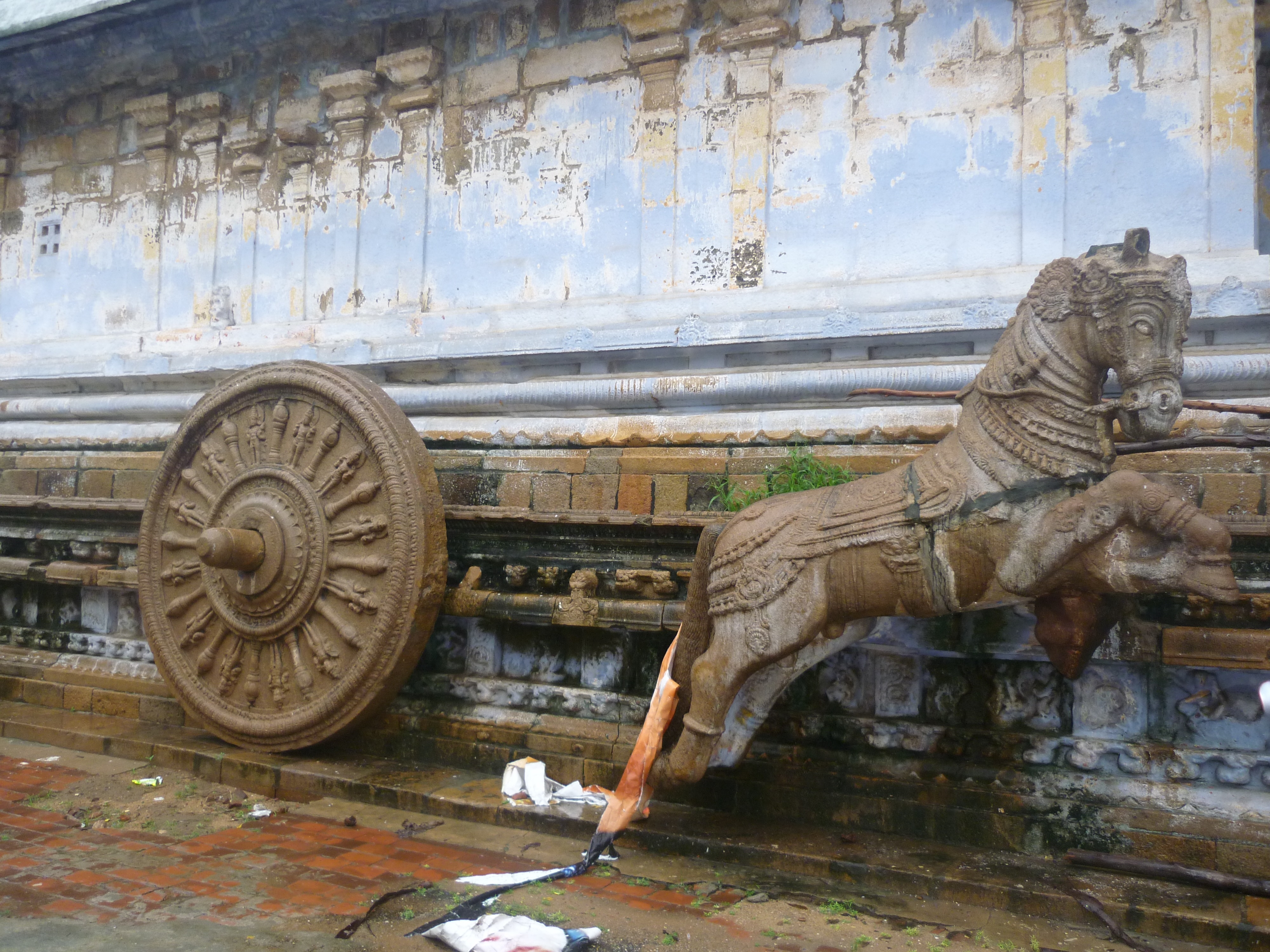
The Nageswara temple: A sizable temple dedicated to the Snake king Adishesha, who is believed to have offered his prayers to Lord Shiva here. An interesting part of this vast 1000-year-old temple premise is the kalyana mantap. The Cholas have sculpted this stone structure in the form of a chariot being drawn by life-sized elephants and horses with the suspension technique.
The Kalyana mantapa at Nageswaram kovil
2. Sarangampani: We reached this temple that follows the Vaishnavism cult after wading through a flooded road. Notable contributions have been made by the Cholas, Vijayanagar, Madurai Nayaks, etc., to the overall architecture of this temple. A temple tank is located on the western side of this temple.
The Rajagopuram at the Sarangampani Kovil
3. Someshwar temple: This is located adjacent to the Sarangampani temple. We skipped an exclusive visit to this temple after getting some photos from the outside of the temple. From there, we continued through the busy shopping lanes of the town to reach our next landmark.
4. Adikumbeshwara temple: It is believed that Kumbakonam gets its name from this Shiva temple. Legend has it that lord Brahma’s pot (Kumba), containing the nectar of worldly lives, was rolled down and stopped at this town after being hit by Shiva’s arrow. The sculptures at the temple are interesting, where a 16-pillar hall built by the Vijayanagar kings has all the 27 stars and 12 zodiacs sculpted on a single stone. Also, the piped instruments(nagaswarams) etched out of stone and the cattle shed are noteworthy. Today, this vast temple premise is also used for commercial purposes with several shops and restaurants setup in this complex.
5. Ramasamy temple: A place dedicated to lord Rama; it is believed to be the only temple that houses the idols of Rama & Sita along with all his brothers inside the sanctum Sanctorum. The entire story of Ramayana has been painted on the corridor walls of this temple. And hence, for someone interested in art and beyond just checking places, it would require at least a day or two to observe the murals here.
Obviously, we did not have the luxury of more than a couple of hours to spend, and hence our visit was limited to just a quick brush-up on whatever we could understand of the images there.
The Ramayana painted on the corridor walls of the Ramasami temple
6. Mahamahan tank: We timed our visit to this place around noon, when all temples in South India usually close down. This mythologically important tank is spread across 6 acres and is believed to have been created out of the nectar that was spilled from Brahma’s pot.
7. Kashivishwanathar temple: This is located at the entrance of the Mahamahan tank. It is believed that the navakannigas or the 9 maidens of Shiva (Ganga, Yamuna, Saraswathi, Kaveri, Godavari, Narmada, Krishna, Tungabhadra & Sarayu) representing 9 rivers visit and bathe in this tank once in 12 years. A day when lakhs of devotees flock here. It is believed that people who cannot make it to Kailash / Manasa Sarovar visit this temple as an alternative to wash off their sins. Though the temple was closed when we reached there, we were very fortunate to get the prasadam that made a nice filling lunch.
8. Abhimukeshwara temple: Located nearby, on the other side of the tank, we only walked past this place as it too remained closed. From there, we boarded a bus to our next major landmark on my ‘to visit’ list.
9. Airavateshwara temple at Darasuram: We visited this temple, on the outskirts of Kumbakonam (one of the three living Chola temples), when no one else would! By the time we walked from the bus stop to the temple, our umbrellas were flipped by the heavy winds, and the pounding rain had battered and gotten us drenched to our bones. The entire temple complex was FLOODED (with knee-deep water). It was an insane visit where my brother and I both decided to go ahead, wade through the water, and have the entire place for ourselves. We climbed up a ladder (placed by the temple priest to perform the daily rituals) to reach the temple corridor. It was BEAUTY, up there! Bonus: The sight of the entire temple complex in a reflection in the accumulated water. (I know this photo is not its best, but still the best memory that our mobile phone camera could capture for our grandkids when we would tell them about this place!).
Airavateshwara temple at Darasuram
After getting some nice shots, we made our way out to the main road to catch a bus to our next destination. The short journey thereon reminded us of Sebastian Vettel cruising on narrow countryside tarmac amid overflowing potholes and LOUD tapangucchi music in the background. With nothing to hold on to during the frequent braking by the driver to stop the bus for passengers to board/alight, the bus kept coming to screeching halts from the revving speeds. It was a fun ride that ended in a few minutes as we alighted at our next planned landmark.
10. Pateeswaran temple: This is originally a Shiva temple, but the goddess has been given prime importance here. It is said that the Cholas offered prayers to the goddess Patti(daughter), calf of the sacred cow Kamdhenu, here before proceeding for any battles during their reign. However, when we arrived here, it remained closed only to open again at 05.00.p.m.
As the rain gods again took over the silent skies, we decided to head back to the city. After reaching Kumbakonam city, we looked out for a place that served the trademark ‘Kumbakonam degree coffee’, our piping hot cuppa filter coffee to warm ourselves to some extent from the chilling rain. It was only 06.00.p.m but already dark. As planned, we set out to find our way through the super crowded streets of the city to find the remaining two temples from our list.
The main bazaar street is a state highway- All thanks to the festival of Deepawali, it seemed like the entire district had come down to one street in Kumbakonam for shopping. The street was jam-packed with not even an inch of breathing space. We somehow managed to get out without actually facing a stampede. Albeit the heavy rain, we closed our umbrellas and stood amid the crowd. The crowd pulled us along to reach the exit of the street, from where we walked to the next temple on our list.
11. Chakrapani temple: Here, Vishnu is worshipped in his sleeping posture holding his ‘Chakra’ on one finger. We witnessed the last pooja of the day, after which we wondered if we had to continue to the next temple or not, since all the nearby temples had started to close down. Anyway, we had a lot of time to kill and walked across to take a chance.
12. Brahma temple: We considered ourselves to be fortunate to have decided to take a chance and arrive here. The temple was still open, and we had made it to the last pooja at this temple as well. The priest was ecstatic to greet us, who went on narrating us stories from mythology and depicting the importance of this otherwise small temple in Kumbakonam. We were told that it was 1 of the only 2 temples in all of Tamil Nadu that are dedicated to Lord Brahma. We were happy to savor the prasadam, which was very unexpected.
We then had a sumptuous supper at a restaurant before we called it a day. It took the same amount of pain to cross the crowded bazaar street to return to the hotel and catch a good night’s sleep.
Day 2:
On the following morning, we were early risers to catch up with our planned itinerary. We boarded a 07.00.a.m. bus to our first destination of the day, situated on a small hillock on the outskirts of Kumbakonam.
13. Swamimalai: Abode of one of the six important Murugan temples in Tamil Nadu, Swamimalai is also an important destination for idol making in India. A limited number of artisans who all live in clusters around the temple here, have carried along a science and art of bronze idol making from the Chola period. The technology used in the ‘lost wax method’ of metal casting is practiced as per the Vedas and is something that needs a more elaborate citation, in another post.
After offering our prayers, we decided to head back to the city to get buses to the other places on our list.
Swami Malai- One of the six holy shrines of lord Murugan
Meanwhile, we couldn’t locate any restaurant that was open for breakfast even at 08:00 a.m. Hence, we decided to have lunch once and for all wherever we would reach. If one had the convenience of an own transportation, there are several other ancient temples that I would recommend visiting. It would be ideal to have an additional day in hand and make Kumbakonam the central place, as all these recommended places are located in different directions, forming somewhat of a radius around this town. Local buses are available from Kumbakonam to each of these places, but it would be very time-consuming to come back to Kumbakonam to change a bus to every time. Hence, we decided to skip the following places and head to our last major landmark.
14. Uppiliappan
15. Thirubuvanam
16. Thiruvalanchizi
17. Thiruvidaimaruthur etc.
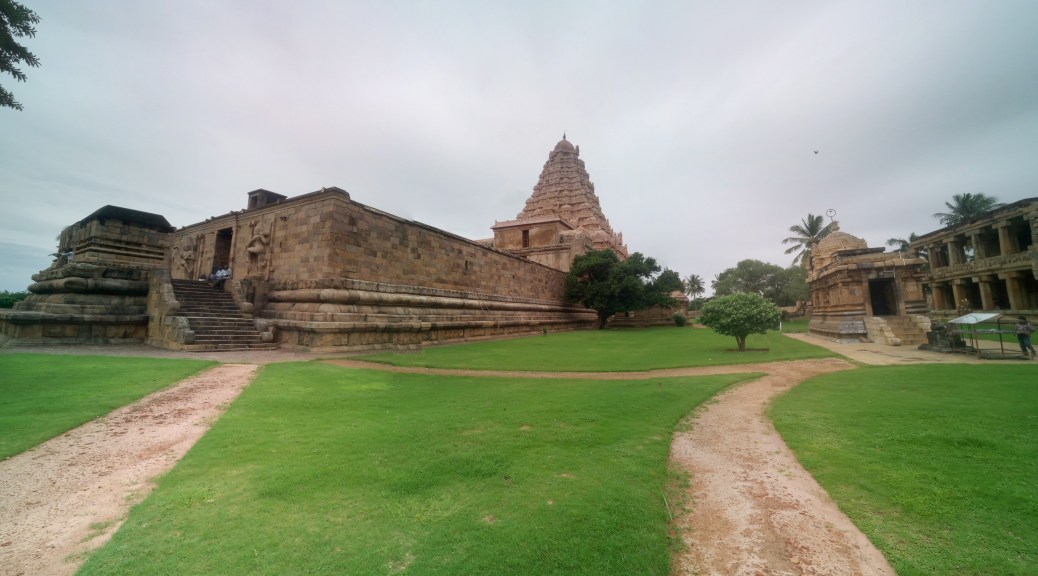
18. The Brihadeeshwara temple at Gangaikondacholapuram: We reached this yet another magnanimous temple after changing two buses (A change of bus at Kork road / GK cross). The biggest (of the three great living Chola temples enlisted by UNESCO), this structure stood right adjacent to the national highway, enchanting every tourist with all its might. The 3 living temples are together called so because the prayers, festivities followed thousands of years ago, during the Chola period, are still being followed religiously to date and have stood as true testimony of time and Tamil culture.
The Brihadeeshwara temple at Gangaikonda Cholapuram
From here, we continued our backpacking into another territory within Tamil Nadu. From the Tanjavur district, we were then heading towards Chidambaram via Pichavaram. Backpacking trips and road trips always carry elements of surprise, and they are supposed to be like that. They can never be planned precisely. These trips always carry scope for making impromptu changes in the itinerary and taking on new adventures. That’s what was awaiting us on the next leg of this weeklong trip, far away in the southernmost state of India. Click here to read more about my journey to Chidambaram.
This post is a follow-up on my 3-days backpacking trip to Satara. If you haven’t read it already, you can do so by clicking here. I had backpacked across Satara district covering Satara town – Wai – Panchgani – Mahabaleshwar – Khas plateau – Satara town
In this post, I have tried to share details of my day trip to Mahabaleshwar. The place as such, doesn’t needs any special introduction. This hill station is a favorite haunt of tourists from the nearby metropolis and afar. While its stunning views of the surrounding Sahyadri mountains and Deccan traps attracts the weekenders in large numbers, it sees a large footfall of Hindu pilgrims as well. Mahabaleshwar can be broadly classified into two parts, the New and the Old. I started my day trip to Mahabaleshwar from Panchgani on a Sunday morning. I have tried to explain my Mahabaleshwar trip in detail through this post.
Part 1: New Mahabaleshwar
This part of the hill station is popular for its breathtaking sceneries of the western Ghats or the Sahyadri mountains. It was mainly popularized as the summer capital by the British. The table top mountains were strategically used by the Marathas for holding up enemies. Today, it is especially popular among the honeymooners and millennials as a short getaway from the nearby cities.
With many good viewpoints falling on the way, the 15kilometer stretch from Panchgani to Mahabaleshwar calls for many pitstops enroute. We stopped in the following order of places.
a. Parsi point: that gives a view of the Dhom dam from a different direction than what we had been seeing all through the previous day.
b. The Lingmala & Bhilawar waterfalls: These places weren’t as appealing as the case would have been with a good monsoon season.
c. Mapro garden & chocolate factory: This is the venue of the annual strawberry festival and one can see the chocolate making process at the factory through a glass wall. We tried shots of different juices & crushes they offer at the factory and picked up some bottles and chocolates as souvenirs from our trip.
The Mapro strawberry garden and Chocolate factory
d. Kate’s point: It was a pleasant drive amid the Koyna forest reserve to get here. The highlight for tourists visiting this valley is the echo point and the elephant’s head / Needle hole point. From here, we caught a beautiful view of Dhom dam, Balkawadi dam, Krishna valley and the Kamalgarh fort.
e. Savitri point: We drove through the forests hoping to sight a few peafowls, deer etc. but had no luck. Our visit to Savitri point was disappointing because the entire valley had been engulfed by mist. Since the entire valley was filled with mist even at peak noon-time, there seemed no signs of it clearing out.
Kate’s point & the elephant head
f. Castle rock, 3 monkey point, Malcom point, window point, tiger spring, hunter’s point, echo point and Arthur’s point: These are view-points in the same valley, but now enshrouded by the clouds. We only walked past all these spots without being able to see even the faces of the people standing next to us. In fact, this very valley was what had inspired me to plan my trip to Mahabaleshwar. The view of these deccan traps / table-top mountains had mesmerized me through several Bollywood movies that had been shot here. However, that visit was a matter of bad luck.
g. Marjorie and the Elphinstone points: The drive through these places too meant only disappointment.
Part 2: Old Mahabaleshwar
This part of Mahabaleshwar spikes up the interest of the history buffs and those that are culturally or spiritually inclined. Several ancient temples are dotted here amid the serenity of the Krishna valley. Some of the important landmarks are listed below:
h. Panchganga temple: This is the place of origin for 5 important rivers in the region, namely Gayathri, Savitri, Koyna, Venna and Krishna. The five rivers conflux underground and then spout together through the mouth of a cow carved out of a stone about 4500 years ago.
i. Mahabaleshwar temple: This temple dedicated to lord Shiva is accessible from the Panchganga temple, after a small walk through the shopping lanes. This temple is what gives the hill station, it’s name. The legends mention about Atibaleshwar and Kotibaleshwar also, but those are temples that are lost.
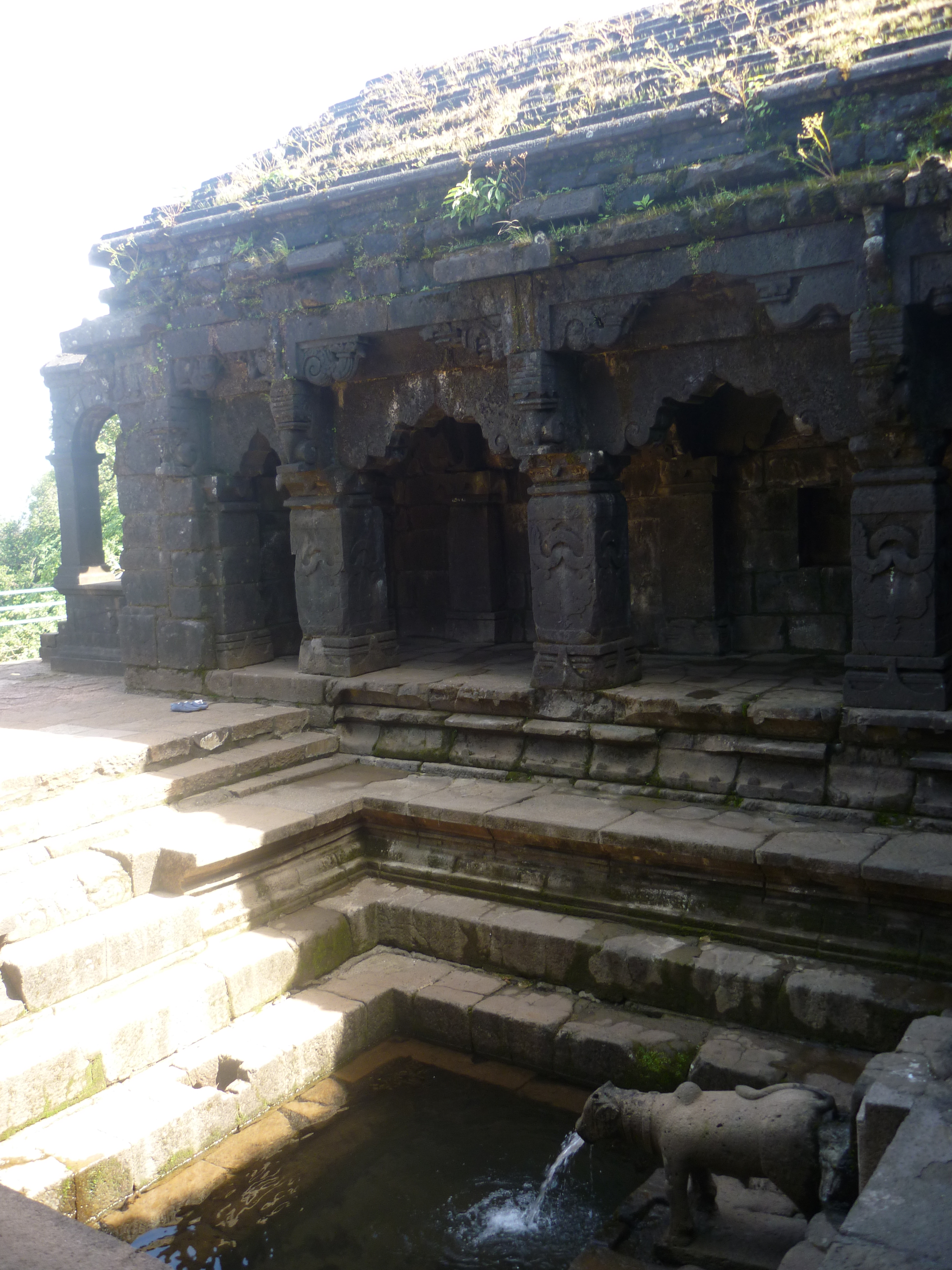
j. Krishnabhai temple: A further walk of about 100 meters from the Mahabaleshwar temple led us to an archeological treasure that remains untouched by mainstream tourists. The stream of water spouting from a Gomukh (the mouth of a stone sculpted cow) in this 13.C.E temple is believed by a few to be the origin of river Krishna. Situated almost on a cliff, the place offered a great view of the Krishna valley around. For those familiar with ancient architectural styles, this temple is a good example of the Hemadpanti style of temple architecture.
The Krishnabhai temple
k. Venna lake: A popular and a beautiful place otherwise, we decided not to stop here when we arrived there. The place was maddening and crowded with tourists.
l. Other places of interest in Mahabaleshwar: On a clear day, one could plan to see the sunrise at Wilson point that is known to be the highest part of Mahabaleshwar and Sunset at Bombay point. Both viewpoints are part of the Sindola hill.
NOTE:
The entry and exit to Mahabaleshwar is only between 06.00.a.m. to 06.00.p.m. as it is a protected forest area. So, it is required to plan your travel or stay at Mahabaleshwar accordingly.
This hill station contributes to 80% of the total strawberry produce of India. Hence, it is safe to call it as the strawberry heartland of India. DO NOT miss to eat fresh strawberry with cream for dessert after a nice Maharashtrian lunch at any of the restaurants in the Mahabaleshwar market.



















 The Lost Lander