So stuck up with my professional life.. I am finding little / No time to visit my native, where my basics belong to.. Politics, emotions, manners, education- on the whole the basics of every aspect of the human that I am today 🙂
Nostalgia fills my heart as I hear of heavy rains in the recent weeks- little villages have turned into islands, water levels are atleast 2 feet above bridges, waterlogged paddy fields now look like a never ending stretch of the river itself.. WOWwww…. An amazing picture of a rain fed rather filled-green COORG flashes infront of me.. And what my heart is craving for at the moment is some AWESOME Coorgie food.. And what my taste buds are asking for are the lesser known typical monsoon delicacies native to Coorg and cannot match their original taste if tried to re-create in any part of this wide world even by the greatest chef ever born..!! So here goes the list..
VEGETARIAN:
1. Therme thoppu palya (Fern salad)
2. Kembu suli curry ( Colocasia shoots)
3. Baimbale curry (Bamboo shoot curry)
These are varieties found only on river banks.
4. Kaad maange curry (Wild mango curry)
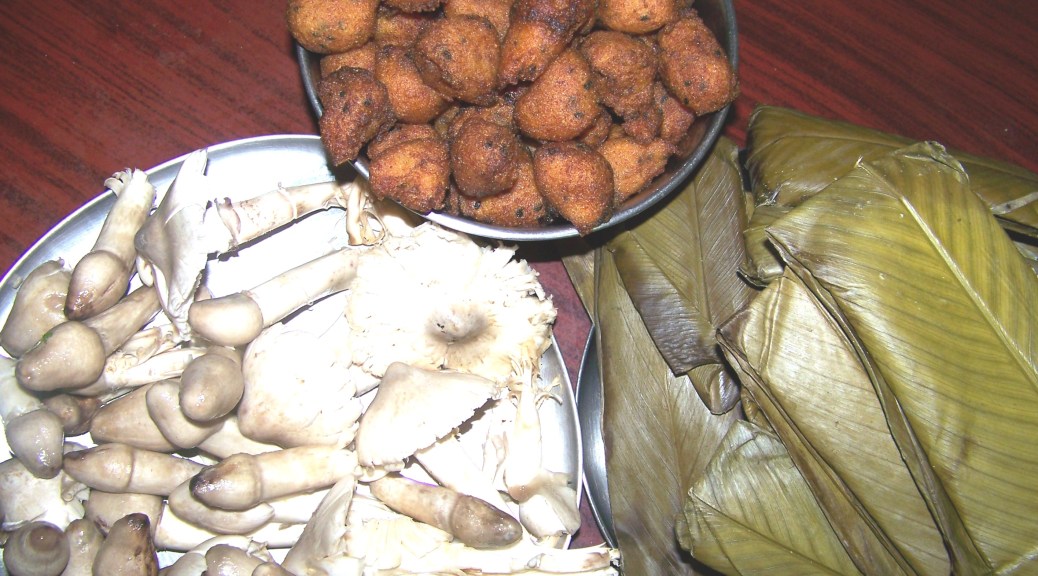
5. Kummu curry (Mushroom curry) especially the wild varieties- Aalandi kummu, Nucchi kummu, kaatola kummu.
The above stuffs taste deadly when combined with hot Akki Otti(Rice rotis) prepared on mud ovens lit with firewood 😉
6. Chutta chekke kuru (Roasted seeds of ripe jackfruit smeared with red soil and dried in the sun and preserved especially for the monsoon)
9. Onak yarchi fry (Since Coorgs hunted regularly, venison, wild boar, barking deer and several other kinds of wild game formed part of their diet. These meats were also sliced, rubbed with salt and turmeric, strung or skewered and sun-dried or hung from the rafters in smoky, wood fired kitchens)
10. Koile meen curry (Used to be in abundance where bamboo traps were laid in cold, swift flowing streams and the flooded paddy fields were full of these tiny freshwater eels)
SWEET DISHES:
11. Kuvale putt (Prepared with ripe Kuvale chekke (a variety of jackfruit, locally called Kuvale) wrapped in Kuvale ele (Leaf from a local plant found on riverbanks) and steam cooked.
12. Baale nurk / nurk putt ( Bananas fritters)
13. Maddh paaysa/ Maddh putt (Porridge /cake made of an aromatic herb, which is expected to have 18 types of medicine available only during the month of kakkada or aadi)
And last but definitely not the least – A peg of Nell-kall (vodka made of paddy) and some homemade wine…. Or a cup of steaming hot ‘Bellatha Kaapi’ for the teetotalers .. 🙂
People often complain about my eating habits and how choosy I get about what I eat and the little quantity that I peck onto.. Treat me with a platter filled with the above stuffs and see how I can binge on… This city food is CRAP.. and not what I savour…Not even the 6-course expensive meal cooked by the executive chef de cuisine of the costliest restaurant in the world…!!
I had the opportunity of visiting this city in the southernmost part of India as a part of a Business trip. Our work was mostly sufficient to do for one full day. However, the transportation options connecting Bengaluru to Trivandrum weren’t convenient. Trains took nearly 48 hours one way and the distance is too far to cover by road. The connecting flights are scheduled around noon. Hence, by choosing to fly to complete my work assignment (as a car doctor), I had some time to explore the city as well. Since my visit spanned over a period of three days, I used my spare time (early mornings and evenings) to cover major landmarks in and around Trivandrum (officially called as Thiruvananthapuram). If you are someone visiting this city for exclusively tourism purpose, then these places can be covered in one day and combine it with an additional day trip to Kanyakumari- the southern-most tip of mainland India.
My Itinerary:
Day 1: Bengaluru to Thiruvananthapuram (morning flight), drive past Shangamughan beach, Sri Padmanabhaswamy temple visit, Puthenmalika / Kuthiramalika Palace & wooden museum, Day 2: Shopping at SMSM institute crafts emporium, Maha Chips store, Covalam beach & Vizhinjam lighthouse. Day 3: Return from Thiruvananthapuram to Bengaluru (Flight)
The details:
Was it the coastal line being abundantly lined by the coconut trees along with the rhythmic beats of the famous drums resonating in the air? Or could it be the SUVs & MUVs that underwent the brutal checkup by me during my so called ‘Business trip’? Well, I’m not sure. But, all these definitely made my visit to this little silent capital city, an AWESOME one. A city of Trees & Vans & Drums put together, Trivandrum it was!
Day 1:
A morning flight from Bangalore landed my colleague and myself at the Trivandrum airport by 09.30 a.m. A car was waiting for us outside, which drove us past a fishing hamlet enroute to our workplace. We began our work without wasting much time. My job (as a car doctor) more often involves driving around the places we go to as part of the checking routine of the automobiles. It was no different here either.
We got to see scenic and offbeat roads around this capital city of Kerala. Fishing dories anchored, fishermen carrying their day’s catch, the blue sea water reaching to the horizon and a lovely lady’s figurine sculptured by the Shangamughan beach side were some of the views I caught from the cabin. Further, as we crossed the toll road and drove across a bridge through the by-pass road, we were greeted by the backwaters dotted by the houseboats. It was indeed a warm welcome to the city..
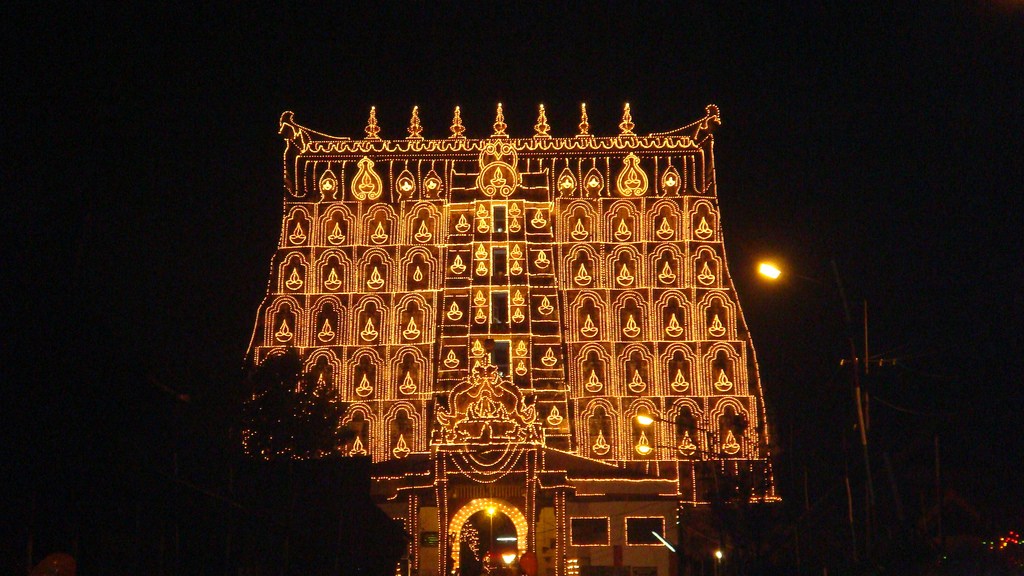
After finishing the day’s work in the evening, we freshened up at the hotel and headed out for the much anticipated part of our visit to Thiruvananthapuram. A visit to the richest temple in the country: Sri Padmanabhaswamy. For all the hype and media space grabbed by this temple, I had expected a BIG crowd of tourists(Not Pilgrims) here. I had imagined the sight to be like all other famous temples in India with fussy godmen, lot of petty shops dotting the walkway selling pooja items etc. among other things. But in total contrast to what I had imagined, this has been one of the BEST temples I have visited till date (among the well-known and famous landmarks).
I’m not a pious or a temple person, but this place has truly stood apart. I am someone who believes that ‘a temple is a place where one has to FEEL god and that’s possible only when the place is PEACEful’. I prefer holy places to be silent and less-crowded. And this place stood out for just that..!! A strict dress code and prohibited entry for non-hindus, a stringent adherence to the temple rules, limited crowd, silent ambience, an eyeful of the darshan of the massive idol lit by mere oil fed lamps: The place hadn’t given up its sanctity in the form of commercialisation, to all the attention grabbed by it’s hidden chambers of gold.
Main gate – Padmanabhaswamy temple
After offering our prayers, we visited the old wooden museum inside the Puthenmalika / Kuthiramalika Palace just outside the temple premises. The structure built by the erstwhile Travancore kings is a damn nice place for the art lovers. Like most regions in Kerala that sleeps with the setting sun, we headed back to the hotel to call it a day.
Day 2:
After finishing our work around evening, we set-out to do a little bit of city trotting. No visit is complete without taking back souvenirs. The rule in my work team is (on a lighter side), ‘Whether you finish your assigned job or not, whether you return safely or not, we don’t care. Bring us souvenirs and the local snacks to eat.’ So, we shopped for some local crafts at SMSM institute crafts emporium.
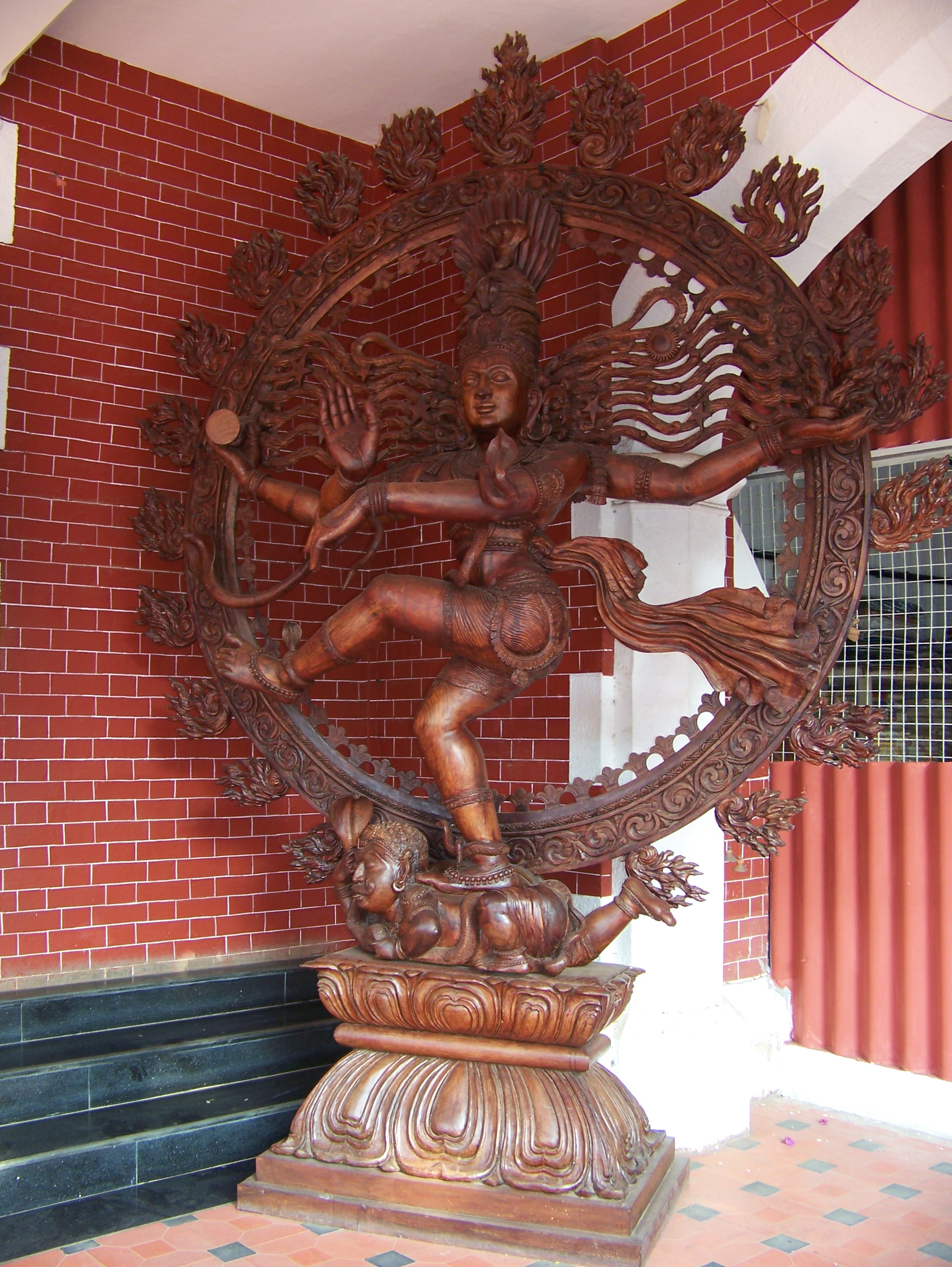
A wooden piece of art at SMSM institute crafts emporium
From there, we walked through the narrow lanes to one of the biggest shops I have ever known that sells just ‘CHIPS’: ‘The Mahachips store’. Chips of different varieties, made to order and packed just then. I picked up about 10kilos of banana chips & jackfruit chips as giveaways, something that will be much awaited for back home in Bangalore, even more than my safe return. (The even funnier part was that this bag of chips was the single largest (Fragile) cabin baggage I was carrying with me. The cabin-crew was amused to know what was in it when she offered help to place it in the upper cabinet).
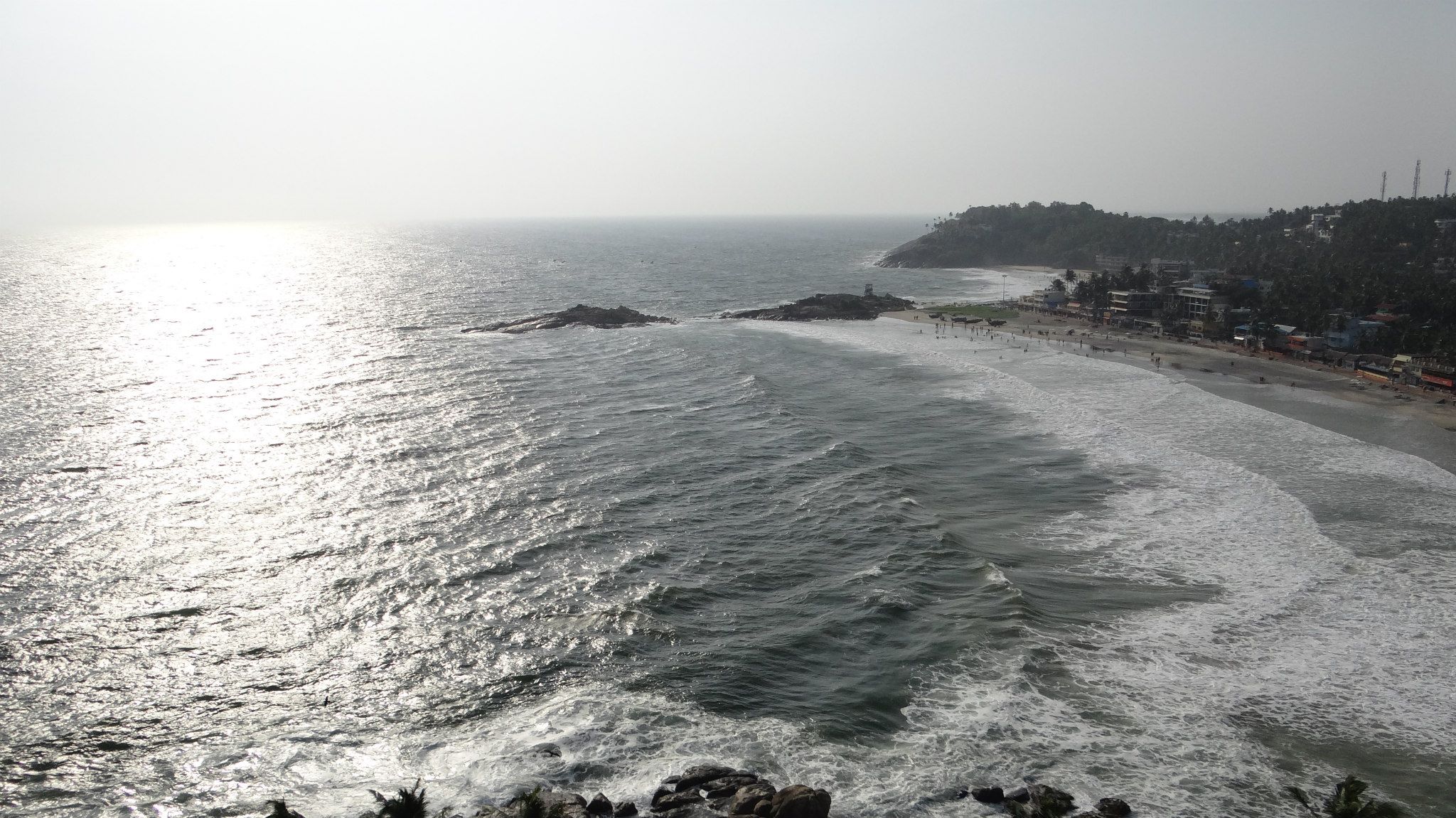
What’s a visit to Thiruvananthapuram, without soaking your feet in Covalam beach? That’s where we were headed next. After strolling along the beaches, we walked upto the Vizhinjam lighthouse for a good view of the sea. The view was simply delightful. A stroll along the crowded beach, beautiful view of the sunset, some yummy local chaats to munch on, it was indeed an awesome end to an eventful business trip. And we head back to Bangalore in the earliest flight on the following day.
The view from the Vizinjam lighthouse
Don’t miss to try these three things while you are in Trivandrum (or anywhere else in Kerala):
Fresh banana & jackfruit chips and Kerala halwa
Hot palam puri with a cup of burning hot Kerala tea
It was after a long-time that we cousins were catching up and so we planned to have an all cousins day out (no aunties, uncles, mammas and Pappas). We narrowed down to visit Mekedaatu for the weekend. At 10.00a.m on a Sunday morning, we were late to leave home to any tourist places around the city. And to add to our woes, it was Banashankari temple’s annual festival that day. This only means that we had to wade through hopeless traffic jam along with the Kanakapura road metro line construction also being underway…!!
List of places covered: Food stop at Vasu hotel, Kanakapura- This is popular for its crusty Masala Dosa Chunchi falls Sangama Mekedatu viewpoint
Details of the trip:
Six kms before Mekedaatu, a board pointing to the left indicated the way to Chunchi falls. We decided to take the deviation. The summertime visit to Chunchi falls was a disappointment for us after reaching there. There was hardly any water in the river and the rocks shined bright in the sun’s reflection. Just as we were about to turn our backs to return, a localite who was around us started a conversation with us. He eventually told us that he could take us to a better viewpoint. We blindly decided to follow him.
We crossed a small dam, a ridge and continued to walk. after a tiring walk in the scorching sun for about 1.5 kms, we slowly started to grow suspicious as to where this man was taking us as the place started to look more secluded. But, just then, he pointed at a watch tower and told us that we could get a good view from there. Before we could react, he intruded – “But, you need to walk down there. Behind that bush”. We were like, “OK… hmm huh…!!” and continued to walk further. He would certainly not be able to mug us as we outnumbered him, we thought. Once we reached that spot, it was a total sense of relief and a surprise. Had we returned earlier; we would have missed such a great spot. I’m sure this place would look more amazing in the monsoon season.
Chunchi falls
After spending a while at the falls, we thanked the old man with a goodwill amount and headed towards Sangama. ‘Sangama’ is a confluence of river Kaveri and Arkavathi and supposedly a very scenic spot post monsoon. But disappointment was waiting for us again after reaching there. Insufficient rains and the influx of tourist on a weekend, the place was crammed with very little place to even sit peacefully on the riverbank.
Legend has it, that a goat had jumped across a gorge to escape from a chasing tiger and hence our destination derived its name in Kannada. (Meke = goat; daatu = cross). Trekking the 3 kms distance from Sangama to Mekedatu was banned then and hence, we had to wait for the pick-up bus to come. After disappointments back to back, we were apprehensive of going forward till Mekedaatu wondering if it would be worth our visit. We lost our patience in waiting and walked across the shallow waters to reach back to our car. The security guard who had been observing us, walked up to us and suggested that we go to Mekedaatu since we had already come so far from the city. We were still half minded and tossed a coin. Heads said a ‘Go’.
The view around Sangama
After disappointments back to back, we were apprehensive of going to Mekedaatu wondering if that place would really be worth our visit. Trekking the 3 kms distance from Sangama to Mekedatu is banned now and hence, we had to wait for the pick up bus to come. We lost our patience, and crossed the shallow waters back to reach our car. The security guard who had been observing us, walked upto us and suggested that we go to Mekedaatu since we had already come so far from the city. We were still half minded, and tossed a coin. Heads said a ‘Go’.. So we again crossed the river, by then the bus had returned. We got the last seat for ourselves. The bus was a total-out-of-the-junk-yard-thing. The seats we were sitting on were infact tied to the roof rails with strings- more like a swing..!! And the fully crammed bus(packed to twice its capacity) started. It was an unpaved road, and a lot of dust was filled inside the bus which made us literally stand up from those swinging seats..
View enroute to Mekedaatu from Sangama
So, we again crossed the river and by then, the bus had returned. We got the last seat for ourselves. The bus was a total-out-of-the-junk-yard-thing. The seats we were sitting on were in fact tied to the roof rails with ropes. It felt less like a bus seat and more like a swing…!! And bus was fully crammed and packed to twice its capacity. The drive was through an unpaved road, and a lot of dust was filled inside the bus. We could barely breathe inside and all we stood up from those swinging seats. Once we reached Mekedaatu after a strenuous back seat ride, we felt that the security guard was right- It was a nice place. But again, insufficient rains did not give me the internet picture I wanted.
Since our onward ride was a bad experience, we chose to sit on the top of the bus for our return. Trust me when I say that the ride was the highlight of our entire day… The best bus ride we all ever had in our life. The bus went at high speed blowing the dust high up from the unpaved roads. There was just one thin steel rod around for us to hold onto, that too was tied to the windows below. At one point, another bus came in the opposite direction, and our bus went completely off road. It felt as if our bus was balancing on a few small stones on the slope of the valley so that the driver could make enough space for the other bus to pass through the narrow road. We could reach the treetops, see the best views of the river and the valley below. It was one AMAZING ride.
The bus, road and our shadow of sitting on the top of the bus- between Mekedatu and Sangama
We ended up feeling that the return trip was a very short one and wanted more… one adrenaline rush moment it was…!! It was the last ride for the day as the sun had already set and we returned to our homes high on energy and all charged up and motivated for another boring week ahead.
There are a lot of options around Kanakapura for a full day or half-day trip. I have covered these places on separate occasions. A few of them are: * Kabbala Durga trek * Bheemanakindi trek * Pyramid valley meditation center
The initial plan was to leave before sunrise so that we could see the birds at the Ranganathittu Bird sanctuary before they left their homes for the day’s chores. However, a flat tyre and multiple pit stops added up to late arrival at the Srirangapatna-Yelwala bypass. This led to a few additions and deletions in the original plan so that we could see the birds when they returned to their nests late in the evening.
List of places covered: Gaganachukki and Bharachukki waterfalls Talakadu Kaaranji kere in Mysore Ranganathittu Bird sanctuary
Details of the trip:
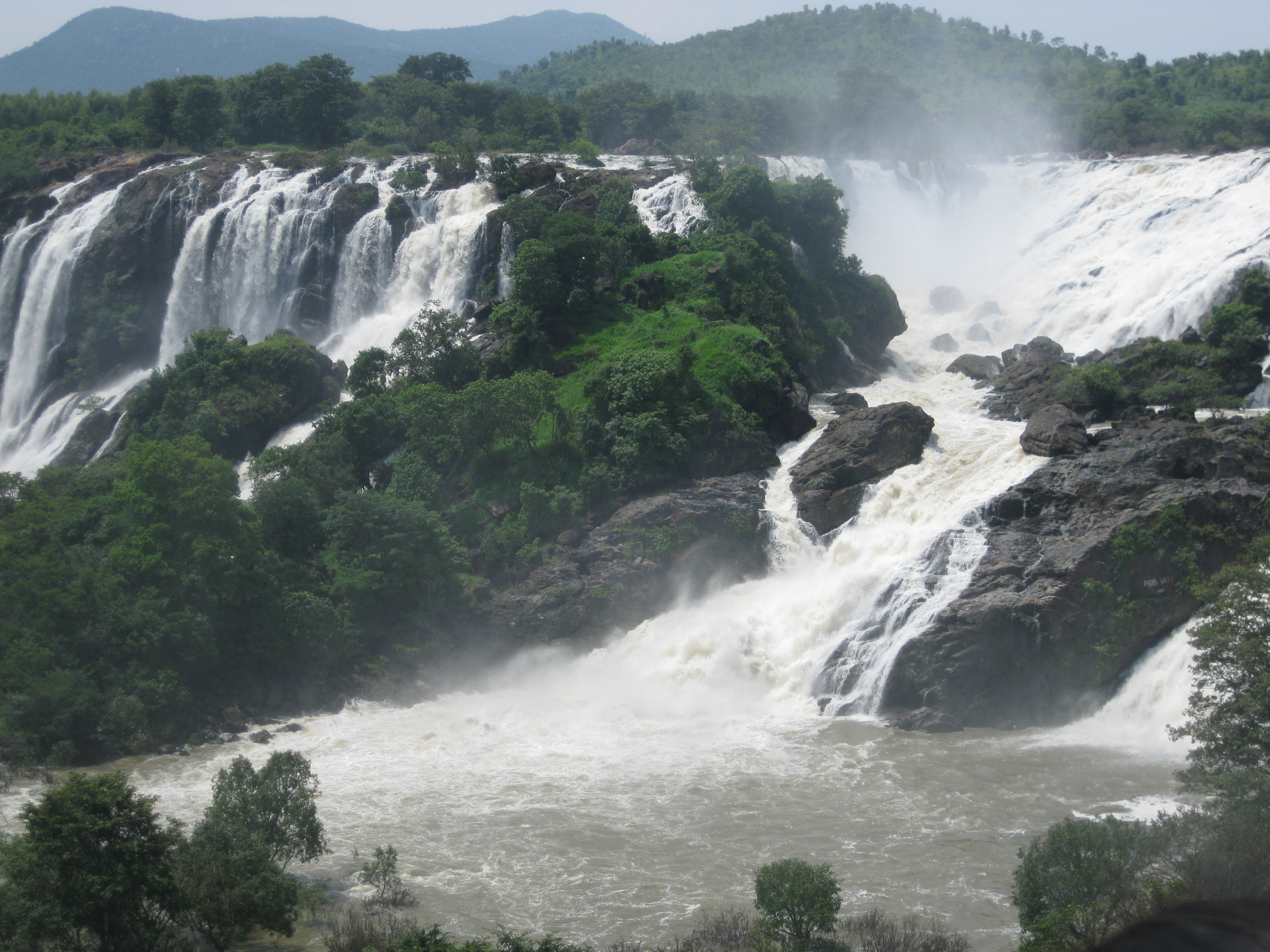
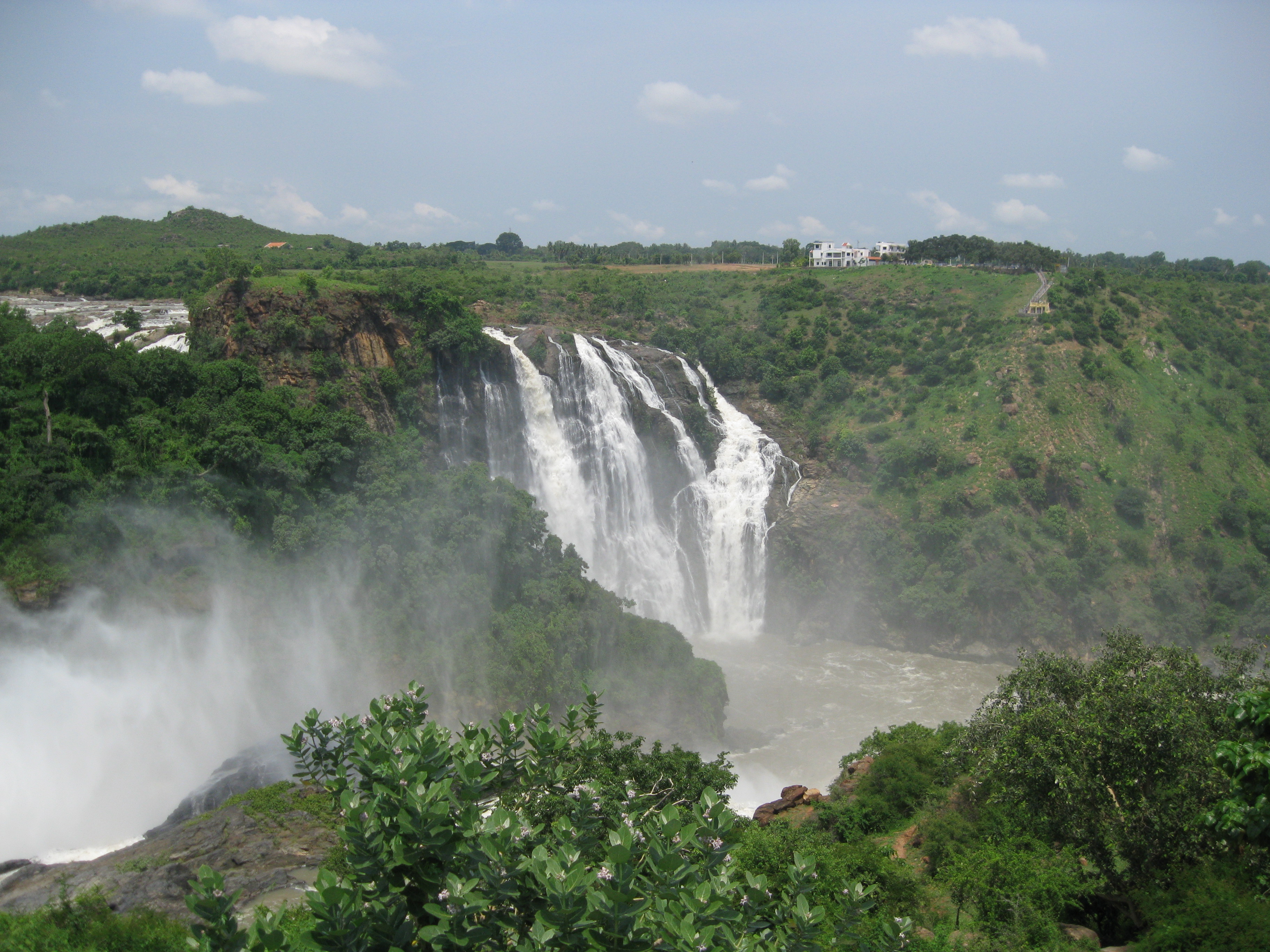
As per the new plan, we headed to Gaganachukki and Bharachukki waterfalls. After a nice long drive through the green paddy fields and rusty countryside, we reached Shivanasamudra. This is one of the island towns formed by river Kaveri through its course. This is where Asia’s first hydel-power project was set up, commissioned by the then Diwan of Mysore- K. Seshadri Iyer; in order to supply electricity for mining at Kolar Gold Fields. River Kaveri plummets down at two places, a couple of kilometers away from each other and then merging together again. The beauty of the twin waterfalls is truly mesmerizing. If you’re seeking for some thrill, coracle rides are available that takes you closer to the spot where the water drops. But we did not want to take the risk of venturing into the water without a life jacket. At least, not after we heard someone say that the water was 1000 feet deep at some point. We weren’t not sure of the exact depth of the river, but certainly did not want to take a chance!
Gaganachukki- The western branch of river Kaveri
The sun was approaching his highest point by this time, and hence we decided that we should be heading towards our next destination- Talakadu. Kannadigas have all grown up listening to the story of the curse of Alamelamma. It is believed that her spell turned this once prosperous town to a sand desert. As a student reading history in school, I had always been intrigued to visit this place and see the romance between the sand and the temples during different seasons. However, the excitement that we had when we started to this place soon died when we arrived there (in fact, it got buried deep under its sands). Given the poor rainfall, less waters and hordes of tourists over the weekend, the place was had gathered so much filth and poop everywhere. There was an unbearable stench that had spread around. The river was shallow and looked stagnant and unappealing. Yet, we did manage to go for a coracle ride which was definitely not worth the buck. The place was a total turn off…!! We lost our interest to explore the famed temples of Talakadu and left the place (I did visit the historically important temples on a later date though).
Bharachukki- The eastern branch of river Kaveri
We wanted to reach the highway back again but lost our way at some point. Without being able to connect to the highway, we just kept driving on some narrow road through the countryside. After the frayed trip to Talakadu, this drive through the rustic countryside was somewhat a deal breaker and a feast to our city bred souls. After a bit of driving around and just when we thought we had reached the highway, we realized that we had in fact reached Mysore…!! Mysore city was never on our itinerary when we left home that morning. We were extremely hungry and hence decided to feast at a nice restaurant in the city itself.
Some friend suggested us to visit Kaaranji kere in Mysore where we could do some birding. Around 3.00.p.m, we headed there- This was in fact the highlight of the trip- though unplanned, it came as a treat to us. We took a boat ride around the lake where we spotted several migratory birds. Not in large numbers, but many in varieties. It surely is a haven for the bird lovers. I pitied myself for not being able to identify what birds most of them were. I’m not an enthusiast of zoos as these places are where animals and birds are kept in enclosures. But, if you are around with kids, this place is good as there is an enclosure here as well that hosts many native birds, a few animals and reptiles.
The birds at Karanji kere
So, finally by 5.00.p.m, we headed out for what we had come all the way– Ranganathittu Bird sanctuary. It was the time when all the birds returned to their nests… We were there for sunset. We then took a boat ride around the small islets where thousands of birds have made their homes. The trees looked amazing with the birds and the water looked equally dangerous- with crocodiles swimming right past us… Again, we spotted a lot of different birds since it was the peak of the migratory season.
The winged hosts on the islet
With a pleasant sunset ride in the river, a long day tripping in the Mysore circuit came to an end. Although most part of the day was unplanned, it was a weekend well deserved.
One of the things on my bucket list – ‘The Turtle walk’ : An all night trek along the beaches of the East-Coast road.. It’s more of a walk with a bunch of similar minded volunteers with a sole intention to find Olive Ridley turtle nests- and relocate the eggs to a safer location.. Among the seven sea turtle species, five have been tracked in India during their breeding seasons between December to March. Among them, the Olive Ridley turtles: famous for arribadas or mass nesting are found along the Coromandel coast in large numbers.
We had booked a slot for ourselves on a fine weekend and traveled to Chennai to be a part of this volunteering and to learn more about these turtles. All the volunteers had gathered at the Neelangarai beach by 11.00.p.m where we all had an interactive session with the organisers which enabled us to clear all our doubts about these reptiles. The walk started at around 1.00.a.m as we were told that most nesting happens late at night and leaving later would allow us to find more nests which we would miss out if we start early.
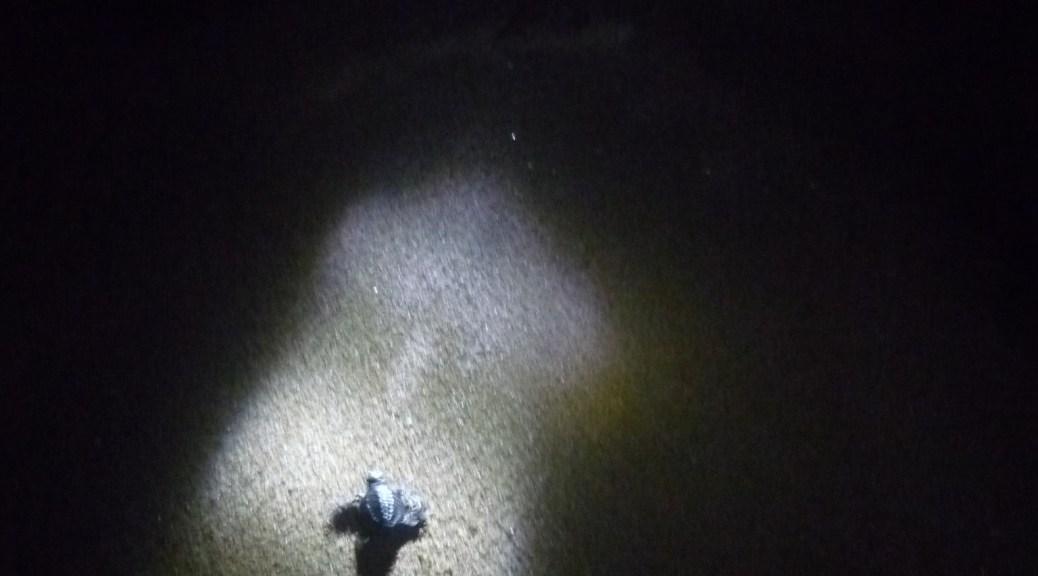
As we kept walking, suddenly someone found a baby turtle in the dark. We were all excited and began to look out for the nest where there was a possibility of finding the other hatchlings. However, we couldn’t find any, owing to the dogs that could have eaten them up or the babies would have already swam into the sea.
The Baby turtle- Our prized catch for the day
The sea turtle hatchlings always walk towards the brighter side(usually sea water in normal conditions). Hence, we had to switch off all the lights we had and just one person stood in the water holding a torch, which the baby followed inorder to reach the water. It was amazing how these babies find their way into the sea and it is disturbing to know that due to modernisation, the cities/land is getting brighter and these turtles are walking towards light(township) and becoming prey to several factors.
The baby being guided towards water with a torch
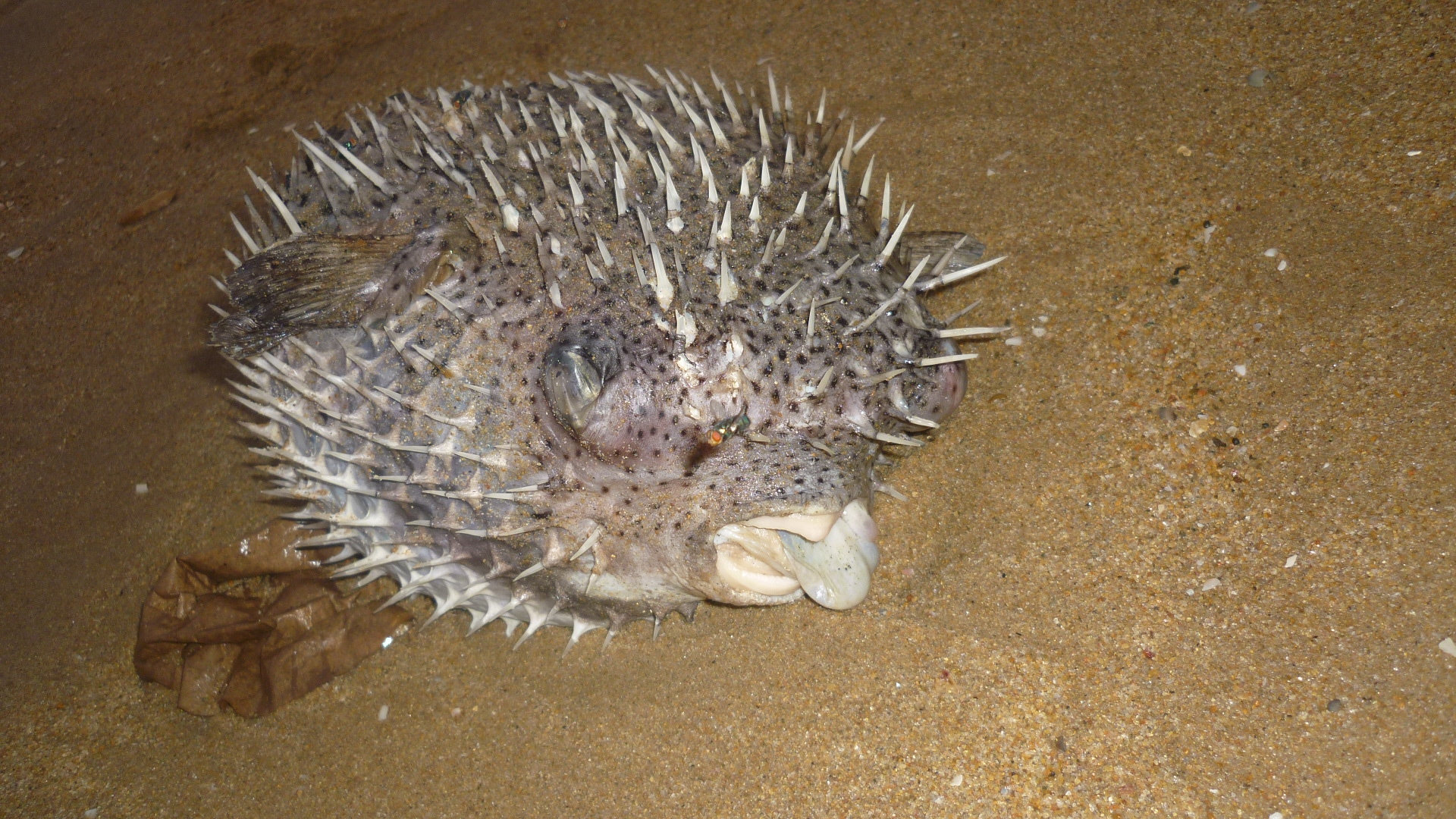
We then continued to walk.. We found so many dead turtles(which reminded us of the brutal fishermen, ship propellers which pose a great threat to the turtles), pufferfish(Fugus), cats, cuttle fishes etc. along our way..
A dead pufferfish along the beach
We walked and walked and could not find a single nest. It was already 02.00.a.m and time for the fishermen to venture into the sea for their daily vatch. We crossed numerous hamlets along the coast- most of them were extremely filthy where the fishermen were pooping in the water, staying insensitive to the number of people walking there.
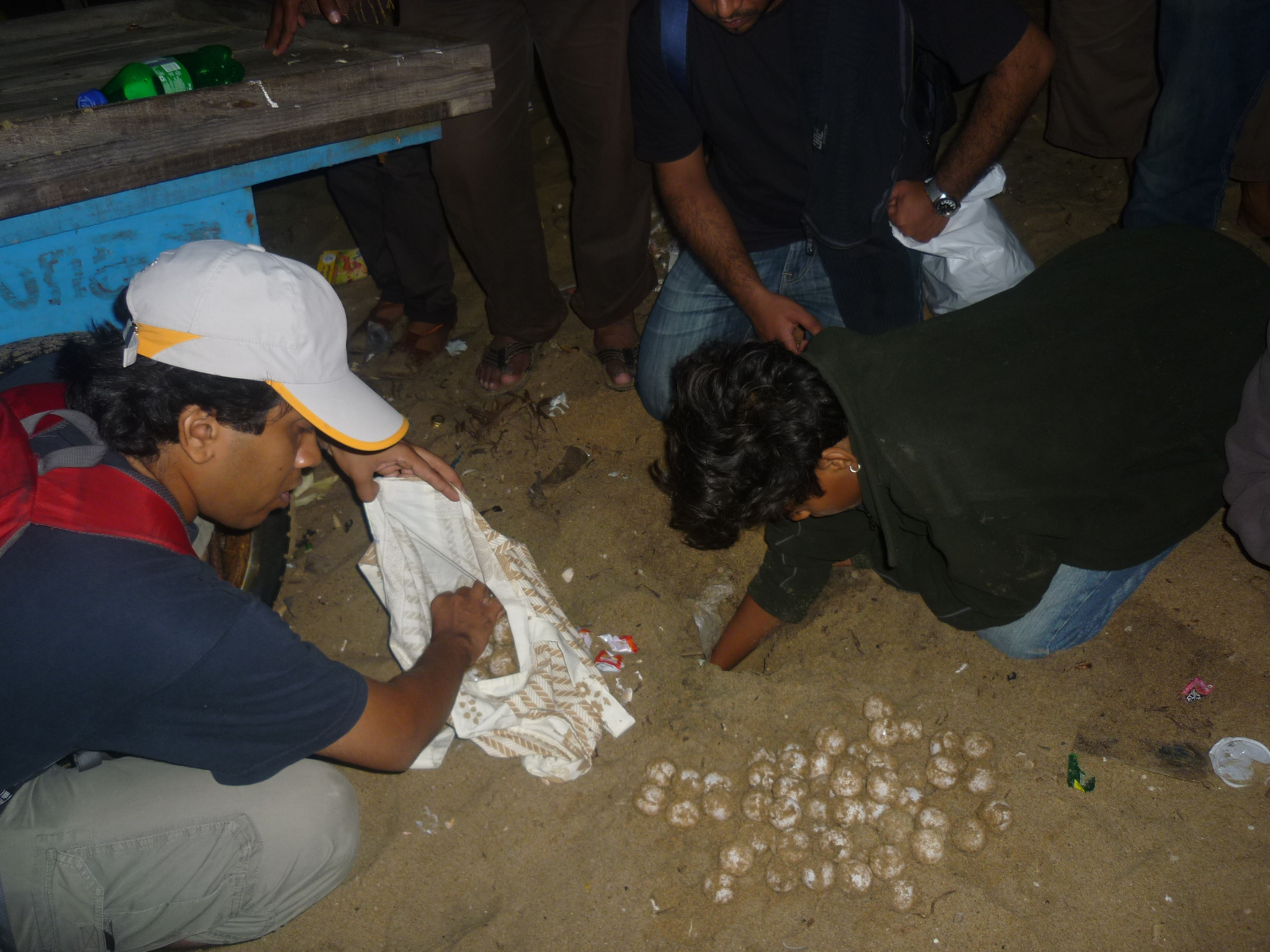
And then.. We reached Besantnagar Beach- the end point of our trek. We were all extremely sad that we hadn’t found any nests- the sole purpose of us going all the way from Bangalore was not met 😦 Just as we were all about to depart, the organiser got a call from a volunteer who had reached there much earlier. They had found a nest: Right there, under a pull cart, in the dirty sands of Besantnagar beach: ‘Thank God.!!’ was the first exclamation from all of us. It was followed by a ‘WOWWWww’ 🙂
The volunteers unearthing the eggs
We removed 147 eggs out of the nest. We could understand that the turtle had come to land for the first time in this season. While they were measuring the nest size, we got a message of spotting another nest nearby. It was all worth the travel from Bangalore 🙂 We found 42 eggs in the second one- Probably the turtle had come for the 3rd time in this season.
A volunteer measuring the nest’s specifications
The organisers will keep an account of the depth, width, temperature and the distance of the nest from the high/low tide; create a similar incubation atmosphere in a safer location/artificial hatchery. Then, let all the babies into the water when they hatch out after about 40-45 days. It is amazing to know how these turtles come back to the same place where they were born, after about 12 years for breeding. These 12years are called ‘lost years’.. It is still unknown what happens to these turtles for those twelve years in the sea.. Yes, Radio tagging has lately been in use to study these hatchlings once they enter the sea on their maiden swim which is still an ongoing subject of research. So, Yes! These hatchlings are going to return back to this same place where they were born only after 12 years, and that time, to start yet another generation of turtles..!
Of late, there are a few more places across India promoting conservation of sea turtles. You can be a part of it too at places like Chennai, Orissa, Ratnagiri, Andaman Islands etc. When are you planning your beach trek? Keep me posted 🙂
Even then, the second visit to Makalidurga happened. I was forcibly dragged out of bed on a cozy Sunday morning. I was supposed to be the guide to the first timers so that they could hike up the hill.
I knew the way to reach Makalidurga- but could not guide them any further to the exact spot from where they could get the photo of the train crossing which they wanted.. Considering it was around 11.00.a.m, the sun had already reached a good position to suck the fluid in us..
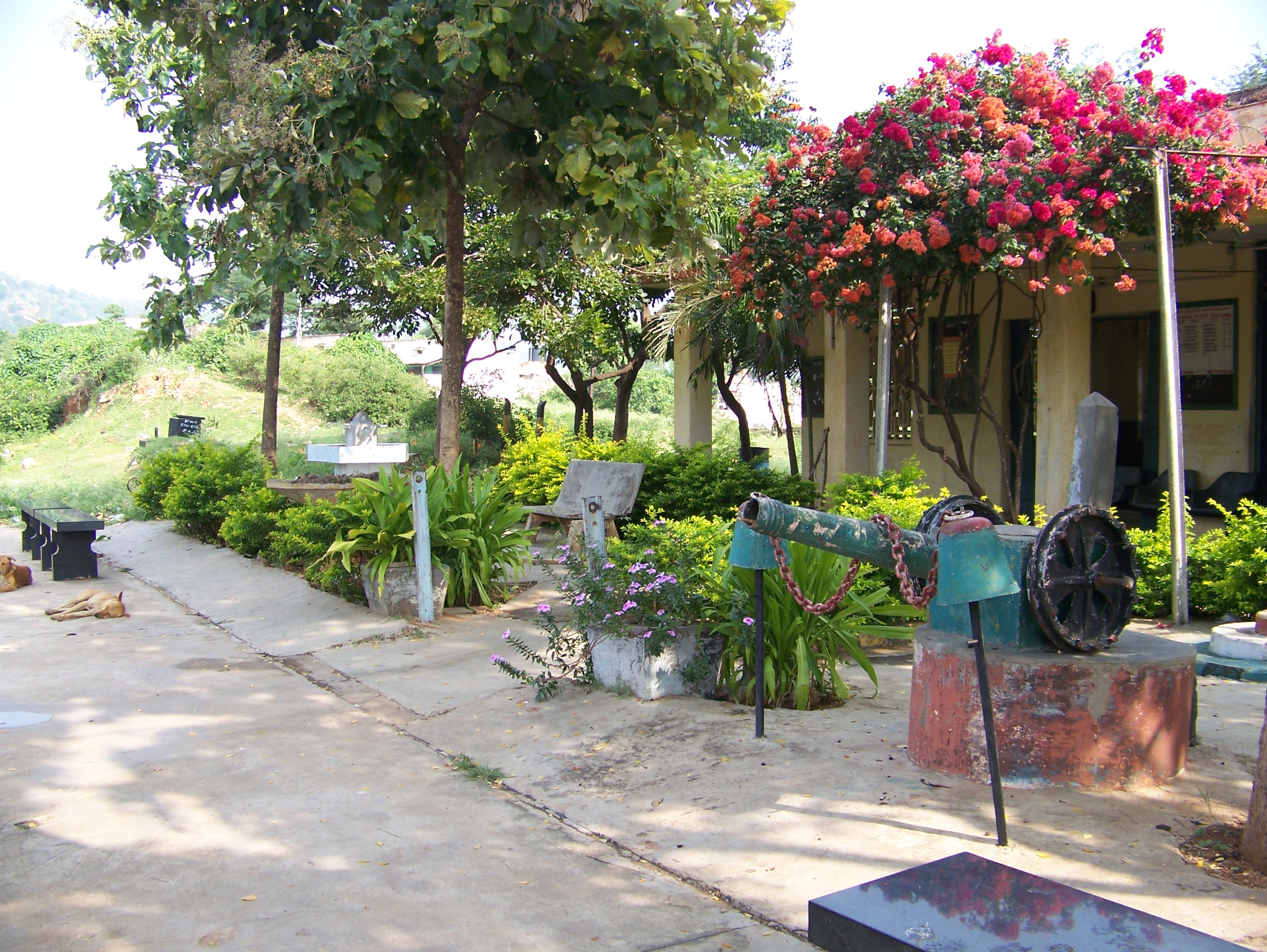
Alighting @ the Happy valley : Makalidurga railway station
We had left home without breakfast hoping that we could have something on our way and pick up some water bottles.. Hard luck..!! We could find neither!!
The Makalidurga railway crossing
All of us reached a railway track finally.. And randomly climbed a hillock, climbed further up.. We continued to climb hoping to find some shade to sit and wait till our catch of the day appeared… But again, no luck- no water, no food, no shade. We randomly stopped on a considerably flat area without being able to proceed further under the ruthlessly shining sun and waited for the train..
After about half an hour, the smoke from the engine chimney appeared near the horizon.. We all got excited.. As it neared, the engine emerged from behind a bush, then a bogie.. Before our cameras reached their position, we saw the end of the train 😥 It was a small train with just 1 engine and 4 bogies…
So, we continued our wait.. After a while again we found some smoke at the horizon. So, this time we hoped that our tiring wait would end soon and we could get that perfect internet photo of a blue passenger train passing across the frame… Hard luck once again- It was indeed a super long train with over 55 bogies: But, it was a goods loco and not the one that we had waited for and moreover its colour did not match the background 😥
This meant that we still had to wait. We were restless… We decided to walk further up hoping to find some shade atleast..!! And we did find a small tree (or rather a bush). Something that was better than nothing, we thought. All the five of us squeezed into that small patch of shade and continued to wait….
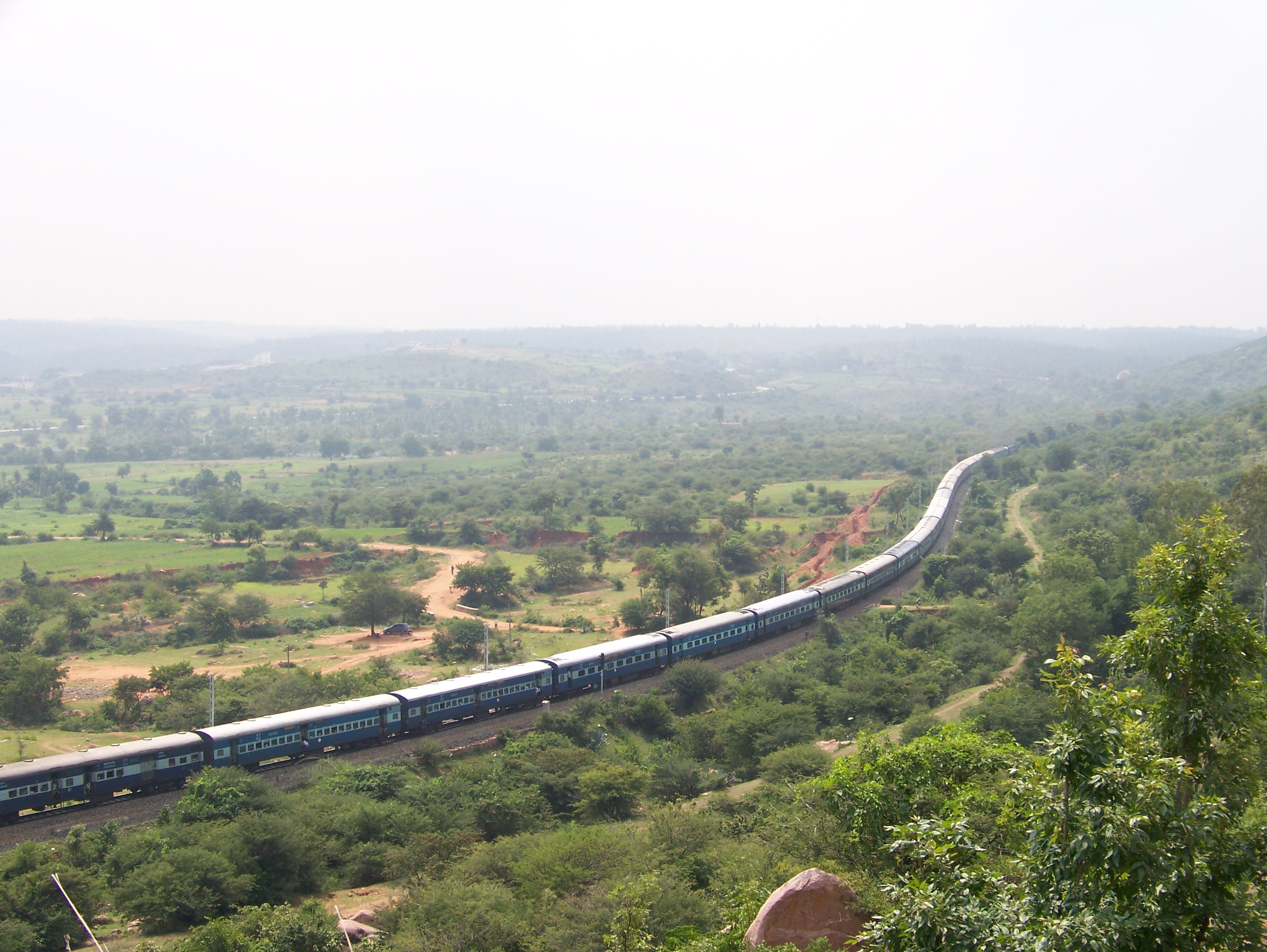
After a while, we heard the hooting of a train at a distance… This time, we couldn’t see any smoke rising up… The sound became louder and louder but still- there were no signs of the train. But, we knew for sure that the source was somewhere closeby. And suddenly, a Nizamuddin-Yeswantpur bound passenger train came buzzing into our visibility. We all took our cameras out and started clicking… The train was really long and it stretched beyond the 2 ends of the frame. Yet, this was not the photo we wanted. The train was actually in the opposite direction. So, even if the engine is very much in the frame, it appears like it is gone beyond 😥 But, anyway it seemed like we could not hope for anything further because we were all dehydrated.. So, we had to be contended with what we got and return back to pavilion 😦
Our prized catch- The Nizammuddin-Yeswantpur passenger
There is no existence of a place without the people, and with civilization exists its culture. Madurai has its own share. My previous post (Madurai Part 1) was exclusively about the architectural landmarks spread across the city. But it would be injustice if the other things associated with this amazing city goes without a mention. Of course, the write-up could run into books if I had to write about each of them. And it isn’t necessary that everyone travelling is a pilgrim or a history buff or an architecture enthusiast. Hence, here’s an attempt to throw light on other aspects that any visitor to Madurai can expect. This is not a detailed one, but I touch upon various dimensions that you can theme your trip around Madurai. Do let me know if this post helps or if there is any other dimension I missed. Here goes my list.
Art:
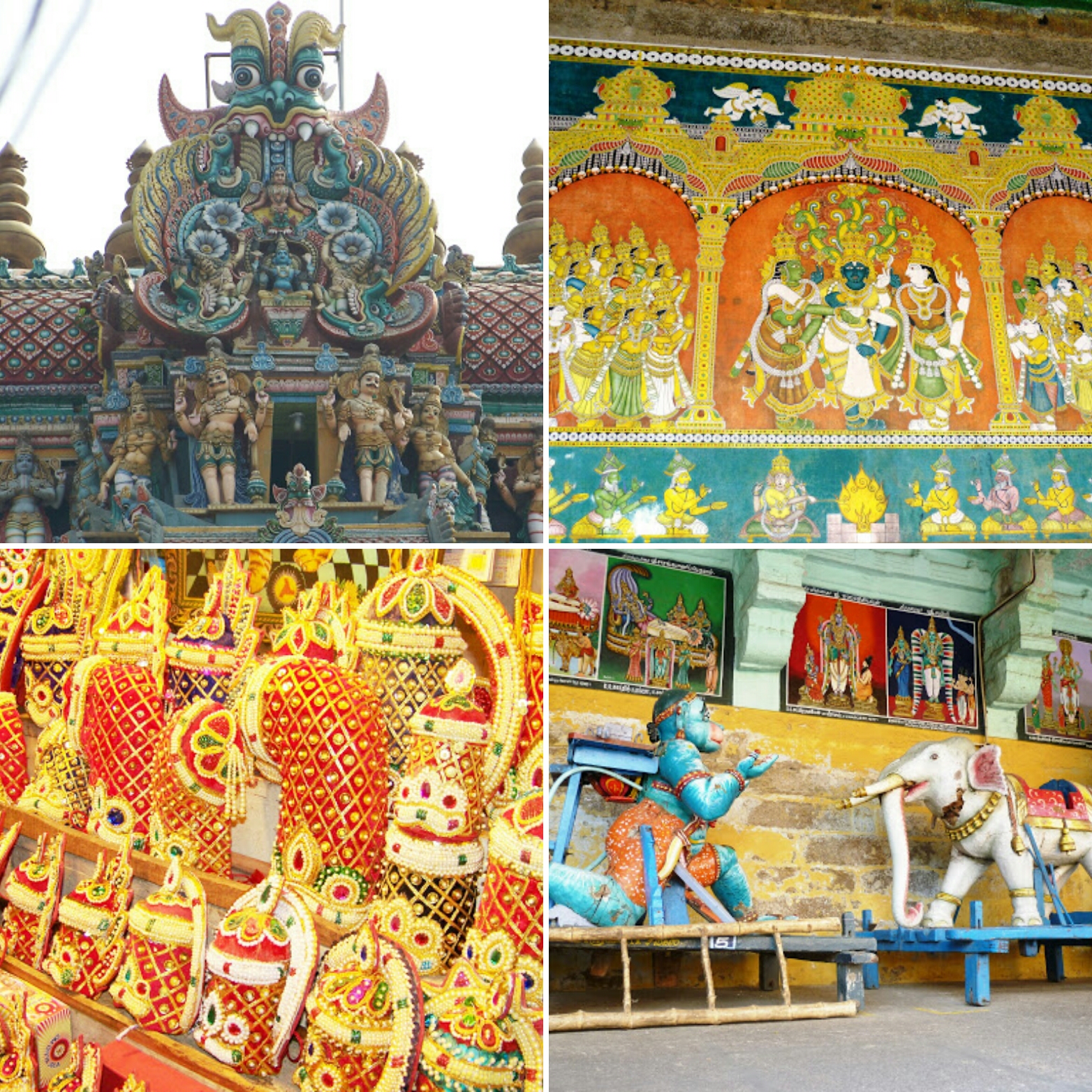
Sculptures: adorning every temple wall, pillar and their towers are a marvel in itself.
Carpentry: Several wooden vahanas used to carry the idols of the various deities in the temple are something that need the attention of art afficionados.
Handicrafts: Various accessories used for decorating Devi idols, made of delicate sequins, etc. are sold in several stall inside the large corridors of the Meenakshi temple.
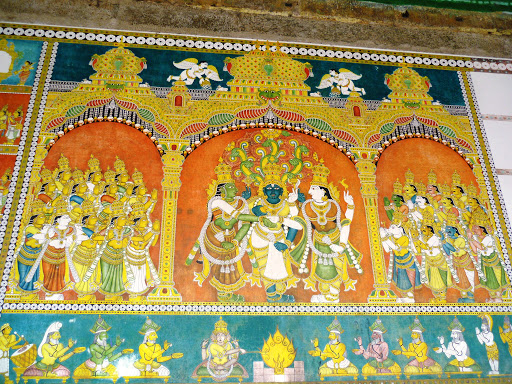
Mural paintings: This needs no introduction, the famous Madurai paintings are a gift of the Pandyan era, adorning the temple walls.
Clockwise from top left: 1.The sculptures on the western tower of the Meenakshi temple; 2.One of the mural paintings from the temple walls; 3.The wooden carriages for the temple idols; 4: Handicrafts from the temple stalls
Food:
Listing just a fixed menu while in Madurai would just be an understatement. If you are a foodie, Madurai would need two full days to explore its culinary delights alone. It is famous for both vegetarian and non-vegetarian specialties. I’d probably write a separate post about it sometime later. But this list is the list that we had when my family visited. But believe me- it is BEYOND!
Breakfast – Idly & Sambar, Pongal + a cup of filter coffee 11.00.a.m – Jigarthanda (it’s more like a combination of falooda & kulfi)
Dinner- Anything after 7.00.p.m is called meals. Must try is the ghee roast & rava Masala dosa
Costume:
Sarees for women & Dhotis for men.
Madurai cotton sarees with simple prints and zari borders with temple designs are popular.
Jewellery:
Among the locals- particularly those belonging to the Thevar cast, it is believed that women are prettier with bigger earlobes. Hence, the girl child born in this community is made to wear a traditional earring called the ‘Thandatti’ when she is young. The thandatti is said to evoke the 3 levels of our world: terrestrial, astral and divine and these levels are associated with Mandala. Each piece of this weighs 27gms and is made of gold and this piece of jewelry is specific to Madurai.
A Thevar woman wearing the traditional Thandatti earring
Shopping:
Shopping at Madurai is all about wholesale vendors and there are specified streets for each of them.
Cotton sarees/ dress materials: Shops are all around the temple complex
Steel utensils: Plastic beads & girls’ accessories, gold plated imitation jewelry to name a few.
Pooja related accessories & crafts: Particularly inside Pudumandapam (1000 years old market)
Farm produce: Varieties of plantains / bananas and green groceries among the others.
A brief intro to a city full of life and activities. Justice yet to be done. Signing off with a hope that it has helped someone somewhere in some form who is seeking for some info on this Pandyan city….
This was a family backpacking trip planned exclusively to explore Madurai. This city has served as the capital of the Pandyas and is a key destination that has nurtured the Dravidian culture. For anyone who hears the name of this famed city, they know of the Meenakshi Amman Kovil. A typical traveler / tourist / pilgrim would visit just that temple and takes pride in marking it in their travel map of places visited. But what one doesn’t realize is, that Madurai is beyond just this. The contribution of the Pandya kingdom is not limited to just the Madurai Meenakshi temple and can be seen and felt in several structures just around the same city. Also, a portion of the Madurai city has a history beyond the Pandyas too. Hence, our family wanted to reserve this long weekend, exclusively for Madurai. We boarded an overnight bus from Bangalore and reached Madurai at 6.00.a.m. on the following morning.
Like most of our family trips, we wanted this also to be an impromptu vacation. Apart from to and fro travel, nothing else was fixed. As per me, you would need a good 2-3 days to have a quick run around doing this same itinerary as ours, exploring ONLY Madurai. If you are an art and history buff or a foodie, I warn you to carry additional days!
Itinerary:
Day 0: Leave from Bangalore by night (KSRTC Bus) Day 1: Reach Madurai. Visit Meenakshi temple, Thirumalai Nayaka Mahal, Vandiyur temple tank, Koodal Alagar temple, Gandhi museum, Pudumandapam. Day 2: Alagar Kovil, Alagar Murugan temple, Pazhamudhir Solai temple, Tiruppanakundram Murugan temple, Dargah of Hazrat Sultan, return to Bengaluru.
The details:
After alighting the bus, we walked around the Meenakshi Amman Kovil to find a good hotel. Since this is the heart of the city, it wasn’t hard to find a decent lodge around there. We checked into a hotel that was located just in front of the temple’s west gate. We freshened up quickly and left for the main part of the trip for anyone visiting Madurai.
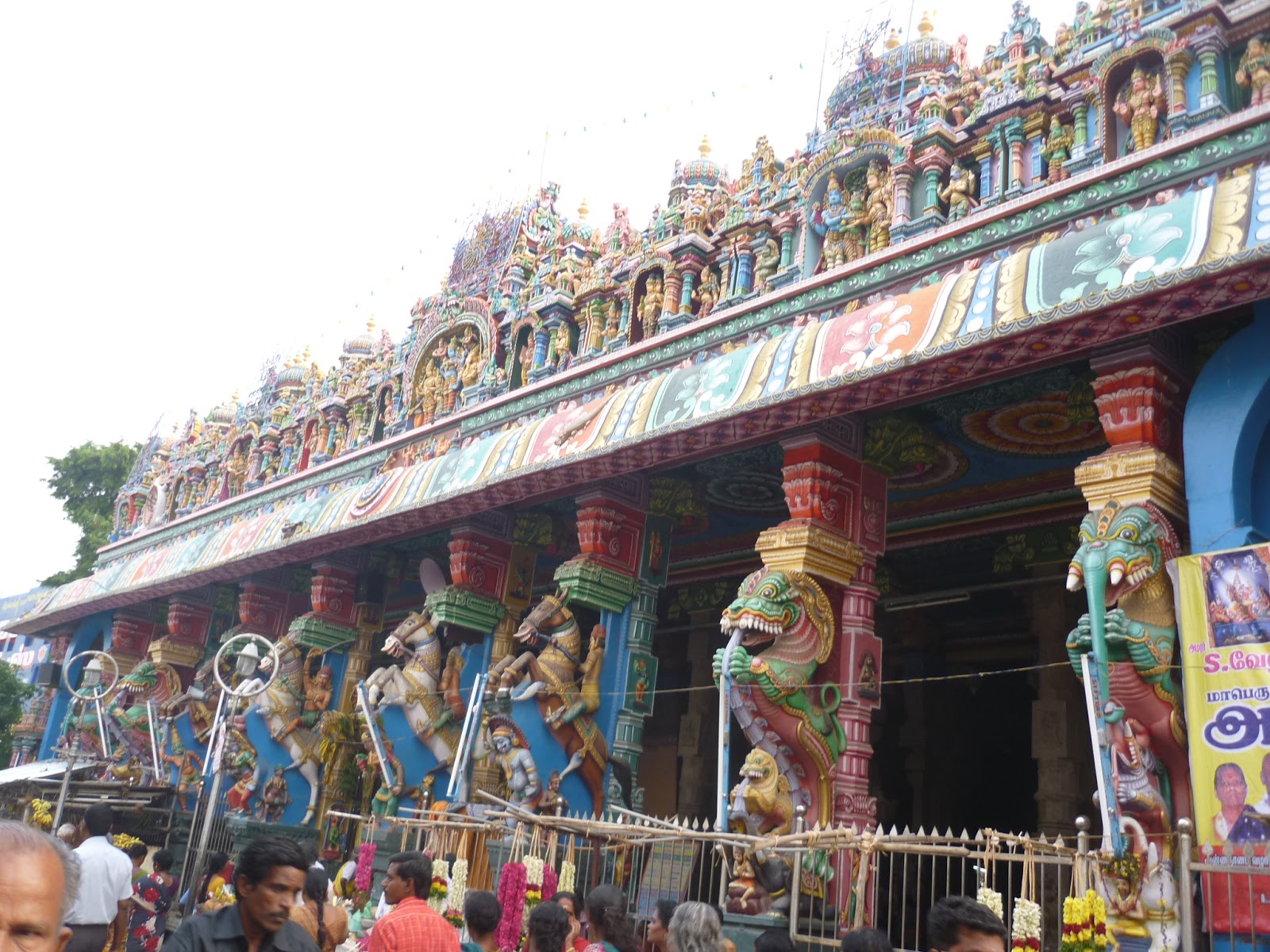
Meenakshi temple: A visit to the abode of the Pandya architecture. The entire temple complex is fortified and has 4 entrance towers, one on each of the 4 directions. The sculptures on each of these towers are out of the world. Once inside the complex, I started to wonder which world of wonder I had stepped into. It took us more than 4 hours to finish only a quick walk around inside the temple and also get the darshan of Meenakshi Amman and Lord Sundareswaran.
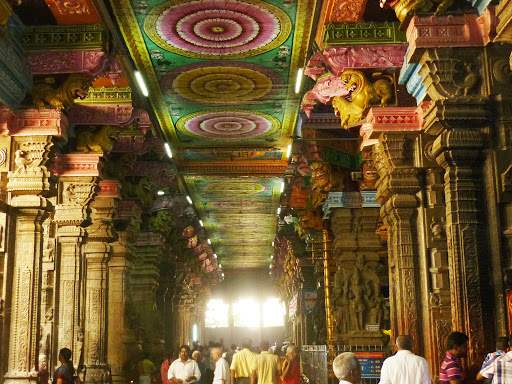
The finely decorated interiors of the Meenakshi Temple
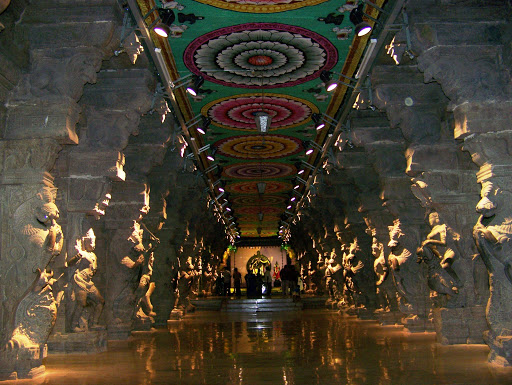
There are a lot of stalls inside the complex selling various handcrafted articles. The temple art museum within the same premises is a must visit. The central sculpture of Natarajan, or the dancing form of Shiva is believed to be one of the Pancha Sabha of the lord. This place represents the silver hall and Shiva is believed to have performed the ‘Sandhya Thandava’ dance form here (More on the Pancha Sabha Kshetras in another post). Also, there are 1000 pillars, all decorated with intricate pieces of sculpture. The dim light used for each pillar added up to the beauty of the place. The Madurai paintings adorning the walls of the temple requires another post to talk about. I go speechless when I get to explain about the South Indian temples. They are beyond words. Internet has plenty to feed and I don’t want to get into the details. After a tour of this massive temple complex, we decided to head out to explore the city beyond the Meenakshi Kovil.
Inside the Temple art museum
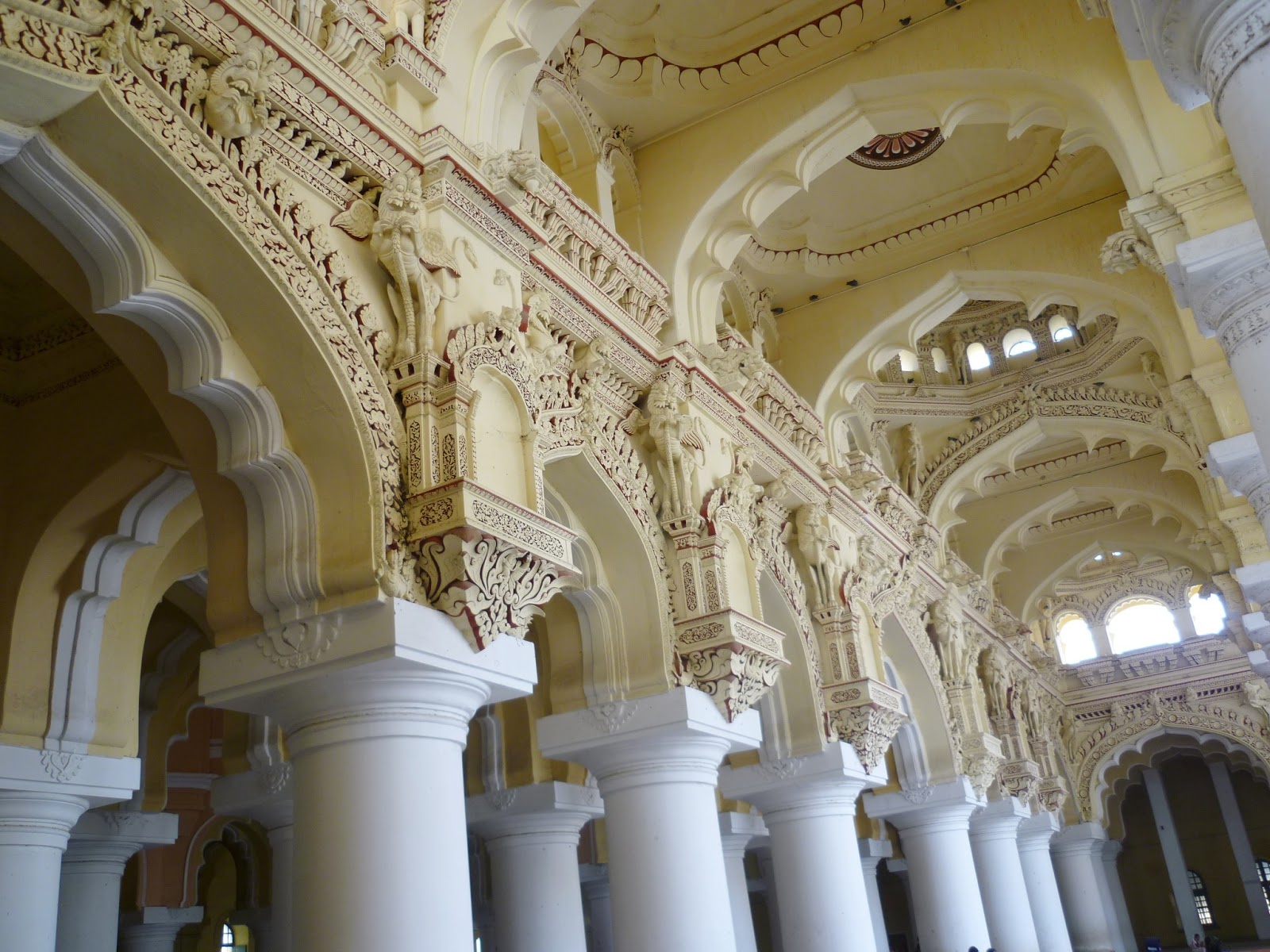
2. A small walk through the narrow lanes took us to the Thirumalai Nayaka Mahal built in the 16th century. Fine architecture with elegant paintings on the roofs and vaults is neatly presented in a simple combination of half-white and velvet red colors. There is sound and lights show conducted here every evening. However, we could not make it.
The interiors of Thirumalai Naickar Mahal
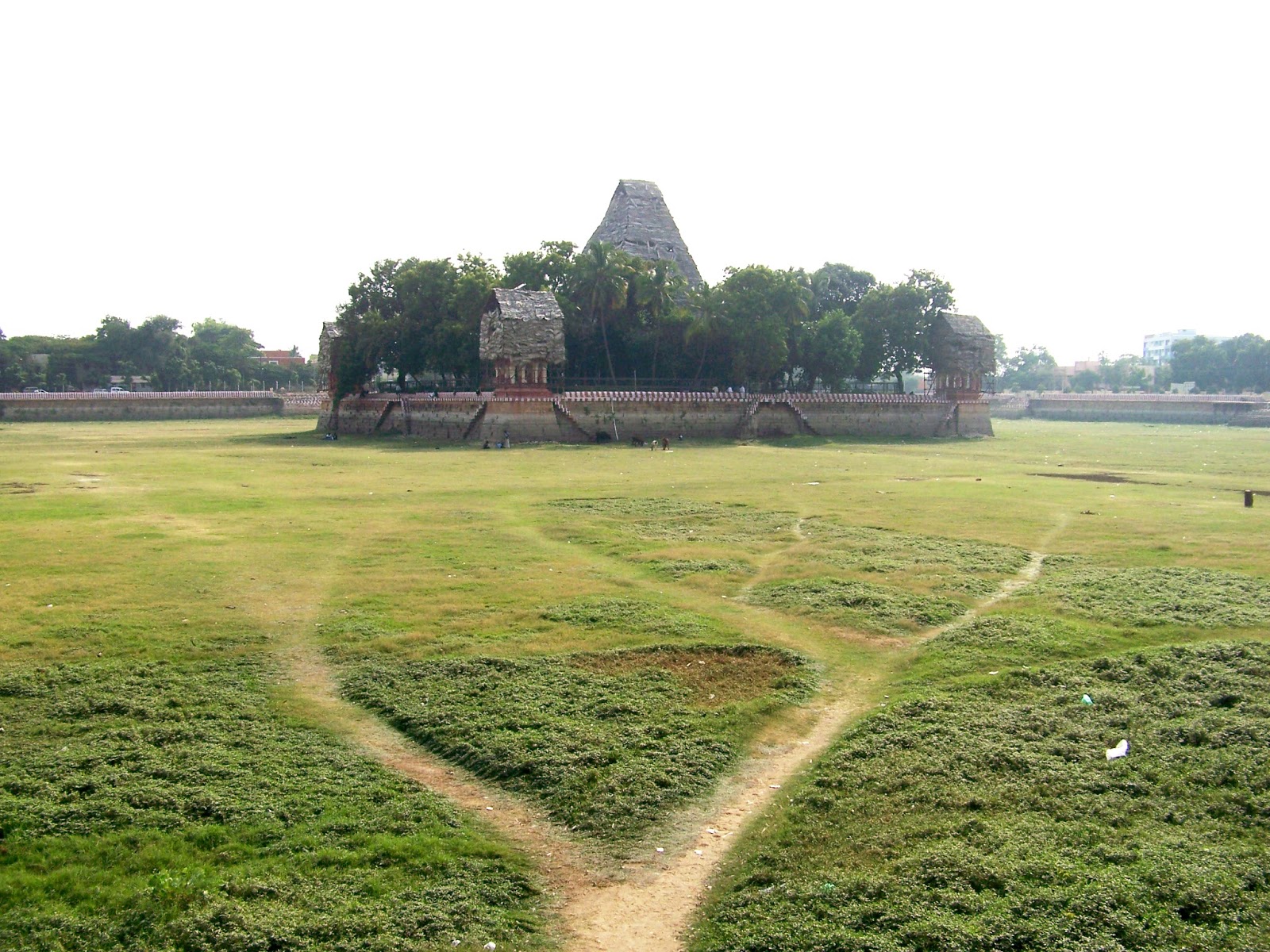
3. From there, we took a local bus to Vandiyur. This is where the annual event of the famed Teppotsavam / Float festival takes place to celebrate the birthday of King Thirumalai Nayak in January. This tank is supposedly the biggest of its kind in the state of Tamil Nadu. With the float festival just 2 months away and monsoon season just passing by, this tank still remained dry during our visit. When we enquired with a few locals passing by about how the event was going to be conducted in a dry tank, we were told that the water will be fed in January from the Vaigai river through artificially laid underground channels. This is truly amazing how such a concept was laid way back in the 16th century. But for a newcomer like me, the dried lake was an eye sore as it was used was a watering hole by many vandals at the time of our visit.
Vandiyur Mariamman Teppakulam – the island temple
4. Taking another bus from there to Periyar and a small walk from there through the stinking / dirty by-lanes, we reached the Koodal Alagar temple. A quick pooja and a walk around the temple was a nice boost up. The architecture here too, is similar to that of Meenakshi temple.
5. We had to rush to The Gandhi museum as it would close by 6.00.p.m. However, we could not make it on time. This was once called the Tamakkum palace of Rani Mangammal. Today, the museum supposedly houses 14 articles that were used by Gandhiji, along with his sacred ashes and blood-stained dhotis. Gandhiji is said to have visited the city five times during his lifetime.
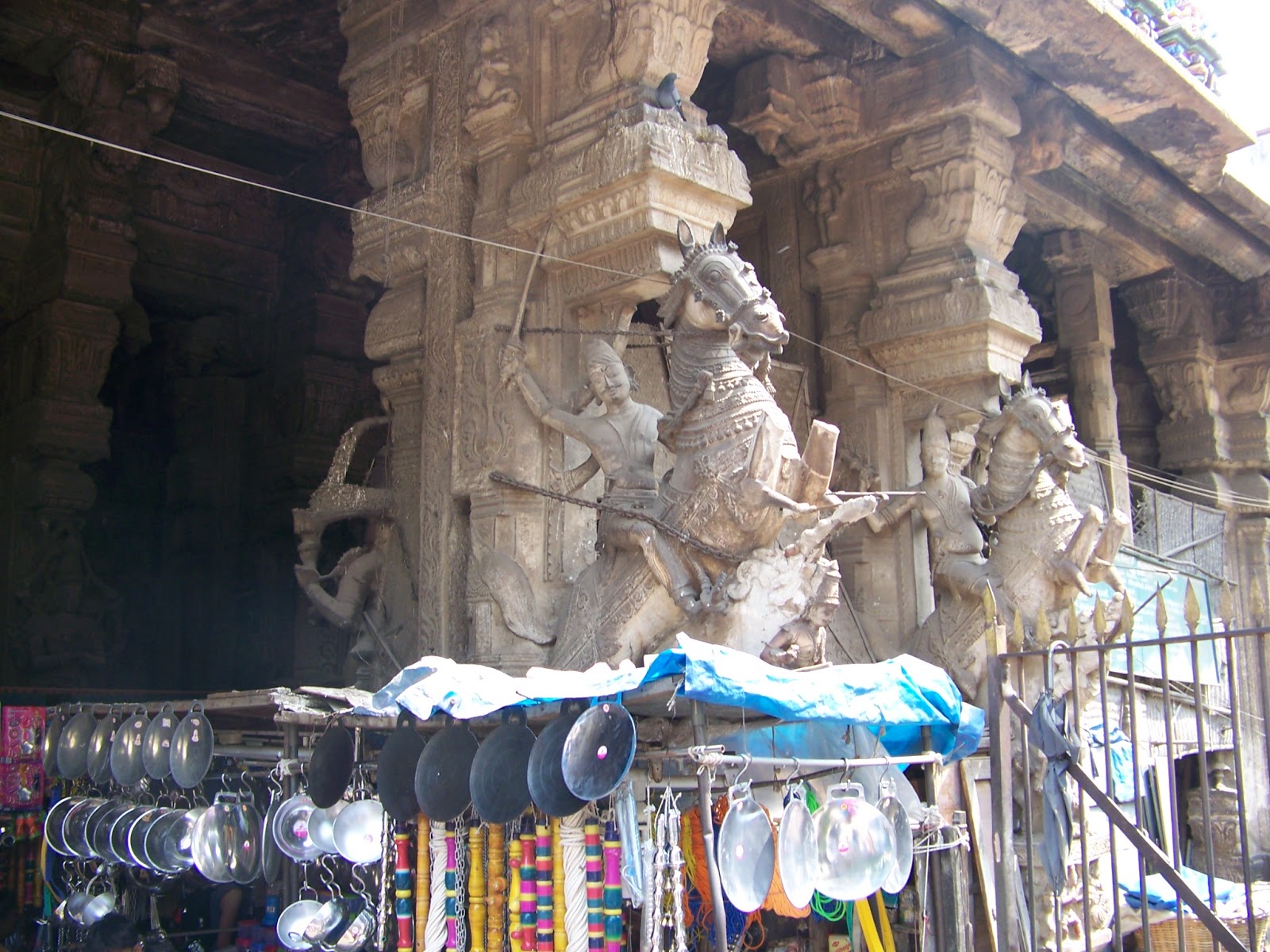
6. On our walk back to our hotel, we came across an old marketplace called as Pudumandapam. This is a 1000 years old shopping mall, supported by huge sculpture rich stone pillars. The stalls are occupied with tailors, handicrafts vendors, wholesale dealers of pooja related and general accessories. A good place for shopping traditional artefacts at Madurai, and that too in a market that is so old!
Entrance of the Pudumandapam
7. On the following morning, we boarded a local bus from Periyar bus stand to travel 21kms towards Alagar Kovil. The temple is dedicated to Lord Vishnu, Meenakshi Amman’s brother. The village is surrounded by an old fort wall, it gives a good view of the green hills around the temple. The architecture is similar to Koodal Alagar temple in the city.
8. A trek of 3kms uphill, through green forests and monkey infested walkways lead us to the Murugan temple. It is one among the six abodes of Lord Murugan and hence important among the pilgrims.
9. A walk of half a kilometer further uphill took us to Pazhamudhir Solai temple. A temple dedicated to Goddess Rakkaya exists close to a natural spring called Nuburagangai here, where devotees take a holy bath. But what seemed strange to me was that the place was probably the only temple I had ever been to, which charges an entry fee into the temple itself. This is where the famed Chittrai festival is observed during the month of April.
10. From there, we took the next bus back to Periyar, from where we had to take another connecting bus to Tiruppanakundram. This was a cave temple at the foothills of a hillock. It is believed that Lord Murugan was wedded to Devyani, daughter of Indra at this place. Hence, this is also counted one among the 6 abodes of Lord Murugan.
Entrance to the Tiruppanakundram Murugan temple
11. Up the hills, is the Dargah of Hazrat Sultan Sikandar Badshah shaheed Radiyallah Ta’al anhu. Owing to time constraint and exhaustion, we thought of skipping the climb.
Other lesser known places we skipped due to time constraints were the Kazimar mosque and Goripalyam Dargah. At the center of the city is the Kattabomman junction. This is where a part of the old Madurai fort exists. Today this is not more than a public library. Further, every street in the city has a history behind it: This link to an article from “The Hindu” don’t do this usually, but would make a special mention about the streets of Madurai. Every street in the city has a history behind it: This link to an article from “The Hindu” explains it all- ‘Where moats made way for motorways‘
This was all about us getting around the place for seeing some of the historically important landmarks around Madurai. But the list is endless and time, very limited ☹ I have covered a few other must-do things while at Madurai in a separate post. I wish to be of some use if you are planning a trip there. (Click here to read further)















 The Lost Lander