Tag Archives: tribes of India

Exploring Ramnami Community: A Journey into Tradition

Over recent years, my travels across India ignited my fascination with how tattoos hold cultural significance among different Indian communities. In many areas, tattoos serve as symbols tied to tribal customs. One community that particularly intrigued me was the Ramnami of Central India. When I shared this with a friend, she too showed interest in delving deeper into this culture. We eventually connected with a community member who graciously allowed us to visit his village, even inviting us to stay with his family. We happily arranged our visit.

We initially flew from Bangalore to Raipur. From there, we caught a local bus to the GPM district. Subsequently, we explored GPM by taxi, which dropped us off at Chandlidih, the Ramnami village. It was raining heavily as we navigated the damaged, flooded roads and finally arrived at the location indicated by Google Maps. We carried our backpacks while crossing a small reservoir wall built over a stream swollen by the monsoon. On the other side was our host’s house. By the time we reached the front yard of the Ramnami family’s modest home, we were covered in mud from puddles stretching from the parking lot to the house.
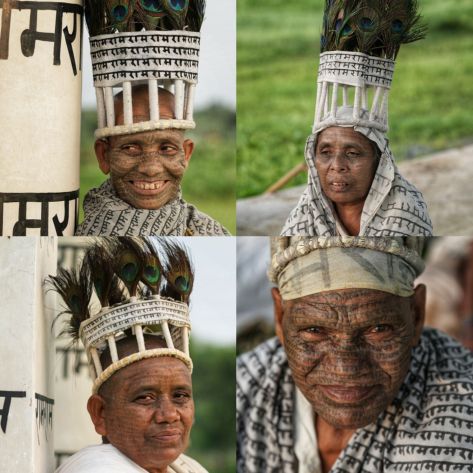
Portraits of the Ramnamis

Our host welcomed us upon arrival and directed us to the guest room to drop off our luggage. The room, an extension of the main house, was built with cob and wood, offering basic amenities such as two beds for resting and a light bulb for illumination at night. We relied on mobile internet throughout our stay. According to tradition, anyone visiting from outside must bathe and cleanse themselves before entering a Ramnami home. The next experience was something my friend and I will both remember for a long time: the bathroom!

It was a simple enclosure with two and a half walls and a roof. Half of the third wall was intentionally built to shoulder height, making it easy to bring in water from outside either with buckets or through a gravity pipe connected to a nearby perennial stream that filled a concrete tank inside the bathroom. The fourth side was left open for easy access, featuring a modest saree stitched into a sliding blind that could be moved to open or close. There was no running water; hot water had to be fetched from an outdoor firewood oven, or one had to make do with the chilly water stored in the tank inside. Our city dwelling bodies were used to a sturdy lockable door for bathing with unlimited hot water from a tap or shower. While the cold-water setup was tolerable for my outdoor spirit, I could not imagine standing unclothed inside a doorless bathroom.
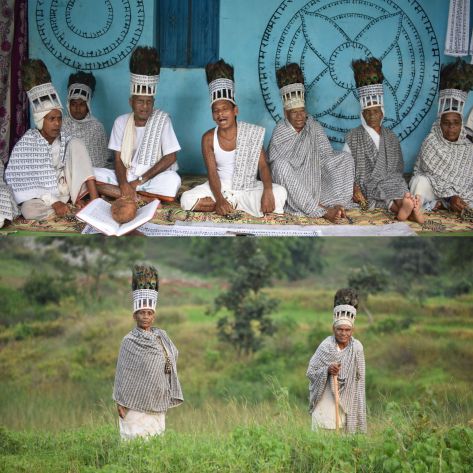
The Ramnami Community

If I were hiking, I could go days without bathing, but here, it was crucial to start our trip by experiencing the Ramnami culture. Hesitantly, I took off my clothes and poured a couple of mugs of water, just as I heard giggles outside. I paused to check if I was imagining things or if it was real. Soon, I saw the shadows of a few kids moving behind the curtain. As I began applying soap, I saw two toddler heads peeking in from the sides of the curtain, giggling again. I panicked, yelled my friend’s name, and hoped she would come to help. She got scared and ran over to see what was wrong. I told her about the curious kids, and she decided to stay at the bathroom entrance until I finished. Later, I returned the favor.

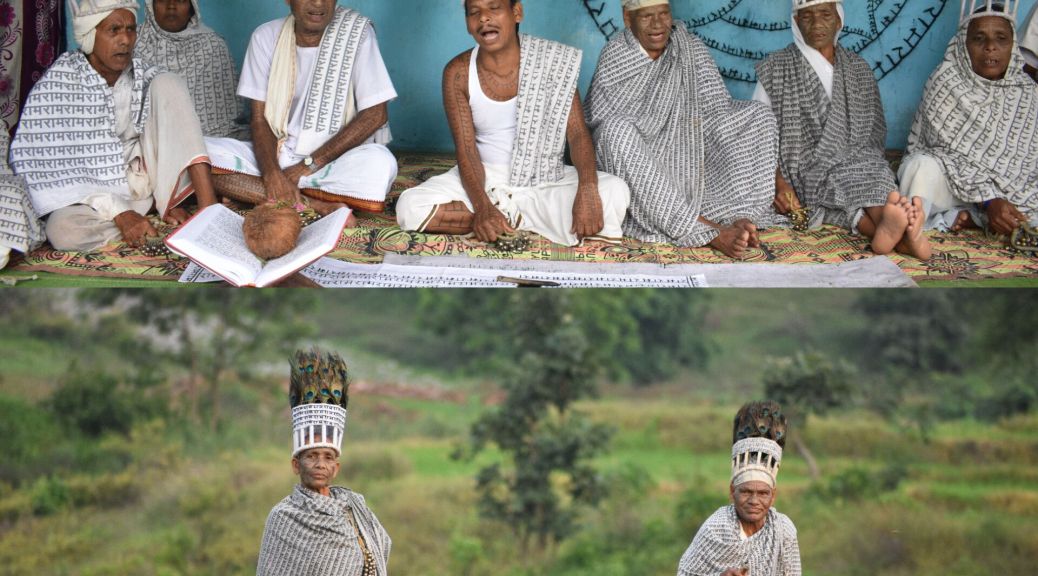
After changing into fresh clothes, my friend and I headed to the porch of their house, where the entire family had been singing hymns of Lord Ram since sunrise, even before we arrived. We greeted them with a coconut and some fresh flowers, which we were asked to bring as part of their tradition of introducing a new guest to the family. Most adults had tattoos reading ‘Ram-Ram’ in Hindi covering their bodies. Some had full-body tattoos, while others had only face, arm, or forehead patches. They all wore pure white clothes handwritten with ‘Ram-Ram’ patterns. Their Dhotis, shawls, and headgear featured the same ‘Ram’ writing in a consistent style. The handmade headgear, unique to the Ramnami, was decorated with peacock feathers. All participants in the Ram bhajan carried strings of small jingling metal bells, each stamped with ‘Ram’ during casting.

We introduced ourselves and joined their Bhajan until lunch was served. I savored a simple Satvik meal made with ingredients from their farm. The faint aroma of firewood used in cooking enhanced the local flavors with a divine touch.
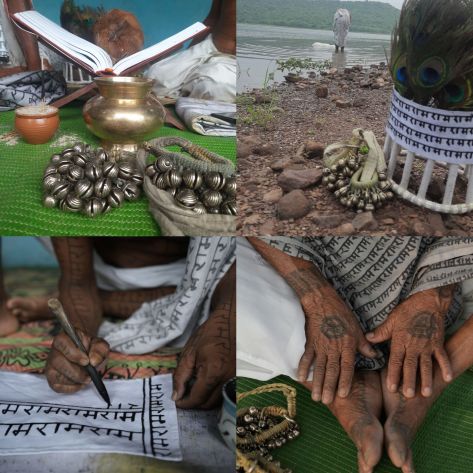
Daily utility items and life of the Ramnamis

We traveled without a fixed schedule, aiming for a slow, immersive experience of this community’s daily life. After lunch, my friend and I joined members singing Ram Bhajans on the porch to understand what defines the Ramnami. We were transported back to the 1890s to learn about their history. Like the rest of India at that time, casteism barred lower castes from entering shared places of worship. Some rebelled by declaring their bodies as temples dedicated to Ram, tattooing the Ram-Nam (Lord’s Name) with a locally made ink derived from herbs. They formed the Ramnami community. A senior member leads events, whether a baby’s birth or a funeral. Their greetings and farewells are solely marked by singing Ram-Bhajans, even during major life events like marriages. They do not conduct any Brahminical rituals, poojas, or havans as part of their practices.
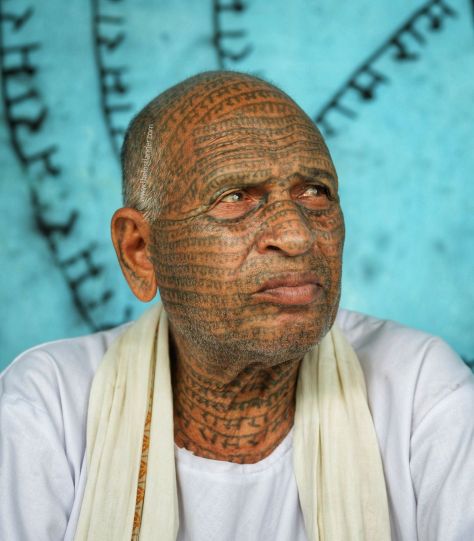
A portrait of a Ramnami community member

With the rain gods commanding the skies and earth, we saw them prepare their shawls, made from woven, stitched white cloth they crafted themselves. These shawls were then covered with Ram-Nam. After carefully observing them write with their native ink for a while, we joined in to write on some of the other pieces. Once finished, they set them aside to dry, initiating a series of procedures to prevent the white cloth from bleeding black.
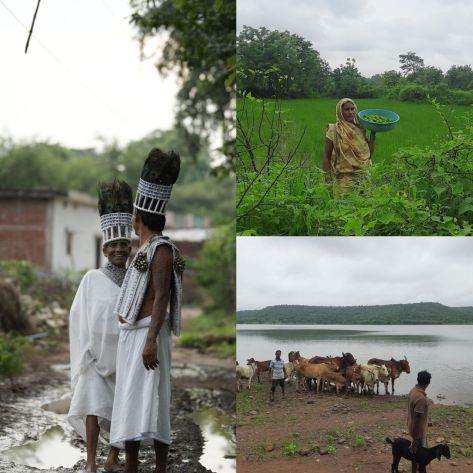
A walk through Ramnami village

When the rains stopped, our host guided us through their village. We crossed a stream, carefully walked along the paddy field edges, and eventually made our way along muddy, winding roads. We met several members of the Ramnami community, mostly relatives or neighbors from the same village. We greeted women working in the fields and enjoyed coffee at welcoming houses. Later, we visited JayaStambh, a small monument commemorating the annual Ramnami mela held here a few years prior. Some older community members joined us there at sunset, singing Ram bhajans as a tribute to the setting sun. Afterwards, we visited a small reservoir across the lake. The Ram Bhajans, sung warmly around a bonfire, echoed over the calm water, with the sky changing colors dramatically until nightfall.
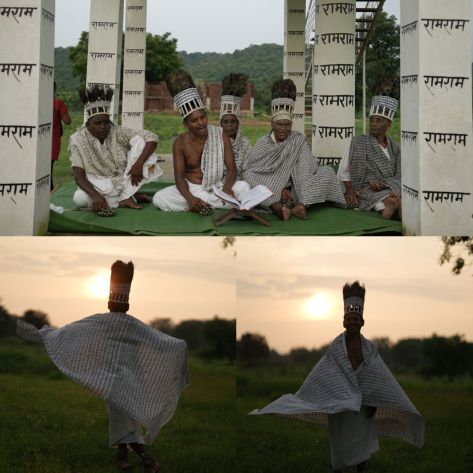
The evening prayers at the Ramnami Jayastambh

We walked home carefully through the night darkness to avoid slipping on the slush. After a satisfying dinner, we drifted into a peaceful, childlike sleep, concluding a long and exhausting day.

The following morning, we rose early to witness a normal day in the life of the Ramnami. We went to the reservoir with the elder members of our host family, who offered prayers to the sun god and recited blessings before their water dip. After changing into clean clothes, they went back home to continue household tasks such as cleaning, preparing food, and having breakfast.
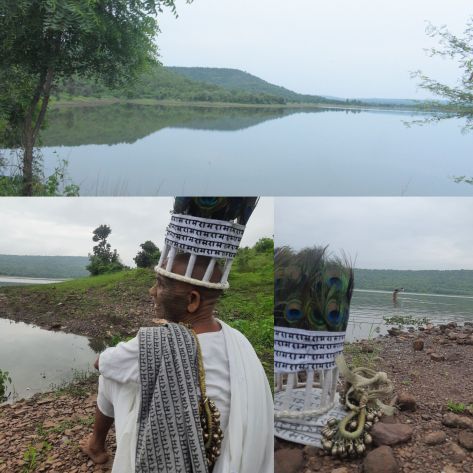
The morning at the Chandlidih reservoir

Spending time at a Ramnami home offered a genuine glimpse into a culture that is remarkably different from the rest of India. The younger Ramnami generation might not be eager to follow the traditional paths laid out by their elders. However, this community exemplifies how faith in God can help us overcome great challenges. They defied the odds, forging their path, which they believe will lead them to a divine connection.

After a simple breakfast and Ram Bhajans, we packed our bags for our next destination in Chhattisgarh. Our host assisted us with pillion rides on two motorbikes, skimming over the slushy village roads before reaching the highway, where we caught a local bus to continue our journey.

Exploring the untouched gems of GPM district

Gaurela-Pendra-Marwahi (GPM) is one of the youngest districts of Chhattisgarh and I recently had an opportunity to explore this region along with a friend. It has a deep-rooted connection with mythological stories and hence, several local tourists come here for pilgrimage. Otherwise, GPM is least explored on a typical tourist circuit and remains to be a hidden gem in the jungle, quite literally. Hence, through my trip to GPM, I wanted to explore, learn and document the adventure and cultural aspects of GPM district. On this journey, we had the guidance of GPM-tourism in arranging our accommodation and getting local experiences in some of the most exquisite places.

We started from Bilaspur that morning in a taxi to arrive at our first destination- Gaurela. My first encounter of a new religious practice was of the kavadis. Of course, Kavadi itself is not new to me. It is observed in different forms across different regions of South India. But Kavadi of Chhattisgarh was new to me. During the Shravan month, the pilgrims leave their respective houses on a barefooted march all dressed in saffron dhotis, carrying the Kavadi on their shoulders and chanting bhajans and praises for Lord Shiva. Along their way, they are joined by others whose houses fall enroute and the march progresses. The group is large towards the end of their feat when they all arrive at the Amreshwar temple.

Anyway, after passing this large group of pilgrims, we continued our drive through a very beautiful stretch of Sal forests and paddy fields. Our pre-ordered lunch was ready by the time we arrived at our first destination- Jhojha waterfalls. This region is presided over by the people of the Pando tribal community, whose culture we were unaware of until then. A tiny canteen run by a couple belonging to this community provided us with food cooked fresh and served in the most sustainable way possible. All the fresh and locally grown ingredients (organic veggies) cooked with firewood and served with handmade plates and bowls of Sal leaves. The simplest, yet a sumptuous meal was relished by us before heading out on our short hike into the woods.

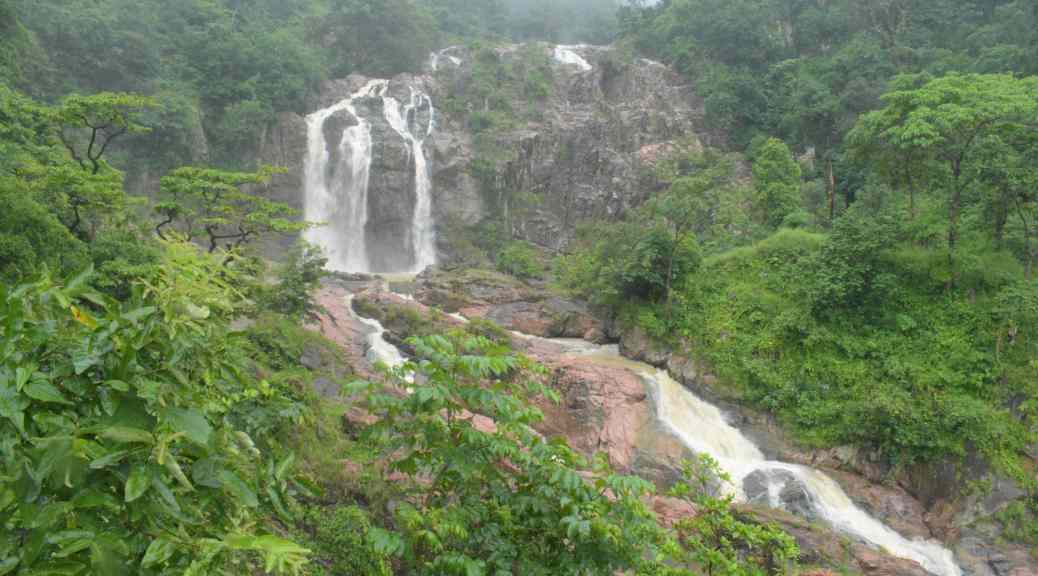
As the rain gods had taken over the skies briefly, we wore our raincoats and tamed our legs towards the trail. There is a biking trail for the biker-heads and then there is the hiking trail for people like me. It is a trail of about 4 kms with moderate difficulty for beginners. As we approached the Jhojha waterfall, believe me as I say that I hadn’t heard or imagined the existence of such an offbeat and majestic waterfall in this part of Chhattisgarh before arriving here. It was beautiful. On a day otherwise, one can go closer to the waterfall or get into the water. But I refrained from it since the monsoon fury wasn’t a safe idea.

Jogi Gufa was a place close by where we had originally planned to visit the cave and a waterfall. Ghaghra dam is frequented by locals for watersports and Son-kund and Kariam Ashram are popular places of local pilgrimage. All located at a drivable distance from Basti / Jhojha. By the time we returned to the base after the hike, the other members of the Pando community had joined in. Hence, we decided to spend the remaining time at Jhojha itself. It was a good decision as the evening was filled with song and fun giving us a better acquaintance with the tribal culture of the Pando community.

Mahua liquor is an essential part of Chhattisgarhi culture in general. There are several folk songs and stories composed around Mahua’s significance in the tribal life. The folk who had joined us for the night sang these songs and narrated undocumented stories that had been passed on through generations. Later, we had the supper cooked by the same family and retired at the little mud-cottage / homestay run by them next to the canteen. One of the most serene and silent locations I had ever imagined retiring.

We started our day by having breakfast at a local restaurant at Pendra road (Town area). for someone whose taste palette is used to idly, dosa, roti etc., for breakfast, the samosas and jalebis were quite unusual to be consumed as a meal. But that’s how the rest of our day turned out to be- Sweet and Surprising. The untouched landscapes and the unaccounted number of mythological references make a great combination for hodophiles to explore Pendra. As soon as we moved away from the town area, the weather and the landscape took a dramatic change. crowded streets turned green and dry sunny skies began to cry rain.

This region is predominantly resided by the Baiga tribes and hence, meeting folks from this community and documenting their stories were my focus on this visit. We drove past the mountainous road and flat paddy fields to arrive at our first stop. It was an under-construction nature camp run by the GPM-tourism and managed by a local family of the Baiga tribes. Traditional tribal cottages flanked a serene waterbody and together overlooked by a canopy of trees. Apart from a group of local boys who occasionally dropped by for a game of fishing, it was a paradise in seclusion. The only thought that I had while there was, if I ever felt the urge to run away from the city hustle to a non-Himalayan place filled with silence and solitude, where no known person would find me, it would be this. To simply put- I fell in love with this location. We visited the home of a local Baiga family, took leisurely stroll in their village and farms and shared warm conversations and laughter with their little kids, all even as the rain gods continued to show no mercy on us.

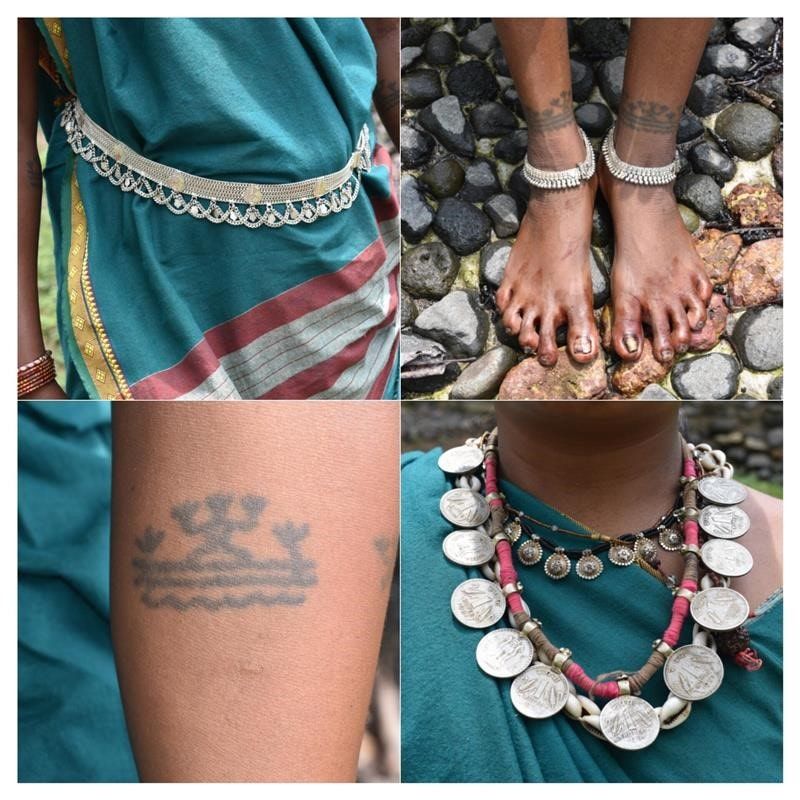
Traditional jewelry of Baiga tribes in Pendra, Chattisgarh.

A few kilometers away from there is a pilgrimage site, Mai ki Mandap’. It falls on the way for people visiting Amarkantak. Mythology has it that river Narmada was all dressed in her bridal attire, awaiting the arrival of Son Bhadra, the groom and his party but was cheated by her friend. Since then, Narmada has been hiding inside a cave here where an eternal flame has been burning for ages. The river Amravathi ganga cascades down the valley here forming a multi-tiered waterfall, which needs to be crossed by foot to get to the temple dedicated to Narmada. Since it was monsoon time, the currents were quite strong and the river crossing was an adventure.

This region is dotted with several pilgrimage sites that are inter-connected with each other through mythological stories. Although we drove past most of them, we decided to skip a ‘stop and visit’ to them. Some of them were Durga Dhara waterfalls, Amreshwar temple, and Jaaleshwar Mahadev temple. Achanakmar tiger reserve, Kabir Chabutara and Malaniya dam are few other local hang-out spots in Pendra region which we decided to skip due to lack of time.

The highlight of this entire trip to GPM was the drive to Rajmergarh hilltop and the best ending for this short stay that I could have asked for. The adventurous people hike up this hill over a couple of days’ time, but we were not in luxury of so many days. Lines of Sal trees and herds of cows grazing on the tabletop grasslands were a treat for the eyes. The drizzly rains and the gusty winds not only caressed my hair and cheeks but also my mind and soul, as I stood on the edge of the green grasslands. We were lucky to get a glimpse of the setting sun even on a cloudy evening. The locals informed us that this hilltop is a favorite haunt of adventure seekers who usually hike up to pitch their camps and wake up for the sunrise over these hills. Such a beautiful place feels wasted without good amenities for the tourists. Outdoor lovers can get their own tents and pitch their own tents here, basic meals and tea can be availed with prior information to the caretaker of this place. But I highly recommend a day visit to this place, especially during the monsoon if you are looking for something more offbeat, less crowded and yet beautiful. The night’s stay was arranged at Gagnai nature camp, a property run by the government.

The luxury of an additional day’s time would have allowed us to explore the Marwahi region, thus circling around the entire GPM district. ‘Beni Bai’ is an important and rare Jain pilgrimage site which I personally wanted to visit but couldn’t. A full day’s trip could include AdiShakti Mandir, Tara Khara waterfall, Pareva path, Chunha Dai, Shiv ghat, Samundalai kund and Lakhan ghat to complete a circuit before you head back to Bilaspur.

However, in our case, we started before sunrise because we had an afternoon flight to take from Raipur to Bangalore. Thus ended an offbeat trip to the heart of India, Chhattisgarh!

A Series- Festivals of Kodagu

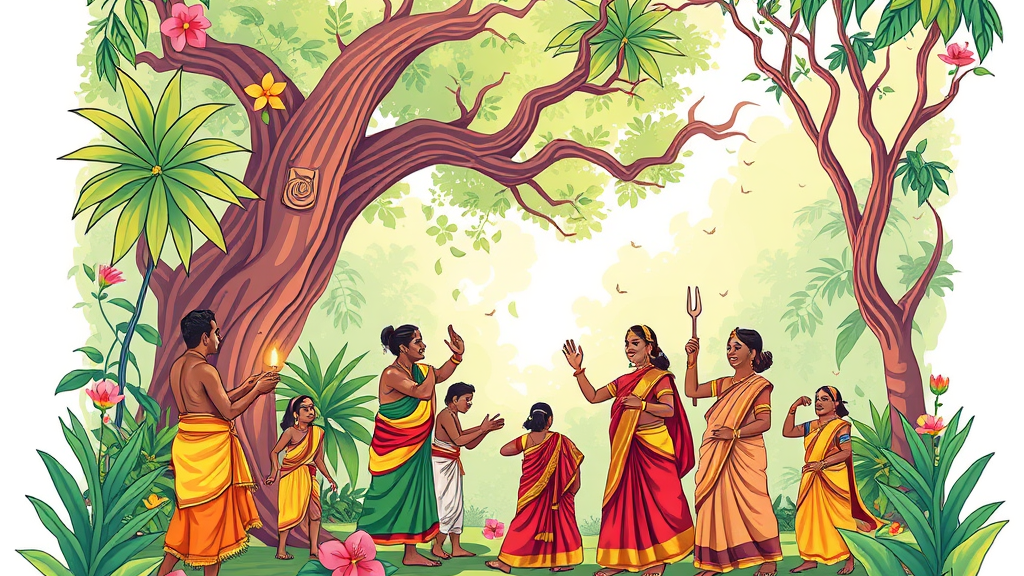
The Kodavas and the other native tribes inhabiting the Kodagu region are primarily nature worshippers. There is no idol worship, and the five elements of nature and the guiding spirits of their ancestors are central to their worship. However, there are several other deities that are associated with the Kodava folklore and the regional culture in general. As per some historians, the worship of Shiva and Parvathi, which is also integral in Kodava folklore, can be attributed to the influences of the Haleri kingdom’s rule.

“A Mahadeva (Shiva) for each province, Povvadi / Bhadrakali / Bagavathi (Parvathi) for each hometown, Aiyappa for each village, Natha (snake god) for each lane and Puda (indigenous soil lord) for each family,” goes a Kodava saying. In Kodagu, Mahadeva and Bhadrakali are worshipped in temples that are built and managed by the respective villagers. On the other hand, Choundi and Ayyappa are forest dwellers. They mostly live in ‘Devara Kaadu’, the sacred groves.

Although the chief deities are the same in every province or hometown or village, the way they are worshipped is unique to every temple. The rituals and ceremonies vary depending on the folklore in which its roots are embedded. These stories are compelling and narrate the importance of connections with the motherland and nature worship. Bright colours, earthy music and traditional dances mark these festivals.

While the main festivals of the community like ‘Kailpodh’, ‘Edamyar’, ‘Puthari’ and Kaveri Sankramana and the older tradition of Nari-Mangala have been well documented through several mediums, it is these indigenous and lesser-known local festivals of Kodagu that I would like to experience and document, one festival at a time.

I would like to hence, start this series- “Festivals of Kodagu”. The purpose of this series is only for documentation of lesser-known festivals. All the information shared through my series’ posts are based purely on what I could gather by discussing with people who are closely associated with the temple or are natives of each village. My apologies for any wrong representations. Readers are welcome to contribute any information that is deemed important and useful to be shared here.

  1. The abandoned tribes and the abuses- Kunde Habba
  2. The Boad Namme of Chembebellur
  3. The Povvadi Namme of Ibbanivalavadi

The Boad Namme of Chembebellur

‘Boad’ in Kodava language means to beg/ request. ‘Namme’ translates to ‘festival.’ Thus, the ‘Boad Namme’ can be loosely called as the festival in which the people of Kodagu request ‘Goddess Bhagavati’ to grant their wishes.

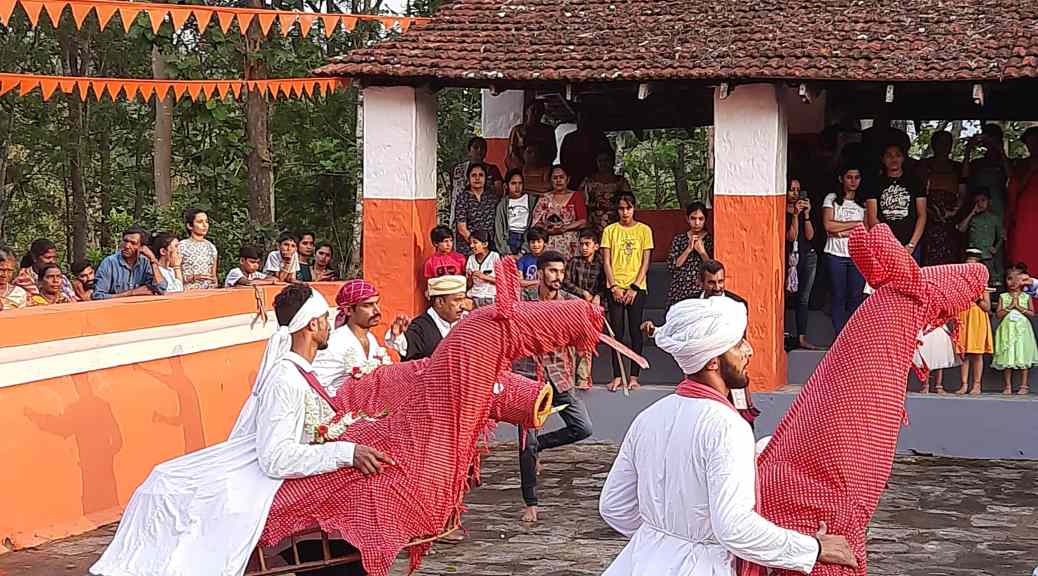
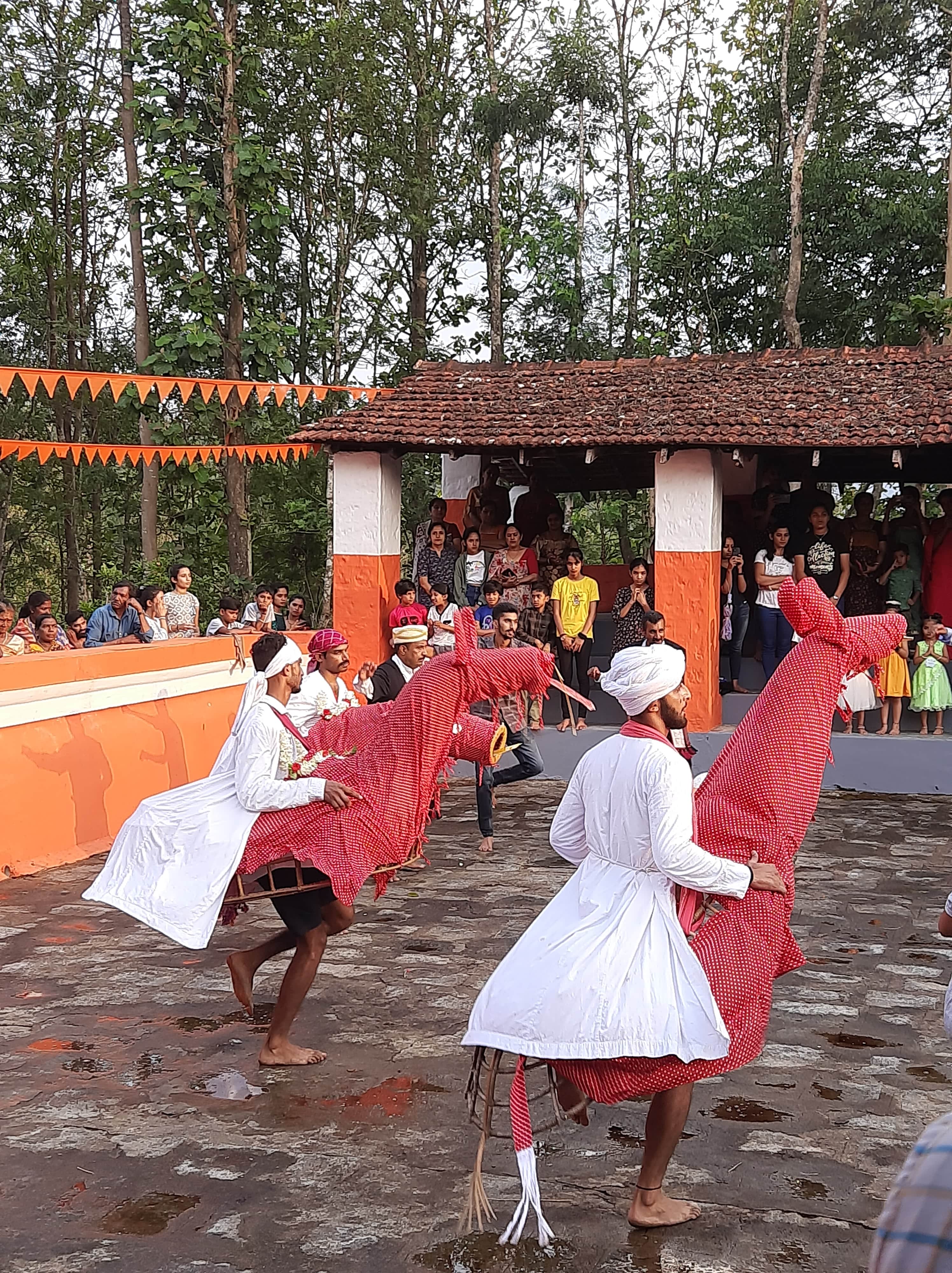
The Boad namme is observed across Bhagavathi temples located in several villages in the southern part of Kodagu district, in series. The first Boad of the year starts at the temple of Kunda and the last one is observed at Parana village. Kudure (Horse) worship is an integral part of the Boad namme. In this, a young boy belonging to a designated clan from the respective village dresses up in the costumes of a horse and participates in the various ceremonies during the festival. Hence, it is said that ‘Kundath-ra Bott-le nenda Kudure, Parana mani-le ilinja Kudure.’ Translating to ‘the horse which rises at Kunda will only settle at Parana.’

I will talk about these two Boad festivals in separate posts. Among a series of all other Boad namme that are observed across villages in South Kodagu, I am starting from the middle, at Chembebellur village. The Boad Namme of Chembebellur is among the most popular of them all. It is observed over a period of four days and usually happens around the last week of April of each year.

Day one is Pattani. People belonging to all the native clans of Chembebellur observe ‘Fast’ on this day.

Day two is Kudure. Three young boys representing three clans of the three main Keris (areas) of Chembebellur i.e., Ajjinakanda clan of Podakeri, Coluvanda clan of Podakote and Chembanda clan of Nadikeri wear the costumes resembling horses (Kudure) and start from their respective Ain mane (clan’s ancestral home). They are accompanied by men impersonating other local deities of the village like Choundi, Aiyappa and the others during their march towards the Bhadrakali temple where they all assemble and hold the following rituals. Post this, there is a fire set up in front of the temple in which effigies are burnt.

Kudure at Chembebellur Bhadrakali temple
Day 2: Kudure at Chembebellur Bhadrakali temple

The gathering then moves towards the village’s ‘Eshwara temple’ where the rest of the men and boys of all age groups dress up in various costumes. This dressing-up is a form of a vow they make to invoke Goddess Bhadrakali’s blessings. The costumes could range from traditional Bund-kali (Mud-smearing), Pill-Bhoota (Hay man), Puli-vesha (Tiger costume) etc. to more modern forms of cricketers, Llamas, swamijis, seducers etc. These dressed up men folk visit every house of Chembebellur asking/begging’ for alms all night and it is a fun time for all the households who host these men in the houses.

Day Three is Boad. This part of the festival is the most awaited and the highlight of the four-day celebration. All the dressed men congregate at the Bhadrakali temple in the afternoon. They are accompanied by the men impersonating the local deities as well. They all together circumambulate the temple thrice and go around begging form alms from the thousands of people who gather there to participate in the festivities. The end of the circumambulation marks the end of the Boad where all the men collectively offer all the money collected through begging to the Goddess and seek her blessings.

Day 3- Boad festival at Chembebellur Bhadrakali temple

Day four is Choole. Young boys who are yet to reach adolescence, cross-dress in attire of Kodava women and offer their prayers at the Bhadrakali temple. This day marks the end of a fun and yet traditionally rooted festival of Chembebellur, paving way for a Boad namme to start at yet another village of South Kodagu.

Disclaimer: The purpose of this article is for documentation of lesser known festivals of India. The above information is only based on what I could gather by discussing with people who had gathered at the temple. My apologies for any wrong representation. Readers are welcome to contribute any information that is deemed important and useful to be shared here.

A Trip to Kanger Valley National Park

My first thoughts about visiting a national park used to be safaris, birdwatching and game sighting. But my trip to Kanger valley national park in Chhattisgarh helped me change that perspective by letting me understand that a trip to a forest can be beyond wildlife. Even without having any major landmarks to visit, a trip can be complete by simply traveling slow, being present and immersive in the energies of the moment.

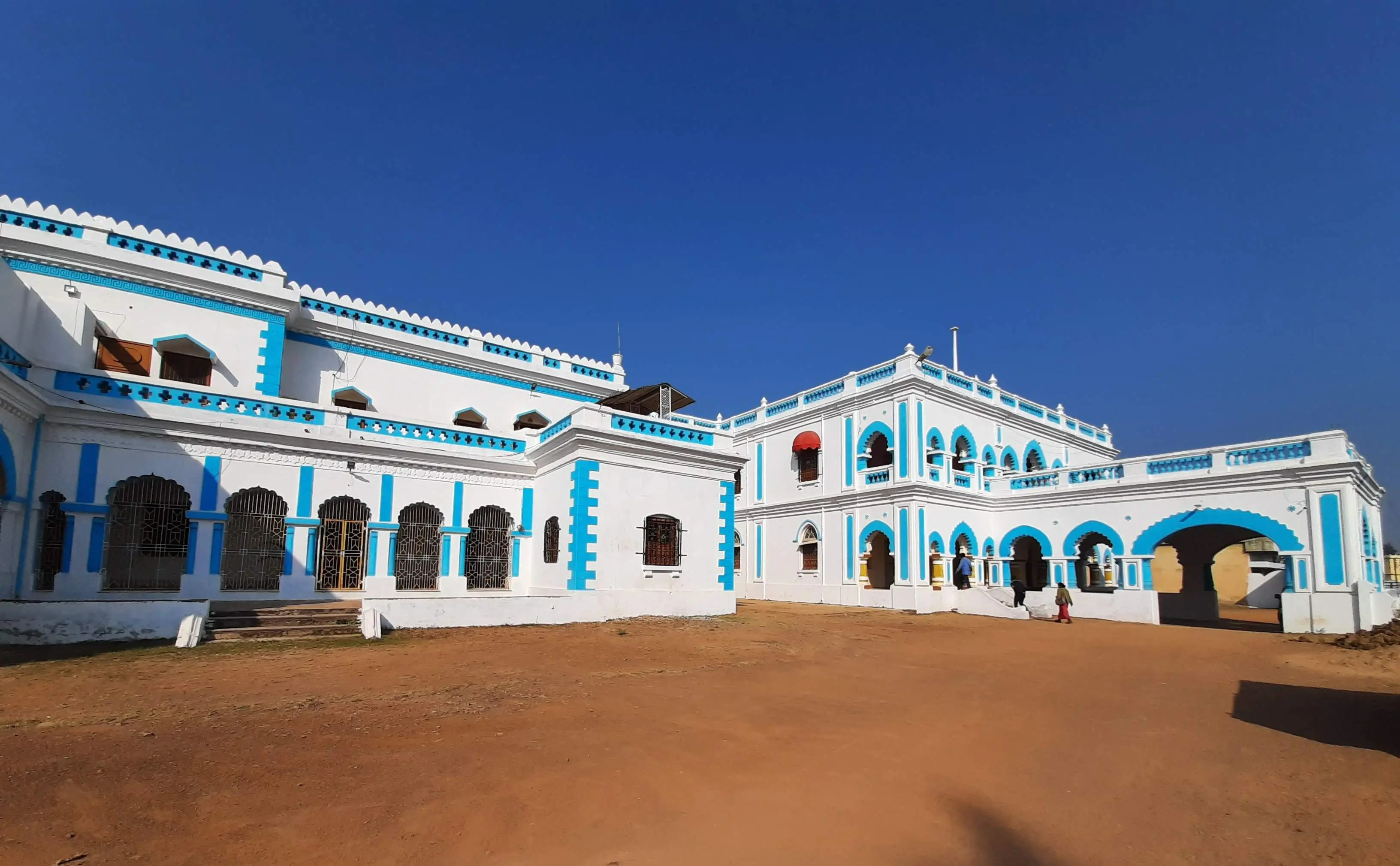
A walk tour around Jagadalpur set a good preamble by introducing me to the culture and history of the tribal communities and the royal family of Bastar. Jagadalpur is where most rituals of the Bastar Dussehra center around. Bastar Dussehra, the longest festival in the world is celebrated for seventy-five days thereby attracting tourists from across the globe to witness the congregation and unique rituals of Adivasis inhabiting the region.

The Royal Palace at Jagdalpur

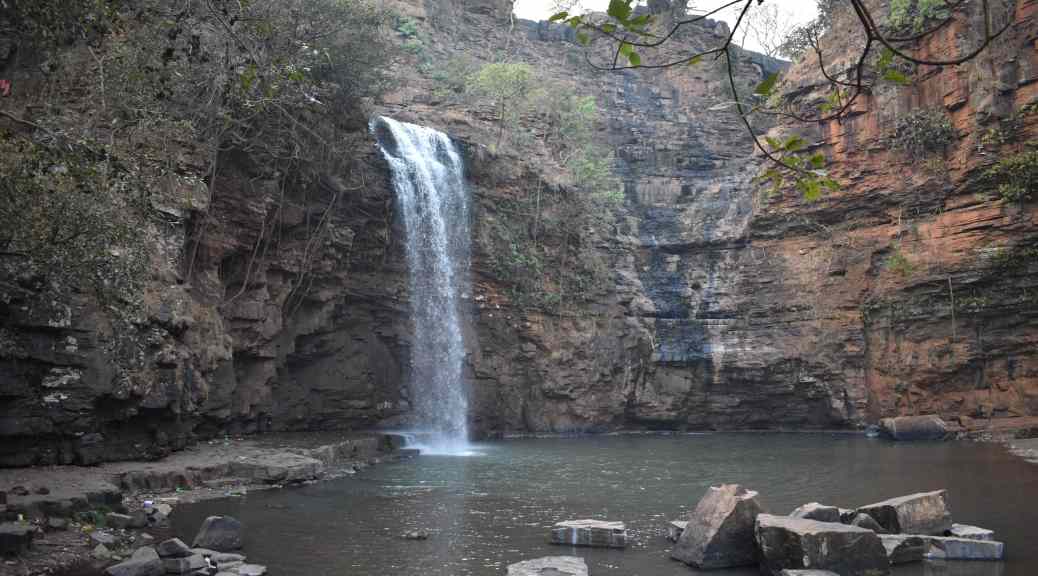
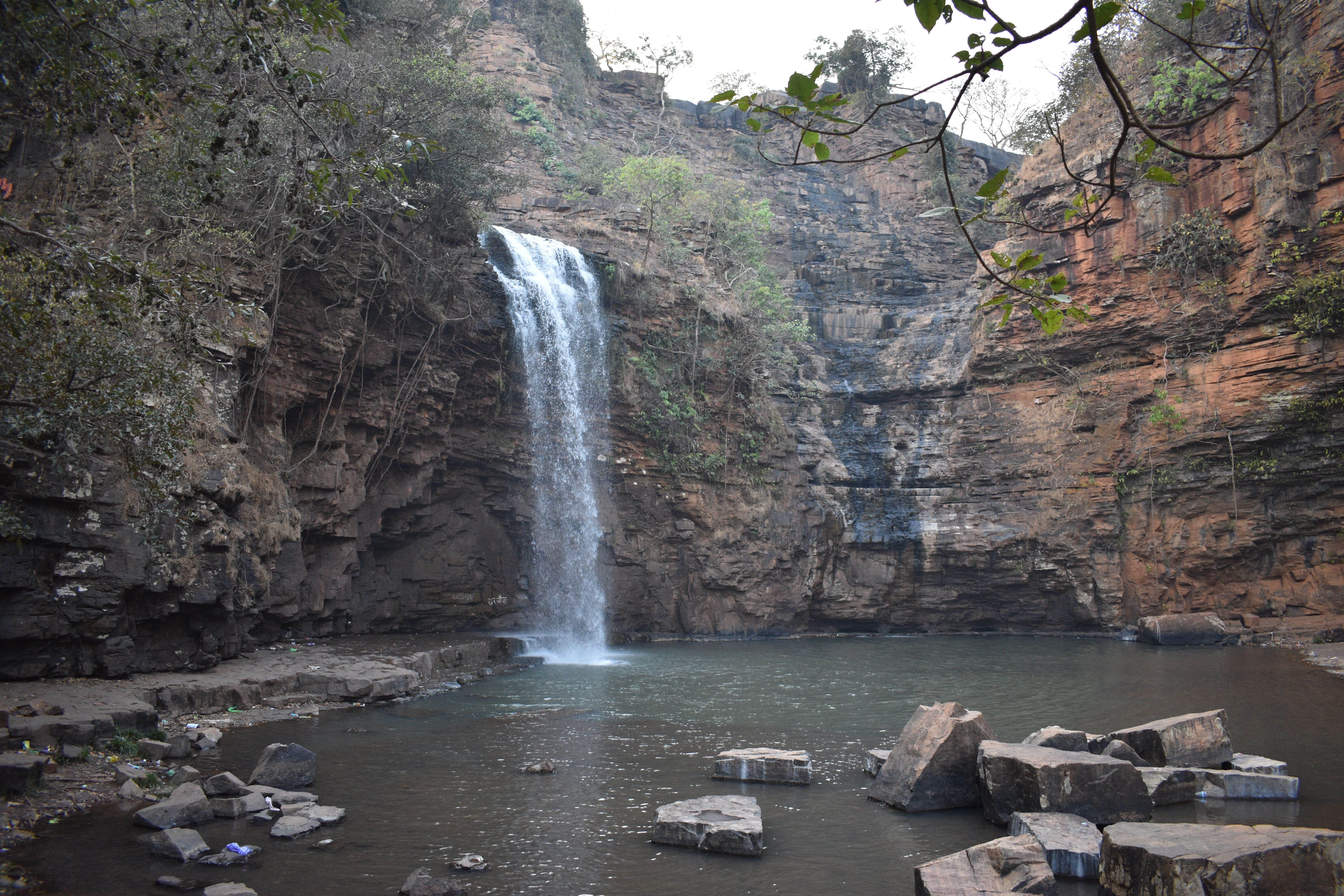
We then drove towards Kanger valley National Park, the only national park in India where human settlements is allowed within the heart of the forest that is thriving around the Kanger River. A sumptuous lunch served on patravalis was followed by a walk to see the beautiful Thirathgarh waterfalls and the serene Sita Kund, important sites of pilgrimage in the local culture. After spending some time there, I went on a guided trek to Shivaganga, an untouched gem. ‘The seclusion of the waterfall, reachable by a flight of bamboo stairs laid out through the thickets would be best complimented by an overnight camping and the dance of the fireflies’ as described by the guide.

Sita Kund, Thirathgarh waterfalls, Kanger valley National Park
Sita Kund at Thirathgarh waterfalls

That night’s accommodation was at an Adivasi homestay. A traditional greeting was followed by warm conversation with the host family, accompanied by homebrewed Mahua liquor and red-ant chutney around a bon-fire, in the courtyard overlooked by a huge Mahua tree. The night’s sky there is certainly a delight for astrophotography enthusiasts. I woke up for sunrise and joined my host on his walk along the riverbank to collect ferns for a perfectly organic meal to start our day. With the mud and bamboo houses, wooden fences, dining on cow-dung smeared floors, slow-cooked food in claypot and on firewood with locally available ingredients, my stay was an incomprehensible experience of sustainable living.

Among three magnificent limestone caves located within the national park, we explored the stalactites and stalagmites of Dandak caves. A fifteen-minute session of meditation inside the dark and silent chamber of the cave was transcending. A Gypsy ride to Kanger Dhara waterfall was followed by bamboo rafting on the pristine and calm waters at Kailash Jheel. Since, our campsite was at a walkable distance from a tribal hamlet, I sneaked out and spent time at the local fair there. Tribal folk had congregated from all neighboring hamlets to watch the ‘Naat’, a theater form where excerpts from epics are adapted into local stories and performed all night.

The next morning started early with an inspiring birding session along the river trail as I was accompanied by a ‘Myna Mitra’, the friend of the Myna birds. This is an initiative by the forest department toward conservation of the Hill-myna, the state bird of Chhattisgarh by getting the local forest dwelling tribal youth involved to track the daily activities of these birds. We got lucky to spot a pair of these birds, the highlight for a typical wildlife trip.

Gumadpal temple, Bastar

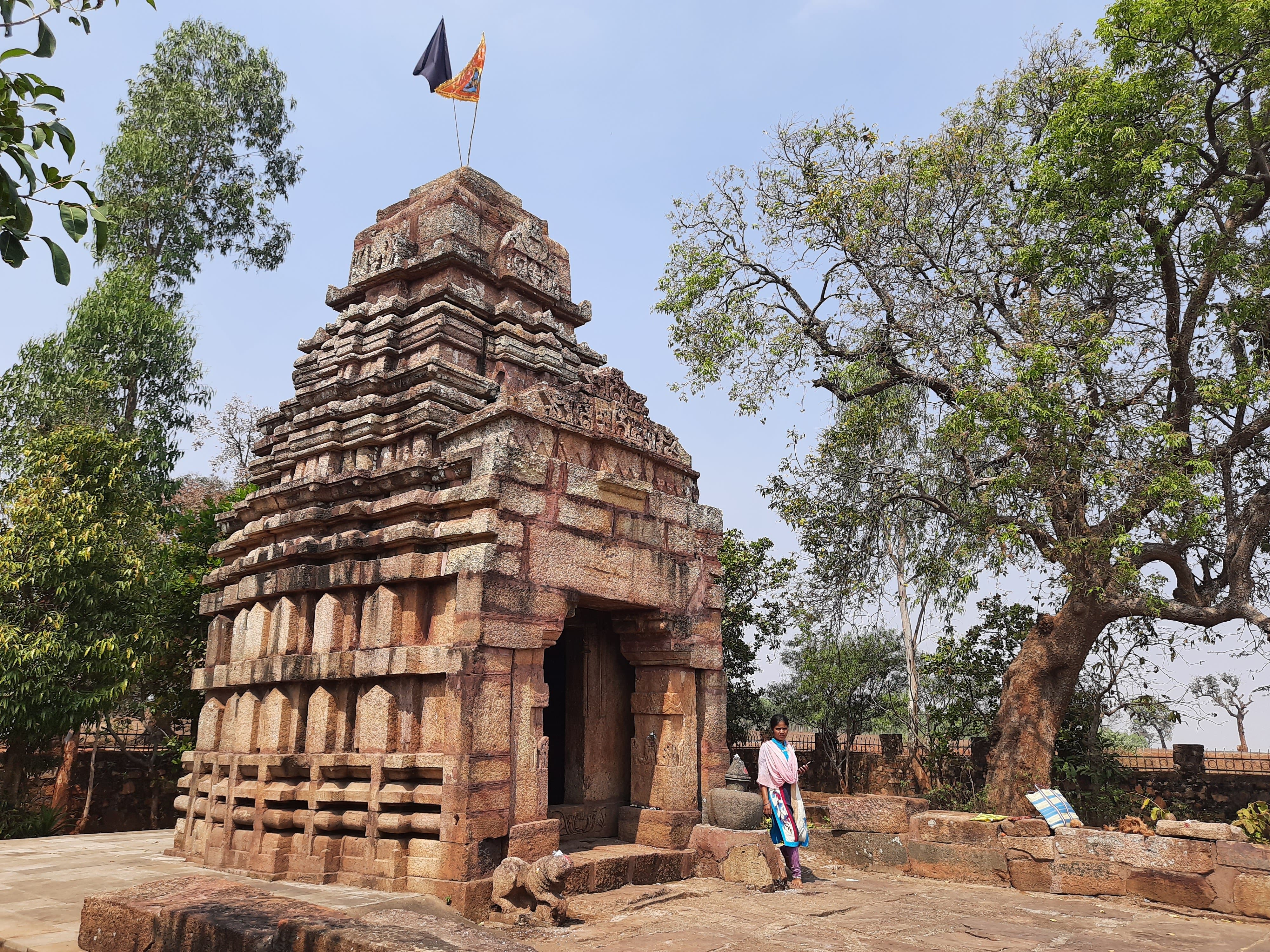
After a quick meal, we headed towards Gumadpal to see a 14th century Shiva temple. Historians haven’t yet found the reason for its unique three-tiered Linga. That day happened to be the weekly market or haat, as locally called. A walk around the haat was another opportunity to get a closer understanding of the local way of life. Haats do not just provide for trade but also for worshipping local deities, entertainment, socialization and even matchmaking. A few women were singing and dancing to the local songs and asked us to join in as well. It was surprising to know that barter still exists here. I tasted local food like tubers, mahua, tendu, and a variety of local brews and wines. Jewelry and home-décor items in dhokra, a GI tagged craft made by a method believed to be practiced since over 4000 years were being sold among several other unique crafts of the region. I witnessed an energy packed session of cockfighting as well.

Dokra art at various stages of metal casting

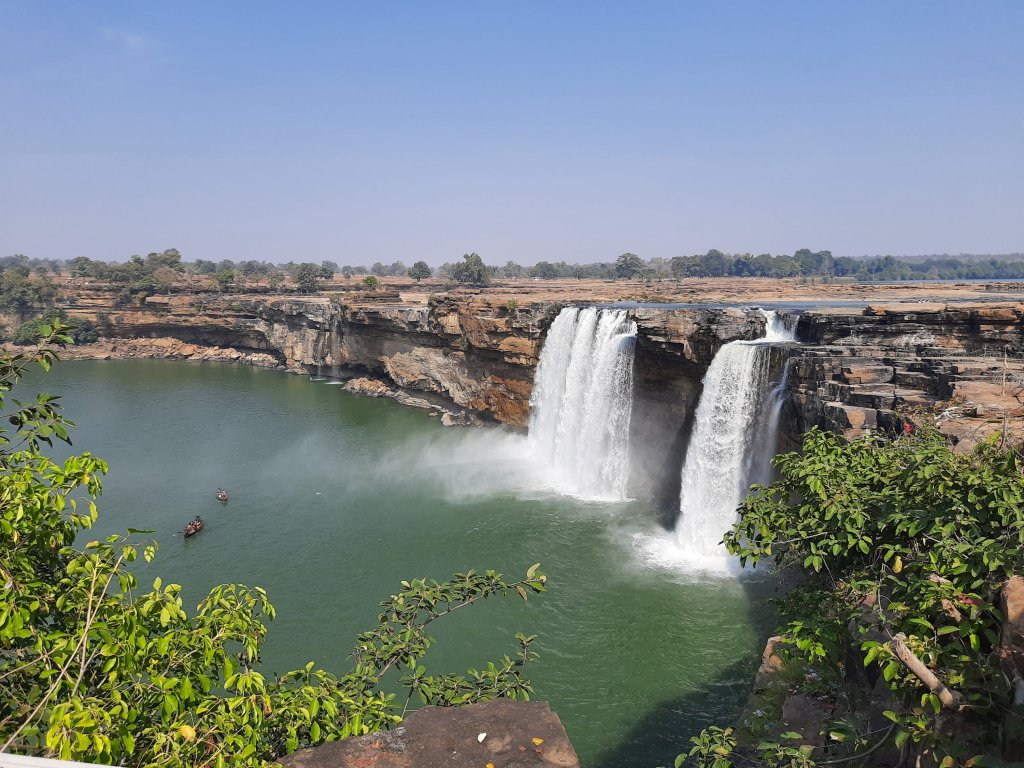
Having travelled to Chhattisgarh and not seeing the poster boy of its tourism advertisements, did not seem fair. River Indravati plummets down with all her might in a horseshoe shape, making Chitrakote waterfalls the widest in India. I checked into the government run luxury resort to spend my last evening, where every cottage offered a view of the setting sun over the waterfall. A ride in a country boat right into India’s Niagara waterfalls was just the prefect way to say good bye.

Chitrakote waterfalls during summer season

From waterfalls and caves to tribal hamlets and local markets, from history and folklore to art and craft, from food and wine to mud-houses and palaces, from dance and music to culture and architecture, my experience at Kanger valley national park was replete, wholesome and truly full of surprises!

Fact file:

  • Transport: Jagadalpur is connected by daily flights, rail route and by buses. Self-drive cars or taxis can be availed for travelling within Bastar.
  • Stay: Several tribal homestays are available within the national park. Nature camps and resorts run by Chhattisgarh tourism board and heritage stays in palaces are managed by the erstwhile royal family of Bastar. Good hotels of all budgets are available at Jagadalpur.
  • Food: Bastar cuisine mostly comprises of locally grown rice and vegetables.

This travel was part of the ‘Dekho Bastar- Season 1’ event organised by India Tourism Board and Bastar District administration in collaboration with Kanger Valley National Park. The article appeared in ‘Apr~May’23’ edition of ‘Bastar Bhoomi’ magazine.

Are you rich?

You know what rich people do?

They make their money earn for them. A series of wise and sensible investments in form of real estate, development of existing real estate, deposits, shareholdings in companies, etc. People who were born with money or born rich enough are made known that it takes an effort to stay rich. Rich people have a strong enough financial backup if things go awry. It’s okay to lose a little money in the name of learning because they can afford not to repeat it.

What do people who become rich in a short duration do?

Spend their money on things and experiences they might not have had previously. They spend it like water without a thought for saving up for contingency, because they are blinded by the glitz and glamour the short fortune is showing them. They become used to the artificial sense of being rich and try to fit among the actually rich people, regardless of their personal financial background. So one fine day, when the income stops or rather their luxuries surpass their income, hell breaks loose, because they weren’t prepared for the struggle of remaining rich without a strong financial backing.

Salaried people without any strong financial background are more prone to the above scenario, when they start earning more than they what they expected in a short period of time. Not necessarily salaried people, there are lots of other people who can be like this. They fall into fake reality of being rich wherein, they are living their life on a month to month basis, solely dependent on their salary.

If you ask me which one I belong to, I honestly don’t know. I am a citizen of Bangalore born to working parents (pure middleclass upbringing). I never have money, yet I’ll have a little.

I Belong to Everywhere: Theralu

This is an attempt to bring back nostalgia. Continued from- “I Belong to Everywhere: Chamarajpet“.

This is a small village in South Kodagu that is closer to Kerala borders than it is to Madikeri. This is where my maternal cousins originally hail from, and they went to school with me at some point while staying together at our maternal grandparents’ house. So, it was natural that I too would accompany them to their native village on several occasions when they went to their parent’s house at Theralu.

Apart from the expansive Tata tea estates and the Kerala borders some of the other popular landmarks that I enjoyed day tripping here were Irupu waterfalls, Mrithyunjaya temple and the Nagarhole National Park.

For all that I can remember from those visits were that there were people speaking and following different culture than I was familiar with. All the workers that worked in both my maternal and paternal hometowns were from the local tribal communities who spoke and ate quite same as what I did at home. But those working at my Uncle’s estate in Theralu spoke so many different languages. The larger group had almost created a mini-Assam in the site of their labourers quarters. They had built so many structures, equipment, tools out of bamboo (the most common site in all over Assam) and ate food that was made with ingredients that we in Kodagu didn’t know were edible until we saw them.

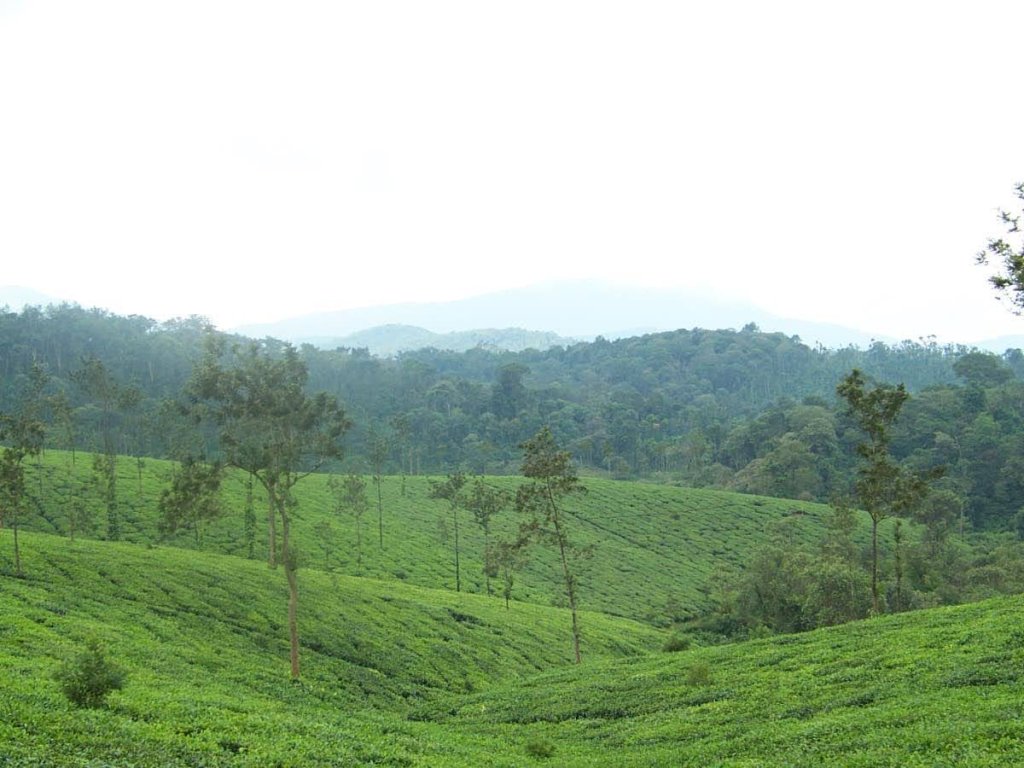
The Glenlorna tea estate Coorg

This is also where I was introduced to Tamil language and their movies. A large group of workers came to work in the farm at Theralu during the peak coffee harvest season and returned back to Tamil Nadu after the season ended. During evenings or on weekends, these workers often came to my cousins house to watch TV. Although I didn’t know their language and didn’t comprehend with most things they communicated, I picked up names of the stars whom they clapped hands in enjoyment or sounded a “Shhhhhh” to express disappointment while watching their favorite stars on the screen. In spite of not understanding a word of what the movie or tele-serial was about, it was an inevitable situation for me to sit and watch through whatever was being played 😀 Looking back at the days, those stars from the early 2000s are the only few whom I can associate with while talking about movies with a Tamilian!

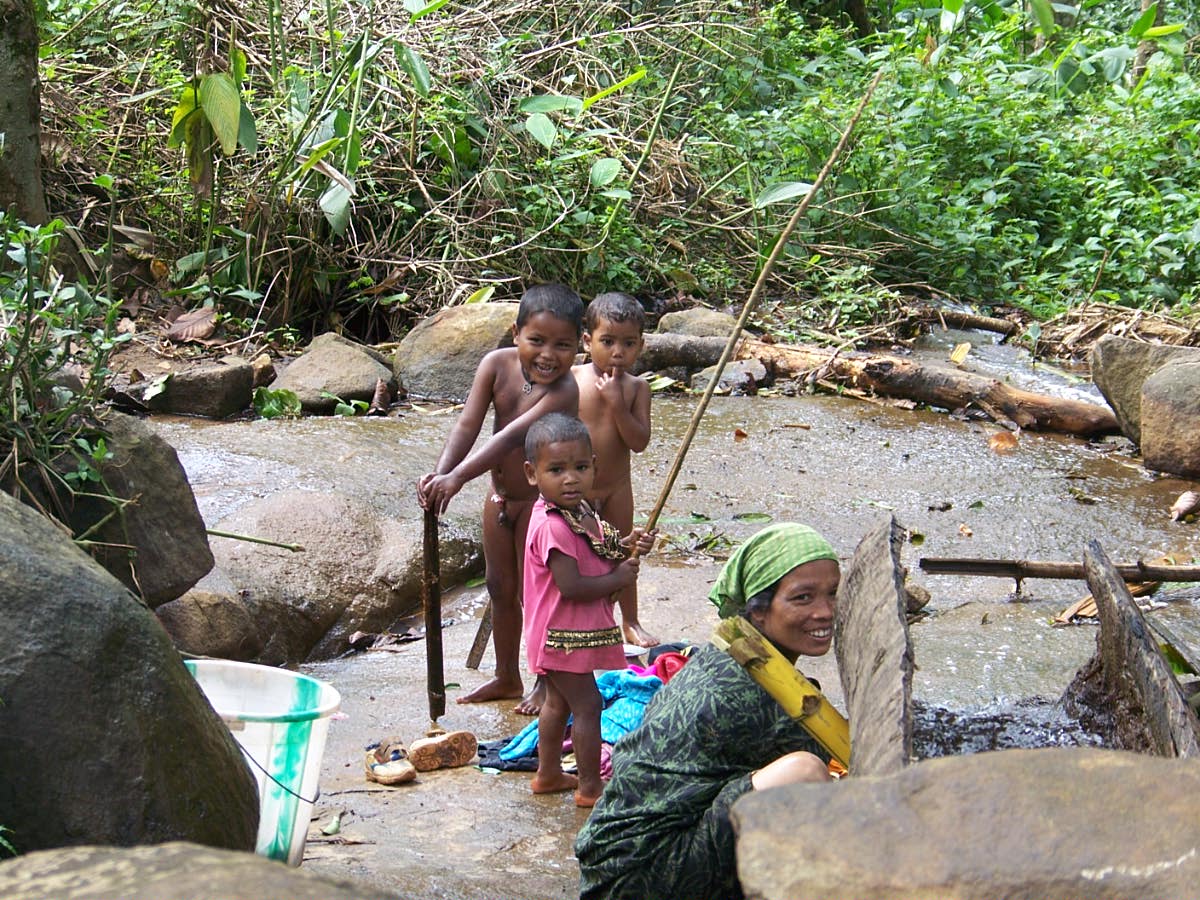
Assamese kids enjoying their shower in a small stream in the estate

With limited means of communication, the major exposure we had in this small hill-district was just limited to living in estates or serving the army. Here, I saw migrant workers coming from faraway places in search of ANY doable jobs, saved a portion of their limited income and sent it to their families back in their hometowns and still lived a life of modesty. I learnt that life was not all easy for people living in other parts of the earth. It always made me think and reflect how unequal and different life was for everyone. Theralu taught me lessons of gratitude for the life I am living!

To be continued as- “I Belong to Everywhere: Jalahalli

A Tour of Indian Foundries- Investment Casting

In this post today, I like to discuss a technical subject by standing in the shoes of a traveler. During my student life, I have never been in a race to become a top-scorer. However, it was Professor Mukunda’s enthusiastic teaching method, that ‘Material science and Metallurgy’ has been one subject that I topped the department (I like to show-off a bit, with those dark glasses emoticon). With an in-hand admission letter to one of the top universities to pursue a post-graduation in the subject, the lostlander deviated along the way, only to become a professional ‘Metallurgical Failure Mode Analyst’ much later in her career. If not for Prof.Mukunda, a seed of interest in the subject would have never been sown and I wouldn’t be writing about such an unconventional travel post, it seems.

Metallurgy is a science in which India has mastered from even before the world could imagine. The Vedas have a devoted section to teach these techniques. Prof.Mukunda’s favorite topic was ‘Metal casting with the lost wax technique’. His face beamed in joy every time he mentioned the intricacies that were achieved in the metal art thus created. “No two pieces that are exact replicas of each other can ever be created”, he stressed. We had foundry visits as part of our curriculum but that’s where we could only see sand, centrifugal and other forms of metal casting. Without having easy access, investment casting, also called as the ‘lost wax technique’ of metal casting was only left to our imagination. Many years after my graduation, I have been fortunate that I have been able to visit some of the amazing and traditional foundries in my country that practice the lost wax technique. These places have got them their individual ‘GI’ tags. Here is a walk through my foundry visits which I believe I should share with my fellow readers.

Idols of Swamimalai:

Swamimalai translates to the ‘Hill of the Lord’ that is named after an important temple in Tamil culture dedicated to Lord Murugan. This little town is famous beyond just this holy abode. One doesn’t need explanation at the mention of the bronze idols of the Cholas era. Apart from several of these antiques being prized possessions at museums across the globe, these treasures are among the highly traded commodities in the black market. These are ALL brought to form in Swamimalai. It is believed that the artisans of Swamimalai are a group of skilled men called as the Stapathis who have passed on their heritage of metal idol making, since the 12th century. The precision of composition and the measurements of these metal idols, mostly bronze are followed as per the ‘Agama Shastras’. This holy land of the alchemists was a part of my weeklong backpacking with my brother, back in Year-2015.

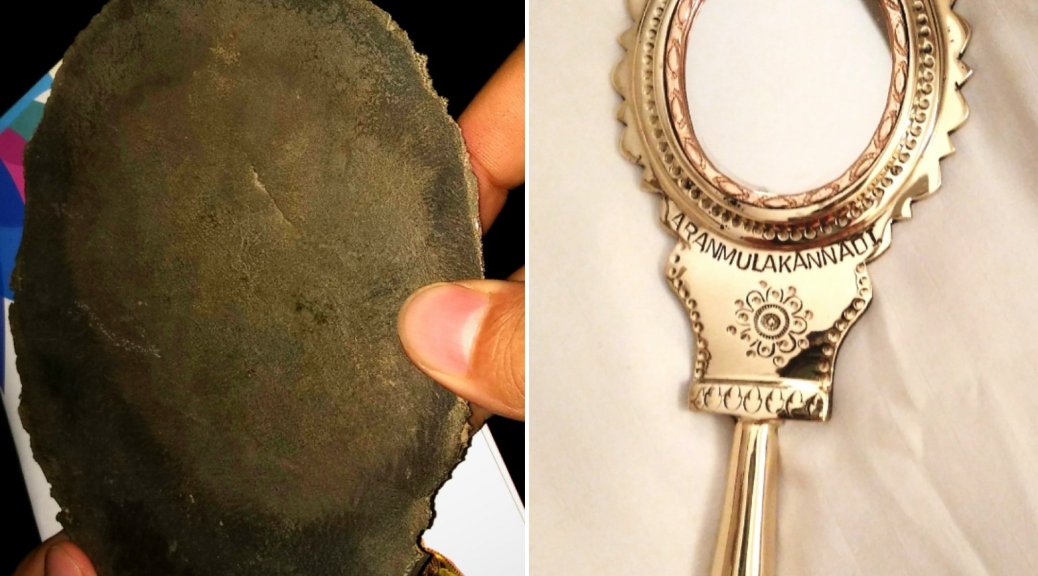
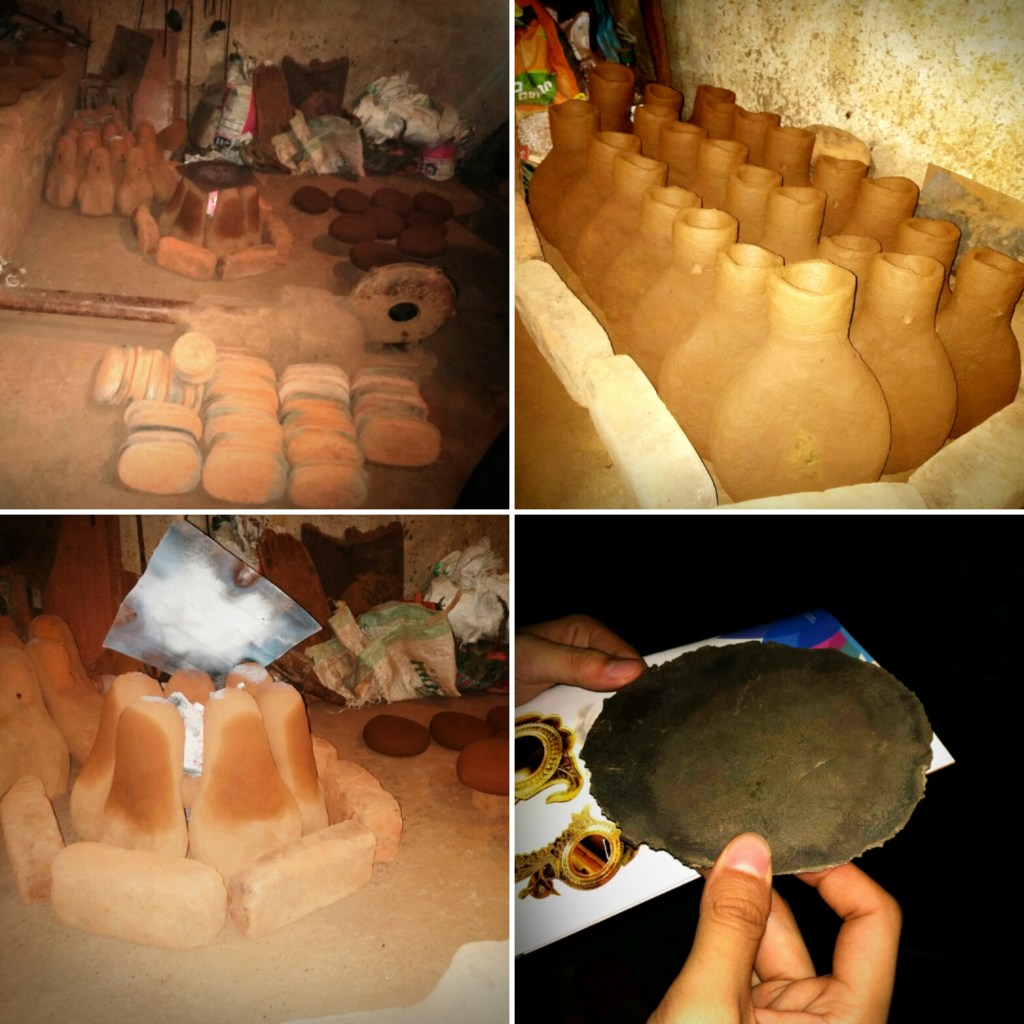
Work-in-progress at a foundry that makes Aranmula Kannadi
Clockwise from top left: 1. Raw material for mould making with the furnace and blower 2. The mould 3. Furnace 4. Metal sheet after moulding ready to be polished

Aranmula Kannadi:

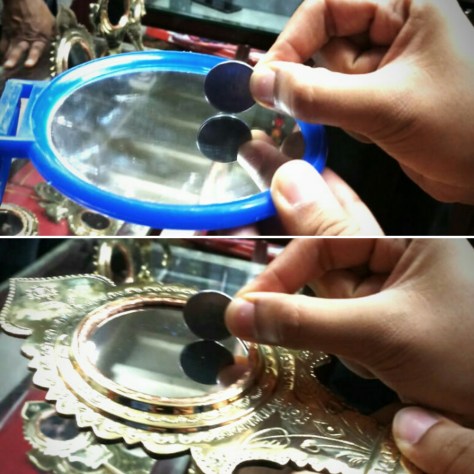
An extremely important part of malayalee culture, this handcrafted mirror is a quintessential part of Kerala. I was told that on the day of ‘Vishu’ festival, after waking up in the morning- he/she should first see themselves in an Aranmula Kannadi placed alongside the ‘Canacona flowers and a lit oil lamp’ before anything else. ‘What is it about a mirror?’ a person unknown to the traditions of this land might ask. ‘These mirrors are not glass!’ These mirrors are super-polished metal surfaces that are capable of reflecting real images. A glass always reflects a secondary image (you can notice that there is a distance from the reflecting surface to the image formed) whereas, the metal surface reflects primary images (There is no additional distance between the object and the image).

Two images that give the comparison of reflection in a glass and a metal mirror (Aranmula kannadi)
Top: The secondary reflection in a glass mirror; Below: The primary reflection in a metal ‘Aranmula Kannadi’ mirror

These manually polished mirrors are created through investment casting whose composition remains to be a secret that is passed down through generations of just 1 family. The small group of these master craftsmen who are protecting their secret recipe of the Malayalee culture all reside around the Aranmula Parthasarthy temple in the state of Pathanamthitta. I had the esteemed opportunity of visiting one of these foundries when I sneaked out after working hours on one of my business trips in Year-2019.

Video of my visit to the mirror making foundry at Aranmula

Dokra art of Bastar:

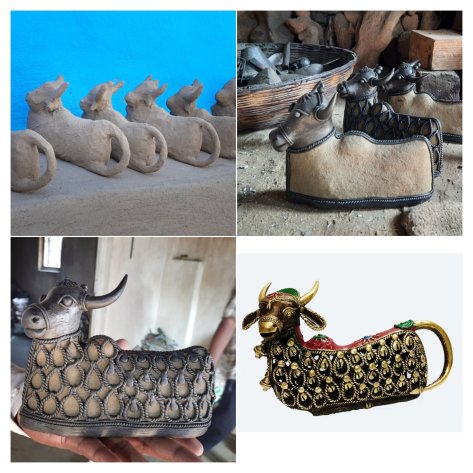
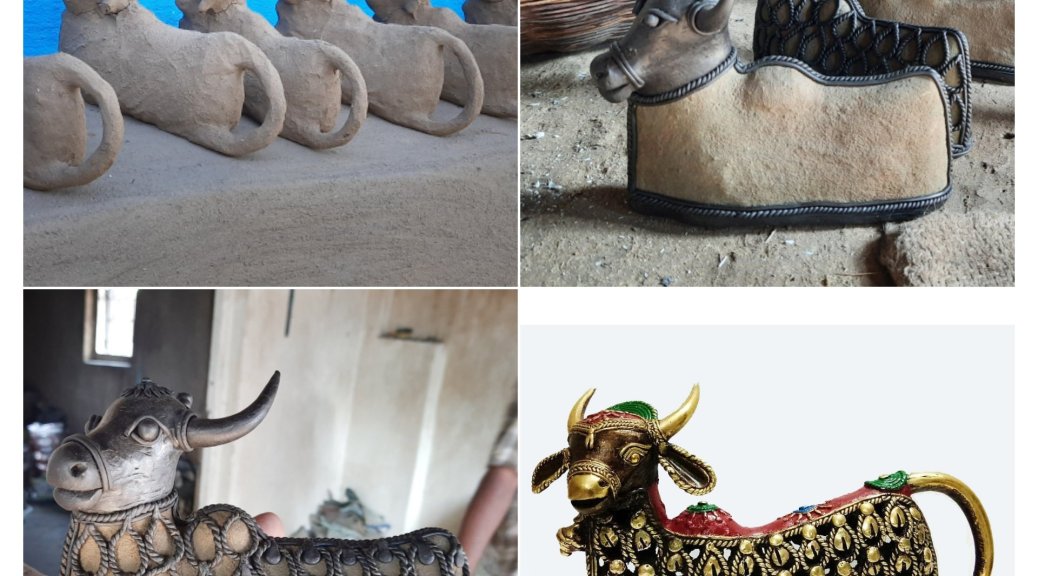
This non-ferrous metal art is created by the forest dwelling tribes of Chhattisgarh. Historians believe that this art has evolved from what was used by the primitive tribes to create figurines of their local deities for worship and for jewellery purposes. The metals used were earlier collected directly from earth in the mineral rich area of Bastar, then smelted to separate the desired elements and mixed in intended proportions to form the final material for casting. This is an undocumented tribal technique that has been passed down through several centuries. Today, it is widely used for commercial purposes of decoration and gifting. It is now revered as a part of the tribal culture that represents the state of Chhattisgarh. I had an opportunity to visit one of these foundries and observed keenly the lifeless metal take form into art during my family’s five states’ road trip in Year-2020.

Work-in-progress at a foundry that makes Dokra art in Bastar
Dokra art at various stages of metal casting

Kola masks of Karkala:

Talking about all these foundries, I cannot be leaving my homestate behind. Although the folk art of metal mask making is slowly dying, these masks are an extremely important part of the culture of the Tulunad region. These bell metal masks are used in the spiritual performance of the ‘Bhoota Kola‘. Today, the art is used beyond mask making and can be seen in idols, lamps, bowls, utensils among other things used and sold extensively in Udupi district of Karnataka.

The lamps and idols of Nagamangala:

The contribution of the Hoysalas to the art and heritage of Karnataka cannot be justified with any number of words. Their intricacies and detailing in their work can be seen not only in the stone sculptures of their temples but also in their metal crafts. A few of the practitioners of the Hoysala style of metal casting have saved and passed on their knowledge to a few artisans who have made the town of Nagamangala their home. This thriving art can be seen in the traditional bronze lamps widely used across Karnataka and in the idols of various deities in this region. Although bronze is believed to be a godly material, other metals like tin, copper etc. too are cast into various articles using this technique.

This post is my small attempt towards promoting local art. I look forward to influence at least a few of my readers to learn more about the rich heritage of India and encourage local artisans in various ways possible. Do share your thoughts with me through the comments below.

Art and Crafts of Bastar

Bastar is an area soaked in rich culture. And art is an integral and unique part of this indigenous culture. It is safe to say that Kondagaon district is the art hub where there are entire villages dedicated to each of these handicrafts, with households registered with the ministry of culture & art. Several of these artisans are National award winners and visiting faculty at universities across the world. During my week long stay at Bastar, I managed to find time to visit some of these villages and interact with the artisans.

Blame it on me being an experienced professional in materials, manufacturing and heat-treatment processes, I have this weird fancy for everything that involves these aspects. One would not want to seize a travel opportunity from me when there is an element of art and engineering in it…. On similar lines, is the first part of this post.

The major and famous handicrafts of Bastar can be listed as below:

Wrought iron artefacts:

Chhattisgarh is a state blessed with a mineral rich geography. Until a few decades ago, the tribes inhabiting the region used to collect raw iron ore from the naturally available soil or portions of earth, heat it in a furnace and separate the molten iron to make wrought iron. Today, wrought iron is directly purchased from the market. This is then melted and beaten into sheets. The sheets are then formed into various patterns and welded into beautiful artefacts. Although the traditional designs are based on the local tribal culture and represent aspects of daily life in Bastar like animals, hunting, the tribal folk, tribal deities, etc., modern adaptations have been inspired by the Indian epics among many other things. But still, each piece is handmade and unique with no two pieces being exactly the same.

Demonstration of making wrought iron craft by an artisan

Dokra art:

Bell-metal is an alloy prepared locally and cast into various patterns through a technique called as ‘lost-wax technique’ of metal casting. Although this technique was primarily used by the indigenous tribes to mold their traditional jewelry back in the time, it has slowly evolved into making idols and other home décor items. These indigenous metal cast items are collectively called as Dokra art.

Dhokra art at various stages of metal casting

Terracotta pottery:

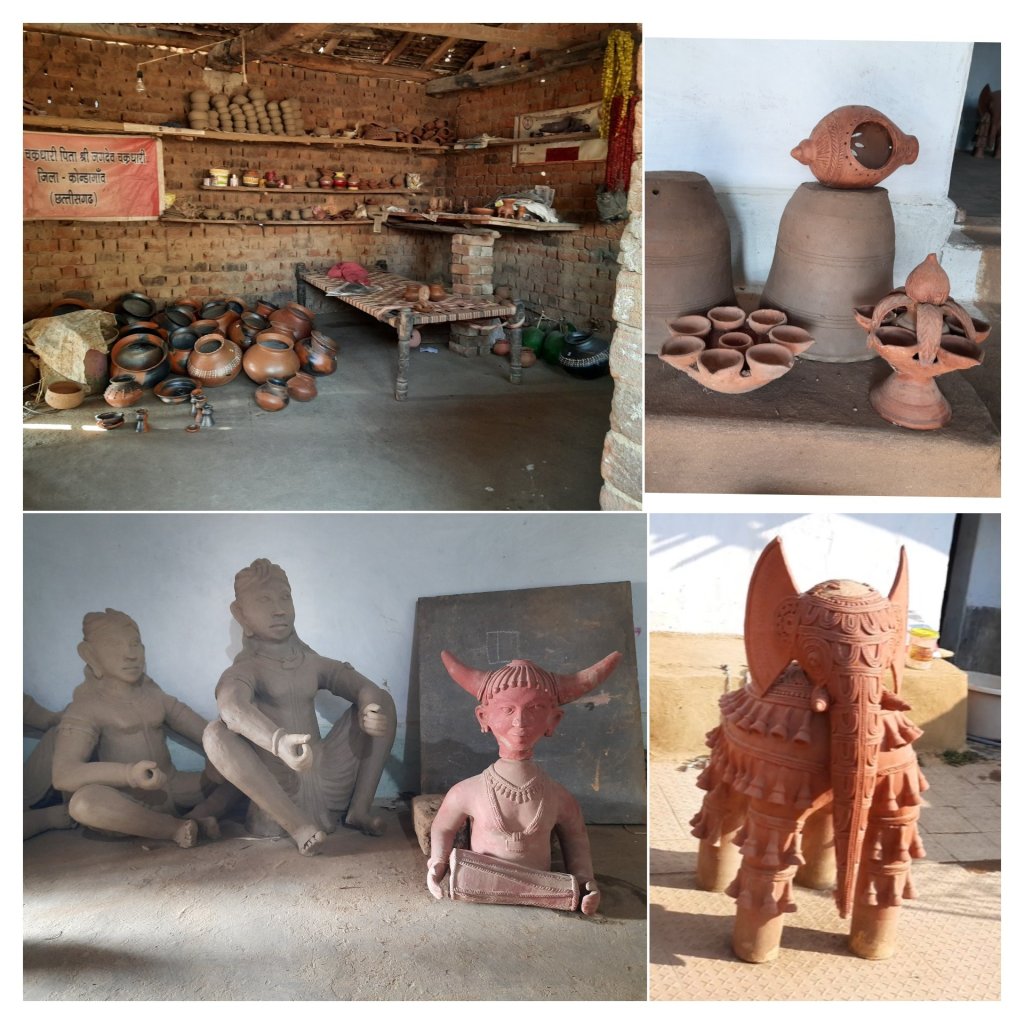
A special type of clay is dug from the vast paddy farms and is then crafted into various artefacts. The specialty of the art here in Bastar is that very large and real-life sized objects are crafted completely with clay. After the potter assembles the product piece by piece, he then burns it as a whole unit to give it the required strength and rigidity. Well, there’s an entire village of potters / Terracotta artisans in Kondagaon.

Terracotta art at Bastar’s pottery village

Wooden carvings & Carpentry:

With the abundance of forest cover and timber availability, wood craft is a major part of the handicraft culture here. Large tree trunks and roots are given the form of beautiful figurines, animals, etc. by very skilled artisans. This can also be seen in the rich carvings on doors and friezes of various old and traditional structures across the region.

Stone sculpture:

With the mineral rich earth of the region, various types of soil and stone are available. Several of these earthy materials are used to make beautiful sculptures.

Mural Paintings:

With a somewhat influence of the Patachitra art from the neighboring state of Odisha, the local Gondi artform and several other influences, the indigenous wall and fabric painting has evolved. Beautiful pictures of tribal deities, everyday life etc. can be seen being depicted through these paintings.

Handloom:

A small portion of the local tribes are involved in collection of the naturally available cotton and Kosa silk from the forests and weaving them into traditional textiles.

Jewelry:

Each of the tribes who inhabit the remote jungles of Chhattisgarh have their own unique pieces of jewelry. Anything that ranges from silver, fabric, plant fiber, shells or animal bones, the locally available materials from the wild are adapted into their culture in the form of traditional jewelry.

Visiting a Gotul- A Bastar experience

For someone visiting Chhattisgarh, experiencing the tribal culture and enjoying the rawness of the natural landscape in Bastar would undeniably be the priority. If you are lucky, then you might get the opportunity to visit a tribal Ghotul. A Ghotul is a structure that accommodates people. It is either an open arena with earthen floors, without walls and with roofs laid with wood and hay or it is a completely closed structure built with earthen walls decorated with various murals. ‘But what is so ho about it?’, one may ask.

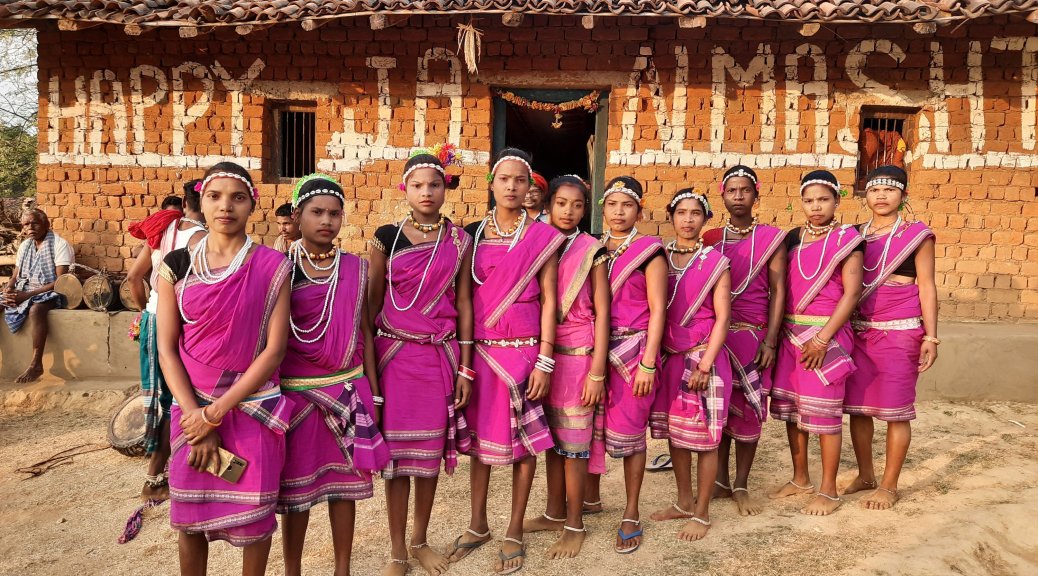
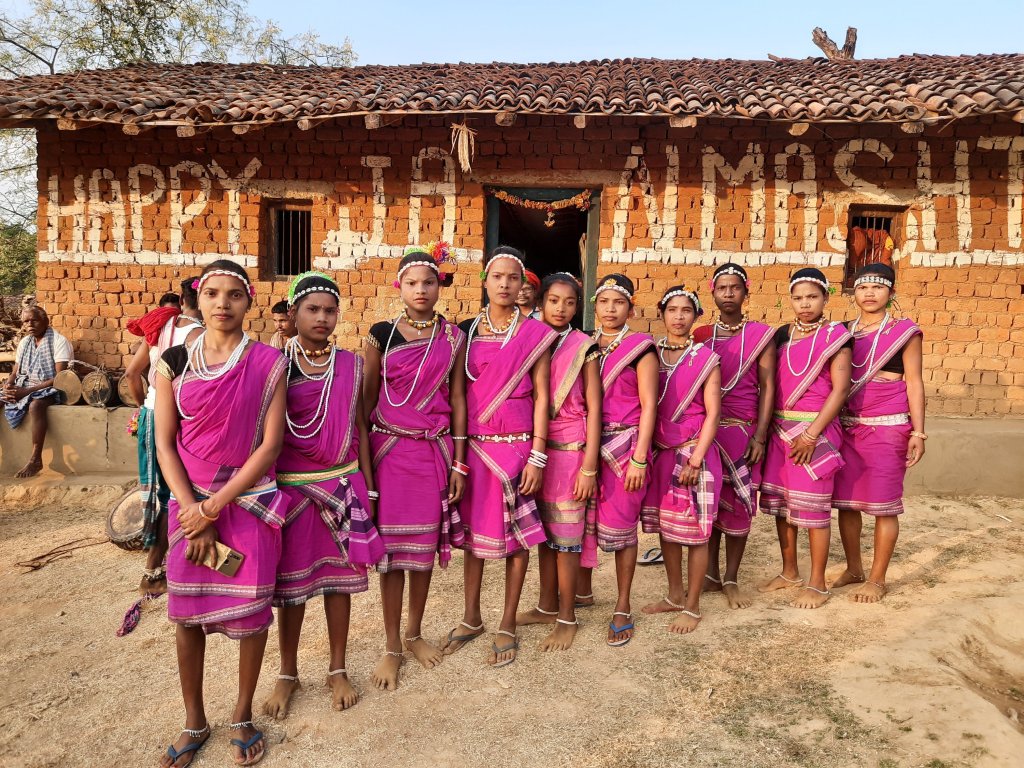
The Muriya girls with a Ghotul in the backdrop

The primary purpose of a Ghotul is what makes it important in the regional culture of Bastar in Chhattisgarh. It is a socializing club for the unmarried youth of the Muriya and the Gond tribes which also in some parts, serve as a dormitory for the registered members. Young boys and girls register themselves with a Ghotul of a particular village or area when they hit adolescence and the functioning of this traditional club is presided over by a head boy and a head girl from the respective tribe. Here, every evening, the members gather and learn the essentials of taking up a new life ahead of them. Reaching adolescence means that they have become eligible to get married and take upon the responsibilities of running a family. So, they are taught all the required life skills like managing a house and a family, folk traditions, music, cooking, religion, cleanliness, discipline, sympathy and everything else. The whole idea is to pass on and contain the traditions within the tribe.

The celebration dance by the Muriya tribes for hunting a game

This also promotes inter-tribe or inter-Ghotul weddings so that a member of a particular tribe doesn’t leave the community and the strength of the community is sustained. While pre-marital sex is considered as a taboo elsewhere in India, this culture encourages the youth to indulge in sexual activities to find the most compatible life partner. It is said that if a member of a Ghotul gets pregnant and doesn’t know who the father of the baby is, the village will adopt the baby and nurtures it as everyone’s own child.

Due to the rich ideology of conservation of the culture, people from across the globe come to study and understand the functioning of these Ghotuls. The Muriyas indulge in celebration of the little things from their daily lives. For example, after a successful hunt in the wild, a birth in the community, a betrothal, etc. They have about 12-15 different types of dances that they perform to celebrate these everyday joys. There are rituals and a sequential procedure on how the members need to conduct themselves in the course of visiting a Ghotul like getting ready, dressing up, assembly and starting the evening at the Ghotul.

I got an opportunity to visit one such Ghotul and here is a video of a dance they performed for us.

the Muriyas celebrating a game hunt at a Ghotul

As a small introduction to the video above: In this dance, you can see two hunters dancing around and in between the other members, while musicians are standing in the middle and playing the traditional instruments. There are also a couple of men wearing head gears that look like chital / spotted-deer which indicates that this celebration is after a game was shot-down by the hunters and brought to the Ghotul for a feast.

What are your thoughts and views about the Ghotul system? Share them with me through the comments below.