Tag Archives: Things to do in Coorg

The Povvadi Namme of Ibbanivalavadi

It was back during my school going days, that I had an opportunity to visit the Haleri (Paaleri) Bhadrakali temple in Madikeri taluk. I was especially intrigued by several antlers hung on the wooden beams through the length of the temple verandah. Upon enquiry, the temple priest fed my curiosity by letting me know that the antlers are used during the temple festival to perform ‘Kombaat.’ Kombaat is a word derived as a combination of two Kodava words, Kombu (antler) and Aat (dance). It is one of the ritualistic dances performed during temple festivals of Bhadrakali, a local deity of Kodagu. Ever since then, I was trying to get details or the schedule to witness one of these festivals where Kombaat is performed.

Finally, it was in the year 2024 when my friend informed me that the Povvadi festival at her native village was scheduled to be held in April. After a long wait, I had finally arrived at the ‘Kaitale’ (ground) attached to the ‘Bhadrakali temple’ of Valavadi village. ‘Ibbani’ and ‘Valavadi’ are two sister villages in Madikeri taluk. The annual temple festival is hosted by each of these two villages on alternating years at the Bhadrakali temple premises of the respective village. This year, it was the turn of Valavadi villagers to host this festival. There are eleven clans that are the original inhabitants of Ibbanivalavadi. Therefore, they take precedence in the conduction of the overall festival.

Bhadrakali, also known as Bhagavathi or Povvadi, is a local deity worshipped in every village of Kodagu with dedicated temples. The annual festival celebrated in her honor is the Povvadi festival. There are several native communities in Kodagu and each of these members have their own significant roles and responsibilities to be performed at these festivals.

‘Maadayi Kaavu’ is a Bhagavathi temple located in the Malabar region of Kerala. It is believed to be the Aadi Neley (primary destination) from where the deity took station at several places across Kodagu. Among these places, is a group of temples called as the ‘Elu Neley’ (seven station) Bagavathi located across the northern and western parts of Kodagu. This group comprises of one brother- Appangeriappa at Kaatakeri and six sisters, namely- Poramalenaad Povvadi at Galibeedu, Karavale Badaga Povvadi, Paaleri Povvadi, Ummeti Povvadi at Makkandur, Kedakal Povvadi, Ibbni and Valavadi Povvadi at Ibbanivalavadi

Peeli aat

The beginning of the festivities is marked by a ritual called as ‘Kett boovo’. Thereafter, none in the village is allowed to consume non-vegetarian and alcohol over the next fifteen days. The festival is celebrated towards the last seven days with specific rituals on each day.

Kombaat

On the first day, the Ooru-thakka (Village-keepers), Deva-thakka (Keepers of the temple administration) and Bandara-thakka (Keepers of the temple’s valuables) all arrive in a grand procession, carrying the Bandara-Potti (Donation box) and the jewelry for the deity from its treasury to the temple. This marks the beginning of the festival. The people are accompanied by the music of the ‘Dudi’ and ‘Poda mani’ kott (traditional percussion instruments). There are noteworthy rituals like the Boad kali, boad aat etc. among others.

There are other rituals performed over the next three days. The fifth day is the most interesting as several traditions unique to the ‘Elu Neley’ Bagavathi temples can be witnessed. The day began with ‘Kadi-aat’ followed by a ritual called Aangola-Pongola. It is performed by married couples as an offering to the goddess after their prayers for having children are fulfilled. The vow is fulfilled by their kids by cross-dressing in a wedding ceremonial attire any time before they hit puberty. A son dresses up as a traditional bride (Pongola) and a daughter wears a groom’s costumes (Pongola) as the family together offers their prayers to the Goddess.

Kombaat

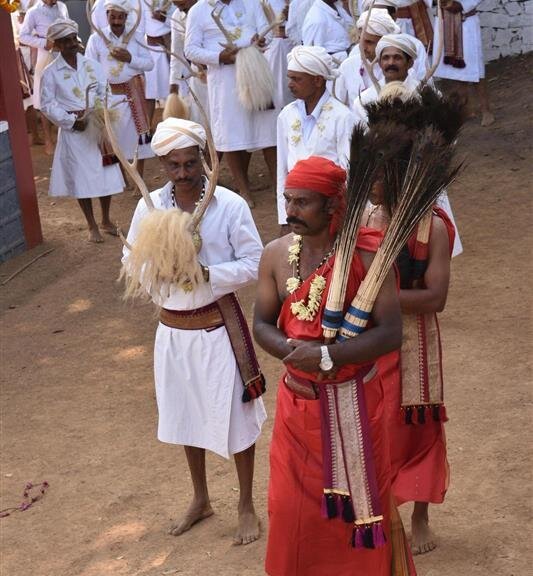
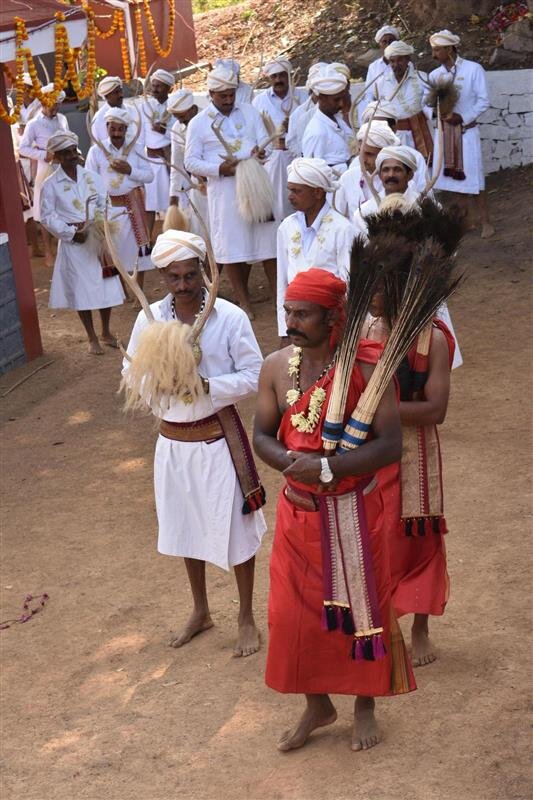
Then, all the men of the native clans get dressed in ‘Boltha Kupya’- The white robe worn only on auspicious occasions. They then hold a bundle of peacock feathers (peeli) in their hands and perform a rhythmic dance to drumbeats in a circular formation around a ‘Kutthi bolcha’ (traditional lamp). This dance is called ‘Peeli-aat’. Post the performance, the crowd dispersed from the kaitale and gathered around the temple.

Here, the men in white kupya again perform the Kombaat to the beats of the traditional drums and Valaga (traditional wind instruments played by the members of the Meda community). Along with the ‘Ajjappa,’ (a person possessed by the spirit of ‘Ajjappa’, another local deity), all the other men in white Kupya circumambulate the temple while dancing with the Kombu and Chowri (a cluster of yak hair).

After that, all the villagers gathered to offer bandara to Ajjappa and Bhadrakali. After everyone had finished offering their prayers, they then went back to the podium with a spirit that was competitive. Competitive, because the next ceremony was like a competition of sorts. All the native clans of the village competed against each other in a coconut shooting competition. Three coconuts tied to a distant high pole were to be shot at as targets. It was a fun event to end the day of festivities.

After the sun went down, the men came together in an area nearby to the temple to offer animal sacrifice to the deity. Women are not allowed to this space. The food is then distributed among all the village folk.
Povvadi Namme, Kodagu

On the following day, there is a similar celebration with Kombaat and Valaga, but on a smaller grandeur. on the seventh day of the festival, a pooja is offered to the goddess by all the thakkas, before returning the bandara potti and the temple jewelry to the treasury. The last and the final day of the fortnight long festival was marked by a ‘Kalasa Pooja’ offered to the goddess before drawing curtains on such a beautiful festival until next year.

Disclaimer: The purpose of this article is for documentation of lesser known festivals of India. The above information is only based on what I could gather by discussing with people who had come together at the temple. My apologies for any wrong representation. Readers are welcome to contribute any information that is deemed important and useful to be shared here.

This post was featured  on 24-Oct-24 edition of ‘Spectrum’ in Deccan Herald National daily.

A Series- Festivals of Kodagu

The Kodavas and the other native tribes inhabiting the Kodagu region are primarily nature worshippers. There is no idol worship, and the five elements of nature and the guiding spirits of their ancestors are central to their worship. However, there are several other deities that are associated with the Kodava folklore and the regional culture in general. As per some historians, the worship of Shiva and Parvathi, which is also integral in Kodava folklore, can be attributed to the influences of the Haleri kingdom’s rule.

“A Mahadeva (Shiva) for each province, Povvadi / Bhadrakali / Bagavathi (Parvathi) for each hometown, Aiyappa for each village, Natha (snake god) for each lane and Puda (indigenous soil lord) for each family,” goes a Kodava saying. In Kodagu, Mahadeva and Bhadrakali are worshipped in temples that are built and managed by the respective villagers. On the other hand, Choundi and Ayyappa are forest dwellers. They mostly live in ‘Devara Kaadu’, the sacred groves.

Although the chief deities are the same in every province or hometown or village, the way they are worshipped is unique to every temple. The rituals and ceremonies vary depending on the folklore in which its roots are embedded. These stories are compelling and narrate the importance of connections with the motherland and nature worship. Bright colours, earthy music and traditional dances mark these festivals.

While the main festivals of the community like ‘Kailpodh’, ‘Edamyar’, ‘Puthari’ and Kaveri Sankramana and the older tradition of Nari-Mangala have been well documented through several mediums, it is these indigenous and lesser-known local festivals of Kodagu that I would like to experience and document, one festival at a time.

I would like to hence, start this series- “Festivals of Kodagu”. The purpose of this series is only for documentation of lesser-known festivals. All the information shared through my series’ posts are based purely on what I could gather by discussing with people who are closely associated with the temple or are natives of each village. My apologies for any wrong representations. Readers are welcome to contribute any information that is deemed important and useful to be shared here.

  1. The abandoned tribes and the abuses- Kunde Habba
  2. The Boad Namme of Chembebellur
  3. The Povvadi Namme of Ibbanivalavadi

I Belong to Everywhere: Uttarahalli

This is an attempt to bring back nostalgia. Continued from- “I Belong to Everywhere: Napoklu

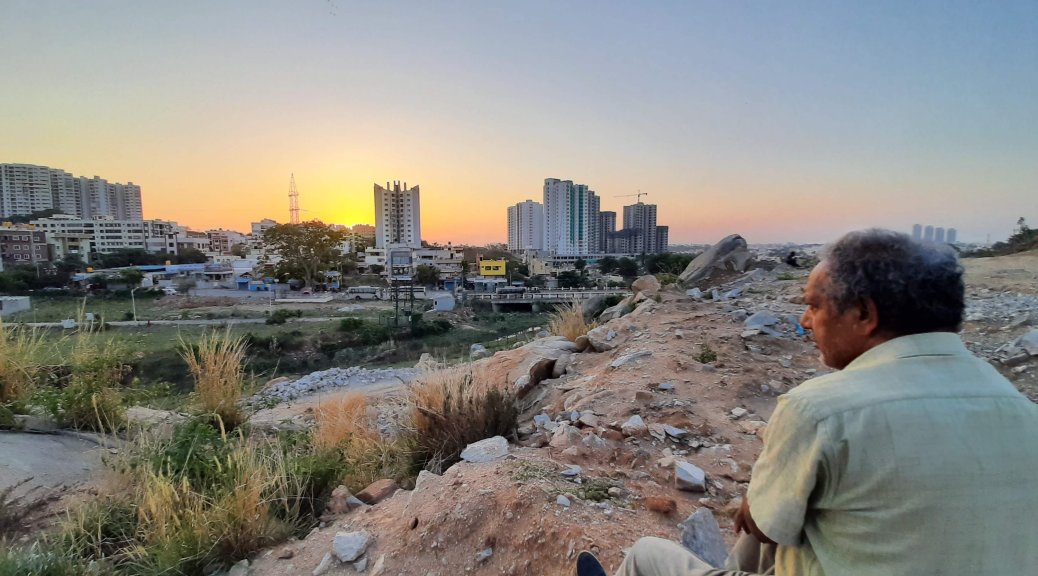
‘Uttarahalli’ translates to ‘Northern Village’ in Kannada. The irony is, it is located in the southern-most part of Bangalore. This is the current place of residence of my family and is also the last post in this series. This home seems like a perfect retirement plan for a family that seeks a little bit of nature in the midst of a bustling metropolitan city.

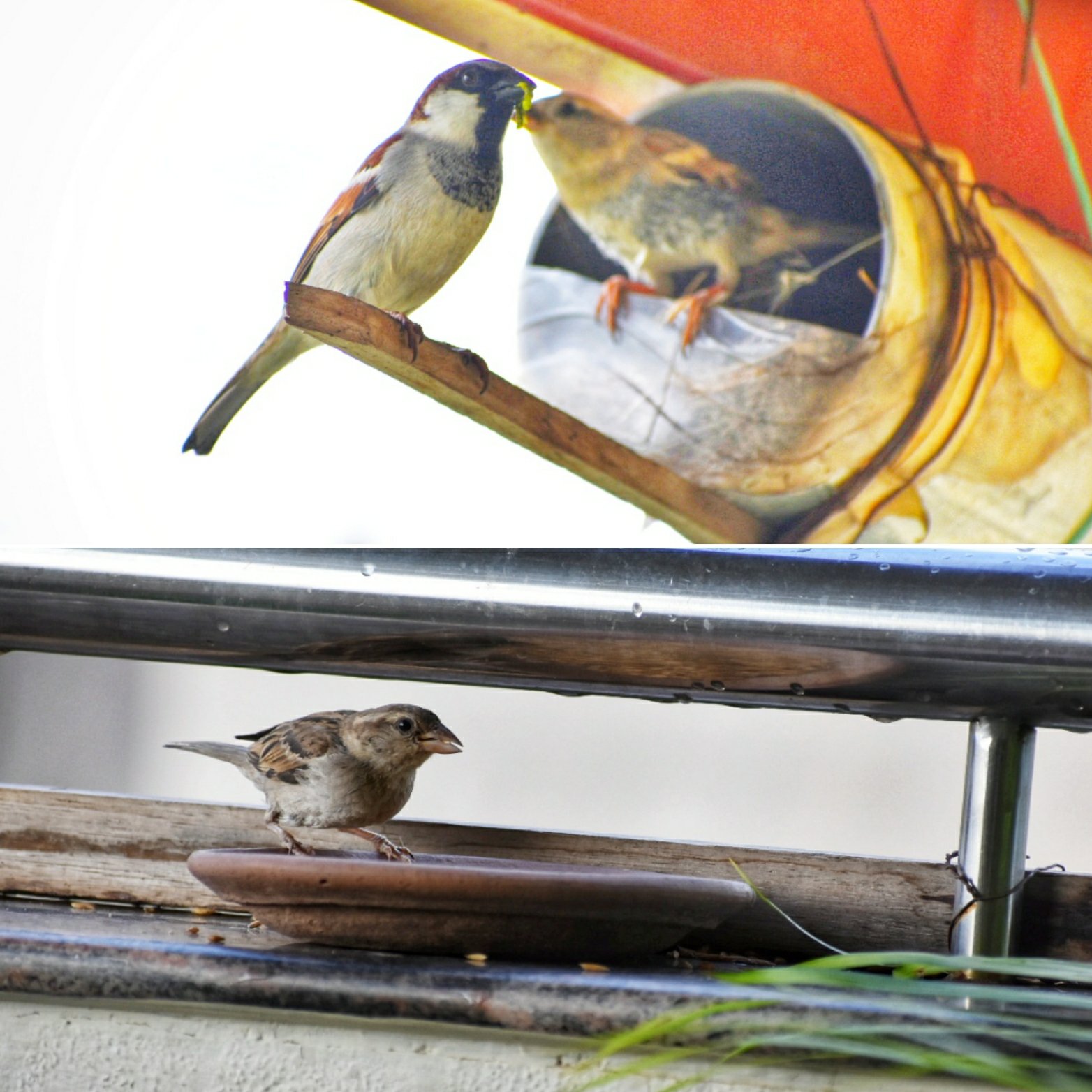
With very little vacant space available, my parents try to grow their own vegetables and fruits, welcome birds and squirrels to have meals with them and sip their ‘kaapi’ while watching the sun go down. These are some among many other things they do to keep themselves running through the day.

The sparrows in my portico

The area is soaked in rich history as well.. While the ‘Vasantha Vallabharaya swamy temple’ dates back to the Chola era, an adjacent cave is believed to be the place where Rishi Mandavya had meditated.

The Turahalli forest is a small patch of lung space nearby, that joggers, cyclists, conservationists and the realtors all seem to have an eye on!

The latest addition to the landmarks is ISKCON’s ‘Krishna Leela theme park’ located on the Vaikunta hill. The sunrises and rainbows on cloudy days are mesmerizing, adding a backdrop to the view of this temple from my doorstep.

Annual fair of Vasanthavallabha temple, Vasanthapura, Bangalore

This is the last post of this series: “I Belong to Everywhere“. I hope you all have enjoyed time travelling with me hopping on- and off from Bangalore to Kodagu. Which place did you like the most? What place would you want to go after reading my posts? What more do you want to know about, from these places?

I Belong to Everywhere: Napoklu

This is an attempt to bring back nostalgia. Continued from- “I Belong to Everywhere: Yelahanka

Napoklu is a small town located in Madikeri Taluk, in the northern part of Kodagu district. I have spent several memorable holidays here, living a high energy childhood. There are several places of interests for tourists and local pilgrimage that are centered around Napoklu. Some of them are ‘Sri Makki Sastavų temple’, ‘Chelavara waterfalls’ etc. The ‘puttari festival’ is one of the best and the most elaborate one celebrated by the Kodava clan native to Napoklu.

Puttari festival at Kolu Mand

If any of you find a tinge of madness in me, it is likely that it has been due to the influence of my cousin who hails from this town. He has been my closest friend as we both grew up together, roaming farms, fields and streams. On weekends when he didn’t come to our grandparents’ house in Madikeri, we would be roaming together, around the other places that are mentioned in this series of posts.

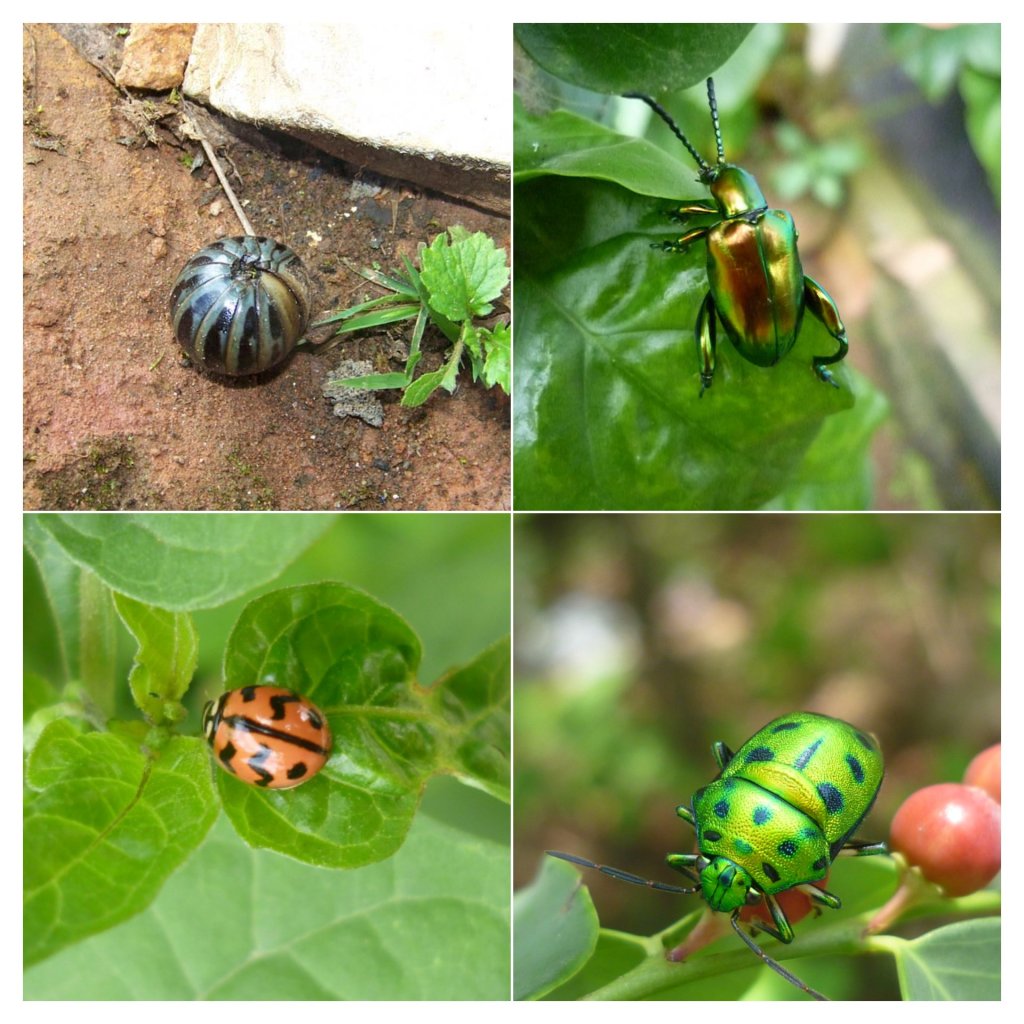
Although I have spoken about how I developed the awareness for conservation of wildlife in one of my earlier posts, but it is in Napoklu, that I originally imbibed the qualities of empathy for animals. Apart from the cattle, dogs and cats that I was surrounded with in Madikeri, my cousin had birds, fishes, tortoises, rabbits and poultry in his house. They shared a unique bond with him. While during the days, we caught dragonflies with aquarium nets, we chased fireflies at night and trapped them all together in empty glass jars to create a mini ecosystem of our own.

Beetles and ladybugs

If you wonder how I know some names of celebrities from across the globe, it is because we followed them. I watched Formula-One, WWF, Tennis and Cricket without missing a single match or a tournament, because the TV remote would always be with this guy and I had no option. The craziest automobile geek I had ever known, much until I became an automobile engineer and met a few other geeks along the way, was this cousin alone. We traded ‘trump cards’ and fought each other over the ownership rights of the rarest WWF and Cricket cards. We still hold back some of these treasured collections and often reminisce those good days of innocent fun. These are the same things that trigger little momentous joy to me even today and that which helps me spread positive energy.

To be continued as- “I Belong to Everywhere: Uttarahalli

I Belong to Everywhere: Yelahanka

This is an attempt to bring back nostalgia. Continued from- “I Belong to Everywhere: Jalahalli

In this post, I’m going to tell you about my connection with ‘Yelahanka’, an area located on the northern side of Bengaluru. It is rather popular for the air force station located here. And that’s also why Yelahanka has my heart with it.

This is where my engineering college was located, at very close proximity to the Airforce base. My love for airplanes has a separate post dedicated to it. This is also where the Aero- India show happens, a biennial display of India’s air might.

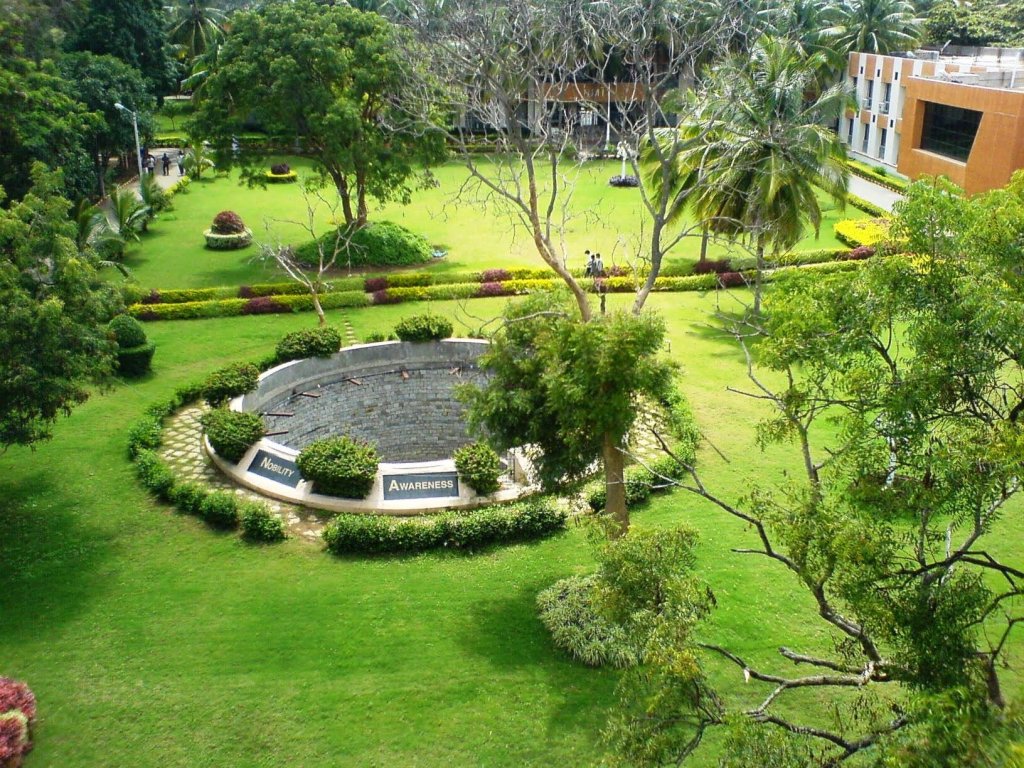
The campus of Nitte Meenakshi Institute of Technology

One of the camps of the Central Reserved Police Force (CRPF) is located at a little distance from my college. So, most of the morning drives to college were alongside the CRPF troops running on their daily fitness routine. The sight of camouflaged men (at least a hundred of them), marching or running in a single line, with rifles in their hands, weight bags on their backs and the tapping of their heavy boots were just enough motivation for a girl whose little heart goes numb in front of any man wearing uniform of the forces.

And then there are days when we bunked classes and we set out on adventure activities: Adventures of sneaking into random grape vineyards around the college campus, grab a few bunches before being pelted with stones by the farmers if caught 😀 It was sort of days of co-existence between the farmers / local villagers and the students. The students just lived up their share of fun from their college days and the villagers were just entertaining themselves with our tactics.

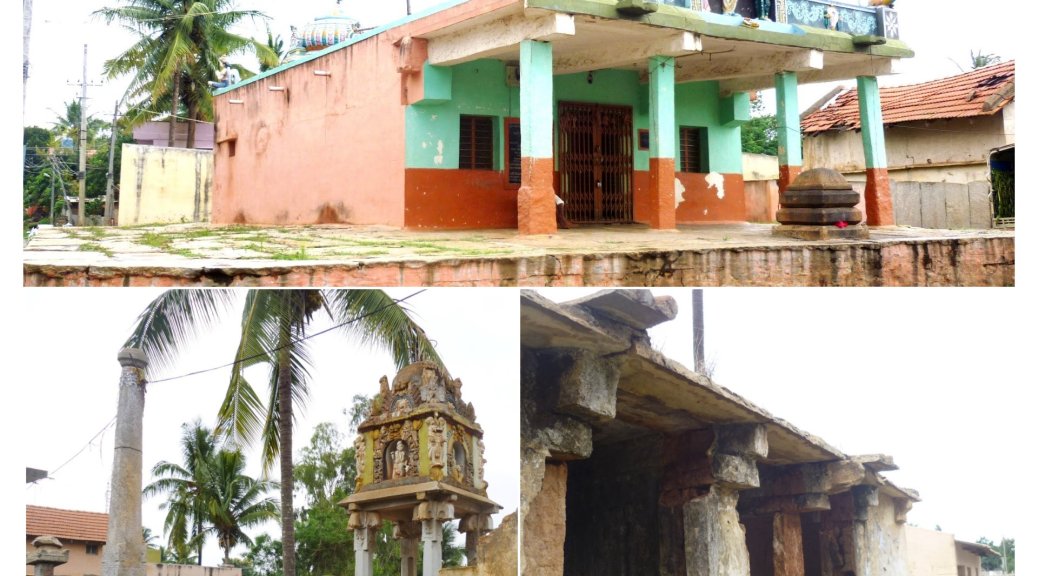
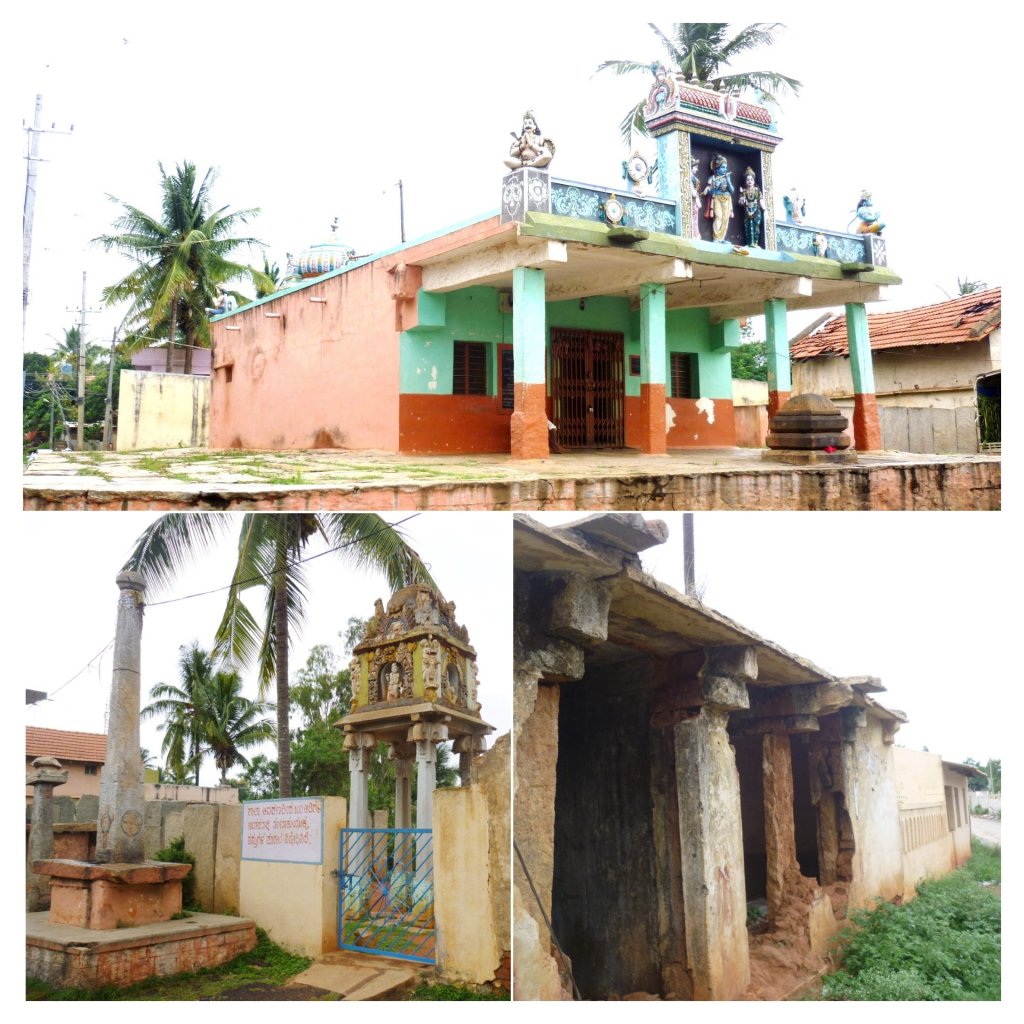
Some structures at Gantiganahalli, Yelahanka

The Yelahanka we know today wasn’t the same back then. There were hardly any good restaurants, cafes or any place where we could hangout apart from the college canteen. Some of the addas that the students would swear by are the railway tracks, the lake, the stables and Balaji. Well, mention these places to any student from this college and watch their expression: These were not just places, these were emotions.

And the most fun rides were those when we wanted to bunk classes and to find transportation to reach to wherever we wanted to go (out of Yelahanka). Back in those days, the college bus was the only available mode of transportation from college until the airport road / highway. If any commutation was required during the day (if we bunked, that is!), the only options were to either hitch a ride or walk to cover the distance of almost 4-5 kilometers. On some days we sat pillion, some days a bumpy lorry, on some days were cars with AC and some days, we sat on haystack and tractors that carried firewood.

Gantiganahalli lake, Yelahanka
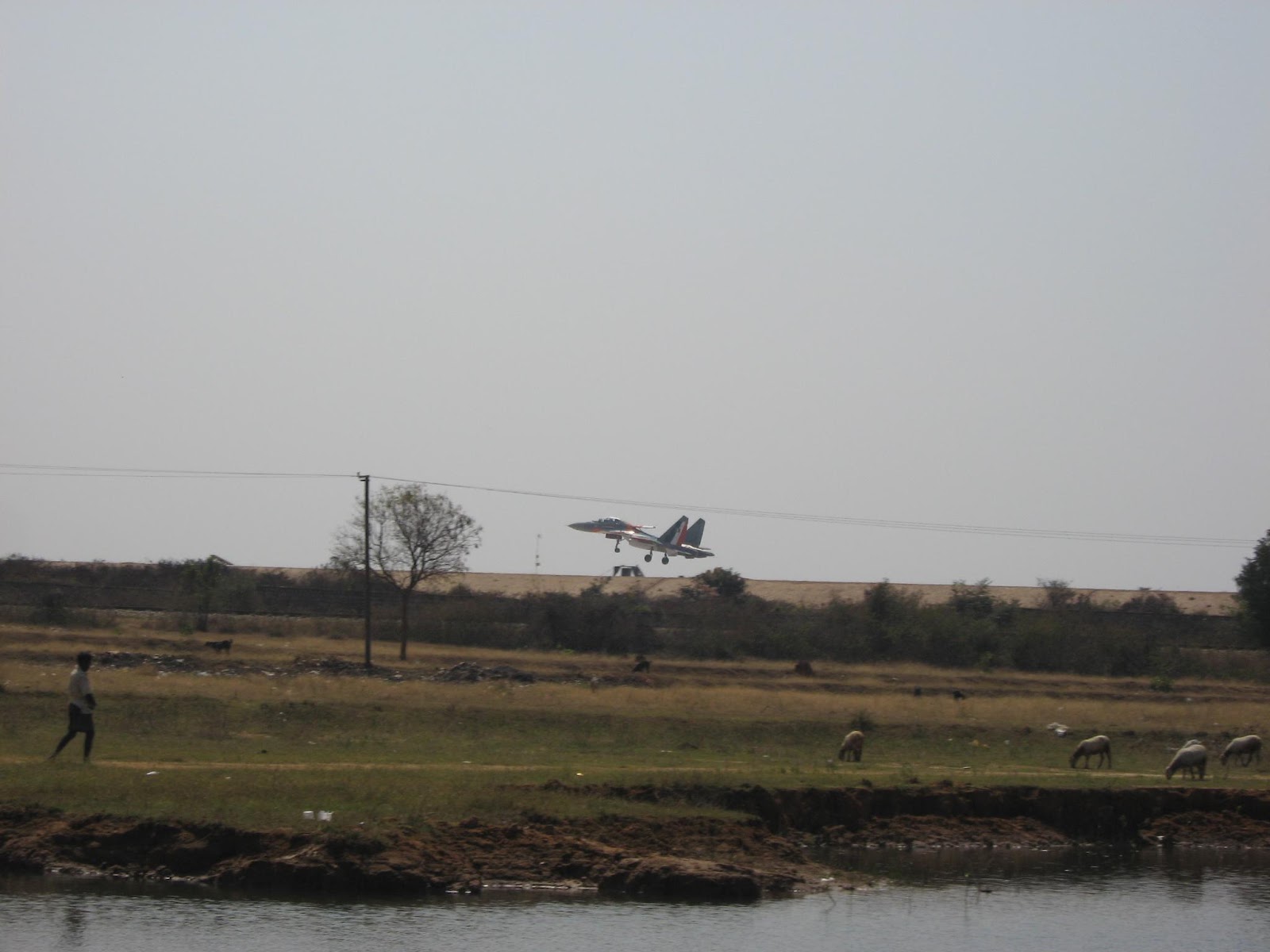
A view of the Su-30 on the otherside of the Lake.

Yelahanka is where I have spent four memorable years of college, a place that has made me worthy of a human being and that has guided me towards earning my own food. Yelahanka will always be closest to me, because my heart will always be wandering around my college (in the form of fighter planes :P)

To be continued as- “I Belong to Everywhere: Napoklu

I Belong to Everywhere: Theralu

This is an attempt to bring back nostalgia. Continued from- “I Belong to Everywhere: Chamarajpet“.

This is a small village in South Kodagu that is closer to Kerala borders than it is to Madikeri. This is where my maternal cousins originally hail from, and they went to school with me at some point while staying together at our maternal grandparents’ house. So, it was natural that I too would accompany them to their native village on several occasions when they went to their parent’s house at Theralu.

Apart from the expansive Tata tea estates and the Kerala borders some of the other popular landmarks that I enjoyed day tripping here were Irupu waterfalls, Mrithyunjaya temple and the Nagarhole National Park.

For all that I can remember from those visits were that there were people speaking and following different culture than I was familiar with. All the workers that worked in both my maternal and paternal hometowns were from the local tribal communities who spoke and ate quite same as what I did at home. But those working at my Uncle’s estate in Theralu spoke so many different languages. The larger group had almost created a mini-Assam in the site of their labourers quarters. They had built so many structures, equipment, tools out of bamboo (the most common site in all over Assam) and ate food that was made with ingredients that we in Kodagu didn’t know were edible until we saw them.

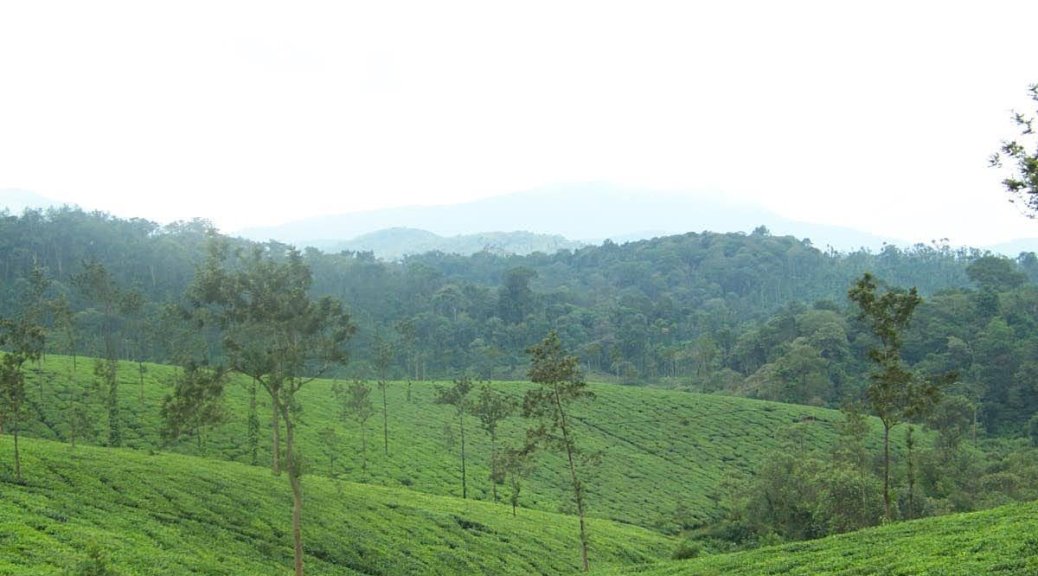
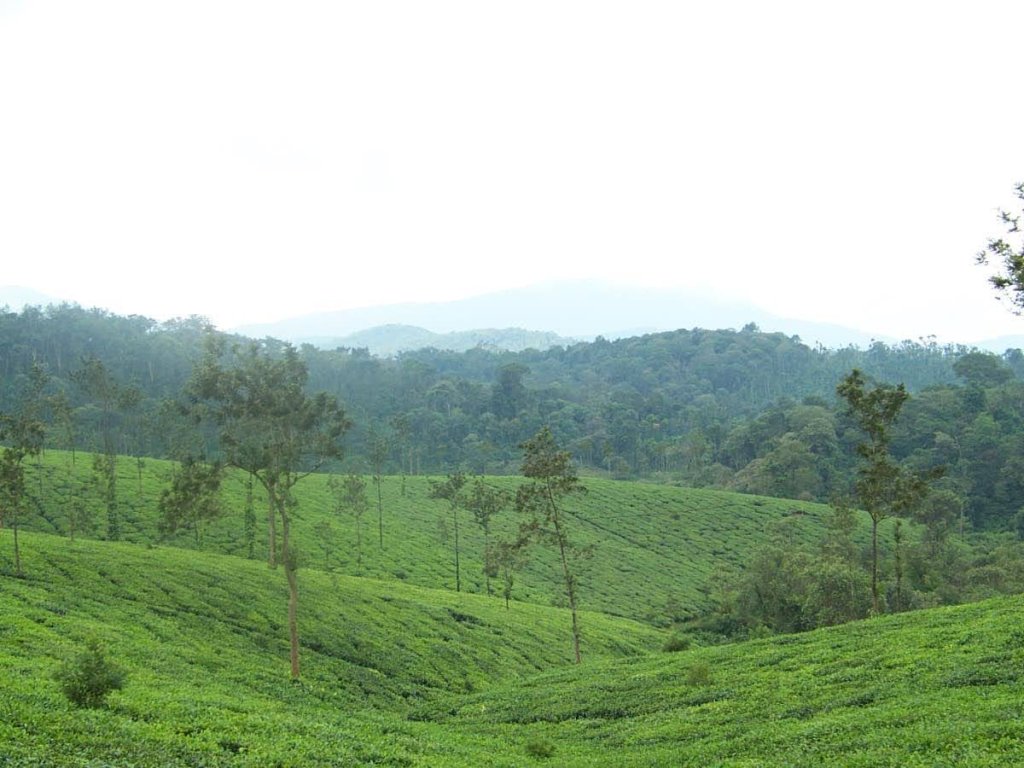
The Glenlorna tea estate Coorg

This is also where I was introduced to Tamil language and their movies. A large group of workers came to work in the farm at Theralu during the peak coffee harvest season and returned back to Tamil Nadu after the season ended. During evenings or on weekends, these workers often came to my cousins house to watch TV. Although I didn’t know their language and didn’t comprehend with most things they communicated, I picked up names of the stars whom they clapped hands in enjoyment or sounded a “Shhhhhh” to express disappointment while watching their favorite stars on the screen. In spite of not understanding a word of what the movie or tele-serial was about, it was an inevitable situation for me to sit and watch through whatever was being played 😀 Looking back at the days, those stars from the early 2000s are the only few whom I can associate with while talking about movies with a Tamilian!

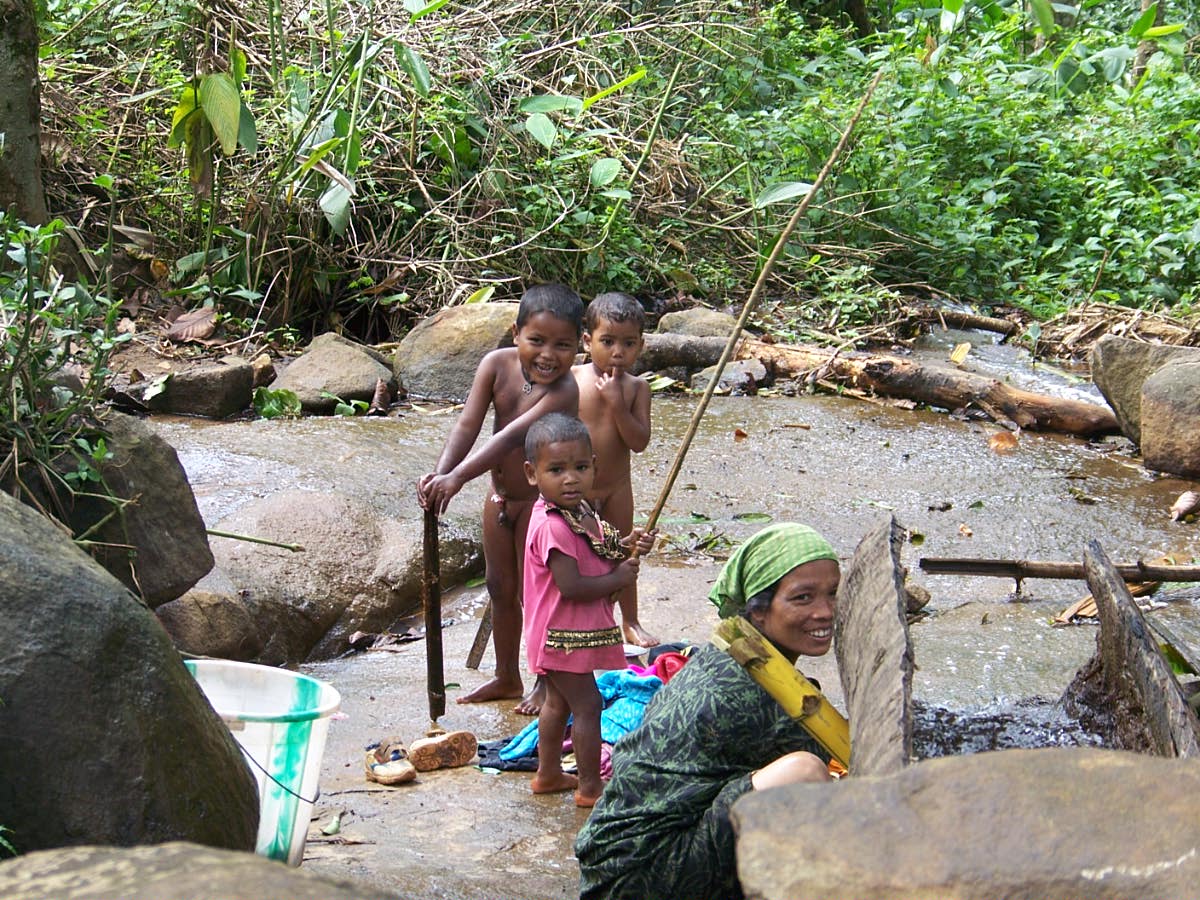
Assamese kids enjoying their shower in a small stream in the estate

With limited means of communication, the major exposure we had in this small hill-district was just limited to living in estates or serving the army. Here, I saw migrant workers coming from faraway places in search of ANY doable jobs, saved a portion of their limited income and sent it to their families back in their hometowns and still lived a life of modesty. I learnt that life was not all easy for people living in other parts of the earth. It always made me think and reflect how unequal and different life was for everyone. Theralu taught me lessons of gratitude for the life I am living!

To be continued as- “I Belong to Everywhere: Jalahalli

I Belong to Everywhere: Chamarajpet

This is an attempt to bring back nostalgia. Continued from- “I Belong to Everywhere: Malleswaram

Chamarajpet is one of the two well planned residential areas of Old Bengaluru. Chamarajpet is in the South whereas the other one is Malleswaram, in the North of the original geography of Bengaluru. Chamarajpet is where my parents lived and worked through all the years at the time of my schooling at Madikeri. So, this locality is like my 1.5th home 😛 (first home is in Madikeri and 2nd home was at Vasanthanagar). I came to Bangalore (and thus, to Chamarajpet) only when I had a long vacation from school. Twice a year, to be precise: Once during the monsoon and once during the summers).

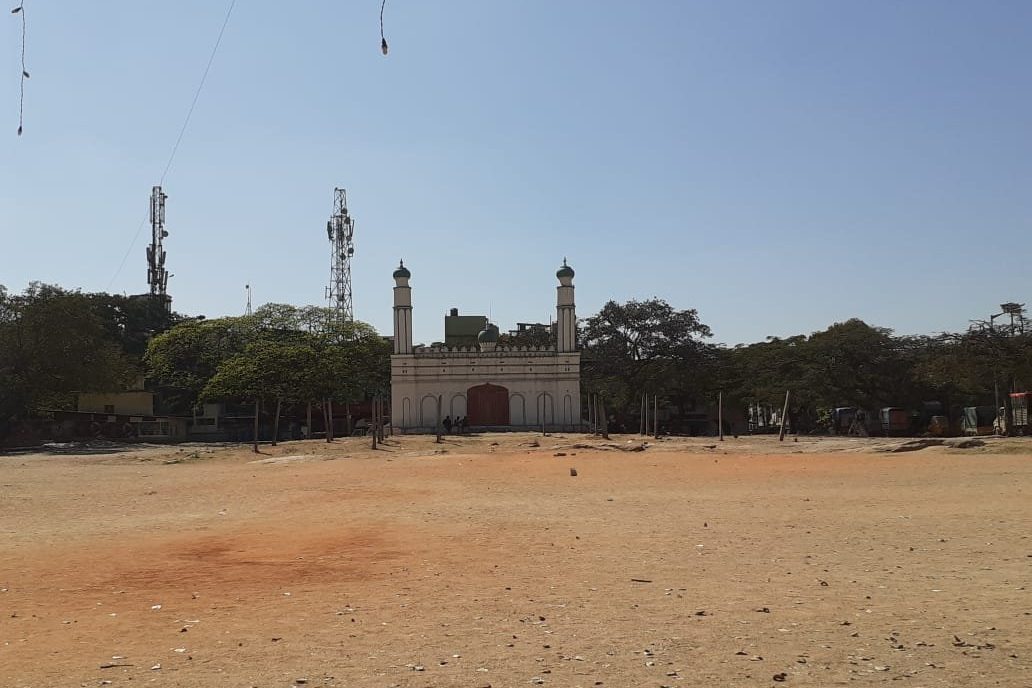
One of the earliest memories I have from this locality is of my family and all our neighbours watching and distributing drinking water and snacks to people who gathered for prayers during festivals at the ‘Eidgah grounds‘ and for the all-night harikatha renditions that happened at the ‘Male-Mahadeshwar temple’ in 2nd main. A large jamun tree in the premises of our house was often mobbed by kids from the entire locality for its fine fruits and the aroma of Rasam from the ‘Vataaras’ of 3rd main are some unforgettable memories.

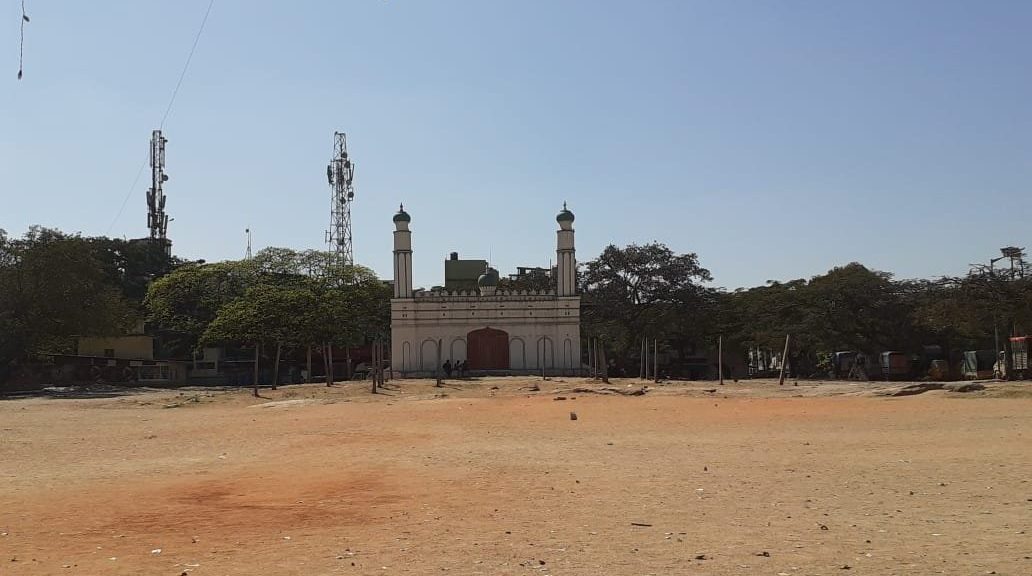
Eidgah ground at Chamarajpet

There were several things that I saw on TV (Doordarshan) and wanted to learn along with regular school while growing up. But there was unavailability of trained people who could teach me any of these extra curricular skills in the small town (Madikeri). Whenever I visited Bangalore during vacation, my effective time spent with my working parents were mostly for eating out in the evenings and making day trips over the weekends. A major chunk of my Bangalore visits was mostly meant for attending summer schools. With a very large community of literary scholars living in and around Chamarajpet, I could learn different art forms. I attended crash courses across various streets of Chamarajpet (and Basavanagudi) to learn sketching, painting, dance and music.

Every stone, structure and lane has history in Chamarajpet. Makkala koota, Bangalore fort area, Tippu’s palace, all the temples around the fort and the old pete area: Talk about them to my mother and she would be in tears of nostalgia. These are the places she saw every day during her career that spanned nearly four decades.

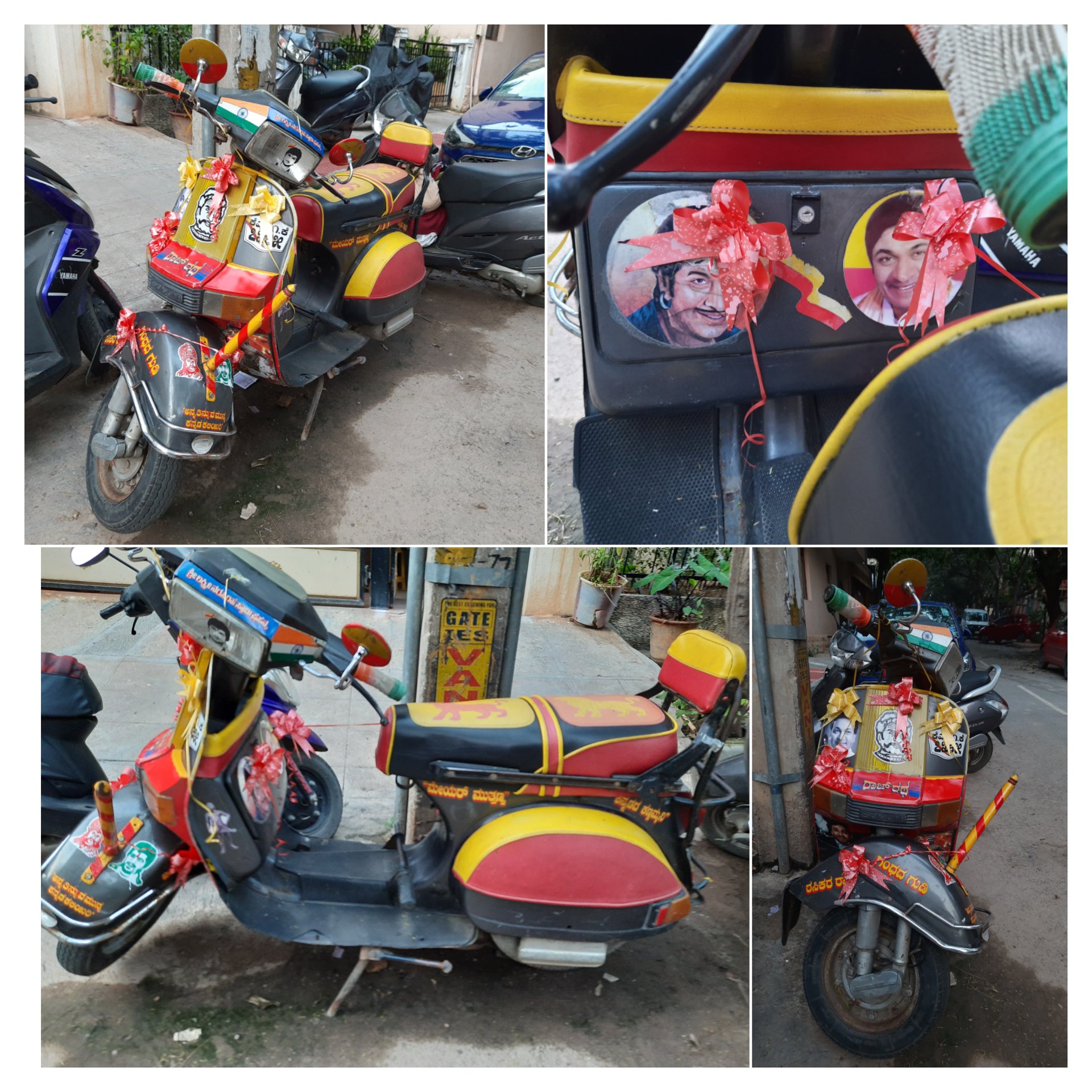
A scooter decked up in a Sandalwood theme (Kannada film industry)

Talking about my family’s favorite eateries, many things have changed and so many old-world structures have been erased now. However, Karnataka Bhel house in 3rd main road along with Gajanana fruit juice center and Iyengar’s bakery in 4th main have managed to stand the test of time.

My family has lived here for 15 years and there is a bond with every lane and its people that we share in Chamarajpet. Here live so many friends, who are more than family to us! Going to Chamarajpet every time is nothing less than travelling to our hometown! So, it is definitely difficult to quantify how much part of me belongs to this area!

To be continued as- “I Belong to Everywhere: Theralu

I Belong to Everywhere: Malleswaram

This is an attempt to bring back nostalgia. Continued from-“I Belong to Everywhere: Abbi falls“.

In the rapidly expanding Bengaluru city, Malleswaram and Chamarajpet are like two lungs that breathe out air of cultural relevance and nostalgia of Old Bengaluru. Malleswaram in the North and Chamarajpet in the South have always stood equal in their heritage of what the real Bangalore once represented. Although one might disagree with my personal viewpoint, Malleswaram represents the face of Bengaluru that boasts of intellects in the science and academics fields whereas Chamarajpet represents a city that is filled with scholars from the creatives like literature, art and commerce. In the proximity to premium research institutes like IISC, ISRO, C.V. Raman institute, the Wood institute and organizations like BEL, HMT, Mysore lamps, Sandal Soap factory etc. Malleswaram was the closest residential area. Meanwhile, Chamarajpet was an extension of the Pete area and is also the home to the Karnataka Sahitya Parishad. So, those in trade, literary luminaries and Pandits naturally moved in here. Anyway, my intention is not to explain those details and get into a debate, but to come to the point on how and why I believe that I belong to Malleswaram. (More on Chamarajpet in the next post)

Kaadu Malleshwara temple at Malleswaram

Talking about Malleswaram, where do I start from? 18th cross, maybe? I often entered into the premises of Sankey tank from Sadashivanagar and I exited from the other end to Malleswaram. For the first two years of living in Sadashivanagar, I played Basketball. I was trained at the ‘Beagles Basketball Club’ and envisioned to make it big in this sport over the coming years (Destiny had different plans and that’s for another story). Mind you, I had been an ardent follower of Kobe Bryant and the Lakers since school!

Finishing the day’s training usually meant savoring a honey cake for Rs.7 and a biscuit sandwich ice-cream for Rs.5 at the lyengar’s bakery at 16th cross. The aroma of filter coffee in the darshini hotels and a walk in the old Malleswaram market are sensory experiences that cannot be taken away from me. The CTR dosey is an inseparable part for my taste buds (I take the metro train from my current residence in South Bengaluru to Malleswaram even to date, just to eat CTR dosa).

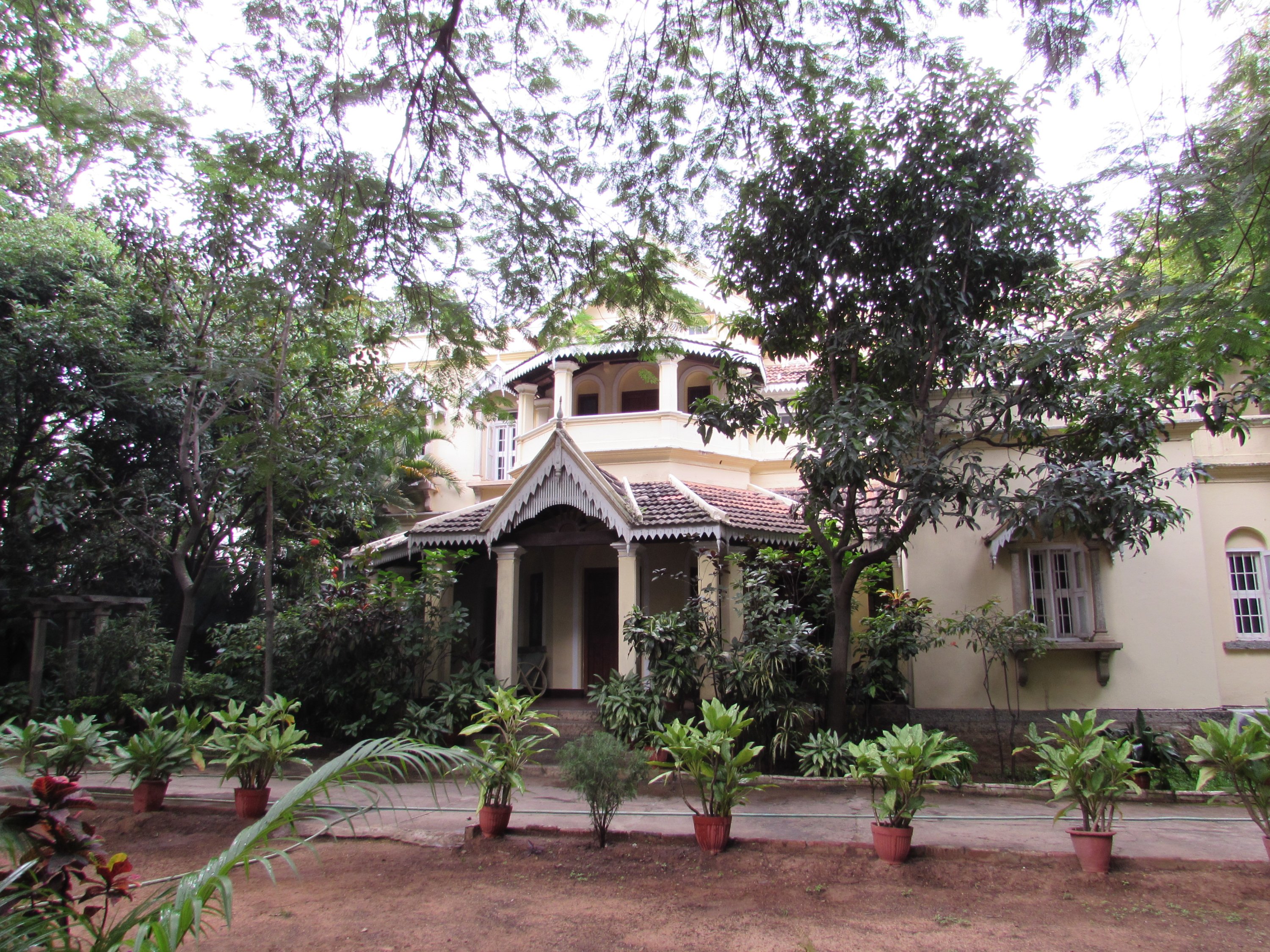
Villa Pottipatti- a heritage hotel in Malleswaram, Bangalore

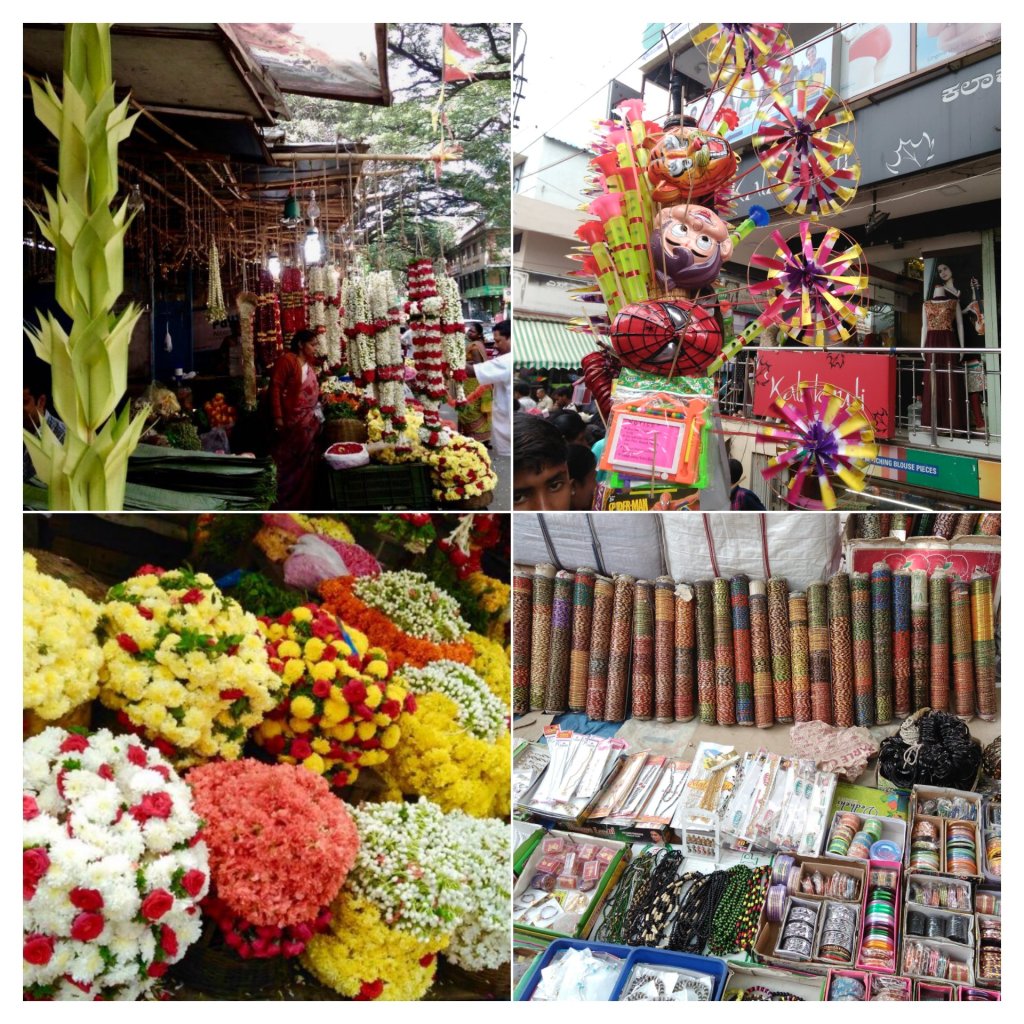
The atmosphere of festivities brought in by scores of vendors on the 8th cross road were the days that were much awaited by me to see what each festival was about and what the key items associated with a specific festival were (decorations, food and other knick-knacks). I had even made up an entire itinerary on my own and applied for a part time job of a tour guide who wanted to walk the interested people through the lanes of this heritage area.

Malleswaram market
Malleswaram market

Since I had only then moved into Bangalore after finishing my schooling in Madikeri, for me Malleswaram served as an open school to open my mind to cultures that I was totally unaware until then. The cuisine, the festivals, the spoken Kannada, the traditions and the mindset of people in general, everything seemed new to me in Bangalore from what I had been exposed to until then. I was quick to adopt and adapt and this is where I became a true blue Bangalorean.

With the premium research institutes of India being around, Malleswaram sort of sparked my urge to keep learning/exploring something constantly and inclined me towards pursuing research in general.

To be continued as- “I Belong to Everywhere: Chamarajpet

I Belong to Everywhere: Abbi falls

This is an attempt to bring back nostalgia. Continued from- “I Belong to Everywhere: Sadashivanagar

Abbi falls is one of the most popular landmarks in Kodagu, located in ‘Kalakeri Nidugane village’ on the outskirts of Madikeri. This is where the Lostlander was stung by the travel bug, much before she was born! History speaks about Columbus and Vasco-da-Gama, but the lostlander grew up listening to the stories of her grandfather’s adventures of discovering Abbi falls. Those are the very stories that sowed the seeds of seeking adventure and finding her own life path for the Lostlander.

The memories associated with Abbi falls is an endless list, so this post is going to be a photo tour with some old photos of the Lostlander with her grandfather at Abbi falls estate.

Abbi falls, Madikeri

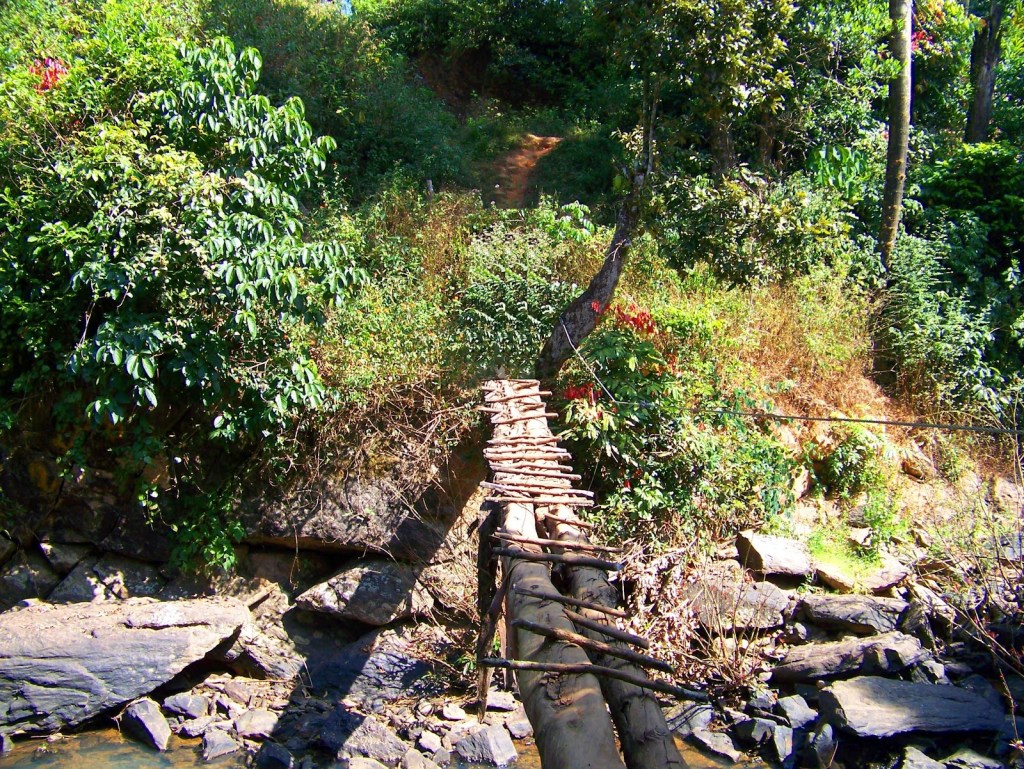
This is a brook built by my grandfather to provide accessibility to the surrounding villagers to get across the river, on the upstream of Abbi waterfalls during the monsoons. It has been replaced by a concrete bridge only in yr.2021, several decades after it was originally requested for. (Click here to read further)

The wooden bridge, upstream at Abbi falls

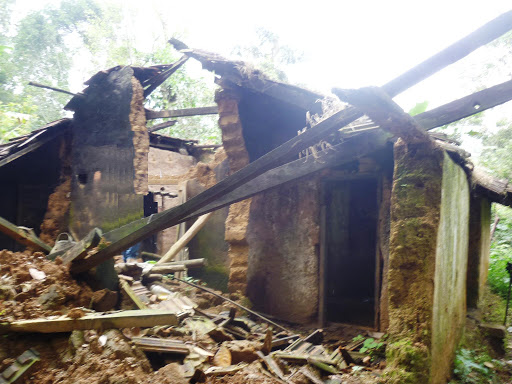
Only memories remain of a house that once served as the heart of the family’s life. (Click here to read further)

The Abbi Villa- Now

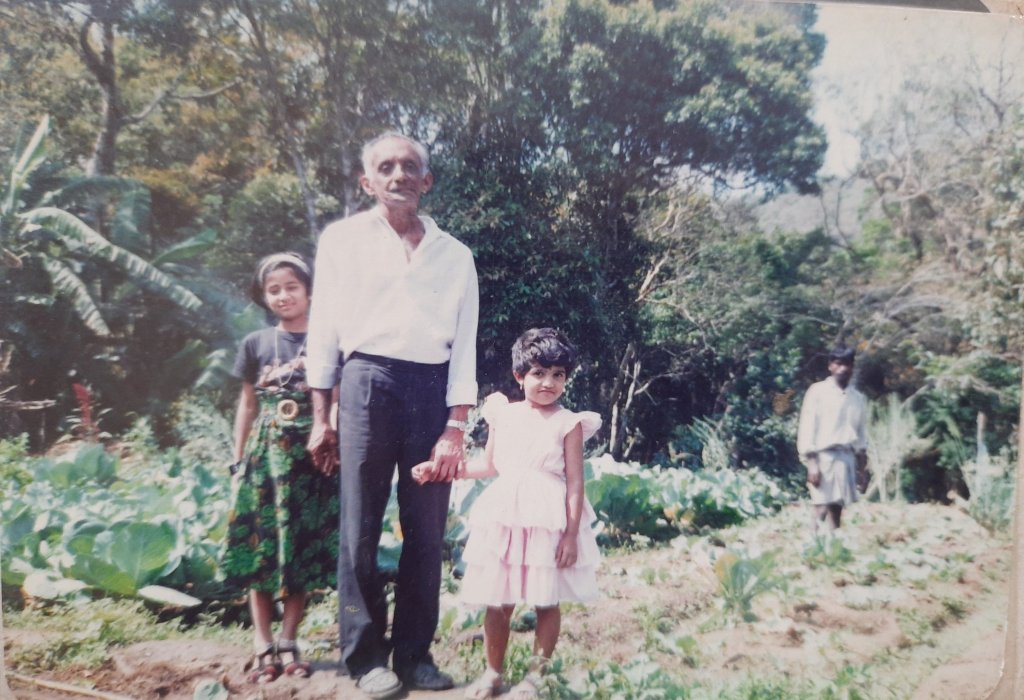
In this photo, the lost lander is lost in the vegetable garden, set in the middle of the coffee plantations, overlooked by the beautiful hills of the Pushpagiri ranges. Gravity fed sprinkler jets sprayed water from the stream that was fed by the larger waterfall. (Click here to read further about the LostLander’s love for honeybees).

The author with her grandfather (center) and cousin in the vegetable garden at Abbi falls

I wish to compile a book someday, comprising of all these stories from the life of “My grandfather”. Do share in all your thoughts and any personal stories associated with this place that I will be glad to add them in my book with due credits.

To be continued as- “I Belong to Everywhere: Malleswaram

I Belong to Everywhere: Sadashivanagar

This is an attempt to bring back nostalgia. Continued from- “I Belong to Everywhere: Kumbaldal“.

Sadashivanagar is a locality in North Bengaluru, widely comprising of the upper and the lower orchards. For those unfamiliar with Bangalore’s demography, Sadashivanagar is rather known as a VIP and VVIP haven and a high security residential area. For the non-VIPs living around here for too long, the periphery extends beyond. It covers Vyalikaval, Malleswaram, RMV extension and Yeswantapur. Having spent a significant number of years and the most youthful days of my life here in the early 2000s, a large part of my heart belongs to Sadashivanagar. Here are some of the best memories from the years spent here.

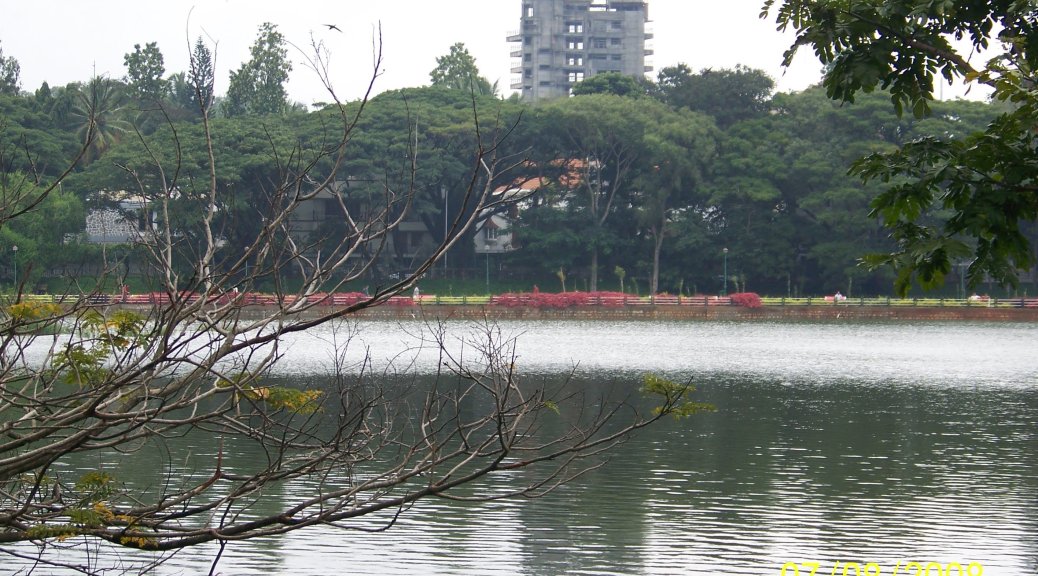
Sankey tank, in Sadashivanagar

Having lived at a proximity to Sankey tank, it was my ‘go-to’ place for all the years that I lived in North Bengaluru. You can say, ‘Sankey tank was to me as Chamundi Betta is to a Mysorean’. I would go there when I was sad, when I was happy and when I felt nothing. I went there every day! Simply walking there and watching the ducks and the several fish-consuming birds that nested in the middle of this waterbody rejuvenated my senses. However, I hated the months that followed the festival of Ganesh Chaturthi when large number of Bangalore’s population came here for the immersion of the idol and the water would smell bad for several more months until the concerned authorities cleaned it.

The garden around Sri Ramana Maharshi’s meditation center and Kempegowda tower at Mekhri circle, the single screen cinema at Cauvery theater, late night ice-creams at Baskin Robbins were some of my favorite peace places around this locality.

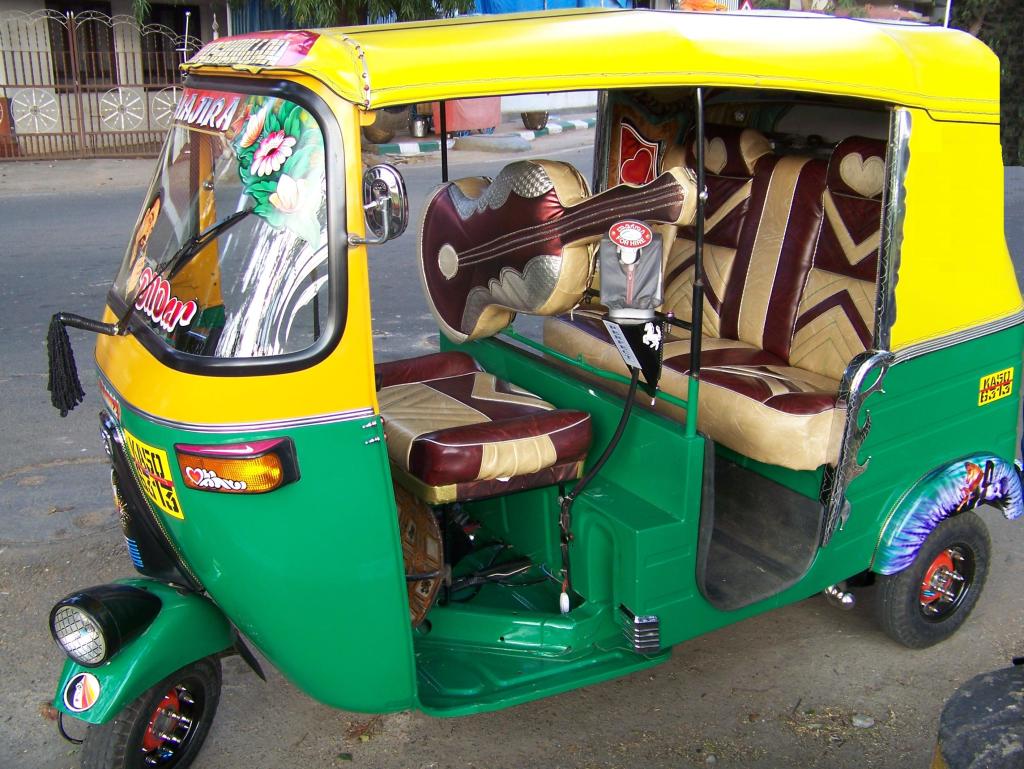
A decked-up autorickshaw near Sadashivanagar
A decked-up autorickshaw at Sadashivanagar

Again, proximity to Mekhri circle and Palace grounds added another dimension to my interests- Music! Back in those days, Palace grounds was synonymous with hosting the BIG concerts of Bengaluru. Iron Maiden, Aerosmith, Megadeth, Metallica, Bryan Adams, Deep Purple ’em all… If you hear me having a flair for the western music, along while I’m humming the songs of Sonu Nigam, Sunidhi Chauhan and several other traditional musicians, Sadashivanagar is probably the place that has influenced me! Even on days that I couldn’t make it to the concert arena, the blaring sound would rock the glasses and doors of our house wanting me to be a part of the cheering crowd!

To be continued as- “I Belong to Everywhere: Abbi Falls